

My bedroom looked like I’d furnished it during a depressive episode and then just… never revisited the decision. A too-dark comforter I’d had since 2019, a bookshelf that was mostly a dumping ground, and a little string of fairy lights that I kept because — honestly, I don’t know why.
I wasn’t 17 anymore. The room didn’t feel like mine. It felt like a waiting room.
So I spent about a month slowly fixing it, mostly for under $200 total, and now it actually looks like something I’d pin on Pinterest. Here’s what made the difference.
This post contains affiliate links. If you buy something through these links, I may earn a small commission at no extra cost to you. I only recommend things I’d actually use.
First: Adult Aesthetic ≠ Boring, It Just Means Intentional
There’s this weird thing that happens when we grow up. We decide that wanting a “pretty room” is somehow immature, so we overcorrect into beige minimalism that feels like a hotel you’re slightly disappointed in.
A genuinely aesthetic room for an adult isn’t about picking a TikTok trend and buying everything in one color. It’s about the room feeling like you — the actual you, with taste and history and weird specific preferences. That’s harder than buying a matching set from IKEA. It’s also way more satisfying.
Start by Figuring Out What’s Actively Annoying You
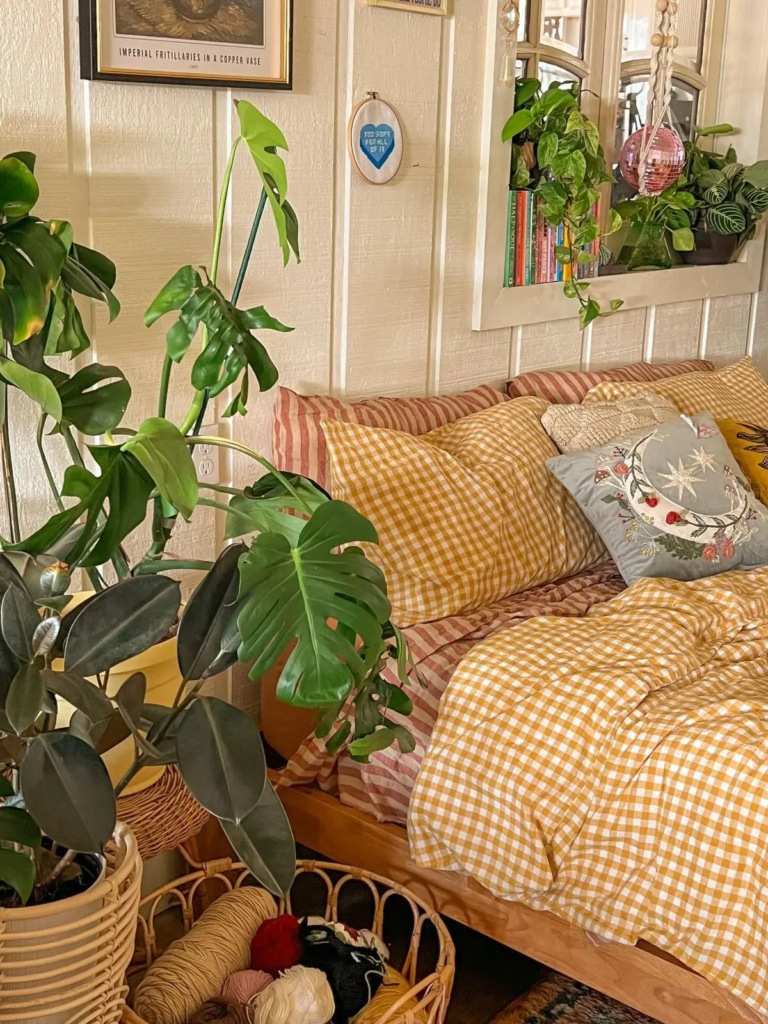
Before buying anything: stand in your room for five minutes and list the things that bug you every single day. Not “I wish it looked more elevated” — specific things.
For me it was: the overhead light was too harsh, there was no place to put my book before bed, and the wall above my desk was completely blank in a way that felt weirdly oppressive.
Three problems. Three fixes. That’s a much better starting point than “I want it to look aesthetic.”
The stuff that annoys you daily is almost always the stuff worth spending money on.
The Lighting Rule Nobody Talks About Enough
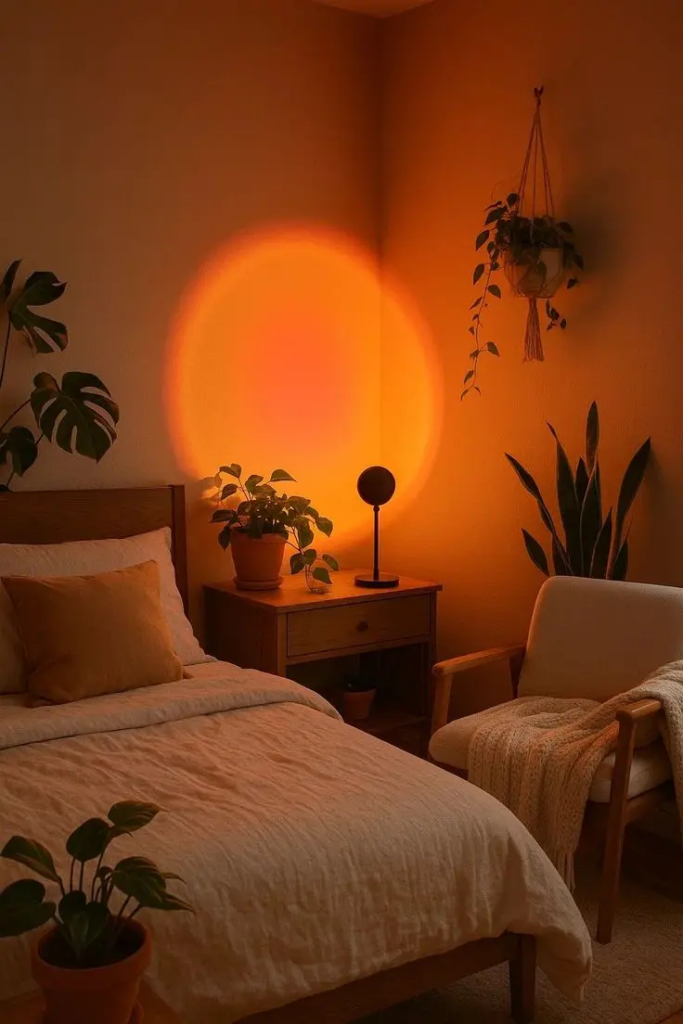
Overhead lighting is the enemy of aesthetic rooms. Doesn’t matter how nice your furniture is — if the overhead light is on, it looks like a dentist’s office.
The fix is layered lighting: a lamp on the nightstand, something on the desk, maybe a floor lamp in a corner. The goal is that you almost never need to turn on the overhead at all.
I got a warm-toned table lamp for my nightstand (linen shade, not white) and a small rechargeable desk lamp for my desk. Total cost: $54. The room feels completely different after 6pm.
Bonus: dimmer bulbs in your existing fixtures. Even just switching to a warm-toned Edison-style LED bulb in your ceiling fixture makes a bigger difference than I expected.
What Your Walls Are Actually Telling You
A single piece of art hung slightly too high, centered on a blank wall, with nothing around it — that’s the classic “I put something on the wall but I’m not really committed” look. It reads as an afterthought.
Adults with genuinely aesthetic rooms tend to do one of two things:
Option 1: Lean into the gallery wall. Not the Pinterest version with a matching grid. A real one, built over time, with things that actually mean something to you. A print you love, a photo in a frame that cost $4, a postcard from somewhere. Mixed frames are fine. Mixed sizes are better. The imperfection is what makes it look intentional rather than staged.
Option 2: One large piece, properly placed. If you don’t want gallery chaos, one big piece of art (24×36 or larger) hung at eye level does more for a room than six small things scattered around. Canvases from Amazon or Society6 go on sale constantly — I’ve gotten decent-sized prints for under $30.
What doesn’t work is nothing. Bare walls in an adult bedroom feel like you just moved in, even if you’ve lived there for three years.
The “But Everything I Own Is Random” Problem
Completely relatable. Most adult rooms look chaotic because they contain objects accumulated over a decade with no visual thread between them.
You don’t need to throw things out or start over. You need to group things.
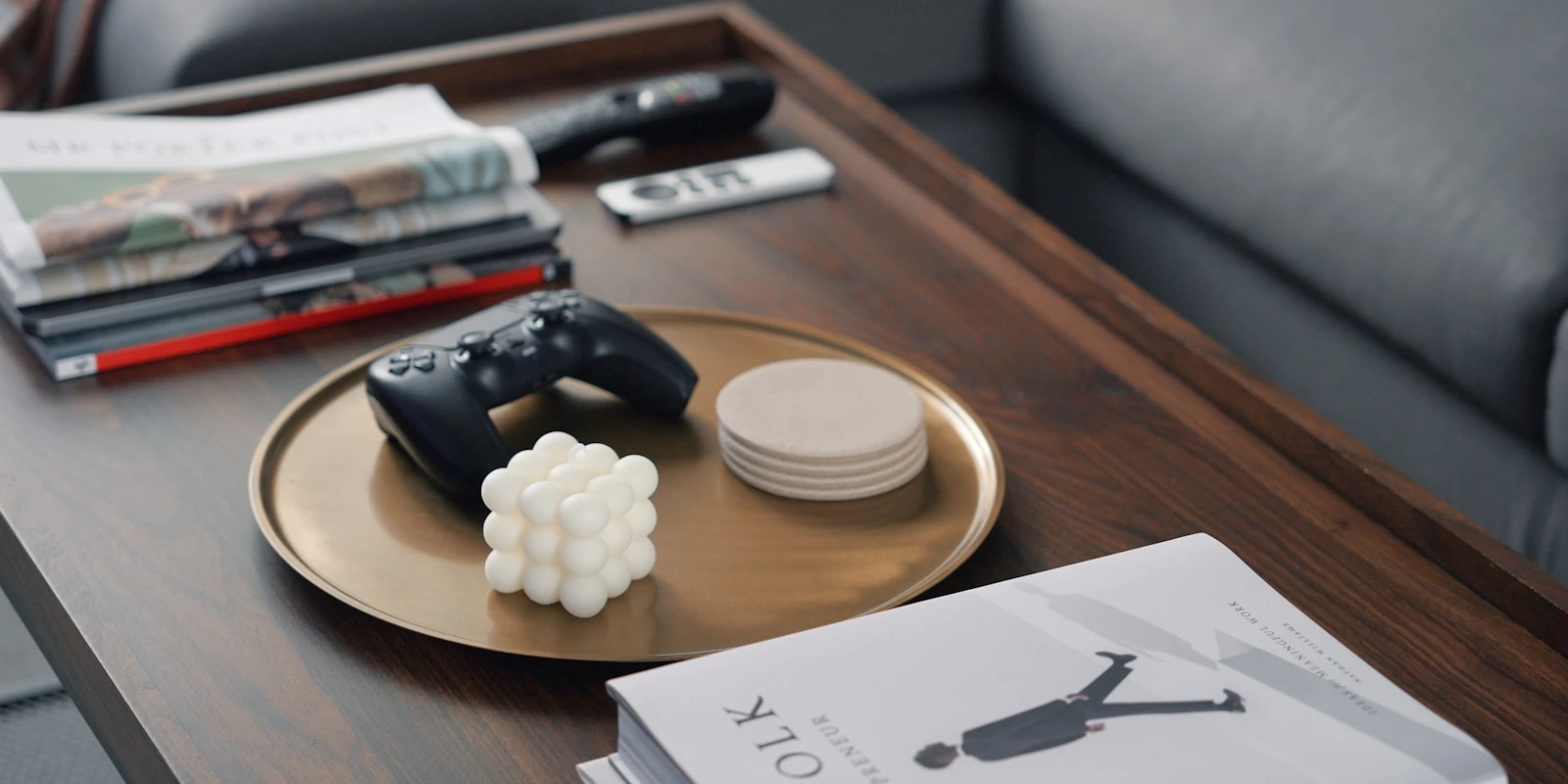
Put all your random small objects together on a tray. Stack your books by color or spine direction. Put things of similar height next to each other on shelves. This is the trick behind every “effortlessly aesthetic” shelf or bedside table — the objects aren’t necessarily expensive or curated, they’re just arranged.
A decorative tray is genuinely one of the most underrated things you can buy for aesthetic purposes. It makes a collection of random items look like a vignette. I use one on my dresser and one on my nightstand.
This same logic applies to other surfaces — I wrote about it more in my guide to kitchen counter styling if you want to see the concept in action.
Textiles Are Doing 40% of the Work
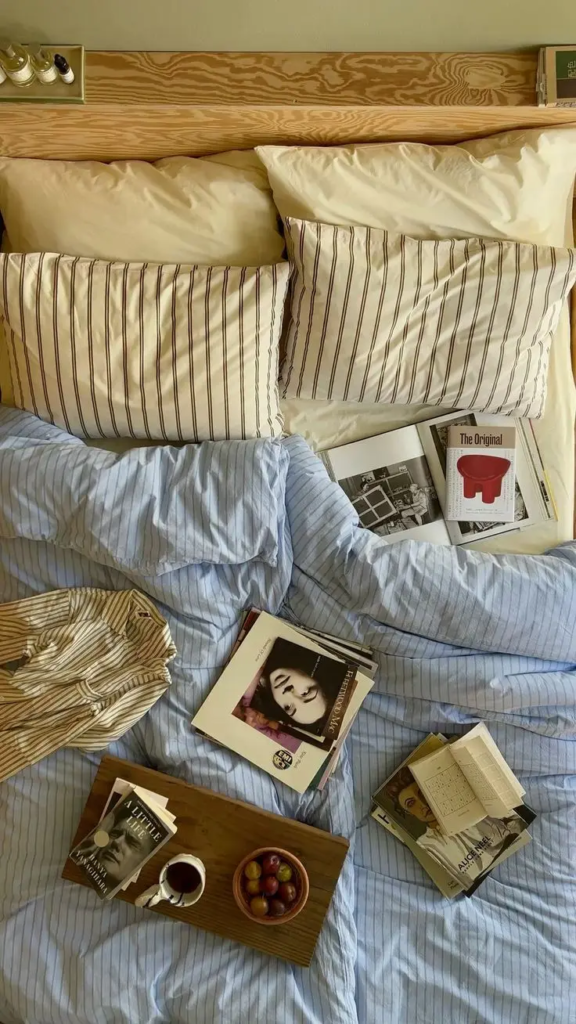
Walk into any room that photographs well and look at the textiles. There are probably three or more: a throw, layered pillows, a rug, maybe a linen curtain. Not all matching, but all in the same general territory color-wise.
The single easiest upgrade for a bedroom that looks “off” is usually adding a throw blanket that’s in a different texture than the bedding. Or swapping a bright white pillowcase for something with a little more warmth — oatmeal, dusty sage, soft terracotta.
A textured throw blanket draped (not folded perfectly, draped messily) over the corner of a bed or chair immediately makes a room feel more lived-in and intentional at the same time.
If your rug is dark or doesn’t exist: that might be the culprit. Rugs anchor rooms. A light jute rug or a low-pile neutral under a bed makes the whole space feel more pulled together without matching anything specifically.
The Smell Thing
Aesthetic rooms smell like something. Not heavily, not obviously — but there’s something.
A reed diffuser you barely notice is running. A candle you lit earlier. Clean laundry that got folded.
Scent is underrated in home decor content because you can’t photograph it. But it’s one of the things that makes a room feel cared-for and intentional without any visual changes at all.
One Corner, Not the Whole Room
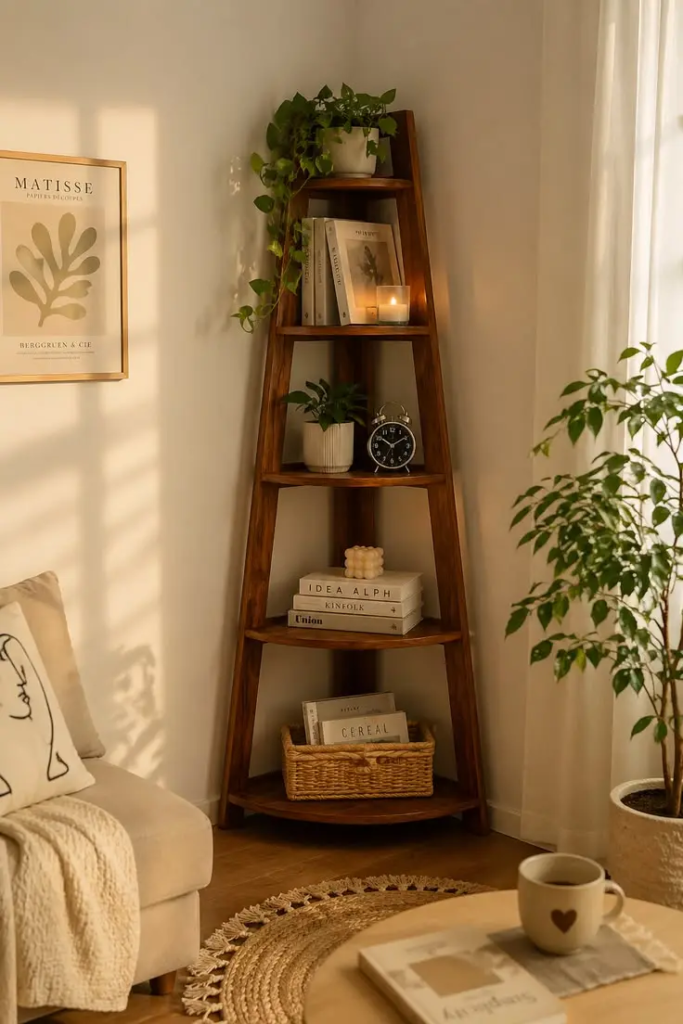
The mistake most people make when trying to make a room aesthetic: they try to fix everything at once, get overwhelmed, and end up just moving things around without actually changing anything.
Pick one corner. Make it really good. Genuinely, deliberately good — the right lamp, something on the wall, a surface that’s styled and not just stacked with stuff.
Once that corner exists, it sets the standard for the rest of the room. You’ll naturally start making other parts meet it.
This is also how I approach other spaces — the cozy home office ideas post I put together uses the same logic: one intentional focal point pulls the whole space together.
Declutter First, Decorate Second
This sounds obvious. It’s not actually what most people do.
Most people add things hoping it will distract from the clutter. It doesn’t. It just creates expensive clutter.
The room that photographs beautifully on Pinterest has negative space — areas where nothing is happening. That’s what makes the intentional stuff stand out.
If you haven’t done a proper room-by-room edit recently, the spring decluttering guide is a good place to start. Clear it out before you add anything new.
What “Aesthetic” Actually Means for Adults
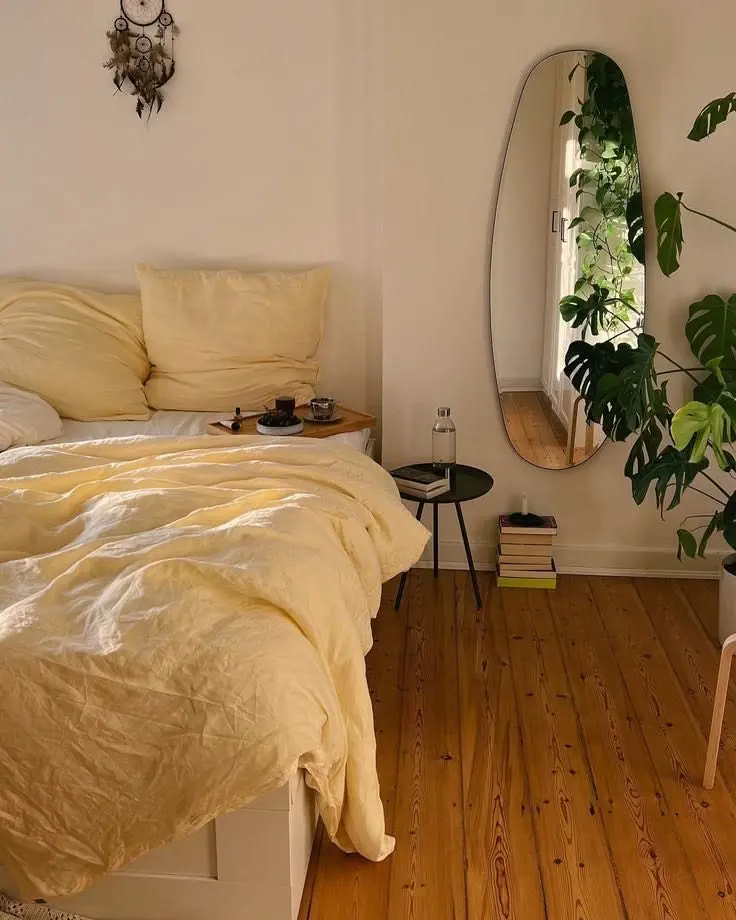
Here’s the thing: teenage aesthetic is about belonging to a category. Cottagecore. Dark academia. Coquette. You adopt the whole visual language because you’re figuring out who you are.
Adult aesthetic is about refinement. You already know what you like — you just haven’t given yourself permission to fully commit to it yet. Maybe you like slightly moody, warm rooms with lots of wood and plants. Maybe you want it clean and spare with just a few meaningful things. Maybe it’s cozy maximalism with books everywhere and three blankets on the bed.
None of these require spending a lot of money. They require actually deciding. The rooms that look good are the ones where someone made a decision and followed through.
DIY pieces can really help here too — small handmade objects feel personal in a way that mass-produced stuff just doesn’t. I’ve been experimenting with air dry clay decor as a way to add pieces that feel uniquely mine without spending much.
A Few Things That Actually Help vs. Things You Think Will Help
Actually helps:
- Changing your lightbulbs to warm white (2700K)
- One large mirror — makes any room feel bigger and doubles the light
- Getting rid of three things you’ve been tolerating for years
- A plant, even a fake one you don’t have to feel guilty about killing
You think it’ll help but it won’t fix the real problem:
- Buying more throw pillows when the issue is the lighting
- Adding string lights over the headboard if you’re over 22 (I said what I said)
- Painting an accent wall without addressing the furniture layout first
- Buying matching sets instead of mixing things with character
FAQ
How do I make my room aesthetic without spending a lot? Rearrange before you buy anything. Moving your furniture to try a new layout costs nothing and often makes the biggest visual difference. Then: swap your light bulbs, style your surfaces with what you already own, and pick one corner to focus on.
What’s the most impactful cheap change for an aesthetic room? Honestly? The light bulbs. Five dollars. Warm white instead of cool white. Do this first, before anything else.
How do I make a small bedroom look aesthetic? Small rooms look better with less in them — which is annoying if you have a lot of stuff, but it’s true. A large mirror, light-colored bedding, and not too many things on the floor help a small room feel intentional rather than cramped.
I keep buying things but my room still doesn’t look good. Why? You’re probably adding things instead of replacing things. Aesthetic rooms are edited. Something came out for every good thing that went in.
Do I need a specific aesthetic (like minimalist or cottagecore) to make my room look good? No. Having a named aesthetic is optional. What you need is some coherence — things that feel like they belong together. That usually just means staying in one temperature range (warm tones vs. cool tones) and one general level of “busy-ness.”

19 easy CD painting ideas that use the disc's own rainbow shine, from koi fish to star maps, no art

23 DIY Thanksgiving decorations made from foraged branches, dried botanicals and garden finds. No fa
My bank account said no to Amalfi Coast this summer. So I spent $40 on wax and fragrance oils, and n
Leave a Reply