

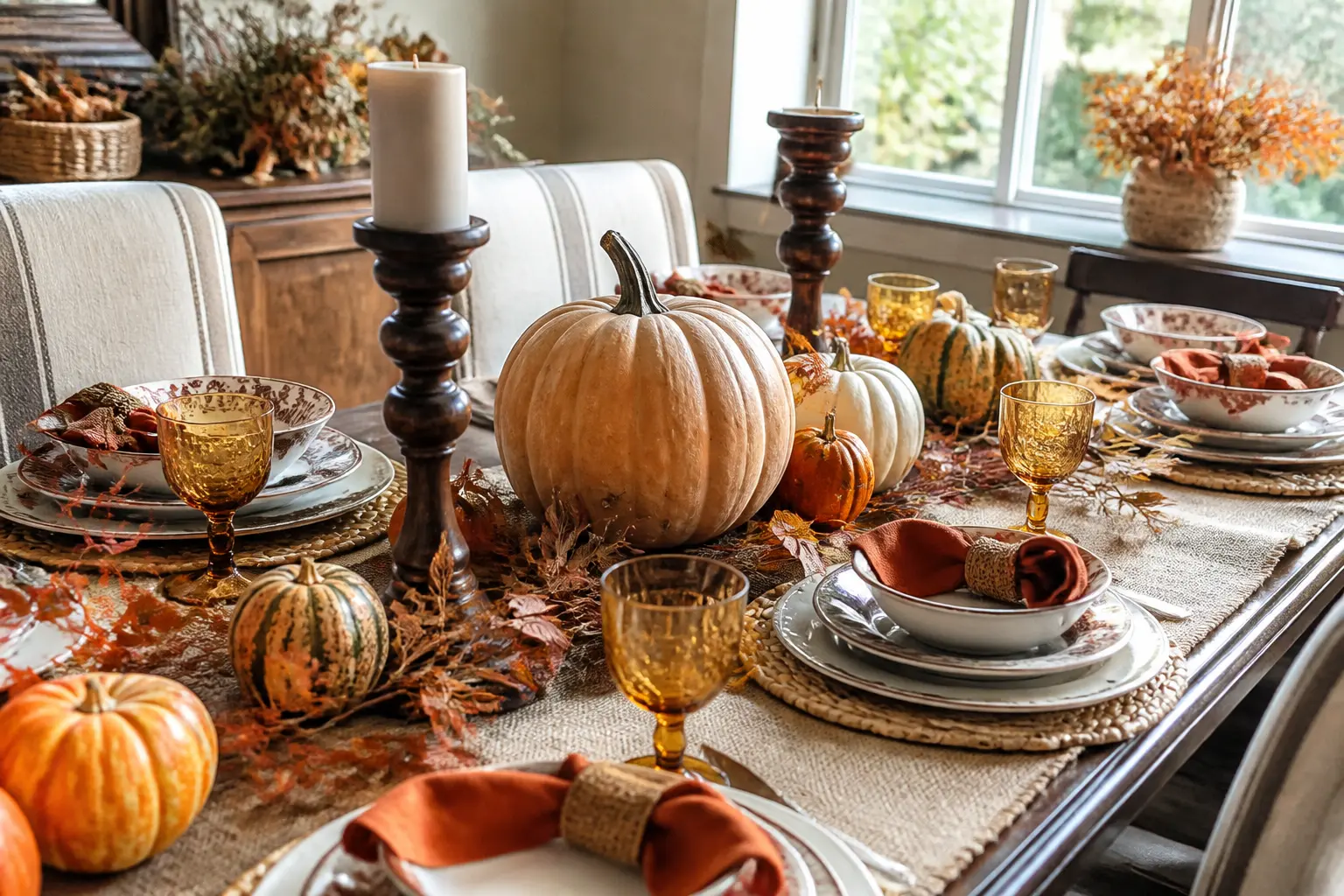
Fall dining table decor has one enemy, and it is your actual life. The laptop, the homework, the glass of water left there at nine in the morning: none of that is going away. So the real brief is not to make the table beautiful for one dinner and stripped bare the rest of the time.
Every idea here is chosen because it can stay put. That means low enough to see over, sturdy enough to survive being nudged, and simple enough to lift off in one move when the spreadsheet needs the whole surface. Some pieces double as storage. Some get eaten. None of them require a florist.
The forty ideas below are grouped by how they work, not by how they look. Pick three from one section and you already have a table. Pick from several and you have a room that reads as autumn all season without a single fragile thing on it. If you are planning ahead for Thanksgiving itself, these simple Thanksgiving table decor ideas and this room-by-room Thanksgiving decor guide are worth a look alongside this one.
This post contains affiliate links. If you buy through them, I may earn a small commission at no extra cost to you.
- The Tray Trick: One Lift and It Is Gone
- Layers Under the Objects: Runners, Placemats and Trivets
- Bowls and Low Vessels: Decor That Gets Used
- Candles and Light: Weighted, Jarred and Safe to Leave
- Dried Stems, Plants and the Windowsill Rule
- Everyday Objects That Happen to Look Good
- Napkins and Small Textile Touches
- The Off-Center Rule and the Wall Behind the Table
- Frequently Asked Questions
The Tray Trick: One Lift and It Is Gone
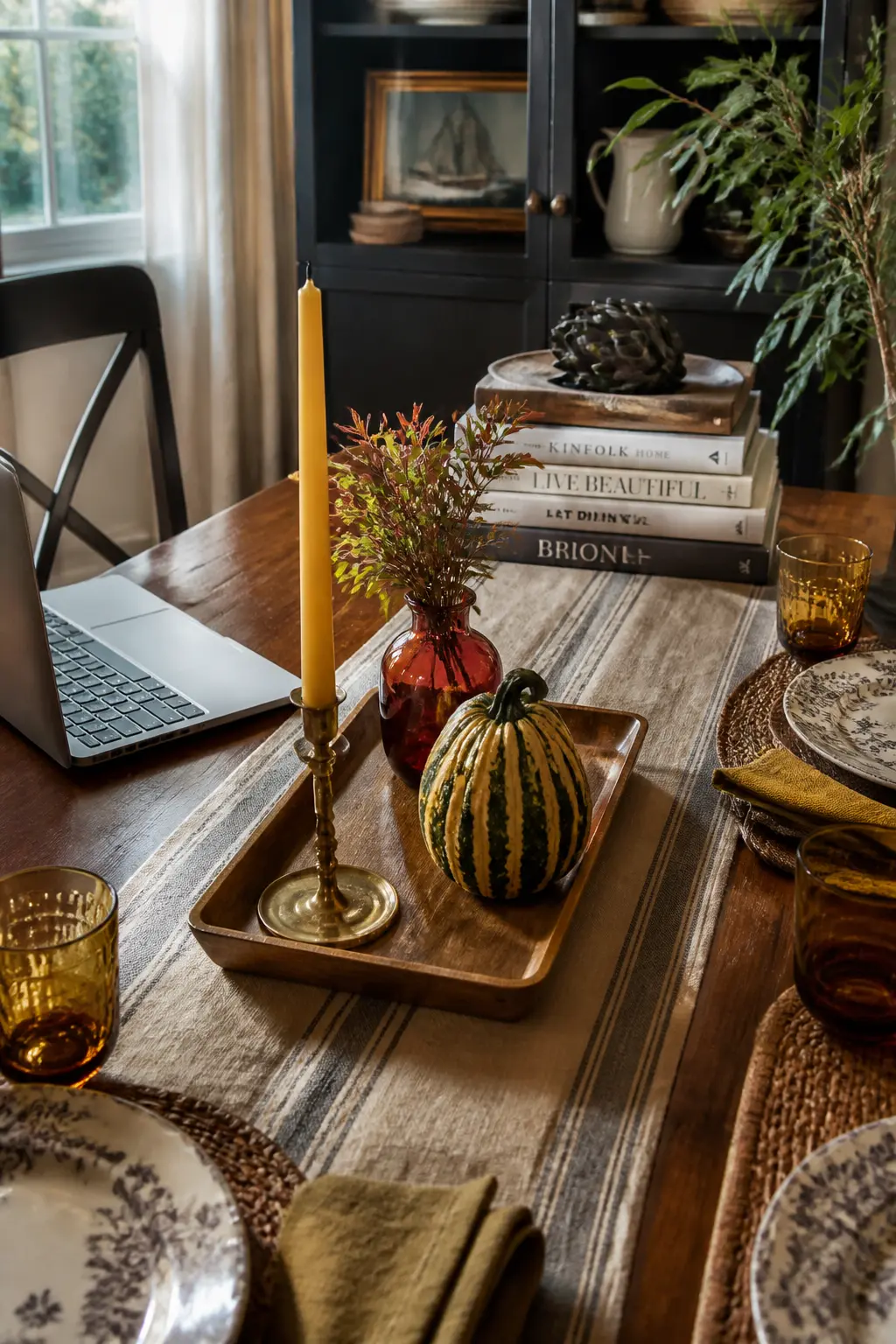
A tray is the single most practical piece of fall decor you can own. Group everything seasonal onto one tray and the whole arrangement comes off the table in a single move, clears a workspace, and goes straight back when dinner is ready. The tray itself reads as a styling choice, not a workaround.
Keep the tray low and wide rather than tall and narrow. Wooden trays in walnut or oak sit well with autumn palettes without needing anything added. The objects on it do the seasonal work.
Single Wooden Tray Holding the Whole Arrangement
Choose a tray wide enough to hold three or four objects and low-sided enough that nothing tips when it is carried. Walnut, oak or acacia all work. Set the tray in the middle of the table and arrange everything seasonal on it: a small gourd, a jar candle, a bud vase.
When the laptop comes out, lift the tray to the kitchen counter or a side table. The whole look moves at once. When dinner is ready, it comes back exactly as it was. Nothing needs to be reassembled.
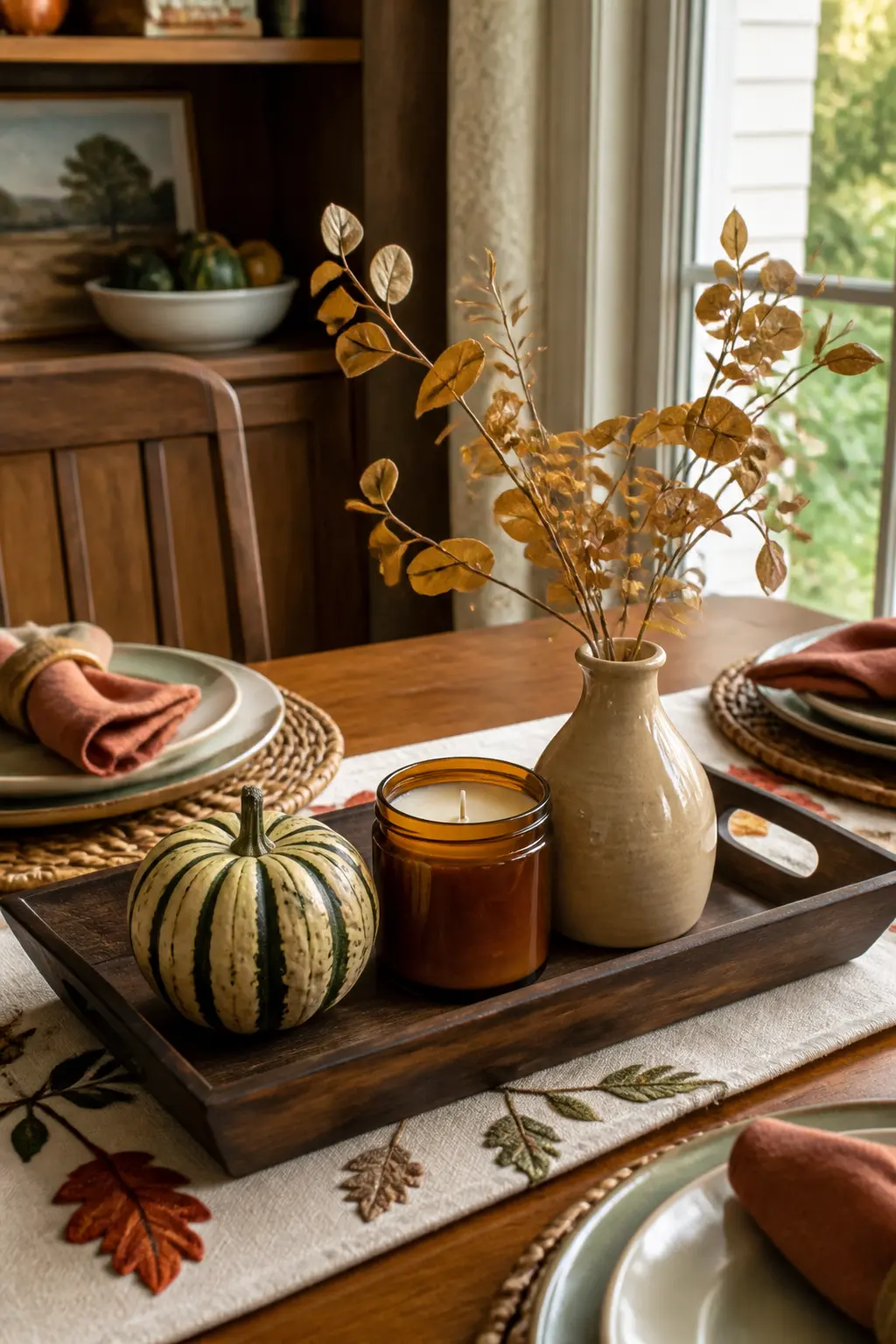
A Tray That Lifts the Whole Arrangement Away in One Move
This one is worth repeating in its own right because it is the principle that makes every other idea on this list easier. A tray is not decoration. It is infrastructure. Every seasonal object on the table sits on the tray, and when the desk arrives, the tray goes to the sideboard.
Choose a tray with handles if the arrangement is heavy, or a lip tall enough to stop things sliding. A wooden tray with a sealed finish wipes clean in ten seconds. The tray can also go directly to the table as a serving surface when dinner is casual. One object, two jobs.
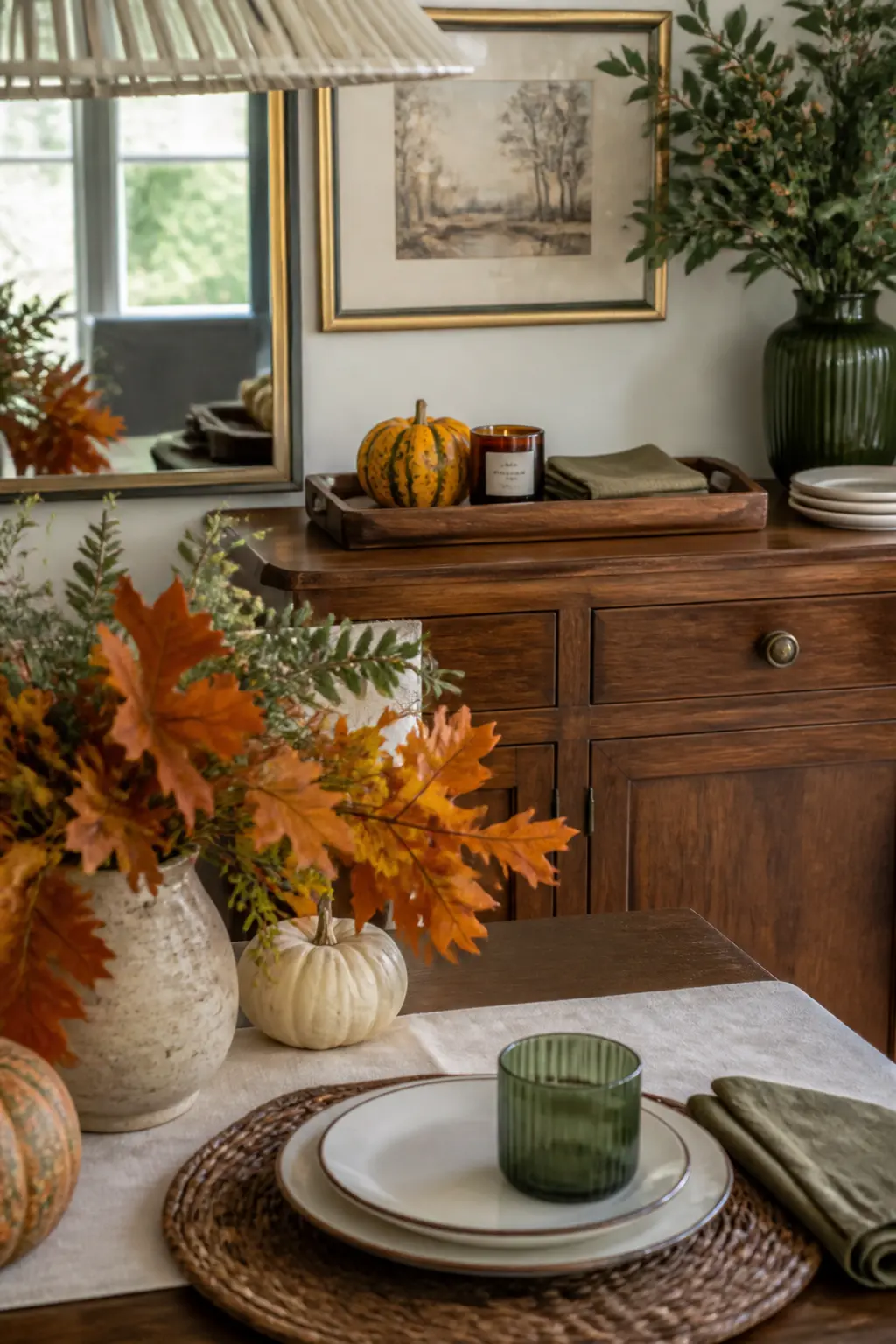
🛍 Shopping guide
Everything Chosen So It Can Stay Put During Homework Hours
This is a principle rather than a single object, and it is worth naming it plainly. Every object on the table should pass one test: can it stay where it is while a laptop is open and a textbook is flat on the other side? If it can, it belongs. If it cannot, it goes on the windowsill or the sideboard.
Low, weighted, washable, edible or simply small enough to sit at the edge: these are the qualifiers. A table that looks good at dinner and still works at nine on a school night is not a compromise. It is just better design.
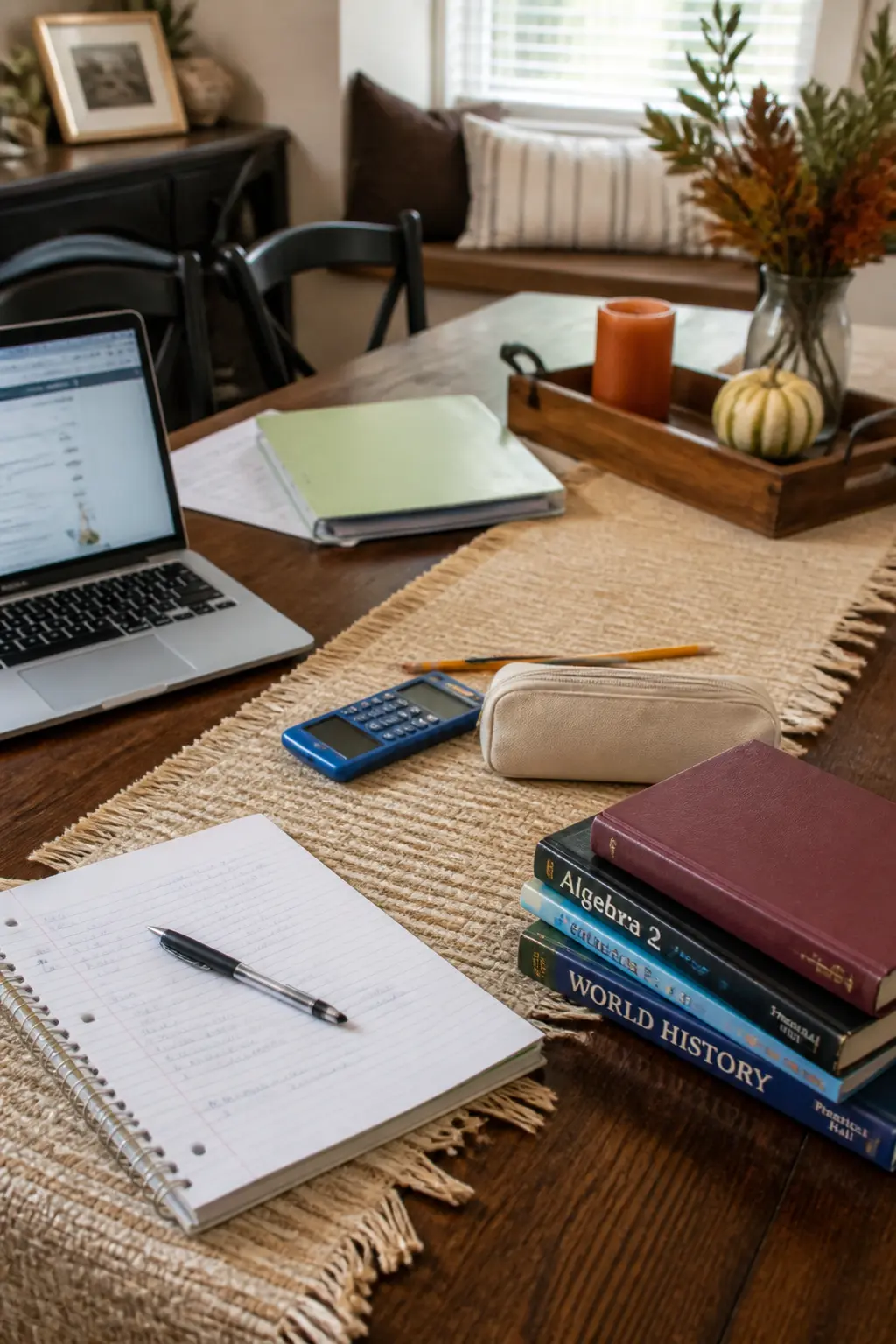
Everything Chosen to Survive Being Pushed Aside
This is the second principle entry, and it earns its place because it changes how things are chosen rather than what is chosen. Before buying anything for the table, ask whether it survives a push to one side. Breakable, tippable, water-dependent or fragile things fail this test immediately.
Weighted, sealed, dried, edible, washable or tray-based: these are the categories that pass. A table that looks good and survives daily use is not a lower-ambition table. It is a higher-skill one, and the results are better because nothing ever needs to be tidied away in a hurry.
Layers Under the Objects: Runners, Placemats and Trivets
The surface underneath the objects does more than it is given credit for. A runner in a washable fabric gives the table autumn warmth without any object on it at all. Roll it up in ten seconds and the table is clear. A rough-weave placemat stays out permanently and protects the wood from the laptop as well as from a hot mug.
Trivets in warm wood earn their place between meals because they look deliberate. A coaster left out is part of the styling, not clutter, when it is the right material. These are the background layer: always there, never in the way.
Runner That Rolls Up in Seconds
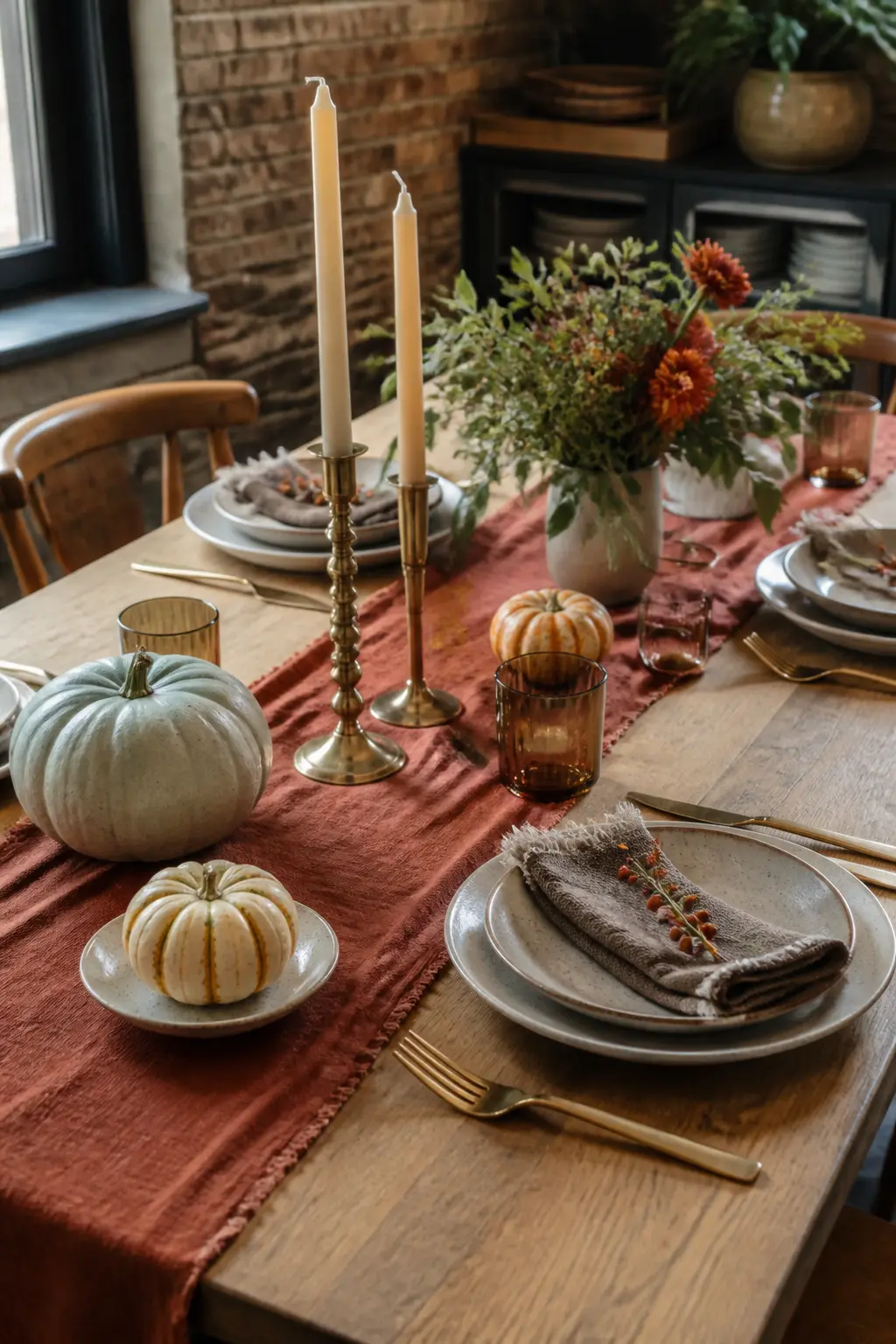
A table runner in a washable cotton or linen is the lowest-effort piece of seasonal decor there is. Roll it up and the table is a desk. Unroll it and dinner is set, even before anything else is added. The fabric does the colour work so the objects on top do not have to.
Look for a runner in a burnt orange, deep rust or warm ochre that reads as autumn without needing a single pumpkin beside it. Pre-washed linen holds up to weekly washing and softens into a better texture each time.
🛍 Shopping guide
Placemats That Stay Out and Double as Protection
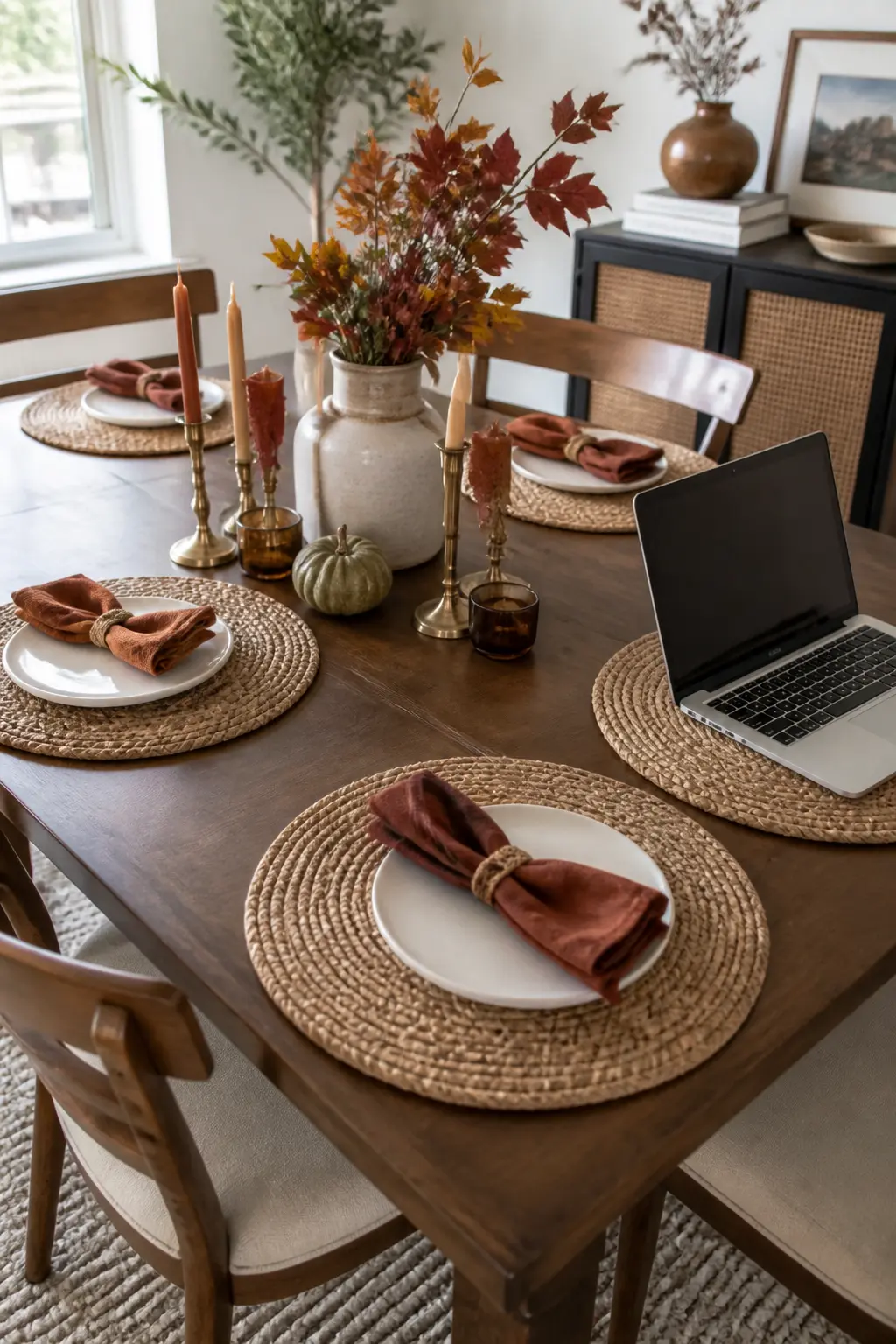
A placemat left out on the table at all times is not lazy styling. It is a heat mat, a scratch protector and a colour moment all at once. The laptop sits on it. The coffee mug sits on it. At dinner, the plate goes on it.
Rough-weave jute, thick woven cotton or cork placemats in an earthy tone read as autumn without any other object added. Buy enough for the full table and they create a rhythm across the surface that looks deliberate even on a Tuesday morning.
Cotton Runner in a Washable Fabric
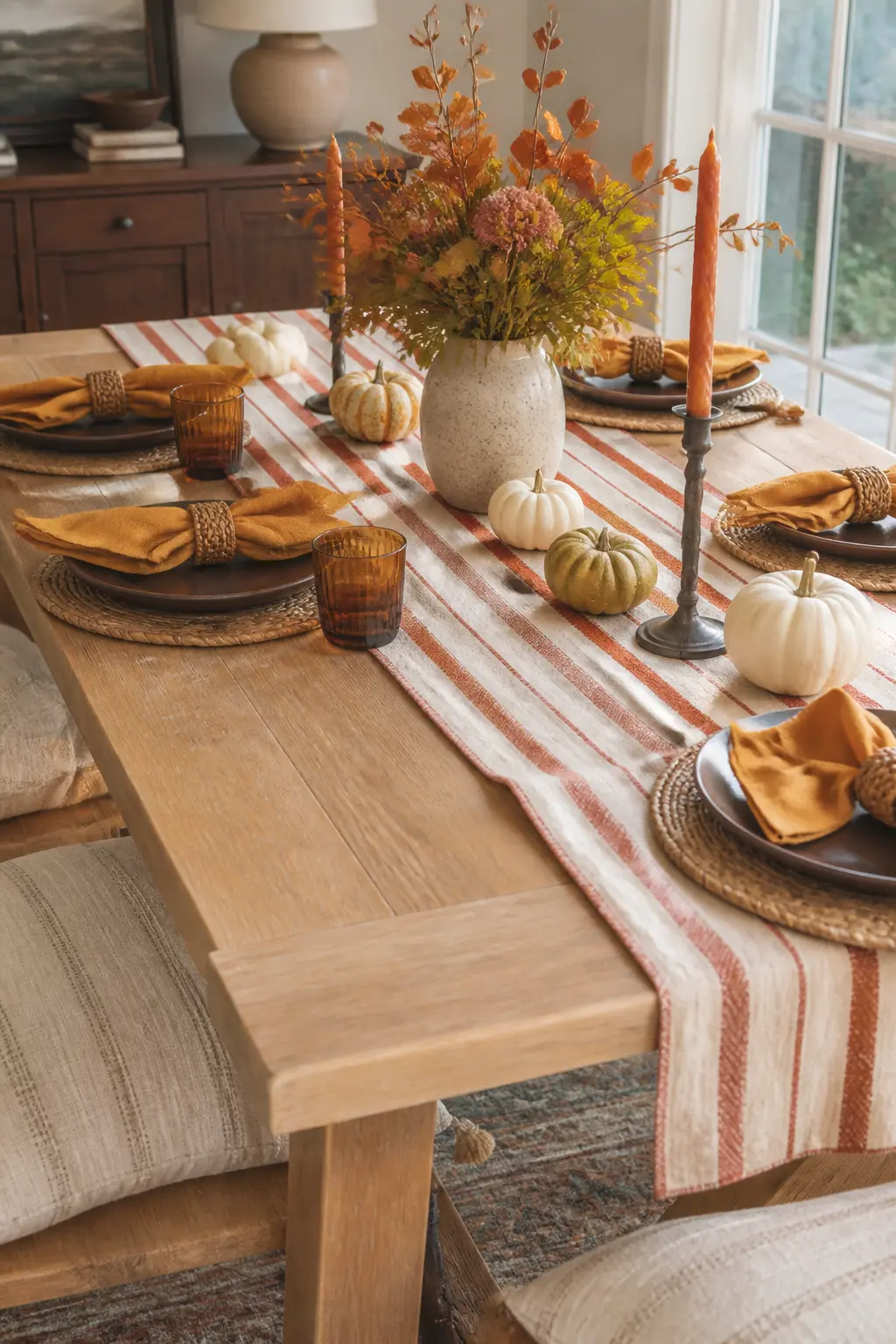
A cotton runner is the runner to reach for when the table is used daily. It goes in the washing machine, it dries flat, and it goes back on the table without ironing if the weave is open enough. It survives homework, coffee spills and a rushed breakfast without looking worse for it.
Choose a tighter weave than you think you need so it lasts longer. A medium-weight cotton in a natural or warm-toned stripe reads as styled without being precious. Wash it weekly and it improves rather than pills.
🛍 Shopping guide
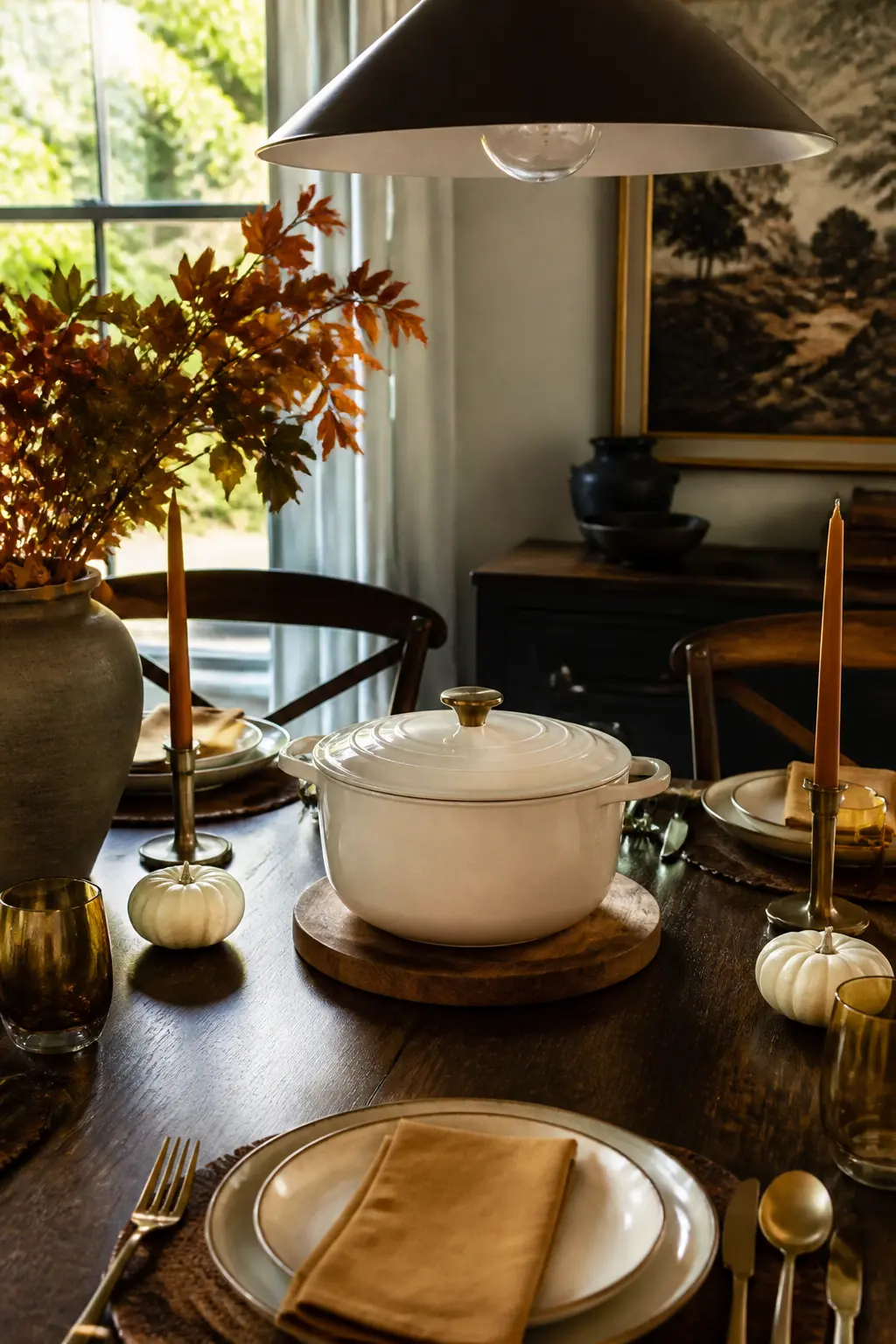
Trivet in Warm Wood Left Permanently on the Table
A wooden trivet left on the table full-time is the definition of a thing that earns its keep. It protects the table from hot pots and mugs. It gives objects a natural platform when the table is set for dinner. And a well-made wooden trivet in walnut or teak is simply a good-looking object.
Choose a round or oval trivet wide enough to hold a casserole dish. Square trivets read more graphic if that suits the table. Silicone feet on the base mean it does not slide when the pot is heavy.
🛍 Shopping guide
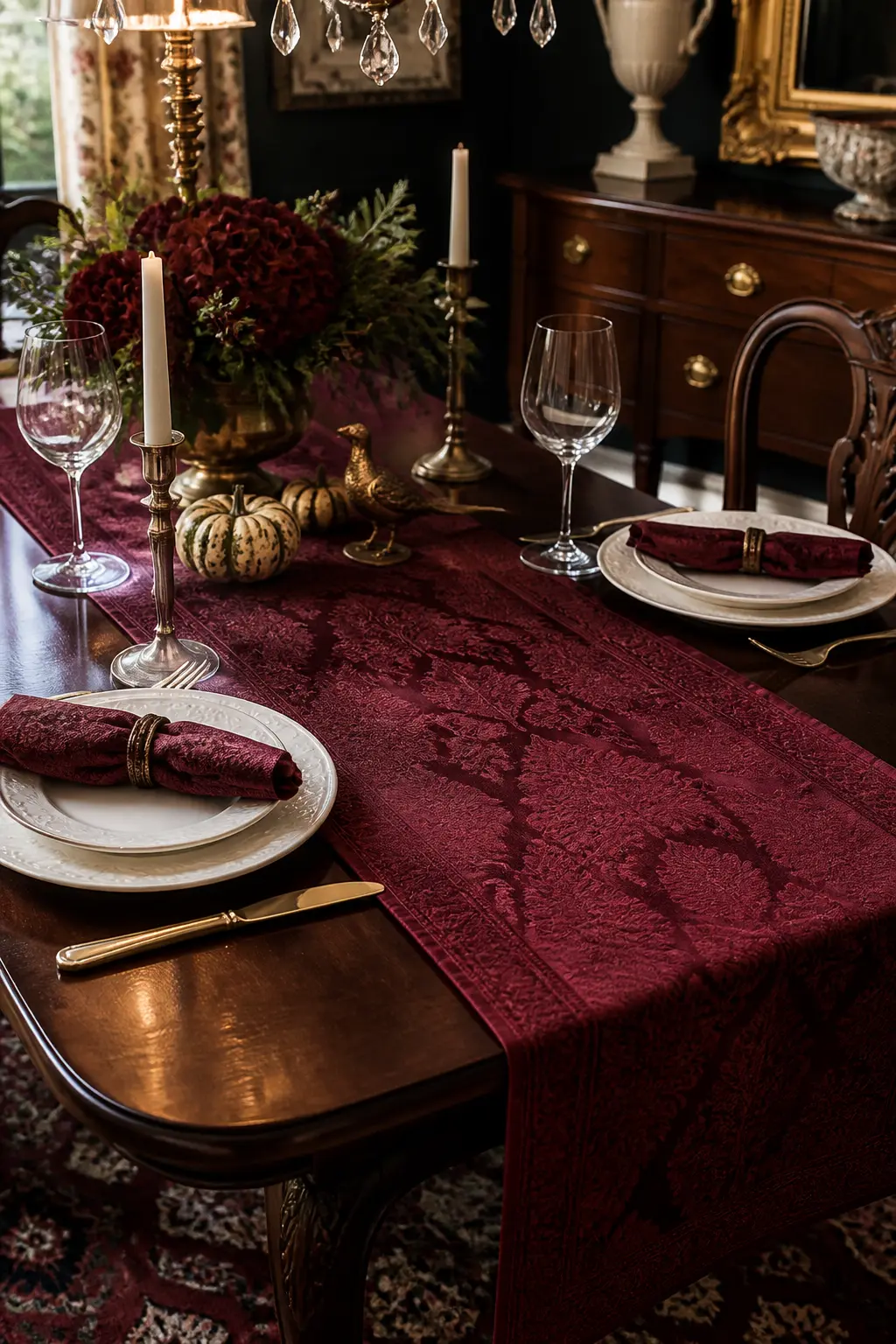
Deep Wine Runner in a Heavier Weave
A heavier weave runner in deep burgundy or wine adds the richness that cotton alone cannot. The weight keeps it flat without clamps or weights. It reads as autumn immediately, without a single additional object on the table. This is the runner for a darker table or a room that needs more colour.
Look for a jacquard weave or a thick cotton-linen mix. The texture catches the light differently from a plain weave and gives the table more depth in the evening. Fold it in half lengthwise to use it on a narrower table: the weight holds the fold neatly.
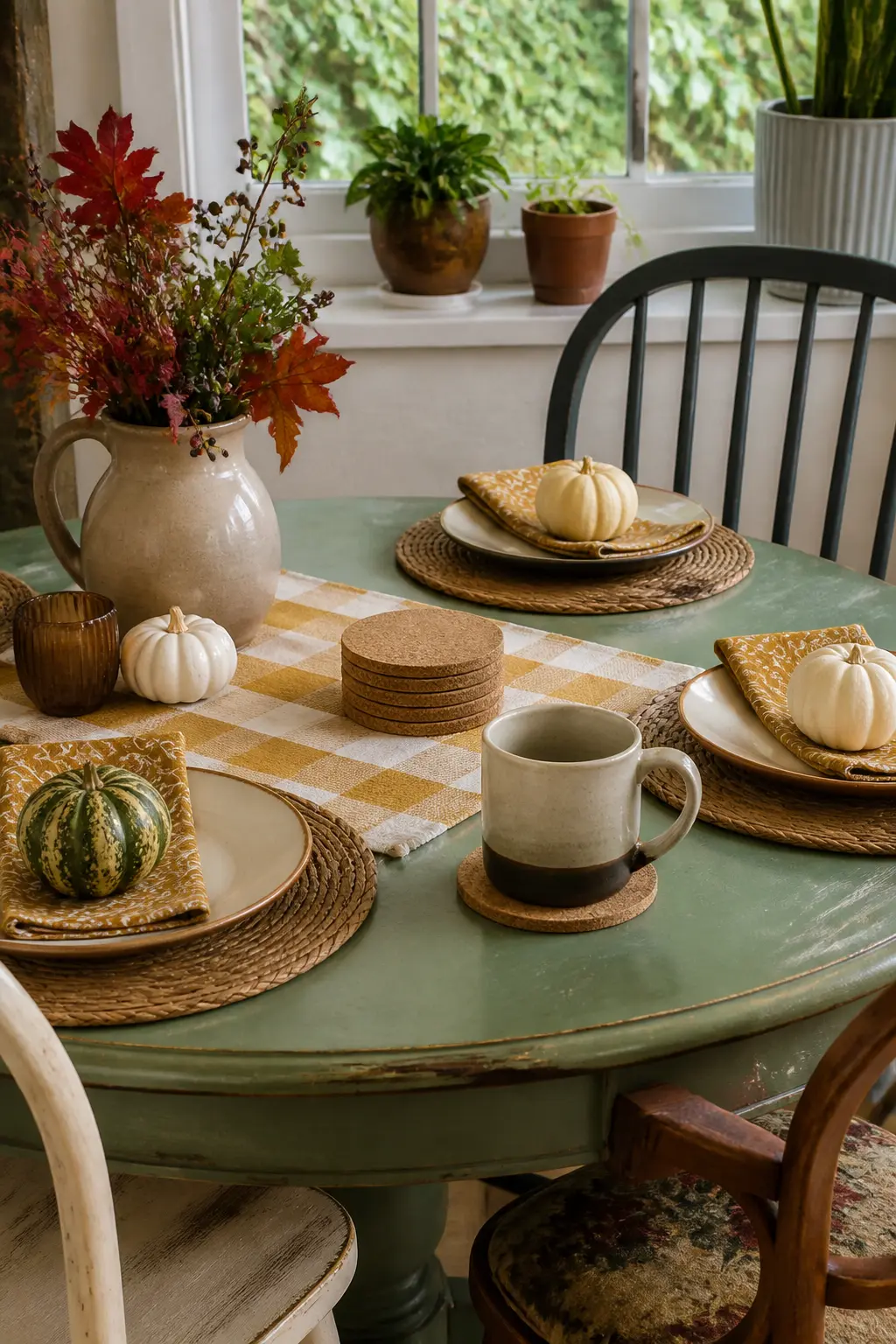
Coasters Left Out Permanently as Part of the Styling
Coasters left in a stack at the center of the table, or placed at each corner where glasses usually land, are both practical and considered. In cork, slate, marble or rattan, they contribute to the texture story of the table without needing to be moved when the laptop arrives.
A set of four to six coasters stacked neatly is a styling detail as much as a pile of books on a coffee table. The material should be one that suits the rest of the table: cork and rattan sit naturally with linen and wood, slate with ceramic and stone.
🛍 Shopping guide
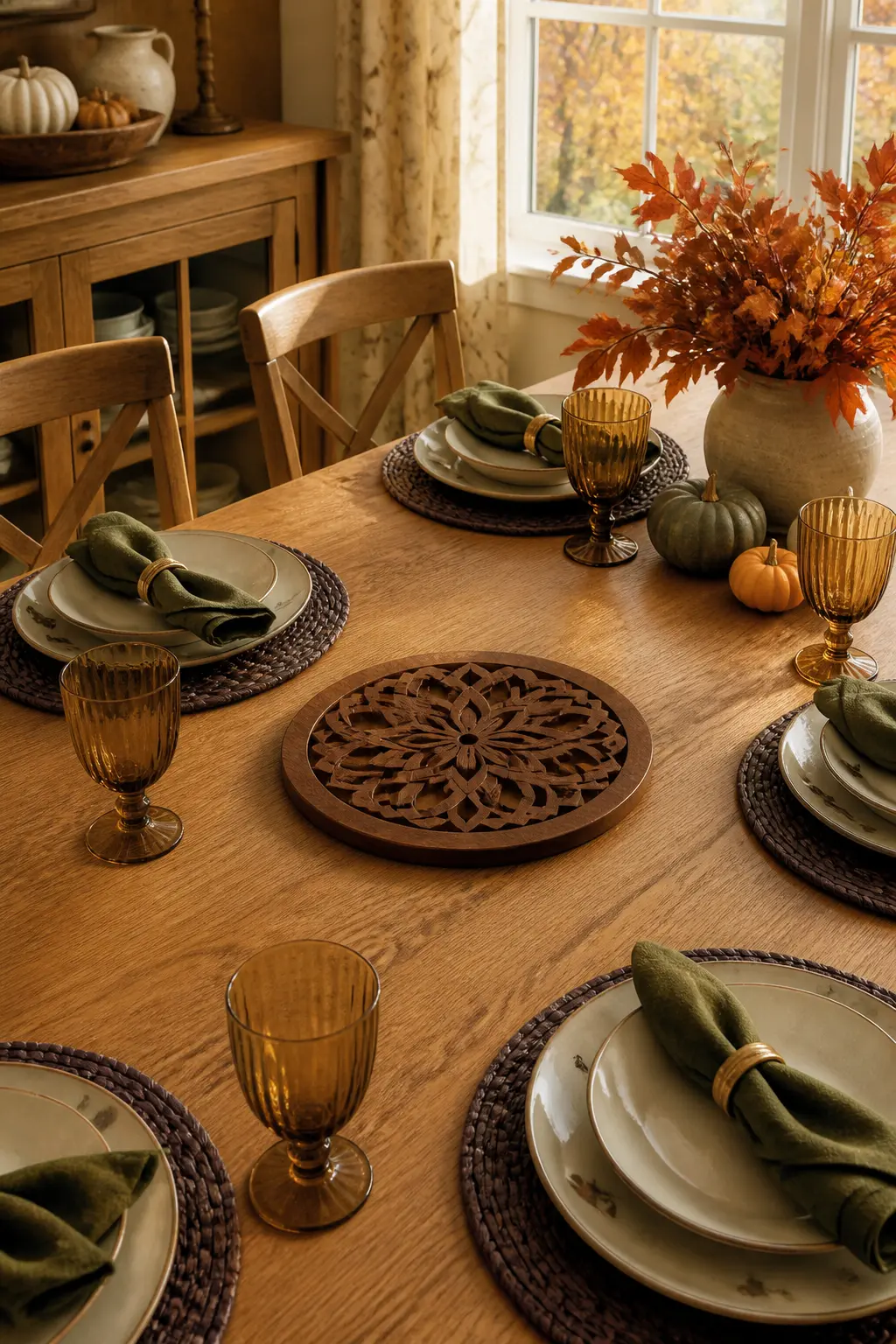
Wooden Trivet Left Permanently in the Centre
A trivet in the center of the table at all times removes the scramble for a heat mat when dinner is ready and the pot is hot. It is always there. It protects the table. Between meals it holds the candle, the salt dish or simply sits as a warm wood detail in the center of the surface.
Round trivets in walnut or teak are the ones that look best left out permanently. A carved or slatted design catches the light and adds texture. A plain round disc is cleaner and disappears into the table more quietly. Both work.
🛍 Shopping guide
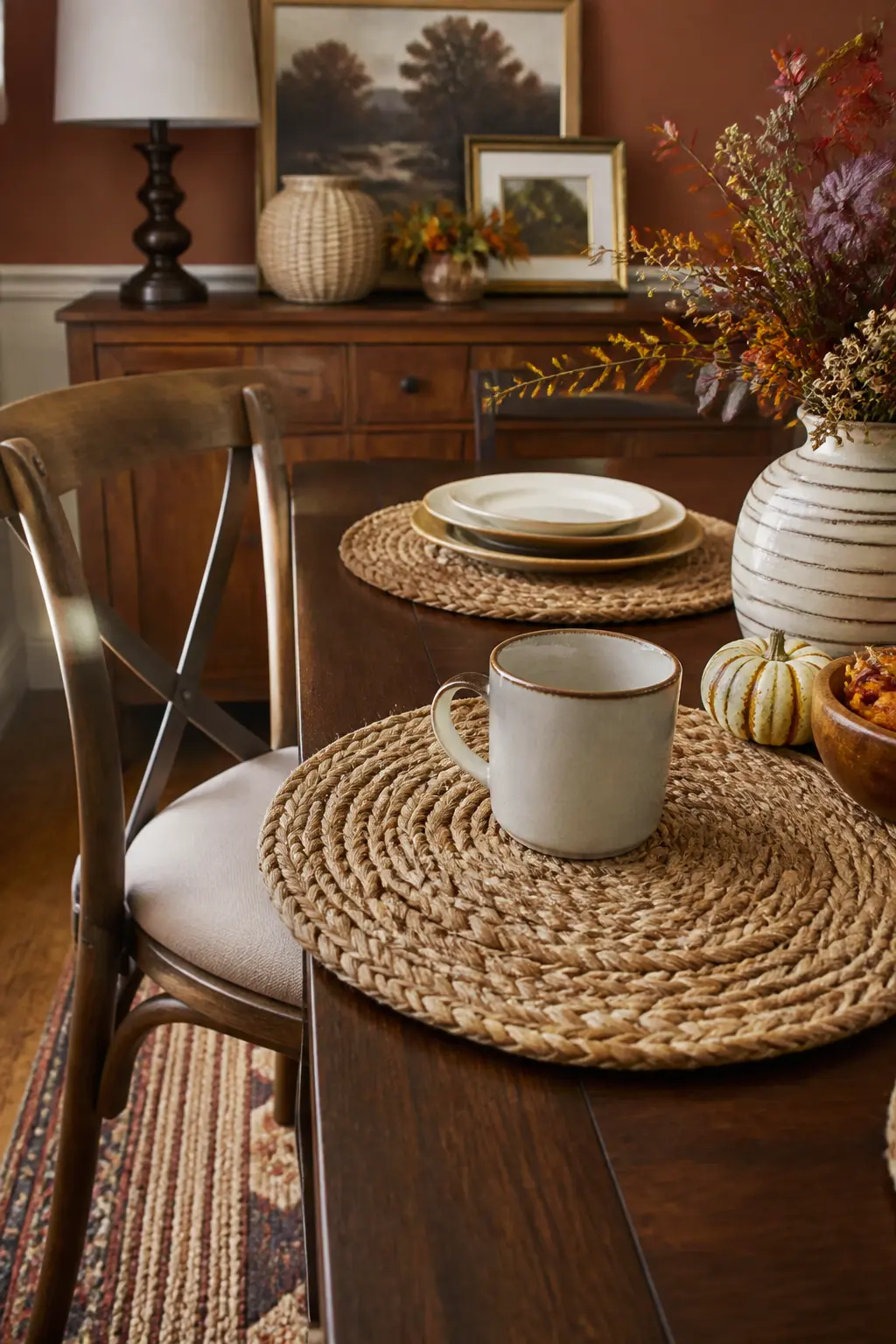
Placemats in a Rough Weave Rather Than Smooth
Texture is the ingredient that smooth placemats never have. A rough-weave placemat in jute, chunky cotton or hemp adds depth to a table that might otherwise read as flat. The texture catches the light differently at different times of day and makes even a simple table setting look more considered.
Rough weaves also hide the marks of daily use better than smooth ones. A placemat that shows every crumb and ring is not a placemat for a working table. Choose a weave open enough to shake out over the sink and you have a placemat that works every day without special handling.
🛍 Shopping guide
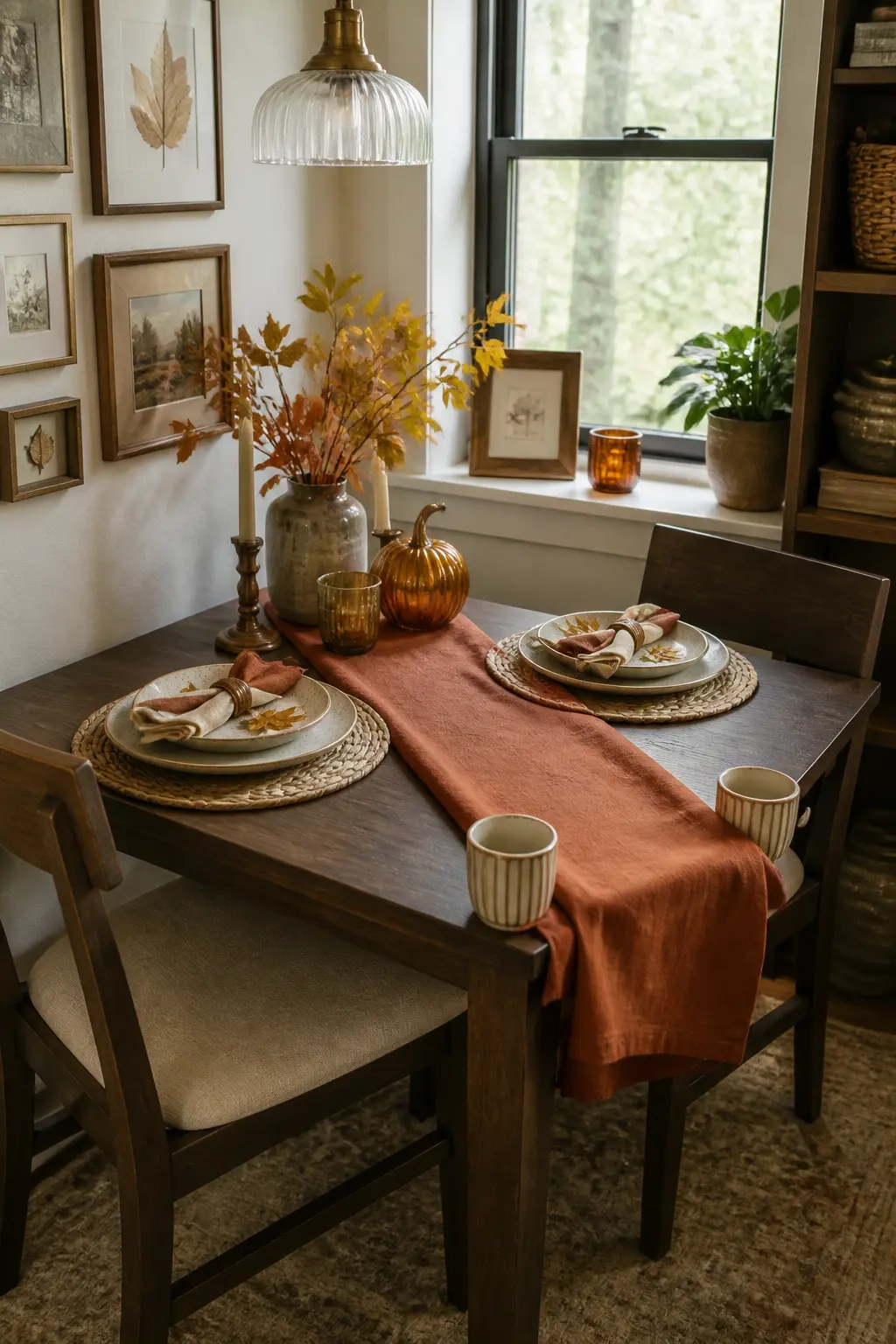
Runner Folded in Half to Fit a Smaller Table
A standard runner on a small table overhangs the edges and looks wrong. Fold it in half lengthwise and it becomes a narrower, thicker stripe of fabric that suits the proportions of a smaller table and adds more texture because of the doubled weight. No hemming, no cutting, no sewing.
A heavier cotton or linen takes this fold well and holds it flat. A thin runner slides apart. If the fold needs help staying in place, a small object at each end of the fold, a salt dish, a glass, is all that is needed.
🛍 Shopping guide
Bowls and Low Vessels: Decor That Gets Used
The best object on a working table is one that earns its place twice. A bowl of apples is fall decor and fruit. A bowl of mixed nuts with a cracker beside it is a snack as much as it is a vignette. A shallow bowl of gourds costs almost nothing and moves aside with one hand.
Low is the word. Anything that forces eye contact across the table from seat to seat has already failed the test. Keep the maximum height at about the level of a wine glass lying on its side and every seat at the table can see every other one.
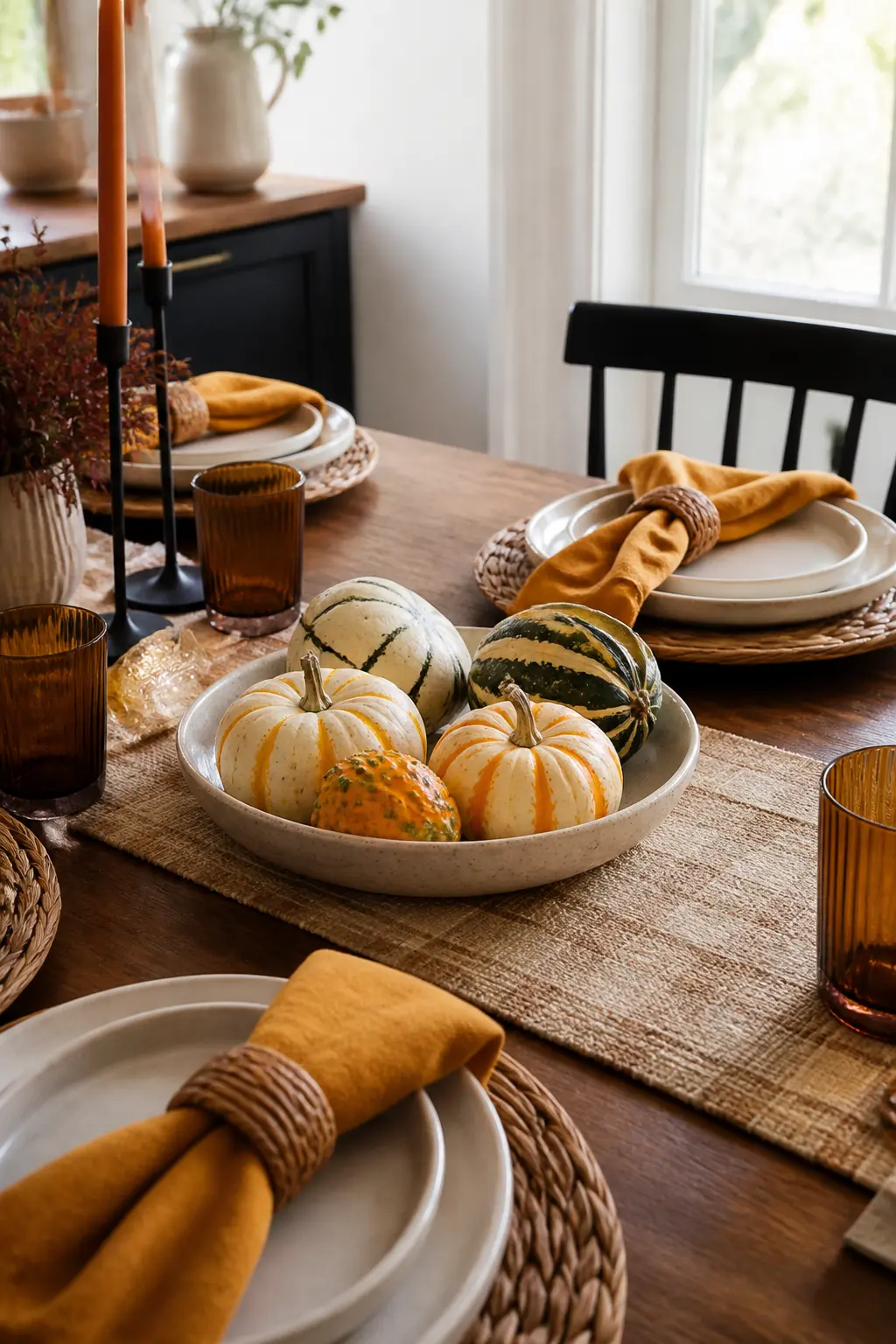
Low Bowl of Gourds That Slides Aside Easily
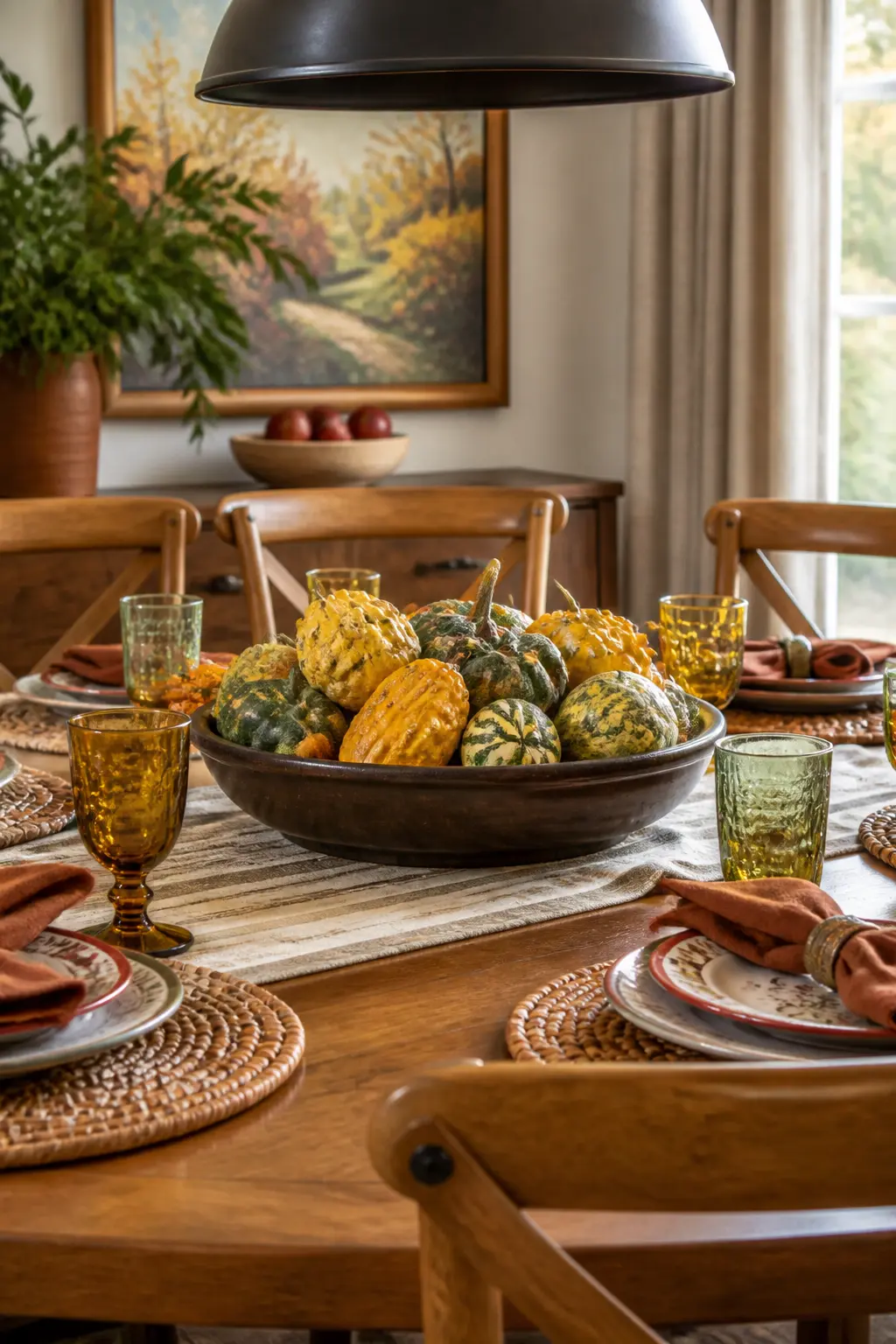
A shallow bowl filled with a mix of small gourds and mini pumpkins sits low enough that nobody has to lean sideways to see across the table. The bowl itself does half the work: choose ceramic or dark wood and it reads as intentional even when the gourds are ordinary.
The point of this one is that it slides. No lifting, no carrying, no reorganising. Nudge it to one side with one hand when the homework arrives and push it back for dinner. The gourds last weeks without any attention.
Bowl of Apples That Also Gets Eaten
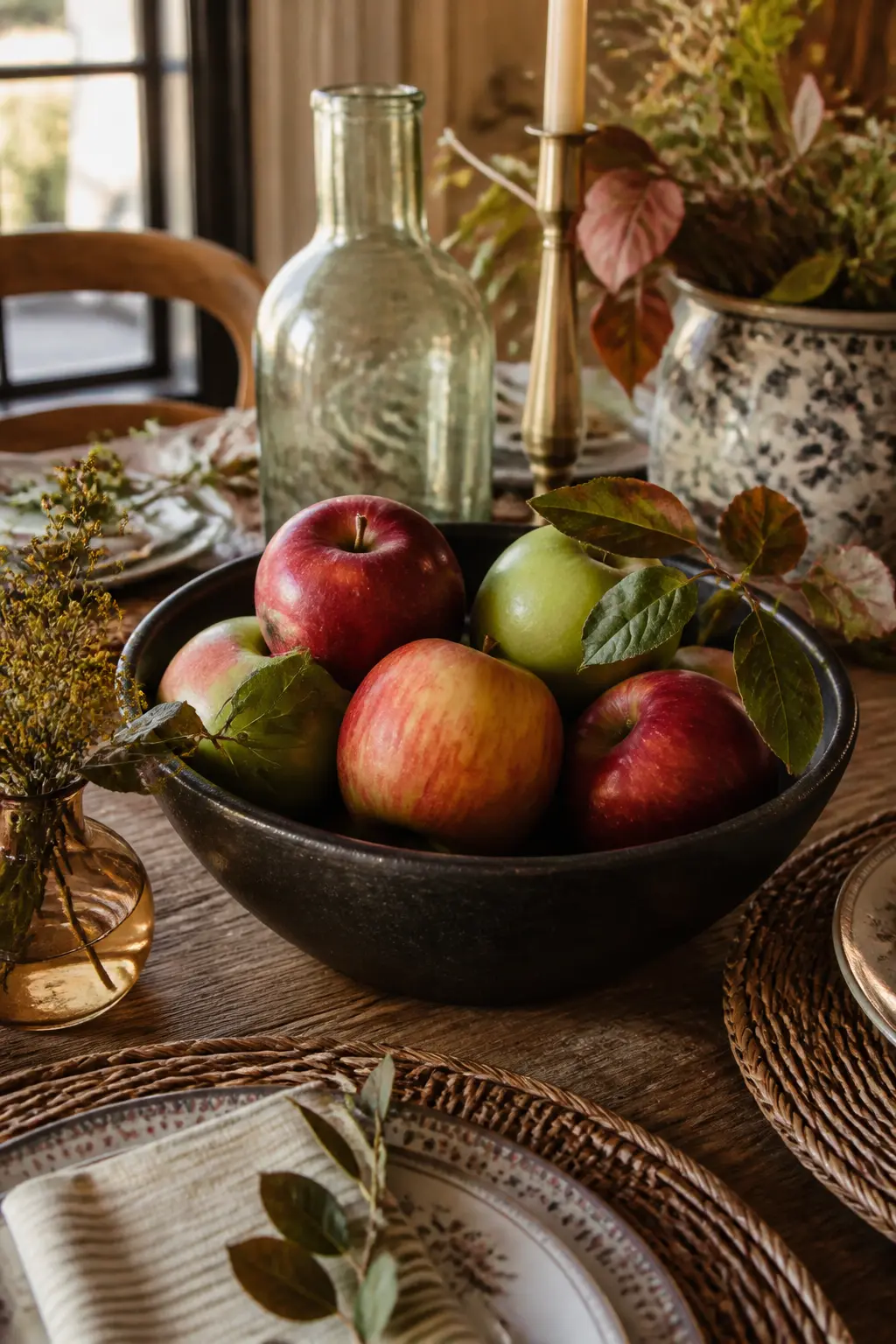
A bowl of apples is the most useful object on this list. It is fall decor in the morning and a snack at four in the afternoon. When the bowl empties, refill it. The cost is a bag of apples, which was already on the shopping list.
A wide, low bowl in dark ceramic or oiled wood shows the apples well without raising them above sightline. Mix varieties if the look matters: a few green and a few deep red against the wood of the bowl reads richer than a single colour.
🛍 Shopping guide
A Shallow Bowl Low Enough to See Over at Every Seat
The height rule for a working table is that nothing on the table should interrupt the sightline between two people sitting opposite each other. A shallow bowl clears that threshold easily. Fill it with anything seasonal: gourds, nuts, pine cones, a few autumn leaves sealed in a matte spray.
The bowl does the styling. What is in it is secondary. A wide, flat ceramic bowl in a dark or earthy glaze is a year-round object that earns its place. Swap the filling for the season and the bowl never needs to come off the table.
Bowl of Nuts Left Out With a Cracker Beside It
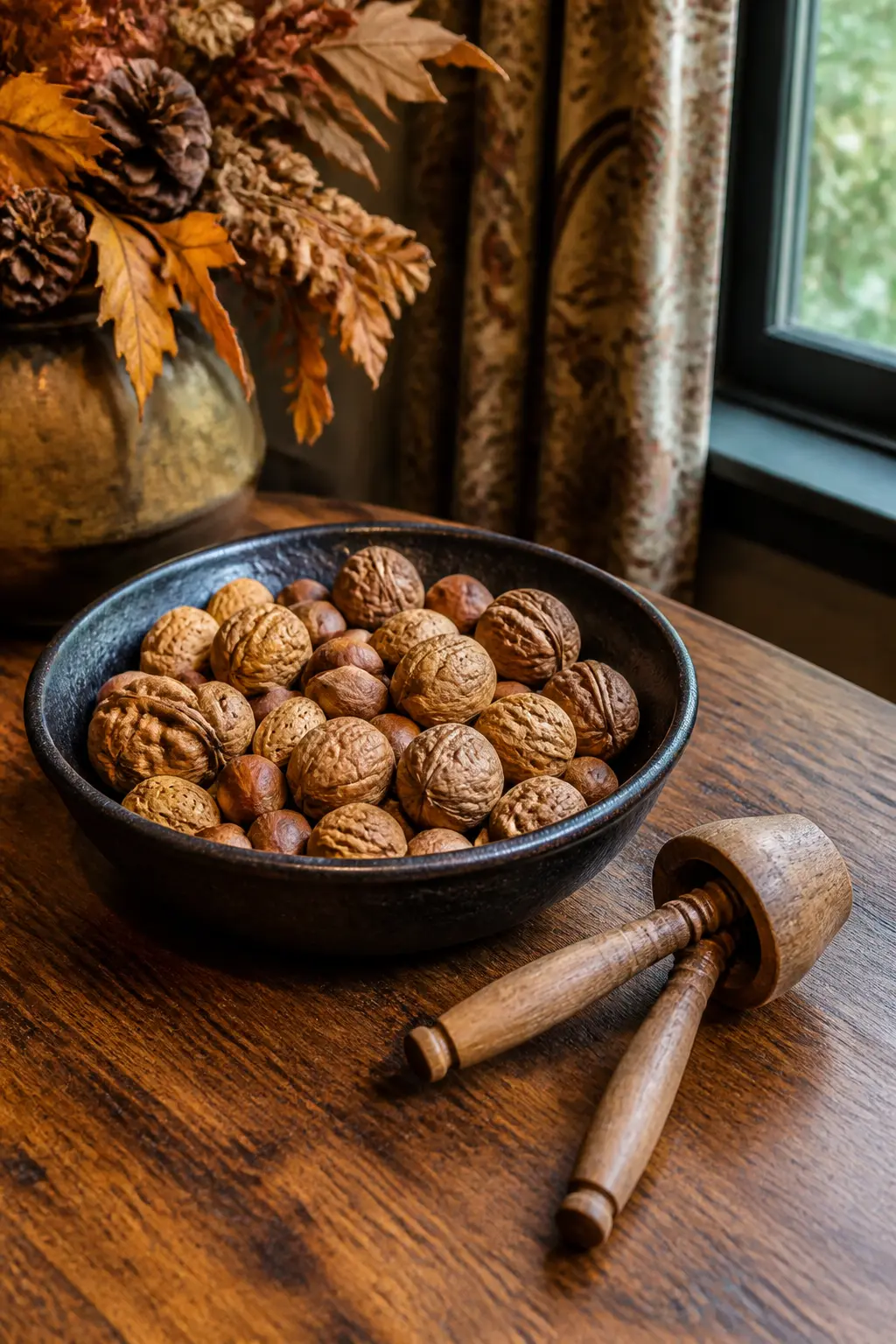
A bowl of nuts in the shell, left on the table with a wooden or metal nutcracker beside it, is one of those objects that reads as considered and turns out to be one of the most useful things on the table. It is a snack bowl. It is a seasonal texture object. It gets replenished weekly.
Mixed nuts in the shell, walnuts, hazelnuts and almonds especially, have exactly the brown, cream and warm-toned palette that autumn calls for without any effort to achieve it. A small bowl in dark ceramic or black cast iron suits them best.
Fruit Bowl That Gets Eaten From During the Week
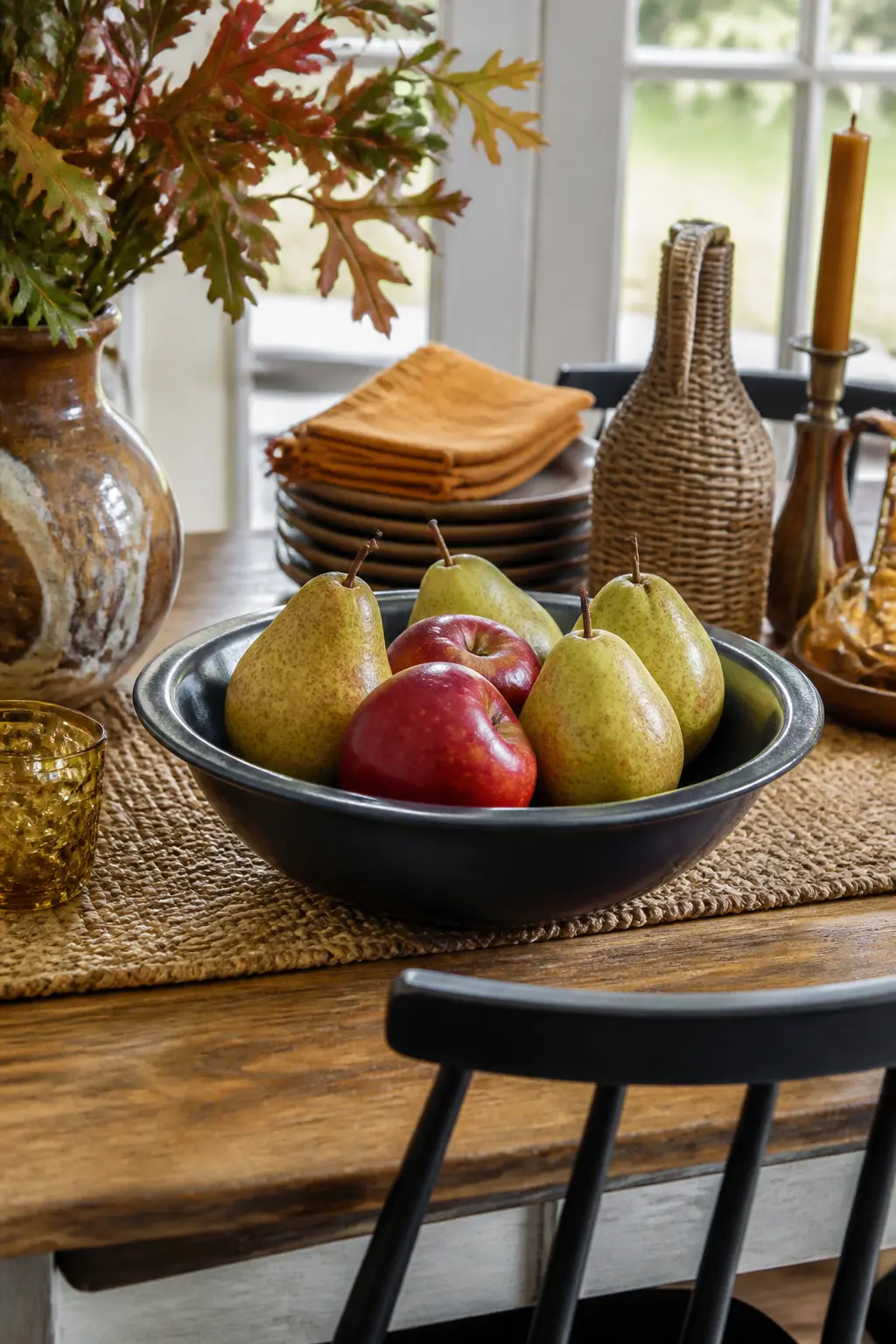
A fruit bowl on the table is decor that maintains itself by being used. Eat an apple, replace it. The bowl is always in rotation, always fresh, and always seasonal because the fruit in it changes with what is available. In autumn: apples, pears, quinces, a few clementines.
The bowl matters more than the fruit in terms of styling. A wide, low bowl in dark ceramic or natural wood lets the fruit sit at the right height and the right colour contrast. A bowl that is too tall hides the fruit; one that is too narrow looks overcrowded.
🛍 Shopping guide
Candles and Light: Weighted, Jarred and Safe to Leave
A taper in a lightweight holder is the first thing that gets knocked over. Skip it. A candle in a heavy jar, or two candlesticks chosen for their weight and base width, survives a homework session being pushed closer to the wall without incident. The light they give in the evening is worth the shelf space they take up all day.
Weighted holders in ceramic or cast iron are the ones to look for. They do not tip. A jar candle in an amber or smoke-coloured glass adds to the autumn palette without trying.
Two Candlesticks Rather Than a Full Centerpiece
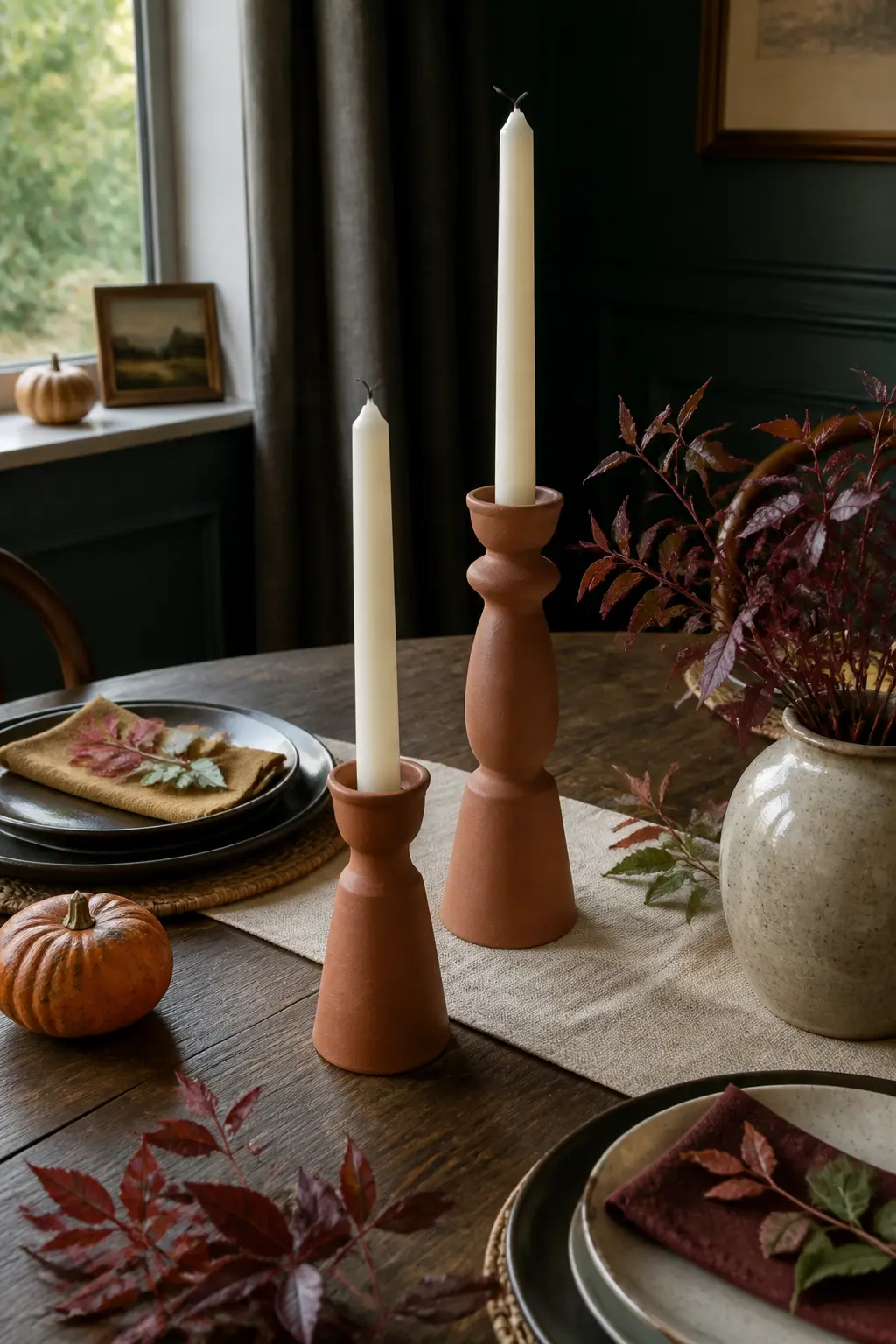
Two candlesticks, placed together or slightly apart, do the work of a full centerpiece without blocking the view across the table or requiring any arrangement skill. Choose holders in matte ceramic, dark metal or turned wood and they look considered in every season.
Place them off-center rather than exactly in the middle. This is the single easiest styling move on the list: it makes the table look dressed rather than decorated. The candles themselves can be beeswax or unscented cream; both read as warm and autumnal without competing with food smells.
Candle in a Jar Rather Than Loose Tapers
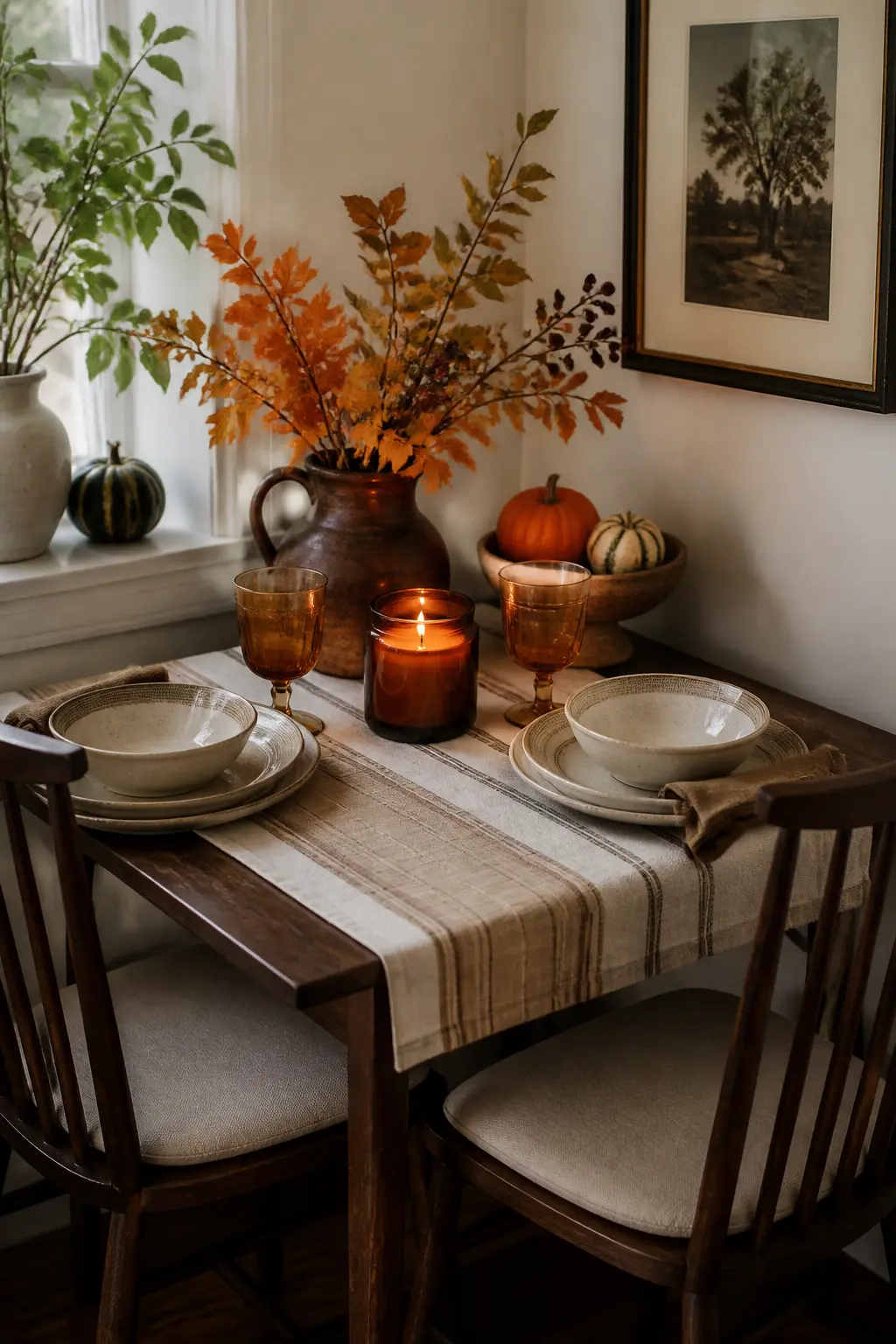
A jar candle does not tip, does not drip wax onto the table, and does not require a holder. The jar itself is weighted by the wax inside it. When it burns down, the jar can be cleaned and used as a small vase or a pencil holder. There is no waste and no mess.
For autumn, look for a jar in amber, smoked glass or matte black. The colour of the glass adds to the table without needing anything around it. Scent is a personal call, but an unscented candle works better at a dinner table where food smells should win.
🛍 Shopping guide
Candles in Weighted Holders That Survive Being Bumped
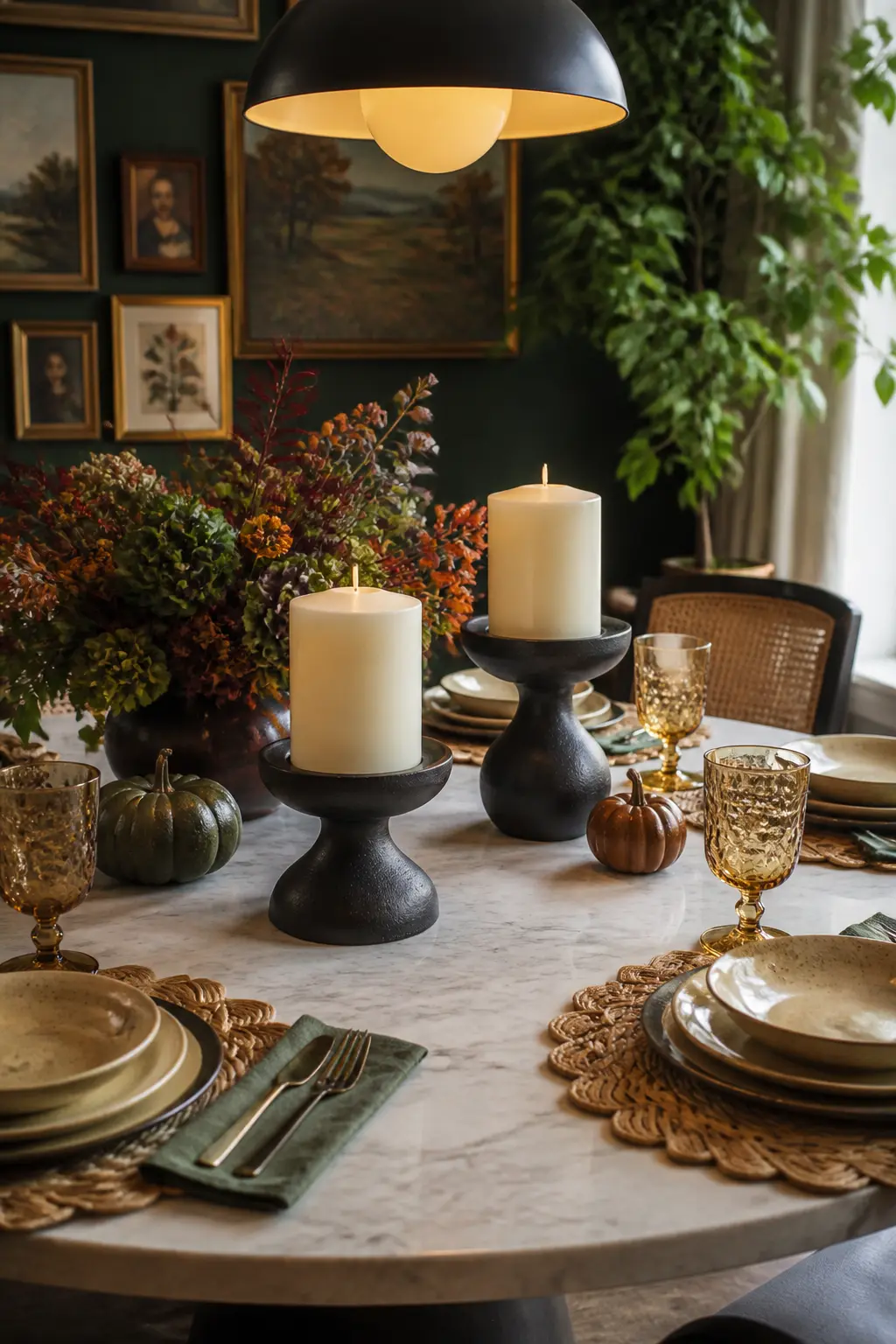
A lightweight candleholder is the first thing to go in a house with a busy table. A weighted holder in cast iron, heavy ceramic or thick glass stays upright when bumped. That is not a small thing when the table is also where the eight-year-old does times tables.
For autumn, a matte black cast iron holder or a thick ceramic pillar holder in a warm earthy tone both work. The weight signals quality even before the candle is lit. A pillar candle in a weighted holder is safer than a taper in almost every scenario.
🛍 Shopping guide
Candle in a Jar Rather Than a Taper for Daily Use
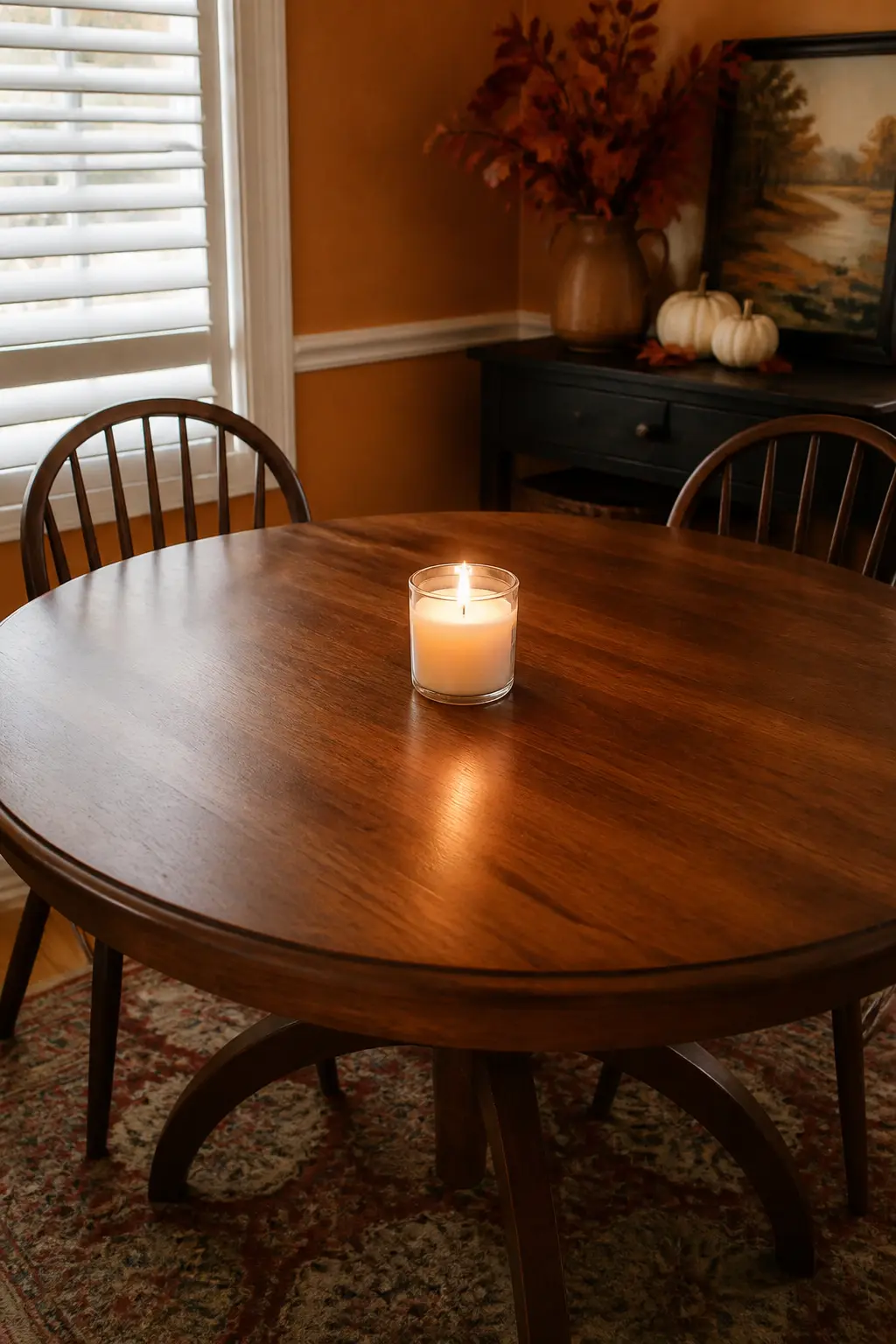
This is the same principle as the earlier jar candle entry, applied specifically to the choice between a jar and a taper at a table used daily. A taper requires a holder, can tip, drips wax, and burns unevenly in a draft. A jar does none of these things. For a table used for homework and meals, the jar wins every time.
Keep two or three jar candles on rotation: one on the table, one on the sideboard, one stored. Light one for dinner and replace it when it runs low. The jar, once empty, becomes a small vase or a pen holder. Nothing is wasted.
🛍 Shopping guide
Dried Stems, Plants and the Windowsill Rule
Dried stems do not wilt, do not drop petals and do not need water changed on a Tuesday when nobody has time. A single stem or a small bunch in a heavy-bottomed bud vase at one end of the table, not the middle, stays out of the way of laptops and avoids the centrepiece trap entirely.
A potted plant in an autumn-toned ceramic pot can live on the windowsill and move to the table for meals. It keeps the table clear during the day and adds something living to the dinner setting without committing the whole surface to decor.
Small Vase of Dried Stems at One End, Not the Middle
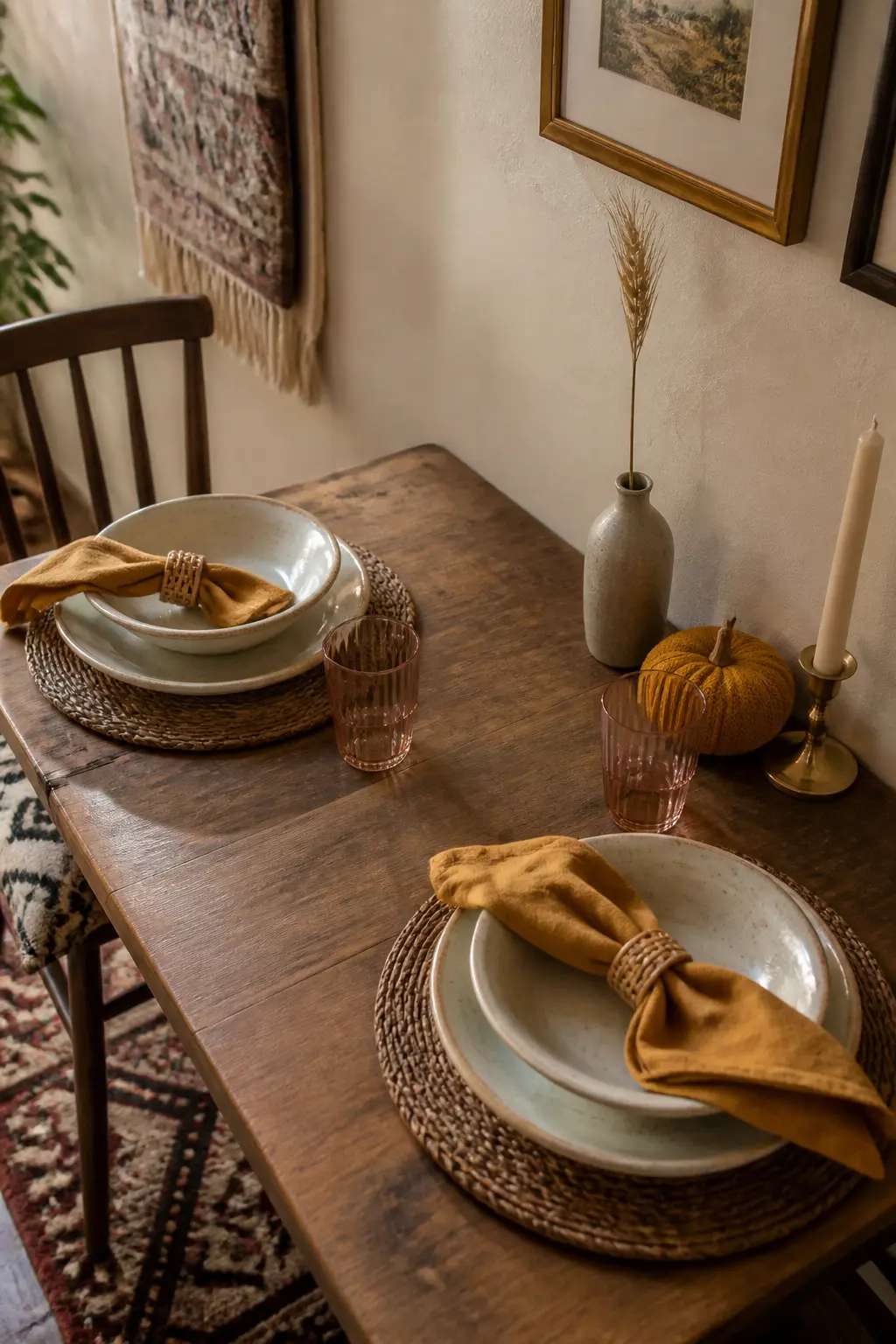
Moving the vase to one end of the table is the move that makes it invisible to the laptop user and visible to the dinner guest. It does not cut the sightline across the table. It does not compete with plates. It is simply there, doing its work quietly from the corner.
Dried pampas, wheat, eucalyptus or a single branch of dried oak leaves all work. The vase should be heavy enough at the base that it does not tip: look for stoneware, thick ceramic or cast glass. One stem is often enough.
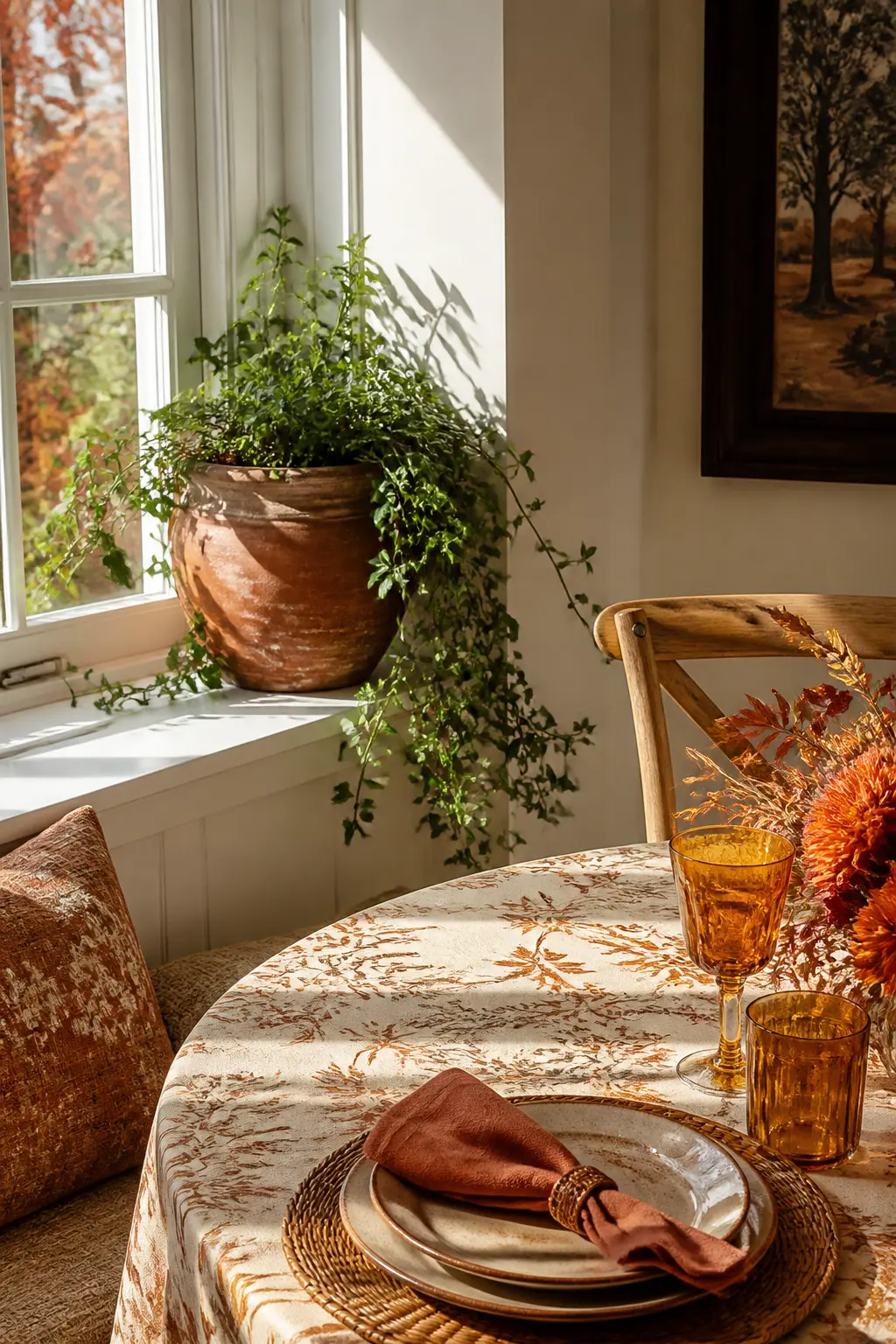
Single Potted Plant in an Autumn-Toned Pot
A single potted plant brings the one thing dried stems cannot: something living. The trick for a working table is that the pot lives on the windowsill by default and moves to the table for meals. The plant gets its light. The table stays clear during the day.
Choose the pot as carefully as the plant. A ceramic pot in a deep terracotta, forest green or burnished amber reads as autumn even when the plant inside is an ordinary pothos. The pot is the styling object. The plant is the bonus.
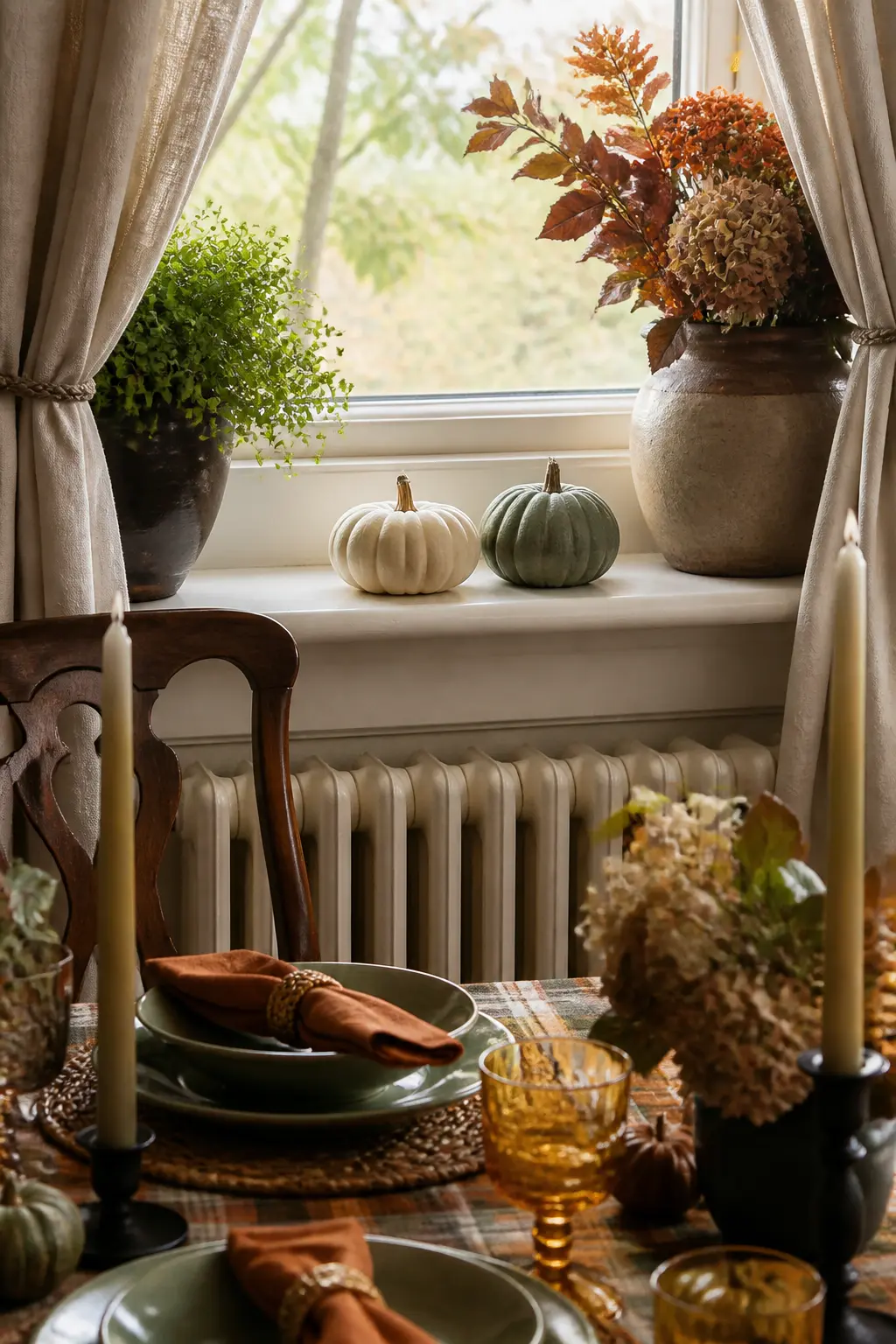
Small Pumpkin That Lives on the Windowsill
A small pumpkin on the windowsill costs almost nothing, lasts weeks, and moves to the table for dinner in four seconds. During the day it is on the windowsill where it belongs, out of the way of screens and books. At dinner it earns its place as the simplest possible seasonal object.
White, cream and sage-green pumpkins read as considered rather than generic. A single small pumpkin in one of these tones alongside a jar candle is a complete autumn table. Two small pumpkins in different shades is a still life.
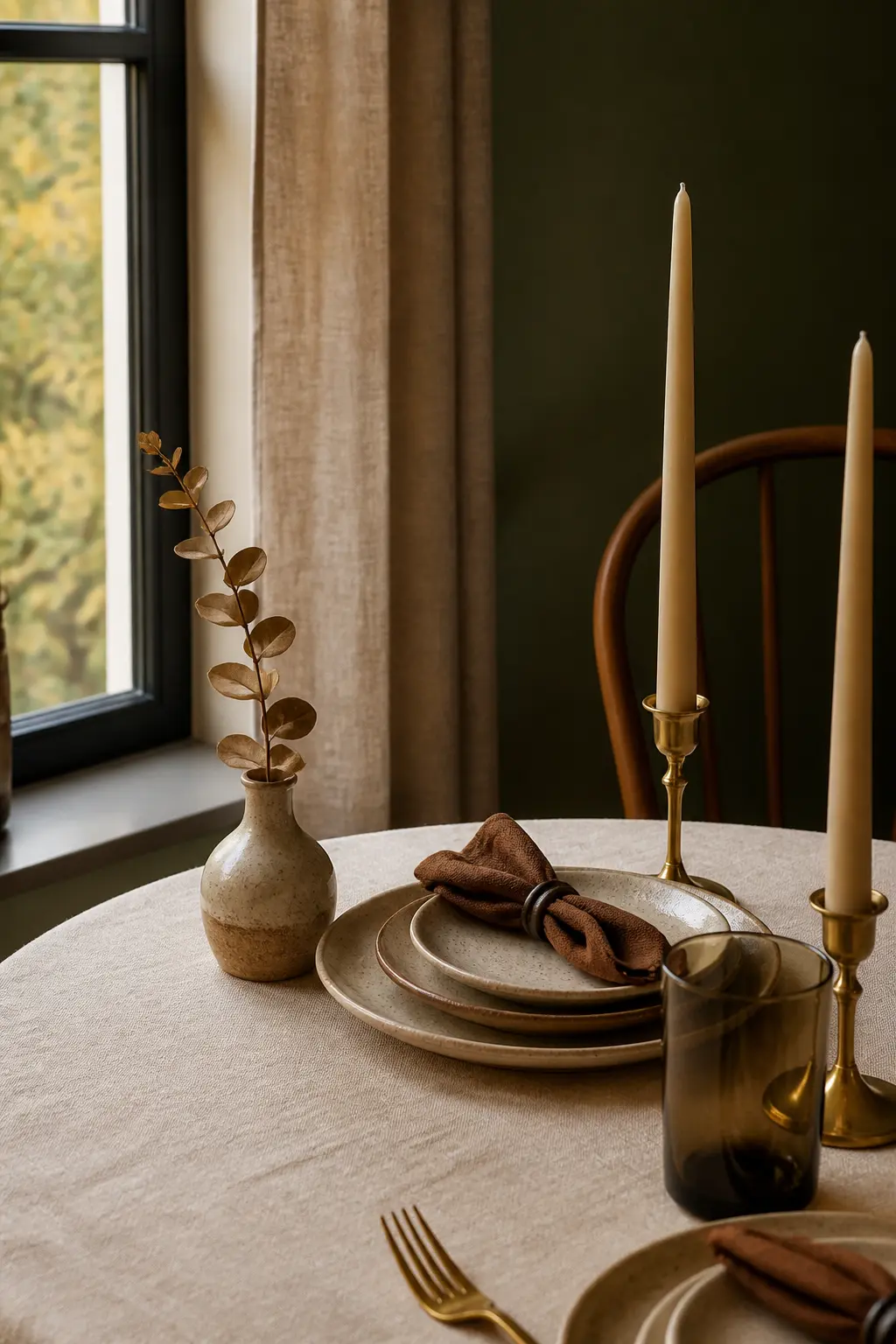
One Dried Stem in a Heavy-Bottomed Bud Vase
One stem in one vase is a complete table moment. It is the minimum version of every dried-flower arrangement and also the most practical one: it takes up the space of a single pen and contributes exactly as much warmth and texture as a whole bunch, from a distance of two feet.
The vase must be heavy at the base. A thin-necked bottle that tips at a touch is not suitable for this table. A stoneware bud vase, a thick-walled ceramic cylinder or a heavy glass bottle all work. One stem of dried eucalyptus, dried cotton, dried allium or even a single dried orange slice threaded on a wire reads as a full idea in a small vessel.
Everyday Objects That Happen to Look Good
A stoneware pitcher used for water every night is also fall decor when it is the right shade. A butter dish in matte ceramic left on the table is practical and deliberate at once. Smoked glass tumblers left out as everyday glasses add depth and colour without any effort on the styling side.
This is the category that costs the least because you are buying things you were going to buy anyway: a better water pitcher, a nicer salt dish. Get the material and colour right once and the table looks considered every single day of the season.
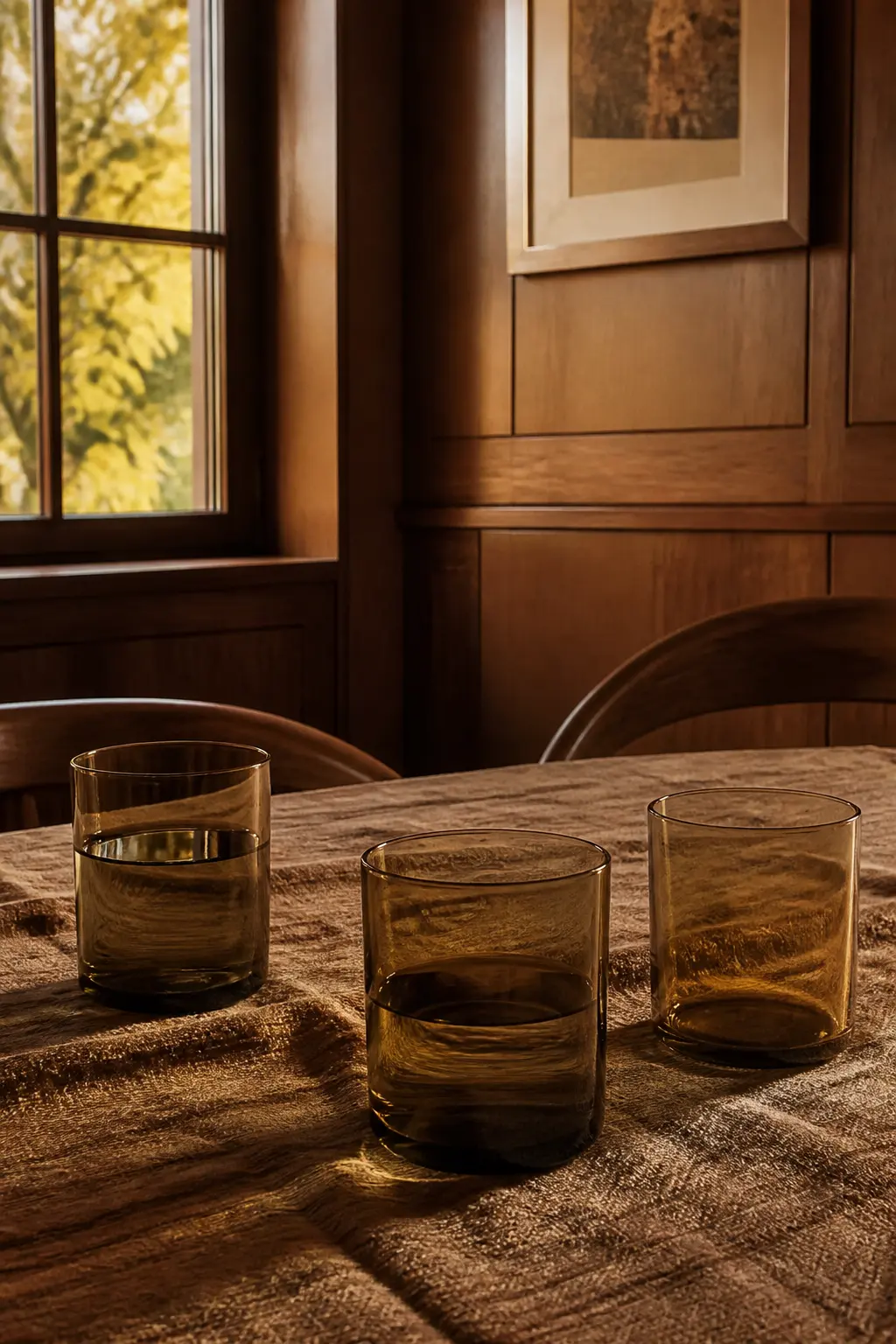
Smoked Glass Tumblers Left Out as Everyday Glasses
Smoked glass tumblers in dark amber or grey add depth to the table without any effort. They are the glasses used every day for water and juice, left out as part of the setting rather than put away. The glass colour against the wood of the table is already autumn.
Look for a set heavy enough to feel good in the hand and stable enough not to tip. These are not special-occasion glasses. They are the everyday glasses, and that is the whole point.
🛍 Shopping guide
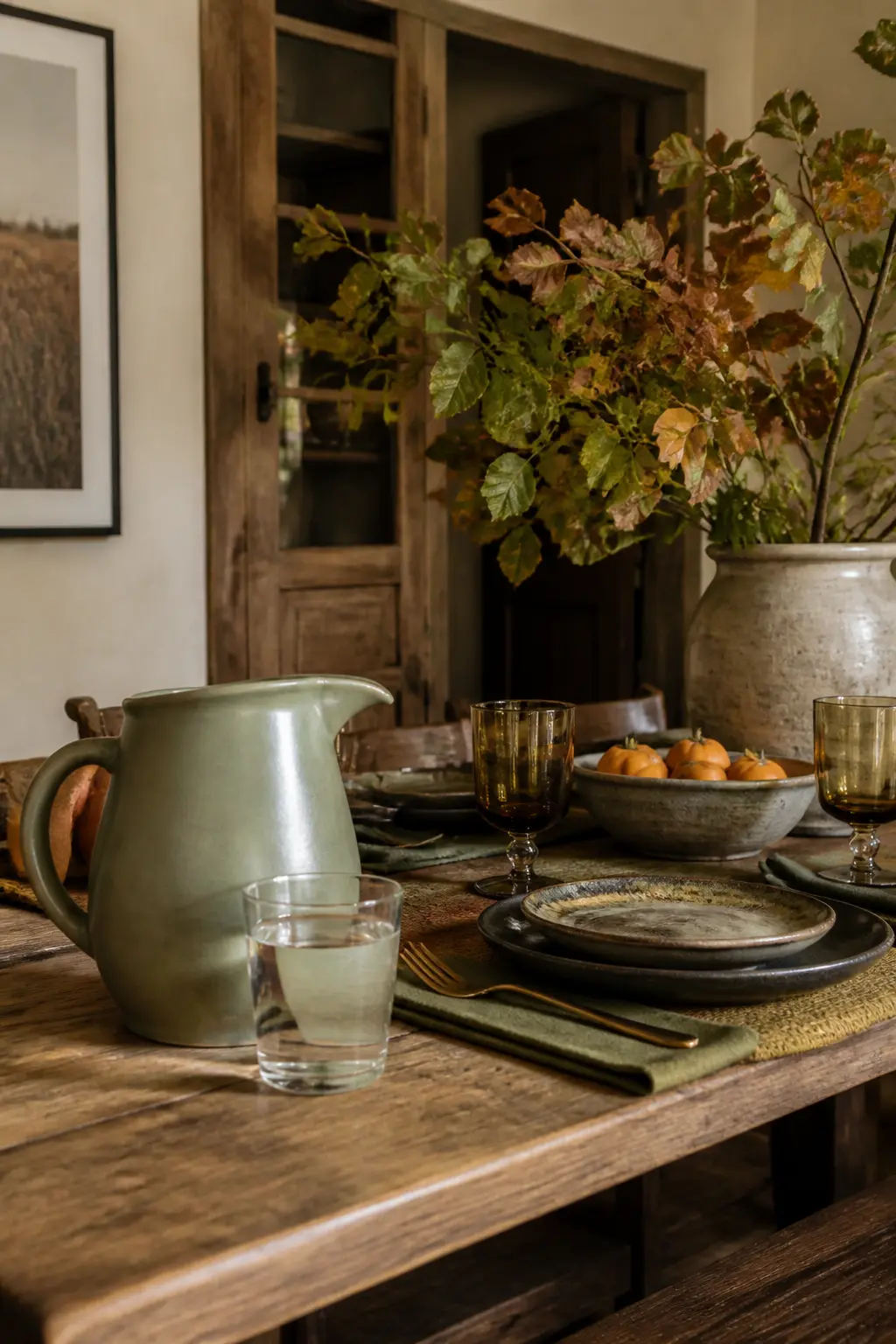
Stoneware Pitcher Used Daily for Water
A stoneware pitcher on the table is a practical object that also reads as a design decision. Fill it with water every morning, use it every meal, and it is always there as part of the setting. In a warm matte glaze, it adds the kind of tactile autumn texture that a plastic jug cannot.
Look for a pitcher with a wide base and a handle that is comfortable to hold with a full jug. The glaze colour matters more than the shape: a deep sage, warm brown or slate blue all read well against a wooden table in autumn light.
🛍 Shopping guide
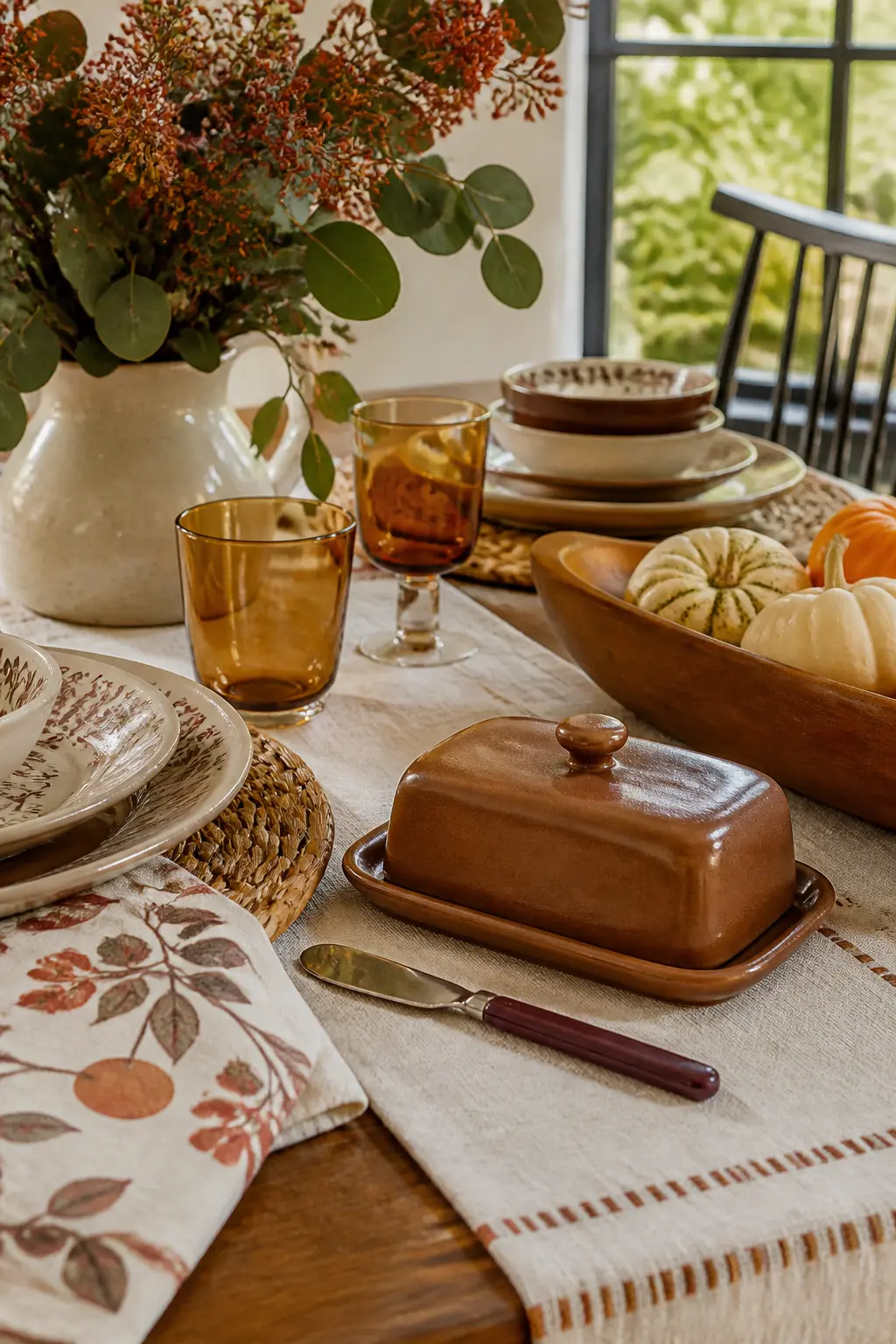
Butter Dish in Stoneware Kept on the Table
A stoneware butter dish on the table full-time is a small luxury that costs almost nothing. Butter kept at room temperature is better butter. A covered stoneware dish in a matte glaze is a better-looking object than anything plastic, and it makes the table feel cared for without any additional effort.
Look for a dish with a lid that fits without rattling and a base wide enough to be stable. A warm brown, cream or dark green glaze suits autumn and also suits Tuesday. This is an everyday object that happens to be beautiful: the best category on the list.
Small Dish of Salt at Each End of the Table
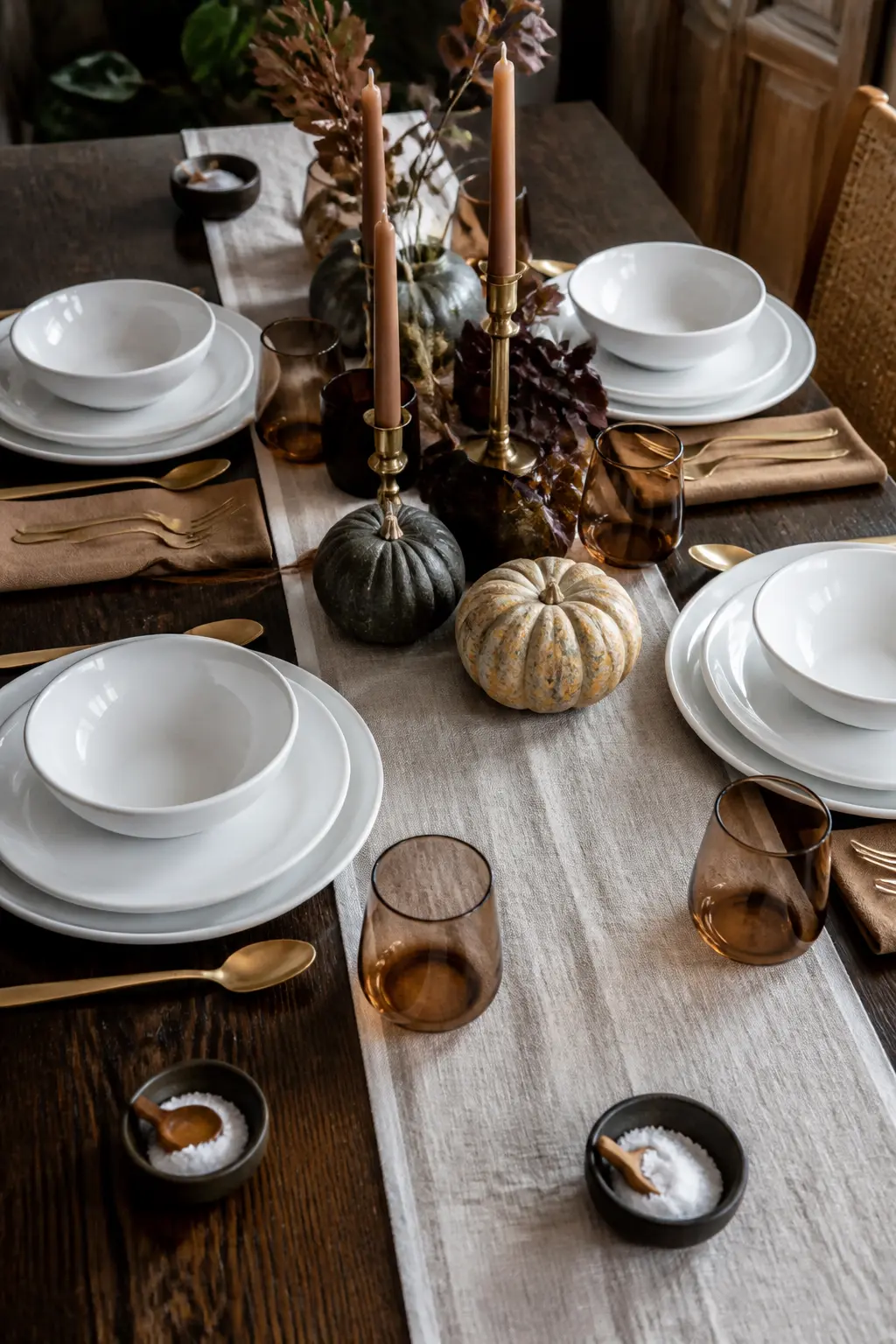
Two small open salt dishes, one at each end of the table, mean nobody reaches across anybody else and both look like a design decision rather than a practicality. In pinched ceramic, small ramekins or tiny wooden bowls, they add a subtle rhythm to the table without height or bulk.
Flaky sea salt in an open dish is also a textural moment: the white crystals in a dark ceramic bowl photograph beautifully and taste better than table salt from a shaker. A small wooden spoon or a tiny pinch pot beside it finishes the idea.
🛍 Shopping guide
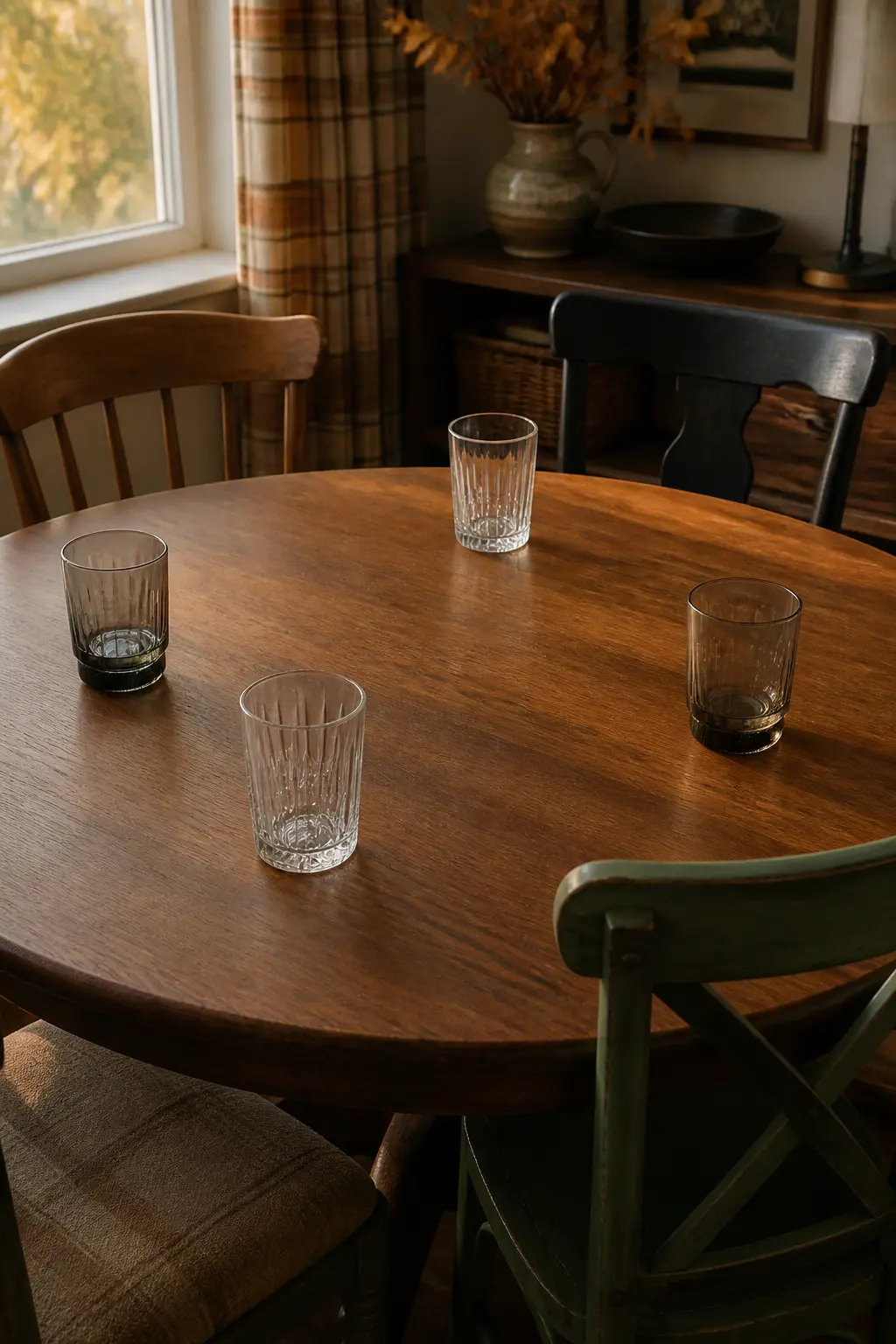
Water Glasses Left Out as Part of the Setting
Leaving water glasses on the table rather than putting them away between meals is one of those decisions that sounds obvious but changes the feel of the room completely. A table with glasses on it looks ready. A table without them looks unused.
For autumn, smoked glass, heavy clear glass or a warm amber tint all work. The glasses do not need to match perfectly: a set of four in two similar styles reads more relaxed and more lived-in than a perfect matched set in an ordinary clear glass.
Napkins and Small Textile Touches
A basket of cloth napkins at one end of the table is more practical than a napkin at each place and looks more relaxed at dinner. Napkin rings in wood left on the table between meals are a styling detail that costs nothing to maintain. Napkins folded flat under each plate before a meal take ten seconds and disappear into the place setting.
Stack of Cloth Napkins in a Basket at the Side
A small basket of folded cloth napkins kept at one end of the table means napkins are always there and never in anyone’s way. Nobody has to set a place before a casual dinner. Grab one, use it, drop it in the laundry. Refill the basket when there are clean ones.
A low woven basket in a natural material reads as a styling detail rather than a practical object. Linen or cotton napkins in a warm terracotta, ochre or undyed natural tone make the basket look curated even when it is simply holding laundry.
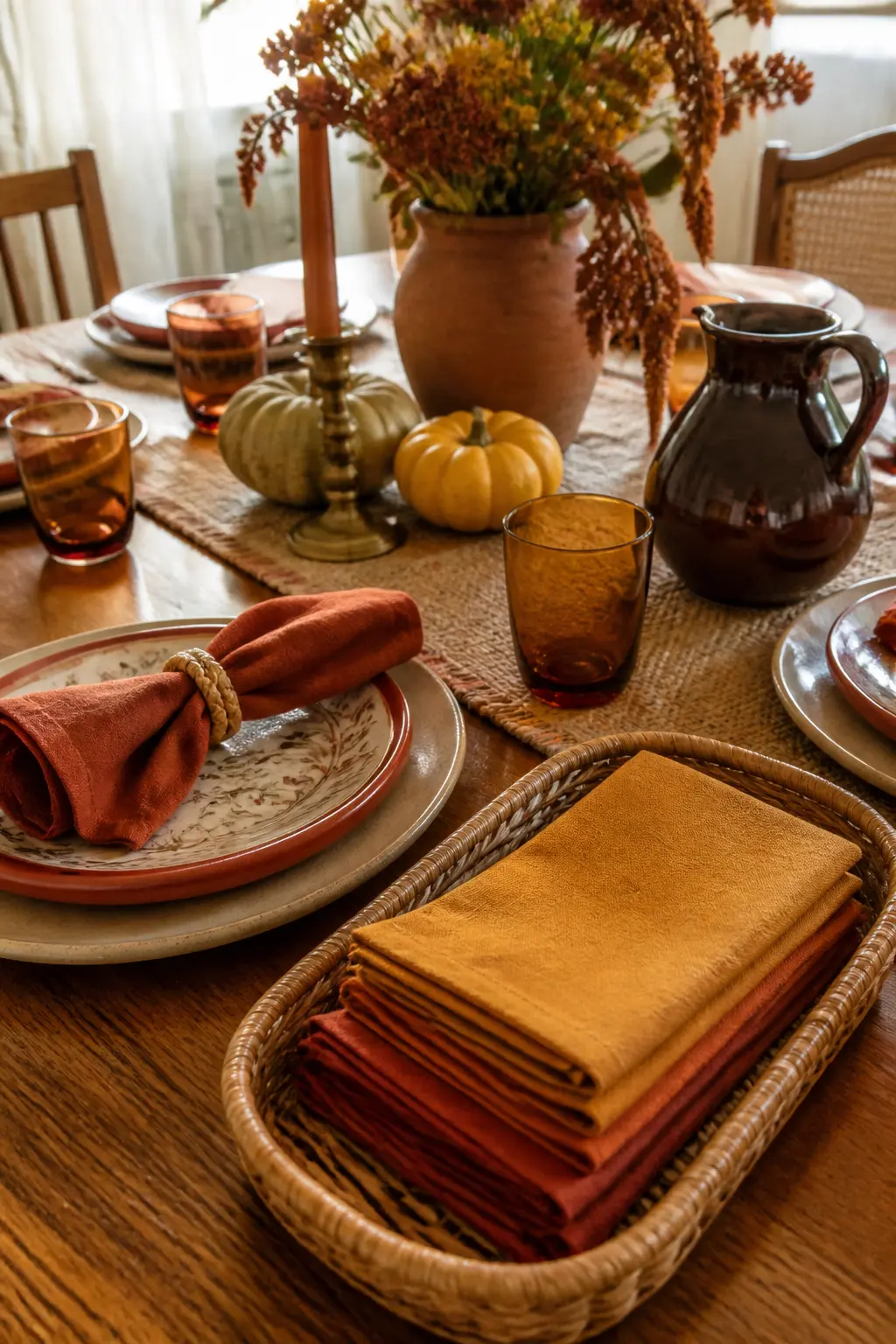
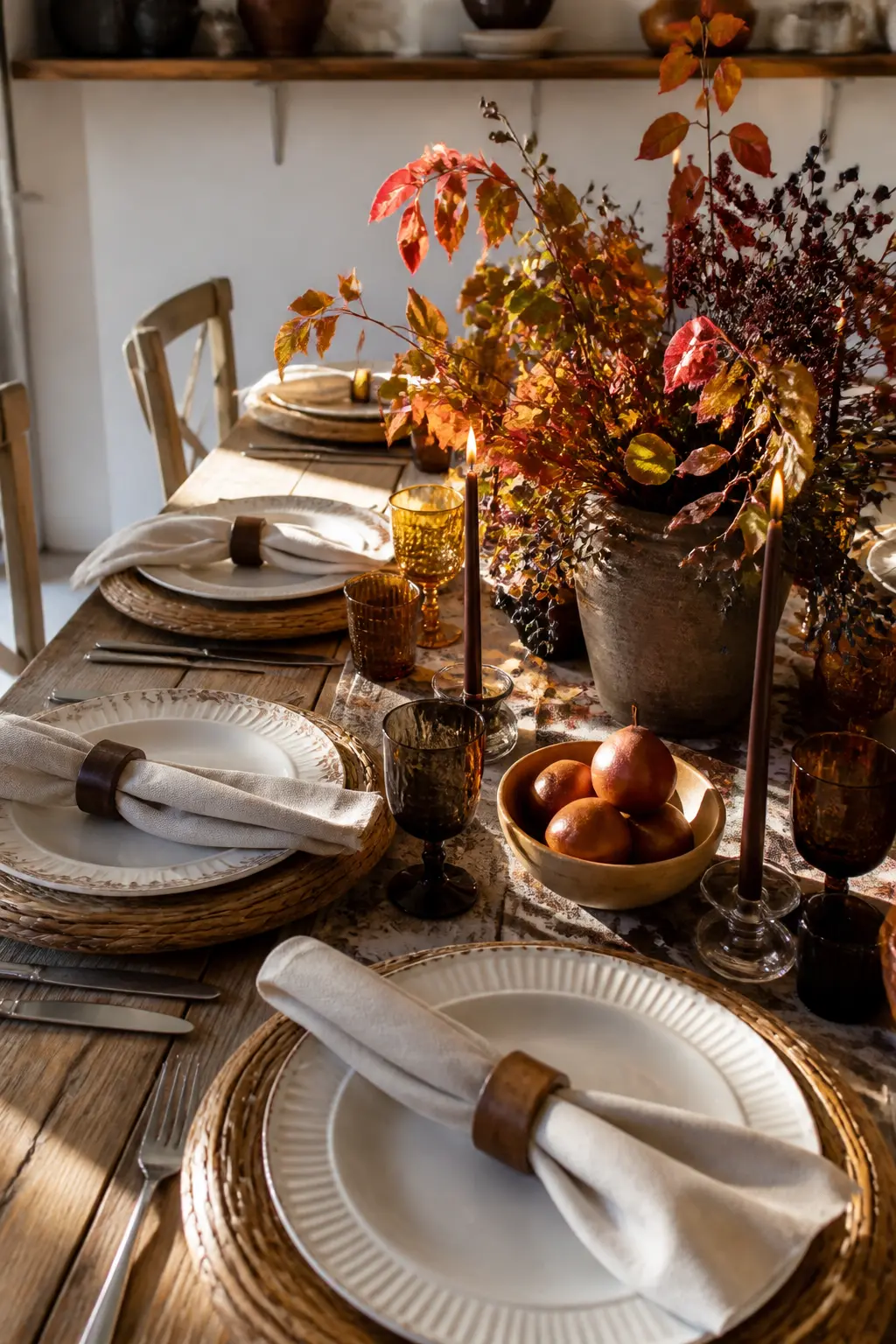
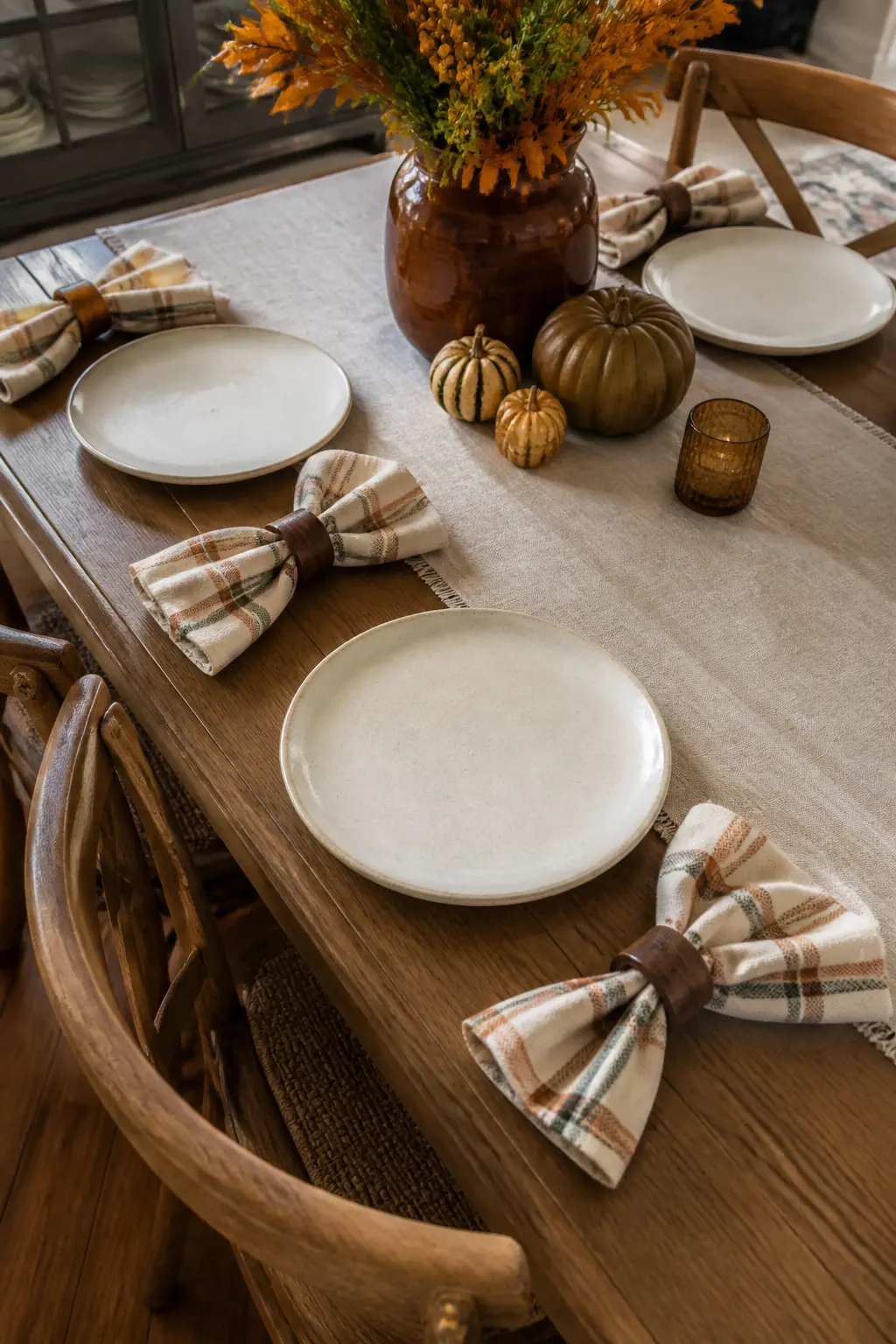
Napkin Rings in Wood That Stay on the Table Between Uses
Wooden napkin rings left sitting on the table between meals are a small detail that holds the table together visually. They are not clutter. They are a styling object that happens to also be useful. At dinner, slide a napkin through each one. Between meals, arrange them loosely in a small pile or in a row and they still read as intentional.
Plain turned wood or wood with a simple carved detail both work. Avoid lacquered rings that chip: raw or oiled wood improves with use and fits every table this list is aimed at.
🛍 Shopping guide
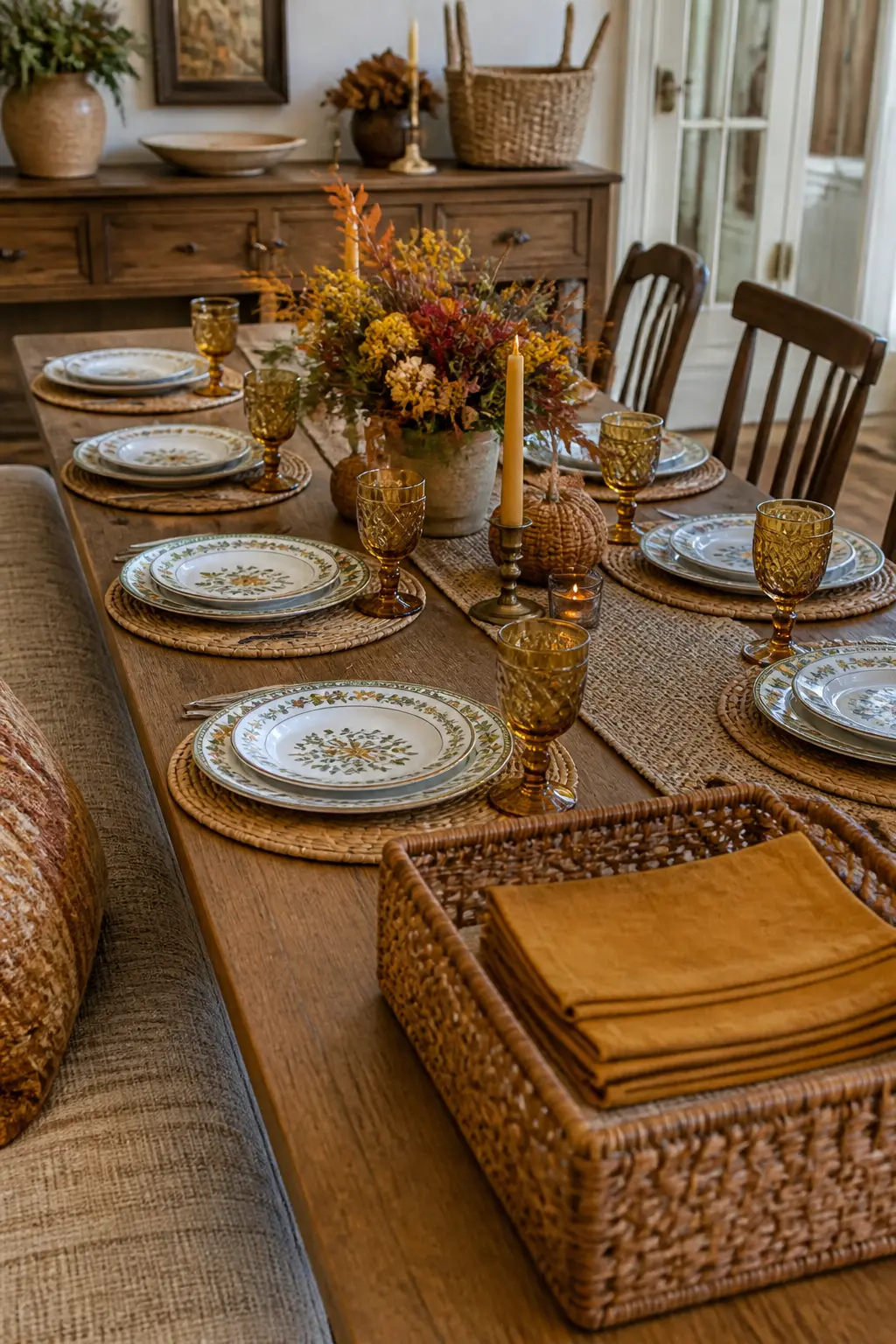
Napkins in a Basket at One End Rather Than at Each Place
A basket of napkins at one end of the table removes the pressure to set a formal place before every meal. Reach for a napkin when needed. Skip it when it is a sandwich and nobody cares. The basket stays put throughout homework hours as a small styling detail rather than a thing to move.
Keep the napkins folded to a size that fits the basket without overflowing. A simple square fold works better than a fan or a roll for a basket that needs to look neat without being arranged. Rotate through colours if it suits the table: all one colour is cleaner, a mix of two tones in the same family is warmer.
🛍 Shopping guide
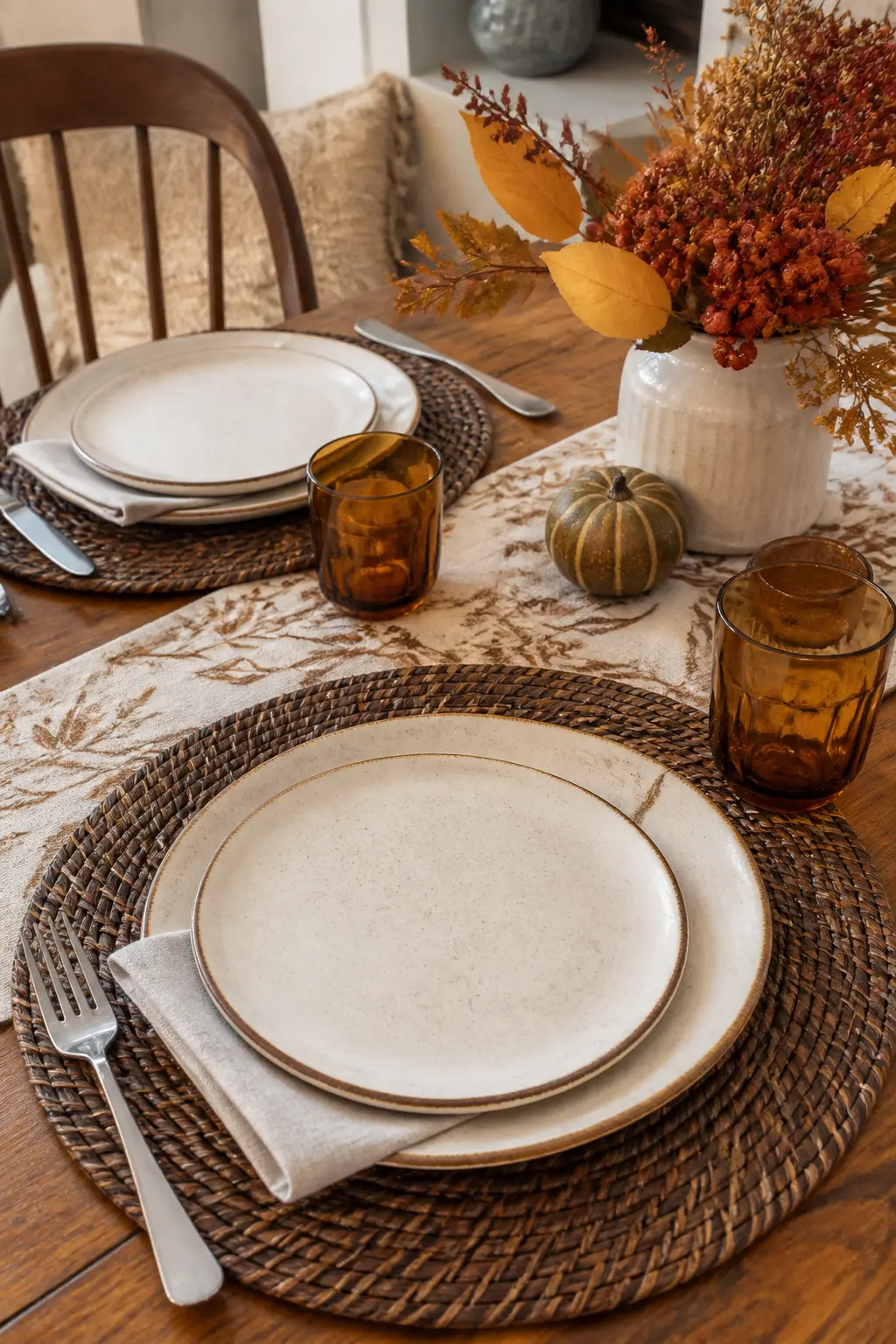
Napkins Folded Flat Under Each Plate Rather Than on Top
Folding a napkin flat and sliding it under the plate rather than folding it on top removes one layer of height and one step of effort. There is no fold to maintain, no napkin to arrange. The edge of the fabric shows at the left side of the plate and that is enough: it reads as deliberate.
This works particularly well with a linen or heavy cotton napkin that has a natural texture. A napkin folded on top of a plate can slide off or look fussy. One folded flat underneath stays put through the whole meal and still looks good at the end of it.
🛍 Shopping guide
Napkin Rings Left on Between Meals
Napkin rings that stay on the table between meals rather than going into a drawer are a genuinely useful piece of table decor. Leave the napkin threaded through the ring at each place and it is already set for the next meal. Pull the ring off, shake out the napkin, and dinner is faster to set than any alternative.
For this to work, the rings need to look good empty as well as with a napkin through them. A simple turned wooden ring or a plain metal ring in brushed brass reads as a design detail when it sits on the table alone. Avoid novelty shapes that only make sense with a napkin in them.
🛍 Shopping guide
The Off-Center Rule and the Wall Behind the Table
Symmetry is the enemy of a table that reads as lived in. One object placed slightly off-center, or the napkin basket at one end rather than centered, makes the table look styled rather than staged. This is a free move: it costs nothing and takes one second to undo.
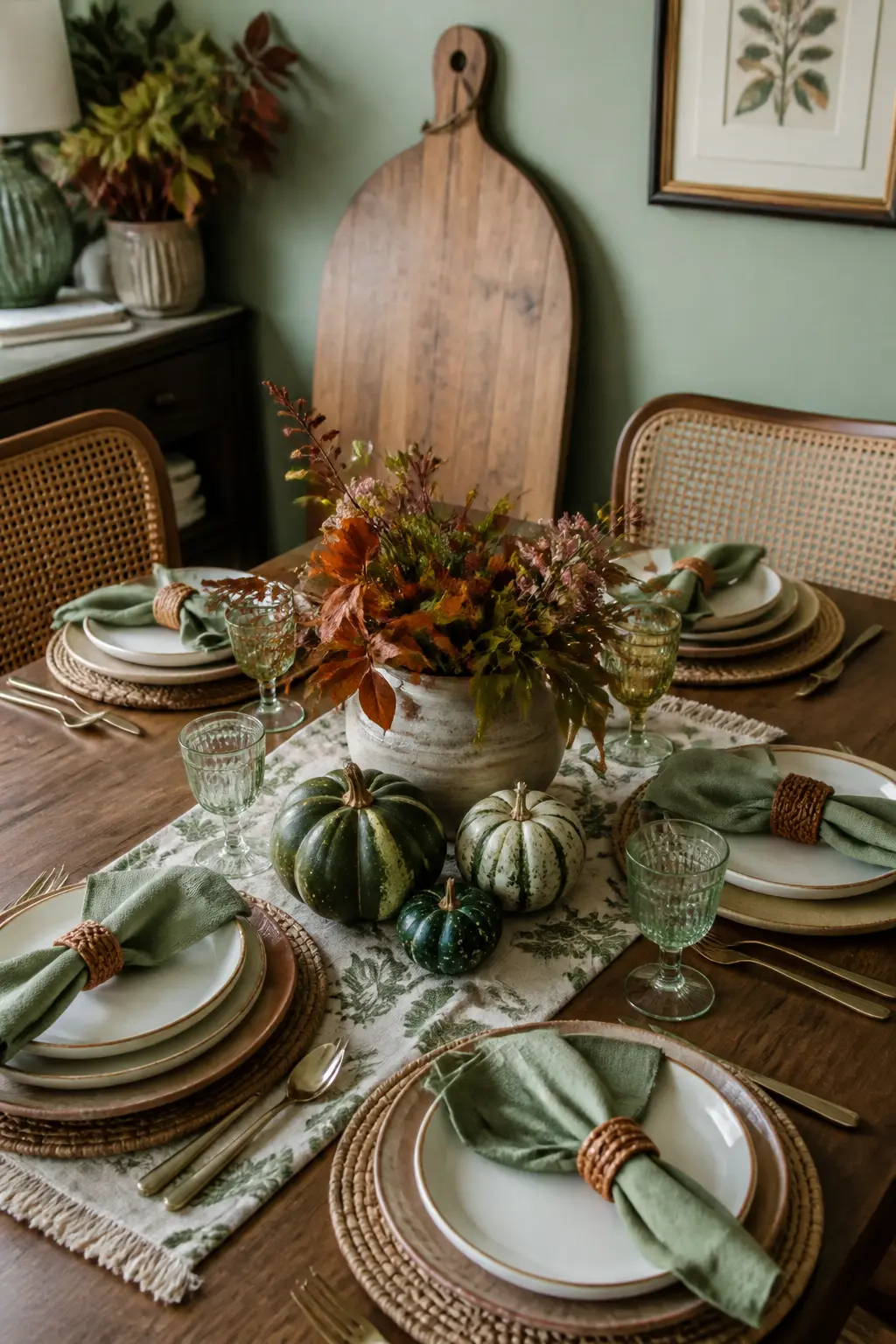
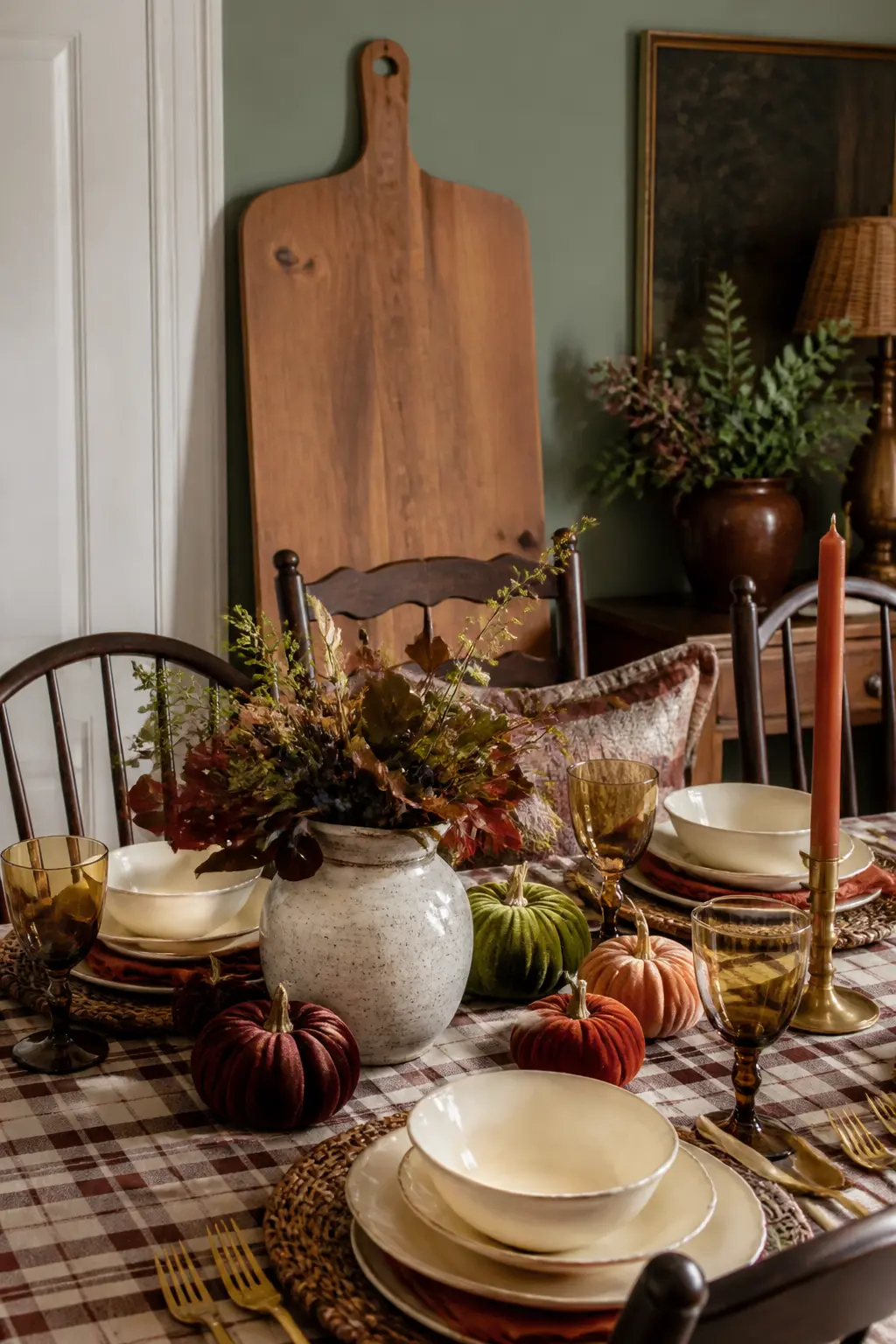
The wall behind the table is an underused surface. A wooden bread board leaned against it is warm, textured and takes up zero table space. It moves forward for serving and goes straight back. The table stays clear and the room still reads as autumn.
Wooden Bread Board Leaned Against the Wall Behind the Table
A large wooden board leaned against the wall behind the table takes up zero table surface and adds warmth and texture to the whole room. It looks like a styling decision. It is also a serving board that walks forward to the table whenever bread or cheese is involved.
The size matters: a board large enough to be visible at chair height reads as a design object rather than kitchen equipment. Look for one with a handle or a natural edge. The wood grain and the wall behind it do all the work.
Chairs Pulled Slightly Out So the Table Reads as In Use
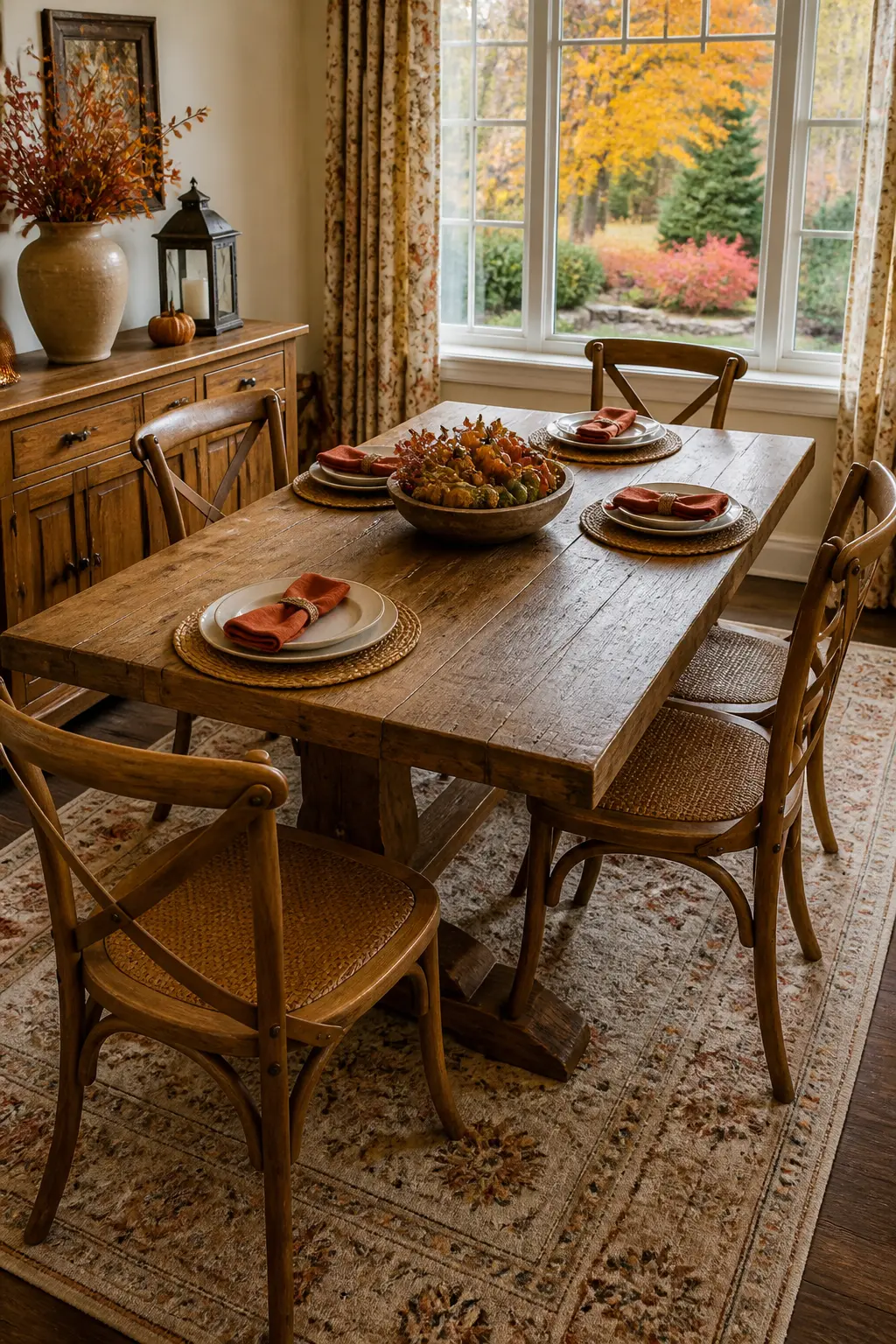
This is free, takes four seconds, and changes the entire feel of the room. Chairs pushed all the way in read as unused and staged. Chairs pulled out two or three inches read as a table that people actually sit at, which is warmer and more welcoming than any centerpiece.
Pull the two main chairs out slightly more than the side chairs. This signals the head and foot of the table without needing place settings. It also photographs beautifully from a standing position, which is how most people photograph a table for a memory or a message.
One Object Placed Off-Center Rather Than a Centered Arrangement
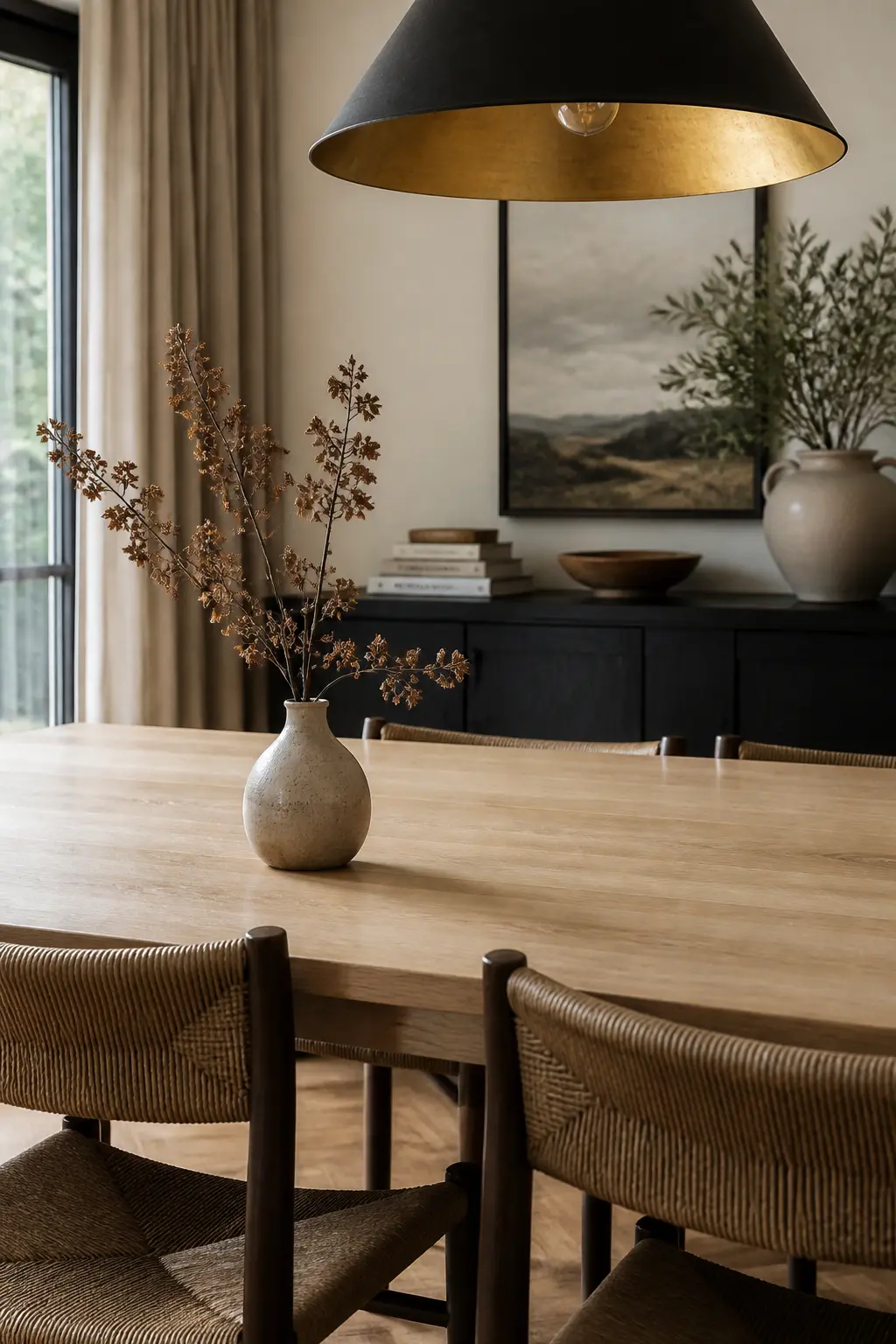
Centering everything on a table looks like a display. Moving one object slightly to the left or right of center looks like a table someone actually uses. This is a rule from interior styling that costs nothing to apply and immediately makes a table feel inhabited rather than arranged.
The object can be anything: a jar candle, a small plant, a single vase. Its position slightly off-center frees up the main working area of the table. It also means the laptop and the vase are not fighting for the same twelve inches of space.
Bread Board Leaned Against the Wall Behind
A bread board against the wall behind the table is a styling idea borrowed from restaurant interiors, where warm wood objects are leaned casually against walls and shelves to add depth and texture to a room without taking up floor or table space. It costs the space of a leaned board.
When bread or cheese comes to the table, the board walks forward and becomes a serving surface. It then goes back to the wall. This is not a decorative object that needs protecting: use it, lean it, oil it occasionally. It improves with use.
🛍 Shopping guide
Frequently Asked Questions
What is the easiest fall dining table decor for a table used daily?
A wooden tray that holds all the seasonal objects at once. When the laptop comes out, lift the tray to the sideboard. When dinner is ready, put it back. Everything stays arranged and nothing needs reassembling.
How do you style a dining table that doubles as a desk?
Keep everything low, weighted and off-center. A shallow bowl of gourds, a jar candle and a runner that rolls up in ten seconds cover most of the work. The rule is that nothing on the table should require moving for every single meal: if it does, it belongs on the windowsill instead.
What fall decor can stay on the table all week without being moved?
Placemats in a rough weave, coasters left out in a stack, a wooden trivet in the center, smoked glass tumblers and a stoneware butter dish can all stay permanently. These are everyday objects in the right materials and colours. They look seasonal without needing to be removed or rearranged.
How do you do fall table decor cheaply?
Start with a bowl of mixed apples or a low bowl of small gourds: both cost less than a bunch of flowers and last weeks. Add a runner in a washable fabric and a couple of jar candles and the table reads as intentionally autumn. The tray, once bought, is a one-time cost that organises everything else.
What height should a dining table centerpiece be?
Low enough that two people sitting opposite each other can see each other comfortably without leaning sideways. A shallow bowl of fruit or gourds clears this easily. Anything taller than roughly the height of a wine glass on its side starts to interrupt conversation at a round or square table.
Can fall dining table decor work at Thanksgiving too?
Yes, and the same principles apply. If the table works for daily use, it will work for Thanksgiving with a few objects added. A deeper runner, an extra candlestick and a larger bowl of seasonal produce take a working table to a dinner-party table in under five minutes. For more ideas that extend beyond the dining room, the room-by-room Thanksgiving decor guide is a useful companion.
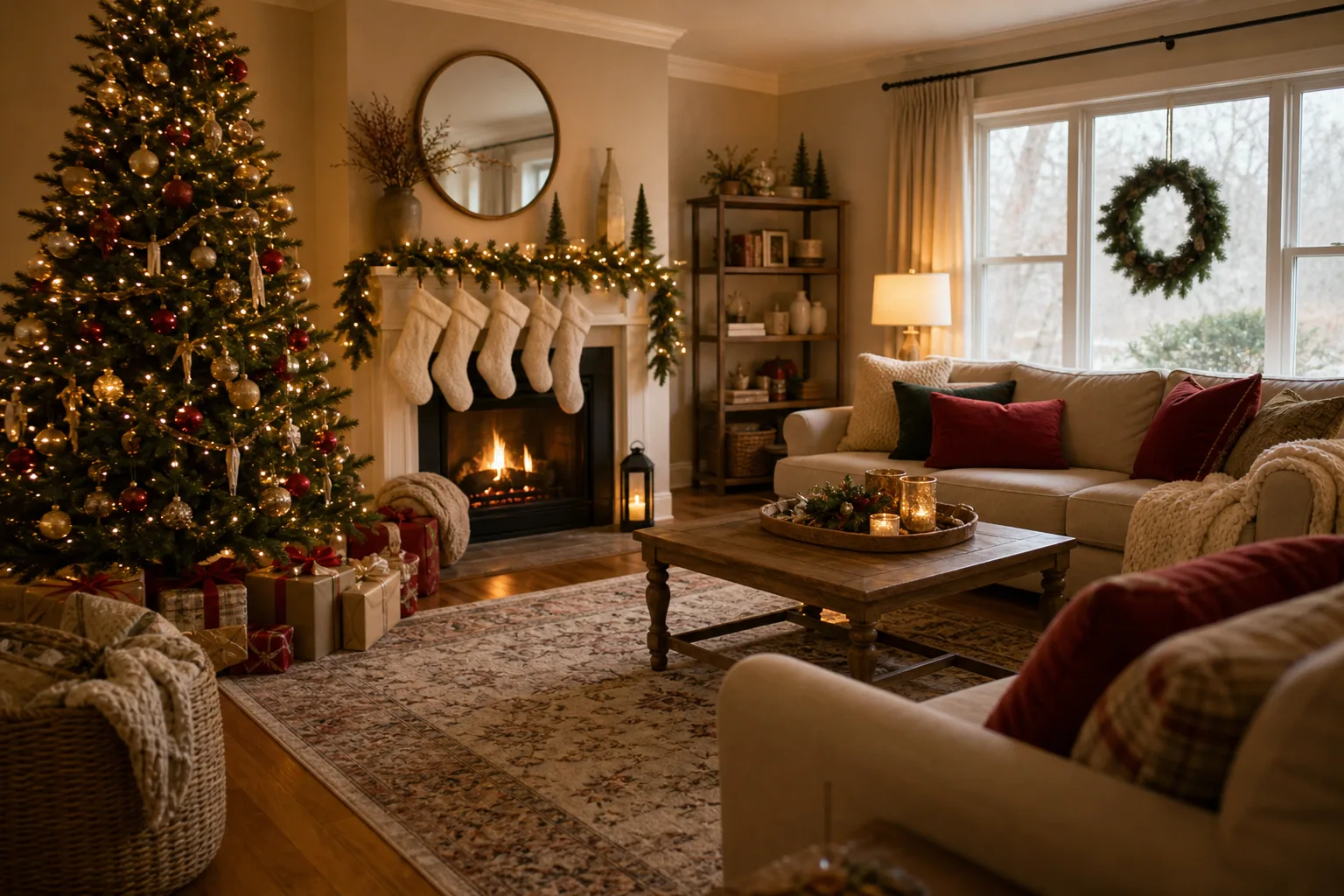
Browse 20 christmas room decor guides for every space, from mantels and staircases to tiny apartment
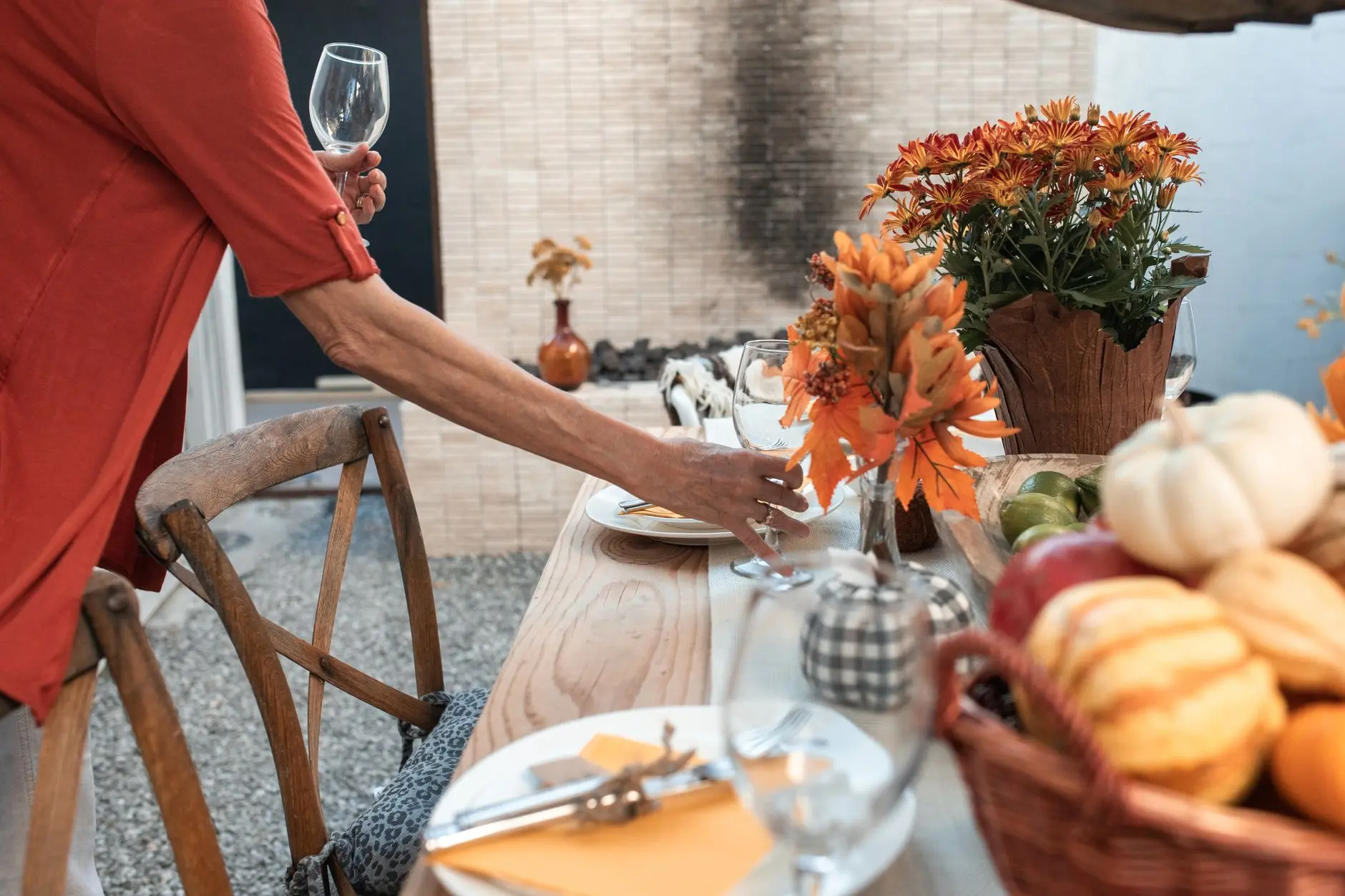
14 friendsgiving decor ideas for renters: no holes, no paint, under fifty dollars. Black, rust and c
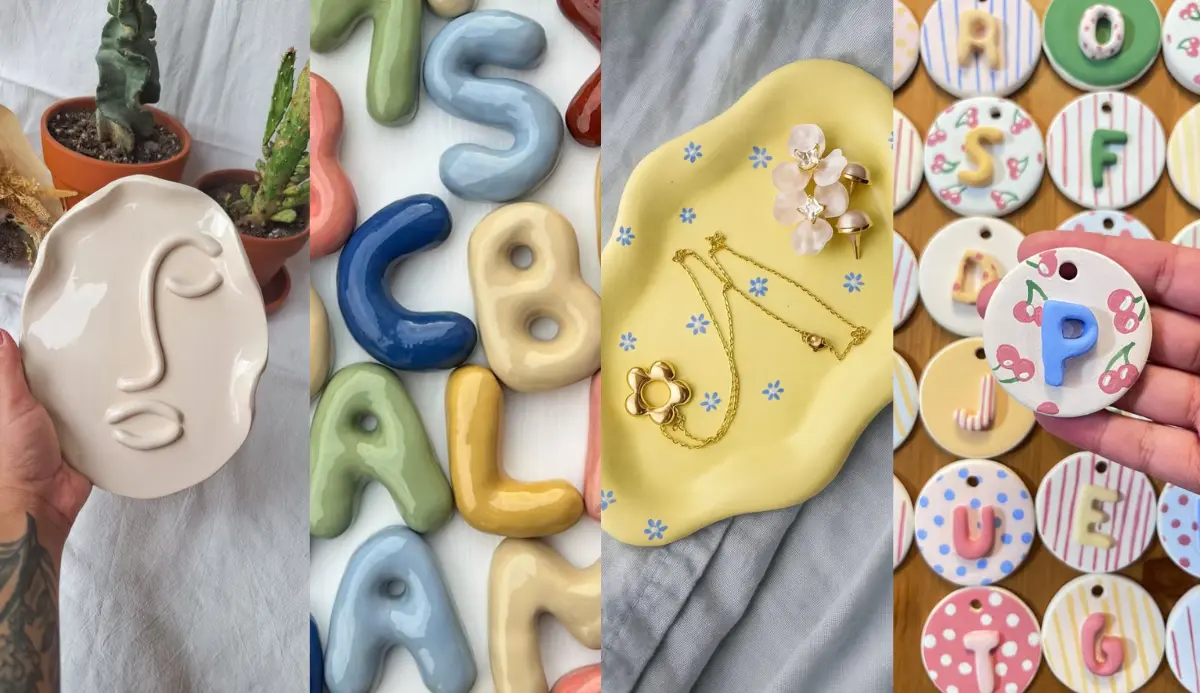
The air dry clay obsession has reached critical mass in 2026, and it’s not just another fleeti
Leave a Reply