

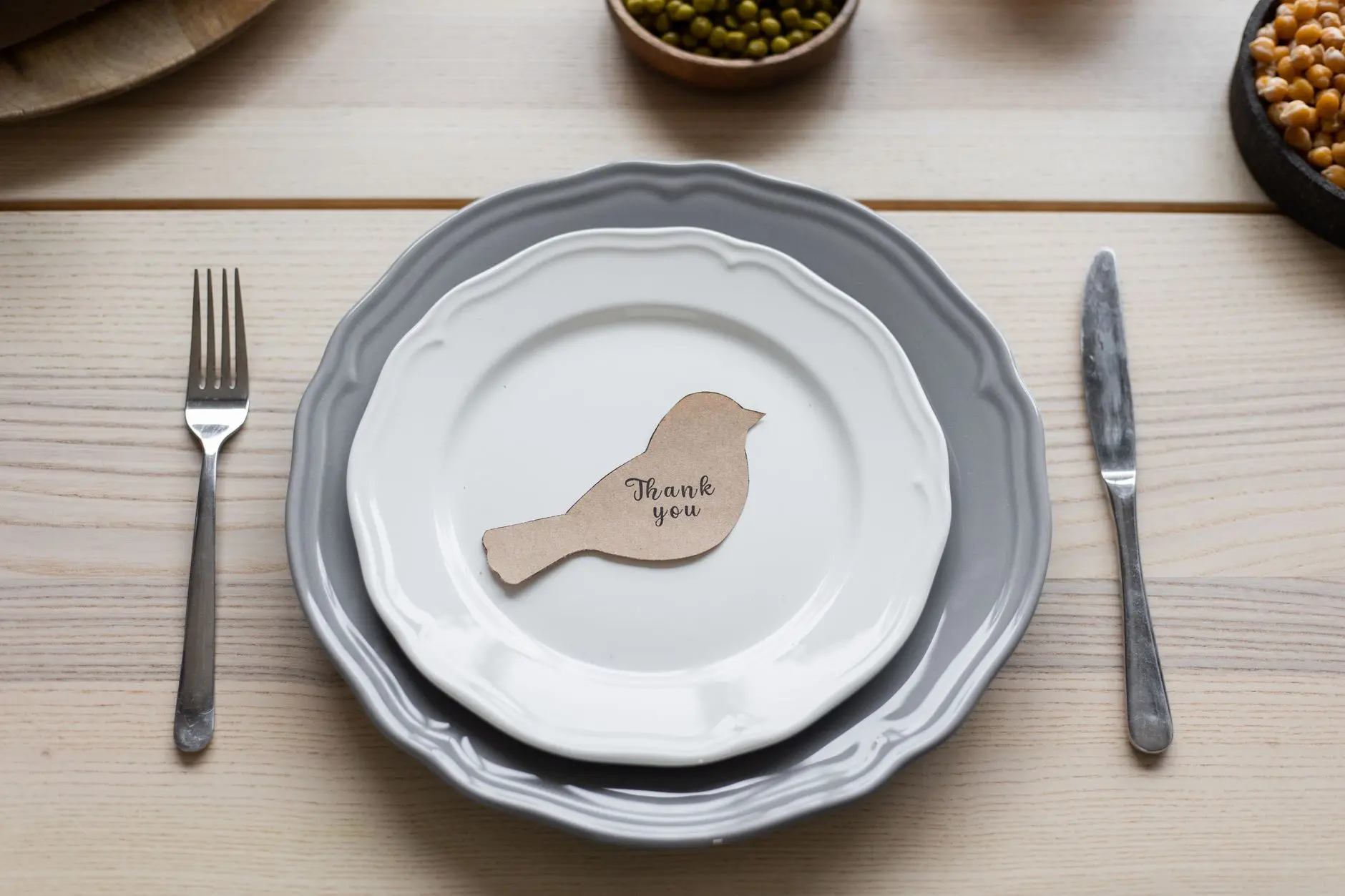
Your wooden table is already the best thing in the room. Cover it with a full cloth and you lose the grain, the warmth, the whole reason you bought it. The no-tablecloth approach is not a shortcut: it is the considered choice, and it gets you a table that looks deliberate in about ten minutes.
Every idea here works inside the same palette: bare oak or walnut, cream linen, olive, brass. Nothing needs ironing, nothing needs a florist, and none of these ideas require more than one small purchase. Some need zero.
If the table is also going to host games after the meal, these Thanksgiving dinner games sit perfectly at a table already set like this, and these Thanksgiving table games need no extra setup at all.
This post contains affiliate links. If you buy through them, I may earn a small commission at no extra cost to you.
The Runner, Rethought
A runner is the single fastest way to give the table a spine without covering the wood. The trick is in how you lay it, not which one you buy. Two completely different looks come from the same piece of cloth, depending on which direction it runs.
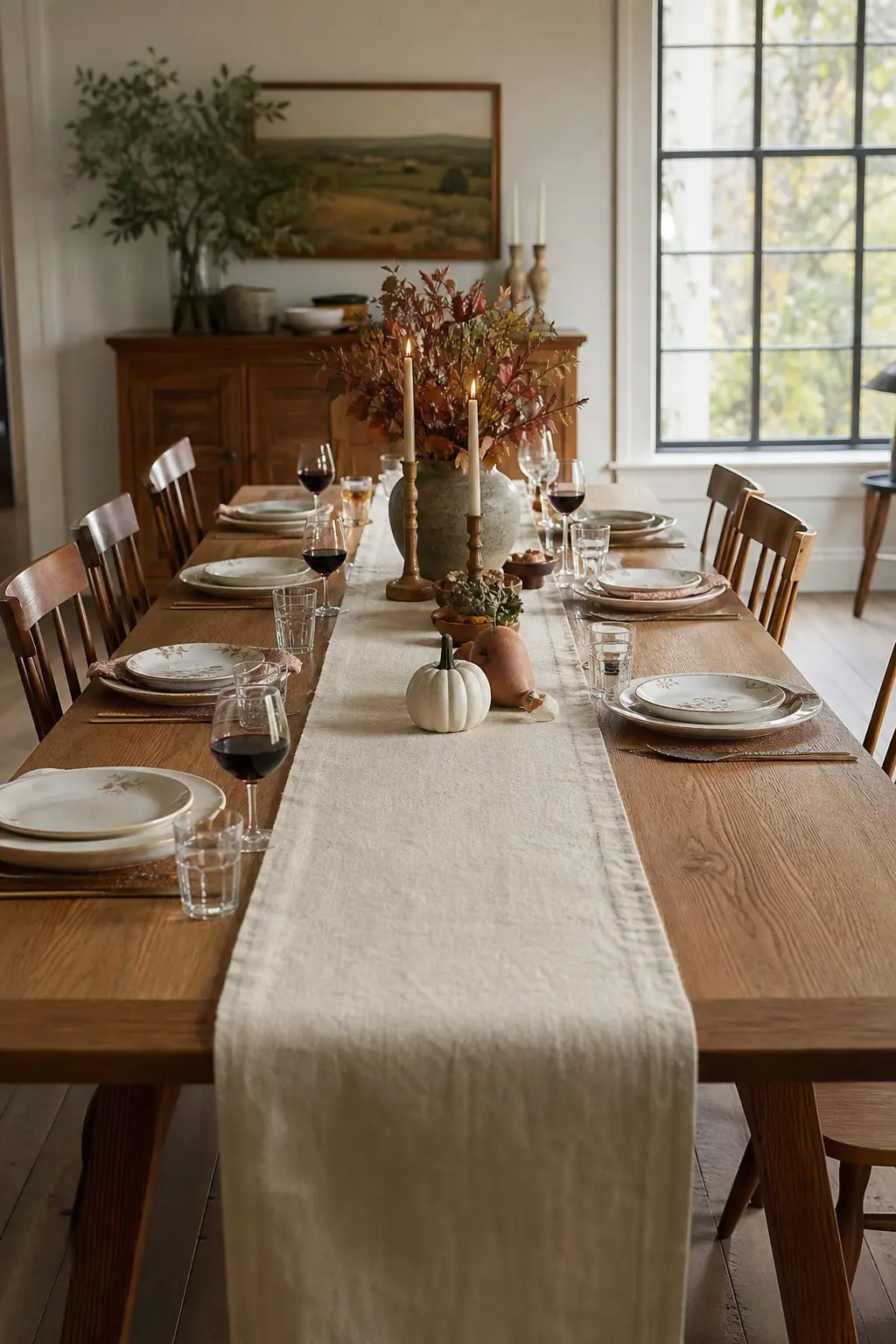
Heavy Linen Runner, Straight Down the Middle
A wide, undyed linen runner laid straight down the centre of a long table is the closest thing to a cheat code in table styling. It anchors every plate and glass without hiding the grain on either side. The key word is heavy: a light fabric shifts and wrinkles; a substantial one holds its position and looks intentional.
Cream or oatmeal linen works here. Leave the edges raw or slightly rolled, never pressed flat into a hard crease. The runner should stop about thirty centimetres from each end so the bare wood shows at both heads of the table.
🛍 Shopping guide
Runner Laid Across the Width
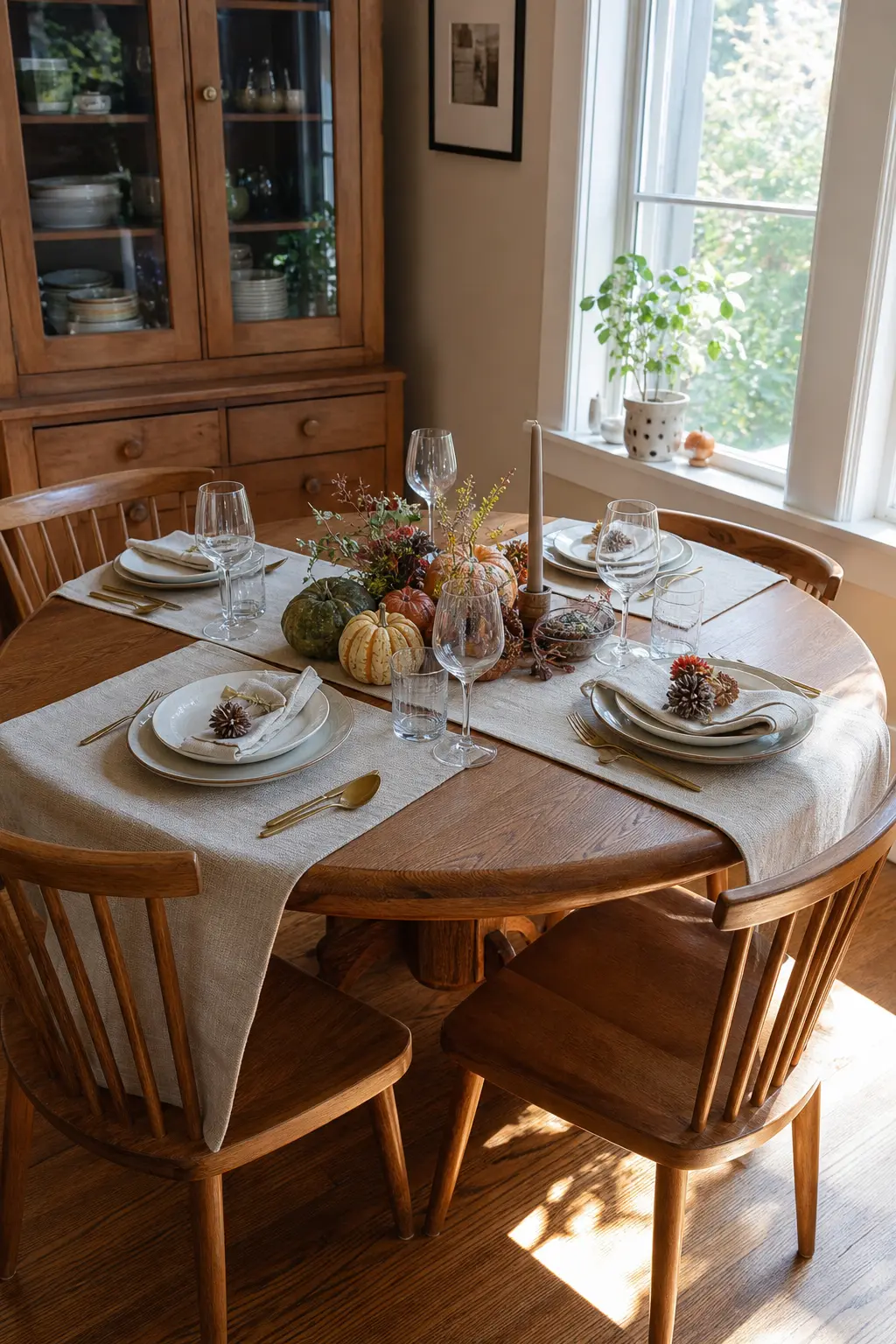
Turn the runner ninety degrees. Instead of running the length of the table, it crosses the width at each place setting, like a wide band of cloth under each pair of plates. This works especially well at a round table or a square one where a lengthways runner would look undersized.
Use one runner per two seats, or layer two runners crossing each other for a larger table. The wood remains almost entirely visible. Each crosswise strip frames a place without closing the table off.
No Runner At All
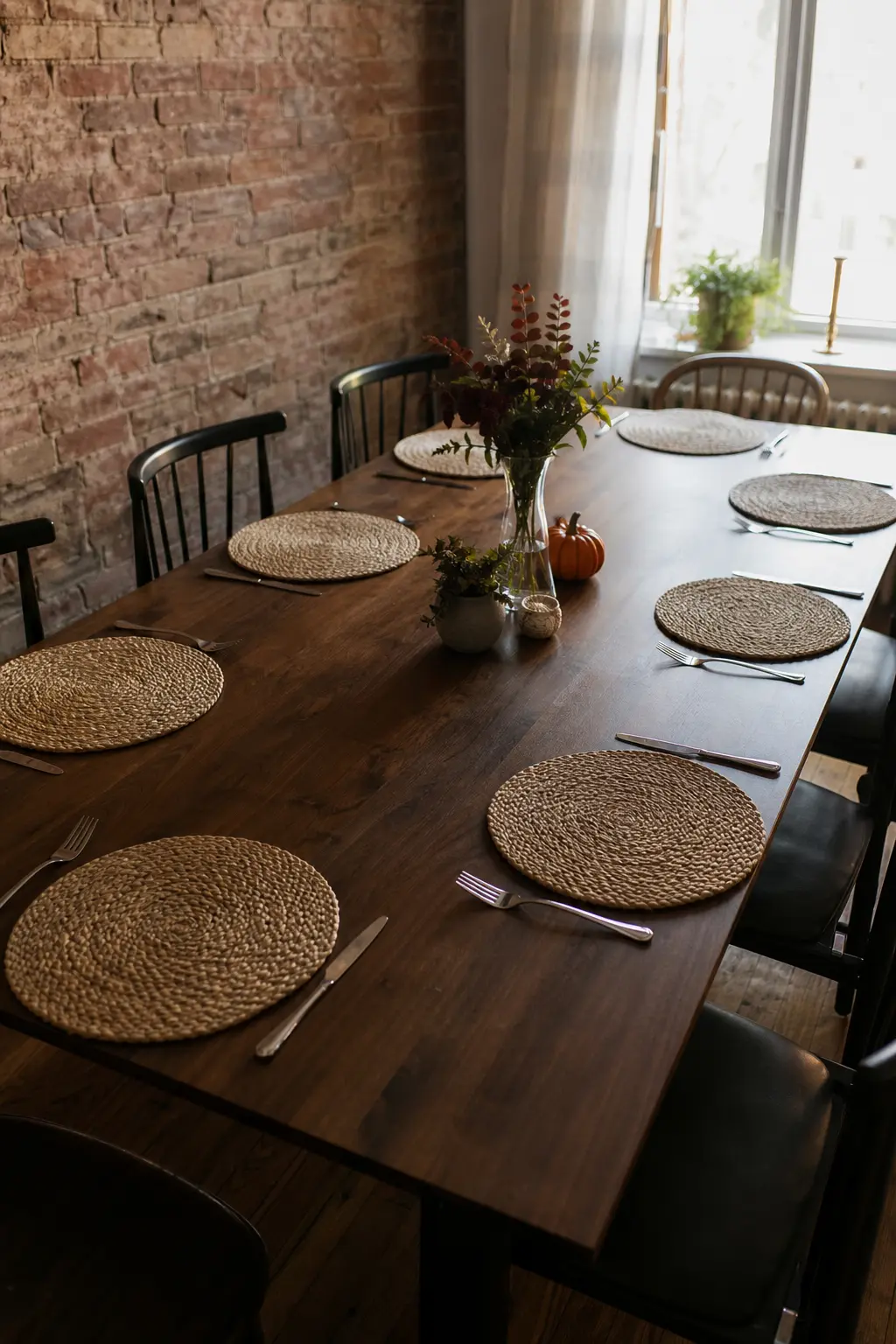
Sometimes the right answer is nothing down the middle. Placemats do the work of defining each place without connecting them, so the table reads as a series of considered spots rather than one decorated surface. The wood between them becomes part of the design.
Placemats Only, No Runner
A placemat does exactly one job: it tells the table where each person sits. No runner, no centrepiece, just a mat at each place and the bare wood filling every gap between them. The effect is quieter and more modern than a full runner setup, and easier to clear when the food arrives.
Woven grass, jute, or thick linen placemats all suit the palette here. Round mats read as relaxed. Rectangular ones read as structured. Either works; what matters is that they match each other.
Candles and Light
Candlelight does more styling work than almost any object you could buy. The ideas here range from two tapers to a handful of mismatched glasses to a single pillar on raw wood. Pick one and commit: mixing all three tips into excess.
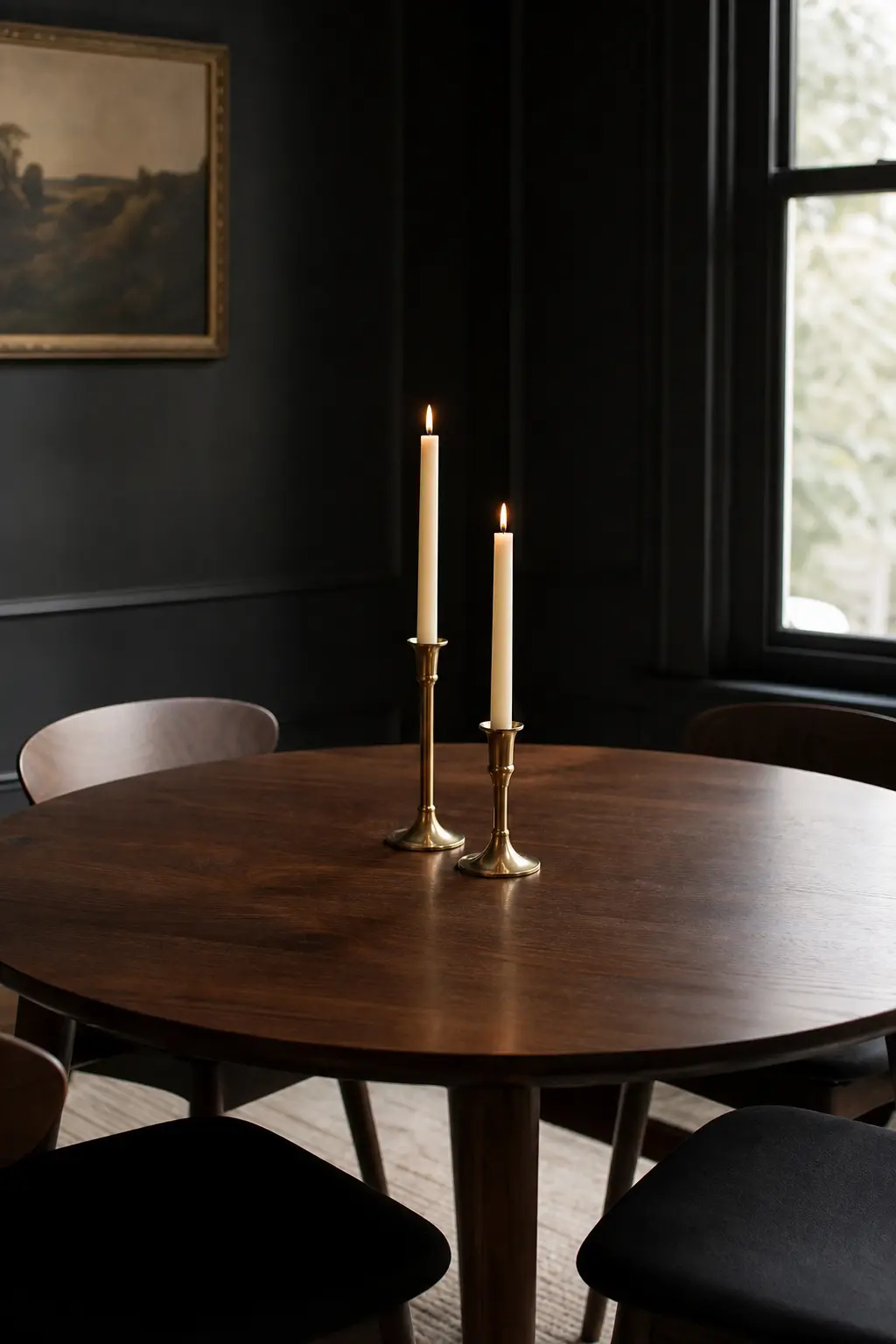
Two Candles and Nothing Else
Two taper candles in simple brass holders, placed slightly off-centre on a bare table. That is the whole idea. No foliage, no gourds, no runner underneath them. The restraint is the point.
Brass holders catch the flame and double the warmth in the room. Cream or off-white tapers suit the palette; avoid pure white, which reads cold against warm wood. Space the holders about thirty centimetres apart rather than pushing them together.
🛍 Shopping guide
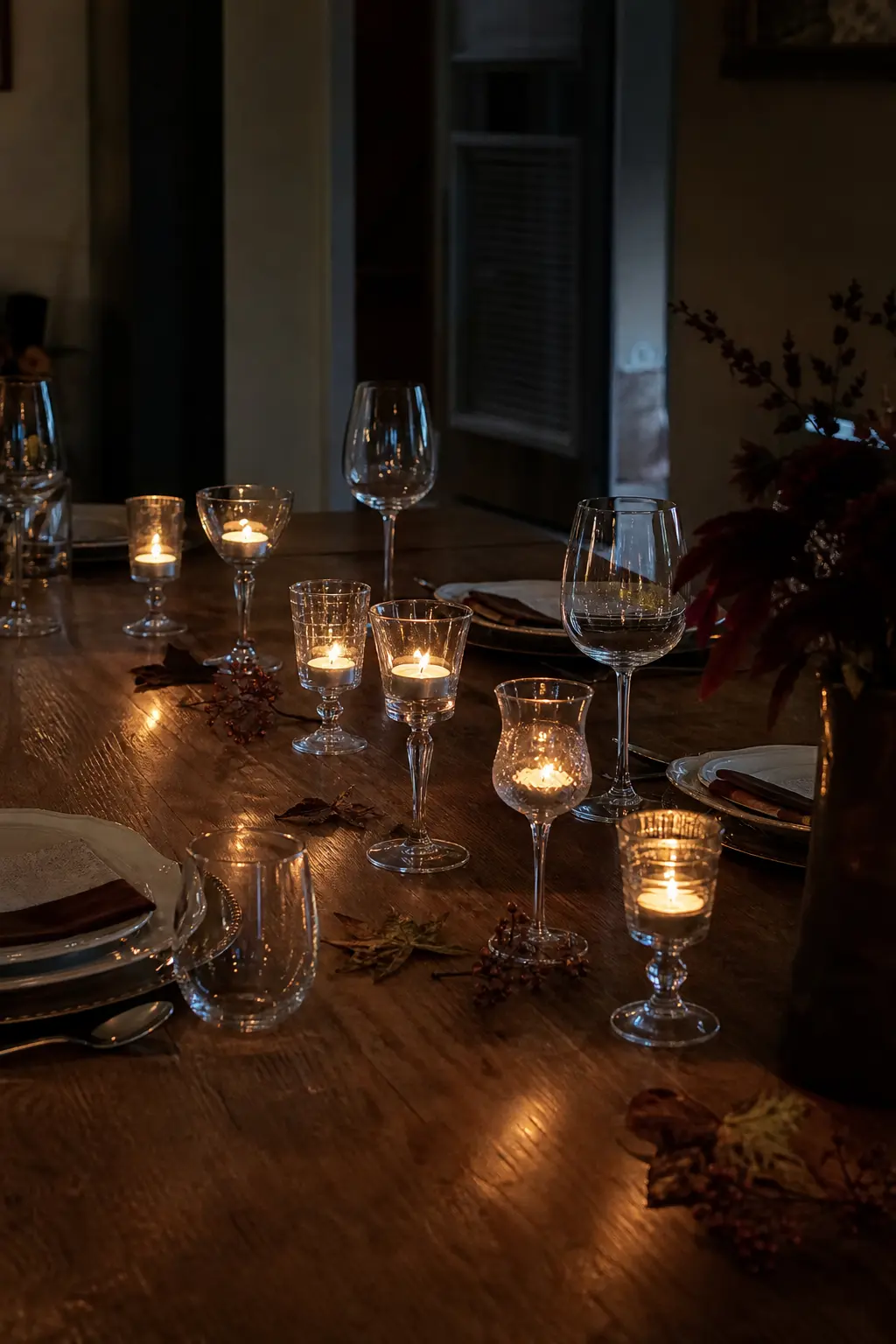
Tealights in Mismatched Glasses
Gather five or six drinking glasses from different parts of the cupboard: a short tumbler, a wine glass, a jam jar, a juice glass. Drop one unscented tealight into each. Line them loosely down the centre of the table. The variation in glass height creates movement without any styling effort.
Mismatched is the method, not the fallback. The glasses do not need to share a colour or a shape; they need to share the table. The tealights last three to four hours through most meals. Replace them before guests arrive and the timing works out naturally.
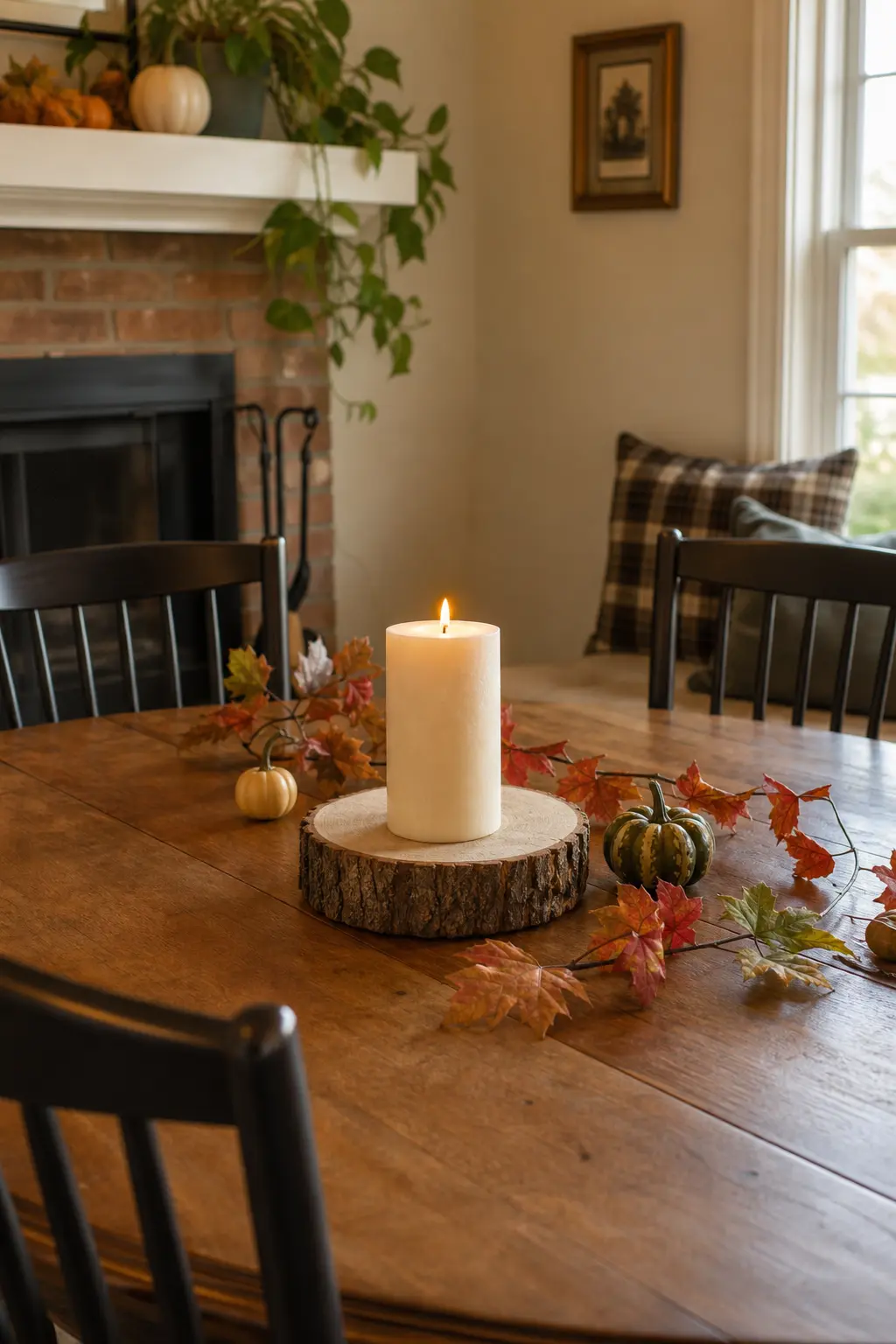
A Single Pillar Candle on a Slice of Log
A thick cream or beeswax pillar candle sitting directly on a cross-section of a log. The log slice is the holder, the riser, and the decor in one object. It brings the outside in without any arrangement required.
The pillar should be wider than it is tall for stability on an uneven log surface. A slice of birch with the bark still on reads particularly well against an oak table. Source the log slice from a firewood pile, a landscape supply yard, or a craft store in autumn.
🛍 Shopping guide
Things From Outside
The season supplies its own decor if you know where to look. Dried grasses, foraged branches, small gourds, a bowl of apples: none of these cost much and all of them photograph beautifully against bare grain. Bring them in, set them down, stop there.
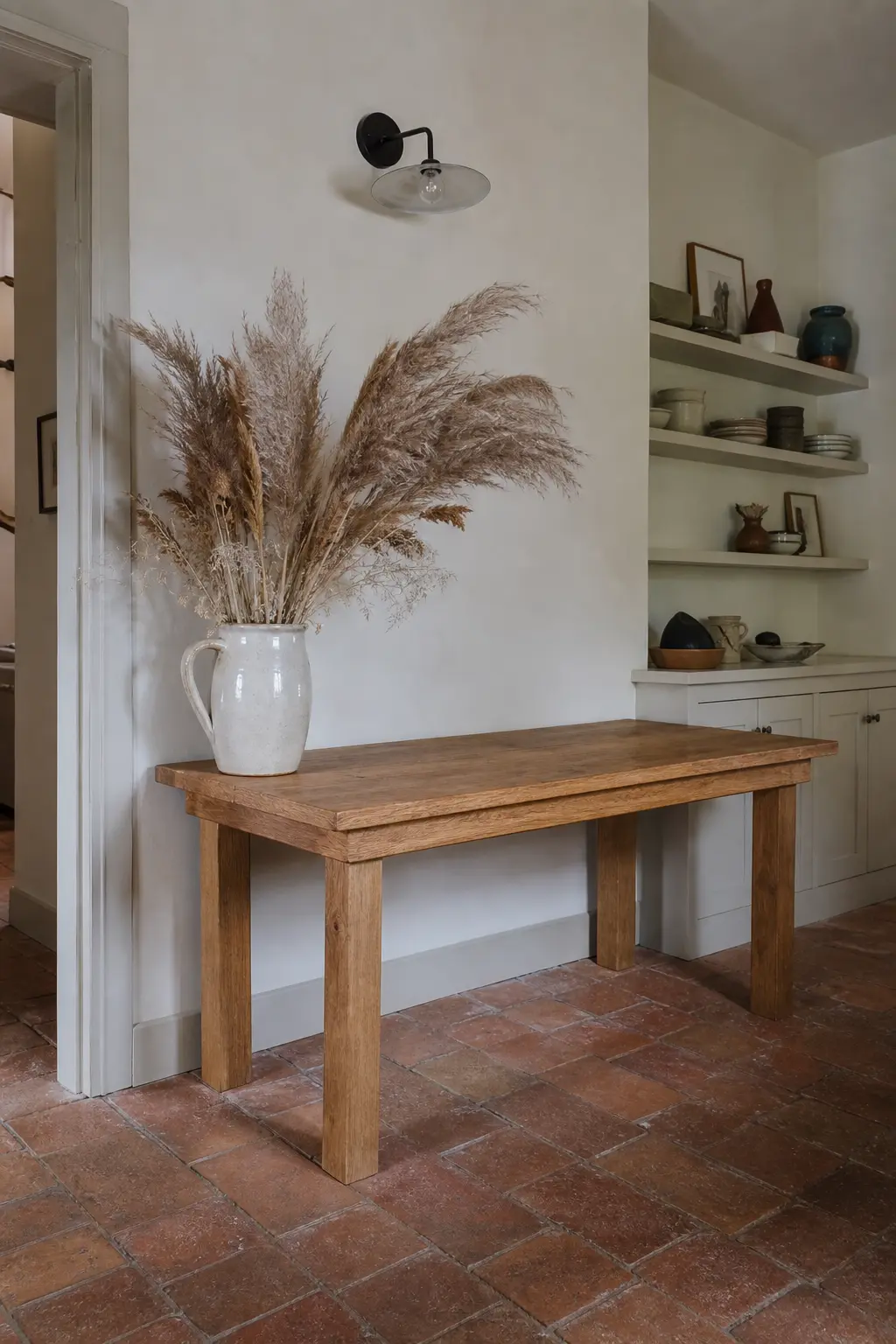
Dried Grasses in One Jug
A single ceramic or stoneware jug holding a loose bunch of dried pampas, wheat, or feather reed grass. Place it at one end of the table or just off-centre. One vessel, one material, and the table looks styled without looking decorated.
The grasses do not need water, so the jug can go directly on the bare wood with no risk of rings. If the bunch is generous, it will arch slightly over the table surface and create shadow in candlelight. Buy dried or cut from a garden; both work equally well.
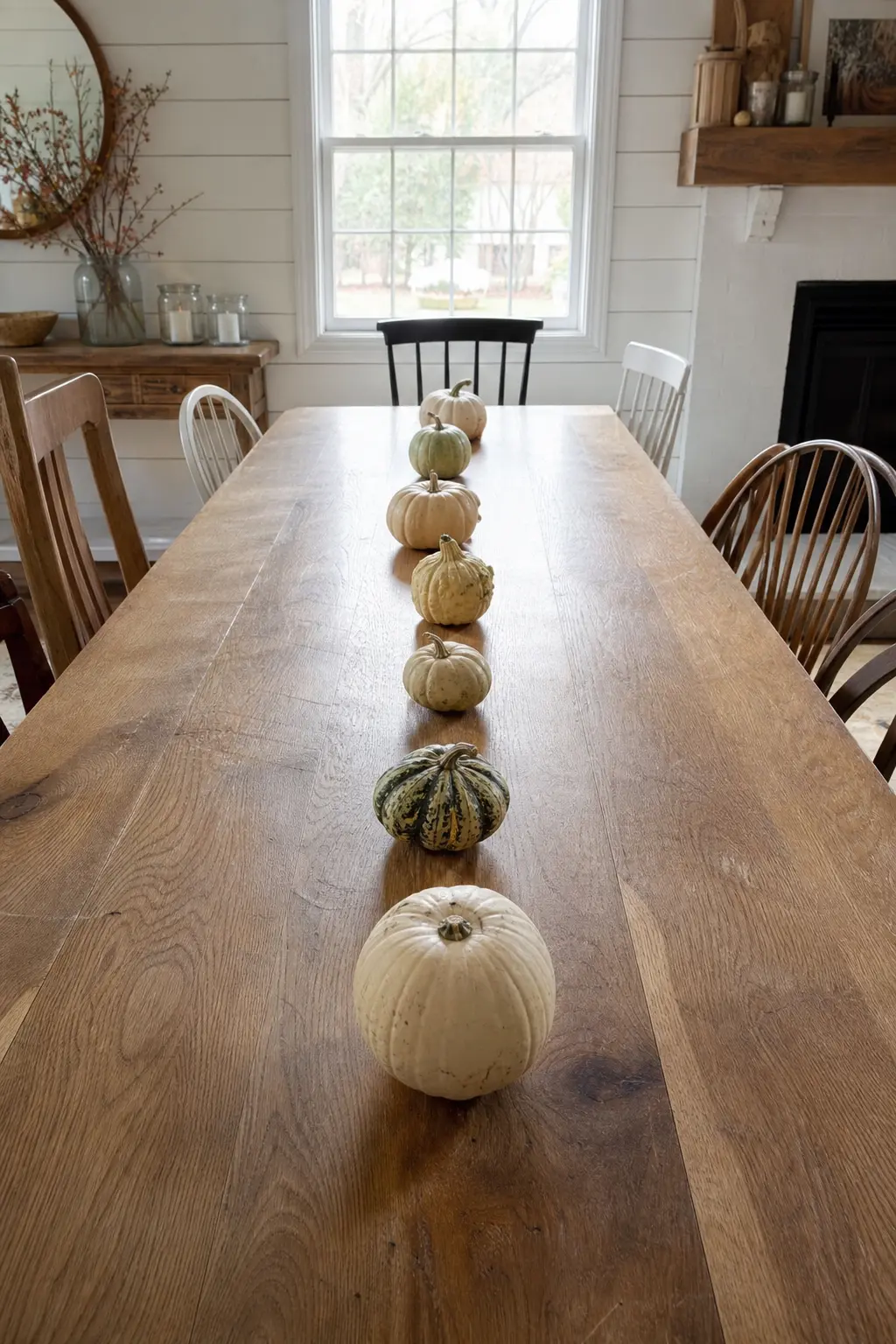
A Row of Small Gourds Down the Centre
Five or seven small gourds or mini pumpkins, varied in shape but similar in scale, lined down the centre of the table with an inch or two between each one. Odd numbers work better than even. No tray, no foliage underneath them: just gourds on bare wood.
The colours season brings naturally: cream, pale green, dusty orange, and warm yellow all land inside the palette. Mix shapes rather than sizes. Push them aside easily when dishes arrive; this centrepiece survives the meal without care.
🛍 Shopping guide
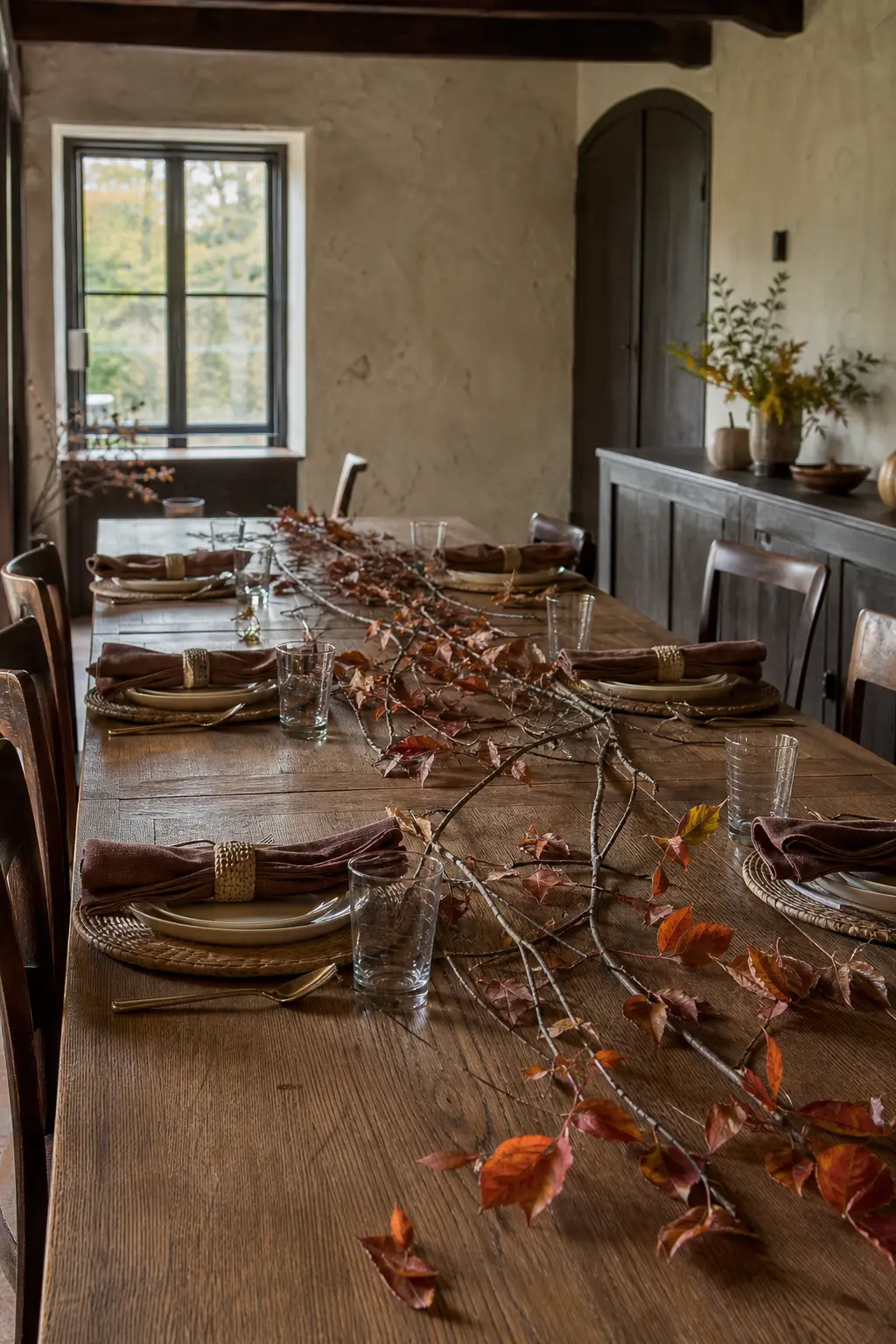
Foraged Branches Laid Flat on the Wood
Cut a few branches with good leaf colour and lay them flat along the centre of the table, overlapping loosely, as if they were just set down. Maple, oak, or dogwood branches all work. This is not a wreath and not a garland: it is more casual than either, and it takes about two minutes.
The branches can hold small gourds nestled into the forks, or they can stand alone. Remove them before hot dishes arrive. They cost nothing if there is a tree nearby, and they compost afterward.
🛍 Shopping guide
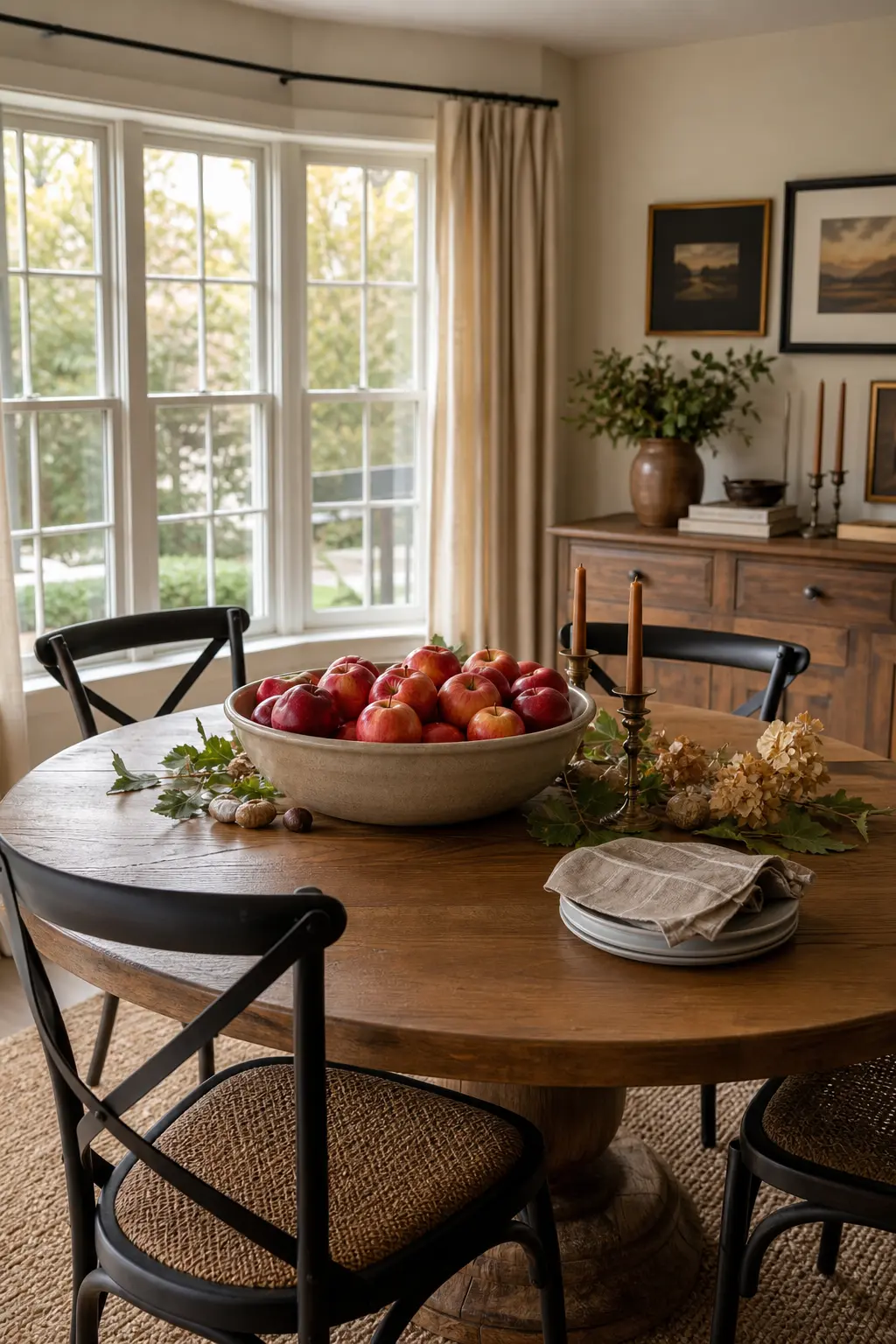
One Large Bowl of Apples
A wide, low ceramic or wooden bowl filled with apples. Centre it on the table. Nothing else. Apples in a single variety look more deliberate than a mixed-fruit arrangement: all Granny Smith reads graphic and cool; all Honeycrisp reads warm and autumnal.
The bowl itself matters as much as the fruit. A shallow footed bowl in matte white, black, or raw clay suits the palette without competing with the wood. After dinner, the apples go into pie or onto the counter. The bowl earns its place in the kitchen year-round.
Herb Pots Brought In From the Windowsill
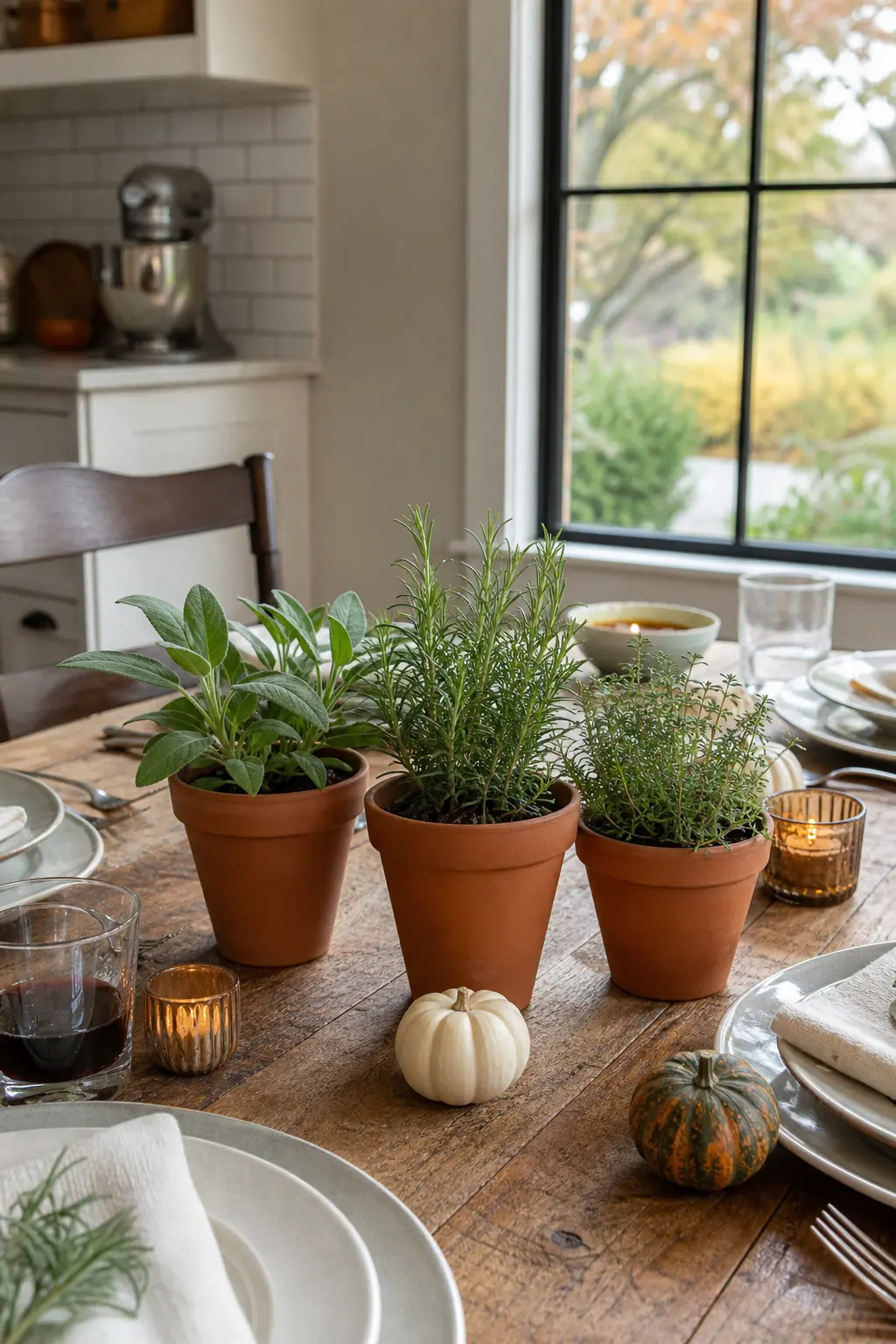
Rosemary, sage, and thyme in their terracotta pots, moved from the windowsill to the table centre. Three pots in a loose cluster, or a row of five down the length of the table. The plants are green, textural, and useful: guests can brush a hand across the sage and the room smells like the season.
Put a small plate or tile under each pot to protect the wood. The pots go back to the windowsill after dinner. This idea costs nothing if the herbs are already growing, and even a single large rosemary plant in a clay pot reads as intentional decor.
Boards and Vessels
Wooden boards are already on the table at Thanksgiving in most homes, holding cheese or bread. Moving them into a decor role rather than a purely functional one takes no extra purchase. A good board is already beautiful.
Wooden Boards as Trivets and Decor
A large walnut or acacia cutting board placed flat on the table serves as a trivet for the main dish and as a visual anchor for the whole setup. Put two or three boards of different sizes down the length of the table before the food comes out. They fill the centre and give hot pots somewhere to land.
Boards do not need to be new. A seasoned board with knife marks and oil stains looks better on a wood table than a pristine one. This is a case where the used object is the right object.
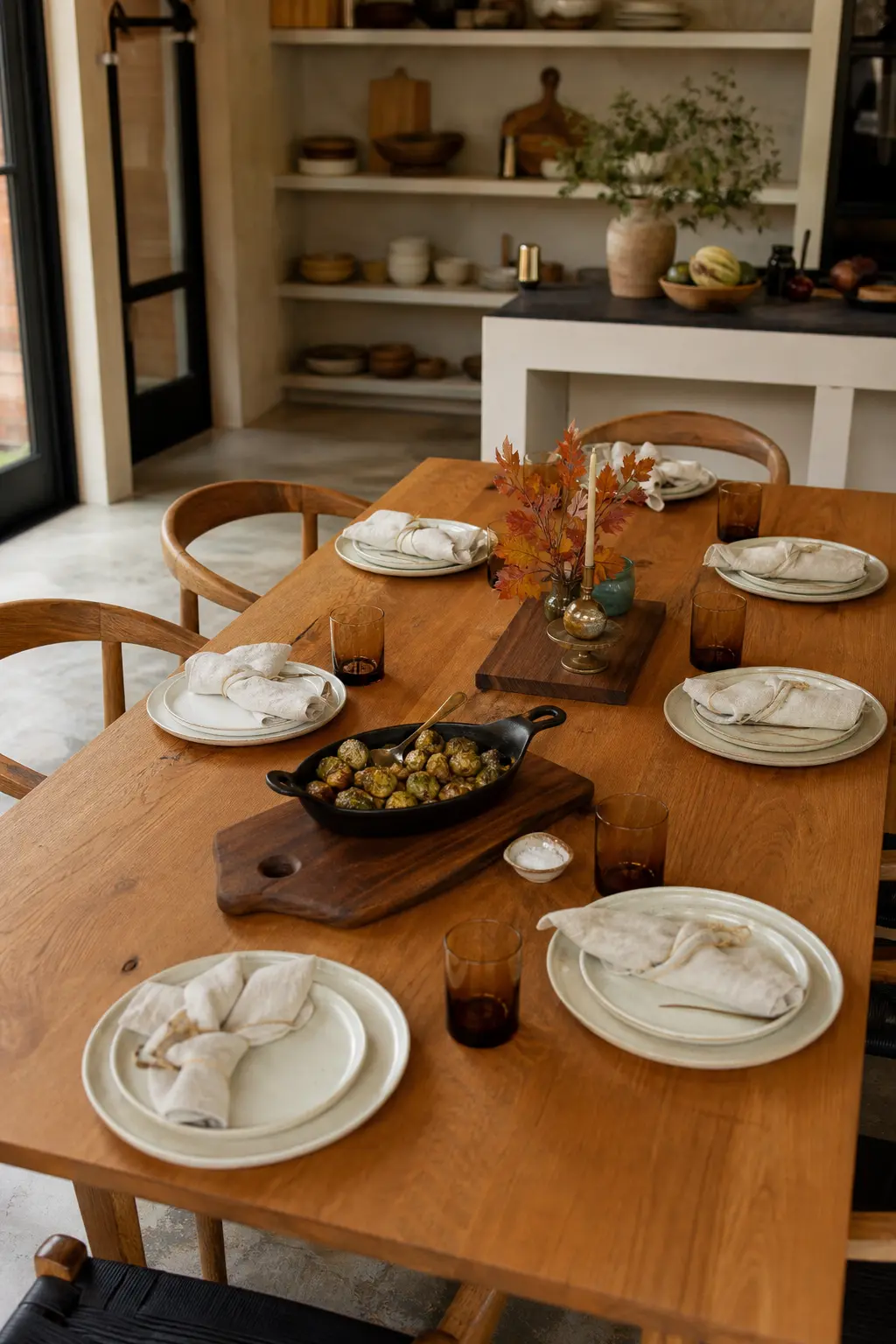
Napkins and Cloth
When the table is bare and the palette is neutral, a napkin becomes the loudest object in the room. That is useful. A cloth napkin folded under a plate replaces a placemat entirely, which means one less thing to source.
Napkins as the Only Colour in the Room
When every other element on the table is neutral, a cloth napkin in a single deep colour becomes a statement. Olive, rust, or terracotta all sit well against bare oak. One colour, all napkins matching, folded simply and placed to the left of each plate or loosely on top of it.
The key is choosing one colour and committing fully. No mixed napkin palette here: the restraint of a single tone is what makes the wood and the food read loudly. Linen napkins hold a fold without ironing; cotton ones need a press, so linen is the practical choice.
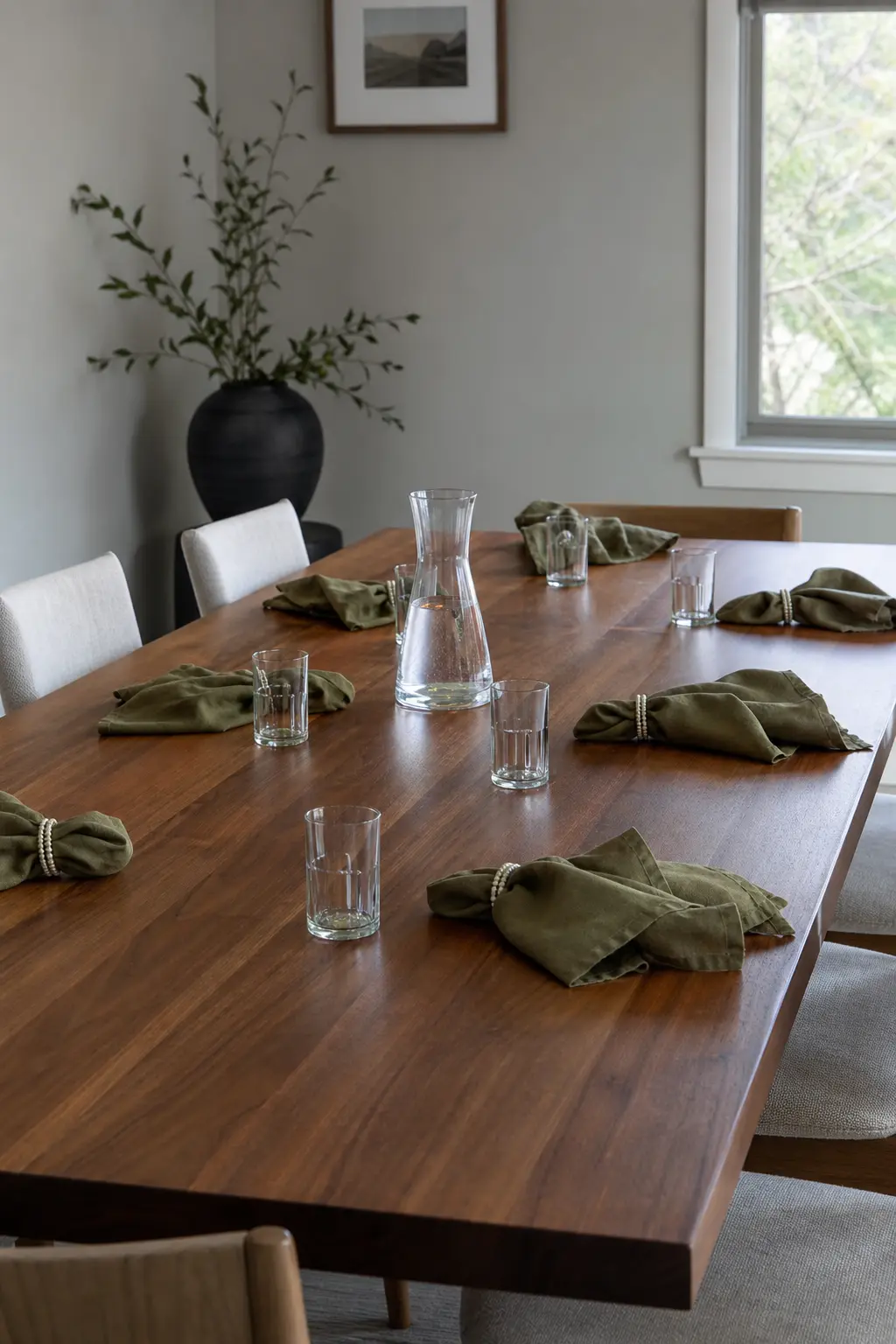
Cloth Napkins Under Each Plate as a Mat
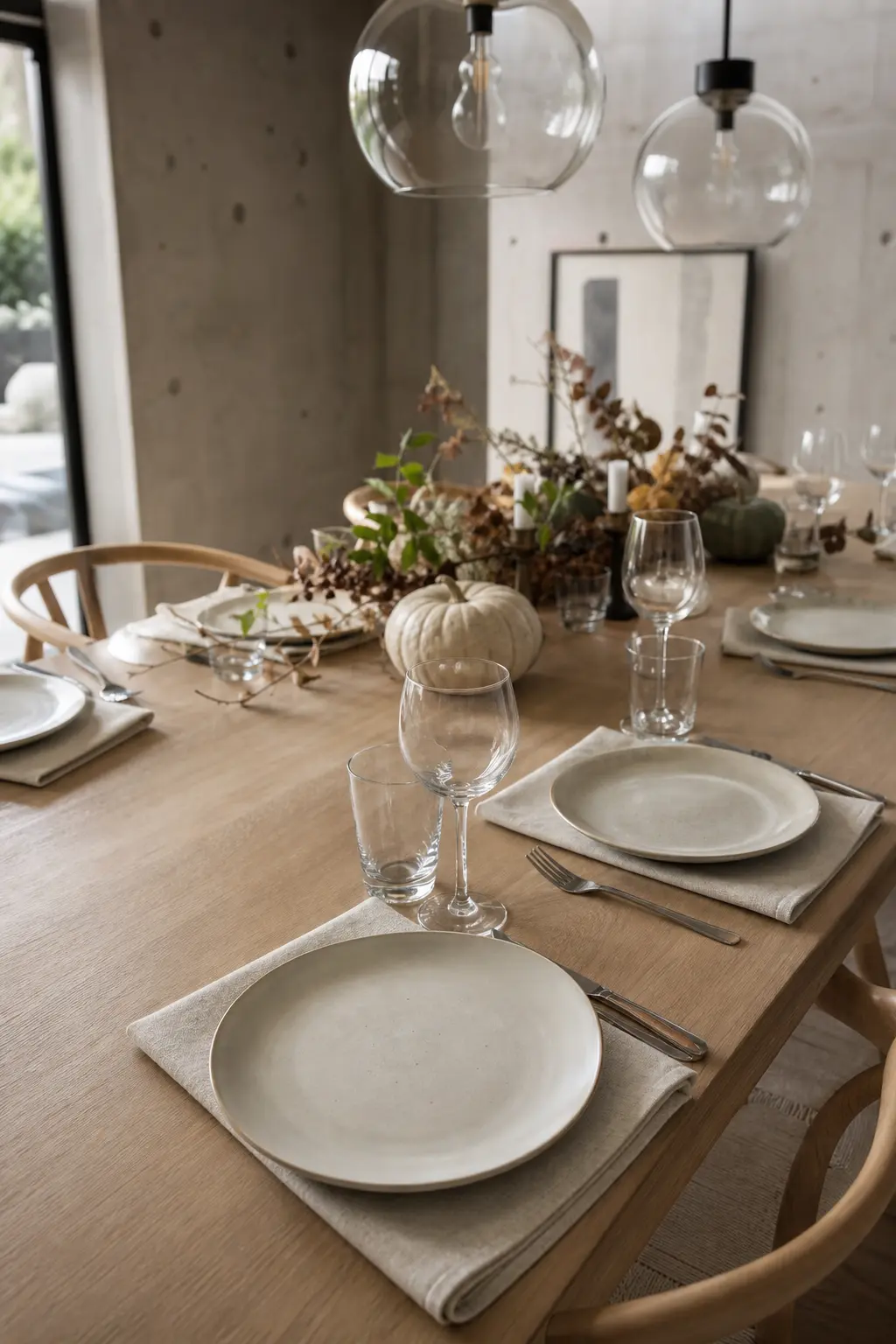
Fold a cloth napkin once, lay it flat under each plate, and you have a placemat without buying placemats. The napkin becomes functional at the start of the meal and in use throughout it. No separate mat to wash, no extra storage, nothing to lose before next year.
A generous linen napkin folded in half to roughly 30 by 40 centimetres works well under a standard dinner plate. The fold should face the table edge rather than the centre, so it unfolds toward the diner naturally. Cream, oatmeal, or olive all work against bare wood.
For the Children’s End and Family Style
The far end of the table has its own logic. Children need something to do with their hands before the food arrives, and a family-style setup at any end of the table removes the formality that makes Thanksgiving feel stiff. Both ideas are practical first and pretty second.
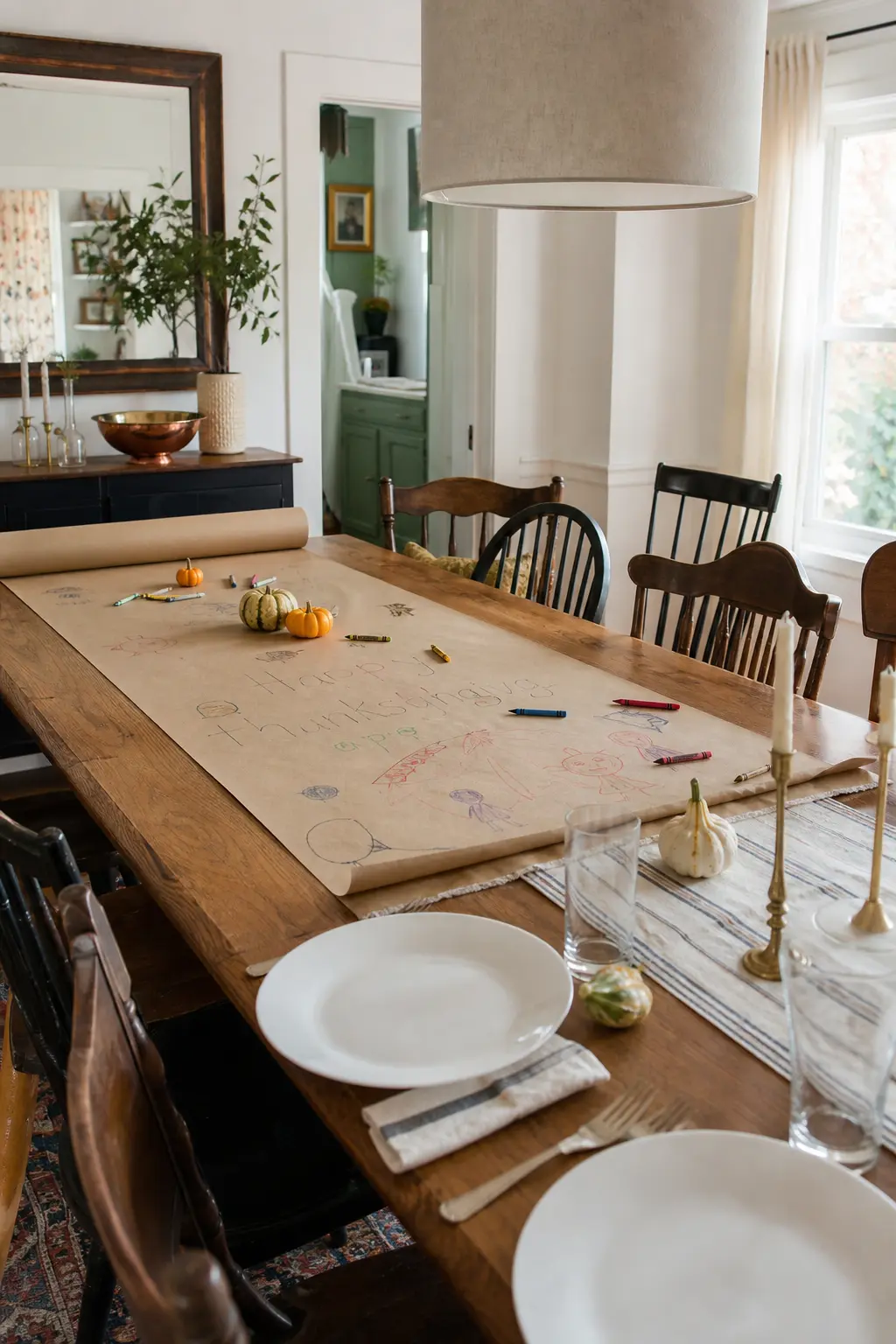
Kraft Paper Strip for the Children’s End
Roll out a strip of kraft paper across one end of the table, covering two or three place settings. Tape a few crayons or coloured pencils to each mat. The paper becomes the placemat, the colouring page, and the activity all at once. Tear it off after the meal and the table is clean.
This works at a mixed-age table where the adult end stays bare and the children’s end gets the paper. The visual contrast is not a problem: it reads as considered zoning rather than an afterthought. For more ways to keep kids busy at the table, see these Thanksgiving games for kids.
🛍 Shopping guide
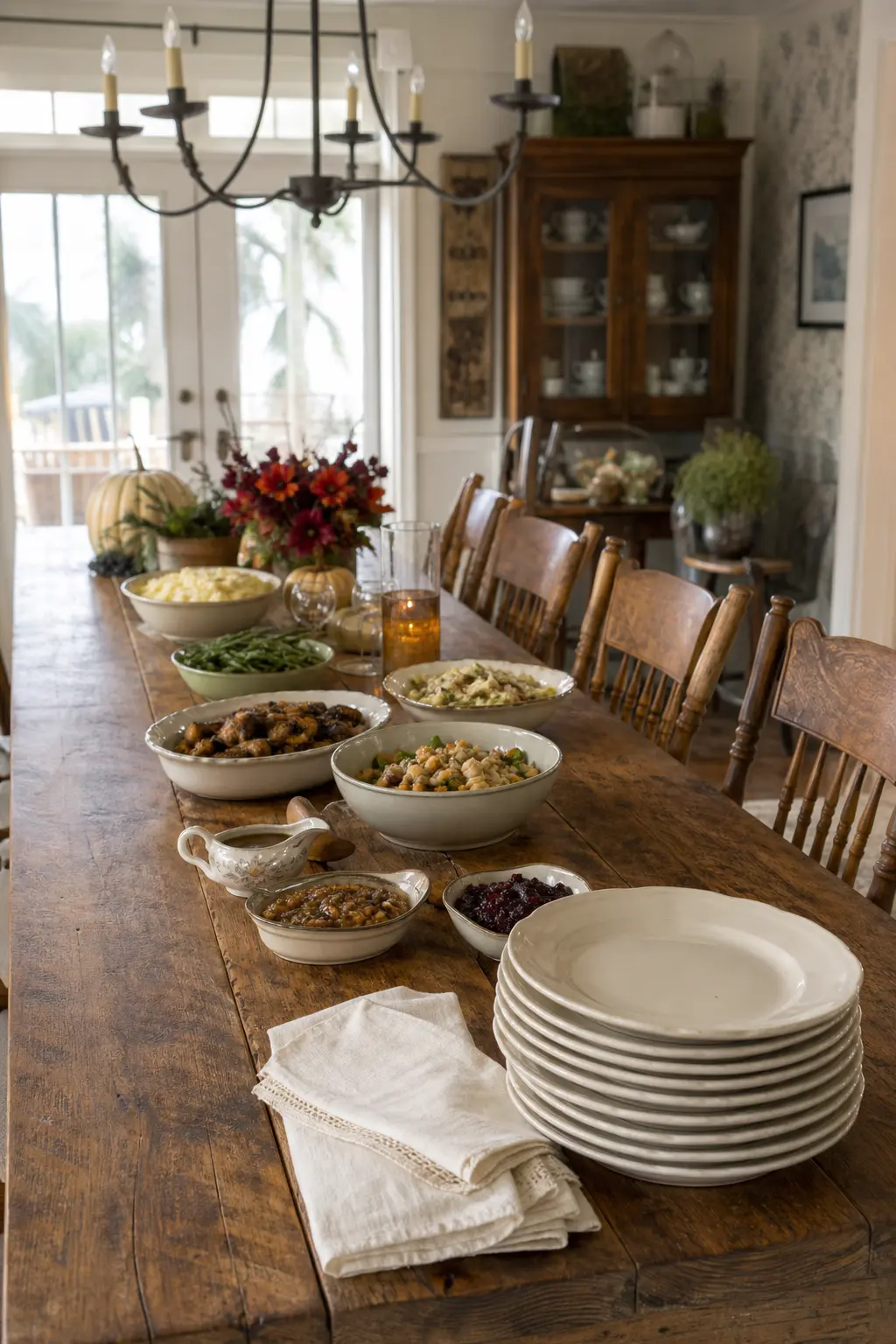
Stack of Plates at One End, Served Family Style
Move the plates off the individual settings and stack them at one end of the table. All the dishes go in the middle. Guests serve themselves and pass things around. The table looks more relaxed, more abundant, and requires about half the setup of a formally plated arrangement.
A stack of ten plates with a folded napkin on top and a set of serving spoons beside it is a vignette in itself. It signals that this meal is generous and unguarded. For more ways to make the dinner itself feel like an activity, Thanksgiving dinner games and fun Thanksgiving games for the whole family pair naturally with a table set this way.
The Simplest Thing of All
One of these seventeen ideas involves nothing decorative at all. The food is the decor. It is worth saying plainly, because the pressure to add objects is real and mostly unnecessary.
Bare Wood With Only the Food on It
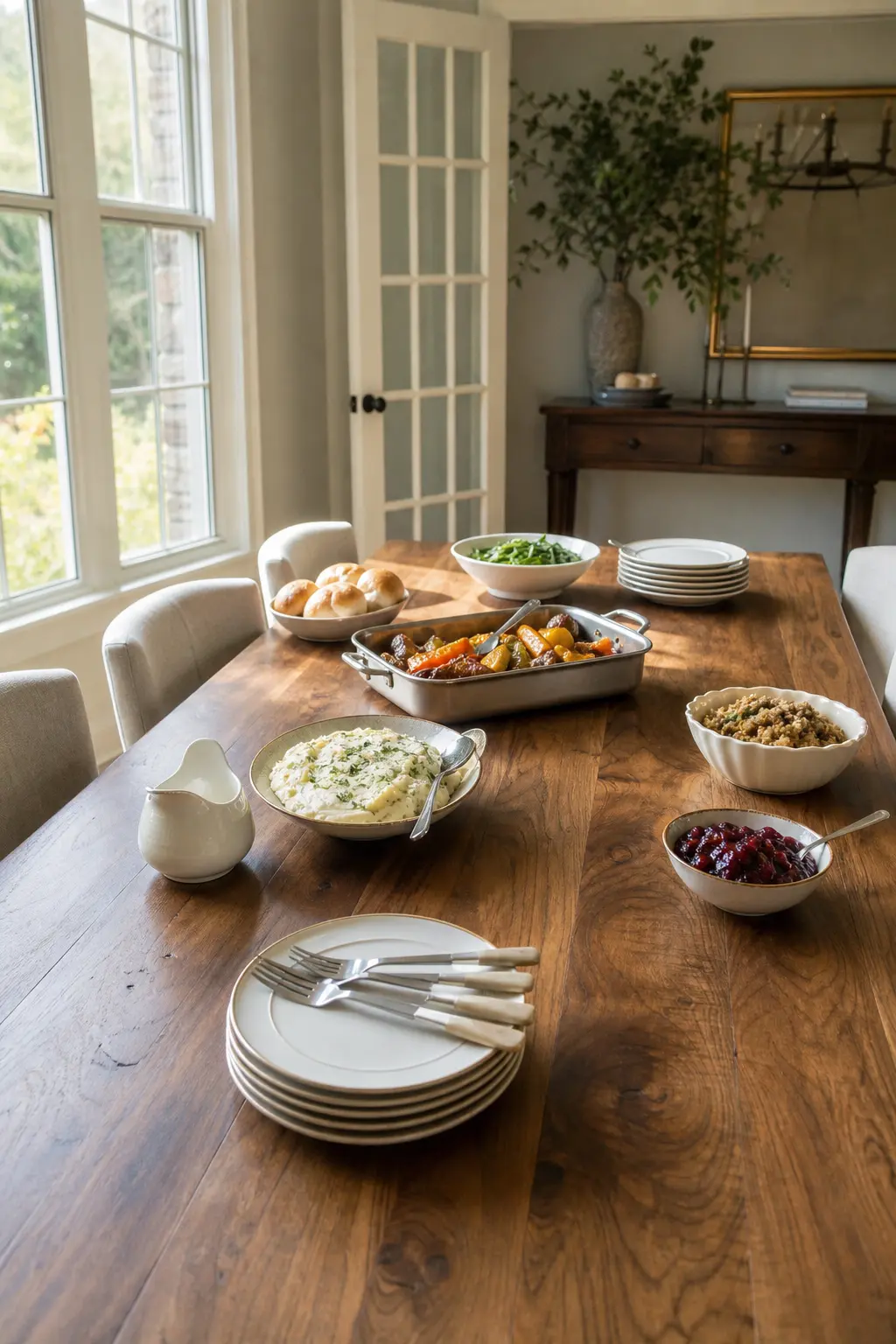
No runner, no mats, no candles, no foliage. The table is clean, the wood is bare, and the food is the decor. A roasting tin of vegetables, a pot of soup, a board of bread, and a pie: these are the centrepiece.
This works when the food is plentiful and the table is beautiful. It asks nothing of the host before dinner. It is also the easiest to clear. If there is anxiety about it feeling underdressed, put a single jug of branches at one end (idea 5) and leave everything else bare. One object is still almost nothing.
Frequently Asked Questions
Does a bare wood table look unfinished without a tablecloth?
Not if the table is clean and the surface is in good condition. A lightly oiled or waxed wood table reads as considered, not neglected. One or two elements from this list (a runner, a candle, a bowl of fruit) are enough to signal that the look is a choice.
How do you protect a wood table without a tablecloth?
Use placemats or napkins under plates to catch drips. Put a trivet or wooden board under any hot dish. A good cutting board handles most of what a tablecloth would. Clean up spills quickly and the table survives the meal without damage.
What is the easiest centrepiece for a Thanksgiving table?
A single large bowl of apples or a jug of dried grasses: both require one purchase or none, they take under two minutes to arrange, and neither needs to be moved when the food arrives.
What colours work on a bare wood table?
Cream, oatmeal, and natural linen are the safest starting points because they warm the grain rather than fighting it. Olive and rust add depth without jarring. Avoid bright white, which reads cold against most wood tones.
Can this approach work for a small dining table?
It works better on a small table than a full tablescape does, because there is no room to layer. One runner or two placemats, one candle, and the food: a small table is complete with less, and bare wood between the settings makes the space feel larger.
30 fall kitchen decor ideas that stay off the working surfaces. Warm, practical updates for the busi
My bedroom in summer is basically two seasons at once. There’s the version I want — ligh
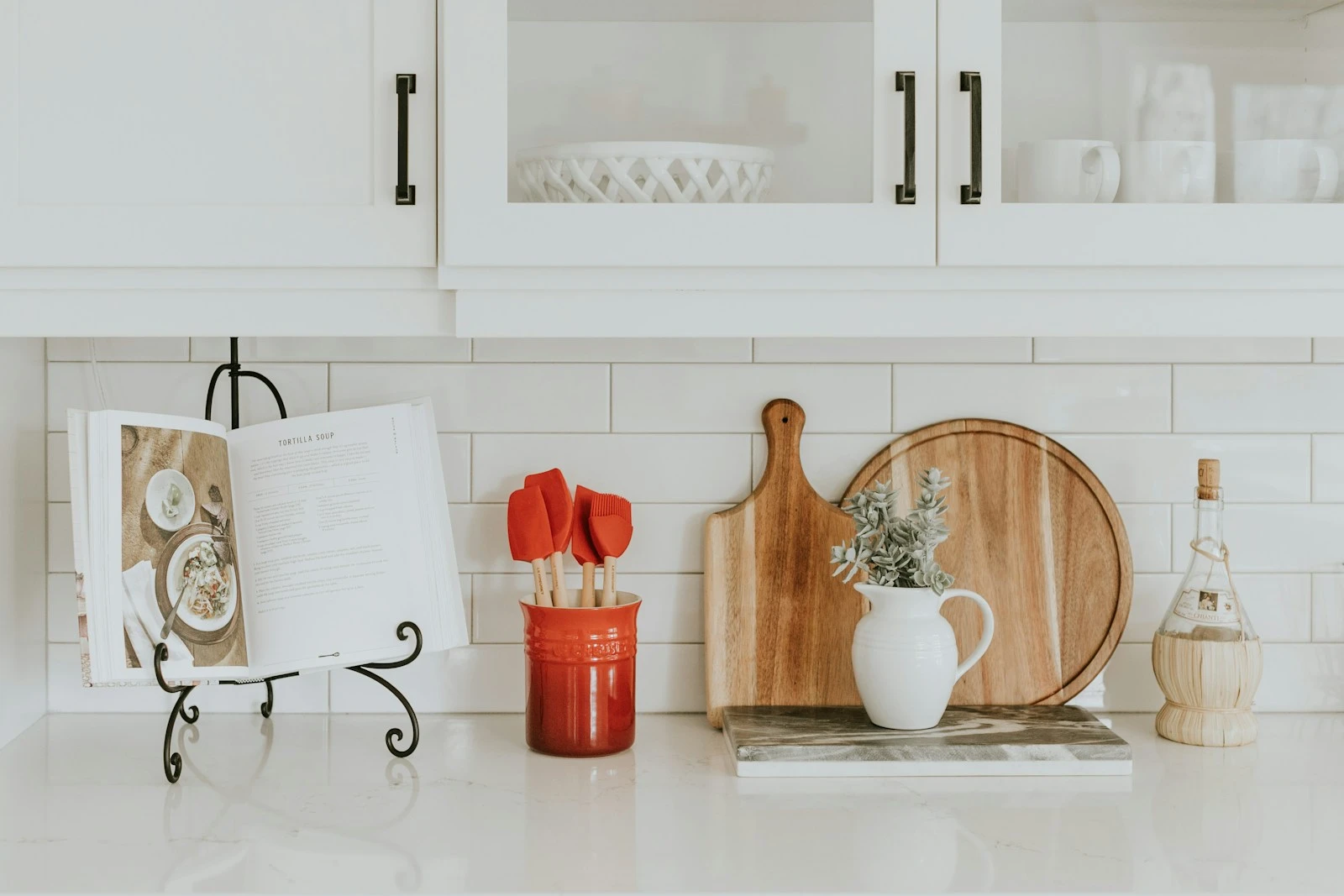
12 Kitchen Counter Styling Ideas That’ll Make You Actually Want to Cook (Number 7 Is a Game-Changer)
Real talk: your counters can look good AND be functional. Here’s how. Okay, confession time. F
Leave a Reply