

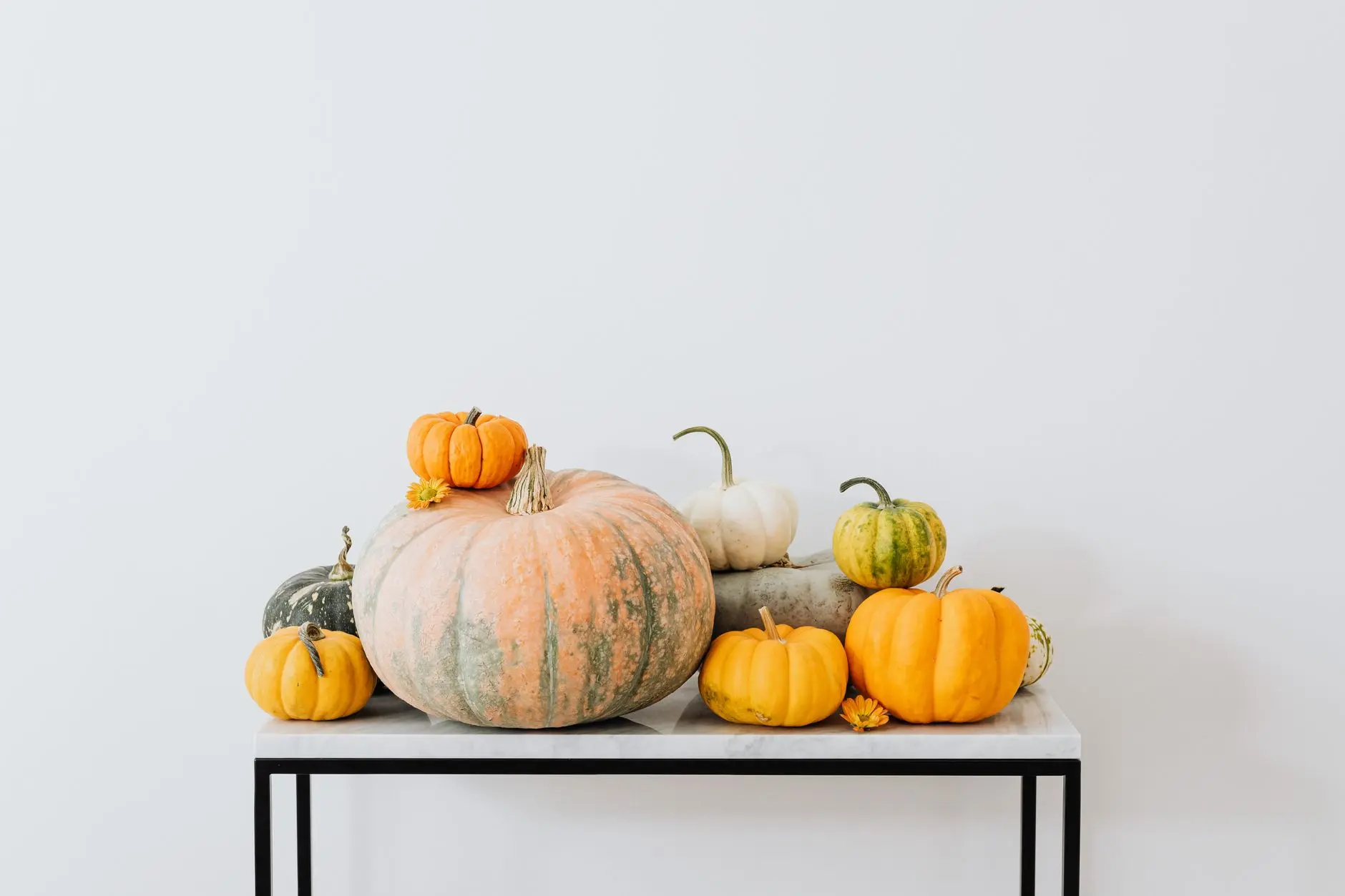
The turkey motif had a good run. Now it is time to retire it, along with the orange plastic cornucopias and the napkins printed with cartoon pilgrims. The table can feel completely, unmistakably autumnal without a single bird on it.
The shift happening on well-dressed tables right now is toward foraged harvest: mushrooms, bark, moss, dried grains, and the kind of fruit you actually want to eat afterward. The palette is chaga brown, aged cream, deep moss, amber, and a little tarnished brass. It reads like the season itself rather than a costume of the season.
Every idea below works as a standalone move or layers into the others. Pick three and the table is done. Pick twelve and it becomes the kind of setting people photograph before anyone sits down. Either way, no turkeys were harmed in the making of it.
This post contains affiliate links. If you buy through them, I may earn a small commission at no extra cost to you.
The Mushroom Moment
Mushrooms are doing in table decor what they did in food: moving from background ingredient to main character. The shapes are architectural, the tones sit perfectly in a brown-and-cream palette, and nothing about them reads as seasonal in a cliched way. They bridge Halloween and December without blinking.
Ceramic pieces, dried specimens, and foraged clusters all read differently on a table. Mix at least two forms so the eye has somewhere to travel.
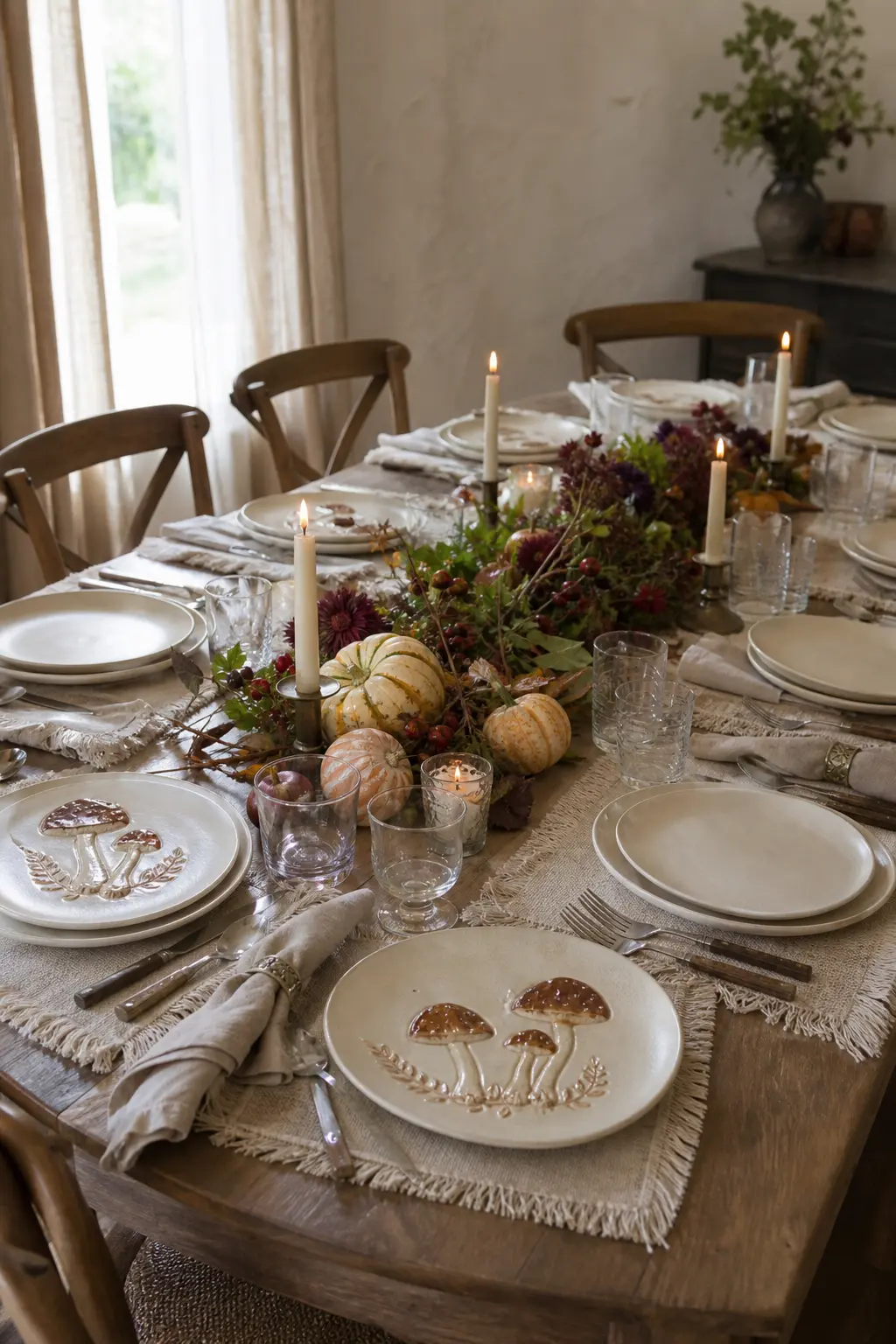
Ceramic Mushroom Plates Mixed Into the Setting
Buy two or four mushroom-motif ceramic plates and alternate them with your plain ones around the table. The pattern appears, disappears, reappears. It is a rhythm, not a wallpaper.
Stick to stoneware with a matte glaze in cream or warm grey. Shiny novelty versions read as gift-shop. The matte ones read as a considered collection.
🛍 Shopping guide
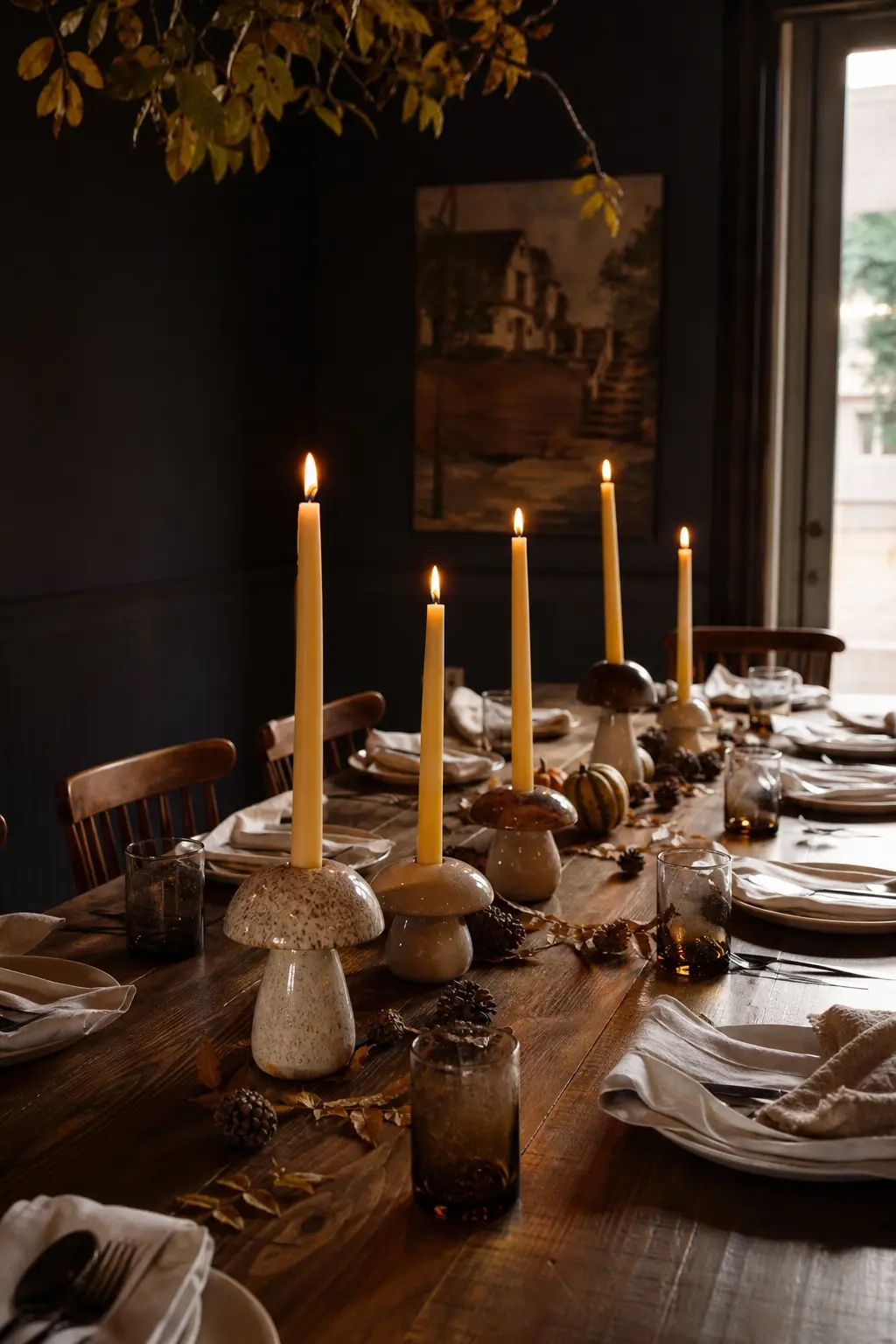
Mushroom Taper Holders Down the Centre
Ceramic or resin mushroom taper holders come in exactly the shapes that work here: porcini caps, chanterelle flutes, morel columns. Space five or seven of them down the centre of the table at irregular intervals rather than a neat line.
Use beeswax tapers in them. The warm drip and the amber flame suit the organic forms in a way white paraffin does not.
🛍 Shopping guide
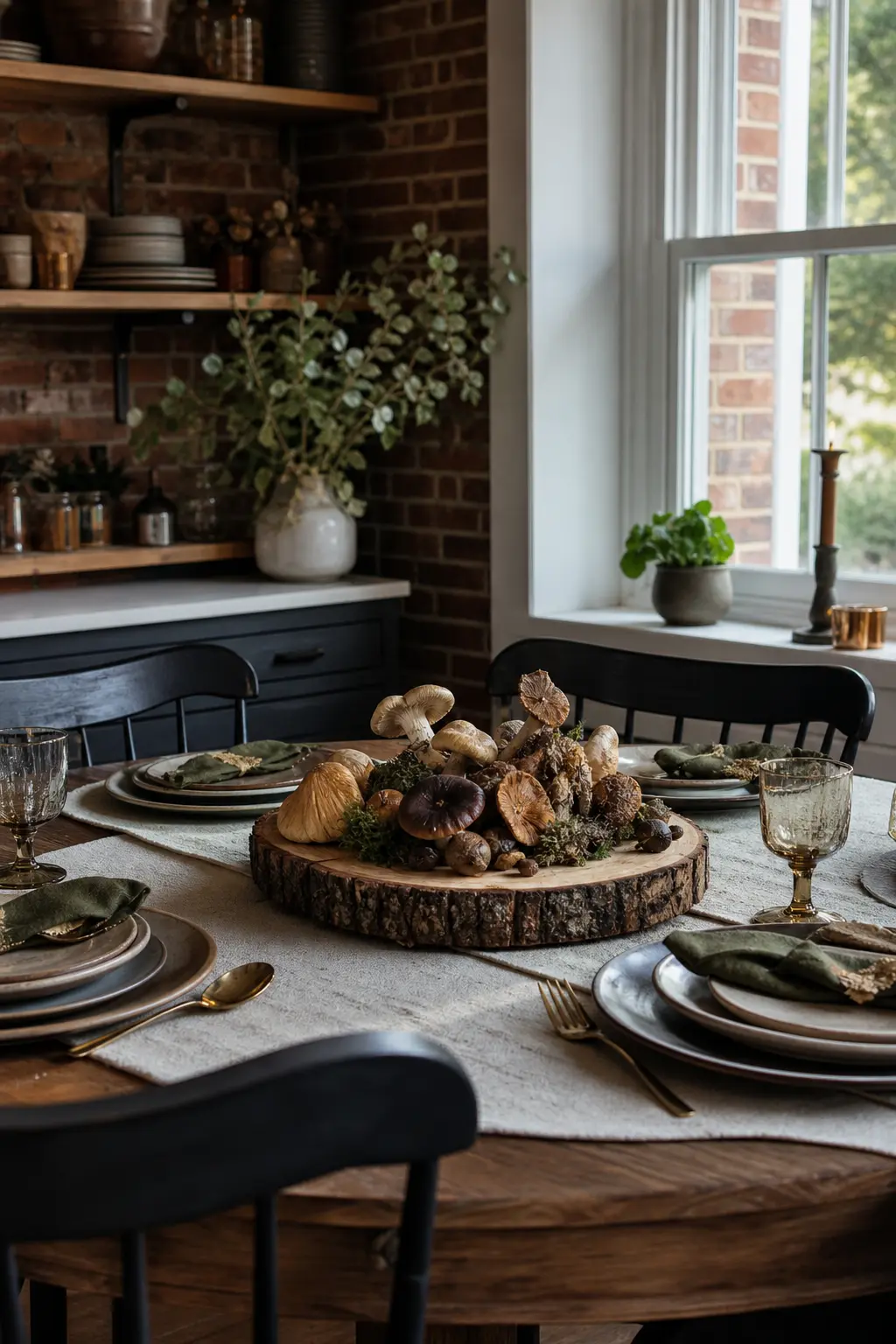
Foraged Fungi Grouped on a Wooden Board
A thick wooden board or a bark-edged slab becomes the base. On top: a cluster of dried or faux porcini, hen-of-the-woods, and oyster mushrooms in mixed sizes. Add a handful of acorns and a sprig of dried moss to fill the gaps.
This works as a centrepiece on a small table or as one node in a longer arrangement on a large one. The board keeps it contained so it never looks like a scatter of random objects.
🛍 Shopping guide
Foraged and Found
The most expensive-looking tables are usually built from things gathered rather than bought. Branches, bark, moss, acorns, and feathers cost almost nothing and carry more visual weight than a box of ornaments.
A wooden board is the anchor. Everything else groups around it, gets tucked into arrangements, or scatters loosely across the cloth. The goal is studied disorder, not a craft project.
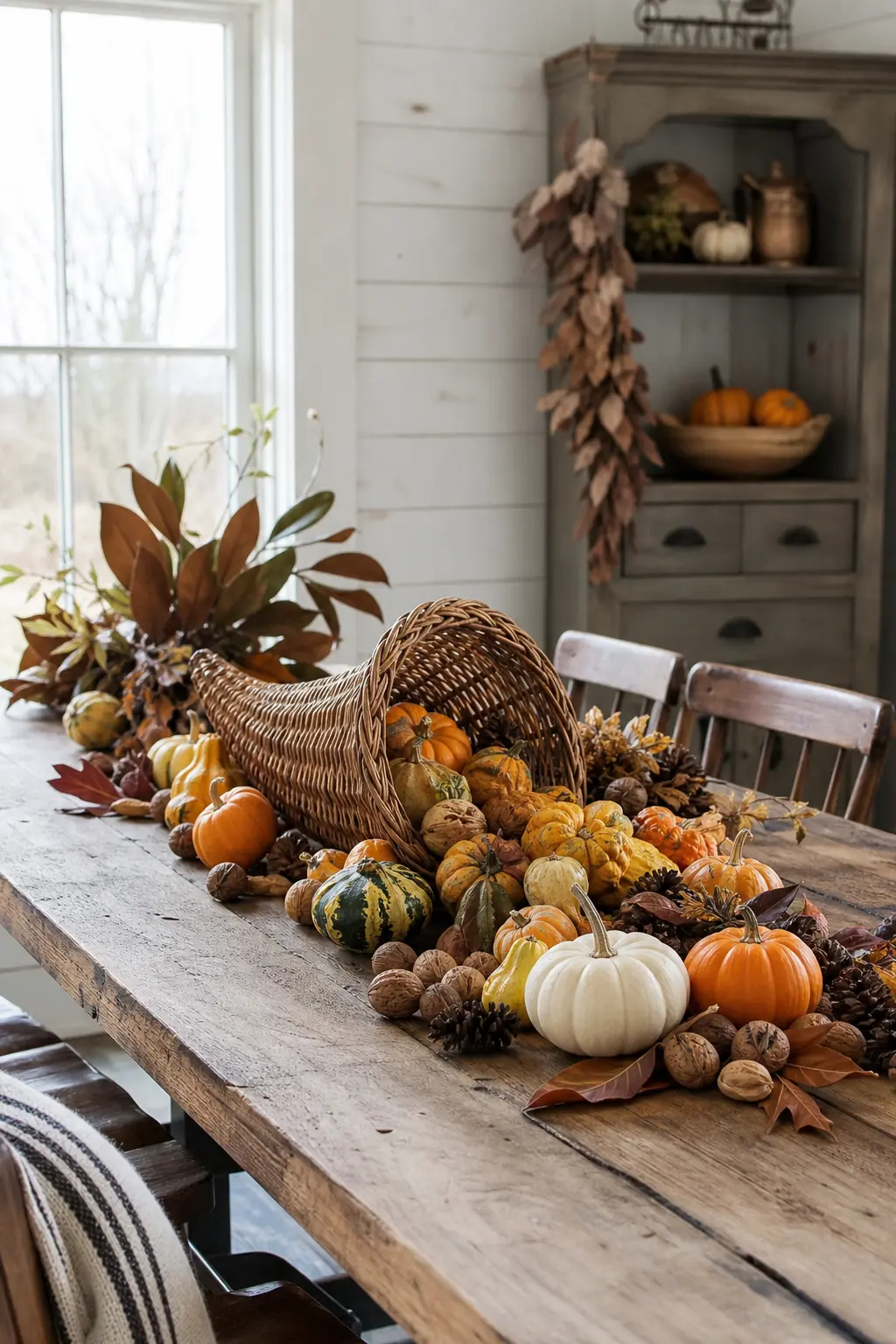
Cornucopia Laid Flat as a Runner, Gourds and Nuts
Stand the cornucopia upright and it looks like a prop. Lay it on its side at the centre of the table with the contents spilling outward along the length and it becomes a runner. Tuck in small gourds, walnuts, hazelnuts, and a few dried leaves.
Choose a wicker or woven cornucopia in natural undyed material. The painted ones undercut everything around them.
🛍 Shopping guide
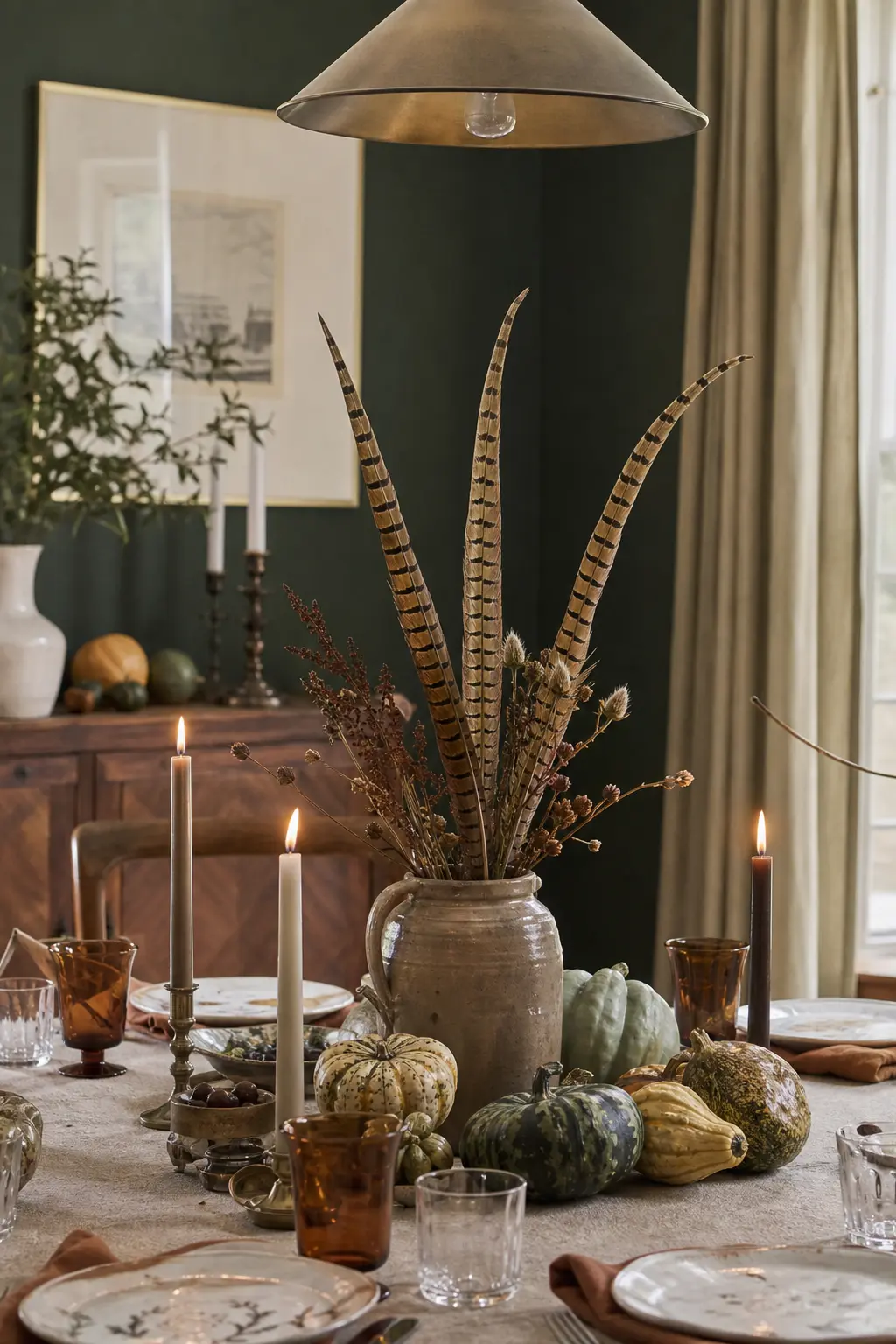
Pheasant Feathers Tucked Into the Arrangement
Three pheasant tail feathers added to a centerpiece change its register entirely. They bring height, movement, and pattern without adding colour outside the palette: the amber, brown, and cream tones are already there in the feather itself.
Tuck them into a footed vessel, a gourd, or the cornucopia arrangement. Odd numbers only. Two feathers look like an accident; three look like a choice.
🛍 Shopping guide
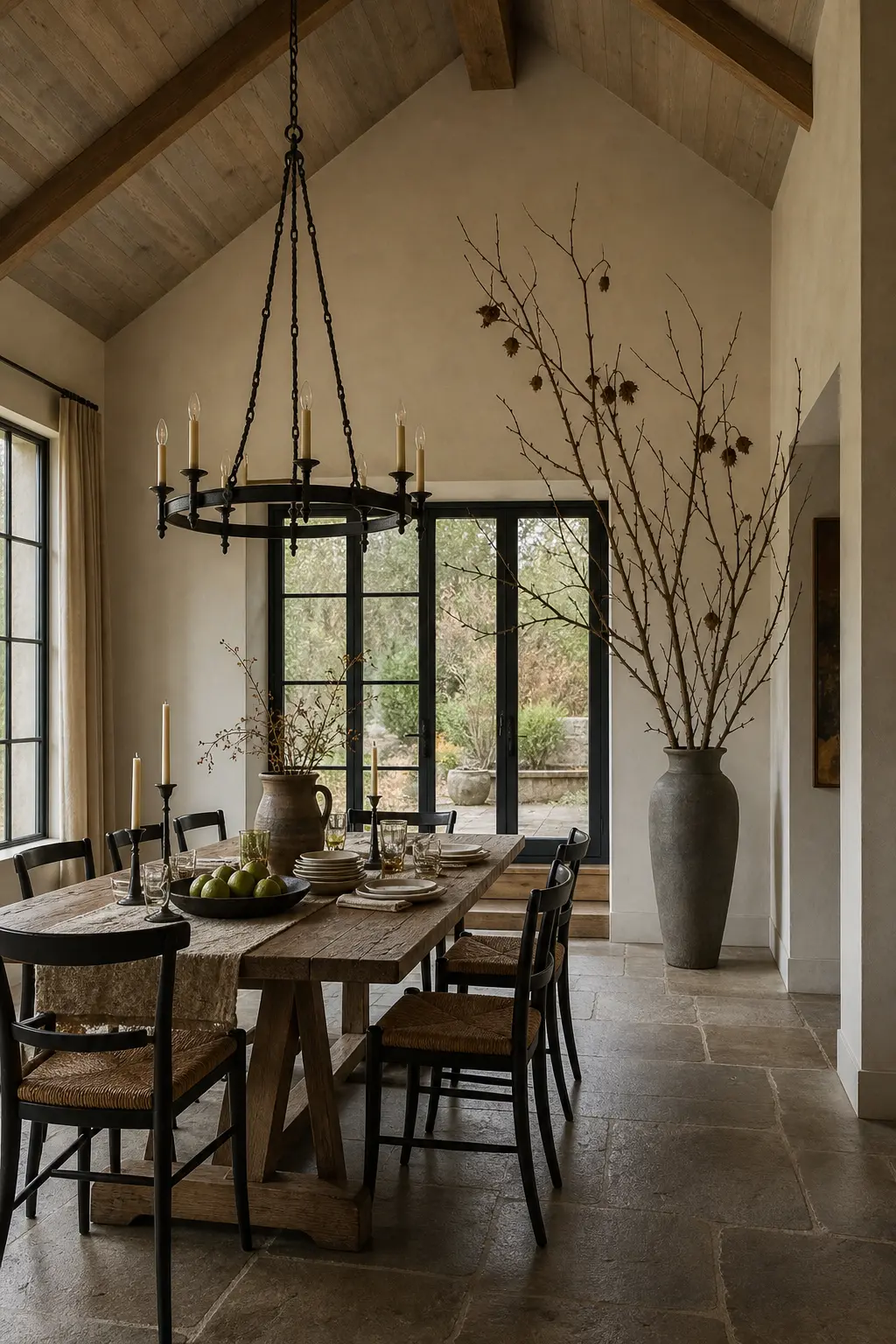
Dried Branches Instead of Cut Flowers
Bare branches in a tall ceramic vase do what cut flowers do in terms of height and structure, without the wilting, the water smell, or the cost. Oak, birch, and magnolia branches all work. Spray nothing on them.
If the branches feel too sparse, hang a few dried seed pods or small preserved leaves from the tips with thin twine. The weight steadies the stems and adds interest without adding colour.
🛍 Shopping guide
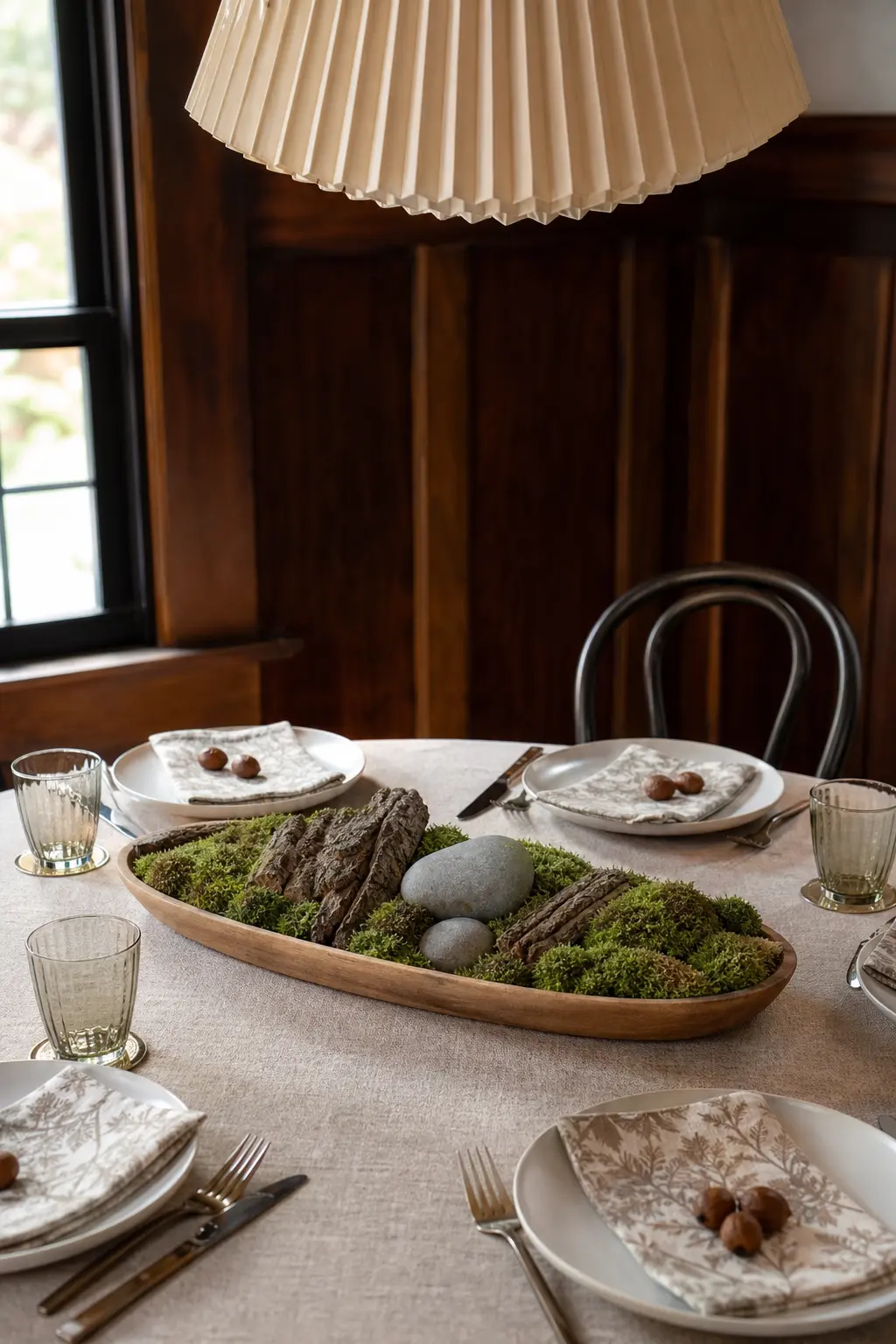
Moss and Bark in a Shallow Tray
A shallow wooden or ceramic tray filled with preserved sheet moss, a few pieces of lichen-covered bark, and one or two small stones is essentially a slice of forest floor on the table. It takes five minutes to arrange and costs almost nothing if you gather the bark yourself.
Keep it low so guests can see each other over it. Trays over three inches tall at any point start to block sightlines.
🛍 Shopping guide
Acorns in a Footed Bowl
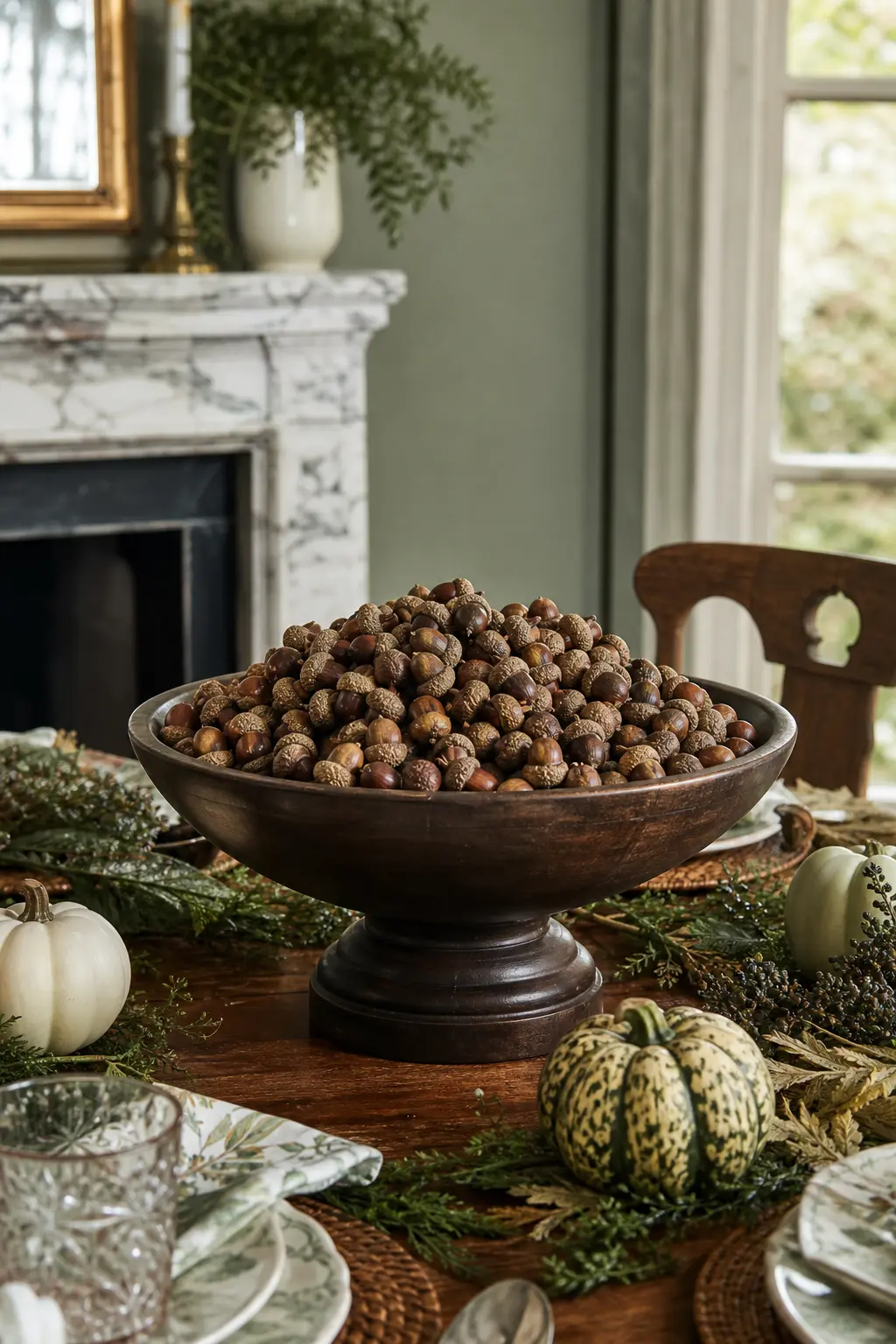
A footed bowl filled to the brim with acorns, caps on, is the still-life version of a centrepiece. It needs nothing added. The variation in size and the matte surface of the caps do all the visual work.
A dark walnut or aged ceramic footed bowl shows the acorns best. A light bowl flattens the contrast and loses the depth the caps need to read well.
🛍 Shopping guide
Fruit, Nuts, and Things You Will Actually Eat
Decor that doubles as food is the most practical kind. Pears, grapes, walnuts in their shells, and small squashes all hold their look for days and disappear into dessert or a cheeseboard without waste.
The trick is density. A single pear looks forgotten. Twelve pears clustered at the centre of the table look intentional and abundant, which is exactly the feeling the meal is supposed to carry.
Pears and Grapes Used as Decor and Eaten Later
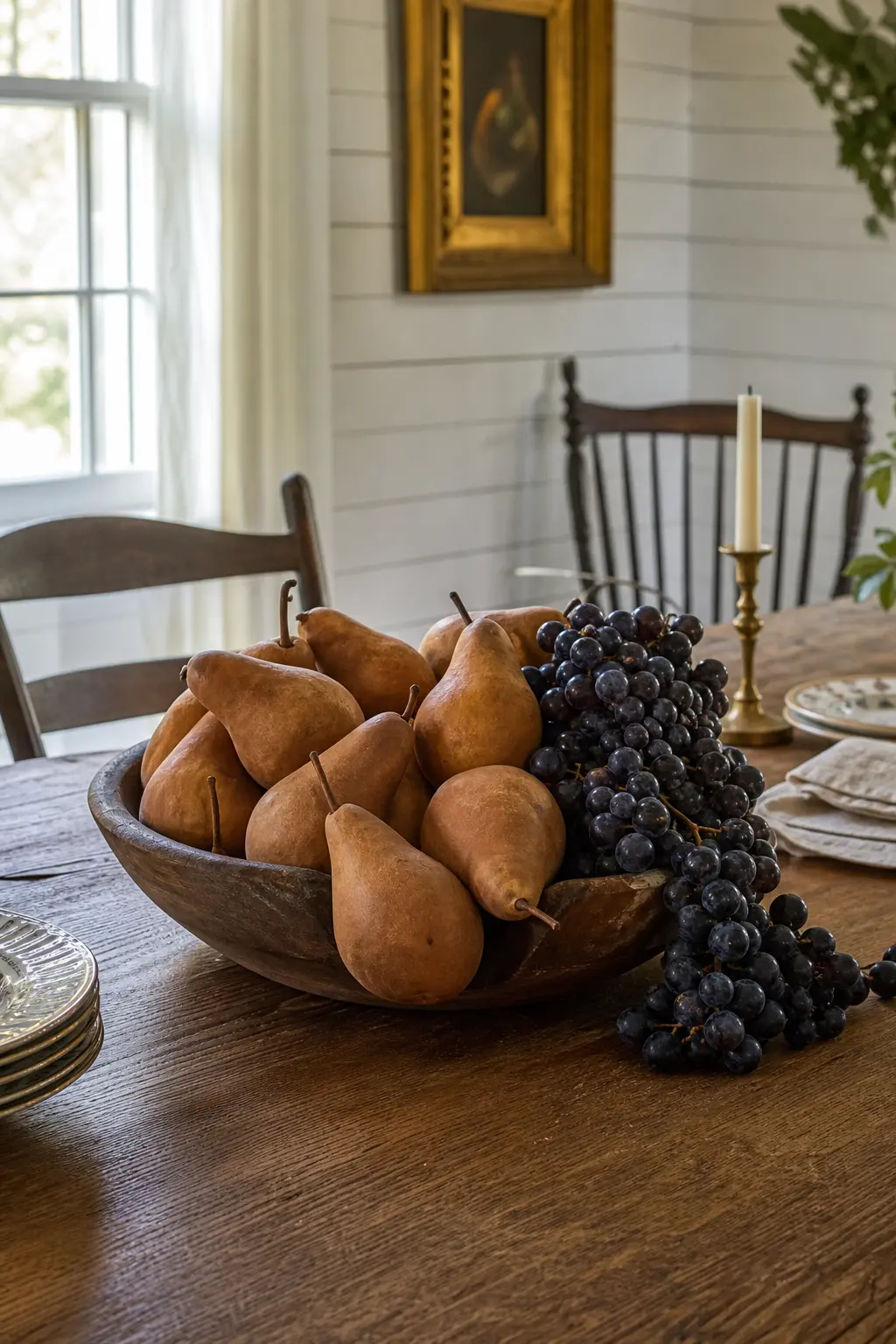
Green and brown Bosc pears clustered in a low wooden bowl, plus one large bunch of dark Concord or black grapes draped over the edge, constitute a centrepiece. No floral arranging required.
This is the idea that looks the most expensive for the least effort. The fruit is going to be eaten. The display costs nothing extra. Scale matters: one pear looks like a mistake, ten look like abundance.
🛍 Shopping guide
Nuts Scattered in Their Shells
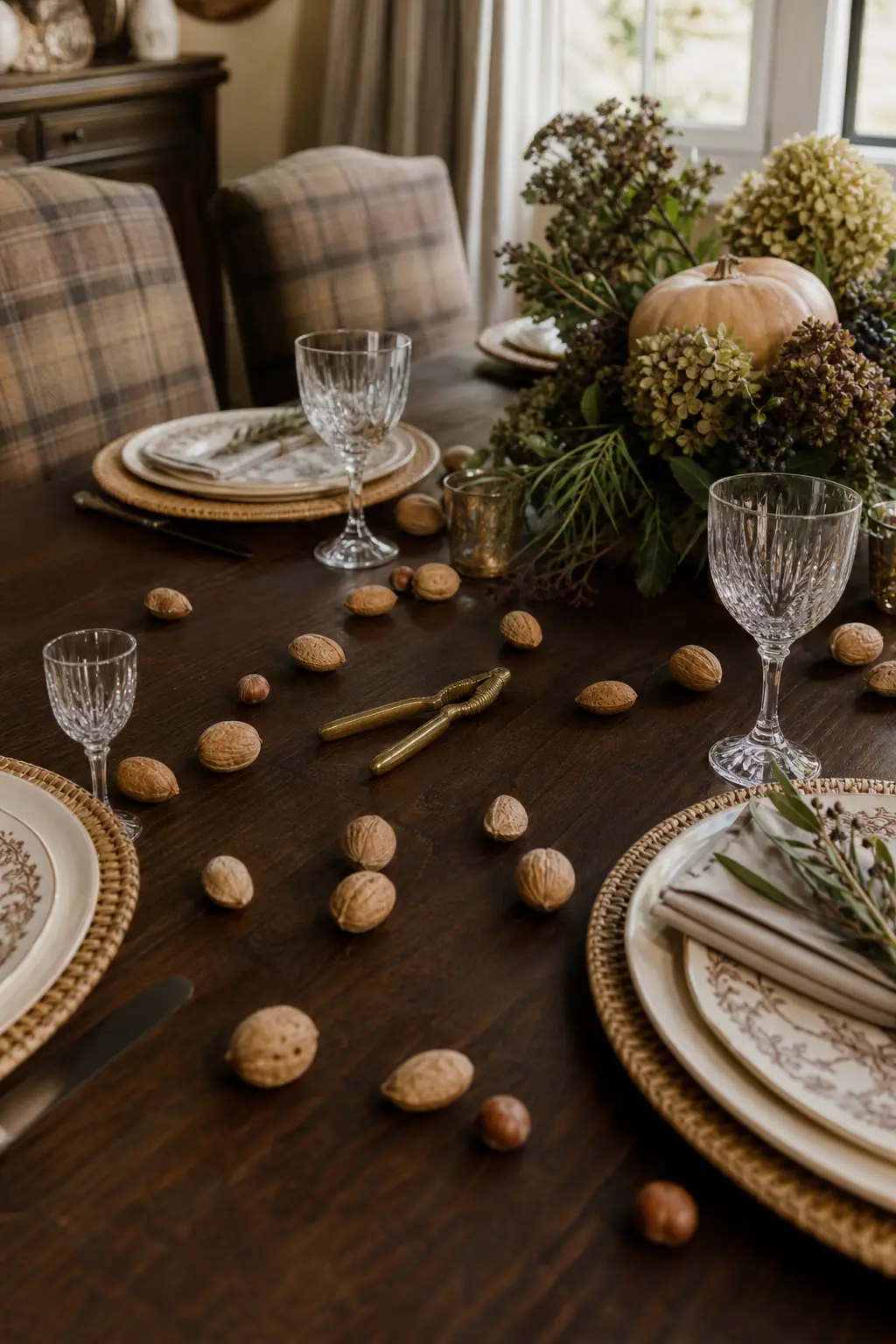
Walnuts, hazelnuts, chestnuts, and pecans in their shells scattered loosely between the place settings cost almost nothing and look completely intentional. The tones are exactly right: brown, tan, cream, and the faint sheen of the shell.
Add a vintage or brass nutcracker and a small dish for shells at each end of the table. Guests crack them between courses. It extends the meal and gives restless hands something to do.
🛍 Shopping guide
Small Squashes in Place of Name Cards
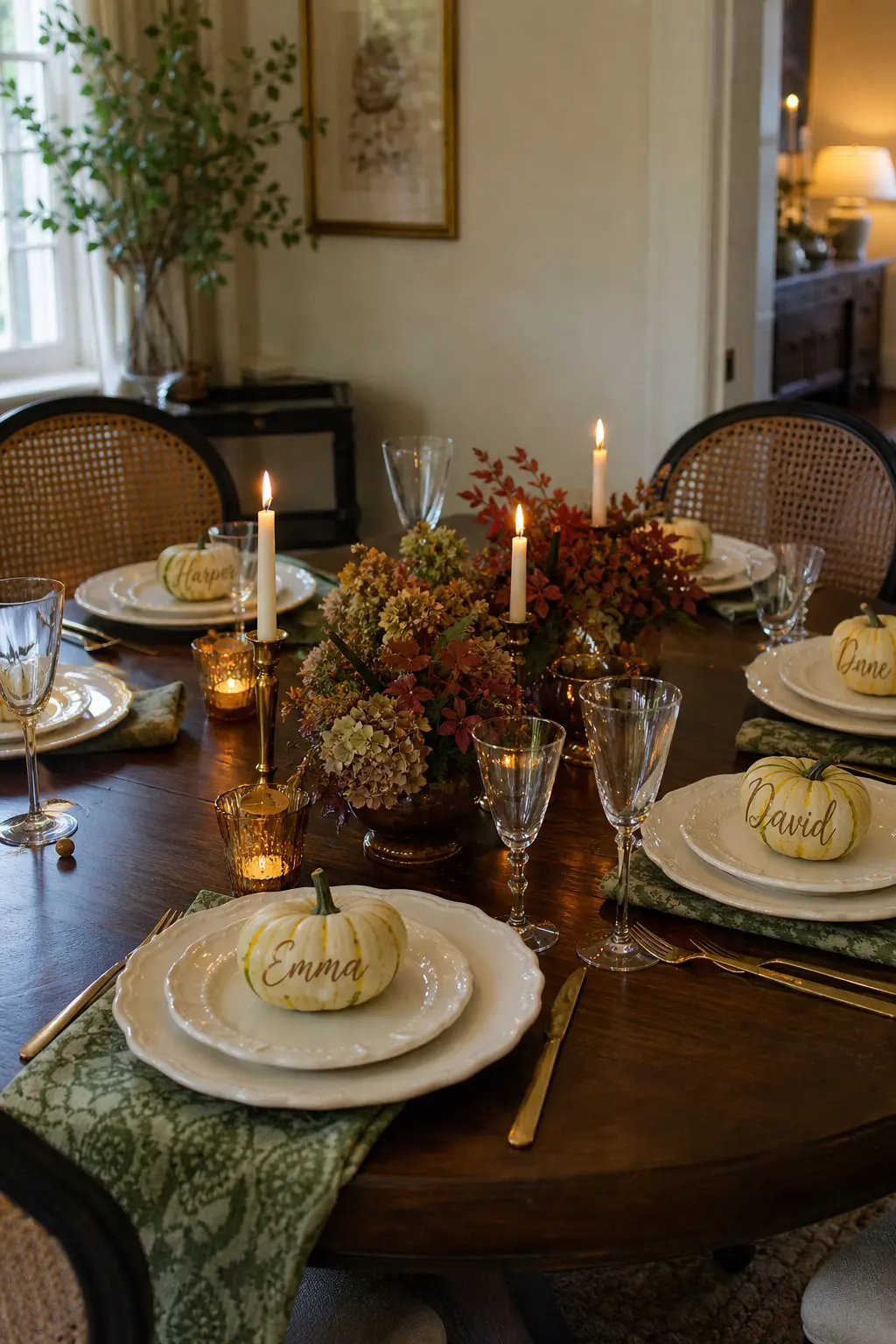
Write each guest’s name on a small Delicata or acorn squash with a fine-tip gold paint pen and set it on the plate before they arrive. It functions as a place card, a favor, and a piece of decor at once.
After the meal, guests take their squash home. The cleanup is instant. No card holder, no folded paper, no font decisions.
🛍 Shopping guide
Candles and Light
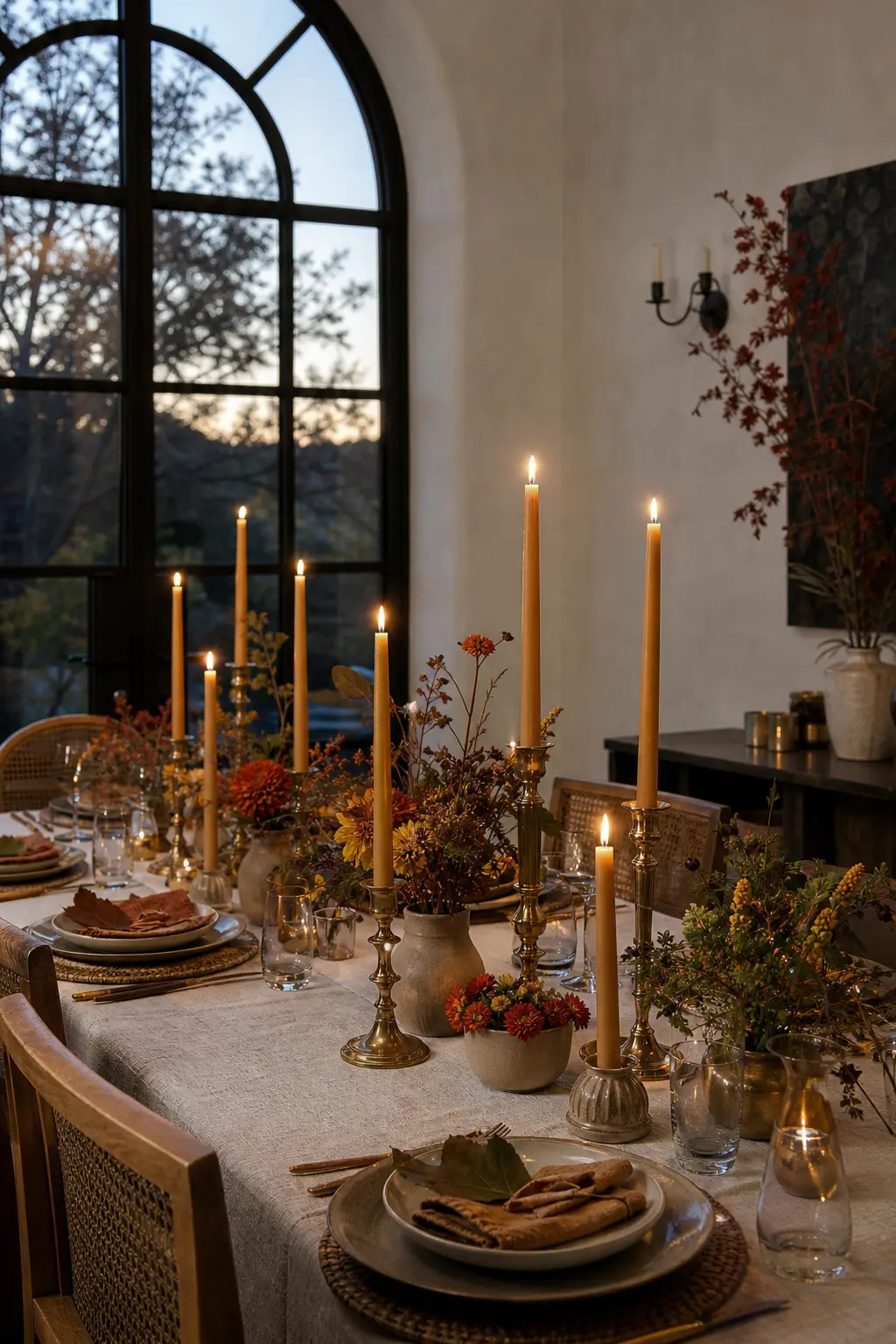
Candlelight does more for a table than any centerpiece. Beeswax tapers in particular smell faintly of honey and burn with a warmer, more amber flame than paraffin. Vary the heights so the silhouette moves.
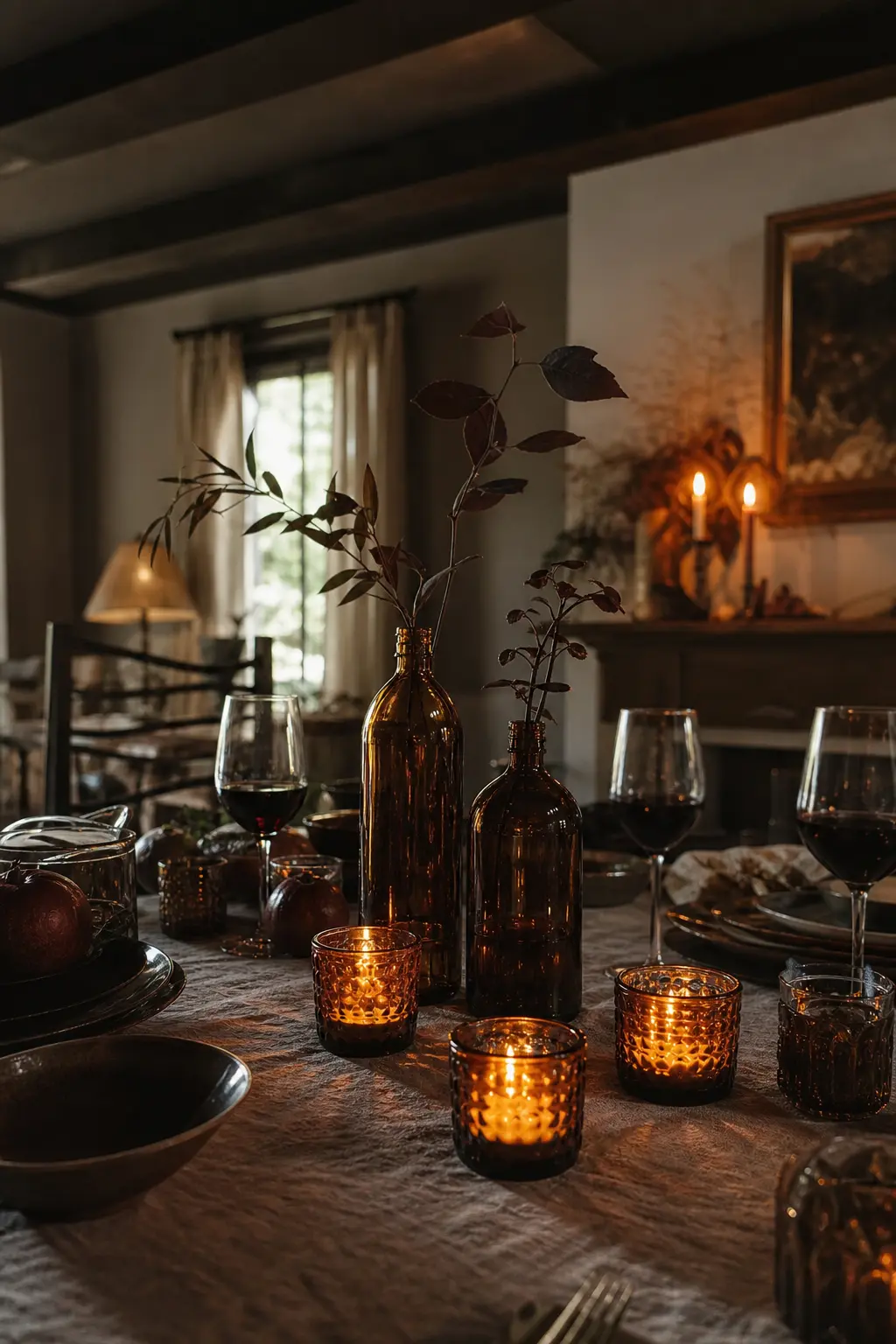
Amber glass catches and bounces the flame. Group votives and bottles in odd numbers, always threes, and the arrangement looks considered without being fussy.
Amber Glass Grouped in Threes
Amber glass does something to candlelight that clear glass cannot: it warms the flame and throws honey-coloured light onto the cloth and the faces around it. Collect amber bottles, votives, and small pressed-glass tumblers and cluster them at one or two points down the table.
Odd numbers: three votives, a taller bottle, one squat jar. The grouping looks like it was already there rather than arranged.
🛍 Shopping guide
Beeswax Tapers at Three Heights
The silhouette of a candlelit table depends on height variation. Set one tall taper at ten inches, one at seven, one at five in every cluster. The eye reads it as natural rather than arranged.
Beeswax tapers come in natural honey, cream, and a deep brown that reads almost as walnut. All three together in the same cluster look like they belong to each other.
🛍 Shopping guide
Linens and Surface
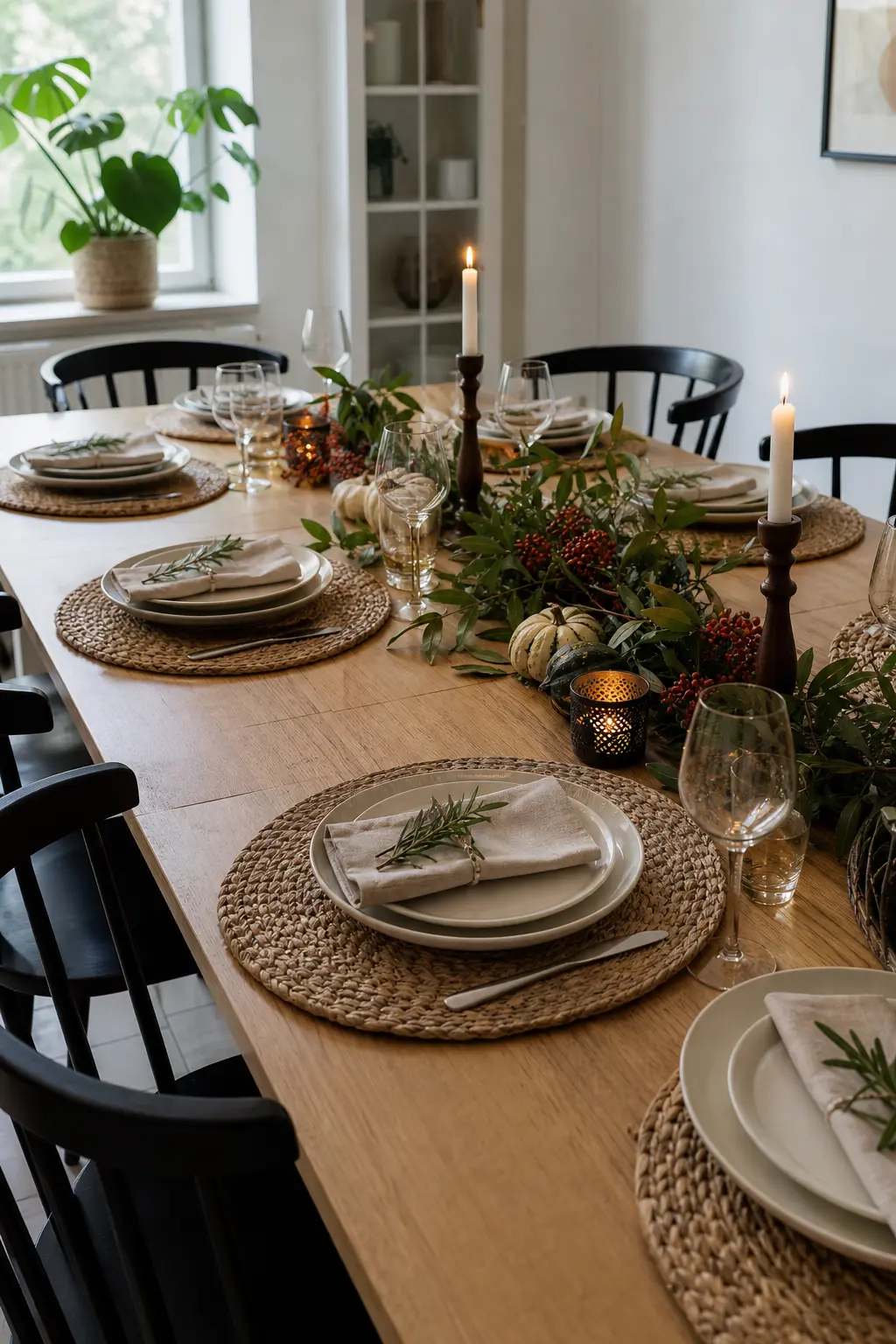
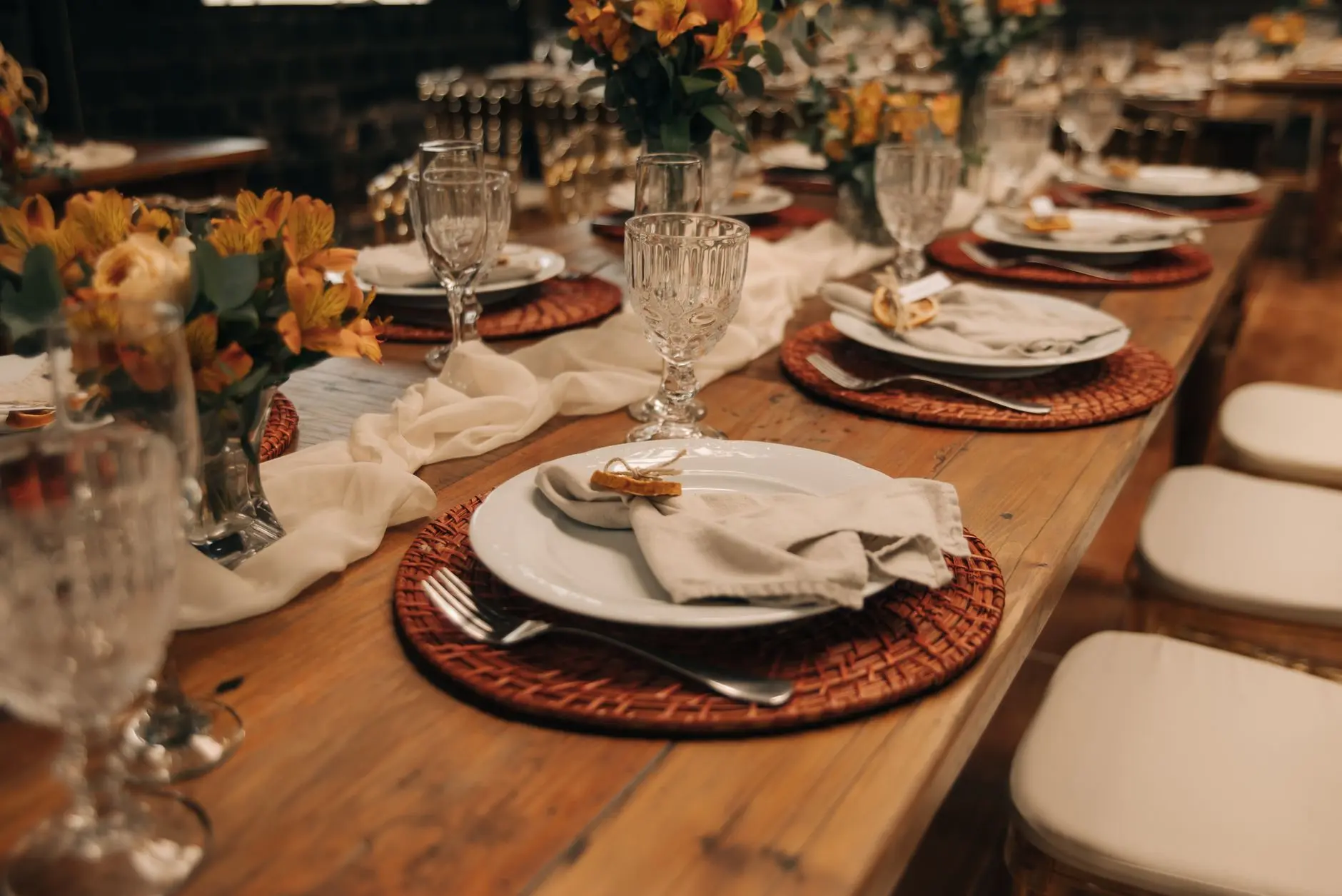
Bare wood is already beautiful. A woven placemat over a scrubbed oak table needs nothing else underneath it. Texture does the work that colour usually tries to do.
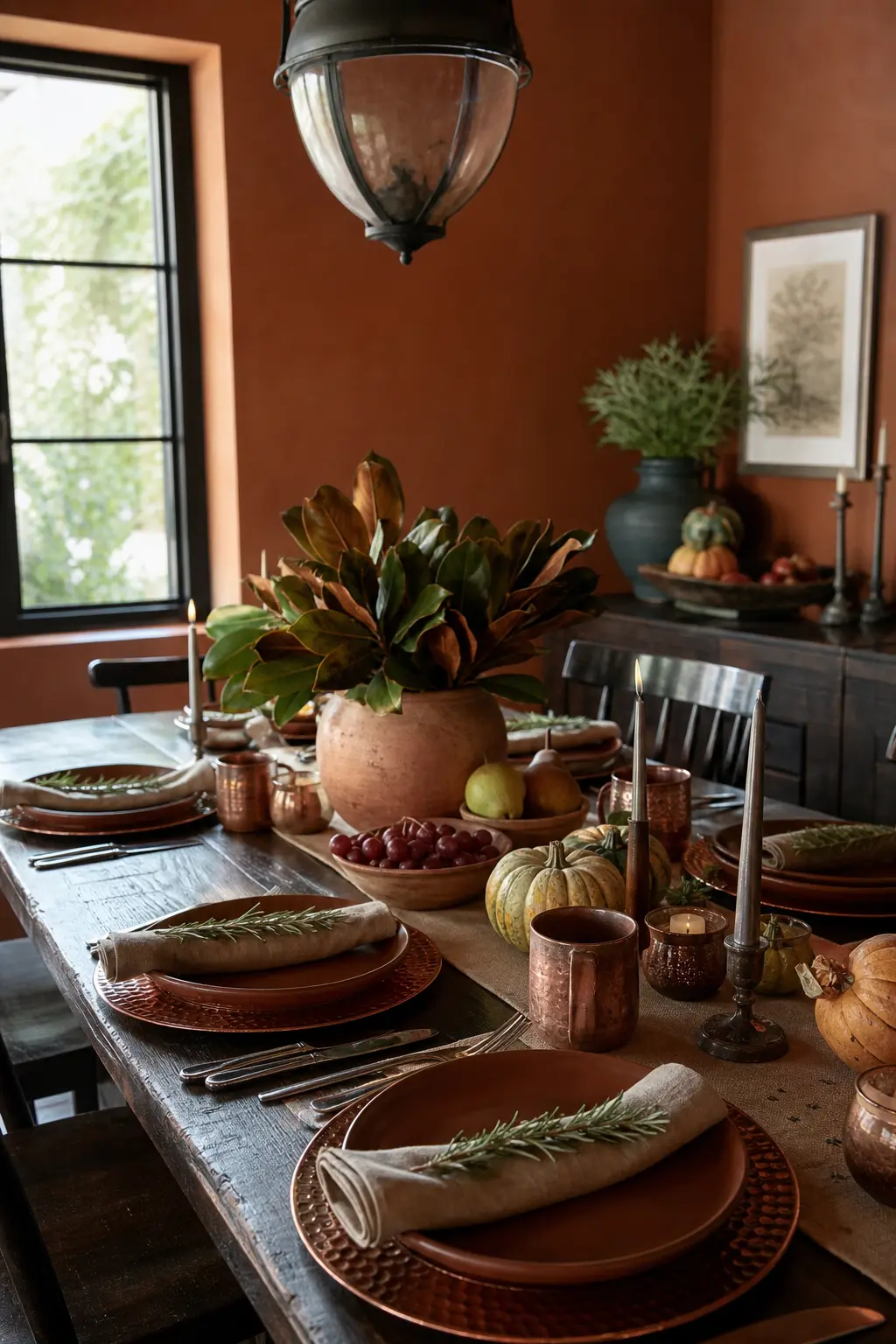
The combination of copper and clay at each place setting gives the table its material contrast: one warm metal, one matte earth. That contrast is what makes a table feel styled rather than just set.
Woven Placemats Over Bare Wood
A bare wood table with a woven seagrass or jute placemat under each setting is already a complete table base. No tablecloth required, no ironing, no trying to match a cloth to the plates.
The weave introduces texture in exactly the right tone. Choose a tight weave in natural, tan, or dark tobacco, not the loose open-weave versions that catch crumbs and tip glasses.
🛍 Shopping guide
Copper and Clay Mixed Together
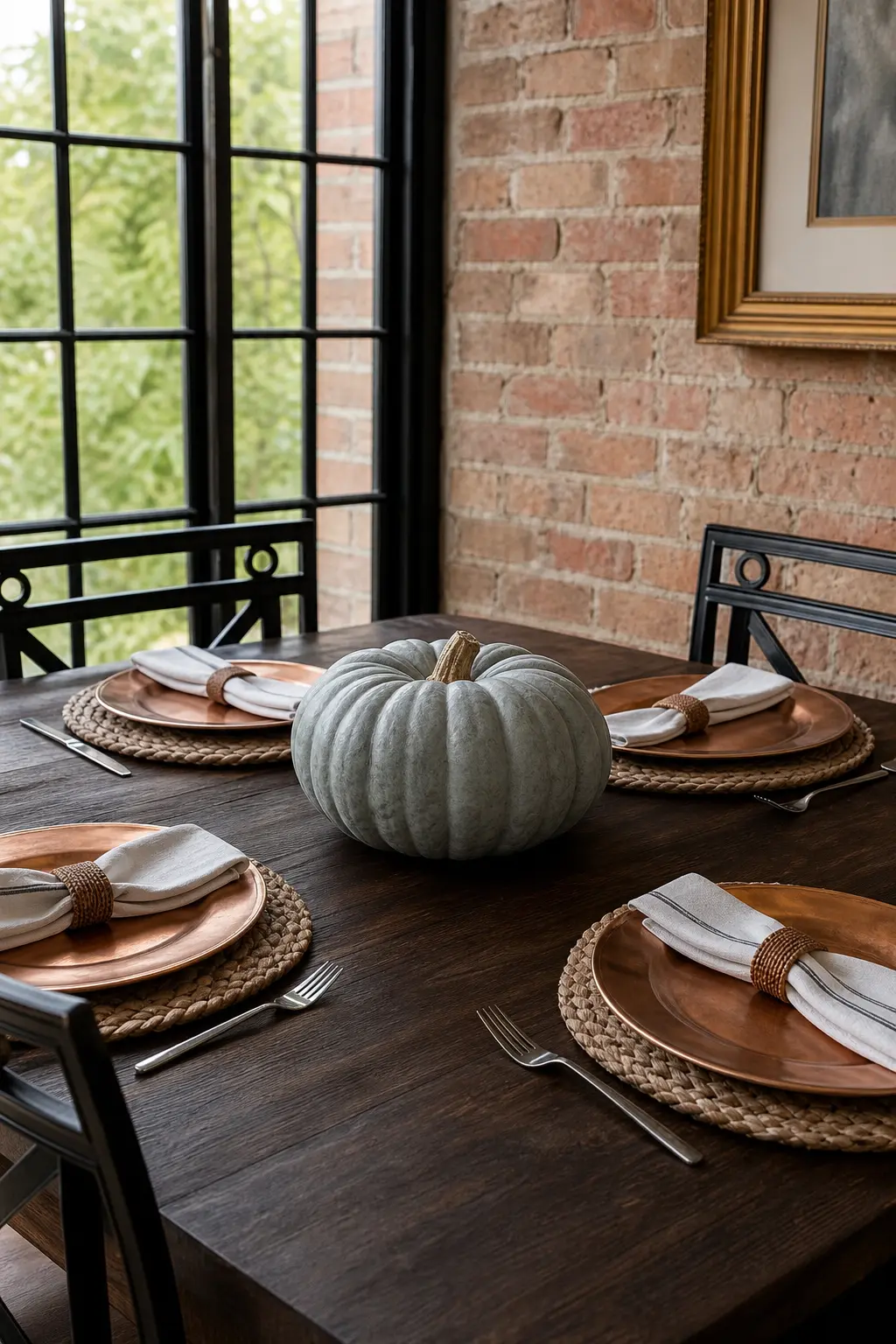
A copper charger under a matte clay plate is the material combination that makes a table setting feel considered without feeling formal. The copper is warm and reflective; the clay is matte and quiet. They do not compete.
Finish with a linen napkin rolled and bound with a thin strip of leather or a sprig of rosemary. No ring required. The contrast of all three materials at one place setting is already more than enough.
🛍 Shopping guide
Dried and Botanical
Cut flowers at Thanksgiving die fast and smell like a funeral by dessert. Dried botanicals hold for weeks and improve as they settle. Wheat, dried orange slices, olive branches, and herb bundles all belong to the same tonal family and need no water, no fussing, no replacing.
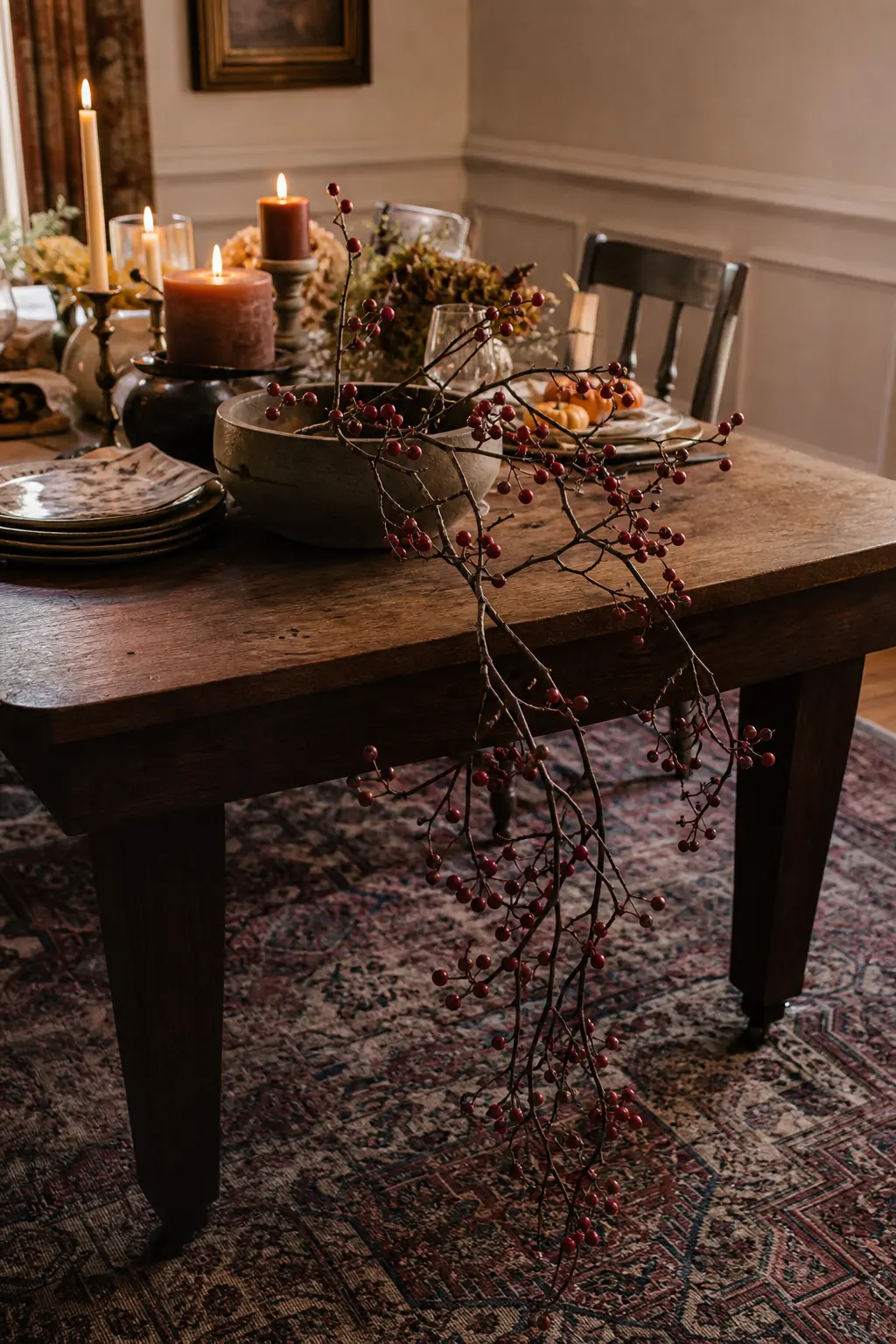
Berry branches are the one exception that adds movement: the stems trail, the berries cluster, and the whole thing looks genuinely foraged even when it came from a florist.
Wheat Bundles Laid Along the Table
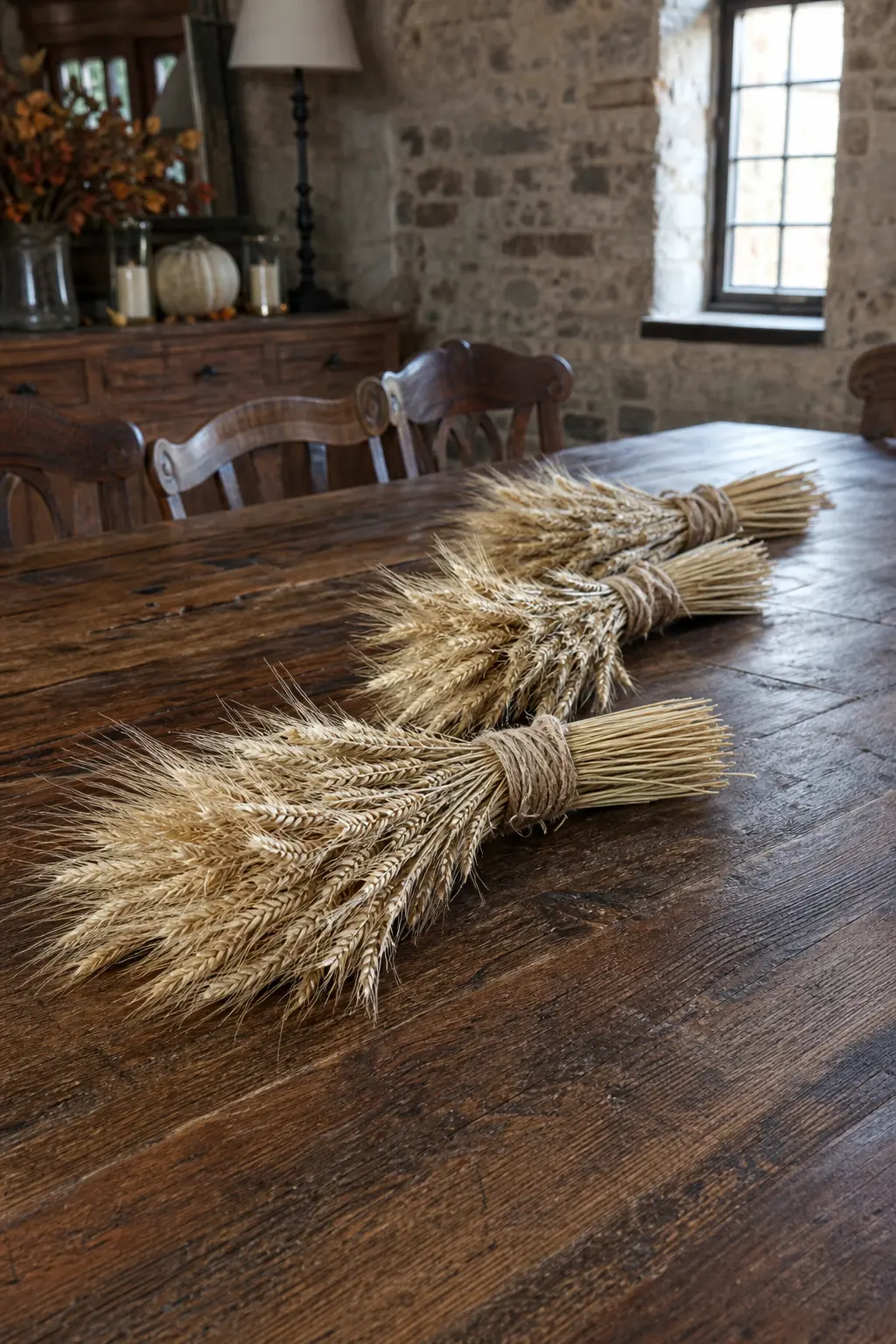
Dried wheat bundles are one of the oldest harvest symbols and one of the easiest to use: lay two or three bundles end to end down the centre of the table, heads overlapping slightly, stems tied with jute. That is a table runner.
They work best on bare wood or over a dark cloth. On a white tablecloth they disappear. On wood they glow.
🛍 Shopping guide
Berry Branches Trailing Off the Edge
One or two stems of hypericum berry or rosehip in a low vessel, allowed to trail over the edge of the table toward the floor, change the scale of the arrangement. The eye follows the stem down and the table suddenly feels larger than it is.
Do not cut the stems short. The point is the trail. Choose dark berry varieties, burgundy, rust, or deep amber, not the candy-red ones that push the palette sideways.
🛍 Shopping guide
Dried Orange Slices as Coasters
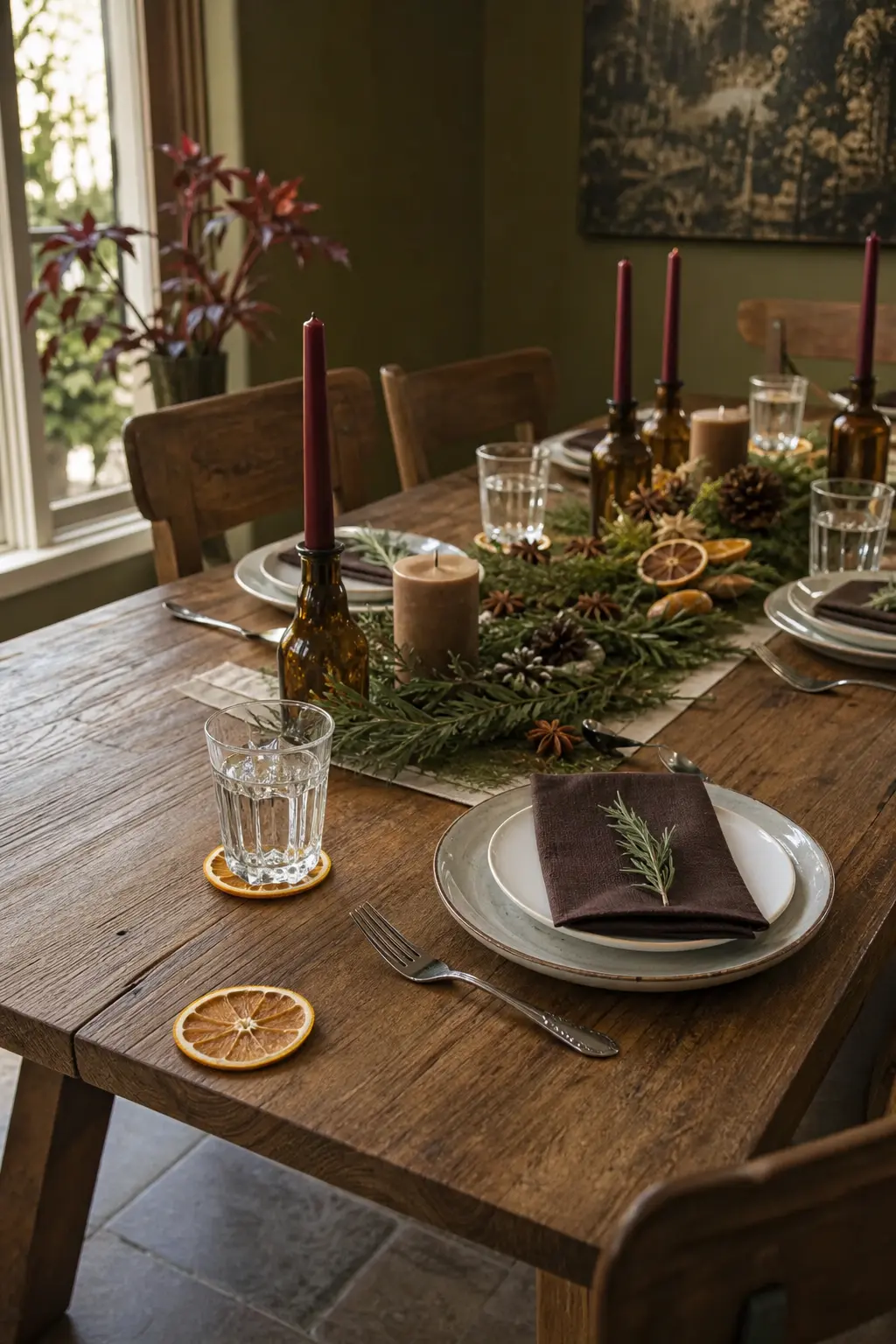
Dried orange slices used as coasters under each water glass add a detail at the place setting without adding clutter. They are flat, they protect the table, and they smell faintly of citrus when a glass lifts off them.
Make them yourself in a low oven over three hours, or buy them ready-dried. Either way, thread a piece of twine through one and hang the extra ones from the wheat bundle down the centre.
🛍 Shopping guide
Olive Branches Down the Length
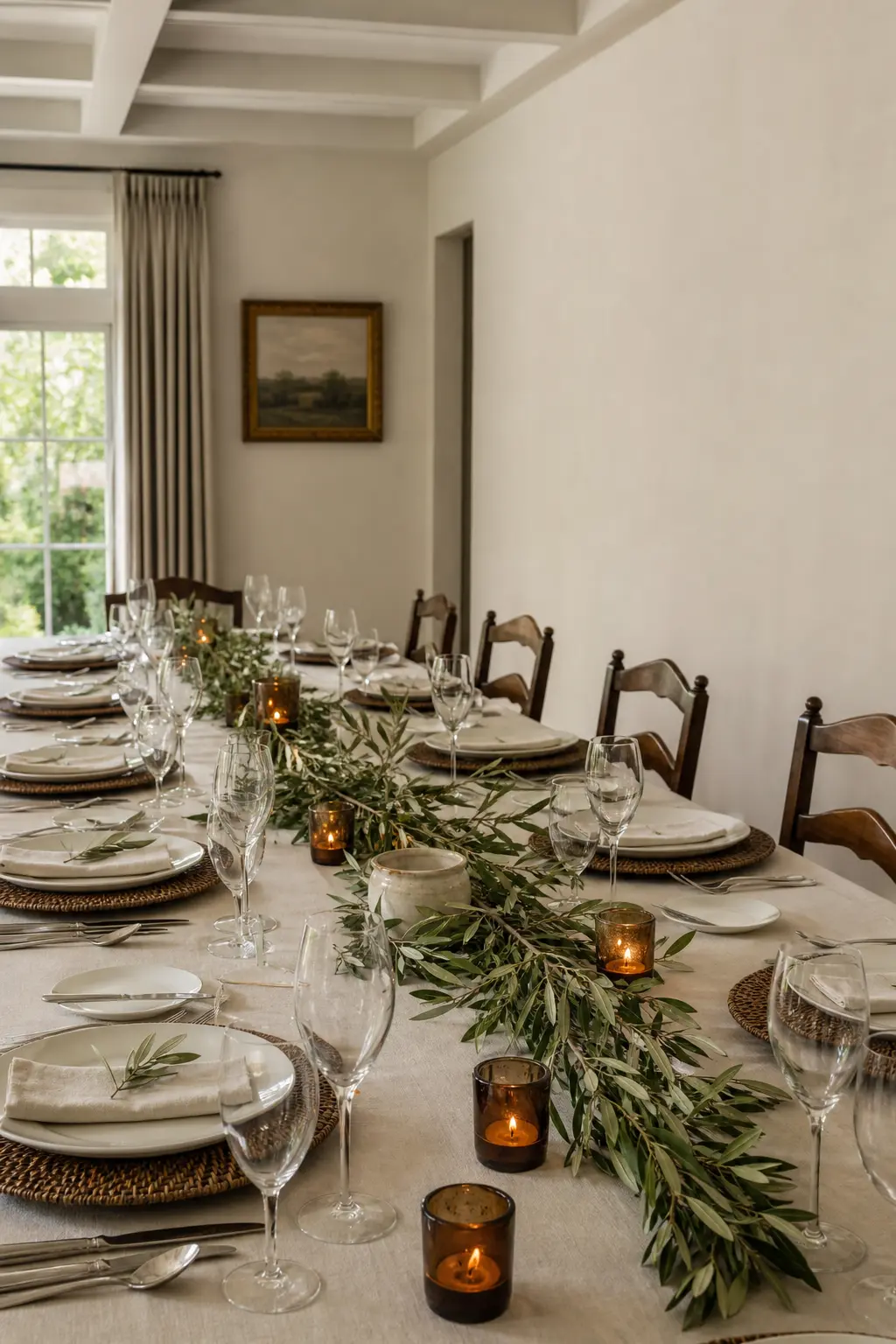
Olive branches have the right density for a table runner: the leaves are small and silvery, they hold their shape for weeks after cutting, and the silver-green reads as cool against the warm palette, creating the contrast a table needs so it does not feel monochrome.
Lay the branches directly on the table surface, overlapping the stems so there is no gap. Tuck the amber glass clusters and mushroom holders in among the leaves so the botanical and the objects share the same surface.
🛍 Shopping guide
Herb Bundles at Each Seat
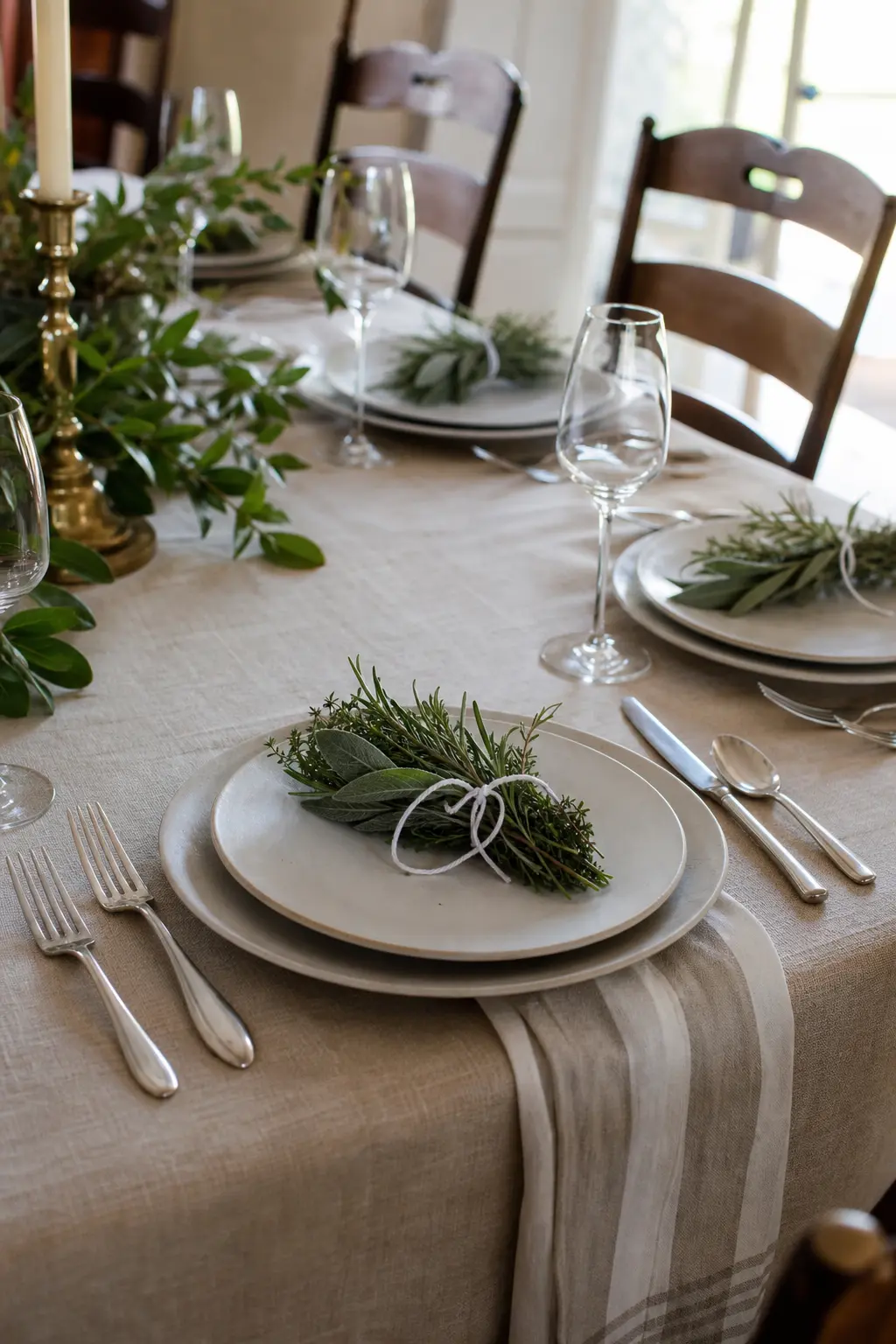
Tie a small bundle of rosemary, sage, and thyme with thin cotton twine and lay it across each plate before guests arrive. The herbs smell like the meal before the meal starts. They also tell guests where to sit without a formal name card, if you arrange them after you know who is sitting where.
The bundles take ten minutes to make for a table of eight. Keep them small: a few inches of each herb, not a bouquet.
🛍 Shopping guide
The Single Statement Piece
Sometimes the best table is the most edited one. One large gourd, one wide tray of moss, one footed bowl of acorns. The restraint reads as confidence, and it takes twenty minutes to assemble.
Stone and ceramic pieces anchor this approach. They are heavy enough to look permanent, neutral enough to go anywhere, and interesting enough to carry a table on their own.
Stone and Ceramic Instead of Anything Printed
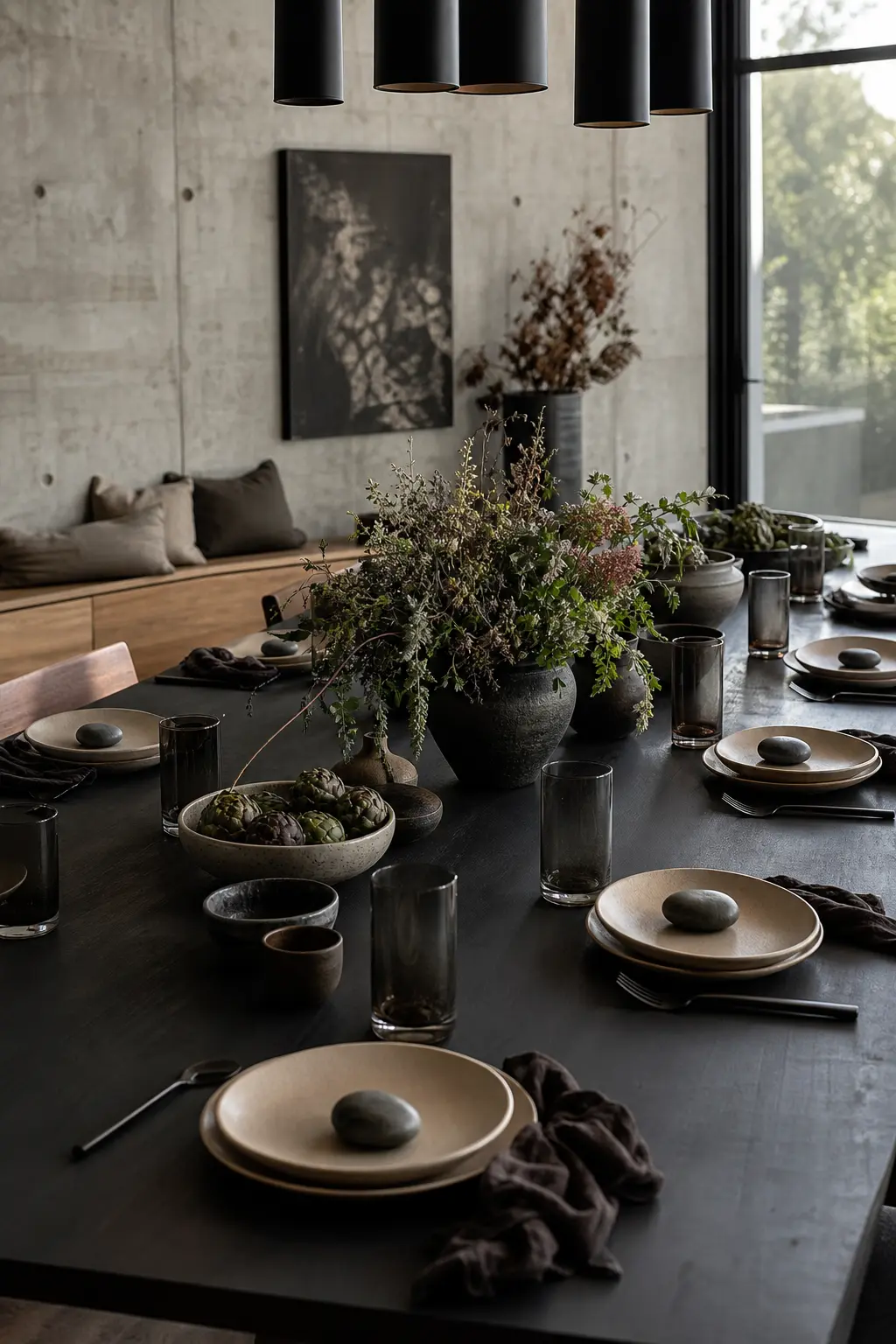
Replace every printed element on the table: the paper menu cards, the label cards, the linen with the printed pattern. Swap them for small flat stones as place markers, a ceramic tile as a table number, and a hand-lettered piece of kraft on a single card if a menu is necessary at all.
The table becomes entirely material: wood, stone, ceramic, linen, wax. Nothing reads as mass-produced. That is the point.
🛍 Shopping guide
One Large Gourd as the Only Centrepiece
A single Hubbard or Jarrahdale pumpkin, chosen for its shape and its colour (blue-grey, sage, or deep amber), placed directly on the table with nothing around it is a statement in restraint. No arrangement. No companion pieces. Just the gourd.
This works when the rest of the table is already textured: the woven placemats, the copper chargers, the scattered nuts. The centrepiece does not need to do much because everything around it is already working.
🛍 Shopping guide
Frequently Asked Questions
How do you make a Thanksgiving table look elegant without a tablecloth?
Start with the wood itself. Scrub or oil the surface, then layer woven placemats under each setting. Add one textured centrepiece, beeswax tapers at varying heights, and a cluster of amber glass. The materials do the work a tablecloth usually does, without the ironing.
What colours work for Thanksgiving table decor beyond orange?
Chaga brown, aged cream, deep moss green, amber, and tarnished brass all read as autumn without requiring a single orange element. Dried botanicals, foraged mushrooms, and dark gourds carry the season in their natural tones.
Can you mix real foraged items with faux ones on a Thanksgiving table?
Yes, and most styled tables do exactly that. Real acorns and branches mixed with high-quality faux mushrooms or artificial squashes hold up through a long meal without wilting, browning, or losing their shape mid-dinner.
How far in advance can you set a Thanksgiving table?
A table built entirely from dried botanicals, ceramic, stone, and non-perishable fruit can be set two or three days ahead. Add fresh herbs, grapes, and pears the morning of the meal. Light the candles thirty minutes before guests arrive.
What is the easiest single change that makes the biggest difference to a Thanksgiving table?
Switch to beeswax tapers at three different heights. The candlelight alone transforms the room, regardless of what else is or is not on the table.
30 fall kitchen decor ideas that stay off the working surfaces. Warm, practical updates for the busi
Fourteen complete Thanksgiving tablescapes, minimal to dramatic, each built around one hero object.
The watermelon was sitting on the counter waiting to be cut, and I thought — why does it have
Leave a Reply