

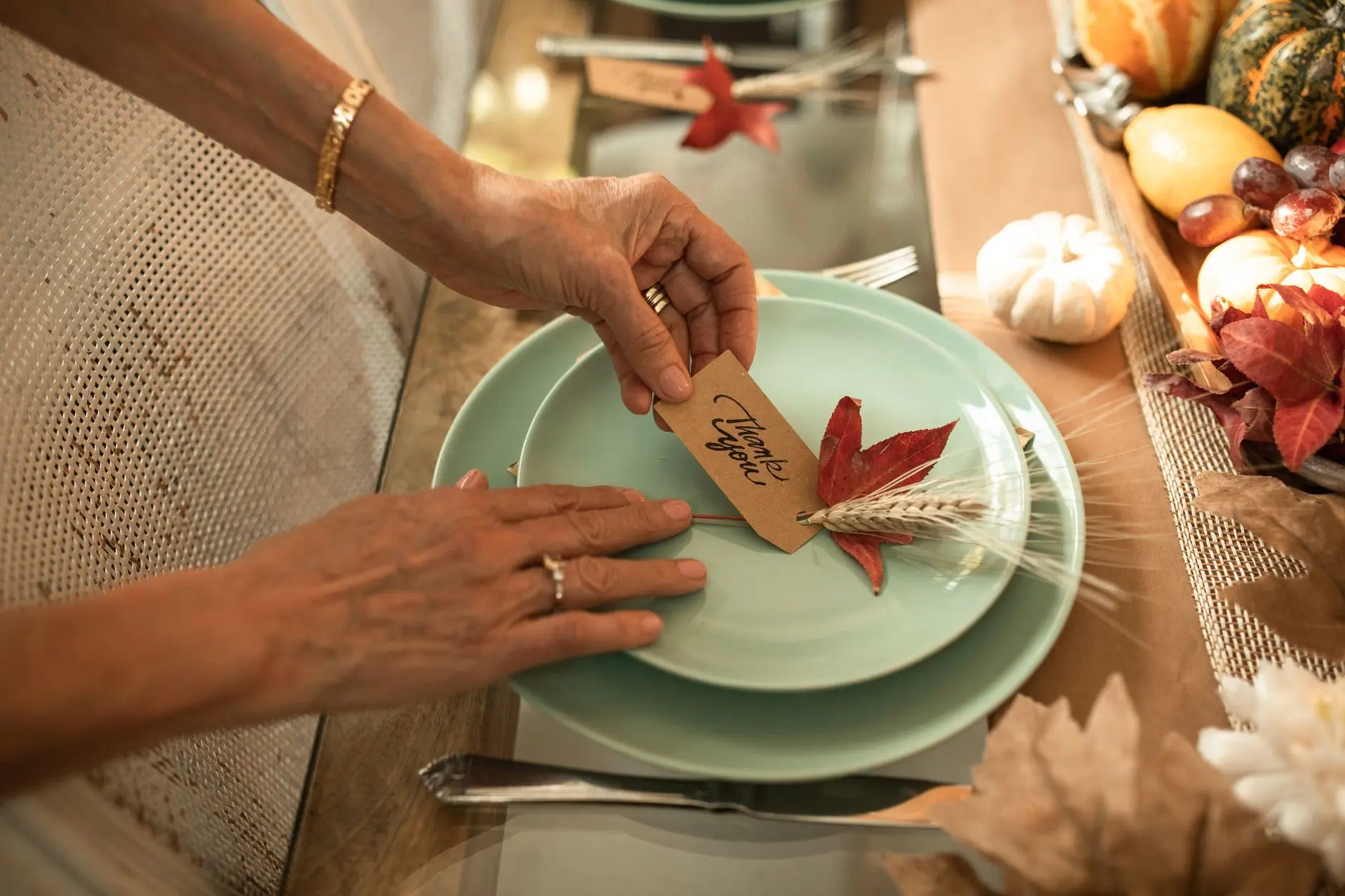
Every stylist says the same thing: set the table Wednesday night. Not a rough version. The actual table, complete to the last sprig, so Thursday morning is entirely yours. The food takes everything you have, and a dressed table at 9 p.m. the night before costs you nothing except thirty quiet minutes and a glass of wine.
What makes that possible is thinking at the level of the single place setting rather than the room. Get one right and the rest repeat. The 26 settings below cover every honest variation, from the plainest bare-wood arrangement to a layered vintage stack, and every one can sit undisturbed overnight without wilting, shifting or needing a last-minute fix.
The palette running through all of them: walnut, oxblood, olive, amber glass, aged brass. Warm, not themed. Serious, not fussy. The kind of table that looks like it took effort without broadcasting exactly how much.
This post contains affiliate links. If you buy through them, I may earn a small commission at no extra cost to you.
The Napkin as the Foundation
The napkin is where each setting begins, literally and visually. Lay it first, position everything on top of or around it, and the whole setting has an anchor. These five variations treat the napkin as the base layer rather than an afterthought tucked into a glass.
Shop the section for linen napkins in the palette: look for stonewashed or washed linen in natural, flax or terracotta. Pre-washed fabric stays flat overnight without ironing, which matters when you set the table on Wednesday and sit down on Thursday.
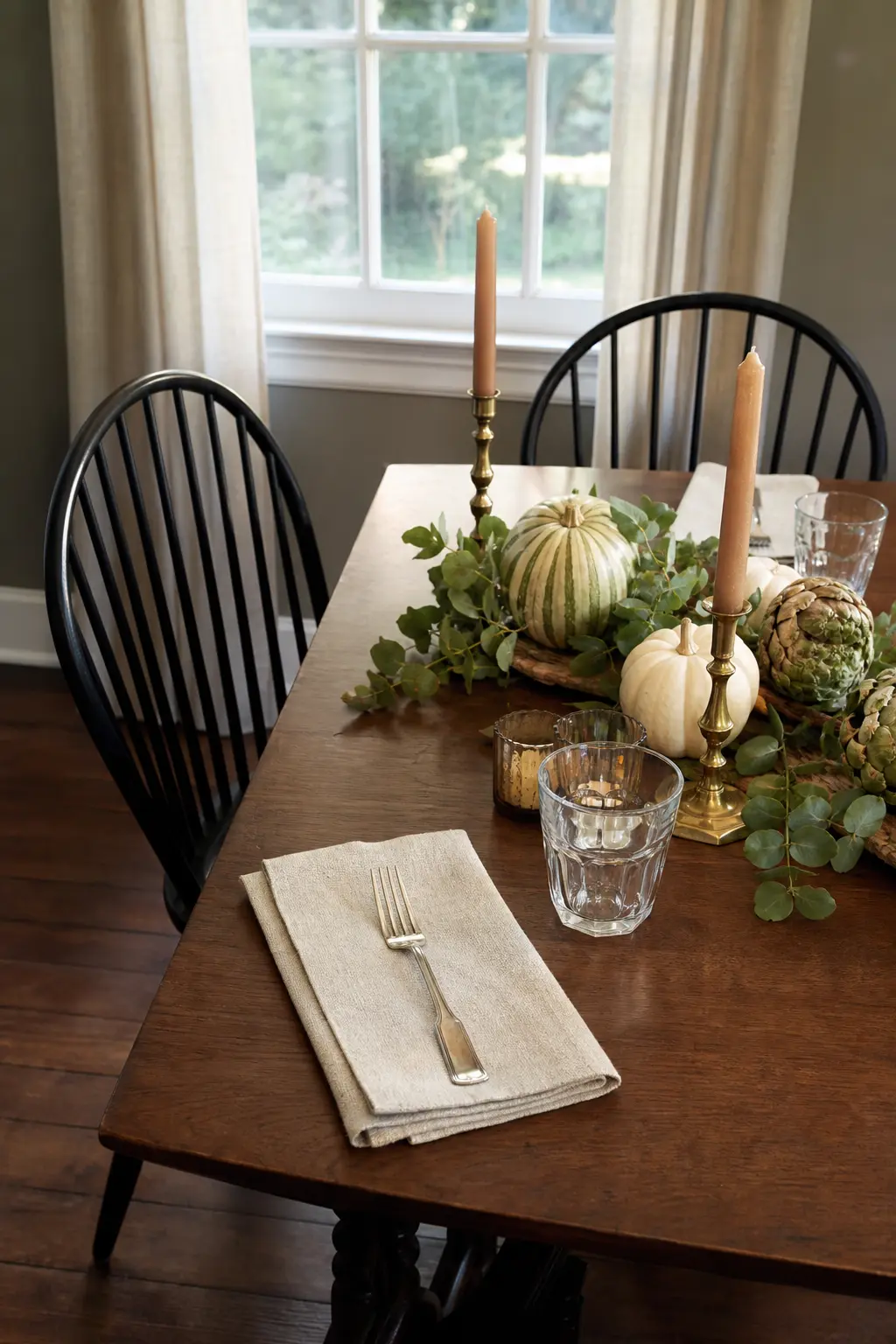
Linen Napkin Folded Flat Under the Fork
Fold the napkin into a neat rectangle and lay it flat to the left of the plate. The fork goes on top, handle toward the guest. That is the whole move. No origami, no glass tuck, nothing that will undo itself overnight.
Flat linen in flax or terracotta holds its crease without ironing if you smooth it by hand while it is slightly damp. Set it Wednesday, find it exactly as you left it Thursday.
🛍 Shopping guide
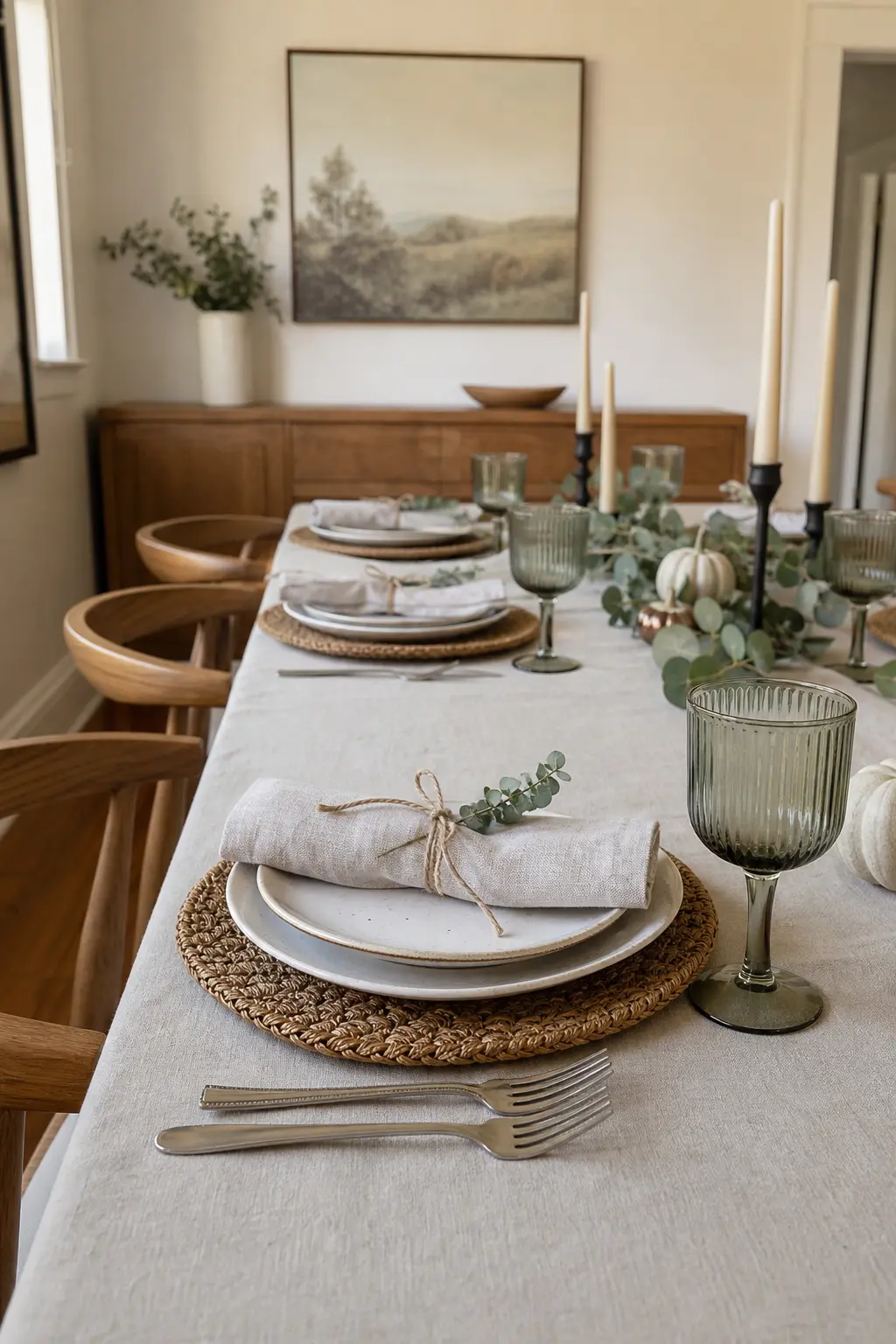
Napkin Tied with Twine and a Sprig
Roll the napkin into a loose cylinder, wrap once with natural jute twine and tuck a small sprig of eucalyptus or dried lavender under the knot. Lay it across the plate. The sprig stays fresh overnight and the twine costs almost nothing.
This is the setting that looks most considered for the least time. Cut the sprigs Wednesday afternoon. The rolling and tying takes under a minute per place.
🛍 Shopping guide
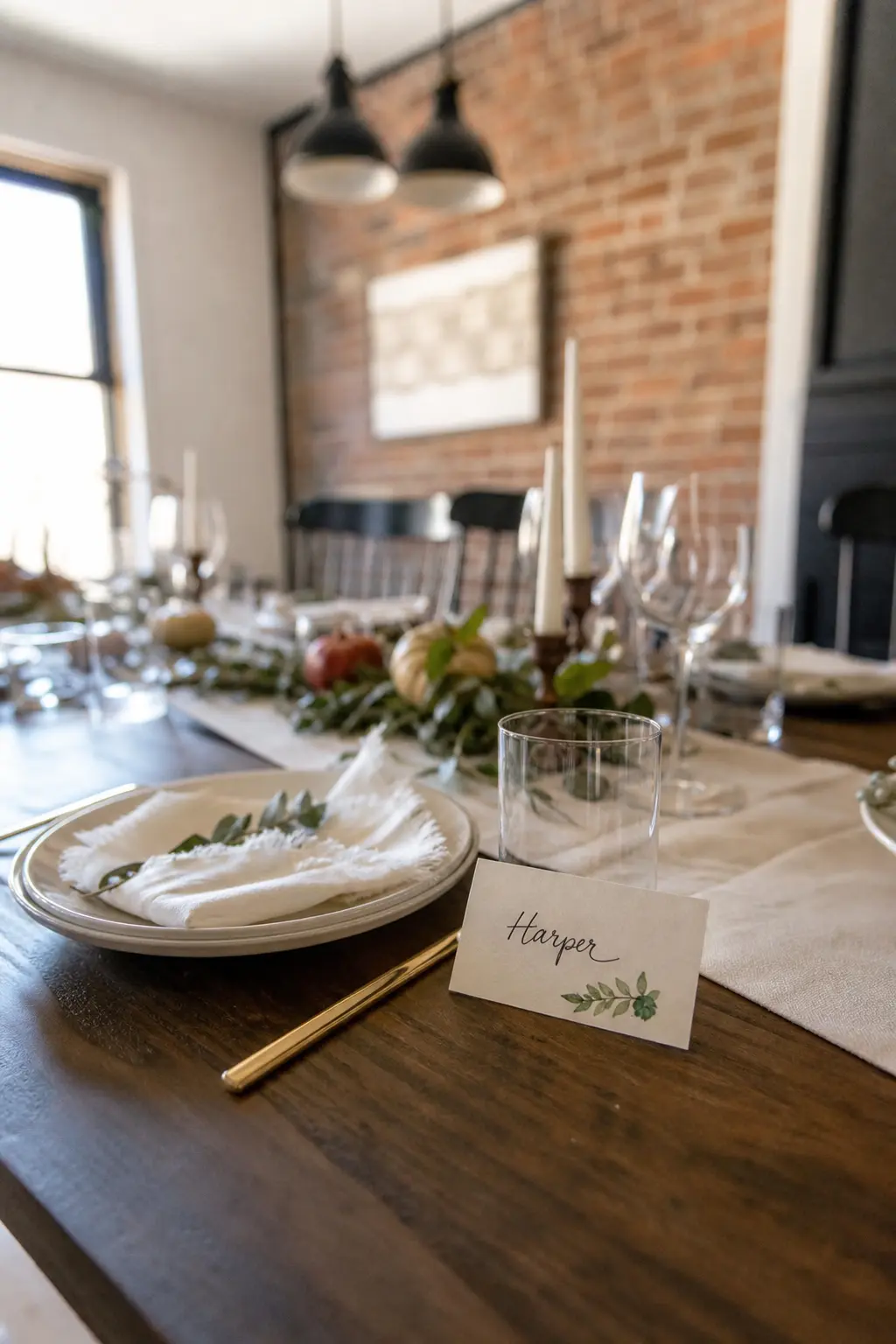
Place Card Leaned Against the Glass
Write the name in pencil or ink on a small card, fold it into a tent or leave it flat, and lean it against the base of the water glass. It will not move overnight. It reads easily from standing height when guests are looking for their seats.
Plain white card stock cut to 3 by 2 inches works. So does kraft paper. The leaning angle makes it visible without a holder, which is one fewer thing to buy.
🛍 Shopping guide
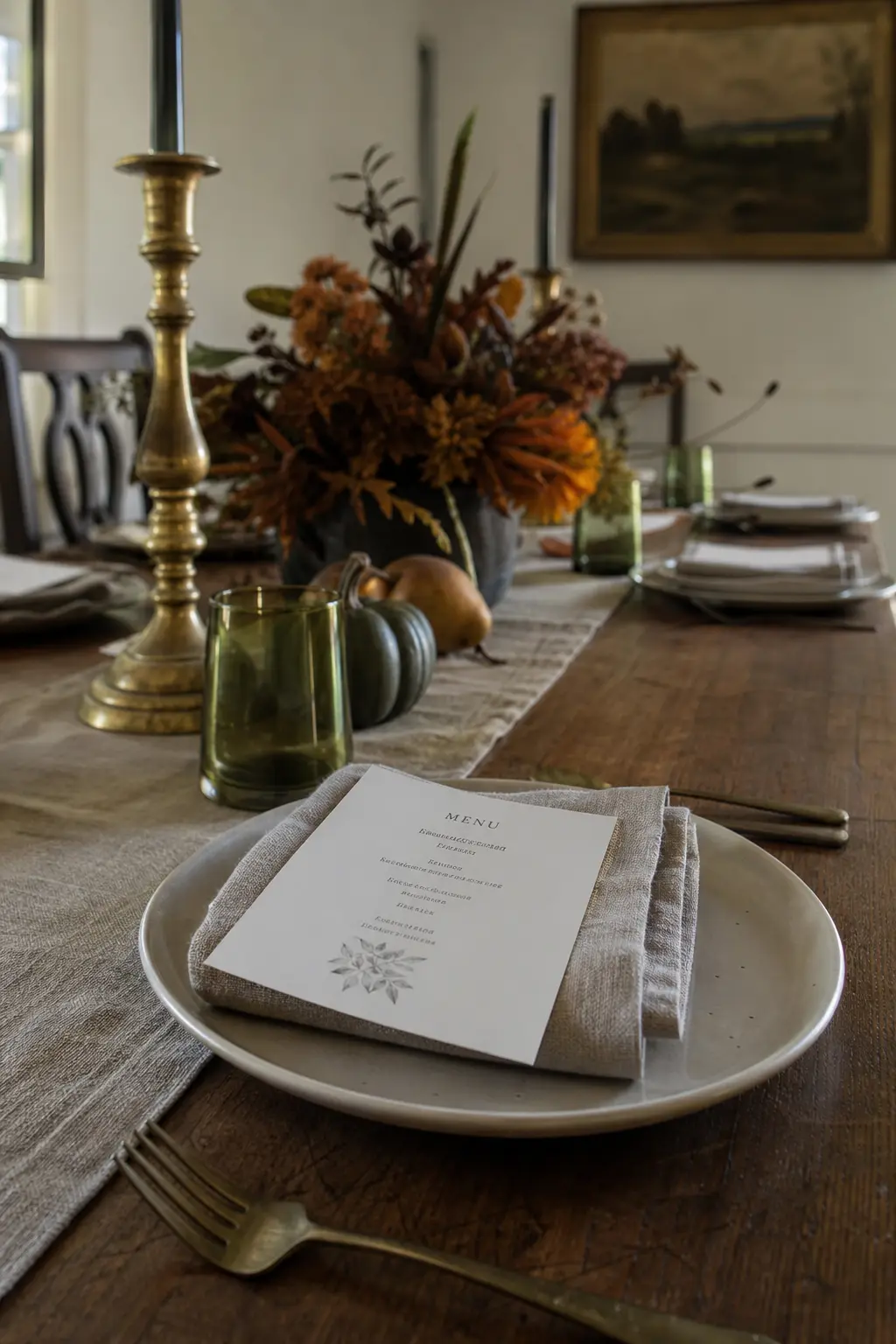
Menu Card Laid on Top of the Napkin
Print one menu card per place, no fancier than a plain card with the courses listed in a clean font, and lay it flat on top of the folded napkin. Guests lift it to unfold the napkin and read it while they wait. It sets the tone for the meal before anyone speaks.
Print Wednesday. The cards add no weight, no moisture, nothing that disturbs the napkin beneath. This is a five-minute task that lands like a real gesture.
🛍 Shopping guide
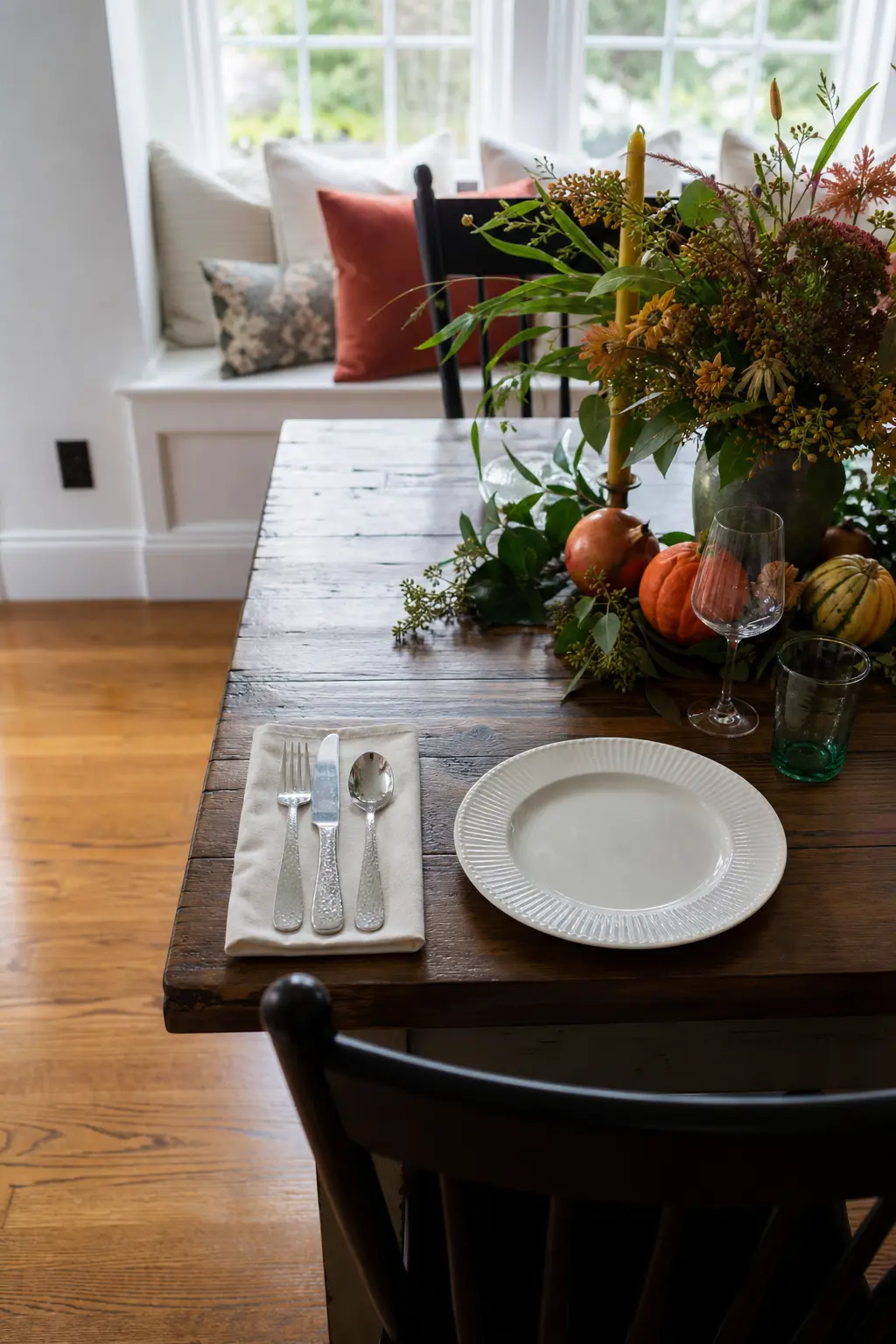
Flatware Laid on the Napkin, Not Beside It
Place the fork, knife and spoon directly on the folded napkin rather than on the table surface to the side. The flatware acts as a gentle weight that keeps the napkin flat overnight and gives the setting a slightly unexpected geometry that guests notice without knowing why.
This works best with the napkin folded flat and placed to the left of the plate. The silverware spans the full width of the napkin. Aged brass or matte black flatware reads especially well against linen.
🛍 Shopping guide
The Plate Stack
Depth at each place comes from layering. A charger under the dinner plate, or two plates stacked without one, both give the table a sense of intention without requiring anything you cannot do the night before. These five entries explore the stack.
For place cards, lean them against the glass rather than tucking them under the plate: they stay readable, they do not shift when someone sits down, and they double as a small piece of table architecture.
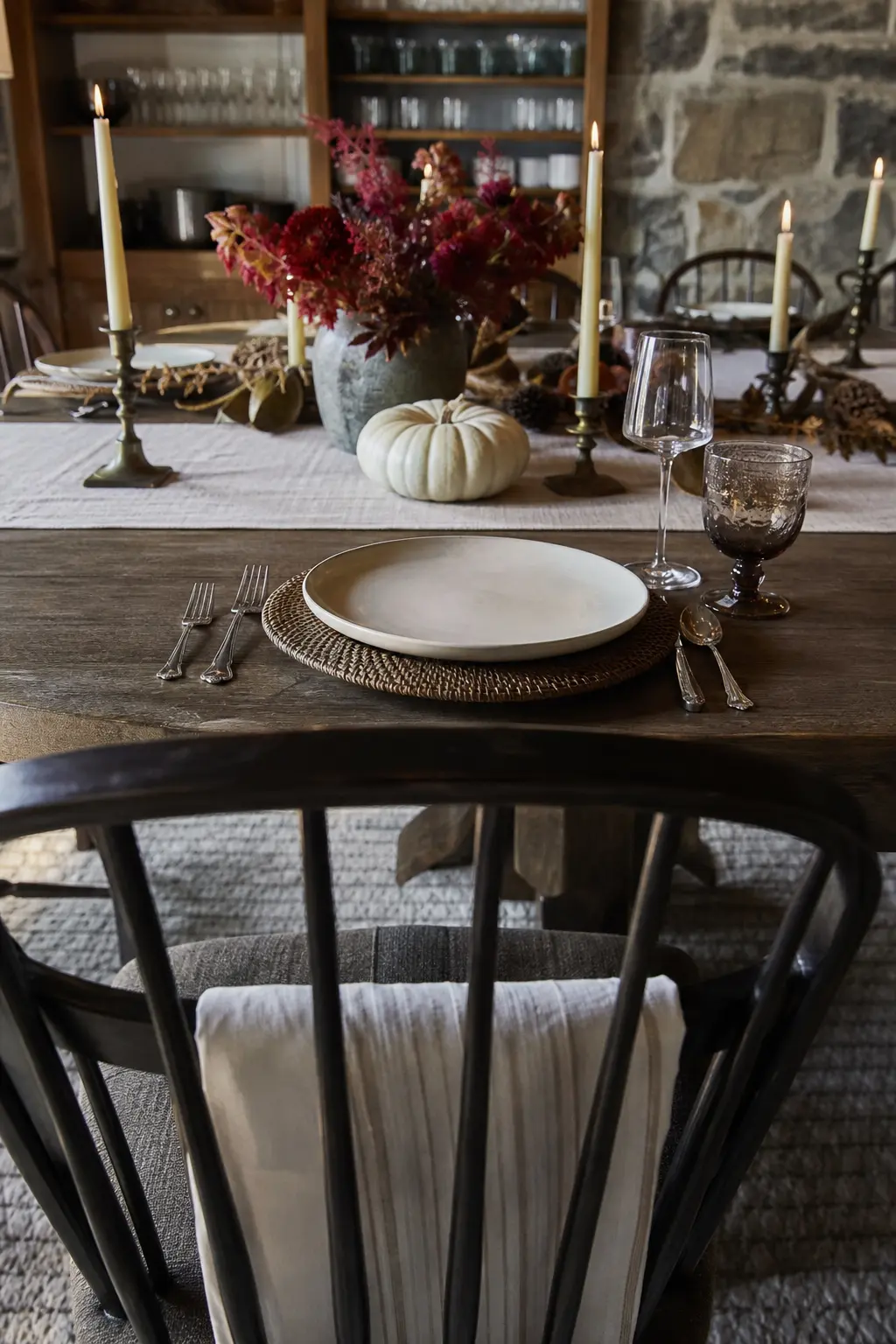
Charger Under the Dinner Plate for Depth
A charger adds one inch of visual depth to the setting and makes the whole place feel considered. Rattan, hammered brass or dark slate all work against the walnut-and-oxblood palette. The charger stays on the table through the first course and comes off before the main.
Set it Wednesday. It will not move. The dinner plate sits centred on top, and that small offset rim is enough to make the stack look intentional.
🛍 Shopping guide
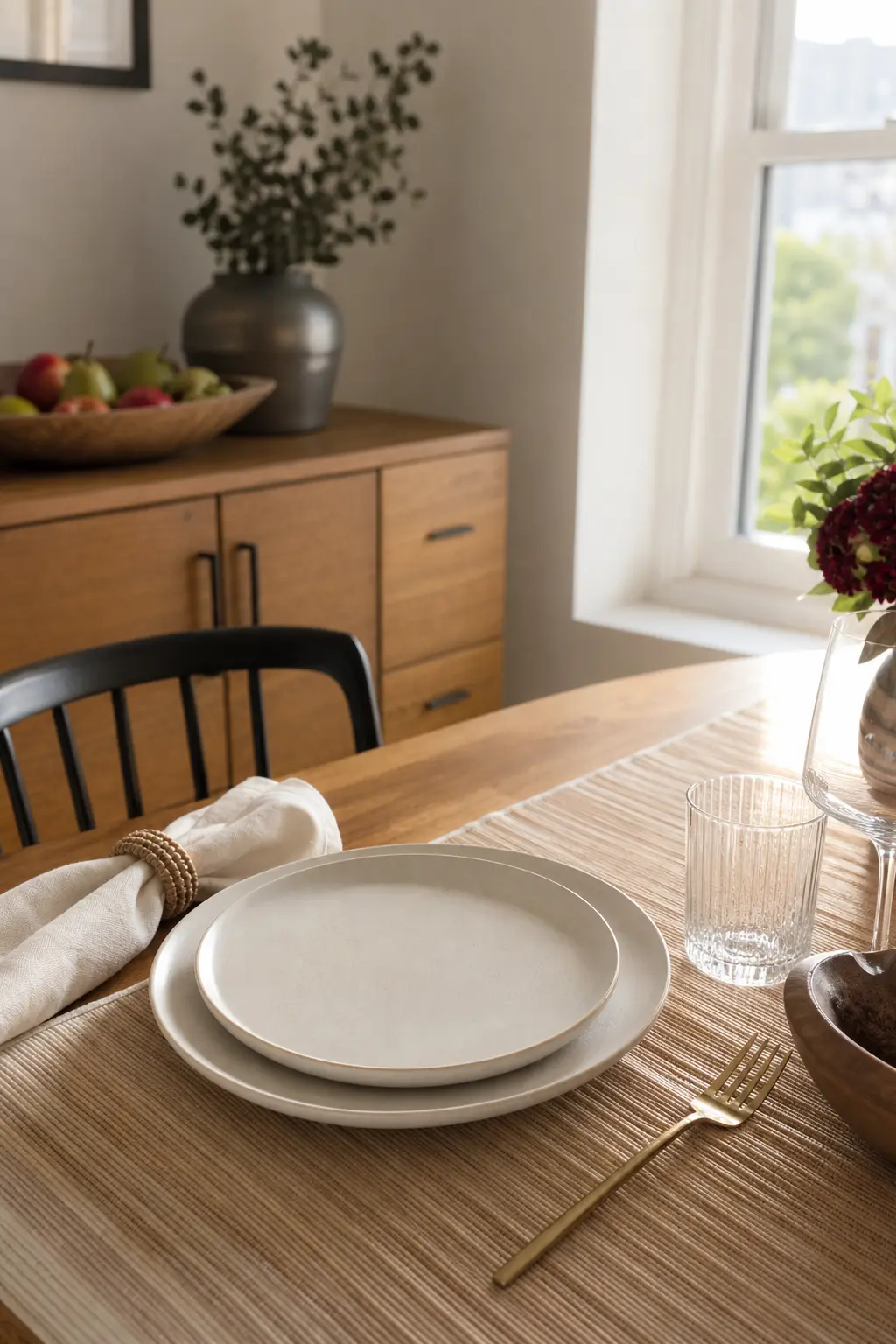
Two Plates Stacked, No Charger
Stack the salad plate directly on top of the dinner plate, no charger, and let the size difference do the work. The lower plate peeks out by about an inch all around. Clean, modern, and it works on any bare wood table where a charger might feel like too much.
If the plates share a pattern, stack them aligned. If they are mismatched, offset the top plate by a quarter turn so both patterns show. Either way, the stack is set and waiting Wednesday night.
🛍 Shopping guide
Salad Plate Turned a Quarter for Pattern
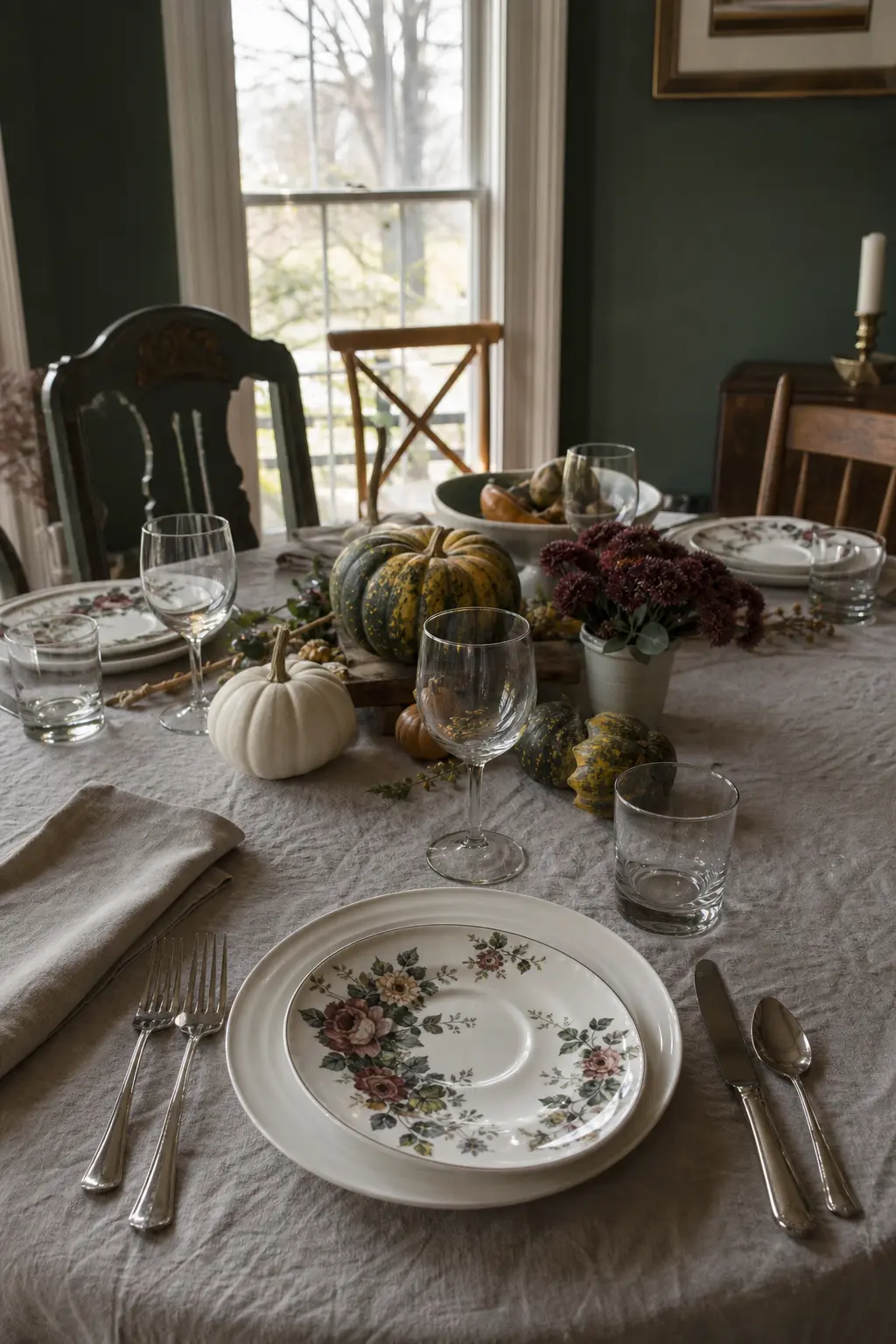
Take a salad plate with a directional pattern, a subtle stripe, a leaf edge or a hand-painted rim, and rotate it 45 degrees on top of the dinner plate. The asymmetry is small enough to look deliberate and large enough to notice. It costs nothing and takes three seconds.
This trick works especially well with vintage or transfer-print plates where the pattern has a clear orientation. The slight offset gives the table a collected, not matched, feeling.
🛍 Shopping guide
Vintage Mismatched Plates, One Per Guest
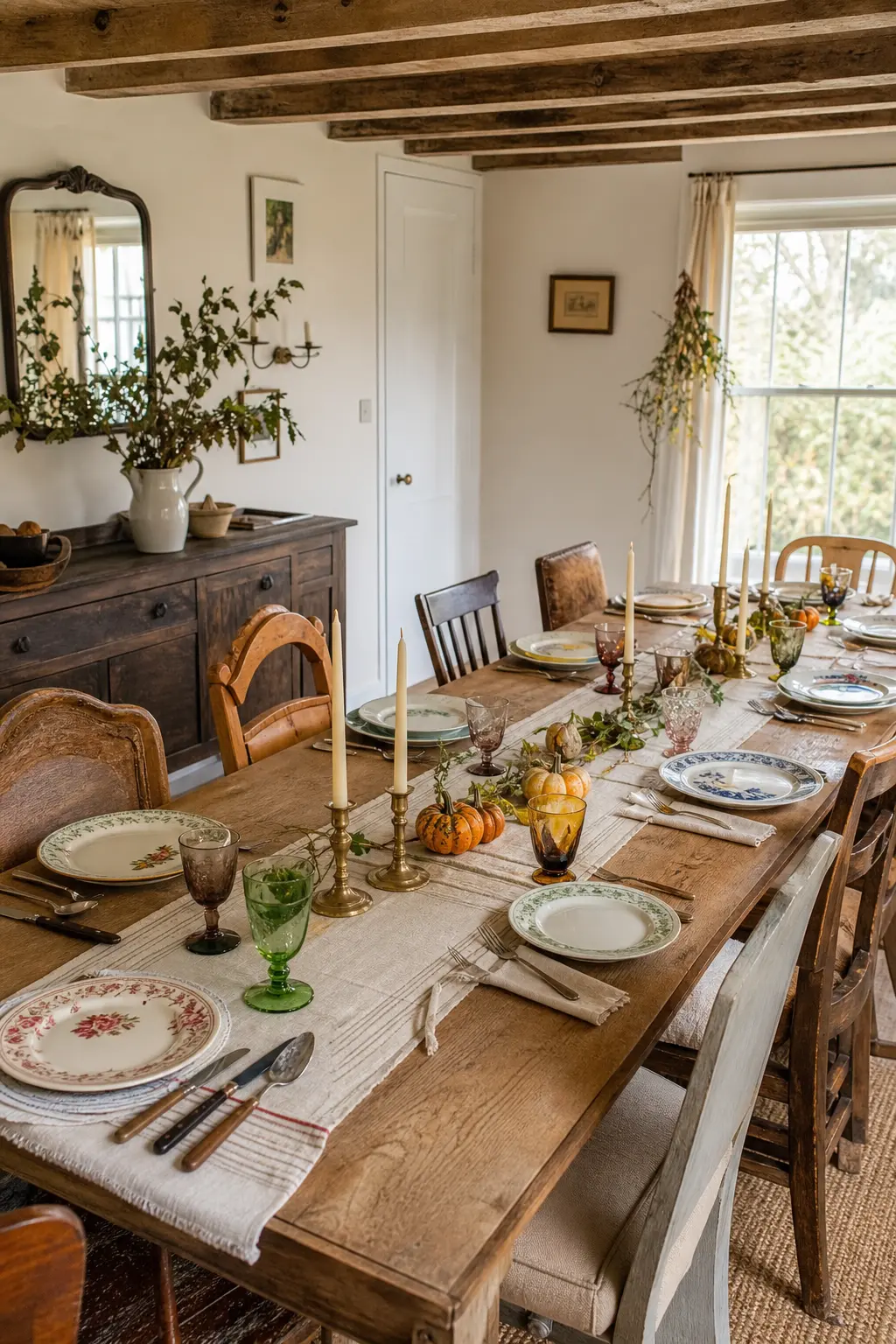
Source one interesting vintage plate per seat, all different, all within the same colour family. The effect is a table that looks curated over years rather than purchased in one order. Thrift stores, estate sales and the back of your own cabinet are all valid sources.
Lay each plate at a setting Wednesday night. Because none of them match, there is no risk of getting the arrangement wrong. Every configuration looks right.
🛍 Shopping guide
Coloured Glassware as the Only Jewellery
One piece of coloured glass per setting does more decorative work than a full centrepiece. Amber against bare walnut wood is the combination that photographs best in candlelight and costs the least to pull off. These entries treat the glass as the single ornament.
Set the water glass and the wine glass at different heights where the stem lengths allow it. The slight variation breaks the military-parade feeling without any styling effort.
Amber Glass Against Bare Wood
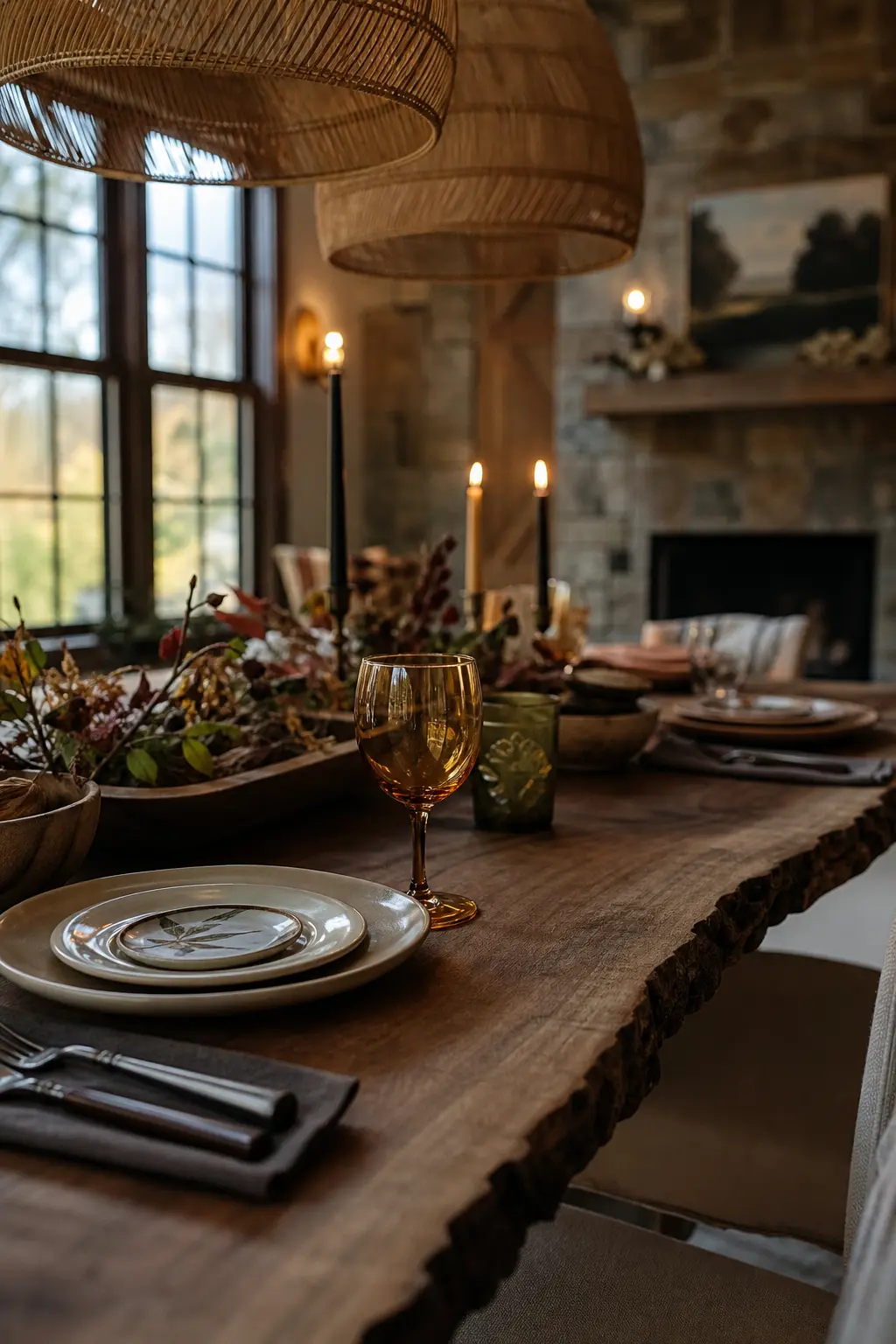
One amber water glass at each place, no runner, no cloth, just the glass against the bare walnut or oak surface. In candlelight the amber throws a warm pool of colour onto the wood grain beneath it. Nothing else needs to happen at that setting for it to look complete.
Set the glass Wednesday. Pour the water Thursday, five minutes before people sit down. That is the only thing that cannot wait.
🛍 Shopping guide
Water Glass and Wine Glass at Different Heights
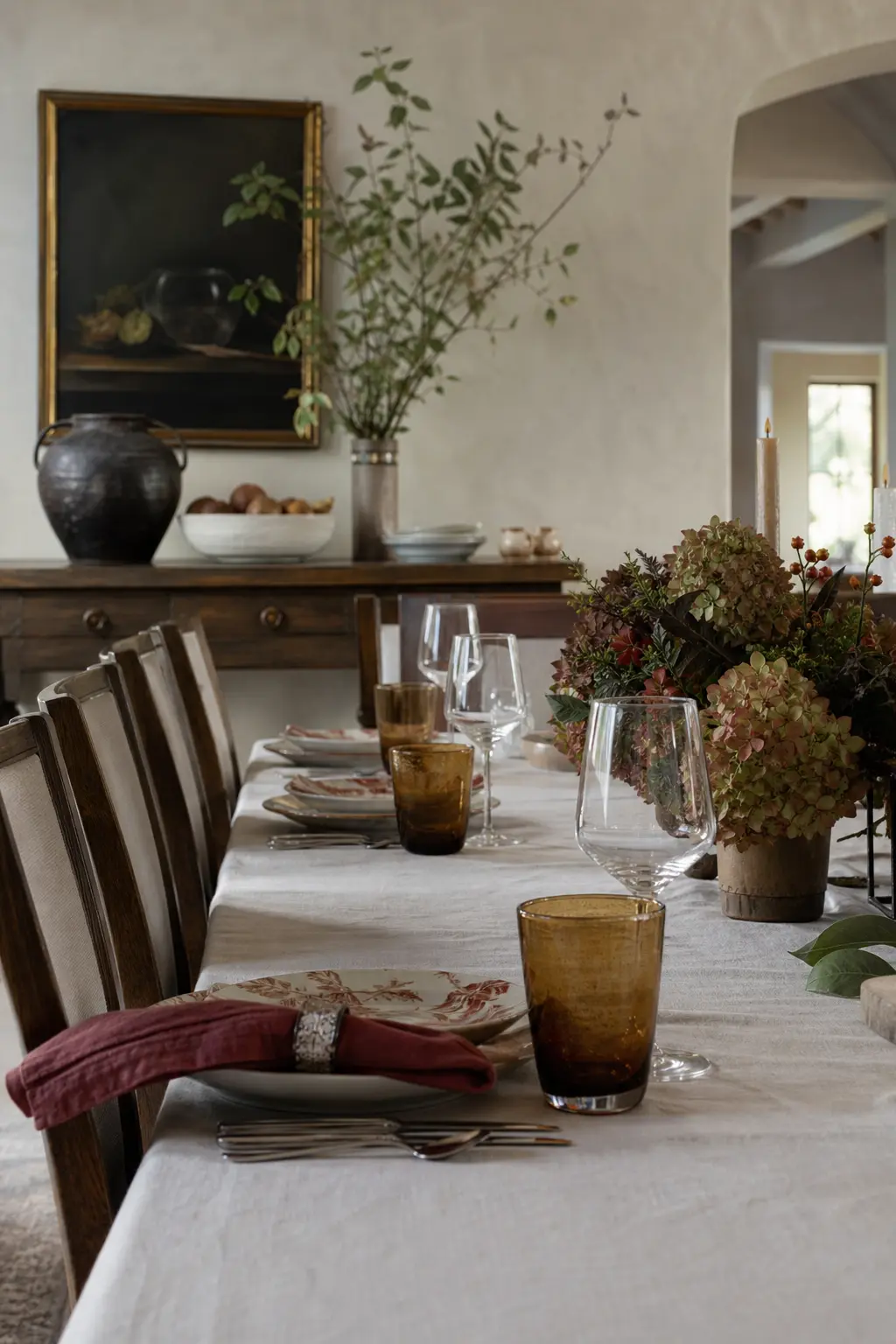
Place a short tumbler for water and a taller stemmed glass for wine at each setting, positioned so the height difference is visible and intentional. The varied silhouette breaks the flat horizon of a fully matched table and adds a slight skyline effect when you look down the length of the room.
Mixed heights also mean you can mix materials: amber glass for the tumbler, clear or smoke glass for the wine stem, and the combination still reads as deliberate.
🛍 Shopping guide
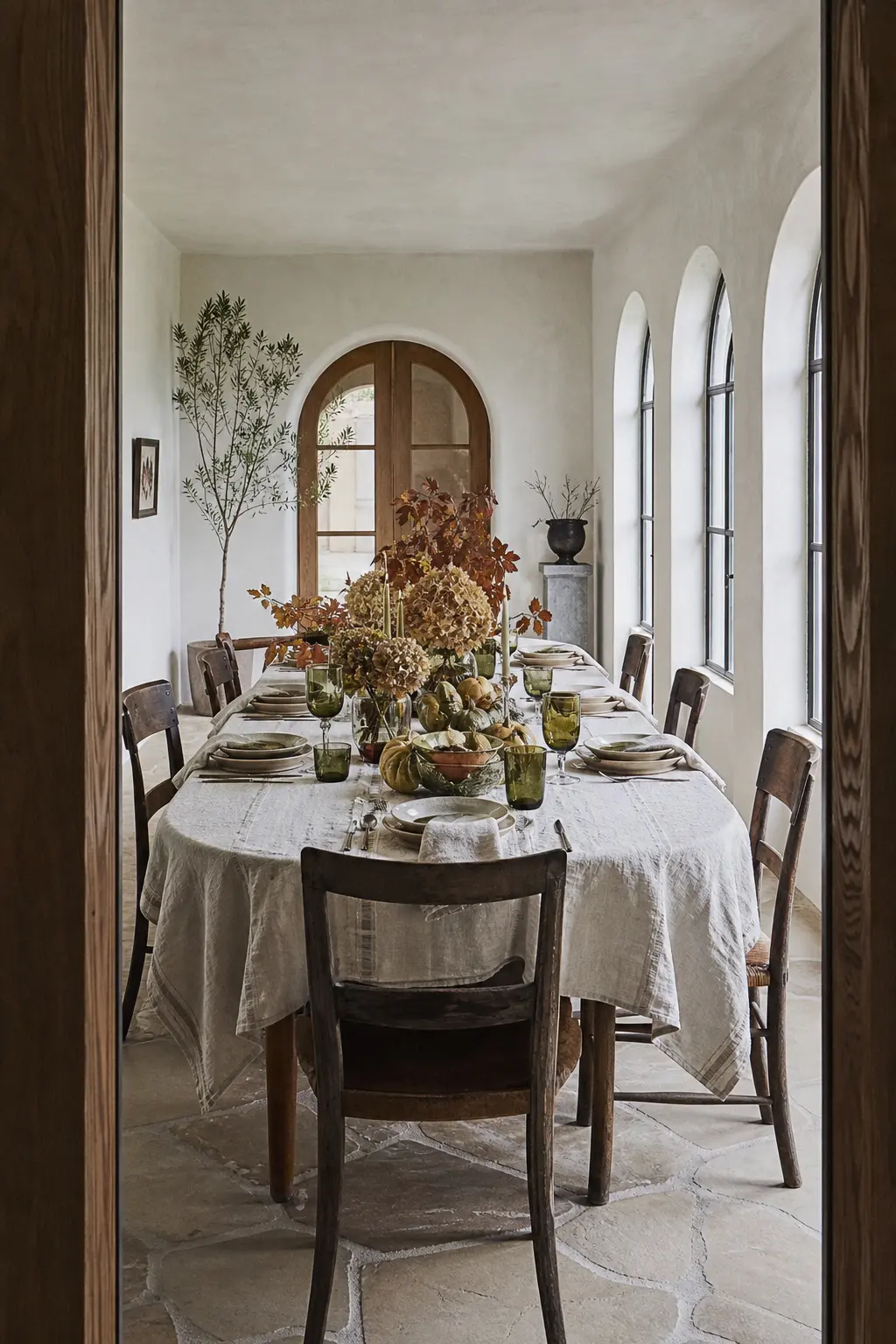
Coloured Glassware as the Only Jewellery
When the plates are plain and the napkin is unadorned, one piece of coloured glass carries the entire decorative weight of the setting. Olive green, deep amber, oxblood red, smoked graphite: any one of these against a neutral base reads as a real design choice.
The rule is one coloured glass per person, not two. Two colours at the same setting compete. One colour repeated down the table creates rhythm without effort.
🛍 Shopping guide
The Natural Object at Each Place
A single pear, a small gourd, a sprig of rosemary: one organic object per setting replaces a centrepiece and keeps the table from feeling over-decorated. Everything here can be placed Wednesday night. None of it wilts by Thursday afternoon.
These are also the elements that photograph well in the room and give guests something to touch and notice when they first sit down, which is exactly when you want them distracted while the gravy is being finished.
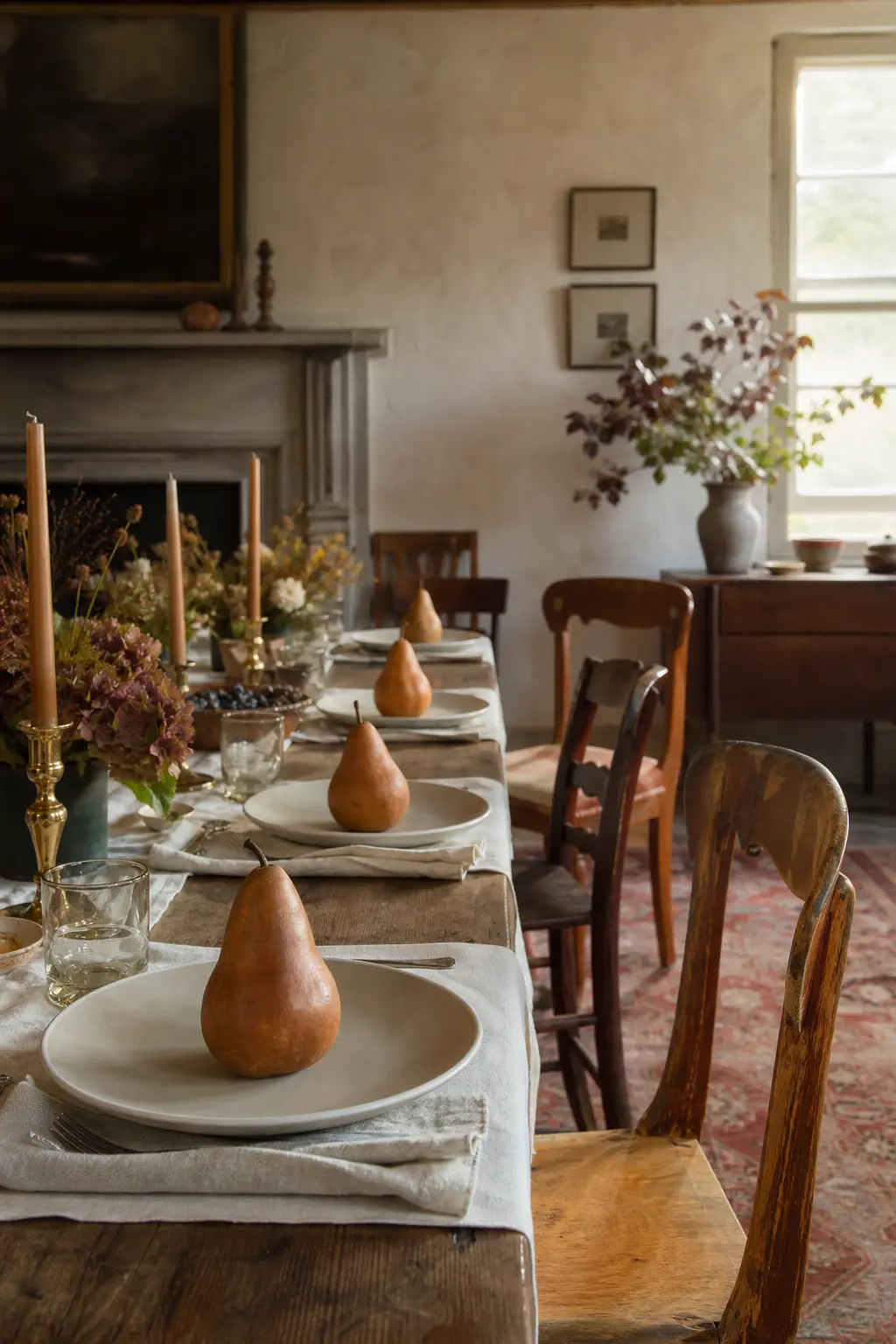
A Single Pear at Each Place
One ripe pear, stem up, centred on the plate or set just above it. The pear doubles as a place marker, a small edible gift and a piece of still-life sculpture. Bosc pears in their natural brown-gold are the best match for the walnut-and-amber palette.
Buy them Tuesday so they are ripe but still firm by Thursday. Set them Wednesday night. They will not roll if you place them stem-side up with the base slightly angled against the rim of the plate.
🛍 Shopping guide
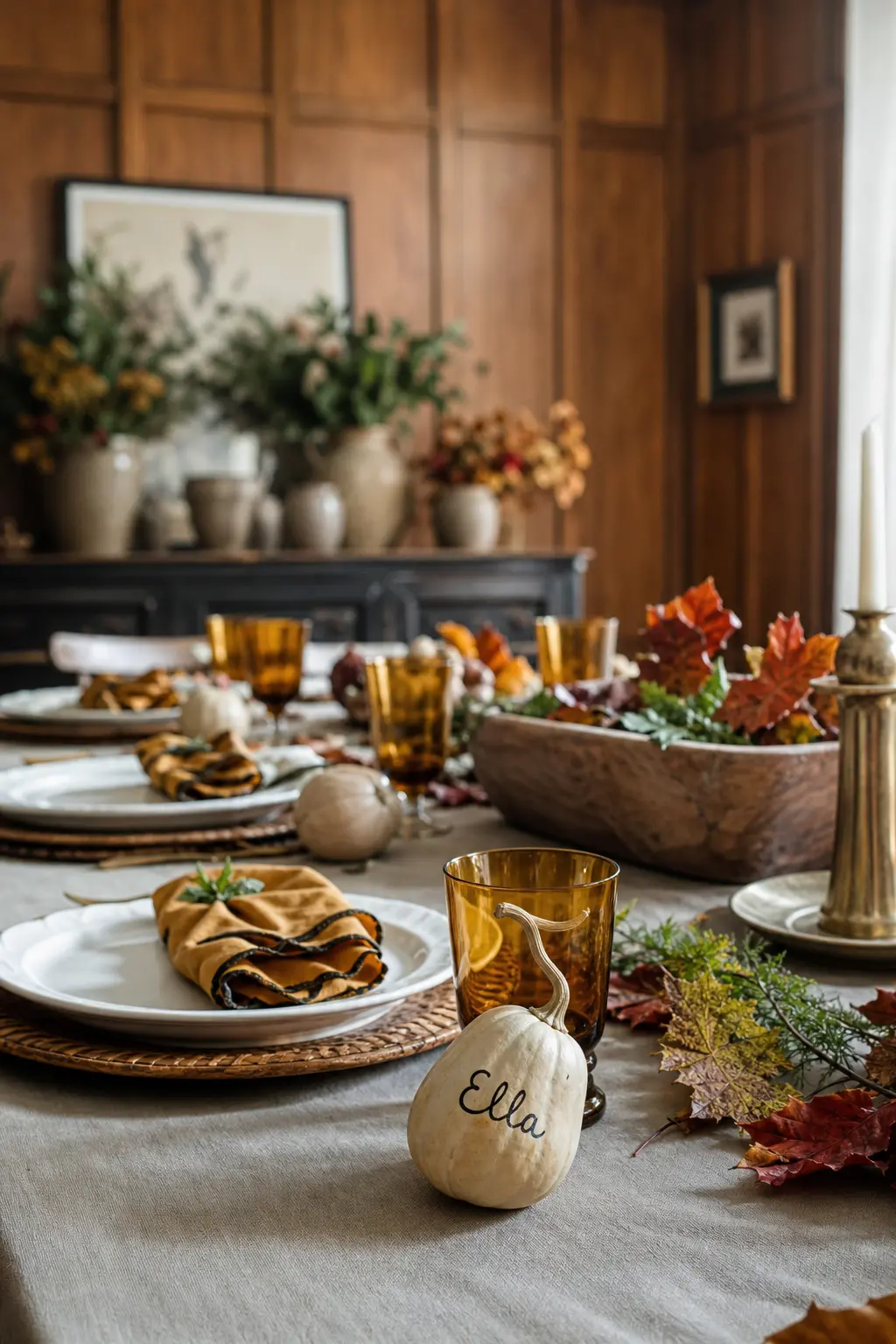
Small Gourd Instead of a Name Card
Write the guest’s name on a small dried or wax-coated gourd with a paint marker and set it where a place card would normally go, propped against the glass or sitting just above the plate. The gourd is self-supporting, requires no holder and tells guests where to sit in a way that feels organic rather than formal.
Mini pumpkins and acorn squash work equally well. Write the names Wednesday night. The ink dries fully and will not smear by Thursday.
🛍 Shopping guide
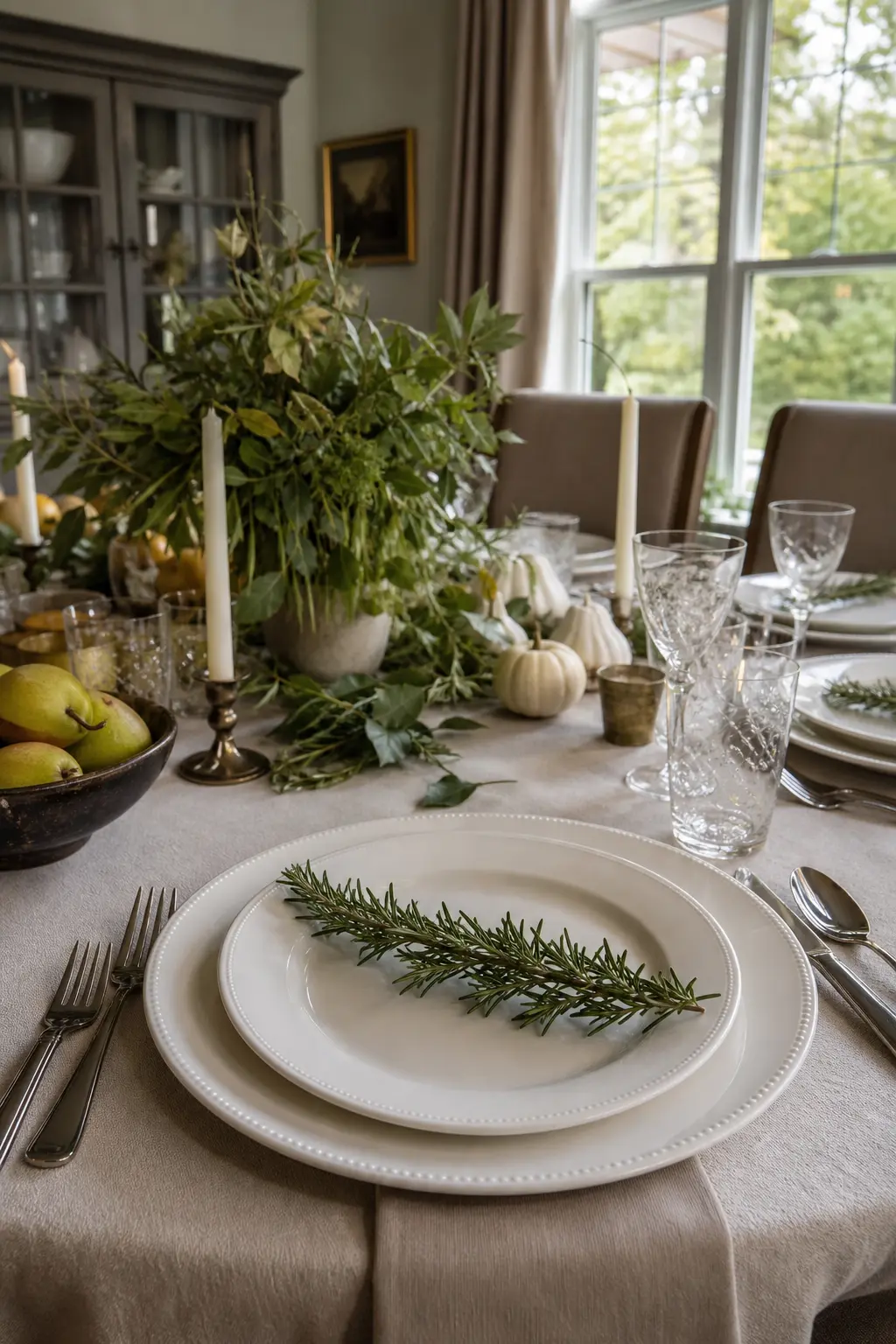
Sprig of Rosemary Across the Plate
A single rosemary stem, about six inches long, laid diagonally across the centre of the plate. It smells like the kitchen, which is exactly the right promise to make at a place setting. The stem stays fresh overnight if you set the table in a cool room.
Cut the sprigs from a live plant or a grocery bunch Wednesday afternoon. Pat dry, lay across the plate, done. The sprig can be moved aside when the food arrives or left as a garnish on the side plate.
🛍 Shopping guide
Conversation Starter Tucked Under the Plate
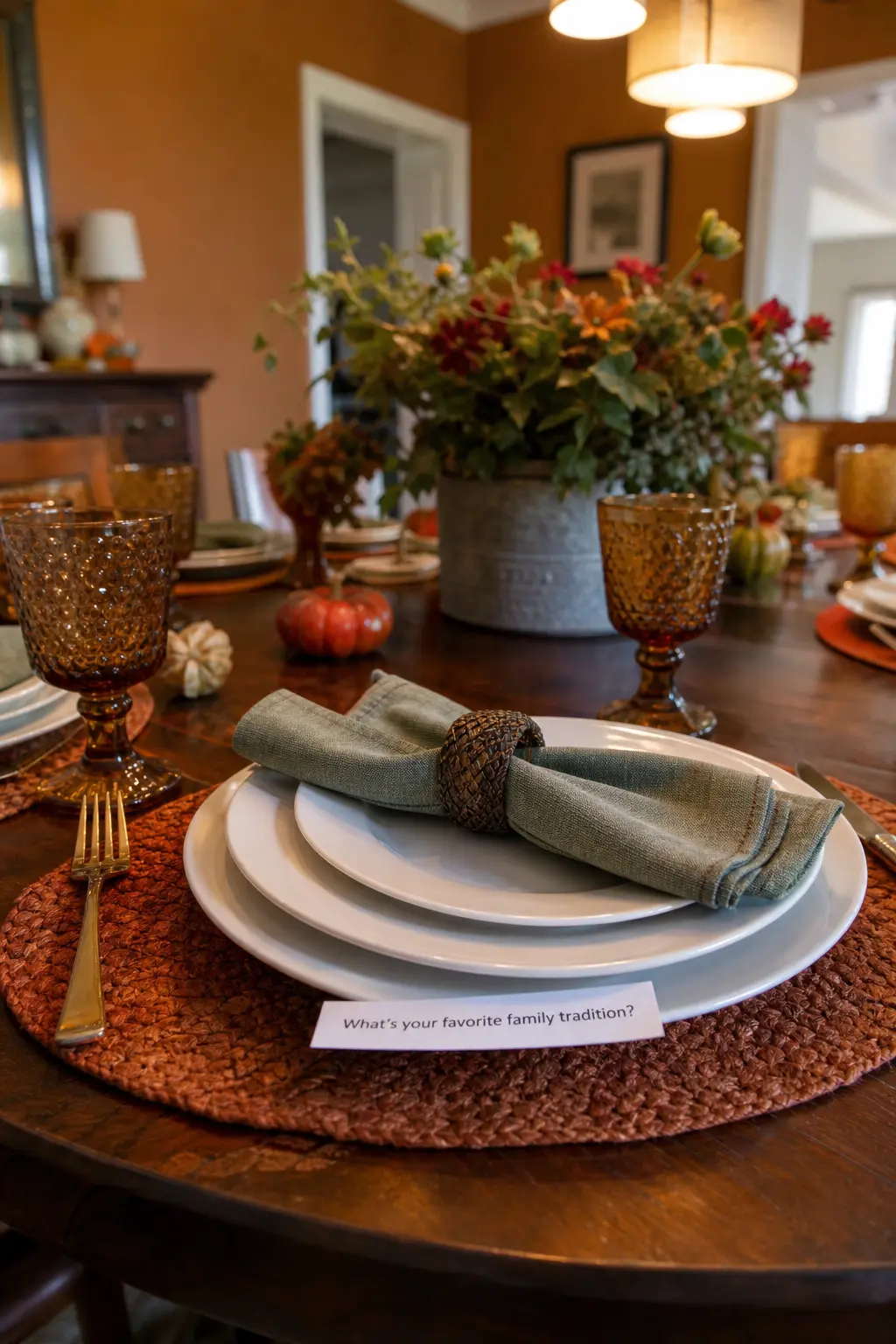
Print a single question on a strip of card stock and slide it under the plate so one edge shows. When guests lift the plate to serve themselves, the card falls into view. It is a quiet trick that starts a conversation without anyone having to announce a game.
Good questions for a Thanksgiving table: what was the best meal you have ever eaten, and who made it. What is something you learned this year that surprised you. Keep them short. One question per card is enough.
For more ideas along the same lines, these 15 Thanksgiving table games built for seated guests include options that need nothing printed at all.
🛍 Shopping guide
The Functional Details
Salt cellars, butter dishes, candles: the working pieces of a proper table. Shared between two guests rather than scaled to the whole table, they create a sense of intimacy and reduce the number of things to pass. Every item here is placed the night before and stays put.
Taper candles can go in their holders Wednesday evening. Light them Thursday, done. If candles at every setting feel like too much, every second setting is enough to fill the room with light once the overheads go off.
Candle at Every Second Setting
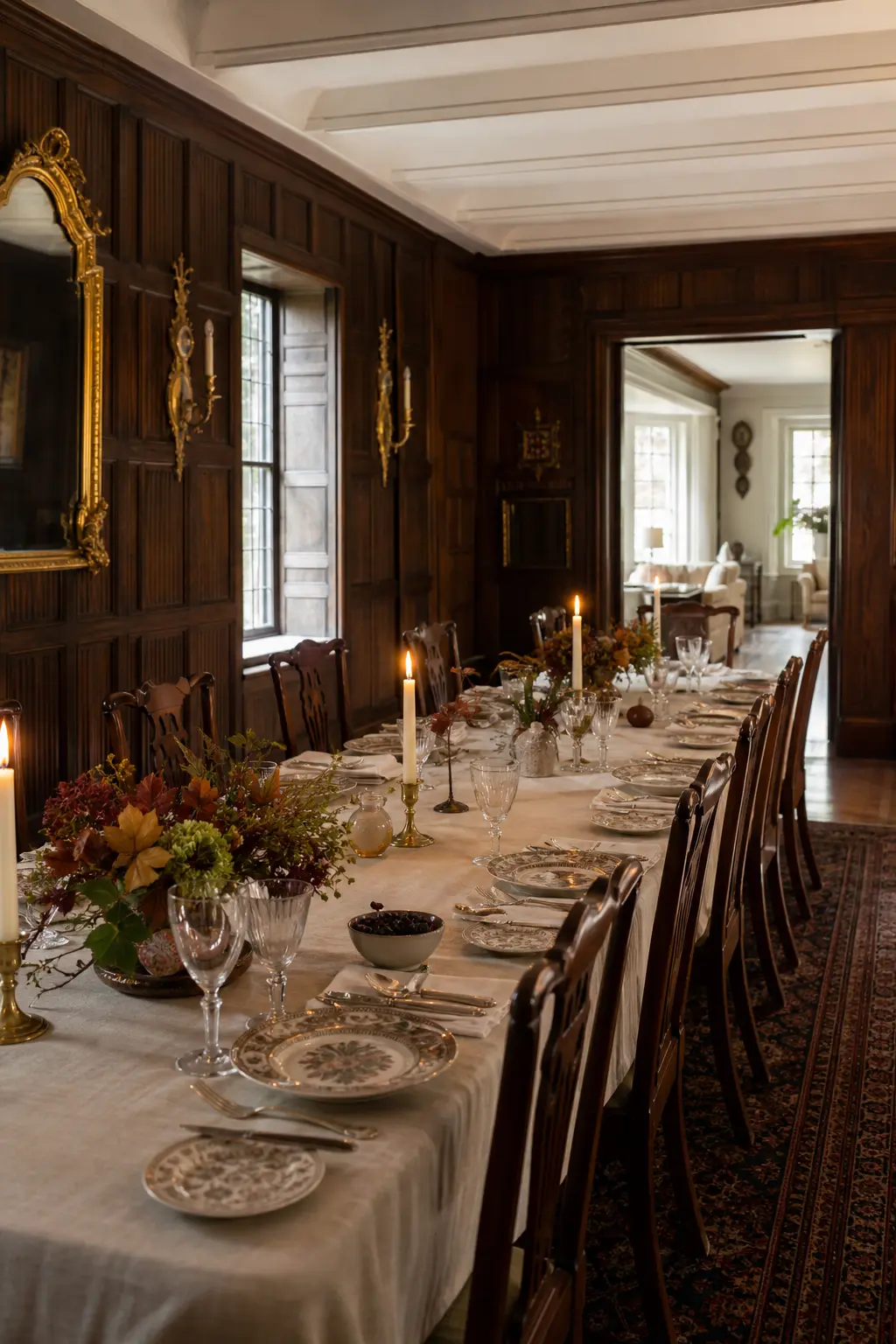
A taper in a small brass holder at every second place, not every one. The alternating rhythm creates pools of light along the table rather than a uniform glow, and it halves the number of candles you need without making the table look underdressed.
Set the holders Wednesday, candles in place. Light them Thursday thirty seconds before guests sit down. The table goes from a beautifully arranged surface to an event, just like that.
🛍 Shopping guide
Salt Cellar Shared Between Two Guests
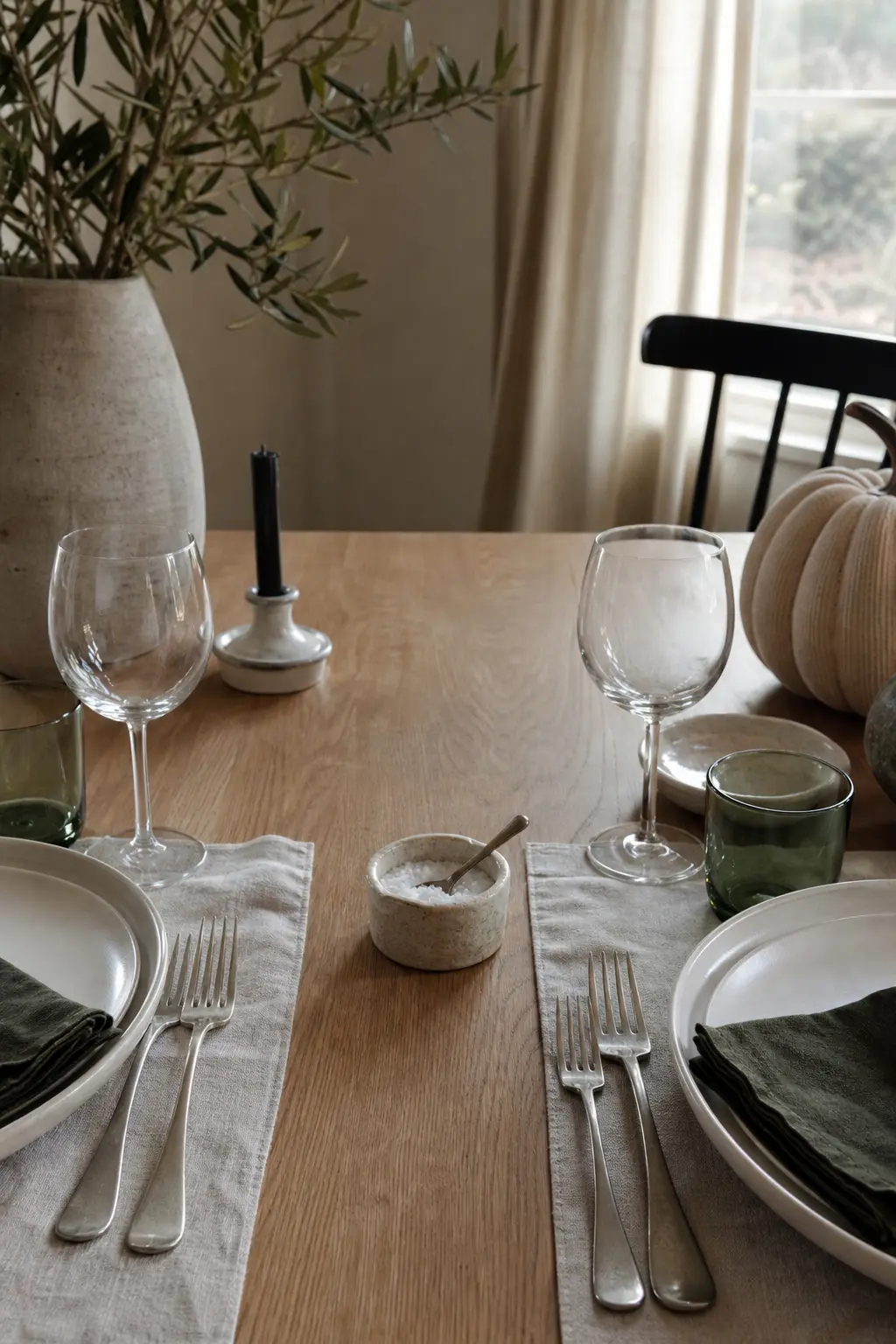
One small open salt cellar centred between every two place settings, with a tiny spoon beside it. The shared object creates a pairing: it says these two people are sitting together in a way that a bowl of salt in the middle of the table does not. It also gives guests something to pass and remark on before the food arrives.
Fill the cellars Wednesday. Salt does not absorb moisture overnight in most climates. If yours is very humid, fill them Thursday morning in under three minutes.
🛍 Shopping guide
Napkin Ring Made from a Twist of Copper Wire
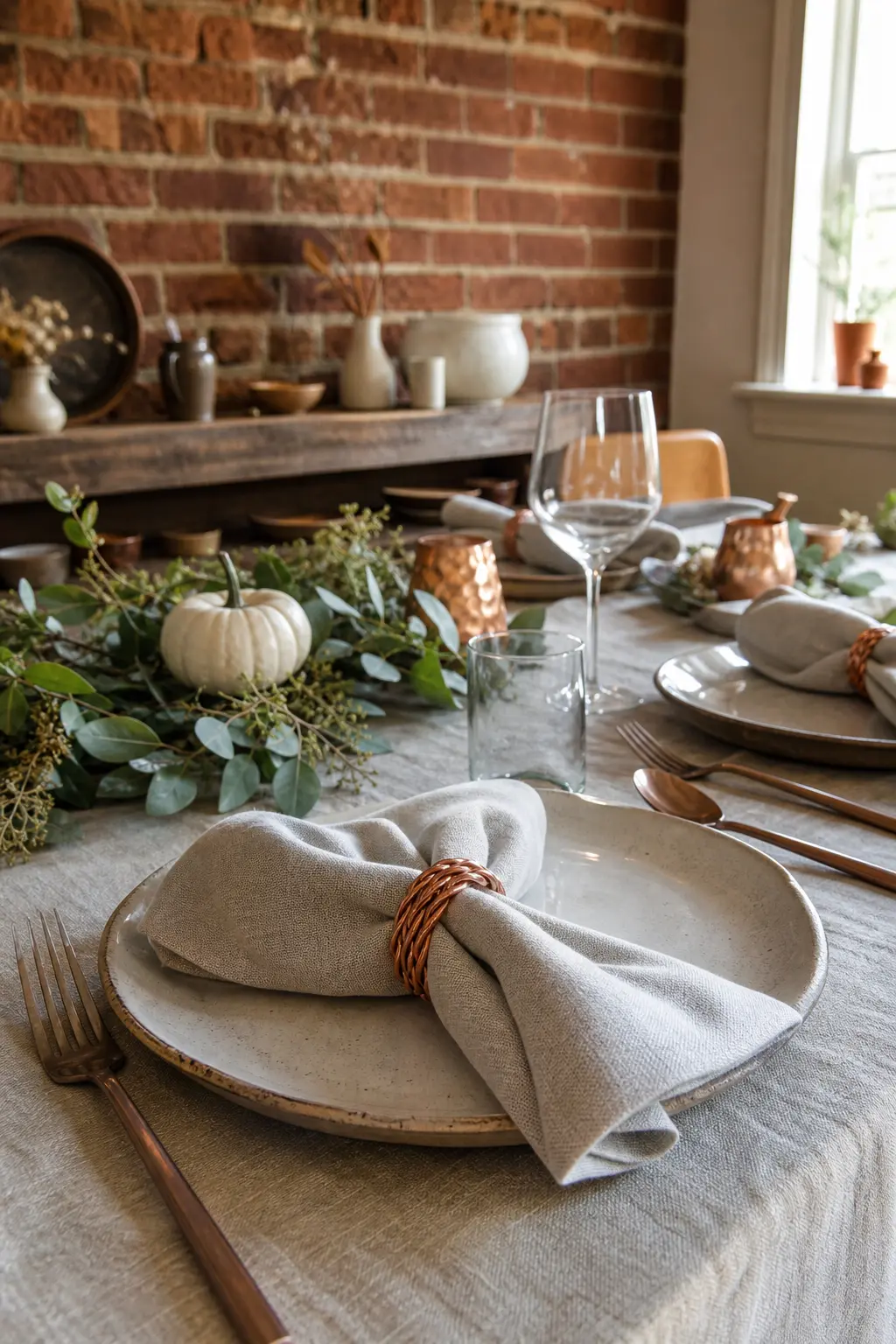
Cut 12 inches of 18-gauge copper wire, wrap it twice around two fingers and twist the ends together. Slide the napkin through. The ring costs almost nothing, takes 90 seconds to make per guest and reads as exactly the kind of handmade detail that looks like it took real effort.
Make the rings Tuesday. They hold their shape and do not tarnish overnight. The warm copper against linen and walnut wood is one of those combinations that photographs beautifully without trying.
🛍 Shopping guide
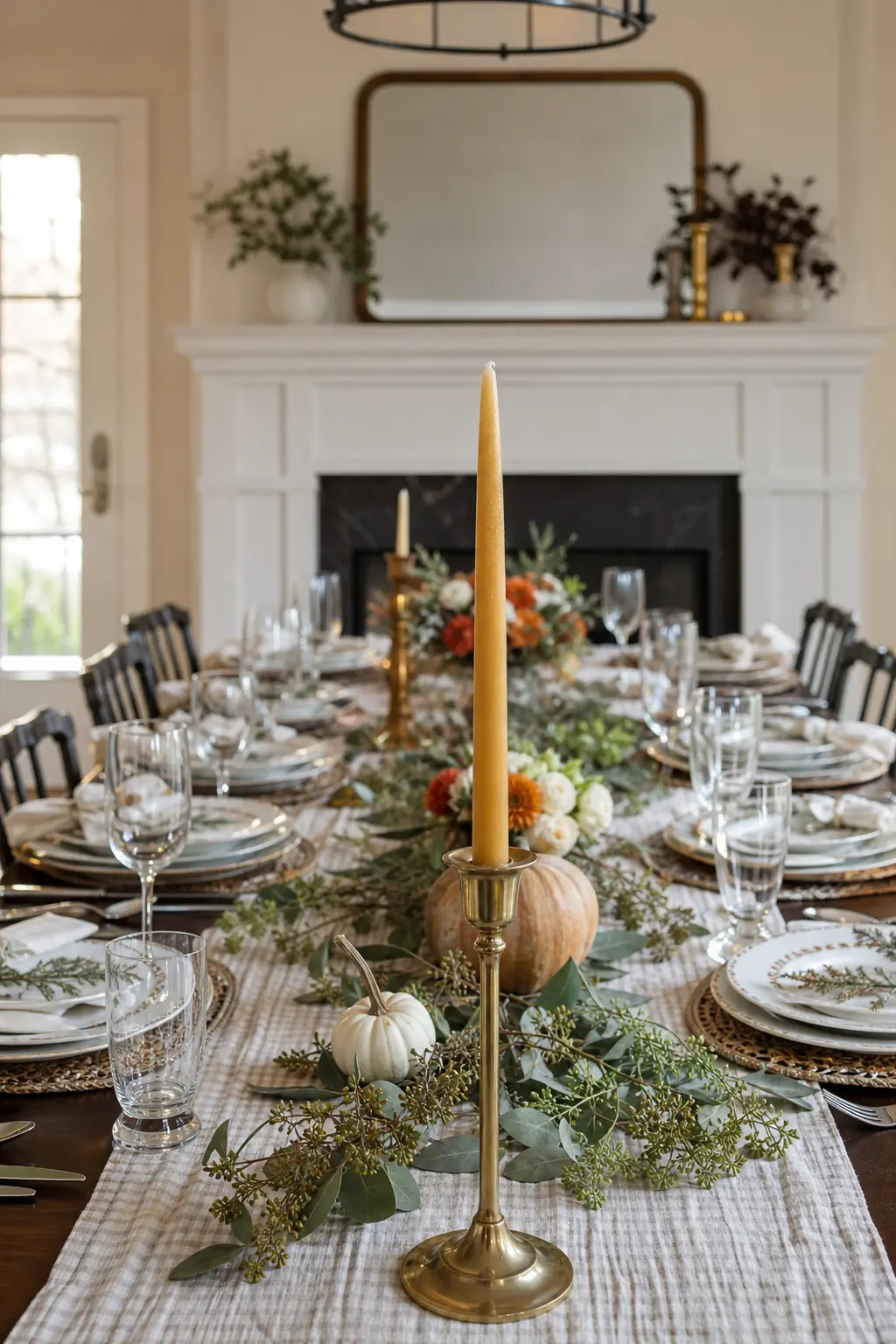
Beeswax Taper at the Head of the Table
Reserve the single tallest candle, a proper beeswax column or a 12-inch taper, for the host’s place at the head of the table. It marks the seat without a sign and gives the table a clear focal point when everyone enters the room.
Beeswax burns cleanly, smells of warm honey and does not drip on the cloth in the first two hours. Set the holder Wednesday. The candle goes in Wednesday too. Light it Thursday. The whole arrangement takes thirty seconds.
🛍 Shopping guide
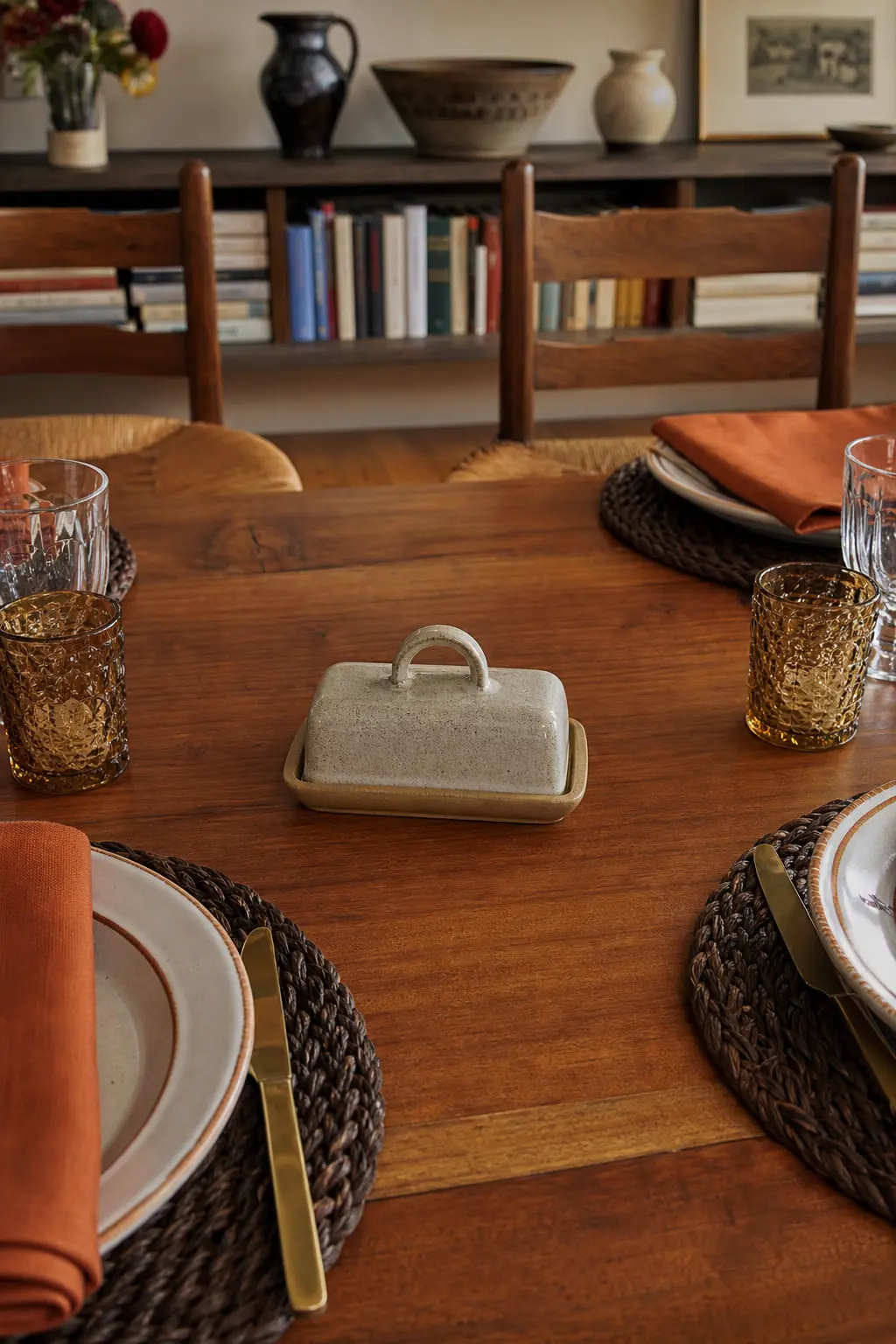
Butter Dish Per Pair Rather Than Per Table
One small covered butter dish centred between every two settings. This removes the passing entirely, keeps butter at the right temperature through a longer meal and looks, frankly, like a proper restaurant. Small ceramic or glass covered dishes work. Uncovered ramekins work too.
Fill and cover Wednesday night. Store in the refrigerator and bring to the table 45 minutes before sitting so the butter is spreadable. The dishes themselves are already in position from the night before.
🛍 Shopping guide
Special Settings
Not every guest is the same and not every seat is identical. A child needs a lower, calmer arrangement. A late arrival needs a setting that has been held ready without looking held. One deliberately plain setting next to more layered ones makes the whole table more interesting, not less.
These five handle the edge cases that most table-setting guides skip entirely, because the edge cases are exactly what hosts remember at 11 p.m. the night before.
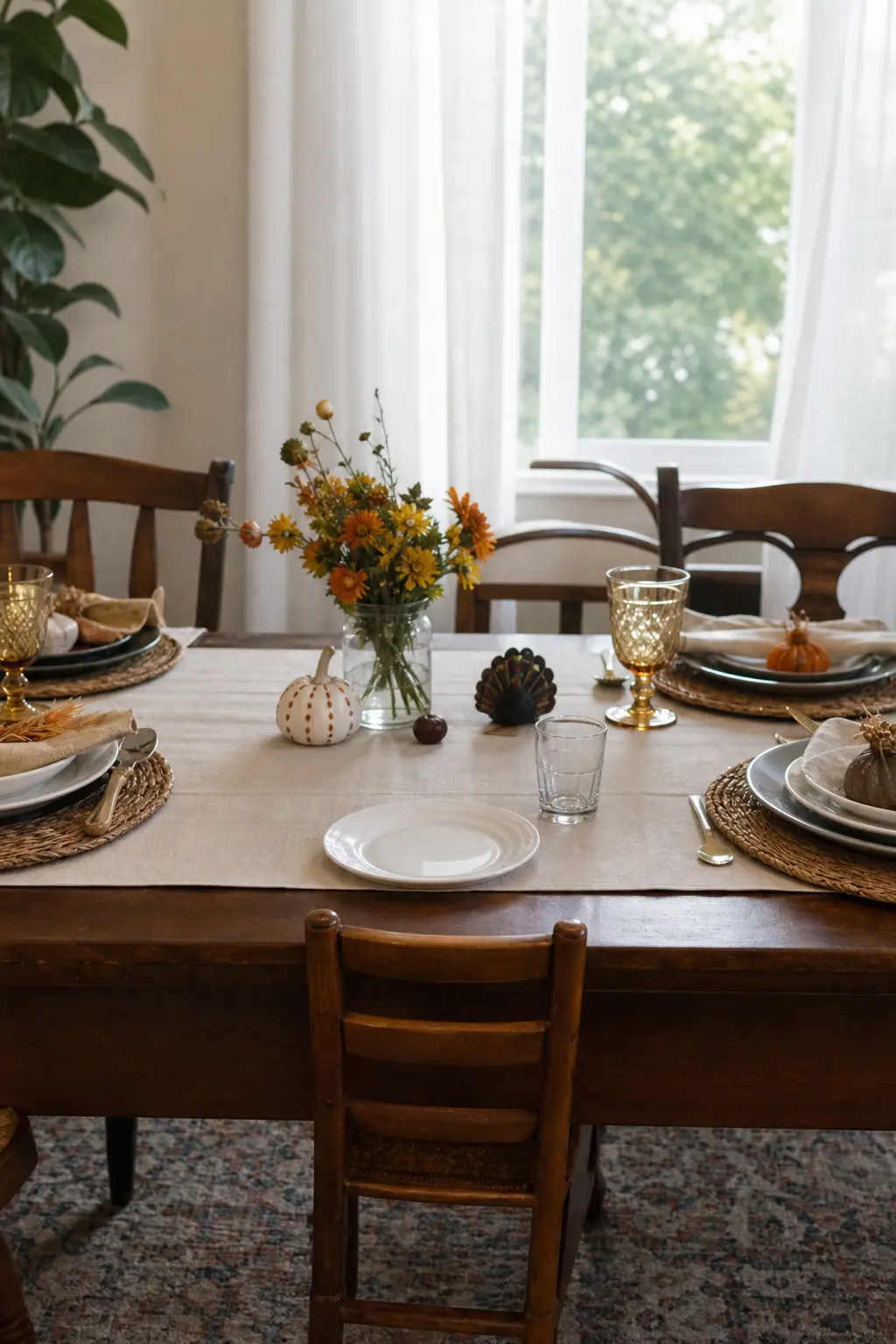
Place Setting for a Child, Lower and Simpler
A child’s setting at the main table, not banished to a folding table in the next room: same palette, smaller scale. A single plate, no charger, one glass with a short stem or no stem, napkin folded flat, one fork and one knife. The place card can be the small gourd with their name, same as everyone else.
The visual simplicity of the child’s setting makes it read as intentional design rather than afterthought. One or two plain elements next to the more layered adult settings makes the whole table more interesting.
🛍 Shopping guide
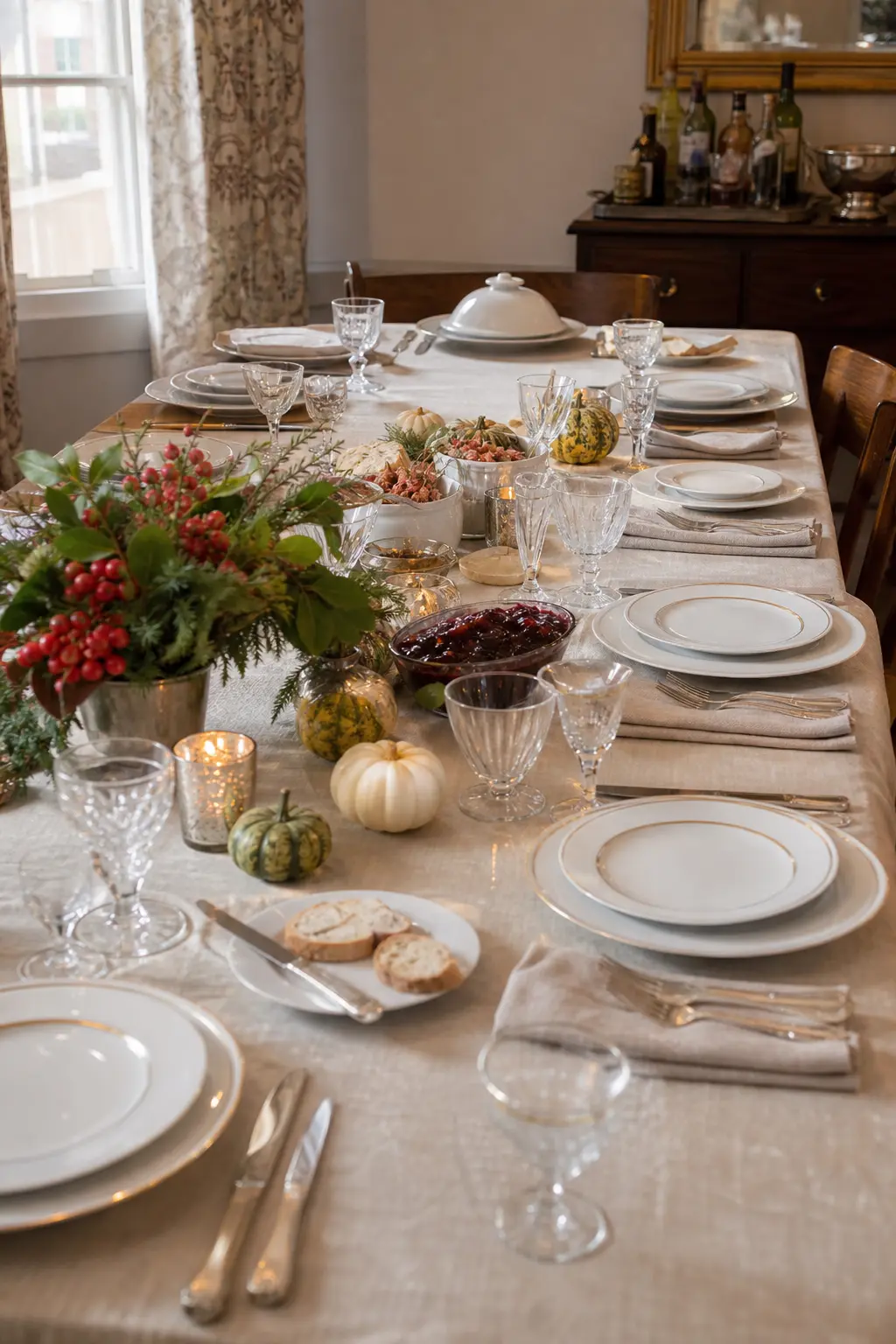
Setting for the Late Arrival, Kept Ready
Set the place for the person who will arrive after the meal has started: full setting, napkin folded, glass waiting. Cover the plate with an inverted salad plate to signal that this seat is held and the plate is clean. The arriving guest lifts the top plate and sits without interrupting the flow of the table.
This is the setting you prepare Wednesday night and do not touch. It needs to stay undisturbed. The covered plate tells everyone else not to rearrange it.
🛍 Shopping guide
Ceramic Mushroom Plate as the Side Plate
A ceramic plate with a cast or embossed mushroom motif used as the bread or side plate. Positioned to the upper left of the main plate, it reads as a small piece of art at each setting. One distinctive side plate is enough to make the whole arrangement feel sourced rather than purchased.
This works well as a contrast element: the rest of the setting stays plain, and the mushroom plate holds all the visual interest. It also means you only need six or eight of the statement plates rather than a full set for twelve.
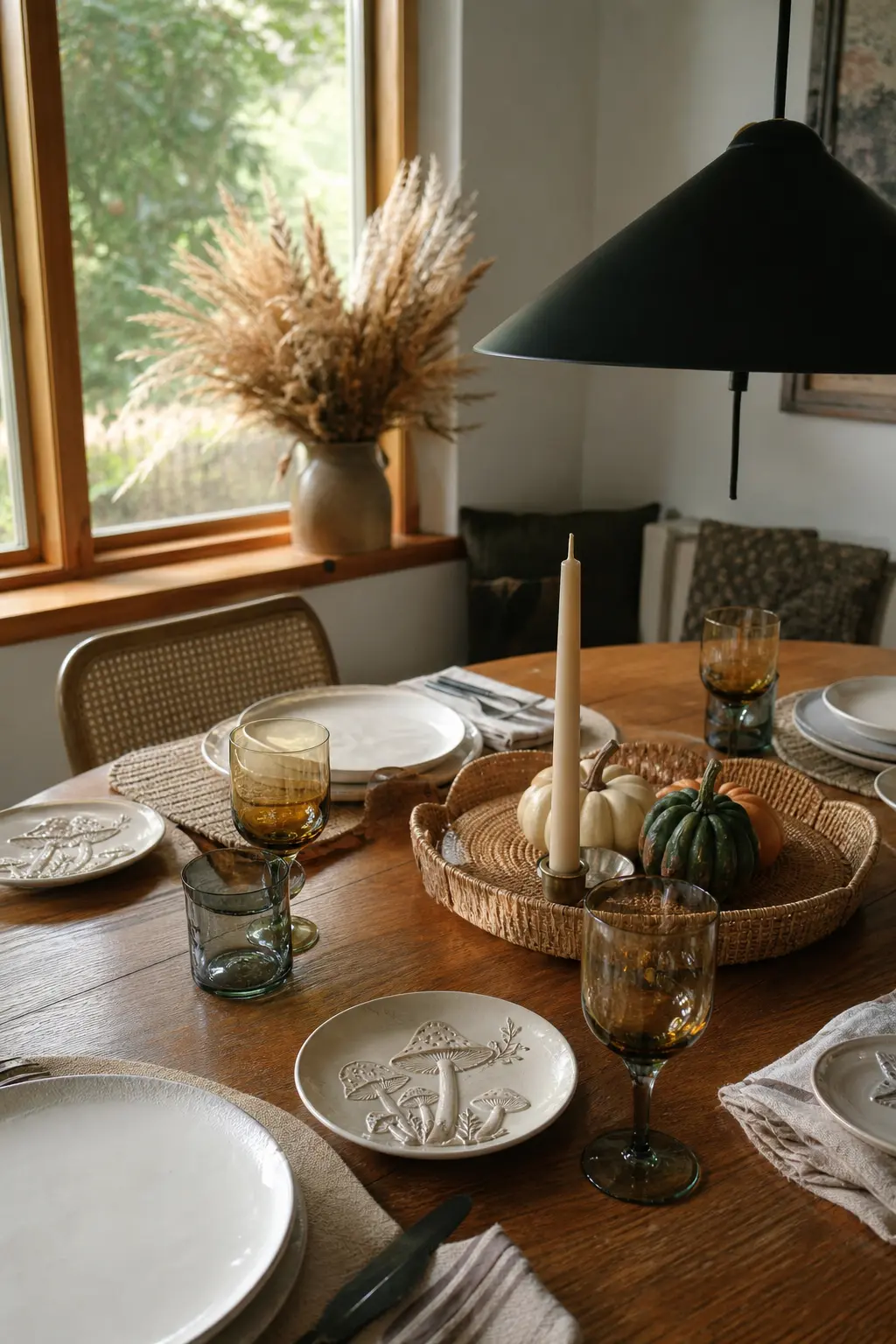
🛍 Shopping guide
Bread Roll Set Directly on the Napkin
Skip the bread basket entirely. One roll, placed directly on the folded napkin at each setting before guests sit, removes the passing ritual and gives each person something immediate and welcoming. The napkin catches any crumbs and the roll is already room temperature by the time dinner begins.
This is one element you cannot place Wednesday, but it takes under two minutes to put one roll at each place Thursday. Everything else about the setting was done the night before.
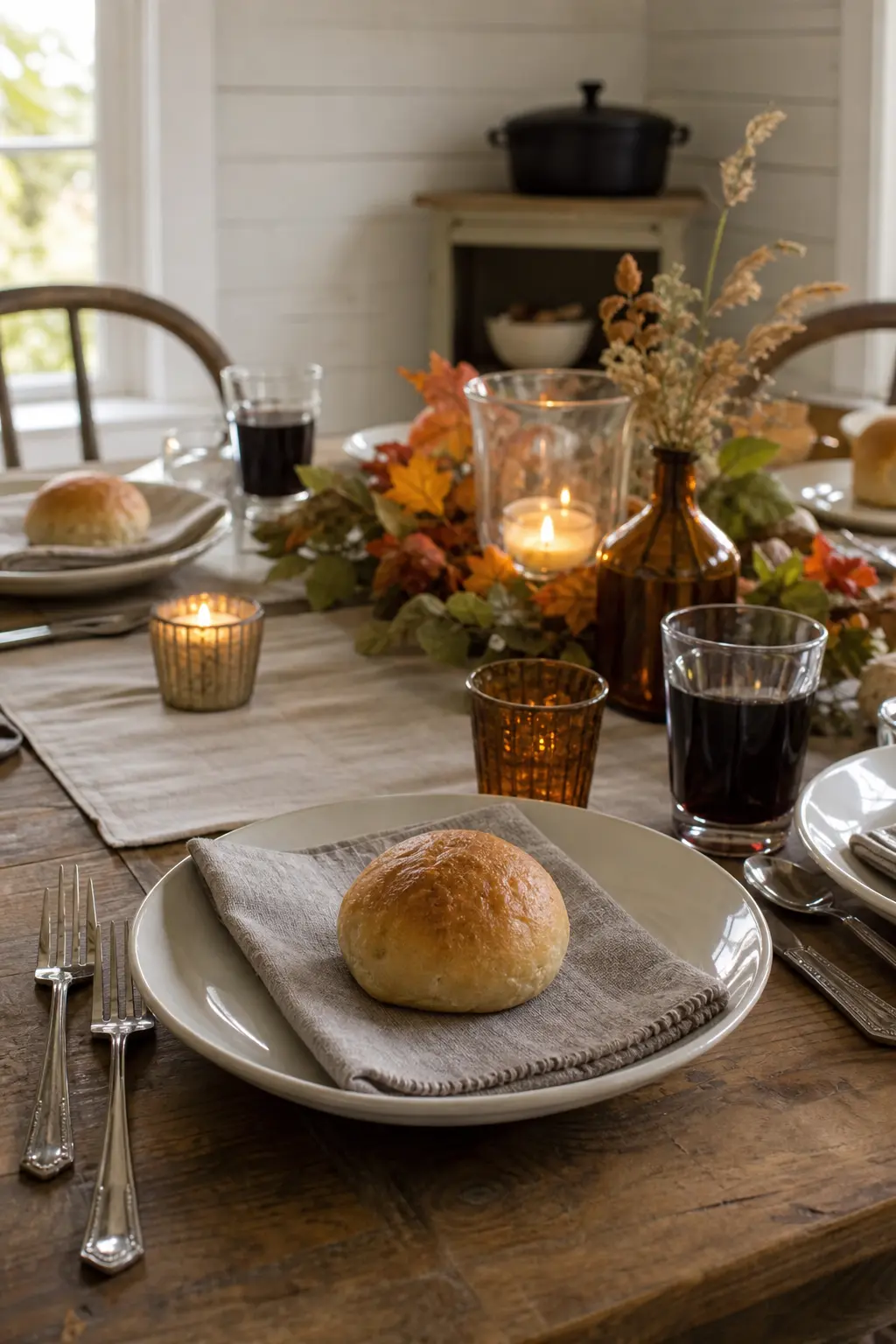
🛍 Shopping guide
One Setting Deliberately Left Plain as Contrast
Choose one seat, typically somewhere in the middle of the table, and set it with nothing but a white plate, a folded white napkin and plain flatware. No glass object, no natural sprig, no layered plate. The deliberate plainness makes every other setting on the table look more considered by contrast, and it gives the eye a place to rest.
This is the styling secret that most tables miss. Restraint at one point amplifies everything around it. Set it Wednesday and resist the urge to add anything to it Thursday morning.
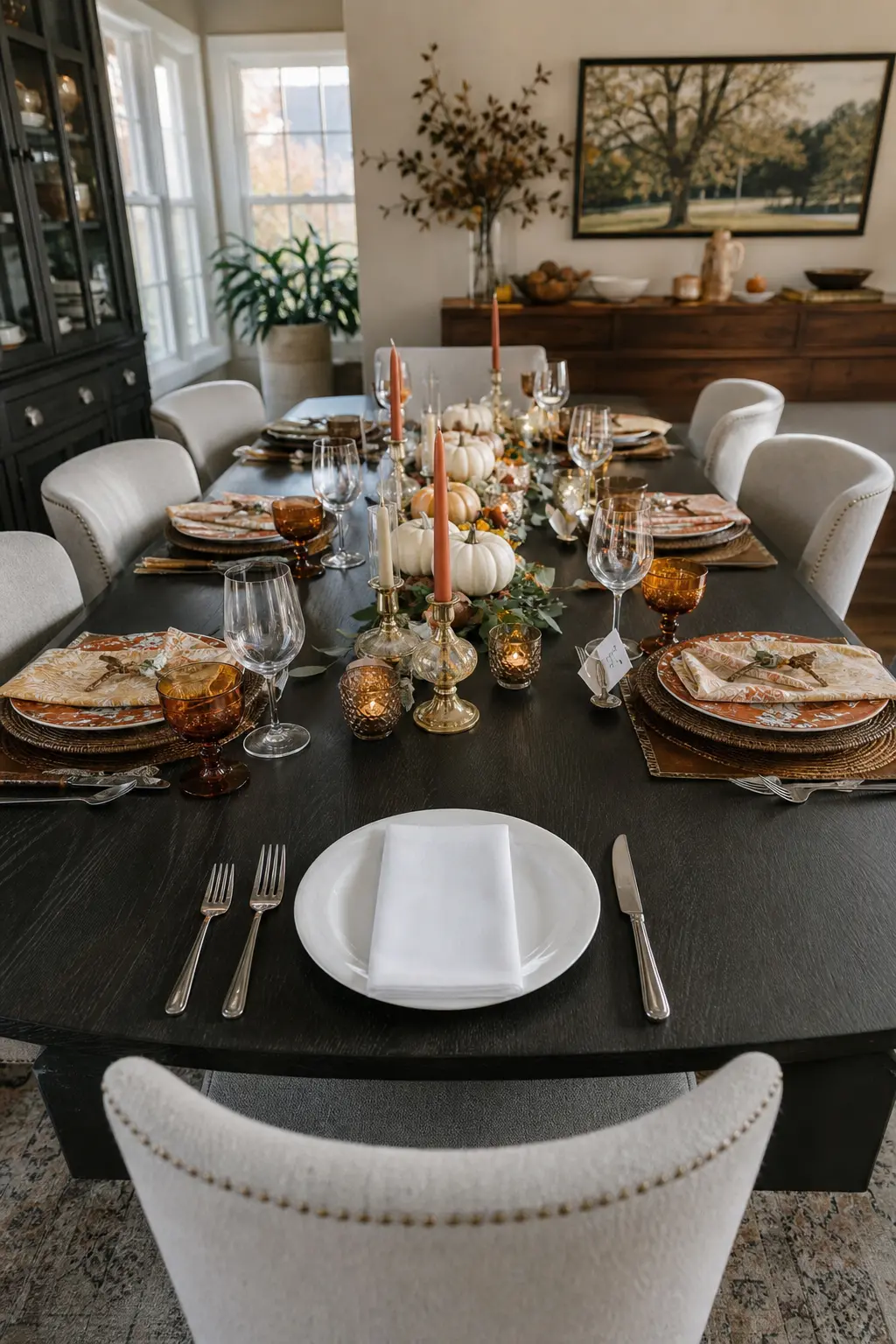
🛍 Shopping guide
Final Thoughts Before You Step Away from the Table
Once every setting is in place, walk the long side of the table and look across it rather than down at it. That is the angle your guests will see first. Adjust anything that catches your eye at that height, then leave the room. The table is done.
If you want something to do with your hands while the bird rests Thursday, check out these 15 Thanksgiving table games you can play without getting up and print one conversation card per place. It takes four minutes and it will carry the table through the long stretch between the last side dish and dessert. For more ways to keep the whole gathering moving, these 15 Thanksgiving dinner games are built for exactly the same seated crowd.
Set the table tonight. Sleep well. Thursday is for the food.
Frequently Asked Questions
Can you set a Thanksgiving table the night before without anything wilting or shifting?
Yes, with one exception: food elements like bread rolls go on Thursday, and water goes into glasses right before guests sit. Everything else, plates, napkins, glassware, flatware, place cards, candles in holders, natural sprigs of rosemary or eucalyptus, gourds and pears, all hold perfectly overnight in a cool room. Set the table Wednesday evening and walk away.
What is the easiest way to make Thanksgiving place settings look expensive?
Two moves: add coloured glassware as the only ornament, and use a charger or stacked plates for depth. Both cost less than a centrepiece and do more visual work. Aged brass flatware and stonewashed linen napkins also read as considered choices rather than off-the-shelf purchases.
How do you keep taper candles from falling over at a dinner table?
Use holders sized to the exact candle diameter, which is usually 7/8 inch for standard tapers. If the fit is loose, a small strip of florist tape wrapped around the base of the candle solves it in seconds. Set candles in holders the night before and they settle into position by the time you light them.
What napkin fold works best for a Thanksgiving setting you lay the night before?
Flat. A simple rectangle fold, smoothed by hand while slightly damp and laid under the fork or on the plate, holds its shape overnight without any risk of unwinding. Elaborate folds tucked into glasses look impressive but often droop by morning.
How do you handle a mix of adults and children at a Thanksgiving table without it looking chaotic?
Keep the child’s setting within the same colour palette: same plate colour, same napkin tone, just smaller scale and fewer layers. One or two simpler settings among the fuller adult arrangements actually improves the table visually by providing contrast. The result looks curated, not mismatched.
18 January wreath ideas that swap out the Christmas look for something warm, wintry and cheap to mak
My apartment used to look like a display unit at IKEA. Everything matched. Everything was beige. It
Last July I spent an embarrassing amount of money on citronella candles. Like, more than I want to a
Leave a Reply