

Last July I spent an embarrassing amount of money on citronella candles. Like, more than I want to admit. Burned through probably eight of them over the summer, and my patio still felt like a mosquito happy hour every single evening.
A neighbor mentioned she’d switched to plants that actually do the work — and also look gorgeous doing it. I figured I had nothing to lose.
That was the summer my patio finally became a place I actually wanted to sit at night. These 15 pretty patio decor plants that repel mosquitoes are what made the difference.
This post contains affiliate links. If you buy something through these links, I may earn a small commission at no extra cost to you. I only recommend things I’d actually use.
Does This Actually Work, or Is It a Pinterest Myth?
Sort of both, honestly. The plants themselves don’t act like a force field — mosquitoes aren’t going to stop at your lavender pot and turn around. What they do is release compounds (usually through their leaves, especially when brushed or crushed) that mosquitoes find genuinely repellent.
The trick is placement. Cluster them near where you sit. Put them in high-traffic spots where you’ll brush against them. And don’t just set them in the corner and hope for the best.
For the record: a 2022 study published in the Journal of Bioscience and Medicine confirmed that several common garden plants — including lavender, basil, and lemon balm — produce volatile compounds that disrupt mosquito host-seeking behavior. You’re not imagining it. It works, just not like a bug bomb.
The 15 Plants (With Real Talk on Each One)
1. Lavender
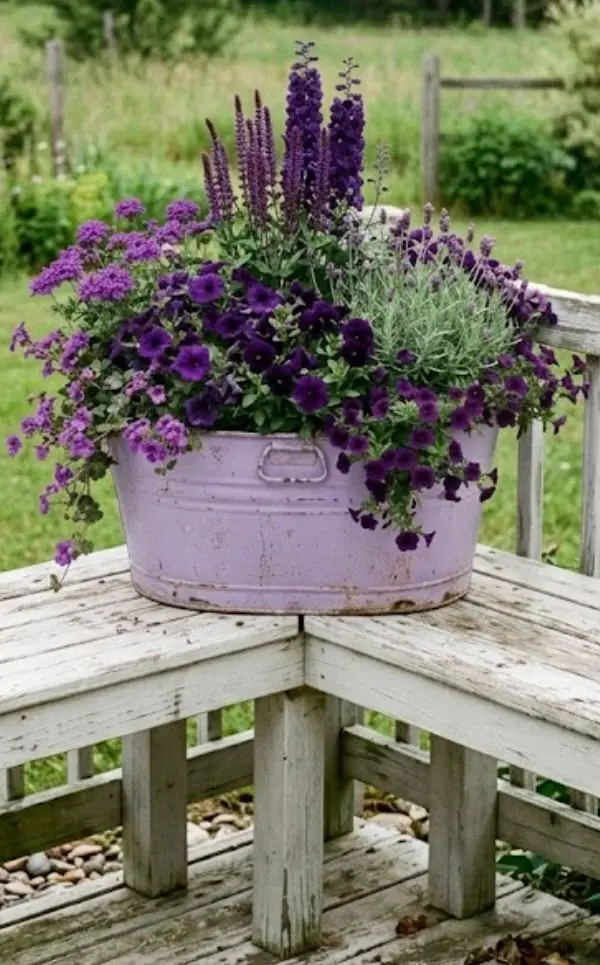
The most beautiful one on this list, full stop. Purple spikes, silver-green foliage, and that smell that makes you feel like you’re in Provence even if you’re sitting next to your kids’ trampoline. Mosquitoes hate the linalool in lavender. Deer hate it too, if that’s a problem in your yard.
It needs full sun and well-drained soil — do not overwater it. I killed two lavender plants before I understood this. It wants to be a little dry. A terra cotta pot is actually better than a glazed ceramic one because terra cotta breathes and dries out faster.
2. Citronella Geranium
This is not the same as a regular geranium, and this distinction matters. The actual mosquito-repelling plant is Pelargonium citrosum — the citronella geranium — which has a strong lemon-citrus scent when you brush its leaves. Regular pink geraniums are just… geraniums.
The leaves are deeply lobed and kind of fern-like. It’s a prettier plant than people expect. Grows well in containers, which makes it perfect for a patio. One large pot near your seating area goes a long way.
3. Lemon Balm
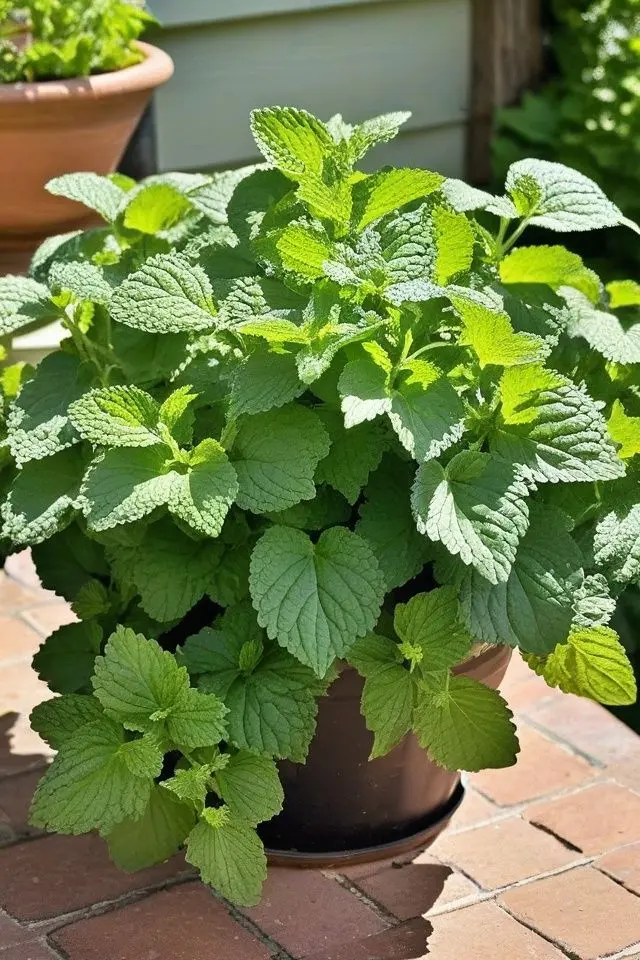
This one is sneaky. It looks like a plain green herb — sort of like mint, actually — and then you brush it and it smells incredible, like fresh lemon with an herby edge. The citronellal content is what mosquitoes don’t like.
A word of warning: lemon balm spreads aggressively if you put it in the ground. Keep it in a container. I learned this by finding it three feet from where I originally planted it a year later.
4. Basil
Yes, your pasta herb. Basil — specifically sweet basil and Thai basil — releases estragole and linalool, both of which mosquitoes avoid. And it does this constantly, not just when you touch it. Having a few pots of basil near the patio table is genuinely doing double duty.
Get a self-watering herb planter and cluster basil with a couple of other herbs for a pretty little grouping that actually earns its space.
5. Catnip
Studies — including one from Iowa State University — found catnip to be roughly 10 times more effective than DEET at repelling mosquitoes. TEN TIMES. I know. It sounds unhinged. But the nepetalactone in catnip is genuinely powerful.
It’s not the most gorgeous patio plant, but it’s not ugly either. It’s got soft gray-green leaves and tiny purple-white flowers in summer. Just know that if you have a cat, your patio is about to become their new favorite place.
6. Rosemary
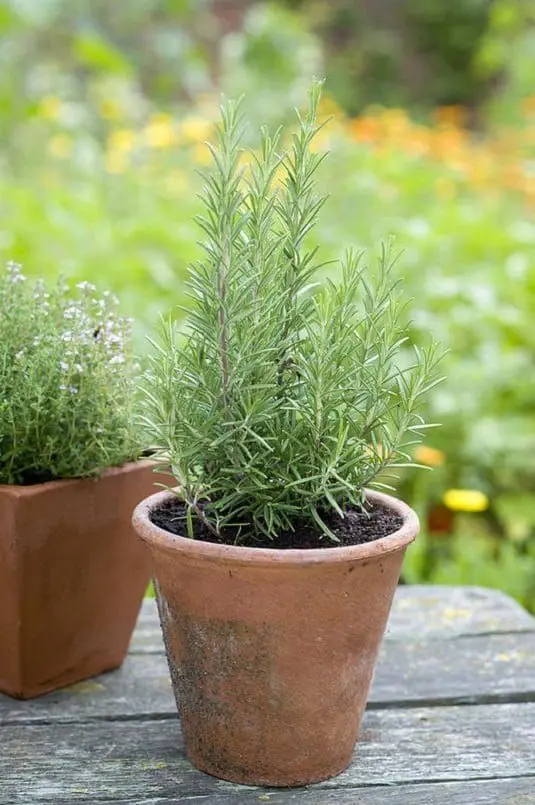
Rosemary is one of those plants that looks intentional even when you’ve done nothing special with it. The woody stems and needle-like leaves read as “Mediterranean garden” in a very good way.
It releases 1,8-cineole and camphor — both naturally repel insects, including mosquitoes. Upright varieties work well as small statement plants in larger pots. Trailing rosemary looks beautiful cascading over the edge of a raised planter.
Pair it with lavender in a wide outdoor planter box and you’ve accidentally created something that looks like it was styled by a decorator.
7. Marigolds
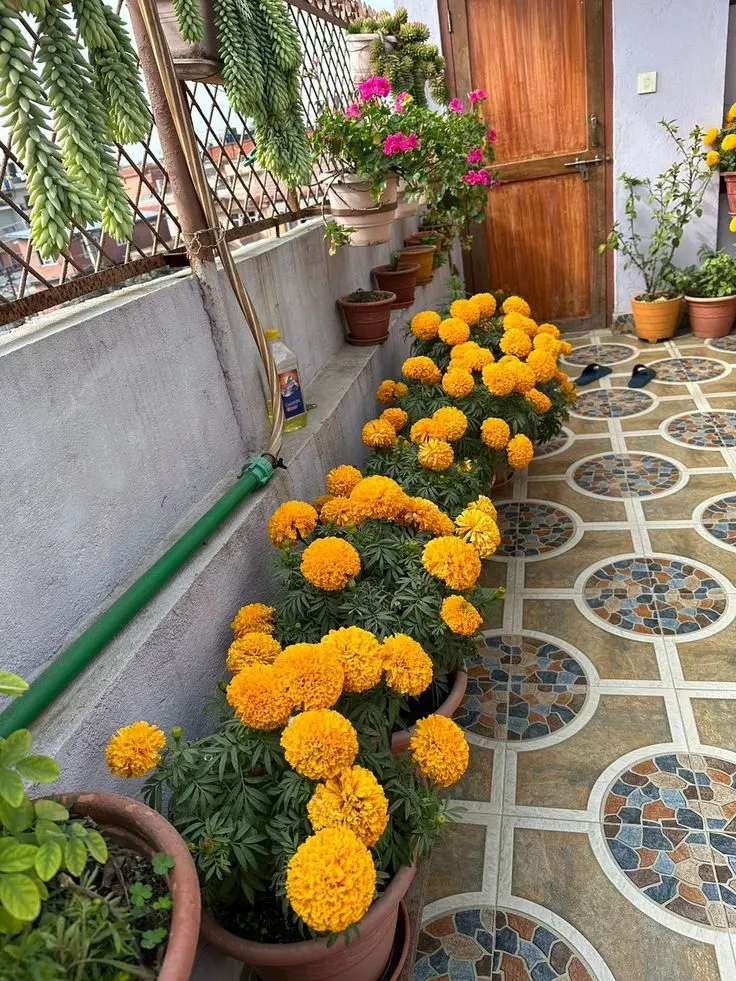
Marigolds get overlooked because they feel old-fashioned. But they work, they’re inexpensive, and in the right colors — deep burnt orange, rust, dark gold — they look completely intentional on a fall-adjacent summer patio.
They contain pyrethrum, which is actually used in commercial insect repellents. Plant them around the perimeter of your patio, or line a few pots along the edge of a deck railing. A row of marigolds in terracotta pots is genuinely charming.
8. Mint
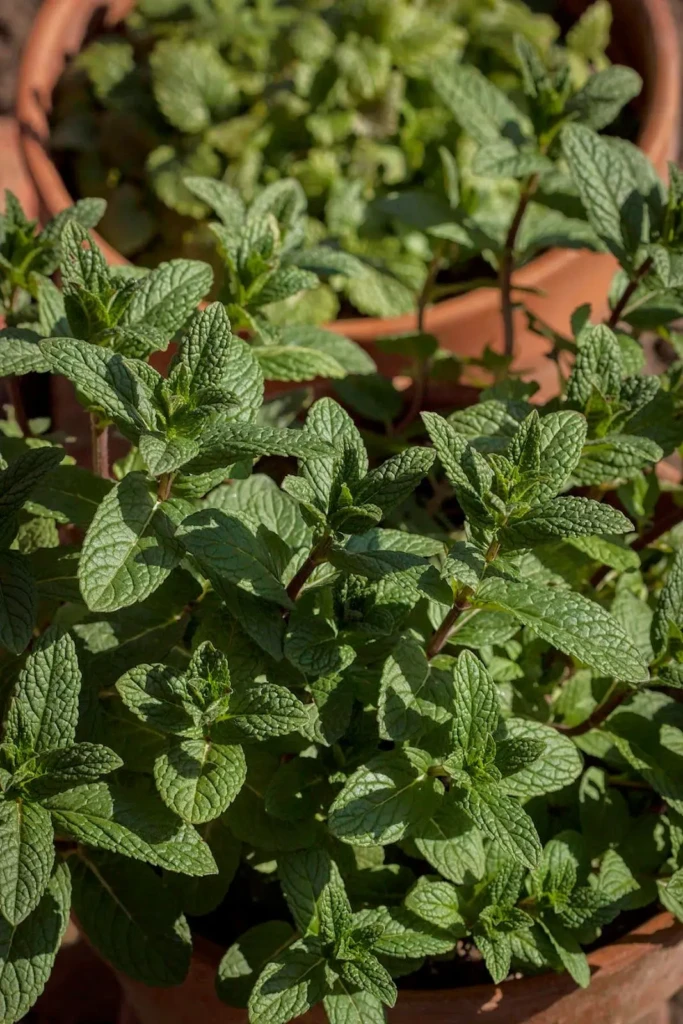
Like lemon balm, mint is aggressive about spreading. Container only, always. But the smell is strong, the plant is vigorous, and mosquitoes avoid menthol.
Peppermint is the most potent for repelling, but spearmint smells better if you’re also going to be brushing against it all summer. Put it somewhere you’ll actually brush past it — near a gate or along a walkway.
9. Lemon Thyme
Smaller and more delicate-looking than regular thyme, lemon thyme has a bright citrus scent that mosquitoes find repellent. It also looks gorgeous. Tiny leaves, low spreading habit, sometimes tiny flowers. It’s the kind of plant that makes a container arrangement look thoughtfully put together.
Mix it with rosemary and lavender in a large outdoor pot for a Mediterranean-herb trio that smells amazing and earns its rent.
10. Scented Geraniums
Different from the citronella geranium, scented geraniums come in a wild range of scents — rose, apple, nutmeg, coconut, peppermint. The ones that repel mosquitoes best are the rose-scented and lemon-scented varieties. They’re absolutely beautiful plants with deeply textured, velvety leaves. Deadhead them regularly and they’ll bloom all summer.
11. Bee Balm (Monarda)
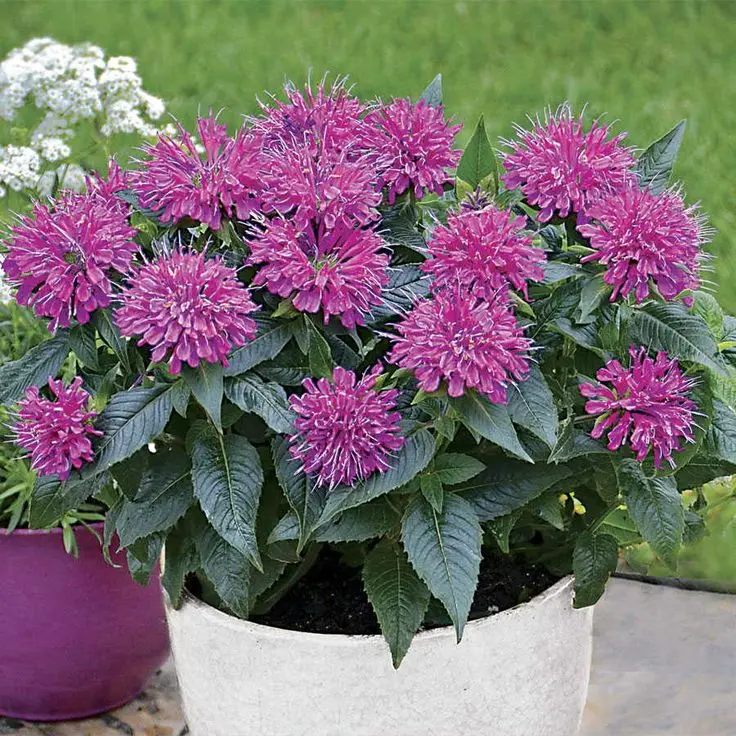
This one is less common and honestly more striking than most of the others. Bee balm has wild, shaggy flowers in red, pink, or purple that look like something from a cottage garden. It attracts bees and butterflies while repelling mosquitoes — which, if you care about pollinators, is exactly the trade you want.
It spreads, so it does better in the ground than in a pot. If you have a garden bed adjacent to your patio, this is the one to put there.
12. Alliums
Ornamental alliums — the purple globe-shaped flowers related to garlic and onions — are architectural and gorgeous. They’re also genuinely functional. The sulfur compounds that make onions smell like onions are what mosquitoes (and a lot of other insects) avoid.
Tall alliums in a planter can anchor a patio corner beautifully. They’re not a trend — they’re just quietly excellent.
13. Floss Flower (Ageratum)
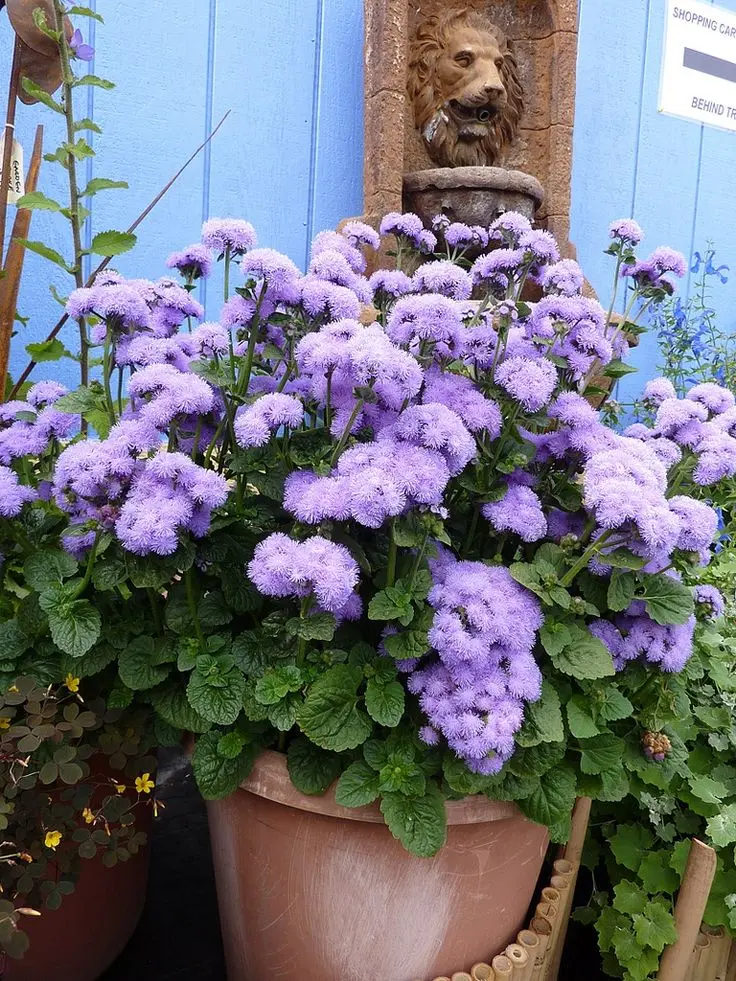
This one is a hidden gem. Floss flower has fluffy, powder-puff blooms in soft purple and pink. It looks completely decorative, like something from a flower market. But it contains coumarin, a compound that disrupts female mosquitoes’ ability to find hosts.
It’s an annual, so you’ll replant it each year. Worth it. The blue-purple varieties in particular look stunning in a white pot or a white window box.
14. Petunias
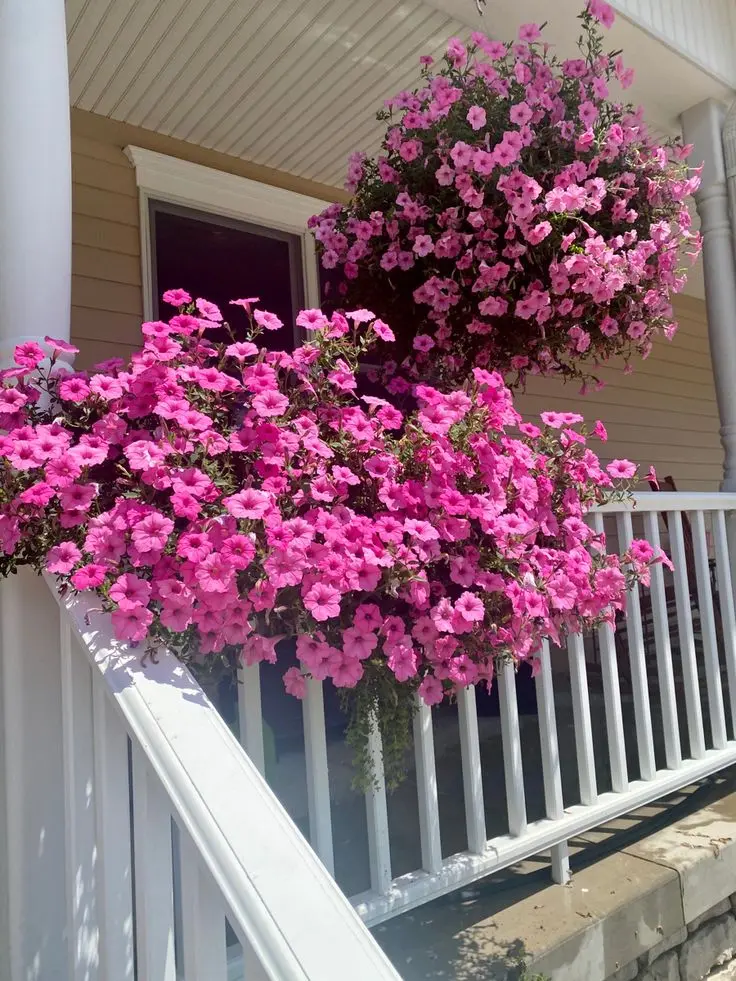
Petunias are everywhere in summer, and for good reason — they’re easy, they trail beautifully, and they come in every color. What’s less known is that they contain solanine and other compounds that repel certain insects, including mosquitoes, aphids, and leafhoppers.
They’re not the most powerful plant on this list. But they’re the most versatile, and since you’re probably planting them anyway, placing them near the seating area instead of in a far corner is a zero-effort upgrade.
15. Pennyroyal
The strongest mint smell on this list, by a lot. Pennyroyal has been used as an insect repellent for centuries — if you crush a leaf and rub it on your skin, it works like a natural bug spray. The plant looks like a low, spreading ground cover with tiny purple flowers.
One note: it is toxic if ingested in large amounts, so keep it away from pets and small children who are in the “put everything in their mouth” phase.
How to Actually Arrange These on Your Patio
A bunch of random pots shoved against the fence isn’t going to do much — either for mosquitoes or for aesthetics.
Think in clusters. Group three to five plants together at different heights. A tall rosemary in the back, citronella geranium in the middle, trailing lemon thyme at the front. That’s a whole thing, and it smells incredible when anyone walks past.
Put your most potent plants — catnip, lemon balm, basil — closest to where you actually sit. The perimeter stuff (marigolds, alliums, bee balm) is more about creating a border.
If you want a visual starting point for how to approach summer outdoor spaces more generally, the Summer Home Decor: 8 Italian-Inspired Ideas post has some good thinking on layering plants with other outdoor elements.
What to Put Them In
I’m a firm believer that the pot matters as much as the plant for patio styling. A beautiful lavender in a cracked plastic pot is a missed opportunity.
For a cohesive look, stick to two or three materials max: terra cotta, white ceramic, and natural wood are a very forgiving combination. All three go together without trying.
Tiered plant stands are worth it if you have limited floor space. They let you get height variation without needing giant pots, and they look intentionally styled.
For railings and small balconies, railing planter boxes let you line the perimeter with herbs and flowers without taking up floor space.
A Few Things That Won’t Work
Putting all your plants in one far corner. The compounds only work in your immediate vicinity. If your plants are six feet away, you’re not getting the benefit.
Not touching them. A lot of these plants need physical disturbance to release their oils. Put them somewhere you’ll brush past, or take five seconds when you go outside to run your hand over the basil.
Watering lavender and rosemary like they’re thirsty. They’re Mediterranean plants. They want dry feet. Overwatered lavender is dead lavender.
FAQ
Will these plants completely eliminate mosquitoes from my patio?
No. Nothing short of a screen enclosure will completely eliminate them. But a well-placed cluster of these plants can meaningfully reduce the number of mosquitoes in your immediate area — enough to make evenings outside comfortable again.
Which is the single most effective plant on this list?
Catnip, based on the research. Lemon balm is a close second for something you’ll actually want to look at and smell.
Can I grow these in containers if I don’t have a yard?
Yes, almost all of them are container-friendly. Lavender, citronella geranium, basil, lemon thyme, scented geraniums, floss flower, and petunias all do excellently in pots. Just use quality potting mix, not garden soil, and make sure your pots have drainage holes.
Do I need all 15?
Not even close. Pick four or five you like the look of, cluster them near your seating, and see what happens. My patio right now has lavender, lemon balm, two pots of basil, and a citronella geranium. That’s it. It’s enough.
What about lemon eucalyptus — isn’t that a big mosquito repellent?
Lemon eucalyptus oil (specifically OLE, or oil of lemon eucalyptus) is CDC-approved as an effective mosquito repellent. The plant itself isn’t really a patio container plant — it grows into a large tree. So it’s not really on this list, but worth knowing if you’re exploring natural repellent options.
The herb plants and floss flowers I started with cost me maybe $40 total from a local nursery. The lavender was $12. That whole first summer, I spent $52 on plants and used maybe one citronella candle the entire season.
Your patio can be pretty and functional at the same time. These pretty patio decor plants that repel mosquitoes are doing all the work while you’re just sitting there enjoying the evening.
If you want to think about how to make the whole outdoor space feel more intentional this season, the 35 Spring Hobbies for Women post has some really good ideas for getting into a gardening rhythm when you’re starting from scratch.
My old apartment had a balcony the size of a bath mat and rules against “permanent modificatio

The air dry clay obsession has reached critical mass in 2026, and it’s not just another fleeti

14 friendsgiving decor ideas for renters: no holes, no paint, under fifty dollars. Black, rust and c
Leave a Reply