

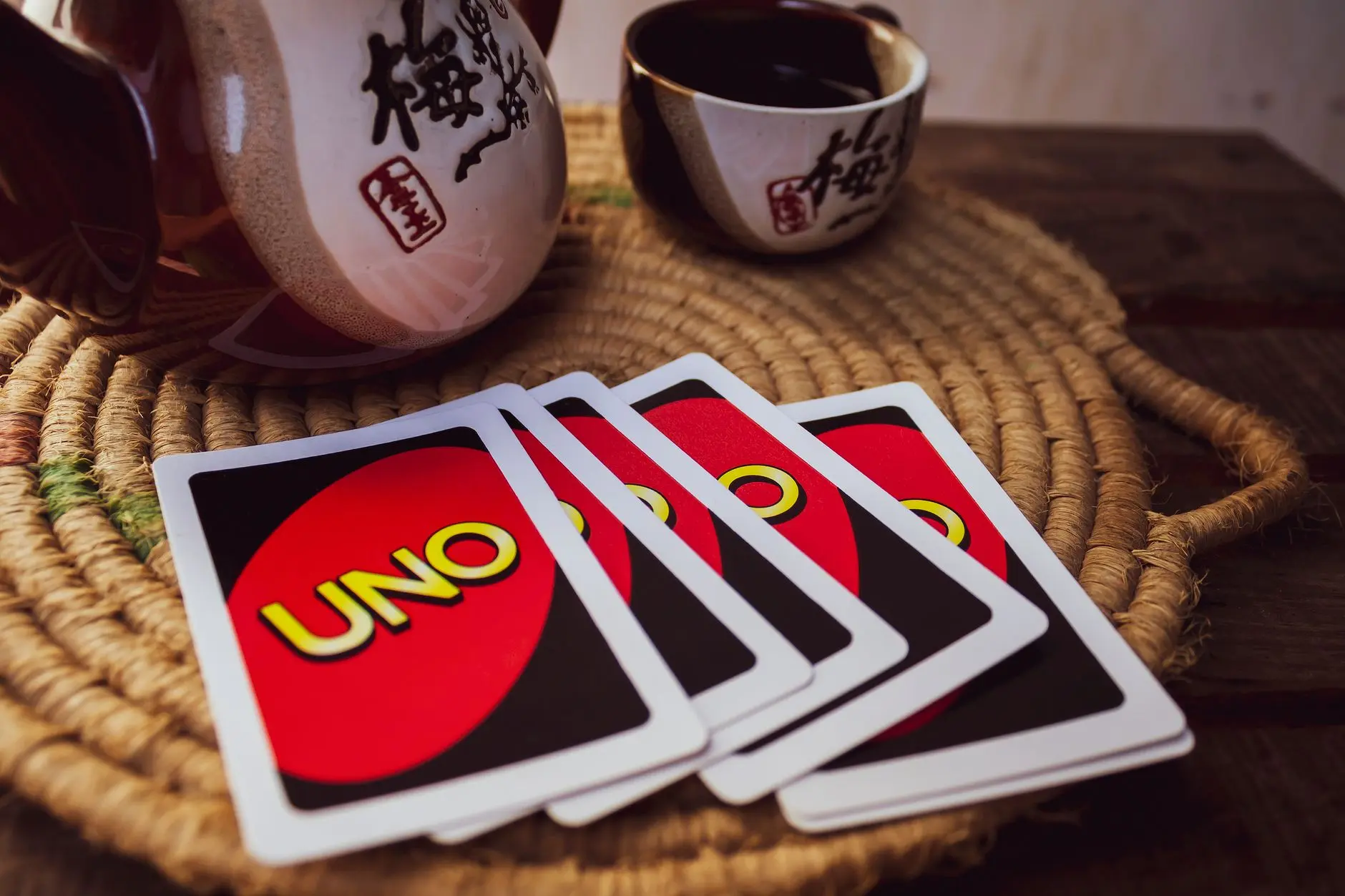
If you’ve been craving a proper slow evening — phones face-down, soft lamp light, something warm in everyone’s hands — these cozy family game night ideas are exactly what you need.
We’re talking blankets on the couch, a mug of hot cocoa, and the kind of unhurried fun that actually makes you feel connected again. No screens, no noise, just your people and a really good night in.
I’ve rounded up 20 ideas that range from low-key board game classics to downloadable printable sheets you can print right now, plus a handful of quiet conversation-based activities that are honestly my favorite part of any slow evening.
Whether your crew is all ages or just a couple of you, there’s something here that’ll make tonight feel like the reset you didn’t know you needed.
And hey — if you want to make the atmosphere even more intentional, setting up a little cocoa station beforehand is a total game-changer.
This post contains affiliate links — if you buy through them, I may earn a small commission at no extra cost to you.
- Board Game Tournament
- Card Memory Match
- Charades (Quiet Edition)
- Cozy Would You Rather Cards
- Pictionary
- This or That Sheet
- Storytelling Round
- Conversation Starter Cards
- Family Trivia Sheet
- Gratitude Prompt Cards
- Family Bingo
- Coloring Sheet
- Matching Memory Cards
- Riddles Sheet
- Bucket List Sheet
- Cocoa Bar Labels
- Score Sheet
- Highs and Lows Circle
- Best Family Memory Share
- Cozy Q&A Circle
- Frequently Asked Questions
1. Board Game Tournament
A Board Game Tournament is the anchor of any cozy family game night — you pull three or four classics from the shelf, assign each one a round, and whoever earns the most points across all the rounds wins the title of Family Game Night Champion (bragging rights included, trophy optional).
The trick that makes this different from just playing one game is the variety: you get the strategy of one game, the luck of another, and the laughter of a third, all in one evening.
It keeps everyone invested the whole time instead of checking out when one game runs long.
Set it up before guests arrive by stacking the games in play order and writing each round on a little chalkboard or card.
Keep a running tally on paper — or use the Score Sheet printable later in this list — and award one point per win.
Good low-pressure picks for a mixed-age crowd include Uno, Sequence, Rummikub, and Sushi Go, all of which are quick enough to finish a round in under 30 minutes.
If you have little ones playing, pair them with an older player as a team so nobody feels left out.
The tournament format works brilliantly for cozy game nights because it gives the evening a shape — a beginning, a middle, and a satisfying ending with a winner to celebrate. It also means no single game overstays its welcome.
Host tip: brew a fresh pot of cocoa between rounds and let that be the signal to rotate. Suddenly switching games feels like a little ceremony instead of an interruption, and your family will actually look forward to it.
Write each round’s game name on a small card and flip them face-down — reveal them one at a time for a fun surprise element.
2. Card Memory Match
Card Memory Match is the quietest, most satisfying competitive game you can play with a standard deck of cards — and honestly it hits different when the room is softly lit and everyone is genuinely concentrating.
The goal is simple: cards are laid face-down in a grid, players take turns flipping two at a time, and if they match, they keep the pair. The person with the most pairs at the end wins.
It sounds easy, but watching a six-year-old absolutely demolish a sharp-minded adult with their freakishly good short-term memory is one of the great joys of family game night (I speak from humbling experience).
All you need is a standard 52-card deck. Shuffle it and lay all cards face-down in a 13 x 4 grid on a table or the floor.
For younger kids, reduce the grid to just 20 cards (10 pairs) so the game stays fun rather than overwhelming. You can also play this with a purpose-made memory card set — there are gorgeous illustrated sets that feel more special for a slow evening.
Either way, keep the room quiet and let the soft concentration of the game do its thing.
What makes this one of the best cozy family game night ideas is that it requires zero explanation, zero setup beyond the cards, and it naturally creates a calm, focused energy in the room.
It’s cooperative in spirit even when it’s competitive, because everyone ends up rooting for the littlest player to make a match.
Variation: after the game, try a ‘speed round’ where you race to match pairs in under three minutes — same calm vibe, just a tiny bit more excited energy to close the evening.
- Ages 4 and up
- 2–6 players
- 10–20 minutes per round
🛍 Shopping guide
3. Charades (Quiet Edition)
Before you groan — I know charades can feel like the game your uncle takes way too seriously — but the Quiet Edition is genuinely different.
The rule is that the actor uses only slow, deliberate gestures (no wild running, no sound effects, no dramatic floor rolls) and the guessers speak their answers in calm, normal voices rather than shouting over each other.
The result is a surprisingly giggly, warm version of a classic game that fits perfectly into a slow-living game night without ramping everyone’s energy through the roof.
Write prompts on folded slips of paper and drop them into a bowl — aim for cozy, familiar categories like ‘things you find in a kitchen,’ ‘animals that move slowly,’ ‘things you do on a rainy day,’ and ‘favorite books or movies.’
Each player draws a slip and has 60 seconds to act it out. Use a soft timer rather than a loud buzzer. You can play in teams or every-player-for-themselves depending on how many people you have.
A small hourglass sand timer keeps the pacing gentle and looks lovely on the table too.
The Quiet Edition works so well for a cozy night because it channels the creative silliness of charades without the chaos that usually comes with it.
It gets everyone laughing — the slow, disbelieving laughter of watching someone try to mime ‘a cat napping in a sunbeam’ with absolute dignity is truly something special.
Host tip: keep the prompt categories wholesome and specific to your family’s world for the most laughs (think inside jokes, family pets, or your favorite takeout dishes).
- Let youngest players whisper one word hint to their team before acting
- Stick to single-word prompts for kids under 7
🛍 Shopping guide
4. Cozy Would You Rather Cards
Would You Rather is one of those games that sounds almost too simple, but somehow ends up being the one everyone talks about afterward.
The Cozy Edition keeps every prompt warm and wholesome — think ‘Would you rather read by a fire or nap in a hammock?’ or ‘Would you rather cook a big family meal or have breakfast for dinner every night?’
Print the cards, cut them apart, and pile them in the center of the table. Take turns drawing and answering, then let everyone else weigh in. The conversation it sparks is genuinely the point.
This printable sheet gives you a full deck of 20 cozy-themed Would You Rather prompts, formatted as cut-apart cards. Print on cardstock for a sturdier feel, or just regular copy paper if you’re keeping it casual. No prep beyond printing and a pair of scissors.
Each card is designed to be answered individually first — say your answer, then reveal why — before the group chimes in. That tiny moment of commitment before the discussion is what makes it feel like a real game rather than just a conversation.
What I love about this one is that it works across every age at the table simultaneously. A five-year-old and a grandparent will both have a genuine, heartfelt answer to ‘Would you rather have a library in your house or a bakery?’
— and hearing both answers back to back is kind of wonderful. If you want to make it competitive, tally up how often the whole group agrees on the same choice. The more agreement, the more your family is basically the same person.
(Scary or sweet? You decide.)
Laminate a few favorites to reuse at future game nights — dry-erase marker works great on laminated cardstock.

5. Pictionary
Pictionary is one of those timeless cozy family game night ideas that never actually gets old — because every single round produces a drawing so bad it’s a masterpiece.
The basic mechanic is gloriously simple: one player draws a word or phrase while their team races to guess it before the timer runs out. No artistic talent required (in fact, zero talent makes it funnier).
For a slow-living night, keep the prompts calm and homey: think ‘hot chocolate,’ ‘a bookshelf,’ ‘thunderstorm,’ or ‘a favorite recipe’ rather than anything chaotic.
You can play with a proper Pictionary board game, or just use a large pad of paper and a thick marker — the latter is honestly more fun because you keep all the drawings.
Split into two teams, set a 60-second timer per turn, and have the guesser call out answers freely until the time is up. The drawing player cannot speak, mouth words, or write letters — only draw.
Keep it to five rounds per team and add up the wins at the end. If you’re a small group, play every-player-for-themselves with everyone guessing at once.
Pictionary earns its place on every cozy game night list because it creates genuine shared laughter without requiring anything except a pen and paper. The drawings that result are also, tbh, incredible artifacts — save the best ones and stick them on the fridge.
My personal host tip: use categories like ‘things in this room right now’ or ‘something Mom/Dad always says’ for a round of deeply specific prompts that only your family would understand. Those rounds are always the funniest.
- Large notepad or sketchbook
- Thick markers in black
- Sand timer or phone timer
- Category word list (printed or handwritten)
🛍 Shopping guide
6. This or That Sheet
The This or That Sheet is the printable cousin of Would You Rather — but instead of a choice between two scenarios, it presents two simple everyday things and asks you to circle the one you prefer. Think: ‘Tea or Coffee?’ ‘Morning or Evening?’
‘Books or Movies?’ ‘Blanket on the couch or bed by 9pm?’ Each person gets their own sheet and fills it in independently before you compare answers as a group.
The reveal moment — when you realize your teenager and your toddler both circled ‘cozy socks’ over ‘bare feet’ — is genuinely heartwarming.
Print one sheet per player on regular copy paper — this one doesn’t need cardstock. Each row has two illustrated word options with a bold ‘OR’ between them, and a simple circle or checkbox for each player to mark their preference.
You can run through all 20 rows simultaneously (everyone fills in their own sheet quietly) or take turns reading each one aloud and discussing before moving on.
The second approach adds a nice slow conversational energy to the game and can easily stretch a single sheet into a 20-minute activity.
This or That works brilliantly for all ages because the choices are concrete and visual, not abstract. Even a four-year-old can confidently tell you whether they prefer puppies or kittens, pancakes or waffles.
And for the adults at the table, some of the choices end up sparking genuinely interesting conversations — ‘Wait, you’d rather live in the countryside than the city? Since when?’ Host tip: after everyone’s revealed their sheets, see which choices the whole family agreed on.
Make a little ‘Our Family Loves’ list from the consensus answers and stick it on the fridge.
- Ages 4 and up
- Works with any group size
- Zero prep beyond printing

7. Storytelling Round
The Storytelling Round is one of the most genuinely magical cozy family game night ideas on this whole list, and it requires zero materials.
One person starts a story with a single opening sentence — ‘Once upon a time there was a very small bear who lived inside a library wall…’ — and then passes to the next person, who adds the next sentence.
You keep going around the circle, each person contributing one sentence, until the story reaches a natural (or hilariously chaotic) ending. The results are always surprising, often deeply silly, and sometimes — and this is the magic part — unexpectedly beautiful.
For a cozy, slow-living version, set a gentle tone with your opening sentence rather than launching straight into chaos (though chaos will find you eventually — it always does).
You can also use simple prompt cards to spark each new story: write opening lines on slips of paper and let the youngest player draw one to kick things off.
Keep the circle going for as many rounds as feels right, or challenge yourselves to reach a satisfying ending within ten sentences.
If you have a mix of ages, let the little ones go first so their ideas shape the story’s direction — it’s always more interesting that way.
What makes the Storytelling Round so perfect for a slow night in is that it’s entirely screen-free, imagination-driven, and genuinely cooperative — everyone is invested in the story because they helped make it.
And unlike structured games, there’s no winner or loser, just a shared creation you all built together in real time. For an extra-special keepsake, have someone write down the final story as it unfolds and read it back in full at the end.
Your family will absolutely request this one again.
- No materials needed — just voices and imagination
- Builds listening skills naturally as players wait for their turn
- Creates a one-of-a-kind family memory every single time
8. Conversation Starter Cards
Conversation Starter Cards are the secret weapon of a truly great cozy family game night — the thing that turns a good evening into an unforgettable one. These aren’t the awkward icebreaker questions you’d find at a corporate team-building event.
They’re warm, curious, and just personal enough to actually spark something real: ‘What’s a smell that always takes you somewhere happy?’ or ‘If you could go back and relive one ordinary day, which would you choose?’
Draw one card per person, answer it, and let the conversation find its own shape from there.
Print the sheet on cardstock, cut the cards apart, and pile them face-down in the center of the table. Go around the circle: each person draws a card, reads it aloud, and answers first before others chime in.
There are no wrong answers, no time limits, and no points — this one is purely about connection. For a mixed-age table, include a few light, fun prompts alongside the more reflective ones so the little ones have easy entry points.
The mix is what makes it work: the laughs from a silly question make the meaningful ones feel natural rather than heavy.
I’m lowkey obsessed with how much a single good question can open up a conversation with people you see every single day. You think you know your family — and then someone answers ‘What’s one thing you wish you were better at?’
and suddenly the whole table is quieter and closer than it was five minutes ago. That’s the power of a well-written prompt.
If you’re building a cozy corner for the evening, keeping a little journal nearby to jot down favorite answers is a genuinely lovely touch.
Pull the card pile back out at the end of the night and let everyone pick their favorite question to answer one more time — it’s a sweet way to close the evening.

9. Family Trivia Sheet
A Family Trivia Sheet gives the evening that satisfying quiz-night energy without needing a host to read questions aloud — you just print, hand one to each player, and go.
This version covers four cozy, mixed-age-friendly categories: Nature and Animals, Food and Kitchen, Books and Stories, and Around the World — all chosen to be accessible for kids while still giving adults something to think about.
The questions range from ‘Which animal sleeps the most hours a day?’ to ‘What is the largest ocean on Earth?’ — approachable enough for a seven-year-old, genuinely fun for a forty-year-old.
The sheet has 20 questions numbered continuously across all four categories, each with a small blank line for the answer. Players fill in the sheet independently (no peeking!), then you read out the answer key together at the end.
Score one point per correct answer and tally on the Score Sheet printable. For little ones who can’t write yet, pair them with an older player and let them whisper their guess — still counts if it’s right.
The answer key lives in small, light italic text at the very bottom of the sheet so it doesn’t spoil the fun mid-game.
What makes a Family Trivia Sheet one of the best cozy family game night ideas is that it gives everyone their own personal experience of the same game — you’re all answering at the same time, in quiet concentration, before coming together for the big reveal.
That compare-and-celebrate moment at the end is genuinely fun. Host tip: read each answer aloud and ask ‘Did anyone know that one for sure or was it a lucky guess?’ — that little discussion after each answer is half the entertainment.
- Ages 7 and up (younger kids can be partnered with an adult)
- 4–10 players
- Pairs perfectly with the Score Sheet printable

🛍 Shopping guide
10. Gratitude Prompt Cards
Gratitude Prompt Cards might be the single most underrated thing on this list, and I will die on that hill. They’re not cheesy, they’re not therapy-adjacent, and they’re not going to make your teenagers roll their eyes — not if you choose the right prompts.
These cards are warm and specific: ‘Name one person who made your week better and say one thing you’d tell them.’ ‘What’s one small thing about home that you’re grateful for right now?’ ‘What’s the funniest thing that happened to your family this month?’
The specificity is what makes them feel like a conversation rather than a homework assignment.
Print and cut the cards, then pile them in a little bowl or basket in the center of the table. Each person draws one per round.
You can play this as a standalone activity at the end of the evening when energy is winding down, or tuck it in between louder games as a natural breath.
There are 12 prompts on the sheet — enough to go around the table twice for most families. No scoring, no competition, no timer. Just honest answers and a warm room.
The reason Gratitude Prompt Cards belong on a cozy family game night is the same reason you’d dim the lights and put on background music — they shift the energy of the room into something softer. And honestly?
If you’re looking for a low-key way to support everyone’s stress levels (including your own), there’s real science behind gratitude practices that I find genuinely interesting. Closing game night with a gratitude round leaves everyone feeling good — not just entertained.
- Shifts the energy of the evening to something warm and reflective
- Works as a beautiful closer after louder games
- Little ones can answer with one word — still counts as a full, valid answer

11. Family Bingo
Family Bingo gets a cozy upgrade here — instead of numbers, the squares are filled with gentle, everyday things your family does, says, or loves: ‘Someone laughs at their own joke,’ ‘Someone says they’re not hungry then eats everyone’s food,’ ‘Someone wins a game and does a little dance.’
Each player gets a unique card (the sheet includes four different card layouts), and you play across any game or conversation during the evening. The first person to get five in a row calls ‘Bingo!’ — or whatever your family’s version of that sounds like.
Print the sheet on regular copy paper and hand out one card per player along with a small pile of tokens — dried beans, pennies, or torn paper squares all work perfectly.
The Caller role can rotate, or you can play with no formal caller at all and just let players quietly cross off squares as they observe moments happening organically.
For a family of four or five, this can run simultaneously alongside any other game you’re playing, which gives the whole evening a satisfying meta-layer. It turns the night itself into a game.
The beauty of cozy-themed Family Bingo is that it doesn’t interrupt the flow of the evening — it adds to it. People start noticing the small, funny details of how their family behaves, and that awareness alone creates warmth and laughter.
If you want to add a little ceremony to it, prepare a tiny ‘winner prize’ in advance — first pick of tomorrow’s breakfast, choosing the next movie, or just a round of applause. Keeping the stakes low and the prize silly is the whole vibe.
- Printed bingo cards (one per player)
- Small tokens — beans, pennies, or paper squares
- Optional: small prize for the winner

🛍 Shopping guide
12. Coloring Sheet
A Coloring Sheet at game night sounds low-key — and it is, intentionally. This one is for the moment of the evening when energy dips and you want something meditative and shared rather than competitive.
Everyone gets their own sheet and their own pencils, music or soft background sounds are on, cocoa mugs are full, and for 20 minutes everyone just colors. It sounds simple because it is, and that simplicity is genuinely the point of a slow-living game night.
It resets the nervous system in the best way.
The sheet features a detailed cozy-theme illustration — think an overhead view of a kitchen table set for game night, a bookshelf full of objects to color, or a whimsical scene of a living room with throw blankets and houseplants — with enough small details to keep older kids and adults engaged while remaining manageable for little ones.
Print on regular copy paper or cardstock. Provide colored pencils rather than markers for a more refined feel that fits the slow-living aesthetic (markers tend to bleed through and create noise, tbh — colored pencils are just better for this vibe).
The coloring session works beautifully as a transition between the more structured games and the quieter closing activities like Highs and Lows or the Cozy Q&A Circle. It gives everyone a moment to decompress and settle, hands busy, eyes soft, conversation drifting naturally.
If you’re into the idea of a beautifully curated slow evening, this pairs perfectly with other slow creative activities your family might try on a different kind of evening in.
Set colored pencils out in a small cup or jar in the center of the table before the evening starts — it signals instantly that this is a relaxed, creative night.

🛍 Shopping guide
13. Matching Memory Cards
Matching Memory Cards takes the classic memory-match mechanic and turns it into a printable set you customize for your family.
The sheet gives you 16 pairs of cozy-themed illustrated cards — things like a mug of cocoa, a stack of books, a pair of cozy socks, a houseplant, a board game box, a slice of pie, a rain cloud, a reading lamp — that you print, cut apart, and use exactly like a standard memory card game.
Lay them face-down in a grid, flip two at a time, and match pairs to keep them. Whoever has the most pairs wins.
Print on cardstock for the best result — thicker cards are harder to accidentally see through when placed face-down, which keeps the game fair and fun. Cut the cards apart along the dashed lines and give them a little shuffle before laying them out.
The grid works best as a 8×4 layout (32 cards total, 16 pairs). For younger children or smaller groups, pull out eight pairs and play with a 4×4 grid instead.
The illustrations are designed to be charming and slightly detailed so there’s no confusion between similar-looking pairs.
What makes this printable especially valuable for a cozy family game night is that it’s a tangible, tactile version of a game rather than a digital or screen one — which fits the whole ethos of the evening.
It also travels easily: tuck the cards in a small tin or envelope and you have a portable game for car trips, waiting rooms, or a grandparent’s kitchen table. Print extras and gift a set.
Honestly, these are the kind of small handmade things that kids love making and giving too.
- For ages 4 and under, reduce to 6 pairs in a 3×4 grid
- Use only the most visually distinct pairs to keep it simple

🛍 Shopping guide
14. Riddles Sheet
A Riddles Sheet is one of those printable games that sounds like it’s just for kids — until an adult gets completely stumped by a riddle a nine-year-old solves in under ten seconds (this will happen; prepare yourself).
The cozy game night version has 15 riddles that range from genuinely easy warm-up riddles for little ones to cleverly wordplay-based ones that’ll make adults pause and go ‘wait, hang on.’
Each riddle is numbered and has a blank line for writing the answer, and the key is hidden at the bottom of the sheet in tiny italic text so you can self-referee without ruining the fun.
Hand one sheet to each player (or share a few sheets between pairs for a cooperative version) and set a gentle timer — three minutes to work through as many as possible, or no timer at all for a relaxed pass-it-around approach.
Reading riddles aloud around the table one by one also works beautifully for a group that prefers to puzzle together: one person reads, everyone thinks quietly for 30 seconds, then guesses go around the circle.
Either way, the answer reveal is always fun — especially when someone’s been utterly confident about a wrong answer.
Riddles are an underrated cozy-night staple because they require exactly the right kind of brain engagement: curious, playful, and just challenging enough to feel satisfying when you get one right.
They work especially well mid-evening as an energy bridge between more active games and the quieter closing circle. Plus, any riddles nobody gets right become the family’s running inside jokes — ‘Remember when Dad was SO sure the answer was a candle?’ Classic.
- Option A: Everyone fills in the sheet solo, then compare answers all at once.
- Option B: Read riddles aloud one at a time — first to call out the correct answer wins the point.
- Option C: Work through them as a team, no scoring, just the fun of solving together.

15. Bucket List Sheet
A Family Bucket List Sheet is one of those cozy family game night ideas that doubles as a keepsake — you fill it in together during the evening and then pin it to the fridge when you’re done.
The sheet has space for 20 blank bucket list items under gentle category headers: Places to Go Together, Things to Try at Home, Foods to Make, Adventures Big and Small, and Traditions to Start.
Everyone contributes ideas and you work through the categories together as a group, writing in whatever feels exciting, funny, or heartfelt.
Print one shared sheet for the whole family and keep a pen in the center of the table. Go around the circle: each person suggests one item per category until all 20 slots are filled.
The only rule is that every item has to be something at least one person genuinely wants to do — no joke entries that will never actually happen. (Well, maybe one joke entry.
A family trip to the moon is fair game if a six-year-old suggests it.) Once the sheet is filled in, let the youngest player illustrate the cover corner with a small drawing if they like — instant keepsake.
What makes this one particularly special for a cozy, slow-living game night is that it shifts the conversation from the present evening toward the future — it builds anticipation, shared dreaming, and a sense of collective identity.
‘We are a family who wants to try homemade pasta, visit that waterfall, and have a proper bonfire.’ That’s powerful in a quiet, unassuming way. And once it’s on the fridge, every time someone checks it off, it’s a little celebration.
This pairs so well with the kind of intentional homemaking energy you get from thinking carefully about your space and how it feels.
After filling it in, let everyone vote on the one item they most want to do FIRST — circle it together and make a loose plan before bed.

16. Cocoa Bar Labels
Setting up a little Cocoa Bar is one of the most purely delightful things you can do for a cozy family game night, and printable Cocoa Bar Labels are what elevate it from ‘we put some stuff on the counter’ to ‘okay this is actually an experience.’
The label set covers all the classic cocoa station toppings and add-ins: Mini Marshmallows, Whipped Cream, Cinnamon, Chocolate Shavings, Caramel Drizzle, Crushed Cookies, Cocoa Powder, and a few blank custom labels for whatever your family always reaches for.
Tuck them in front of each little bowl or jar and the whole setup instantly looks intentional and sweet.
Print on cardstock and cut the labels apart.
You can prop them in front of their containers using small folded cardstock stands (fold a small rectangle to make a tent-card holder — takes about 30 seconds), or attach them to small jars with twine for a more crafted look.
The sheet also includes one larger ‘Cocoa Bar’ header sign you can lean against a mug or small frame on the counter. For the blank labels, use a fine-tip pen to write in your own add-ins.
If your family has a signature hot cocoa recipe, write it on the header sign too — it makes the setup feel even more personal. Check out these warming evening drink ideas for more cozy beverage inspiration beyond cocoa.
The reason Cocoa Bar Labels belong on a cozy family game night printable list is that they serve the aesthetic of the whole evening.
When guests (or kids) walk up to a labeled cocoa station, it signals that someone thought about this, that the evening was intentional, that this is special — even if it took you ten minutes to put together.
That feeling of being cared for is exactly the energy a slow-living game night is built on. Print these, prop them up, and watch everyone’s face when they see it.
- Small bowls or jars for toppings
- Cardstock for printing labels
- Fine-tip pen for custom blank labels
- Twine or mini clothespins for jar labels (optional)

17. Score Sheet
Every game night needs a Score Sheet, and this one is designed specifically for a multi-game cozy evening — it tracks up to six players across up to six different games, with space for a running total and a simple crown icon next to the final winner’s column.
It sounds administrative, but a well-designed score sheet is actually one of the things that makes a game night feel like a real event rather than just playing games at the kitchen table.
It gives the evening a shape and a story: look how many rounds we played, look at how close that third game was.
Print one sheet per evening — it’s designed to last the whole night. Write each player’s name across the top row and each game name down the left column. After every game, fill in points using a simple tally or number.
The bottom row calculates the total. The sheet is intentionally simple and clean so filling it in feels satisfying rather than like homework.
For the Board Game Tournament at the start of the list, this Score Sheet is the perfect companion — it gives the tournament structure and stakes without needing a fancy scoreboard.
The Score Sheet also doubles as a small keepsake: date it at the top and tuck it into a kitchen drawer or a memory box after the evening.
Over time you’ll accumulate a little archive of game nights — who won the most, which games were played, which evenings went longest. That’s the kind of small, quiet documentation of family life that turns out to be genuinely precious.
Host tip: if you want to add a trophy element without actually buying one, let the winner of the evening keep the filled-in score sheet — bragging rights in paper form.
Date the top of the sheet and save it after the evening — a stack of old score sheets is one of the nicest little family archives you can accidentally create.

18. Highs and Lows Circle
Highs and Lows is one of the simplest and most genuinely connecting things a family can do together — and it takes less than ten minutes.
Each person shares one ‘high’ from the past day or week (something good, funny, beautiful, or proud) and one ‘low’ (something hard, disappointing, or just a bit meh).
You go around the circle with no interruptions while each person shares, and the only response allowed from others is a nod or a quiet ‘mmm’ of acknowledgment. No advice, no fixing, no ‘well actually.’ Just being heard.
No materials needed for this one — just a quiet moment and the willingness to be a little honest.
The best time to play it is toward the end of the evening, after the louder games have wound down and everyone is a little softer and more relaxed.
If you have very young children at the table, simplify the prompt to ‘the best part of today’ and ‘the hardest part of today’ — they’ll understand immediately and take it seriously in the sweetest way.
You can also open and close the sharing with a simple ‘thank you for sharing’ to add a tiny bit of ceremony to the moment.
What makes Highs and Lows one of the most valuable cozy family game night ideas on this list is that it doesn’t feel like a game at all — it feels like caring about each other.
And that’s exactly the point of a slow-living game night. Families who do this regularly often find it becomes a ritual far beyond game night — a nightly dinner tradition, a Sunday evening check-in.
If you’re interested in how intentional practices like this fit into a lower-stress lifestyle, there’s a lot of good thinking about how small daily rituals genuinely shape how we feel.
- Creates a genuine moment of being heard and understood
- Works for every age — even very young kids can share a high and a low
- Requires zero prep and no materials at all
19. Best Family Memory Share
Best Family Memory Share is exactly what it sounds like — and it’s worth carving out a whole 15 to 20 minutes for.
Each person thinks of their single favorite family memory (or, if you want to open it up, one memory from each season of the year gone by) and shares it with the group.
The catch that makes it a game rather than just conversation: after everyone has shared, the group votes on which memory made them feel the most nostalgic, laugh the most, or feel the most grateful.
The ‘winning’ memory gets celebrated — and the person who shared it can request it be recreated sometime in the coming year.
No materials required, though you might want to dim the lights slightly for this one — softer lighting genuinely changes how people talk and what they’re willing to share.
If anyone draws a blank trying to think of a favorite memory, prompt them gently: ‘What’s a moment from this year you’d want to do again?’ or ‘What’s a photo you’d never delete?’ These secondary questions almost always unlock something.
For families with a big age range, you might hear memories that others don’t even remember — and that itself becomes a conversation worth having.
The Best Family Memory Share works beautifully as the second-to-last activity of the evening, right before the Cozy Q&A Circle, because it warms the room in a way that carries into the final closing activity.
It also quietly answers the question every family should ask itself regularly: what kind of life are we actually building together? The answer is usually warmer and richer than you expect. Grab a cozy drink, settle in, and listen.
After everyone shares, invite the whole group to choose their collective favorite — the memory that belongs to all of you equally.
20. Cozy Q&A Circle
The Cozy Q&A Circle is the closing ritual of the evening — the thing that sends everyone off to bed feeling genuinely close.
It works like this: one person is the Asker for the round, and they pose a single open question to the whole group. The question should be specific and warm, not abstract: ‘What is one thing you love about each person at this table?’
or ‘If tonight could happen again exactly as it did, would you change anything?’ Everyone answers in turn, the Asker changes for the next round, and you keep going until the cocoa is cold and nobody wants to move.
You can use the Conversation Starter Cards from earlier in the evening as prompts, or simply go freeform — by this point in the evening, your family will have enough warmth and ease in the room that the questions will come naturally.
Aim for three to five rounds. Keep the rule that when someone is answering, everyone else listens without their phone, without their side conversation, without jumping in early. The full attention is the point.
Even if someone’s answer is short or funny, the fact that it gets full attention makes it matter.
I genuinely think the Cozy Q&A Circle is the most important game on this entire list — even though it’s not really a game at all.
A slow-living family game night isn’t really about winning or even playing, it’s about creating the conditions for real connection. The screens-off, soft-lit, hot-cocoa-in-hand evening you’ve built is the container. The Q&A Circle is what fills it.
If you want to carry this energy into other parts of your week, thinking about how you speak to yourself and your family is worth exploring too — small words, big impact.
- Creates a natural, warm close to the evening that everyone remembers
- Full-attention listening is the most powerful thing you can offer someone
- No materials — just presence
Frequently Asked Questions
What are the best cozy family game night ideas for mixed ages?
The best cozy family game night ideas for mixed ages are ones where the mechanic is simple enough for young children but still engaging for adults.
Games like Card Memory Match, Family Bingo, Storytelling Round, Cozy Would You Rather Cards, and Highs and Lows Circle all work beautifully across a wide age range.
The trick is to pair younger and older players as teams for games with complexity, and to choose quiet closing activities that need no reading or writing at all.
How do I set up a cozy game night atmosphere at home?
Dim the main overhead lights and use lamps or candles instead. Set up a small cocoa or warm drinks station (use the Cocoa Bar Labels printable to make it feel extra intentional).
Clear the kitchen or living room table, add a throw blanket or two, and put on soft background music at low volume. Put phones in a basket or drawer.
The atmosphere signals to everyone that this evening is different from a regular Tuesday — and that signal alone shifts the energy beautifully.
How many games should I plan for a family game night?
For a two-to-three hour evening, plan five to seven games or activities — a mix of one structured game (like the Board Game Tournament), two or three printable games, one active game, and one or two quiet closing activities.
You won’t always get through everything, and that’s fine. Having more planned than you need means you can read the room and skip anything that doesn’t fit the evening’s energy. Ending while everyone still wants more is always better than running one game too long.
Are printable family game night sheets actually worth printing?
Yes — and they’re worth printing on cardstock specifically. Printable sheets like the Family Trivia Sheet, Would You Rather Cards, and Score Sheet give the evening a tangible, curated feel that feels different from just talking or playing a phone game.
They also become keepsakes: a filled-in Bucket List Sheet on the fridge, a dated Score Sheet in a drawer, a set of Memory Cards in a tin. The physical object makes the memory more lasting.
What snacks work best for a cozy family game night?
Low-mess, hand-friendly snacks are the move — things you can eat without putting down a card or a game piece. Popcorn, a small charcuterie board, mini cookies, and a bowl of mixed nuts all work well.
The real star is the drinks: a hot cocoa station with toppings (see the Cocoa Bar Labels printable) turns an ordinary evening into an event. Keep a pitcher of water on the table too so nobody has to keep getting up.
How do I keep younger kids engaged during longer family game nights?
Give little ones a role in every game rather than letting them observe. Pair them with an adult for trivia, let them be the official ‘card dealer’ for card games, or give them the job of running the score sheet between rounds.
For printable games, choose sheets that require drawing or circling rather than writing so non-readers can participate fully.
The Coloring Sheet is a perfect quiet activity to have ready when a young child’s attention wanders — it keeps them at the table and part of the evening without requiring competition.
📌 Save These for Later
Loved these? Pin your favorite image below so you can find this list again when you’re planning.

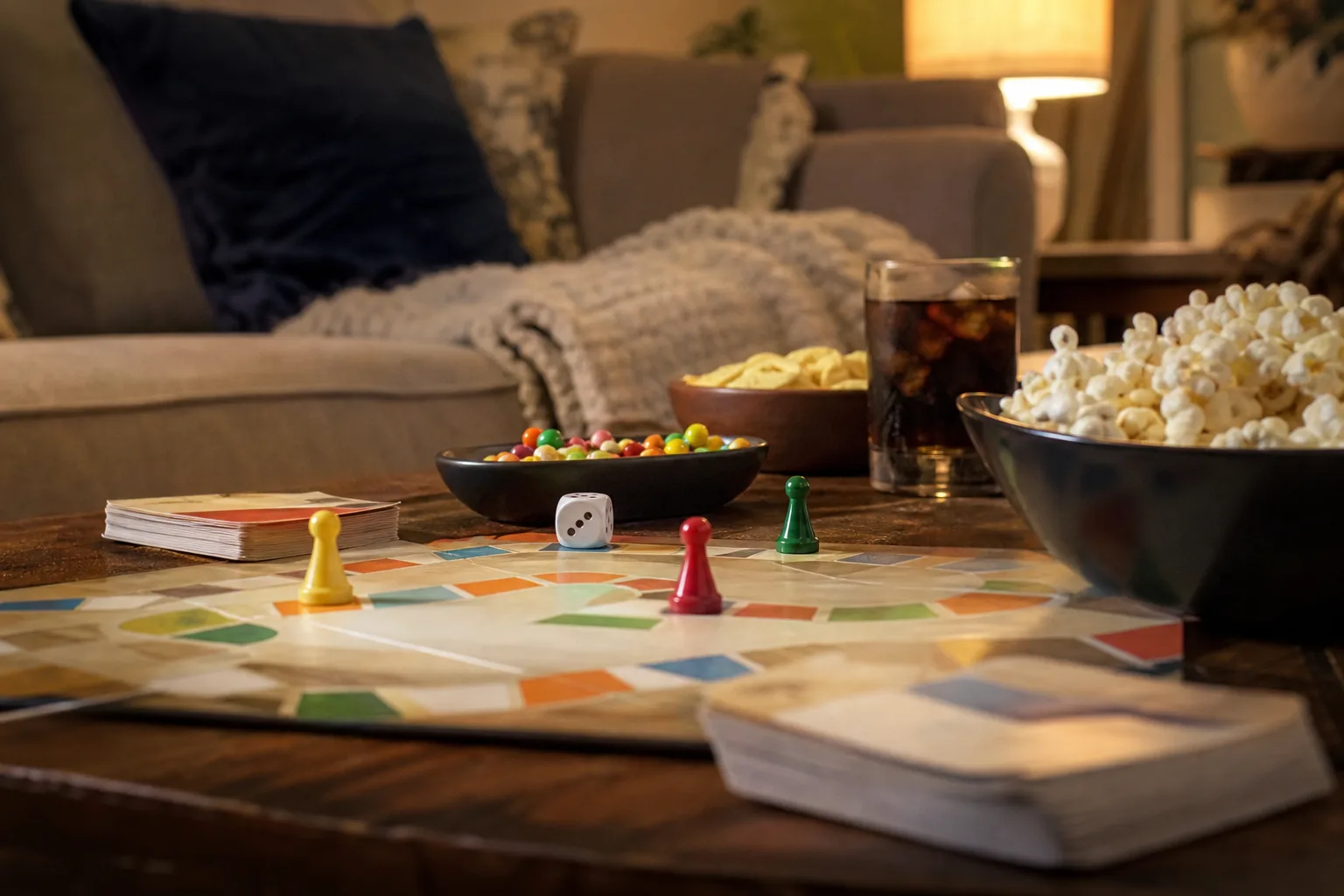
11 family game night guides covering kids, adults, couples, big groups, snacks and free printables s

72 kind truth or dare questions for kids, sorted into 6 rounds for sleepovers and birthdays. Safe, s
20 family game night ideas for large groups — team games, printable sheets & station games so nobo
Leave a Reply