

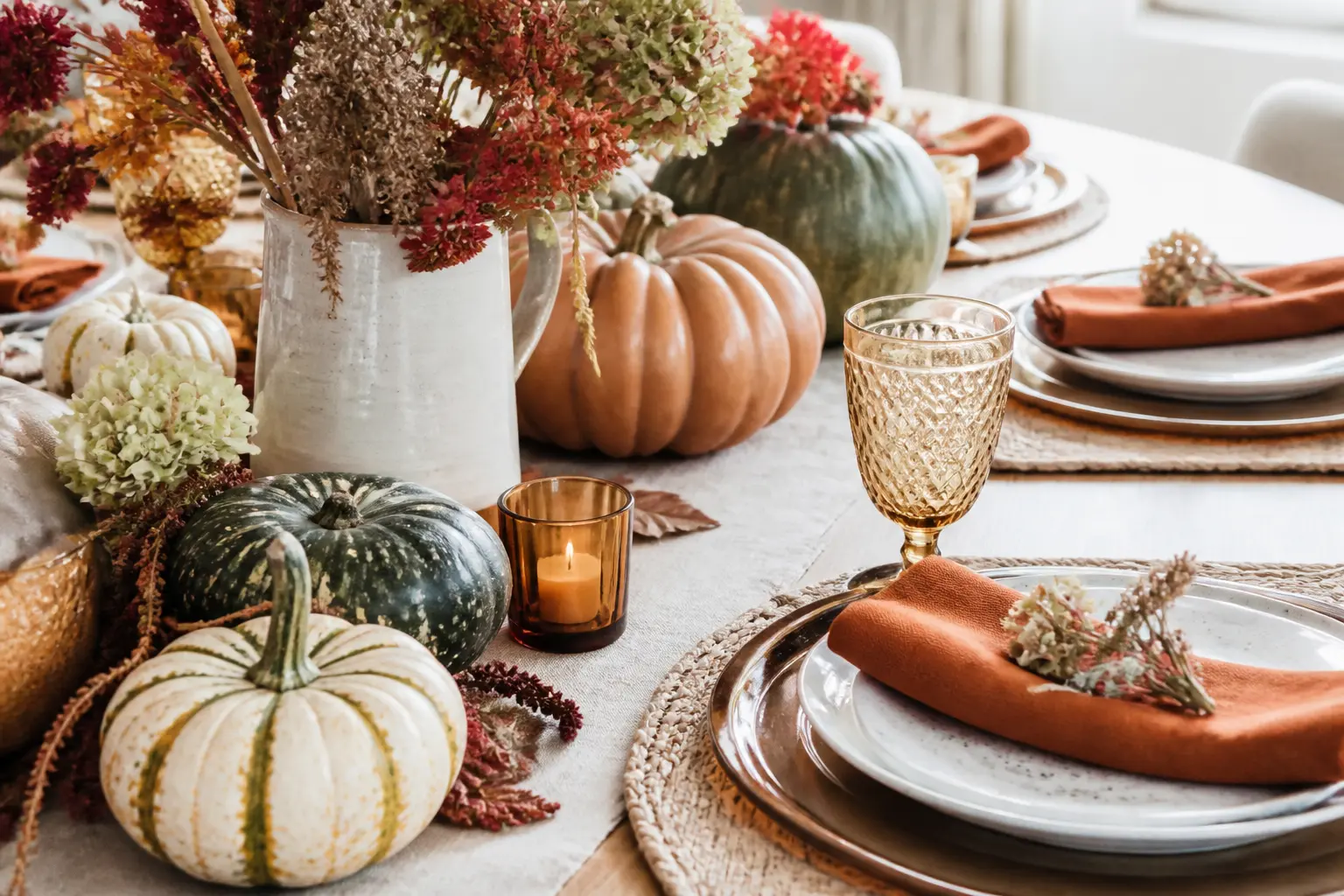
The best autumn table you have ever sat at probably had nothing tall on it. No towering floral arrangement forcing you to peer around it at the person across from you, no candelabra blocking the gravy boat. Just texture, warmth, and enough room for the food.
Every idea here stays below the seated eye line or moves off the table entirely. That one rule solves almost every complaint people have about decorated tables: they crowd the plates, they block conversation, they look fussy and slightly sad by dessert. None of that here.
These 31 ideas are grouped into sections so you can pick one category or layer from several. Most cost under twenty dollars, many cost nothing, and all of them work on a table where people actually eat. If you are also planning games once the plates clear, these Thanksgiving dinner games and these dinner party games are worth keeping open in another tab.
This post contains affiliate links. If you buy through them, I may earn a small commission at no extra cost to you.
The Runner Layer
The runner is the single decision that sets the tone for everything else. Get it right and the rest of the table practically decorates itself. The ideas in this section are all about what goes down first, before a single plate lands.
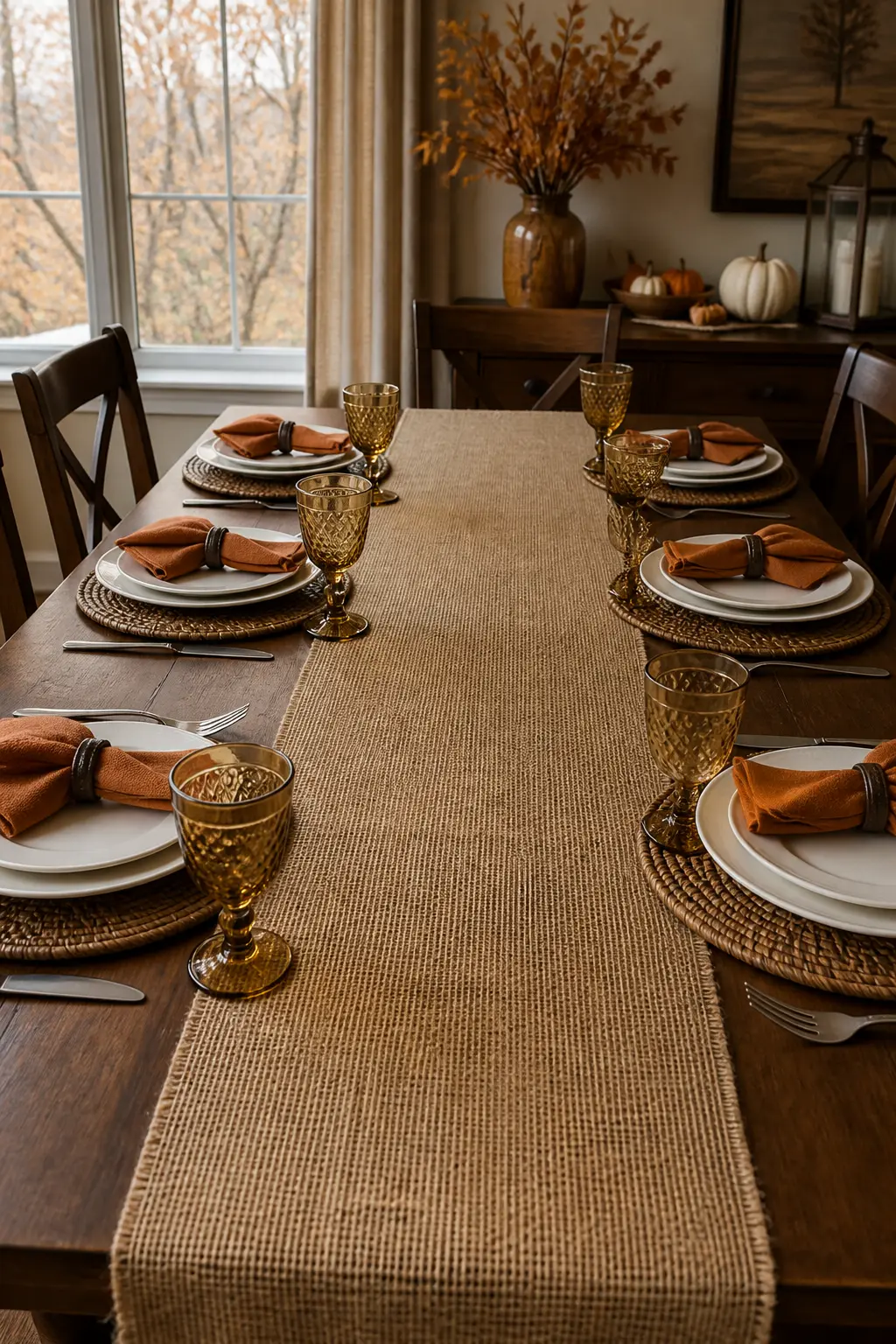
Burlap Runner, Nothing on Top
Lay a burlap runner straight down the center and stop there. The texture does the work. Rough weave against a wood or linen tablecloth reads as autumn without a single additional purchase.
Leave the top of the runner bare so plates, bowls, and serving dishes can land anywhere along it. Guests can reach past it, move things onto it, and the table still looks intentional at every stage of the meal.
🛍 Shopping guide
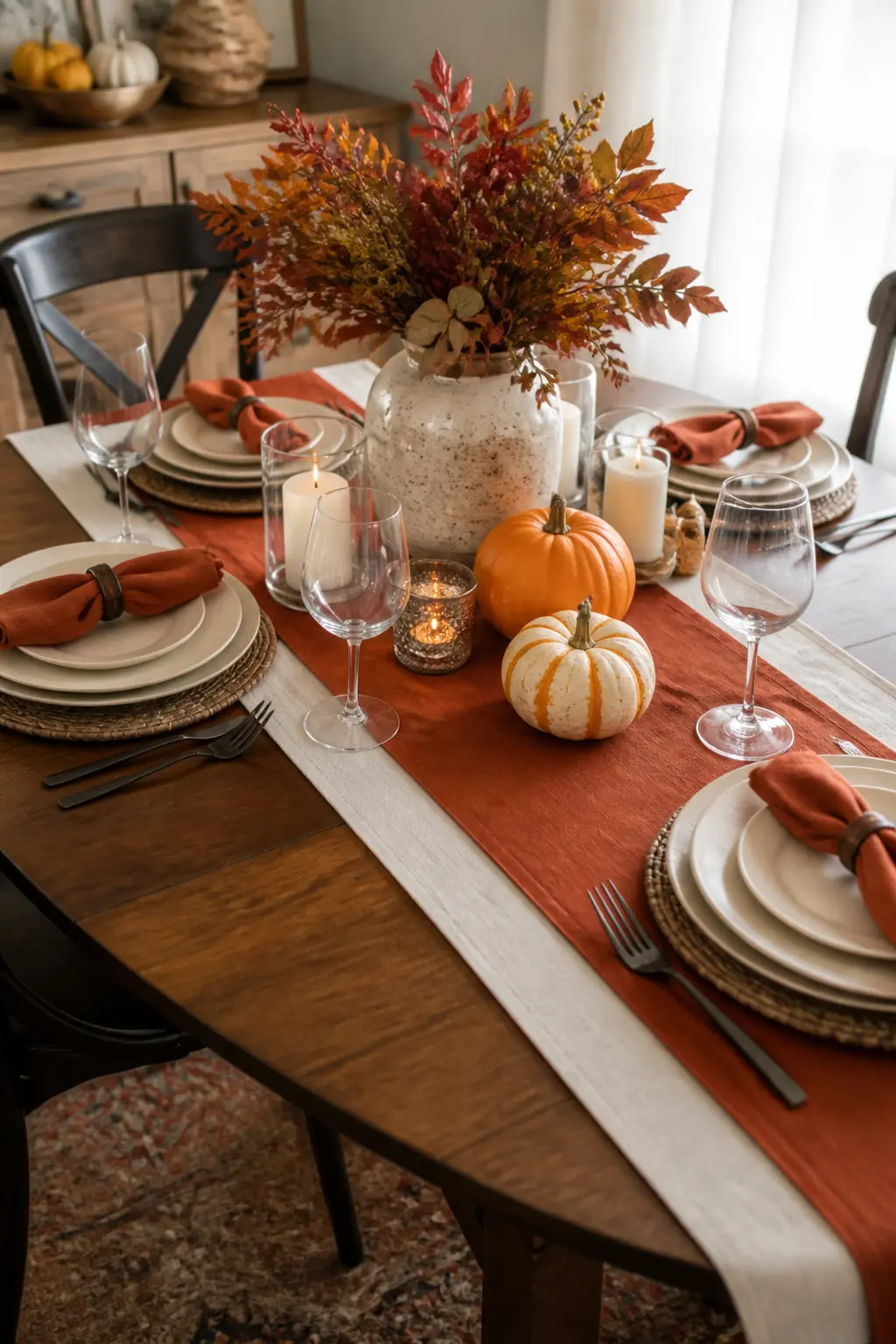
Cream Runner Layered Under a Narrower Rust One
A wide cream or linen runner goes down first. A narrower rust or burnt-orange runner lays on top of it, centered. The color peeking out at the edges gives depth without any additional objects.
This works especially well on a light-colored table where one runner alone would disappear. The layering creates a visual track that anchors the table, and both runners stay completely flat, so nothing crowds the place settings.
🛍 Shopping guide
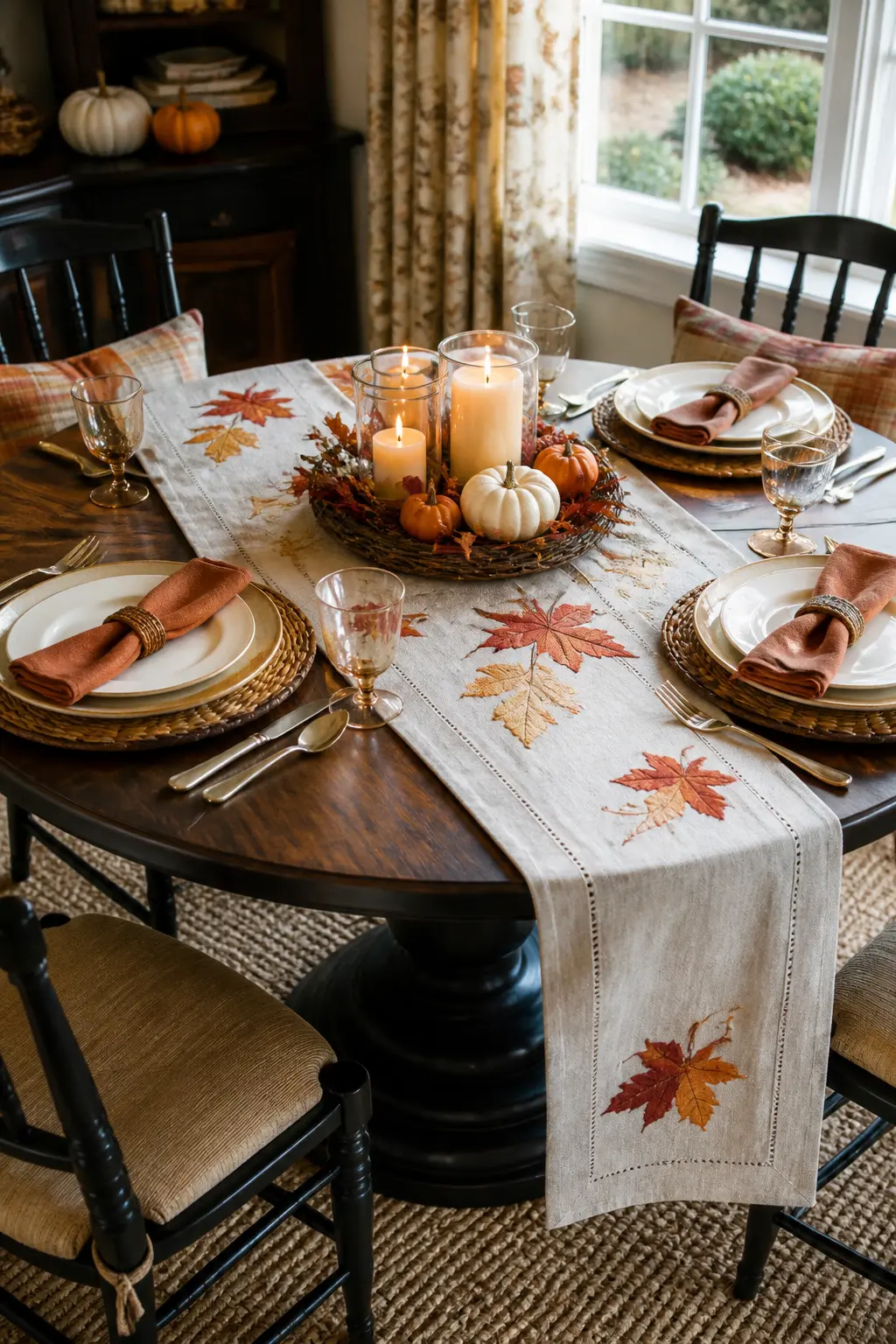
Table Runner Laid Diagonally Across a Round Table
Round tables resist runners because nothing fits without draping awkwardly off two edges. The fix: lay the runner on the diagonal so the ends fall at two adjacent place settings rather than across the table center.
The asymmetry looks deliberate and interesting. Place settings go around the rest of the circle as normal. The runner anchors one quadrant without blocking any sightline.
Candles and Light
Candlelight earns autumn more than any other single element. The rule here is strict: nothing taller than the bottom of a seated chin. Votives, low wooden holders, and scattered flames beat a single dramatic taper cluster every time at a real dinner.
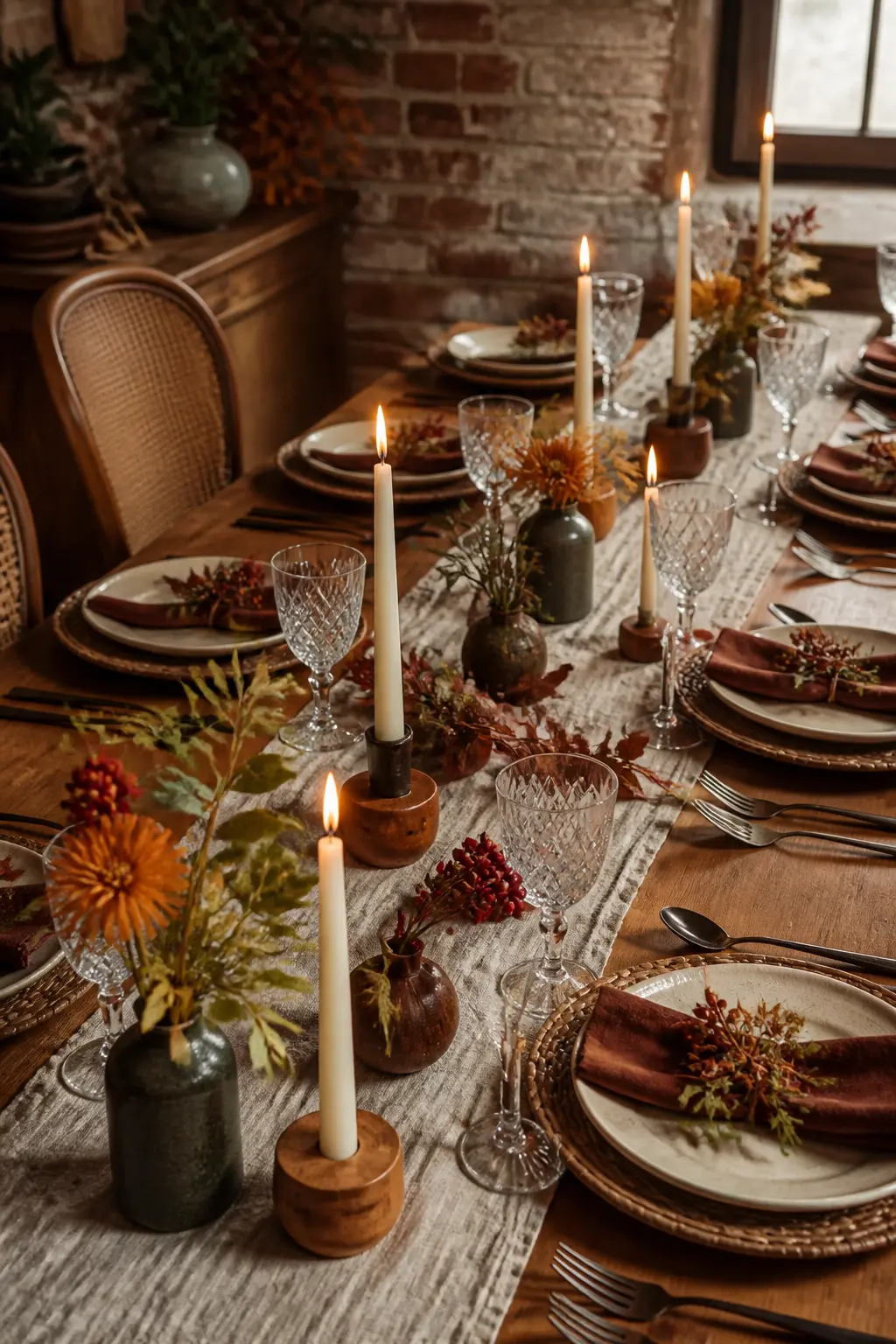
Taper Candles in Low Wooden Holders
Standard taper holders put flame at roughly forehead height when seated, which means everyone leans slightly sideways to make eye contact. Low wooden holders bring the flame to shoulder height at most. The candlelight still reaches across the table. Nobody cranes their neck.
Space two or three pairs of holders down the runner rather than clustering them. Even spacing looks like a decision rather than a surplus.
🛍 Shopping guide
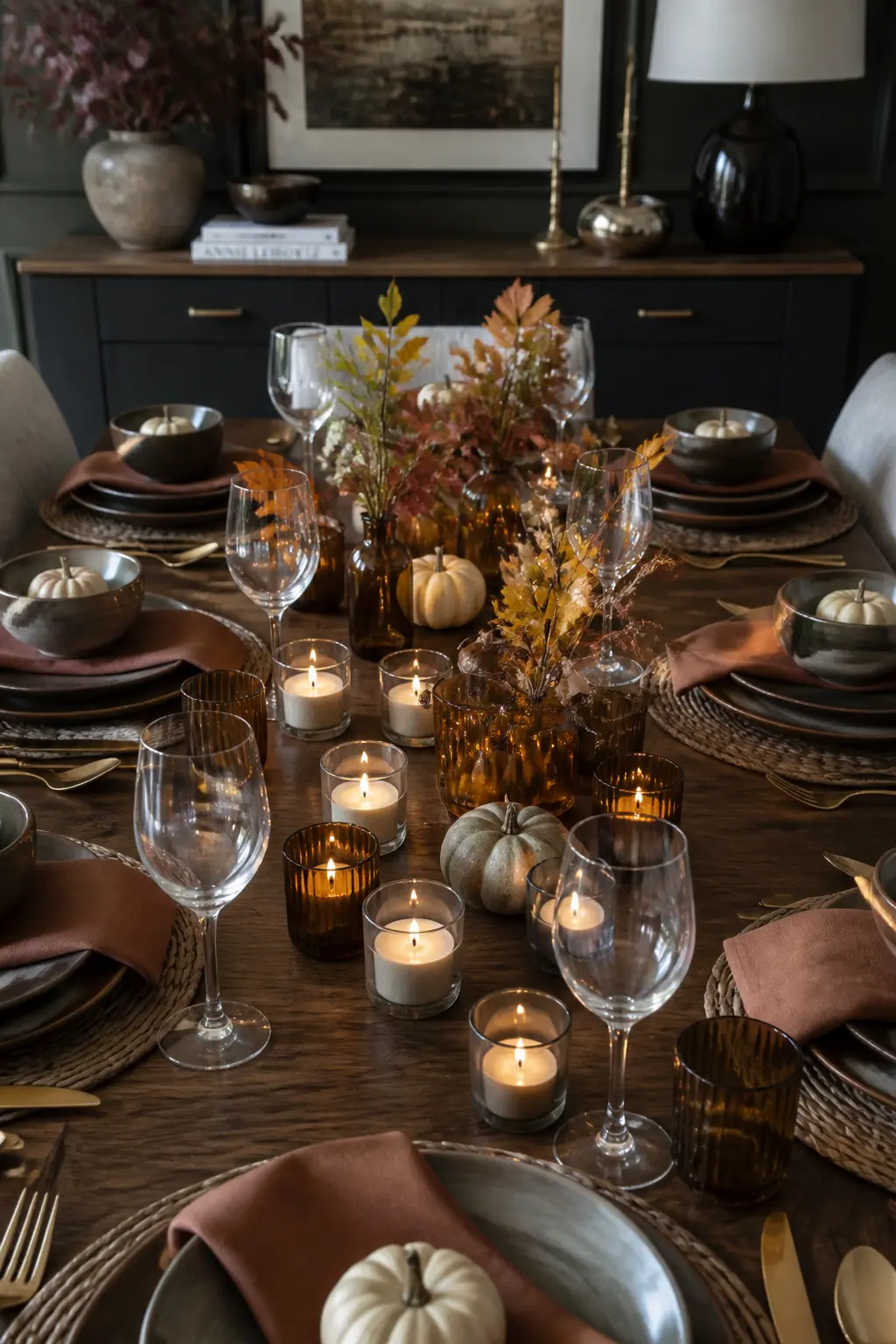
Votive Candles Scattered Rather Than Arranged
A single arrangement of votives looks like a centerpiece and immediately starts to crowd the table. Scattered votives look like light. Drop them in irregular clusters of two or three, leaving gaps, and the flame multiplies across the table without any single concentration of height or bulk.
Clear glass votives disappear into the table. Amber or smoky glass adds warmth without adding color. Either works. The point is the scatter, not the vessel.
🛍 Shopping guide
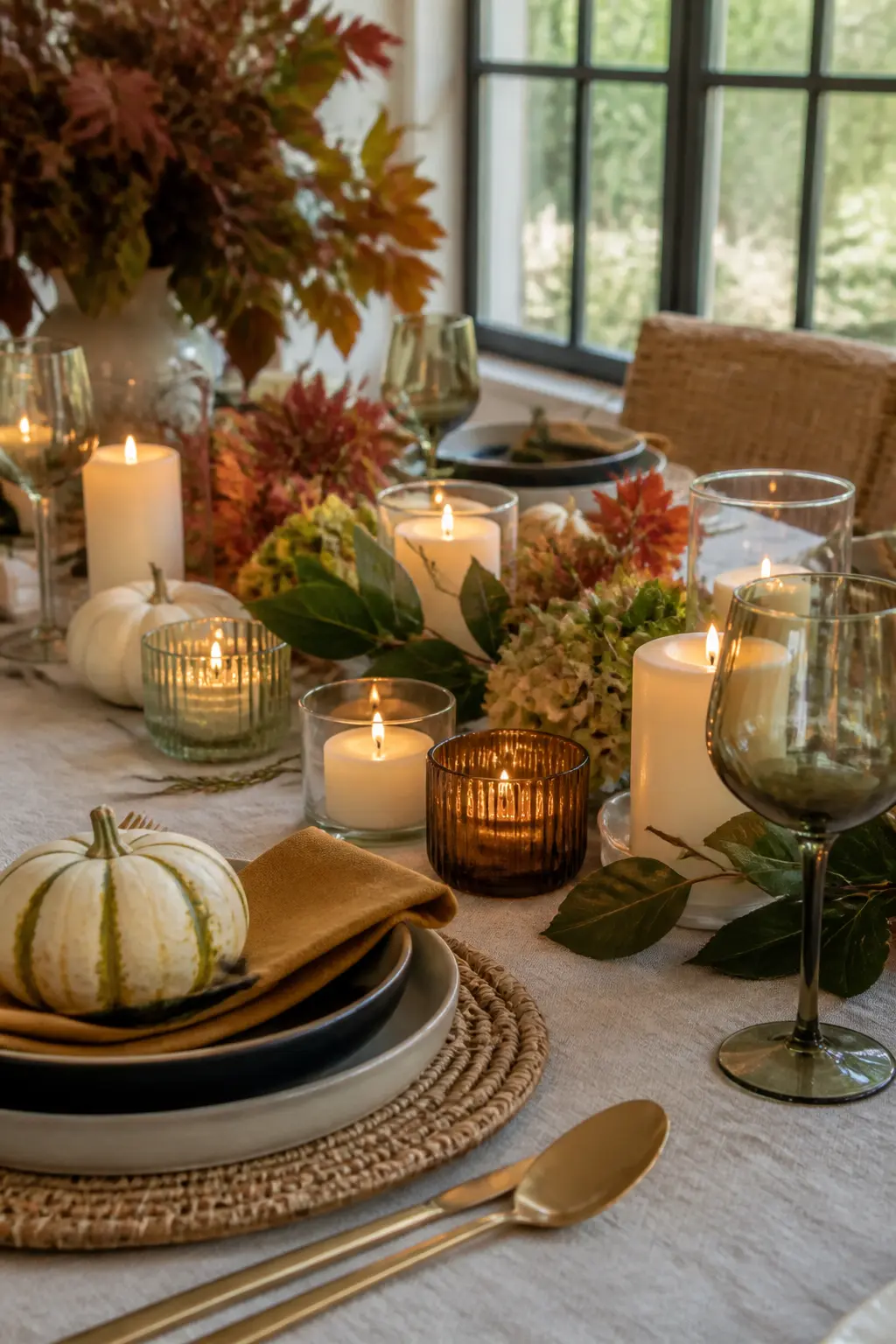
Candles Kept Below the Seated Eye Line at Every Point
This is the rule that holds all the candle ideas together. Before the meal, sit down in each chair and look straight across the table. Any flame sitting at or above your eye line blocks conversation. Move it, lower the holder, or swap it for a votive.
The test takes two minutes and it is the single thing that separates a table that photographs well from a table that works for an actual dinner.
Pumpkins and Produce
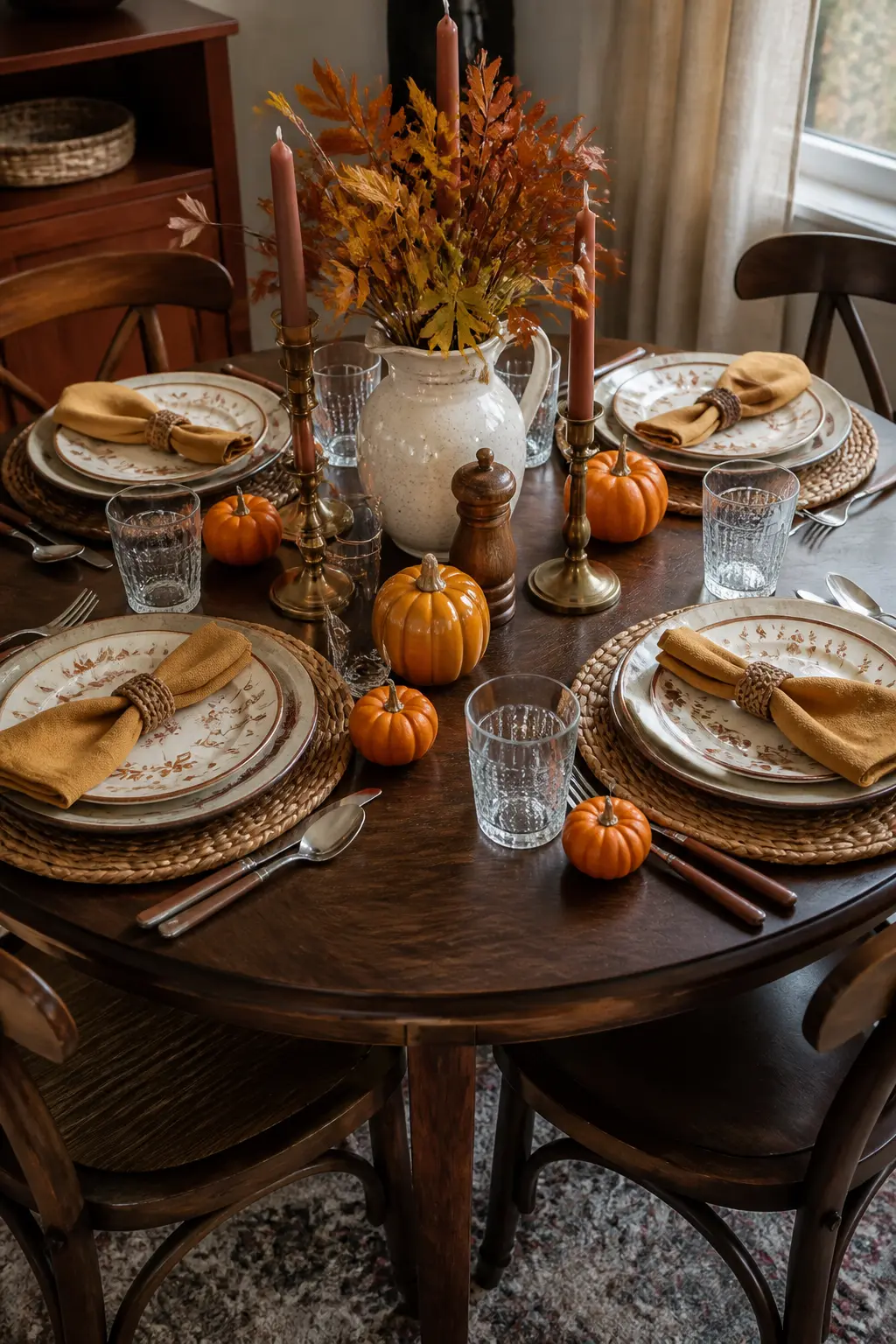
Pumpkins become a problem when they are grouped into a mound in the center and nobody can reach the salt. Small ones, spaced out or placed at each setting, solve that completely. Fruit works the same way: keep it low, keep it real, and it doubles as something to eat.
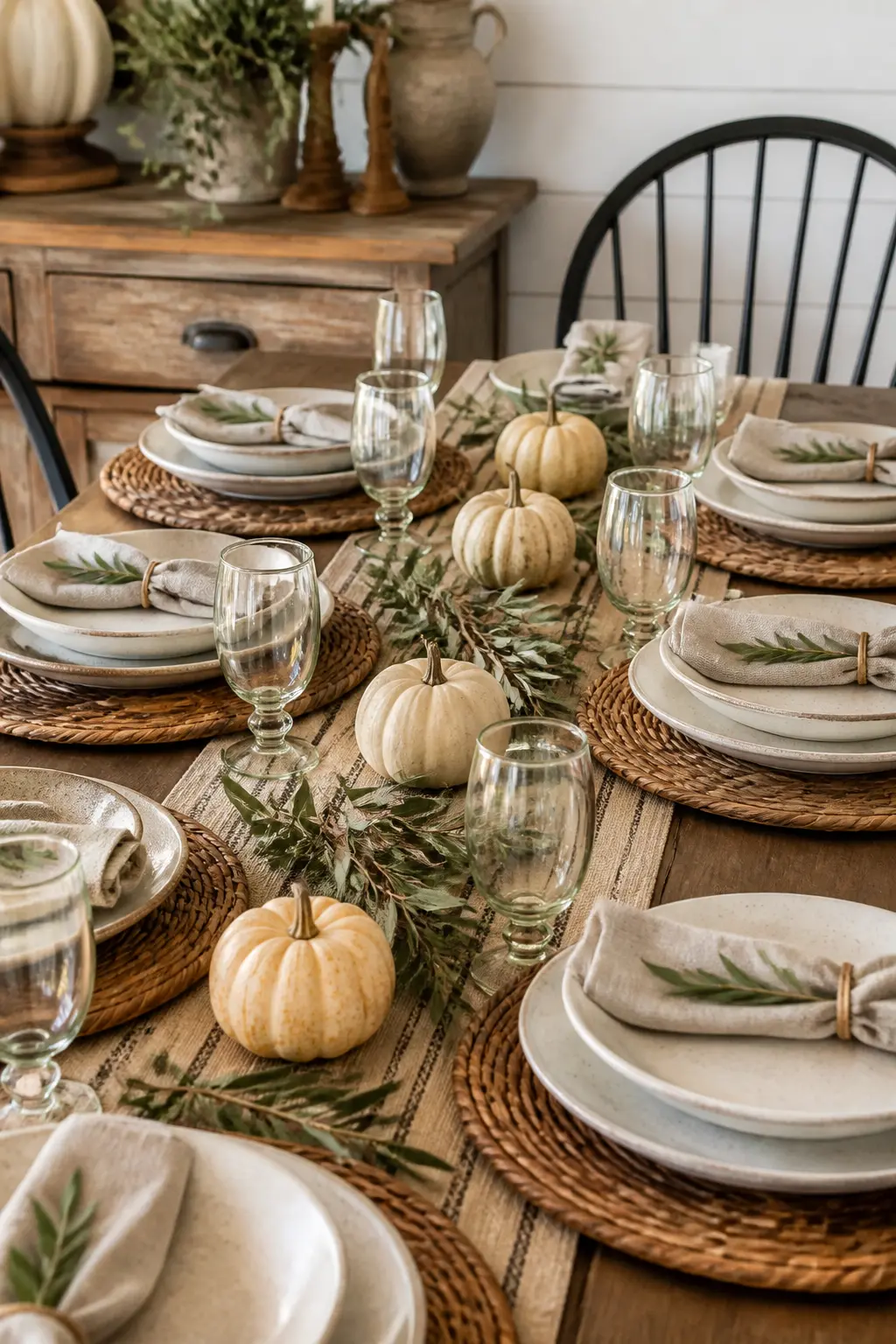
Small Pumpkins Spaced Between Place Settings
The problem with a pumpkin cluster centerpiece is that it lives in the middle of the table and nobody can reach across it. Small pumpkins placed between each pair of settings are lower, easier to move, and look as if someone put actual thought into the layout rather than just piling things in one spot.
Vary the sizes slightly: a three-inch pumpkin next to a two-inch one reads better than six identical ones in a row. White, cream, and pale green mix more easily with food colors than bright orange.
🛍 Shopping guide
Individual Mini Pumpkin at Each Setting
One small pumpkin per place setting is more generous-feeling than a shared cluster and it solves the reach problem completely. Each guest has their own, it sits just above plate level, and it does not interrupt the sightline across the table at all.
It works as a place card stand too: write the name on a small tag and tuck it under the stem. The pumpkin then does three jobs: decoration, place card, and take-home favor.
Low Bowl of Apples and Pears as the Centerpiece
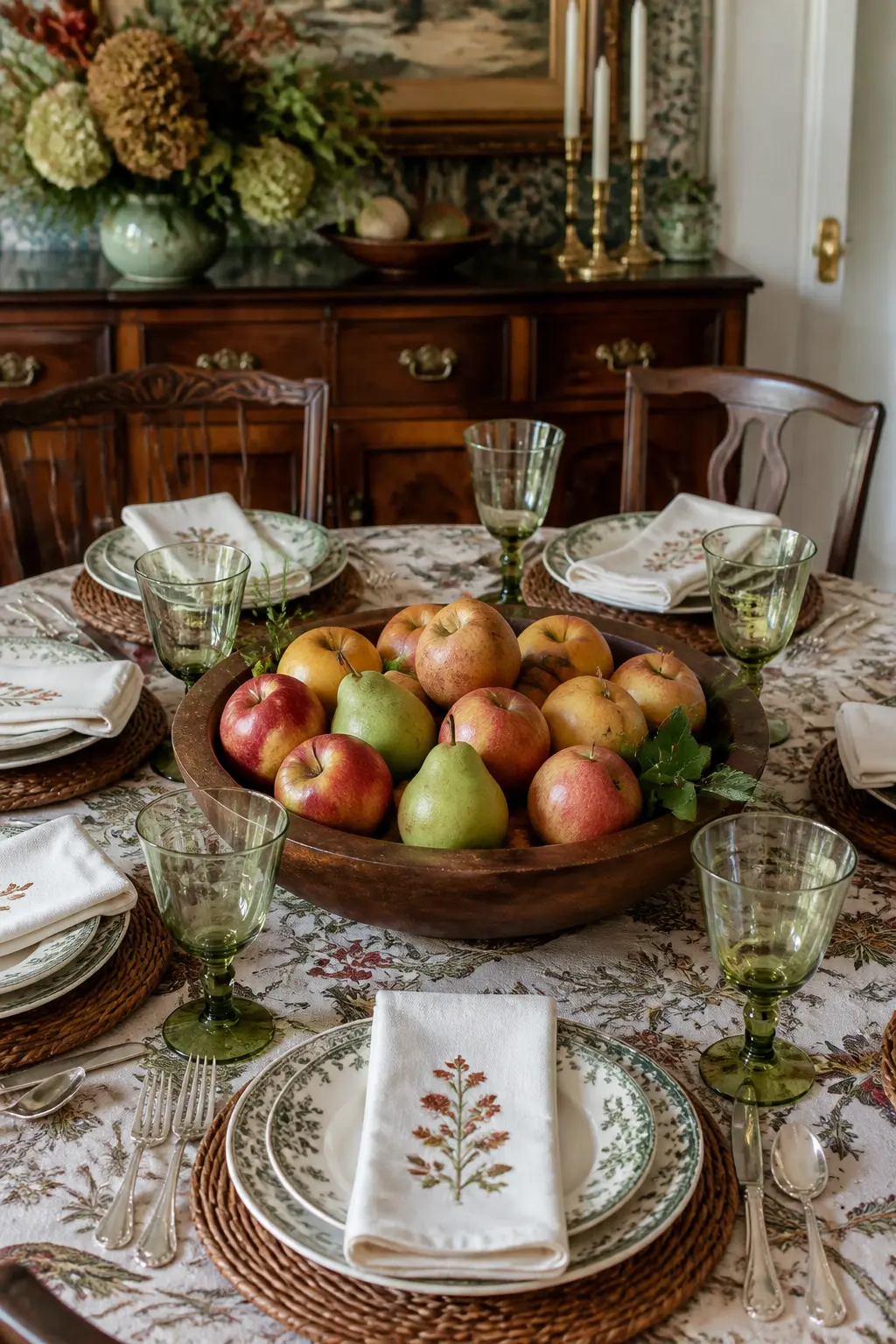
A shallow wooden or ceramic bowl filled with apples and pears keeps the centerpiece at fruit height, which is well below the eye line. It also looks abundant in the way a single floral arrangement never quite does, because the fruit is real and will be eaten.
Use fruit in two or three tones: green pears, red apples, a few pale yellow ones. No arrangement required. Just fill the bowl and let it sit.
🛍 Shopping guide
Shallow Dough Bowl Instead of a Tall Vase
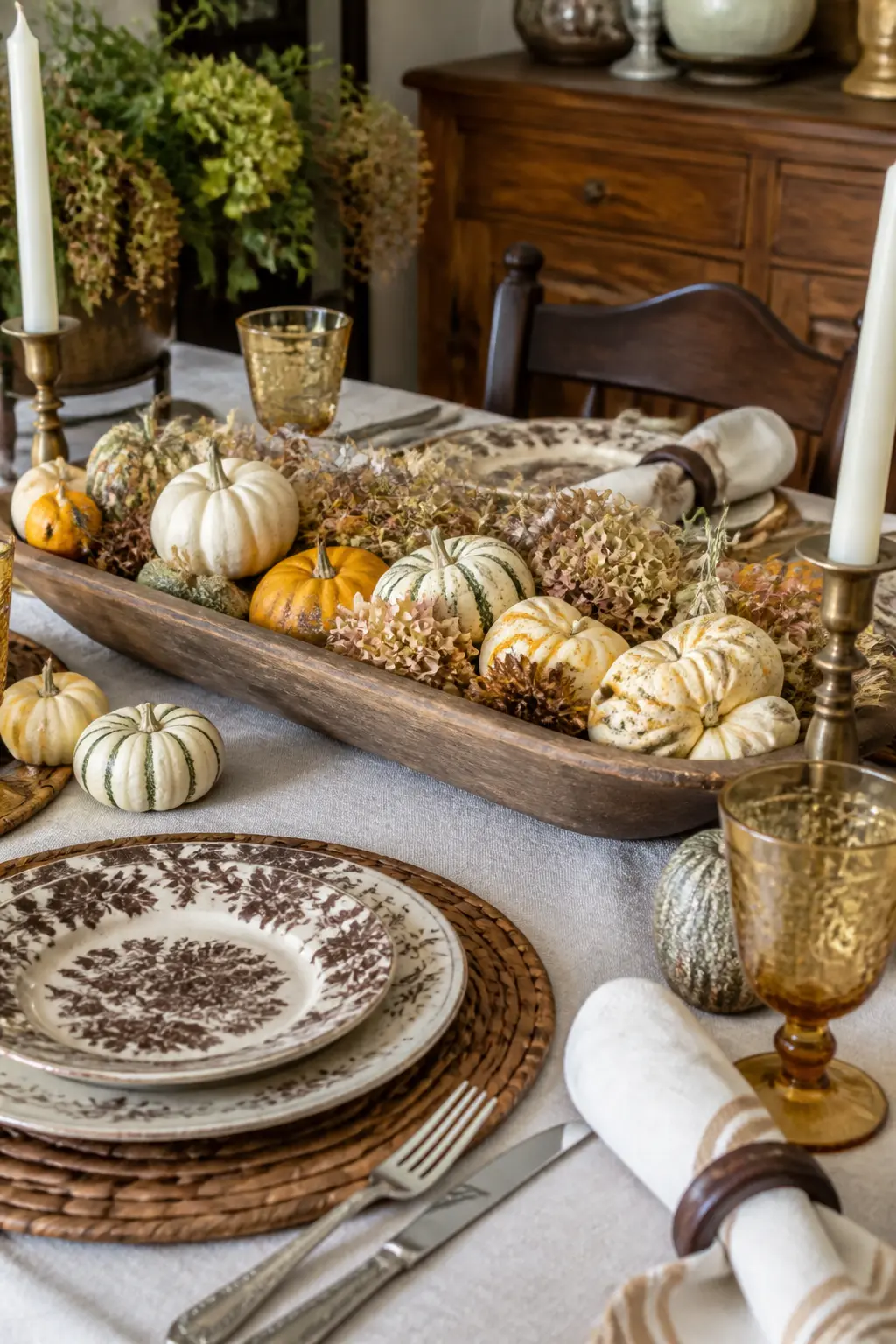
A vintage or reproduction dough bowl sits almost flat on the table. Fill it loosely with small pumpkins, a few walnuts, a couple of dried pods, and a sprig of something that smells good. It reads as a centerpiece without the height of a vase.
The bowl itself is the object. Everything inside it is incidental and moveable, so when dishes need to land in the center of the table, the bowl shifts to one end without the display collapsing.
🛍 Shopping guide
Napkins and Place Settings
The napkin is the most underused surface on the table. A sprig, a stem, a slice of wood, or a length of twine turns a folded square into a small still life. None of it adds height. All of it adds intention.
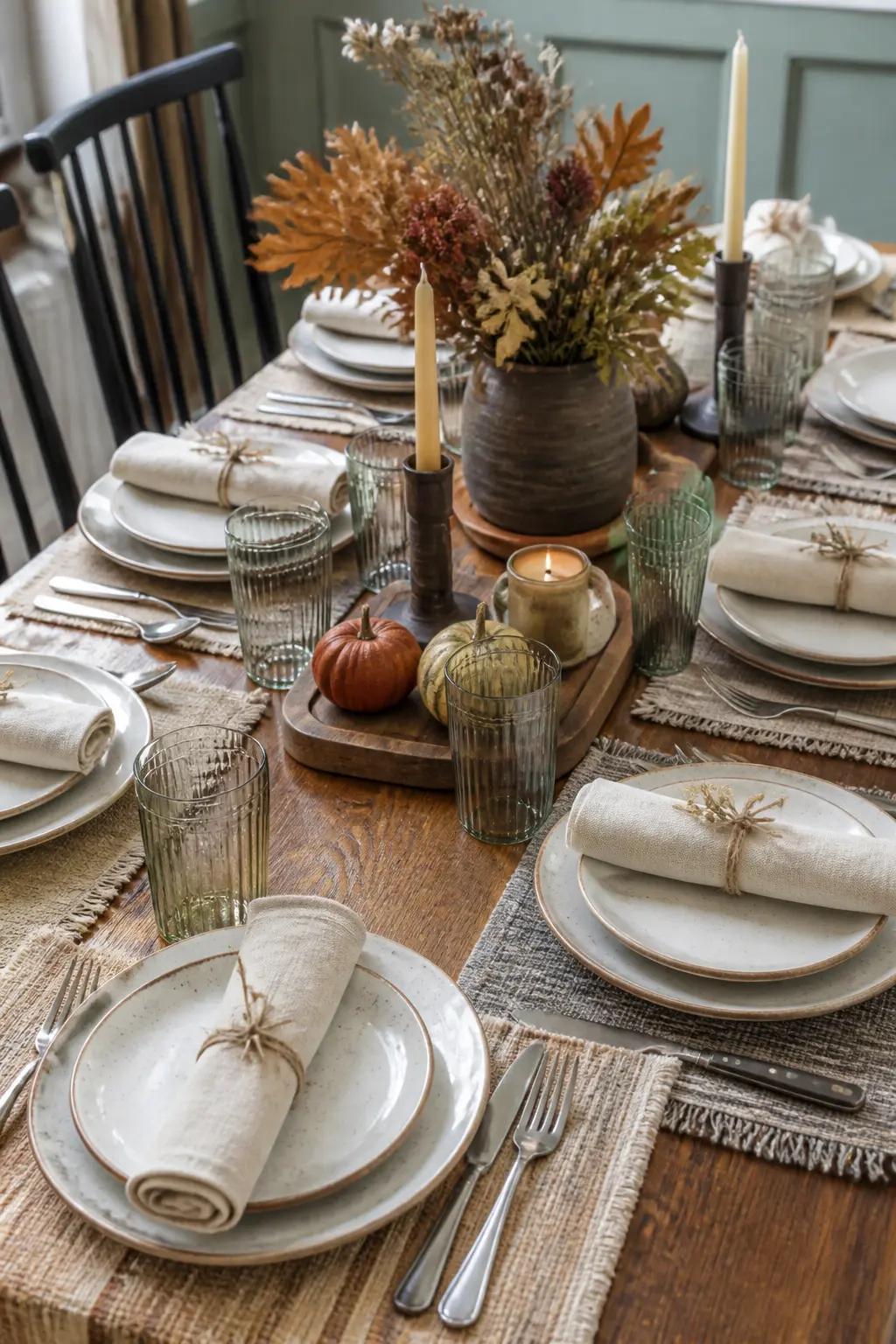
Cloth Napkins Tied with Twine and a Dried Sprig
Roll or fold the napkin into a loose bundle, wrap once with natural jute twine, tuck a small dried sprig of lavender, thyme, or bay under the knot, and set it on the plate. The whole thing is flat. It adds color, scent, and texture without using any vertical space.
The sprig can go home with the guest or, if it is something like thyme, it can flavor the meal. Either outcome is better than ending up in the bin.
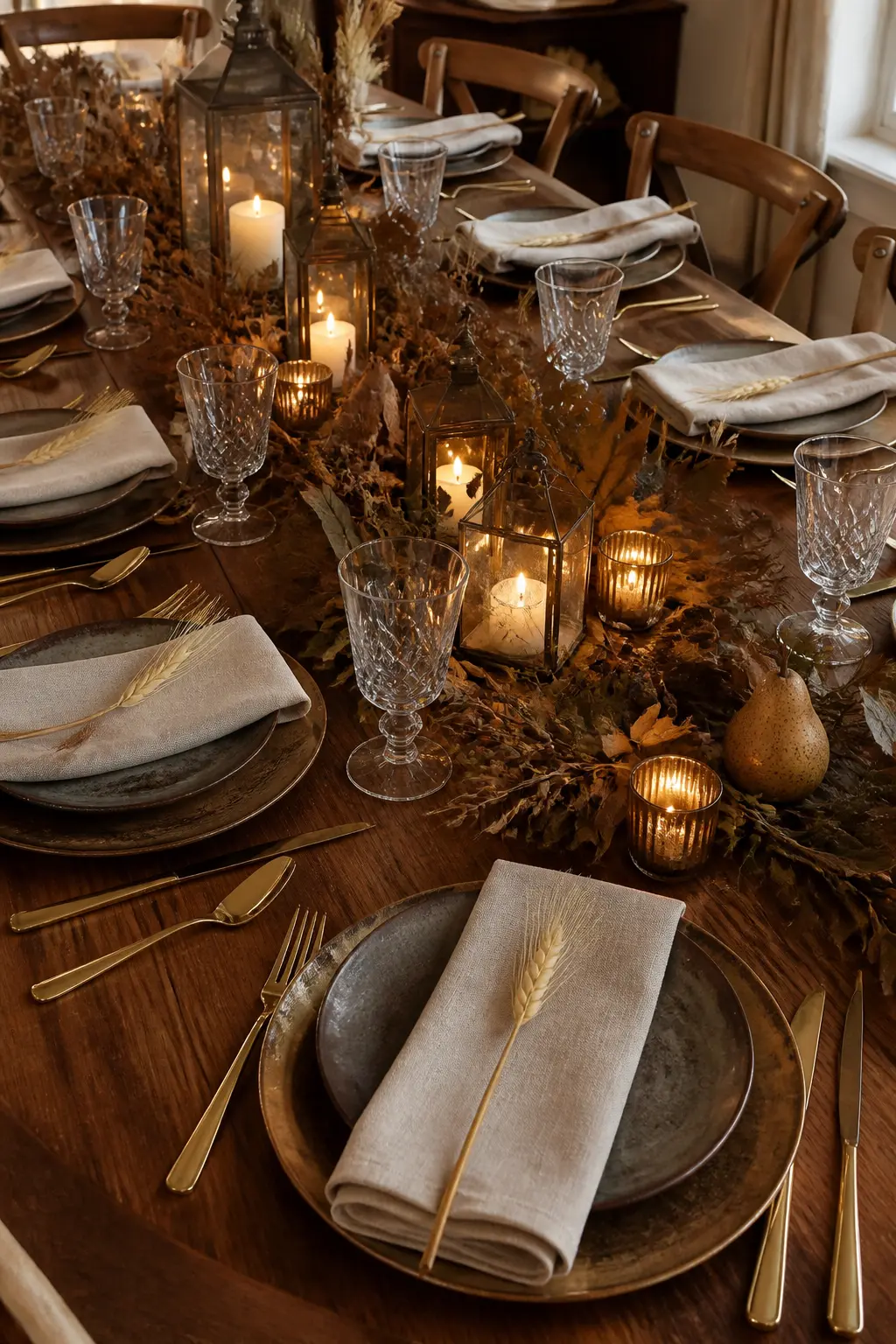
Barley Stems Laid Across Each Folded Napkin
A single dried barley stem or wheat stem laid across a folded napkin adds an instantly autumnal detail at zero height. The stem is flat, it costs almost nothing if you buy dried grains from a craft shop or florist, and it looks as if you spent time on it even if you did not.
Pair it with a napkin in a warm tone: oatmeal, stone, or a deep wine. The stem reads better against a plain color than against a print.
🛍 Shopping guide
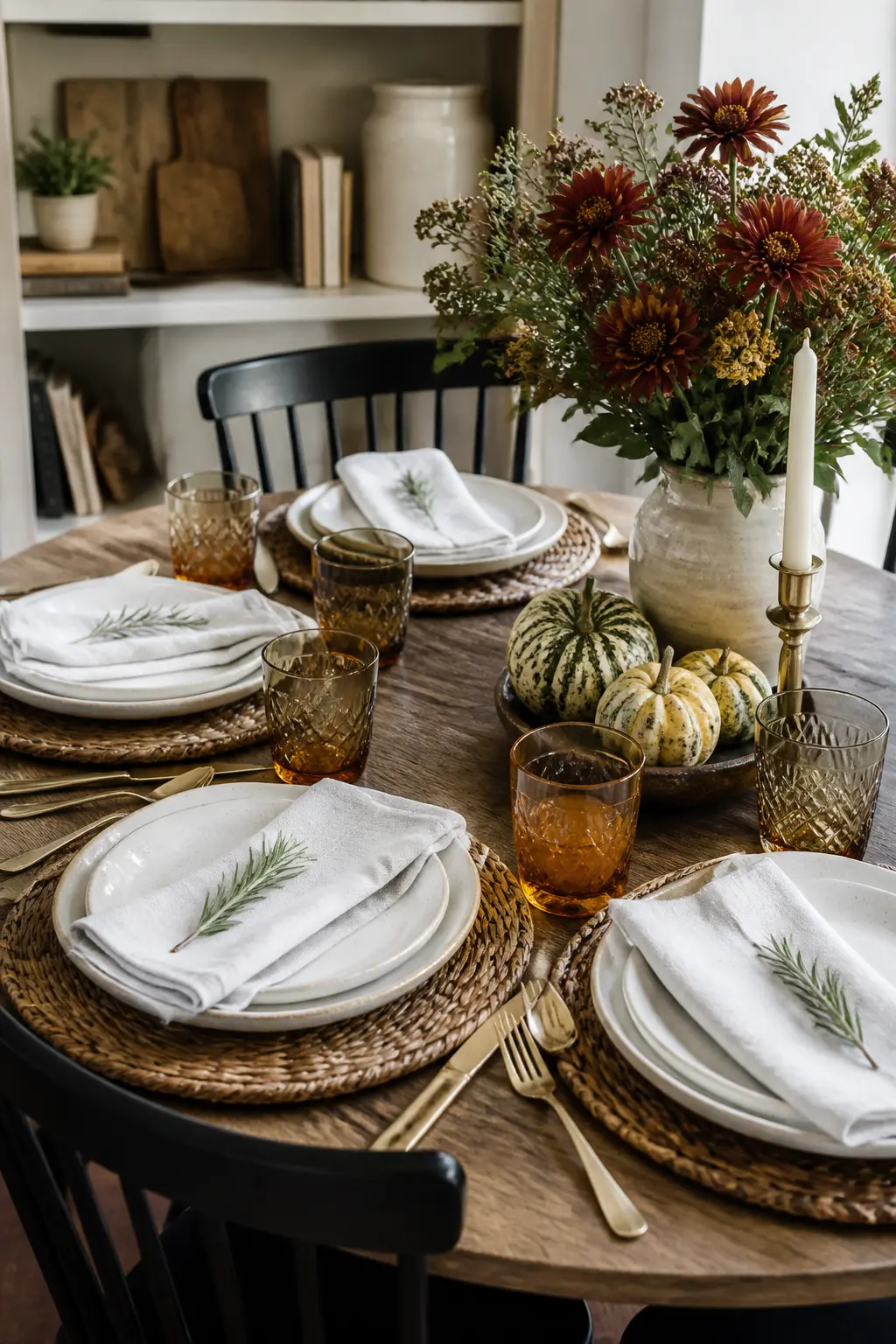
Single Sprig of Rosemary Tucked Into Each Napkin Fold
Fresh rosemary smells remarkable when guests unfold their napkins. Tuck a two-inch sprig into the fold of each napkin so the tip pokes out slightly. The herb is firmly attached, does not roll around, and releases its scent when touched.
It costs almost nothing from the produce section, it is gone by the time the meal is over, and it makes the table smell like something is already cooking.
🛍 Shopping guide
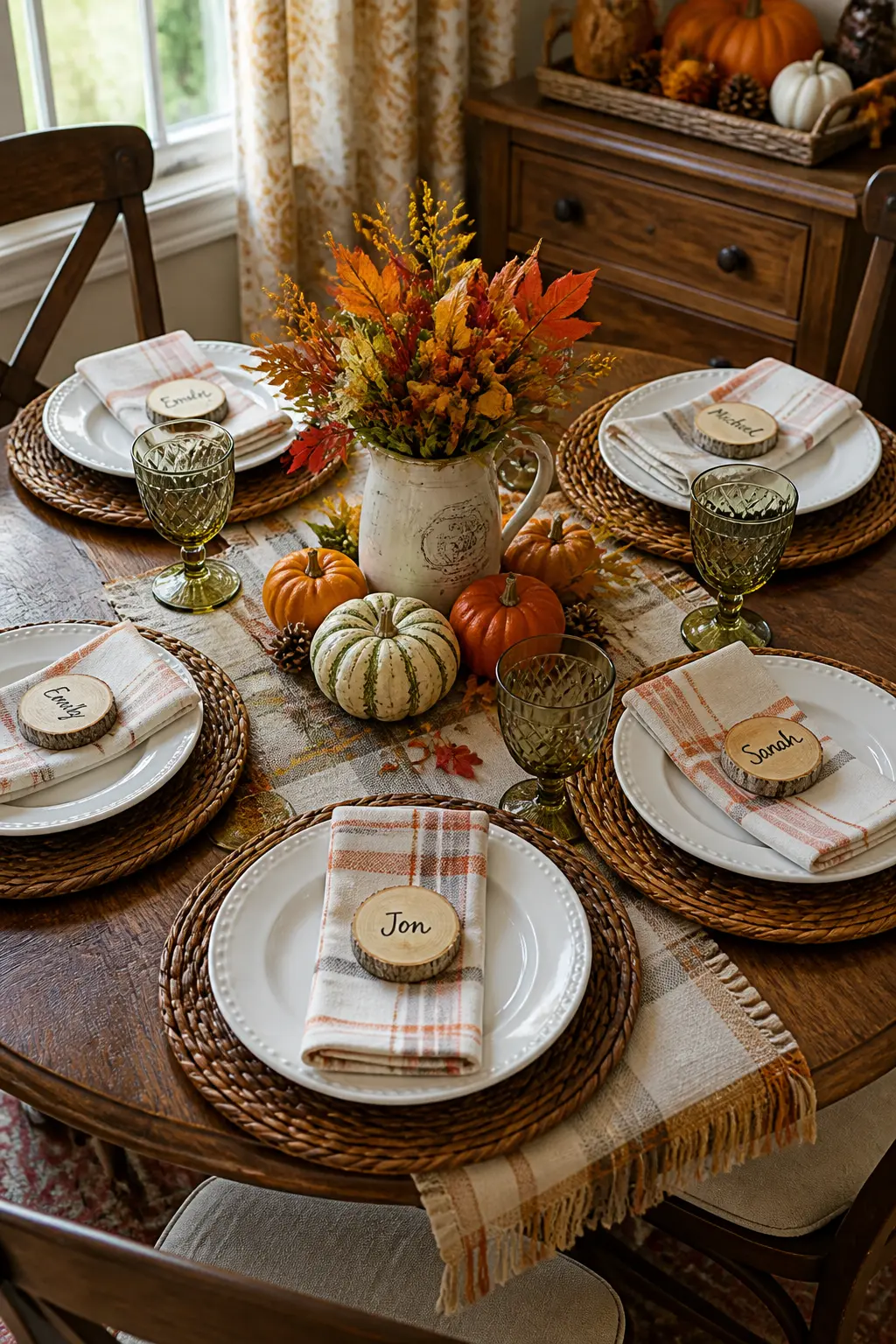
Place Cards on Small Wooden Slices
A two-inch slice of birch or pine with a name written in ink sits flat on the table and reads immediately as autumnal without being a craft project. The wood grain does the decoration. Your handwriting does the rest.
Stack them before the meal so guests pick up their own when they find their seat. After dinner they keep the slice, which means no cleanup and a small souvenir.
🛍 Shopping guide
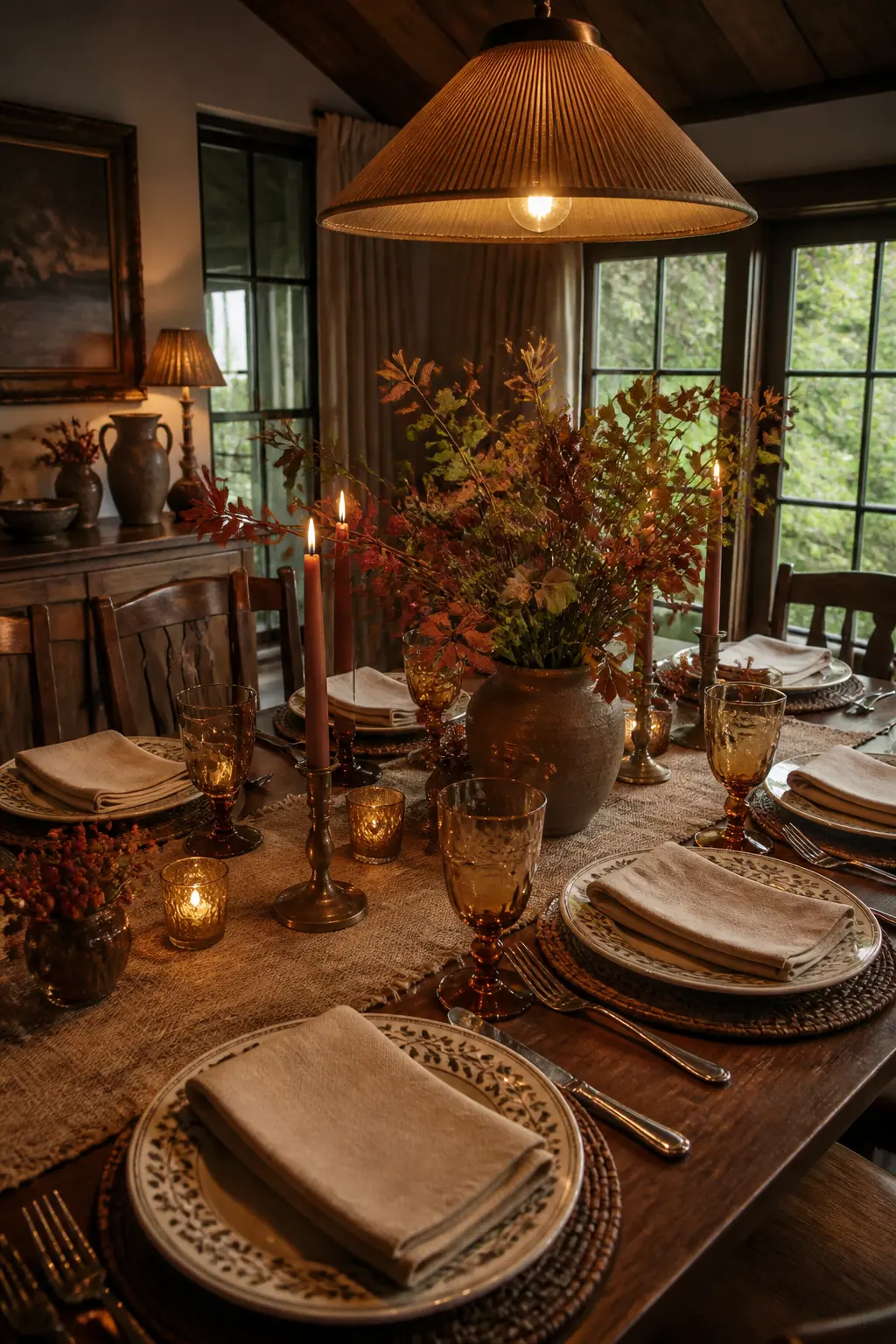
Cotton Napkins in a Warm Neutral, Folded Flat
A napkin folded into a plain rectangle and laid flat on the plate is underrated. No origami, no ring, no ribbon. The texture of a good cotton or linen napkin does enough work when the color is right.
Oatmeal, warm white, and stone all work. Avoid bright white, which reads clinical in autumn light. The flat fold also means anything laid across the top of it, a stem, a sprig, a wood slice, sits cleanly rather than wobbling on a folded peak.
🛍 Shopping guide
Deep Wine Napkins Rather Than Rust
Rust is the obvious autumn napkin color. Wine or burgundy is the better one. It reads richer, it photographs more quietly, and it does not compete with the food the way a bright orange-red tends to.
Pair wine napkins with cream or stone plates and natural-toned runners. The combination feels like autumn without announcing it loudly.
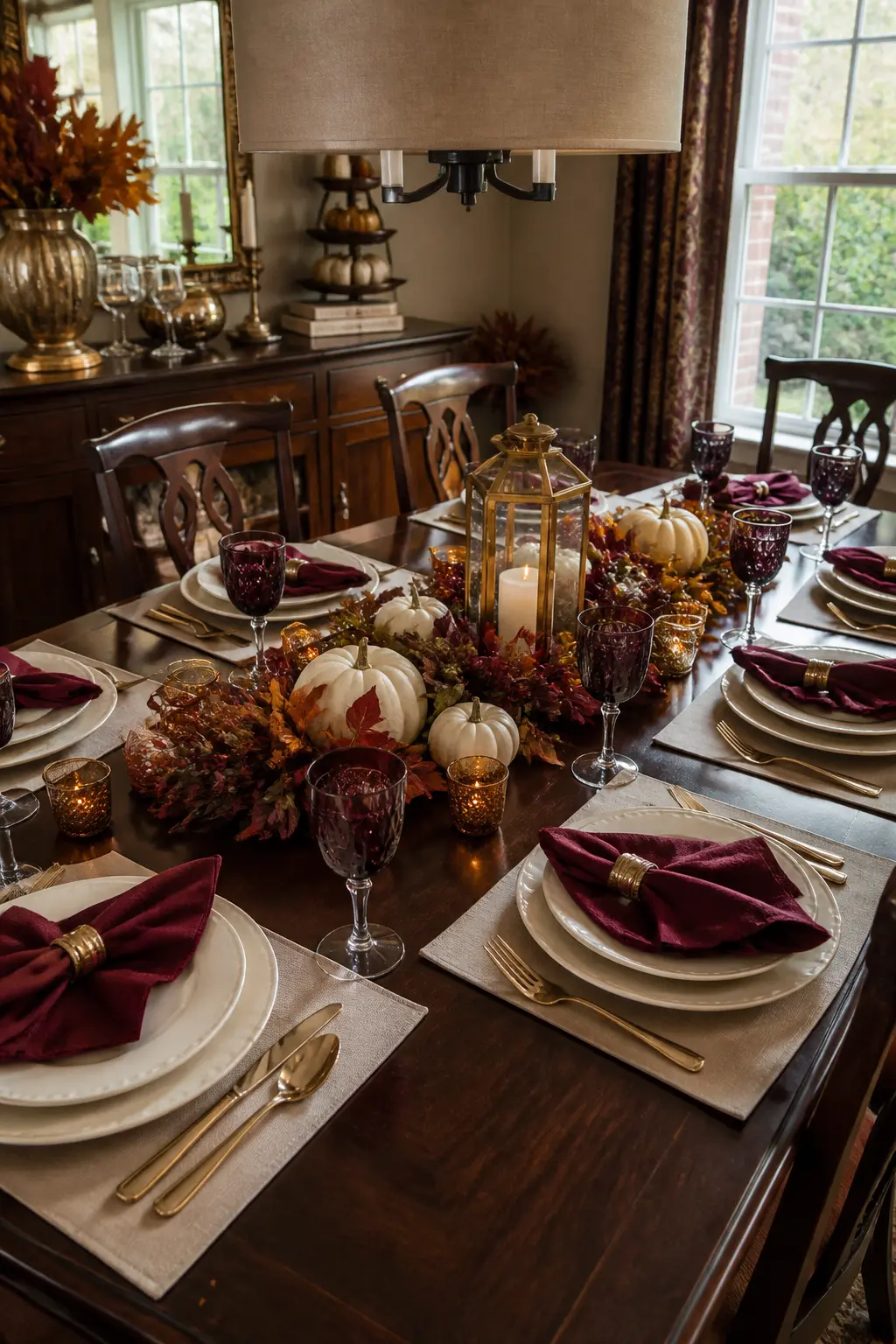
🛍 Shopping guide
Cutlery Laid on the Napkin Rather Than Beside It
Lay the fork, knife, and spoon directly on top of the napkin, centered and stacked, rather than flanking the plate in the traditional arrangement. It frees up the narrow strip of table between the plate and the chair, which means the place setting takes up less visual real estate.
This works especially well at a crowded table or on a smaller dining surface. The napkin and cutlery become one unit, which guests simply pick up and unfold.
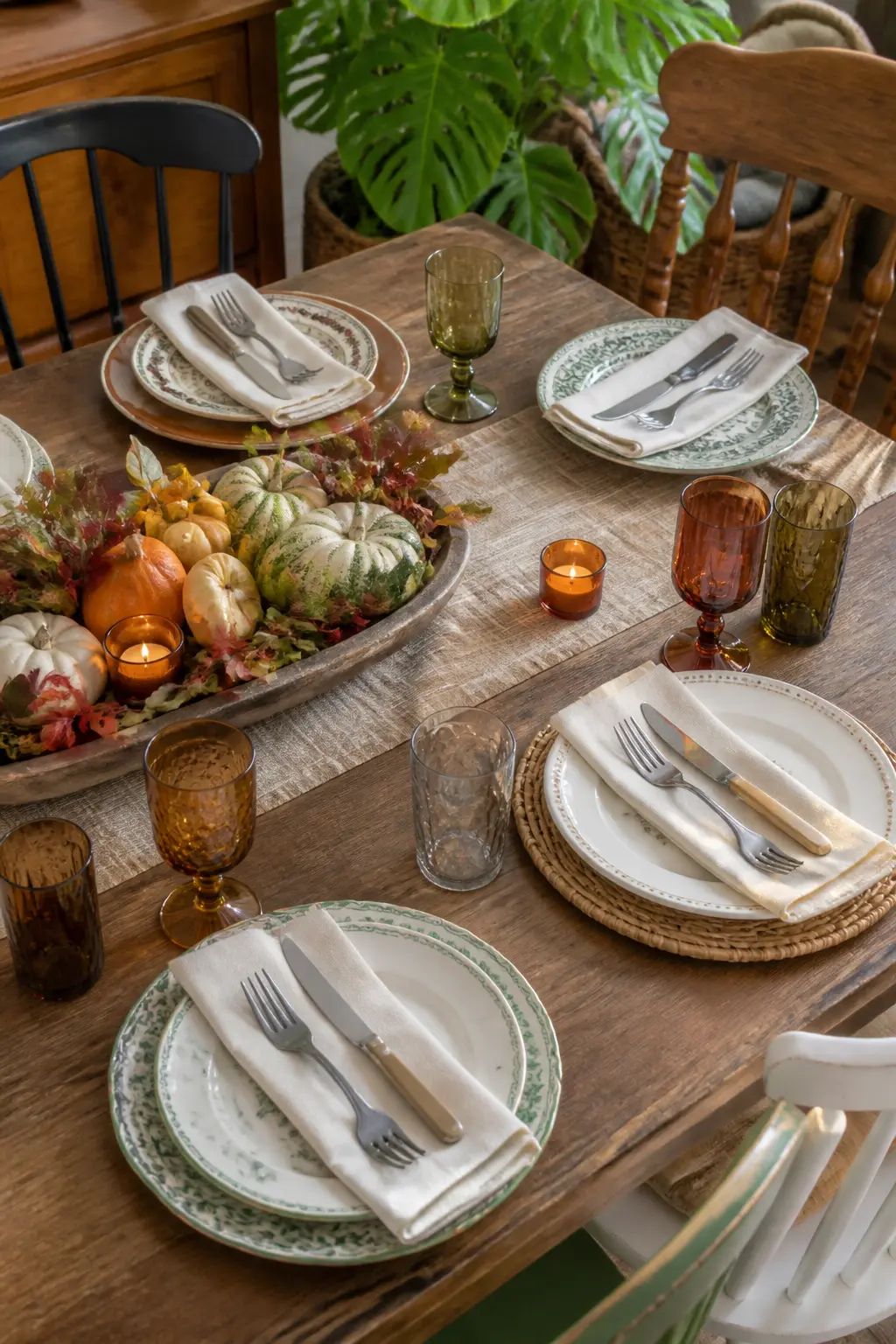
🛍 Shopping guide
Glassware and Flatware Swaps
Swapping one category of tableware shifts the whole palette without touching the layout at all. Amber glass catches the candlelight differently than clear. Brass flatware reads immediately as autumnal. These are the fastest moves on the list.
Wooden Charger Plates Under the Everyday Dishes
A wooden or rattan charger under an ordinary white or cream dinner plate is one of the fastest upgrades on the list. It adds warmth and texture without changing anything about the meal itself. The charger stays flat. The plate sits on it exactly as it would on the table.
It also protects the table, which is a practical bonus. After the meal the chargers stack and store flat. They take up almost no space and last for years.
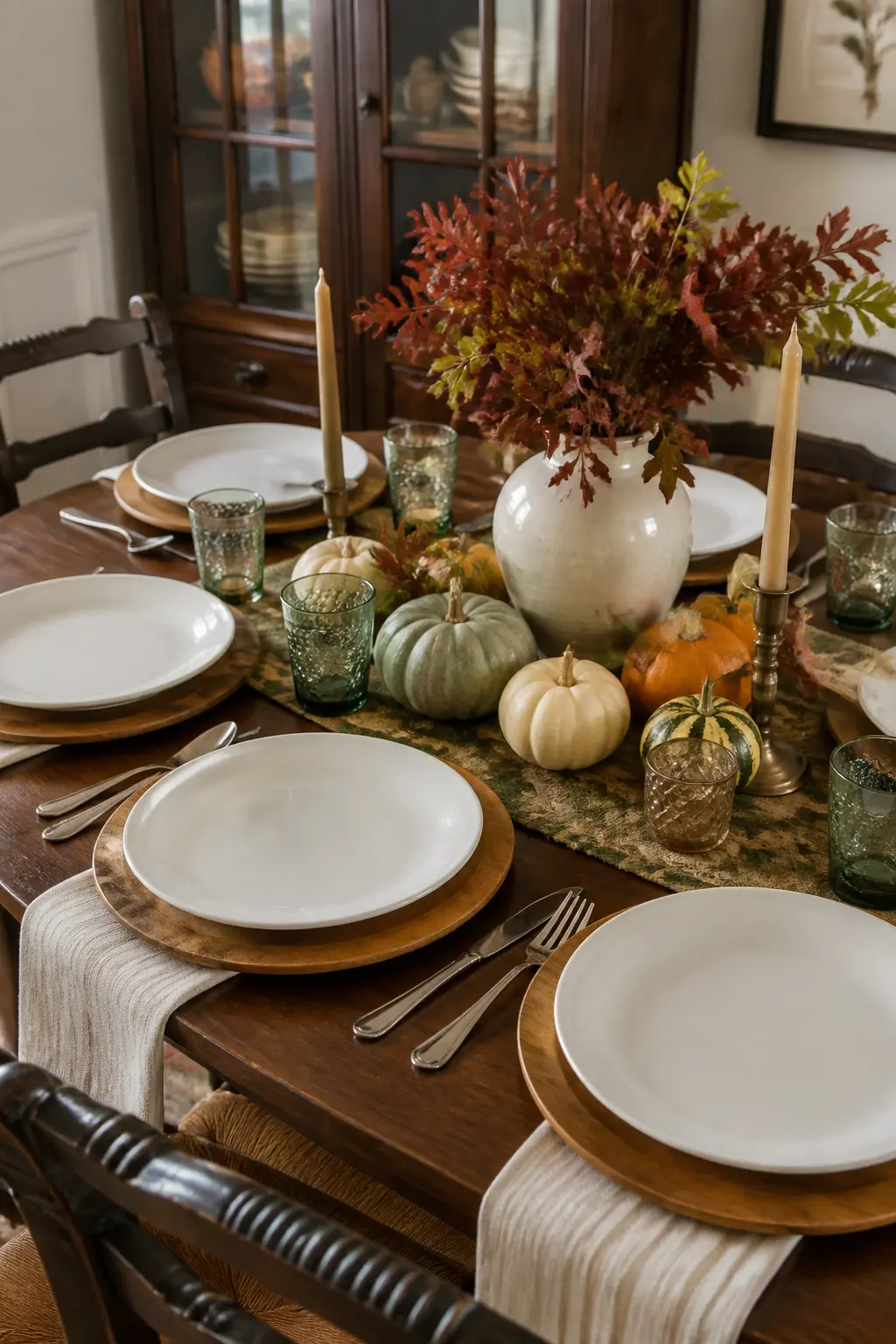
🛍 Shopping guide
Chargers Repeated but Plates Varied for Texture
Keep the same charger at every setting for visual continuity, then vary the dinner plates on top. A matte stoneware plate next to a slightly glazed one reads as an intentional collected look rather than a mismatch.
This works well when you are combining two sets, or borrowing from a friend. The repeated charger holds the table together visually. The varied plates give it life.
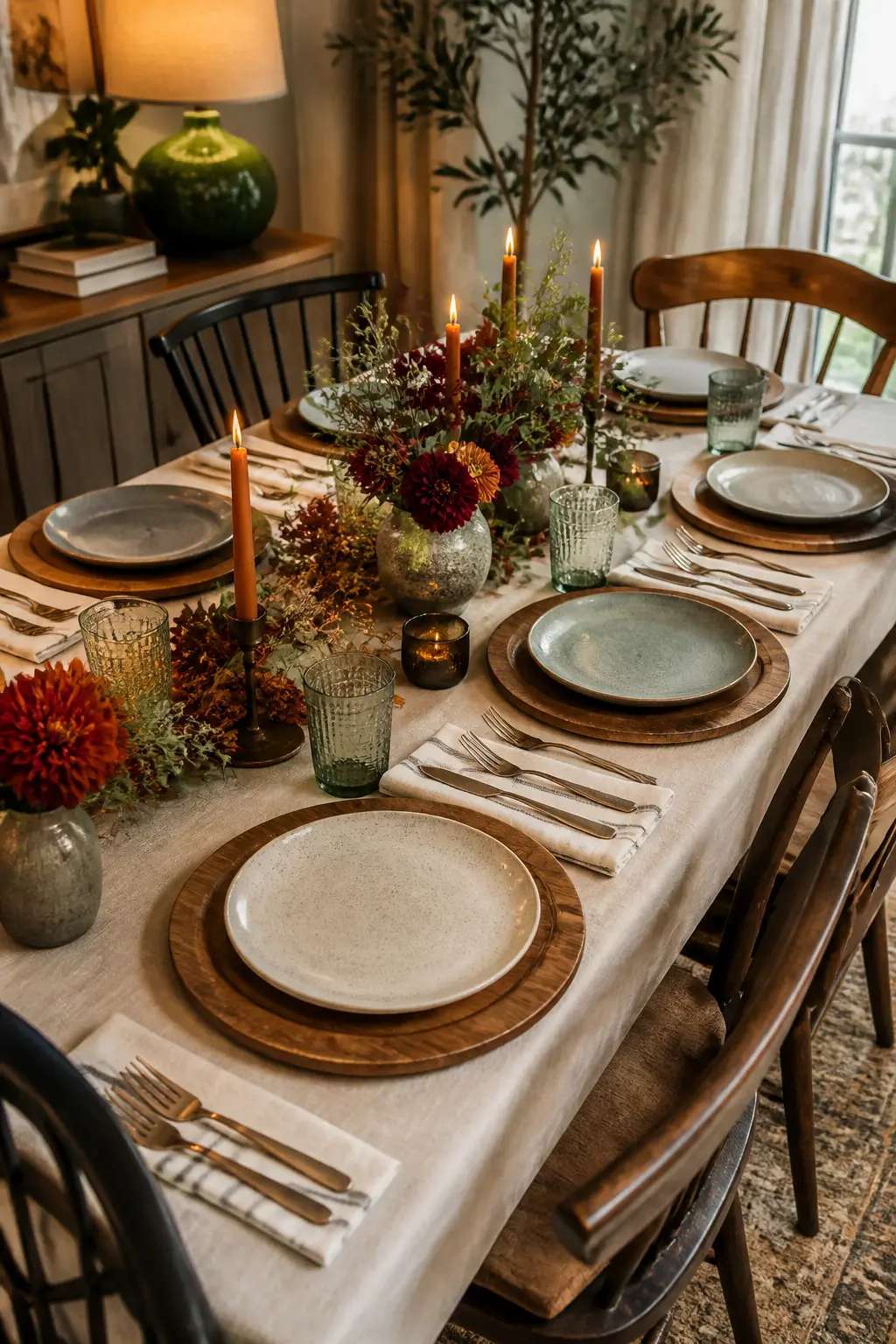
🛍 Shopping guide
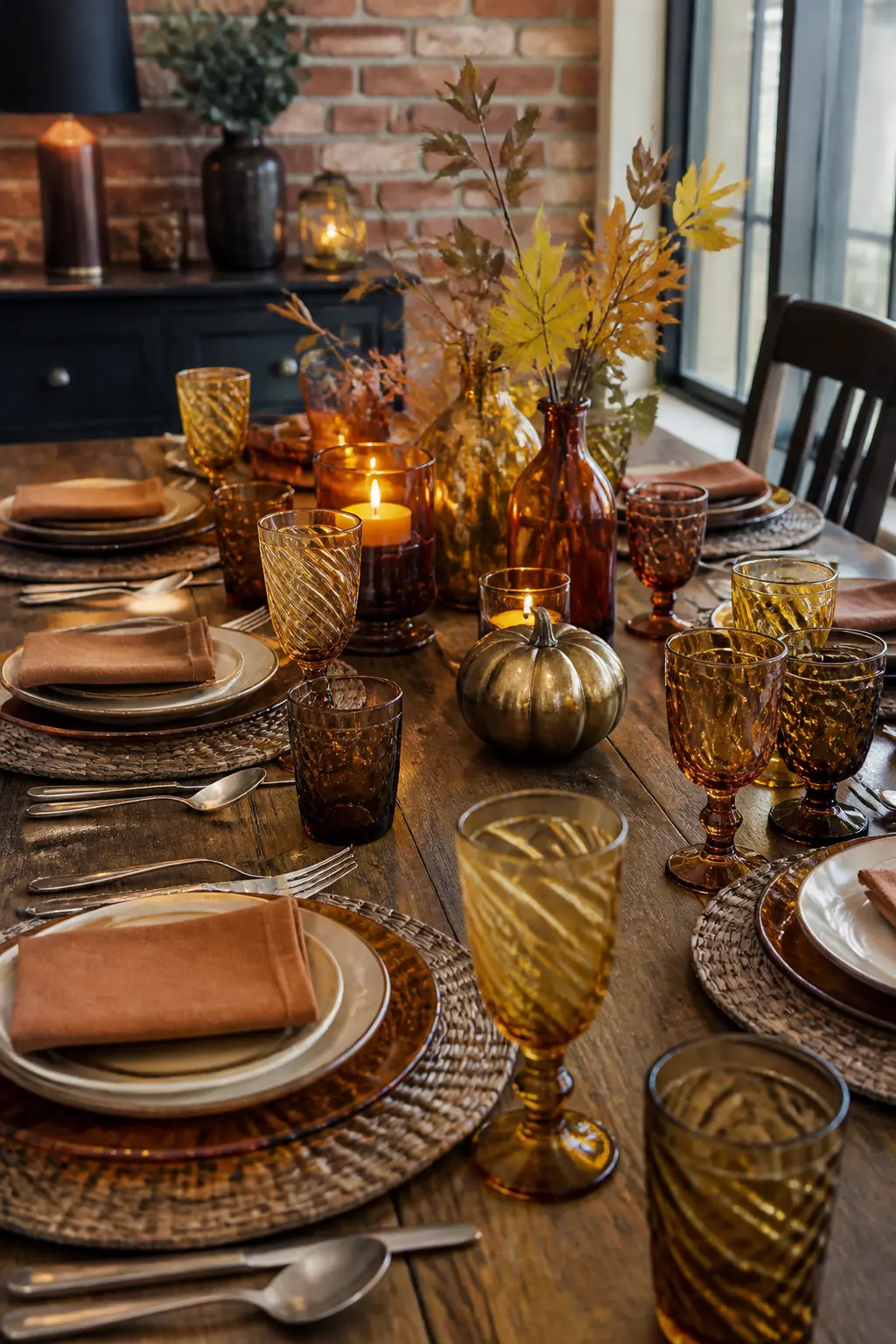
Amber Glassware Swapped in for the Season
Swap clear water glasses for amber or smoked glass for the autumn table. The color catches candlelight in a way clear glass cannot, and it ties the table to the season without any additional styling effort.
Amber glassware is widely available at low price points and stores flat in a kitchen cupboard. You do not need to match it exactly across all settings: a mix of amber tones reads as deliberate and interesting.
🛍 Shopping guide
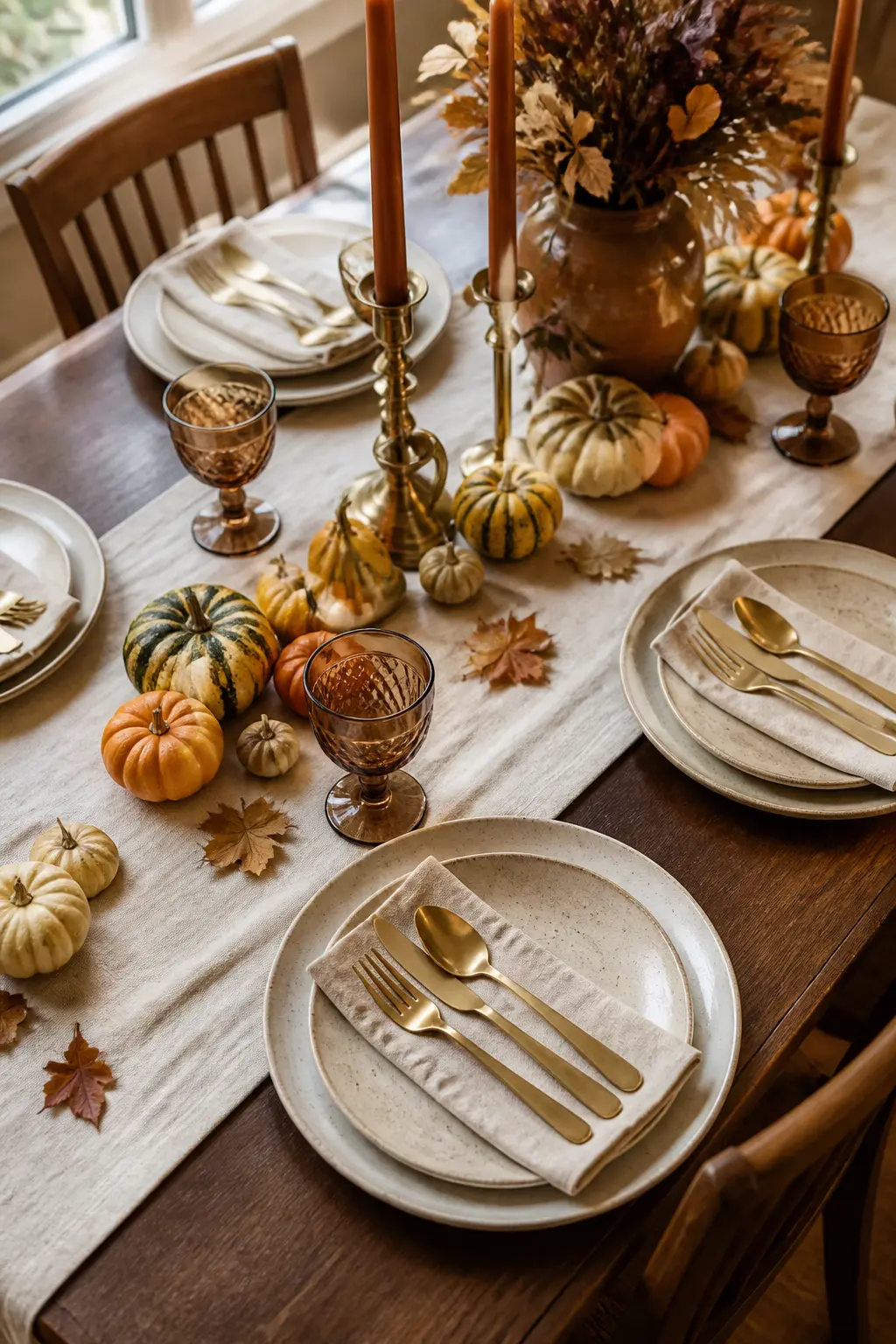
Brass Flatware Swapped in If Available
Brass or gold-tone flatware is one of the highest-impact, lowest-effort swaps on the table. It reads warm against neutral plates, it picks up candlelight, and it signals that this meal is slightly more considered than Tuesday night.
You do not need a full set. Mix brass forks with standard knives, or lay brass dessert forks across napkins if that is all you have. The partial swap still works.
🛍 Shopping guide
Functional Pieces as Decor
The stoneware pitcher of water, the bread board, the salt dish: these live on the table anyway. Choosing them deliberately and placing them with a little thought means the working pieces become part of the look. Nothing extra needed.
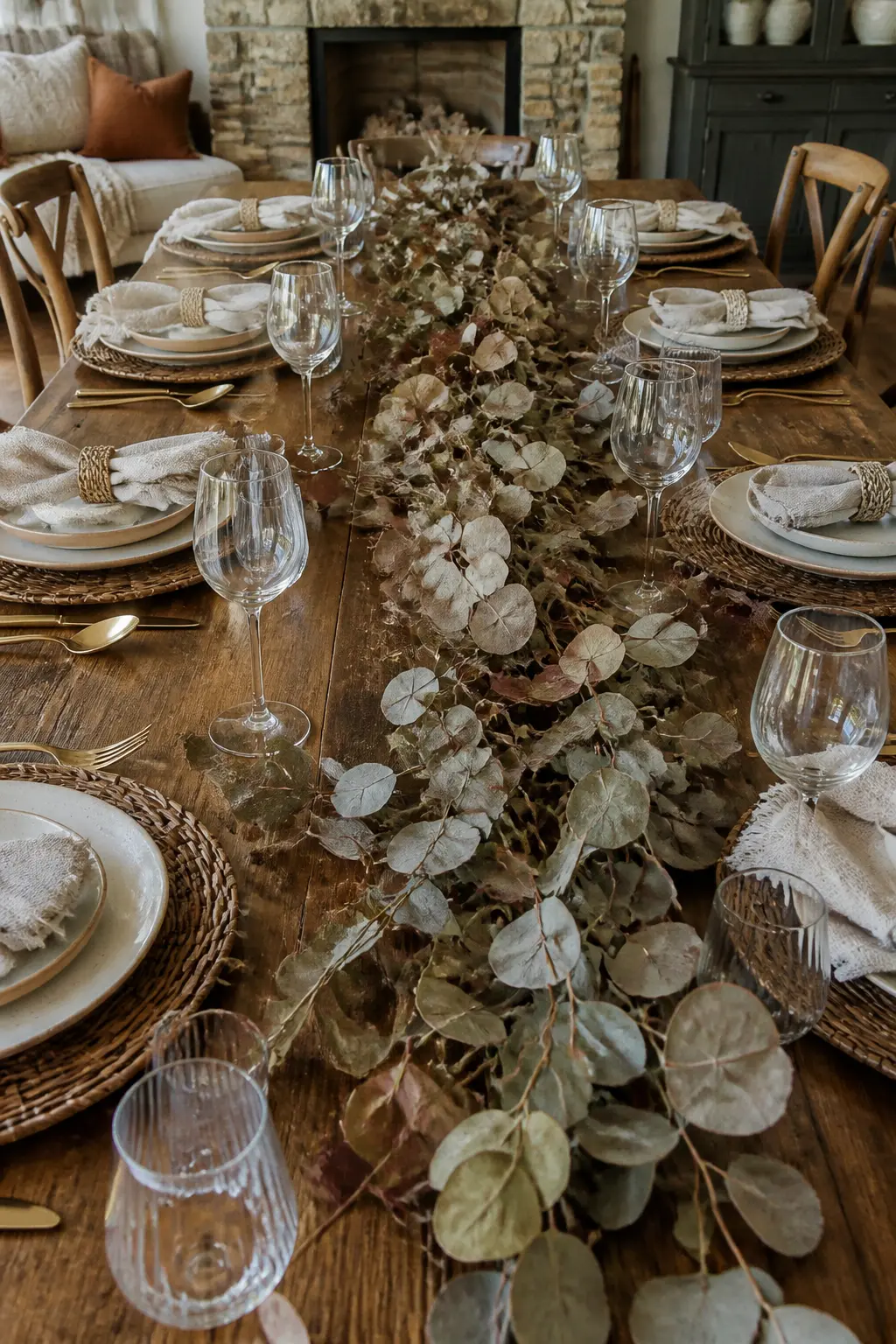
Dried Eucalyptus Laid Flat Down the Table Center
Dried eucalyptus bought in a bunch from a florist or craft store can be pulled apart into stems and laid loosely along the runner in a slightly overlapping line. It stays completely flat. It smells good. And it fills the center of the table without adding any height at all.
Dried eucalyptus does not wilt during a long meal and it can be swept back into the bunch after dinner and used again. It is one of the most reusable elements in this list.
Stoneware Pitcher of Water at One End, Not the Center
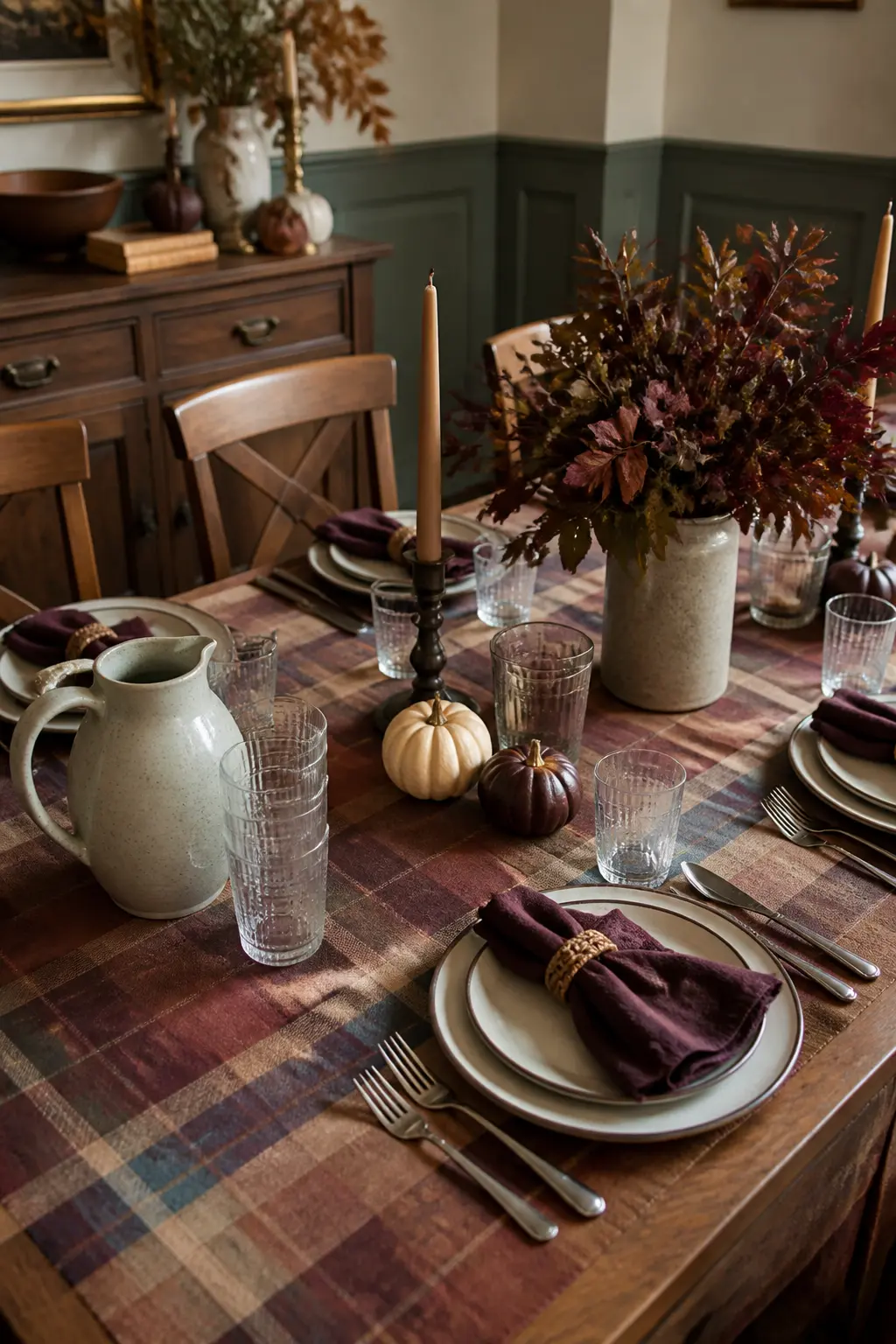
Move the water pitcher to one end of the table and it stops being something to work around and starts being a visual anchor for that end of the setting. A stoneware or ceramic pitcher in a matte finish does this better than glass, because it reads as an object with presence rather than a vessel.
Guests at that end simply fill their own glass and pass the pitcher down. The table center stays open for food.
🛍 Shopping guide
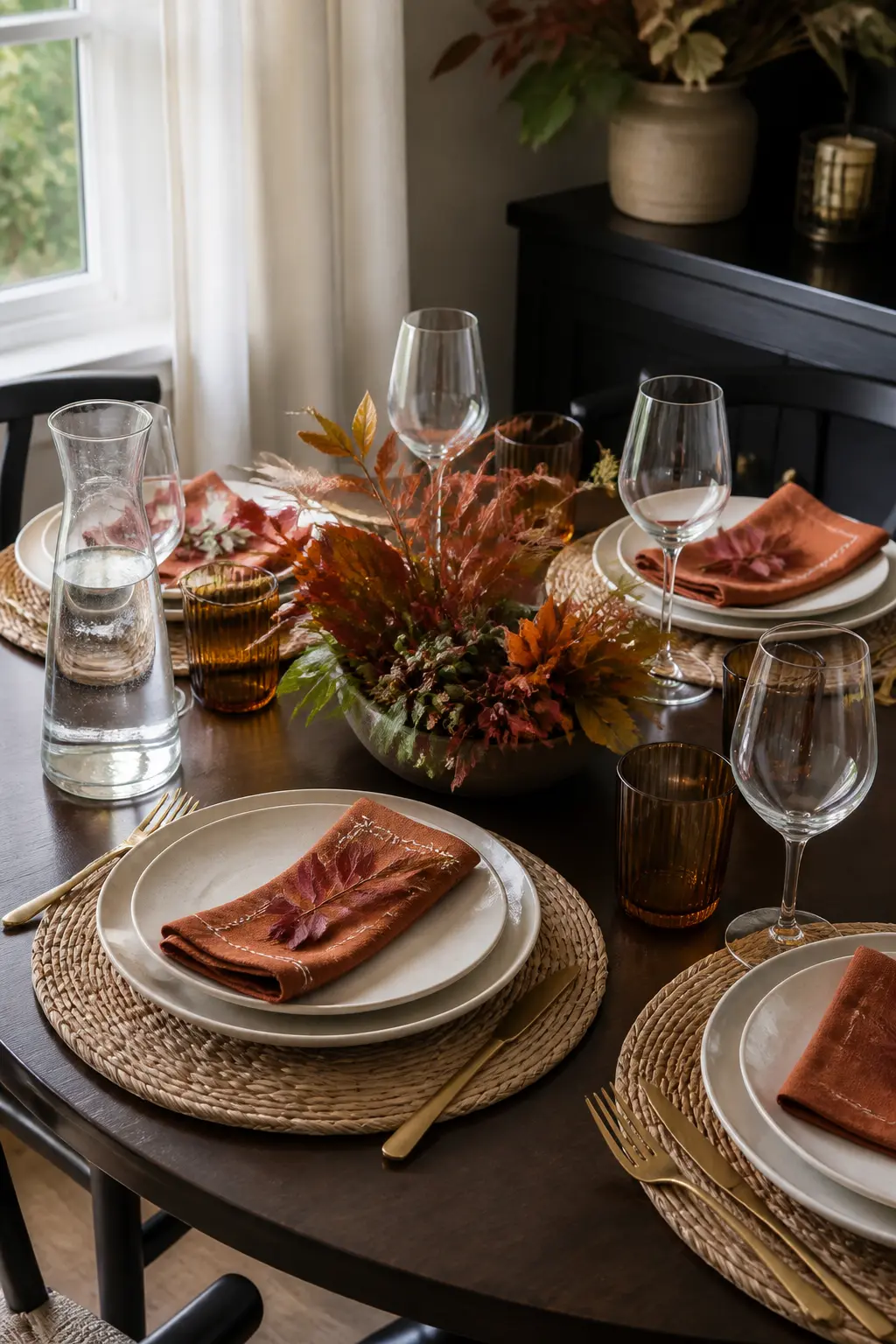
Water Carafe at One End So It Does Not Block Sightlines
A glass carafe at one end of the table instead of the center is a smaller version of the stoneware pitcher idea. It keeps the table hydrated without planting a tall object in the sightline between opposite guests.
Pair it with the amber glassware if you have it. The clear carafe against amber glasses looks considered. And moving it to the end means you can set the full center of the table without designing around a fixed tall object.
🛍 Shopping guide
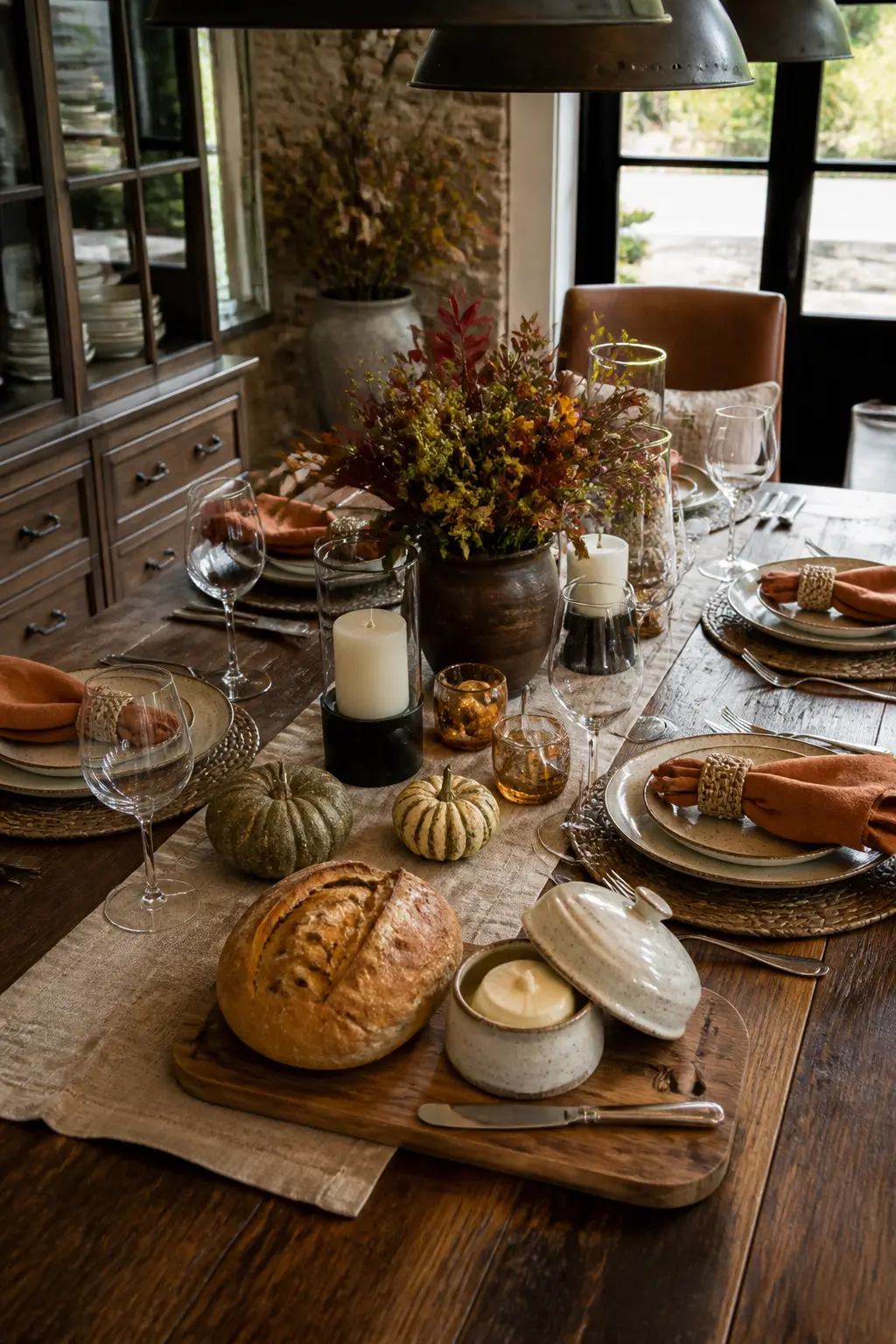
Wooden Bread Board at One End Holding Rolls
A wooden bread board at one end of the table with rolls or a small loaf on it is working decor: it looks deliberate, it holds something useful, and it keeps the table center free. The grain of the wood reads as autumnal without requiring any styling on top of it.
Add a small crock of butter or a dish of good salt beside it and the end of the table becomes a complete station rather than an afterthought.
Bread Board Angled at One Corner Rather Than Centered
Angling the bread board at a corner instead of placing it centered at one end creates a more casual, generous feeling. Guests on both sides of that corner can reach it without leaning. The diagonal angle also makes the board look larger than it is.
This works especially well at a rectangular table for six or eight where one end becomes the informal food-and-bread zone.
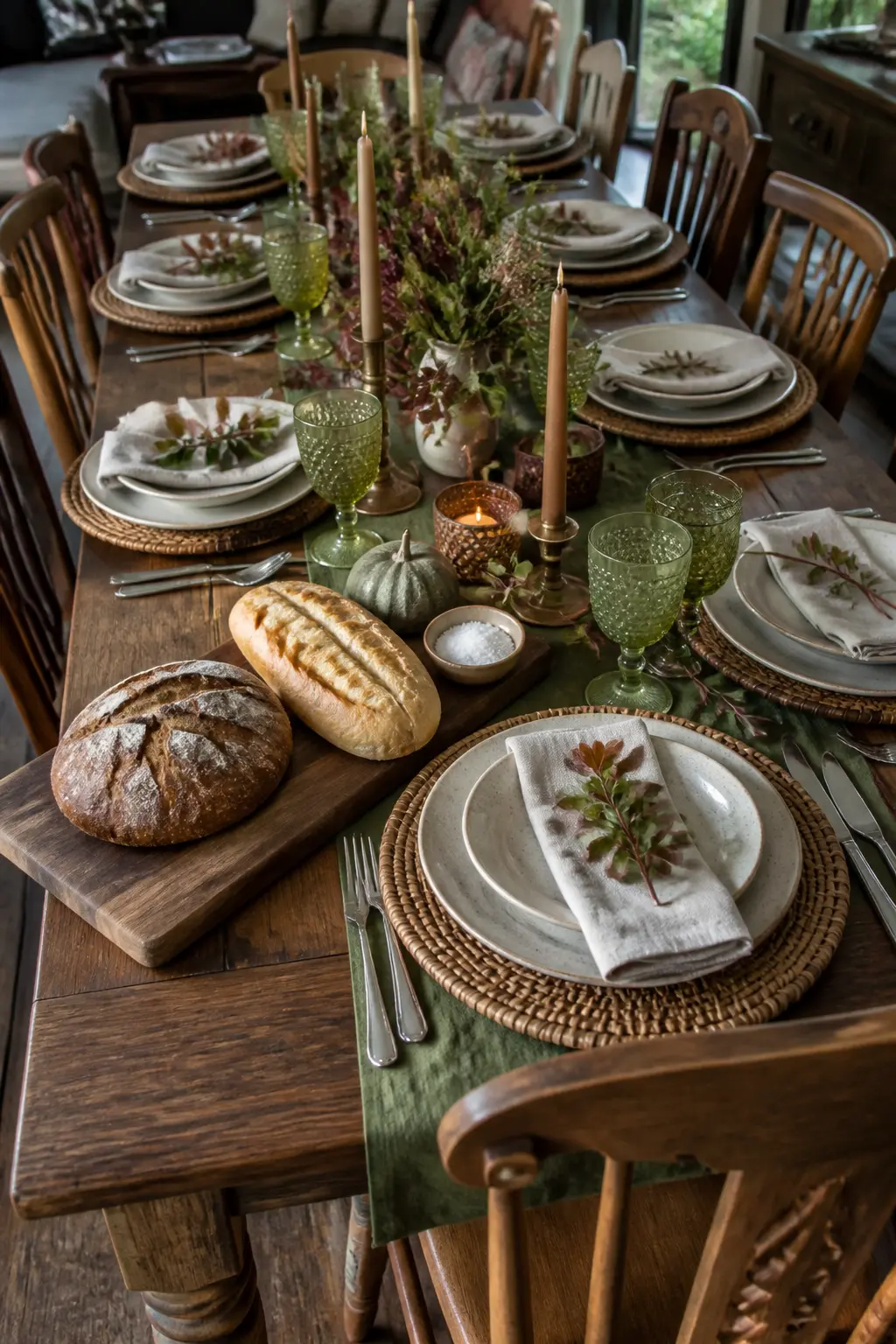
Salt and Pepper in Small Stoneware Dishes Left Out
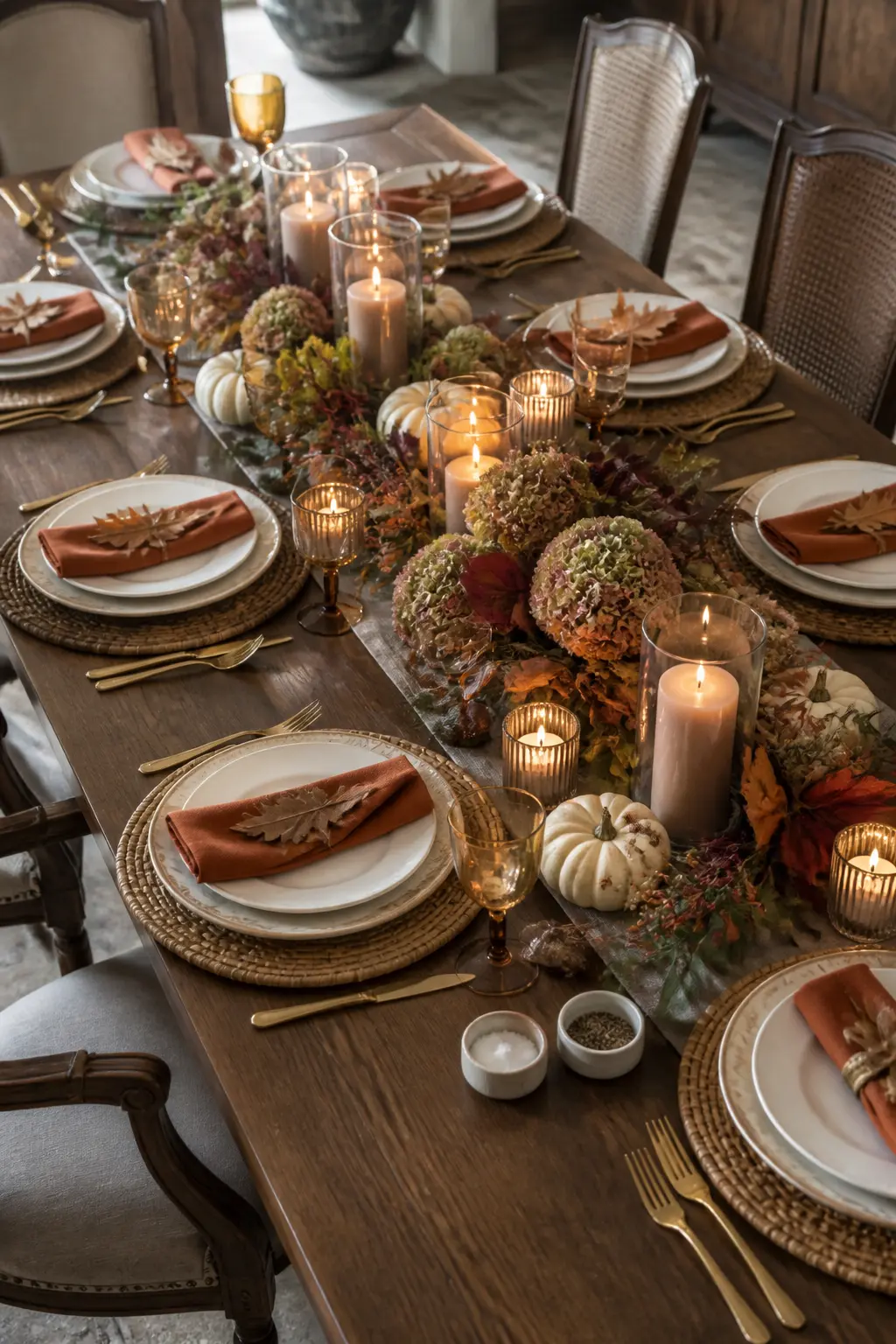
Decanting salt and pepper into small stoneware pinch pots rather than leaving the shakers on the table takes about thirty seconds and changes the look of the table significantly. The shakers disappear. The small dishes read as part of the styling.
Place one set at either end of the table for a long table of six or more, so nobody has to ask someone to pass the salt from across the room.
🛍 Shopping guide
Pepper Mill Left Standing at One End
A good-looking pepper mill left at one end of the table is honest. It says the table is dressed for an actual meal, not a photoshoot. A wooden or matte-black mill positioned deliberately at the end of the runner reads as a prop without trying to be one.
Skip the matching salt and pepper shaker set. A stand-alone mill at one end and a pinch pot of salt at the other creates an asymmetry that looks intentional.
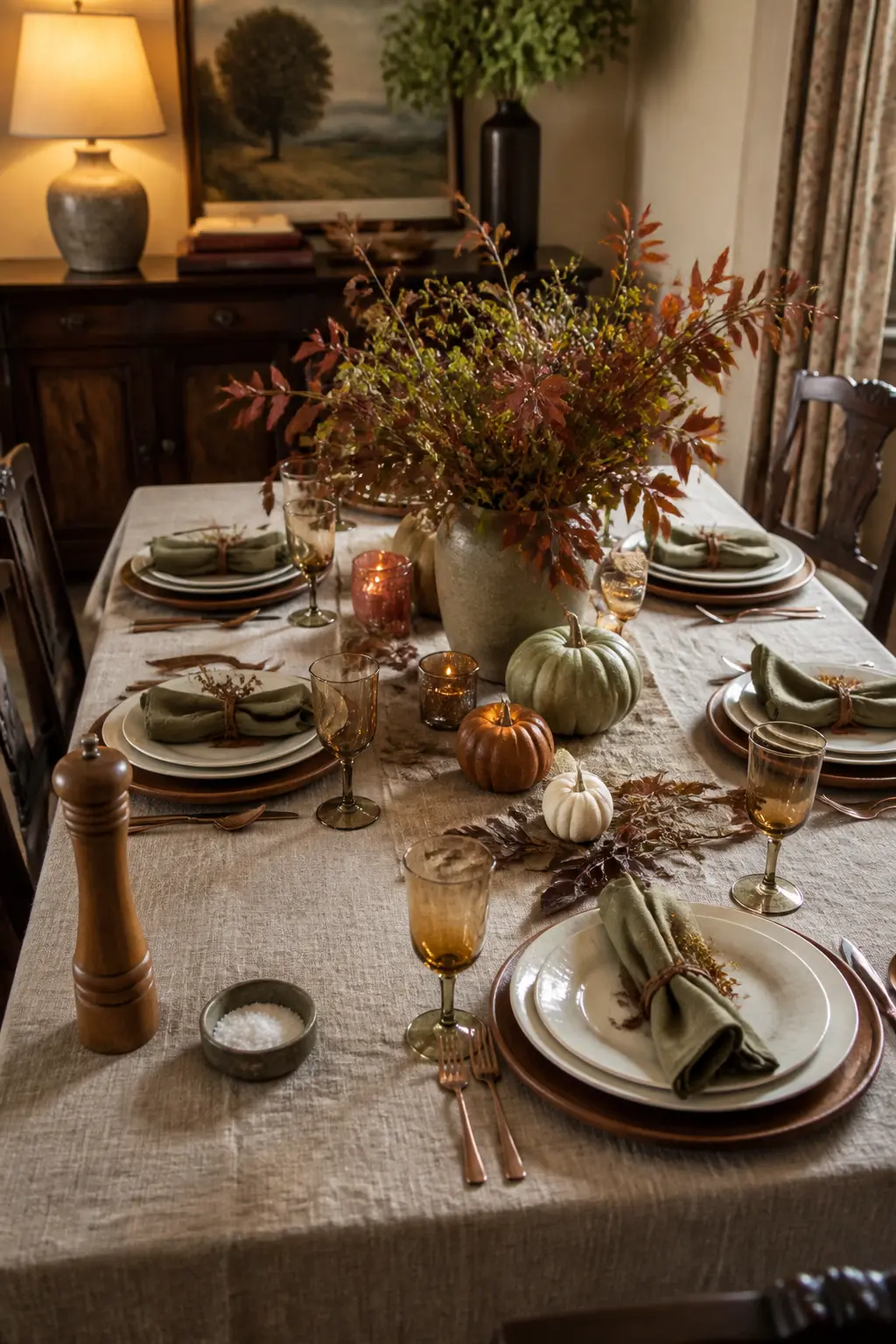
🛍 Shopping guide
Serving Spoons Rested on Small Dishes as Part of the Look
A serving spoon resting on a small ceramic dish rather than dropped directly on the tablecloth is a tiny detail that looks considered. It protects the cloth, keeps the spoon from rolling, and gives each serving piece its own small home on the table.
Use the same small dishes for this across the whole table and they become a repeated visual element. They do not need to match the rest of the tableware, just each other.
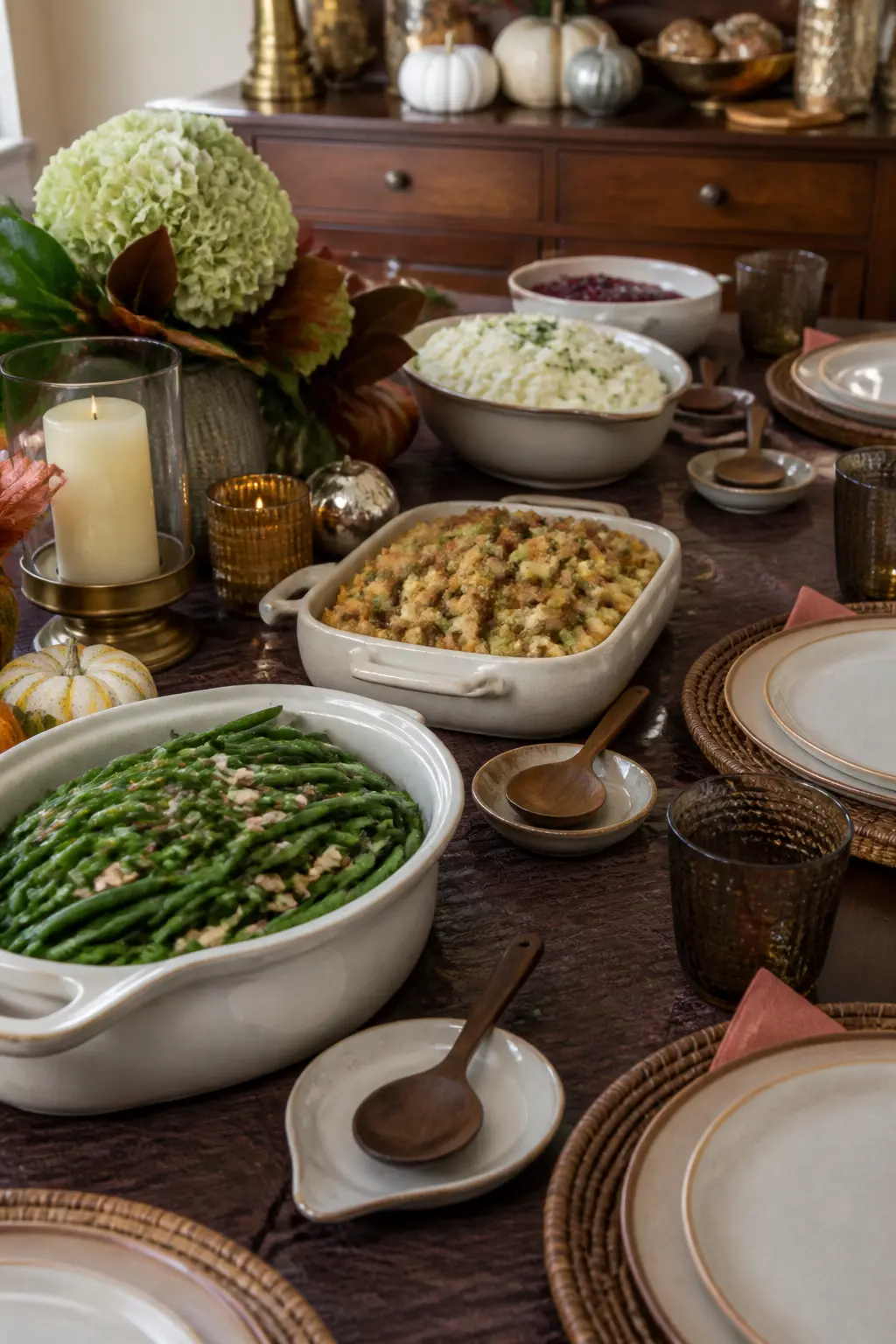
🛍 Shopping guide
Finishing Details
This section is what you add in the last five minutes: a stem laid across a napkin, dried rings scattered along the runner, a pepper mill positioned rather than abandoned. Small moves, visible effect.
Dried Apple Rings Scattered Along the Runner
Dried apple rings from a craft shop or made in a low oven scattered loosely along the runner add a completely flat, scented, edible element to the table center. They look like they belong on a harvest table because they come from a harvest.
Space them irregularly rather than evenly. A handful dropped loosely along the center of the runner looks better than ten rings spaced at four-inch intervals. The looseness reads as abundance rather than effort.
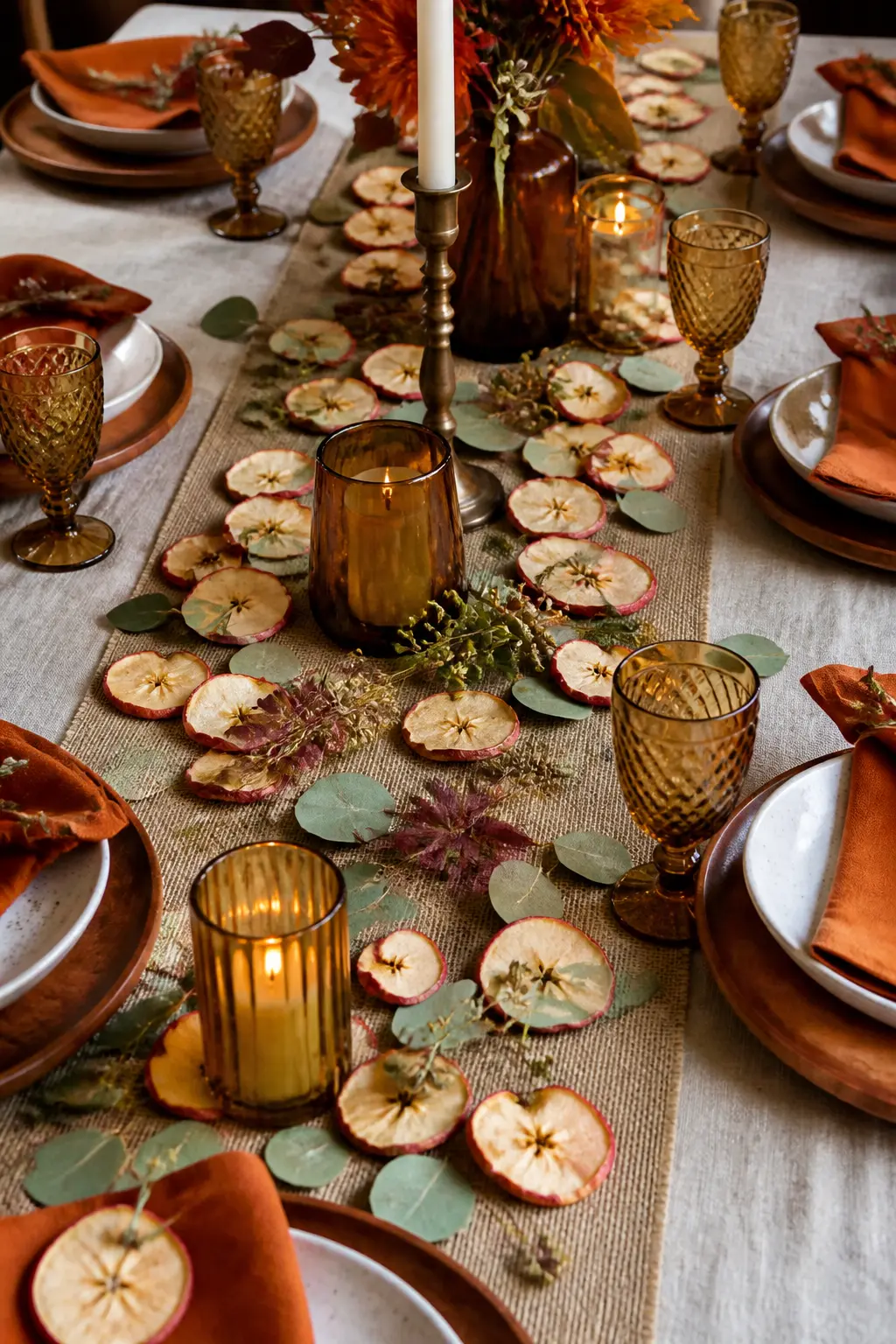
🛍 Shopping guide
Dried Eucalyptus and Flat Botanicals Mixed Along the Center
Once the runner is down and the candles are placed, fill the remaining center space with a loose mix of flat dried botanicals: eucalyptus, pressed leaves, a few seed pods, one or two dried orange slices. Keep every element flat or near-flat.
The mix looks gathered rather than arranged. Start at the middle and work outward, leaving space near each place setting so guests have room to rest their glass or put down a serving dish.
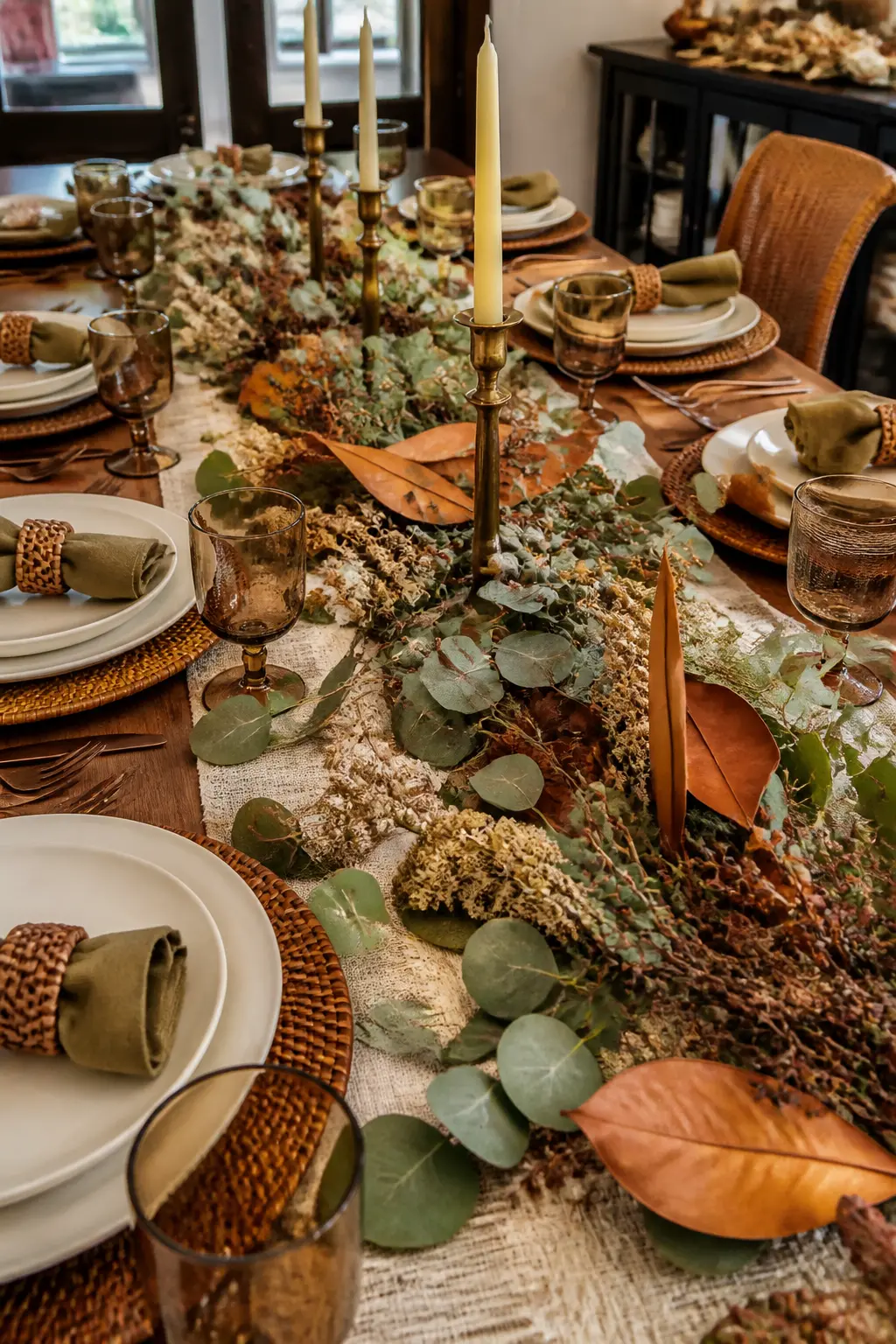
🛍 Shopping guide
One More Thing Before You Set the Table
If the table feels done and something still seems off, the answer is almost always subtraction. Remove one element, push the runner slightly off-center, or swap a color that is fighting the others. A real meal table should look lived-in before anyone sits down, not staged.
For more ideas that work in the same spirit, these simple Thanksgiving table decor ideas and these Thanksgiving table decor ideas without the turkey motif are close neighbors to what you have just read.
Frequently Asked Questions
How do you decorate a fall table without it looking cluttered?
The one rule that removes clutter faster than any other: keep everything below the seated eye line. Nothing should make a guest peer around or over an object to see the person opposite them. Work with flat elements first, runners, napkins, chargers, then add a few low pumpkins or scattered votives. Stop before you think you are done.
What can go in the center of a fall table instead of a floral centerpiece?
A shallow dough bowl with small pumpkins, a low bowl of apples and pears, dried eucalyptus laid flat, or scattered votive candles all work better than a tall floral arrangement at a real dinner table. Any of them can be moved to the side or the end of the table once serving dishes need to land in the center.
What colors work for an autumn table without going full orange?
Wine, rust, stone, oatmeal, and warm cream. Deep wine napkins in particular do more work than rust-orange ones and compete less with the food. Amber glass adds the orange tone through light rather than fabric, which is a more subtle way to bring it in.
How can you decorate a fall table if you have very little space between place settings?
Use the place setting itself as the decoration. A wooden charger, a cloth napkin with a barley stem or sprig, and a wood-slice place card add autumn feeling without using any space in the center of the table. Scatter a few votives in whatever gaps exist and leave the runner bare.
Can fall table decor also work for a Thanksgiving meal?
Almost all of it does. The ideas here that work especially well for Thanksgiving are the low bowl of apples and pears (which doubles as a pre-meal snack), the wooden bread board at one end, and the individual mini pumpkin at each setting that guests take home as a favor. For more Thanksgiving-specific table ideas, the simple Thanksgiving table decor guide is worth a look.
There’s a specific kind of afternoon I keep chasing. Overcast sky. Something bubbling on the s
My old apartment had a balcony the size of a bath mat and rules against “permanent modificatio
35 fall decor ideas organized by room so you can pick one zone, shop it, and stop. Porch to bathroom
Leave a Reply