

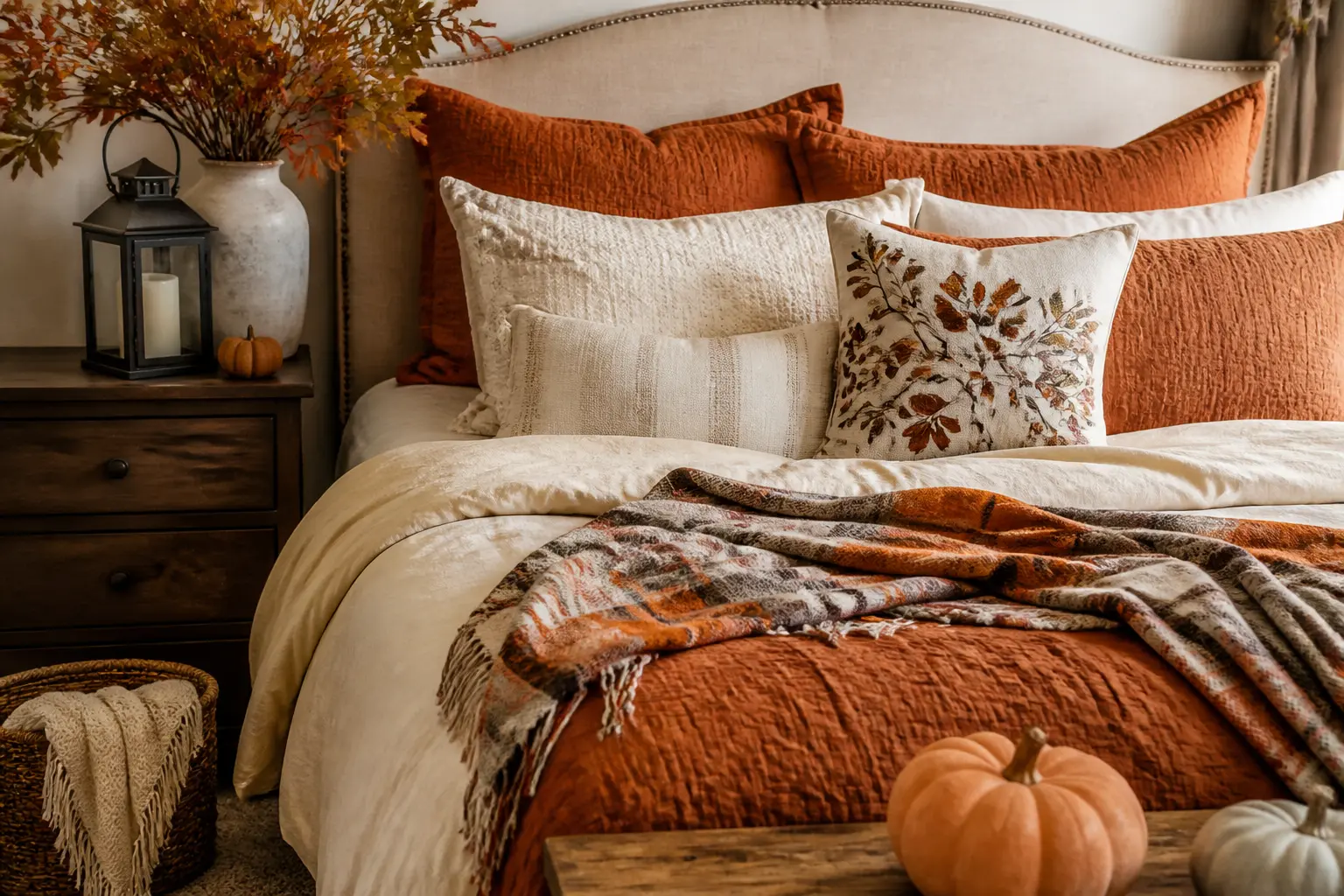
The light changes first. Before the temperature drops or the leaves turn, the quality of afternoon light in the bedroom shifts, and suddenly the linen duvet and the sheer curtains feel like the wrong answer. Fall bedroom decor does not have to mean pumpkin prints or a colour palette lifted from a harvest festival.
The ideas here are about weight and texture: heavier fabric against the skin, a rug underfoot on cold mornings, a lamp moved to the corner that goes dark at five o’clock. Most of them cost very little, and several cost nothing at all. If you want to carry that warmth into the rest of the home, 20 Thanksgiving Decor Ideas That Work in Every Room is the logical next read. For the bedroom, though, start here.
The 38 ideas below are grouped by what they actually do: what you put on the bed, what you lay on the floor, how you dress the windows, where the light goes, and what sits on the surfaces. Work through one group at a time and the room will feel entirely different by the end of the week.
This post contains affiliate links. If you buy through them, I may earn a small commission at no extra cost to you.
The Bed Itself
The bed is the largest object in the room, so it sets the register for everything else. Swap one layer at a time rather than replacing the whole thing, and you will land on the right weight without overbuying.
Flannel Duvet Cover Swapped In for the Season
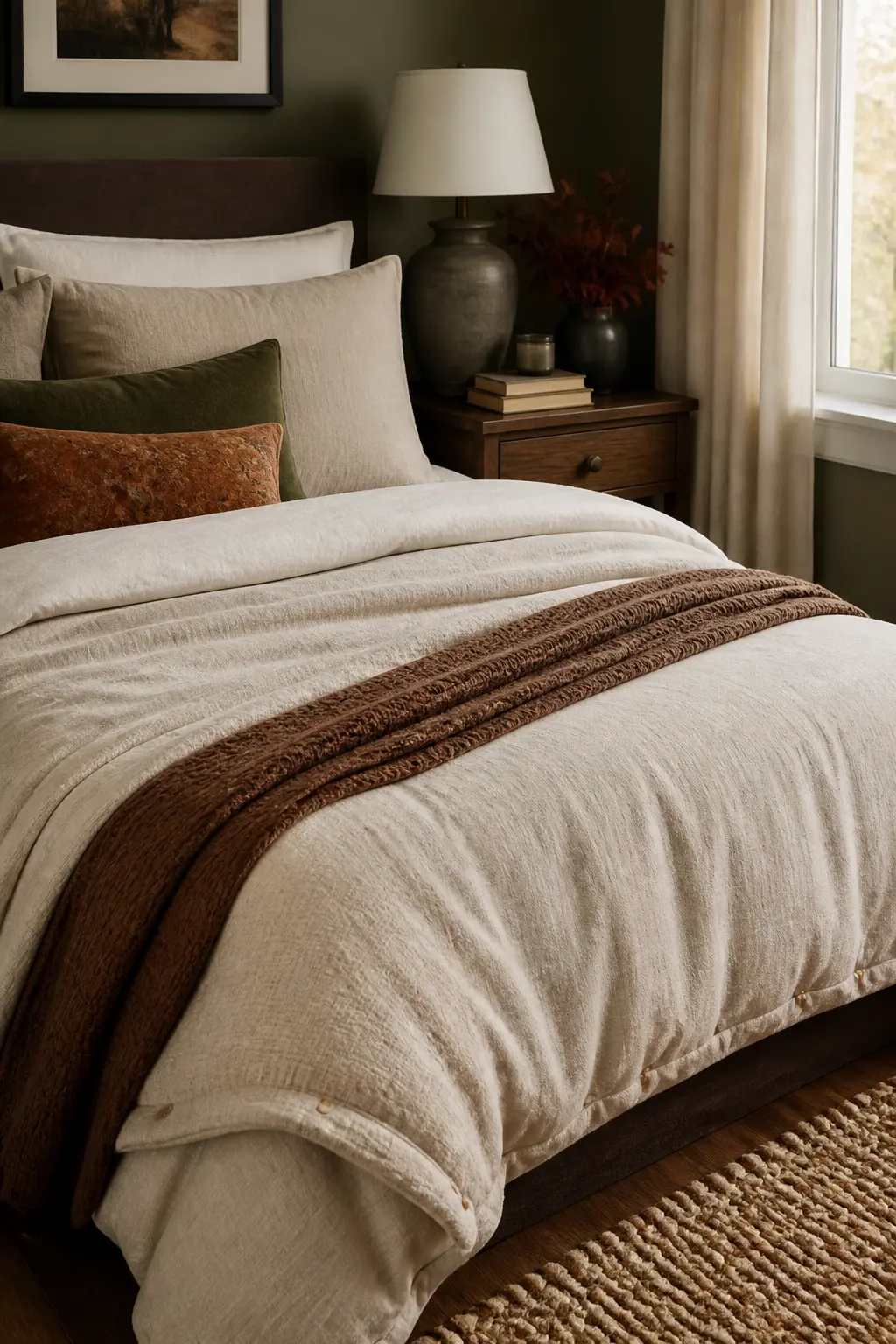
A flannel duvet cover is the single highest-impact swap you can make to a bedroom in autumn. The weight is almost the same as percale, but the surface catches light differently and reads warmer before you have even touched it.
Choose a colour in the oatmeal-to-mushroom range. It will work with whatever you already own on the pillows, and it will not look costumey the way a printed cover can.
Wash it once before you put it on. Flannel softens considerably in the first wash, and that softness is exactly what you are paying for.
🛍 Shopping guide
Chunky Knit Throw Folded at the Foot of the Bed
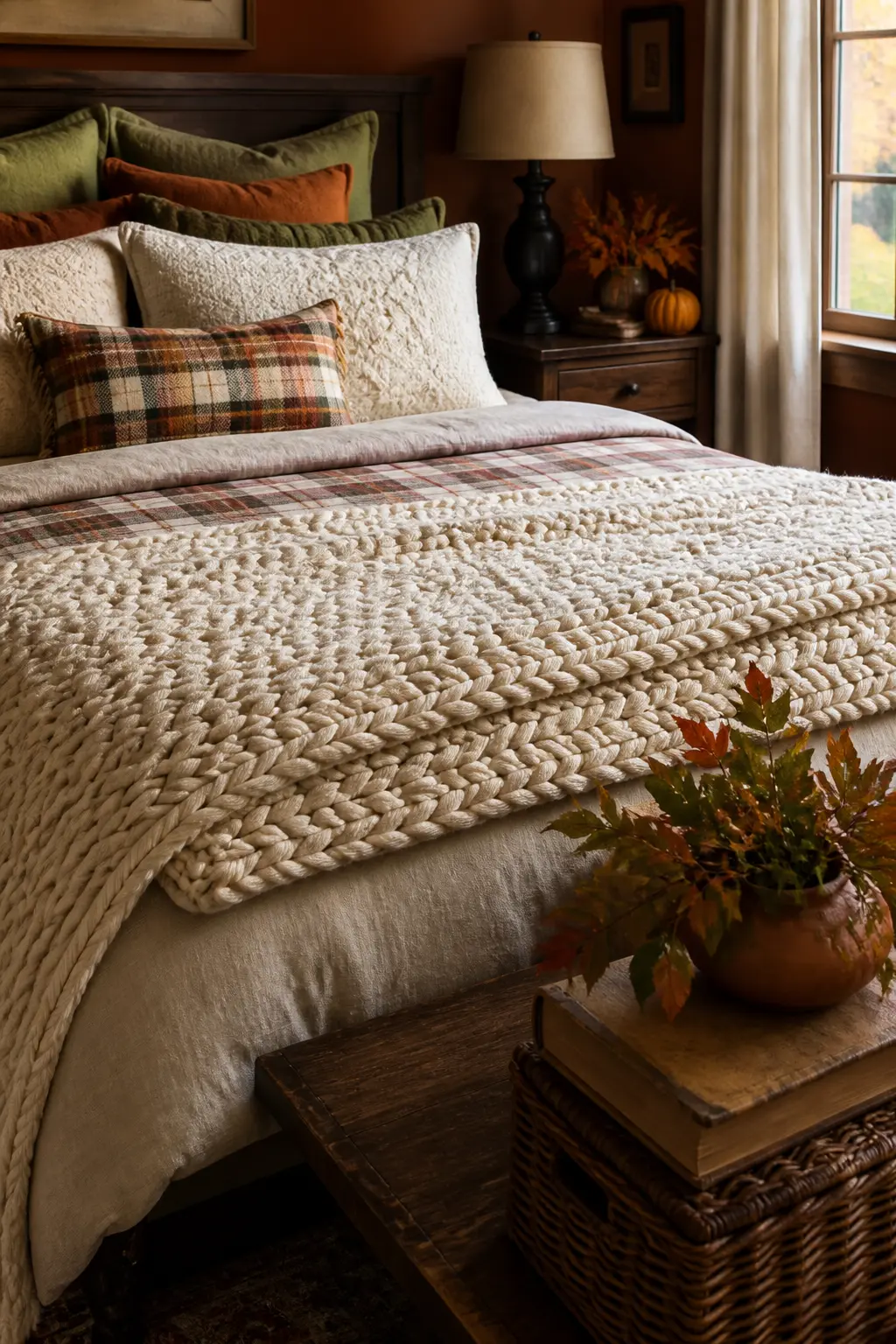
Fold it in thirds lengthwise and lay it across the foot of the bed rather than draping it over one corner. That placement looks deliberate instead of left-there.
Chunky knit reads warm even in a photograph, which means it changes the feeling of the room before anyone has touched it. Go for cream, camel, or a dusty sage rather than a colour that shouts.
It also serves a practical function: it is there when the temperature drops at two in the morning and you do not want to go looking for an extra blanket.
🛍 Shopping guide
Velvet Pillow Shams in Camel or Rust
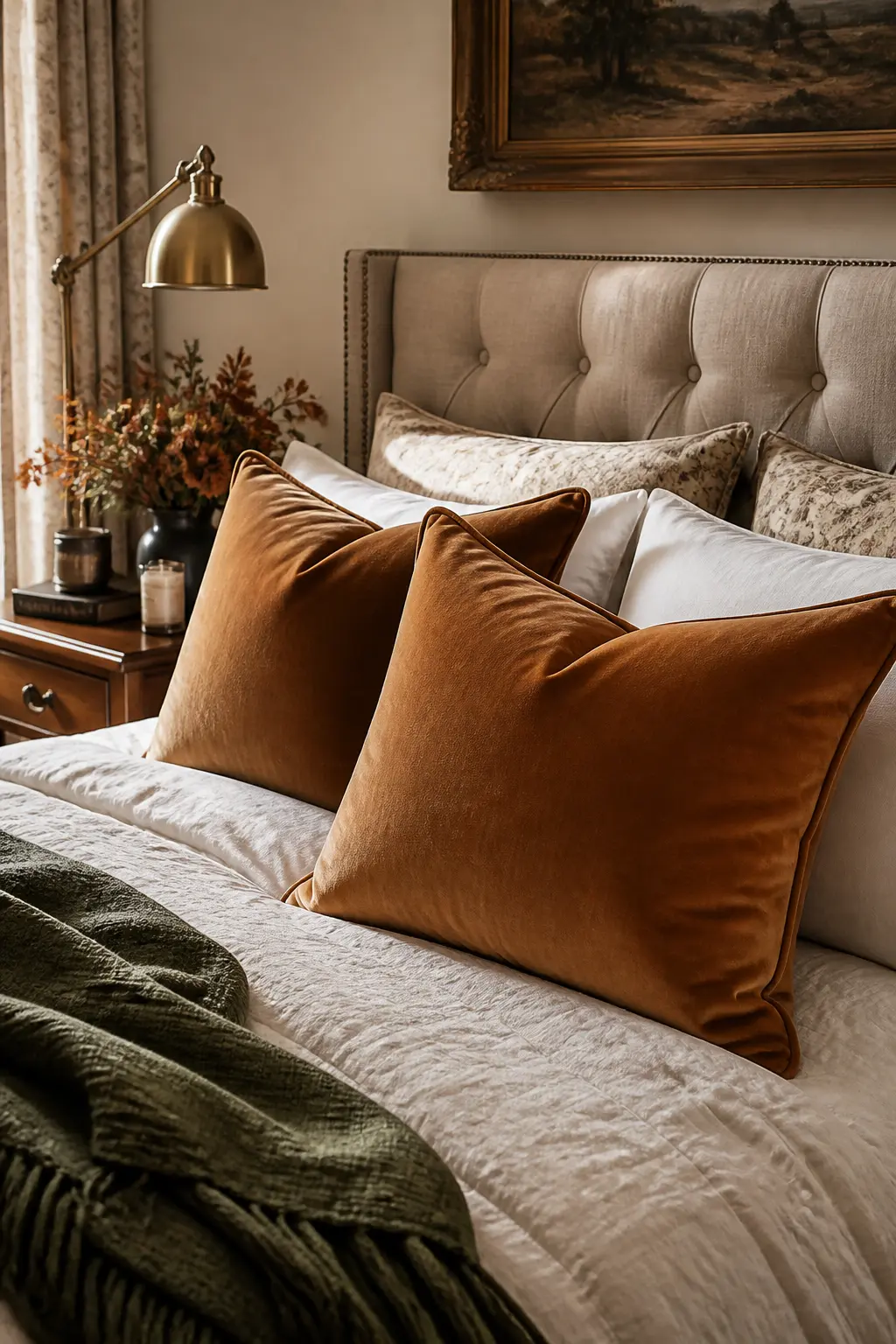
Two velvet shams in camel or a deep terracotta-adjacent rust change the pillow stack without requiring new pillows. The existing inserts go straight in.
Velvet catches light directionally, so the colour shifts slightly as you move around the room. That movement is what gives a pillow stack depth rather than flatness.
Avoid anything with embroidery or an embossed pattern. The plain velvet face is the point: it does the work through texture alone.
🛍 Shopping guide
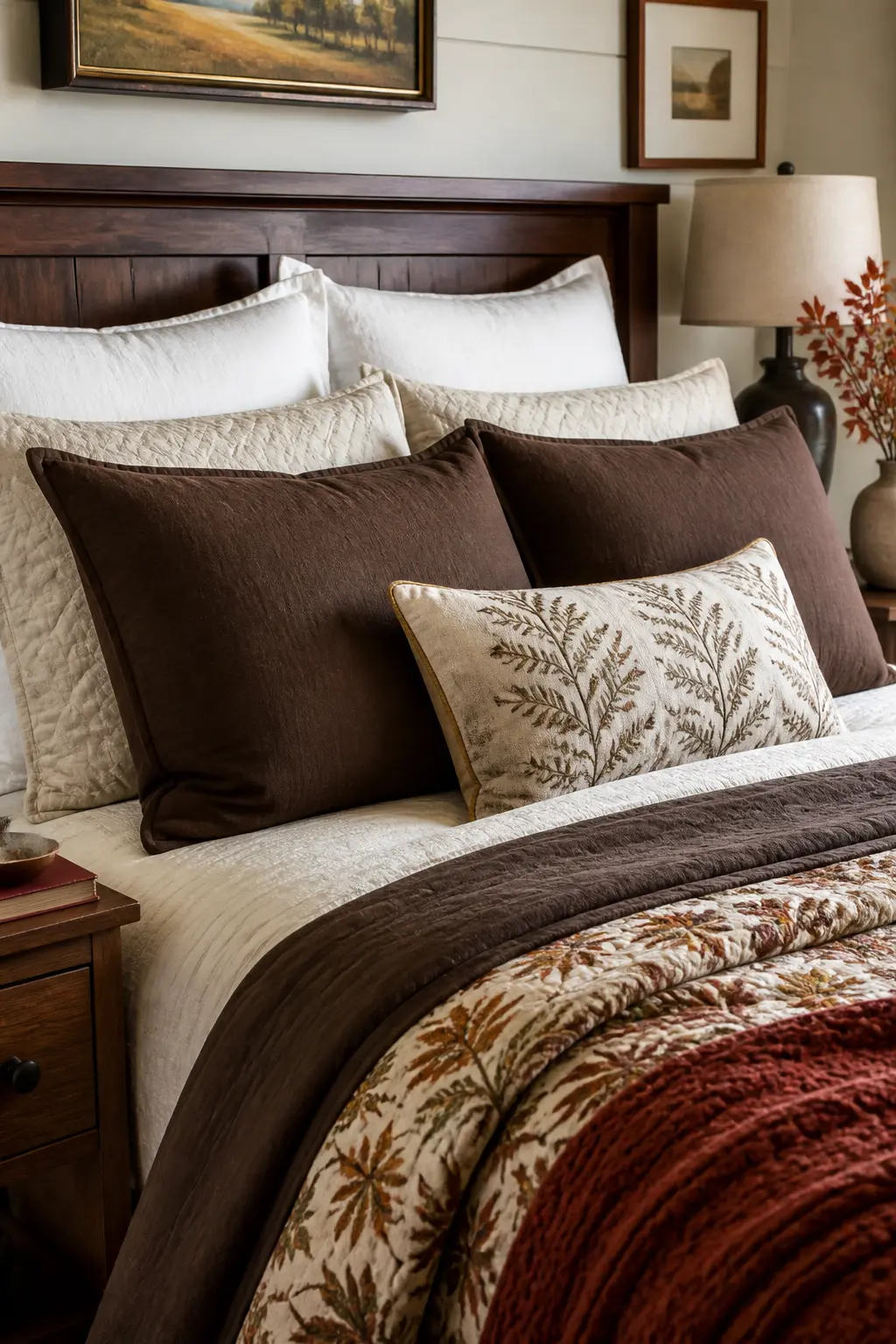
Second Pillow Layer in a Heavier Cover
Add a second row of sleeping pillows in a heavier cover: a linen-cotton blend or a brushed twill, not the same percale as the sheets. The contrast in fabric weight is visible even when the bed is made.
This is not about buying new pillows. It is about putting different covers on the ones you already own, then arranging them in front of the primary set.
The result is a bed that looks built up and considered, which is exactly what the season calls for.
🛍 Shopping guide
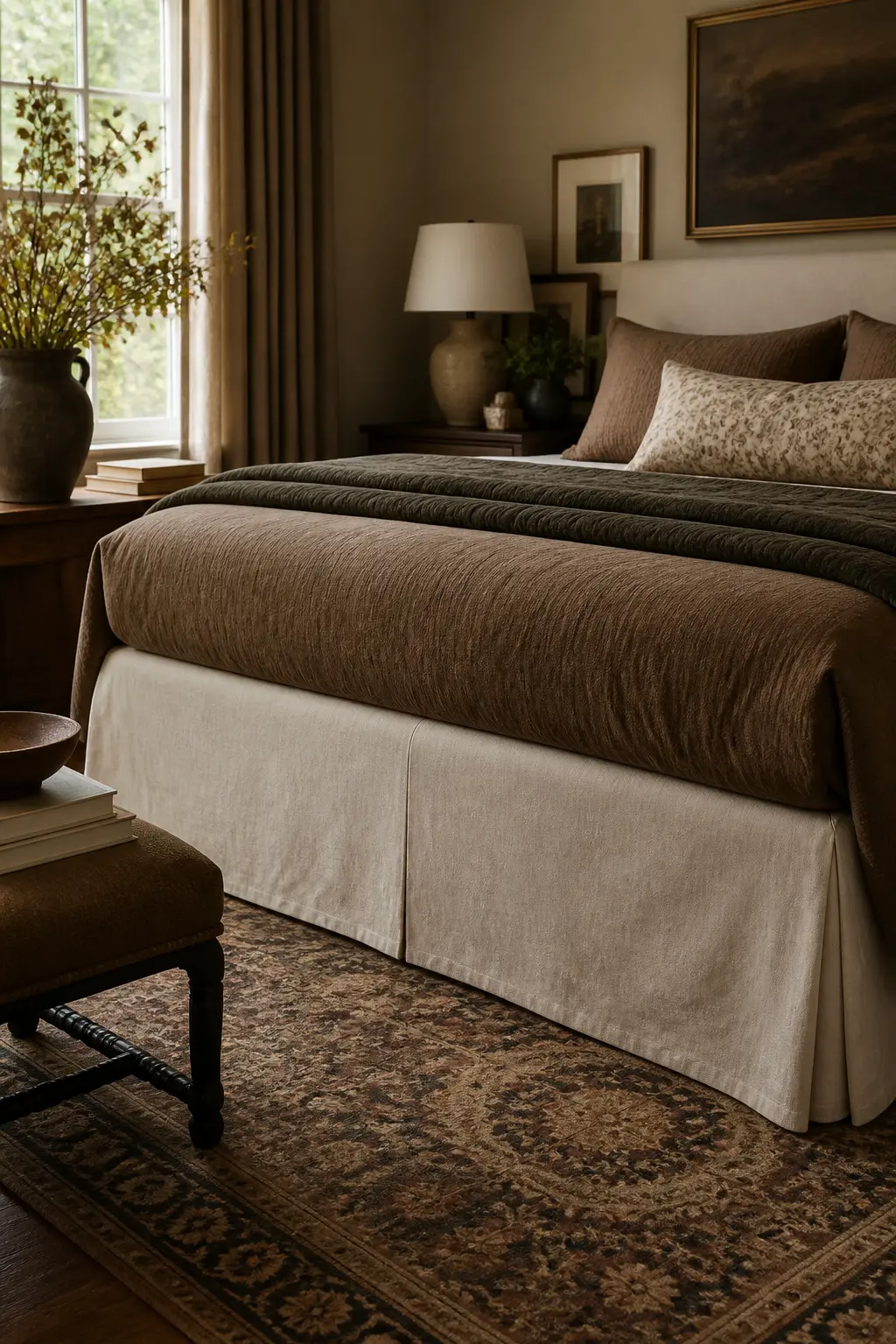
Cotton Bed Skirt in a Warm Neutral
A bed skirt closes the gap between the frame and the floor, which makes the whole piece of furniture read as more grounded. In a warm neutral, it also pushes the bed’s colour palette in the right direction without touching anything above the mattress line.
Go for a tailored pleat rather than a gathered ruffle. The gathered version reads as a different aesthetic entirely, and probably not the one you are after here.
Linen or a heavy cotton both work. Avoid anything with sheen.
🛍 Shopping guide
The Floor
Cold floors are the first thing you feel when autumn arrives. A rug is the fastest fix, and layering two changes the room more than doubling the size of either one would.
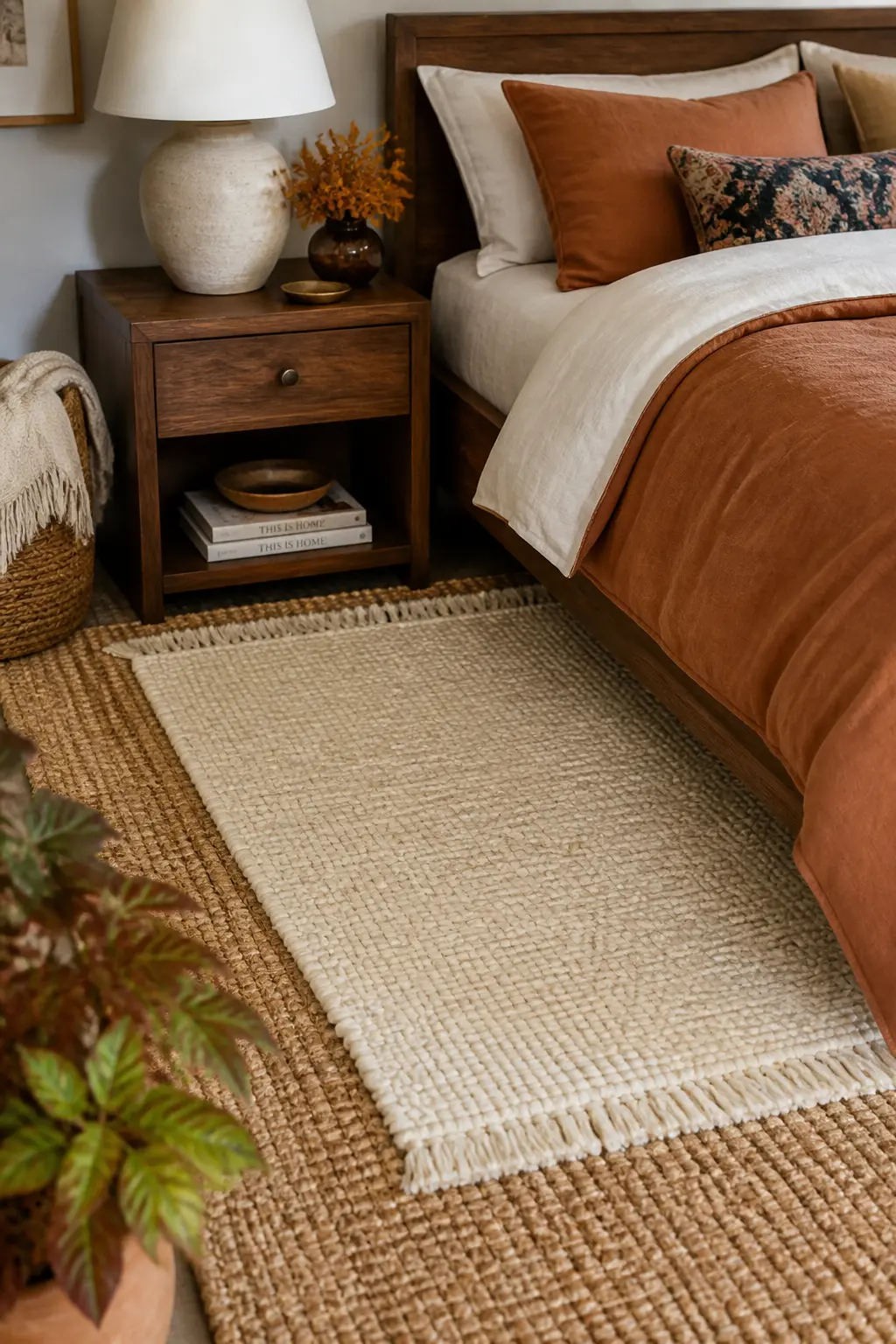
Layered Rug at the Bedside for Bare Feet
Cold floors in the morning are a small misery that is entirely preventable. A layered rug at the bedside, one flat-woven base with a smaller pile rug on top, solves it and also gives the floor visual interest that a single rug cannot.
The base layer can be a simple jute or a natural flatweave. The top layer is where the texture lives: a small sheepskin, a wool kilim, or a low-pile rug in a warm tone.
The overlap should be about a third of the top rug. Too little and it looks accidental; too much and you lose the point of the layering.
🛍 Shopping guide
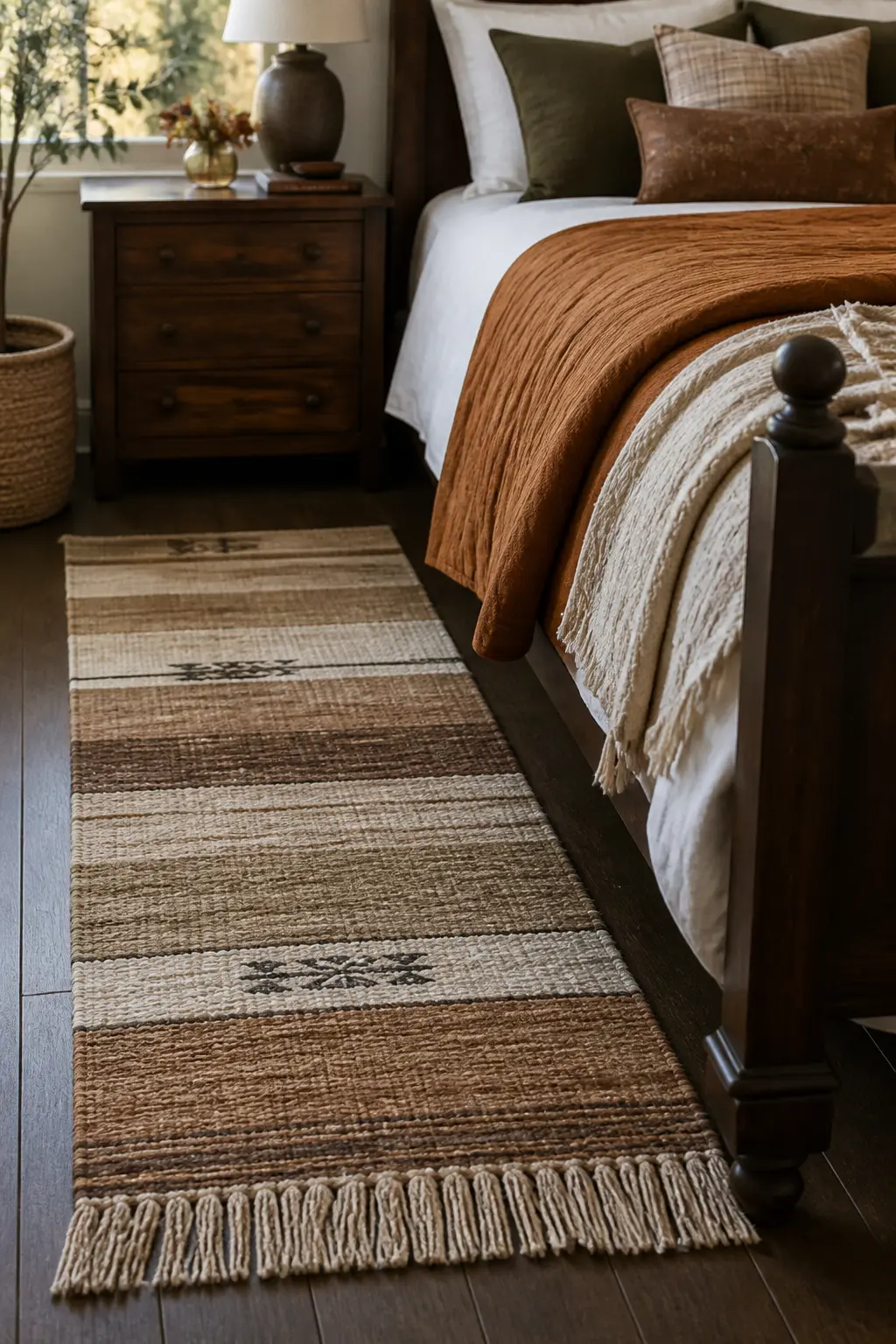
Wool Runner Along the Side of the Bed
A runner along one side of the bed is the most economical rug solution for a bedroom: it covers the strip of floor you actually step on, and it costs far less than a room-size rug.
Wool holds its shape underfoot and keeps a slight warmth even when the room is cold. A flatweave wool runner in a warm sand or a banded neutral works with almost any flooring.
If the bed is against one wall, run it down the open side only. If the bed floats, you can run one on each side and leave the foot end bare.
🛍 Shopping guide
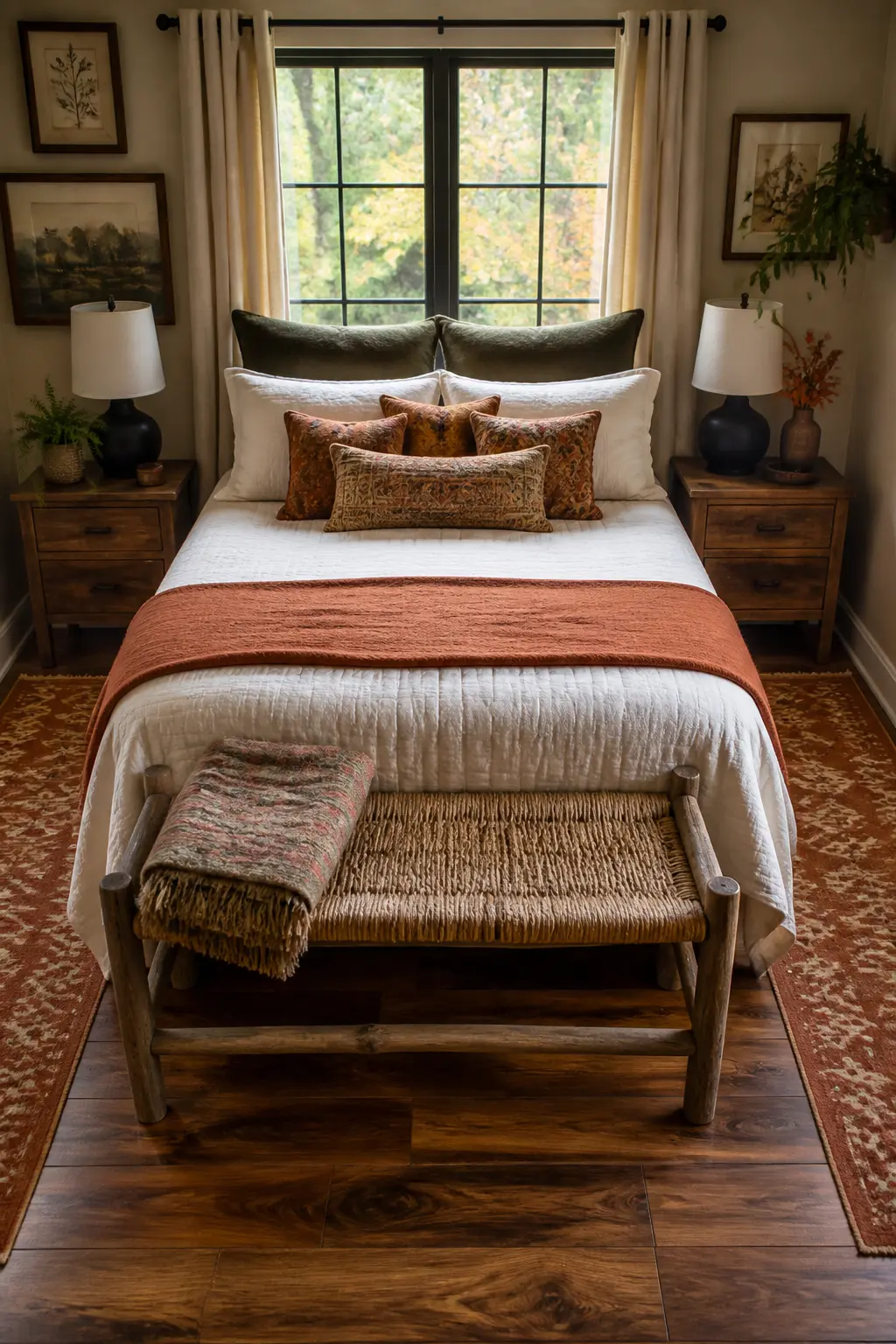
Wool Runner on Both Sides of the Bed
When the bed floats in the room with space on both sides, two matching runners create a symmetry that makes the whole arrangement feel intentional. This is the version for a bedroom that has ambitions beyond functional.
They do not have to be identical. Two runners in the same colour family but different patterns or pile heights read as collected rather than matchy.
Keep them the same length so the geometry holds even if the patterns differ.
🛍 Shopping guide
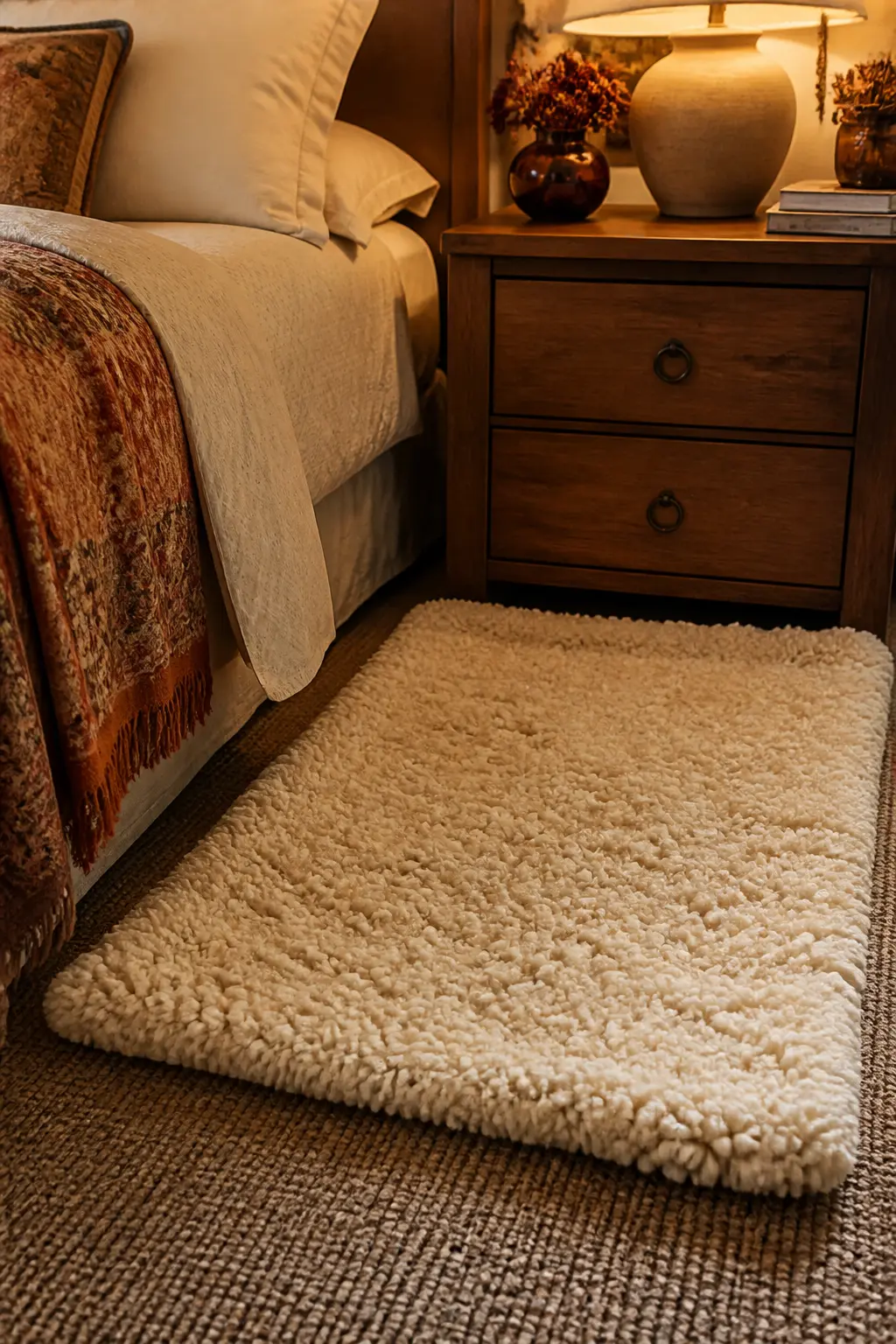
One Heavier Rug Layered at the Bedside for Cold Mornings
Sometimes the existing rug is fine for looks but too thin underfoot on a cold morning. Laying a single heavier rug on top of it, positioned squarely at the bedside, solves the comfort problem without replacing the base layer.
A tufted wool rug or a high-pile option works here. The point is density: you want something that holds warmth in its fibres overnight.
This is also the version to try if you are renting and cannot change the flooring. The layering trick works on carpet as well as on hard floors.
🛍 Shopping guide
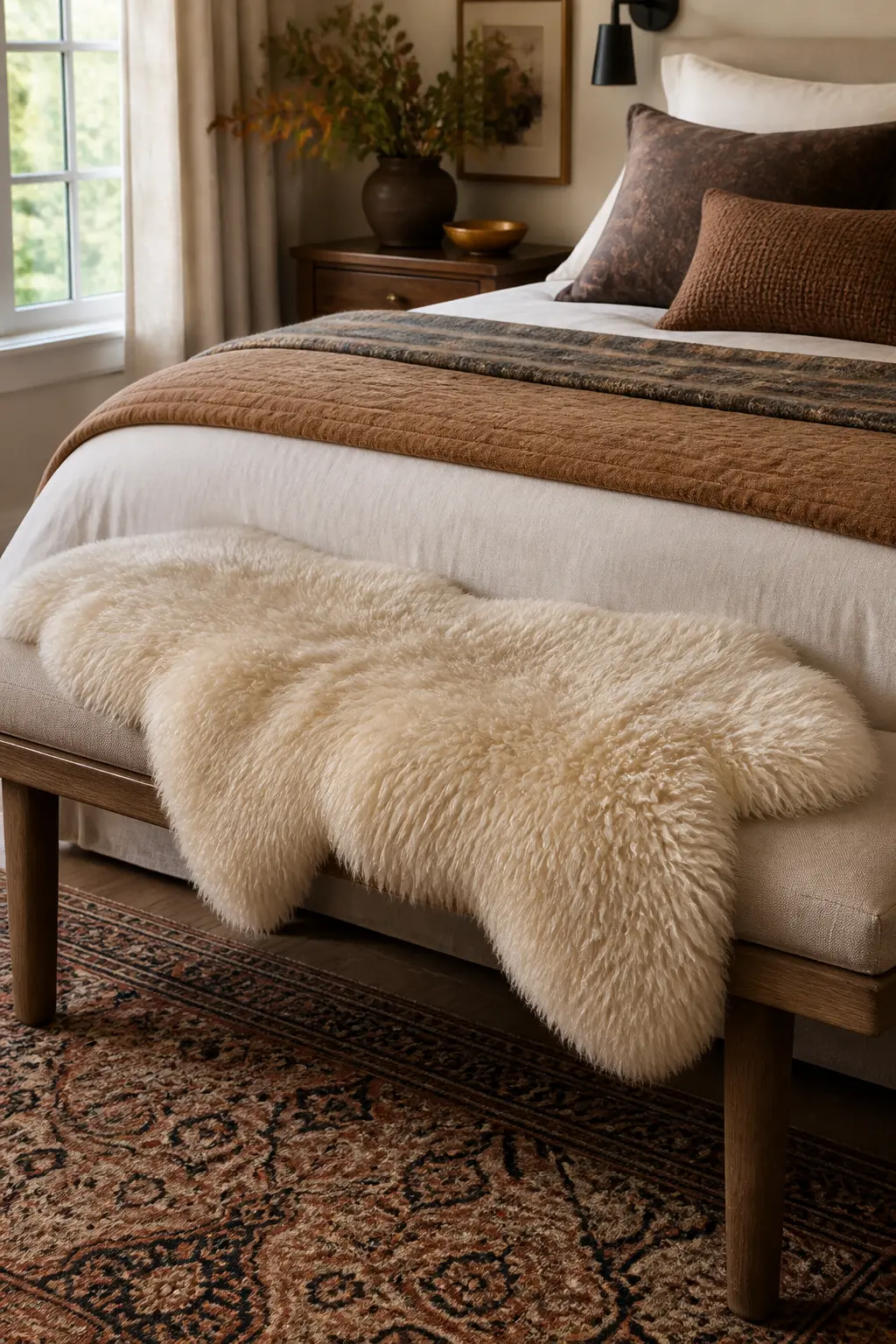
Sheepskin Laid Across the Bench at the Foot of the Bed
A sheepskin draped over the top of a bedroom bench does two things: it softens the bench as a surface and it adds the kind of material contrast that makes a room look considered.
It does not need to be pinned or arranged precisely. Let it sit slightly off-centre, with a little overhang on each side. The looseness is the look.
One sheepskin is enough. Two would tip into a different aesthetic.
🛍 Shopping guide
The Windows
Windows do two jobs in autumn: they let in the light you want to keep, and they let out the warmth you want to hold. A small adjustment to each one changes both.
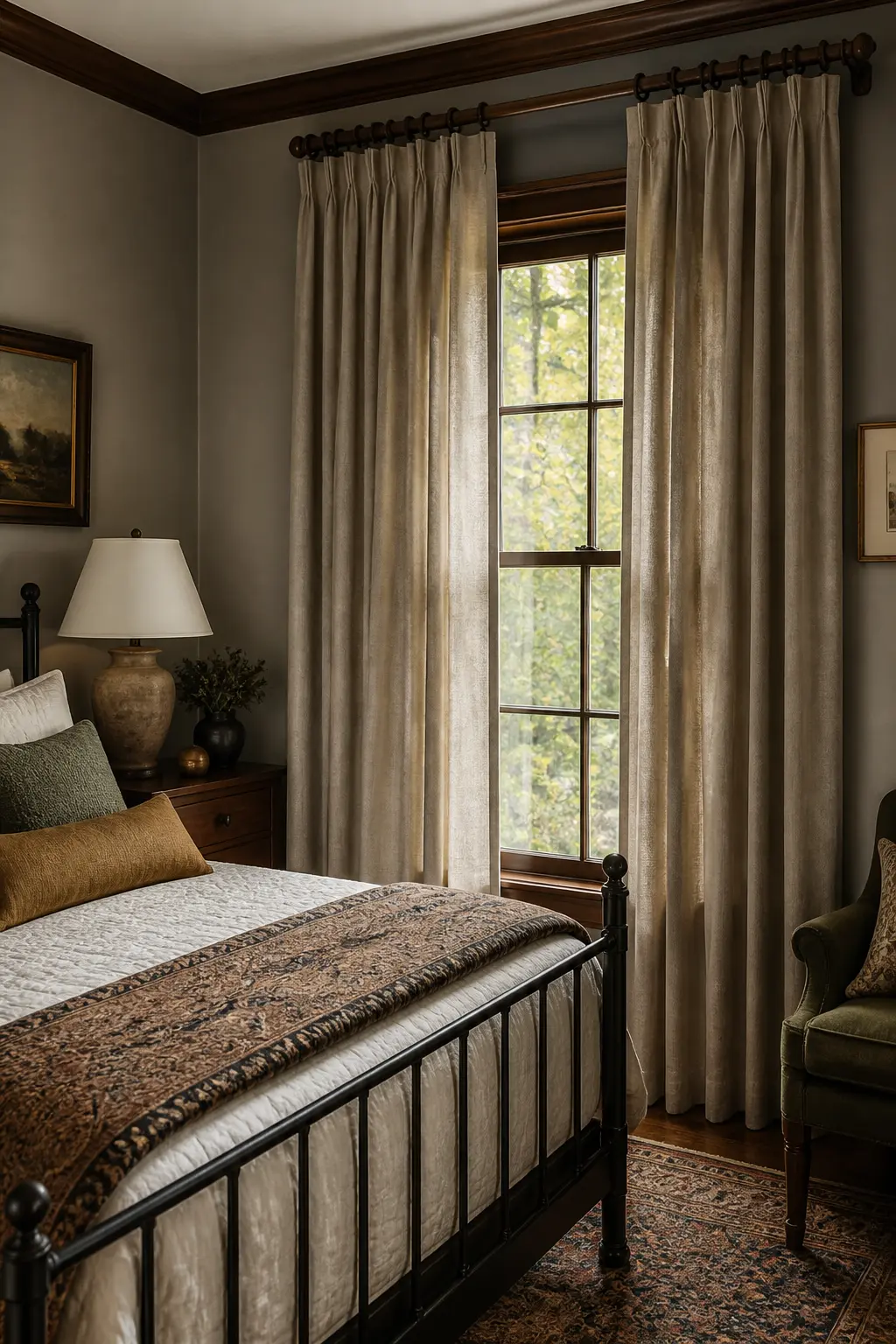
Heavier Curtains Hung to Block Early Evening Chill
Swapping lightweight curtains for a heavier fabric is the window equivalent of putting on a sweater. It does not have to be blackout fabric, just something with more body: a cotton-linen blend, a velvet, or a mid-weight canvas.
Hang them from a rod at least four inches wider than the window frame on each side, so they cover the wall rather than just the glass. That extra width is what makes the room feel larger and darker in the right way.
Pull them at dusk rather than at dark. The habit matters as much as the curtain itself.
🛍 Shopping guide
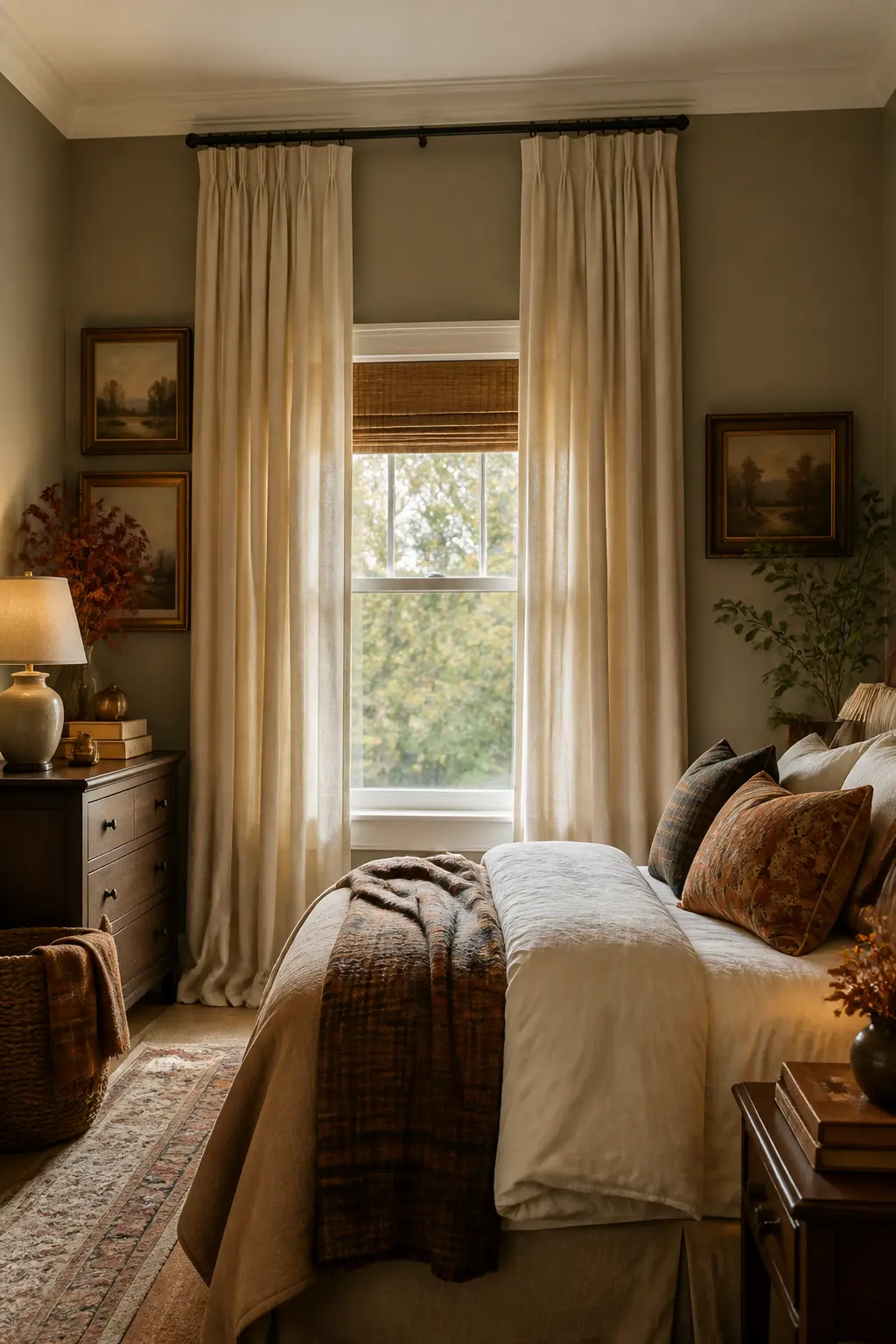
Curtains Hung Higher Than the Window Frame to Lift the Room
Mounting the curtain rod as close to the ceiling as possible, rather than at the top of the window frame, is one of the cheapest ways to change the proportions of a bedroom. The curtains look taller, the ceiling looks higher, and the room reads as more expensive.
This works with whatever curtains you already own, provided they are long enough to reach the floor from the new height. Most standard 96-inch panels will clear a standard ceiling when hung high.
Measure before you move the brackets. One afternoon, a drill, and a set of anchors.
🛍 Shopping guide
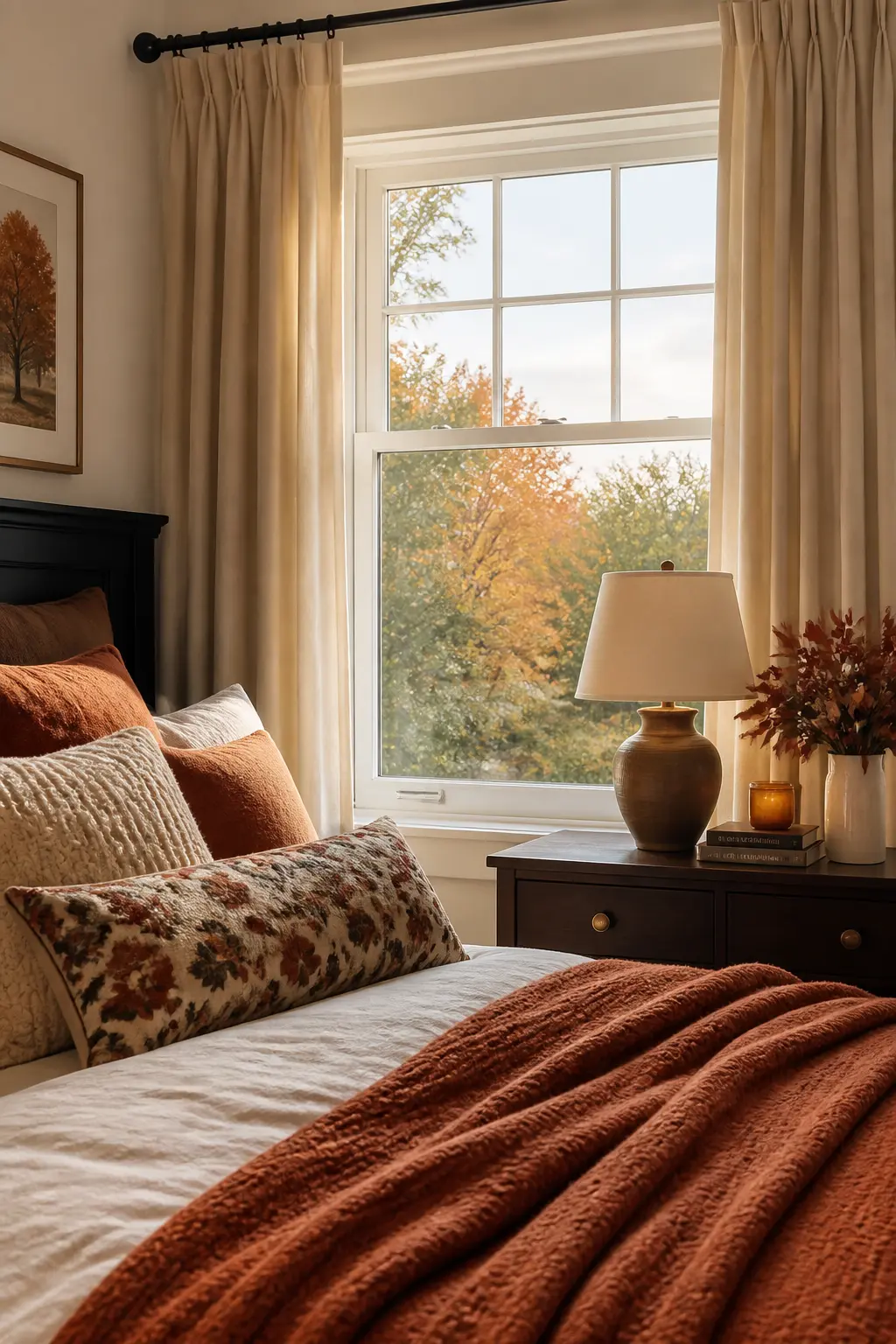
Sheer Curtain Layer Removed So More Light Comes Through
This one costs nothing. Removing a sheer curtain layer lets the existing heavier curtain do its job at night, and during the day it stops filtering out the low autumn light that the room needs most.
Store the sheers flat in a drawer or folded in a box. They can go back up in spring when the light is stronger and privacy becomes more of a consideration again.
The result is a window that looks cleaner and a room that feels less like it is hiding from the world.
🛍 Shopping guide
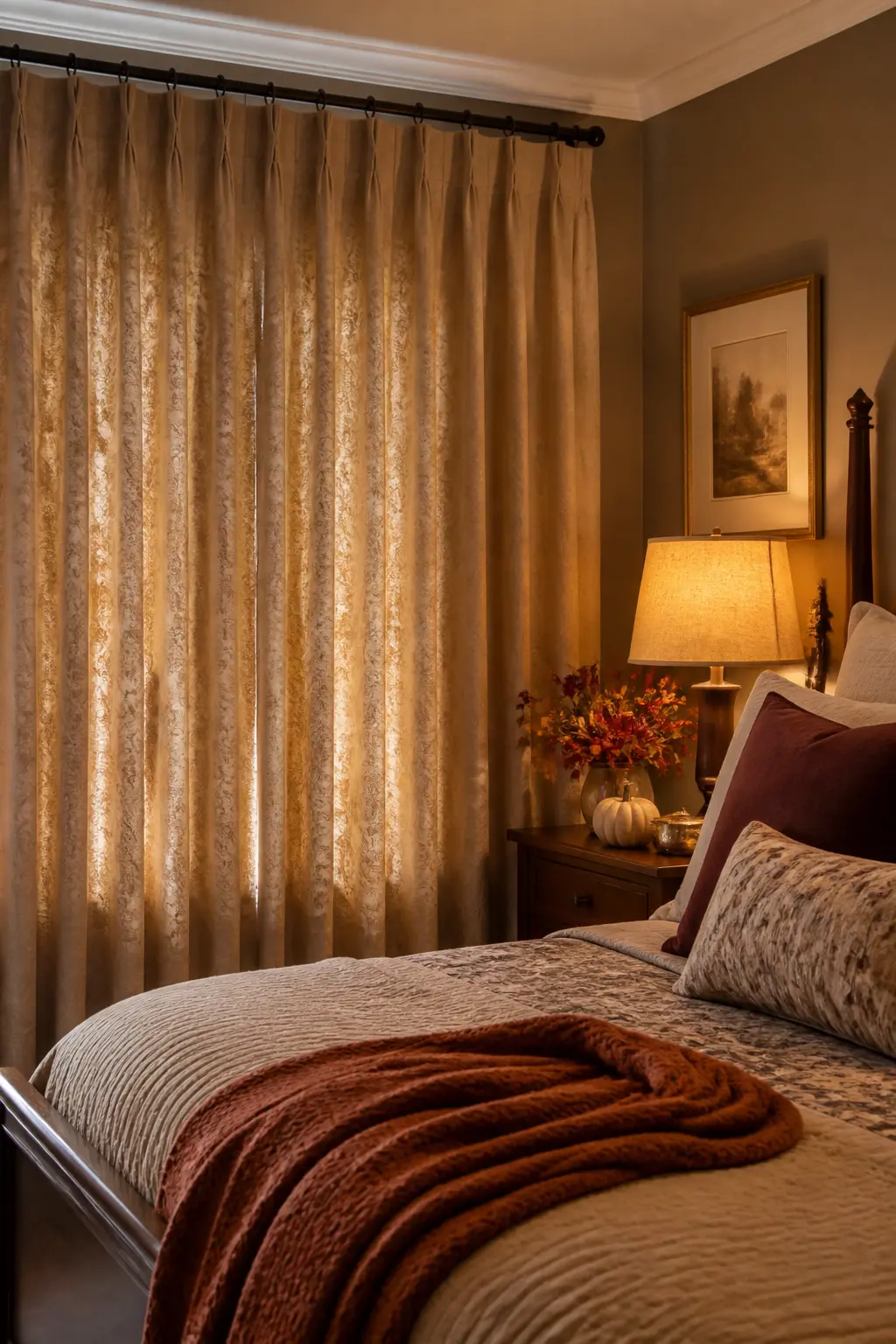
Curtains Lined for Warmth as Well as Light
A thermal curtain lining clip-ons or sews into the existing panel in an afternoon. The lining adds weight, which improves the drape, and it adds an insulating layer that makes a real difference once the temperature drops at night.
The outside of the curtain looks the same. The difference is only in how the room holds heat after dusk.
This is the move for a bedroom that runs cold, especially if the windows are single-glazed or old.
🛍 Shopping guide
The Lighting
Overhead lighting is the enemy of a bedroom that feels like a retreat. Fall is the season to deal with it, because the evenings arrive earlier and every harsh source shows up faster.
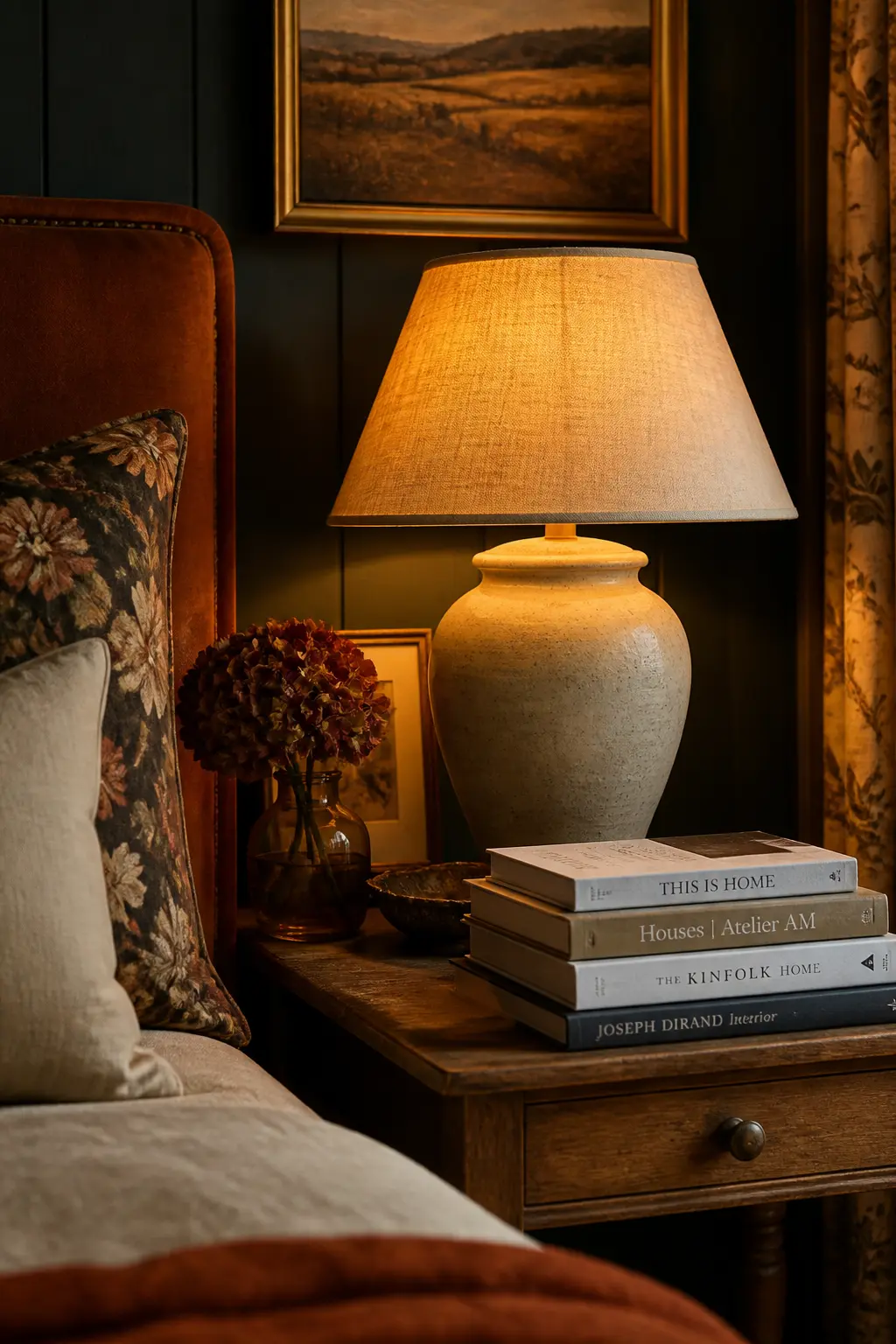
Warm-Toned Bedside Lamp Shade
A white drum shade throws a cool, flat light. A shade in parchment, amber, terracotta, or a warm linen diffuses the bulb and colours the light itself as it passes through the fabric.
You do not need a new lamp. You need a new shade. Most shade fitters are universal, and swapping one takes under two minutes.
The difference at night is significant: the pool of light on the ceiling goes from blue-white to something closer to candlelight.
🛍 Shopping guide
Softer Shades Fitted on the Bedside Lamps
This is the same principle as the single shade swap, applied to both sides of the bed at once. Two matching parchment or warm-linen shades create a symmetry that also happens to bathe the whole head of the bed in a warmer light.
If the shades are different sizes because the lamps do not match, choose shades in the same material and colour family rather than the same dimensions. The material read is what matters for cohesion.
A lower-wattage warm-white LED inside each shade extends the effect.
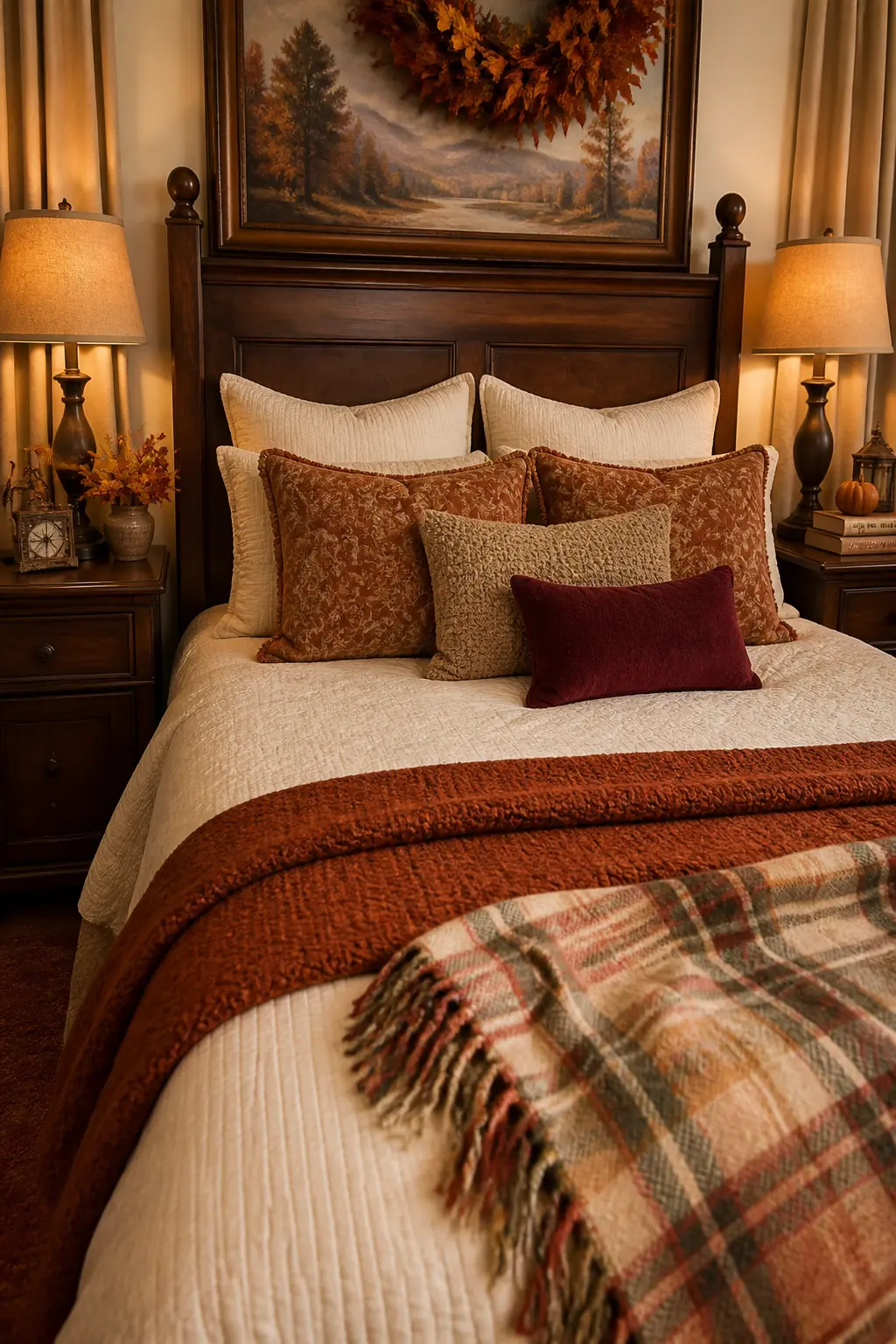
🛍 Shopping guide
Lamp Moved to the Darkest Corner Rather Than Beside the Bed
Most bedrooms have a corner that goes dark first. Moving a lamp there, rather than adding another one beside the bed, lifts that corner and makes the room feel larger and more evenly lit without using the overhead at all.
An arc floor lamp works best here because it can reach up and over without taking much floor space. A table lamp on a stool or a small side table also works.
The overhead stays off. That discipline alone changes the whole feeling of the room at night.
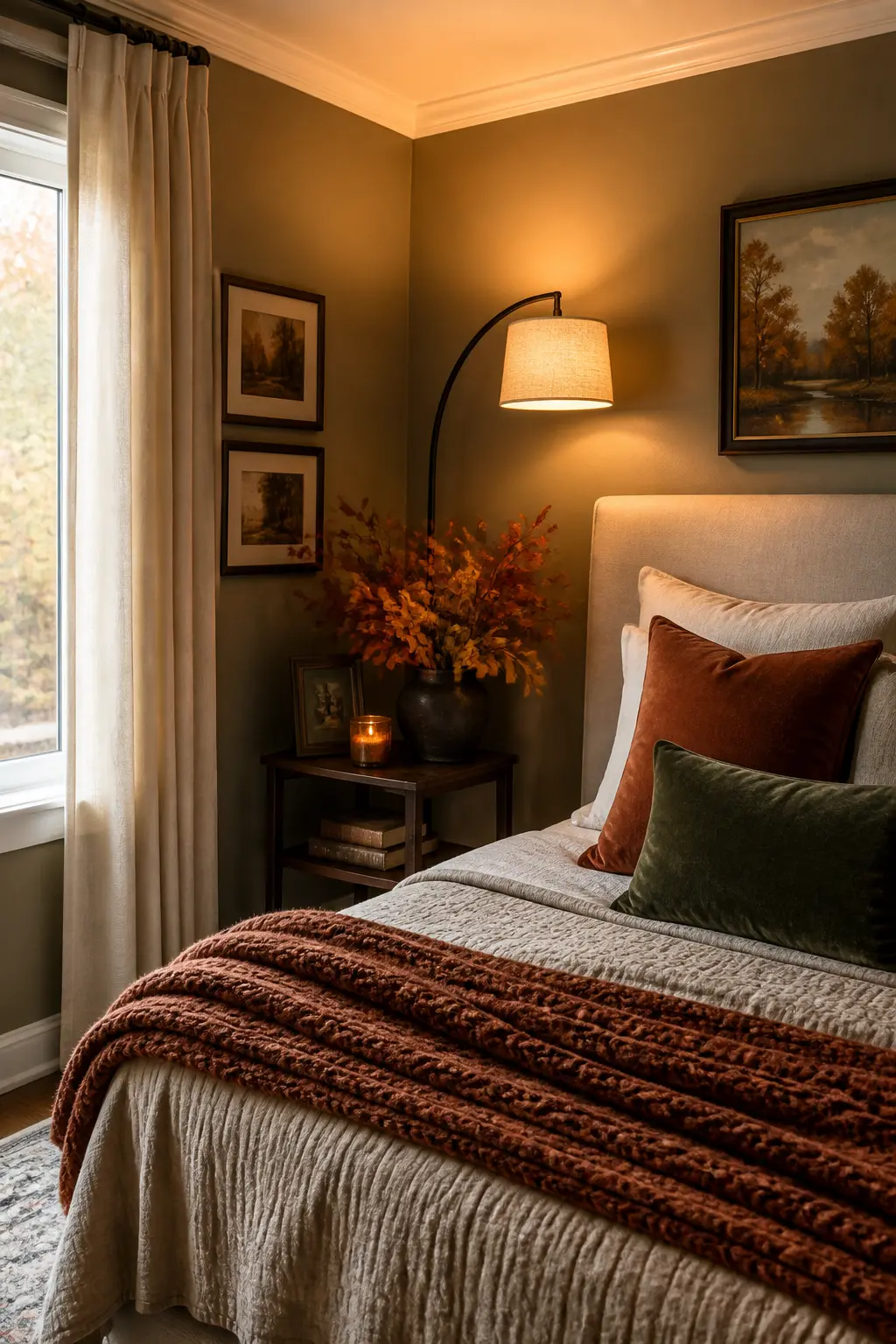
🛍 Shopping guide
Layered Lighting So the Overhead Is Never the Only Source
One overhead light and nothing else is the lighting plan of a rental property that has not been thought about. At least three sources at different heights changes everything: bedside lamp, floor lamp in a corner, and a candle or a small plug-in on a surface.
The goal is a room where you can switch off the overhead before you get into bed and still have enough light to see without squinting.
Put the bedside lamps on a smart plug or a timer so they turn themselves off. That is the version of this idea you will actually keep doing.
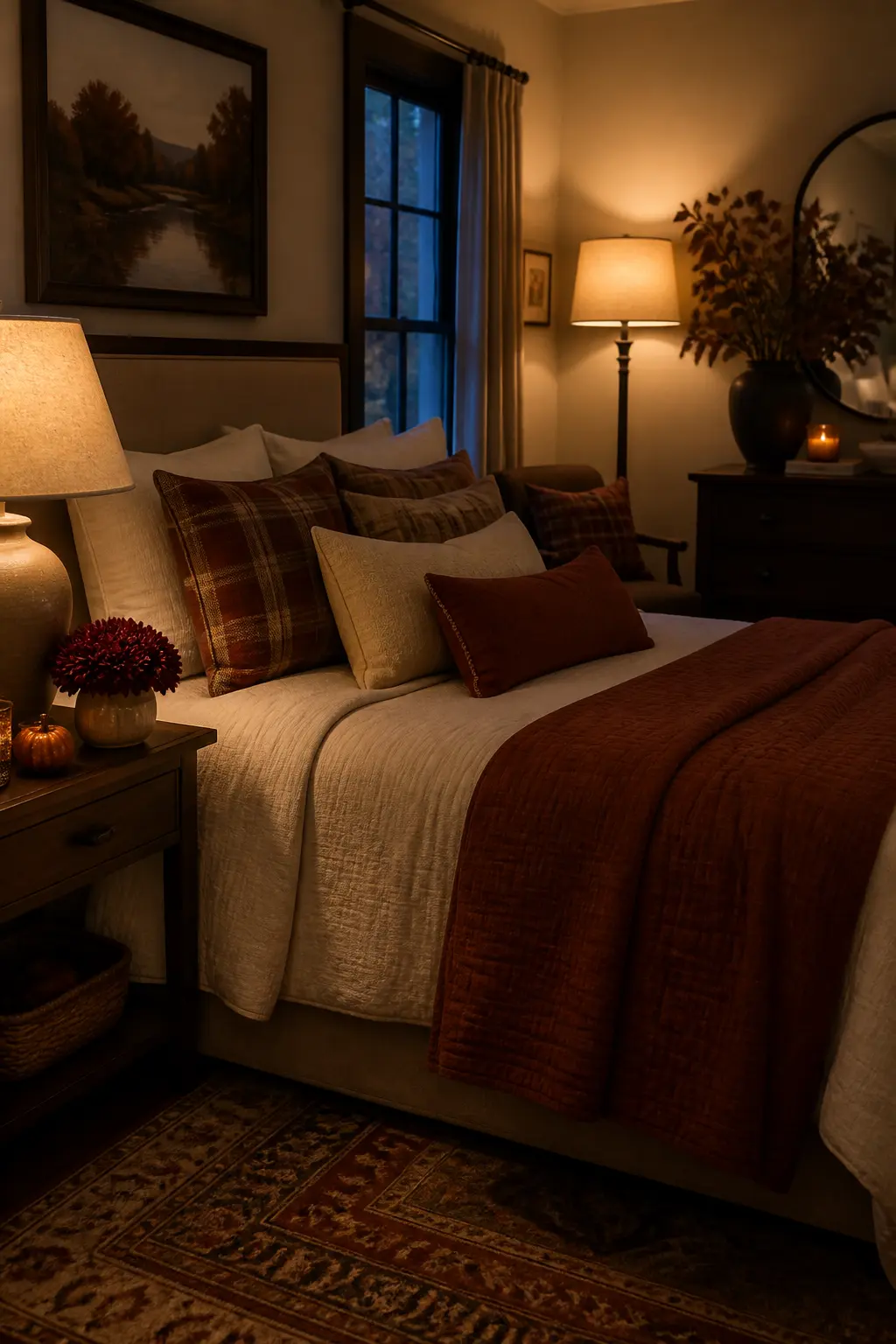
🛍 Shopping guide
Every Fixture in the Room Given a Softer Shade
This is the committed version of the shade swap: every lamp in the room, not just the bedside pair. The floor lamp in the corner, the lamp on the dresser, the one by the reading chair if you have one.
When every light source passes through a warm-toned shade, the room stops having cold spots where one uncovered bulb ruins the effect.
You do not have to buy all the shades at once. Replace them as you find ones you like, and live with the mismatched interim. The warmth builds incrementally.
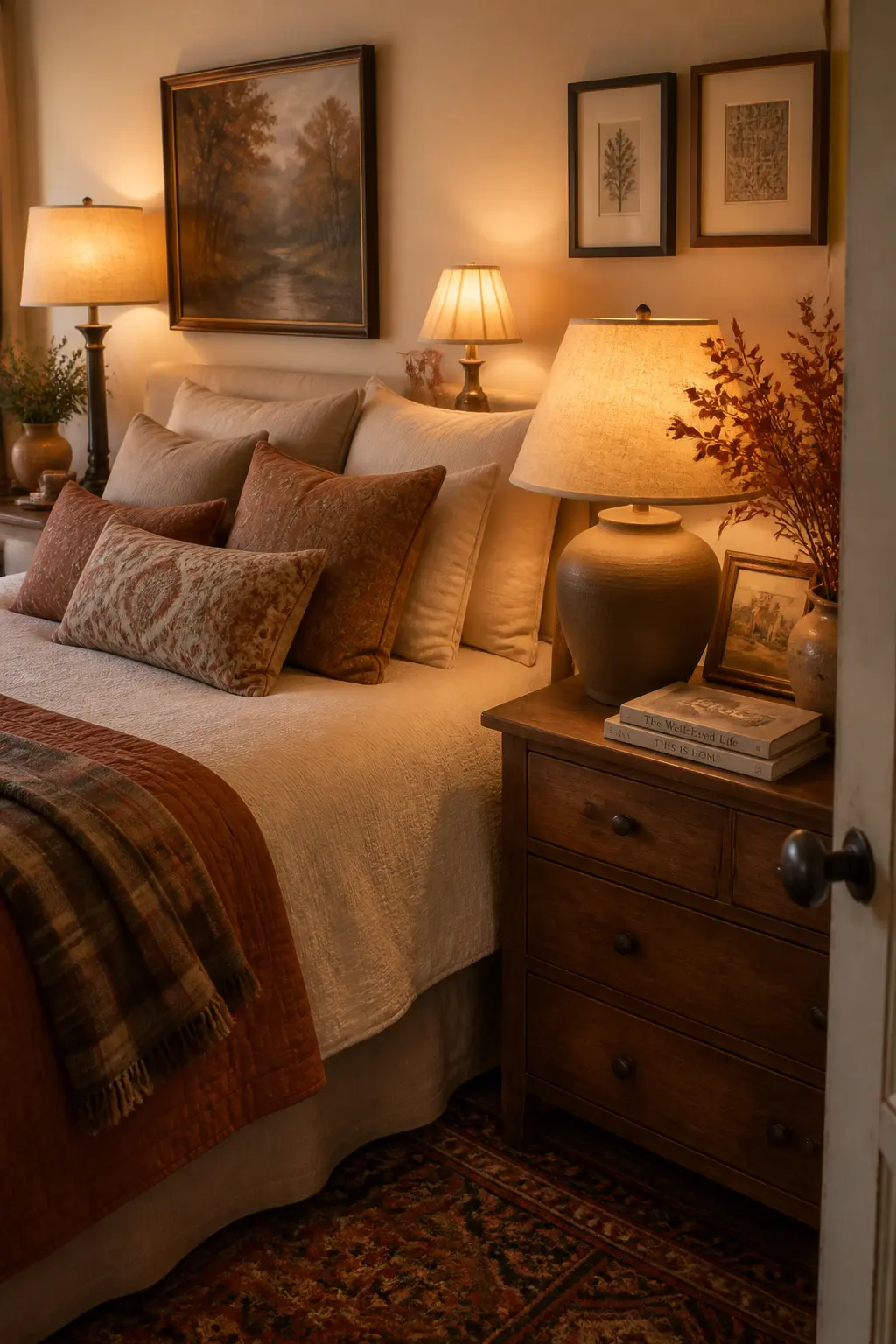
🛍 Shopping guide
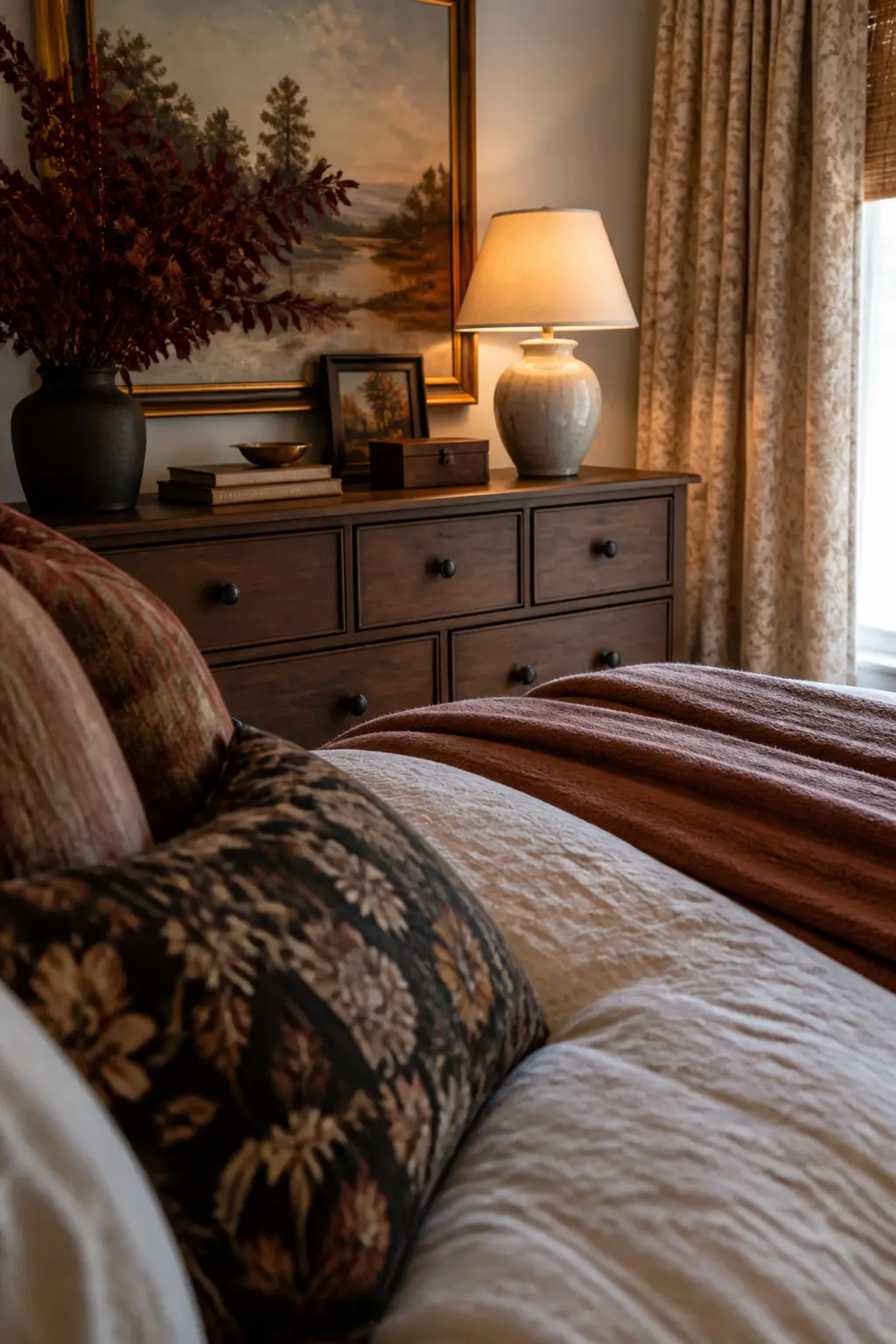
Small Lamp Added on the Far Side of the Room
A small lamp on the far side of the room, on the dresser or on a low shelf, creates depth. The eye travels across the room to find it, which makes the space feel larger than it is.
A lamp with a very small footprint works here: a candlestick lamp, a small ceramic base with a half-shade, or even a plug-in picture light aimed at a wall.
Keep it on a warm bulb, no cooler than 2700K.
🛍 Shopping guide
The Surfaces
Dressers, nightstands, windowsills: these are the places where a single object can shift the whole tone of the room without committing you to anything permanent.
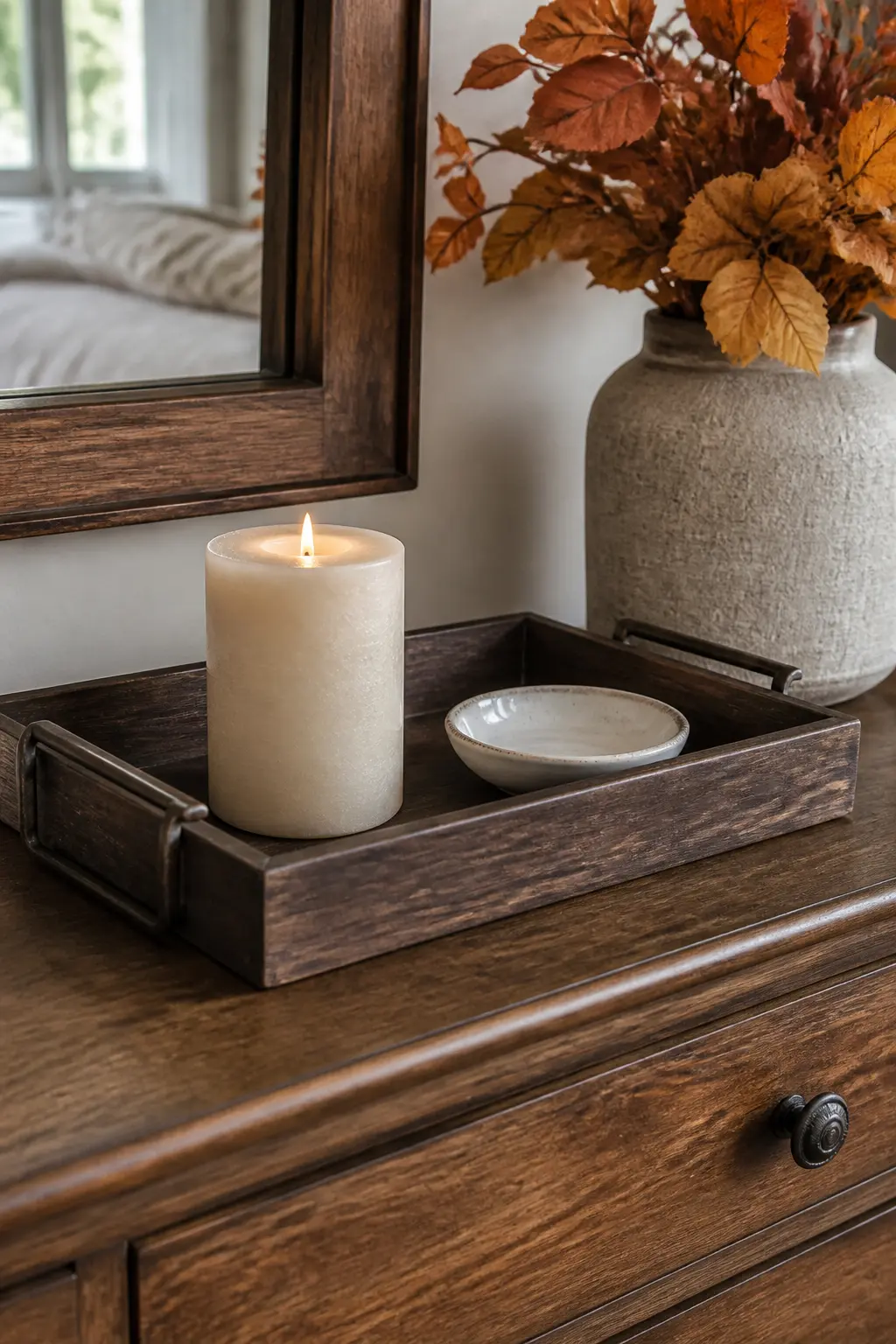
Wooden Tray on the Dresser Holding a Candle and a Small Dish
A tray corrals objects that would otherwise look scattered. On a dresser, even two or three small things read as a vignette when they sit together on a tray rather than apart on the surface.
Use a dark wood tray: walnut or a stained oak rather than a pale pine. The darker tone anchors the objects on it and reads as deliberately chosen rather than arrived at by accident.
One candle and one small ceramic dish. That is the full contents. Resist adding more.
🛍 Shopping guide
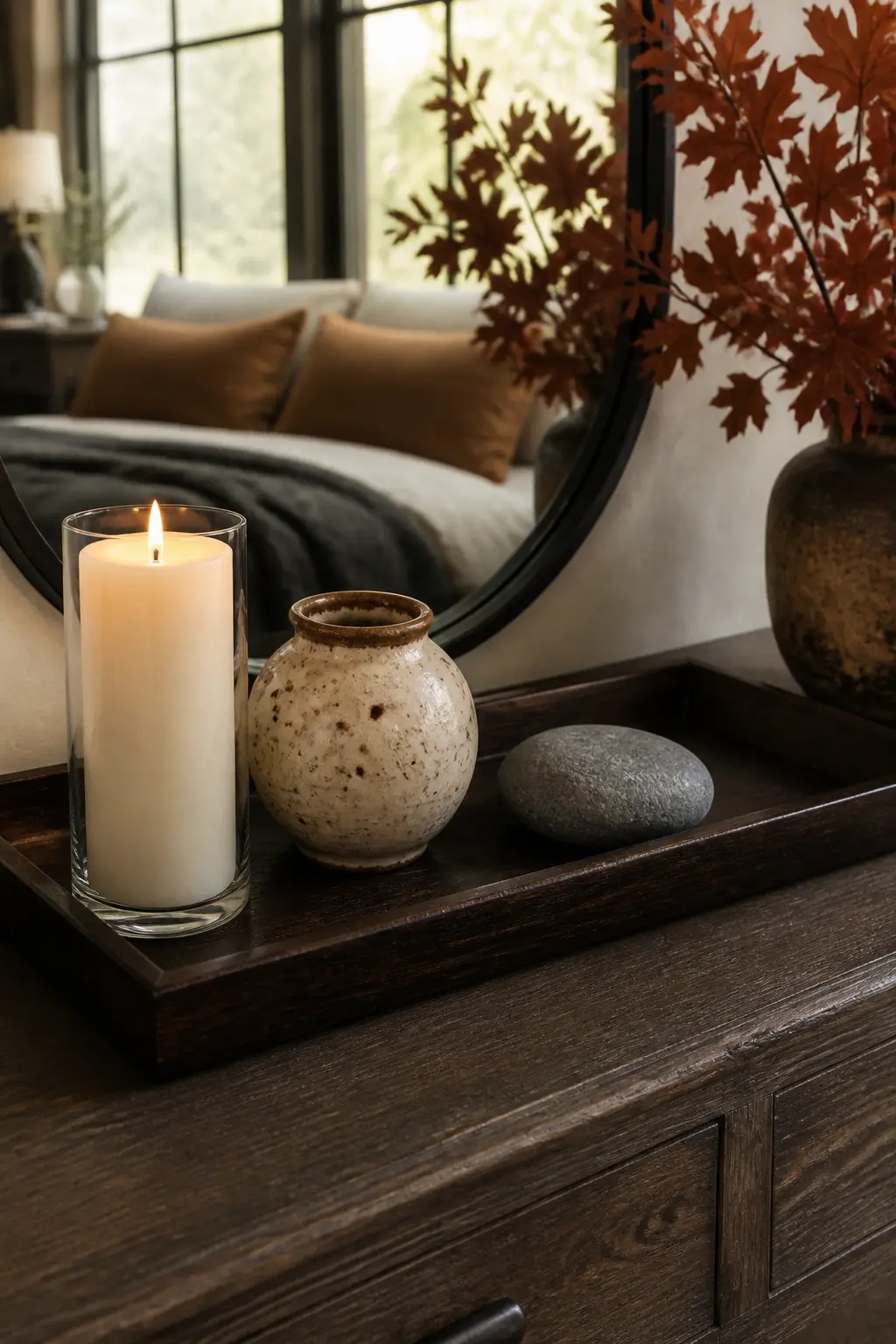
Dark Wood Tray on the Dresser Holding Three Objects
Three objects on a tray is the classic rule of odd numbers applied at its smallest. A candle, a small vessel, and one found object, such as a smooth stone or a dried seedhead, is the formula.
The dark wood of the tray makes even pale objects look more intentional against it. Choose objects at different heights so the arrangement has a silhouette.
This is the version for a dresser that has more surface to play with, or for someone who finds two objects insufficient to look at.
🛍 Shopping guide
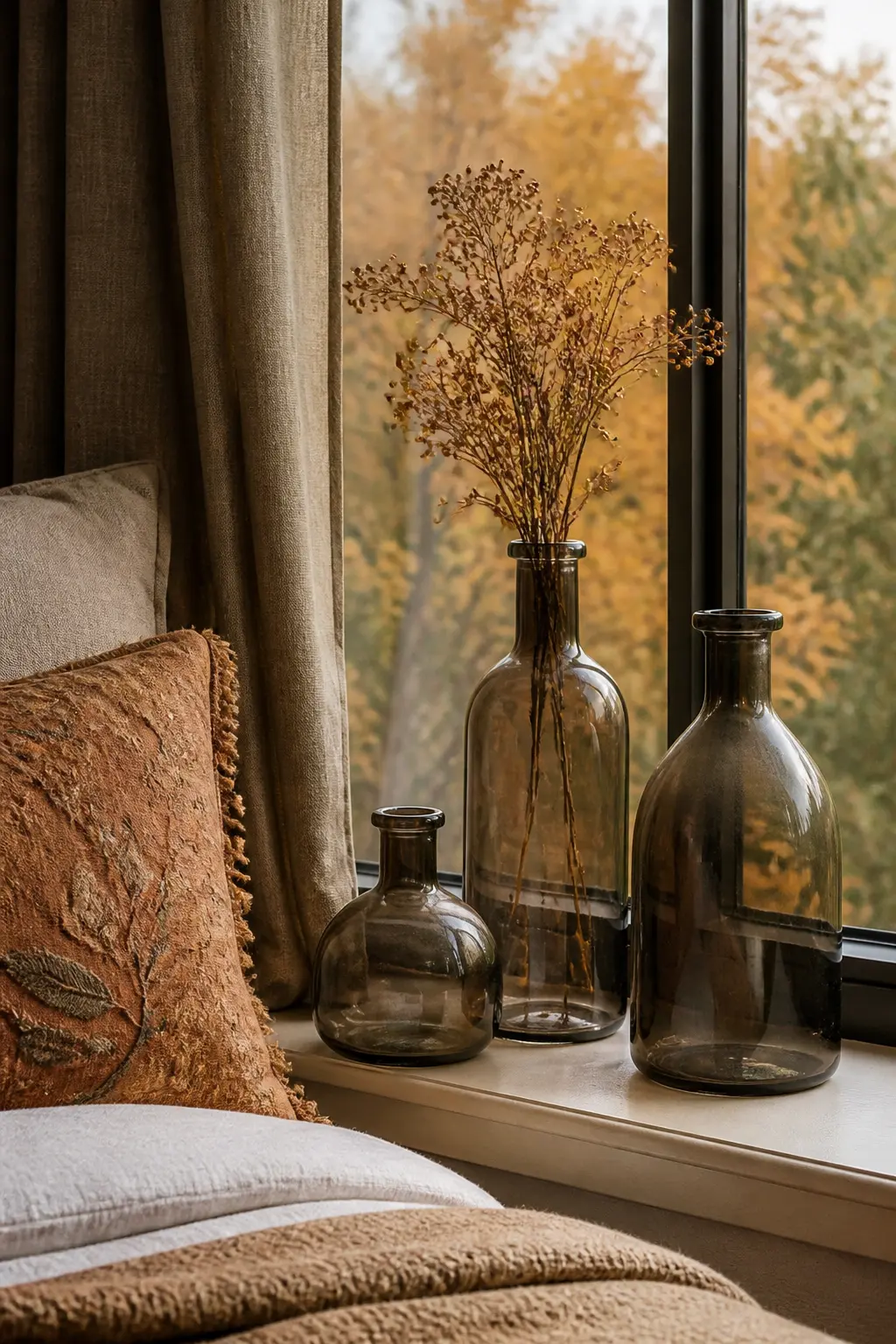
Smoked Glass Bottles Grouped on the Windowsill
Three smoked or amber glass bottles of different heights, grouped at one end of a windowsill, catch the light without reflecting it harshly. The effect is warm even when the bottles are empty.
Do not line them up in a row. Cluster them: two forward, one back, or all three at slight angles to each other. The cluster reads as collected; the row reads as storage.
Dried stems in one of them, left empty in the others. That asymmetry is the whole composition.
🛍 Shopping guide
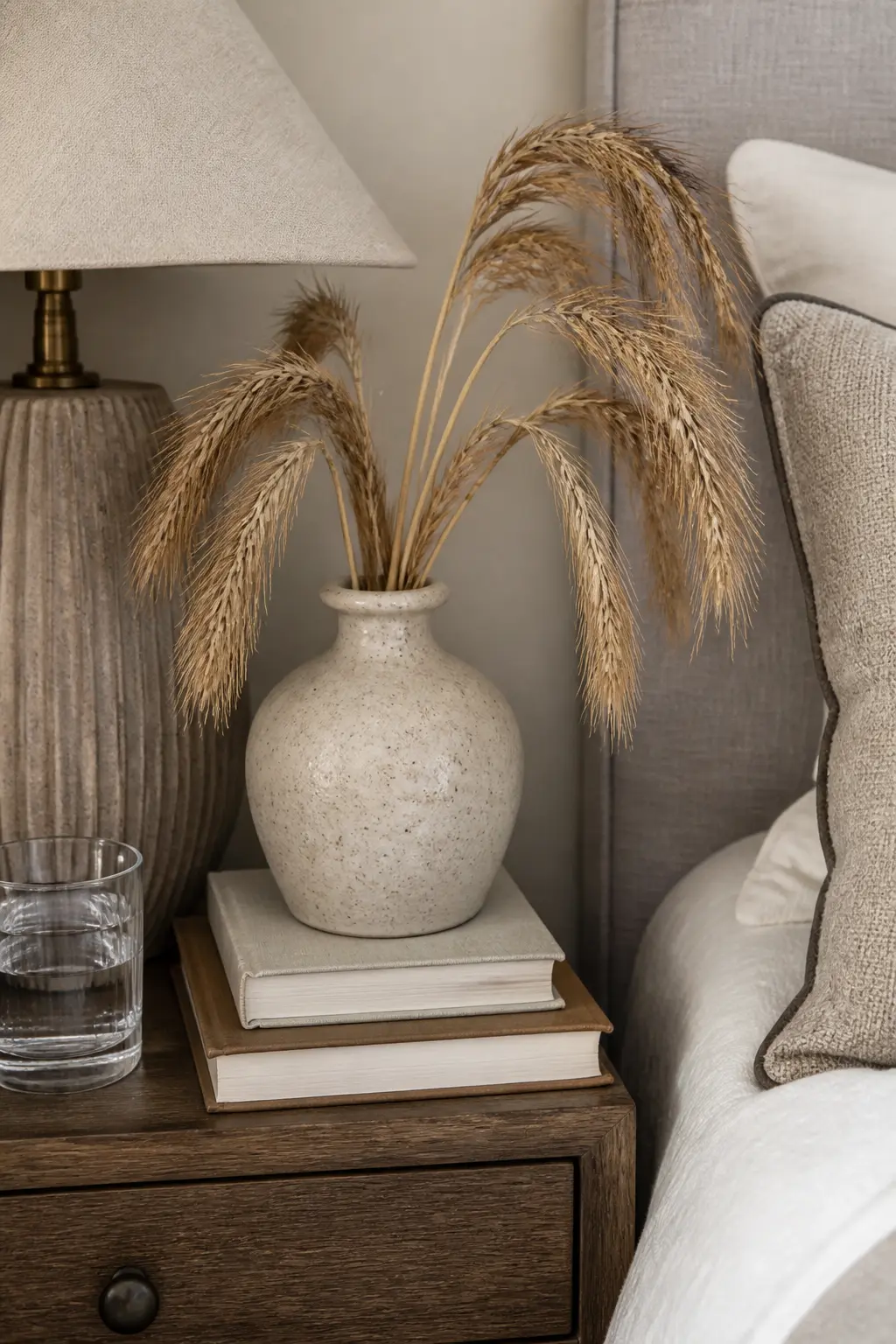
Dried Barley or Pampas in a Bedside Vase
Dried stems do not drop, do not need water, and do not die. That makes them the logical choice for a bedside surface where a weekly refresh of fresh flowers is too much maintenance.
Barley has a particular quality: its arching, heavy heads read as quietly autumnal without being a seasonal cliche. Pampas reads similarly but with more volume. Choose based on the height of the vase and the scale of the nightstand.
A single stem type, not a mixed arrangement. The restraint is what makes it work.
🛍 Shopping guide
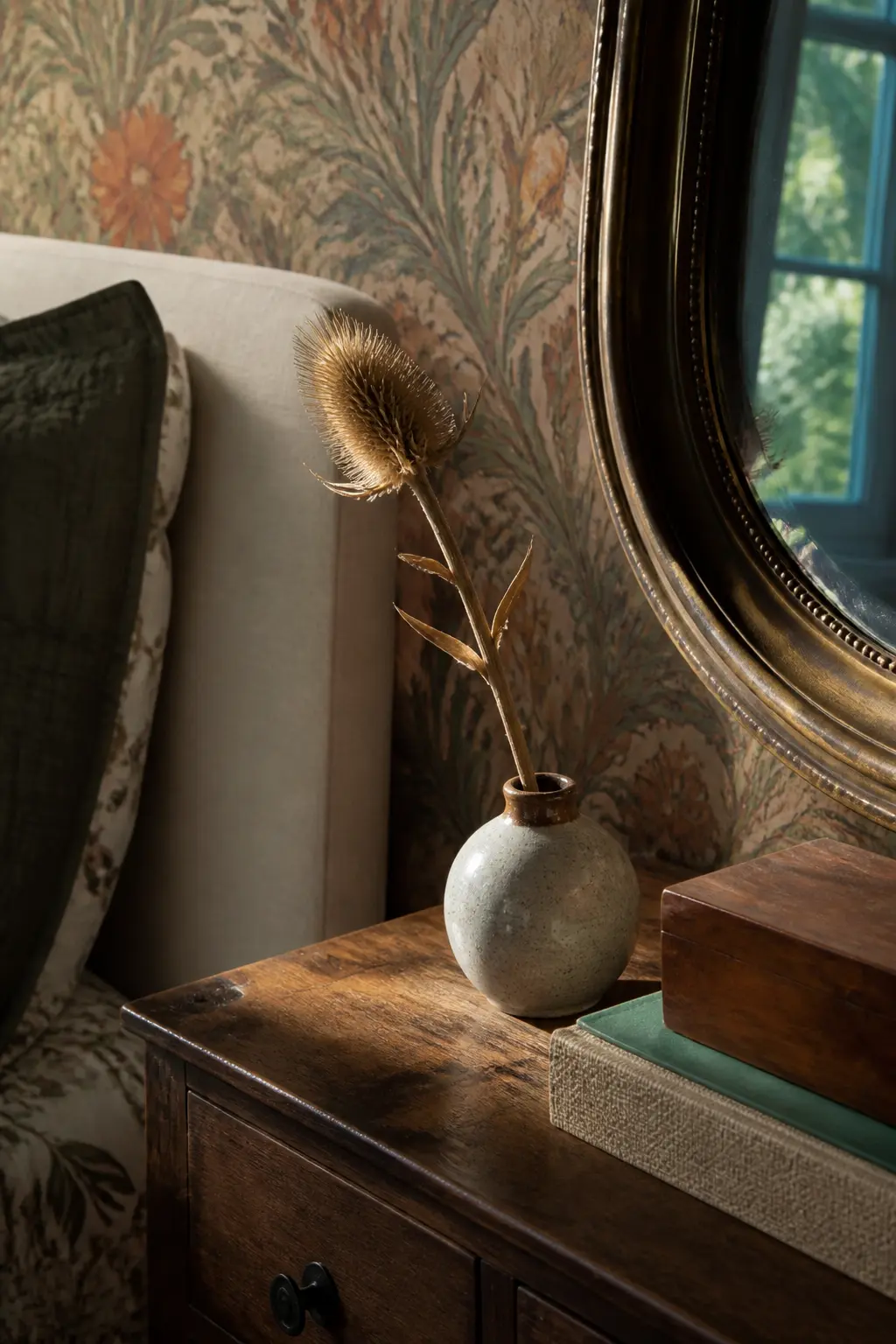
Dried Stems in a Bud Vase Rather Than Fresh Flowers That Drop
Fresh flowers look extraordinary for four days and then become a chore. Dried stems in a bud vase stay for months and require nothing from you. On a windowsill or a dresser, a single dried stem in a small vase is a complete and finished object.
Thistle, cotton stem, wheat, or a preserved magnolia leaf all work. The criterion is: does it hold its shape when dry. If yes, it belongs here.
Replace them when they look tired, not on a schedule.
🛍 Shopping guide
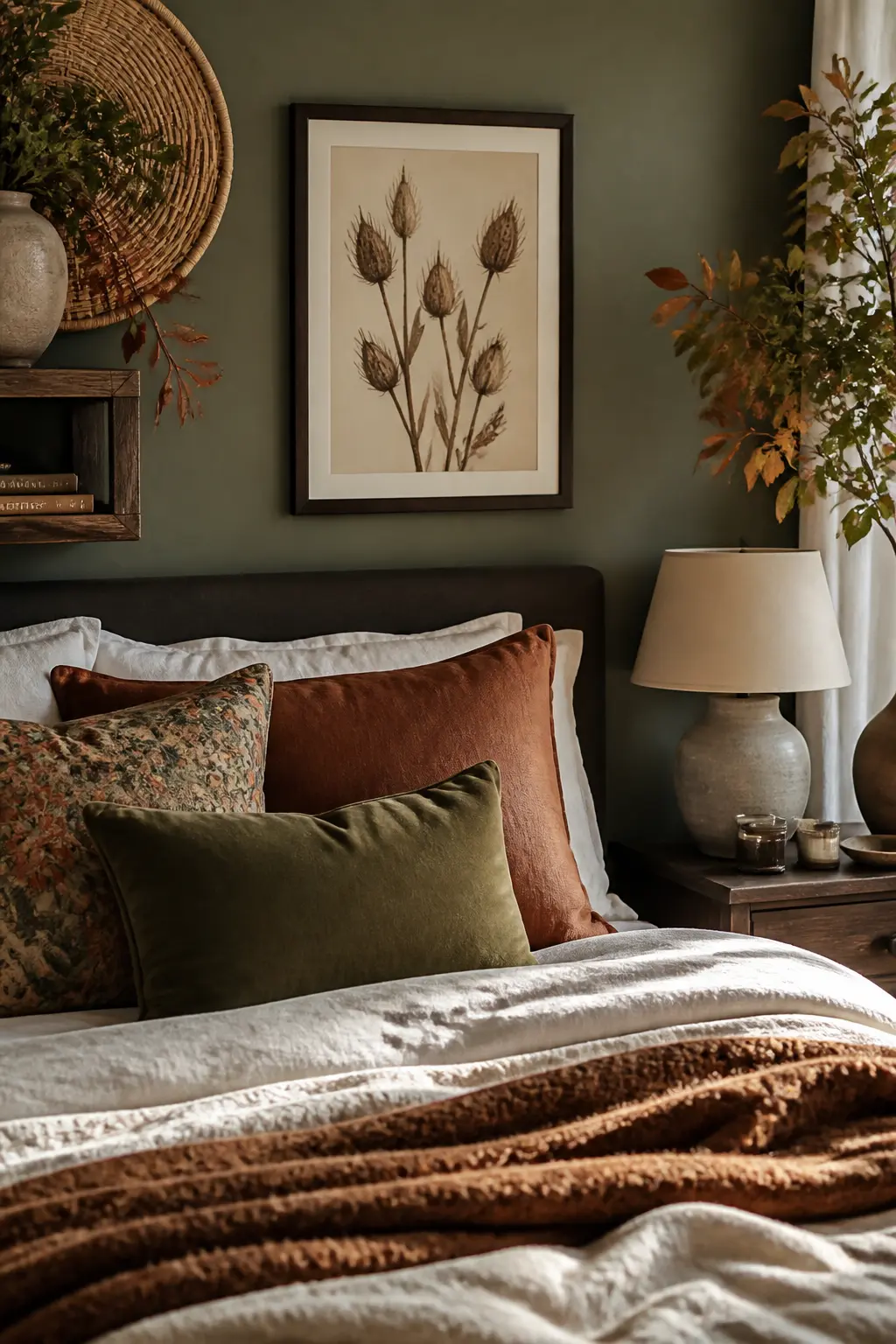
Framed Botanical Print Swapped Into an Existing Frame
A botanical print in an existing frame costs only the paper it is printed on. The frame stays where it is on the wall. The print inside changes, and the whole piece shifts with it.
Choose a print with a warm-toned background or a subject, such as seed pods, grasses, or fern fossils, that reads as autumnal without being literal about it. Black on cream works in any season but feels especially right in low autumn light.
Print at home on good matte paper, or order from a digital print shop. Either works.
🛍 Shopping guide
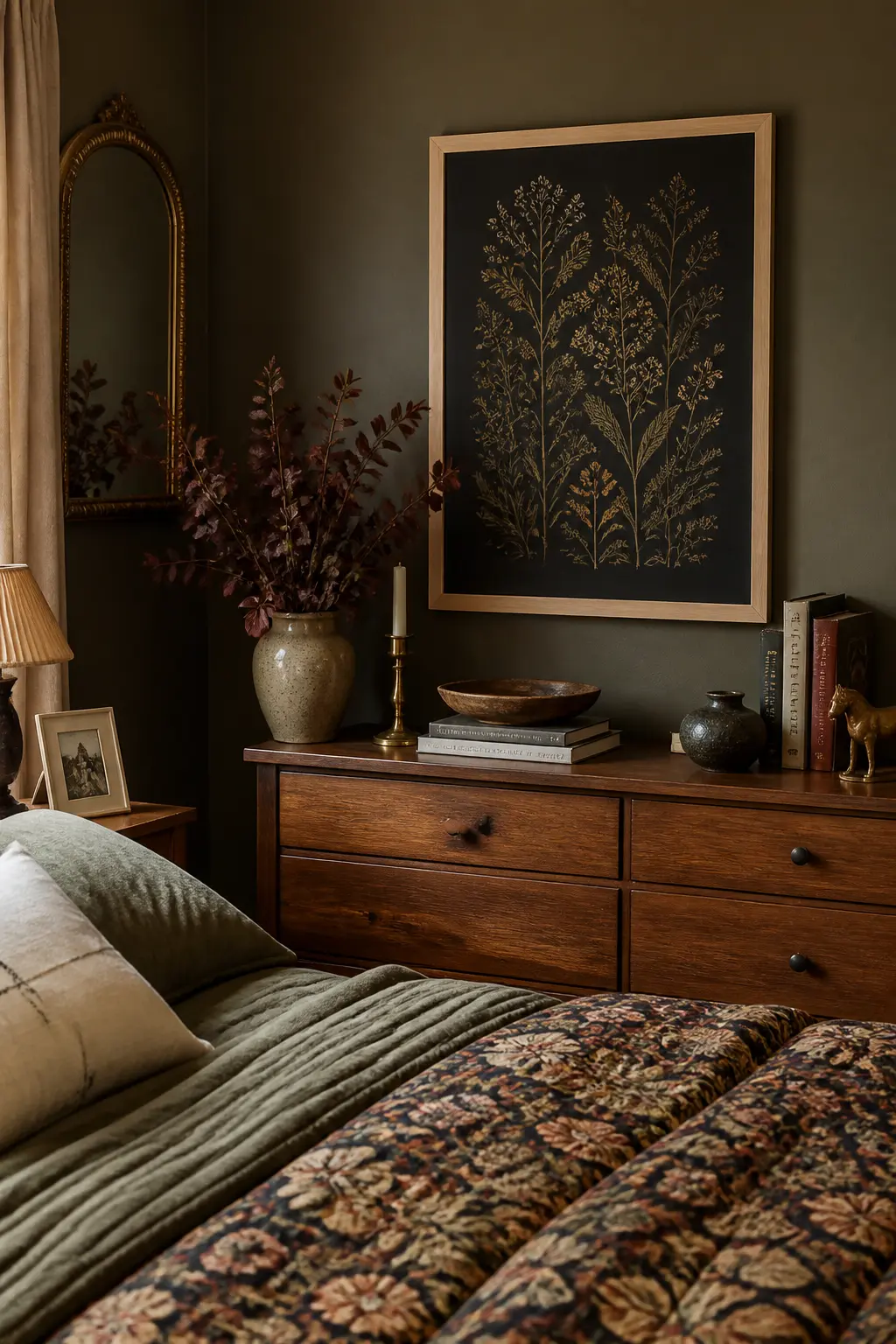
Framed Print Swapped to a Darker Tone
If a print is already in the frame, swap it for one with a darker ground: a deep charcoal illustration, a dark-toned watercolour, or a black-and-white photograph with strong contrast. The frame stays; only the sheet of paper changes.
A darker image against a wall reads as warmer than a pale one, counterintuitively. The eye goes to the shadow in the image rather than the light, and that shift in focus makes the room feel more enclosed and cocooning.
This takes five minutes and costs a few pence to print.
🛍 Shopping guide
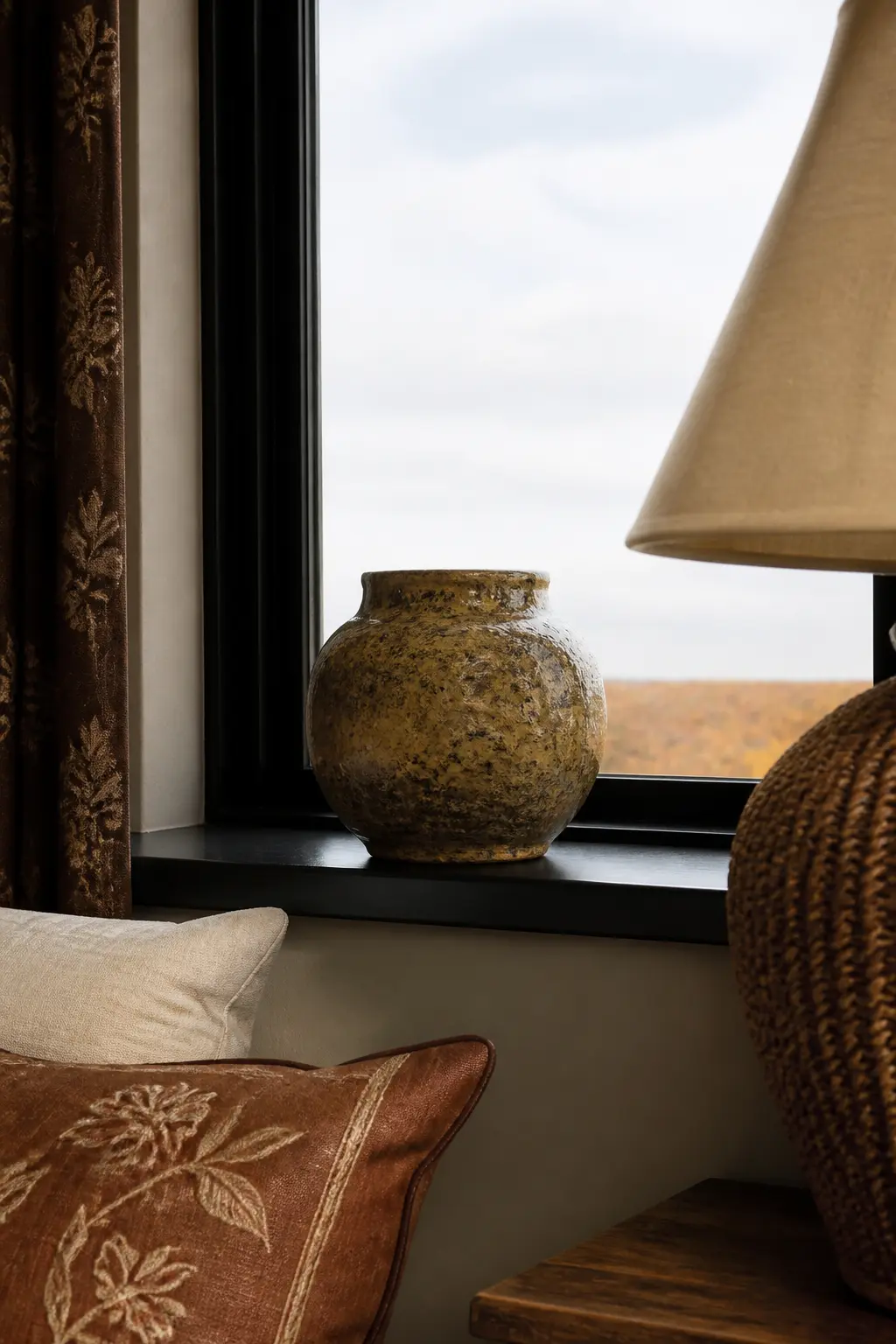
One Rough Ceramic Vessel on the Windowsill
A single rough-textured ceramic vessel on a windowsill is the opposite of decoration as afterthought. It is an object chosen for itself: for the way the glaze breaks unevenly, for the weight implied by the thickness of its walls, for the way it looks different in morning light than in evening light.
Empty is fine. A few dried stems is fine. Do not fill it with anything that contradicts its roughness.
One vessel. One windowsill. No other objects around it. That isolation is the whole point.
🛍 Shopping guide
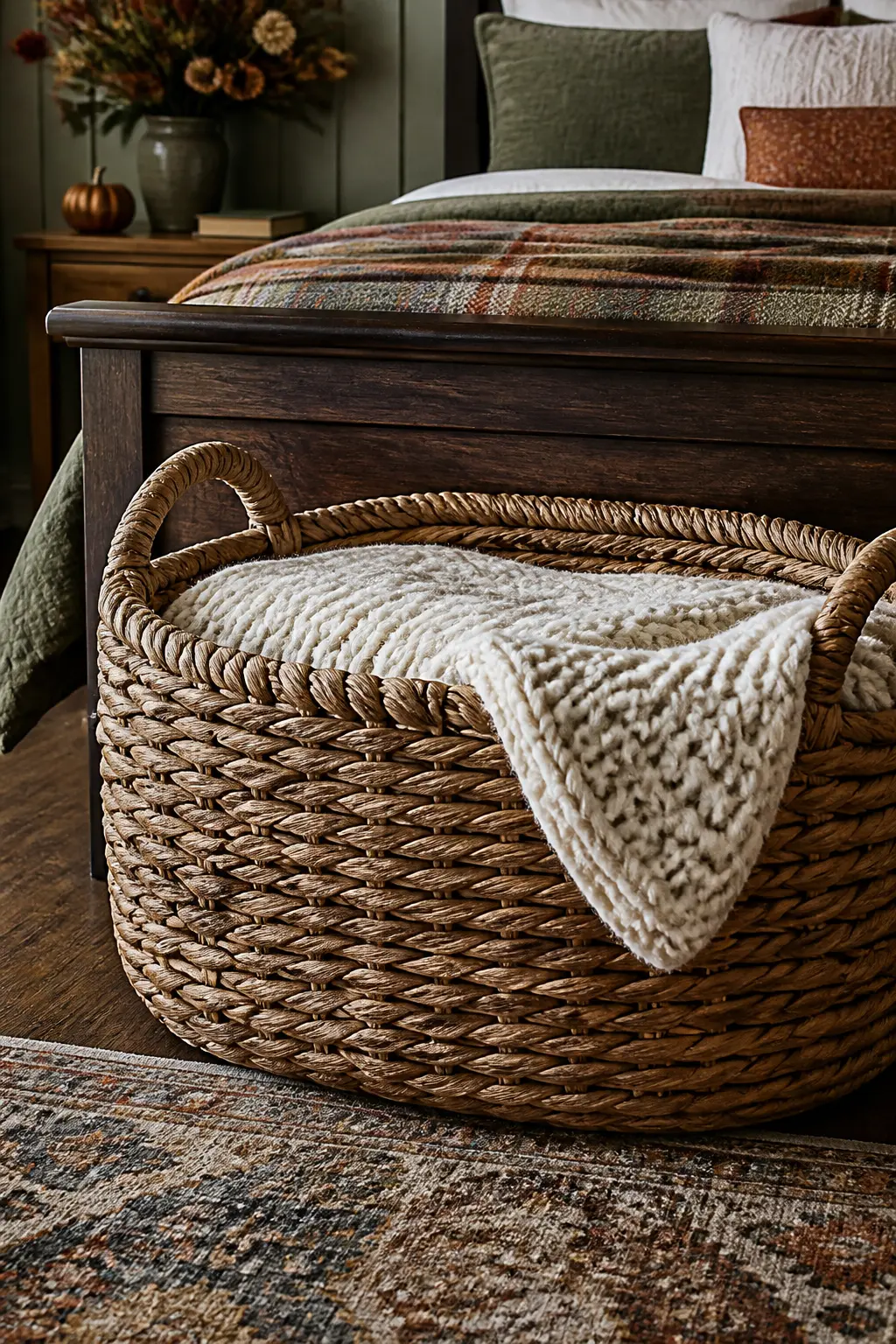
Woven Basket at the Foot of the Bed for Extra Blankets
A basket at the foot of the bed solves a storage problem and adds texture simultaneously. Extra blankets folded and stacked inside a woven basket look intentional; the same blankets piled on the floor look like a weekend that got away from you.
Choose a basket with visible weave structure rather than a smooth or painted finish. The roughness of the weave is what earns its place in an autumnal room.
Let one corner of a blanket drape over the basket edge. The slight overflow looks casual and lived-in in the right way.
🛍 Shopping guide
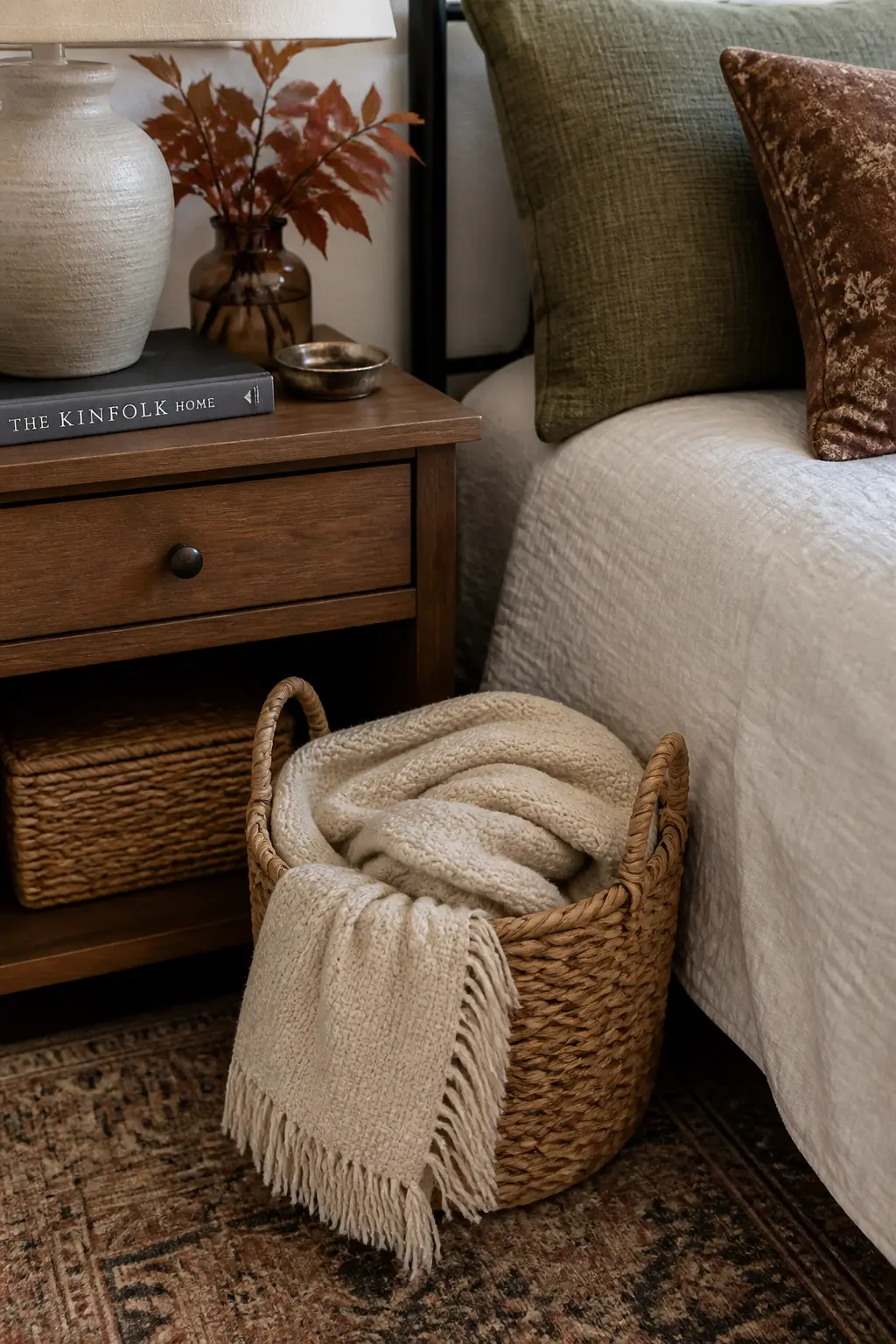
Basket Beside the Bed for the Extra Throw
A smaller basket beside the bed, rather than at the foot, keeps the extra throw within reach from the pillow. This is the practical version of the same idea: closer, smaller, and useful as a nightstand supplement when the table itself is too small to hold much.
A handle is useful. It makes the basket easy to relocate on weekends when you are reading in the chair rather than in bed.
Keep one throw in it and nothing else. The basket is not a general-purpose bin.
🛍 Shopping guide
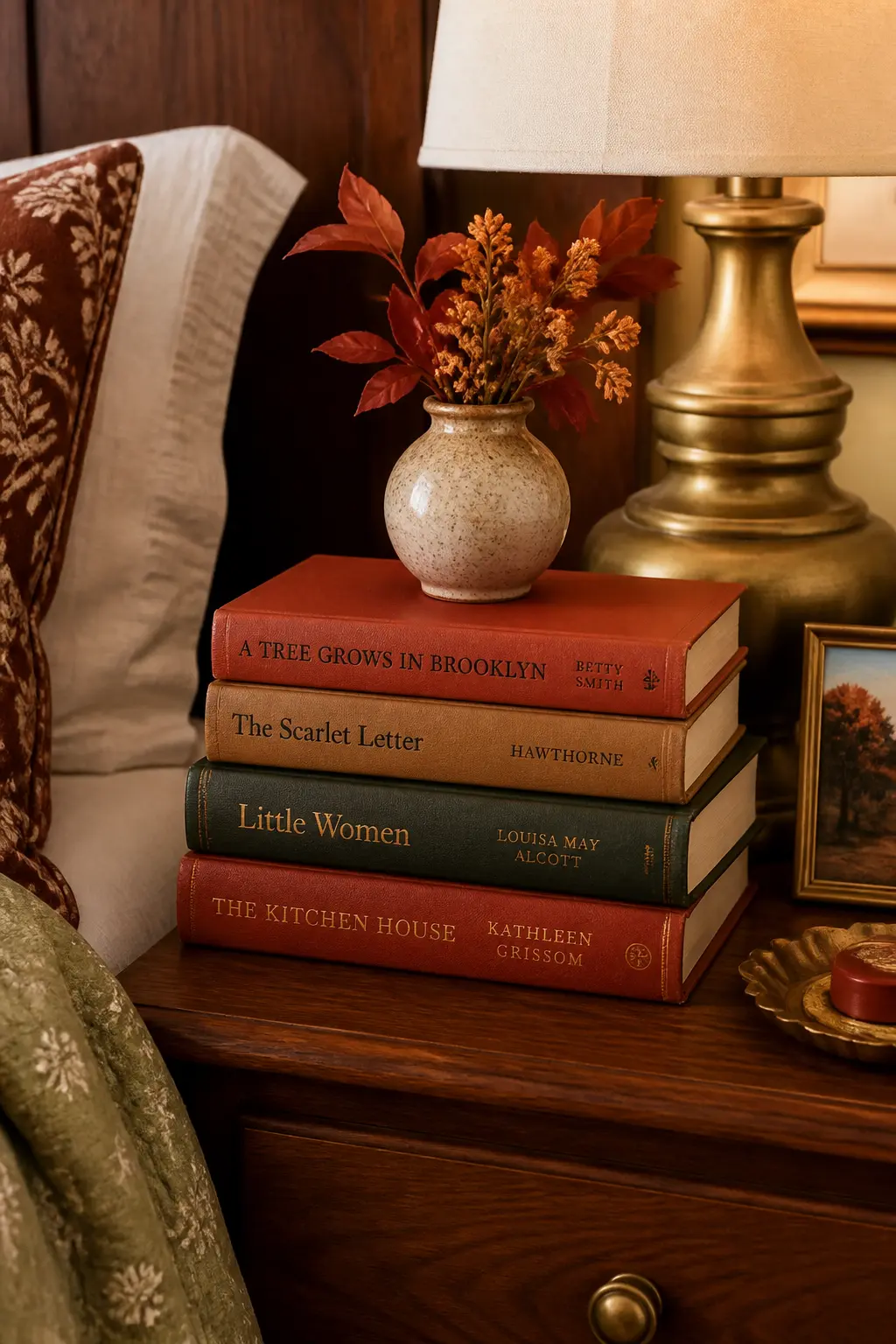
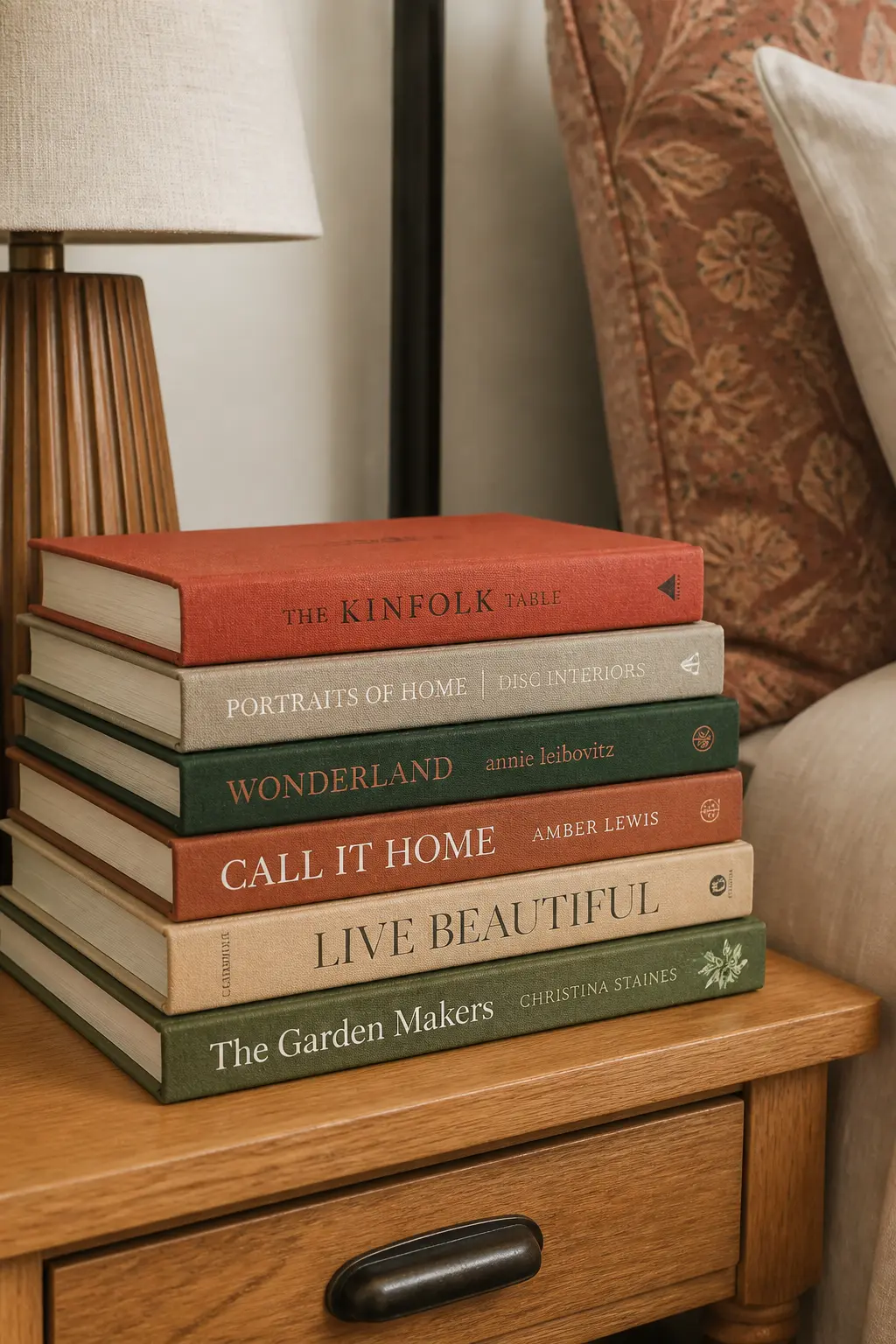
Books With Warm-Toned Spines Stacked on the Nightstand
A stack of books on a nightstand is both storage and decoration when the spines are chosen for their colour. Pull books in terracotta, rust, camel, forest green, and dark teal from the shelves elsewhere in the house and build a stack that reads warm.
Stack them horizontally, largest at the bottom, smallest on top. Put the object you want at eye-level, whether a vase, a lamp, or a small photograph, on top of the stack.
Swap them back in spring. No cost, no waste.
🛍 Shopping guide
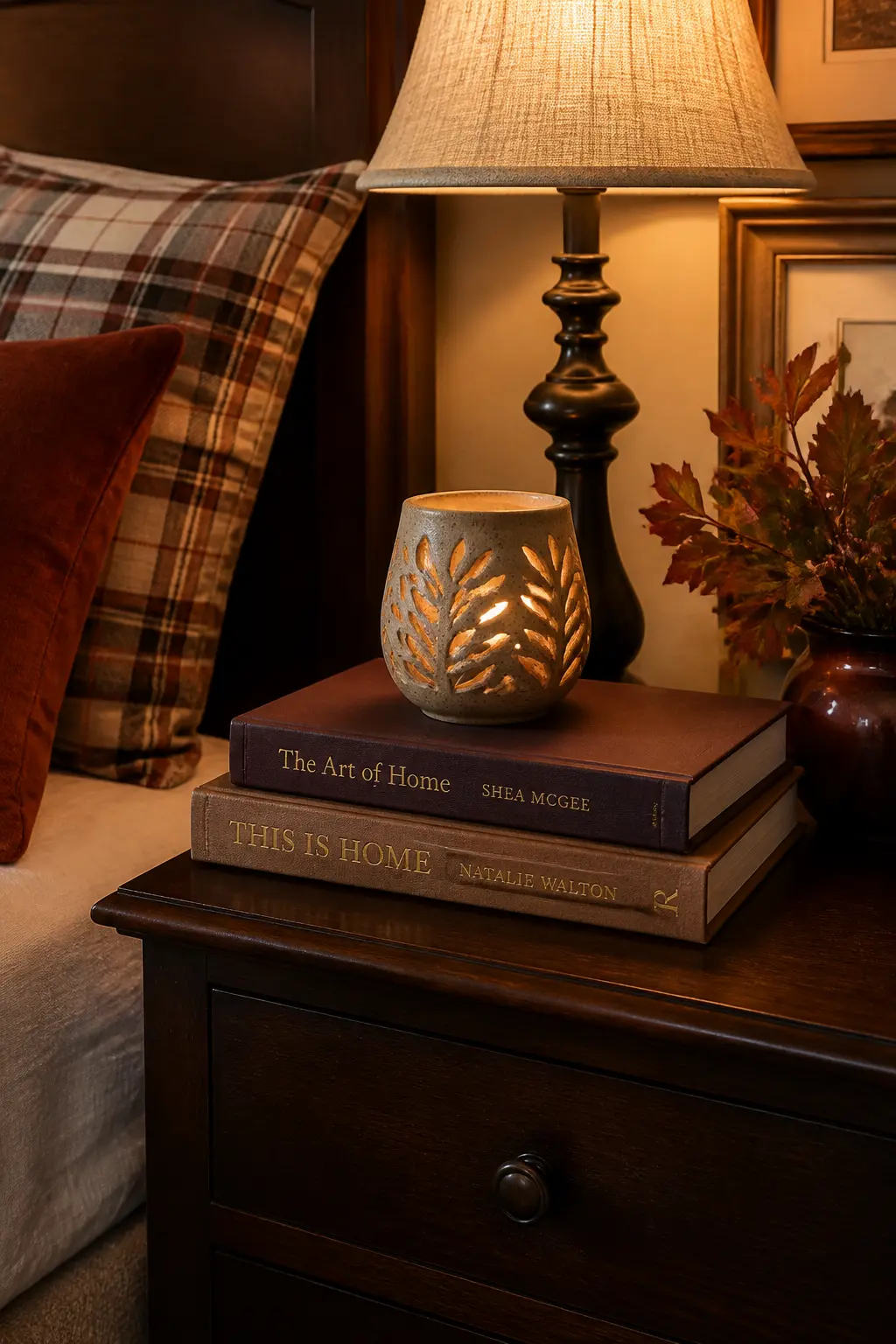
Books Stacked on the Nightstand as a Riser for a Small Object
The stack of books here is not for reading. It is structural: the books raise a small object, such as a candle, a plant, or a ceramic vessel, to a height that puts it in the natural sightline from the pillow.
An object at the right height reads as deliberate. The same object sitting flat on the surface reads as placed-and-forgotten.
Two or three books is enough for the riser function. The height gain matters more than the number of volumes.
🛍 Shopping guide
Bedside Stack of Books With Warm Spines
This is the version where the books are the whole point of the nightstand arrangement, not a riser or a prop. A curated stack of four to six books in warm colours, spines visible, is a nightstand display that requires no other objects to complete it.
Vary the heights and the spine widths for the most interesting silhouette. A fat paperback next to a thin hardback next to a square art book gives the stack a profile that a uniform row of the same size does not.
Read them if you want. The display is just a bonus.
🛍 Shopping guide
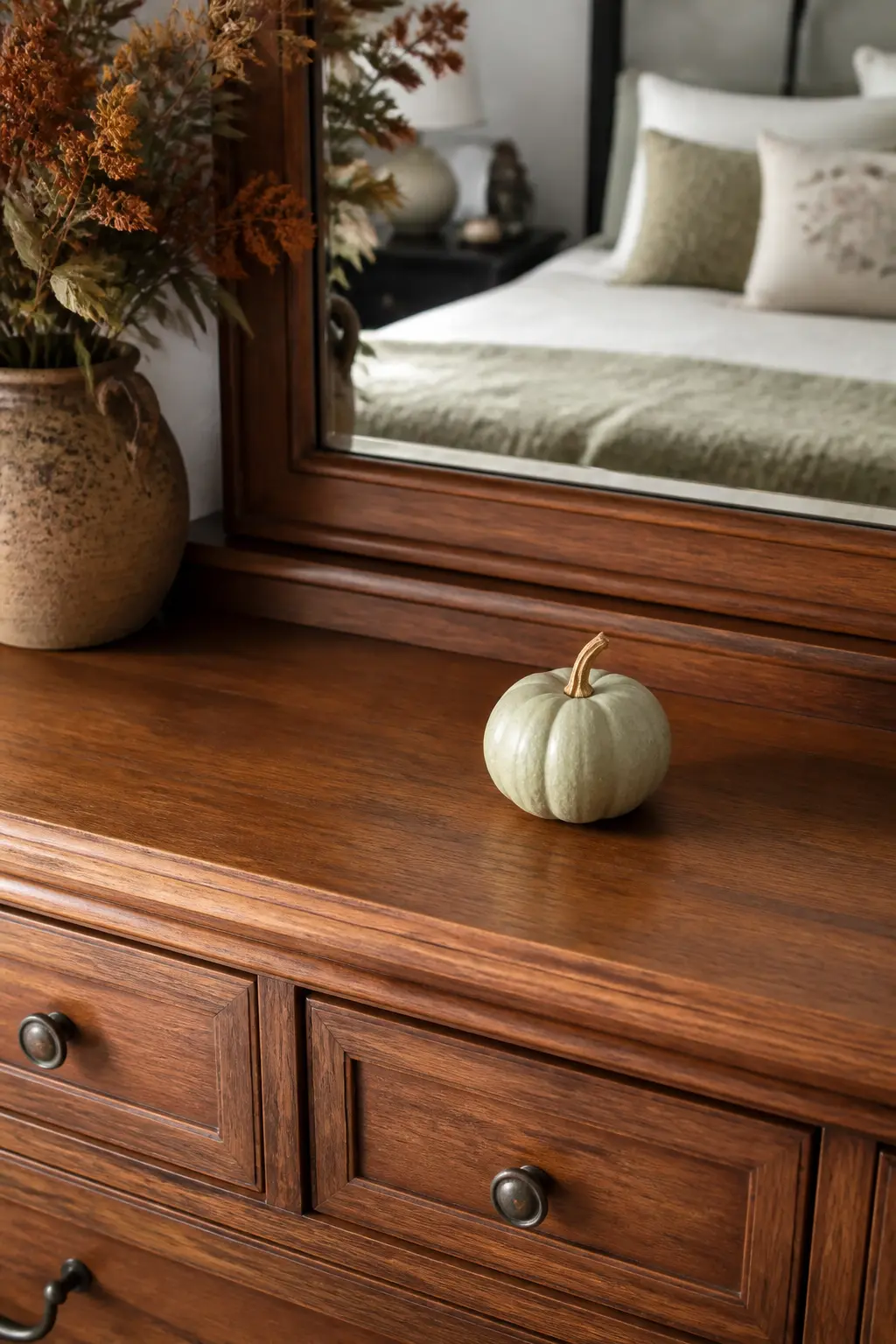
Small Pumpkin or Gourd on the Dresser as a Single Accent
One small pumpkin or a dried gourd on the dresser is the only concession this approach makes to the actual season. Keep it small and keep it one. The restraint is what separates this from a Halloween display.
A white or blue-green Cinderella pumpkin, a pale Jarrahdale, or a cream sugar pumpkin all work without reading as festive. The bright orange ones do not.
Place it directly on the dresser surface, not on a plate or in a bowl. The simplicity of the placement matters.
🛍 Shopping guide
The Walls and Door
The walls and the door are the parts of a bedroom people forget, and they are also the parts that take the least effort to adjust for the season.
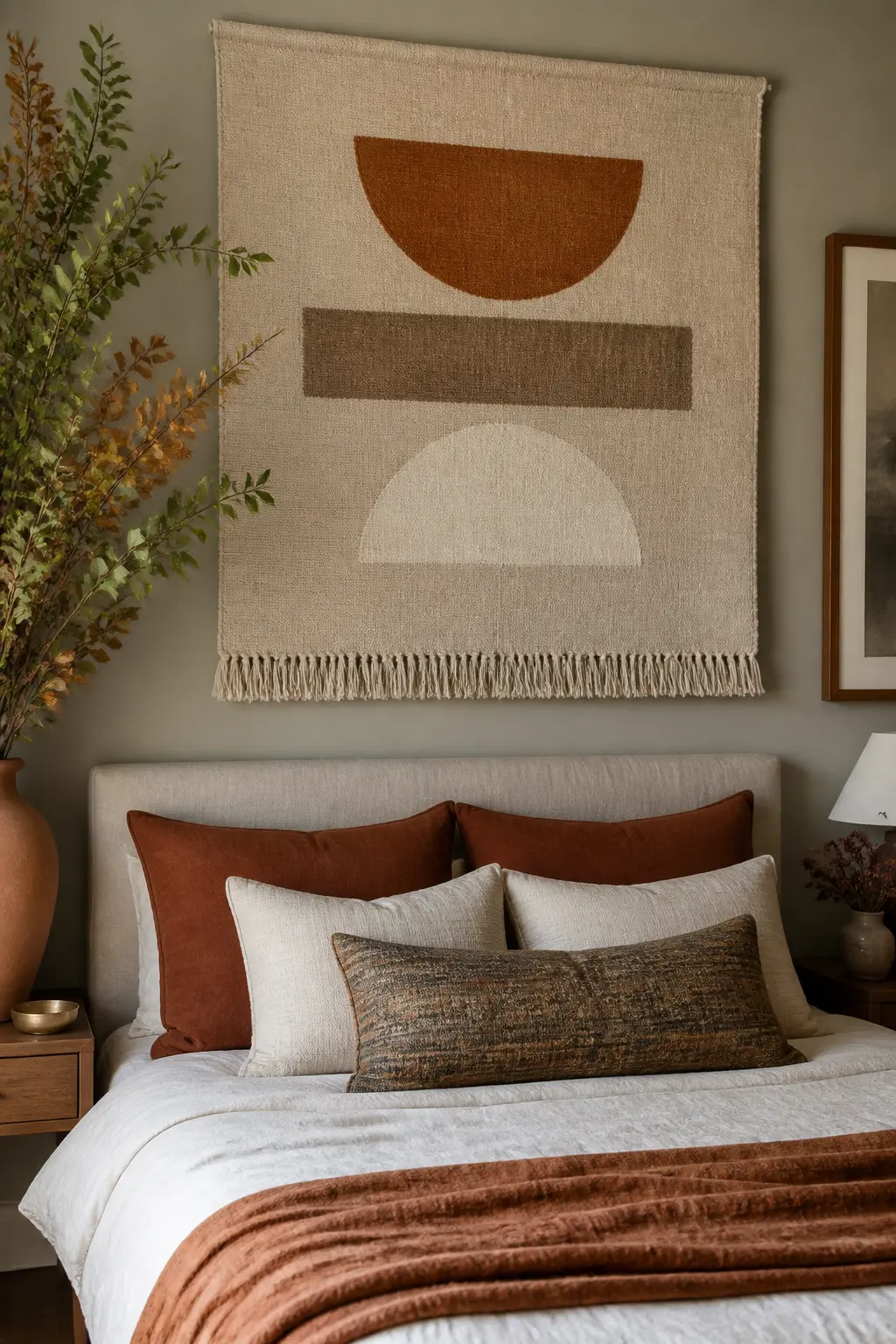
Woven Wall Piece Above the Headboard
A woven textile above the headboard does what art does in terms of anchoring the bed in the room, but it also adds texture at the one height where texture has the most visual impact.
Choose something with visible warp and weft: a tapestry, a macrame panel, or a simple stretched linen piece. Avoid anything with fringe that is longer than about six inches; beyond that it starts to look like a costume.
Hang it centered above the headboard, at a height where the bottom of the piece is two to four inches above the top of the headboard.
🛍 Shopping guide
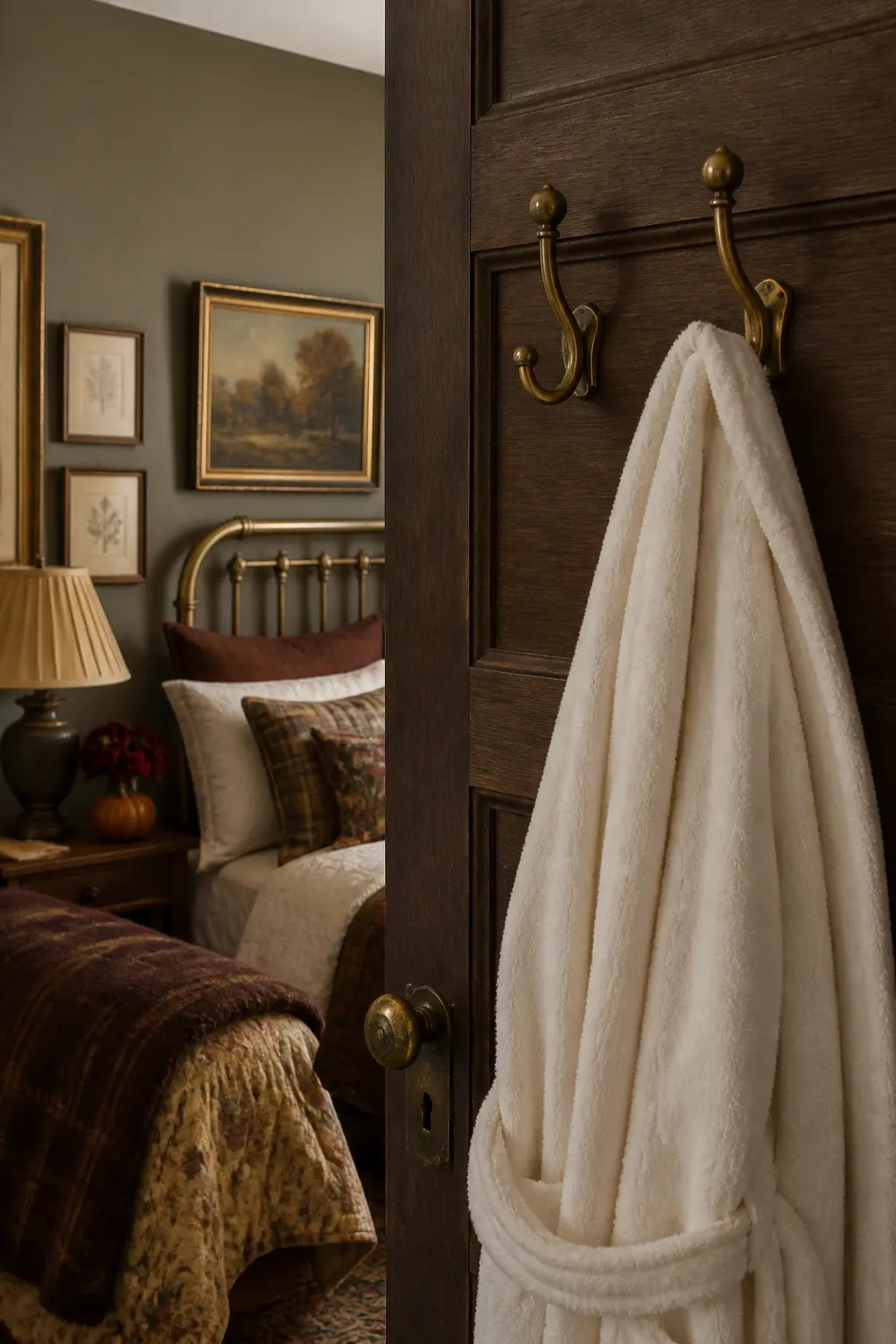
Hooks by the Door for a Robe
A hook by the bedroom door, with a robe hung on it, is functional in a way that also looks warm. The visual mass of fabric hanging at door height reads as layered and cocooning, exactly the register the season calls for.
Two hooks rather than one, so the robe does not have to be moved to hang a bag or a scarf. Brass or dark iron rather than chrome.
This is also the one wall intervention that the people you share the bedroom with will actively thank you for.
🛍 Shopping guide
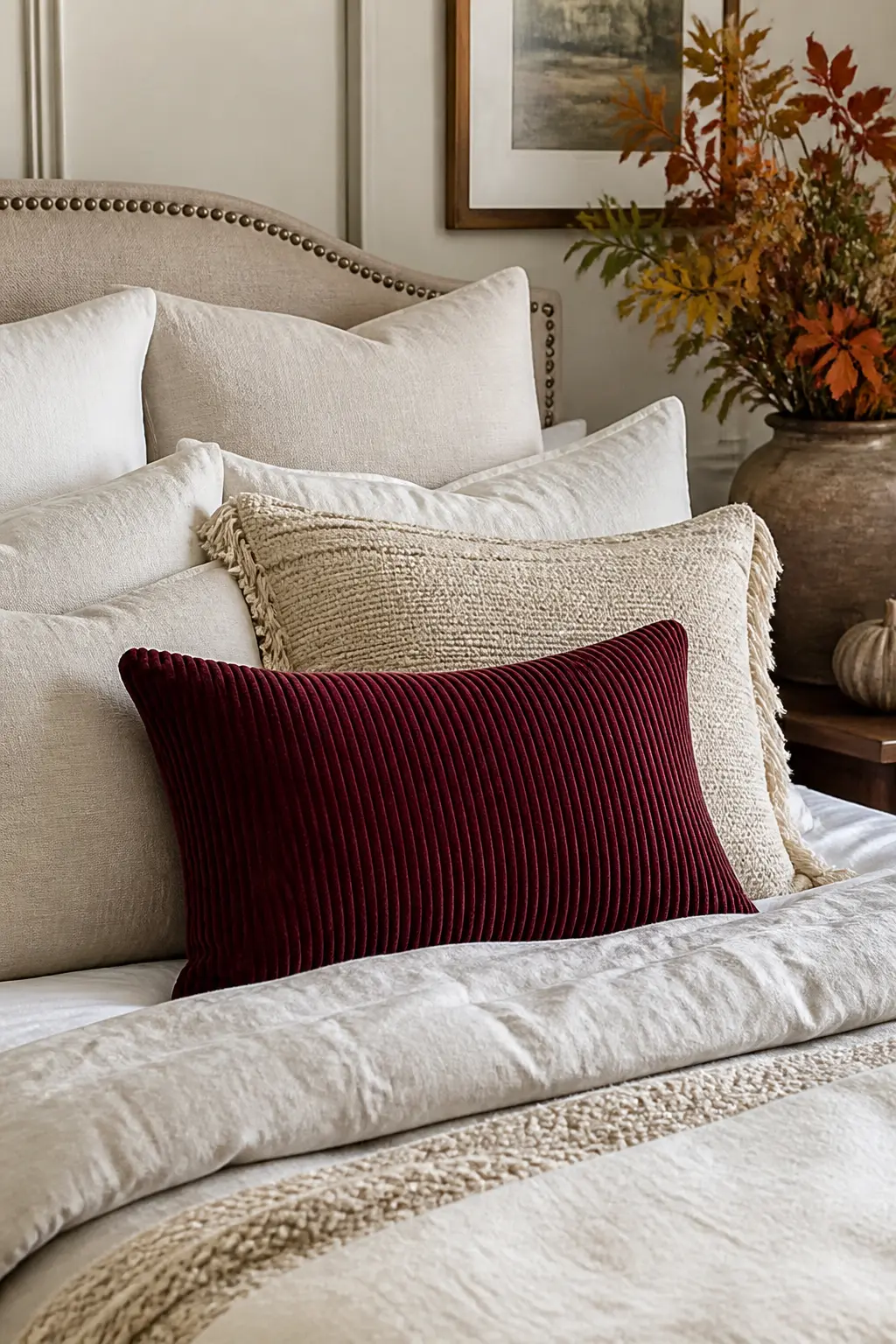
Deep Wine Corduroy Accent in One Place Only
Corduroy has a rib that catches light in one direction and absorbs it in another, which gives it a visual depth that flat fabric cannot achieve. In a deep wine or burgundy, it is rich without being loud.
One place only: a single cushion, one throw, or a headboard panel in corduroy. If it appears in more than one spot, it tips from accent into theme.
The rule is: if you own something in this fabric for this room, everything else in the room should ignore it and carry on.
🛍 Shopping guide
What to Do With the Room Itself
Sometimes the issue is not what you own but where it sits. A few changes to the actual arrangement of furniture can make the room feel heavier and more intentional without spending anything.
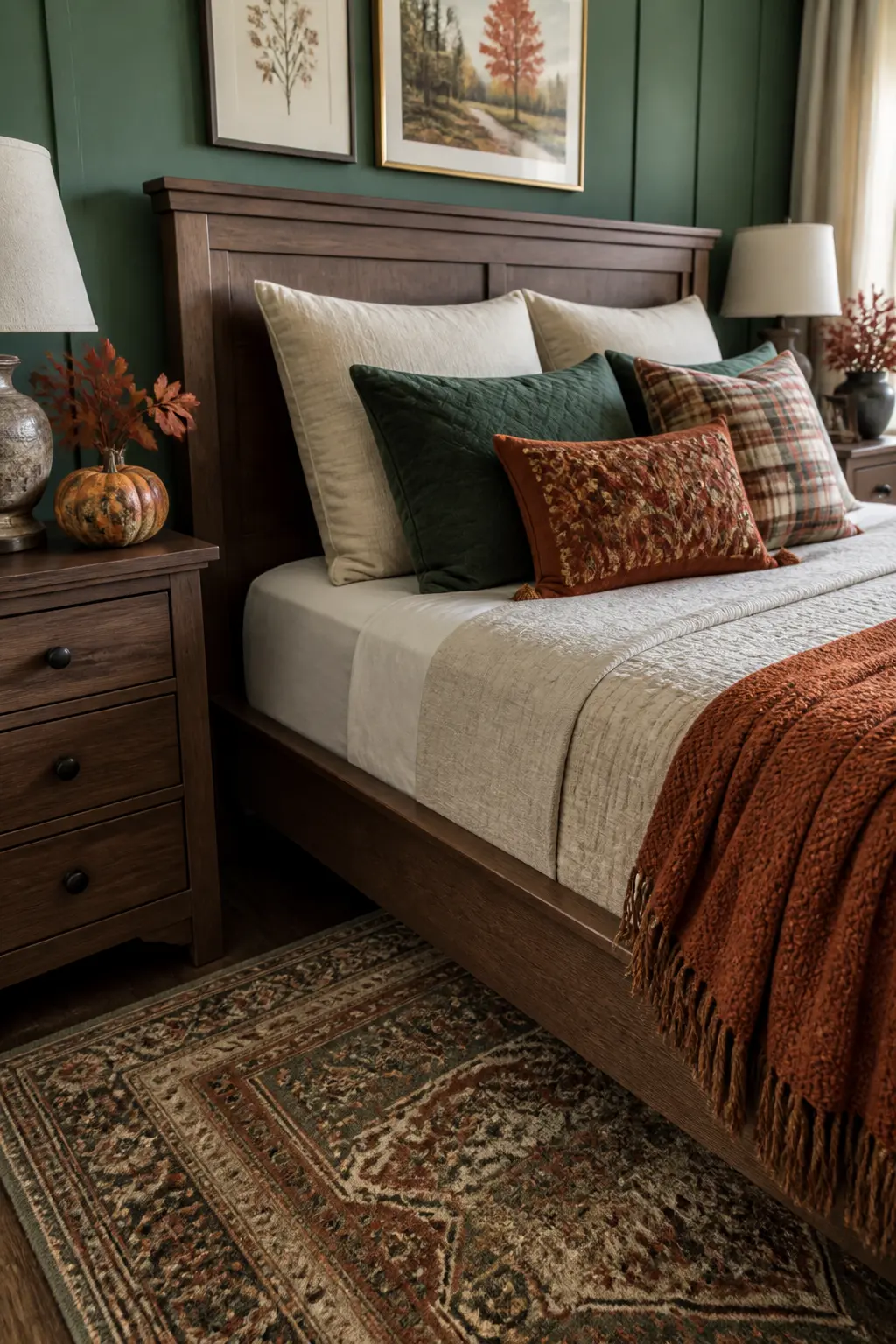
Bed Pulled Slightly Away From the Wall for a Heavier Feel
A bed pushed hard against a wall looks like it is trying to save space. A bed pulled forward by even eight to twelve inches looks like it owns the room.
The gap between the headboard and the wall does not need to be large. The visual effect comes from the shadow the gap creates, which implies mass and weight even when the bed itself is light.
This costs nothing and takes four minutes. Move the nightstands forward by the same amount so the geometry holds.
🛍 Shopping guide
Before You Go
These 38 ideas are all texture-first, motif-free, and reversible. None of them require a full room refresh. If you are also thinking about the rest of the home, 12 Cosy Fall Breakfast Ideas and 14 Friendsgiving Decor Ideas for a Rented Apartment follow the same logic: small, warm, and nothing that has to come down on November 1st.
Frequently Asked Questions
How do I make my bedroom feel warmer in autumn without buying everything new?
Start with three swaps: add a flannel or brushed-cotton duvet cover, replace any white lamp shades with parchment or linen ones, and lay a rug or runner at the bedside. Those three changes affect every sense simultaneously and cost a fraction of a full redecoration.
What colours work for fall bedroom decor without looking like Halloween?
Camel, oatmeal, mushroom, warm taupe, dusty sage, deep teal, and a single accent of wine or rust all read as autumnal without triggering Halloween associations. Avoid bright orange as a dominant tone. One saturated accent, carried in one object only, is plenty.
What is the easiest fall bedroom change that costs nothing?
Remove the sheer curtain layer from the windows, pull the bed forward by eight inches, and move a lamp to the darkest corner of the room. None of those cost anything, and all three make the room feel different by the end of the afternoon.
How do I layer rugs in a small bedroom without it looking cluttered?
Use a very simple flatweave or jute as the base, and place a small, solid-coloured pile rug on top at the bedside only. Keep both rugs in the same warm colour family. The layering reads as intentional even in a compact space because the base rug and the top rug are doing visually different jobs.
Are dried stems better than fresh flowers for a bedroom in autumn?
For a bedroom, yes. Dried stems require no water, no weekly replacement, and no clearing-up when petals drop. Barley, pampas, dried thistle, and cotton stems all keep their shape for months and look better as they age rather than worse.
How do I create layered lighting in a bedroom without rewiring anything?
Use plug-in lamps: a floor lamp in the darkest corner, the existing bedside lamps, and one small lamp on the dresser. Put two of them on smart plugs or inline dimmers. The overhead switch stays untouched. The layered effect comes from the number of sources, not the wiring.

My daughter spent forty-five minutes last summer making “soup” out of grass clippings an
There’s something magical about bringing Mediterranean warmth into your home when temperatures

17 fall decor collections for every room, budget and skill level, from porch to mantle, so you can p
Leave a Reply