

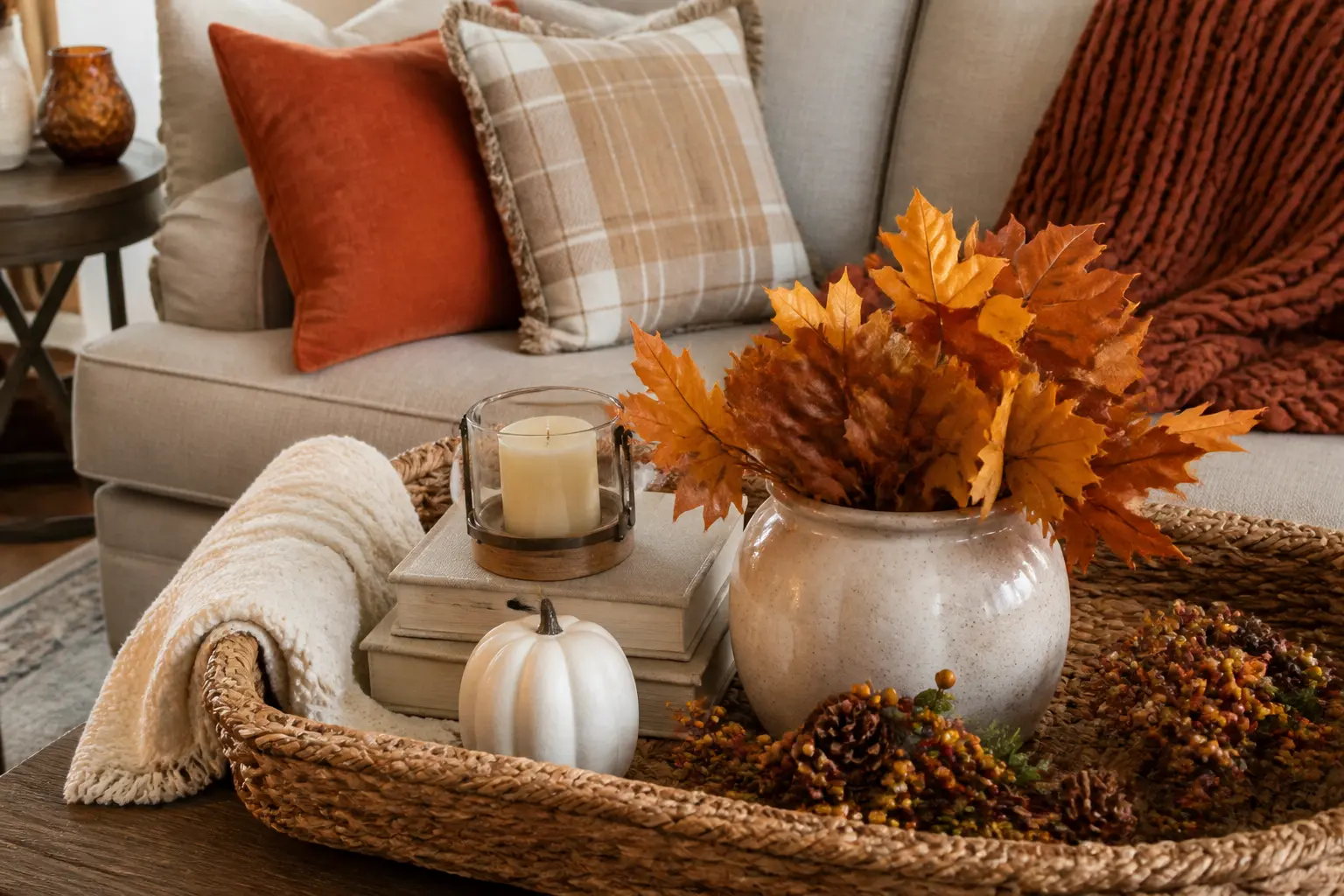
Summer light is flat and forgiving. Once it goes, a room that felt effortless suddenly reads as cold, bare and a little indifferent. The ceiling feels high, the floor feels hard, and every silvery frame catches the grey sky outside instead of anything warm.
The fix is not a renovation. It is layering: adding one thing that makes the next thing land better. Textiles first, then light, then objects, then greenery, then the quiet structural moves that pull the whole room together without spending a penny on paint or a new sofa.
These 41 ideas follow that order. Start at the top, do as many as you like, and stop when the room feels right. For more ways to carry the season through the house, see 20 Thanksgiving Decor Ideas That Work in Every Room once the living room is done.
This post contains affiliate links. If you buy through them, I may earn a small commission at no extra cost to you.
- Textiles First: Covers, Throws and Rugs
- Light: Lamps, Shades and Candles
- Objects and Vessels: the Coffee Table and Mantel
- Plants and Botanicals: Living Warmth
- Walls and Windows: Frames, Curtains and Hangings
- Structural Moves: Furniture, Light and Layout
- Storage and Utility: Beautiful and Functional
- Finishing Touches: the Details That Close It Out
- Frequently Asked Questions
Textiles First: Covers, Throws and Rugs
Textiles do more thermal work than any object. A linen sofa covered in amber and rust pillows reads warmer before you touch it. Add a plaid throw and a second rug underfoot, and the room already holds heat in the eye as well as the body.
This is the place to start because every later addition sits against this backdrop. Get the textiles wrong and nothing else quite rescues it.
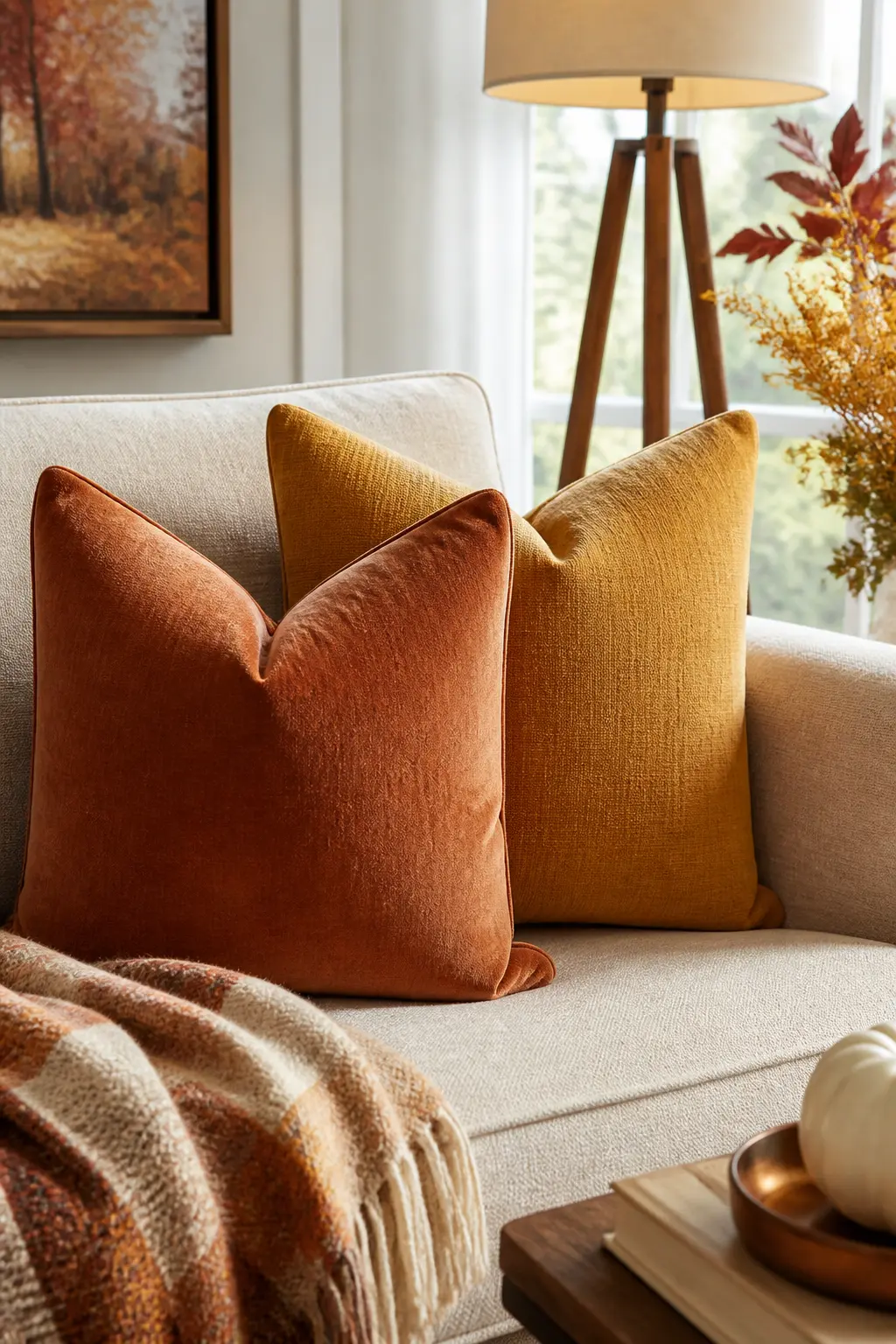
Swap All Throw Pillow Covers to Autumn Tones
Pull every cover off every pillow in one pass. Replace them all at once rather than mixing old and new, because a sofa with two rust covers and three leftover white ones reads as half-finished rather than transitional.
Amber, terracotta, dark olive and warm grey all work. The exact shades matter less than the temperature: warm, muted, never neon. If the sofa is a cool neutral, even one amber cover shifts the whole reading.

🛍 Shopping guide
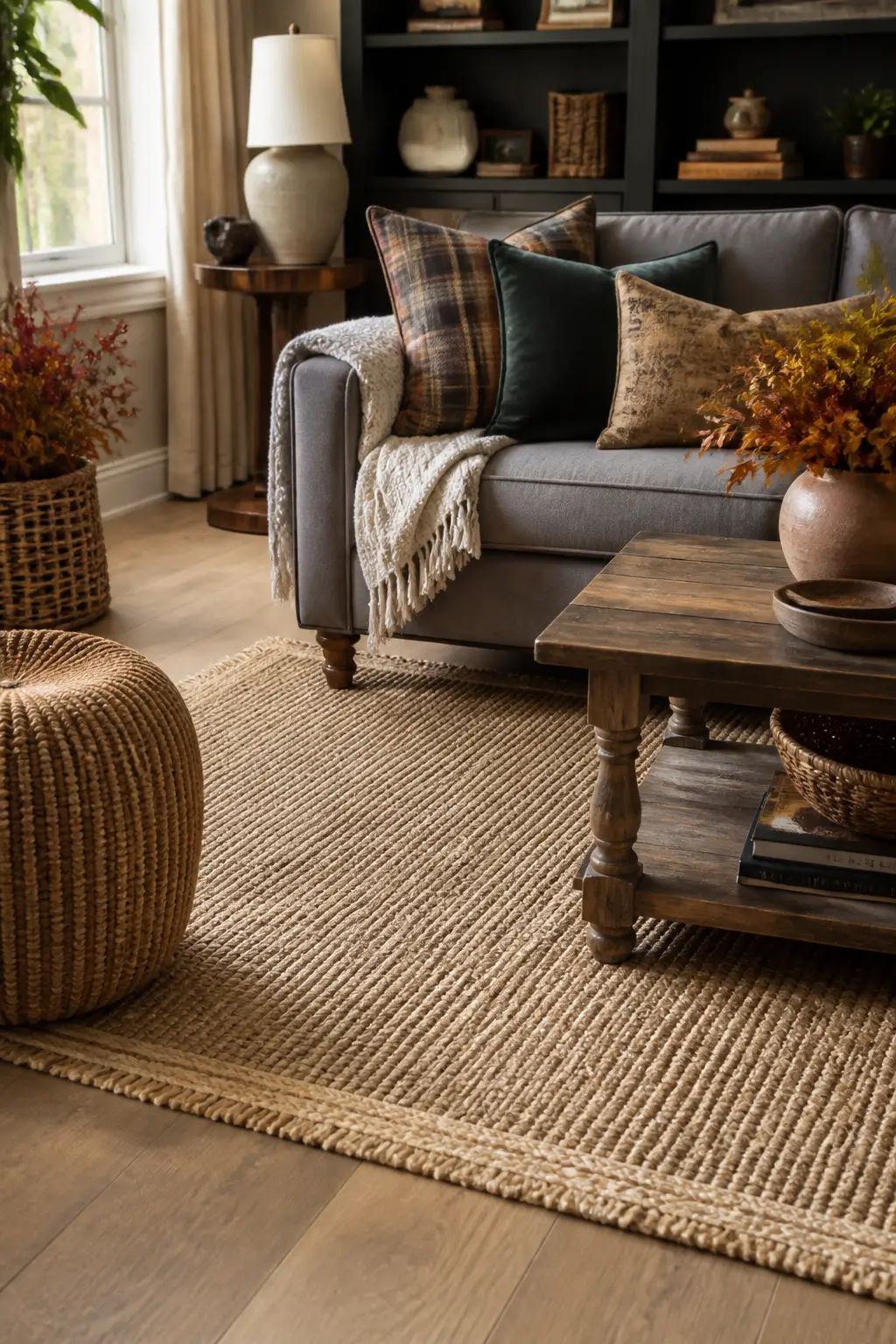
Layer a Wool or Jute Rug Over the Existing Floor
A second rug laid over a hard floor or a pale existing rug adds warmth in the most literal sense. Jute brings texture; wool brings colour and softness. Either works. Both together, in different zones, is not too much.
Size matters more than pattern. Go large enough that the front legs of the sofa and chairs sit on it, so the whole seating group reads as one anchored unit rather than a collection of floating pieces.
🛍 Shopping guide
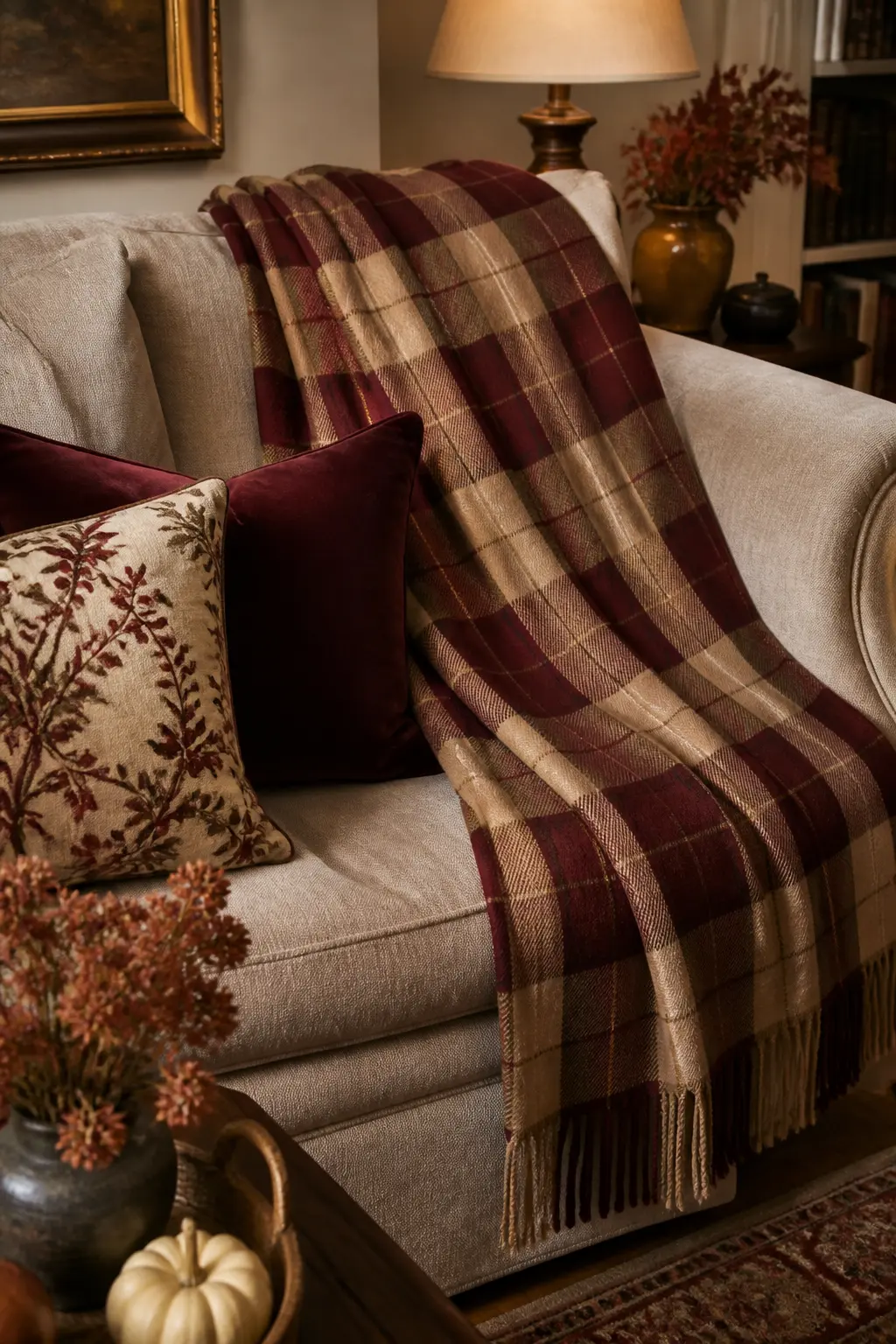
Drape a Plaid Throw Across the Back of the Sofa
Drape it loosely over one corner of the sofa back, not folded neatly across the whole length. Neat folding reads as a furniture showroom. One loosely gathered corner reads as someone about to use it.
Plaid in warm tones, burgundy and camel especially, adds pattern without requiring anything else in the room to match. It is the easiest single piece that changes the whole temperature of the seating area.
🛍 Shopping guide
Change the Throw Pillow Inserts to a Heavier Fill
Thin inserts make pillows look apologetic. A plump insert in the same cover changes the whole silhouette of the sofa: the cushions hold their shape, the sofa looks fuller, the room looks more deliberately dressed.
Go one size up from the cover label. A cover marked 18×18 takes a 20×20 insert well. The slight overfill creates the rounded, generous look that reads as comfort from across the room.
🛍 Shopping guide
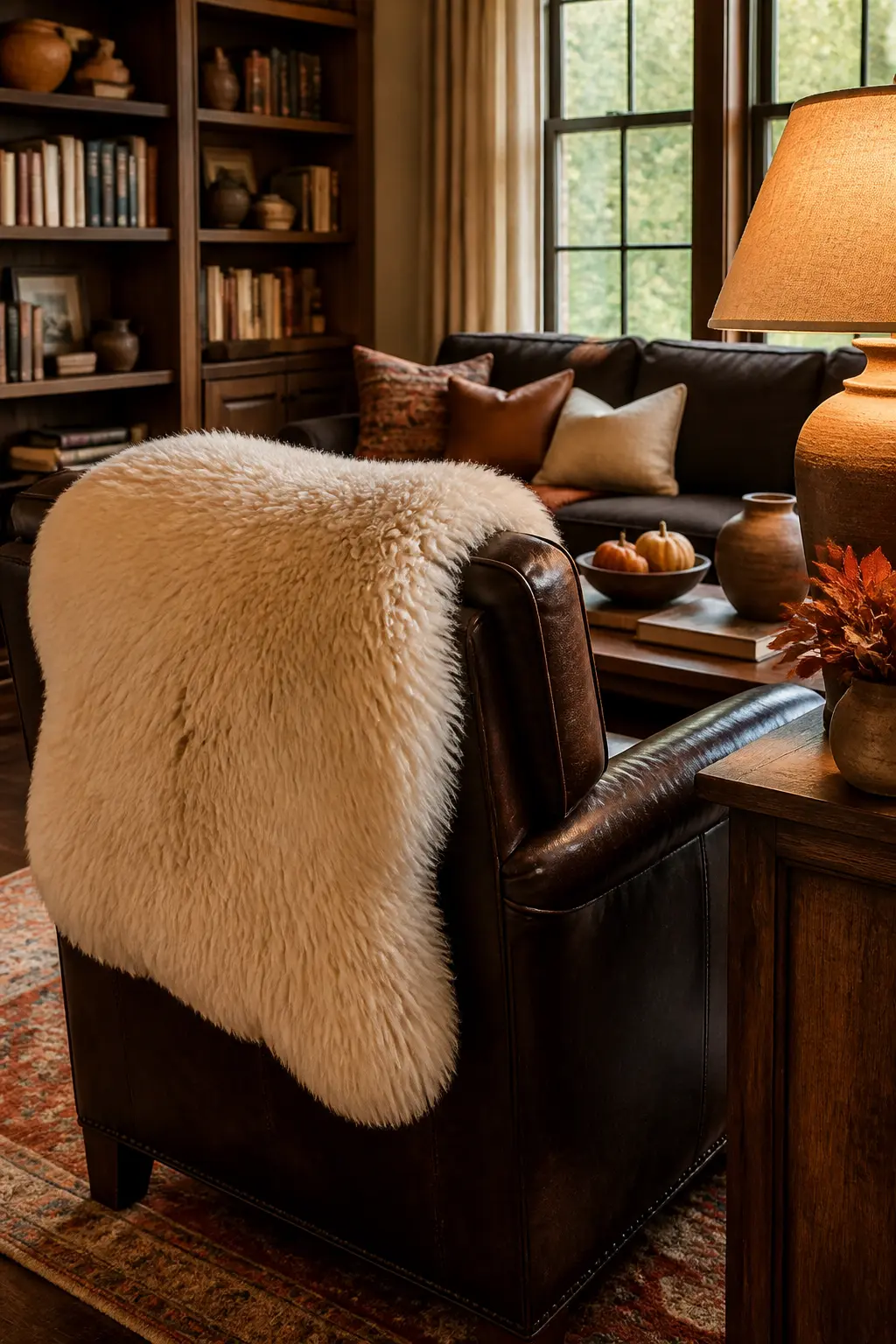
Layer a Sheepskin Over One Chair Back
One sheepskin over the back of an armchair introduces a texture that no other material replicates. It reads as luxurious but costs very little, and it works over any chair from a worn leather armchair to a simple wooden dining chair pulled into the seating group.
Keep it to one chair. Sheepskins on every surface start to read as a props closet.
🛍 Shopping guide
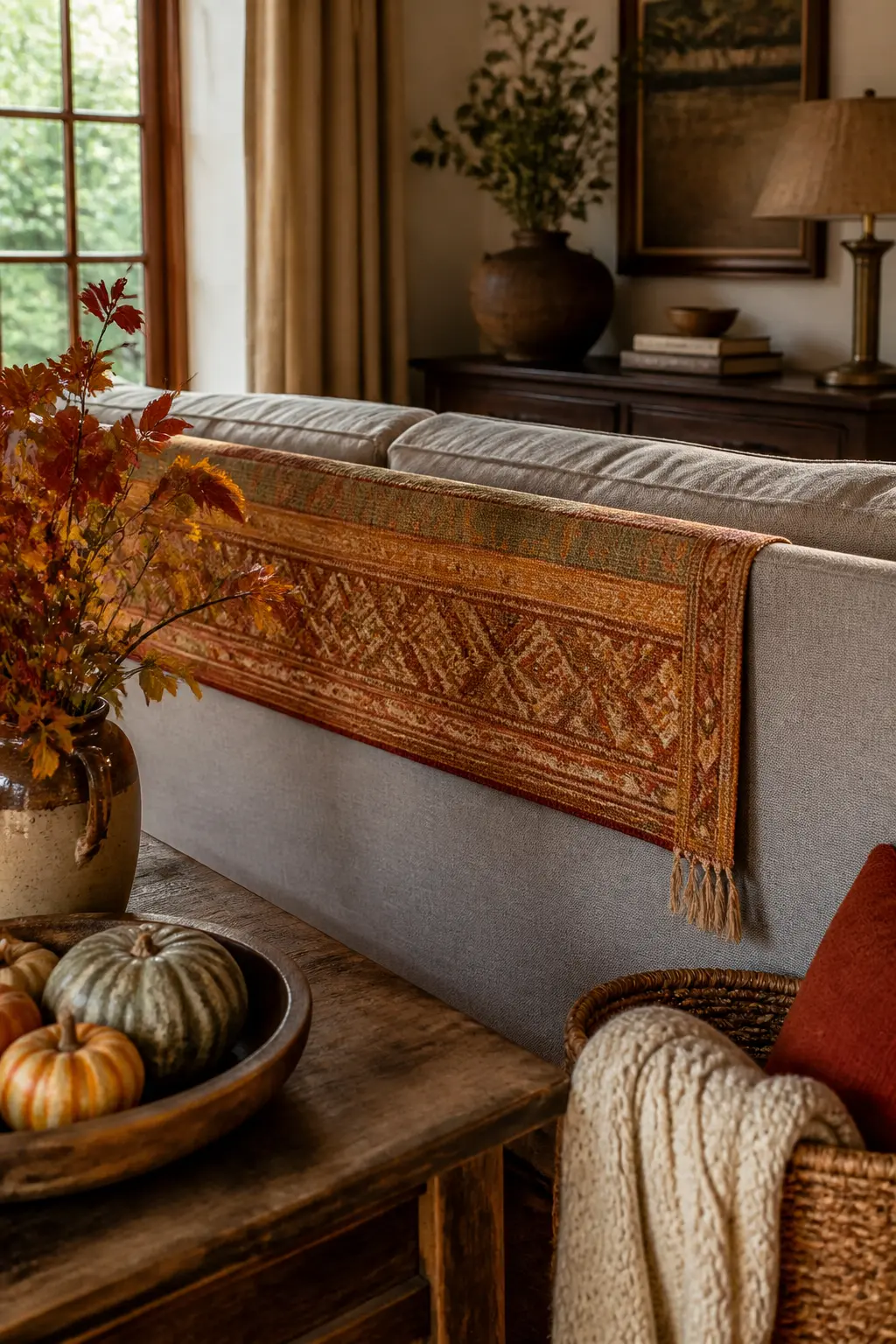
Layer a Runner Along the Back of the Sofa
A narrow textile runner laid across the top of the sofa back gives the piece a finished horizontal line and adds another layer of texture at eye level. It works especially well on a plain sofa where the back cushions are flat and the whole thing needs visual interest.
Choose a woven or embroidered runner in warm tones. It takes ninety seconds to place and changes the read of the sofa completely.
🛍 Shopping guide
Light: Lamps, Shades and Candles
Cold rooms are usually bright rooms. The overhead fixture throws light downward in a flat wash, exposing every hard surface. Swap that light source, add pools of lower light from lamps and candles, and the room immediately reads smaller and safer.
Height matters here. A floor lamp behind a chair, a table lamp at elbow level, and a cluster of candles on the mantel work together in a way that one pendant never could. See also: 25 Fun Thanksgiving Games for the Whole Family if you are dressing this room for an actual gathering.
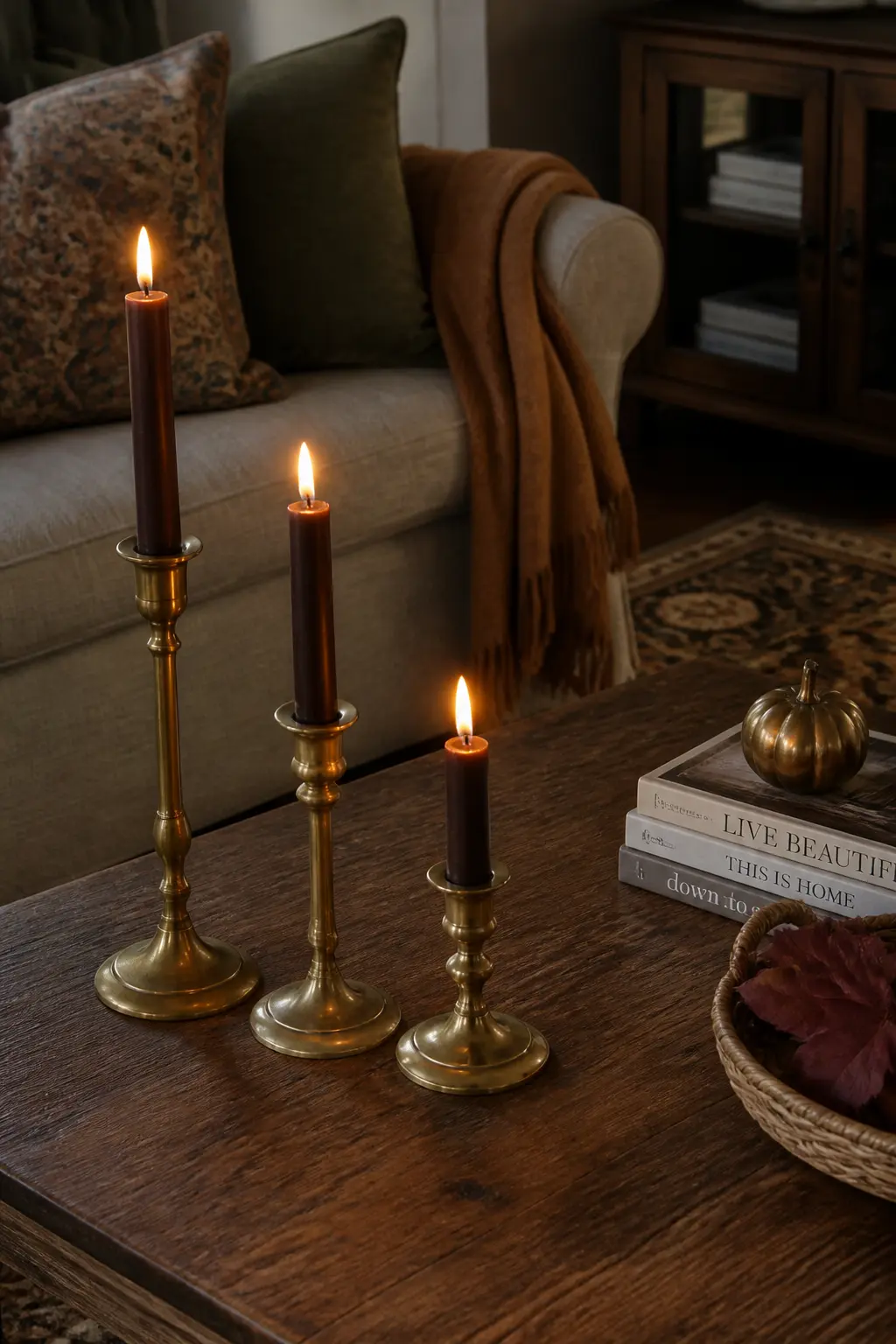
Group Brass Candle Holders on the Coffee Table
Brass catches warm light in a way that silver and chrome simply do not. Three holders of different heights on the coffee table give the surface a focal point and, once lit, pull the eye downward to the most human level of the room.
Odd numbers always read better than even ones. Three or five holders grouped slightly off-center look considered. Two look like a pair waiting for a third.
🛍 Shopping guide
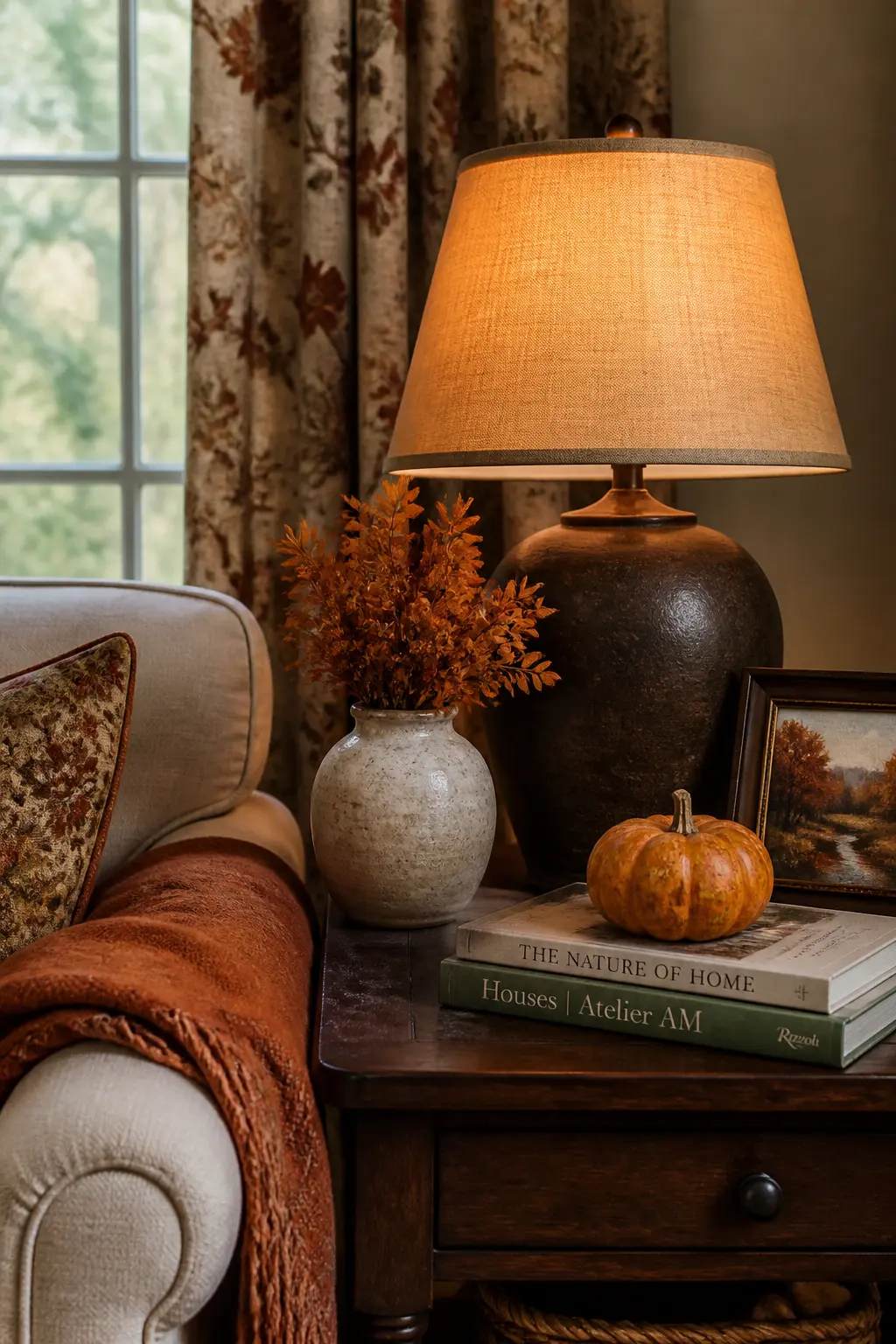
Swap the Lampshade for a Warmer Fabric
A white or pale grey lampshade throws a clean, cool light. Swap it for linen, burlap or a warm ivory fabric and the same bulb at the same wattage will cast a completely different pool of light: amber-toned, soft at the edges, the opposite of an office ceiling.
Match the shade size to the existing base. The base stays; only the shade changes. It takes two minutes and the difference is immediate.
🛍 Shopping guide
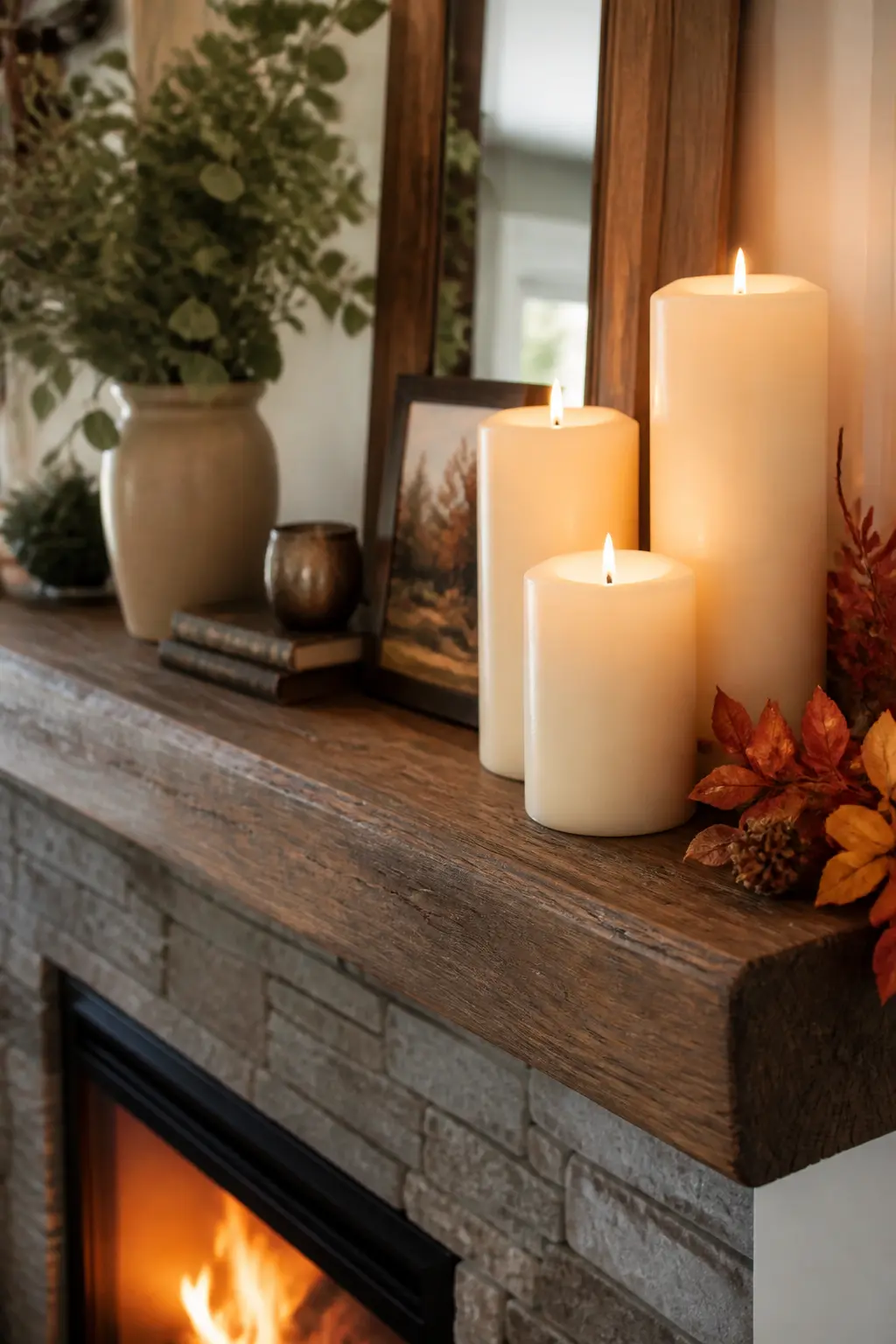
Cluster Three Candles at Different Heights on the Mantel
A mantel with three candles at different heights looks like someone styled it. A mantel with three candles all the same height looks like a product display. Use a tall pillar, a medium one on a small riser, and a squat votive on the surface: three visible tiers, the eye travels upward and downward along the grouping.
Cluster them slightly to one side of the mantel rather than in the center. The asymmetry is what makes it look natural.
🛍 Shopping guide
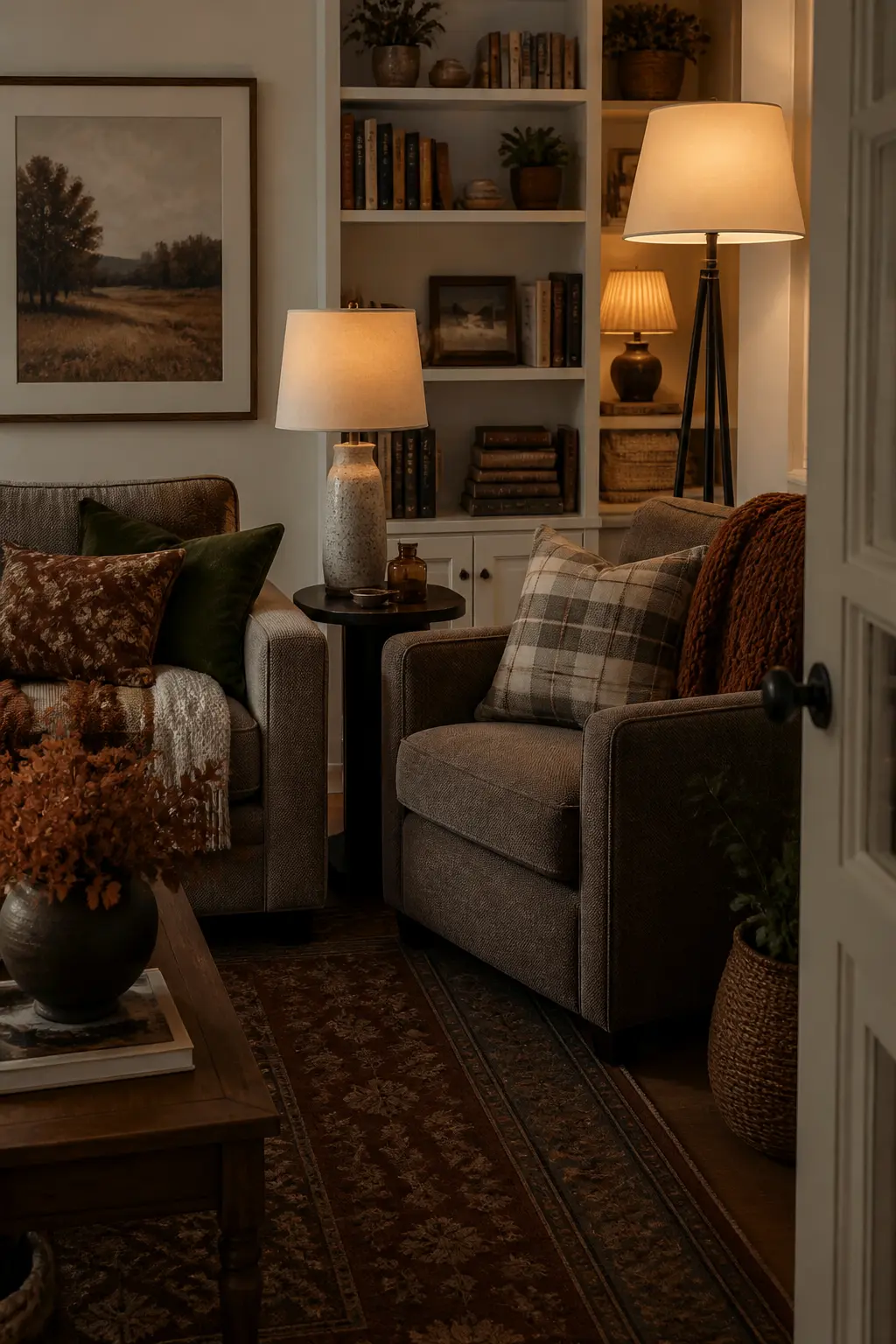
Lamps Positioned at Three Different Heights Across the Room
One floor lamp, one table lamp at sofa height and one lower lamp on a shelf or small side table give the room three distinct light levels. When all three are on and the overhead is off, the room does not read as dark, it reads as layered.
This is the single structural change that does the most work. Every other warm element in the room shows better when it is lit from below and beside, not from above.
🛍 Shopping guide
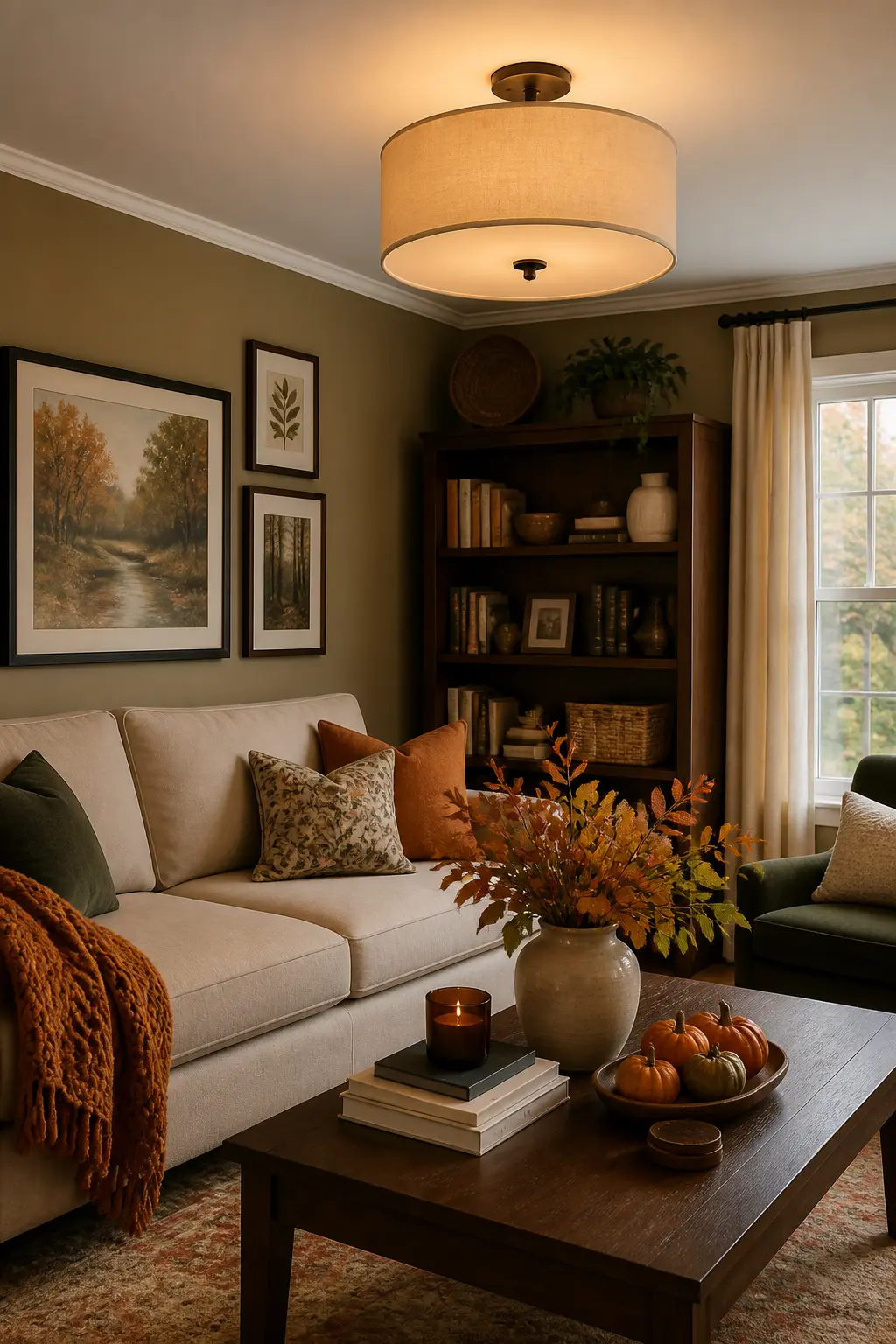
Fit a Softer Shade on the Ceiling Fixture
Most overhead fixtures come fitted with a bulb pointing straight down and nothing to diffuse it. A fabric shade or a frosted globe fitted over the same socket turns that harsh point-source into a soft wash that suits autumn evenings far better.
If the fixture is pendant-style, even a bulb swap to a lower-kelvin warm option (2200K rather than 3000K) changes the whole tone of the room without touching a shade at all.
🛍 Shopping guide
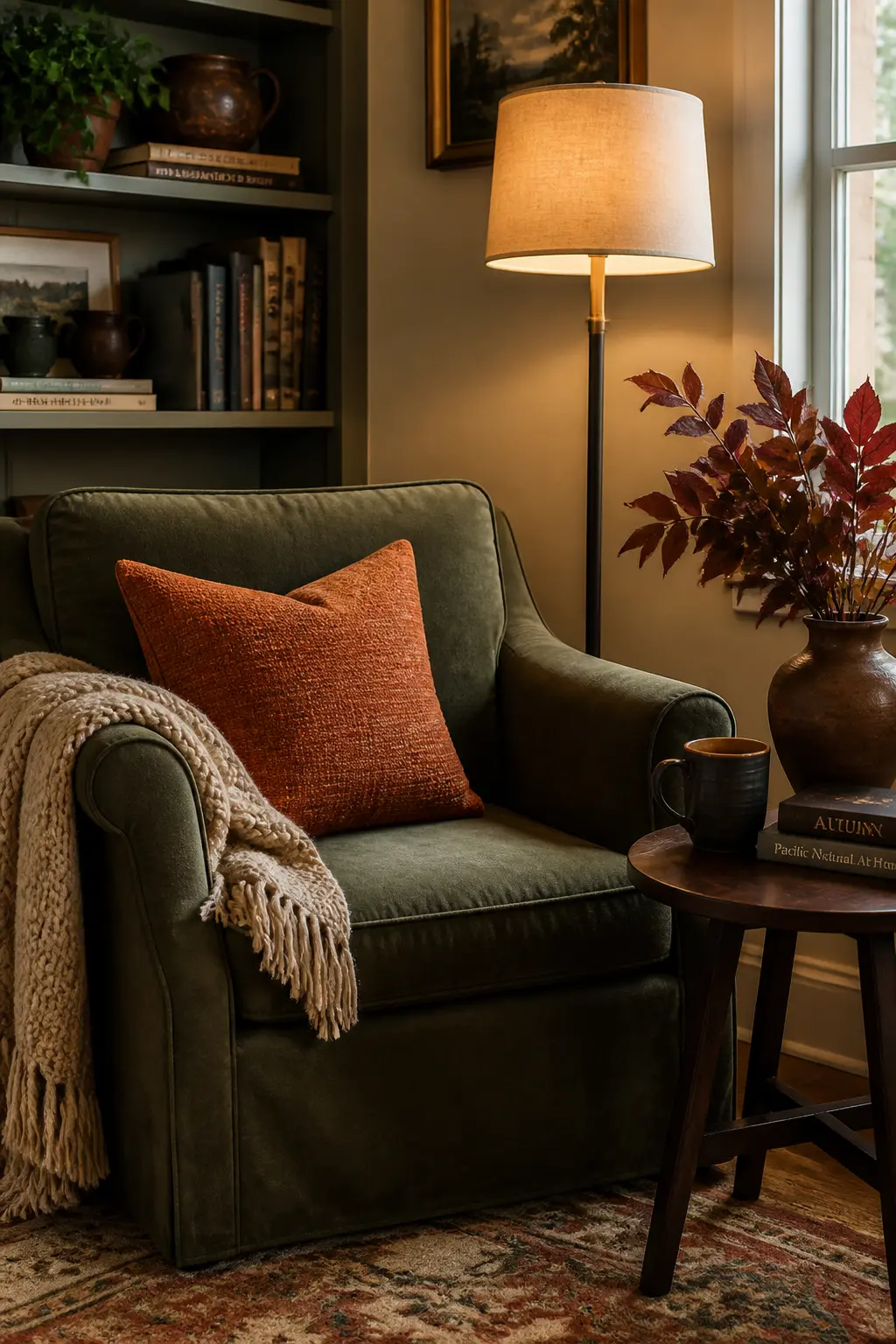
Add a Floor Lamp Behind the Reading Chair
A reading chair without a lamp behind it is decorative but not functional. A lamp placed just behind and to the side of the chair makes the chair usable and creates a warm pool of light that defines that corner of the room as a distinct zone.
Position it so the shade sits just above head height when seated. Too low and it glares; too high and it reads as a floor lamp for the whole room rather than a reading light for one person.
🛍 Shopping guide
Objects and Vessels: the Coffee Table and Mantel
Once the light is right, objects stop competing with it and start working with it. Brass, wood, ceramic and dried botanicals each catch warm light differently. Group them rather than scattering them, and the room gains focal points instead of clutter.
The rule is simple: fewer groupings, more objects in each grouping. Three brass candleholders together feel intentional. Three objects in three different corners feel like you forgot to put things away.
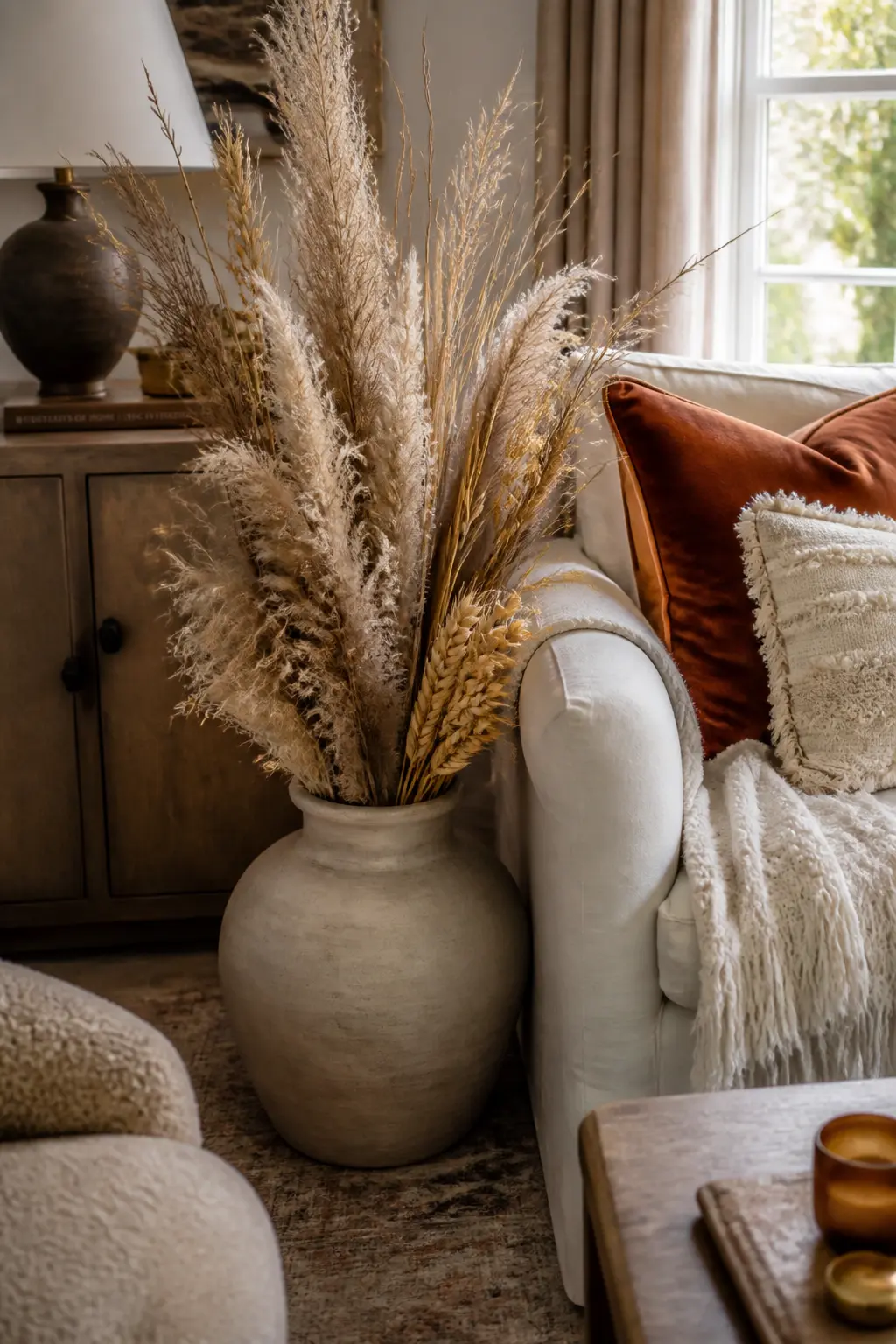
Add Dried Florals in a Large Stoneware Vase
Dried botanicals last the full season without any maintenance. Pampas grass, dried lunaria, wheat stems and dried hydrangea all work and all read as warm without being precious about it.
Scale matters. A small vase of dried stems on a coffee table looks like an afterthought. The same stems in a large stoneware vase on the floor beside the sofa or on a console become a proper statement. Go bigger than feels comfortable.
🛍 Shopping guide
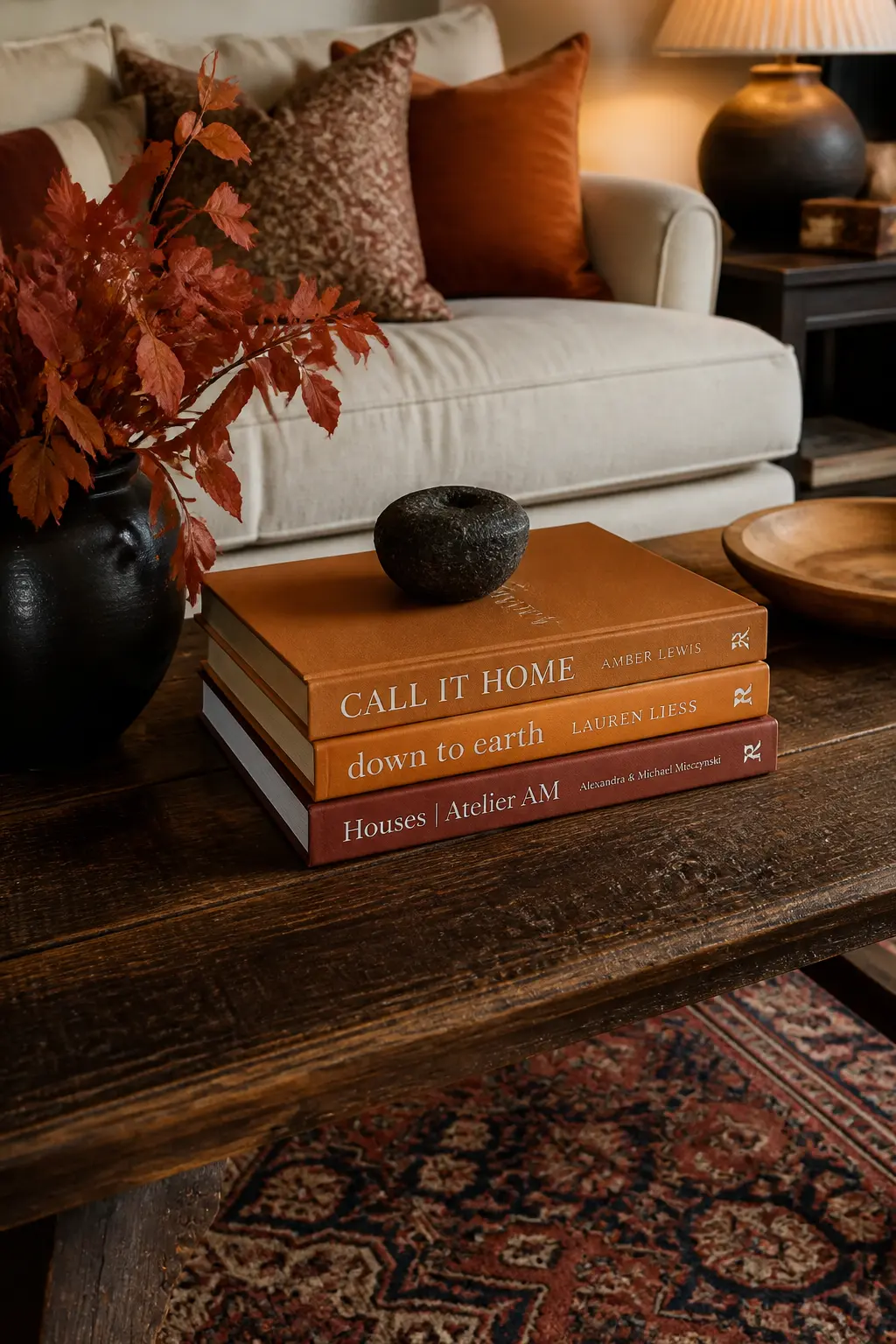
Change the Coffee Table Books to Warm-Toned Covers
Coffee table books are not read on the table, they are looked at. Cover colour matters. A stack of books with warm-toned spines in amber, terracotta, forest green and dark brown contributes to the palette in a way that a stack of white-cover design books simply does not.
Stack two or three at an angle rather than in a perfect pile. Rest a small object, a stone or a piece of driftwood, on top of the stack. The layering makes the coffee table read as dressed rather than stored.
🛍 Shopping guide
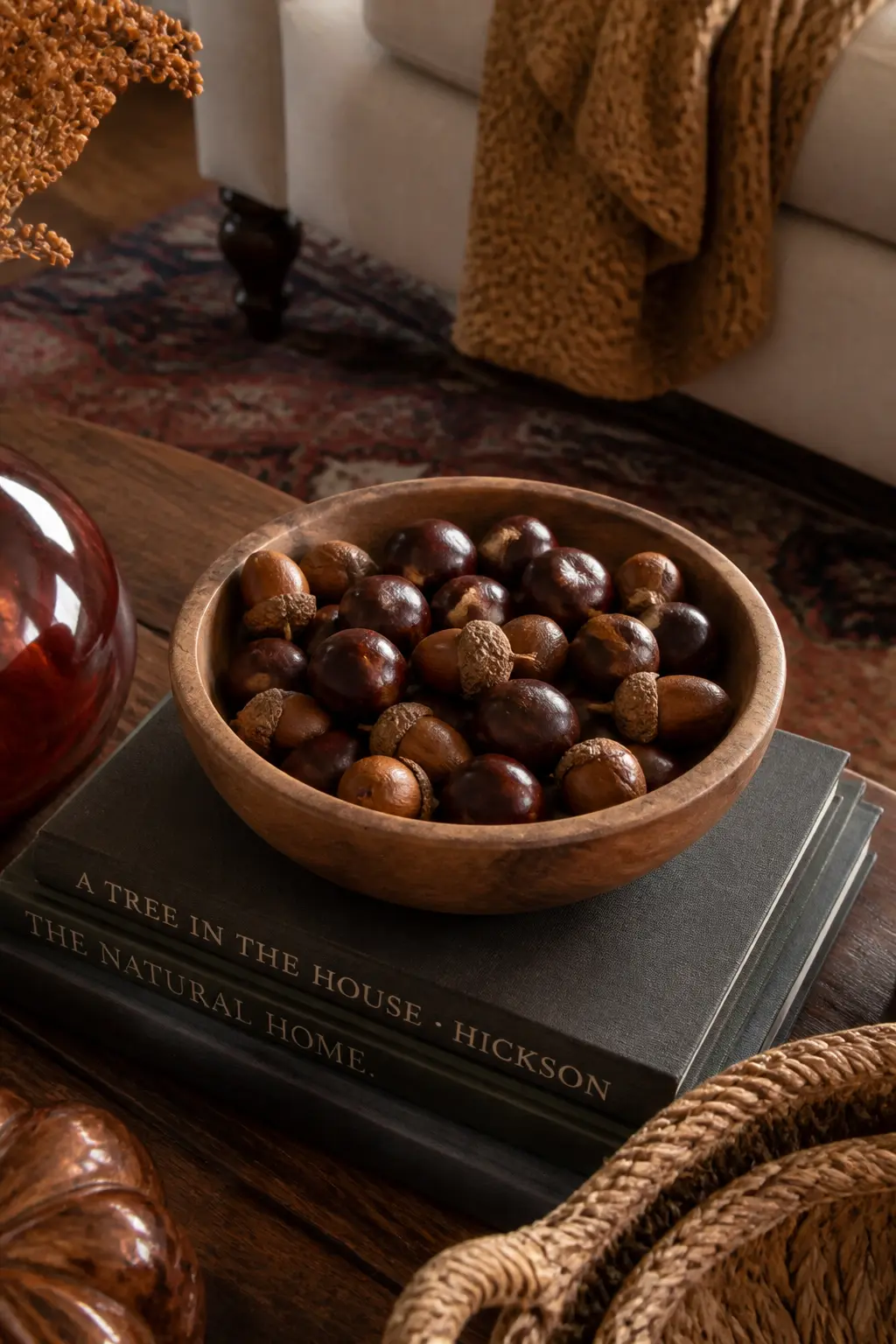
Add a Wooden Bowl of Chestnuts or Acorns
A bowl of real or very convincing faux chestnuts or acorns on the coffee table is the simplest possible seasonal object. It costs almost nothing, it lasts the whole season, and it reads immediately as autumn without any of the Halloween associations that more explicit seasonal props carry.
Use a wooden, ceramic or lacquered bowl with some weight to it. A flimsy bowl makes the contents look like a craft project. A proper heavy bowl makes them look like they belong.
🛍 Shopping guide
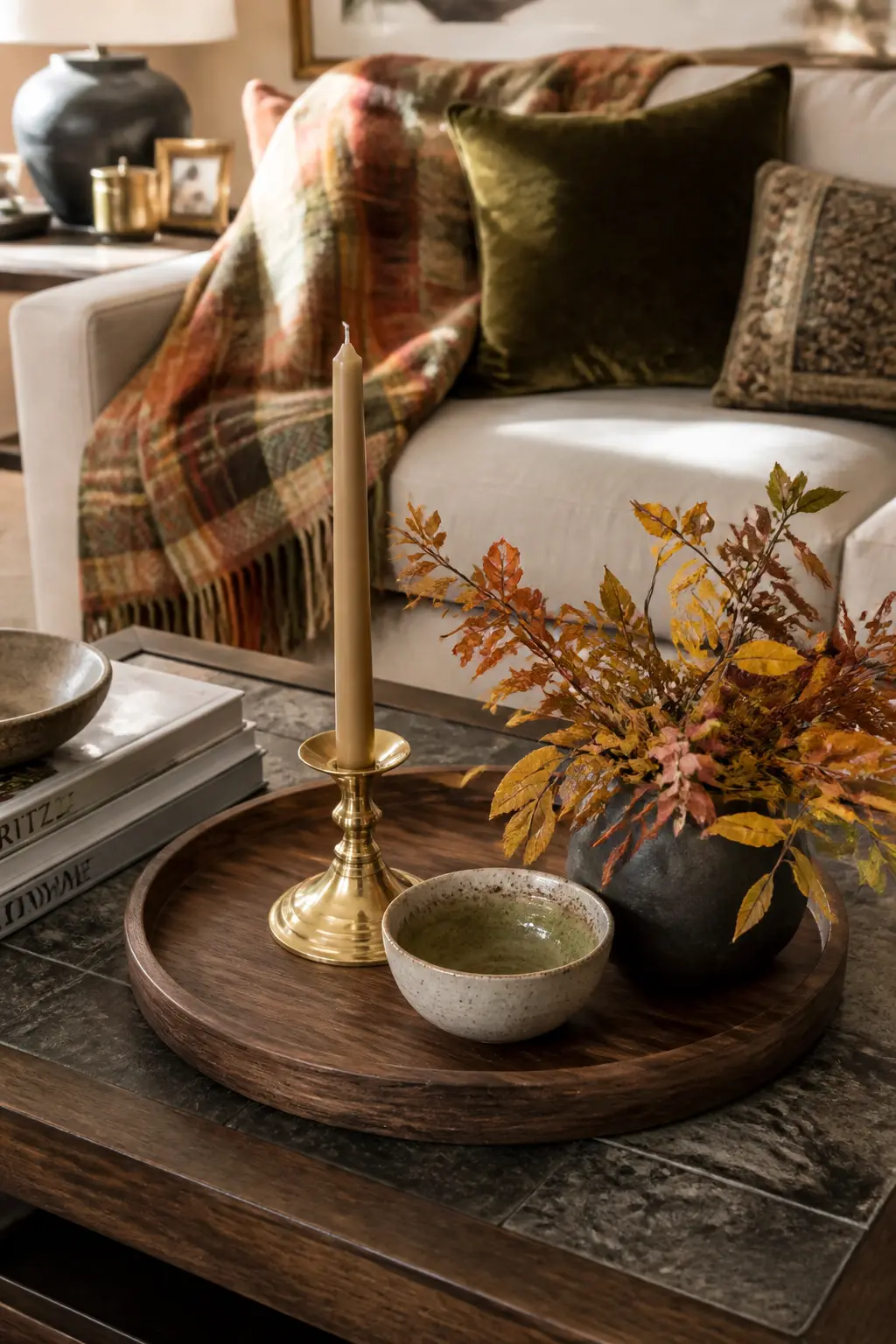
Swap a Glass Coffee Table Tray for a Wooden One
A glass tray is clean and cool. A wooden tray in dark walnut or oak is warm, slightly rustic, and works as a base for any grouping you put inside it. The same candle holders, the same small bowl, the same dried sprig: all of them read better on wood than on glass in autumn.
Round trays work especially well on square coffee tables. The contrast in shape gives the surface some visual movement.
🛍 Shopping guide
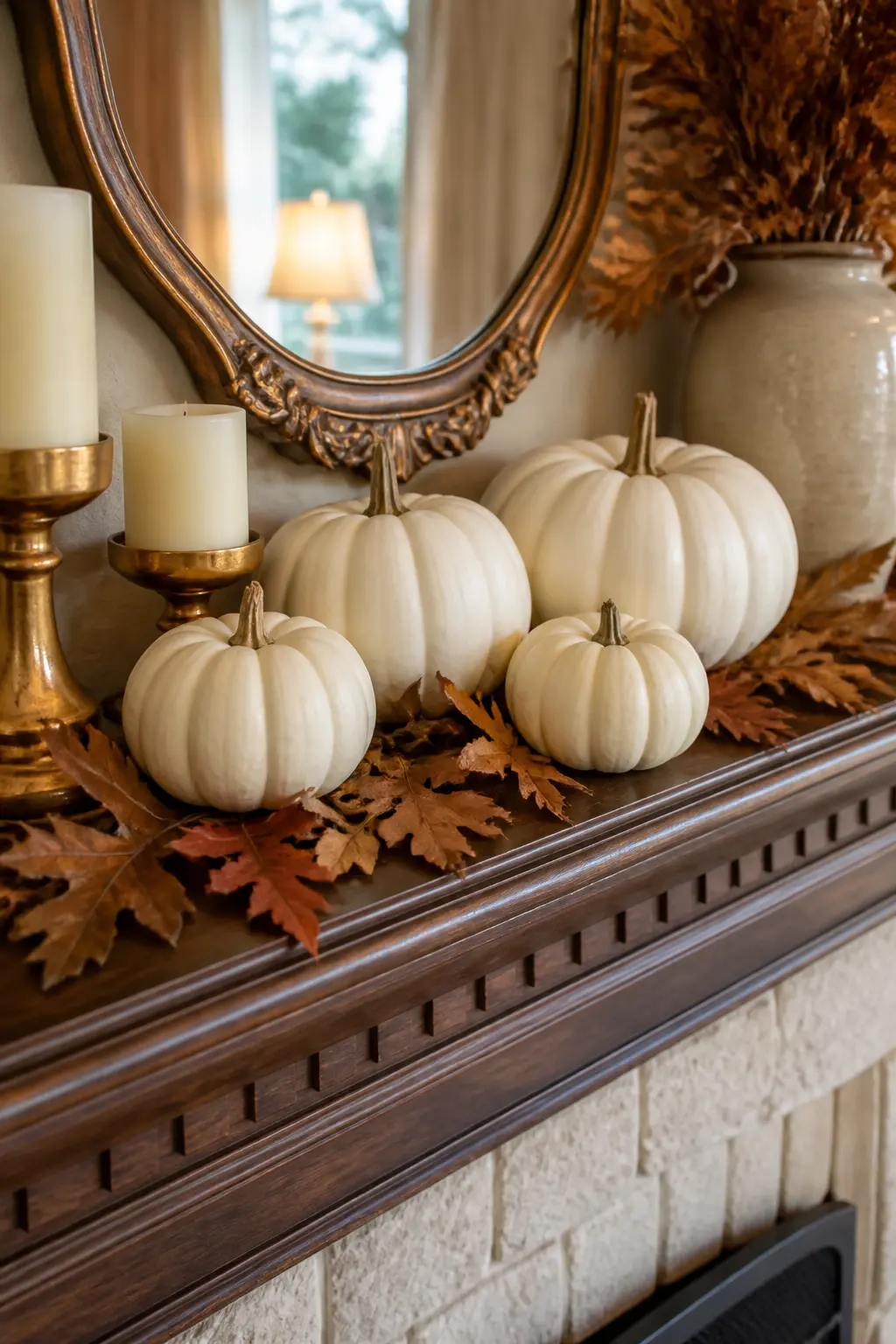
Line the Mantel with Small White Pumpkins
White pumpkins read as seasonal without the orange-and-black associations of the holiday. Line them along the mantel in varying sizes, clustered slightly rather than evenly spaced, and they work alongside greenery, candles and any other mantel objects without dominating.
Real ones last four to six weeks and look better than faux ones. Buy them at the farmers market and let them sit naturally, no arrangement required.
🛍 Shopping guide
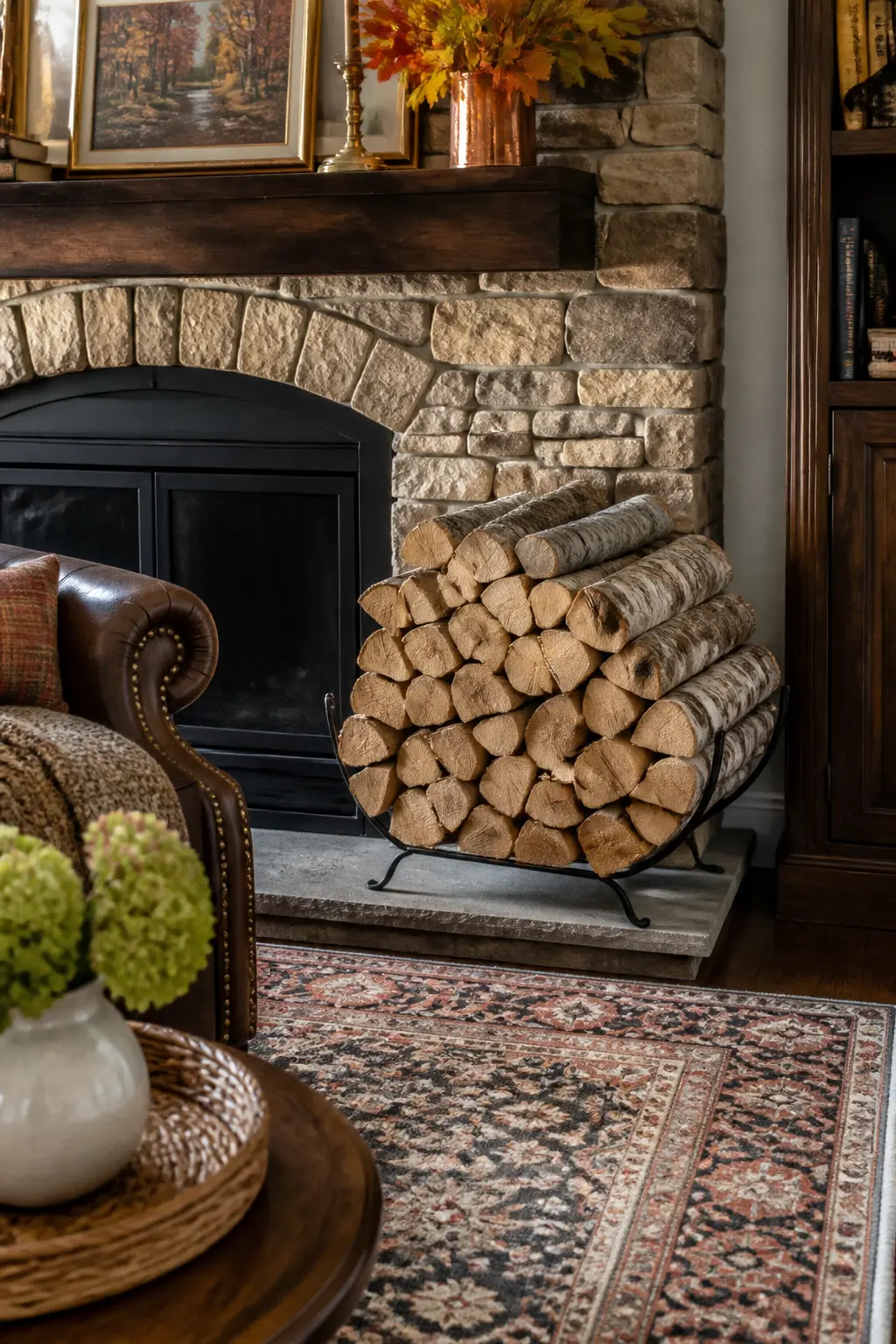
Add a Stack of Split Logs Beside the Fireplace
Split logs stacked beside the fireplace are functional storage and one of the most effective textural elements in any autumn room. The cross-section of cut wood, the bark on the outside, the rough edges of the stack: all of it reads as warmth before a single fire is lit.
Stack them loosely in a metal cradle or directly on the floor. Fifteen to twenty logs makes a stack with enough visual weight to hold its own beside a fireplace surround.
🛍 Shopping guide
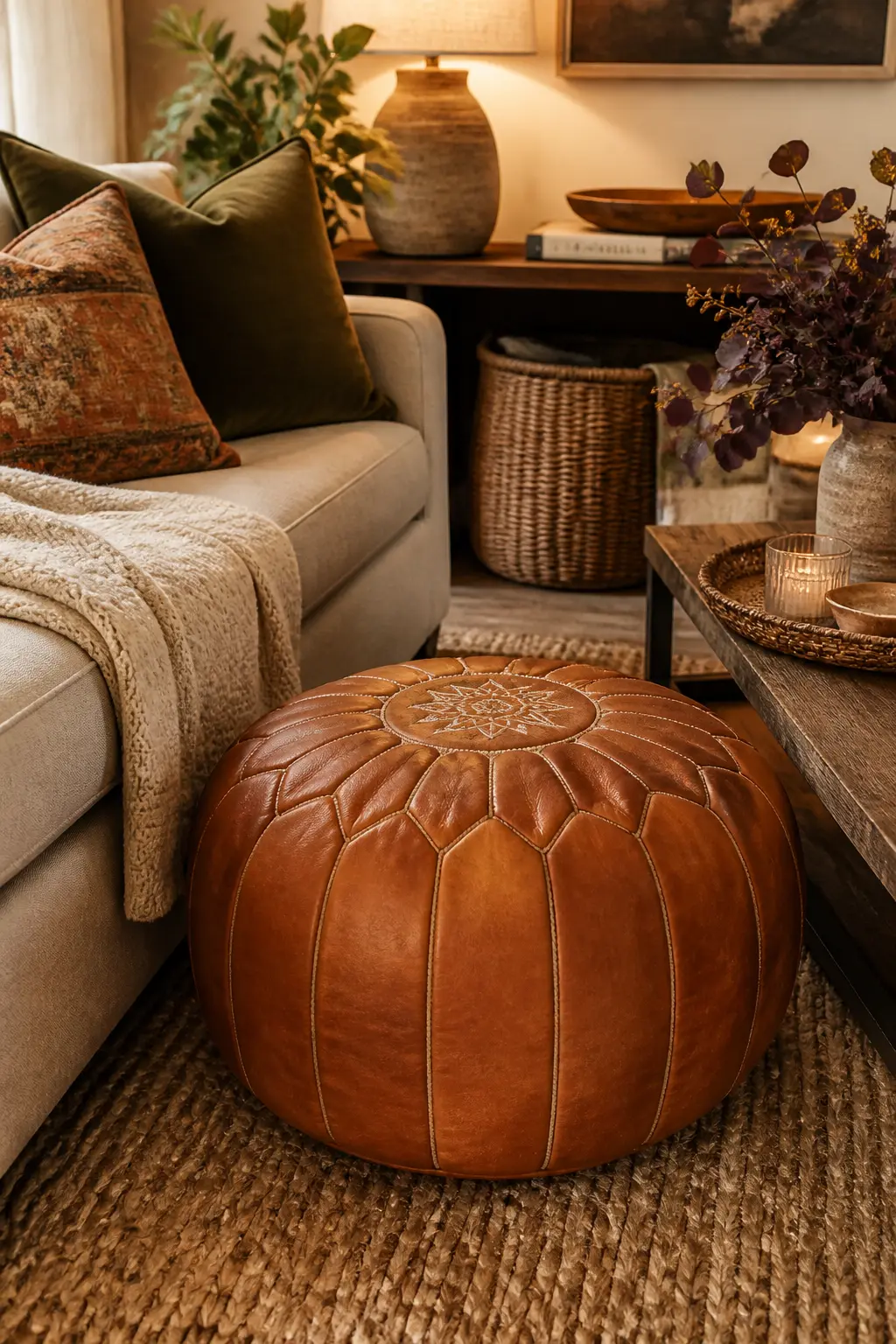
Add a Leather or Suede Pouf for Texture
A pouf does three things: it adds a warm texture at floor level, it gives the room a visual anchor between the sofa and the coffee table, and it provides an extra seat when needed. Leather in camel or cognac, or suede in dark olive or rust, all land well in an autumn room.
Position it slightly off to one side of the coffee table rather than directly under it. That asymmetry keeps the floor plan from looking like a hotel lobby.
🛍 Shopping guide
Plants and Botanicals: Living Warmth
Green is the one colour that reads warm in autumn when it is the right green. Burgundy, copper and ochre-toned foliage plants hold the palette without looking arranged. One large plant moved toward the lower autumn light does more than a dozen small ones on a shelf.
Dried botanicals carry the season further: they do not need watering, they do not drop, and they get better as the weeks pass.
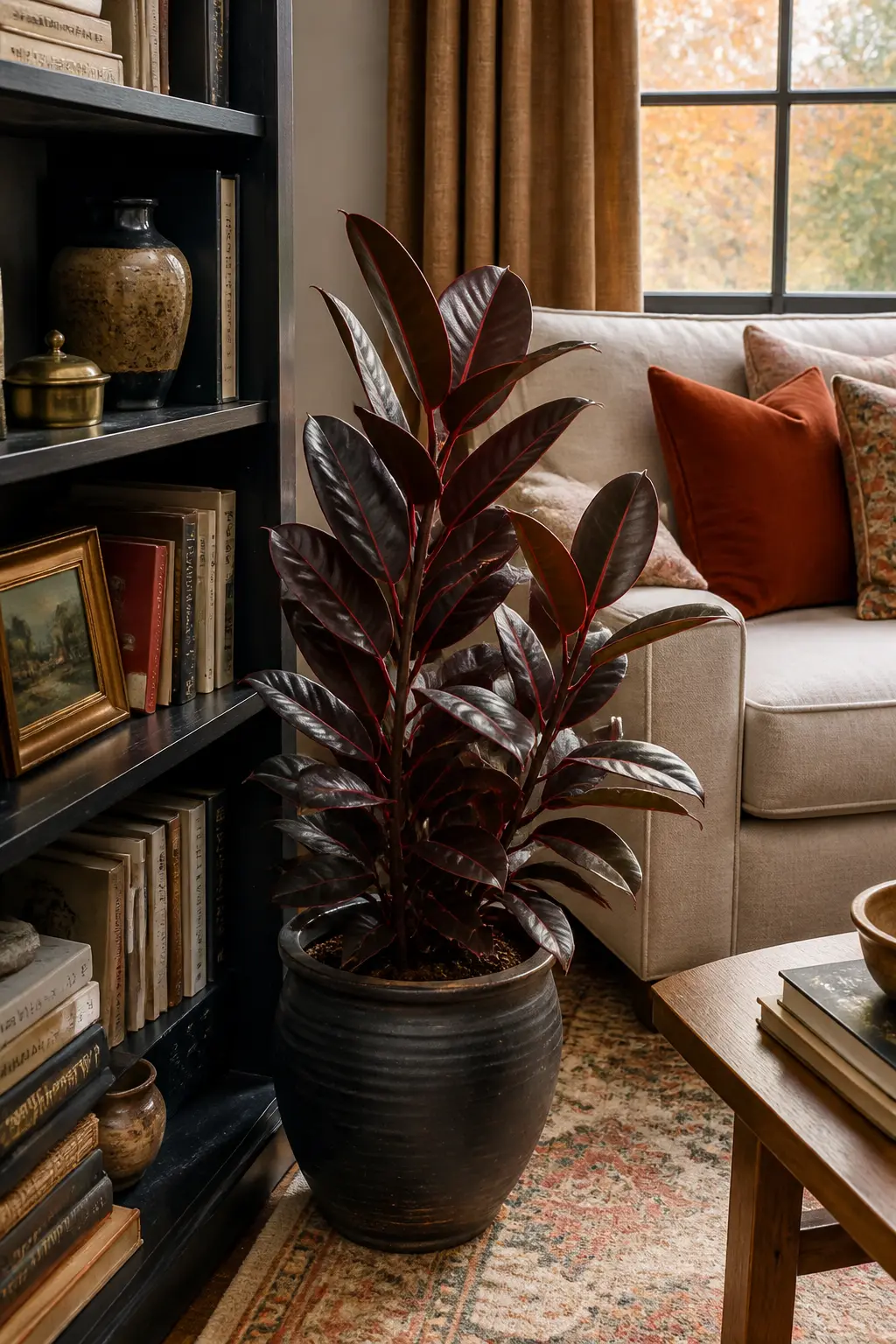
Add a Plant with Autumn-Toned Foliage
Not every plant reads warm. Monstera and pothos are summer plants: bright green, tropical, they fight the autumn palette. A burgundy rubber plant, a dark-leafed calathea, a copper-toned croton or an olive-toned fiddle leaf fig all hold the season without looking forced.
One large plant in the right tone does more than a shelf of small ones. The scale matters as much as the colour. Go for something with real presence at floor level.
🛍 Shopping guide
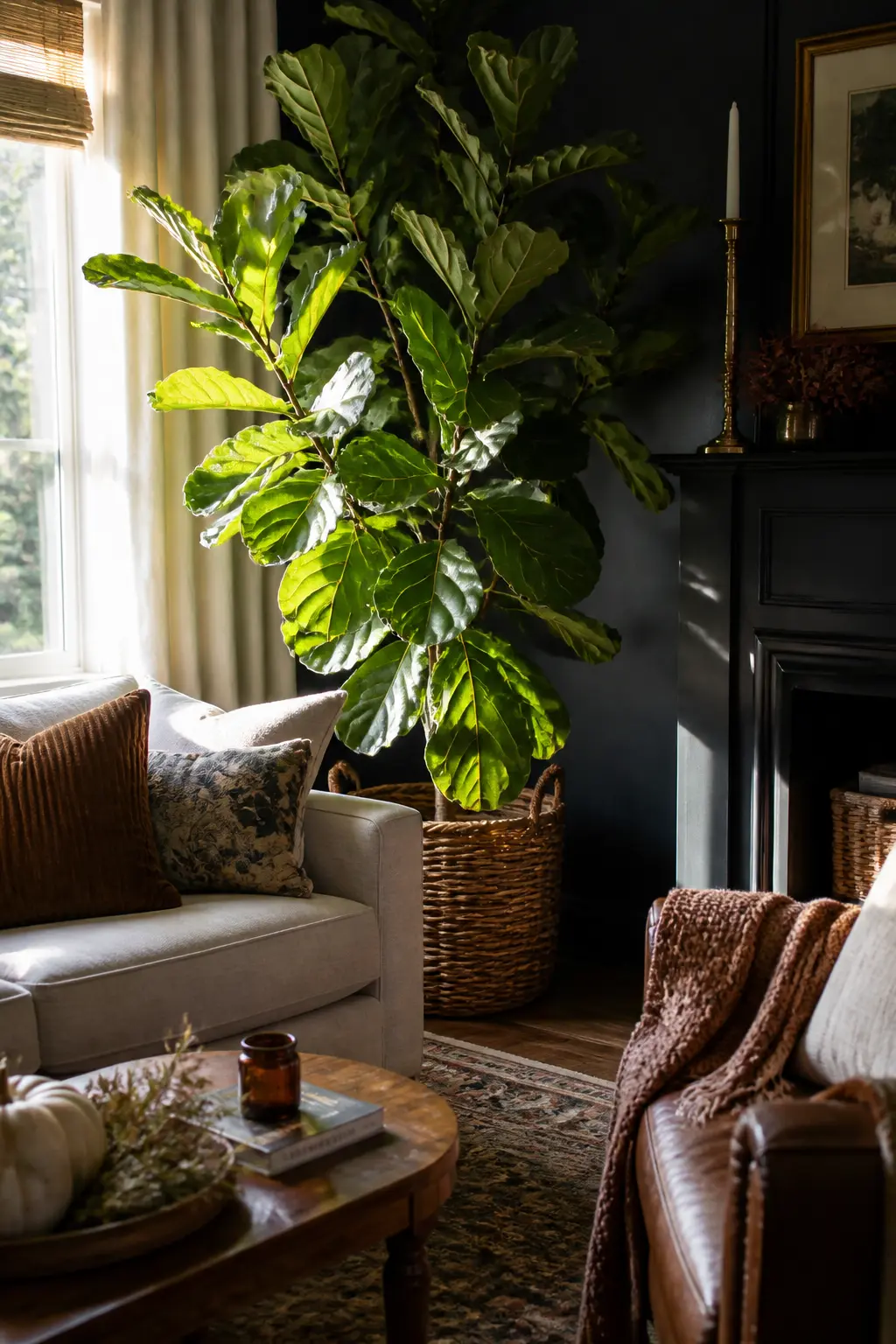
Move the Largest Plant to Catch the Lower Light
Autumn light enters from a lower angle than summer light, and the same plant in its summer position may now be sitting in shadow while the floor on the other side of the room is bathed in sun. Spend five minutes watching where the light falls in the late afternoon and move the plant to meet it.
A well-lit plant anchors a corner. A plant sitting in accidental shade reads as forgotten rather than placed.
🛍 Shopping guide
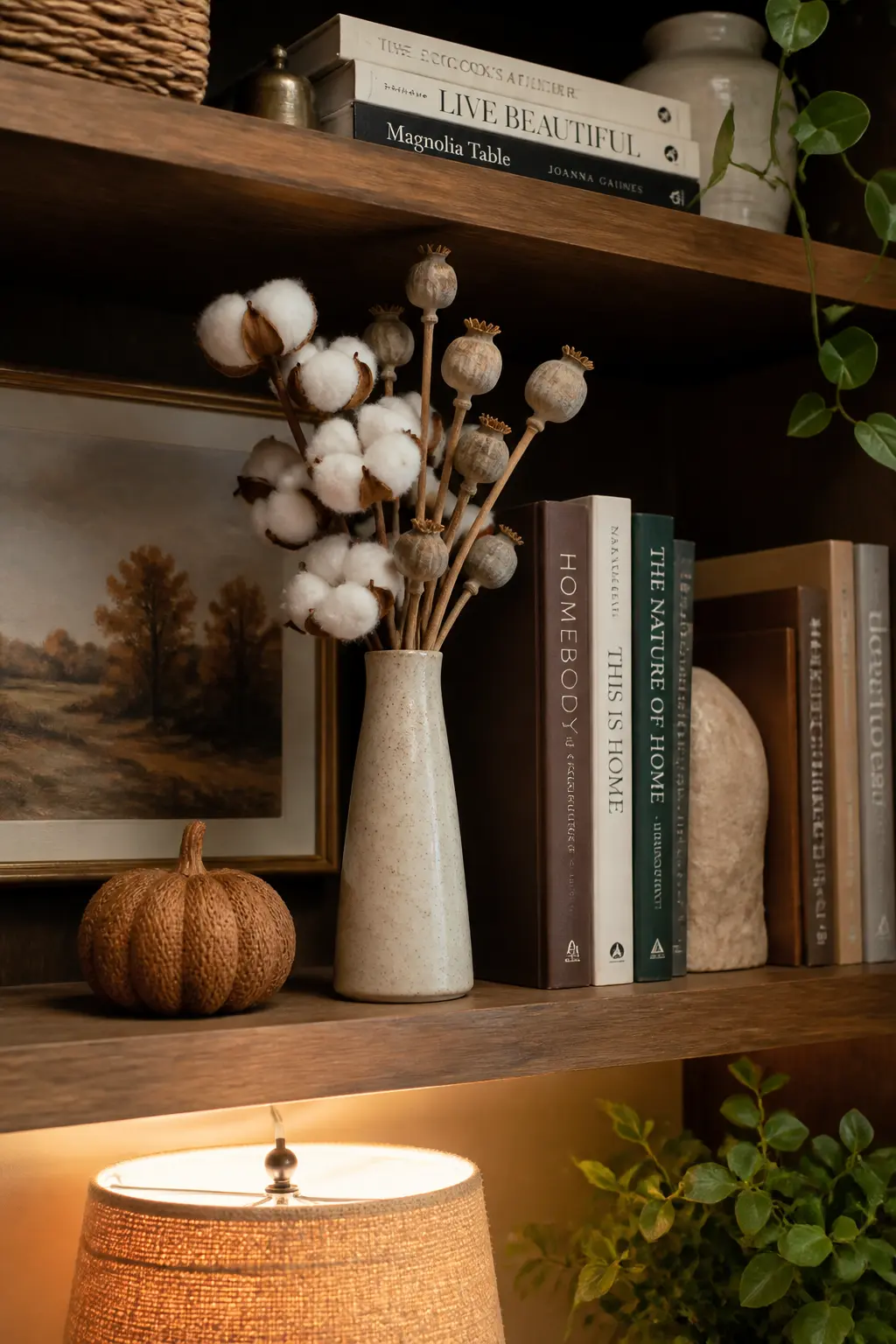
One Dried Arrangement Kept at Eye Level on a Shelf
Most dried arrangements end up on a coffee table or a mantel, which means you see them from above. A dried arrangement placed on a bookshelf at seated eye level is seen from in front, which shows the texture and silhouette of the botanicals far better.
Use a narrow vase so the arrangement reads as tall and spare, not wide and bushy. Dried cotton stems, dried poppy heads and bleached banksia all work at this scale.
🛍 Shopping guide
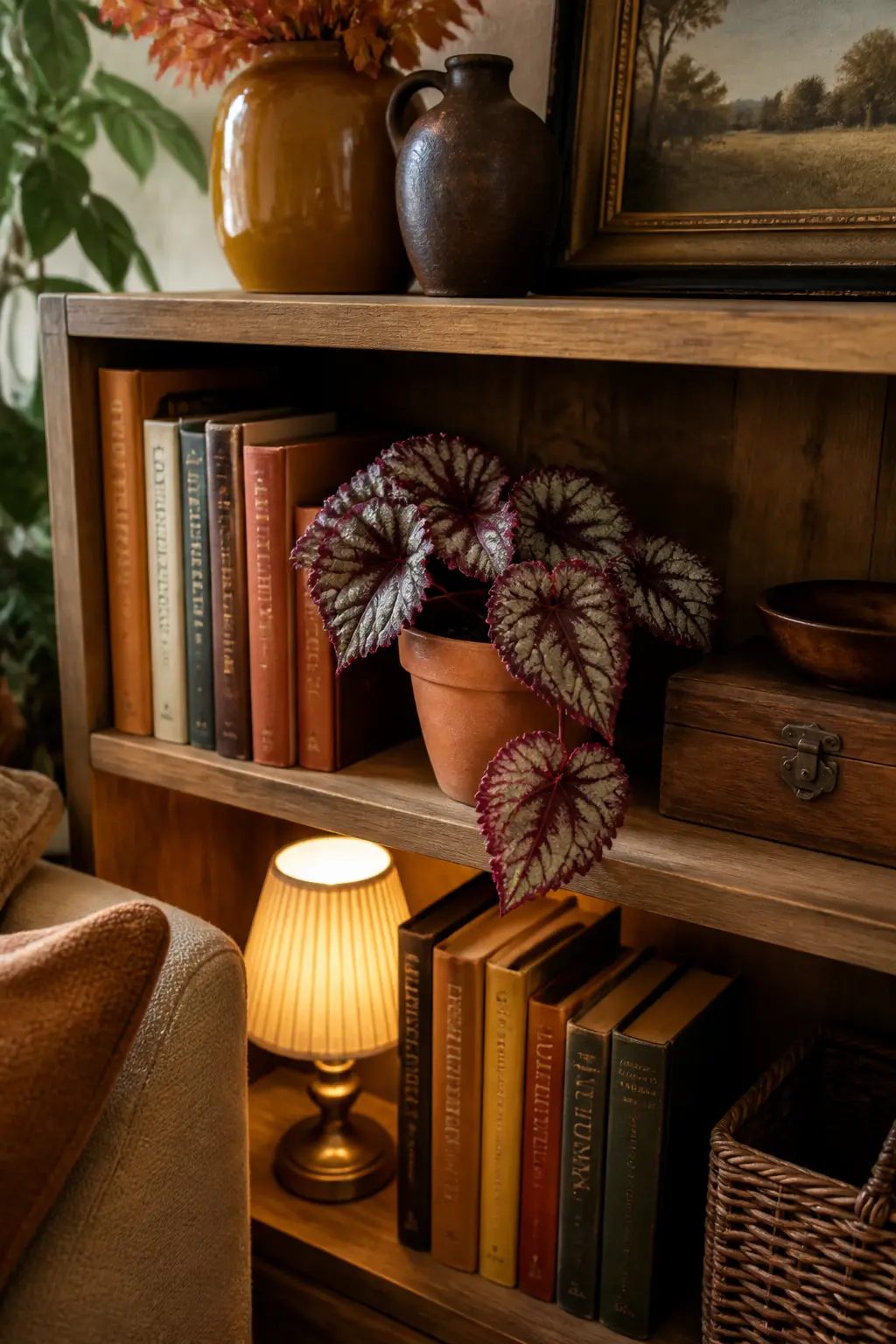
Add a Plant with Autumn-Toned Foliage to the Shelf
A small trailing plant with burgundy or copper-toned leaves on a bookshelf does something a dried arrangement cannot: it moves slightly and it grows. A heartleaf philodendron in dark form, a wandering dude in purple-green, or a small Rex begonia all carry autumn colour without requiring a green thumb.
Place it so one or two stems hang over the shelf edge. That small movement makes the whole bookshelf read as alive.
🛍 Shopping guide
Walls and Windows: Frames, Curtains and Hangings
The wall behind the sofa is the room’s loudest surface. A woven textile piece there changes the acoustic feel of the room as well as the visual one: sound stops bouncing, the room feels padded. Do that once and you will wonder why you ever hung a mirror there.
Windows work in two directions. Raise the curtain rod above the frame and the ceiling appears to lift. Add a heavier outer panel and the whole window reads as a warm element rather than a cold one.
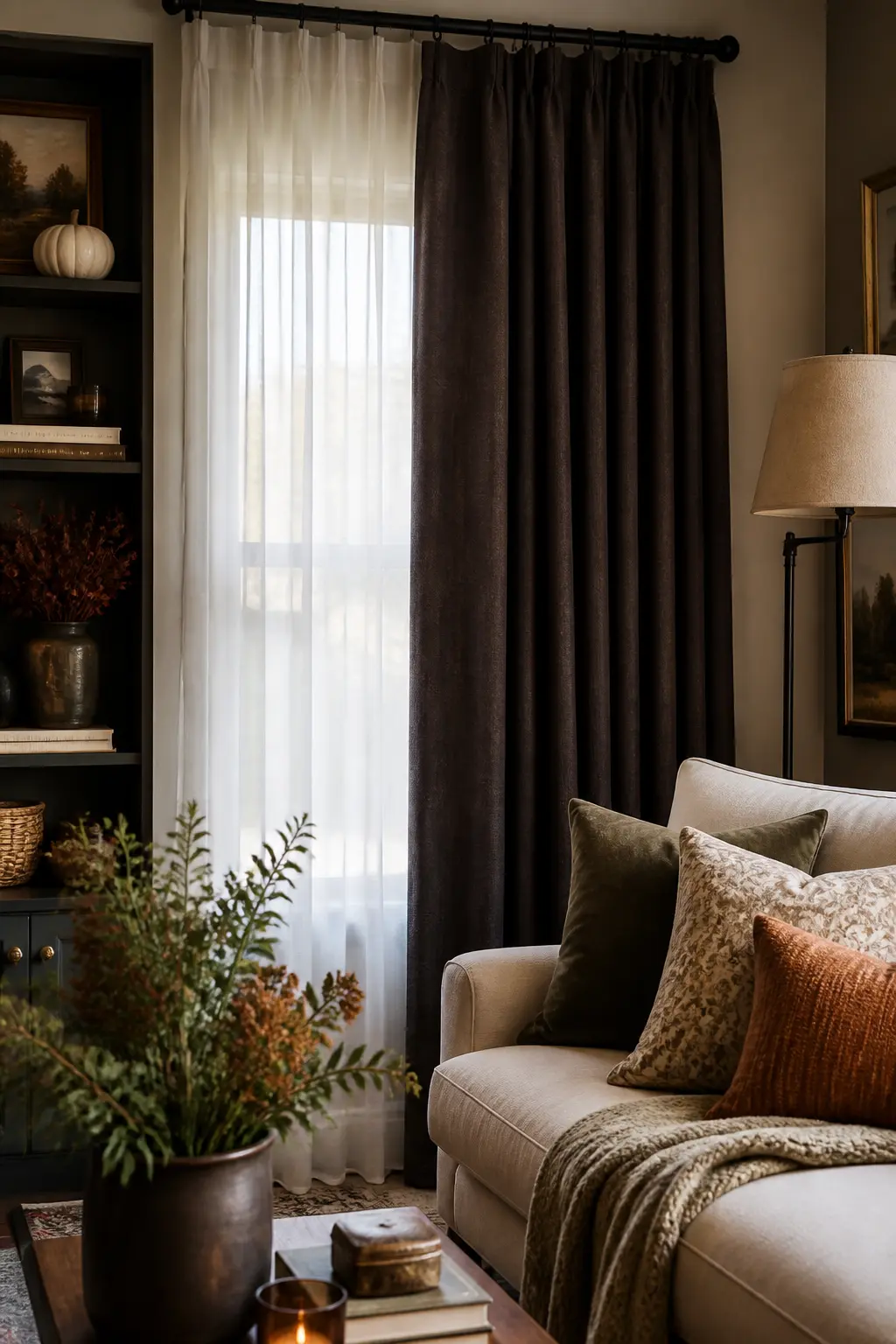
Layer Curtains with a Heavier Outer Panel
A sheer inner panel and a heavy outer panel give you the best of both: light in the daytime, warmth and enclosure in the evening. The outer panel does not need to match the sheers in colour, it needs to contrast them in weight. Linen, velvet, thick cotton in dark forest green, warm grey or rust all work.
Hang both panels on the same rod with separate rings so they draw independently. That way the heavy panel pulls fully to one side during the day and does not block light.
🛍 Shopping guide
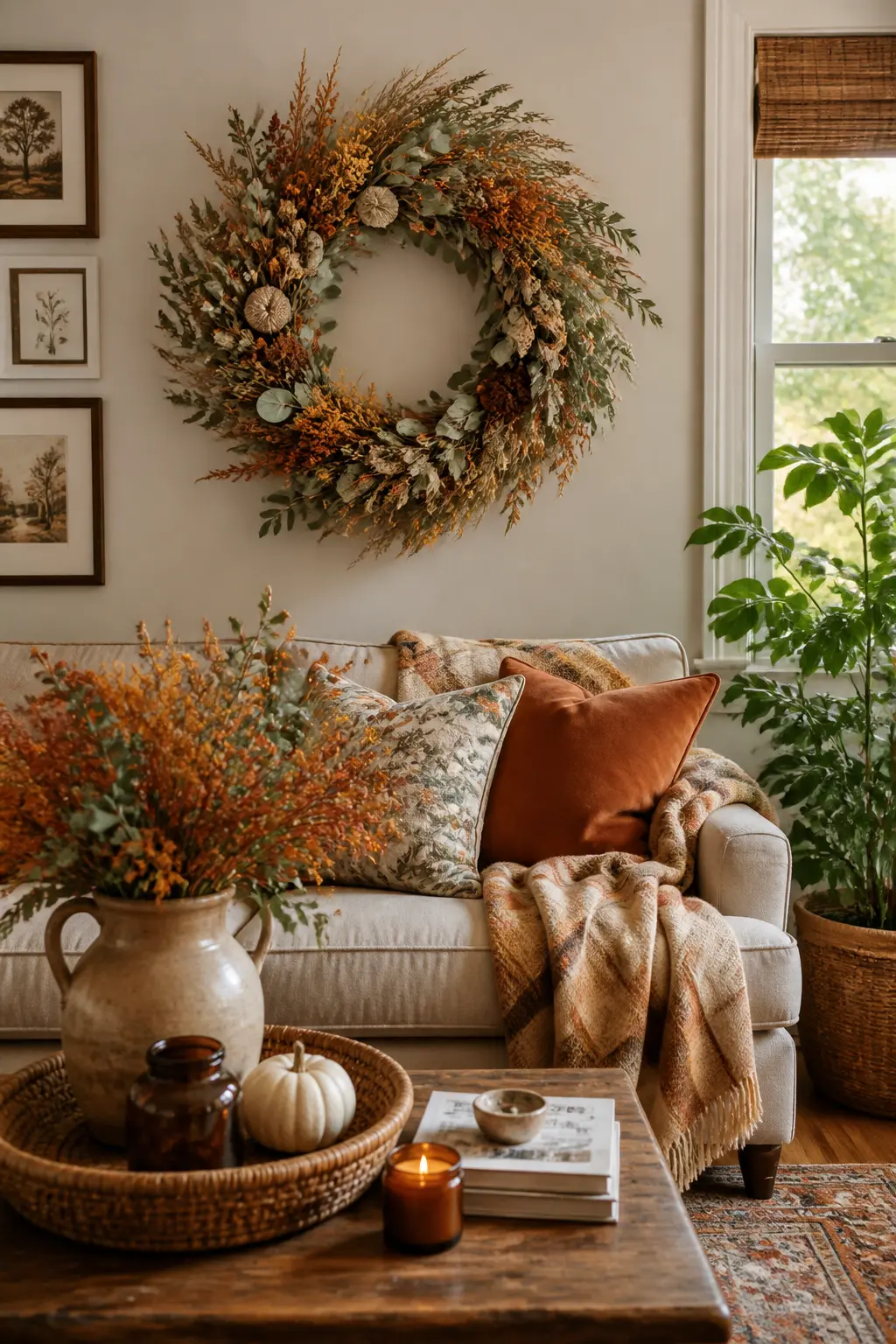
Hang a Seasonal Wreath on an Interior Wall
A wreath on the front door is expected. A wreath hung on the interior wall opposite the main window is a different object entirely: it becomes a piece of wall art with texture and depth, visible from across the room, and it does not fight with the door hardware or the weather.
Choose a wreath with dried botanicals, preserved eucalyptus, dried orange slices or seeded grasses rather than anything that reads as a Halloween prop. Keep the colours in the warm, muted range the rest of the room is working in.
🛍 Shopping guide
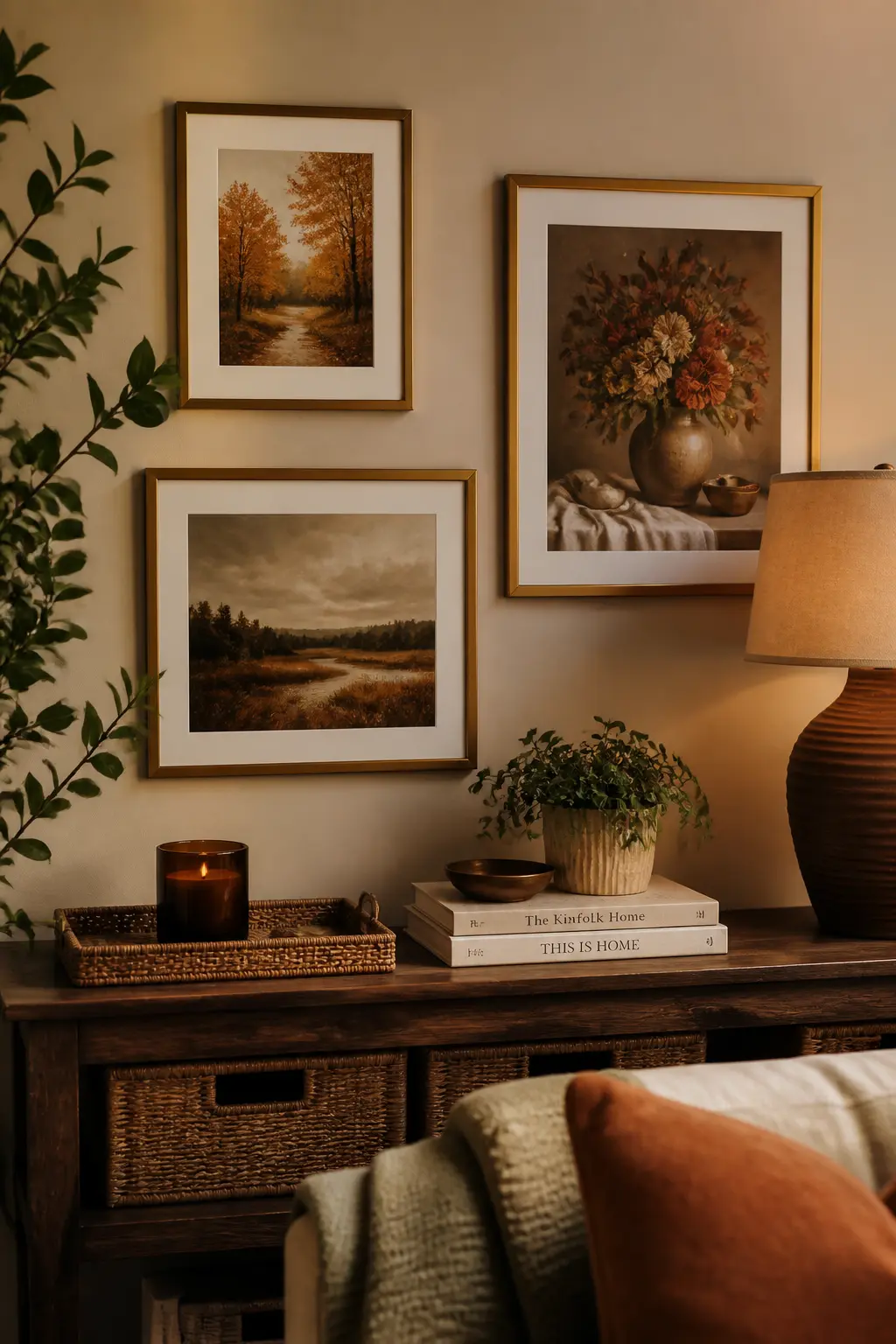
Swap Metallic Frames from Silver to Brass
Silver and chrome frames reflect cool light and reinforce the cold-room feeling every time the window is grey. Brass frames reflect warm light and make the same photographs or prints read differently: the images themselves appear warmer even when they are the same images.
Buy frames rather than reframing. The same prints, rehoused in brass or dark wood, are a new object in the room.
🛍 Shopping guide
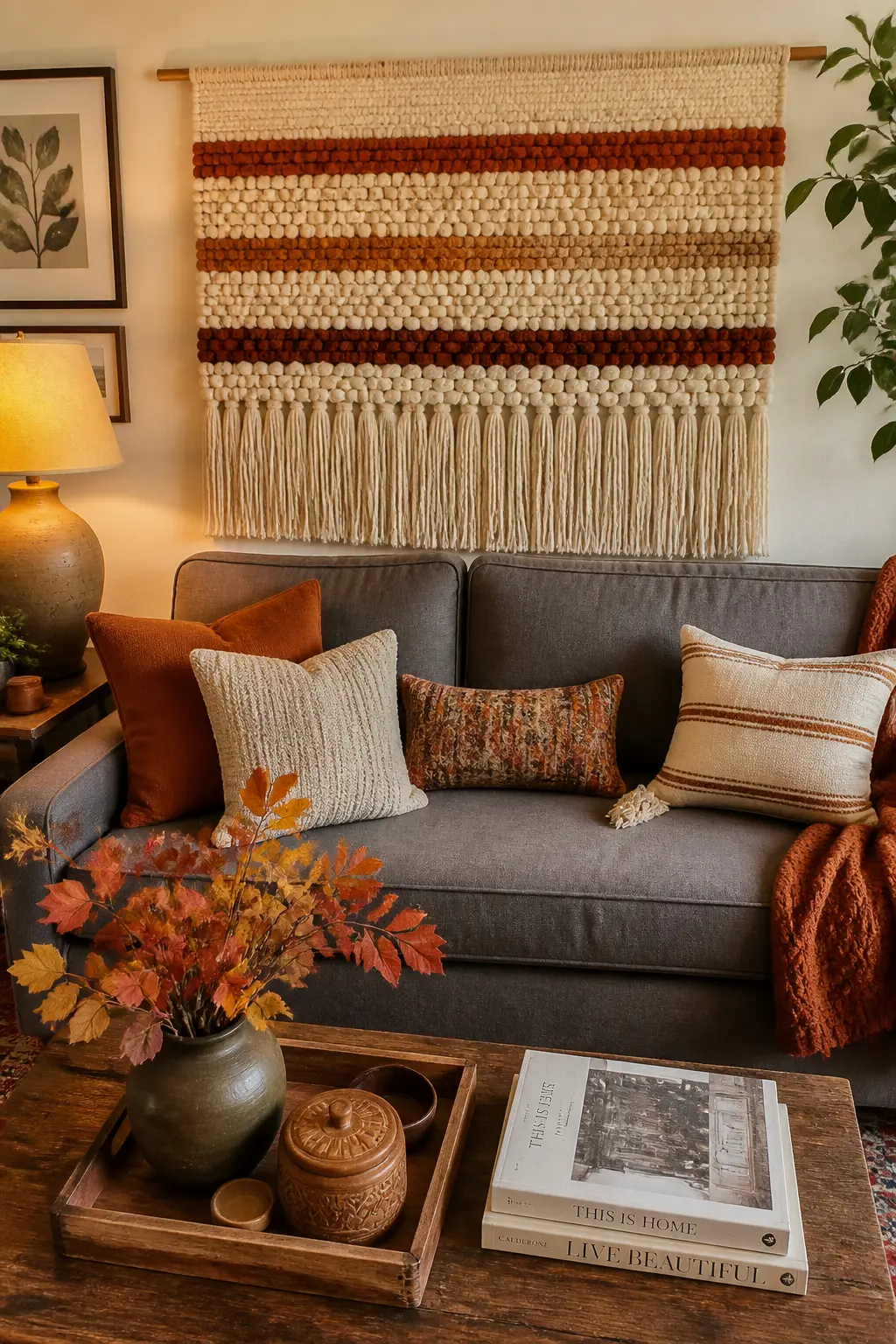
Hang a Woven Wall Piece Behind the Sofa
The wall behind the sofa is the largest single surface in most living rooms and the one that does the most work visually. A large woven piece in natural fibres, in warm cream, rust, ochre or dark brown, fills that space with texture and absorbs sound at the same time.
Hang it centered above the sofa with the bottom edge roughly twelve to eighteen inches above the sofa back. Below that and it looks like it fell; above that and it floats disconnected from the seating.
🛍 Shopping guide
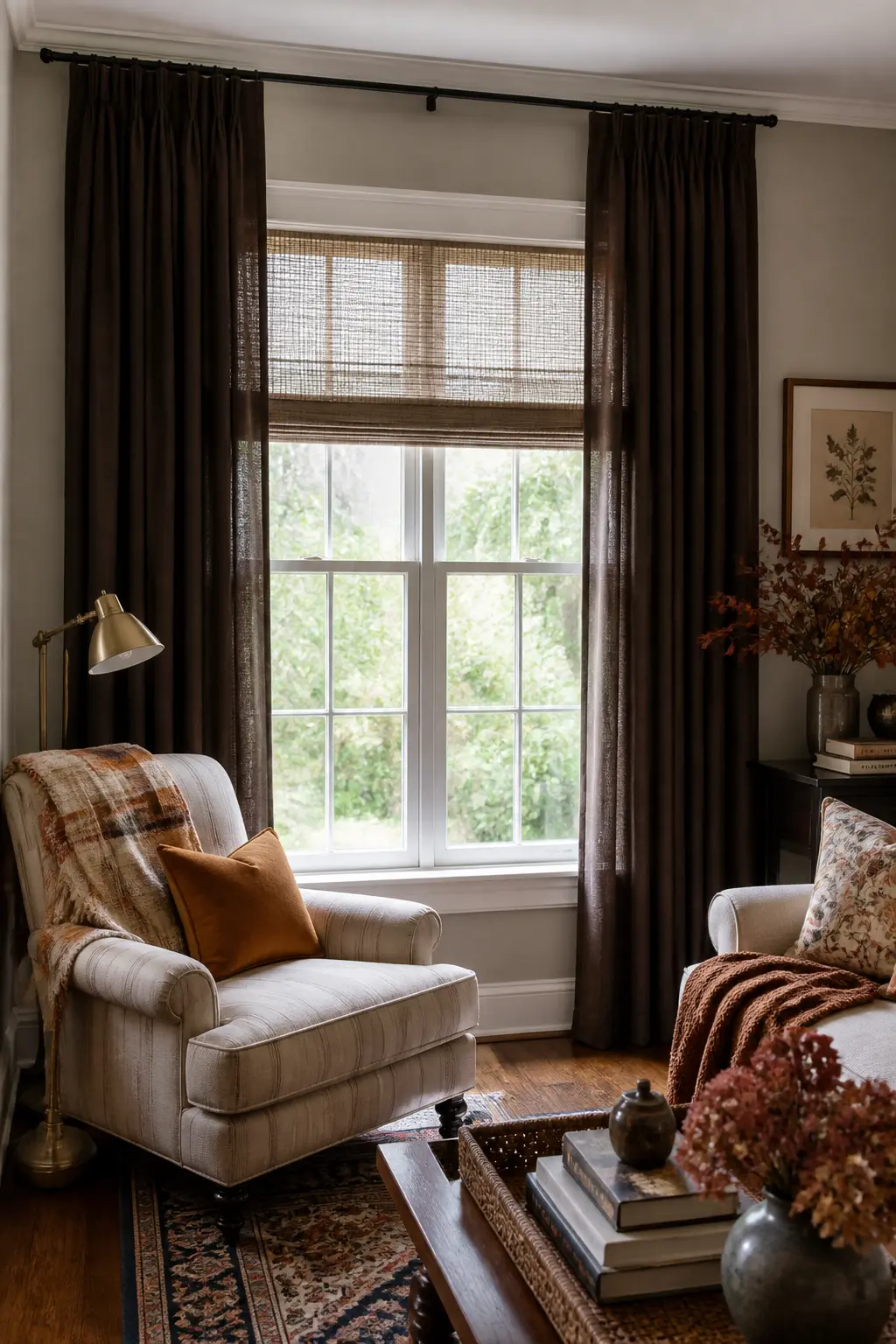
Curtain Rod Raised Above the Window Frame
Mount the curtain rod as close to the ceiling as the wall allows, not at the top of the window frame. When the curtains hang from ceiling height to floor, the window appears taller, the ceiling appears higher, and the whole room reads as more generous and better proportioned.
This works in any room with eight-foot or higher ceilings. It is especially effective when the window itself is modest, because the curtains read as an architectural element rather than a window treatment.
🛍 Shopping guide
Structural Moves: Furniture, Light and Layout
These are the ideas that cost nothing and change everything. Pulling chairs inward, raising a curtain rod, repositioning a plant: none of these involve buying a single object. They are the editor’s pass, done after everything else is in place.
Do them last. Moving furniture before the textiles are sorted means moving it twice.
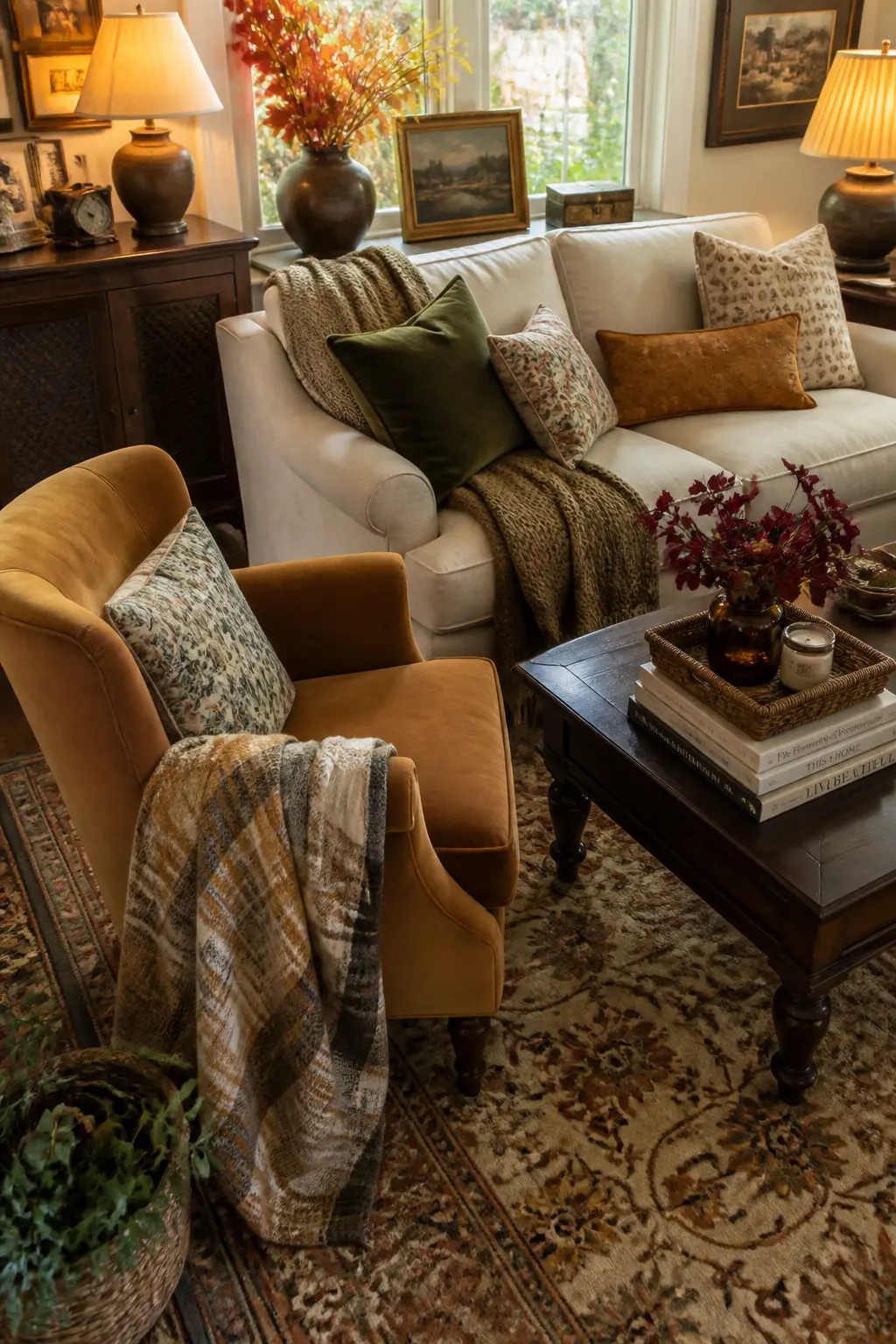
Move a Warm-Toned Armchair Into the Main Seating Group
A warm-toned armchair living in a corner of the room, used as a pile-holder rather than a seat, is wasted potential. Pull it into the conversation group so it faces the sofa or sits at an angle to it. The seating area immediately feels more generous and more inviting.
The chair does not need to match the sofa. An armchair in camel, rust, dark green or even dark leather reads well beside a neutral sofa as long as the scale is right. Mismatched seating that is properly grouped looks considered. Matched seating that is scattered looks like a waiting room.
🛍 Shopping guide
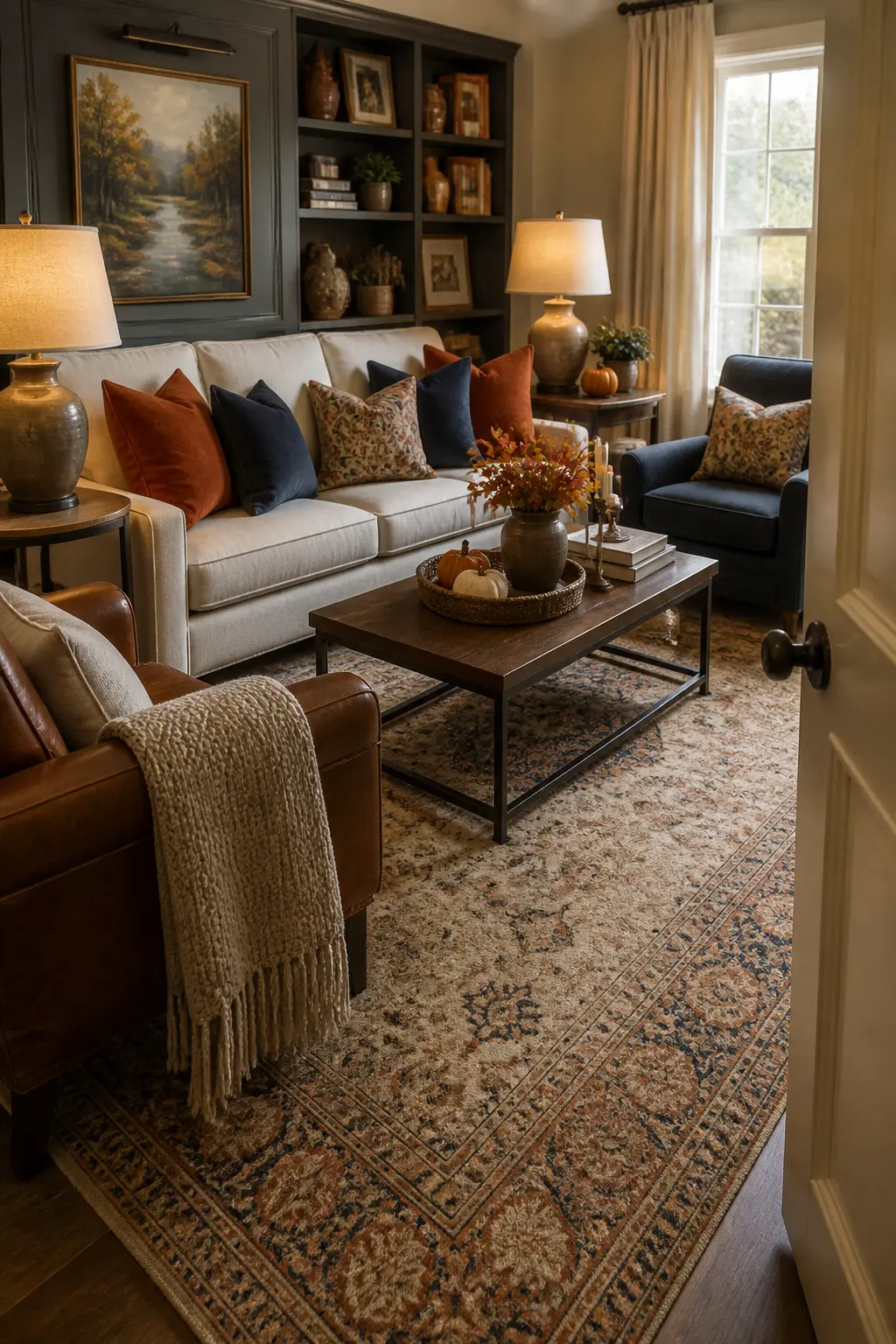
Furniture Pulled Inward to Tighten the Conversation Group
Furniture pushed to the walls makes a room feel larger in the daytime and colder in the evening. Pulling pieces twelve to eighteen inches away from the walls and toward each other creates a tighter conversation zone that feels contained and warm when it matters most.
The rug should be the reference point. All front legs on the rug, everything pulled inward to float together, and the room instantly reads as arranged rather than stored.
🛍 Shopping guide
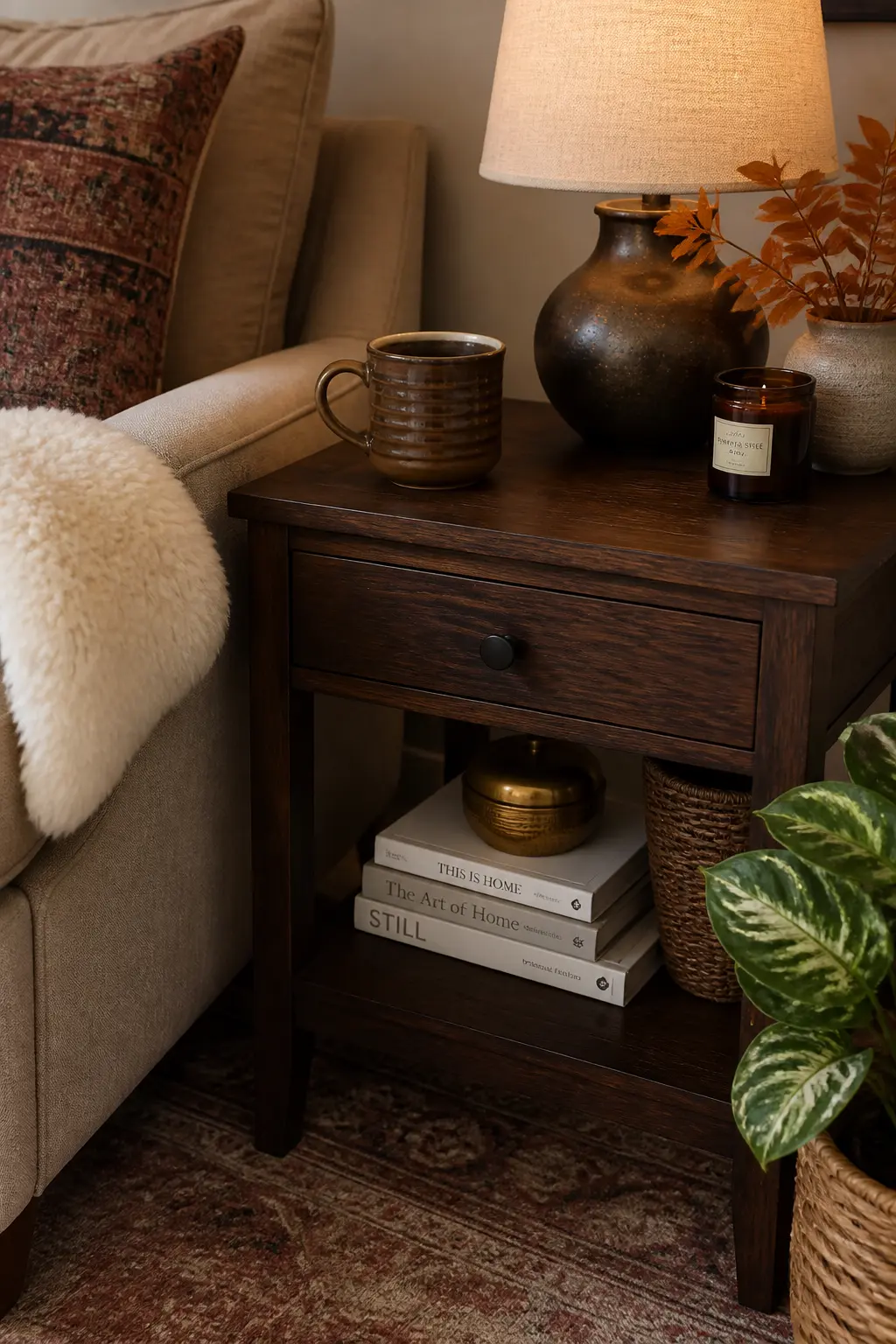
Add a Small Side Table in Dark Wood
Every seat in the conversation group needs a surface within reach. A small dark wood side table beside the armchair that moved in from the corner solves that problem and adds a warm material at the same time. Walnut, dark oak, and mahogany-stained pine all work.
It does not need to match anything else in the room. Side tables are allowed to be orphans, as long as the wood tone is warm and the scale sits comfortably beside the chair.
🛍 Shopping guide
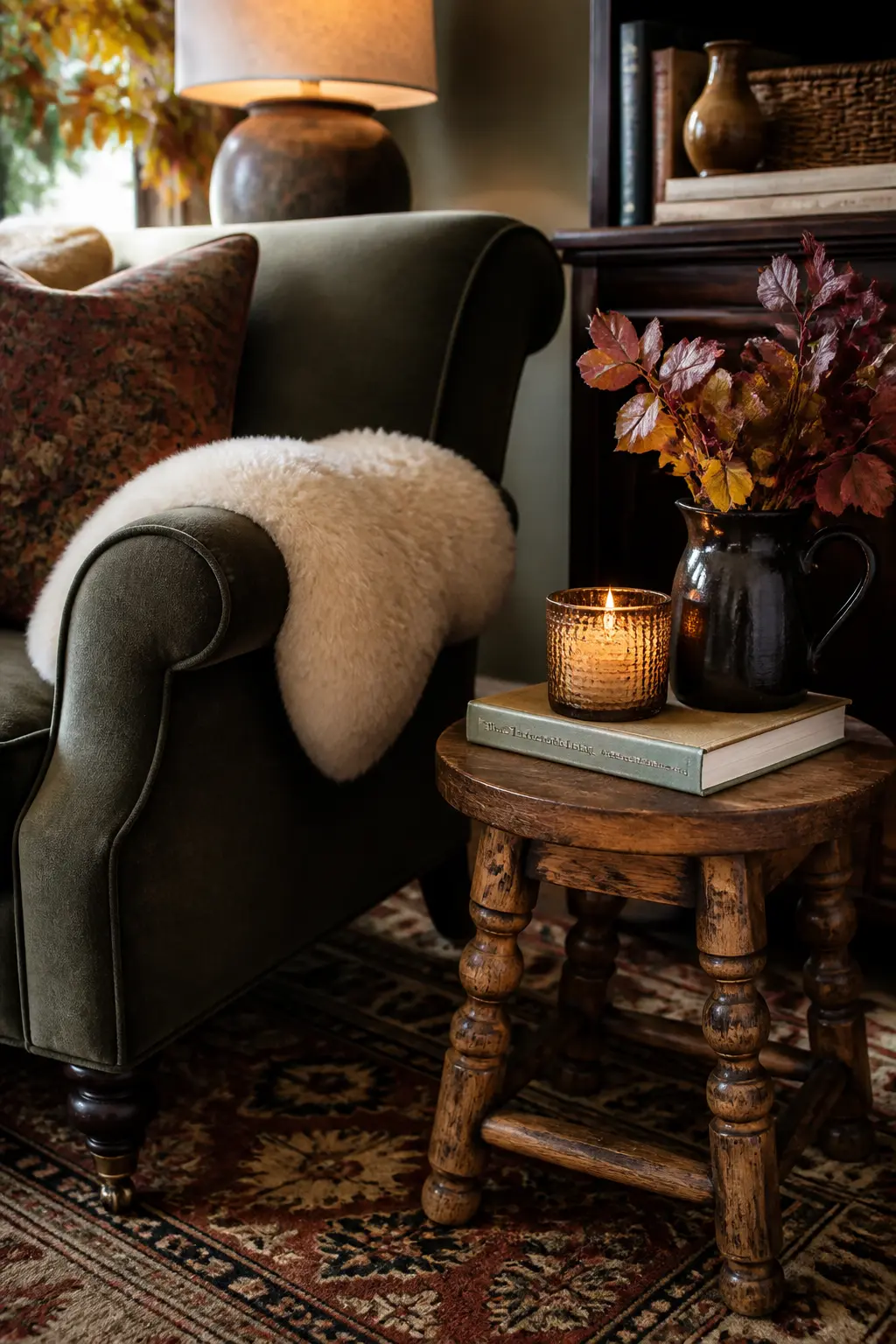
Add a Small Stool as a Side Table
A small wooden or upholstered stool used as a side table costs less than a proper side table, takes up less floor space, and can be moved or used as extra seating when needed. In an autumn room, a dark wood stool with a turned leg, or a low drum stool in leather, adds warmth without weight.
Stack two small items on it: a lamp or a candle and a coaster. That is enough to make it read as furniture rather than a repurposed step stool.
🛍 Shopping guide
Storage and Utility: Beautiful and Functional
A cold room looks chaotic as well as bare. Blankets on the arm of the sofa, remotes on every surface, logs rolled under a chair: all of it reads as neglect. Give each of those things a proper home and the room settles.
Storage here is decor. A floor basket, a dark bowl, a leather ottoman with a lid: each one solves a mess problem and adds a texture the room needed anyway.
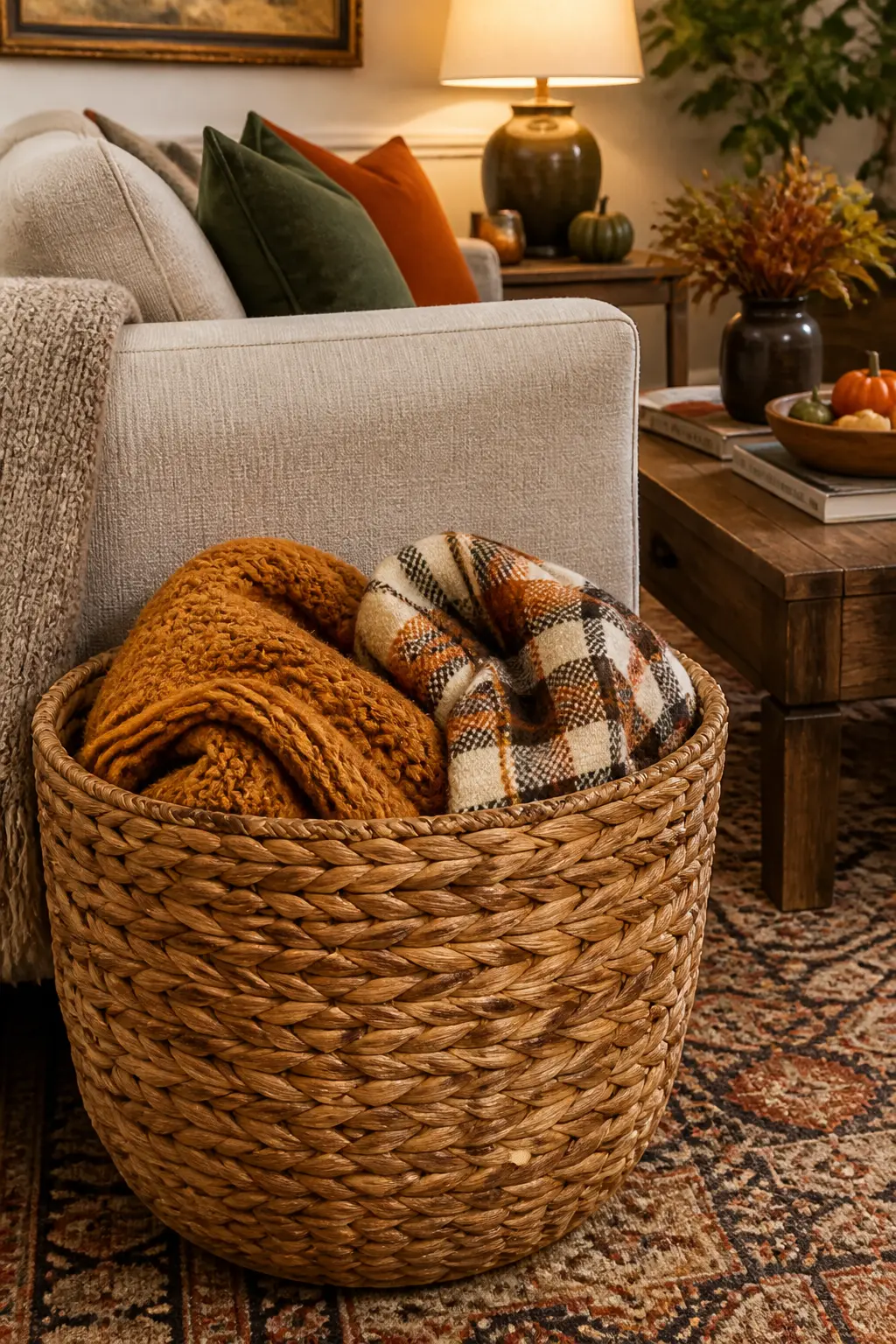
Bring in a Floor Basket for Blanket Storage
Blankets folded on the sofa arm fall off. Blankets in a plastic box disappear into a closet and are never used. A large floor basket beside the sofa or reading chair holds four to six throws visibly and accessibly, and the woven texture of the basket is a warm material in its own right.
Fill it loosely rather than neatly. A basket with blankets piled and slightly spilling looks used and inviting. A basket with blankets folded military-tight looks like storage for storage’s sake.
🛍 Shopping guide
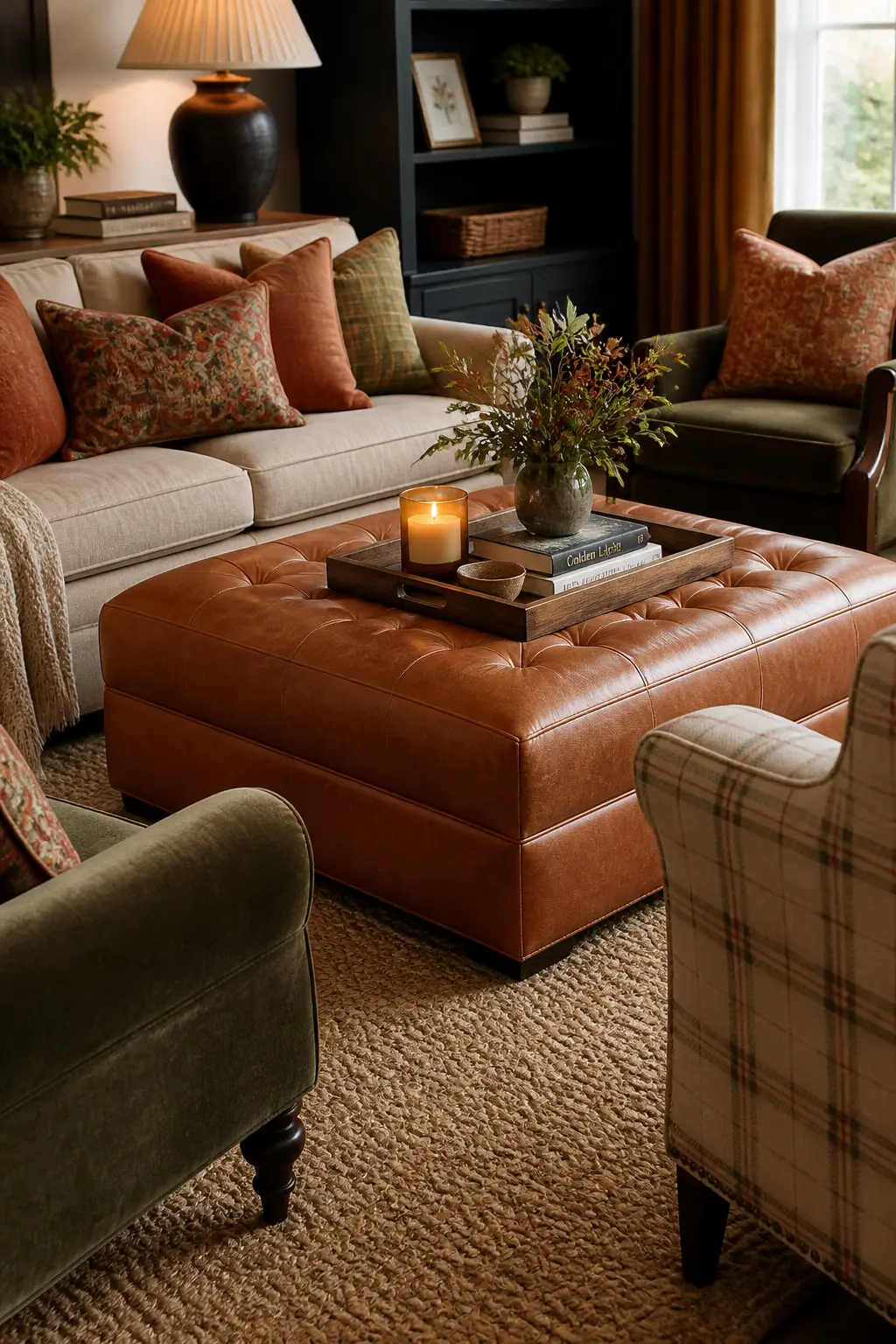
Bring in a Leather Ottoman as Extra Seating
A leather ottoman in the conversation group serves three purposes at once: footrest, extra seat and coffee table when a tray is placed on top. In cognac, dark brown or camel, it is one of the warmest materials in the room without requiring any effort to maintain once it is in place.
It also takes up less visual space than a chair, which makes it the right answer when the conversation group needs one more seat but the room does not have room for one more piece of upholstered furniture.
🛍 Shopping guide
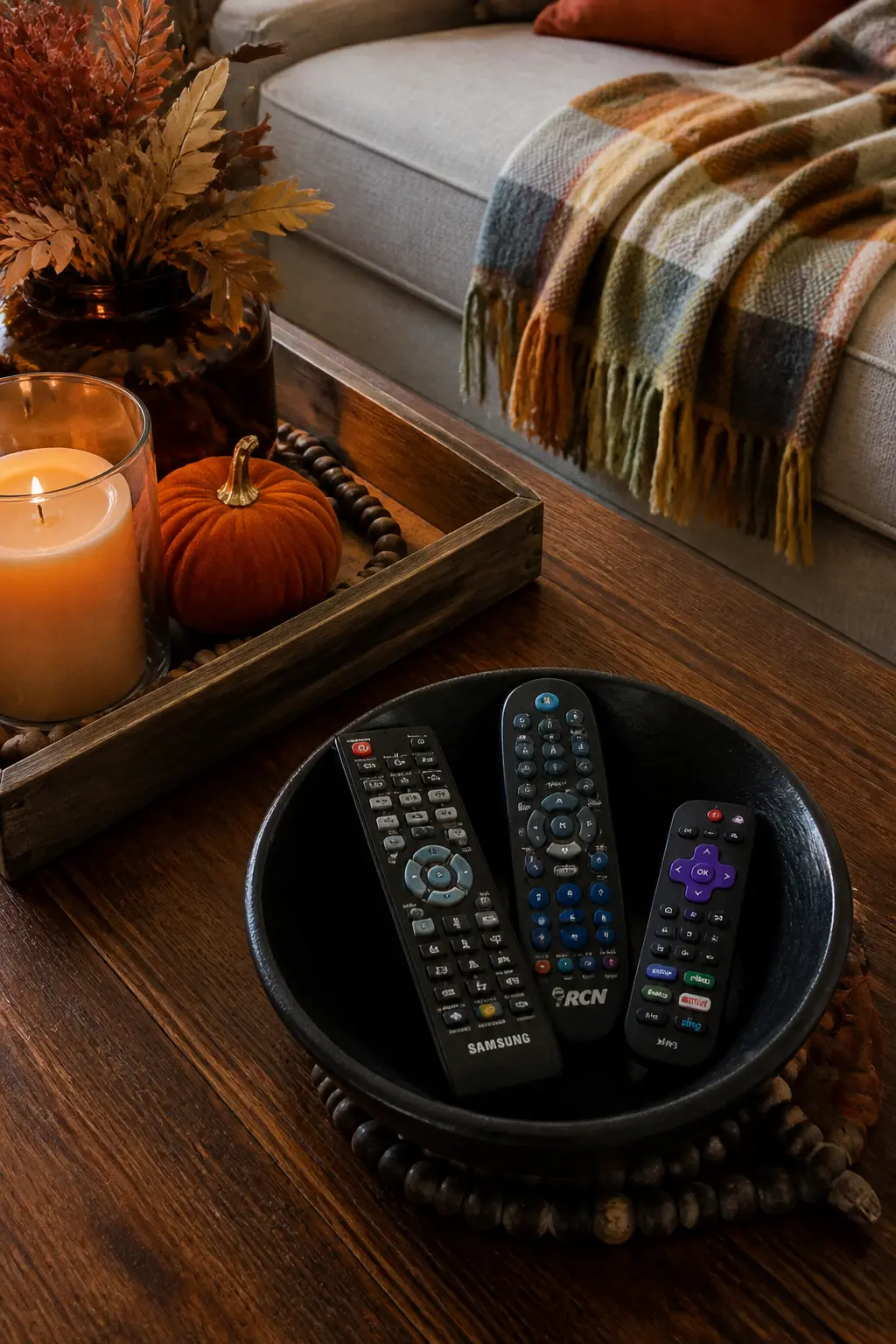
Group All Remotes Into One Dark Bowl
Scattered remotes on a coffee table destroy any styled surface within ten minutes of normal life. A single dark ceramic or lacquered bowl corrals all of them, and once the bowl has enough presence (weight, colour, material) it becomes a deliberate object rather than a hiding place.
Black, dark brown or deep navy ceramic all work. The bowl should be heavy enough not to tip when a remote is dropped in from a foot away. Functional and beautiful is the standard here, not one or the other.
🛍 Shopping guide
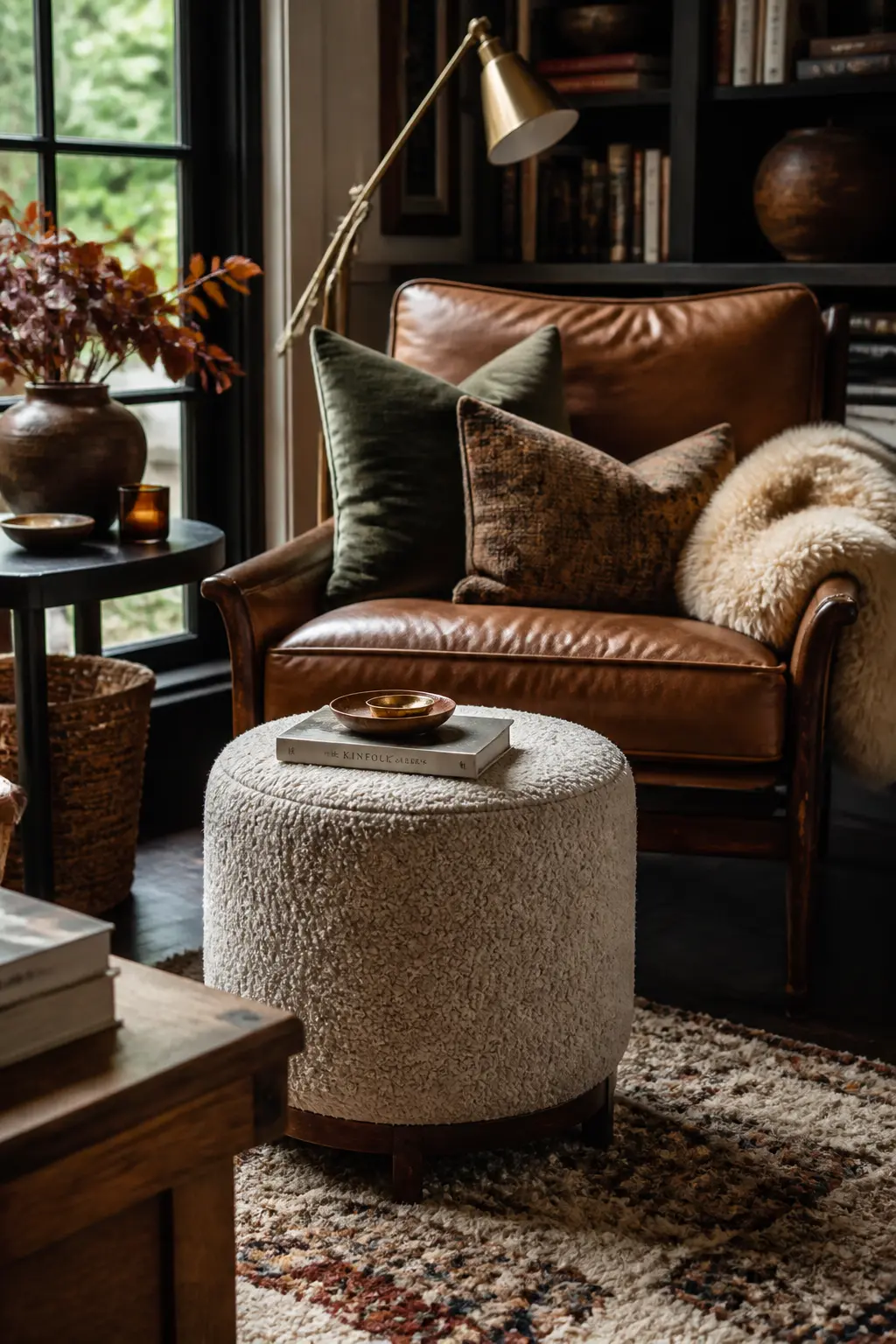
Bring in a Footstool With a Textured Cover
A footstool in front of the reading chair makes the chair function properly as a reading chair rather than sitting unused. A textured cover, boucle, ribbed velvet, or needlepoint, adds a layer of material warmth at foot level where the eye naturally rests when seated.
It does not need to match the chair. Contrast in texture with similarity in tone is the formula that reads as deliberate rather than accidental.
🛍 Shopping guide
Finishing Touches: the Details That Close It Out
These are the moves you make in the last ten minutes: swapping a tray, changing a tieback, adding one ceramic vessel to a shelf. None takes more than five minutes. Together they change the read of the whole room from ‘autumn-adjacent’ to ‘done.’
This is also where the deep wine accent lives. One piece, introduced once, does more than a palette of it ever would. For everything that happens in this room once it is dressed, 40 Thanksgiving Games the Whole Table Will Love is a useful next tab to open.
Deep Wine Accent Introduced Once
Deep wine, burgundy and dark plum are the richest notes in an autumn palette and the easiest to overdo. Introduce the colour once: one pillow in a grouping of otherwise warm neutrals, one ceramic vessel on the shelf, one candle among ivory ones. That single note does more than a burgundy-everything room could ever achieve.
The rest of the room should hold the wine in place by surrounding it with the warmer, quieter tones it needs to show against. Amber, warm grey and dark wood all make wine sing. Too many competing accents and it disappears.
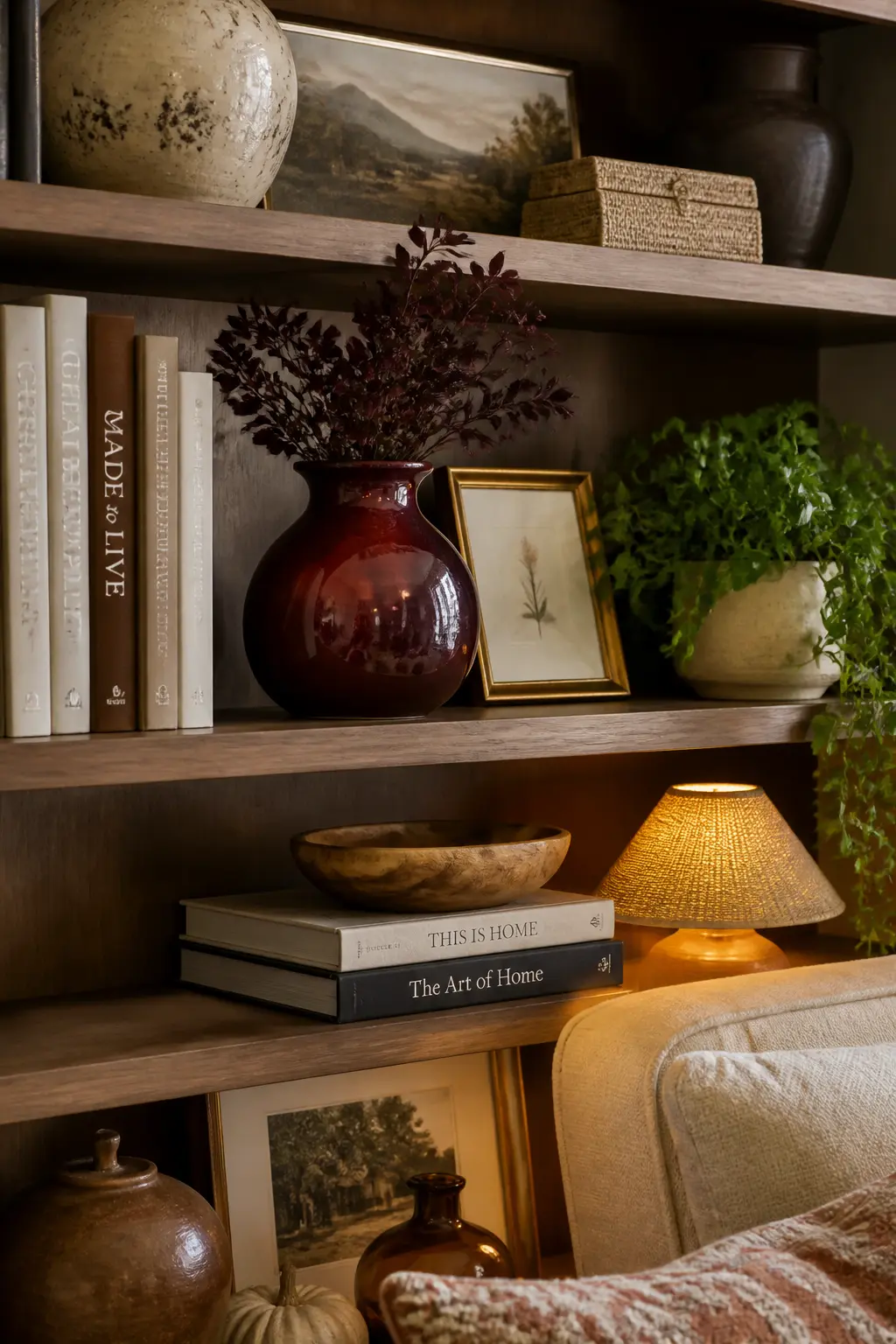
🛍 Shopping guide
Swap the Console Styling to Three Objects Only
A console table covered in objects reads as a surface that accumulates things rather than one that was styled. Clear everything off and put back three: one tall element (a vase, a lamp, a large dried stem), one medium element (a small plant, a stack of books, a ceramic bowl) and one low element (a small candle, a single stone, a folded textile).
Three objects, three different heights, one gap of empty surface between them. That is all the console needs.
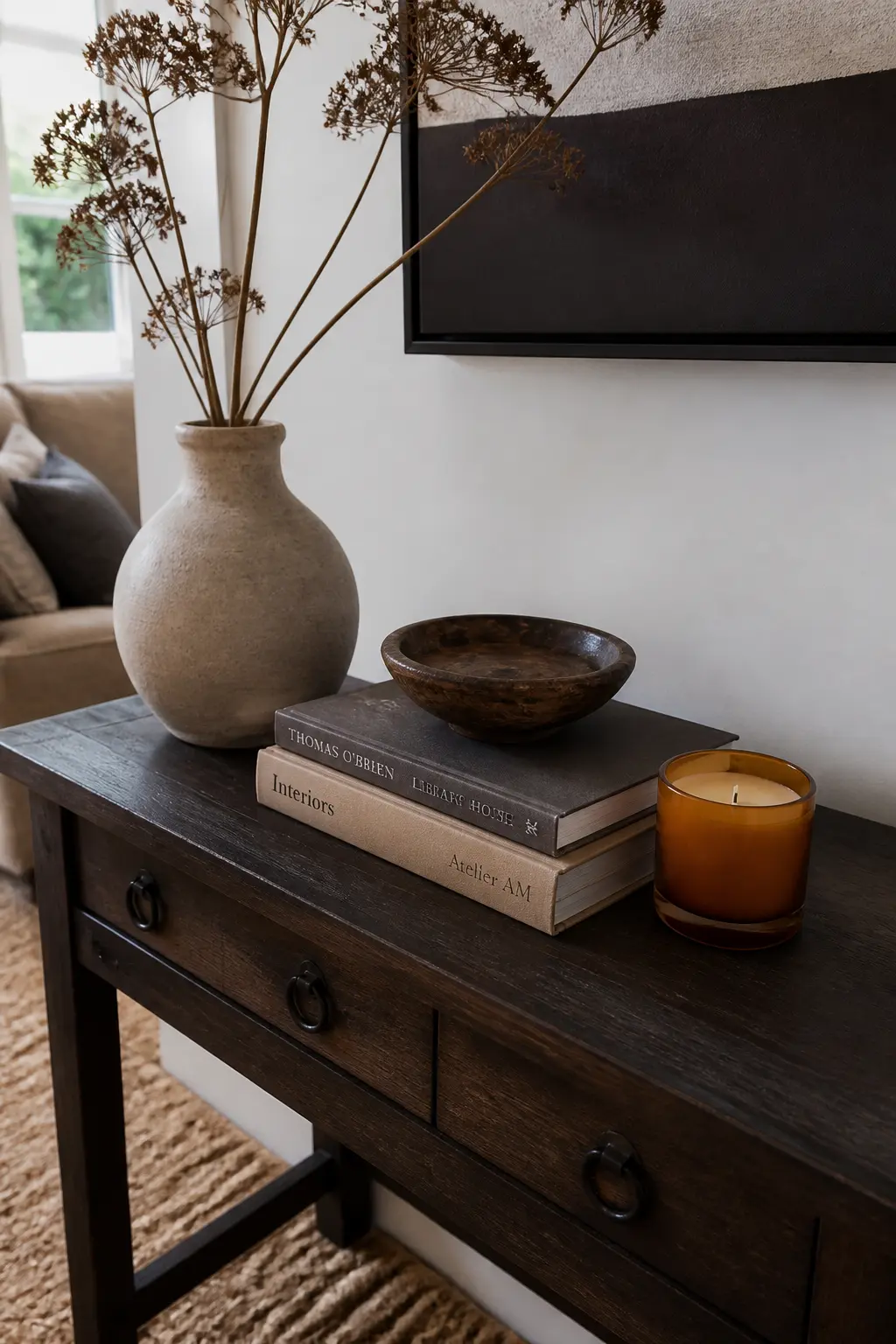
🛍 Shopping guide
Change the Curtain Tiebacks to Leather Straps
Fabric tiebacks and metal holdbacks both read as finishing details on the curtain rather than as a material in their own right. A leather strap tieback in cognac, camel or dark brown reads as furniture-grade hardware, warm and deliberate, and it costs almost nothing to make or buy.
Loop it loosely so the curtain gathers with soft folds rather than pulling tightly. The looser the loop, the more generous the curtain reads.
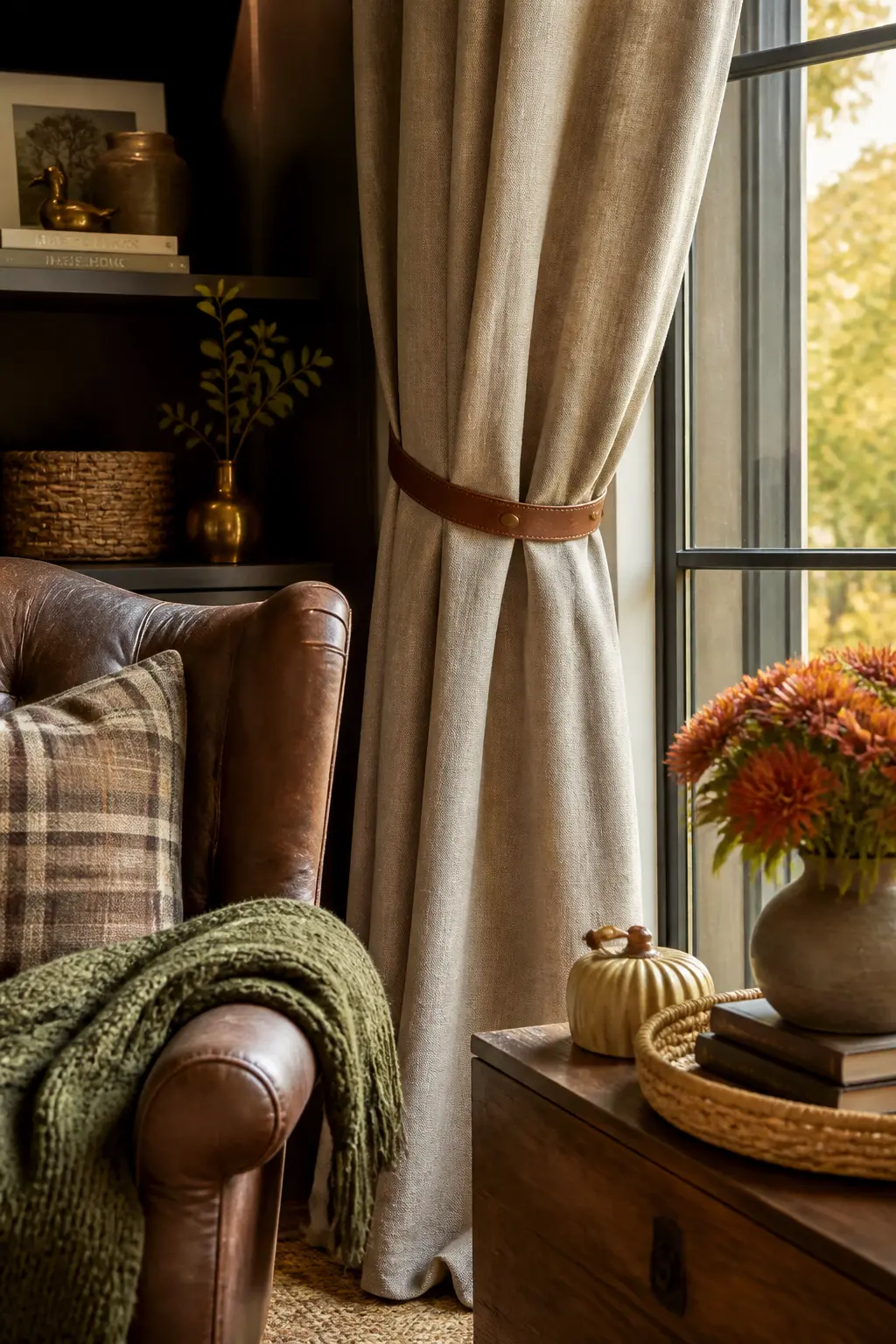
🛍 Shopping guide
Swap the Coffee Table Tray for a Woven One
If idea 15 covered swapping the glass tray for a wooden one, this is the follow-on move: a woven tray in seagrass, water hyacinth or rattan adds a natural texture that neither glass nor wood provides. It is lighter in weight, softer in the eye, and brings the basket material of the floor storage up to the table level, which ties the room together.
Use it as a base for the candle grouping and the wooden bowl. Two objects inside the tray, both sitting on the woven surface, look like they were placed; the same objects loose on the table look like they were left.
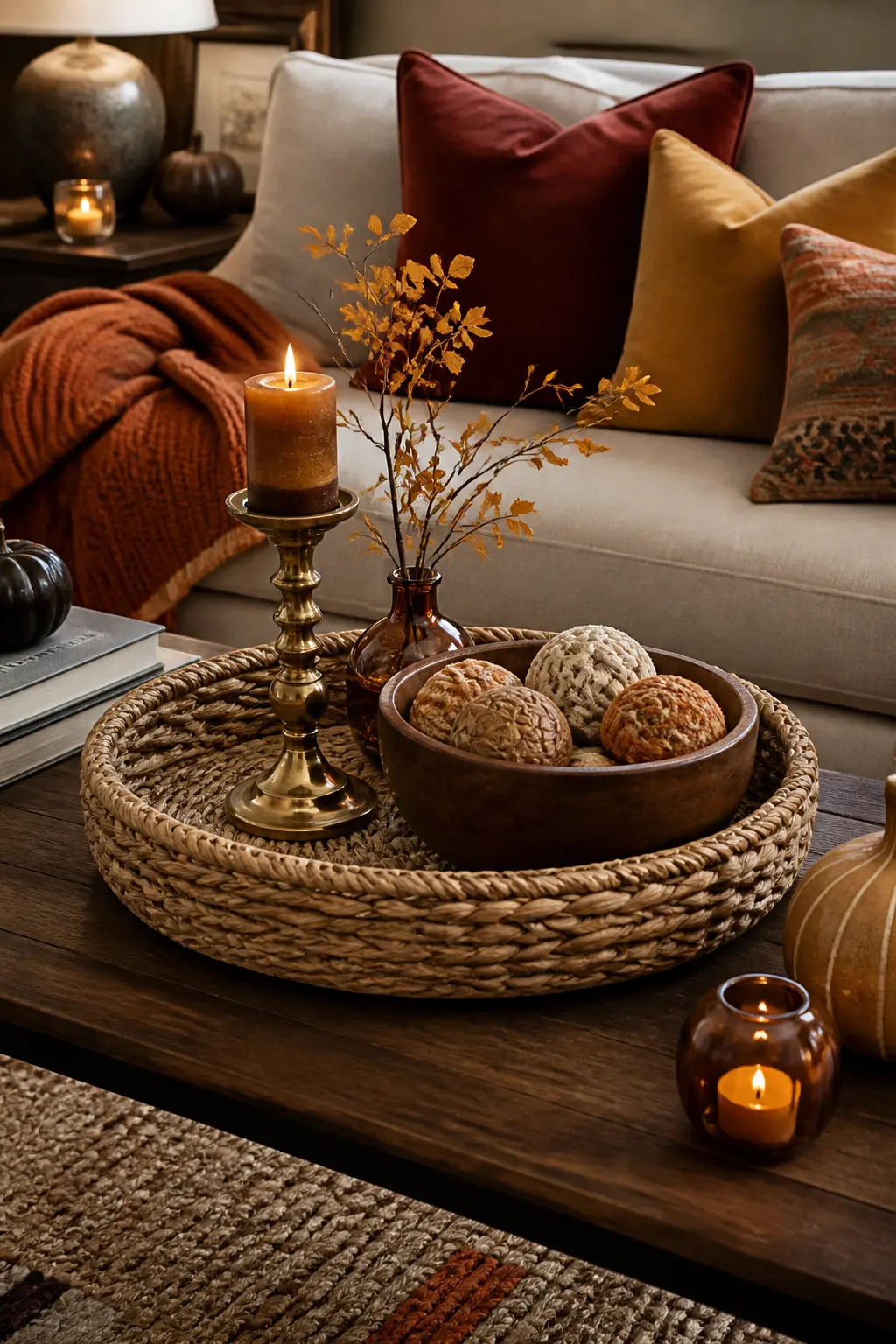
🛍 Shopping guide
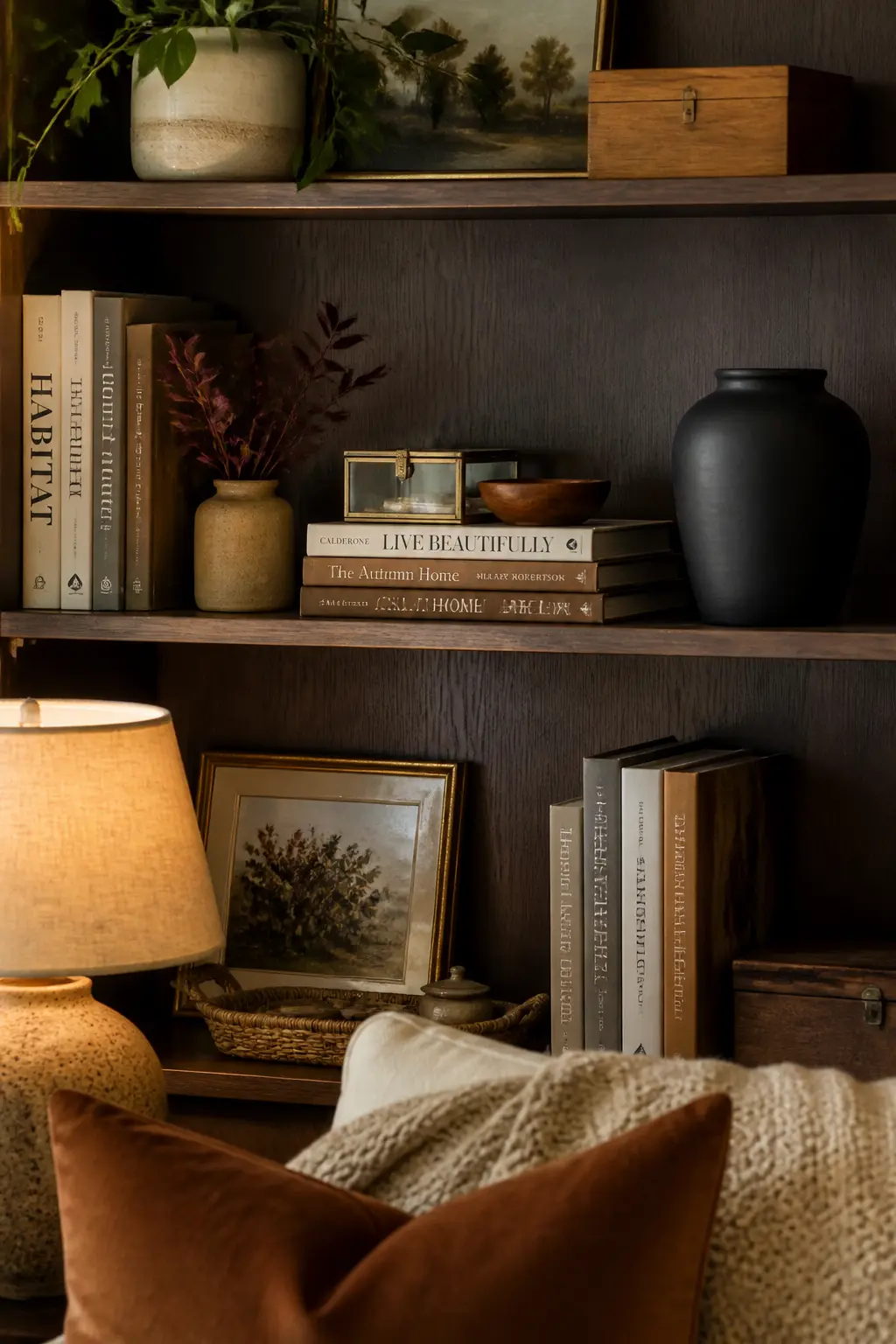
Add One Dark Ceramic Vessel to the Shelf
A dark ceramic vessel, matte black, deep navy, dark forest green or charcoal, introduces depth and shadow to a shelf or bookcase that is otherwise all warm mid-tones. It does not compete with the warm palette; it anchors it. Without something dark, a warm room can start to read as sugary.
Place it at the end of a shelf run rather than in the middle. At the end, it reads as a full stop; in the middle, it reads as a gap.
🛍 Shopping guide
Frequently Asked Questions
Where do I start with fall living room decor if I am on a tight budget?
Start with the pillow covers and one throw. These two swaps alone shift the colour temperature of the whole room for under forty dollars and take about ten minutes. Once they are in place you can see exactly which gap needs filling next, whether that is a floor basket, a lampshade or a wooden tray, and you can work through the rest one piece at a time.
How do I make a bright living room feel cozy without painting the walls?
Layering is the answer. Textiles absorb light rather than reflecting it, so pillow covers, throws, rugs and woven wall pieces all reduce the brightness without touching the walls. Adding warm-toned lampshades and switching from overhead lighting to floor and table lamps in the evening does the rest. The room will feel completely different at 7pm once those two changes are in place.
What autumn tones work in a room that is already quite dark?
Amber, warm cream, camel and ochre work better in a dark room than deep rust or burgundy, which can make a dark room feel oppressive. Introduce the deeper tones as single accents against the lighter warm base: one wine pillow, one dark ceramic vessel, one plaid in dark tones. The contrast between warm light and deep accent is what makes a dark room feel rich rather than gloomy.
Can I do fall living room decor without any orange at all?
Yes. The palette does not require orange. Terracotta is more muted than orange and reads as warm without being Halloween-coded. Amber, rust, camel, burgundy, dark olive and warm cream all deliver a full autumn palette with no orange at all. The key is the temperature of the tones, warm and earthy rather than cool and clean, not the specific hue.
How do I keep the layered look from feeling cluttered?
Group objects instead of scattering them, and leave intentional empty surface between groups. Three brass holders together on one end of the coffee table and a wooden bowl on the other, with clear surface in the middle, reads as styled. The same five objects spread across the full table reads as covered. Each zone needs breathing room for the whole thing to hold together.
What is the single most effective change for a room that feels cold and impersonal?
Switching from overhead lighting to a combination of floor and table lamps. It costs very little if you already have the lamps, it works immediately, and it changes the mood of the room more dramatically than any other single change. Everything else in the room, the textiles, the brass, the botanicals, shows better in warm low light than it ever could under a ceiling fixture.

17 simple Thanksgiving table decor ideas that skip the tablecloth and let your wood table do the wor

37 fall room decor ideas ranked by impact, so one room reads fully seasonal without touching the res

40 fall mantle decor ideas built around composition rules: off-center anchors, odd-number candle gro
Leave a Reply