

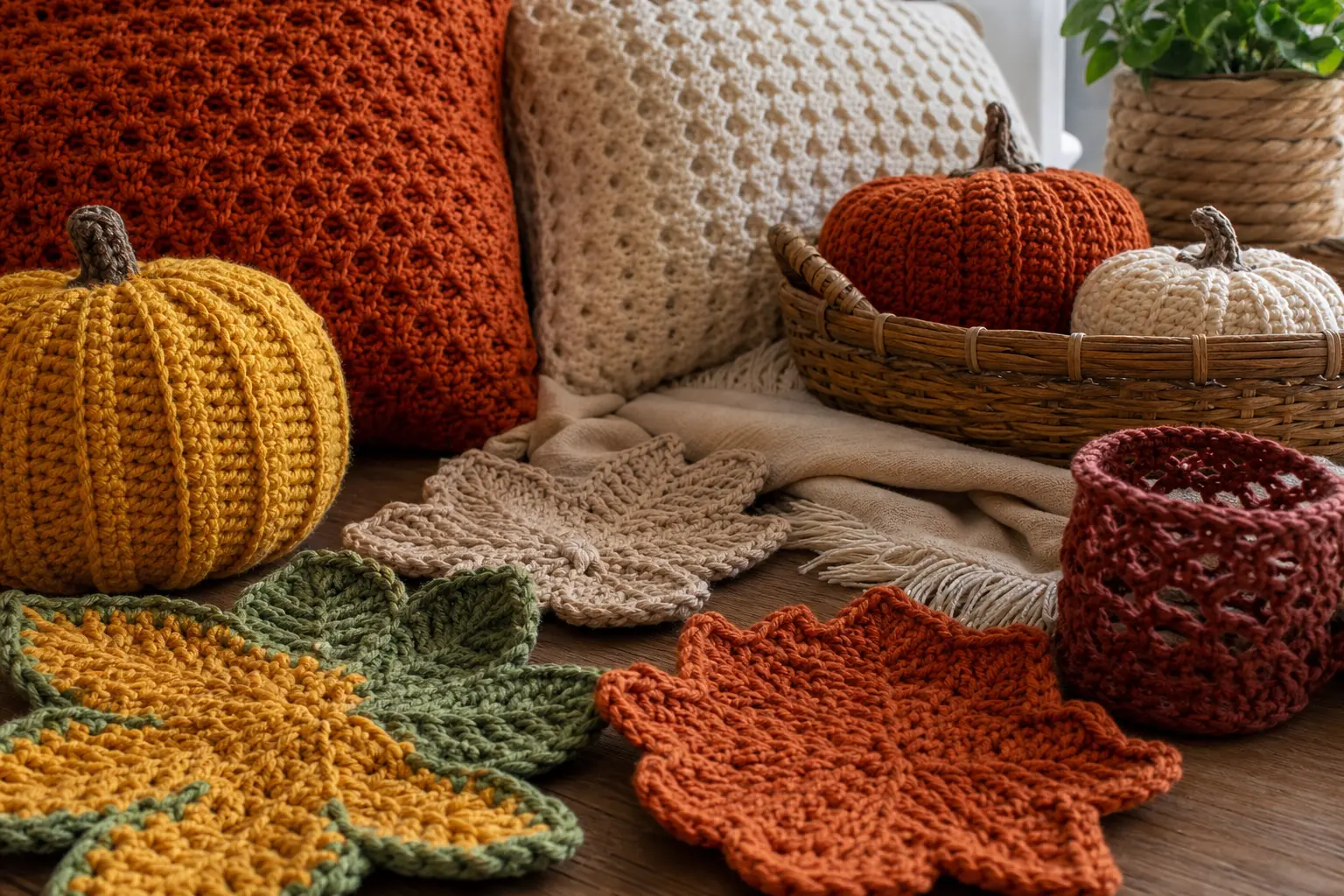
Crochet fall decor does not have to be a month-long commitment. Every piece on this list fits inside a single evening, uses one skein or less, and lands somewhere in a rust, ochre, warm brown, sage or cream palette that works whether your home is modern farmhouse or a rented flat with beige walls.
The stitch names here are generic, because this is a gallery of what to make, not a row-by-row pattern sheet. Think of it as a shopping list for your next skein haul, paired with a clear picture of where each piece lives in a room. Once you know what you are making, finding a free pattern takes about four minutes on any crochet community site.
For anyone who also wants to dress a table for a gathering while the hook is out, the pieces in the Tabletop section pair well with the centerpiece ideas over at these 14 Thanksgiving centerpieces you can build in one trip, and the Friendsgiving crowd will find extra room-dressing inspo at these 14 Friendsgiving decor ideas for a rented apartment.
This post contains affiliate links. If you buy through them, I may earn a small commission at no extra cost to you.
Garlands and Hanging Pieces
Garlands punch above their weight visually because they cover horizontal space without occupying any surface. Every garland here chains together individual motifs, so you can stop when the length feels right and still have a finished piece.
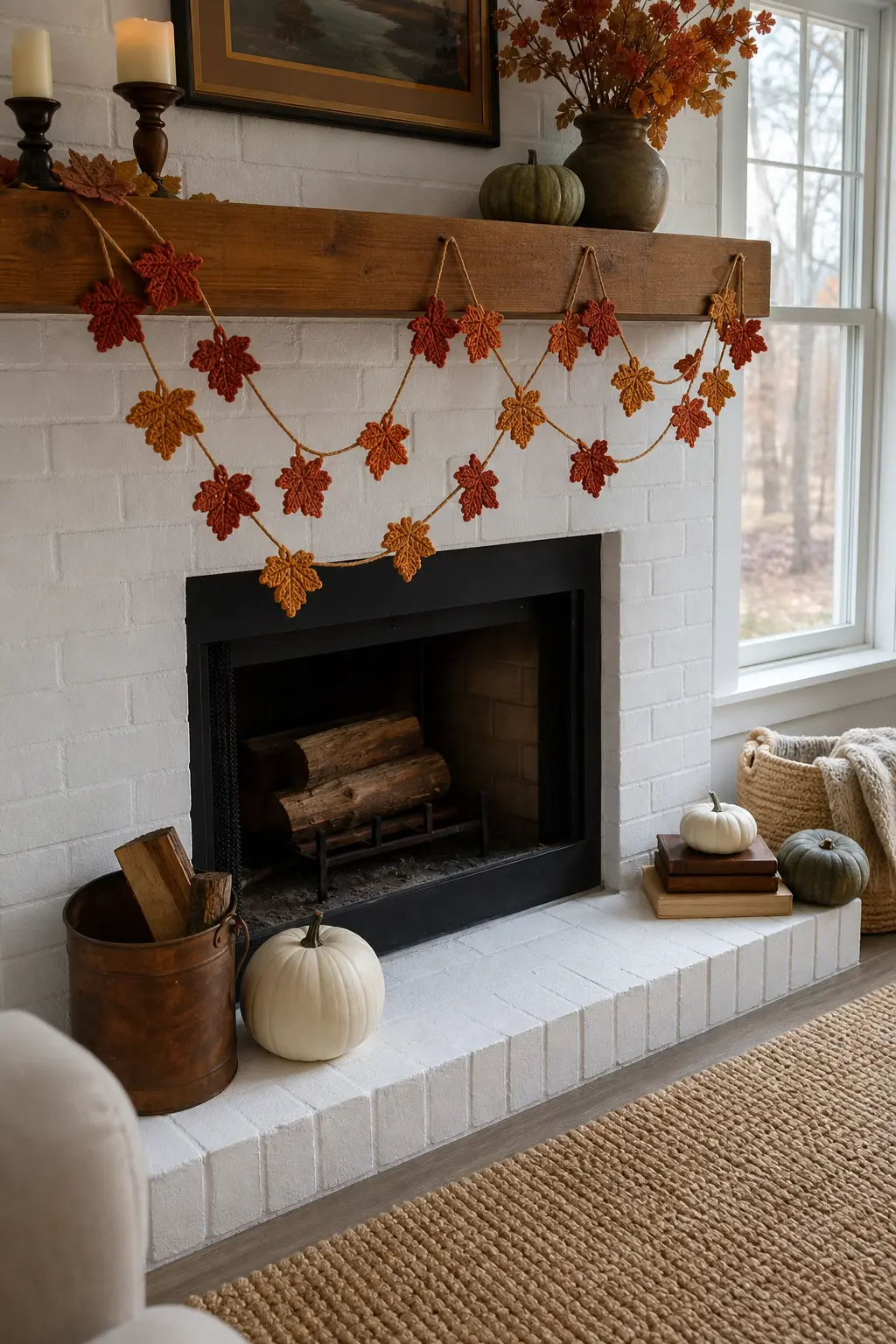
A Garland of Crochet Maple Leaves
Each maple leaf works up quickly in a simple five-point shape using single and double crochet increases. Make them in rust, ochre and warm brown, then chain them together with a length of cream or sage yarn so the string itself becomes part of the palette.
Drape the finished garland across a mantel, along a bookshelf edge, or pinned in soft loops above a doorframe. The asymmetry of handmade leaves reads as intentional from across the room, not untidy.
Aim for seven to eleven leaves per metre of garland. That gives enough visual weight without the chain becoming heavy.
🛍 Shopping guide
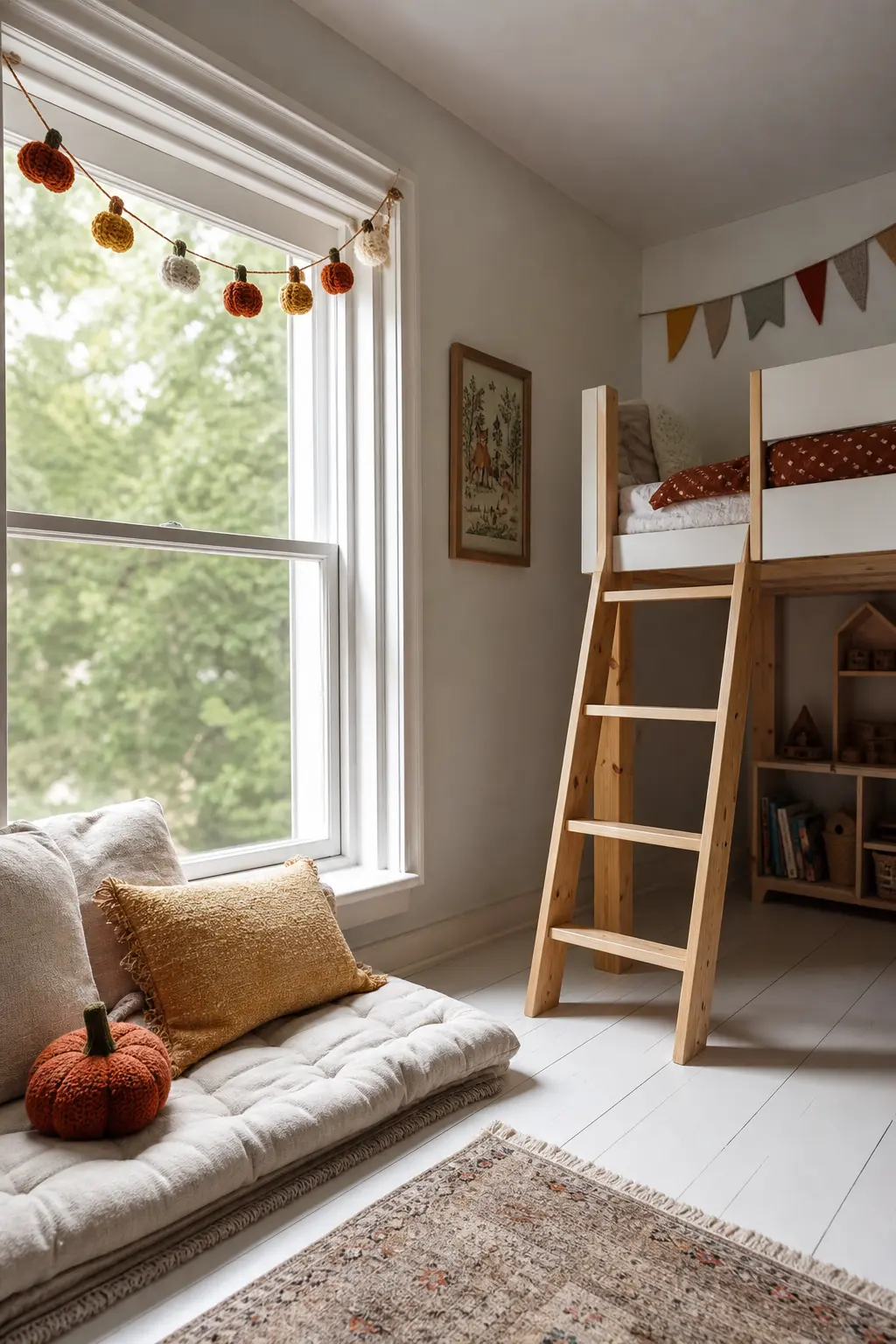
A Mini Crochet Pumpkin Garland
Tiny pumpkins, each about three centimetres across, chain together into a garland that works above a window, across a headboard, or strung along a shelf edge. Make each pumpkin in a single colour and vary the shades across the run: rust, ochre, warm brown, cream, sage, then repeat.
The small scale means each pumpkin uses only a few metres of yarn, so a single 100g skein covers the whole garland even at two metres long. Stuff each one very lightly, just enough to hold the dome shape.
Thread them onto a length of natural twine rather than yarn so the string stays taut and the pumpkins hang evenly.
🛍 Shopping guide
A Crochet Leaf Bunting Strand
Unlike a standard bunting where fabric triangles hang from a cord, this version threads individual crochet leaves through a jute string so each leaf hangs freely, face-forward, like a pressed-leaf display. Alternate rust, ochre and sage leaves so the colour shifts along the strand.
Make each leaf in a simple oval shape with a raised centre vein worked in slip stitch along the finish row. That detail catches the light and adds definition without any embroidery.
Hang across a window or doorway where there is a through-draught and the leaves will move gently, which makes the whole thing feel alive.

Tabletop Centerpieces
A tabletop piece works hardest when it sits low enough to see over and interesting enough to stop guests mid-reach. The pieces in this section all cluster naturally in a bowl, on a cutting board, or beside a candle without needing a special stand.
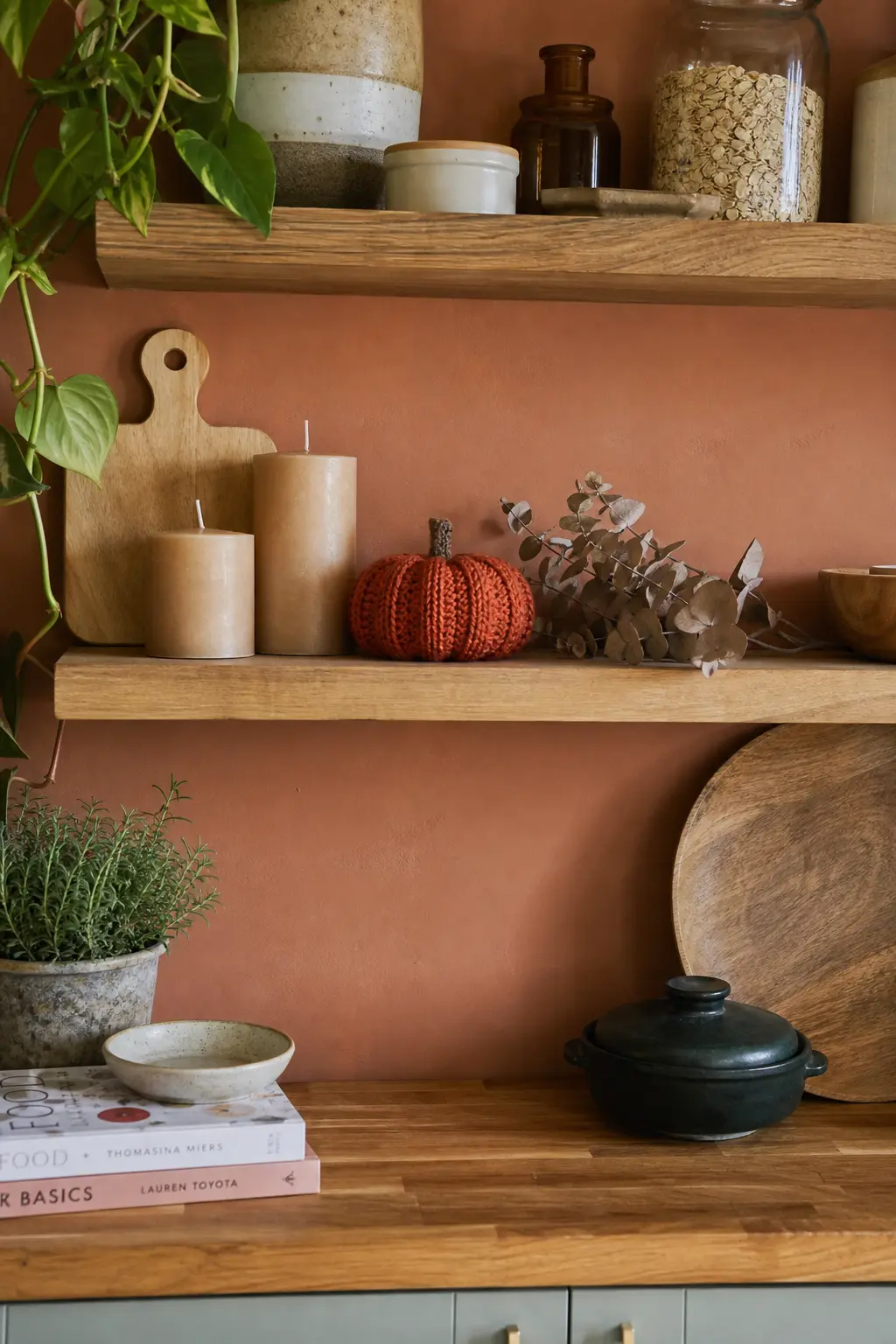
A Small Crochet Pumpkin, Ribbed Rounds
Ribbed rounds, worked by crocheting into the back loop only, give this pumpkin its signature ridged segments without any stuffing gymnastics. Use a warm brown or rust yarn for the body, then add a short length of dark brown single-chain stem and a tiny sage leaf.
The finished pumpkin sits roughly palm-sized, which makes it easy to nestle among candles or tuck inside a bowl with other autumn objects. Stuff it firmly with polyfill so it holds its sphere shape on the shelf.
One 100g skein of worsted weight is more than enough for two pumpkins, so cast on a second one in ochre while the mood is there.
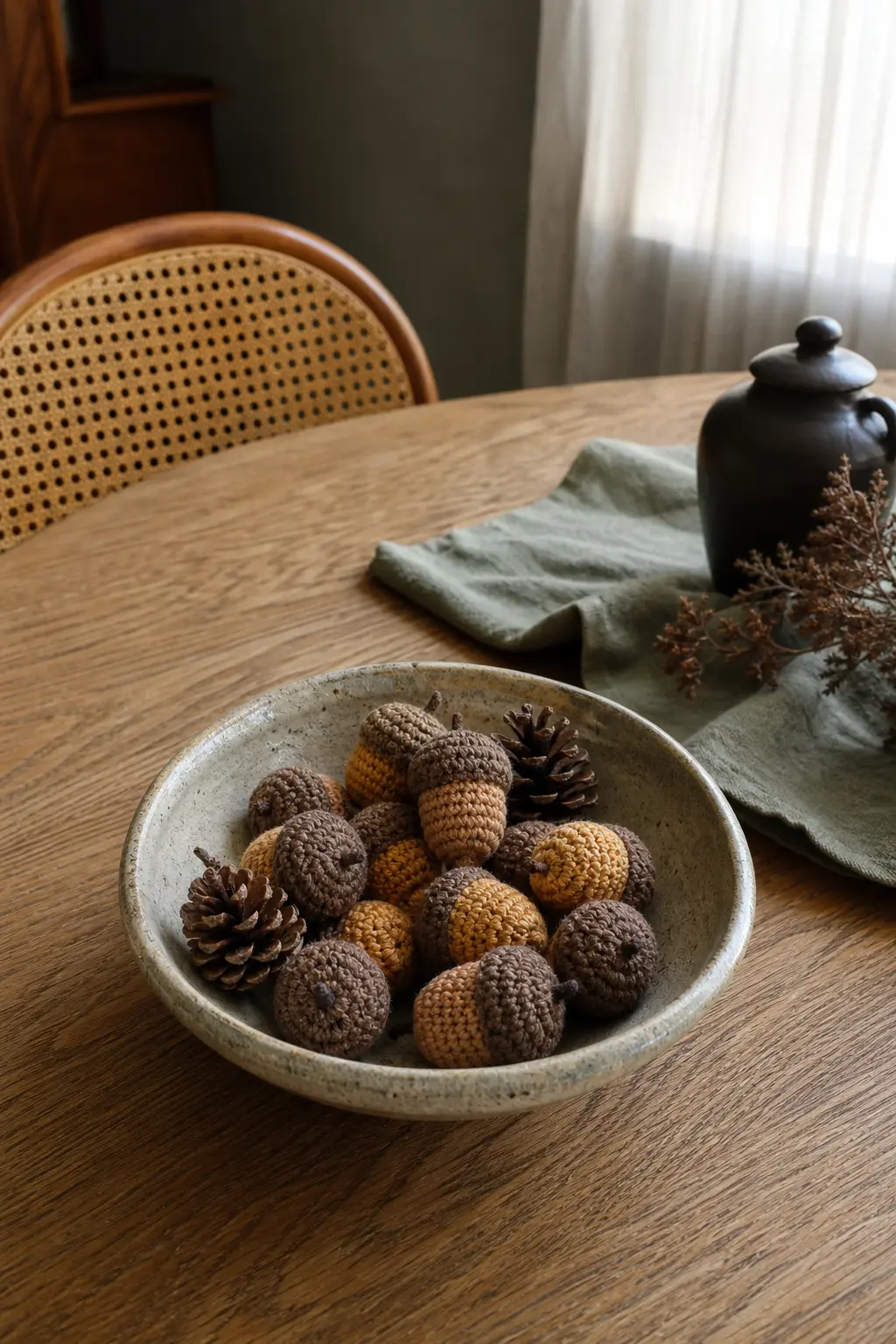
A Crochet Acorn Cluster in a Bowl
Make five to seven acorns in warm brown and ochre, varying the cap texture between a simple slip-stitch grid and a bobble stitch top. Pile them loosely into a low wooden or ceramic bowl and the whole arrangement reads as gathered-from-the-garden, not crafted.
The cap and the body are worked separately and joined, which means you can make caps while watching something and attach them the following evening if focus runs out. That still counts as one sitting per acorn.
Add a few real dried leaves or a pinecone into the bowl to bridge crochet and nature without any extra work.
🛍 Shopping guide
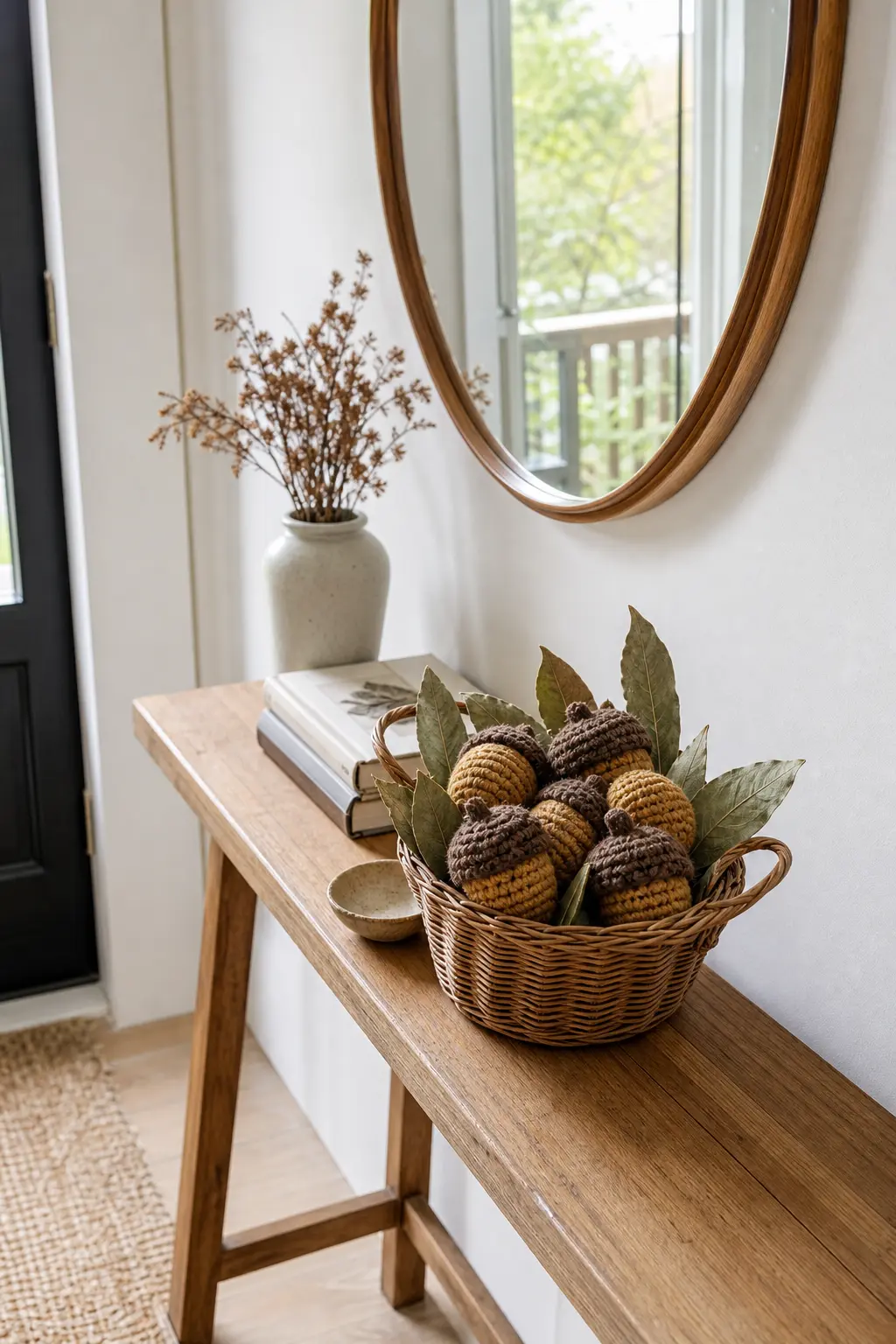
A Basket of Crochet Acorns
Fill a small wicker or wire basket with twelve to fifteen crocheted acorns in ochre, warm brown and cream, and place the basket on a console table, bookshelf, or at one end of a mantel. The density of objects in a basket reads as abundance without looking cluttered.
Vary the cap texture across the batch: some slip-stitch, some bobble, some plain. That minor variation within a matching palette is the detail that makes a display look curated rather than repetitive.
Tuck in a sprig of dried pampas or a few real bay leaves to add a matte natural element that contrasts with the yarn sheen.
A Crochet Gourd Cluster, Mixed Sizes
Crocheted gourds differ from pumpkins in their elongated shape: work a small oval base, then continue straight-sided rounds before tapering to a neck. Make three, in small, medium and tall, to give the cluster a natural variety that mirrors a real harvest haul.
Pale cream and warm brown work especially well for gourds, with a darker cap of brown or sage at the neck. They photograph neutrally, which means they complement any other coloured objects nearby without competing.
Set them on a cake stand or wooden board at varying heights to build dimension into what would otherwise be a flat arrangement.

🛍 Shopping guide
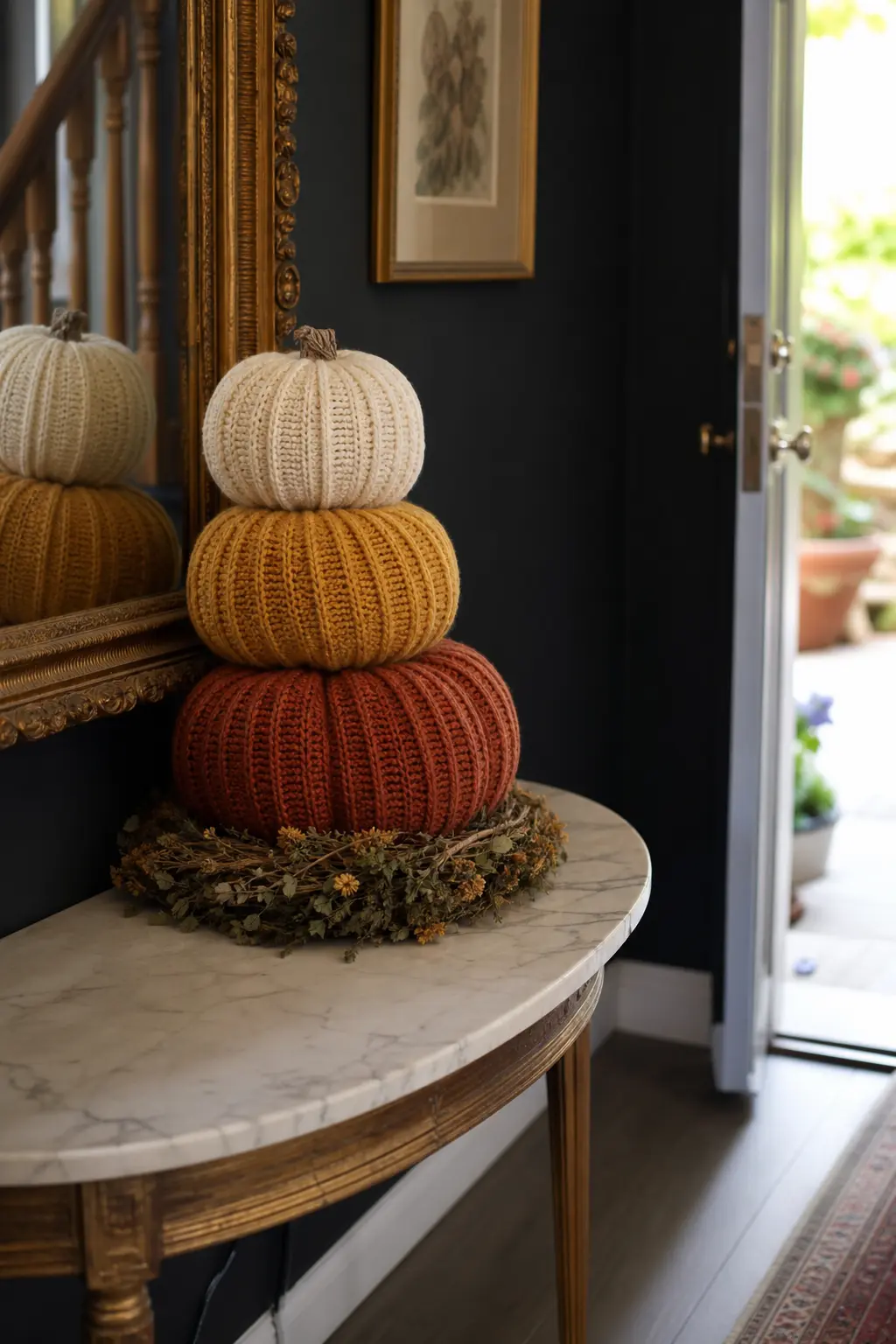
A Crochet Pumpkin Stack, Three Sizes
Stack three ribbed crochet pumpkins directly on top of each other, largest at the base, smallest at the top, and secure them with a hidden stitch through the base of each upper pumpkin into the one below. The stack becomes a single tall centerpiece that takes up almost no table space.
Use a different colour for each tier: rust at the base, ochre in the middle, cream at the top. A shared dark brown stem at the crown ties the three tiers together visually.
This piece photographs best from slightly above, which lets the viewer see the three distinct colours clearly. Place it on a mantlepiece or at the center of a round table where it can be seen from all sides.
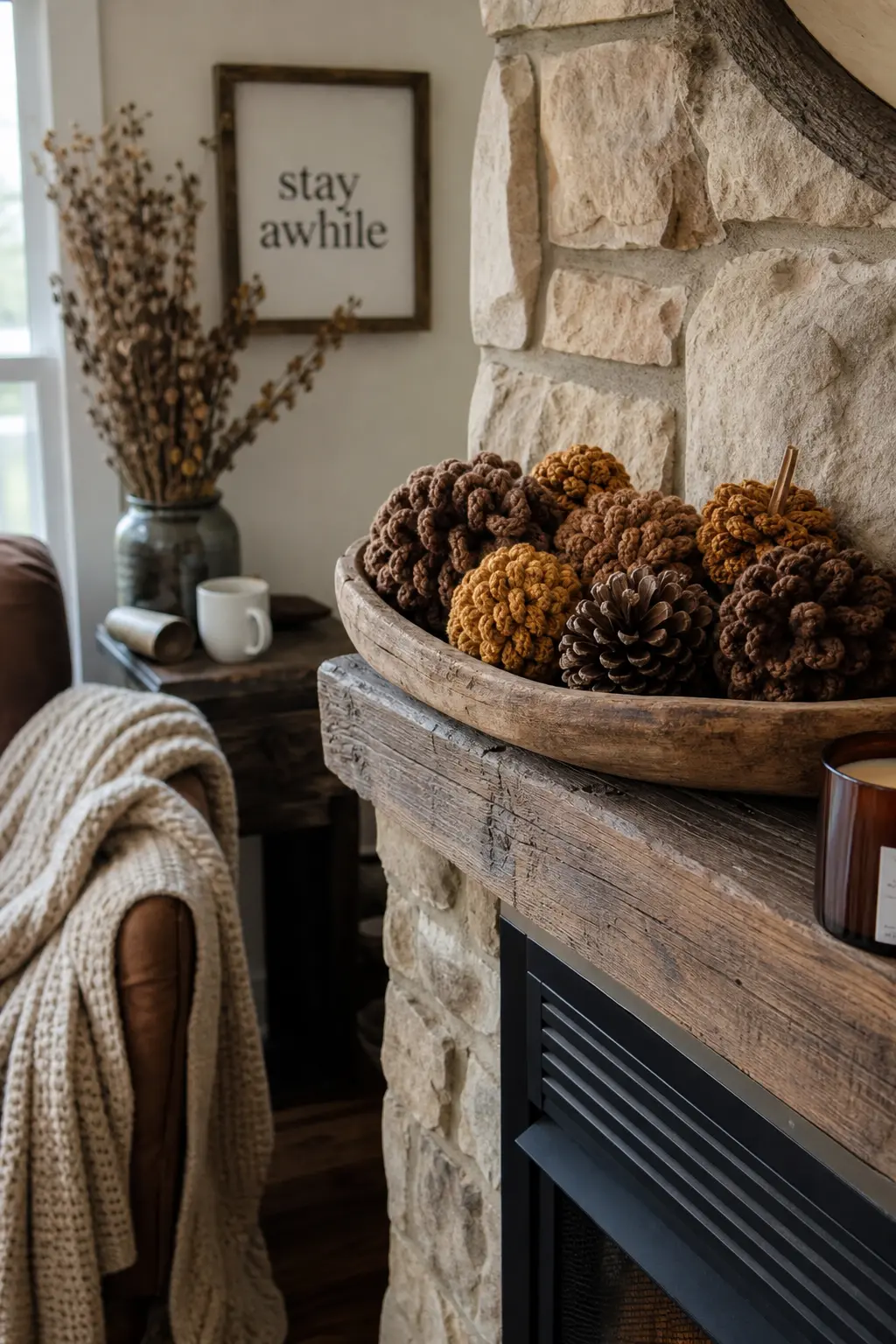
A Crochet Pinecone Cluster
Crochet pinecones use a loop or petal stitch to build up the overlapping scale effect, and each cone takes about twenty minutes at worsted weight once the technique clicks. Make four to six in warm brown and ochre and cluster them in a shallow bowl or on a wooden board.
The three-dimensional scale texture is what makes these worth the small extra effort over a plain oval shape: the shadow between each petal reads clearly even from across a room.
Mix in a real pinecone or two among the crocheted ones. Guests will spend a moment deciding which is which, which is exactly the kind of detail that makes a handmade display memorable.
🛍 Shopping guide
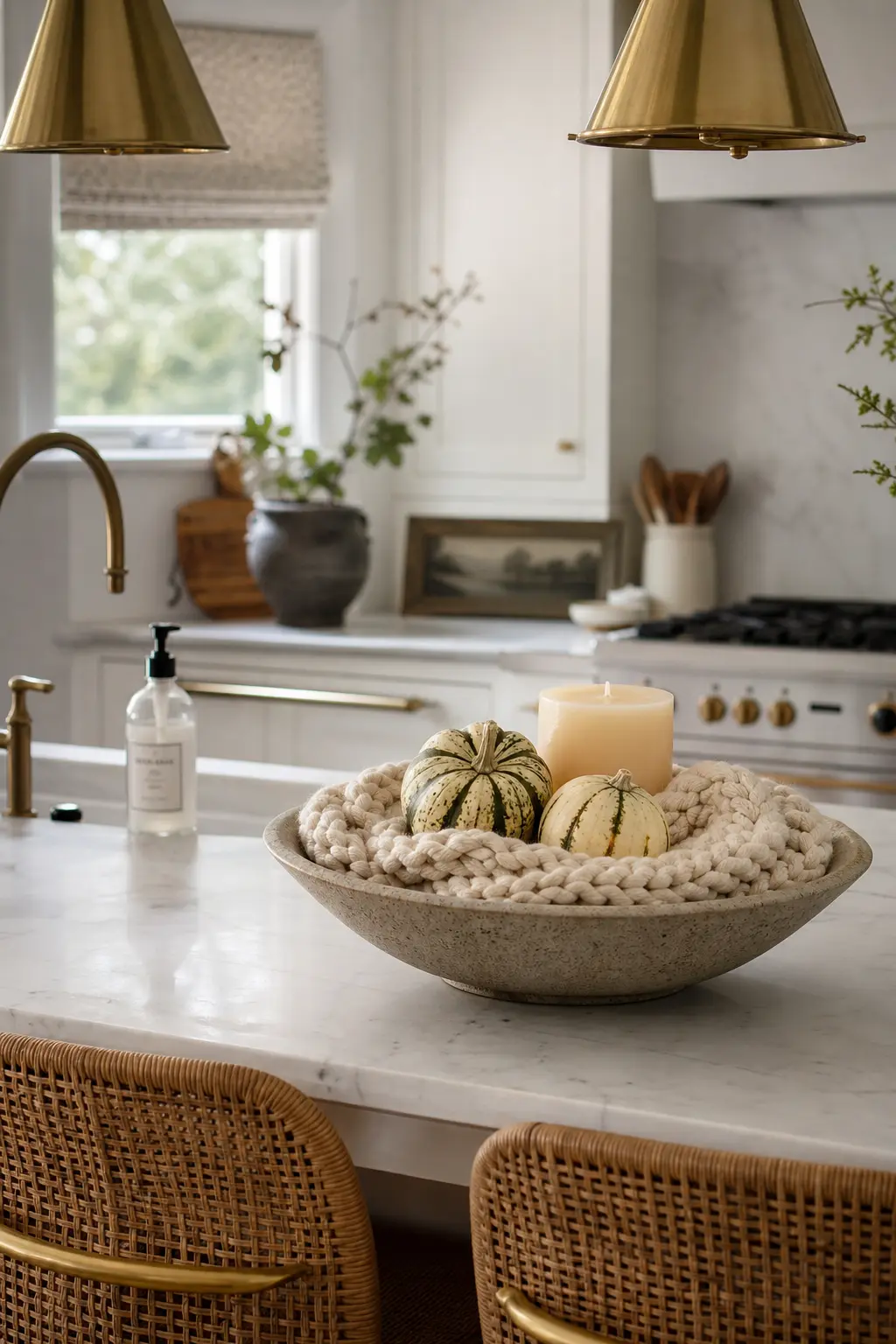
A Chunky Crochet Bowl Filler
A chunky crochet bowl filler is a generous coiled rope of half-double crochet, worked in a continuous spiral, that sits loosely inside a wide ceramic or wooden bowl as a textile base layer. It is not shaped or closed: it simply rests in loops, like a length of rope arranged by hand.
Use the thickest yarn available, a super-bulky or roving weight in cream or warm brown, with a 10mm or 12mm hook. The entire piece takes one short sitting and fills the bottom of a 30cm bowl.
Layer other objects on top: a few real gourds, a candle, or the crocheted acorns from elsewhere on this list. The rope layer adds depth and warmth to arrangements that would otherwise sit flat on a hard surface.
🛍 Shopping guide
Table Linens and Functional Pieces
Functional crochet earns its place twice: it looks deliberate, and it gets used. A placemat or coaster set lives on the table for the whole season without anyone having to move it out of the way.
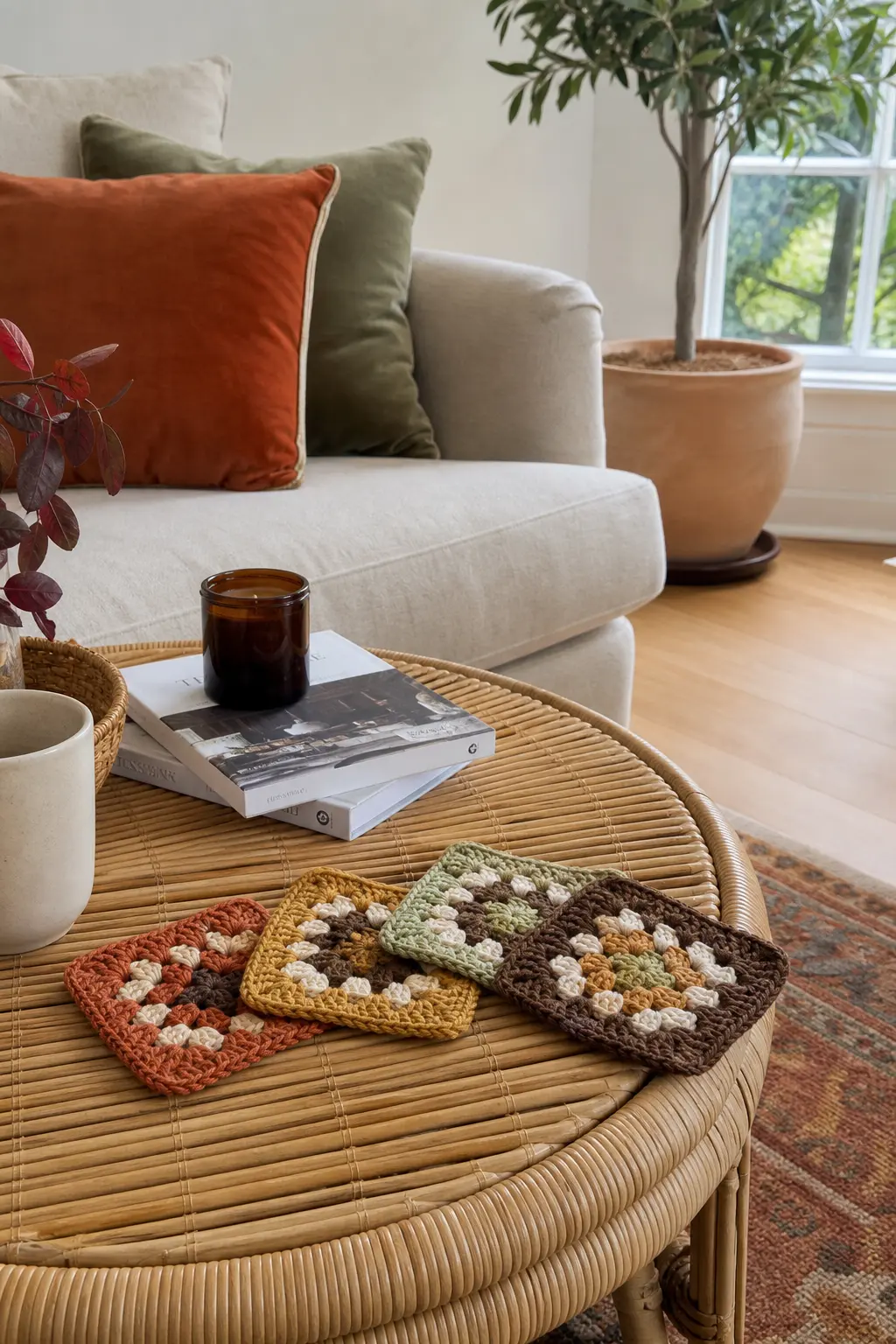
A Granny Square Coaster Set
Four granny squares, each worked in two or three rounds and finished with a single-crochet border, make a coaster set that sits flat and absorbs condensation reliably. Rotate the palette across the four squares: one rust, one ochre, one sage, one warm brown, all with a cream outer round to unify them.
Cotton yarn is the practical choice here because it washes without felting and the stiffness holds the square flat under a glass. Finish the edges tightly to stop corners curling.
Stack them beside the kettle or fan them on a coffee table, and they look like a considered styling decision rather than a spare-skein project.
🛍 Shopping guide
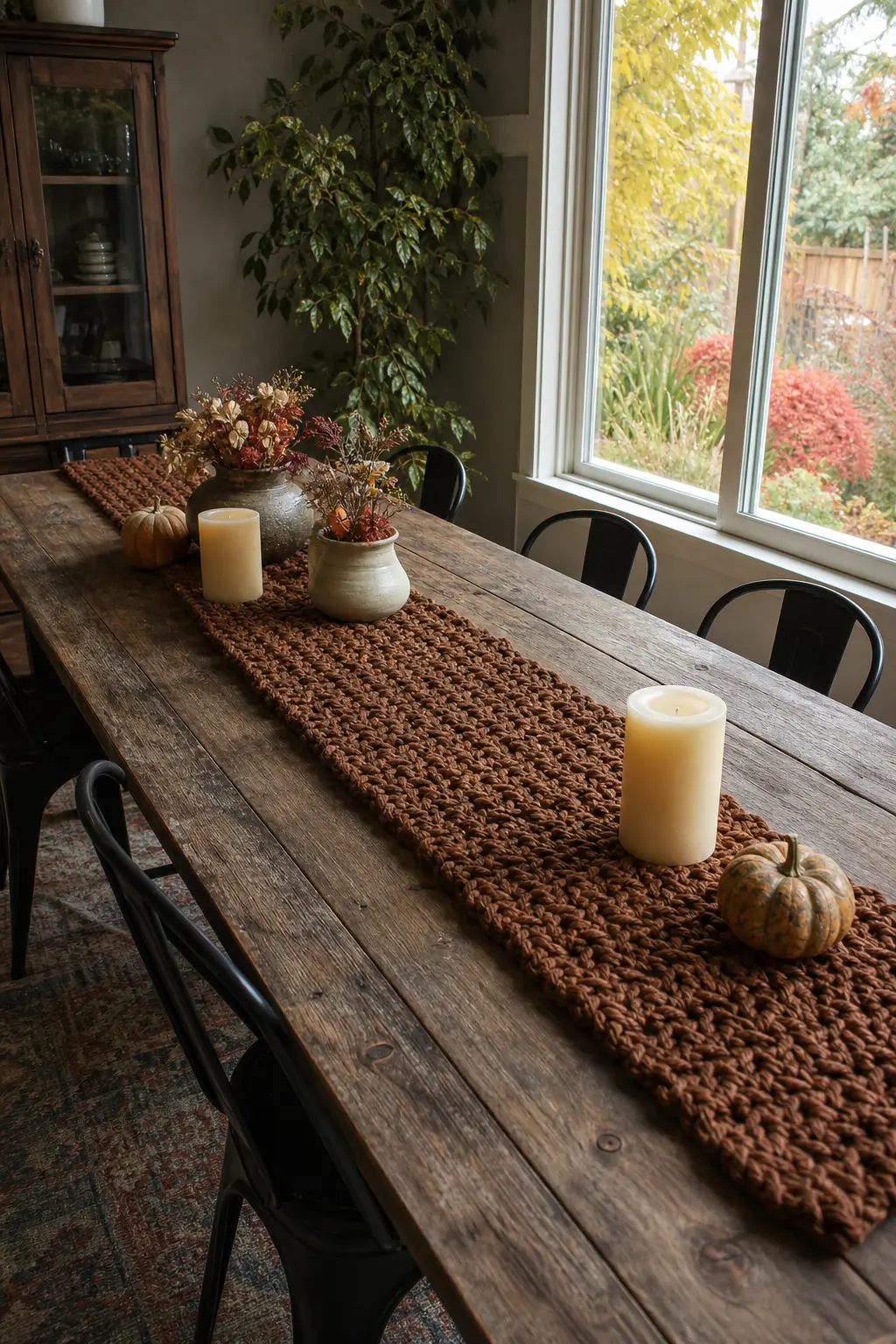
A Chunky Crochet Table Runner
A chunky yarn runner in half-double crochet rows works up fast because each stitch covers ground quickly. Aim for about thirty centimetres wide and long enough to overhang your table by ten centimetres on each end, usually around 120 to 150 centimetres total.
Choose a single colour in warm brown or rust, or work two-row stripes alternating ochre and cream for a look that photographs well on a dark table.
The runner does the work of unifying every object placed on it, so even mismatched candleholders and a random gourd cluster look considered once they sit on a consistent textile base.
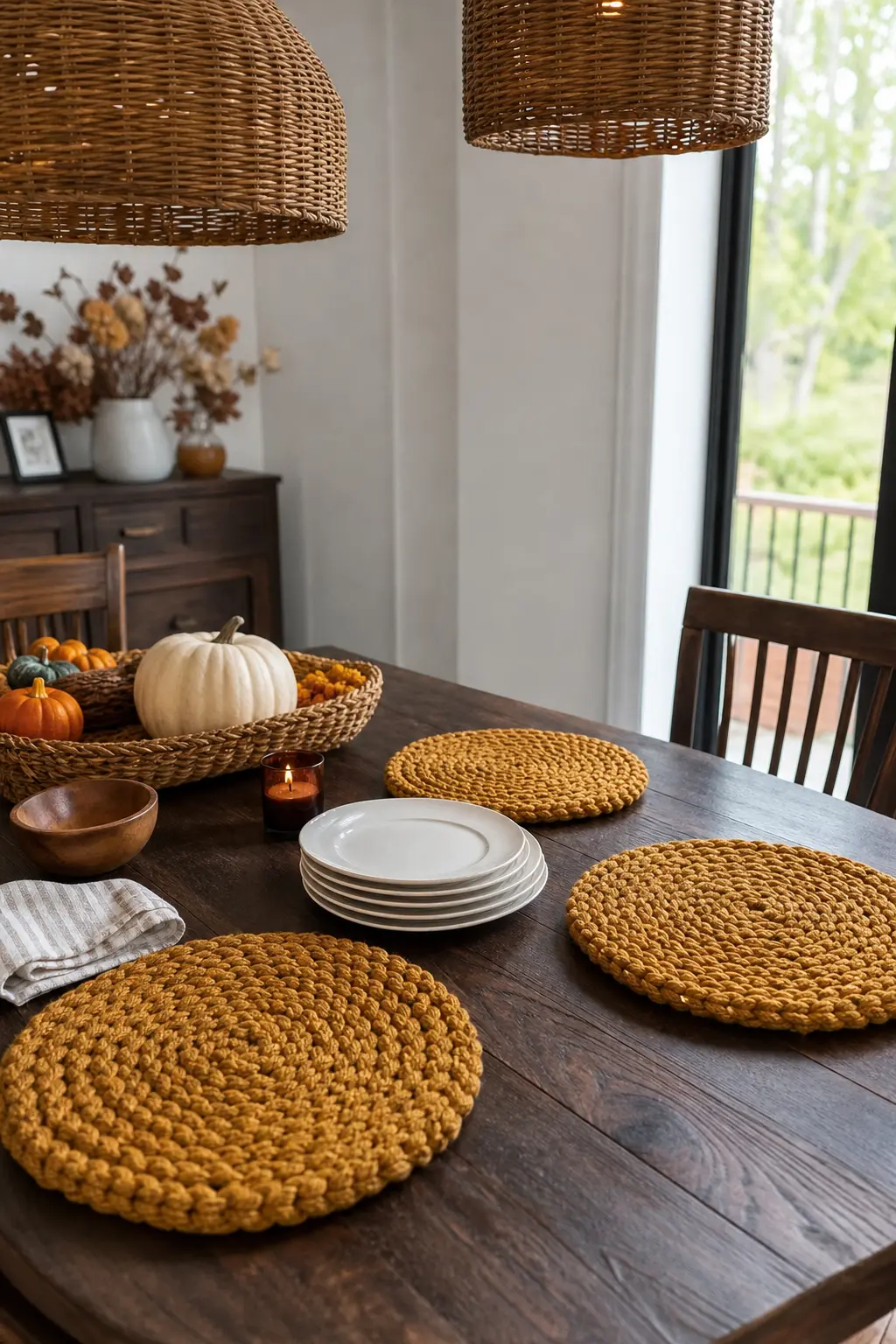
A Chunky Crochet Placemat Set
Four round or rectangular placemats in half-double crochet worked with a chunky cotton rope yarn create a textile layer under every place setting that reads as a considered design choice. Aim for a diameter of about 38cm for a round mat or 30 by 45cm for a rectangle.
Work all four in the same ochre or warm brown, or alternate two in ochre and two in sage for a table that shifts naturally with the season. Chunky cotton rope is stiff enough to lie flat without blocking.
Each mat takes roughly one evening at a relaxed pace, so the full set of four spreads naturally across a week of short sessions.
🛍 Shopping guide
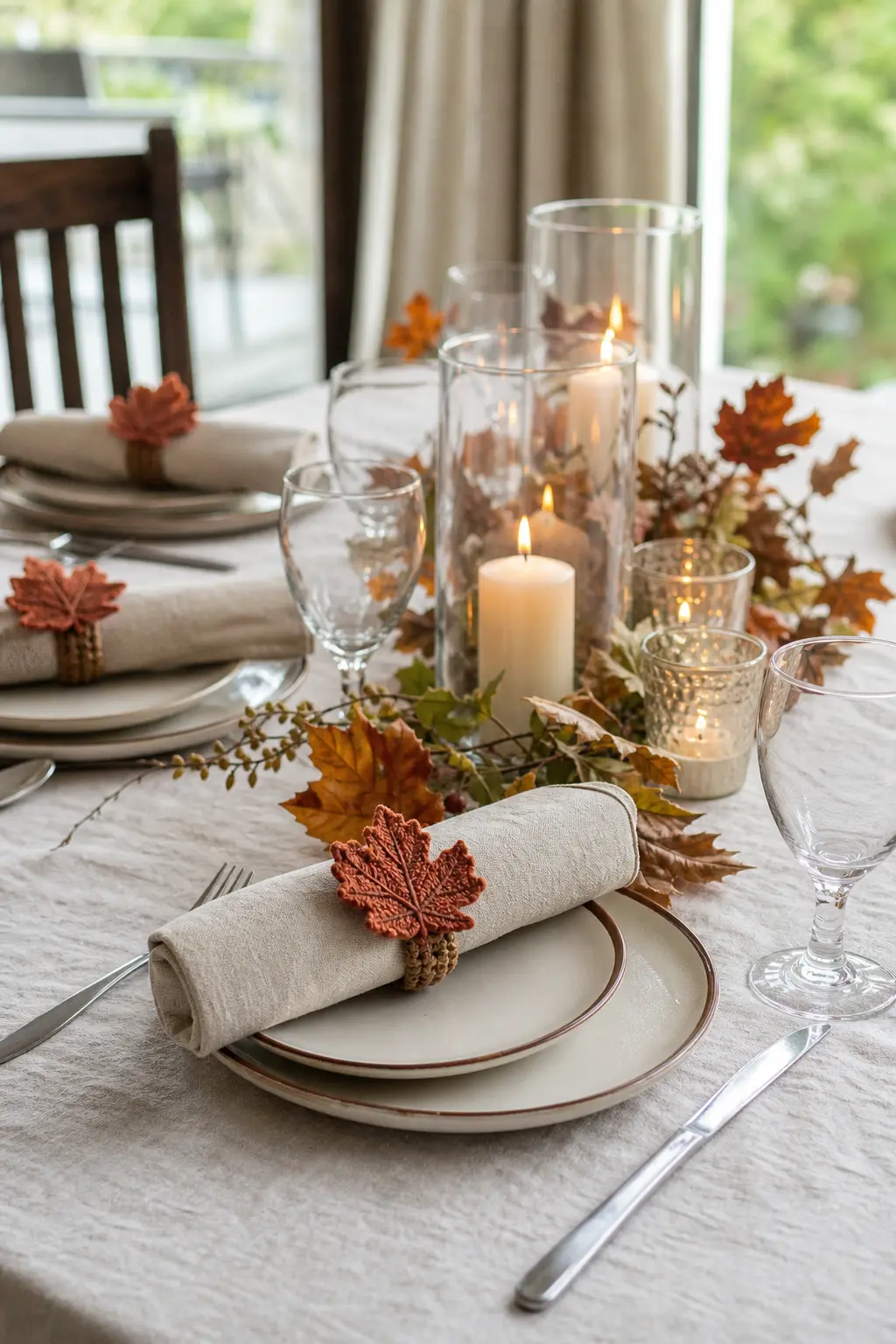
A Crochet Leaf Napkin Ring Set
A simple crochet ring, worked in the round to fit a rolled napkin, with a flat leaf appliqued to the front in a contrasting autumn shade, makes a napkin ring that costs almost nothing and looks considered at a table setting.
Make the rings in warm brown or cream and the leaves in rust or sage. Four rings for a dinner party take one comfortable evening, and they store flat in a drawer between uses.
For a gift that costs next to nothing, tie a set of four rings with a length of twine and tuck them inside a linen napkin set. The whole thing wraps in thirty seconds.
🛍 Shopping guide
Cushions, Wraps and Soft Accents
Soft accents are the fastest way to shift a room from summer to autumn without repainting anything. A pillow cover slips over what you already own, and a vase cosy transforms a glass jar into something that looks bought from a design shop.
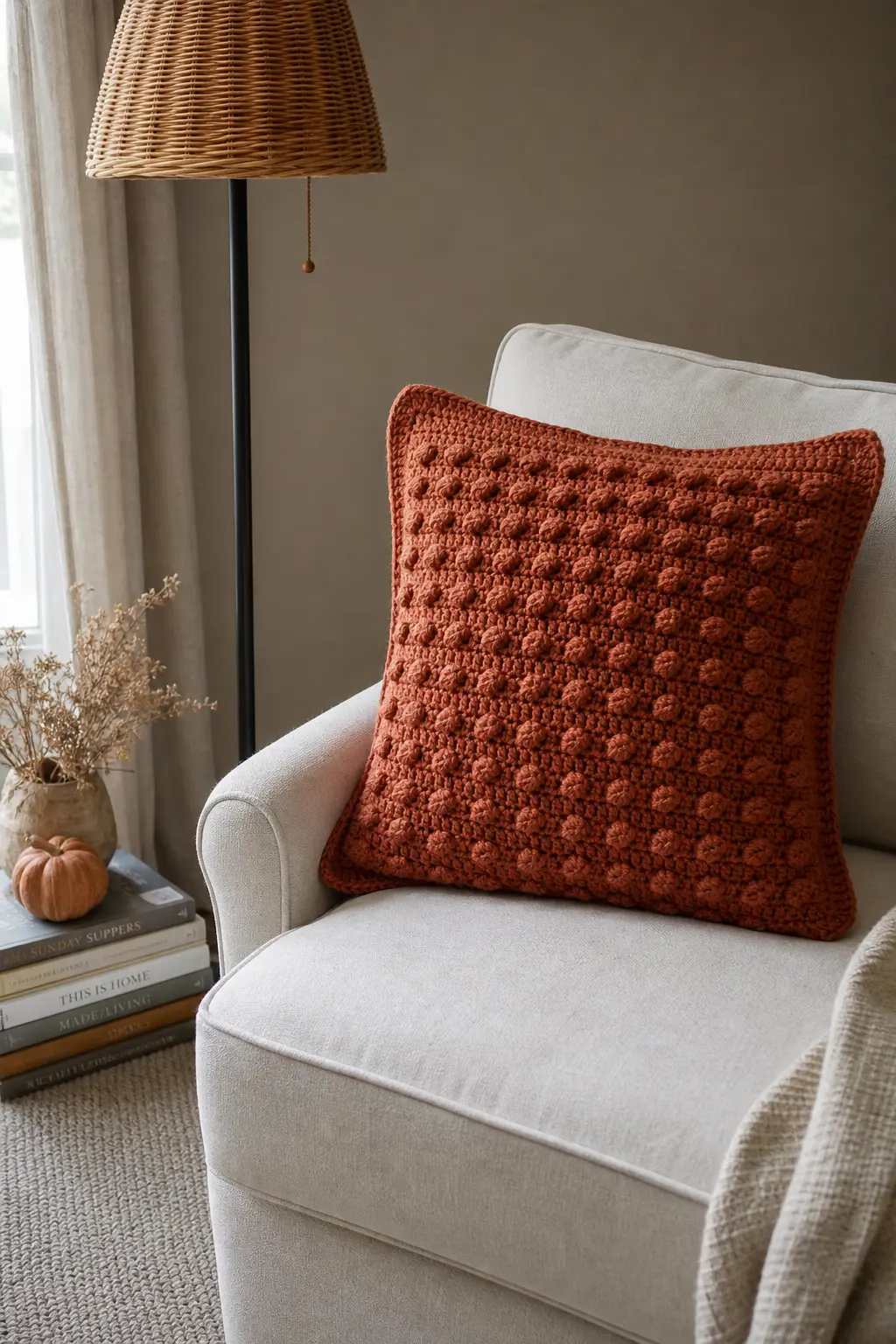
A Textured Crochet Pillow Cover
A puff stitch or bobble stitch grid on the front panel of a pillow cover creates a textured surface that photographs beautifully and reads as expensive from a distance. Work it in a single warm brown or rust, and keep the back panel plain single crochet so the textured front sits flat.
Size the cover to a 45cm insert you already own. That removes the need to buy stuffing and means the cover slips on and off for washing throughout the season.
One sitting gives you the front panel. The back panel and seaming take a second evening, which still makes this among the fastest pillow covers a hook can produce.
🛍 Shopping guide
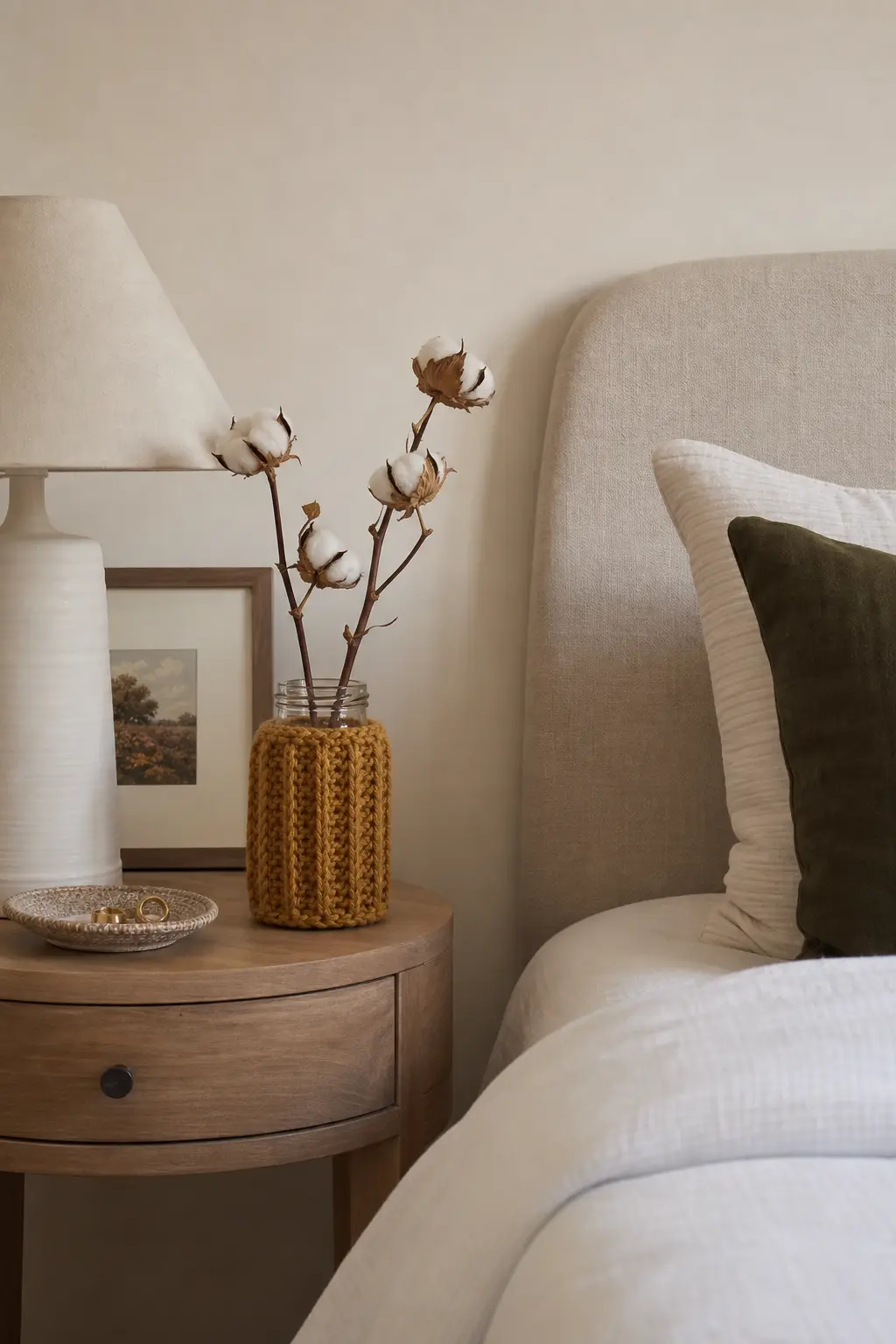
A Ribbed Crochet Vase Cosy
A ribbed vase cosy slips over a plain glass vase or jam jar and transforms it into a textured autumn vessel without any glue or permanent alteration. Work in back-loop-only single crochet rows to create the rib, then seam the short ends and slip it over the container.
Measure the jar circumference before casting on so the cosy sits snug but removes easily for washing. Ochre or rust in a cotton-blend yarn gives the best stitch definition for ribbing at this scale.
Drop a few dried cotton stems or a bundle of pampas grass into the dressed jar and the display is complete.
🛍 Shopping guide
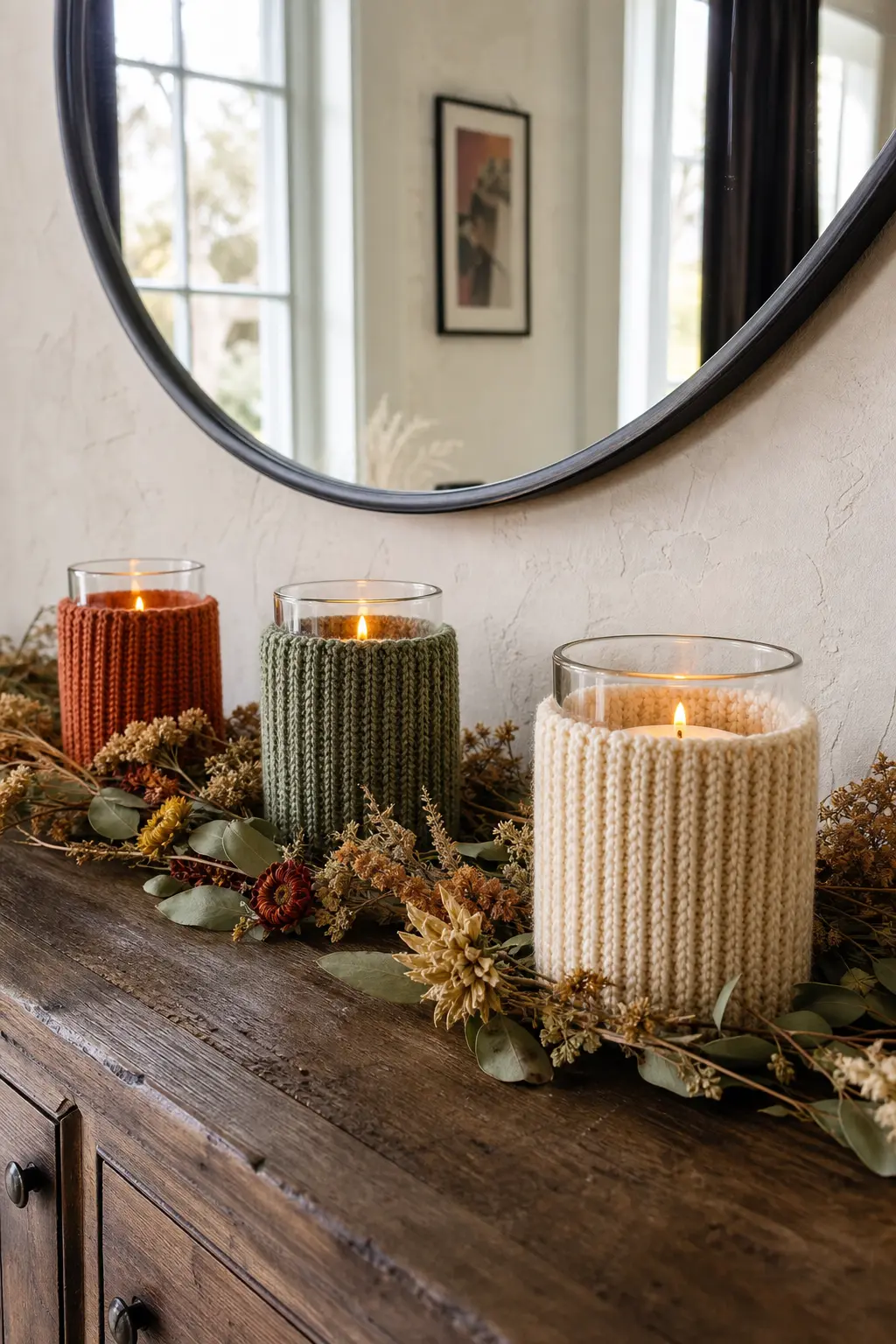
A Crochet Candle Wrap, Ribbed
A ribbed crochet wrap around a pillar candle holder transforms a plain glass or ceramic cylinder into a textured autumn accent. Work back-loop-only rows to get a tight rib, seam the ends, and slip it over the holder rather than gluing it so it lifts off safely before lighting.
Use cotton or cotton-blend yarn only, and size the wrap to a holder, not a bare candle, for fire safety. The wrap sits below the rim so there is always clearance above the flame.
Rust, sage or cream all work well. A set of three in different heights and colours, each in a different tone, lines up on a sideboard and looks like a purchase from a boutique homeware shop.
🛍 Shopping guide
Door and Wall Displays
Anything hung on a door or wall becomes the first impression. These pieces are light enough to hang on a standard adhesive hook, so no drilling, no damage to a rented door.
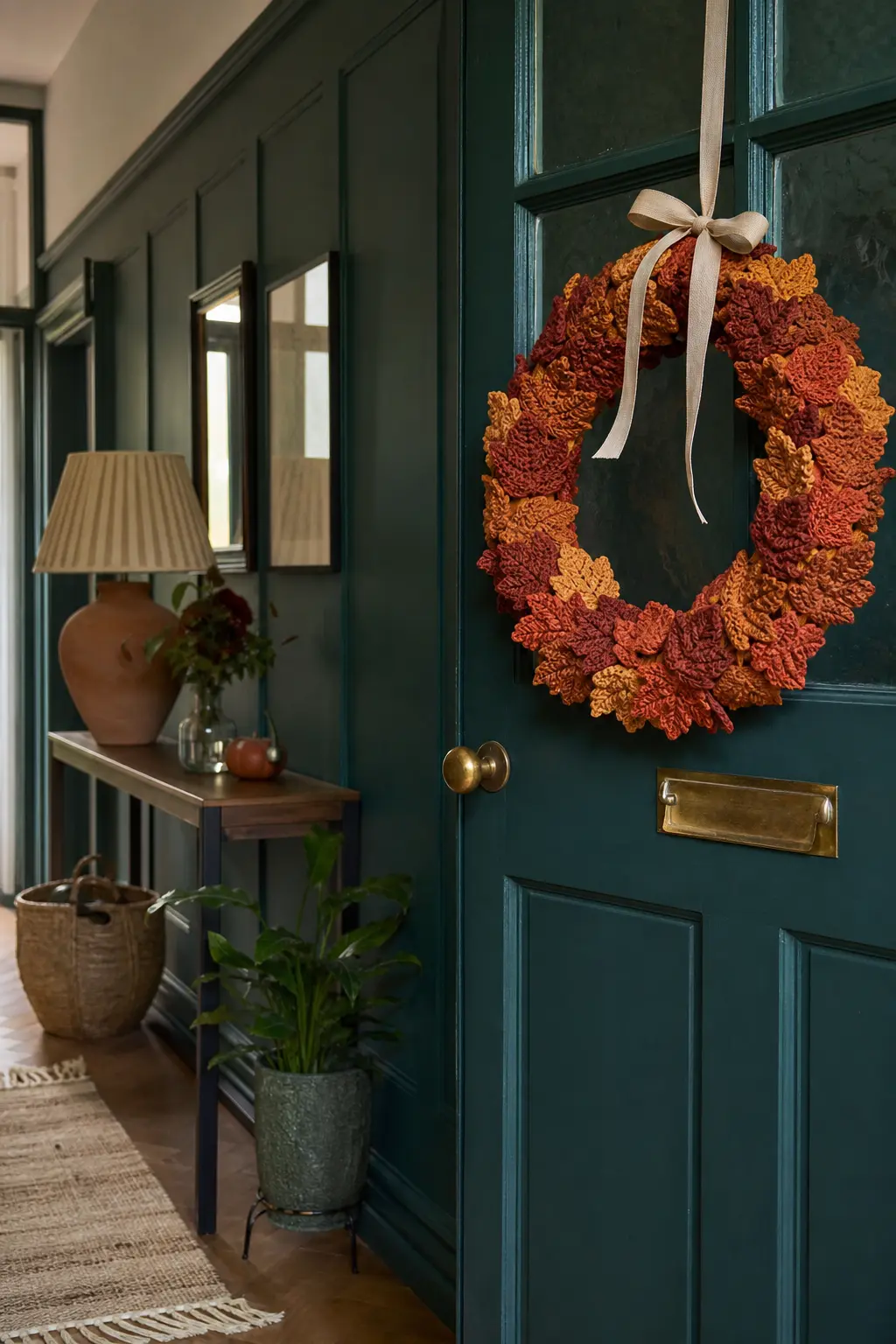
A Crochet Wreath Ring Covered in Leaves
Buy a plain wire or foam wreath ring and cover it completely with crocheted leaves in rust, ochre and warm brown, anchoring each one with a simple slip-stitch knot. The leaves can be simple three-point shapes or full maple points, depending on how much time the evening allows.
Pack them densely enough that the base ring disappears, then add a cream or sage ribbon bow at the ten-o’clock position for a finishing touch that takes thirty seconds.
This wreath weighs almost nothing, so a single adhesive hook on the door holds it without pulling the paint.
🛍 Shopping guide
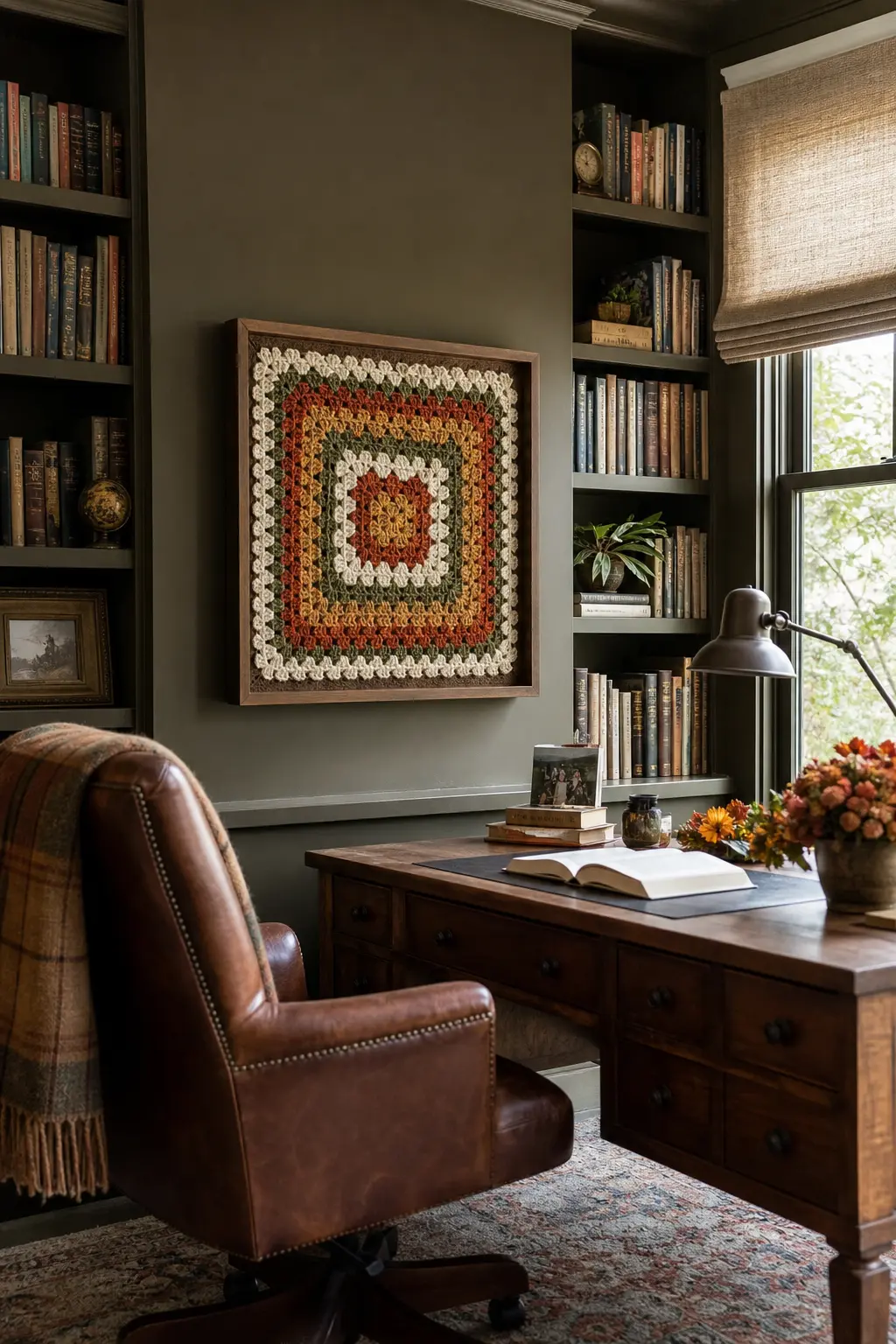
A Granny Square Blanket Square, Framed
Work a single large granny square, about 30cm across, in concentric rounds of rust, ochre, warm brown, sage and cream. Block it flat, then stretch it over a canvas frame or mount it behind a simple clip-frame glass and hang it like a textile artwork.
The granny square as framed art is a low-cost way to add handmade texture to a wall without committing to a full gallery wall project. One square, one frame, one evening for the crochet, and ten minutes for the mounting.
A deep box frame shows the yarn texture better than a flat clip-frame because the depth creates shadow between the stitches.
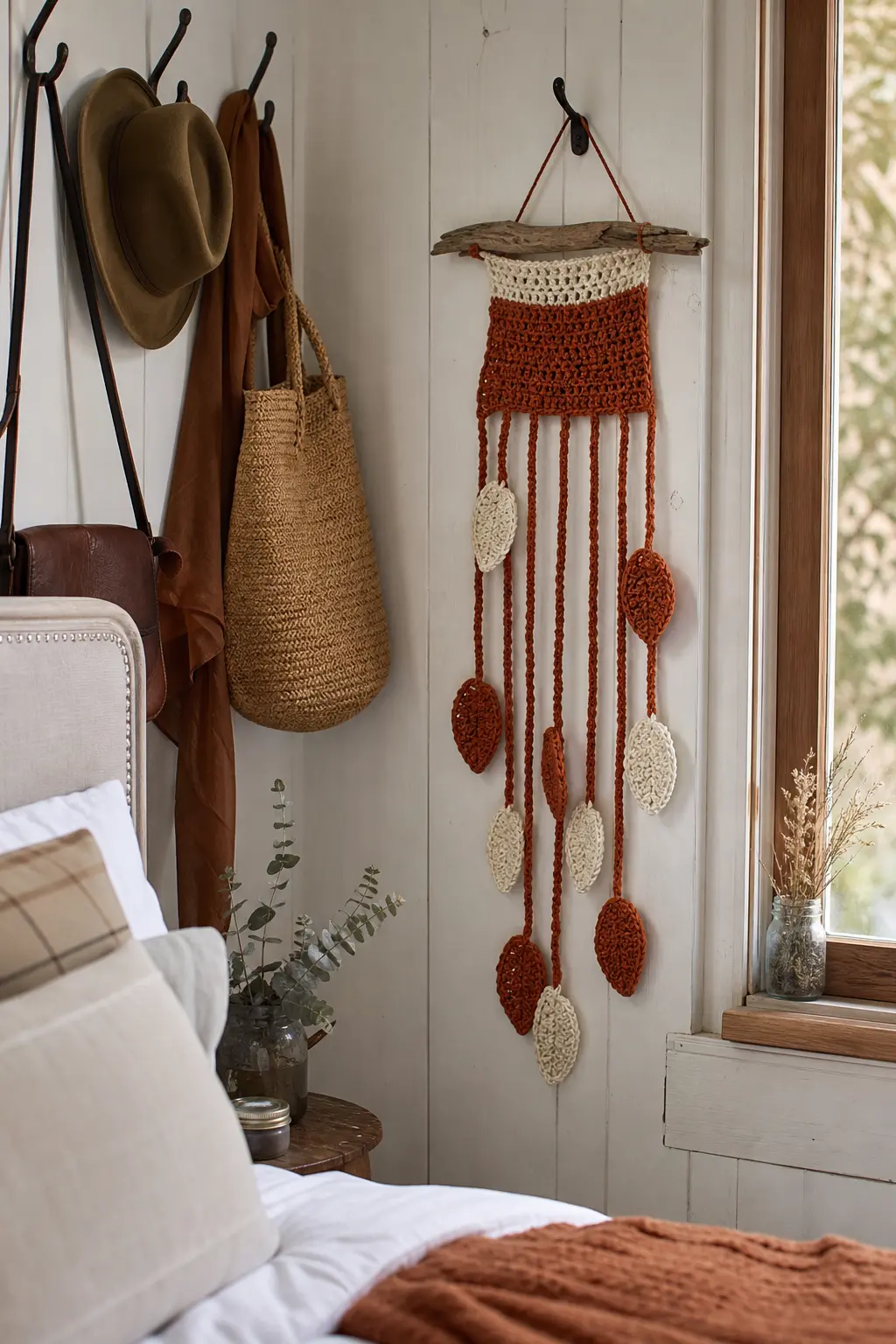
A Textured Crochet Door Hanger
A door hanger works from a top bar, which can be a length of driftwood, a dowel, or a thick twig, from which several strands of crocheted texture hang in a loose cascade. Alternate a strand of slip-stitch chain, a worked-flat leaf strip, and a cluster of small bobbles on each hanging length.
Keep all strands in the same two-colour palette, such as rust and cream, so the piece reads as intentional rather than random. Finish the bottom of each strand with a small loose fringe or a single large crocheted leaf.
This is a good project for yarn scraps because no single strand needs more than a few metres.
Small Figures and Novelty Pieces
Small amigurumi-style figures sit on a shelf, tuck into a wreath, or perch on a window sill. They photograph well, they delight children and adults equally, and they take less yarn than almost anything else on this list.
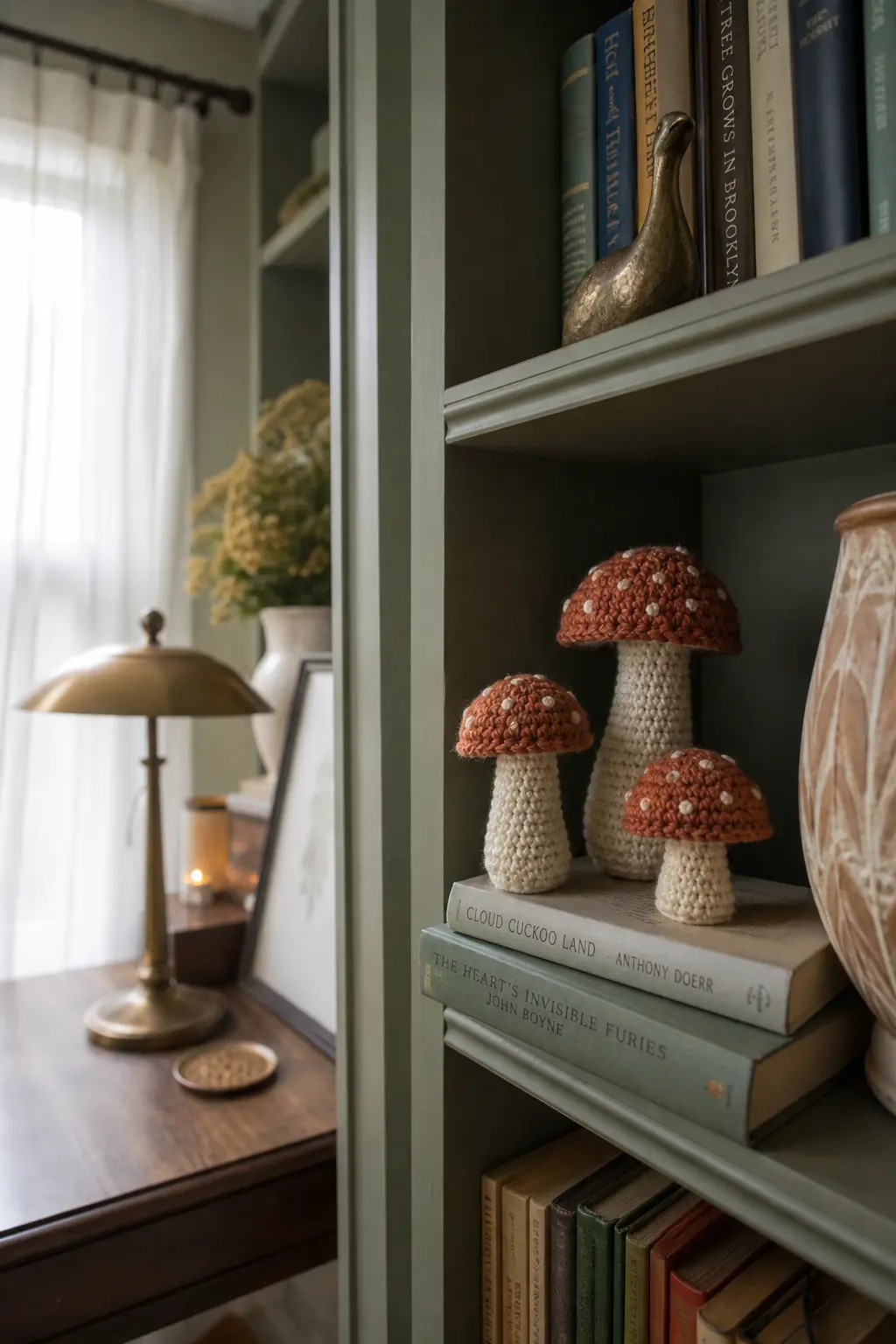
A Crochet Mushroom Trio, Mixed Heights
Three amigurumi mushrooms at different heights, worked in cream and warm brown with a rust or ochre cap, make a display that looks styled without any arrangement effort. The tallest stands about ten centimetres, the shortest about five.
The cap is a simple magic-ring circle increased to a dome, and the stem is a short tube worked in rows. Neither piece needs anything beyond single crochet, which makes this accessible even on a tired evening.
Group them on a bookshelf between two books, or sit them on a windowsill ledge where they catch the autumn light through the glass.
🛍 Shopping guide
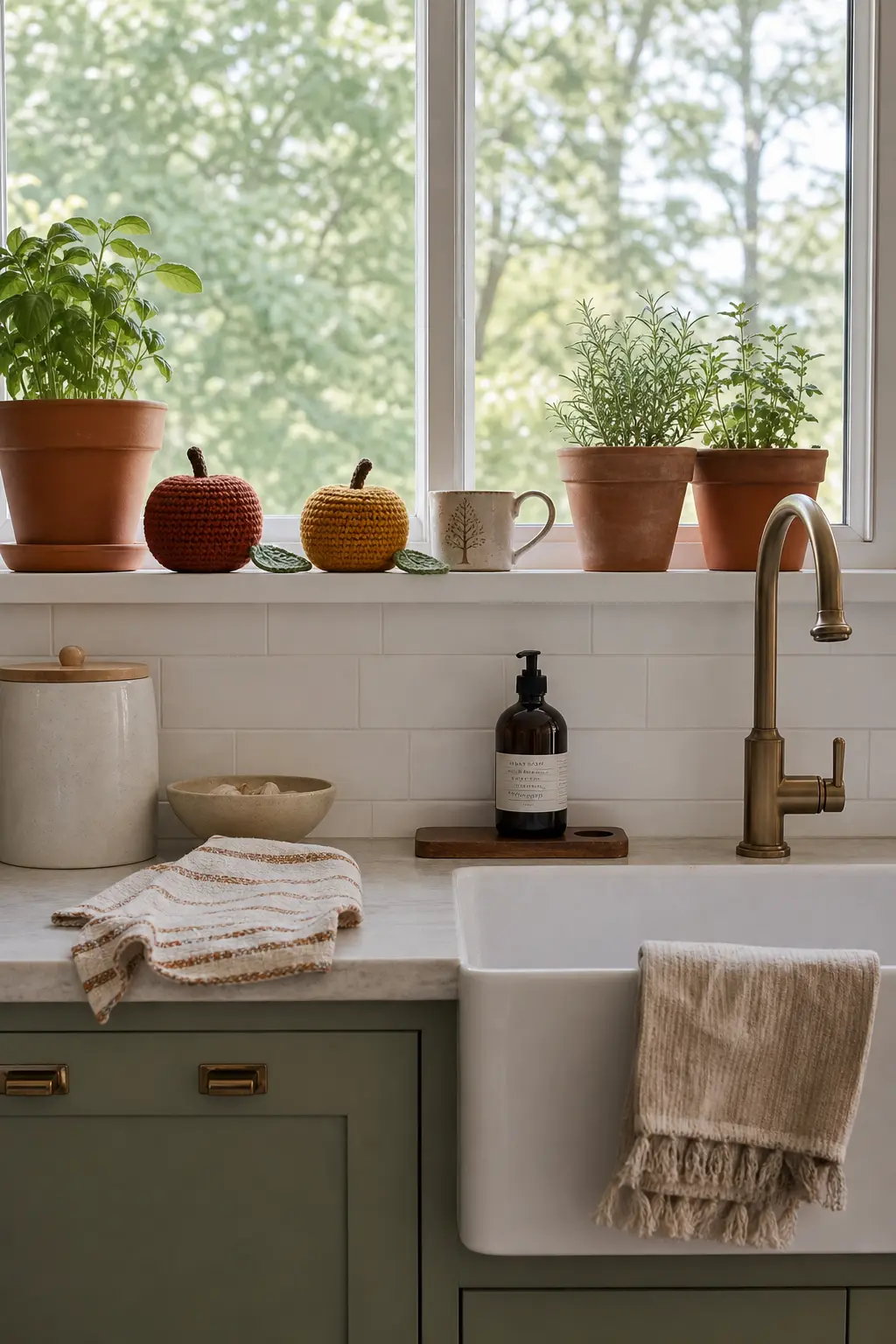
A Crochet Apple, Stem and Leaf
An amigurumi apple in rust or warm red, worked in the round with gradual increases and then decreases, sits perfectly on a kitchen windowsill or beside a fruit bowl. Add a short brown chain stem and a single flat leaf in sage to complete it.
The leaf uses a simple increase-then-decrease row structure that works in any basic leaf tutorial, and the stem is nothing more than a five-chain slip-stitch cord.
Make two or three in slightly different reds and ochres and arrange them as a small cluster. The variation in tone stops them looking mass-produced.
A Mini Crochet Scarecrow Figure
A small amigurumi scarecrow, about 15cm tall, built from a simple body tube with four short limbs attached, a round head, and a flat brimmed hat worked in dark brown, makes a shelf character that reads immediately as autumn without any labelling needed.
The body works best in ochre or warm brown with a cream or sage patch detail sewn on the front. The hat is a flat circle increased to a brim, then a short cylinder for the crown, finished in dark brown or rust.
Embroider the face in simple straight stitches rather than adding safety eyes, which keeps the scale proportionate at this tiny size.

🛍 Shopping guide
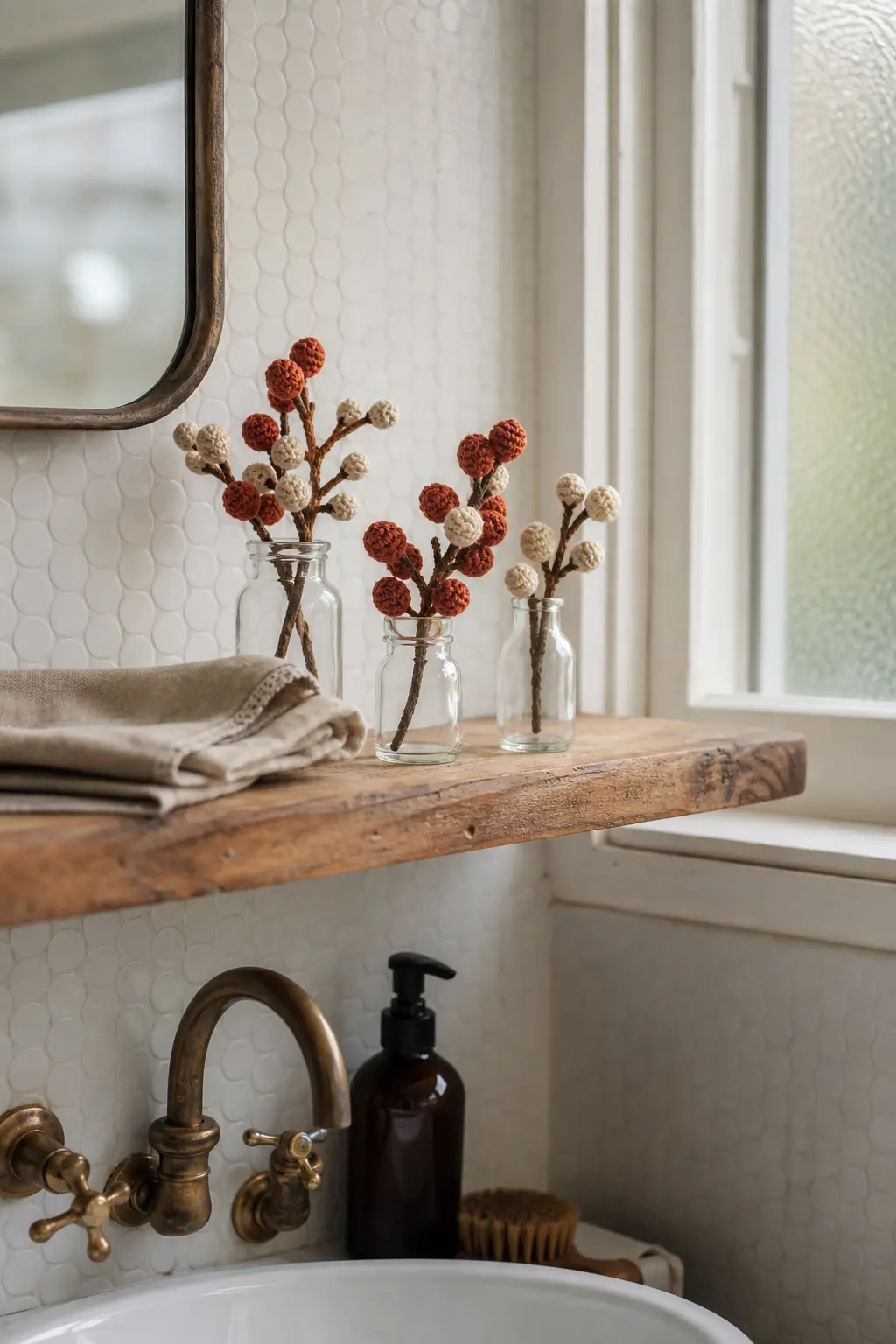
A Crochet Berry Sprig in a Jar
Small crochet berries, each a simple magic-ring circle closed tight and attached to a wire stem with a few wraps of matching yarn, cluster into a sprig that stands upright in a narrow glass jar. Make five to eight berries per sprig in rust, warm brown or cream.
The wire stem means the sprig holds any shape: arch it naturally or bend it into a slight curve that mimics a real branch. A few crocheted leaves among the berries add botanical detail that a plain berry spray lacks.
Three sprigs in a small glass bottle make a nightstand display that costs almost nothing and takes less than ninety minutes to complete.
🛍 Shopping guide
Frequently Asked Questions
What can I crochet for fall in one evening?
Small three-dimensional pieces like a ribbed pumpkin, a granny square coaster set, a mini mushroom trio or a ribbed vase cosy all finish comfortably in one evening session of two to three hours using worsted or chunky weight yarn. Flat motifs like individual leaves and acorns are even faster, and several can be made in a single sitting to build a garland or a bowl display.
What yarn weight works best for crochet fall decor?
Worsted weight (category 4) is the most versatile for autumn decor because it gives clear stitch definition on textured stitches like bobbles and ribs, finishes quickly, and comes in the widest range of autumn shades. Chunky (category 5) is better for fast large-surface pieces like table runners, placemats and bowl fillers. For tiny amigurumi figures and berry sprigs, DK (category 3) gives a finer finish that suits small-scale detail.
Do I need a pattern to crochet a simple pumpkin?
Not necessarily. A basic ribbed pumpkin uses a single technique: single crochet worked into the back loop only to build the ribbed body, then decrease rounds to close each end. Any free beginner pumpkin tutorial on a crochet community site will confirm the stitch count for your chosen hook size. The key decision is your finished size, which determines how many starting stitches to chain.
How do I stiffen crochet leaves so they hold their shape?
Mix equal parts PVA glue and water, brush the solution lightly over the finished leaf, then pin it to a blocking board in the shape you want and leave it to dry completely, usually two to four hours. For a stiffer result suitable for a wreath, dip the leaf fully in the mixture, squeeze out the excess, shape it over a curved surface like a spoon bowl, and leave overnight. Sugar starch spray works as a lighter alternative and washes out if you want to reshape the leaf later.
This post contains affiliate links. If you buy something through these links, I may earn a small com
There’s a specific kind of quiet that happens when your hands are covered in clay and the whee
21 candle painting ideas with the exact acrylic and medium ratio and the time each design takes, for
Leave a Reply