

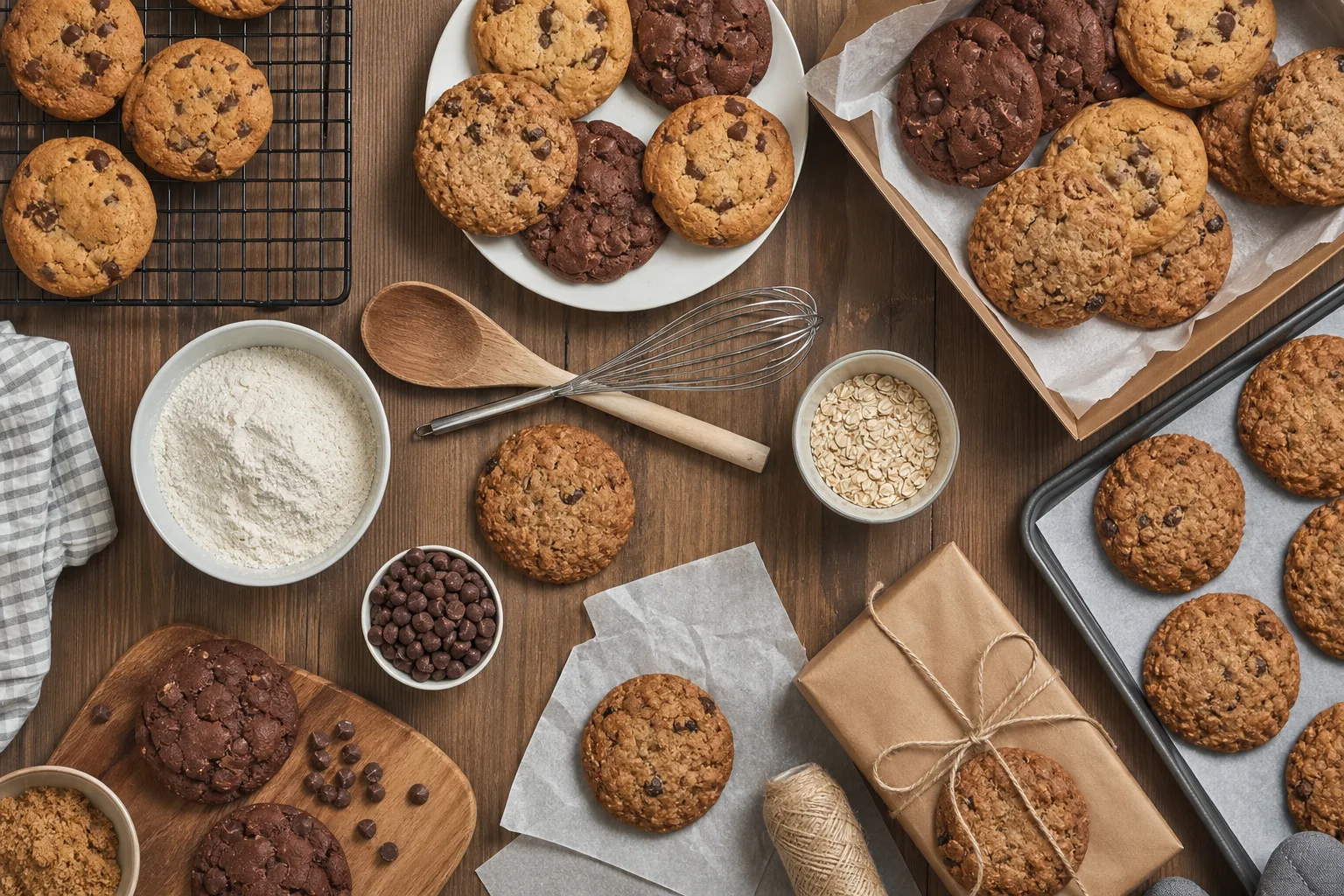
Forget the idea that a cookie business means a shopfront and a loan. Most of these eighteen models run out of the oven you already own, with a cottage food registration standing in for a commercial kitchen in most states. The question is never whether you can bake well enough. It is which model fits the hours you actually have.
Each entry below is a complete small business, not a vague direction. You get the packaging it travels in, the first two or three things to buy, and the one sentence that explains where its first customers actually come from, because ‘post on Instagram’ is not a sales channel on its own.
Read them as a menu, not a checklist. Pick one, run it quietly for a month, and only then decide whether a second one earns a place alongside it.
This post contains affiliate links. If you buy through them, I may earn a small commission at no extra cost to you.
Table of Contents
Made-To-Order Cookies For Events
This is the model most people picture first, and it earns that spot: someone has an occasion, she needs cookies that match it, and she will pay a fair price for someone else to solve that problem. It rewards a steady hand with a piping bag more than it rewards a huge recipe book.
Custom Decorated Cookies for Birthdays and Baby Showers
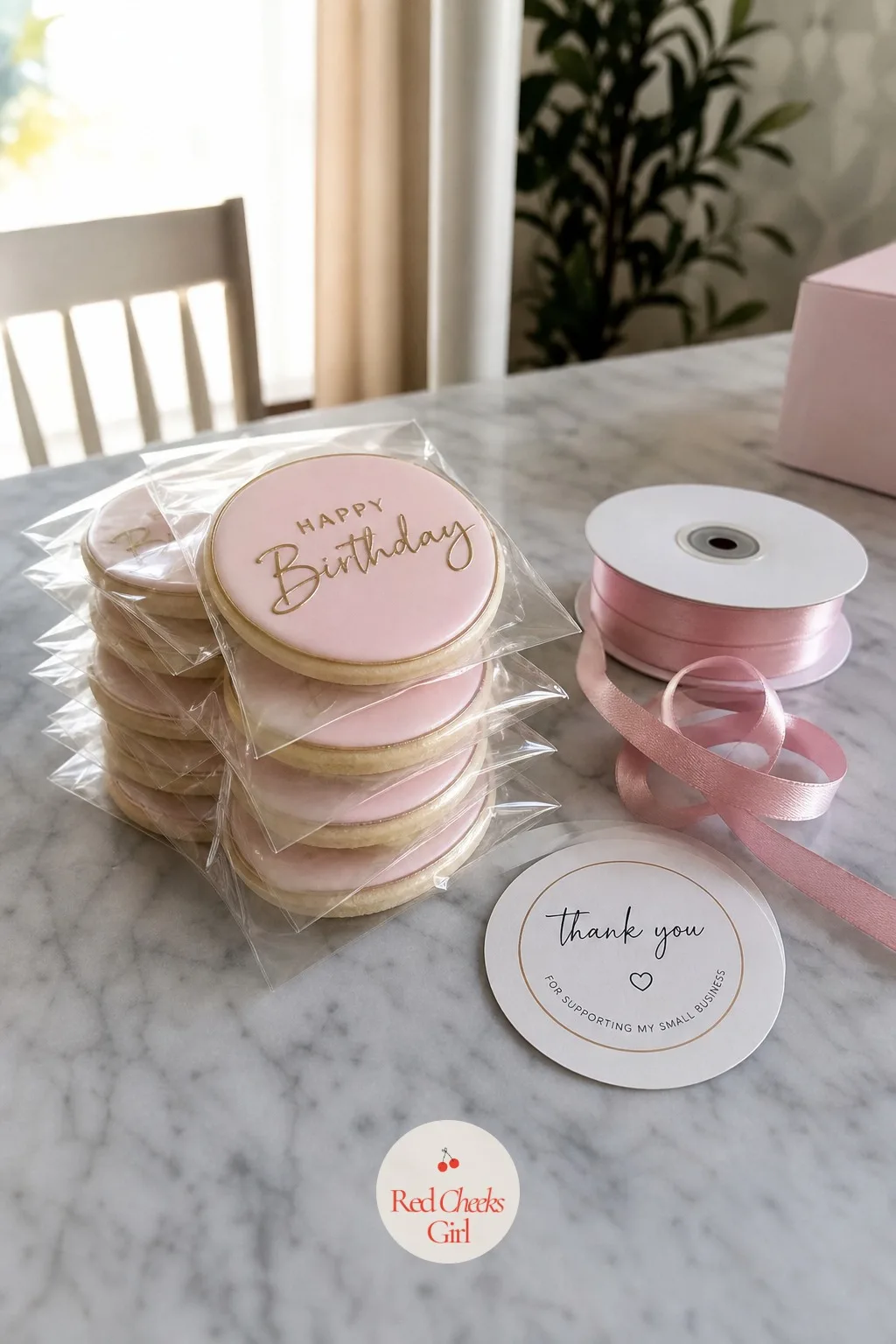
A dozen cookies sit in a clear cellophane bag tied at the top, each one iced in two colors that match the party rather than a general theme. A round sticker label sits on the front stating the flavor and the allergen line her state requires.
Underneath is a rolled sugar cookie base, baked firm enough to survive piping. Royal icing goes on in two stages, a thin outline piped first and left to set, then a flood fill poured inside it and left to dry overnight before the detail work goes on top.
Start with one cutter shape and three icing colors rather than a full catalogue. She finds her first customers through local parenting Facebook groups, where a photo of the piping process gets shared faster than a finished photo ever does.
No piping bags yet: a sandwich bag with the corner snipped off does the same job for a first test batch.
🛍 Shopping guide
Wedding Favor Cookies
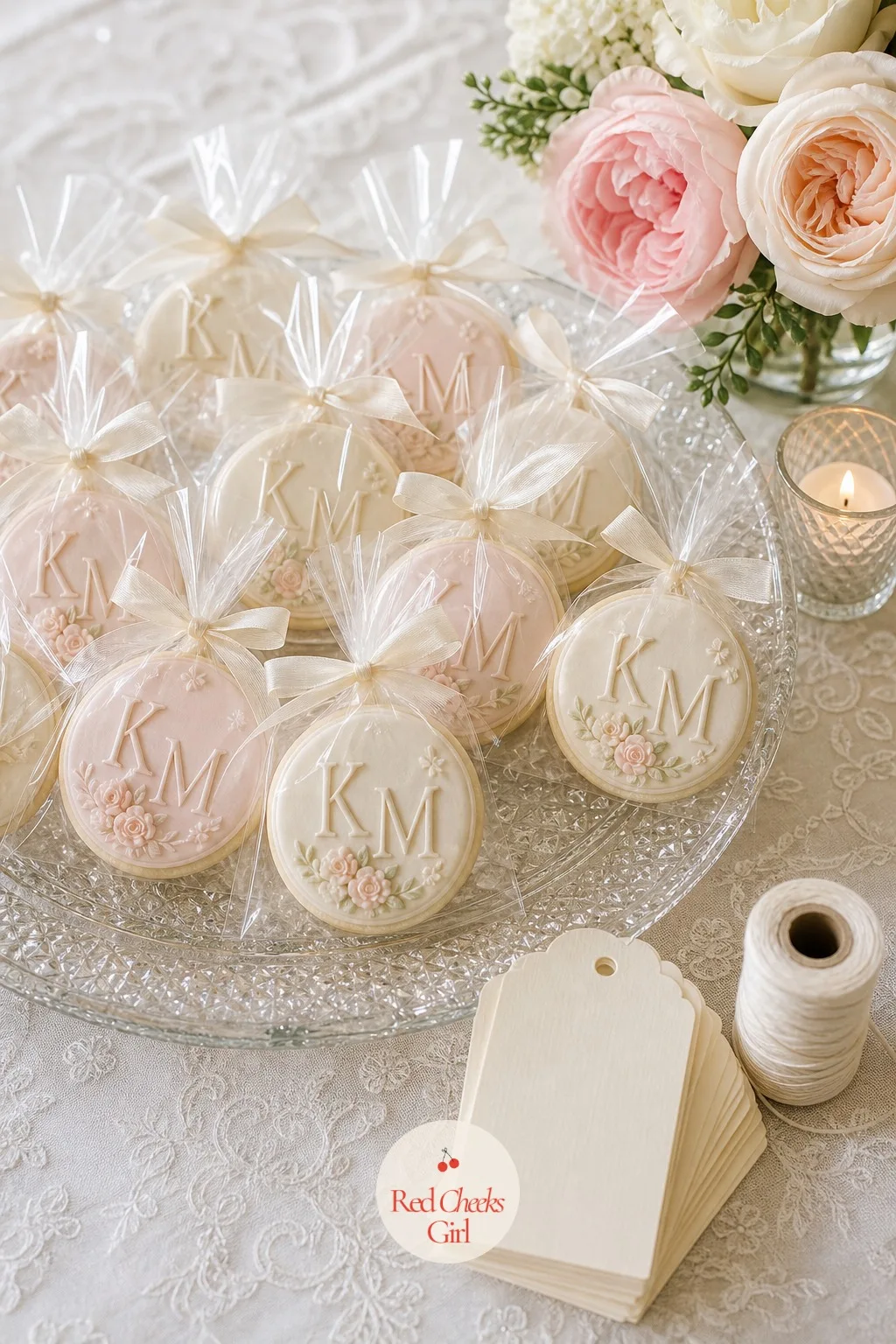
Small bags, each holding one monogrammed cookie, line a glass tray in ivory and blush, waiting to go out on the welcome table. A thread of ribbon and a stack of blank cardstock tags sit beside the tray, ready to be written up with the couple’s names.
The cookie underneath carries a hand-piped or stamped monogram, sealed into its bag with a small heat sealer so it survives handling by a hundred guests rather than relying on a twist tie. A printed tag goes on with ribbon or a dot of glue.
Offer a two-flavor tasting box to engaged couples first, found through a wedding vendor directory rather than cold outreach. The business side of this runs on the same booking calendar and deposit system as any other wedding supplier, which is covered step by step in How to Start a Wedding Decor Business.
No heat sealer on hand: a fold-top bag with a sticker across the seam holds just as well for a smaller wedding.
Logo Cookies for Corporate Gifting
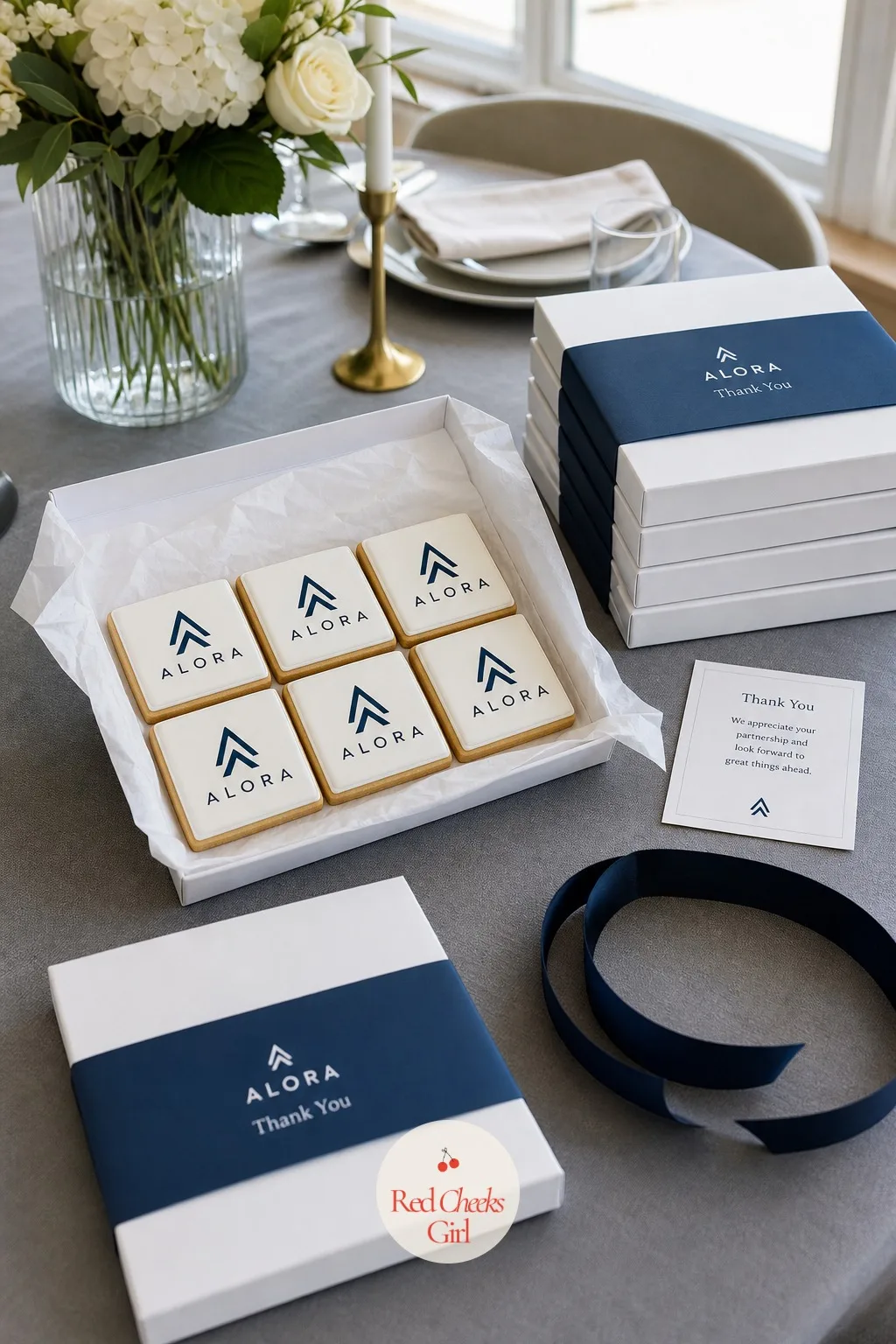
Square cookies printed with a simple logo in navy and white sit inside an open rigid gift box, lined with tissue, ready to be shipped out before a client meeting or a holiday close. A navy belly band wraps the box, her own business name set small at its base.
Underneath the finish is either an edible ink topper printed to size or a hand-cut stencil dusted with color, each cookie shrink-wrapped individually before it goes into the box so it survives a courier bag.
Pitch five local offices directly, offering a free sample box timed just ahead of a holiday ordering window. No printer yet: a two-color stencil in the company’s logo shape gets most of the way there by hand.
🛍 Shopping guide
Holiday Bulk Order Cookies
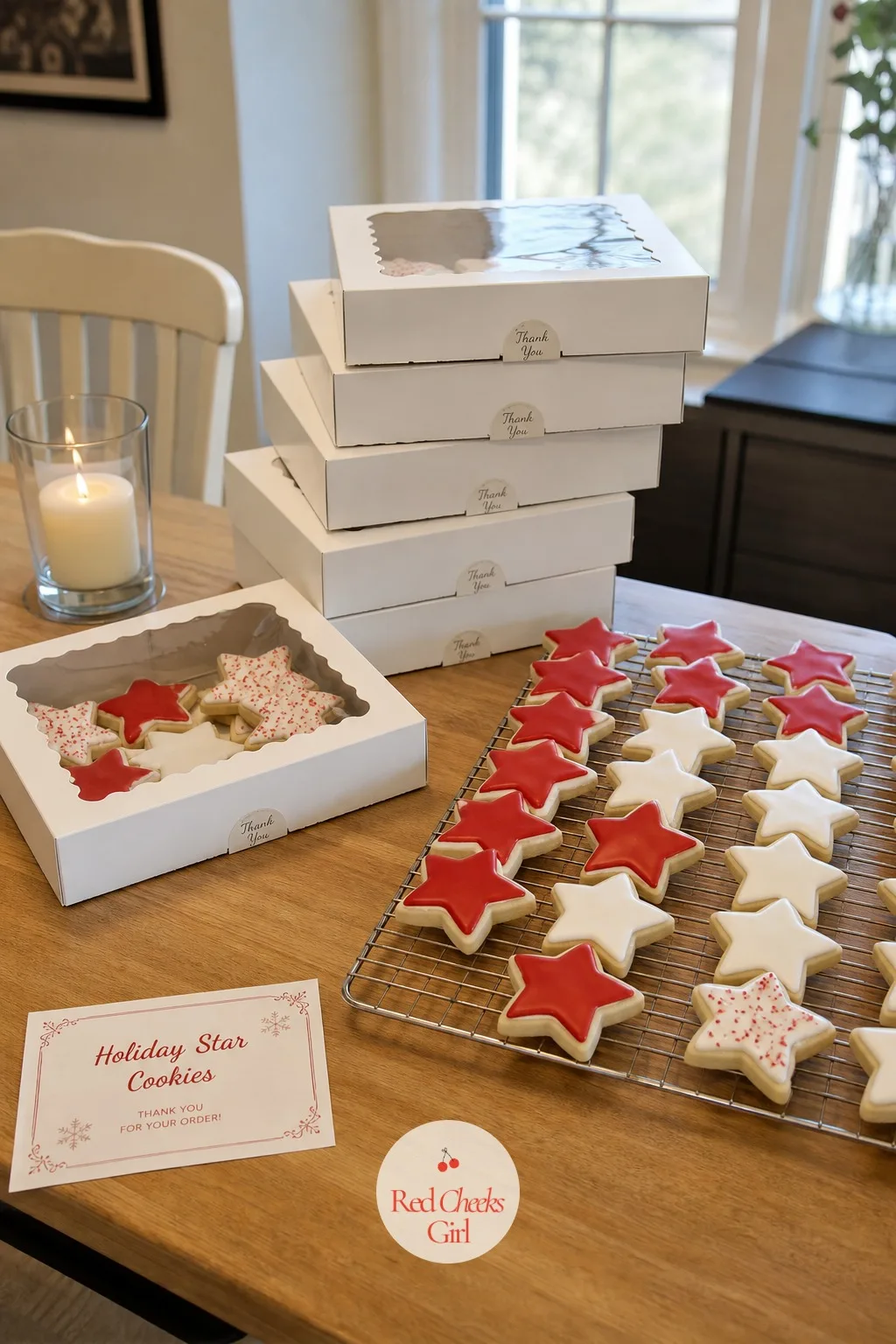
Rows of one shape, iced in two or three holiday colors, fill a cooling rack beside a stack of matching white boxes, every dozen packaged the same way so a big order looks finished rather than rushed.
One base shape and a fixed set of colors keep the production line simple: cut, bake, cool, flood, pipe, box, in batches rather than one cookie at a time. A single printed label states the flavor and the pickup date.
Open a two week pre-order window with one pickup day and cap total dozens to what the oven can actually turn around. She finds her buyers through a pinned post on her own page naming the order deadline clearly. No online form yet: a paper sign-up sheet at pickup covers the same ground.
🛍 Shopping guide
Cookie Subscriptions And Gift Boxes
Boxes solve a different problem than event orders: they bring repeat money in without a new sale every single time. The work shifts from decorating skill to packaging that survives a van, a mailbox or a desk drawer until it is opened.
Monthly Cookie Box Subscription
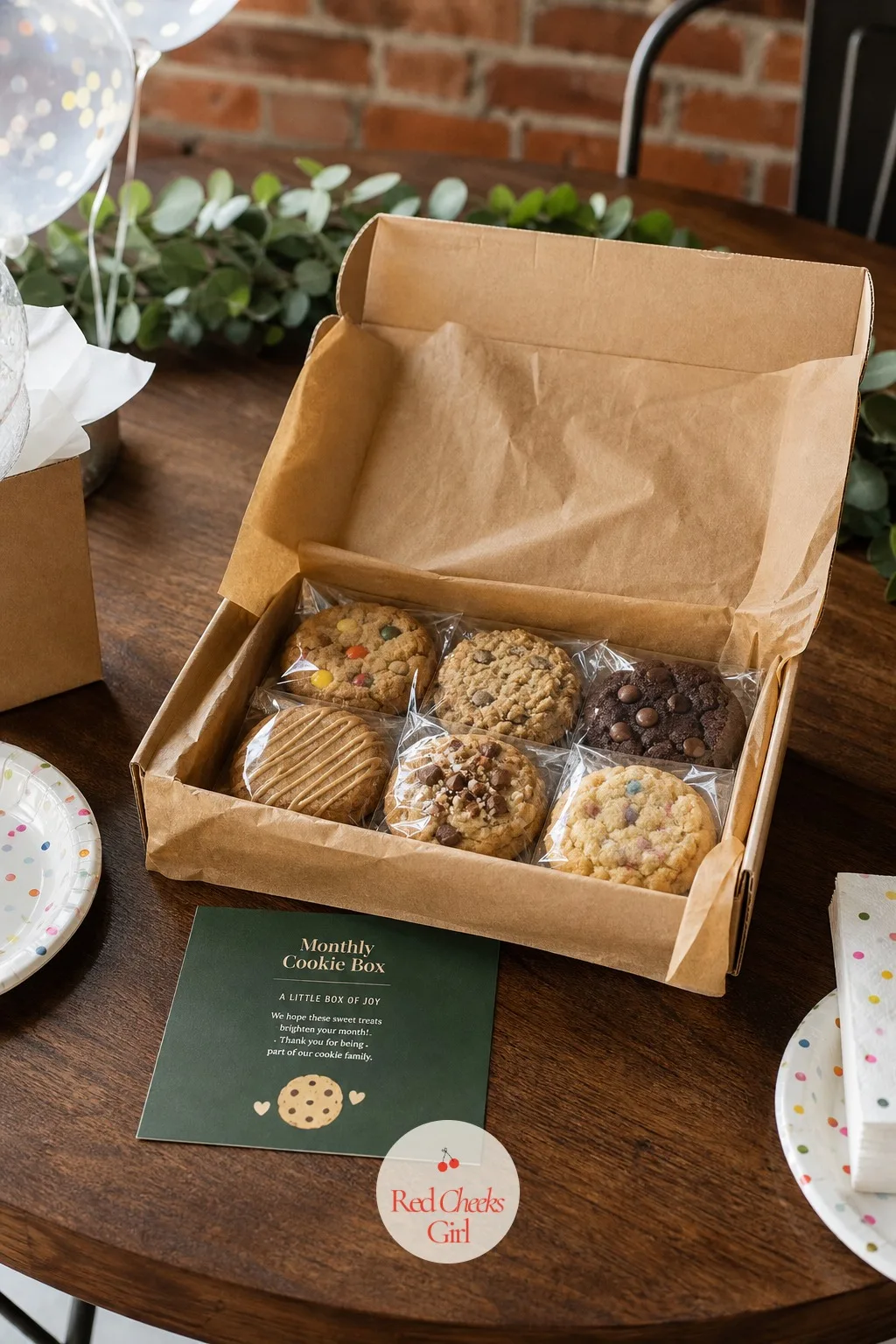
An open shipping box lined with brown parchment reveals six cookies, each wrapped individually, beside a printed insert card describing that month’s flavor in a few lines. A roll of kraft tape sits at the edge of the table, ready to close the last one before pickup.
The box itself is sized tight to the cookie count so nothing shifts in transit, with a thin ice pack only where the flavor needs it. One bake day a month covers the whole run.
Open with a small founding group of ten to twenty people before offering it publicly, so flavor and timing get tested on people who will tell her the truth. A waitlist link in her Instagram bio, posted before the first box ships, does the rest of the selling. No shipping yet: a local pickup only subscription skips postage entirely.
Seasonal Mini Cookie Boxes
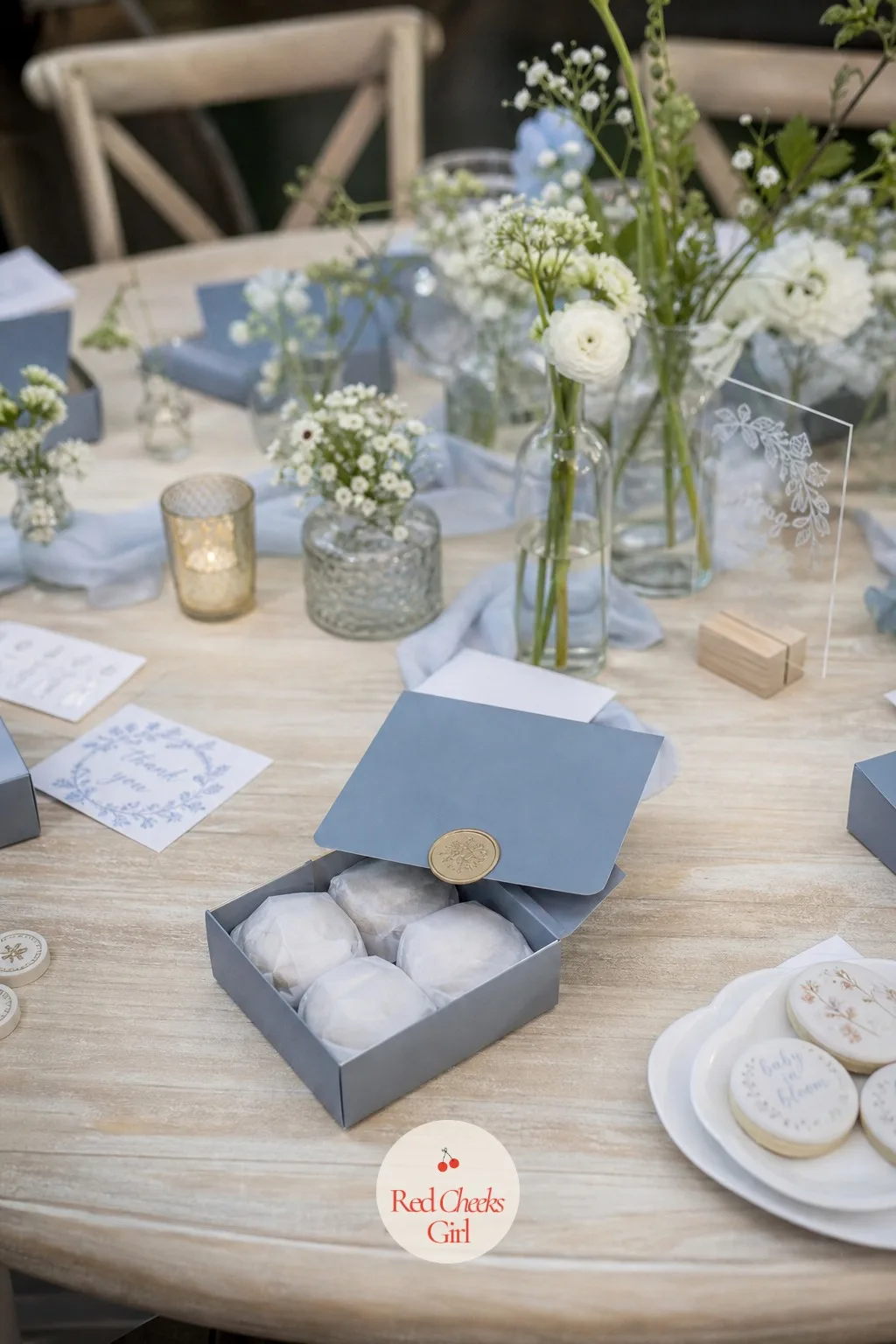
A small square box in dusty blue sits half open, four cookies inside wrapped in tissue, held shut by a round wax seal sticker on the flap. A second box in the same blue waits unopened beside it, part of a short run made just four times a year.
Each season gets its own two colors and a short flavor card, with a deliberately small run so the box sells out rather than sitting on a shelf past its freshest days.
Announce each box three weeks ahead with a limited number stated plainly, so buying it feels like catching something rather than browsing a shop. An email reminder sent the week the season turns does the selling. No wax seal stamp yet: a plain round sticker across the flap closes it just as well.
Mail-a-Birthday Cookie Box
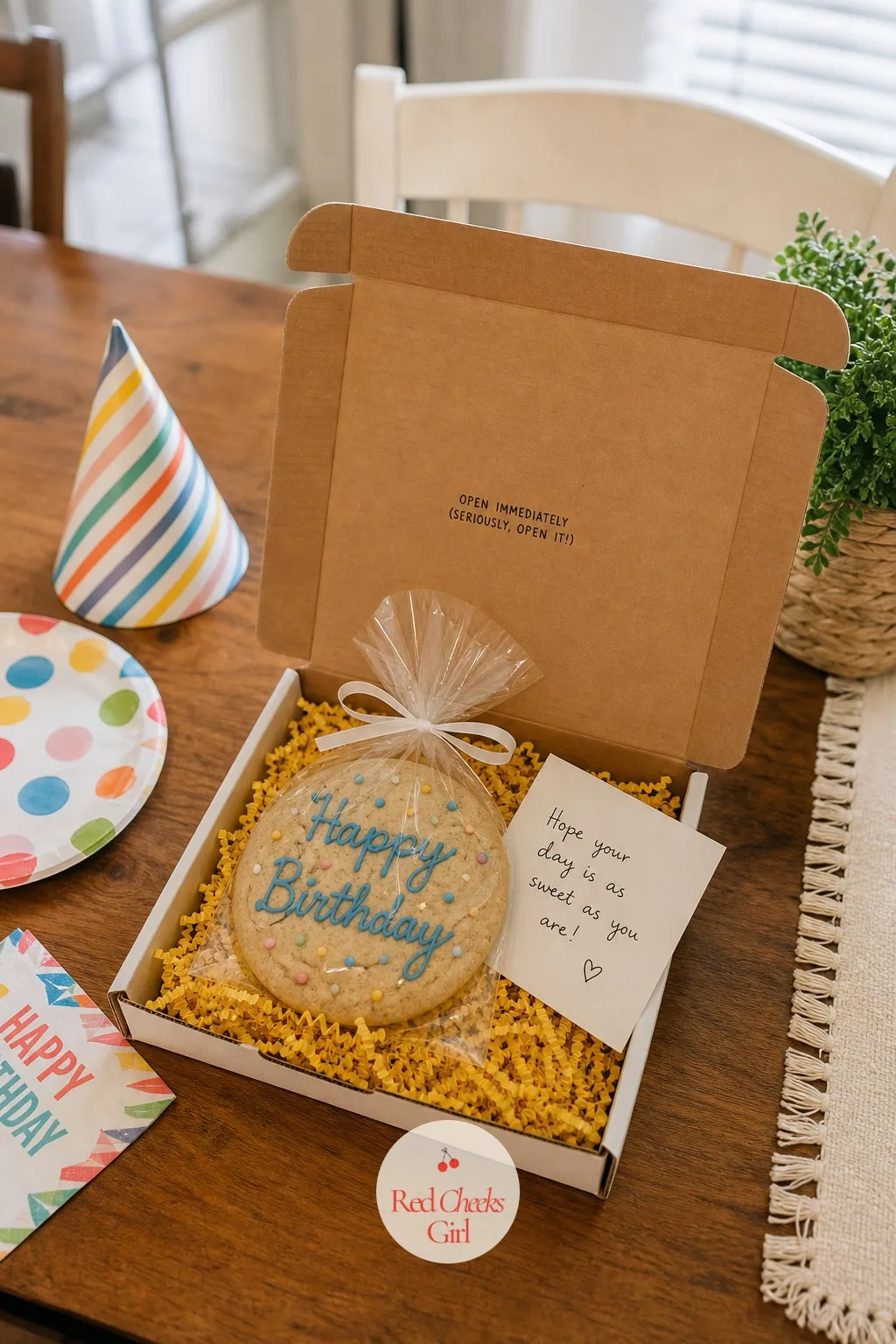
A single cellophane-wrapped cookie rests inside a flat cardboard mailer lined with bright crinkle paper, a small handwritten card tucked beside it, built to go straight to someone else’s door rather than the buyer’s own.
The mailer is chosen for its flat shape first, padded enough to survive a mail sorting facility without crushing the cookie inside. A printed card carries the sender’s message rather than her own branding.
Test the exact packaging with a shipment to her own second address before taking a single paying order, because a crushed cookie on arrival ends a customer relationship before it starts.
A gifting page linked wherever birthdays or new babies come up online brings in the orders. No flat mailer boxes yet: a padded envelope works for a single cookie sent flat.
🛍 Shopping guide
Client Thank-You Gift Boxes for Local Businesses
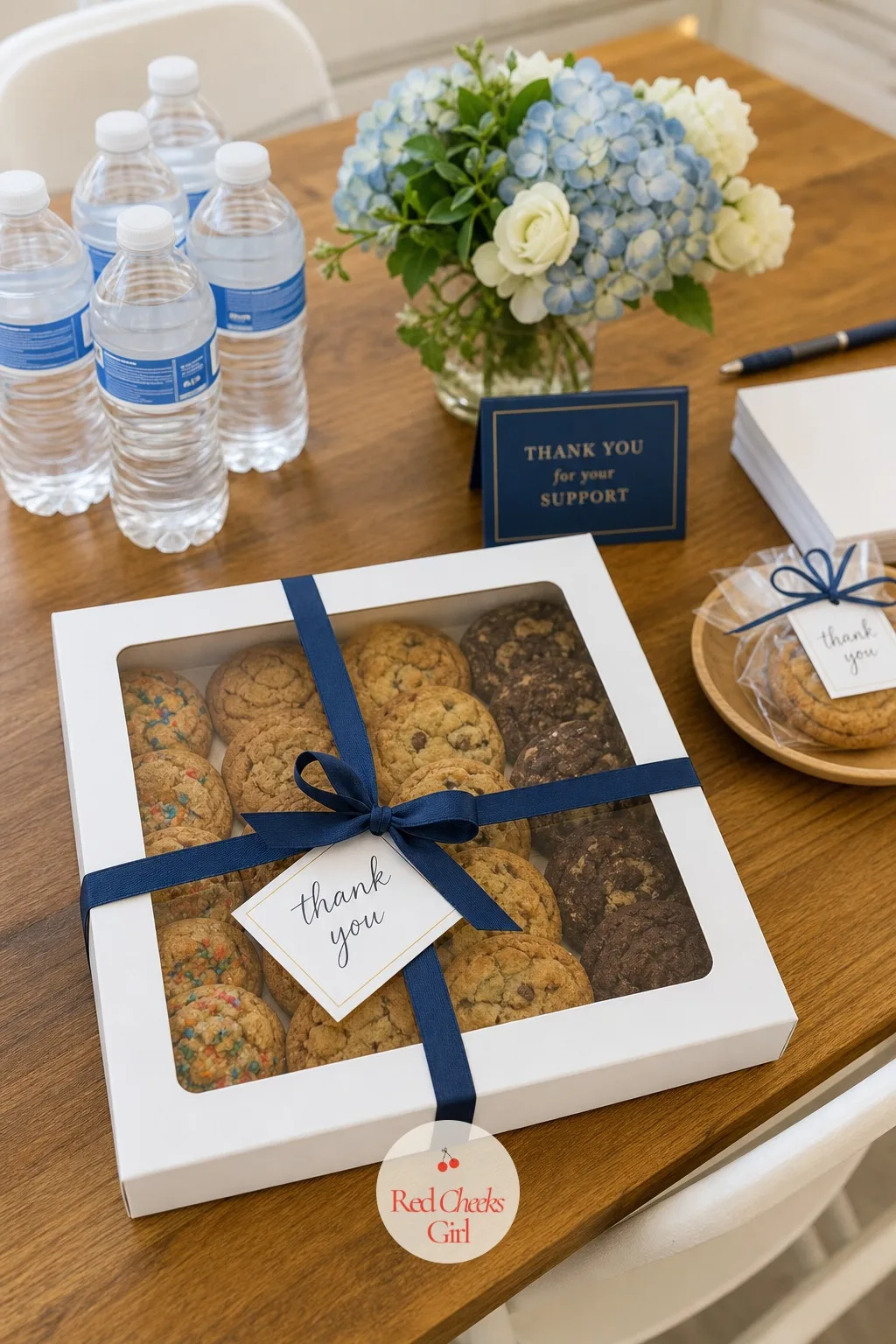
A dozen cookies fill a white box with a cellophane window, tied with a slim ribbon and a small printed thank-you card tucked under the bow, built for a realtor or a dentist’s office to hand straight to their own clients.
The box carries the client’s brand color in the ribbon rather than her own, with her label kept small in the corner so the gift reads as coming from the office, not from a stranger.
Pitch one realtor or small office directly with a sample box timed to a closing date or an anniversary, and let repeat orders come from that single relationship rather than chasing new ones constantly. No custom card from the client yet: a plain printed thank-you tag she writes herself covers the gap.
Kits And Classes She Can Teach
Not every cookie business sells finished cookies. Some sell the experience of making them, boxed up to ship or set out on a table, which suits a baker who talks as easily as she pipes.
Cookie Decorating Kits to Ship
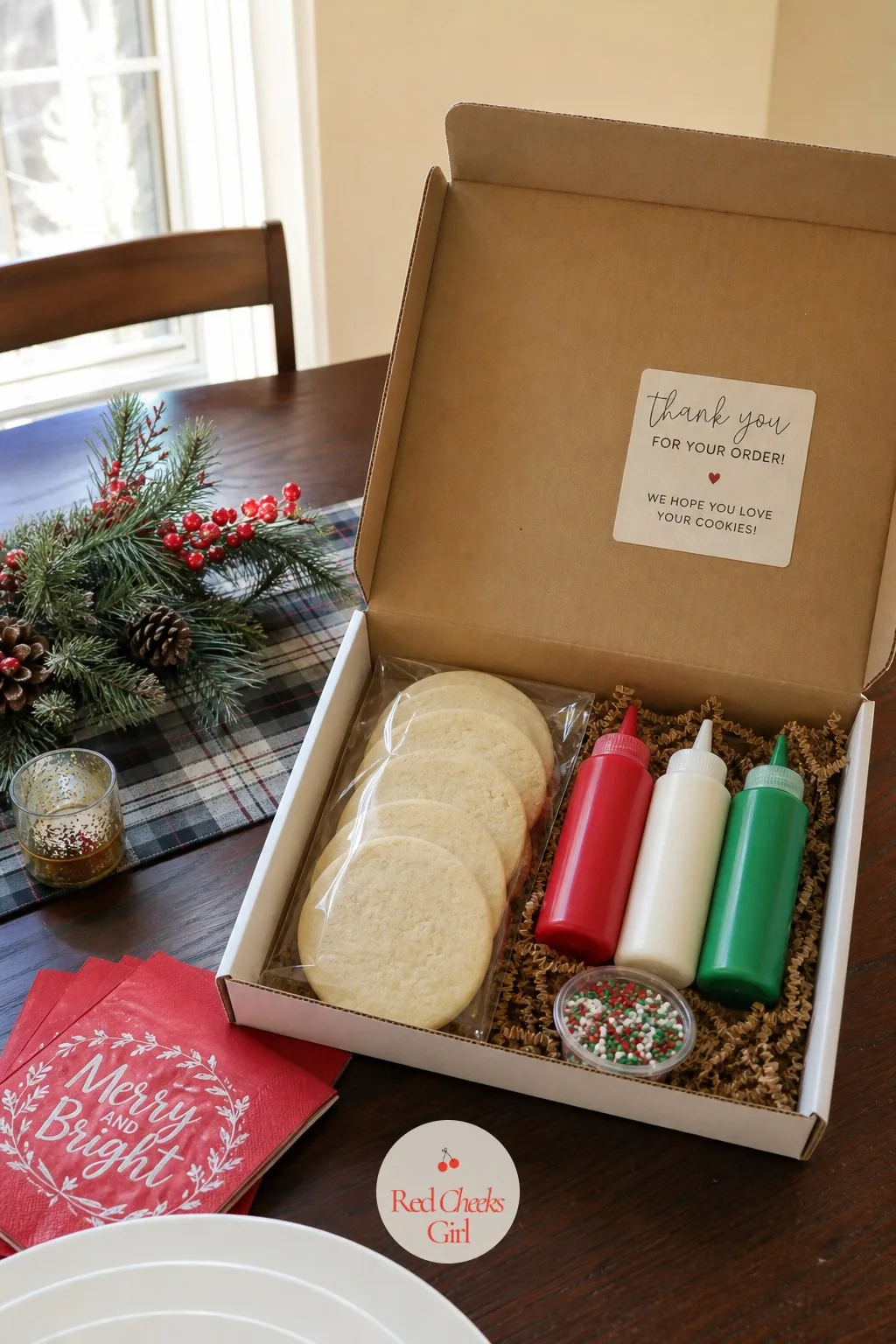
A flat kit box lies open showing plain round cookies, three small squeeze bottles of icing, and a scatter of sprinkles in a tiny lidded cup. A folded one-page guide card sits tucked in the corner.
Everything inside is built to survive a few days in transit: pre-baked plain cookies that will not crumble, icing in squeeze bottles rather than piping bags so there is nothing to assemble on arrival, and embellishments sealed in their own small cups.
Build one seasonal kit first and test how the bottled icing holds up over a week before listing it for sale. An Etsy or local marketplace listing timed to a holiday brings in the first orders. No squeeze bottles yet: a sandwich bag with one corner snipped pipes a thin line just as well for a first test batch.
🛍 Shopping guide
In-Person Cookie Decorating Classes
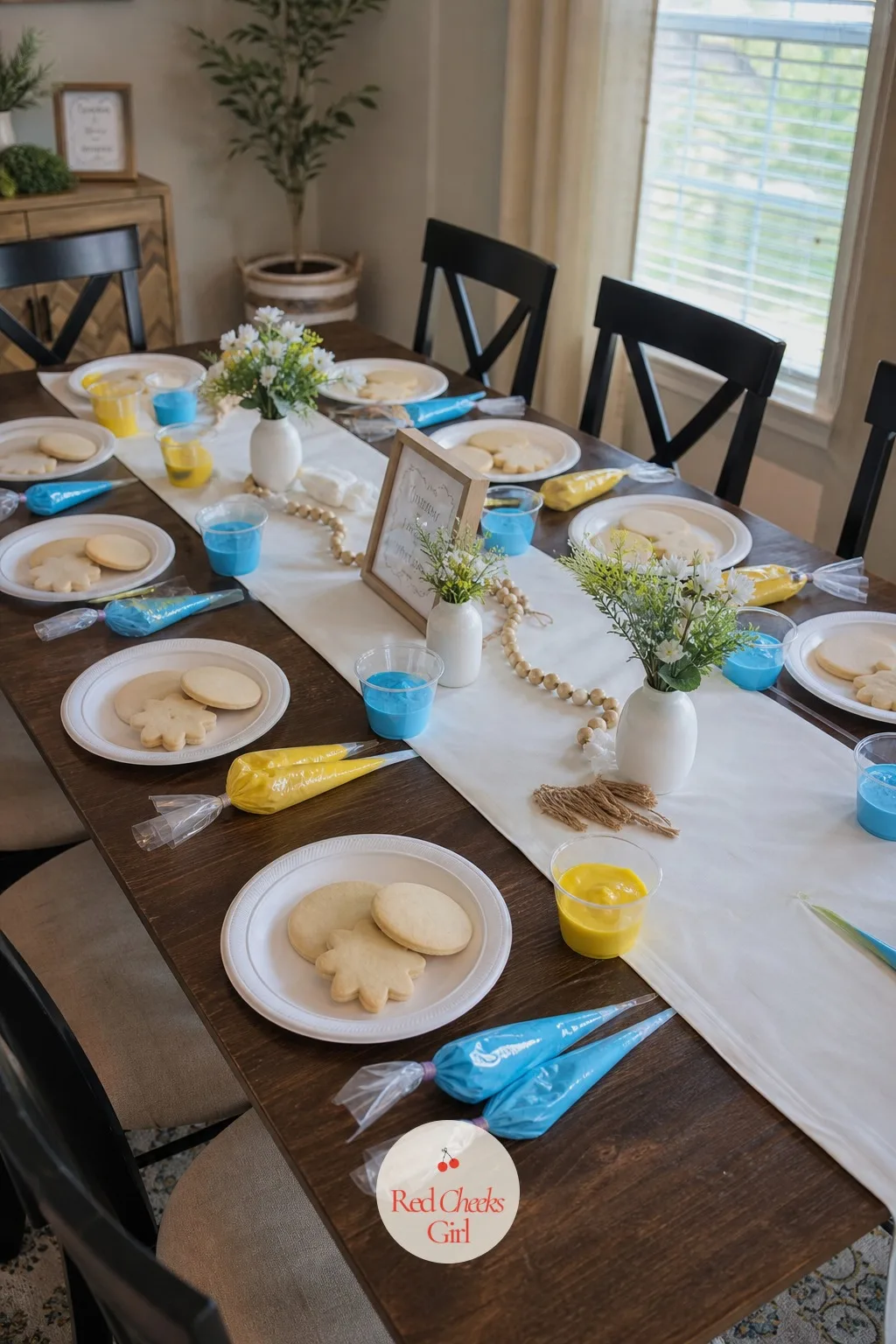
A long table is set with plain cookies at each place, small cups of icing in two colors, and a piping bag resting beside each setting, ready for a room of guests rather than a single order.
A plain runner covers the table length, with folding tables doing the work underneath and an apron at each seat to protect clothes from icing drips.
Host a free trial class for six friends first, to work out timing before charging a single person. A listing on a local events page, plus a flyer at a nearby coffee shop, fills the next session. No venue booked yet: her own dining table seats four comfortably for a smaller first class.
Virtual Cookie Decorating Class
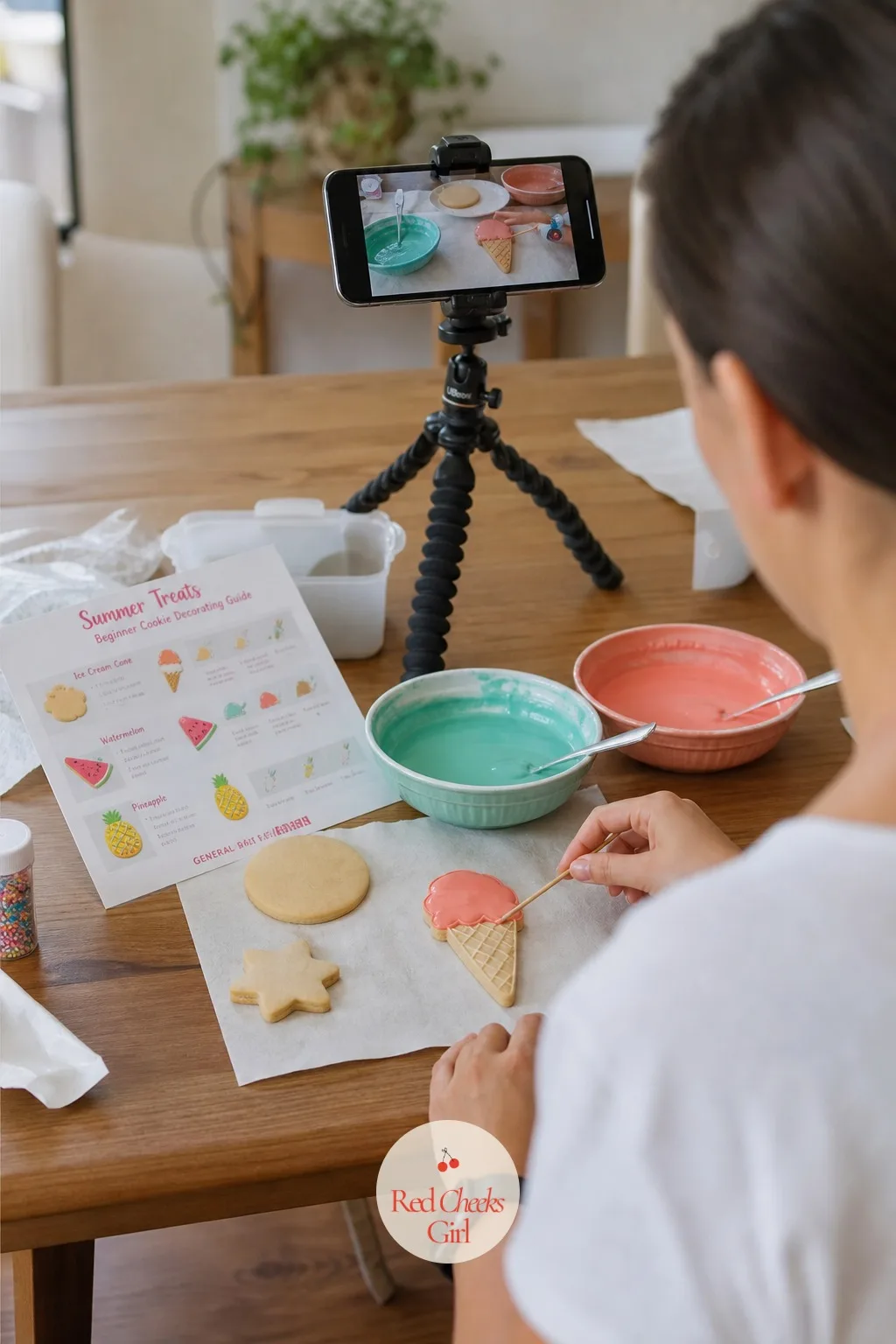
A phone mounted on a small tripod points straight down at a decorating station holding plain cookies, two bowls of icing, and a printed guide card propped beside the tripod leg.
A kit goes out in the mail a few days ahead of the live session, built the same way as the ship-to-order kit above but timed to arrive the day before class so nothing dries out.
Test the overhead camera angle alone before the first live run, since a blurry downward shot ruins the whole format. A listing in a local parents’ group for a rainy Saturday activity brings the first sign-ups. No tripod yet: the phone propped against a stack of cookbooks does the same job.
🛍 Shopping guide
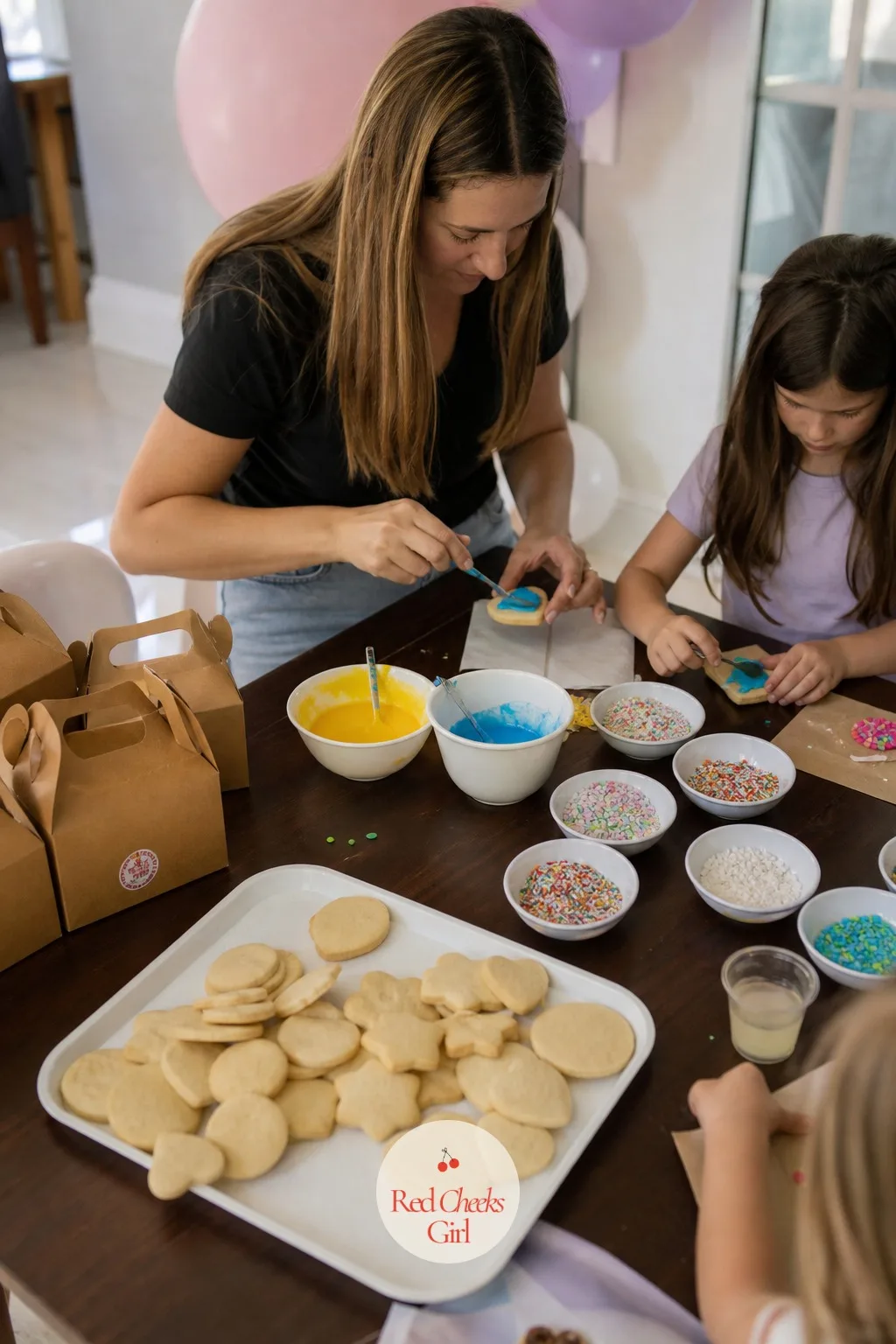
Kids’ Birthday Party Cookie-Decorating Station
A low table holds a tray of plain cookies, small bowls of bright icing, dishes of rainbow sprinkles, and a stack of paper boxes at one end for each child to carry their cookie home.
The setup runs on bowls and dishes rather than piping bags, since small hands work faster with a spoon or a butter knife than with a bag that can burst under too much squeezing.
Offer this as an add-on to birthday party bookings rather than selling it on its own, and let party planners and venues who already book birthdays send the referrals. No low table available: a corner of the main party table works fine with booster seats pulled up to it.
Market Stalls And Retail Spots
These models put the cookies in front of strangers rather than waiting for an order to land in an inbox. They cost a little more to start, in a table or a consignment agreement, but they build a customer list faster than any single online post does.
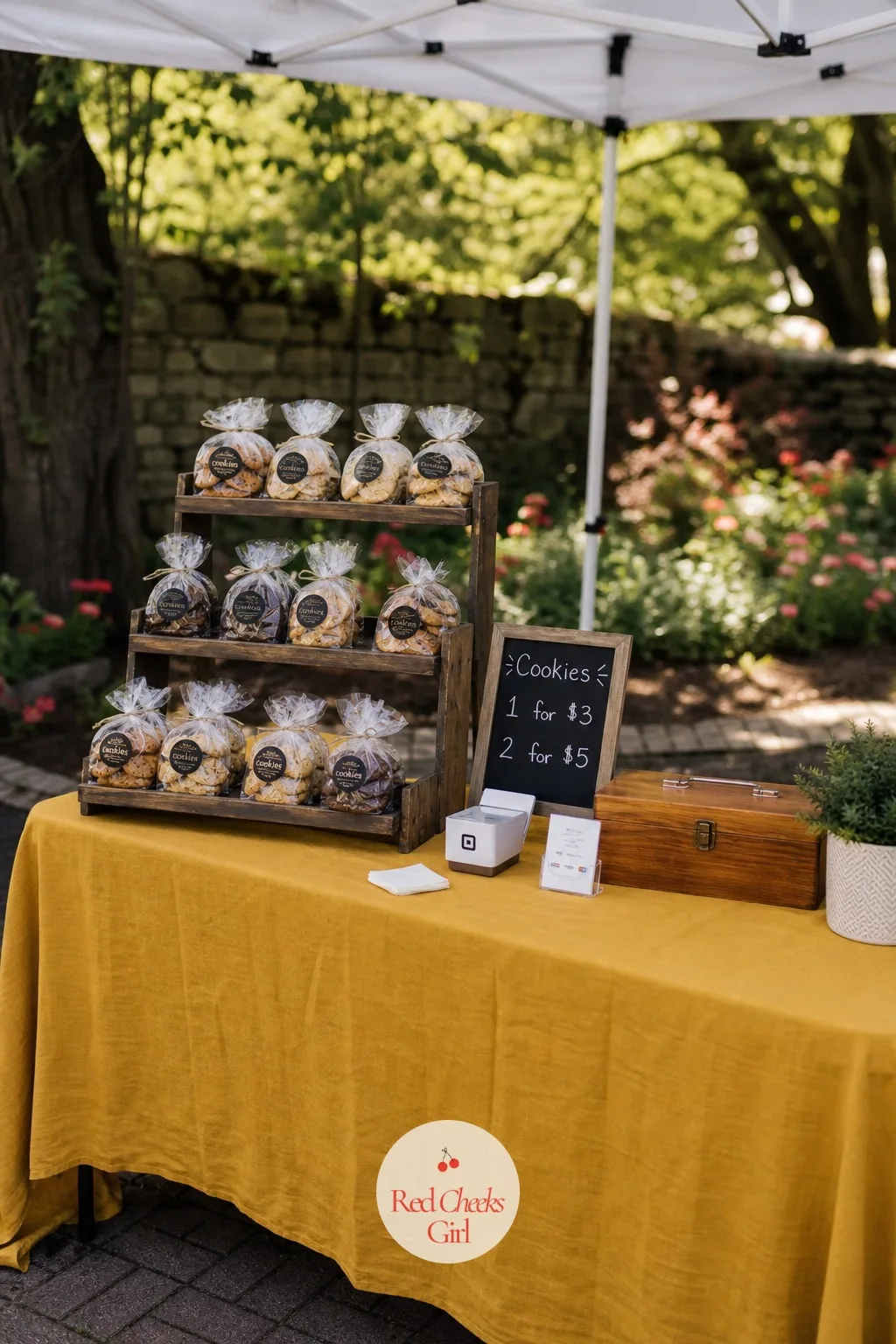
Farmers Market Stall
A folding table dressed in a mustard cloth holds a tiered wooden stand loaded with bagged cookies, a small chalkboard price sign in front, and a card reader propped against a wooden cash box.
The stand groups cookies by flavor rather than by shape, so a buyer scans one tier and picks without needing an explanation. Bags are pre-weighed and bagged the night before so market morning is only setup, not production.
Apply for a single stall at the smallest local market first and bring half the inventory she thinks she needs, since a sold-out table by noon is a better problem than a half-empty one at closing.
Market foot traffic does most of the selling, with a sign asking buyers to follow her online for the next date. No tiered stand yet: two flat baskets set at different heights do the same job.
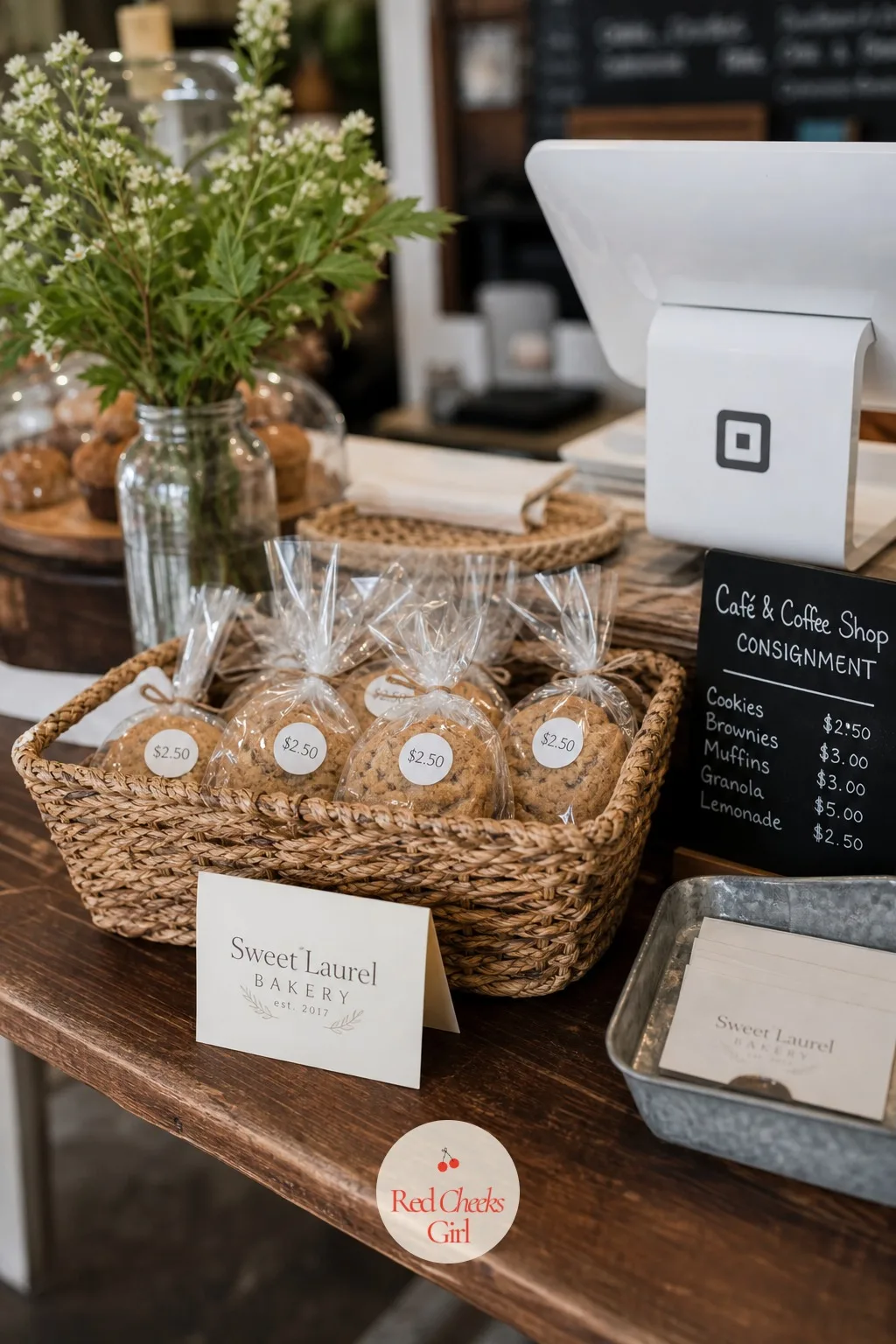
Café and Coffee Shop Consignment
A small woven basket beside a coffee shop till holds cellophane-wrapped cookies with round price stickers, a folded tented card naming the bakery standing just behind the basket.
Cookies are bagged individually with a sticker price rather than sold loose, so the café staff never need to handle them to make a sale.
Approach one café with a free tasting tray and a simple consignment split written down, not just agreed by handshake. The café’s own regulars do the selling, with her name on the tented card bringing repeat orders back to her directly. No countertop basket available: a small wooden crate holds the same handful of bags.
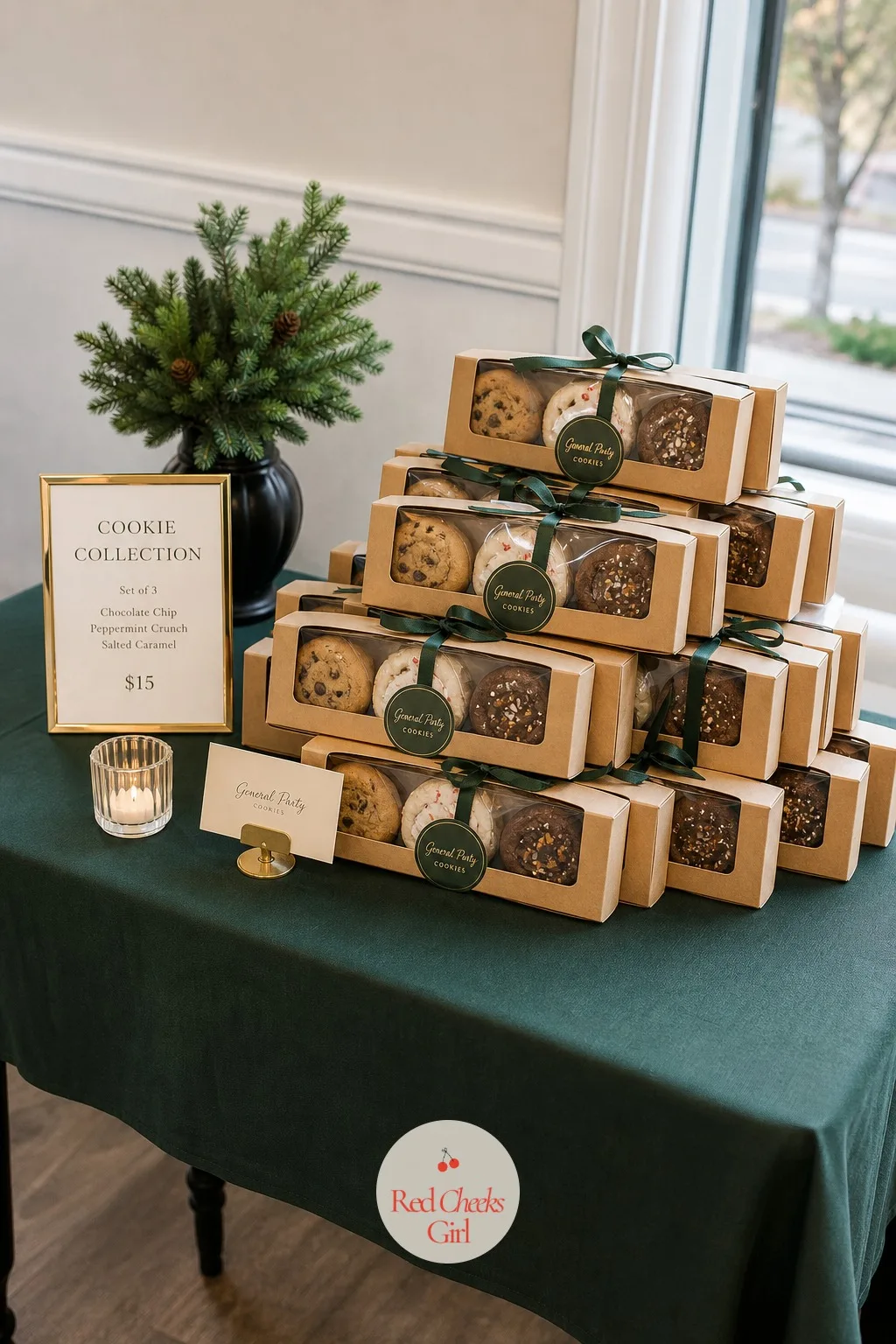
Holiday Craft Fair Pop-Up Table
A narrow table dressed in deep green holds boxed sets of three cookies stacked in a small pyramid, a single pricing sign standing at the front corner so a buyer never has to ask the price.
Boxing in sets of three, priced at one round number, speeds up a busy fair table where cash and change need to move fast between customers.
Book one weekend fair first and price in round numbers to keep the line moving. The fair’s own listing and foot traffic bring in the first buyers, with repeat customers asking where to find her next. No pyramid stand: a flat tiered tray at the back of the table holds the same boxes just as well.
School Fundraiser Cookie Partnership
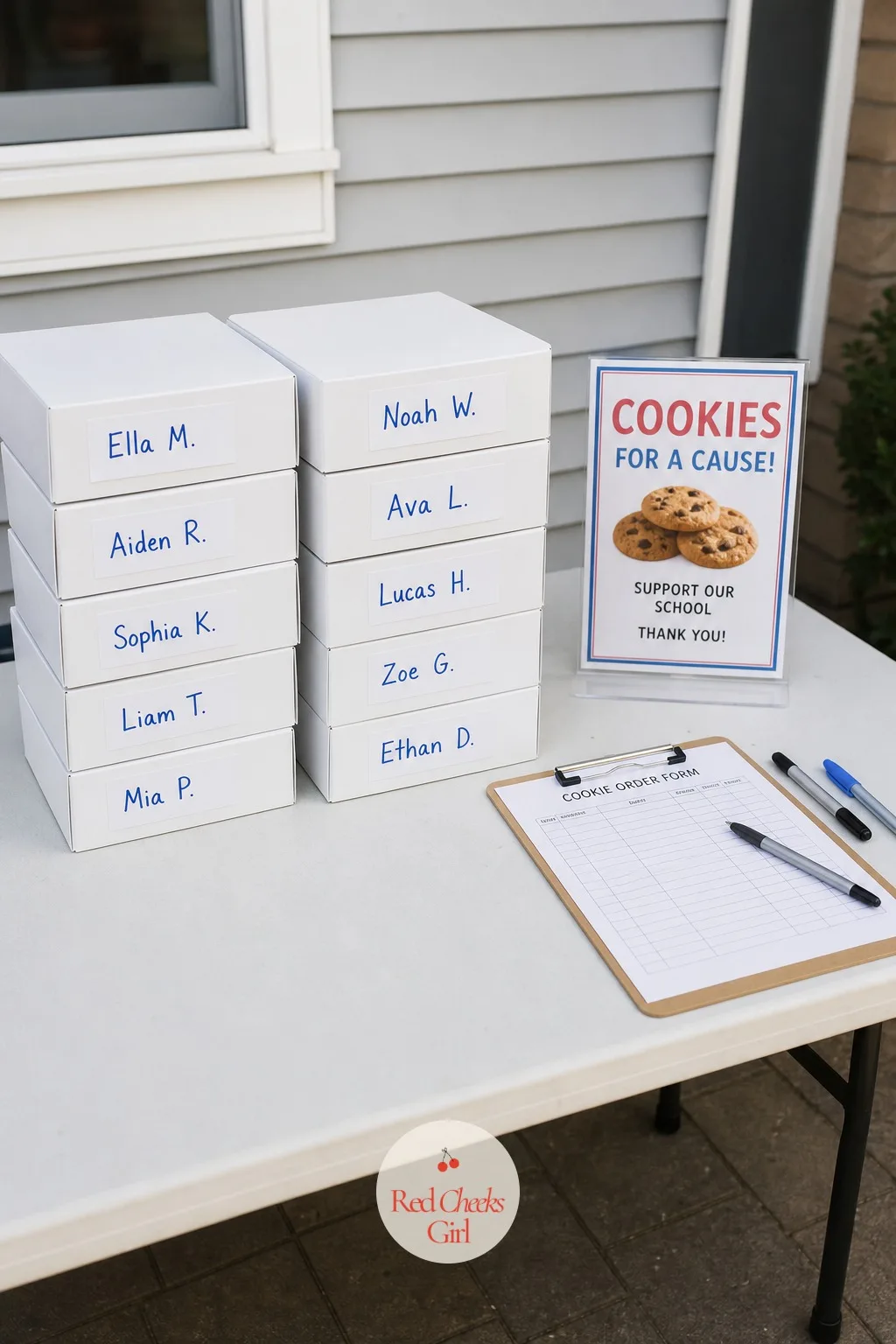
A stack of white bakery boxes sits on a folding table beside a clipboard holding order forms, each box labeled with a handwritten name tag so pickup takes seconds rather than minutes.
Orders come in by the dozen through a paper form sent home with students, collected on one deadline date, baked in a single batch run, and boxed with a name label for a single pickup window at the school office.
Pitch the PTA with a sample box and a simple per-dozen price that folds in a small donation back to the school. The school’s own newsletter and the PTA do the asking for her. No PTA contact yet: a single classroom teacher is an easier first yes.
Niche Cookie Lines
A narrow, well-run line beats a broad, shaky one. Both of these work because they solve a problem the plain cookie line cannot: someone who cannot eat the regular batch, or someone shopping for a dog instead of a person.
Gluten-Free or Vegan Cookie Line
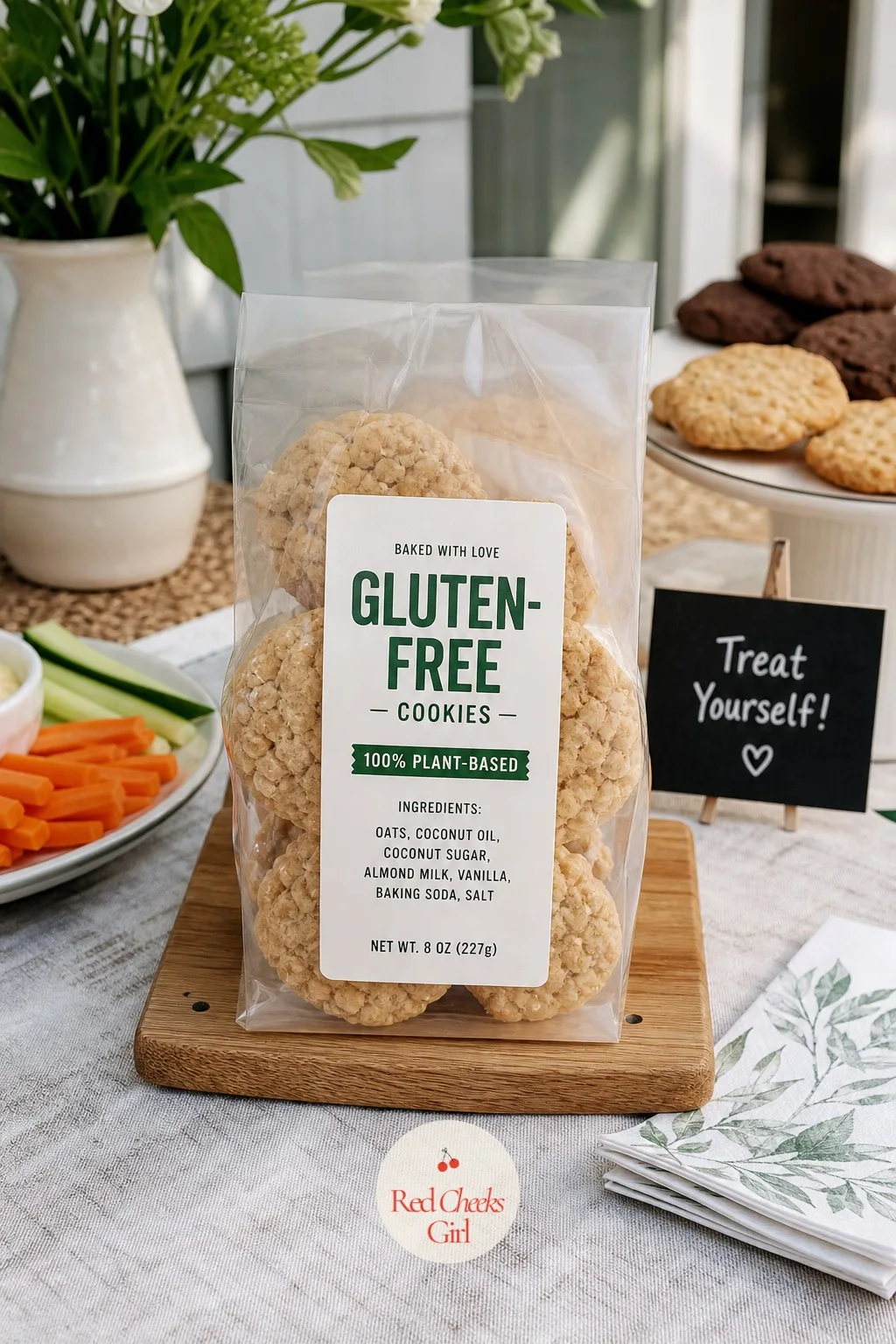
A clear bag of pale oat-colored cookies rests on a wooden board, its label printed with the diet claim large across the front and the ingredient list set smaller underneath, exactly where a careful buyer looks first.
The base swaps in an alternative flour and a dairy-free or egg-free binder, baked and tested until the texture matches a regular cookie rather than apologizing for the substitution.
Perfect one recipe fully before advertising the diet claim at all, since this is the one line where a single mistake costs trust fastest. Local gluten-free or vegan community groups online, who actively ask for recommendations, bring in the first orders. No dedicated bowls yet: a thorough clean-and-label routine between bakes stands in for now.
🛍 Shopping guide
Dog-Friendly Cookie Treats
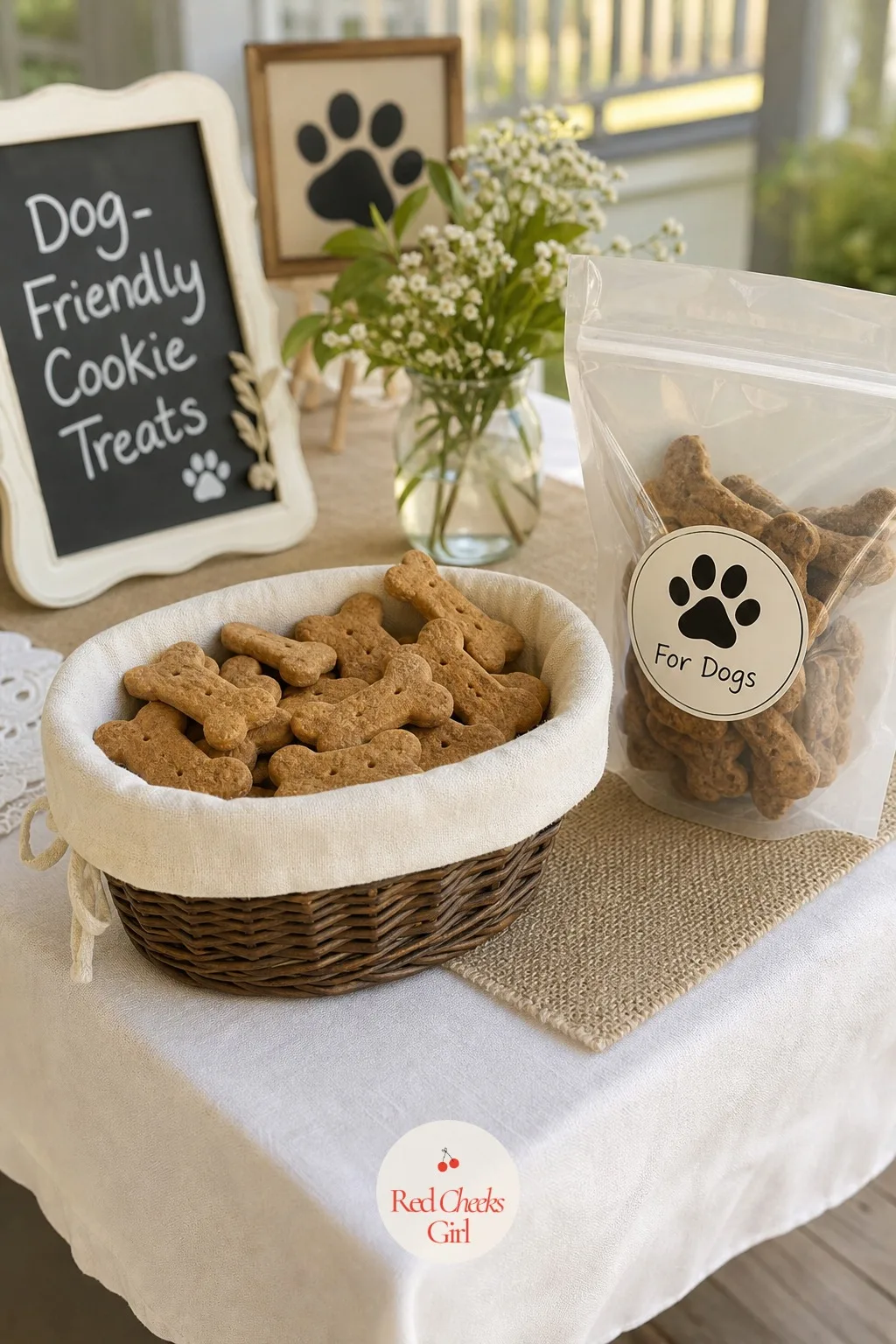
Bone-shaped treats in warm brown fill a small basket, a clear bag beside it printed with a paw icon and a bold for-dogs label so no one mistakes them for the human batch nearby.
The dough swaps in dog-safe flour and a xylitol-free peanut butter, cut with a bone or paw shaped cutter, baked drier and harder than a human cookie so it keeps its shape as a chew.
Confirm her state’s cottage food rules actually cover pet treats before baking a single one for sale, since several states exclude them and require a separate process.
Dog parks and a stall kept physically separate from her human cookie table at markets bring in the first buyers. No bone cutter yet: a round cutter with a paw stamp pressed into the top works too.
Frequently Asked Questions
Do I need a license to sell cookies from home?
In many states, no state license is required because cottage food laws exist specifically to let home bakers skip a full commercial food permit. Requirements vary widely, so check her own state’s cottage food rules and labeling requirements before the first sale.
How much does it cost to start a cookie business from home?
A basic cookie-only setup can start around $340 to $500, or budget $950 to $3,200 if licenses, full equipment and packaging are all bought new at once. Costs depend heavily on which model and state apply.
How many cookie flavors should I start with?
Start with three or four, not twenty, since a cookie business fails on complexity before it fails on demand. Every extra flavor means another ingredient list, another cost calculation and less repeat practice on any single one.
Can I ship cookies I bake at home?
Yes in most cases, since cookies are shelf-stable in every state and ship well where in-state shipping is allowed under the local cottage food law. A few states still restrict shipping across state lines entirely, so check before promising delivery.
How do I price homemade cookies?
Calculate the full cost per cookie first, including ingredients, packaging and her own time, then price above that number rather than matching the cheapest seller nearby. Pricing below true cost is the most common reason a new home bakery struggles in its first year.
How do I find customers for a home cookie business?
Social media works best as a showcase, with photos of the decorating process shared alongside sale announcements to the people already following along. Early customers tend to come from people she already knows, through word of mouth and local community groups, before strangers do.

Unlock 12 profitable business opportunities that transform your tech obsession into serious income�

The moment before naming is sacred—you’re about to give language to something that exist

Ever painted your own nails and thought, “I could totally do this for a living”? You&rsq
Leave a Reply