

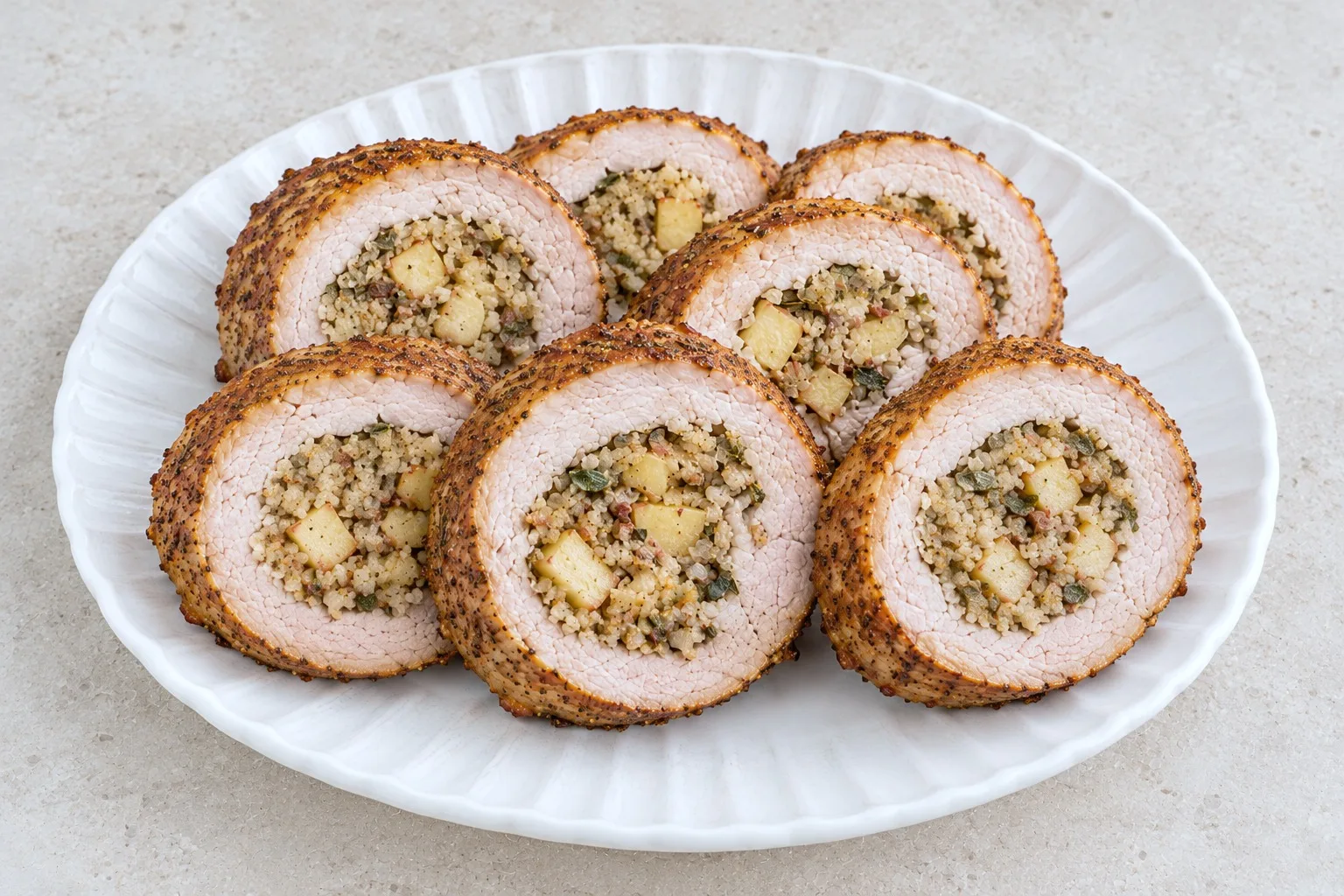
Stuffed pork tenderloin turns a cut that usually gets ignored into the thing everyone reaches for seconds of. Apple, onion and sage packed into the center solve the one real problem with tenderloin, which is that it dries out before it tastes like much of anything.
Slice it into rounds and every piece shows its own spiral, which does more for the table than a centerpiece ever could.
This post contains affiliate links. If you buy through them, I may earn a small commission at no extra cost to you.
Table of Contents
The Ingredients That Actually Matter
Pork tenderloin is the right cut for this because it is already shaped like a hinge waiting to open. It cooks in well under an hour, which matters on a Sunday when the oven is already doing something else for the sides.
Apple does two jobs at once: it softens into the stuffing and keeps a little bite that reads as freshness against the pork. Reach for Honeycrisp or Gala, something firm enough to hold its shape once it hits the skillet, not a soft baking apple that turns to mush.
Onion and sage are the backbone, not the headline. Cook the onion properly, until it goes soft and loses its raw bite, or the whole roll will taste unfinished no matter what else is in it.
Fresh bread crumbs, torn from a day-old loaf rather than shaken from a can, give the stuffing body without turning gluey. A little broth loosens the mixture so it presses into the meat instead of crumbling out the sides when you slice.
Butter carries the onion and apple through the pan and keeps the stuffing from tasting dry once it is sealed inside the roast. It is a small amount, but skipping it leaves the filling tasting like plain bread.
How to Make It
The whole process breaks into three honest stages: cook a simple stuffing, open the pork flat, then roll and roast. None of it is difficult, it just asks you to work in order and not rush the tying.
Make the apple and onion stuffing
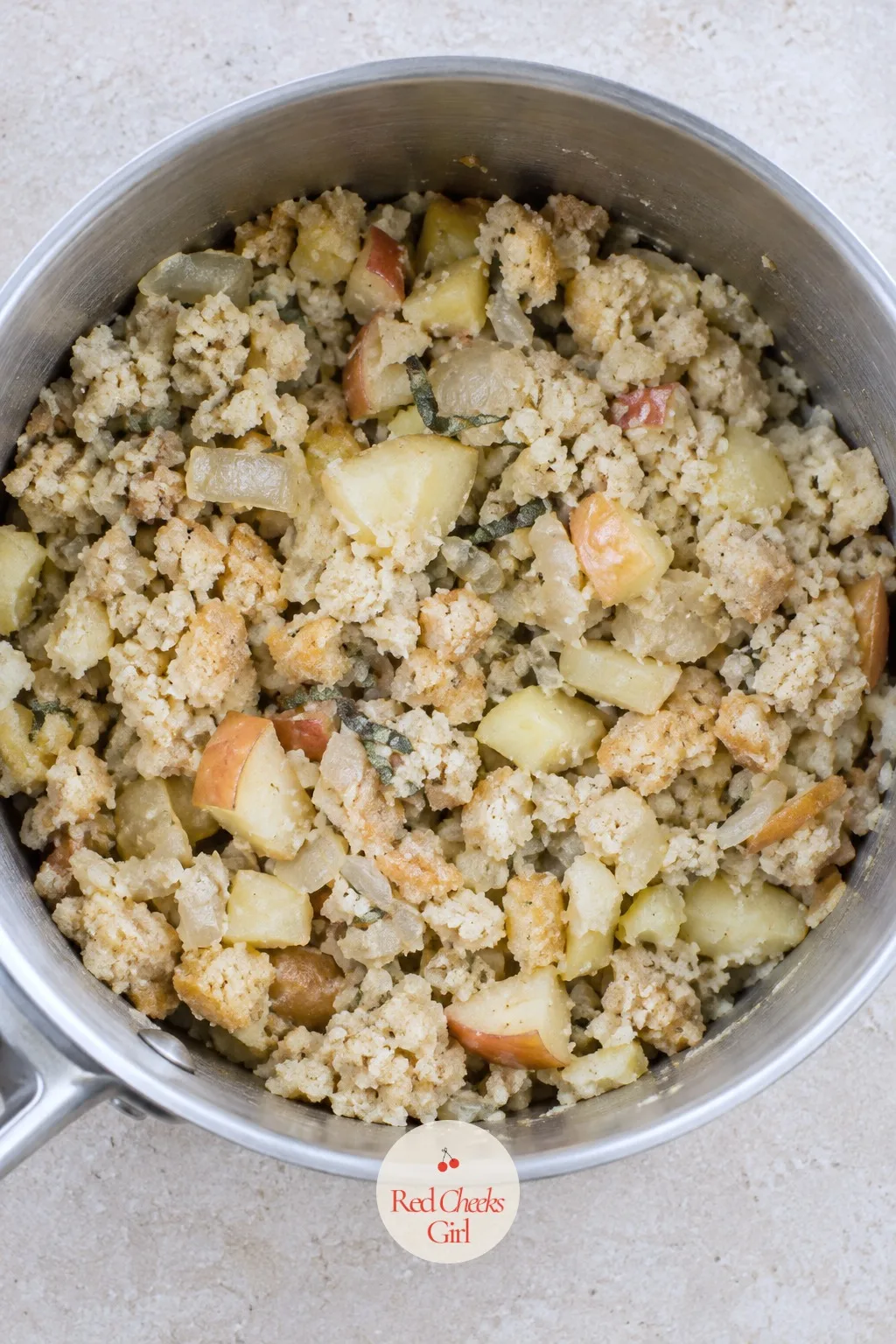
Cook the onion until soft, then add the apple and sage and cook a few minutes more. Off the heat, stir in the bread crumbs and broth until the mixture looks loose and moist, never wet.
Butterfly and pound the pork flat
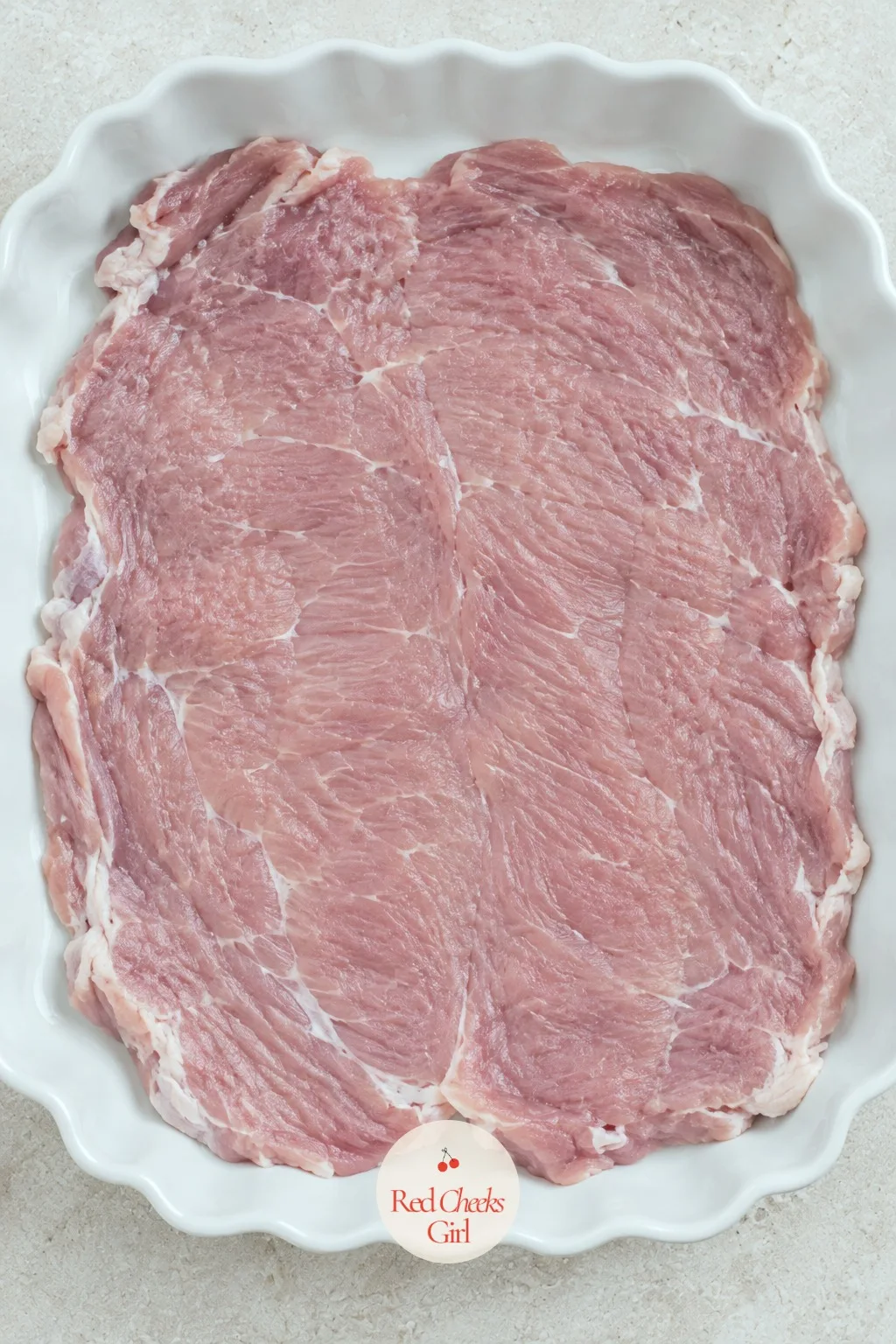
Open the tenderloin like a book and pound it to an even half inch thickness. It should lie flat with no thick lumps left anywhere across the sheet.
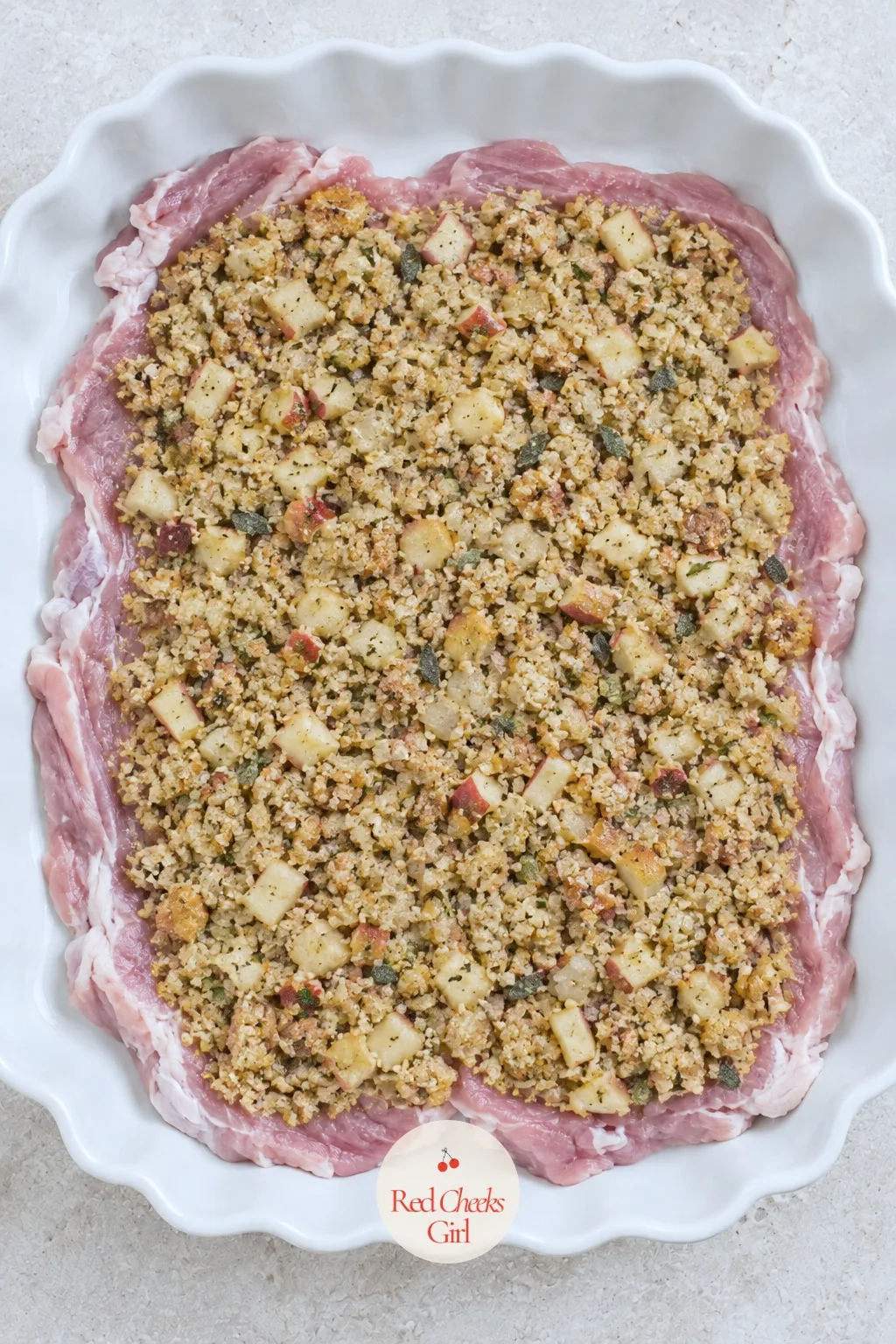
Spread the stuffing over the pork
Spread half the cooled stuffing in an even layer over the flattened pork. Leave a bare half inch border all around so nothing squeezes out once it rolls.
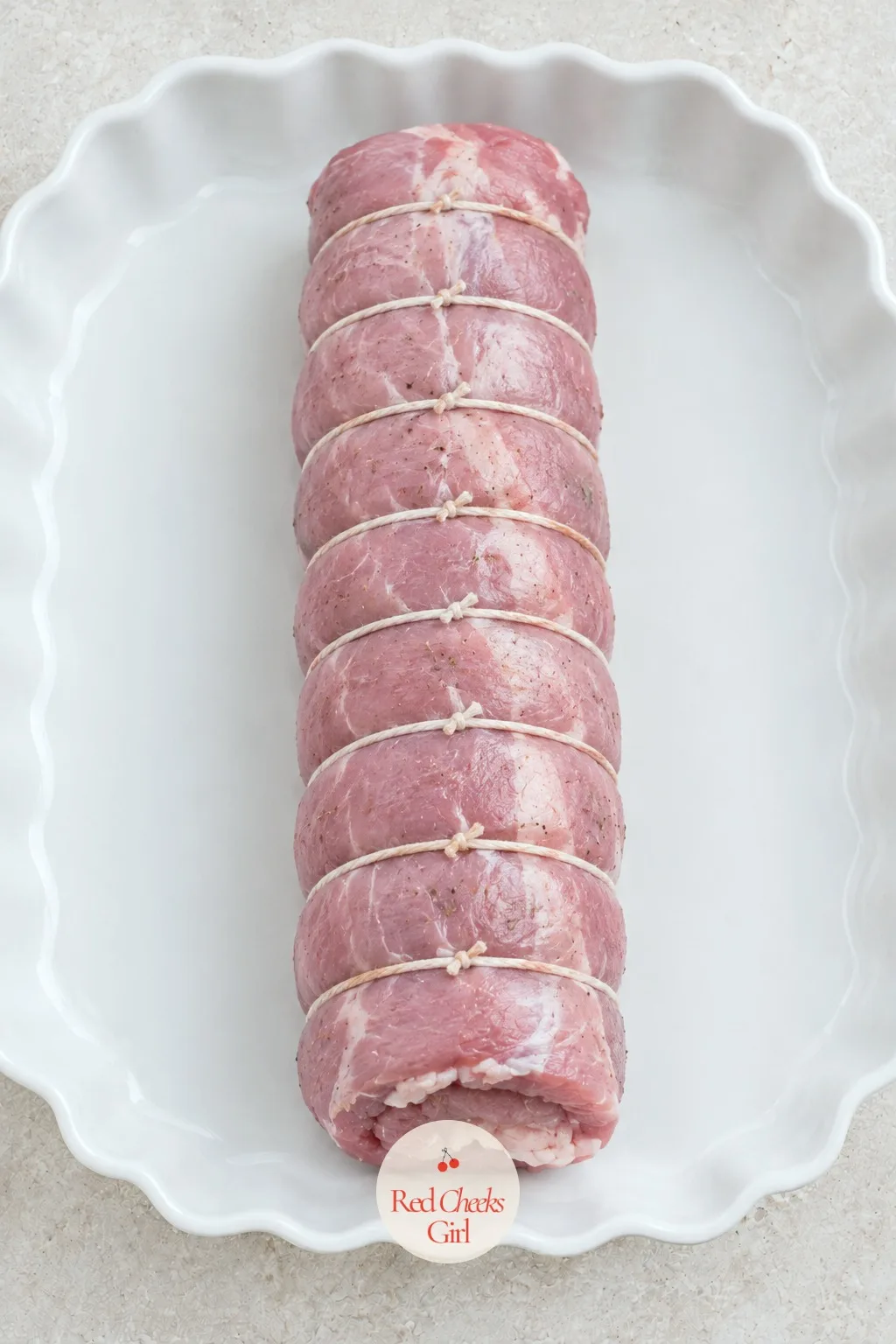
Roll and tie the tenderloin
Roll the pork tightly from the long edge, stuffing side in, then tie it with kitchen twine at even intervals. It should hold its shape on its own before it ever touches the pan.
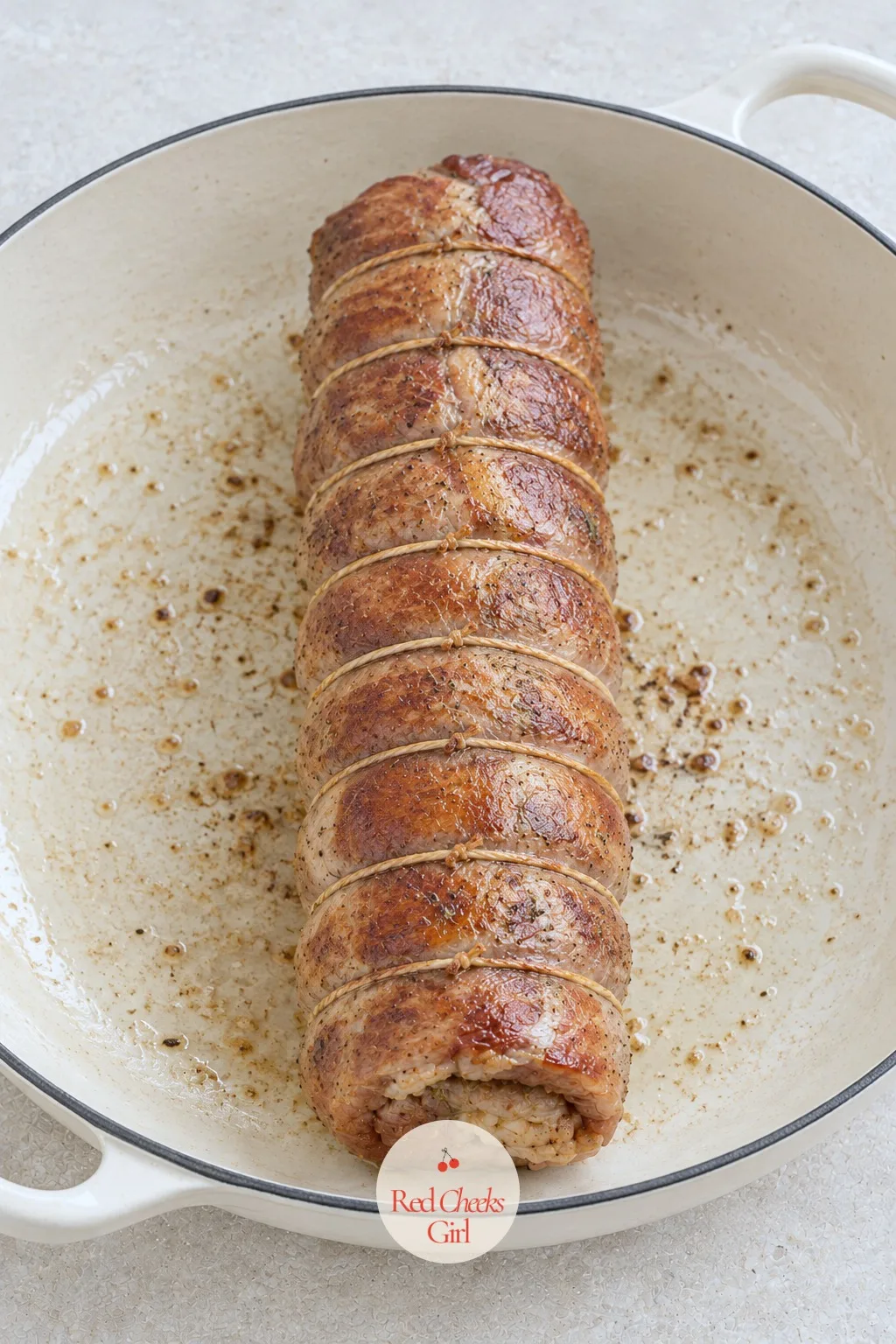
Sear the tenderloin until golden
Sear the tied roll on all sides in hot oil until deeply golden. This builds the crust that keeps the slices from looking pale once the pork is plated.
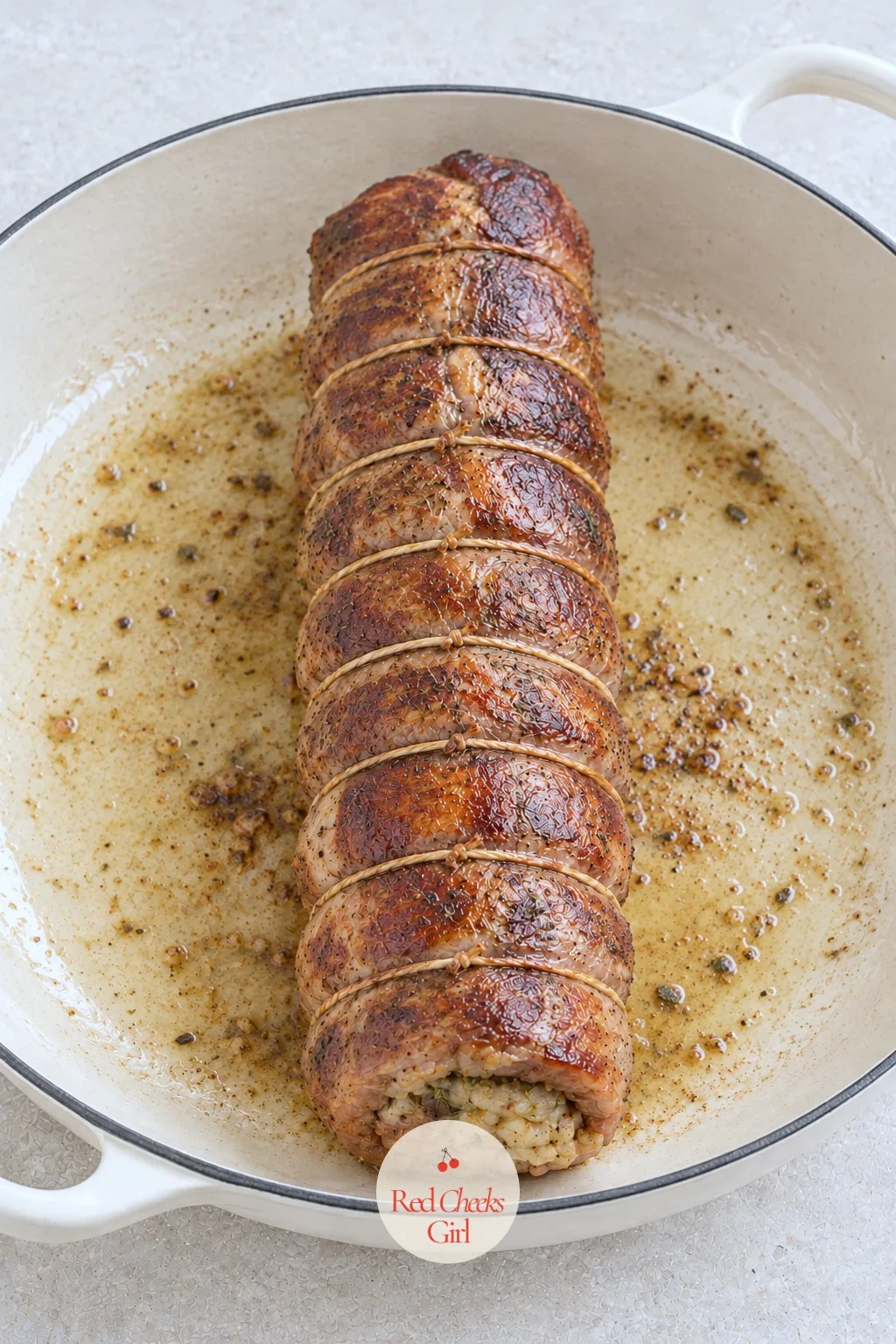
Roast until cooked through
Roast the seared pork until a thermometer reads 145°F in both the meat and the center of the stuffing. The crust darkens further and the surface firms up as it finishes.
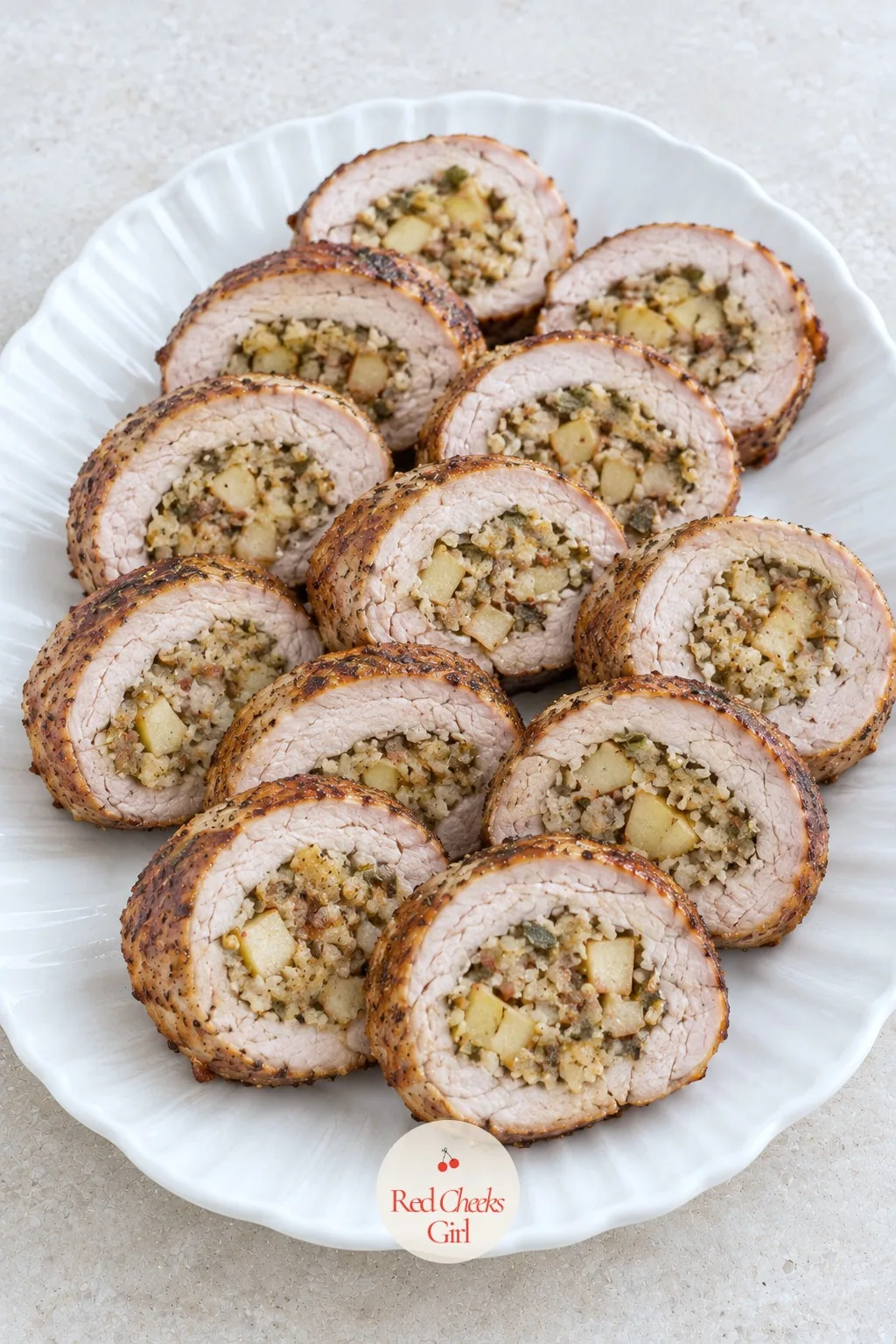
Slice and serve
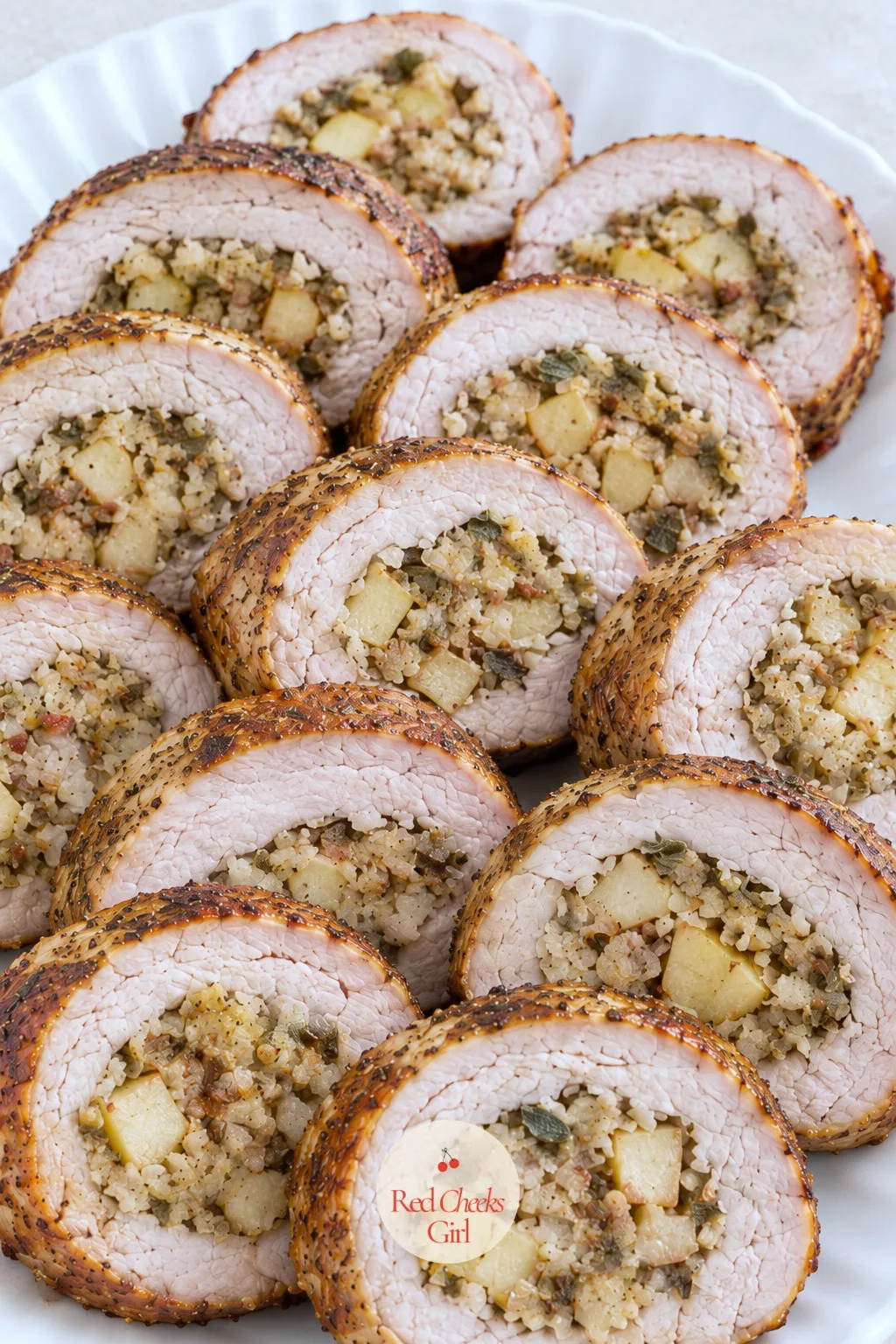
Remove the twine and slice the rested pork into rounds. Each one should show a clean spiral of apple and bread crumb stuffing right through the center.
🛍 Shopping guide
How To Get It Right
The most common mistake is overfilling. A thick layer of stuffing looks generous going in, but it is what makes the roll split open in the pan. Keep the layer thin enough that you can still see a little pink through it.
Skipping the border is the second one. Leave that half inch bare around every edge, every time, or the first bite of stuffing ends up on the cutting board instead of on the plate.
Loose tying is the quiet failure: it looks fine raw and falls apart the moment the knife touches it hot. Tie the twine snug, not just draped, and space the loops close enough that no section can bulge.
Guessing at doneness instead of checking it ruins more tenderloins than anything else. This cut goes from juicy to chalky in the space of a few minutes, so the thermometer is not optional here, it is the whole method.
Slicing straight out of the oven is the last trap. Give it the full 10 minutes under foil. Cut too early and the stuffing spills out with the juice instead of staying put in each round.
Swaps And Substitutions
No fresh sage in the house is not a reason to skip this. Two teaspoons of dried rubbed sage, stirred in with the bread crumbs, gets you most of the way there.
Pears work in place of apples if that is what is in the bowl, and a handful of dried cranberries or chopped pecans stirred into the stuffing adds a little textural lift for a holiday table without changing the method at all.
Gluten is the one real allergen here, in the bread crumbs, so a gluten-free sandwich loaf torn into crumbs swaps in cleanly for anyone avoiding wheat. A few strips of cooked bacon, crumbled into the stuffing with the apple, is a good addition if the table leans toward richer food.
If pork loin is what the butcher has instead of tenderloin, it will roll the same way but needs a lower oven and a longer stay, closer to 350°F for 20 minutes per pound, since it is a thicker roast built differently from the tenderloin.
What To Serve It With
Keep the sides simple and let the pork be the thing people remember. Easy Scalloped Potatoes With Apples and Bacon echoes the apple without repeating it exactly, and it can sit in the oven while the pork rests on the counter.
Roasted Green Beans With Parmesan and Lemon adds the one green, sharp thing the plate actually needs against all that butter and apple.
If the apple and sage pairing is the part you love best, Sausage Stuffing With Apples and Sage is the side dish version of the same flavor, for a table that wants it twice.
Once the plates are cleared, 17 Dinner Party Games to Play Right at the Table keeps everyone in their chairs a little longer, which is really the point of a Sunday like this.
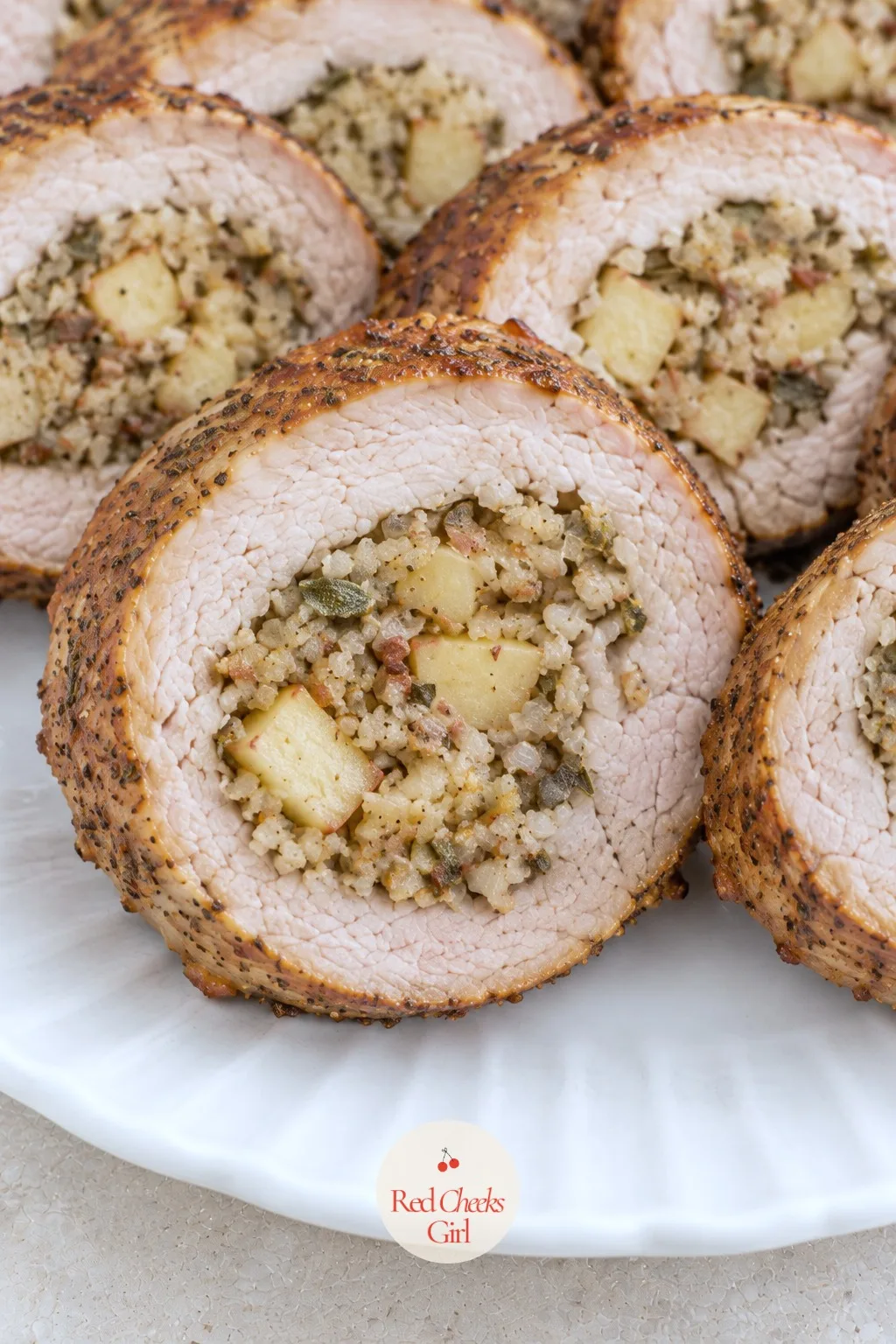
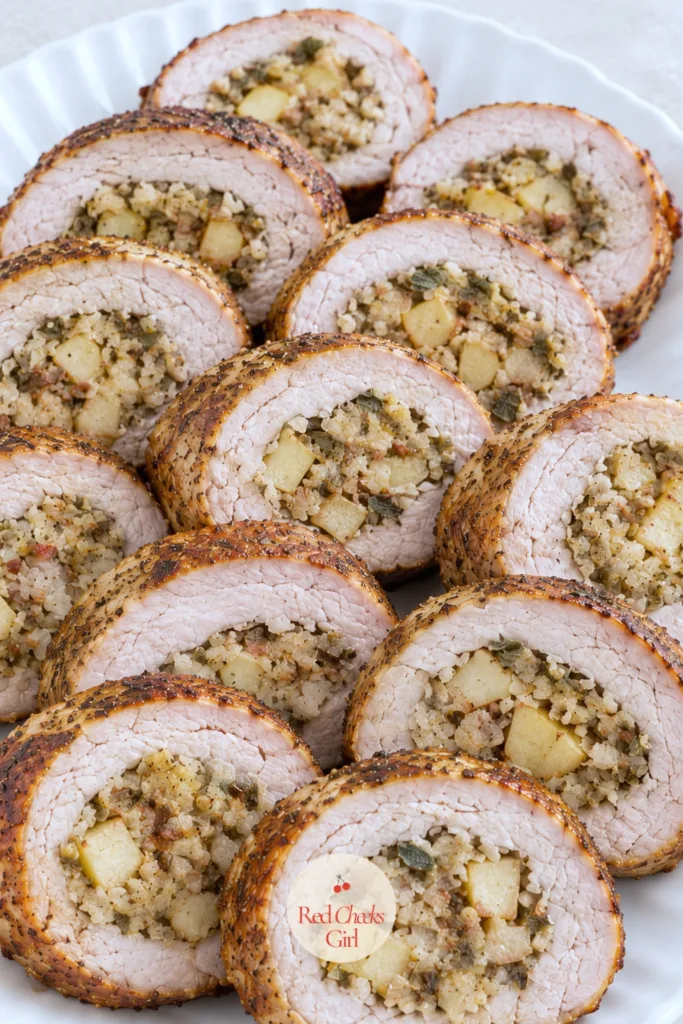
Stuffed Pork Tenderloin
Ingredients
- 2 pork tenderloins about 1 to 1 1/4 pounds each, silver skin trimmed
- Kosher salt and freshly ground black pepper
- 2 tablespoons unsalted butter
- 1 medium yellow onion finely chopped (about 1 cup)
- 2 medium apples Honeycrisp or Gala, peeled, cored and finely chopped (about 2 cups)
- 2 tablespoons fresh sage leaves finely chopped (or 2 teaspoons dried rubbed sage)
- 1 1/2 cups fresh bread crumbs from day-old bread, crusts trimmed
- 1/3 cup low-sodium chicken broth
- 2 tablespoons olive oil
- Kitchen twine for tying
Instructions
- Melt the butter in a medium saucepan over medium heat. Add the chopped onion and cook, stirring often, for 4 to 5 minutes, until it turns soft and translucent.
- Add the chopped apple and the sage to the saucepan. Cook for 5 minutes more, stirring now and then, until the apple softens at the edges but still holds its shape.
- Remove the saucepan from the heat. Stir in the bread crumbs and the chicken broth, season with 1/2 teaspoon salt and a few grinds of pepper, and set the stuffing aside to cool for 10 minutes: it should look loose and moist, not wet.
- Lay one pork tenderloin on a cutting board. Trim away any silvery membrane (silver skin) with a sharp knife, angling the blade just under it and pulling it away in one long strip. Repeat with the second tenderloin.
- Place one tenderloin flat on the board with the thicker side facing you. Starting about one-third of the way up from the board, slice lengthwise down the center of the meat, stopping about 1/2 inch before you cut all the way through so the two halves stay joined like a hinge.
- Open the tenderloin out like a book. If one side is still noticeably thicker than the other, make a second shallow cut into that thicker half and open it again the same way, so the whole piece lies in one even sheet.
- Cover the opened tenderloin with a sheet of plastic wrap and pound it gently with a meat mallet until it is an even 1/2 inch thick all over. Repeat the butterflying and pounding with the second tenderloin.
- Season both sides of each flattened tenderloin with salt and pepper.
- Spread half of the cooled stuffing over each tenderloin in an even layer, leaving a 1/2 inch border bare all around the edges so the filling has somewhere to go as you roll.
- Starting from one long edge, roll each tenderloin up tightly into a log, stuffing side in. Tie each roll with kitchen twine at 1-inch intervals, trimming the loose ends, so the shape holds on its own on the board.
- Heat the olive oil in a large cream enameled skillet over medium-high heat until it shimmers. Sear the rolled tenderloins on all sides, about 2 minutes per side, until deeply golden all over.
- Slide the skillet straight into a 400°F oven. Roast for 25 to 30 minutes, until an instant-read thermometer pushed into the thickest part of the meat (avoiding the stuffing) reads 145°F, and a second reading in the center of the stuffing reads at least 145°F too.
- Lift the skillet out of the oven and tent the tenderloins loosely with foil. Let them rest on the counter for 10 minutes: the temperature will climb a few more degrees and the juices will settle back into the meat instead of running onto the board.
- Snip and remove the kitchen twine, then slice each tenderloin into rounds about 1 inch thick. Arrange the rounds, cut side up, on a platter and serve warm.
Good to Know
Frequently Asked Questions
What temperature should stuffed pork tenderloin be cooked to?
Pull it from the oven once an instant read thermometer reads 145°F in the thickest part of the meat and in the center of the stuffing. Resting carries it a few degrees higher, into safe, juicy territory.
What is the difference between pork tenderloin and pork loin?
Pork tenderloin is a long, narrow, very lean muscle that roasts in under an hour, while pork loin is a wider, thicker roast that needs far longer in the oven. The two are not interchangeable without adjusting time and temperature.
How many people does one stuffed pork tenderloin serve?
Two tenderloins, rolled and sliced into rounds, serve about six people as a main course alongside two side dishes. Add a third tenderloin for a table of eight or nine.
Can I use stuffing mix instead of fresh bread crumbs?
Yes, a boxed stuffing mix or cornbread stuffing works in place of fresh bread crumbs, though it is already seasoned, so taste before adding extra salt. Moisten it with the same amount of broth before spreading it on the pork.
Why does my stuffed pork tenderloin leak liquid in the pan?
A little juice pooling in the pan is normal and makes a good base for a quick sauce. A lot of liquid usually means the stuffing was too wet going in, so drain any excess broth before it goes onto the meat.
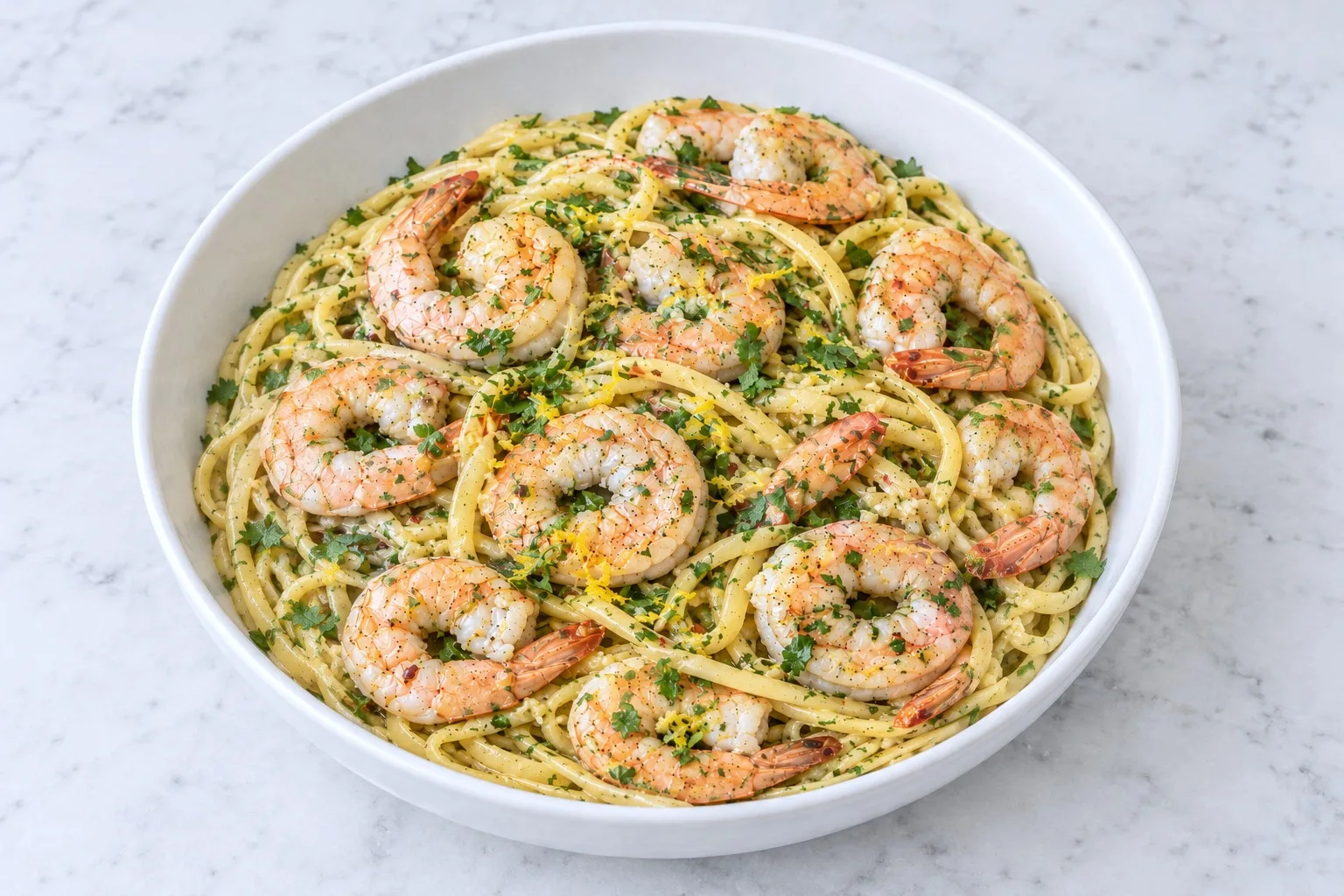
Shrimp scampi pasta is ready in twenty minutes: garlic butter shrimp, white wine sauce and linguine,

16 valentines dinner ideas for two at home, from braised short ribs to lobster mac and cheese, each
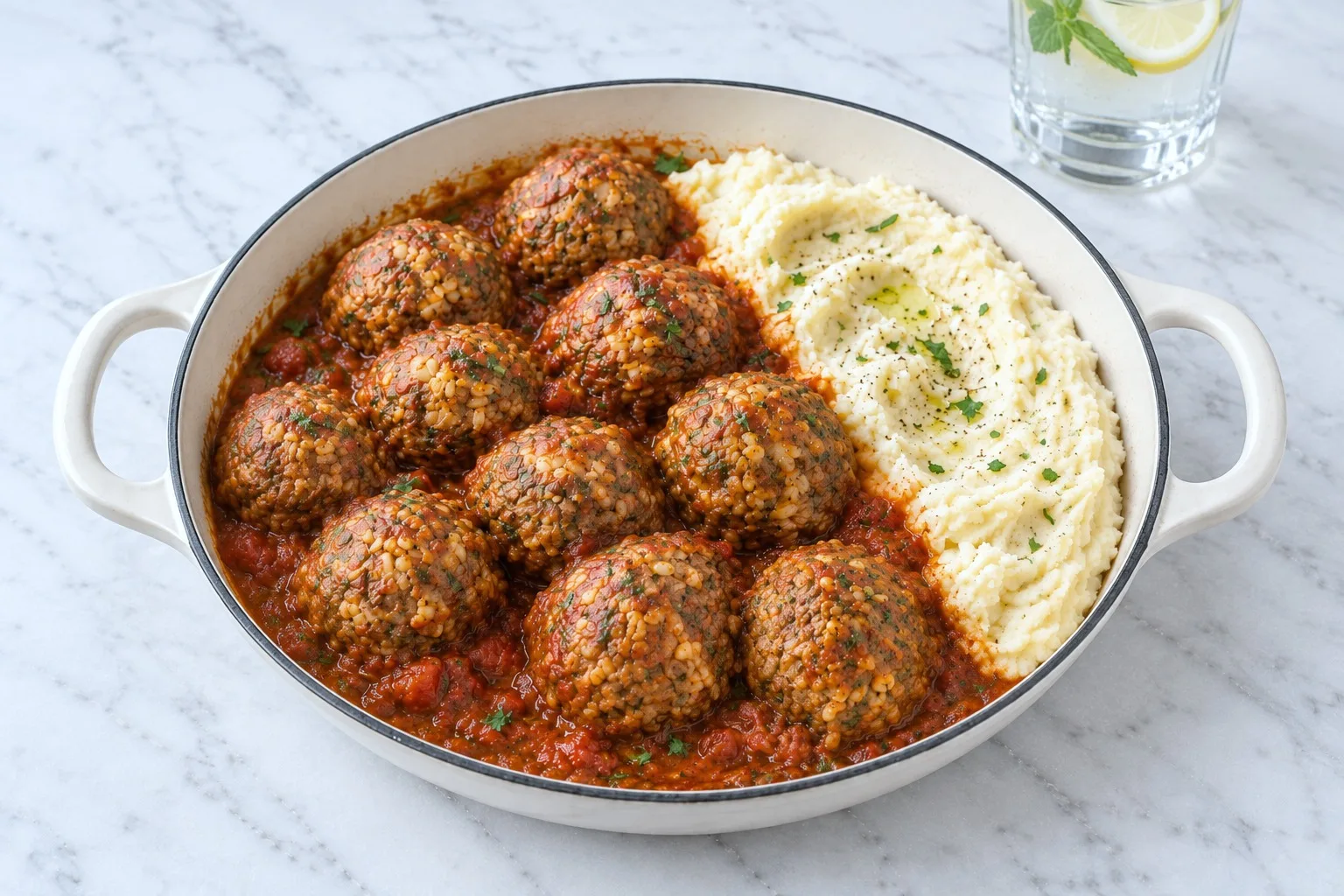
Porcupine meatballs bake covered in tomato sauce so raw rice turns tender and pokes through like qui
Leave a Reply