

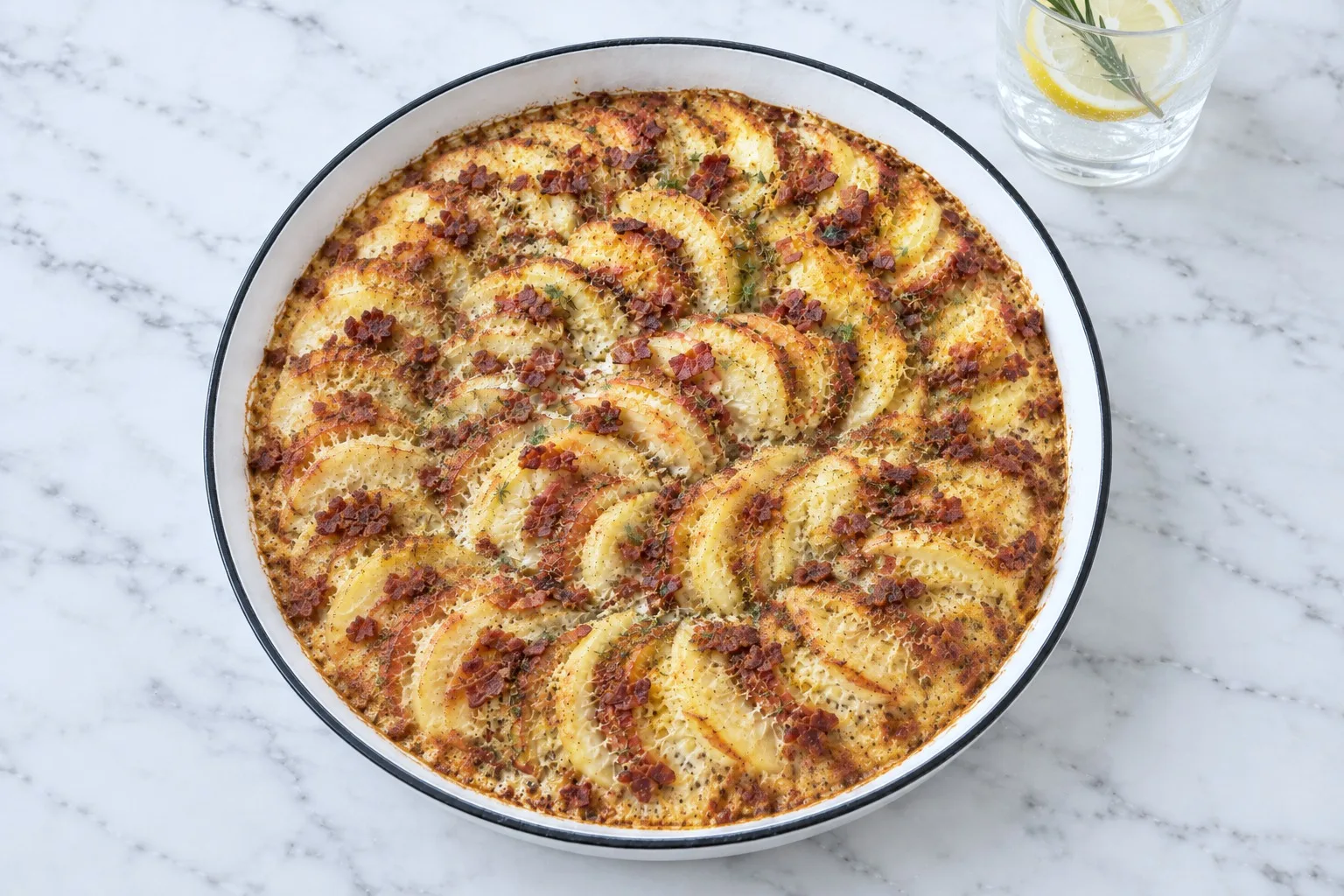
Easy scalloped potatoes get a quiet upgrade here: thin shingles of red potato and tart apple, baked together in cream with thyme and parmesan, crisp bacon scattered over the top. Everything happens in one cast iron skillet, which means fewer dishes and a dish that goes straight from oven to table looking like you tried harder than you did.
This post contains affiliate links. If you buy through them, I may earn a small commission at no extra cost to you.
Table of Contents
Why Apples Belong in Scalloped Potatoes
Plain scalloped potatoes are good. This version is the one people ask about. A tart apple slipped between every other potato slice does something a plain cream sauce cannot: it holds a little acid and a little sweetness right where the richness needs breaking up, so the dish never tips into heavy.
You do not taste apple pie. You taste potato, mostly, with a faint sharpness that keeps each bite from feeling like the third helping of the night. It reads as thoughtful without reading as fussy, which is exactly the kind of effort a weeknight plate or a holiday sideboard can actually use.
The bacon on top is not decoration either. It renders a little more as the dish bakes, and the salt and smoke sit against the sweet apple the way good contrast always does. If a holiday ham is already on the table, this stops the meal from feeling like one long note of salt and cream.
If apples are not your thing, or you are cooking for someone who would raise an eyebrow at fruit near a potato, the plain version further down works just as well and takes nothing extra to pull off.
The Ingredients That Make This Work
Red potatoes hold their shape through a long bake instead of breaking down into mush, and their thin skins mean no peeling, which matters more than it sounds like it should on a weeknight. Slice them thin and even: that single habit decides whether the center cooks through or stays stubborn.
A tart apple, something like a Granny Smith, is doing real work here, not just filling space. Its firmness matches the potato slice for slice, and it keeps its shape in the oven instead of collapsing into applesauce.
Heavy cream, not milk, is non negotiable if you want a sauce that coats rather than pools. Fresh thyme and parmesan season it from the inside, so every layer tastes like something rather than relying on a browned top to do all the flavor.
Bacon, cooked properly crisp before it goes anywhere near the oven, is the last piece. Cooking it separately first means it stays textured on top instead of turning soft and lost inside the cream.
How to Make It
This is built in one skillet from start to finish, which keeps the cleanup honest and the oven time predictable. Read it through once before you start slicing, then move quickly: once the potatoes are cut, you want them in the cream within the half hour.
Cook the Bacon Crisp
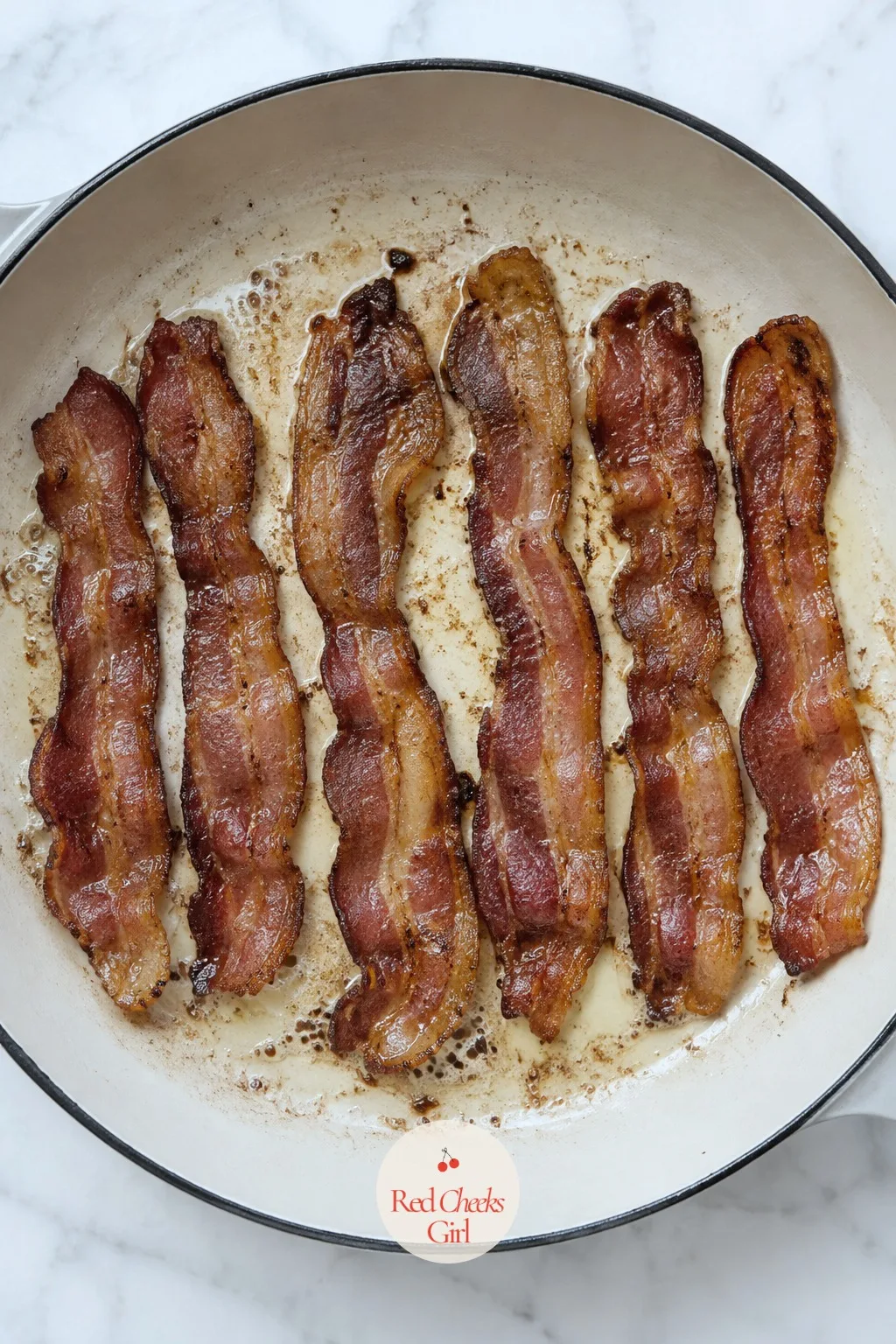
Cook the bacon in the skillet until deeply crisp on both sides, then move it to a paper towel lined plate. This is the base flavor for everything that goes in next, so do not rush past this stage.
Slice the Potatoes and Apples
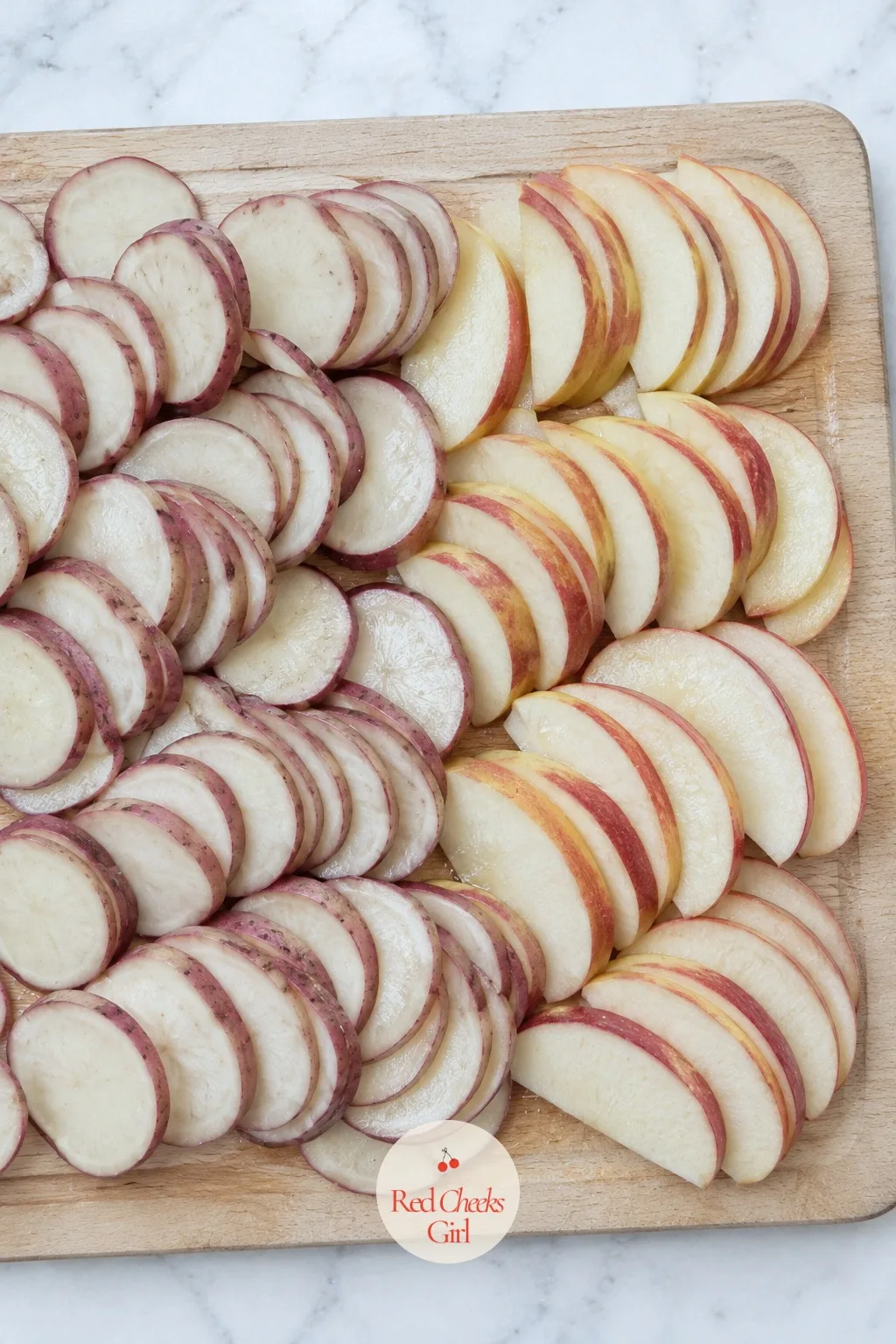
Slice the potatoes and apples to the same thin, even thickness so they cook at the same rate once layered. A mandoline makes quick, consistent work of this if you have one.
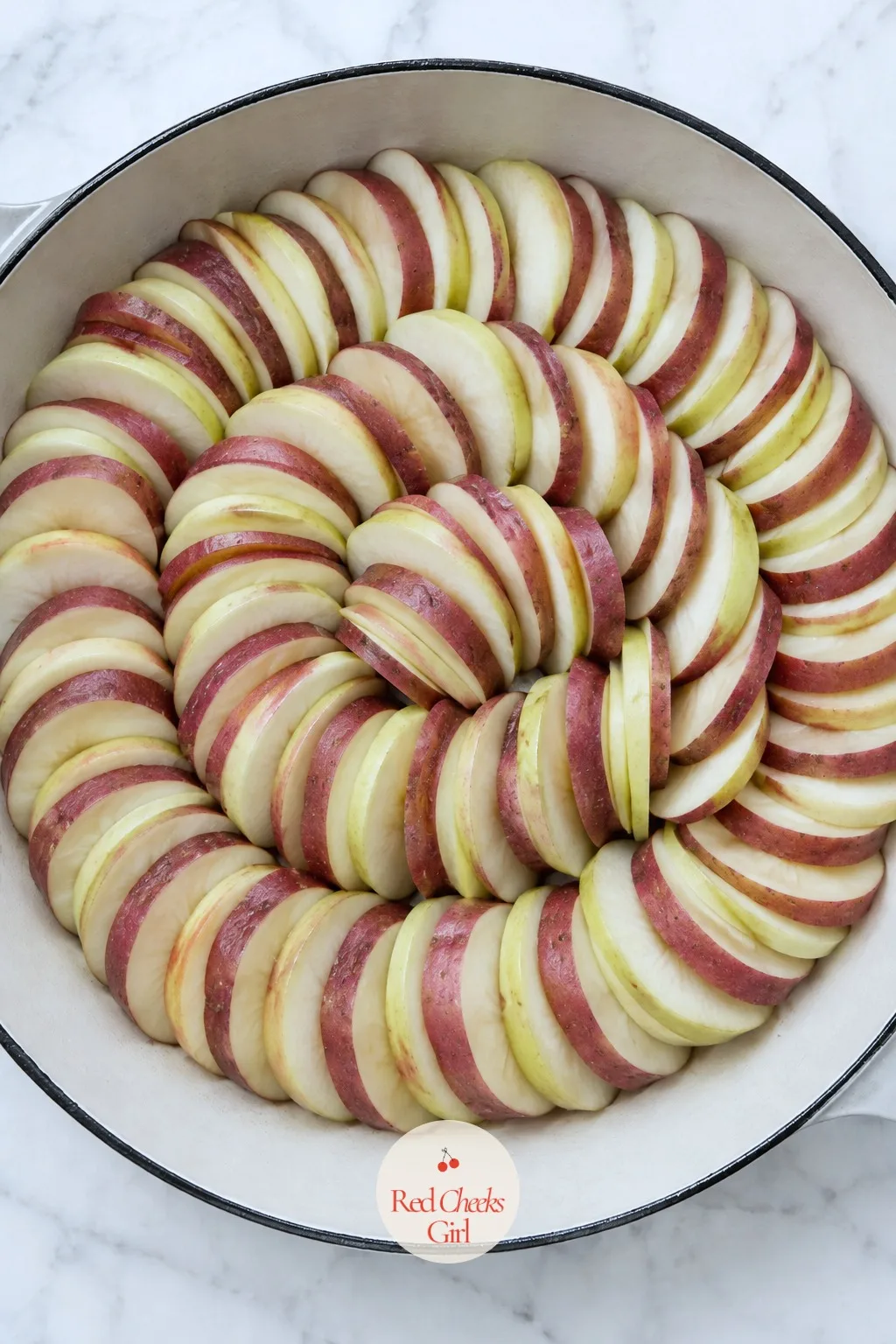
Shingle the Layers Raw
Stand the potato and apple slices on edge, alternating between the two as you work from the outer rim toward the center. Keep the rows tight so the skillet fills completely.
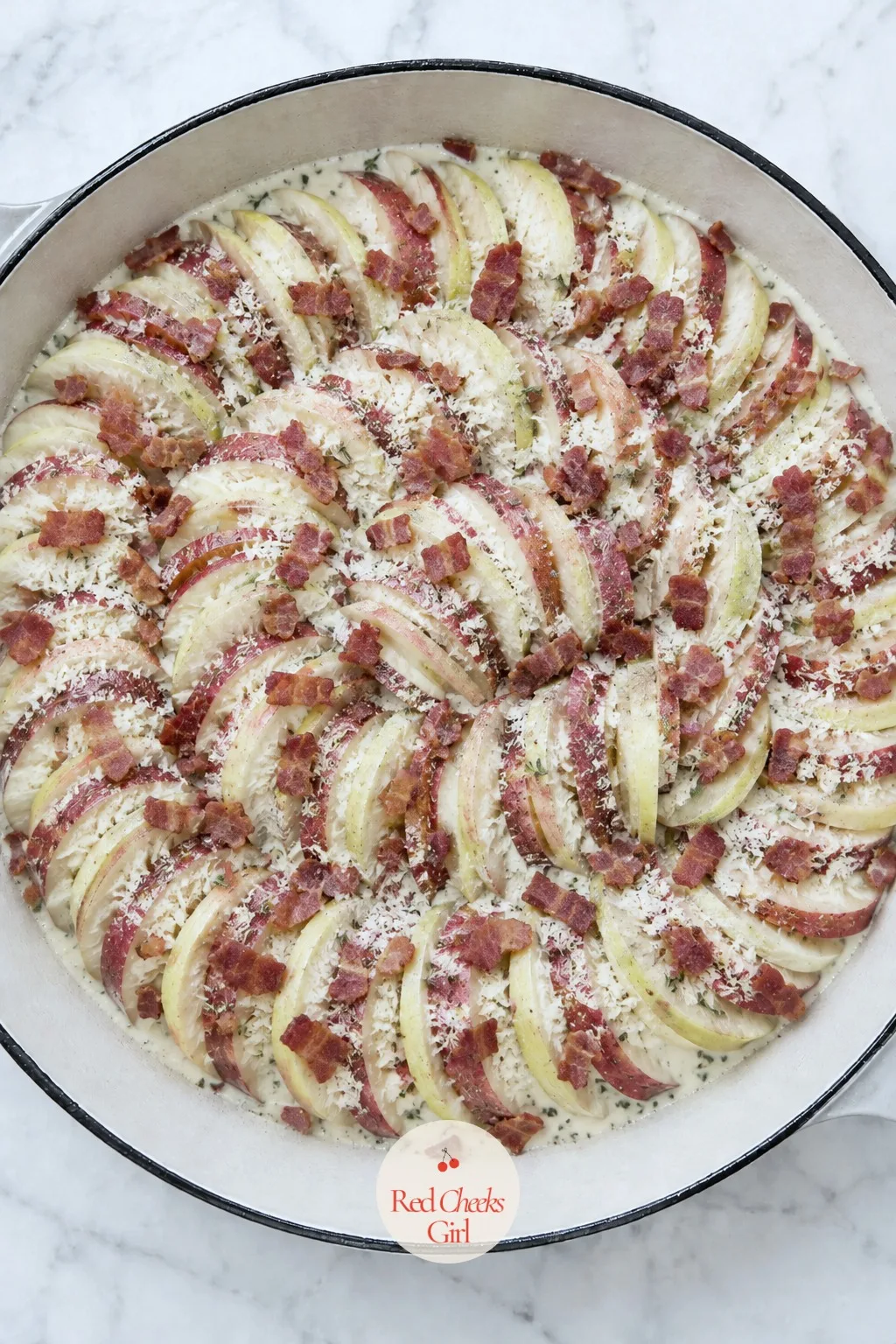
Pour, Top and Ready for the Oven
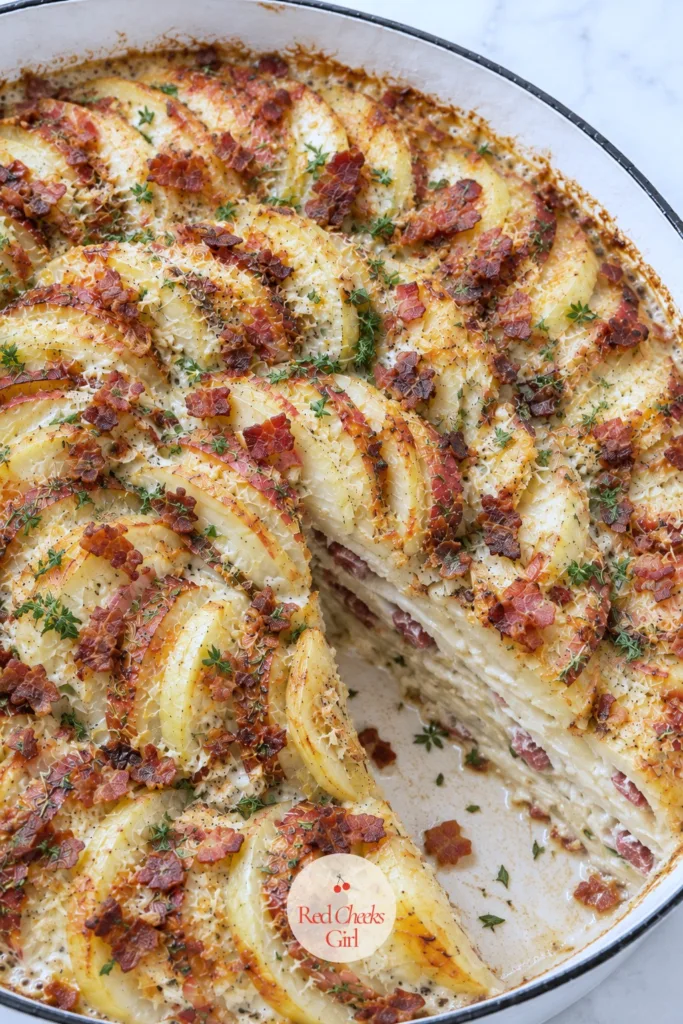
Pour the cream mixture over the shingled slices, then scatter parmesan and crumbled bacon across the top. This is the skillet just before it goes into the oven, fully assembled and uncooked.
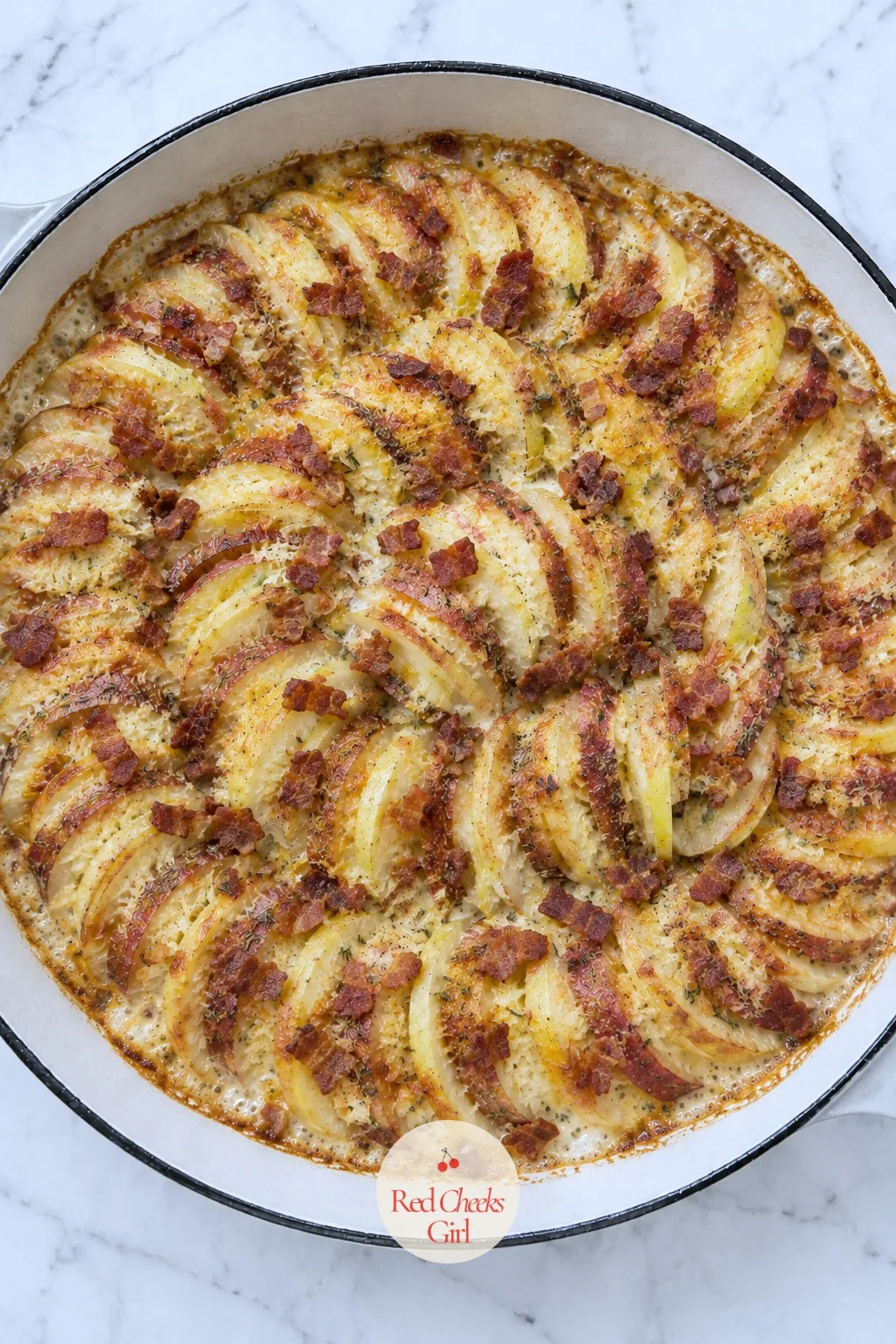
Bake Until Golden and Bubbling
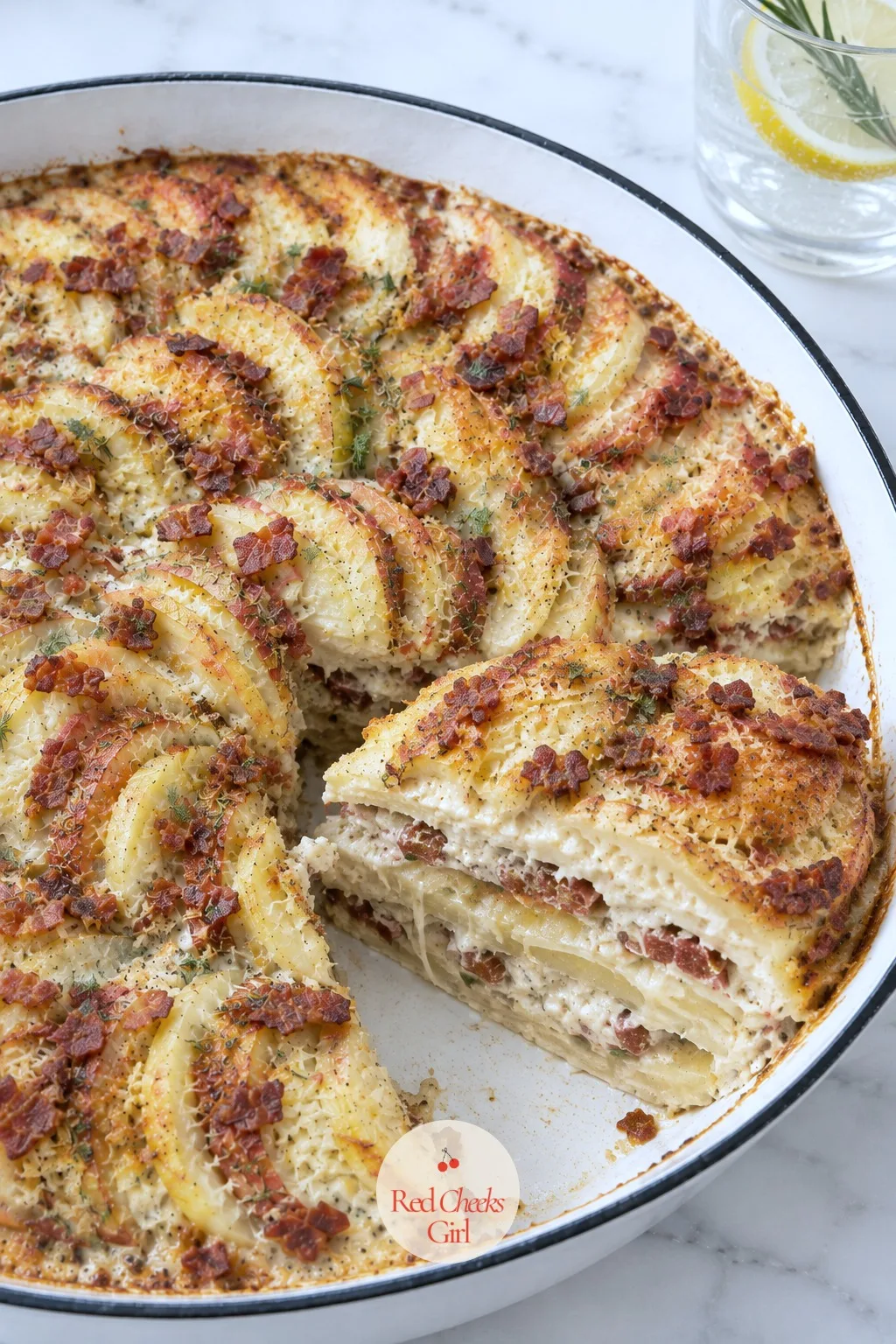
Once uncovered and fully baked, the top turns deep gold and the cream bubbles thick around the edges. A knife should slide into the center slices without resistance.
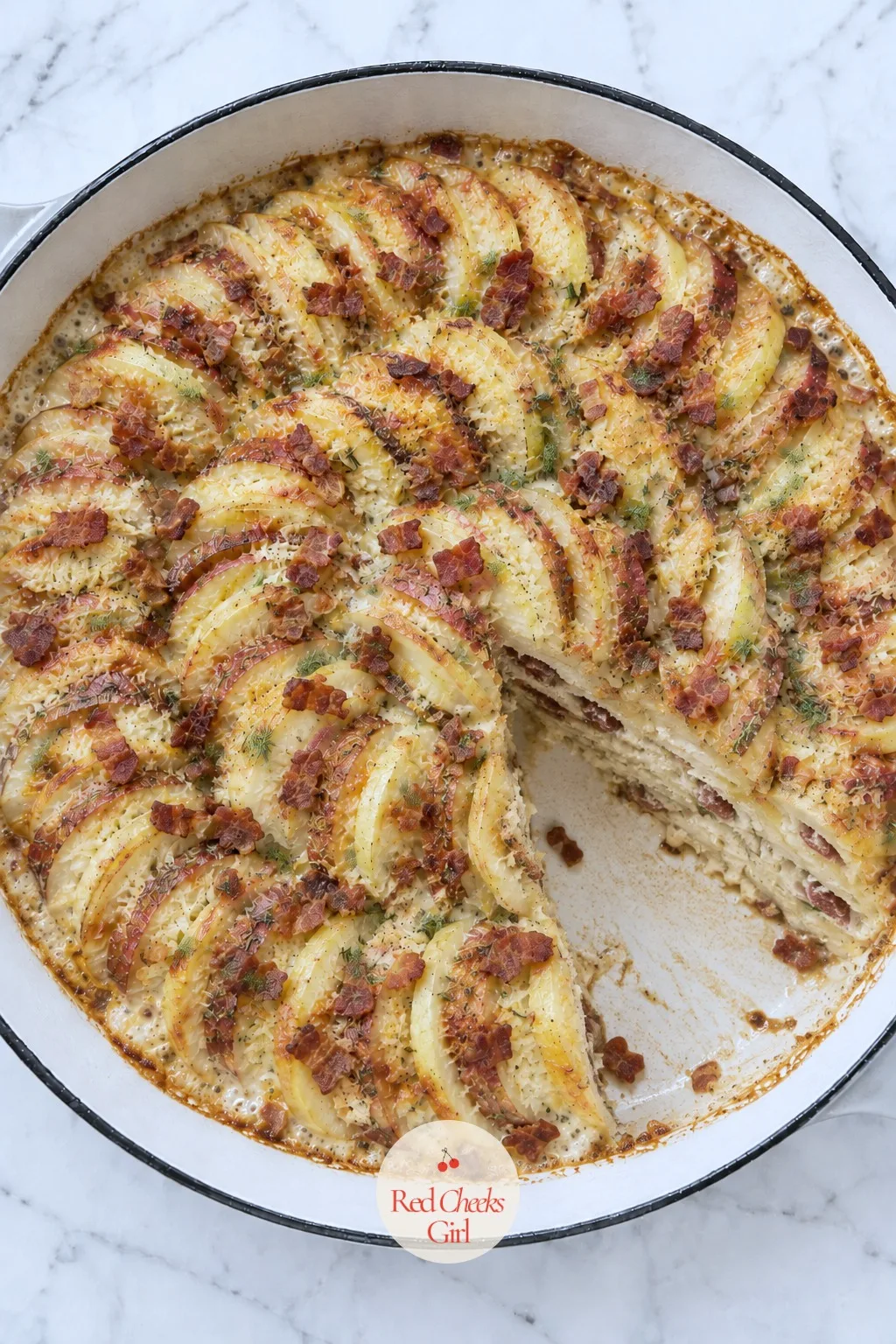
Rest, Slice and Serve
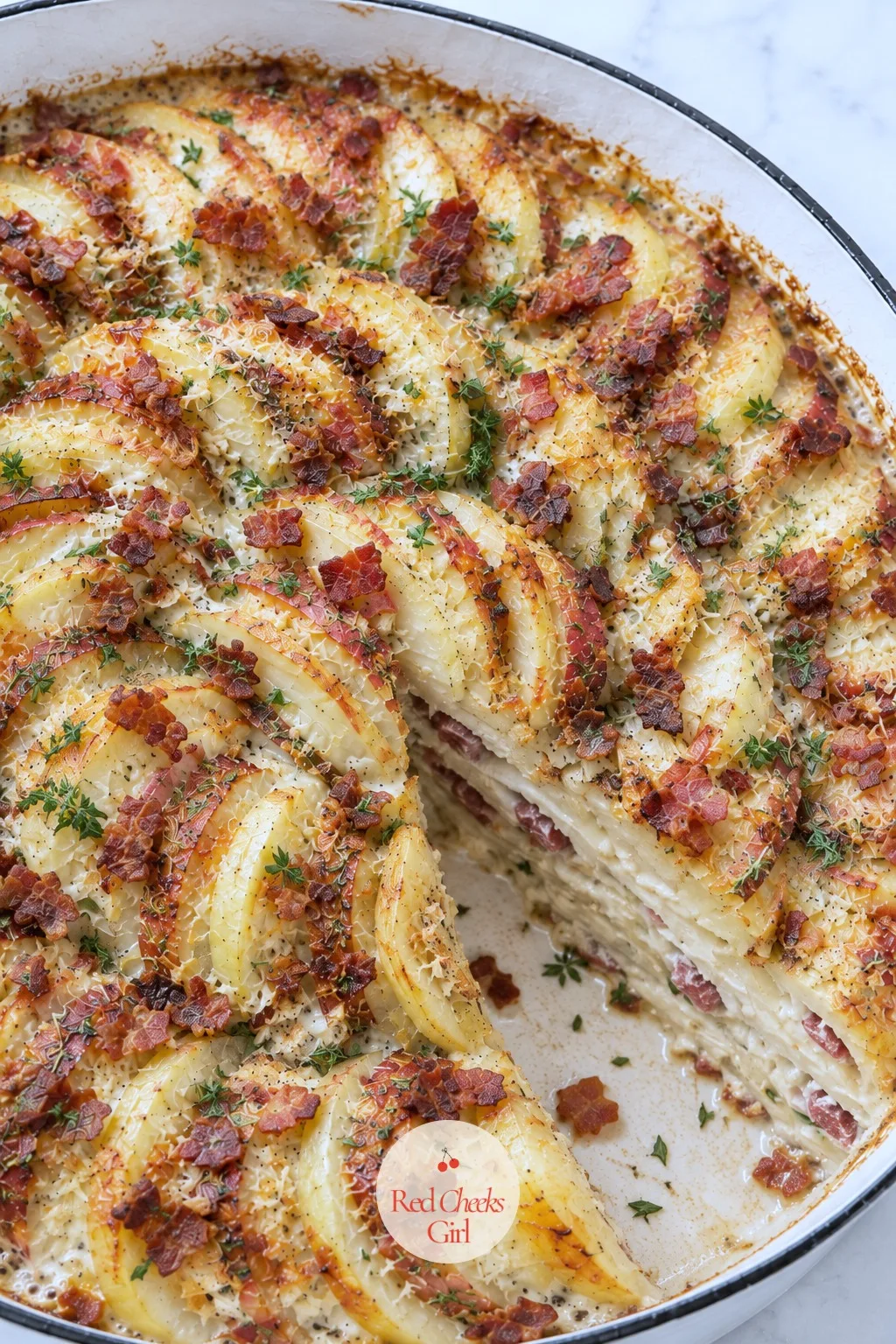
After the fifteen minute stand, cut into the skillet and lift out a wedge. The layers should hold together, cream clinging rather than pooling, bacon still visibly crisp on top.
🛍 Shopping guide
Getting It Right: Common Mistakes
Thickness is the whole game. Slices cut much past 1/8 inch stay firm in the center even after the top has browned and the sauce is bubbling, so take the extra few minutes with a mandoline or a steady knife rather than rushing it.
Keep the skillet covered for that first stretch in the oven. The foil traps steam that softens the potatoes from every side, not just the top, and uncovering too early is a common reason the center stays stubborn while the edges are already done.
Watch the heat if you are baking at a higher temperature than the recipe calls for. Cream pushed too hard can break and look grainy instead of silky, so keep the oven at 375 and let the dish take its time.
Do not skip the stand. Pulling the skillet straight to the table means every slice slides apart on the plate, cream pooling everywhere instead of clinging to the potatoes the way it should.
Swaps and Substitutions
Leave out the apple entirely for a plain version and nobody at the table will feel short changed: use the same weight of potatoes in their place, keep everything else exactly as written, and you have a classic cream and parmesan scalloped potato that suits a quieter meal.
No red potatoes on hand, or you would rather use what is already in the pantry: Yukon Gold slices in just as easily and brings an even creamier bite, though it softens a touch faster, so start checking for doneness a few minutes early.
Pancetta works in place of bacon if that is what the butcher has, and a handful of chopped rosemary can stand in for thyme if that is what is growing on the windowsill. Gruyere melts beautifully if parmesan is not in the fridge, though it will push the dish toward richer and less sharp.
For a version without pork at all, swap the bacon for a few tablespoons of toasted walnuts scattered on top after baking: it will not taste the same, but it keeps the crunch.
What to Serve It With at a Party
This skillet was built to sit beside something simple. A seared pork chop, nothing more than salt, pepper and a hot pan, lets the potatoes carry the richness of the meal instead of competing with it.
At a holiday table, slide it in next to a glazed ham and let the two do the heavy lifting while something green and bright balances the plate. A crisp side like one of these Christmas salad recipes that bring color to the holiday table does exactly that job without asking for much extra effort.
For the rest of a bigger spread, from the rest of the menu to the table itself, 10 holiday party ideas for every kind of gathering covers what goes around this dish rather than on the plate with it.
If dinner is the whole evening and you want people lingering at the table rather than drifting off to their phones, a round of 17 dinner party games to play right at the table keeps the night going once the skillet is scraped clean.
Easy Scalloped Potatoes
Ingredients
- 6 slices thick-cut bacon
- 2 1/2 pounds red potatoes scrubbed and unpeeled
- 2 medium tart apples such as Granny Smith, cored
- 2 cups heavy cream
- 2 cloves garlic minced
- 1 tablespoon fresh thyme leaves finely chopped, plus extra for serving
- 1 teaspoon kosher salt
- 1/2 teaspoon black pepper
- pinch of ground nutmeg optional
- 1 cup finely grated parmesan cheese
Instructions
- Lay 6 slices of bacon in the cream enameled cast iron skillet set over medium heat. Cook 7 to 9 minutes, turning once, until deeply crisp. Transfer the bacon to a paper towel lined plate and, once cool enough to handle, crumble it into small pieces. Leave about 2 tablespoons of the bacon fat in the skillet.
- Preheat the oven to 375 degrees Fahrenheit with a rack in the center position.
- On a pale wood cutting board, slice 2 1/2 pounds red potatoes crosswise into rounds about 1/8 inch thick, using a mandoline if you have one for even slices. Slice 2 cored tart apples to the same thickness.
- Starting at the outer edge of the skillet, stand the potato and apple slices on their sides and shingle them, alternating roughly two potato slices to one apple slice, working in slightly overlapping rows toward the center until the skillet is full.
- In a clear glass pitcher, whisk together 2 cups heavy cream, 2 cloves minced garlic, 1 tablespoon chopped thyme, 1 teaspoon kosher salt, 1/2 teaspoon black pepper and the nutmeg if using.
- Pour the cream mixture slowly and evenly over the shingled potatoes and apples, letting it settle down into the gaps between slices. Scatter 1 cup grated parmesan evenly over the top, then scatter the crumbled bacon over the parmesan.
- Cover the skillet tightly with foil and bake for 35 minutes.
- Remove the foil and bake, uncovered, for 20 to 25 minutes more, until a knife slides into the center slices with no resistance and the top is deep golden brown and bubbling at the edges.
- Set the skillet on a trivet and let the dish stand for 15 minutes before serving: this gives the cream time to settle back into the layers and thicken slightly, so the first slice holds its shape instead of sliding into a puddle on the plate.
- Scatter a few fresh thyme leaves over the top and serve warm, straight from the skillet.
Good to Know
Frequently Asked Questions
What is the difference between scalloped potatoes and potatoes au gratin?
Scalloped potatoes are traditionally baked in a plain cream or milk sauce with no cheese between the layers, while potatoes au gratin layer cheese throughout and often finish with a browned crust.
Why are my scalloped potatoes still hard after baking?
This almost always means the slices were cut too thick. Keep them at about 1/8 inch, keep the skillet covered for the first stretch of baking, and give it more time rather than more heat if the center still resists a knife.
Can I use Yukon Gold or russet potatoes instead of red potatoes?
Yukon Gold works well and turns the dish a little creamier, though it softens faster so check it a few minutes early. Russets tend to break down too easily when sliced this thin, so red or Yukon Gold is the safer choice here.
Why did my cream sauce curdle or look grainy?
High oven heat is the usual cause, since cream can break if it bakes too fast. Stick to the temperature in the recipe, use heavy cream rather than something lower fat, and let the dish bake slowly instead of rushing it.
Can I freeze scalloped potatoes?
Freezing is possible but not ideal, since the potatoes can turn softer and the dairy based sauce is prone to separating once thawed. This dish holds up far better made fresh or assembled a day ahead in the refrigerator.
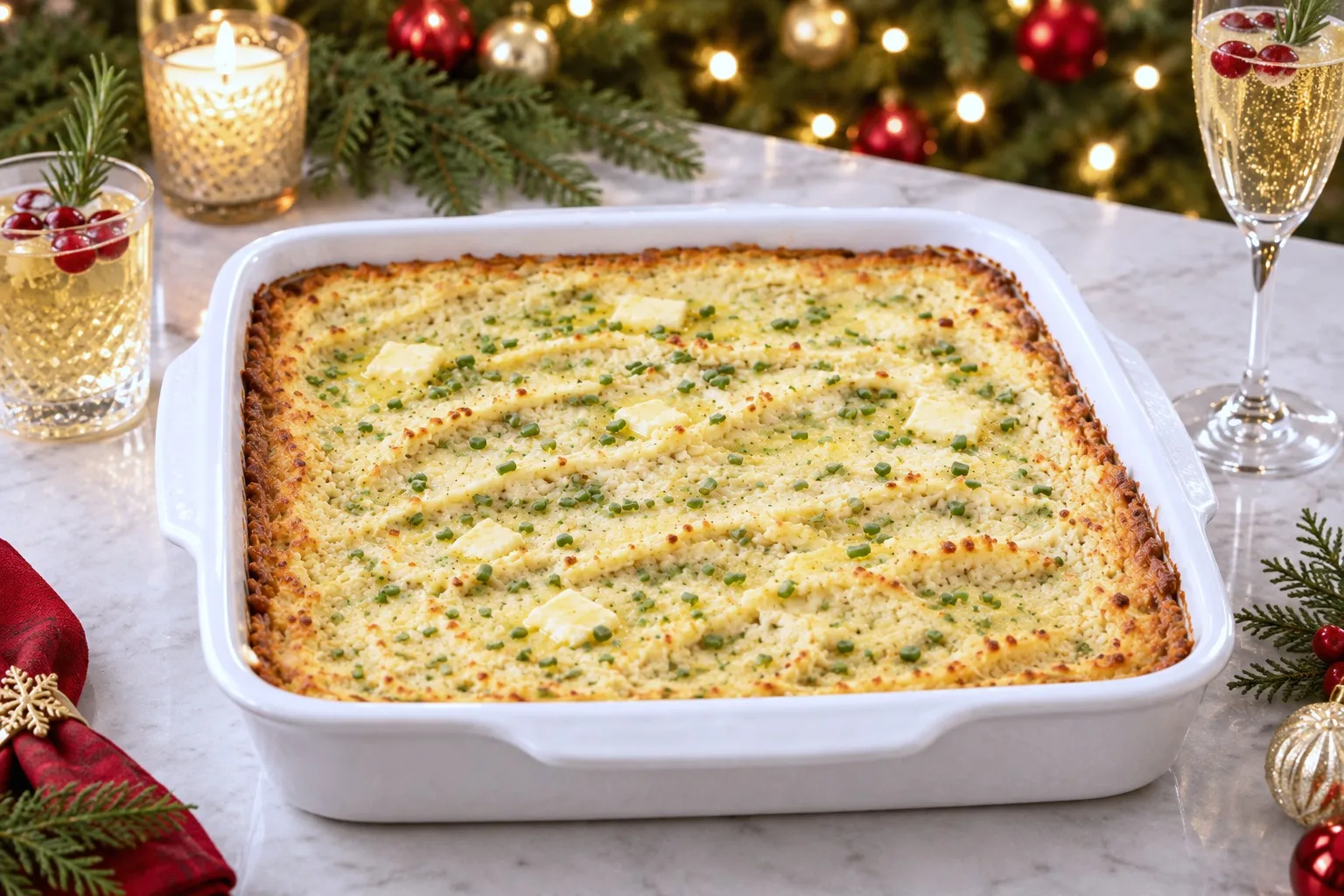
Make ahead mashed potatoes stay creamy in the fridge for two days, then reheat in a buttered baking
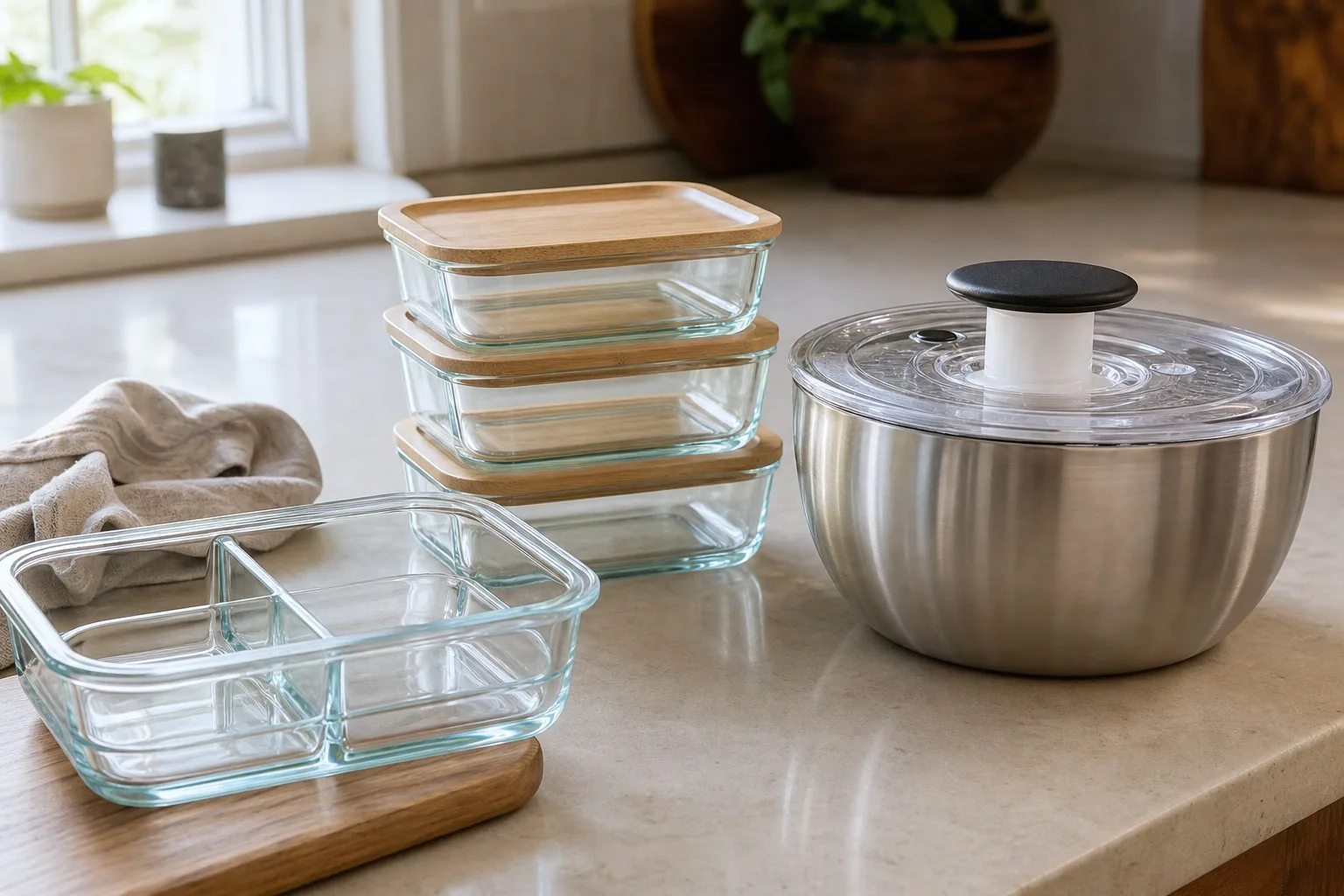
Non toxic kitchen swaps in glass, wood and silicone that replace plastic storage, utensils and bags,

High cortisol levels can leave you feeling wired at night, exhausted during the day, and unable to r
Leave a Reply