

Make ahead mashed potatoes solve the one holiday job nobody wants to do twice: standing at the stove while everyone else is already seated. Built with cream cheese and sour cream, this batch holds smooth and creamy in the fridge for two days, then reheats in a buttered baking dish while you deal with everything else.
This post contains affiliate links. If you buy through them, I may earn a small commission at no extra cost to you.
Table of Contents
The Mashed Potatoes That Wait for You
Mashed potatoes have a habit of becoming the dish that goes wrong at the exact moment nothing can go wrong: the turkey is resting, the gravy needs a whisk, and the potatoes are still lumpy and lukewarm on the stove. This batch refuses to play along, because it gets finished two days before anyone sits down.
Make it two days ahead for a big gathering, the night before for a smaller dinner, or weeks ahead in the freezer, and the stovetop stays free on the day itself for whatever actually needs your attention.
If the rest of the table needs the same treatment, 14 Thanksgiving Side Dishes You Can Make the Day Before lines up a whole plate of dishes that wait just as patiently.
There is no special equipment beyond a potato masher you probably already own, and the ingredient cost barely moves from a regular batch of mashed potatoes. The real saving is in time: twenty minutes of work now buys back a full hour on the day, when an hour is worth more than it ever is on a Tuesday.
If reheating a casserole mid party sounds fussy, it genuinely is not. Cover the dish, slide it into the oven, uncover it near the end, done, with no stirring over the stove while guests wander in and out of the kitchen.
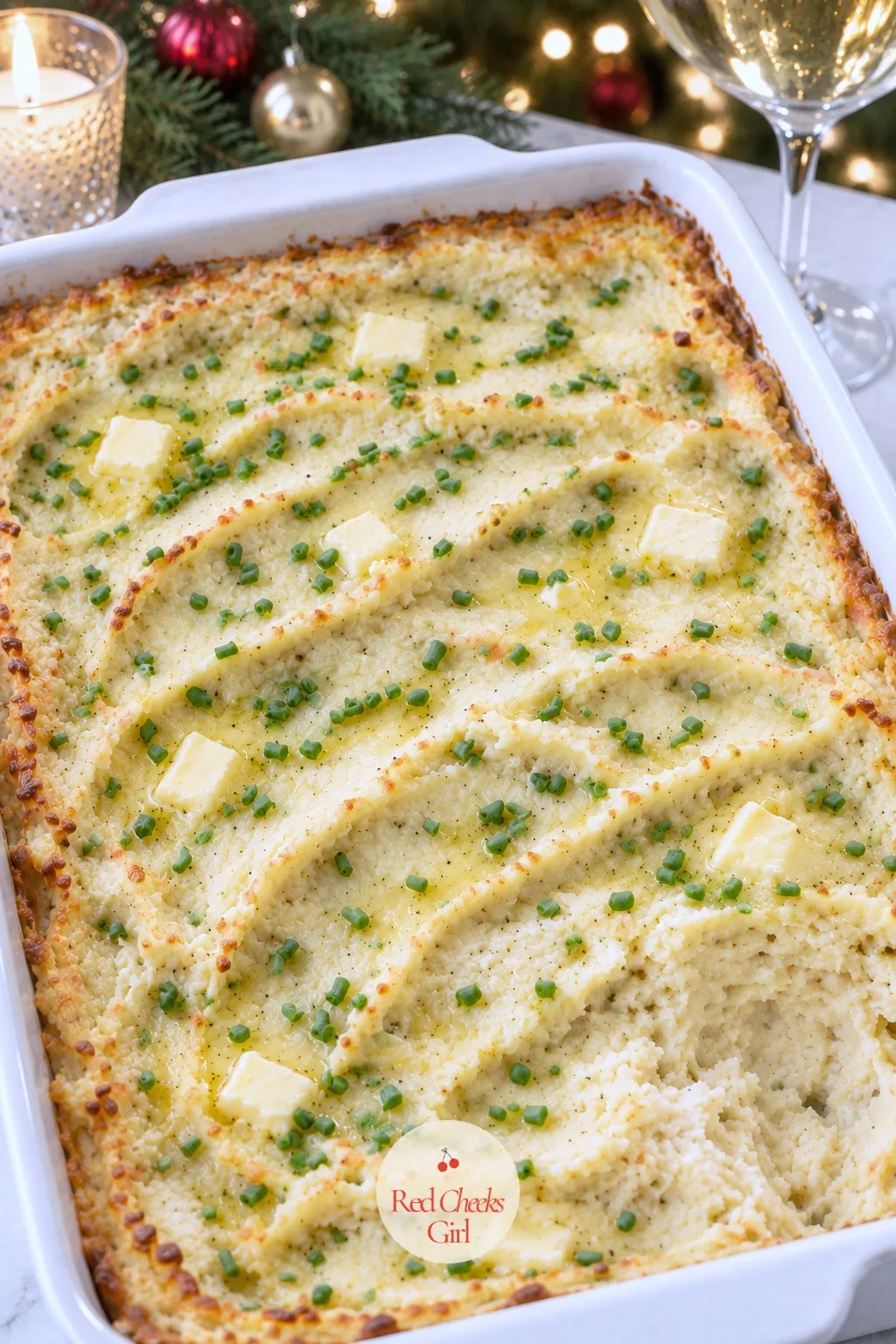
Why Cream Cheese and Sour Cream Matter
Plain mashed potatoes refrigerate fine and then betray you at reheating: the starch tightens as it cools, and the oven or microwave brings back a gluey, slightly gritty texture no amount of stirring fixes. Cream cheese changes that chemistry.
The fat in the cream cheese coats the starch granules and keeps them from seizing up in the cold, which is exactly the problem plain milk and butter cannot solve on their own.
Sour cream pulls its own weight too. That faint tang also means you can go a little lighter on salt, since the sourness reads as seasoning on its own.
Potato choice matters less than the dairy, but it still matters. for this kind of mash, holding a naturally buttery taste that needs less added fat to feel rich. Russets work in a pinch, they just turn a little drier once reheated.
How to Make It
This batch serves ten to twelve as a holiday side, with enough left over for the inevitable turkey sandwich the next morning. Every step happens in two pieces of cookware: the pot that boils the potatoes and the dish that bakes them, so cleanup stays small even with a full oven.
The ingredient list leans on dairy (cream cheese, sour cream, butter and milk), so keep that in mind for anyone at the table with a dairy allergy or intolerance before you serve it.
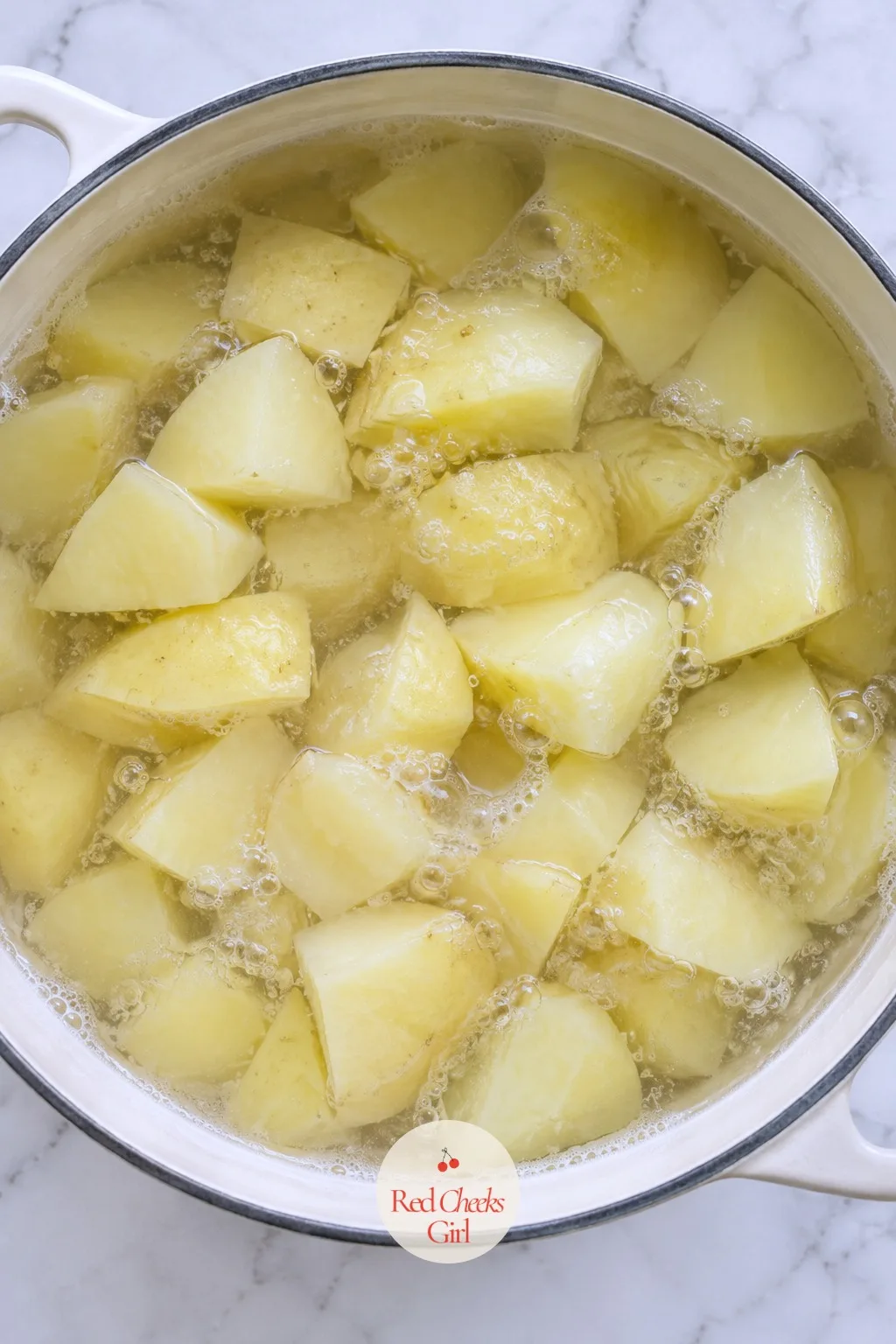
Simmer the Potatoes
Potato chunks bob in gently boiling water, and this is the moment to start watching the clock. A fork should slide into the center with no resistance within fifteen to eighteen minutes.
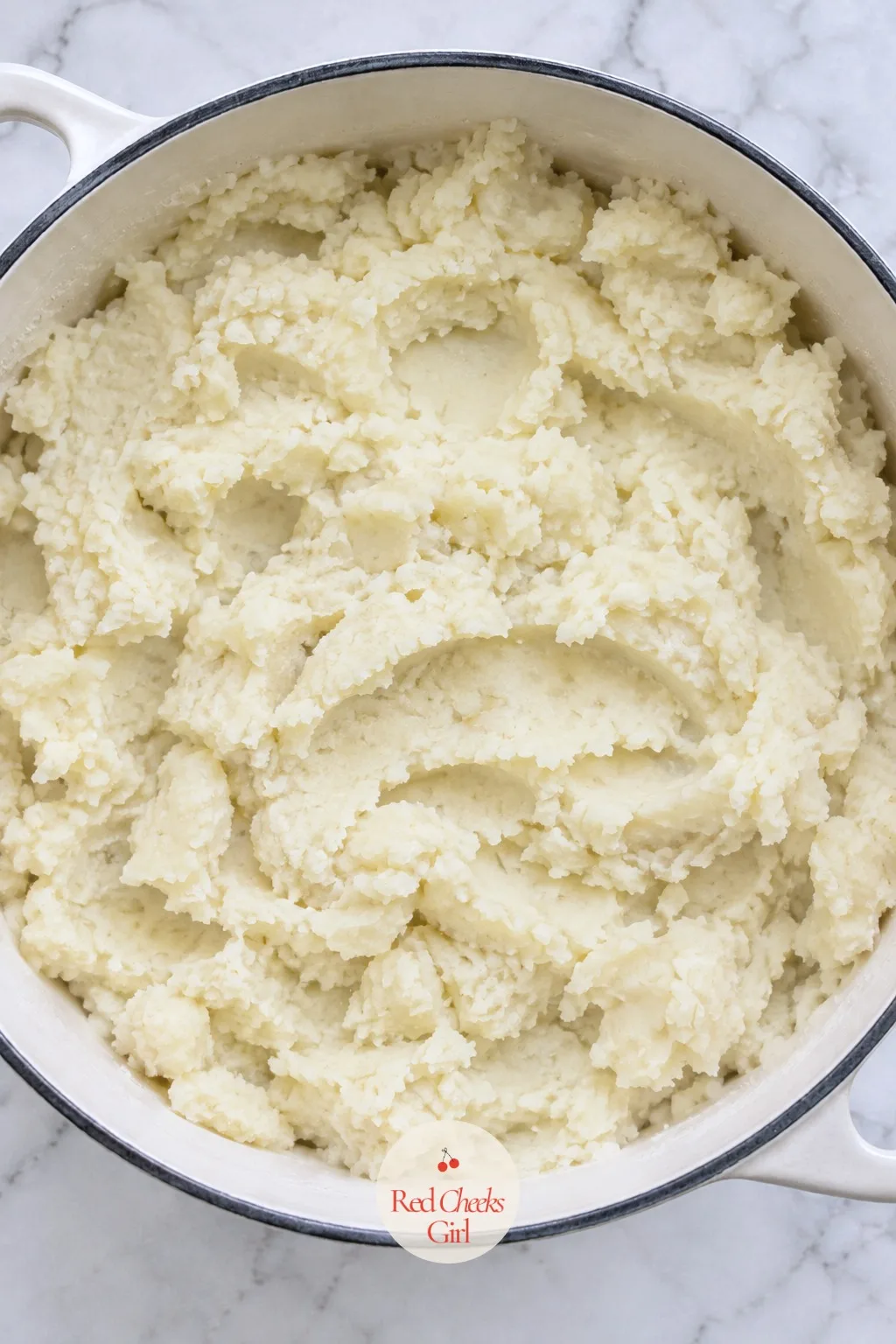
Mash the Potatoes Plain
Drained and mashed with nothing added yet, the potatoes look dry and slightly matte right now. That is correct; the dairy comes next and turns everything glossy.
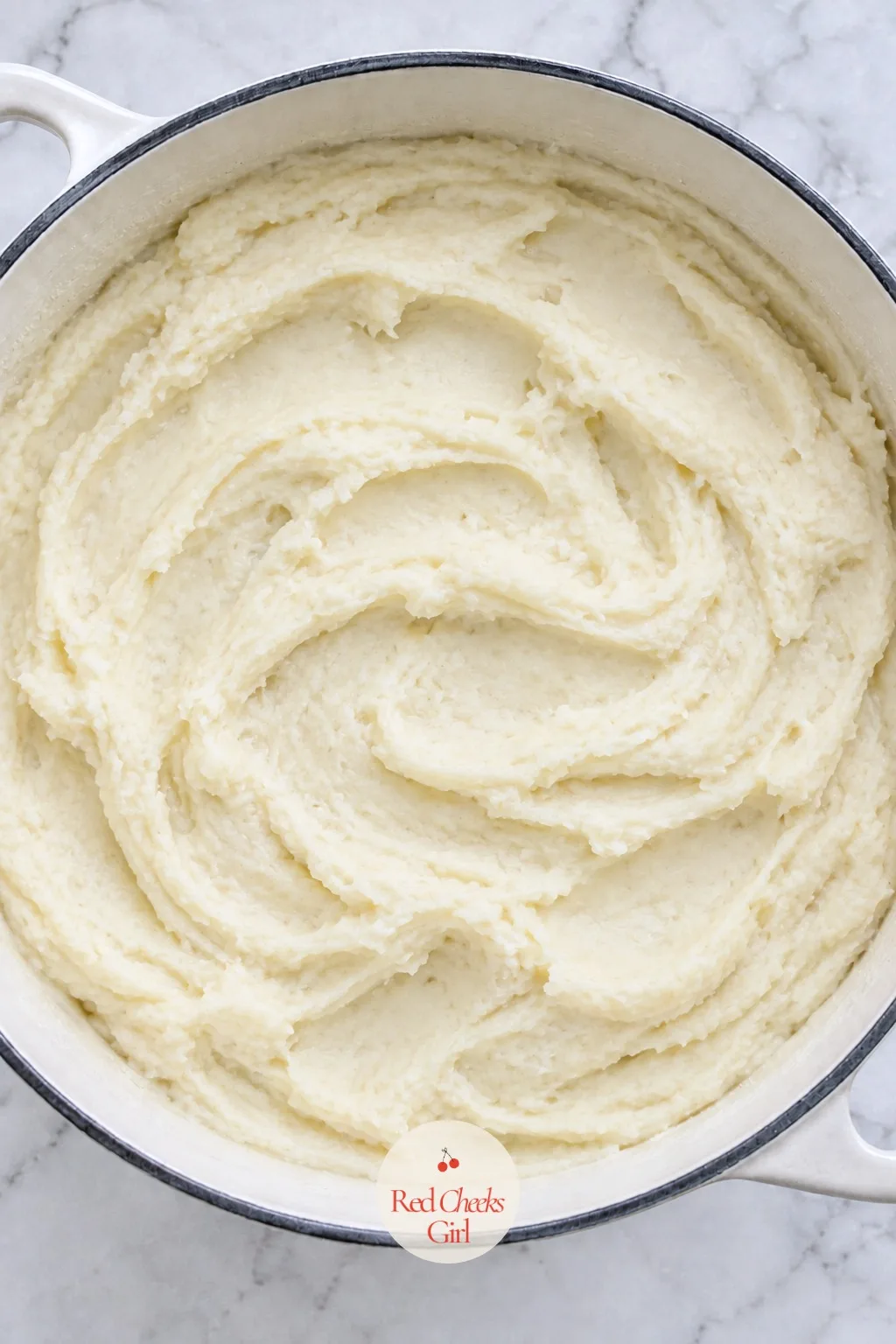
Fold in the Cream Cheese and Sour Cream
Once the butter, cream cheese and sour cream disappear into the mash, the color turns softer and the surface goes glossy. No white streaks should remain anywhere in the pot.
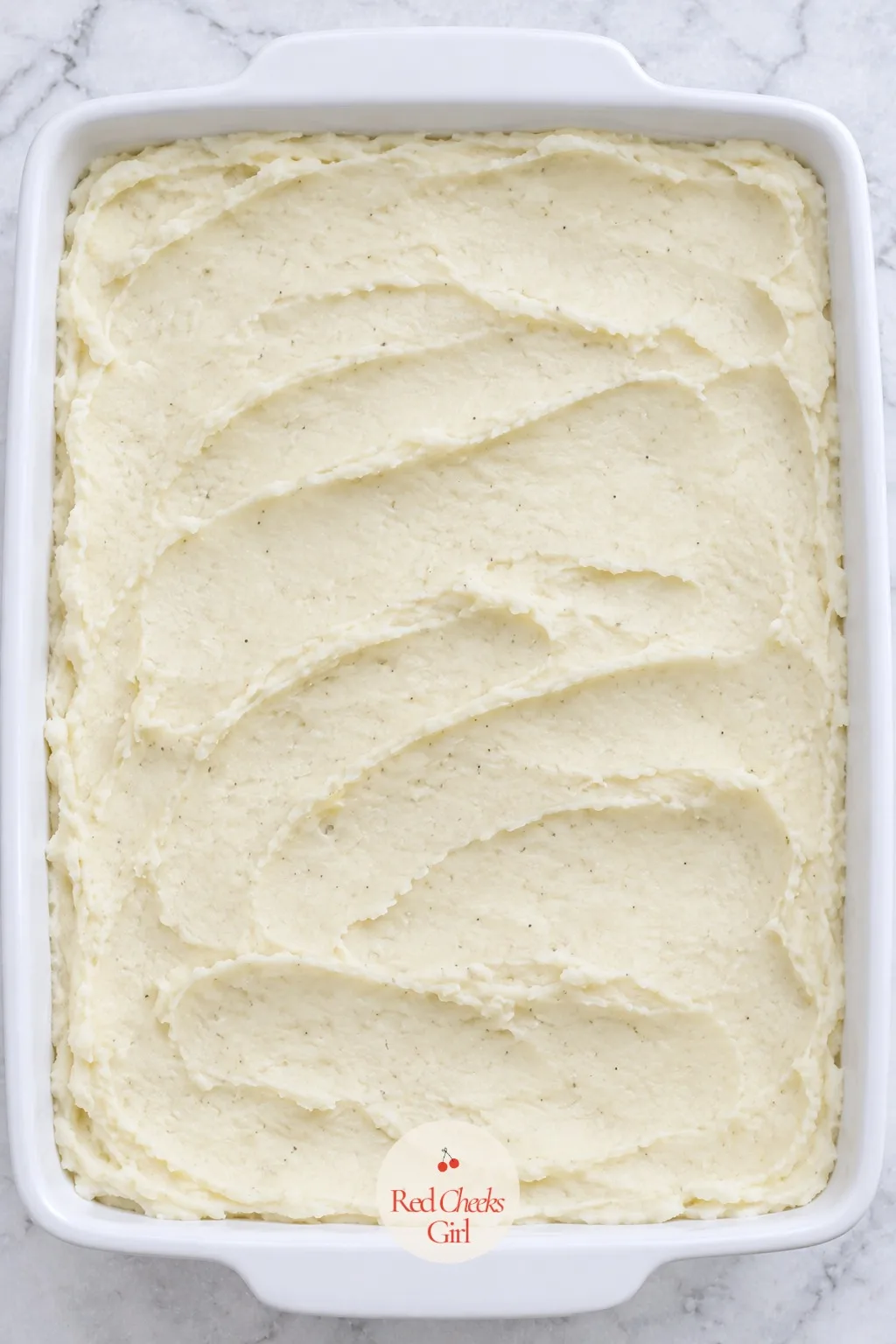
Spread into the Baking Dish
Spread flat and smoothed with the back of a spoon, the mash fills the buttered dish right up to the edges. This is the shape it holds through two days in the fridge.
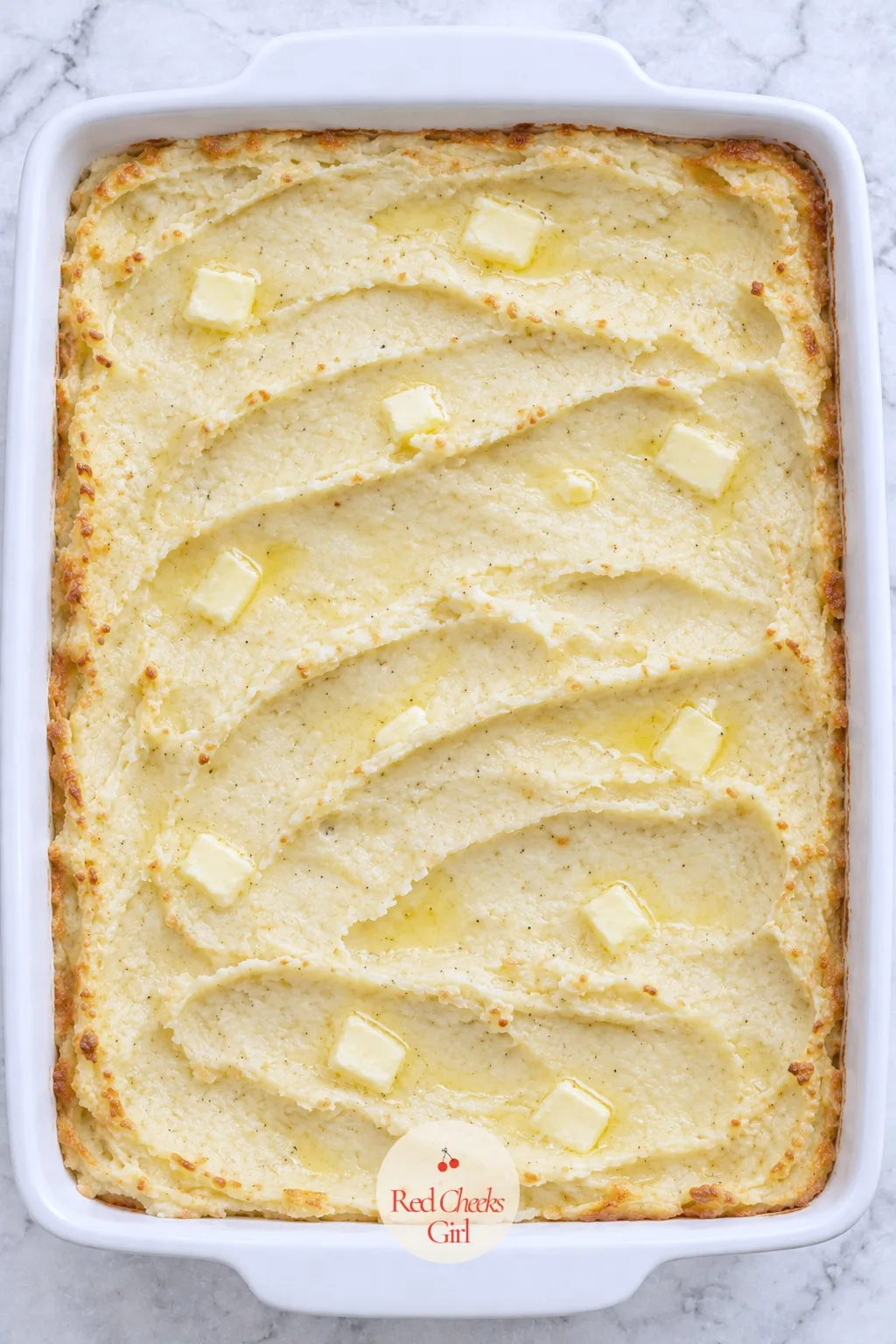
Bake Until Golden at the Edges
After the foil comes off, the edges turn lightly golden and the butter pools faintly across the top. The surface should look glossy, never dry or cracked.
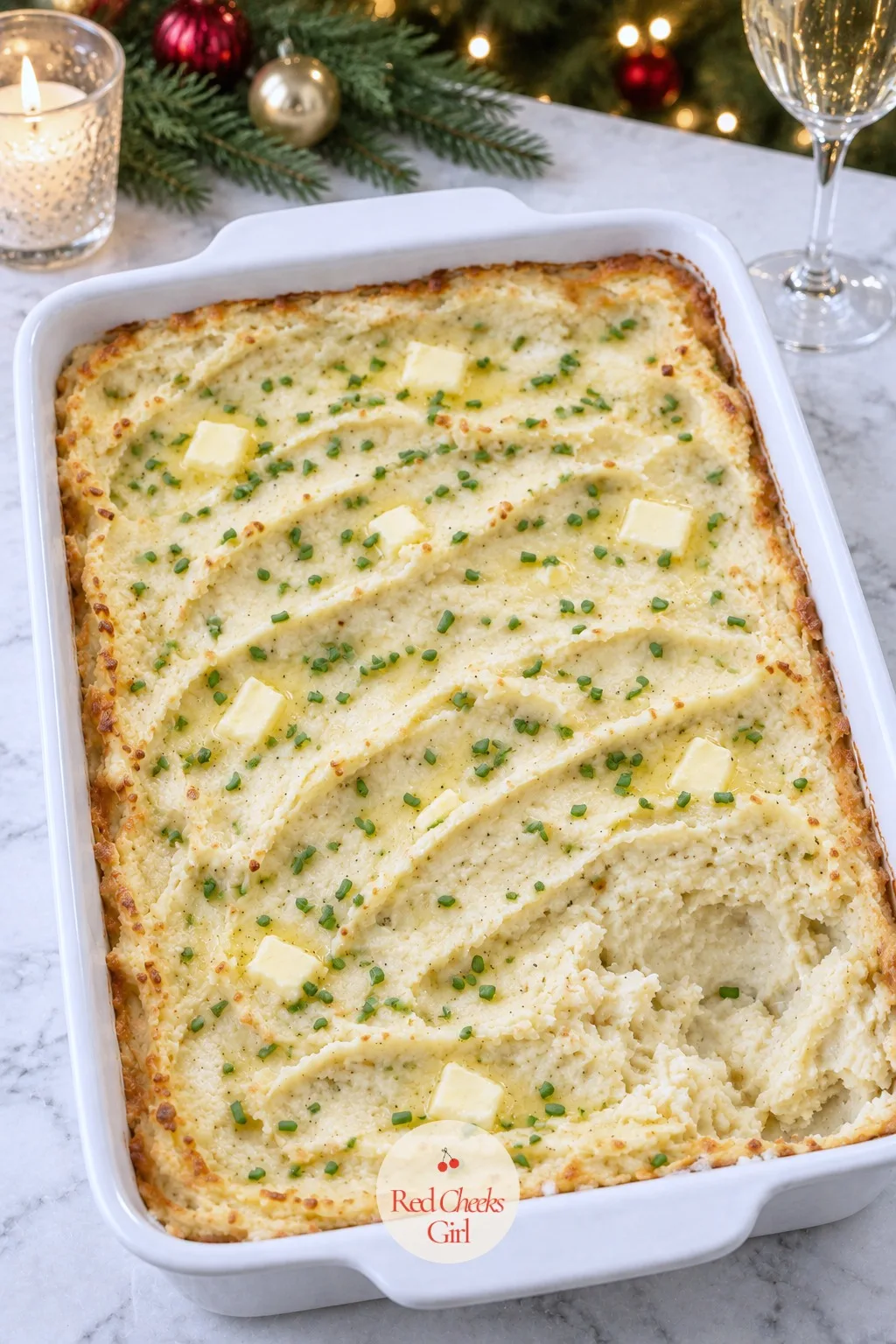
Serve It Warm
Scattered with chives and still steaming, the finished potatoes go straight to the table in the same dish they baked in. One less dish to wash is a small, real relief.
Tips for Getting It Right
The single biggest mistake is reaching for a stand mixer or food processor to save time. and a machine does that in seconds flat. A hand masher, used with a light touch, is the whole secret.
The second mistake happens in the fridge, not the oven: skipping the plastic wrap pressed right onto the surface. because any gap lets a dry, slightly rubbery skin form on top that never fully blends back in.
The third mistake is baking the dish straight from the refrigerator. A cold center takes far longer to heat through than the edges, so the top looks done while the middle is still lukewarm. and the whole dish warms at roughly the same pace.
The last mistake is under-seasoning before it goes into the fridge. Salt mutes slightly over two days in cold storage, so taste the mash a touch saltier than feels right the first time; by the time it reheats, it will land exactly where it should.
Swaps and Substitutions
No sour cream in the fridge; plain full fat Greek yogurt swaps in at the same quantity and keeps the same tang. Light or reduced fat versions of either the cream cheese or the sour cream work too, though the mash will hold a little less richly on the second day.
If dairy is off the table entirely, a dairy-free cream cheese and a plant-based butter get close, but keep in mind the texture will not firm up the same way once chilled, so plan to serve that version closer to fresh.
For a loaded, cheesy finish, scattered over the top before the final uncovered bake turn this into its own kind of centerpiece.
What to Serve It With at a Party
A big bowl of mashed potatoes wants something roasted and something bright next to it, not another soft, pale dish crowding the same plate. Turkey, ham or a roast sit naturally alongside, with gravy doing double duty on both.
Color matters more than people admit at a buffet table, and a potato dish this pale needs it close by. 16 Christmas Salad Recipes That Bring Color to the Holiday Table solves that without adding another oven dish to track.
If the spread still feels thin, 20 Christmas Dishes and Hosting Finds Your Holiday Table Has Been Waiting For rounds out the rest of the table, from the main course down to the serving pieces that make it look pulled together.
For the adults in the room, a pitcher of something batched keeps you out of the kitchen between courses: 17 Christmas Holiday Drinks Alcohol Mixed by the Jug, Not the Glass covers that, poured for grown-ups only and alongside plenty of water for anyone driving home.
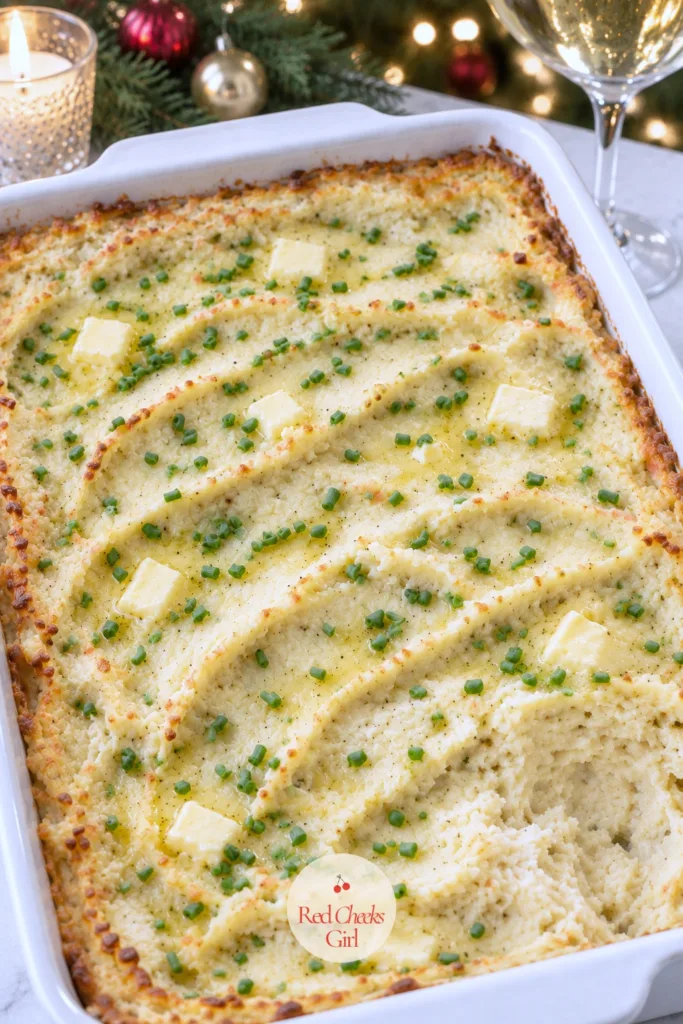
Make Ahead Mashed Potatoes
Ingredients
- 5 pounds Yukon Gold potatoes peeled and cut into 1 to 2 inch chunks
- 2 teaspoons kosher salt divided
- 3/4 cup 1 1/2 sticks unsalted butter, softened, divided
- 8 ounces cream cheese softened at room temperature
- 1 cup sour cream at room temperature
- 1/2 cup whole milk
- 1/2 teaspoon black pepper
- 1/2 teaspoon garlic powder optional
- 2 tablespoons chopped fresh chives for serving (optional)
Instructions
- Peel 5 pounds of Yukon Gold potatoes and cut them into rough 1 to 2 inch chunks. Place the chunks in the cream Dutch oven, cover with cold water by about an inch, and stir in 1 teaspoon of the kosher salt.
- Set the Dutch oven over high heat and bring the water to a boil, then lower the heat so it holds a steady simmer. Cook the potatoes for 15 to 18 minutes, until a fork slides into the center with no resistance.
- Drain the potatoes in a colander and tip them back into the dry, still warm Dutch oven, off the heat. Let them sit uncovered for 2 minutes; the rising steam carries off extra moisture that would otherwise water down the mash.
- Mash the potatoes right in the pot with a potato masher until no large lumps remain. At this stage they should look dry, pale, and cloud like, with nothing added yet.
- Add 1/2 cup of the softened butter, the cream cheese, and the sour cream to the pot. Mash and fold everything together until the mixture turns smooth, glossy, and fully blended, with no white streaks of cream cheese left anywhere.
- Pour in the milk, then stir in the remaining 1 teaspoon kosher salt, the black pepper, and the garlic powder if using. Taste a small spoonful and adjust the salt; the dish will taste slightly milder once reheated, so season a touch more than feels necessary now.
- Butter a 9x13 inch white ceramic baking dish generously using 2 tablespoons of the remaining butter, then spread the mashed potatoes into it in an even layer. Smooth the top with the back of a spoon so every part reheats at the same rate.
- Press a sheet of plastic wrap directly onto the surface of the potatoes to stop a skin from forming, then cover the dish tightly. Refrigerate for up to 2 days before the day you plan to serve it.
- On the day of the party, take the dish out of the refrigerator and let it stand on the counter for 30 minutes while the oven heats to 350F. This takes the worst of the chill off so the center warms through at the same speed as the edges.
- Cut the remaining 2 tablespoons butter into small pieces and dot them over the top. Cover the dish tightly with foil and bake for 35 to 40 minutes, until an instant read thermometer inserted in the center reads 165F.
- Remove the foil and return the dish to the oven for another 8 to 10 minutes, until the edges turn lightly golden and the surface looks glossy rather than dry.
- Let the dish rest for 5 minutes, scatter the chives over the top if using, then bring it to the table in its baking dish while still warm.
Good to Know
Frequently Asked Questions
What is the best potato for mashed potatoes?
Yukon Gold potatoes give the creamiest result because their lower starch content and naturally buttery flavor need less added fat to taste rich. Russets work too, but they turn a touch drier once reheated.
How many potatoes do I need per person for mashed potatoes?
Plan on about half a pound of raw potatoes per person for a generous holiday portion. For a table of ten to twelve guests, five pounds of potatoes before peeling is the right amount.
Can you use a hand mixer or food processor for mashed potatoes?
Skip both, since the fast blades overwork the starch and turn the potatoes gluey within seconds.; a hand masher or ricer gives a far smoother, safer result.
Can you reheat mashed potatoes in a slow cooker?
Yes, a slow cooker on low with occasional stirring holds mashed potatoes warm for a couple of hours.
Do you peel potatoes before or after boiling them for mash?
Either works, but boiling potatoes whole and peeling after keeps more water out of the flesh. Peeling first is faster and perfectly fine for a weeknight batch.

18 gifts for hard to shop for men, sorted by what he actually does: recover, work, travel, stay warm

17 gifts for the person who has everything, sorted by host, homebody, ritual lover and sentimental t

21 gifts for mom sorted by budget and personality, from sentimental keepsakes to kitchen upgrades sh
Leave a Reply