

Shrimp Scampi Pasta With Garlic, Lemon and White Wine Over Linguine
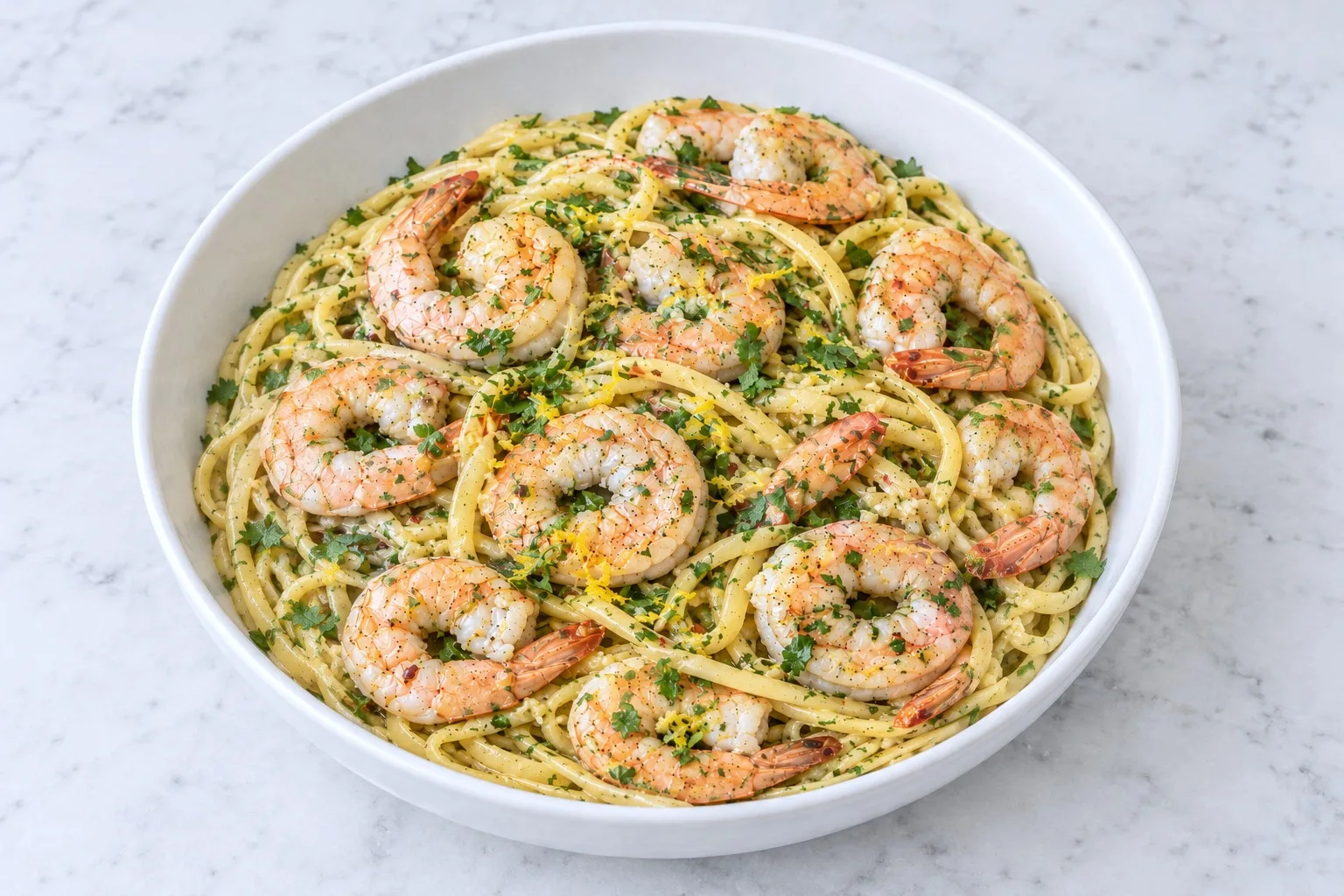
Shrimp scampi pasta turns a handful of pantry staples into the kind of dish that looks like it took real planning, in about twenty minutes flat. Garlic, butter, a little wine and a squeeze of lemon do nearly all the work, leaving you free to actually enjoy the party instead of hiding in the kitchen.
This post contains affiliate links. If you buy through them, I may earn a small commission at no extra cost to you.
Table of Contents
A Dinner That Looks Harder Than It Is
Shrimp scampi pasta earns its reputation at the table before anyone takes a bite: the smell of garlic and butter hitting hot oil does half the work of impressing a room.
It looks like a dish that took real effort, the kind restaurants charge a lot for, and yet it comes together from raw shrimp to a full plate in about twenty minutes.
That speed matters more at a party than any other night. You can sear, deglaze and toss while guests are still finding their seats, pour the last of the wine into the pan instead of a glass, and land a hot plate in front of people without vanishing into the kitchen for an hour.
Nothing about it needs a trip to a specialty store either. Large shrimp, a head of garlic, a lemon and a bottle of something dry and white: that is most of the shopping list, and the rest probably lives in your pantry already.
The Ingredients That Actually Matter
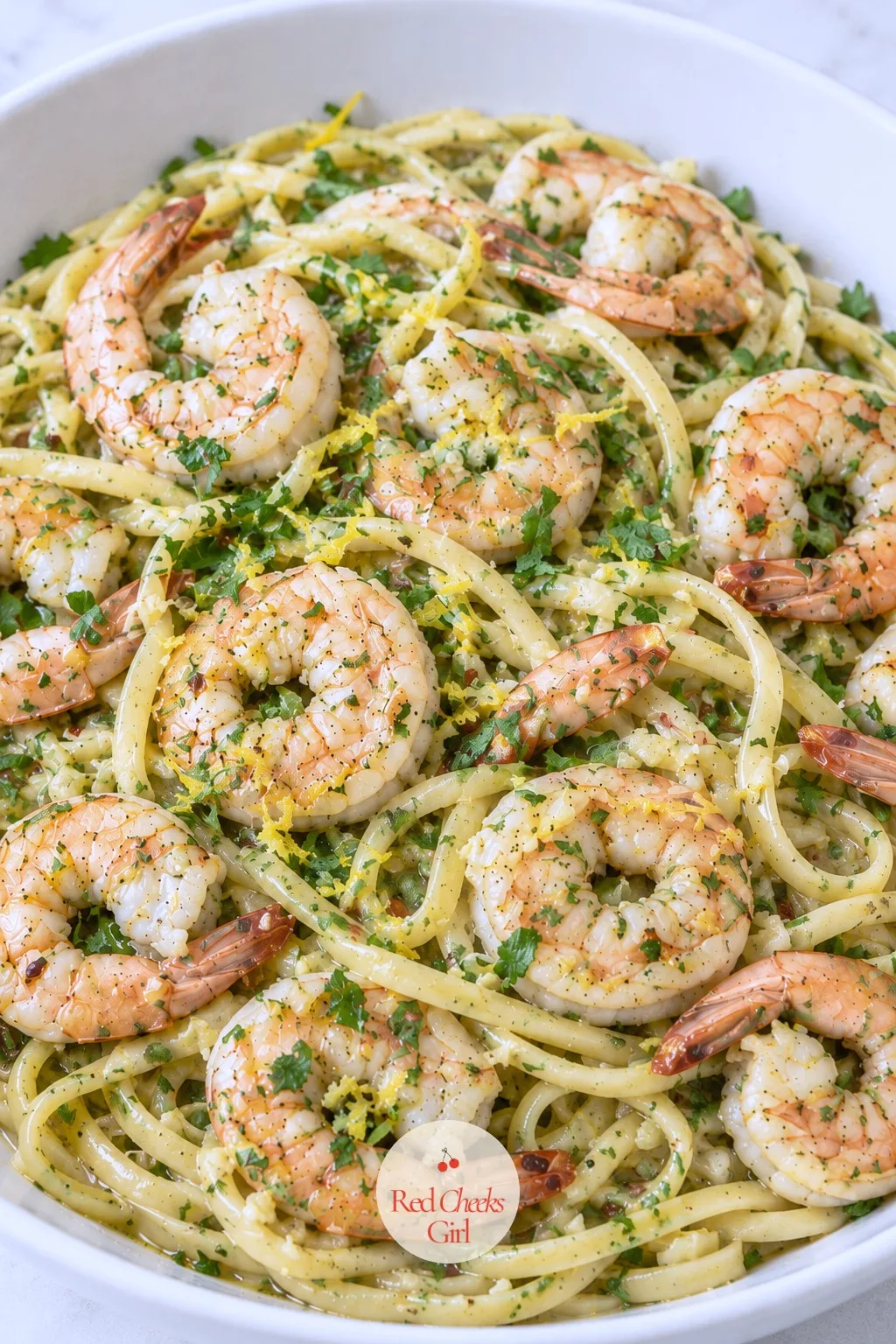
Large shrimp, not the bag labeled “medium” at the back of the freezer case, give you a real bite instead of a fleeting one. Shrimp around 21 to 25 per pound sear in under two minutes a side and still have enough mass to stay juicy through that short window.
Garlic is not a background note here, it is the point. Six cloves, roughly chopped, bloom in butter until the kitchen smells like something expensive, and a pinch of red pepper flakes keeps all that richness from feeling heavy.
Butter alone burns before garlic turns gold, and olive oil alone never gives you that glossy shine on the shrimp. Together, one for flavor and one for a higher smoke point, they do what neither manages on its own.
White wine deglazes the pan and pulls every browned bit of flavor off the bottom, while lemon juice added at the very end keeps that brightness from cooking flat. If wine is not what you want in the house tonight, broth and a little vinegar step in further down this page.
Parsley goes in last, off the heat, so it stays a true green instead of wilting into the sauce. Linguine is the traditional match because its flat strands grab the butter sauce better than a round noodle, though spaghetti does the job too if that is what is on the shelf.
How to Make It
Everything here moves fast once the pan is hot, so read through the method once before you start chopping. Lay out the shrimp, garlic, wine and parsley within arm’s reach of the stove, since there is no real pause once the shrimp hits the oil.
The dish carries two common allergens, shellfish and the wheat in the pasta, worth flagging if you are cooking for a crowd. The wine is a cooking ingredient meant for an adult table: pour what is left in the bottle responsibly, and keep the broth version ready for anyone who is not drinking.
Sear the Shrimp First Side
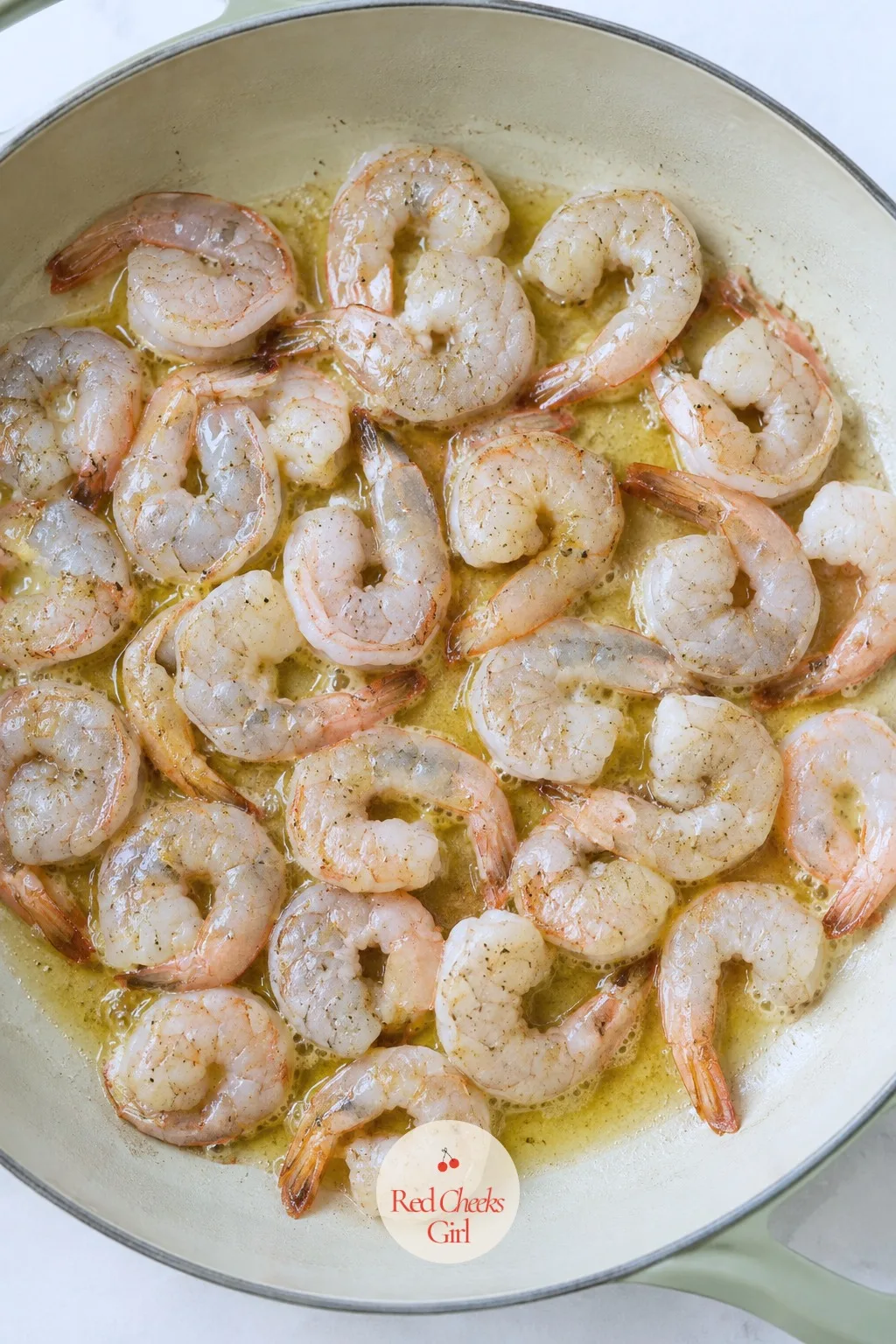
Lay the shrimp in a single layer so each one touches the hot surface. Give them a minute without moving them until the undersides turn solid pink and the edges just start to curl.
Bloom the Garlic and Pepper Flakes
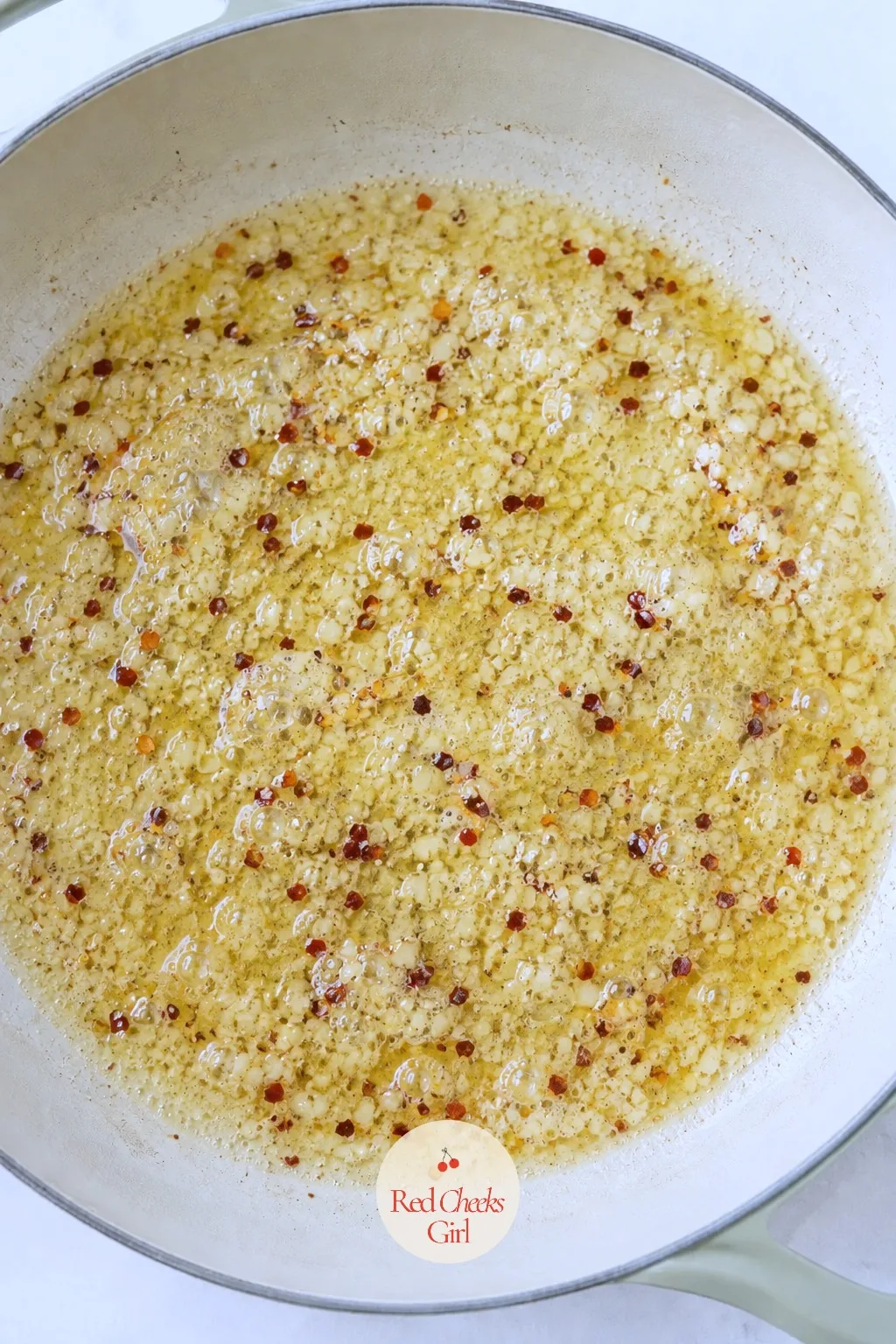
With the shrimp resting on a plate, add the rest of the butter and oil and stir in the garlic and red pepper flakes. Keep them moving until the garlic turns pale gold, not brown.
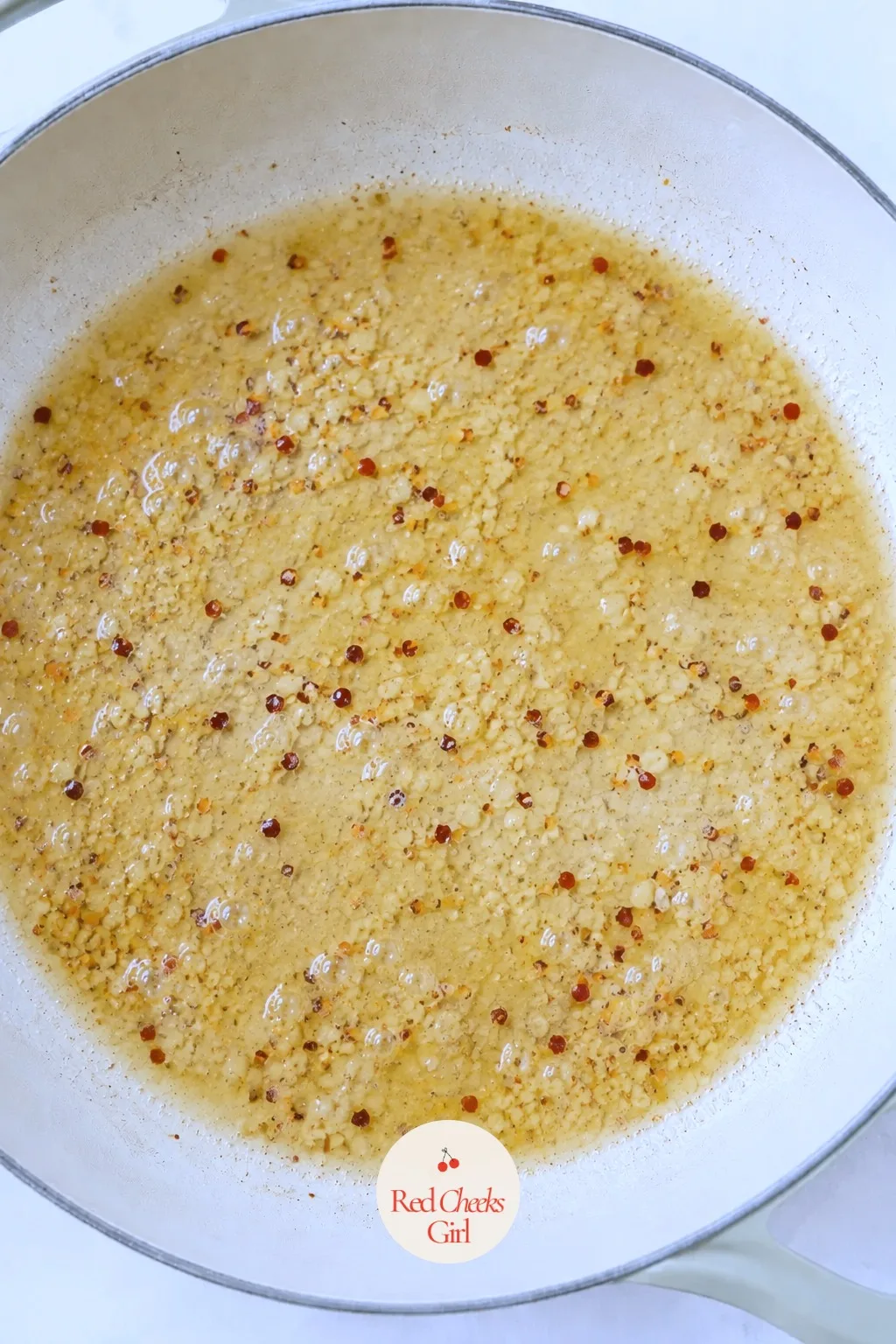
Deglaze With the Wine
Pour in the wine, or the broth and vinegar, and let it bubble hard for a couple of minutes. The liquid should shrink and turn a shade darker as it pulls up the browned bits from the pan.
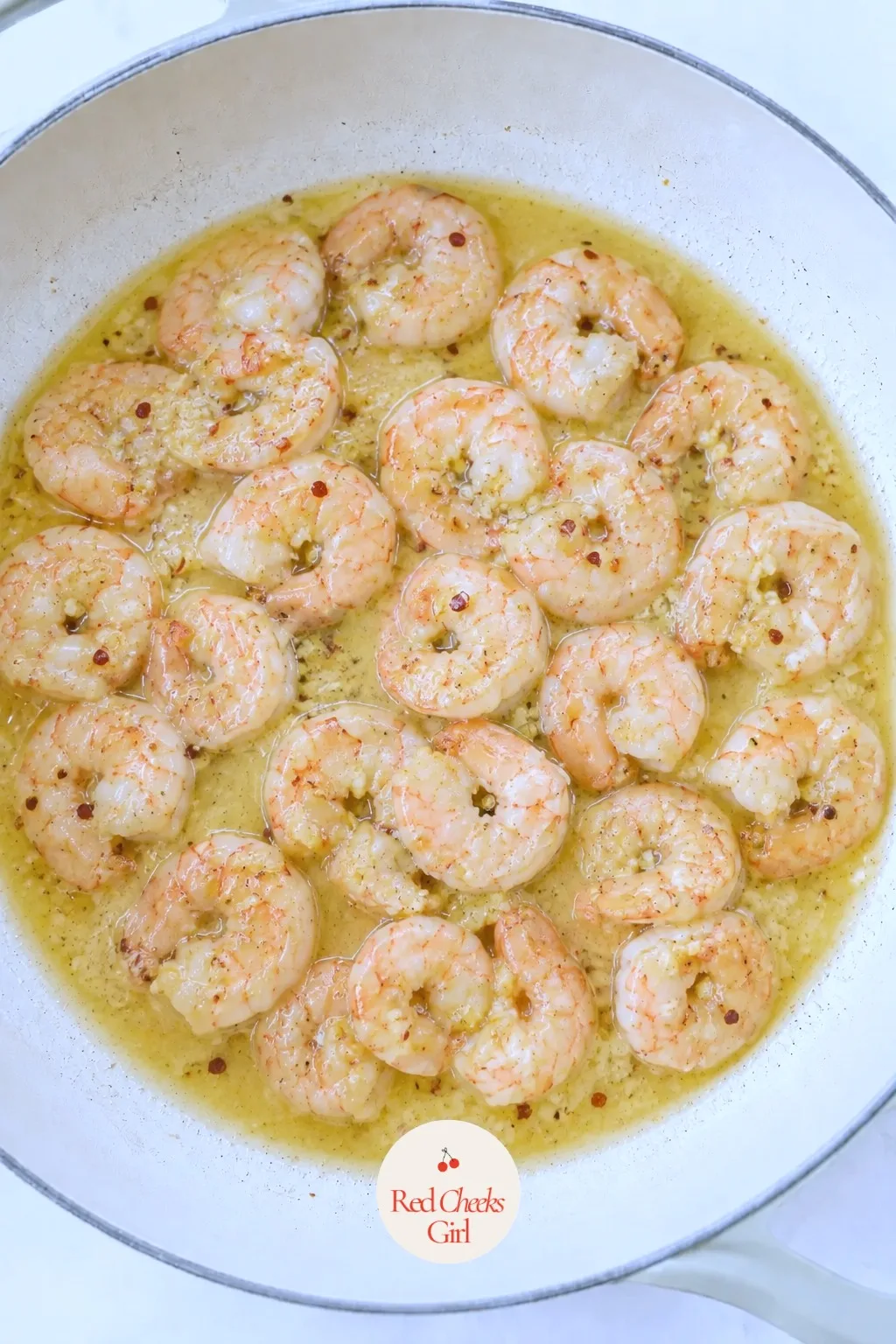
Return the Shrimp to the Sauce
Slide the shrimp and any juices on the plate back into the pan, then stir in the lemon juice. The shrimp should look fully opaque and sit in a thin, glossy sauce, not a dry pan.
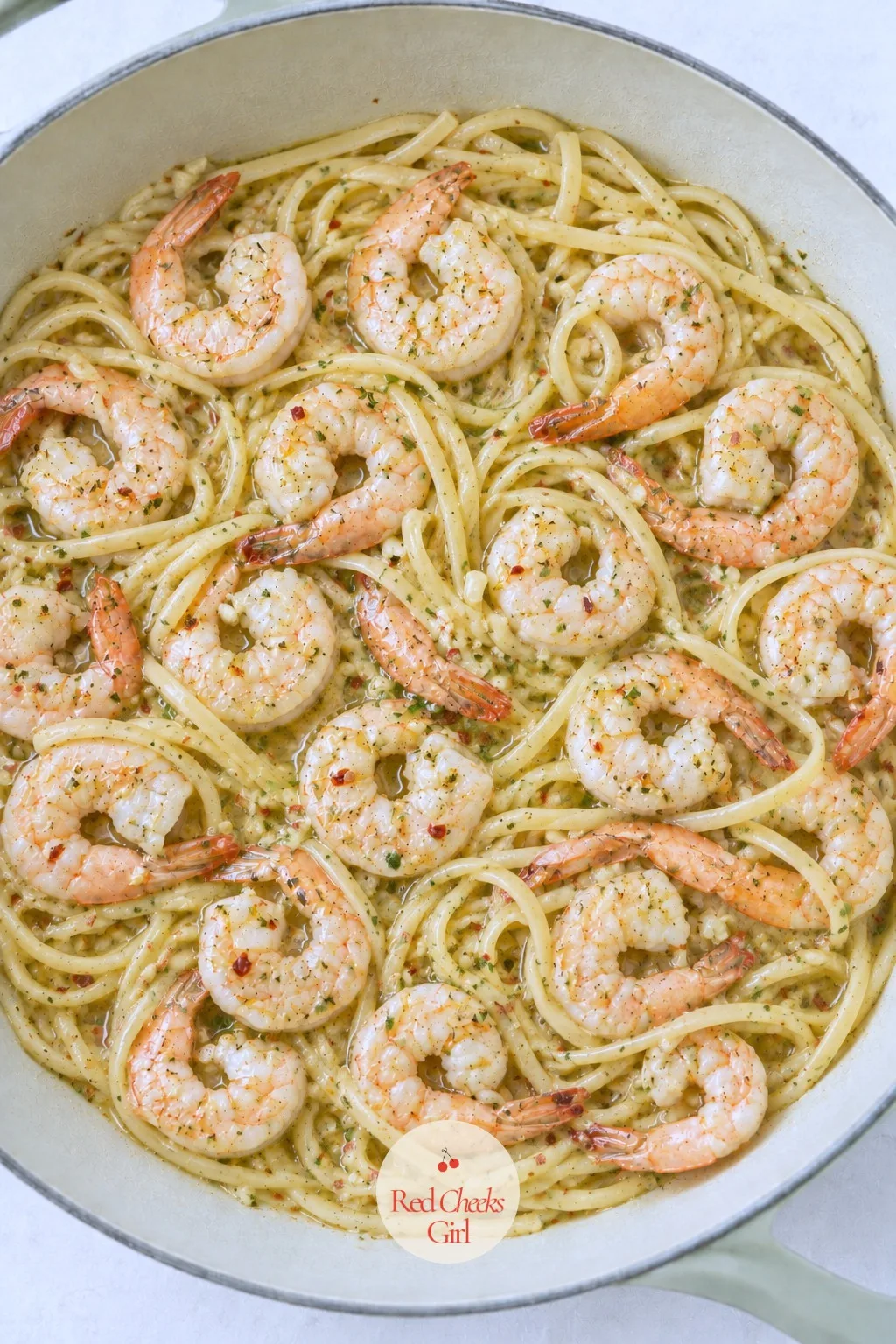
Toss the Linguine Into the Pan
Add the drained linguine straight into the skillet with the reserved pasta water. Toss until every strand looks coated and glossy rather than clumped or dry.
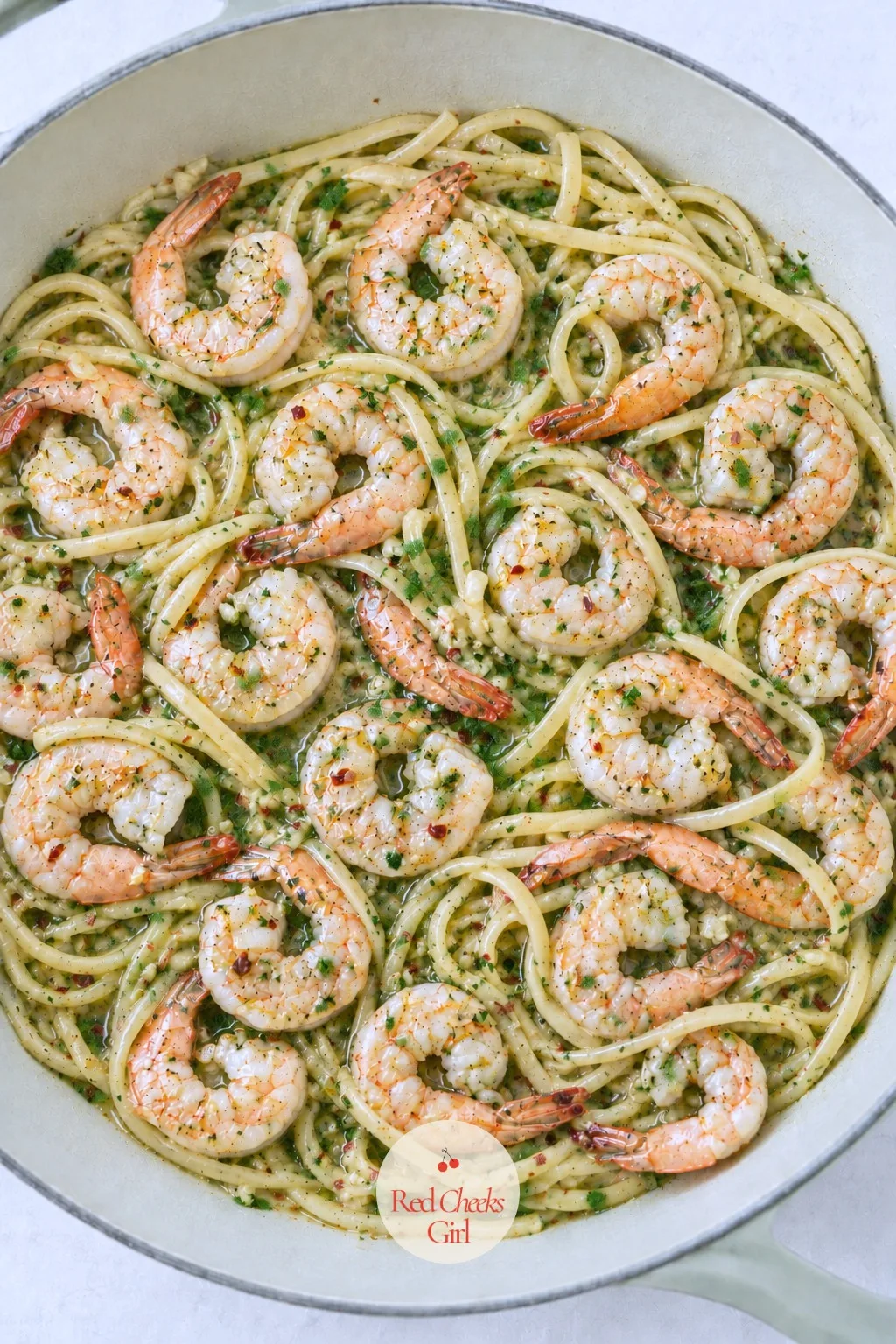
Fold In the Parsley
Scatter the chopped parsley over the top and fold it through once or twice. It should stay bright green and barely wilted, scattered evenly rather than clumped in one spot.
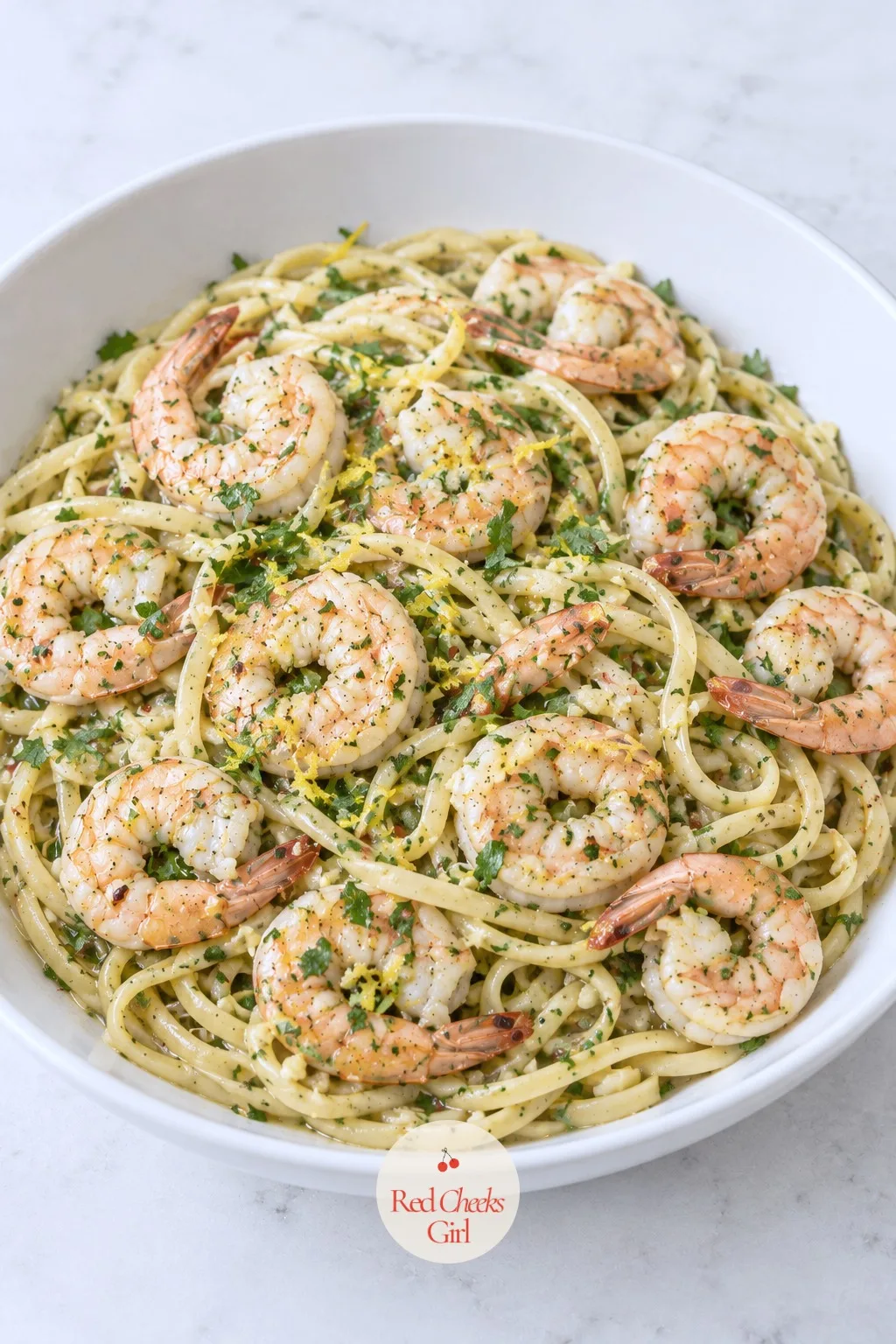
Plate and Serve
Twirl the pasta into a wide bowl or onto individual plates and arrange the shrimp on top. Finish with a little extra lemon zest and parsley just before carrying it to the table.
🛍 Shopping guide
Where Scampi Usually Goes Wrong
If you have ever ordered shrimp scampi and found little pink erasers sitting on top of the pasta, you already know the one mistake that ruins this dish. Shrimp go from tender to rubbery in about sixty seconds, and almost every bad version comes down to leaving them in the pan a beat too long.
Watch the shape, not the clock. A shrimp that curls into a loose, open C is ready; one that has pulled itself into a tight little O has already overcooked, and no amount of sauce brings it back.
Garlic burns almost as fast. Keep the heat at medium once it hits the pan, stir it constantly, and pull it the second it turns pale gold and fragrant; scorched garlic turns bitter in a way lemon juice cannot fix.
Skipping the reserved pasta water is the quieter mistake. Butter and oil do not want to hold onto noodles on their own, and a splash of starchy water is what turns a greasy puddle into a sauce that coats every strand.
Last, give the shrimp room. A crowded pan steams instead of searing, and steamed shrimp never get that light gold edge; cook them in two batches if your skillet runs small rather than piling them all in at once.
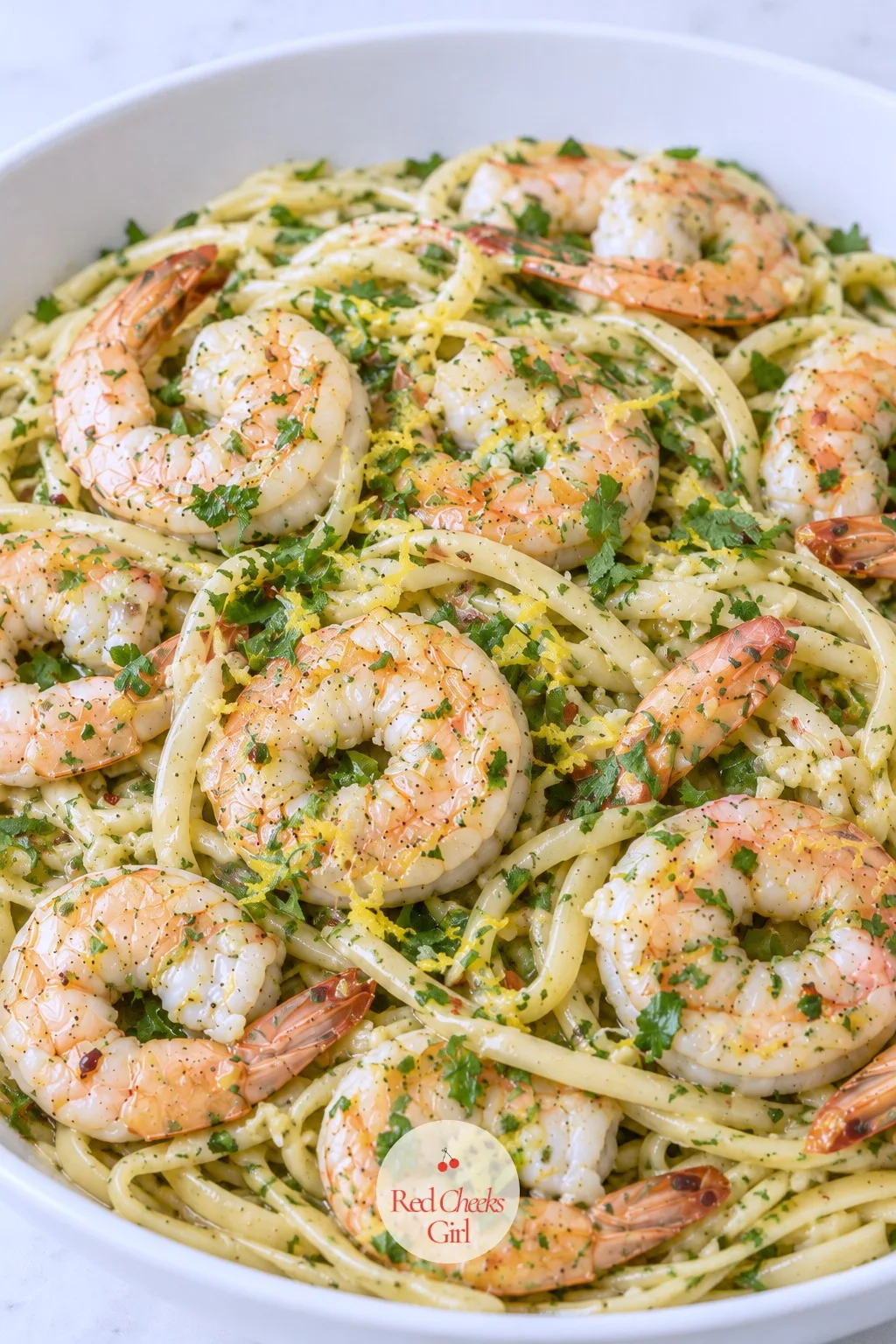
Swaps That Still Taste Like Scampi
Not pouring wine tonight, or cooking for a crowd that includes someone who is not drinking? Swap the half cup of wine for the same amount of low-sodium chicken broth plus a teaspoon of white wine vinegar; the sauce loses a little perfume but keeps its brightness.
A dry vermouth works too, if you want something closer to the original without opening a full bottle.
Linguine is tradition, not law. Spaghetti or fettuccine hold the sauce almost as well, and a gluten-free pasta swaps in one for one if the package allows it; just watch it a minute or two earlier than the box suggests, since those noodles turn soft fast.
Shrimp carry a shellfish allergen, so for a guest who cannot eat them, cubed chicken breast or bay scallops take the sear-and-deglaze method just as well; cook chicken a little longer, scallops a little less.
If you want to keep shrimp on the menu elsewhere at the same party, try Shrimp Tostadas With Kimchi Slaw for a completely different way to serve it.
Using ghee or an extra tablespoon of olive oil in place of the butter keeps the dish dairy light without losing the glossy finish; the sauce will taste a touch cleaner, not worse.
Red pepper flakes are adjustable, not optional in anyone’s eyes but yours. A light pinch barely registers, a full half teaspoon gives real warmth, and leaving them out entirely still makes a completely traditional scampi.
What to Set Next to It
A bowl of linguine and shrimp holds its own, but a party table reads better with something to tear and something green next to it. Bread is the obvious first move: a loaf of Homemade Garlic Bread With Romano Butter mops up every bit of sauce the pasta leaves behind.
For color and a little crunch, put out Roasted Green Beans With Parmesan and Lemon; the same lemon note that runs through the scampi ties the two plates together without repeating a single flavor exactly.
Keep the rest of the table light. A simple arugula salad with nothing more than olive oil and lemon avoids competing with the garlic, and a chilled bottle of whatever white wine went into the pan gives guests something to drink that already matches the sauce.
If the evening calls for more than food, a few rounds of 17 Dinner Party Games to Play Right at the Table fill the stretch between the last bite and dessert without anyone reaching for their phone.
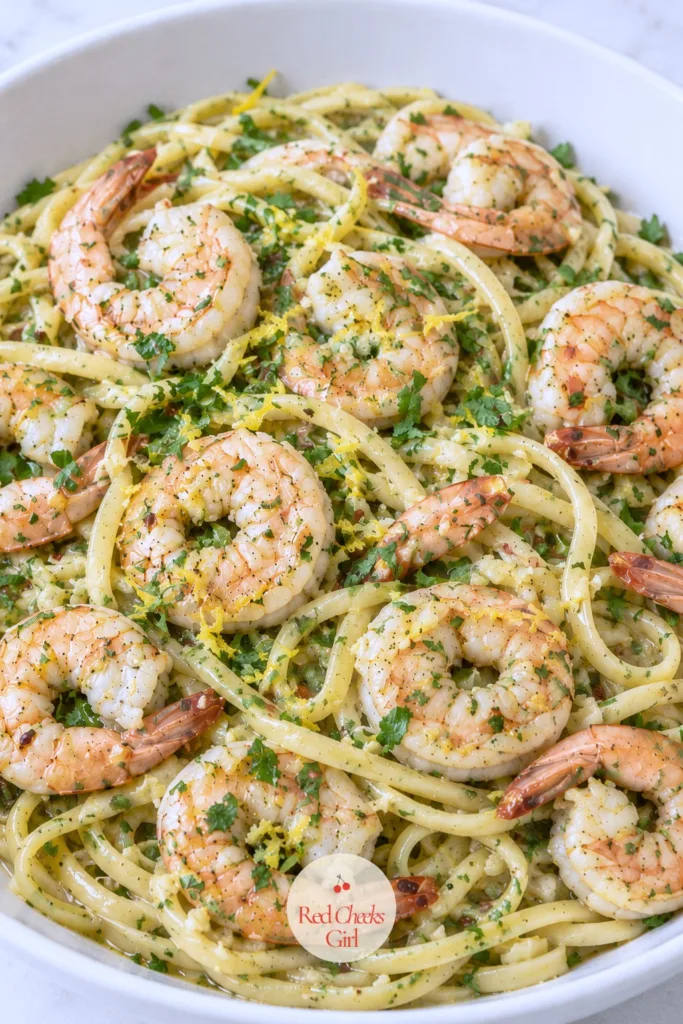
Shrimp Scampi Pasta
Ingredients
- 12 ounces linguine
- 1 1/2 pounds large shrimp 21 to 25 count, peeled and deveined
- 4 tablespoons unsalted butter divided
- 3 tablespoons olive oil divided
- 6 cloves garlic minced
- 1/2 teaspoon red pepper flakes plus more to taste
- 1/2 cup dry white wine such as Pinot Grigio or Sauvignon Blanc (or 1/2 cup low-sodium chicken broth plus 1 teaspoon white wine vinegar for an alcohol-free version)
- 1 large lemon juiced (about 3 tablespoons), plus extra zest for garnish
- 1/2 teaspoon kosher salt plus more for the pasta water
- 1/4 teaspoon black pepper
- 1/3 cup chopped fresh parsley
- crusty bread for serving (optional)
Instructions
- Bring a large pot of generously salted water to a boil over high heat. Add the 12 ounces of linguine and cook according to the package time, stirring once near the start so the strands do not clump. You will know it is ready when a strand bends but still resists a bite at the center.
- Just before you drain the pasta, scoop out 1 cup of the starchy cooking water with a heatproof measuring cup and set it aside. Drain the linguine in a colander and leave it there while you finish the shrimp; do not rinse it, the surface starch is what helps the sauce cling later.
- Pat the 1 1/2 pounds of shrimp completely dry with paper towels, then season them on both sides with 1/2 teaspoon kosher salt and 1/4 teaspoon black pepper. Dry shrimp sear instead of steam, which is the difference between a light gold crust and a gray, rubbery one.
- Heat 2 tablespoons of the olive oil and 1 tablespoon of the butter in a 12 inch skillet over medium high heat until the butter stops foaming. Lay the shrimp in a single layer without crowding them (work in two batches if your skillet is smaller) and sear undisturbed for 60 to 90 seconds, until the bottoms turn opaque pink and the edges start to curl.
- Flip each shrimp with tongs and cook the second side for another 45 to 60 seconds, just until the shrimp turn solid pink-white and form a loose C shape, not a tight O. Lift the shrimp onto a plate right away; they keep cooking off the heat, and this step decides whether they stay tender.
- Lower the heat to medium and add the remaining 1 tablespoon olive oil and 3 tablespoons butter to the same skillet. Add the 6 cloves of minced garlic and 1/2 teaspoon red pepper flakes, and stir constantly for 45 to 60 seconds, just until the garlic turns fragrant and pale gold; pull it off a second early if you smell any sharpness, since burnt garlic cannot be fixed.
- Pour in the 1/2 cup dry white wine (or the broth and vinegar for the alcohol-free version) and raise the heat to medium high. Scrape up any browned bits from the bottom of the skillet with a wooden spoon and simmer for 2 to 3 minutes, until the liquid reduces by about a third and smells rounded rather than sharp.
- Stir in the juice of 1 lemon, about 3 tablespoons, and return the shrimp along with any juices on the plate to the skillet. Turn off the heat under the pan; the residual warmth is enough to bring the shrimp back to temperature without cooking them further.
- Add the drained linguine directly into the skillet along with 1/2 cup of the reserved pasta water. Toss everything together with tongs for about a minute, until the strands look glossy and the sauce coats them rather than pooling at the bottom; add more pasta water, a tablespoon at a time, if the pan looks dry.
- Fold in the 1/3 cup chopped parsley and taste the sauce, adjusting with a little more salt, black pepper or red pepper flakes as needed. The parsley should look bright green and barely wilted, not cooked down.
- Let the pan sit off the heat for 2 minutes before plating. This short rest lets the sauce settle into the pasta instead of sliding off onto the plate, and it keeps the shrimp from going from tender to tough in the last seconds of carryover heat.
- Twirl the linguine onto plates or into a wide serving bowl, dividing the shrimp evenly on top. Finish with a little extra lemon zest and parsley, and serve immediately with crusty bread or extra lemon wedges on the side.
Good to Know
Frequently Asked Questions
Can I use frozen shrimp for shrimp scampi?
Yes, as long as it is thawed completely and patted very dry before it goes in the pan. Thaw it overnight in the fridge or under cold running water for about fifteen minutes, then sear it exactly as you would fresh shrimp.
Why is my shrimp scampi watery?
A thin, watery sauce usually means the shrimp released extra liquid into the pan or the wine never got a chance to reduce. Searing the shrimp dry and letting the wine bubble down by about a third before adding the pasta fixes it.
What size shrimp is best for shrimp scampi?
Large shrimp around 21 to 25 per pound work best because they sear fast but still hold their shape. Smaller shrimp overcook before they brown, and jumbo ones can turn chewy if you look away for even a moment.
What is the best wine to use in shrimp scampi?
Use a dry, crisp white you would actually drink, such as Pinot Grigio, Sauvignon Blanc or an Albariño. Skip sweet wines and bottled “cooking wine,” which is mostly salt and adds little real flavor.
How do you reheat shrimp scampi without the shrimp turning rubbery?
Reheat it gently and briefly, covered, in a skillet over low heat with a splash of water or broth, or in short microwave bursts at reduced power. High heat or long reheating is what turns already-cooked shrimp tough.
17 Easter dinner recipes from slow cooker ham and herb crusted lamb to deviled eggs, sides and cocon
16 marry me chicken recipes: the classic skillet dinner plus pasta, soup, salmon, pork chops, a croc
13 gnocchi dishes with bright sauces and crispy pan-seared edges: skillet and sheet pan dinners for
Leave a Reply