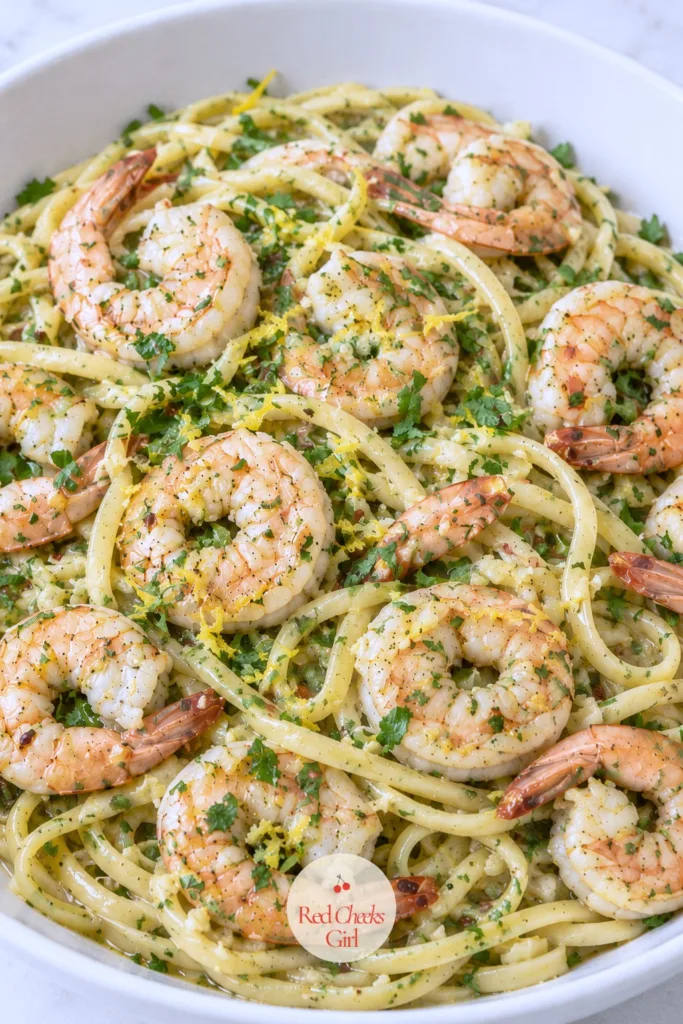
Shrimp Scampi Pasta
Ingredients
- 12 ounces linguine
- 1 1/2 pounds large shrimp 21 to 25 count, peeled and deveined
- 4 tablespoons unsalted butter divided
- 3 tablespoons olive oil divided
- 6 cloves garlic minced
- 1/2 teaspoon red pepper flakes plus more to taste
- 1/2 cup dry white wine such as Pinot Grigio or Sauvignon Blanc (or 1/2 cup low-sodium chicken broth plus 1 teaspoon white wine vinegar for an alcohol-free version)
- 1 large lemon juiced (about 3 tablespoons), plus extra zest for garnish
- 1/2 teaspoon kosher salt plus more for the pasta water
- 1/4 teaspoon black pepper
- 1/3 cup chopped fresh parsley
- crusty bread for serving (optional)
Instructions
- Bring a large pot of generously salted water to a boil over high heat. Add the 12 ounces of linguine and cook according to the package time, stirring once near the start so the strands do not clump. You will know it is ready when a strand bends but still resists a bite at the center.
- Just before you drain the pasta, scoop out 1 cup of the starchy cooking water with a heatproof measuring cup and set it aside. Drain the linguine in a colander and leave it there while you finish the shrimp; do not rinse it, the surface starch is what helps the sauce cling later.
- Pat the 1 1/2 pounds of shrimp completely dry with paper towels, then season them on both sides with 1/2 teaspoon kosher salt and 1/4 teaspoon black pepper. Dry shrimp sear instead of steam, which is the difference between a light gold crust and a gray, rubbery one.
- Heat 2 tablespoons of the olive oil and 1 tablespoon of the butter in a 12 inch skillet over medium high heat until the butter stops foaming. Lay the shrimp in a single layer without crowding them (work in two batches if your skillet is smaller) and sear undisturbed for 60 to 90 seconds, until the bottoms turn opaque pink and the edges start to curl.
- Flip each shrimp with tongs and cook the second side for another 45 to 60 seconds, just until the shrimp turn solid pink-white and form a loose C shape, not a tight O. Lift the shrimp onto a plate right away; they keep cooking off the heat, and this step decides whether they stay tender.
- Lower the heat to medium and add the remaining 1 tablespoon olive oil and 3 tablespoons butter to the same skillet. Add the 6 cloves of minced garlic and 1/2 teaspoon red pepper flakes, and stir constantly for 45 to 60 seconds, just until the garlic turns fragrant and pale gold; pull it off a second early if you smell any sharpness, since burnt garlic cannot be fixed.
- Pour in the 1/2 cup dry white wine (or the broth and vinegar for the alcohol-free version) and raise the heat to medium high. Scrape up any browned bits from the bottom of the skillet with a wooden spoon and simmer for 2 to 3 minutes, until the liquid reduces by about a third and smells rounded rather than sharp.
- Stir in the juice of 1 lemon, about 3 tablespoons, and return the shrimp along with any juices on the plate to the skillet. Turn off the heat under the pan; the residual warmth is enough to bring the shrimp back to temperature without cooking them further.
- Add the drained linguine directly into the skillet along with 1/2 cup of the reserved pasta water. Toss everything together with tongs for about a minute, until the strands look glossy and the sauce coats them rather than pooling at the bottom; add more pasta water, a tablespoon at a time, if the pan looks dry.
- Fold in the 1/3 cup chopped parsley and taste the sauce, adjusting with a little more salt, black pepper or red pepper flakes as needed. The parsley should look bright green and barely wilted, not cooked down.
- Let the pan sit off the heat for 2 minutes before plating. This short rest lets the sauce settle into the pasta instead of sliding off onto the plate, and it keeps the shrimp from going from tender to tough in the last seconds of carryover heat.
- Twirl the linguine onto plates or into a wide serving bowl, dividing the shrimp evenly on top. Finish with a little extra lemon zest and parsley, and serve immediately with crusty bread or extra lemon wedges on the side.
Good to Know
If the sauce looks dry once the pasta goes in, loosen it with another splash of the reserved pasta water rather than more butter; the starch is what makes it cling.