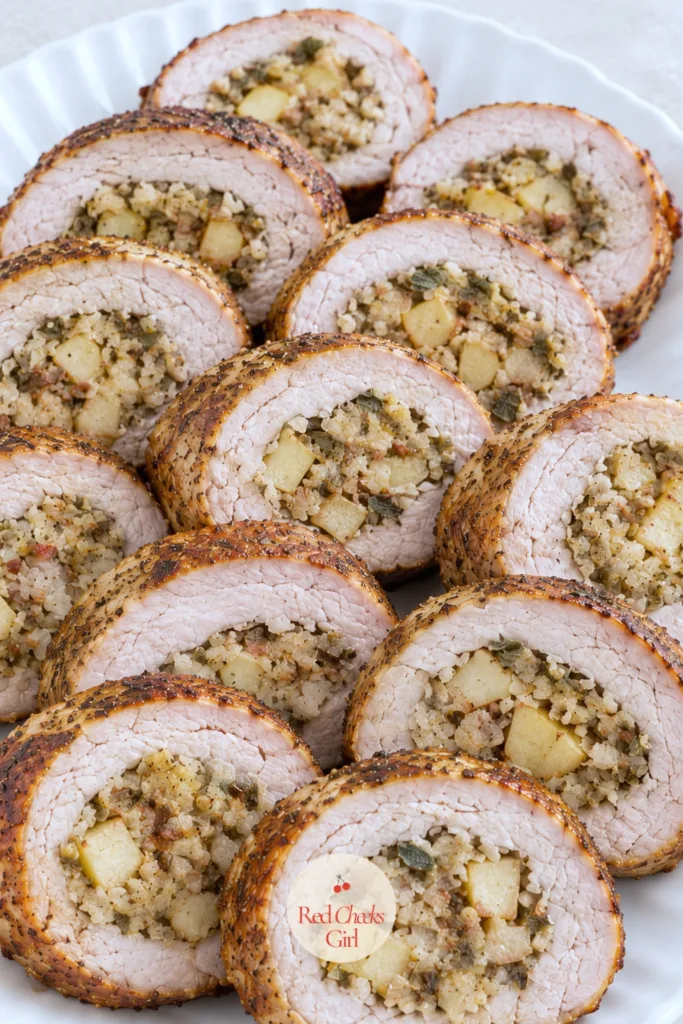
Stuffed Pork Tenderloin
Ingredients
- 2 pork tenderloins about 1 to 1 1/4 pounds each, silver skin trimmed
- Kosher salt and freshly ground black pepper
- 2 tablespoons unsalted butter
- 1 medium yellow onion finely chopped (about 1 cup)
- 2 medium apples Honeycrisp or Gala, peeled, cored and finely chopped (about 2 cups)
- 2 tablespoons fresh sage leaves finely chopped (or 2 teaspoons dried rubbed sage)
- 1 1/2 cups fresh bread crumbs from day-old bread, crusts trimmed
- 1/3 cup low-sodium chicken broth
- 2 tablespoons olive oil
- Kitchen twine for tying
Instructions
- Melt the butter in a medium saucepan over medium heat. Add the chopped onion and cook, stirring often, for 4 to 5 minutes, until it turns soft and translucent.
- Add the chopped apple and the sage to the saucepan. Cook for 5 minutes more, stirring now and then, until the apple softens at the edges but still holds its shape.
- Remove the saucepan from the heat. Stir in the bread crumbs and the chicken broth, season with 1/2 teaspoon salt and a few grinds of pepper, and set the stuffing aside to cool for 10 minutes: it should look loose and moist, not wet.
- Lay one pork tenderloin on a cutting board. Trim away any silvery membrane (silver skin) with a sharp knife, angling the blade just under it and pulling it away in one long strip. Repeat with the second tenderloin.
- Place one tenderloin flat on the board with the thicker side facing you. Starting about one-third of the way up from the board, slice lengthwise down the center of the meat, stopping about 1/2 inch before you cut all the way through so the two halves stay joined like a hinge.
- Open the tenderloin out like a book. If one side is still noticeably thicker than the other, make a second shallow cut into that thicker half and open it again the same way, so the whole piece lies in one even sheet.
- Cover the opened tenderloin with a sheet of plastic wrap and pound it gently with a meat mallet until it is an even 1/2 inch thick all over. Repeat the butterflying and pounding with the second tenderloin.
- Season both sides of each flattened tenderloin with salt and pepper.
- Spread half of the cooled stuffing over each tenderloin in an even layer, leaving a 1/2 inch border bare all around the edges so the filling has somewhere to go as you roll.
- Starting from one long edge, roll each tenderloin up tightly into a log, stuffing side in. Tie each roll with kitchen twine at 1-inch intervals, trimming the loose ends, so the shape holds on its own on the board.
- Heat the olive oil in a large cream enameled skillet over medium-high heat until it shimmers. Sear the rolled tenderloins on all sides, about 2 minutes per side, until deeply golden all over.
- Slide the skillet straight into a 400°F oven. Roast for 25 to 30 minutes, until an instant-read thermometer pushed into the thickest part of the meat (avoiding the stuffing) reads 145°F, and a second reading in the center of the stuffing reads at least 145°F too.
- Lift the skillet out of the oven and tent the tenderloins loosely with foil. Let them rest on the counter for 10 minutes: the temperature will climb a few more degrees and the juices will settle back into the meat instead of running onto the board.
- Snip and remove the kitchen twine, then slice each tenderloin into rounds about 1 inch thick. Arrange the rounds, cut side up, on a platter and serve warm.
Good to Know
Buy two tenderloins close in size so they finish cooking together, and let the stuffing cool before it touches the meat so the pork doesn't start cooking from the inside before it ever reaches the pan.