

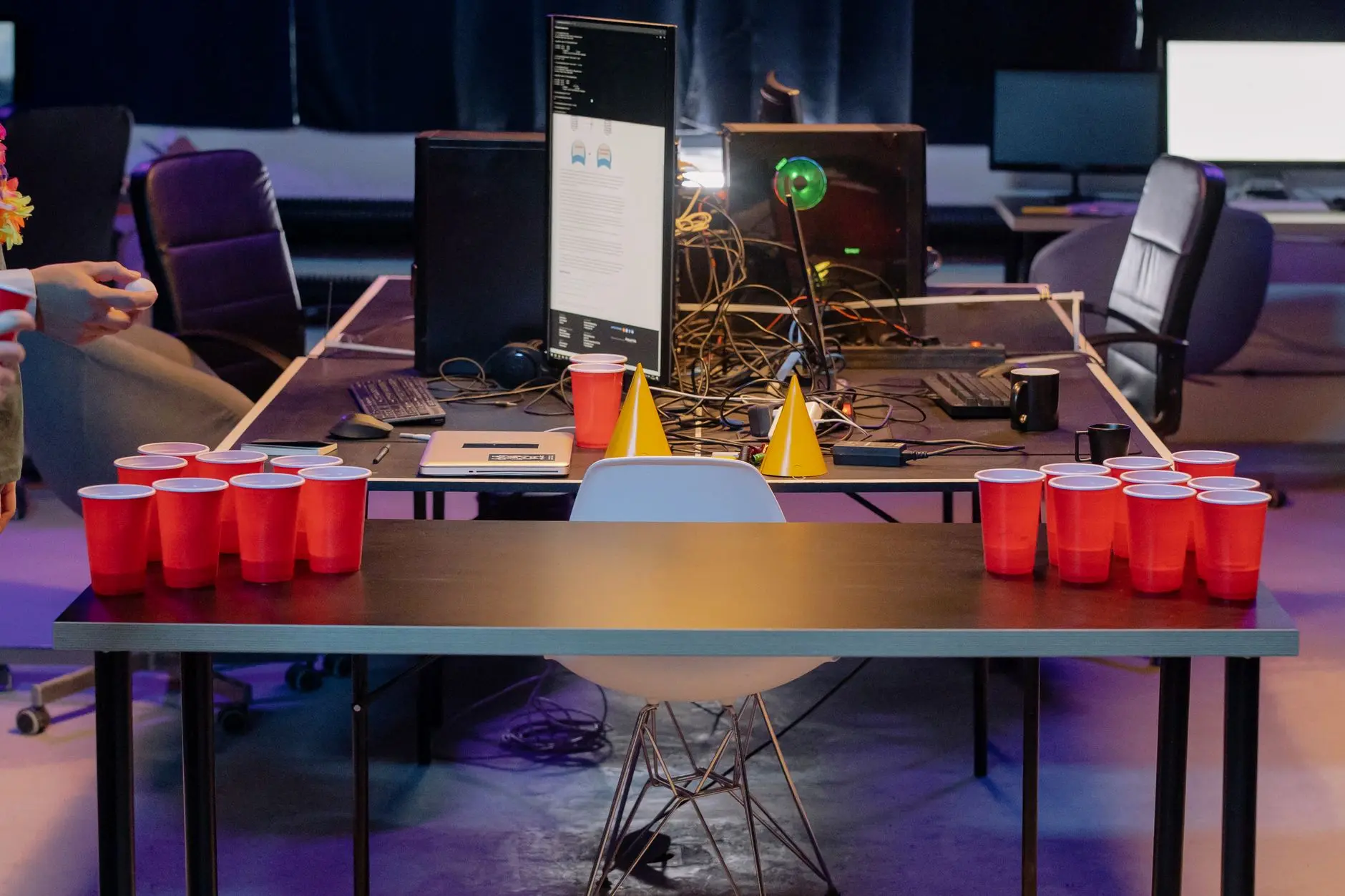
One minute party games are basically the secret weapon every holiday host needs but never remembers to pack.
You know the vibe — the party is warming up, the drinks are poured, and someone needs to do something before the group splits into two sad little phone-scrolling clusters. That’s where these 25 sixty-second challenges swoop in like a festive superhero.
Every single game on this list takes exactly one minute to play, uses stuff you already have at home, and guarantees at least one person making a face they’ll never live down.
And if you’re still hunting for the perfect gift to go alongside the fun, check out this Christmas Gift Guide for everyone — because a great party deserves great presents too.
The beauty of one minute party games is that they work for literally any group — the competitive uncle who turns everything into the Olympics, the shy colleague who just wants to have a little fun, the kids, the grandparents, the whole chaotic crew.
No trivia, no long rule explanations, no board setups. Just a phone timer, a 60-second countdown, and instant pandemonium.
Print the scorecards, grab a bag of mixed candy, and let’s go — your guests are going to be talking about this party for a very long time.
This post contains affiliate links — if you buy through them, I may earn a small commission at no extra cost to you.
- Cup Stack Pyramid
- One Minute Challenge Cards
- Move the Sweets with a Straw
- Cookie Face Race
- Minute Game Scorecard
- Junk in the Trunk
- Timer Challenge Bingo
- Stack the Dice on a Stick
- Blow the Cards off the Bottle
- Guess the Time Sheet
- Ping Pong Bounce into Cups
- Cotton Ball Spoon Scoop
- Nose Push the Ball
- Sort the Candy by Colour
- Challenge Rules Card Deck
- Balloon Keep-Up 60
- Unroll the Streamer
- Marshmallow Tower Build
- Elastic Band Face Move
- Coin Stack Speed
- Tissue Box Empty Shake
- Pencil Cup Drop
- Cereal Straw Transfer
- Stack the Cans
- Card Flip Race
- Frequently Asked Questions
1. Cup Stack Pyramid
This is the classic that started the whole minute-to-win-it craze, and it still absolutely slaps at holiday parties.
Each player gets a set of plastic cups — 15 works perfectly for a 5-4-3-2-1 pyramid — and the moment the timer starts, they have exactly 60 seconds to stack all the cups into a pyramid and then collapse them back into a single stack.
Both steps must be completed before the buzzer goes off, which is exactly where most people panic and send the whole thing flying. (Watching someone frantically slap cups off the table at second 58 is genuinely one of the funniest things you will ever witness.)
Set up one station per player with cups pre-stacked in a single column on a flat table.
No sliding cups off the edge — they must be stacked and un-stacked using only one hand at a time for a tougher variation, or two hands for the family-friendly round.
The judge watches to confirm the pyramid is fully formed (every cup touching the one below it, no gaps) before the player starts collapsing it back. Crashing the pyramid counts as a fail — the player must rebuild from scratch and still beat the clock.
Winner is the player who completes the full stack-and-collapse cycle the most times within 60 seconds — so if you want a longer game, make it a points race with multiple 60-second rounds.
Holiday tip: use red and green cups and have players alternate colours as they stack for a festive Christmas-tree look. It adds a tiny extra challenge because suddenly colour order matters and brains short-circuit under pressure.
Your holiday party guests will absolutely thank you for this one.
- Stack 15 cups into a 5-4-3-2-1 pyramid
- Then collapse them back into one stack
- Both steps must finish inside 60 seconds
- Most complete cycles in a minute wins
🛒 What you’ll need
2. One Minute Challenge Cards
This is the printable backbone of your whole evening — a set of challenge cards you print, cut apart, and shuffle into a deck.
Each card states a single 60-second physical challenge with a clear win condition, so anyone can grab a card, read it aloud, and immediately start playing without a host explaining anything. Think of it as your party’s own little game-show prop deck.
The mix of silly, competitive, and downright bizarre challenges on the cards keeps energy sky-high all night because nobody knows what’s coming next.
Print the sheet on cardstock, cut along the dotted lines, and shuffle the deck face-down in the middle of the table.
Players take turns drawing one card and immediately attempting the challenge — no swapping, no skipping, just vibes and a running timer on someone’s phone. Each card lists the exact challenge name, a one-sentence rule, and the win condition (e.g.
‘most wins’, ‘first to finish’, or ‘completed before buzzer’). Keep a small tally on the Minute Game Scorecard (game 7 below) so points accumulate across the deck.
Why it works so beautifully at a holiday party: the deck format means zero downtime between games. The moment one card is done, the next person draws.
You can also theme the card backs with a festive holiday design so they double as a keepsake or stocking stuffer. Host tip — laminate a set and you have a reusable party kit you pull out every year without printing again.
Talk about a gift that keeps on giving.
Laminate the card set after printing for a reusable party kit you can pull out every holiday season.

🛒 What you’ll need
3. Move the Sweets with a Straw
This one sounds deceptively easy — and then the first sweet skids across the table and lands on the floor and everyone loses their mind.
Each player gets a straw and a pile of 20 small wrapped sweets (mini chocolates, individually wrapped candy, whatever’s left over from the holiday candy bowl — tbh this game is a great excuse to buy more).
The challenge: use only suction through the straw to pick up one sweet at a time and transfer it from the source plate to the target plate, as many as possible in 60 seconds. No hands, no blowing, suction only.
Set up two plates side by side — one loaded with 20 sweets, one empty — for each player. Space competing players at least a metre apart so they can’t accidentally suck up each other’s candy (which sounds funnier than it is).
The judge watches to ensure each sweet is lifted cleanly by straw suction before it’s dropped on the target plate. Any sweet that falls off the straw mid-transfer can be attempted again, but the clock keeps running.
Heavier wrapped candies are harder; small foil-wrapped chocolates are the sweet spot for difficulty.
Winner is whoever has the most sweets on their target plate when the 60-second timer buzzes.
For a holiday twist, use colour-sorted candies — red and green M&Ms at Christmas, orange and black at Halloween — and add a bonus point if the player also keeps the colours sorted on the target plate.
It sounds impossible and it absolutely is, which makes it perfect. This is also one of those games that’s genuinely fun to watch even when you’re not playing.
- Groups of 2-6 players competing simultaneously
- Ages 8 and up (younger kids may need a wider-bore straw)
- Works indoors on any flat table surface
🛒 What you’ll need
4. Cookie Face Race
Okay, this is the game that will get photographed, posted, and talked about for years.
Each player places a flat cookie (a plain digestive biscuit or Oreo works perfectly) on their forehead while tilting their head back, and the 60-second timer starts the moment the cookie is in place.
The challenge: use only your facial muscles — no hands, no tilting the head sharply — to slowly work the cookie from your forehead down into your mouth.
It requires the most delicate, ridiculous series of eyebrow raises and cheek scrunches you will ever see a grown adult perform at a dinner party.
Each player needs just one cookie to start. Have a small backup stack nearby because cookies will fall — and when they do, the player picks it back up, replaces it on their forehead, and keeps going (the clock never stops).
Decide in advance whether fallen cookies are replaced with a fresh one or the same cookie, because once Grandma’s biscuit has been on the floor, you want a clear rule in place.
The judge watches that no hands touch the cookie after the timer starts and that the cookie is fully in the mouth (chewed or unchewed) to count as a win.
The winner is the first player to get the cookie into their mouth, OR the player who gets it closest to their mouth when time runs out — judge this by where the cookie has reached on the face (forehead, eyebrow, nose, lips).
Holiday variation: use a holiday-shaped shortbread cookie for extra festive silliness. Fair warning — this game produces an absolutely spectacular amount of crumbs, so maybe play it before you vacuum.
Zero setup, just one cookie per player — guests can jump straight in with no explanation needed and the visual comedy starts within the first five seconds.
5. Minute Game Scorecard
Every great game night needs a way to track who’s actually winning — and this printable scorecard does it beautifully.
It’s a single-page tally sheet with space for up to 10 player names across the top and all 20 active game titles down the left column, creating a simple grid where the scorekeeper marks points after each 60-second challenge.
It sounds basic, but having a physical scoreboard on the table transforms a casual game night into a genuine competition — people start strategising, forming rivalries, and loudly disputing scores in the best possible way.
Print one copy per party and nominate a dedicated scorekeeper (ideally someone who won’t also be competing in every round, though that’s a lot to ask).
The scorekeeper writes each player’s name in the blank column header, then marks a tally in the grid cell after each round. A small ‘WINNER’ crown or star stamp at the top is a fun touch if you have one.
The bottom of the sheet has a ‘GRAND TOTAL’ row so the overall party champion can be crowned at the end of the night — and trust me, the competitive energy that creates in the final few rounds is absolutely electric.
This sheet also doubles as a party keepsake. After the night’s over, the winner gets to take it home (or you photograph it and text it to the group chat immediately, which is the modern equivalent).
Host tip: if you’re budgeting for Christmas this year, this scorecard costs nothing to print and elevates the whole party for free — which is the kind of hosting win we love to see.
Assign one dedicated scorekeeper per session so players can focus on competing without constantly running back to the sheet.

6. Junk in the Trunk
If there is one game on this entire list that will make your holiday party legendary, it is this one.
Each player straps an empty tissue box filled with ping-pong balls around their waist — the box sits at the small of the back — and the moment the 60-second timer starts, they have to shake, shimmy, jump, and wiggle until every single ball has bounced out of the box.
No hands allowed. The audience will be on the floor — whether from laughing or from a rogue ping-pong ball is unclear, so clear the breakables first.
To set it up, remove the plastic film from a tissue box opening, thread a belt or long ribbon through slits on each side of the box, and fill it with 8-10 ping-pong balls.
The player straps it on with the open side facing out, not against their back, so the balls can actually escape. Test the strap before the timer starts — nothing kills the fun like a tissue box falling off at second four.
Mark a play zone on the floor with painter’s tape so the flying balls stay roughly corralled and cleanup doesn’t take the rest of the evening.
Winner is the player who empties the most balls in 60 seconds — count the balls on the floor, not in the box, and if two players tie, they go again.
For a festive holiday twist, swap ping-pong balls for jingle bells (the ones that don’t bounce away across the room, so maybe tape a boundary). The sound alone — a frantic jingling getting faster and faster — is its own special kind of Christmas magic.
This is also an incredible team relay: each team member takes a turn and the team with the most total balls out at the end wins.
- 1 empty rectangular tissue box per player
- 8-10 ping-pong balls per box
- 1 adjustable belt or long ribbon per player
- Painter’s tape to mark the play zone
🛒 What you’ll need
7. Timer Challenge Bingo
This is the one game that lets everyone at the party play simultaneously — even the people who just want to sit and watch the chaos unfold. Each guest gets a unique bingo card printed with a 5×5 grid of mini challenge icons and names.
Throughout the evening, whenever a challenge is completed (by anyone at the party), guests who have that challenge on their card dab it off. First to get five in a row — horizontally, vertically, or diagonally — shouts ‘BINGO!’ and wins a small prize.
It turns the entire evening’s game lineup into one giant meta-game running in the background.
The sheet includes 25 unique one-minute challenge names in the grid squares, with a FREE space in the centre (because tradition).
Print multiple card variations so every guest has a different card layout — this prevents everyone hitting BINGO at the same moment, which sounds fun in theory but produces a judging nightmare in practice.
The host calls out each challenge name as it’s played, guests scan their cards, and the tension builds beautifully over the course of the party. Keep a bowl of small sweets or mini holiday chocolates as the prize — low stakes, maximum hype.
Why this works so brilliantly for a holiday party: it keeps non-competing guests engaged and gives the evening a throughline narrative arc (‘who’s going to get BINGO first?!’).
It also naturally paces the game night, because once someone gets BINGO you have a natural pause point to refill drinks, have a snack, and then launch the next round with fresh bingo cards.
Print a few extra cards for latecomers — there’s always a straggler at a holiday party.
- Large groups of 8+ where not everyone wants to actively compete
- Running as a background meta-game across the whole party
- Families with a mix of ages — grandparents included

8. Stack the Dice on a Stick
This one is quieter than most of the other challenges, but the concentration face people make is one for the ages. Each player holds a flat wooden craft stick (or an unsharpened pencil) horizontally in their mouth, biting down gently to hold it still.
The challenge: stack as many dice as possible on top of the stick — balanced, not touching the player’s hands — within 60 seconds. The dice must remain stacked (not just balanced for a split second) when the buzzer sounds for the stack to count.
You’d be amazed how quickly a tower of six dice becomes incredibly difficult when someone breathes too hard.
Each player needs a set of at least 10 standard dice and one craft stick or pencil. Clear a small, flat space in front of each player.
The stick goes in the mouth, horizontal and as level as possible, and dice are placed one at a time by the player’s own hand.
The stack must be entirely on the stick — no dice touching the table or the player’s face — when time is called.
A designated judge stands beside each player and counts the highest stable stack achieved during the 60 seconds (the stack they held the longest, if it topples before the buzzer).
Winner is the player with the most dice stacked when time runs out. For the holiday version, use Christmas-themed novelty dice or swap standard dice for mini sugar cubes — festive, delicious, and somehow even harder to stack.
The pressure of the 60-second countdown turns a simple stacking task into white-knuckle drama, especially in the final ten seconds when everyone is frozen and the room goes completely silent waiting to see if the tower holds.
Use larger foam dice for kids or first-timers — they are lighter and less likely to roll off the stick mid-stack.
🛒 What you’ll need
9. Blow the Cards off the Bottle
This challenge sounds straightforward and is absolutely brutal in the best possible way.
A stack of at least 52 playing cards is balanced on top of a plastic bottle (a standard 500ml water bottle works perfectly), and the player has 60 seconds to blow all the cards off the bottle using only their breath — no touching, no fanning, no body contact with the cards or the bottle.
The cards must land fully off the bottle’s opening; any card left resting on the rim doesn’t count as ‘off.’ The chaos of cards flying in every direction while the player hyperventilates is genuinely spectacular.
Set the bottle on a table with the card stack placed flat on the bottle’s rim — you can pre-balance the whole deck or start with half the deck for beginners.
The player stands directly in front of the bottle (not to the side) and blows from no closer than 30 centimetres to prevent them from simply puffing from millimetres away.
A judge confirms the distance and counts remaining cards on or touching the bottle when the timer ends. Have a few extra card decks handy because the floor will look like a Vegas shuffleboard within about 20 seconds.
Winner is whoever has the fewest cards remaining on or touching the bottle after 60 seconds — count the cards left, and the lowest number wins.
For a timed race format, the winner is the first player to completely clear all cards off the bottle, stopping the clock the moment the last card clears.
Holiday party variation: use a festive cocktail shaker or decorative bottle from your holiday decor as the base, because why not make everything prettier.
- 1 standard deck of 52 playing cards
- 1 plastic 500ml water bottle per station
- A tape or chalk line 30cm from the bottle as the blow distance marker
🛒 What you’ll need
10. Guess the Time Sheet
Here is a printable that flips the whole concept on its head in the most delightful way — instead of racing against a timer, players have to BECOME the timer.
Each player gets a Guess the Time Sheet with 10 rows of challenges printed on it.
For each row, the challenge name is listed and the player circles their prediction for how long (in seconds) they think it will take a randomly selected guest to complete that challenge. No phone timers, no counting out loud — just gut instinct and vibes.
After the evening’s challenges are played and timed, players check their predictions against the actual times and score points for close guesses.
The sheet has 10 numbered challenge rows, each with the challenge name printed, a ‘Your Prediction: ___ seconds’ write-in blank, the ‘Actual Time: ___ seconds’ column (filled in by the host after each challenge), and a ‘Points’ column on the right (the host awards 3 points for within 5 seconds, 2 points for within 10, 1 point for within 15).
Scoring is simple enough for a group to track without a calculator, which matters when everyone’s had a glass of holiday punch. The total at the bottom determines the winner of this sheet’s mini-competition.
Why this is such a clever addition to a one minute party games night: it creates investment in every single challenge being played, even among guests who aren’t actively competing.
When you’ve predicted that Aunt Linda will blow the cards off the bottle in 38 seconds and she’s currently at 45 and still going, you are emotionally very much in the game.
It also sparks fantastic conversations and gentle trash-talk (‘I gave you 25 seconds and you needed ALL 60, honestly’) that keeps the whole party buzzing.
Keeps every guest invested in each challenge even when they are not the one competing — the prediction mechanic turns spectating into its own mini-game.

11. Ping Pong Bounce into Cups
This is the game that turns every flat table into a competition arena and gets everyone leaning forward in their seats.
Set up a row of 6 plastic cups in a line (or a triangle arrangement for extra challenge), and each player gets a pile of 20 ping-pong balls. The challenge: bounce as many ping-pong balls as possible into the cups in 60 seconds.
Each ball must bounce at least once on the table before landing in a cup to count — no direct throws. The sound of that satisfying ‘plunk’ every time a ball sinks is genuinely addictive, and the sound of 19 misses is even funnier.
Set up a table with cups spaced about 5 centimetres apart in a straight line or triangle.
Each player stands at the same fixed distance from the cups — tape a line on the table as the throw line and all bounces must happen between that line and the cups.
The player bounces balls one at a time; any balls that land in a cup stay there. Balls that miss can be scooped up and reattempted, but the clock never stops.
Designate a ball retriever (usually the person with the most energy or the youngest person at the party) to keep missed balls from rolling across the room.
Winner is the player with the most ping-pong balls inside cups when the buzzer goes. Variation: assign different point values to each cup — the cup farthest away is worth 3 points, middle cups worth 2, nearest cups worth 1.
This turns it from a pure quantity game into a risk-reward strategy game, which somehow makes a 60-second challenge feel like chess. Holiday version: decorate the cups to look like Christmas ornaments with a quick marker before the party.
Nobody will notice until they’re already competitive and then they’ll be oddly delighted.
- Bounce ping-pong balls off the table into cups — no direct throws
- Each ball must bounce at least once before it counts
- Most balls in cups after 60 seconds wins
- Missed balls can be picked up and retried
🛒 What you’ll need
12. Cotton Ball Spoon Scoop
This one has a delightfully evil twist built right in: cotton balls weigh almost nothing, so your spoon is perpetually fooling your brain. Each player gets a large serving spoon and a bowl of 30 cotton balls placed at one end of the table.
An empty bowl sits at the other end, about a metre away. The challenge: carry as many cotton balls as possible from one bowl to the other in 60 seconds, using only the spoon — no hands, no body contact with the cotton balls.
The catch nobody sees coming is that the cotton balls are so light you genuinely can’t feel whether one is on your spoon or not, making every trip a tiny gamble.
For setup, pre-count 30 cotton balls into each player’s source bowl and place the empty target bowl about a metre away.
Players carry one or more cotton balls at a time — stacking them on the spoon is allowed, though deeply inadvisable and very funny to watch.
If a cotton ball falls off the spoon, the player must leave it and continue — no picking up from the table with hands. This rule is crucial and players always immediately forget it.
A judge stationed beside each player watches for hand contact and counts balls in the target bowl at the buzzer.
Winner is the player with the most cotton balls in the target bowl when time is called.
For a seasonal variation, use mini marshmallows instead of cotton balls — they’re heavier, so the challenge is easier, but they’re also round and roll off the spoon dramatically, which is its own special entertainment.
If you’re sourcing supplies and want to keep costs down, check out these budget-friendly party ideas — cotton balls are dirt cheap and the game is priceless.
Use a soup ladle instead of a tablespoon for younger players — the deeper bowl holds cotton balls more securely.
🛒 What you’ll need
13. Nose Push the Ball
You know you are at a great party when someone is on their hands and knees pushing a ping-pong ball across the floor with their nose, and everyone is screaming encouragement. That is exactly what this challenge delivers.
Each player starts at a taped start line with a ping-pong ball placed directly in front of their nose.
The moment the timer starts, they push the ball using only their nose across a flat floor to a finish line — typically 3-4 metres away — and back again, as many times as possible in 60 seconds.
No hands, no feet touching the ball, nose contact only.
Mark a start line and finish line with painter’s tape, 3 to 4 metres apart on smooth flooring (carpet makes the ball drag, which is actually a harder variation for confident players). Each player starts on all fours with their nose touching the ball.
If the ball veers sideways (it will, constantly), the player can re-position their nose behind the ball without touching it with hands. A judge watches for illegal hand contact and tracks full return trips — one full out-and-back lap equals one point.
Most laps in 60 seconds wins.
Holiday party hosting note: put a towel down first if your floor was recently mopped, and accept that this game will require a 30-second recovery period where everyone simply laughs before moving on.
Running it as a head-to-head race between two players simultaneously — side by side with their own lanes marked — makes the competition absolutely electric and the audience noise even louder.
This is the game everyone remembers the next day when they still have a slightly pink nose.
Run it as a head-to-head race with two lanes marked side by side — the competition energy (and noise) triples instantly.
14. Sort the Candy by Colour
This looks so simple on paper that guests confidently volunteer — and then the timer starts and suddenly sorting becomes the hardest thing any human has ever done.
Each player gets a large pile of 60 mixed colour candies (M&Ms, Skittles, or any small individually coloured sweets work perfectly) dumped on a plate in front of them.
The challenge: sort all the candies into colour groups — each colour in its own separate zone or small bowl — as quickly as possible, with the goal of fully sorting the entire pile within 60 seconds. Sounds like kindergarten.
Is absolutely not kindergarten under pressure.
Prepare each player’s pile by mixing exactly 10 candies of 6 different colours (or 12 of 5 colours — just keep the total at 60 for consistency).
Place 6 small bowls or tape 6 labelled zones on the table, each marked with a colour dot so there’s no ambiguity about where each candy goes. Players use fingers to sort — no spoons, no scooping, just rapid individual candy placing.
Any candy in the wrong zone at the buzzer counts as unsorted. The judge counts the number of correctly sorted candies across all zones and the player with the highest correct sort count wins.
For the holiday version, use specifically Christmas-coloured candies (red, green, white, gold) and keep the colour palette seasonal — this also doubles as gorgeous table decor pre-game, which is a hosting win.
You can also run this as a team game where two players sort the same pile together in 60 seconds, which creates a fascinating dynamic where they either work brilliantly in sync or spectacularly get in each other’s way. Either outcome is wonderful.
- 60 mixed colour small candies (M&Ms or Skittles) per player
- 6 small bowls or taped sorting zones per station
- A colour dot label in each zone
🛒 What you’ll need
15. Challenge Rules Card Deck
Think of this printable as the official referee’s handbook for your evening — except printed on cardstock and sitting in a cute little deck next to the drink station.
Each card in this deck covers one specific game from the night’s lineup, printed with the exact rule, the timer instruction, and the win condition all on one card.
Whenever a new challenge starts, the host (or a volunteer) reads the relevant card aloud so everyone hears the same rules at the same time. No arguments, no ‘but I thought the rule was…’ moments, no one googling on their phone.
Just clean, fast, fair game-starting every single time.
Print the sheet on heavy cardstock and cut along the dotted lines — you’ll get 10 cards per sheet, so the full 20-game lineup needs two sheets. Each card is landscape-oriented and fits comfortably in one hand.
The front shows the game name in large bold font, the one-sentence rule in regular font, and the win condition in italic underneath.
The back of each card is blank so you can stamp or handwrite ‘OFFICIAL RULE CARD’ if you’re feeling extra, which honestly you should be. Store the deck in a small basket or decorative bowl on the table for easy access throughout the evening.
The real magic of these cards is that they hand the MC role to whoever picks up the card — meaning any guest can grab a card, read it out, and start a new challenge without the host needing to be involved at every moment.
That gives you, the host, the freedom to refresh drinks, grab snacks, and actually participate in the party instead of running it like a full-time job.
Highly recommend pairing this with the Christmas gift guide for parents if you’re planning this for a family holiday gathering and need a few small prizes to hand out to winners.
Place the card deck near the drinks station so any guest can grab the next card and kick off a new round without needing to find the host.

🛒 What you’ll need
16. Balloon Keep-Up 60
Simple premise, wildly difficult execution, and endlessly entertaining to watch: each player gets one inflated balloon and must keep it in the air for the full 60 seconds using only one hand.
The other hand must stay behind their back or in a pocket — a judge watches this rule closely because people WILL instinctively reach out with the second hand the moment things get dicey, which happens approximately every four seconds.
Running it with multiple players simultaneously creates an aerial obstacle course that gets increasingly chaotic as balloons drift into each other’s space.
Pre-inflate one balloon per player (consistent size helps keep it fair — a half-inflated balloon is dramatically harder to keep up than a fully inflated one, so agree on size before play).
Players stand in their own marked space, roughly an arm’s-width apart, to prevent collisions.
The 60-second timer starts, and any balloon that touches the floor, a wall, or any object other than the player’s one allowed hand during the 60 seconds means that player is eliminated.
The last player with their balloon airborne wins — or if multiple players survive the full minute, the player who touched their balloon the fewest times wins (a judge counts touches).
For a holiday party variation, use metallic gold and silver balloons or colour-co-ordinated holiday balloons to match your decor.
You can also ratchet up the difficulty by switching from ‘one hand’ to ‘one finger only’ for a second round that weeds out even the most naturally graceful players.
Adding festive music to the background — something with a driving beat — makes the 60 seconds feel both shorter and more dramatic at the same time.
Allow two hands for younger kids or first-timers, then challenge returning champions to the strict one-hand rule.
🛒 What you’ll need
17. Unroll the Streamer
This is one of those wonderfully absurd challenges that looks completely effortless until you try it.
Each player gets a full roll of crepe paper party streamer (the standard kind — about 30 metres per roll) and the challenge is to fully unroll the entire roll in 60 seconds using only one hand.
The other hand holds the roll itself — but no flinging, no spinning wildly, no throwing the roll across the room.
The streamer must be continuously unrolling in a controlled manner, landing in a pile on the floor, not tangled around the player or strewn chaotically across the furniture. (Though it will be. Accept this.)
Give each player a fresh full roll of streamer and clear a 2-metre radius around them for the pile. Players hold the roll in their non-dominant hand and pull the streamer with their dominant hand in one continuous motion, letting it pile on the floor.
The judge watches that the streamer isn’t being bunched into a ball (it must unroll as a continuous ribbon) and that the player isn’t using their body or furniture to speed up the process.
At the 60-second buzzer, the judge measures how much streamer is on the floor — the player who unrolled the most wins, measured in arm-lengths if you don’t have a tape measure handy.
Holiday party tip: buy streamers in your party’s colour scheme — red and green for Christmas, black and orange for a Halloween after-party — and after the game you already have a pile of streamer ready to tape across doorways as instant decor, which is budget-friendly brilliance.
The game also works beautifully as a relay: one player unrolls, a team member must RE-roll it as fast as possible, and the fastest combined time wins.
Honestly the re-roll challenge is arguably harder than the unroll, which nobody realises until they’re elbow-deep in paper ribbon.
Buy streamers in your party colour scheme — after the game the unrolled ribbon becomes instant doorway decor for zero extra cost.
🛒 What you’ll need
18. Marshmallow Tower Build
Architecture school did not prepare anyone for this.
Each player gets a bag of large marshmallows (plain, not coated — coating makes them grippy and the game is supposed to be hard) and the challenge is to stack them into the tallest free-standing tower possible in 60 seconds.
No toothpicks, no spaghetti, no structure aids of any kind — just marshmallow stacked on marshmallow in a column that must stand independently when the buzzer sounds.
The tower height is measured the moment the timer ends, not mid-build, which means if it topples at second 59 you get zero and the room absolutely erupts.
Give each player 20 large marshmallows and a small paper plate as a base. Players build from the plate upward — the plate counts as the ground level and is not part of the tower height measurement.
Any marshmallow that falls off the tower can be replaced, but the clock doesn’t stop. At the buzzer, players must remove their hands immediately; the tower’s height is only measured if it is still standing after a 3-second count.
A ruler or tape measure determines the winner, and if two towers are the same height a judge rules on which is more structurally sound (no leaning towers).
For the holiday version, mix in some mini marshmallows as connectors between large ones — they act like a small adhesive layer and let players build a slightly more stable structure, which means towers get genuinely tall and the falls are genuinely devastating.
You can also run it as a team build where two players race to build the tallest tower together — this is very fun because one person always thinks they’re the architect and the other person keeps accidentally knocking it over. Every single time.
- 20 large marshmallows per player
- 1 small paper plate per player as the base
- A ruler or tape measure for judging
🛒 What you’ll need
19. Elastic Band Face Move
This is the game that gets screenshotted and sent to the group chat without context and somehow gets 47 reactions within minutes. Each player places a large elastic/rubber band around their head so it rests on their forehead, horizontally across both eyebrows.
The challenge: use only facial muscle movements — no hands, no tilting the head sharply — to move the elastic band from the forehead all the way down to the chin in 60 seconds.
It requires the most extraordinary sequence of eyebrow raises, nose scrunches, cheek puffs, and eye squints, and the faces produced are genuinely some of the finest content you will generate all evening.
Use large, soft elastic bands (the wide fabric-style hair ties work perfectly and are more comfortable than thin rubber bands, which can snap uncomfortably). Each player loops one band around their head at forehead level.
The hands go behind the back or in pockets and stay there until the buzzer. The band must travel from forehead over the nose to the chin — any shortcut (like tipping the head far back) is a judge’s call.
If the band falls off during the attempt, the player resets it at the forehead and starts the downward journey again. The clock never stops.
Winner is the first player to successfully get the band to chin level, OR the player who gets the band furthest down their face when time runs out — judge this by position (forehead / eyebrow / nose bridge / tip of nose / lips / chin).
Run it simultaneously with multiple players for maximum comedy, because when four adults are all simultaneously doing their most extreme eyebrow raises in the same room, something very beautiful is happening at your holiday party. Very, very beautiful.
- Adults and teens — this is funnier the more self-conscious the player
- Running simultaneously with 3-4 players at once for maximum audience entertainment
🛒 What you’ll need
20. Coin Stack Speed
Quiet, focused, and somehow more stressful than any of the physical challenges — Coin Stack Speed is the game for the person at the party who insists they ‘don’t really do silly games.’ They will absolutely do this one.
Each player gets a pile of 30 mixed coins (a mix of sizes is fine — the variety actually makes it harder as larger coins become the base) and one completely flat, stable surface.
The challenge: stack as many coins as possible into a single balanced column in 60 seconds. The column must be free-standing — not leaning against anything — when the buzzer sounds.
Both hands are allowed, but only to place coins, not to hold the stack steady.
Pre-count 30 coins per player and place them flat on the table. Players may choose the order they stack coins (which sizes go where) but may not look up any strategy mid-game — the 60-second timer creates its own decision pressure.
The judge watches that no player is holding the column steady with a finger or thumb while building; placement only. If the column falls, the player must start from zero — no partial rescue.
At the buzzer, the judge counts the number of coins in the standing column. Any fallen coins are not counted.
Winner is the player with the tallest standing stack of coins when time ends. This sounds simple but the room goes absolutely silent in the last 15 seconds when someone has a 20-coin stack wobbling dangerously and the whole table is collectively holding their breath.
Pro tip: slightly damp coins stack better because the moisture creates a tiny bit of surface tension — a glass of water nearby lets players make this discovery themselves, which they will announce loudly as if they’ve invented physics.
This game also pairs perfectly with the Guess the Time Sheet (game 10) because predicting someone’s coin count is genuinely difficult.
The silence and tension of the final 15 seconds — with a 20-coin stack wobbling and no one breathing — creates the most dramatic moments of the whole party.
21. Tissue Box Empty Shake
This is Junk in the Trunk’s calmer, standing-up cousin — and it produces its own very specific kind of comedy.
Each player straps a full tissue box around their waist (same belt-and-box setup as Junk in the Trunk, but this time the box is filled with scrunched-up tissues or small squares of tissue paper rather than ping-pong balls).
The challenge: shake, shimmy, and wiggle for 60 seconds to get as many tissues out of the box as possible — no hands allowed.
The tissues float, drift, and cling to absolutely everything, which makes the whole scene look like a confetti machine malfunction in the best way.
Pre-stuff each tissue box with 15 individual tissues, lightly scrunched (not packed tightly — they need to move freely). Attach the box to the belt with the opening facing outward and slightly downward to make tissues escapable with vigorous movement.
Mark a play zone and accept that the tissues will end up everywhere — on guests, draped on furniture, clinging to the TV. The judge counts the number of tissues that have fully cleared the box and landed on the floor when the buzzer sounds.
Tissues still hanging half-in, half-out don’t count as cleared.
Winner is the player with the most tissues on the floor after 60 seconds.
This game works brilliantly as a direct head-to-head competition between two players at the same time, especially if you put on a driving holiday song for the 60-second duration — something with a strong beat that naturally makes people move more enthusiastically.
The whole room ends up dancing slightly, which is a wonderful side effect for a holiday party. Cleanup is just gathering tissues off every surface, which takes about two minutes and is also kind of funny.
Play an upbeat holiday song during the 60-second timer — players naturally move to the beat and empty their boxes faster without even realising it.
🛒 What you’ll need
22. Pencil Cup Drop
This one is all about precision under pressure, which sounds sophisticated for a party game and then you see someone drop a pencil directly into their own shoe and realise it is not sophisticated at all.
Each player holds a pencil at arm’s length above a cup placed on the floor — the player stands up straight, the cup is directly below the hand, and the challenge is to drop the pencil into the cup as many times as possible in 60 seconds.
Pick the pencil up, reset, drop again. Most successful drops wins. Sounds easy. Is somehow not easy when you add a ticking clock and an audience.
Use standard unsharpened pencils (safety first, obviously) and standard plastic cups. The cup stays stationary on the floor — no moving it to catch the pencil, no angling the cup.
The player’s dropping hand must be at full arm’s extension, approximately waist height when standing, and the pencil must be released cleanly — no guiding it into the cup.
A judge watches for illegal repositioning of the cup and counts successful drops (pencil must come to rest inside the cup, not balanced on the rim). After each drop — hit or miss — the player retrieves the pencil and resets at standing height.
For a challenge escalation, have a round two where players must hold the pencil behind their back and drop it over their shoulder into the cup — the accuracy rate drops from ‘low’ to ‘essentially zero’ and the comedy rate goes to ‘maximum.’
Holiday party tip: use seasonal pencils (Christmas trees, snowflakes, reindeer printed on them) and players get to keep their pencil at the end of the night as a tiny party favour, which is genuinely adorable and costs approximately nothing.
Use a wider-mouthed container (like a mixing bowl) for kids or early rounds, then switch to a standard cup for the championship round.
23. Cereal Straw Transfer
This is Move the Sweets with a Straw’s slightly crunchier, more chaotic sibling — and it’s a completely different game because the mechanic, the material, and the challenge are all distinct.
Each player gets a straw and a pile of 30 ring-shaped cereal pieces (Cheerios or any ring cereal — the hole in the middle is crucial) placed on a plate.
The challenge: thread the straw through the cereal holes and lift as many cereal pieces as possible onto the straw, then carry the loaded straw to the target plate, tip the pieces off, and repeat — all in 60 seconds.
No hands touching the cereal, straw threading only.
Set up two plates per player about 60 centimetres apart — one with 30 cereal rings, one empty.
Players thread the straw through the cereal piece (like threading a bead onto a needle) using only mouth suction to position, then tilt the straw to slide pieces down toward the mouth-end and carry them across to the target plate where they tilt the straw again to slide pieces off.
Multiple pieces can be on one straw at once if the player is skilful enough, which is genuinely impressive to witness. Pieces that fall off the straw during transfer can be reattempted — clock doesn’t stop.
Winner is the player with the most cereal pieces on the target plate at the 60-second buzzer.
The threading mechanic makes this meaningfully different from a simple suction transfer — it requires a different kind of manual dexterity and the ‘threading a cereal ring with a straw held in your mouth’ visual is pure slapstick comedy gold.
Pro tip from personal experience: buy more cereal than you think you need, because the bowl of transferred cereal at the end is absolutely going to get eaten, and then someone asks for another round, and suddenly you need three more boxes.
- 30 ring-shaped cereal pieces (Cheerios) per player
- 1 straight drinking straw per player
- 2 plates per station — source and target
🛒 What you’ll need
24. Stack the Cans
This is the big, loud, satisfying challenge that the entire room feels — because when that can pyramid collapses, you hear it from the garden.
Each player gets 10 identical tin cans (soup cans, bean cans, whatever’s in the back of the holiday pantry — just make sure they’re all the same size and weight for fairness) and has 60 seconds to stack them into the tallest free-standing structure possible.
The classic approach is a 4-3-2-1 pyramid but players quickly realise a single column goes higher faster, which is a strategy discovery that happens in real time under stress and is wonderful to watch.
Pre-assemble 10 cans per player in matching sets and place them on a flat, stable table. Players may arrange cans in any configuration they choose — pyramid, column, L-shape, whatever their architectural vision demands — but the structure must be free-standing when the buzzer sounds.
Any structure that falls during the 60 seconds can be rebuilt from scratch, but time keeps running. At the buzzer, players step back immediately and a judge measures the height of the tallest standing element of the structure.
If everything has collapsed, that player scores zero — which is both harsh and fair.
Winner is the player with the tallest standing structure at the 60-second buzzer.
For a holiday party, wrap the cans in festive wrapping paper before the game — they look like tiny Christmas presents stacked on the table before play, and the reveal of ‘we’re stacking those’ is a great moment.
After the game, the cans go into the food-bank donation box (seriously — this is a lovely way to combine a party game with a bit of holiday giving, and your guests will love you for the idea).
The strategy choice — pyramid vs. column vs. hybrid — happens in real time under pressure and creates genuinely different approaches that are fascinating to watch.
25. Card Flip Race
This is the challenge that looks the simplest — you’re just flipping a deck of cards — and turns into a surprisingly technical feat of finger dexterity under a ticking clock.
Each player gets a full 52-card deck placed face-down in a pile in front of them. The challenge: flip cards one at a time from the top of the deck onto a separate face-up pile, as fast as possible, in 60 seconds.
Both piles must stay on the table — no spreading cards across the surface, no flipping into a box or container. Most cards flipped into the face-up pile when the buzzer sounds wins.
Each player needs a flat table space about 30 centimetres wide — the source deck on the left, the target pile building on the right (or switch for left-handers).
Cards are flipped one at a time by pinching the top card and turning it onto the target pile; no sliding more than one card at a time.
Cards that fall off the table are left on the floor — the player doesn’t stop to retrieve them. The judge counts the face-up pile at the buzzer.
For a fair comparison between rounds, all players use the same size and weight of card deck — cheap standard decks are perfect because they’re slippery, which adds difficulty.
For a holiday variation, use a festive-themed card deck — holiday patterns on the back — which makes the flipping more visually entertaining and also means the cards double as a party decoration before and after play.
Card Flip Race works especially well near the end of the evening when energy is high and you want something fast and sharp to finish on — the rapid-fire flipping sound has an urgency that gets the whole table leaning forward in the last 10 seconds.
End the night on this one and people will go home feeling like they just watched a magic show.
- Closing out the game night — the rapid sound and pace create a high-energy finish
- Head-to-head tournament finals between the evening’s top scorers
🛒 What you’ll need
Frequently Asked Questions
What do you need for one minute party games?
Almost everything you need is already at home.
The most common supplies across these 25 one minute party games are: a phone timer (free), playing cards, ping-pong balls, plastic cups, a tissue box, balloons, a straw, elastic bands, coins, marshmallows, a pencil, ring cereal, and small wrapped candies.
For the printable games you just need a printer and some cardstock. Total outlay for the full set of 25 games is typically under $20.
How do you run 25 one minute party games in one evening?
The key is momentum — never let the crowd stand around between games. Keep all supplies pre-sorted in labelled bags or boxes before guests arrive. Use the Challenge Rules Card Deck printable to read rules aloud in seconds.
Run active challenges in parallel (two or more players competing simultaneously) to halve the time per game.
With 25 games at 60 seconds each plus roughly 90 seconds of setup between rounds, the full game set runs in about 90 minutes, which is a perfect party segment.
Can you play one minute party games with kids and adults together?
Absolutely — that’s one of the best things about the 60-second format. For mixed groups, create age brackets: kids compete against kids, adults against adults, then hold a ‘family final’ where the top kid faces the top adult in a chosen challenge.
You can also adjust difficulty on many games — use a wider straw for younger kids in the cereal transfer game, or allow two hands in Balloon Keep-Up 60. The Timer Challenge Bingo sheet works for everyone simultaneously regardless of age.
How do you judge who wins in one minute party games?
Every game in this list has a specific win condition stated up front — most items transferred, tallest structure standing, most laps completed. Designate one judge per active game before the timer starts (rotate the judge role so everyone gets a turn playing).
For simultaneous multi-player challenges, the Minute Game Scorecard printable tracks cumulative points across all 20 active games so a final overall winner can be named at the end of the evening. Ties are resolved by a sudden-death 30-second rematch.
Are these one minute party games good for large groups?
Yes — most of these challenges are designed to run with multiple players simultaneously, which is exactly what you want with a large group. For groups over 15, create two or three parallel stations and run heats, then bring the heat winners together for finals.
The printable games (Bingo, Guess the Time Sheet, Scorecard) engage everyone in the room even when only two people are actively competing, so no one is ever just waiting around.
What are the easiest one minute party games for beginners?
Cookie Face Race, Balloon Keep-Up 60, and Sort the Candy by Colour are the most accessible starting points — they need almost no explanation, use everyday items, and get laughs within the first five seconds regardless of how well anyone does.
Start your evening with one of these to warm the crowd up before moving to trickier challenges like Stack the Dice on a Stick or Coin Stack Speed, which reward practice and precision and tend to heat up more as the night goes on.
📌 Save These for Later
Loved these? Pin your favorite image below so you can find this list again when you’re planning.


22 party games for teenagers they'll actually want to film — no cringe, no kiddie crafts, just pur
22 multigenerational family party games nobody sits out — active, printable & quiet picks for all

Best party games for kids ages 5-12, indoors or out, six to thirty guests. Quick setup, zero special
Leave a Reply