

If you’ve ever sat through a party game that made you cringe into your teacup, these tea party games are for you.
I put this list together after hosting what I can only describe as an accidentally chaotic afternoon tea (we don’t need to revisit the relay-race incident), and I became absolutely determined to find games that felt as lovely as the spread on the table — refined, seated, and genuinely fun without anyone ending up with scone crumbs in their lap.
Every single game here is genteel enough for a proper ladies’ tea and inclusive enough for mixed ages, so whether you’re hosting six close friends or a full house of twenty, you’re covered.
Think blind tastings that make everyone feel like a sommelier, conversation games that spark the most surprisingly wonderful chats, printable sheets you can download and set at each place setting, and quiet keepsake activities guests will actually want to take home.
And if you’re looking to make the day extra special, a little gift tucked in a favor bag goes a long way — but more on that later. For now, pour yourself a cup, settle in, and let’s talk games.
This post contains affiliate links — if you buy through them, I may earn a small commission at no extra cost to you.
- Blind Tea Tasting
- Tea Party Bingo
- Guess the Teacup Owner
- Afternoon Tea Trivia
- Hat Contest Parade
- Guess How Many Sugar Cubes
- Guess the Scone Ingredient
- Would You Rather — Tea Edition
- Pass the Teapot Compliment
- Tea Blend Match-Up Sheet
- Etiquette Challenge Round
- Favorite Memory Over Tea
- Guess the Flower Arrangement
- Compliment Chain
- Story One Sentence
- Words of Wisdom Circle
- Frequently Asked Questions
1. Blind Tea Tasting
This is hands-down the most sophisticated tea party game you can play, and it consistently gets the whole table buzzing.
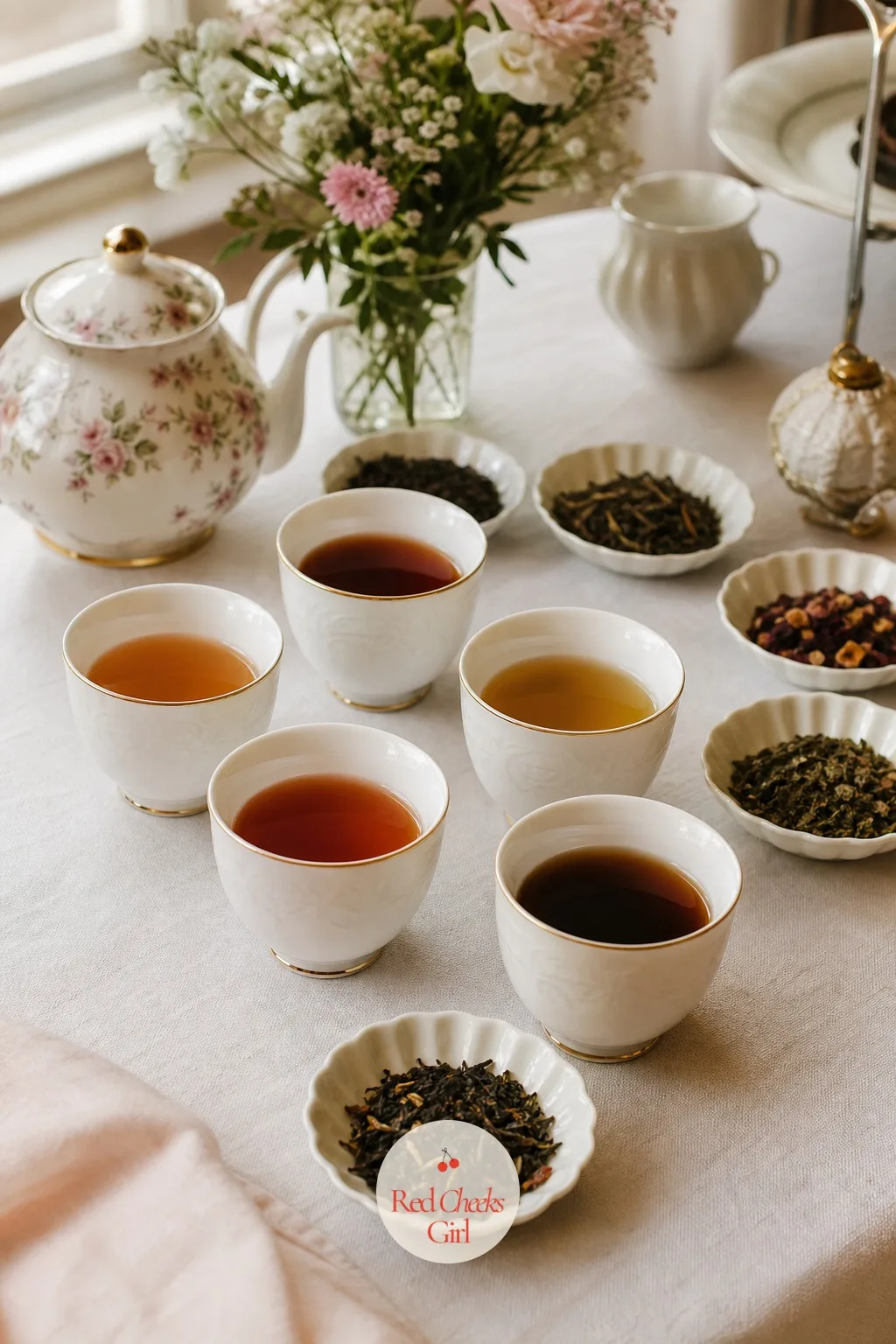
The premise is deliciously simple: you brew four to six different teas — think a floral Earl Grey, a grassy green tea, a smoky lapsang souchong, a fruity hibiscus, a classic English Breakfast, and maybe a spiced chai — then pour small samples into numbered cups with no labels.
Guests sip each one and write down what they think it is, rating each by color, aroma, and flavor before making their final guess.
Set up your tasting flight the evening before so everything is brewed, cooled slightly, and poured at a consistent temperature by party time.
Give each guest a simple scoring card (just a small notecard works perfectly) with columns for number, tea name guess, and tasting notes.
You can go full sommelier with descriptors on the table — ‘floral,’ ‘earthy,’ ‘malty,’ ‘citrusy’ — or let guests freestyle their descriptions, which honestly produces far more entertaining results.
The person with the most correct identifications wins a small tin of loose-leaf tea as their prize.
What makes this game work so beautifully is that it doubles as a genuine conversation starter. Even guests who claim to know nothing about tea suddenly become very opinionated about whether something smells ‘like a grandmother’s closet’ (lapsang souchong, every time).
It also paces itself naturally between courses, since guests can revisit their samples while nibbling on sandwiches. For a variation, do a milk-in-first versus milk-in-last side challenge — the great British tea debate — and let the table argue it out.
Brew teas the same way — same steep time, same water temp — so the only variable is the tea itself, not your technique.
🛒 What you’ll need
2. Tea Party Bingo
Bingo is a classic for a reason — it keeps every single guest engaged at once, no matter their age or personality, and a tea-themed version feels perfectly at home on an afternoon tea table.
Each guest gets a unique 5×5 bingo card filled with tea-world terms, items, and moments: things like ‘Earl Grey,’ ‘clotted cream,’ ‘teapot,’ ‘saucer,’ ‘scone,’ ‘lemon slice,’ ‘finger sandwich,’ ‘strainer,’ ‘sugar tongs,’ ‘bone china,’ and so on.
The host calls out terms one at a time, guests mark them off, and the first to complete a row shouts — in the most genteel voice possible — ‘Tea!’
Print one unique card per guest on cardstock before the party (each card has a different random arrangement of the same 25 terms drawn from a pool of about 40), and provide a small dish of sugar pearls or rose-gold sequins as markers — much prettier than the usual chips.
Keep a printed master call list so you can check the winner’s card easily.
You can play multiple rounds: first a single row, then an L-shape, then a full blackout, awarding a small prize for each — a tea sachet, a pretty spoon, or a mini jar of jam all work beautifully.
The tea-themed vocabulary on the card does something clever: it sparks little side conversations as guests recognize (or don’t recognize) terms. ‘What even is a caddy?’ is a perfectly valid question that leads to a five-minute delightful tangent.
For a variation, swap the final blackout round for a ‘four corners’ win and give the champion bragging rights as the official Tea Queen of the afternoon. Your guests will absolutely love having a reason to keep sitting, chatting, and sipping between rounds.
- Groups of 6–20 guests
- Mixed ages including teens and grandmothers
- Running in the background between courses

🛒 What you’ll need
3. Guess the Teacup Owner
This is the icebreaker that every tea party needs but nobody thinks to plan, and it is genuinely charming. Before the party, ask each guest to bring their own favorite teacup from home — the one that says the most about their personality.
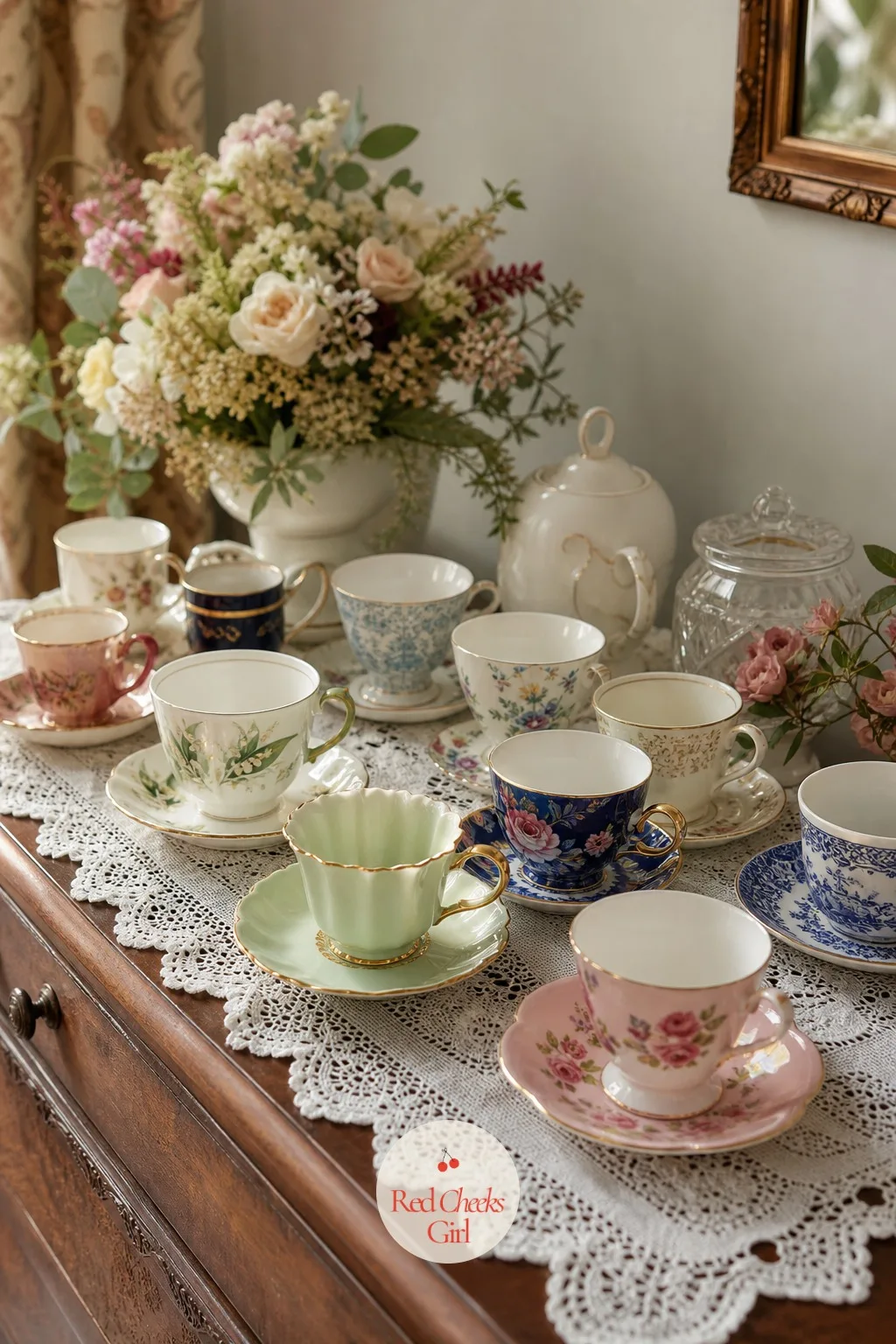
When guests arrive, all the cups are displayed together on a side table or the mantelpiece, numbered but without names. Everyone is handed a small ballot and must guess which cup belongs to which guest, purely based on the cup’s style, pattern, and vibe.
Set up the display before guests arrive and keep it a secret until everyone is seated.
Give guests five to eight minutes to study the cups and fill in their ballots, then reveal the answers one by one — asking each owner to stand up and explain why their cup represents them perfectly. This reveal portion is honestly the best part.
Someone will have brought a wildly unexpected cup (the accountant with the hot-pink flamingo mug never fails to delight), and the stories behind the cups tend to be surprisingly personal and sweet.
What this game does better than almost anything else is fast-track connection between guests who might not know each other well. It gives everyone an immediate, low-pressure conversation topic, and the cup reveal moment becomes a little mini-presentation that lets each guest shine.
Award a small prize to whoever guesses the most correctly, and don’t be surprised if several guests end up swapping teacup stories long after the game officially ends. This one has genuine staying power.
- Each guest brings their own favorite teacup from home
- Cups are numbered and displayed together before guests guess
- Reveal answers one by one — owners explain their cup’s story
4. Afternoon Tea Trivia
A proper trivia round is the intellectual equivalent of a scone with clotted cream — satisfying, a little indulgent, and absolutely welcome at an afternoon tea.
This printed trivia sheet covers everything from the history of afternoon tea to etiquette rules, famous tea-producing regions, and a few cheeky pop-culture tea references.
Guests fill in their answers individually first, then the host reads through the correct answers aloud, sparking delightful little debates along the way (the ‘milk in first or milk in last’ question alone can derail proceedings for a good ten minutes, tbh).
Print one sheet per guest on pretty cardstock and pair it with a fine-tipped pen left at each place setting.
Run the round in two halves: the first ten questions solo, then five bonus questions answered as table pairs, which naturally gets guests leaning in and conferring in the most companionable way.
Score individually for the main round and combine scores for the bonus pairs round. The guest with the highest combined score wins — and yes, a tin of premium tea as the prize is both thematic and genuinely useful.
The beauty of trivia at a tea party is that it feels cultured rather than competitive, especially when your questions are a mix of ‘actually know this’ and ‘educated guess.’
Did you know that sticking your pinky out while holding a teacup is actually considered bad etiquette, not good? Half the table will get that one wrong and be absolutely scandalized.
Keep the tone light and celebratory — wrong answers deserve gentle applause, not sighs — and your guests will leave feeling both entertained and genuinely smarter about tea.
Sparks conversation naturally as the host reads answers aloud — no awkward silences guaranteed.

5. Hat Contest Parade
If there is one tea party tradition that deserves a full revival, it’s the magnificent hat. Ask guests in the invitation to arrive wearing their finest, most creative, or most outrageous headpiece — bonus points if it’s themed to the season or the host’s garden.

Once everyone is assembled and suitably admired over the first cup, you hold a proper Hat Contest Parade: guests take turns making a slow circuit of the room while everyone else scores their hat on a simple ballot across three categories — Most Elegant, Most Creative, and Most Likely to Cause a Scene at Ascot.
Prepare three small paper ballots per guest (one for each category) before the party. During the parade, each guest walks their circuit with as much dramatic gravitas as they can muster — which, after half a cup of tea, is usually quite a lot.
Voting is anonymous, and the host tallies while guests help themselves to the next course.
Announce the three winners with a little ceremony: a ribbon, a small jar of specialty jam, or a seed packet for their garden all make perfectly lovely prizes that feel era-appropriate without being expensive.
The hat parade works for absolutely any age and any size group, and it creates the most wonderful photo opportunities of the entire afternoon.
It’s also the game that sets the tone for everything else — once someone has paraded a three-foot-tall floral creation past the scones, the whole table relaxes and gets properly into the spirit of the day.
A gentle word of hosting wisdom: tell a guest privately in advance if you’re worried no one will bother with a hat, so at least one spectacular specimen is guaranteed to inspire the rest.
Keep two or three spare fascinators in a basket by the door for guests who forgot — nobody should miss out on the parade.
6. Guess How Many Sugar Cubes
This is the classic guessing-jar game dressed in its very best tea party attire, and it earns its place on this list because it works in the background all afternoon without requiring any hosting effort once it’s set up.
Fill a beautiful glass jar — a wide-mouthed mason jar or a vintage sweet jar is perfect — with white sugar cubes and place it on the tea table with a stack of small ballot slips and a pen beside it.
As guests arrive and settle, they write their name and best guess on a slip and fold it into the accompanying teacup. At the end of the afternoon, the host counts the cubes and crowns the closest guesser.
For your printed ballot slips, keep them simple and pretty: a small card with ‘Name:’ followed by a blank line, then ‘My guess:’ followed by a blank line, and a little teacup illustration in the corner.
Print these on cardstock, cut them into individual slips, and stack them neatly next to the jar.
You can make it slightly trickier by using a mix of regular and extra-large sugar cubes in layers — this keeps the serious estimators genuinely challenged and the casual guessers completely bewildered in the best possible way.
What’s lovely about this game is that it doubles as ambient decor: a jar of pristine white sugar cubes with a handwritten label looks effortlessly elegant on a tea table, and nobody needs to be ‘playing’ it at any specific moment.
The collective reveal at the end of the party is a low-key but surprisingly exciting moment — there’s always one guest who is suspiciously accurate, and everyone wants to know their methodology.
The jar of sugar cubes becomes the prize itself, wrapped in a ribbon for the winner to take home.
- Wide-mouth glass jar
- White sugar cubes (count before filling!)
- Printed ballot slips on cardstock
- Pencil or fine-tip pen beside the jar

7. Guess the Scone Ingredient
This tasting game takes the beloved scone — already the star of any afternoon tea table — and turns it into a gentle mystery.
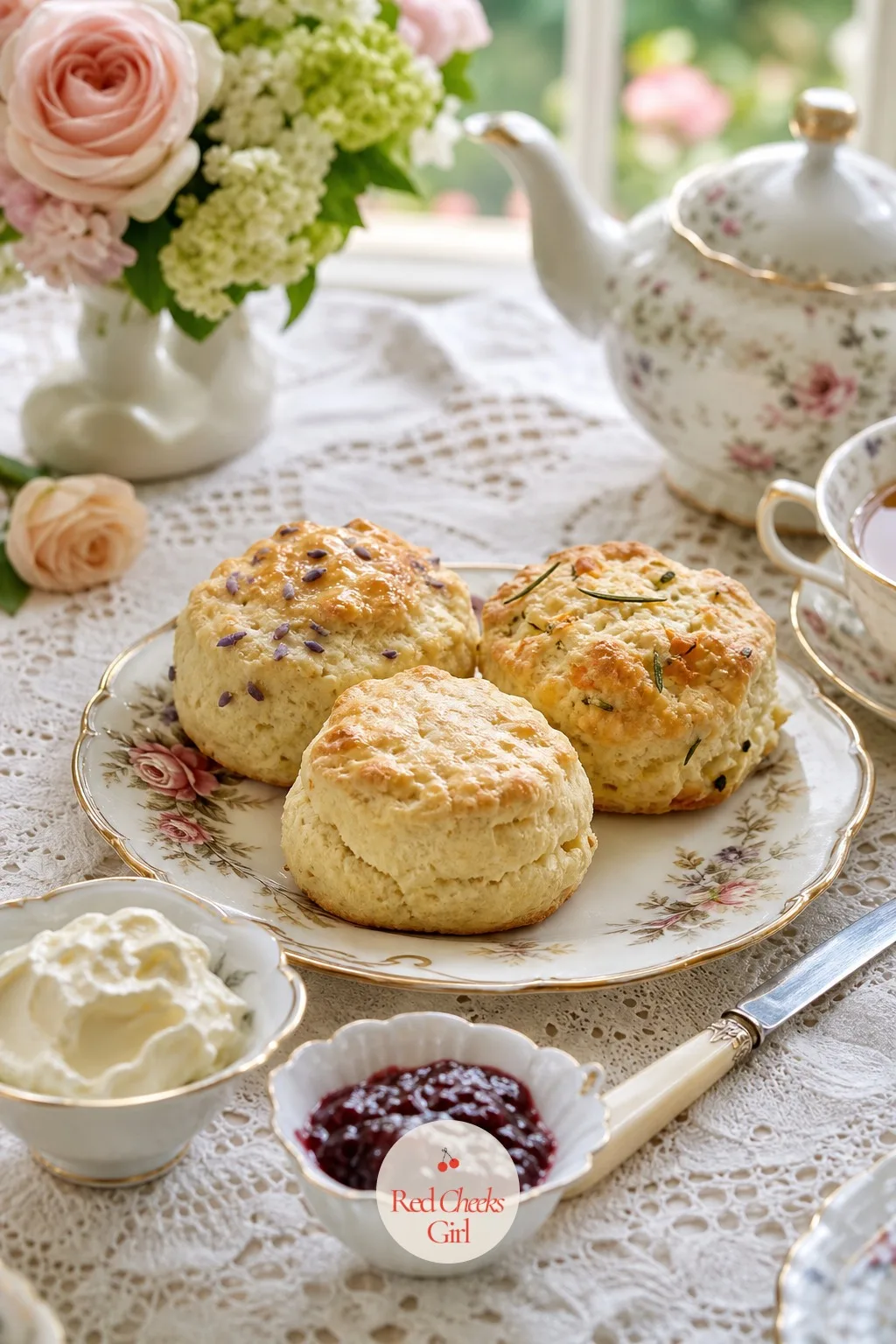
Bake or source two or three varieties of scone, each containing a secret ingredient that isn’t listed anywhere: one classic plain, one with a subtle addition like lavender and lemon zest, and one with something a bit more surprising like cardamom and orange peel, or rosemary and parmesan for a savory twist.
Serve each variety with a small number flag, and guests taste and write down their best guess at the mystery ingredient on a notecard.
Keep the ingredient list a secret until everyone has tasted and guessed. You don’t need any special materials beyond the notecards and pens already on the table — which is part of what makes this game so elegantly low-effort for the host.
The scoring is simple: an exact match earns two points, a close answer (right family of flavor, like ‘some kind of citrus’) earns one.
Tally at the end and award a small baking-themed prize to the winner: a fancy jar of jam, a specialty honey, or a pretty cookie cutter all work beautifully.
This game works especially well because it happens while guests are already eating, so it requires no transition or interruption to the natural flow of the afternoon.
It also gently educates everyone’s palate — by the end, guests are talking about flavor pairings and comparing notes with surprising enthusiasm. For a fun variation, let the winner receive the recipe card for their favorite variety, handwritten and tied with a ribbon.
It’s a small touch that makes the whole thing feel rather special.
Buy quality scones from a bakery and add a drop of extract or a pinch of spice to each batch yourself — nobody has to know.
8. Would You Rather — Tea Edition
Would You Rather is the conversation game that never fails, and a tea-themed edition makes it feel perfectly custom to the occasion.
Each guest gets a printed sheet of twelve delightfully specific tea-world dilemmas — ‘Would you rather only ever drink Earl Grey for the rest of your life, or never drink tea again?’
/ ‘Would you rather cream first or jam first on your scone, for eternity?’ / ‘Would you rather host a tea for the Queen or be invited to a tea at Downton Abbey?’
— and must circle their answer before defending their choice to the table.
Print one sheet per guest and work through the questions as a group, pausing after each to hear a few different answers aloud.
There are no points and no winners — this is purely a conversation game, which makes it wonderfully inclusive for any age or personality.
The questions are designed to be equal parts silly and genuinely thought-provoking, so you’ll get passionate defenses of clotted cream placement right alongside surprisingly heartfelt answers about memory and ritual.
Read them out one by one as host, or let the sheet circulate around the table with each guest reading the next question.
The tea-edition theming does more than just fit the occasion — it actually teaches guests little things about tea tradition and etiquette without feeling like a lesson.
‘Milk in first or last’ is a real debate with genuine historical context, and by the time someone explains why they chose their answer, the whole table has learned something new.
For a fun keepsake, collect all the sheets at the end and tally up the most popular answers — the results are often hilarious and always reveal which guest is the most dramatically opinionated about scones (there’s always one).
- Groups who don’t all know each other well
- A relaxed mid-afternoon energy boost between courses
- Mixed ages — teens to grandmothers all love this one

9. Pass the Teapot Compliment
This is the warmest game on the list, and I say that as someone who is generally suspicious of group compliment games (they can veer dangerously into awkward territory).
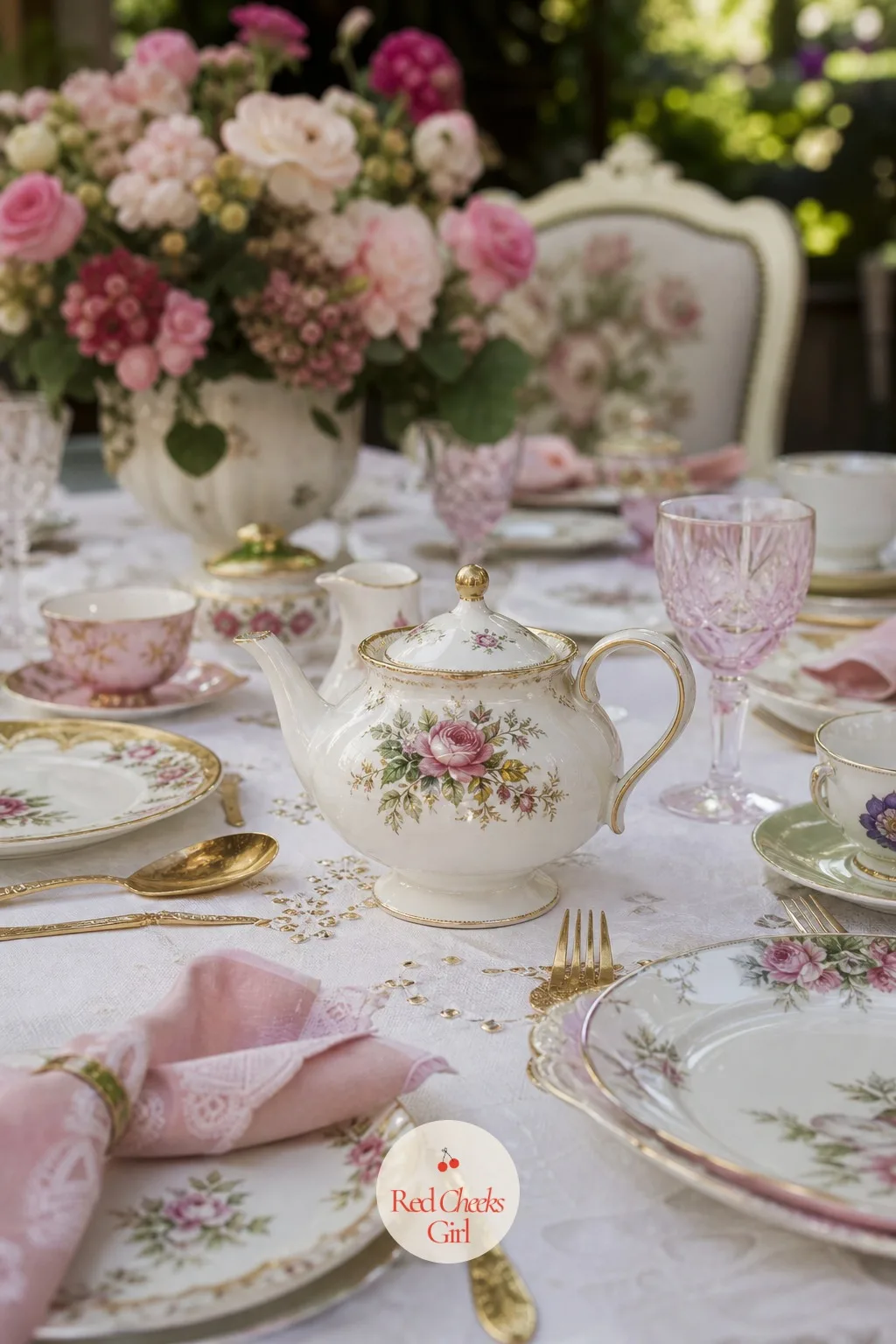
The tea party version sidesteps all the awkwardness beautifully by using a prop: a decorative teapot that is passed around the table.
Whoever holds the teapot gives a genuine, specific compliment to the person on their left — not a vague ‘you’re so nice’ but something real, like ‘You always make me feel instantly comfortable when I walk into a room’ — before passing the pot on.
The teapot travels all the way around the table at least once, and if you have a smaller group, you can do two full rounds with a rule that the second compliment must be about something different.
No preparation is needed beyond your existing teapot, which makes this the ultimate zero-effort game for a host who has enough to manage already.
You can introduce it quietly mid-afternoon when the tea is being refreshed — it slots in naturally without feeling forced or overly formal.
What makes this work at a tea party specifically is the already-warm atmosphere that a proper sit-down tea creates. Guests are relaxed, they’re comfortable, and they’ve been chatting long enough to say something genuinely meaningful rather than just polite.
The teapot as a physical object gives everyone a moment’s pause before speaking, which is just enough time to choose something real to say.
More than one guest at my last tea left clutching a compliment they said they’d needed to hear — and honestly, that’s the kind of game worth including every time.
Start by giving the first compliment yourself to model the ‘specific and genuine’ standard — it sets the whole tone beautifully.
10. Tea Blend Match-Up Sheet
This matching game is the one for your guests who take their tea seriously — and honestly, even the casual tea drinkers find it completely fascinating.
Each guest receives a printed sheet listing ten well-known tea blends on one side and their flavor/origin descriptions scrambled on the other. The challenge: draw a line connecting each tea to its correct description before the timer runs out.
Think ‘Assam — bold, malty, grown in the Brahmaputra River Valley’ matched against ‘Lapsang Souchong — smoky, pine-resin aroma, dried over pinewood fires,’ or ‘Chamomile — apple-scented, caffeine-free, used for centuries to aid sleep.’
Print one sheet per guest on cardstock, and set a five-minute timer once everyone is ready. Guests work quietly and individually — this is a focused, satisfying little puzzle rather than a competitive race.
When time is called, the host reads through the correct matches, and guests check and score themselves by circling each correct line. The person with the most correct matches wins, but the real prize is the collective ‘ohhh!’
moment when the table hears why lapsang souchong smells the way it does. A tiny answer key lives in light-grey italic text at the very bottom of the sheet, revealed only after scoring.
The reason this game earns its spot in the lineup is that it’s genuinely educational without feeling like homework.
Guests leave knowing the difference between Assam and Darjeeling, which means they also leave feeling a little more sophisticated than when they arrived — and that feeling is exactly what a great afternoon tea should deliver.
For a host variation, brew one of the teas from the sheet during the game so guests can smell it as they try to match it: instant extra clue, instant extra conversation.
Guests learn real tea facts in five minutes flat — and actually remember them because they had to work for the answer.

11. Etiquette Challenge Round
This game is exactly what it sounds like and is so much more fun than it has any right to be: a live, in-the-moment etiquette quiz where guests demonstrate — or hilariously fail to demonstrate — the correct rules of afternoon tea.
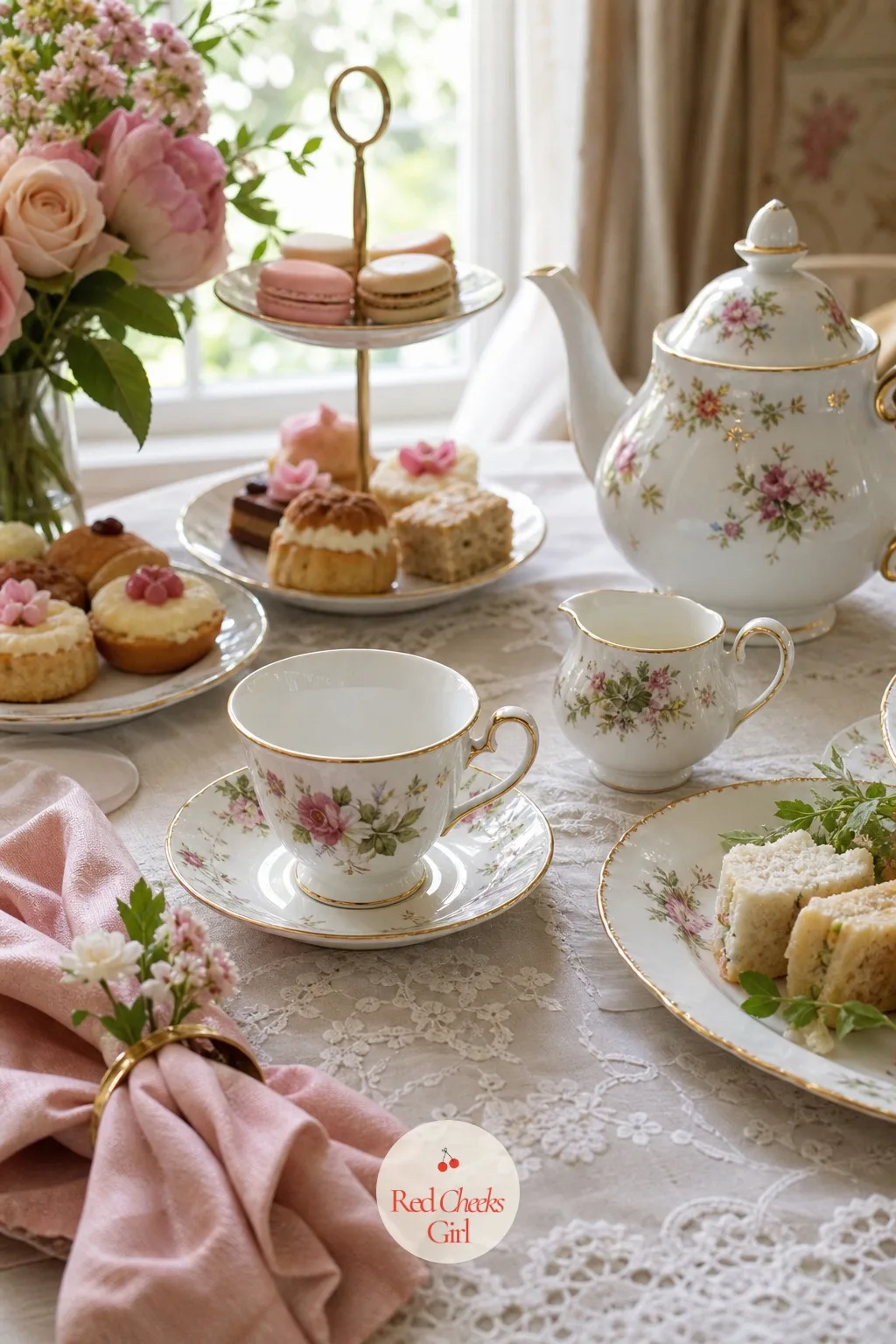
The host poses a series of etiquette scenarios one at a time (‘Milk in first or last? Show me your answer with your cup!’ / ‘How should you hold your teacup? Demonstrate now!’
/ ‘In what order do you eat the three courses?’), and guests perform their answers physically, in real time, for the table to judge.
Prepare eight to ten scenarios in advance on small cards — mix genuine etiquette rules with a few plausible-sounding myths (pinkies up is the classic trap, since it is actually considered incorrect). After each demonstration, the host reveals the real rule and briefly explains why.
Keep a running tally on a notepad: one point for each correct demonstration.
The guest with the highest score at the end wins the title of Official Tea Etiquette Champion, which you can write on a little certificate card if you’re feeling extra (I am always feeling extra).
The comedy here writes itself. Someone will absolutely stick their pinky out with complete confidence and be absolutely appalled to learn they’ve been wrong their whole life.
Someone else will earnestly try to eat a scone without breaking it with their hands first and end up with crumbs everywhere (which, to be fair, is the correct outcome of incorrect scone etiquette).
The game is warm, self-deprecating fun that also leaves everyone genuinely better informed — which means the next time they visit a proper tea room, they’ll feel polished and prepared.
- 8–10 scenario cards written in advance
- Notepad for keeping score
- Optional: a small printed ‘champion certificate’ for the winner
12. Favorite Memory Over Tea
This is the quietest and most genuinely moving game on this list, and it tends to sneak up on everyone.
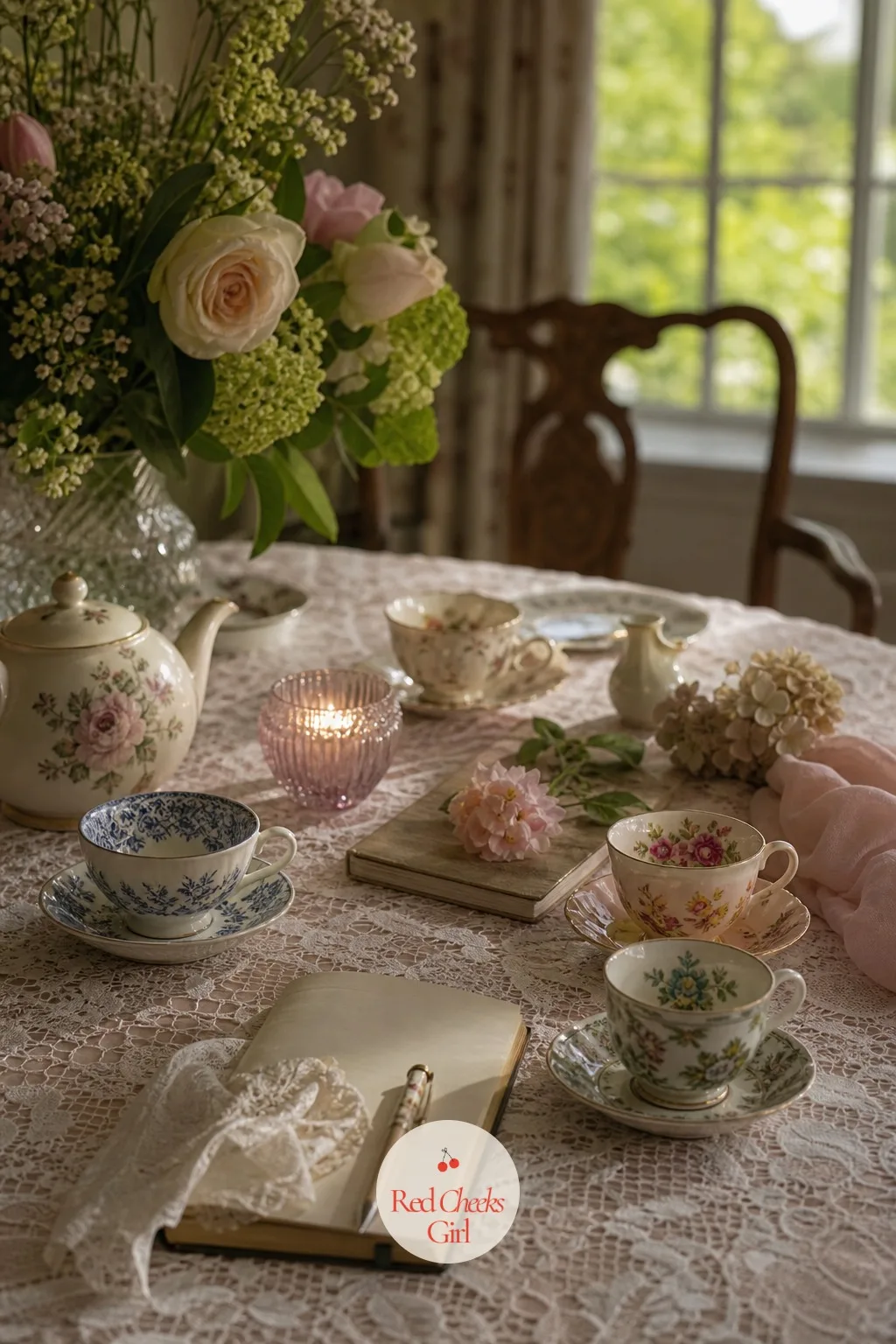
Once the table has settled into the comfortable second-cup phase of the afternoon, the host invites each guest to share one favorite memory that involves tea, a cup of something warm, or simply sitting at a table with someone they love.
It could be tea with a grandmother, a first nervous cup at someone’s house, a ritual they share with their children every morning, or a memory from a trip abroad. The only rule is that it has to be real.
No materials needed at all — just a gentle invitation from the host to begin, and a room full of people who are already relaxed and comfortable enough to be a little open.
Go around the table in order so nobody feels put on the spot by a sudden invitation to speak; knowing it’s coming gives quieter guests a moment to gather their thoughts.
The host should share first to model the tone: keep it warm, keep it specific, keep it brief enough that the story fits between sips.
What’s beautiful about this game — and I use the word game loosely, because it’s really more of a ritual — is that it transforms a pleasant party into something people actually remember.
Guests leave knowing something real about each other, something that no bingo card or trivia sheet can deliver.
If you’re planning an afternoon tea as a gift-giving occasion (a birthday tea, a holiday celebration, or a farewell), pairing this moment with a small, thoughtful favor or gift makes it feel even more intentional and warm.
- Intimate groups of 4–10 who know each other well
- Birthday teas, reunion teas, or farewell gatherings
- The second-cup lull when the conversation naturally wants to deepen
13. Guess the Flower Arrangement
This game is for the flower lovers in the room — and at an afternoon tea, there are always flower lovers in the room.
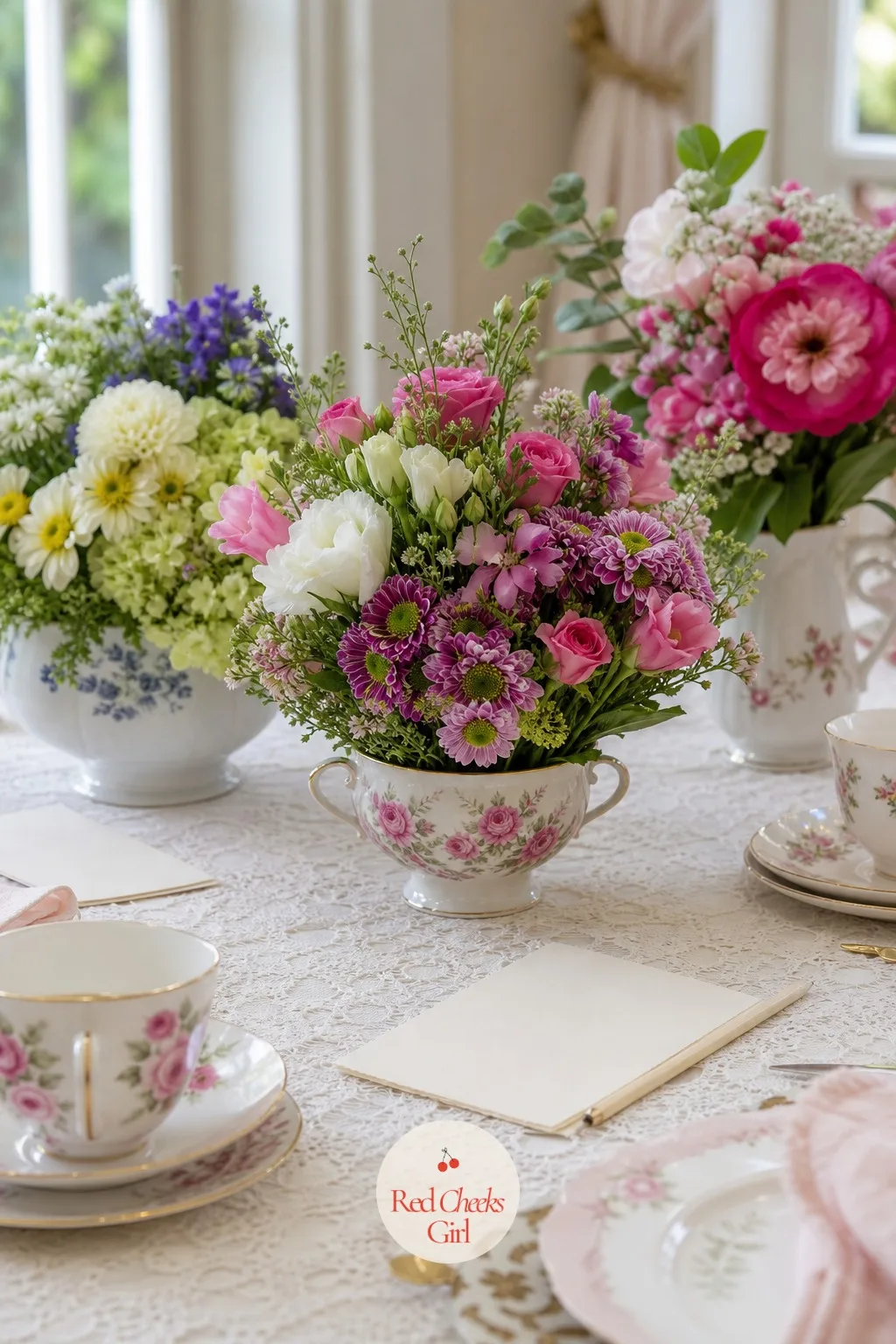
Before guests arrive, create two or three small floral arrangements for the table, each one featuring different blooms, and challenge guests to identify as many individual flowers as they can by name.
Provide a small notecard at each place setting with a list of numbered flowers (matching numbered flags stuck subtly into each arrangement) and ask guests to fill in the name of each one. Whoever identifies the most correctly wins.
You don’t need wildly exotic flowers to make this game challenging and interesting — a mix of garden-variety roses, sweet peas, ranunculus, lisianthus, freesia, and eucalyptus will stump most guests very satisfactorily.
Source your flowers from a local market or florist and keep the arrangement tags hidden until reveal time. The numbered flags can be simple toothpick-and-paper-circle flags made at home, which takes about ten minutes and costs almost nothing.
Set the arrangements as centerpieces so they also do double duty as table decor all afternoon.
What elevates this beyond a simple guessing game is the conversation it generates: guests will wander between arrangements, compare notes, argue about whether something is definitely a ranunculus or possibly just a fancy rose, and generally become very animated about botany in a way they absolutely did not expect.
For an extra layer of loveliness, pair it with a note about the secret language of birth month flowers — if any guest happens to have their birth flower on the table, that’s a charming detail worth pointing out.
Pick 6–8 flowers with very different silhouettes so guests have at least a fighting chance — a rose and a peony beside each other is just cruel.
14. Compliment Chain
Think of this as the written, keepsake cousin of Pass the Teapot Compliment — more reflective, more personal, and something guests can actually take home.
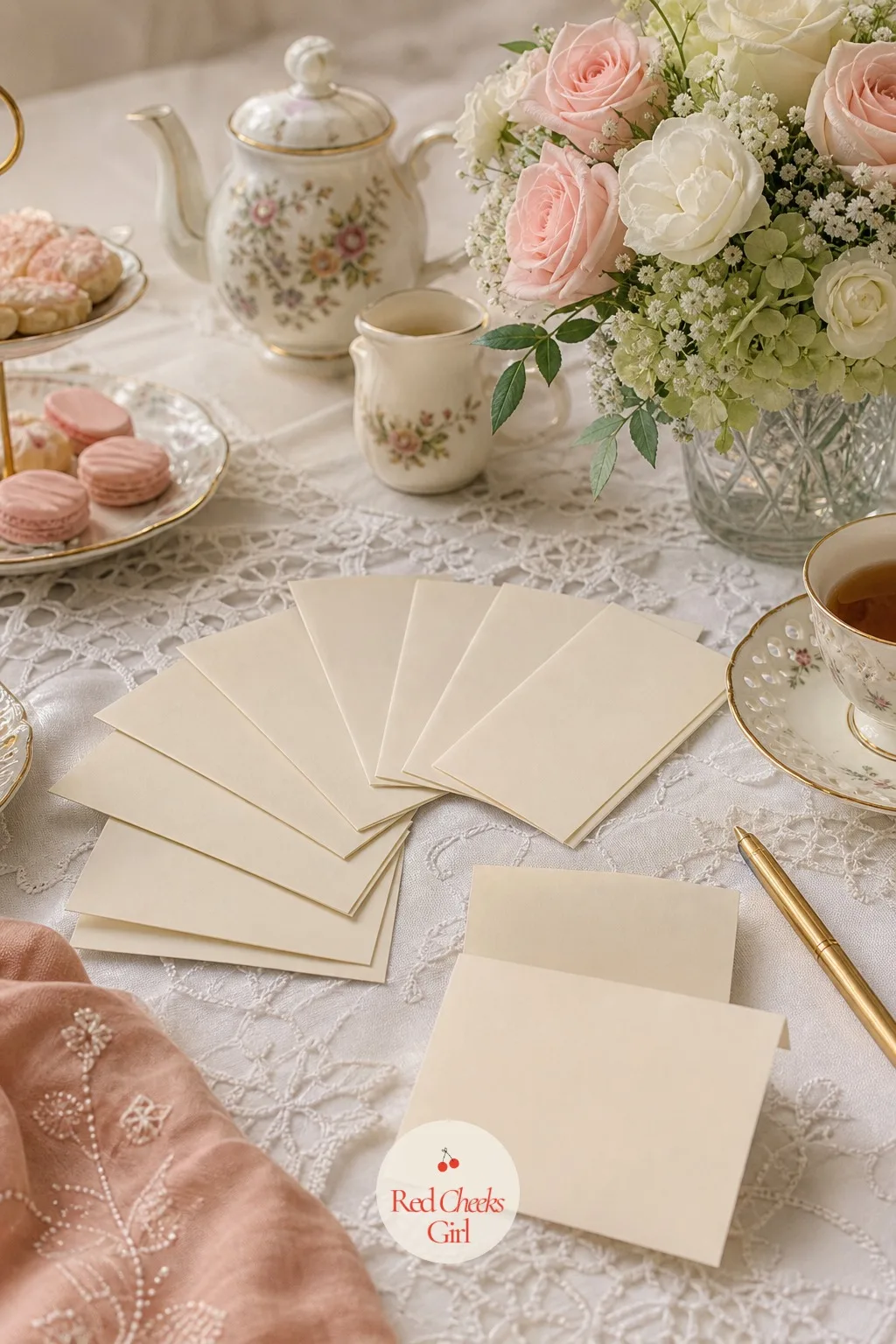
Each guest is given a small card with their own name printed (or written by the host) at the top, and the card is passed clockwise around the table.
Every guest writes one genuine compliment about the person named at the top before folding the card over to hide their writing and passing it on.
By the time the card returns to its owner, it holds a compliment from every single person at the table.
Prepare one card per guest before the party — a simple folded notecard in the party’s color palette works perfectly, with the guest’s name written in the host’s best handwriting at the top.
Place them face-down at place settings and explain the game once everyone is seated. Instruct guests to fold the card down after writing so the next person writes their compliment without being influenced by previous ones.
Allow about two minutes per pass so nobody feels rushed, and play soft background music during the writing portion to keep the atmosphere warm and unhurried.
The reveal is the real magic: guests unfold their card alone, reading the compliments privately, and the room gets wonderfully quiet in the most tender way. Some guests will need a moment — the really genuine ones always land harder than people expect.
These cards become keepsakes that guests tuck in journals, pin to bulletin boards, or return to on difficult days, which makes the Compliment Chain arguably the most valuable ten minutes of the entire afternoon.
If you’re hosting this tea as a celebration of the women in your life, this one is non-negotiable.
- One notecard per guest with their name written at the top
- Fine-tip pens at each place setting
- Instruction to fold-and-pass before the next person writes
15. Story One Sentence
This is the collaborative storytelling game that always produces something wonderfully absurd and surprisingly cohesive, and it requires absolutely nothing but the people at your table and a willingness to be a little silly.
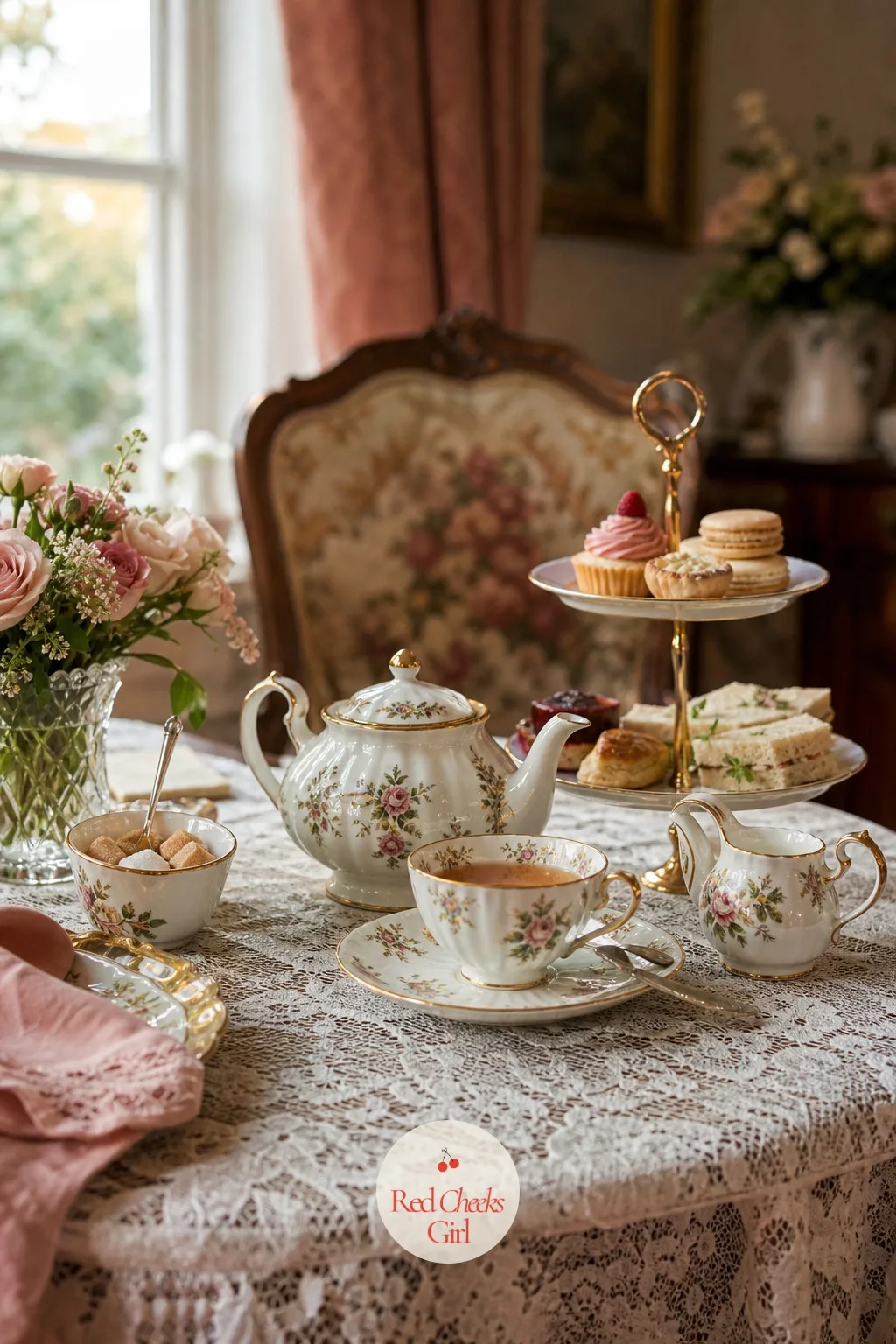
One guest starts by saying a single sentence to begin a story — something atmospheric and tea-adjacent works beautifully, like ‘On a grey Tuesday in October, Lady Pemberton discovered a note tucked inside her teapot.’
The next guest adds exactly one sentence to continue the story, and so it goes around the table until everyone has contributed at least twice and the story reaches a natural (or gloriously chaotic) conclusion.
The only rules are simple: one sentence per turn, you cannot pass, and your sentence must directly follow the previous one’s logic — no reset buttons.
The host gently keeps track of whose turn it is and calls ‘last round’ when the story has enough material to wrap up.
For a lovely keepsake, have someone write down the full story as it’s told, then read it back aloud at the end: hearing the completed narrative in one go is always funnier and more coherent than anyone expects, and always raises a genuine laugh.
Story One Sentence works particularly well at tea because the seated, intimate setting makes guests feel safe being creative. Nobody is performing to a room; they’re simply adding one thread to a shared piece of fiction, which lowers the creative barrier to almost zero.
The stories tend to take on the flavor of the group: a table of dry wits produces something Wodehouse-esque, a table of romantics produces something sweeping and dramatic, and a table with one rogue guest produces something involving a sentient teapot who is up to no good.
All outcomes are correct.
Assign someone to jot the story down as it’s told — reading it back aloud at the end is the best part of the whole game.
16. Words of Wisdom Circle
This is the game that turns your afternoon tea into something guests carry with them long after the last cup is cleared.
Each guest is asked to write down one piece of genuine wisdom — something they know to be true after everything they’ve lived through — on a small card. It can be practical, philosophical, funny, or heartfelt. No attribution, no explanation required.
The cards are collected, shuffled, and then read aloud one by one by the host while the table listens and tries to guess who wrote each one. The guessing is delightful; the wisdom itself is the real gift.
Prepare the cards in advance: a simple index card or a printed card with ‘My words of wisdom:’ followed by a generous blank writing area works perfectly.
Hand them out near the end of the afternoon, when guests are in their most reflective mood — the third cup of tea phase, which is the philosophical one in my experience.
Give everyone three minutes to write, collect the cards, shuffle them behind a napkin, then begin the reading. Keep the atmosphere warm and unhurried; this is not a fast game, and it shouldn’t be.
What sets this apart from other quiet games is the combination of anonymity and revelation. Writing wisdom anonymously removes the self-consciousness of being seen, which means guests write something they actually believe rather than something that sounds impressive.
And the guessing game afterward adds just enough levity to keep the moment from becoming too earnest.
If your group includes a mix of generations — mothers and daughters, colleagues of different ages, old friends and new — the range of wisdom produced will be remarkable, and frequently moving.
Consider collecting the cards into a little handmade booklet for the host as a parting gift from the group.
If you’re looking for a beautiful way to honor the women at your table afterward, a thoughtful gift tucked in with their card makes a lovely send-off.
Anonymity removes the pressure to perform, so guests write something they actually believe — the results are always unexpectedly profound.
Frequently Asked Questions
How many tea party games should I plan for a two-hour afternoon tea?
For a two-hour tea, three to four games is the sweet spot. Plan one icebreaker game as guests arrive (like Guess the Teacup Owner), one or two printable or tasting games to play during the main service, and one quiet keepsake activity toward the end.
You don’t need to fill every minute — the conversation, the food, and the atmosphere do a lot of the work themselves, and the best afternoon teas feel relaxed rather than scheduled.
What tea party games work for mixed ages, including older guests?
All sixteen games on this list are designed to be completely seated and age-inclusive, but the best picks for genuinely mixed ages are Blind Tea Tasting, Afternoon Tea Trivia, Would You Rather (Tea Edition), Compliment Chain, and Words of Wisdom Circle.
These require no physical movement, no tech, and no prior tea knowledge — just a willingness to participate at whatever level feels comfortable.
Do I need to print anything in advance for these tea party games?
Five games on this list are printable — Tea Party Bingo, Afternoon Tea Trivia, Guess How Many Sugar Cubes, Would You Rather (Tea Edition), and Tea Blend Match-Up Sheet.
Print these on cardstock rather than regular printer paper for a more polished look, and pre-cut any sheets that need to be separated into individual slips or cards. Print a couple of spares in case of last-minute extra guests.
What prizes are appropriate for an elegant afternoon tea party?
Keep prizes on-theme and in scale with the occasion — small, pretty, and genuinely useful.
Great options include a mini tin of specialty loose-leaf tea, a jar of clotted cream or premium jam, a seed packet for an herb or flower garden, a pretty teacup from a charity shop, a small beeswax candle, or a handwritten recipe card.
Avoid anything that feels too much like a party-bag prize; the goal is something a guest would genuinely love to receive.
Can I use these tea party games at a bridal shower or birthday tea?
Absolutely — most of these games translate beautifully to any sit-down celebratory tea. For a bridal shower tea, lean into Compliment Chain, Pass the Teapot Compliment, and Words of Wisdom Circle for a more personal, sentimental atmosphere.
For a birthday tea, Blind Tea Tasting, Guess the Teacup Owner, and the Hat Contest Parade create a festive, celebratory feel. Mix and match based on your guest list and the tone you want to set.
How do I keep an afternoon tea from feeling too stiff or formal?
The games on this list do most of that work for you — the moment someone confidently sticks their pinky out during the Etiquette Challenge Round and discovers they’ve been wrong their whole life, any stiffness evaporates instantly.
Beyond the games, seat guests so that confident talkers are distributed around the table rather than clustered together, choose music that’s warm rather than intimidatingly classical, and most importantly: laugh at yourself first. A host who’s clearly having fun gives everyone permission to relax.
📌 Save These for Later
Loved these? Pin your favorite image below so you can find this list again when you’re planning.


120 flirty truth or dare questions for couples — sweet, romantic & fun for date night. Print the f

20 fun road trip games for kids — printables, active games & quiet activities to silence 'are we t

15 easy sleepover snacks kids and tweens will absolutely devour — sweet treats, salty bites, a DIY
Leave a Reply