

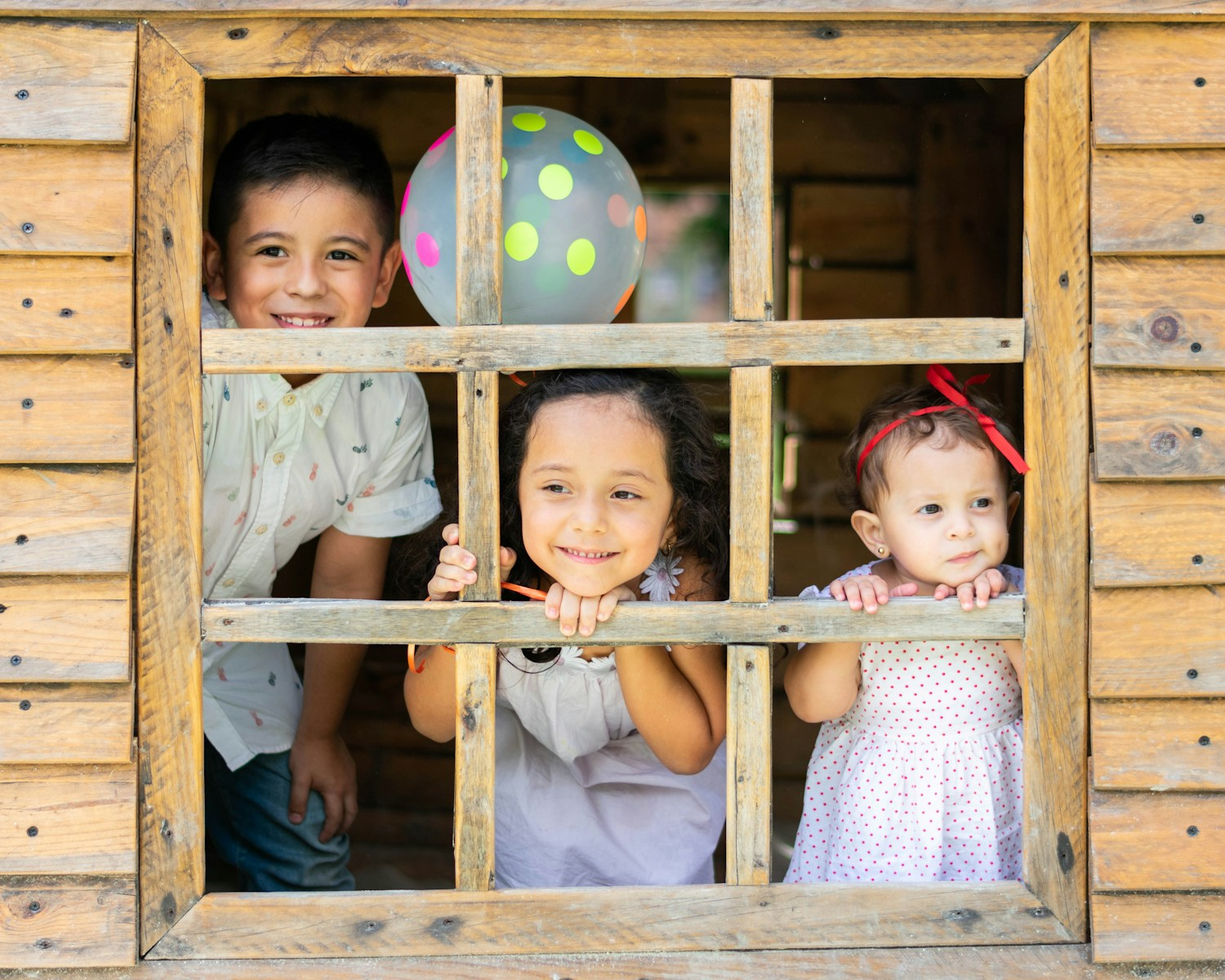
These party games for kids cover every group size, energy level and available space, from a tight living room to a backyard with room to sprint. All 26 work for ages 5-12, need no special equipment, and run in ten to thirty minutes.
Classic must-plays sit right alongside printable sheets kids can take home, so the fun lasts past the last slice of cake.
This post contains affiliate links. If you buy through them, I may earn a small commission at no extra cost to you.
- Musical Chairs
- Party Bingo
- Limbo
- Party Trivia for Kids
- Simon Says
- Scavenger Hunt Checklist
- Duck Duck Goose
- Telephone
- Would You Rather: Party Edition
- Red Light Green Light
- Freeze Dance
- Hot Potato
- Party Charades
- Sack Race
- Party Mad Libs
- Three-Legged Race
- Guess the Party Bag
- Marco Polo
- Pin the Tail (Party Twist)
- Party Matching Game
- Sardines
- Birthday Fill-in-the-Blank Story
- Balloon Pop Relay
- Party I Spy
- Freeze Tag
- Party Trivia Challenge Scorecard
- Frequently Asked Questions
1. Musical Chairs
Set one fewer chair than players in a circle, then blast a playlist kids will actually argue over. Everyone walks or dances around the ring while the music plays; when it cuts, every player scrambles for a seat. The one left standing takes a chair with them, and the circle shrinks until one champion remains.
Works for six to thirty guests. Needs chairs (or floor cushions, hula hoops, or pieces of paper as substitutes) and something to control the music. Rounds move fast, each taking about sixty seconds, so the whole game finishes in under fifteen minutes even with a big group.
The fight breaks out when two kids claim the same chair. Settle it simply: whoever has any part of their body on the chair first stays. Out players can become DJ assistants or start a cheering section, which keeps them from wandering off and distracting the remaining players.
Use a phone playlist with a mix of slow and fast songs so kids can’t predict the cut.
2. Party Bingo
Every guest gets a 5×5 bingo card pre-filled with party-themed words: candles, confetti, balloon, cake, present, streamers, party hat, and so on. The host calls words one at a time from a separate draw pile; players mark off each match. First to cover five in a row (horizontal, vertical or diagonal) shouts Bingo and wins.
Print one card per guest on regular copy paper, hand out markers or crayons for daubing. Works for any group size, since every card is unique. Rounds take five to eight minutes, and you can run multiple rounds by changing the winning pattern: corners only, a full border, or a blackout.
Kids finish at wildly different speeds, which is fine, but keep a second small prize for the runner-up so the game doesn’t end in tears the moment someone wins. If you run out of printed cards, a blank grid on scrap paper with guest-written words works in a pinch.
- Groups of 8-30
- Ages 5 and up
- Works indoors or out

🛍 Shopping guide
3. Limbo
Two players (or adults) hold each end of a pool noodle or broomstick at shoulder height. Everyone else lines up and takes turns bending backward to pass under the bar without touching it or falling over. After each full round, the bar drops a few inches. Last one still making it under wins.
The setup takes under two minutes and needs only a stick of some kind. Works for six to twenty-five kids, though lines get restless above that count, so run two simultaneous stations with large groups. Turn on a limbo soundtrack or any upbeat playlist to set the mood and give the line something to dance to while waiting.
Kids under seven often drop to their knees instead of bending back, which is cheating and also completely inevitable. Call it out gently and let them retry rather than eliminating them immediately; keeping everyone playing longer is worth the loose ruling. When the bar gets very low, splits and dramatic flops become the entertainment in themselves.
- Pool noodle or broomstick
- Two willing bar-holders
- Upbeat music
🛍 Shopping guide
4. Party Trivia for Kids
Each guest gets a trivia sheet with twenty questions across four categories: Animals, Food, Pop Culture and Silly Science. They fill in answers individually or in pairs, then the host reads the answer key aloud after everyone finishes. Whoever scores highest wins, with ties broken by a sudden-death lightning question.
Print one sheet per player or one per team. Pencils or pens only, no phones. The whole round runs in about ten minutes, faster if you give a two-minute time limit per section. Works perfectly as a quiet filler between rowdy games or while guests are finishing cake.
Calibrate the difficulty to the age spread. For a mixed 5-12 group, keep the questions at a second-grade reading level and read them aloud while kids follow along on paper. That levels the field and keeps the youngest guests from sitting out the whole round.
Read every question aloud so younger kids can play along without struggling to read.

5. Simon Says
One player is Simon and stands facing the group. When Simon says ‘Simon says touch your nose,’ everyone must do it. When Simon gives a command without the ‘Simon says’ prefix, anyone who follows it is out. The last player remaining becomes the next Simon.
No materials at all. Works for any group from six to thirty, though large groups benefit from a slightly elevated spot for Simon so everyone can see. Rounds can run as short as two minutes or stretch to ten depending on how tricky Simon gets. Perfect as a transition game between activities.
Kids who get out early lose interest fast, so run two simultaneous games with two Simons for large groups, or allow out players to become ‘judges’ who watch for rule-breakers and earn points back. Speed is the best difficulty lever: slow commands are easy, rapid-fire commands trip even sharp kids within seconds.
Start slow so everyone understands the rules, then double the speed after the first two eliminations.
6. Scavenger Hunt Checklist
Each child gets a checklist of twenty-five items to find or spot at the party: something red, something that makes noise, someone wearing stripes, a balloon knot, and so on. They roam the space checking off items as they find them. First to complete the list wins, or the one with the most checks after a ten-minute timer goes off.
Print one sheet per guest. Works indoors or outdoors and scales to any group size without any extra setup because the party space itself is the game board. It runs itself once sheets are handed out, giving the host a genuine window to arrange the next activity without abandoning the guests.
Keep items observable rather than collectible for indoor parties, since you don’t want thirty kids pulling decorations down. For outdoor parties, add a few nature items (a leaf with five points, a smooth pebble) to stretch the territory. Pair shy guests with a buddy so no one wanders alone feeling awkward.
- Self-directed play
- Any space indoors or outdoors
- Ages 6 and up

7. Duck Duck Goose
All players sit in a circle facing inward. One player walks around the outside, tapping each seated player’s head and saying ‘duck.’ When they say ‘goose,’ the tapped player jumps up and chases the tapper around the circle.
If the tapper reaches the empty spot and sits down before being tagged, the chaser becomes the new tapper. If they’re tagged, they do the walk again.
Zero materials, any flat surface indoors or out, six to twenty-five players. One round of everyone getting a turn runs about five to eight minutes. Seat kids far enough apart that running the circle doesn’t turn into obstacle-course chaos.
The main snag is kids who refuse to pick ‘goose’ and just keep tapping ‘duck’ forever to avoid running. A simple rule fixes it: you must say ‘goose’ within ten taps. For very large groups, run two circles simultaneously so no one waits more than a couple of minutes between turns.
- A flat open floor or lawn
- At least six players
8. Telephone
Players sit in a line or circle. The first player whispers a sentence into the next person’s ear, passing it all the way down the chain. The last player says the message out loud, and then the first player reveals the original. The garbled result is almost always funnier than any punchline you could plan.
No materials needed. Works best with eight or more players since longer chains create more spectacular distortions. A full round takes three to five minutes. Use party-themed starter sentences (‘The birthday cake exploded into a volcano of frosting’) to tie the game to the occasion.
Young kids mishear and give up mid-chain, which collapses the whole message. Ask players to whisper slowly and repeat the message exactly as they heard it, even if it sounds strange. Running two simultaneous chains that start with the same sentence and comparing the two endings doubles the laughs with large groups.
Start with a long, specific sentence, at least ten words. Short messages arrive at the end almost intact and aren’t funny.
9. Would You Rather: Party Edition
Each guest gets a card with fifteen ‘Would You Rather’ questions themed entirely around party scenarios: eat a whole cake by yourself vs. share it with your whole class, have unlimited balloons vs. unlimited confetti, be the DJ at every party vs. plan the menu. Kids circle their answers, then the group votes to see who agreed.
Print one card per guest on cardstock so it survives the party. Works for any group size; the discussion phase scales because you go through questions one by one as a group after everyone circles their answers. The whole game including group reveal takes ten to fifteen minutes.
The voting reveal is where the fun actually lives, so build that phase in deliberately rather than just collecting cards. Point to a room divider or two sides of the yard: ‘Cake side vs. class side, everyone move.’ The physical vote makes quiet kids participate without having to speak.
Every kid has an opinion. No reading skills or trivia knowledge required, so the youngest players compete equally with the oldest.

🛍 Shopping guide
10. Red Light Green Light
One player is the traffic light and stands at one end of the space with their back turned. They call ‘green light,’ and everyone else rushes toward them. When they shout ‘red light’ and spin around, everyone must freeze instantly. Anyone still moving goes back to the start line. First to tag the traffic light wins and takes the role.
Needs a long clear stretch of floor or yard, at least eight to ten meters. Works for six to thirty players. A single round from start to finish takes three to six minutes. Mark the starting line with painter’s tape or a jump rope laid flat so there’s no argument about who was where.
Kids get competitive about whether someone moved, which leads to disputes. Give the traffic light final say; arguing with the call means an automatic step backward. For a faster game with large groups, add ‘yellow light’ (slow-motion walking only) as a third state between commands.
- Open space at least 8 meters long
- Painter’s tape or rope for the start line
🛍 Shopping guide
11. Freeze Dance
Everyone dances while music plays. The moment the music stops, every player must freeze in exactly the pose they’re in. Anyone who moves, laughs their way into moving, or takes a step after the music cuts is out. Last one standing wins, though with a party crowd the real joy is watching the poses everyone lands in.
Needs music and a controller. Works for any group size, indoors on a cleared floor or outside on a flat surface. Rounds move quickly, under a minute each, so the whole game takes eight to twelve minutes. Ramp up the difficulty by making the stopping gaps shorter as the game progresses.
Kids who are out can still participate: give them judge status and have them circulate looking for micro-movements. That keeps them engaged, and the ‘judicial panel’ takes their job extremely seriously, which creates its own entertainment. Use a playlist heavy on songs the kids recognize so they actually dance rather than shuffle.
Appoint eliminated players as judges so they stay engaged and feel important rather than sitting out.
12. Hot Potato
Players sit or stand in a circle and pass a ‘potato’ (a small soft ball, a stuffed animal, or a balloon) around as fast as they can while music plays. When the music stops, whoever holds the potato is out and steps back. Circles shrink until one player remains.
Needs an object and music. A soft ball works better than an actual potato for indoor parties, and a water balloon becomes a spectacular outdoor variant. Works for six to twenty players; bigger groups can run two circles. A complete game takes ten minutes or less.
Some kids deliberately hang onto the potato to get a laugh, which slows the pace and frustrates competitive players. A two-second maximum hold rule keeps the energy up: count ‘one, two’ aloud if someone holds too long. For very young players, keep the music pauses far apart so rounds last longer and less time is spent watching from the sidelines.
- Small soft ball or stuffed animal
- Music with easy stop-start control
13. Party Charades
Divide into two teams. One player from the acting team draws a card from a cup and acts out the word or phrase without speaking while their team guesses. Correct guesses score a point. Teams alternate turns, and the higher score after all players have acted wins. For a kids party, use categories like animals, movies, foods and party activities.
Needs a cup of prepared cards (slips of paper with words on them, written ahead of time). Works for six to twenty-four players split into teams. A full round where every player acts once takes fifteen to twenty minutes. A solid list of charades ideas for kids saves prep time if you want to skip writing cards from scratch.
Kids freeze up when they can’t think of how to act something. Allow one ‘pass’ per turn without penalty to keep the game moving. Set a sixty-second timer per turn so the acting team doesn’t slow the whole game to a crawl while deliberating over a tricky card.
- Draw a card
- Act it out, no words or sounds
- Team guesses in 60 seconds
- Score a point for each correct guess
14. Sack Race
Each player steps both feet into a burlap sack or pillowcase, grips the top, and hops from the start line to a finish line and back. First back wins. Run heats for large groups and a final between heat winners to crown the champion.
Needs sacks or pillowcases, one per participant per heat. Works outdoors on grass or a soft surface to spare knees. Best with eight to twenty players, though heats handle any size. A single heat runs in about ninety seconds, so a full tournament with twenty kids wraps up in fifteen minutes.
Kids trip dramatically. That’s the point, but falling on hard surfaces hurts, so grass or a gym mat setup is non-negotiable. Pillowcases from home work perfectly; ask families to bring one in advance and label them with a marker so they go home with the right person at the end.
- Burlap sacks or pillowcases (one per racer per heat)
- Soft outdoor surface
- Finish line marker
🛍 Shopping guide
15. Party Mad Libs
One player is the reader and asks the group for words by type (a verb, a silly adjective, a food) without revealing the story. They fill in the blanks, then read the completed story aloud. The resulting narrative about a party gone hilariously wrong is the reward. Every group produces a completely different story.
Print one story sheet per group of four to six players, or one per guest if you want kids to write their own. Works at any table setup, indoors or out.
A single story takes three to five minutes to complete, so run two or three different stories back to back to fill a fifteen-minute slot. This is a natural post-cake quieter activity.
Younger kids struggle to think of words on demand. Keep a ‘word bank’ suggestion strip along the bottom of the sheet listing ten adjectives, five verbs and five nouns they can pick from if they’re stuck, so the game flows rather than stalling while a six-year-old stares into the distance trying to produce a verb.
Completely self-running once sheets are handed out. The host can manage cake or presents while kids play.

16. Three-Legged Race
Partners stand side by side and tie their adjacent ankles together with a bandana or strip of fabric. On the signal, every pair races from the start line to the finish, coordinating their steps. First pair to cross wins. Run heats for large groups.
Needs one tie per pair (bandanas, scrunchies, or strips of old fabric work well) and a clear outdoor lane at least fifteen meters long. Best outdoors on grass. Works for any even-numbered group; if you have an odd number, one team of three can race with two ties for a comedy variant.
Pairs who haven’t practiced together immediately trip, which is exactly right. Encourage partners to call out ‘left-right-left’ in rhythm before the race starts; the teams that do this go twice as far before falling. Pair up kids of similar height where possible since major height differences make coordination nearly impossible and lead to fast frustration.
- Bandanas or fabric strips for ties
- Clear grassy lane
- Finish line marker
🛍 Shopping guide
17. Guess the Party Bag
Before the party, fill a clear jar with small wrapped candies and count the exact total. Set the jar where everyone can see it. Each guest gets a card to write their name and their guess of how many pieces are inside. At the end of the party, the host reveals the count and the closest guess wins the jar.
Needs one jar, candy, and one guess card per guest. The jar sits out all party long and generates curiosity and sidebar conversations all on its own. This game requires zero hosting time once the jar is placed and cards are distributed, making it genuinely useful for a busy party day.
If two kids tie on the same guess, have a second jar with a different count ready for a sudden-death round, or simply let both kids split the jar. Announce the winner at the very end of the party so the anticipation builds all day and gives kids one last reason to stay engaged before they leave.
Place the jar at eye level for children, not on a high table, so every guest can study it properly.

🛍 Shopping guide
18. Marco Polo
One player is ‘Marco’ and closes their eyes (or is blindfolded). They call out ‘Marco’ and all other players, who are scattered around the space, must respond ‘Polo’ immediately. Marco follows the sound to tag someone; the tagged player becomes the next Marco.
Traditionally played in a pool, but it works just as well in a backyard or gymnasium with eyes genuinely closed.
No materials needed beyond optional blindfold cloth. Works for six to twenty players in any bounded space. A round where each player gets a turn as Marco takes ten to fifteen minutes. Set clear out-of-bounds edges before starting so players can’t just run into a corner and hide in silence.
The sneaky move is responding ‘Polo’ in a heavily disguised voice. That’s a grey area worth addressing before play: voices must be at normal speaking volume, no whispering. Fish-out-of-water is a legal Marco Polo variant: Marco can call ‘fish out of water’ once per turn, and anyone who has opened their eyes must sit out that round.
- Marco closes eyes or wears a blindfold
- Marco calls ‘Marco,’ everyone responds ‘Polo’
- Marco follows voices to tag someone
- Tagged player becomes the new Marco
19. Pin the Tail (Party Twist)
Hang a large poster of any party character, creature or themed image on the wall. Give each player a sticker or taped cutout representing the missing piece (the birthday star’s crown, the rocket’s flame, the dinosaur’s horn). Blindfold each player in turn, spin them gently three times, and point them toward the poster. Closest placement to the correct spot wins.
Needs a poster and pre-made sticker pieces with players’ names on the back. A blindfold (bandana works) and a way to measure distances for judging ties. Works indoors for six to twenty guests. The whole game including all players runs ten to fifteen minutes. Make the poster yourself on large craft paper to match any party theme.
Judging closest placement sparks disputes. Measure distance from the correct spot with a ruler and write it down for each player as they go. If kids spin enthusiastically (and they will), stand an adult nearby to catch anyone who stumbles off-course.
- Large themed poster
- Name-labeled sticker pieces for each player
- Blindfold
- Ruler for judging
20. Party Matching Game
Each guest gets a sheet with two columns: twenty party-related words on the left and their definitions or descriptions scrambled on the right. Players draw a line from each word to its match. Simple and quiet, this game works as an arrival activity or a between-rounds settler when energy needs to come down for a moment.
Print one per guest. Works for any age in the 5-12 band because the words and clues can be calibrated to the group. Takes five minutes to complete. Runs itself once sheets are out, and the answer key at the bottom means the host doesn’t have to collect and grade anything.
Print the key upside-down or in a small font at the very bottom so kids aren’t immediately tempted to flip to it. You can also fold the sheet so the key is tucked under before handing them out, which adds thirty seconds of setup but keeps the game honest for the five minutes it takes.
- Arrival activity while guests trickle in
- Ages 6 and up
- No host attention needed

21. Sardines
One player hides while everyone else counts to thirty. Then players spread out and search individually for the hider. When someone finds them, they quietly squeeze in and hide with them instead of announcing it.
The hiding spot fills up like a tin of sardines until only one person is left searching, alone, while everyone else is crammed together somewhere giggling.
No materials. Works indoors or out, best in a space with multiple hiding spots: a house, a fenced yard, a school gym. Eight to twenty players is the sweet spot. A round takes five to twelve minutes depending on the hiding spot’s quality.
It runs backward from classic hide-and-seek, which instantly makes it feel fresh even to kids who have played the original hundreds of times.
Very small kids get anxious when everyone has disappeared and they’re still searching. Pair a young guest with an older buddy who can help find the sardine pile without giving it away entirely. Set a two-minute rescue rule: if someone hasn’t found the group after a preset time, one sardine can make a soft noise as a hint.
The game rewards finding the hiding spot quietly, so the tension builds the longer it runs. No eliminations, everyone ends up together.
22. Birthday Fill-in-the-Blank Story
Each guest gets a single sheet printed with a short birthday-party story where key words have been replaced with labeled blanks: the birthday kid’s name, their age, their favorite food, a silly sound, and so on.
Kids fill in the blanks to create a personalized story unique to this exact party. Reading them aloud at the table turns into a full five-minute event.
Print one per guest. Works for any group size; everyone writes quietly first, then shares. Takes five minutes to fill in and another five to read out loud. This is genuinely one of the quickest party games to set up and run because the sheet does all the work.
Younger kids may need a helper to read the labels and write for them; pair them with an older sibling or seat them near an adult. Keep blank types simple for a mixed-age group: NAME, NUMBER, FOOD, SILLY WORD, COLOR are accessible to a five-year-old without making a twelve-year-old feel condescended to.
- Fill in all blanks without showing anyone
- Host reads each story aloud in turn
- Group votes on their favorite story

23. Balloon Pop Relay
Two teams line up at one end of the space. At the other end, two chairs each have a pile of uninflated balloons. On ‘go,’ the first player from each team sprints to their chair, sits on a balloon to pop it, then sprints back and tags the next player. First team to pop all their balloons wins.
Needs balloons (ten to fifteen per team) and two chairs. Works outdoors or in a large indoor space. Teams of five to eight work best; the relay format keeps everyone active since each player races multiple times if the group is small enough. One full race takes three to five minutes, so run it twice for a best-of-three.
Balloons that don’t pop after several hard bounces become frustrating; pre-inflate them slightly before the race so they pop more reliably while still requiring real effort. Warn kids to cover their ears if loud pops bother them, and skip this game entirely if any guest has sensory sensitivities.
- 15-20 latex balloons per team
- Two sturdy chairs
- Clear running lane
🛍 Shopping guide
24. Party I Spy
Each guest gets a detailed illustrated party scene packed with hidden objects. A list below the image gives twenty items to find, from a tiny cupcake tucked behind a banner to a hidden sneaker under the gift table. Kids circle or checkmark each item they locate. First to find all twenty wins, or everyone compares tallies after a ten-minute timer.
Print one sheet per guest, ideally on cardstock for durability. Works for any group size, any age in the 5-12 band. It runs quietly and independently, which makes it an excellent arrival activity. The sheet also doubles as a party favor kids take home.
Prepare a separate answer key for yourself so you can confirm disputed finds quickly, but don’t print it on the sheet itself.
Some kids will race through every item in three minutes while others are still on item four at the ten-minute mark; running the game as ‘most found in ten minutes’ rather than ‘first to finish’ keeps everyone in play and reduces the dejected-loser problem.
- Arrival activity
- Quiet independent play
- Any group size

25. Freeze Tag
One player is ‘it’ and tries to tag as many other players as possible. When tagged, a player must freeze in place with their arms out. A free player can unfreeze them by crawling through their legs or ducking under their arms.
The game ends when ‘it’ has frozen everyone simultaneously, a task that proves nearly impossible and keeps the game running at full pace.
No materials. Works outdoors or in a large indoor space. Six to thirty players, any split of ages in the 5-12 range. A round runs eight to twelve minutes. Rotate who is ‘it’ after each round rather than waiting for total freeze-out, since that can take forever with a motivated unfreezing team.
Older, faster kids dominate as ‘it’ and freeze smaller players too easily. Balance this by assigning ‘it’ to an older kid but giving younger players a designated safe zone they can retreat to for five seconds max. That respects the energy gap without excluding anyone.
- ‘It’ tags players to freeze them
- Frozen players stand with arms out
- Free players unfreeze teammates by crawling under their arms
- Round ends when everyone is frozen at the same time
26. Party Trivia Challenge Scorecard
Teams of three to five get a scorecard sheet and work together through five rounds of oral trivia, each round covering a different theme: movies, animals, food, sports and ‘random party facts.’ The host reads questions aloud; teams write their answer and reveal simultaneously on a signal. Point totals across five rounds determine the winner.
Print one scorecard per team. Needs the host to read questions from a separate question sheet (not printed on the scorecard). Works for groups of nine to thirty split into teams. A five-round game takes fifteen to twenty minutes.
The team format encourages kids to help each other rather than compete individually, which is kinder for mixed-age groups where knowledge gaps are wide.
For more structured kids party game ideas, the list at Not-Too-Scary Halloween Party Games for Kids shows how this team trivia format can adapt across different party themes.
Teams that finish writing before the reveal signal sometimes shout their answer, which ruins the moment for everyone. Establish a clear signal, three claps or a bell ring, and drill the ‘flip your scorecard face down to reveal’ mechanic on a practice round before real scoring begins. One adult circulating between teams to spot cheating keeps competitive older kids honest.
- One scorecard per team
- Host question sheet (prepared separately)
- Pens or markers for each team

Frequently Asked Questions
What are the best party games for kids ages 5-12?
Games that work across this age range combine clear rules with physical activity so younger and older kids compete on roughly equal footing.
Red Light Green Light, Freeze Dance, Telephone and Sardines all fit that profile because speed and stealth matter more than knowledge or strength. Add one or two printable games like party trivia or a scavenger hunt checklist for guests who need a calmer moment.
How many games should I plan for a kids birthday party?
Plan more than you think you need and actually run fewer. Four to six games cover a two-hour party comfortably when you account for explaining rules, transitions and the inevitable cake moment. Have two or three backup games ready in case a planned game falls flat or runs short, but don’t force every game onto the schedule.
What party games work for large groups of 20 or more kids?
Relay formats and team games handle large groups best because they split the crowd into manageable clusters. Balloon Pop Relay, Three-Legged Race heats, and Party Trivia teams all work for thirty guests without chaos. For single-group games like Musical Chairs or Freeze Dance, run two simultaneous rounds with separate facilitators rather than cramming everyone into one circle.
What are good indoor party games for kids when you can’t go outside?
Simon Says, Telephone, Hot Potato, Freeze Dance, Sardines and all the printable games on this list work perfectly indoors. For relay games, push furniture to the walls and use a hallway or cleared living room as the running lane. Freeze Dance and Musical Chairs need a cleared floor but no outdoor space at all.
How do I keep kids engaged between games at a party?
Hand out a printable activity the moment a game ends rather than leaving a gap. The Party I Spy sheet, a Scavenger Hunt Checklist or a Would You Rather card fills five minutes quietly while you set up the next active game.
Having a designated ‘coloring or doodling’ station as a standing fallback also gives kids a landing spot so they’re never just standing around.
Do I need prizes for every party game?
No, and over-prizing creates problems: kids focus on winning rather than playing, and losers feel the party was a failure.
For high-stakes competitive games like the sack race or trivia challenge, one small prize per round (a sticker sheet, a pencil, a piece of candy) is plenty. For cooperative or silly games like Telephone and Mad Libs, let the laughter be the reward.
Candle warmer pot recipes that stay warm hands-free all party long, from salted caramel chocolate fo
31 rainbow balloon arch ideas from dusty adult palettes to bright kids' doorways, each one a finishe
Keep the party going all night with these 20 slumber party games for teens — from hilarious printa
Leave a Reply