

14 Backyard Ideas for Kids That Grow With Them — From Toddler Sensory Play to Big Kid Adventure Zones
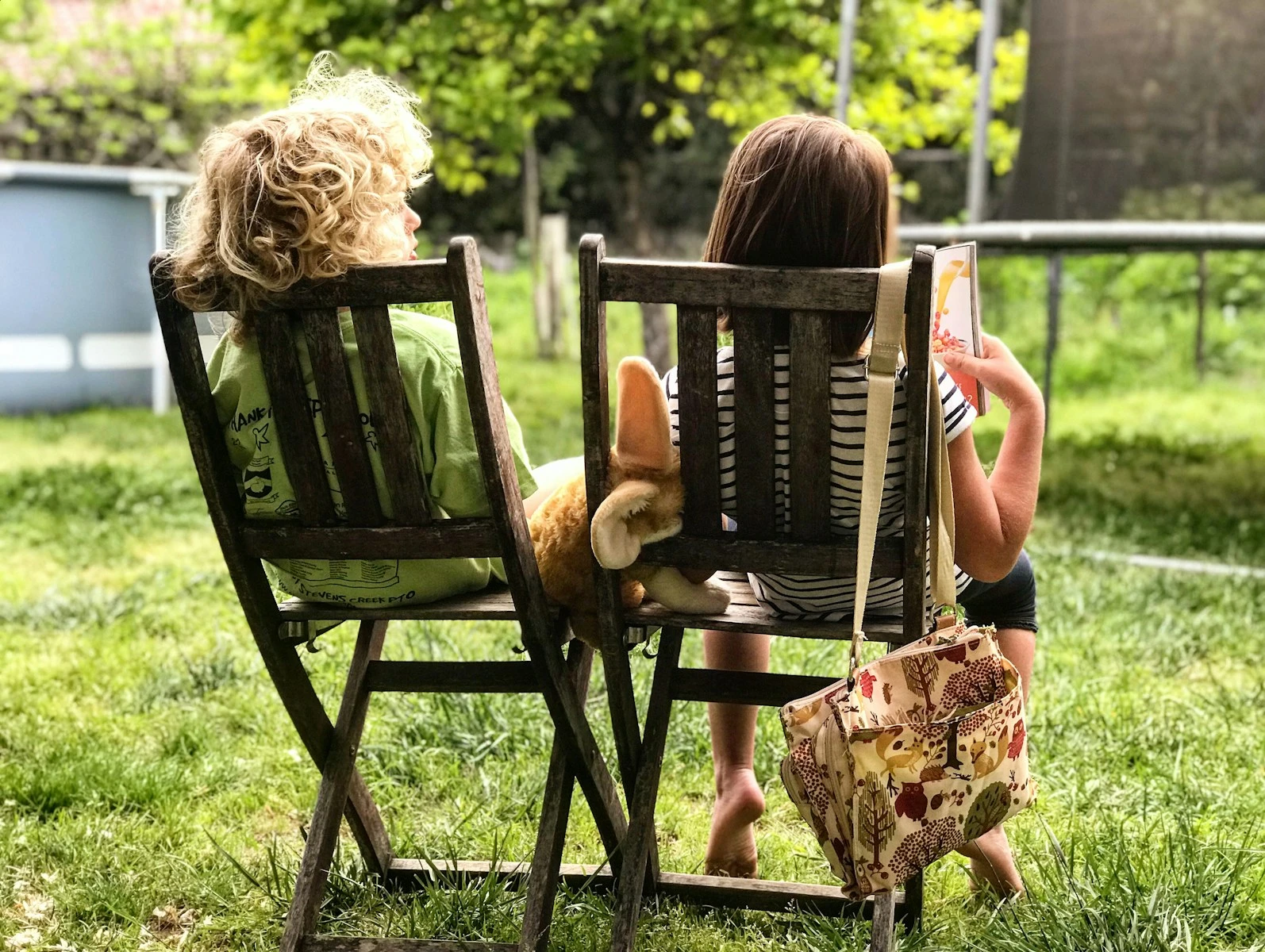
My youngest used to sit in a plastic baby pool filled with kinetic sand and be completely absorbed for 45 minutes. My oldest, who is nine now, watched from a lawn chair with barely disguised boredom. “Mom, this yard is so boring.”
Same yard. Completely different kids.
That’s the trap with backyard setups — you build something for the age your kid is right now, and in two years it’s either too babyish or outgrown entirely. I’ve replaced three different play setups in six years because I didn’t think ahead. These backyard ideas for kids are the ones I wish I’d known about earlier — most of them work across a pretty wide age range, and a few are genuinely still fun at 10, 11, even older.
This post contains affiliate links. If you buy something through these links, I may earn a small commission at no extra cost to you. I only recommend things I’d actually use.
1. A Dedicated Digging Patch
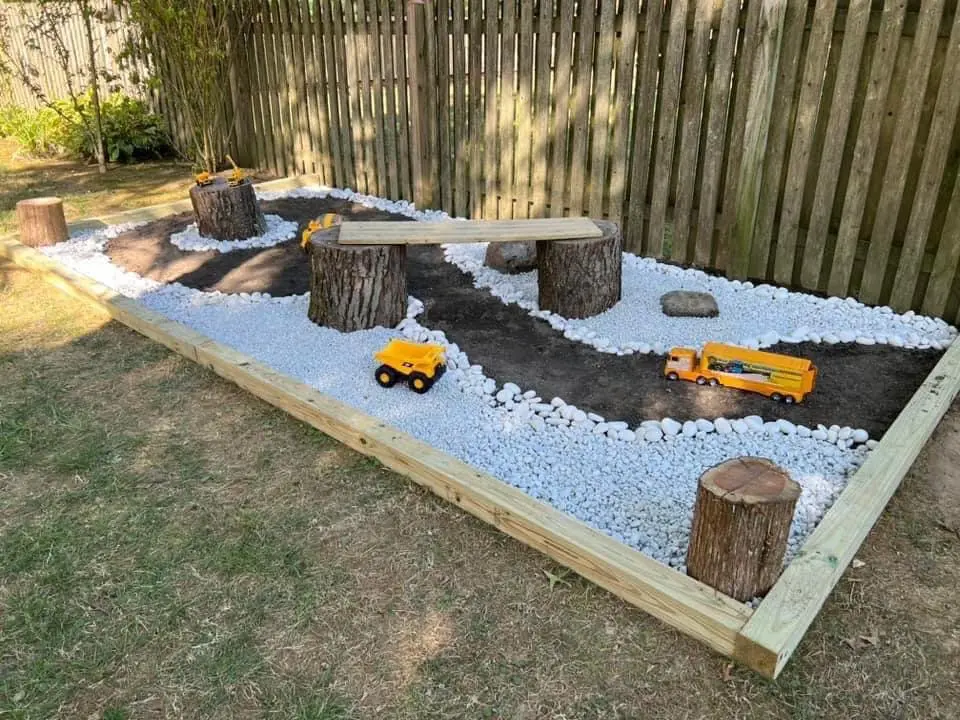
This one’s almost embarrassingly simple but it’s the one my kids have used the longest.
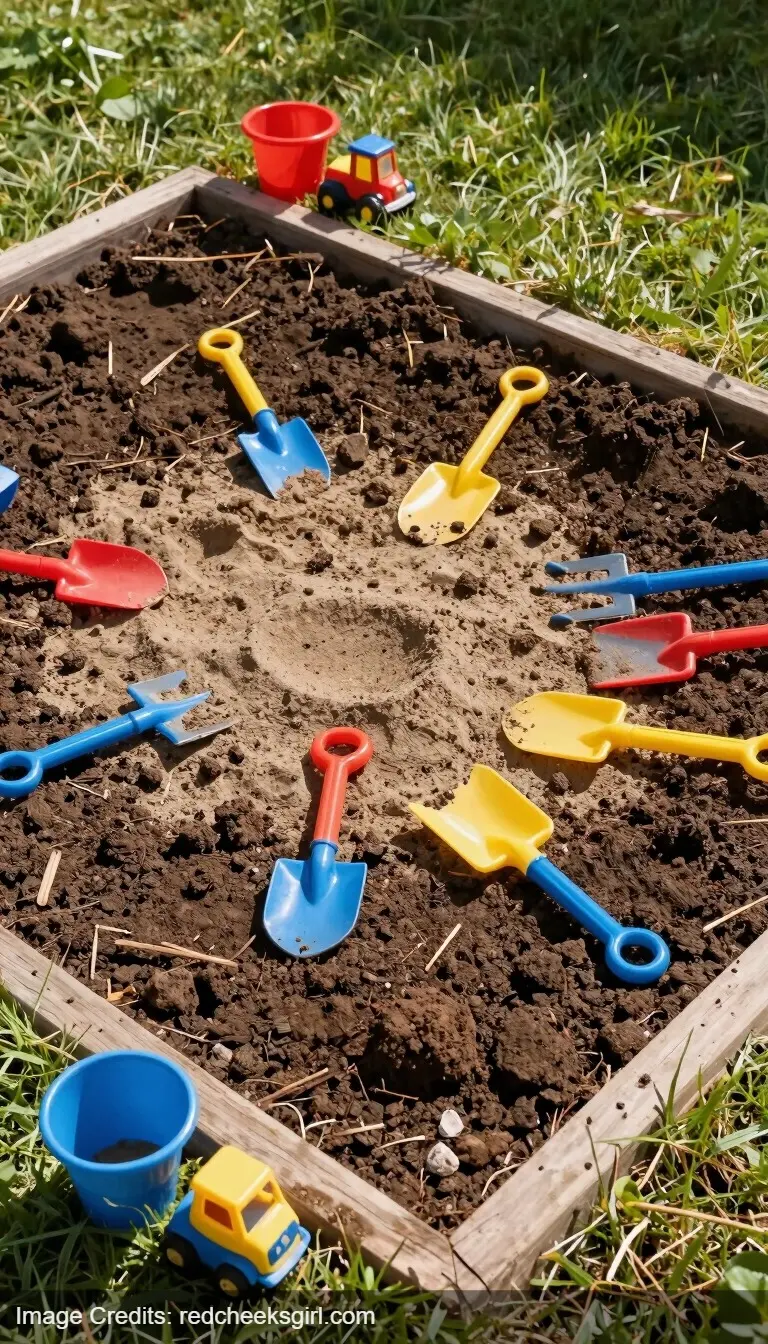
Stake off a corner of the yard — doesn’t need to be big, maybe 4×4 feet — fill it with a mix of regular dirt and play sand, and just… let them dig. Toddlers dig for bugs and worms and mud pies. Six-year-olds dig elaborate tunnel systems. Older kids start adding water, building “cities,” doing science experiments about what sinks and what doesn’t.
The cost was basically zero because I already had that corner of yard. I added a set of kids’ garden tools and a couple of plastic construction vehicles, and that was it.
It got muddy. Really muddy. That was kind of the whole point.
2. A Sensory Water Wall
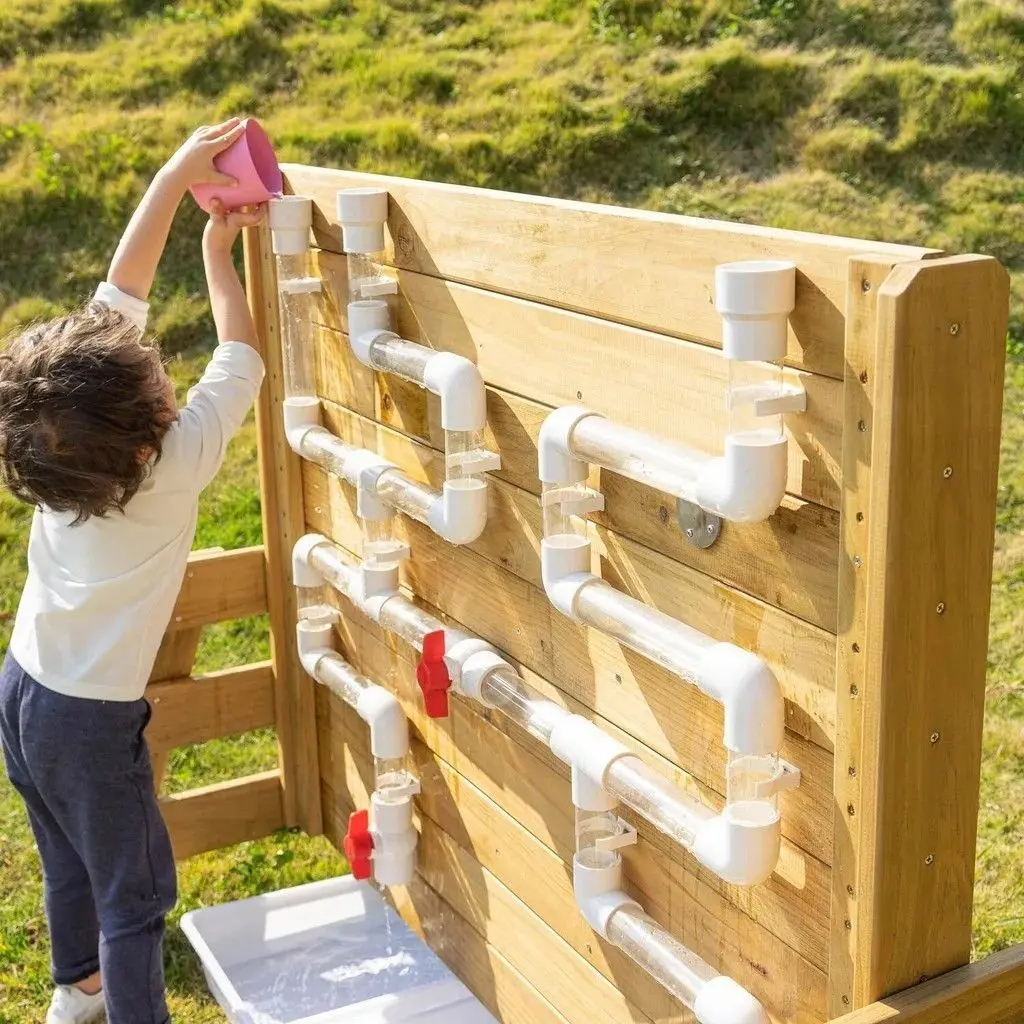
For the toddler/preschool years, a water wall is one of those things that sounds complicated but really isn’t. You attach plastic funnels, cut PVC pipe sections, and old colanders to a wooden pallet or fence panel using zip ties. Kids pour water in the top and watch it move, redirect, splash, and pool.
The sensory engagement is genuinely impressive — even kids who don’t love messy play will stand and pour water for 20 minutes straight. It works for ages 18 months through about 6 or 7.
Funnel set for water walls — this is all you really need to start. Use an old pallet you can find free on Facebook Marketplace.
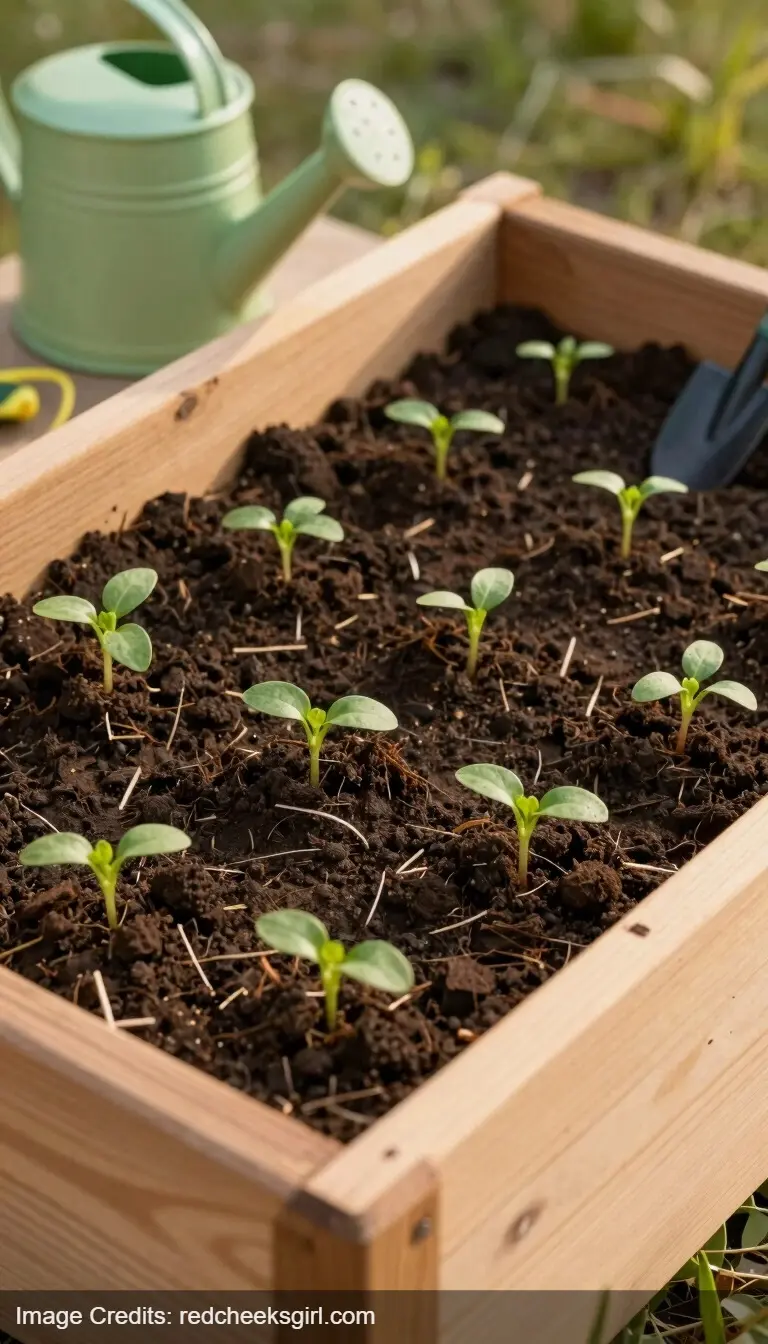
3. A Simple Raised Garden Bed (That They Actually Tend)
Every kid who has ever grown a cherry tomato will eat that tomato with more pride than any food they’ve ever consumed.
A small raised bed — even a 2×4 foot cedar box — gives kids something real to be responsible for. Toddlers can water (mostly themselves). Elementary-age kids can plant seeds, pull weeds, and track growth. Older kids start experimenting: what happens if we plant this here vs. there? Does this grow faster in sun or shade?
Easy starter crops: cherry tomatoes, radishes (they grow in like 25 days — instant gratification), sunflowers, peas. Radishes especially because the payoff is so fast that even a six-year-old stays interested.
Raised garden bed kit for kids — cedar ones last years and don’t need to be treated with anything.
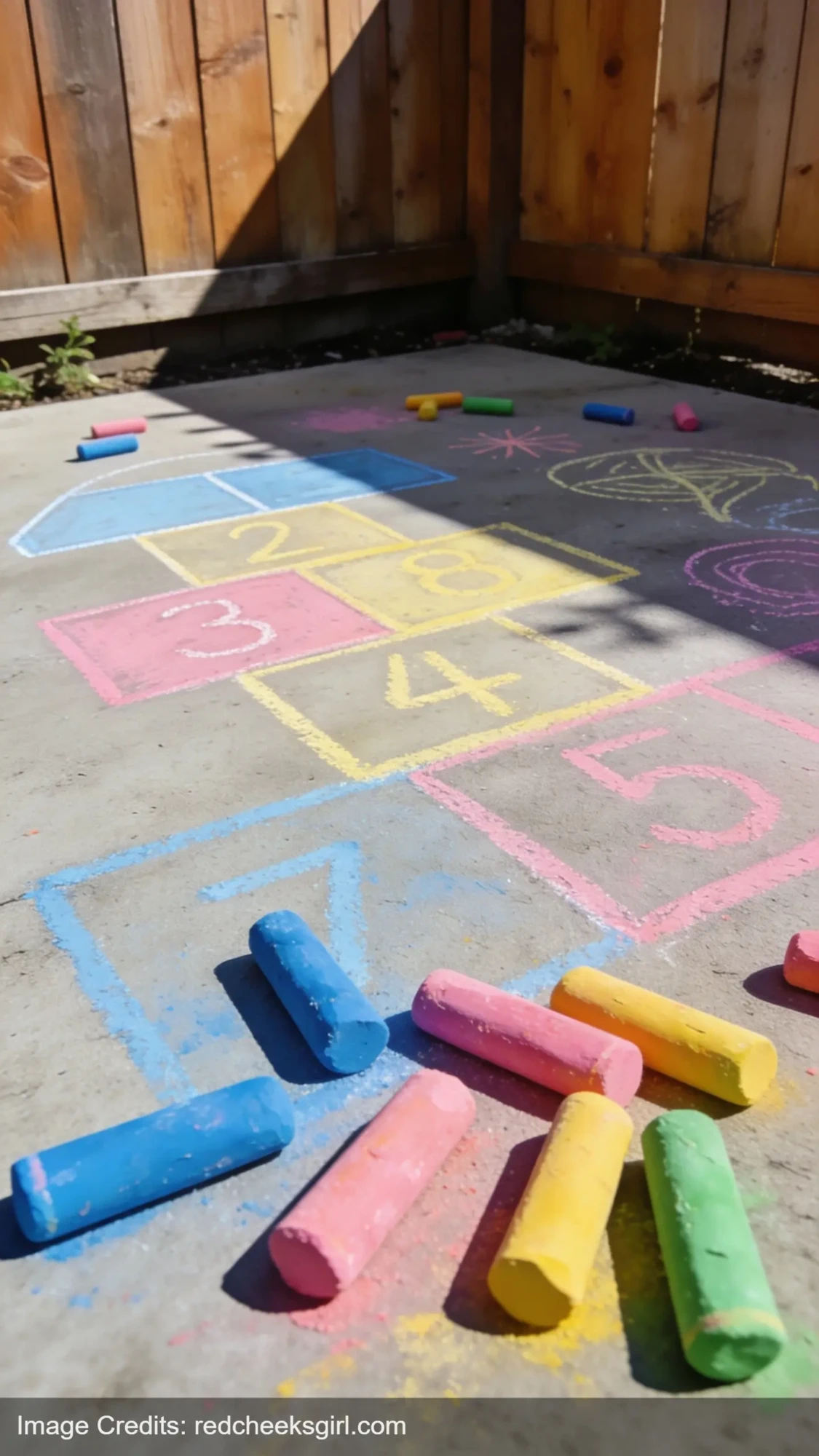
4. Chalk Zone — But Make It Permanent
Okay, “permanent” is the wrong word. But instead of just handing them a bucket of sidewalk chalk and saying “go,” designate a concrete area as the chalk zone. Put down a few painted borders using exterior paint to mark where the “canvas” is. Maybe add a little shelf with a cup holder for chalk.
When you frame it as a space, it gets treated as a space. My kids have done everything from giant murals to board games they invented to hopscotch courses that take up the entire driveway.
This one costs almost nothing and has no age ceiling. Seriously, I still use sidewalk chalk sometimes. No shame.
5. A Mud Kitchen
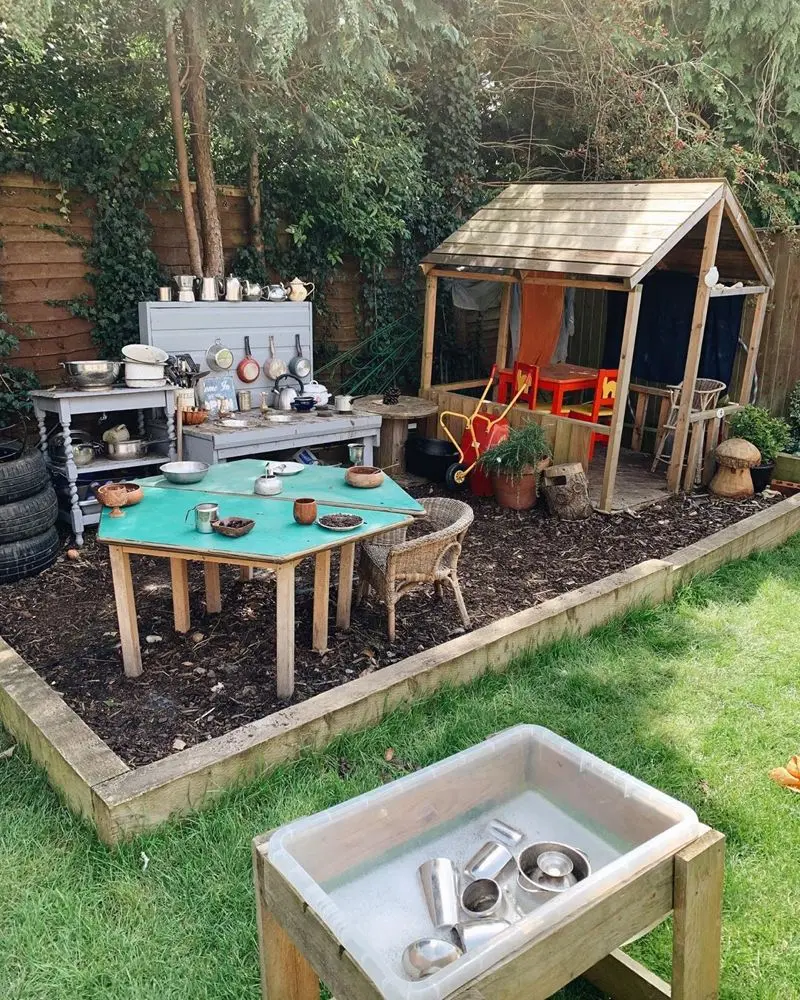
Different from the digging patch. A mud kitchen is a dedicated setup — an old wooden pallet or small table, some thrifted pots and pans, a muffin tin, spoons, a bin for water — where kids can mix mud, grass, water, and whatever else they find into elaborate “recipes.”
If this sounds gross, yes. It is. It is also one of the most developmentally rich things a kid can do — sensory play, imaginative play, math concepts (measuring, mixing), science (what makes things thicker or thinner), and just the pure satisfaction of making something with your hands.
Kids’ outdoor mud kitchen set if you want a ready-made one. Or just raid a thrift store for old pots and build something rough yourself. The scrappier version gets used more, in my experience.
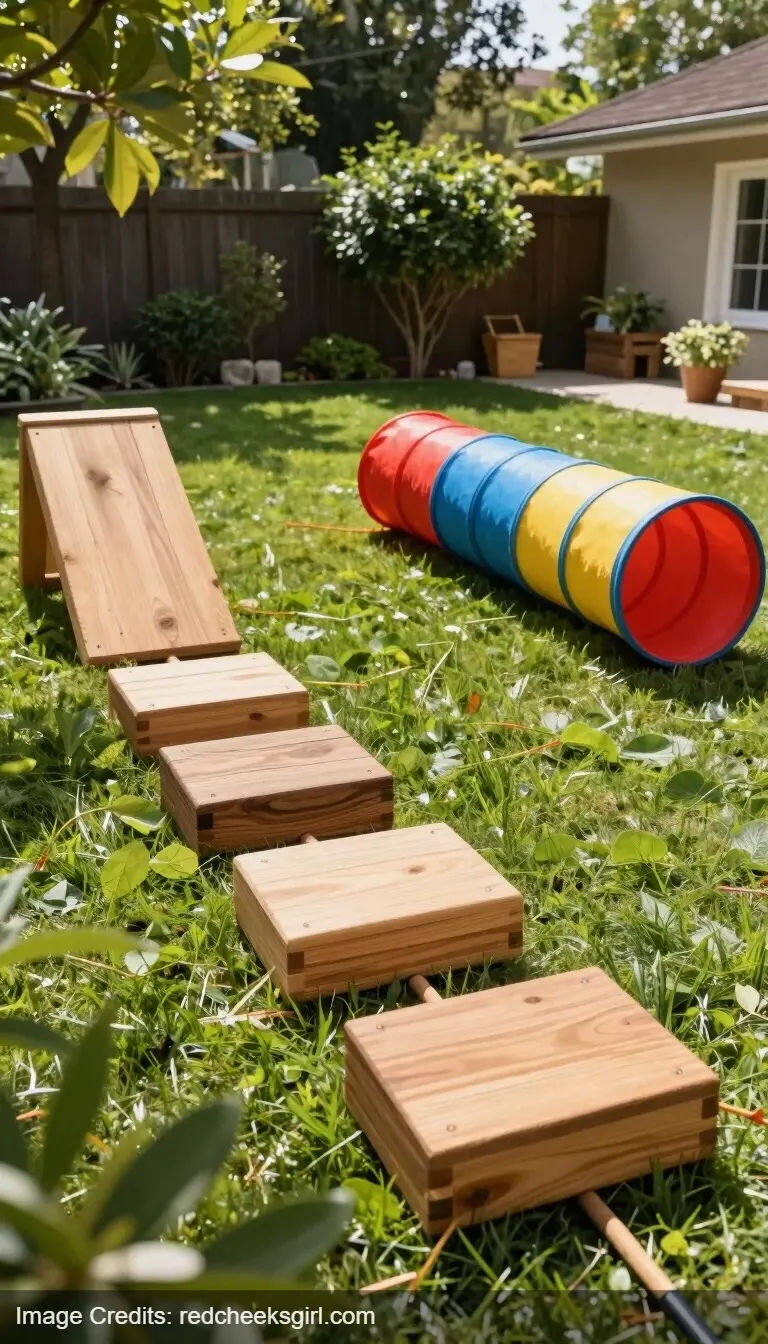
6. A Balance and Obstacle Course (That Scales Up)
Start with a few stepping stones and a balance beam made from a 2×4 set on the ground. Add a small ramp. A tunnel. A low rope ladder. As the kids get older and braver, you raise the beam, add more complex obstacles, extend the course.
The beauty is you don’t have to buy it all at once. I started with literally two stepping stones and a plank of wood I already had. Over three years it became a pretty decent circuit. The kids helped build additions, which made them way more invested in using it.
Outdoor balance beam for kids if you want something sturdier than a 2×4 (no judgment — that works for little ones but gets wobbly for bigger kids).
7. A Loose Parts Play Area
This is one from occupational therapists and nature-based educators that took me a while to get on board with because it looks messy.
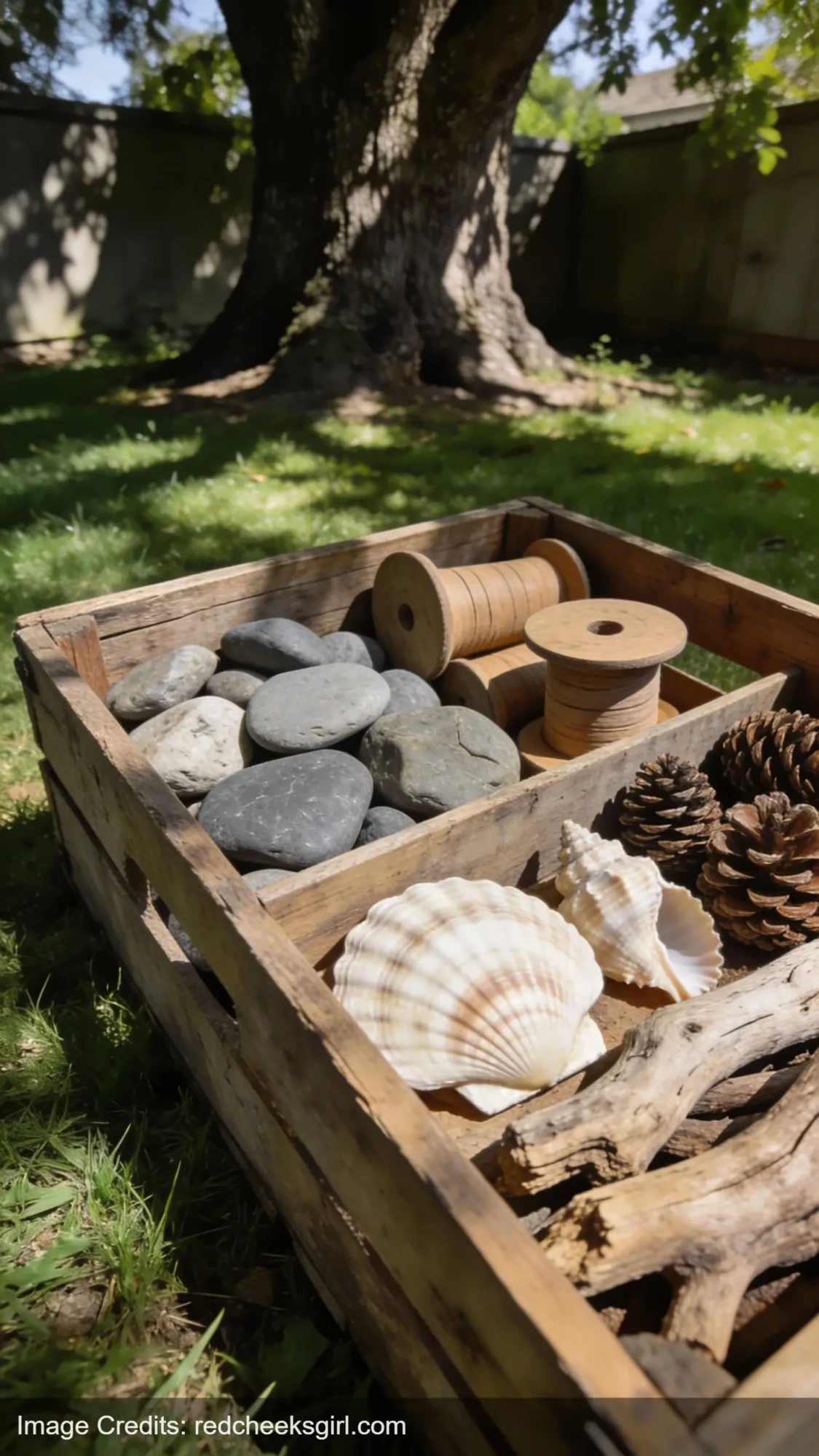
A “loose parts” zone is a designated corner with a collection of open-ended materials: wooden spools, river rocks, shells, short logs, pieces of rope, smooth sticks, pinecones, old metal cans. Kids build, sort, balance, design, create — with absolutely no instructions.
My kids spent an entire afternoon last summer building what they called “a town for beetles.” I don’t know what they learned. I know they were outside for four hours without asking me for a single thing.
For storage, an outdoor wooden crate or storage bin keeps it contained when they’re done.
8. A Hammock or Hammock Chair
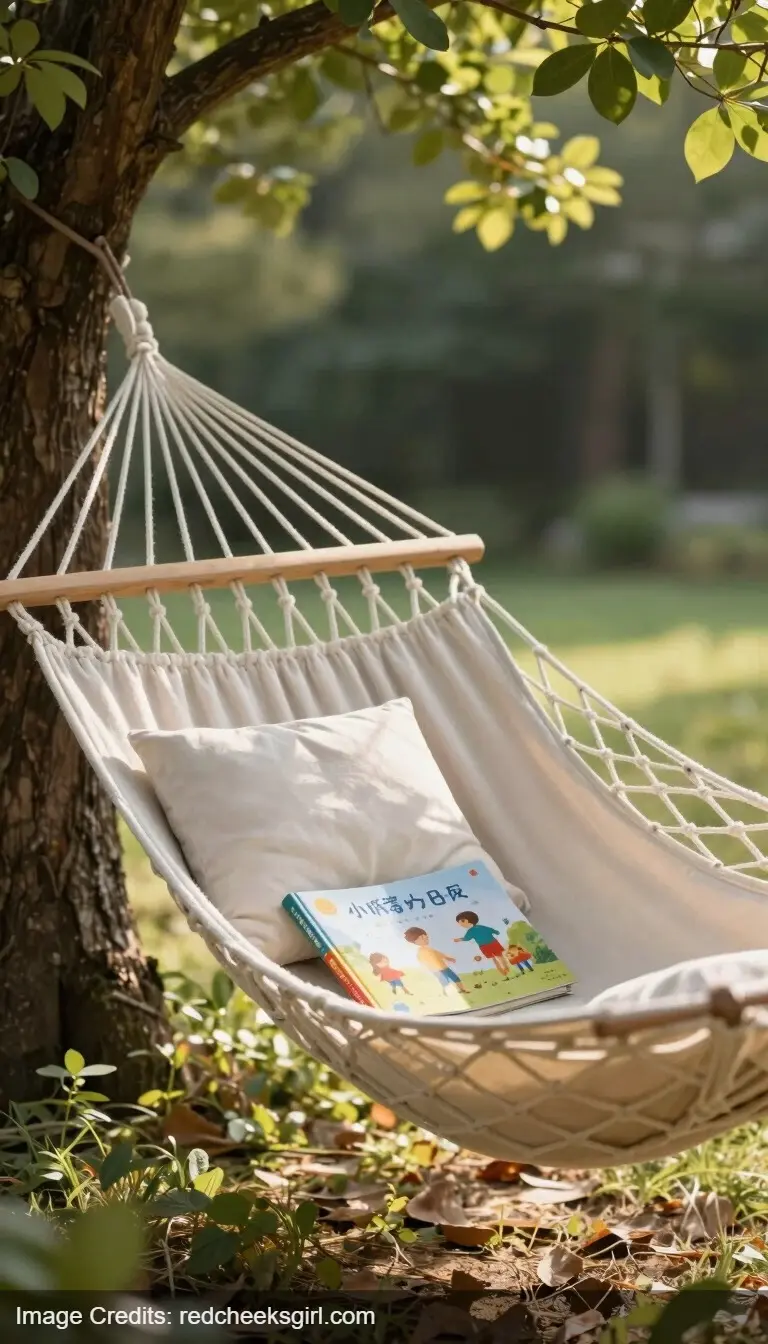
This sounds like something for adults, but kids absolutely lose their minds for hammocks. Even toddlers who can climb in with help will swing themselves silly.
For bigger kids and tweens especially, having a cozy spot to lie and stare at the sky, read, or just do nothing is genuinely important. Outside time doesn’t have to be running and jumping. Sometimes it’s lying in a hammock watching clouds.
Kids’ backyard hammock — look for cotton ones with spreader bars for kids who want to sit rather than cocoon.
9. A Chalkboard Fence Panel or Outdoor Easel
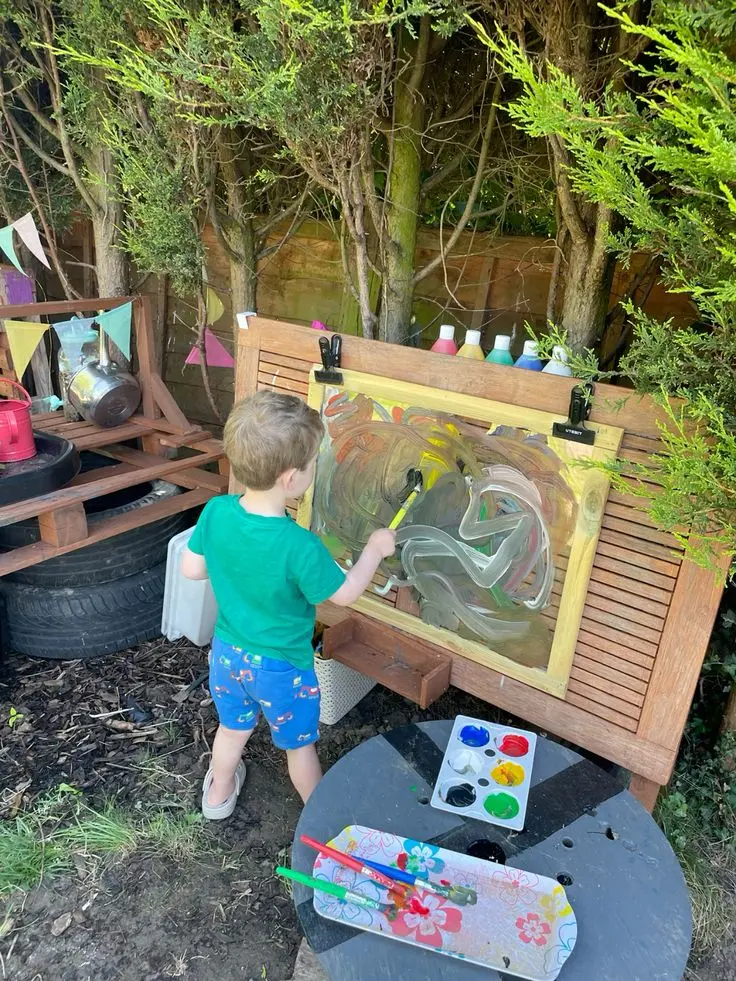
Take a section of your fence — or build a simple freestanding frame — and coat it with exterior chalkboard paint. Done.
Toddlers scribble. Preschoolers draw their entire family in a row. Elementary-age kids start writing words, keeping scores for outdoor games, illustrating stories. One summer my kids ran what they called “the chalkboard newspaper” which mostly involved drawing things that happened that day and showing it to our neighbors.
The outdoor easel version (outdoor art easel for kids) works great too if you don’t want to paint your fence.
10. A Bug Hotel or Wildlife Corner
This one came from a school project and somehow became the most visited corner of our entire yard.
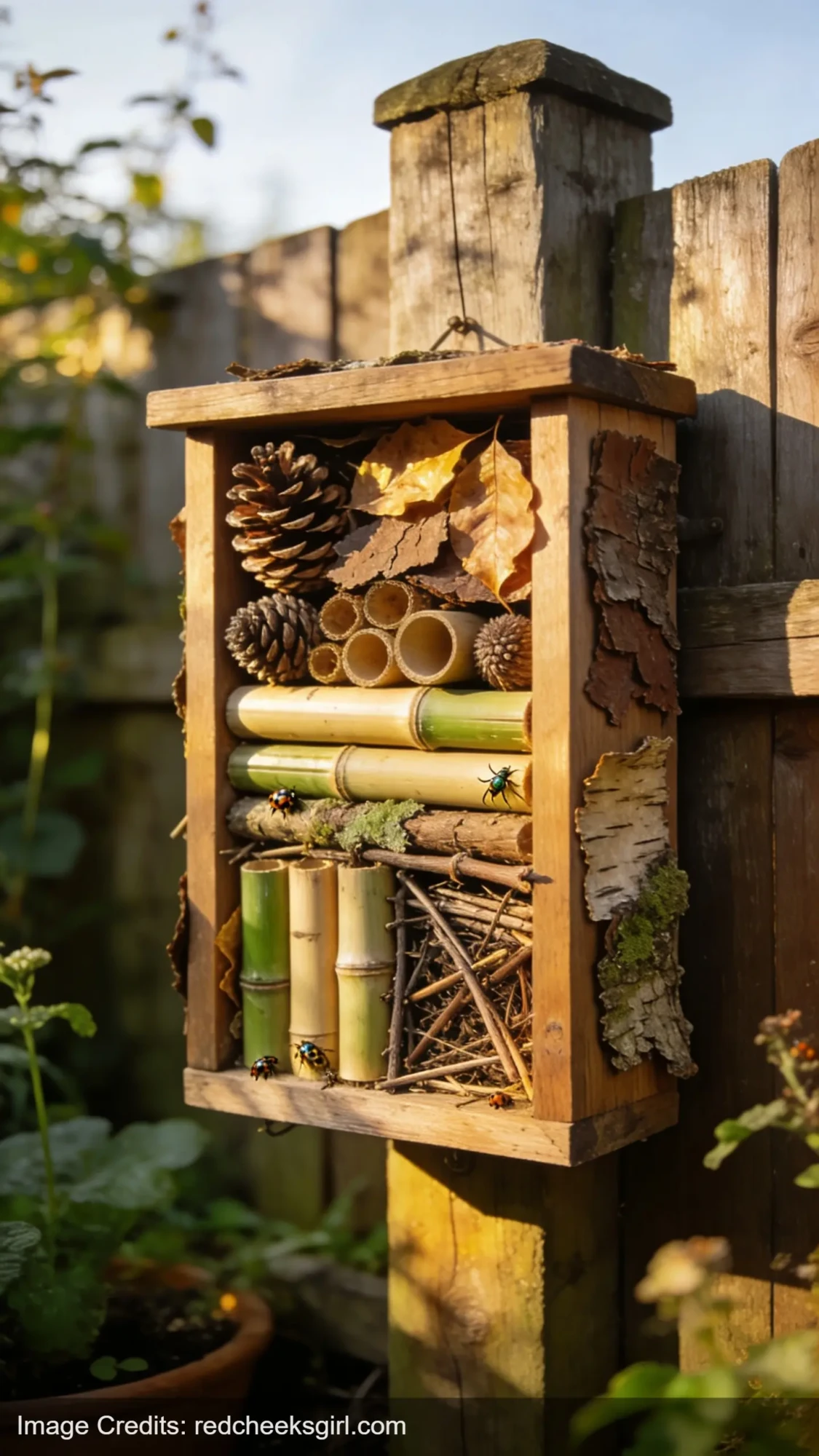
A bug hotel is basically a wooden frame stuffed with natural materials — bamboo tubes, pine cones, bark, straw, dried leaves — that gives insects a place to nest. You can build one for about $10 in materials or buy a ready-made insect hotel.
Kids who won’t spend five minutes on a worksheet will spend an hour checking their bug hotel, cataloguing what moved in, drawing the beetles, making up names for the wasps. It also ties into so many school subjects — ecosystems, life cycles, habitats — without feeling like school at all.
Works from about age 4 through… honestly my nine-year-old still checks it almost daily.
11. A Low Climbing Structure With a Safe Landing
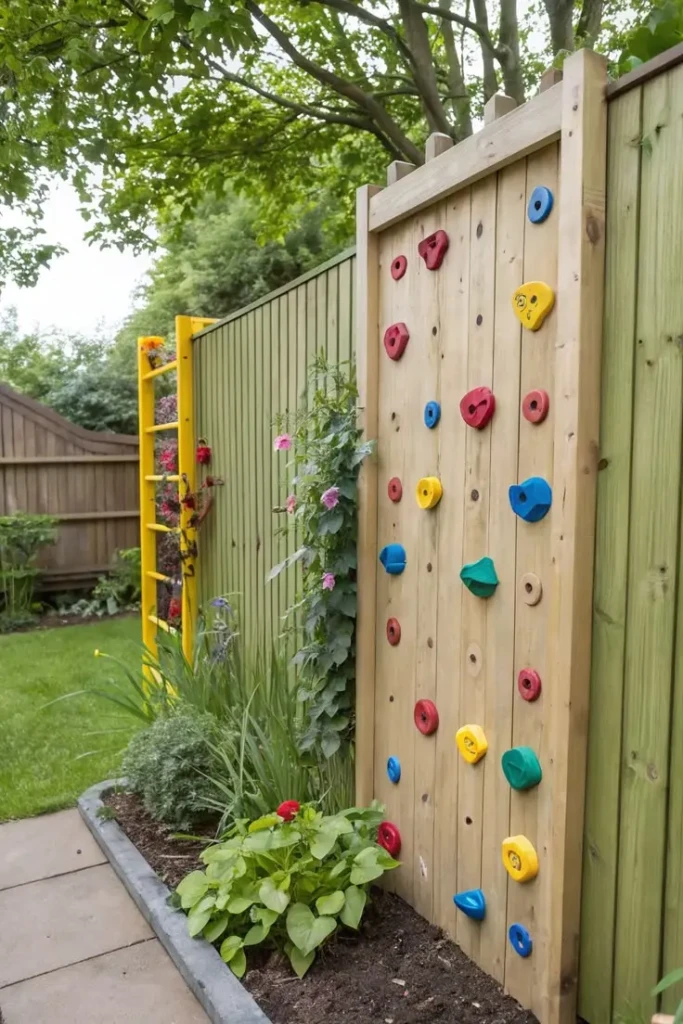
Not a full-on swing set if you don’t have the space or budget. A small standalone climbing wall panel — even just a 4-foot section mounted to a fence with a few colored holds — gives kids something physical to work toward.
The key is putting thick rubber mulch or a gymnastics mat underneath from the start. I skipped this initially. I regret that.
For older kids and tweens, a freestanding climbing frame or adding a cargo net gives them more complex problem-solving as they get bigger and braver.
12. A Stargazing or Camping Spot
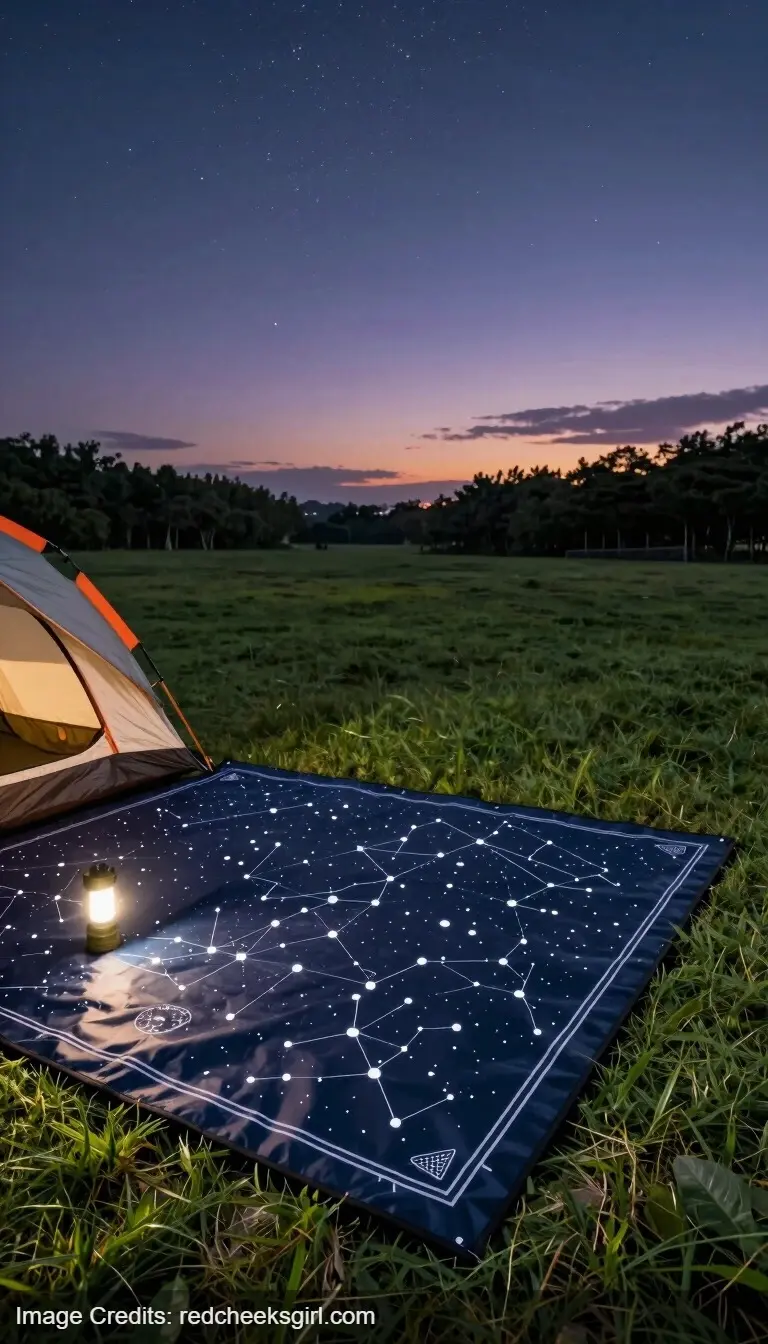
One section of lawn that stays clear, open, and flat. Put a waterproof mat or outdoor rug there (outdoor waterproof picnic mat), and that becomes the place for: lying down and finding shapes in clouds, setting up a small tent for backyard camping nights, watching meteor showers, doing school projects about the moon.
My kids were 4 and 7 the first time we did backyard camping. The 4-year-old fell asleep immediately. The 7-year-old stayed up until 10 pm looking at stars and asking questions I didn’t know how to answer. Both loved it for completely different reasons.
This pairs really well with some of the spring fun activities worth doing once the weather cooperates.
13. An Outdoor Reading Nook
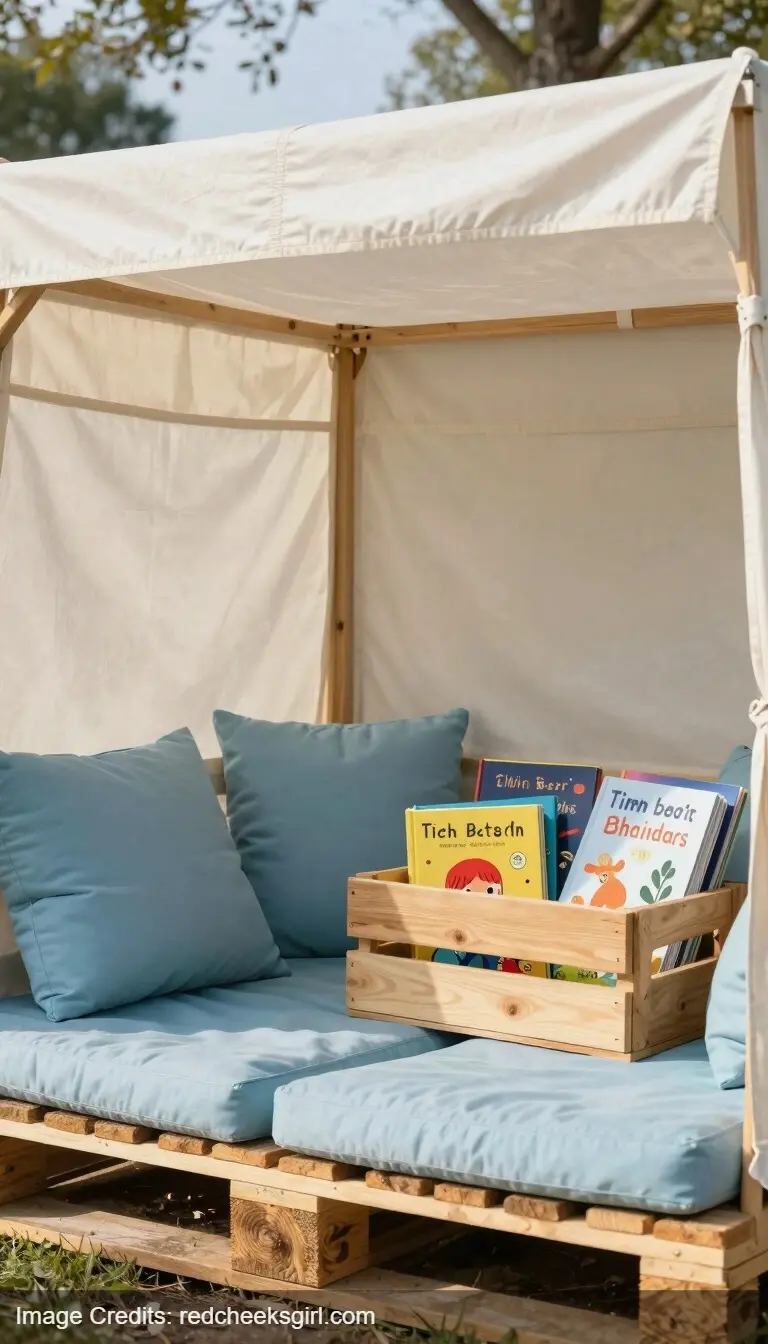
A few pallets, some weather-resistant cushions, a piece of shade sail or canopy overhead, maybe a small outdoor bookshelf with a couple waterproof bins for books.
Books outside hit differently. I don’t know why. My kid who drags her feet about reading inside will happily lie in the reading nook and go through two picture books without me asking. Something about the sensory change — air, outside sounds, the breeze — makes it feel less like a chore.
This doesn’t have to be expensive. A patio loveseat with canopy and a crate of outside-only books can run you under $60 total.
14. A Real Workbench for Real Projects
For kids 7 and up, this is the one I wish I’d done sooner.
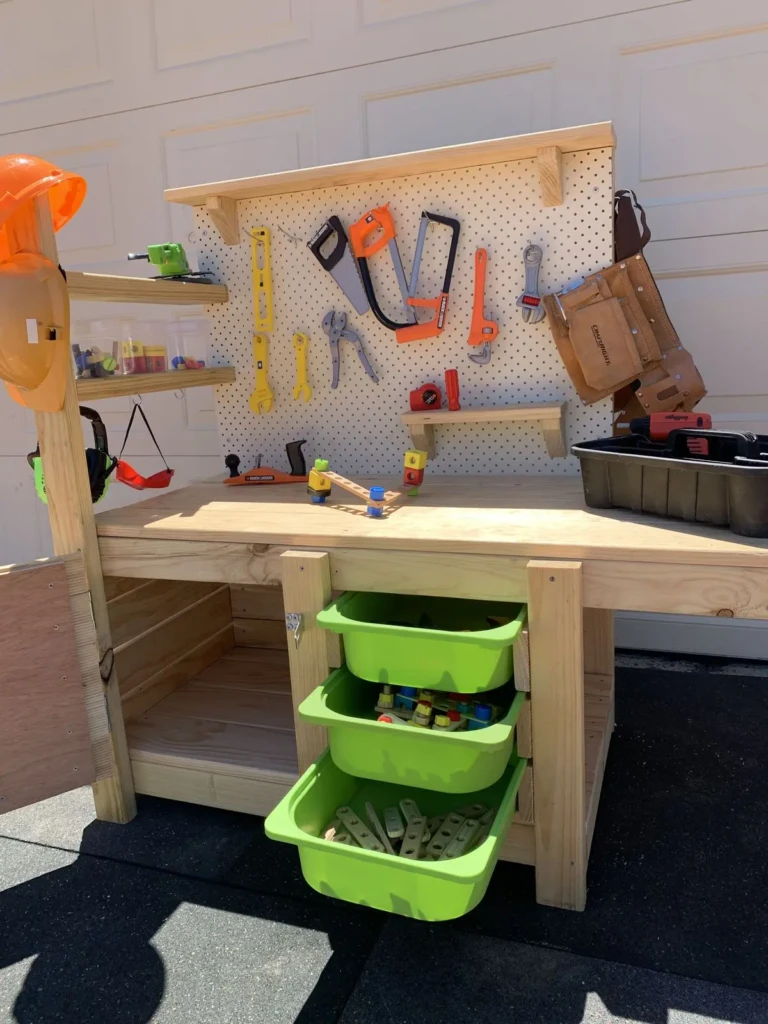
A low workbench — kid height — with real (safe) tools: a rubber mallet, a hand saw appropriate for kids, clamps, nails, scrap wood. Not toys. Actual tools that work, sized for smaller hands.
The first time my son used a real hand saw to cut a piece of wood, he looked at me like I’d given him the greatest gift of his life. That piece of wood is now a “sword.” A very uneven sword. He’s incredibly proud of it.
Kids’ workbench with real tools — look for sets that include a proper vise, not just hammers and pegs. As they get older you add tools. The interest doesn’t go away.
A Few Things Worth Knowing Before You Build Anything
Start with one thing. The best version of this is not doing all 14 at once. It’s picking the one that matches your kids’ current obsession and building that well, then adding as they grow.
Involve them in setup. If a kid helped build the bug hotel, they will check that bug hotel every single day. Ownership is everything.
Cheap and rough often beats expensive and polished. The mud kitchen made from thrift store finds gets used more than the plastic playset we spent $400 on when my oldest was three. I’ve made my peace with this.
For more outdoor inspiration, the 45 spring activities post has ideas that pair well with a dedicated backyard setup — things to actually do once the space is ready. And if your kids are at the age where they want to make things, the Mother’s Day crafts kids can make list has projects perfect for the outdoor workbench.
FAQs About Backyard Ideas for Kids
How do I make a backyard fun for different ages at the same time? Layer it. Have one low-to-the-ground zone for toddlers and one more physically challenging zone for older kids. The loose parts area and digging patch work across almost all ages simultaneously.
What’s the most cost-effective backyard upgrade for kids? The digging patch, honestly. It costs almost nothing, requires no maintenance, and gets used for years. If you want a close second: the chalkboard fence panel. One can of exterior chalkboard paint.
How do I keep outdoor play areas safe without wrapping everything in bubble wrap? Good ground surfaces under anything they climb. Rubber mulch, thick grass, gymnastics mat — whatever you can manage. And involve them in building so they understand the structure. Kids who helped build something are actually more careful with it than kids who had it handed to them.
What if I have a small backyard? Most of these work in small spaces. The digging patch, mud kitchen, chalkboard panel, bug hotel, reading nook, and workbench all fit in tight spaces. The obstacle course can be done in a straight line if needed.
Are any of these good for screen-free time specifically? All of them, but the loose parts area and the bug hotel are especially good for kids who are resistant to “just go play outside.” They need something to investigate. Give them a mystery and they’ll stay out for hours.

40 fall mantle decor ideas built around composition rules: off-center anchors, odd-number candle gro

30 fall front porch decor ideas that use the door as the anchor. Perfect for small porches where the

20 winter wreath ideas with snowy pine, silver berries and birch that outlast the tree and the tinse
Leave a Reply