

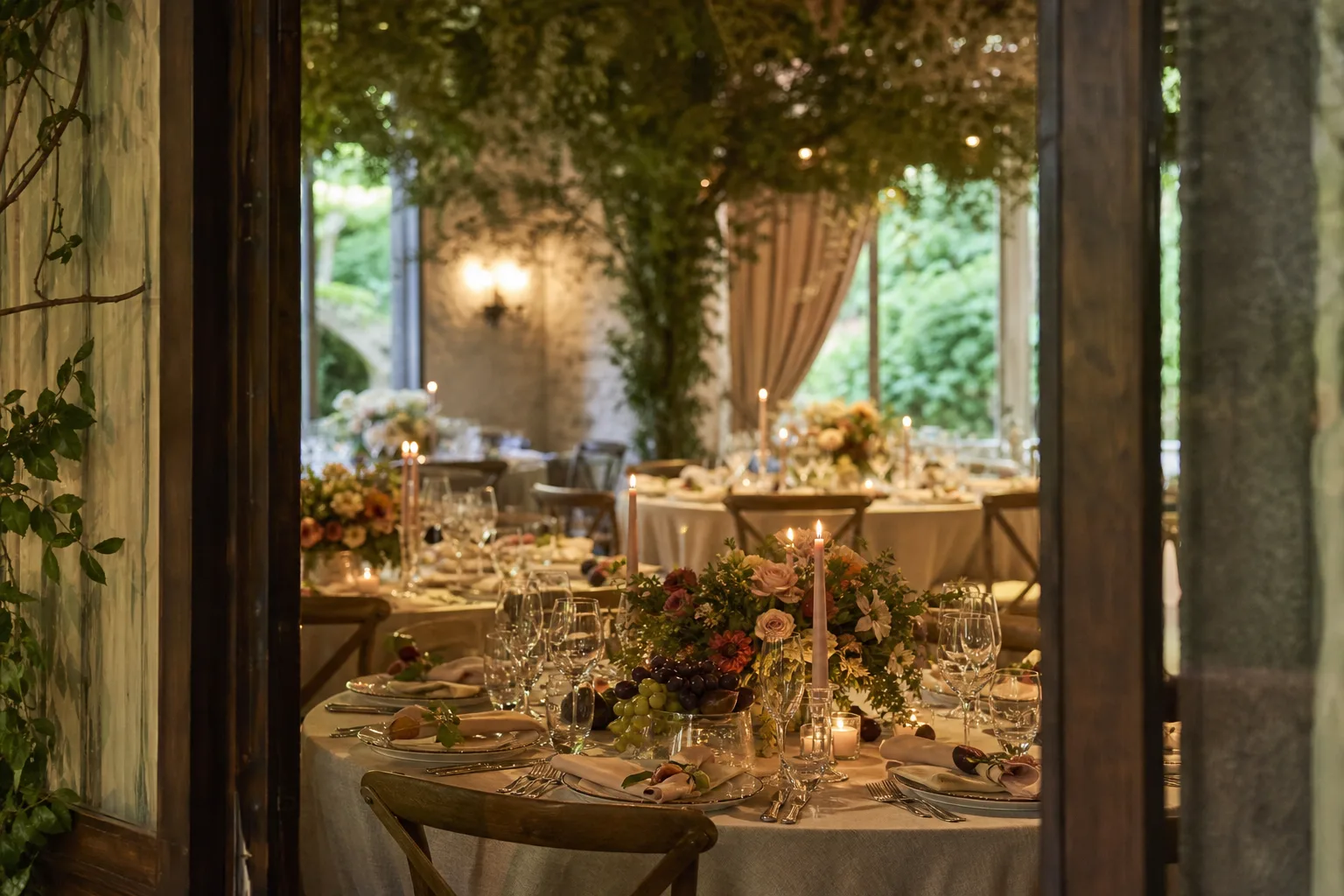
The table is where most of the budget goes and most of the photographs happen, so it earns the fuss. A centerpiece does not need to be tall or rare to work, it needs to sit at the right height for conversation and catch the light once the candles go on.
What follows are thirty six, grouped by how they behave on a table rather than by flower name: low and garden-style, tall and dramatic, candlelit, built around fruit, carried by a striking vessel, or stripped back to almost nothing. Every one uses real flowers, candle flame or fruit, nothing painted or printed.
If flowers are not the plan at all, that is its own piece: 21 Wedding Table Centerpieces Built Around Something Other Than Flowers. And once the table looks right, there is more to dress than the middle of it in 28 Wedding Table Decorations That Move Beyond the Centerpiece.
This post contains affiliate links. If you buy through them, I may earn a small commission at no extra cost to you.
Table of Contents
Low & Garden-Style Centerpieces
Low means guests can actually see each other across the table, which sounds obvious until you have sat behind a four-foot arrangement all through the speeches. These sit at compote height, loose and a little undone, the kind of thing that looks like it grew there rather than got delivered.
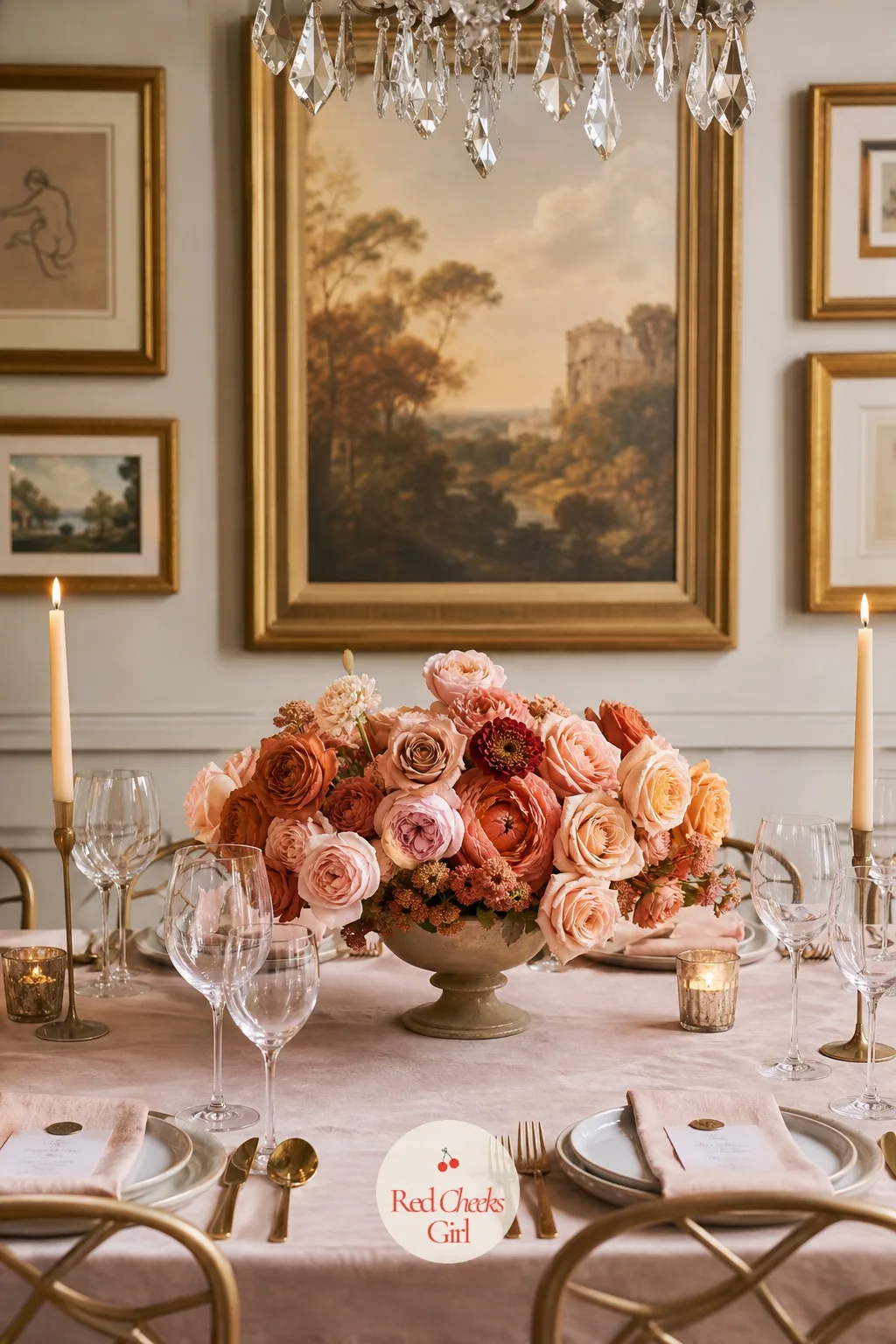
Low Garden Rose Mounds
She wants flowers, not a hedge, something she can see her table partner over. A low mound of garden roses in blush and dusty terracotta, packed close in a wide compote, gives her exactly that without a single tall stem to duck around.
It is built on a compote or shallow urn, floral foam or a chicken-wire ball hidden inside, roses pushed in tight at varying heights so the top stays rounded rather than flat. A few trailing ivy or jasmine stems soften the rim.
This one suits a ballroom or a restaurant private room where the table needs to stay conversational. If garden roses are out of season where you are, standard roses opened fully with a hot steam trick get close to the same ruffled look for less.
🛍 Shopping guide
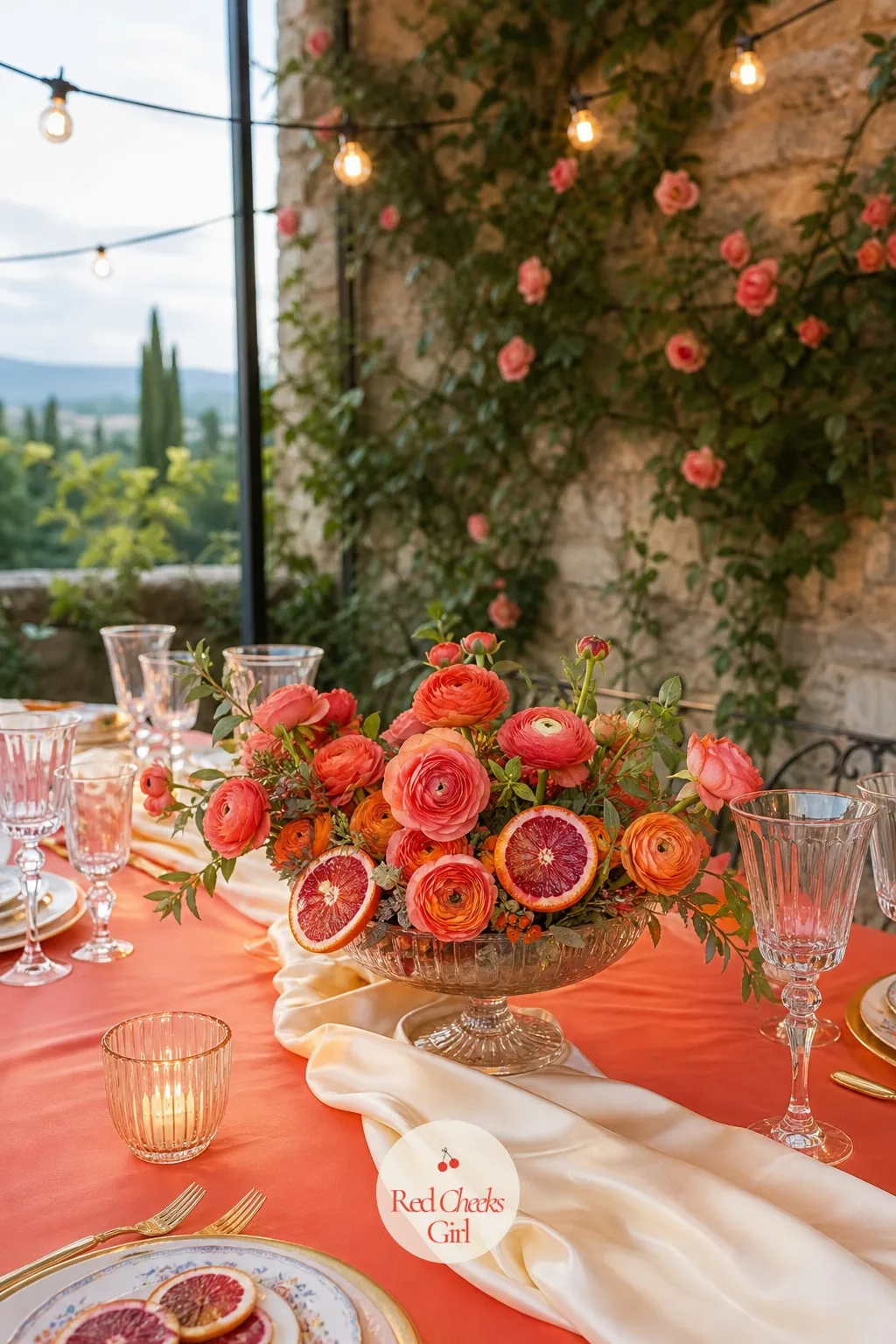
Ranunculus and Citrus
Ranunculus has the ruffled petal of a peony at a fraction of the price, and sliced citrus tucked in beside it keeps the whole thing smelling faintly sweet rather than green. A low arrangement built this way reads expensive for far less.
A shallow glass or ceramic dish holds floral foam, ranunculus packed in shades from cream through coral, with whole kumquats and sliced blood orange wired or skewered in among the stems near the base.
Works beautifully on a restaurant table or a garden marquee with warm light. If ranunculus is unavailable, double tulips give almost the same tight, layered petal.
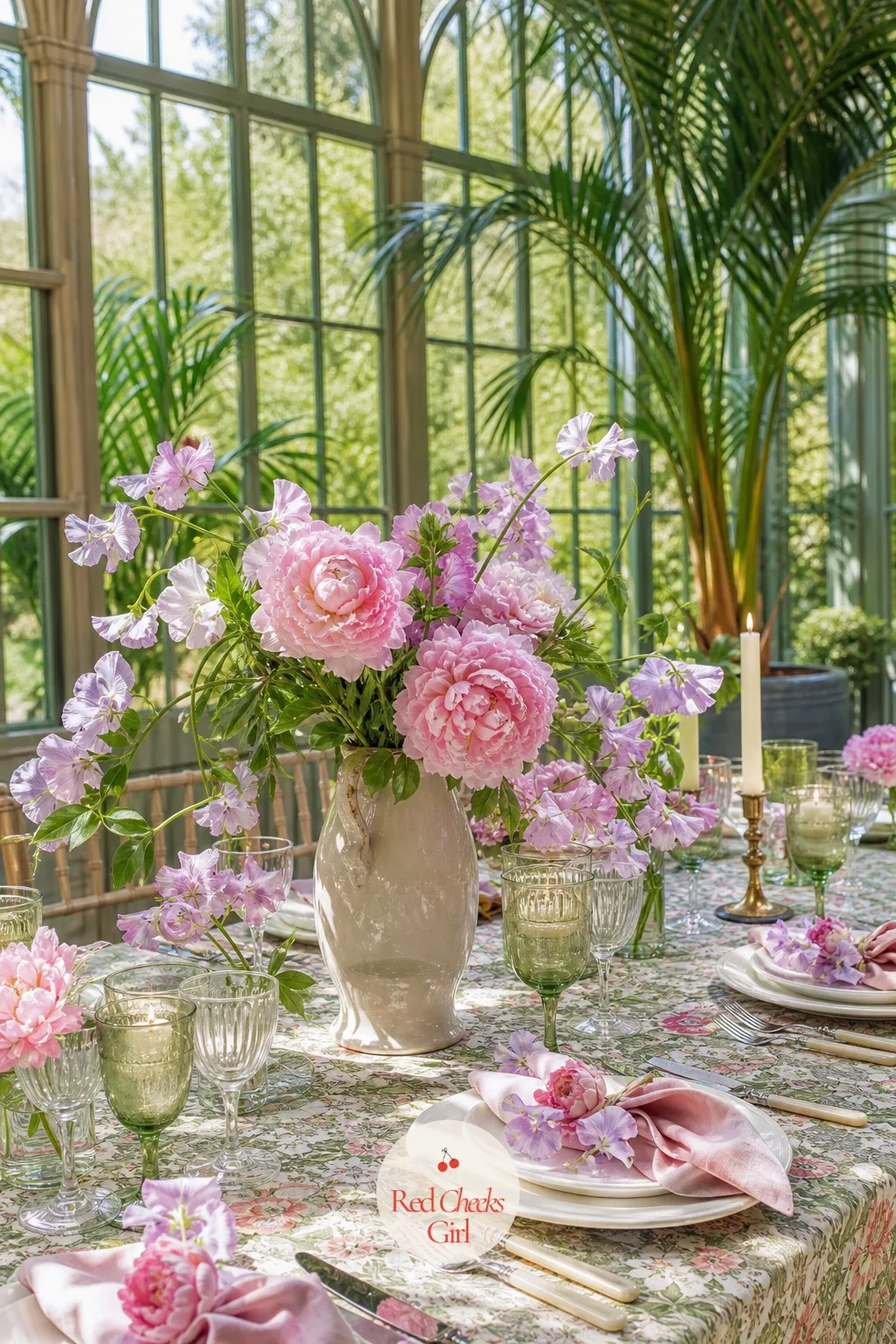
Peony and Sweet Pea Posy Rings
If peonies alone feel too stiff and formal for the room, loosen them with sweet pea, which brings movement and a proper scent to the table rather than just a shape. The result reads like a cutting garden armful set down mid-conversation.
Peonies form the base in a low jug or urn, sweet pea tucked in around the edges on its own thin stems so the silhouette stays uneven on purpose, never trimmed into a dome.
Best for spring and early summer weddings when both flowers are actually in season; out of season, swap sweet pea for stocks, which gives the same fragrance and loose habit.
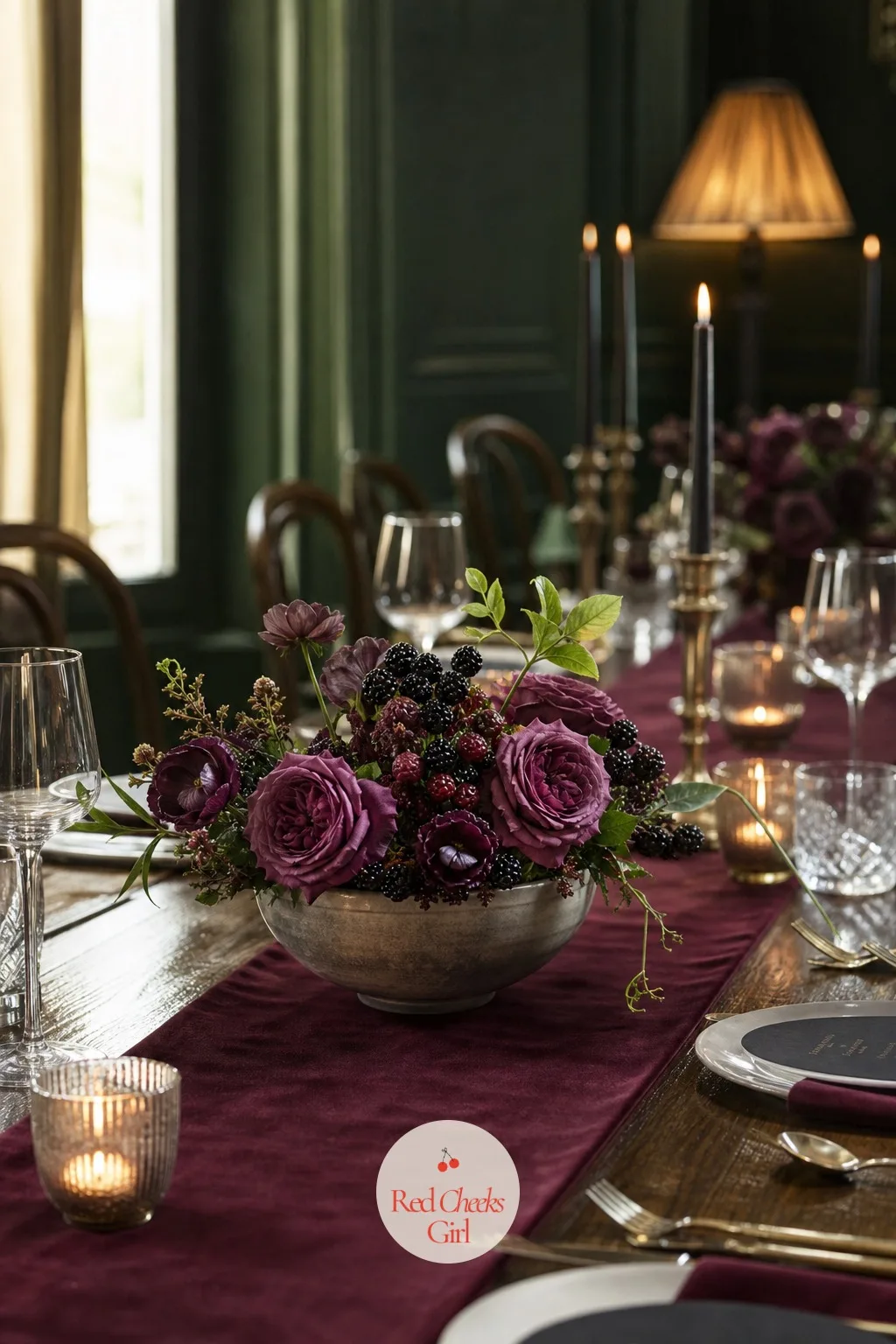
Garden Rose and Blackberry Low Bowls
A bowl that looks like it was picked straight from a hedgerow rather than ordered from a catalogue: deep plum garden roses sit with whole blackberries tucked between the stems, a combination most florists never get asked for.
A low ceramic bowl holds foam, roses in wine and mauve pushed in close, clusters of fresh blackberries on their stems or wired in small bunches filling the gaps near the rim.
Gorgeous for a late-summer or autumn table with a darker palette. Where blackberries are out of season, small dark plums or deep purple grapes give the same jewel tone.
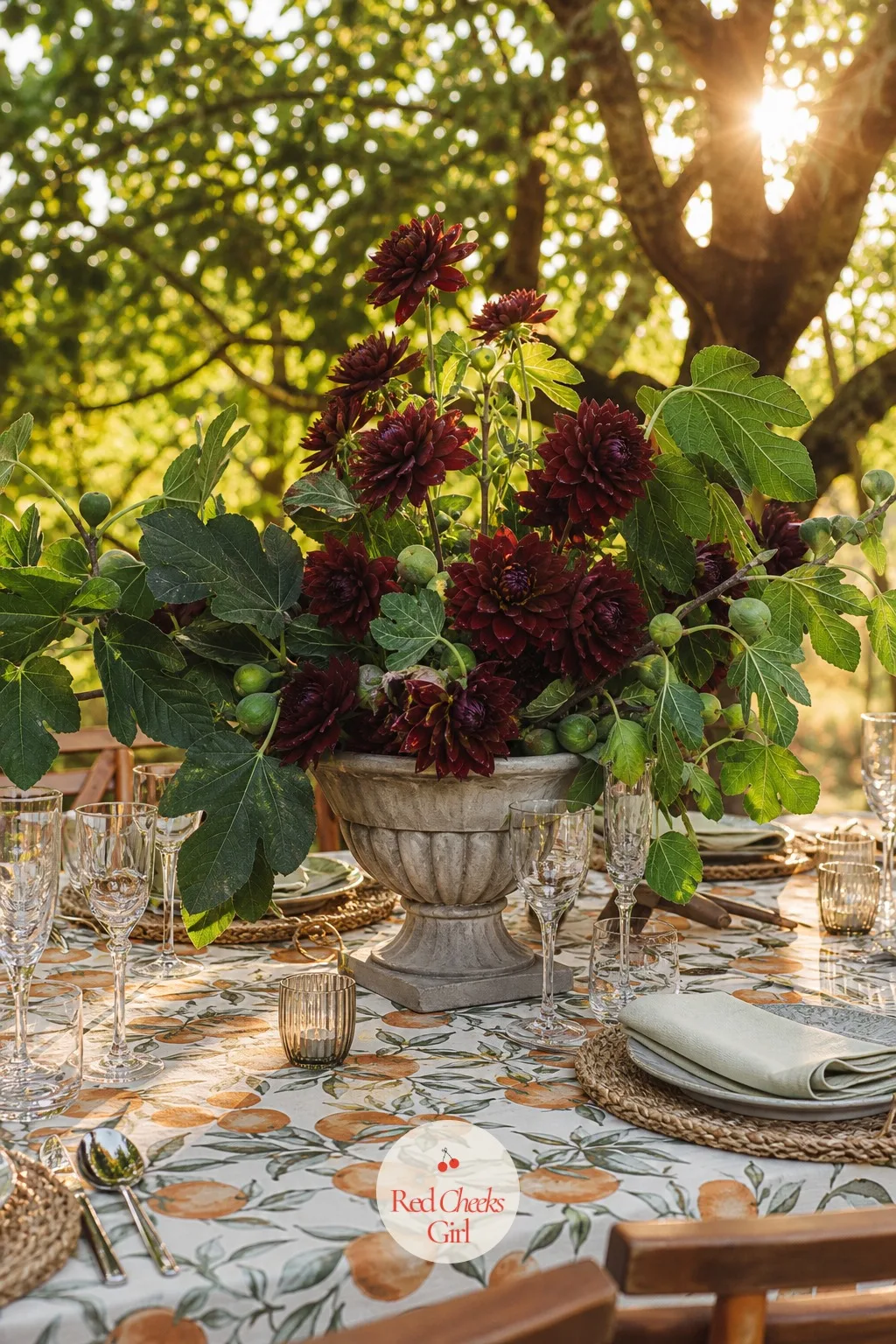
Dahlia and Fig Branch Mix
Dahlia has the dinner-plate drama of a peony but holds up far longer in the heat, and a few leafy fig branches worked through it give the whole arrangement an orchard feel rather than a florist’s one.
Dahlias in burgundy and apricot sit low in a wide urn, fig branches with their broad leaves and a few whole green figs threaded through for height and shade.
This suits an autumn vineyard or orchard wedding especially well. Where fig branches are not available, olive branches give a similar silvery leaf against the same deep bloom colours.
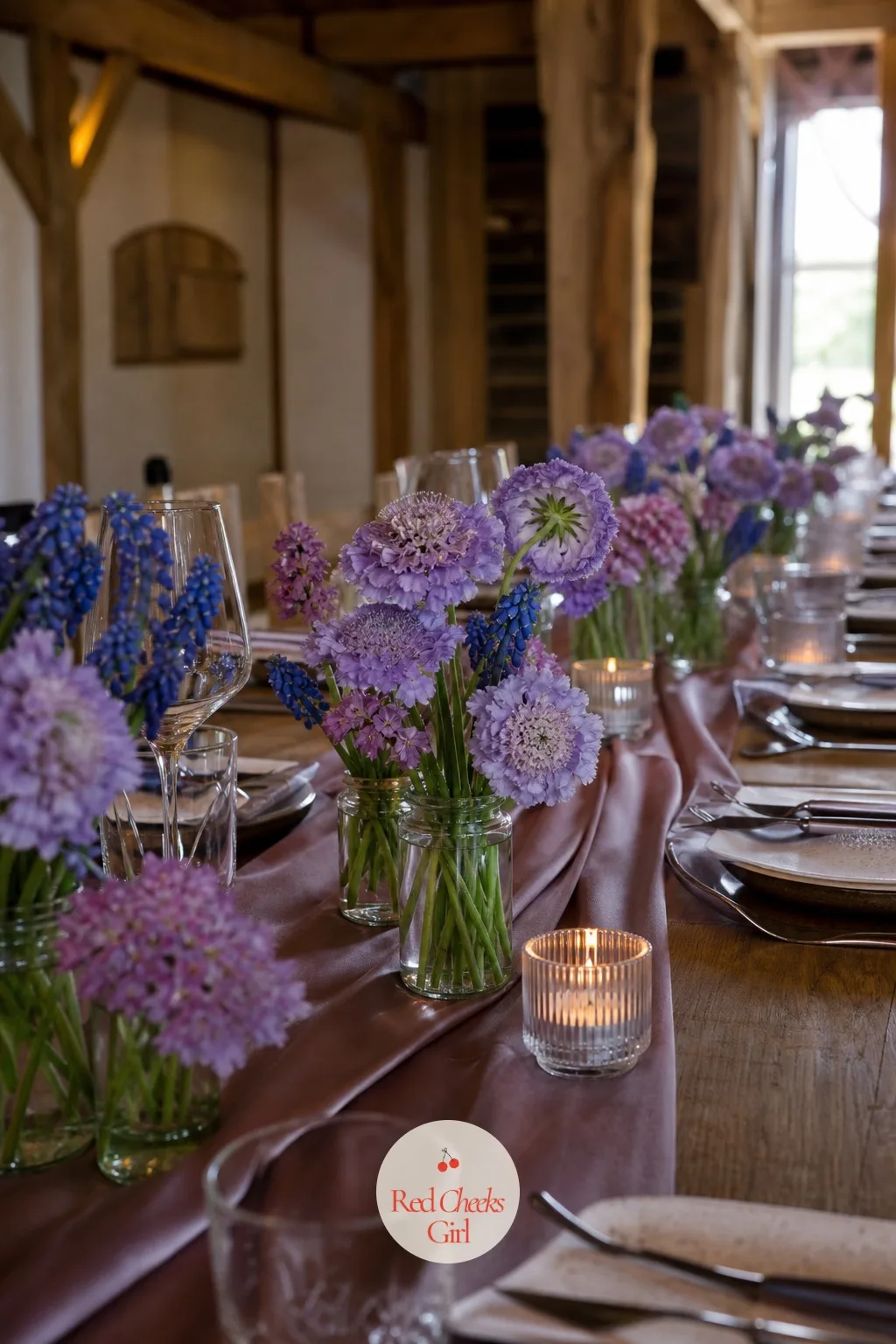
Scabiosa and Muscari Clusters
For the bride who wants something nobody else’s wedding had: scabiosa’s papery, slightly wild bloom next to tiny muscari spikes gives a low arrangement real texture instead of just a mass of round flower heads.
Short glass or ceramic vessels cluster together down the table, each filled with a handful of scabiosa in dusty mauve and small bunches of blue-purple muscari, no foam needed given the short stems.
Suits a small or intimate table beautifully. Where muscari is out of season, blue delphinium florets picked off the main stem give the same tiny, deep blue note.
🛍 Shopping guide
Tall & Dramatic Centerpieces
Tall pieces earn their keep in a room with real ceiling height, a barn with exposed beams or a ballroom with chandeliers overhead. Keep the stem of the stand clear so guests can see through it and talk past it, not around it.
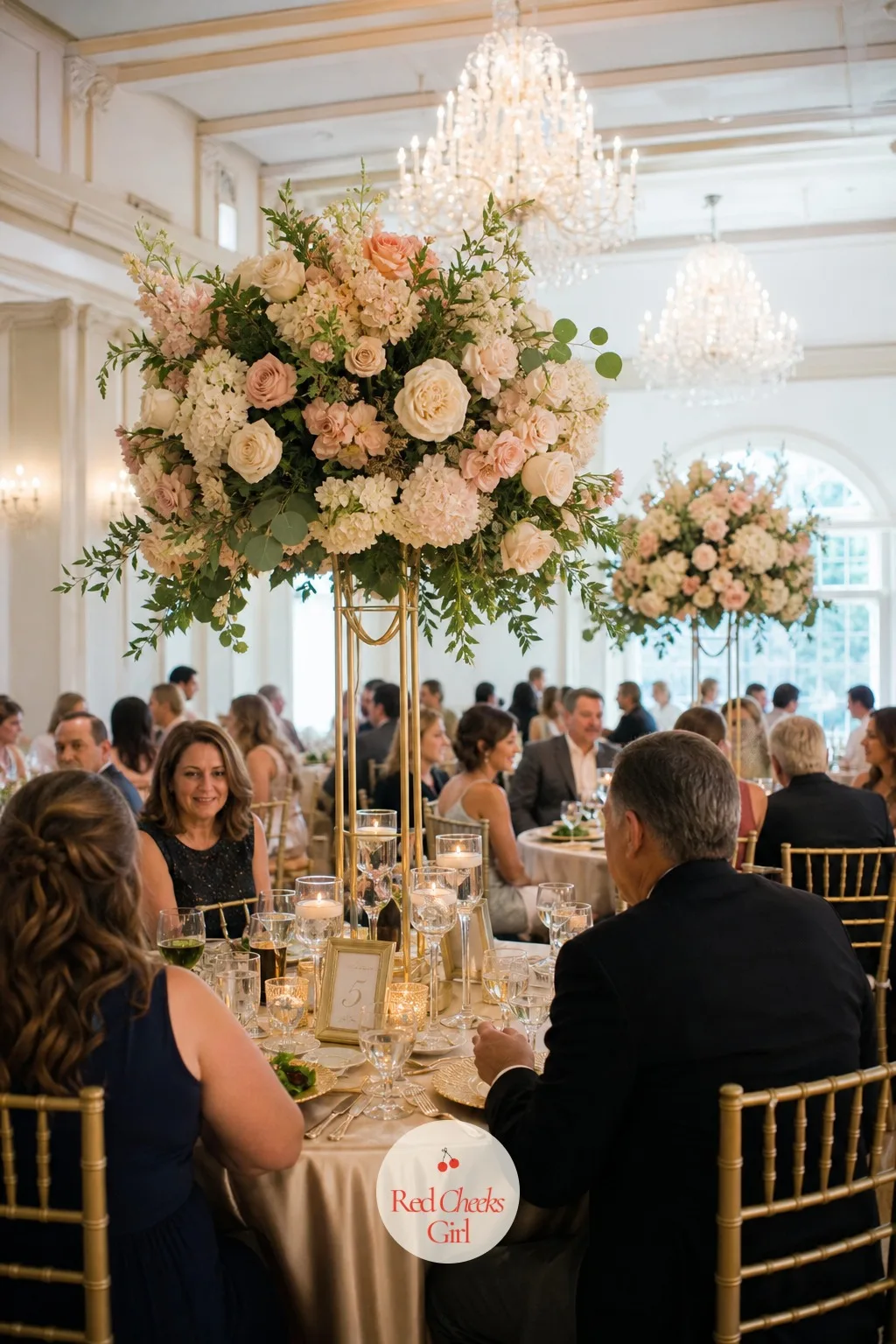
Tall Arrangements on Gold Stands
This is the picture most brides have saved to a board somewhere: a slim gold stand lifting a full, loose arrangement well above eye level, so the whole room reads grand the second the doors open.
A tall gold urn or candelabra-style stand carries a foam cage or clear bowl at the top, filled with a mix of roses, hydrangea and trailing greenery that spills generously over the edge and down the stand itself.
Reserve this one for a ballroom or marquee with real ceiling height, it gets lost under a low beam. Hire the stands rather than buy, most florists already have them.
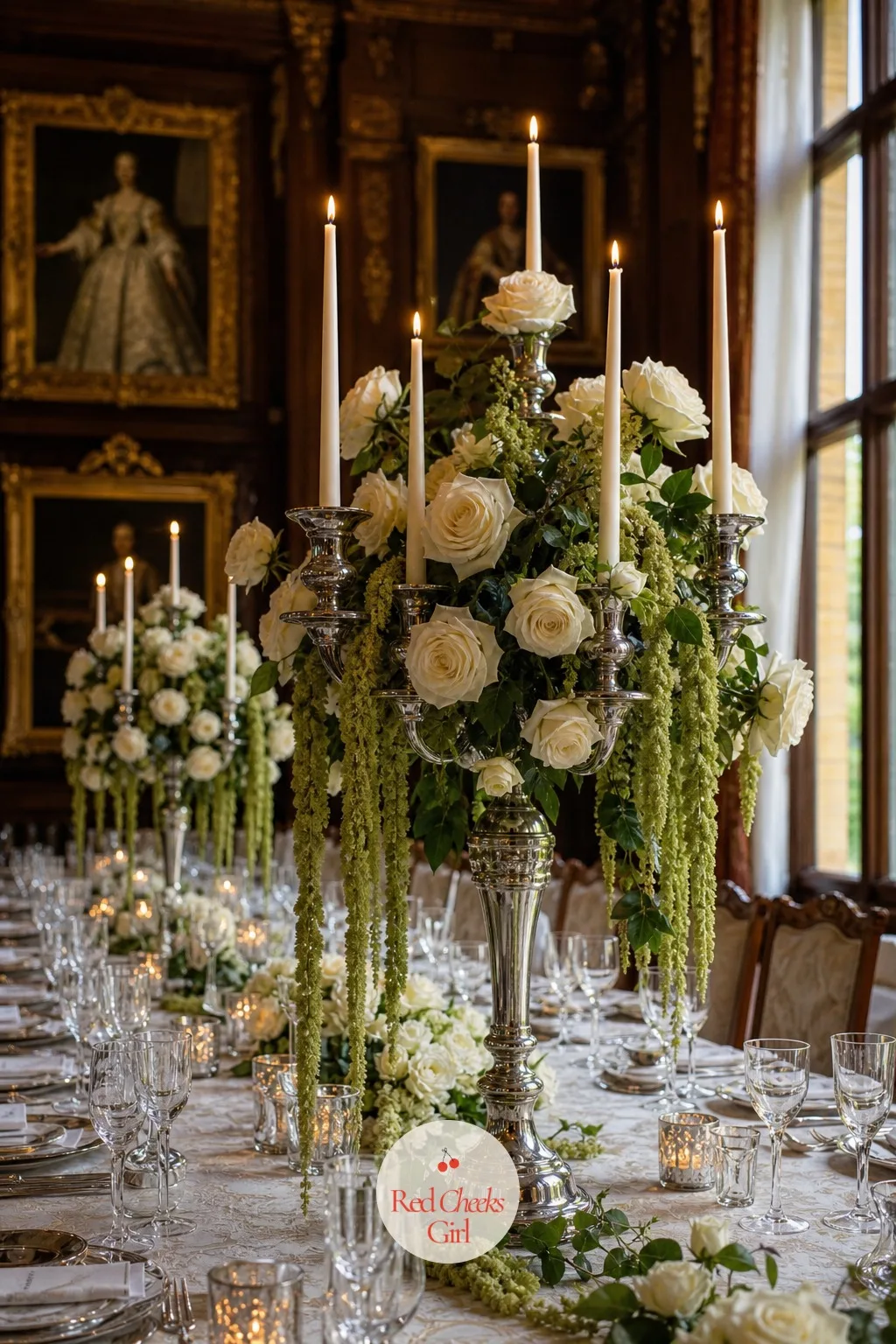
Cascading Florals on Candelabras
A candelabra already looks like an heirloom before a single flower touches it; add blooms that spill down the arms rather than sit on top and the whole table gets a waterfall instead of a bouquet.
A multi-arm silver or gold candelabra holds tapers in several of its branches, with garden roses, jasmine vine and trailing amaranthus wired along the arms so they cascade toward the cloth.
Beautiful for a restaurant private dining room or an old ballroom with proper candlelight allowed. If open flame is restricted at your venue, flameless tapers sit in the same holders without anyone noticing from across the room.
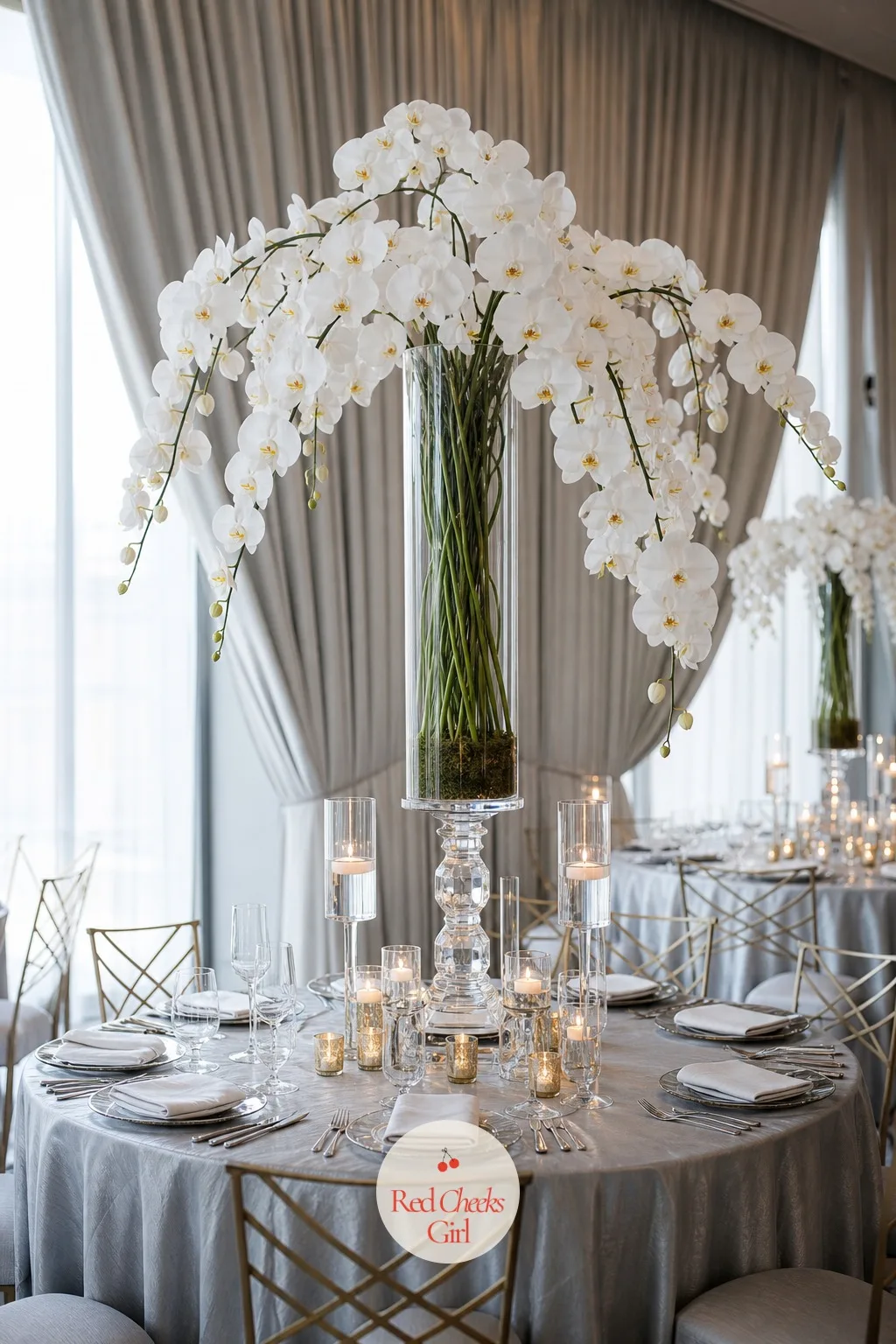
Orchid Towers on Crystal Stands
For a modern, slightly glamorous room, nothing reads sleeker than a single stem type taken tall: phalaenopsis orchids rising from a slender crystal stand, elegant rather than busy.
A clear crystal or glass stand lifts a narrow cylinder vase, white or deep purple orchid stems arching out from the top in a controlled fan, the stand’s own facets catching candlelight underneath.
Suits a contemporary hotel ballroom or glass-walled venue especially well. A cheaper clear acrylic stand gives nearly the same shine under evening light if crystal is out of budget.
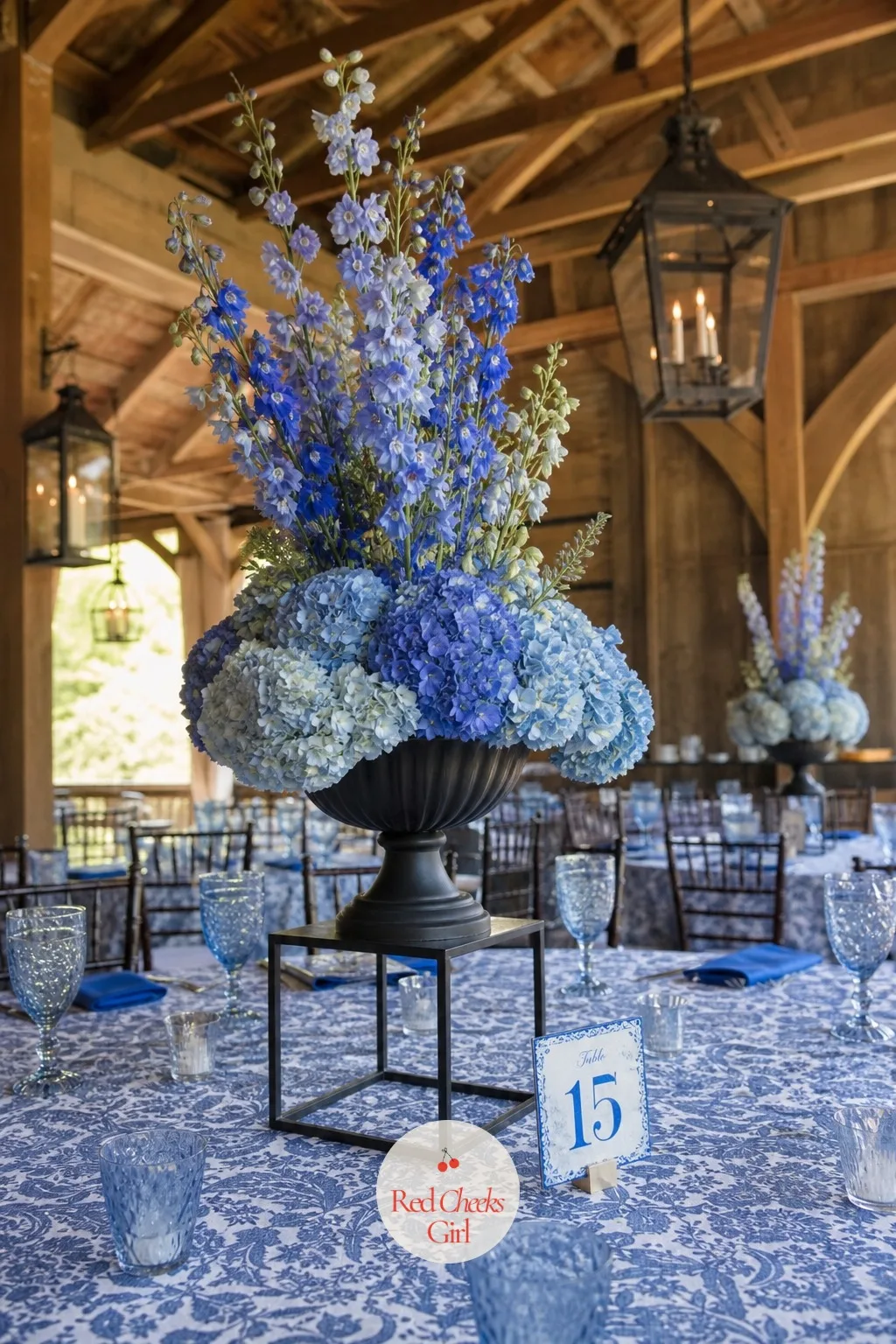
Delphinium and Hydrangea on Iron Urns
Blue is the hardest colour to get right on a wedding table, too much of it goes cold. Delphinium spires rising out of full hydrangea heads, on a weathered iron stand, keep it rich rather than icy.
A black iron urn on a pedestal base holds foam packed with blue and periwinkle hydrangea at the bottom, tall delphinium stems rising straight up through the centre for height.
Gorgeous in a barn or converted warehouse where the iron matches the existing fixtures. Swap delphinium for larkspur if it is out of season, the colour and shape are nearly identical.
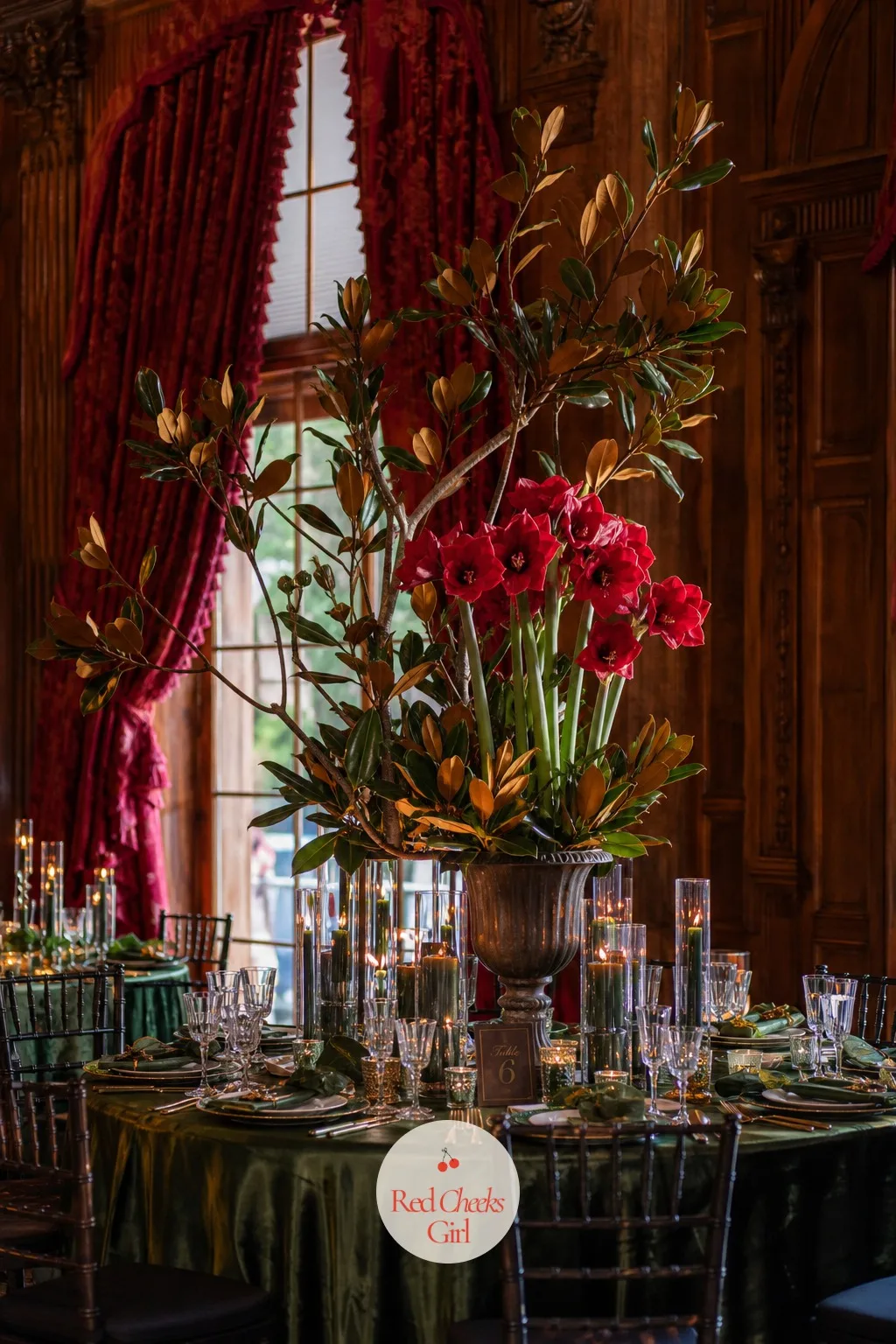
Magnolia Branch and Amaryllis Towers
Glossy magnolia leaves give instant structure and shine without costing a fortune in blooms, and a few amaryllis stems rising through them add scale without needing a dozen extra flowers.
Tall magnolia branches stand in a heavy urn base for stability, deep red or white amaryllis stems placed through the branch structure at varying heights, the leaves doing most of the visual work.
Striking for a winter or formal evening wedding in a wood-paneled room. If amaryllis is unavailable, tall white lilies give a similar scale on a thinner stem.
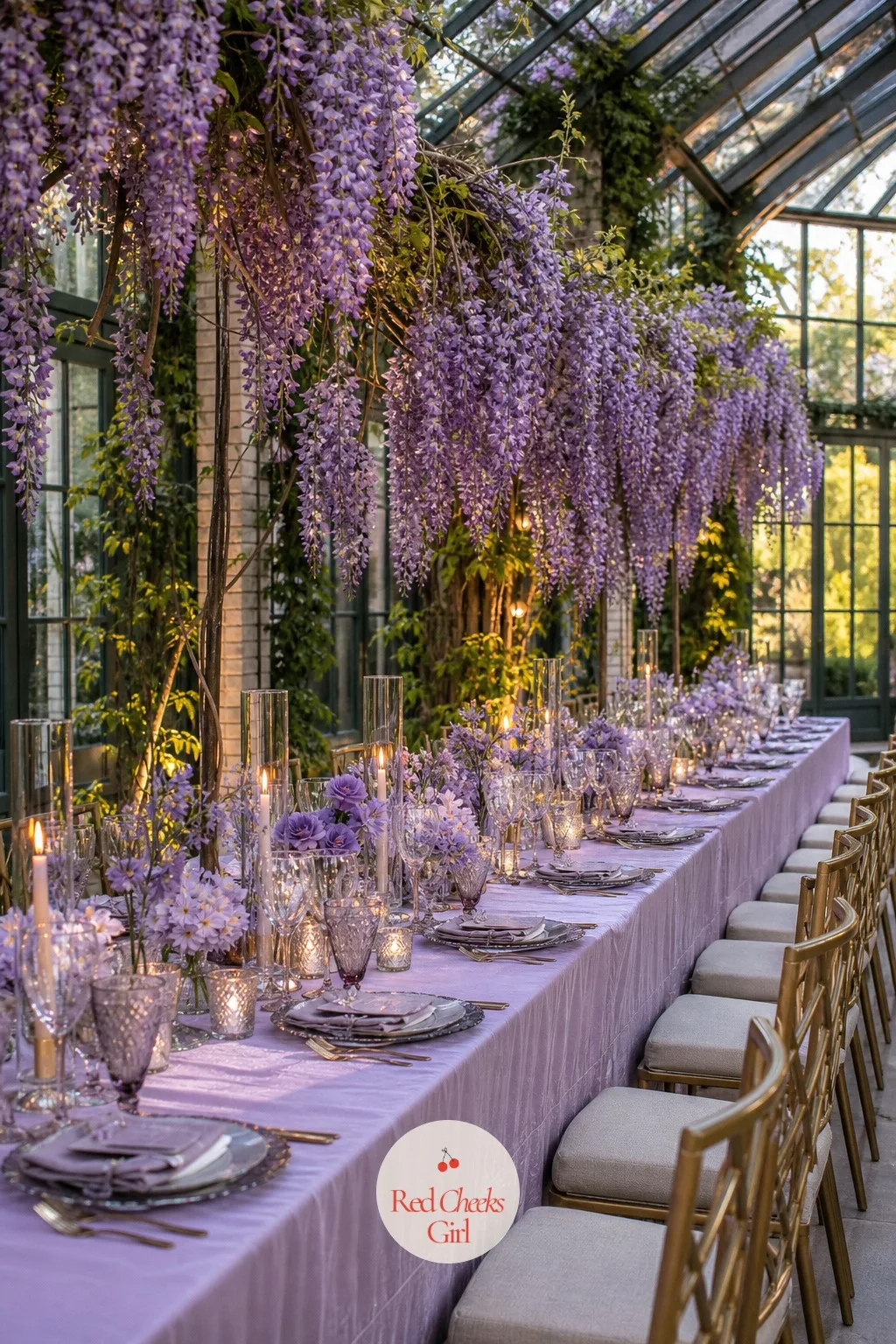
Wisteria Cascades Over the Table
Instead of one tall piece in the middle, wisteria trails the whole length of the table from an overhead point or a tall frame, so the drama runs down the room rather than sitting in one spot.
A slim metal arch or suspended frame anchors at each end of the table, long wisteria vines draped along its length with soft lavender blooms hanging down close to the cloth.
This one wants a garden or conservatory setting with height to spare above the table. Where fresh wisteria is out of season, trailing amethyst orchid or sweet pea vines give a similar hanging effect.
Candlelit Centerpieces
Once the sun goes down these are the ones doing the actual work. Flame close to flowers reads as warmth, not fire hazard, as long as the wax and the blooms keep a sensible distance from each other.
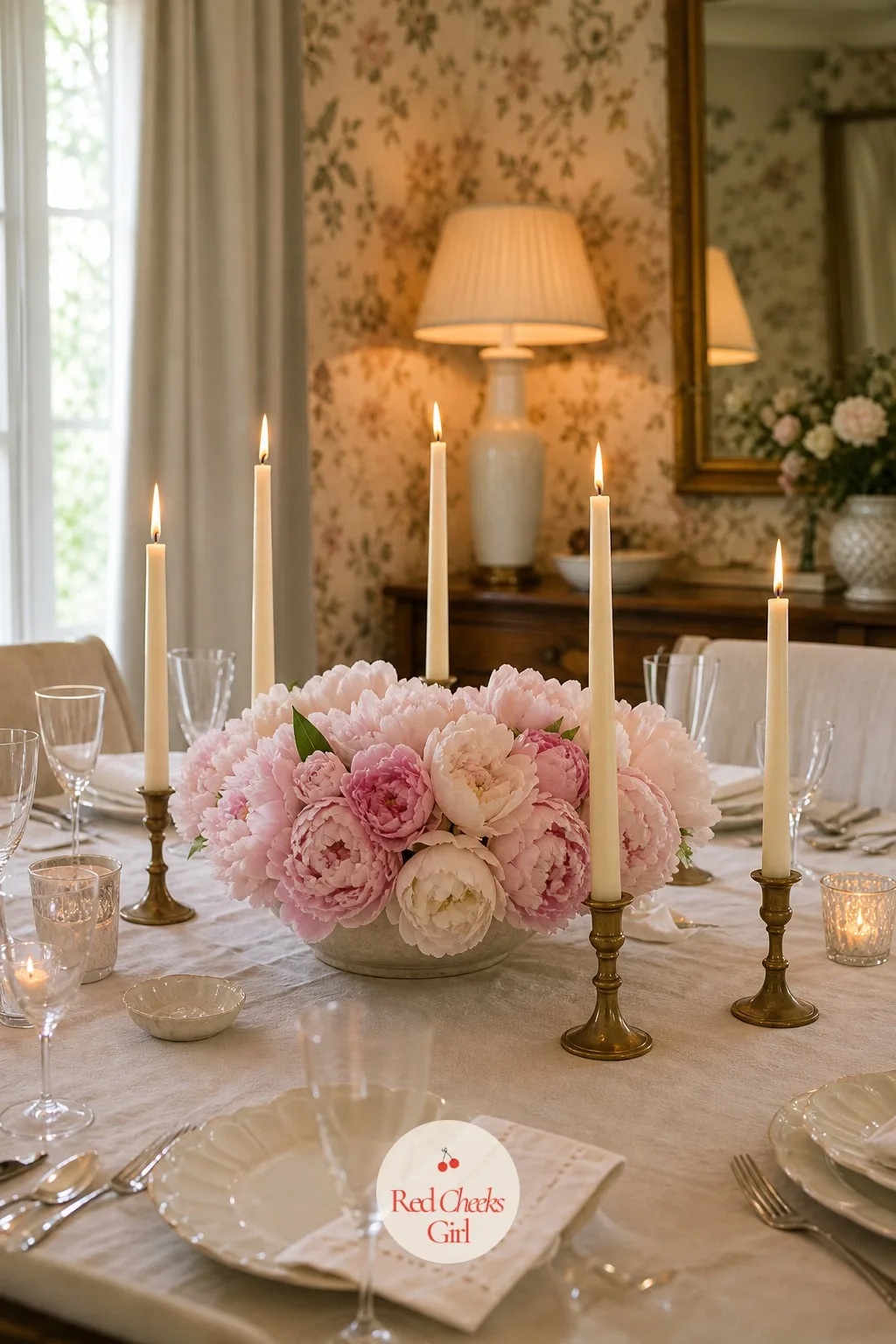
Peonies with Taper Candles
The classic for a reason: full-headed peonies at candle height so the flame catches every ruffled petal once the room dims, nothing else on the table competing for attention.
A low bowl of blush peonies sits at the base, two or three ivory taper candles in simple holders rising just above the blooms so the flame sits level with a guest’s eyeline, not above it.
Best for an evening reception where the lighting goes low after dinner. If peonies are out of season, garden roses fully opened with steam give nearly the same ruffled petal at candle height.
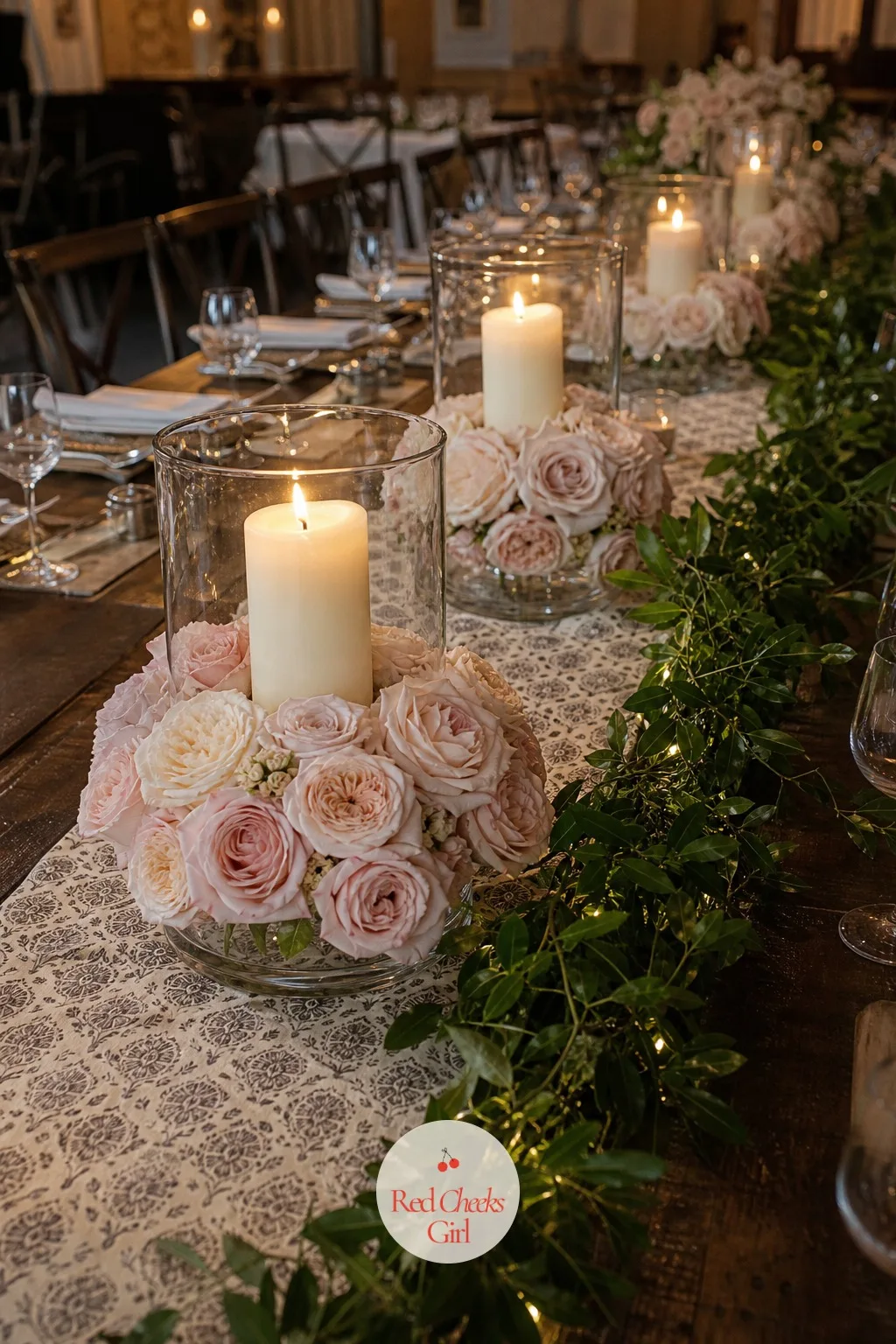
Garden Rose Rings Around Pillar Candles
A pillar candle alone can look a bit lonely on a big table. Ring the base in a tight wreath of garden roses and it reads finished, a little old-world, without needing a tall arrangement at all.
A squat glass hurricane holds a thick pillar candle, a low wreath of garden roses in cream and dusty pink sits flush around its base, flat enough that nothing catches the flame.
Works beautifully down a long farm-style table, one per few feet rather than a single centrepiece. Use battery pillar candles if the venue will not allow open flame near the cloth.
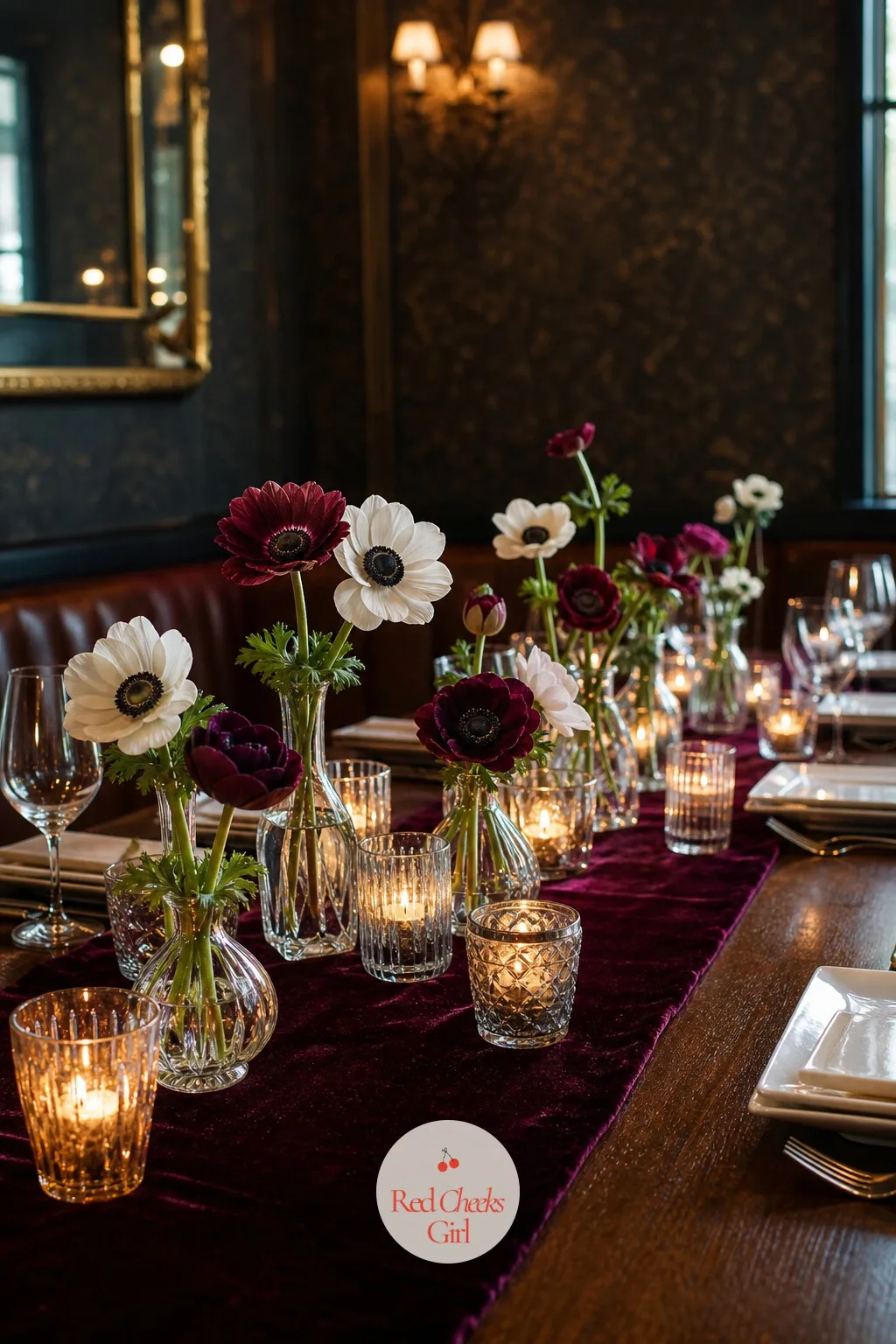
Anemone and Votive Clusters
Anemone has that dark centre and papery petal that looks almost painted, scatter it through a cluster of small votives and the whole table gets a slightly moody, romantic glow.
A loose cluster of small glass votives in different heights sits down the table, a handful of white and burgundy anemones in tiny bud vases placed in among the candles rather than in one central vessel.
Lovely for a smaller, more intimate dinner table. Where anemones are not available, ranunculus gives nearly the same dark-eyed look in a wider colour range.
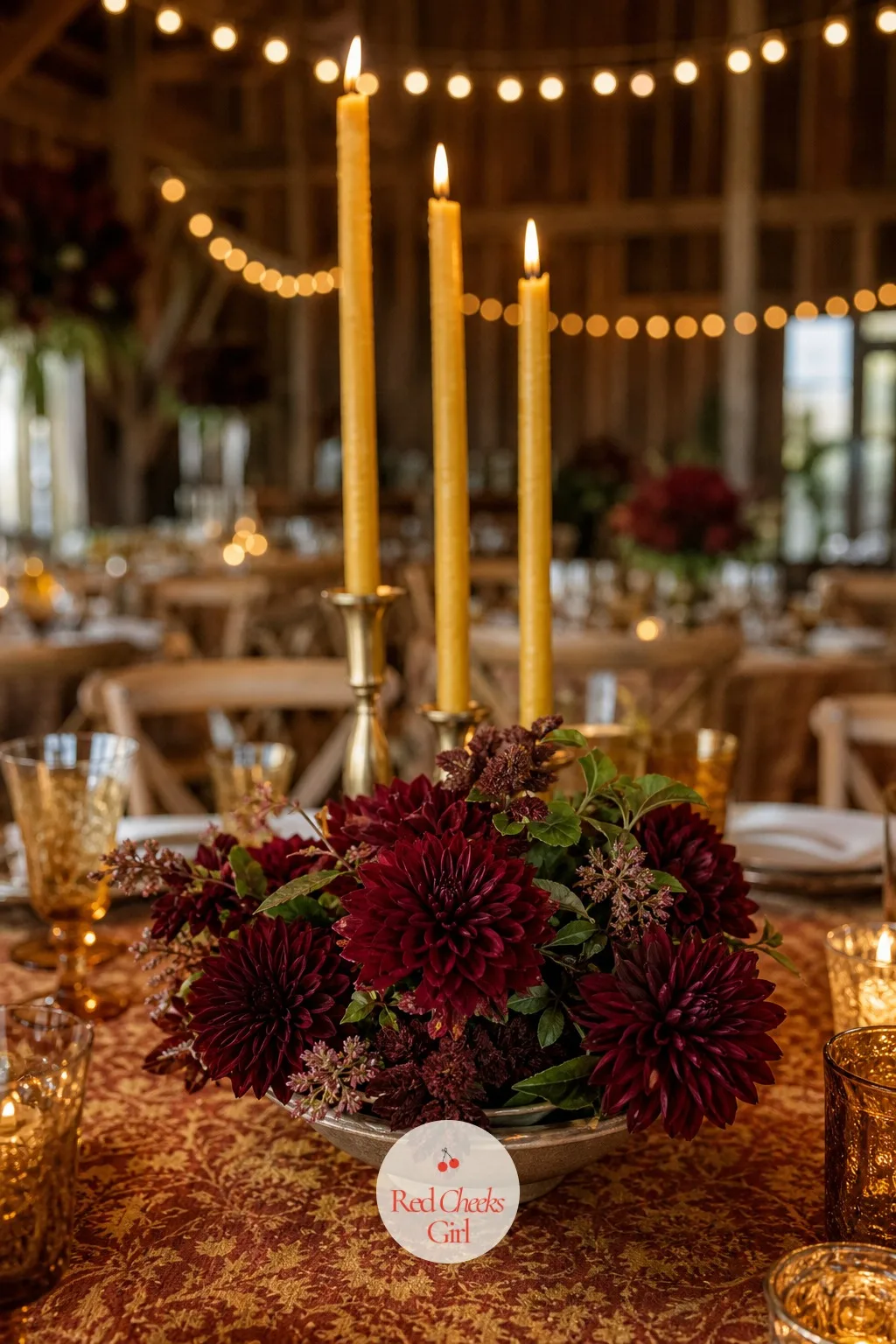
Dahlia and Beeswax Taper Trios
Beeswax tapers burn with a warmer, honeyed light than plain white wax, and set against a dahlia’s deep petal count the whole arrangement feels richer without costing more.
Three beeswax tapers in a simple cluster of brass holders stand behind a low dish of burgundy and apricot dahlias, the candles slightly taller so the flame sits clear above the blooms.
Suits an autumn reception with a warm, spiced palette. If beeswax tapers are hard to find locally, honey-toned dripless tapers in the same shade give a close substitute.
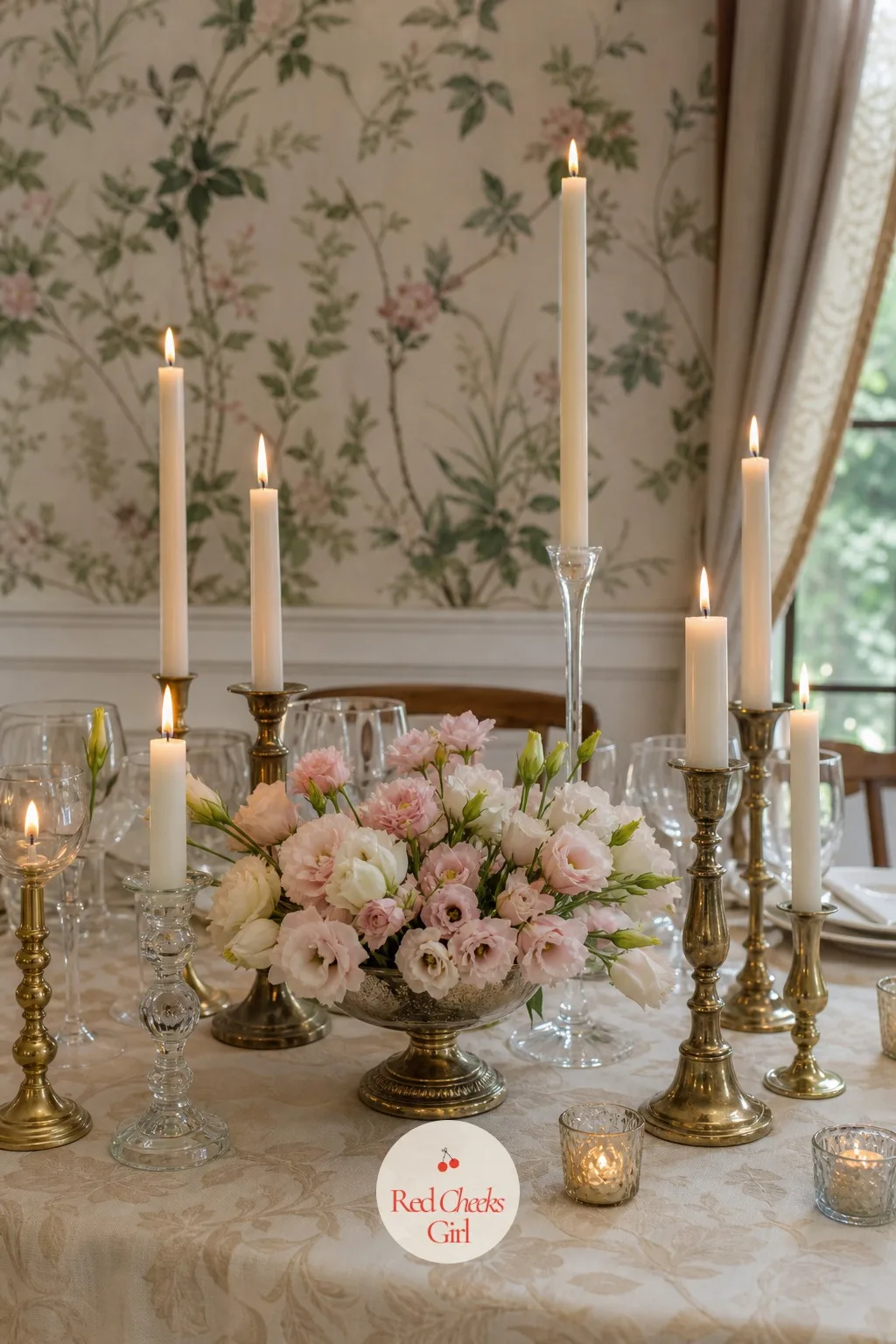
Lisianthus and Candlestick Clusters
Lisianthus looks almost like a rose from across the room but moves more softly, and a scatter of mismatched candlesticks around a low cluster of it gives a table an easy, collected-over-years feel.
Several short candlesticks in slightly different heights and finishes cluster at the centre, a low cluster of pale lisianthus in a small compote tucked in among them, nothing forced into symmetry.
This suits a table that wants to look gathered rather than styled. If lisianthus is out of season, double freesia gives a similarly soft, ruffled bloom with real fragrance.
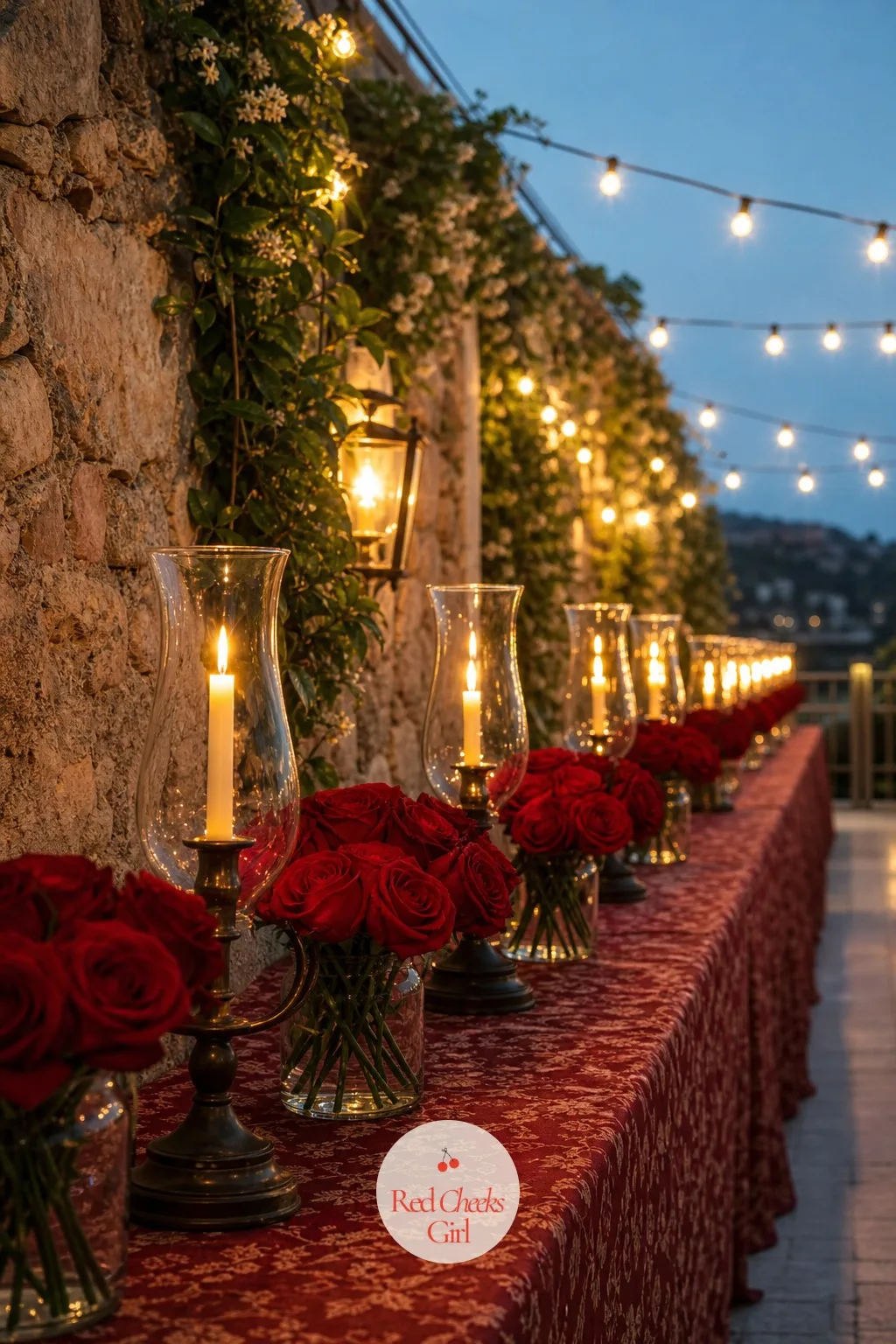
Rose and Hurricane Lamp Row
Instead of one centerpiece, a row of hurricane lamps down the table gives repeated light and repeated colour, which reads generous even when each one holds just a handful of roses.
A line of glass hurricane lamps, each with a thick candle inside, alternates down the table with low jars of deep red roses between them, so flame and flower trade off the whole length of the cloth.
Beautiful for a long outdoor terrace table at dusk. Where open flame is restricted, flameless candles in the same hurricanes keep the exact same look.
Fruit & Foliage Centerpieces
Fruit does what flowers cannot: it holds its shape all evening, costs less per table, and smells like something other than a florist’s fridge. These lean on citrus, stone fruit and branch rather than a full bloom count.
Olive Branches with Lemons
For a Mediterranean-leaning wedding, olive branches and whole lemons give the table more atmosphere than most full flower arrangements manage, and they survive heat far better than a bloom ever would.
Long olive branches lie loosely along a low dish or runner, whole lemons tucked in and around the leaves in small clusters, a few stems standing taller in a narrow jug at one end.
Perfect for an outdoor terrace or vineyard reception in summer. Where olive is not local, eucalyptus with silvery leaves gives a similar tone against the yellow fruit.
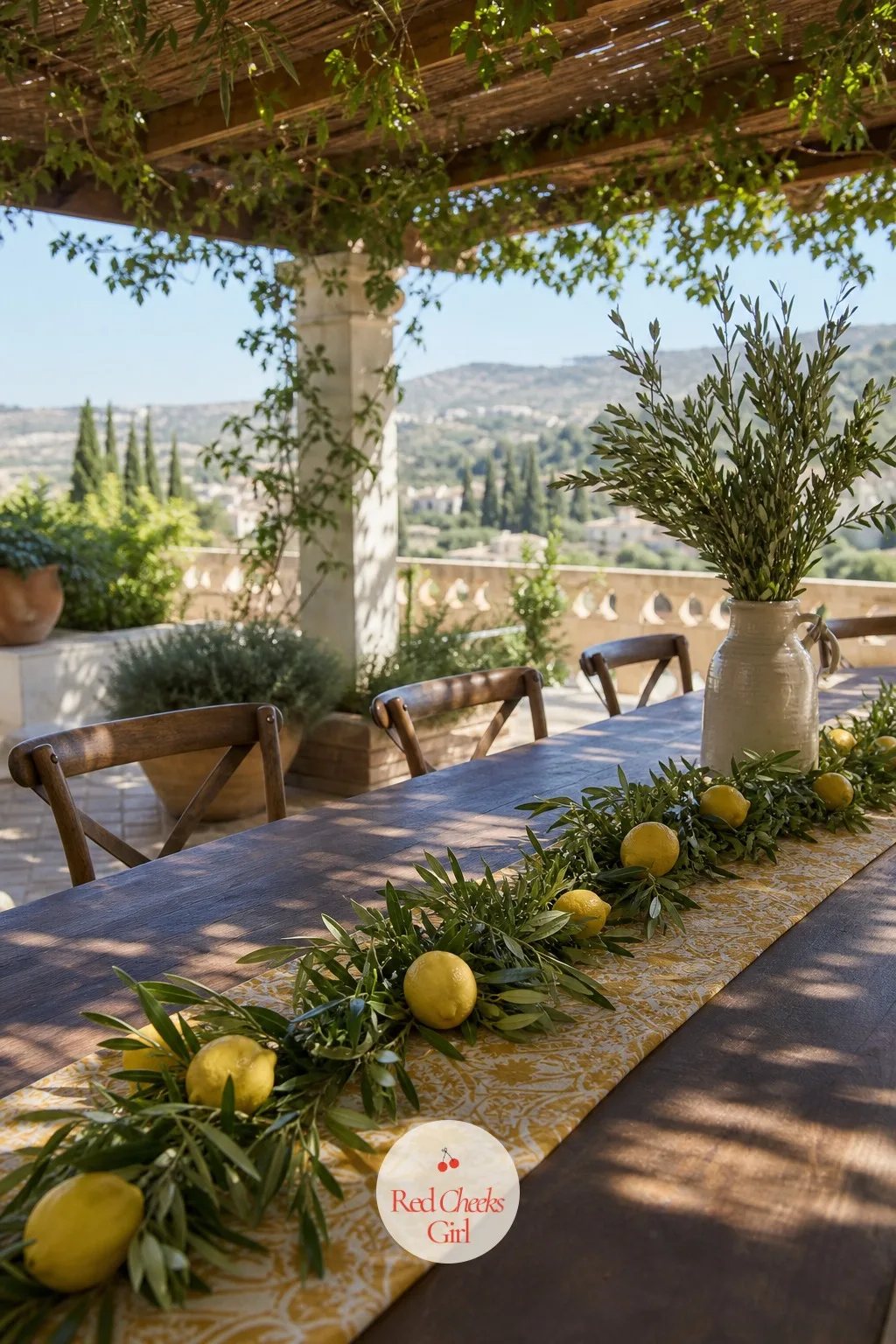
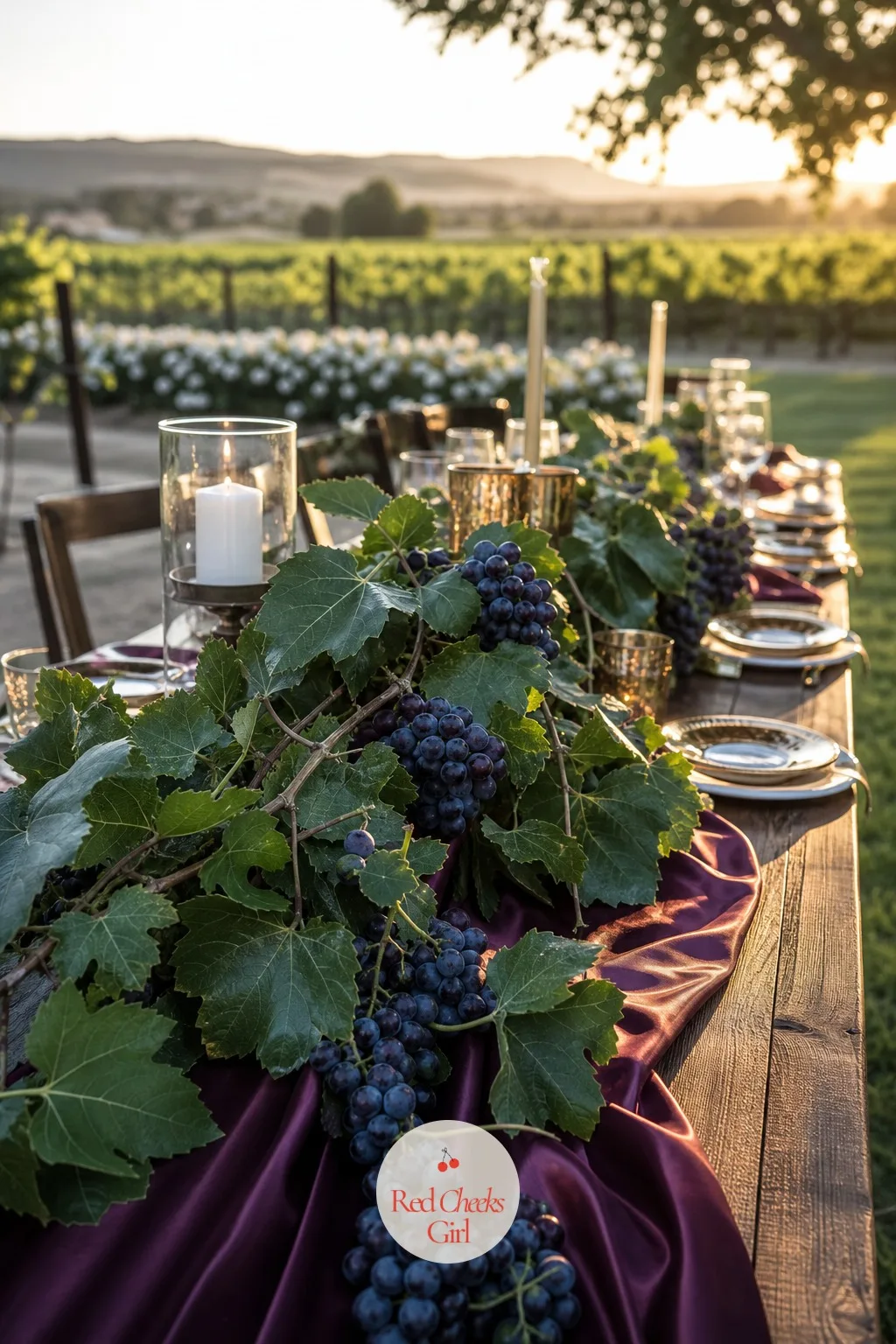
Fig Branch and Grape Clusters
There is something properly luxurious about trailing grapes on a table, almost Renaissance painting territory, and figs split open beside them bring a deep jewel colour without needing a single stem of flowers.
Fig branches lie along a low runner or shallow dish, clusters of dark grapes draped off the edge of the table, a few split figs placed to show their centres among the leaves.
Suits a vineyard or late-summer orchard reception beautifully. If figs are not in season, dark plums give a similar colour and shine on the branch.
🛍 Shopping guide
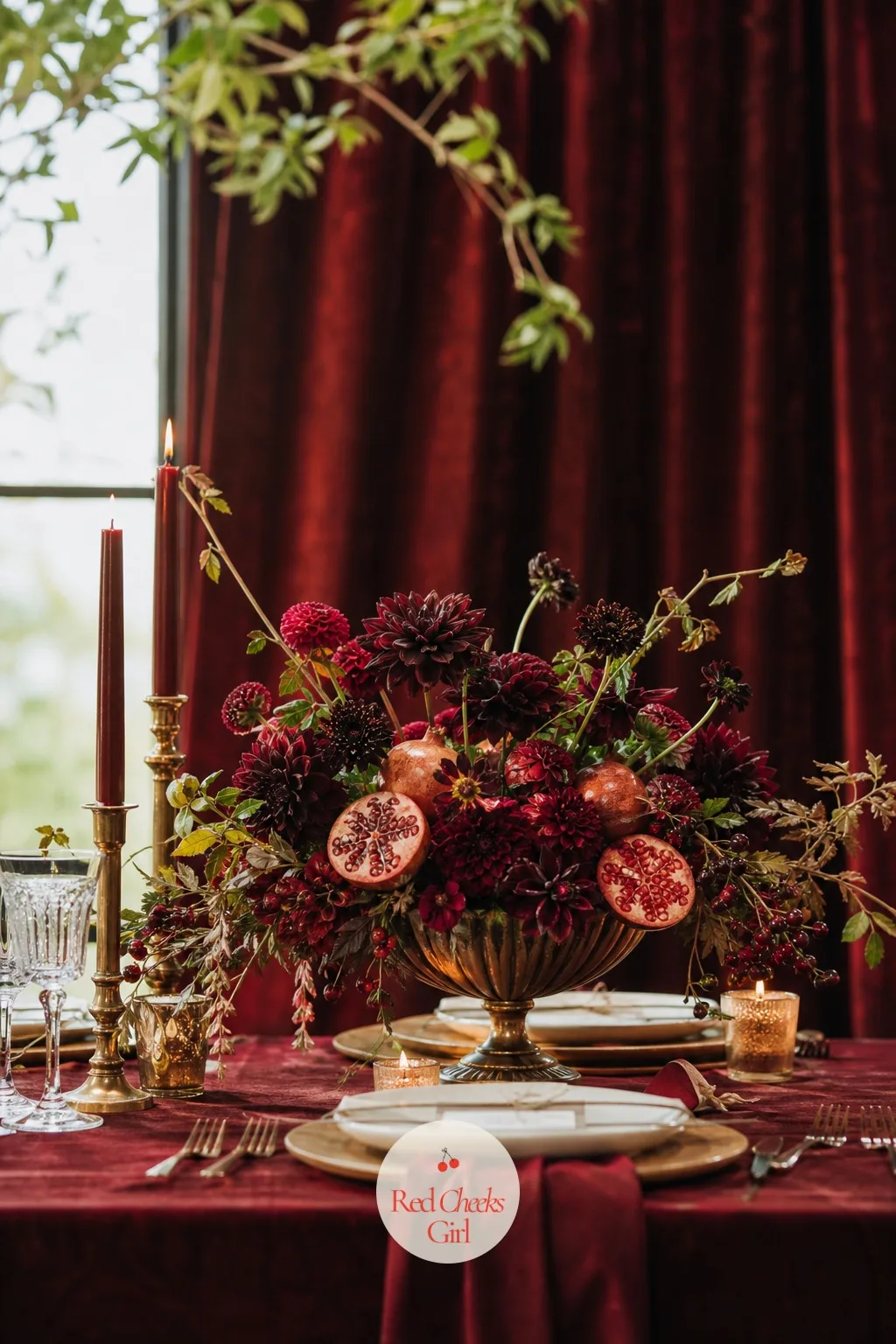
Pomegranate and Dahlia Arrangements
Split pomegranates bring a colour no flower quite matches, a deep ruby that looks almost lit from inside, and paired with a few dahlias the arrangement needs very little else to feel finished.
A low urn holds dahlias in deep red and burgundy, whole and halved pomegranates nestled in among the stems near the base so the seeds catch the candlelight.
Gorgeous for an autumn or winter reception with a rich, jewel-toned palette. Where pomegranates are out of season, blood oranges sliced in half give a similar inner colour.
🛍 Shopping guide
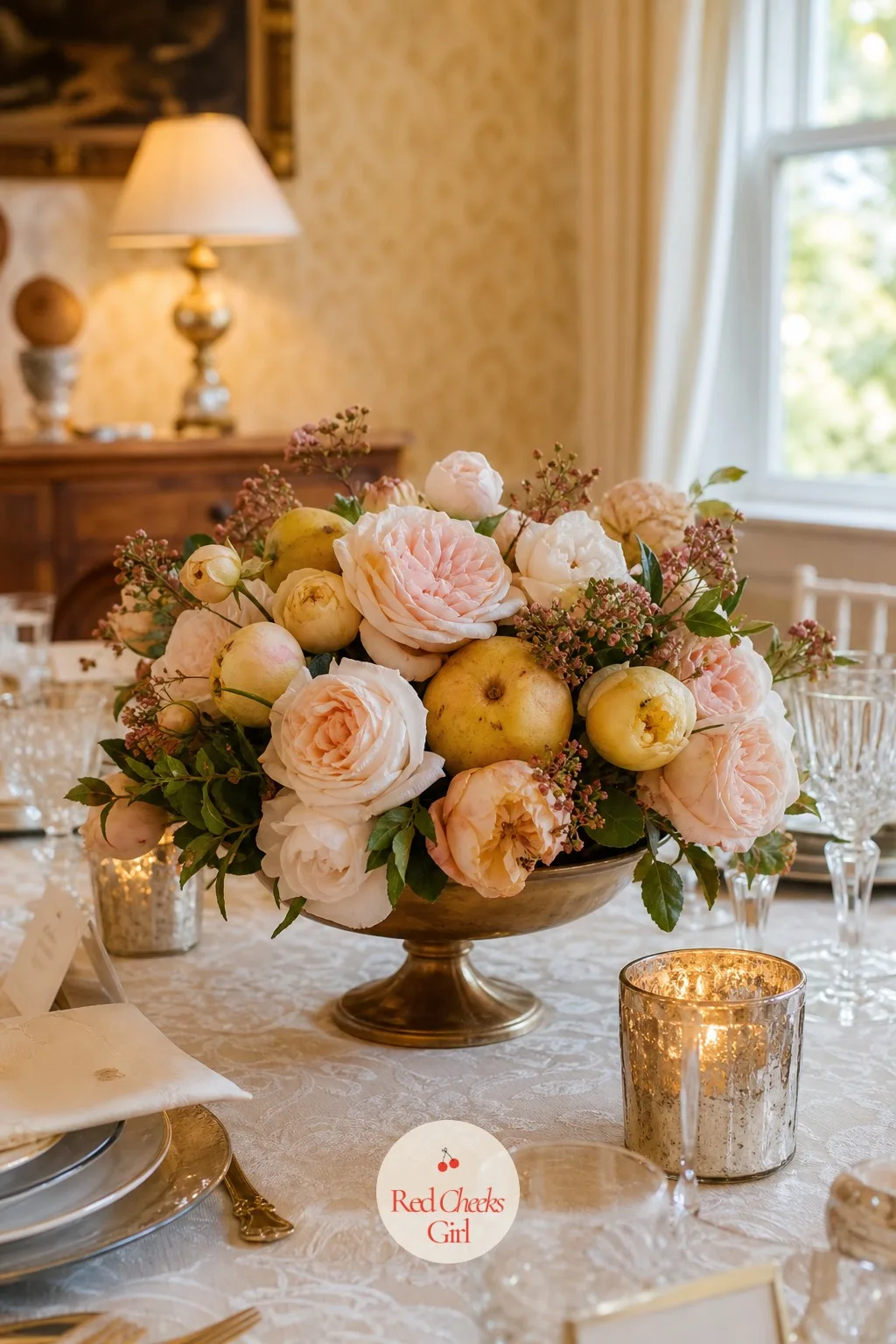
Quince and Garden Rose Mix
Quince has a soft golden blush and a scent that fills a room on its own, and tucked among pale garden roses it gives an autumn table a fragrance no candle could match.
A low compote holds blush garden roses, whole quince fruits placed between the stems near the rim where their colour reads against the pale petals, a few trailing ivy leaves softening the edge.
Suits an early autumn reception with a soft, muted palette. Where quince is unavailable, yellow pears give a similar shape and a comparable blush.
🛍 Shopping guide
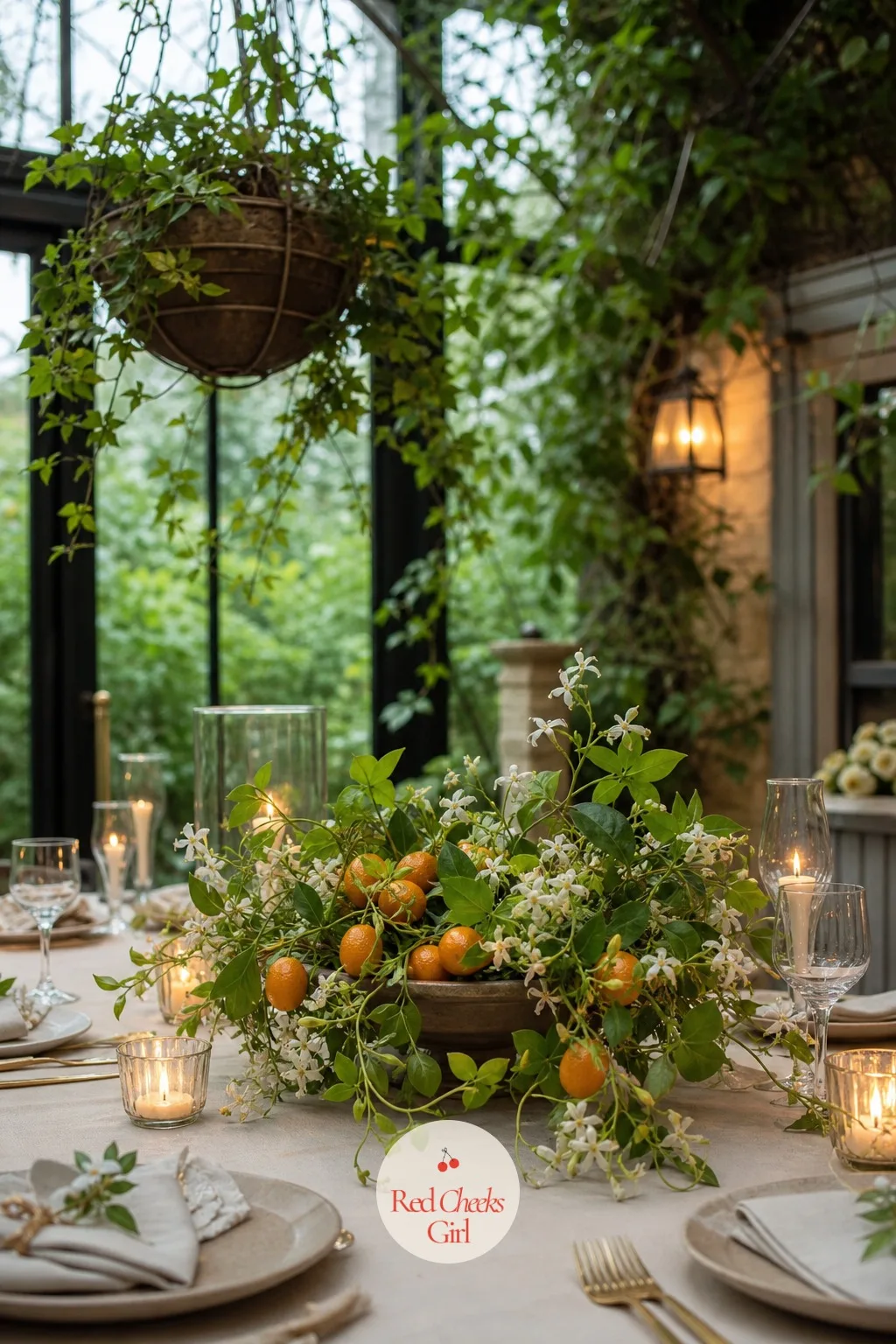
Kumquat and Jasmine Vine Centerpiece
Tiny kumquats on the branch look almost like ornaments, and trailing jasmine vine threaded through them brings both scent and a soft, undone shape to a low table arrangement.
A shallow dish holds floral foam, jasmine vine trailing loosely off the edges, kumquat branches with their small orange fruit still attached worked through the centre at low height.
Lovely for a small, intimate reception table with real fragrance at close range. Where kumquats are not available, small clementines on short branches give a similar scale and colour.
🛍 Shopping guide
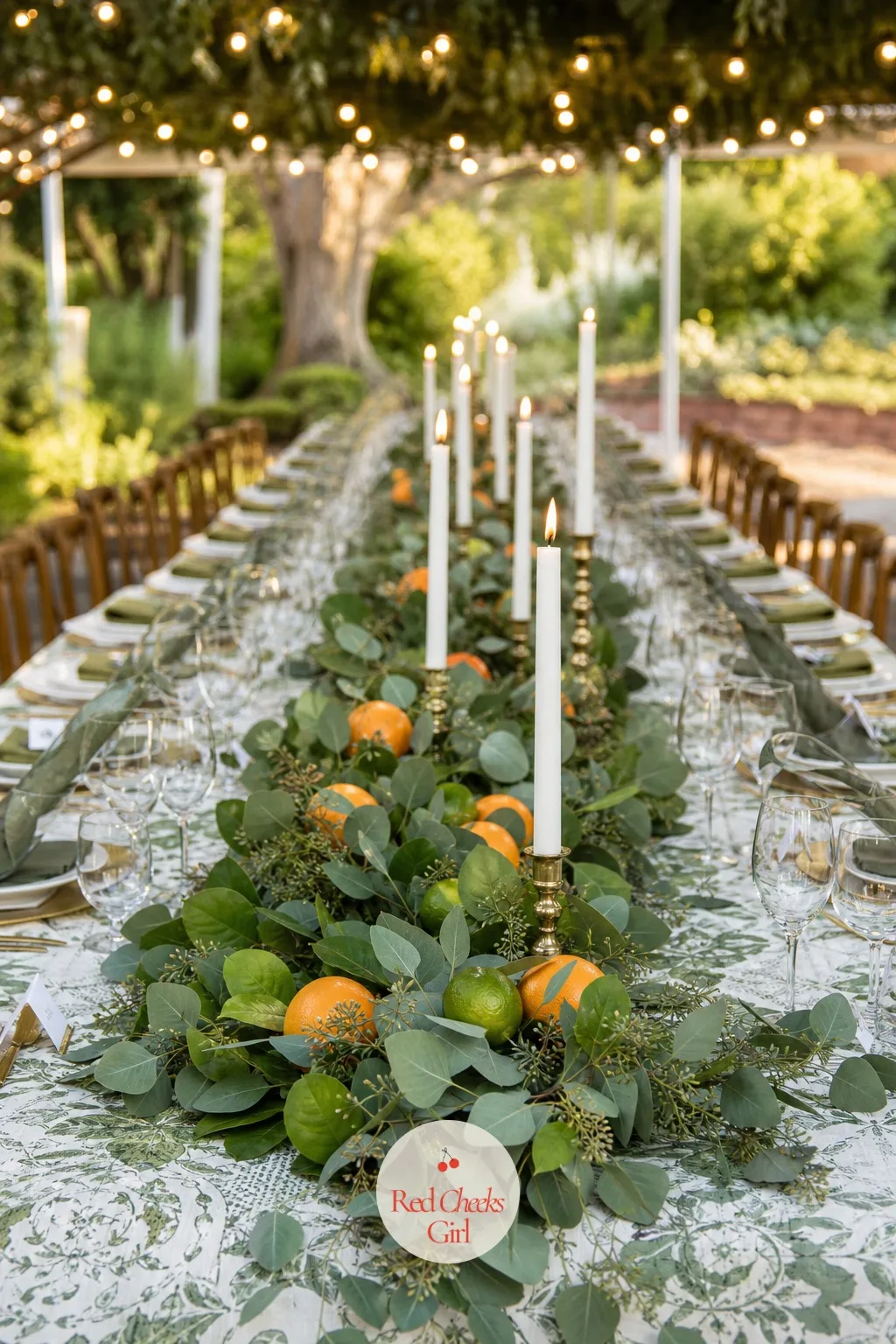
Citrus and Eucalyptus Table Runner
Rather than a single centerpiece, this one runs the whole length of the table: eucalyptus garland studded with whole citrus, so the colour and scent carry from one end to the other.
A long eucalyptus garland lies flat down the centre of the table, whole oranges and limes nestled into the greenery at intervals, a few taper candles rising up through the garland between the fruit.
Excellent for a long communal-style table at a garden or vineyard reception. Where eucalyptus is not available, rosemary garland gives a similar silvery texture and a herbal scent.
Vessel & Vintage Centerpieces
Here the container does as much talking as what is in it: a footed bowl, a mismatched jug, a piece of porcelain that belonged to someone’s grandmother. The flowers can be simple because the vessel is not.
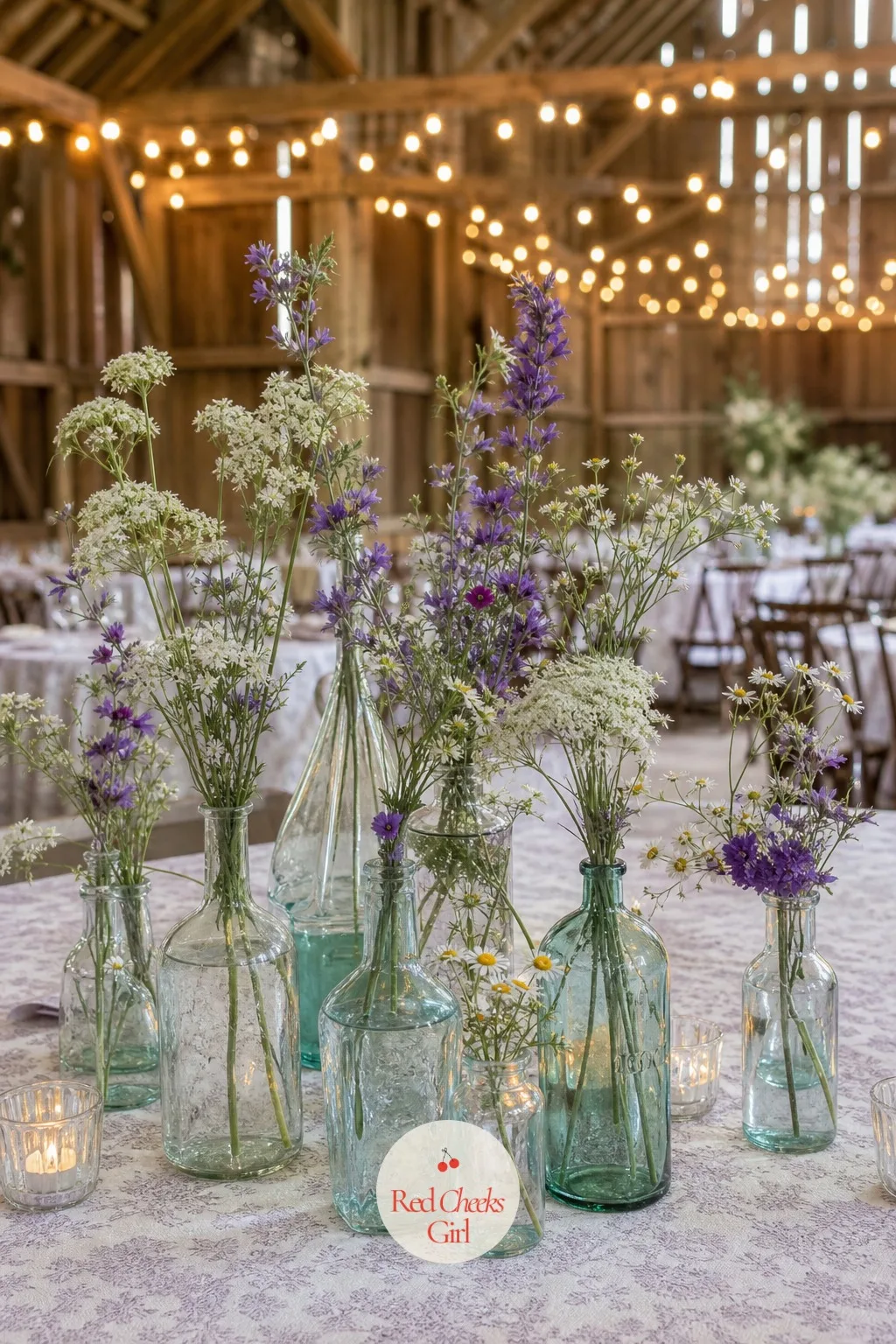
Wildflowers in Vintage Vessels
Matched vases feel a bit corporate once you have seen the alternative: mismatched vintage jugs, tins and bottles, each holding a loose handful of wildflowers as if they were picked that morning.
A collection of secondhand glass bottles, jugs and small tins cluster together down the table, each filled with a different mix of cosmos, scabiosa, and ammi in soft, uneven bunches.
This suits a barn, garden or informal restaurant reception perfectly, and it is genuinely cheap to pull together from charity shops. Keep the flower mix the same across all the vessels so the randomness reads deliberate.
🛍 Shopping guide
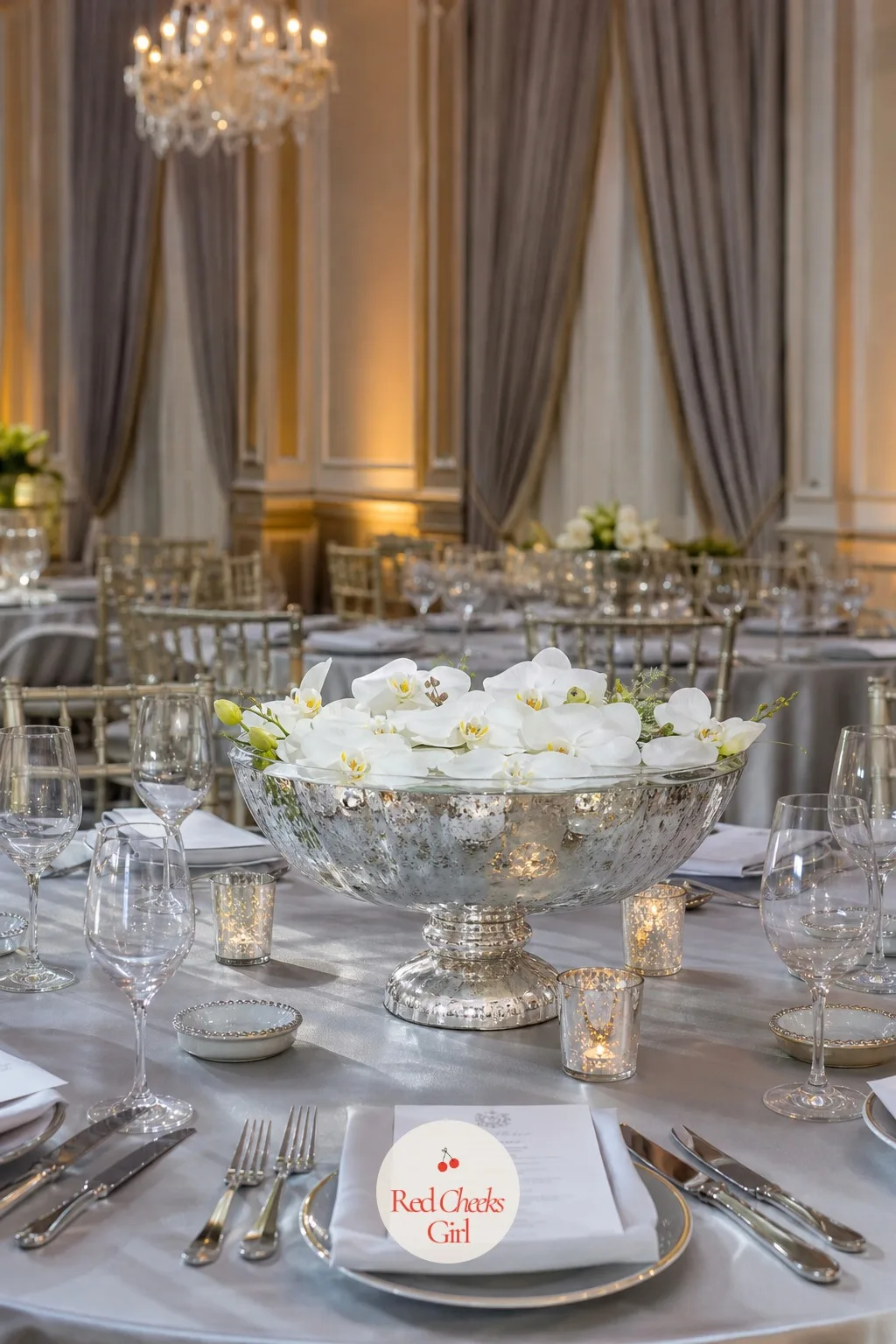
Orchids in Footed Bowls
A footed bowl lifts an arrangement just enough to feel formal without going tall, and orchid heads floating or arranged low inside one give a table real polish for a smaller flower count.
A silver or glass footed bowl holds either floating orchid blooms in shallow water or a low arrangement of orchid stems with foam hidden beneath, the raised base catching light all around.
Elegant for a hotel ballroom or formal restaurant table. Where phalaenopsis orchids are costly, cymbidium orchid stems give the same exotic shape at a lower price per stem.
🛍 Shopping guide
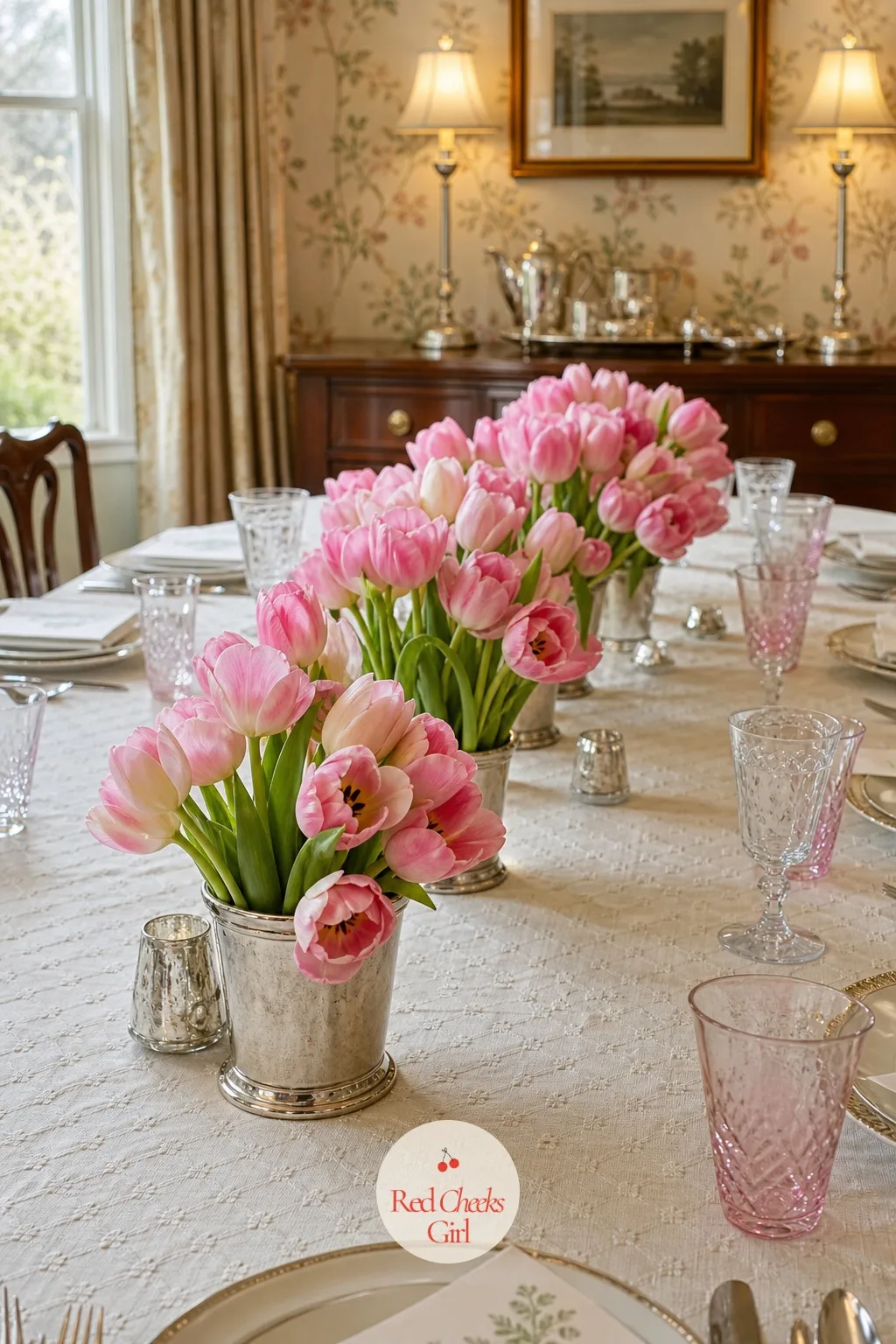
Tulips in Silver Julep Cups
Julep cups give even a handful of tulips an old-money kind of polish, the silver catching candlelight in a way a plain glass vase simply does not. A cluster of them down the table costs surprisingly little for the effect.
Several silver julep cups cluster together at intervals, each holding a small, loose bunch of tulips in a single soft colour, stems left slightly uneven in height rather than trimmed level.
Lovely for a spring reception in a restaurant or private dining room. Where silver julep cups are hard to source, small silver-plated mint cups give nearly the same shine.
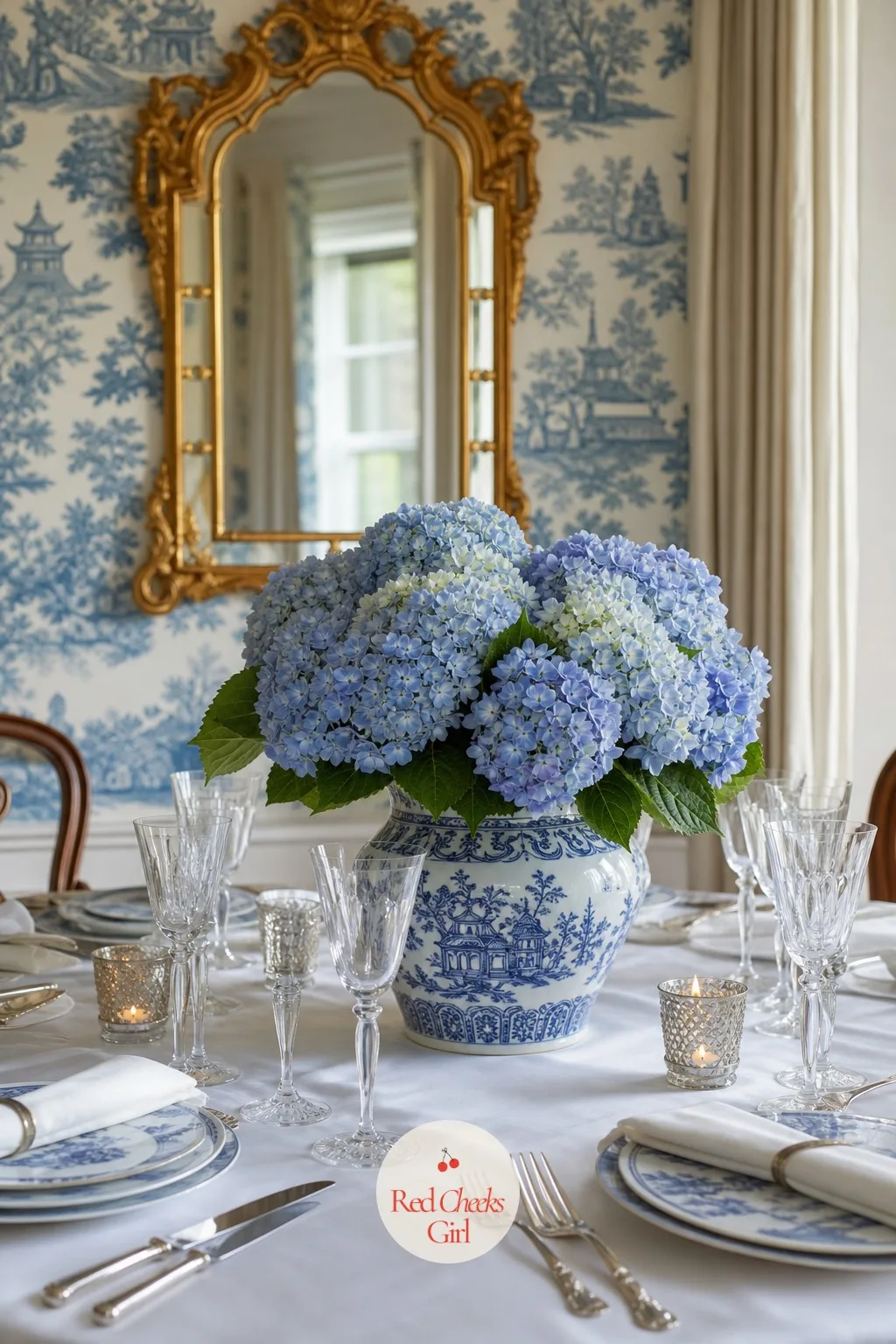
Blue and White Porcelain with Hydrangea
A blue and white porcelain vase looks like an heirloom even when it was bought last month, and a single full head of hydrangea inside needs almost no further styling to look complete.
A classic blue and white porcelain vase or ginger jar holds a few stems of blue or white hydrangea, the bloom heads large enough that one or two fill the vessel generously.
Suits a more traditional or Chinoiserie-leaning reception beautifully. Where full porcelain is out of budget, a single ginger jar per table does the same job for less.
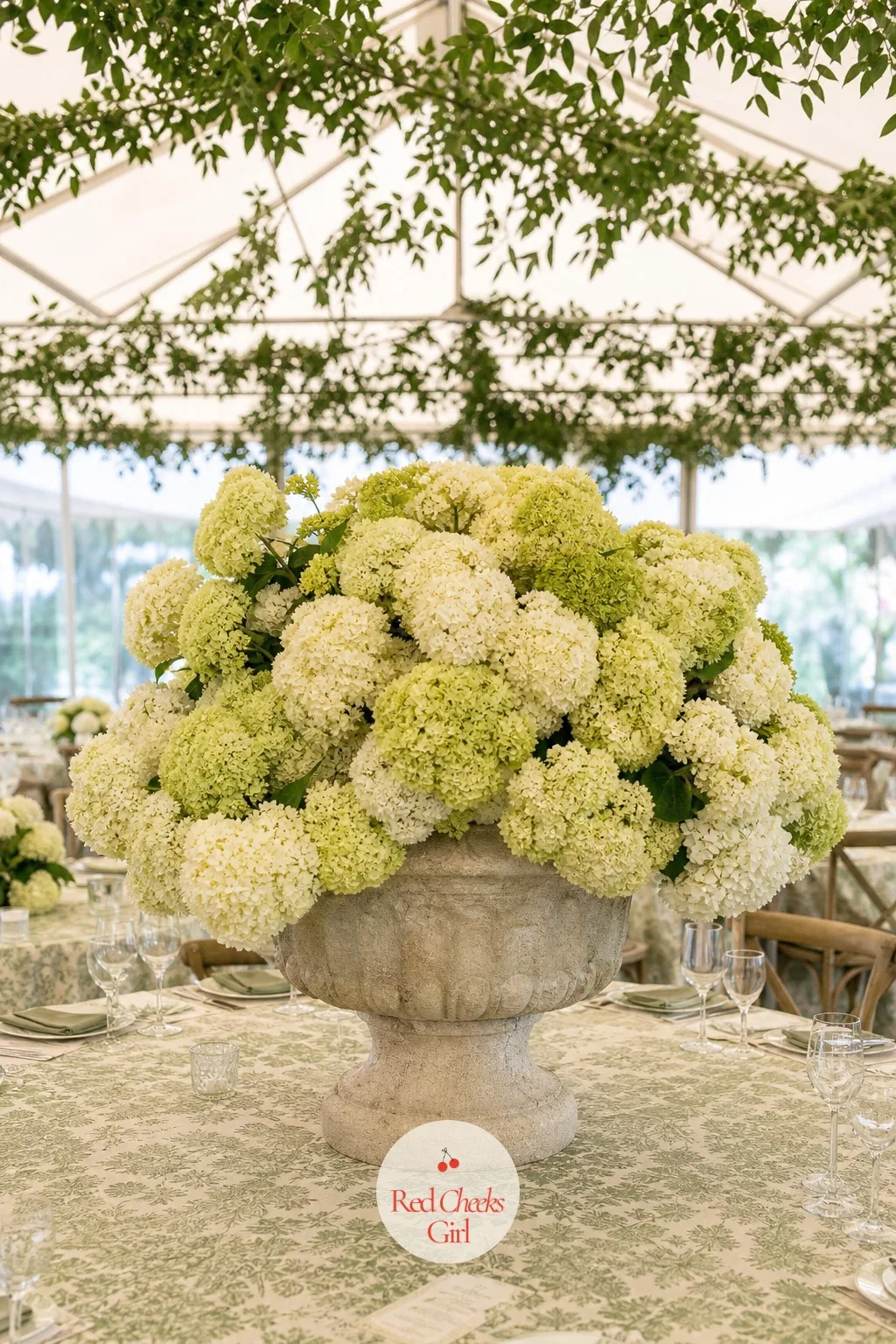
Hydrangea Clouds
For the bride who wants volume without a huge flower budget, hydrangea gives more coverage per stem than almost anything else, built up into a soft, rounded cloud that fills a table from a modest headcount.
A wide bowl or urn holds floral foam packed densely with hydrangea heads alone, no filler flowers needed, the stems trimmed so the whole thing reads as one continuous cloud rather than individual blooms.
Works at nearly any venue since hydrangea comes in so many shades. If fresh hydrangea wilts easily in heat, choosing the tougher Limelight variety holds up far better outdoors.
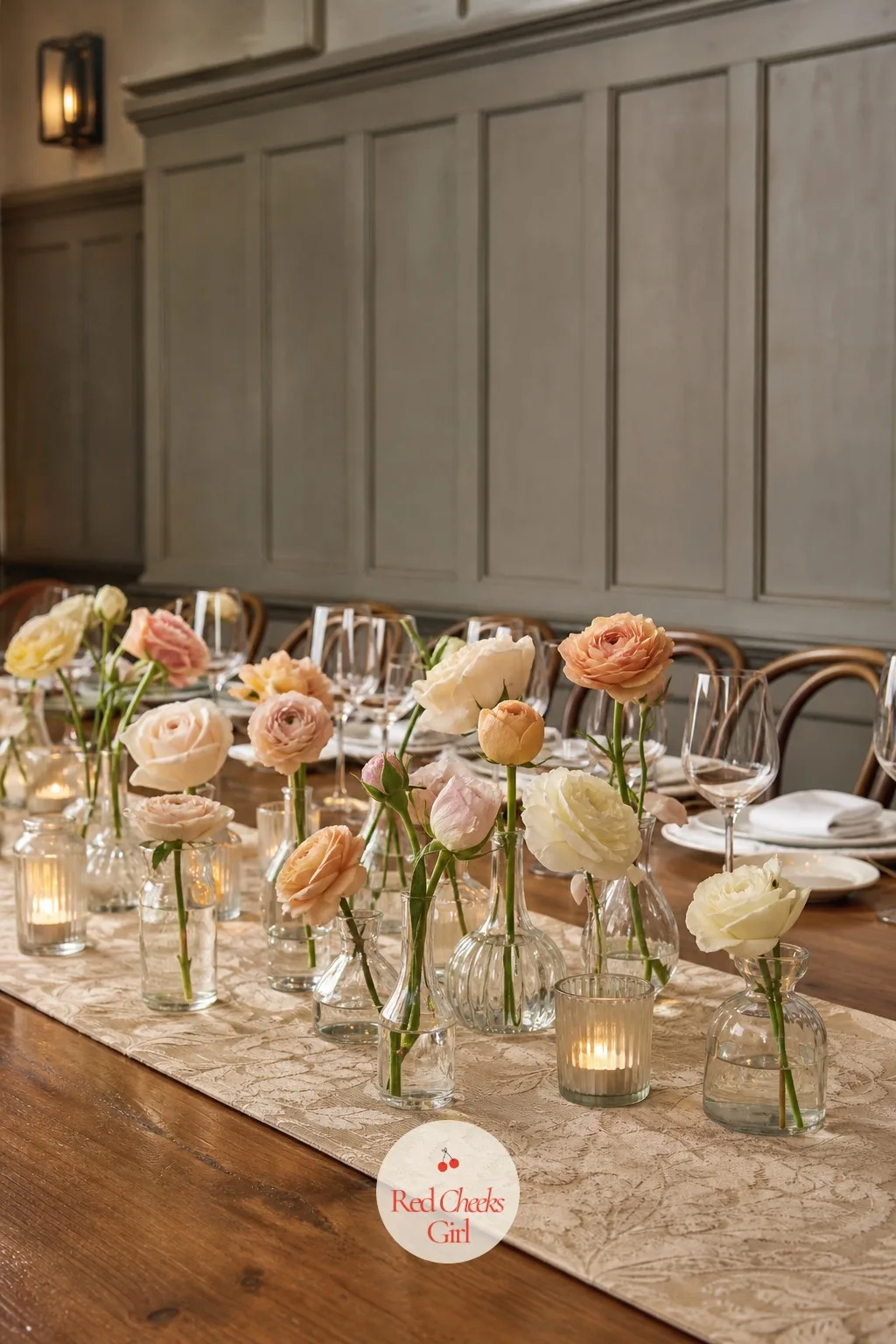
Bud Vase Clusters
If a full arrangement feels like too much flower and too much fuss, a cluster of bud vases does the same job with almost none of the effort, and it is genuinely the cheapest option on this whole list.
Eight to twelve small glass bud vases cluster loosely down the table, each holding one or two stems only, a mix of rose, ranunculus and a little greenery so no two vases match exactly.
Perfect for a tight budget or a DIY wedding, since anyone can fill a bud vase without florist training. Mix clear and lightly tinted glass for a bit more visual interest.
🛍 Shopping guide
Minimal & Modern Centerpieces
For the couple who finds a full arrangement too much: a single stem, a small cluster, a lot of clear glass and clean table in between. Cheaper than it looks, and it photographs like restraint rather than like you ran out of budget.
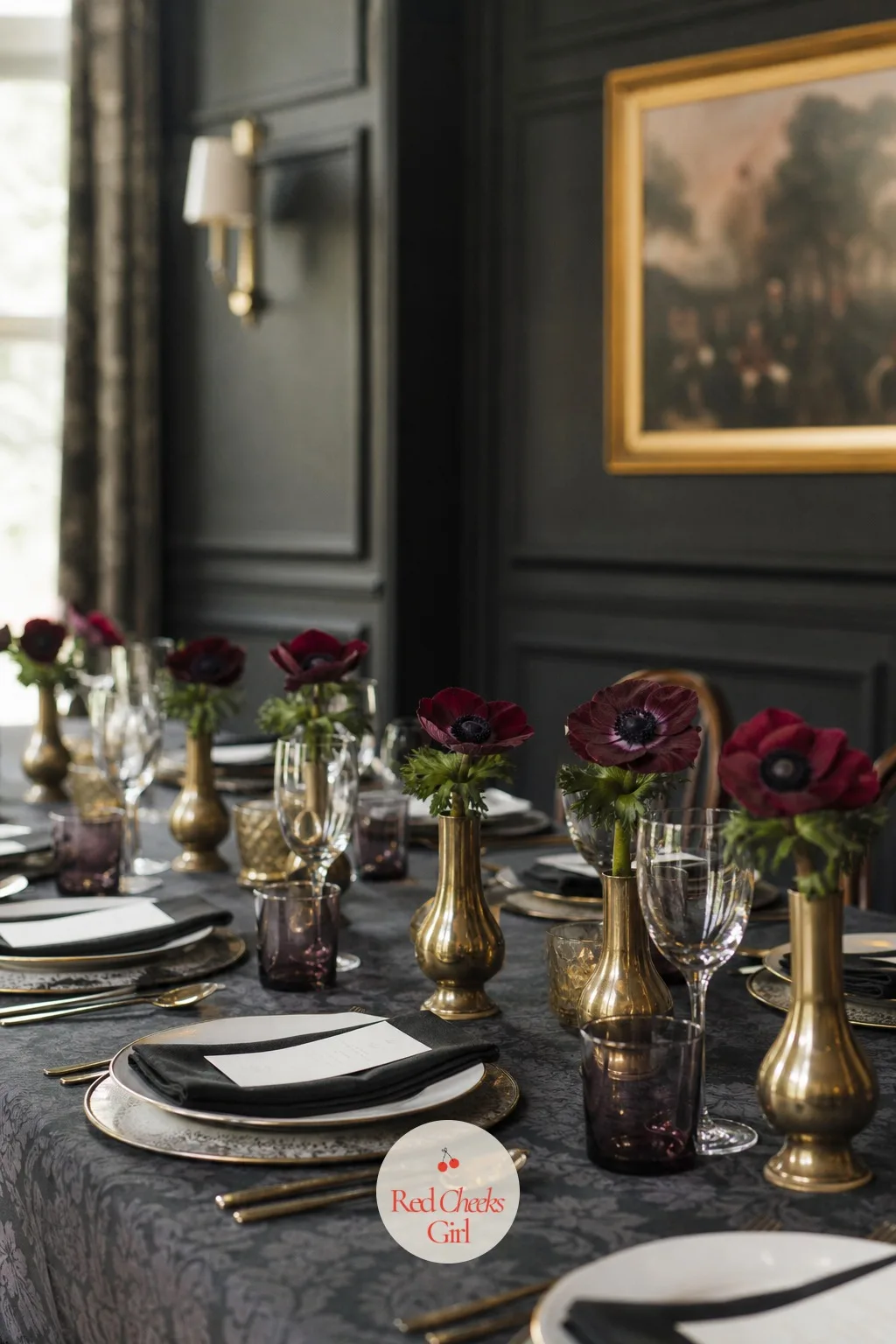
Single Stem Anemones in Brass Vessels
One flower, one vessel, repeated down the table: it looks deliberate rather than sparse, and the dark centre of an anemone gives even a single stem a surprising amount of presence.
Small brass or copper bud vases cluster in twos and threes at intervals, each holding a single anemone stem in white or deep burgundy, left otherwise completely bare on the cloth around them.
Suits a modern, slightly minimal reception in a restaurant or gallery space. Ranunculus works as an easy swap if anemones are not available in your season.
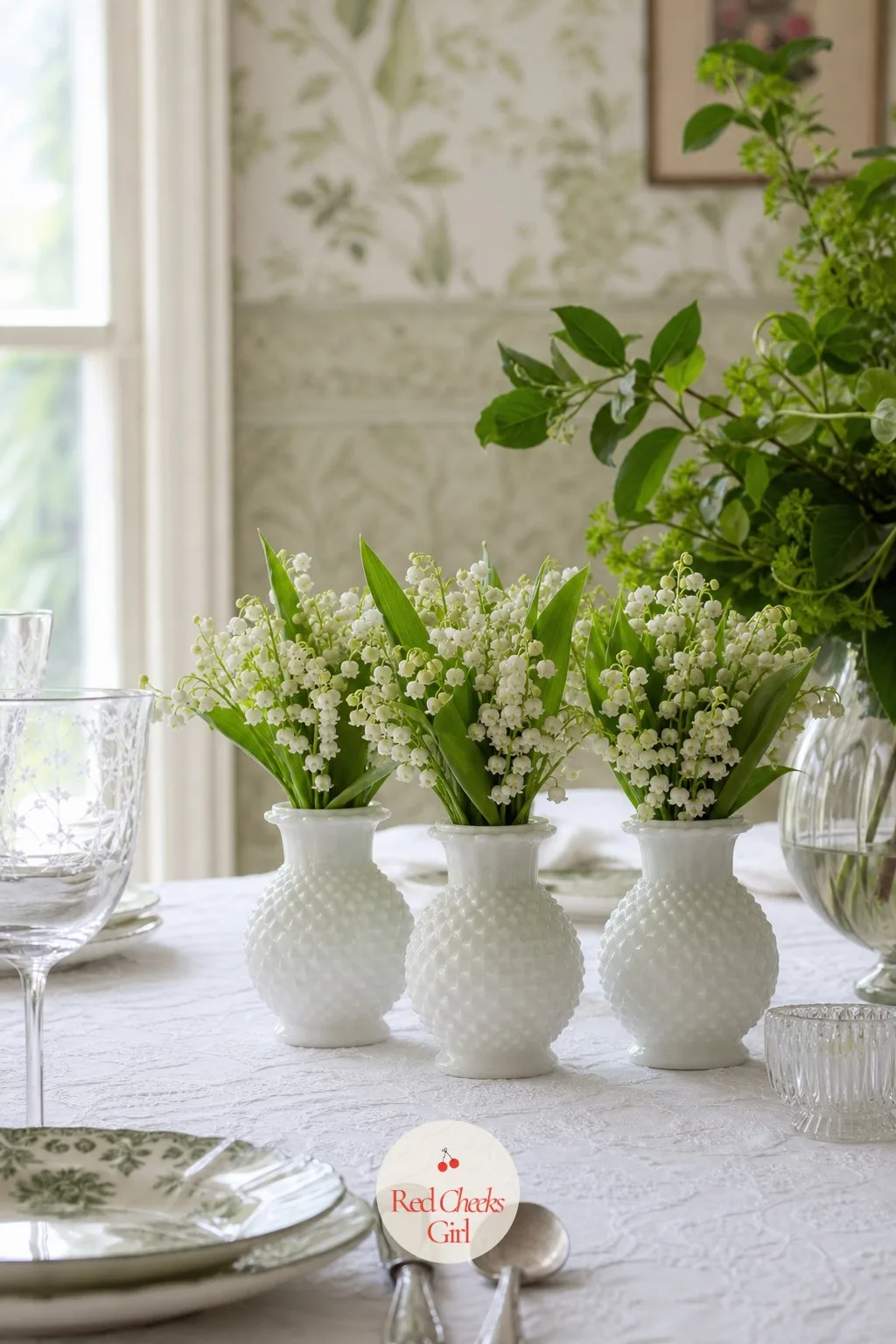
Lily of the Valley in Milk Glass Trios
Nothing smells quite like lily of the valley, and because the stems are so small a trio of milk glass vases holding them barely takes up any table space at all, just scent and a soft white flicker.
Three small milk glass vases sit close together, each filled with a dense little bunch of lily of the valley, the opaque white glass making the green stems disappear so only the flower shows.
Lovely for a small spring table where scent matters as much as sight. Where lily of the valley is out of season, small white freesia gives a comparable fragrance.
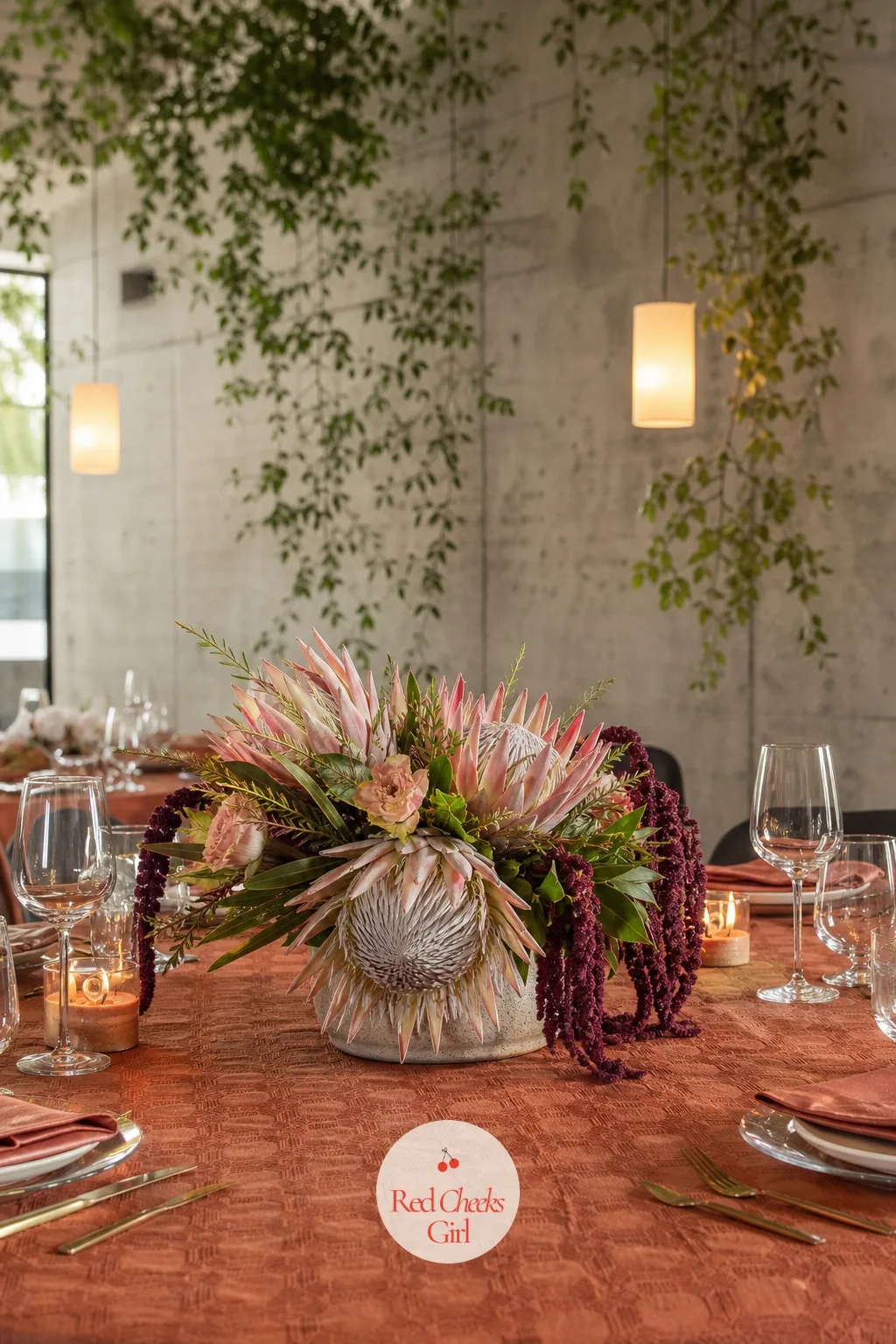
Protea and Amaranthus Low Arrangements
For a reception that wants texture over softness, protea’s strange, spiky bloom next to trailing amaranthus gives a low arrangement real character, nothing round or predictable about it.
A low ceramic dish holds a small cluster of king protea in blush and green, trailing amaranthus draped loosely over the rim and down onto the cloth itself.
Works well for an architectural, modern-botanical reception space. Where protea is hard to source or costly, large dahlia heads give a similar scale and presence.
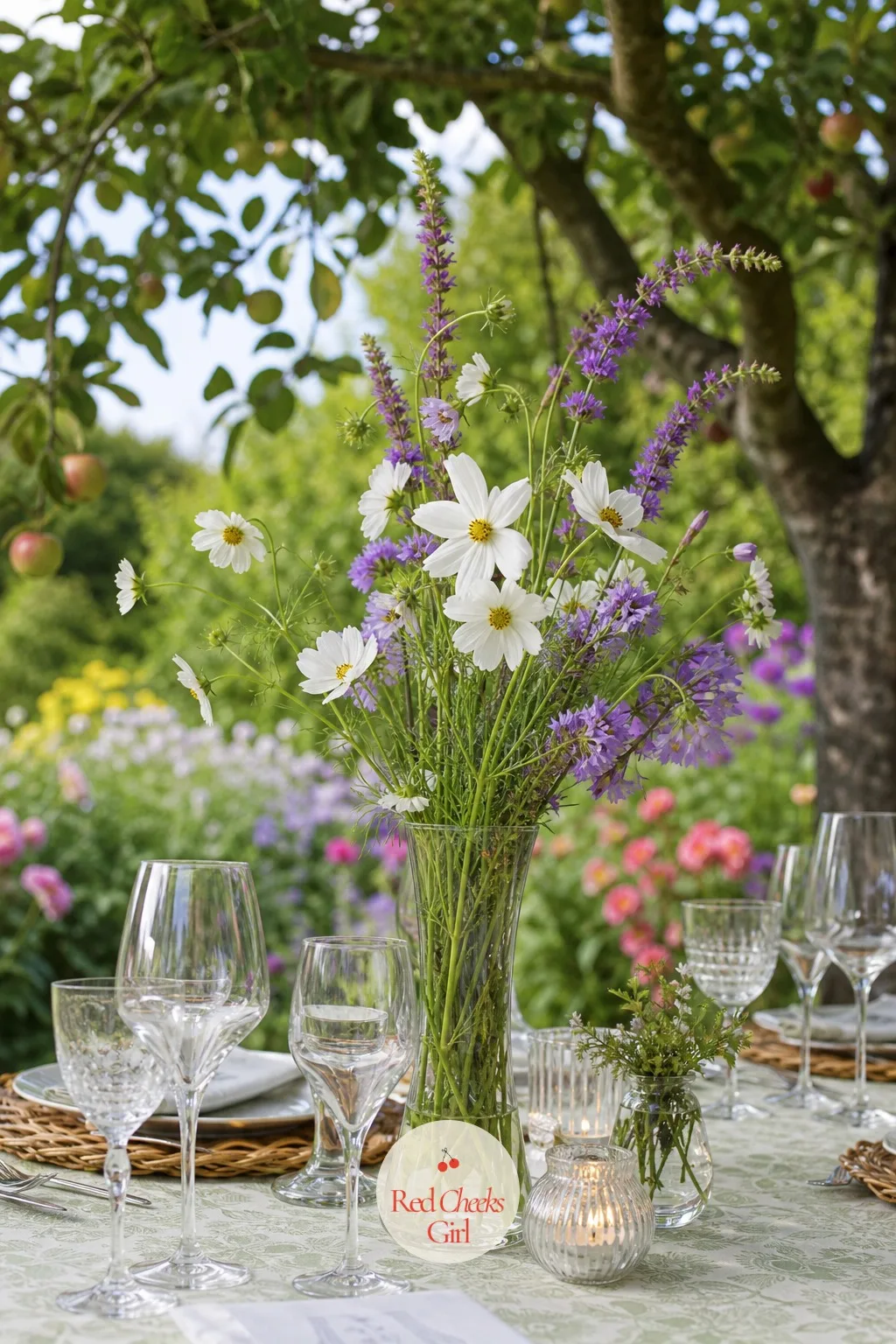
Cosmos and Veronica Wild Clusters
This is the closest a styled table gets to an actual meadow: cosmos on its thin stems moving with every breeze, veronica spikes giving it just enough structure not to collapse into chaos.
A low, narrow vessel holds cosmos in white and pale pink loosely arranged with a few upright veronica spikes, stems left long and slightly uneven rather than cut to a uniform height.
Gorgeous for an outdoor garden reception with a relaxed, unfussy feel. Cosmos bruises easily in transport, so it suits a venue close to the florist rather than a long drive.
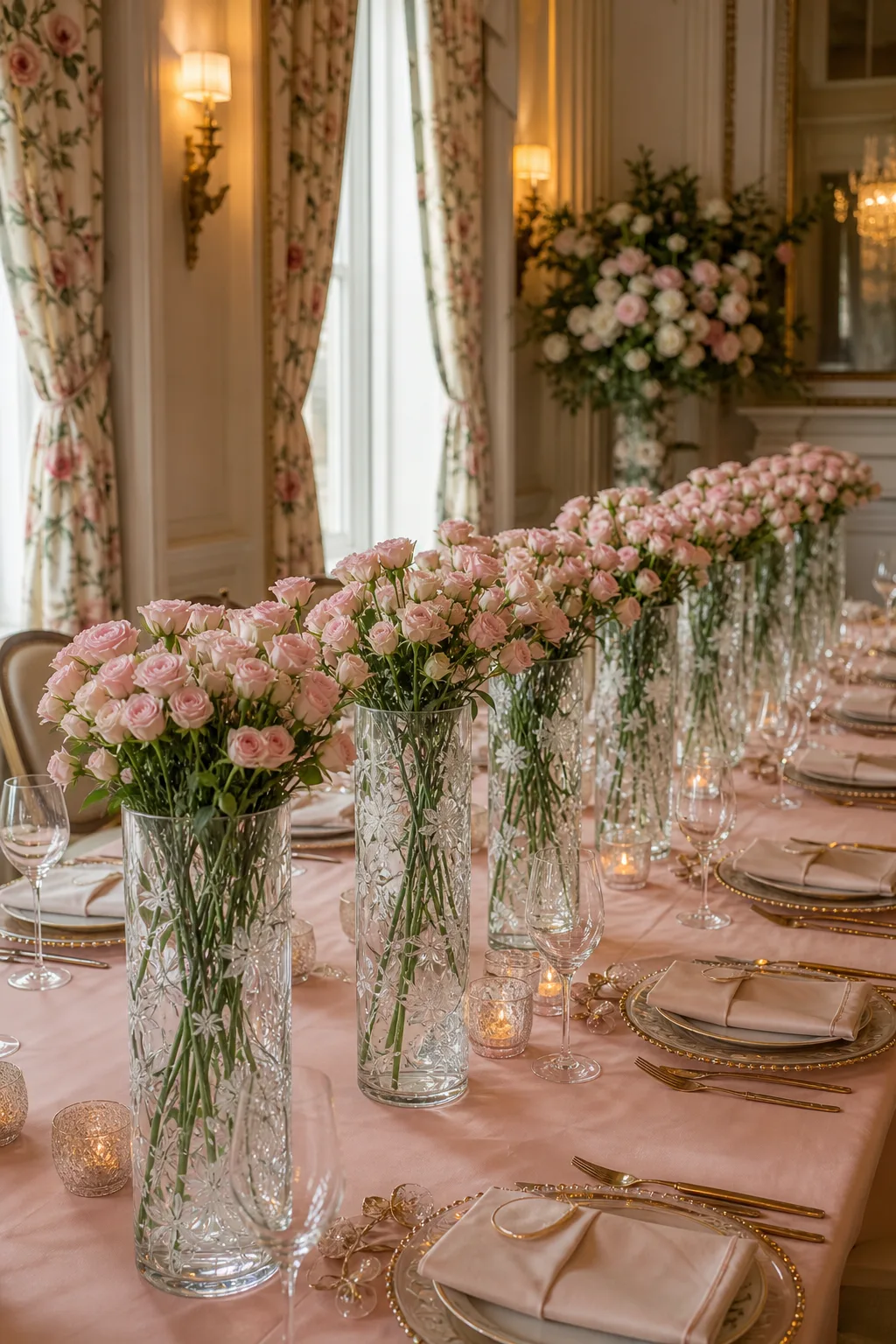
Spray Roses in Etched Glass Cylinders
Spray roses give several small blooms per stem rather than one large head, which makes a repeated row of etched glass cylinders look generous even on a tight flower budget.
A row of etched glass cylinder vases runs down the table, each holding a loose bunch of pale pink spray roses, the pattern in the glass catching candlelight without needing any extra decoration around them.
Suits a soft, romantic but understated reception table. If etched glass is hard to find, plain glass with a ribbon tied at the base gives a similar, simple finish.
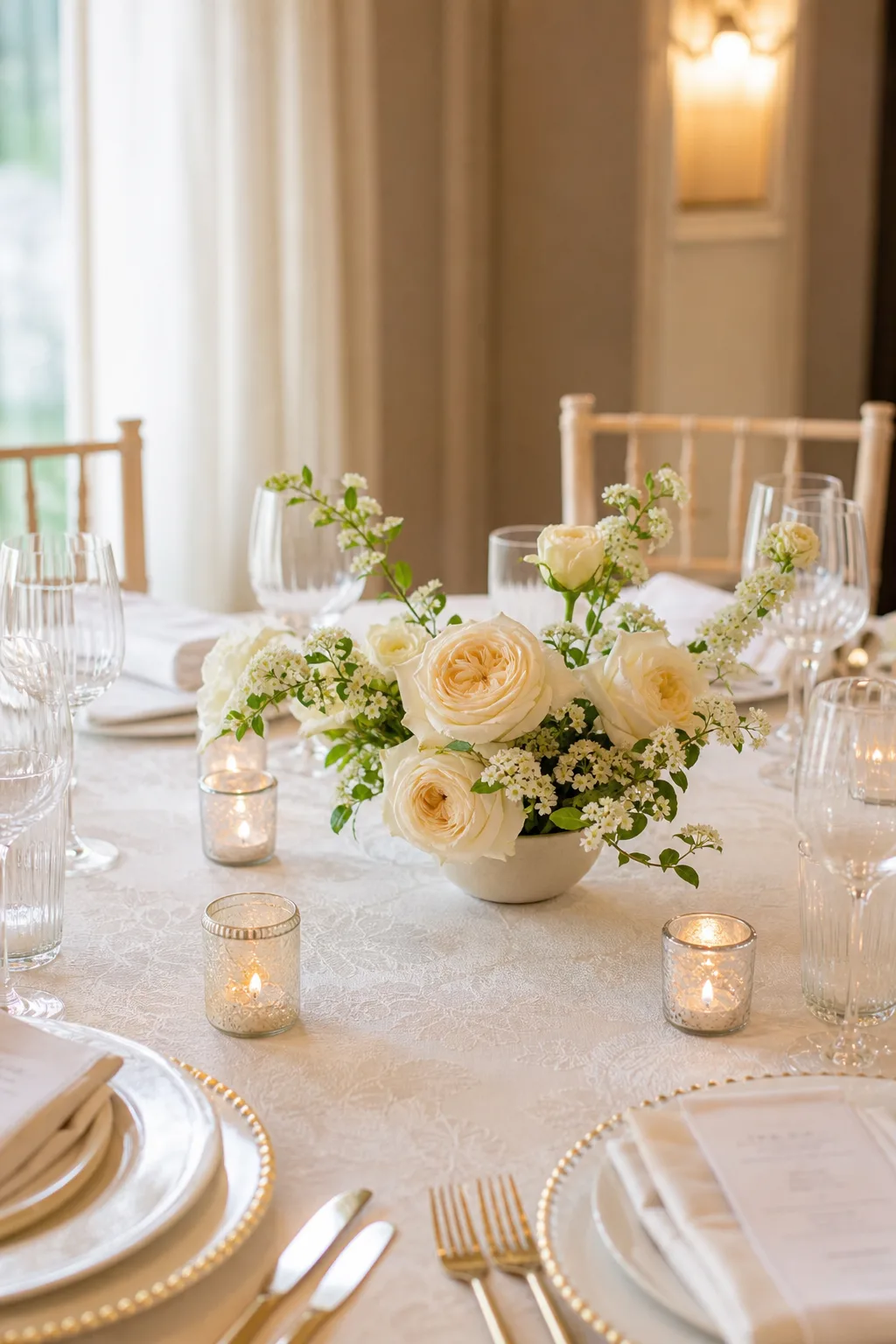
Garden Rose and Spirea Minimal Bowls
The last word on restraint: a handful of garden roses with a little spirea for movement, sitting in a small bowl that takes up almost no space on a tightly set table.
A small, shallow ceramic bowl holds a loose handful of cream garden roses, a few sprays of white spirea tucked in at the edges so the whole thing stays airy rather than dense.
Ideal for a small, closely set table where space for place settings matters more than flower volume. Baby’s breath gives a similar airy filler if spirea is unavailable.
Frequently Asked Questions
How much do wedding centerpieces cost on average?
Centerpieces typically run from about thirty to three hundred dollars per table depending on flower choice and size. Low, in-season arrangements and bud vase clusters sit at the cheaper end; tall stands and candelabras cost more in labour and hire fees.
How tall should a wedding centerpiece be?
Tall pieces only read as dramatic in rooms with ceilings above about twelve feet; in a lower barn, tent or restaurant the same arrangement feels cramped. Low arrangements around a foot high work in almost any room and keep sightlines open for conversation.
Do guests usually take centerpieces home?
It happens often enough to plan for, with many couples actively encouraging guests to take pieces at the end of the night as a kind of parting gift. If you want to keep them, tell catering staff in advance and consider a quiet announcement.
What can I use instead of fresh flowers for a centerpiece?
Candles, fruit, branches, succulents or vintage objects all work as a centerpiece on their own, and often cost less and last the whole event without wilting. A full, separate set of non-floral ideas covers this in more depth elsewhere on the site.
How far in advance should wedding flowers be ordered?
Most florists want the order confirmed four to six months ahead, with final stem counts locked in about two to three weeks before the date. Ordering flowers that are genuinely in season for your date keeps both the cost and the quality more predictable.
Do candles count as a safe centerpiece for every venue?
Not always, since some venues restrict open flame entirely and require flameless alternatives instead. Always confirm candle rules with the venue first, and keep real flame a sensible distance from dry foliage or ribbon on any arrangement.
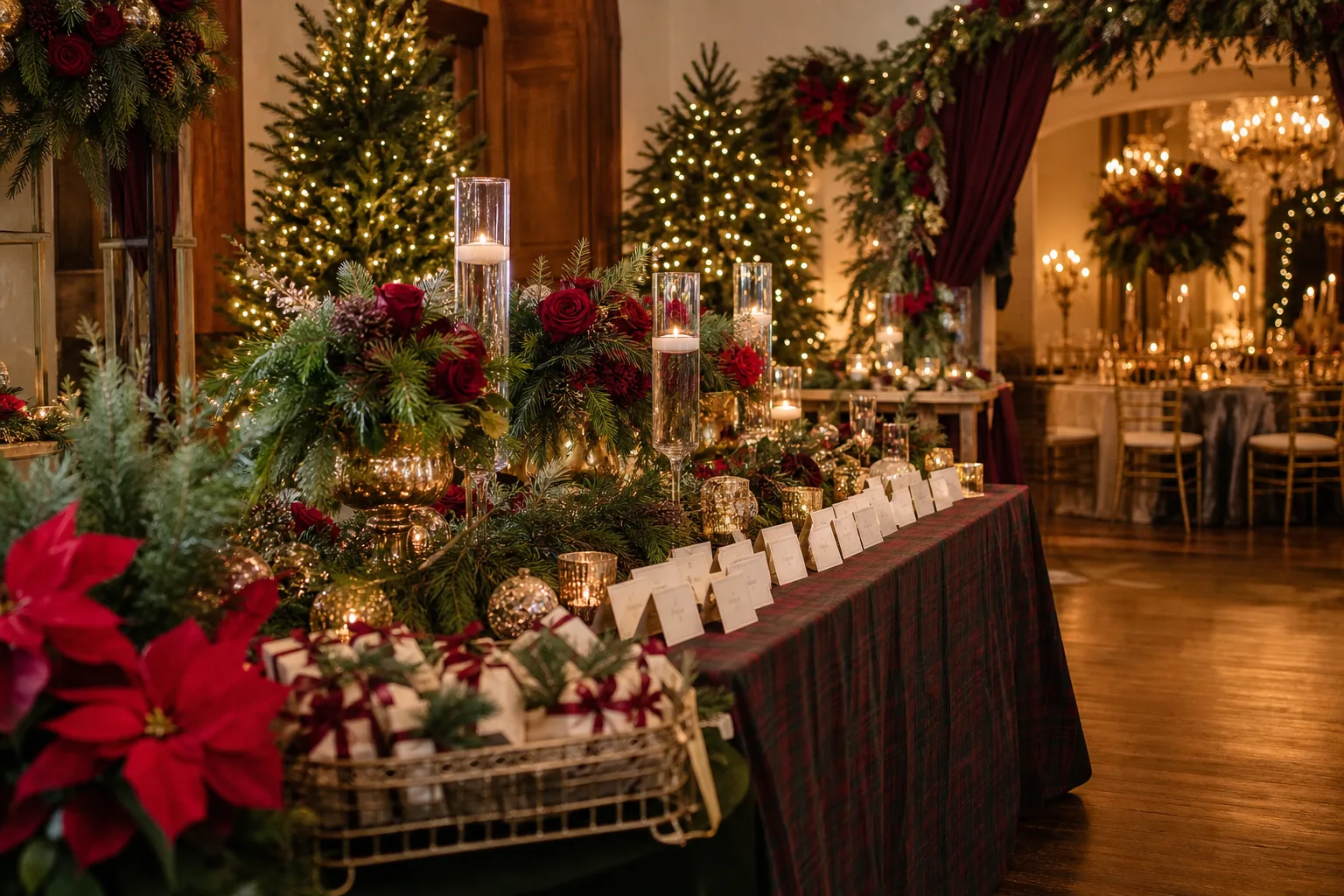
30 christmas wedding ideas in evergreen, merlot and gold, from the pine arch to the send-off, each o
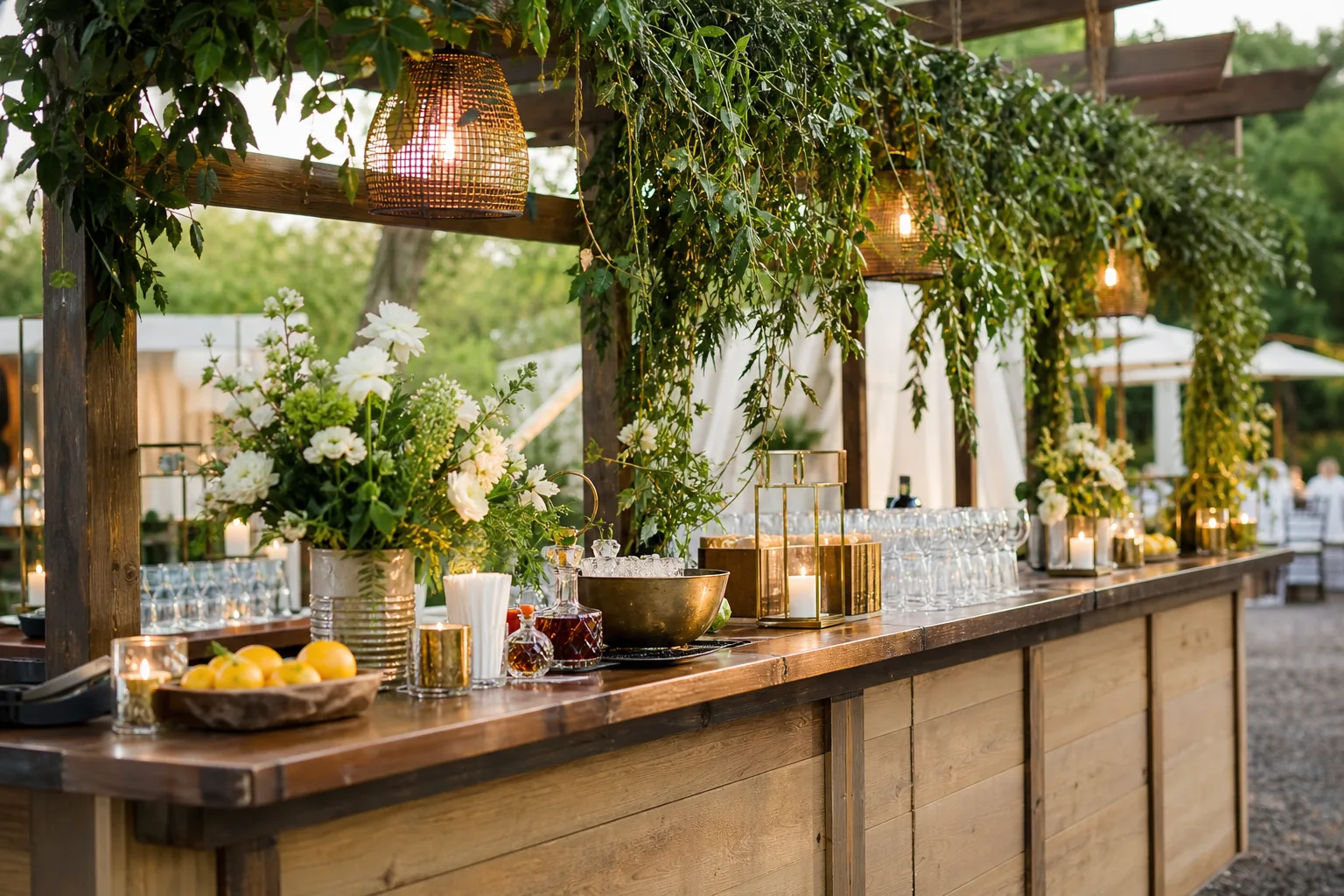
27 wedding bar decor ideas, from a floral bar front to a champagne tower, each one a real styled sce
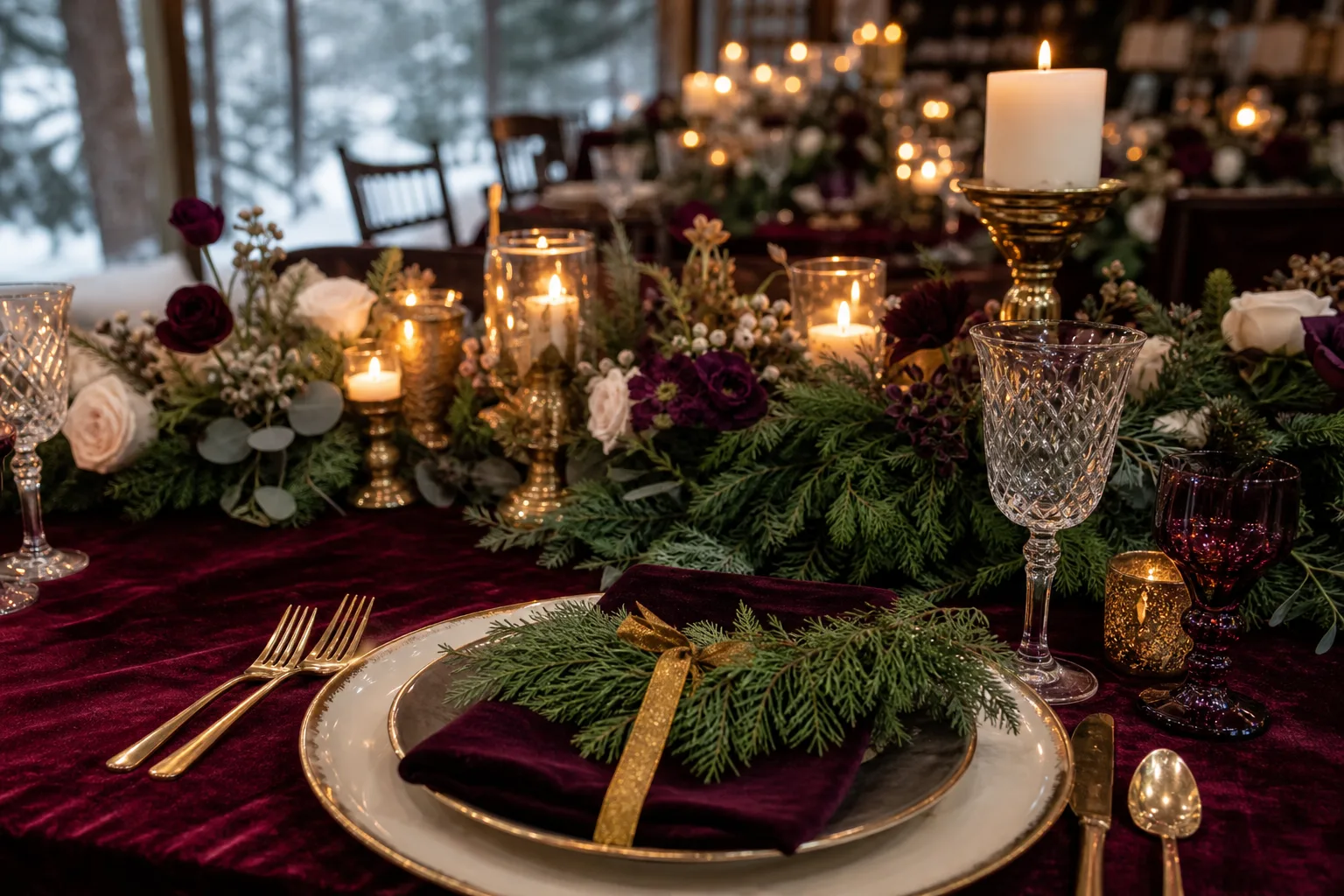
30 winter wedding ideas with candlelight, velvet and evergreen, from the pine arch at the aisle to c
Leave a Reply