

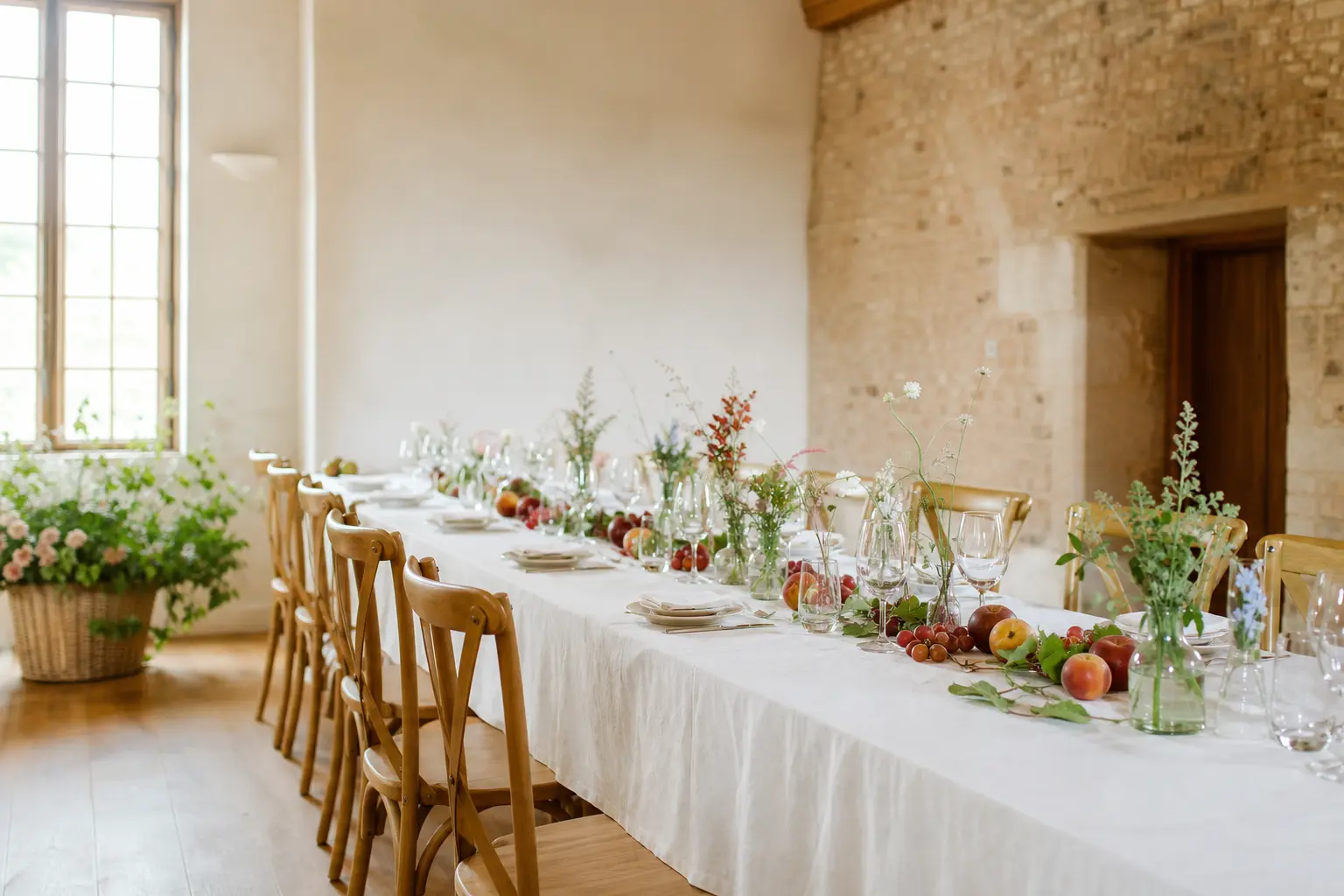
You have the centerpiece sorted. Then you step back and see a vast stretch of bare linen on either side of it, and suddenly the table looks half-finished. Wedding table decorations in 2026 solve this by treating the whole table as the canvas, not just the middle third.
The ideas here move outward from the centerpiece in a deliberate order: first the things that sit closest to it, then the runner zone, then the place settings, and finally the edges and the floor. Work through the list and you will fill a long reception table without doubling the budget or calling in a florist for every step.
The palette running through all of them: amber, ocean blue, blush, sage and warm brass. Pick two or three shades and repeat them at different points down the table so the whole surface reads as one decision, not a collection of accidents.
This post contains affiliate links. If you buy through them, I may earn a small commission at no extra cost to you.
The Runner Zone
The runner is the table’s spine, and in 2026 it earns its keep by doing far more than covering linen. Think of this zone as anything that travels the length of the table in a continuous line, whether that is fabric, plant material, loose fruit, or petals.
Layering two or three runner-zone ideas gives depth without height, which keeps sightlines clear and conversation easy across the table. For internal links on the topic, see Thanksgiving tablescapes for more layering approaches, and DIY Thanksgiving decorations you can make from foraged bits for sourcing dried grasses and seed heads without a florist order.
Fresh Figs and Grapes Scattered Loose
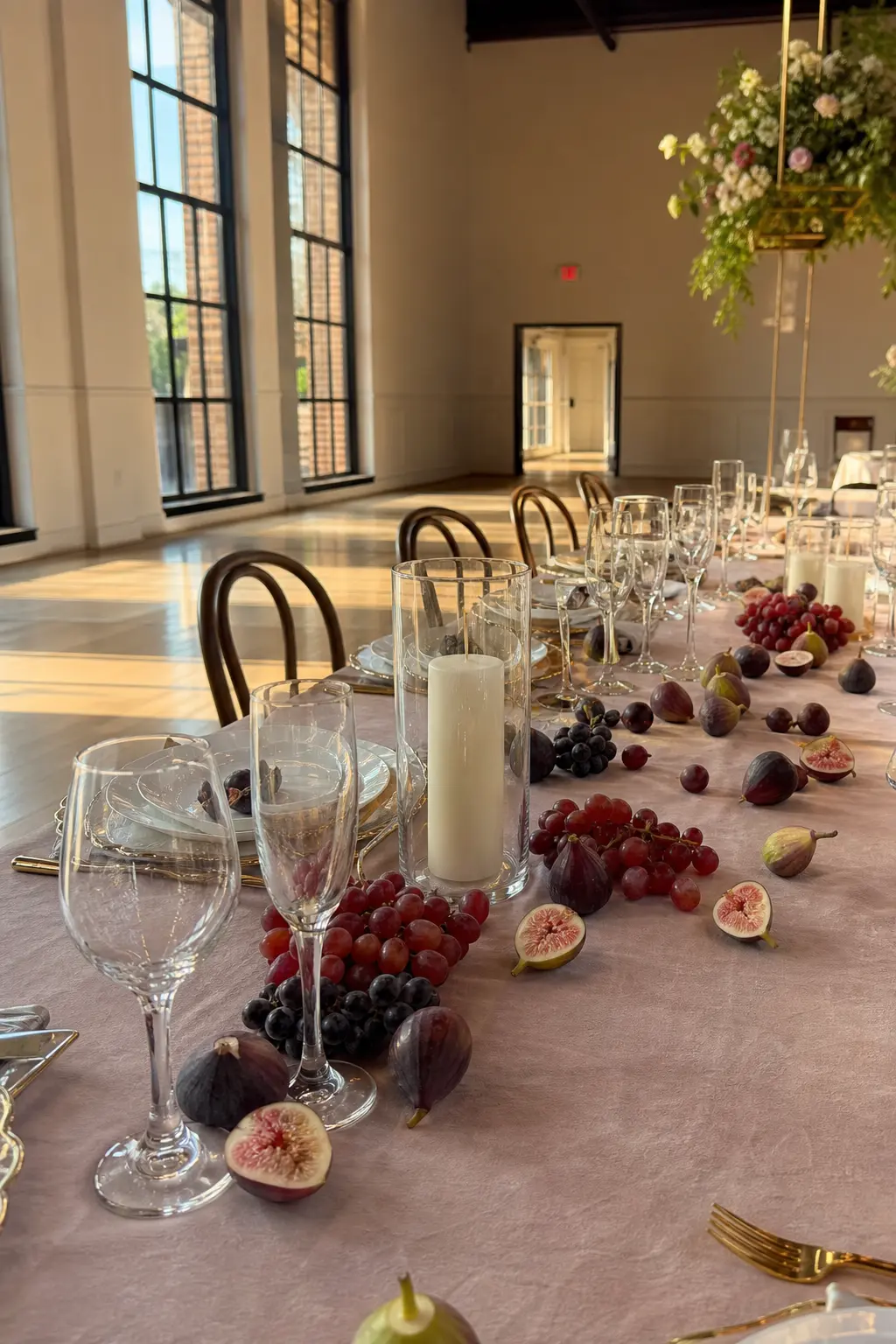
Scatter figs and grapes directly on the cloth in a loose, uneven line either side of the centerpiece. No bowl, no arrangement, no symmetry required. The fruit fills the table the way a runner does, but at eye level it looks organic rather than set-dressed.
Figs split open slightly at the base as the day warms, which only adds to the effect. Use deep purple and green varieties together for contrast against an amber or blush cloth. Sage leaves tucked between bunches tie it to the botanical palette without a florist on site.
🛍 Shopping guide
Dried Grasses Left Long Past the Table Edge
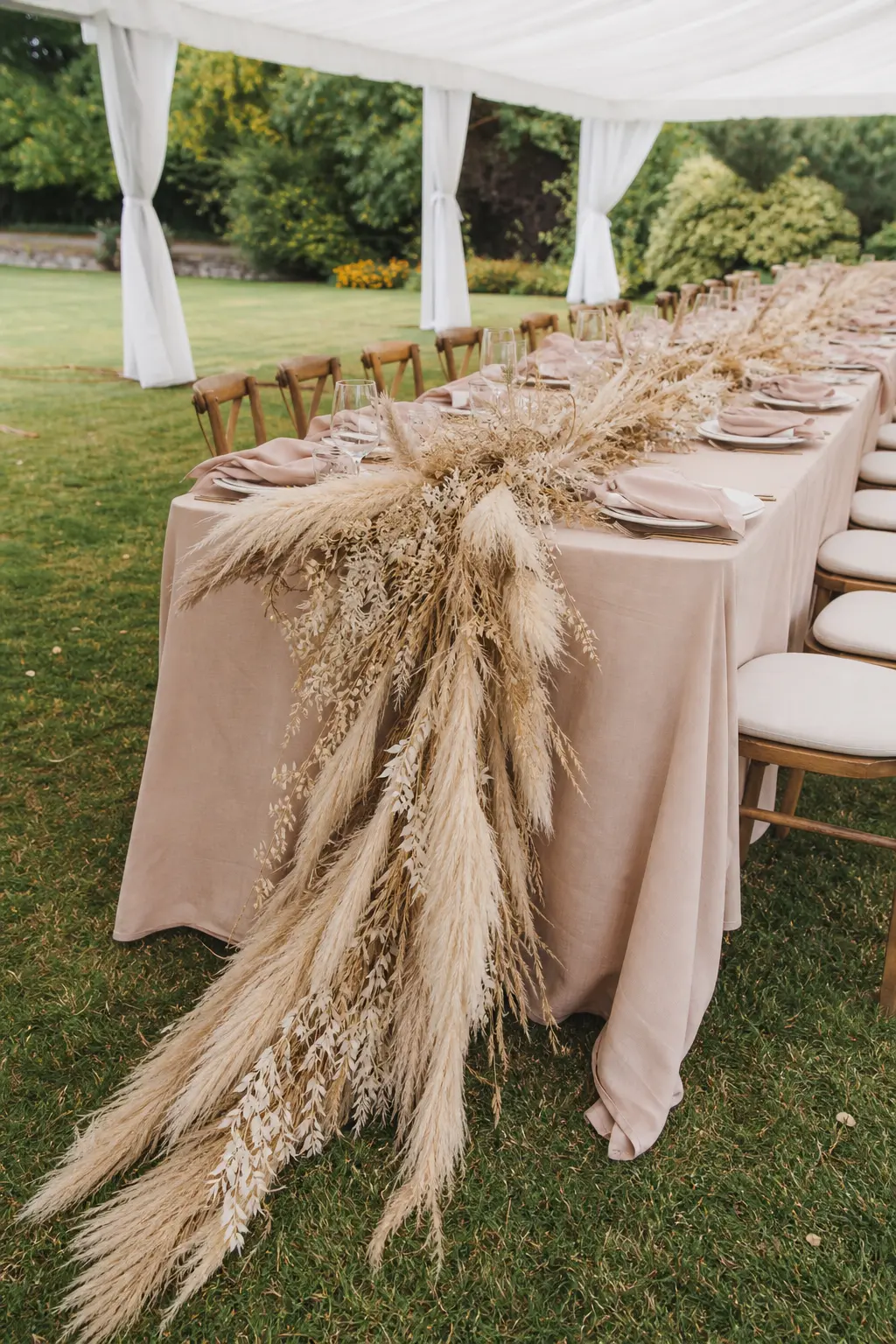
Lay a row of dried grasses, pampas or wheat down the centre of the table and let the stems hang well over both ends, 30 cm or more. The overhang is deliberate: it connects the tabletop to the surrounding space and gives the table an easy, unhurried mood.
Dried grasses need no water, no maintenance and no professional arrangement. Bundle them loosely with a length of ribbon and lay them flat. They suit outdoor marquee receptions especially well, where they echo the landscape outside.
Trail of Loose Petals Down the Centre
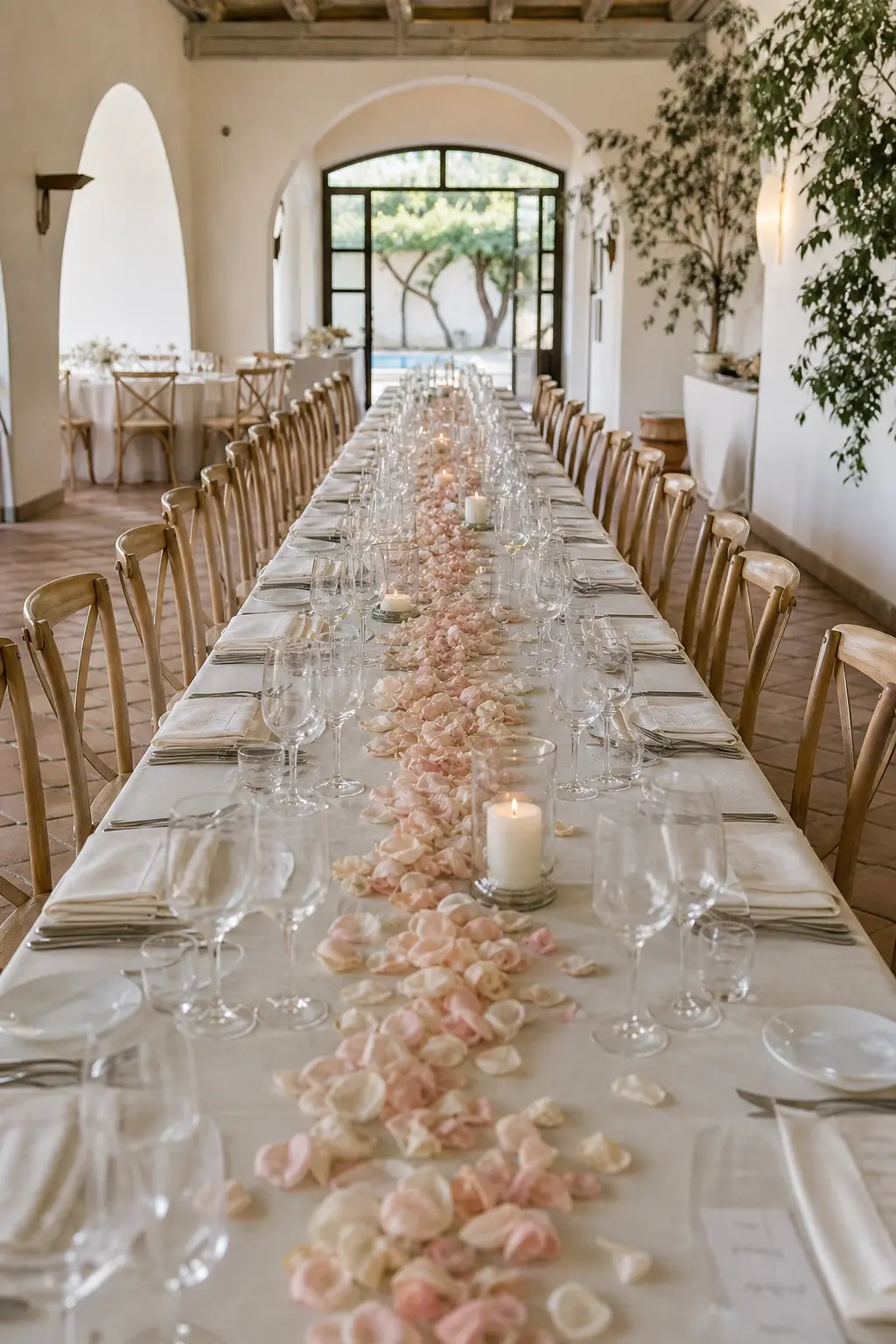
Scatter rose or peony petals in a loose trail down the centre of the table with nothing underneath them, no runner, no garland. The petals lie directly on the cloth and the bare linen on either side of the trail becomes part of the composition.
Use a single colour of petal so the trail reads as a deliberate element. Blush petals on warm white linen disappear softly; deep red petals on ivory linen make a strong graphic line. Scatter them unevenly: gaps and clumps look more natural than a tidy stripe.
Low Garland of Greenery Pinned Flat
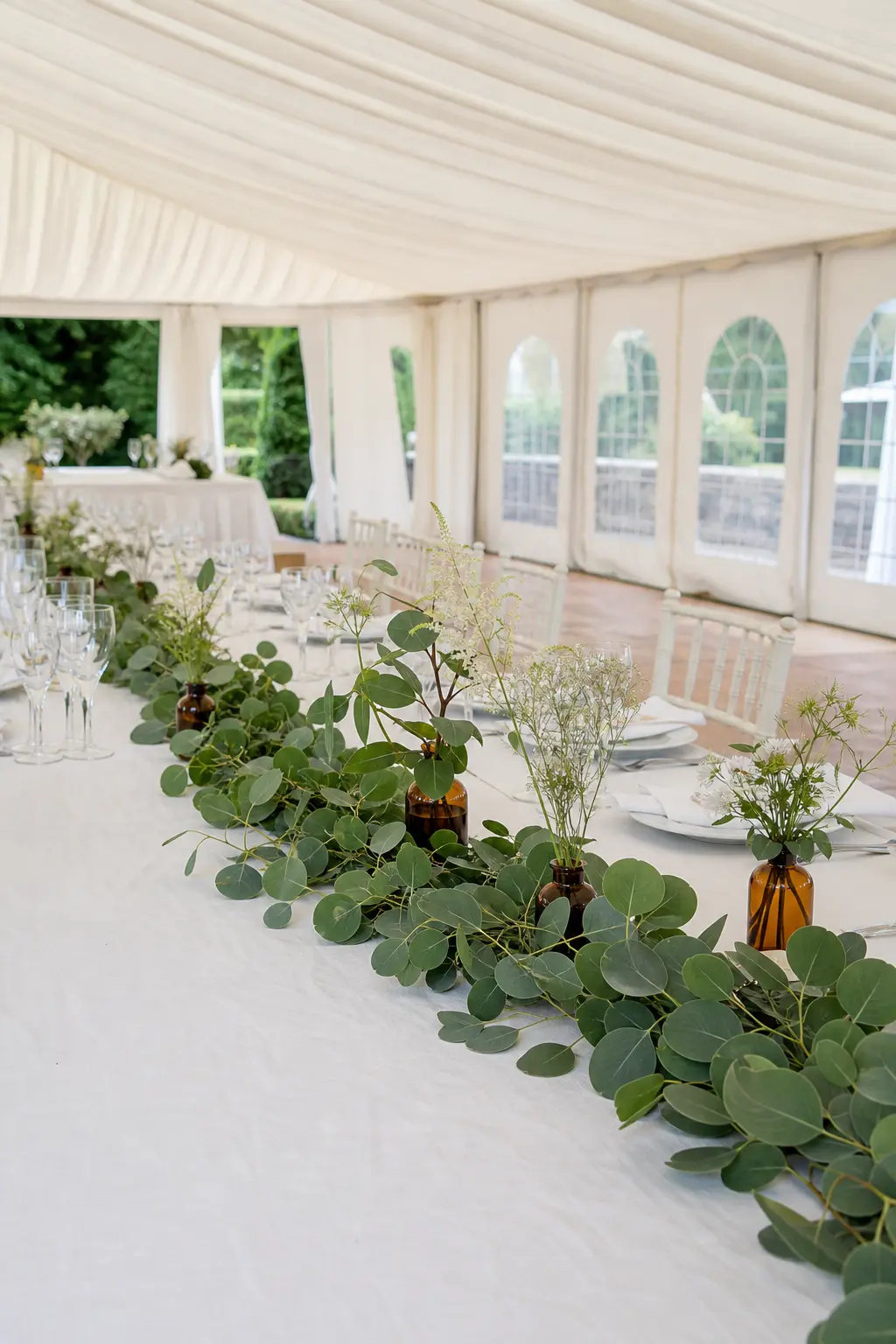
Lay a garland of eucalyptus, olive branch or ivy flat on the table and pin it every 30 cm with a small floral pin so it stays flush with the cloth rather than lifting in a dome. The flat garland is a runner alternative that leaves the surface visible on either side of it.
A flat garland stays out of the way of serving dishes and does not block eye contact across the table. Thread bud vases or fruit into it at intervals so it does not read as merely functional.
🛍 Shopping guide
Runner Made of Two Fabrics Seamed Down the Centre
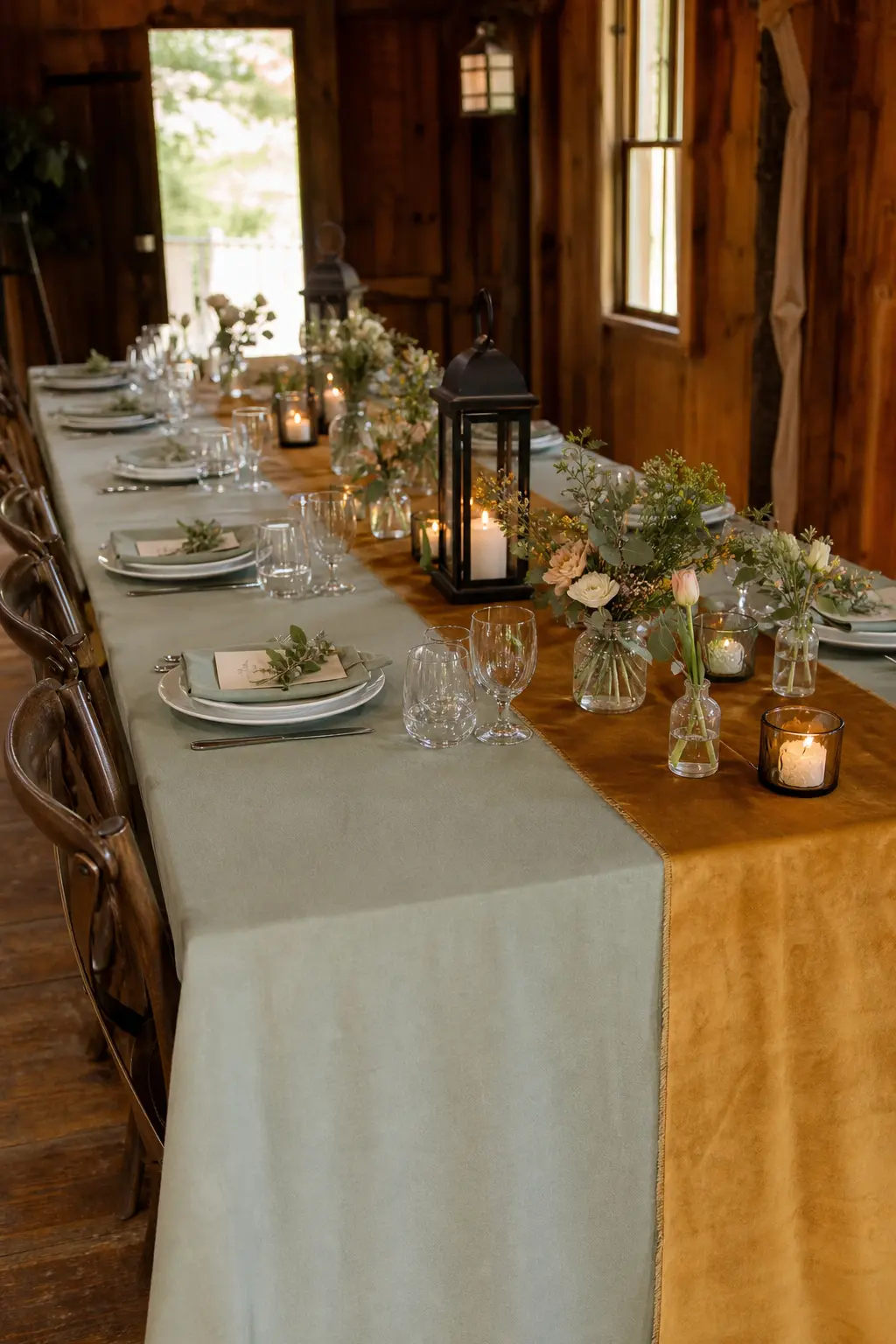
Sew two different fabrics together along their long edges to make a runner that is half one textile and half another. The seam runs down the centre of the table. This technique doubles the palette presence of the runner without doubling its width and makes a bespoke piece for the price of two fabric offcuts.
Good pairings: sage linen and warm amber velvet, blush cotton and ocean blue linen. The seam itself becomes a detail. Press it open flat so it lies cleanly, or leave it raised slightly for a visible line.
Low Arrangement Built to One Side of Centre
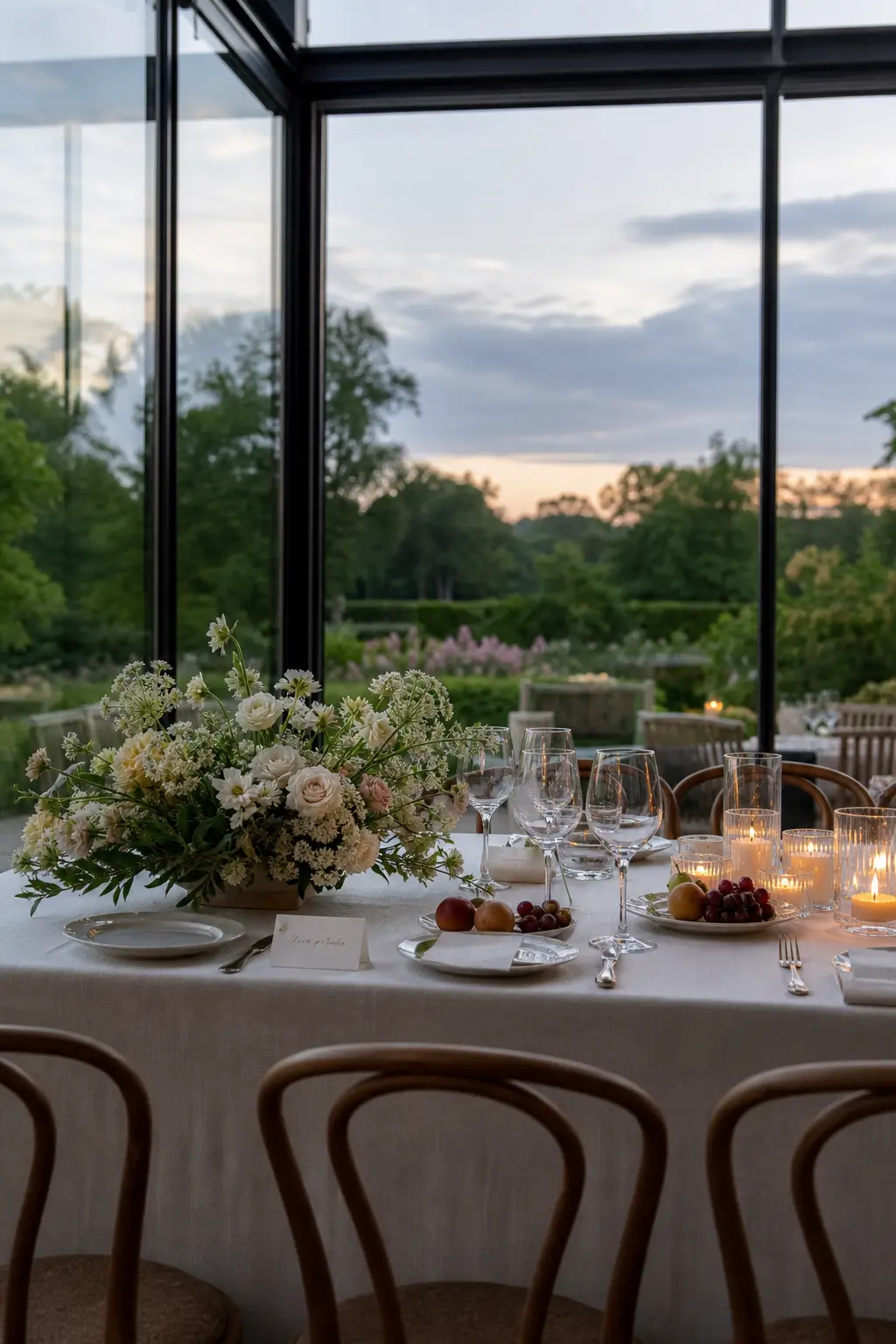
Place the table’s main arrangement not at the exact centre but offset to one side, so the table has a deliberate asymmetry. The empty half of the centre becomes a feature in itself: negative space that makes the arrangement look more considered than a symmetrical placement ever can.
A low, wide arrangement of mixed stems in amber, blush and sage works best here. Keep it under 30 cm in height so it never blocks sightlines. The offset position also makes it easier for waitstaff to serve from the opposite side.
The Light Layer
Candlelight and small lamps do the work that a second vase can never quite manage: they give the table a pulse after dark. Group them rather than spacing them evenly and the effect looks curated instead of catered.
Unlit candles at a daytime reception are equally valid. A cluster of pale pillar candles at different heights reads as sculpture in full daylight and costs almost nothing to arrange.
Small Table Lamps Replacing Every Third Centerpiece
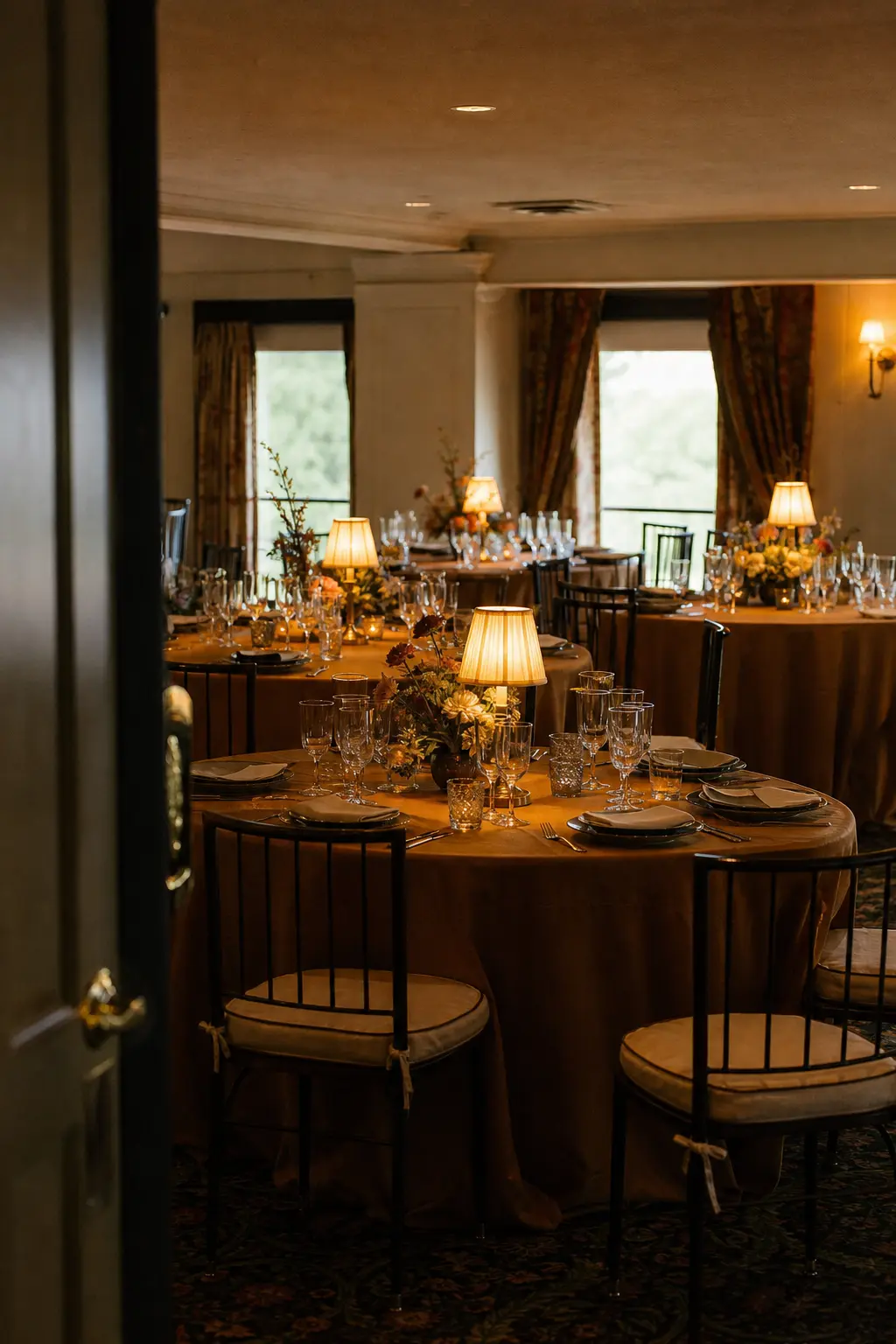
A row of small lamps spaced down the table changes the light quality in a way that candles alone cannot. They glow steadily rather than flickering, which suits longer evening receptions where you want guests to see each other clearly without overhead brightness.
Brass bases with a warm cream shade sit beautifully against blush or amber linen. Use them as the third centerpiece on a long table, alternating lamp, floral, lamp, floral. The mix feels like a living room rather than a hired event space.
🛍 Shopping guide
Candle Pillars Grouped at Uneven Heights
Group three pillar candles of different heights together between settings rather than spacing one candle every metre. The cluster reads as a considered moment on the table rather than a default placement. Vary the heights by at least 8 cm so the difference registers clearly.
Use candle plates or small mirrors beneath each cluster so wax drips do not reach the linen. Unscented ivory or warm white candles do not compete with food. For daytime receptions, leave them unlit and treat them as sculpture.
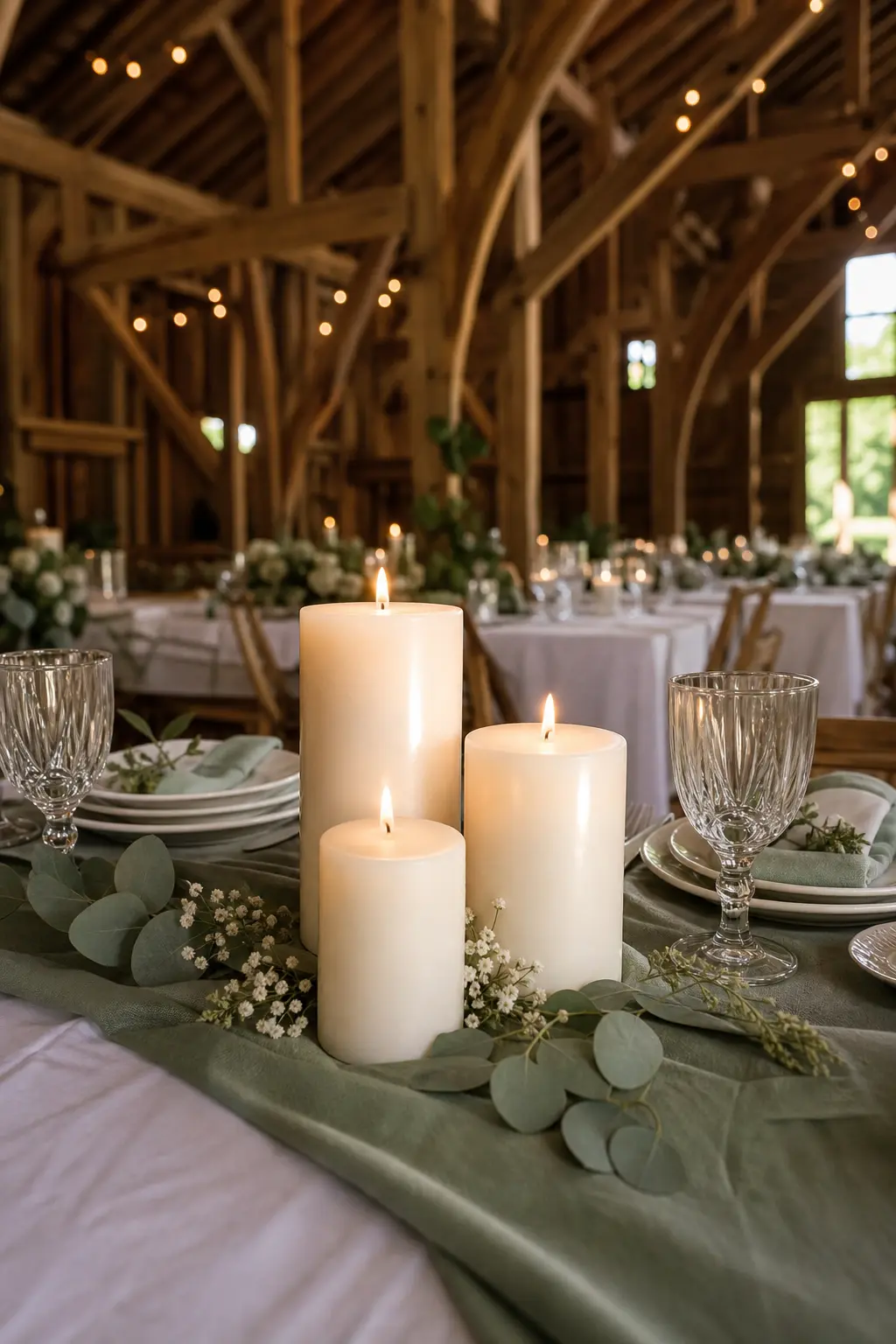
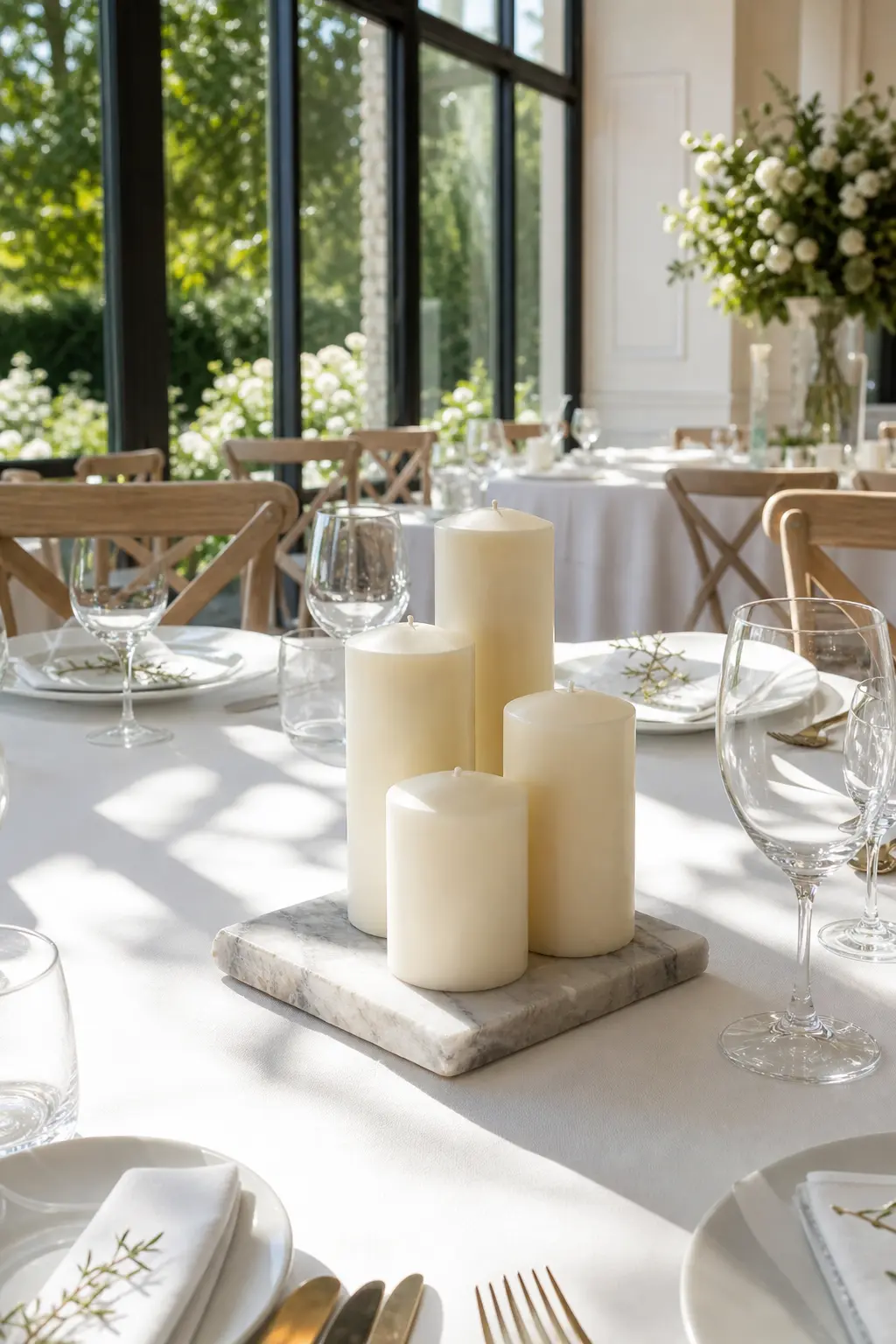
Cluster of Unlit Candles for Daytime Receptions
At a daytime reception, light candles are a waste and a fire risk. Instead, group unlit pillar candles of different heights and diameters into clusters between settings and treat them as architectural objects. They fill the table with warmth and texture without a single flame.
Choose candles in ivory, warm white or sage green so they read as part of the palette rather than as props waiting for evening. A cluster of five or seven candles on a small mirror or marble tile looks purposeful and substantial.
🛍 Shopping guide
Place Settings
The place setting is the smallest unit of decoration on the table and the one guests look at longest. A single stem laid across a napkin, a bow at the glass stem, a menu ribbon: each one signals that someone thought carefully about this seat.
Keep these details in the same palette as the runner zone so the whole table feels connected, not like two separate projects that happened to share a tablecloth.
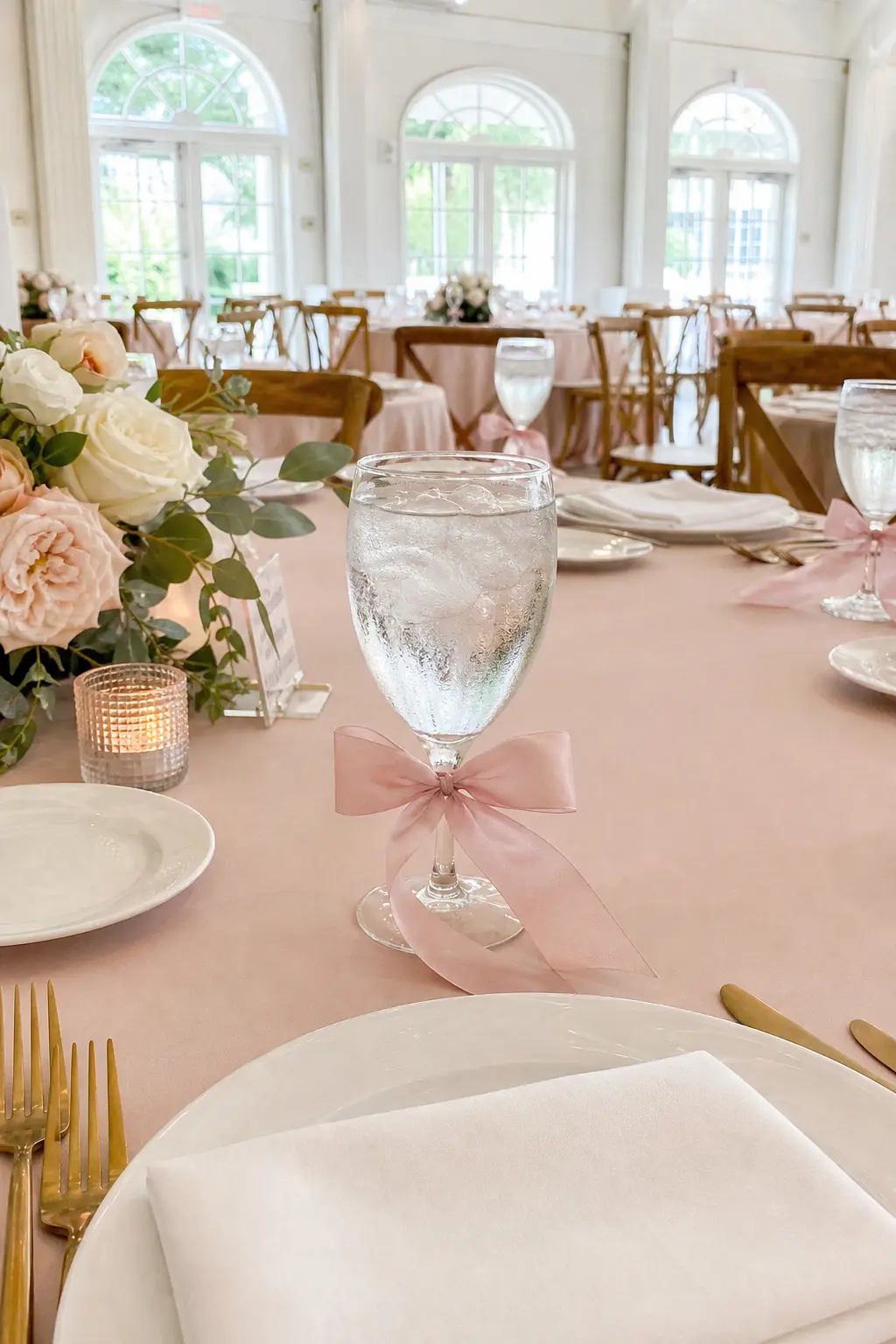
Folded Bow at Each Water Glass Stem
Tie a small bow of narrow satin or grosgrain ribbon around the stem of each water glass. It takes thirty seconds per place setting and turns plain hire glassware into something that looks deliberately chosen.
Blush or warm brass ribbon against clear glass is the easiest combination. Knot it loosely so the bow sits at an angle rather than upright, which looks relaxed rather than packaged. Leave the tails long enough to brush the tablecloth.
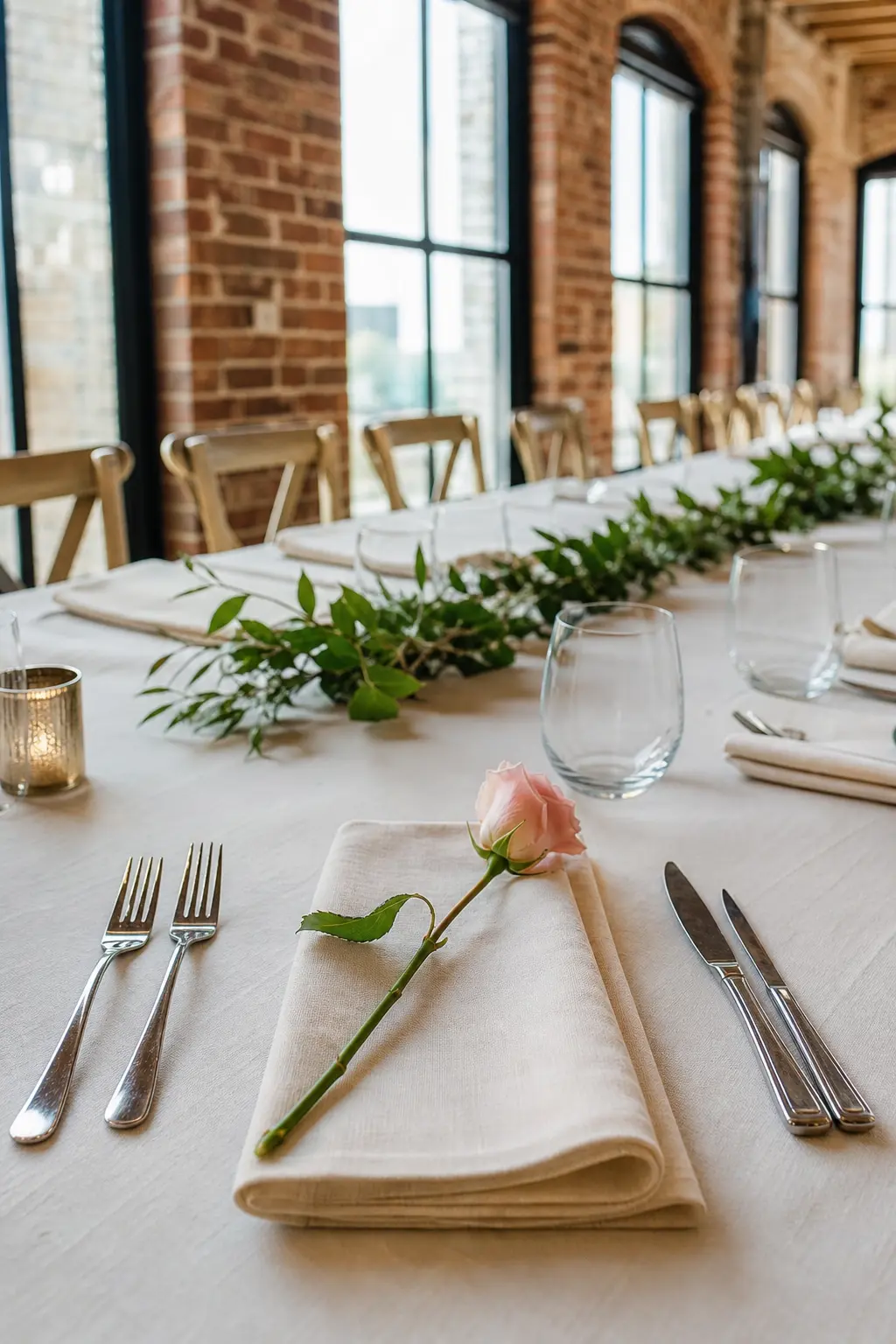
Single Stem Laid Flat Across the Napkin
Place one stem face-up across the folded napkin at each setting. A garden rose, a sprig of eucalyptus, or a single dried stem all work. The stem does not need a vase: it lies flat and the guest picks it up when they sit down, which becomes a small moment of welcome.
Choose one variety and use it at every place so the row of settings reads as a pattern. This is a good use for ceremony flowers once the ceremony is done.
Folded Fabric Napkin Standing Upright
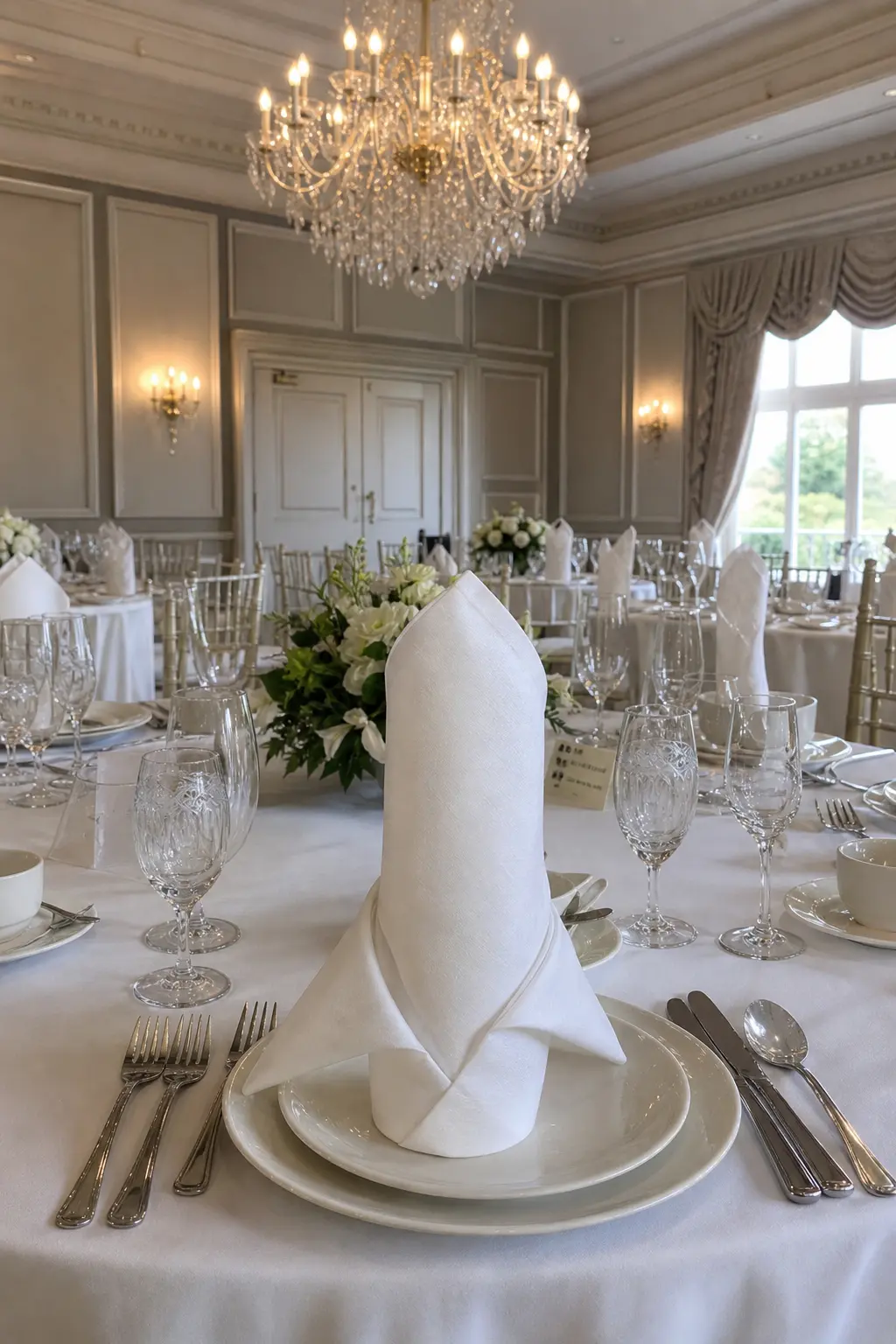
Fold a linen napkin into a standing shape, such as a bishop’s hat or a simple roll with a folded cuff, so it stands upright at each setting rather than lying flat. The upright napkin adds height to the place setting without a vase, and it signals formality without feeling stiff.
A napkin in sage or blush against white crockery is its own colour detail. Choose a fabric with enough body to hold its shape, washed linen or a cotton-linen blend, rather than a flimsy polyester that collapses.
Individual Salt Cellars at Each Setting
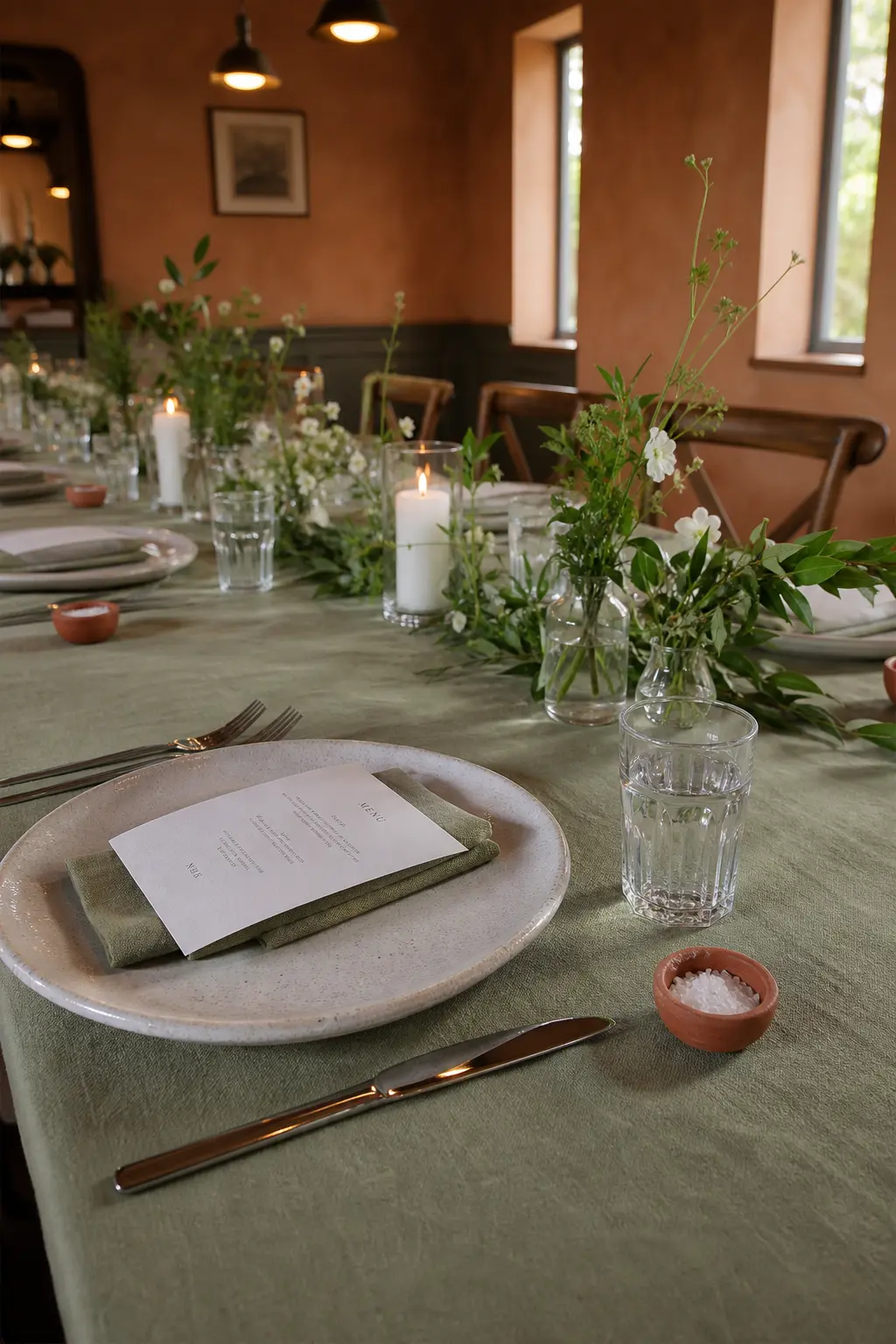
Place a small individual salt cellar at each setting rather than a shared shaker. The tiny vessels are practical, and they also read as a detail that makes the setting feel private and complete, like something from a very good restaurant.
Pinch pots in warm terracotta, small glass bowls in smoke or amber, or tiny brass dishes all work. Fill them with flaky sea salt. Guests almost always notice them and comment, which is exactly what a good small detail does.
Menu and Napkin Under the Same Ribbon
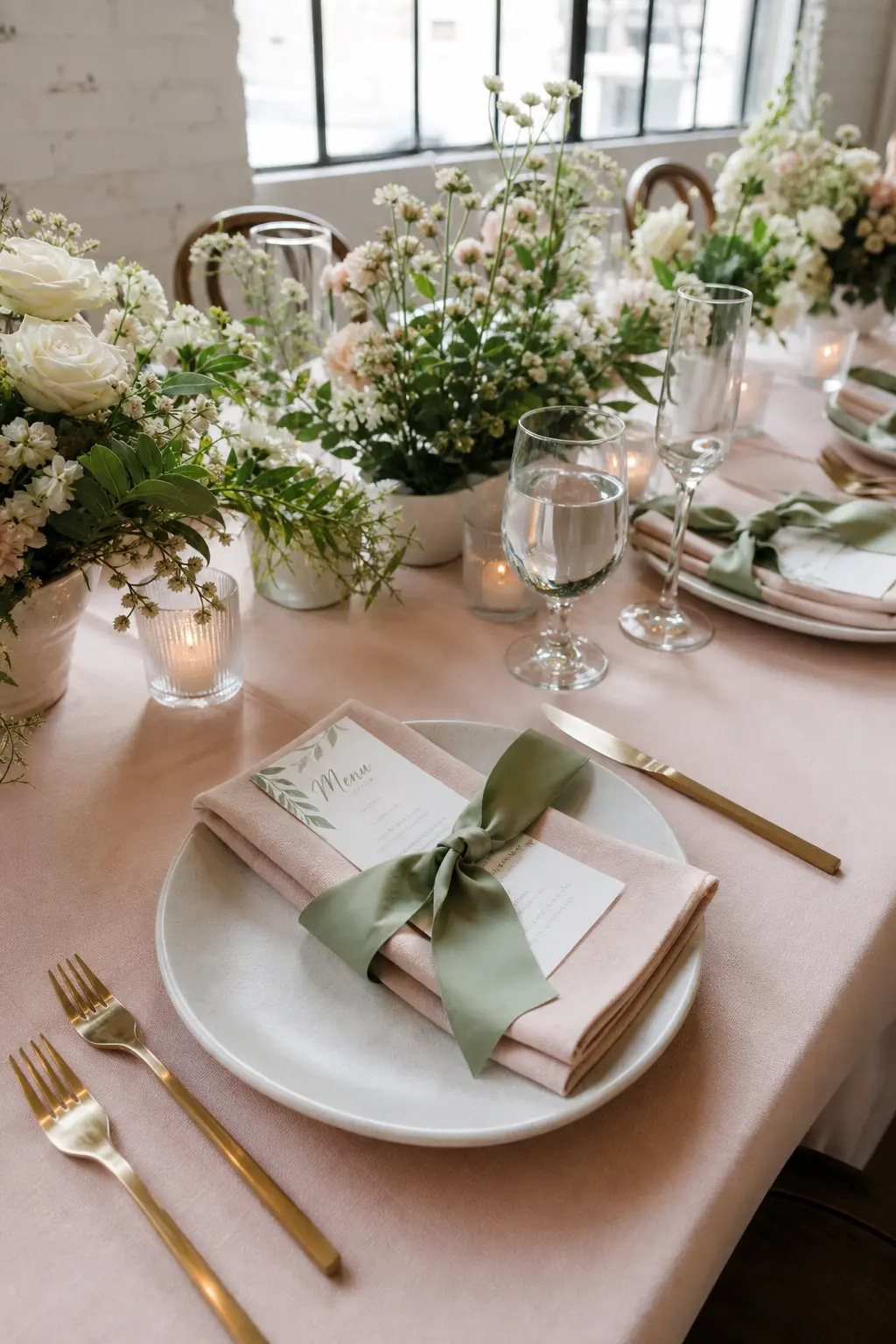
Fold the menu card and the napkin together and tie a single ribbon around both so the guest lifts them as one piece. The ribbon replaces a napkin ring, a menu holder and a separate place card slot with a single element.
Print the menu on a card that matches the paper weight and size of the place card so the bundle lies flat. A wide satin ribbon in blush or sage finishes it. Tie a simple knot rather than a bow if you want a cleaner, more modern look.
Chargers and Surface Texture
What sits under the plate matters as much as what sits on top of it. A charger layered under a woven or embossed mat adds instant texture that reads well in photographs and gives the table a finished quality even before food arrives.
Charger Plates Layered Under a Textured Mat
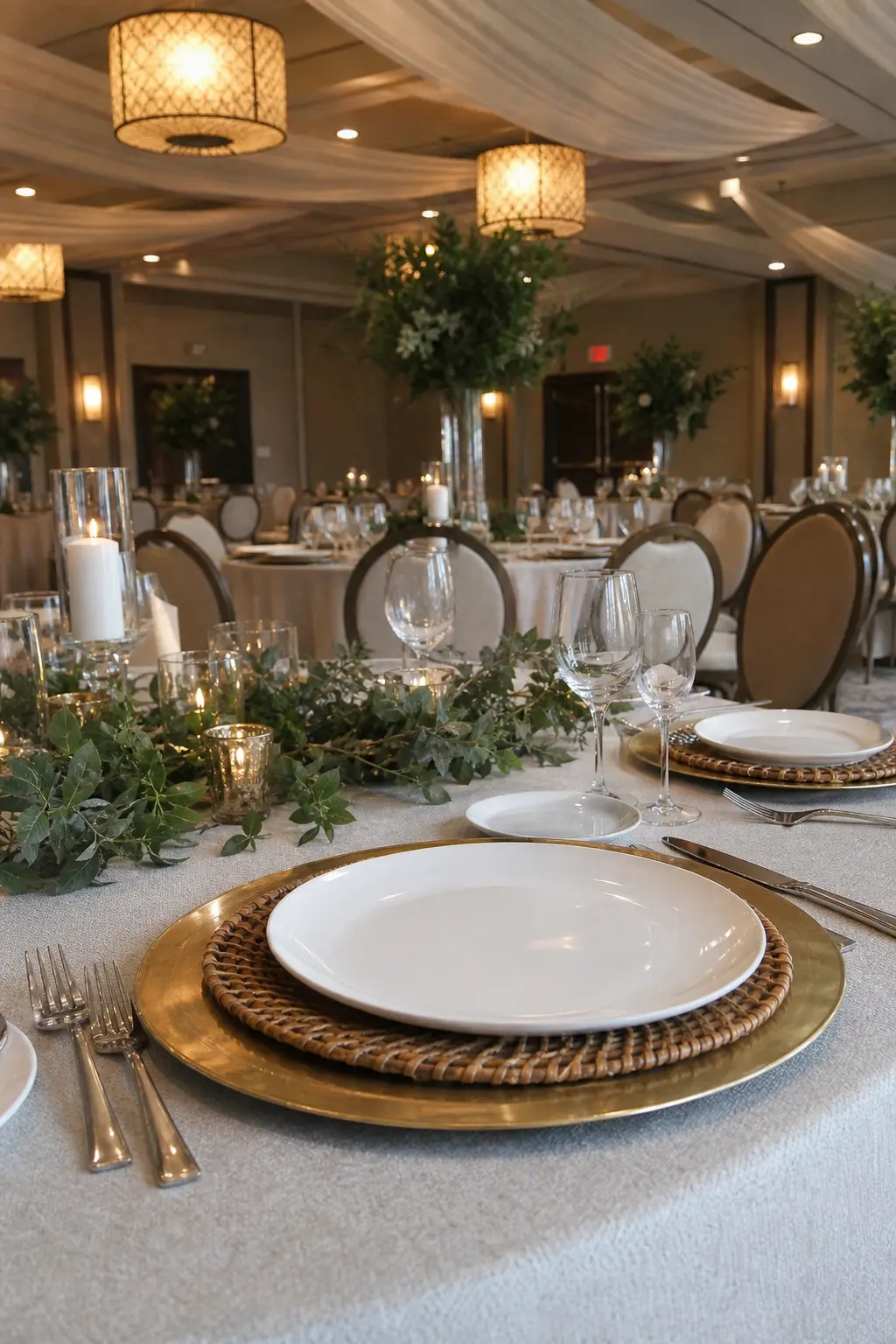
Lay a charger plate first, then place a smaller woven or beaded mat on top of it, then set the dinner plate on the mat. The three layers add surface interest that reads all the way down the table and photographs well at every focal length.
A warm brass charger under a natural rattan mat gives an earthy, collected feel. A brushed gold charger under a blush beaded mat is more formal. Either way, the layered base makes even plain hire crockery look considered.
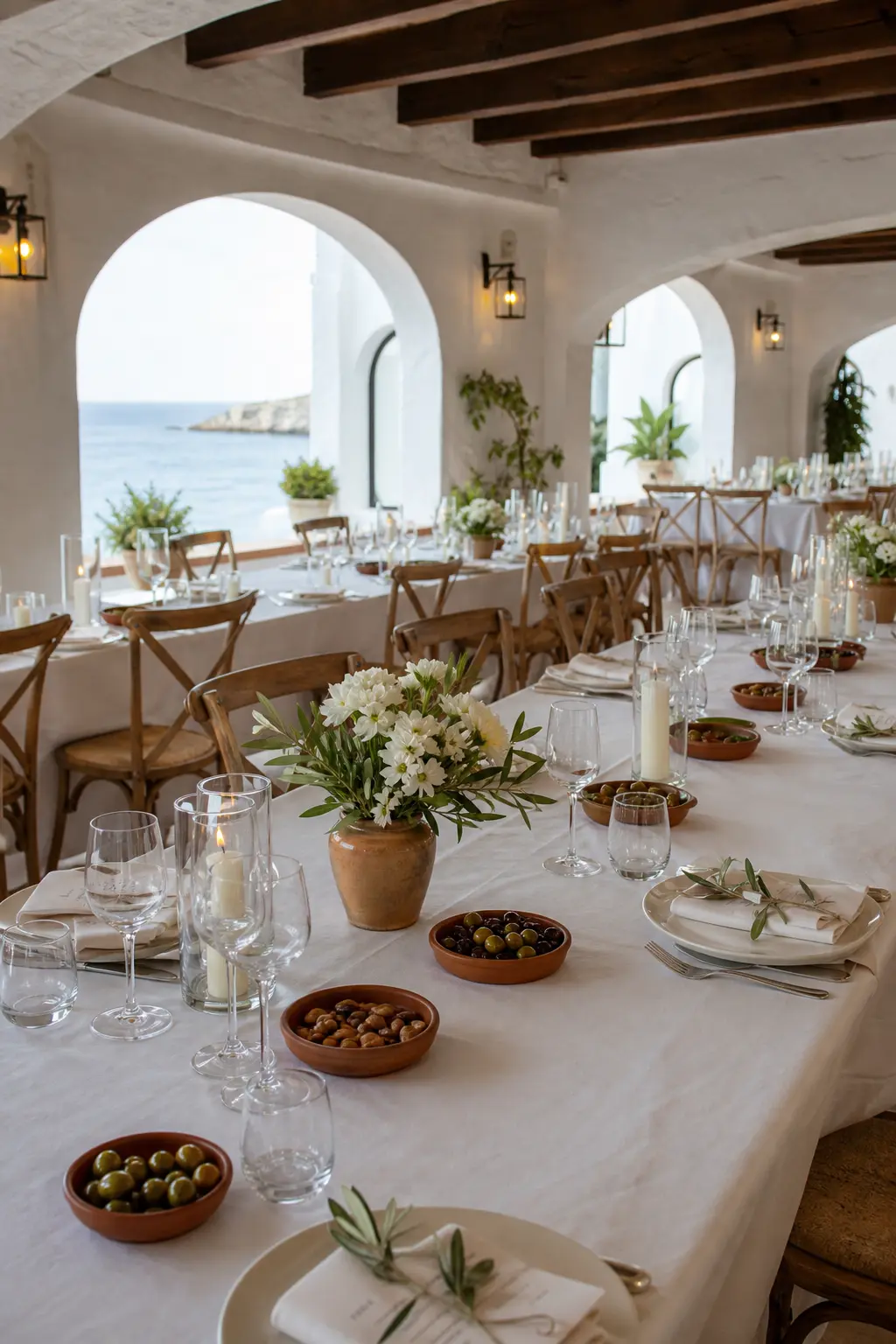
Small Dishes of Nuts or Olives at Intervals
Place a small dish of roasted nuts or marinated olives every metre down the table so guests have something to eat during the gap between seating and first course. The dishes fill space decoratively and solve a practical problem at the same time.
Use vessels in the table’s palette: small terracotta bowls, amber glass dishes or small brass trays. Vary the contents at alternate dishes so guests reach across the table to share. The movement this creates is social, not just edible.
🛍 Shopping guide
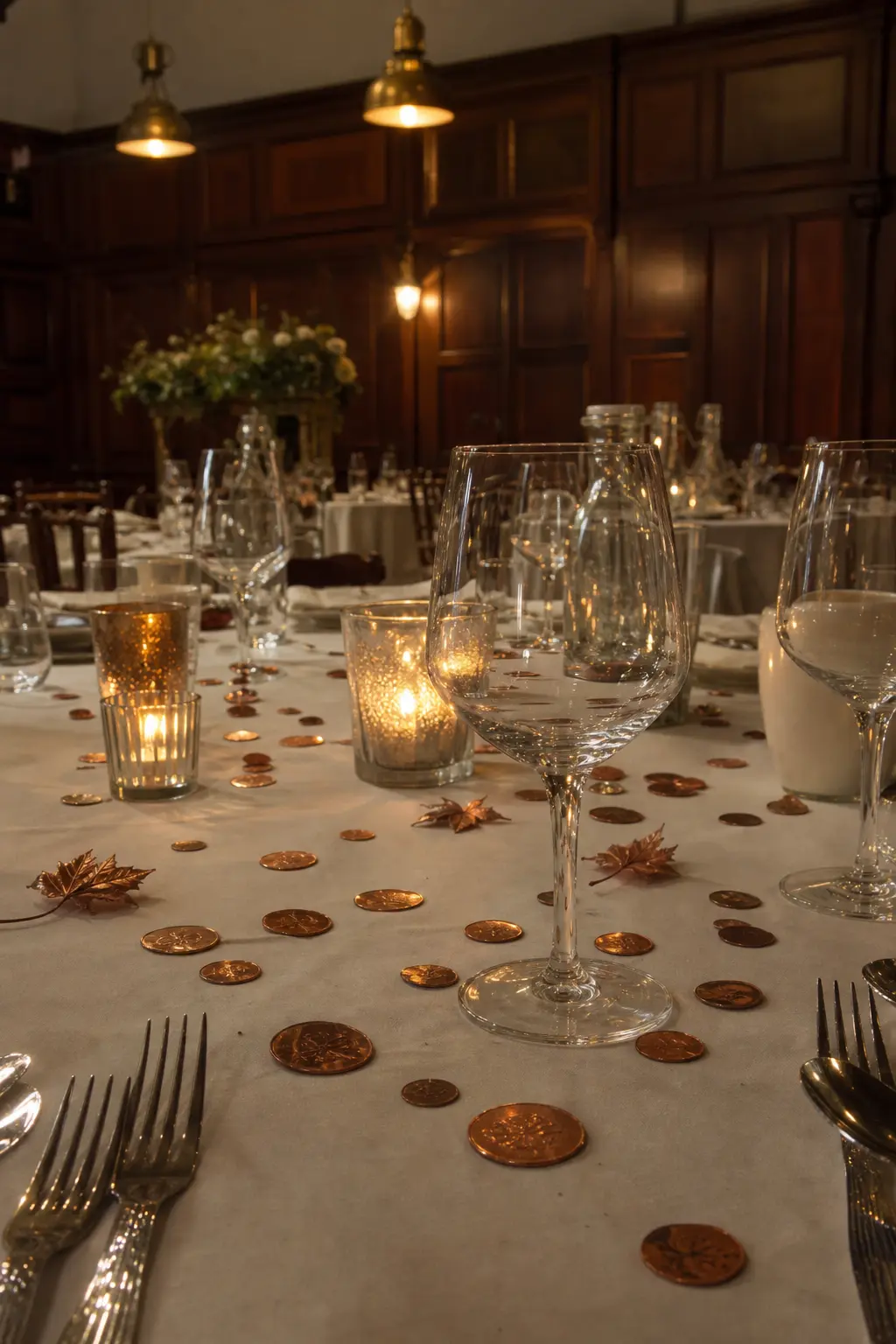
Copper Coins or Leaves Scattered Under Glassware
Scatter a handful of copper coins, dried copper beech leaves or pressed metallic leaves loosely on the tablecloth beneath each water and wine glass. The copper catches the light from below the glass base and creates a small shimmer at each setting without a dedicated ornament.
Real pennies work and cost almost nothing. Faux copper leaves in pressed paper or thin metal are reusable. Either way, the effect is warm, autumnal and entirely consistent with the amber-brass palette.
🛍 Shopping guide
Fruit and Botanicals Scattered Loose
Loose fruit directly on the cloth is the signature move of the moment. Figs, grapes, citrus halves, copper leaves: they fill space without adding height, they photograph beautifully, and guests can take them home. No bowl, no arrangement, no florist required.
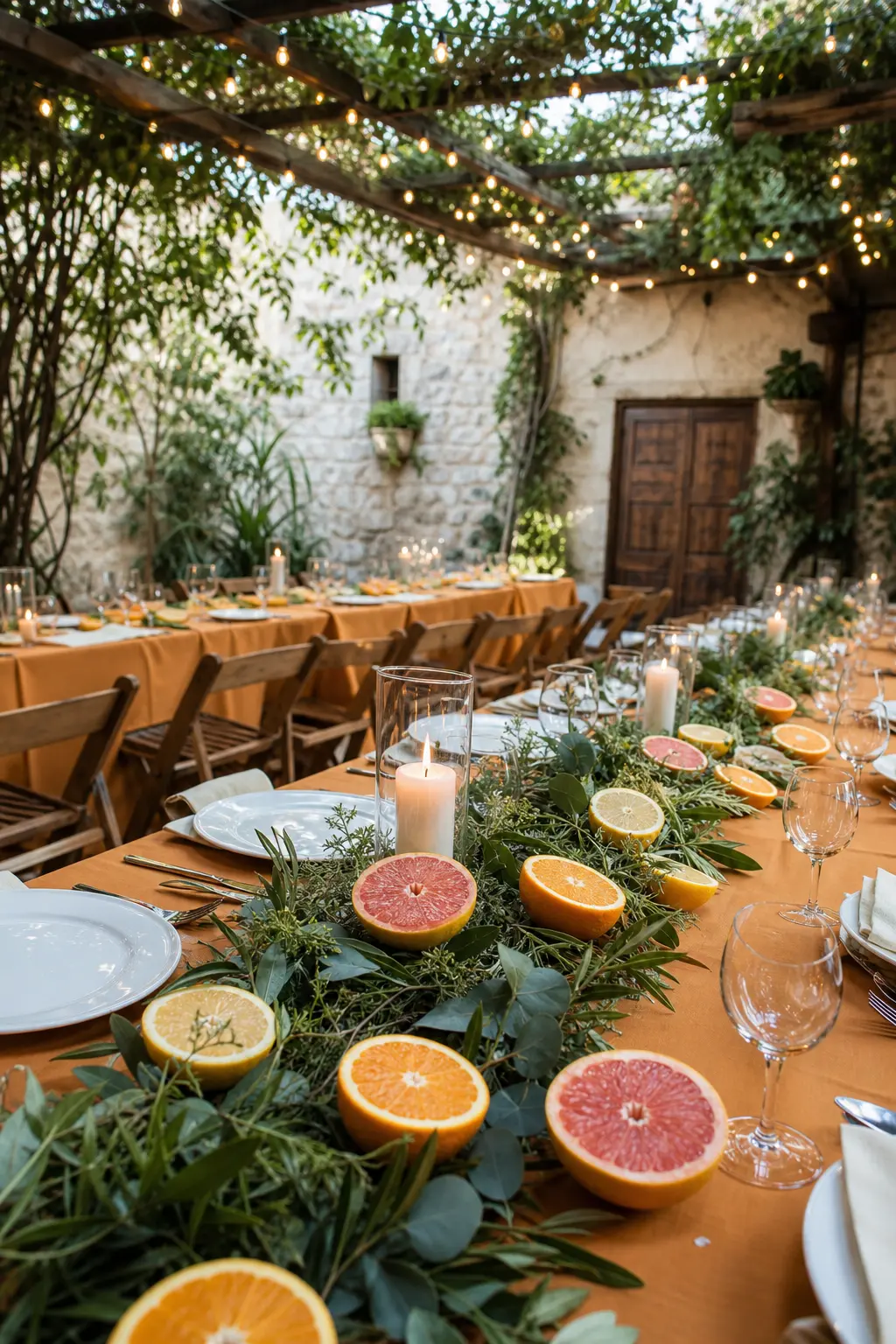
Citrus Halves Cut Open and Left Cut-Side Up
Halve oranges, blood oranges or lemons and leave them cut-side up along the runner zone. The exposed flesh is vivid and architectural, catching candlelight in a way that whole fruit cannot. The scent is a low-level ambient detail that guests notice without identifying it.
Mix varieties: pale yellow lemon next to deep blood orange gives a range of amber and blush tones. Tuck sage leaves between the halves to break the pattern and add green. Swap out any that dry too much if the reception runs long.
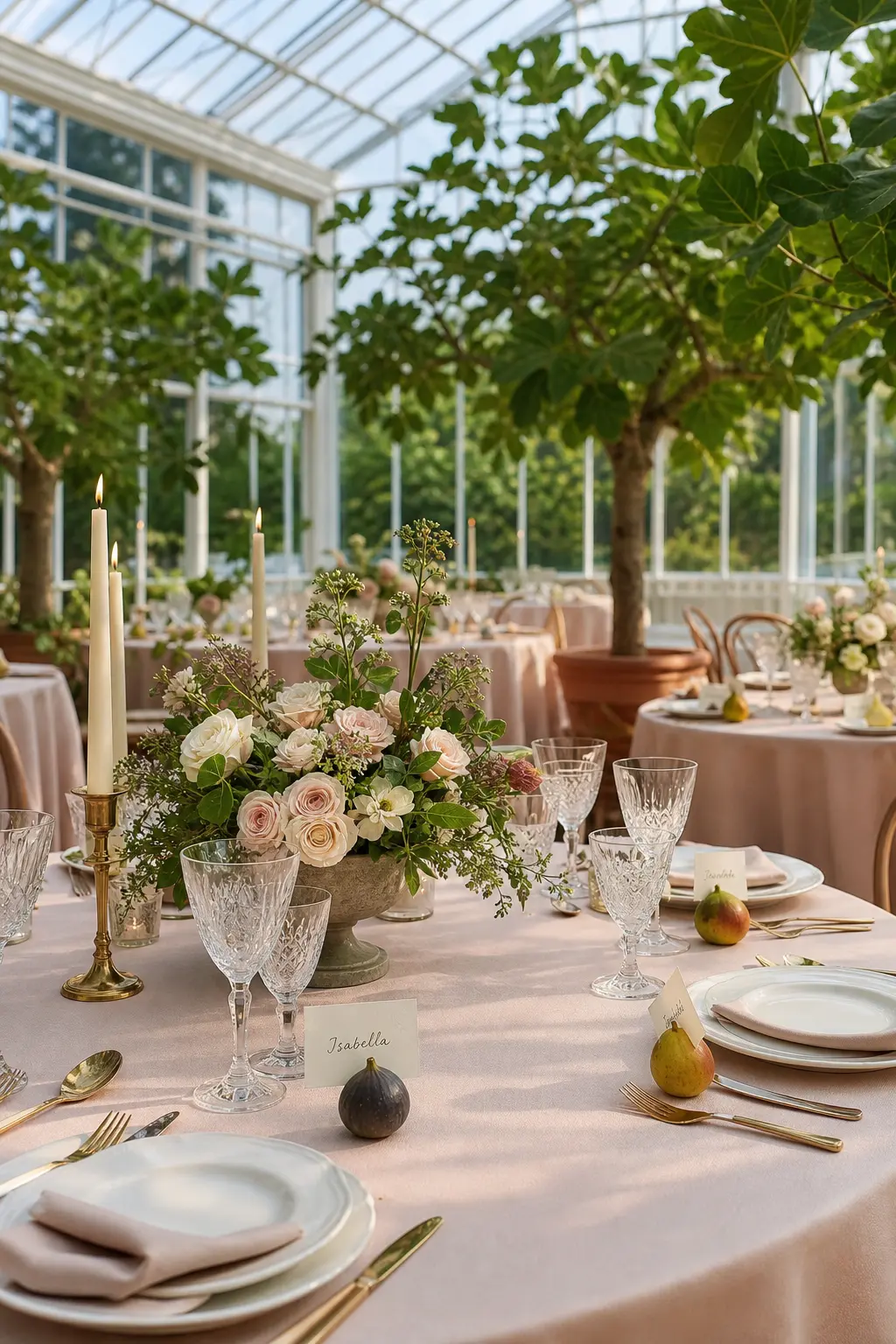
Place Cards Propped Against Small Fruit
Prop a small place card against a fig, a lemon or a clementine at each setting instead of using a holder. The fruit acts as a natural stand and doubles as a decorative element, so it earns its space twice over.
Write names on card stock in a simple hand or have them printed. Lean the card at a slight angle so it reads easily from a standing position. The fruit can be taken home as a small gift, which saves the clear-up.
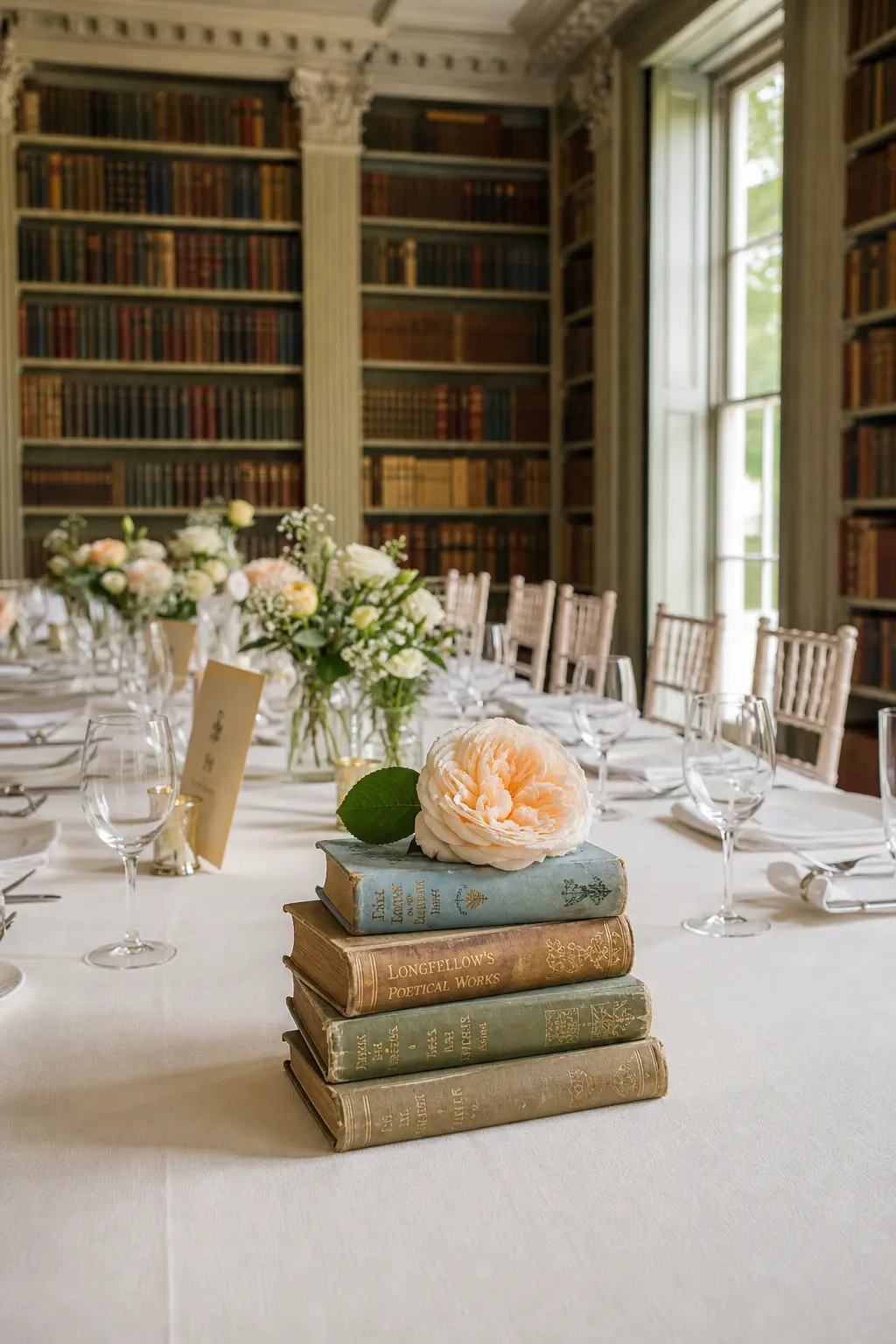
Vintage Books at the Head of Each Table
Stack two or three old hardback books at one end of each table and rest a single stem on top. The books act as a low plinth and add a literary, unhurried quality that suits barn, library and country house venues especially well.
Choose books with cloth spines in muted tones: dusty green, faded red, cream. Remove or cover any that have garish modern dust jackets. The bloom on top should be the same variety used in the bud vase chain so the two elements speak to each other.
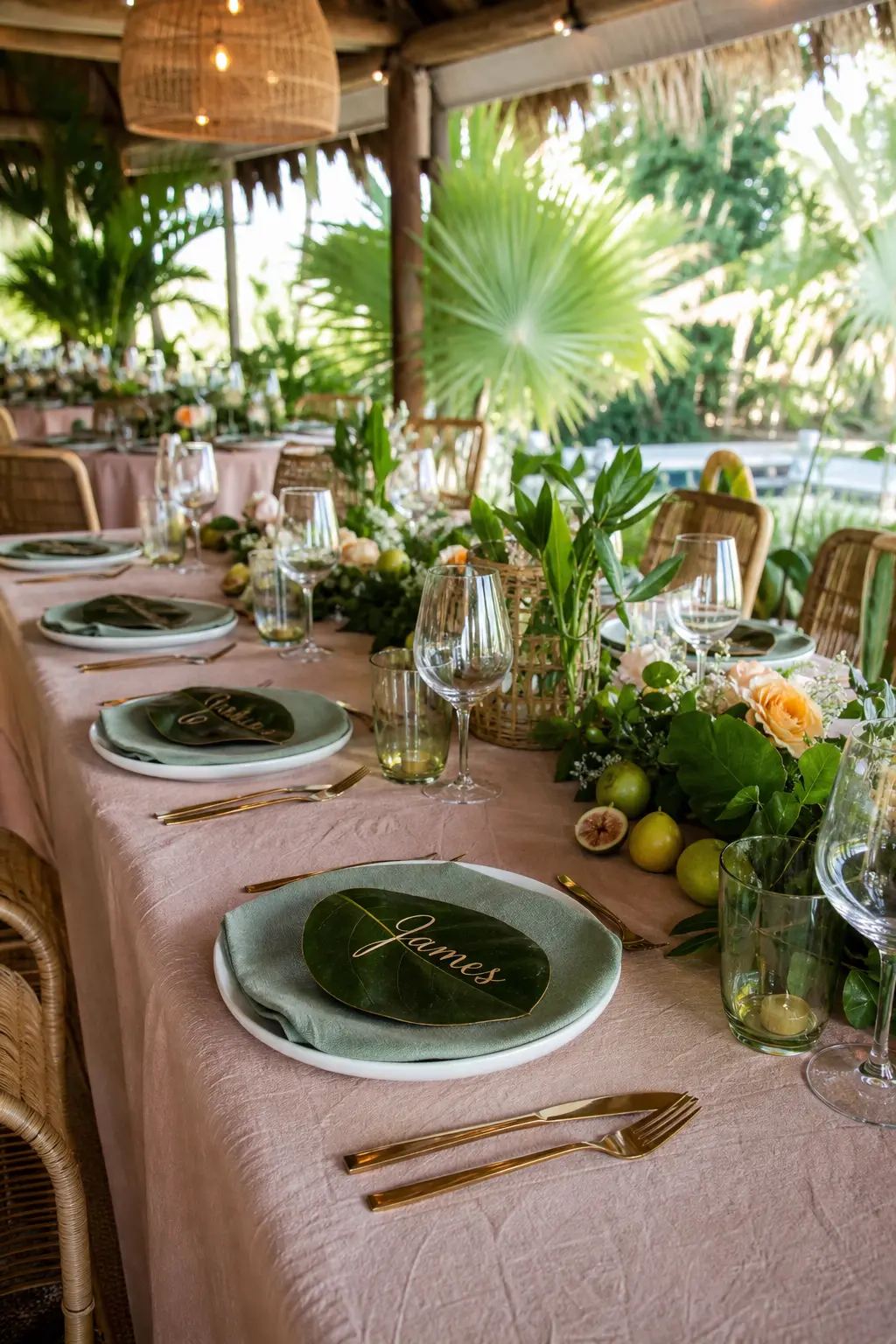
Names Written Directly onto Leaves or Fruit
Write each guest’s name directly onto a large leaf, such as a magnolia or rubber plant leaf, or onto the skin of a lemon or clementine with a fine paint pen. The leaf or fruit replaces a paper place card and becomes part of the fruit scatter or garland already on the table.
A gold paint pen on a dark magnolia leaf is elegant. A black archival pen on the skin of a Meyer lemon is graphic and modern. Either way, the written surface becomes a keepsake that some guests take home.
Glassware and Small Vessels
Mismatched vintage glassware grouped at every other setting turns the table into a collected, personal space rather than a hotel banquet. Bud vases chained in a continuous run do the same thing with botanicals.
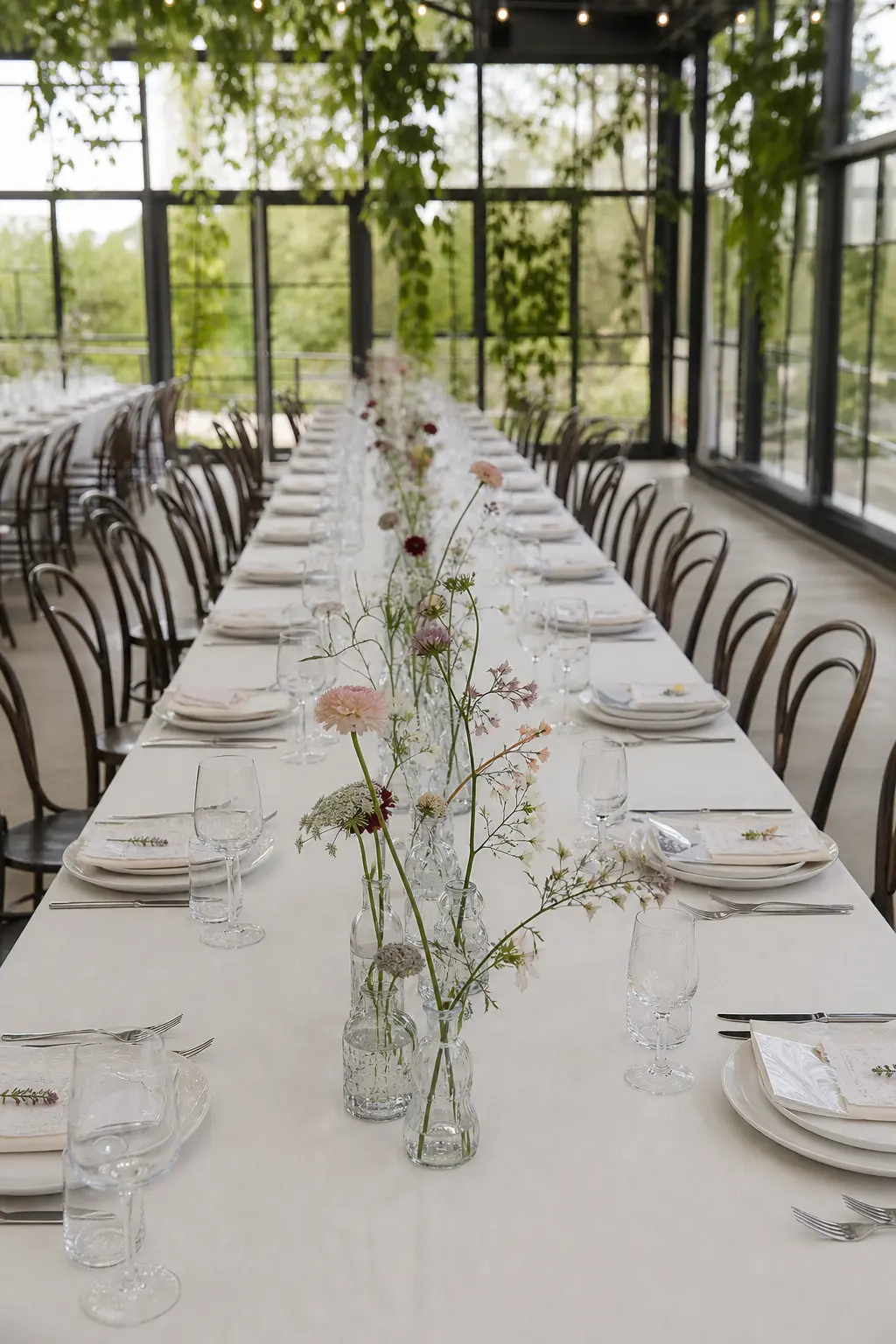
Bud Vases Chained in a Continuous Line
Thread bud vases down the full length of the table in a single continuous line, spacing them roughly 25 cm apart. Each one holds a single stem. The chain reads as one long element rather than a series of small individual vases, which gives the table scale without height.
Mix amber, clear and smoke-coloured glass for warmth. A single variety of stem in each vase, such as eucalyptus, anemone or a dried grass, keeps it cohesive. Vary the stem height slightly from vase to vase so the line undulates rather than standing perfectly level.
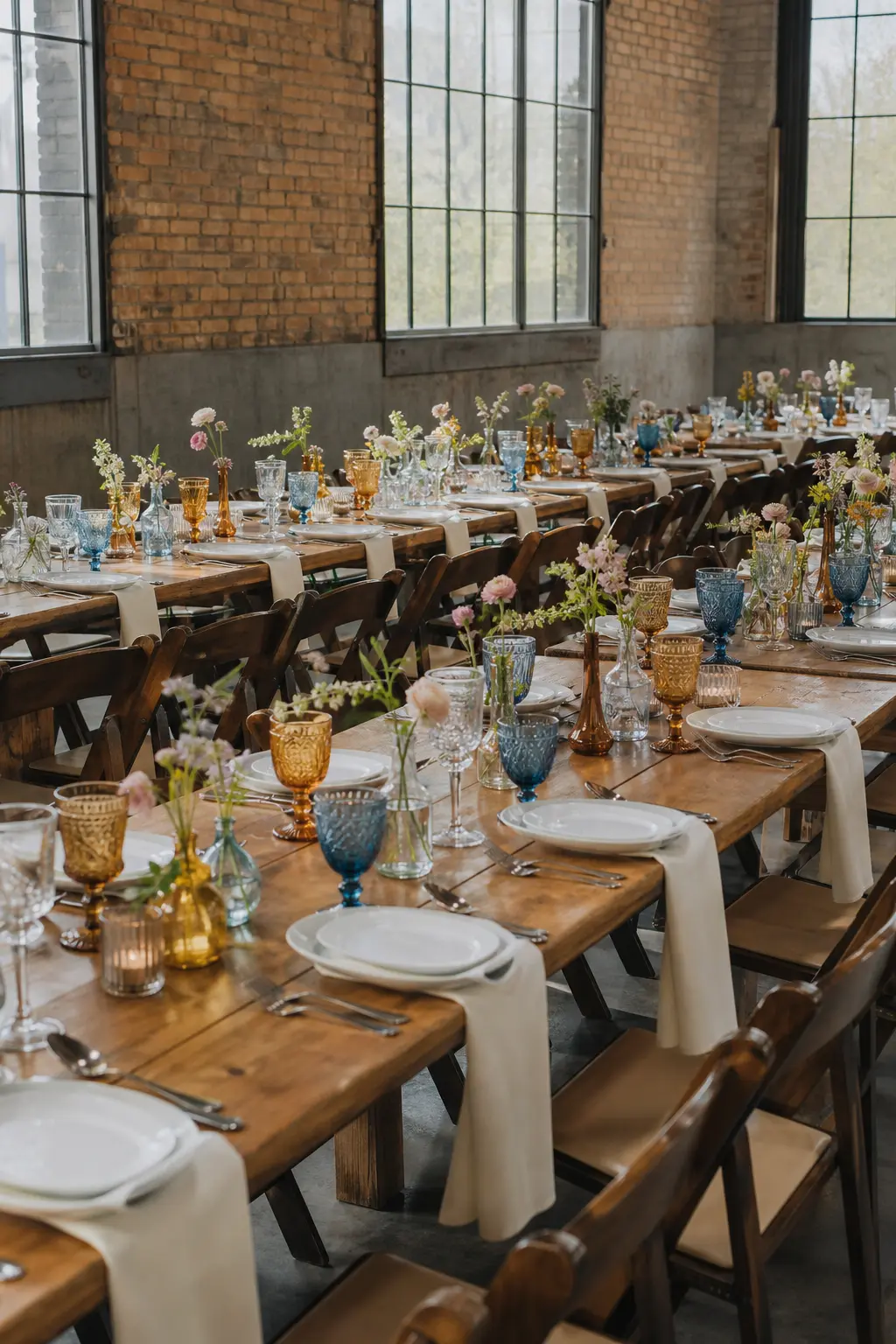
Mismatched Vintage Glassware at Every Other Setting
Group two or three mismatched vintage glasses at every other place setting and leave the settings in between with the standard hire glassware. The alternating pattern creates rhythm without requiring enough vintage glass for the whole table.
Source cut glass, coloured glass and pressed glass in amber and ocean blue from charity shops and car boot sales. The mix of textures catches the candlelight differently at each place and makes the table feel like a home rather than a function room.
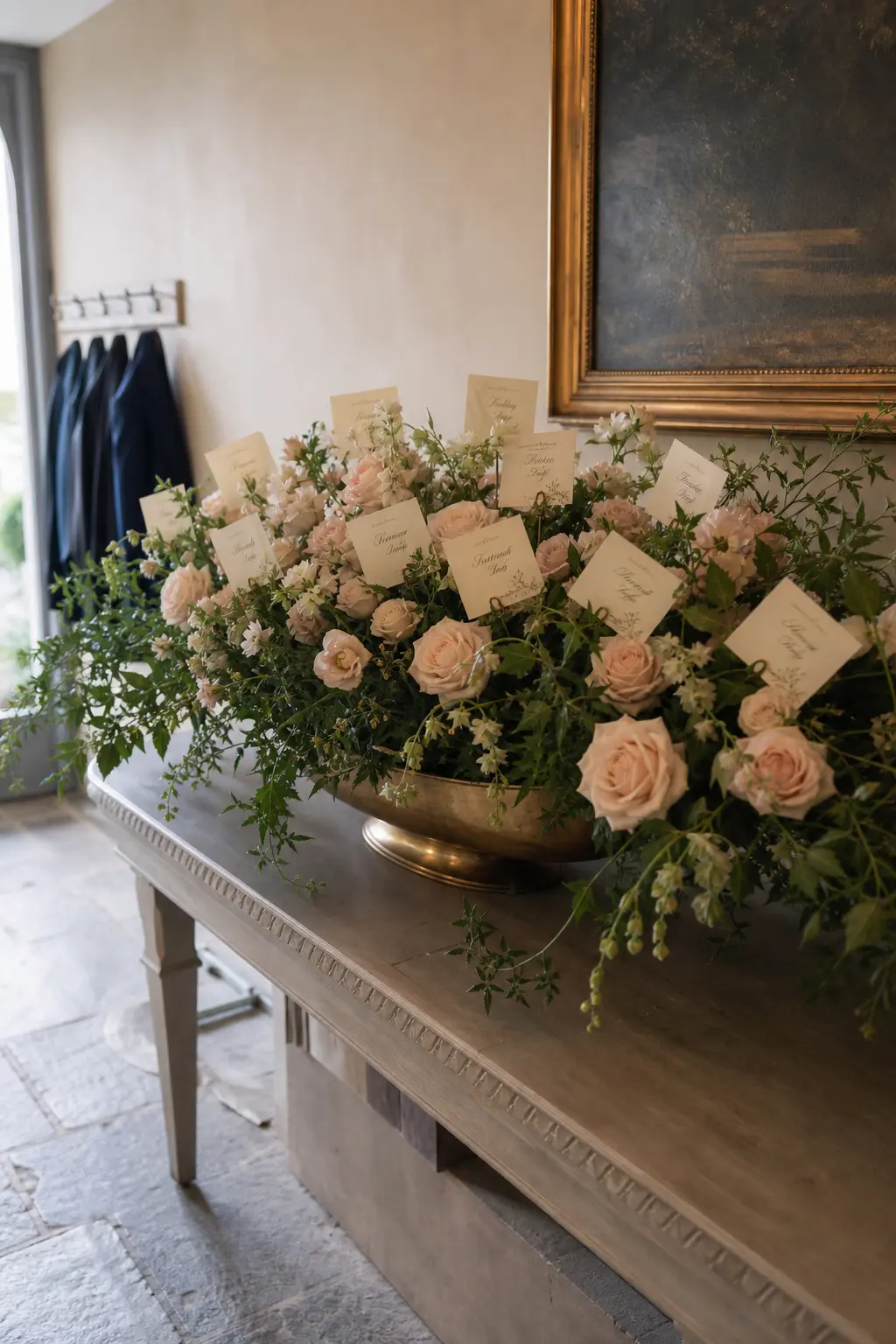
Escort Cards in a Floral-Filled Arrangement
Display escort cards tucked into a low bowl or tray filled with loose blooms, petals or greenery at the entry to the reception. Guests pull their card from the arrangement, which becomes a first interaction with the decoration rather than a transaction at a flat chart.
A wide, shallow vessel in warm brass or terracotta works best. Fill it with the same stems used on the tables so the entry point and the reception feel continuous. Refill the arrangement at the midpoint of arrivals if the flowers settle.
🛍 Shopping guide
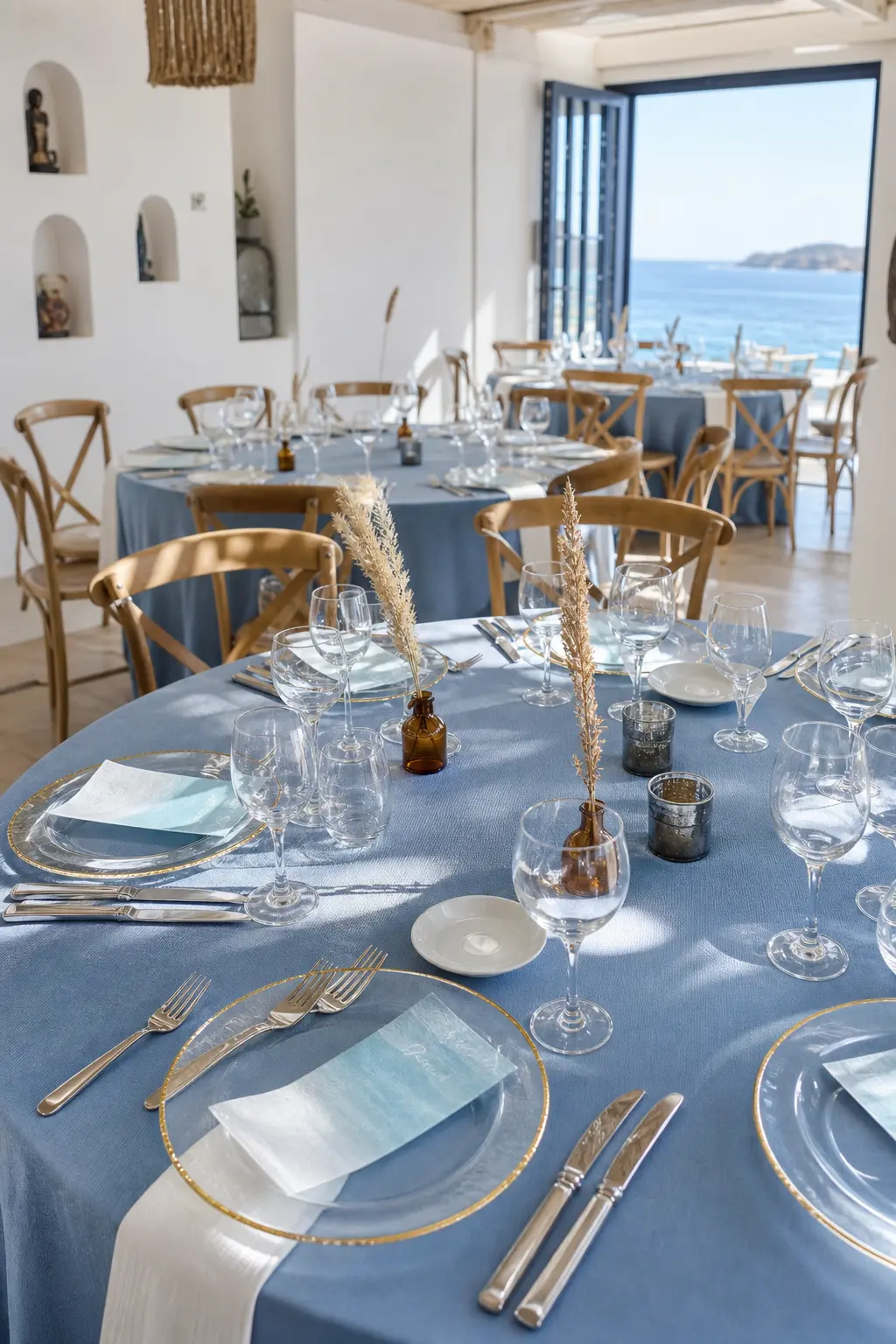
Small Vase of a Single Stem at Every Setting
Give every place setting its own miniature vase with one stem. A 6 cm bud vase beside the wine glass requires almost no space and transforms the place setting into a personal, considered thing. Multiply it across 80 settings and the table becomes a garden.
Use the same stem variety throughout for a unified look, or alternate two varieties in a pattern. A dried stem in a matte vessel is the lowest-maintenance version and holds its shape from setup to the end of the evening with no water change required.
🛍 Shopping guide
Edges, Drape and the Floor
The table does not end at the tabletop. Fabric that pools onto the floor, a runner that drapes both ends, a ribbon tied to each chair: these details close the composition and give the table a presence in the room rather than just on the surface.
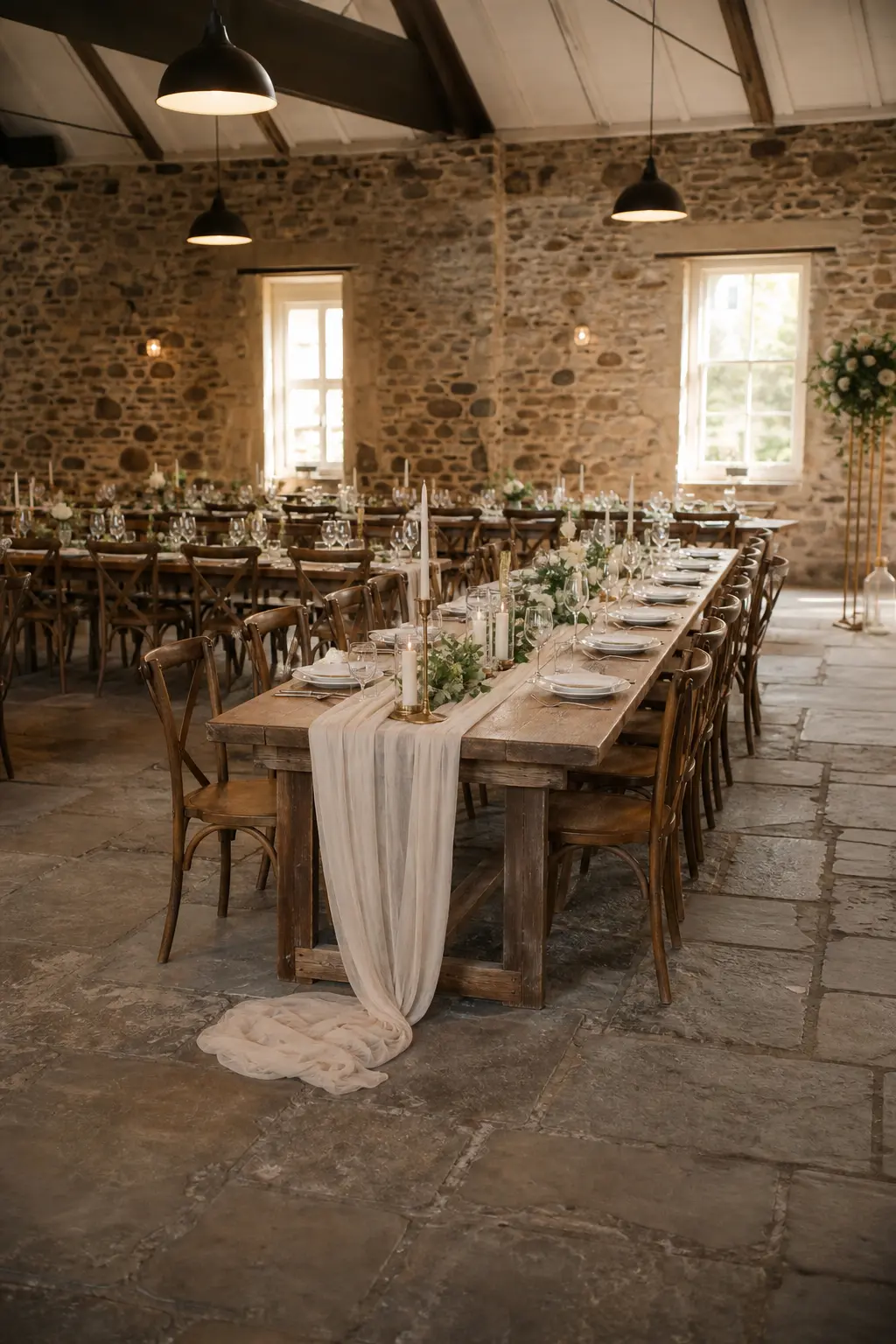
Twisting Runner That Drapes to the Floor
Instead of a runner laid flat and squared to the table, let it twist slightly down the centre and drape over both ends so it puddles on the floor. The movement breaks the rigid grid that most reception tables fall into.
Choose a fabric with enough weight to drape well without ironing, such as washed linen or velvet in a warm sage or ocean blue. The draped ends signal generosity and intention without a single extra purchase.
Folded Fabric Runner Pooling at the Table’s Foot
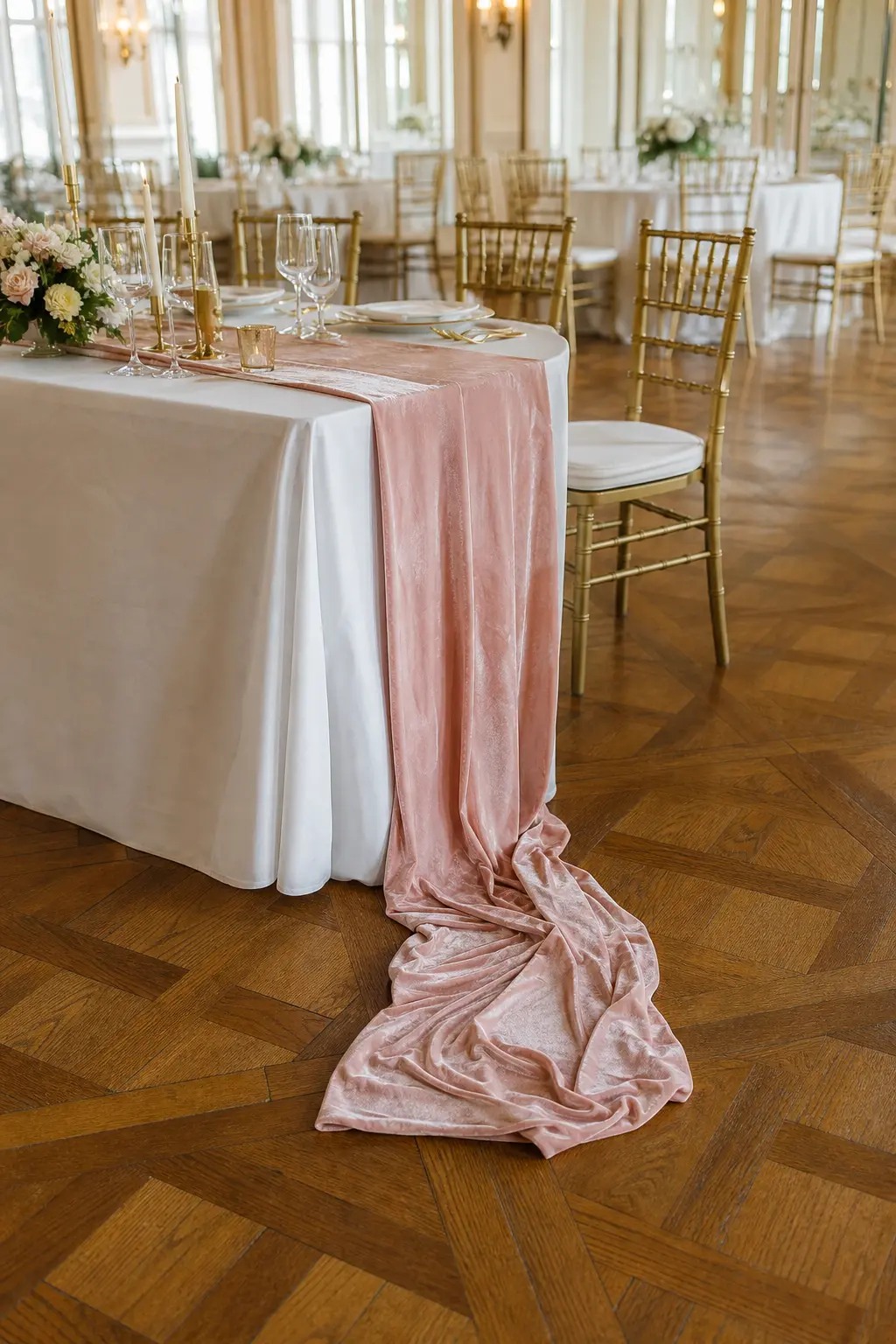
Run a narrow length of fabric down the very centre of one end of the table so it drapes over the table’s foot and pools generously on the floor. This works best at the head table or sweetheart table, where one or both short ends face guests directly.
The pooling fabric closes the composition at the floor level and gives the table a sculptural quality from across the room. Velvet pools most dramatically. Linen pools more casually. Both work depending on the formality of the venue.
🛍 Shopping guide
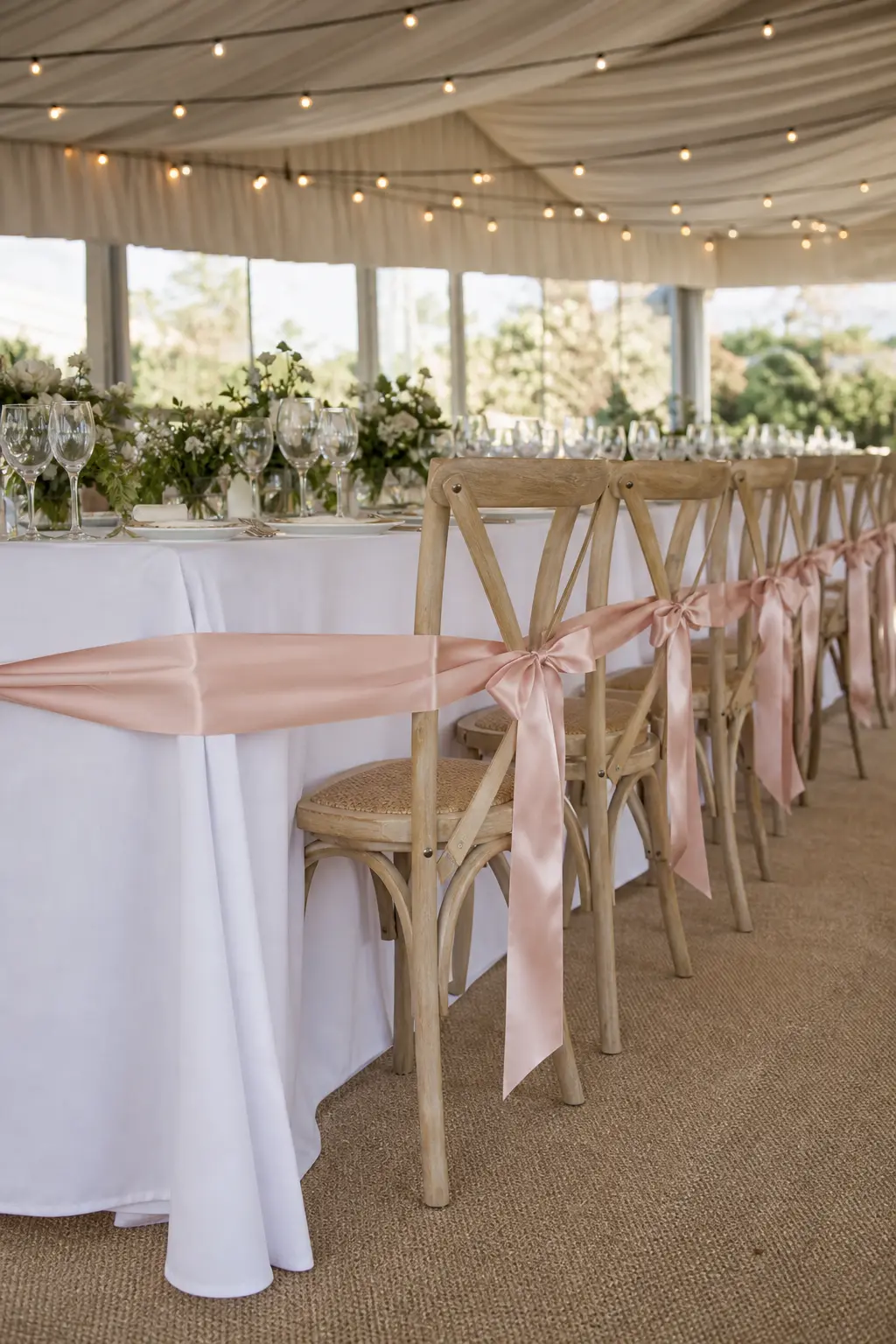
Length of Ribbon Tied at Each Chair
Run a single length of wide ribbon along one side of the table and tie it at each chair back as it passes, leaving a small loop or bow at every seat. The ribbon connects all the chairs into a single visual element and decorates the side of the table that is otherwise always bare.
A wide ribbon in ocean blue or blush at 40 mm width has enough presence to read from across the room. Tie each knot at the same height on the chair back so the ribbon runs level. This works on both standard banquet chairs and cross-back wooden chairs.
🛍 Shopping guide
Frequently Asked Questions
How much should wedding centerpieces cost?
A realistic budget for a single wedding centerpiece ranges from around 50 to 300 depending on the flowers, vessel and complexity. Low arrangements using seasonal blooms and a simple vessel sit at the lower end. Tall installations with premium flowers sit at the top.
How tall should a wedding centerpiece be?
The standard guidance is either low enough to see over comfortably, under 35 cm, or tall enough to see under clearly, above 70 cm at the base of the arrangement. Anything in between sits awkwardly in the sightline of guests seated opposite each other.
Can you reuse ceremony decorations at the reception?
Yes, and it is one of the most cost-effective moves in wedding planning. Aisle garlands become table garlands, ceremony arch flowers can be disassembled and redistributed as stems for bud vases, and petal scatters from the aisle can be gathered and used as the reception’s petal trail. Assign one person specifically to the floral move between ceremony and reception so it happens on time.
What decorations work for both indoor and outdoor weddings?
Dried botanicals are the most reliable option for both settings: they are unaffected by humidity, wind or direct sun. Fabric runners weighted by glassware and fruit stay put outdoors. Bud vases with sealed bases work on uneven garden surfaces. Avoid fresh petals in wind-exposed outdoor spaces as they scatter unpredictably. Candles outdoors need hurricane glass sleeves or lanterns to stay lit in any breeze.
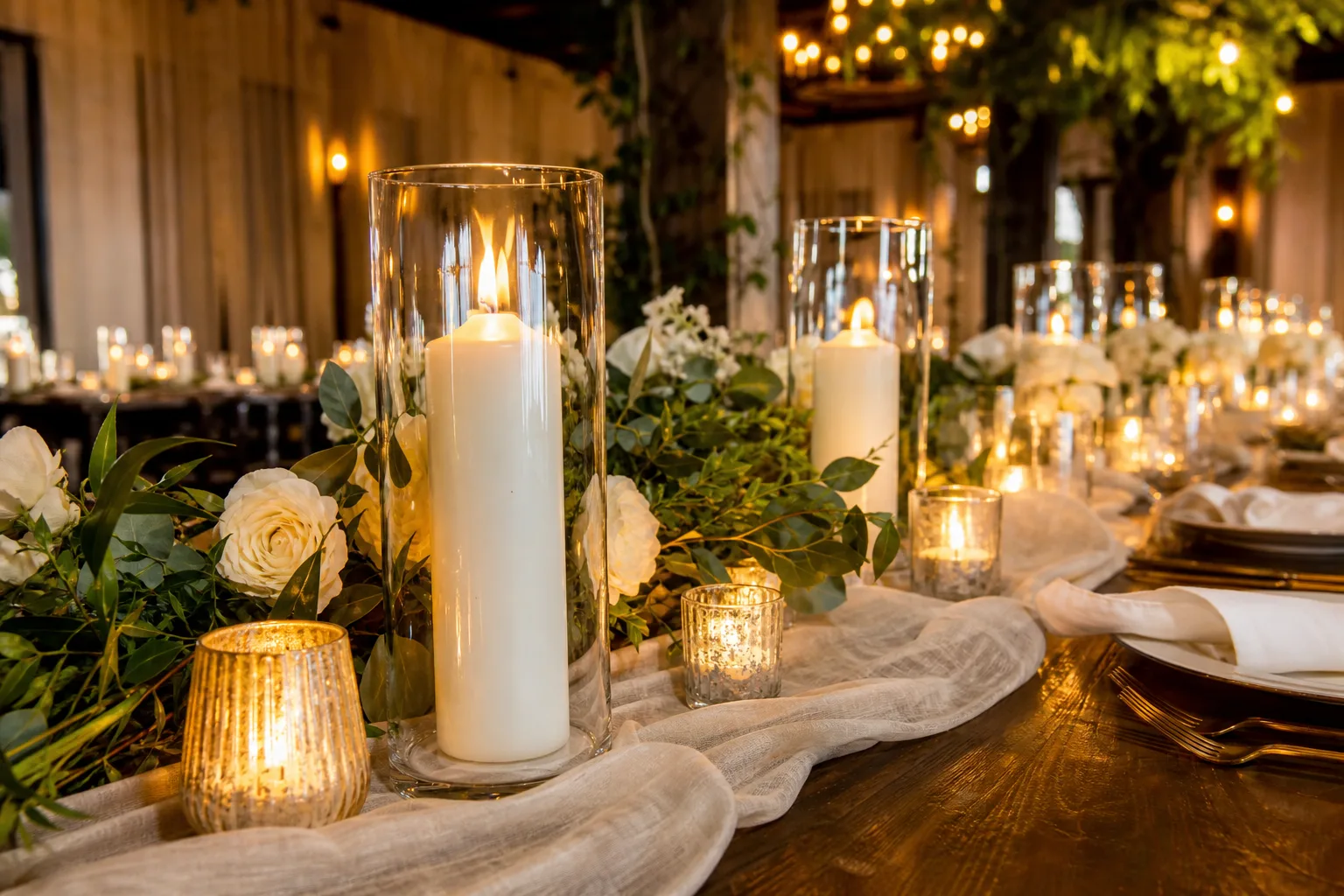
26 candle wedding centerpieces, from mixed brass tapers to floating glass bowls and mercury glass vo
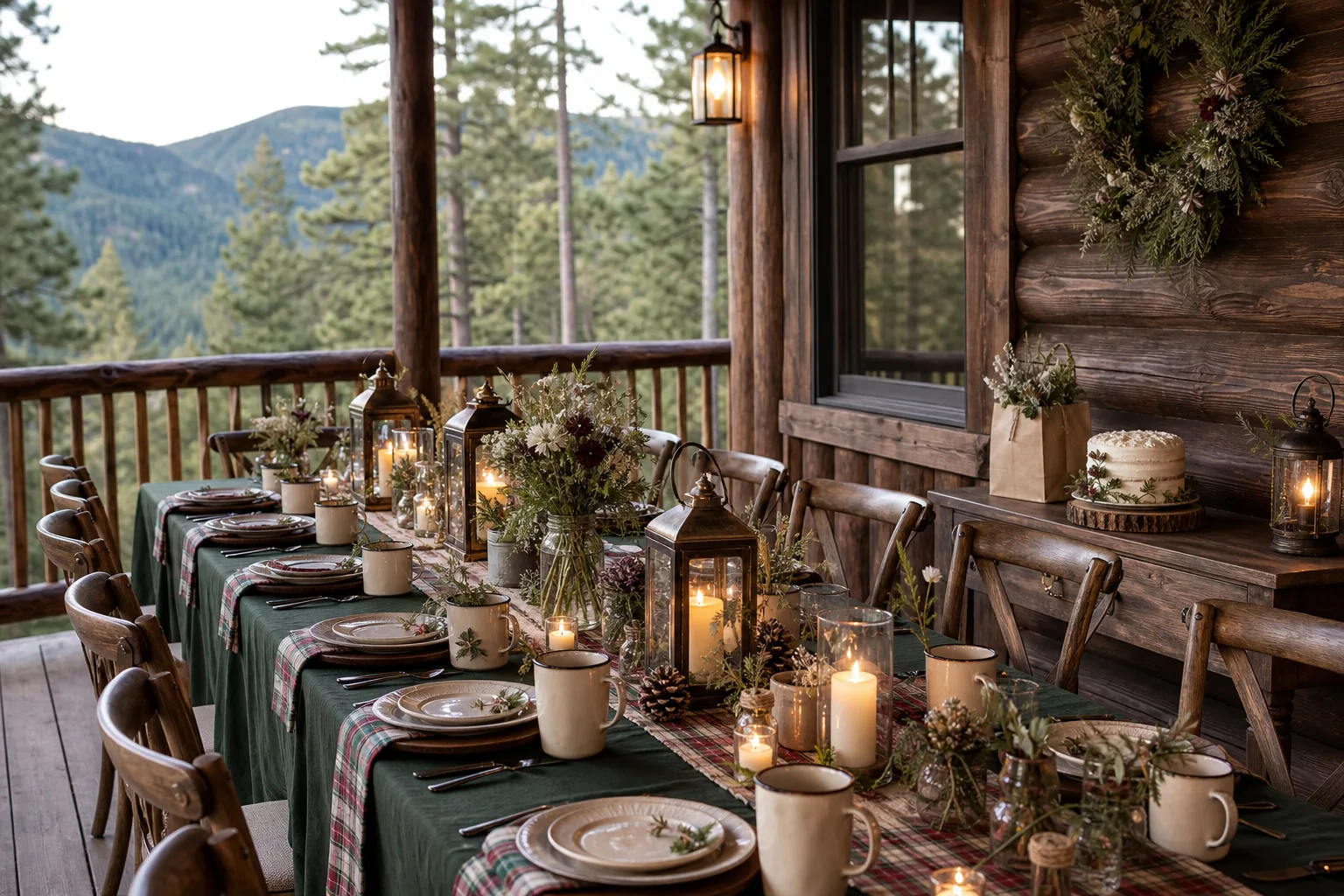
22 mountain bachelorette party theme ideas in forest green, plaid red and cream, from the cabin porc
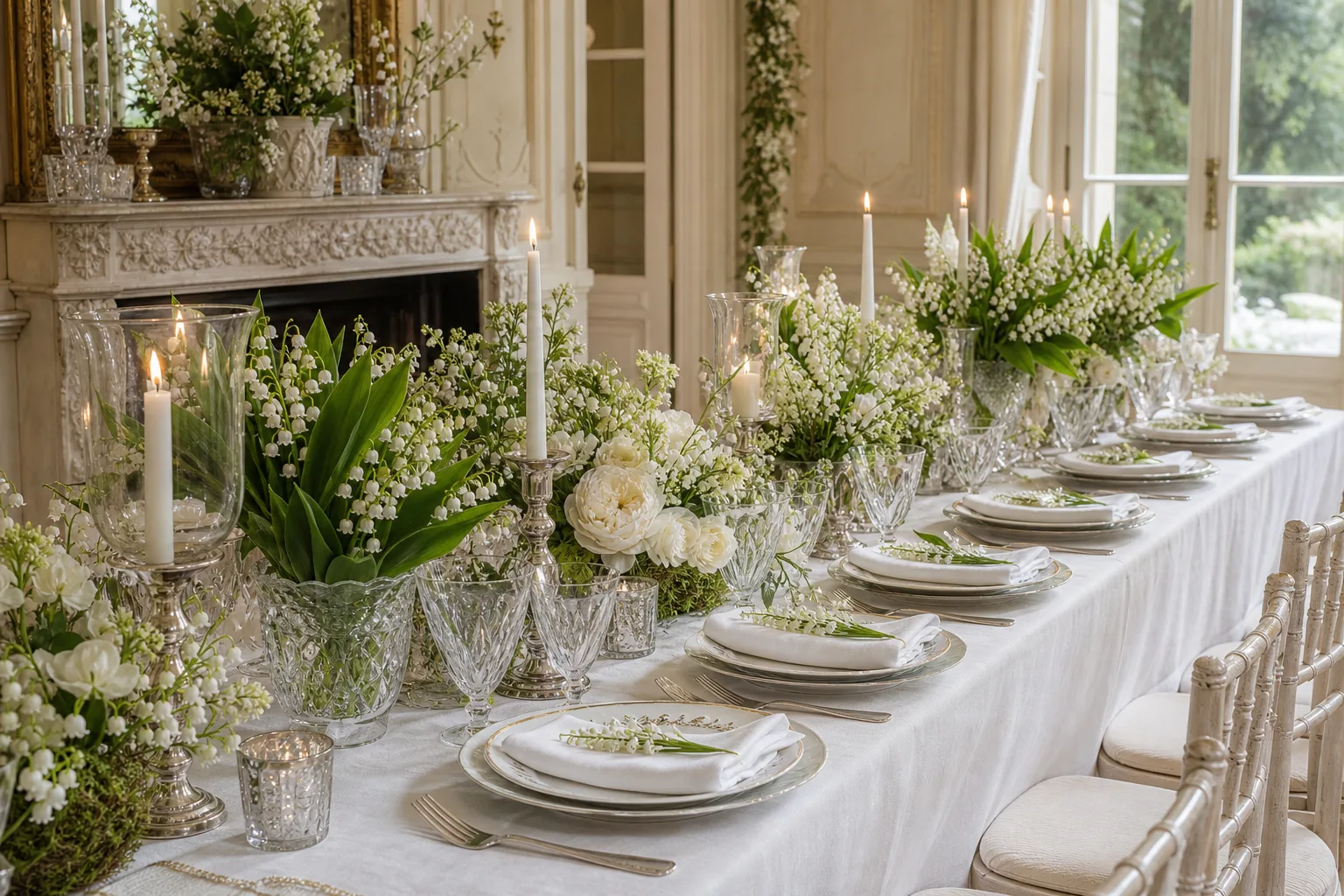
16 lily of the valley wedding ideas: tiny bouquets, moss centerpieces, teacups, sugar-bell cake and
Leave a Reply