

17 Fresh Summer Tablescapes Ideas Built Around Flowers, Fruit and Natural Textures
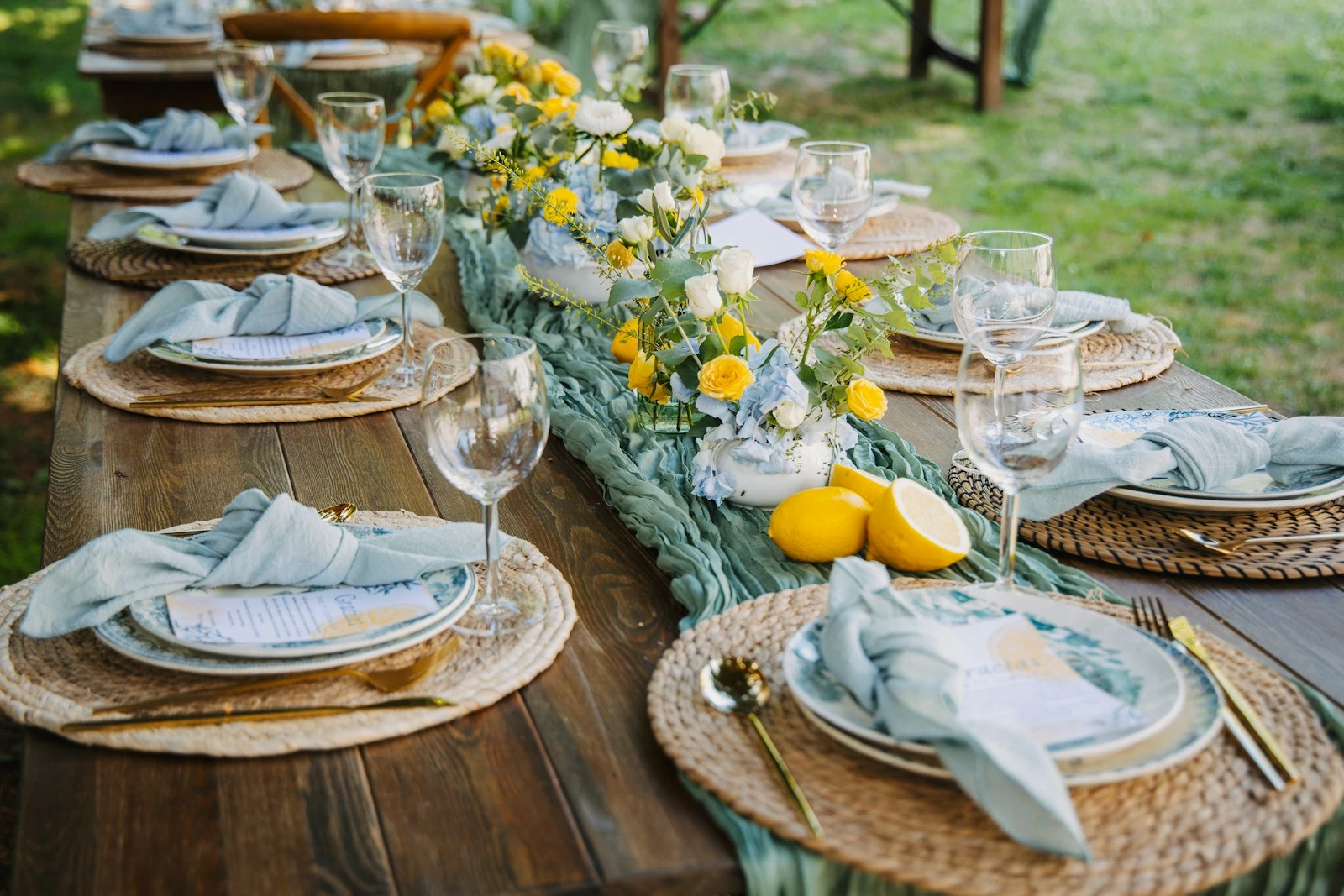
The watermelon was sitting on the counter waiting to be cut, and I thought — why does it have to go straight to a bowl? I put it whole in the middle of the dinner table, added a few zinnias from the backyard in a mason jar, threw down a linen runner I’d been ignoring all winter, and called it done. It took four minutes. My mom asked if I’d been watching YouTube tutorials.
I hadn’t. I’d just stopped overthinking it.
Summer tablescapes don’t need a theme, a color story, or a trip to a specialty store. They need the stuff that’s already around in July — fruit that’s almost too ripe, flowers that cost $6 at the farmers market, a candle you’ve had since March. What makes a summer table feel good is texture and light and a little bit of looseness. Not precision.
These are the summer tablescapes ideas that actually work, for everything from a Tuesday dinner outside to a big birthday brunch.
The Centerpiece: Start Here, Then Build Out
1. Whole fruit as the anchor
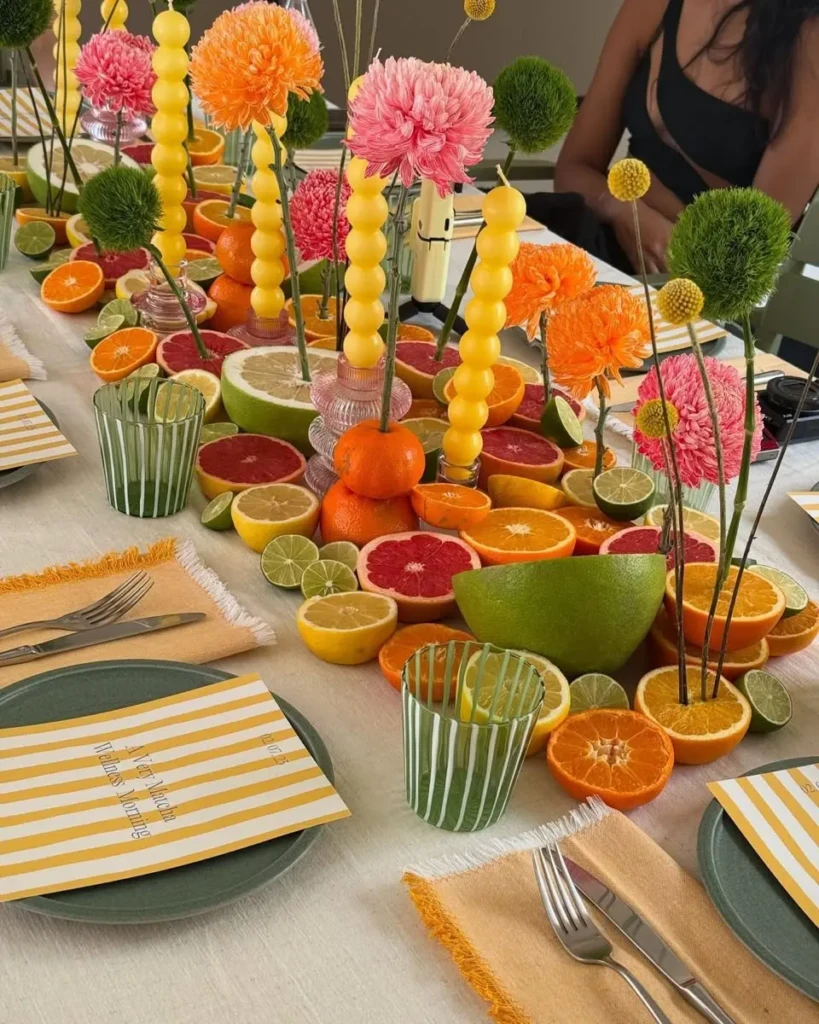
Skip the vase as your starting point. A pile of lemons in a shallow bowl, a cluster of peaches on a wooden board, a bowl of figs — all of these are prettier than most floral arrangements and they smell incredible in the heat.
The trick is going big enough. Three lemons scattered around looks like you forgot to put them away. A full bowl looks intentional. Heap them up. Add a few with the leaves still attached if you can find them that way.
Citrus works especially well if your dishes skew neutral or white. The yellow and orange pop against almost everything.
2. Flowers in something unexpected
A mason jar is the obvious choice and still a good one, but don’t stop there. A vintage milk bottle, a wide-mouthed pasta jar, a little terra cotta pot with a glass inside to hold water — all of these feel more personal than a proper vase.
I’ve used an old ceramic coffee mug for a single stem of garden roses more times than I can count. It works. Nobody ever says “why is there a mug on the table” because it just reads as part of the whole thing.
For summer specifically, zinnias, sunflowers, cosmos, and dahlias all hold up well in heat and give you that saturated-color look that reads summery without trying too hard. Don’t overthink stem count. Three flowers in a jam jar look just as good as eight.
3. The low centerpiece trick
This one sounds basic and then once you try it you can’t stop. Keep everything centerpiece-related low — under 8 inches if possible. It means people can actually see each other across the table, and the whole setup looks more relaxed.
Lay a long branch of eucalyptus or olive horizontally down the middle of the table. Tuck a few small candles and two or three bud vases between it. Done. It looks like a lot of work. It isn’t.
4. Mixing dried and fresh
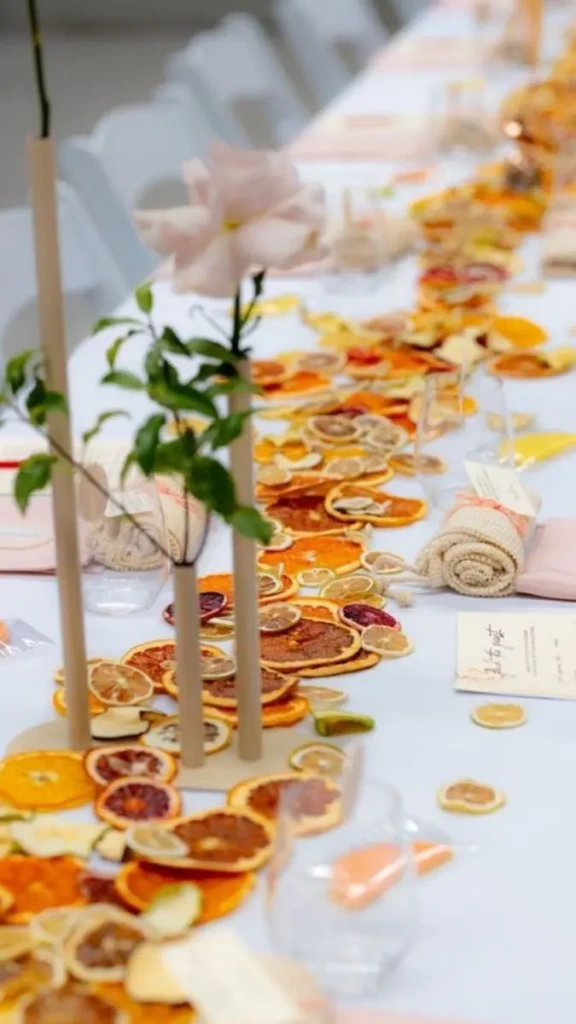
Dried pampas, dried citrus slices, dried lavender bundles — pair one dried element with fresh flowers and suddenly the arrangement looks expensive and editorial instead of thrown together. The contrast of textures is what does it.
Dried elements also last the whole summer without maintenance, so you can build around them all season, just swapping the fresh flowers as they die.
Table Runners & Linens: The Underrated Part
5. Linen runner, slightly rumpled
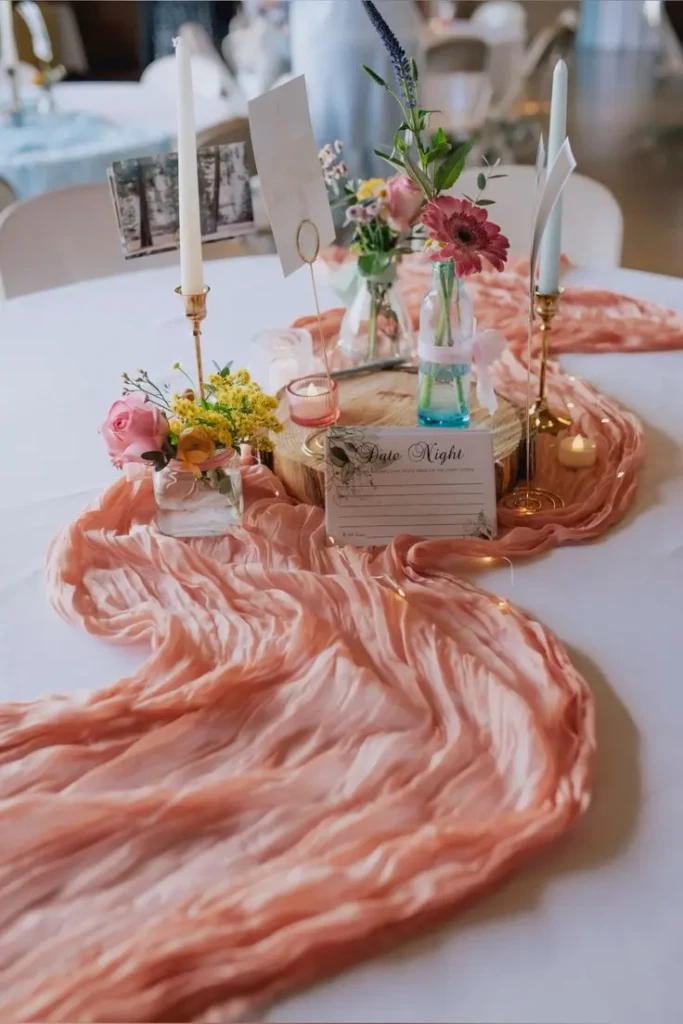
There’s a specific way a linen table runner looks when it’s been thrown down casually — slightly uneven, not centered perfectly — that looks better than a crisp, centered version. Linen is forgiving like that. It looks like it belongs in summer.
If you only buy one table thing this year, make it a natural linen runner in a warm neutral. Oatmeal, flax, dusty sage. Those colors go with every plate and every season, but they especially glow in summer with natural light.
6. A piece of fabric as a runner
A cut of cotton fabric, a vintage tablecloth folded into thirds, a long linen tea towel — these all work as table runners. If you have fabric scissors and any remnant that’s roughly table runner dimensions, you can hem it or leave the edges raw (frayed edges are having a major moment).
I did this with a blue-and-white striped dish towel once, laid flat down the center of a picnic table. It looked like I’d spent time on it. I hadn’t.
7. Layered textures instead of one runner
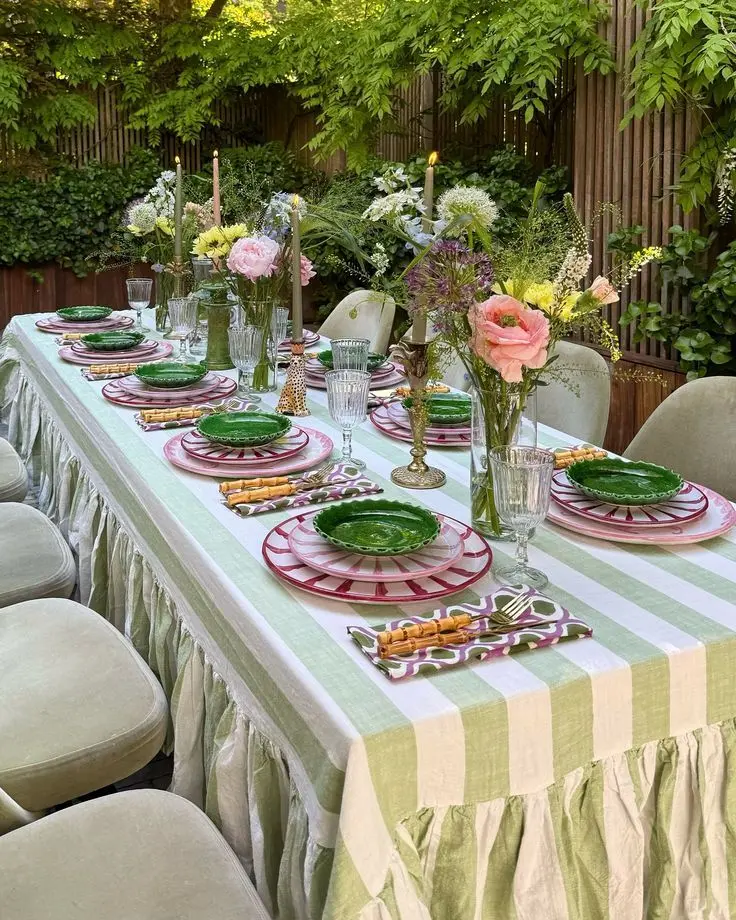
Instead of one runner, layer two textiles. A neutral-colored blanket or placemat underneath, then something finer and narrower on top — or reverse it. Two textures together look more curated than one, even if both items are completely ordinary on their own.
This works especially well on outdoor tables where the surface is rough or imperfect.
Place Settings: The Details That Tie It Together
8. Mismatched plates done right
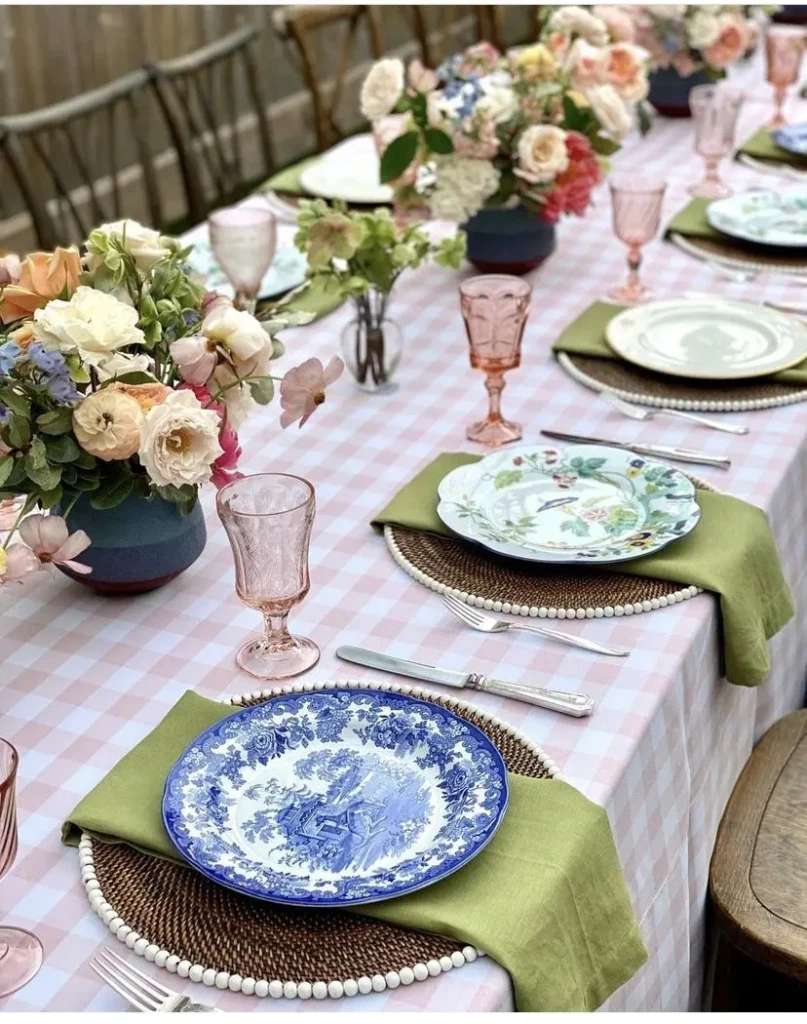
Matching sets are not required. Different plates work at the same table as long as you repeat one element — same color, same material, same rim style. If every plate is white (even different whites, different sizes), the table reads cohesive. If every plate is ceramic with a hand-thrown feel, same thing.
The mistake is mixing plates that share nothing. Modern flat white with vintage floral doesn’t work as well as two different vintage florals, or two different plain white plates.
If you love the idea of mixing and matching ceramic pieces, the post on handmade ceramic dishware has a lot of good examples of what works together visually — the principles apply to styling a table, not just to buying pieces.
9. A single herb on each plate
Before guests sit down, a sprig of rosemary or a small basil stem laid across each plate looks effortlessly intentional. It takes about 90 seconds for the whole table. It smells incredible when people pick them up. And it functions as a very soft name card if you curl a small piece of paper around the stem.
Thyme, lavender, mint — all good alternatives depending on what’s growing or what’s at the grocery store.
10. Napkins folded into something that’s actually simple
Napkin folding doesn’t have to be complicated to look good. The two that actually work for summer:
The simple fold: fold into thirds lengthwise, then lay flat on the plate with one corner slightly angled. A small flower stem tucked underneath. That’s the whole thing.
The tuck: roll loosely and tuck into a small ring, a twine loop, or a napkin ring. The ring can be a literal ring of leather, a simple metal napkin ring, or a loop of twine tied with a small sprig. The tucked fold hides any unevenness in the rolling.
If your napkins are paper, go with a heavier weight in an off-white or cream. The thin disposable kind reads as not-on-purpose even when it is. Linen-feel paper napkins exist and they make a real difference.
11. Place cards without a printer
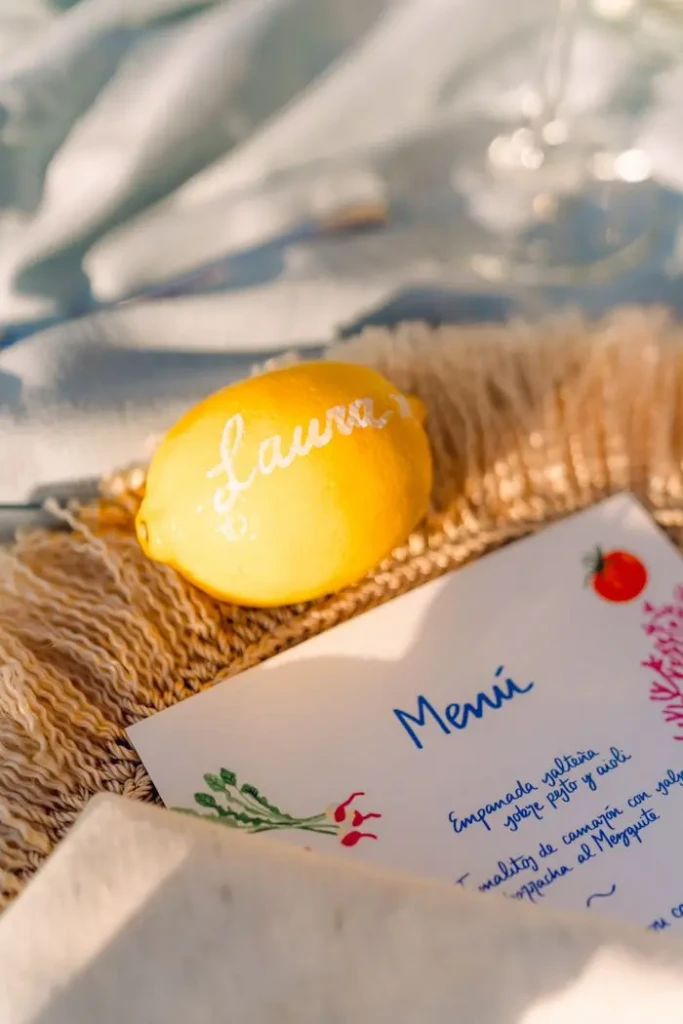
A smooth river rock with a name written in paint pen. A clementine with a name scratched into the skin. A small sprig of rosemary tied with a tag. Cardstock folded and torn by hand, name written in a felt-tip pen.
None of these require printing. All of them look better than a printed card at a summer table. The handwritten, slightly imperfect version is the right version here.
Candles and Light: The Thing Most People Skip
12. Candles in daylight
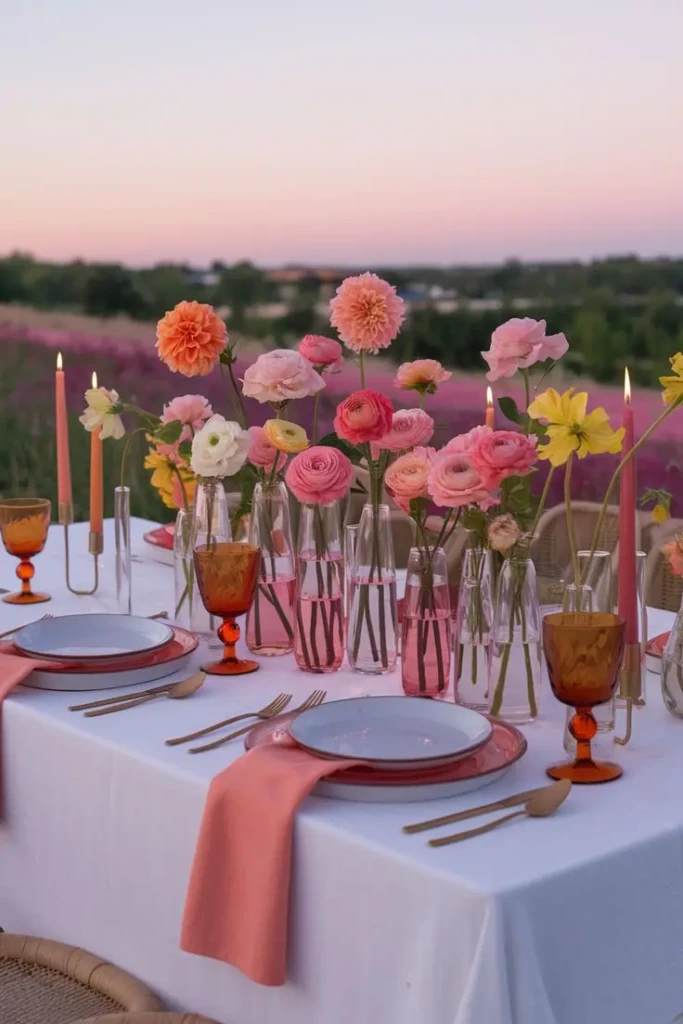
Yes, even at a lunch table. Even at 2 PM. Unlit taper candles in a simple holder look more styled than nothing, and you can light them later in the evening if the dinner stretches long. Beeswax tapers especially have a warm, natural look that fits a summer table without feeling formal.
Short pillar candles in white or cream tucked between centerpiece elements add height variation and visual interest without committing to a candle-heavy look.
13. Votive clusters
Three to five small glass votives clustered together near the center of the table hold more visual weight than the same candles placed individually. They act like one object instead of scattered afterthoughts. Light them as the sun goes down and the whole table shifts.
Clear glass shows the flame best. Frosted or tinted glass gives softer, more diffused light — better if you’re dining outside in breezy conditions.
Styling by Occasion
14. The everyday outdoor dinner
You don’t need much. A table runner, something growing in a glass in the center, and a candle. The food is the real centerpiece at a casual dinner. Let the table be a background, not a stage.
If you’ve been working on your outdoor space or kitchen area, the approach I wrote about in the summer home decor piece applies here too — the same instinct toward natural materials and keeping things loose.
15. Brunch tablescape (the easier version)
Brunch tables should feel light and casual, not formal. Stack plates slightly off-center so it looks like the table is already in use. A juice glass or small tumbler as a bud vase. Sliced fruit arranged on a board in the center instead of in a bowl — the board adds an earthy, informal texture that a bowl doesn’t.
Linen napkins folded in half, placed under the fork. No napkin ring. No ceremony. Matches the food perfectly.
16. The birthday or celebration table
Here’s the one time you can go a little bigger without it looking like you tried too hard. A birthday table earns extra: a fuller floral arrangement (still in a casual vessel, still loose), a table runner plus individual placements underneath each setting, multiple candle heights, place cards.
The secret is still keeping textures natural — wood, linen, ceramic, glass — even when the flowers are more abundant or the palette is intentional. Loud color in natural materials always reads more relaxed than loud color in plastic or synthetic anything. And if you’re making something by hand for the occasion, the air dry clay post has some quick project ideas that make surprisingly good table accessories.
17. A table that photographs well without trying
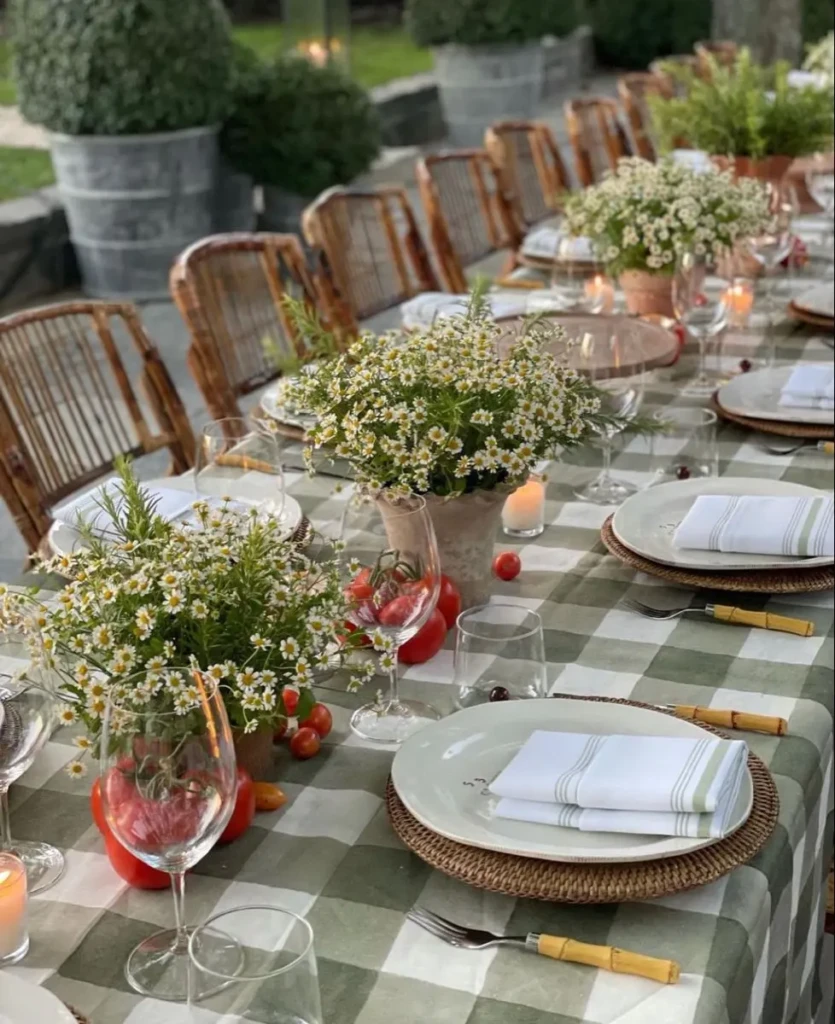
Shooting a tablescape for Pinterest or Instagram usually means shooting it before anyone sits down, in good natural light, from above or at a low angle.
What photographs well: contrast between textures (rough wood, smooth ceramic, soft linen), layered heights, something green or living, negative space so the shot doesn’t feel crammed. What doesn’t: too-even lighting, items that are too small, a table that’s completely flat and one-dimensional.
The good news is that a table that photographs well is also a table that actually feels nice to sit at. Those two things aren’t competing.
A Few Things Worth Knowing
On flowers dying fast in summer heat: Cut the stems at an angle, change the water daily, and keep the arrangement away from direct sun when it’s not being photographed or used. A small ice cube dropped into the water on really hot days helps.
On buying flowers: The farmers market is better than the grocery store, which is better than the big-box store — both for quality and for price if you’re buying in small amounts. One bunch of sunflowers at a farmers market for $6 goes further than you’d expect.
On the fear of it looking too simple: The tables that get saved on Pinterest aren’t usually the complicated ones. They’re the ones that look like a real person set them up on a Tuesday afternoon with things from their yard and their kitchen.
FAQ
How do I make a summer tablescape that works outside? Anchor light things — napkins, small florals — so they don’t blow around. Use weighted vessels for flowers. Avoid anything paper in humid or windy conditions. Natural materials like wood, stone, and ceramic stay put and look better outside anyway.
What flowers are best for a summer table? Zinnias, sunflowers, cosmos, dahlias, garden roses, and wildflowers all work well and hold up in heat better than most grocery-store blooms. Herbs like lavender and rosemary do double duty.
Do I need a tablecloth or can I just use a runner? Just a runner is usually better for summer. A tablecloth can feel heavy and formal. If the table surface is nice (wood, stone, concrete), show it.
Can I mix metals in table decor? Yes. Brass and matte black, brass and silver, even all three — if the rest of the table stays textural and organic, the metals just read as variety rather than chaos. Avoid mixing polished chrome with everything else, it tends to look cold next to natural textures.
What’s the easiest high-impact change I can make to a table right now? Add something alive — one stem in a glass, a bowl of fruit, a potted herb. It changes the whole energy of the table for basically no money.
20 practical thanksgiving decor ideas that take the rest of your house from bare to warm with one ch
My daughter spent forty-five minutes last summer making “soup” out of grass clippings an
41 fall living room decor ideas built around layering, so each small addition makes the whole room f
Leave a Reply