

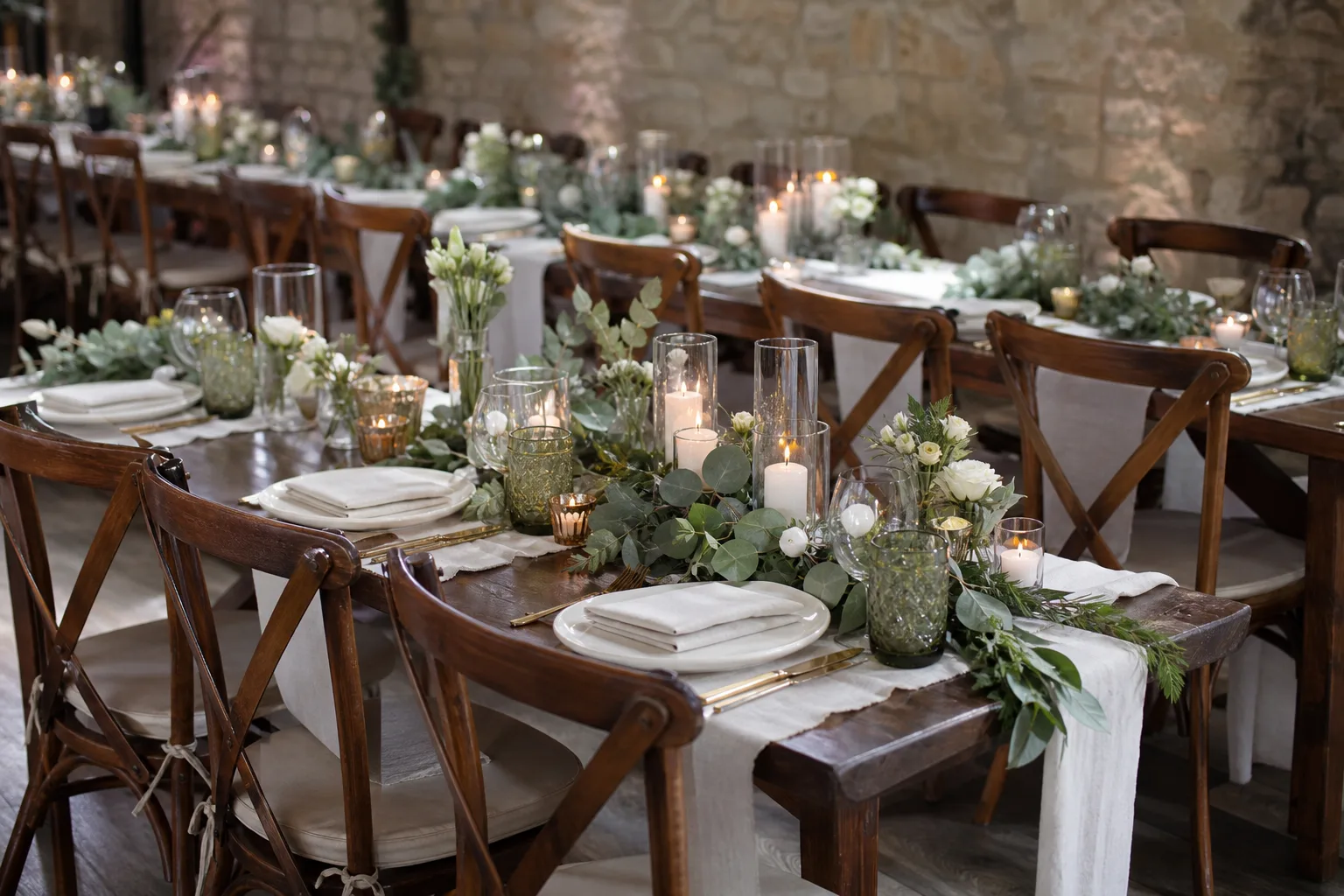
You do not need a hundred stems and a day labourer’s worth of help to make a table look like it belongs in a magazine. Most of the tables that photograph best at weddings are the ones that picked one idea and did it properly: one flower, one metal, one small gesture repeated down the row. That restraint is what reads as expensive, not the size of the florist’s invoice.
What follows are thirty one separate table looks, grouped by what they actually do: the centerpiece, the candlelight, the cloth underneath, what sits at each place, and the small last touches. Pick one from each group rather than one of everything, and the table will look considered instead of crowded. If you want more ways to dress the table once the centerepiece is sorted, wedding table decorations that move beyond the centerpiece covers the rest of the surface.
None of this needs a wedding planner on retainer. A grocery store bucket of stems, a box of tapers, a roll of ribbon: that is most of the shopping list below.
This post contains affiliate links. If you buy through them, I may earn a small commission at no extra cost to you.
Table of Contents
Centerpieces That Do the Quiet Work
The centerpiece carries the most visual weight on the table, which is exactly why it should do less, not more. A single flower type, a line of small vases, a trail of greenery: each of these fills the middle of the table without blocking the view across it or eating the whole flower budget on one arrangement.
Row of Bud Vases With Single Stems
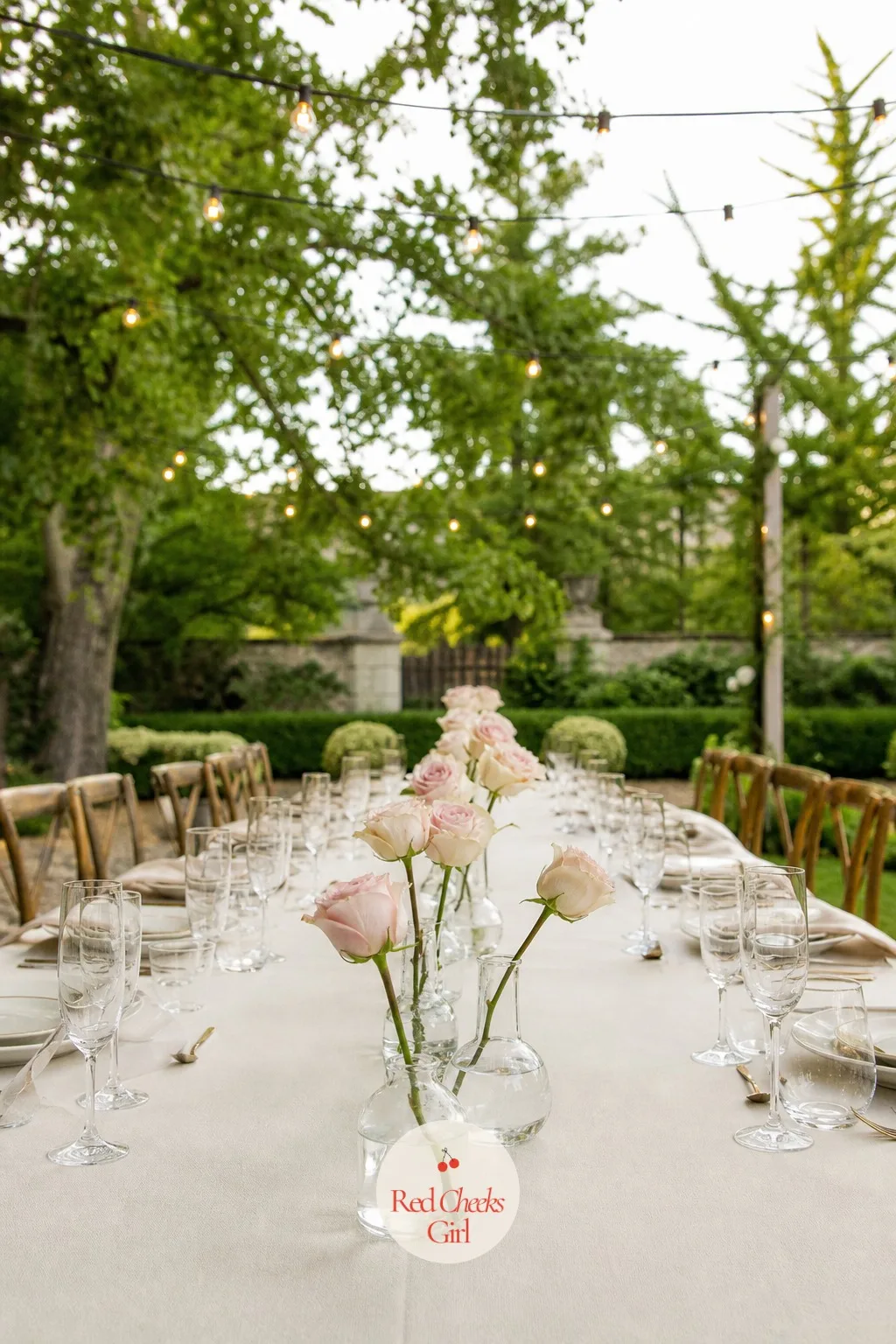
A bare run of table down the middle looks like an oversight, not a choice, which is the worry that sends most brides straight to a full florist arrangement they cannot really afford. A row of small glass bud vases solves it for a fraction of the stems.
Set five to seven narrow vases in an uneven line down the center of an ironed ivory cloth, each holding water and exactly one bloom: a garden rose, a ranunculus, a sweet pea. The gaps between vases matter as much as the flowers, so resist the urge to fill every inch.
It works best on long trestle tables at a garden reception or barn dinner, where the eye travels the length of the table anyway. For round tables, cluster three vases together instead of stringing them in a line; if the budget is tighter still, mix in a few empty vases holding only a sprig of foliage.
🛍 Shopping guide
One Large Monofloral Arrangement
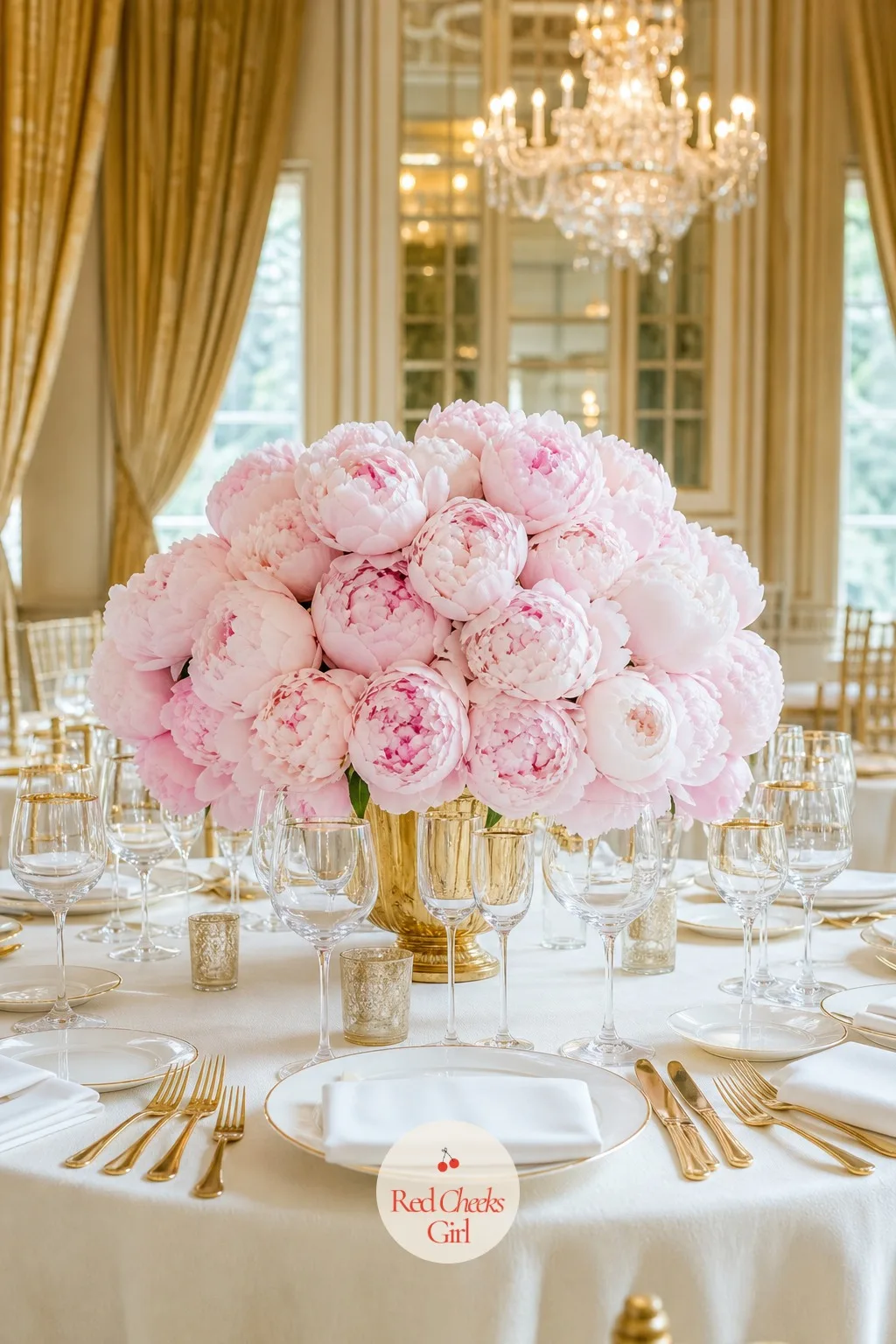
Mixed bouquets with five varieties and three greeneries can look busy under reception lighting, however carefully they were arranged. One flower, done big, reads as far more deliberate.
Choose a single bloom, peonies or ranunculus work beautifully, and build one generous, rounded arrangement in a low urn or footed bowl, with no filler stems at all. It sits as the sole decoration on the table, so the shape has to be full and even on every side.
This suits a ballroom or a hotel dining room where guests will see the table from across the room, not just up close. If every table needs its own flowers and the budget will not stretch, reserve this treatment for the head table or the cake table and let the guest tables use the bud vase instead.
🛍 Shopping guide
Single Hydrangea Mounds
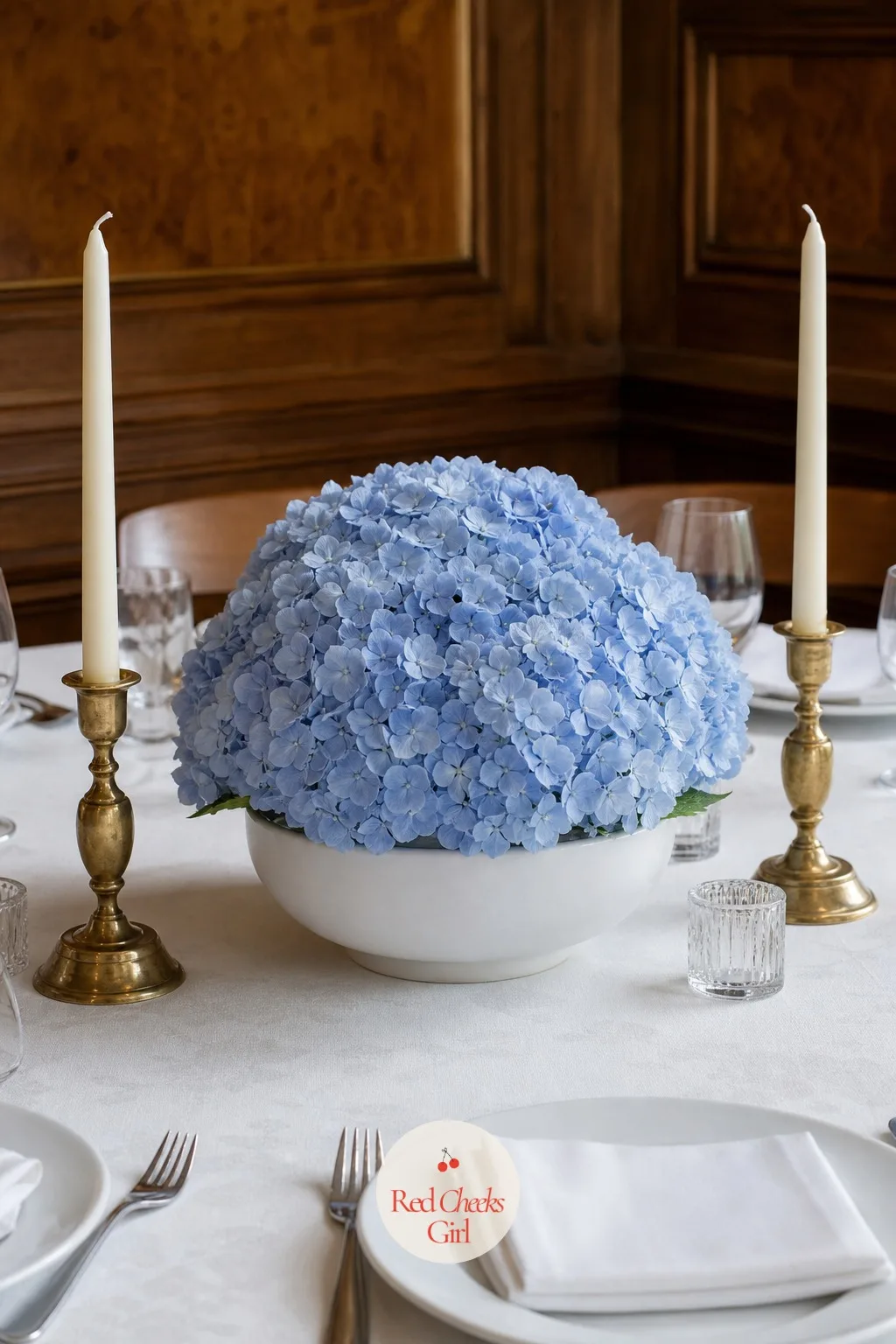
Hydrangea heads are enormous for the money, which is exactly why one per table does the job that would otherwise need a dozen smaller stems. No extra foliage needed, no filler.
Trim a single hydrangea bloom short and mound it into a low, wide bowl so the whole flower head sits just above the rim, dense and rounded. The effect reads as a full, lush centerpiece even though it is one stem.
It suits a restaurant private room or any table with wood paneling behind it, where a soft blue or white mound reads warm rather than stark. If hydrangea is out of season where you live, a single garden rose head does the same trick at a slightly smaller scale.
🛍 Shopping guide
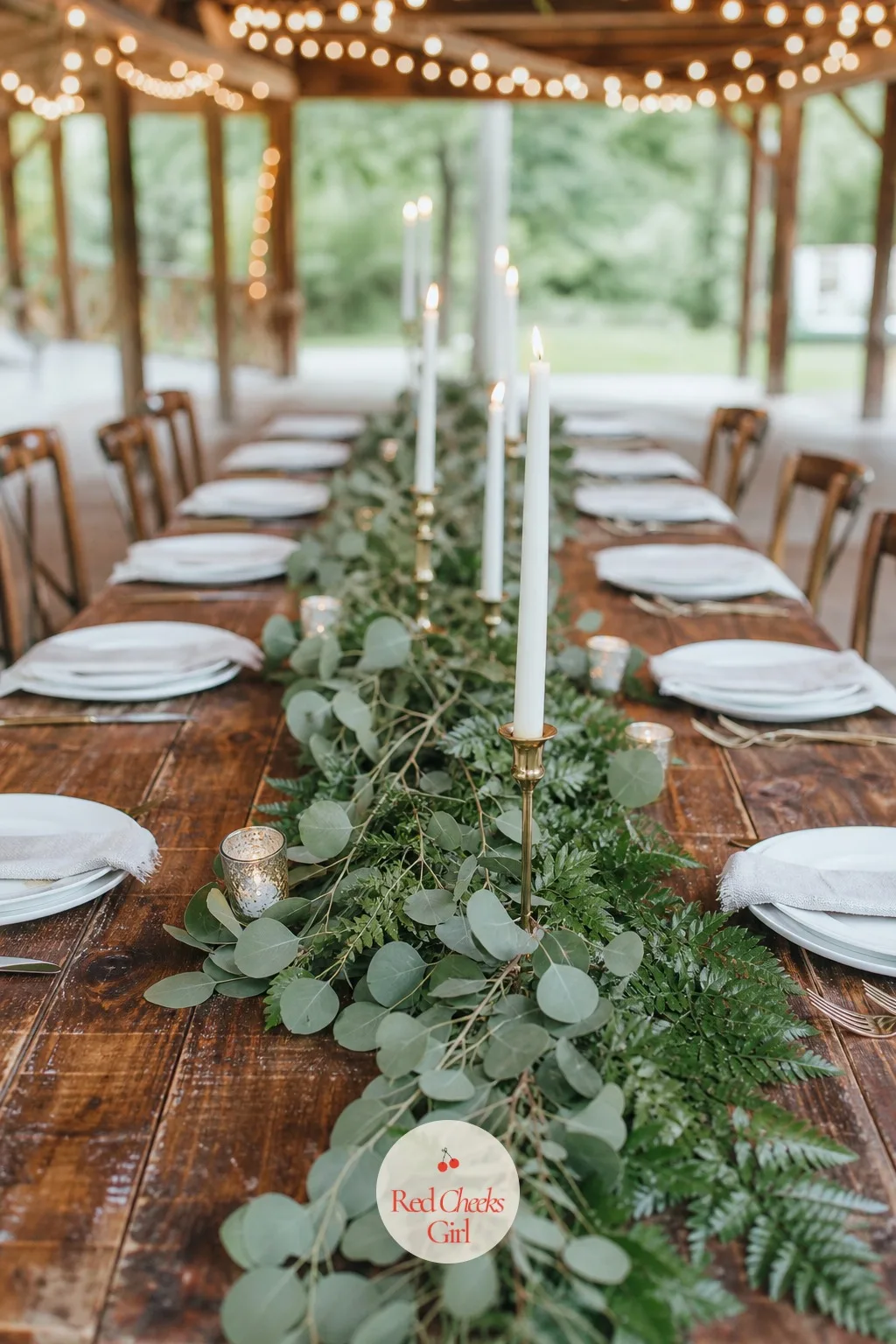
Greenery Runner
A table can feel unfinished down the middle without anything at all, but a full floral runner is one of the pricier lines on a florist’s quote. Greenery alone closes that gap for a fraction of the cost.
Lay a continuous trail of eucalyptus, fern or ruscus flat down the center of the table, loose rather than wired into a tight garland, so it falls naturally over the edges of plates and candlesticks. No vase, no water, just foliage straight on the cloth.
It is the natural choice for a barn reception with long wooden tables and string lights overhead, where the greenery echoes the beams above it. In a small apartment dining room, a short length down a narrower table still reads as generous.
🛍 Shopping guide
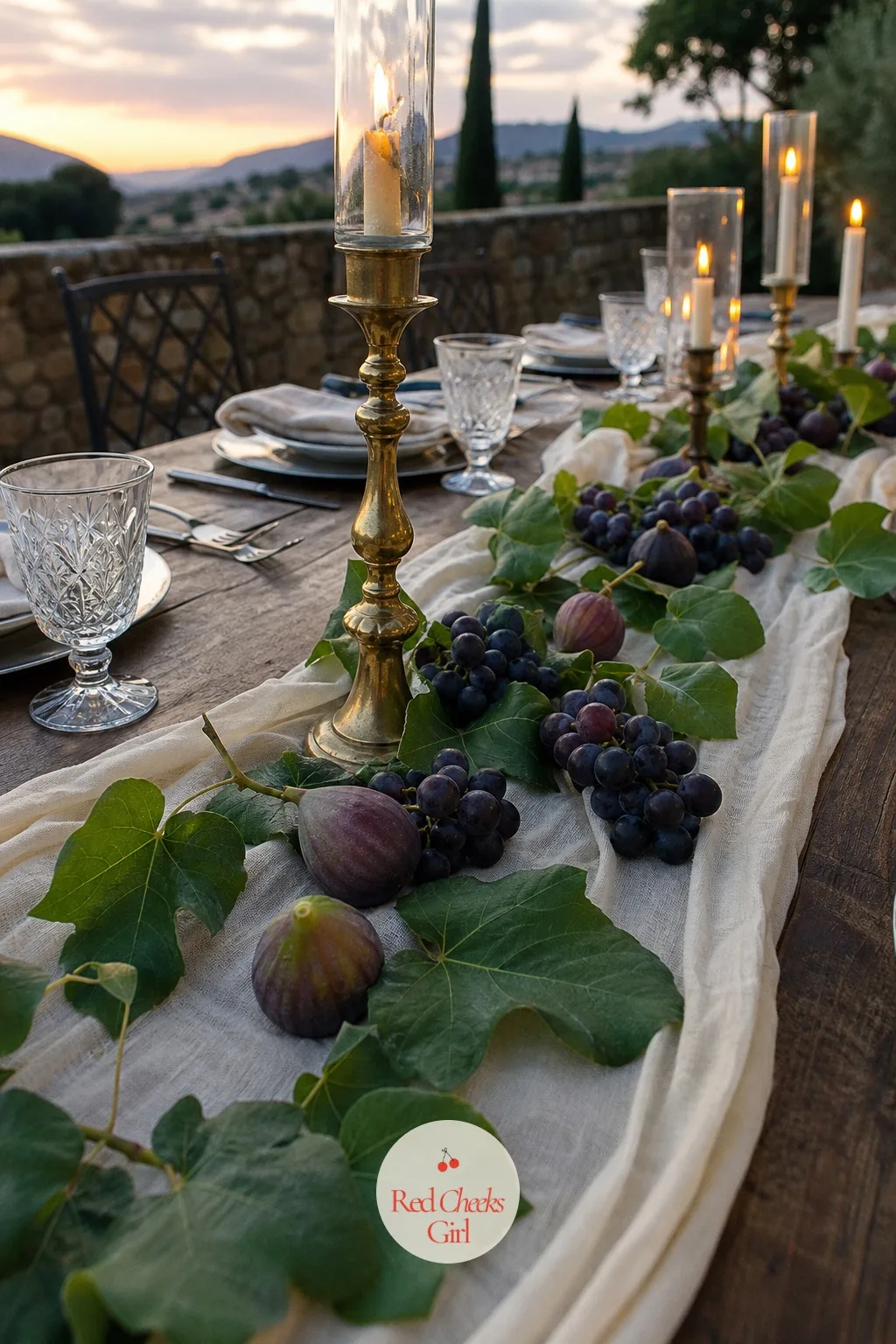
Fruit as Decor
Flowers out of season can cost a fortune, and a table that looks strictly floral everywhere starts to feel like every other wedding you have been to. Fruit sidesteps both problems and smells better than most florals besides.
Lay clusters of grapes, whole figs and small pears directly on the cloth or nestled into shallow dishes down the table, mixed with a little trailing greenery so nothing rolls. The abundance is the point: let it spill slightly rather than sitting in a neat row.
This suits a vineyard restaurant or a stone terrace with an autumn or late summer date, where the fruit feels seasonal rather than decorative for its own sake. Swap grapes and figs for citrus and olives if the wedding leans brighter and more Mediterranean.
🛍 Shopping guide
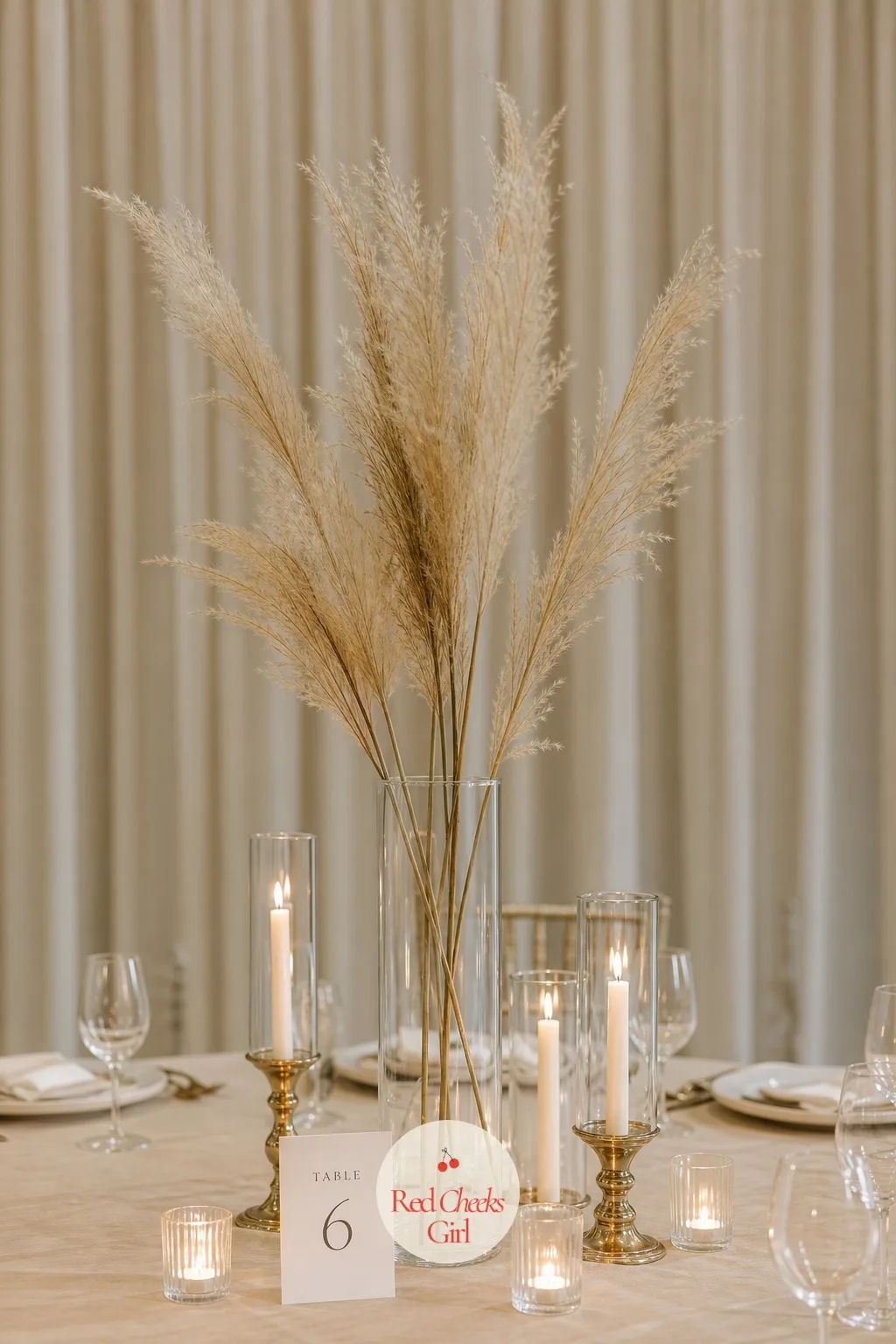
Dried Pampas Grass in Tall Glass Vases
Fresh flowers wilt under hours of reception heat and photography lights, which is the quiet argument for something that simply will not die on you. Dried pampas solves that without looking like a compromise.
Place two or three tall, feathery stems of dried pampas grass into a simple cylindrical glass vase at intervals down the table, kept sparse rather than bunched. The height draws the eye up without blocking sightlines across the table the way a wide arrangement would.
It belongs in a neutral, modern ballroom with velvet drapery, where the cream and taupe tones of the grass pick up the room’s palette. It can be bought weeks ahead and stored, which makes it the one centerpiece that cannot go wrong on the day.
🛍 Shopping guide
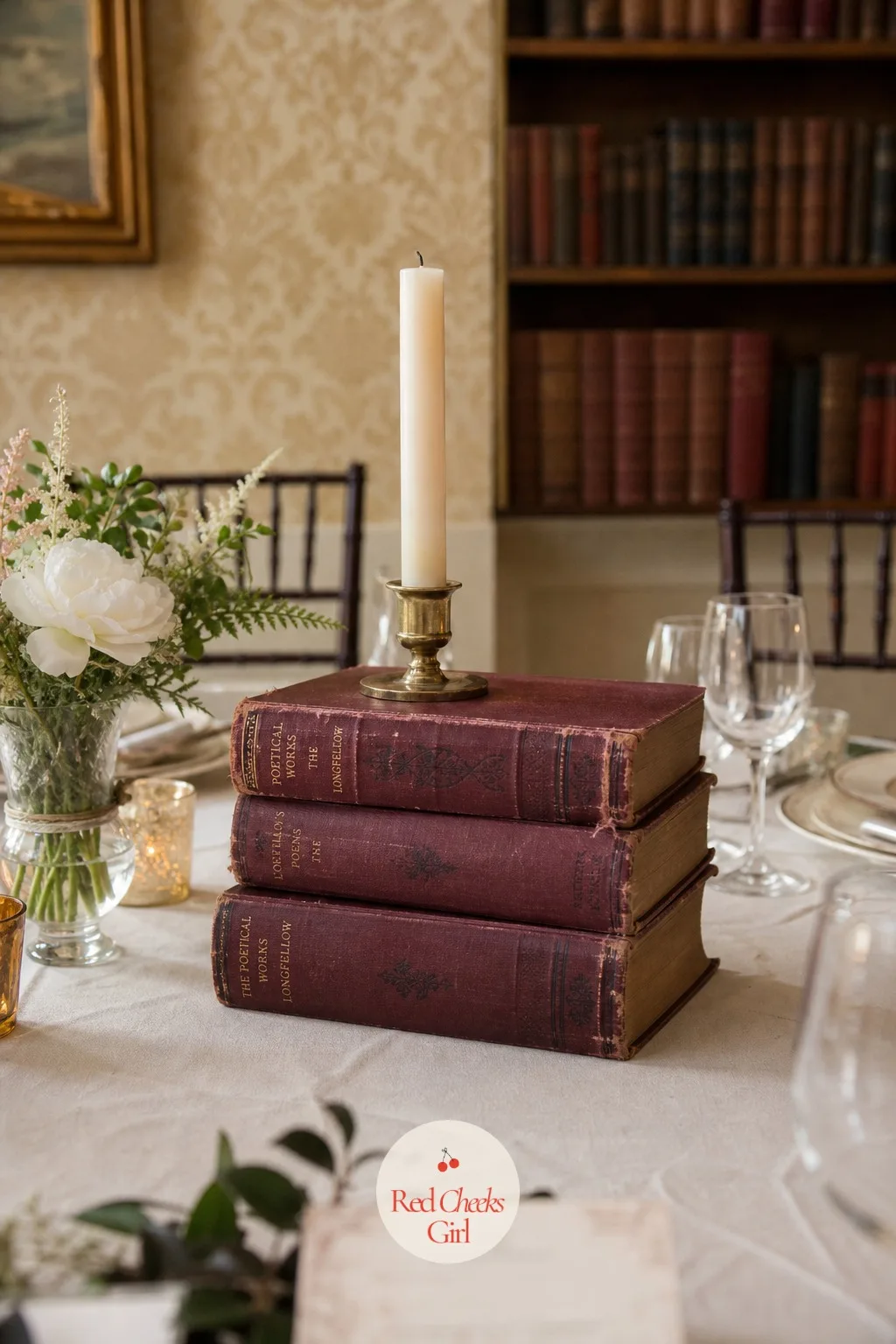
Stacked Vintage Books With a Single Candle on Top
If the two of you met in a library, or just never wanted the table to look like everyone else’s, flowers were never going to be the whole answer. A short stack of old hardcovers makes a centerpiece out of something you may already own.
Lay down the cloth first, then stack two or three worn hardback books of varying size, largest at the base, smallest on top, and set a single taper or pillar candle directly on the uppermost cover. The books do the work a riser normally would, lifting the candle flame above eye level.
It suits a reception room with wallpaper, bookshelves or warm lamp light behind it, somewhere the books feel at home rather than out of place. For an outdoor version, swap the candle for a small flameless pillar so a breeze cannot catch the page edges.
🛍 Shopping guide
Candlelight Down the Table
Candlelight is the cheapest transformation available to any room with a dimmer switch or an evening slot. It softens skin, flatters food, and makes a plain tablecloth look deliberate. The holder matters more than the candle itself.
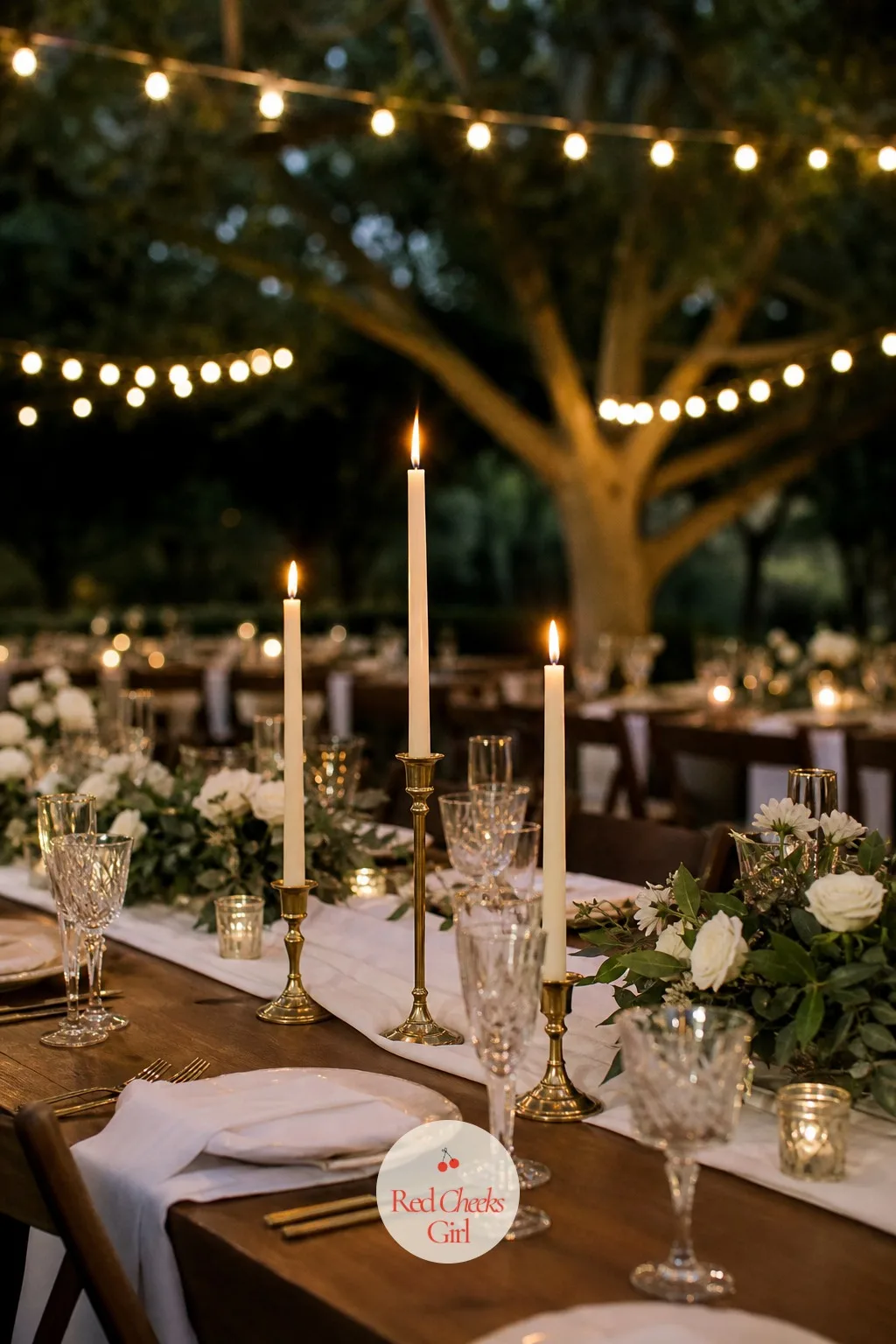
Taper Candles in Brass Holders
Overhead lighting at most venues is flat and slightly unflattering, which is the real reason candlelit tables photograph so much better than well lit ones. Brass holders make the simplest version of that look intentional rather than borrowed.
Space a pair or trio of slim taper candles in brass candlestick holders along the table at even intervals, mixing heights slightly so the flames do not sit in a dead straight line. Nothing else needs to go near them; the candlelight alone does the atmospheric work.
This is built for an evening garden reception, where the warm glow against string lights and trees reads as golden hour even at nine at night. If the venue has a strict open flame rule, LED taper candles in the same brass holders flicker convincingly enough that no one checks twice.
🛍 Shopping guide
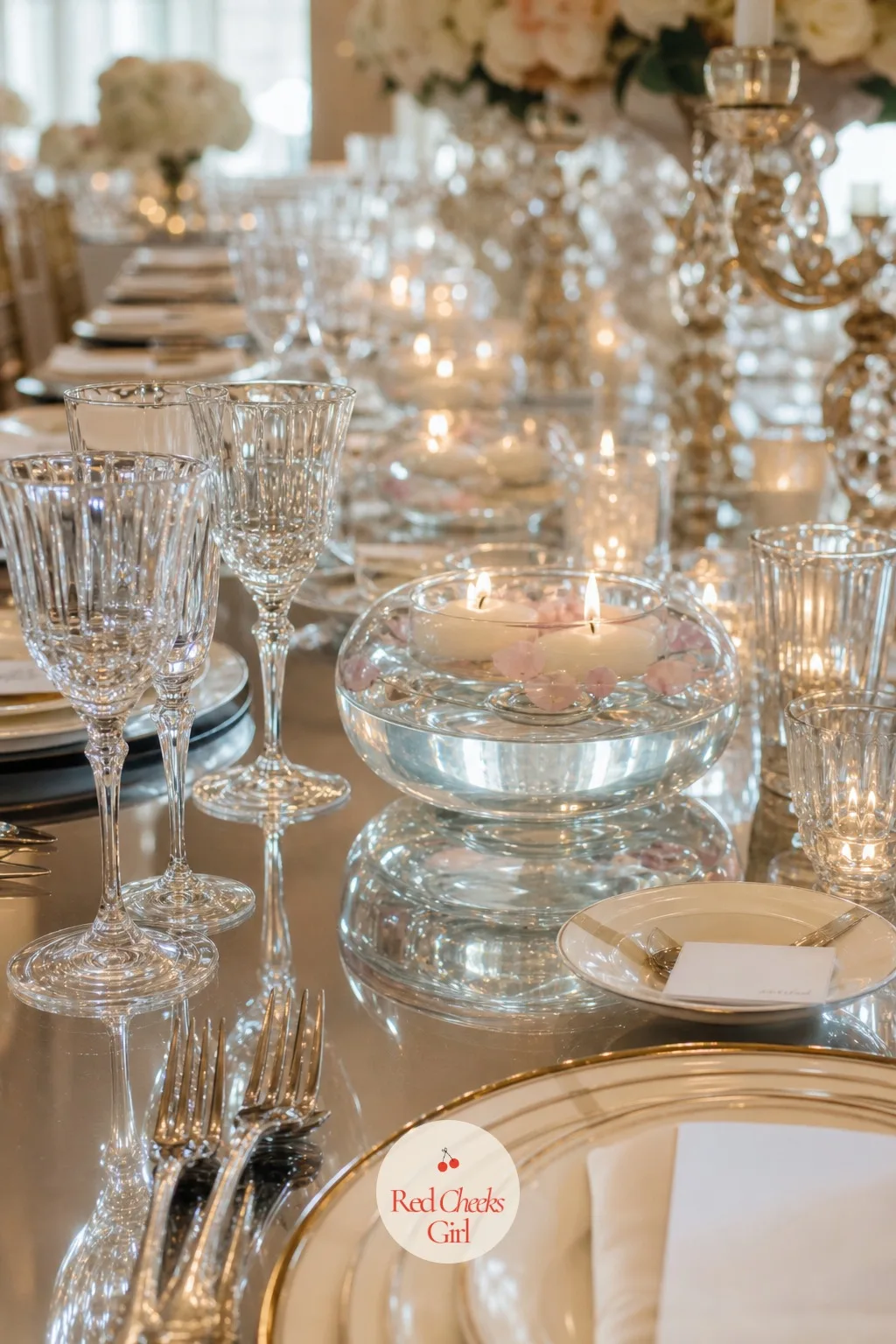
Floating Candles in Low Bowls
Tall arrangements block the view across a round table and make conversation awkward for anyone not sitting directly opposite. Floating candles sit low enough that no one has to crane around them.
Fill a shallow, wide glass bowl with water, scatter in a few flower heads or petals, and float two or three small candles on the surface. The low profile means guests can see straight across the table while the light still catches the glass and the water beneath it.
It works beautifully in a ballroom with a mirrored or glossy table top, where the chandelier light doubles in reflection along with the candle glow. For a daytime reception where lit candles feel out of place, the same bowls filled with floating fresh flower heads alone still earn their spot on the table.
🛍 Shopping guide
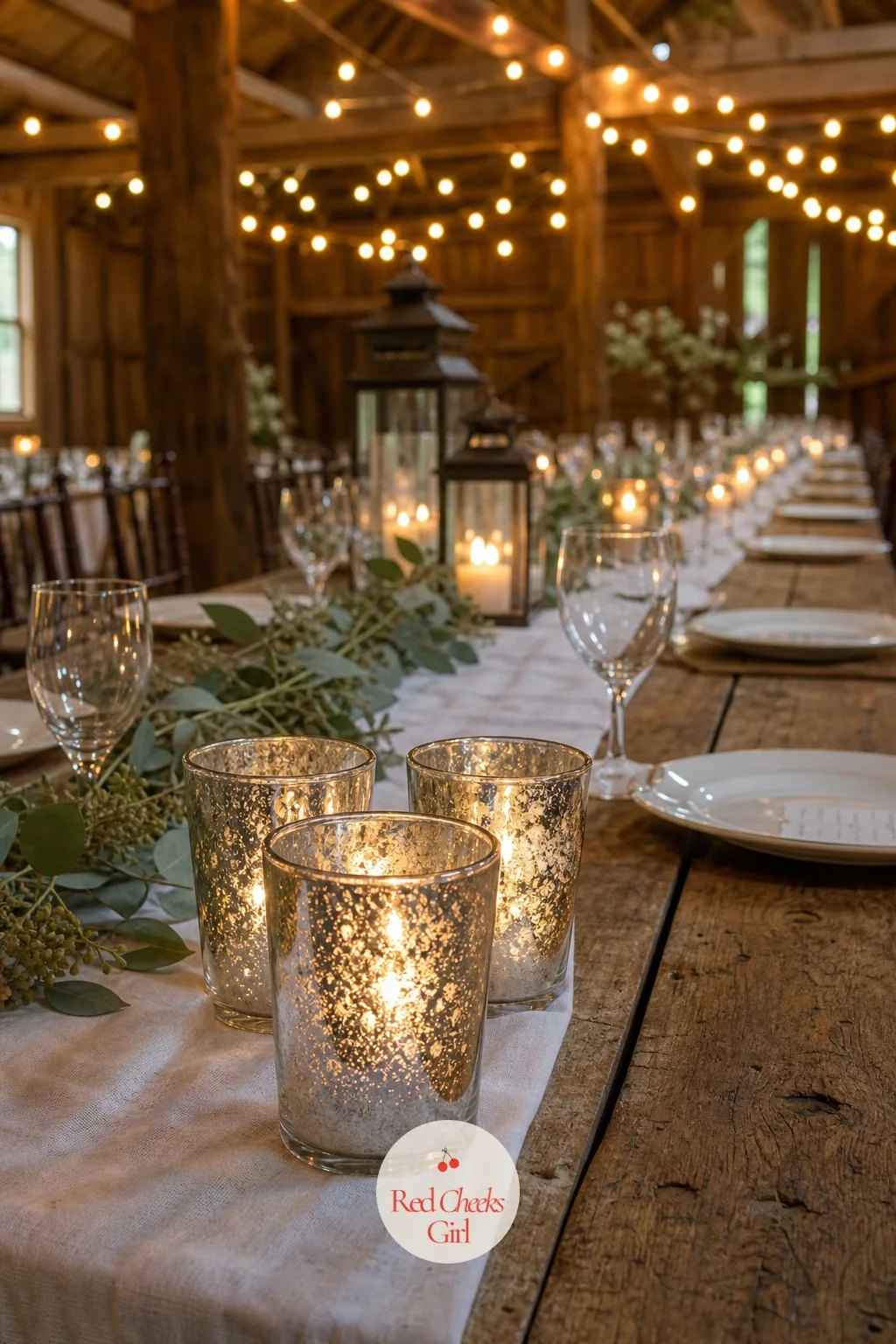
Clustered Votives in Mercury Glass
A single candle in the middle of a long table can look lonely against all that empty cloth on either side. Clusters of small votives fill that space with light instead of flowers.
Group three or four small mercury glass votive holders together at several points down the table, each holding a plain tea light, rather than spacing single candles evenly apart. The silvered glass catches whatever ambient light is already in the room and throws it back warmer.
It suits a rustic barn venue with fairy lights overhead, where the mercury glass picks up that same twinkle at table height. In a small apartment dining room, one cluster in the center does the same job without needing a long table to spread them along.
🛍 Shopping guide
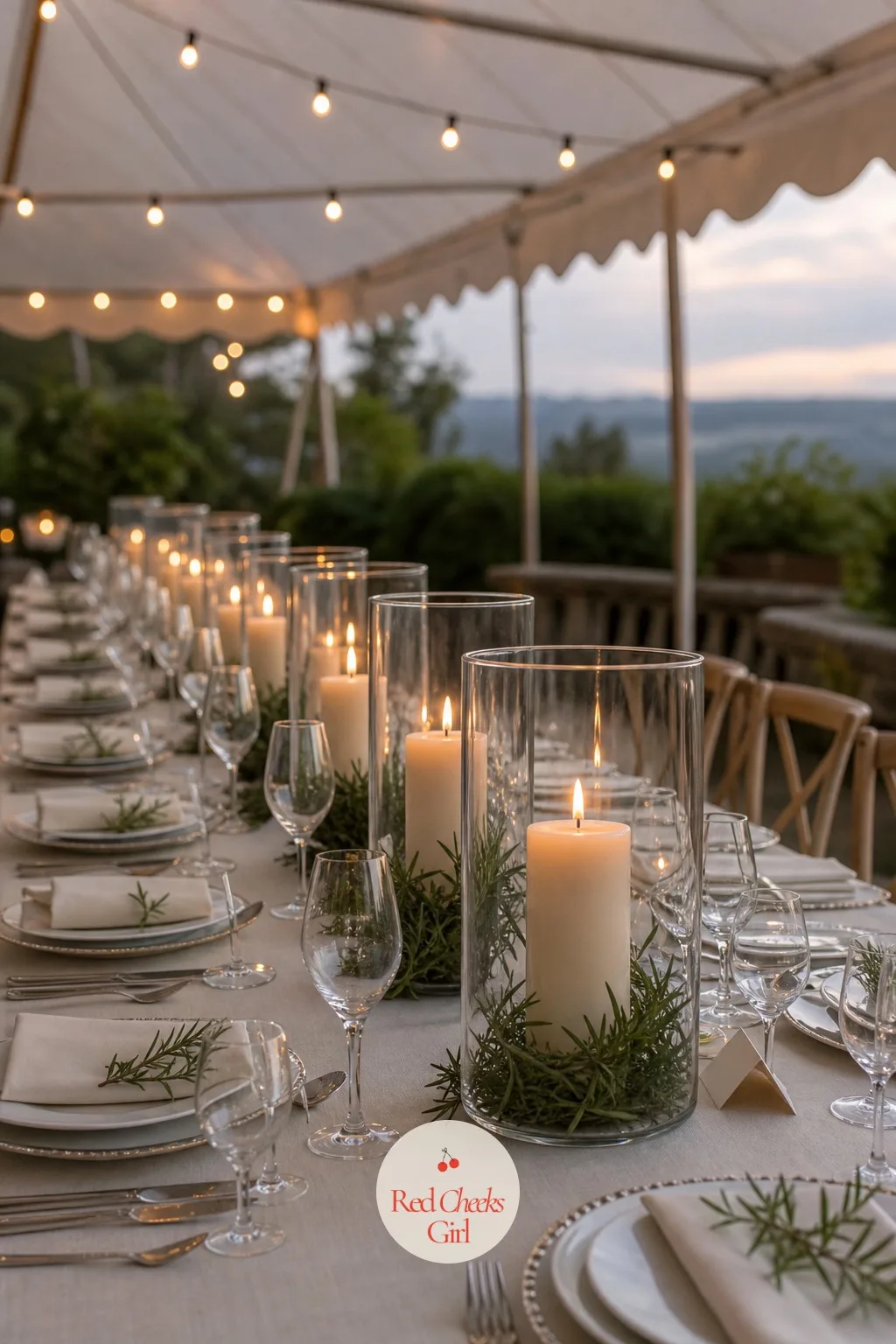
Hurricane Lanterns Down the Center
Open flames outdoors have an obvious problem: wind. A clear glass hurricane solves it while still giving the table that warm, old world glow everyone wants from an evening reception.
Place tall glass hurricane lanterns at even intervals down the table, each holding a single pillar candle, with a small sprig of greenery or rosemary tucked at the base of each one. The glass does double duty as both a wind guard and a decorative object in its own right.
They belong on a garden terrace or under a marquee at dusk, where the glow carries further than a bare taper would manage. There is real relief in knowing a gust will not blow the whole table dark halfway through dinner!
🛍 Shopping guide
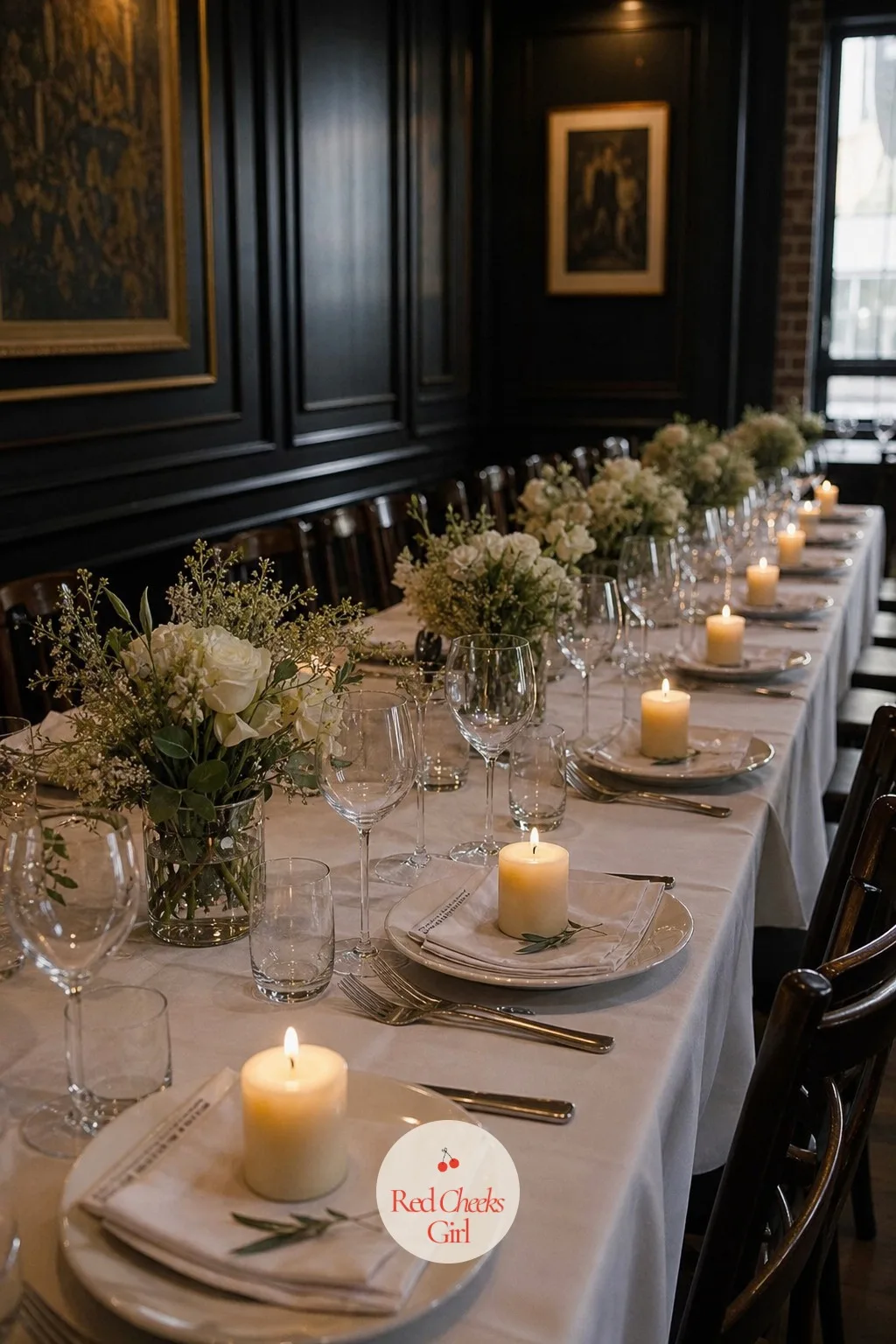
Single Pillar Candle at Each Place Setting
Centerpiece budgets tend to swallow everything else, leaving the actual place settings looking plain by comparison. Moving the candle to each plate rebalances that, and it costs about the same either way.
Set one short, wide pillar candle directly above each guest’s plate instead of clustering light in the middle of the table, so every place setting gets its own small pool of glow. The table center stays open for conversation and for passing dishes.
It reads best in a dim restaurant private room with dark walls and framed art, where the many small flames do more collective work than one big arrangement would. For a daytime wedding, a small unlit candle still looks deliberate as a styling object, simply paired with a sprig of greenery instead.
🛍 Shopping guide
Linens and the Table Base
Before a single flower goes down, the cloth decides whether the table reads as rented folding tables or as something styled. A pressed, ironed fabric in the right weight does more for the eye than most centerpieces manage.
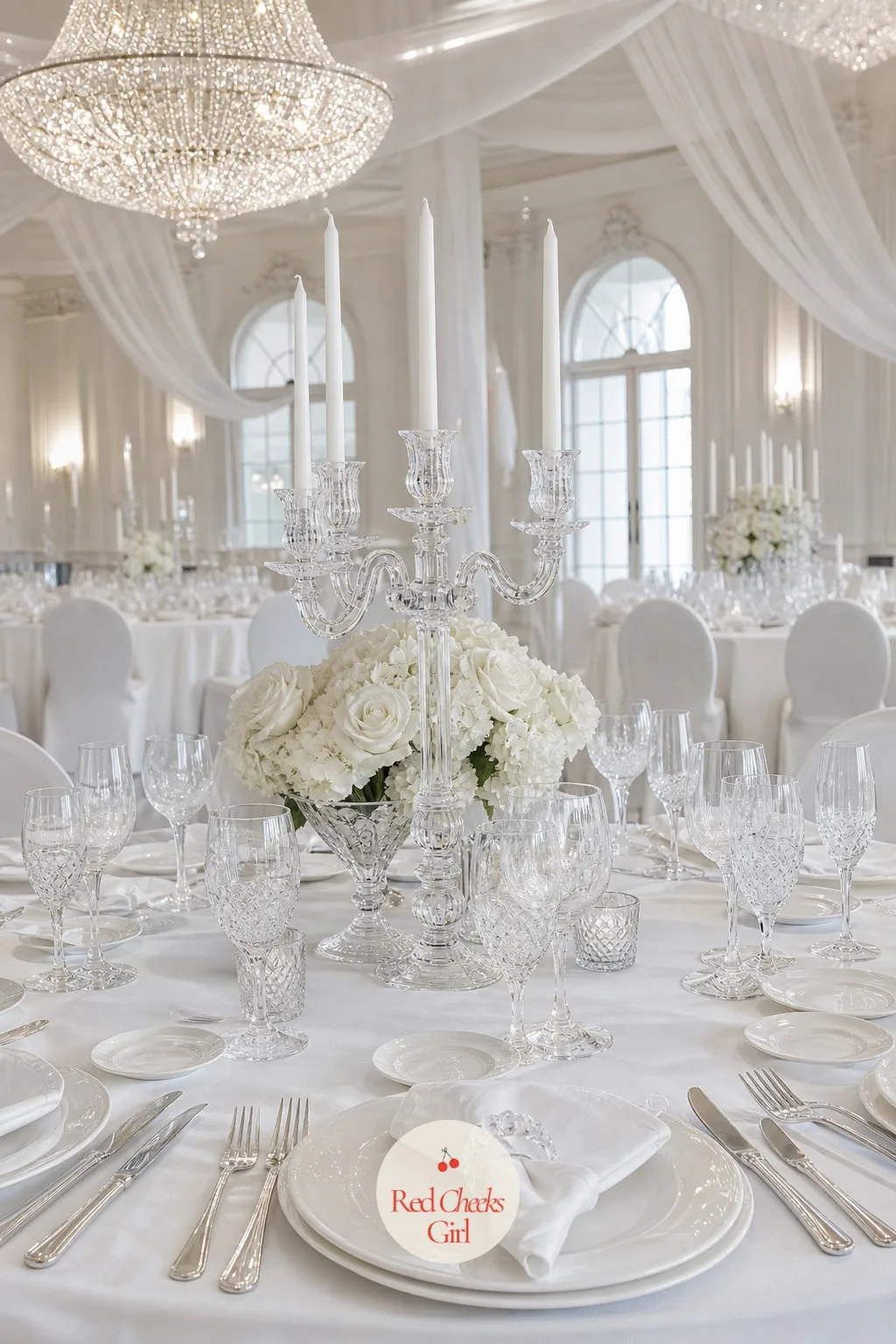
White on White With Crystal
Colour decisions can eat weeks of planning time, and sometimes the better answer is to simply not make one. White on white removes the question entirely and still reads as the most formal table on this list.
Dress the table in a white cloth, white china, and crystal glassware and candle holders, with no coloured accent anywhere: every texture comes from the materials themselves rather than from pigment. It is less a look you add to than one you keep paring back.
It suits a grand ballroom with a crystal chandelier and white drapery, where the room does the embellishing and the table stays quiet underneath it. If the idea of an all white room appeals to you for other reasons too, pearl wedding decor ideas that look like a vintage film set sits very comfortably next to this palette.
🛍 Shopping guide
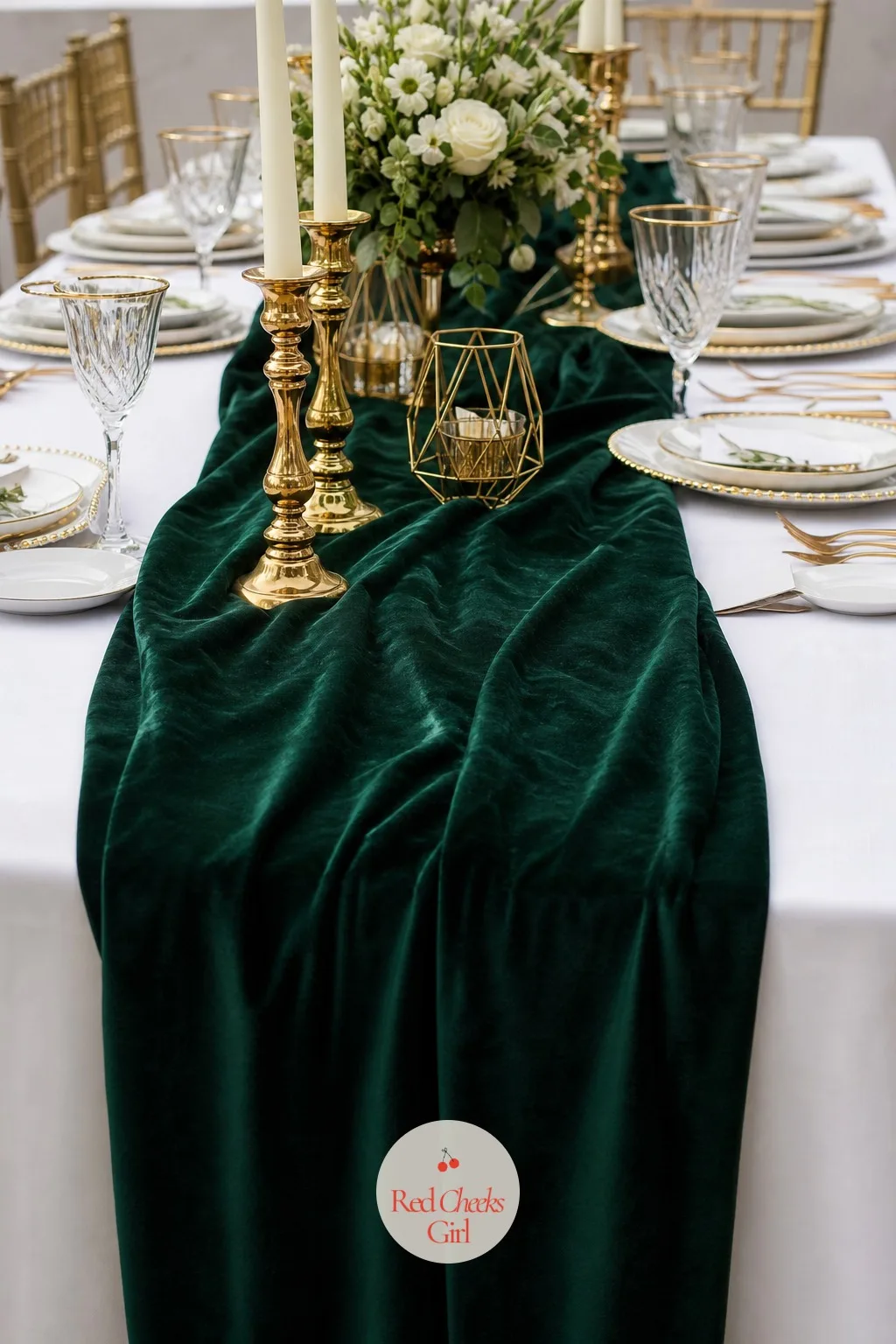
Velvet Runner on a Crisp White Cloth
A plain white cloth on its own can feel more like a hotel conference table than a wedding, especially under bright ballroom light. One strip of velvet down the center changes that in under a minute.
Lay a jewel toned velvet runner, emerald or deep plum both work, over an ironed white tablecloth, letting it fall slightly past the table edge at each end. The contrast of matte velvet against crisp cotton does more visual work than most centerpieces.
It belongs in a jewel toned ballroom with gold candlesticks and low warm lighting, where the richness of the velvet matches the room instead of fighting it. If velvet feels too heavy for a summer garden wedding, the same move works in a lighter dupioni silk runner instead.
🛍 Shopping guide
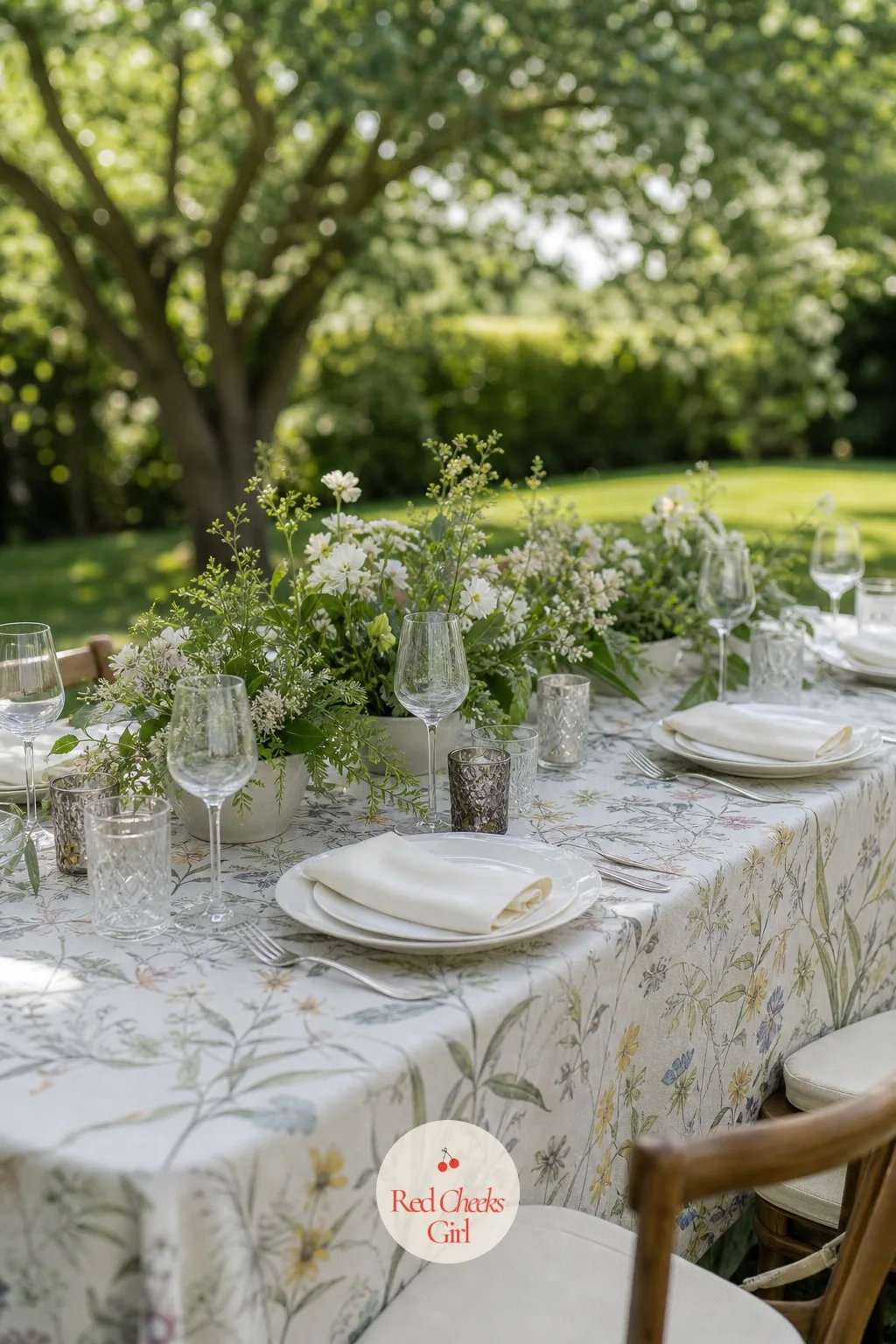
Patterned Tablecloth With Plain Napkins
A heavily decorated table can start to compete with itself, pattern on pattern until nothing stands out. One printed cloth paired with completely plain napkins keeps the eye settled on a single decision.
Choose a botanical or subtle striped tablecloth in a pressed cotton or sateen finish, then keep every napkin, plate and glass that sits on top of it solid and unpatterned. The print carries the whole personality of the table; everything else simply supports it.
It suits a daytime garden brunch reception, where the pattern reads as fresh rather than formal against greenery and natural light. For a smaller budget, a plain cloth with one patterned runner laid over it gives nearly the same effect for less fabric.
🛍 Shopping guide
Gold Charger Plates on Pressed Cotton
A plain white plate straight on a plain cloth can look like it is waiting for something to happen underneath it. A charger plate gives the setting a base to sit on and a flash of metal before the food even arrives.
Lay a crisp, pressed cotton tablecloth, then set a gold charger plate at each place beneath the dinner plate, letting the rim show as a thin metallic border around the white china. It is a five minute addition per table once the cloth is down.
It works especially well in a restaurant private dining room with dark wood paneling, where the gold rim catches the warm lamp light. Silver chargers do exactly the same job for a cooler, more modern palette.

🛍 Shopping guide
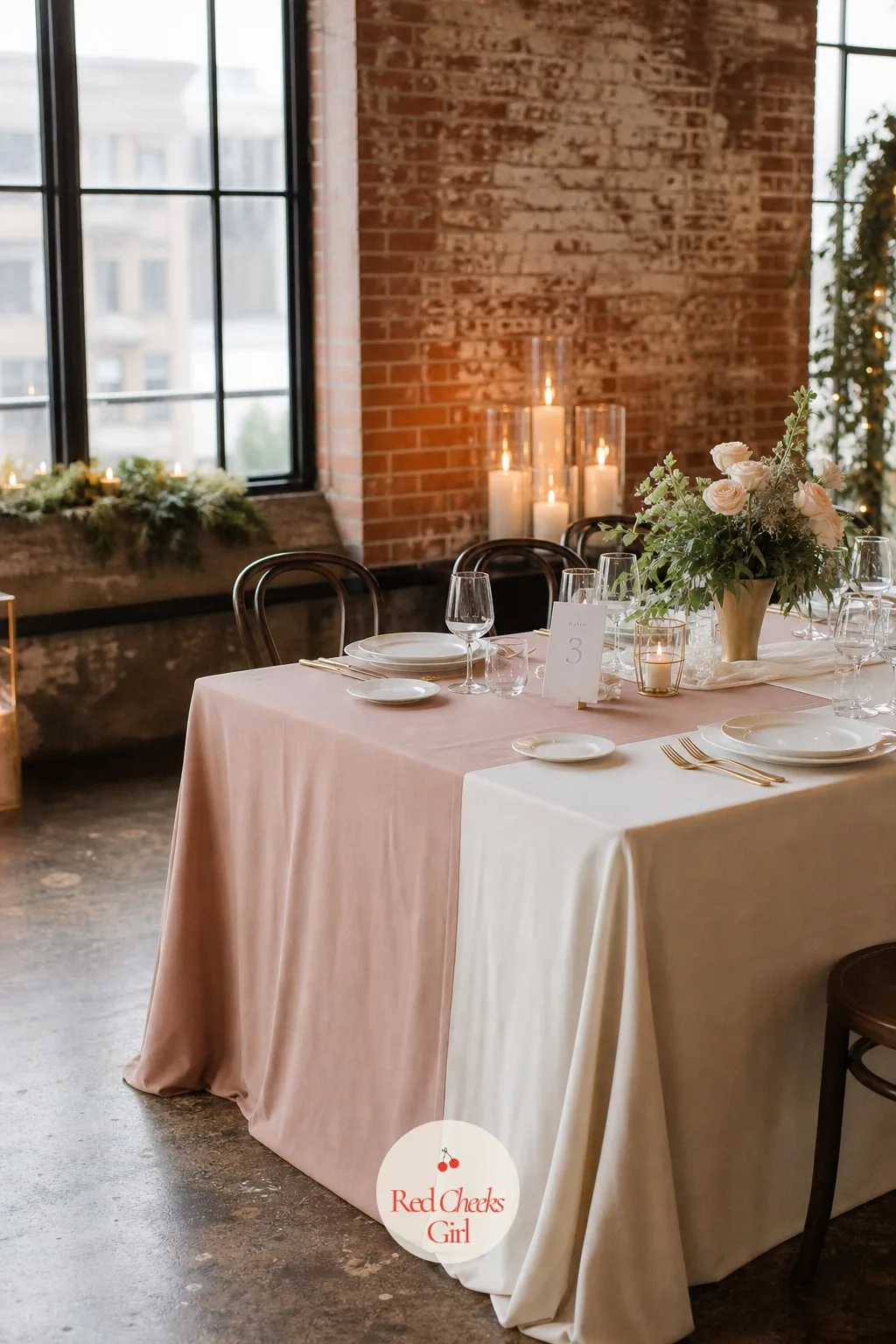
Color-Block Tablecloth in Two Shades
A single colour tablecloth can read as safe rather than styled, especially on a table with very little else on it. Splitting the cloth into two shades gives the base its own quiet statement.
Use a tablecloth made of two panels, blush and ivory for instance, joined down the center or as a contrasting runner laid over a solid base, so the table reads as considered rather than default. Keep everything placed on top of it, plates and glassware, in a single neutral tone.
It fits a modern loft or converted barn with exposed brick, where the clean colour block feels architectural rather than decorative. If sewing two panels together sounds like too much effort, a solid cloth with a contrasting runner in the second shade achieves the same split.
🛍 Shopping guide
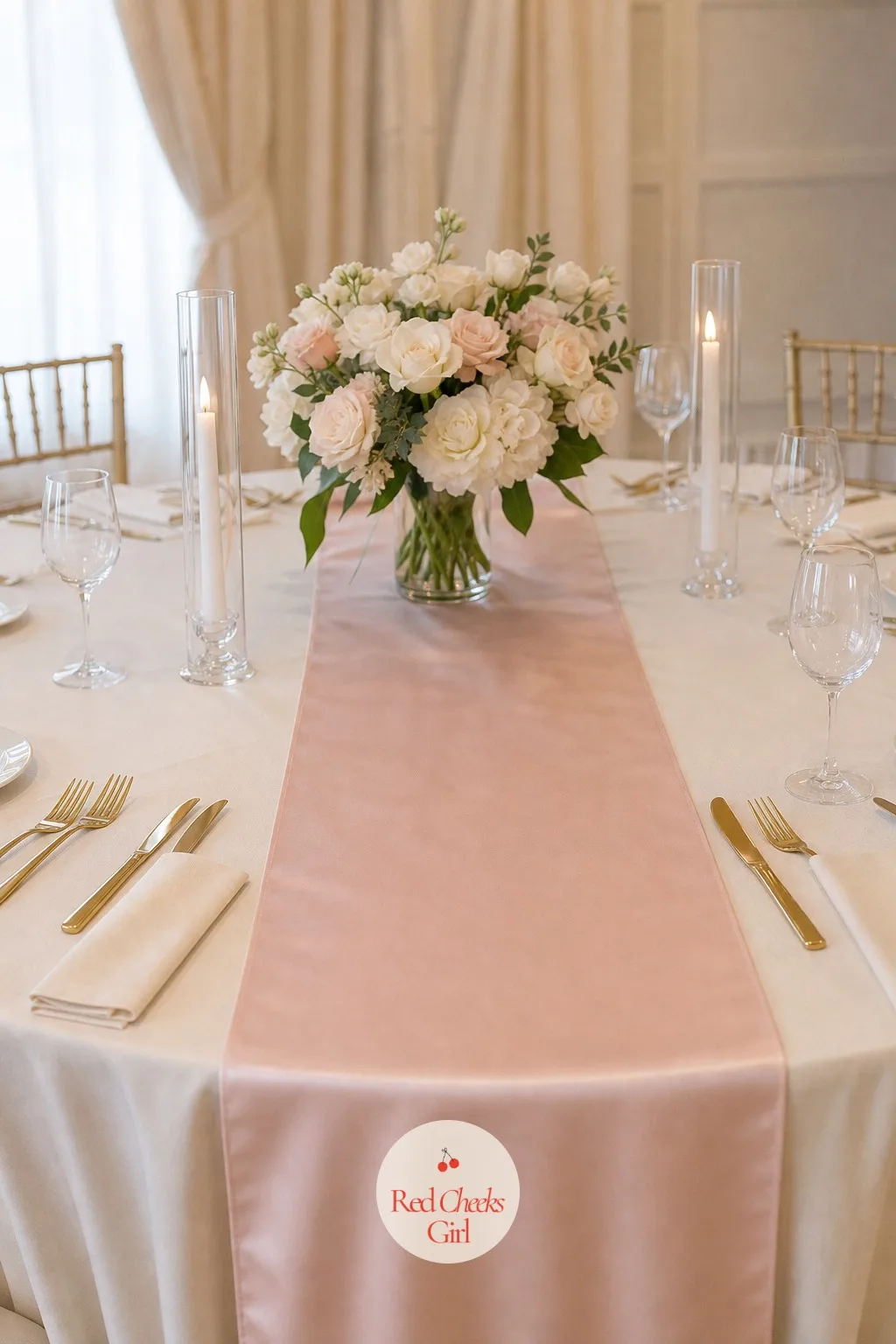
Satin Ribbon Laid as a Table Runner
A full fabric runner can add weight and bulk to a table that is already carrying plates, glasses and a centerpiece. A single wide ribbon does the same visual job in a fraction of the width.
Lay a length of wide satin ribbon, dusty pink or ivory, flat down the center of the table instead of a traditional runner, letting the sheen catch the light along its length. It costs almost nothing by the yard and needs no hemming.
It suits a pastel ballroom with drapery and soft lighting, where the satin sheen echoes the room’s own fabric. In a smaller space where a full runner would swamp the table, this thinner line keeps the proportions right.
🛍 Shopping guide
Place Settings and Small Papers
This is the layer guests actually touch: the napkin under their hand, the card they read while they wait for the first course. It costs almost nothing and it is the part people remember as thoughtful rather than expensive.
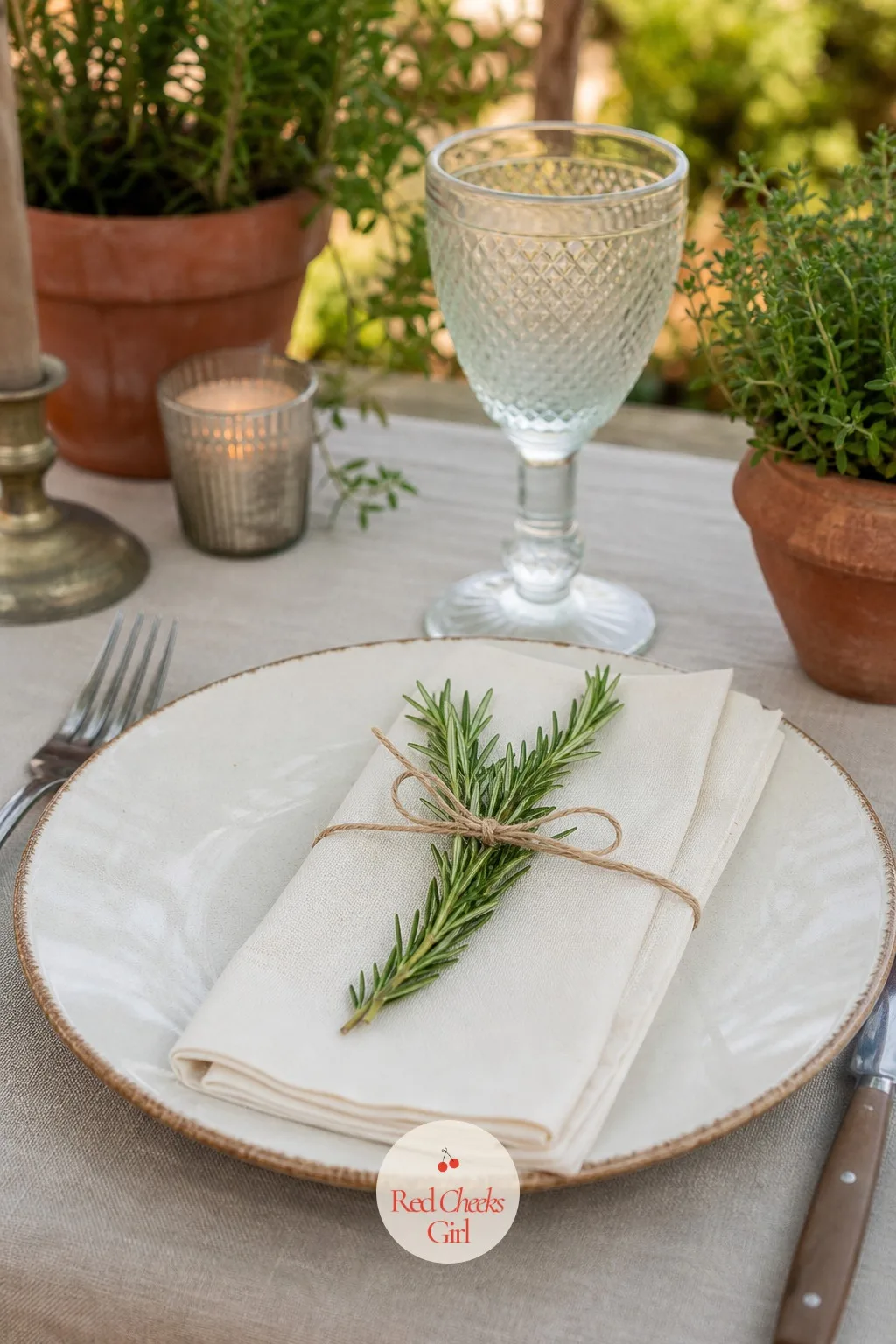
Napkin With a Sprig of Rosemary
A folded napkin on its own can look like an afterthought, something the catering staff did rather than something anyone styled. One small sprig changes that in seconds.
Fold a plain cotton napkin into a simple rectangle, then tuck a short sprig of fresh rosemary under a loop of thin twine or ribbon at the center of the fold. The herb smells faintly of the garden as guests unfold it, which is the part photographs cannot capture but guests remember.
It belongs on a garden terrace with an Italian or Mediterranean feel, where the rosemary matches the rest of the menu rather than looking borrowed. Thyme or bay leaf works just as well if rosemary is not in season locally.
🛍 Shopping guide
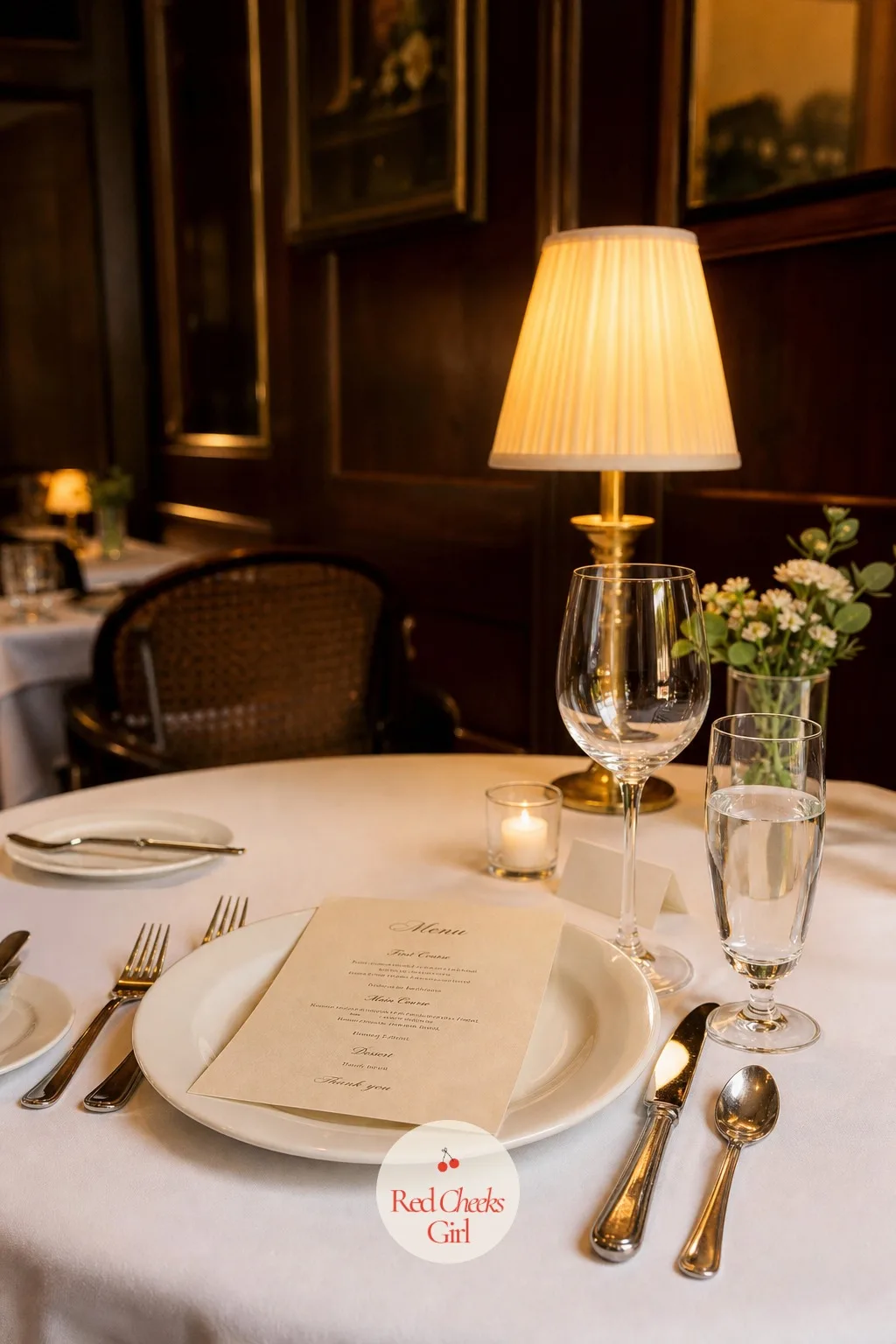
Menu Card on Each Plate
Guests waiting for the first course with nothing in front of them tend to reach for their phones. A small printed menu gives them something to read and quietly signals that the evening has been thought through.
Print a simple card listing the courses in a plain serif font, then lay one flat on top of each guest’s plate before they sit down. No folder, no ribbon needed, just the card itself resting on the china.
It works in a restaurant fine dining setting with warm lamp light and framed art on the walls, where the printed detail matches the formality of the room. Hand lettering the cards instead of printing them adds a personal touch at no extra material cost.
🛍 Shopping guide
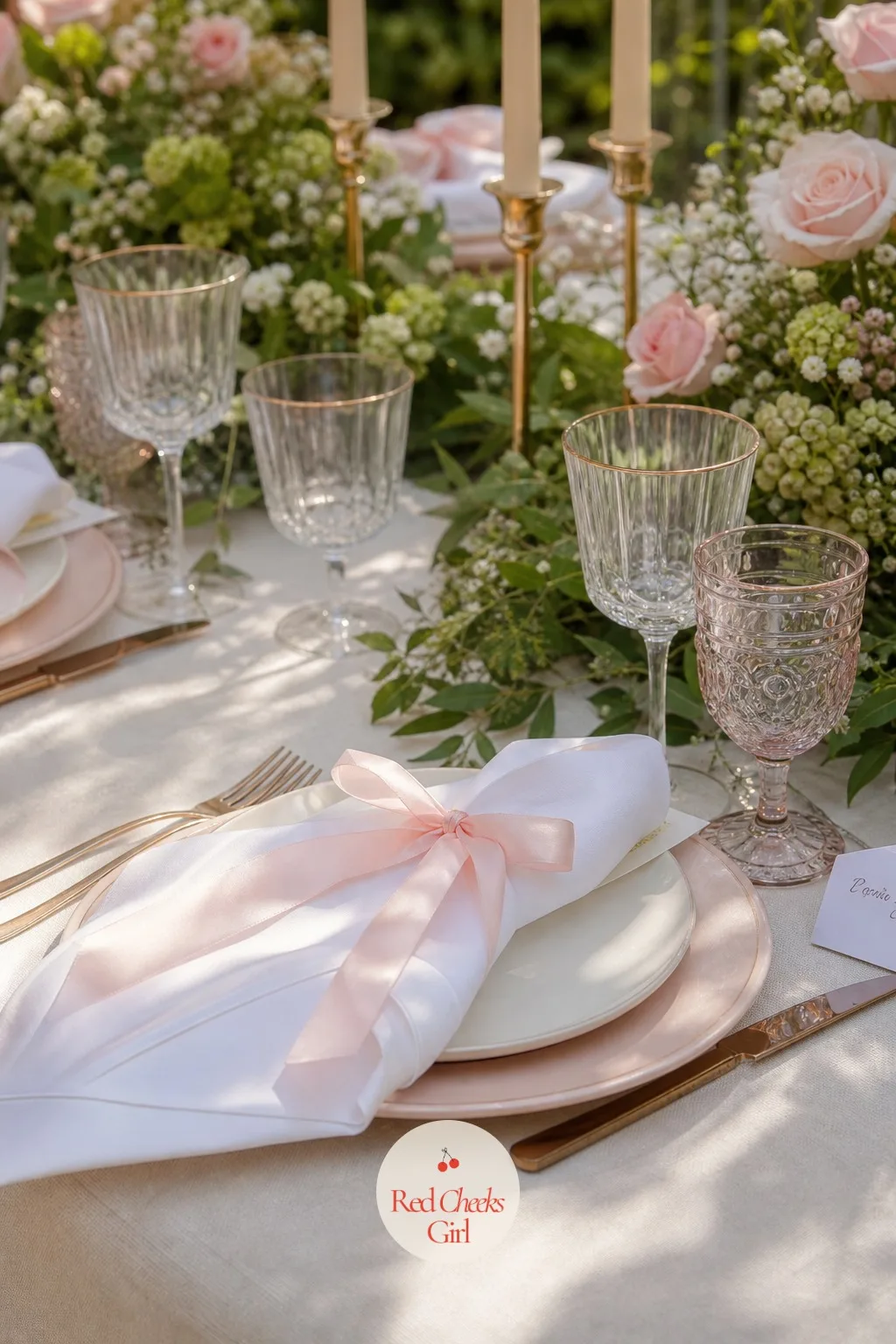
Ribbon Tied on Napkins
A plain folded napkin can feel slightly bare next to a more decorated centerpiece, like the table ran out of budget halfway down. A tied ribbon closes that gap for the cost of a spool.
Fold the napkin into a simple rectangle or roll, then tie a length of satin or grosgrain ribbon around the middle in a loose bow, letting the tails hang slightly over the table edge. Pick a ribbon shade that echoes one colour already in the flowers or candles.
It suits a pastel garden reception where soft colour runs through everything else on the table too. For a quicker version, a single knot instead of a full bow still reads as finished and takes half the time.
🛍 Shopping guide
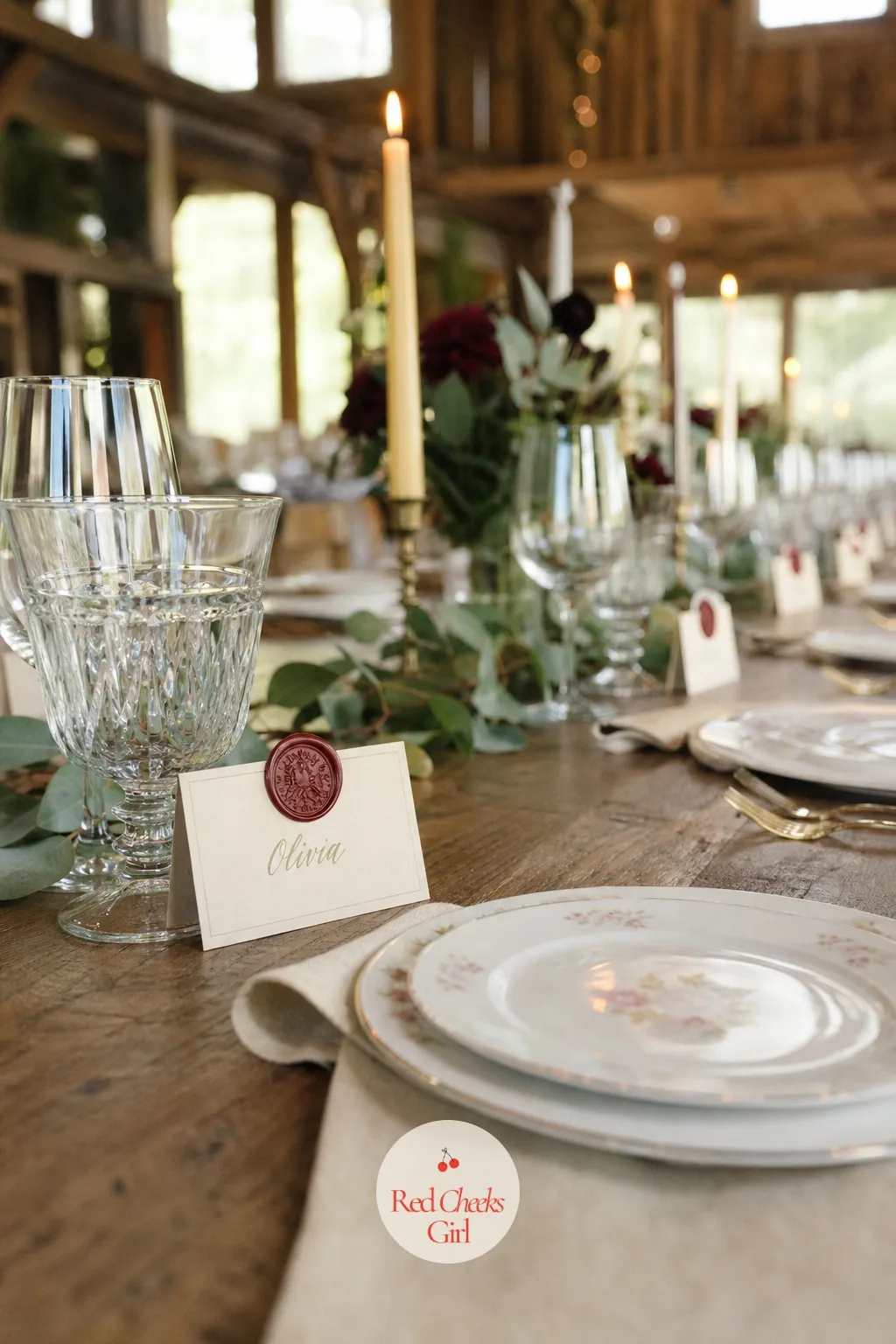
Wax Seal Place Cards
A plain printed name card can look slightly corporate on a table otherwise full of texture. A wax seal gives it the weight of something handwritten, even when it was not.
Write or print each guest’s name on a small cream card, then press a wax seal stamp into a drop of melted sealing wax at the top corner or fold. Set the finished card against the base of a glass or directly on the napkin.
It fits a vintage styled barn table lit mostly by candlelight, where the wax catches a small gleam from the flames nearby. A monogram stamp instead of a plain design turns the same card into a keepsake guests sometimes pocket.
🛍 Shopping guide
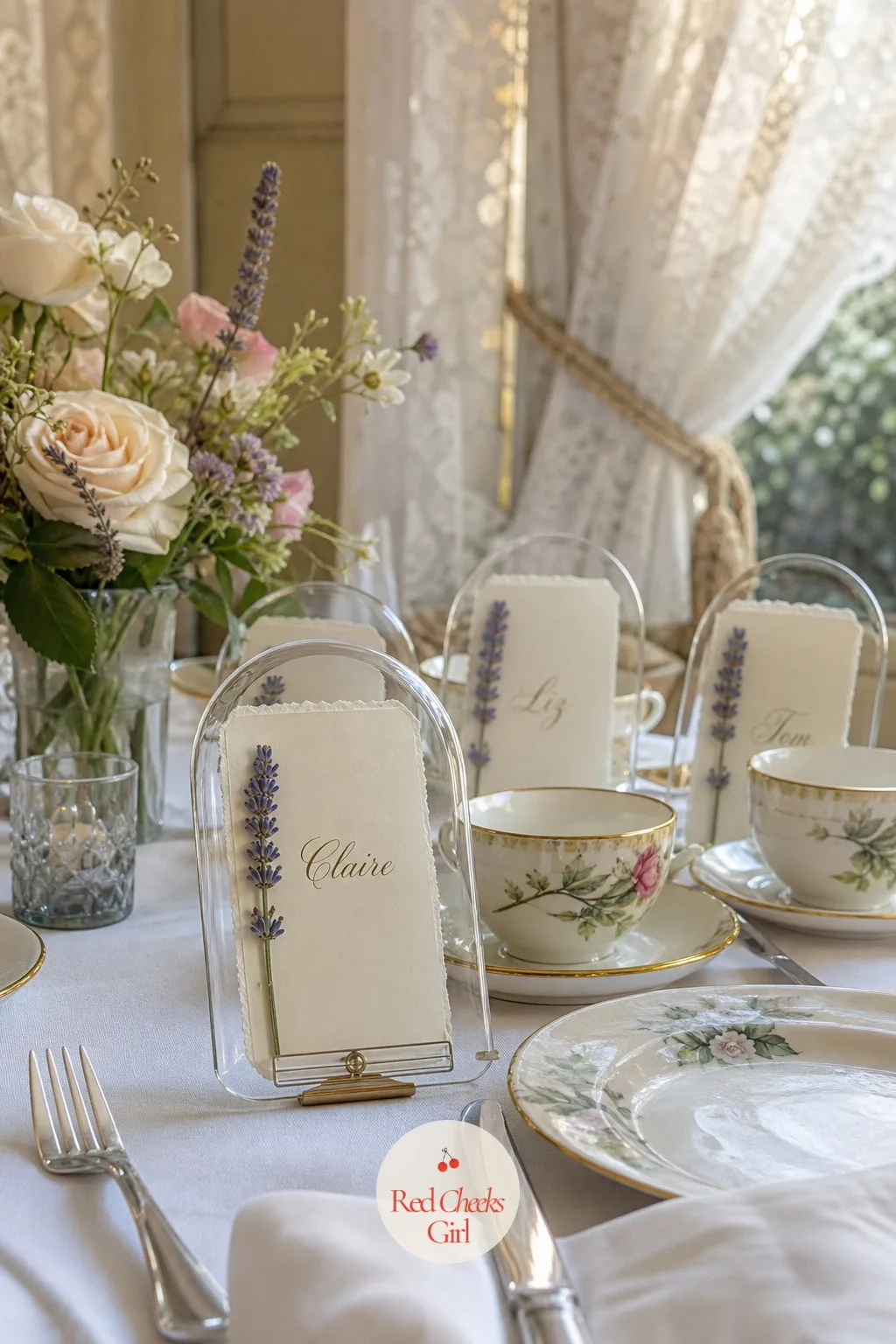
Pressed Flower Place Cards Under Glass
A flat paper place card can disappear visually against a busy table, especially once the candles are lit and the shadows start moving. Sealing a real pressed flower into it gives it just enough dimension to catch the eye.
Press a small flower, a violet or a pansy works well, flat between sheets of paper for a week beforehand, then seal it under a thin layer of clear laminate or glass on top of the printed name card. It stands slightly propped at each place.
It belongs in a garden tea room setting with windows and soft curtains, where the pressed flower echoes whatever is blooming outside. If pressing flowers feels like too many extra steps this close to the date, a single dried flower head glued flat does nearly the same thing.
🛍 Shopping guide
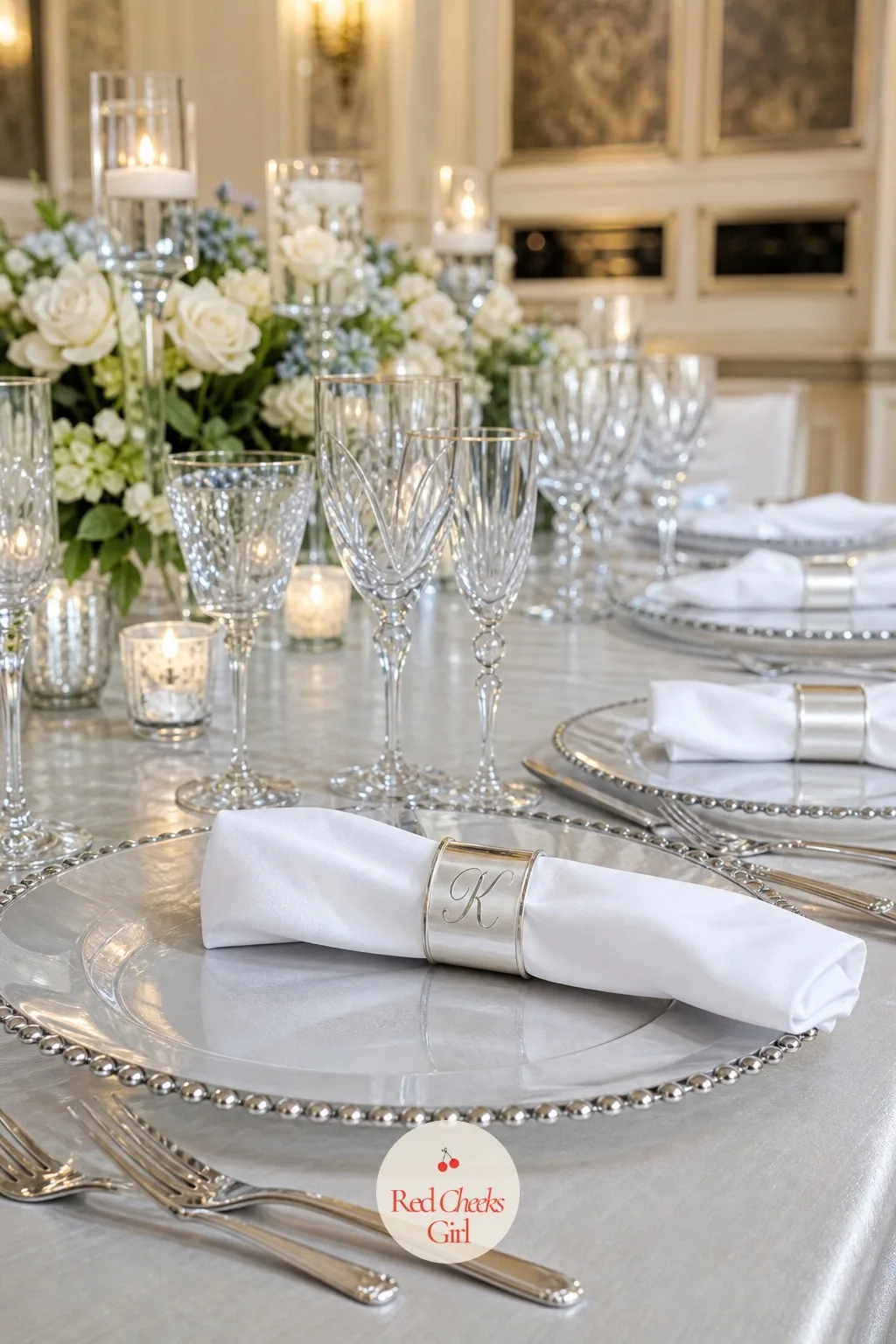
Monogrammed Napkin Rings
A folded napkin without anything holding it tends to come loose before guests even sit down, and plain cloth on its own can look slightly unfinished next to silver cutlery. A napkin ring solves both problems at once.
Slide a metal or ceramic napkin ring stamped with a single initial over the folded napkin at each place, choosing a finish, silver, brass or black, that matches the rest of the flatware on the table. The ring keeps the fold crisp through the whole meal.
It suits a formal ballroom table with silver accents and clean lines, where the small monogram adds personality without any extra colour. A plain unmonogrammed ring in the same metal works just as well if personalising every single one is not worth the extra order.
🛍 Shopping guide
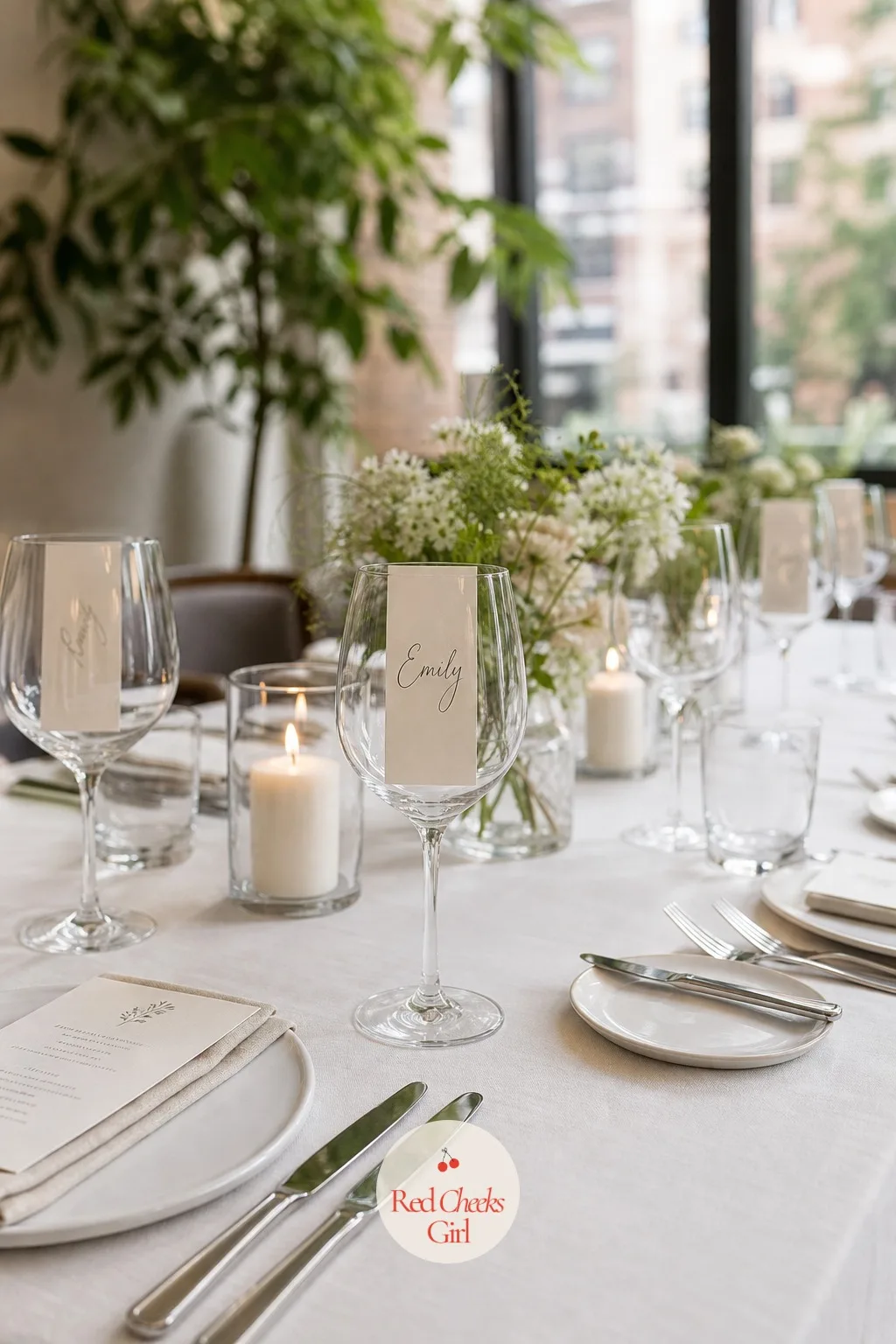
Hand-Lettered Place Cards Tucked in Stemware
A name card lying flat on the tablecloth can slide, curl, or simply get lost under a plate before the guest even arrives. Tucking it into the wine glass solves all three problems and looks sharper for it.
Hand letter each guest’s name on a small rectangle of cream card, then fold it slightly and slot it inside the bowl of the stemware at each place, standing upright against the glass. It takes seconds to set once the cards are written.
It suits a modern, minimal restaurant table where very little else sits on the surface, letting the one detail stand out clearly. If handwriting thirty names feels like too much, a simple printed script font does the same job at a fraction of the time.
🛍 Shopping guide
Finishing Touches That Guests Actually Notice
The last few per cent of a table is rarely the big items. It is the small, slightly unexpected detail that makes a guest pick up their phone before the food even arrives.
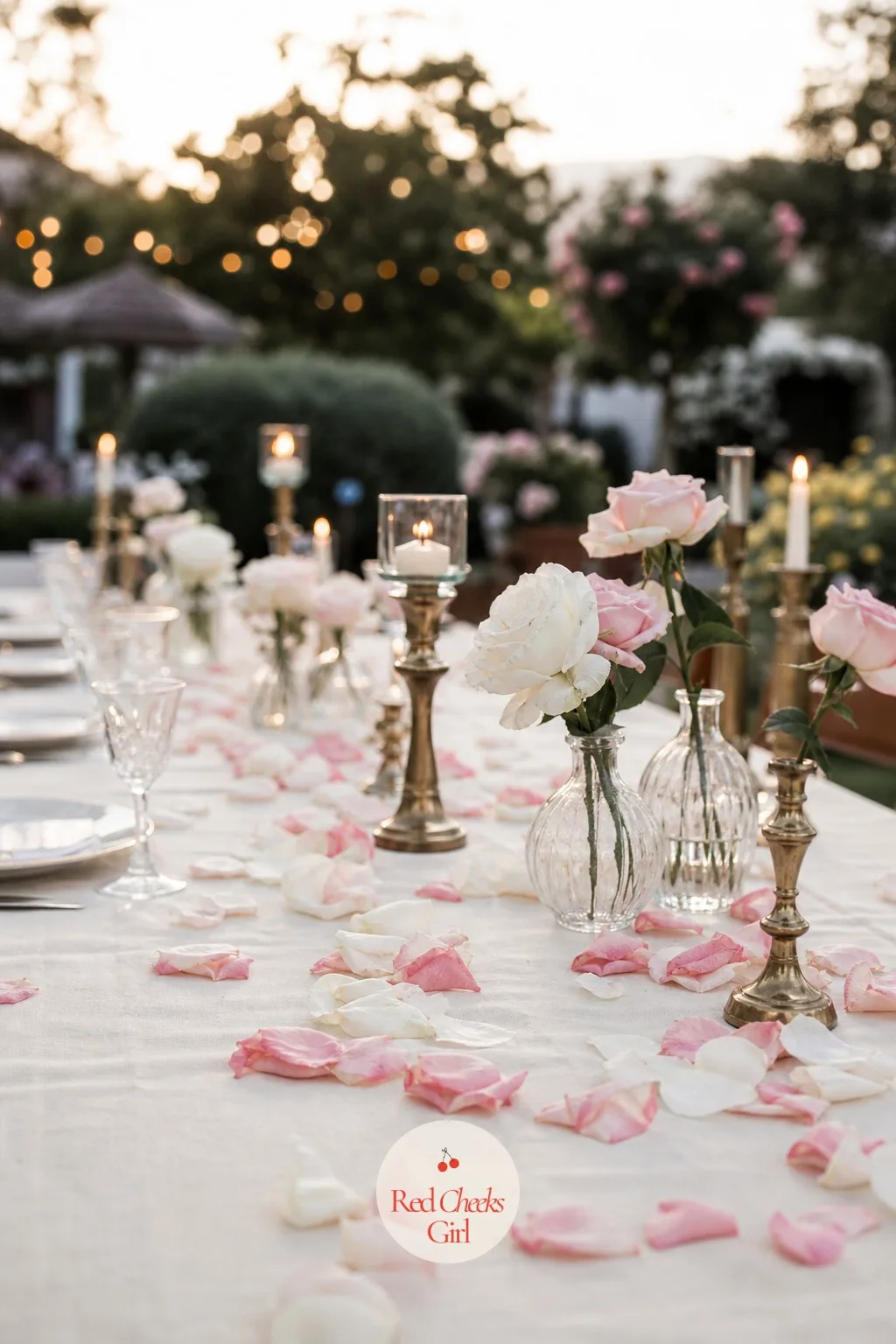
Scattered Petals Down the Table
A table with a centerpiece and nothing else around it can still look slightly stark once the eye drifts away from the middle. A scatter of loose petals fills that space without adding another object.
Loosely scatter rose or peony petals in a soft, uneven line down the length of the table, around the base of candles and vases rather than in a tidy strip. The imperfection is the whole point here; a perfectly even scatter reads as fake.
It suits a romantic garden table at dusk, where the petals pick up the warm light from candles nearby. For a cleaner, more modern table, skip this one entirely rather than fighting the rest of the styling.
🛍 Shopping guide
Mismatched Vintage Glassware
A full set of matching crystal can look slightly impersonal once thirty of the exact same glass line up down a long table. Mismatched vintage pieces soften that without costing anything close to new crystal.
Collect coloured and clear glassware in different shapes, amber, pale green, soft pink, from secondhand shops or family cupboards, and set one or two different pieces at every place instead of a uniform set. No two guests need the same glass.
It belongs on an eclectic barn table lit with warm lamps, where the mix of glass colours catches the light differently from every angle. For a more formal event, limit the mismatch to water glasses only and keep the wine stems uniform.

🛍 Shopping guide
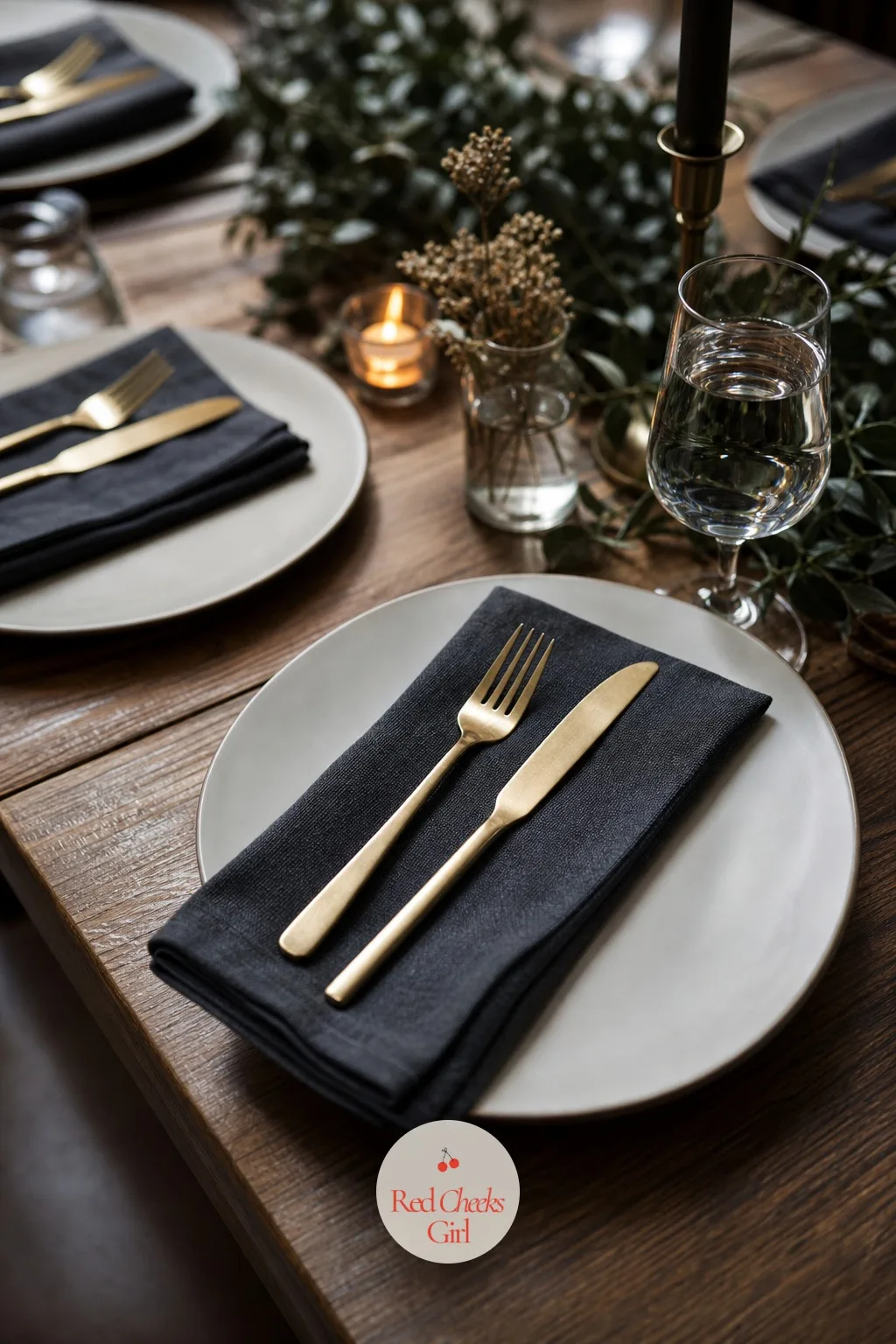
Brass Cutlery on Folded Napkins
Standard silver flatware disappears a little against a white plate, especially under warm restaurant lighting. Brass cutlery catches that same light and turns it gold instead.
Lay a set of brass or gold toned flatware directly on top of a dark, folded cloth napkin at each place, rather than beside the plate, so the metal sits visible on fabric before the meal even starts. The darker napkin makes the brass read brighter by contrast.
It suits a modern restaurant table with dark linen and low lighting, where the brass becomes the main point of shine on an otherwise plain setting. Gold plated disposable flatware achieves a near identical look for an outdoor reception where real brass would be impractical to collect afterward.
🛍 Shopping guide
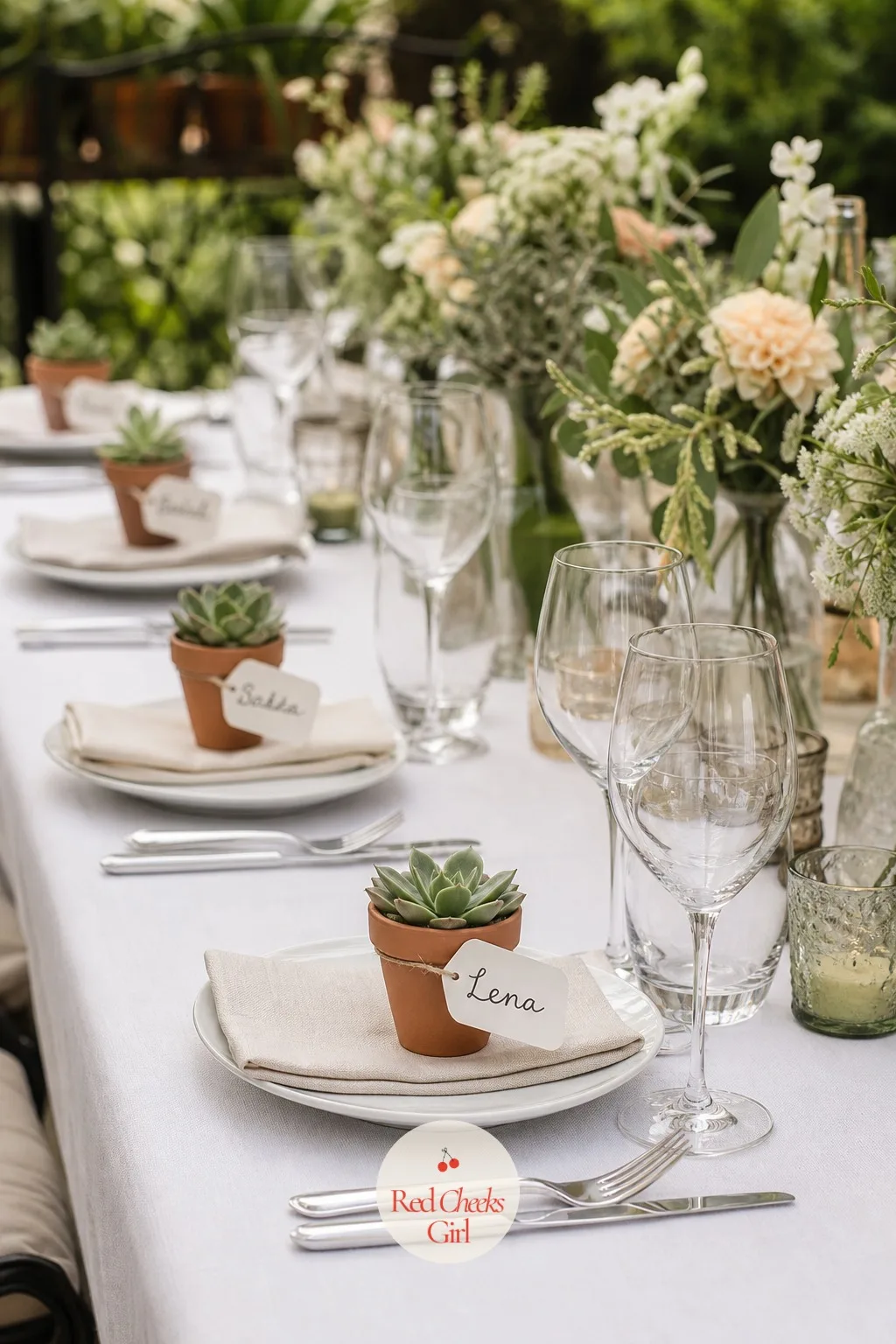
Mini Potted Succulent at Each Place Setting
A favour sitting separately from the table decor often gets forgotten in a drawer somewhere in the venue by the end of the night. A small potted succulent at each place does both jobs at once and guests actually take this one home.
Set a small terracotta pot holding a single succulent directly at the top of each place setting, with the guest’s name written on a small tag tucked into the soil. It needs no water for the whole event and no watering can backstage.
It fits a casual garden or terrace reception where the greenery already dressing the venue continues right onto the table itself. Small cacti work just as well if succulents are not easy to source locally, and they survive even rougher handling on the drive home.
🛍 Shopping guide
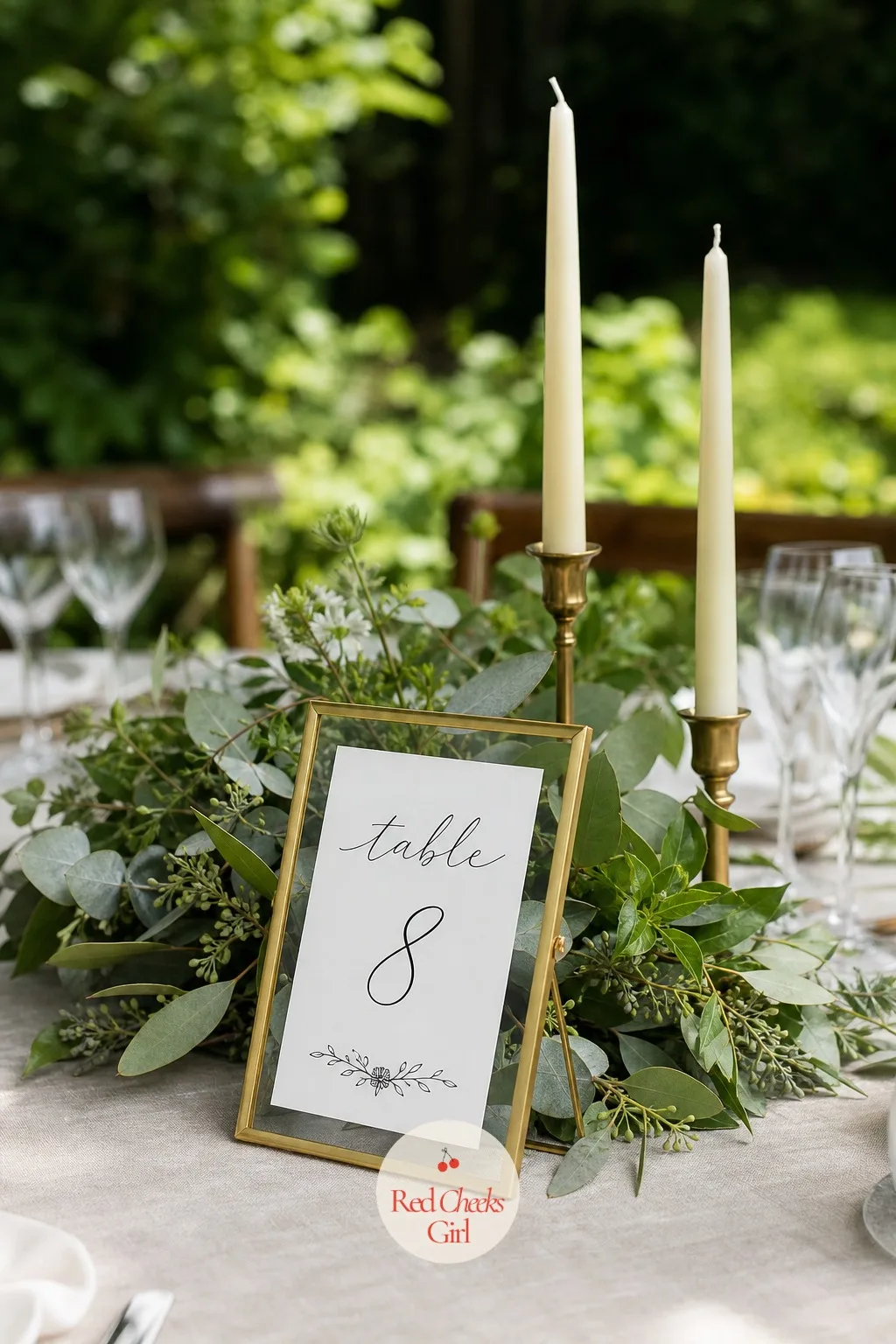
Framed Table Numbers Against Greenery
A table number propped bare against a plate or glass can look like an afterthought clipped on at the last minute. Leaning it against a small base of greenery gives it somewhere to actually sit.
Print or hand letter the number on a small card, slot it into a slim gold frame, and lean the frame against a low cluster of greenery or the base of a candle cluster at the center of the table. The greenery hides the stand and gives the frame something to rest on.
It works equally well in a garden reception or an indoor ballroom, since the greenery base travels between settings without needing to match either one specifically. A small stack of two or three books under the frame works just as well where greenery is not already part of the table.
🛍 Shopping guide
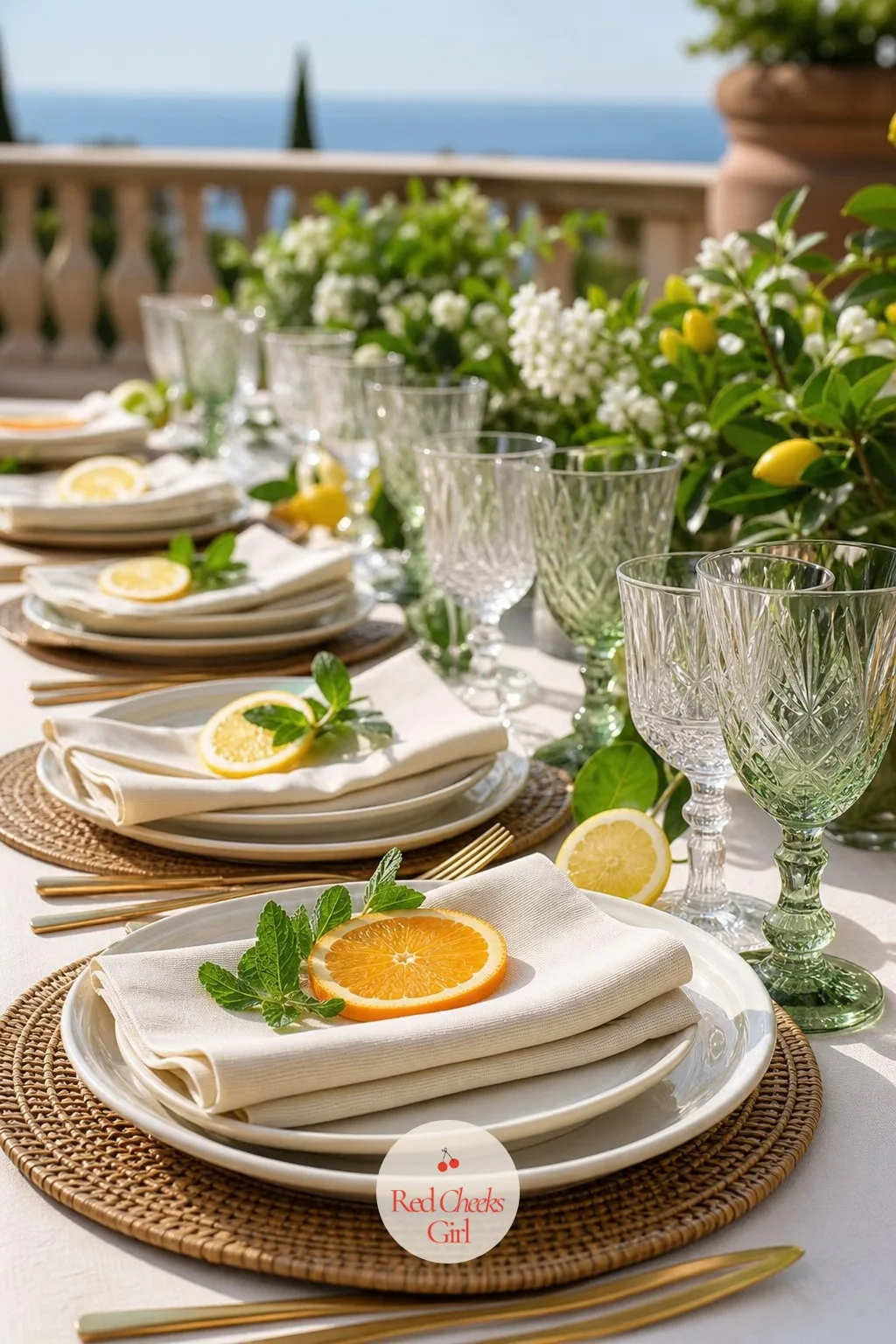
Citrus Slices Tucked Among Place Settings
A table can lean heavily on green and white without a single warm colour breaking it up, which starts to feel a little cool under bright daylight. A few citrus slices fix that instantly and smell wonderful besides.
Slice oranges and lemons thinly and tuck a piece or two among the glassware and folded napkins at each place setting, along with a small sprig of mint or bay leaf for contrast. Nothing needs pinning or arranging beyond laying the slices where they look natural.
It belongs on a bright Mediterranean terrace or garden table in full daylight, where the citrus colour matches the rest of a sunny, outdoor menu. If fresh citrus will not hold through a long reception in the heat, dried citrus wheels keep the same look without wilting.
🛍 Shopping guide
Frequently Asked Questions
How can you decorate a wedding table on a budget?
Pick one statement detail, a patterned cloth, a candle cluster or coloured glassware, and repeat it across every table rather than buying several different decorations. One well chosen element reads as styled, not sparse.
What is the cheapest wedding centerpiece idea?
A row of small bud vases with single flower stems costs far less than a full floral arrangement because it uses only a handful of blooms per table. Greenery runners with no flowers at all cost even less.
How many flowers do I need for a bud vase centerpiece?
Plan on five to seven small vases per long table, each holding just one stem, so a single bunch of flowers can stretch across several tables instead of one large arrangement.
Do I need a tablecloth for a simple wedding table?
No, a bare wood or marble table can look intentional on its own with a runner, chargers and candles doing the decorating instead. A cloth is a styling choice, not a requirement.
How do I make a wedding table look elegant without flowers?
Lean on candlelight, textured linens and glassware instead: taper candles in brass holders, a velvet runner, or mismatched crystal all read as elegant without a single stem of flowers.
What can I use instead of a table runner?
A length of wide satin ribbon laid flat down the center, or a simple trail of greenery, both do the same visual job as a fabric runner for less fabric and less cost.
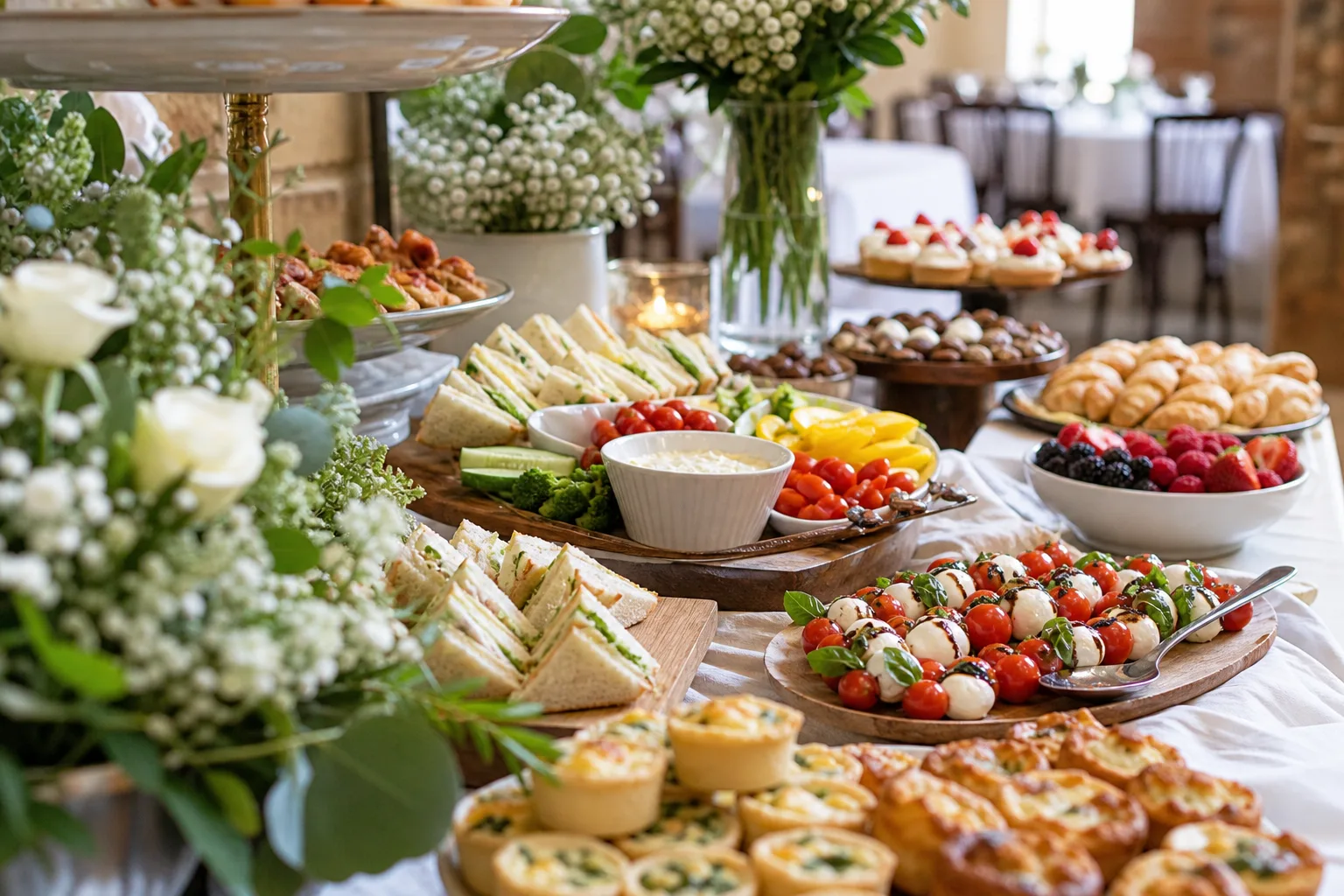
30 bridal shower food ideas, from a showpiece grazing board to mini quiche and a mimosa bar, built f
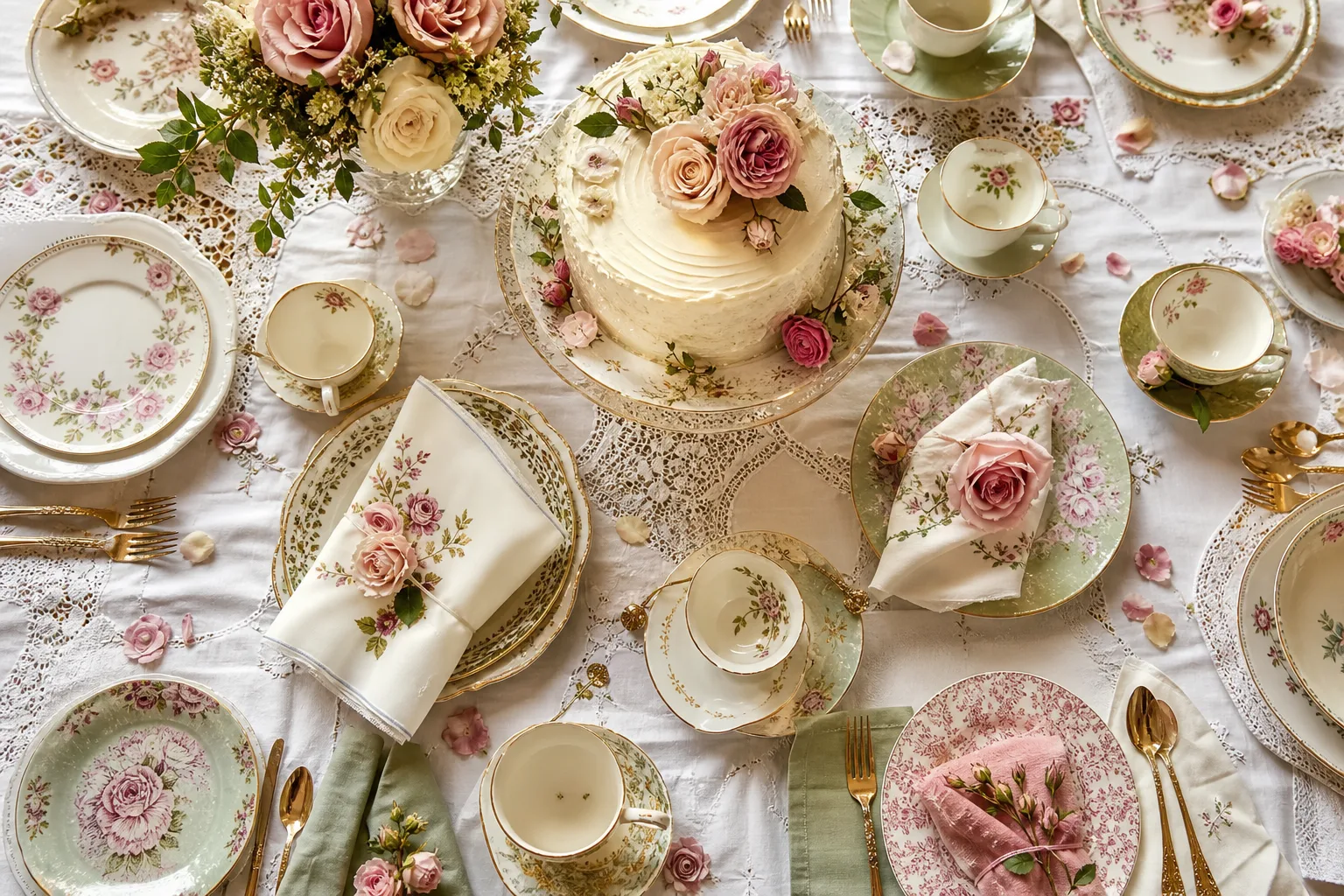
25 tea party bridal shower ideas in dusty rose, sage and antique gold: mismatched china, a floral ca
22 ice blue wedding theme ideas, from the ceremony arch to the favors, in ice blue, white and silver
Leave a Reply