

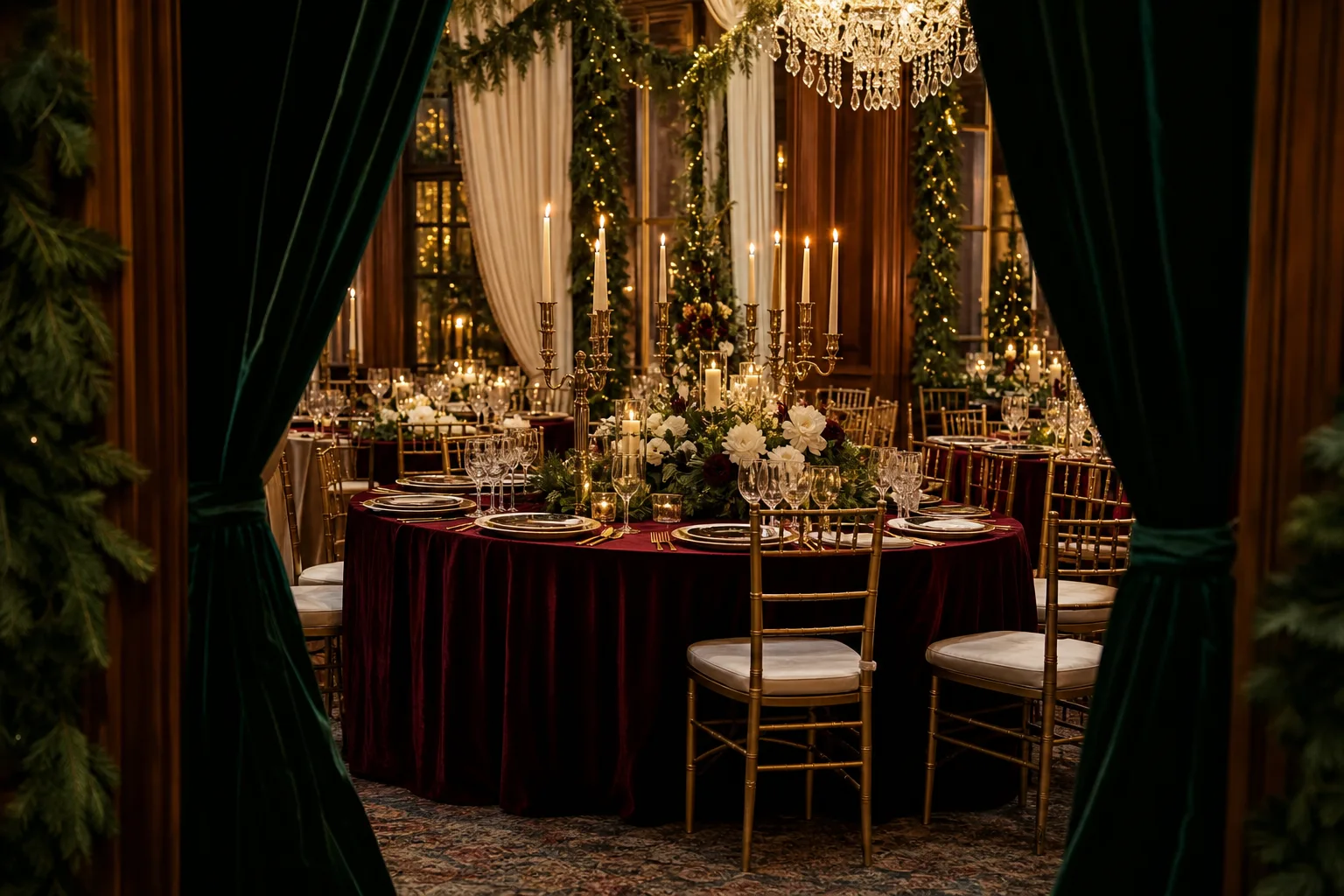
Picture the doors of an old stone building opening onto candlelight, evergreen garland looped along the rail, and a room that smells faintly of pine and warm wax. That is the whole pitch of an elegant winter wedding: it borrows the season’s darkness and turns it into drama instead of a problem to solve.
The palette stays narrow on purpose: emerald and burgundy against ivory linen, with gold flatware and gold candlelight doing the warming. Velvet carries the weight of it (runners, ribbon, the little pouch on the favor table) and crystal carries the sparkle, from the chandeliers down to the glass in her hand.
One motif threads the whole day without ever repeating itself: evergreen garland, draped over the aisle, wound along the head table, pressed as a sprig into a cake and tucked into a favor pouch. It suits a formal wedding in a historic venue or a grand ballroom, any month the sky goes dark by five.
This post contains affiliate links. If you buy through them, I may earn a small commission at no extra cost to you.
Table of Contents
The Ceremony
This is the first thing anyone sees, so it has to do some convincing before a single vow gets said. A historic venue with good bones and bad lighting becomes a candlelit room worth the cold drive over.
If garland and taper candles feel like a big lift for a volunteer bridal party, our guide to elegant Christmas wreaths has the same velvet-and-gilt look scaled down to a single doorway piece.
The Candlelit Welcome Entrance
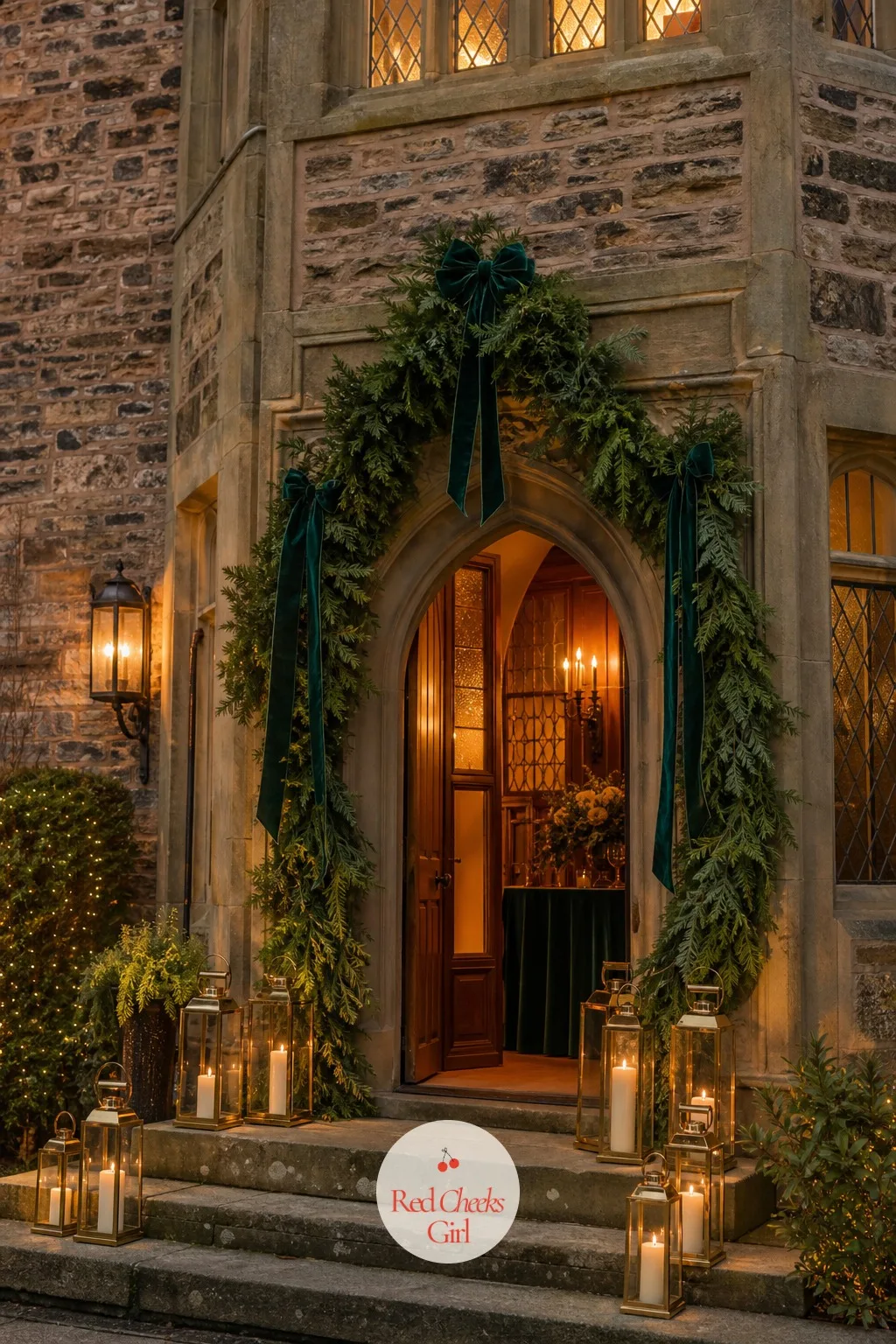
Guests arrive from the cold into a doorway wrapped in evergreen garland, lanterns glowing on either side of the step. It tells them before they are even through the door what kind of evening this is.
Build it from the ground up: urns or stone steps hold the lanterns, a faux or fresh garland runs along the door frame or iron gate above, and velvet ribbon in emerald ties off each end. Tell the florist you want ‘an eighteen foot evergreen garland with trailing emerald velvet ribbon for the entrance, plus flameless lanterns either side of the door.’
A rented venue with no grand doorway can get the same welcome from two tall urns of greenery flanking the entry instead. The garland can be faux and reused at the reception exit, the lanterns are worth renting rather than buying for one night.
The Candlelit Aisle
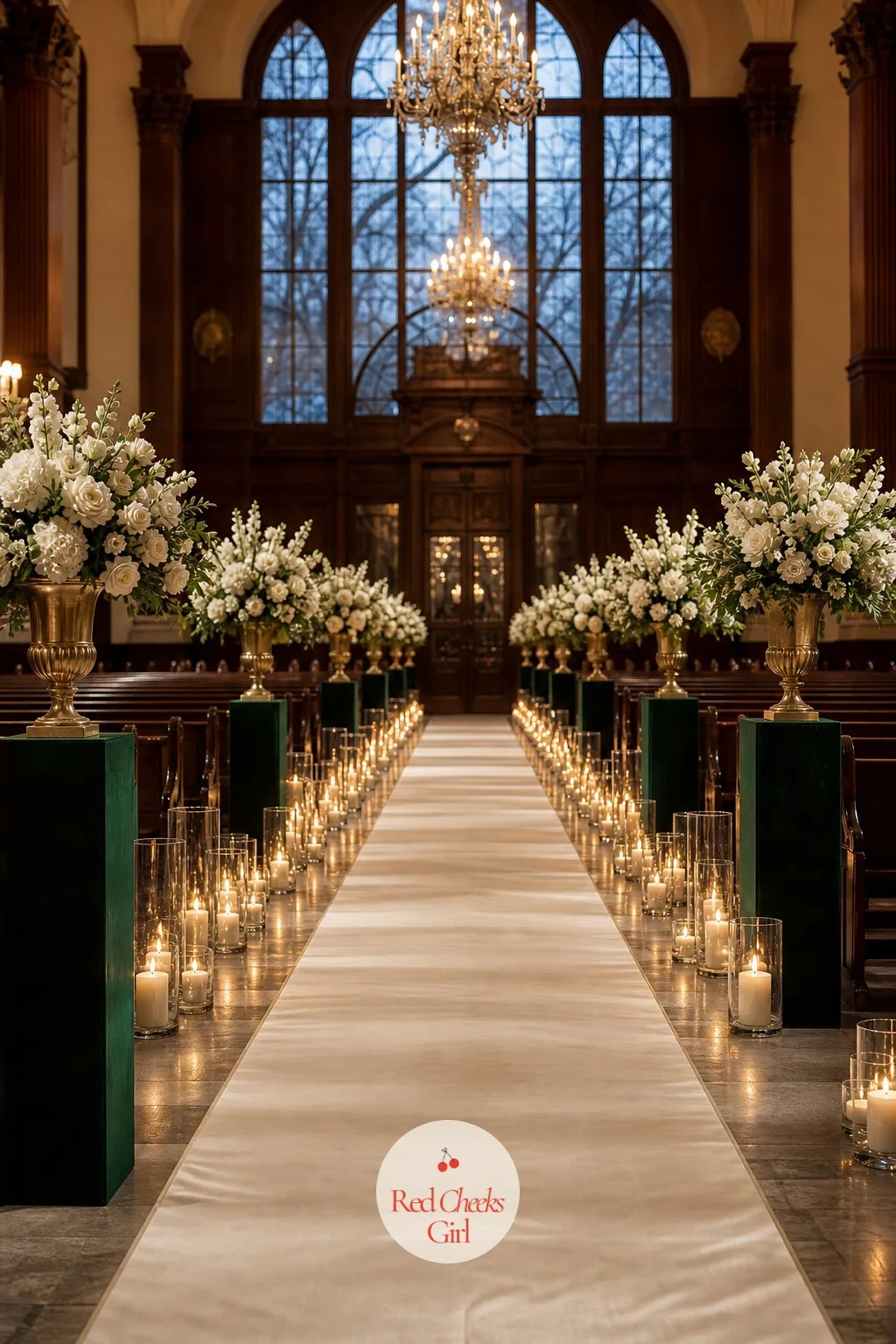
She would say an aisle is just the floor between two sets of chairs. It stops being that the moment it is lined with low candlelight and nothing else fighting for attention.
Flameless taper candles in glass hurricanes sit at the end of every second row, with a narrow runner of ivory satin or pressed cotton underfoot. No overhead lighting needed: the candles do the work and the dark historic room does the rest.
Tell the rental company ‘an ivory satin aisle runner, thirty six inches wide, with flameless taper candles in clear glass hurricanes along both sides.’ Battery candles are the one place worth spending a little more, since nobody wants real flame near a long dress and a draft.
The Ceremony Arch
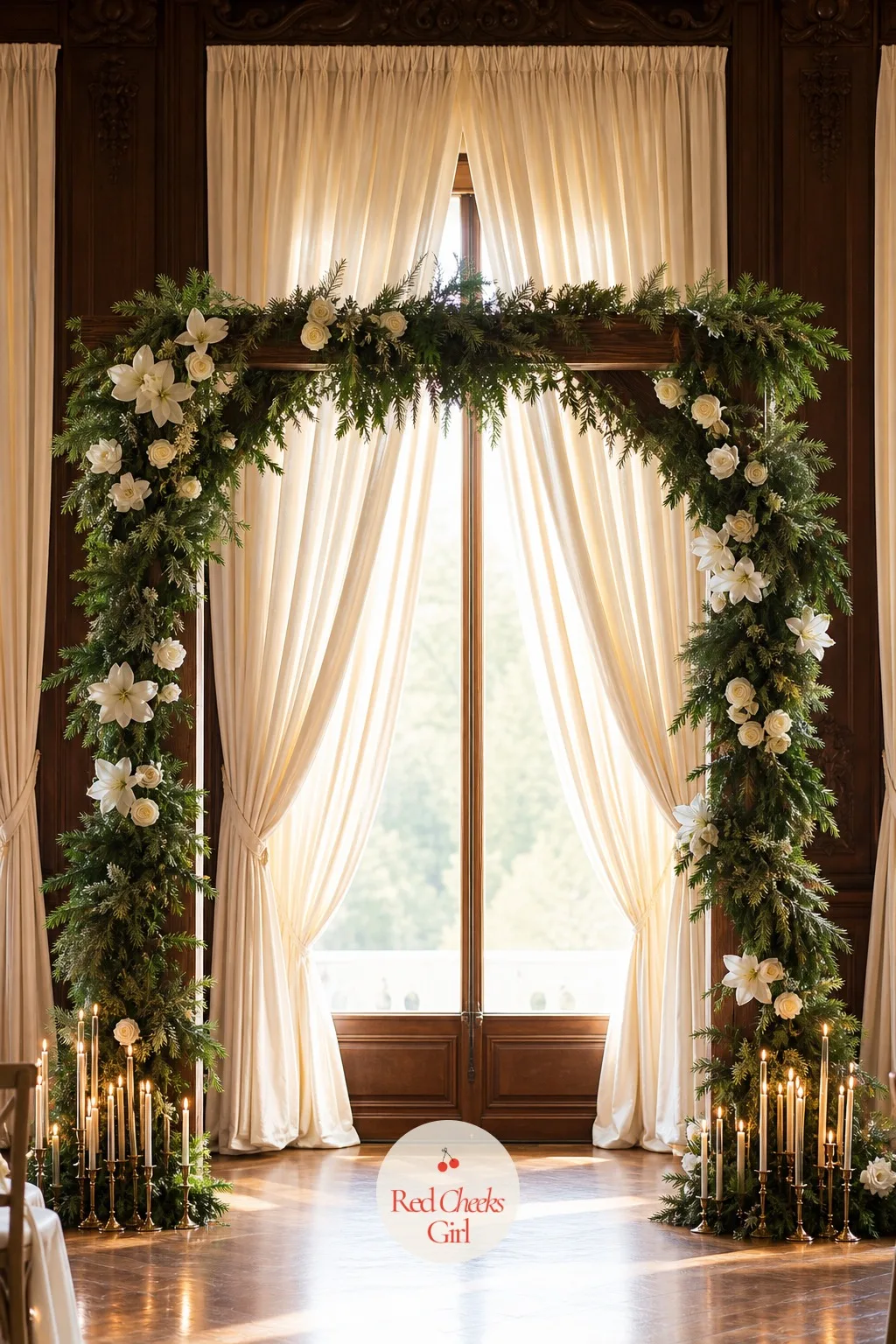
This is where the vows actually happen, and a bare arch photographs like an afterthought. Dressed in garland and candlelight, it becomes the backdrop every photo from the day gets measured against.
Build it in layers: a simple wood or iron arch frame stands first, evergreen garland winds around both uprights, and clusters of taper candles in brass holders sit at the base on either side. White amaryllis stems tucked into the greenery pick up the centerpiece flowers later in the room.
Give the florist this exact line: ‘wrap the ceremony arch in mixed evergreen garland with white amaryllis and ivory rose accents, plus brass taper candle clusters at the base.’ A couple without an arch can dress a simple iron gate or even the fireplace mantel the same way.
The Guest Seating
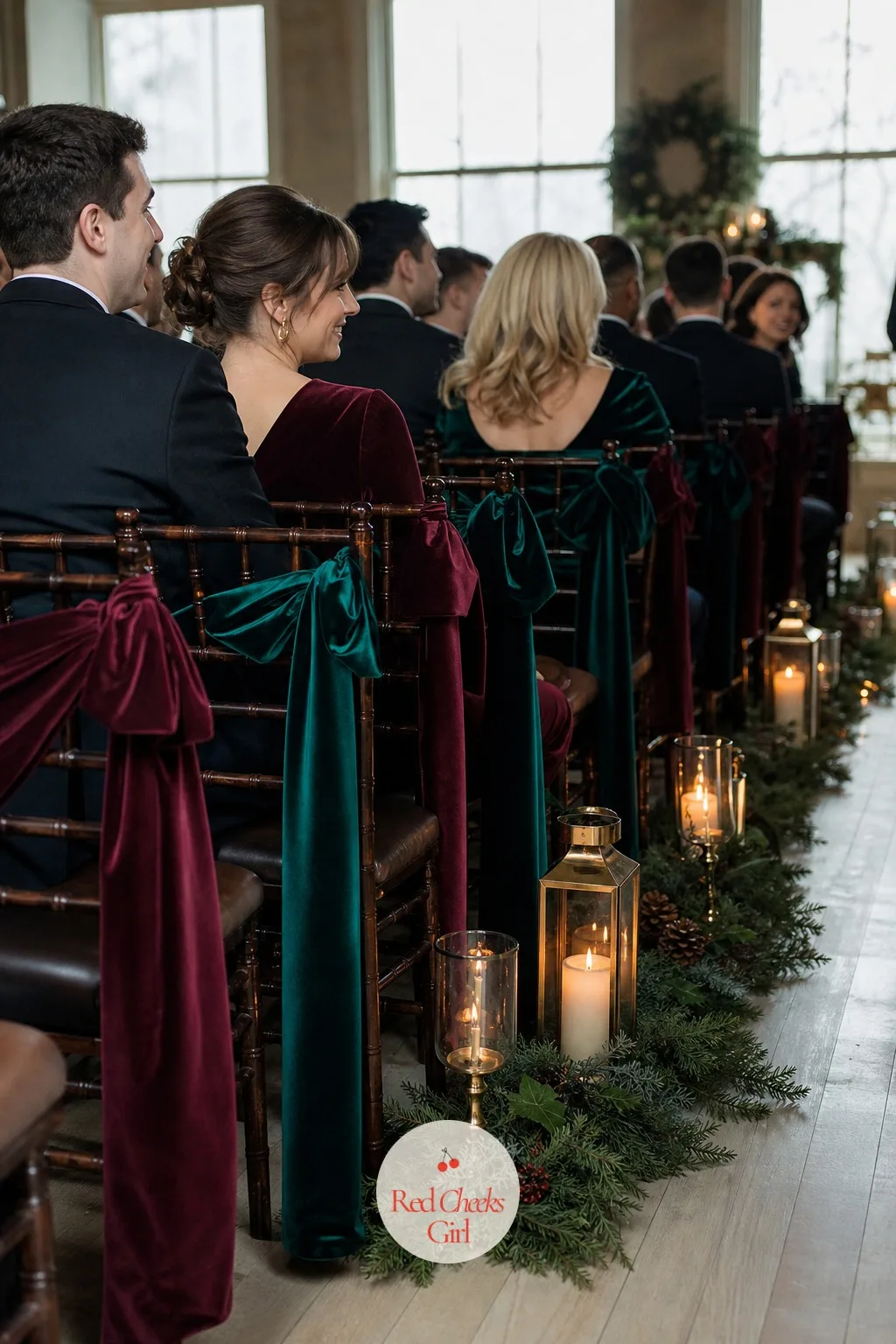
Rows of plain chairs read like a waiting room. The same chairs with a velvet bow at the aisle end read like an invitation to sit down and pay attention.
Each chair back gets a strip of emerald or burgundy velvet ribbon, tied once and left to hang rather than fussed into a bow. On a historic venue’s own carved chairs, this is the only dressing needed; nothing should cover the wood.
Ask the rental company for ‘velvet ribbon sashes in alternating emerald and burgundy, tied to the aisle chair on every row.’ It is one of the cheapest changes in the whole day, and a bride can tie them herself the morning of with a spool of ribbon and twenty minutes.
🛍 Shop this look
The Ballroom
The ceremony sets the mood, the ballroom spends it. This is where the chandeliers do the heavy lifting and the guests stop being quiet.
The Chandelier Ballroom
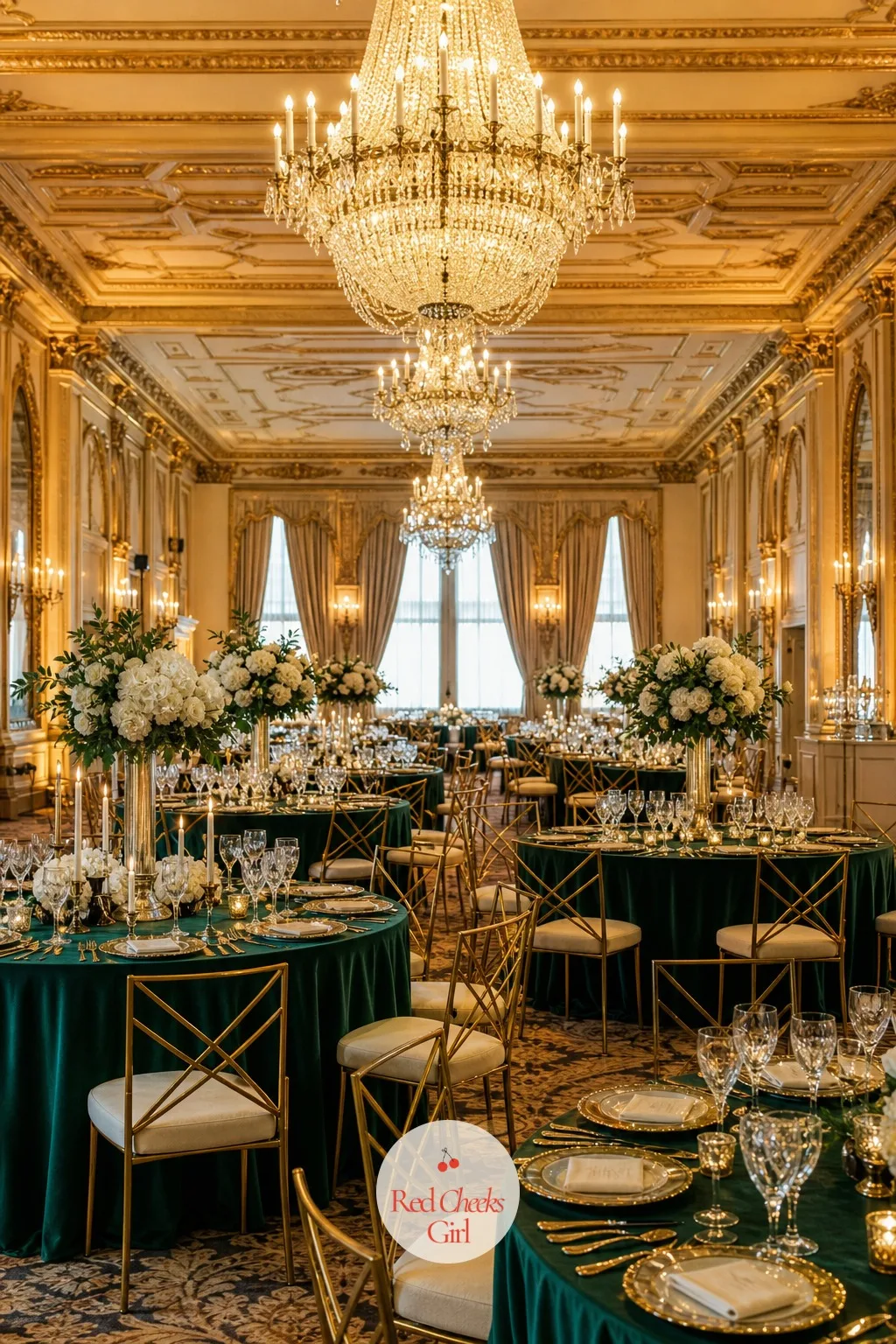
A ballroom at full brightness feels like a conference room. The same room with the chandeliers lit low and everything else dim becomes the whole reason the evening feels formal.
The crystal chandeliers overhead are usually the venue’s own, so the work is in what sits beneath them: warm uplighting washed in gold along the walls, and nothing competing with the ceiling for attention. Round or long tables below wear the same emerald, burgundy and ivory the rest of the day has already established.
Tell the venue coordinator ‘keep the chandeliers as the only overhead light, with warm gold uplighting along the perimeter walls and no cool white anywhere in the room.’ Where a venue has no chandelier, a single large garland and candle installation hung over the dance floor earns the same gasp.
🛍 Shop this look
The Cocktail Lounge
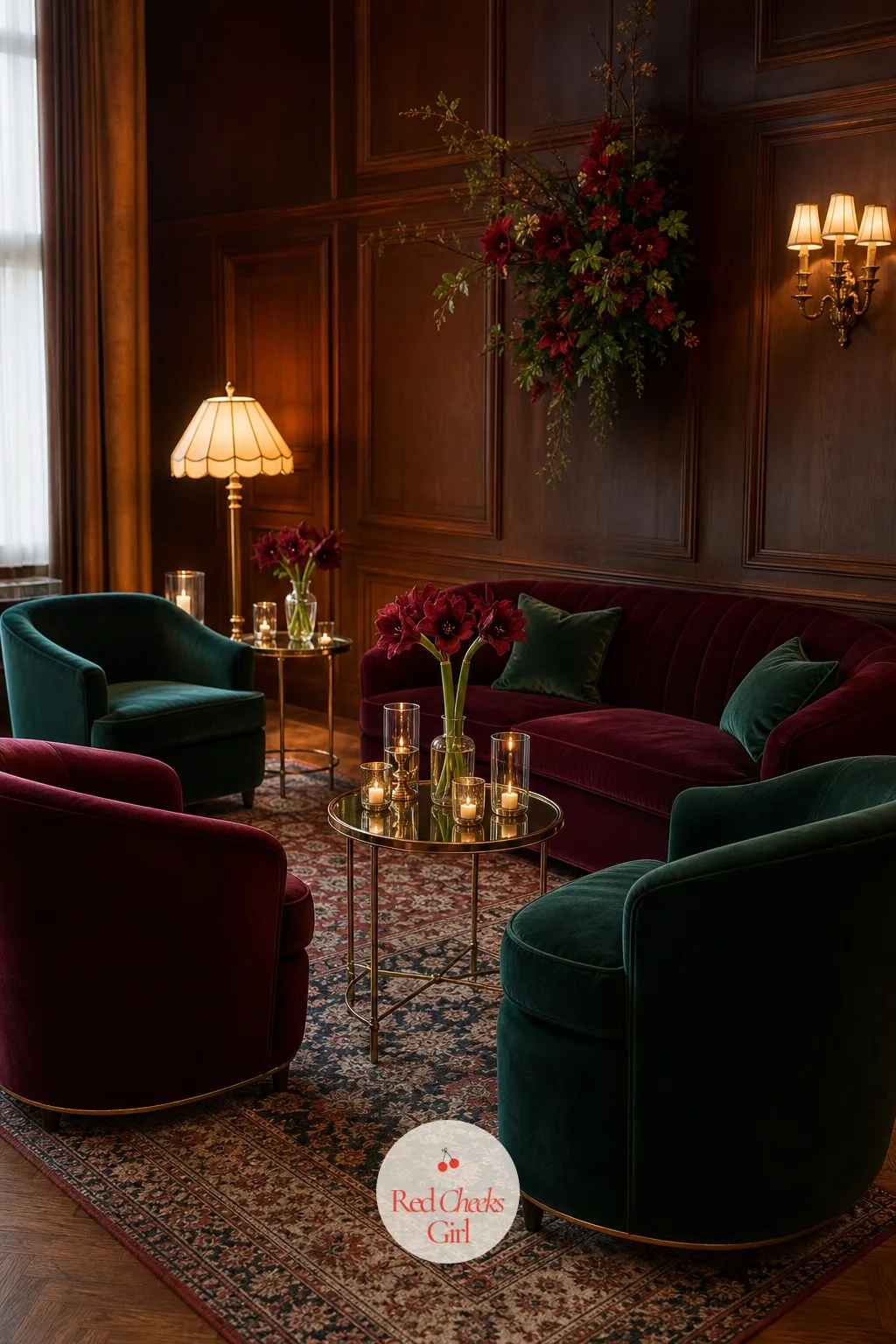
The hour between ceremony and reception is where a lot of weddings go flat. A proper lounge corner, velvet and gold and low light, keeps guests somewhere worth standing instead of pressed against a wall.
Build it from a cluster of velvet armchairs in burgundy or emerald, a low gold-rimmed side table at each, and a scattering of brass candle holders with amaryllis stems in short glass bud vases. A patterned rug underfoot (never bare floor) grounds the whole corner.
Give the rental company ‘two burgundy velvet armchairs, one emerald velvet settee, gold side tables, and brass votive candle holders for a cocktail lounge area.’ Renting the furniture is worth it here; it is the one piece of this day too heavy to borrow.
🛍 Shop this look
The Dance Floor
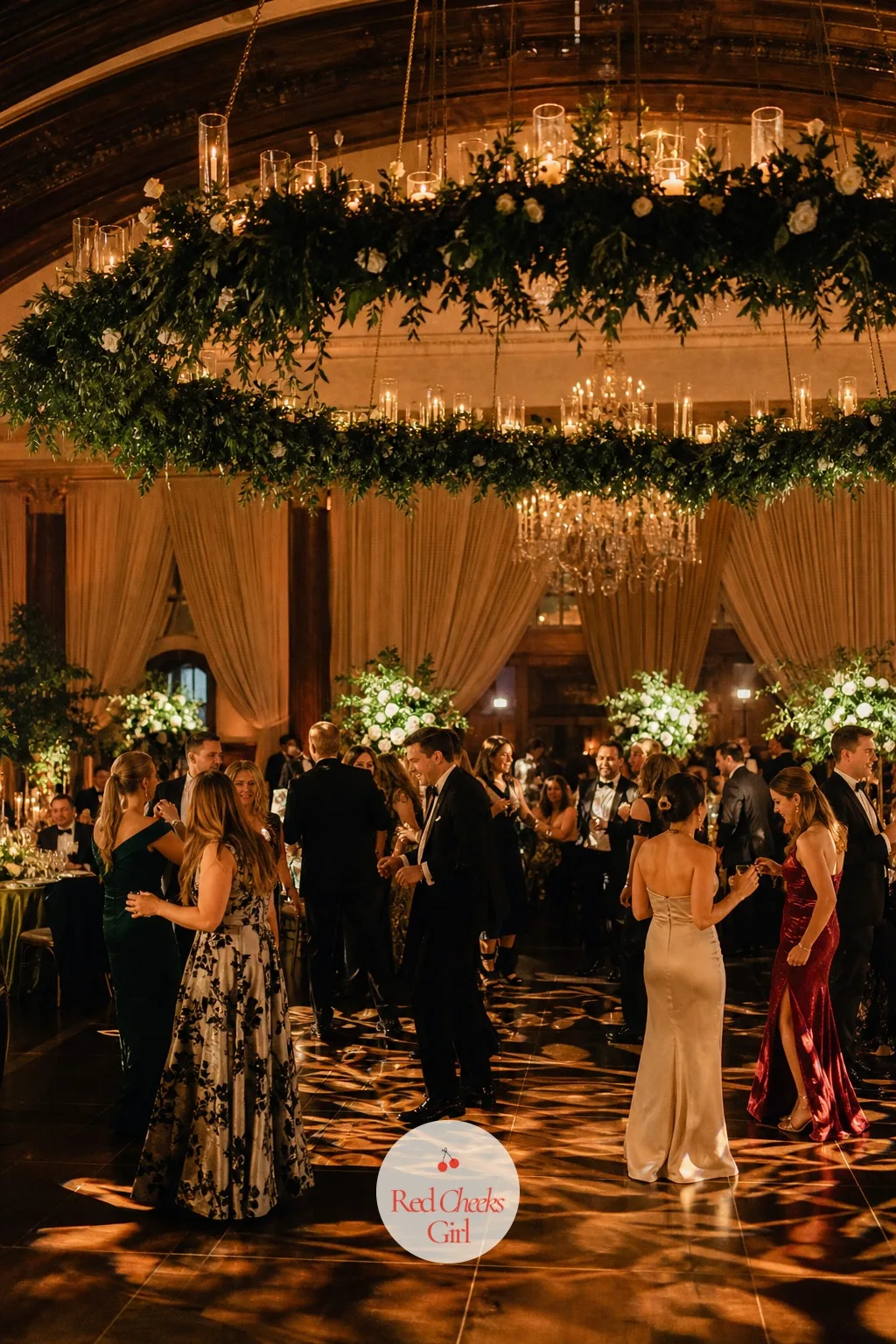
A dance floor sits empty until someone gives it a reason to be the center of the room, and overhead is where that reason lives. A suspended ring of evergreen garland and candlelight above the floor does it without a single balloon or paper lantern in sight.
The floor itself is usually the venue’s own parquet or a rented panel floor in a dark finish; above it hangs a circular or square frame wound in garland, with flameless candles wired in at intervals. Gold uplighting from the floor edges finishes it.
Tell the lighting company ‘a suspended garland and candle installation above the dance floor, with gold uplighting around the perimeter and no overhead white light.’ A smaller venue can scale this down to a single garland swag over the DJ table instead.
The Tables
Nobody remembers a wedding by its ballroom alone, they remember the table they sat at for three hours. Everything here answers to the same two fabrics: emerald or burgundy velvet underneath, ivory and gold on top.
Handing this part to a professional decorator rather than a willing aunt is worth it, and our notes on starting a wedding decor business are useful reading even from the client’s side of the table, since they show what the quote is actually covering.
The Long Tables
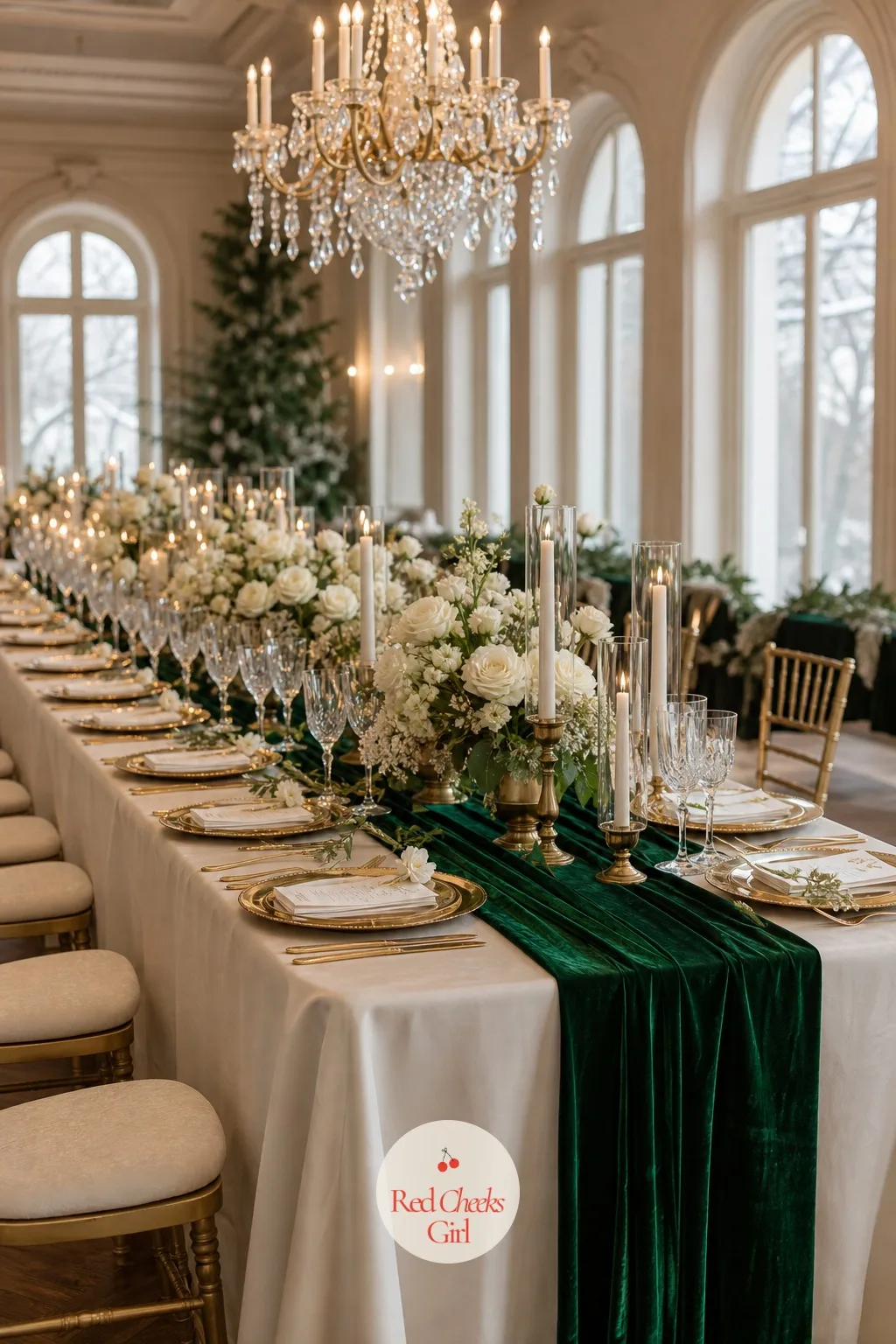
A bare long table at a formal wedding looks unfinished before anyone has even sat down. A runner down its length is the single fastest way to make it look dressed.
From the bottom up: an ivory tablecloth covers the table first, pressed flat with no visible creases, then a velvet runner in emerald or burgundy runs the full length, wide enough to pool slightly at each end.
Give the linen company this exact line: ‘ivory floor-length tablecloths with a fourteen inch emerald velvet table runner down the center of each long table.’ A couple renting tables rather than buying can alternate emerald and burgundy runners down the row for variation that still reads as one palette.
🛍 Shop this look
The Place Settings
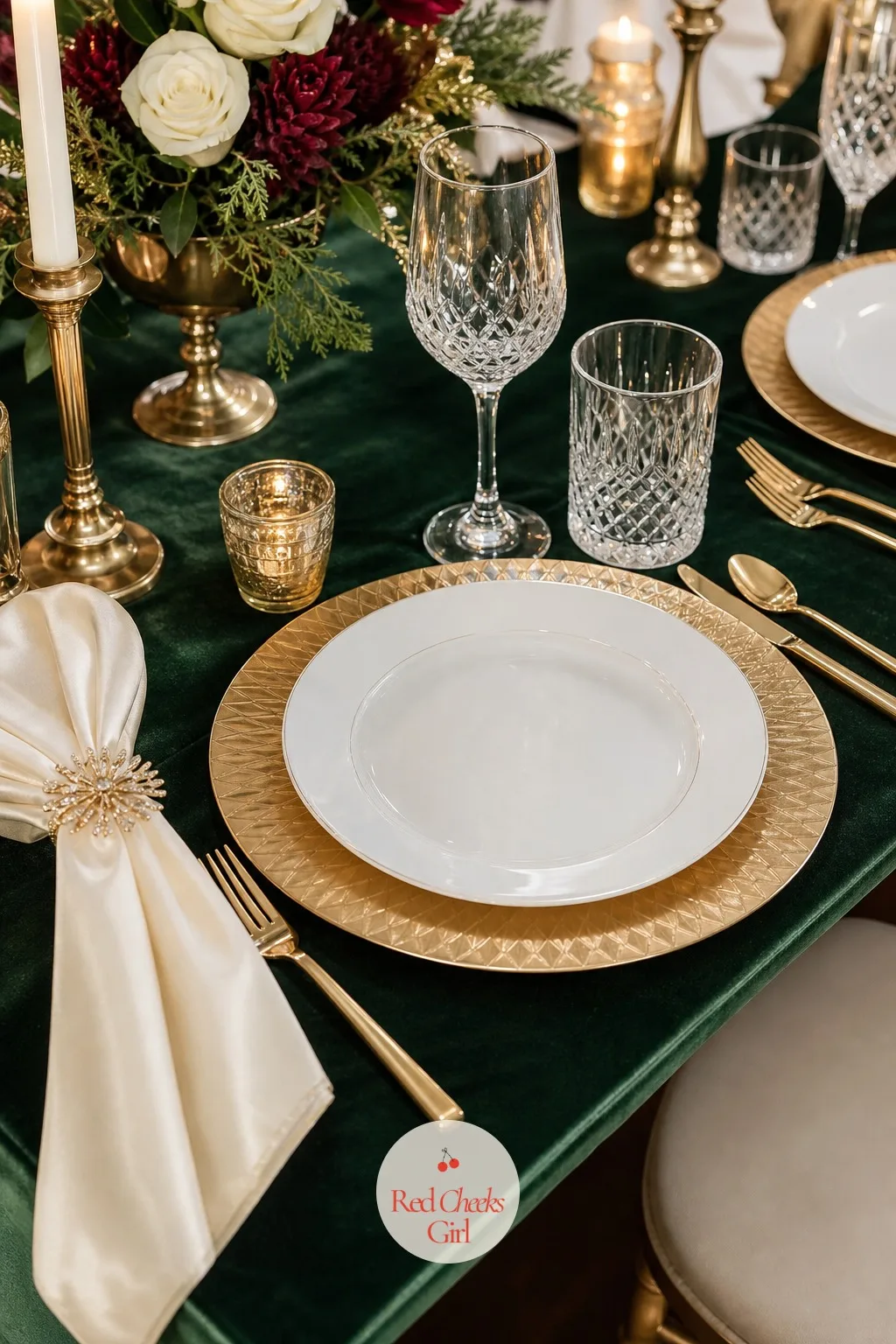
She might not notice good place settings, but she notices bad ones instantly: thin plastic-feeling cutlery, glassware that does not catch any light. Crystal and gold flatware fix both problems in one order.
Each setting builds the same way: a gold charger plate first, a white dinner plate on top, gold flatware laid either side, and a cut crystal glass for water and one for wine above the knife.
Tell the rental company ‘gold charger plates, gold flatware, and cut crystal glassware for every place setting.’ This is one area worth renting rather than buying in bulk; the per-setting cost barely changes and nobody has to wash two hundred glasses afterward.
🛍 Shop this look
The White Rose and Amaryllis Centerpieces
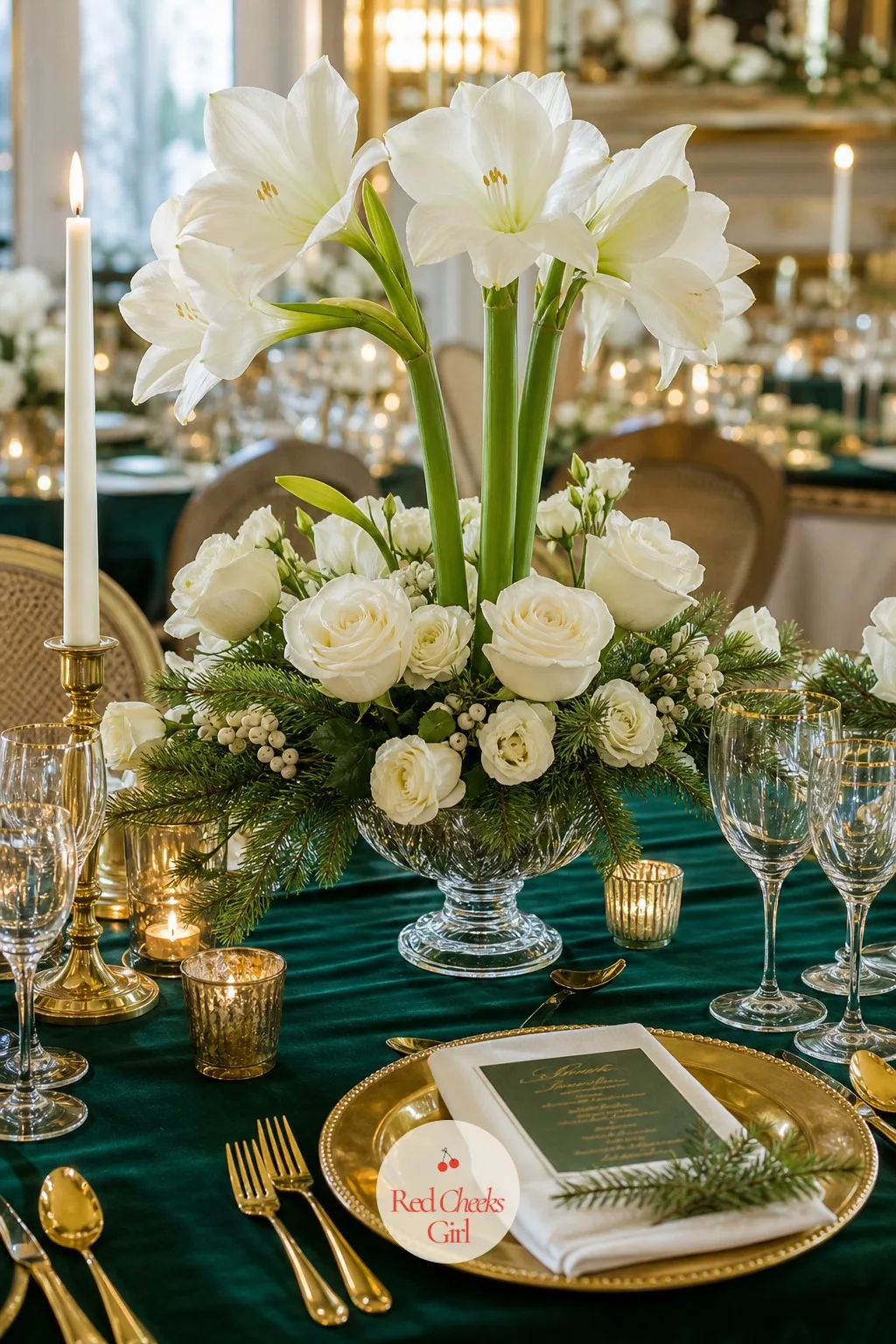
A centerpiece that is only white flowers can look flat under ballroom light. Amaryllis, with its big open bloom, gives the arrangement height and shadow that small roses alone cannot.
Each one builds low and loose: a glass cylinder or urn base, white garden roses clustered through the middle, and two or three amaryllis stems standing taller through the center, with a sprig of evergreen tucked at the base to tie it to the rest of the room.
The sentence for the florist: ‘low centerpieces of white garden roses and amaryllis in glass urns, with a trim of evergreen at the base, for every long table.’ Amaryllis is seasonal and not cheap, so a tighter budget can use one tall stem per table rather than three.
🛍 Shop this look
The Candelabras
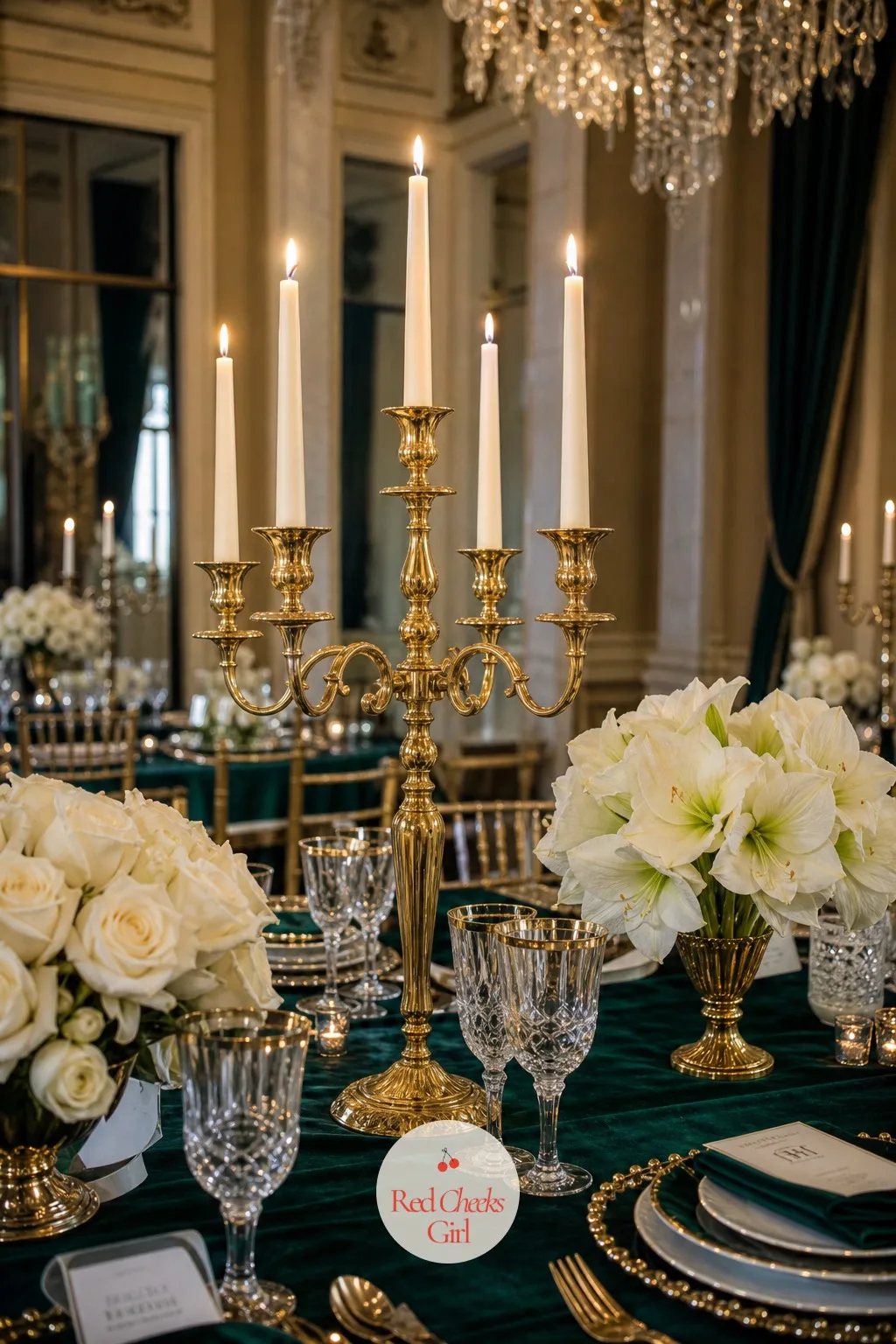
Overhead light alone leaves a long table looking a little flat by nine o’clock. A candelabra down the center keeps the light moving at eye level all night, which is where candlelight actually flatters a room.
A gold candelabra stands between every second centerpiece, holding three to five taper candles, with a few loose amaryllis petals or evergreen sprigs scattered at its base rather than a full arrangement.
Tell the florist ‘alternate gold five-arm candelabras with the centerpieces down each long table, taper candles in ivory.’ Real flame candelabras need a venue that allows open flame; where it does not, flameless tapers look identical from more than a few feet away.
🛍 Shop this look
The Head Table
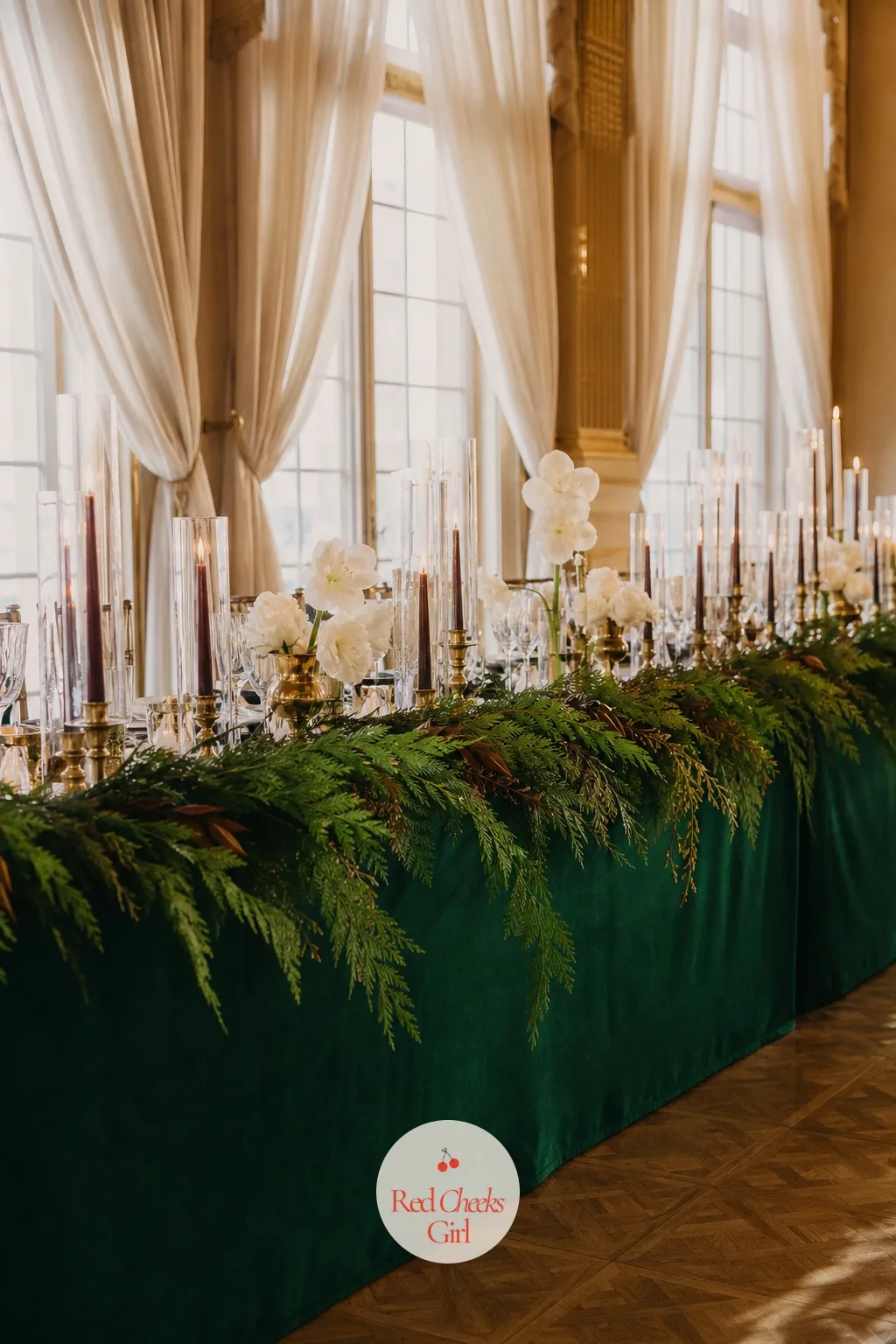
The head table carries the whole room’s attention for the toasts, so it earns the most dressing of any single surface. Garland along its front and taper candles down its length make it unmistakably the center of the room without needing a riser.
The build runs front to back: the table itself sits on the same ivory cloth as the rest, a long run of evergreen garland drapes along the front edge, and a row of taper candles in varied height holders runs down the length of the top, flanked by white rose and amaryllis clusters.
Give the decorator this line: ‘drape evergreen garland along the front of the head table, with varied height taper candles and white rose and amaryllis clusters down the length of the top.’ A couple without a dedicated head table can dress the end of their own long table the same way instead.
🛍 Shop this look
The Menus and Napkins
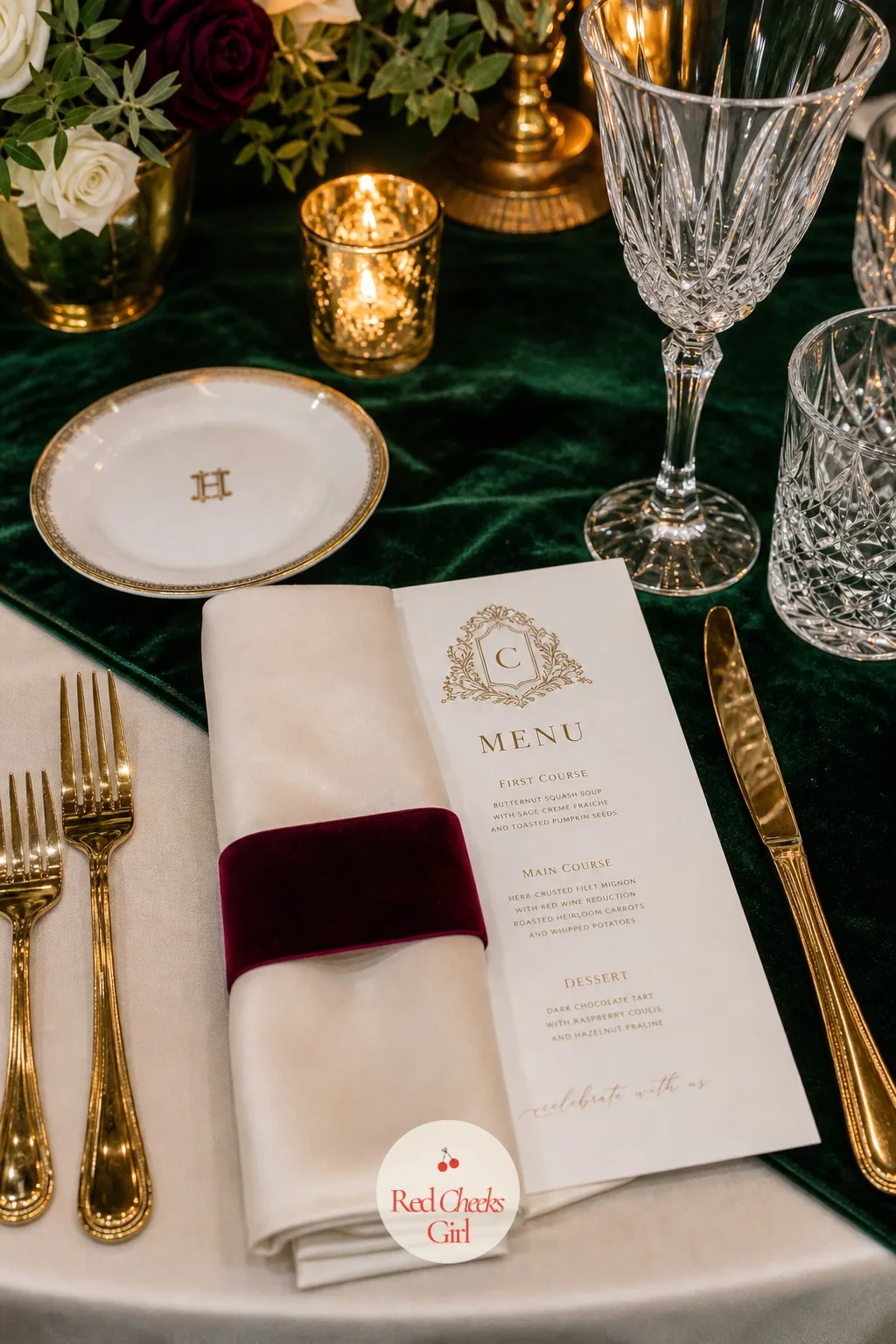
A folded napkin is a napkin. A folded napkin with a strip of velvet ribbon and a printed menu tucked beneath it is a place setting someone photographs before they even sit down.
Each one layers simply: an ivory napkin folded in thirds, a length of emerald or burgundy velvet ribbon wrapped once around the center, and a gold-printed menu card slid under the ribbon so it sits flat against the napkin.
Tell the stationer ‘gold foil menu cards, sized to tuck under a half inch velvet ribbon wrapped around each folded napkin.’ This is an easy one to assemble at home the week before; the only thing worth ordering in is the printing itself.
🛍 Shop this look
The Escort Card Table
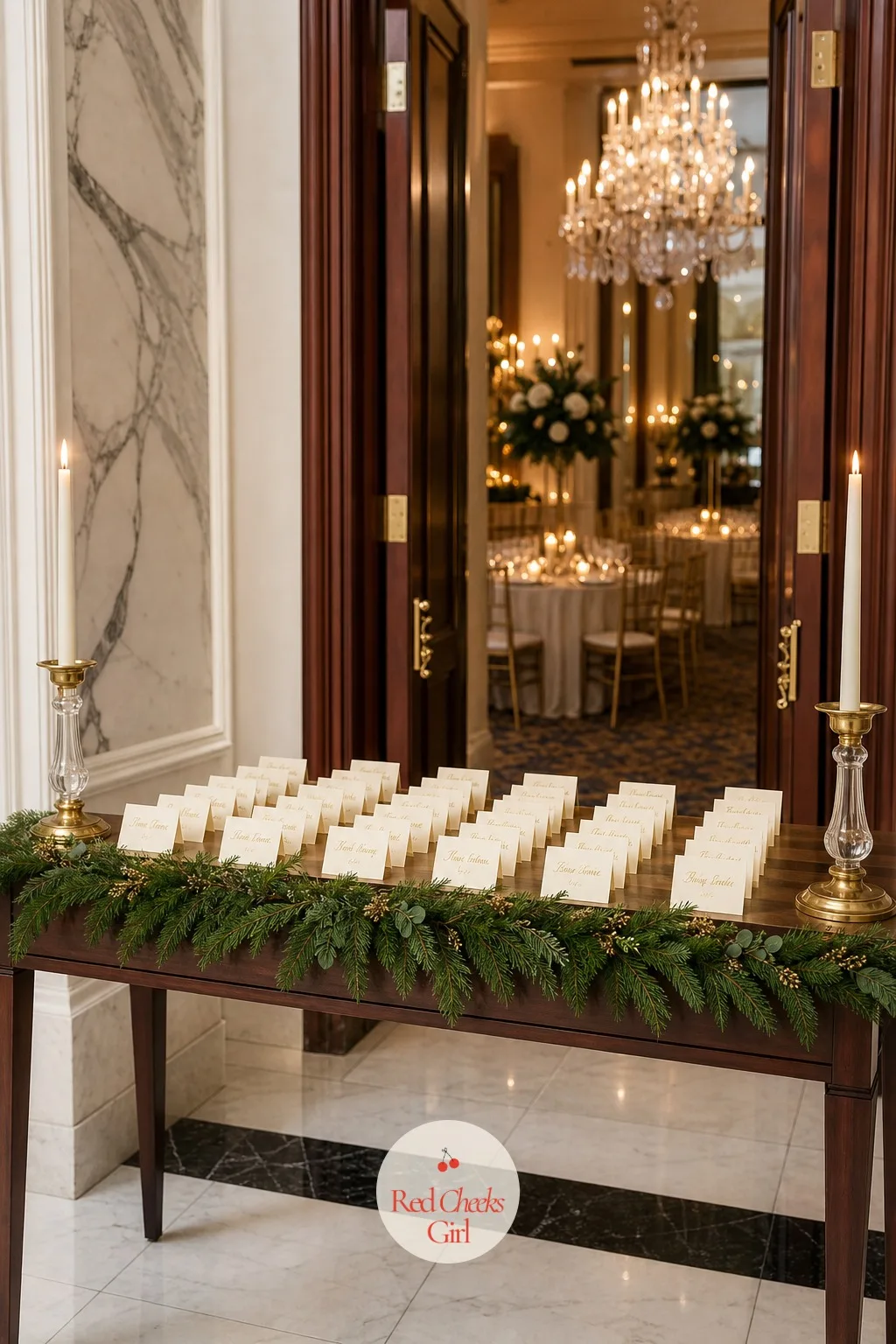
Guests meet this table before they meet their seat, and a bare table of loose cards looks like an afterthought at the door of a formal room. A small display with the same garland and candlelight fixes that in one pass.
A narrow table at the ballroom entrance holds the same ivory cloth as the reception, gold-printed place cards standing in rows or tucked into a garland-wrapped frame, with a single taper candle at each end.
The line for the stationer: ‘gold calligraphy place cards on ivory stock, displayed on a garland-trimmed table at the reception entrance.’ Alphabetizing by last name, not table number, is the one thing that keeps the line moving.
🛍 Shop this look
Food and Drink
Winter gives a wedding permission to be a little indulgent at the bar and the dessert table, and nobody argues with warm spiced wine in a cold month.
The Champagne Bar
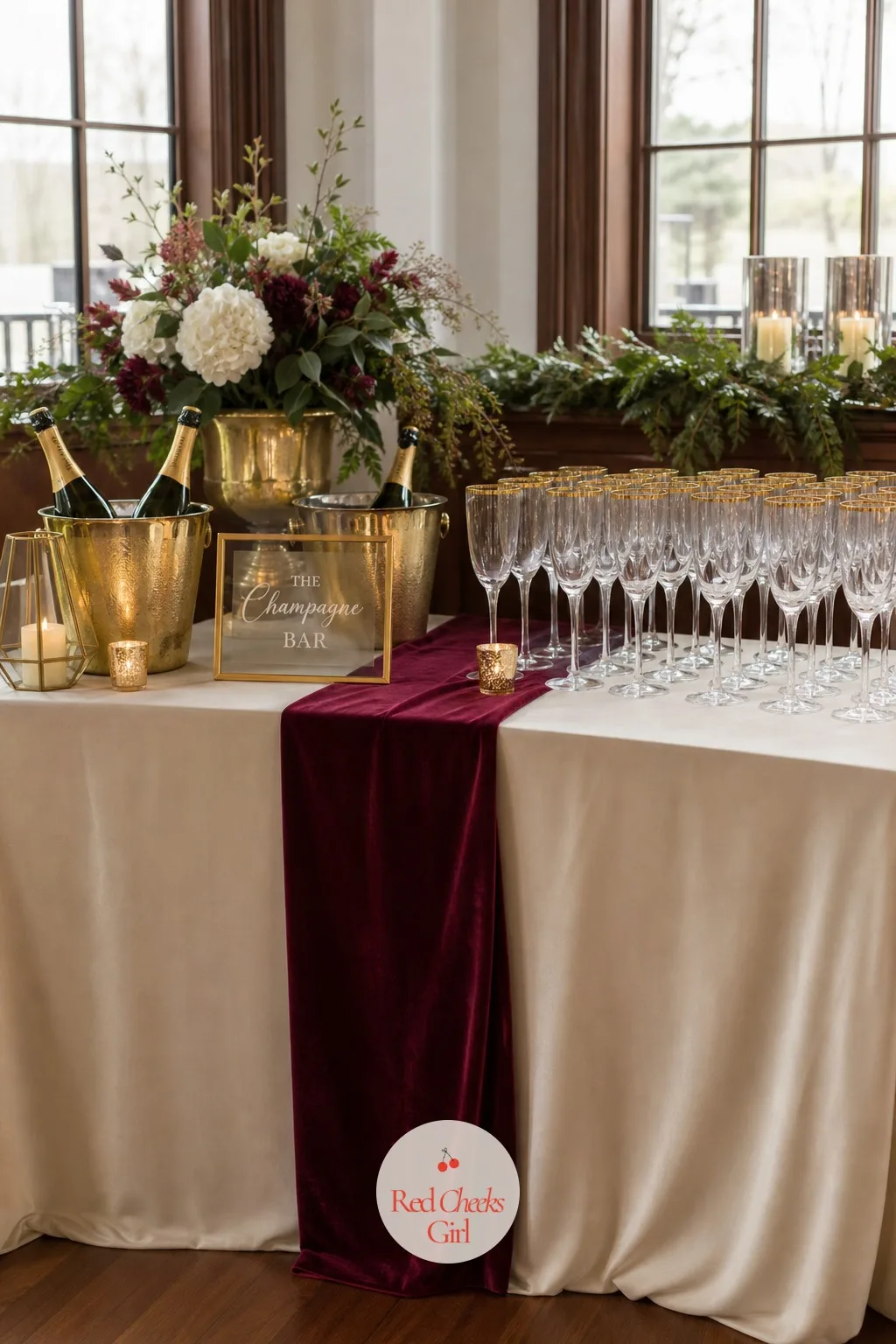
A tray of pre-poured glasses at the door does the job but says nothing. A proper champagne bar, dressed in the same velvet and gold as the tables, gives guests a reason to linger and a drink worth photographing.
It builds like a small table of its own: an ivory cloth with a burgundy velvet runner, rows of gold-rimmed flutes, bottles chilling in gold-toned buckets, and a small sign in gold lettering naming the garnish options (sugared cranberries, rosemary sprigs, a twist of citrus).
Tell the caterer ‘a champagne bar with gold-rimmed flutes, garnishes of sugared cranberry and rosemary, set on a velvet-topped table near the dance floor.’ A dry venue or a tighter budget can run the same bar with sparkling cider instead, nobody will ask.
🛍 Shop this look
The Tiered White Cake
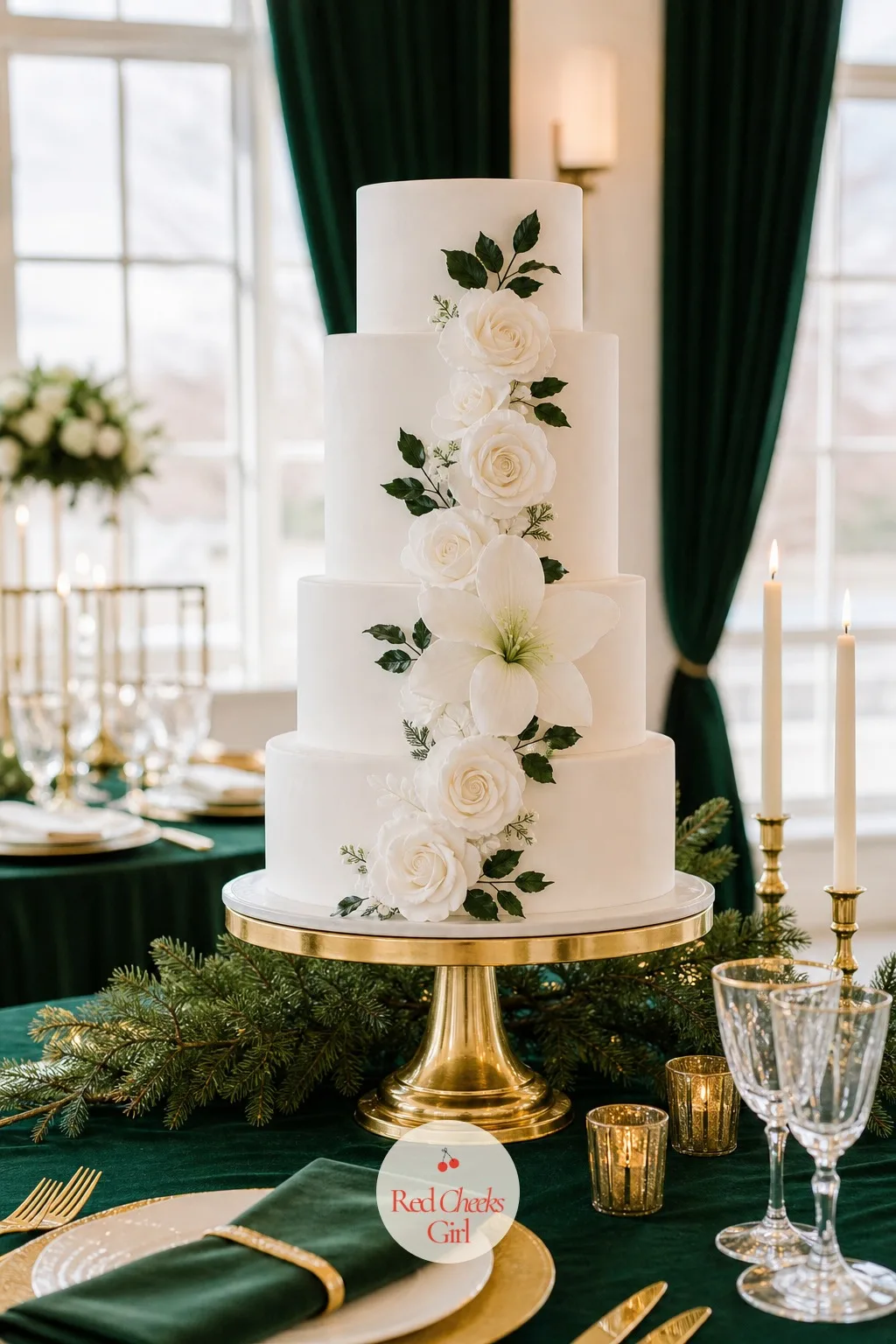
A plain white cake can look like an afterthought next to a room this dressed. Sugar flowers and a gold stand close that gap without touching the actual flavor underneath.
It stands tiered, three or four layers in smooth white buttercream or fondant, sugar roses and a single sugar amaryllis cascading down one side, the whole thing set on a gold cake stand with a sprig of real or sugar evergreen tucked at the base.
Give the baker this line: ‘a four tier white fondant cake with cascading sugar roses and one sugar amaryllis bloom, on a gold stand with evergreen at the base.’ Sugar flowers take real skill, so this is the one piece worth ordering even for a mostly DIY wedding.
🛍 Shop this look
The Mulled Wine Station
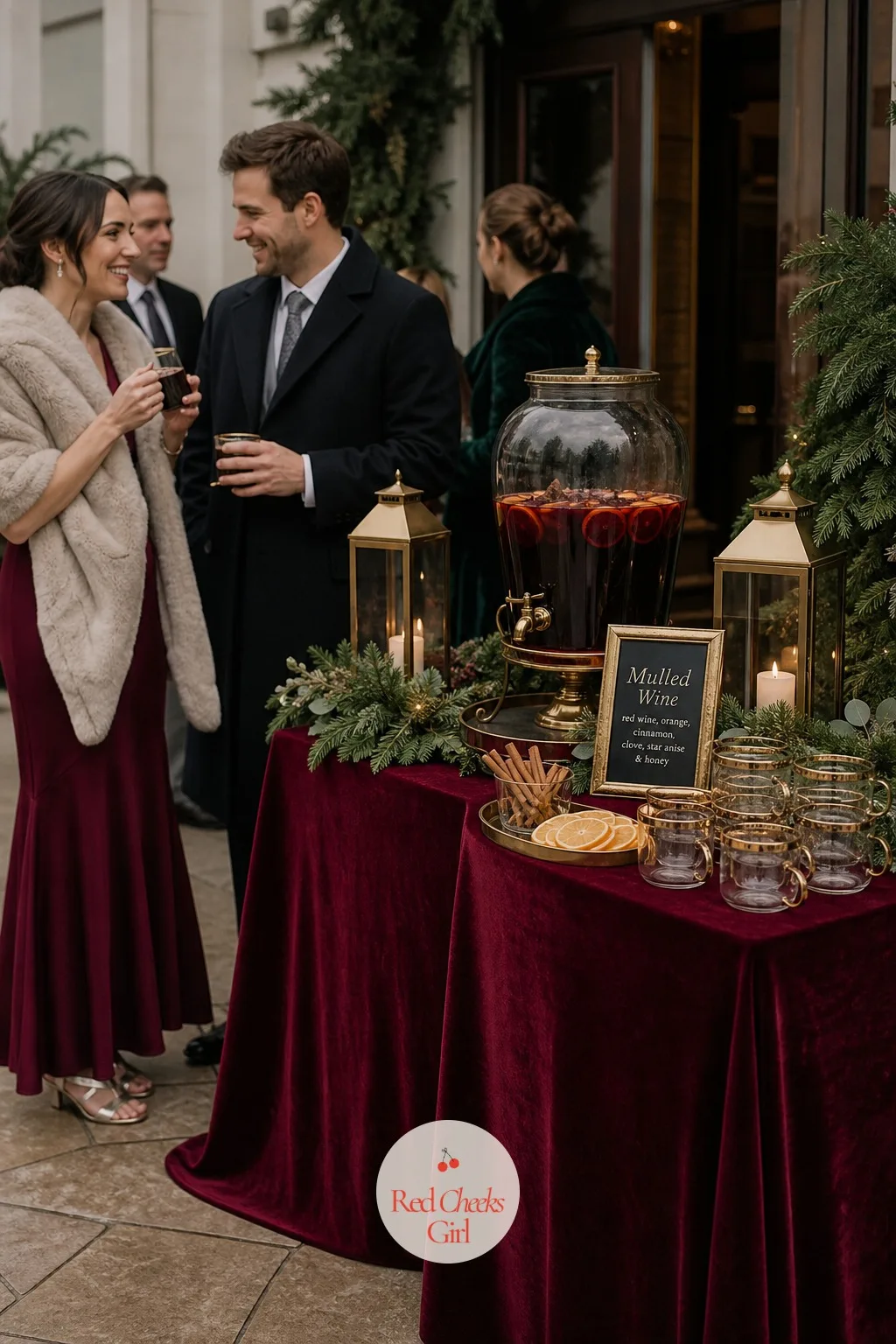
Guests arriving from the cold want something in their hands before the ceremony even starts, and a champagne flute does not warm anyone up. A small mulled wine or hot toddy station, tucked near the entrance, does.
A drink dispenser of warm spiced wine sits on a velvet-topped side table, gold-rimmed mugs stacked beside it, with cinnamon sticks and dried orange slices as the only garnish, all lit by a single lantern rather than overhead light.
Tell the caterer ‘a self-serve mulled wine station with gold-rimmed mugs and cinnamon stick garnish, placed near the ceremony or reception entrance.’ It is one of the cheapest warm touches in the whole day and the one guests mention first on the drive home.
🛍 Shop this look
The Toasting Flutes
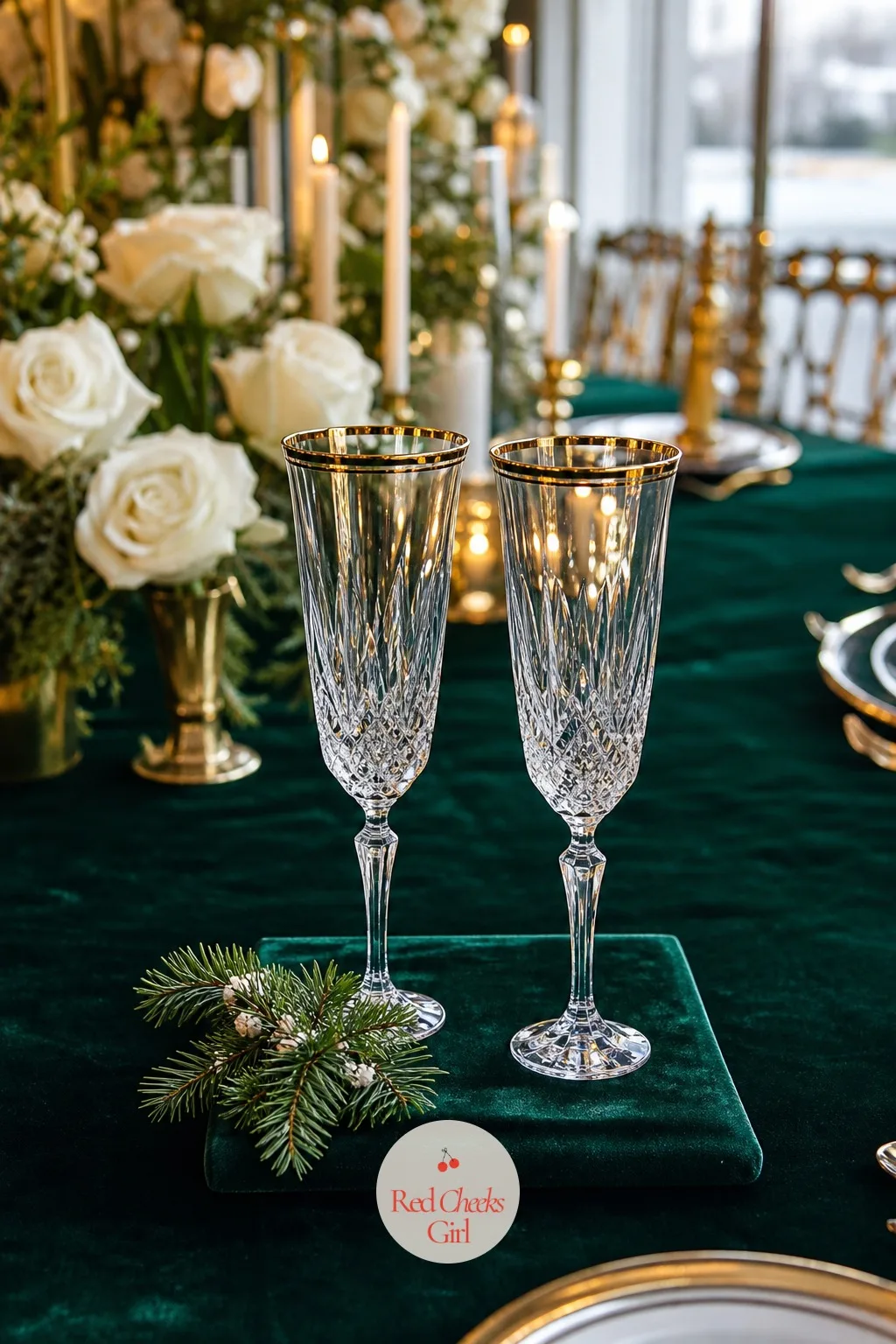
Every other glass on the table is a rental, but the couple’s own pair is the one that goes home with them. A matching set in gold and crystal, set apart at the head table, marks the one moment in the evening that belongs to just the two of them.
They stand on a small velvet cloth of their own at the center of the head table, a sprig of evergreen laid beside them, distinct from the rented glassware down the rest of the row.
The line for the stationer or gift shop: ‘a pair of gold-rimmed crystal toasting flutes, engraved with the couple’s names and wedding date.’ This is worth buying rather than renting; it is one of the only objects from the whole day meant to leave the venue.
🛍 Shop this look
What Guests Do and Take Home
The decor gets photographed, but these are the parts guests actually touch. For a few more structured moments through the reception, 10 best wedding games for every celebration covers activities that keep the same formal tone.
The Guest Book Alternative
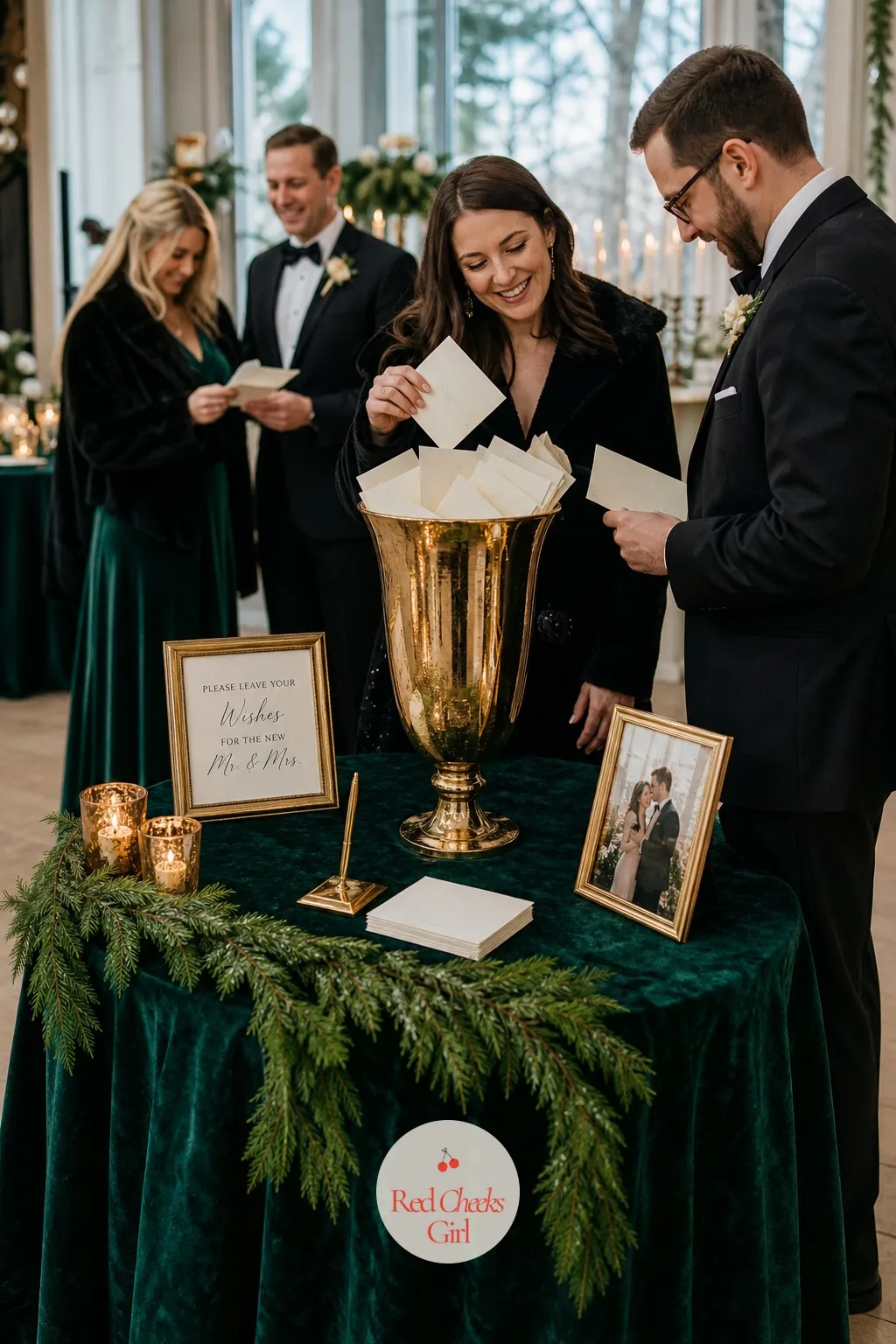
A blank book by the door gets a handful of signatures and then sits in a drawer. A small, dressed-up alternative near the bar gets guests actually stopping to write something worth keeping.
A single garland-wrapped frame or a tall gold vase stands on a velvet-topped table, with cards and a gold pen for guests to write a note and drop in, or slide into a frame around a photo of the couple.
It runs itself all night: guests pass it on the way to the bar, take thirty seconds to write a line, and drop the card in. Ask the stationer for ‘ivory note cards with a single gold line for a name, and a tall gold vase to collect them.’ The frame or vase can be bought once and reused for an anniversary later.
🛍 Shop this look
The Sparkler Send-Off
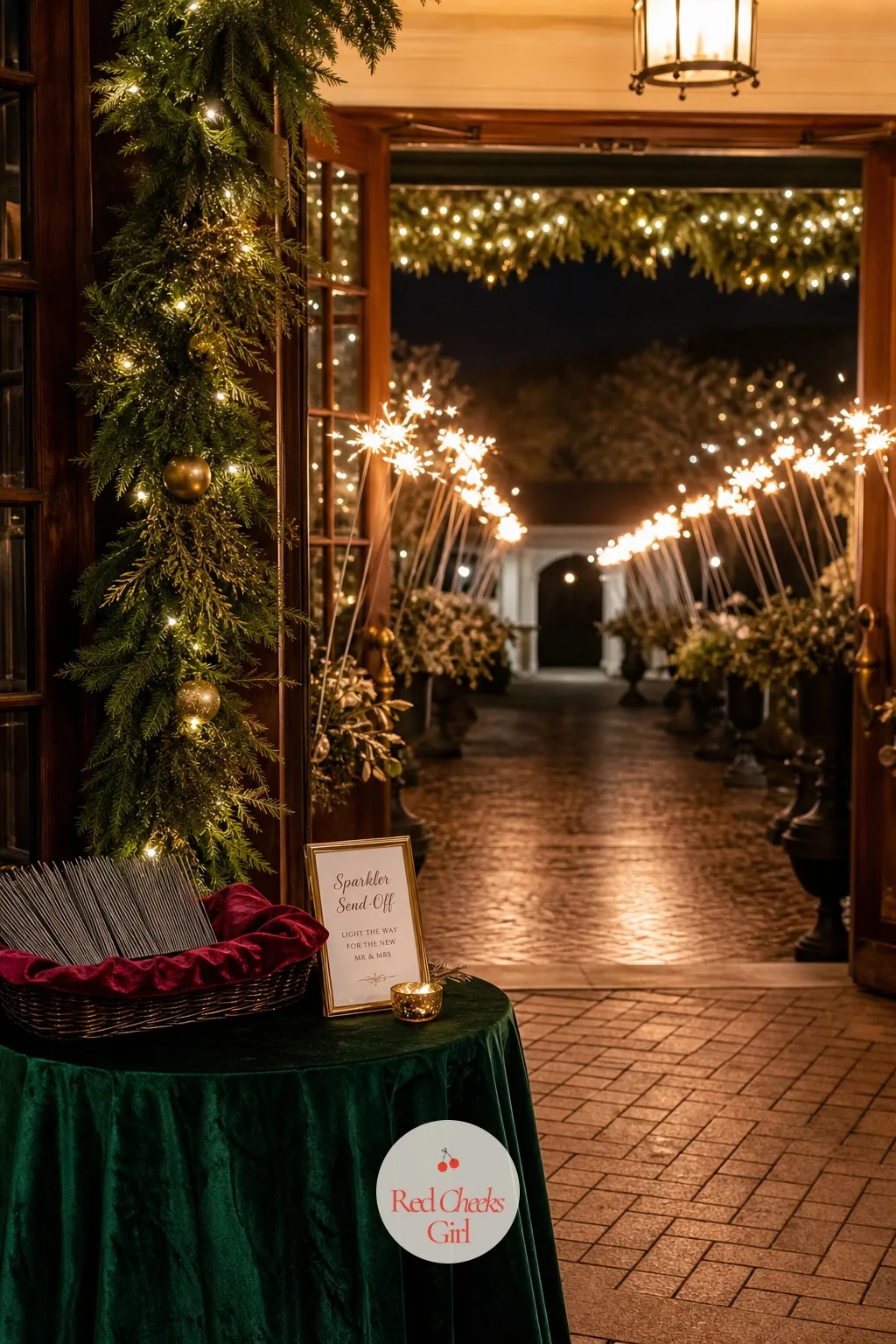
The last photo of the night is the one that gets printed and framed, and a dim parking lot does not give a photographer much to work with. A sparkler send-off, lined up like the aisle candles that opened the night, closes the evening the same way it began.
Guests line up in two rows near the exit, sparklers handed out from a velvet-lined basket just before the couple leaves, a small gold-lettered sign nearby reminding everyone when to light them.
It runs in under five minutes: a coordinator hands out sparklers, lights the first few, and the couple walks through once everyone is lit. Tell the planner ‘sparklers in a velvet-lined basket near the exit, with a lighter on hand and a sign cueing guests when to light.’
🛍 Shop this look
The Velvet Pouch Favor
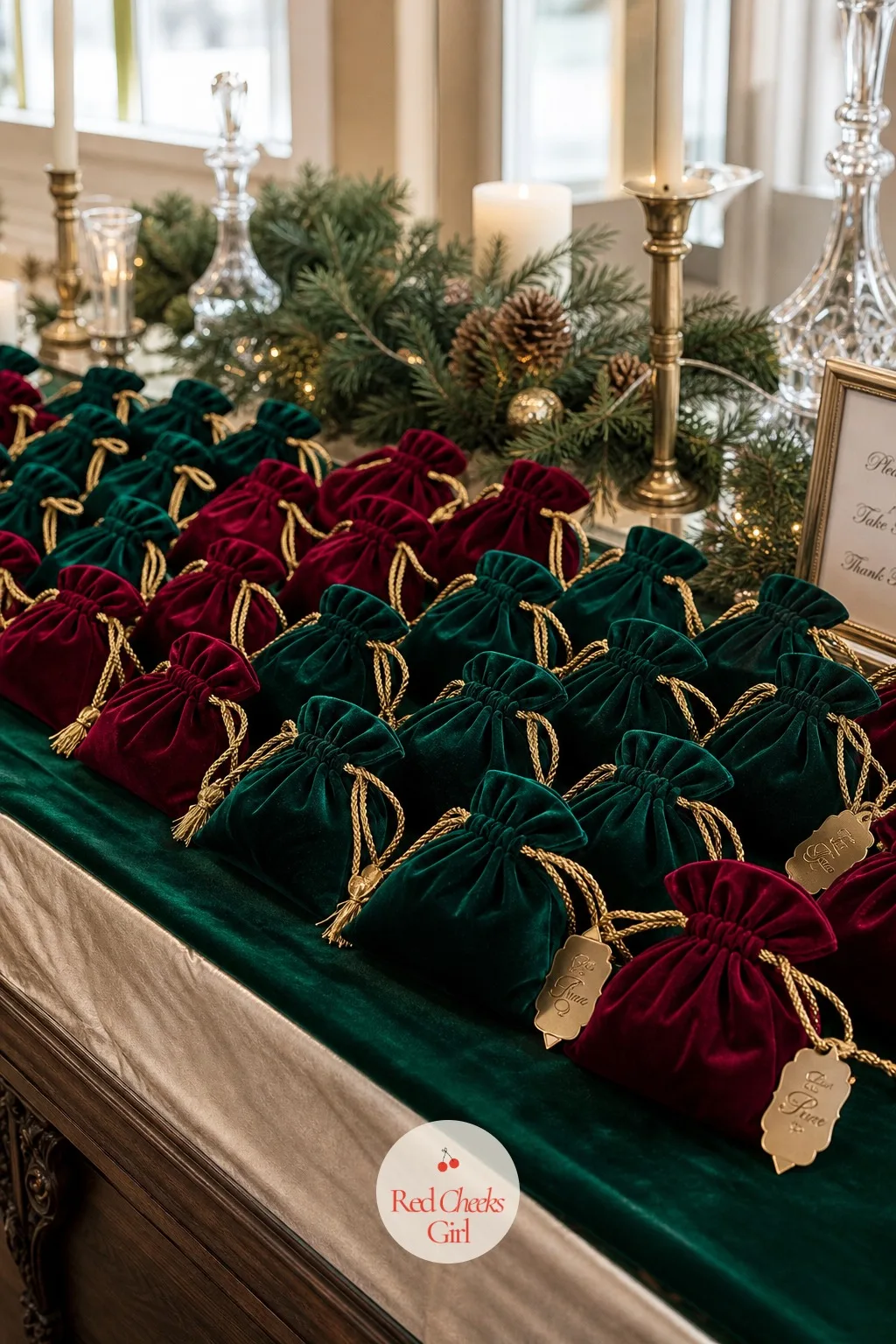
A favor nobody picks up has failed before the night even starts. A small velvet pouch, sitting in the same emerald and gold as everything else on the table, gets taken because it already matches the thing they just spent all evening admiring.
Each pouch is velvet in emerald or burgundy, gold drawstring, filled with sugared almonds or chocolate truffles, and finished with a tiny paper tag in gold script naming the couple and the date.
Give the favor company this line: ’emerald and burgundy velvet drawstring pouches filled with sugared almonds, tagged with gold script.’ Filling and tying fifty pouches is a genuinely good job for a bridal party the night before; the pouches themselves are worth ordering ready-made.
🛍 Shop this look
The Invitation
Everything above exists because of this small rectangle of card. It is the first thing a guest holds, and it has to promise the whole evening in one glance.
The Invitation
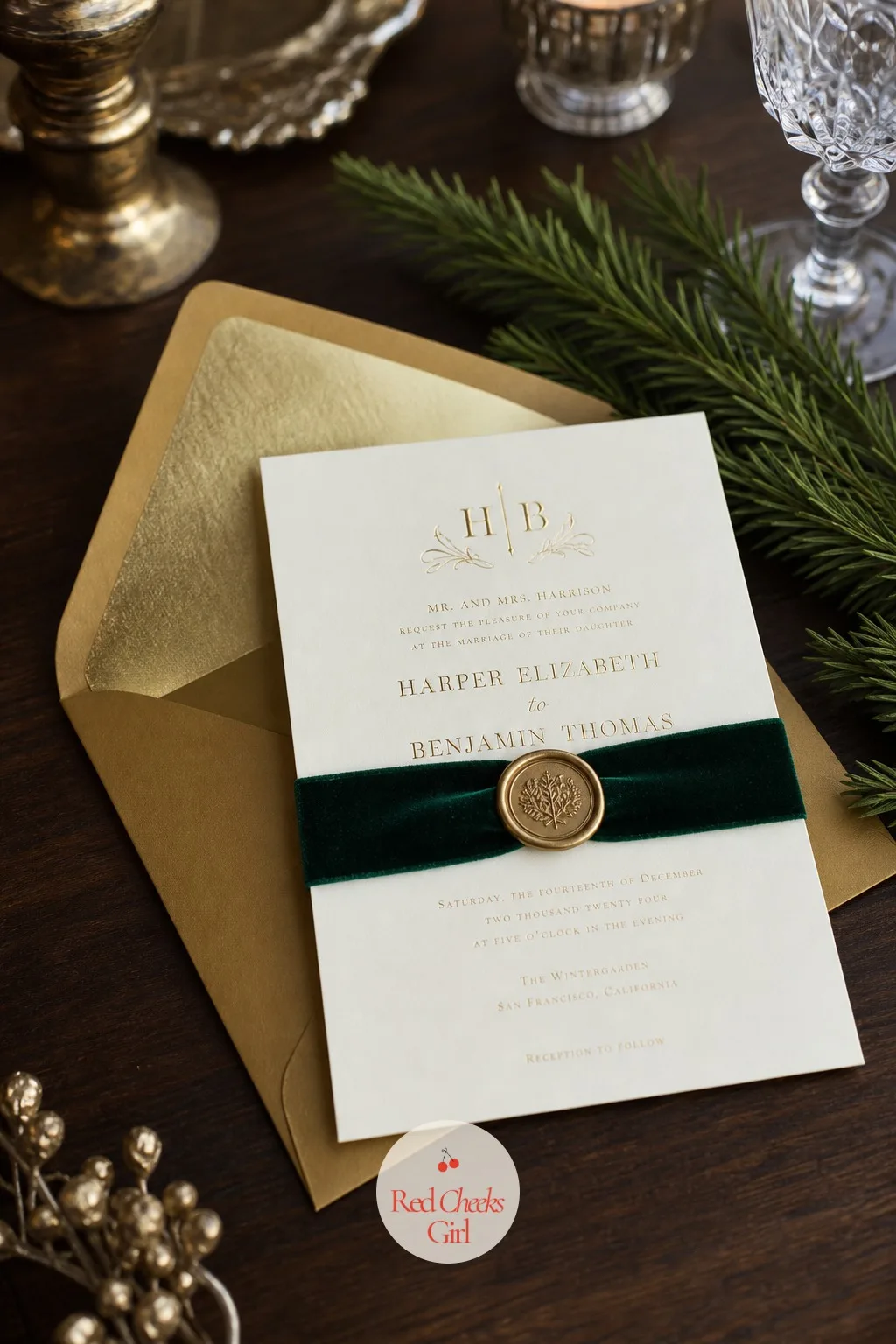
This is the only part of the day a guest holds before they have seen a single candle lit. It has to promise emerald, burgundy, ivory and gold in a single glance, or the room full of it later feels like a surprise rather than a payoff.
It builds in thin layers: a heavy ivory card stock prints in gold foil, a band of emerald or burgundy velvet ribbon wraps the stack, and a wax seal in gold finishes the fold, slid into a gold-lined envelope.
Tell the stationer exactly this: ‘ivory card stock with gold foil lettering, wrapped in a half inch velvet ribbon, sealed with a gold wax stamp, in a gold-lined envelope.’ The velvet ribbon and wax seal are easy to add at home to pre-printed invitations if the full custom suite is out of budget.
Frequently Asked Questions
What colors work best for an elegant winter wedding?
Deep jewel tones read best in winter light, especially emerald and burgundy paired with ivory and gold. Wedding colors for winter are typically richer and darker, with jewel tones and metallic silver or gold being popular choices.
What should the bride wear over her gown for warmth?
A faux fur wrap or stole is the most common choice, since it adds warmth without covering the dress. A long-sleeve velvet cape or coat in the wedding’s own palette works just as well for photos outside.
How do you add warmth to a winter wedding without losing the elegant look?
Lean on candlelight, evergreen garland and warm metallics like gold rather than literal heaters where possible. A mulled wine station or hot toddy bar near the entrance warms guests up while staying firmly in the theme.
Can you still have an outdoor ceremony in a winter wedding?
Yes, as long as there is a fast indoor backup and guests are warned to dress for it. Lanterns, blankets on chairs and a short ceremony length make an outdoor moment work even in cold weather.
Do you have to use traditional winter colors like red and green?
No, the palette is entirely up to the couple. Since it is the couple’s wedding, there is no single correct answer, and the colors they love most matter more than convention.
What flowers are available for a winter wedding?
White roses, amaryllis, ranunculus and anemones are all in season through the colder months and hold up well in cool venues. Amaryllis in particular gives height and drama that smaller winter blooms cannot manage alone.
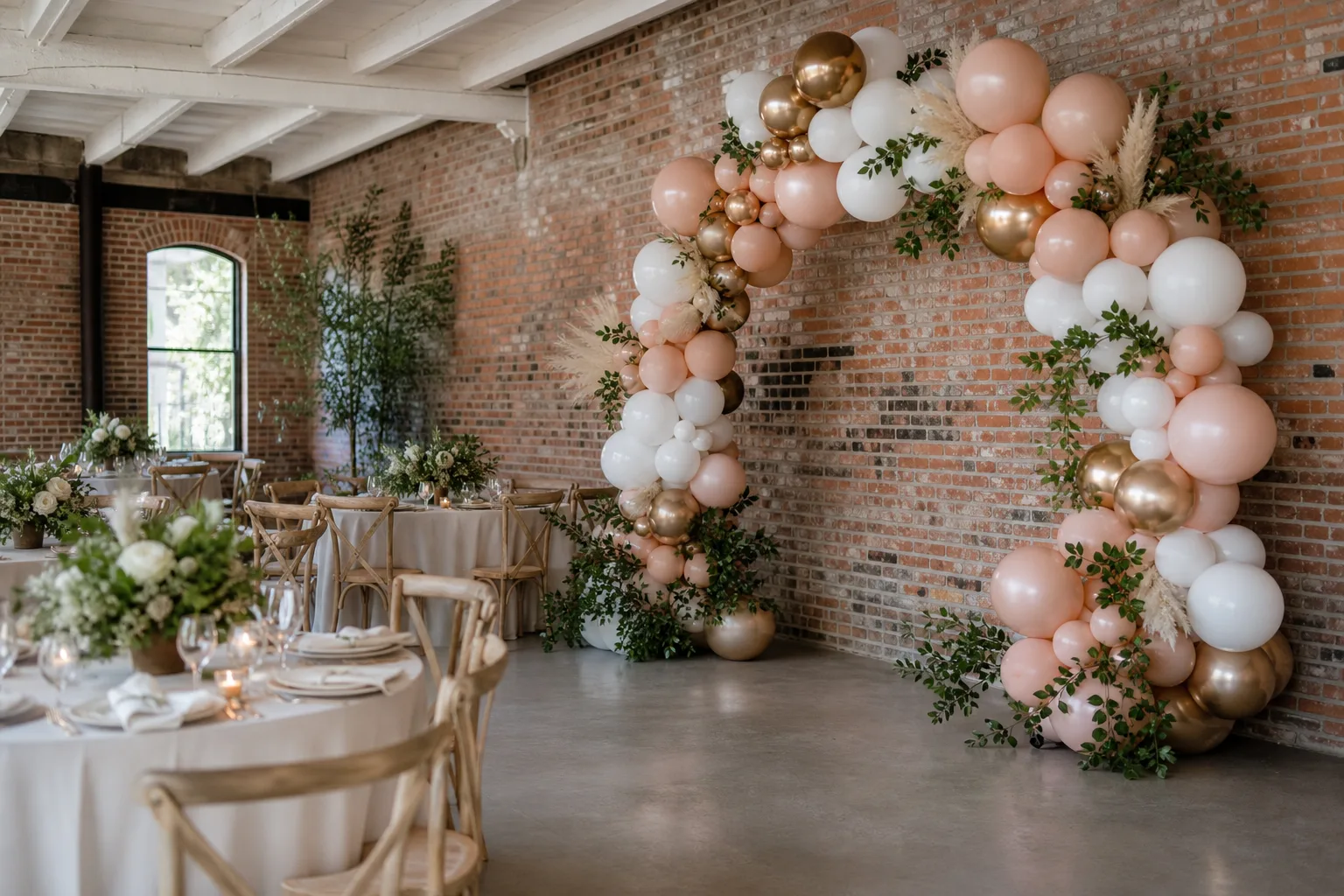
14 balloon arch ideas sorted by colour, occasion and season, so you can find the exact look and plac
20 tying the knot bridal shower theme ideas: bows, ribbon and knot details for the door, the table,
18 Christmas engagement party ideas in evergreen, merlot and gold, from the backdrop to the favors,
Leave a Reply