

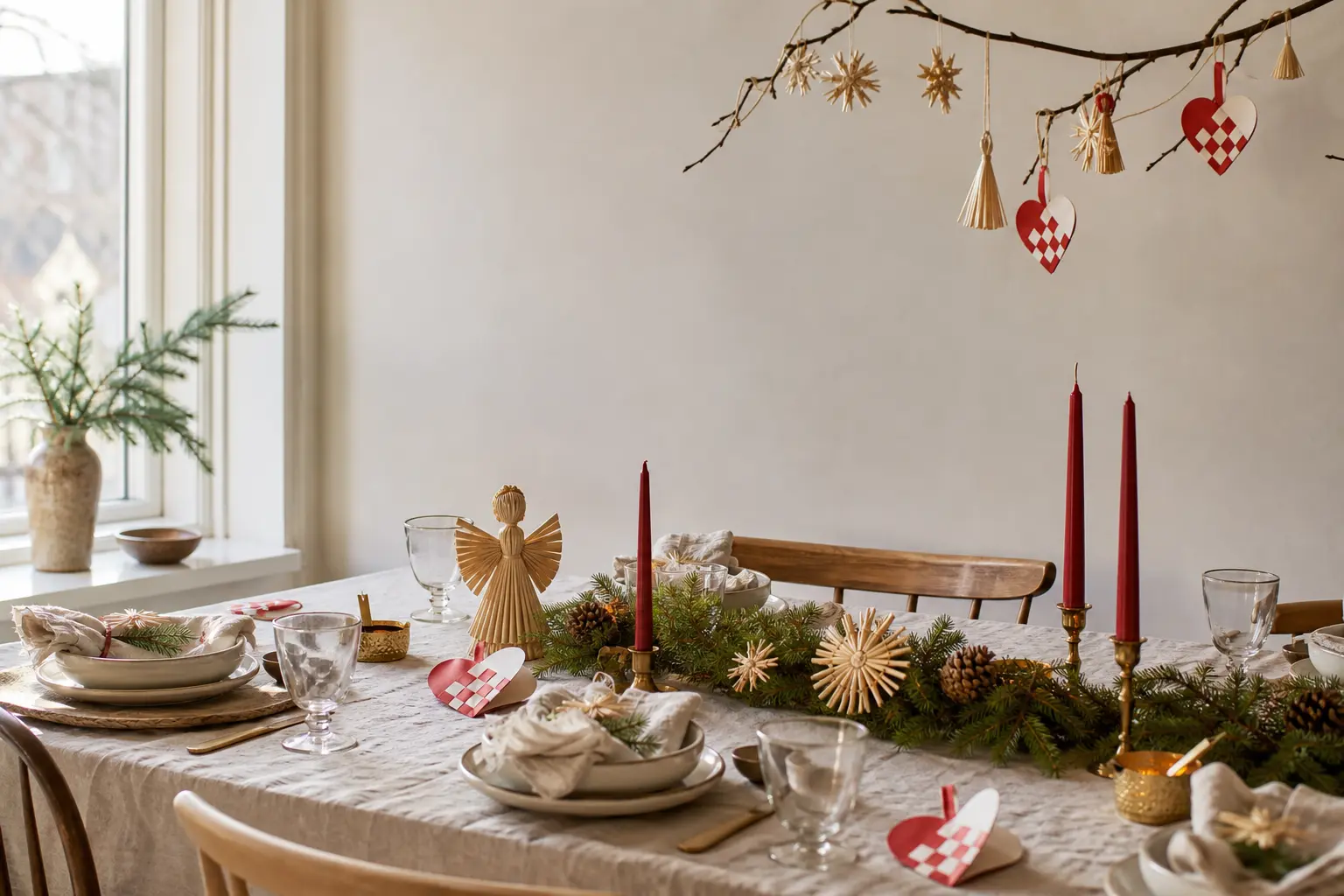
Scandinavian christmas decor sold abroad looks like this: pale linen, a single twig, negative space. It is calm. It is also not what Swedes, Norwegians or Danes actually do in December. The real version is loud with folk pattern, red as a postbox, threaded with straw and lit by so many candles the windows glow orange from the street.
If your attempt at the look felt flat, that is because you copied the export version, not the source. The export stripped out the folk ornament, the painted wood, the woven paper and the deep red that has been on farmhouse doors since the 1700s.
What was left was the negative space, and negative space on its own is just an empty room.
Every idea here names the folk element it restores. Start with one. The room will feel warmer before you have spent a thing worth mentioning.
For more on building a full holiday scheme, see the hub on christmas decor, and if you are pulling together a party around the look, the 18 Christmas Party Invitation Ideas are worth a look too.
This post contains affiliate links. If you buy through them, I may earn a small commission at no extra cost to you.
- Straw: The Oldest Ornament Still Going
- Candlelight: One Rule, No Exceptions
- Folk Pattern: What the Pale Version Removed
- Paper: Cut, Folded, Woven and Hung
- Colour: Falu Red and Nothing Beige
- Textile: Linen, Rag and Weave
- Scandinavian Christmas Decor: Where to Start if You Have Ten Minutes
- Frequently Asked Questions
Straw: The Oldest Ornament Still Going
Straw figures predate the Christmas tree by centuries. They come from the harvest: the last sheaf of grain was believed to hold protective power, and it was kept through winter and hung as an ornament. That is the folk element. It is not rustic styling. It is a very old idea that happens to look beautiful.
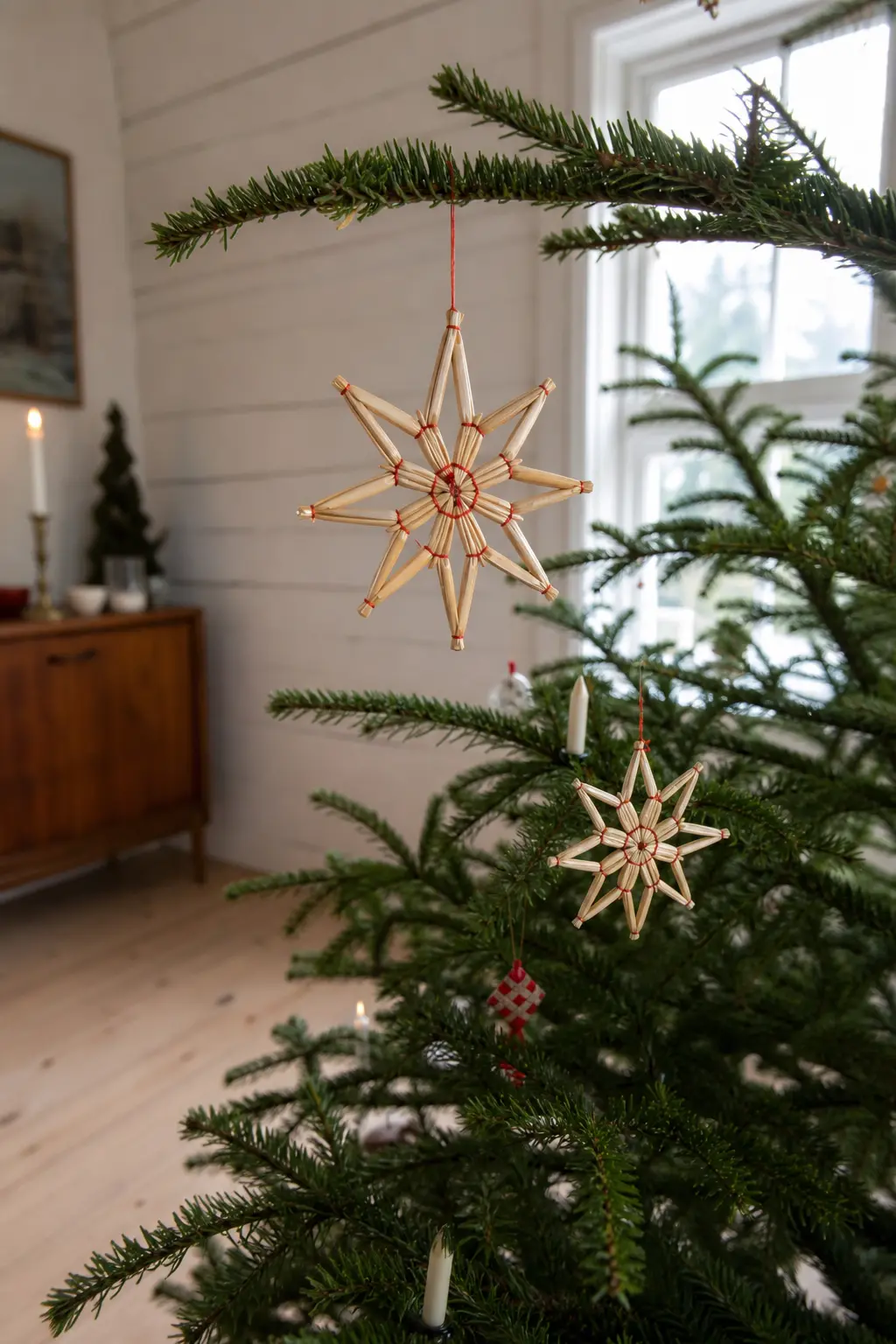
Straw Ornaments Hung on Red Thread
This is the folk element called julhalm, straw figures twisted and tied into stars, goats and crosses. They come from the last-sheaf harvest custom and they have been on Scandinavian trees since long before glass baubles existed.
The pale export version of the look skipped them because they read as too rustic. That is exactly why they belong back on the tree.
Hang them on red thread, not wire, not monofilament. The red thread against the straw is the visual. Space them out so each one reads as an individual object. If you buy a ready-made set, pull them apart and rehang them at different heights rather than clustering them on one branch.
🛍 Shopping guide
A Straw Goat by the Door
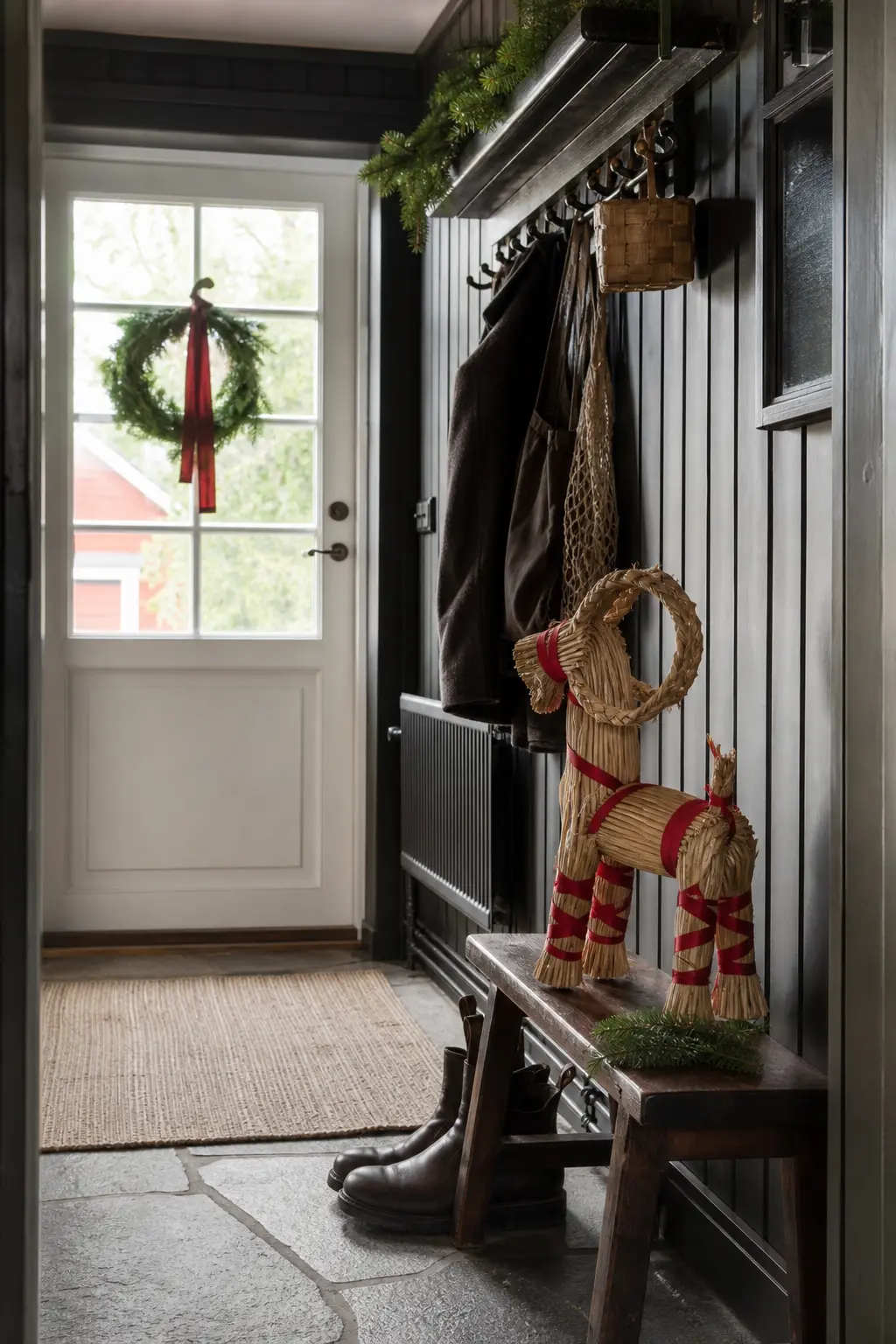
The julbock, or Yule goat, is one of the oldest symbols in Scandinavian Christmas. It predates the Christmas tree, predates Father Christmas and certainly predates the pale minimalist living room.
Made from twisted straw and tied with red ribbon, it stood at the door or by the fire as a protective figure. The giant one in Gavle, Sweden, has been burnt down by vandals so many times it is now an annual news event.
A small one on a doorstep, a shelf or a console table costs little and reads immediately. Tie it with genuine red ribbon, not the synthetic satin kind. Leave the straw exposed. The folk element this restores is the pre-Christian winter symbol that survived into the Christian festival and stayed.
🛍 Shopping guide
A Woven Straw Star in the Window
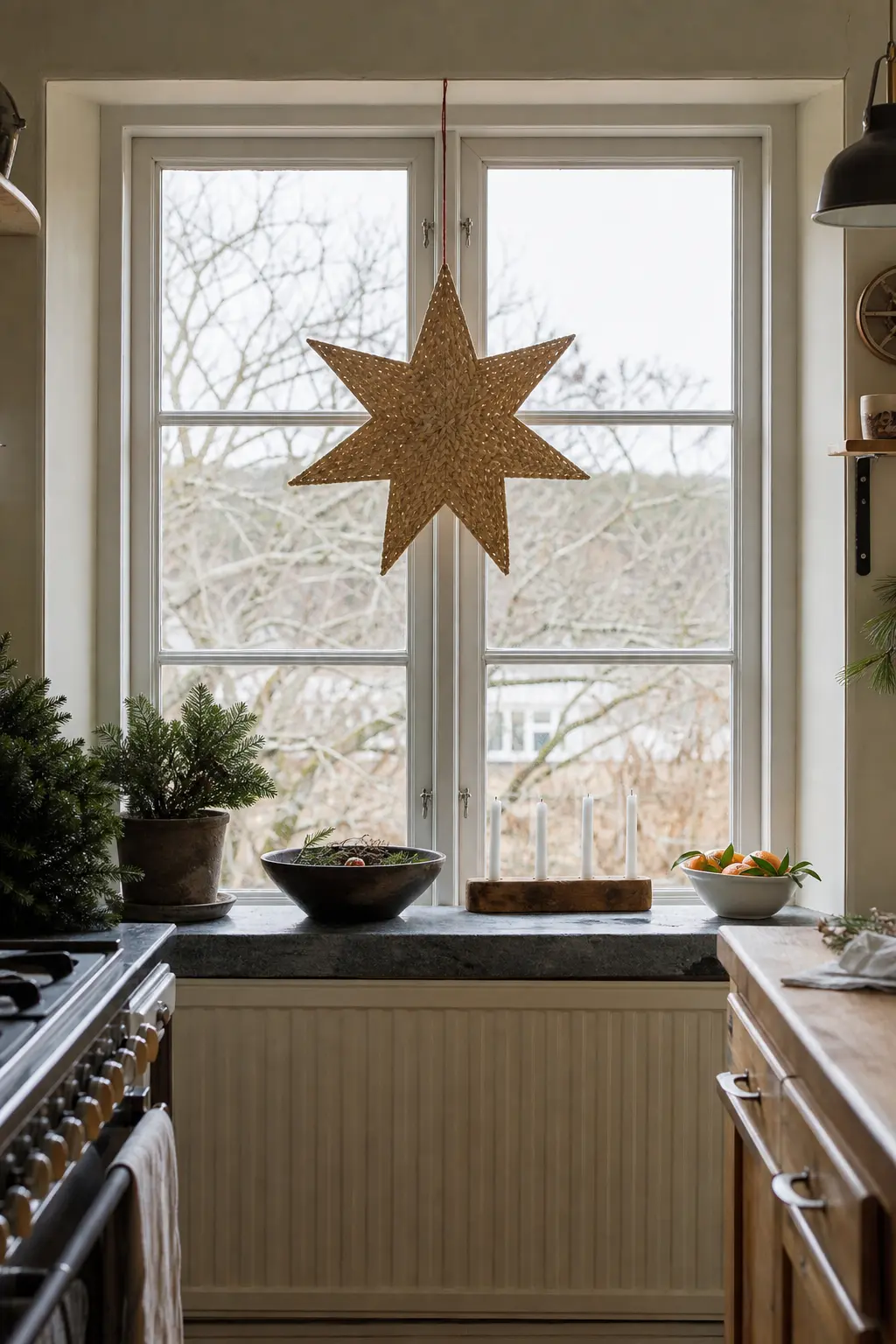
The woven straw star, made by bending and tying wheat straw into a radiating geometric form, is one of the most structurally satisfying things you can hang in a window. It is also called halmstjarna in Swedish.
Unlike the folded paper version, the straw one has weight and texture: it moves slightly in a draught and catches the light differently at different times of day.
Hang it on red thread centered in a window without a candle arch. The window frame does the work of the frame. One star per window, not a cluster. Leave the glass clear around it.
The folk element this restores is the geometric straw form as the primary winter ornament, the thing that hung in windows and doorways before anyone put lights in the bushes outside.
🛍 Shopping guide
Candlelight: One Rule, No Exceptions
Scandinavian winters are dark. The candle is not decorative in the seasonal-trend sense. It is functional, repeated obsessively, and placed where it throws the most light outward. One candle per window is a practice, not a preference. The effect from outside is unmistakable.
A Wooden Candle Arch in a Window
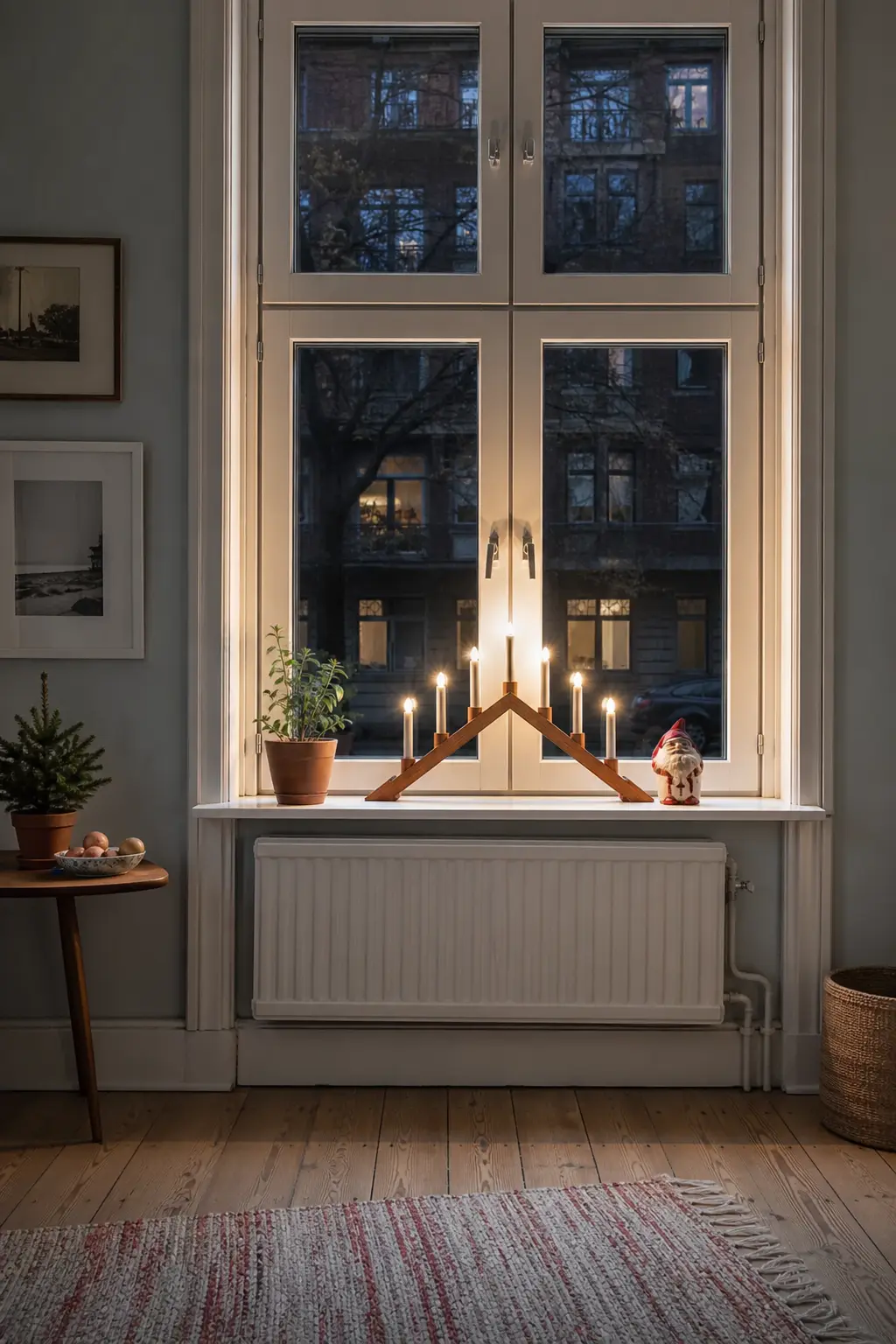
The electric candle arch, called a ljusbåge in Swedish, sits in almost every window in Sweden from the first of December. It is not decorative in the trend sense. It is a seasonal fixture, like putting the tree up, and it signals from the street that the house is occupied and warm.
Choose one made from bleached or natural pine rather than painted white plastic. The wood grain matters. Place it on the window ledge so the bulbs face outward and the arch frames the glass from inside. If the room is dark, the arch will read as a glowing curve from the pavement, which is the whole point.
🛍 Shopping guide
A Single Candle in Every Window
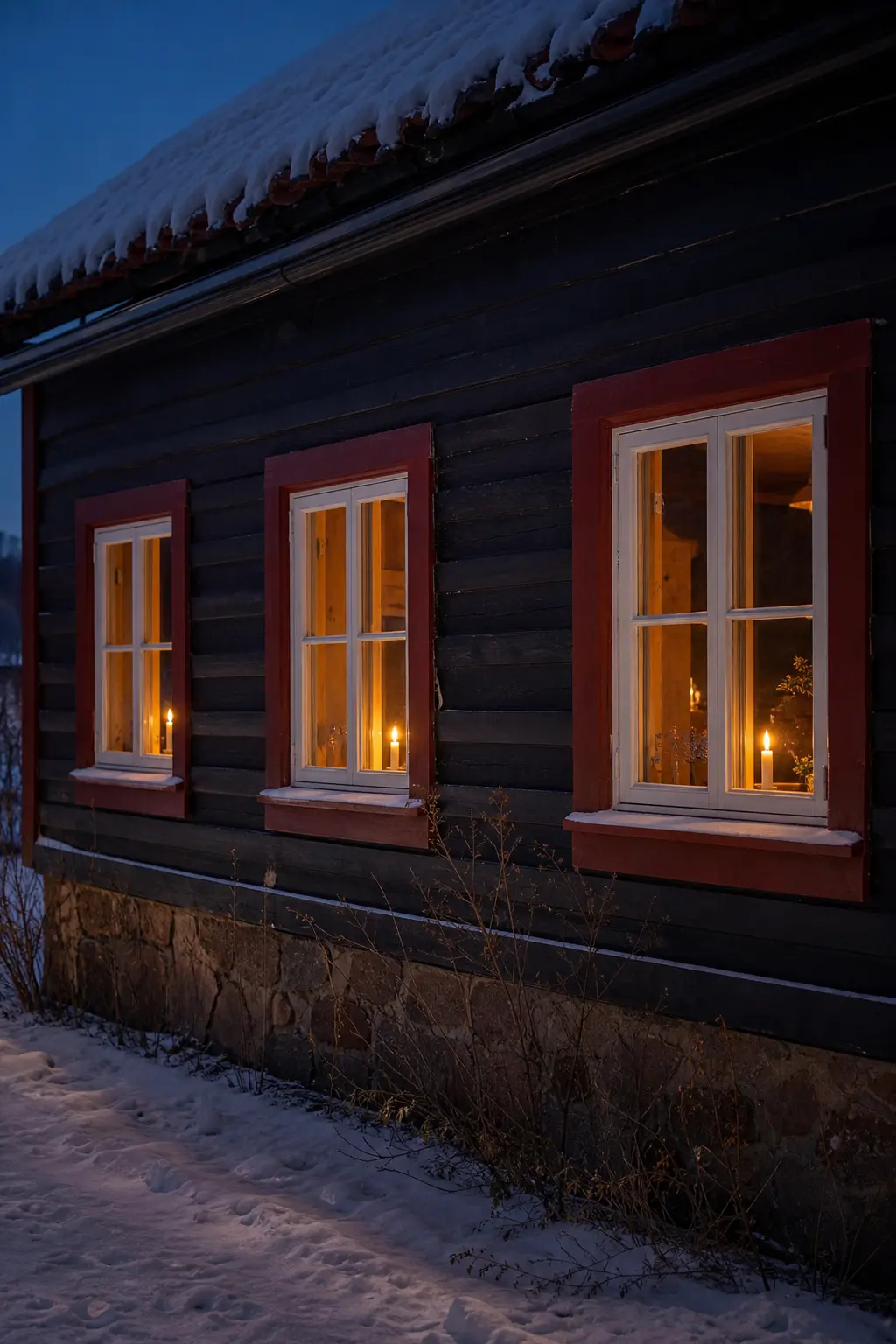
This is the rule, not a suggestion. One candle per window, placed centrally on the ledge, visible from outside. The practice comes from the idea of lighting the way home through the winter dark, and it appears across Sweden, Norway, Denmark and Finland in various forms. The effect inside is warm. The effect from the street is transformative.
Use real candles if the ledge is stone or tiled. Use battery tapers if the ledge is wooden and you sleep soundly. The candle should be white, in a plain holder, with nothing else on the ledge competing for attention.
The folk element this restores is the window as a signal to the world outside rather than a backdrop for a styled interior shot.
🛍 Shopping guide
White Candles in Plain Brass
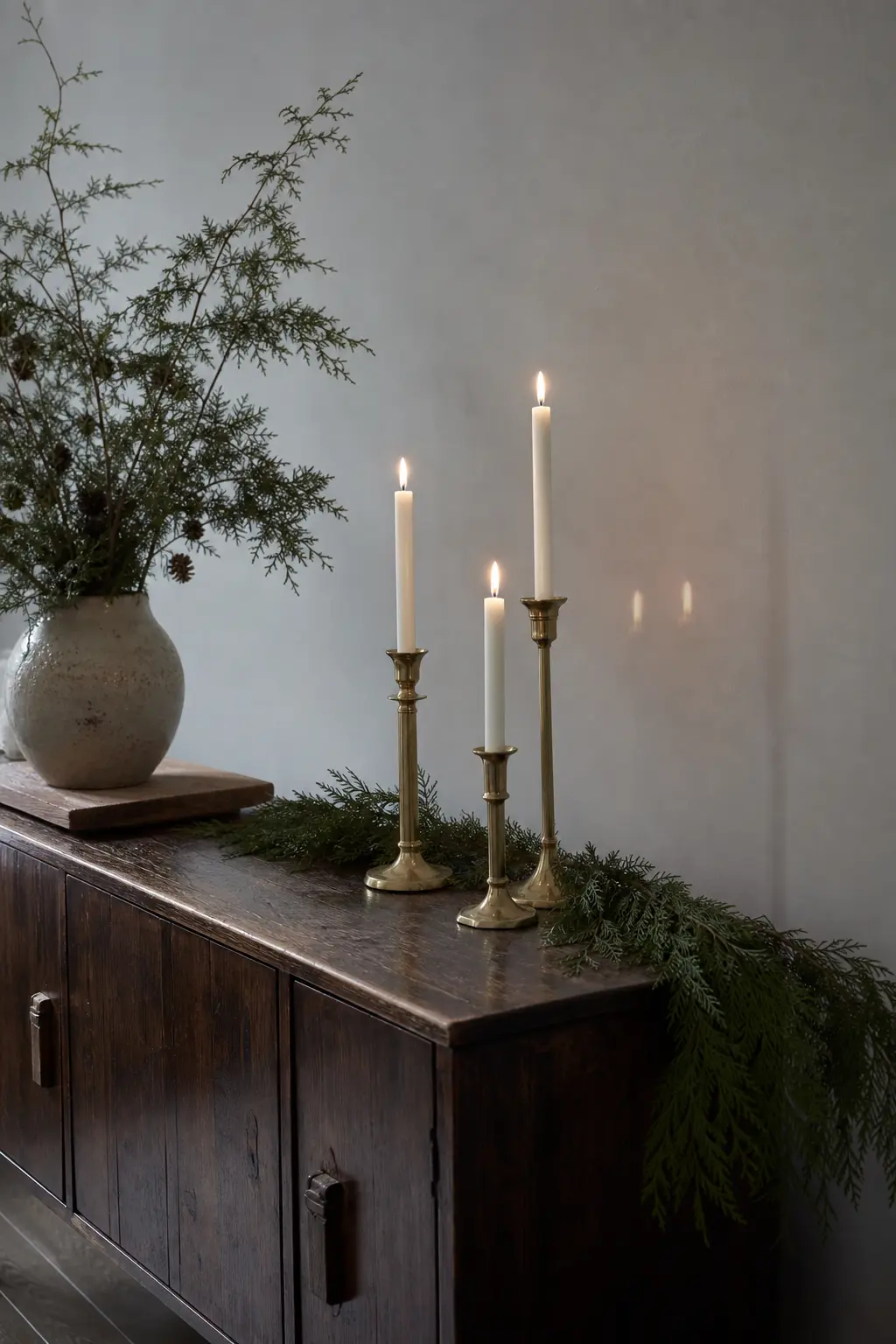
Brass candlesticks are not a trend. They are a material that has been used in Scandinavian homes for three hundred years because brass is cheap to cast, easy to clean and reflects candlelight back into the room.
The combination of white candle in plain brass against a white wall is one of the most effective things you can do in a room without buying anything else.
Choose holders with a straight, simple profile: no ornate casting, no verdigris finish marketed as antique. The plainness is the point. Group three at different heights on a sideboard or mantelpiece. Use white unscented candles. Scented candles at the dinner table are an act of aggression and this is not the place for them either.
🛍 Shopping guide
A Wooden Advent Candle Marked in Days
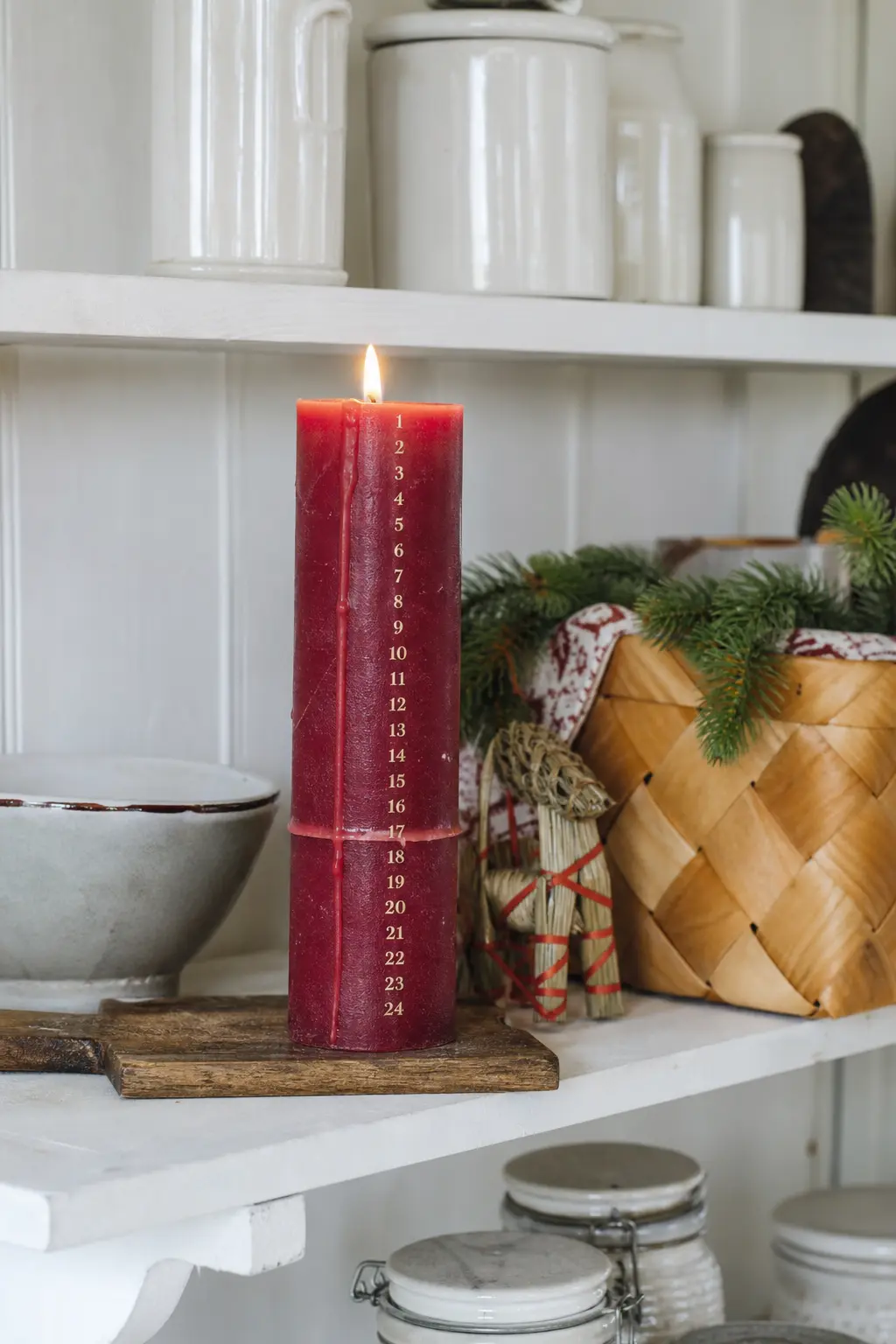
The advent candle marked in twenty-four sections is a practical object with a satisfying permanence. It is a single candle, usually a thick column in red or plain white, with numbers burned or painted into the wax at equal intervals. You burn it down one mark each day. The candle is the calendar. No doors, no foil, no chocolate.
A red candle in this format on a plain wooden board, with nothing else beside it, is one of the most honest pieces of seasonal decoration there is. It does one job and does it visibly every day. The folk element this restores is the domestic ritual object: a thing that marks time and changes as the season progresses.
🛍 Shopping guide
Folk Pattern: What the Pale Version Removed
Rosemaling, Dala painting, kurbits: these are regional folk-painting traditions that covered everything from furniture to spoon handles. The export version of the look kept the plain wood and dropped the pattern. Bring the pattern back on even one object and the room stops reading as merely empty.
Black Ink Folk Patterns on White Paper
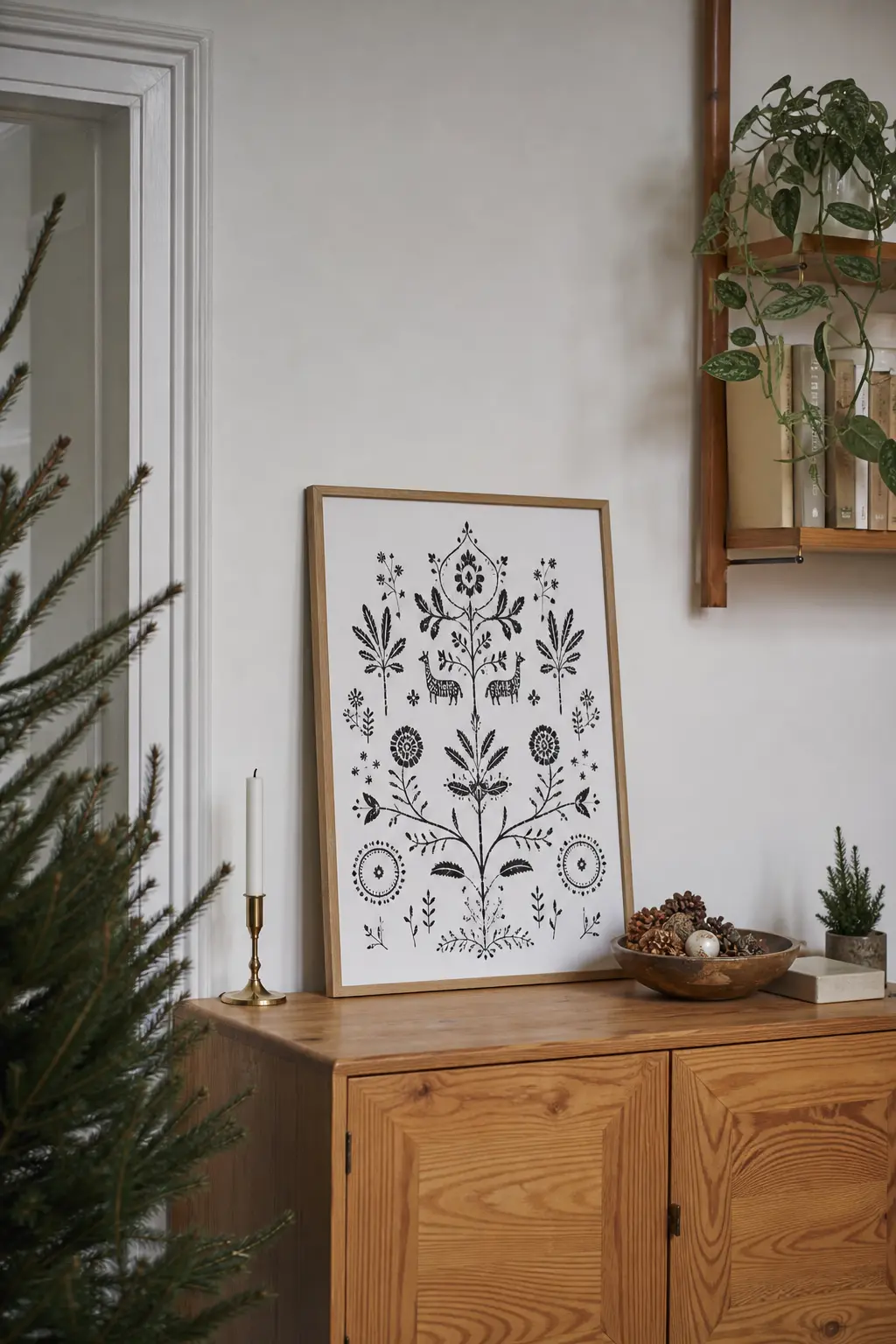
Kurbits is the Swedish folk-painting style named after a gourd plant in the Bible. The pattern is large, flat and graphic: stylised flowers, curling leaves, birds and geometric borders. In black ink on white paper it becomes something between a woodblock print and a textile pattern, and it frames beautifully without a mat.
Print a sheet, frame it in a plain dark wood frame and place it against the wall without hanging it. Or cut the sheet into strips and use them as gift wrap. The folk element this restores is ornamental mark-making, the thing that distinguished a Scandinavian interior from a merely plain one, and that the pale export version quietly deleted.
🛍 Shopping guide
A Wooden Dala Figure
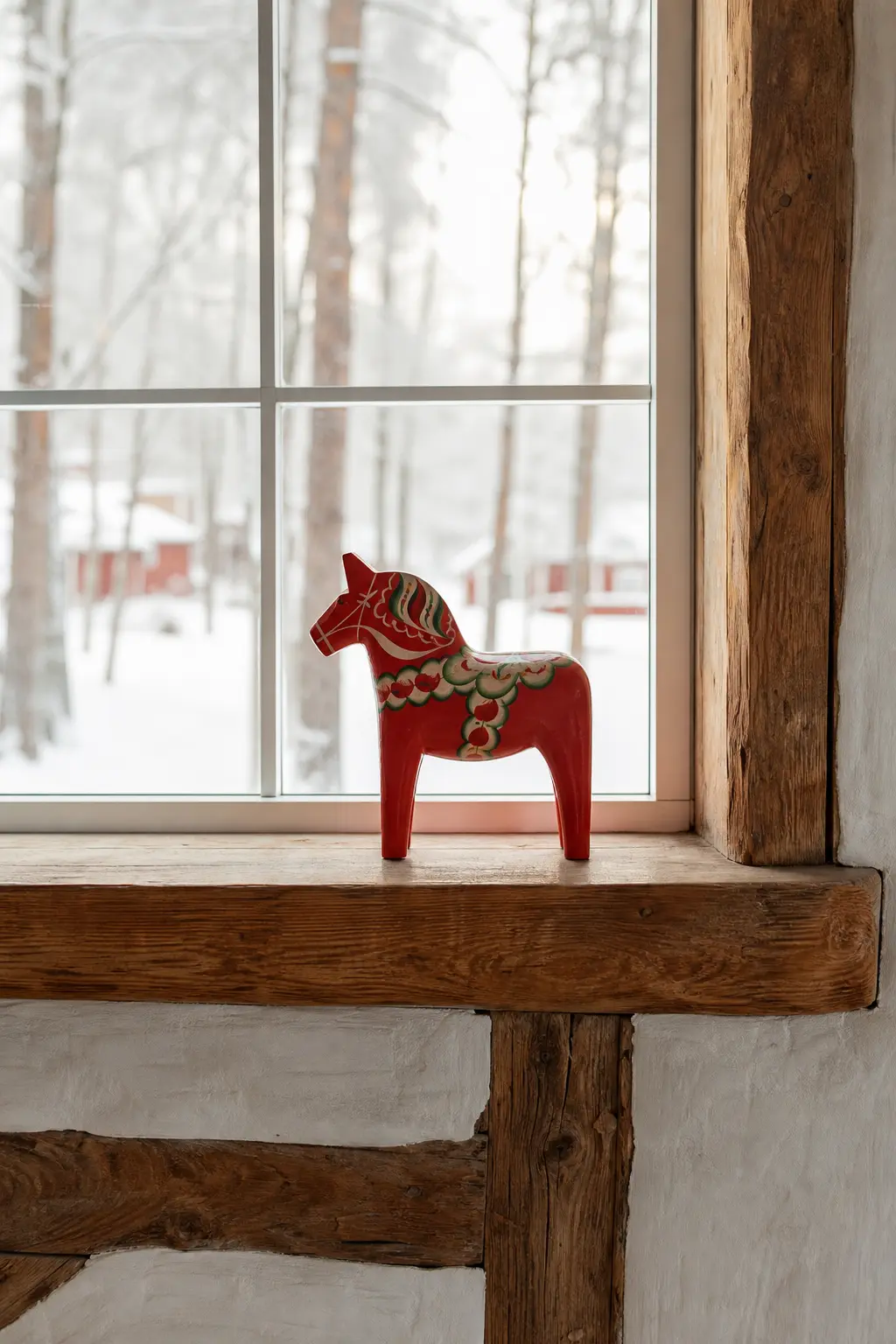
The Dalecarlian horse, Dalahäst, comes from the Dalarna region of Sweden and was originally carved and painted by timber workers during long winter evenings. The traditional one is painted red with a kurbits pattern in white, blue and yellow on its saddle.
It is one of the most recognisable folk objects in the world, and a well-made one is an heirloom rather than a seasonal prop.
Buy the smallest size that is properly painted rather than the largest size that is plain. The painting is the point. Set it on a windowsill, a shelf or a mantelpiece with nothing else in the same sightline. The folk element this restores is the hand-decorated domestic object as the primary ornament, which is the core of the entire tradition.
🛍 Shopping guide
Folk Painted Wooden Spoons
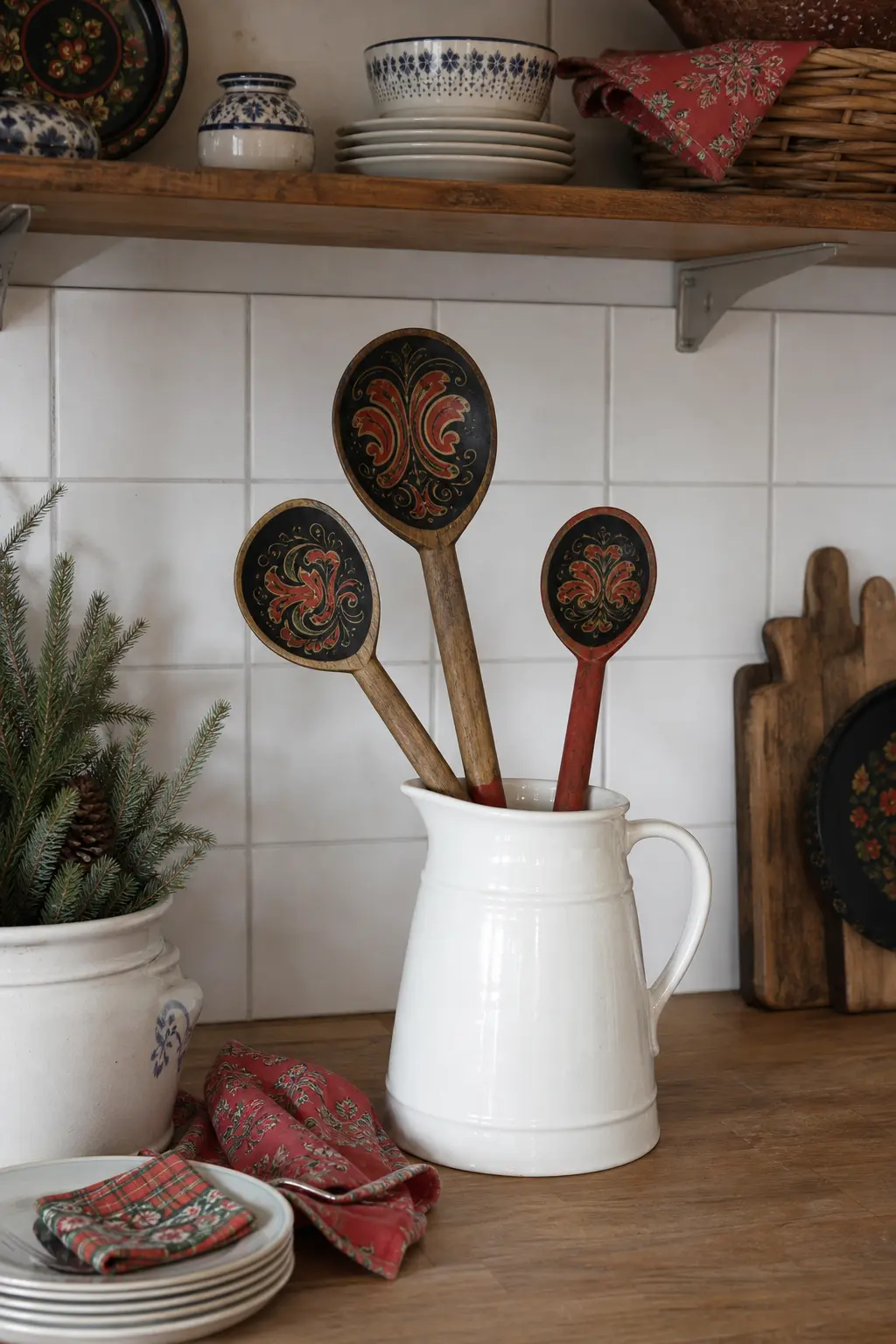
In the folk tradition, a painted wooden spoon was not kitchenalia. It was a courting gift, a wedding present or a saint’s day token. The painting followed regional conventions: rosemaling in Norway uses curved brushstrokes and trailing foliage, Swedish styles tend toward flatter, more geometric forms. Either way, the spoon was the canvas and the painting was the message.
Buy two or three already painted and stand them in a plain stoneware jug or hang them from a hook inside a cupboard door. If the jug is white and the spoons are painted in red and black, the group needs nothing else.
The folk element this restores is the painted domestic tool as an object of attention, not a utensil facing the wall in a drawer.
🛍 Shopping guide
Paper: Cut, Folded, Woven and Hung
Paper is cheap, traditional and surprisingly structural. The Danes wove heart-shaped paper baskets as tree decorations in the nineteenth century. Paper stars, paper snowflake chains and paper cones are all rooted in the same craft tradition. None of them cost much. All of them add the texture that the pale version removed.
Paper Hearts Woven in Two Colours
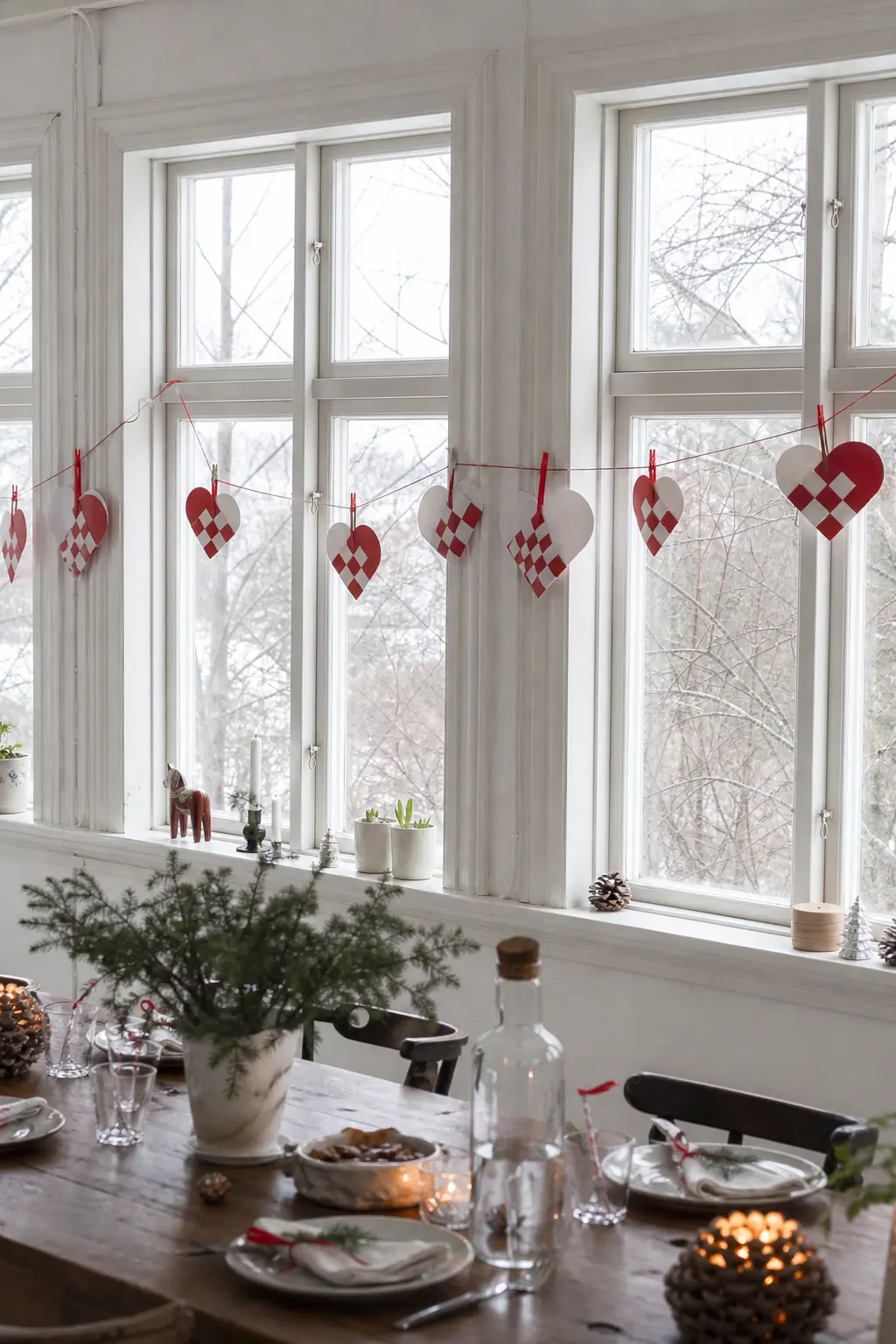
The woven paper heart basket is a Danish tradition credited, probably incorrectly, to Hans Christian Andersen. It is made by cutting two teardrops from paper of contrasting colours, slitting each into strips and weaving them together so the finished heart is a checkerboard of both.
The result holds its shape and can be filled with small sweets, a clementine or a folded note.
Red and white is the standard combination and also the best one. Use paper that has a little weight, at least 120gsm, so the weave holds.
Hang them on the tree, drape them along a mantelpiece or group a dozen on a length of red twine strung between two hooks. The folk element this restores is the tree decoration as a made object rather than a bought one.
🛍 Shopping guide
A Paper Star Lantern Hung Low
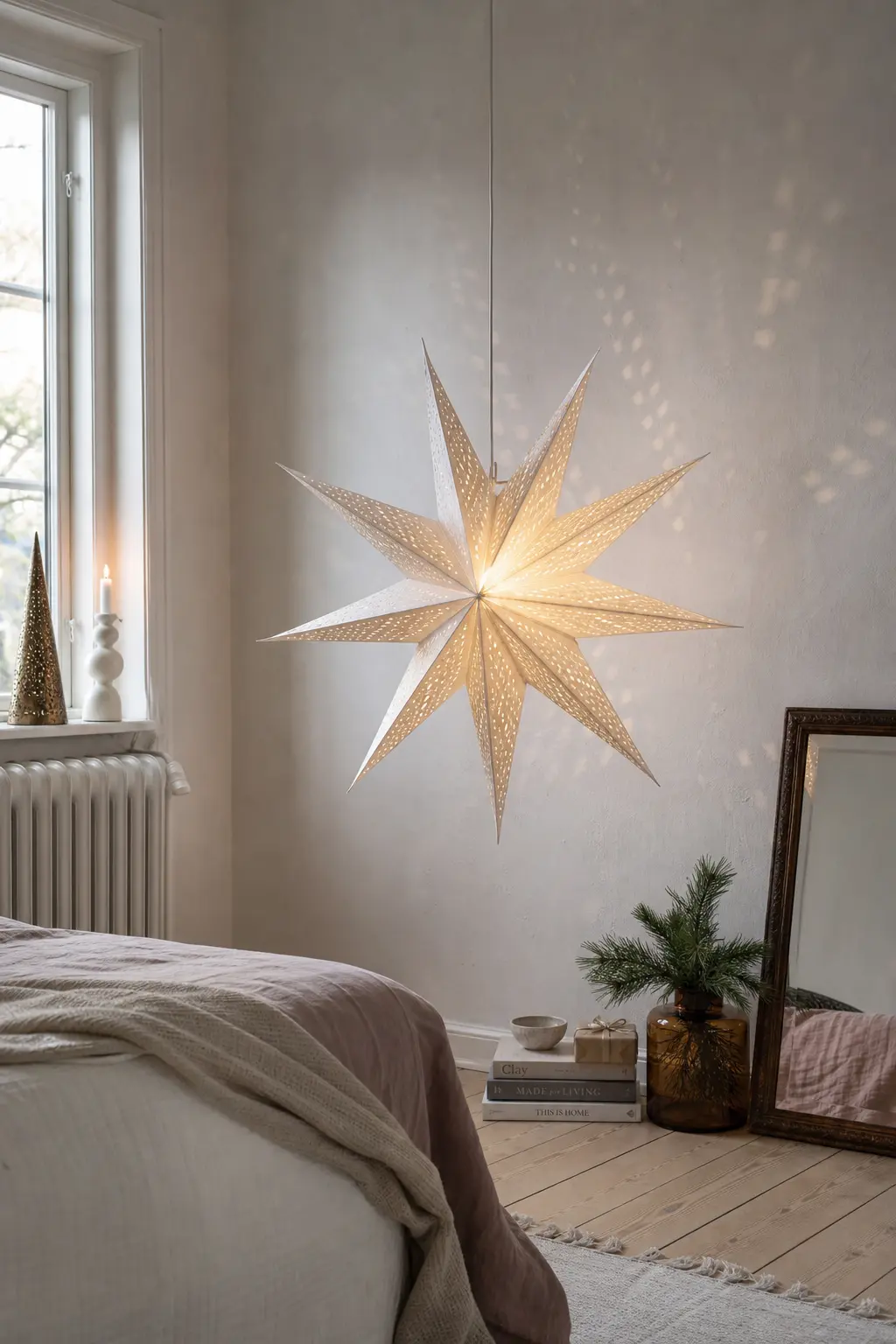
The Moravian or Froebel star made from folded paper strips is a fixture across Scandinavia. In Denmark it is called a Stjerne. Hung at eye level rather than ceiling height, with a small LED puck inside it, it throws a patterned shadow across a white wall that no bought light fitting can replicate. The shadow is the decoration.
White paper makes the sharpest shadow. Choose a star with points long enough that the shadow pattern is dramatic rather than smudged.
Hang it from a cup hook on the ceiling at roughly lamp height, about 160cm from the floor, so it reads as a light source rather than an ornament.
The folk element this restores is paper as architecture, the craft tradition of making structural things from a flat sheet.
🛍 Shopping guide
A Paper Star Garland of Small Houses
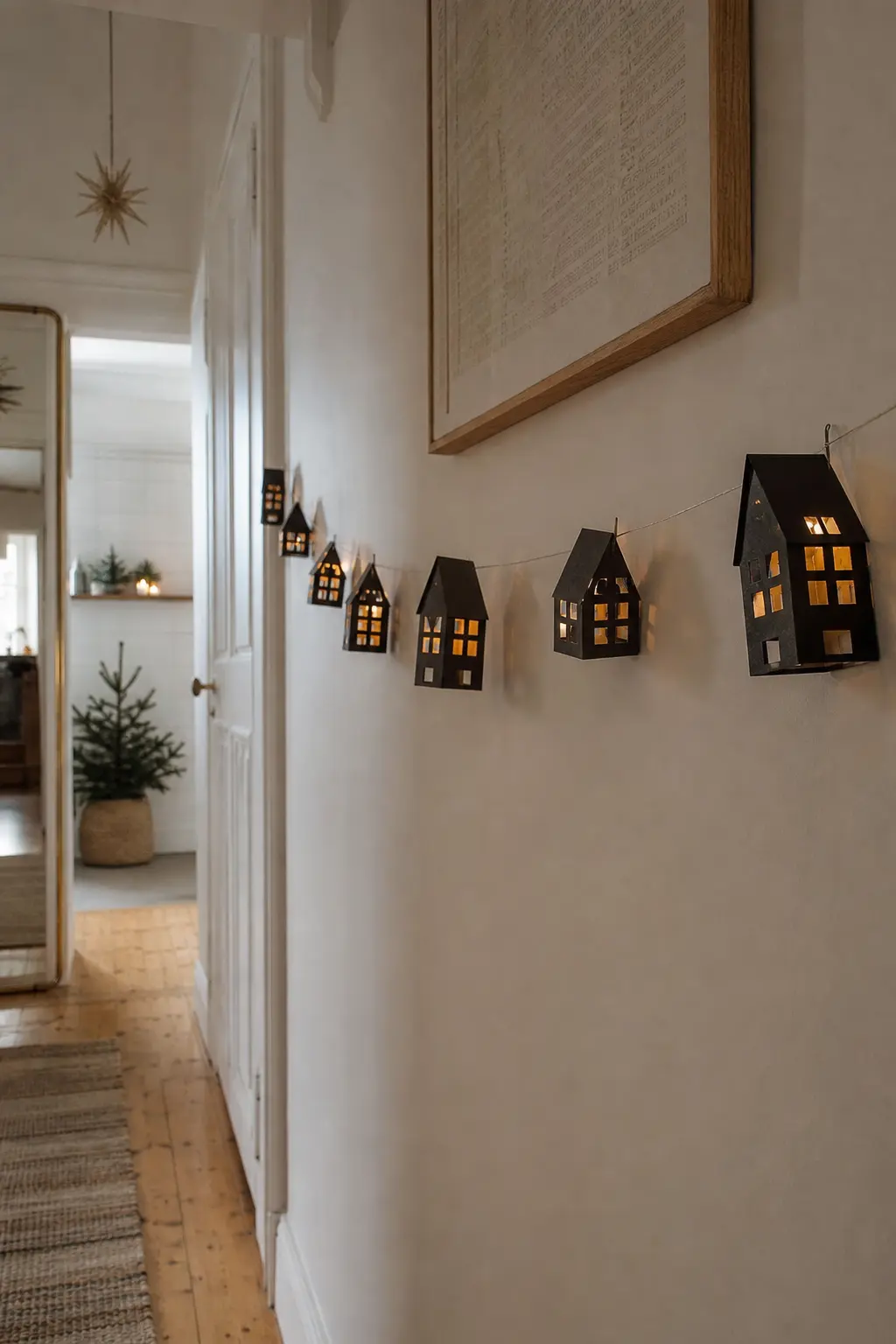
A garland of small paper houses cut from thick black or red paper and strung on white twine is a Scandinavian craft tradition that looks architectural rather than cute.
The houses are simple shapes: a rectangle with a triangle roof, a single rectangle for a window, cut through so the light shows. Hang them in front of a window or along a shelf edge and backlight them with a string of warm LEDs.
Cut them from black paper for the most graphic result. Space them evenly. If you use a template, print it on card and score the fold lines before you cut. The folk element this restores is the paper-cut silhouette, a tradition called papirklip in Denmark, where cutting paper into figures and scenes was a winter domestic art.
🛍 Shopping guide
Colour: Falu Red and Nothing Beige
Falu red is a pigment from the Falun copper mine in Sweden. It has been painted on timber buildings since the 1600s and it is the single most recognisable colour in the Scandinavian visual vocabulary.
On a door, a tray, a piece of ribbon or a doormat, it does in seconds what no arrangement of pale objects can do: it signals arrival.
Falu Red Painted on One Small Object
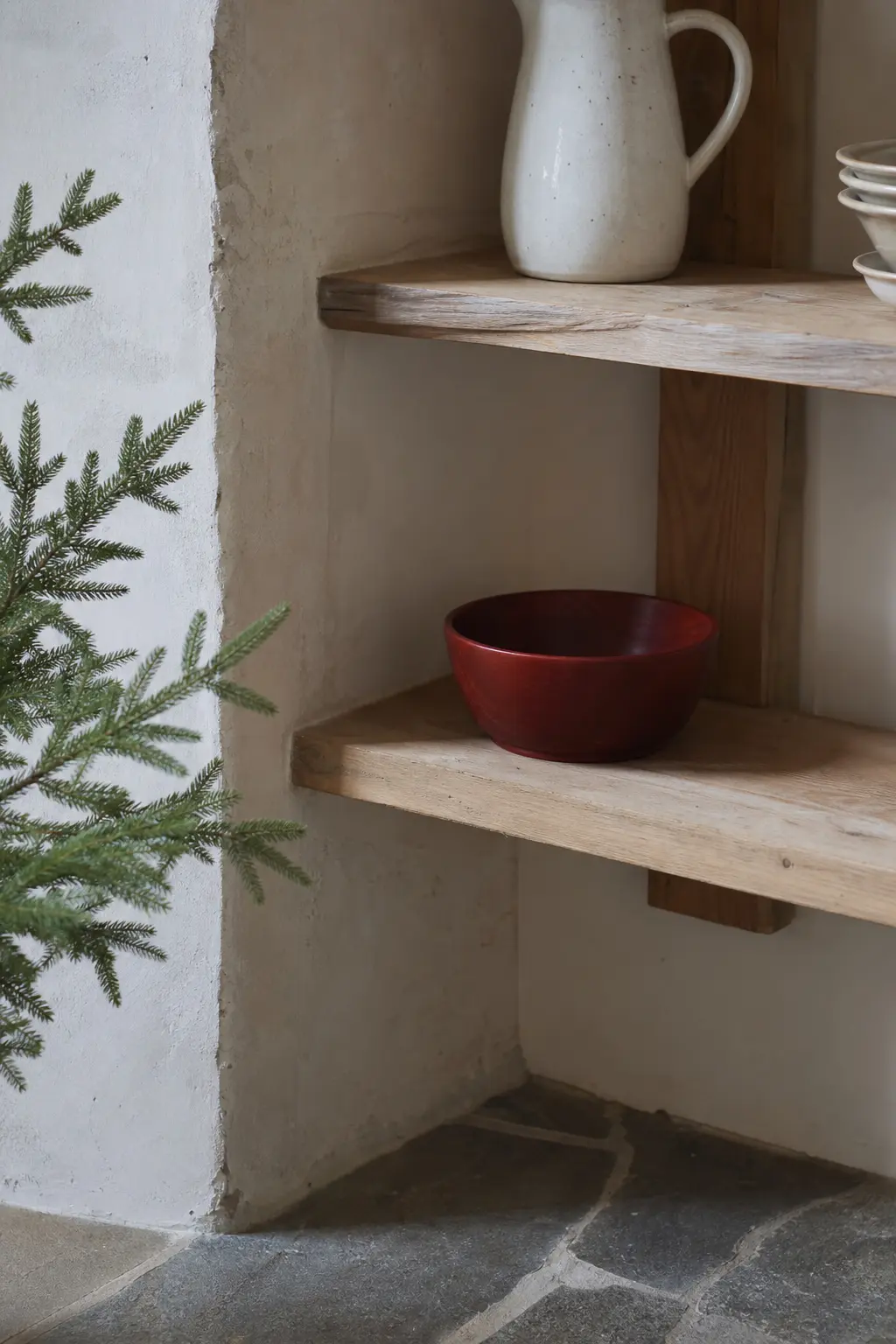
Falu red is made from a copper-mine byproduct and it has been on Swedish timber since the seventeenth century. The colour is deeper and less orange than standard red paint, closer to dried blood than a pillar box.
One coat on one small wooden object, a plain tray, a plant pot, a small stool, changes the temperature of a room visibly.
You do not need to paint furniture. A wooden bowl picked up from a charity shop, painted with two coats and left to cure for a week, is the right object. Set it somewhere with nothing next to it.
The folk element this restores is the painted wooden domestic object, which was everywhere in farmhouse interiors and almost nowhere in the pale export version.
🛍 Shopping guide
Textile: Linen, Rag and Weave
Woven textiles and embroidered linen are a working craft tradition across Scandinavia, not a styling prop. A rag rug in red and cream, a woven wall hanging, white linen with a single line of red running stitch: these are objects made to last, and they bring warmth that no throw can replicate.
White Linen with a Red Running Stitch
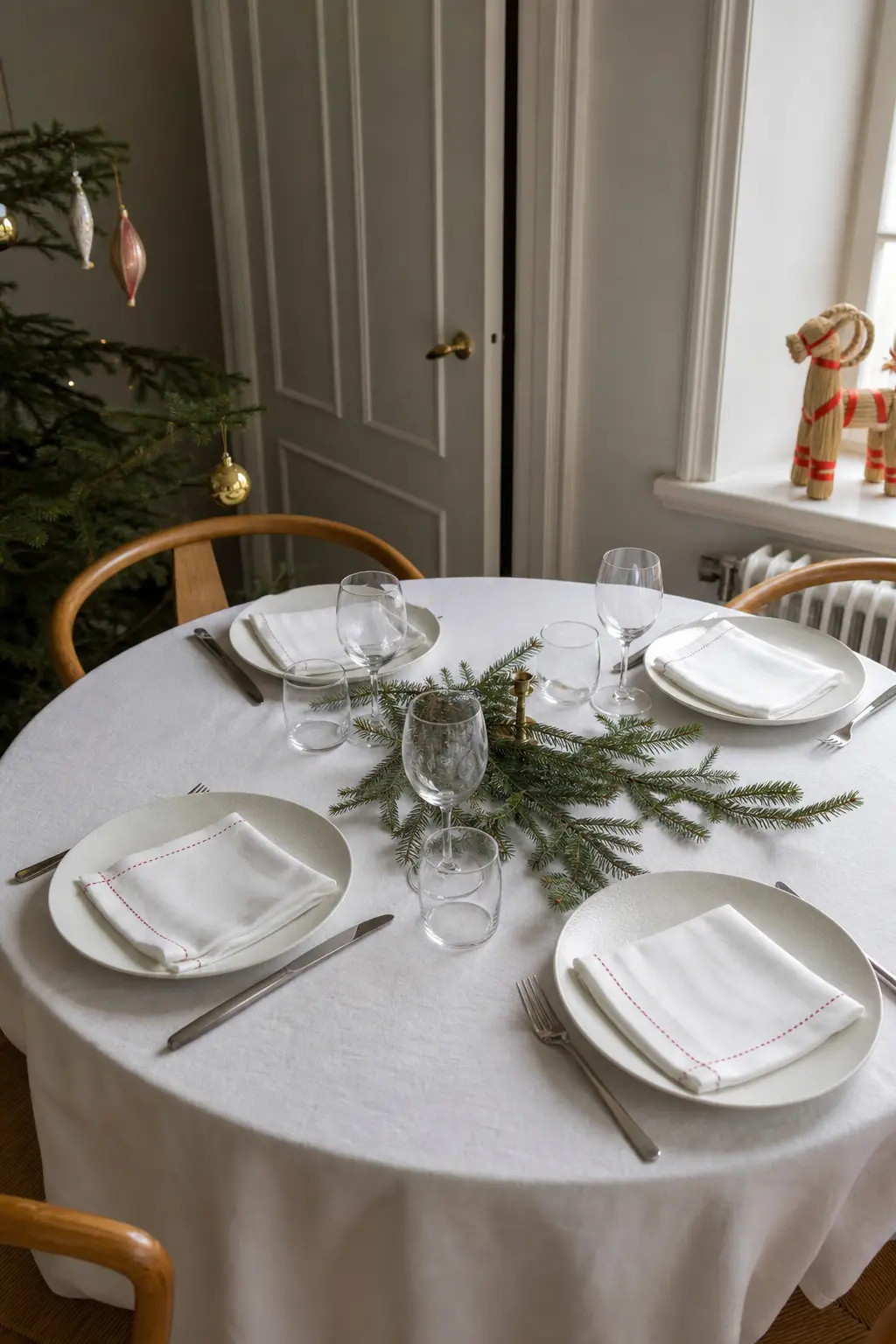
Embroidered linen with a single colour of thread is one of the oldest textile traditions in Scandinavia. The running stitch border, a simple in-and-out line along the hem, appears on tablecloths, napkins, tray cloths and pillow covers. In red on white linen it reads as completely contemporary and is also about four hundred years old.
Buy plain white linen napkins and add a red running stitch around the border with ordinary embroidery thread and a wide-eyed needle. An hour of work produces eight napkins that will outlast any paper decoration you own.
The folk element this restores is the marked textile: the idea that a plain piece of cloth is improved by the hand that worked it.
🛍 Shopping guide
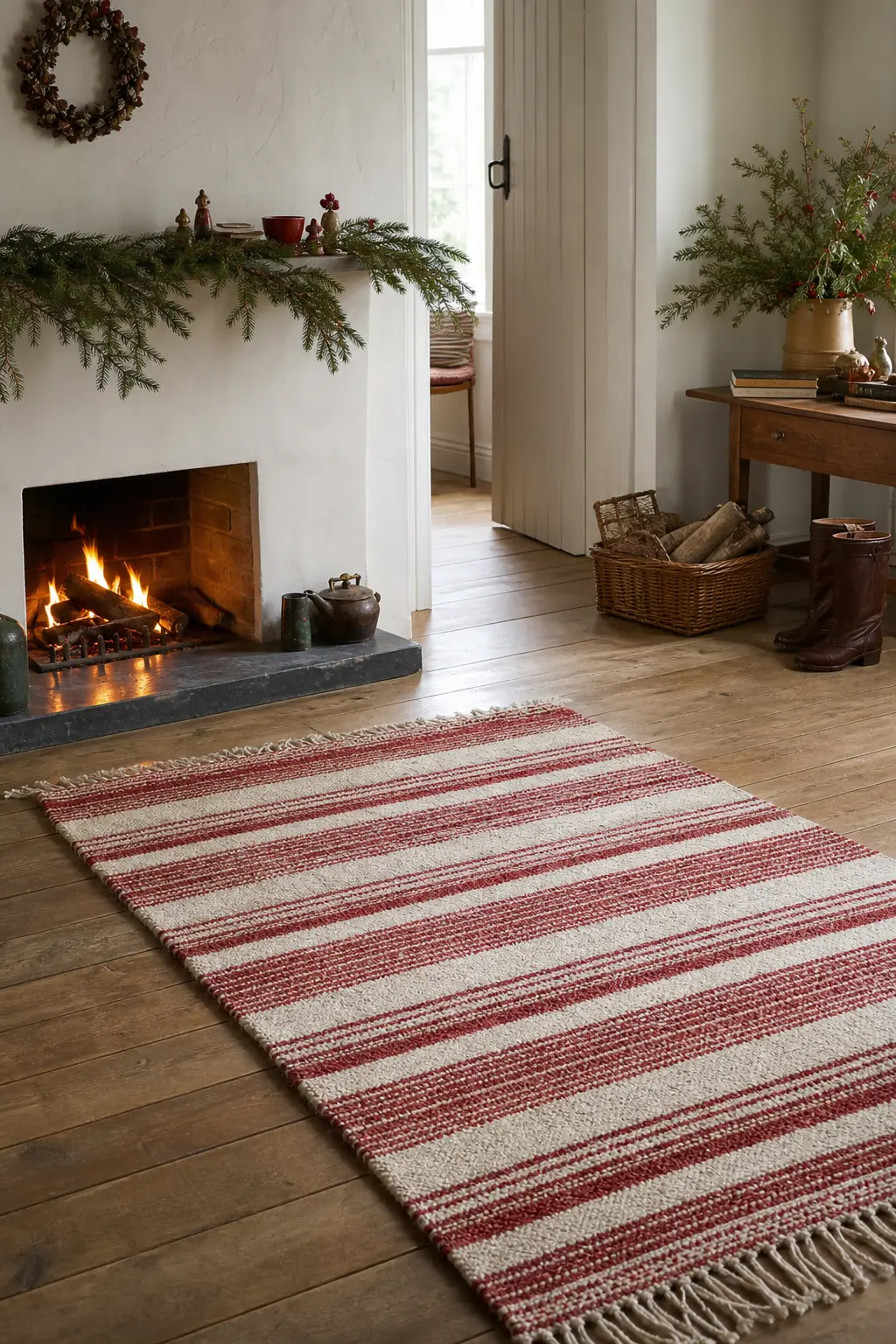
A Rag Rug in Red and Cream
The trasmatta, or rag rug, is woven from strips of old fabric on a frame loom.
It is one of the most practical objects in the Scandinavian folk tradition: nothing was wasted, worn-out clothing became floor covering, and the stripe pattern that emerges from woven strips is as graphic as anything designed deliberately.
In red and cream stripes it is both traditional and very good looking.
Place it in front of the fire, at the kitchen door or at the foot of the bed. Keep it flat and let it do its job. The folk element this restores is the handmade functional object: the thing that is not trying to be decor but is better looking than most things that are.
🛍 Shopping guide
Scandinavian Christmas Decor: Where to Start if You Have Ten Minutes
Pick one folk element from this list and place it where you will see it every morning. Straw ornaments on the tree. A candle in the window. A single object painted red. The room does not need all thirty-four at once. It needs one real thing done with intention, and the rest can follow at whatever pace suits you.
For more ways to build a full seasonal look at home, the articles on white christmas, country christmas and vintage christmas decor each pull from a different corner of the tradition, and all three sit inside the same christmas decor cluster.
Frequently Asked Questions
What is Scandinavian Christmas decor?
Scandinavian christmas decor draws on centuries of folk craft tradition across Sweden, Norway and Denmark. It includes straw ornaments, folk-painted wood, woven paper, candlelight in windows and the deep red known as Falu red.
The pared-back beige version widely sold in homeware stores is a modern export that stripped out the pattern, colour and craft. The authentic tradition is warm, highly coloured and rooted in specific regional folk practices.
What colours are used in Scandinavian Christmas?
The core palette is Falu red, white, natural straw, bleached pine and black ink. Red is the dominant accent colour and comes from Falun copper-mine pigment used on timber buildings since the 1600s. White is the background. Straw and pine provide the warm neutral.
Black appears in folk pattern outlines, painted wood and candlestick finishes. Beige is not part of the traditional palette.
What are straw Christmas ornaments called?
Straw Christmas ornaments are called julhalm in Swedish, meaning Yule straw. They include woven stars called halmstjarna, twisted goat figures called julbock, and geometric forms tied with red thread.
The practice comes from the harvest tradition of keeping the last sheaf of grain through winter as a protective object. Straw ornaments are among the oldest forms of Christmas decoration in Scandinavia.
How do I make my home look Scandinavian at Christmas?
Start with three things: place a single white candle on every window ledge, hang straw ornaments on red thread on the tree, and add one object painted in Falu red. These three moves establish the real look immediately.
From there, add folk-painted wood, woven paper hearts, a paper star lantern and a rag rug in red and cream. Avoid beige, avoid anything labelled minimalist and avoid the absence of pattern. The real look is warm, graphic and full of handmade objects.
Stranger Things Christmas decor for a whole house: cherry red, midnight navy, mustard and brass, wit
Find cheap christmas gifts for teachers, coworkers, bosses and white elephant swaps, sorted by who y
18 Christmas dips and appetizers a host can prep the night before: cold spreads, baked dips and warm
Leave a Reply