

30 Country Christmas Decor Ideas for Houses That Are Not Actually Farmhouses
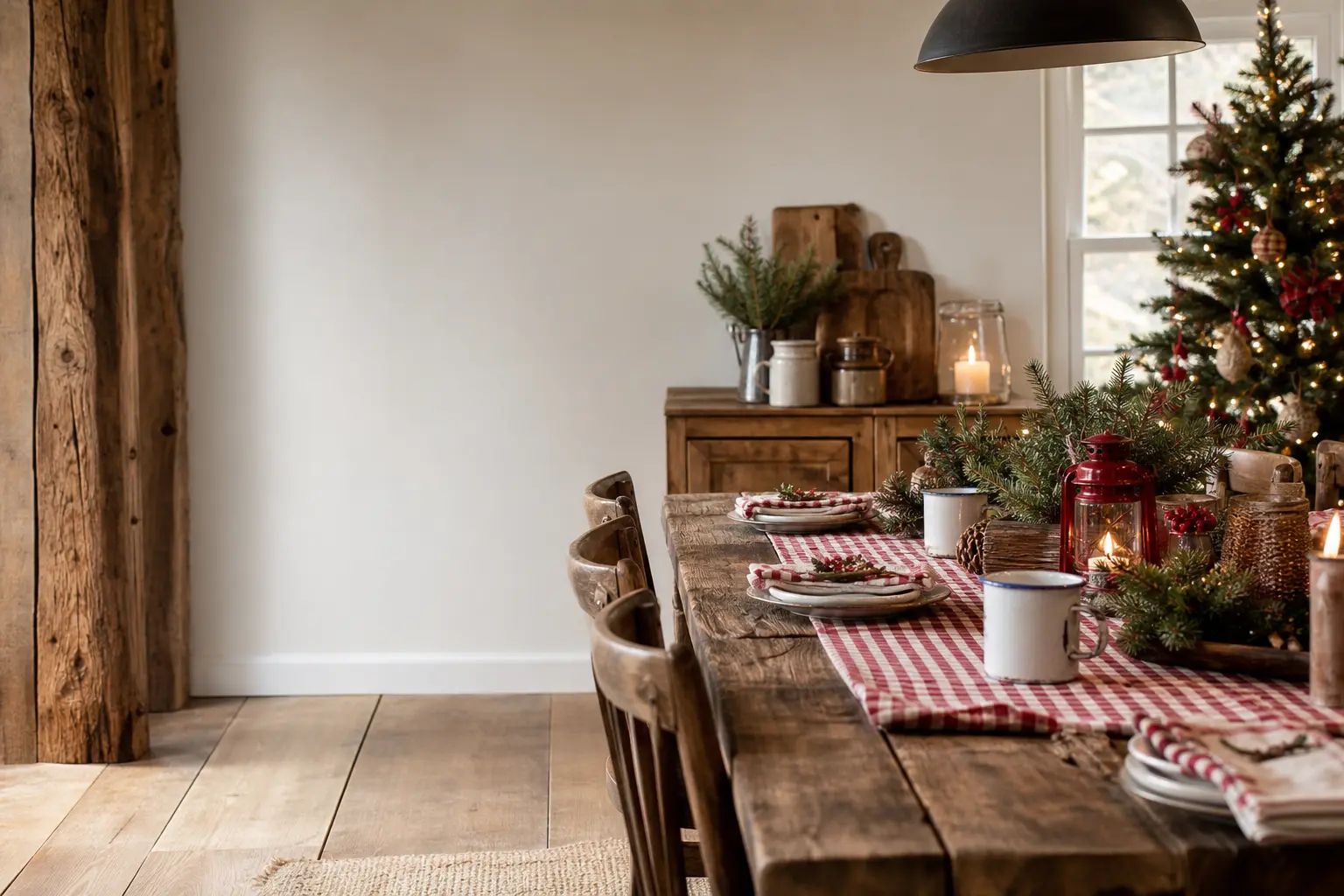
Country christmas does not require exposed beams, a flagstone floor or a dog asleep in a basket. The whole look rests on four things you can find anywhere: worn wood, checked cloth, real greenery and something enamel. Bring those four into any room and the feeling follows, whether your kitchen has a glass splashback or your living room has a grey corner sofa from a flat-pack catalogue.
The palette does the rest. Oxblood check, faded green, cream enamel and a note of brass read warm and deliberate against white walls and matt grey units, rather than out of place. These 30 ideas name which of the four elements each one uses and what it replaces in a modern room, so you can swap in exactly what you need without buying a thing that does not earn its shelf space.
For a wider look at the season, browse the full guide to christmas decor, or go deeper into vintage christmas decor, white christmas and scandinavian christmas decor for companion palettes that sit well alongside this one.
This post contains affiliate links. If you buy through them, I may earn a small commission at no extra cost to you.
Surfaces and Trays
Every modern kitchen and living room has a surface doing nothing except holding a candle and a remote. These ideas give that surface a reason to exist.
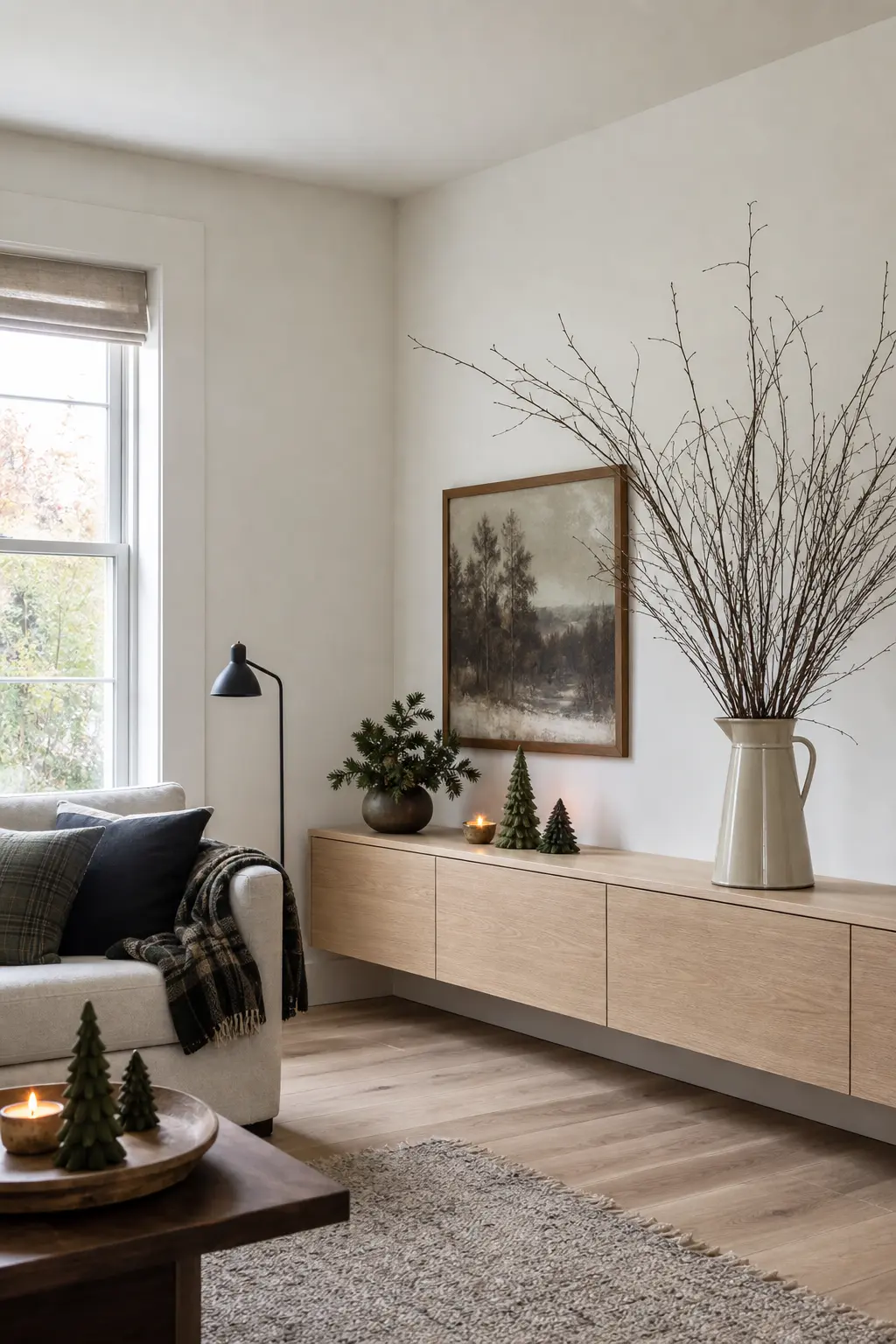
An Enamel Jug of Branches on a Modern Sideboard
Element used: enamel. What it replaces: the generic vase of dried pampas or the empty space beside the tv unit.
Pick up silver birch, bare hazel or eucalyptus from any florist or garden centre. Fill a cream enamel jug, set it on the sideboard and step back. The jug is doing everything: it signals the palette, it adds height and it costs nothing to refresh mid-season by swapping branches for sprigs of holly.
On a modern floating sideboard with matt grey or white cabinetry behind it, the cream enamel reads as a deliberate choice rather than a mismatch. That is the whole trick of this look.
🛍 Shopping guide
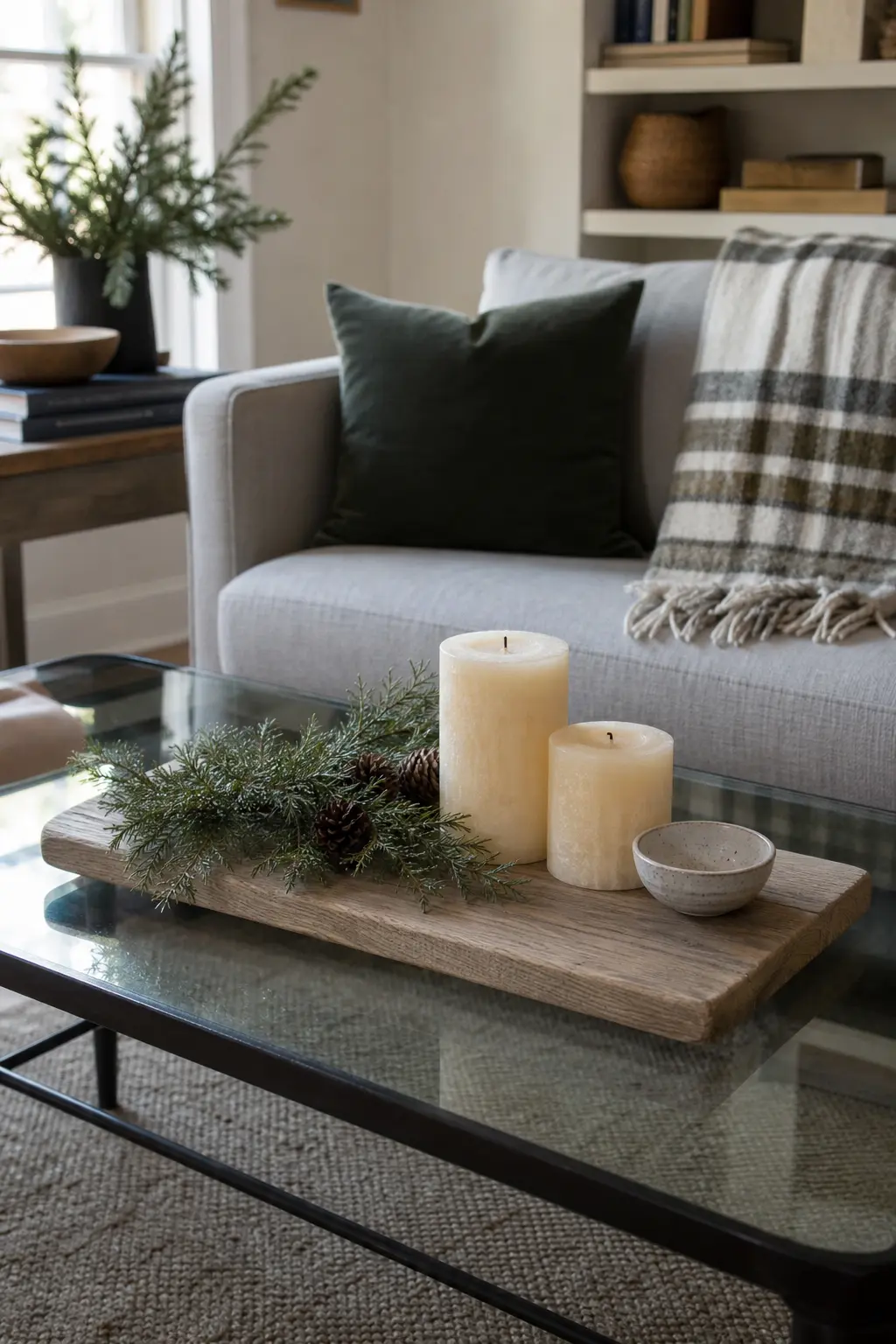
A Scrubbed Pine Board as a Tray
Element used: worn wood. What it replaces: the lacquered tray or the acrylic organiser on the coffee table.
A scrubbed pine chopping board laid flat on a coffee table becomes a tray for candles, a small stoneware dish and a sprig of rosemary. It grounds the arrangement and protects the table. The texture of pale, clean pine against a modern table in walnut laminate or glass creates the contrast that makes both things look more considered.
If the board is wide enough, lean a second, smaller board behind it for height. No styling trick earns more visual return for less money.
🛍 Shopping guide
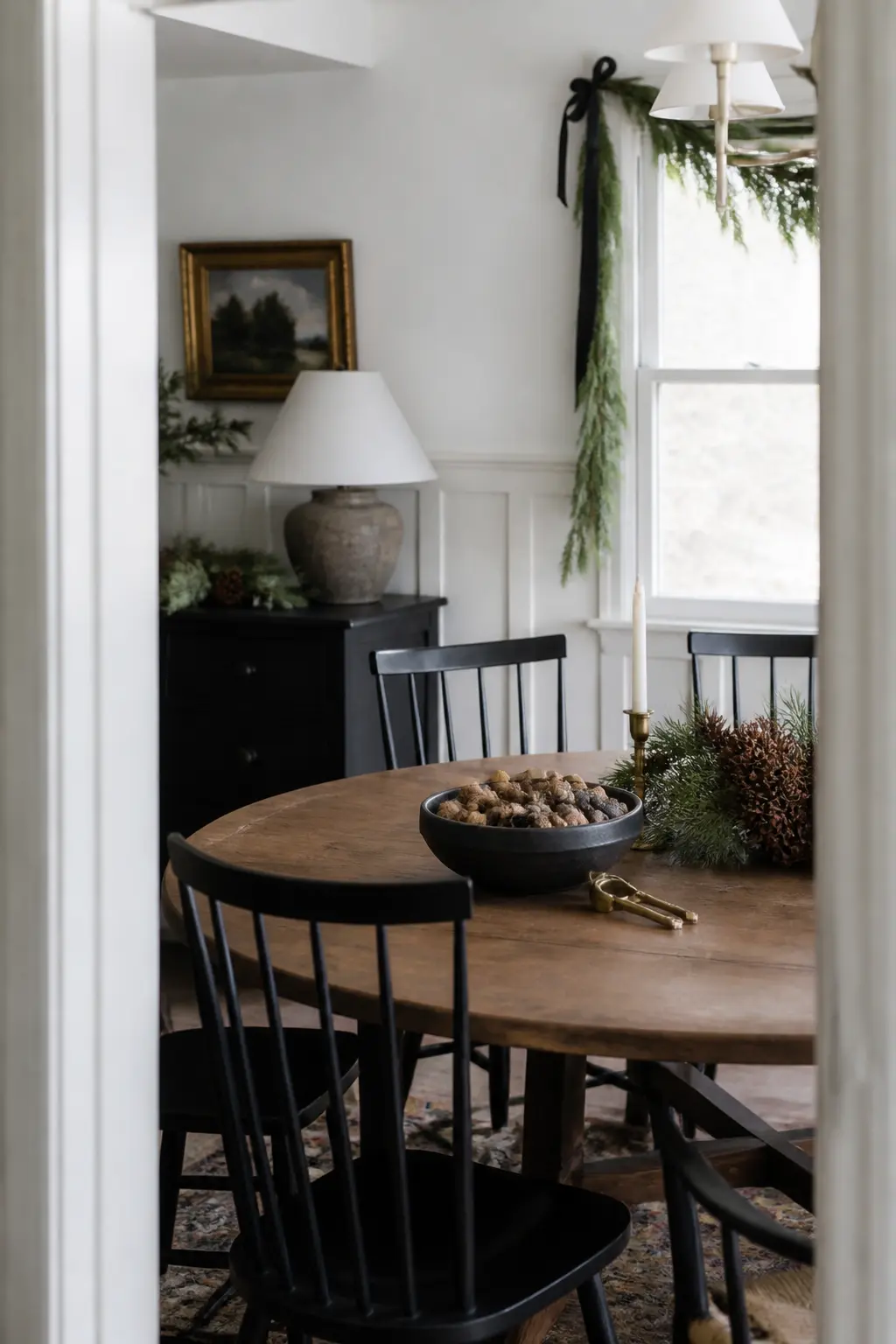
A Stoneware Bowl of Nuts
Element used: worn wood (the surface beneath) and texture. What it replaces: the decorative bowl of baubles or the glass bowl of pot pourri.
A stoneware or earthenware bowl filled with unshelled mixed nuts is genuinely decorative and genuinely edible. Set it on a pine board on the sideboard or on a wooden side table and it looks like a still life from a Dutch painting, which is the entire mood.
Add a nutcracker beside it in brass or plain steel. Guests will use it without being asked, and the conversation that follows is worth more than any party game.
🛍 Shopping guide
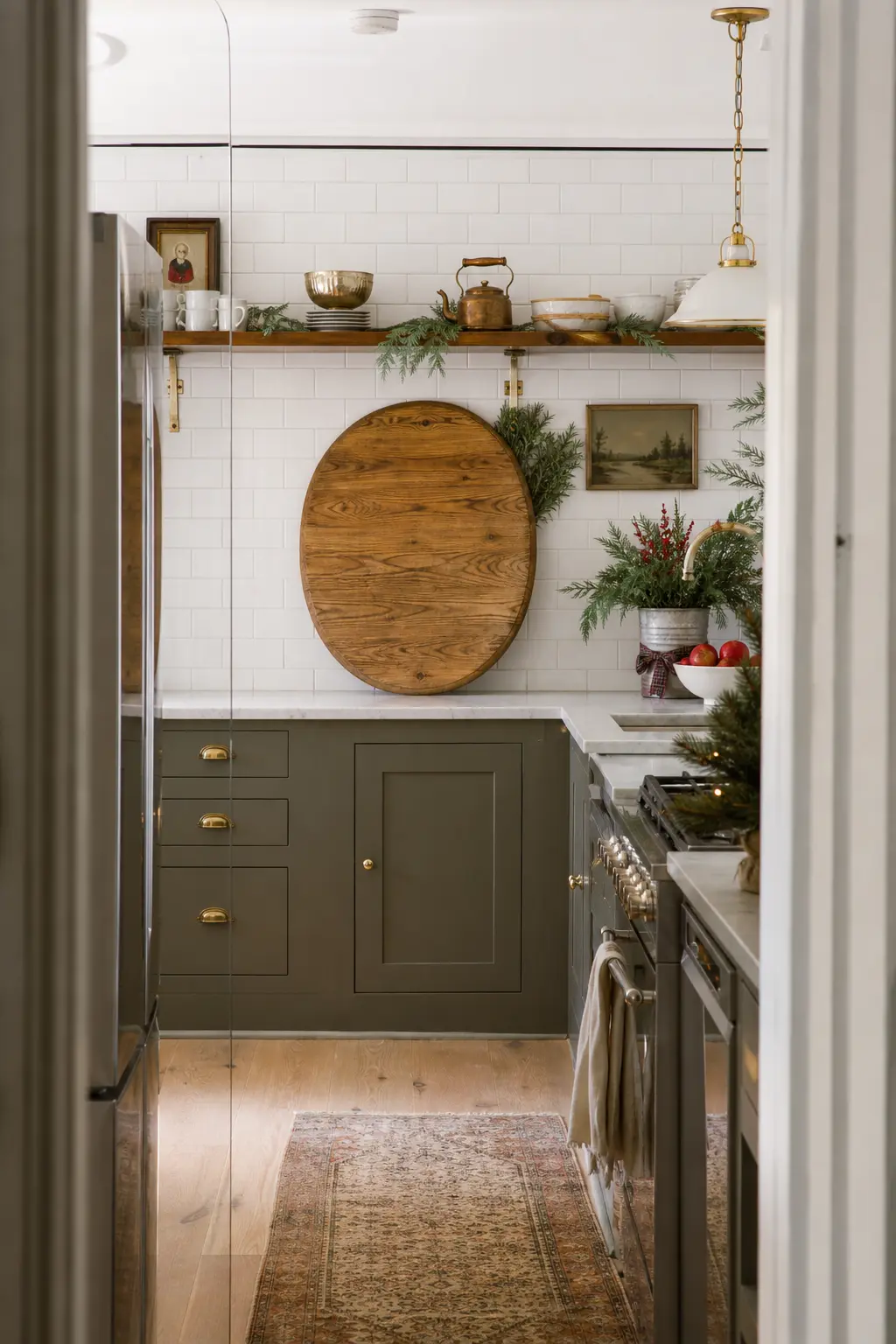
A Bread Board Leaned Against a Splashback
Element used: worn wood. What it replaces: the blank metro-tile or glass splashback that reads as purely functional.
A large oval or rectangular bread board leaned upright against the kitchen splashback, beside the hob or on the counter, adds a warm vertical note without drilling a single hole. Tuck a sprig of rosemary or a small bunch of dried herbs behind it. The wood against white tile or pale grey glass makes the kitchen feel edited rather than bare.
This works particularly well in a narrow galley kitchen where hanging things is not practical. It takes up six inches of counter depth and changes the whole reading of the room.
🛍 Shopping guide
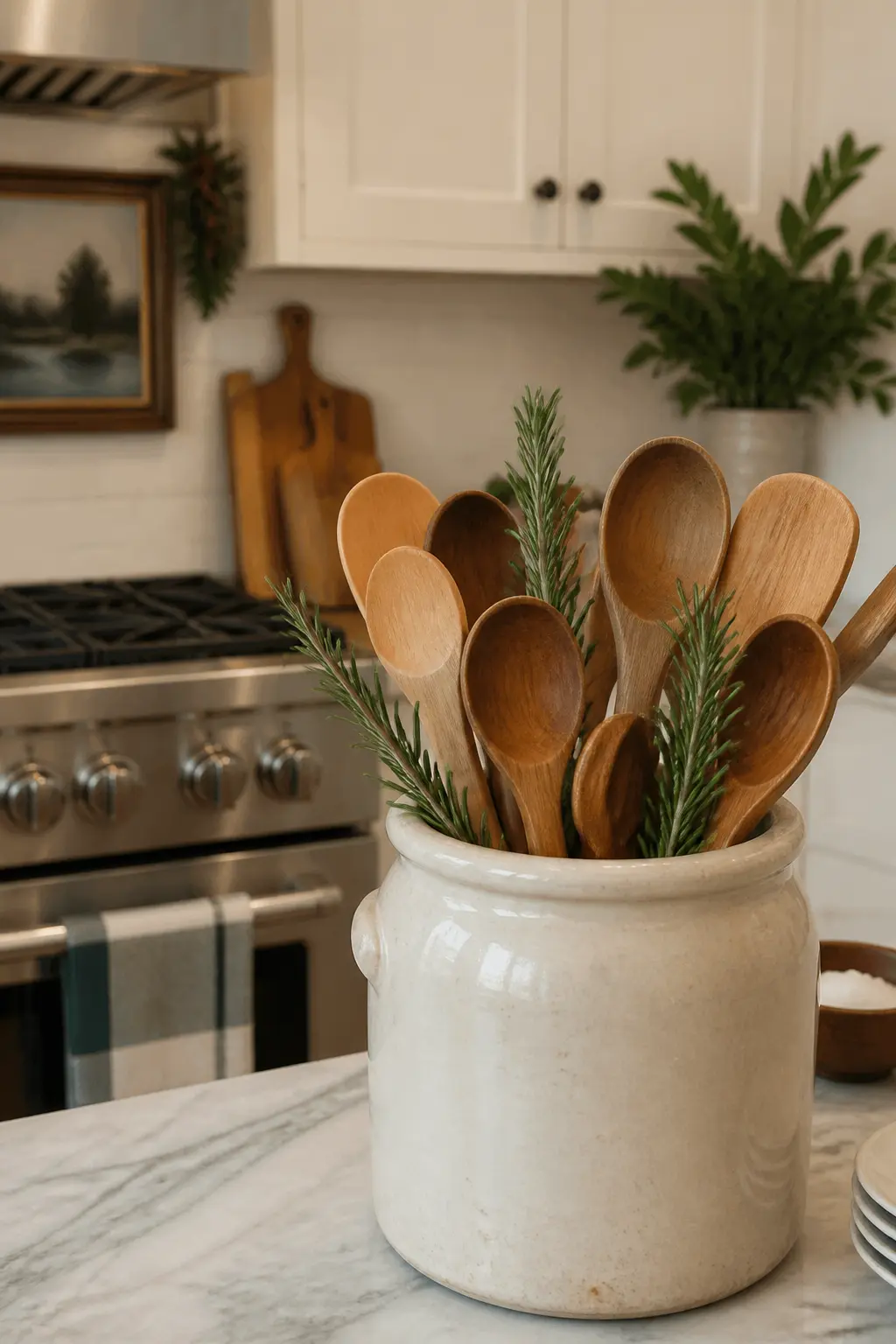
A Plain Wooden Spoon Jar with Sprigs
Element used: worn wood and greenery. What it replaces: the bare utensil crock or the empty counter beside the cooker.
A wide-mouthed stoneware or enamel crock holding wooden spoons and a few sprigs of rosemary, thyme or bay among the handles is the quietest possible country note in a modern kitchen. It requires no rearranging: add the herbs between the handles and that is it.
The herbs dry slowly in the kitchen warmth and smell good for weeks. Swap them for a few sprigs of holly berries as the month goes on and the crock becomes a small seasonal calendar.
Cloth and Texture
Fabric is the fastest way to change the temperature of a room. A checked cloth or a folded blanket costs less than a new cushion and it packs flat in January.
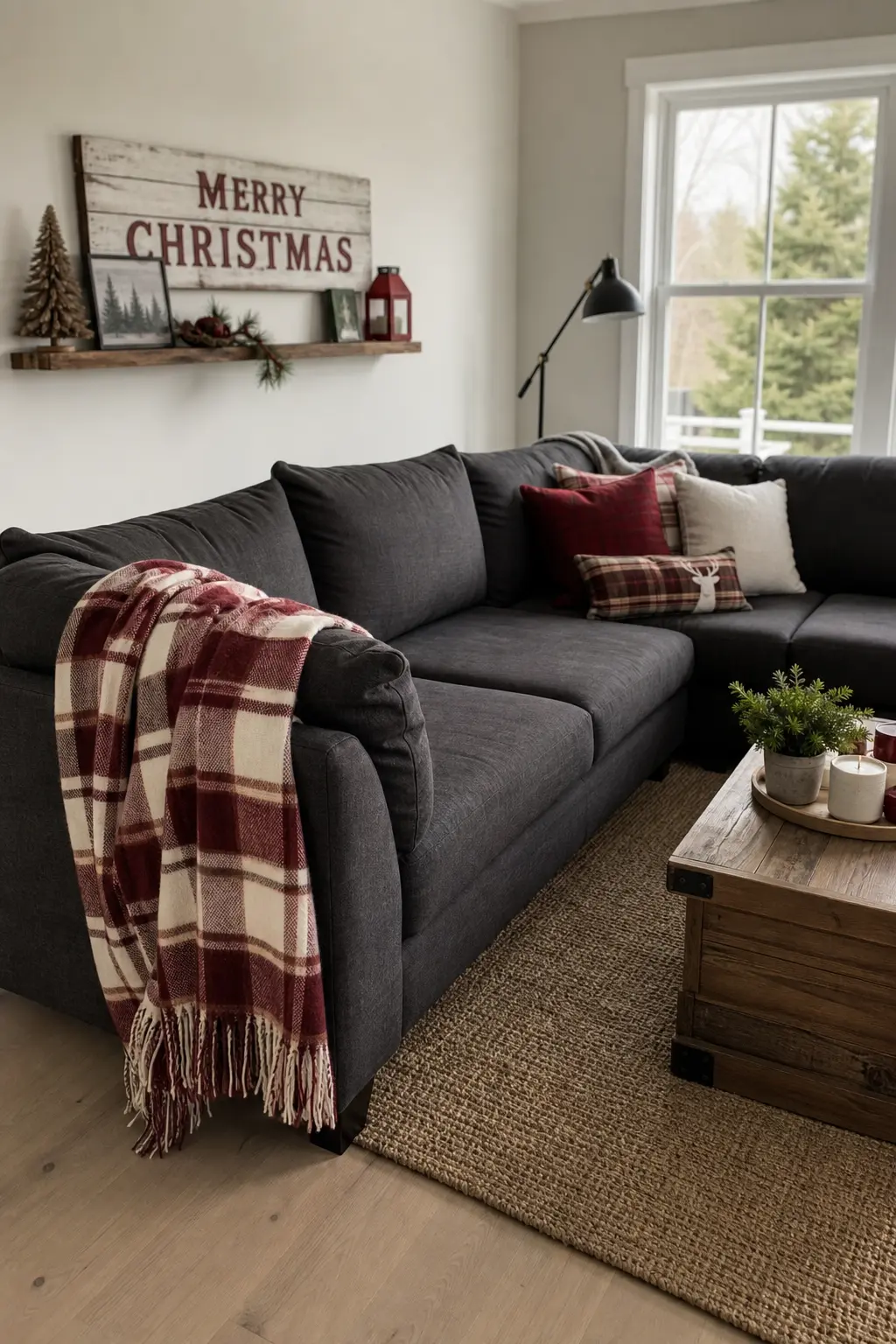
A Checked Blanket Over a Grey Sofa
Element used: checked cloth. What it replaces: the plain throw or the knitted grey blanket that disappears against the sofa.
An oxblood and cream check blanket draped over the arm of a grey or charcoal sofa is the single most efficient intervention in this entire list. It costs little, it washes, and it relocates the whole room from Scandi minimalism to something with more warmth and intention.
Fold it loosely, not neatly. A casually draped blanket reads as lived-in; a tightly folded one reads as a display in a shop. The difference is one shake before you let go.
🛍 Shopping guide
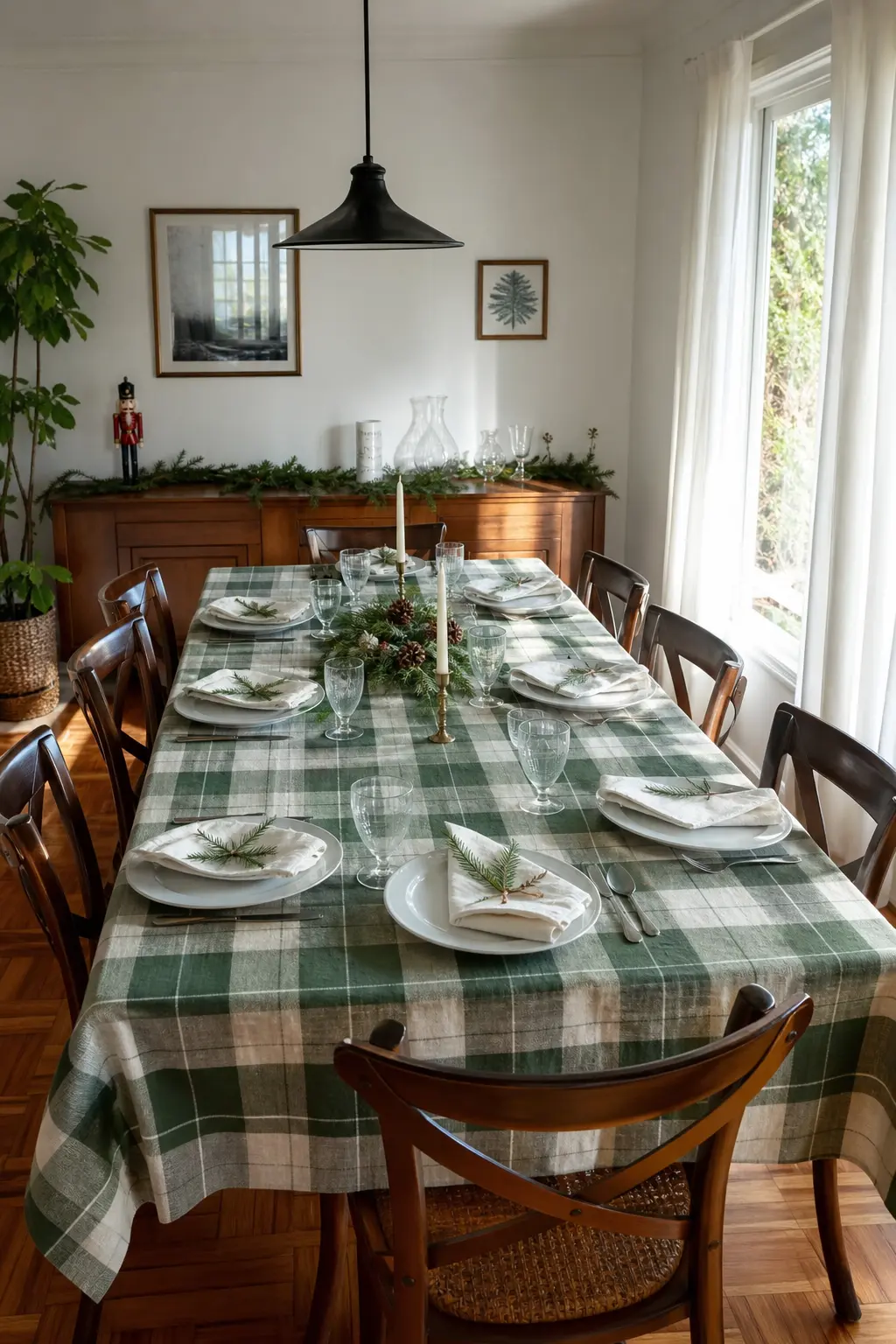
Checked Cloth Over a Glass Table
Element used: checked cloth. What it replaces: the bare glass dining table that shows every fingerprint and looks cold under winter light.
A cotton or linen check cloth in green and cream, or oxblood and white, over a glass or gloss-white table transforms the whole character of a dining room. The table underneath becomes irrelevant. What reads is the cloth, the plates and the food.
Buy a length of check fabric from a fabric shop and hem it by hand or with iron-on tape. The result looks more considered than a bought tablecloth and costs half the price.
🛍 Shopping guide
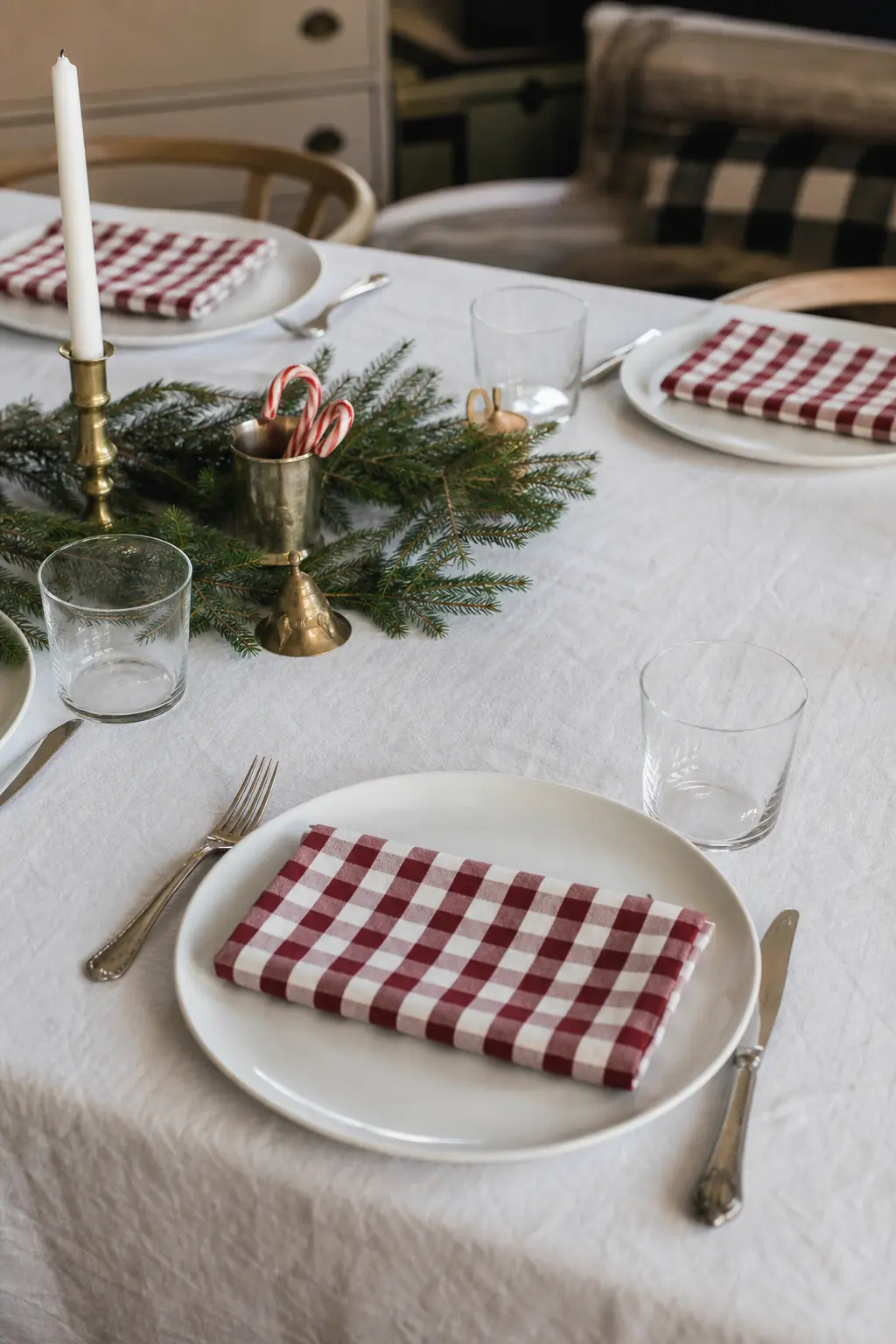
Checked Napkins on White Plates
Element used: checked cloth. What it replaces: plain white napkins or no napkins at all on a modern place setting.
Green or oxblood gingham napkins folded on white plates are the cheapest possible country note on a table. They need nothing else: not a charger, not a name card, not a centrepiece. The contrast of small check against plain white does the work.
Fold them flat and set them on the plate. Or roll them and tie with a short length of jute twine. Either way, the effect is immediate and the whole set washes in the machine.
🛍 Shopping guide
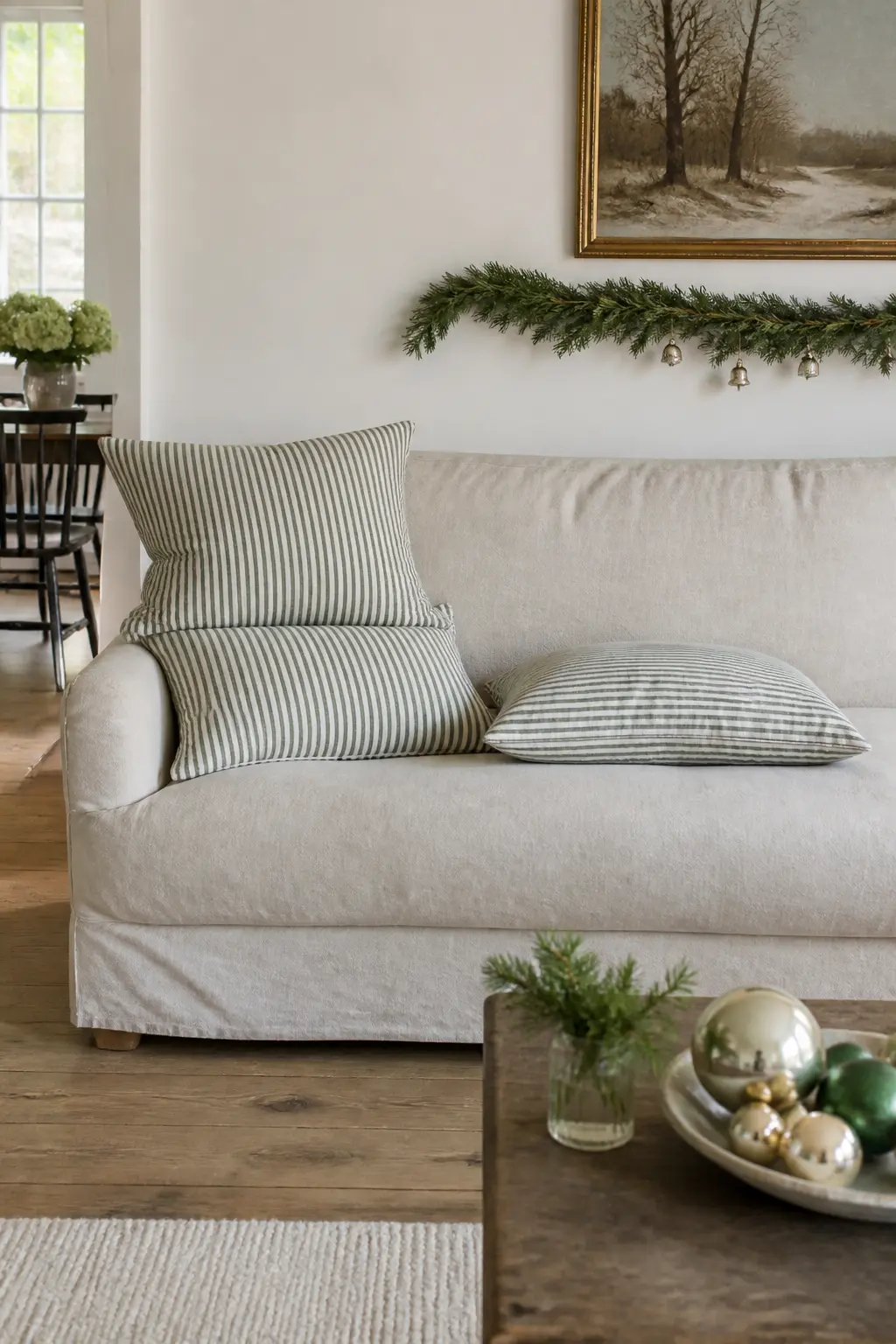
A Stack of Striped Ticking Cushions
Element used: checked cloth (close cousin: ticking stripe). What it replaces: the matching cushion set that came with the sofa, usually in a shade of stone that reads as beige and nothing more.
Ticking stripe in cream and faded green, or cream and charcoal, stacked two or three cushions to one end of the sofa, adds the textile weight that makes a room feel inhabited. The stripe is a country reference without being a cliche. It has been used on mattresses and work aprons for two hundred years, which is exactly why it reads as honest rather than themed.
🛍 Shopping guide
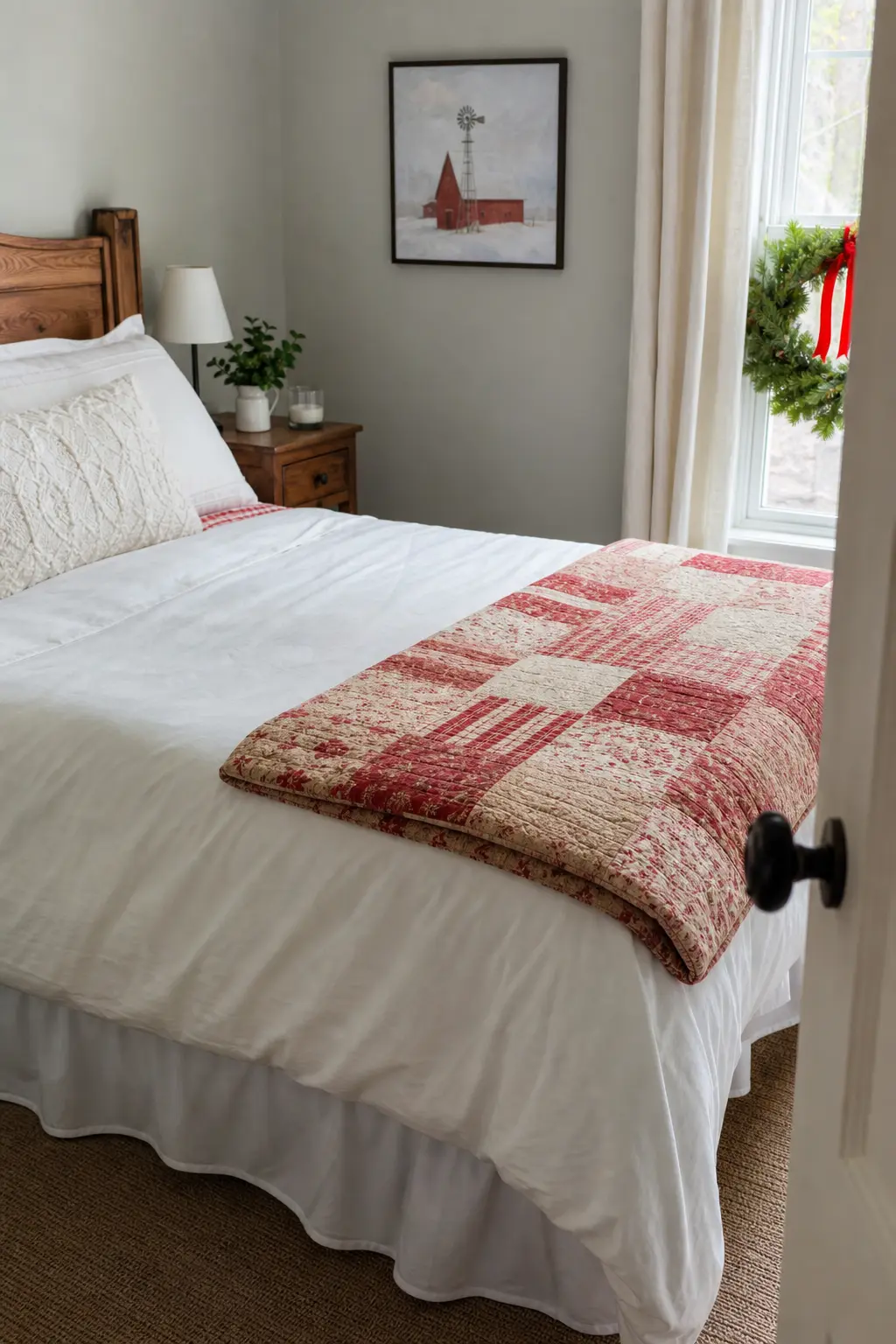
A Folded Quilt at the End of a Modern Bed
Element used: checked cloth. What it replaces: the flat hotel-style bedspread or the bare duvet end that modern beds often present.
A patchwork or check quilt folded across the foot of a bed with a plain white or grey duvet does two things. It adds the warmth of pattern and the warmth of actual thermal weight, and it signals that this room was put together by a person rather than a stylist.
Look for vintage quilts in charity shops and online secondhand markets. A genuinely old quilt that has been washed into softness costs about the same as a new decorative throw and looks incomparably better.
🛍 Shopping guide
Greenery Without a Garden
Real greenery does more work per pound than almost any other decor purchase. It smells, it moves slightly in a draught, and it makes plastic look exactly like plastic by comparison.
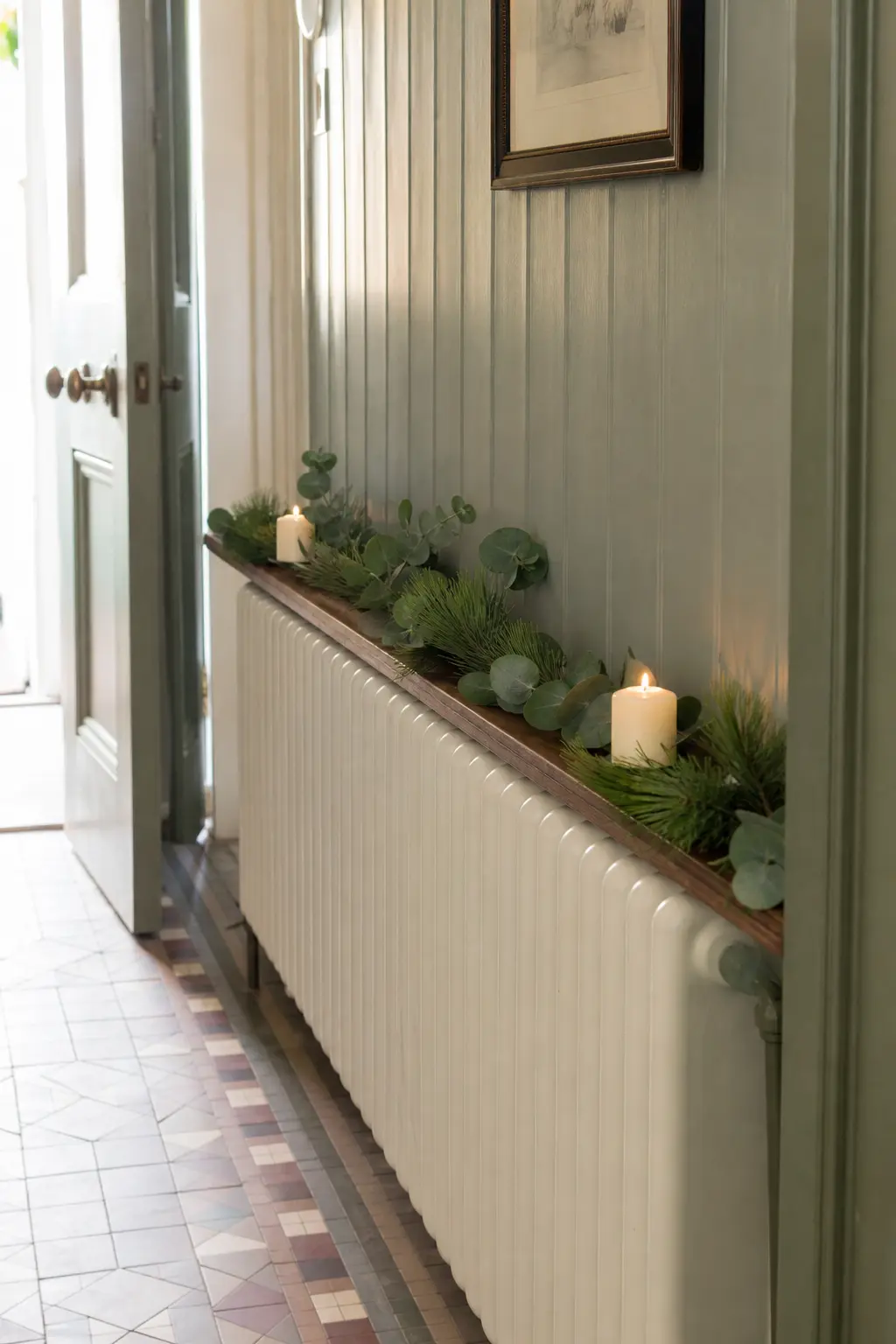
Greenery on a Radiator Shelf
Element used: real greenery. What it replaces: the row of candles or the empty shelf above the radiator that becomes a dust trap by February.
A radiator shelf is one of the most common features in a terrace or Victorian conversion and one of the most underused. Lay a few branches of eucalyptus, pine or ivy along it, weight them with a small candle or a stoneware cup at each end, and the shelf becomes the focal point the room was missing.
The warmth from the radiator dries the greenery gradually and intensifies the scent. Eucalyptus in particular smells like a spa for the first two weeks before it dries to a more papery note. Both are good.
🛍 Shopping guide
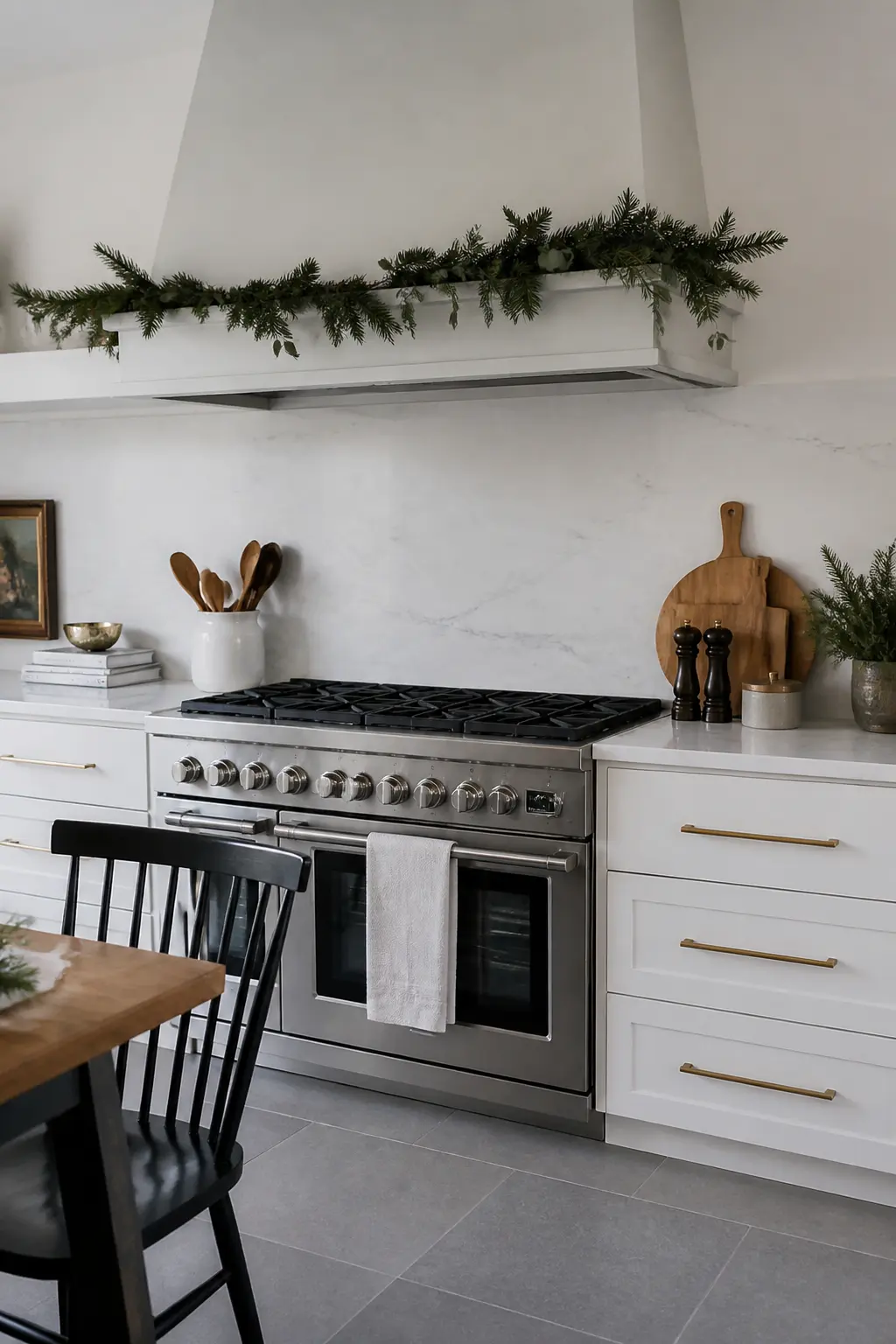
Greenery Over a Modern Kitchen Extractor
Element used: real greenery. What it replaces: the bare metal or white hood of a kitchen extractor that reads as purely industrial in an otherwise warm room.
Tuck a few sprigs of rosemary, bay, pine or eucalyptus into the top edge of a chimney-style extractor hood, or lay a short garland across the top. Use string or a strip of jute to hold it if needed. The greenery sits above eye level, which is where the eye travels after it has processed the rest of the kitchen.
Do not use candles here. Keep it to foliage and let the scent do the work. A handful of sprigs from the garden or a bunch from the supermarket is enough.
🛍 Shopping guide
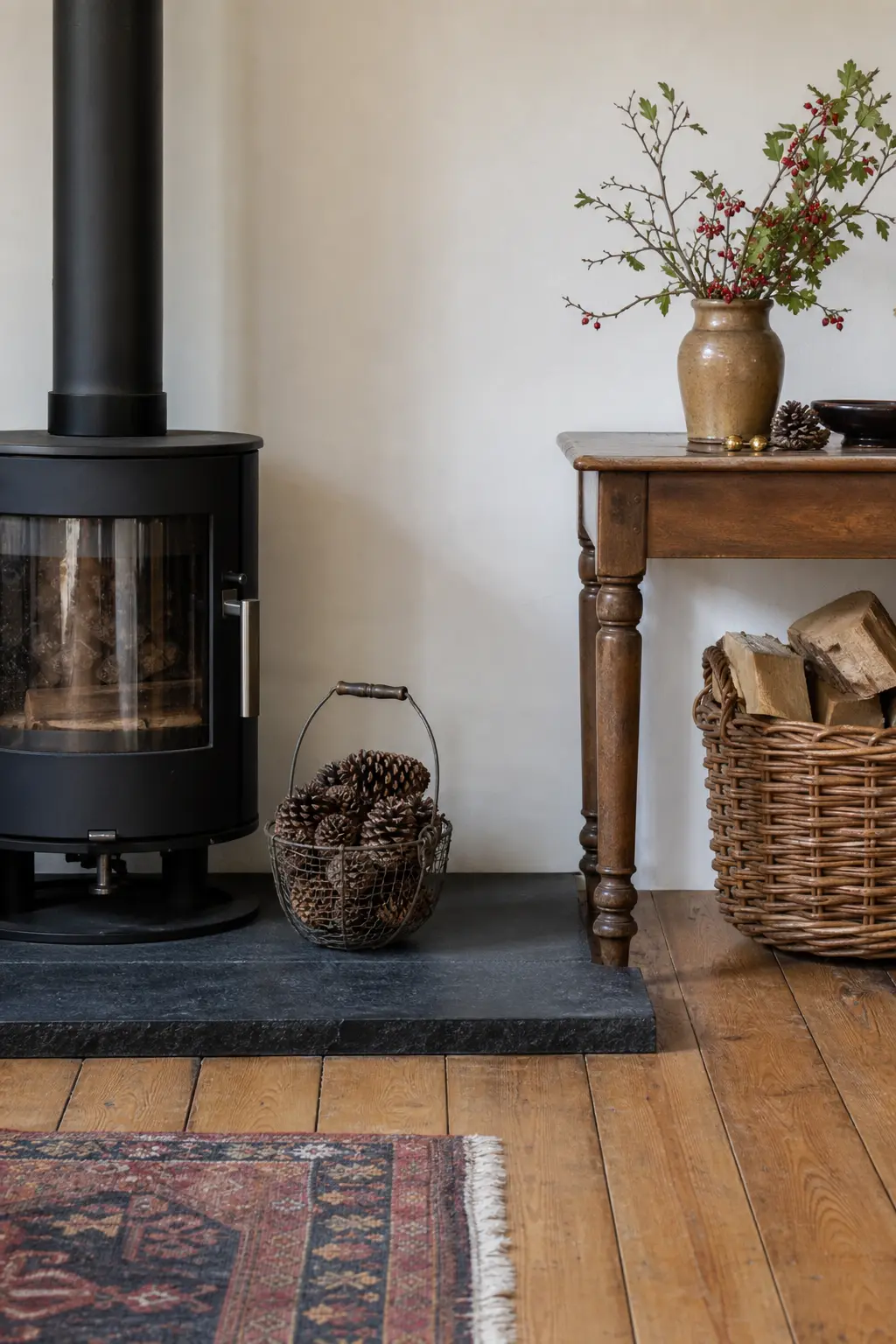
A Wire Egg Basket of Cones
Element used: greenery (foraged texture). What it replaces: the glass hurricane or the ceramic bowl on the hearth or side table.
A wire egg basket or a galvanised wire basket filled with pine cones is one of those arrangements that looks deliberate without being arranged. Pile the cones in loosely, tuck a few sprigs of dried bay or rosemary among them and set it on the floor by the hearth, beside a stove or on the side table.
Cones are free if you walk in a park in autumn. They are also sold by the bag in garden centres and online at very low cost. Either way, you end up with something that looks expensive and lasts until spring.
🛍 Shopping guide
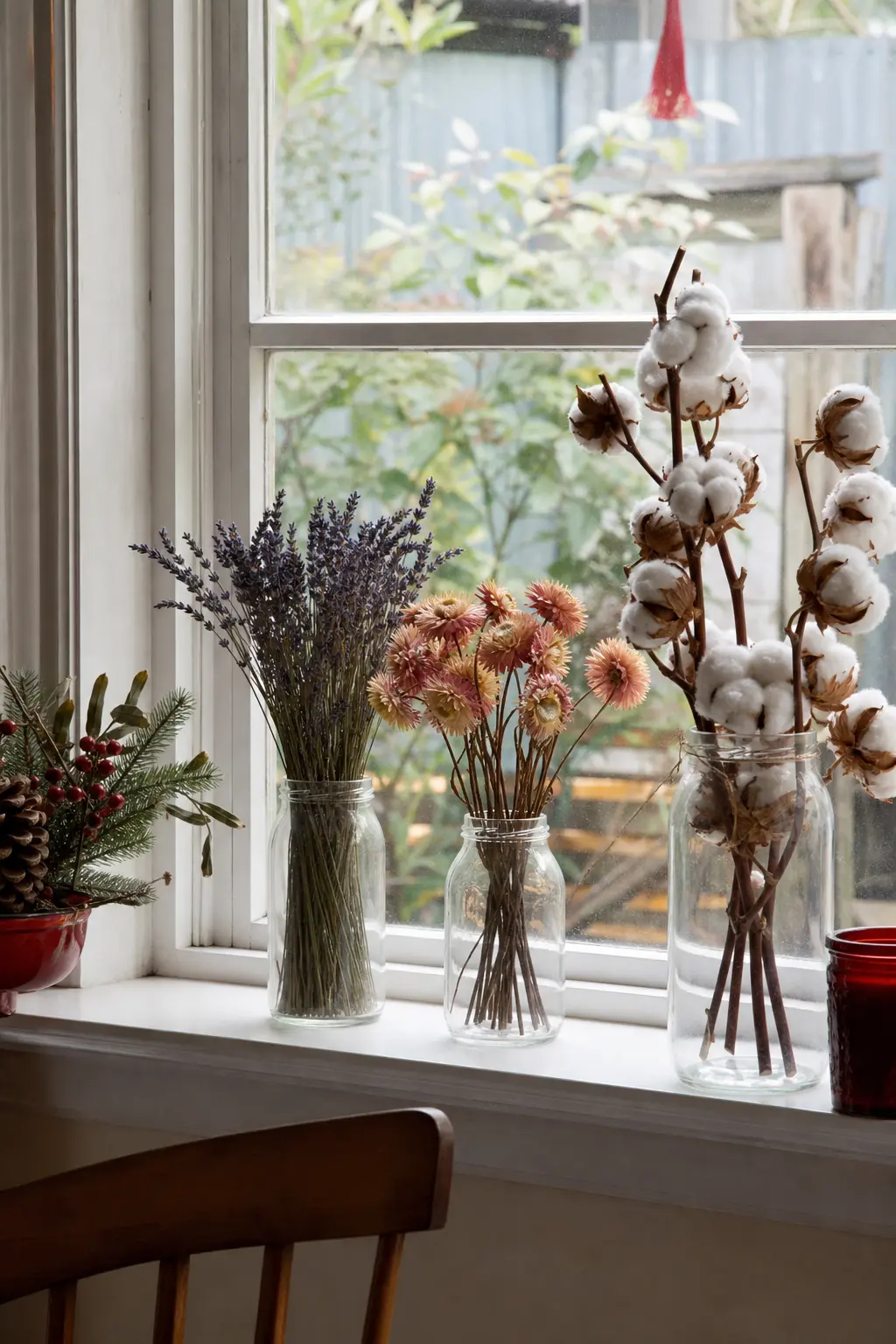
Dried Flowers in a Jam Jar
Element used: greenery (dried). What it replaces: an empty windowsill or the single tealight that has been there since October.
A jam jar of dried flowers, lavender, dried strawflower or cotton stems in cream and faded pink on a kitchen windowsill or bathroom shelf is small, cheap and surprisingly sufficient. The jar needs no label, no ribbon and no styling. The contrast between the utilitarian glass and the dried stems is the whole point.
Group two or three jars at different heights if the sill is wide. A single jar looks intentional. Three looks like a collection, which is more interesting.
🛍 Shopping guide
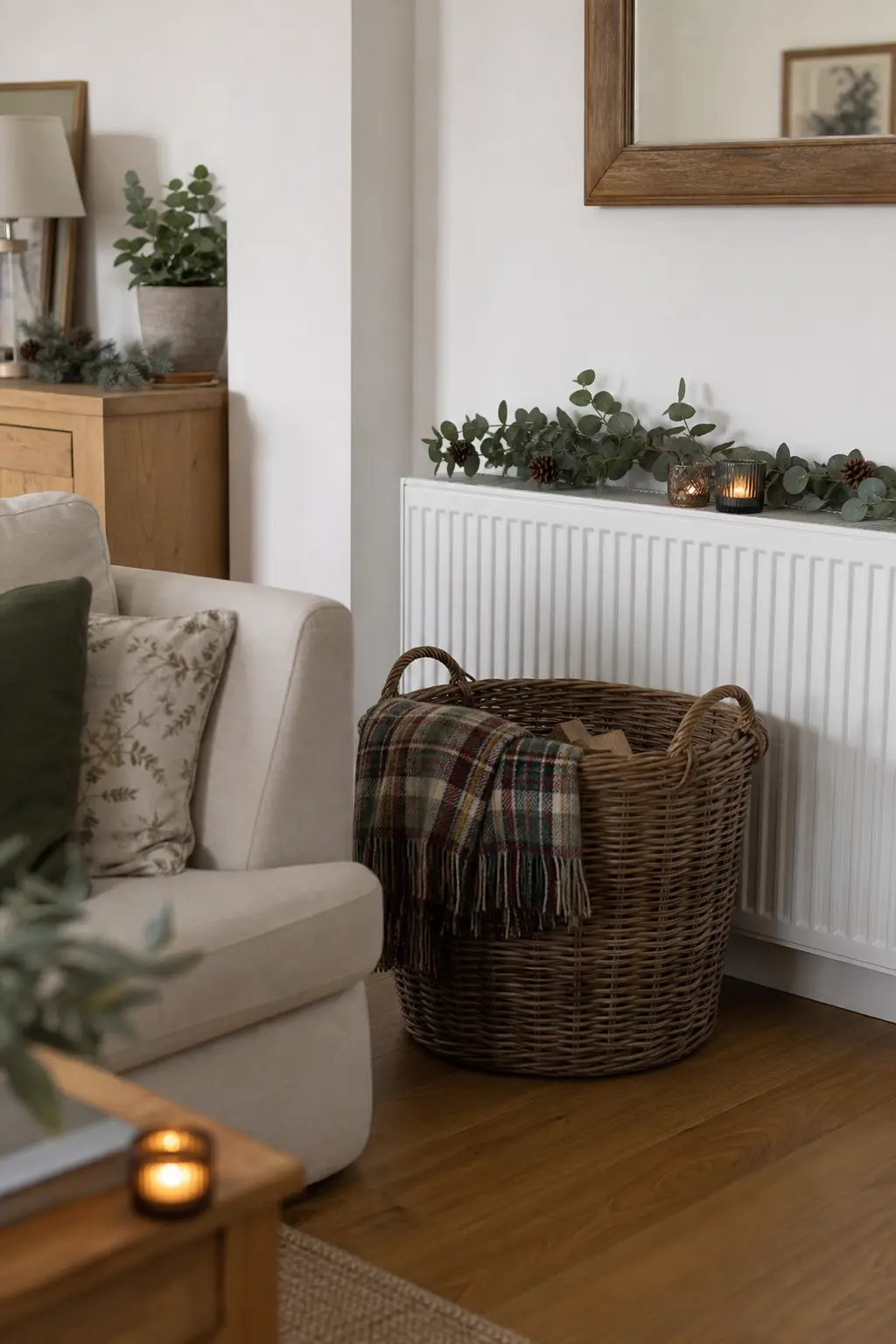
A Wicker Log Basket by a Radiator
Element used: worn wood (wicker). What it replaces: the flat-pack storage unit or the plastic magazine rack beside the radiator in a modern sitting room.
A wicker log basket holds logs if you have a wood burner, but it holds just as well the things a sitting room needs and has nowhere to put: blankets, dog leads, board games in their boxes, cushions that are not on the sofa. The look is correct. The function is real.
Size up. A log basket that looks too big in the shop is usually exactly right in the room. The generous scale is part of the character.
🛍 Shopping guide
Enamel and Metal
Cream enamel and galvanised metal read as country without any context clues. They are also deeply practical, which is why the farmhouse relied on them in the first place.
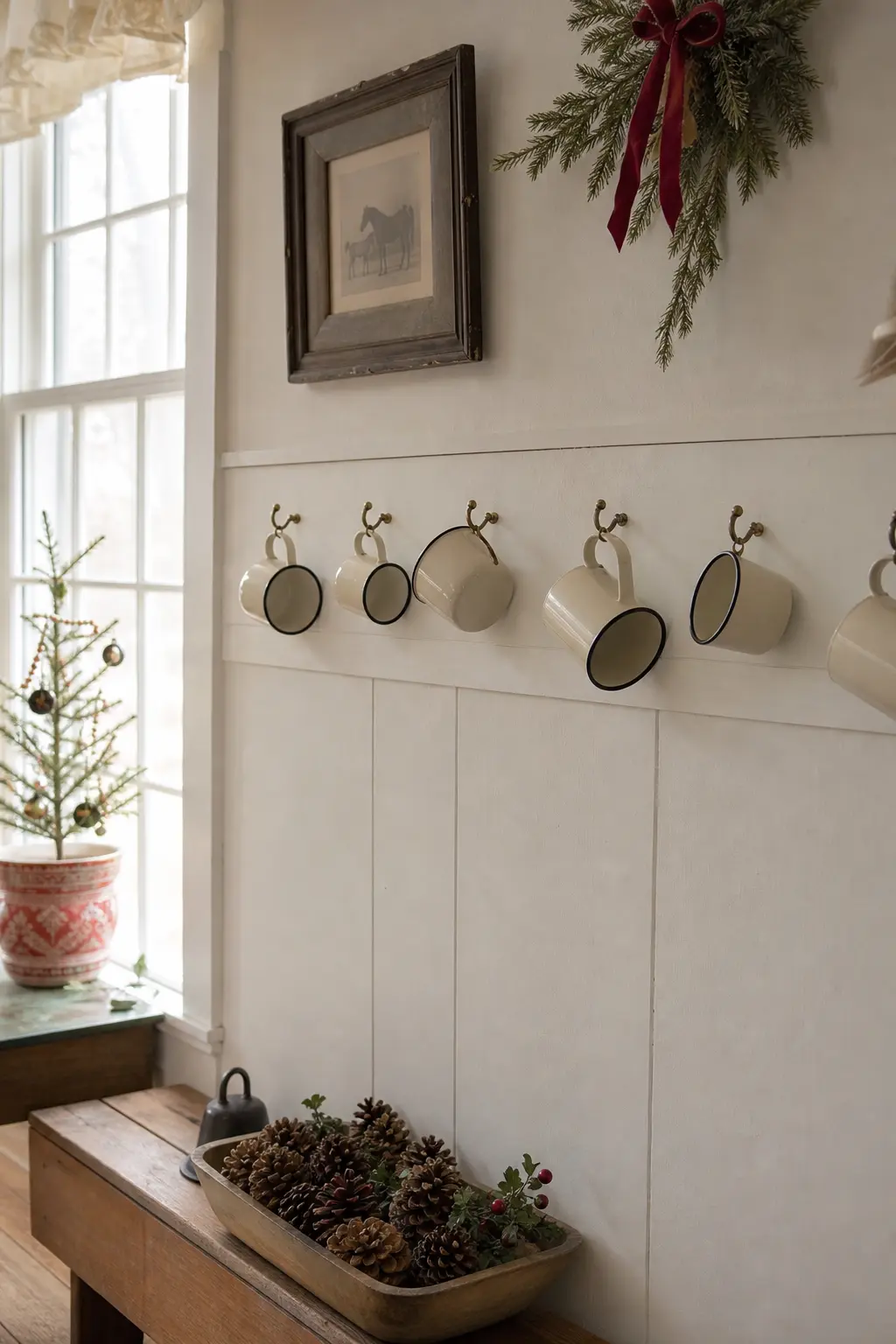
Enamel Mugs Hung on Hooks
Element used: enamel. What it replaces: the row of matching mugs on a shelf that reads as a kitchen showroom, or the hooks that hold nothing at all.
Cream enamel mugs with a dark navy or black rim hung on a row of small hooks inside a kitchen alcove, beside a dresser or on a plain wall look like they belong. They are also the mugs you use, which matters: decor that earns nothing by being there eventually feels like clutter.
Hooks do not need to match. A row of brass cup hooks drilled into a thin batten screwed to the wall is cheaper, sturdier and more honest-looking than a bought hook rail at double the price.
🛍 Shopping guide
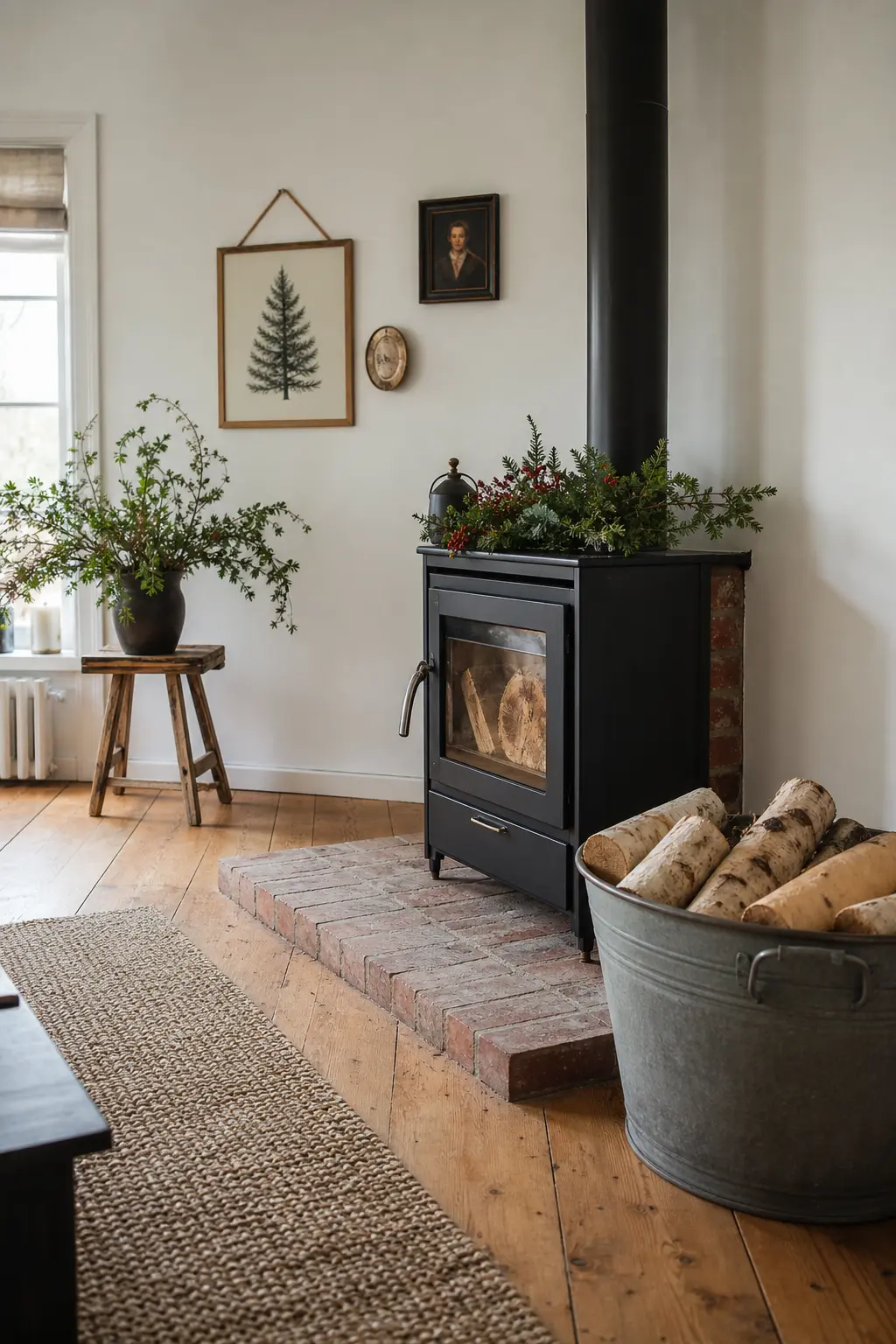
A Galvanised Tub of Logs by a Modern Stove
Element used: enamel (close cousin: galvanised metal). What it replaces: the hearth-side basket in plastic, the floor beside the stove that holds only a mat and an ash pan.
A galvanised metal tub or dolly tub filled with split logs beside a modern log burner or even beside a wall that previously had nothing on it creates the impression of a working hearth. The silver of the metal against the black of the stove is a good contrast.
If you do not have a stove, put the tub in the corner of the sitting room anyway and fill it with birch logs. They smell faintly of winter air and cost very little from a garage or petrol station in December.
🛍 Shopping guide
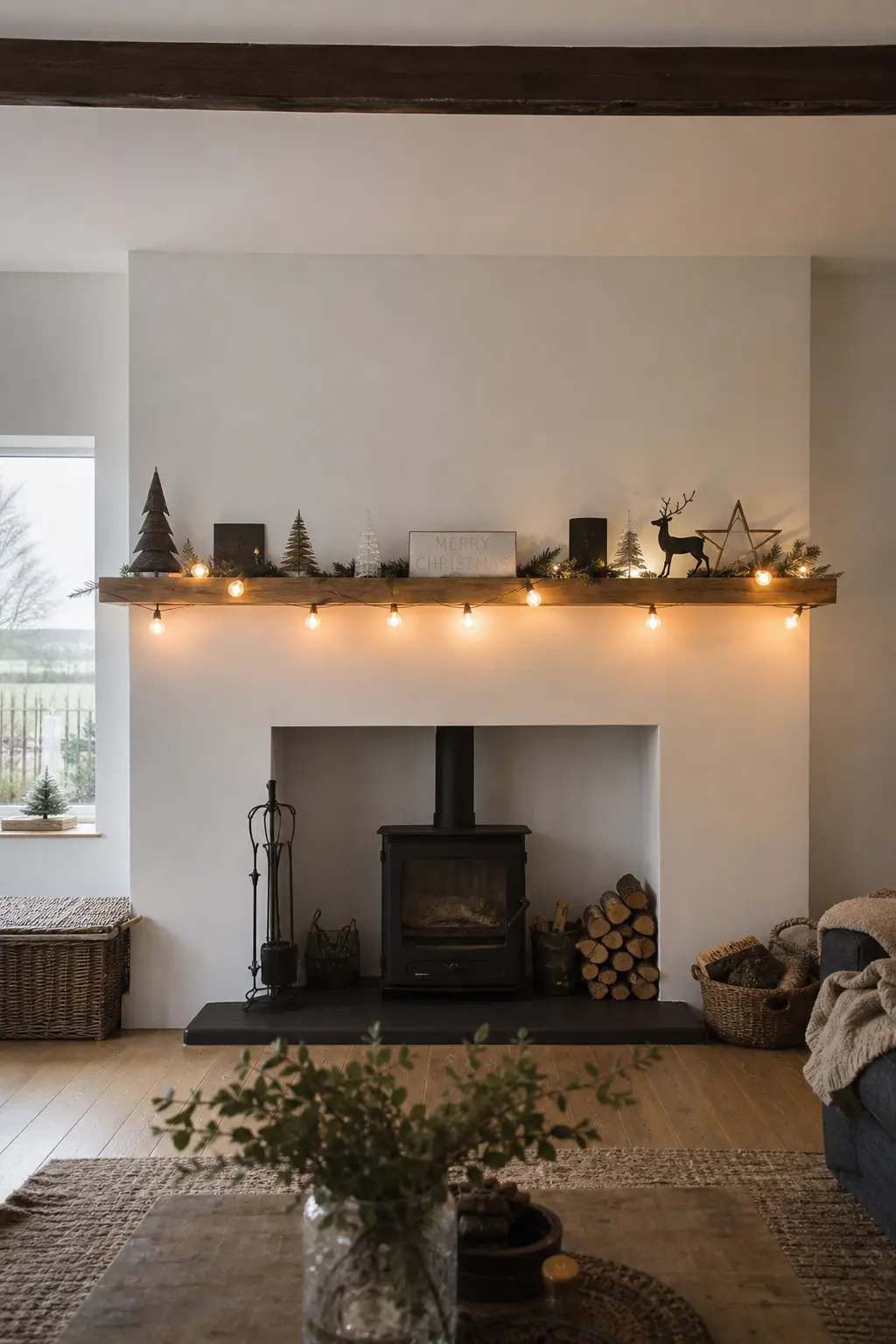
Bare Bulb Lights Over a Plain Shelf
Element used: enamel and brass (the fittings). What it replaces: the white fairy light string pinned along a shelf edge, which by now reads as expected rather than warm.
A strand of bare bulb filament lights draped over or along a plain shelf, a floating mantel or a wide window frame gives a lower, more amber light than fairy lights. The bulbs themselves are visible and they are the point: small, glowing, warm, which is what winter rooms need after dark.
Set them on a timer. A room that lights itself at four in the afternoon in December requires nothing else.
🛍 Shopping guide
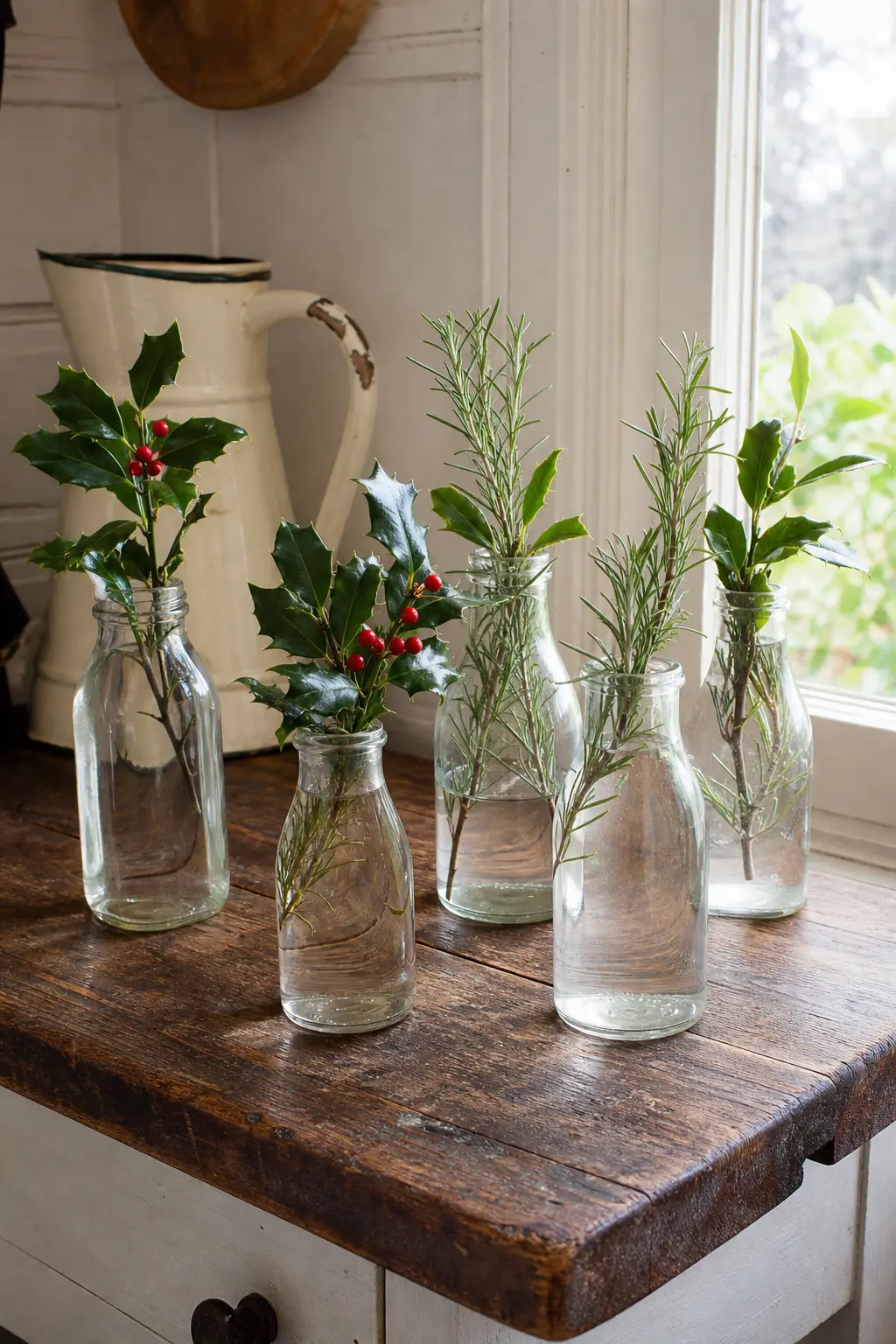
A Jug of Milk Bottles with Sprigs
Element used: enamel. What it replaces: the ceramic vase on the kitchen table or the single candle that has been there since the last dinner party.
A cluster of old-style glass milk bottles, each holding one or two sprigs of greenery, rosemary, eucalyptus, bay or holly, grouped on the dining table or windowsill is a simple thing that looks like it took thought. The bottles can be new ones bought from a homeware shop or genuine recycled ones saved from a dairy delivery service.
Set three or five together, vary the height of the sprigs slightly, and finish with a cream enamel jug at the back of the group. The jug elevates the whole arrangement without competing with it.
🛍 Shopping guide
Wood in Unexpected Places
Worn timber does not mean distressed furniture from a chain store. It means a bread board, a stool, a crate, a peg rail: things with a function that happen to be made of real wood.
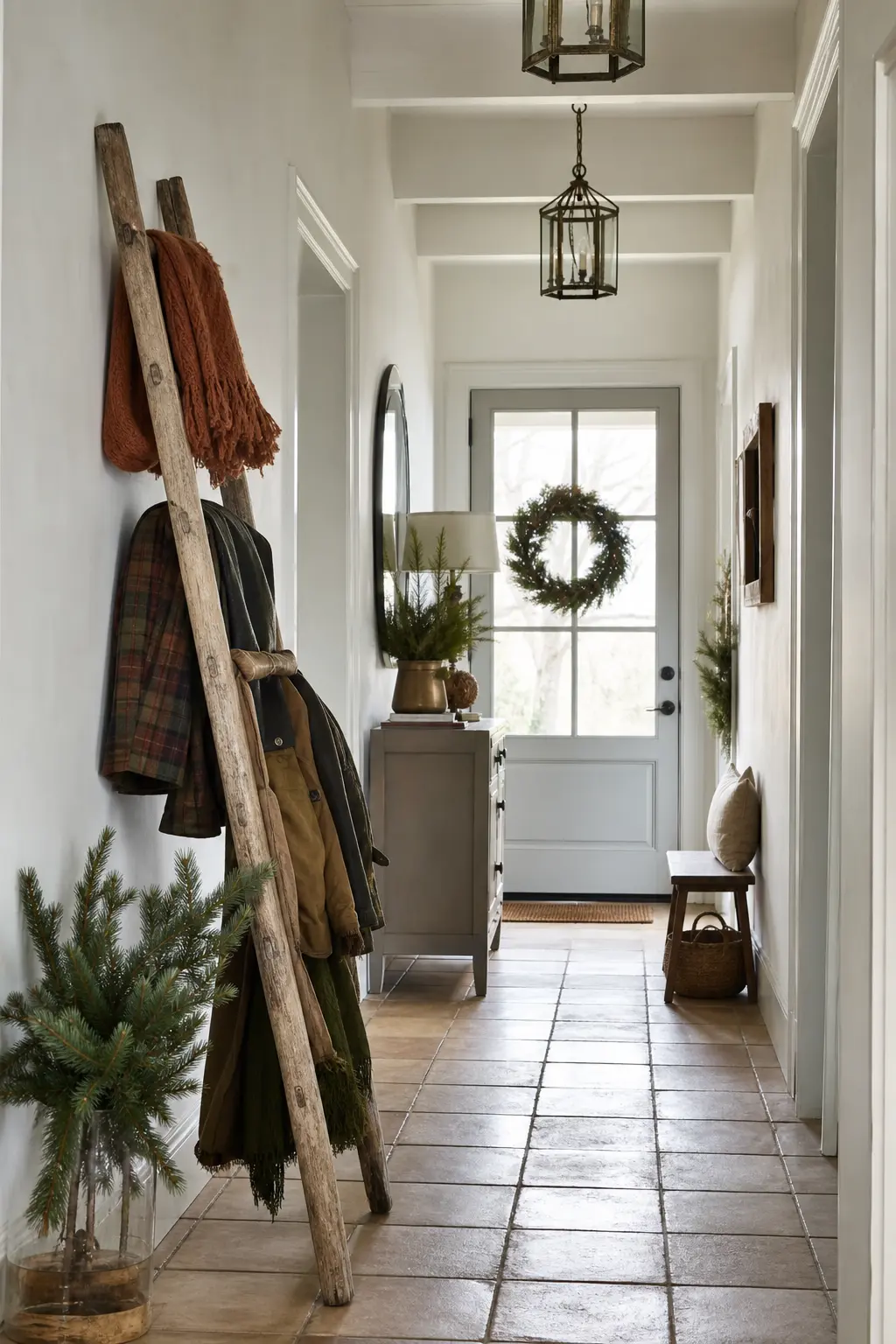
An Old Ladder in a Hallway
Element used: worn wood. What it replaces: the coat stand or the row of hooks that takes up exactly as much floor space but has none of the visual presence.
A wooden ladder leaned against the hallway wall holds coats on the rungs, scarves draped over, bags hung from the top. It requires no drilling, no assembly and no decision about which wall to ruin. In a terrace hallway that has no room for a hall table, it is almost the only thing that works.
Look for one at a reclamation yard or online. A decorating ladder in raw wood, untreated, leans more convincingly than a painted one. Sand any sharp edges and you are done.
🛍 Shopping guide
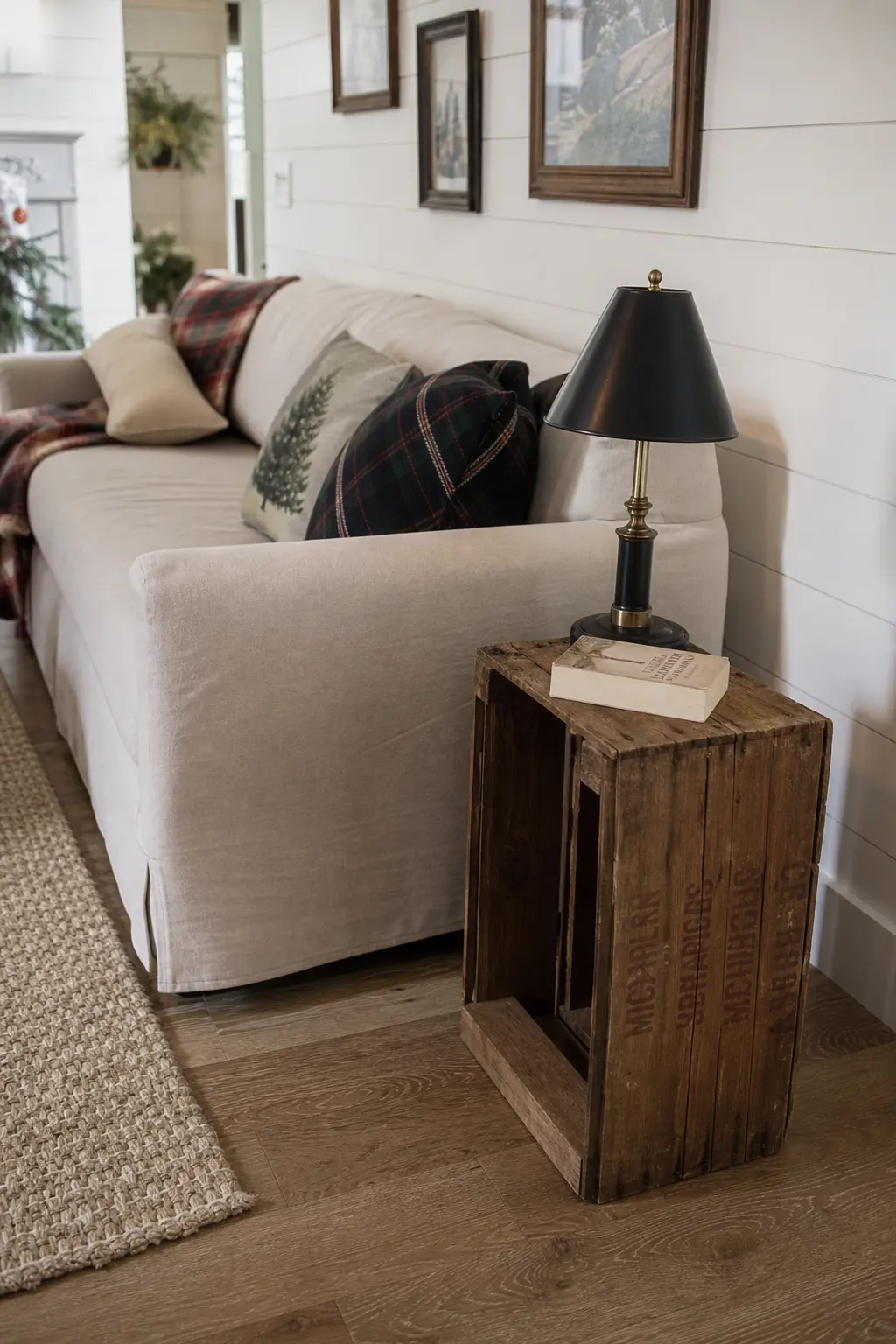
A Wooden Crate as a Side Table
Element used: worn wood. What it replaces: the glass or acrylic side table beside the sofa, which works perfectly well but has no character at all.
A solid wooden crate, sanded smooth on the top edge, turned right-way up and set beside a sofa serves as a side table that holds a lamp, a book and a glass. Turn it on its side and it becomes an open shelf. Stack two and the height works for a standard sofa arm.
Fruit crates from a market, wine crates from a wine shop, apple crates from a farm shop: any of these cost almost nothing and have the patina that a bought side table spends years trying to fake.
🛍 Shopping guide
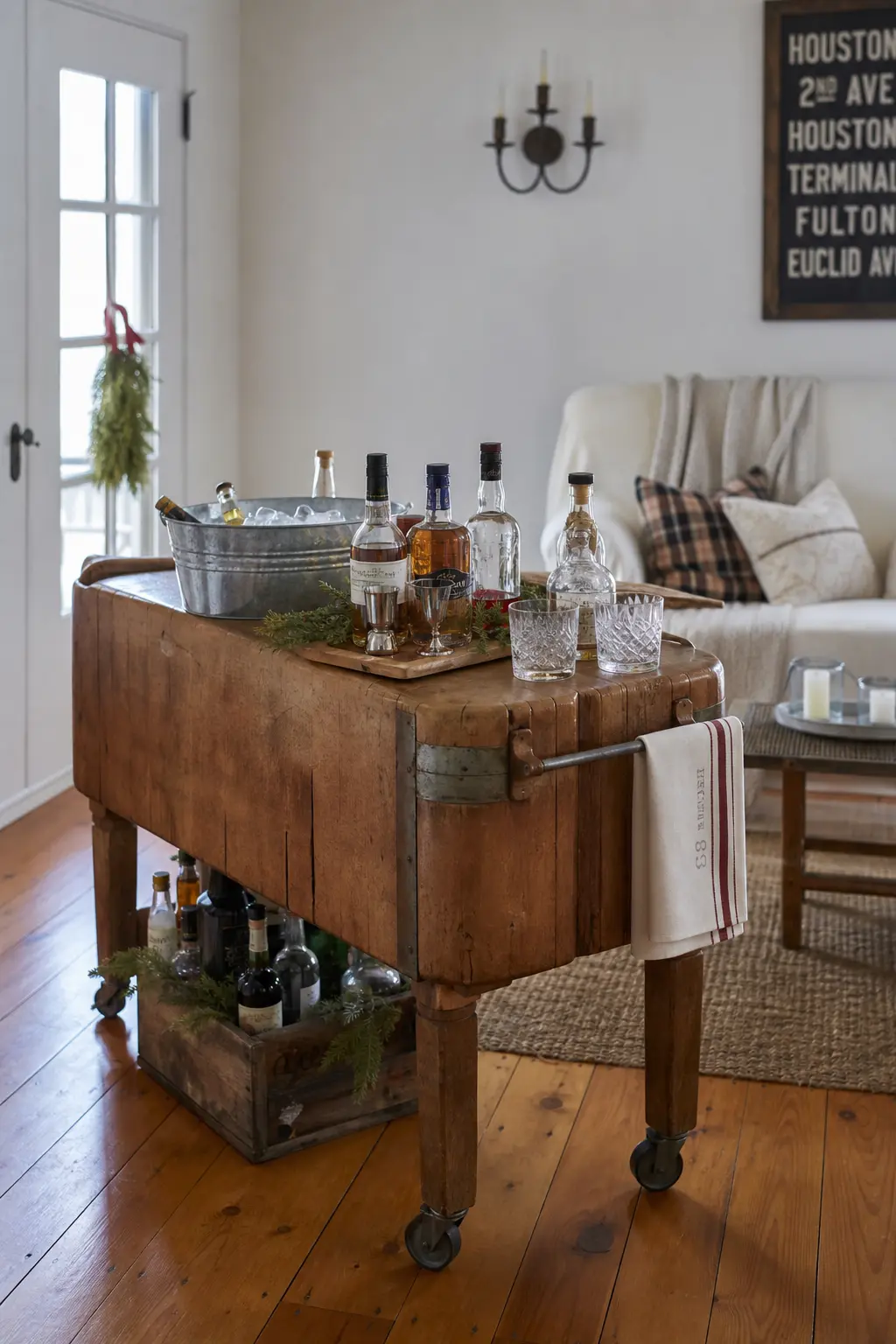
A Butcher’s Block Used as a Bar
Element used: worn wood. What it replaces: the folding table or sideboard pressed into service as a drinks station at a party, which always looks exactly like what it is.
A butcher’s block on castors, moved into the sitting room or dining room for the occasion, becomes a drinks bar that looks like it was always meant to be there. Set bottles on top, glasses hanging below if it has a rail, and a wooden ice bucket or galvanised tub of ice to one side.
The block stays in the kitchen for the rest of the year and earns its space there too. This is the definition of a piece that pays for itself.
🛍 Shopping guide
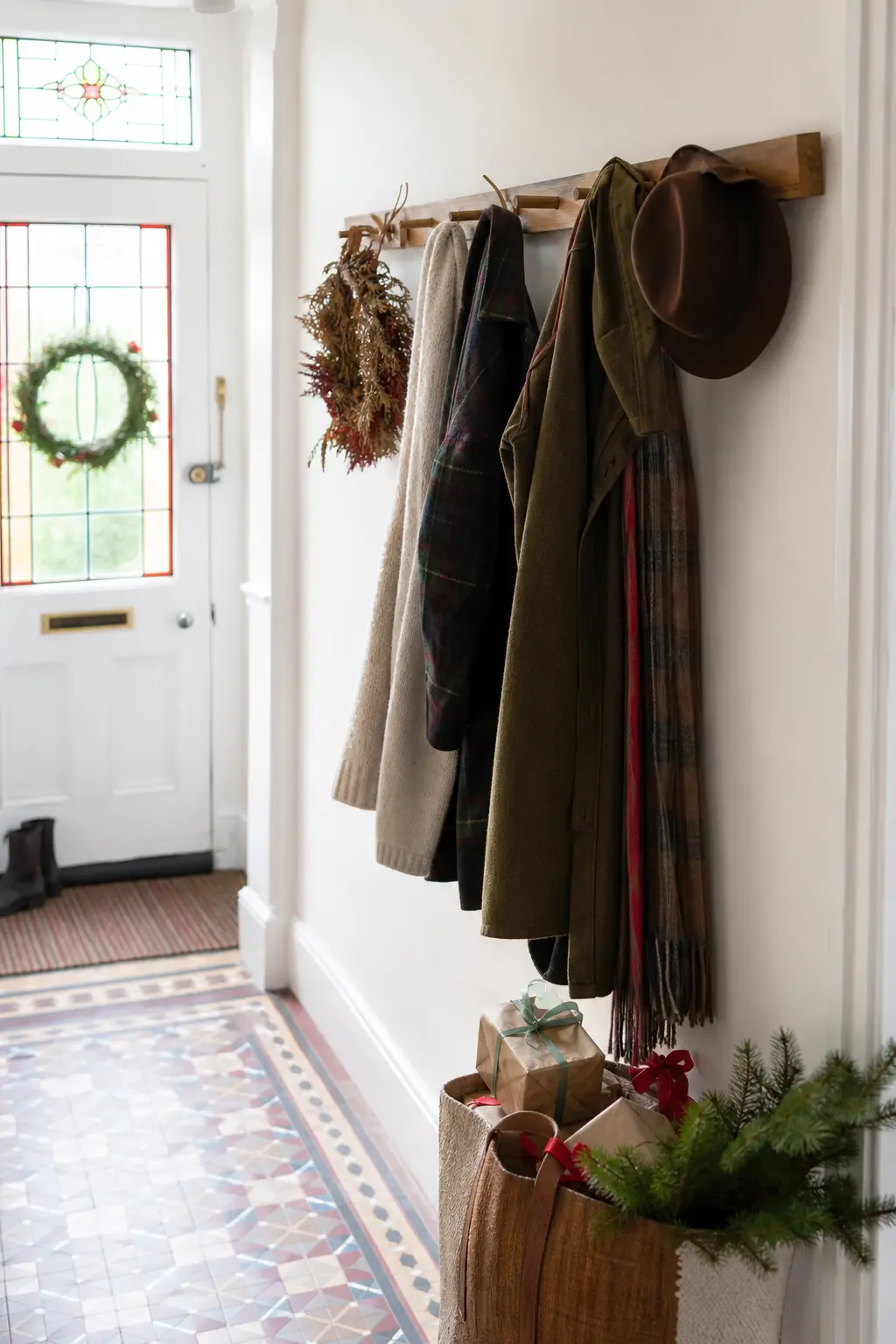
A Wooden Peg Rail by the Front Door
Element used: worn wood. What it replaces: the single over-door hook or the row of plastic-capped hooks screwed directly into the plaster.
A Shaker-style peg rail in natural or painted wood, screwed to the wall at coat height beside the front door, gives the hallway a structure that hooks alone cannot. Hang coats, hats, bags, a wreath by a loop of jute, a small gathered bunch of dried greenery. The rail becomes the visual organiser the hallway was missing.
A length of wood with Shaker pegs takes thirty minutes to fit and costs a fraction of a bought hallway unit. It also accommodates items of any size without planning.
🛍 Shopping guide
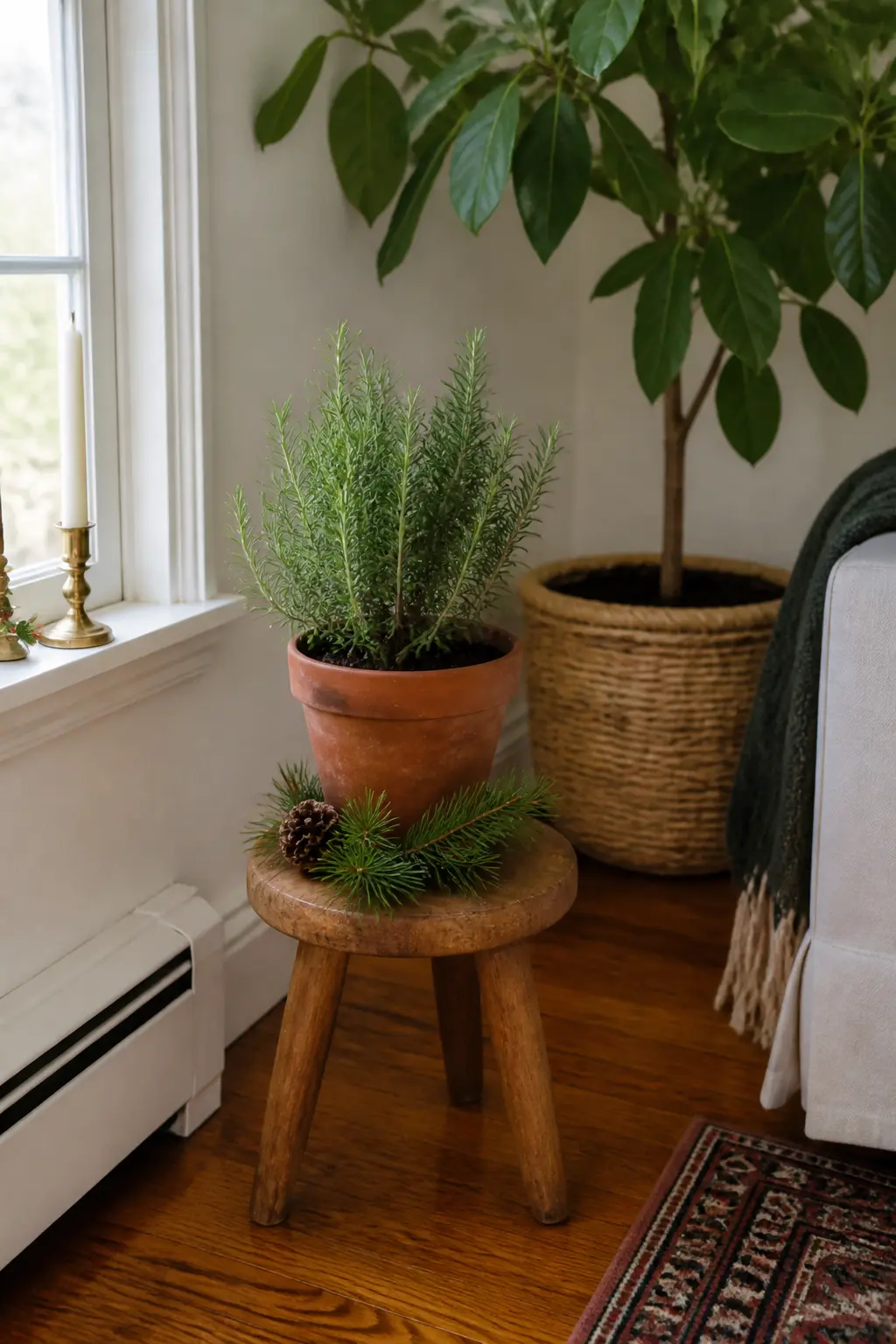
A Wooden Stool Used as a Plant Stand
Element used: worn wood. What it replaces: the floor-level plant that disappears in a modern room, or the wire plant stand that looks like it belongs in a garden centre.
A low wooden stool, a milking stool, a step stool or a simple three-legged one, used as a plinth for a potted plant lifts the plant to mid-height and gives the wood a function. A pine stool with a terracotta pot of rosemary on top, or a festive pot of cyclamen, reads as country without needing any other context.
The stool also works under the Christmas tree as an alternative base, under a large lantern or beside the bath. One object, many uses.
🛍 Shopping guide
Willow Baskets in Place of Storage Boxes
Element used: worn wood (willow). What it replaces: the fabric storage cube or the cardboard box-with-a-lid that lives in every modern sitting room pretending not to be a box.
Willow baskets on a shelf, stacked in a recess or lined up under a console table hold the same things as storage boxes and look entirely different. The weave, the natural variation in the willow and the slight irregularity of a handmade basket are the visual notes that a modern room in any material cannot fake.
Buy two or three in the same family of shapes rather than a perfect matching set. A slight variation in height and width looks like a collection rather than a display.
🛍 Shopping guide
Wrapping, Gifting and the Hallway
The hallway and the gift pile are usually afterthoughts. Treat them as part of the scheme and the whole house reads as intentional rather than decorated.
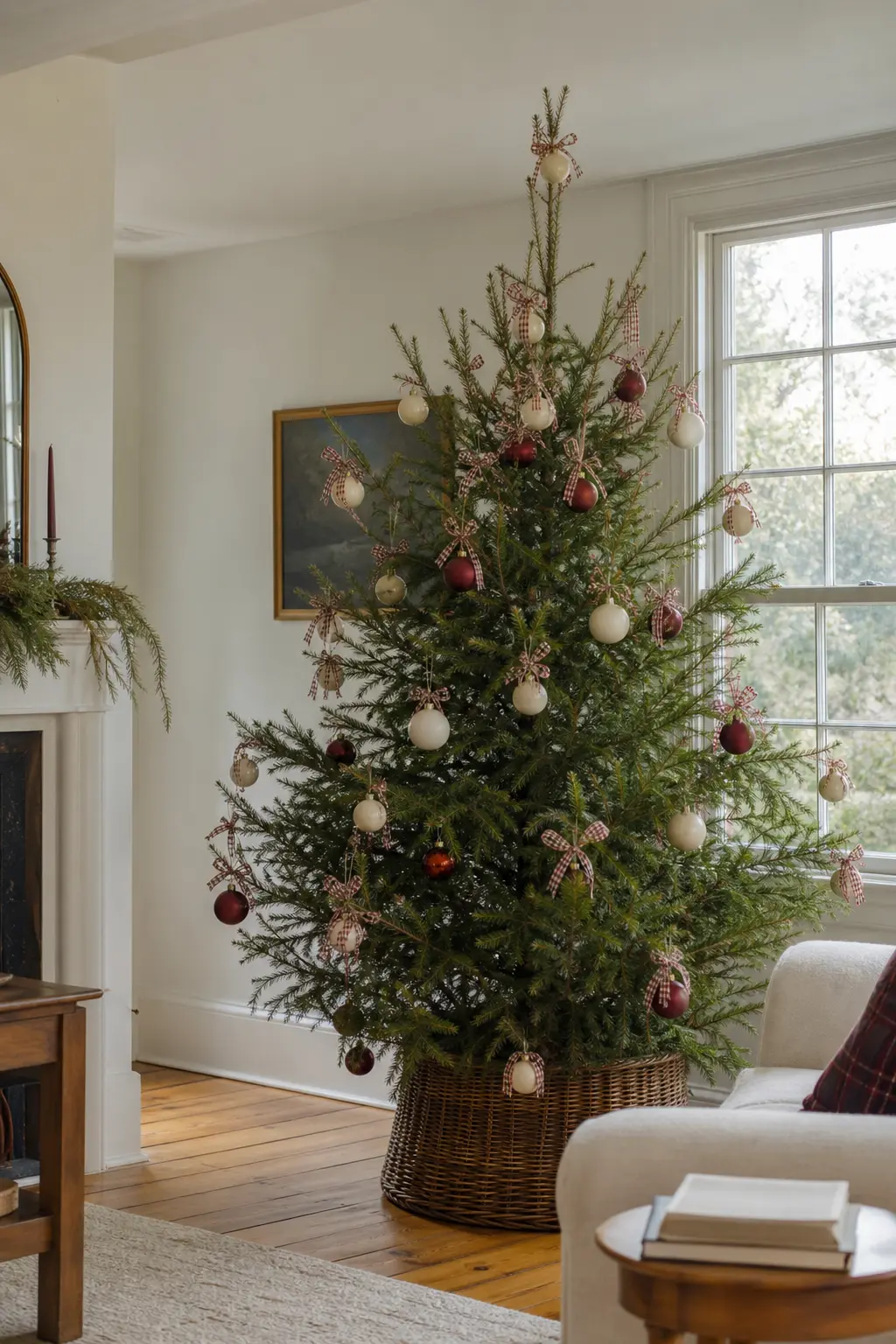
Gingham Ribbon on Plain Baubles
Element used: checked cloth. What it replaces: the satin ribbon or the fine metallic wire that comes with plain glass baubles and reads as generic once it is on the tree.
A narrow gingham ribbon, in oxblood, green or cream, threaded through the hanging loop of a plain matte bauble and tied in a small bow transforms an ordinary bauble into something that belongs in this palette. No craft skill required. The bow can be loose and slightly uneven and it will still look better than the wire it replaced.
Buy a reel of three-millimetre gingham ribbon and use it across baubles, around a gift tag, tied at the neck of a bottle. One purchase earns its place across the whole scheme.
🛍 Shopping guide
Brown Paper Wrapping with String
Element used: worn timber and cloth (through the palette it references). What it replaces: glossy printed wrapping paper that costs more per roll than most of the gifts inside.
Brown kraft paper tied with natural jute string, a sprig of holly, rosemary or pine tucked under the bow, and a handwritten luggage tag is the wrapping equivalent of the whole scheme: honest, warm, practical and better-looking than the elaborate alternative.
Add a small dried cinnamon stick or a clove orange under the string for scent. The gift pile under the tree in brown paper and string reads as a single composed arrangement rather than a stack of different wrapping choices fighting each other.

🛍 Shopping guide
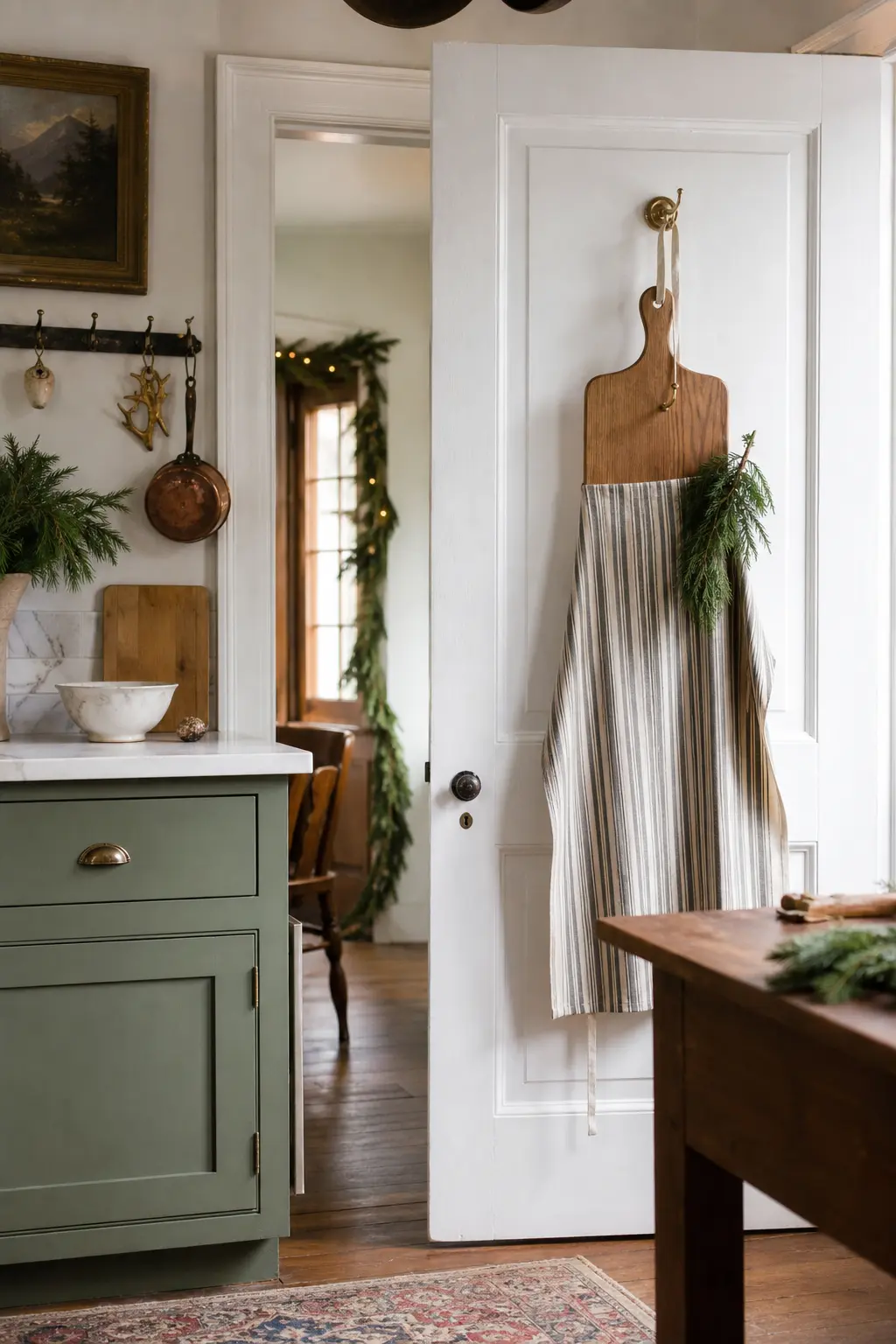
A Wooden Apron Hung as Decoration
Element used: checked cloth. What it replaces: the bare back of the kitchen door or the blank wall section behind the cooker where nothing ever goes.
A linen or cotton apron in ticking stripe or gingham, hung on a hook on the kitchen door or the back of the pantry, is a piece of working kit that looks decorative without trying. It signals that cooking happens here, which is the most country thing you can say about a kitchen.
Hang it on a single brass hook. Fold the ties neatly at the back so they do not hang down. The front of the apron faces the room and the stripe or check does the work.
🛍 Shopping guide
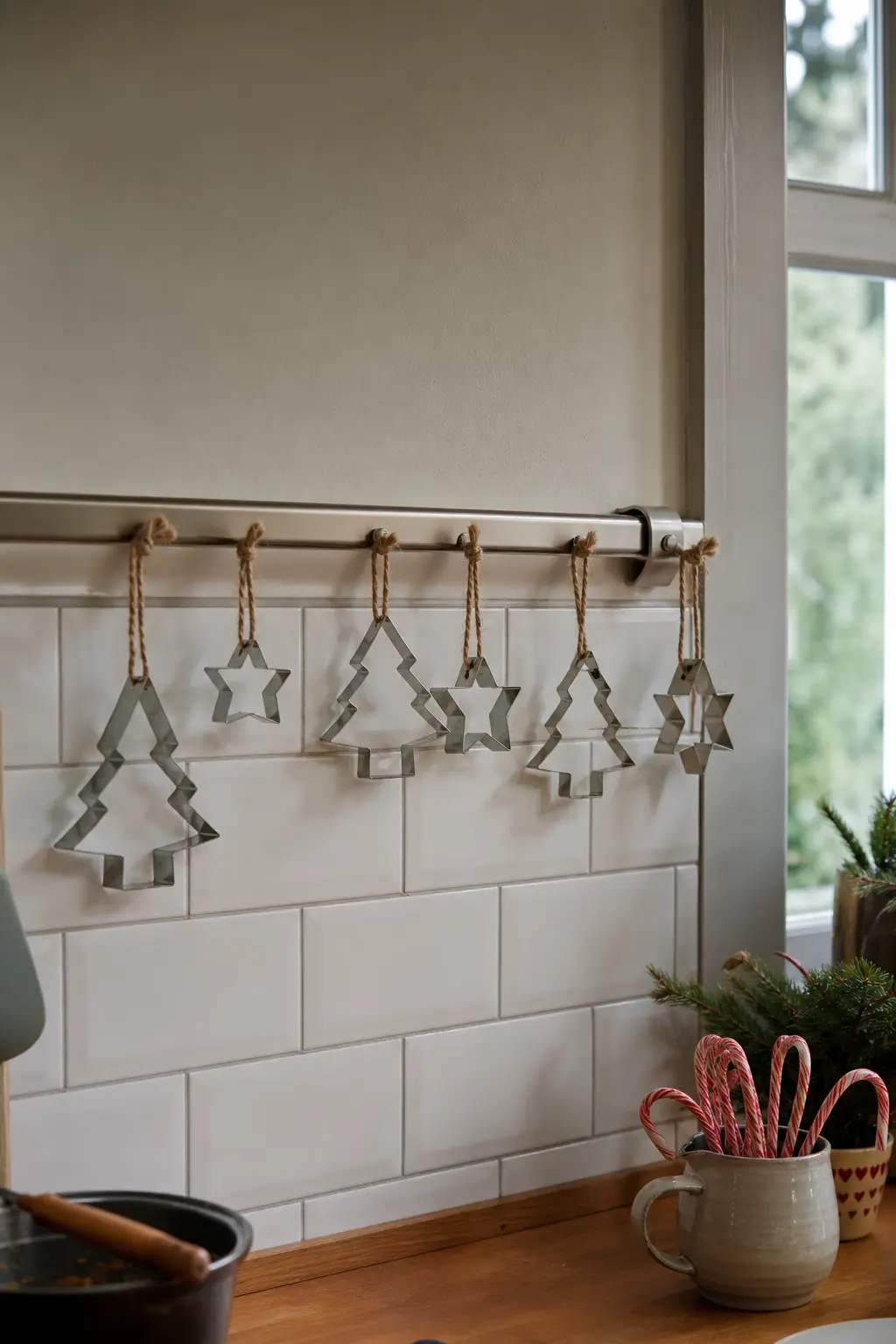
Tin Cutters Hung on a Rail
Element used: enamel and metal. What it replaces: the bare splashback rail or the magnetic knife strip that holds only knives and looks clinical in a warm kitchen.
A row of tin cookie cutters, star, tree, ginger figure, hung on a kitchen rail or on a curtain rod fixed below a shelf, is a seasonal arrangement that costs almost nothing and takes thirty seconds to put up. The tin catches the kitchen light and the shapes make the kitchen read as a place where baking happens, whether or not it does.
Hang them on thin jute loops rather than the usual ring, so they sit flat and close to the rail. In January, take them down and put them in a tin for next year.
🛍 Shopping guide
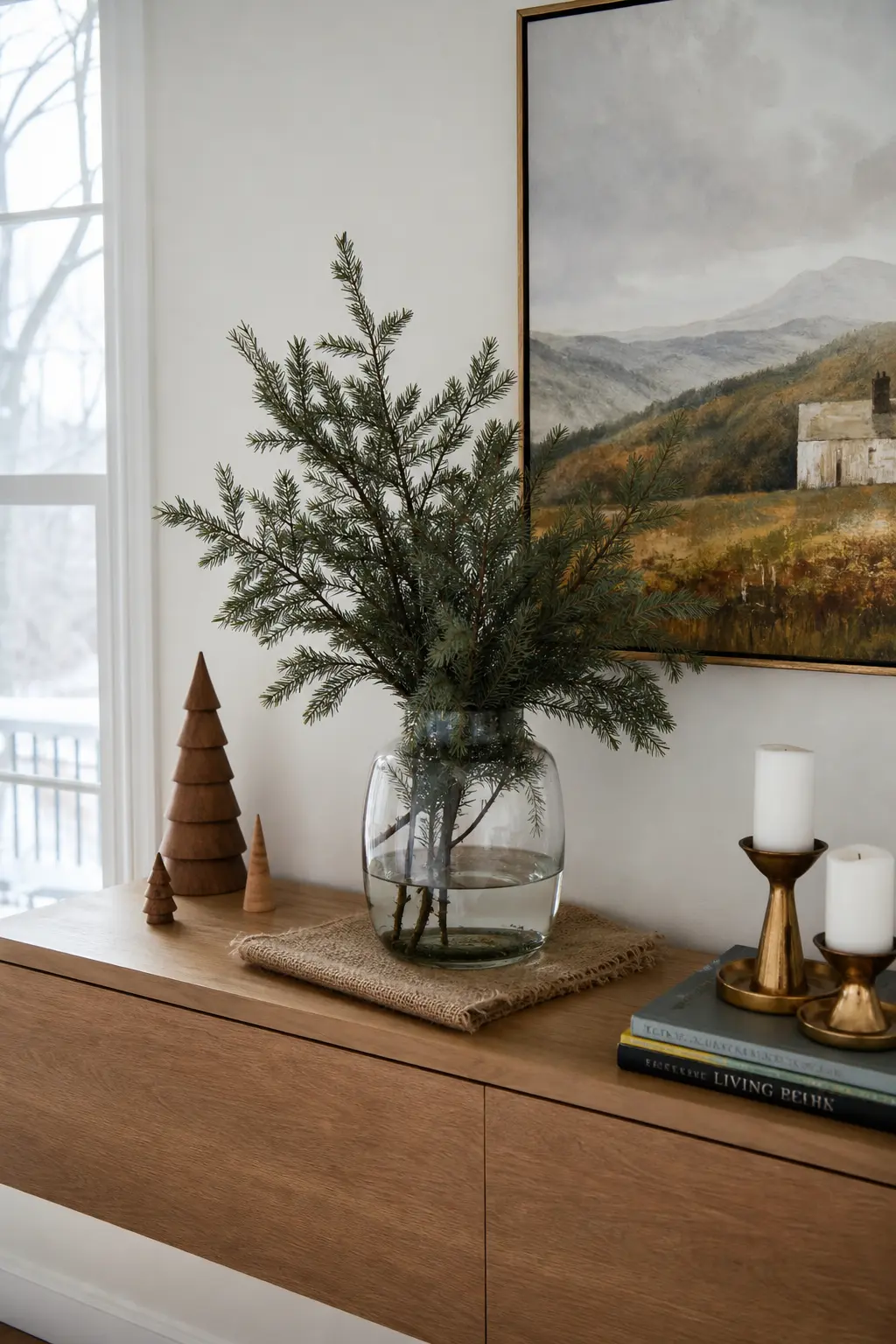
Hessian Under a Glass Vase
Element used: worn wood (hessian sits in the same palette as raw linen and worn timber). What it replaces: the coaster or the bare shelf beneath a vase.
A square of hessian folded twice and laid flat under a glass vase on a shelf, mantel or sideboard gives the vase a base that looks deliberate. It also protects the surface without looking like a mat. The rough weave of the hessian against the smooth glass is a texture contrast that costs nothing to achieve.
Cut hessian from a roll with scissors, no hemming needed. The raw edge does not fray badly and the slight imprecision adds to the look rather than detracting from it.
🛍 Shopping guide
Frequently Asked Questions
How do I get a country Christmas look in a modern house?
Focus on four materials: worn wood, checked cloth, real greenery and something enamel. You do not need a period property. A cream enamel jug of branches on a modern sideboard, a checked blanket over a grey sofa and a wicker basket instead of a storage box will shift the reading of any room. Work with what the room already has and add texture rather than objects.
What colours are country Christmas?
The core palette is oxblood or deep red check, faded or sage green, cream, worn timber and a note of brass or aged gold. These colours appear together in check fabrics, enamel ware, natural greenery and raw wood, so once you choose one element in the palette the others follow naturally. Avoid bright red and sharp white, which read as commercial rather than country.
What is farmhouse Christmas decor?
Farmhouse Christmas decor refers to a style rooted in the working rural home: honest materials, practical objects used decoratively, natural textures and a warm, unglamorous palette. In practice it means wooden crates, enamel mugs, gingham, hessian, real greenery, pine cones and brown paper rather than glitter and foil. The style has been widely adopted in homes of all types because its principles work anywhere, not only in a farmhouse.
How do I decorate country style without it looking fake?
Use things that actually work. A bread board that you bake with, an apron you cook in, a basket that holds your blankets: functional objects in honest materials never look staged because they are not staged. Avoid reproduction distressing, painted slogans and anything described as ‘rustic’ in a product listing. Real wood, real greenery and real enamel look right because they are right.

34 sister Christmas gift ideas sorted by the kind of sister she actually is, from cozy nights in to

22 Christmas games for adults that are actually fun — tastings, gift games, trivia showdowns & mor
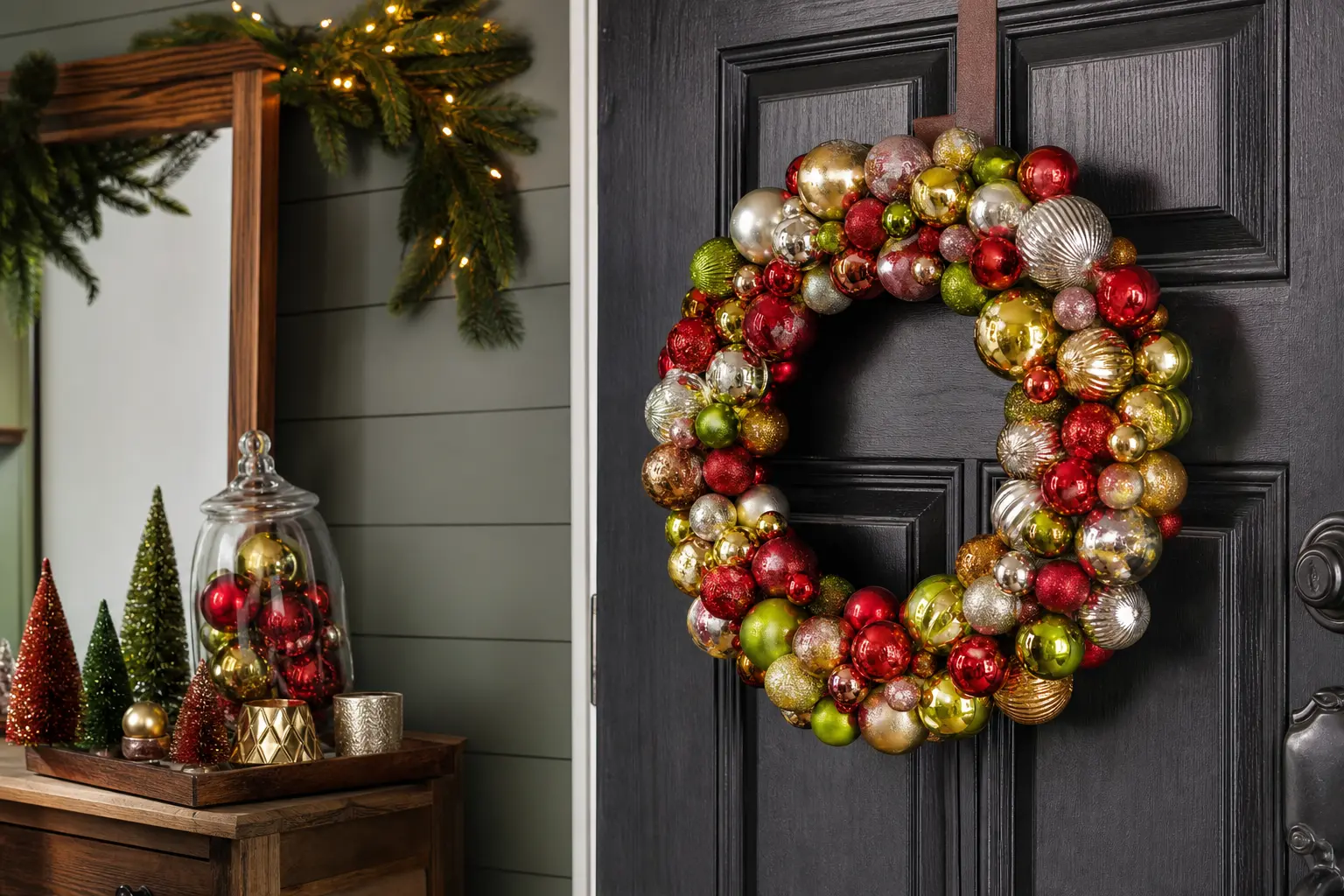
16 christmas ornament wreath ideas grouped by look, from classic glass baubles to miniature bell clu
Leave a Reply