

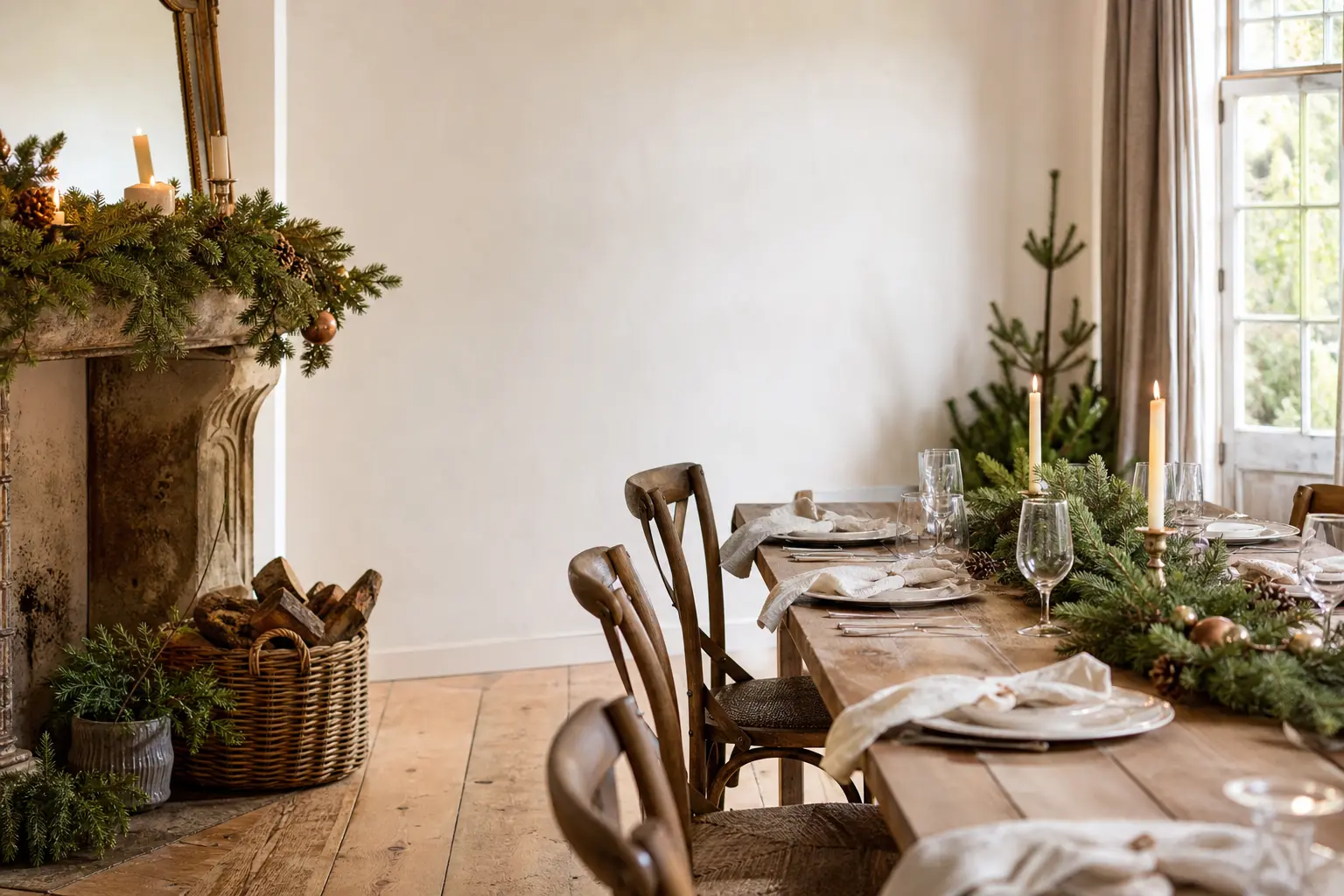
Outdoor christmas decor has one enemy, and it is not bad taste. It is weather. Last season something blew into the neighbour’s garden, something else filled with rainwater and split, and whatever was ceramic did not survive the first hard frost.
Every one of the 24 ideas below is sorted by what the weather will throw at it: wind, rain, frost, or the honest category of things that must come inside before the storm arrives. Each entry names exactly how it is anchored, drained or protected, so nothing is left to guesswork.
The palette throughout is hunter green, brass, cream, twilight blue and natural timber, because those colours weather well and photograph beautifully in low winter light. For ideas on how to arrange these pieces at the front door, the full guide to christmas porch decorating ideas runs alongside this one as part of the same cluster.
This post contains affiliate links. If you buy through them, I may earn a small commission at no extra cost to you.
Wind-Proof: Anchored and Tied
Wind is the decorator’s first problem. Anything that can catch air like a sail will move, and anything that can tip will tip at the worst possible moment. The fixes here are about weight, attachment points and profile: low, lashed and ballasted wins every time.
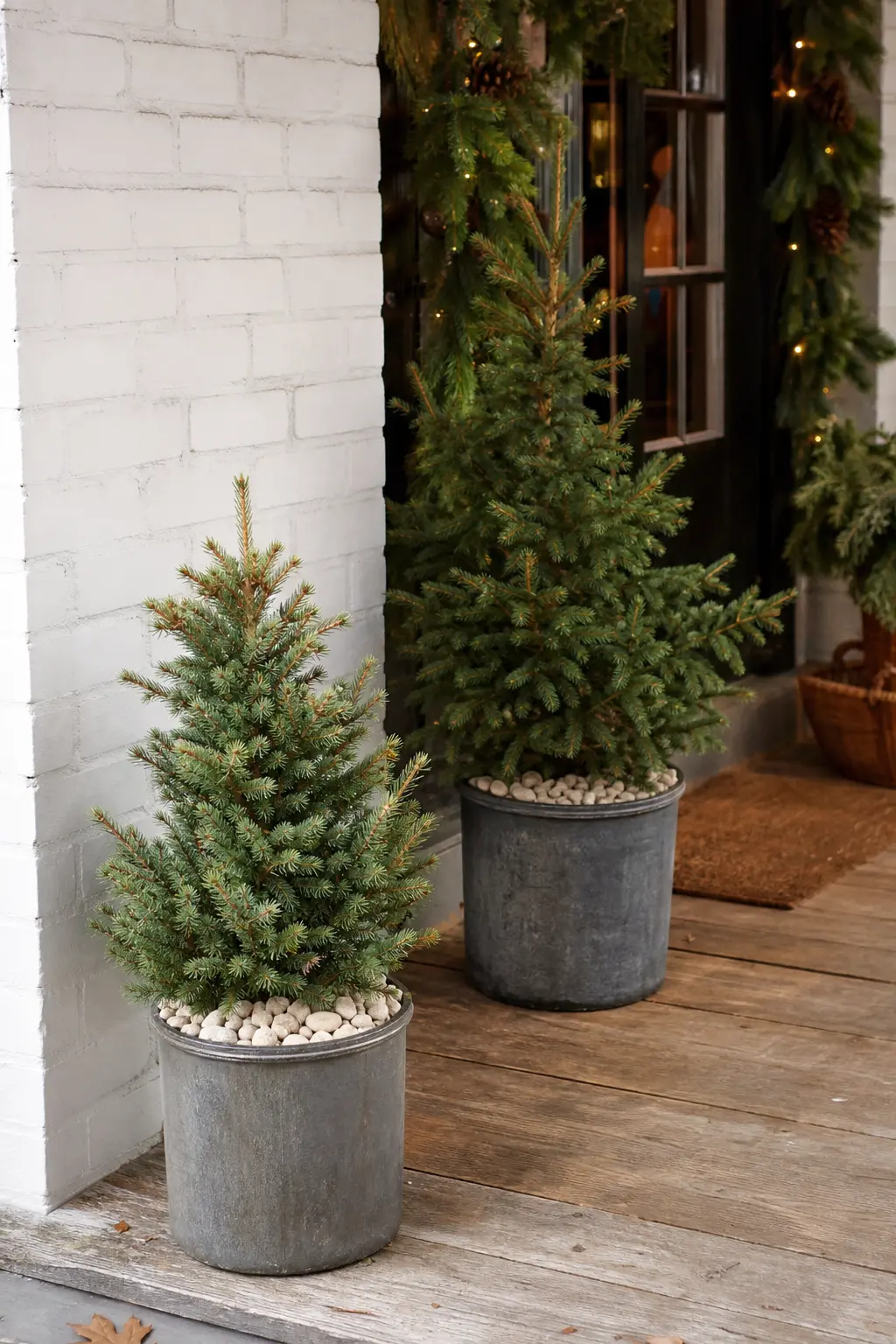
Potted Evergreens Weighted With Gravel
Choose a squat, wide-based planter rather than a tall one. Fill the bottom third with gravel before adding compost, bringing the centre of gravity low enough that wind cannot tip it. A single dwarf pine or box ball sits in the upper portion, with cream pebbles on the surface to hold moisture and look deliberate.
Raise the planter on pot feet so water drains freely. The gravel layer that anchors the plant also prevents waterlogging from below. Hunter green glaze or natural timber planters suit the palette; galvanised zinc is the frost-safe choice if temperatures drop hard.
🛍 Shopping guide
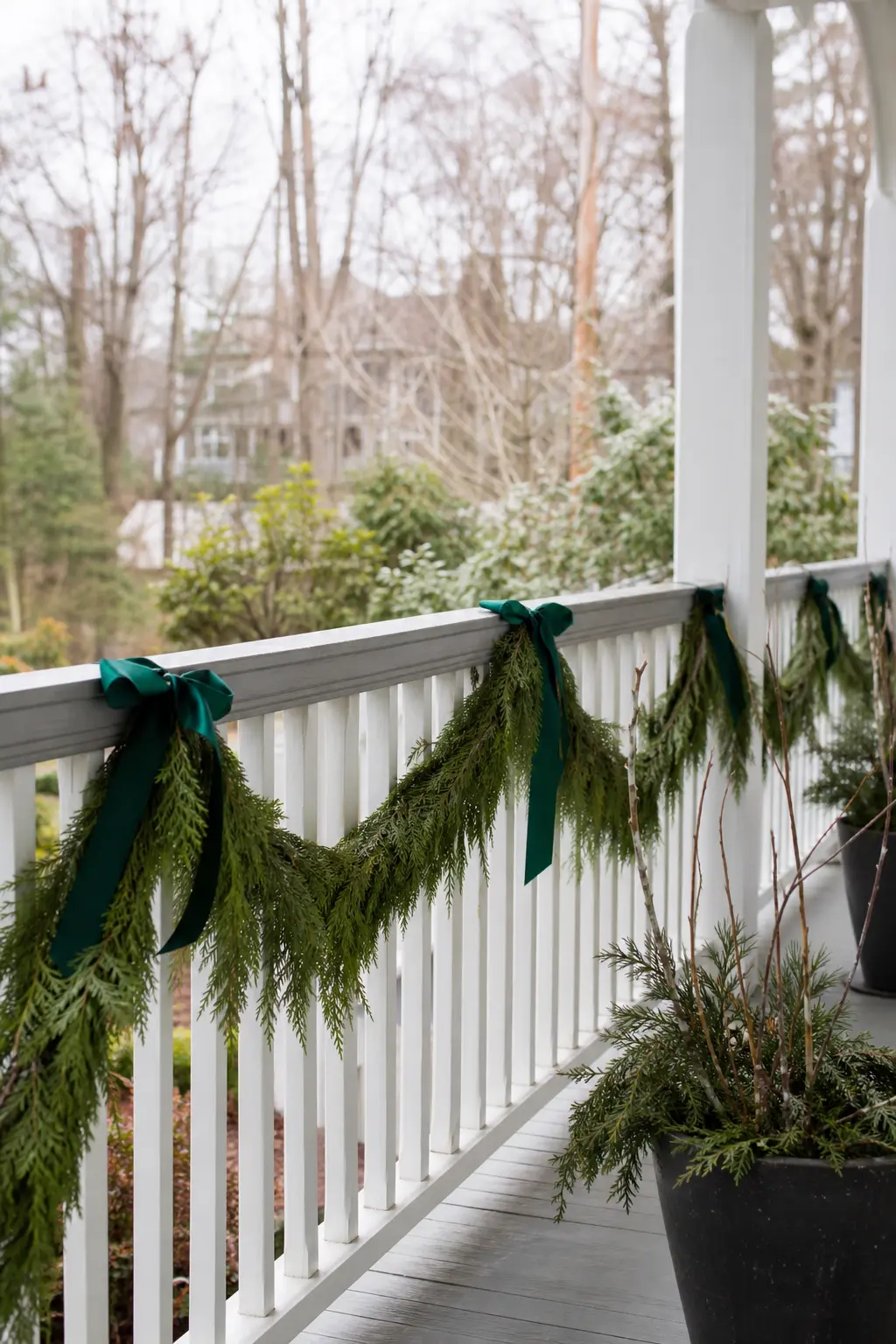
Garland Tied at Every Third Point
A draped garland becomes a wind sock the moment a gust arrives. Tie it at every third loop instead, using outdoor-grade ribbon in hunter green or oilcloth tape that will not stretch when wet. The tie points pull the garland flat against the railing or fascia so it has no surface to catch air.
Use outdoor-rated brass or galvanised hooks for the fixing points, never adhesive strips on a painted surface in wet weather. Check and re-tension the ties once a week: natural rope relaxes as it cycles through wet and dry.
🛍 Shopping guide
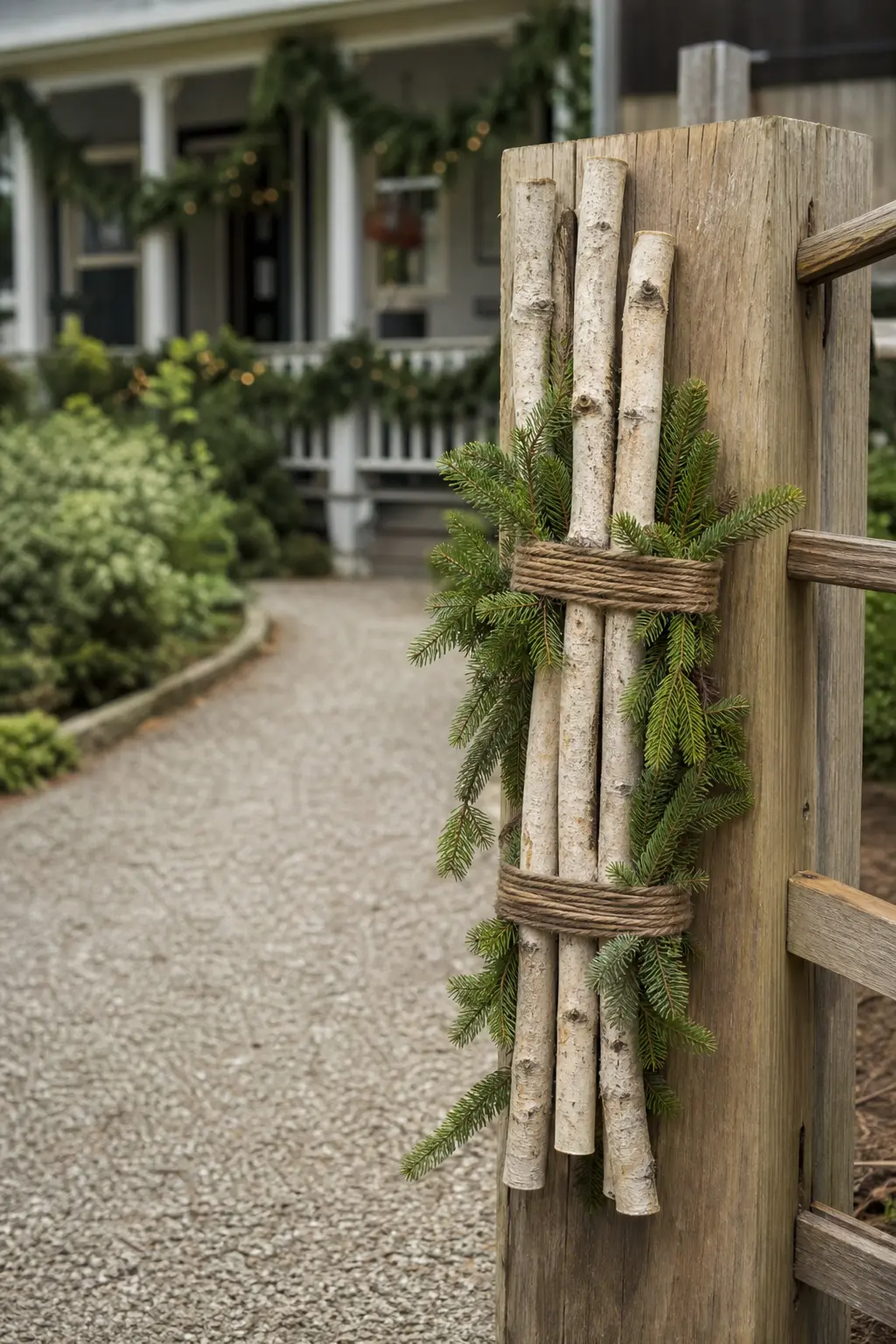
Branch Bundles Lashed to the Railing
Cut three to five birch or hazel stems to the same length and bind them tightly with jute twine at top and middle, then lash the bundle flat against a porch upright or gate post. Flat against the surface means the wind passes around it rather than treating it as a lever.
Tuck in a few sprigs of spruce or eucalyptus between the stems for texture. These brown to a silvery grey that looks architectural, not dead. The twine tie itself needs checking after the first heavy rain, as it will stretch and loosen before it dries.
🛍 Shopping guide
Wreaths on a Sheltered Face
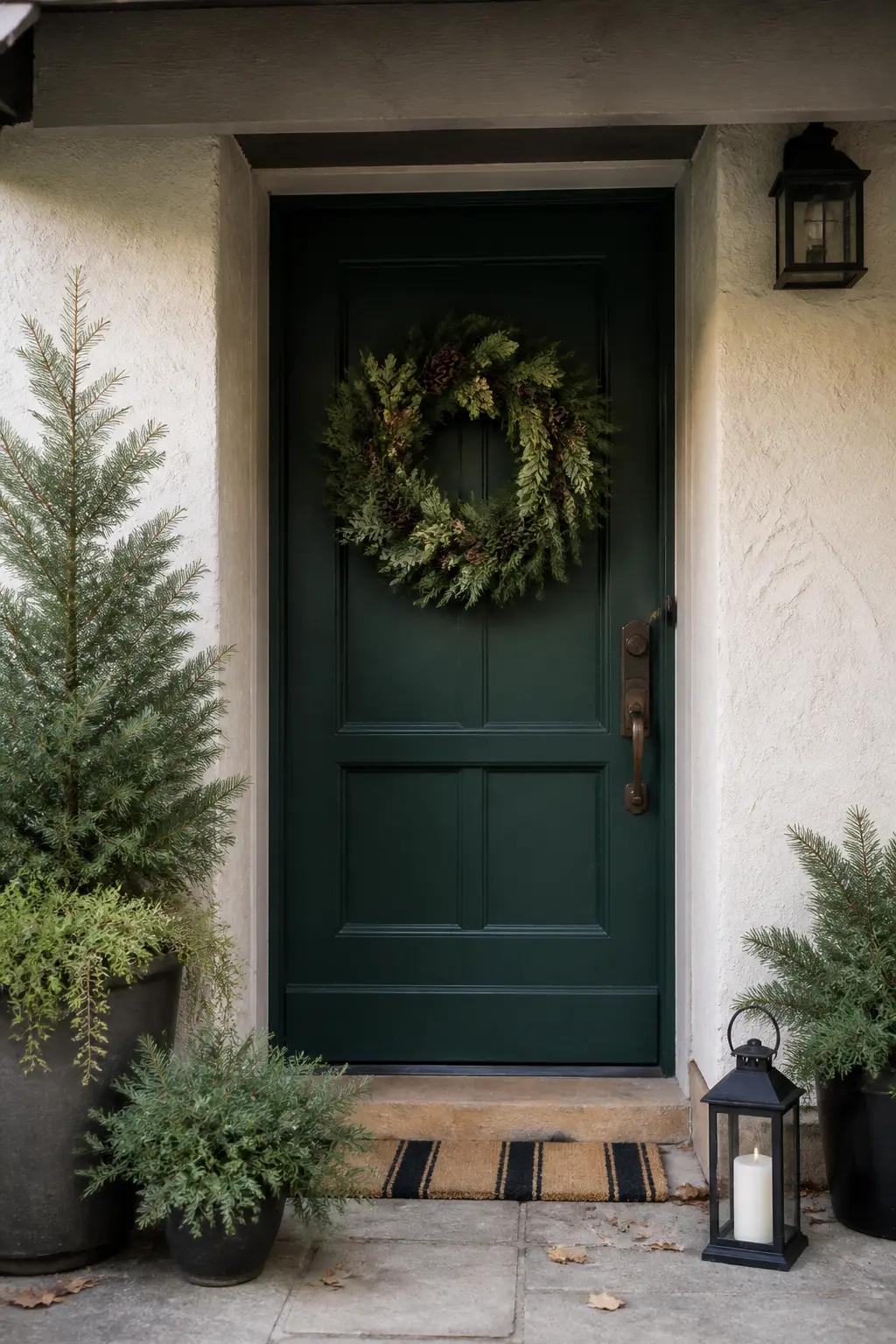
Hang a wreath on a wall face that sits in the wind shadow of the house, not the exposed gable end. A front door recessed under a porch hood is ideal: the overhang kills the vertical rain and the recess kills the horizontal gust. Use a wreath hanger rated for the weight, not a single pin.
Wire the wreath to the hanger at two points, not one, so it cannot spin. For more on styling the space around the door itself, the ideas in christmas door decoration cover knockers, thresholds and side panels.
🛍 Shopping guide
Swag Over the Garage Door
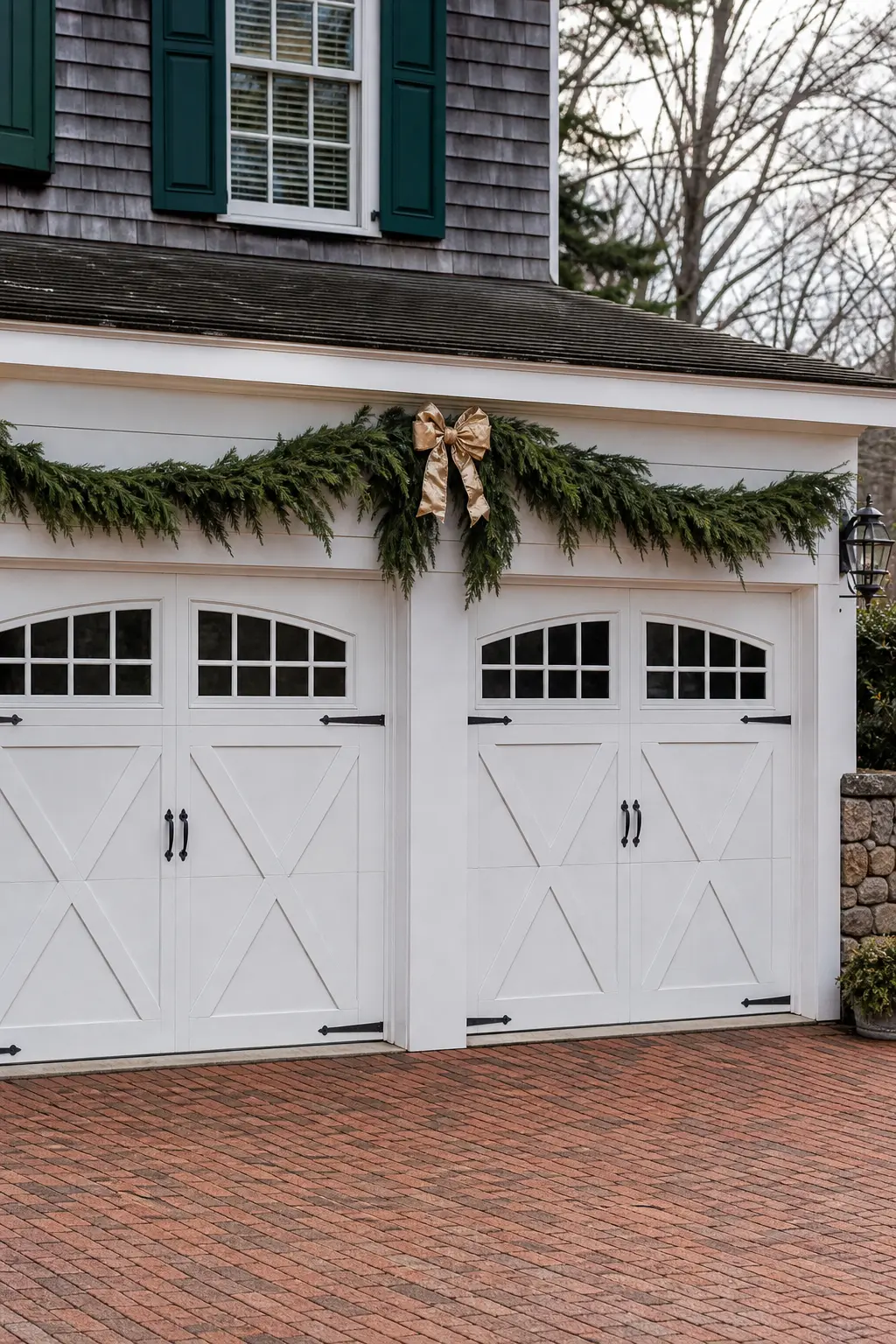
A swag sits above the garage door on cup hooks screwed into the timber fascia, tied at three points: both ends and the centre. It does not drape freely, so wind cannot lift it. Choose a compact swag, no deeper than 40 cm, so the profile stays tight and the wind load stays low.
Dress it with oilcloth ribbon rather than fabric ribbon. Clip battery-powered outdoor lights along the back bar before hanging, so the cable is hidden and there is nothing to tug loose in a gust. The swag reads beautifully from the road and costs a fraction of a full garland run.
🛍 Shopping guide
Rain-Proof: Draining and Sealed
Rain does its damage slowly. It pools in containers, softens wood that was not properly sealed and turns hessian into a sagging grey rag. Every idea in this section either sheds water by design or is sealed so water cannot get in.
Galvanised Buckets With Drainage Holes
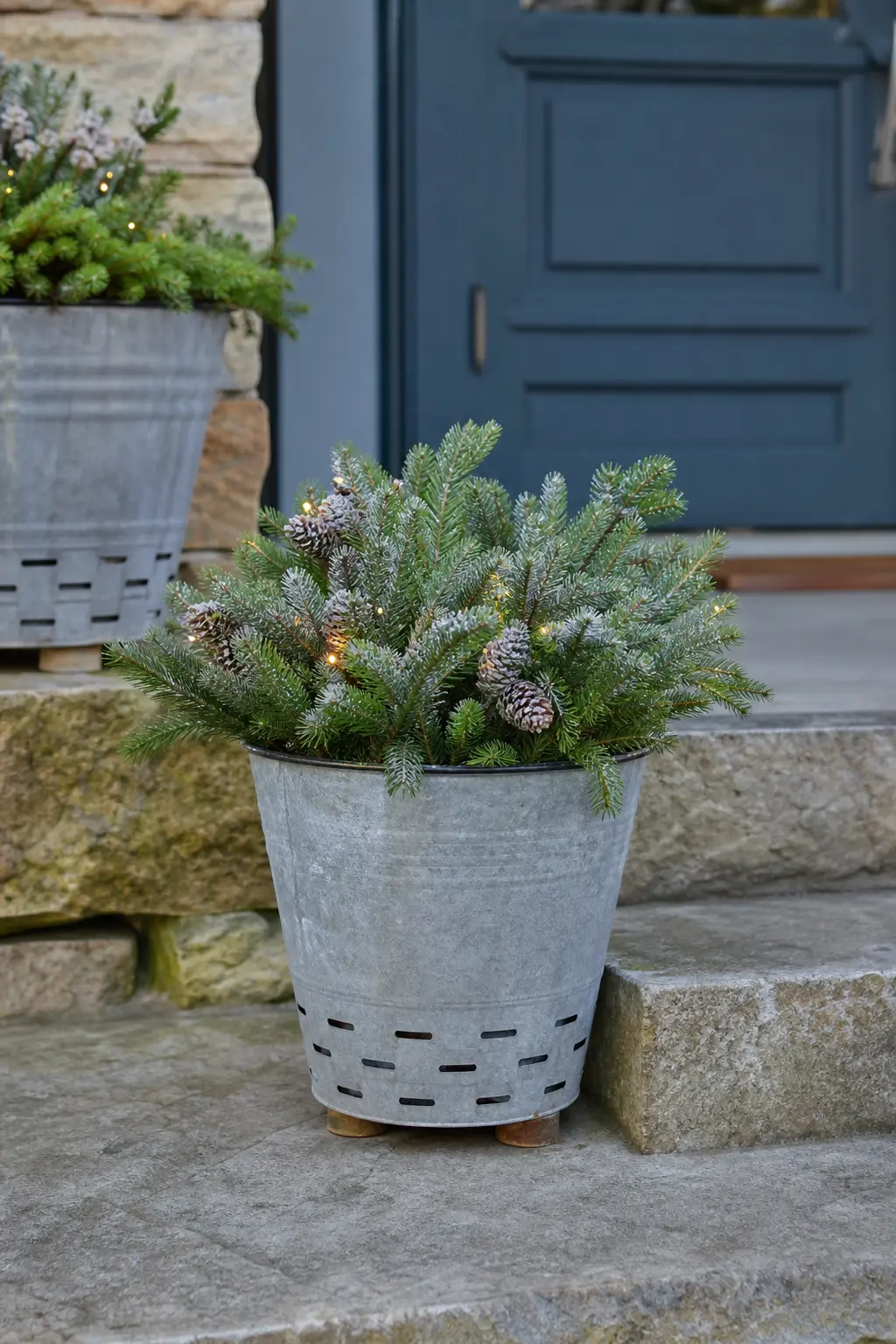
A galvanised bucket makes a handsome planter for spruce tips, winter berries or cut stems, but it needs two or three holes punched in the base with a bradawl or drill before anything goes in. Without drainage it will fill, freeze and split the seam. With drainage it holds shape through any winter.
Stand the bucket on pot feet or a small tile to let the holes work. Fill the base with gravel, then oasis foam or compost, then your arrangement. The metal sides keep soil temperature stable and protect roots better than a thin plastic pot.
🛍 Shopping guide
Timber Signs Sealed on All Six Faces
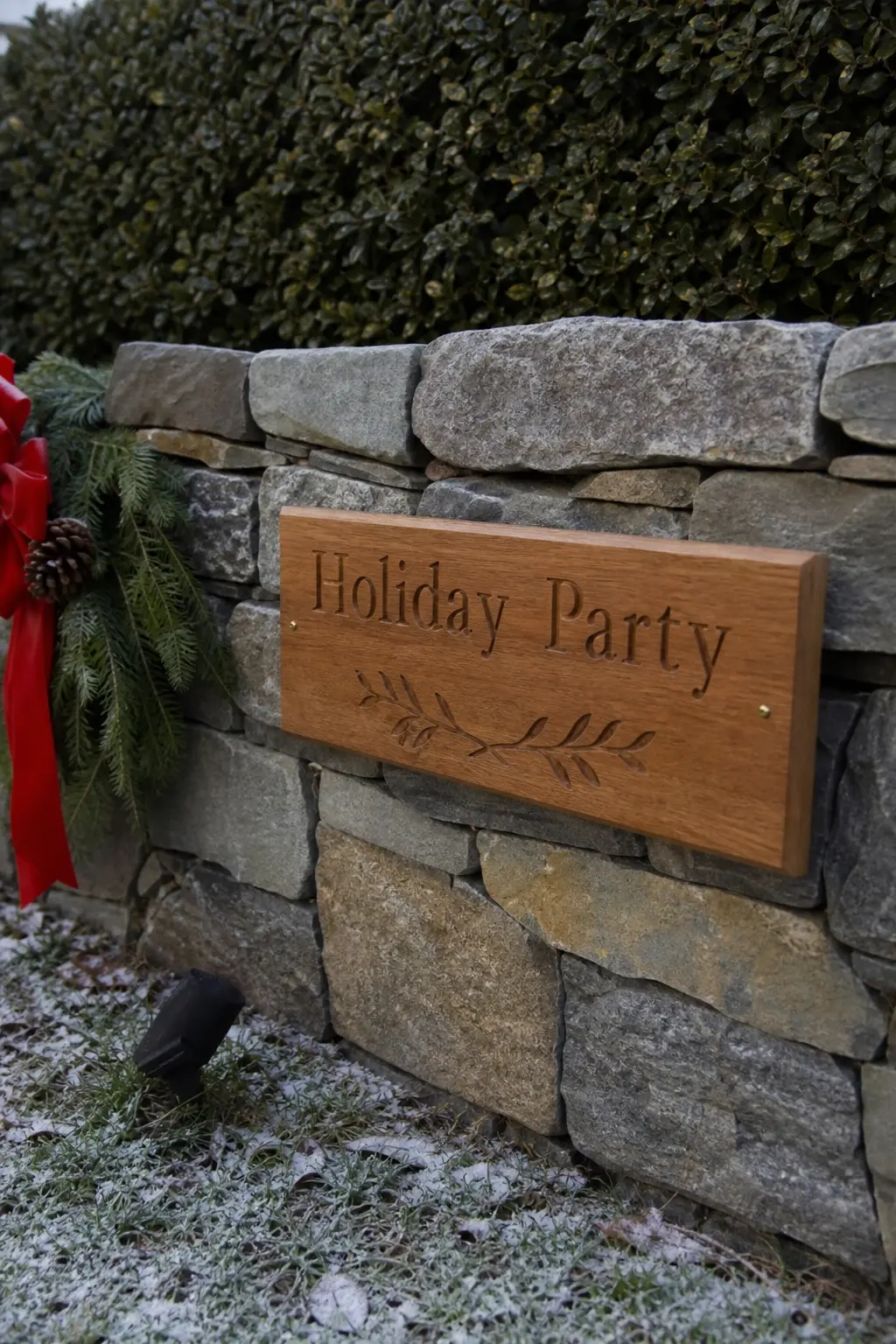
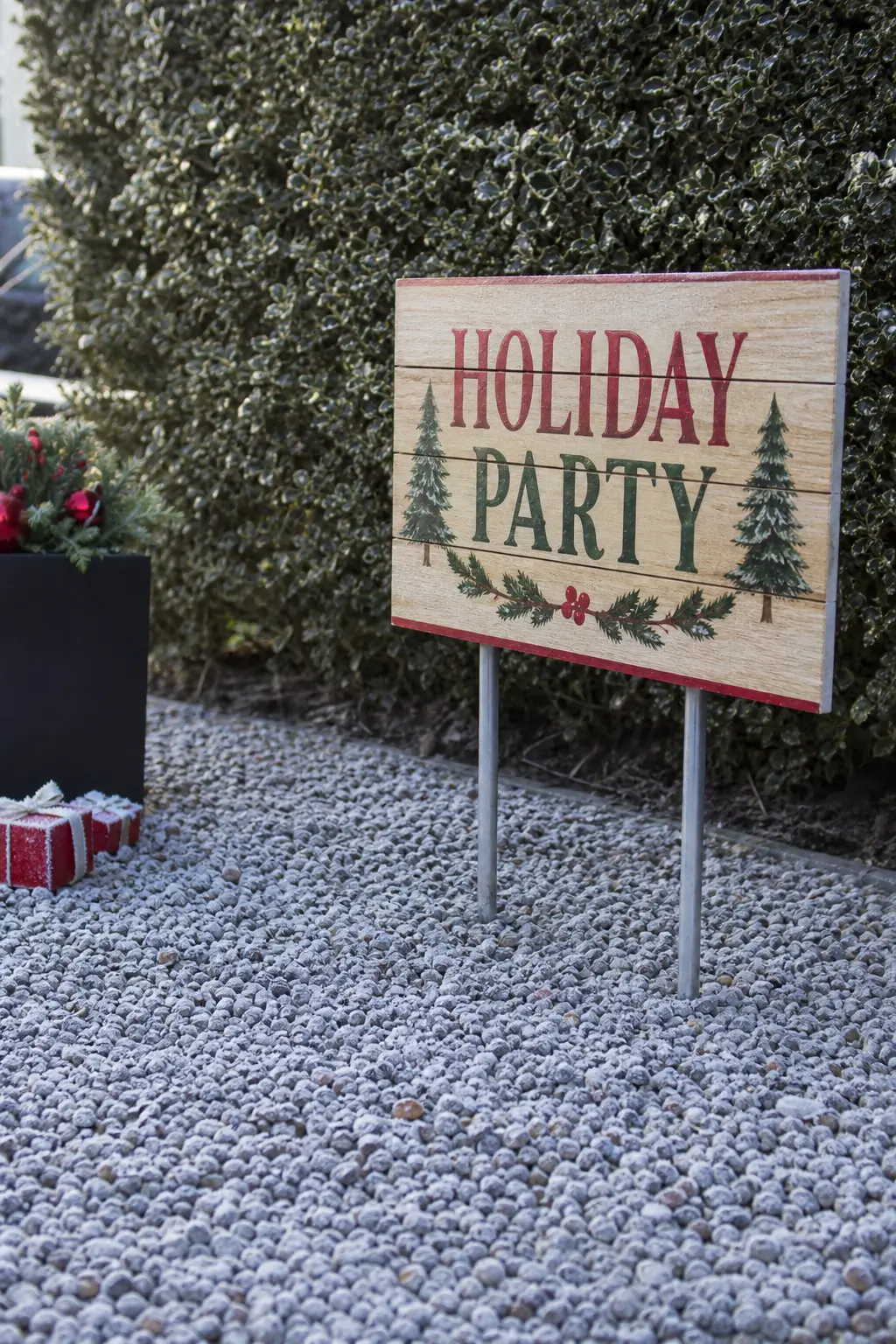
Timber signs last outdoors only if every face, including the back, the top edge and both ends, is sealed with exterior-grade varnish or decking oil before the lettering goes on. One unsealed face wicks moisture in from behind and the wood warps within a season. Sand lightly, seal, let it cure for 48 hours, then add your text or design.
Mount the sign proud of the wall on two stainless screws so air can circulate behind it. Flat against the wall traps moisture between timber and render. A simple routed natural timber sign in the palette of cream or raw wood reads well against dark green hedging.
🛍 Shopping guide
Oilcloth Bows Instead of Hessian
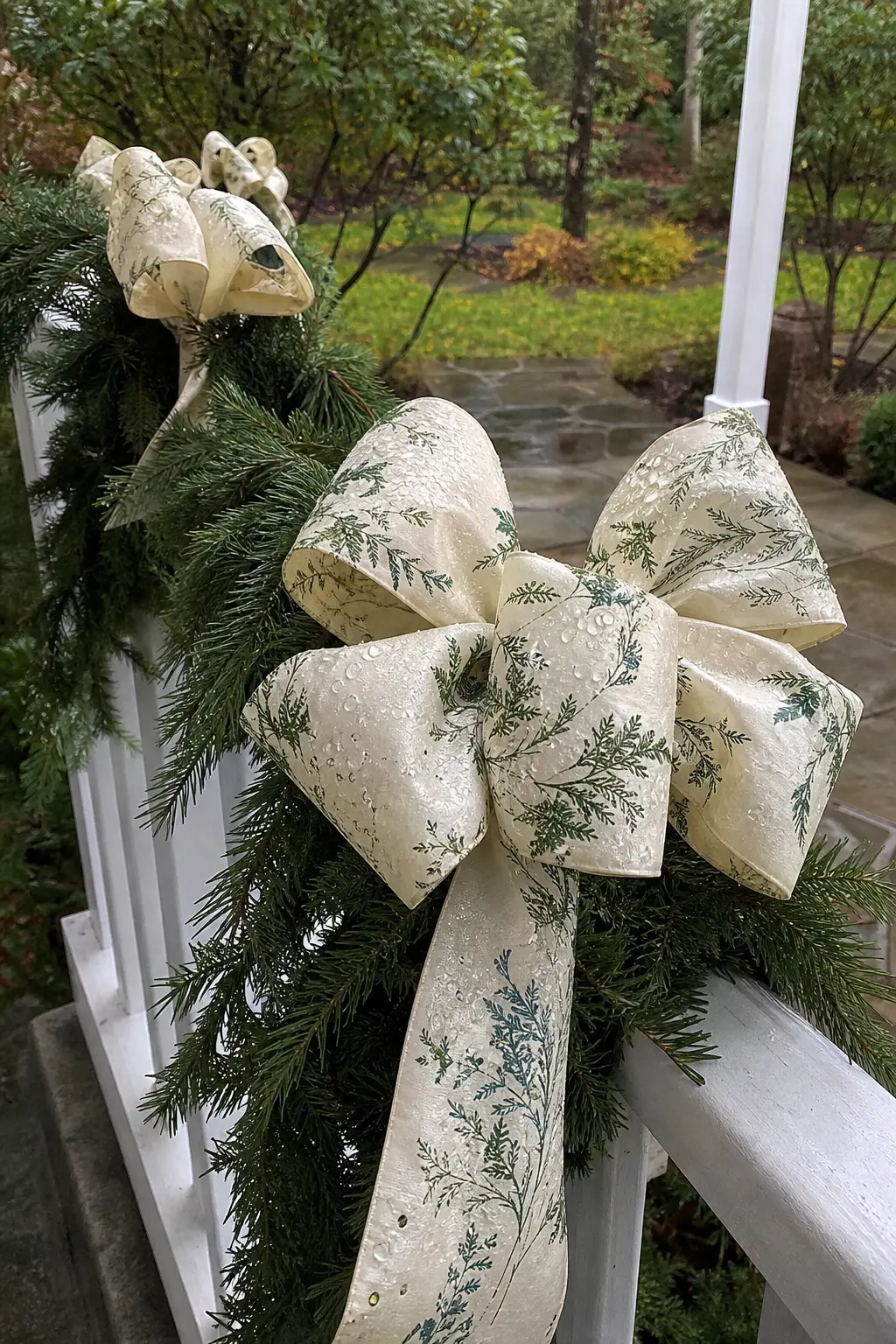
Hessian absorbs water, turns dark, loses its shape and begins to rot within two weeks of steady rain. Oilcloth ribbon makes an identical bow that sheds every drop and springs back to shape after a storm. The surface catches light in the same soft way, especially in cream or a warm hunter green.
Cut the tails on a diagonal so water runs off the ends rather than soaking up from a blunt cut edge. Wire the centre of the bow rather than tying it, so the knot stays tight regardless of what the weather does to the ribbon.
🛍 Shopping guide
Window Box Replanted With Spruce Tips
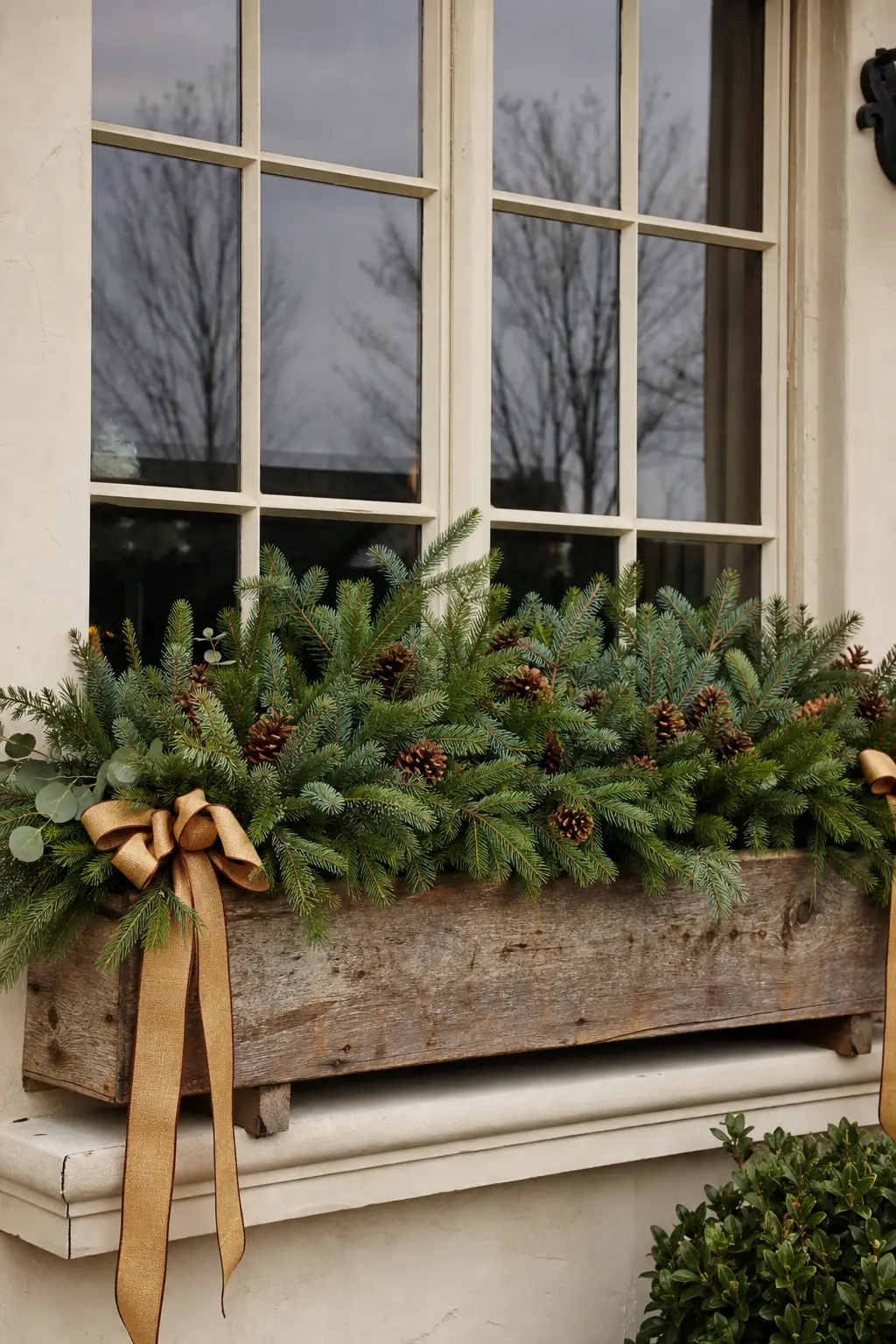
Empty the window box of summer planting, line the base with a centimetre of gravel, then push spruce tip cuttings, cut willow stems and a few dried pine cones directly into wet florist foam. The foam holds them upright without soil, which means no waterlogged mud and no brown rot at the base of the stems.
The box must have drainage holes already. If it sits on brackets, check the brackets for rust now, before it is full and heavy. A window box at first-floor level that comes loose in a storm is a serious hazard, not just a decorating setback.
🛍 Shopping guide
Cones and Logs in a Wire Basket
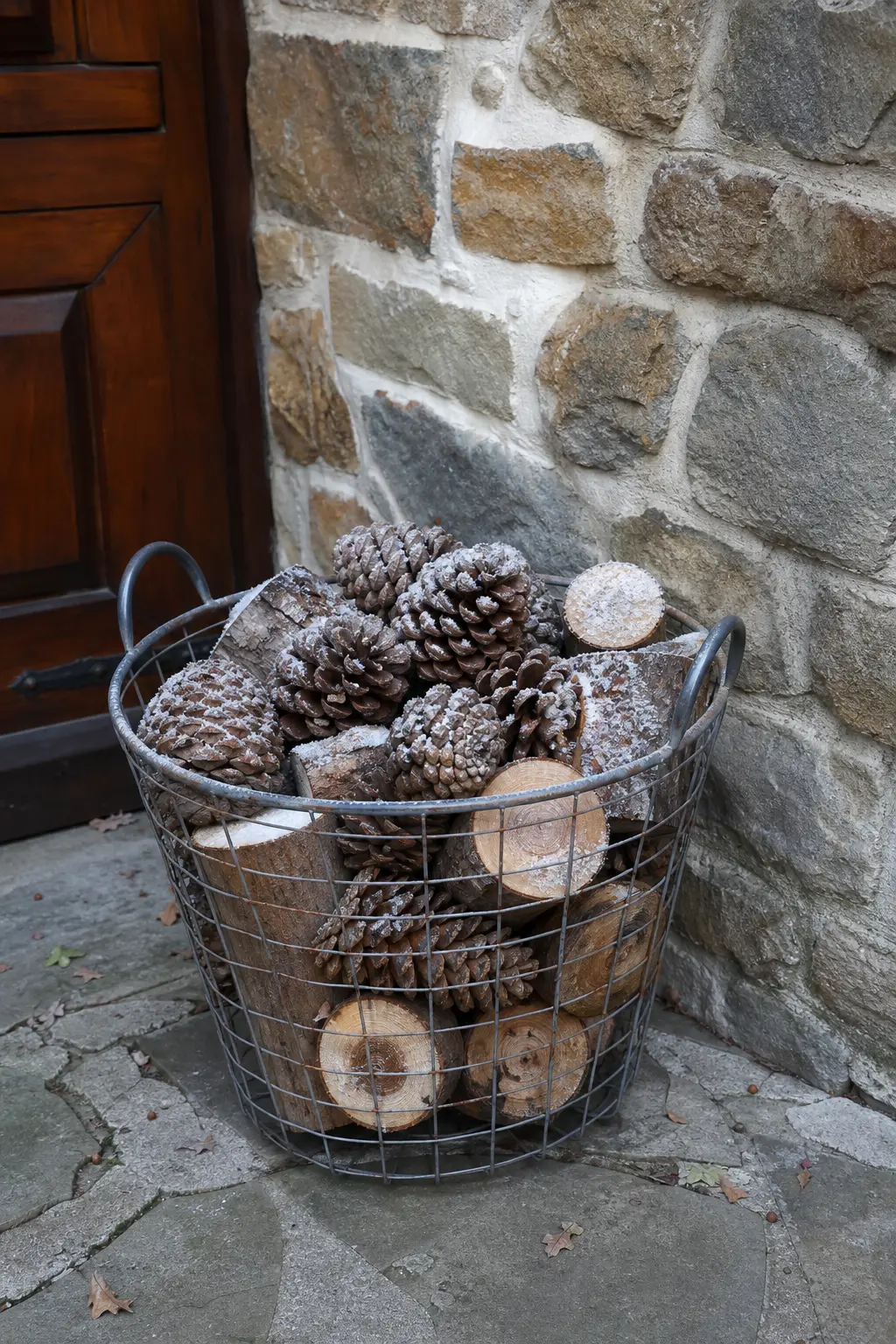
A galvanised wire log basket filled with pine cones and short log rounds drains by design: water runs straight through the mesh the moment it lands. No pooling, no splitting, no mould. The contents are completely weatherproof and look more considered the more dishevelled they get.
Set the basket against the house wall rather than in the open, so wind cannot roll it. Weight is not usually a problem once it is loaded. This is one of the very few outdoor displays that actually improves through a wet winter as the cones open and close with the humidity.
🛍 Shopping guide
Frost-Proof: Metal, Timber and Gravel
Frost is the quiet one. It expands water trapped inside ceramic, cracks glazed pots overnight and turns saturated rope into a stiff mess. The rule here is simple: if it holds water and it is not metal, it needs to come in or be raised so it drains completely.
Planters Raised on Feet So They Drain
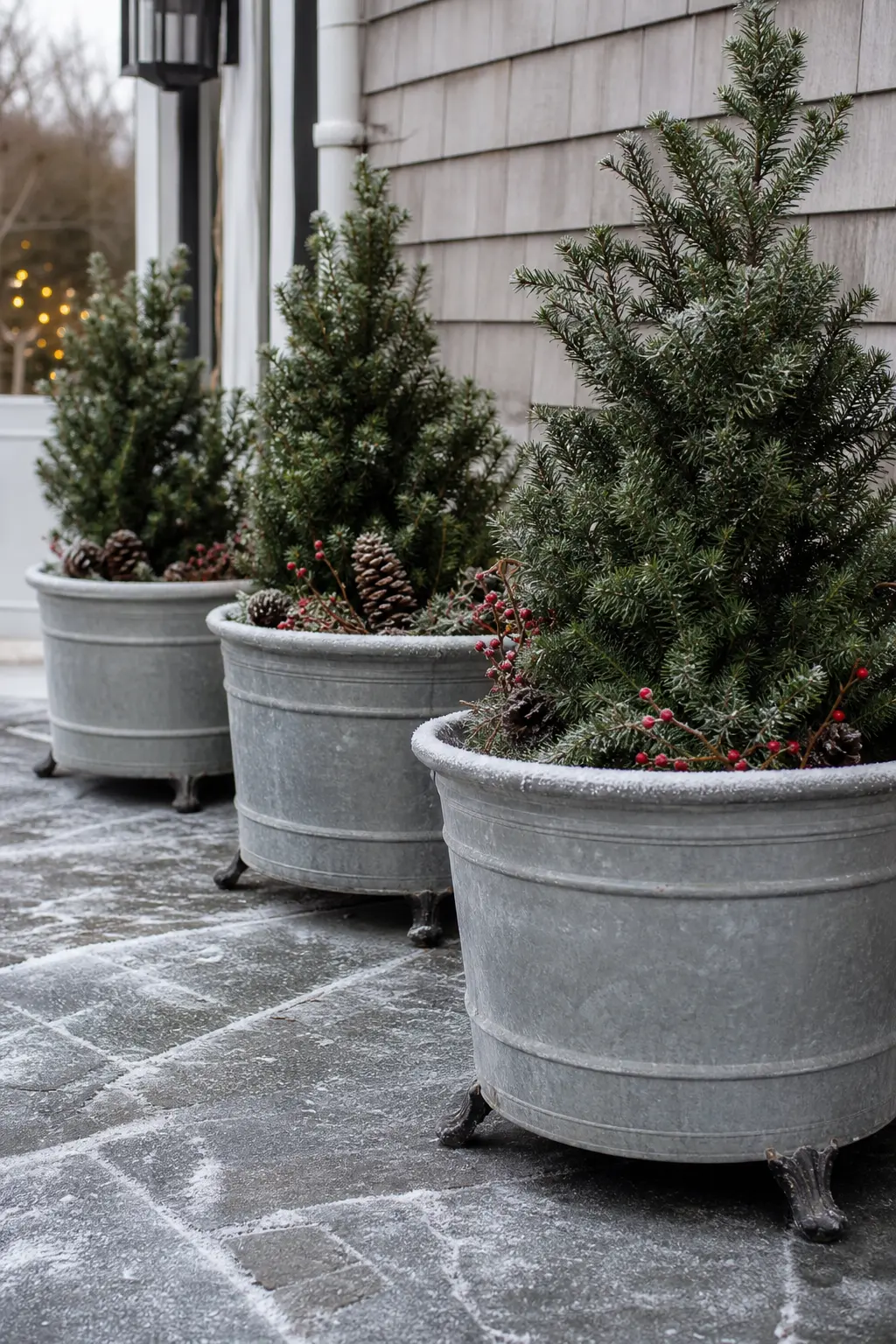
Any planter sitting flat on a solid surface traps water in the drainage holes when the ground is frozen. Raise it on three pot feet, even just a centimetre, and water drains freely even in a hard frost. This is the single cheapest fix for cracked pots and it takes ninety seconds per planter.
While you are at it, choose metal or sealed hardwood planters for anything left out all winter. Glazed ceramic holds water in its walls, that water freezes, and the pot cracks along the glaze line. Galvanised zinc, corten steel and sealed iroko are all frost-safe at UK winter temperatures.
🛍 Shopping guide
Lanterns Weighted With Sand
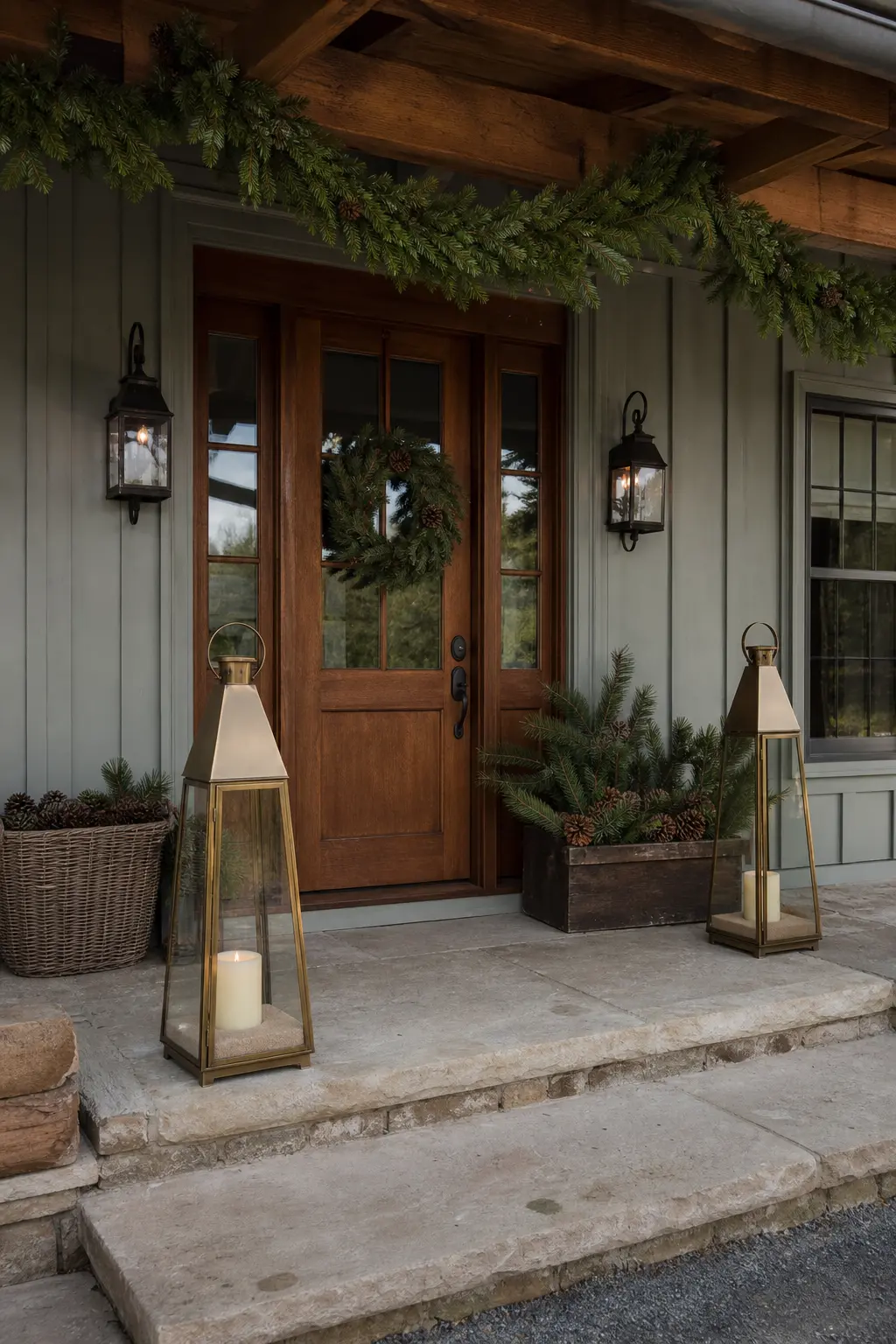
A tall lantern on a step looks elegant until a gust puts it in the garden. Pour 3 to 4 cm of builders’ sand into the base before placing the candle or battery light inside. The sand adds enough ballast to keep it upright in strong winds and also holds the light upright so it does not list to one side.
Choose lanterns with a metal frame rather than glass panels set in painted MDF: the frame survives frost, the MDF does not. Brass-finish and dark pewter finishes both hold up to weather far better than chrome, which strips. Use battery candles rated for outdoor use, not real flame on a porch where the wind will simply extinguish them.
🛍 Shopping guide
Stakes Driven Below the Frost Line
Any stake or post that sits only in the top 10 cm of soil will heave out as the ground freezes and thaws in repeated cycles. Drive stakes to at least 30 cm depth, which takes them past the frost line in most temperate climates. A mallet, not your foot, gets them straight and deep.
This applies to the stakes that hold potted trees, the posts for any sign and the anchors for a doormat peg. Metal stakes outlast timber ones in wet soil: timber rots at the soil line within two seasons. Powder-coated steel or galvanised iron are the right choice here.
🛍 Shopping guide
Metal Rather Than Ceramic in a Frost
The rule is unambiguous: if a container holds water and it is not metal or sealed hardwood, it should not winter outdoors. Terracotta, glazed ceramic and concrete all crack when trapped water freezes. Metal expands slightly and springs back. Move any ceramic piece under cover before the first frost, not after.
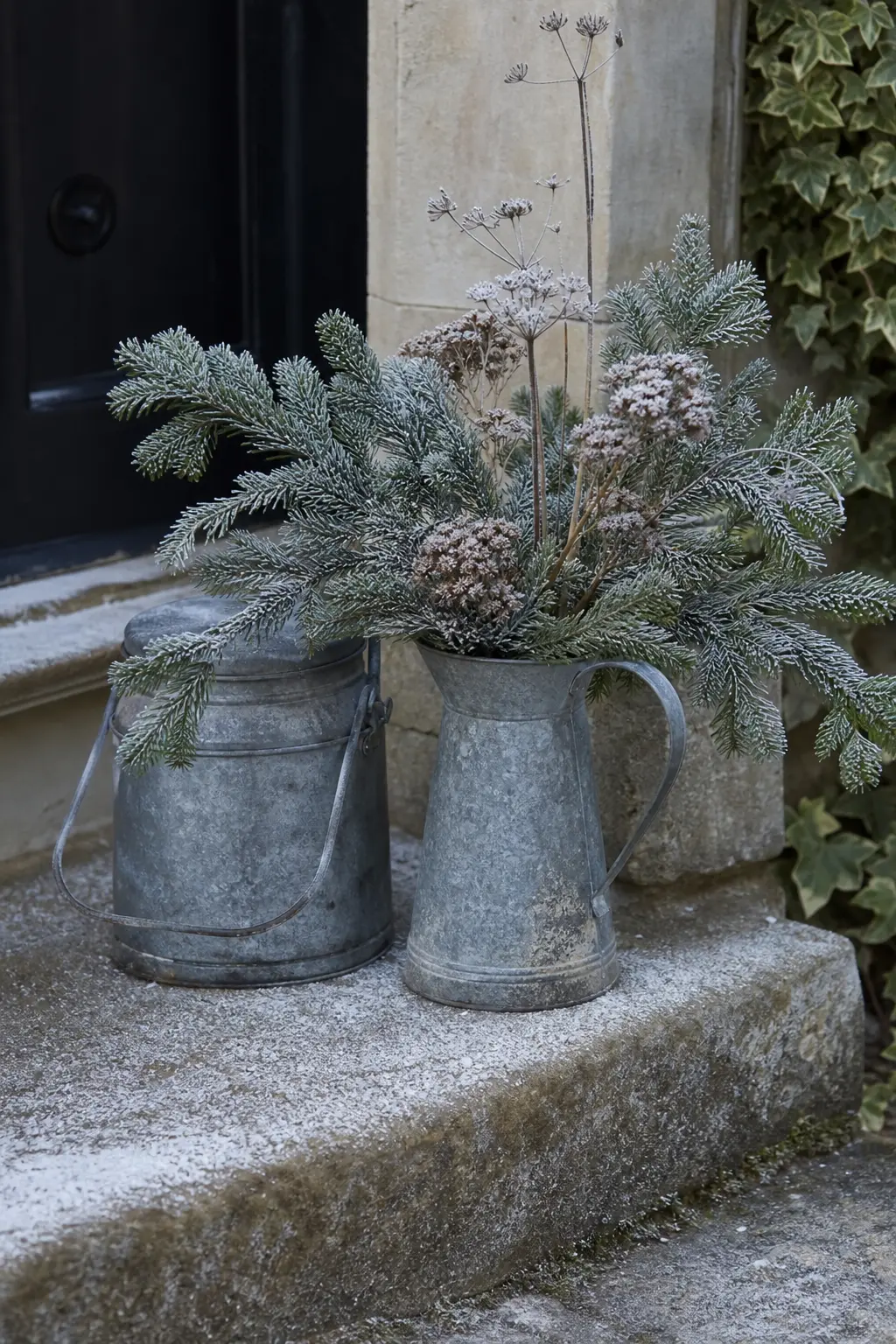
Galvanised, corten and brushed brass containers all age well outdoors and suit the palette. A small galvanised jug holding cut spruce stems on a doorstep is both weatherproof and charming. The cream and twilight blue palette reads beautifully in metal when the winter light is low and flat.
🛍 Shopping guide
Lighting That Holds
Lights fail outdoors for two reasons: the wrong IP rating, and staples that pierce the cable insulation. Both are avoidable. Every idea in this section uses clips, not staples, and carries at minimum an IP44 rating, which covers rain splash from any direction.
If you want to go further with the installation itself, the detailed walkthrough on diy christmas lights outdoor covers routing, timers and safe connection points.
Battery Lights Rated for Outdoors
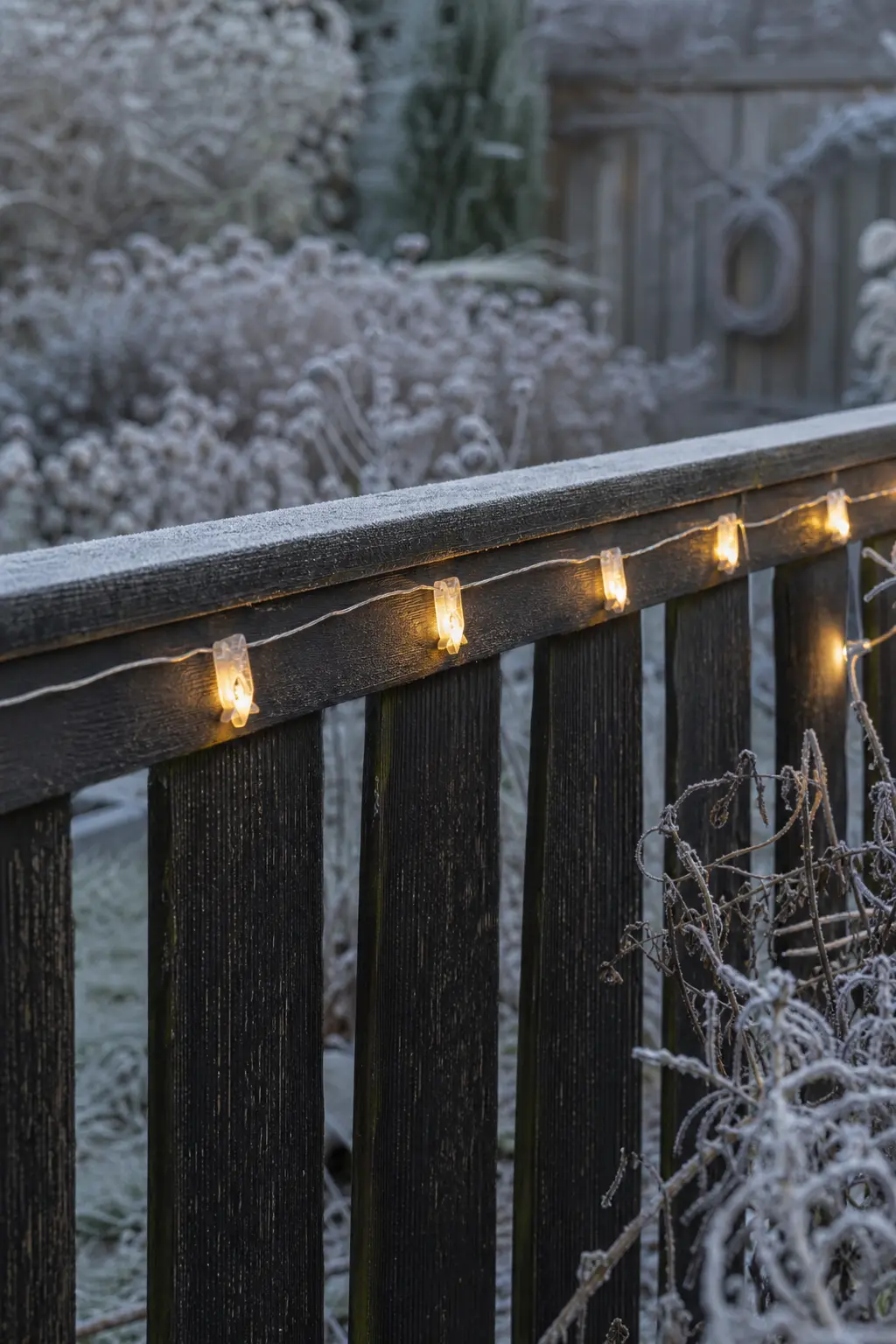
IP44 is the minimum for any light exposed to rain splash. IP65 covers direct water jets, which is what you want on a fully exposed wall or fence. Check the rating on the box before you buy, not after they fail in November. The IP number is not a style detail, it is a safety one.
Battery-powered strings avoid the problem of mains cables running through weather-exposed gaps, which creates both a shock risk and a voided warranty. Use a timer so the lights run from dusk to around midnight and switch off automatically: a dead battery string is less likely to fail mid-season than one running twelve hours a day.
🛍 Shopping guide
Lights Clipped, Never Stapled
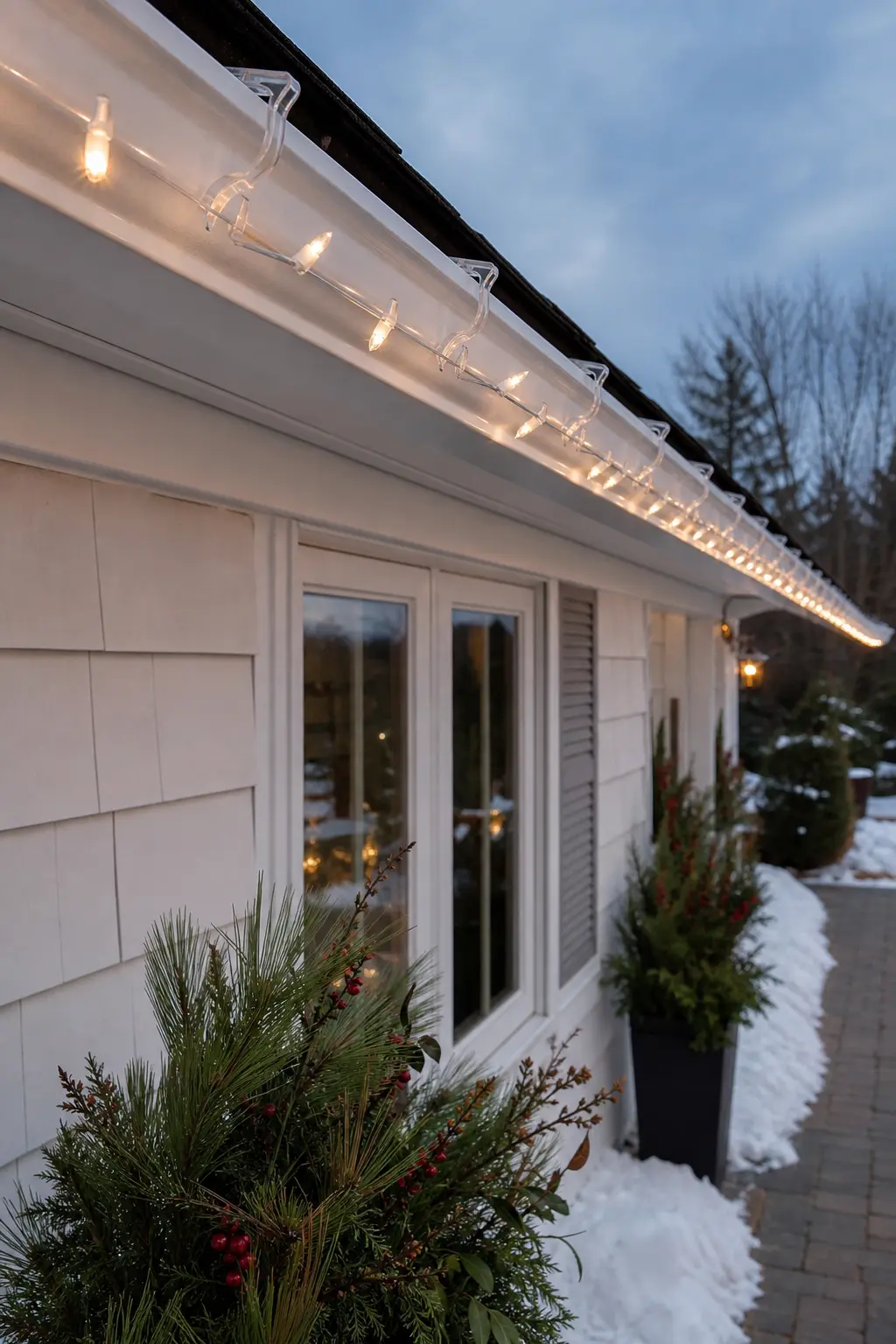
A staple gun through a cable is a fire and shock risk: the staple pierces the insulation and the fault may not show for weeks. Clip-on gutter hooks, adhesive cable clips rated for outdoor use and purpose-made shingle tabs all hold lights securely without touching the cable itself.
Space clips no more than 30 cm apart on a run that is exposed to wind, so the string cannot whip between fixing points and the cable cannot snap at a stress point. The whole installation takes longer than stapling and it lasts the entire season without a single failed bulb from cable damage. For a complete safe-installation guide, the article on diy christmas lights outdoor covers every fixing type.
🛍 Shopping guide
A Timer So Nothing Runs in a Storm
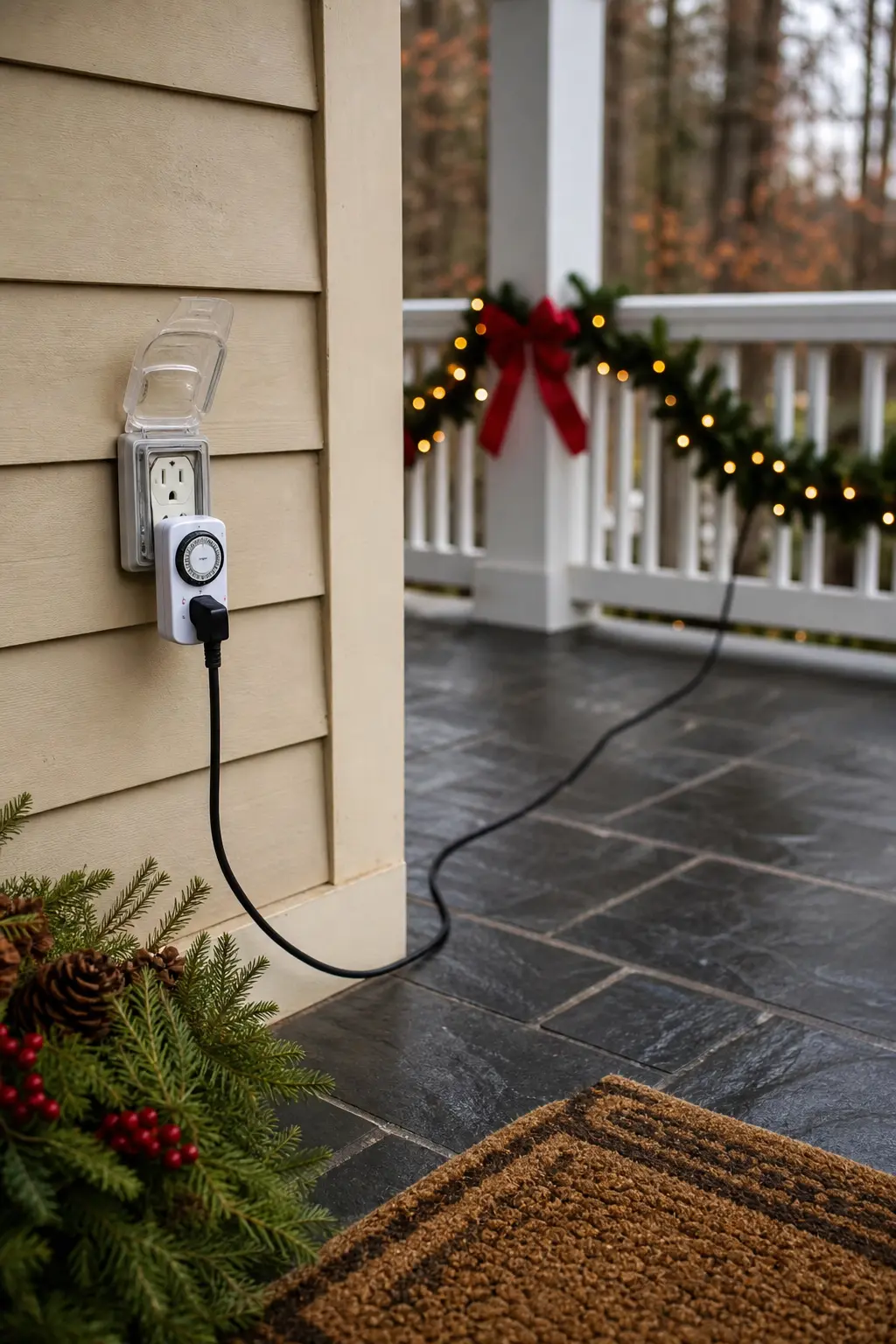
A smart timer or a simple mechanical outdoor timer does two things: it saves battery life and it means lights are off during the worst of any storm, when vibration is most likely to work a bulb loose or stress a connection. Set it for dusk to midnight, or dusk to dawn if the street needs the cheer.
Plug-in outdoor timers are rated separately from the lights, so match the rating to the load. A timer rated for 1000W handles most domestic light runs easily. Mount the timer housing under a porch or overhang so it is not directly rained on, even if it is rated for weather exposure.
🛍 Shopping guide
Greenery That Lasts the Season
Cut greenery outdoors is not a lost cause, but it needs to be chosen for how it ages. Some varieties brown fast and look dead within a fortnight. Others silver or fade to a warm straw colour that still reads as intentional in January. Choose the second kind.
Greenery That Browns Gracefully
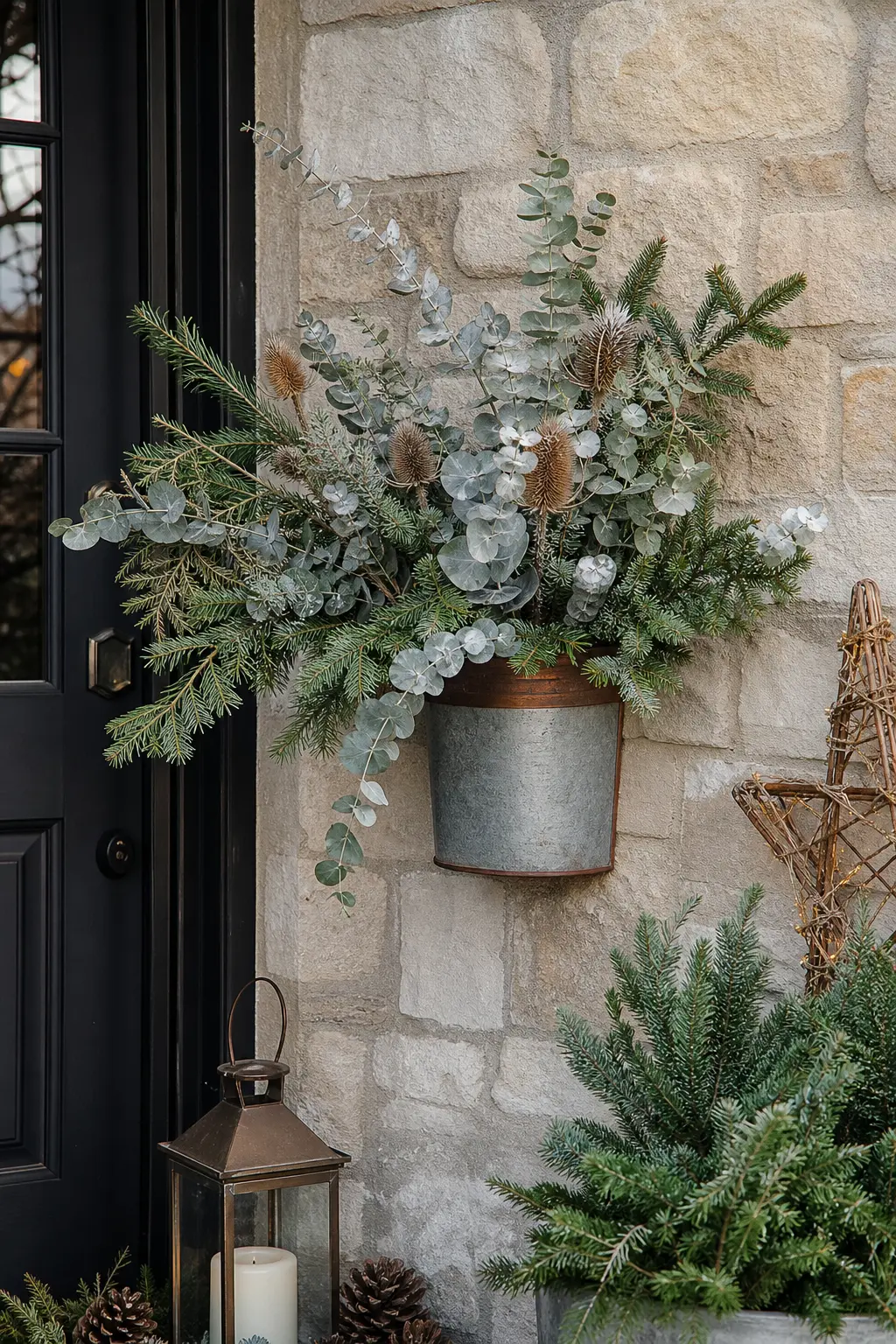
Eucalyptus silvers as it dries, spruce holds its colour for three to four weeks before fading to a warm khaki, and dried honesty adds a translucent shimmer without ever looking dead. Avoid laurel and fast-browning deciduous stems: they go black and the display looks abandoned rather than rustic.
The test is simple: cut a stem, leave it on a shelf for a week and see what colour it becomes. Honesty, eucalyptus, dried grasses, teasel and preserved ferns all pass. Fresh holly holds colour well if the stems are in water or fresh oasis. Box balls hold indefinitely because they are still alive.
🛍 Shopping guide
Fabric Swapped for Outdoor-Grade Ribbon
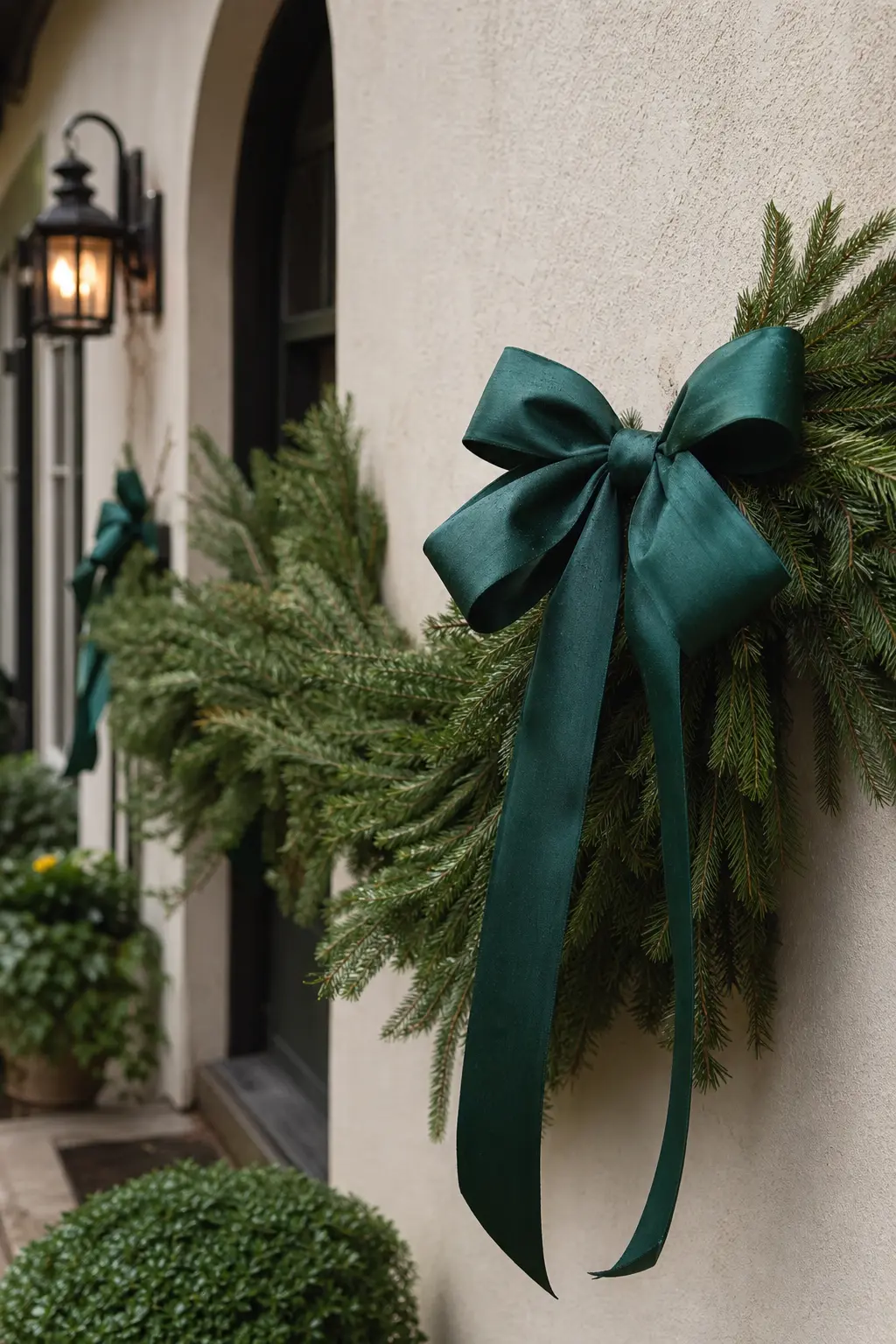
Standard wired fabric ribbon is designed for indoor use. It fades in UV, goes stiff in frost and absorbs rain until it droops. Outdoor-grade ribbon is woven with UV stabilisers and a tighter weave that resists moisture absorption. The difference in longevity is roughly four weeks versus four days in a wet December.
Look for ribbon marketed explicitly for outdoor use or for boat and marine decoration, as those are the categories with the strictest weatherproofing. In the palette here, a hunter green outdoor ribbon or a cream weatherproof satin ribbon both read well against natural timber and brass.
🛍 Shopping guide
Wall-Mounted Rather Than Free-Standing
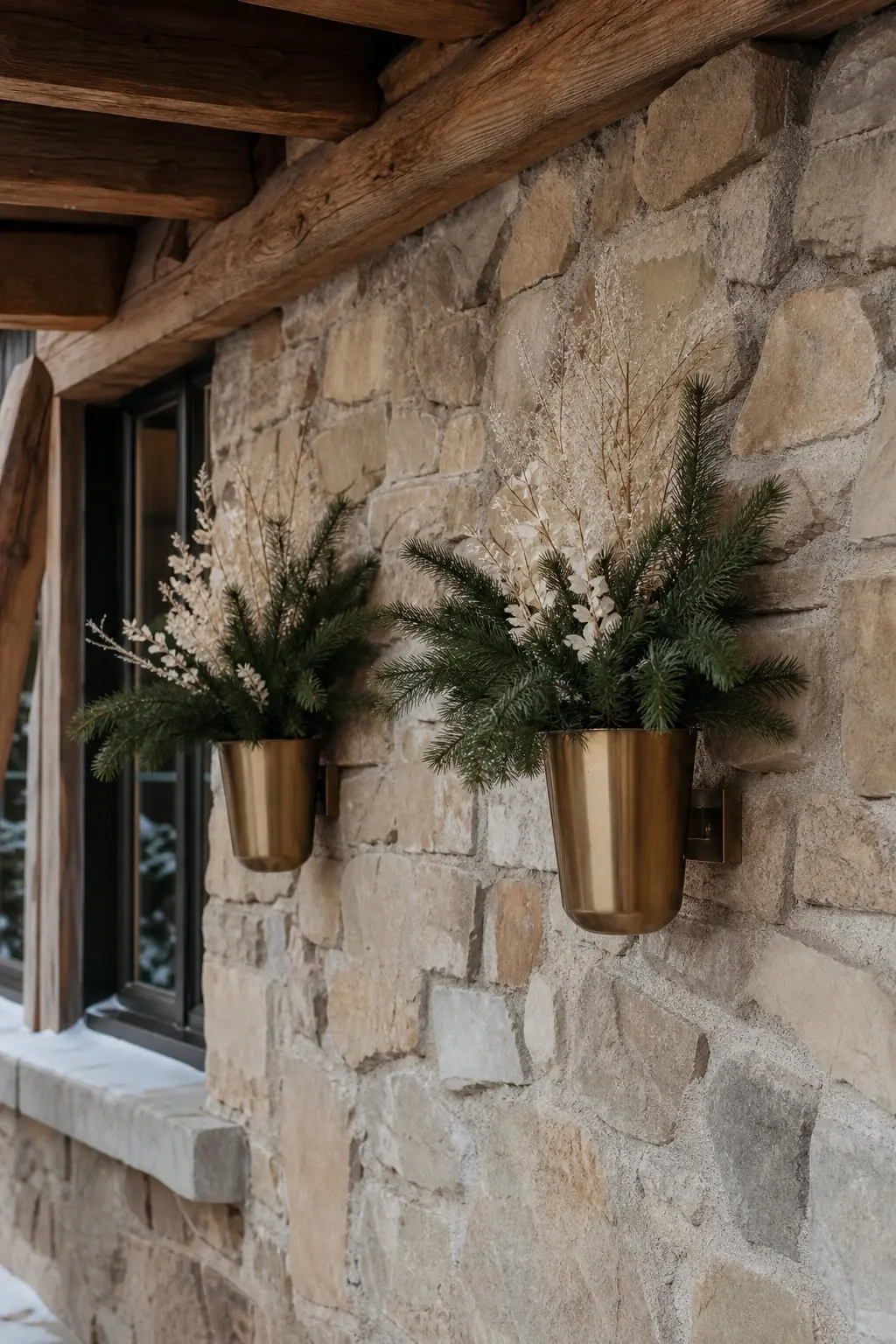
Every free-standing piece is a potential projectile. Wall-mounted equivalents use the same materials and take the same amount of decorating time but are fixed to a surface, so wind acts on the wall rather than the display. A wall-mounted lantern, a sconce planter or a hung basket all behave better in a gust than a floor arrangement.
Mount directly into masonry with rawl plugs and stainless screws rather than relying on adhesive hooks on a wet exterior wall. Adhesive fails at low temperatures and in constant moisture. For a wider look at christmas porch leaners and vertical display pieces, that companion article covers non-fixing alternatives.
🛍 Shopping guide
Come-Inside Pieces: Beautiful but Fragile
Some things deserve a place in the outdoor scene for the party itself and then a warm shelf for the rest of December. Knowing in advance which pieces are temporary saves the heartbreak of finding them broken on Boxing Day morning.
A Sheltered Corner for Anything Delicate
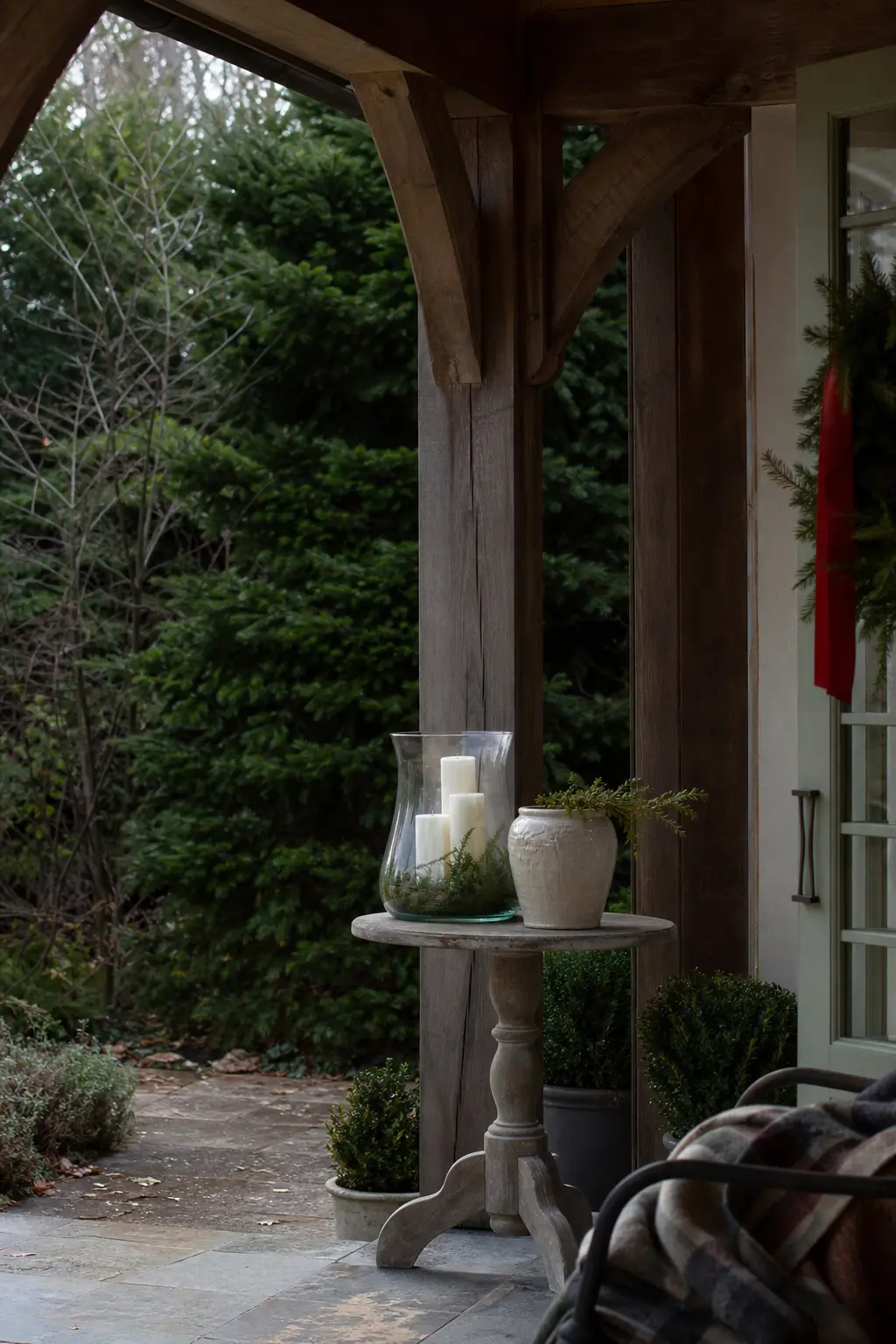
Designate one corner of the porch or a deep doorway recess as the sheltered zone before the season starts. This is where the glass hurricane vase, the hand-painted pot or the silk-look stem arrangement lives. The overhang blocks vertical rain and the walls block the prevailing wind, giving delicate pieces a reasonable chance.
Even in this zone, anything truly fragile should come inside after the party. A beautiful piece that survives one evening of appreciation is a success. The same piece left out for a month of December weather is a gamble that rarely pays off. Set a reminder so it does not get forgotten when the evening ends.
🛍 Shopping guide
A Doormat Under a Porch Roof Only
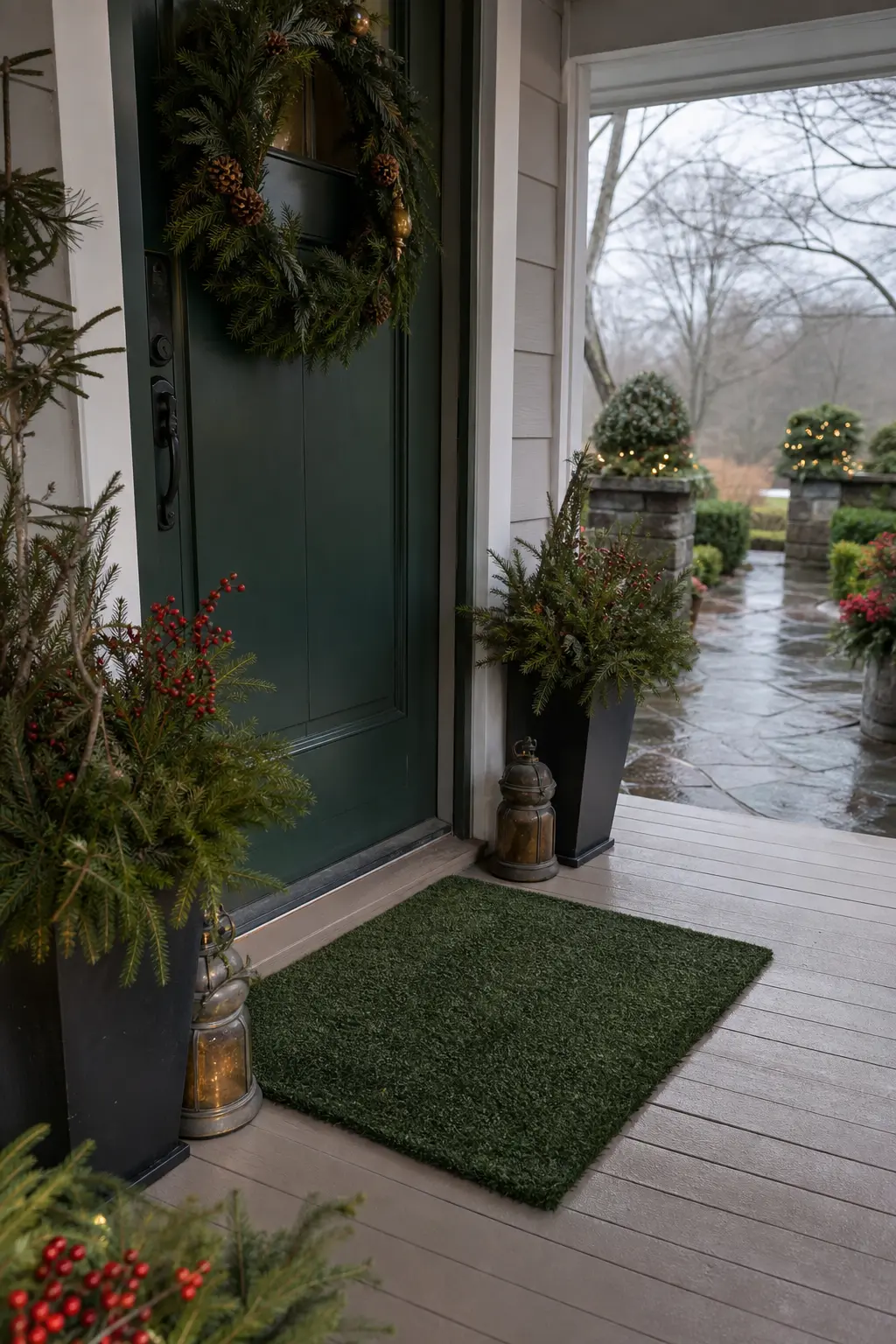
A coir or jute doormat placed in the open saturates in the first rain, grows mould within a week and becomes a slipping hazard once frozen. Under a porch roof it stays dry, grips the sole and can last the whole season. The placement matters more than the mat itself.
If there is no porch, the only safe outdoor doormat is one made from scraper grid rubber or open-weave PVC: both drain immediately and cannot hold water. Any printed or dyed coir design belongs in a sheltered spot or it will fade in a month. The rubber scraper mat works in any weather and costs almost nothing.
🛍 Shopping guide
Ties Checked and Re-Tensioned Weekly
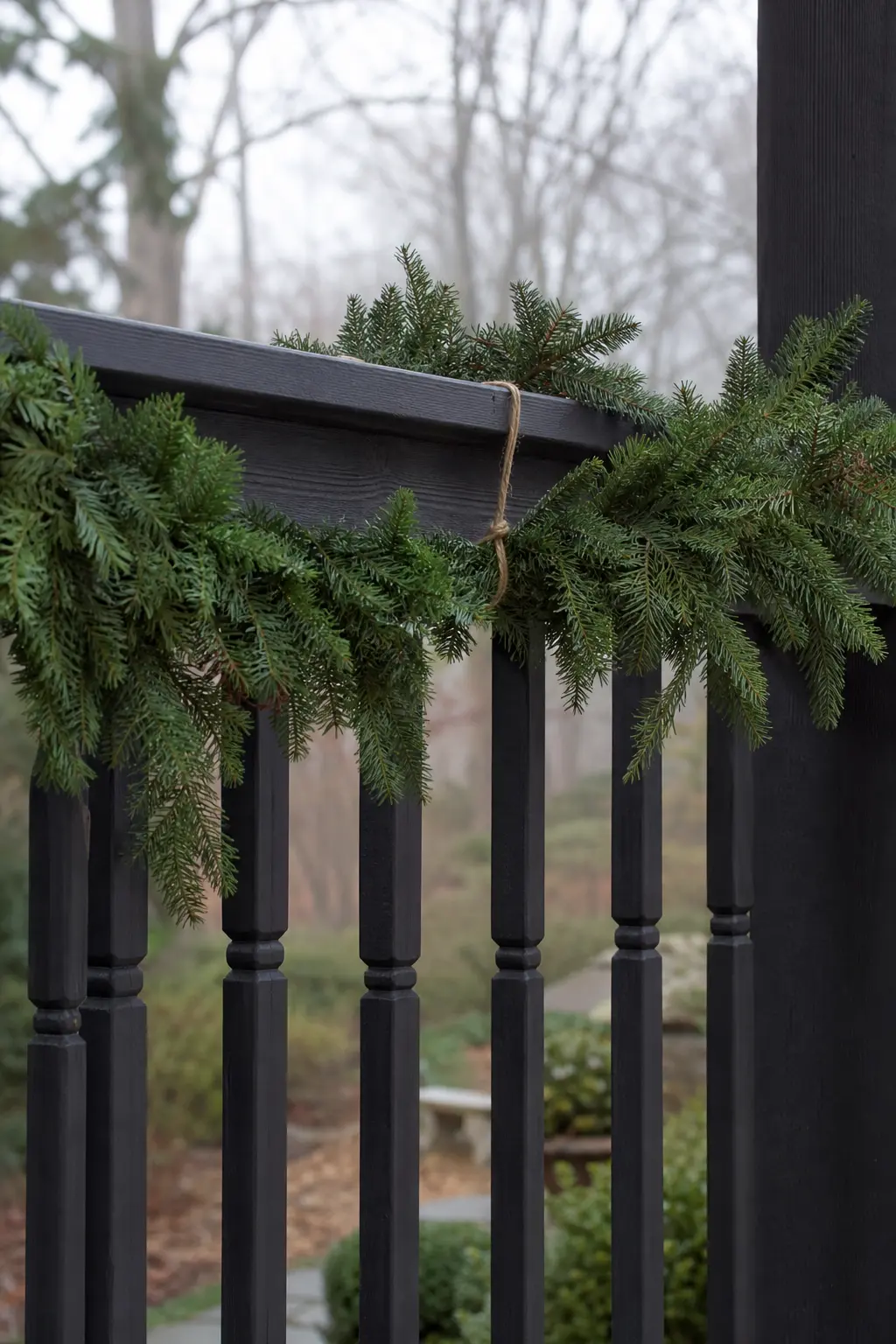
Natural twine, jute and even plastic zip ties relax after repeated wetting and drying. A garland that was tight on the first of December is often visibly sagging by the fifteenth. A weekly check takes two minutes per run and prevents the dramatic mid-month collapse that always seems to happen the day guests arrive.
Keep a small bag of cable ties, spare jute and a pair of scissors near the front door through December. If a tie needs replacing, do it immediately rather than noting it and forgetting. This is the lowest-effort maintenance task in the whole setup and the one most people skip, which is why their displays look tired by Christmas Eve.
🛍 Shopping guide
Everything Breakable Brought in After the Party
Set a firm rule before the evening starts: anything that can crack, chip or shatter comes back inside before midnight. This includes glass votives, ceramic decorative pots, any painted ornament and the good lanterns. The garden can look festive without them. They cannot be replaced without effort and money.
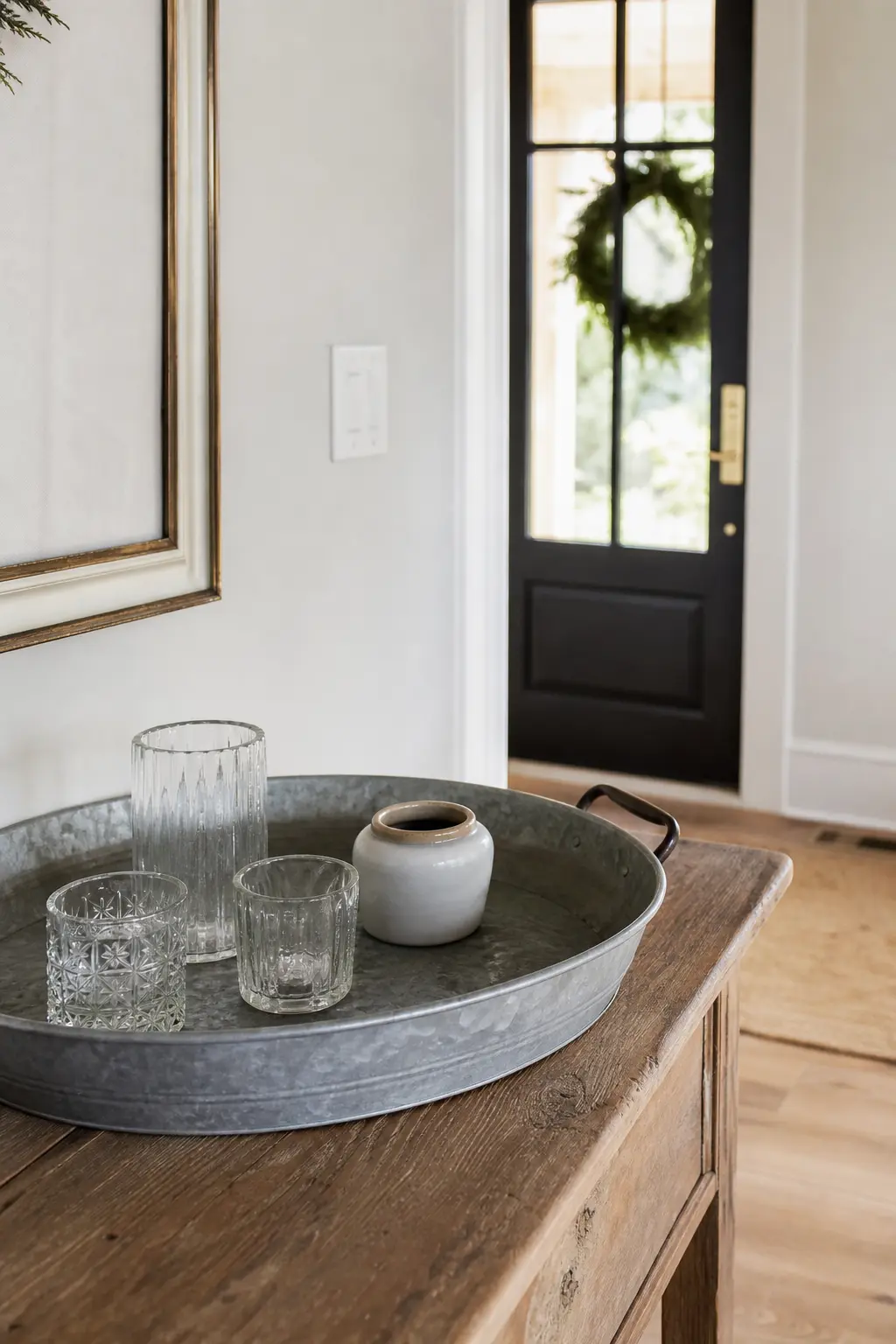
Make it easy by keeping a tray inside the door ready to receive returned pieces, so there is no searching at the end of the night. The remaining outdoor display, the evergreens, the wire basket, the galvanised lanterns, the clipped lights, stands perfectly well on its own and earns its keep through the whole season. For more ideas on the Christmas evening itself, the round-up of 20 Christmas Party Ideas and Games for an Unforgettable Night covers the indoor portion of the evening.
🛍 Shopping guide
Frequently Asked Questions
What outdoor Christmas decorations survive wind?
The most wind-resistant outdoor Christmas decorations are those that are weighted or fixed flat to a surface. Potted evergreens weighted with gravel in their base, garlands tied at every third point rather than draped, branch bundles lashed flat against a post, and wall-mounted lanterns or sconce planters all resist wind far better than free-standing or loosely hung alternatives. The key principles are a low centre of gravity, multiple fixing points and a narrow profile that lets air pass around rather than under.
How do I weigh down outdoor decorations?
The method depends on the piece. Planters and pots are weighted with a gravel layer in the base before compost is added. Lanterns take 3 to 4 cm of builder’s sand poured into the base before the light is placed inside. Stakes and sign posts are driven to at least 30 cm depth, below the frost heave zone. For anything that cannot be weighted directly, mounting it to a wall or post rather than leaving it free-standing is the most reliable fix.
Can indoor lights be used outside?
No. Indoor lights carry no weatherproofing rating and are not designed for rain, frost or moisture. Using them outdoors is a fire and electric shock risk and will void any warranty. Outdoor lights carry an IP rating printed on the box: IP44 covers rain splash from any direction and is the minimum for a sheltered porch or covered area. IP65 covers direct water jets and suits fully exposed walls, fences and roof lines. Always check the rating before buying.
How do I stop outdoor decorations filling with water?
The fix is drainage: drill two or three holes in the base of any solid container, including galvanised buckets and timber planters, before adding compost or florist foam. Raise containers on pot feet so the holes are not sitting flat on a surface. Use wire baskets for arrangements of cones and logs, as water runs straight through the mesh. For garlands and bows, choose oilcloth ribbon rather than fabric, and tie rather than drape greenery so water runs off rather than pooling in loops.

Grab a christmas charades printable free game with 48 prompts in 4 rounds, easy to hard, plus ready-

18 christmas balloon decorations in red, white and gold: candy cane arches, confetti clusters and fa

19 French Christmas decor ideas for a whole home, in bordeaux, ivory and gold with toile de Jouy car
Leave a Reply