

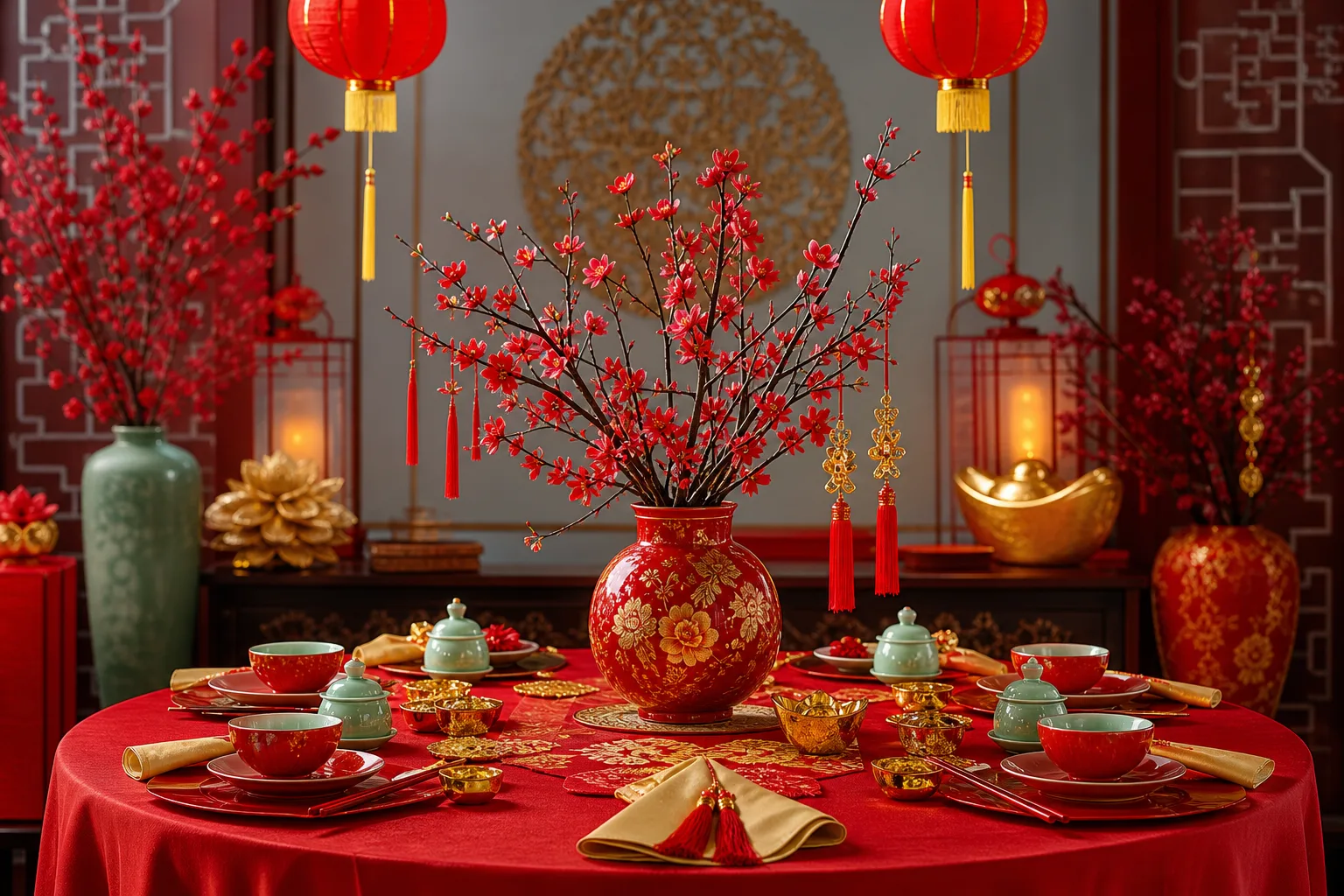
Red and gold do the heavy lifting here, and so does the table. A Lunar New Year celebration is really three holidays wearing the same bright colours: Chinese Spring Festival, Vietnamese Tet and Korean Seollal each have their own dishes, their own games, their own way of greeting the first morning. None of them do it in white.
White, black and blue are traditionally avoided because they read as mourning, sorrow or bad fortune, so every idea below leans into deep red, warm gold and the odd flash of jade or peach instead.
You do not need to run all three traditions in one room: pick the one that is actually yours, or borrow a dish from each if your family already does.
Start big with the thing that makes guests stop in the doorway, work down through the feast, into what everyone actually does with their hands, and finish on the small stuff that goes home in a pocket.
This post contains affiliate links. If you buy through them, I may earn a small commission at no extra cost to you.
Table of Contents
The Showpiece: Where the Room Begins
This is the thing a guest photographs before she has even taken her coat off. Pick one, not all five, and build the rest of the room around it so nothing competes for the same wall.
Red Lantern Branch
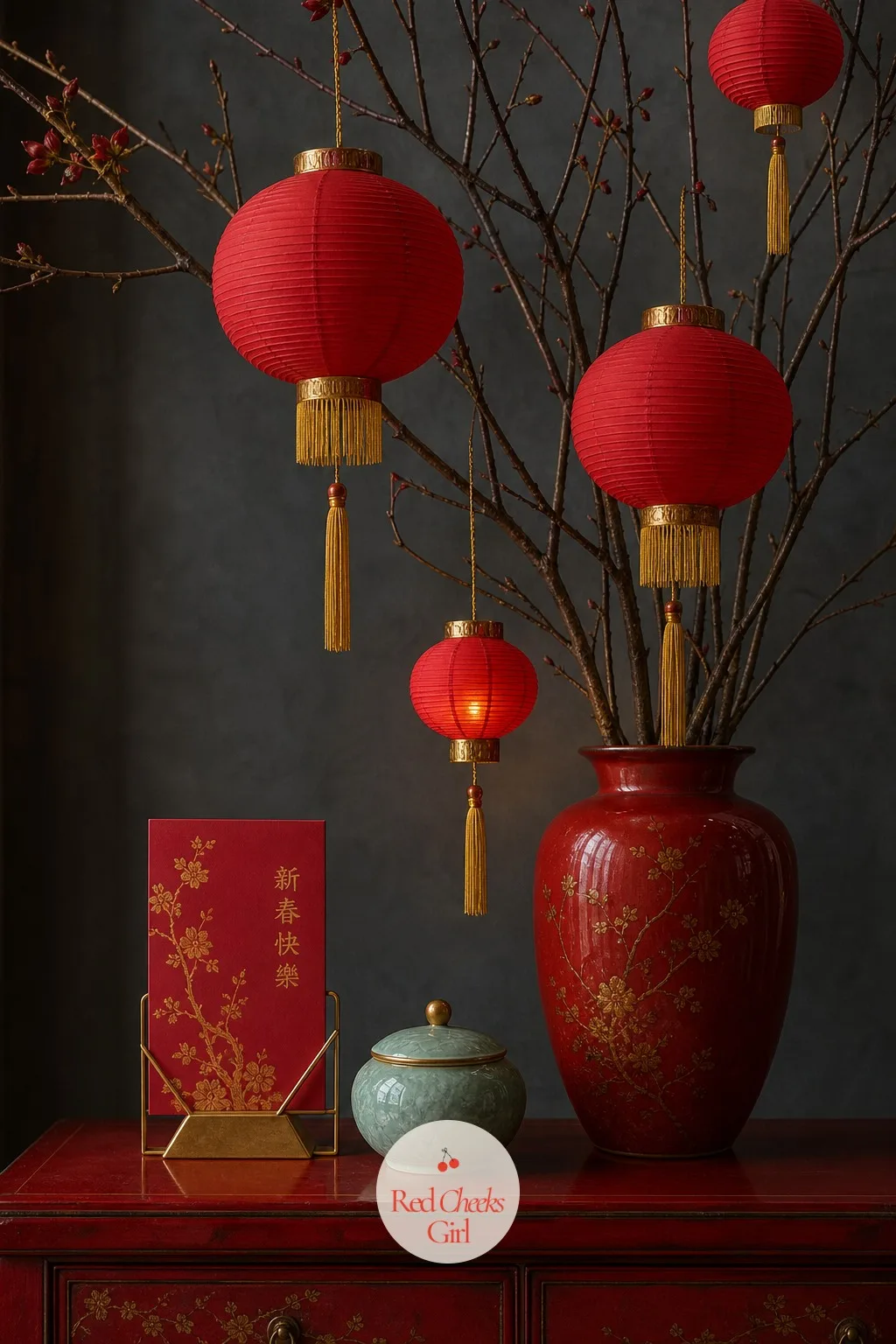
A bare corner always looks like you forgot about it. A Red Lantern Branch fixes that in one move: a tall vase holds a few bare branches (curly willow works, so does anything from the garden), and round red paper lanterns with gold tassels hang from the branches at staggered heights, this is the Chinese Spring Festival habit of filling the house with red light before the new year arrives.
Battery tea lights inside the smallest lanterns mean nobody is near an open flame near paper. If you cannot get branches, a single ceiling hook and a cluster of lanterns at different cord lengths does the same job over a doorway for almost no money.
Kumquat Tree with Tied Envelopes
No peach blossom this far from Hanoi, fair enough, but a potted kumquat tree is the Vietnamese Tet showpiece that travels well and survives shipping.
A small kumquat tree, heavy with its own orange fruit, sits in a red glazed pot by the entrance or living room window, and tiny red envelopes get tied on with gold thread the way lucky money hangs from the branches at home.
If a kumquat tree is out of reach, any small citrus tree or even a potted orange topiary from the garden centre takes the red envelopes just as well. Water it before guests arrive, not during the party, Tet tradition treats the first days as a time to leave water alone.

🛍 Shopping guide
Red Paper Cut-Out Window Display
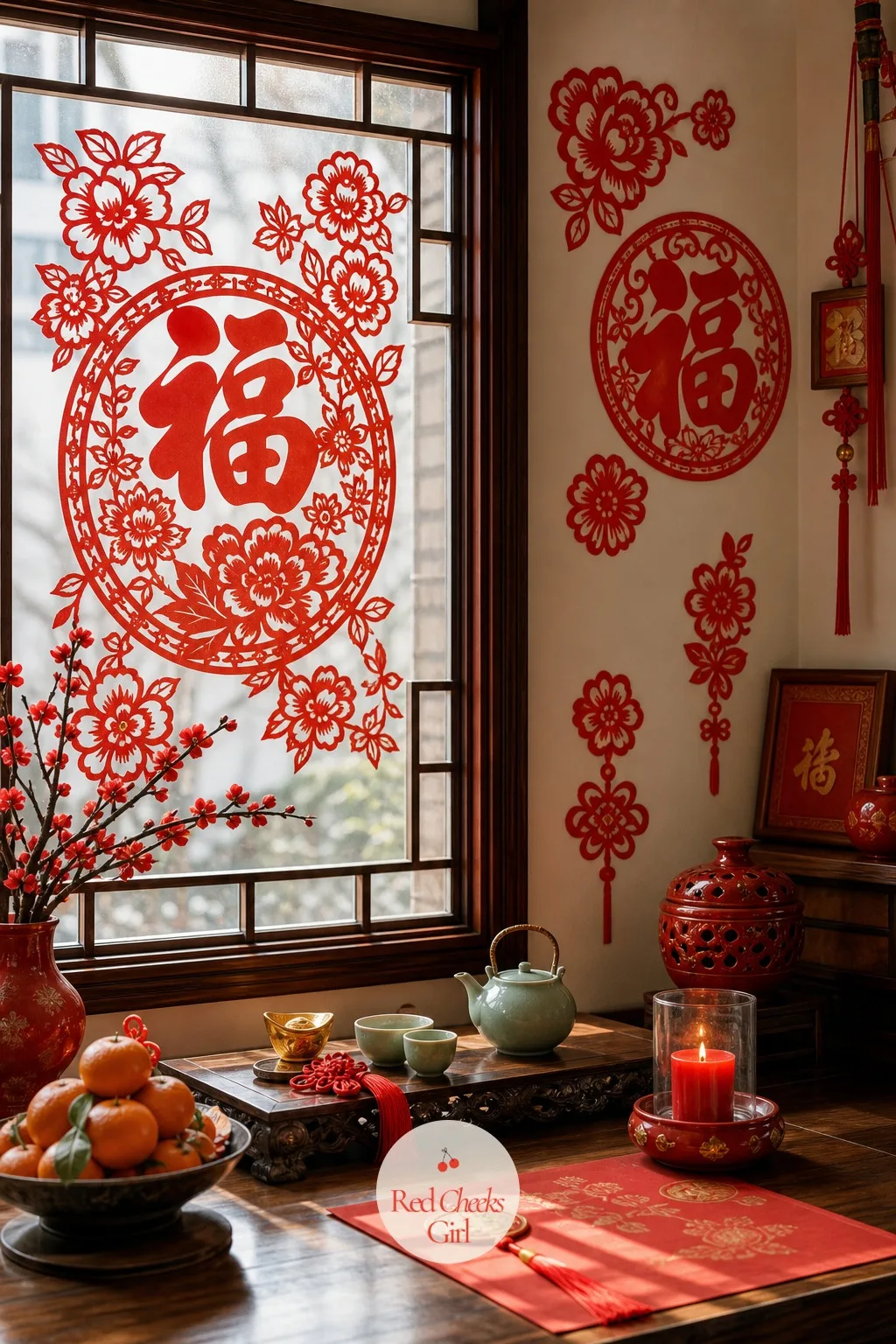
Jianzhi, the Chinese art of paper cutting, turns a plain window into the first thing anyone sees from the street.
Sheets of thin red paper are cut into flowers, fish or the character for fortune, then pasted flat against the glass so daylight shows every fine line through from outside, a Spring Festival habit that costs almost nothing but a steady hand.
Pre-cut sets exist for anyone whose scissors skills stop at straight lines, and a few extra cut-outs can go straight onto a plain wall beside the window for more coverage. If you rent and cannot risk the glass, removable poster tack holds the paper just as well.
🛍 Shopping guide
Upside-Down Fu Door with Couplets
Hang the fu character the right way up and a sharp-eyed guest will say something. Hung upside down on purpose, the Chinese character for fortune plays on the fact that “upside down” and “arrive” sound alike, so fortune is said to arrive at the door.
Flank it with a pair of long red paper couplets carrying gold brushstroke blessings down each strip.
This one lives entirely on the front door, so it reads from the driveway before anyone rings the bell. A single upside-down fu without couplets still works fine if the door frame is narrow.

🛍 Shopping guide
Sebae Screen and Low Table
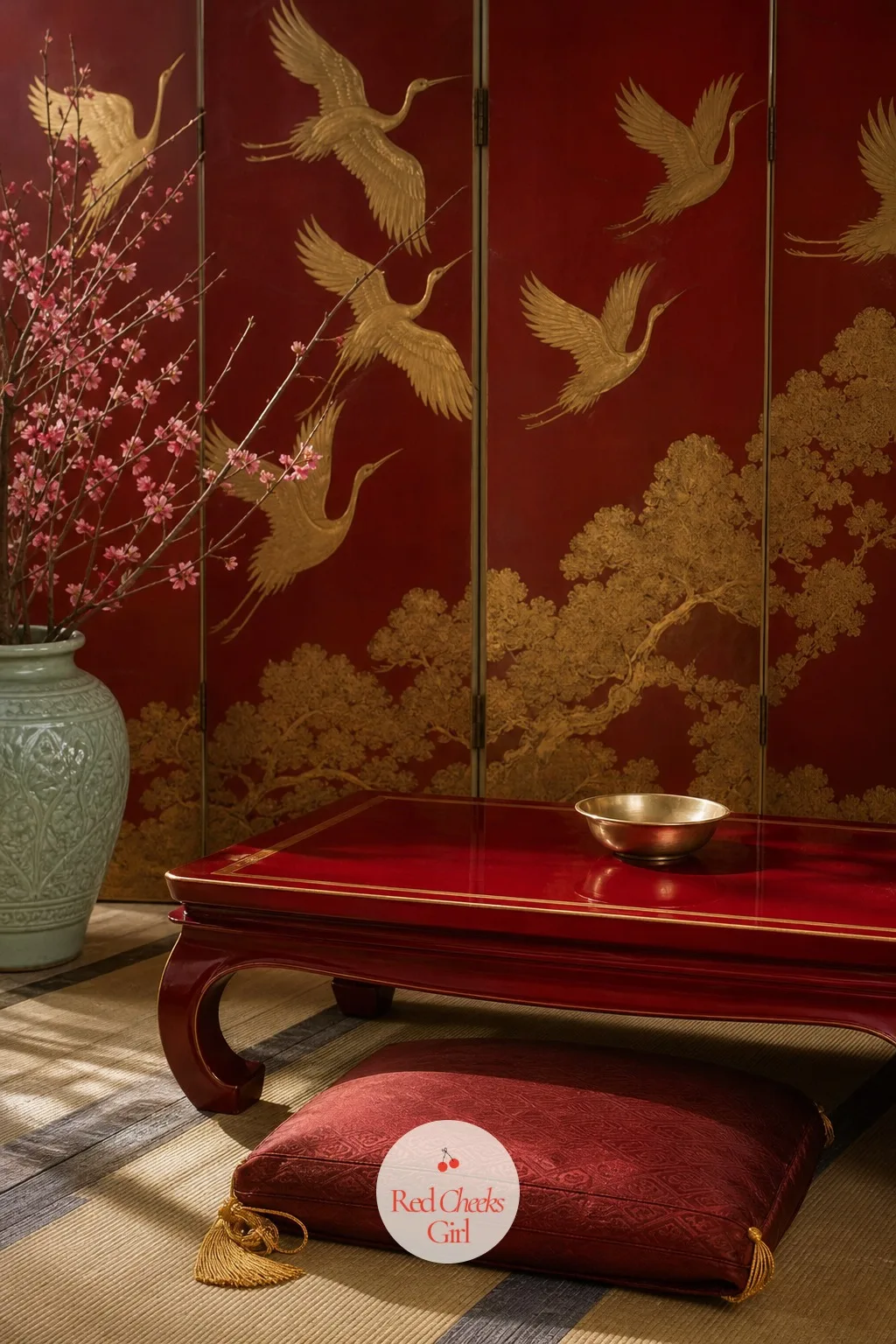
Korean Seollal has its own quiet grandeur: children and grandchildren perform a deep bow, sebae, to the elders of the family, who sit before a folding screen with a low table between them. The screen, painted with gold cranes on deep red, gives the whole corner weight without a single string light.
A plain cushion in front of the table marks where the bow happens, and a small brass bowl on the table’s edge waits for the sebaetdon, the New Year money given after the bow.
If a full folding screen will not fit this year, a large framed piece of red and gold fabric pinned to the wall behind the table reads almost the same in a photograph.
🛍 Shopping guide
The Table That Says Abundance
Every dish here is on the table because of what its name sounds like or what its shape promises, not because it is pretty. Serve what your family actually eats; use this as a list to add to, not replace.
Whole Steamed Fish
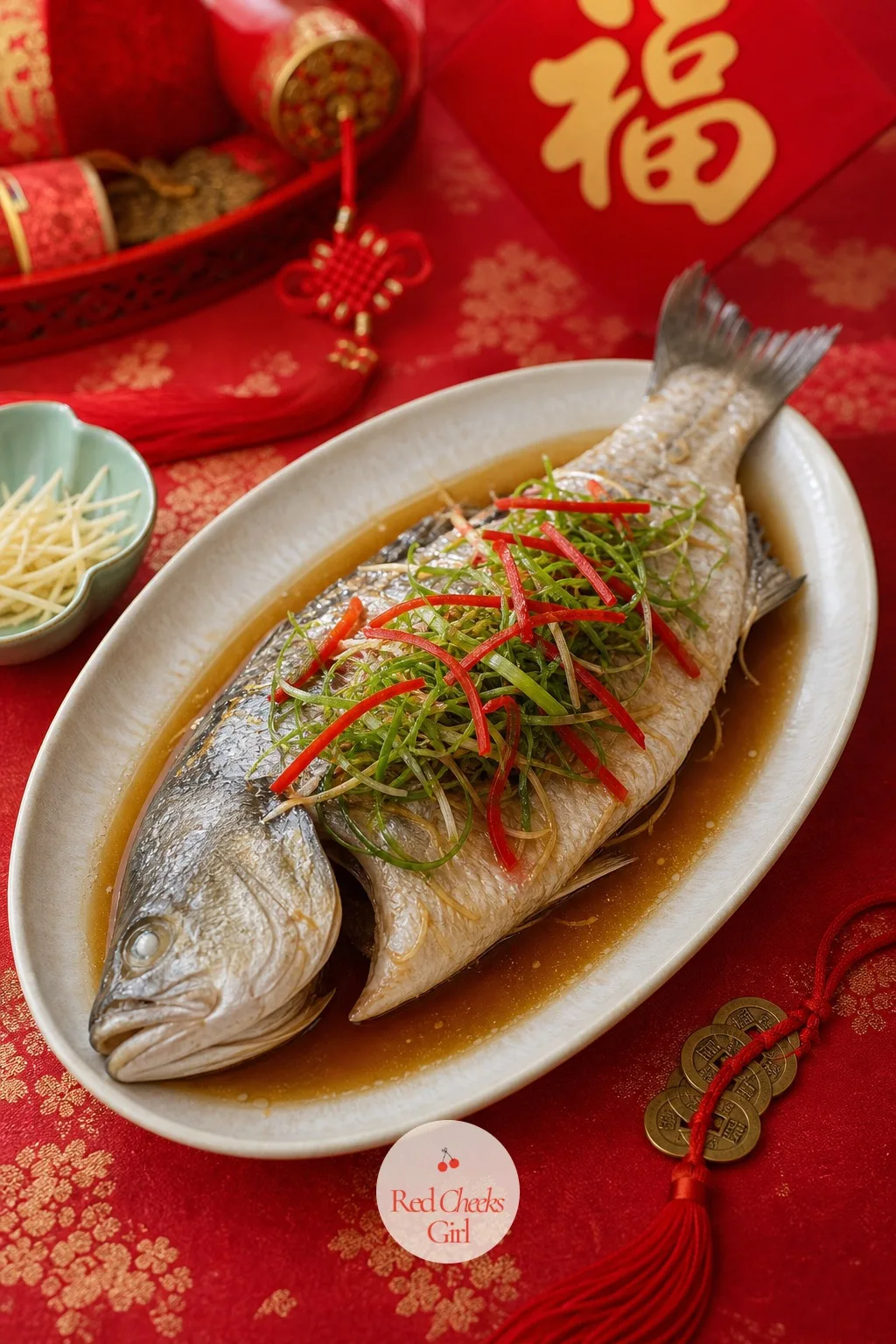
Served whole, head and tail both still on, the fish is the Chinese Spring Festival dish built entirely on a pun: the word for fish sounds like the word for surplus, so a whole fish on the table means abundance carries into the next year.
Steam it simply with ginger, scallion and a splash of soy so the skin stays glossy rather than dry.
Set it on its own platter, not shared with other dishes, so it reads as the centrepiece it is meant to be. A smaller whole fish, even a trout, keeps the symbolism intact for a tighter budget or a smaller gathering.
🛍 Shopping guide
Longevity Noodles, Left Uncut
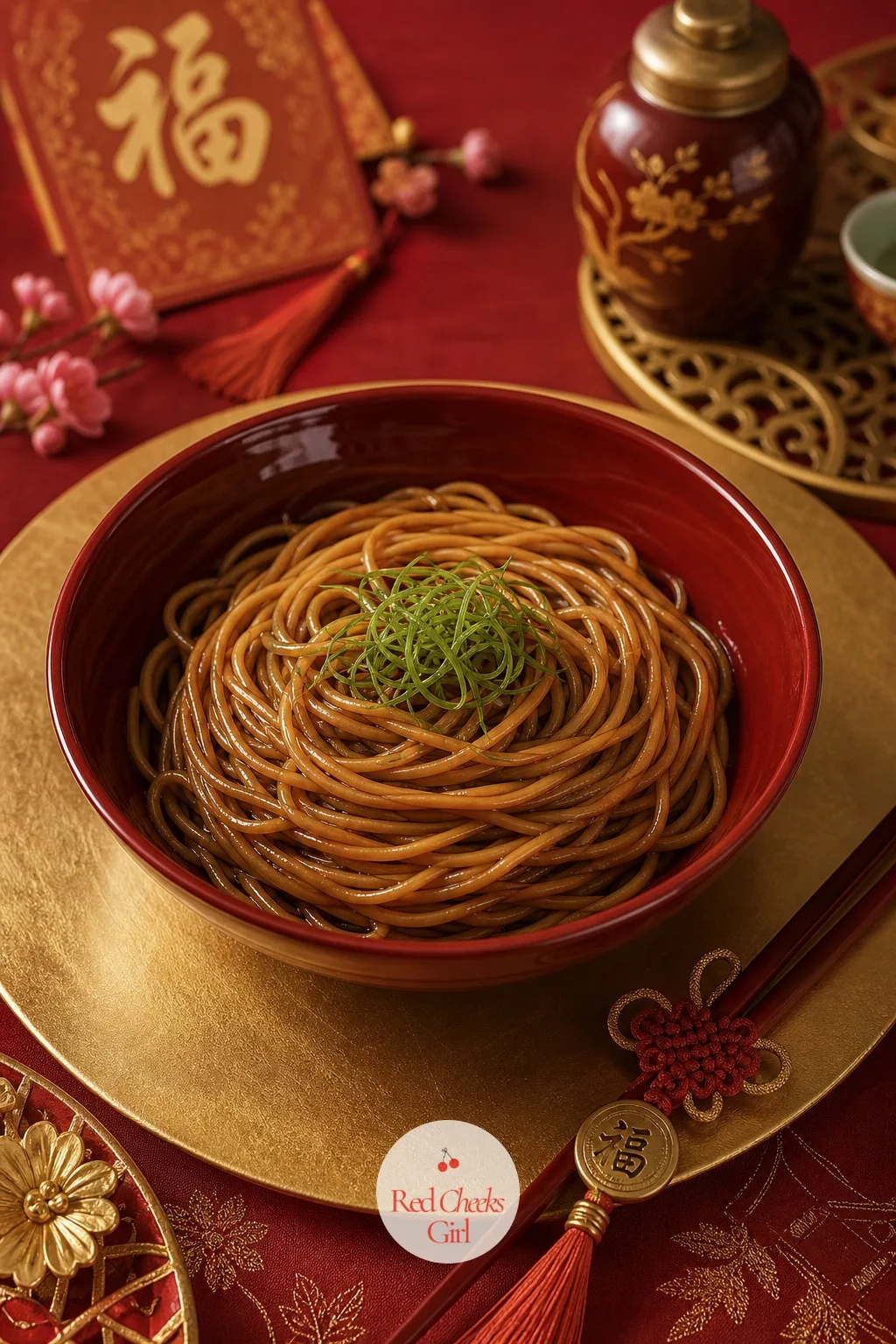
Nobody at a Chinese Spring Festival table cuts these noodles, not the cook and not the chopsticks. One long uncut noodle is meant to represent one long life, so the whole point is slurping it in rather than forking tidy bite-sized lengths.
Thick wheat noodles hold their shape best; fry or toss them simply so the noodle itself stays the star rather than getting lost under heavy sauce. Warn guests before they reach for scissors, it happens more often than anyone expects.
🛍 Shopping guide
Eight-Compartment Tray of Togetherness
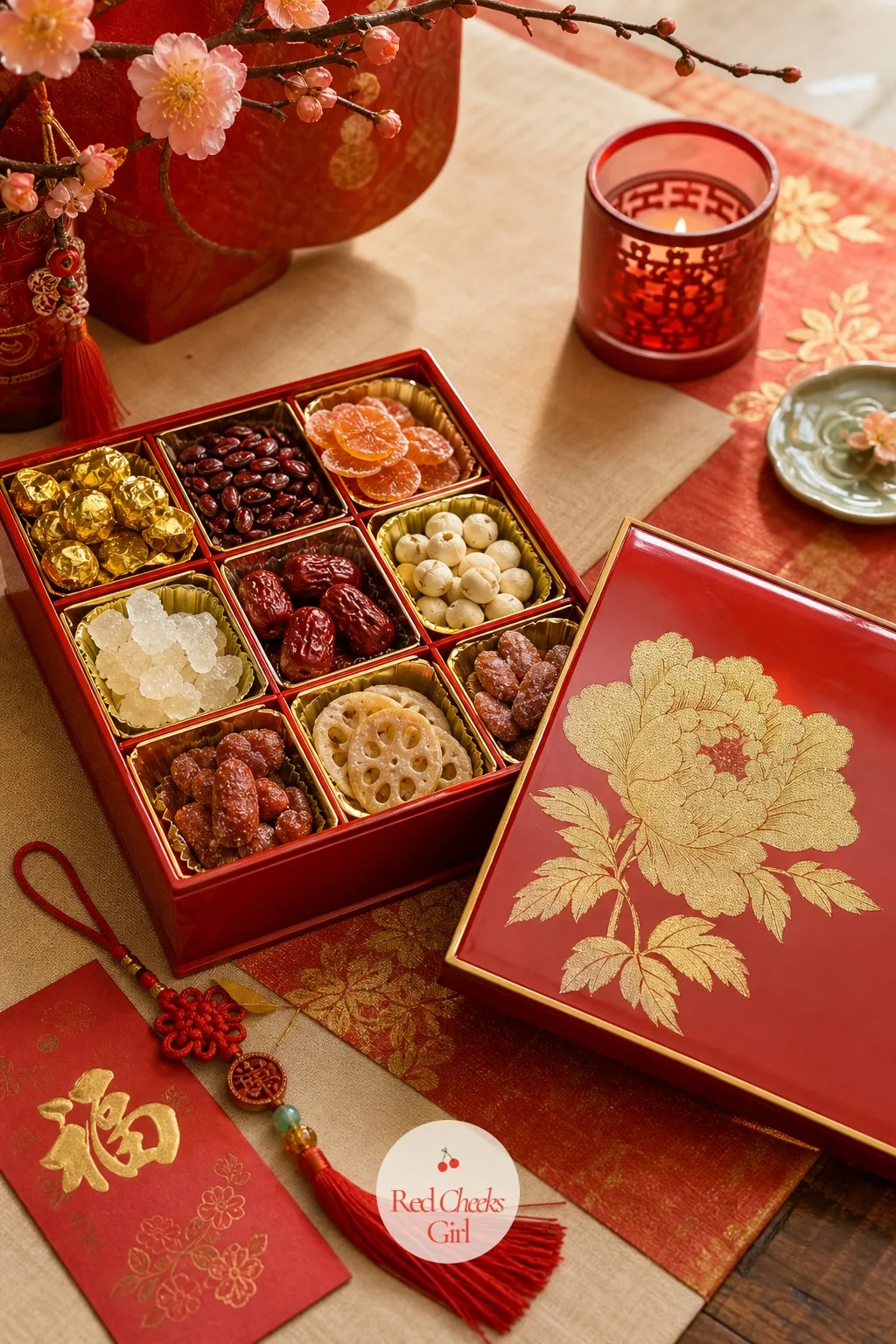
Eight compartments, never any other number, because eight sounds like the word for prosperity in Chinese and the tray itself is called the Tray of Togetherness.
Each little section holds a different sweet: candied lotus root for fertility, melon seeds for abundance, dried kumquat for gold, that sort of thing, arranged so guests graze rather than sit down to a formal course.
A lacquered box with a lid looks the most authentic and keeps everything dust-free between visits. No lacquer box on hand, a muffin tin lined with small red paper cups holds the same eight treats for a fraction of the price.
Tteokguk Rice Cake Soup
In Korea, eating a bowl of tteokguk on Seollal morning is how you officially turn a year older, the soup’s thin oval rice cakes are said to symbolise coins and a clean new start. A clear beef or anchovy broth carries the disc-shaped rice cakes, topped with thin strips of fried egg and a little seaweed.
Serve it in a dark stoneware bowl on a red lacquer tray so the pale broth has something to sit against rather than disappearing into a white table. Frozen sliced rice cakes make this entirely doable on a weeknight, let alone the day itself.

🛍 Shopping guide
Banh Chung Centerpiece
Square, dense and wrapped in banana leaf, banh chung is the Vietnamese Tet rice cake families traditionally spend an entire night boiling together before the holiday. Inside the sticky rice is a core of yellow mung bean and fatty pork, and the whole thing is tied with strips of bamboo or red thread before it ever hits the pot.
Unwrap one cake at the table so the layers show, a far better centrepiece than a sealed parcel nobody can read. Pre-made banh chung from a Vietnamese grocer is entirely normal if nobody in the house has a free evening to spend over a boiling pot.

🛍 Shopping guide
Mandarins with the Leaves Still On
Plain mandarins are fine. Mandarins with the stem and two glossy leaves still attached are the version that gets photographed, and across Chinese and Vietnamese households both, the fruit stands in for prosperity, good luck and abundance, inviting wealth into the home for the year ahead.
Pile them loose in a wide gold bowl rather than arranging each one, the slight mess is the whole charm. Buy a few extra, mandarins with leaves attached bruise faster than the leafless kind at the supermarket.

🛍 Shopping guide
What the Family Does Together
The best part of the day is rarely the decor, it is everyone’s hands busy at the same table. These are jobs with a clear end, which is exactly what keeps a mixed-age room from going flat by hour two.
Family Dumpling Folding Table
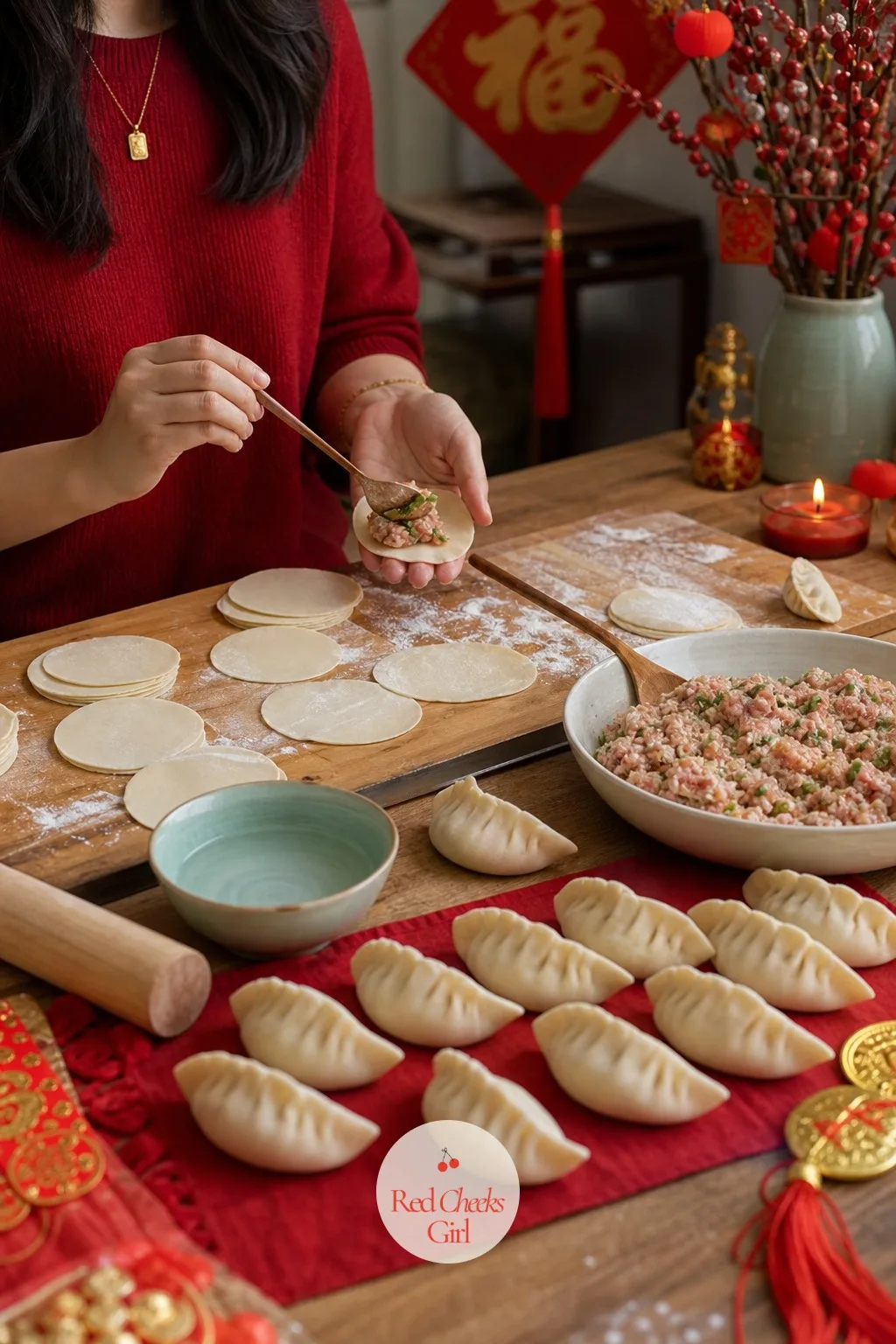
Jiaozi, the folded dumplings of Chinese Spring Festival, are traditionally made as a family the night before the new year, not bought frozen and steamed in silence.
Round wrappers, a bowl of minced pork and chive filling, and a little dish of water for sealing the edges is all the setup this needs, everyone from age six up can pleat one badly and eat it happily anyway.
Line finished dumplings up on a floured tray rather than stacking them, they stick together otherwise. Store-bought wrappers save the whole afternoon of dough-making and nobody at the table will know the difference once they are folded.
🛍 Shopping guide
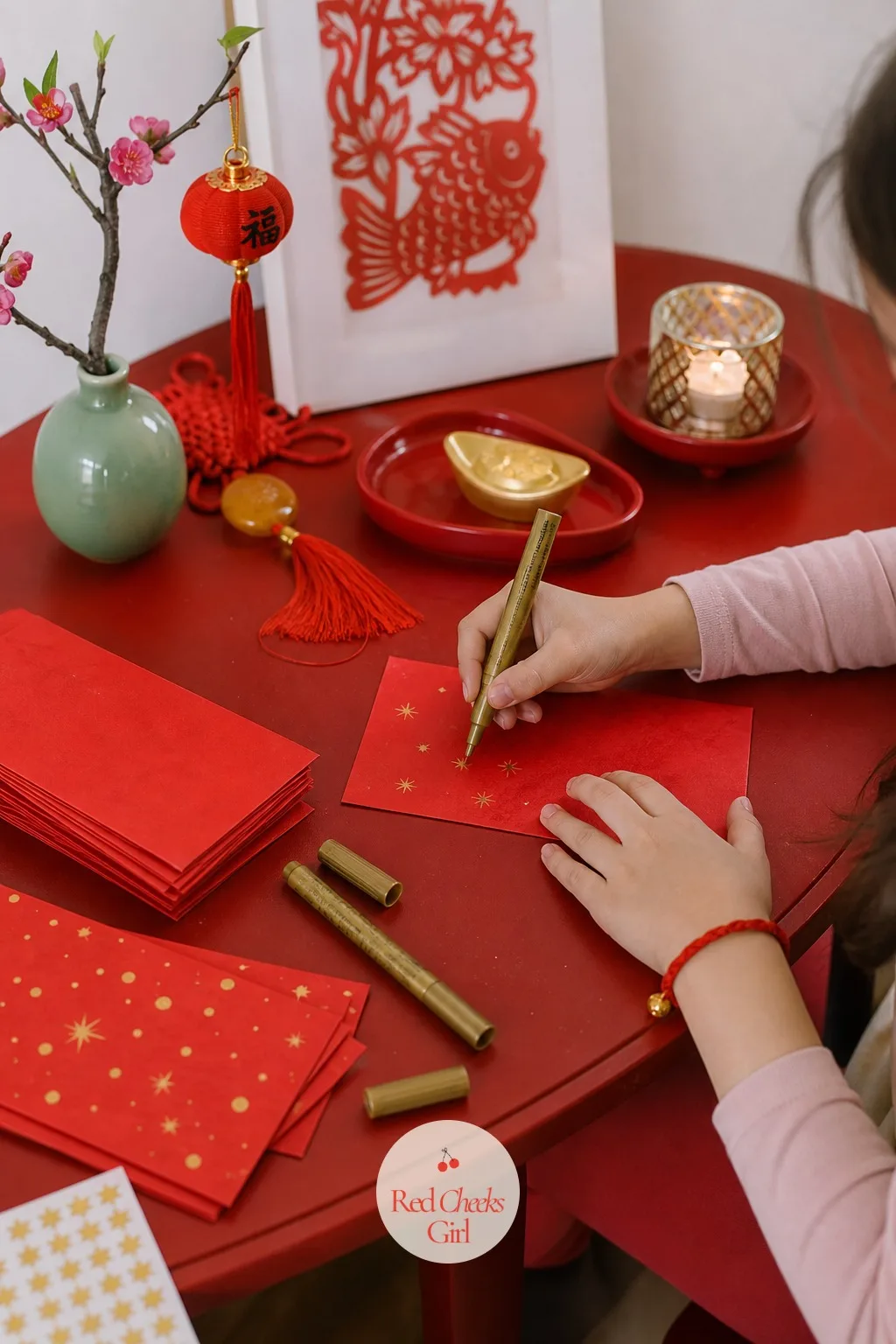
Red Envelope Decorating Station
The envelope itself carries a different name depending on whose house you are in, hongbao in Chinese homes, li xi for Tet, sebaetdon in Korean tradition, but in every version a plain red paper rectangle holds the lucky money, and kids love decorating the outside more than anyone expects.
Set out blank red envelopes, gold paint pens and a sheet of small gold stickers and let them go.
Give the finished ones a flat surface to dry on before anyone stacks them, wet gold ink transfers instantly. If you want more table activities to round out the afternoon, 22 DIY Family Game Night Ideas You Can Print at Home for Free covers the rest of the evening once the pens are capped.
Yut Nori on the Floor
Korean Seollal has its own board game, and it is played sitting on the floor, not at a table. Four wooden sticks, flat on one side and rounded on the other, get tossed in the air together; however many land flat side up decides how far a player’s piece moves around the painted board.
Two to four players or teams race their pieces around the board and back to the start, first one home wins. Make it easier for younger kids by letting them toss for an older sibling’s piece; make it harder by adding a second board and running two races at once.

🛍 Shopping guide
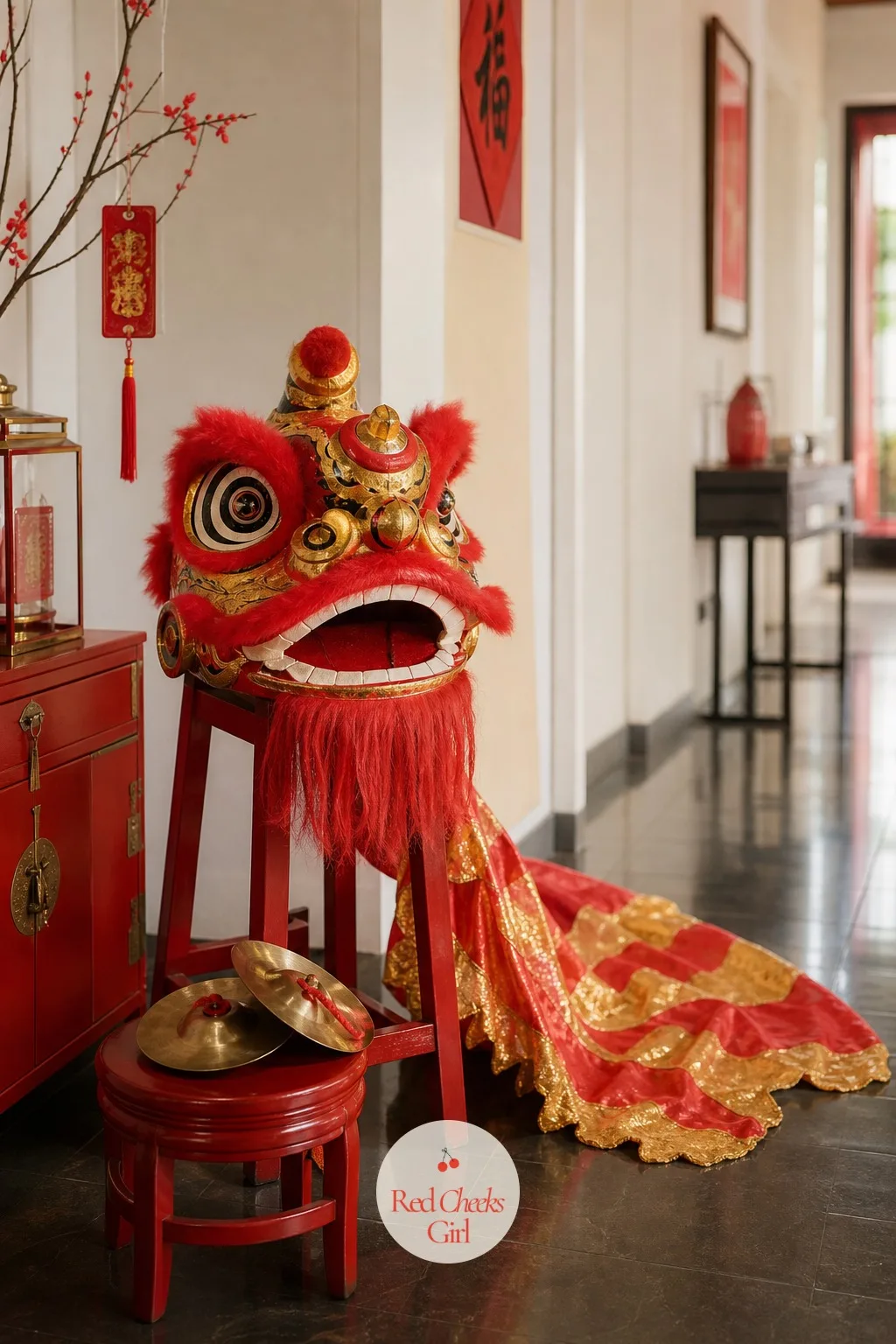
Mini Lion Dance Through the Hall
A full lion dance troupe is not happening in the living room, a paper mache lion head and a willing kid under a fabric body absolutely is.
Two people, one at the head and one trailing behind as the body, bob and weave the lion from room to room while someone else keeps rhythm on a small cymbal, straight out of Chinese Spring Festival street tradition shrunk to hallway scale.
Let the lion “eat” a hung lettuce leaf or a mandarin at the end of its route, spitting bits back out, a real piece of the custom that always gets a laugh. A single adult holding the head alone still works fine if the body costume does not survive the budget this year.
🛍 Shopping guide
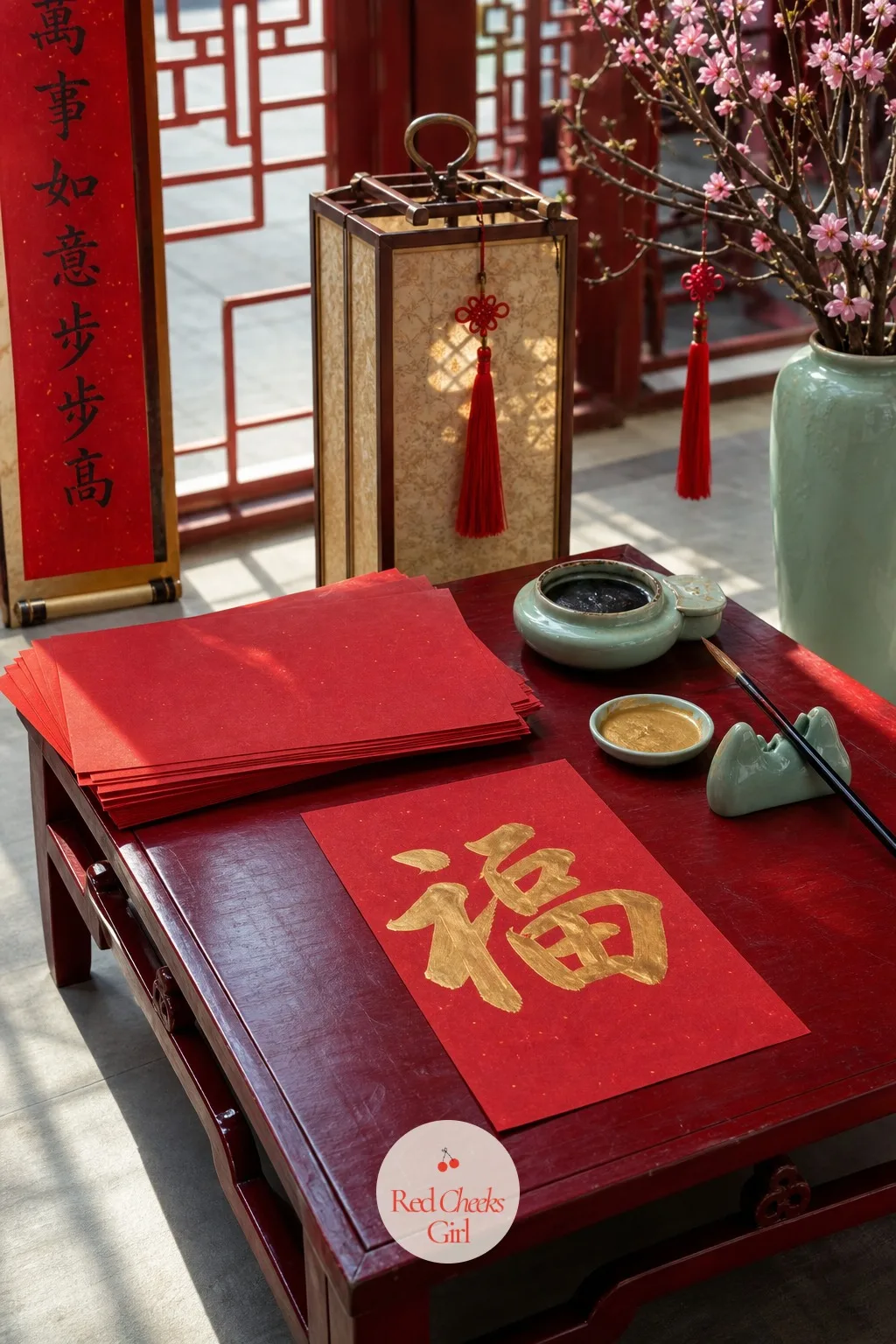
Xin Chữ Calligraphy Corner
In Vietnamese Tet tradition, xin chữ means asking a respected elder or scholar to brush a single word, like health, peace or happiness, onto red paper as a wish for the coming year.
At home, set up a low writing table with a brush, an inkstone and a stack of plain red paper rectangles, and let the family’s steadiest hand write a word for each person present.
Finished pieces can pin straight to the wall near the entrance once dry, a running record of what everyone wished for that year. A gold paint pen stands in perfectly well for anyone without ink and a proper brush on hand.
🛍 Shopping guide
The Small Things They Take Home
Nobody remembers the centrepiece a week later. They remember what was in their pocket on the way out the door, so make that part deliberately good.
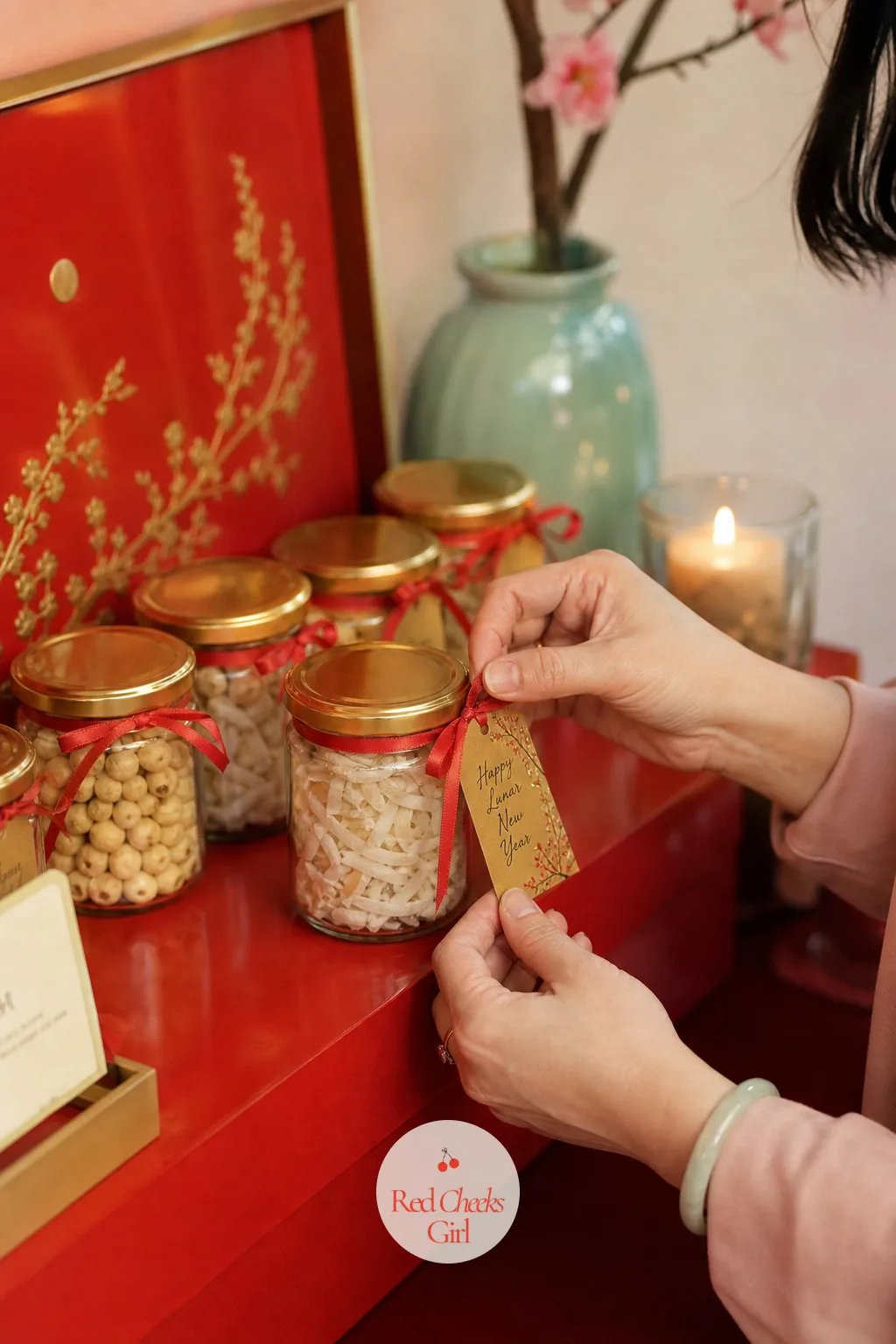
Jarred Mứt for Guests to Take
Mứt, the candied fruit and seeds that fill a Vietnamese Tet household, are usually piled loose in a tray for grazing. Portion a little of it, candied coconut strips, lotus seeds, ginger, into small glass jars with gold lids, and it turns from a snack into something guests actually carry out the door.
Tie a thin red ribbon around each jar’s neck with a small handwritten gold tag naming the sweet inside. A single mixed jar per family unit, rather than one each, keeps the cost sensible for a larger guest list.
Lucky Coin Tassel at Every Plate
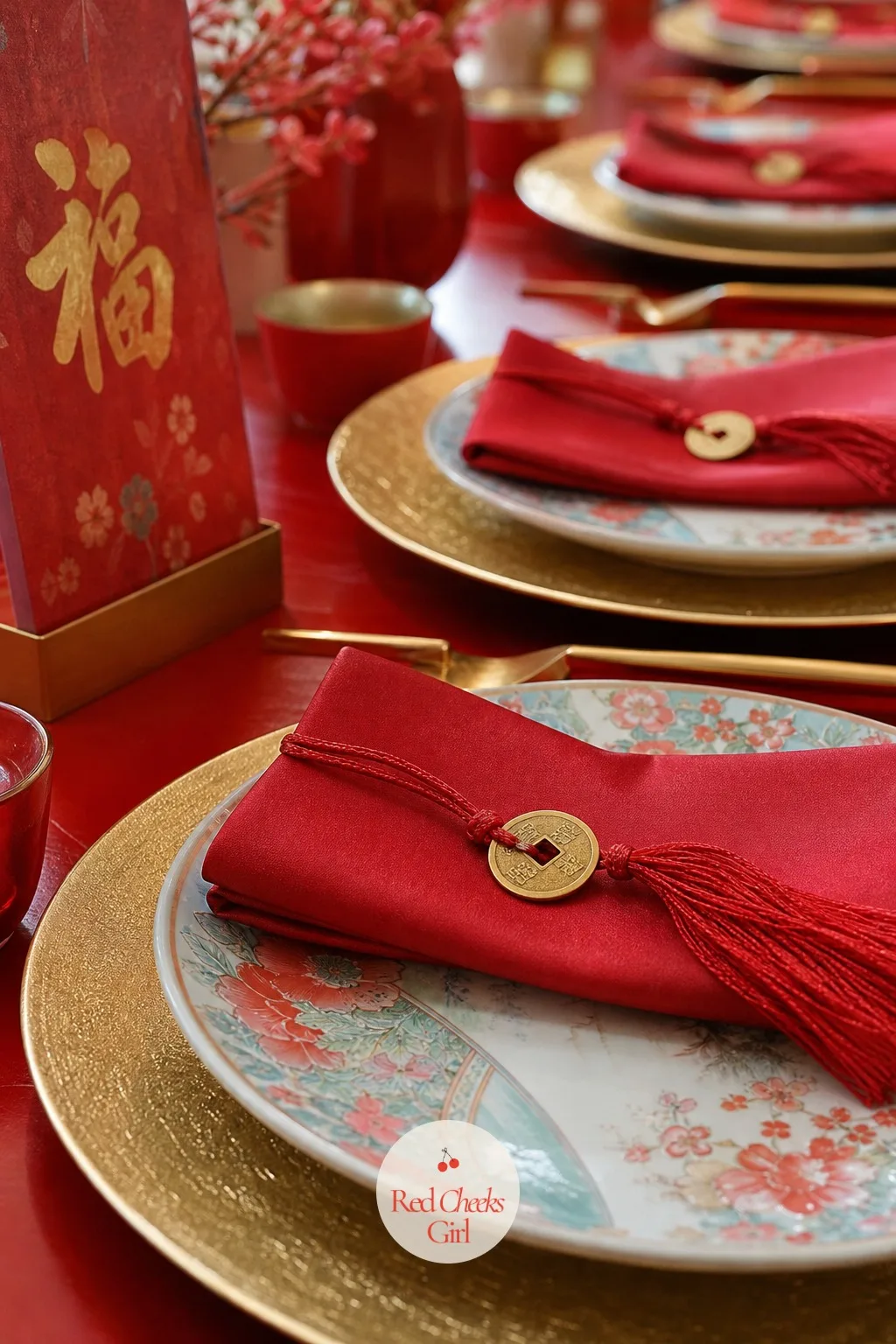
A folded napkin alone says nothing. A small gold coin, the square-holed kind, threaded onto a short red silk tassel and laid across each napkin says a great deal for almost no cost, a nod to the good fortune charms many Chinese and Vietnamese families tuck into a child’s pocket or hang by the door.
Set one at every place, including the kids’ seats, so nobody feels like the afterthought at their own family’s table. These pack flat and reuse easily year to year, so the small outlay now pays off more than once.
🛍 Shopping guide
Roasted Chestnut Send-Off Basket
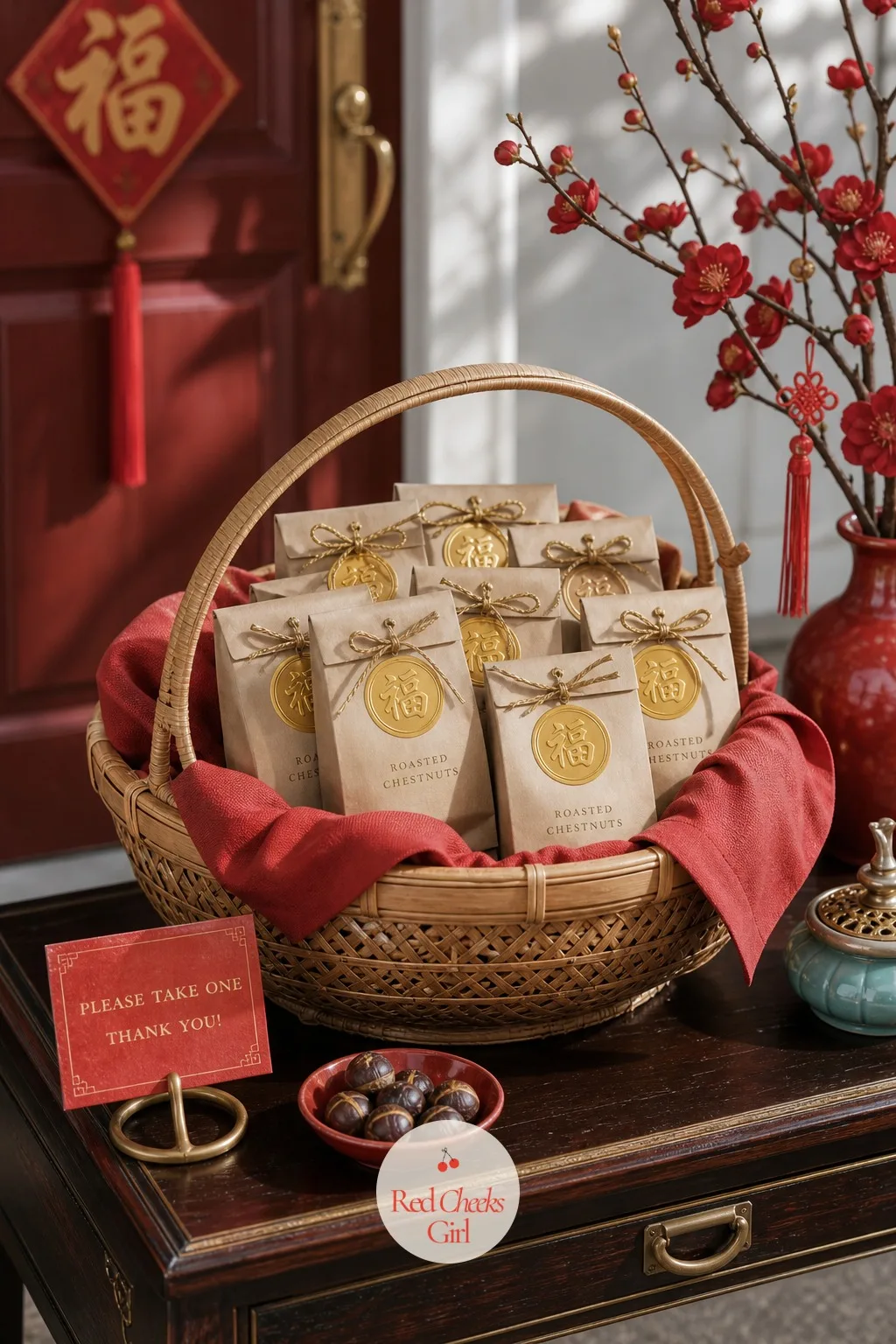
Korean Seollal meals lean on roasted chestnuts both as a dish and as something to share with departing family, a small practical kindness rather than a decorative one.
Fill small paper bags with warm roasted chestnuts, stamp each with a simple gold seal and tie the top with gold string, and set the whole basket by the front door for anyone heading home.
A basket lined in red cloth keeps the look consistent with everything else on the table. Pre-roasted, shelled chestnuts from a jar skip the shelling entirely if time runs short on the day.
🛍 Shopping guide
A Red Envelope for Every Child
Whatever the household calls it, hongbao, li xi or sebaetdon, the lucky money envelope is the one tradition that crosses all three calendars without changing shape.
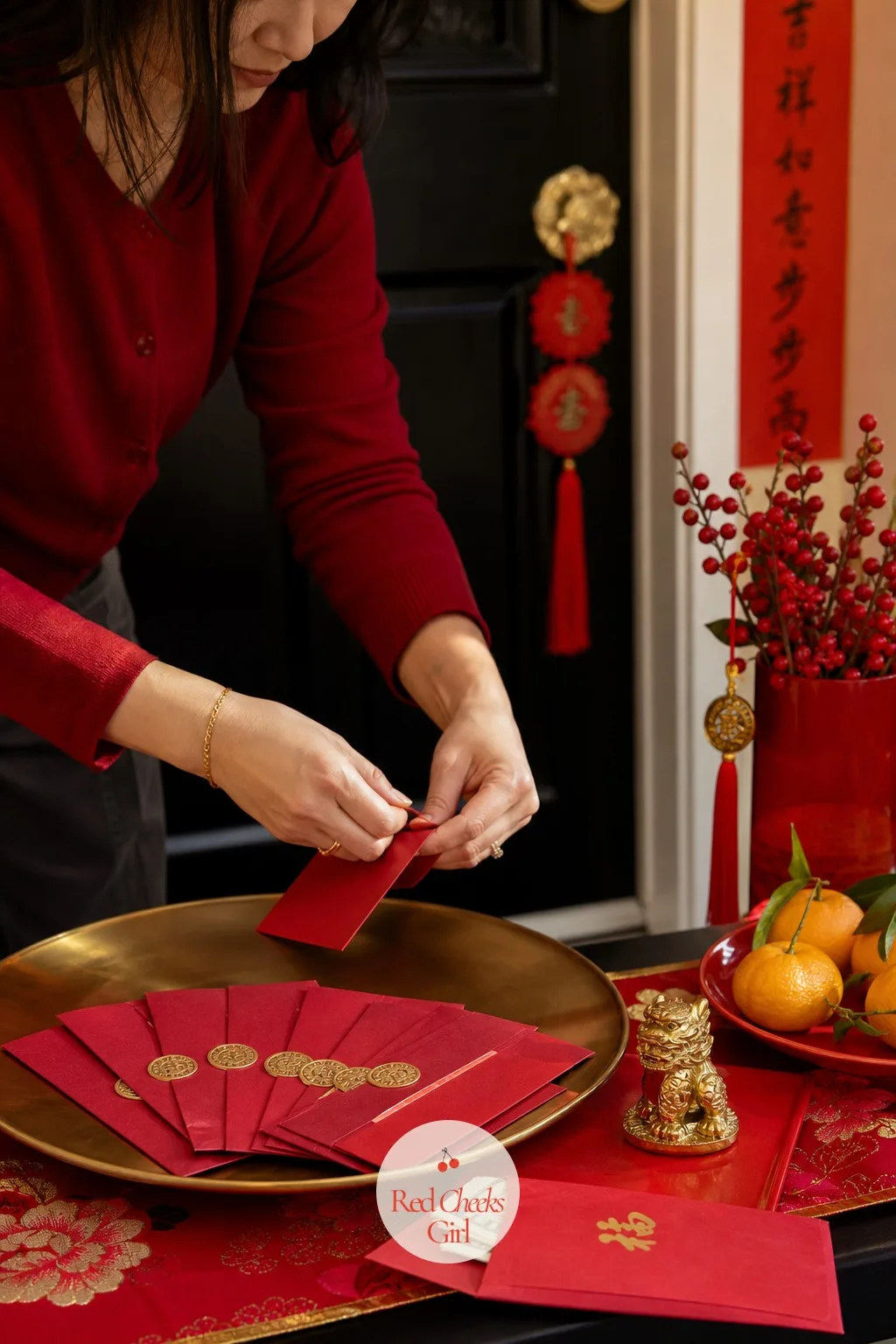
A small stack of sealed red envelopes fans out across a round gold tray by the front door, ready to hand each child as they leave, crisp bills inside and the fold never undone in front of the giver.
Many families skip the number four in any amount given, it sounds too close to the word for death in several of these languages, and lean toward even numbers instead. It costs whatever is inside it, which makes it the cheapest and most anticipated item on this whole list.
🛍 Shopping guide
Frequently Asked Questions
What’s the difference between Lunar New Year, Tet and Seollal?
They are the same new moon celebrated under three names. Lunar New Year celebrations include Tet in Vietnam, Seollal in Korea and Spring Festival in China, all based on the lunar calendar, each with its own food, games and customs.
What colors should I avoid for Lunar New Year decor?
Avoid black and white as the dominant colors. Black and white are traditionally associated with mourning, funerals and death in many East Asian cultures, particularly Chinese tradition, so decor leans on red and gold instead.
Why is red the main color for Lunar New Year?
Red is considered the luckiest color across these traditions. Red and gold are the most auspicious and traditional choices, symbolizing luck, joy, wealth and protection against negative energy, which is why it covers nearly every decoration and dish.
Why do people display mandarins with the leaves still on?
The fruit itself carries the symbolism, leaves or not. Mandarins and oranges embody prosperity, good luck and abundance in Chinese and Vietnamese homes, and leaves attached simply signal the fruit is fresher and more deliberately chosen.
How long do Lunar New Year decorations stay up?
Traditionally for the full two weeks of the celebration. Decorations typically remain displayed for 15 days, until the Lantern Festival marks the end of the celebration period, so there is no rush to take red paper down the next morning.
How much money should go in a red envelope?
There is no fixed amount, only a few customs around it. Many families use crisp new bills, favor even numbers, and skip the number four, which sounds too close to the word for death in several of these languages.
My husband’s first Father’s Day, I bought him a nice wallet. It was fine. He used it. Th
My daughter turned two in a world absolutely drowning in bright Disney character plates and plastic
Mismatched teacups stacked on a table covered in white lace. A clock frozen at six. Playing cards cl
Leave a Reply