

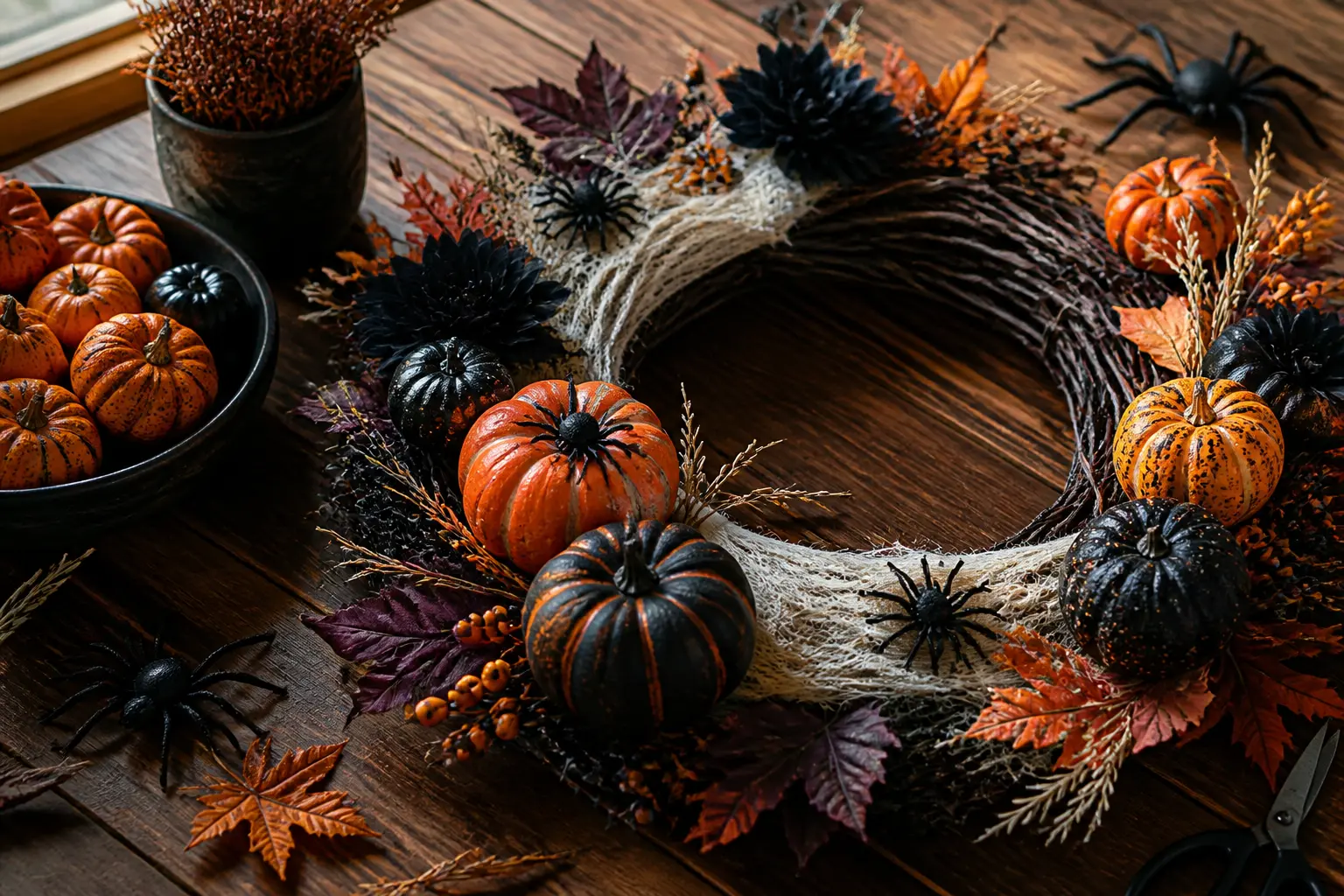
One wreath does a lot of work. It is the first thing a guest sees, the last thing a trick-or-treater remembers, and the detail that tells the street exactly how seriously you take the season.
This list runs the full range: dark and dramatic, soft and harvest-toned, minimal and architectural. Every entry is something you build yourself from materials that cost less than a restaurant starter, and none of them need a glue gun degree to pull off.
Pick the one that matches the door you actually have, and the vibe you actually want. Then scroll down to the shop links and get started this weekend.
This post contains affiliate links. If you buy through them, I may earn a small commission at no extra cost to you.
Dark and Dramatic
These wreaths lean into the full gothic vocabulary of the season: black blooms, feathers, spiders, skulls, and anything else that makes the postman pause. They suit dark-painted doors particularly well, but they read just as strongly against white.
The key with high-drama pieces is restraint in one direction. Pick one hero element and let everything else support it, or the door starts to look like a prop shop exploded.
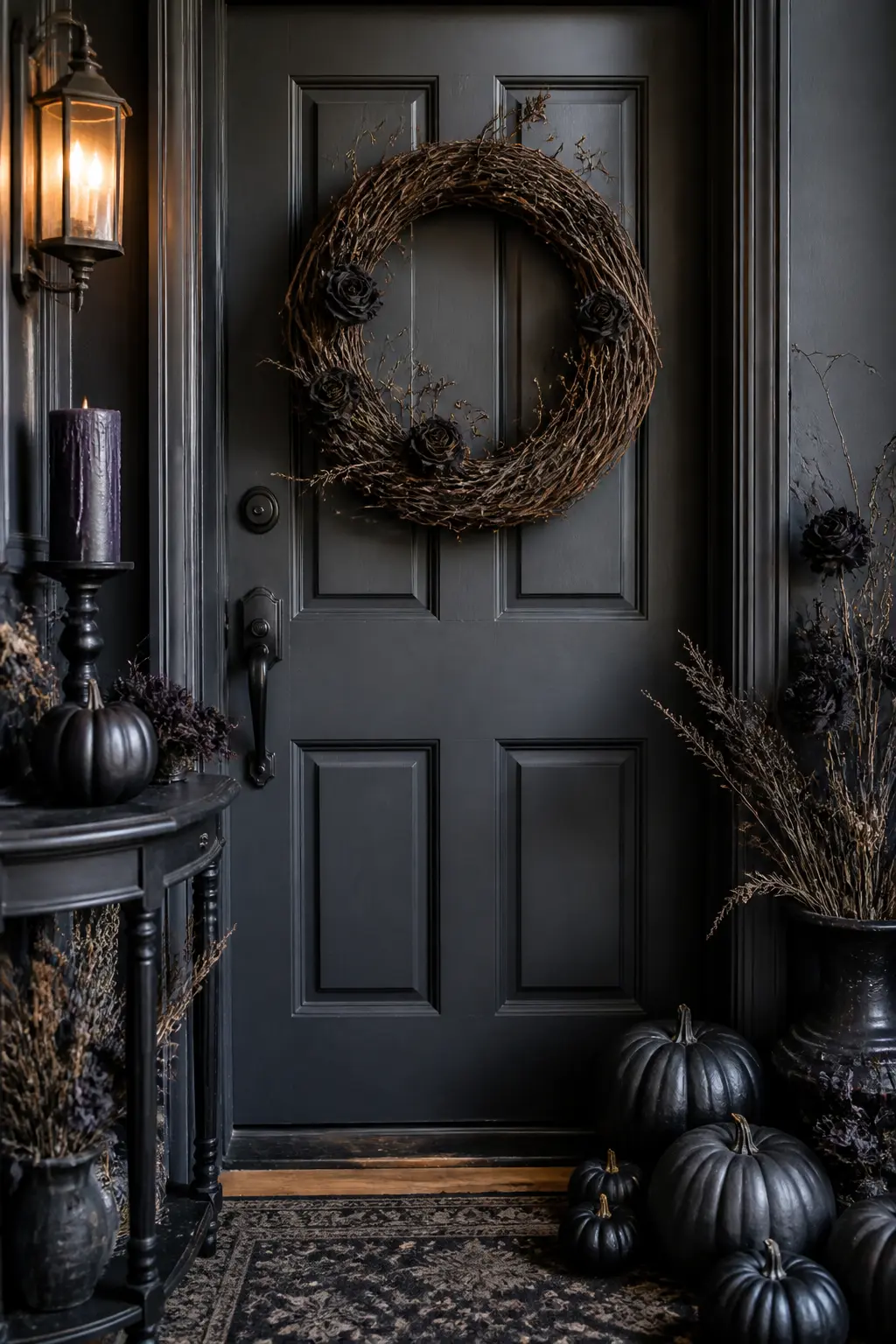
Grapevine Base with Dried Black Roses
Start with a plain grapevine ring and push dried black roses into the natural gaps of the weave, stem-first, at intervals rather than clusters. The dark blooms disappear slightly into the brown twigs, which is what you want: the effect is discovery rather than display.
Seal the rose heads lightly with matte black spray paint before tucking them in. It deepens the color and stops petals shedding over the doorstep all month.
Black Feather Wreath in Overlapping Layers
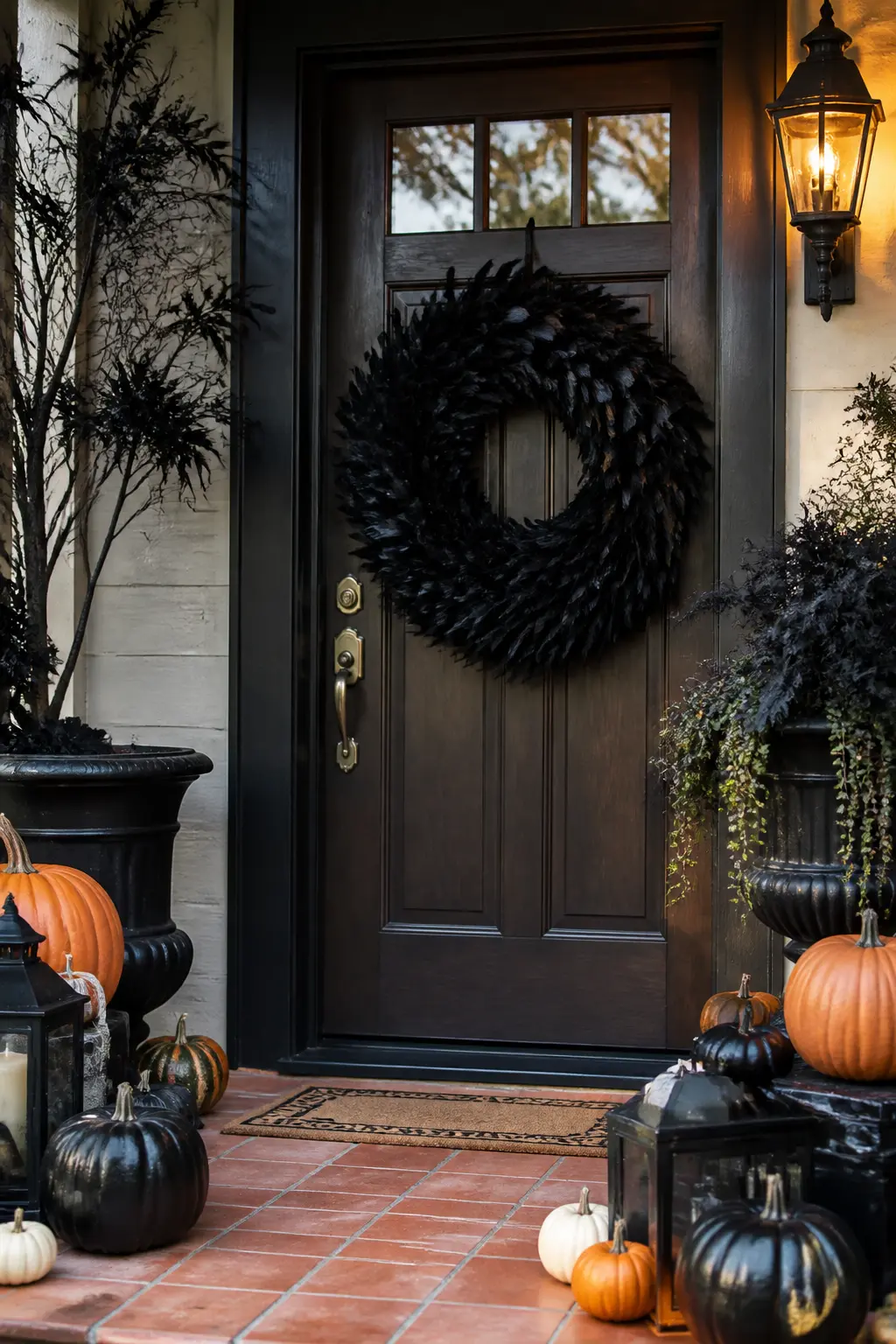
Buy loose black craft feathers in two sizes, large for the outer ring and small for filling in the center, and hot-glue them onto a foam ring starting at the outer edge and working inward. Each row overlaps the last like roof tiles.
The result is dense, matte, and slightly iridescent when light hits it at an angle. It suits a black or charcoal door best, where the texture rather than the contrast does the work. Keep it away from rain: a covered porch is the right home for this one.
Skeleton Hand from a Dark Greenery Base
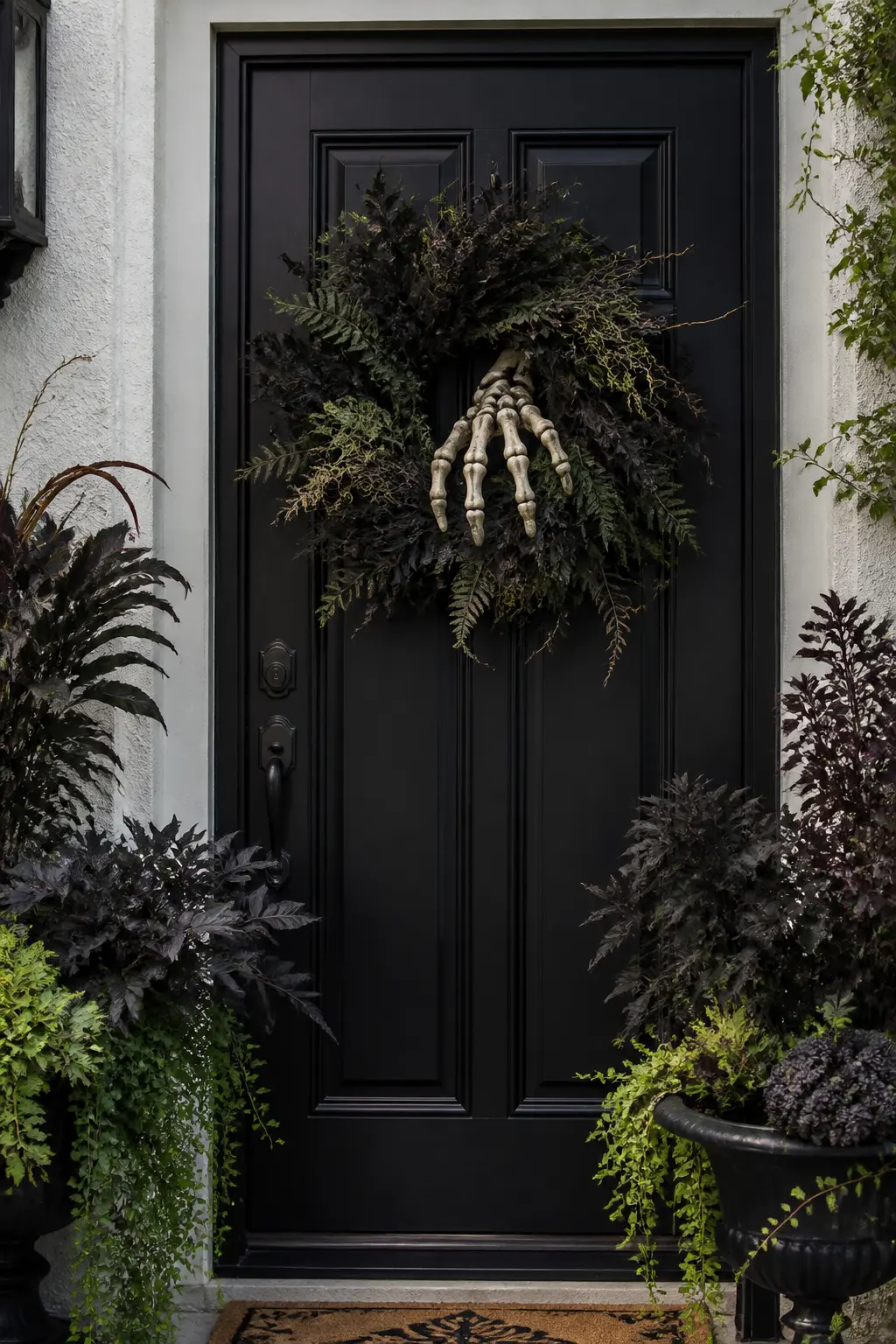
Wire a skeleton hand, the kind sold as a Halloween prop, so the wrist sits at the center back of a dark eucalyptus or preserved boxwood ring, and the fingers reach forward toward whoever opens the door. The greenery frames it like a stage curtain.
Tuck a few black berries or dark seed pods around the wrist joint to soften the transition between the prop and the plant material. The contrast between natural texture and plastic bone is exactly what makes this work.
🛍 Shopping guide
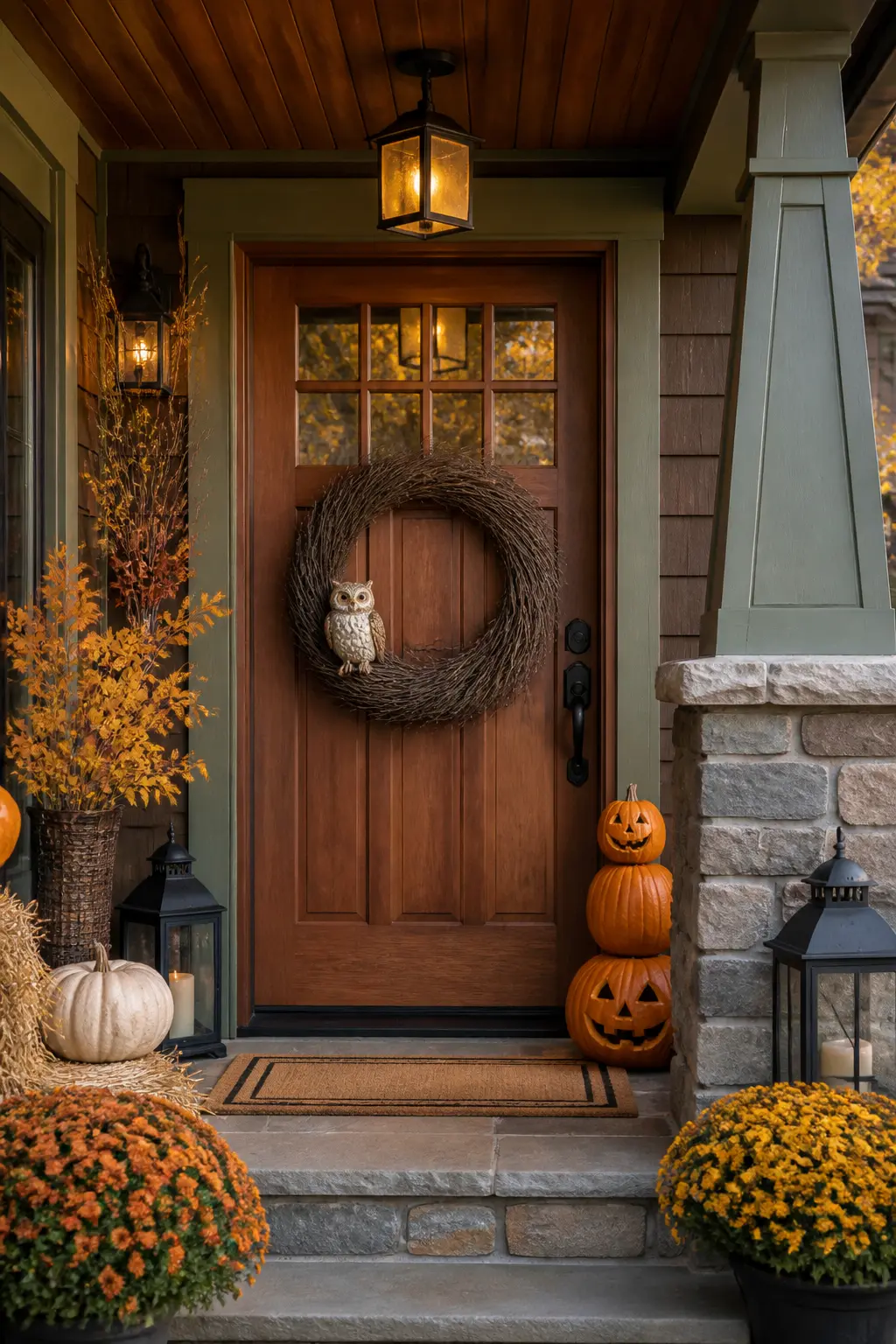
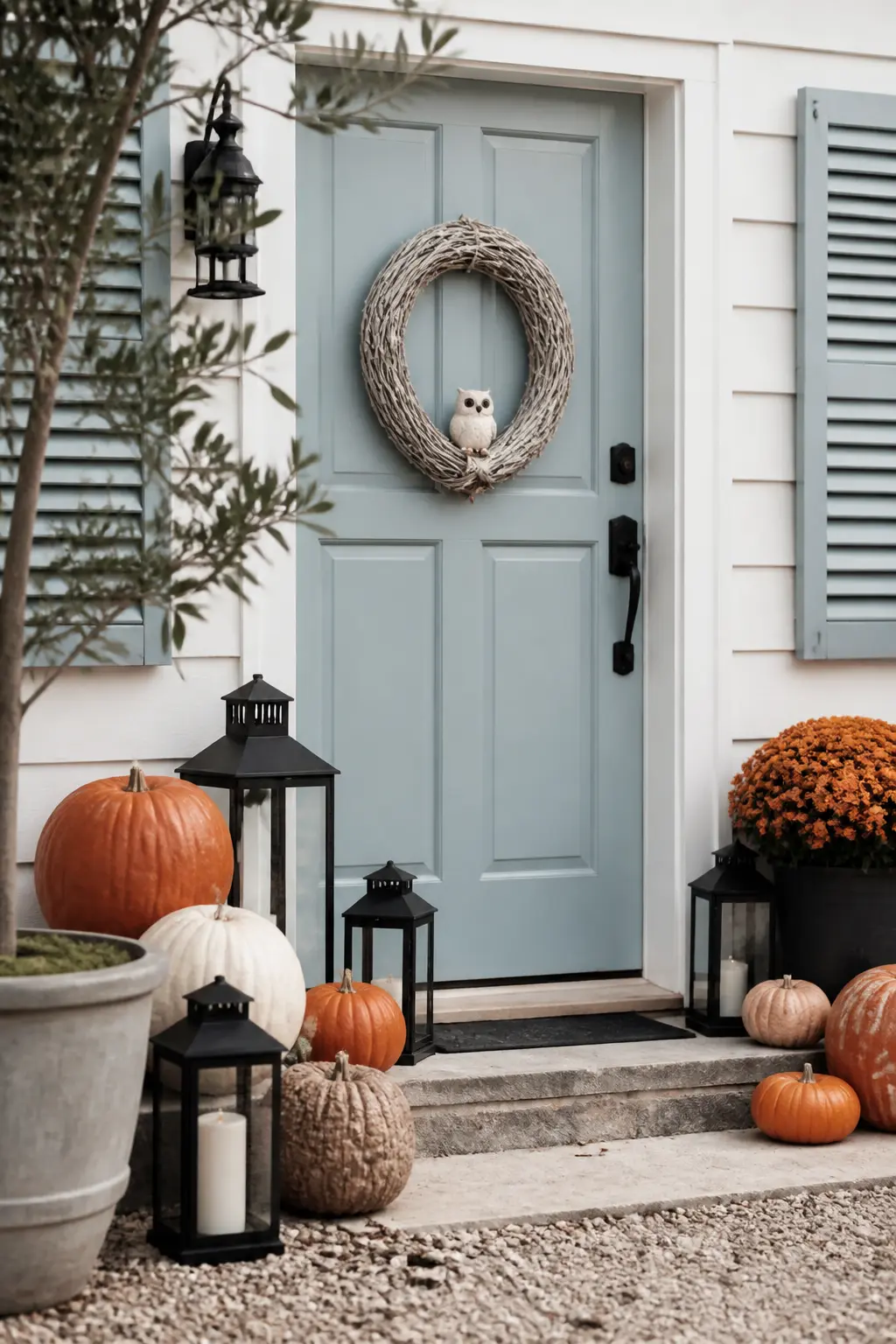
Bare Twig Ring with a Single Owl
A bare twig wreath has all the texture of winter and none of the sweetness of autumn. Set a ceramic or resin owl figure on the lower-left quarter of the ring, wired firmly so it cannot slip, and leave the rest completely bare.
The asymmetry is the whole point. The owl is looking at something you cannot see, and that is unsettling in the best possible way. No ribbon, no bow, nothing competing with the figure.
🛍 Shopping guide
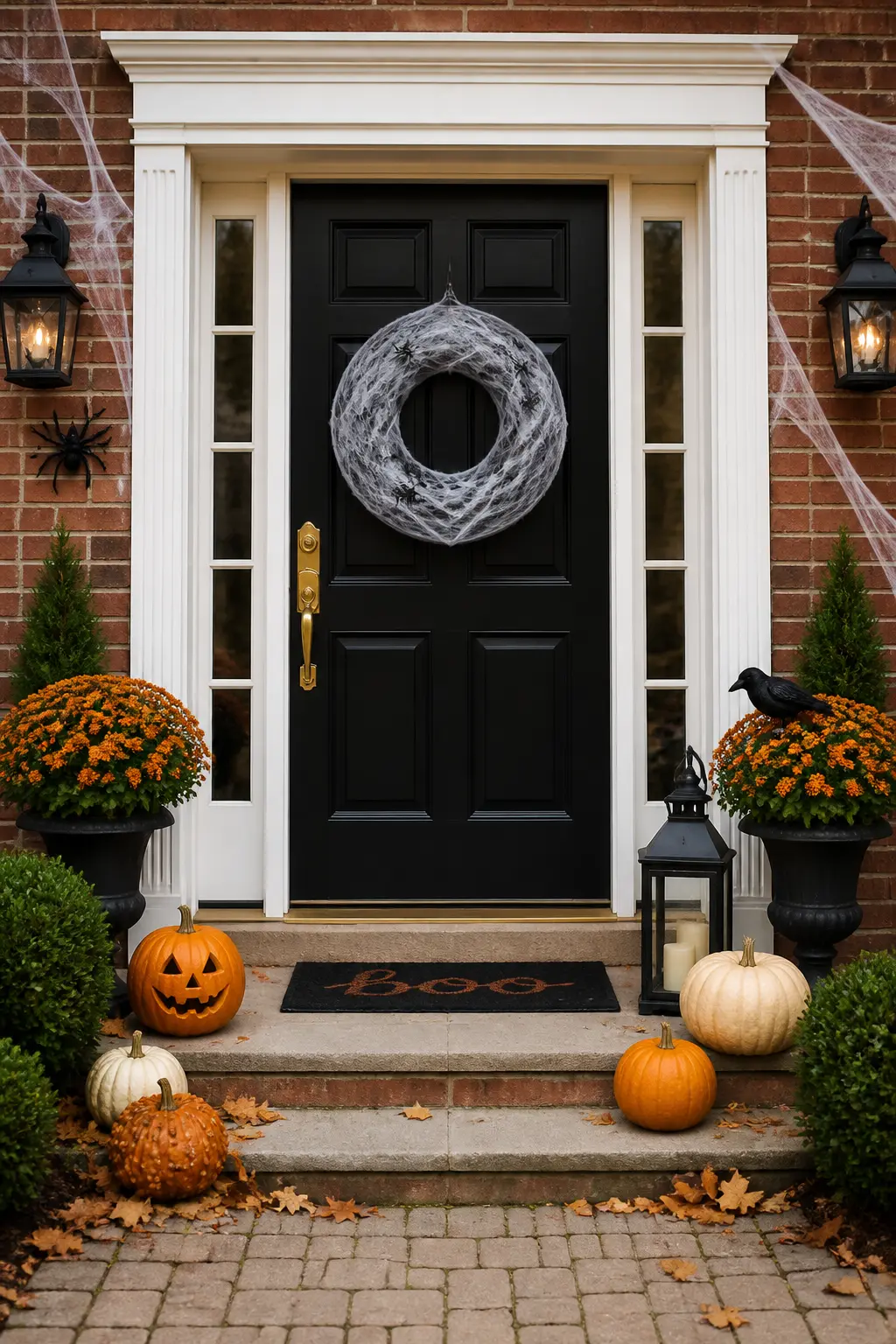
Wreath with Small Plastic Spiders on a White Web
Stretch a piece of white yarn or thin cord across the face of a black foam wreath ring in an irregular web pattern, fixing each cross point with a dot of hot glue. Then scatter small plastic spiders across the web at different angles, as though they have landed mid-crawl.
Some spiders face inward, some outward, one or two dangling on a short thread from the bottom. The randomness is what reads as real rather than decorative. A too-even grid of spiders looks like wrapping paper: let it be chaotic.
🛍 Shopping guide
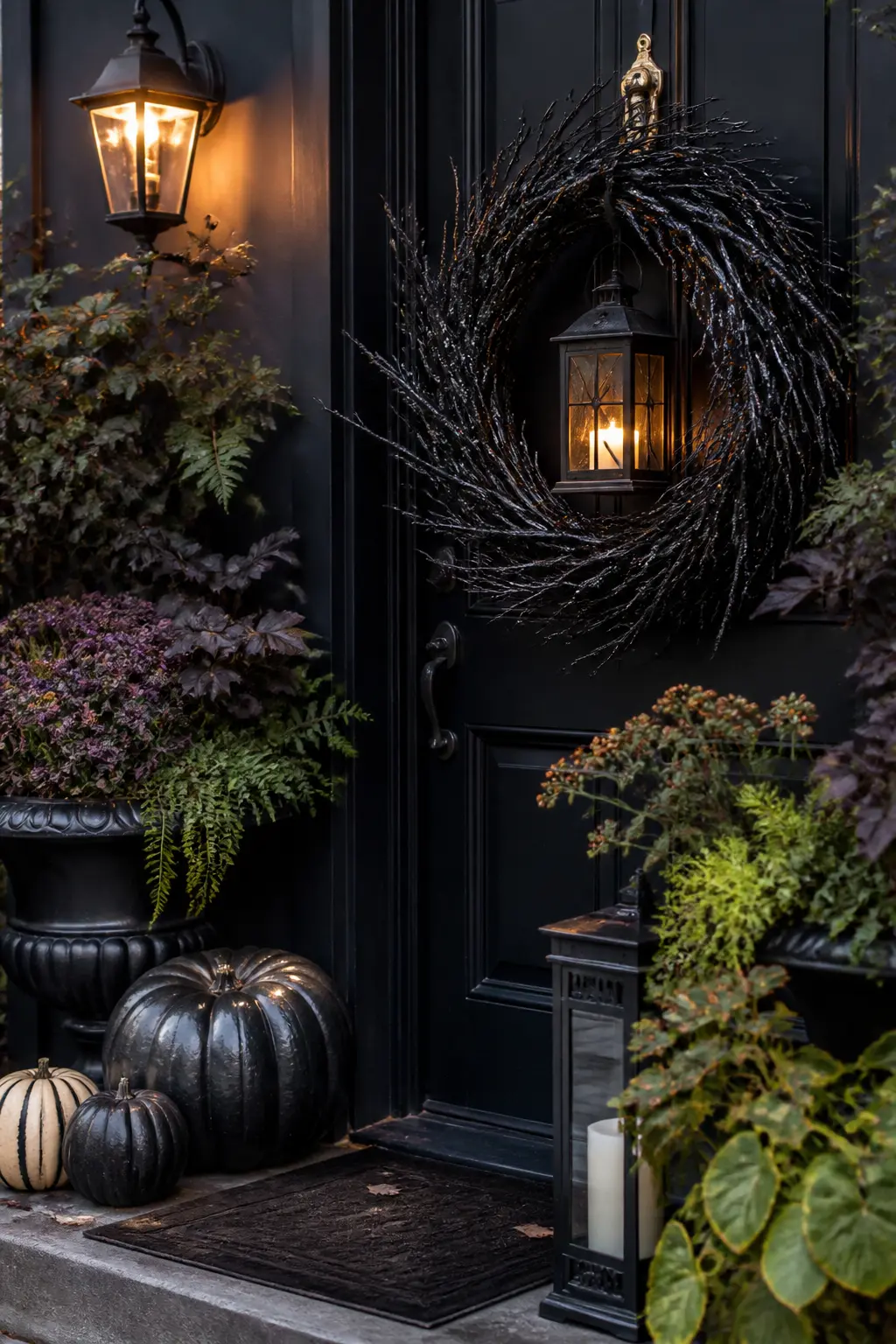
Black Glitter Branch Wreath with an Inner Lantern
Spray bare branches with black paint and dust them with black glitter while the paint is still wet. Arrange and wire the branches into a loose circular form, leaving the center open. Hang a small lantern or battery tea-light cage inside the ring, suspended from the top of the frame by thin wire.
At night, the lantern lights the glitter from inside the ring, and the sparkle reads at full street distance. This is one of the few wreaths that looks genuinely different in daylight and after dark, which makes it worth the extra step.
🛍 Shopping guide
Playful and Graphic
Not every door needs to unsettle. Some of the most striking wreaths this season lean into bold color, pattern, and a light sense of humor, and they look better in daylight than anything that relies on shadow and texture.
These are also the easiest to hand off to someone else to make. The shapes are clear, the materials are cheap, and the results photograph well, which matters if the front porch is getting any screen time.
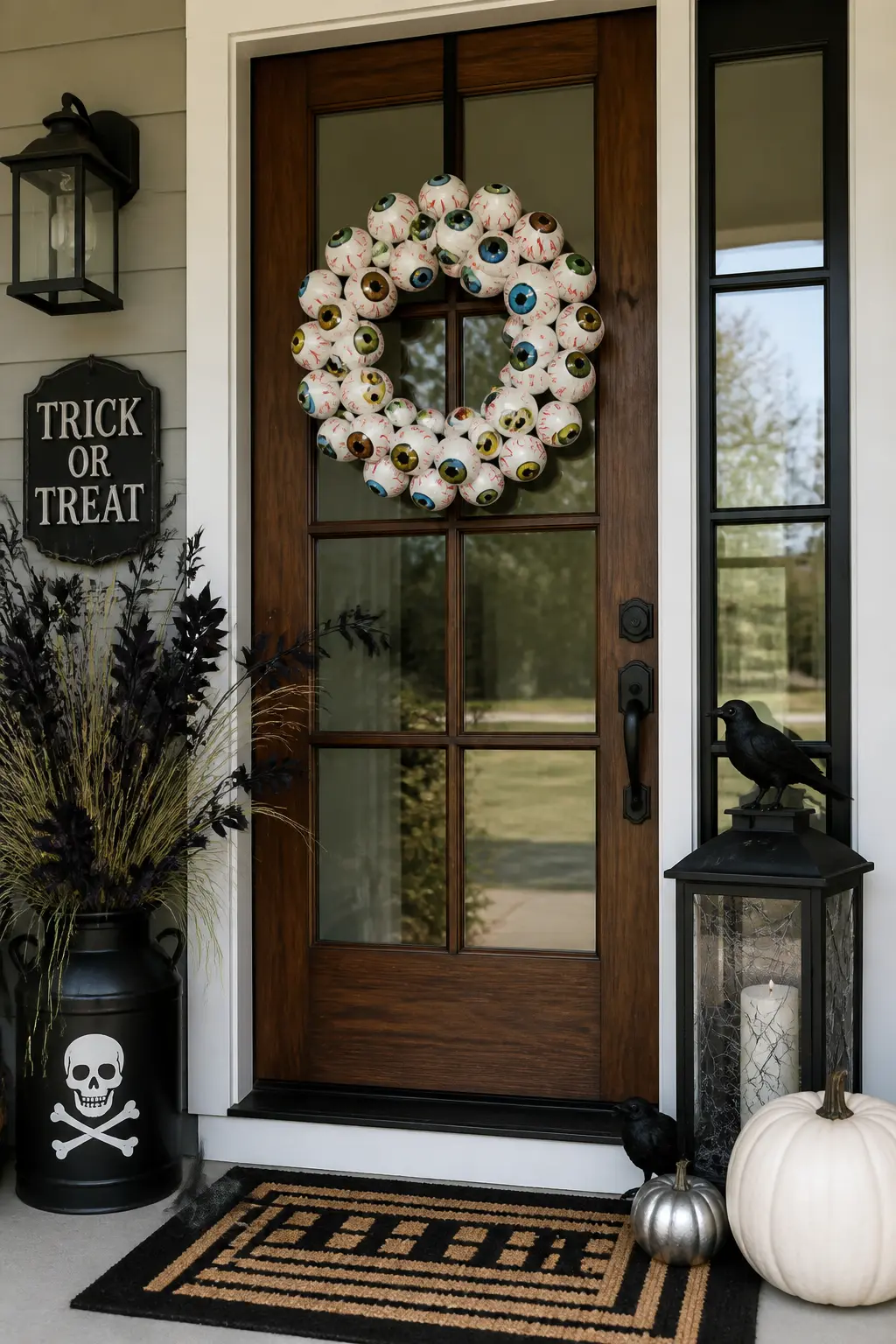
Eyeball Wreath with Painted Ping-Pong Balls
Paint ping-pong balls to look like eyes: a white base, a colored iris in any color you like (yellow reads best from the street), and a black pupil. Hot-glue them across a white or pale foam ring until the surface is completely covered and the balls touch each other.
The more eyes, the better. The effect tips from craft project into something genuinely strange once the ring is full, which is the threshold worth crossing. Add a few looking in odd directions for maximum unease.
🛍 Shopping guide
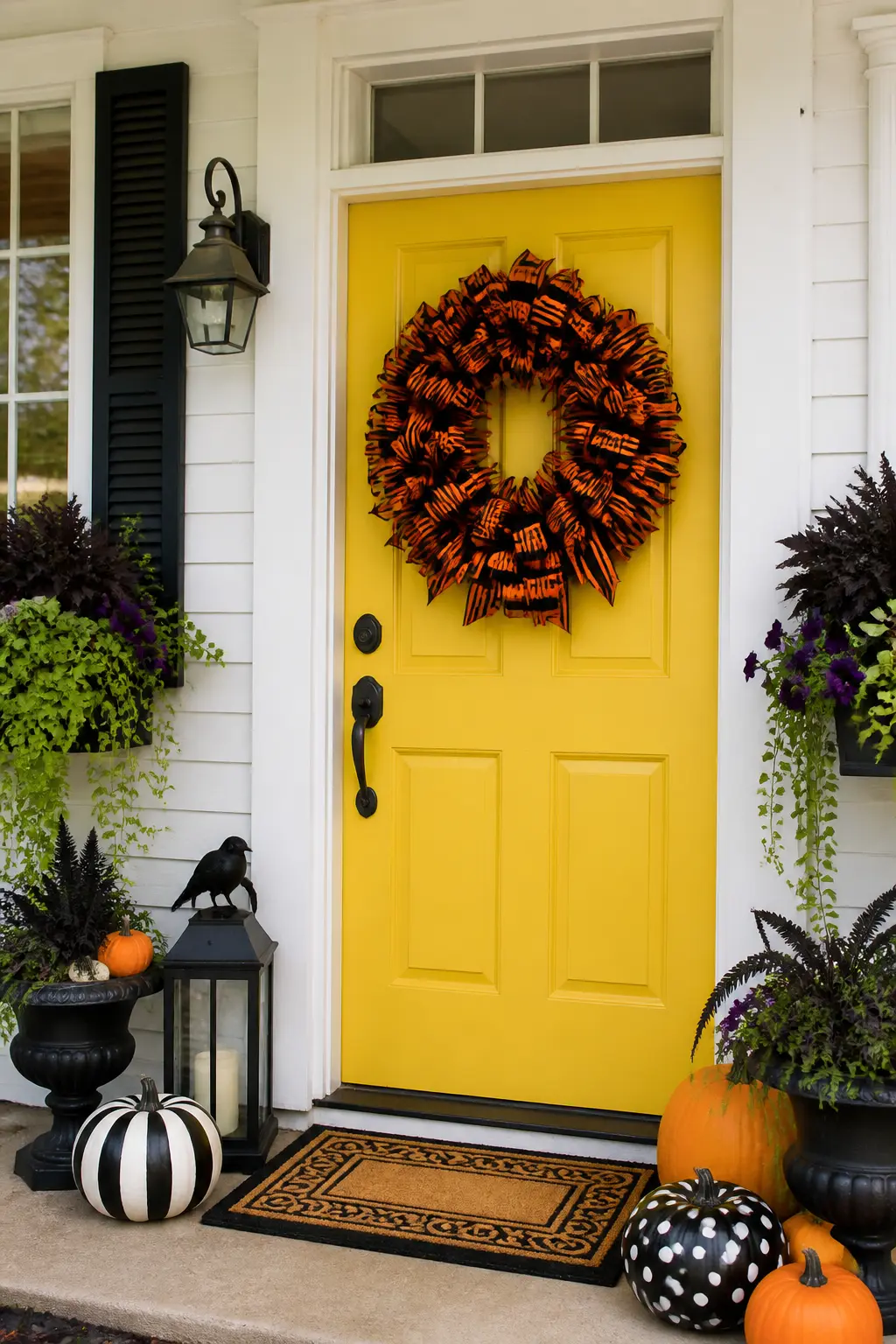
Orange and Black Striped Ribbon Wreath
Cut orange and black wired ribbon into lengths of roughly 8 inches and tie each piece onto a plain wire ring frame, alternating colors as you go. Push the loops close together so the ring disappears entirely under the density of tied bows.
Wired ribbon holds its shape in the wind far better than satin, so this one survives a blustery porch. Finish with a single oversized bow at the top or bottom in whichever color you want to lead with. It is extremely straightforward and extremely satisfying once it is full.
🛍 Shopping guide
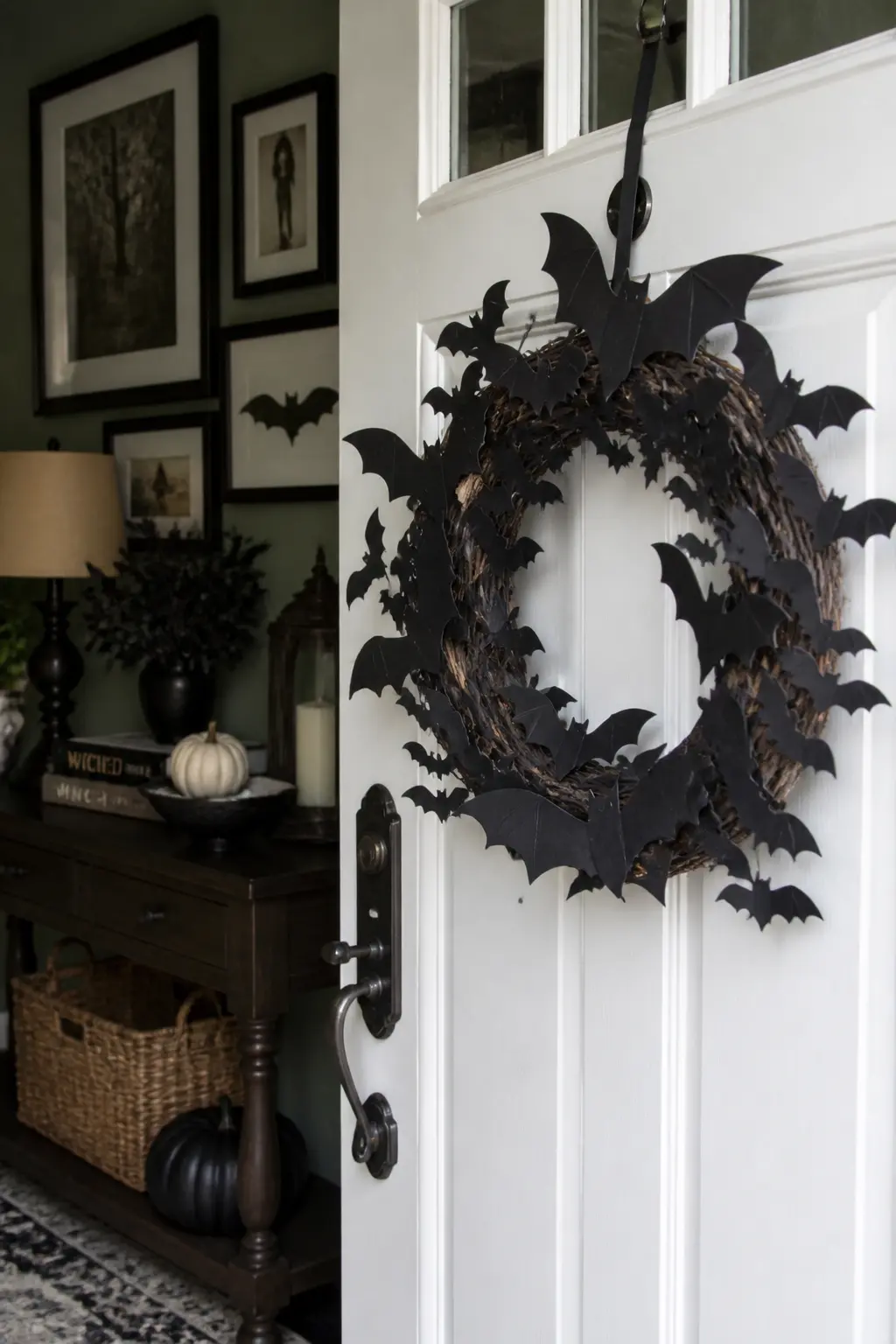
Bat Silhouette Wreath with Layered Paper Bats
Cut bat shapes from black cardstock, starting small at the center of a plain grapevine ring and scaling up toward the outer edge. Layer them outward and slightly upward, as though they are all taking off at once from a single point.
Secure each bat with a small dab of hot glue or a brad through the grapevine. The layering creates depth and shadow even in flat daylight. This is one of the few wreaths that reads as well in a photograph as it does in person.
Candy Corn Yarn Pom-Pom Wreath
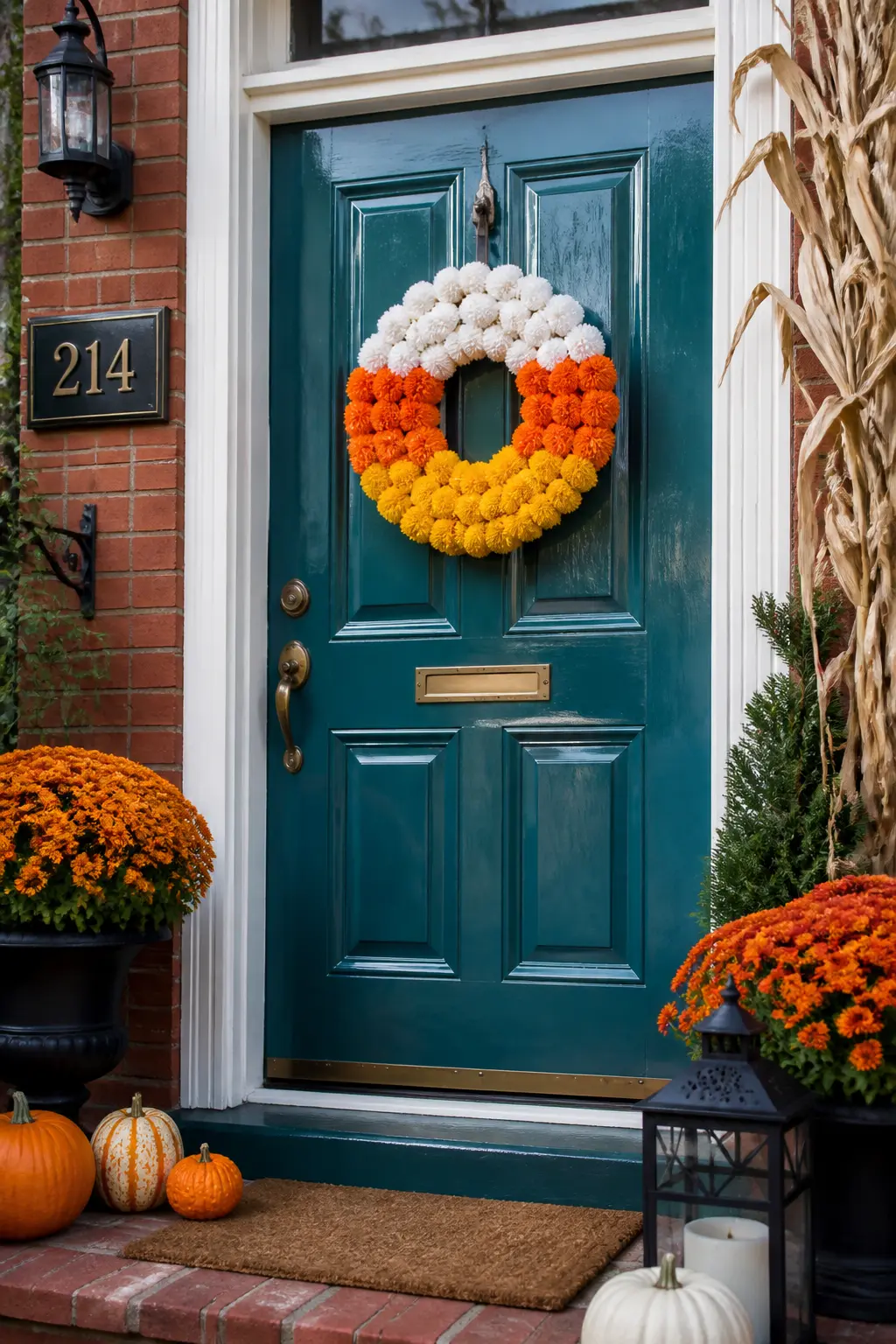
Make pom-poms in the three candy corn colors: white, orange, and yellow. Wrap each one with a fork or a cardboard template, tie tightly at the center, and trim to a round shape. Hot-glue them onto a foam ring in tight clusters, grouping by color to keep the palette readable from the street.
This is genuinely forgiving to make and surprisingly cheerful when it is done. It suits a door with kids in the house or a color scheme that leans warm rather than dark. The pom-poms also hold up surprisingly well in light rain.
Simple Black Wreath with White Block Letters
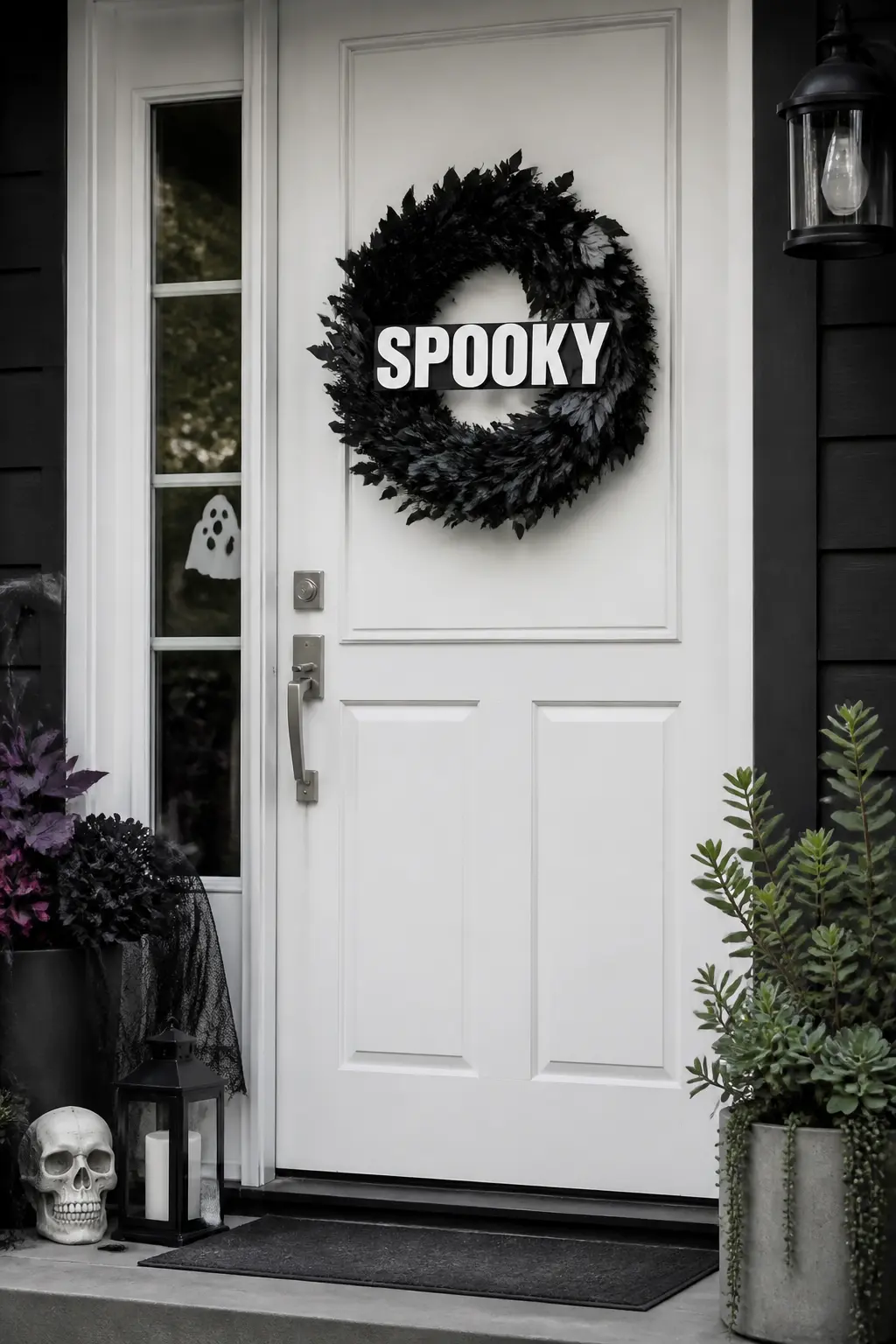
Take a plain dark wreath, preserved boxwood, black-dyed eucalyptus, or a painted foam ring, and wire or glue white wooden block letters spelling one word across the face. BOO is obvious. WITCH is better. HAUNT works for a house with a name.
The trick is choosing a word that works at reading distance, meaning three to five letters at most. More than that and it becomes a sign, which is a different thing entirely. Keep the font simple: chunky sans-serif letters from any craft store do the job.
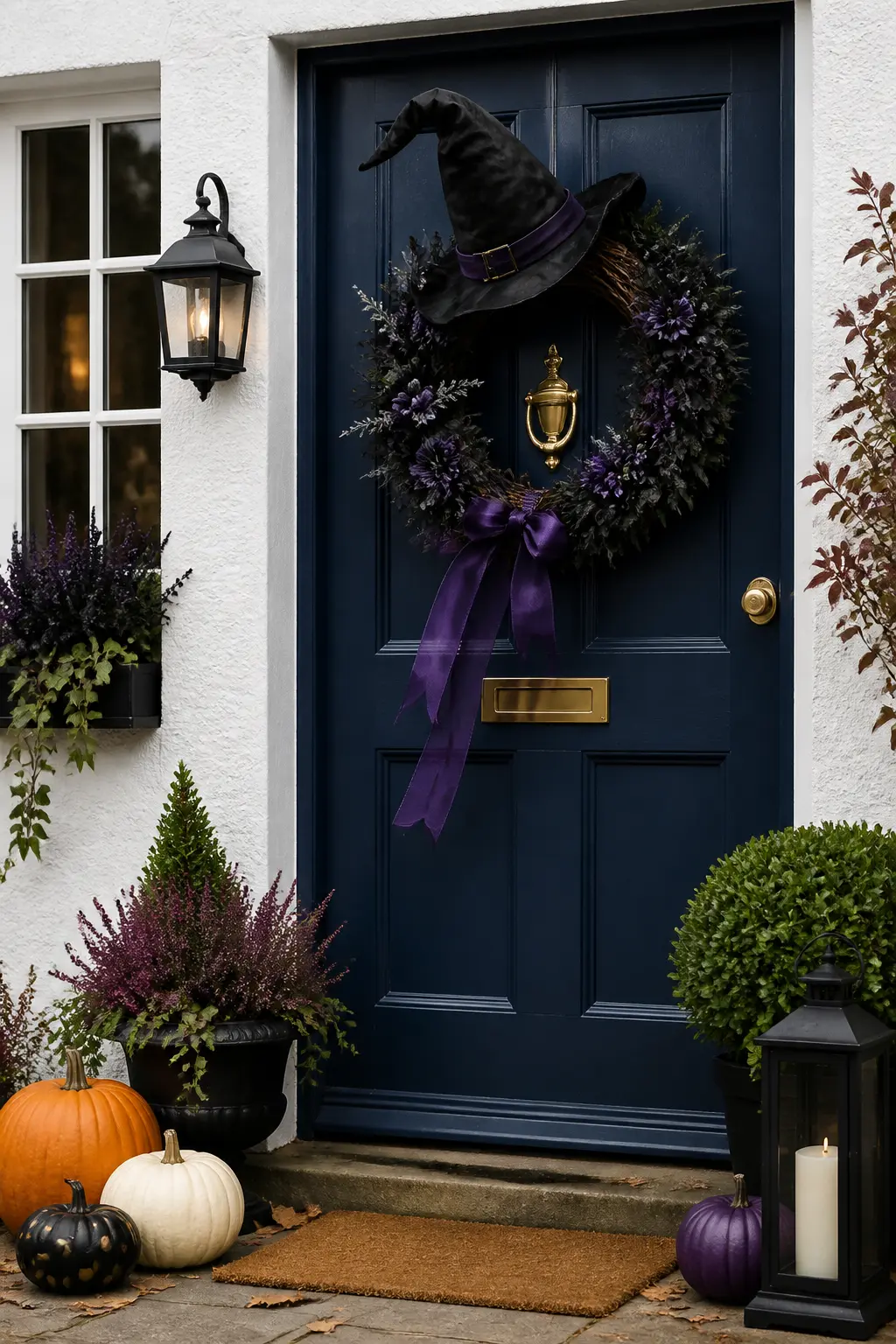
Wreath with a Witch Hat Tilted at the Top
Buy a basic witch hat from any halloween supply, trim the brim so it sits flat against a wreath, and hot-glue or wire it at the top of the ring at a slight tilt. Everything else on the wreath, ribbon, greenery, picks, should be subordinate to the hat.
Add a band of purple or orange ribbon around the hat itself if it comes plain, and trail one end of the ribbon down the wreath. The hat is the statement, and the wreath is just the frame that holds it at eye level.
Harvest Gone Dark
There is a version of autumnal that skips the cheerful orange entirely and goes straight for the dried, the bleached, and the quietly unsettling. These wreaths belong on farmhouse doors and craftsman porches, and they hold up for weeks without wilting or fading.
Natural materials do vary, so treat color guidance as a starting point. A blackened barley stem looks different from a dyed one, and both are correct.
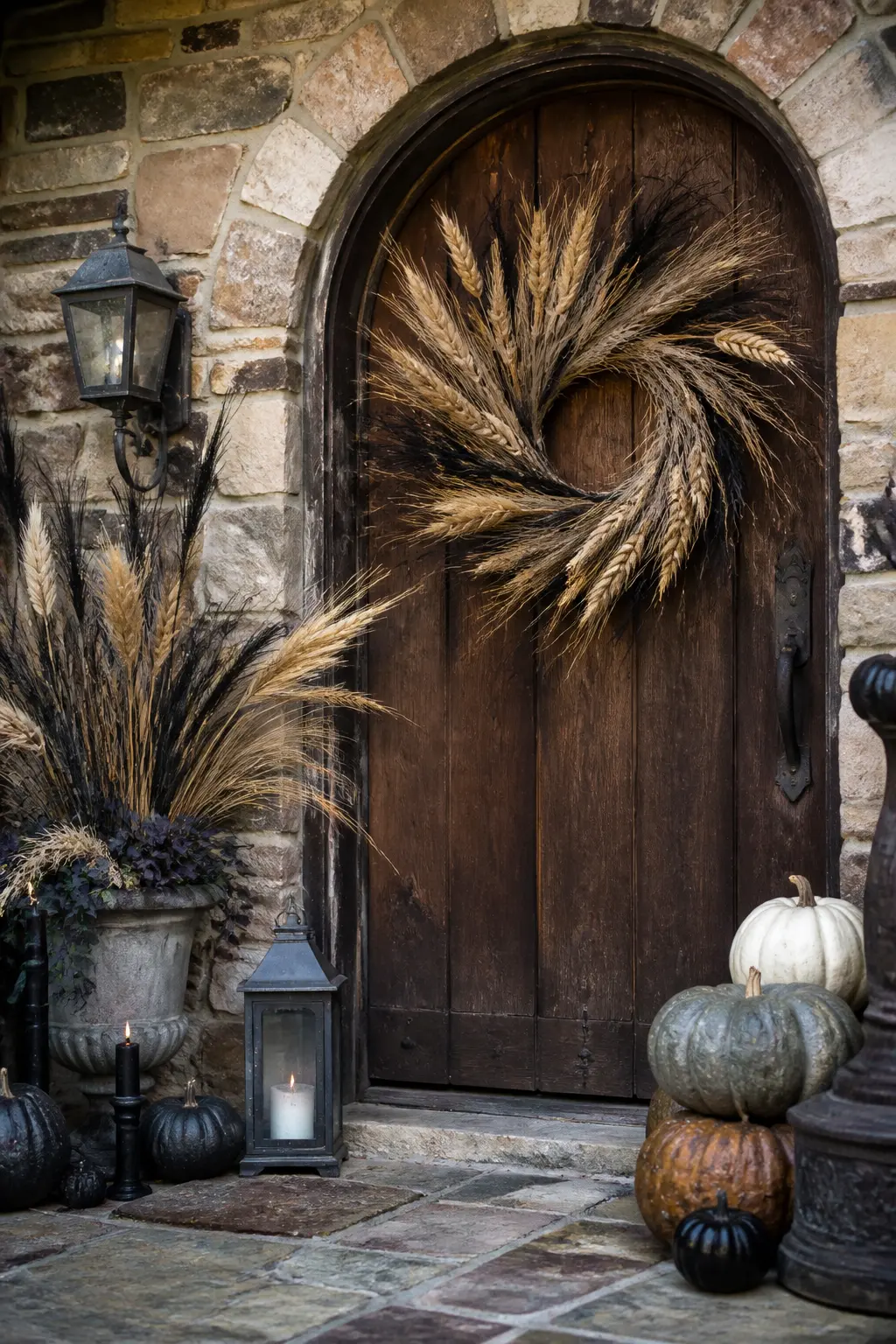
Dried Barley and Blackened Grasses
Bundle dried barley stems and blackened ornamental grasses, the kind sold in autumn floral supply sections, and wire them to a grapevine ring in overlapping fans. The barley curves forward naturally and the grasses spike upward at the edges, giving the wreath a wild, slightly overgrown silhouette.
This one improves as it dries further on the door. The stems lighten slightly, the grasses hold their arch, and the whole thing looks like it was gathered from the edge of a field at the end of the season. Which, technically, it was.
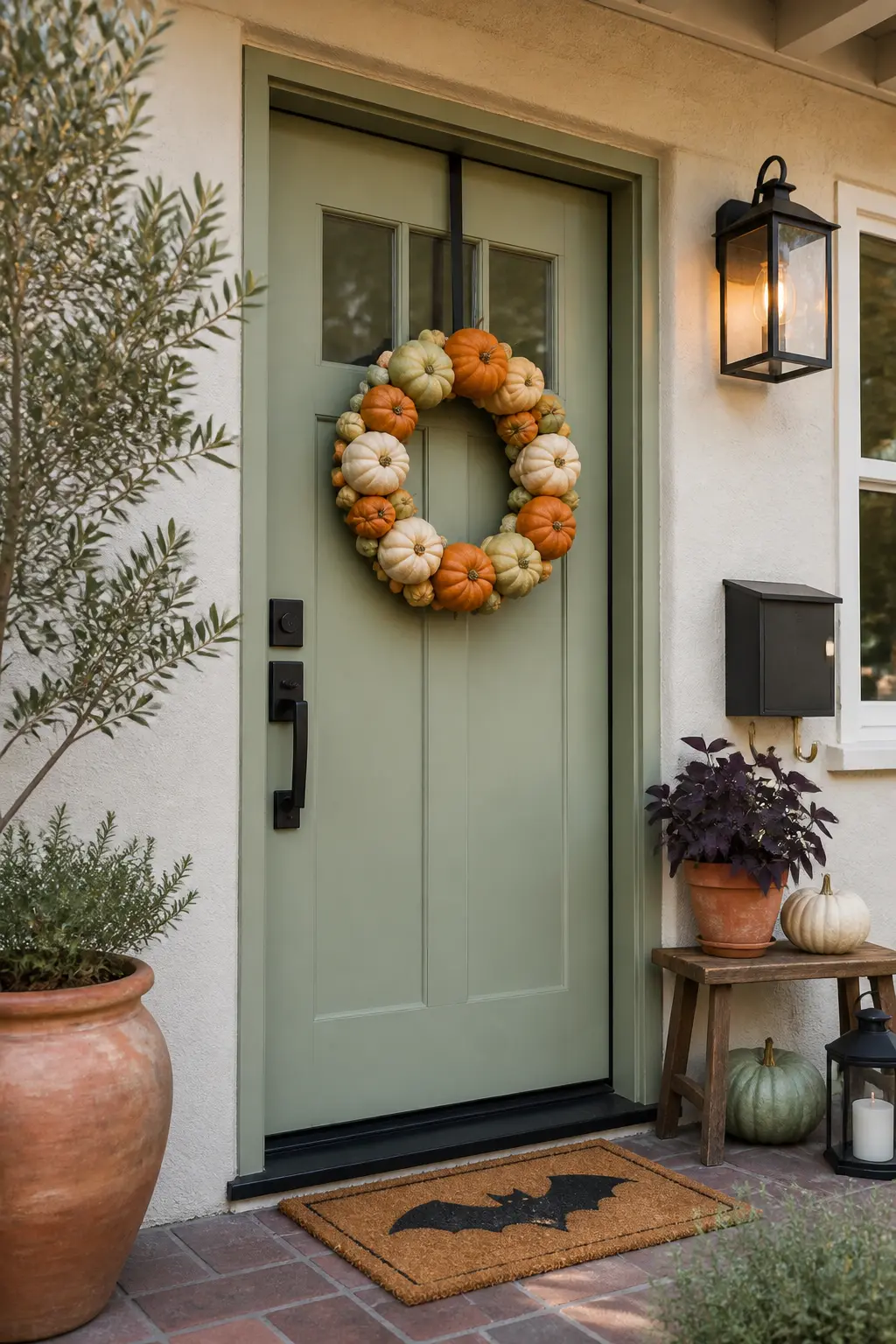
Wreath Made from Mini Pumpkins Wired to a Frame
Use small artificial mini pumpkins, the kind with a wire stem already attached, and work them onto a round wire frame by twisting the stem wire around the ring. Use two sizes for depth: larger ones at the outer edge, smaller ones filling the gaps.
Choose pumpkins in muted shades, deep terracotta, dusty sage, cream, rather than bright orange, and the result skews harvest-elegant rather than carnival. A few white ones mixed in reads as frost-touched, which suits the end-of-season mood well.
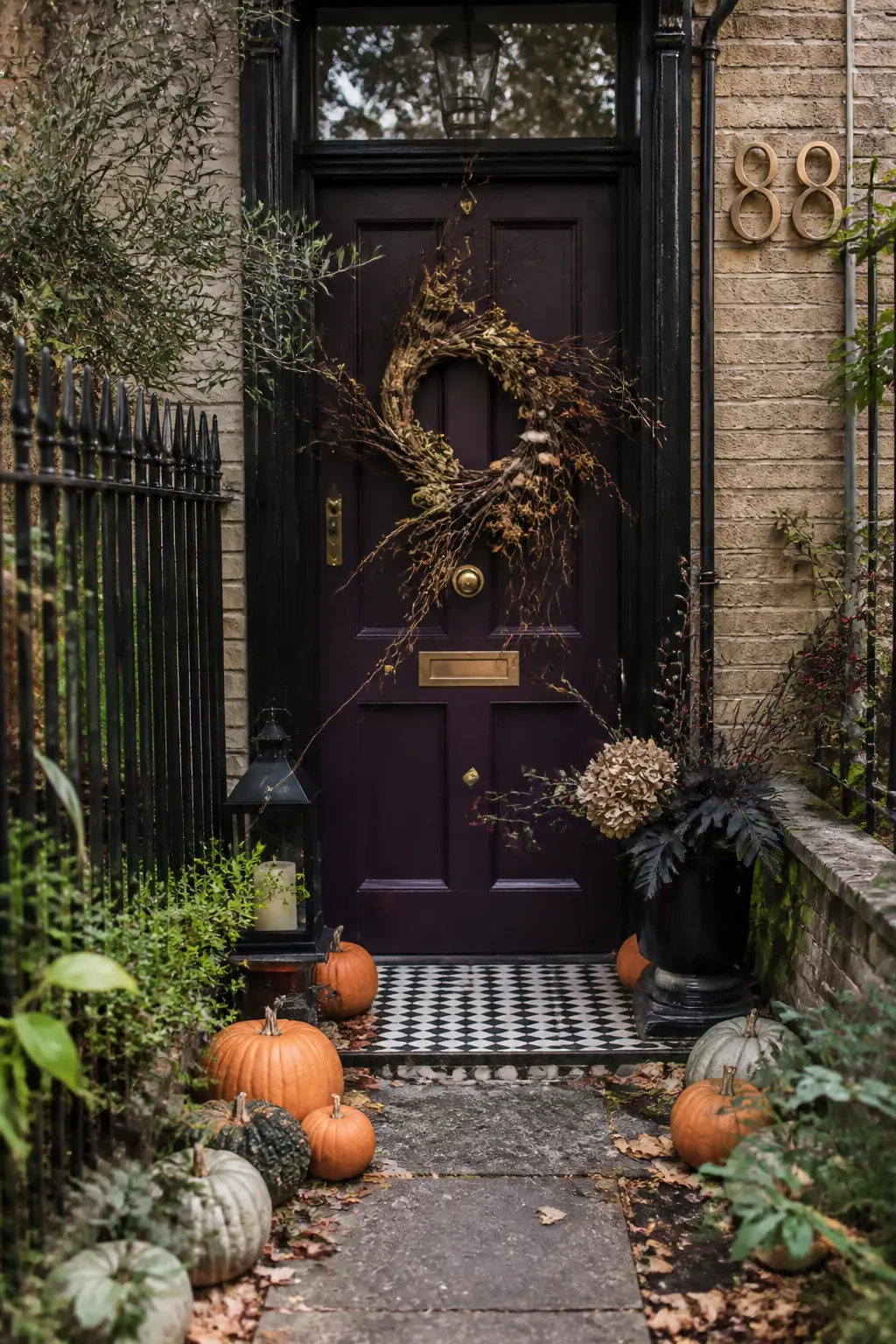
Wreath with Dried Seed Pods and Bare Branches
Collect or buy a mix of dried seed pods, lotus pods, poppy heads, nigella pods, and wire them among bare pruned branches arranged on a grapevine ring. Let the branches extend beyond the ring perimeter rather than trimming them flush: the asymmetric silhouette is what elevates this above a conventional wreath.
This is the kind of thing that looks expensive and takes an afternoon. The materials are available from craft suppliers, dried flower specialists, or, if you have a garden that has gone to seed, right outside your back door.
🛍 Shopping guide
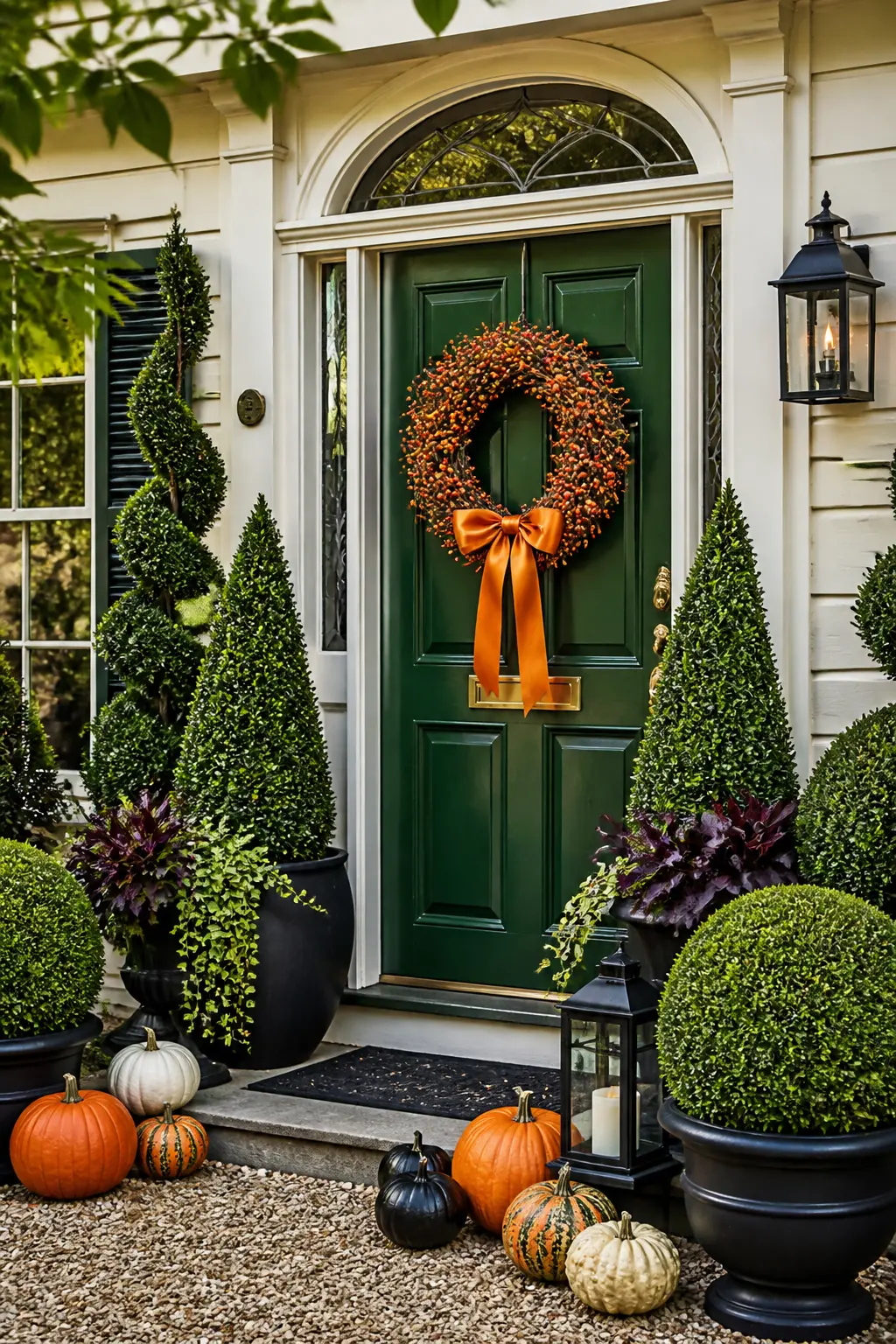
Orange Berry Wreath with a Wide Satin Bow
Wire stems of orange faux berries, the kind that look like rose hips or crab apples, around a grapevine or twig ring until the base is well covered. Tie a wide copper-toned or burnt-orange satin ribbon into a generous bow at the base, with tails long enough to move in the air.
This is the friendliest entry in the harvest section: it reads warm and welcoming from the street rather than dark or unsettling. It suits a house where the goal is autumn abundance rather than anything with a gothic edge.
🛍 Shopping guide
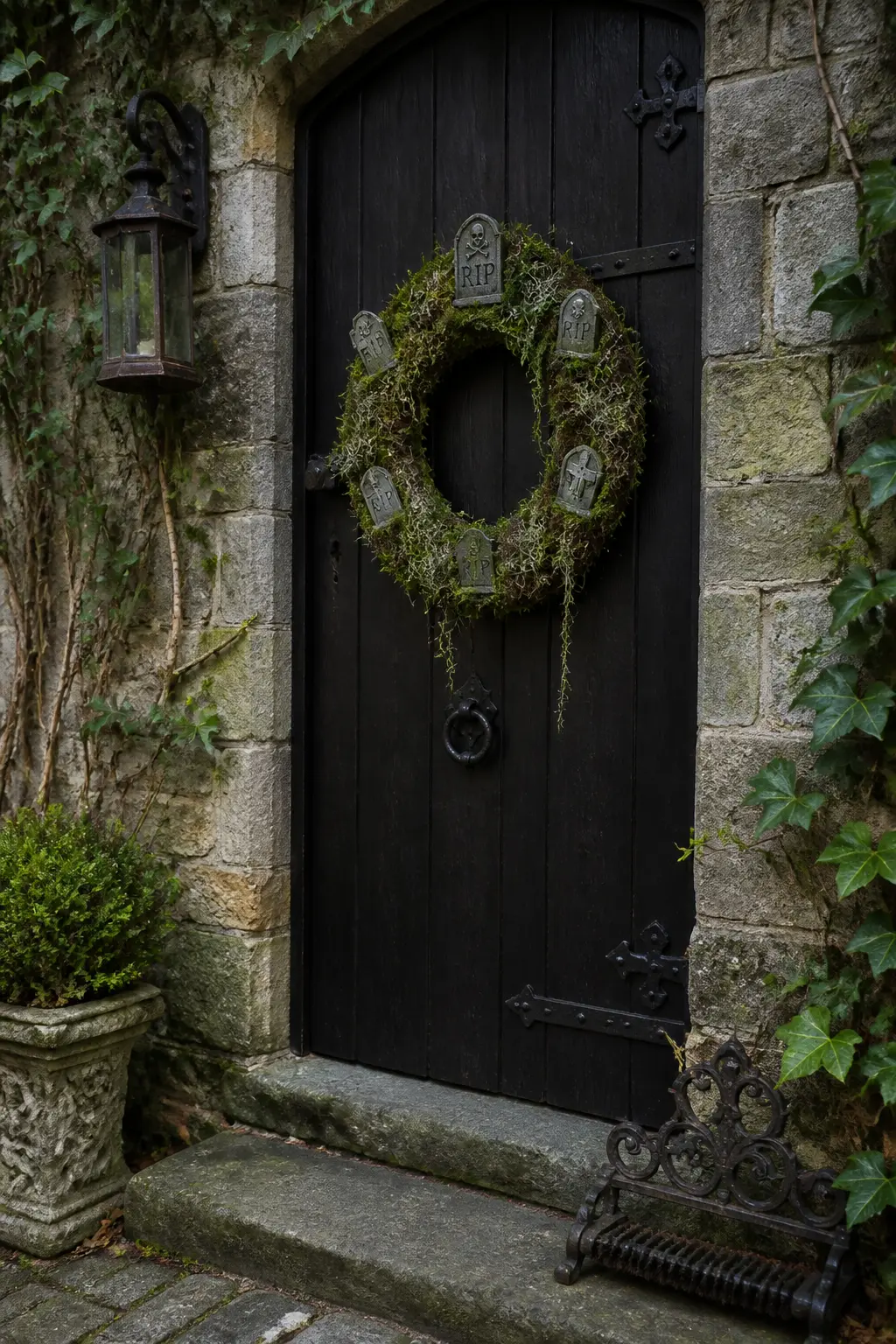
Moss-Covered Wreath with Tiny Tombstones
Cover a foam ring with sheet moss using floral pins, pressing it firmly so it sits flat. Then tuck miniature resin or clay tombstones into the moss at intervals, some upright, some tilted as though sinking into the ground. Add a few small dried twigs behind them for scale.
The miniature scale is important: tiny tombstones read as more unsettling than large ones, because the viewer has to lean in slightly to understand what they are looking at. That moment of recognition is the whole point.
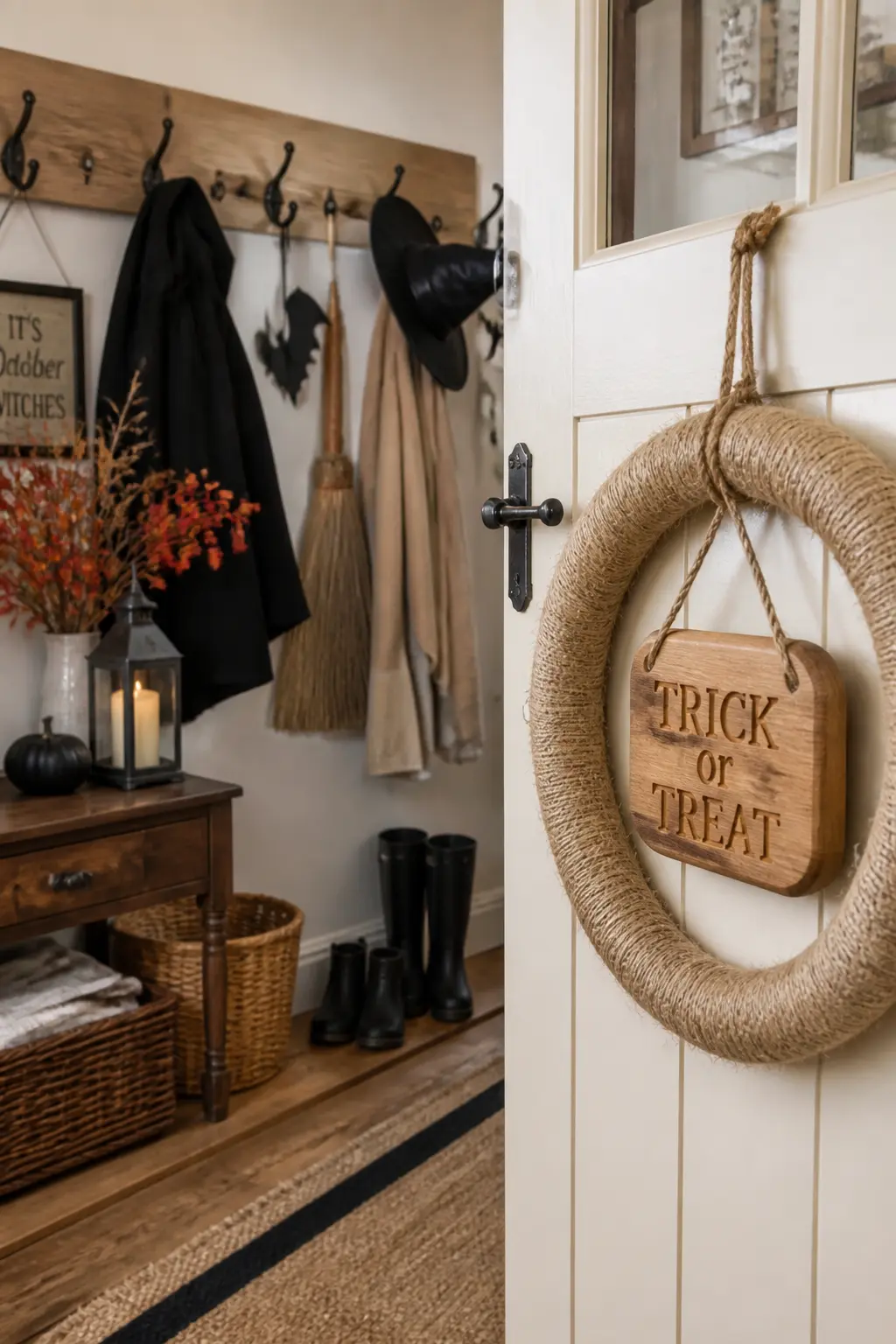
Hessian-Free Hessian: Jute Wreath with a Carved Wooden Sign
Wrap a plain foam or straw ring tightly with jute twine, working in even spirals with no gaps, until the base is completely covered. Wire a small carved wooden sign, something with a simple word or a simple skull motif, to hang slightly below center inside the ring.
The result has all the warmth of a hessian-covered wreath without the fabric texture that some doors fight against. Jute twine is very inexpensive, wraps quickly, and weathers well. The carved sign is the one place to spend a little more, because it will outlast the season and can be reused for years.
Ribbon and Fabric
Ribbon wreaths are the most forgiving thing you can make. There is no wiring, no hot glue burns, and no precision required. You loop, you tie, you fluff, and the door is done in an afternoon.
Fabric options open the same door: tulle, lace, muslin. Each one handles differently and gives a completely distinct result, which is why three of the entries below use cloth in three totally different ways.
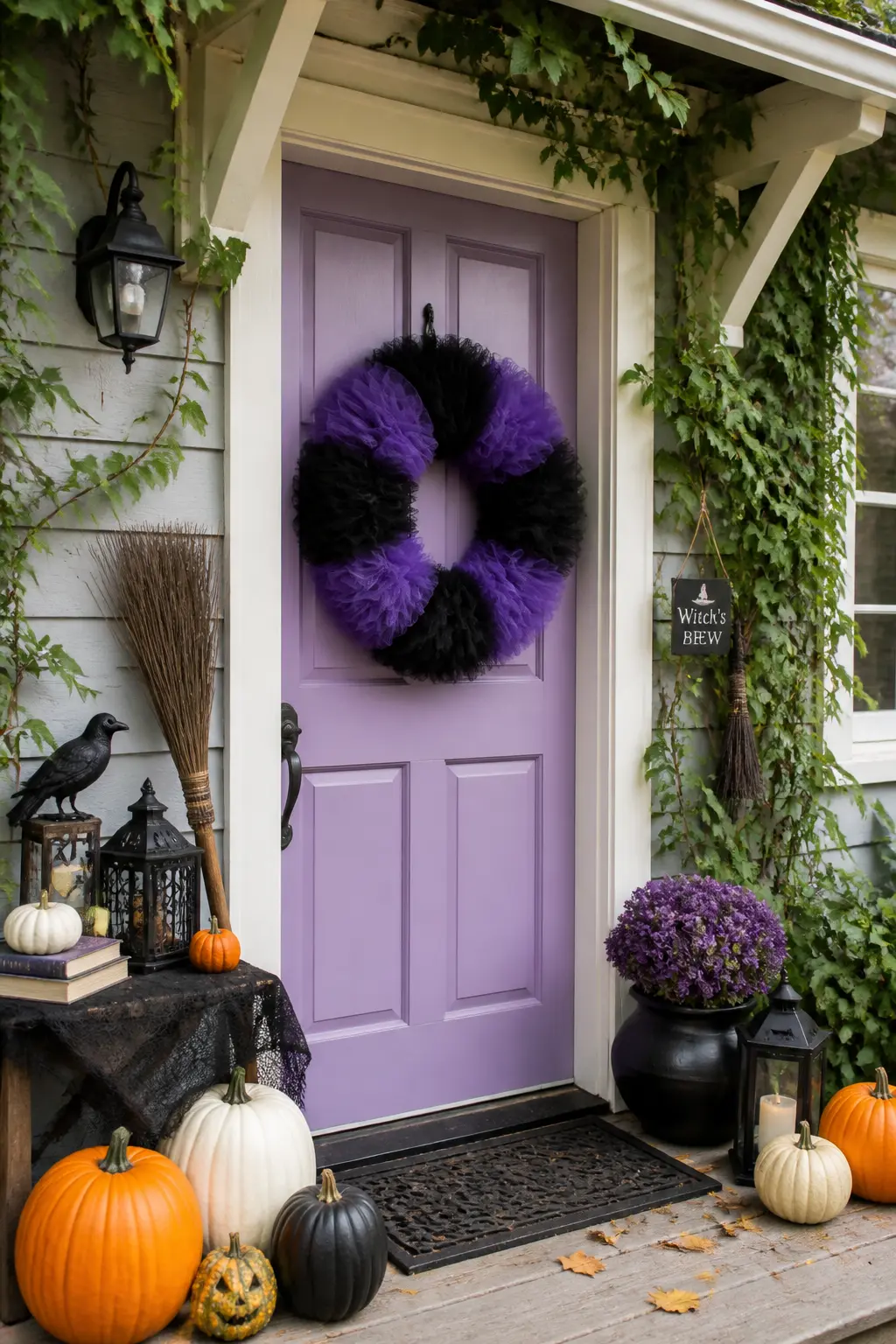
Purple and Black Tulle Wreath in Full Sections
Cut tulle into strips about 6 inches wide and 12 inches long. Fold each strip in half and loop it onto a wire ring frame, pulling the ends through the fold to secure, exactly the same method as a ribbon wreath. Alternate purple and black sections and pack them tightly enough that the ring completely disappears.
Tulle catches even a small breeze and moves constantly, which gives this wreath a live quality that fabric and ribbon do not have. It is also very light, so the door hook does not need to be heavy-duty.
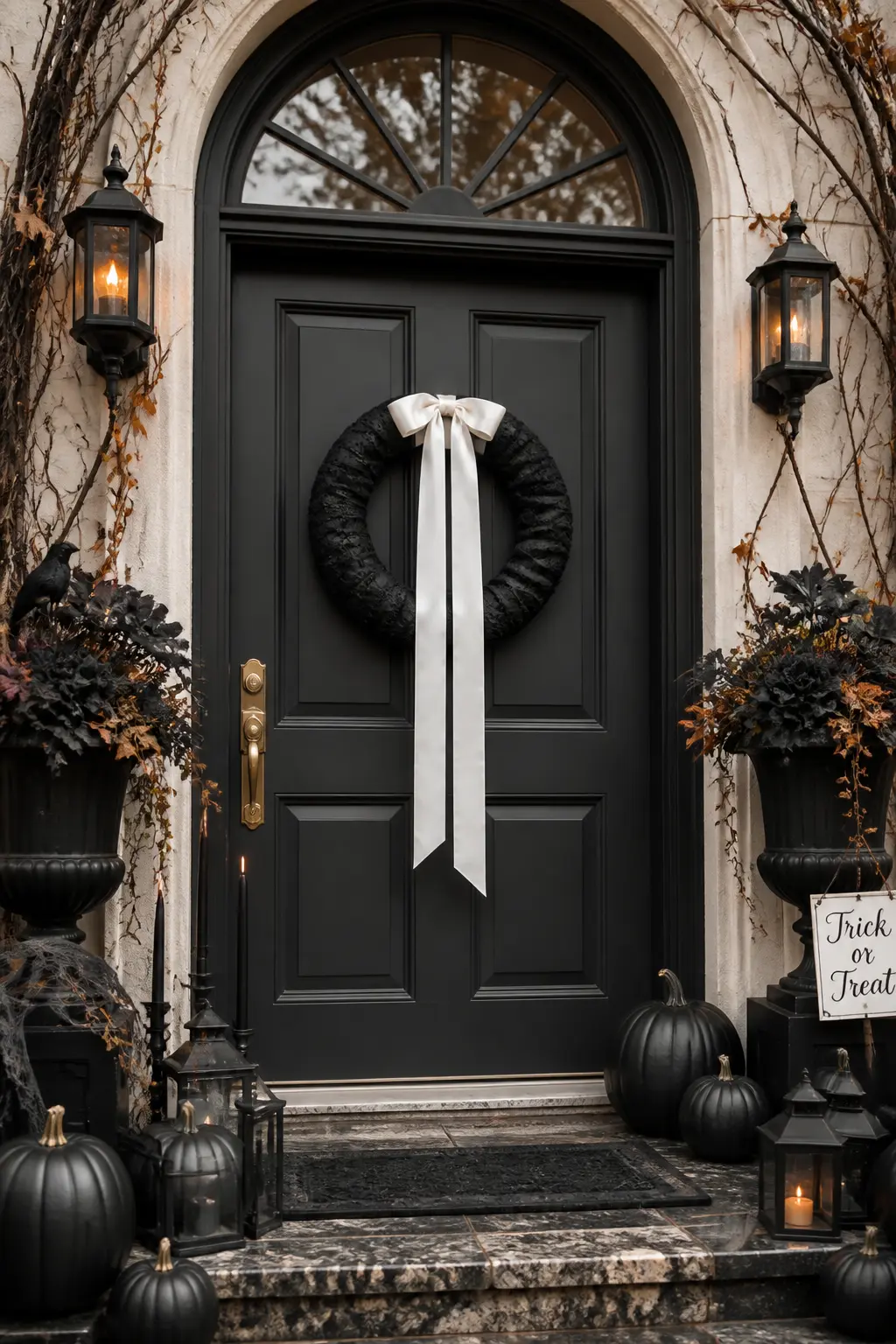
Black Lace-Wrapped Wreath with a White Ribbon Streamer
Wind wide black lace ribbon diagonally around a foam ring, securing the start and end with pins or hot glue, until the whole ring is covered. Add a single long streamer of white satin ribbon tied at the top, leaving the tails long enough to move in the air.
The contrast between the dense dark lace and one clean white line is very effective and takes less than twenty minutes. Lace also softens a dark door color without fighting it, which is why this suits black, charcoal, and deep green doors particularly well.
🛍 Shopping guide
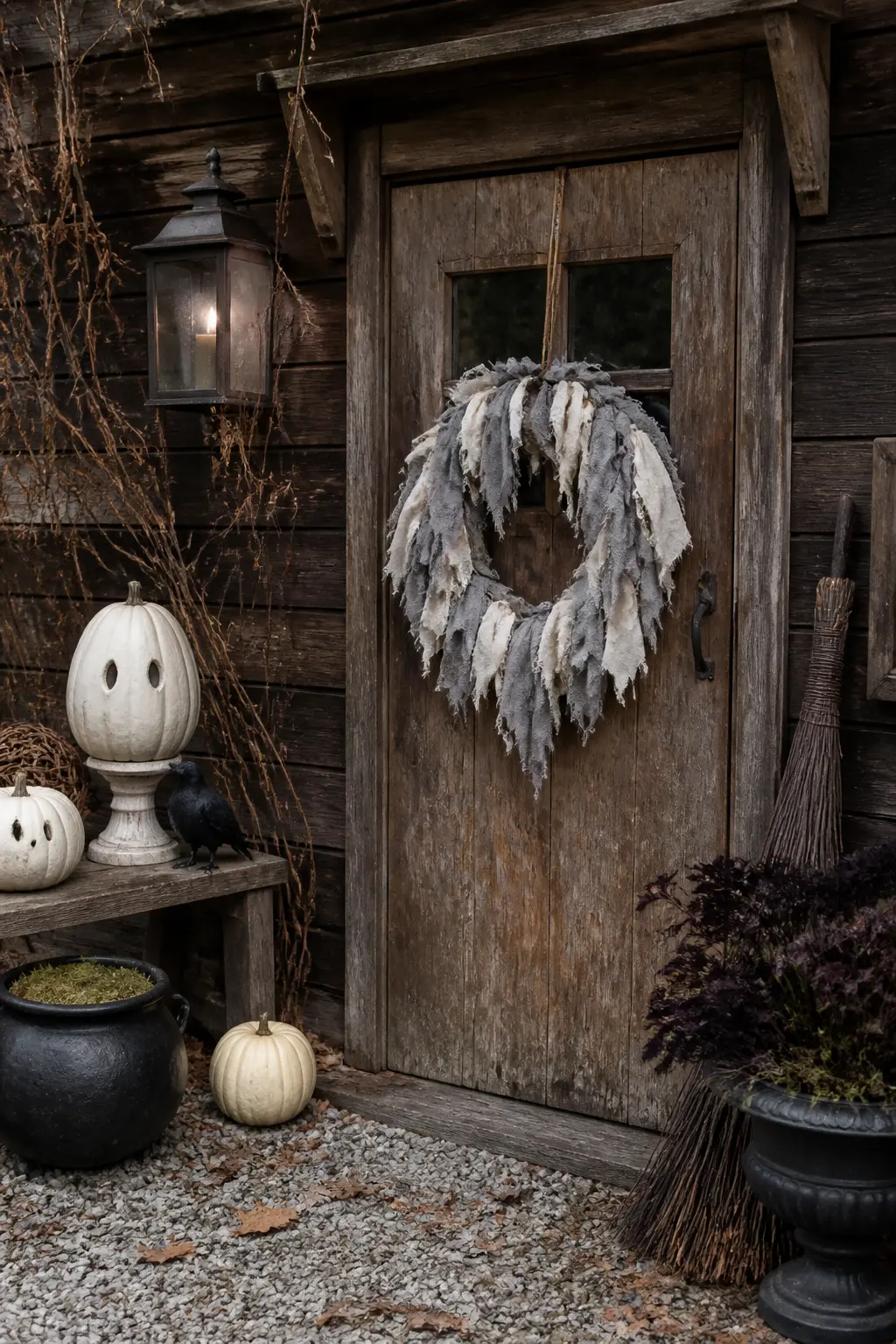
Torn Muslin Wreath with Frayed Edges
Tear muslin fabric into strips rather than cutting it, so the edges are naturally uneven and threads trail away from each piece. Tie the strips onto a wire ring in the same loop method as a ribbon wreath. The fraying continues over time, which only adds to the look.
Dip some strips in diluted black or grey paint before tying them on, let them dry, then mix them in with plain white strips. The result reads as aged rather than dirty, which is an important distinction when the wreath is on a well-kept front door.
🛍 Shopping guide
Minimal and Architectural
A bare metal hoop with one deliberate element is not a half-finished wreath. It is a design choice, and it is the right one for modern doors, glass panels, and anyone whose instinct is to edit rather than add.
These entries use negative space as part of the composition. The ring frames the door, and the single detail anchors it. Less is not laziness here: it is confidence.
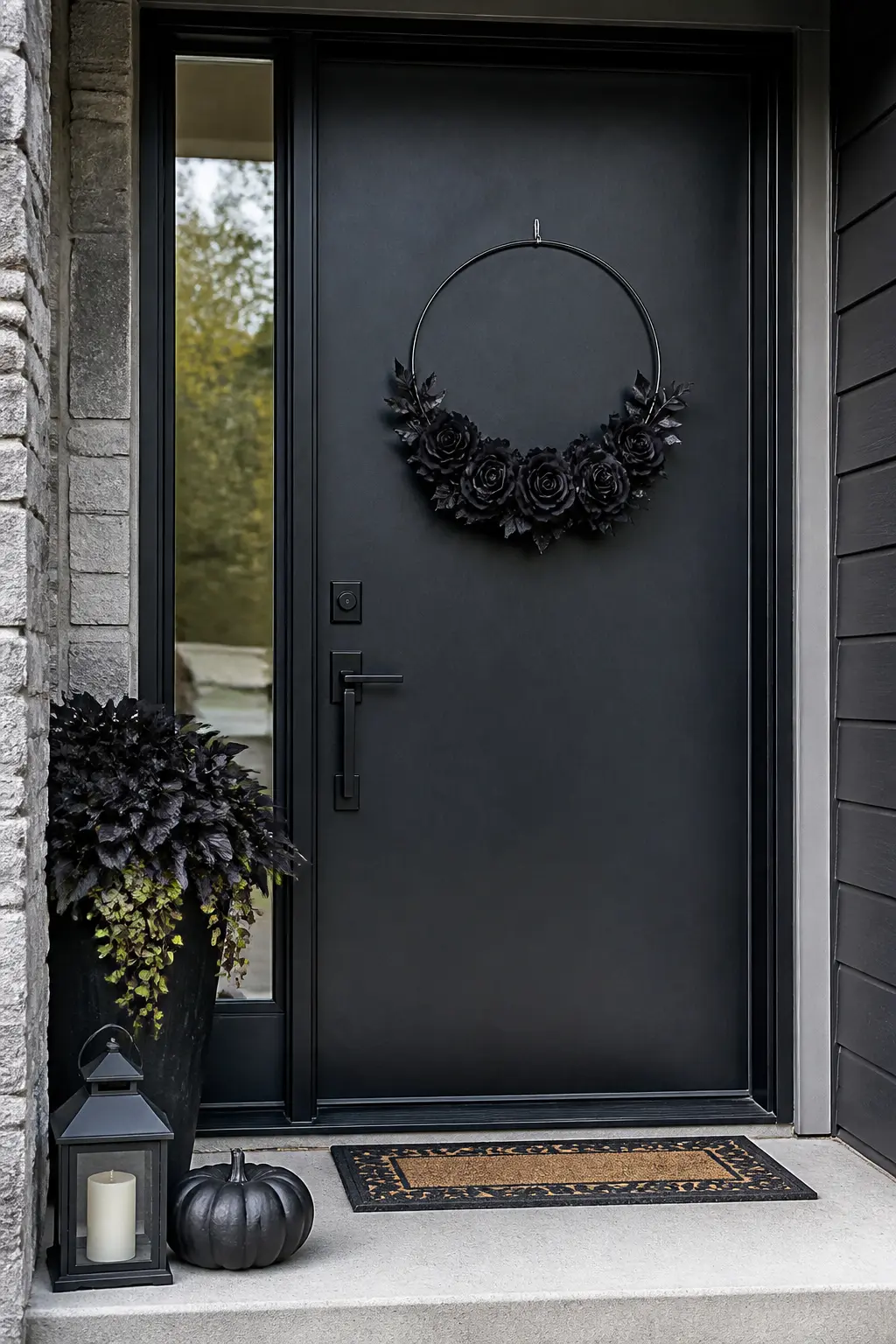
Black Rose Ring on a Bare Metal Hoop
Take a plain black or dark metal hoop, the kind sold as a macrame or floral ring, and wire three to five black roses, real dried ones or high-quality faux, at the base of the ring in a tight cluster. Leave the rest of the hoop completely bare.
The roses at the base work like a necklace pendant: the circle is the frame and the blooms are the jewel. Nothing else belongs on this wreath. The power is in the proportion of empty space to detail, and filling more of the hoop undoes the whole effect.
🛍 Shopping guide
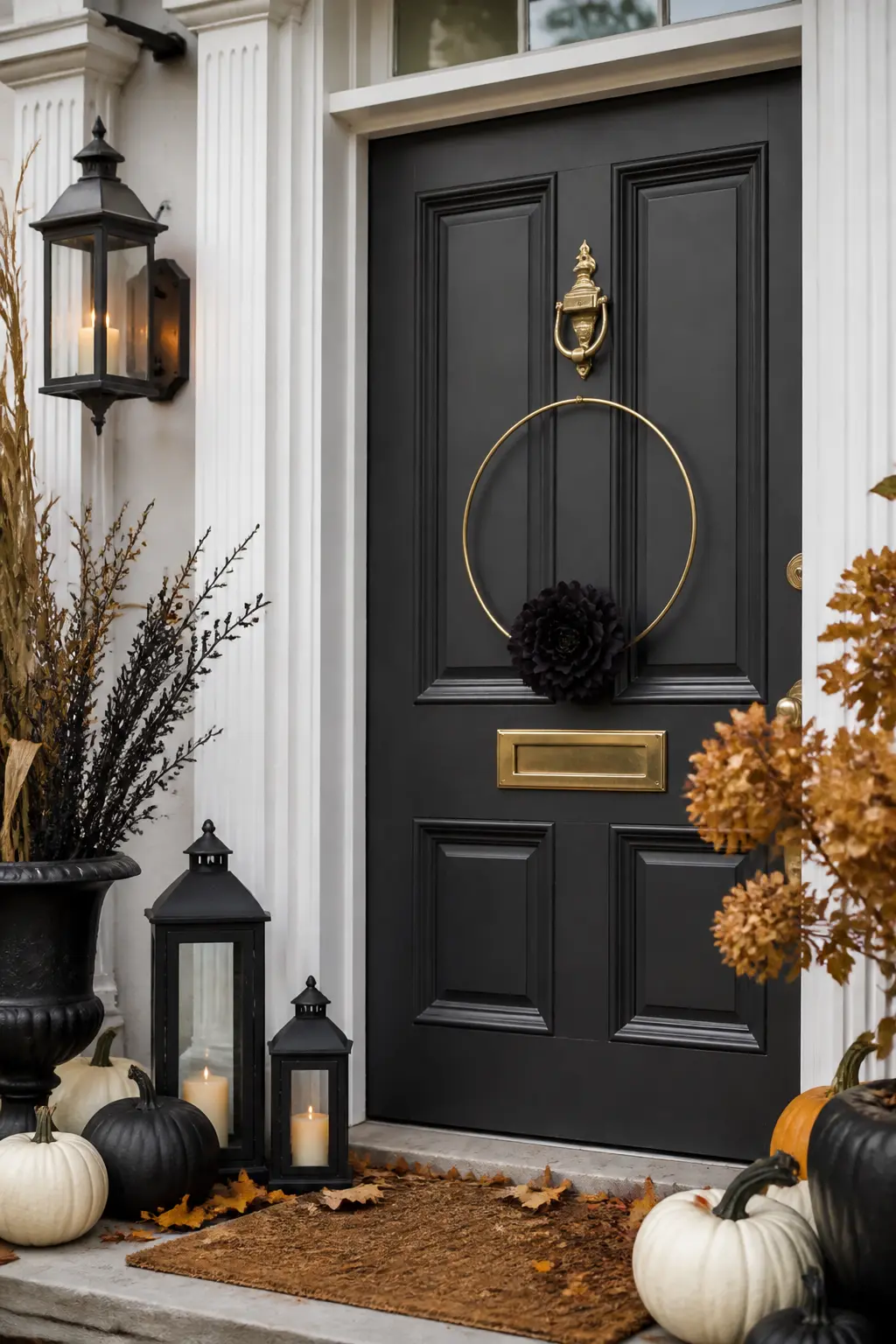
Brass Hoop with a Single Dark Bloom at the Base
A brass hoop is already finished. Add one large dark bloom at the base, a deep burgundy peony, a near-black dahlia, or a dried protea, wired firmly at the six o’clock position, and the wreath is complete.
The warmth of the brass against a very dark bloom is the tension that makes this work. It is the least Halloween-coded entry in the list, which makes it the right choice for anyone who wants something that stays on the door into November without looking like a leftover.
Owl Figure at the Base of a Bare Willow Ring
A willow ring has a lighter, more organic line than a twig ring. Place a ceramic or cast-iron owl at the six o’clock position, wired so it sits on the ring rather than hanging from it, head upright, as though it chose to perch there.
The willow ring and the owl together read as something between a woodland vignette and a halloween moment. It suits a house that prefers quiet suggestions to overt decoration, and it is the kind of thing that earns the comment “where did you find that” rather than “love the halloween wreath.”
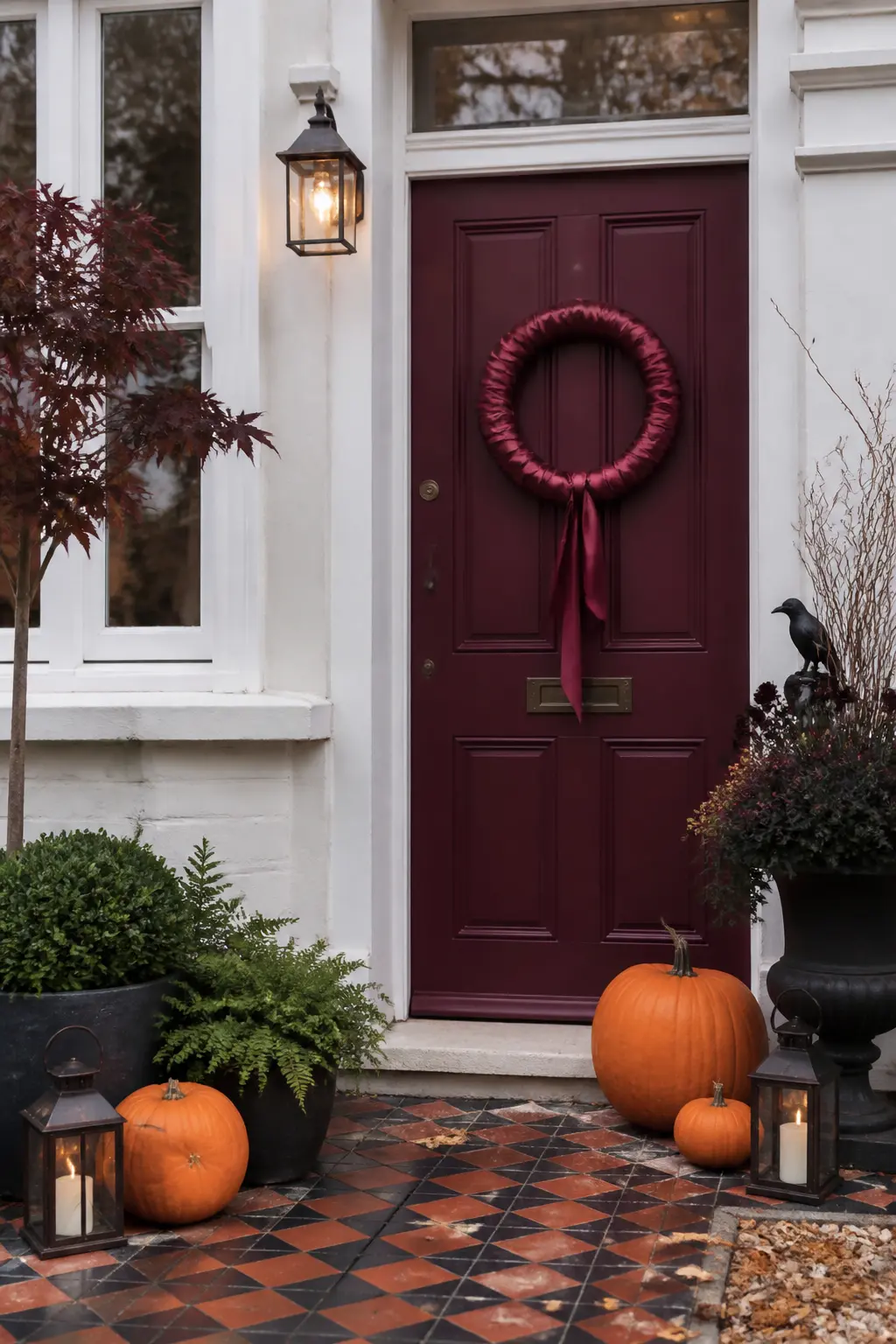
Wide Satin Ribbon in Dark Wine Wound Around a Plain Ring
Wind wide dark wine or deep burgundy satin ribbon around a plain foam or wire ring in a loose diagonal spiral, leaving small gaps of the base showing rather than covering it completely. Tie the end in a flat knot at the base and let the tails hang.
The exposed base gaps give the ribbon depth and shadow that a fully wrapped ring does not have. Choose a ribbon with a subtle sheen rather than a high gloss: it photographs better and reads as elegant rather than shiny from the street.
🛍 Shopping guide
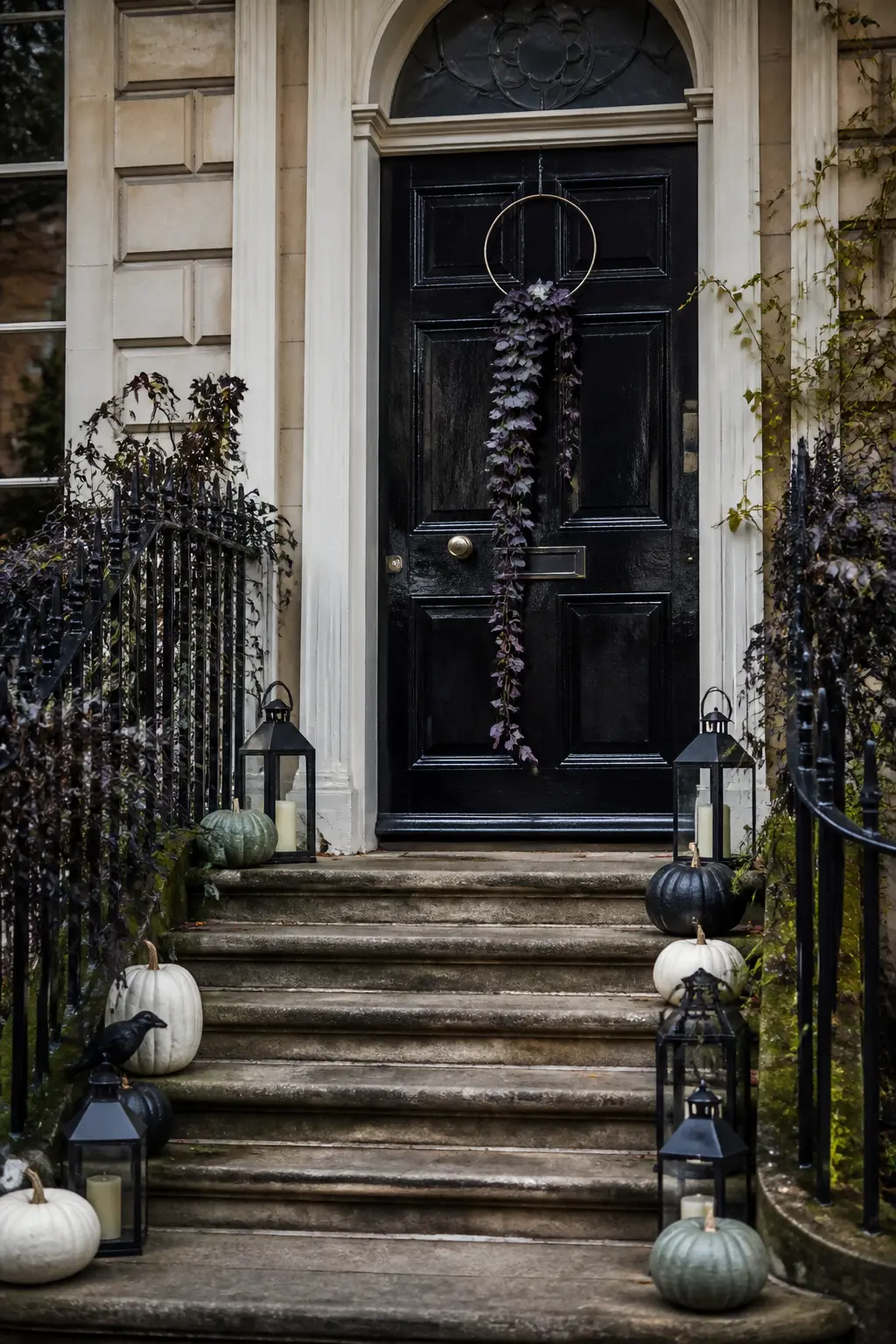
Dark Ivy Trailing from One Side of a Bare Ring
Wire a length of preserved or high-quality faux dark ivy so it enters the ring at the top left, winds around the upper third of the ring, and trails free from the lower right, hanging several inches below the ring itself. Nothing else on the ring.
The trailing element catches air movement and gives the whole piece a living quality. Dark ivy, the kind with very deep green or near-black leaves, reads as more gothic than the usual bright green variety, which keeps it squarely in the season without any additional decoration.
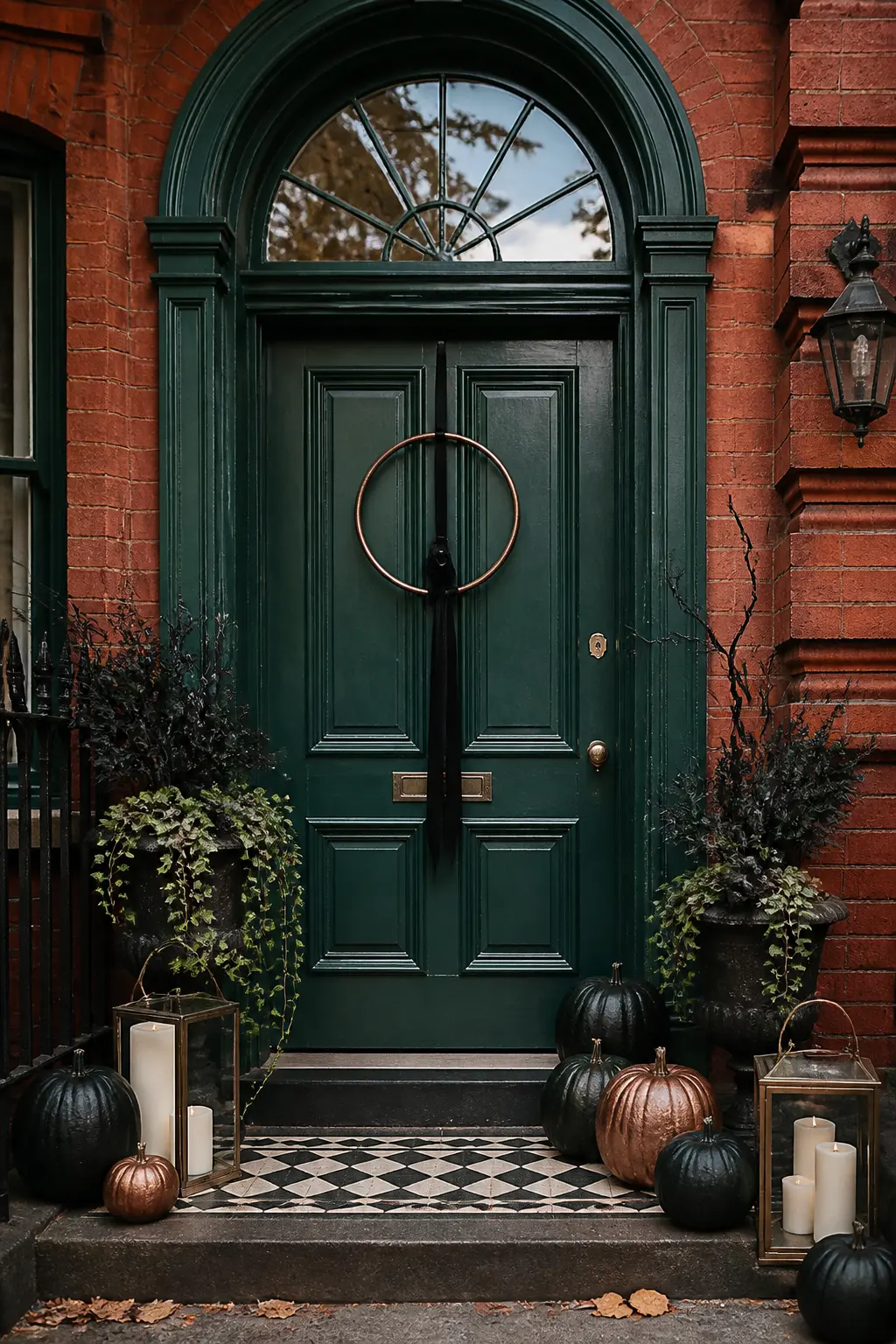
Copper Hoop with a Trailing Dark Ribbon
A copper or rose-gold hoop needs almost nothing. Tie a single length of very dark, near-black velvet ribbon at the top of the hoop and let it hang through the center, falling several inches below the base. The ribbon trails like a plumb line through the center of the circle.
This is the most minimal entry in the list and arguably the most confident. The copper ring frames a negative space, the dark ribbon divides it, and the whole thing is finished in under two minutes. It suits a door that is already working hard, dark paint, strong hardware, a dramatic transom.
🛍 Shopping guide
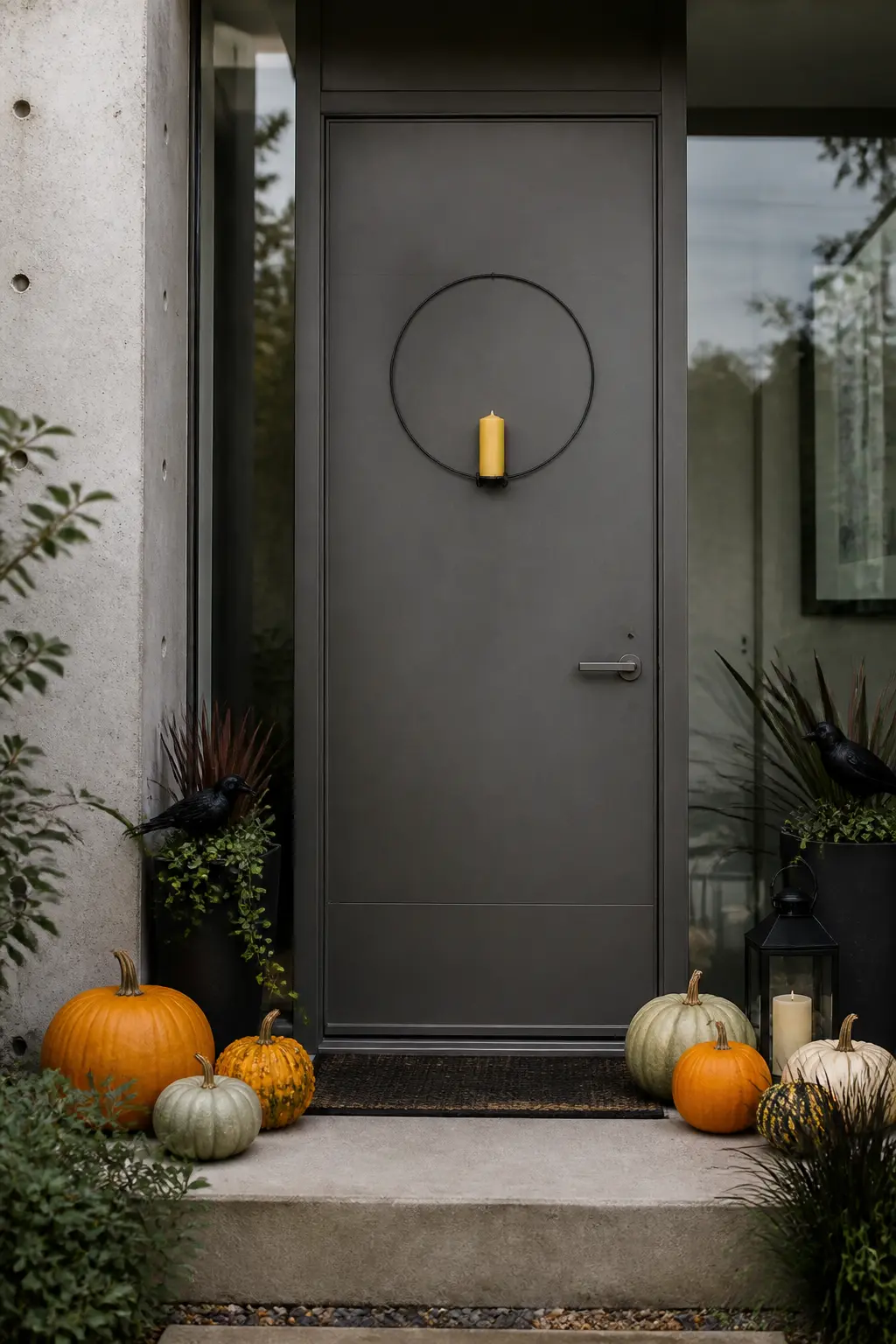
Bare Metal Ring with a Single Beeswax Pillar Wired On
Wire a short beeswax or cream pillar candle to the lower center of a plain metal ring, standing upright, unlit. The candle is decorative rather than functional, but the suggestion of it matters.
Beeswax has a natural pale gold color and a faint honeyed texture that reads beautifully against dark metal. Because the candle is unlit and wired firmly, this is entirely safe on a front door. Add a short length of black twine tied at the top of the ring as a hanger, and that is genuinely the whole project.
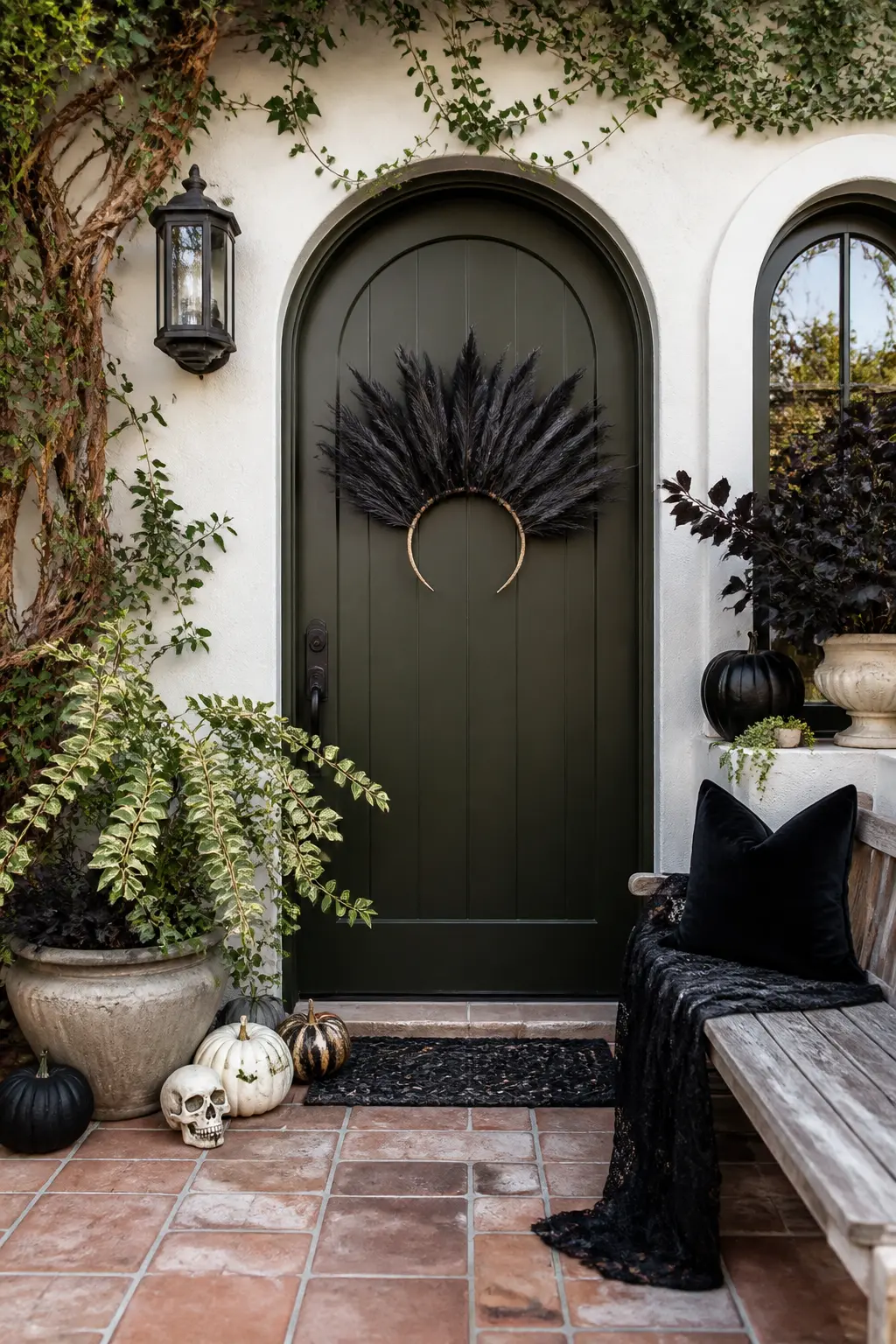
Charcoal-Dyed Pampas Fanned Across a Half Ring
Use a half-circle or crescent wire form rather than a full ring. Fan charcoal or grey-dyed pampas grass across the flat edge of the form, wiring the stems so the plumes splay upward and outward above the curve of the ring. The form itself disappears behind the stems.
The resulting shape is an arch rather than a circle, which suits a door with a fanlight or a curved top. The pampas softens the architectural edge of the door frame and gives the entry a slightly overgrown, just-past-its-prime quality that is perfect for the season.
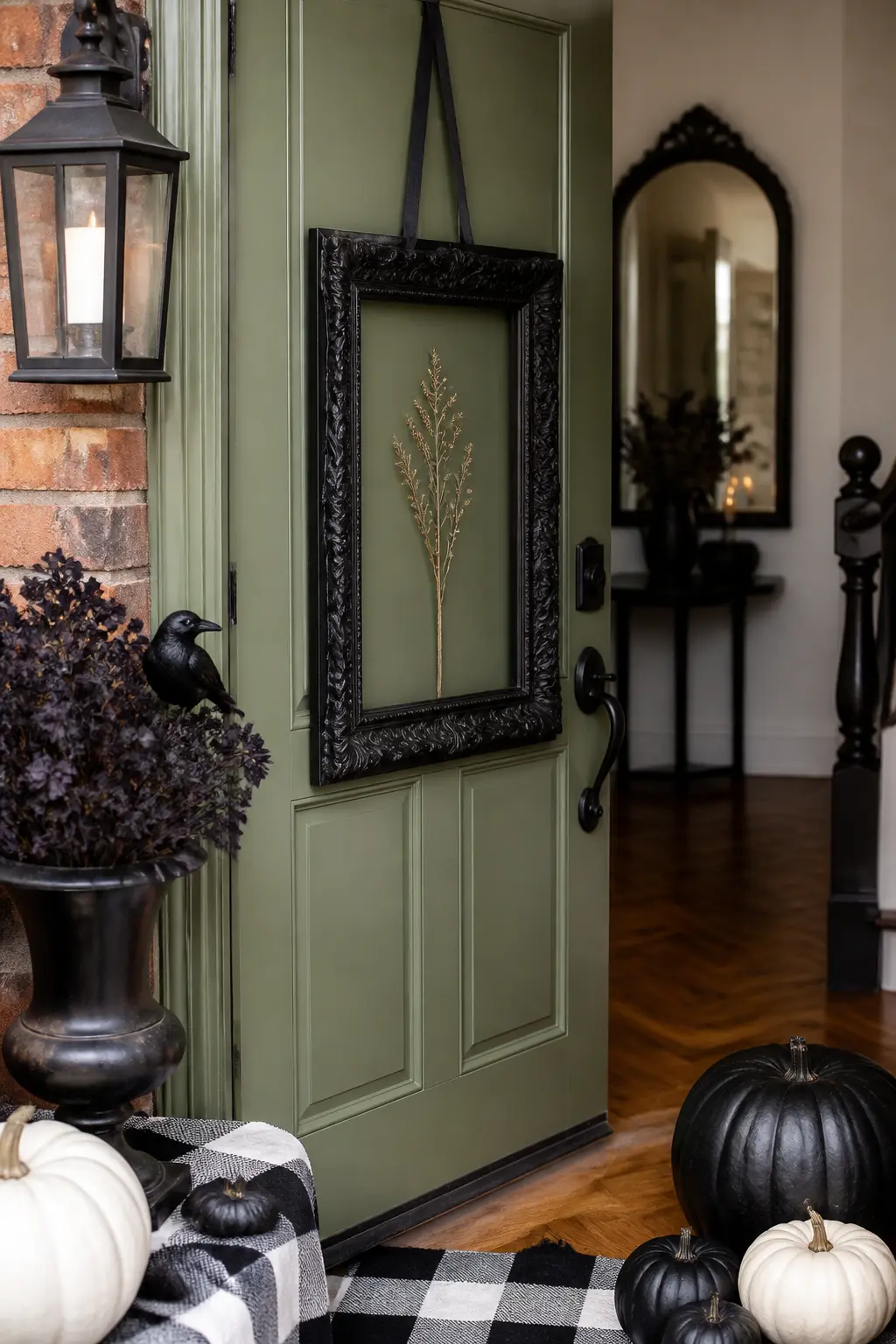
Empty Picture Frame Hung in Place of a Wreath
Find a heavily ornamented or plain wooden frame, the kind that might have held a landscape painting, and hang it centered on the door where a wreath would normally go. The frame presents the door itself as the art, which is a dry enough joke to land with the right audience.
Paint the frame black for the season, or leave it gilded if the door color supports it. Add one small detail inside the frame, a dried sprig, a single spider, a folded card with one word on it, to anchor the eye and make it clear the empty frame is deliberate rather than forgotten.
Grapevine and Found-Material Bases
A grapevine ring already has texture, warmth, and a natural randomness that smooth foam forms cannot match. Tuck things into the twists without gluing and you can change the look entirely next year.
Found materials, dried mushrooms, old postcards, seed pods, bells, add a specificity that shop-bought accents rarely achieve. They also cost almost nothing, which is its own kind of elegance.
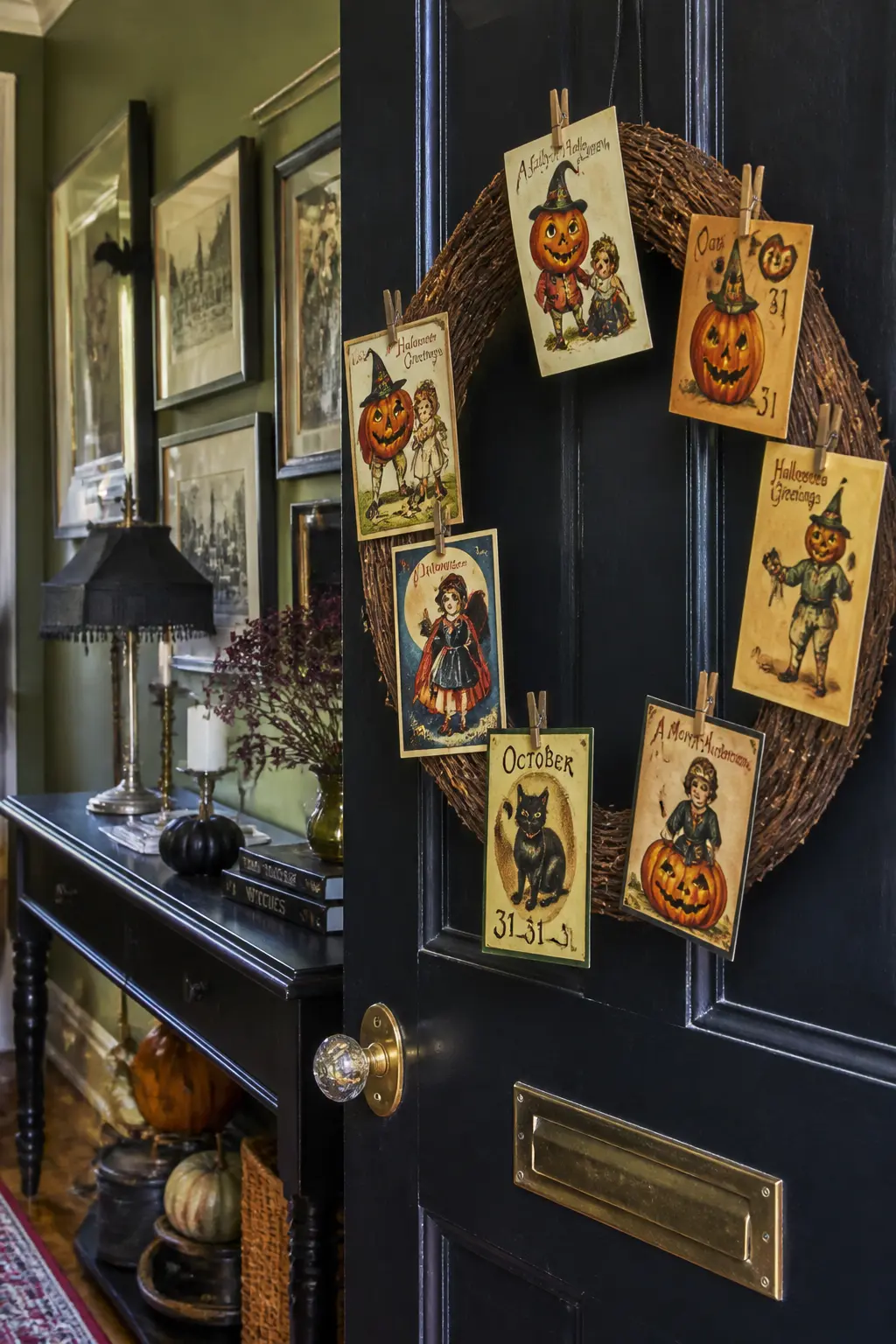
Vintage Halloween Postcards on a Grapevine Base
Print reproductions of vintage Halloween postcards, the kind with black cats, jack-o-lanterns, and witches in early twentieth-century illustration styles, and clip them around a grapevine ring using small wooden pegs or binder clips. Space them evenly so the grapevine shows between each card.
The cards are protected from light rain if you laminate them first, which takes five minutes and means they will last the full season. This is also one of the few wreaths that rewards close inspection: the postcard details are best appreciated by anyone who actually walks up to the door.
🛍 Shopping guide
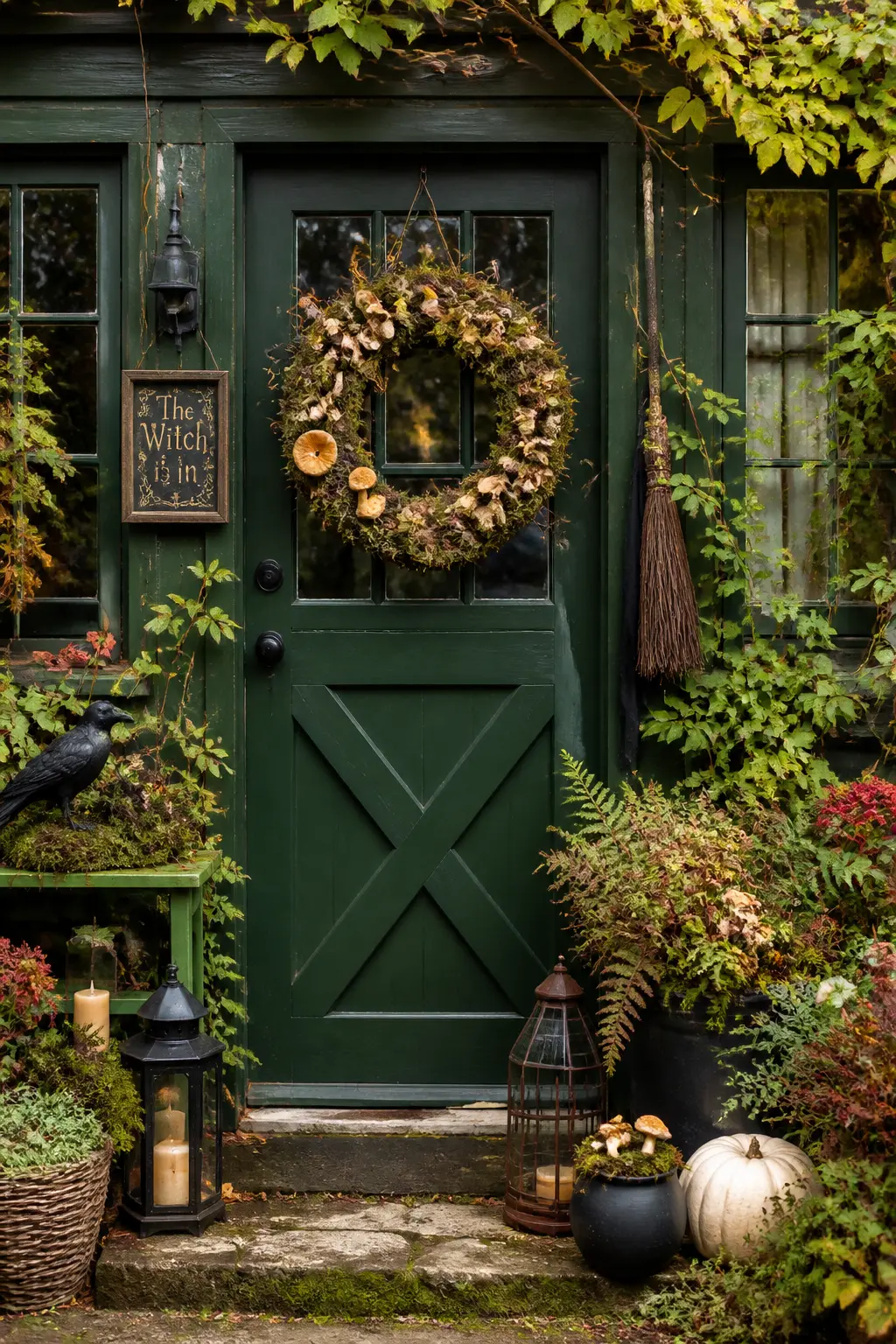
Dried Mushrooms Tucked Among Moss on a Grapevine Base
Press sheet moss into the gaps of a grapevine ring and secure it with floral pins. Then tuck dried mushrooms, the flat coin-shaped kind as well as small parasol shapes, into the moss at irregular intervals. Add a few small dried twigs for height variation.
This is a strange and genuinely beautiful wreath. It reads as forest floor rather than front door, which is exactly the disorientation worth going for. Use preserved mushrooms from a floral supplier rather than fresh ones for obvious reasons.
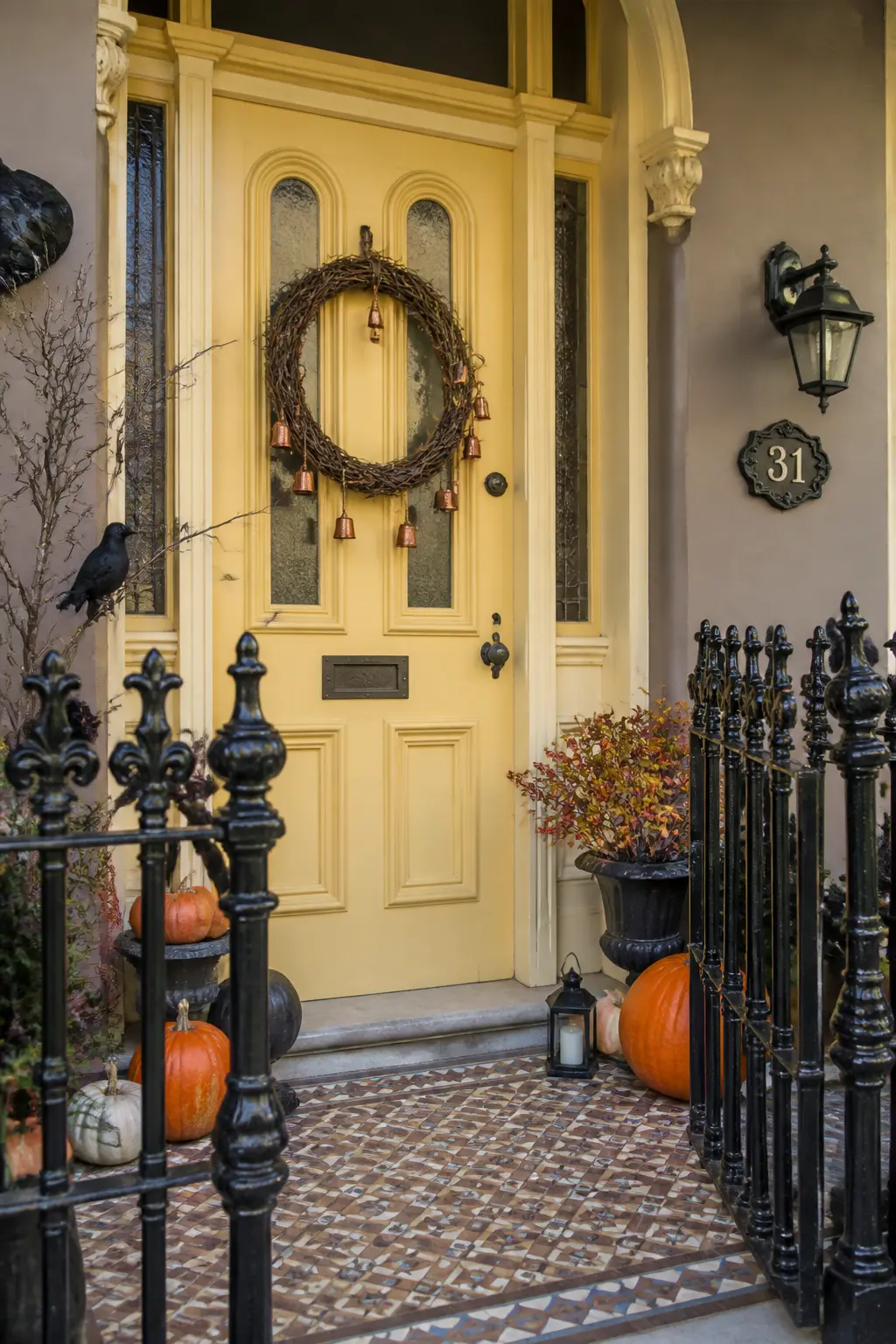
Bells Wired Along a Bare Grapevine Ring
Wire small bronze or copper-toned bells at irregular intervals around a grapevine ring, using thin floral wire so the bells can hang freely and move. Space them so no two are adjacent, giving each one room to ring independently when the door opens.
This is the rare wreath that also functions as a doorbell. Every arrival announces itself. The sound is warm rather than alarming, which makes it the most quietly charming entry in this whole list. Pair it with a simple dark ribbon tied at the top if the plain grapevine looks too sparse for your door.
🛍 Shopping guide
Quietly Elegant Closing Notes
The final group takes halloween wreath-making somewhere close to year-round decor. These pieces could stay on the door well past the season without looking wrong, and that is entirely the point for anyone who does not want to swap hardware every three weeks.
If you are planning a full halloween gathering to go with the door, 30 Unforgettable Halloween Party Ideas and Games gives you the inside to match the outside. And if guests are coming in costume, 20 No-Cringe Adult Halloween Party Games keeps the evening moving once the door has done its job.
Frequently Asked Questions
What base works best for a front door halloween wreath that has to stay up for a full month?
Grapevine and wire ring bases outlast foam in all weathers. Foam softens in rain and can warp on a warm day in direct sun. If the door is covered, foam is fine. If it faces the elements, wire or grapevine will hold its shape for four to six weeks without any intervention.
How do you hang a halloween wreath without damaging the door?
An over-door hook is the safest option: it grips the top of the door with a padded back plate and leaves no holes or marks. Command strips rated for outdoor use also work for lighter wreaths. Avoid adhesive hooks on painted wood in cold climates, as temperature changes reduce their grip.
Can a halloween wreath stay outside in rain?
Natural materials like grapevine, dried grasses, and jute twine handle light rain well and often look better slightly weathered. Feather wreaths, paper bat wreaths, and tulle wreaths need a covered porch. Fabric-based wreaths can be brought inside during heavy rain and returned to the door once dry.
How do you make a halloween wreath look full without buying a lot of materials?
Work in layers from the outer edge inward, and add elements at different angles rather than flat against the base. Even a sparse collection of stems looks full when some face forward, some angle up, and some trail slightly below the ring. Ribbon loops also fill space very quickly and cost very little.
What is the easiest halloween wreath to make for a beginner?
A ribbon or tulle loop wreath is the most forgiving starting point. There is no gluing, no wiring, and no precision required. Cut strips, loop them onto a wire ring, push them close together, and fluff. The orange and black striped ribbon version and the purple and black tulle version in this list both fall into that category.

From classic black and orange to ghostly white and pastel-cute, these 20 Halloween balloon arch idea

Halloween activities for kids that actually keep hands busy: 16 free printables to cut, colour and c

72 Halloween would you rather questions sorted by round, plus free printable card decks. Perfect for
Leave a Reply