

15 Floral Baby Shower Decorations for the Year the Balloon Wall Went Out of Style
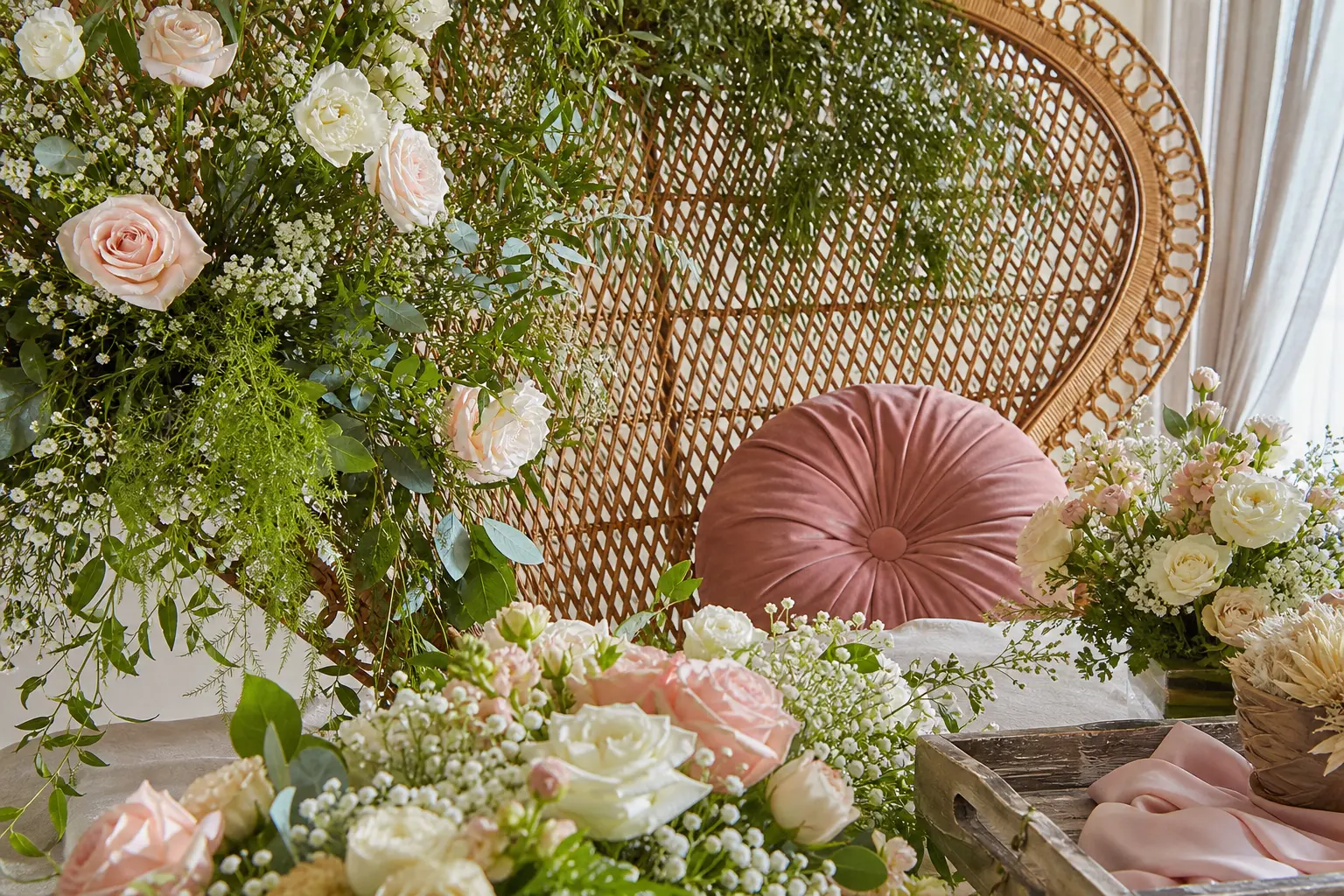
Floral baby shower decorations have officially taken over the job the balloon backdrop used to do. That means they need to earn their place the same way any load-bearing decor does: right scale for the room, strong enough to photograph from across it, and alive-looking at hour three, not just at setup.
The fifteen ideas below treat flowers the way a good stylist treats furniture. Each one is a structural decision, not a garnish. Some are fresh, some are dried, some cost almost nothing if you source them right. All of them are chosen because they do a real job in the room.
If you are still building the rest of the table picture, the guide on baby shower brunch ideas pairs well with this one, and so does the full roundup of baby shower balloon arch ideas for anyone keeping one or two balloons in the mix.
This post contains affiliate links. If you buy through them, I may earn a small commission at no extra cost to you.
The Focal Point: One Big Statement
Every room needs one thing that reads from the doorway. These three ideas each do that job alone, so pick one and let everything else play a supporting role.
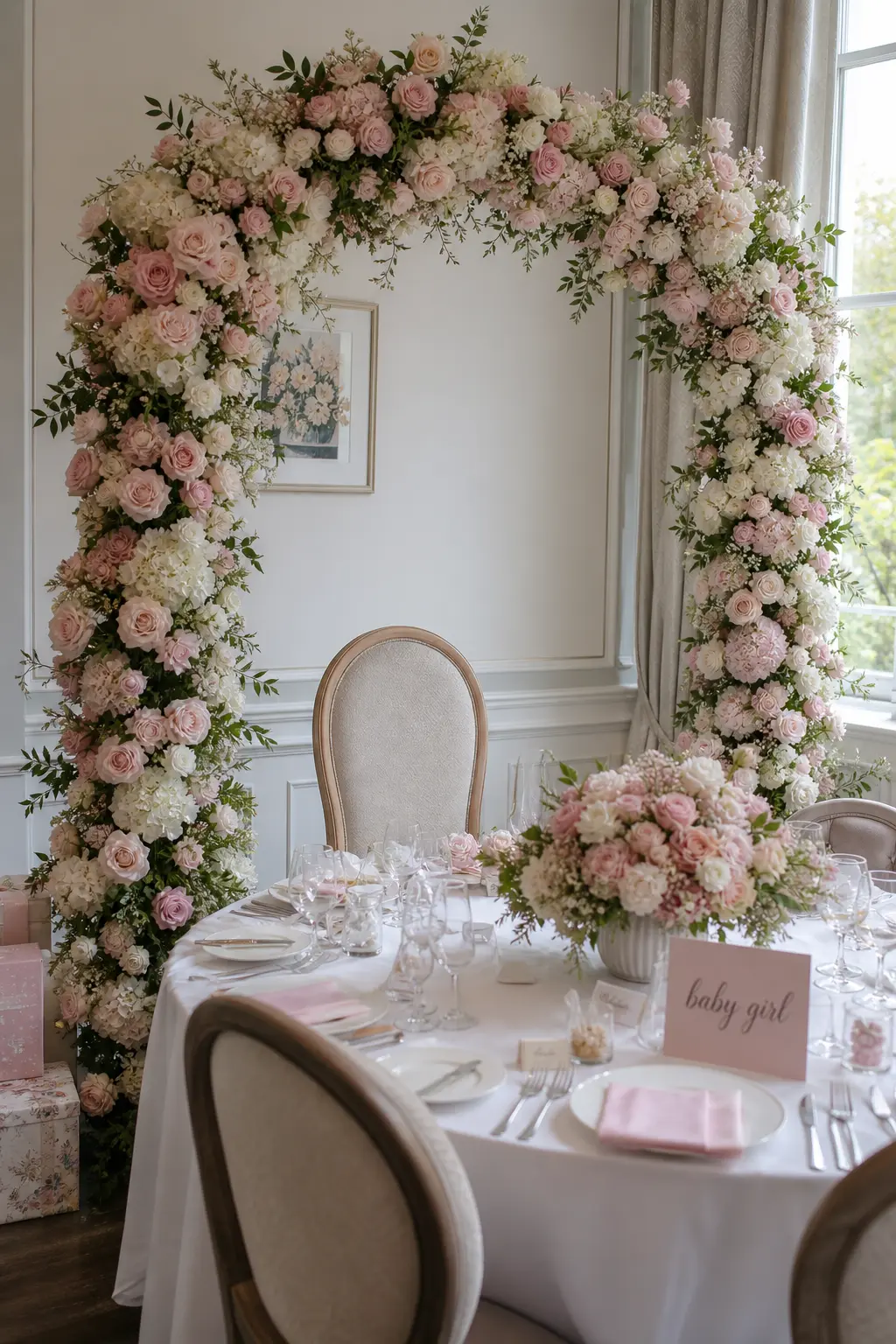
A Floral Arch Framing the Seat of Honour
The arch goes where the guest of honour sits, full stop. It frames her chair the way a stage set frames the lead, and every photo taken in that direction becomes a proper portrait rather than a snapshot of a folding chair.
Scale is the thing most people get wrong. An arch that clears the chair by six inches reads as a wreath. The base of each leg should touch the floor, the top should clear the seated person’s head by at least eighteen inches, and the width should be wider than the chair plus armrests. Build it on a free-standing frame so no wall anchor is needed.
Hardy varieties like spray roses, eucalyptus, and dried pampas hold their shape for a full afternoon without any misting. Fresh garden roses are beautiful but will start to droop after two hours in a warm room, so factor that into the call.
🛍 Shopping guide
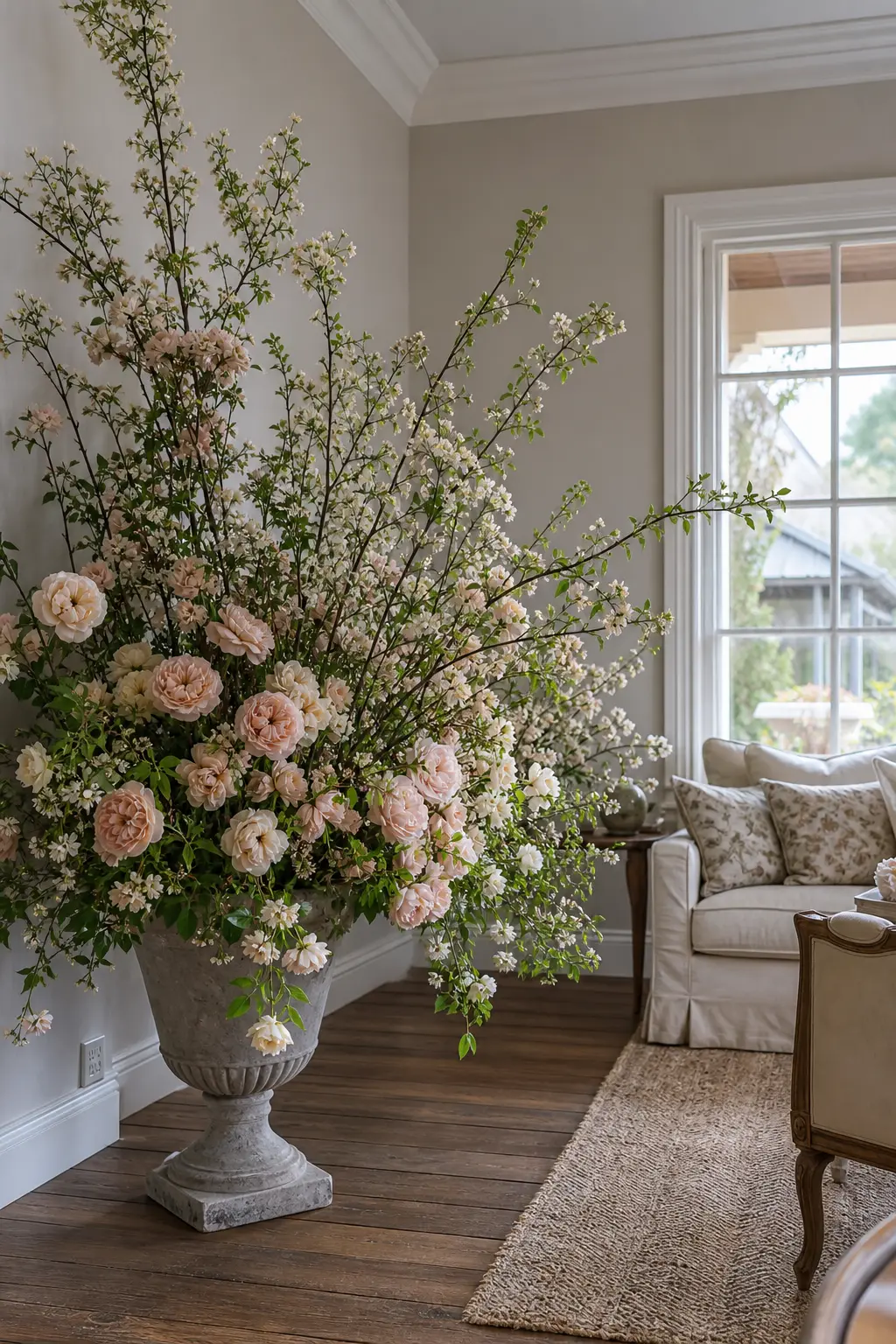
A Single Oversized Arrangement as the Room’s One Photo Backdrop
One arrangement the size of a small tree anchors a corner and becomes the room’s natural photo spot without any backdrop stand required. The rule is simple: if it looks right from across the room, it is big enough. If it only looks right up close, it is a centrepiece that has been promoted above its station.
Choose a vessel with real weight, a stone urn, a terracotta pot, a wide ceramic bowl, so the base matches the scale of what sits in it. Tall branches, flowering quince or cherry blossom stems, or bundles of dried seed heads give height without the cost of flowers at that volume.
Place it where a tripod would go, in the corner with the best natural light. Guests will find it on their own.
🛍 Shopping guide
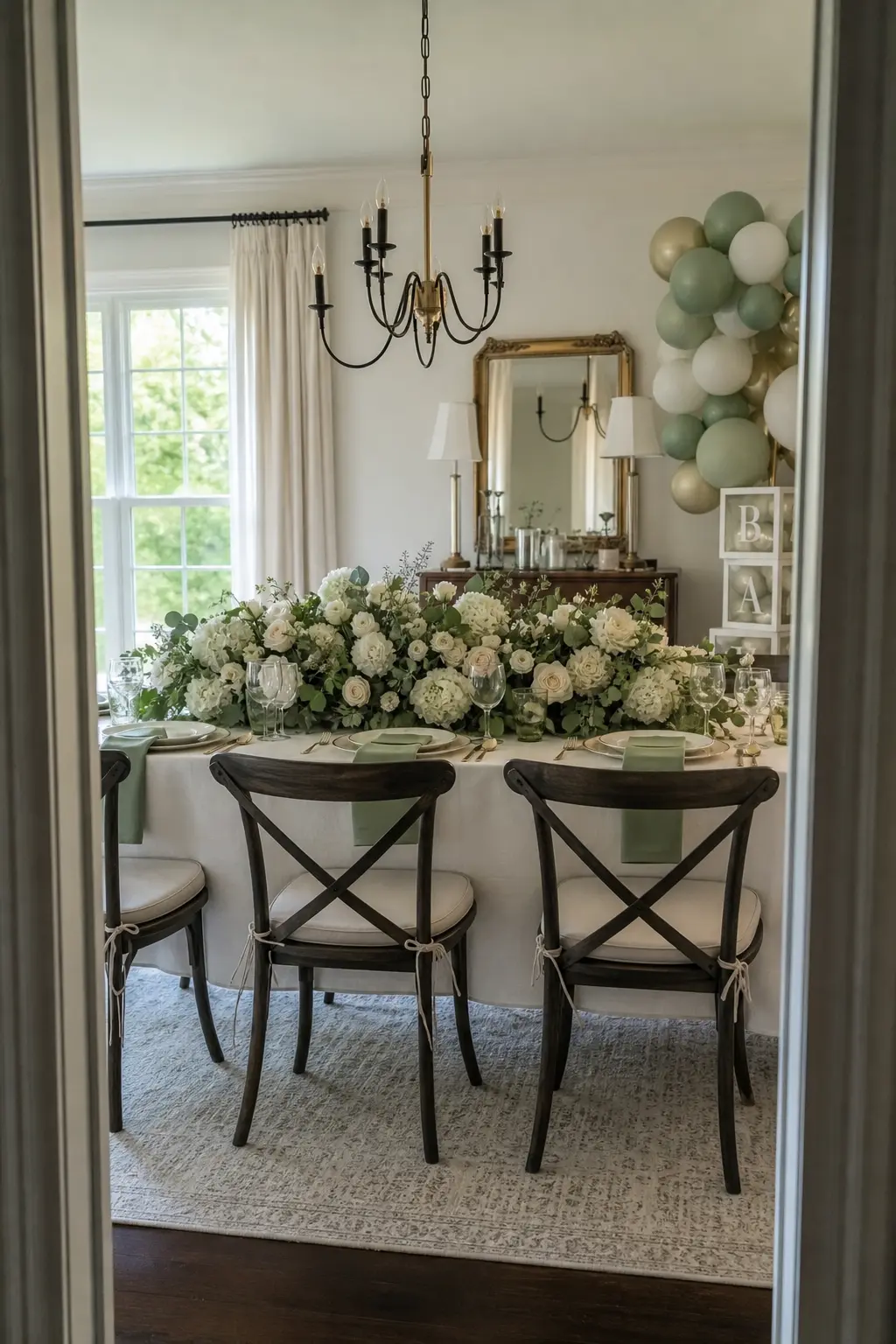
A Floral Arrangement Scaled to the Room’s Actual Size
Most floral arrangements are scaled to the florist’s bench, not to the room they end up in. A piece that fills a studio apartment reads as clutter. A piece that suits a ballroom disappears in a dining room. The fix is to measure first.
Stand at the room’s entrance and note what you can actually see from that distance. Then build the arrangement to be visible and readable from that spot, not just beautiful at arm’s length. For a standard dining room, that usually means an arrangement at least sixty centimetres wide and sixty centimetres tall.
Use fewer variety types and more stems of each one. A mass of a single flower at scale looks deliberate. A small amount of twelve different flowers looks like leftovers.
🛍 Shopping guide
The Head Table: Linear Arrangements
A long table has a long sightline, and a long sightline needs something horizontal to anchor it. These ideas run the length of the table rather than rising above it.
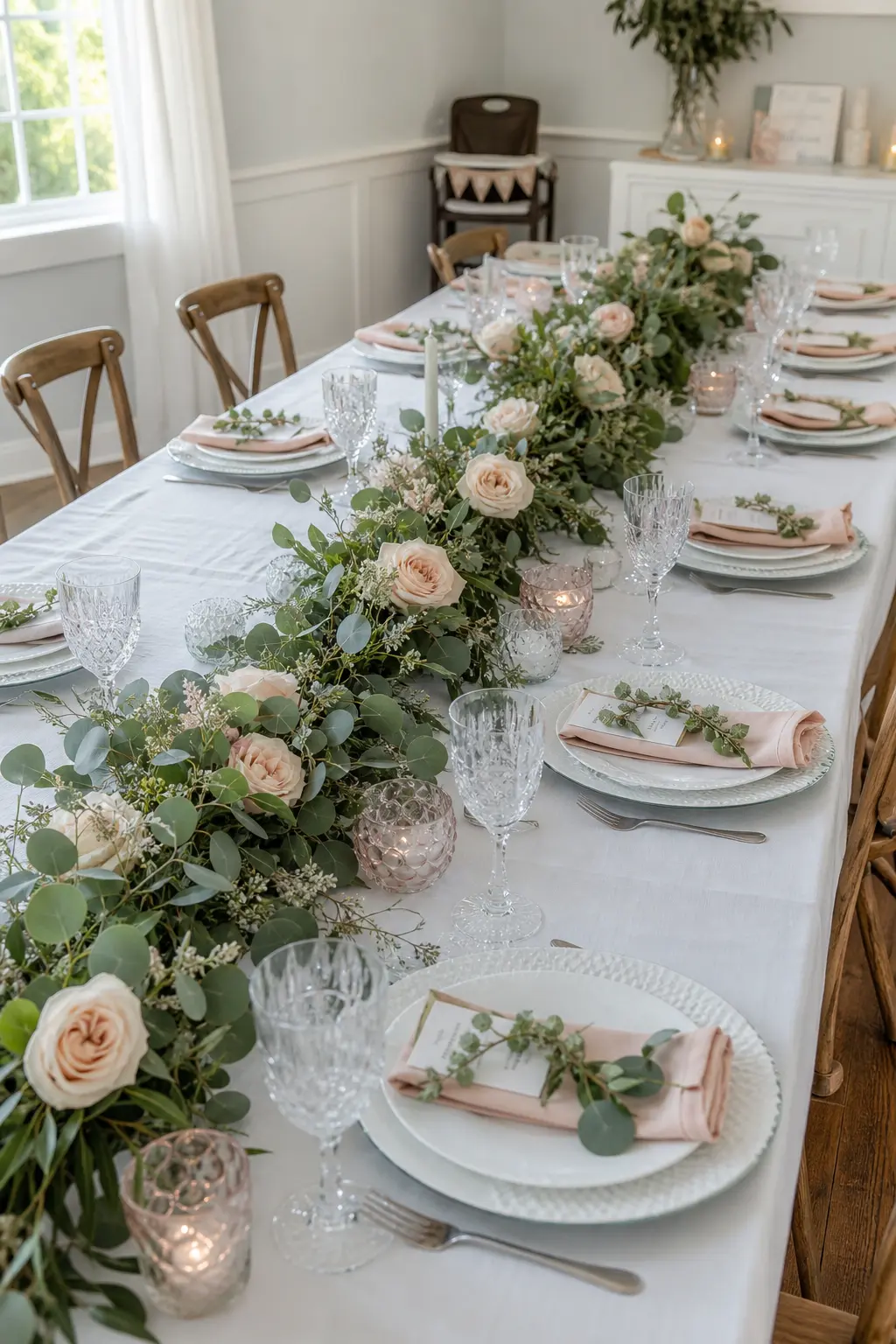
A Floral Garland Along the Head Table
A garland runs the length of the table and reads as a continuous design decision rather than a series of separate arrangements. That horizontal line is exactly what a long table needs, because it pulls the eye along the whole surface instead of stopping at one point.
Lay it loose and low, resting on the tablecloth rather than suspended above it. Suspended garlands need rigging and they block sightlines. A laid garland can be moved if someone needs more elbow room, and it photographs beautifully from any angle.
Foliage makes up the bulk, cheaply: eucalyptus, olive branches, and ruscus all hold well for a full-day event. Tuck in flower heads at intervals, and the garland looks expensive without being expensive.
🛍 Shopping guide
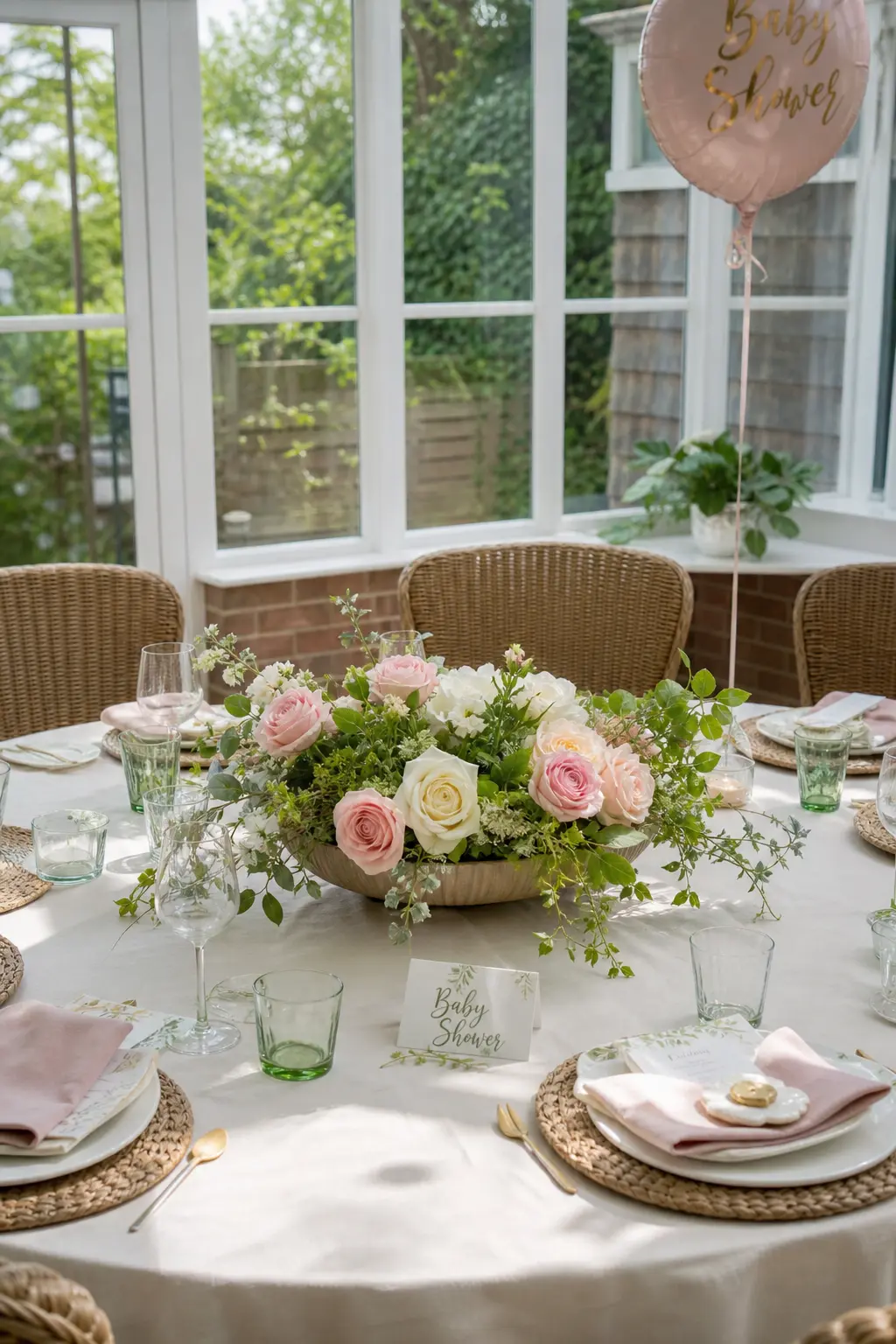
A Floral Centrepiece Kept Low Enough Not to Block Conversation
The centrepiece that wins every argument is the one nobody has to move to see the person across the table. The rule is practical: keep the top of the arrangement below eye level when seated, which means under roughly thirty centimetres for most chairs.
Low does not mean flat. A wide, lush arrangement at that height still commands the table surface. Use a short, wide vessel, a shallow bowl, a wide-mouthed jar, a low terracotta pot, and let flowers spill over the sides rather than climb above the rim.
This shape also makes the arrangement more stable than a tall one. No wobble when someone reaches across, and no disaster if a sleeve catches the edge.
🛍 Shopping guide
The Backdrop: Florals That Photograph
Where people stand for photos matters as much as what is in the photos. These ideas give the camera something worth pointing at, without a single balloon in frame.
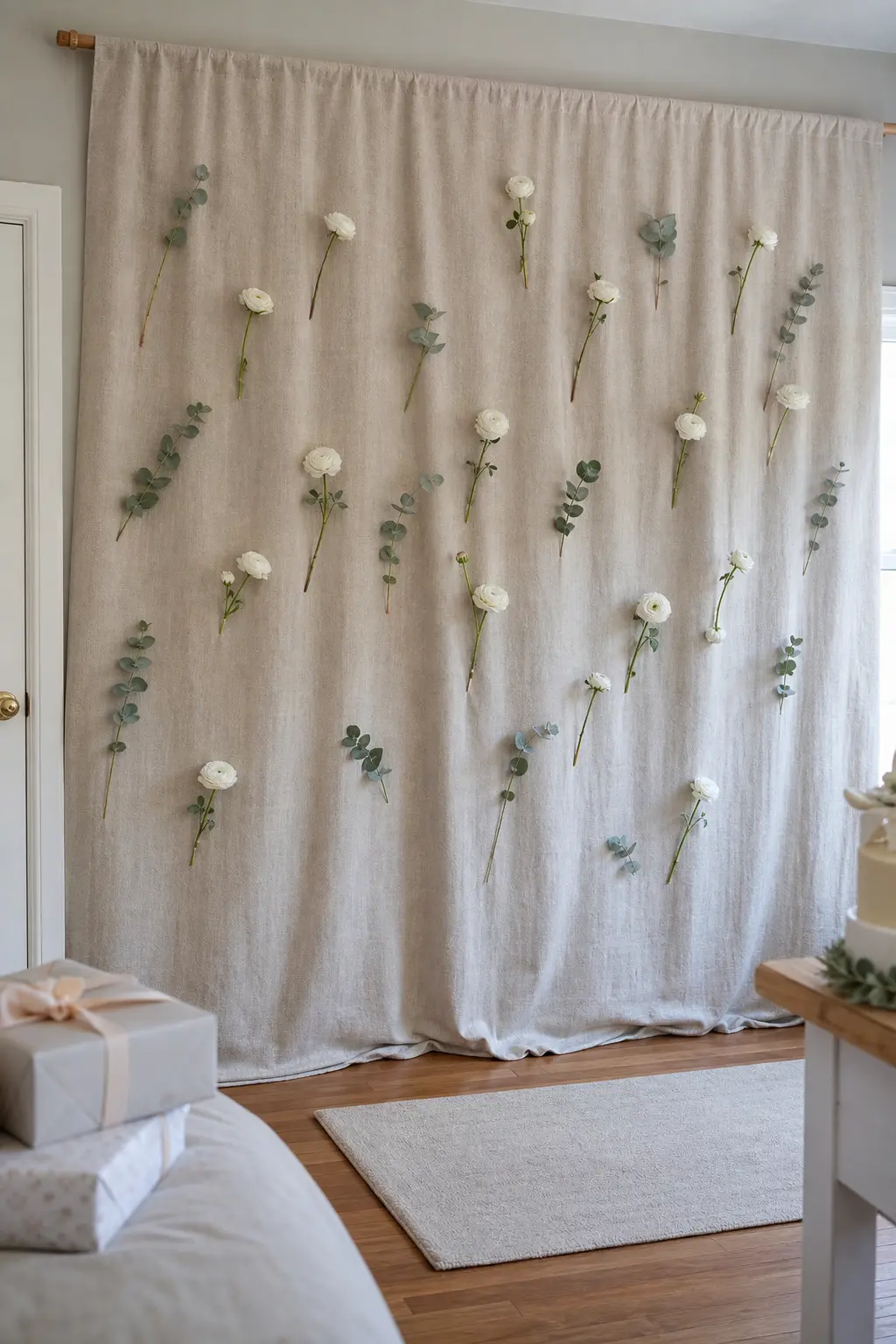
Fresh Florals Threaded Through a Plain Fabric Backdrop
A plain linen or muslin backdrop costs almost nothing and photographs beautifully on its own. Thread fresh stems through a loose weave or pin small bud vases to a wooden rod behind it, and you have a backdrop that looks considered without looking corporate.
The fabric does the heavy lifting, and the florals are the punctuation. Space them unevenly, not in a grid, because nature is not a spreadsheet. Cluster two or three stems together, leave a gap, cluster again.
Keep the flower variety tight: one or two types maximum, in one colour family. The simplicity of the fabric makes a busy floral mix look scattered rather than lush.
🛍 Shopping guide
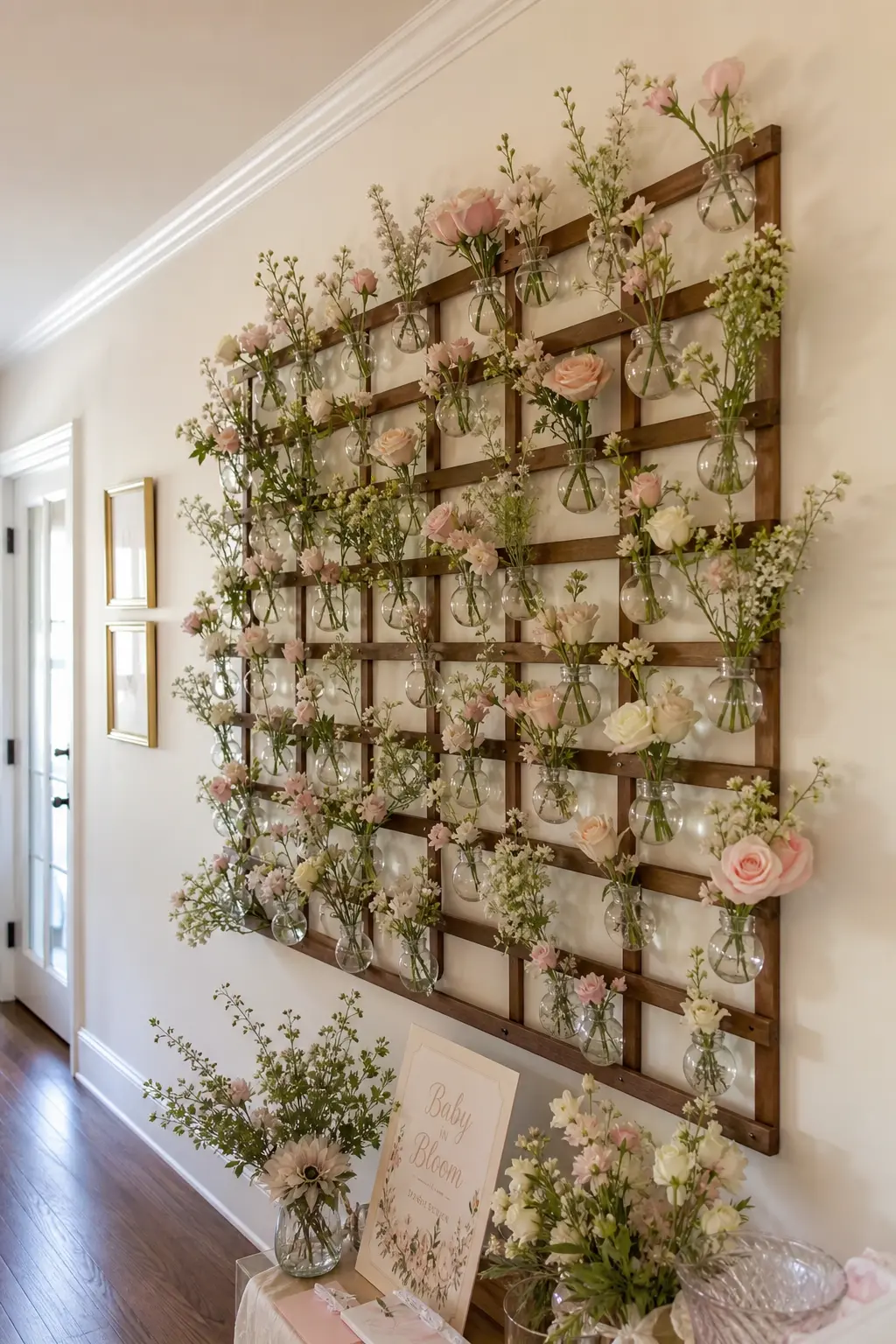
A Floral Wall Built from a Grid of Small Bud Vases
A grid of small bud vases, each holding two or three stems, creates the visual mass of a flower wall without the cost or the foam. Mount a wooden grid or a pegboard panel on the wall, hang small vases from each peg, fill with water, and add stems the morning of the event.
The grid structure is what makes it look intentional rather than random. Uniform vases, same size and same colour, let the flowers be the variable. Vary stem heights slightly within each vase so the surface has texture without chaos.
This is also the most reusable setup on the list. The grid and the vases pack flat, and the flowers are the only thing that changes next time.
🛍 Shopping guide
The Dessert Table: Overhead and Eye-Level
The dessert table gets photographed more than any other surface at a shower. These ideas make it worth the shot from every angle.
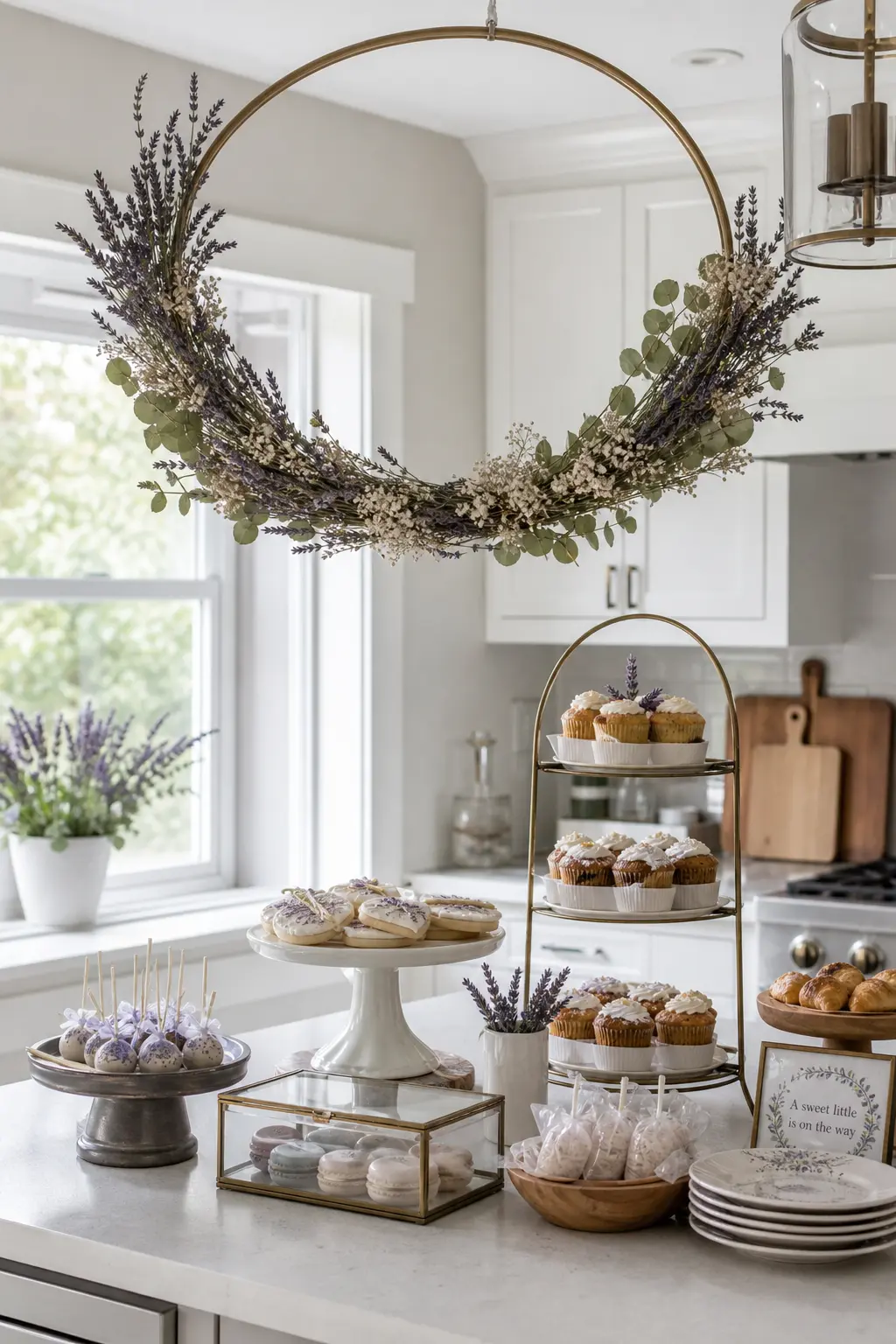
A Floral Hoop Hung Above the Dessert Table
A brass or wrought-iron hoop hung from the ceiling above the dessert table frames every photograph taken of the food without touching the food. It adds a vertical element to the table without blocking anything at eye level.
Tie foliage and flower stems to the hoop with fine wire or natural twine, leaving the bottom of the circle open so the desserts below stay visible. Hang the hoop so its bottom edge sits roughly thirty centimetres above the tallest item on the table.
Dried florals, bundles of dried lavender, and preserved gypsophila are ideal here because they will not drop petals onto the food surface. Fresh flowers can be used if the hoop is high enough that nothing falls directly onto what is being served.
🛍 Shopping guide
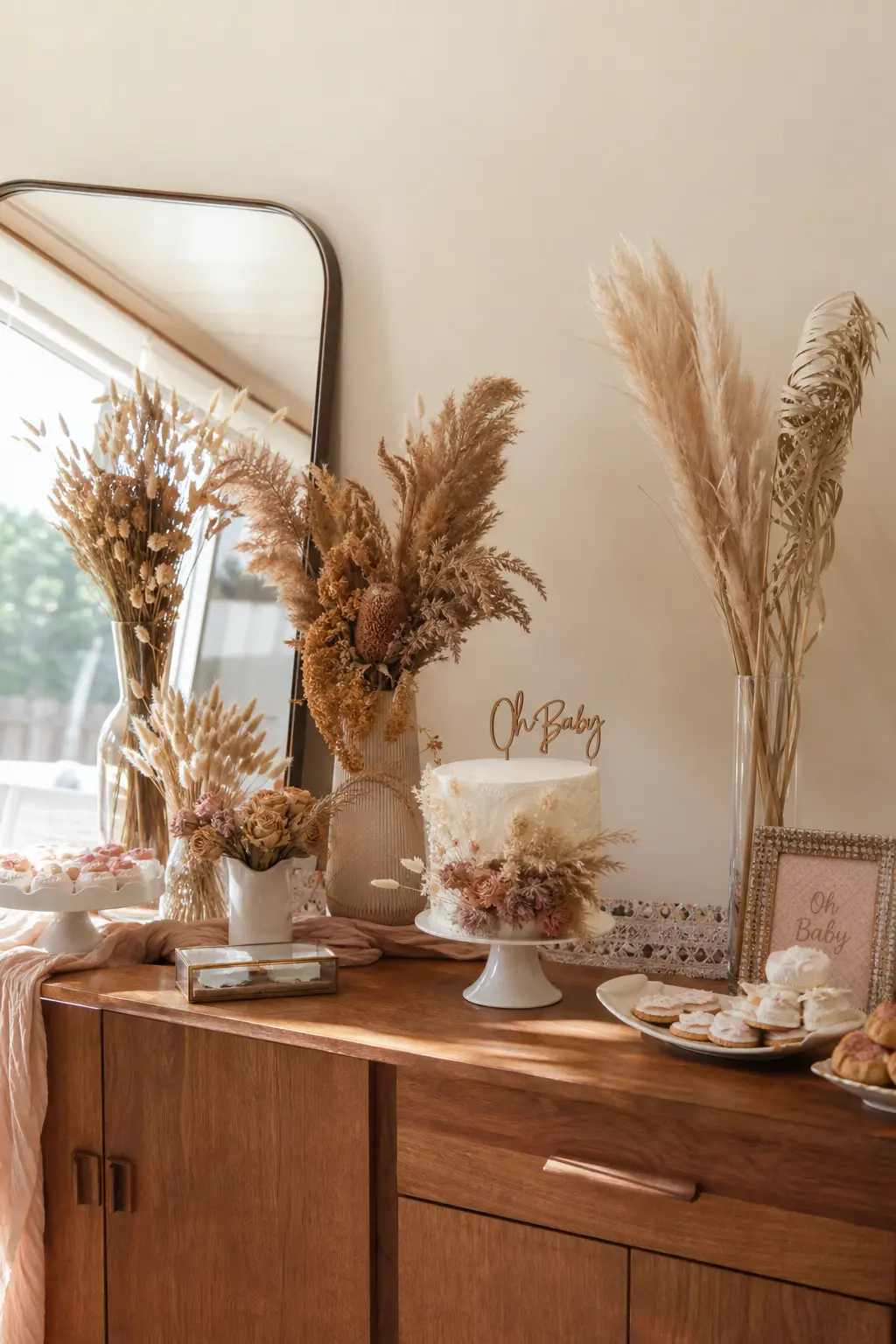
Dried Florals as a Permanent Room Layer
Dried florals do not wilt, do not need water, and look better as the day goes on rather than worse. For a shower running four or more hours, they are not a compromise, they are the smarter call.
Dried pampas, bunny tail grass, dried roses, and preserved palm spears give a range of textures that reads as considered, not as a single note. Group them in tall, narrow vessels at varying heights across the dessert table, and they create a landscape rather than a line of vases.
The colour palette in dried florals tends naturally toward warm neutrals and soft dusty tones, which works beautifully for both gender-neutral and soft feminine shower palettes. Add one or two fresh stems in a bolder colour if you want a sharper accent.
🛍 Shopping guide
The Details: Repeating Florals That Add Up
Sometimes the impact comes from repetition, not from one large piece. These ideas work because they are consistent, not because they are elaborate.
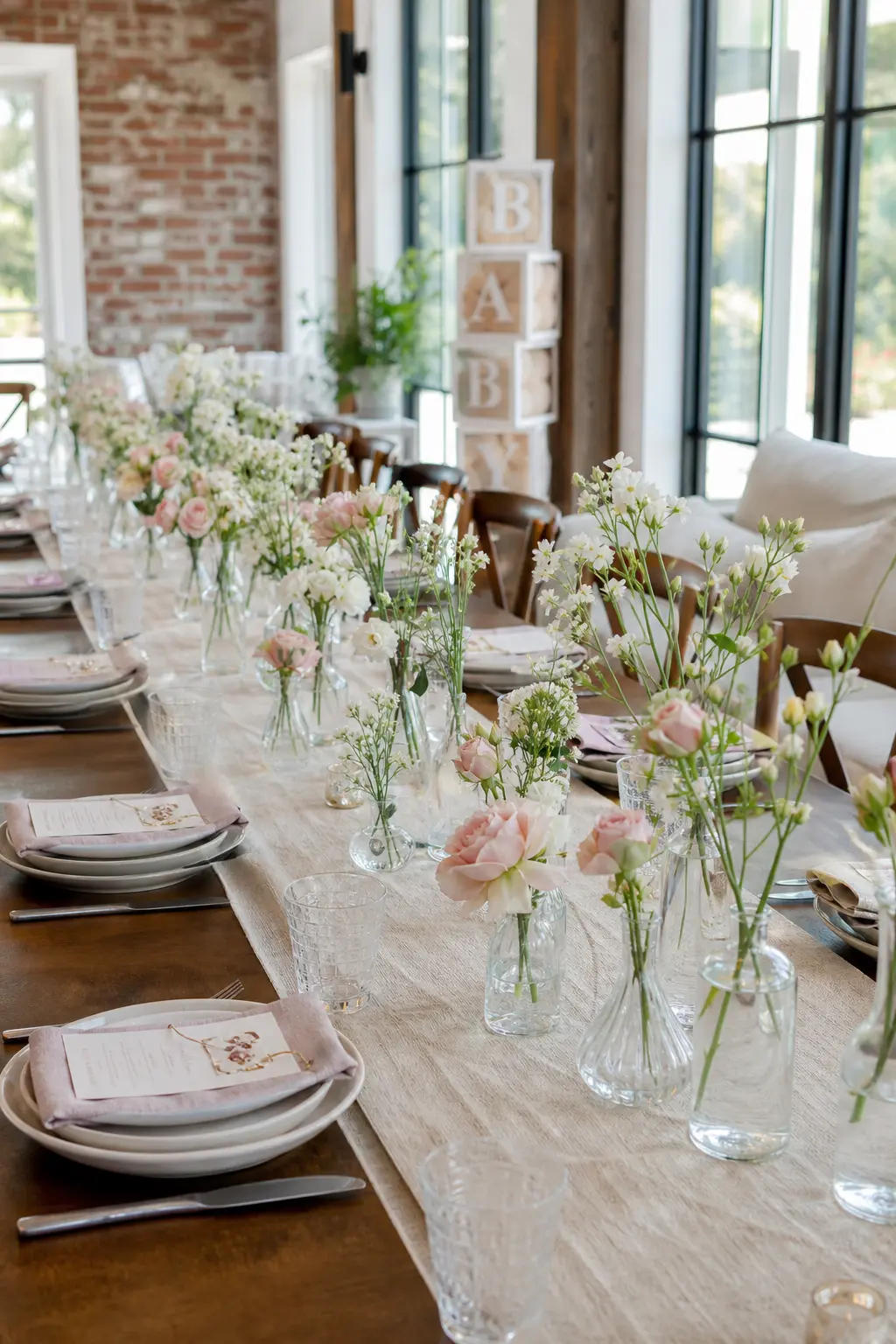
Florals in Bud Vases Repeated Down the Length of the Table
Repetition is a design tool, not a lack of imagination. Twenty matching bud vases spaced evenly down a long table create a visual rhythm that a single large centrepiece cannot. Each vase holds two or three stems. The cumulative effect is lush.
The key is uniformity in the vessels and variety in the stems. Same vase shape, same colour, same height. Then vary the flower heads slightly: all the same variety but in two tones, or the same colour in two different flower types. That small variation keeps it from looking like a production line.
Bud vases are also the most budget-friendly approach on this list per stem. Three stems in twenty vases is sixty stems total, and that is a very manageable flower order.
🛍 Shopping guide
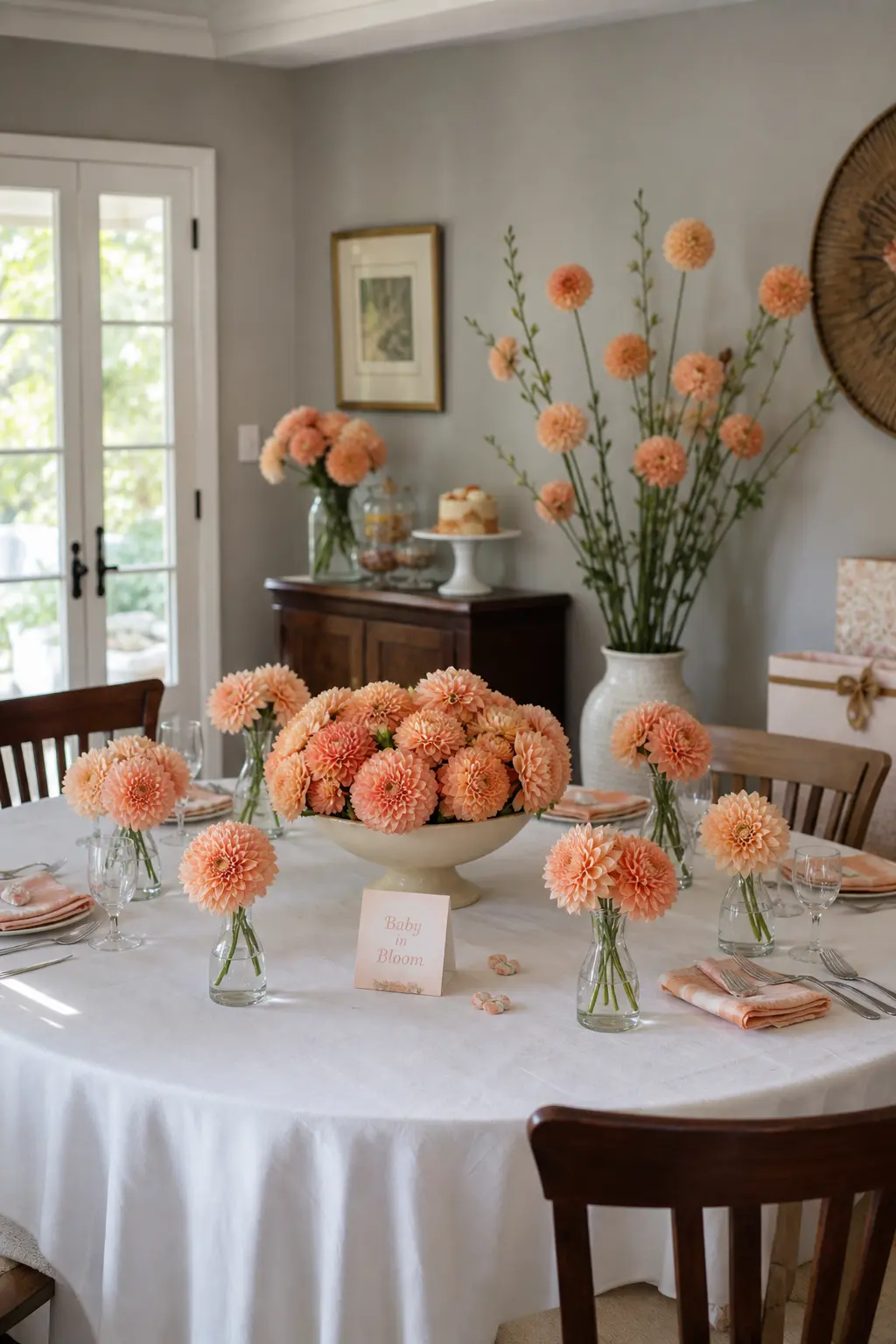
A Single Flower Variety Used Throughout
Choosing one flower variety for every arrangement in the room is the single fastest way to make a decor plan look like it was done by someone who knows what they are doing. The variety does all the work. Nothing needs to match because everything already does.
Good candidates for this approach are flowers that come in multiple tones of one colour: spray roses in three shades of peach, ranunculus in blush through dusty rose, or sweet peas in lavender through violet. Use the lighter tones in the smaller vessels and the deeper tones in the larger arrangements.
This approach also makes ordering flowers dramatically simpler. One variety, multiple stem counts. The florist has less to source and usually charges less for it.
🛍 Shopping guide
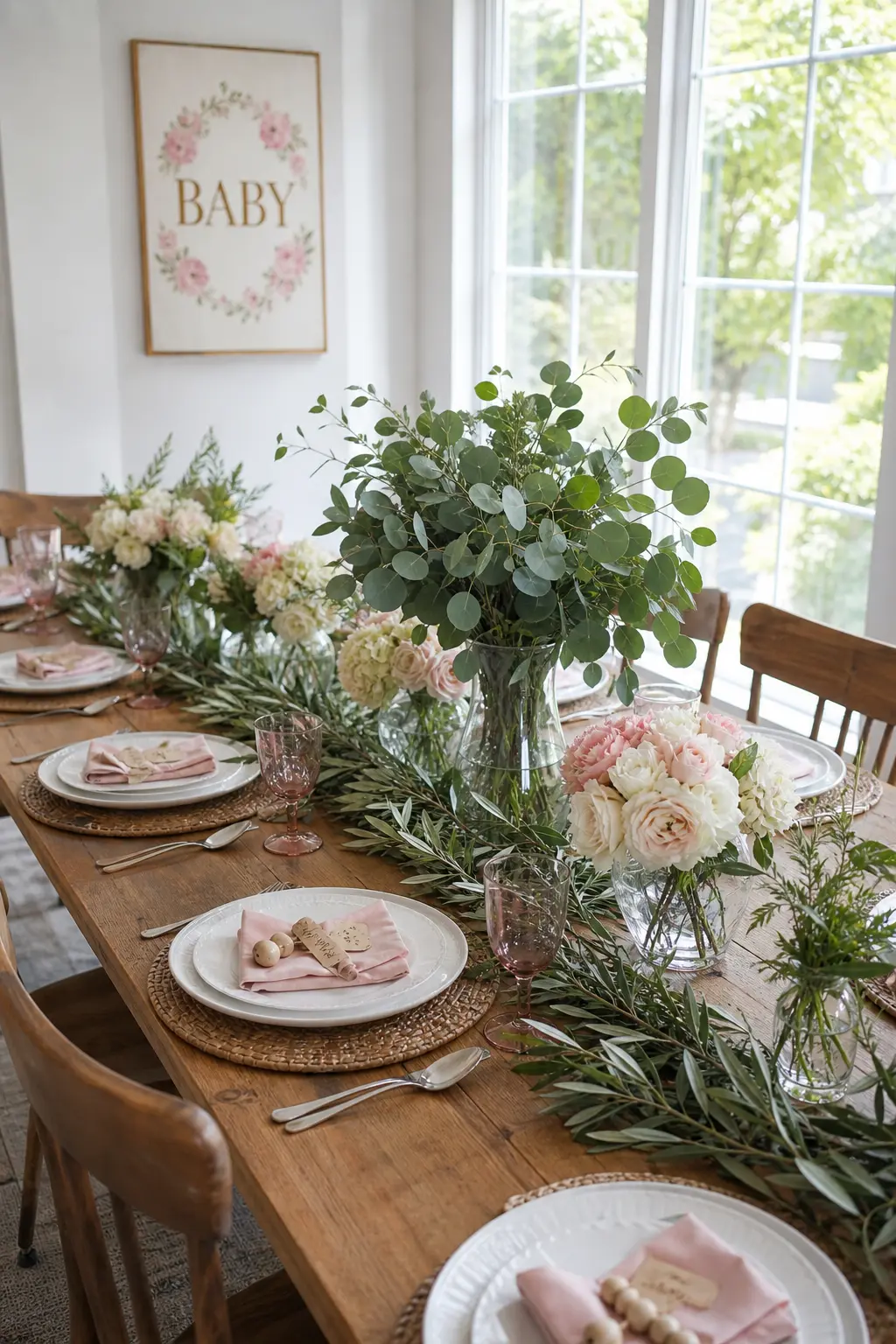
Florals Paired With Real Greenery
Greenery does two things flowers alone cannot: it adds depth, and it makes even a modest stem count look full. The ratio that works without looking like a garden centre display is roughly sixty percent foliage to forty percent flowers by volume.
The foliage varieties that hold best over a long event are eucalyptus, olive branches, bay laurel, and Italian ruscus. All four tolerate a warm room without wilting for four to six hours, especially if their stems are in water. Ferns and tropical leaves are beautiful but droop faster.
Pair greenery with florals in a colour that contrasts with the leaf tone rather than matches it. Warm blush against grey-green eucalyptus, cream against deep olive, white against dark bay. The contrast is what makes each element visible.
🛍 Shopping guide
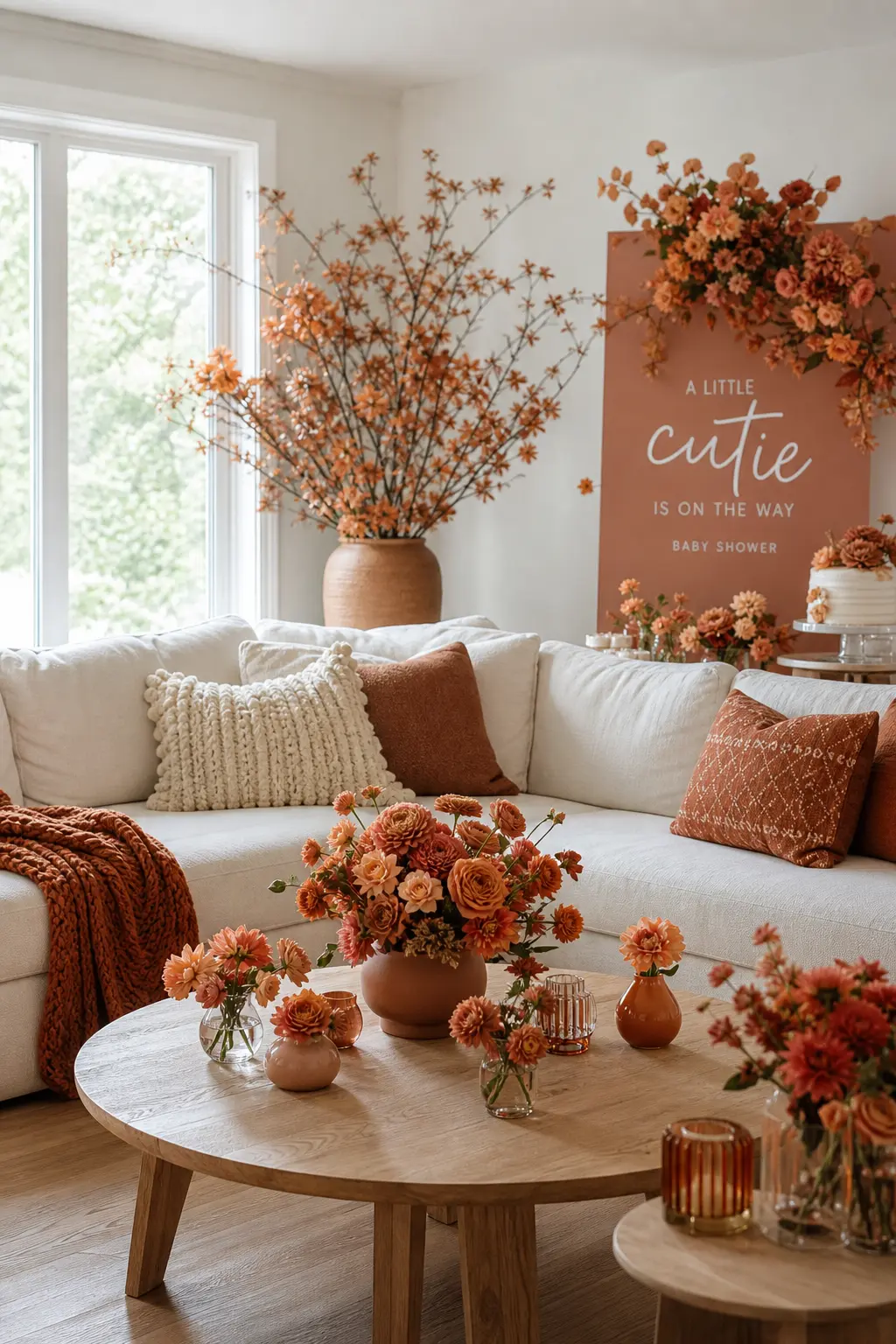
Florals in a Single Seasonal Colour
A single colour used in every arrangement, at every scale, across the whole room is the floral equivalent of a monochrome outfit. It looks intentional because it is intentional. It also photographs with far more impact than a mixed palette because the colour reads as one cohesive element, not as noise.
Choose the colour from what is in season locally, because in-season flowers cost less and hold better. Autumn leans to terracotta, rust, and deep burgundy. Spring gives soft yellow, lilac, and warm white. Summer brings coral, peach, and rich magenta. Winter works beautifully in cream, deep green, and berry.
Within the single colour, vary the tone from arrangement to arrangement. Lighter in small vessels, deeper in large ones. The tonal range gives the room dimension without breaking the colour story.
🛍 Shopping guide
The Guest of Honour: Wearable and Personal
One floral detail worn or held by the guest of honour signals to every photo that she is the centre of the room. It also costs almost nothing compared with structural decor.
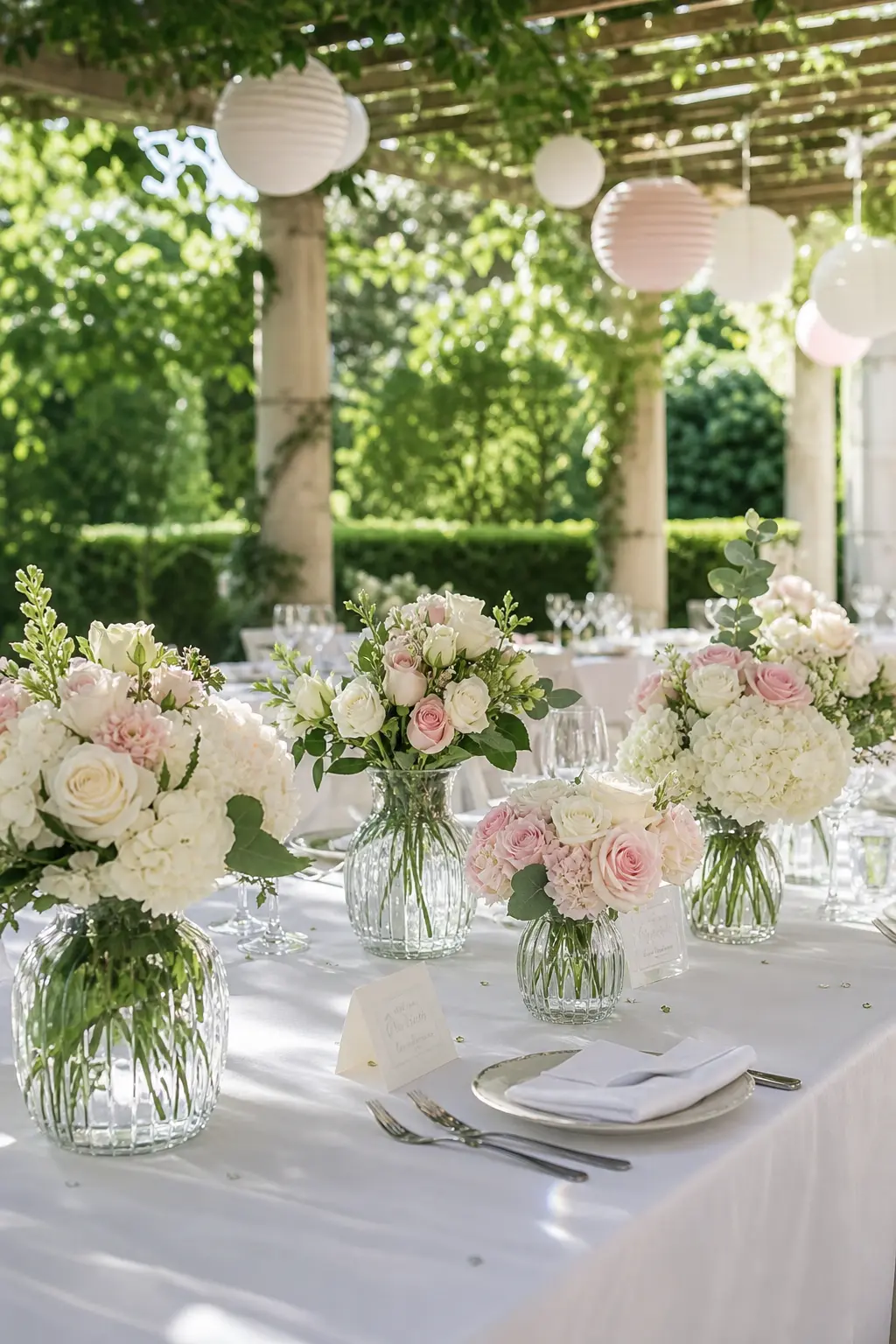
Fresh Flowers Chosen for How They Hold Up
Choosing flowers for a shower the same way a florist chooses flowers for a funeral or a wedding ceremony means thinking about endurance first and beauty second. In practice, the varieties that hold up are also some of the most beautiful, so this is not a sacrifice.
Lisianthus, spray roses, waxflower, chrysanthemums, and alstroemeria all hold their form for six or more hours at room temperature with their stems in water. Dahlias and peonies look extraordinary but will start to drop petals after two to three hours in a warm room. Hydrangeas wilt fastest of all, especially if anyone bumps the arrangement.
If the shower is outdoors or in a warm space, add a stem of dried florals to each arrangement as a structural element. If one fresh variety drops, the dried stems hold the shape until the end.
🛍 Shopping guide
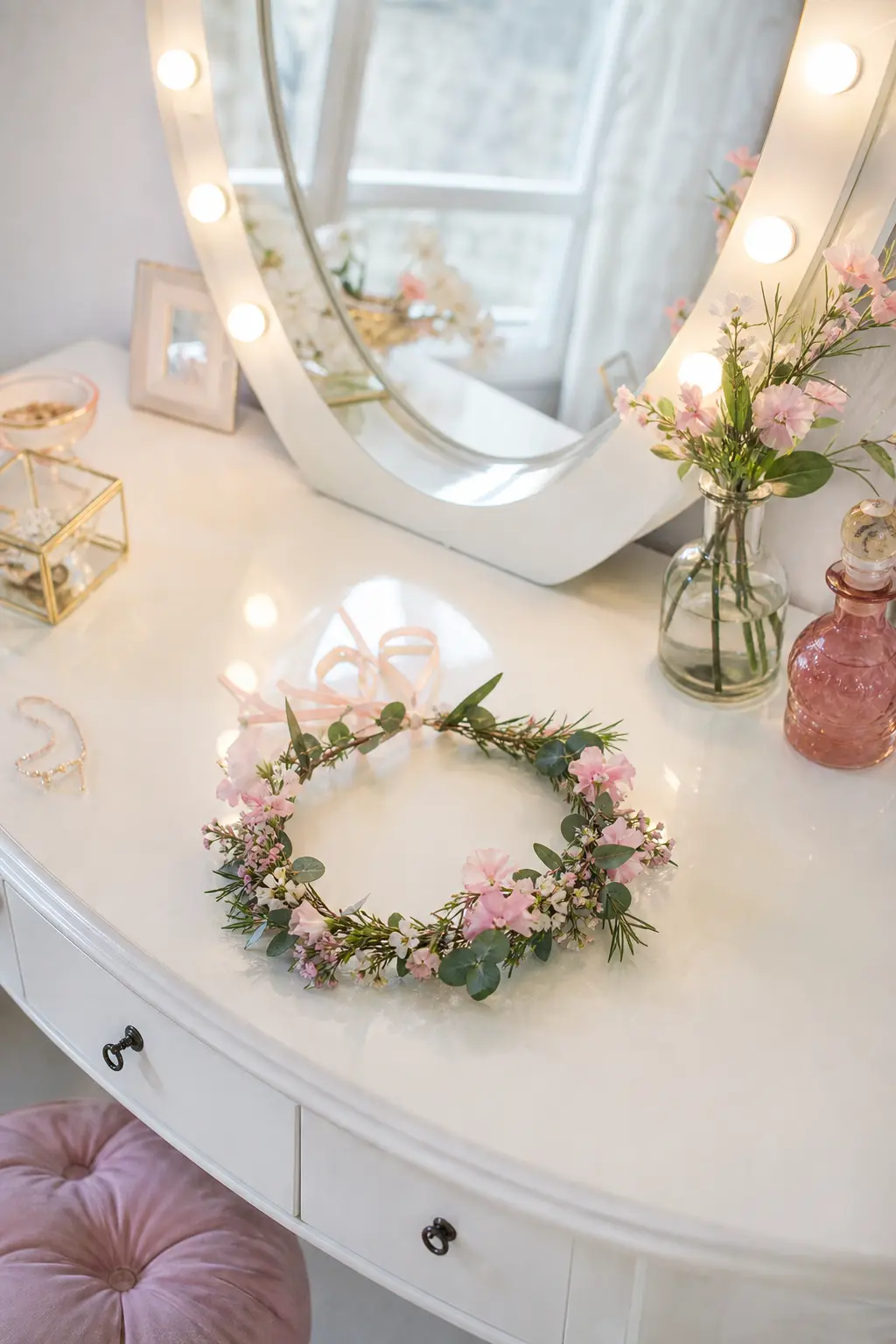
A Floral Crown for the Guest of Honour
A floral crown tells every photograph who the guest of honour is without a sash or a badge. It also moves with her, so every shot taken anywhere in the room has the florals in it.
Keep the crown simple and proportional. A wide crown loaded with large flower heads is heavy and tends to slide. A narrow crown using small flower types, waxflower, sweet peas, small spray rose heads, and fine foliage, stays put for hours and looks effortless rather than theatrical.
Wire crowns can be made the morning of the event and kept in a cool spot until needed. Alternatively, most florists will make a simple crown for considerably less than a bouquet, so it is worth asking before building one from scratch.
🛍 Shopping guide
floral baby shower decorations
The through-line in every idea above is intention. Florals do not decorate a room the way balloons do, by filling space with colour and volume. They anchor it. That means the choices that matter most are scale, water source, and a single colour or variety thread that holds the whole room together visually.
Start with the focal point and build outward. Settle the backdrop first, then the head table, then the repeating details. Dried florals and hardy fresh varieties like spray roses, waxflower, and lisianthus earn their place at multi-hour events because they hold their shape without a mist bottle. Bud vases with fresh-cut stems in water keep things alive as long as needed.
For more on pulling the full room together, see the hub on baby shower theme decorations, or go deeper on specific elements with the guides on baby shower table decorations, simple baby shower decorations, diy baby shower decorations, and storybook baby shower decorations.
Frequently Asked Questions
How do you decorate a baby shower without balloons?
Florals are the most direct replacement because they operate at the same scale and visual weight balloons used to. A floral arch, a large floor arrangement in a corner, or a garland along the head table each does the structural job a balloon wall or balloon arch once did. The difference is that florals need a water source for anything fresh running over two hours, and the variety choices matter for longevity. Dried florals sidestep the endurance question entirely and hold up in any temperature.
What is a popular baby shower theme this year?
Botanical and garden themes are drawing the most attention right now, partly because floral baby shower decorations translate so directly into them. Single-colour floral palettes, dried floral pairings with natural textures, and pared-back greenery-forward arrangements are all trending. Gender-neutral palettes in terracotta, sage, and warm cream are also consistently popular for their versatility.
How much should baby shower decorations cost?
A workable floral decor budget for a home shower starts around one hundred fifty dollars for bud vases and a simple garland, and scales to five hundred or more for a full arch plus head table treatment plus backdrop. Dried florals and foliage-heavy arrangements cost considerably less than all-fresh setups. Ordering wholesale stems online and arranging them yourself is the single most effective way to reduce cost without reducing visual impact.
Can baby shower decorations work for a gender neutral shower?
Florals are naturally well-suited to gender-neutral showers because the colour choices are entirely in your hands. A single-colour palette in warm white, cream, terracotta, sage, or dusty lilac reads as refined and neutral without leaning into pink or blue. Dried florals in particular tend toward neutral tones by nature. Pairing any floral scheme with natural textures like linen, rattan, and timber keeps the palette grounded and gender-neutral.
15 bear baby shower games for a 'We Can Bearly Wait' theme — printable, active & quiet ideas your
33 another chapter baby shower theme ideas across invitations, decor, food, games and gifts. Soft, l
24 blue jean baby shower theme ideas, from a denim backdrop to bandana napkins and potted cactus fav
Leave a Reply