

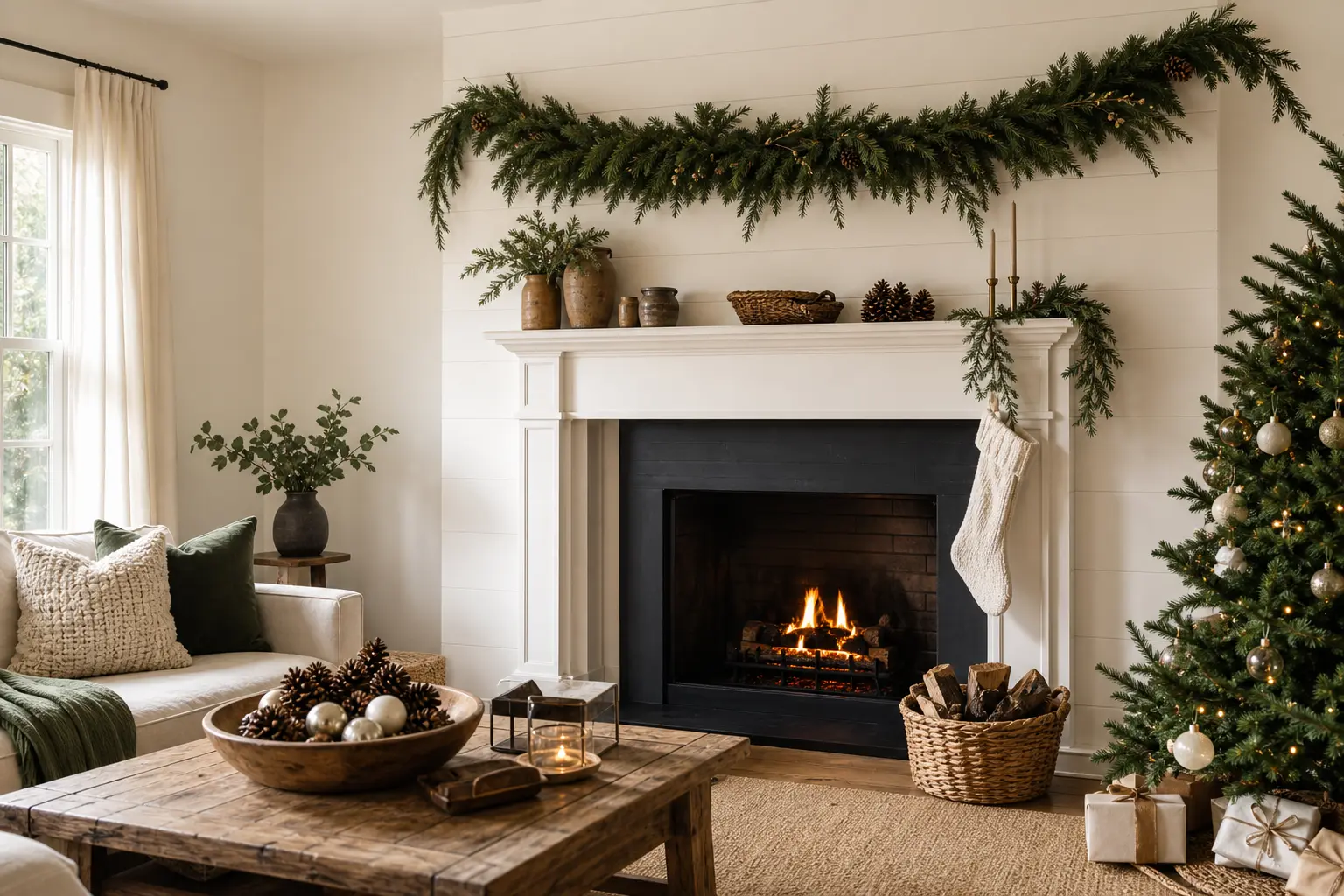
Christmas fireplace decor looks effortless in every magazine shoot, because every magazine shoot uses a fireplace that has never been lit. If yours actually works, you already know the problem: garlands drape too low, stockings hang directly above the opening, and dried greenery sits inches from sparks. Decorations catching fire are a leading cause of seasonal house fires, and almost no roundup acknowledges it.
Some ideas are rated safe above a live flame because they hang high and short, use non-combustible materials, or move entirely to the side. Others are hearth-level ideas that belong there only when the grate is cold. A few require nothing more than shifting things six inches to the left. For the full picture of how the mantel fits into the rest of the room, browse the christmas decor hub.
All 33 ideas use the same palette: cedar green, magnolia brown, brass, oxblood, and cream. Pick three of those five and the whole room reads as intentional. The rest is just knowing where to put things safely.
This post contains affiliate links. If you buy through them, I may earn a small commission at no extra cost to you.
Above the Fire: What Can Actually Stay There
These ideas sit above the firebox opening and are designed for a working fireplace. The rule in every case is the same: nothing combustible hangs below the mantel shelf, and anything above it stays back from the edge. Keep at least twelve inches between the top of the firebox and the lowest point of any decoration.
Fresh greenery surprises people: it is actually safer than dried because the moisture content slows ignition. Dried greenery directly above a lit fire is excluded from this list entirely. If a piece starts to dry out mid-season, take it down.
Garland Pinned High and Short Above a Working Fire
The single most common mistake is letting a garland sag. Pin it so the lowest point sits at least three inches above the mantel shelf surface, not below it, and certainly not dipping toward the firebox. Two picture hooks at the very top of the chimney breast, close to the ceiling, pull it up short and taut.
Use a fresh noble fir or cedar garland, not a dried or preserved one. Mist it every two to three days. This is the only type of garland the National Fire Protection Association does not categorically advise moving away from a working fireplace, and only when pinned genuinely high.
Asymmetric Swag Falling to One Side Only
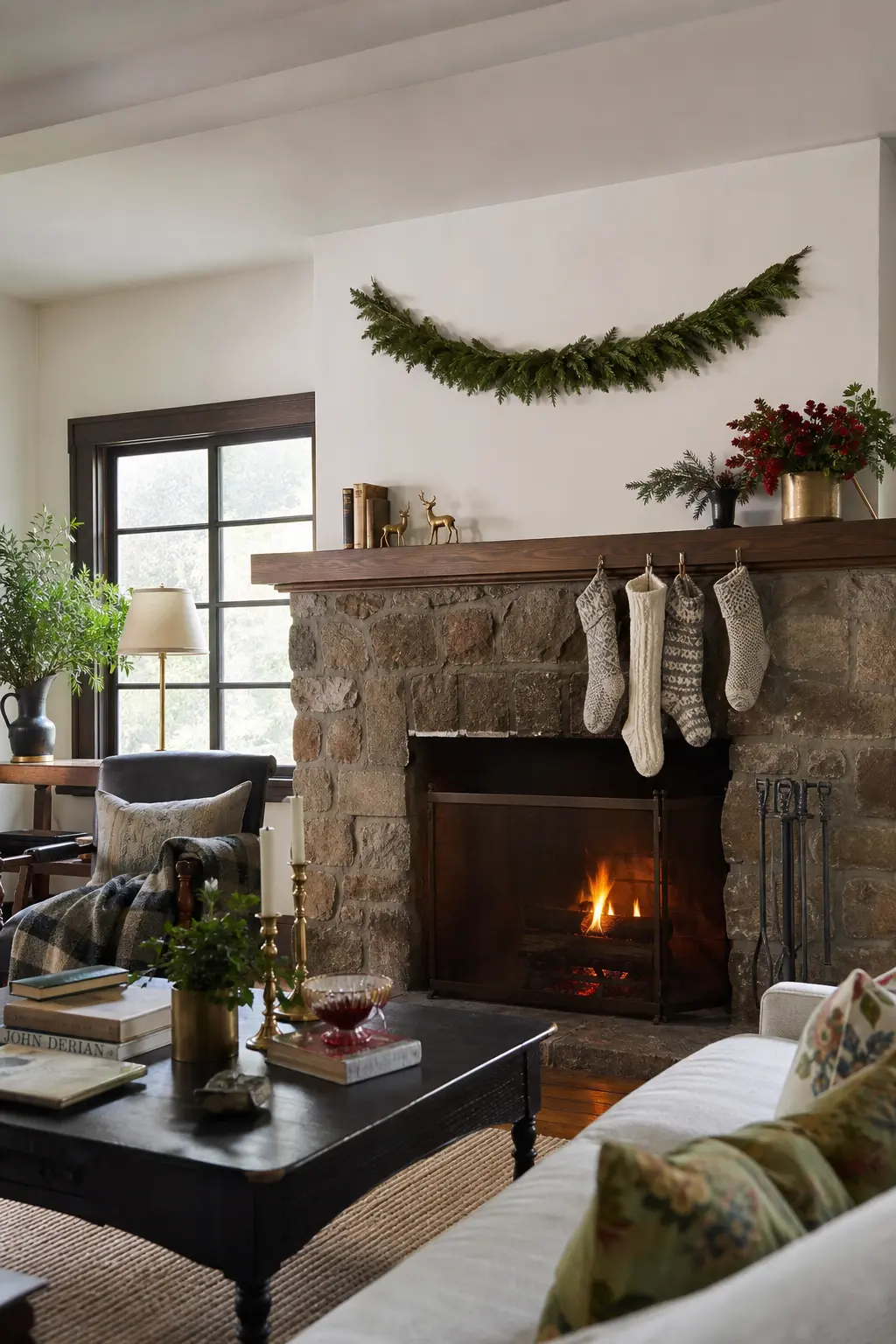
Instead of a garland spanning the full width, anchor one heavy swag at the top left corner of the chimney breast and let it cascade down the left side only, stopping well above the firebox opening. The right side stays clear. It reads as a design choice, not a half-finished job.
Load the swag with cedar, magnolia leaves, brass jingle bells, and a single oxblood velvet ribbon. All of that is non-combustible except the ribbon, which sits well above the heat. The asymmetry also means less total greenery near the fire, which is always the safer direction to move in.
Magnolia and Cedar Boughs Layered
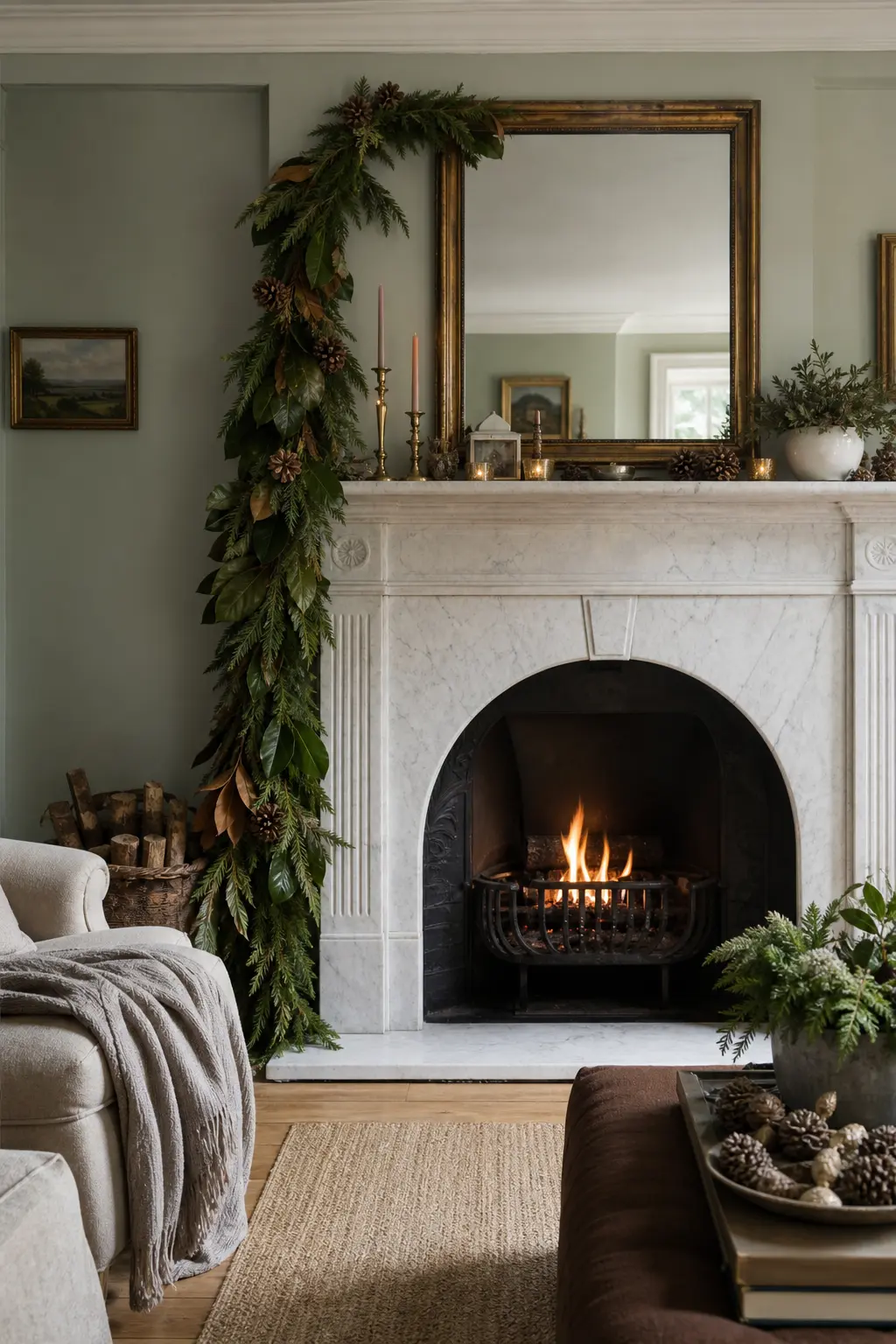
Lay magnolia stems flat across the back of the mantel shelf and tuck cedar boughs in front of them, both pointing inward from the ends toward the center. Neither layer overhangs the shelf front. The magnolia’s waxy leaves reflect the firelight and the cream undersides glow.
Replace any stems that start to curl or brown: dried magnolia above a fire becomes a problem. Fresh or high-quality faux magnolia stems both work. The layered look is dense enough to feel luxurious without a single piece of ribbon or wire near the heat.
Framed Art Swapped Above the Fire
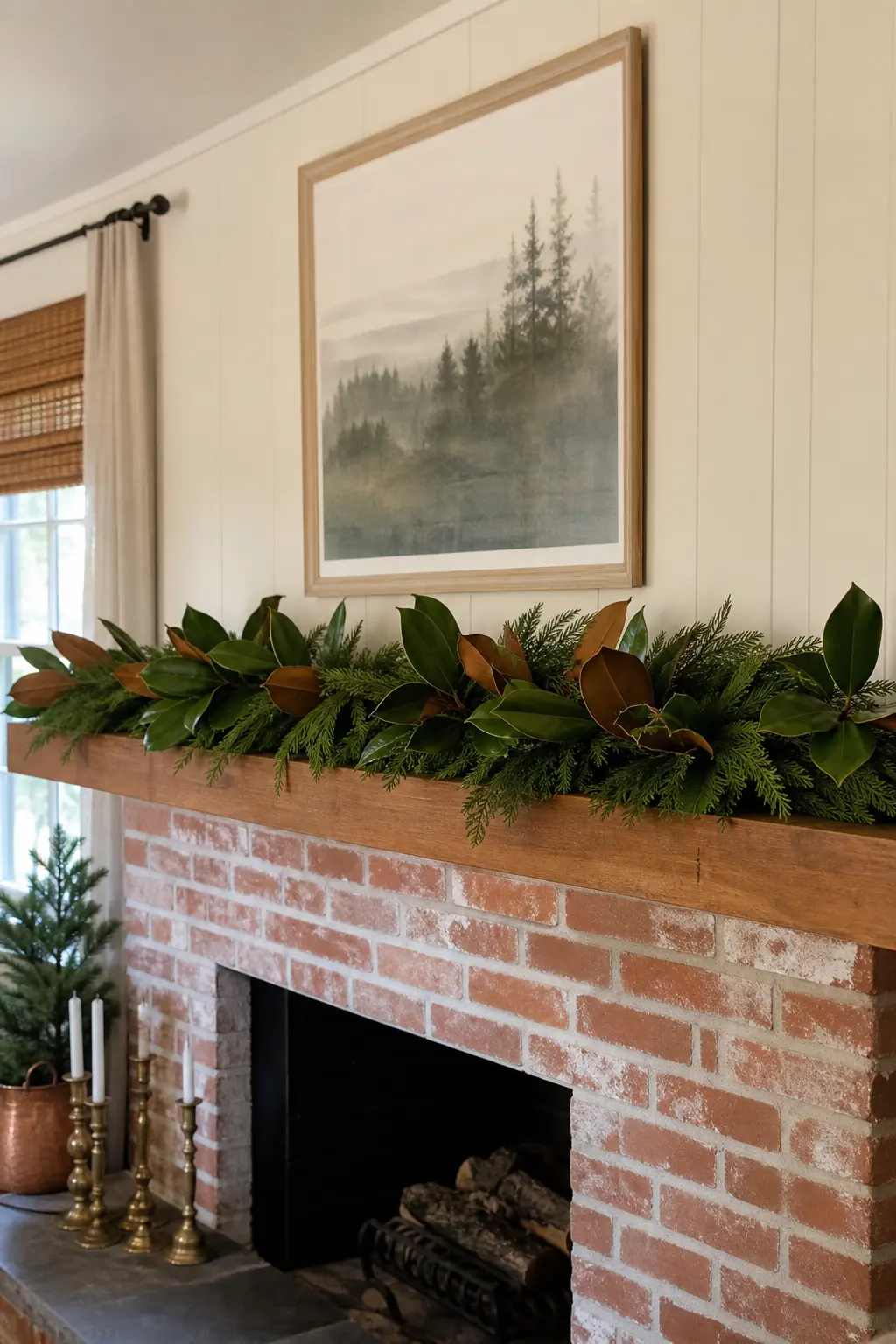
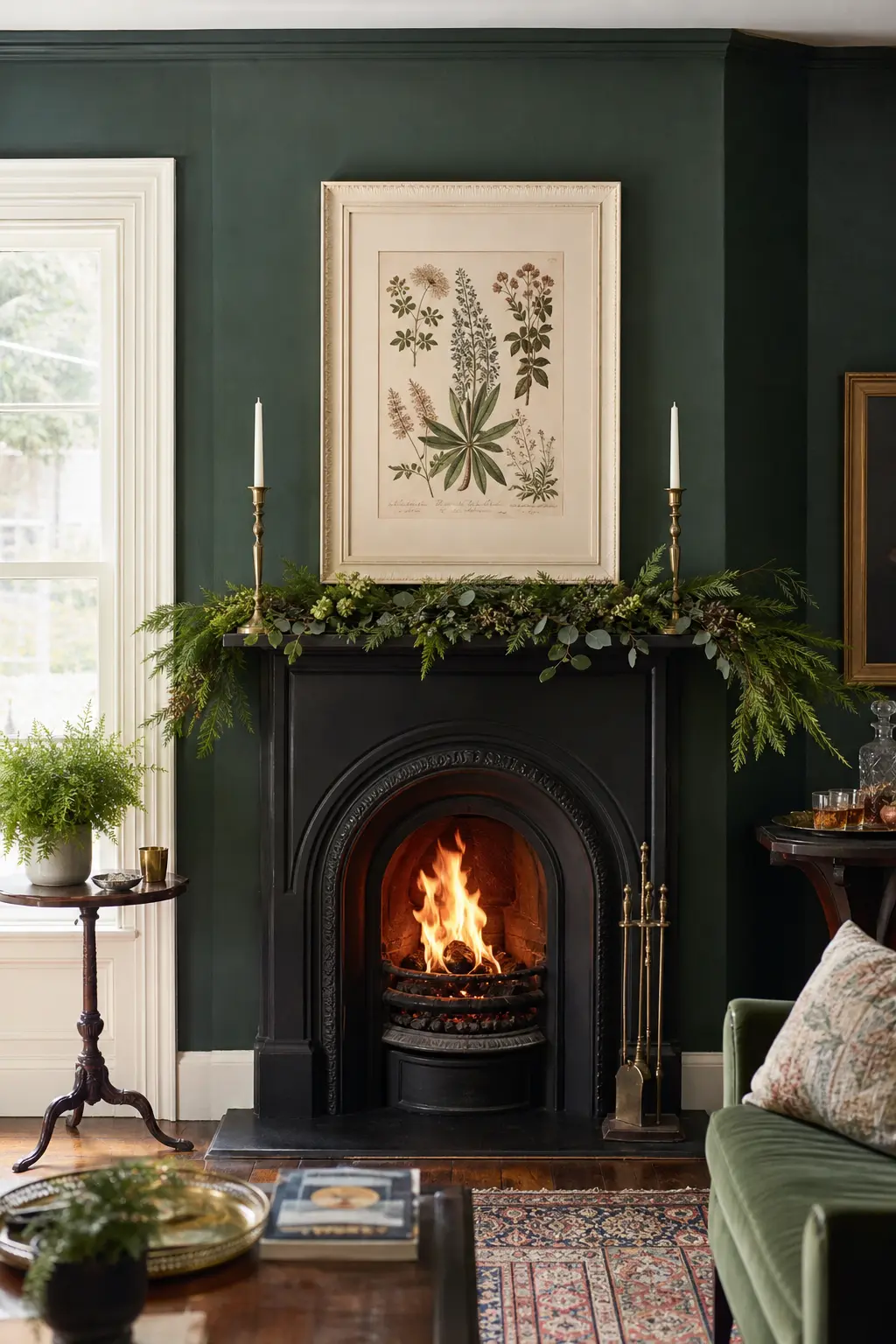
A framed print is fireproof, weightless in terms of fire risk, and takes thirty seconds to swap in. Choose a botanical study in cream and cedar green, a vintage map with a warm brown tone, or a single oxblood abstract. It stays on the wall all season with zero maintenance.
This is the right move for anyone who wants the fireplace to look finished but does not want to manage fresh greenery. Pair it with a simple row of brass candlesticks set well back on the mantel and the whole composition holds. See the vintage christmas mantle decor guide for art-and-object combinations that work across different mantel depths.
🛍 Shopping guide
Mirror Above Dressed with a Wreath
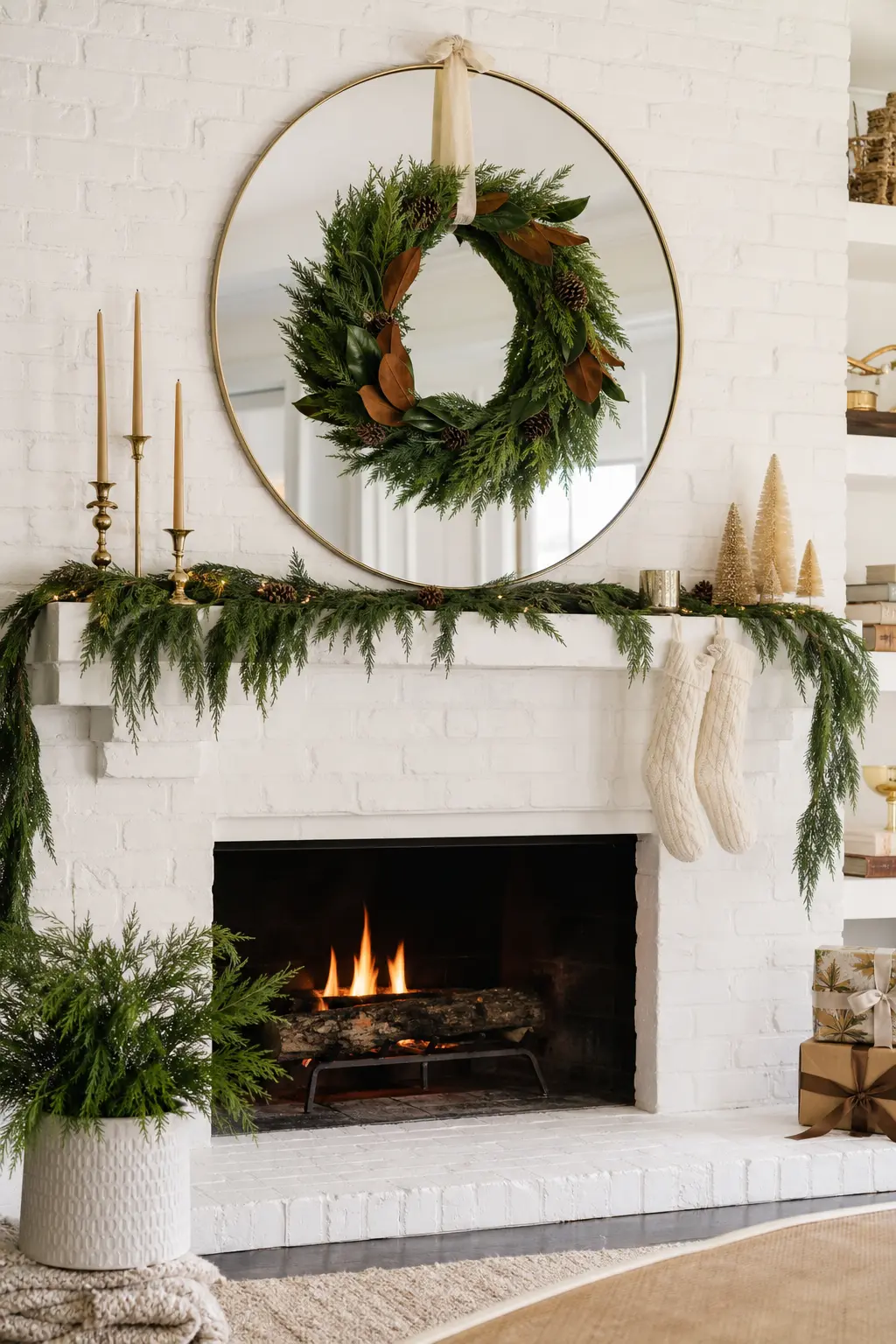
A large mirror above the fireplace stays up year-round: just hang a wreath from its frame using a wide velvet ribbon, knotted at the top of the mirror and draping the wreath over the glass. The greenery sits well above the firebox and nothing is attached to the wall above the heat.
Use a fresh or high-quality faux wreath, never dried. Choose a brass or driftwood-finished mirror frame to pull from the palette. The wreath reflects in the glass and the fire reflects in the mirror: the effect is substantial for about ten minutes of effort.
To the Side: Moves Off the Hot Zone
The chimney breast extends on both sides of the firebox, and that is the most under-used real estate in the room. Hooks at shoulder height, floor-level lanterns, and urns set back against the wall all read as fireplace decor without sitting anywhere near the heat or the sparks.
This is also where stockings go when the mantel is running warm. A side-wall hook or a weighted freestanding holder placed at arm’s reach from the fire looks deliberate, not like a compromise.
Stockings Hung on a Side Wall Hook
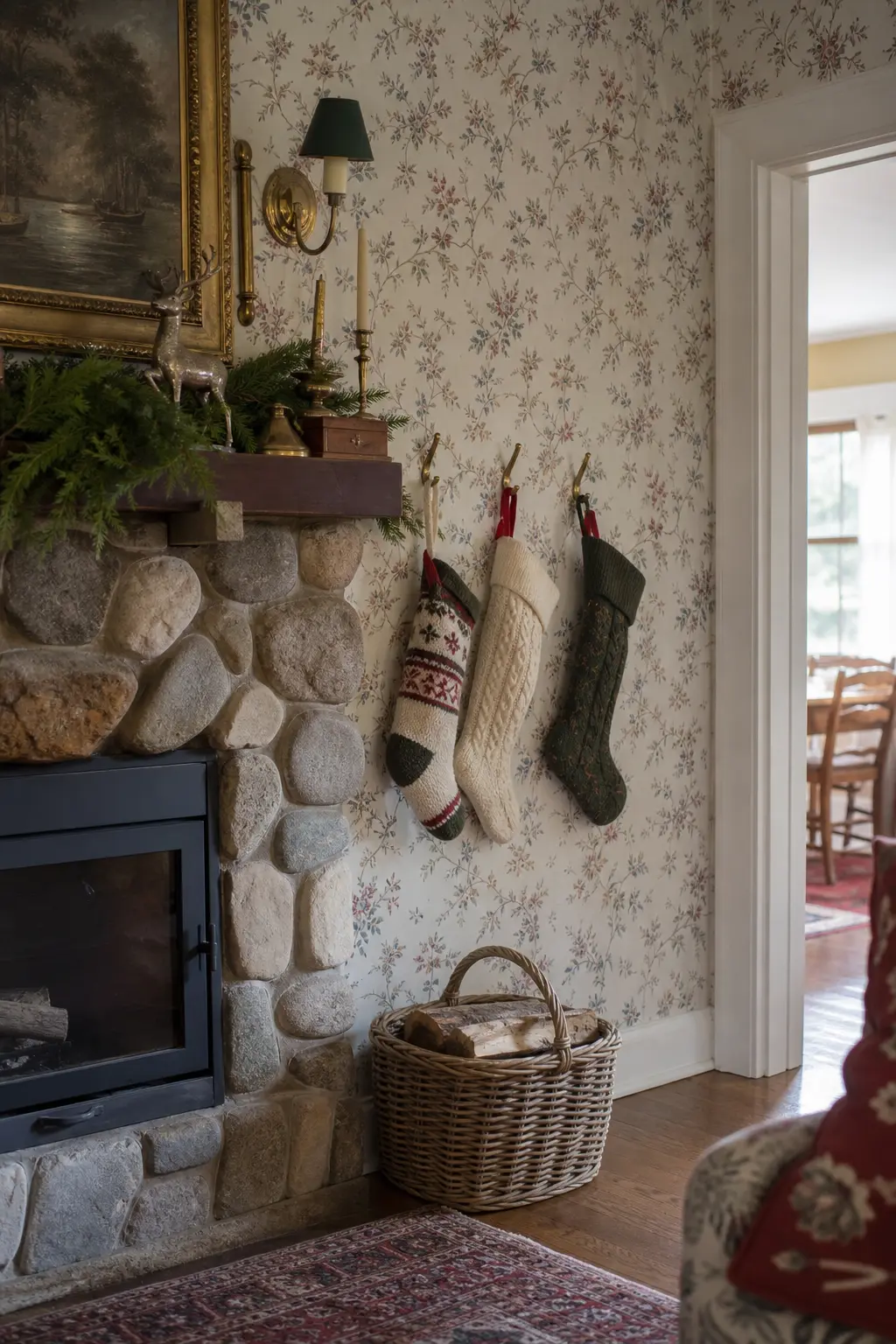
Stockings hang directly above the fire in every Christmas card ever printed, and in real life that means they hang directly above the heat, the sparks, and the updraft. Move them. A row of brass coat hooks screwed into the chimney breast wall, six inches to the right of the firebox surround, looks intentional and keeps the stockings a full arm’s length from the opening.
Fill the stockings before hanging them if you want them to look full and substantial rather than deflated. Heavy stockings also stay put better. Weighted stocking holders placed on the floor against the side wall work equally well and require no holes in the plaster.
🛍 Shopping guide
Brass Log Basket Dressed with Greenery
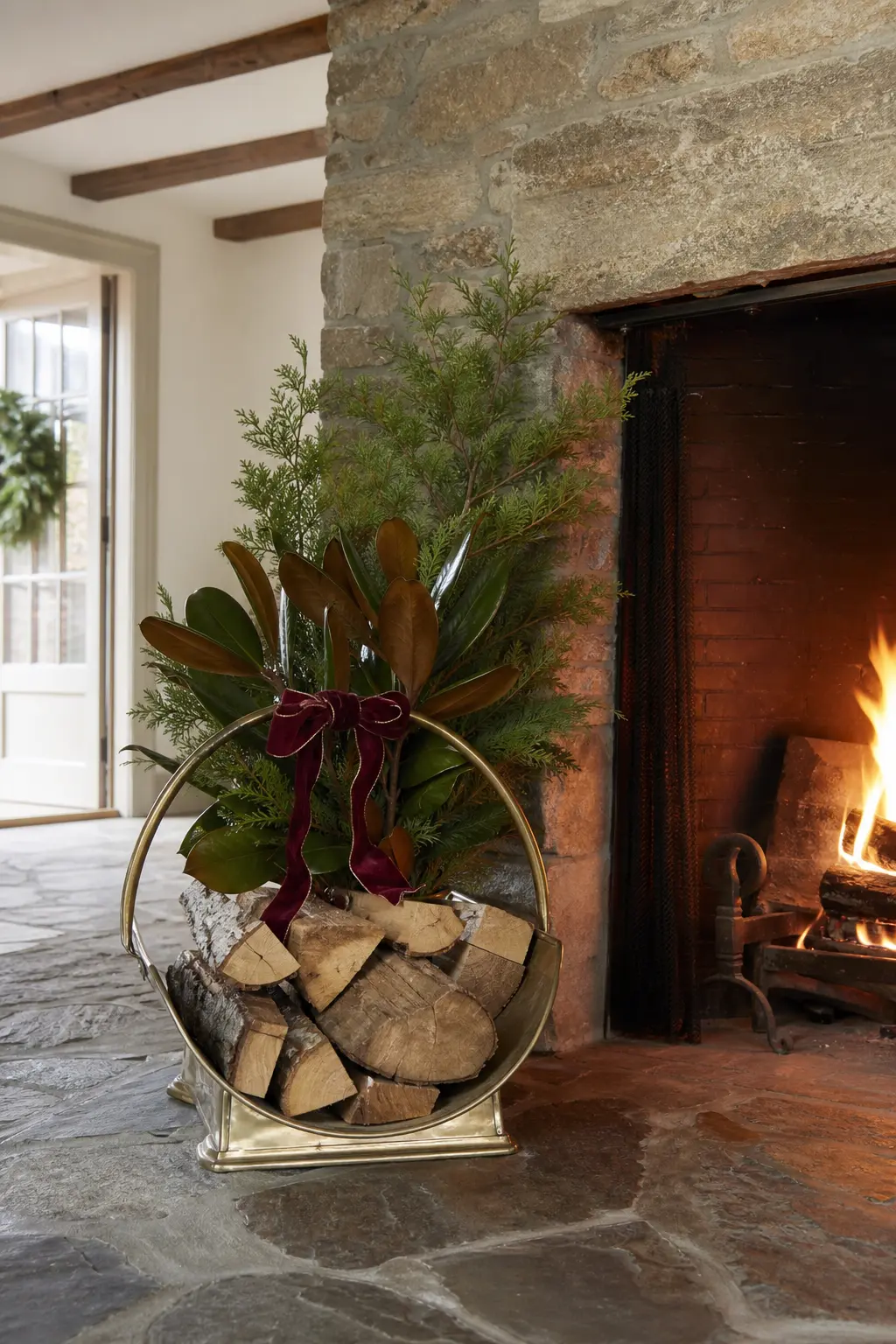
A brass log basket sits beside the fire anyway. Tuck two or three cedar stems and a magnolia branch into the logs at the back, so the greenery is visible but the stems sit in the cooler air away from the grate opening. Do not tuck greenery into the front of the basket where it could fall toward the fire.
The basket itself doubles as decor: a patinated brass or black iron log basket filled with split wood is more visually interesting than a bare hearth corner. Add a single oxblood ribbon tied at the handle. Replace the greenery whenever it starts to dry.
🛍 Shopping guide
Greenery in a Raised Urn Beside the Fireplace
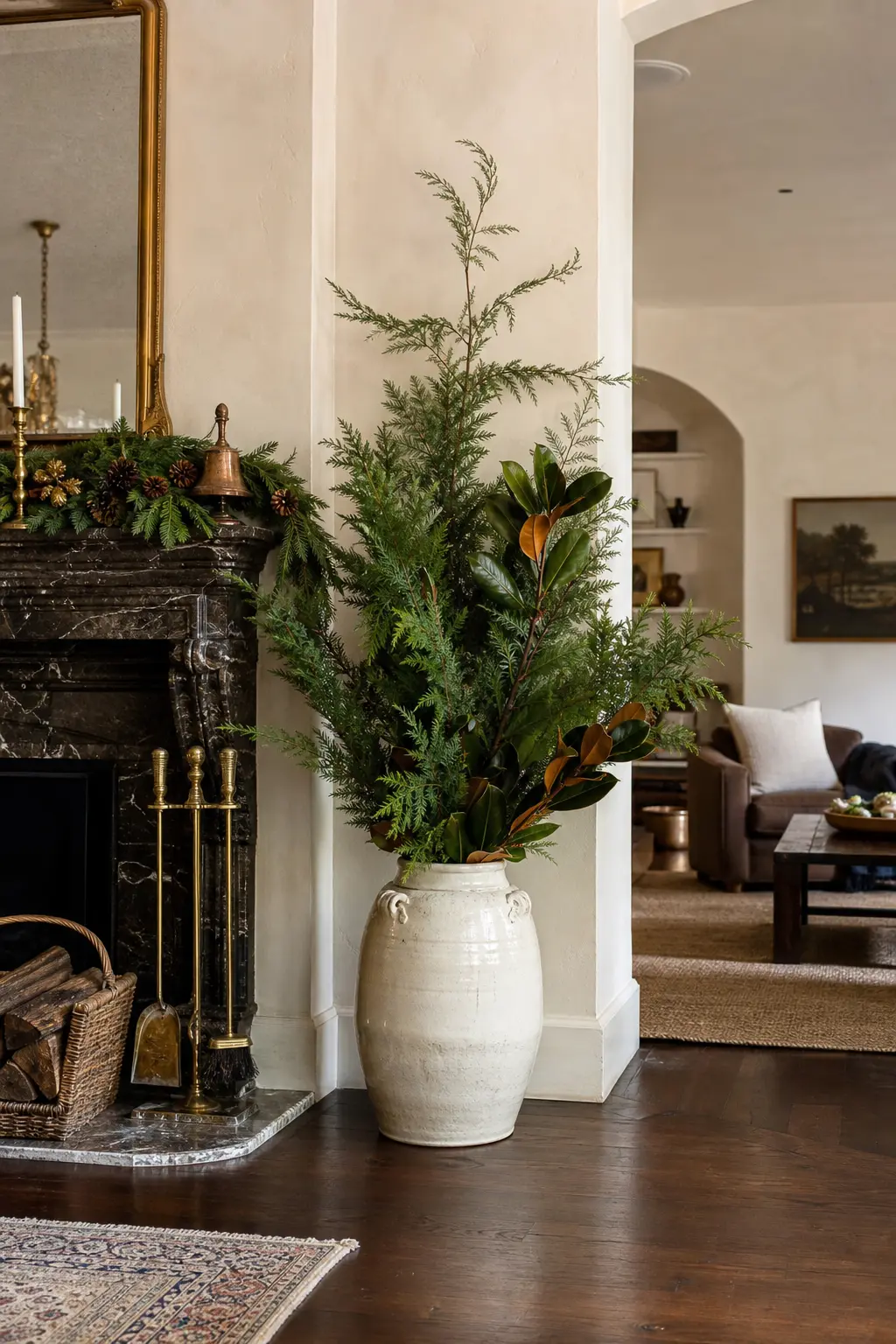
A tall stone, brass, or ceramic urn placed on the floor at the side of the fireplace, filled with cedar and magnolia boughs, reads as a full-height focal point without anything going near the heat. The height comes from the urn, not from hanging things above the fire.
Weight the urn with sand or gravel so it does not tip. Fill it tightly so the boughs stay upright rather than flopping. This is the move when the mantel is either very shallow or very close to the firebox, and the usual decorating approaches simply do not fit safely.
🛍 Shopping guide
Dried Hydrangea in a Floor Vase
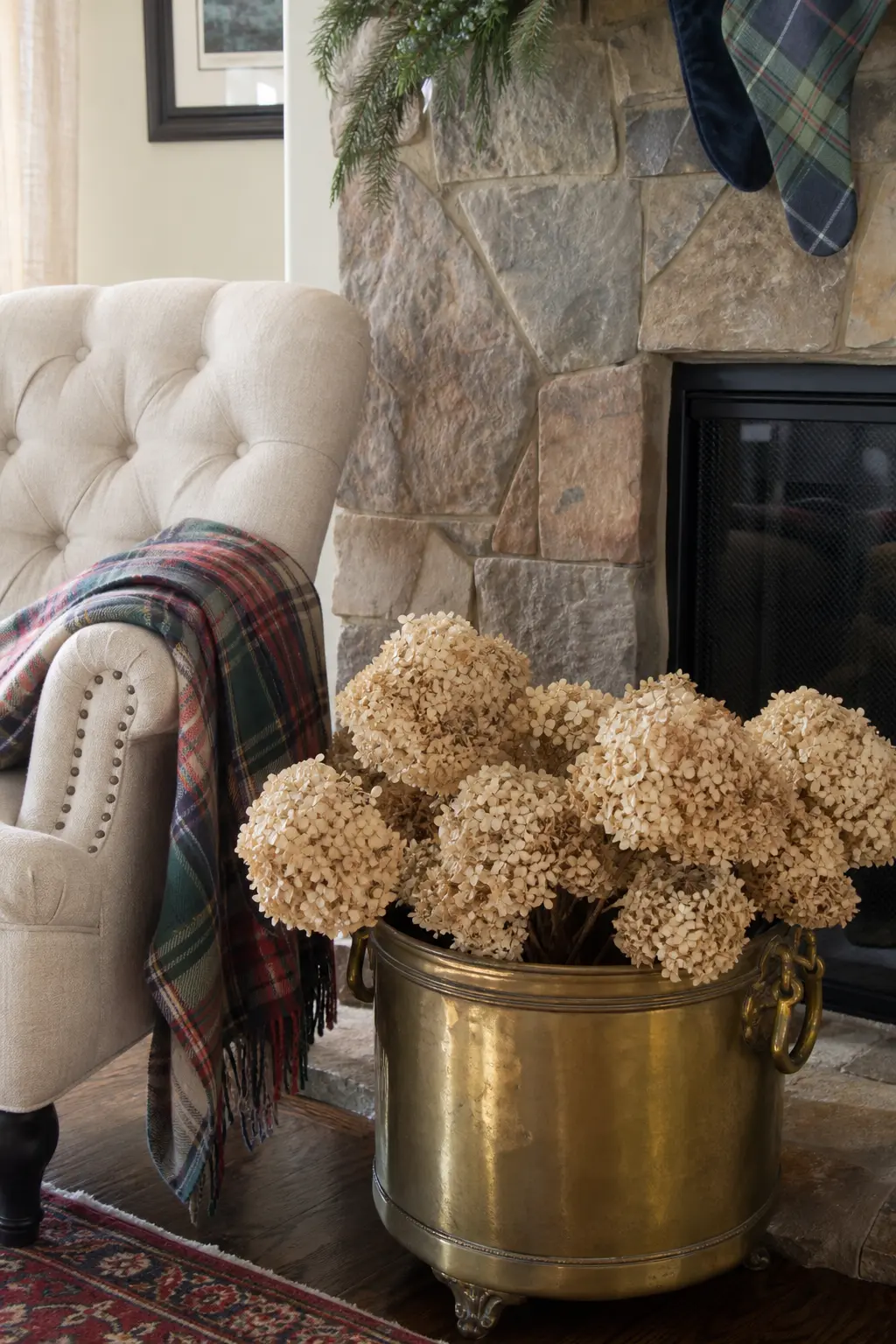
Dried hydrangea belongs beside the fireplace, not above it. Set a wide-mouthed floor vase or a brass bucket two to three feet from the surround, fill it with dried hydrangea heads in cream and blush, and let it stand at its own height. No fire risk at that distance, and the texture reads as luxurious in a way fresh greenery does not.
Dried hydrangea is combustible, so the three-foot rule matters. Pair it with a tartan throw draped over the adjacent chair and the corner becomes its own composed vignette without touching the mantel at all.
🛍 Shopping guide
Bare Branch Pair Either Side
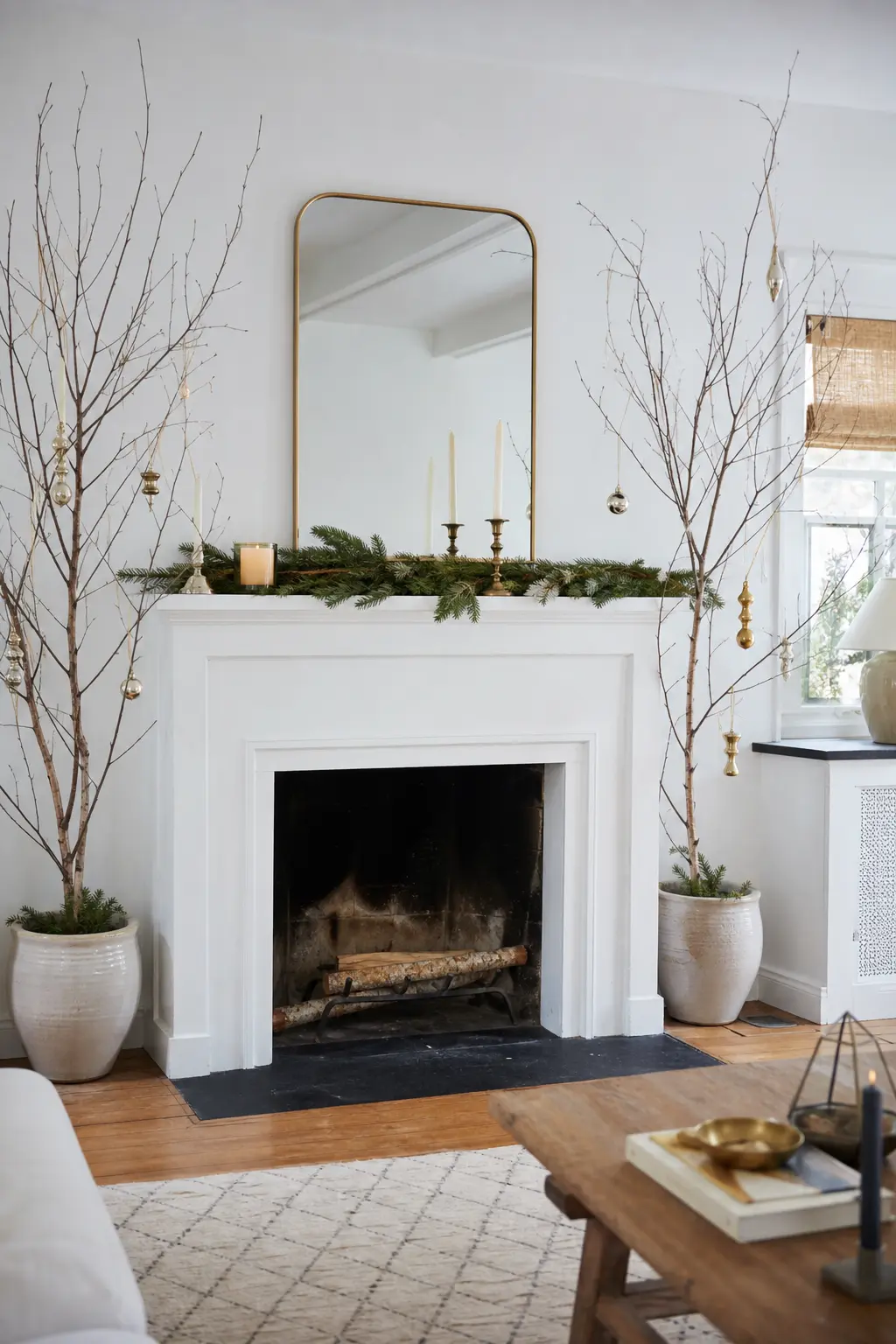
Two tall birch or manzanita branches, one planted in a weighted vessel either side of the fireplace, frame the whole chimney breast without anything near the heat. They can be left completely bare for a Nordic look, or hung with a few brass or cream ornaments.
The branches stay up all winter and require no watering, no replacing, and no fire-safety calculus. Spray-paint them cream or leave them natural. This is the lowest-effort option in the entire article and one of the best-looking ones.
🛍 Shopping guide
On the Hearth: Cold-Grate or Off-Season Only
Hearth-level decor is for the period before the fire is used, or for people whose fireplace is purely decorative. A cold hearth is one of the best display surfaces in a room: flat, stone or brick, fireproof itself, and naturally framed.
Every idea in this section carries a note about when to clear it. If guests will want a fire later in the evening, set these pieces aside before the first log goes in, not after.
Flameless Lanterns on the Hearth
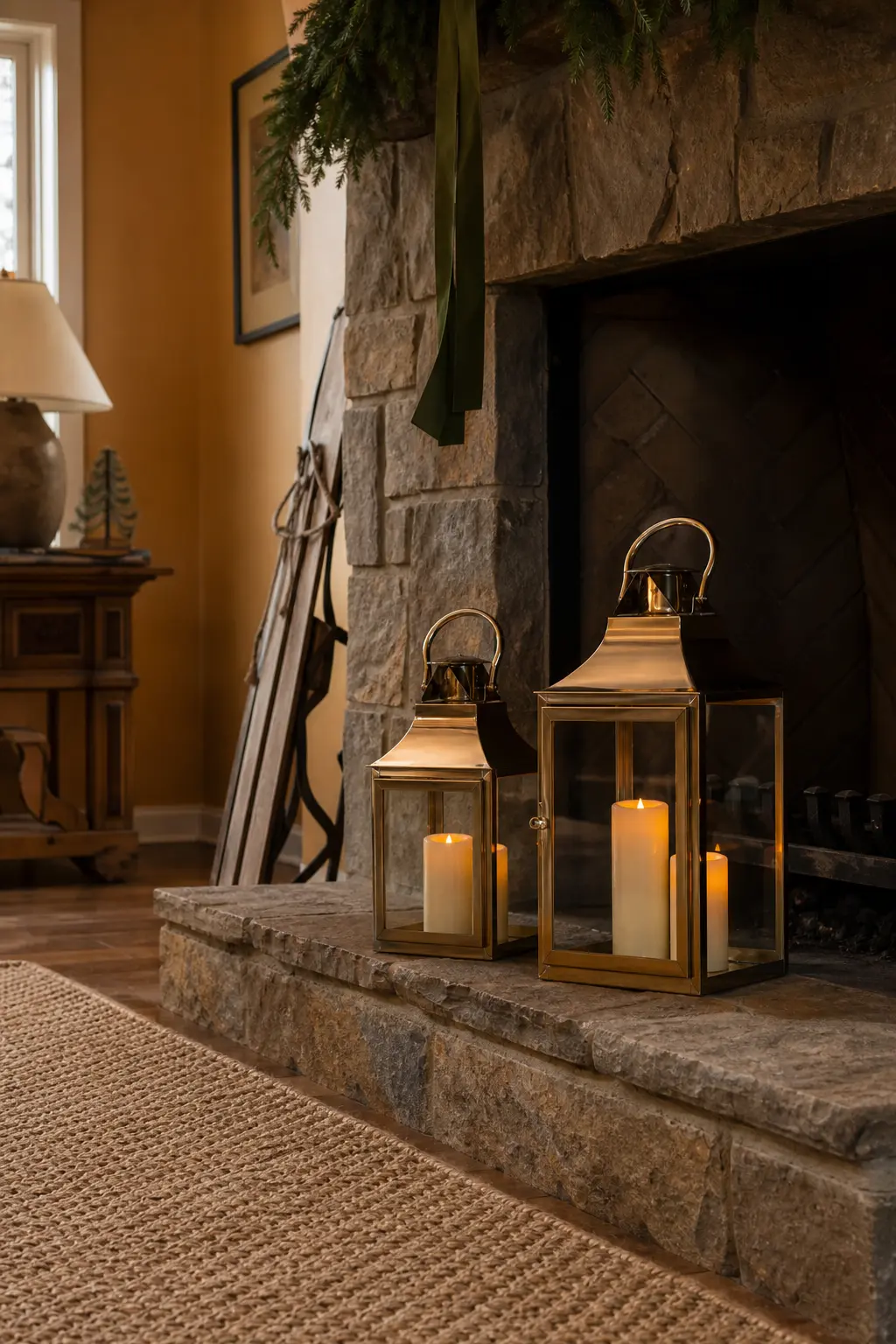
Flameless lanterns on the hearth stone look warm and seasonal and pose no fire risk. Use them when the grate is cold: during parties where no fire is planned, in the weeks before the fire season begins, or in a fireplace that is decorative only. Set them before guests arrive and remove them before any fire is lit.
Choose lanterns with a brass or aged iron finish, sized generously so they do not look like afterthoughts. A flickering LED candle inside beats a static one. Two lanterns of different heights look better than a matched pair at the same height.
🛍 Shopping guide
Candle Cluster on the Hearth Stone, Not the Mantel
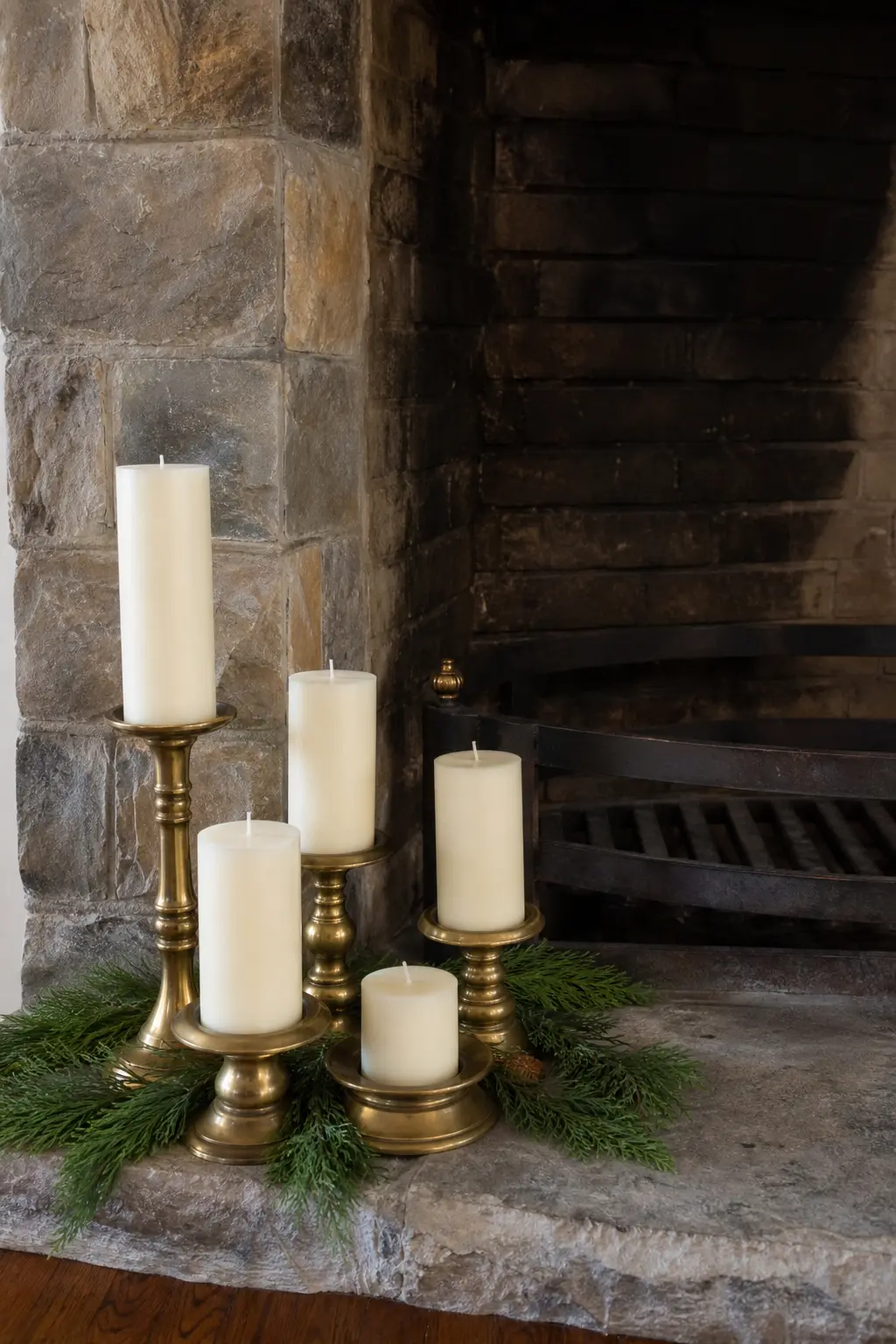
Moving candles down to the hearth stone, rather than up on the mantel, does two things: it lowers the flame below the garland level and it gives you a flat, fireproof surface to group them on. Cluster three to five pillar candles in varying heights, set them in brass or iron holders, and surround the base with fresh cedar clippings.
This arrangement stays out only when the grate is cold. The hearth stone itself is fireproof; the cedar around the candles is not. Keep the candles lit only when someone is in the room. For a broader look at how candlelight works in Christmas rooms, the article on christmas candles decorations has safe placement guidance for every surface.
🛍 Shopping guide
Pinecone Basket Beside the Grate
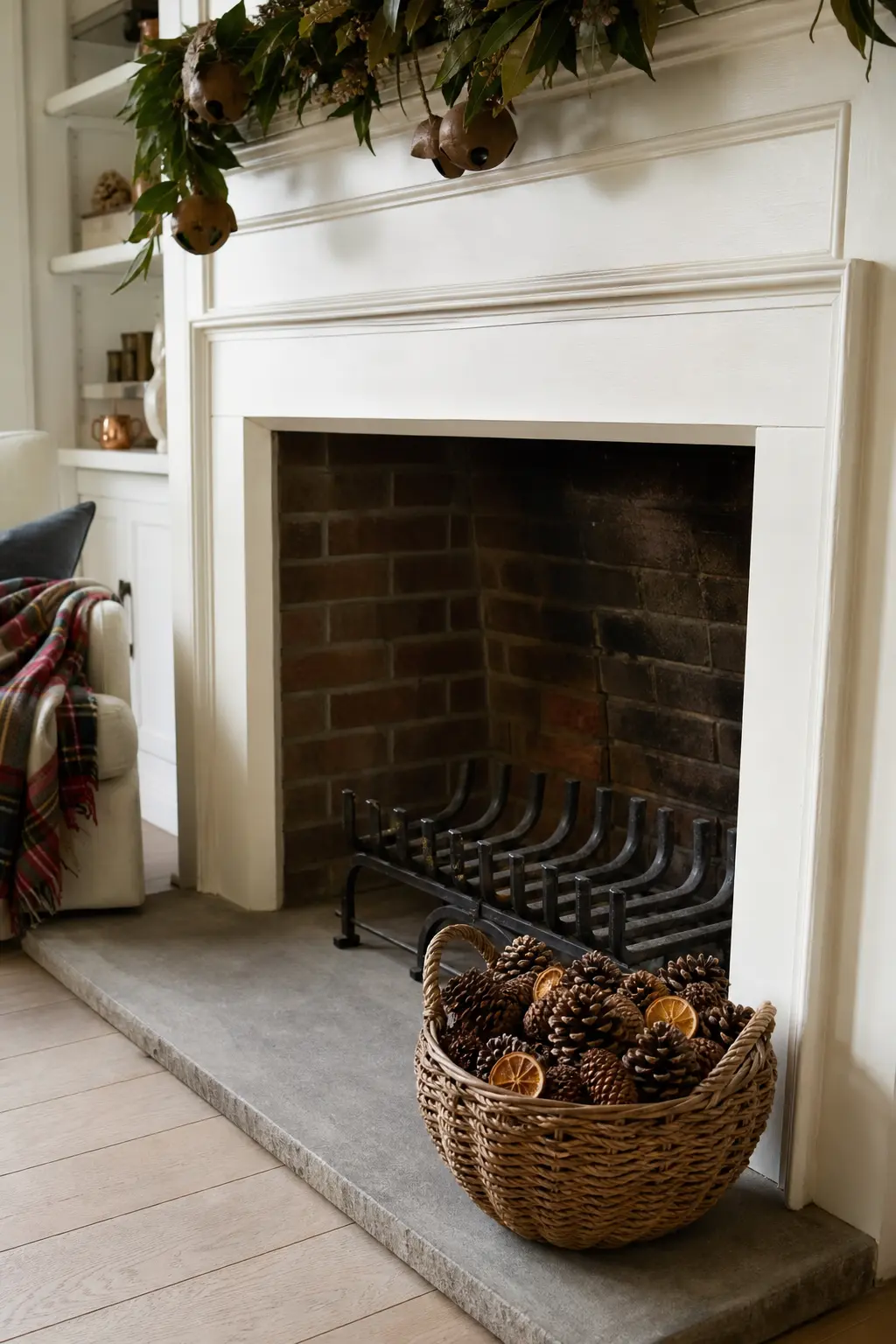
A wide low basket filled with pinecones and set beside the grate looks like it has always been there. Pinecones are combustible, so this belongs in the cold-grate category, placed well to the side, not in front of the opening. Dust them with a little white paint or leave them natural.
Mix in a few dried orange slices and a cinnamon stick or two for scent. The basket itself in a natural wicker or a painted wood finish stays neutral against the hearth stone. This costs almost nothing and takes five minutes.
Fire Screen Swapped for a Seasonal One
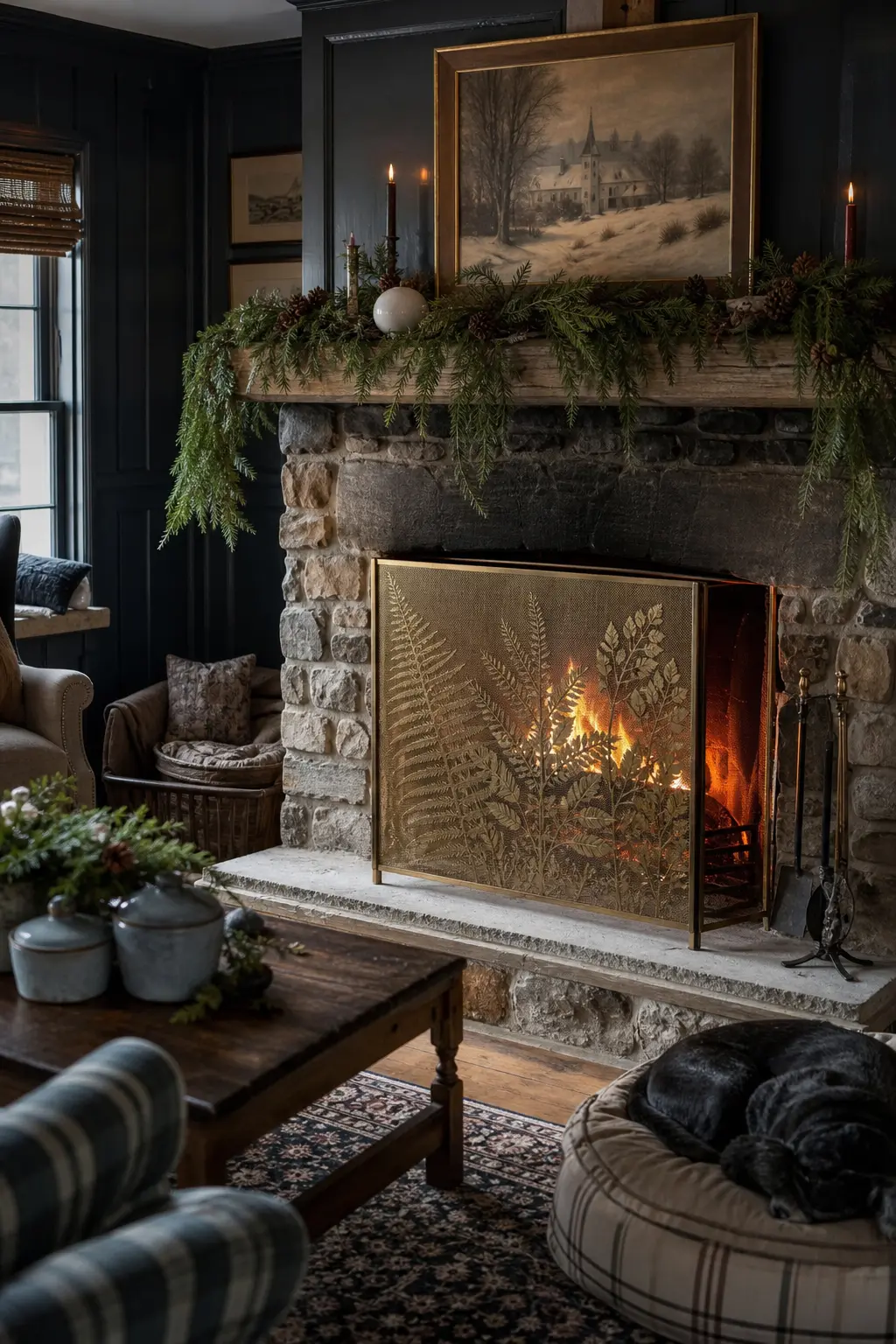
A fire screen is already part of the fireplace. Swapping the utilitarian mesh screen for a decorative brass or painted iron screen with a seasonal silhouette, a tree, a stag, a botanical, turns the grate into a feature whether the fire is lit or not. When the fire is lit, the screen stays in place doing its actual job.
This is the only item in the hearth section that works during a live fire, because a fire screen belongs between the fire and the room. Choose one heavy enough to stay stable and sized to cover the full firebox opening.
🛍 Shopping guide
The Mantel Shelf: What Belongs There Year-Round
The mantel shelf itself is not close to the fire and can hold most things, with two exceptions: paper decorations that overhang the front edge toward the heat, and candles tucked behind a garland where the flame could catch the foliage. Move both categories and everything else is fine.
For more ideas on how candlelight works in a Christmas room without the risk, the guide to christmas candles decorations covers placement in detail.
Tiny House Village at Mantel Ends
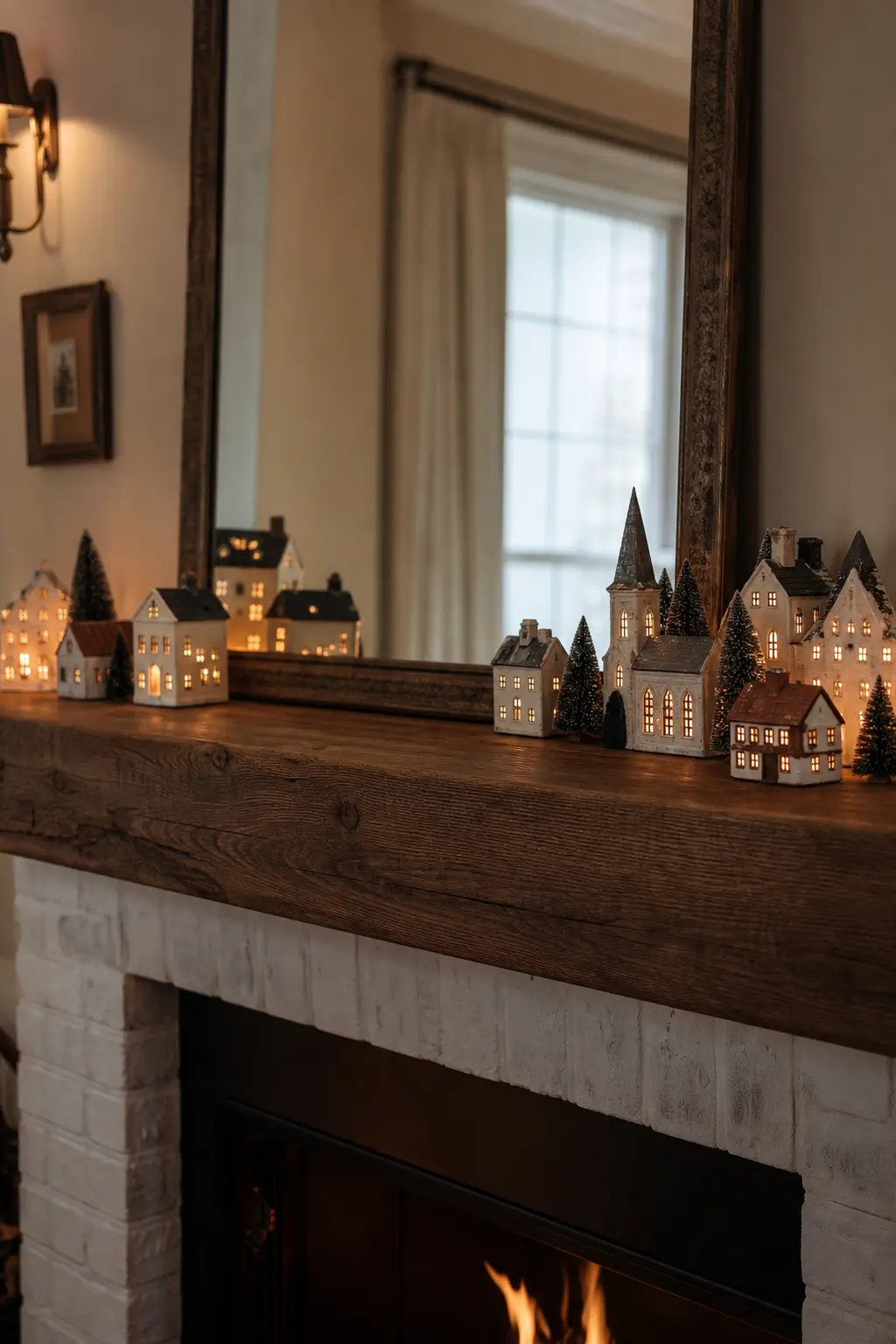
Set a row of ceramic or porcelain lit houses at each end of the mantel shelf, pulled well back from the front edge and well away from the center where the heat rises most. They need a power source or batteries: run the cord along the back of the shelf and down the wall behind the chimney breast.
The lit windows reflect warmly against the wall behind, especially on a dark mantel shelf surface. Keep the center of the mantel clear, which also keeps the best-looking section of your vintage christmas mantle decor arrangement visible rather than crowded.
🛍 Shopping guide
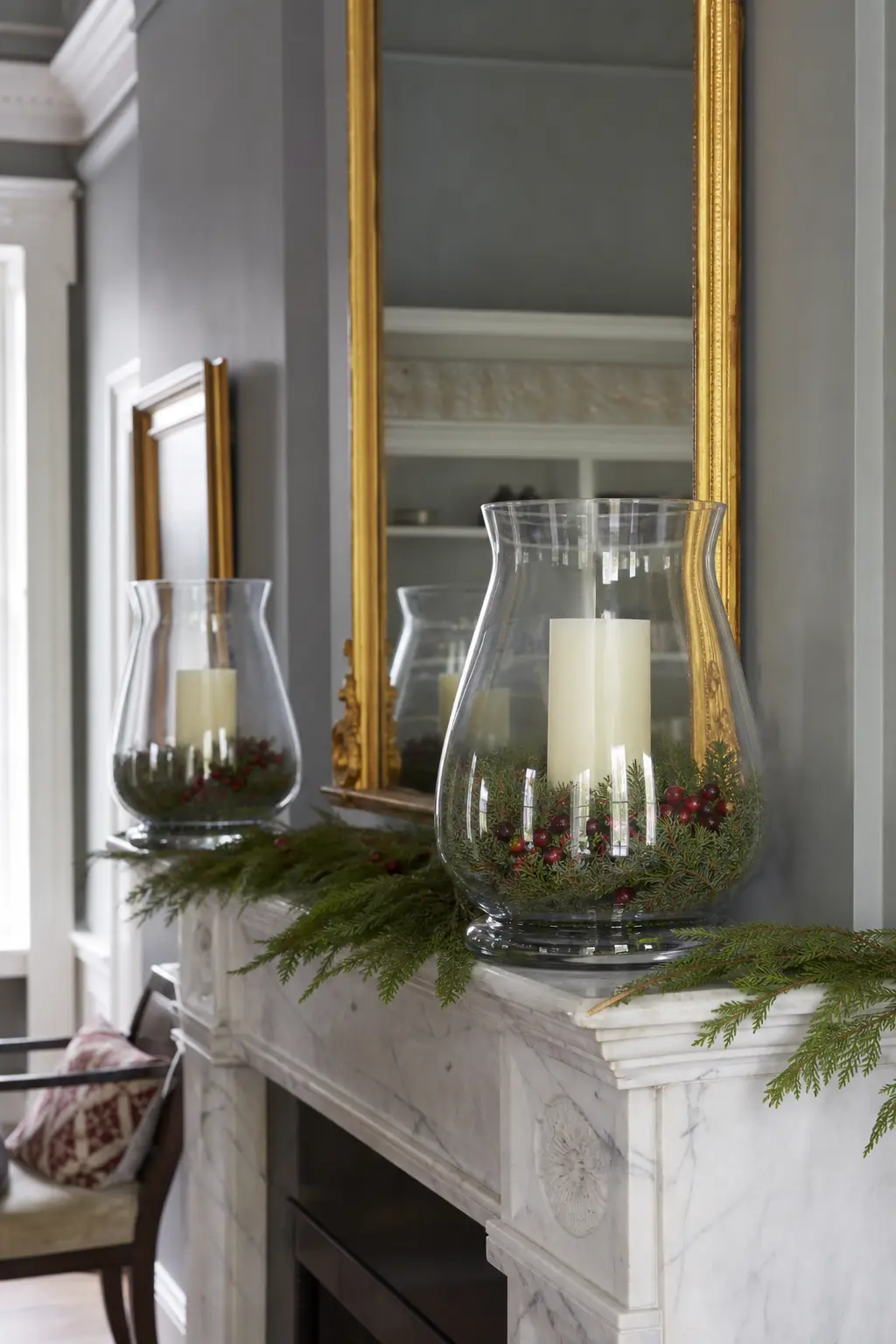
Glass Hurricanes with Wide Bases
Wide-based glass hurricanes on the mantel shelf enclose the candle flame and reduce the risk of a draft catching it. They are not rated for direct contact with a fire, but on the mantel shelf they sit far enough above the firebox that the glass functions as intended. Use a hurricane with a base diameter of at least five inches so it cannot tip.
Fill the base of each hurricane with cranberries, pinecones, or a ring of fresh cedar before placing the candle inside. The glass magnifies the flicker and the contents glow. Two hurricanes of the same height, placed symmetrically, anchor a spare mantel arrangement without overwhelming it.
🛍 Shopping guide
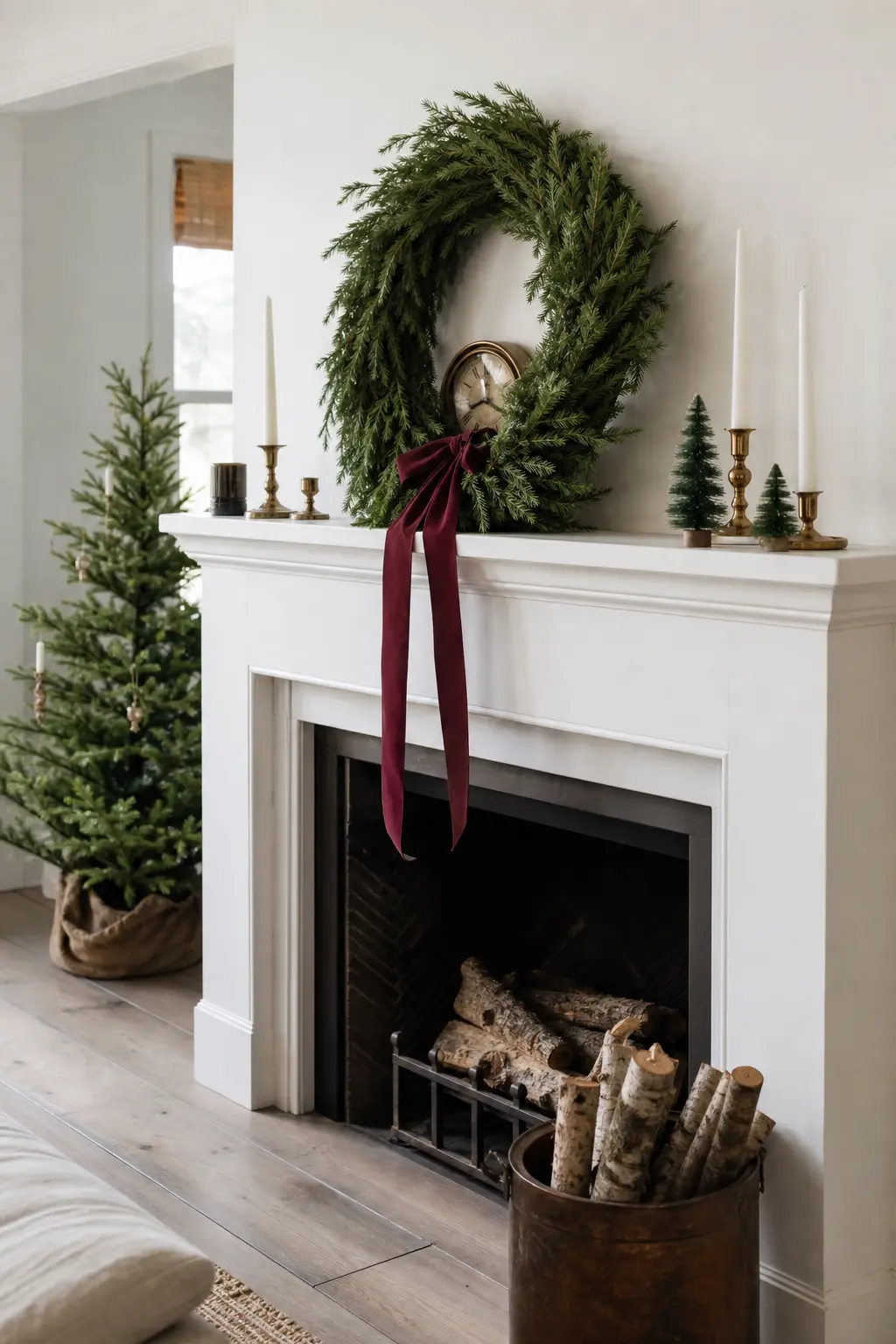
Wreath Propped on the Mantel Rather Than Hung
Lean a wreath against the wall at the center of the mantel shelf rather than hanging it above the fire. It sits on the shelf surface, angled back slightly against the wall or the mirror, with no hook, no nail, and nothing suspended over the heat. A cedar and magnolia wreath with a wide oxblood ribbon reads as finished and considered in this position.
Prop a framed piece or a small mirror behind it to stop it sliding flat. The wreath can also hold a few brass ornaments or a cluster of dried orange slices tucked into the greenery. For ideas on how a christmas tree skirt and wreath can share a palette, the linked guide covers material and color combinations.
🛍 Shopping guide
Frequently Asked Questions
Is it safe to hang a garland over a working fireplace?
A fresh (not dried) garland can hang above a working fireplace if it is pinned high and short, with the lowest point sitting above the mantel shelf surface rather than below it, and at least twelve inches above the firebox opening. Dried greenery, paper decorations, and any fabric must stay away from the opening entirely. Replace fresh garland as soon as it begins to dry out, which can happen within two to three weeks in a heated room.
How do I decorate a fireplace I actually use?
Split the decorations by zone. Above the firebox: only non-combustible items or fresh greenery pinned high. On the mantel shelf: most things work as long as nothing overhangs the front edge toward the heat and no candles sit behind a garland. To the side of the fireplace: stockings, lanterns, urns, and floor-level arrangements can go on the chimney breast wall or the adjacent floor without any fire risk. On the hearth stone: arrange things there only when the grate is cold and clear them before lighting a fire.
Where do stockings go if the mantel is hot?
Move them to a row of hooks screwed into the chimney breast wall, six or more inches to the side of the firebox surround. Weighted stocking holders placed on the floor against the side wall work equally well and require no holes in the plaster. Both options keep the stockings well clear of the heat and the updraft, and both look deliberate rather than like a compromise.
How do you decorate a hearth without a mantel?
Work with what is there: the hearth stone itself, the chimney breast wall, and the floor space on either side. A seasonal fire screen does the work of a mantel display. Tall urns or bare branches on the floor either side of the firebox frame the opening vertically. A leaning wreath or framed art hung at eye level on the chimney breast fills the space a mantel shelf would normally occupy. Lanterns, a log basket dressed with greenery, and a floor vase of dried stems complete the look without needing a shelf at all.
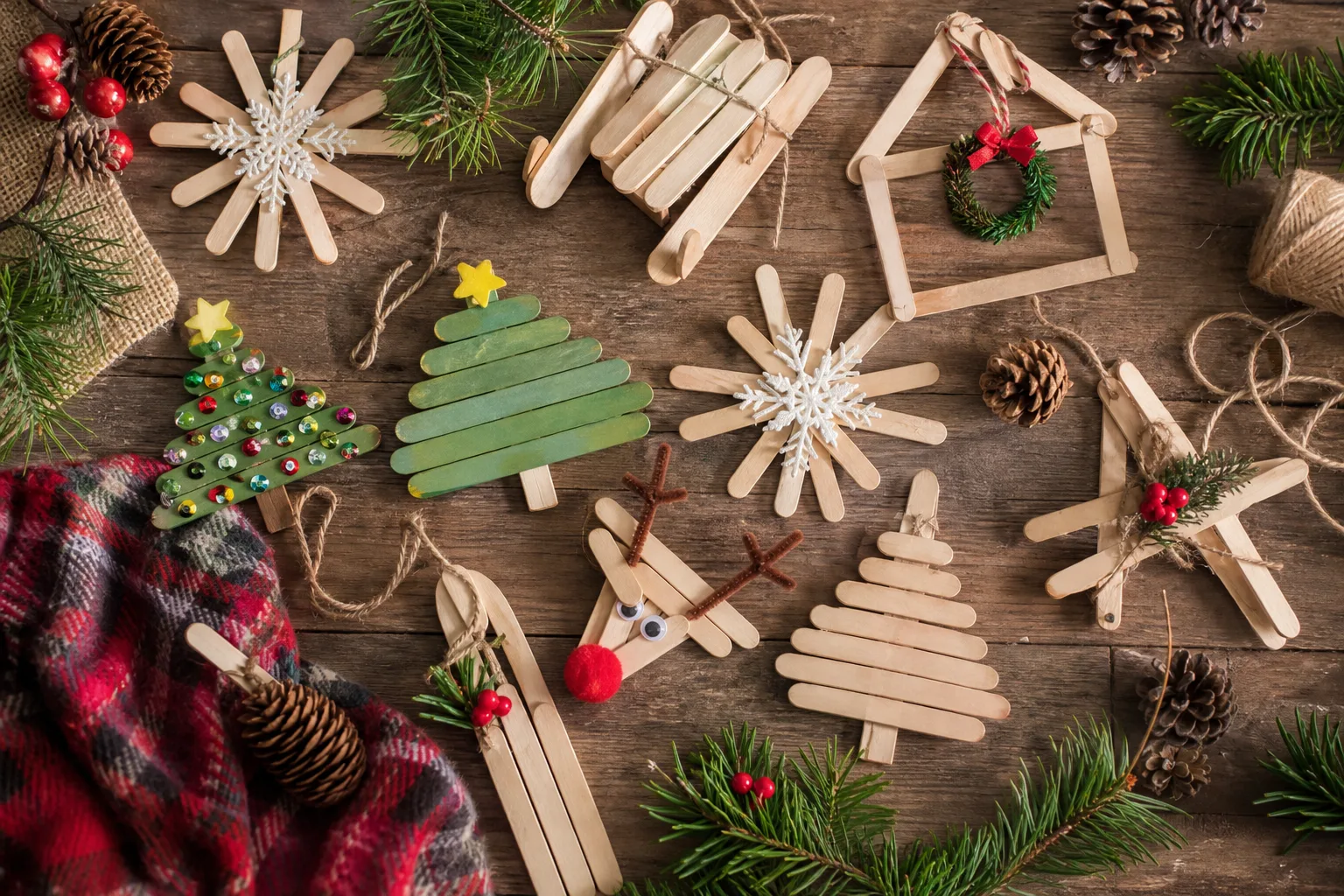
18 popsicle stick Christmas crafts for kids, from snowflakes to a gingerbread house, with full steps

12 Christmas pinecone crafts for the tree, the door, the table and the gift box, most of them free f
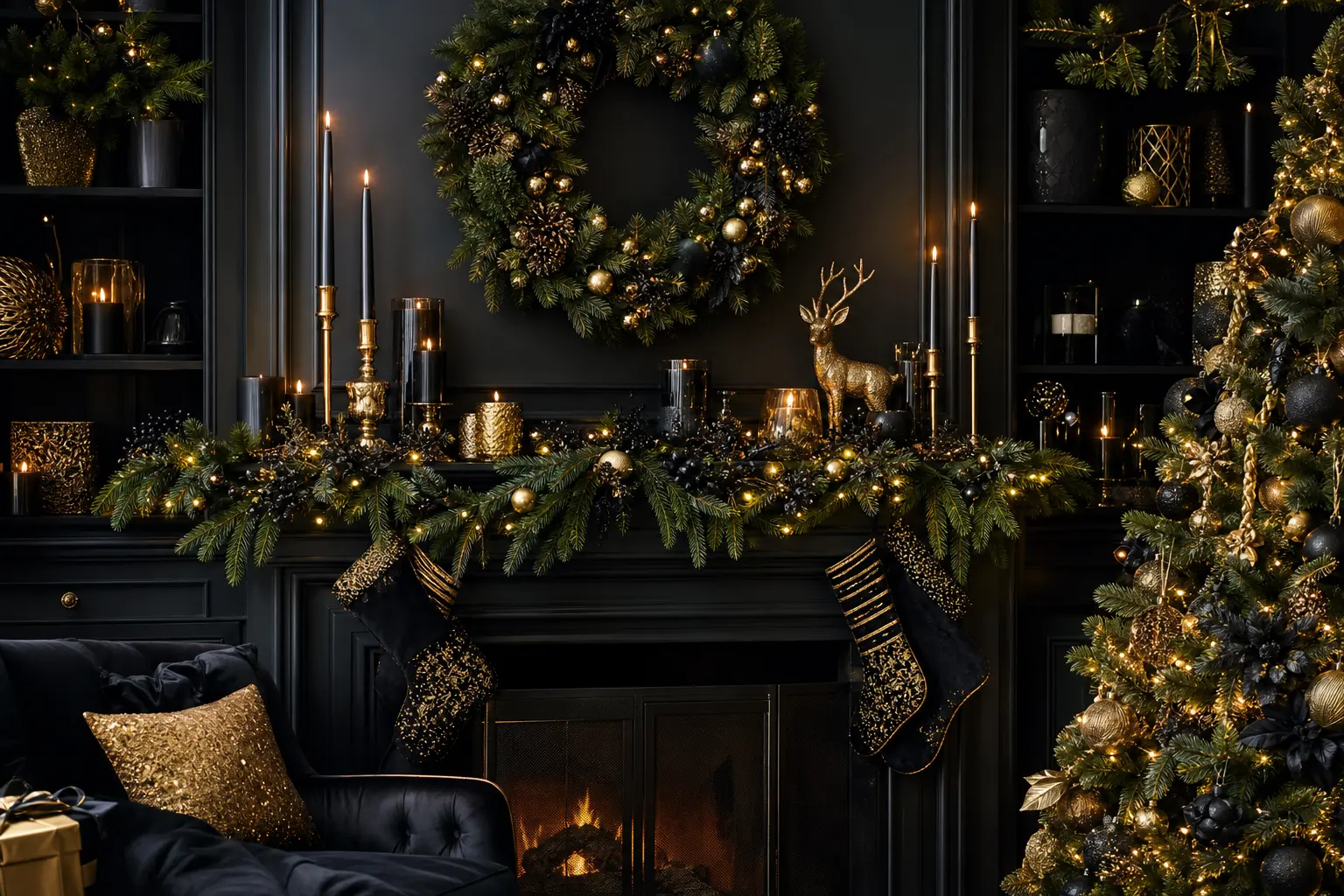
19 black and gold Christmas decor ideas, room by room, for a dramatic home with midnight glamour and
Leave a Reply