

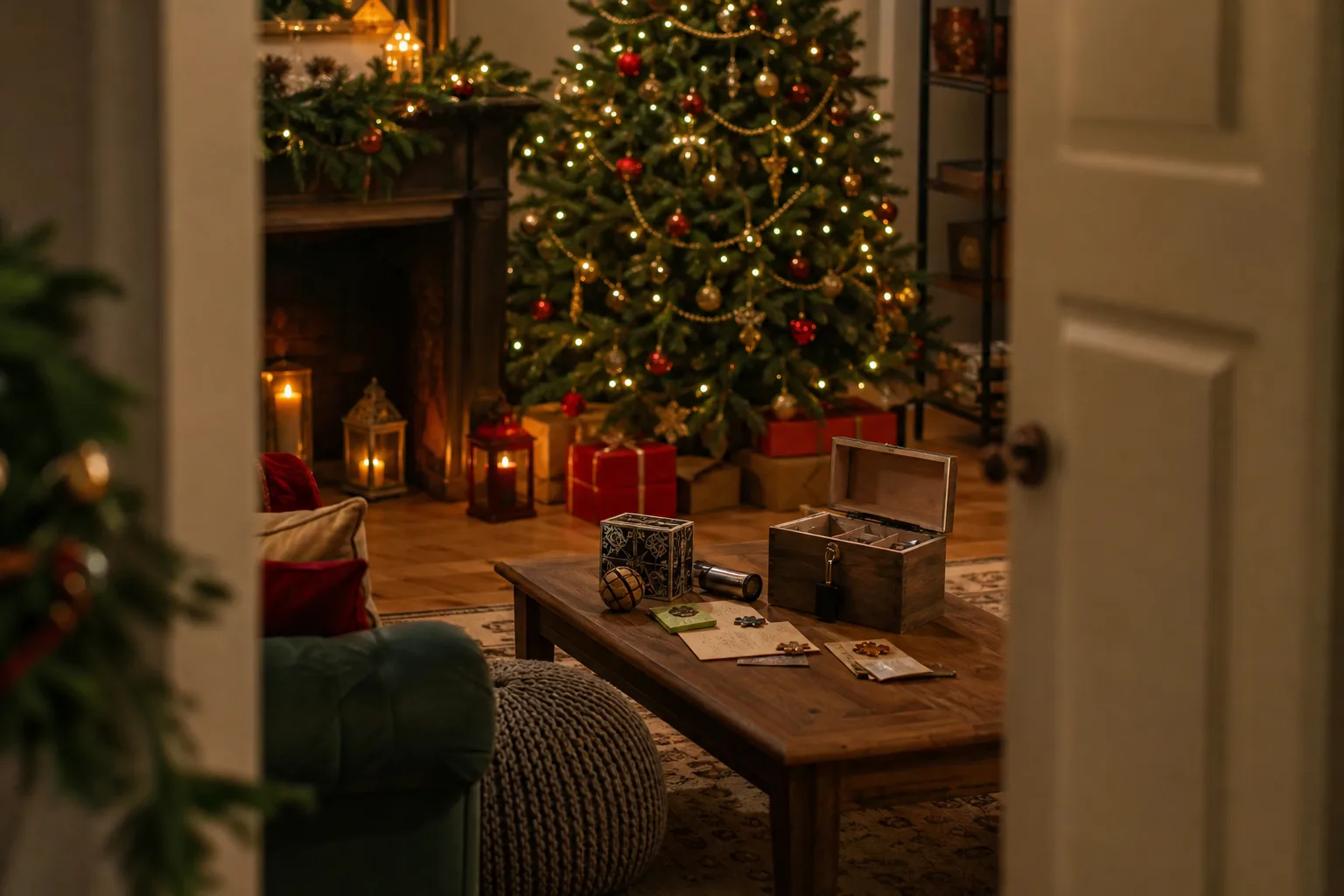
Somewhere between the third candy cane and the fourth viewing of the same movie, the kids ask for something to actually do. An escape game answers that without a single purchased ticket: a locked box, a story, a ribbon-wrapped clue under the tree skirt. You do not need a fog machine or a second mortgage, just a storyline that fits your living room and a lock you already own.
Some of these are whole scenarios, a beginning, middle and a final key. Others are single mechanics, the UV pen, the scent jar, the nested box, that you drop into whichever story you pick. Mix a scenario from the first half with two or three mechanics from the second and you have a full evening’s game built from things already in a kitchen drawer.
If puzzles are not her thing but a shared table is, family game night still earns its spot on the same evening. And if this is the first time you are building anything by hand for a holiday crowd, a simpler DIY game night format is a gentler place to start.
This post contains affiliate links. If you buy through them, I may earn a small commission at no extra cost to you.
Santa and Workshop Rescue Missions
These three borrow the North Pole itself as the setting, so the whole house gets to play along: the hallway becomes a sleigh route, the kitchen counter becomes a workbench. Pick one as the spine of the evening and hang your mechanics off it.
Santa’s Lost Sleigh Keys
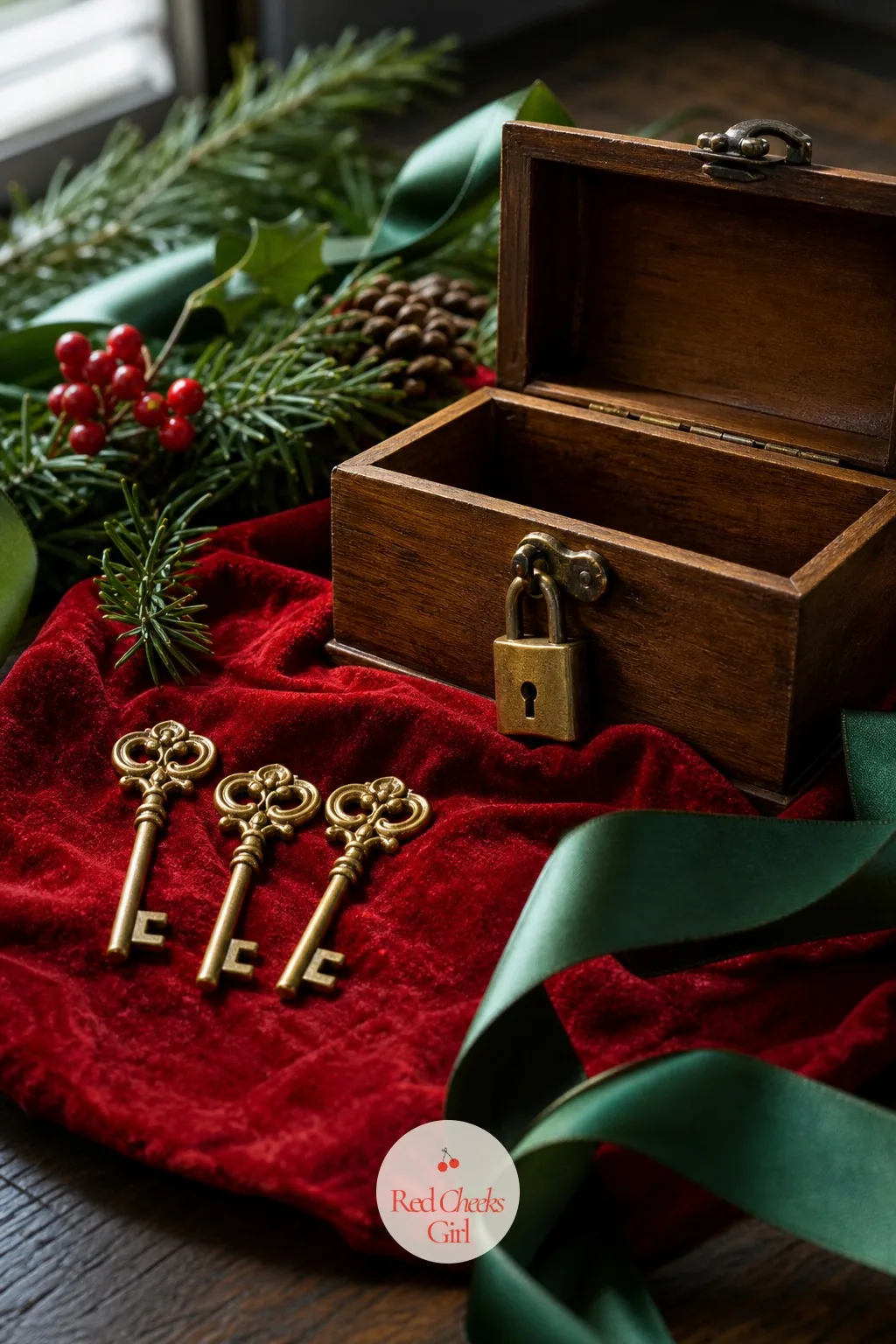
Nobody admits it, but half the fun of an escape game is the panic of a missing set of keys. Here Santa’s own sleigh keys have gone astray on Christmas Eve, and the family has until a kitchen timer runs out to find them scattered through the house.
Three brass-look skeleton keys hide inside ordinary places: a stocking toe, a cookie tin, a wrapped box under the tree. Each one unlocks a small padlock on a final chest holding the night’s real reward, cocoa packets or the first present of the morning.
If you would rather skip buying locks altogether, swap the padlock for ribbon tied in a bow only a specific knot undoes: cheap, quick, and still satisfying to pull apart.
🛍 Shopping guide
Elf Workshop Lockdown
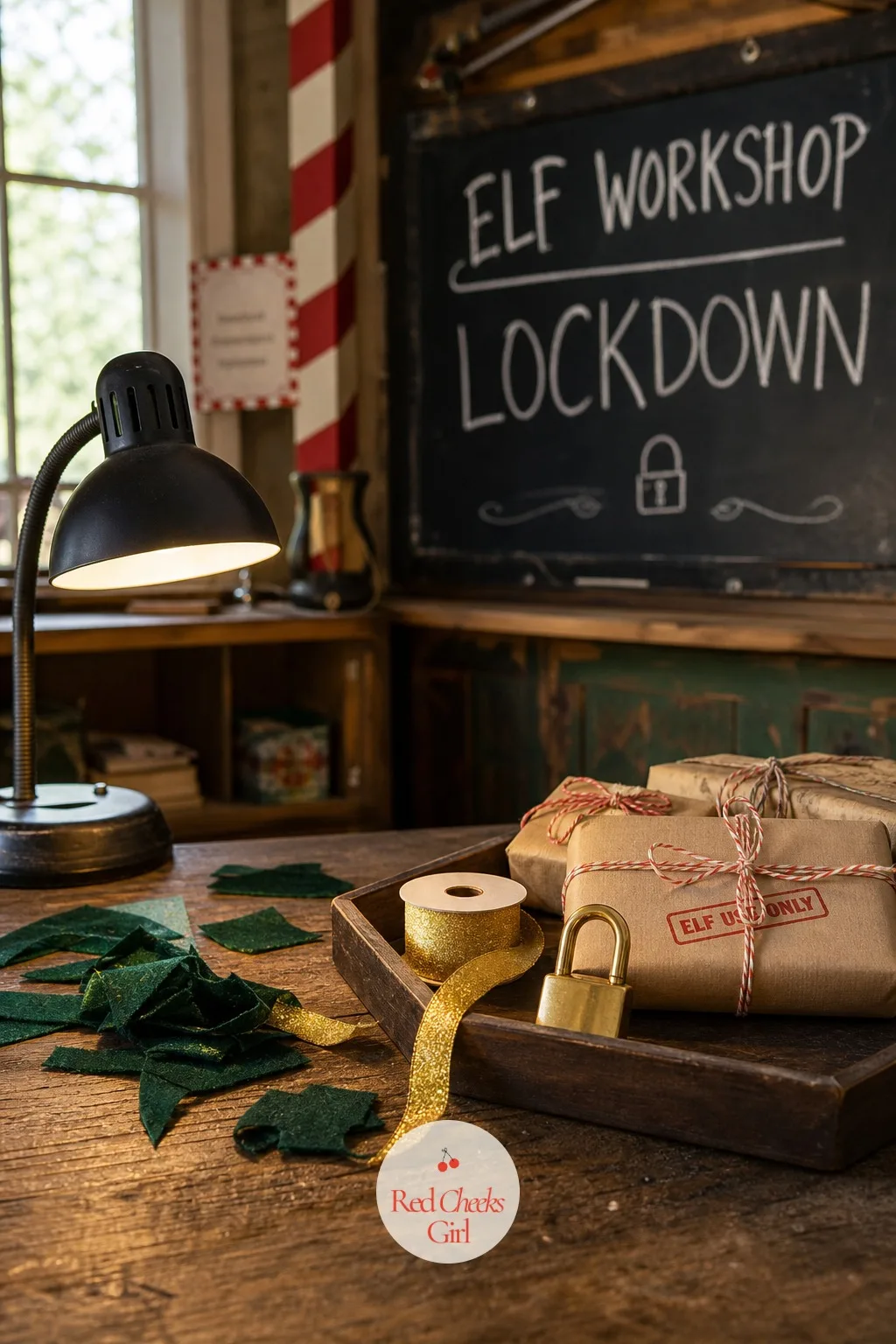
Give everyone a green apron or a felt hat and the story writes itself: the workshop has been locked down after a toy went missing, and the elves (your family) must prove they can still build before midnight.
Puzzles live inside tool trays and wrapped parts boxes, each one revealing a letter or number toward the final combination. A workbench corner of the kitchen table, dressed with ribbon spools and brown paper, does the whole set.
Small space, no problem: this one compresses onto a single tray if the rest of the room stays as it is.
🛍 Shopping guide
North Pole Mailroom Mix-Up
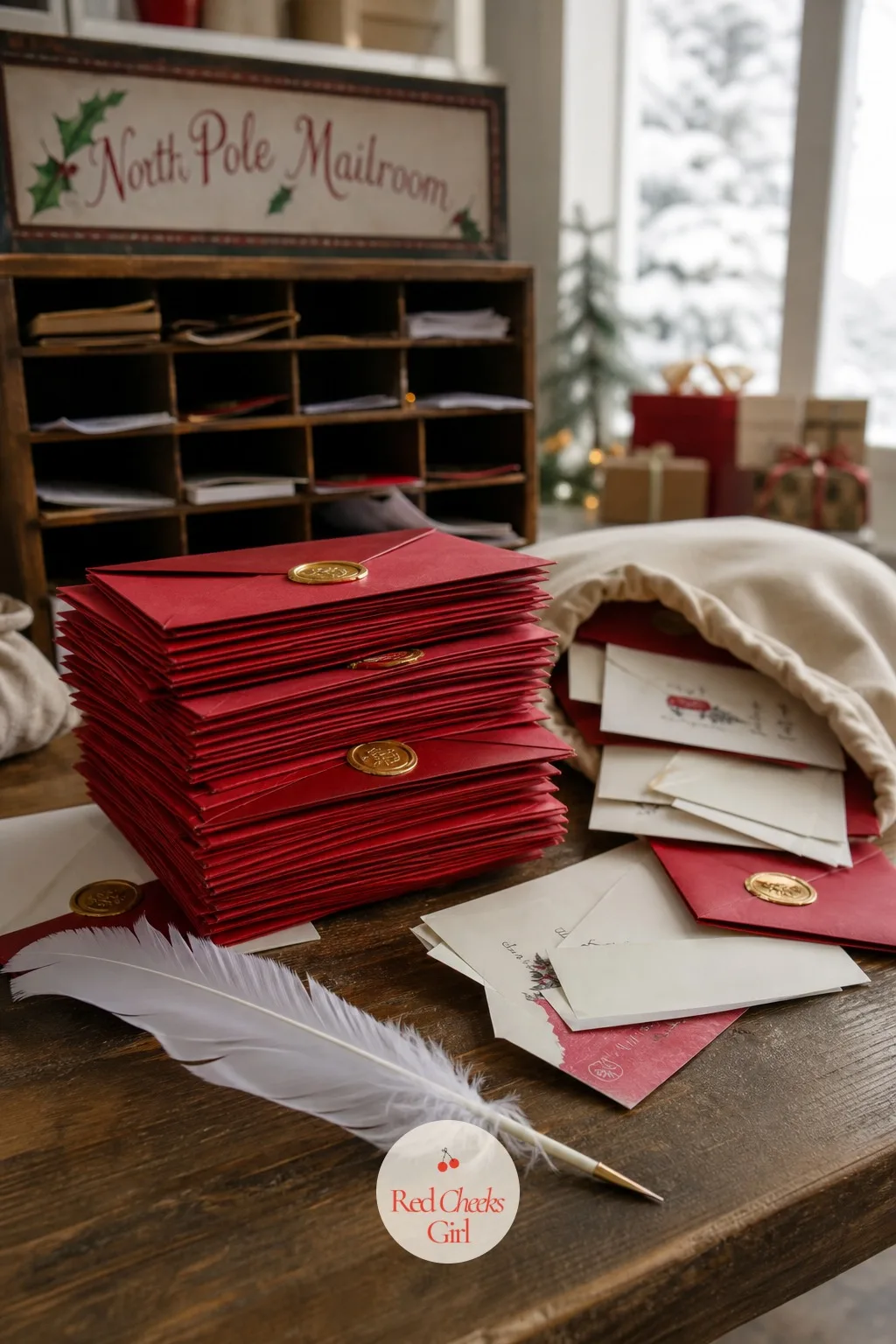
Every letter to Santa has been shuffled and one envelope hides the final clue among a dozen decoys. It plays like a sorting game dressed as a mystery, which makes it an easy one for a mixed-age table.
Stamp a run of plain envelopes with a gold wax seal, address them in red ink, and tuck a strip of paper with a number or word inside each. Only the envelope sealed in a slightly different shade of gold holds the real clue, so attention gets rewarded before cleverness does.
🛍 Shopping guide
Kitchen and Craft Table Capers
Food and glue stick smell like Christmas before a single clue gets read, which is why these three work even on kids too young to read a riddle properly. Build them around a table you were going to set anyway.
Gingerbread House Break-In
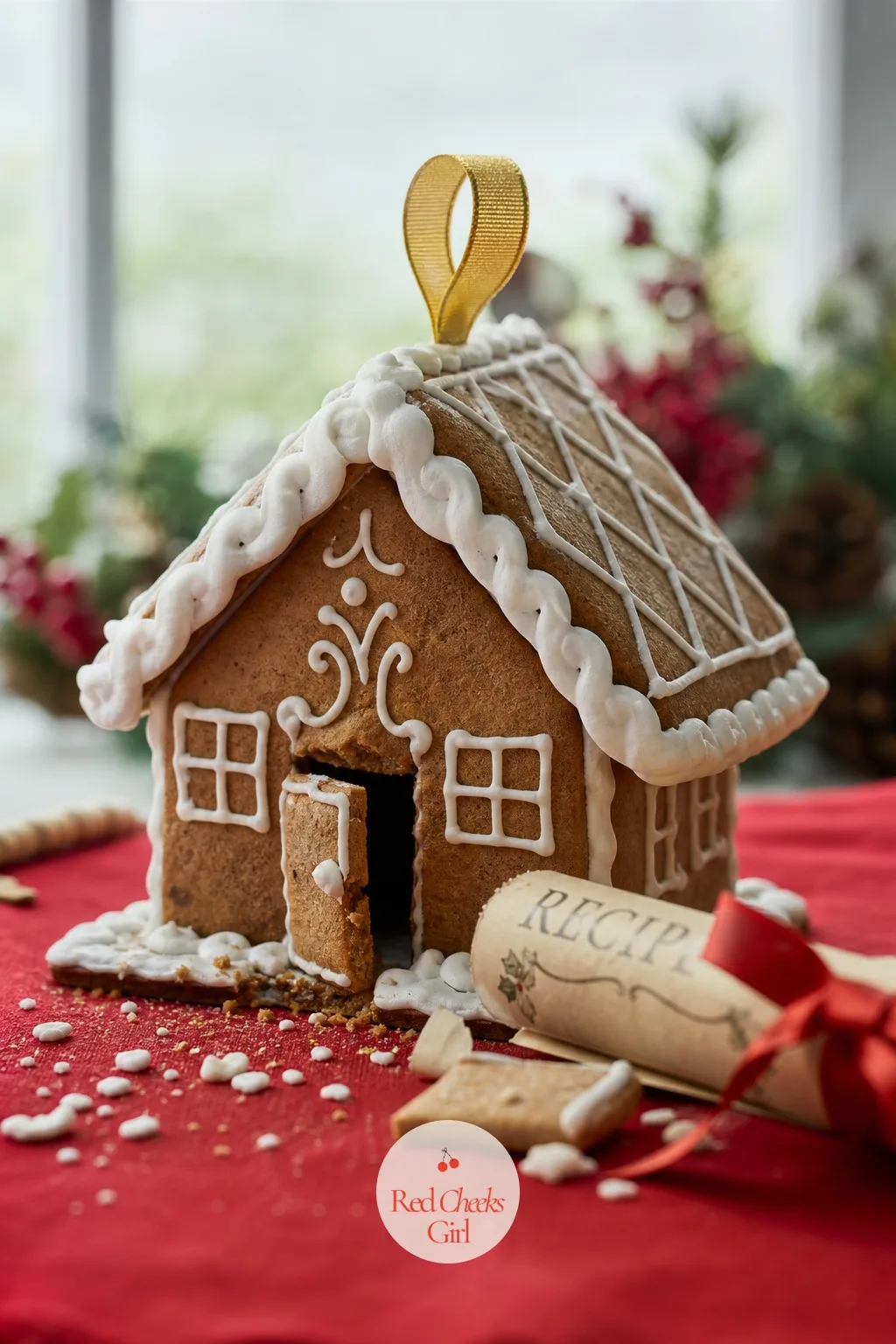
A gingerbread house with a locked little door is instant theatre: the real house stays intact while a smaller stand-in holds the clue. Build or buy one, cut a tiny door, and seal it with a dab of royal icing that has to be gently broken to reach inside.
Younger players love the smell and the mess, older ones like that the icing seal genuinely has to be cracked, not peeled. The next clue, a recipe card with one ingredient circled in red, sends everyone toward the kitchen for step two.
🛍 Shopping guide
Christmas Cookie Recipe Vault
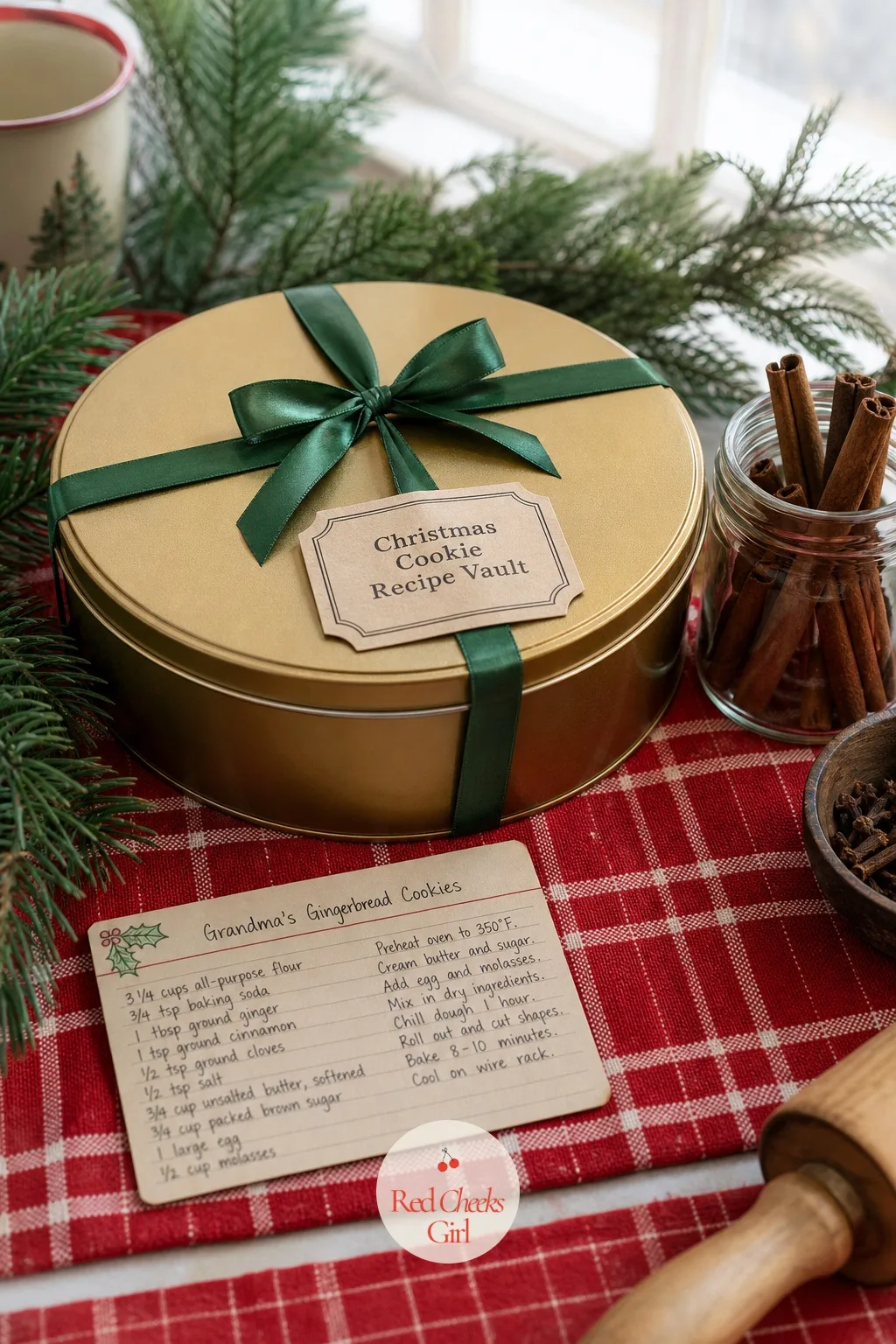
Somewhere in the kitchen sits a tin that will not open without the family’s actual cookie recipe, correctly remembered, as the password. It rewards the person who actually reads the recipe card rather than guesses at the lock.
Write the recipe on a card, leave three ingredients blank, and hide those three words around the kitchen in spice jars or inside a mixing bowl. Combine the words into the word-lock code and the tin, holding the next clue or the actual cookies, finally opens.
No lock on hand: tie the tin shut with twine sealed in wax instead, and let the final word be what breaks the seal rather than a dial.
🛍 Shopping guide
Ugly Sweater Detective Case
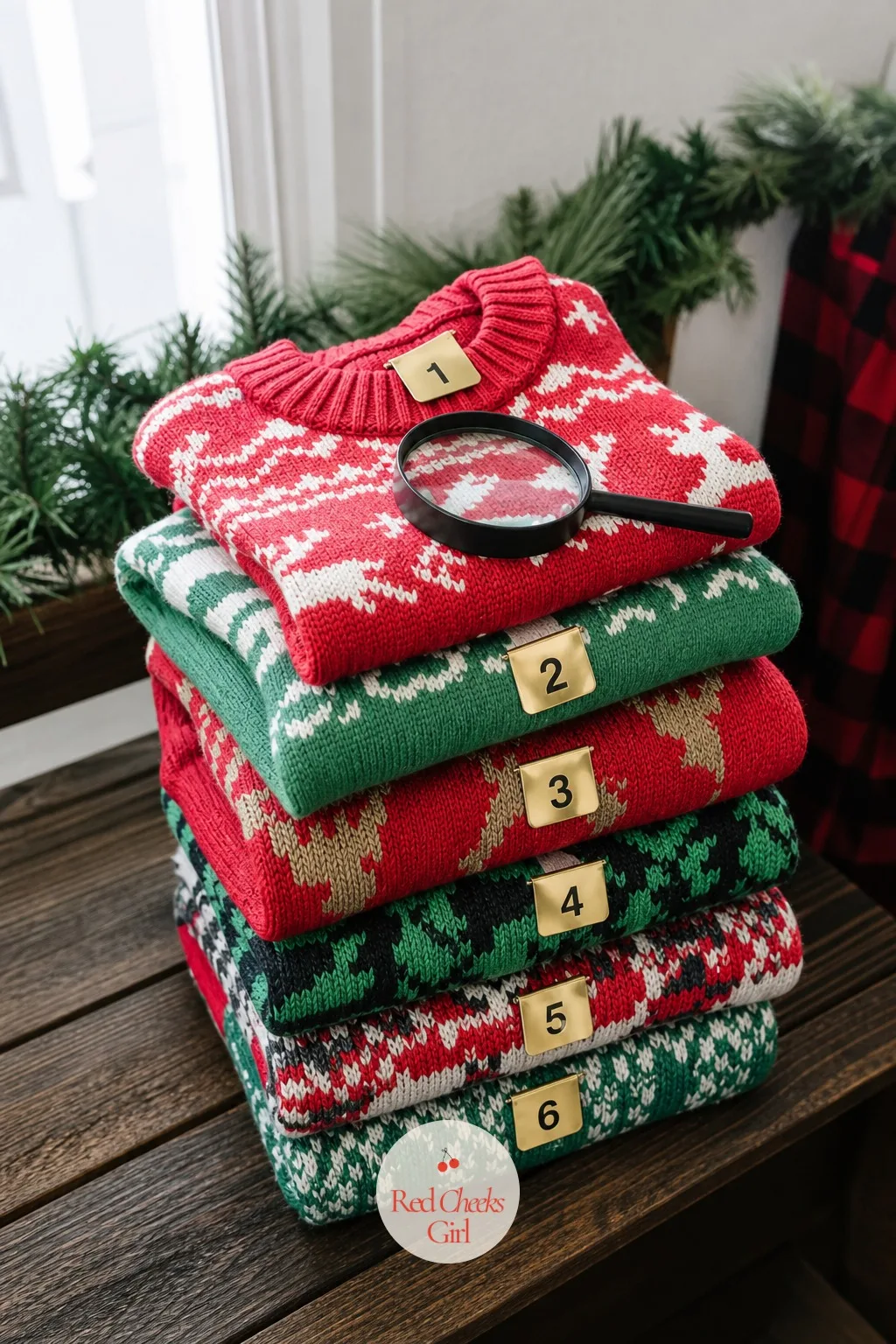
Somebody has mixed up the ugly sweaters in the laundry pile and the only way to find the right one is to read the clues sewn or pinned into each. It is a sorting puzzle wearing a detective’s coat, and it photographs beautifully piled on a bed.
Pin a numbered tag to the inside collar of five or six sweaters, only one tag number matching the final code. Players have to check every collar, which keeps small hands busy while someone else reads the main clue aloud.
High-Stakes Holiday Mysteries
A missing object and a ticking clock turn a quiet living room into a proper case file. These three suit an older crowd, cousins included, who want something with a bit more plot before the cocoa comes out.
Missing Nutcracker Crown
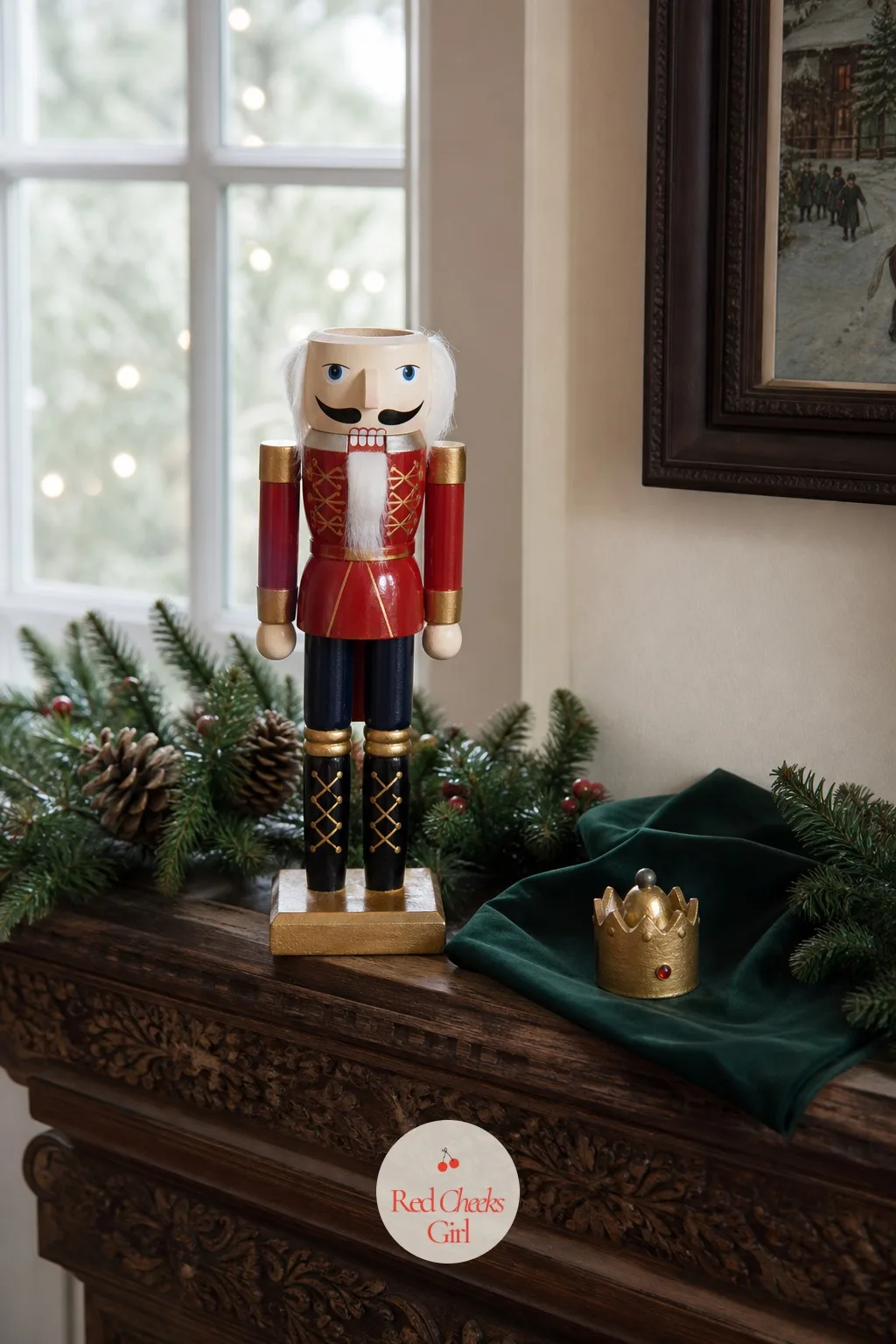
A nutcracker figure stands guard over the mantel minus its crown, and the family has to recover it before the Mouse King (a stuffed toy, no actor required) claims it first. The missing-object format gives older kids a real plot to chew on.
Hide the tiny gold crown inside a nested set of boxes or behind a specific ornament, and leave a trail of three riddle cards that each name a different room. The final reveal, crown back on the nutcracker’s head, makes a genuinely satisfying photo.
Reindeer Stable Stakeout
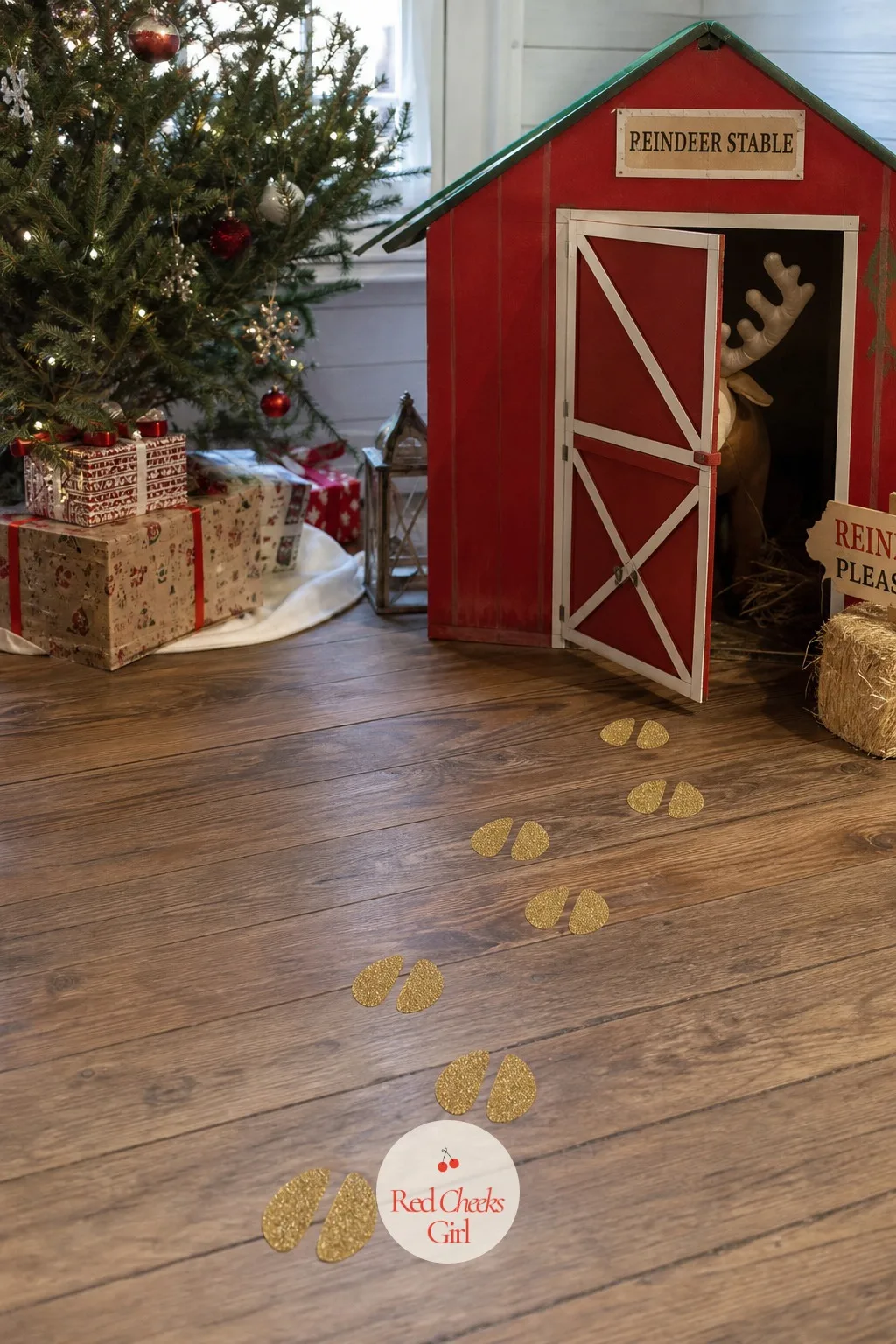
One reindeer has wandered off before the big night and the family must track hoofprints, feed clues and a stable logbook to bring it home. It suits a group that likes a bit of physical searching over a pure desk puzzle.
Cut felt hoofprints and tape them along a hallway floor, each one hiding a number underneath. The numbers combine into the final gate code on a toy stable door, and the reindeer (a plush stand-in) gets walked back inside to cheers.
If the hallway is not an option, scale the whole trail down onto a single tabletop with a toy barn.
🛍 Shopping guide
Midnight Christmas Eve Countdown
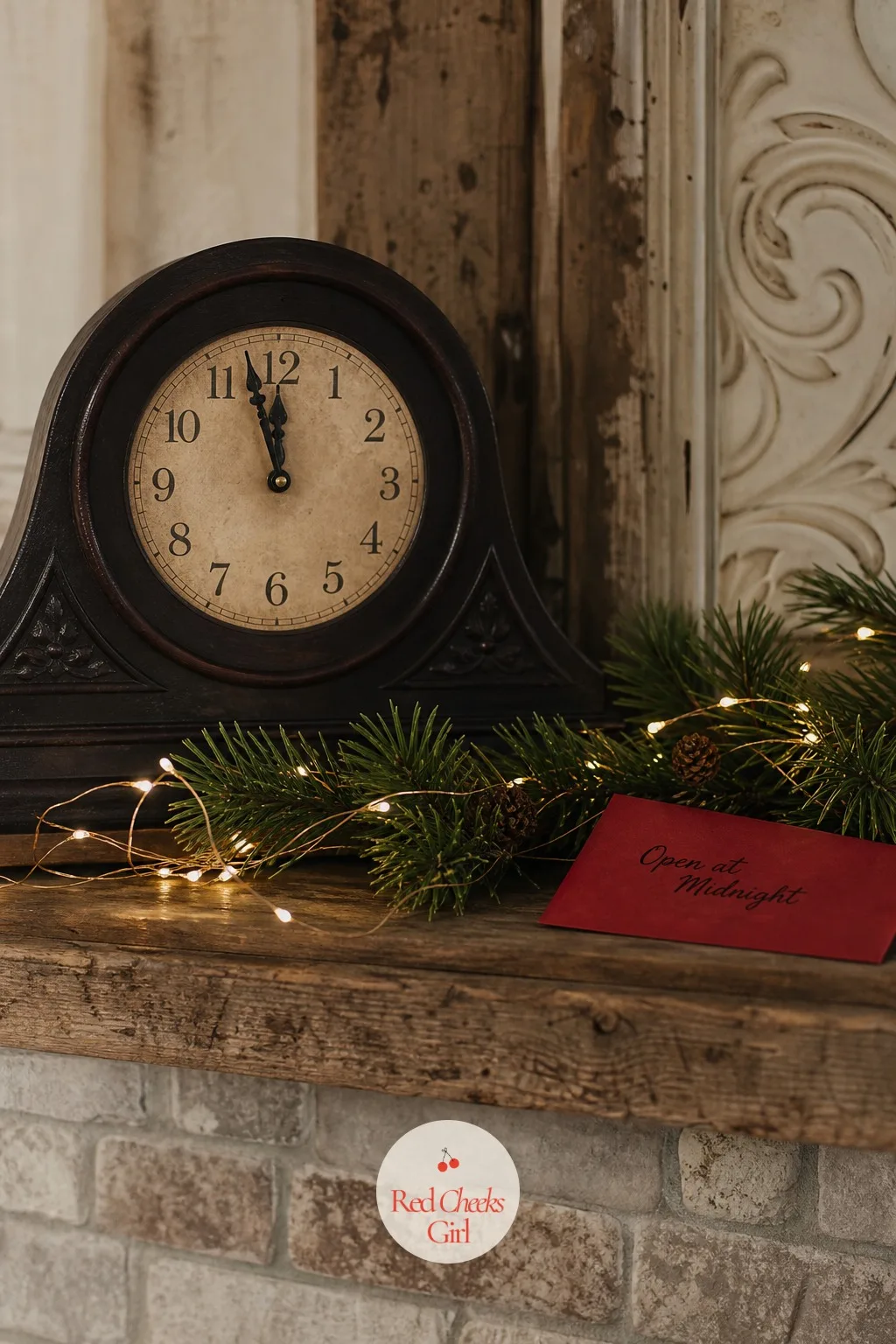
A clock on the mantel is set to strike midnight, and the family has to solve the final chain of clues before the alarm sounds or the whole game resets. The ticking element turns a calm puzzle night into something with a genuine pulse.
Set a kitchen timer or an old mantel clock to a visible countdown, and make the very last clue the one that actually stops it. A string of warm lights switching off as the timer ends makes a quiet, cinematic finish without any extra cost.
Lock and Box Clue Mechanics
Every scenario above needs something to actually lock. These three are the physical heart of the game: the thing guests touch, turn and finally open.
Nested Wrapped Boxes With a Clue in Each Layer
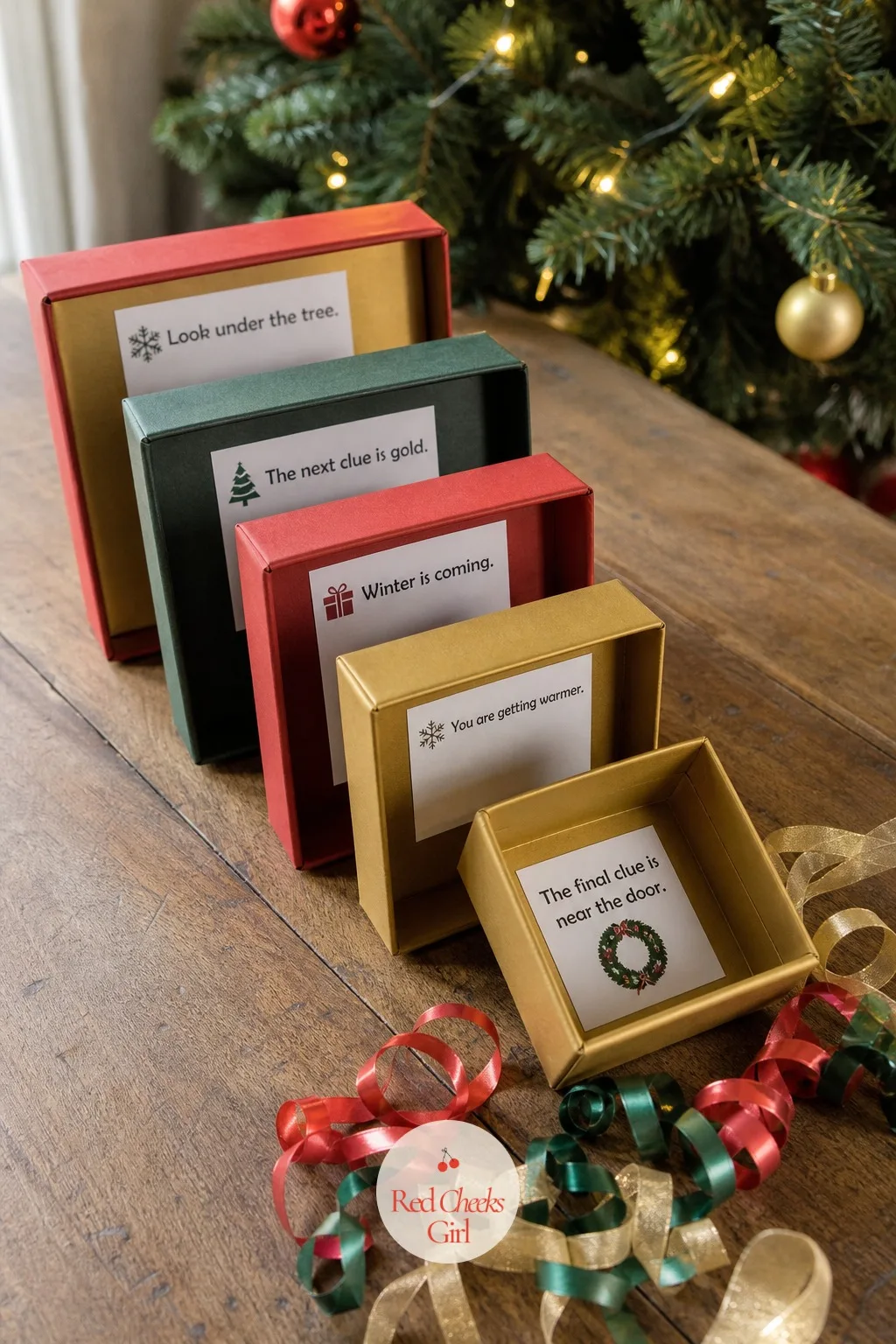
Nothing builds anticipation like unwrapping a present only to find another, smaller present inside, and then another. Four or five boxes nested inside each other, each holding one line of the next clue, turns simple gift wrap into a proper puzzle engine.
Wrap the outer box in gold paper, the next in red, the next in forest green, so the colour change itself signals progress. It costs whatever wrapping paper already sits in the closet and takes about ten minutes to assemble.
Ornament Color-Code Padlock
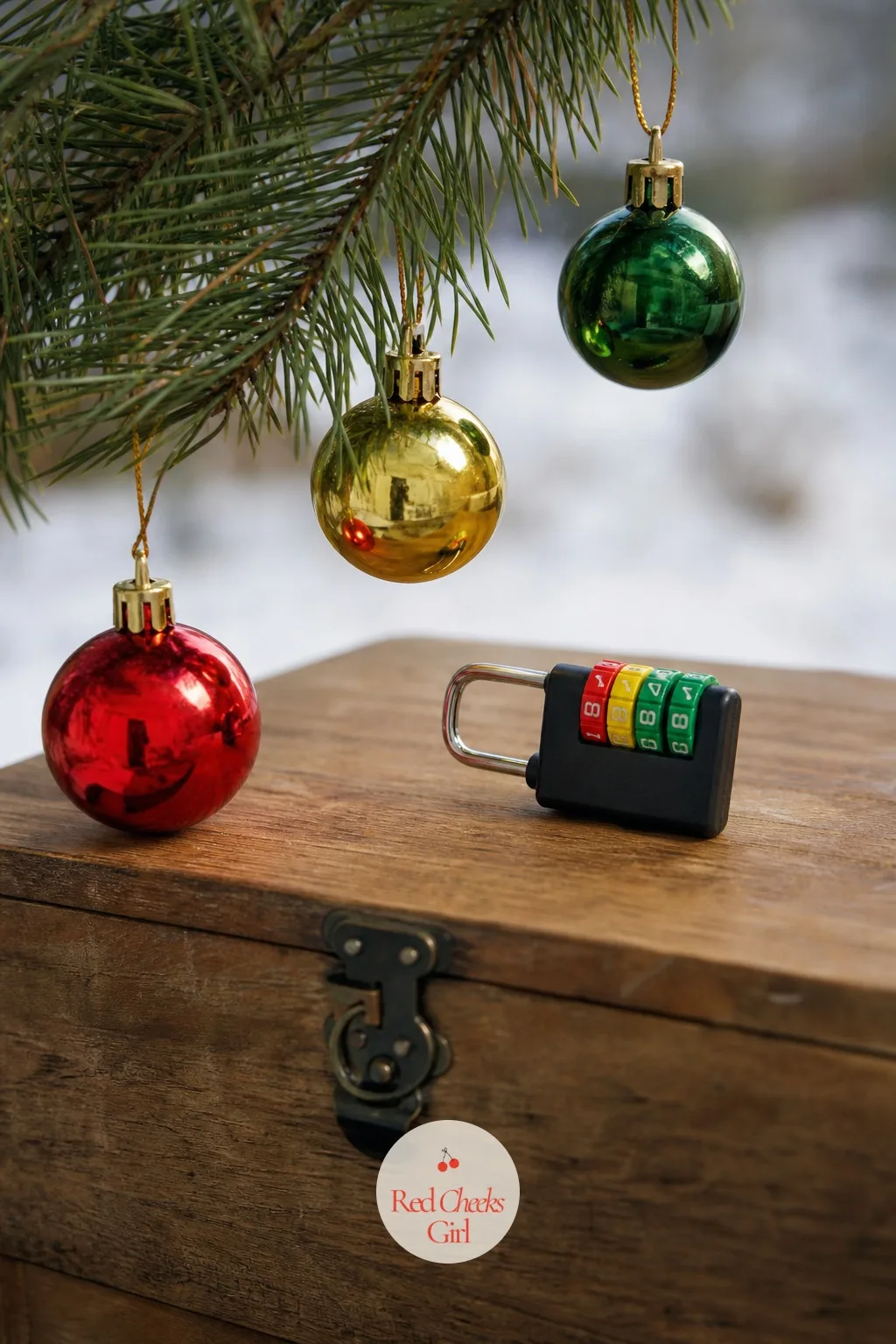
A string of ornaments hanging off the tree looks purely decorative until she notices the colour order spells out a lock combination. Red equals one, gold equals two, green equals three, and the sequence on the branch is the code on the box.
It uses ornaments already on the tree, so there is nothing new to buy if the lock itself is already in the house. Just write the colour key small, on the back of a gift tag, so it reads like part of the decor rather than an instruction sheet.
Locked Stocking With a Word Lock
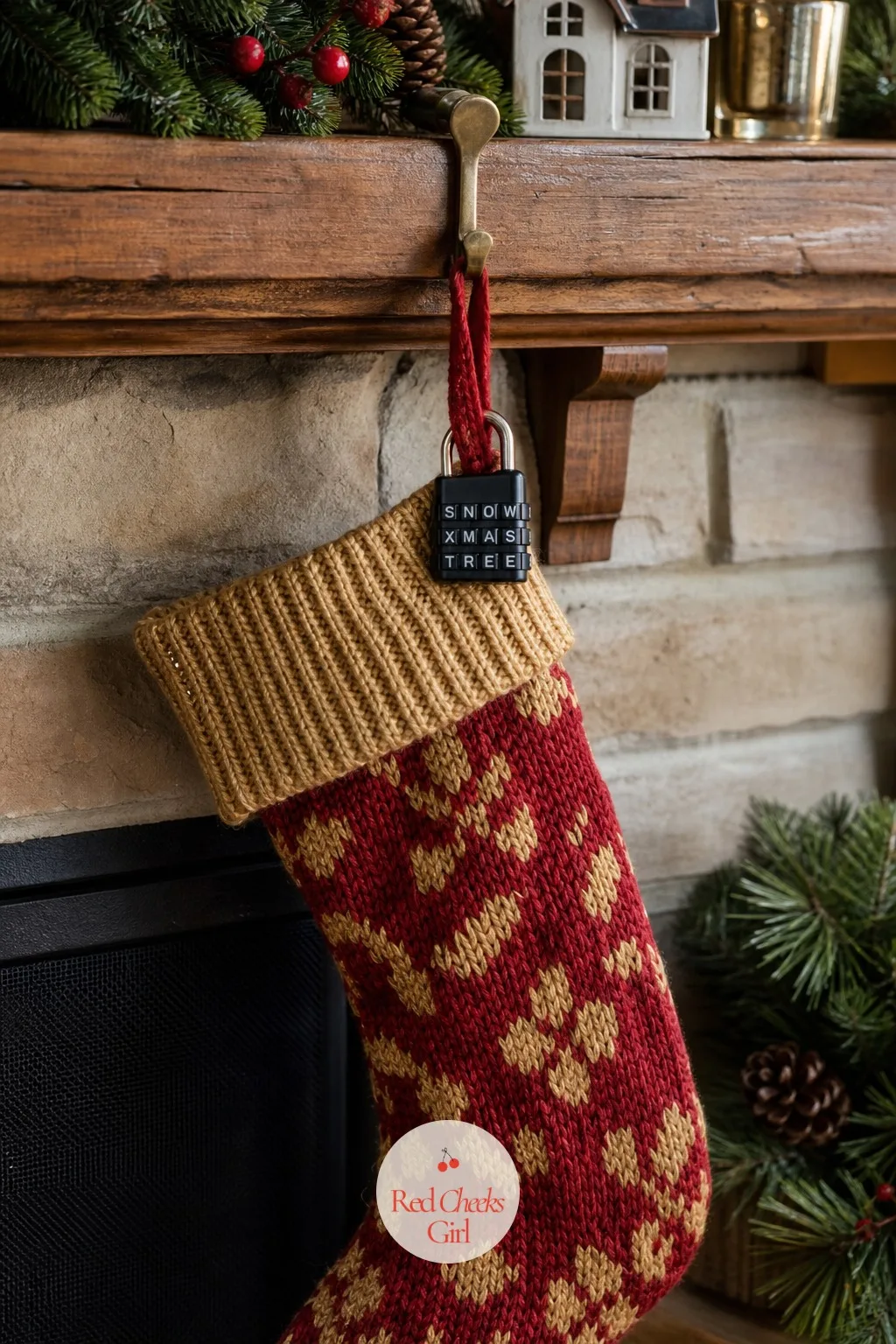
A stocking hung by the chimney usually holds the sweetest surprise of the day. Here it holds a small lockbox instead, cinched shut with a word padlock that only opens once the family spells out a word hidden across earlier clues.
It is quick to rig: drop a small box inside the stocking toe, loop the lock through the stocking’s hanging strap, and let the stocking itself stay otherwise untouched, still pretty on the mantel until the moment it matters.
🛍 Shopping guide
Light and Scent Clue Stations
Not every clue needs to be read. These three pull in nose and eyes instead of just a riddle, which keeps younger players in the game even before they can decode anything.
UV Flashlight Message on an Ornament
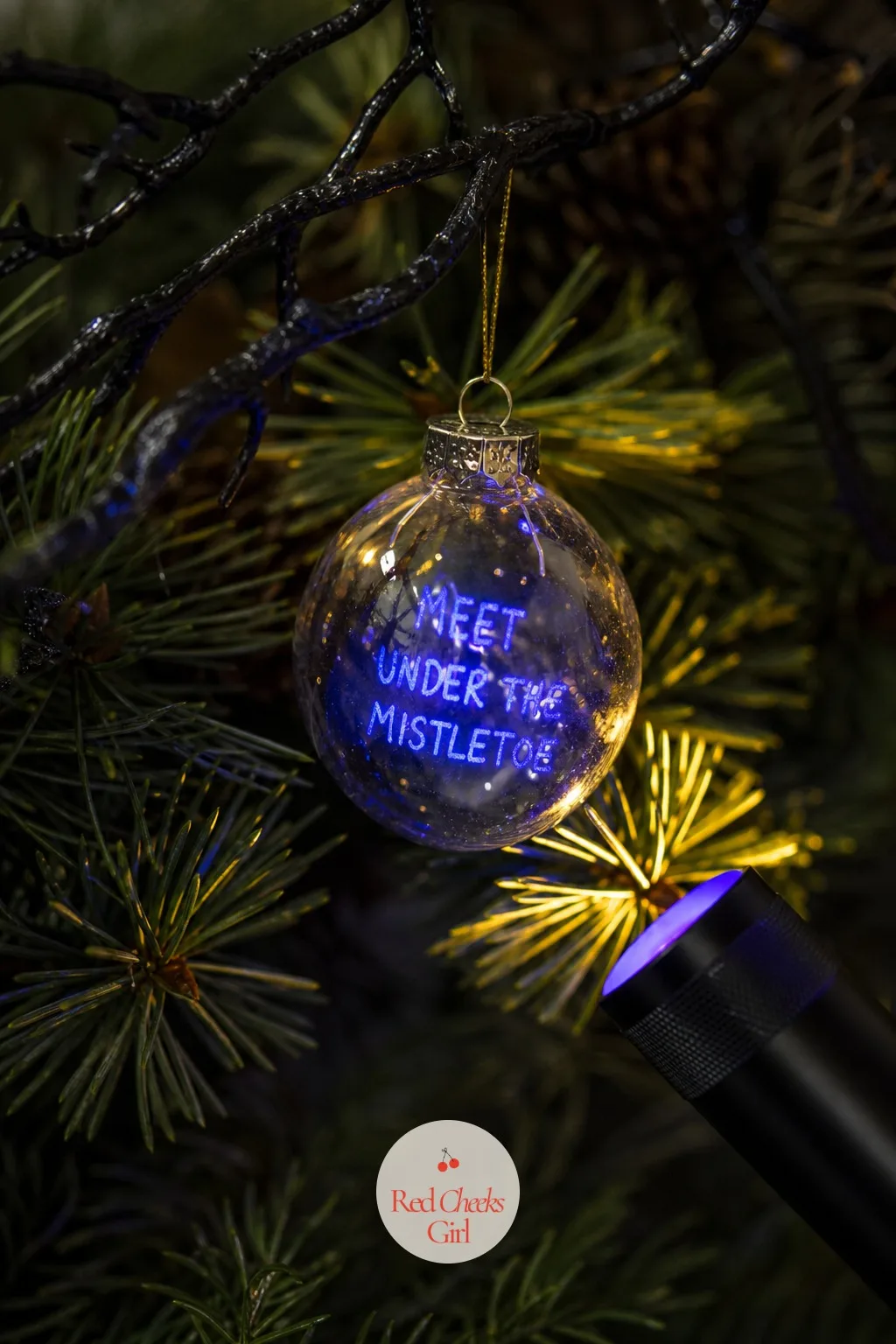
Write a message in a UV-reactive pen on a plain glass ornament and it stays invisible in ordinary light, a genuinely blank bauble hanging on the tree. Switch on a small UV flashlight and the words glow up out of nowhere. This puzzle feels incredibly clever when the kids solve it, and all you need is a small light source.
It costs the price of one pen and one cheap flashlight, both reusable for next year’s game. Hide the ornament in plain sight among the regular decorations so finding it is its own small task before the reveal even happens.
🛍 Shopping guide
Scent Clue Jars With Cinnamon, Pine and Peppermint
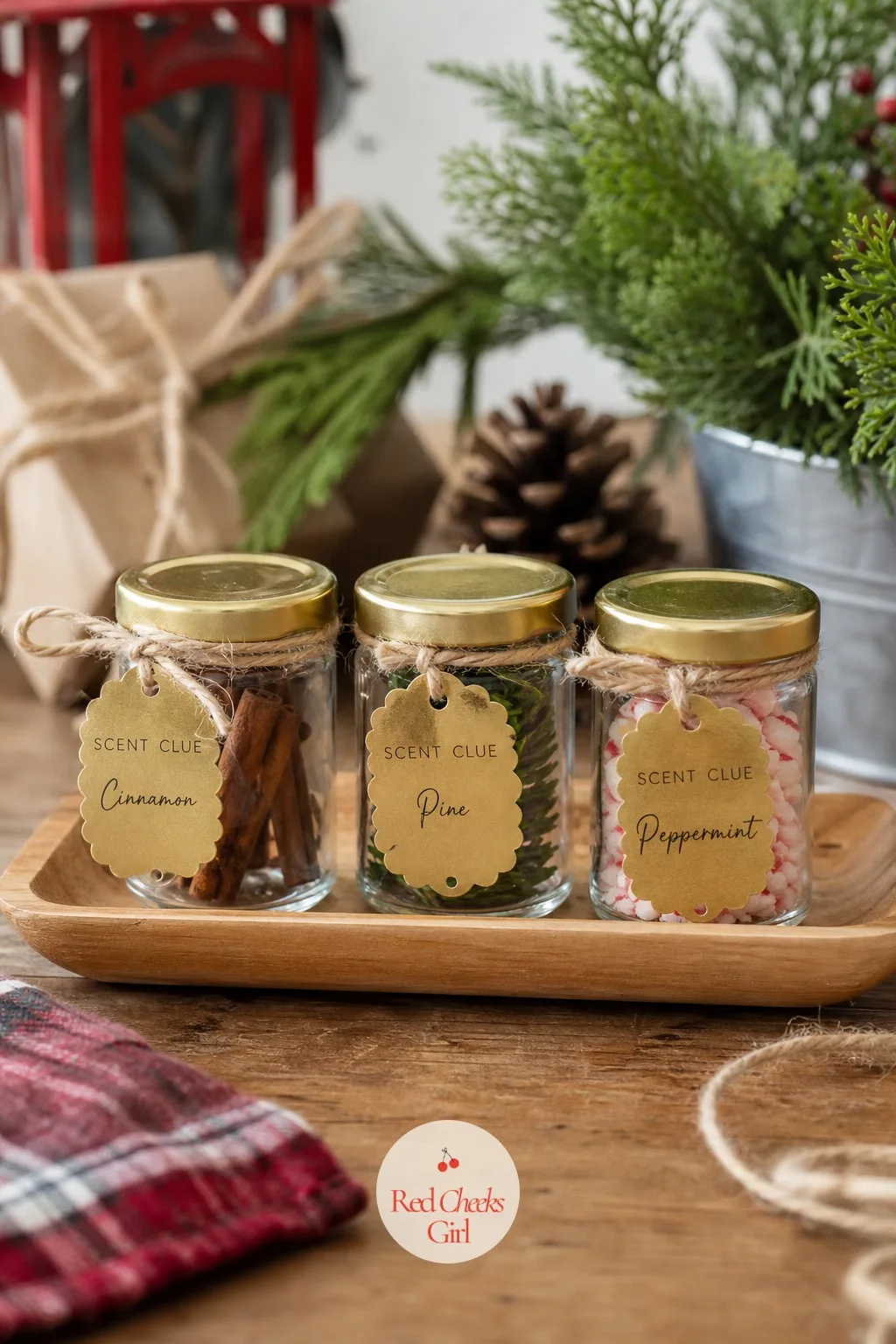
Three small jars, each holding one Christmas smell, cinnamon stick, pine sprig, crushed peppermint, sit unlabeled on a tray. Players sniff each in turn and match the scent to a word card that spells out the next direction. Holiday scents like pine or cinnamon help immerse players in the experience well before anyone reads a single clue.
It costs almost nothing if these are already in the pantry, and it is the one station that works even for a child too young to read yet, since matching a smell needs no letters at all.
🛍 Shopping guide
Blacklight Snowflake Map
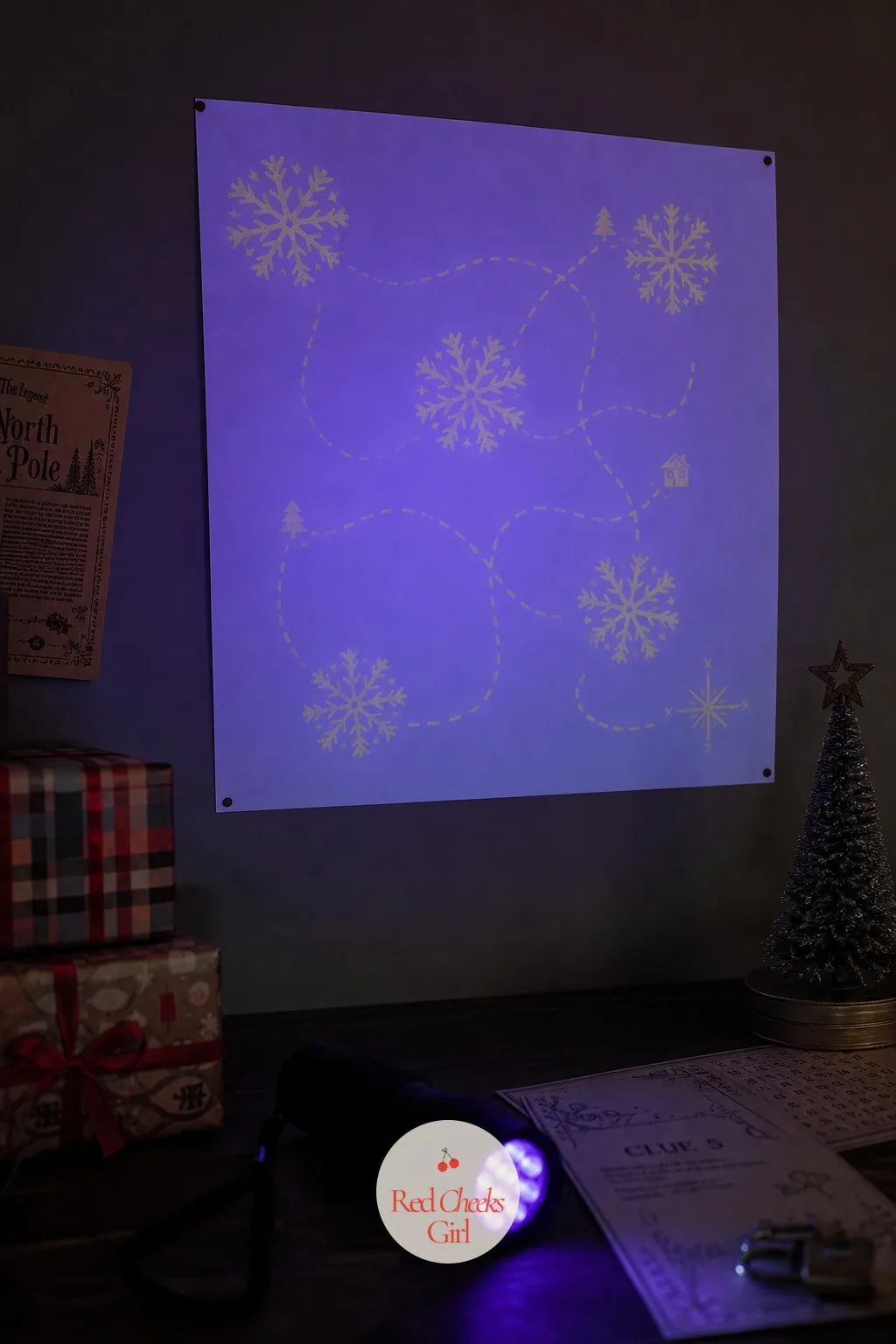
A plain sheet of paper, dotted here and there with snowflakes drawn in UV pen, looks blank under the tree lights. Switch a blacklight across it and a hidden path of snowflakes appears, leading from one spot in the room to the next.
It doubles as decoration before anyone solves anything, since a snowflake-dotted paper sits perfectly well pinned to a wall on its own. Use it as the connective trail between two other stations rather than a stand-alone puzzle.
Word and Image Puzzle Finishes
Save these for near the end: they reward a group that has already warmed up, and the last one gives you a built-in reason to run this again next year.
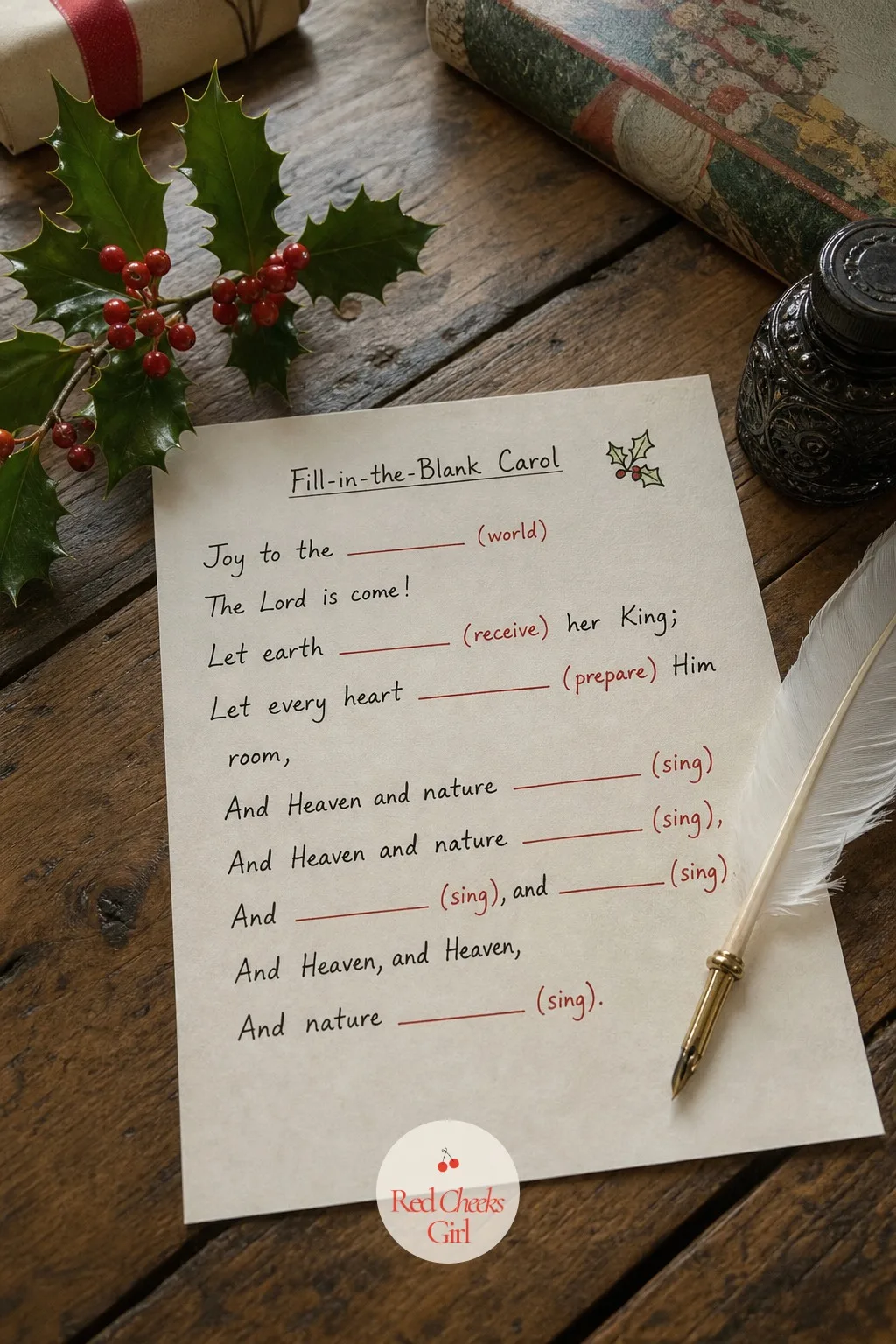
Carol Fill-in-the-Blank Using Public-Domain Carols
Print the lyrics of a carol already old enough to belong to everyone, Jingle Bells, Deck the Halls, O Come All Ye Faithful, and leave a handful of words blank. Filling them in correctly spells out the final code letter by letter.
It costs nothing but paper and ink, and it doubles as a singalong once the puzzle is solved, since the family already knows every word by heart. Keep to genuinely public-domain carols so there is nothing to clear and nothing to worry about reprinting.
🛍 Shopping guide
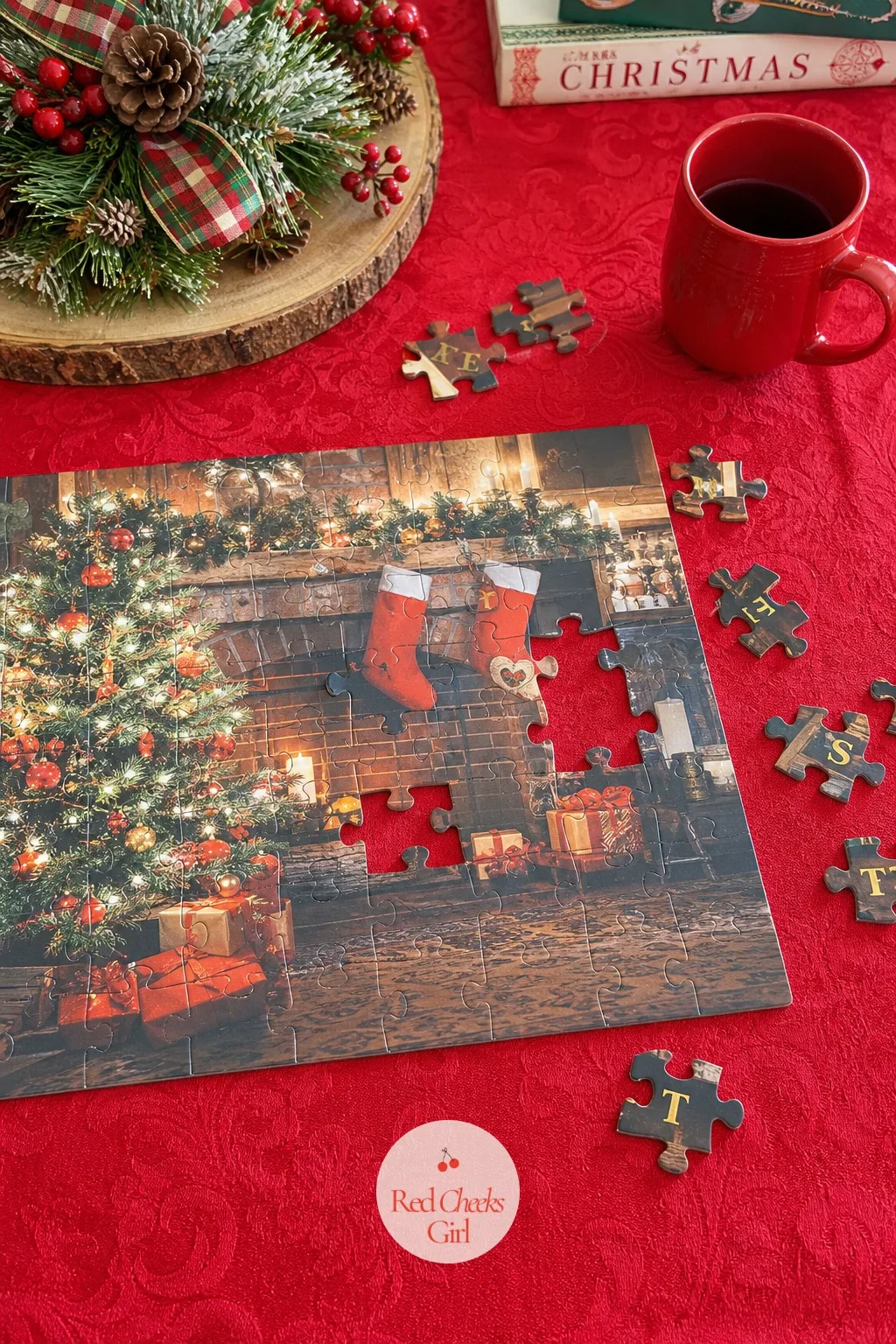
Photo Puzzle Cut on a Straight Grid
Take a favourite family Christmas photo, print it large, and cut it into a simple straight grid of nine or twelve pieces. Reassembling it is satisfying on its own, but write one letter on the back of each piece and the finished puzzle spells the final word too.
This one costs the price of a print and gives you a keepsake afterward, since the reassembled photo can go straight into a frame once the game ends.
🛍 Shopping guide
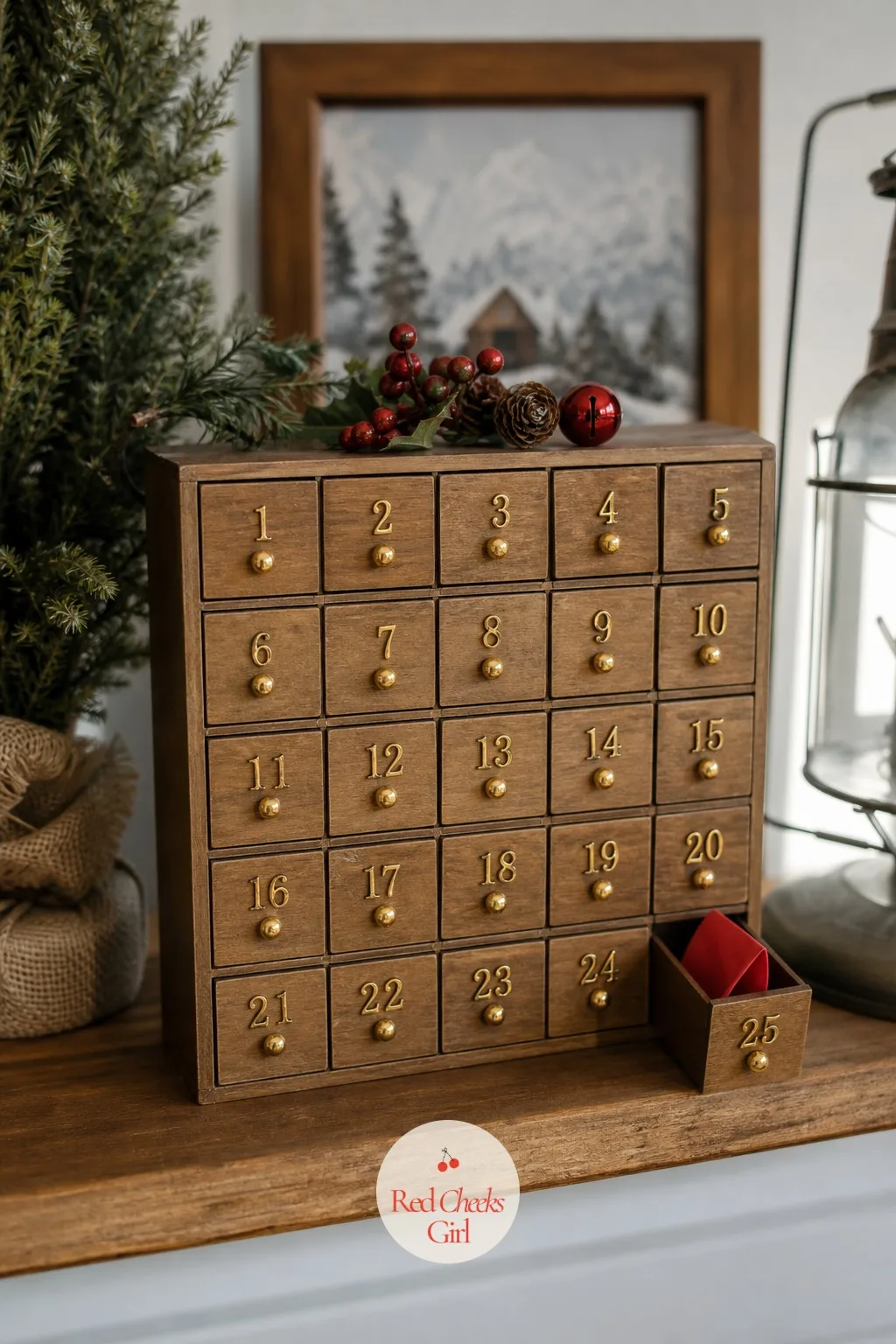
Advent Drawer Countdown Finale
Instead of a single evening, stretch the whole game across the month: a small wooden drawer unit, one drawer per day, each holding one clue piece toward a finale on Christmas Eve itself. It turns the format into a running family tradition rather than a one-night event.
The last drawer, opened on the night itself, reveals the final combination to a locked box holding one small shared gift. Keep early drawers simple enough for little hands and save the genuine thinking for the final week.
Frequently Asked Questions
What is a Christmas escape room exactly?
It is simply a set of connected puzzles wrapped in a holiday storyline, Santa’s missing keys or a locked gingerbread house, that the family works through together to reach one final reveal. No special equipment makes it an escape room, the story and the locks do.
How do I make a DIY Christmas escape room at home?
Pick one storyline to be the spine of the night, then choose three or four mechanics, a lock, a UV clue, a scent jar, to carry players through it toward one final box or envelope.
How many puzzles do I actually need?
Five is a reasonable minimum for a game that still feels like an adventure rather than a single trick. Typically you will need at least five puzzles to create a room. Fewer than that and the ending arrives before anyone has settled in.
What age group suits a Christmas escape game best?
Most of these flex easily: scent jars and colour codes work for children too young to read, while word locks and carol fill-ins suit school-age kids and adults alike. Mix an easy mechanic with a harder one so nobody gets stuck or bored.
Do I need to buy a printable kit, or can I build my own?
A kit saves an evening of prep, but nothing here requires one. Ordinary wrapping paper, a combination lock already in a drawer and a few spice jars from the pantry build a full game for the cost of ribbon and ink.
Where should I hide the clues around the house?
Anywhere a hand naturally lands during a normal evening works well. Clues can slip under cushions, behind picture frames, inside books, or tucked into Christmas decorations, which keeps the search feeling like part of the room rather than an obvious scavenger hunt.
16 christmas crafts for kids with a reveal built in: each one changes shape, colour or form partway
Twelve elegant Christmas cards ready to print tonight, each with finished wording, a fold and a layo
15 christmas games for toddlers ages 1-3 — soft props, zero small parts, 5 minutes each. Safe, gen
Leave a Reply