

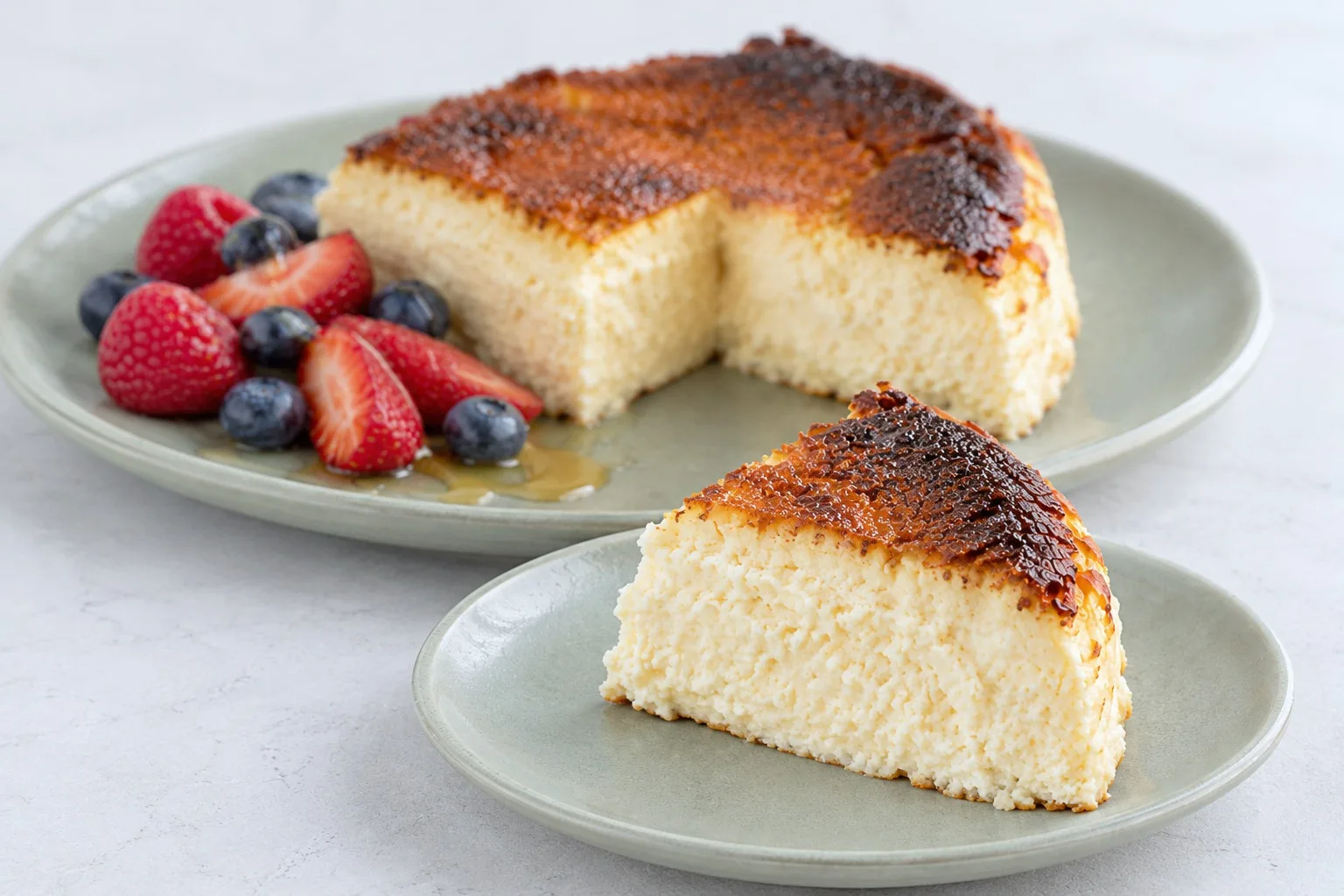
This basque cheesecake recipe skips the crust, the water bath and the fuss, asking instead for a deeply caramelized top where a smooth one would normally go.
Four ingredients you likely already keep on hand turn into a dessert that looks like a kitchen accident and tastes like restraint. Chill it properly and the slice holds its shape against the fork, wobble and all.
This post contains affiliate links. If you buy through them, I may earn a small commission at no extra cost to you.
Table of Contents
A Cheesecake That Breaks Every Rule On Purpose
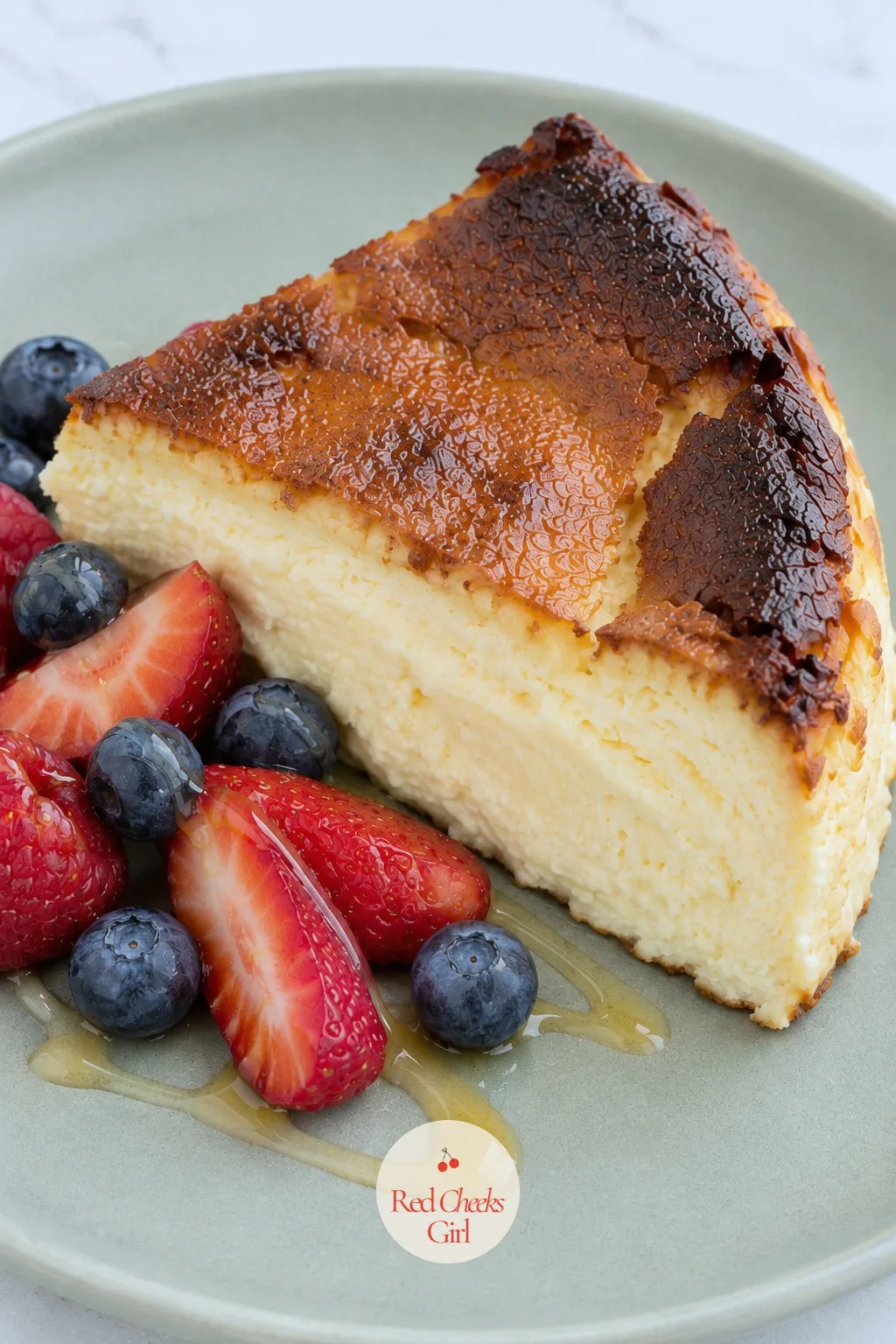
The top looks like something went wrong in the oven. It did not: that deep, almost black crust is the whole point, and once you accept it the rest of the recipe gets easy.
No crust means no cookie crumbs to press into a pan, and no water bath means no wrestling a hot springform pan inside a roasting dish full of water. The oven runs hot and fast instead of low and slow, so the whole bake takes under an hour.
If you already own a mixing bowl and a hand mixer, you own almost everything this cake asks for. It travels well to a party table too, since it looks intentional rather than fussy, slightly rustic rather than perfect.
Serve it on its own plate at a party and people will ask what it is, which buys you a minute of conversation before anyone reaches for a fork.
The Few Things That Actually Matter Here
Reach for full fat cream cheese, the block kind rather than the tub, and let it sit out until it gives easily under a finger. Cold lumps never fully disappear once the batter bakes, and a smooth batter now is a smooth slice later.
Plain granulated sugar does two jobs at once: it sweetens the custard and it feeds the caramelization on top. Do not reach for brown sugar or a sugar substitute here, the color and the faint bitterness depend on white sugar browning in a very hot oven.
Whole eggs, six of them, hold the batter together without a crust to lean on. Room temperature eggs blend in faster and more evenly than cold ones straight from the fridge, so set them out alongside the cream cheese.
Heavy cream keeps the center loose and spoonable instead of dense like a New York style cheesecake. The single spoon of flour is not there to thicken the cake so much as to give the custard just enough structure to hold a slice.
Worth saying plainly: this cake carries dairy, egg and gluten from the flour, so it is not naturally suited to any of those allergies without real substitutions.
How to Make It
This is the one pan, one bowl version: no crust, no water bath, baked hot enough that the top looks burnt before the center is anywhere near set. Read the whole method once before turning on the oven, since the bake itself moves fast.
Mix the batter smooth
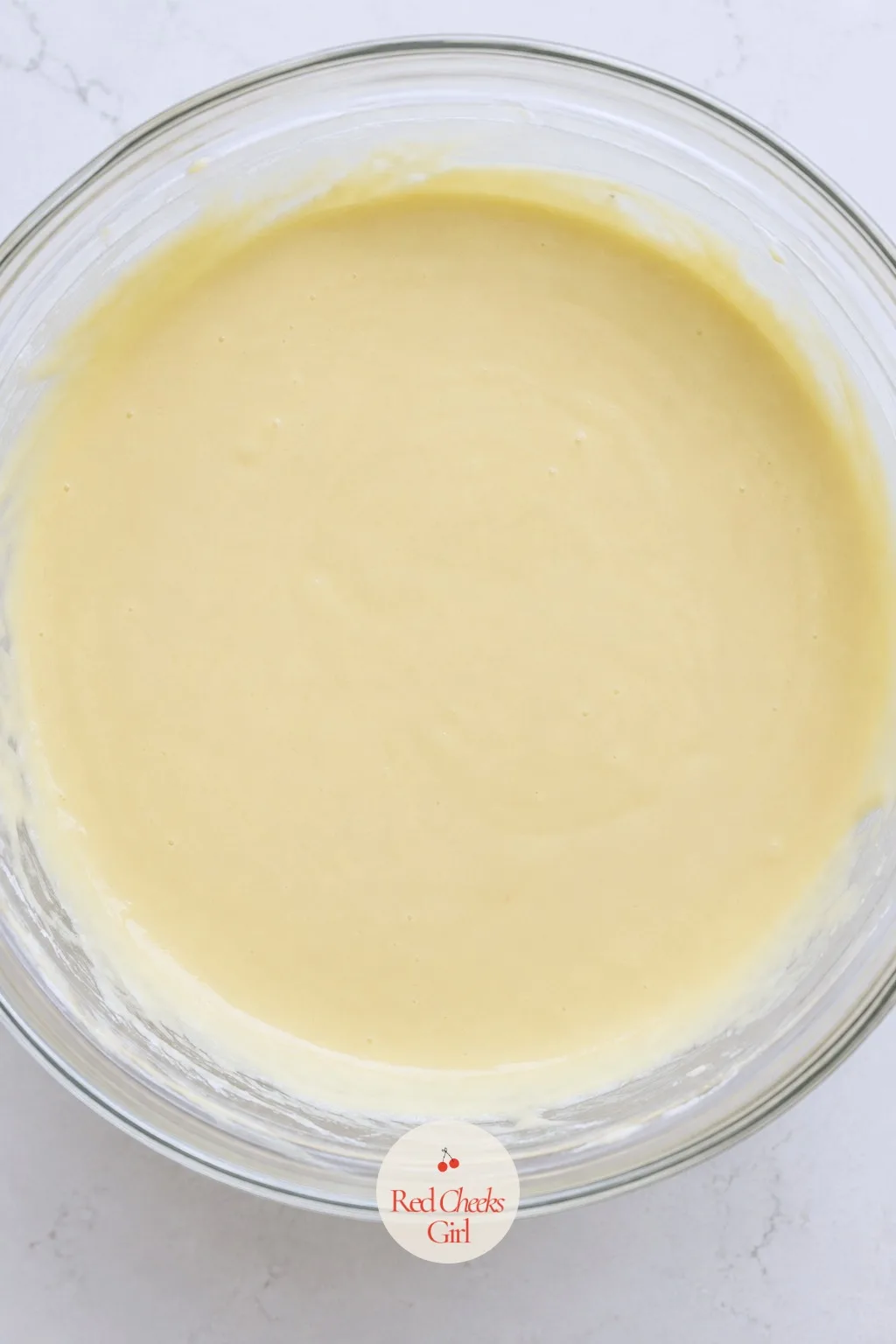
Beat the batter until it turns glossy and streak-free, with the flour fully whisked in. A few seconds too long here and the texture turns rubbery instead of silky.
Pour the batter into the pan
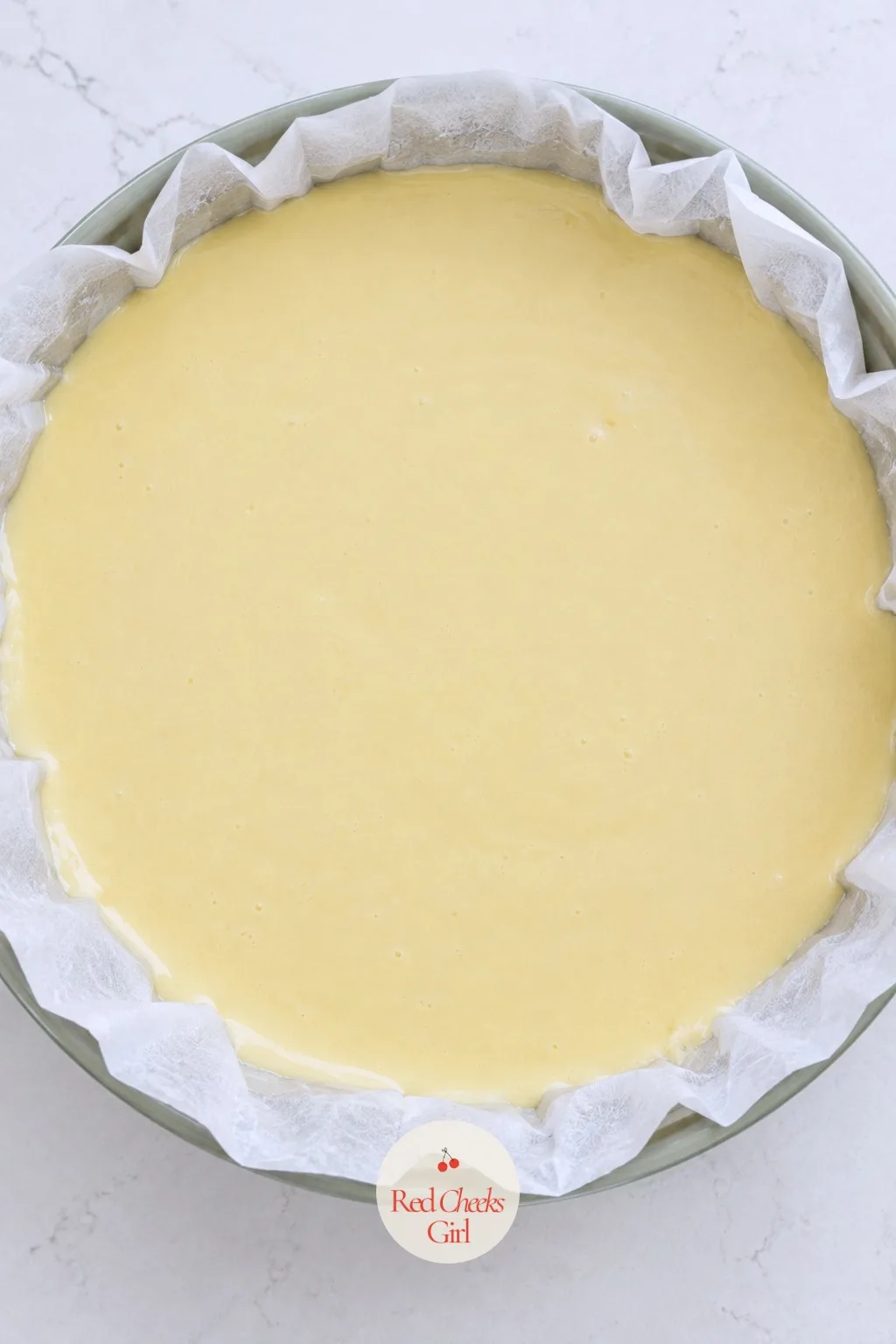
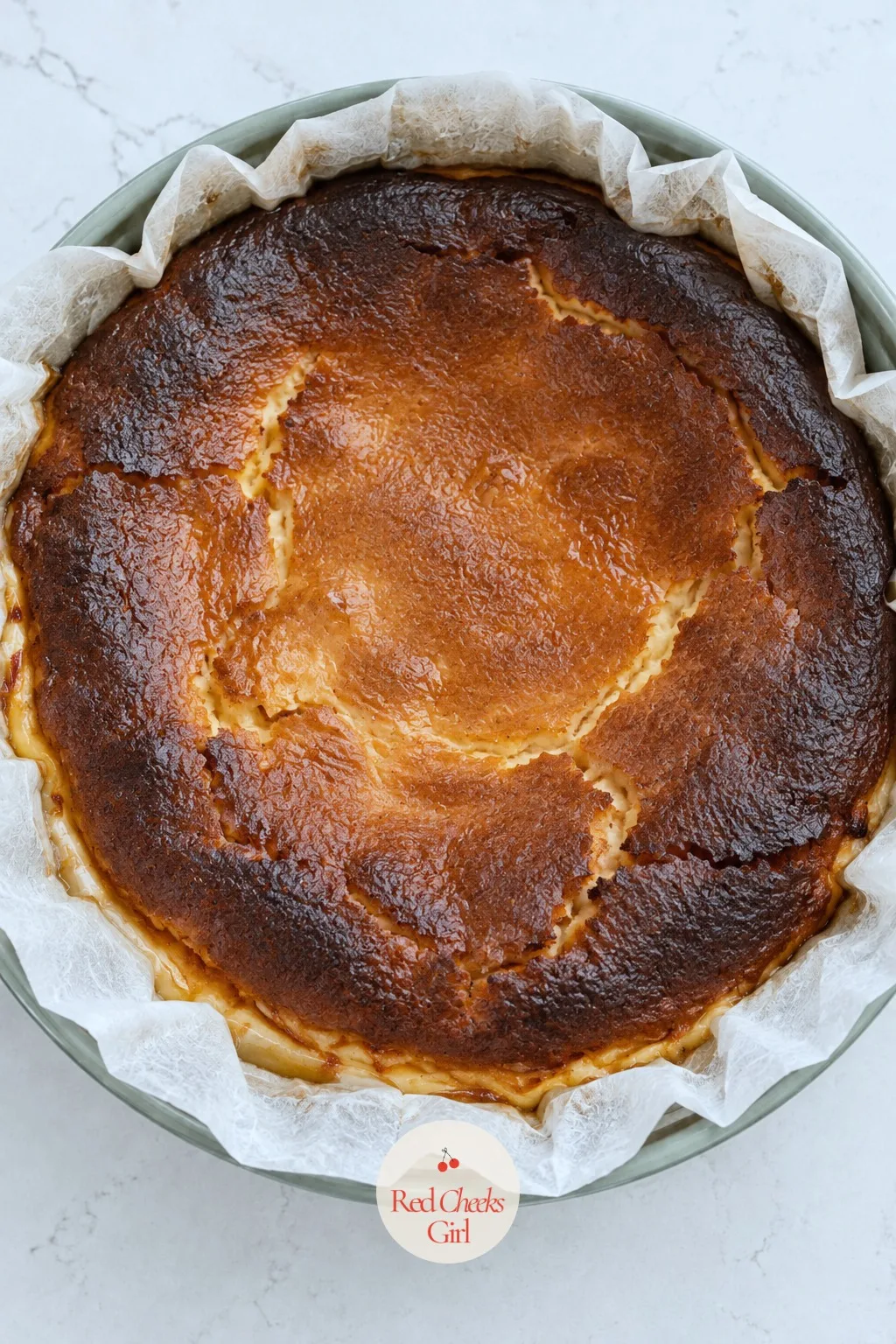
Pour the finished batter into the parchment-lined pan and give it a firm tap on the counter to release any trapped air. The crumpled paper will char along with the top, and that is correct.
Bake until deeply caramelized
Pull the cheesecake once the top has gone deeply caramelized and the center still wobbles like loose gelatin. Do not worry about the dark color along the edges, that bitterness balances the sweetness inside.
Unmold and let it settle
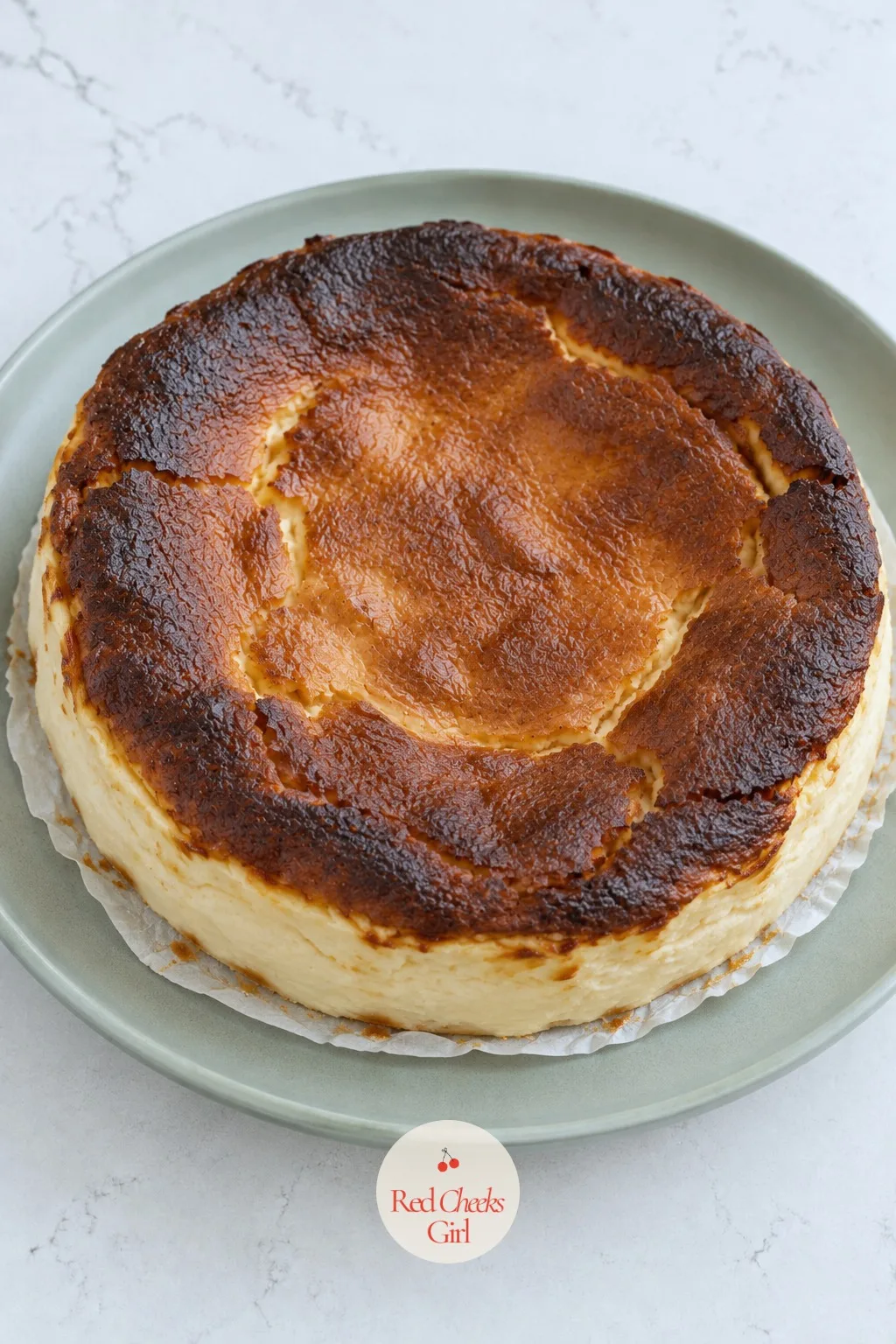
Once it has cooled for an hour, release the ring and peel the parchment from the sides only. The cake will look sunken and a little rustic, which is normal and part of the look.
Slice and serve
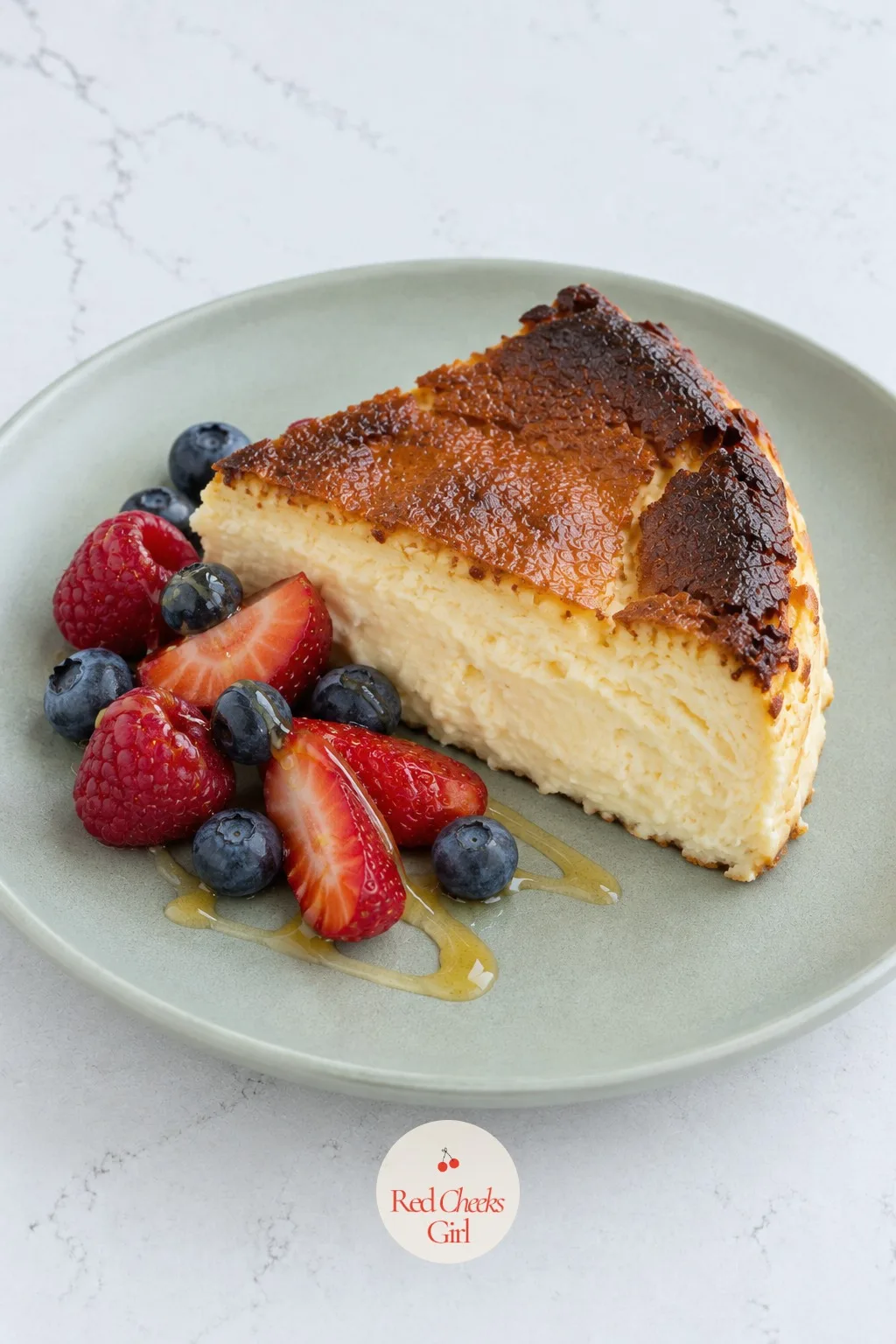
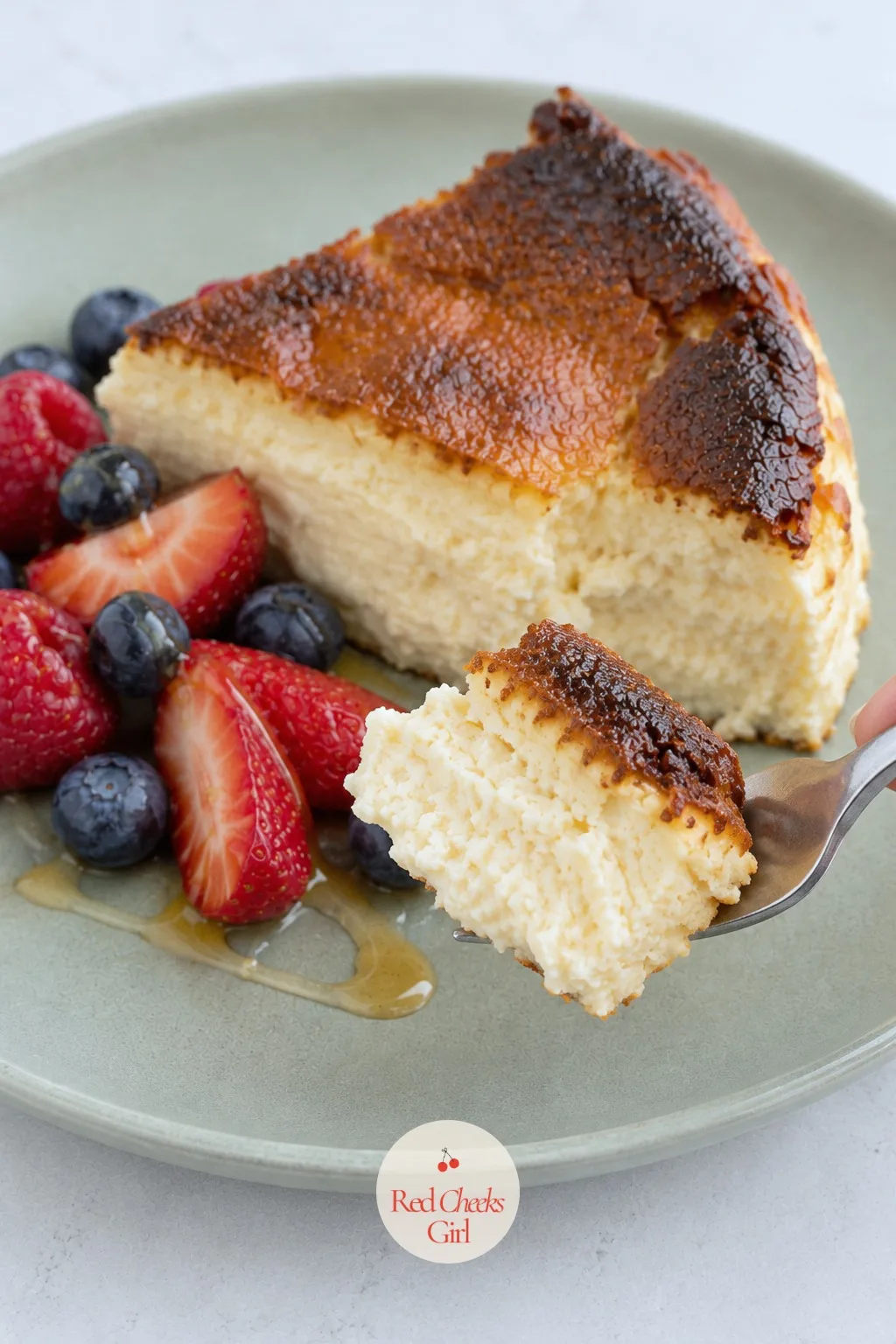
Slice with a warm, clean knife once the chill time is up, so the center holds its shape against the fork. Serve each piece with berries or a drizzle of honey over the caramelized top.
🛍 Shopping guide
Where This Recipe Actually Goes Wrong
The most common mistake is pulling the cheesecake too early because the dark top looks alarming. A properly baked center should move like loose gelatin, almost as if it could spill if the pan tipped; a center that only trembles slightly needs another five minutes.
The second mistake is overbeating once the eggs go in. Extra air whipped into the batter puffs up dramatically in the oven, then collapses into a cracked, sunken top that looks more like a mishap than a method.
Skipping the chill is the third one. A warm or even room temperature slice runs across the plate instead of holding a clean edge, so give it the full four hours even if the smell makes that feel unreasonable.
Finally, do not swap the pan size without adjusting the bake. A deeper pan with the same amount of batter needs longer in the oven before the center reaches the right wobble.
Swaps That Still Work
Short on heavy cream. Half-and-half works in a pinch, though the center turns a touch less silky. Do not reach for milk alone, it thins the batter too far and the center will never fully set.
For a gluten-free version, swap the flour for the same amount of cornstarch; the structure holds just as well and nobody at the table will notice the difference by taste.
A teaspoon of vanilla extract or a half teaspoon of orange zest folded in with the cream is a quiet, optional addition if the plain version feels too austere for your table. The traditional version skips both, so leave them out with no guilt either way.
Some bakers swap part of the cream cheese for mascarpone for a softer edge; use no more than a third of the total weight so the slice still holds together at room temperature.
What To Serve Beside It
Fresh berries do the most work for the least effort: raspberries, strawberries halved, or a handful of blackberries scattered over each slice cut the richness without asking you to cook anything else. A spoon of warm honey does the same job if berries are out of season.
Coffee, served plain and strong, sits well beside a slice this rich, and so does something sparkling if the party calls for it. Keep the rest of the table lighter, since this cheesecake carries its own weight.
If the dessert table needs more than one thing, our 17 Mini Dessert Cups Layered in Glasses for Parties fill out the rest of the spread without competing for attention. Our 12 Pistachio Cream Dessert Recipes for Nut Lovers and Dessert Tables work the same way, for a table that leans a little more decadent.
Once the plates are cleared, keep the evening moving with a round from our 17 Dinner Party Games to Play Right at the Table, which needs nothing more than the people already sitting there.
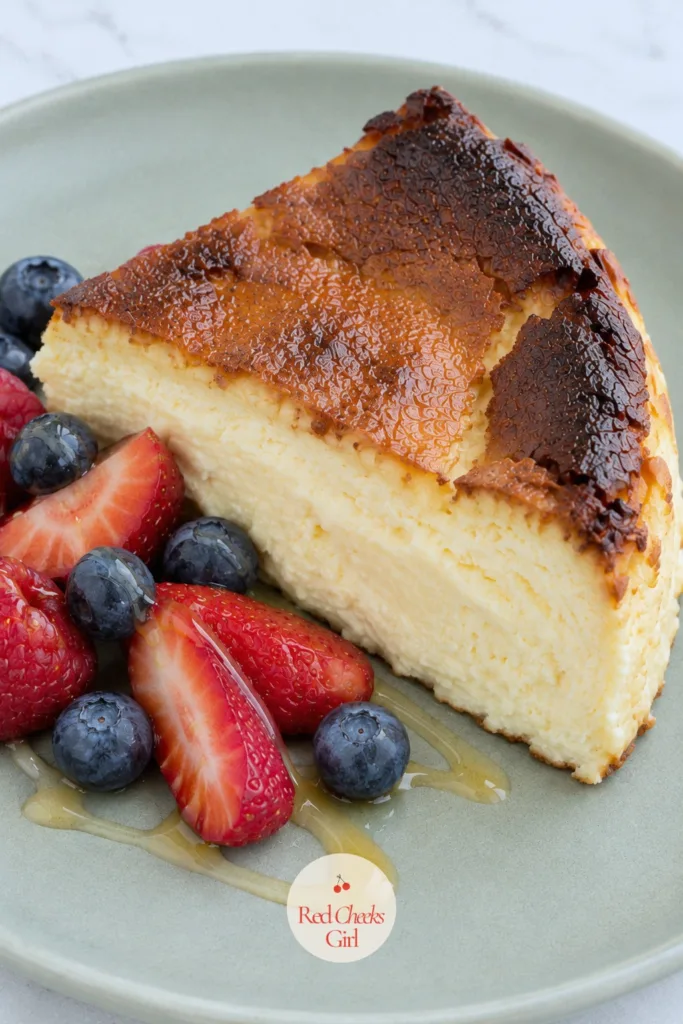
Basque Cheesecake Recipe
Ingredients
- 4 8-ounce blocks full-fat cream cheese, softened at room temperature
- 1 1/2 cups granulated sugar
- 6 large eggs at room temperature
- 1 1/2 cups heavy cream
- 1/3 cup all-purpose flour
- 1/2 teaspoon fine sea salt
Instructions
- Heat the oven to 450°F. Run a large sheet of parchment paper under water, squeeze out the excess, then press it into a 9-inch springform pan so it lines the bottom and climbs above the rim on all sides; the crumpled texture is what gives the baked cheesecake its rustic edge.
- Beat the four blocks of softened cream cheese alone in a large bowl with a hand mixer on medium speed for about 2 minutes, scraping down the sides once, until no lumps remain and the cream cheese looks like soft frosting.
- Add the sugar in two additions, beating about 1 minute after each, until the mixture turns pale and feels smooth between two fingers rather than gritty.
- Crack in the eggs one at a time, beating on low speed just until each one disappears into the batter before adding the next; stop mixing the moment the last egg is incorporated so you do not whip extra air into the batter.
- Pour in the heavy cream and mix on low speed until the batter turns silky and pours off the beaters in a ribbon, about 30 seconds.
- Sift the flour and salt directly over the batter and whisk by hand for 20 to 30 seconds, just until no dry streaks remain; overmixing here is what makes the baked cheesecake rubbery instead of custardy.
- Pour the batter into the parchment-lined pan and tap the pan firmly on the counter two or three times to pop any large air bubbles to the surface.
- Bake on the middle rack for 50 to 55 minutes, until the top is deeply mahogany-brown, almost black at the very edges, and the center still moves like loose gelatin when you nudge the pan; a toothpick inserted 2 inches from the edge should come out mostly clean while the middle 3 inches stay wet-looking.
- Leave the cheesecake in the pan at room temperature for 1 hour. It will deflate and sink slightly as it sits, which is exactly what a properly baked basque cheesecake does.
- Release the springform ring and peel the parchment away from the sides only, leaving the base in place, then set the cheesecake, still on its parchment base, onto a platter or board.
- Cover loosely and refrigerate for at least 4 hours, or overnight, until the center is fully set but still soft enough to give under light pressure; this chilling time is what lets you cut a clean slice instead of a puddle.
- Slice with a thin knife run under hot water and wiped dry between cuts, then serve each wedge with a handful of fresh berries or a slow drizzle of honey over the top.
Good to Know
Frequently Asked Questions
Why did my basque cheesecake sink in the middle?
A noticeable dip in the center is normal and expected, not a sign of failure. The cake puffs dramatically in the hot oven, then deflates as it cools, leaving the sunken, rustic look basque cheesecake is known for.
How is basque cheesecake different from New York cheesecake?
Basque cheesecake skips the crust and the water bath, bakes hot and fast, and finishes with a caramelized top and a loose center. New York cheesecake uses a cookie crust, bakes low and slow in water, and sets dense and firm.
Can you eat the deeply burnt top?
Yes, the dark top is caramelized sugar and milk proteins, not charred food, and it is meant to taste slightly bitter against the sweet center. If a section looks truly black and smells acrid rather than toasty, trim it away.
Why is the center still runny after it cools?
A center that never firms up after a full chill usually means the cake came out of the oven underbaked. Next time, bake a few minutes longer, until the whole pan jiggles evenly rather than sloshing only in the middle.
Can you freeze basque cheesecake?
Yes, a tightly wrapped single slice freezes reasonably well for up to a month, though the whole cake turns grainy once thawed. Thaw a slice overnight in the refrigerator rather than on the counter.
Overnight cinnamon rolls shape the night before, chill in the fridge while you sleep, and bake fresh
Christmas puppy chow comes together in 30 minutes, no oven, with M&Ms, pretzels and sprinkles for gi

Ten no-bake preschool birthday treats that are portioned, labelled and free from the most common all
Leave a Reply