

Mini Pavlova: A Light Dessert With Crisp Shells, Soft Centers and Fresh Berries
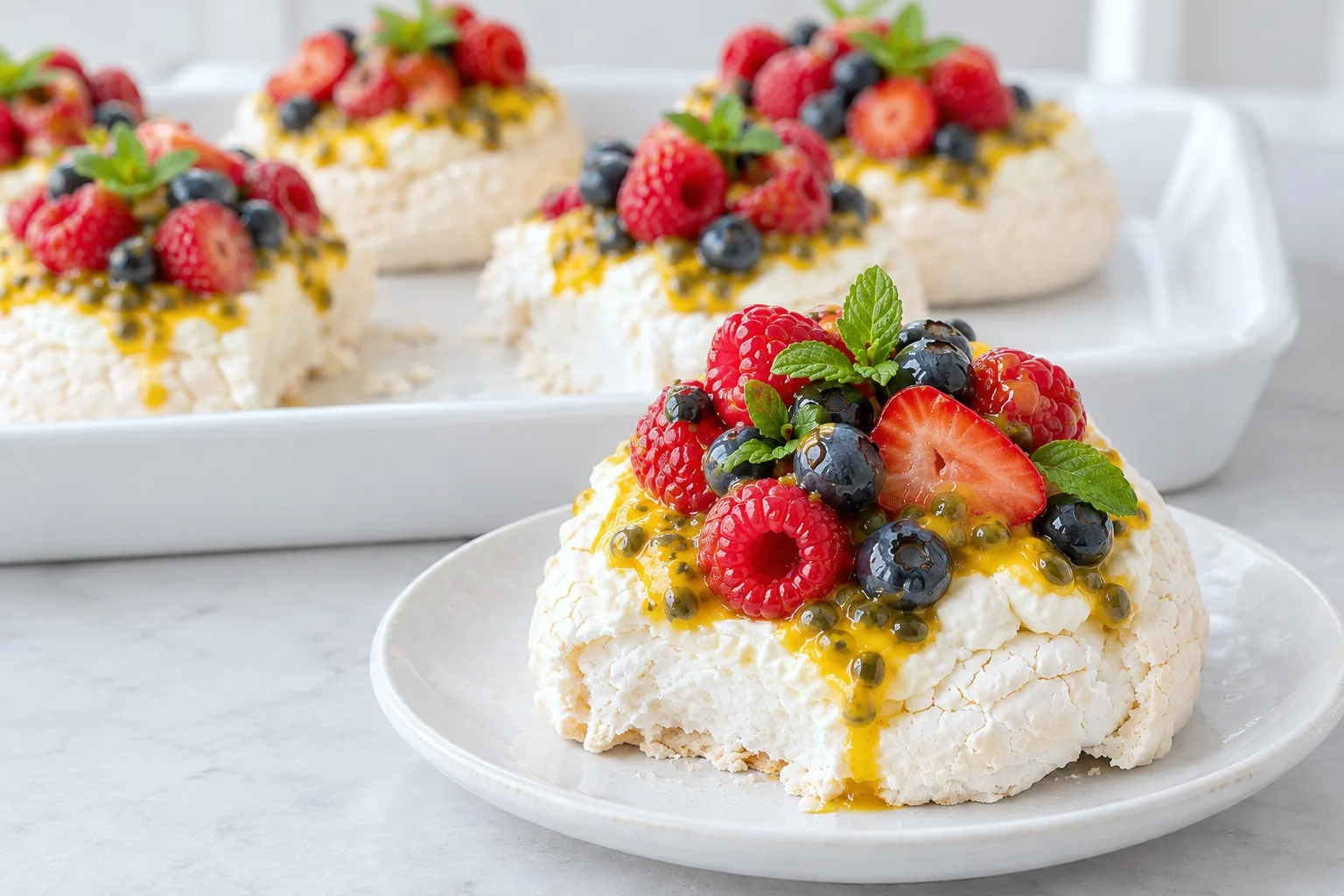
Mini pavlova turns one famously fussy dessert into something you can set down on a dessert table without a single apology.
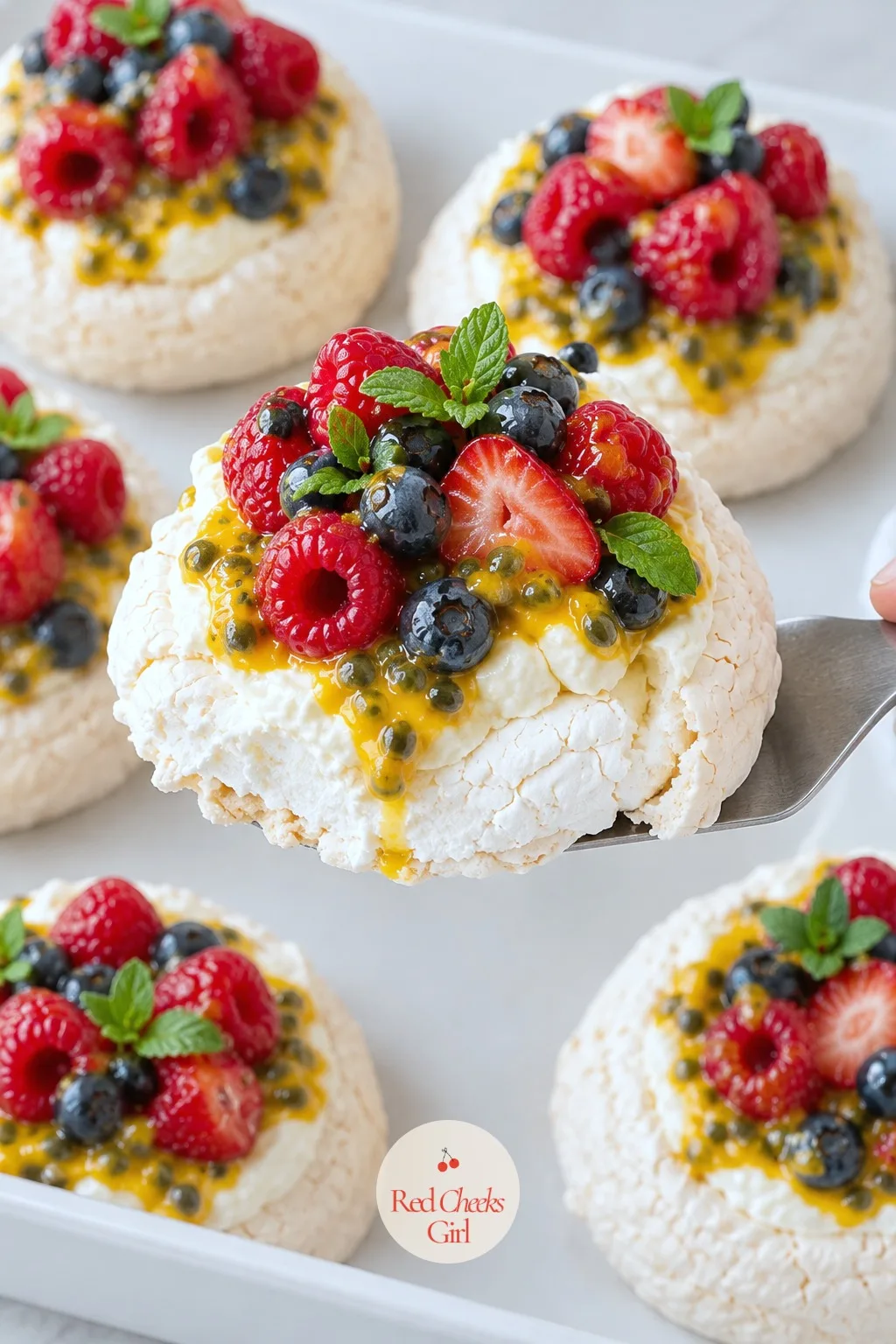
Each shell bakes crisp and pale, cracks a little in the nicest way, and holds a soft marshmallow center under a crown of whipped cream, passion fruit and berries. No slicing, no serving spoon fighting a cake, just a tray of individual nests a guest can lift with two fingers.
This post contains affiliate links. If you buy through them, I may earn a small commission at no extra cost to you.
Table of Contents
The Ingredients That Actually Matter
Egg whites carry the whole structure, so they want to be fresh, not carton. Let them sit at room temperature for half an hour before you start; cold whites take longer to build volume and never climb quite as high.
Sugar does more than sweeten. It dissolves into the whites as you beat, and that dissolved sugar is what gives the shell its shine and its snap once baked. Go slowly here, a tablespoon at a time, rather than dumping it in and hoping.
Cornstarch and vinegar are the quiet workhorses. Cornstarch coats the egg proteins so the center stays soft and marshmallow-like instead of baking all the way through, and the vinegar’s acid keeps the whipped whites stable so they do not collapse on the way into the oven.
For the filling, passion fruit earns its place by cutting the sweetness of the cream with something sharp and a little tropical. Mixed berries add color and juice, and a few mint leaves on top keep the whole thing looking like it came from somewhere a little grander than your own kitchen.
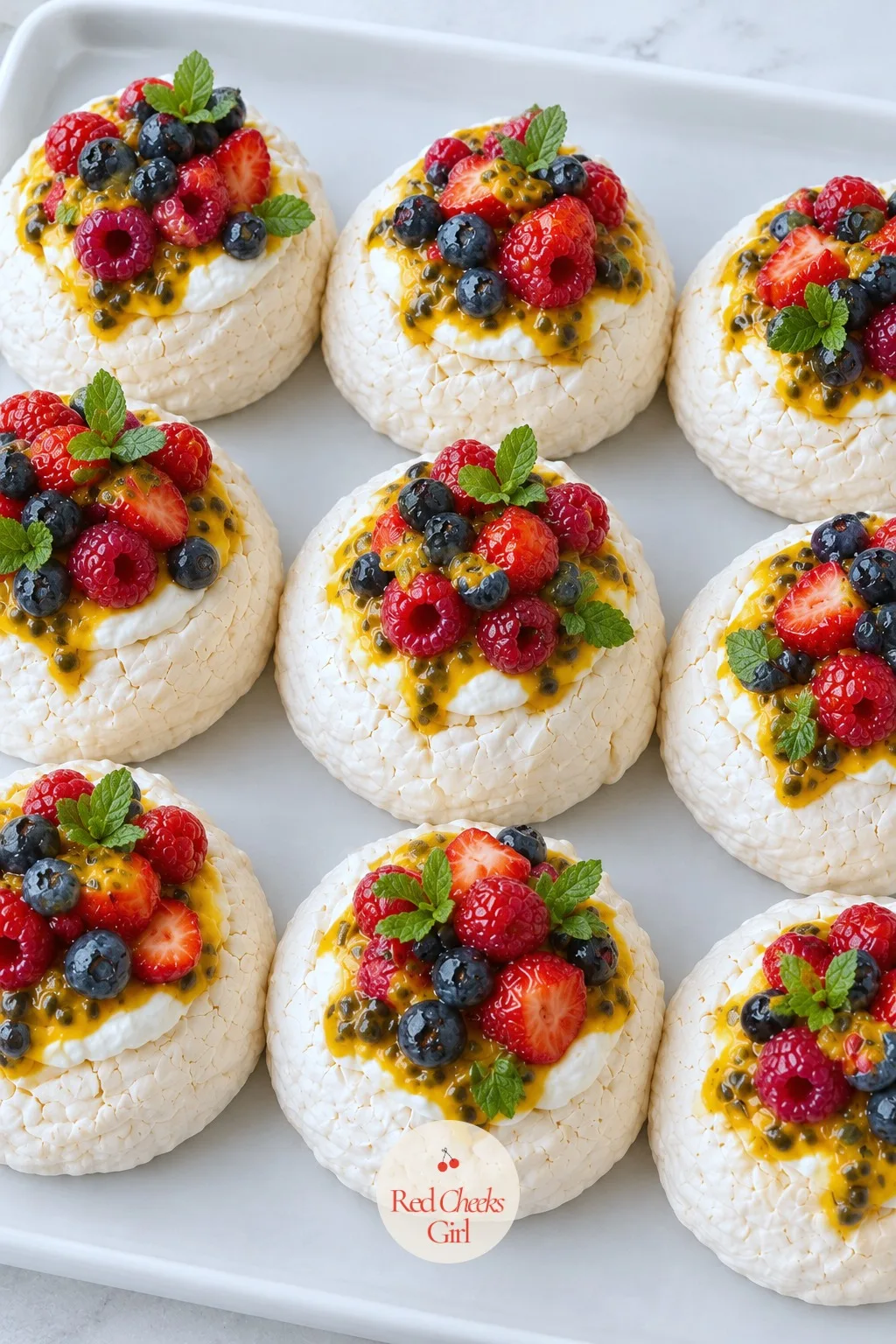
How to Make It
These bake low and slow, which sounds like a lot of standing around but is really just patience doing the work for you. Most of the two and a half hours is the oven cooling with the door shut, not you at the counter.
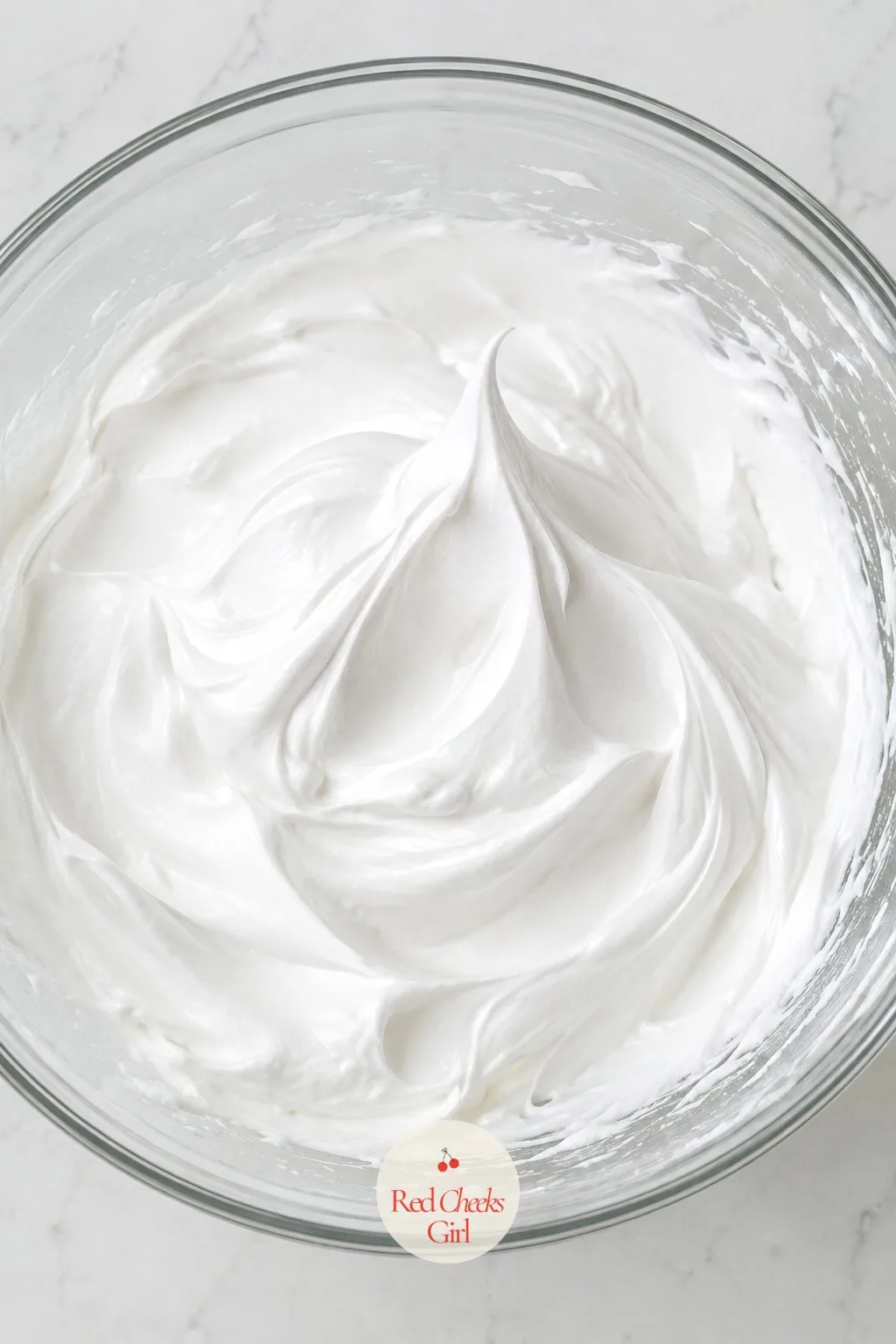
Whip the Meringue to Stiff Peaks
Beat the egg whites and sugar together until the mixture holds a firm, upright peak and looks glossy rather than foamy. Rub a little between your fingers: no grit means the sugar has fully dissolved.
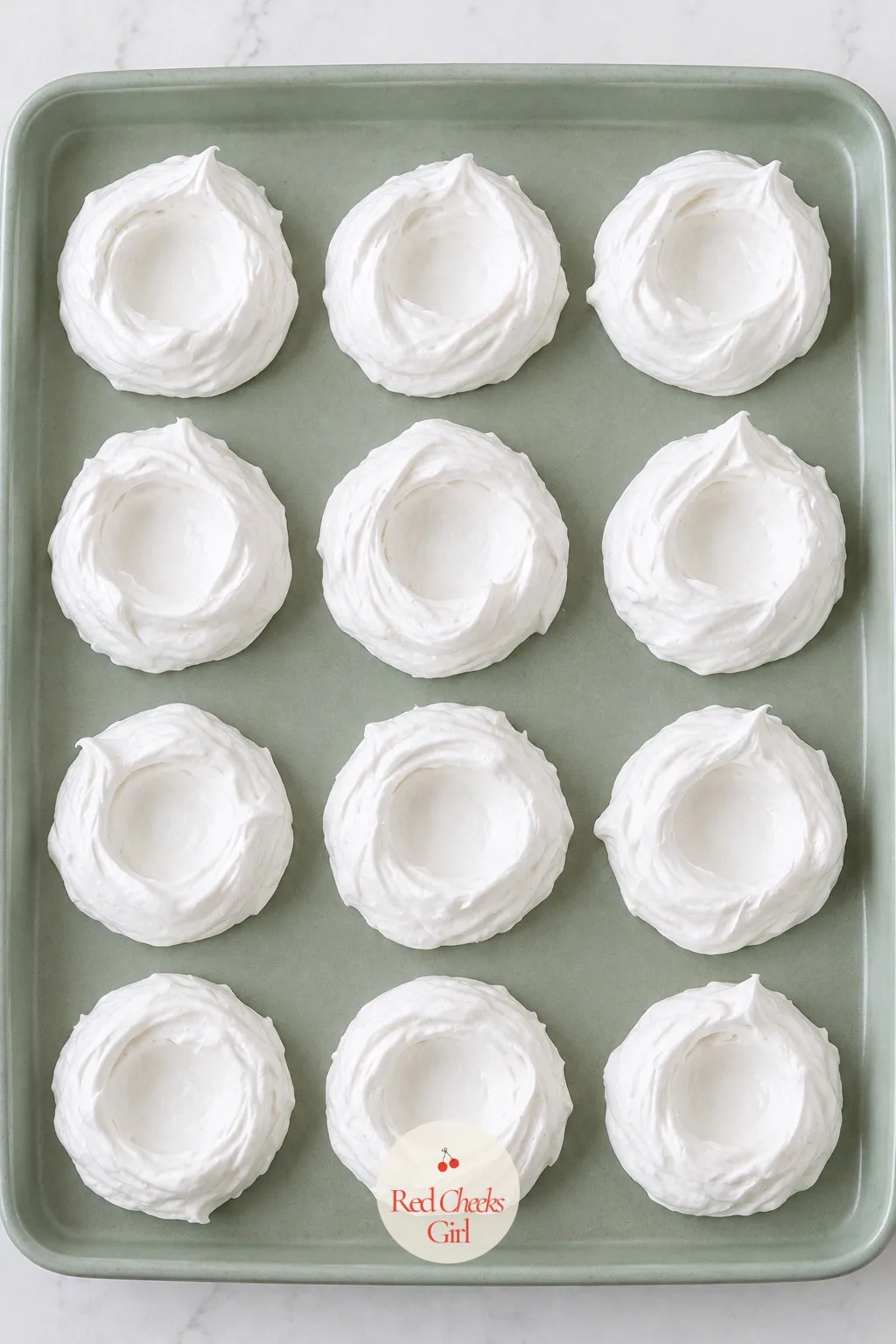
Shape the Nests
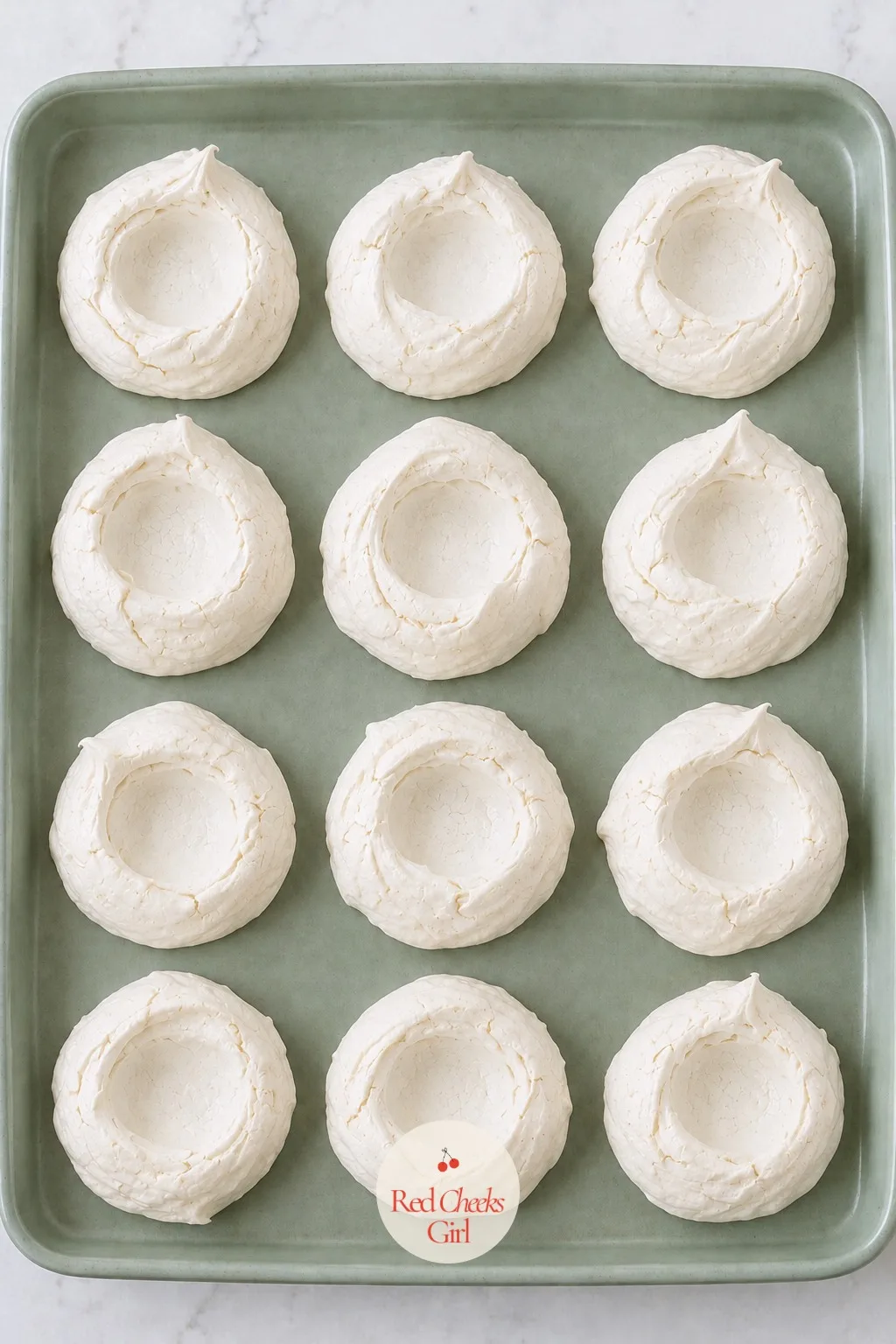
Spoon or pipe the meringue into twelve even rounds on the traced circles, then press a shallow well into the center of each with the back of a spoon. This is the shape that goes straight into the oven.
Bake Until Dry and Crisp
The shells are ready when the outside looks dry and faintly ivory and lifts cleanly off the parchment. A light crack across the top is completely normal at this stage.
Fill the Centers with Cream
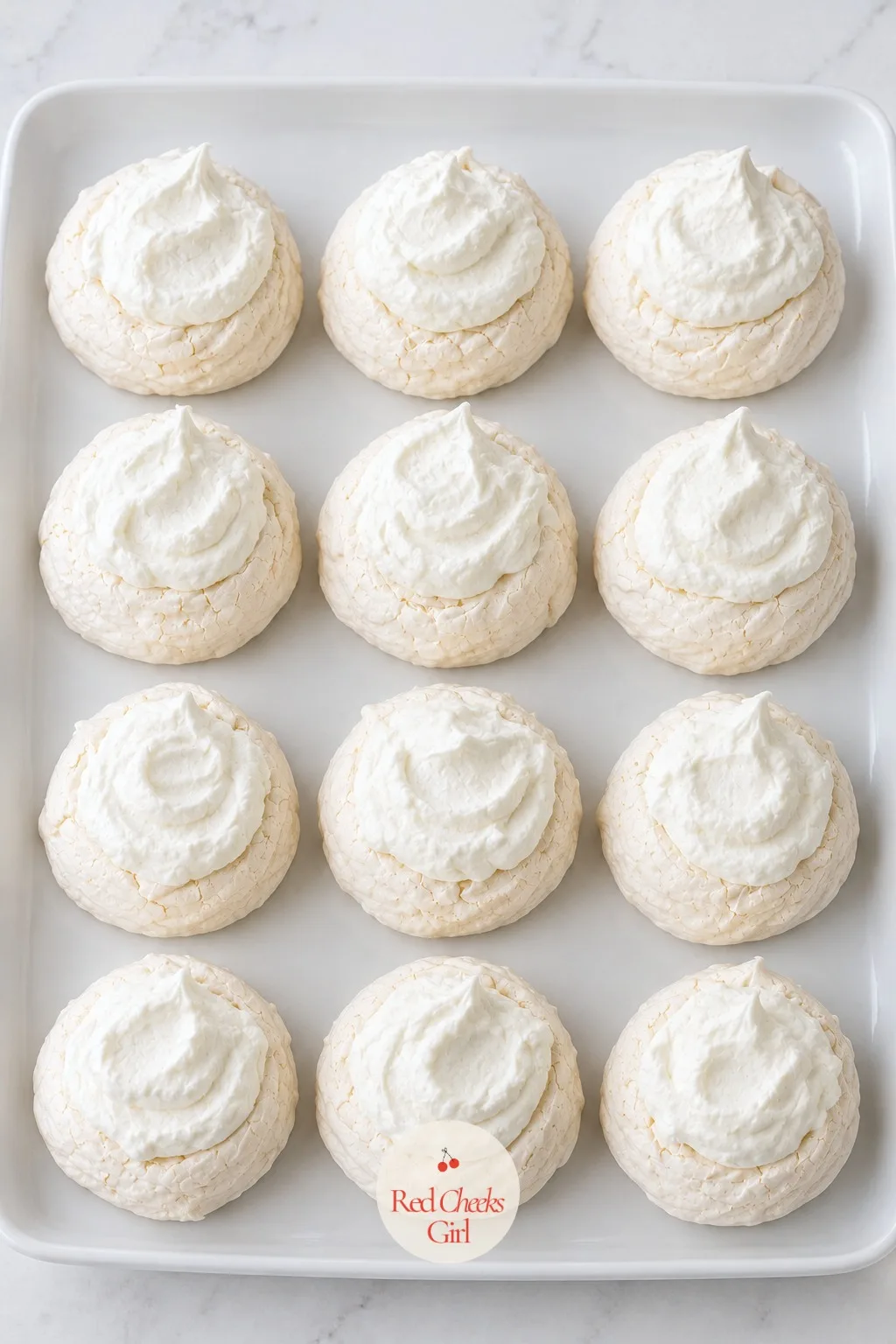
Spoon whipped cream into the well of each cooled shell, letting it mound slightly over the meringue edges. Work quickly so the shells stay crisp under the cream.
Finish with Passion Fruit and Berries
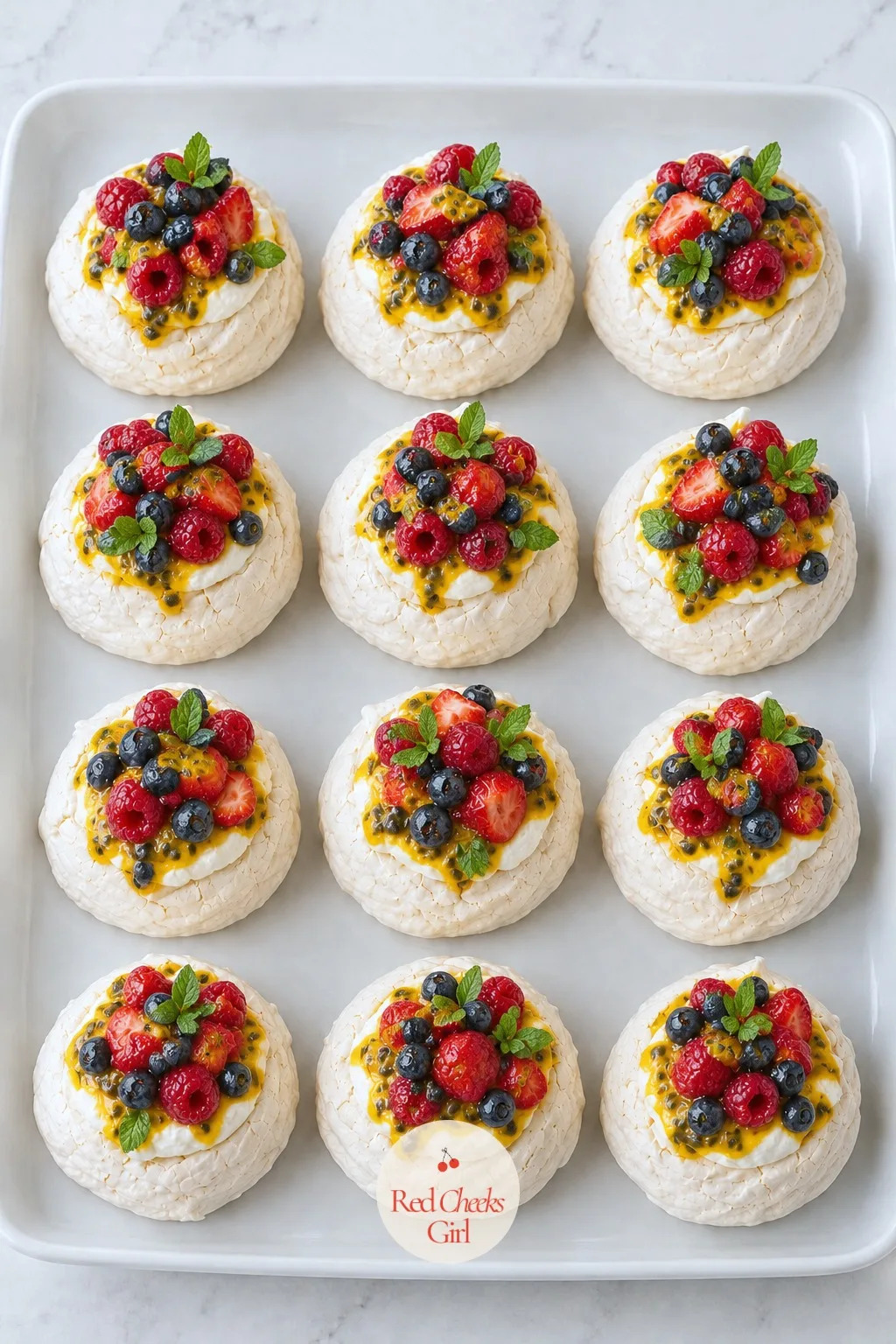
Spoon passion fruit pulp over the cream, scatter the berries across the top, then tuck in a few mint leaves. Serve right away while the shells are still crisp.
🛍 Shopping guide
Where Mini Pavlova Usually Goes Wrong
A cracked shell is not a disaster, cream and fruit hide a crack beautifully, but it helps to know why it happens. Pull a hot shell straight into cool kitchen air and the outside contracts faster than the inside, which is exactly when a crack opens up.
That is why the recipe has you leave the shells in the turned-off oven with the door shut, not on a cooling rack on the counter.
Weeping and stickiness come from the same root cause. so stop checking the texture with your eyes and start checking it with your fingers: rub a bit between finger and thumb and it should feel like satin, not sand.
Keeping all twelve shells the same size is really a tracing problem, not a piping skill. Draw the circles on the parchment with a glass or a cookie cutter before you spoon or pipe a thing, then fill each outline to the same height using the same spoon or the same piping tip every time.
A kitchen scale helps too: weigh the meringue into even portions before you shape them if you want bakery-level consistency.
Swaps That Still Work
No passion fruit at the shop, or you would rather not deal with the seeds on a white tablecloth? Swap in a spoonful of good lemon curd or orange curd instead; it brings the same tartness without the texture.
White vinegar can become apple cider vinegar or fresh lemon juice in equal amount, the acid is what matters, not the brand. If cream of tartar is what sits in your pantry, use half a teaspoon in place of the vinegar.
Berries flex with the season: raspberries and blackberries in summer, pomegranate seeds and clementine segments in winter, both look striking against white cream. Dairy-free guests can have coconut cream whipped cold in place of heavy cream, it holds a peak nearly as well once chilled overnight.
If a hand mixer is not in the house, a stand mixer with the whisk attachment does the same job in less time and with less arm ache. A balloon whisk and some patience will technically get you there too, it just takes considerably longer to reach stiff peaks.
What to Serve Alongside
Mini pavlova wants a savory counterpoint on the same table, something that is not competing for the same forks. A tray from 15 Healthy Appetizers: Fresh Healthy Snacks to Start Any Party sets the opposite tone early in the evening, so the pavlovas feel like the reward at the end rather than more of the same.
If the dessert table needs more than one centerpiece, pair the pavlovas with something equally delicate in a different shape, the kind of pairing in French Macarons: A Dessert Recipe Step by Step, From Smooth Shells to Ruffled Feet gives guests a second bite-sized option without repeating the meringue.
For a party where everyone wants their own portion in hand, look at 17 Mini Dessert Cups Layered in Glasses for Parties alongside the pavlova tray; both travel well on a passed platter and neither needs a plate or a fork.
This is an adult gathering, so a chilled glass of something sparkling sits well next to the tartness of passion fruit; the palette in 24 Champagne Wedding Ideas in Soft Gold, Ivory and Blush works just as well on a smaller scale for a dinner party. Pour responsibly and always keep a non-alcoholic option on the same table.
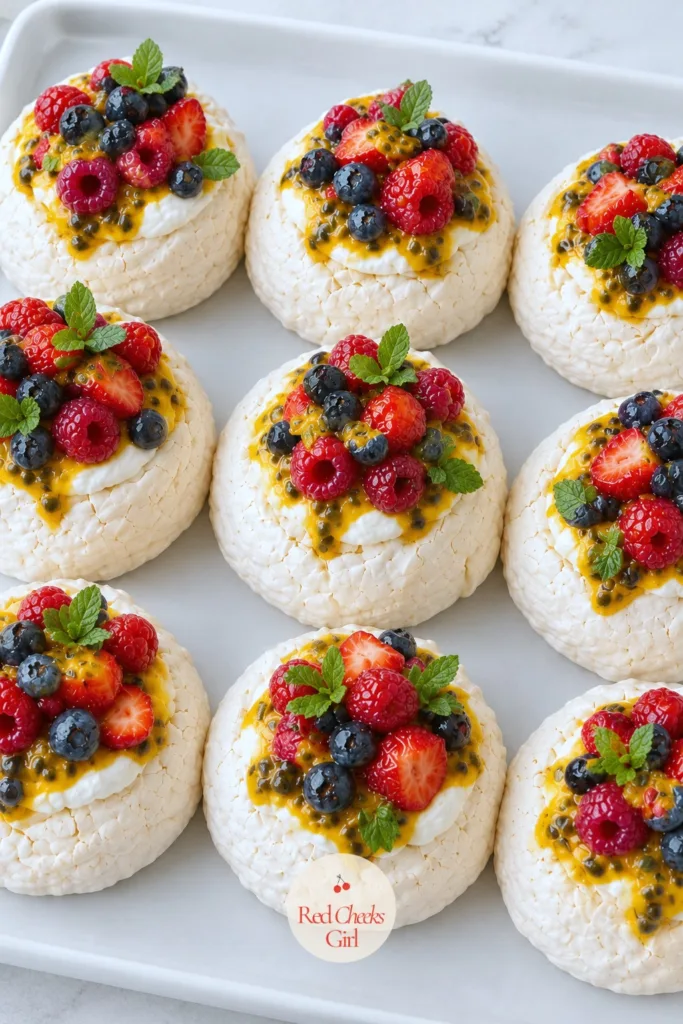
Mini Pavlova
Ingredients
- 4 large egg whites room temperature
- Pinch of salt
- 1 cup granulated sugar
- 1 tablespoon cornstarch
- 1 teaspoon white vinegar
- 1/2 teaspoon vanilla extract divided
- 1 cup heavy cream
- 2 tablespoons powdered sugar
- Pulp from 4 passion fruit or 1/2 cup store-bought passion fruit pulp
- 1 cup mixed fresh berries strawberries, raspberries, blueberries
- Small handful fresh mint leaves
Instructions
- Heat the oven to 250 degrees F and set a rack near the center. Line two baking sheets with parchment paper, then flip a small glass about 3 inches wide and trace twelve circles in pencil as spacing guides, flipping the parchment pencil-side down before you pipe.
- In a large clean glass mixing bowl, beat the egg whites and salt on medium speed until a soft white foam forms and the beaters leave faint trails through it, about 2 minutes.
- Raise the speed to medium-high and add the granulated sugar one tablespoon at a time, beating about 10 seconds between additions, until the meringue turns stiff and glossy and holds a firm peak when you lift the beaters. Rub a little between two fingers: it should feel silky, never gritty.
- Sift the cornstarch over the meringue, then add the vinegar and 1/4 teaspoon of the vanilla. Fold gently with a wooden spoon just until no streaks remain, about 10 folds.
- Spoon or pipe the meringue onto the traced circles, building each into a round about 3 inches wide and 2 inches tall. Press the back of a spoon into the center of each to leave a shallow well for the filling.
- Bake the shells for 60 to 70 minutes, until the outside is dry, pale ivory, and lifts cleanly off the parchment when you nudge one with a spatula.
- Turn off the oven and leave the shells inside with the door shut for at least 1 hour, or up to overnight, so they cool slowly and the centers stay soft instead of caving in.
- Once fully cool, transfer the shells to an airtight container if you are not filling them right away; they hold well at room temperature for a day.
- Shortly before serving, pour the heavy cream, powdered sugar and remaining vanilla into a chilled glass bowl and whip with a hand mixer on medium-high until soft peaks form, about 2 minutes.
- Spoon the whipped cream into the well of each shell, mounding it just over the edges of the meringue.
- Spoon the passion fruit pulp over the cream on each pavlova, then scatter the mixed berries over the top.
- Tuck a few mint leaves among the fruit and serve the pavlovas right away, while the shells are still crisp.
Good to Know
Frequently Asked Questions
Why is my pavlova weeping or sticky?
Weeping happens when the sugar never fully dissolved into the egg whites or the meringue was overbeaten, and a humid kitchen makes it worse by pulling moisture back into the baked shell.
Why is my pavlova chewy instead of crisp?
Chewiness means the shell was underbaked and the inside stayed too moist; give it another 10 to 15 minutes at the same low temperature and let it cool fully in the oven before checking again.
Can I use carton egg whites for pavlova?
You can, but fresh whites whip higher and hold their structure better, since carton whites often lack that same stability and can leave the meringue flatter and less stable.
Can I make mini pavlova on a humid day?
It is possible but not ideal, since the sugar in the shell draws moisture from damp air and can leave the surface sticky even after a full bake and cool.
How long can assembled mini pavlovas sit out before they go soggy?
Once filled, serve within an hour or two at most; the cream and fruit juice soften the shell quickly, so plan to assemble close to when guests actually arrive.
Can I freeze the meringue shells?
Yes, unfilled shells freeze well in an airtight container for a week or two; thaw them at room temperature still sealed so condensation does not form directly on the meringue.
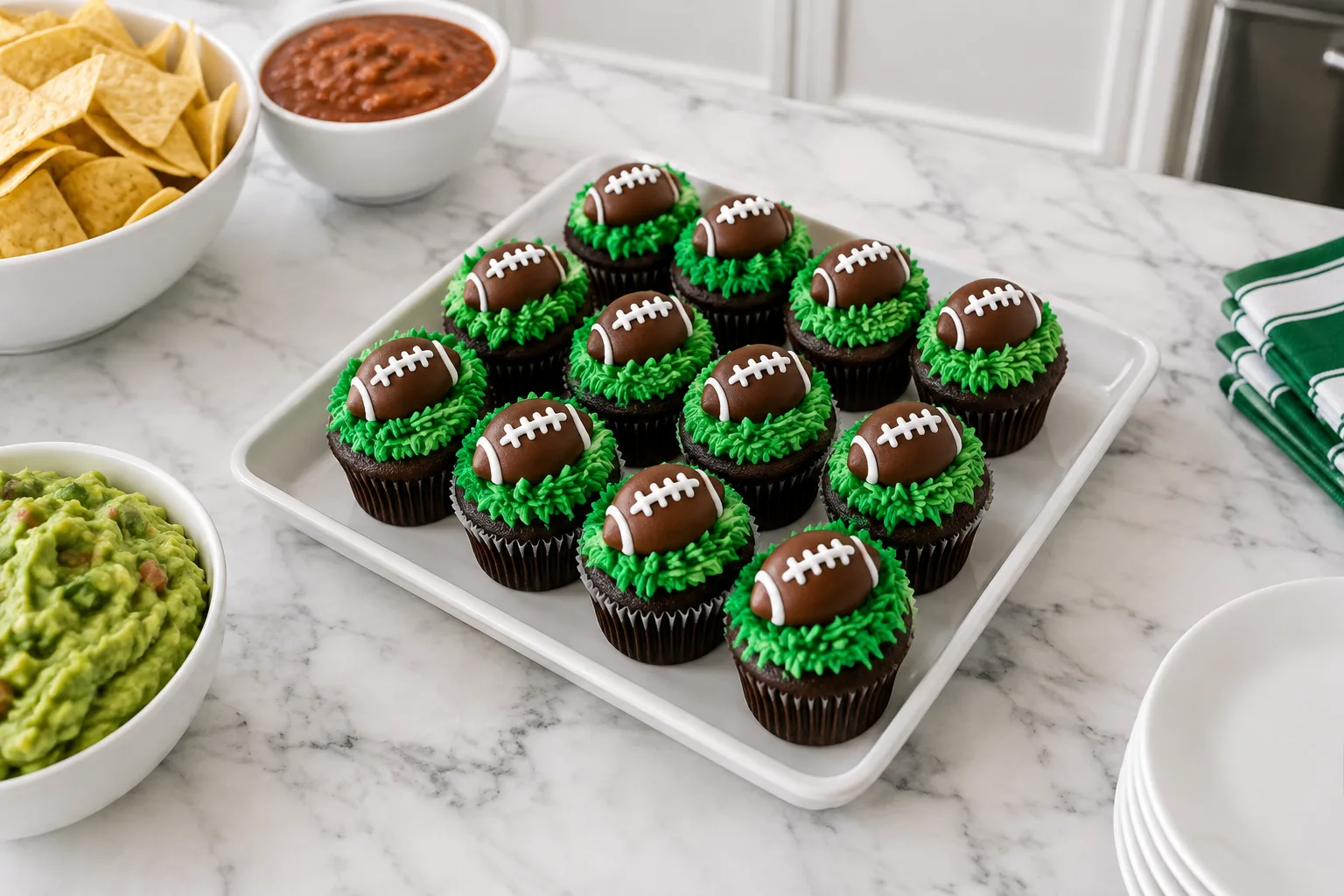
18 super bowl desserts built to eat standing up: Dubai chocolate strawberry cups, dirt cake, footbal
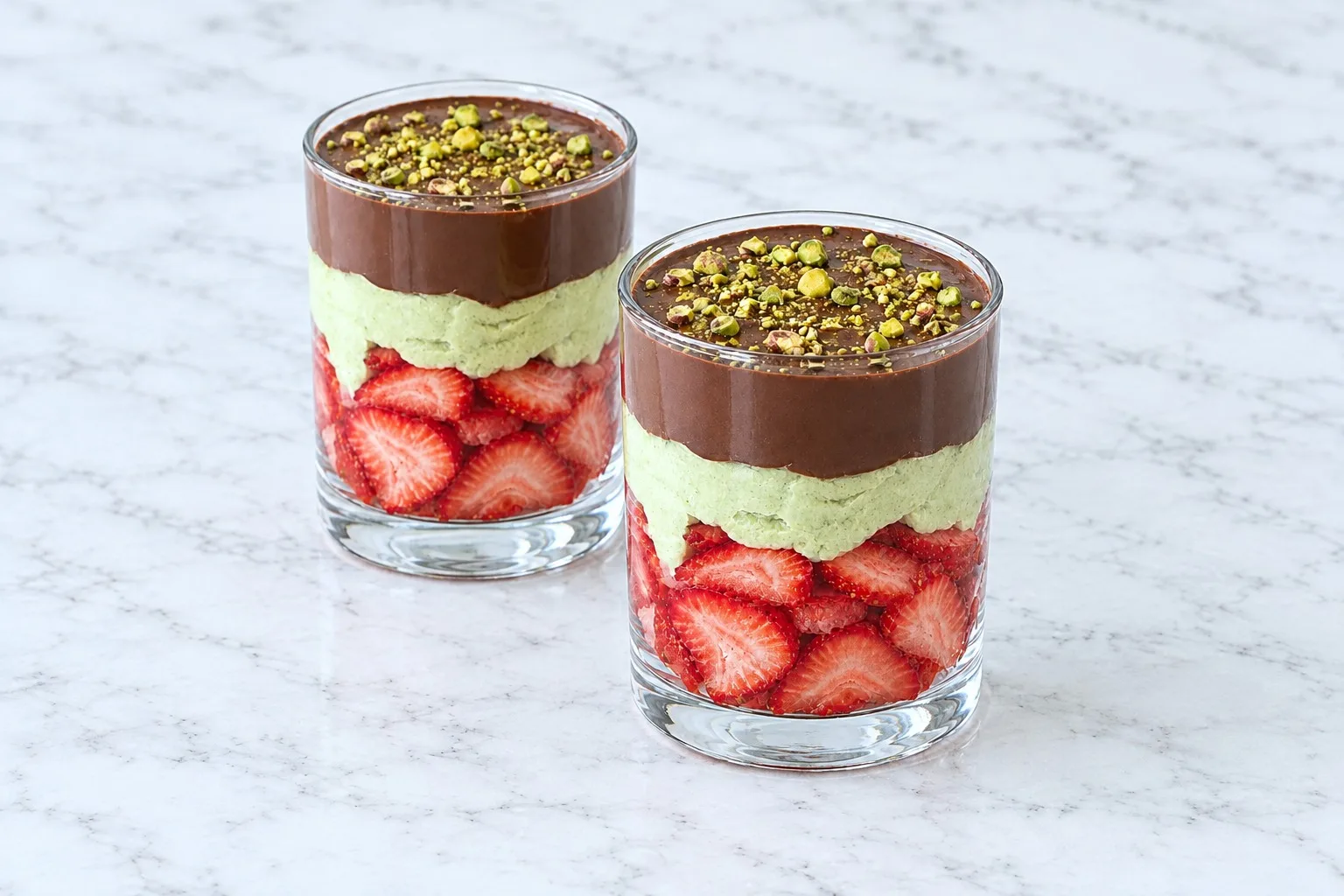
Dubai chocolate strawberry cups layer juicy berries, toasted pistachio kataifi and glossy chocolate
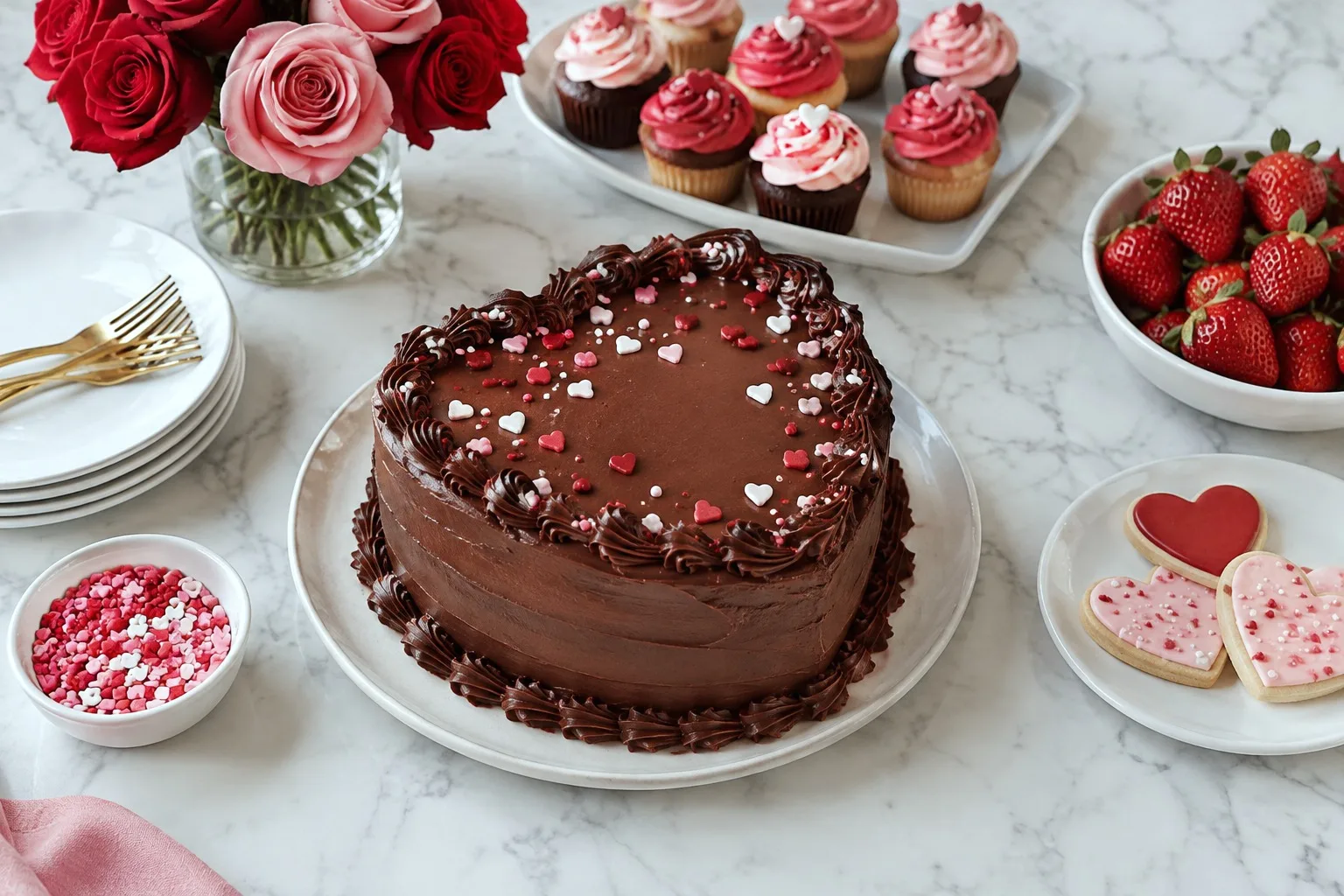
14 valentines dessert recipes from a showstopping sheet cake to a five-minute dip, with notes on whi
Leave a Reply