

Greek Lemon Potatoes: Baked Potatoes in the Oven Until Golden and Crisp
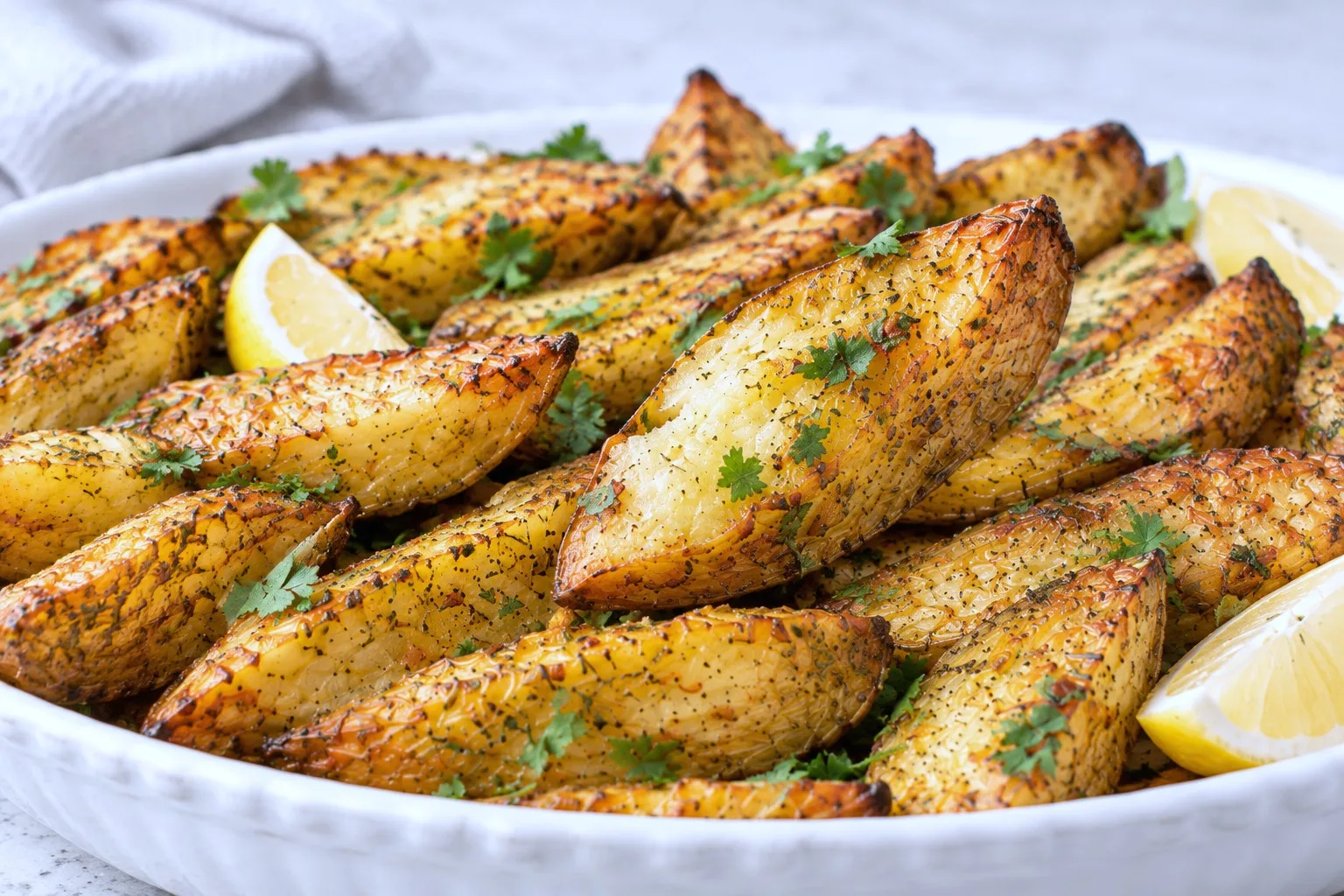
Greek lemon potatoes are the side dish that empties itself before the lamb chops get passed a second time.
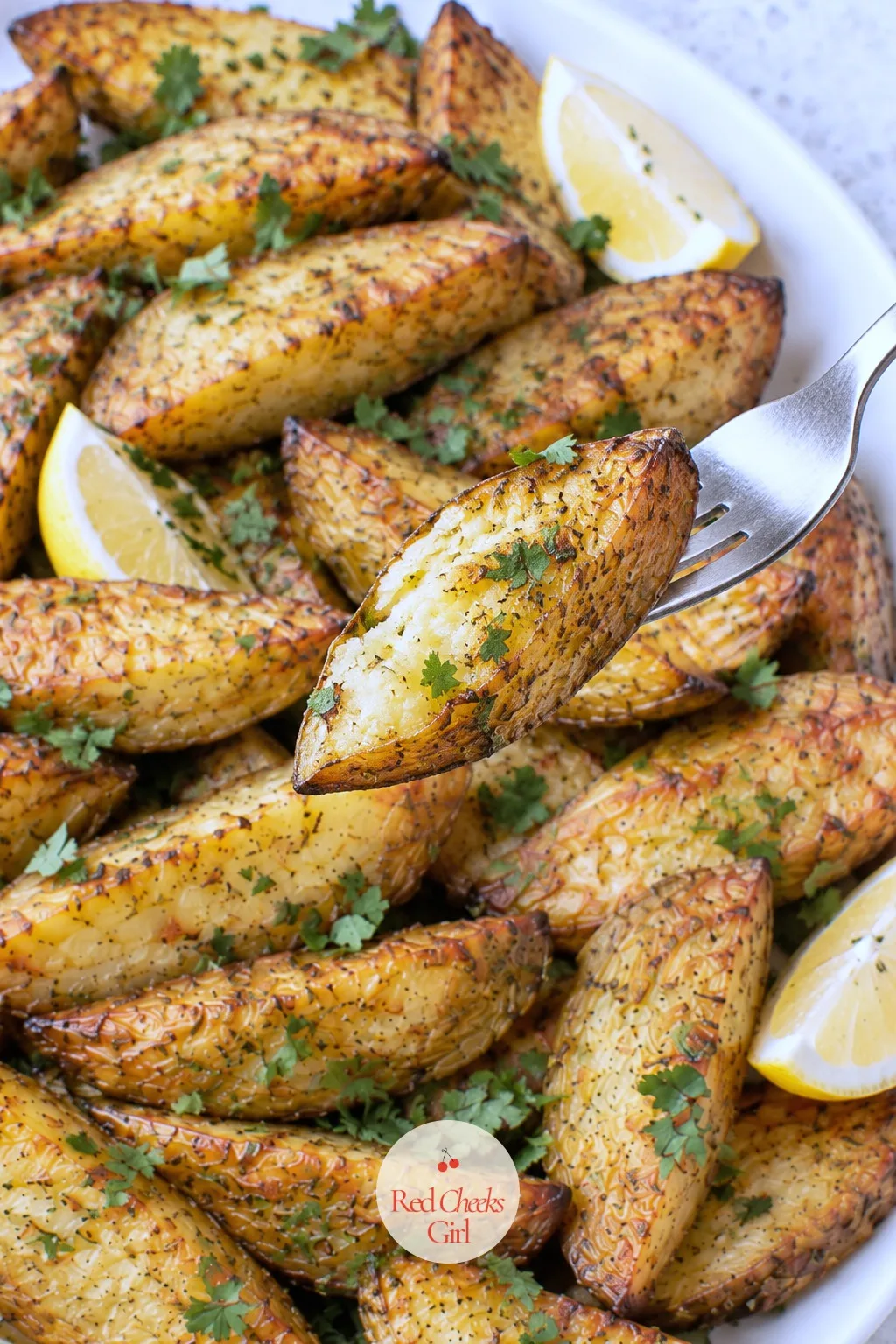
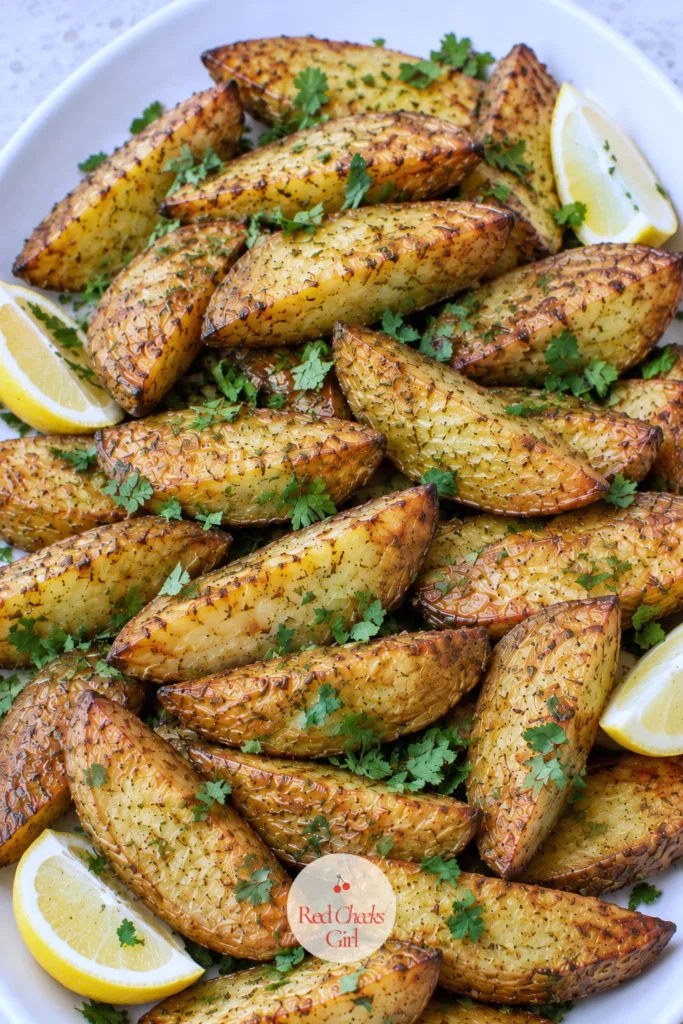
Yukon gold wedges roast on one sheet pan in olive oil, lemon and chicken broth until the liquid disappears and the edges turn deep gold and crisp. Pull them out when the kitchen already smells like a taverna and the pan has gone completely dry.
This post contains affiliate links. If you buy through them, I may earn a small commission at no extra cost to you.
Table of Contents
Why This Side Dish Keeps Getting Requested
A plain roasted potato wedge is easy to overlook on a table crowded with dips and skewers. These do not get overlooked: the broth bastes the wedges from underneath while the tops brown, so every piece tastes like it simmered in a taverna pan for hours, not forty minutes in your own oven.
The whole method runs on one sheet pan and a handful of pantry staples, olive oil, garlic, dried oregano, so there is no special trip to a specialty shop before the party. If the kitchen already smells like lemon and garlic by the time guests arrive, the hard part is done.
They sit happily next to almost anything off the grill or out of the oven, from a quick roast chicken to grilled fish, which is exactly why they show up on so many Greek party tables instead of plain rice.
The only real effort is resisting the urge to stir constantly. Walk away, let the pan do its work, and the reward is a side dish that looks like restaurant food for the cost of a bag of potatoes.
The Ingredients That Make the Difference
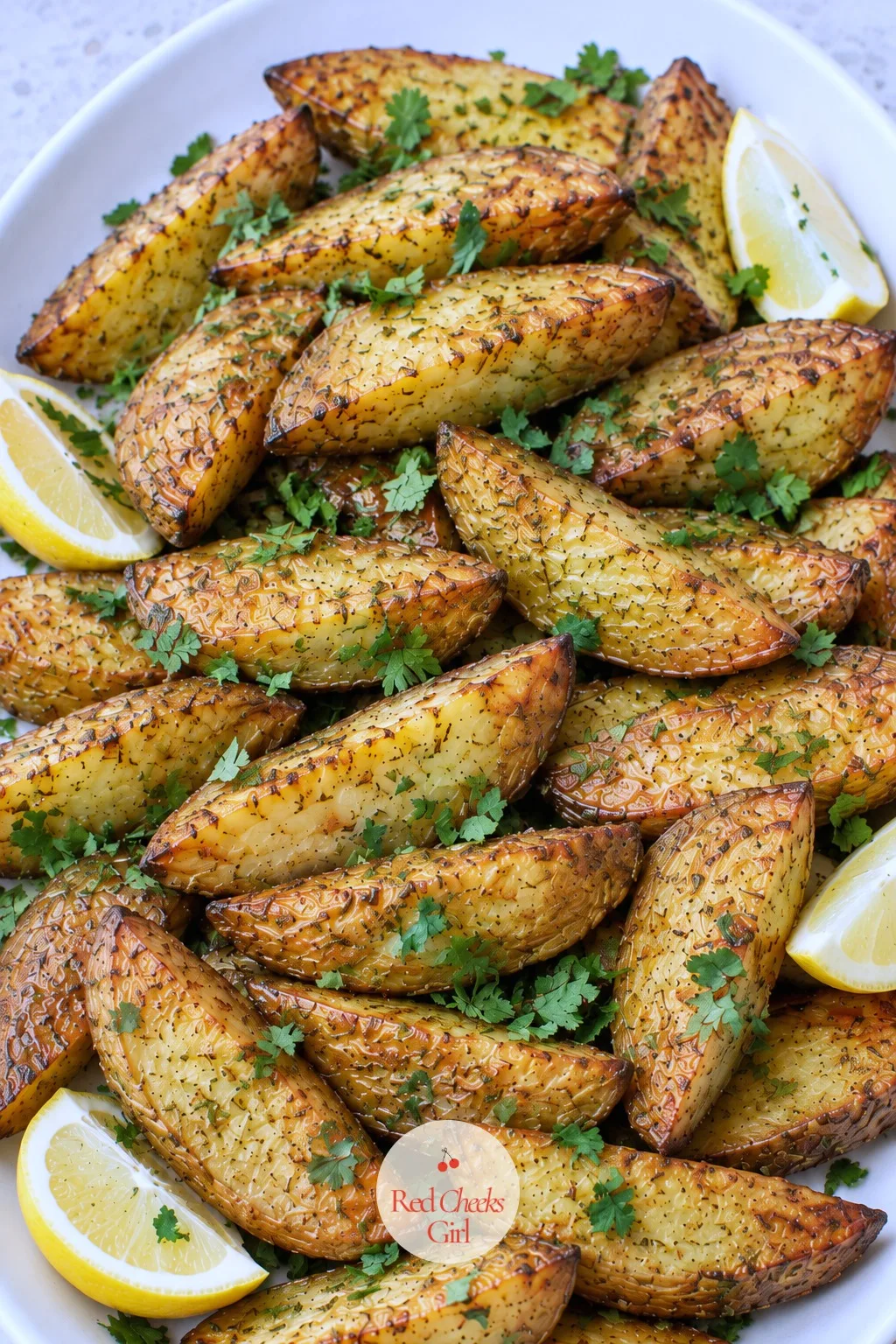
Yukon gold potatoes hold their wedge shape through a long roast while the inside still turns creamy, which is the whole point of this dish. A starchier russet falls apart faster under all that broth, and a waxy red potato never gets properly creamy in the center.
Chicken broth, not water, is what turns the inside of each wedge soft and faintly savory instead of just wet. It reduces alongside the lemon juice into a thin sauce the potatoes keep absorbing until the pan runs dry.
Fresh lemon juice and zest carry the whole flavor of the dish, so reach for real lemons rather than a bottle from the fridge door. The zest holds oils a bottle cannot replace, and it is what makes the finished potatoes smell bright instead of just sour.
Garlic and dried oregano are the only seasoning this dish needs, and dried oregano actually works better here than fresh: it survives an hour in the oven without scorching into bitterness.
A generous amount of olive oil is not optional, it is what fries the edges once the broth is gone. The parsley scattered on at the end keeps the whole pan looking like it just came out of a taverna kitchen rather than a home oven.
How to Make It
Everything here happens on one sheet pan from start to finish, so clear a rack in the center of the oven and have a thin spatula ready before you begin. The timing below assumes a full preheat and a true single layer: crowd the pan and the whole timeline shifts later.
Cut the potatoes into wedges
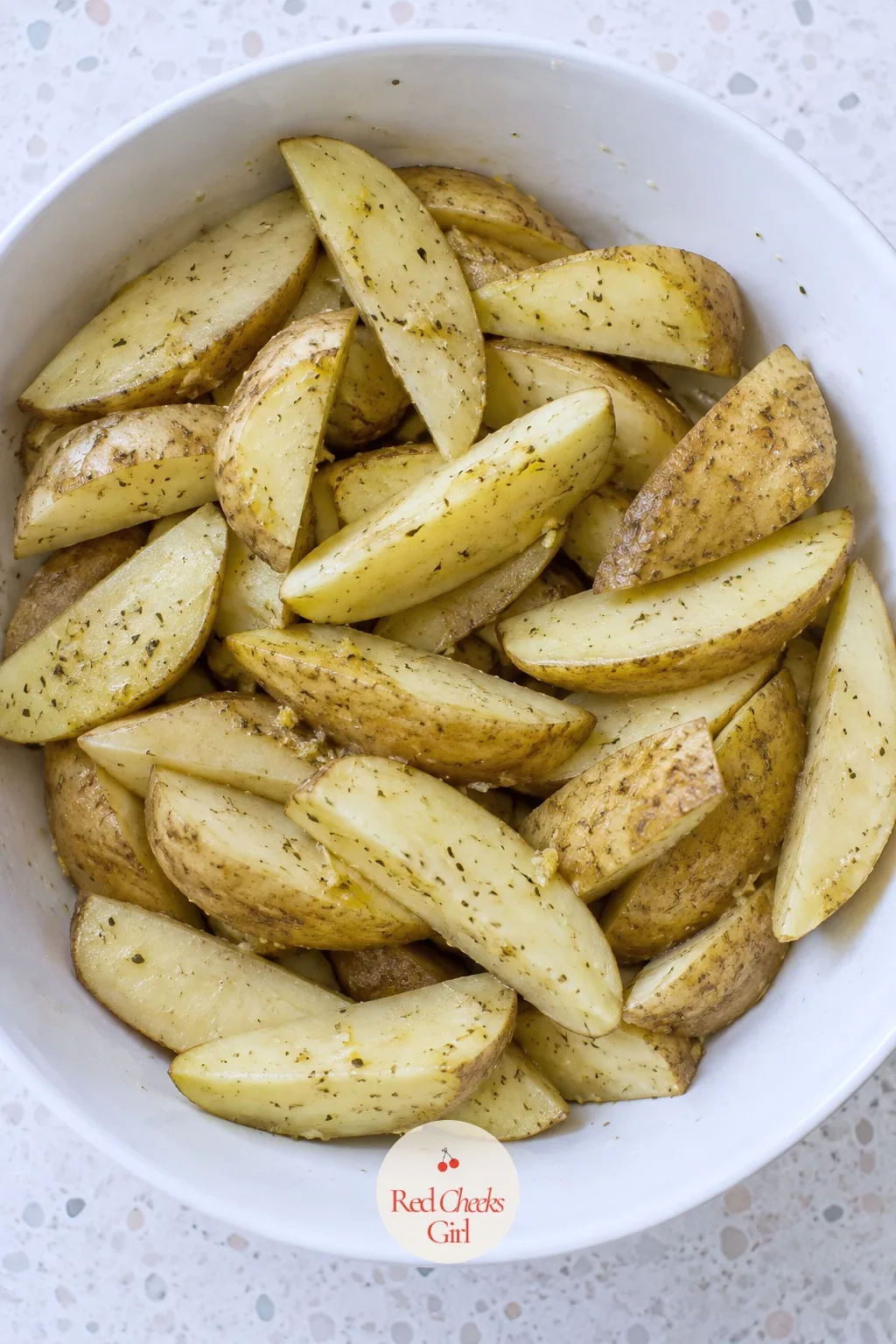
Cut the Yukon gold potatoes into thick, even wedges and drop them into the bowl as you go. The pieces should look dry and matte, no liquid yet, with skins left on.
Coat the wedges in the lemon broth
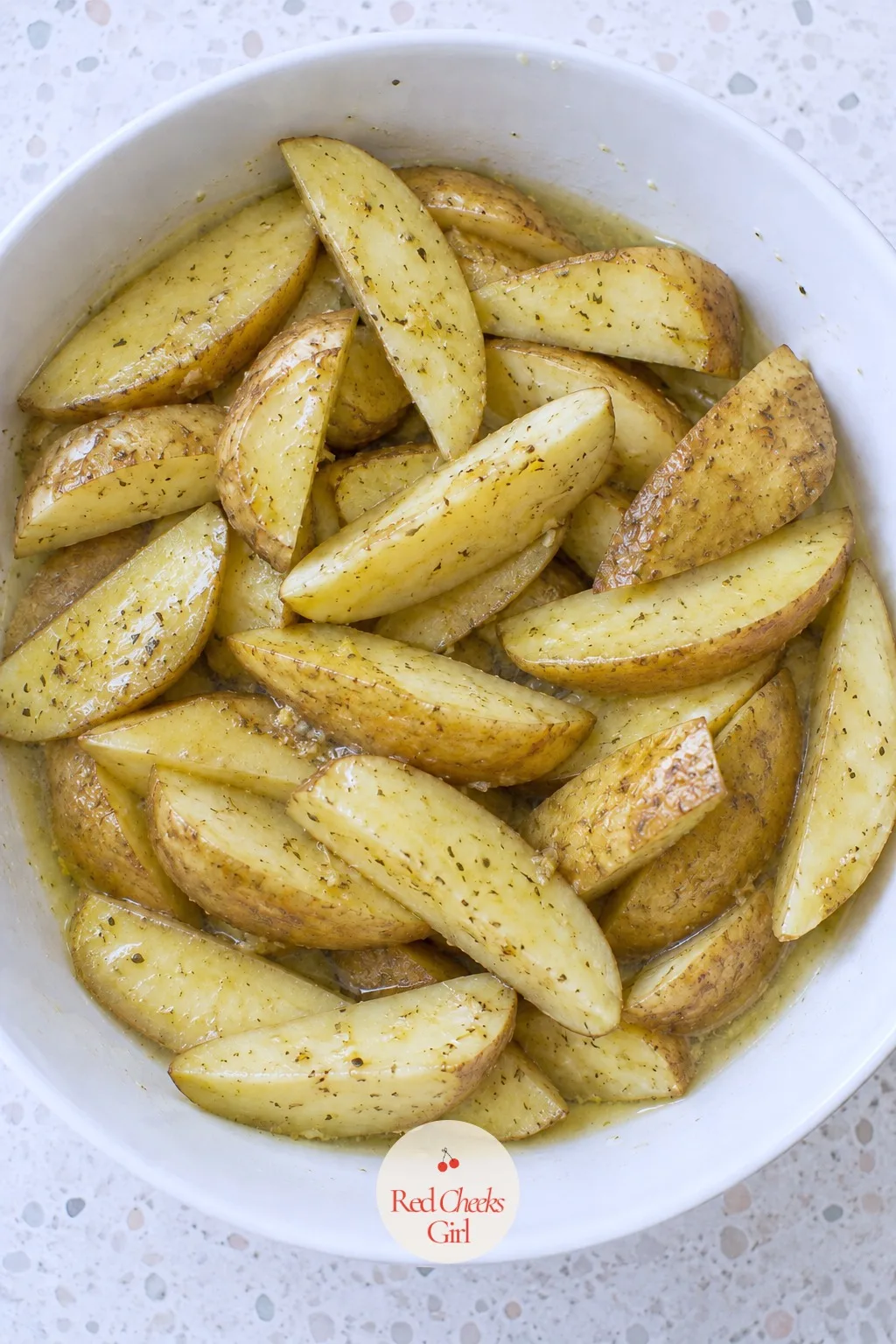
Pour the broth mixture over the wedges and toss with your hands until every piece glistens. No dry, chalky patches should remain anywhere in the bowl.
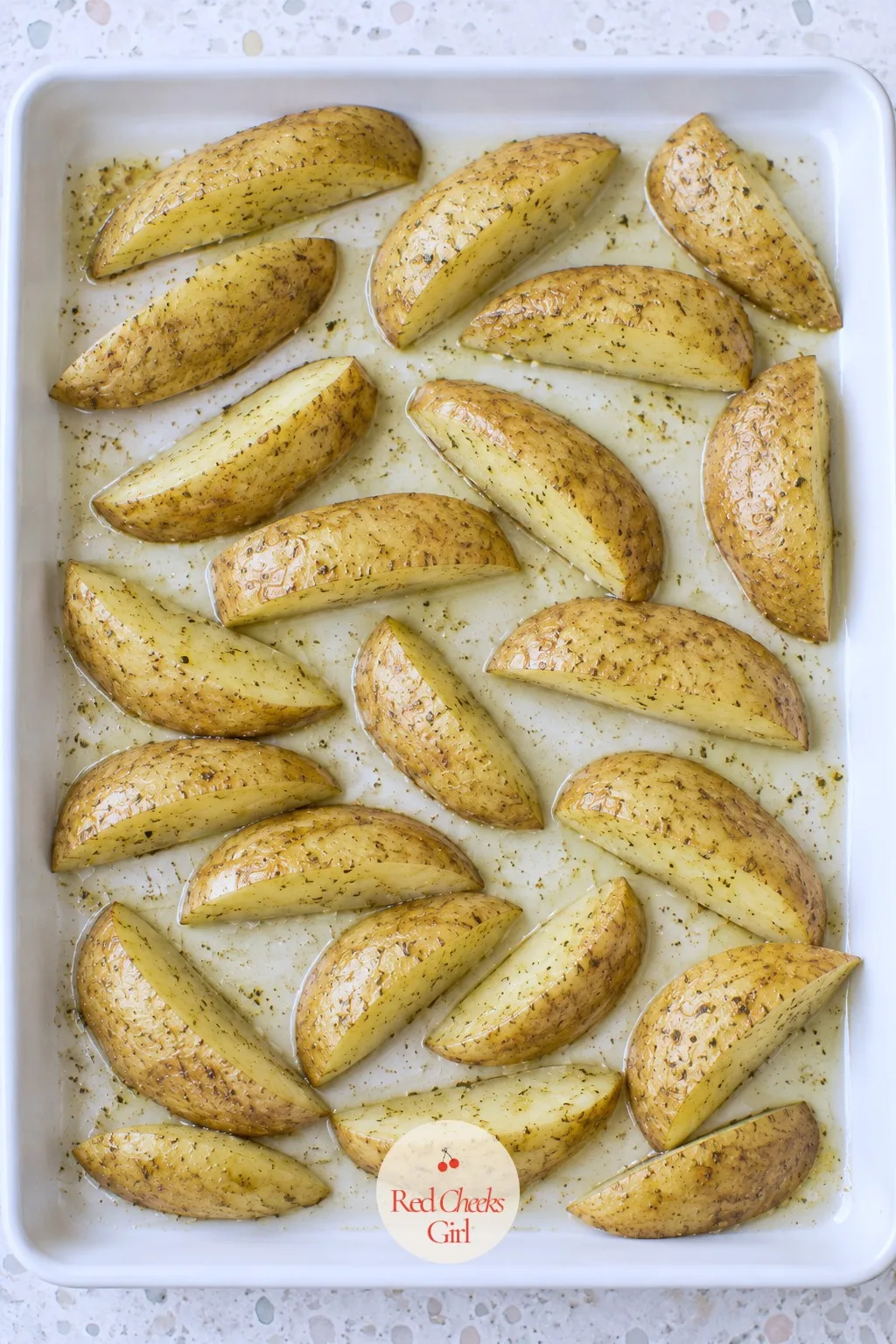
Arrange the wedges in a single layer
Spread the wedges cut side down across the sheet pan, leaving a little gap around each one. This space is what lets steam escape instead of softening every edge.
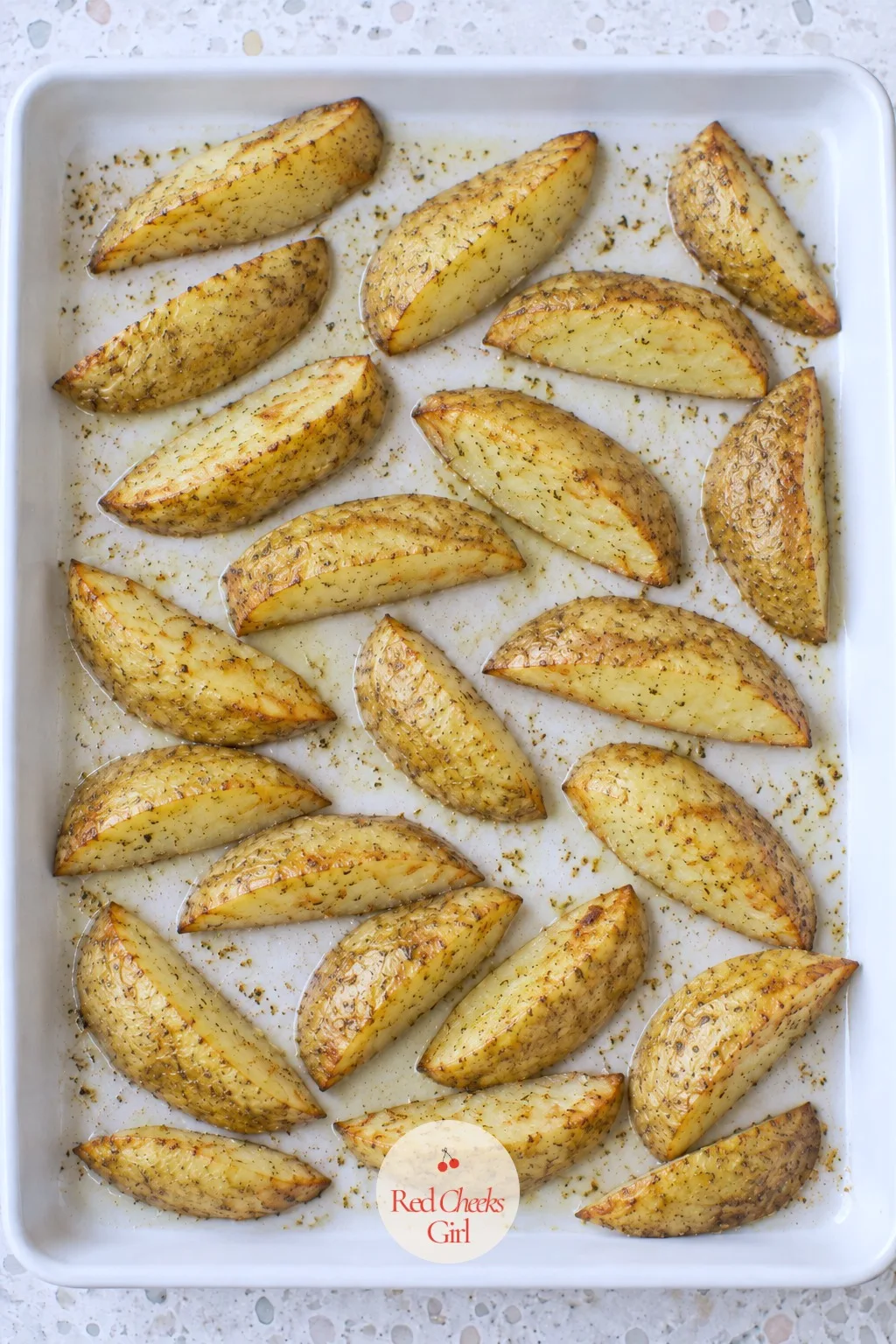
Flip and roast until the liquid drops
After the first flip and second roast, the liquid should sit noticeably lower in the pan. Faint gold should already be building along the bottom edges of the wedges.
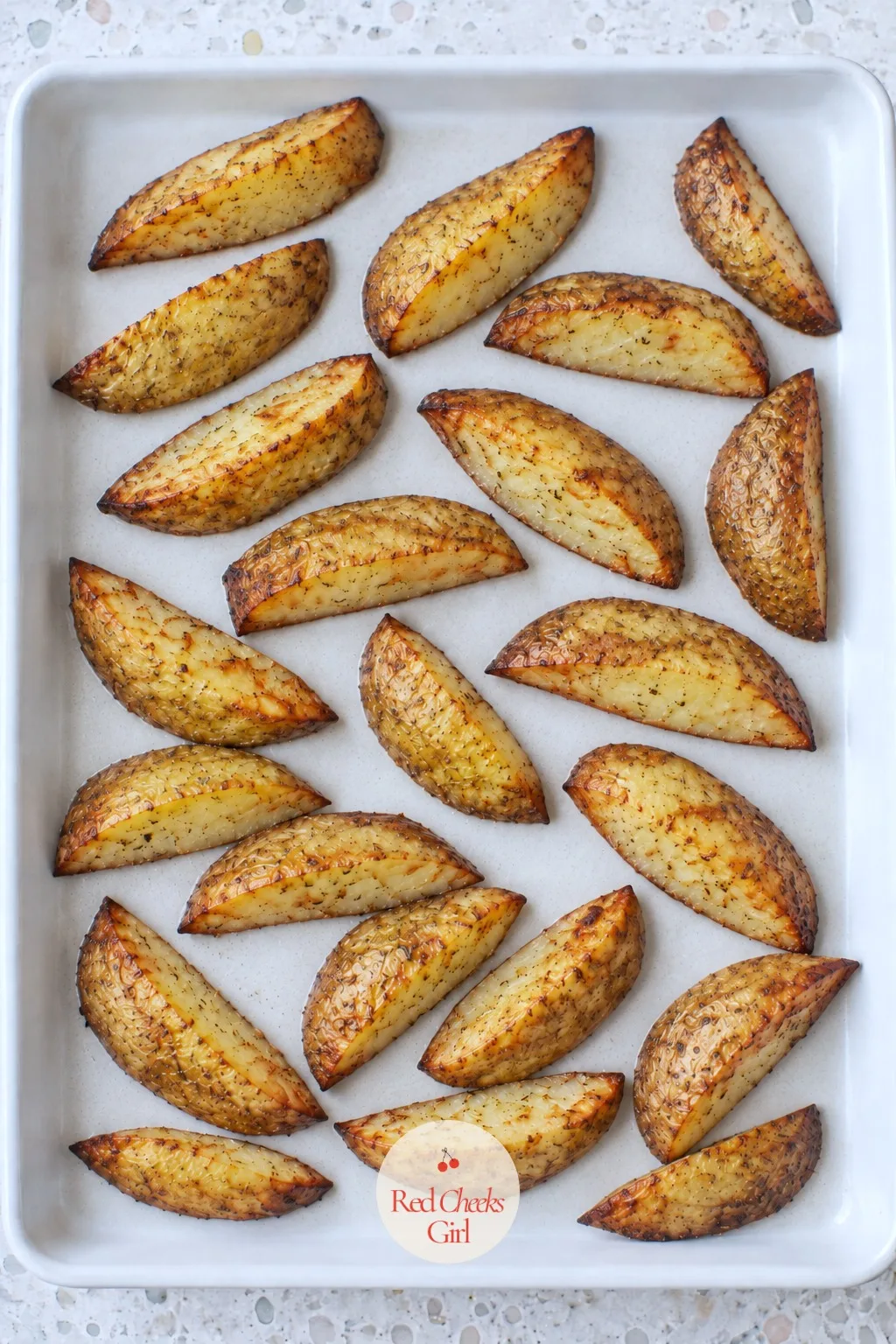
Roast until the pan runs dry
Keep roasting until not a drop of liquid remains anywhere on the pan. The undersides of the wedges should look deeply browned and sound crisp if you nudge one with the spatula.
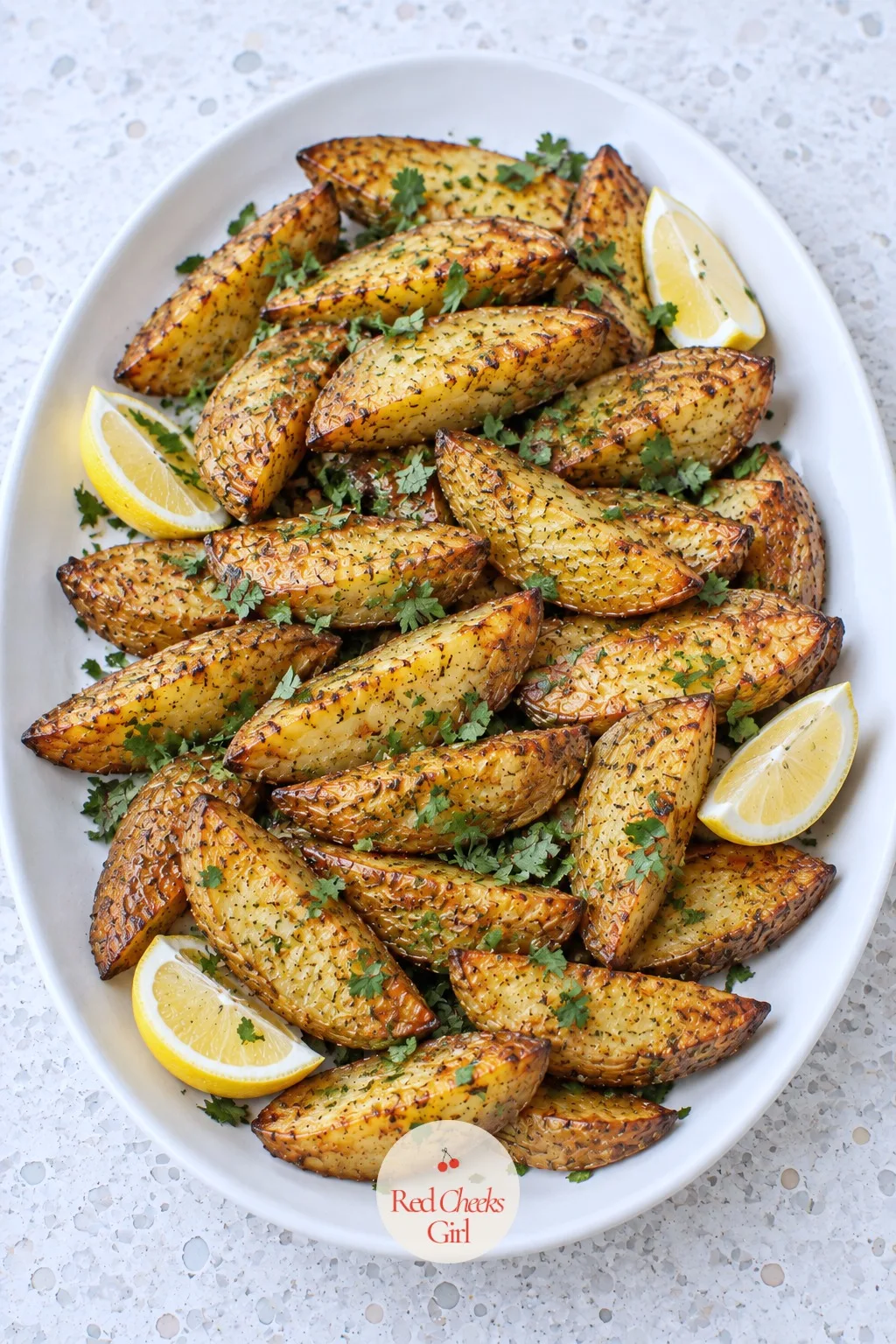
Finish with parsley and lemon
Pile the finished wedges onto the platter and tuck in a few lemon wedges. The parsley should sit visibly on top, not stirred in, so the gold edges still show through.
🛍 Shopping guide
Getting the Crisp Edges Right
The single most common complaint about this dish is soggy potatoes, and it is almost never the broth’s fault. Give every piece real breathing room, even if that means two pans instead of one.
Cut the wedges close to the same size before anything else happens. Uneven pieces mean some turn to mush while others are still pale when the timer goes off, so a careful, even cut is worth the extra minute.
that softens the starch before any crisping starts. The potatoes are not finished until every trace of that liquid has boiled away and the oil is frying the edges directly against the pan.
If the pan runs dry but the color still looks pale, instead of scorch.
Swaps and Substitutions
Russet potatoes work if that is what is in the pantry. They turn fluffier inside but will not hold their wedge shape quite as neatly through a long roast. Red or baby gold potatoes are sturdier and need less time, so check them ten minutes early.
No chicken broth on hand, or cooking for a vegetarian table, vegetable broth swaps in at the same amount without changing the result. Water works in a real pinch, but the inside of each wedge loses some of its savory depth.
Fresh oregano can replace the dried, use about three times the amount and add it in the final ten minutes instead of the start, since fresh herbs scorch under that much heat.
If the table already has enough roasted things and what it actually needs is something baked low and creamy, potatoes au gratin with gruyere and cheddar covers that gap instead.
What to Serve It With at a Party
Set this pan next to the lamb chops recipe: a dinner recipe with garlic, rosemary and bright mint sauce, and the lemon in both dishes does the work of tying the whole plate together.
For a full Greek spread, add the greek orzo salad with feta, olives and lemon oregano dressing, which shares the same bright, herby register without repeating a single ingredient.
A vegetable side rounds the plate out without extra work: roasted green beans with parmesan and lemon roast at nearly the same oven temperature, so both pans can run at once.
Keep the rest of the table simple. These potatoes already carry enough flavor for two dishes, so a plain green salad or warm pita is really all that is missing.
Greek Lemon Potatoes
Ingredients
- 3 pounds Yukon gold potatoes scrubbed
- 1/2 cup extra virgin olive oil divided
- 1 cup low sodium chicken broth
- 1/3 cup fresh lemon juice divided (about 2 large lemons)
- 1 tablespoon fresh lemon zest from 1 lemon
- 4 cloves garlic minced
- 2 teaspoons dried oregano
- 1 1/4 teaspoons kosher salt
- 1/2 teaspoon freshly ground black pepper
- 2 tablespoons chopped fresh parsley
- Extra lemon wedges for serving
Instructions
- Preheat the oven to 425°F with a rack set in the center position, and give it the full time to reach temperature before the potatoes go in.
- In a small bowl, whisk together the chicken broth, 1/4 cup of the olive oil, 3 tablespoons of the lemon juice, the lemon zest, garlic, oregano, 1 teaspoon of the salt and the pepper until the mixture looks cloudy and well combined.
- Scrub the potatoes and cut each one lengthwise into 6 to 8 wedges about 1 inch thick at the widest point, dropping the wedges into a large white ceramic mixing bowl as you go.
- Pour the broth mixture over the potato wedges and toss everything with your hands until each wedge is glossy and no dry, flour-white patches remain in the bowl.
- Tip the potatoes and all of the liquid onto a large white ceramic sheet pan, turning the wedges cut side down and spreading them into a single layer with a little space around each piece so steam can escape instead of softening them.
- Roast for 25 minutes, then pull the pan out and turn each wedge over with a thin metal spatula so the other cut face sits against the hot pan.
- Roast for another 20 minutes: the liquid in the pan should look noticeably shallower and the kitchen should smell strongly of garlic, lemon and oregano.
- Return the pan for a final 10 to 15 minutes, checking at the 10 minute mark, until every trace of liquid has disappeared and the underside of each wedge has turned deep golden and crisp at the edge.
- Remove the pan from the oven and drizzle the remaining olive oil and lemon juice directly over the hot potatoes, tossing gently so every wedge picks up a fresh, glossy coat.
- Let the potatoes sit on the pan for 5 minutes so the residual heat can finish softening any pale spots, then scatter the fresh parsley over the top.
- Transfer the potatoes to a wide white ceramic platter, tuck a few lemon wedges among them, and serve while the edges are still audibly crisp.
Good to Know
Frequently Asked Questions
Do I need to peel the potatoes?
No, Yukon gold skin is thin enough to roast tender and adds a little color contrast at the edges. Peel them only if picky eaters at the table prefer a perfectly smooth wedge.
Can I use bottled lemon juice instead of fresh?
Fresh is strongly preferred because Bottled juice works in a pinch but tastes flatter, and this dish depends on bright acidity.
Can I cut the potatoes ahead of time?
Yes, so they do not brown.
Can I make Greek lemon potatoes in an air fryer?
Yes, though it trades away part of the charm. An air fryer crisps the wedges well but skips the glossy pan sauce, which for one Greek food writer is simply of the dish.
Can I double the recipe for a bigger crowd?
Yes, but use two sheet pans rather than one larger one. A crowded pan steams instead of roasting, so doubling only works if every wedge still gets its own patch of space.
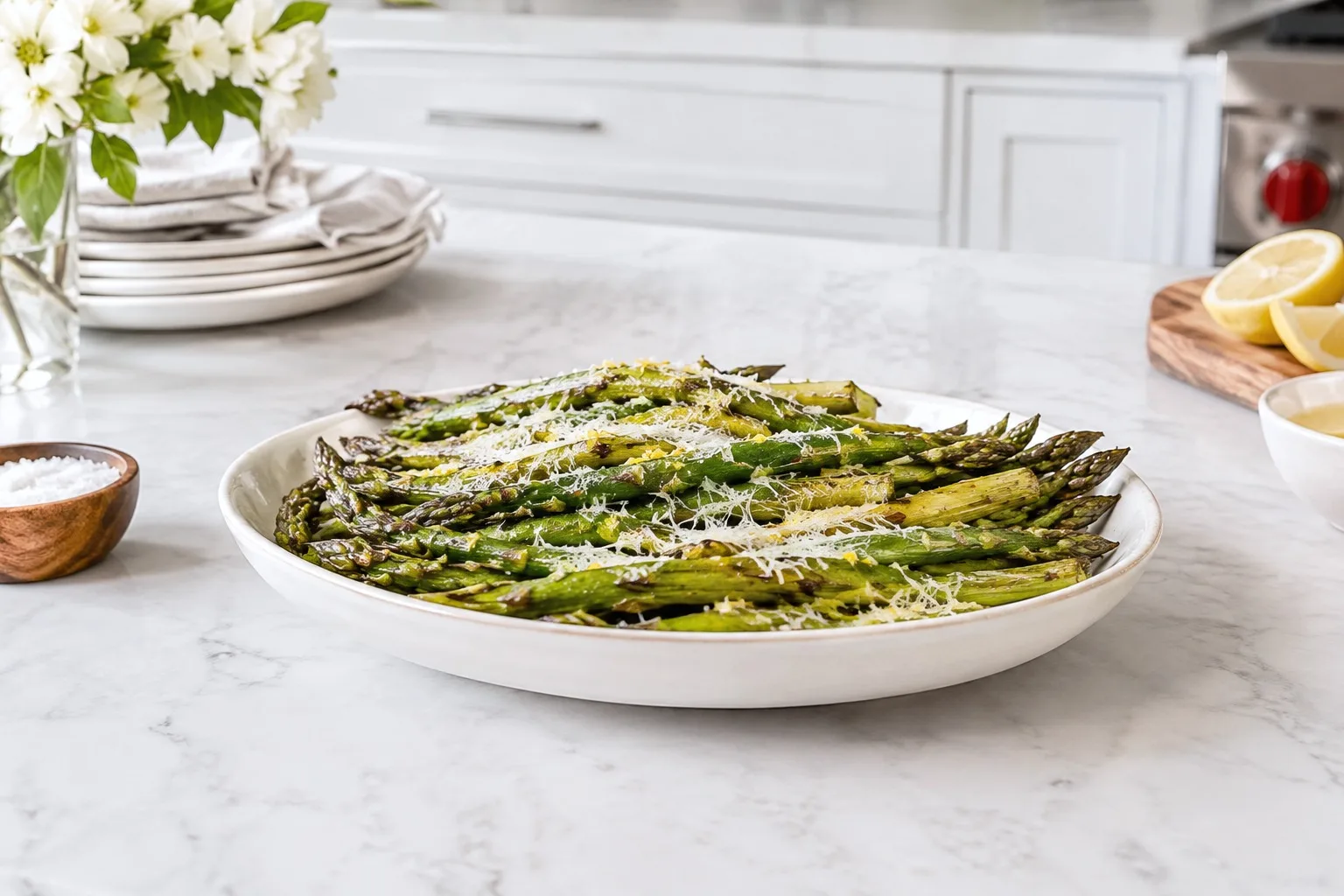
16 steak side dishes, from hasselback potatoes to a simple tomato salad, each with exact ingredients
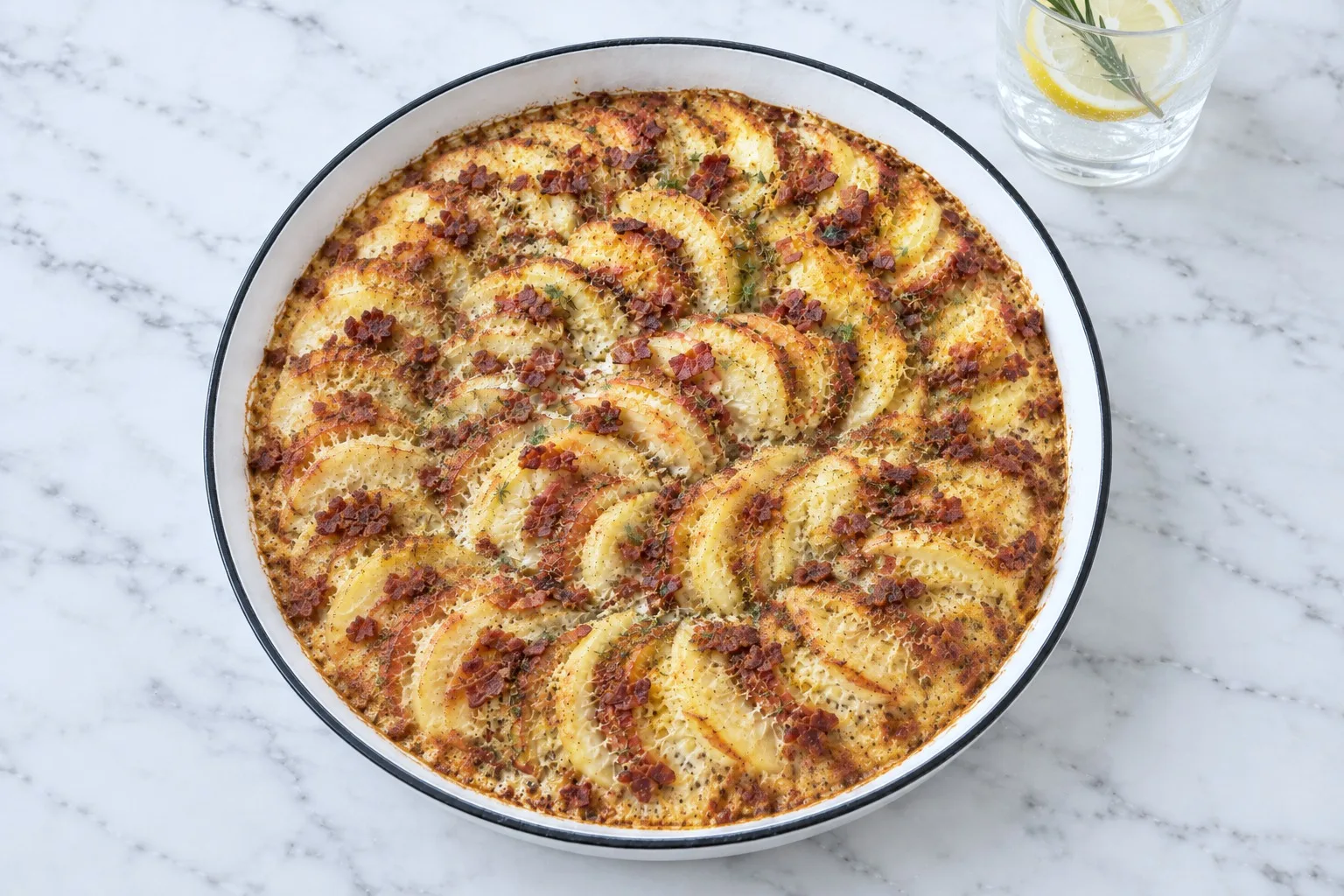
Easy scalloped potatoes with apples and bacon bake in one cast iron skillet with cream, thyme and pa

Make ahead mashed potatoes stay creamy in the fridge for two days, then reheat in a buttered baking
Leave a Reply