

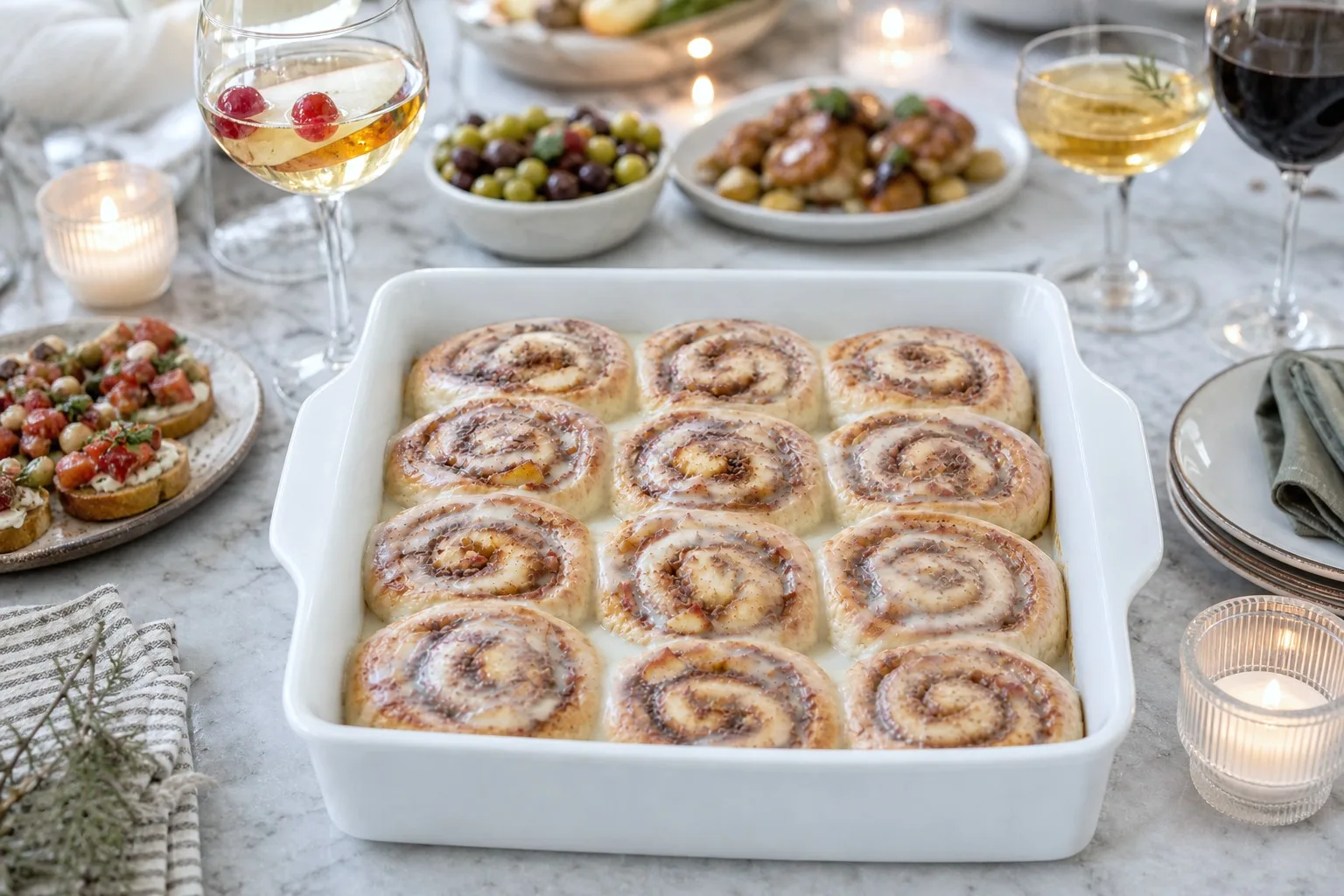
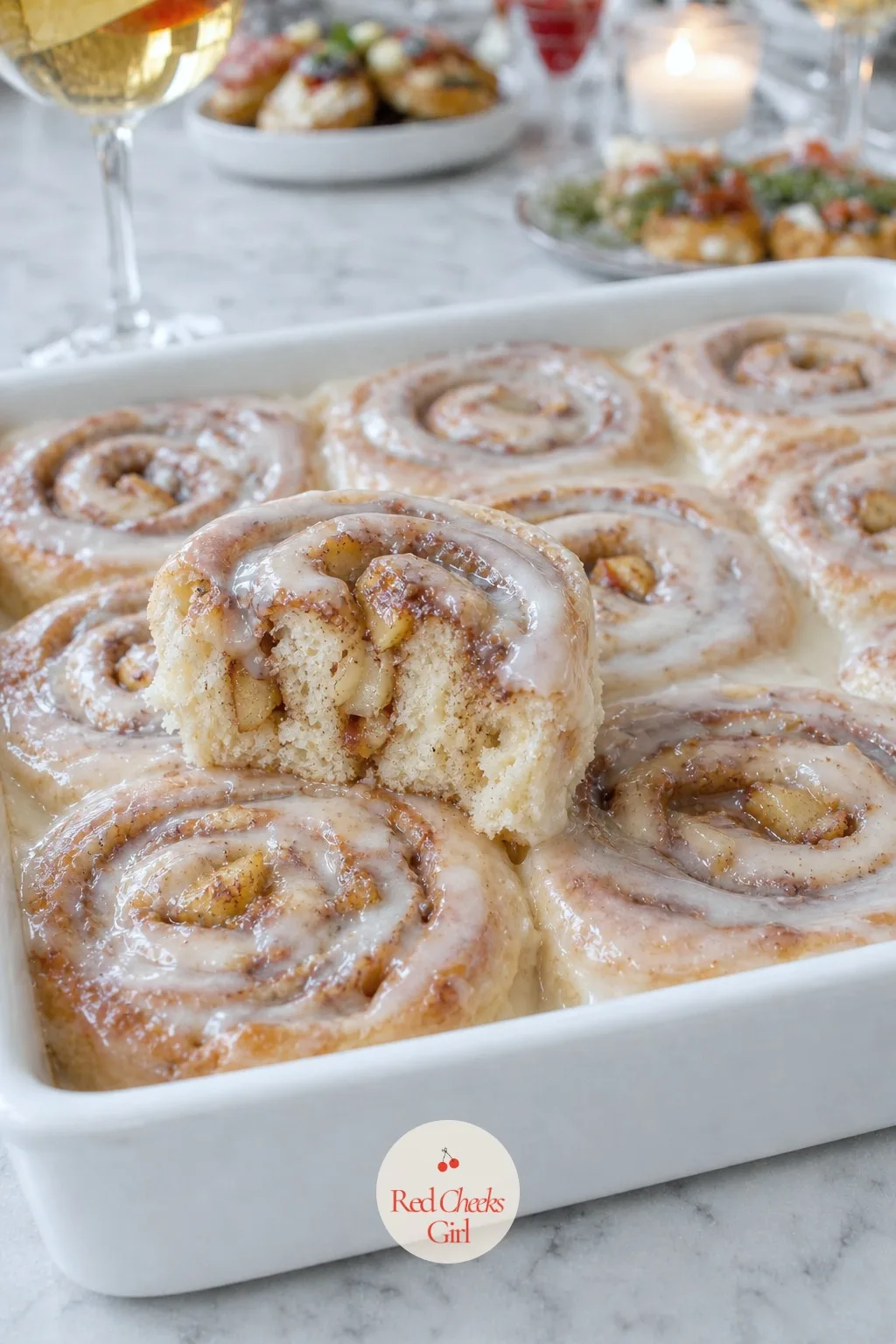
Apple cinnamon rolls solve the problem of what to bake once the air turns cold and a plain glazed roll suddenly feels thin. Honeycrisp apples, cooked down in butter and brown sugar before they ever touch the dough, turn soft and jammy instead of crunchy and wet.
The glaze is not the usual powdered sugar paste: it is cream cheese loosened with apple cider that has been reduced on the stove until it tastes almost like caramel.
This post contains affiliate links. If you buy through them, I may earn a small commission at no extra cost to you.
Table of Contents
Why These Apple Cinnamon Rolls Are Worth The Extra Pan
Nothing about this recipe needs a special trip to the store. Butter, brown sugar, cream cheese, and the kind of apple already sitting in the fruit bowl do the heavy lifting, which keeps the cost close to a regular batch of cinnamon rolls.
The dough still needs its two rises, there is no shortcut there, but the apple and glaze steps both happen while it proofs, so the stove stays busy without adding real time to the morning.
They work just as well on a party platter as they do on a Sunday table, since the whole pan comes out of the oven looking like one glazed, apple-flecked loaf that pulls apart in front of everyone.
The Ingredients That Actually Matter
Firm, crisp apples like Honeycrisp keep their bite through both the skillet and the oven, which is exactly why they turn up again and again in recipes like this one instead of a softer eating apple that would collapse into mush.
Cooking the diced apples in butter and brown sugar before they go anywhere near the dough is not an optional flourish. Apples carry a surprising amount of water, and if that water is still inside the fruit when the rolls go into the oven, it steams out during baking and leaves the centers slow to cook through and gummy underneath.
Apple cider reduced down to a thick syrup does double duty in the glaze: it pulls the moisture out so the glaze stays thick enough to cling, and it concentrates the apple flavor past anything a splash of plain cider could manage.
Cream cheese keeps the tradition of the American sweet roll pan alive, since American cinnamon rolls are frequently large, baked in a pan and topped with cream cheese, but the reduced cider gives this version an apple backbone instead of plain vanilla.
How to Make It
This batch makes a full 9×13 inch pan, so it is built for a table with more than two people at it. The dough contains wheat, egg, and dairy; the glaze adds more dairy on top of that, so flag both for anyone with allergies before serving.
Knead The Dough Until Smooth
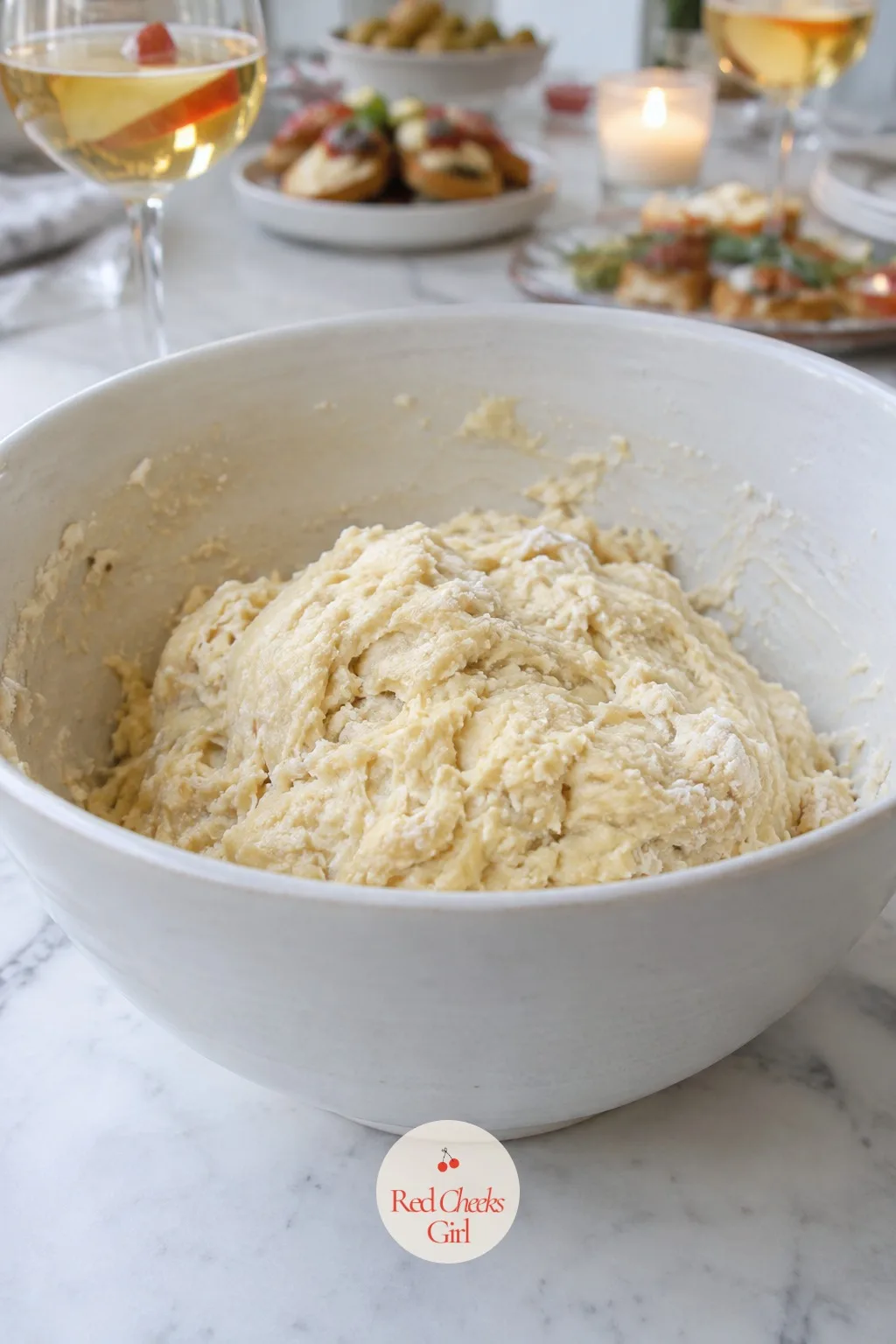
The dough comes together into one smooth, elastic ball once it has had its full ten minutes of kneading. It should feel soft, not sticky, and spring back slowly when pressed.
Cook The Apples Until The Juices Disappear
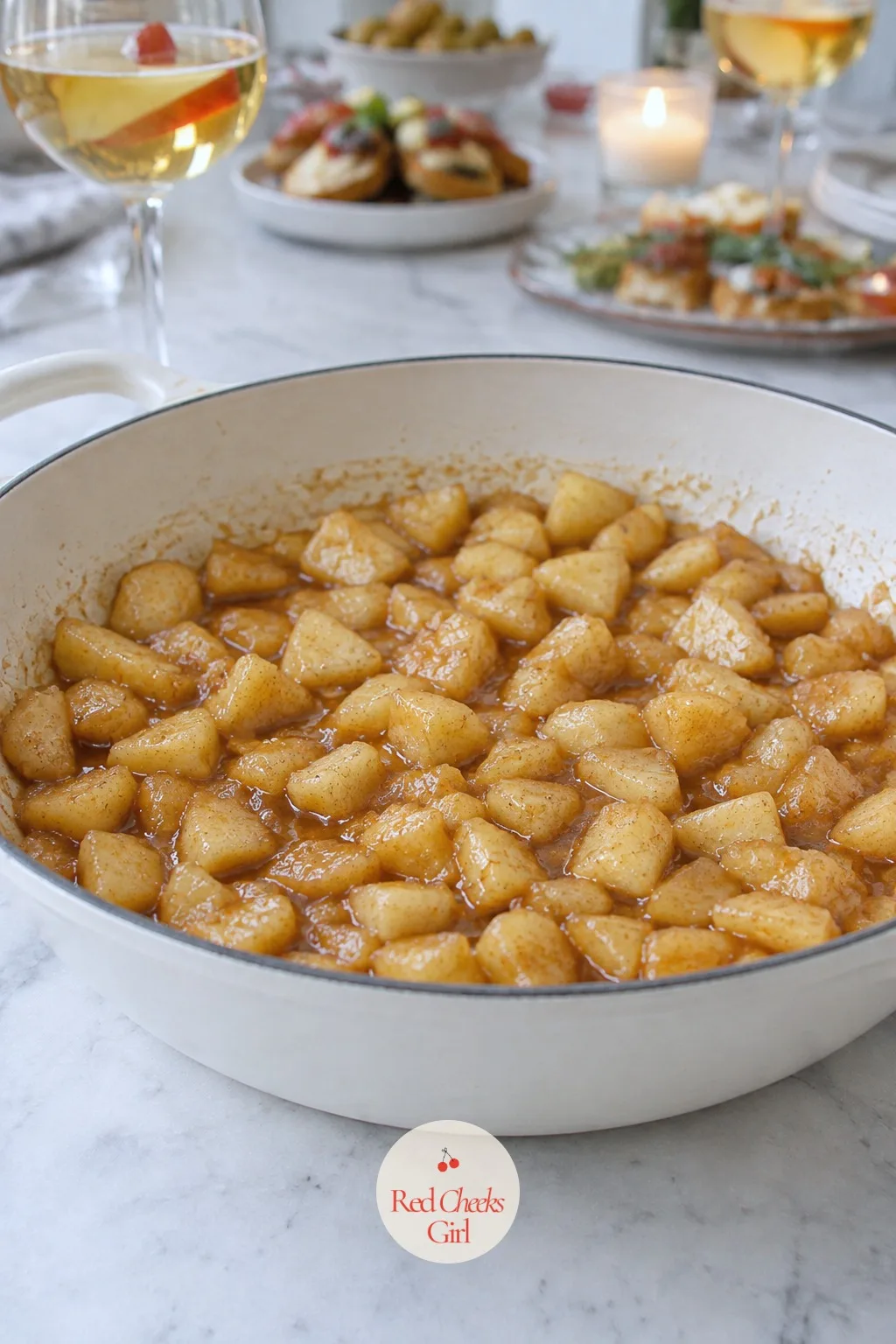
The diced apples turn glossy and golden as the butter and brown sugar reduce around them. Most of the liquid should be gone, leaving the pieces coated rather than swimming.
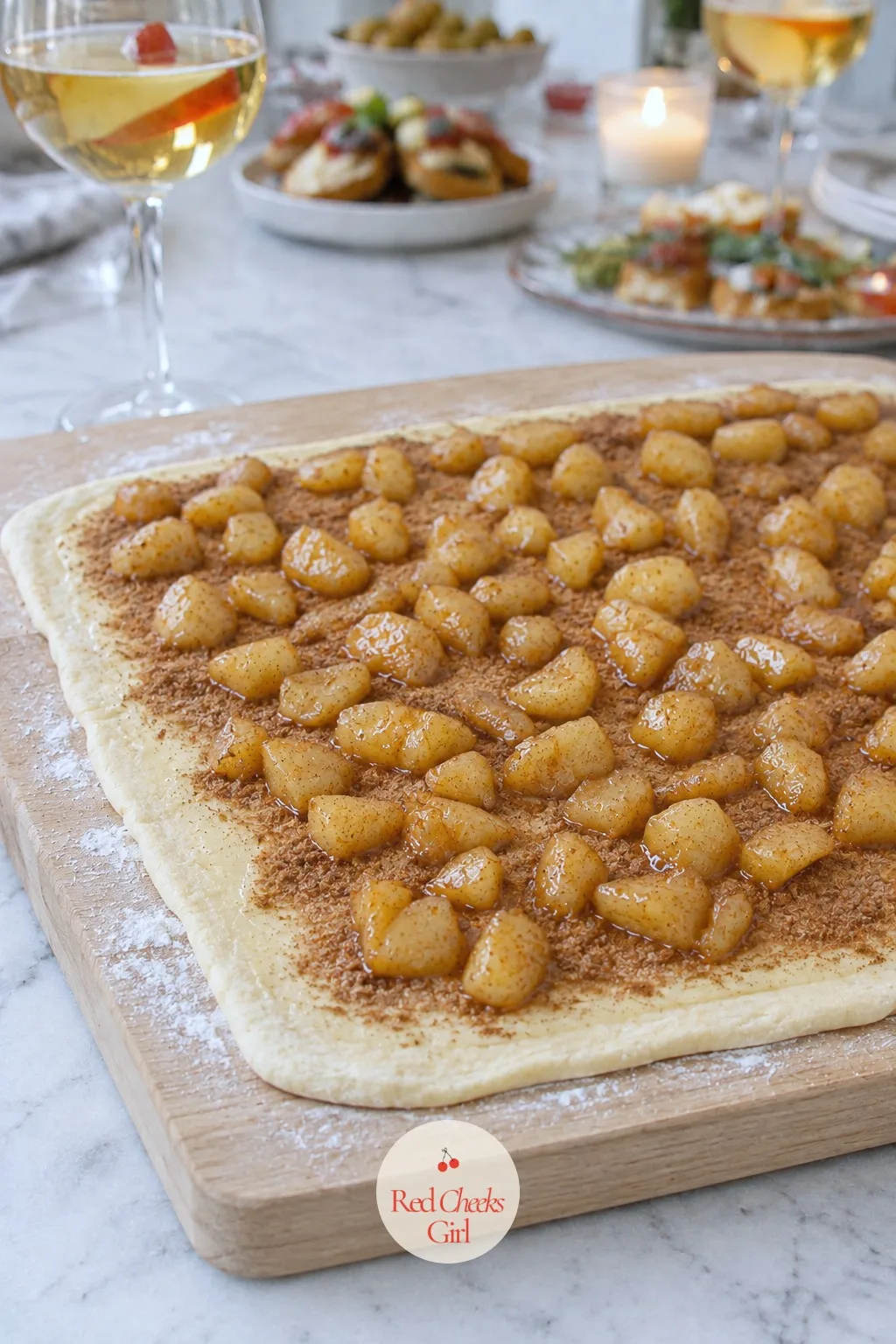
Scatter The Cooled Apples Over The Dough
Butter, cinnamon sugar, then the cooled apple pieces go down in layers across the rolled-out dough. A clean border stays bare along one long edge for the seam.
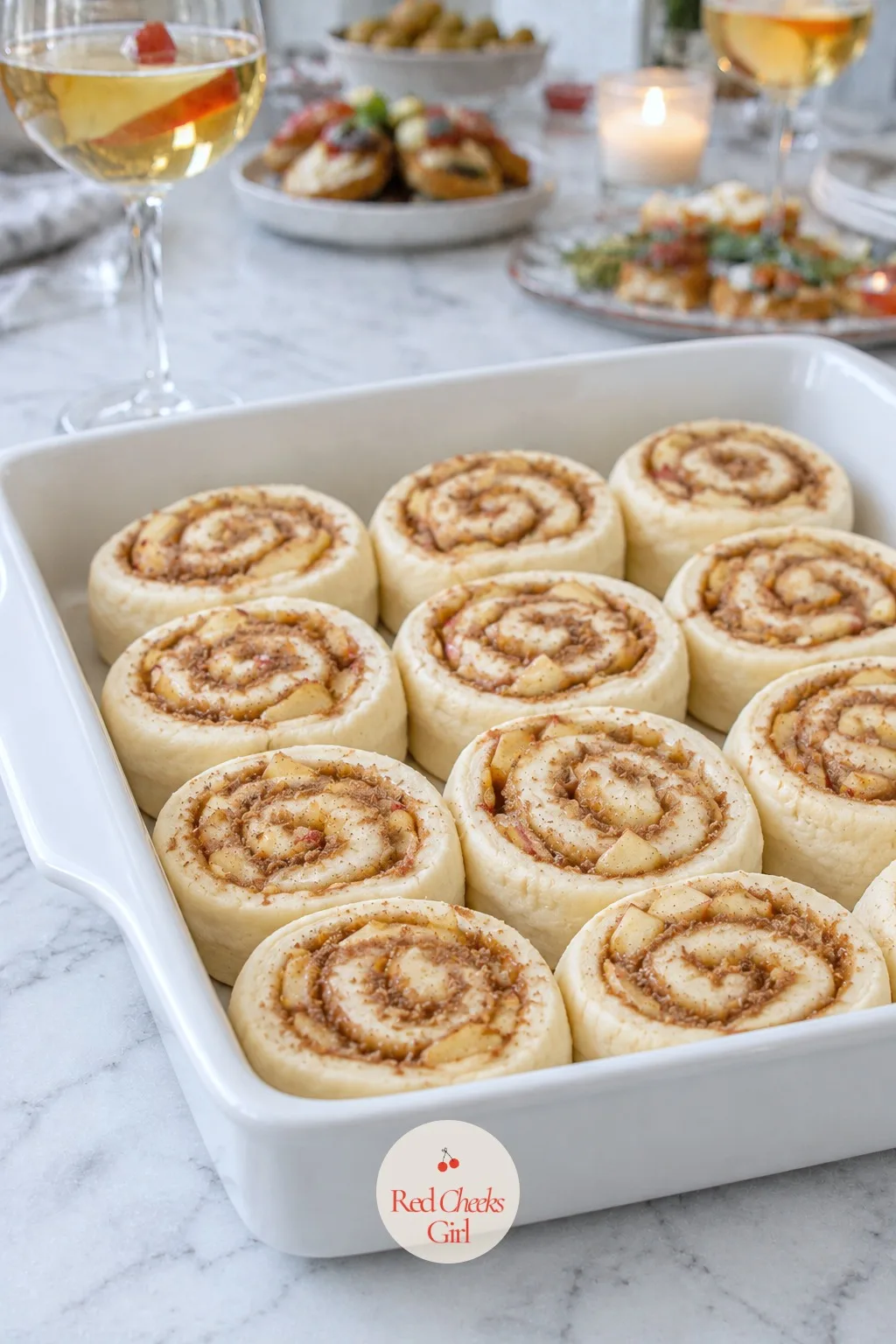
Arrange The Rolls Before Baking
Sliced into rounds and set cut side up, the rolls still look pale and raw at this stage, with visible spirals of apple and cinnamon. They have room to expand before the oven.
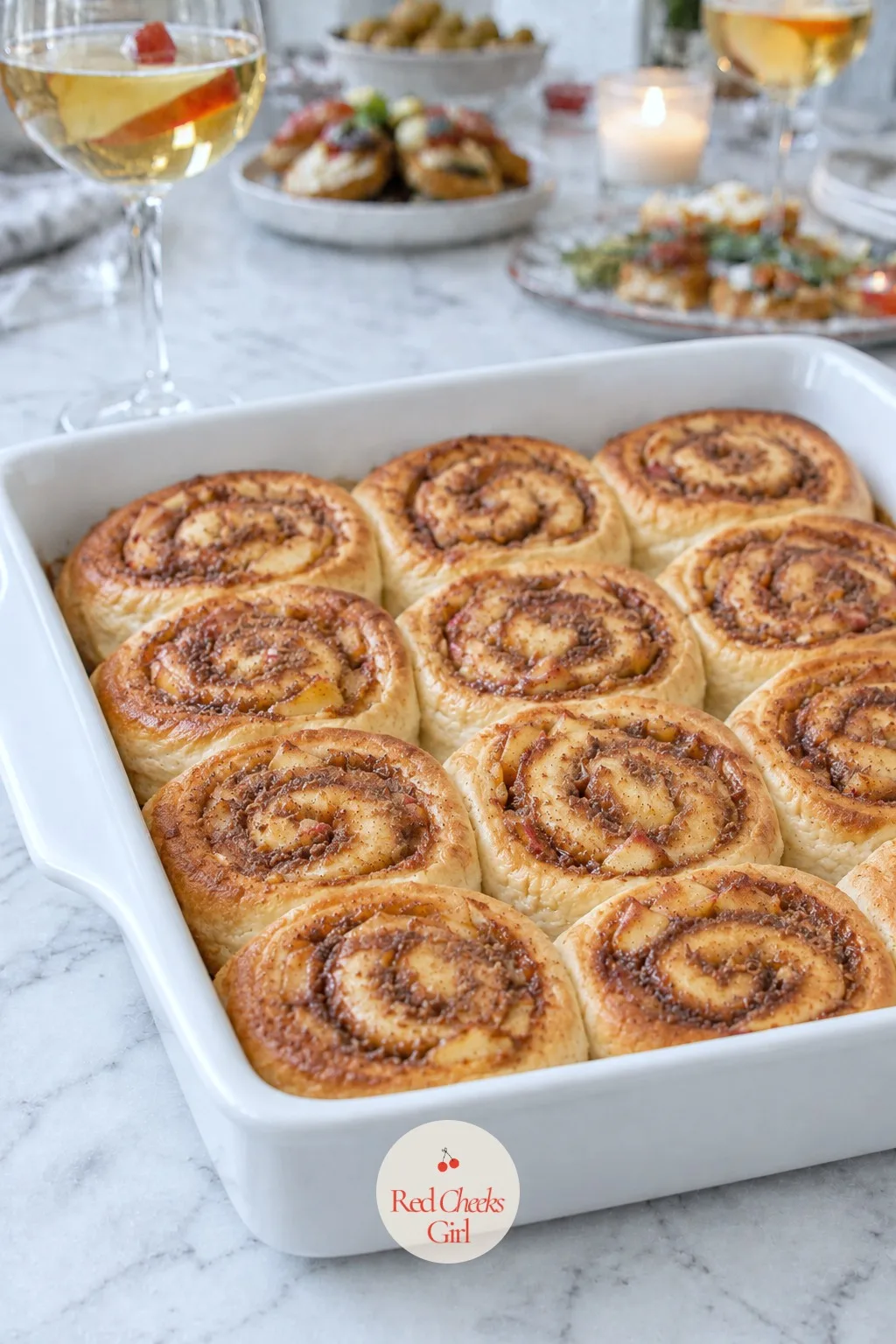
Bake Until Golden And Set
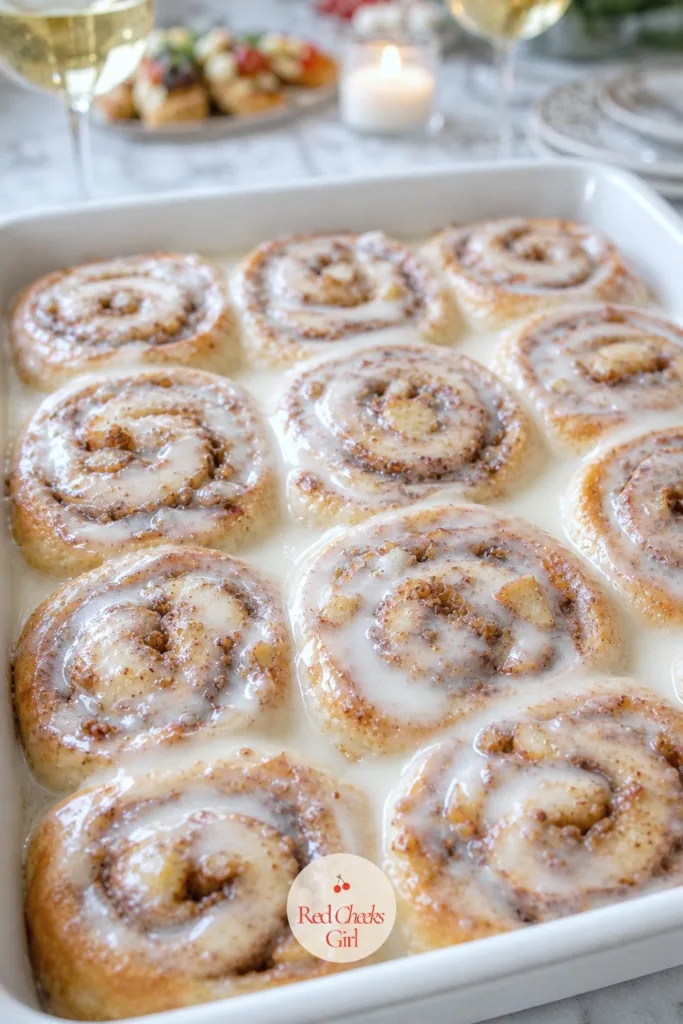
The rolls puff up and press into each other as they bake, turning deep golden brown on top. A thermometer in the center roll should read 190°F.
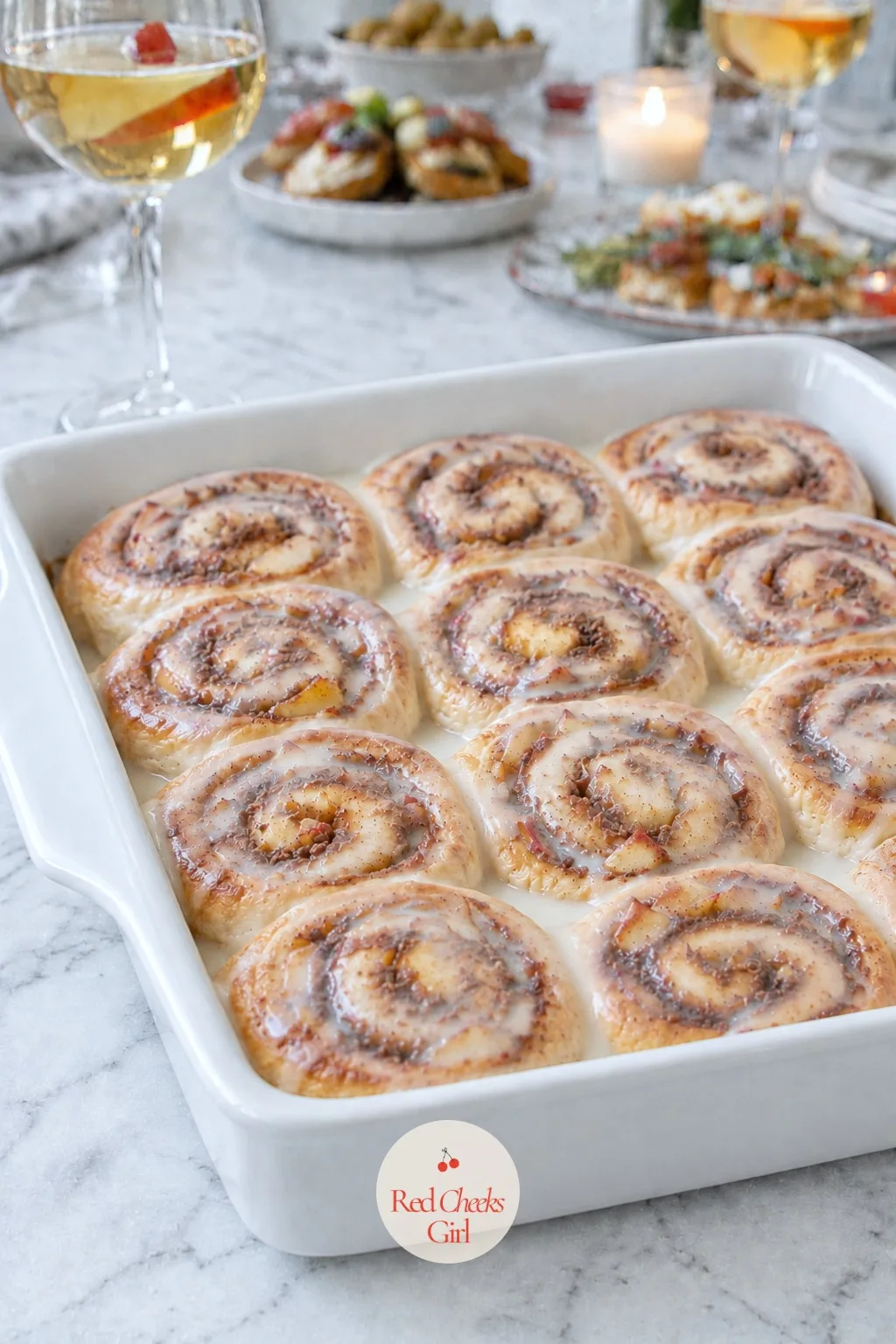
Glaze And Serve
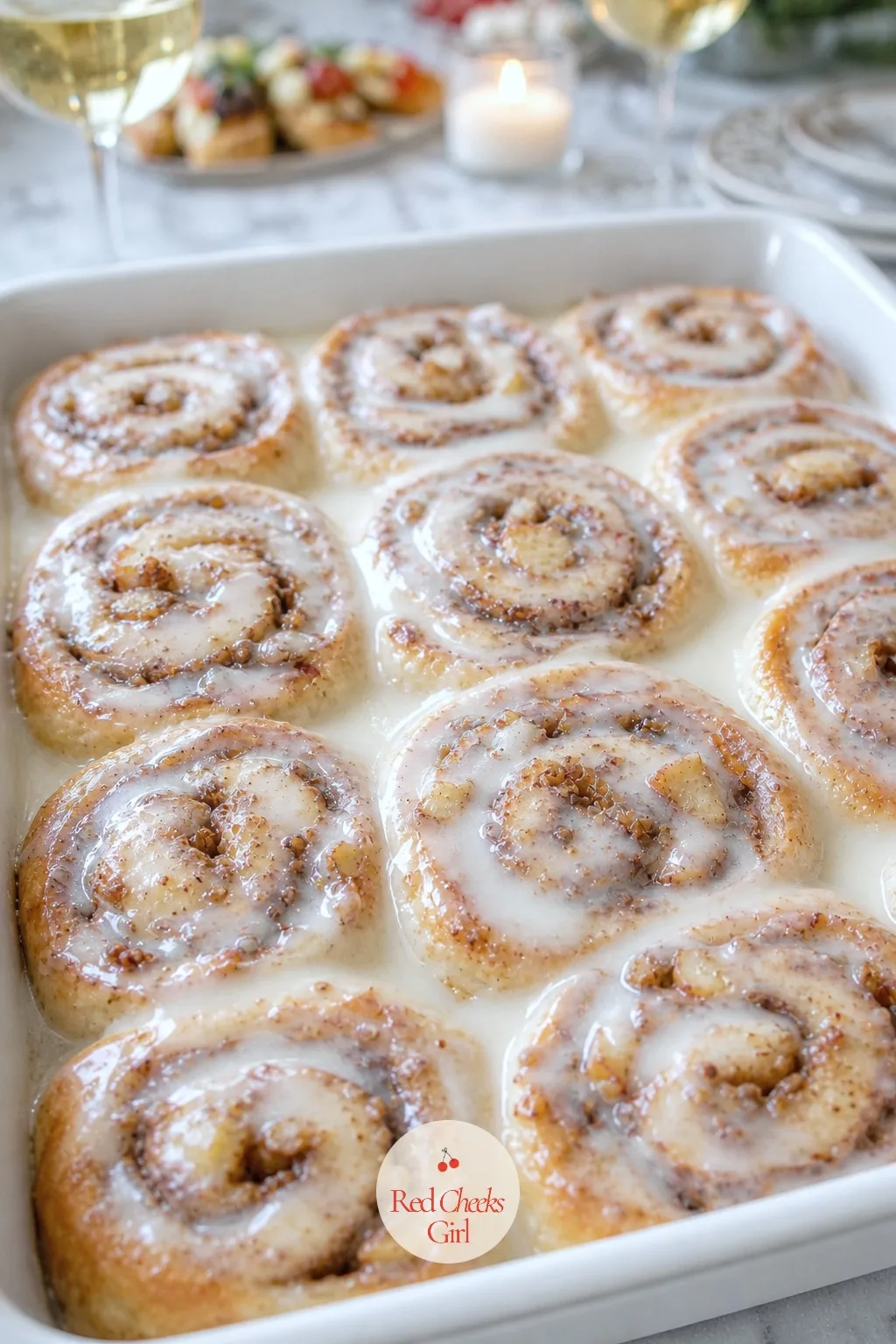
The cider cream cheese glaze goes on while the rolls are still warm, so it melts into every crack. Serve straight from the dish while the glaze is still glossy.
🛍 Shopping guide
Where These Rolls Go Wrong (And How To Fix It)
The most common complaint with any apple-filled roll is a gummy center, and that almost always traces back to apples that went into the dough raw. Skipping the stovetop step is the shortcut that costs the most.
Warm filling melts the butter layer underneath it and turns the whole log slippery, which makes it hard to roll tightly and leaves gaps that bake unevenly. Give the cooked apples a full 15 minutes on a plate before they go anywhere near the dough.
Rolls sliced too thin or packed too tightly into the dish bake from the outside in before the centers catch up, so a thermometer reading of 190°F in the middle roll is a better guide than color on top.
If the tops turn deep brown before the timer finishes, drape a sheet of foil loosely over the dish and keep baking until the center hits temperature. A glaze that stays thin and runny usually just needed another minute or two of reducing on the stove.
Swaps And Substitutions
No Honeycrisp on hand is not a dealbreaker. Granny Smith, Braeburn, or Gala all cook down well in the same butter and brown sugar, each trading a little sweetness for a little more tartness.
Good baking pears such as d’Anjou, Bartlett, or Bosc can stand in for the apples entirely if that is what is sitting in the fruit bowl this week; cook them the same way, just watch them a minute or two less since pears soften faster.
For a gluten-free version, a 1:1 gluten-free baking flour blend works in the dough, though the rolls will feel slightly denser and benefit from an extra 10 minutes on the second rise.
Short on time, store-bought cinnamon roll dough or a tube of refrigerated biscuit dough can carry the cooked apple filling with no rises to wait on at all, if a weeknight version is all the morning allows.
What To Serve It With At A Party
For a shower built around the same flavors, the fall bridal shower ideas with pumpkins, apples and warm cider make the table around the rolls look intentional rather than thrown together.
A baby shower crowd wants food that does not pull the host into the kitchen all morning, which is exactly the point of the baby shower brunch ideas that do not need a chef.
Something to drink alongside a sweet roll matters more than people admit, and the Thanksgiving punch recipes you make the night before solve that without adding one more task to the actual day.
If the morning is just breakfast, no theme required, the cosy fall breakfast ideas with printable recipe cards round out the rest of the table.
Apple Cinnamon Rolls
Ingredients
- 1 cup whole milk warmed to about 110°F
- 2 1/4 teaspoons active dry yeast one standard packet
- 1/3 cup granulated sugar divided
- 1/3 cup unsalted butter melted and cooled slightly
- 2 large eggs room temperature
- 3/4 teaspoon fine salt
- 4 1/2 cups all-purpose flour plus more for the counter
- 3 tablespoons unsalted butter for the apple filling
- 3 cups diced Honeycrisp apples peeled and cored (about 3 medium apples)
- 1/2 cup packed light brown sugar for the apple filling
- 1/2 teaspoon ground cinnamon for the apple filling
- 1/4 teaspoon salt for the apple filling
- 1/4 cup unsalted butter softened, for the cinnamon layer
- 1/3 cup packed light brown sugar for the cinnamon layer
- 2 tablespoons ground cinnamon for the cinnamon layer
- 1 cup apple cider for the glaze
- 4 ounces cream cheese softened
- 2 tablespoons unsalted butter softened, for the glaze
- 1 1/2 cups powdered sugar
- pinch of salt for the glaze
Instructions
- Warm the milk to about 110°F in a small white ceramic bowl, then whisk in the yeast and 1 tablespoon of the sugar. Let it sit for 5 to 8 minutes, until a foamy cap forms on top: that foam tells you the yeast is active.
- In a large white mixing bowl, whisk together the flour, remaining sugar, and salt. Pour in the yeast mixture, melted butter, and eggs, then stir with a pale wooden spoon until a shaggy dough comes together. Turn the dough out onto the floured marble counter and knead by hand for 8 to 10 minutes, until it feels smooth and springs back slowly when you press it.
- Return the dough to the bowl, cover with a damp towel, and let it rise in a warm, draft-free spot for 1 to 1 1/2 hours, until doubled in size. Press two fingers into the dough: if the dent stays, it is ready.
- While the dough rises, melt the 3 tablespoons of butter in the cream enameled skillet over medium heat. Add the diced Honeycrisp apples, brown sugar, cinnamon, and salt, and cook, stirring every minute or so, for 6 to 8 minutes, until the apples soften at the edges and most of the released juice has cooked down into a thick syrup coating the pieces. Cooking the apples now matters: raw apple holds a lot of water, and if that water is still trapped inside the roll when it goes into the oven, it steams the dough from the inside and leaves the center undercooked and gummy instead of soft. Spread the cooked apples onto a plate to cool completely, about 15 minutes.
- Punch down the risen dough and turn it out onto the floured marble counter. Roll it into a rectangle about 16 inches by 12 inches, keeping the thickness even so the rolls bake at the same rate.
- Spread the softened 1/4 cup of butter over the dough right to the edges. Sprinkle the brown sugar and cinnamon mixture evenly over the butter, then scatter the cooled cooked apples over the top, leaving a bare 1 inch border along one long edge.
- Starting from the long edge opposite the bare border, roll the dough into a tight log. Pinch the seam closed so the roll holds its shape when you slice it.
- Slice the log into 12 even rolls, about 1 1/2 inches thick, using a sharp knife or a piece of unflavored floss pulled underneath each cut. Arrange the rolls cut side up in a buttered 9x13 inch white ceramic baking dish, spacing them evenly with a little room to grow.
- Cover the dish loosely and let the rolls rise in a warm spot for 30 to 45 minutes, until they look puffy and are touching their neighbors.
- Bake in a preheated 350°F oven for 25 to 28 minutes, until the tops are golden brown and a roll in the center reads 190°F on an instant read thermometer.
- While the rolls bake, make the glaze. Simmer the apple cider in a small cream enameled saucepan over medium heat for 12 to 15 minutes, until it reduces to about 1/4 cup of thick, syrupy liquid, then let it cool for 5 minutes. In a white ceramic bowl, beat the cream cheese and butter together until smooth, then beat in the reduced cider, powdered sugar, and a pinch of salt until the glaze is glossy and pourable.
- Let the rolls cool in the dish for 10 minutes, then pour the glaze over them, letting it run into the cracks. Serve warm, straight from the dish.
Good to Know
Frequently Asked Questions
Can I make apple cinnamon rolls the night before?
Yes, shape and slice the rolls, cover the dish tightly, and refrigerate overnight before the second rise. Let the dish sit at room temperature for about 30 minutes the next morning before baking as directed.
Why are my cinnamon rolls still doughy in the middle?
Doughy centers usually mean the rolls were sliced too thick, packed too tightly in the dish, or pulled from the oven before the center reached 190°F. Check with a thermometer, not just the color on top.
Can I use canned apple pie filling instead of fresh apples?
Canned apple pie filling works in a pinch, though it is sweeter and softer than apples cooked fresh in butter and brown sugar. Drain off excess syrup first so the dough does not turn soggy.
What is the best way to reheat leftover apple cinnamon rolls?
Warm a roll in the microwave for 15 to 20 seconds, which softens the glaze without drying the dough. A full oven reheat works too, but tent it with foil so the top does not over-brown.
Why did my glaze turn out too thin to coat the rolls?
The cider likely did not reduce long enough; it needs to cook down to about a quarter cup of syrupy liquid before it meets the cream cheese, or the glaze stays watery.
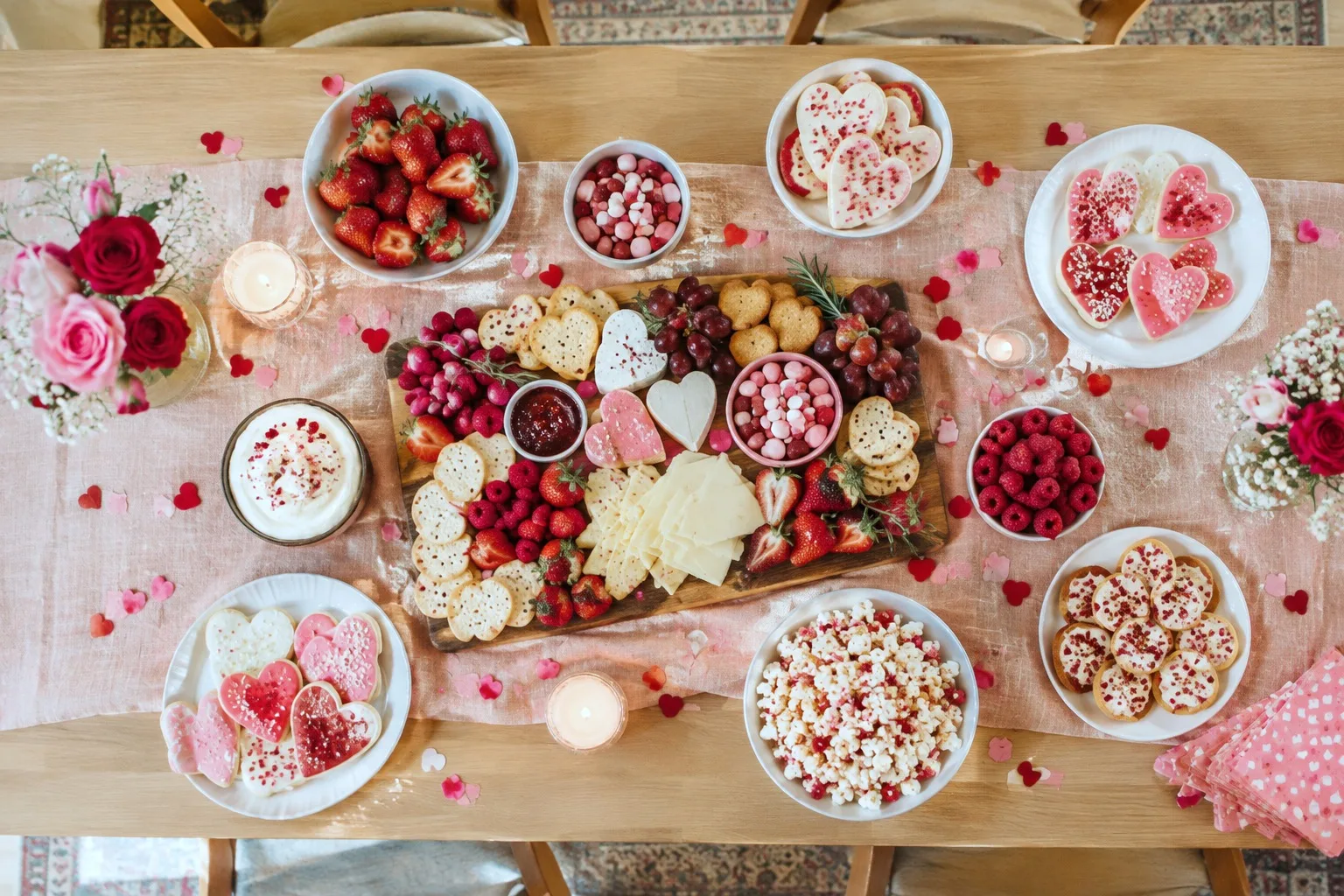
20 Valentines snacks for a party, sweet and savory, pink and red, each with exact amounts, real step
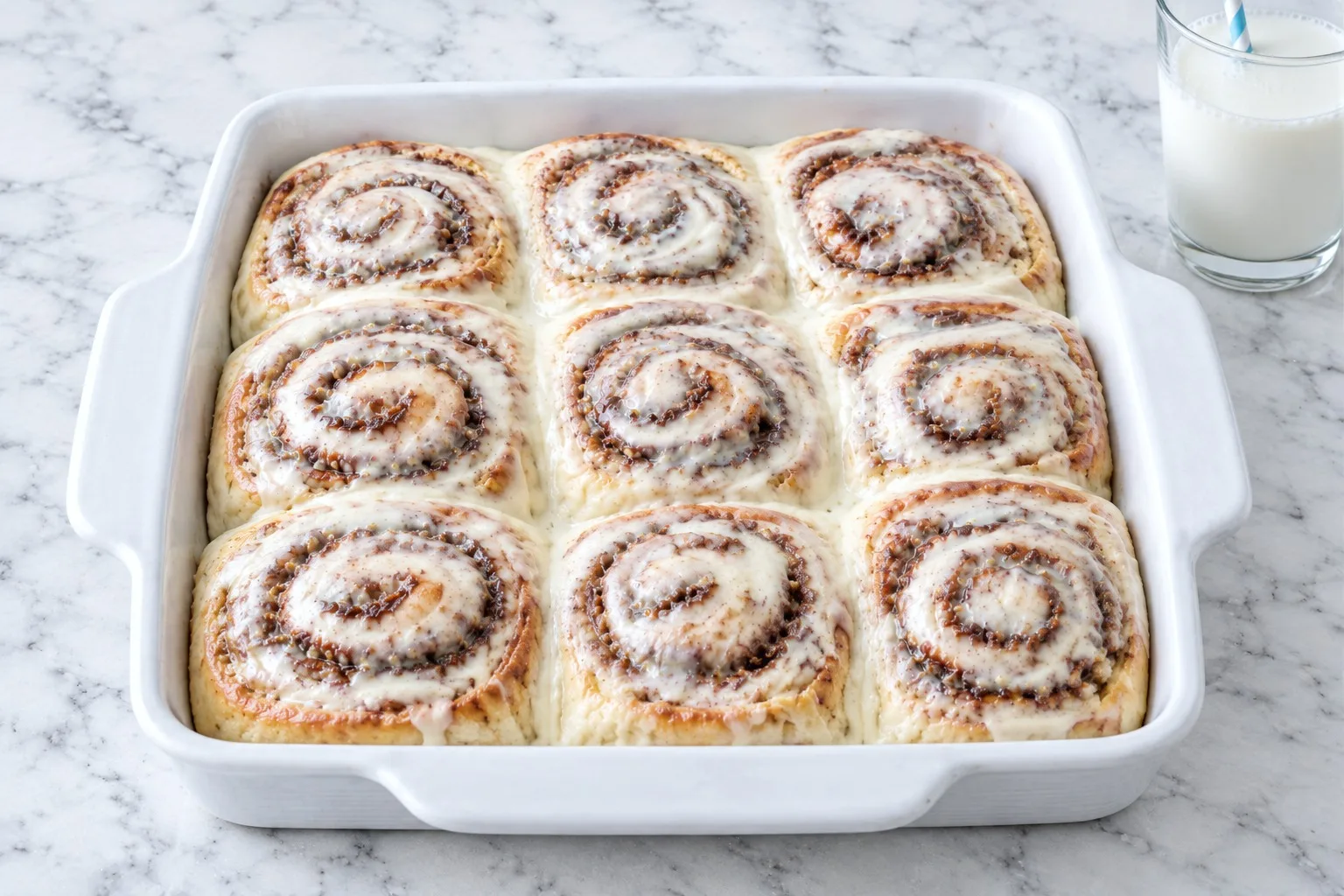
Homemade cinnamon rolls, soft and risen close together, finished warm with cream cheese frosting. A
Strawberry crepe cake stacks twenty thin crepes with vanilla whipped cream and strawberries for a ch
Leave a Reply