

Cornbread dressing is the dish that decides whether a Southern holiday table feels right or just adequate: a soft, custardy square next to the turkey that nobody leaves behind.
It asks for almost nothing fancy, just stale cornbread, a pot of softened onion and celery, broth, eggs and a good amount of sage. Get the cornbread properly dry and the broth generous, and the rest takes care of itself.
This post contains affiliate links. If you buy through them, I may earn a small commission at no extra cost to you.
Table of Contents
Why This Dressing Belongs Next to the Turkey
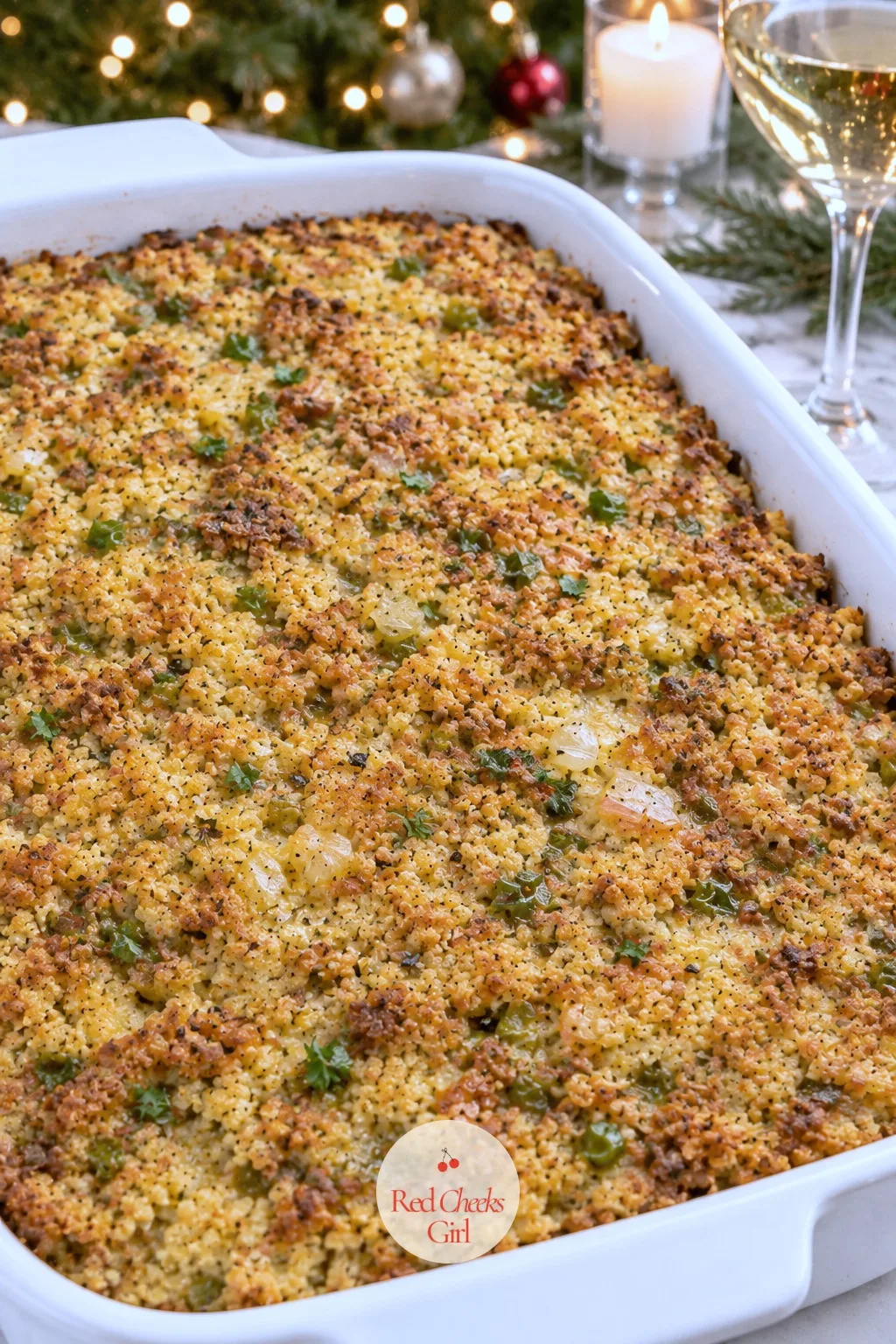
A box of stuffing mix tastes fine until real cornbread dressing sits down next to it, and then it tastes like cardboard. Proper Southern dressing has a deep gold, slightly crisp top over a soft, almost custardy center, built from cornbread that has had time to dry out and enough broth to bring it back to life.
This is the one side that shows up at both Thanksgiving and Christmas without anyone growing tired of it, because it tastes like a specific kitchen rather than a season. Change nothing about it and it still reads as an occasion.
The whole thing costs very little: a pan of cornbread, vegetables already in the crisper, broth, a handful of eggs. Most of the real work happens two days before the party, so the day itself is just stirring and baking.
If turkey is not on the menu this year, the dressing still holds its own next to a ham or a vegetarian roast, and it reheats well enough to make ahead no matter what sits beside it.
The Ingredients That Make It Taste Like Sunday Dinner
Cornbread is the whole argument here, and it only works if it is properly dry. Bake it two days ahead, let it cool completely, then leave it loosely covered at room temperature so the crumb firms up and stops being spongy, because fresh cornbread turns to paste the moment broth touches it.
Butter, onion and celery sauteed together until soft is the base every Southern dressing shares, and there is no shortcut worth taking here. Raw onion in the finished dish reads as a mistake, not a texture.
Sage carries the whole flavor of the thing. Use it generously, fresh if you have it, since it is what makes the dressing taste like a holiday and not a leftover cornbread project.
Chicken broth, added gradually, is what turns dry crumbs back into something worth eating, and beaten eggs are what set that softened crumb into a dish that slices into neat squares instead of collapsing into mush.
How to Make It
This version keeps things plain: cornbread, the onion and celery and sage every Southern cook grew up with, broth and eggs, baked in one dish until the top turns deep gold. Make the cornbread two days ahead so it has real time to dry, and the day you bake it comes down to about twenty-five minutes of hands-on work.
A 9×13-inch white ceramic baking dish holds this amount perfectly, with enough surface area for the top to brown all over instead of steaming under its own height.
Soften the Onion and Celery
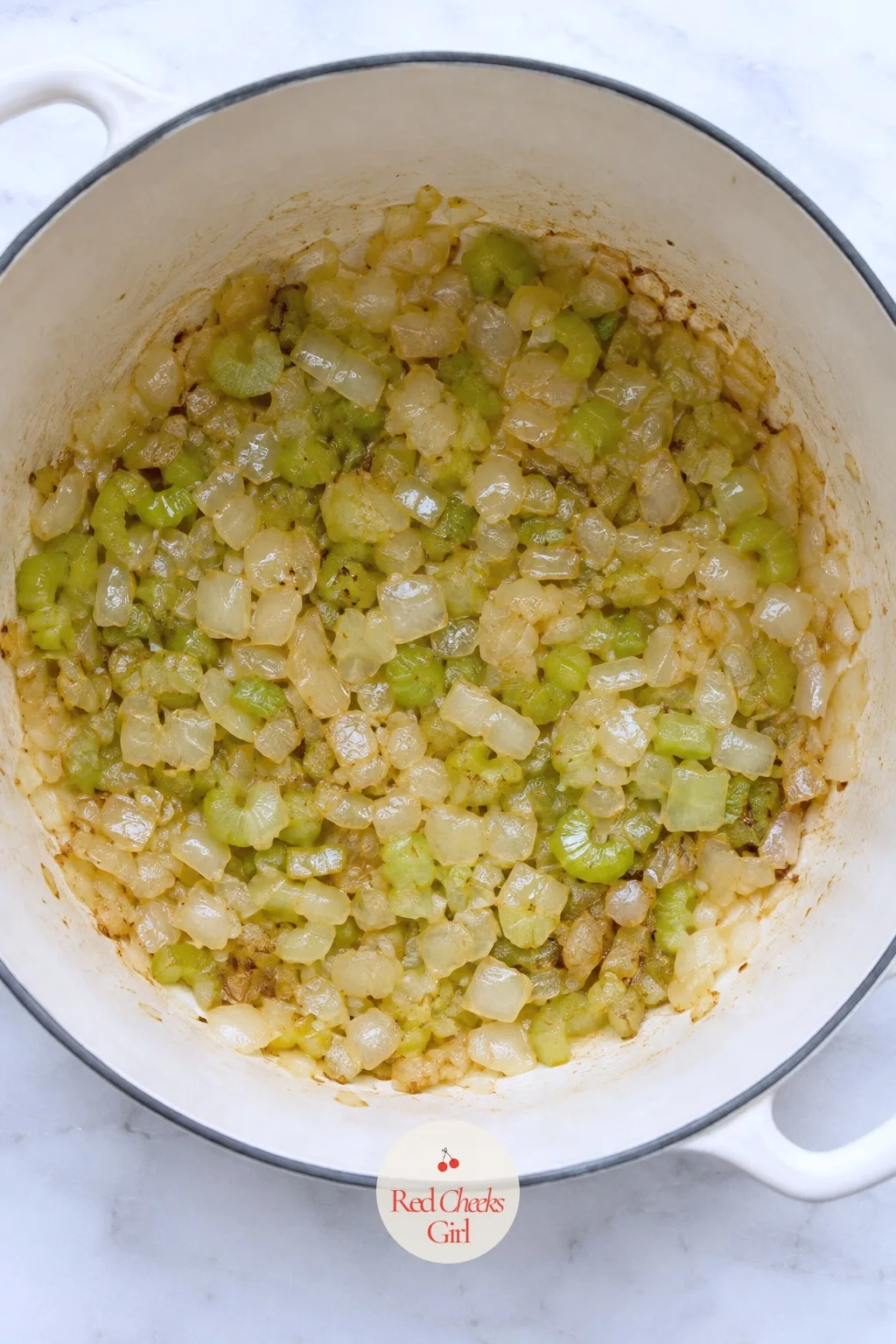
Cook the onion and celery in butter until soft, stirring every minute or so. Look for translucent edges and no raw bite left in the celery before moving on.
Toss Cornbread With the Vegetables
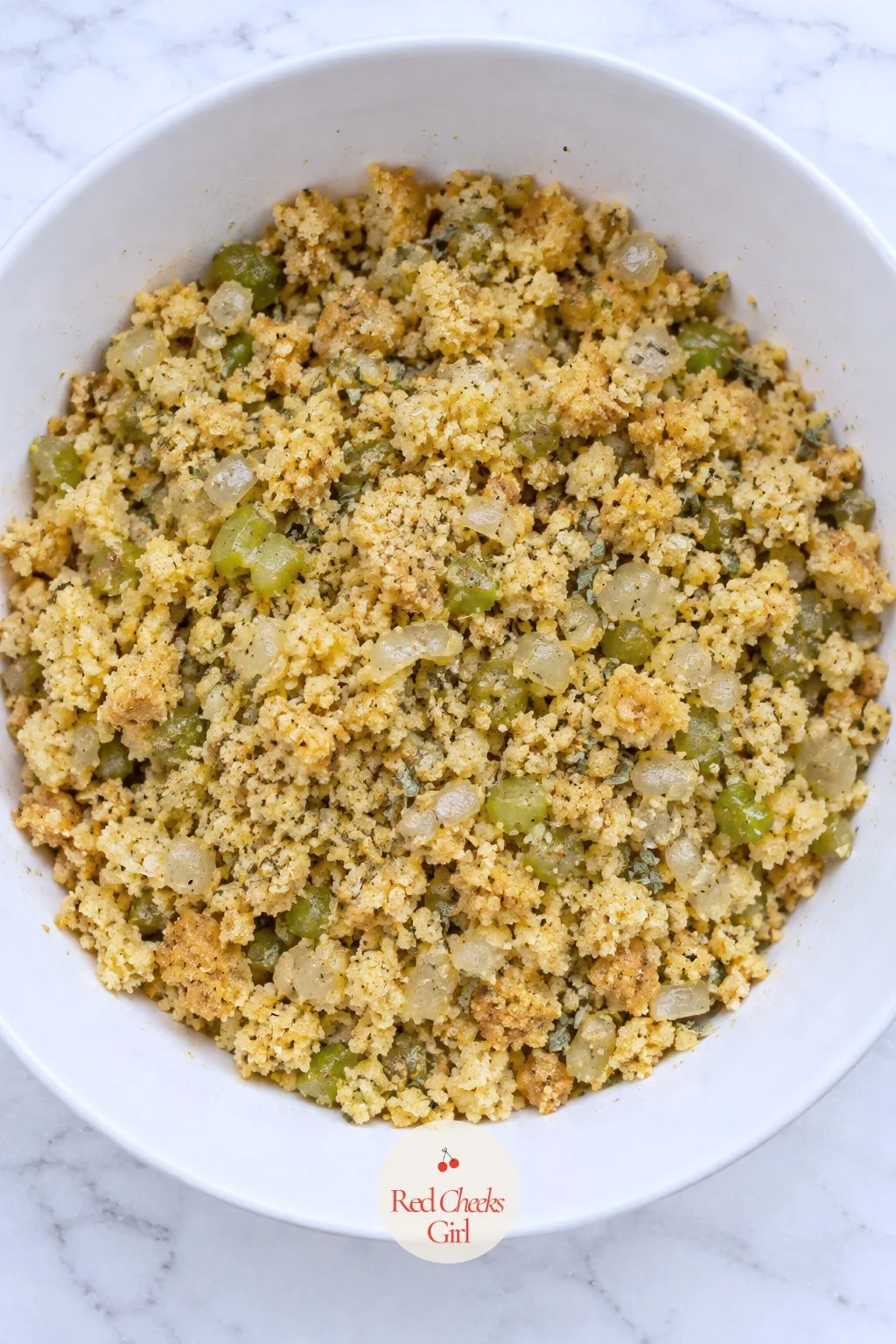
Fold the dry cornbread crumbs through the warm onion and celery. It should look evenly speckled with green, still loose and dry at this point.
Moisten the Crumbs With Broth
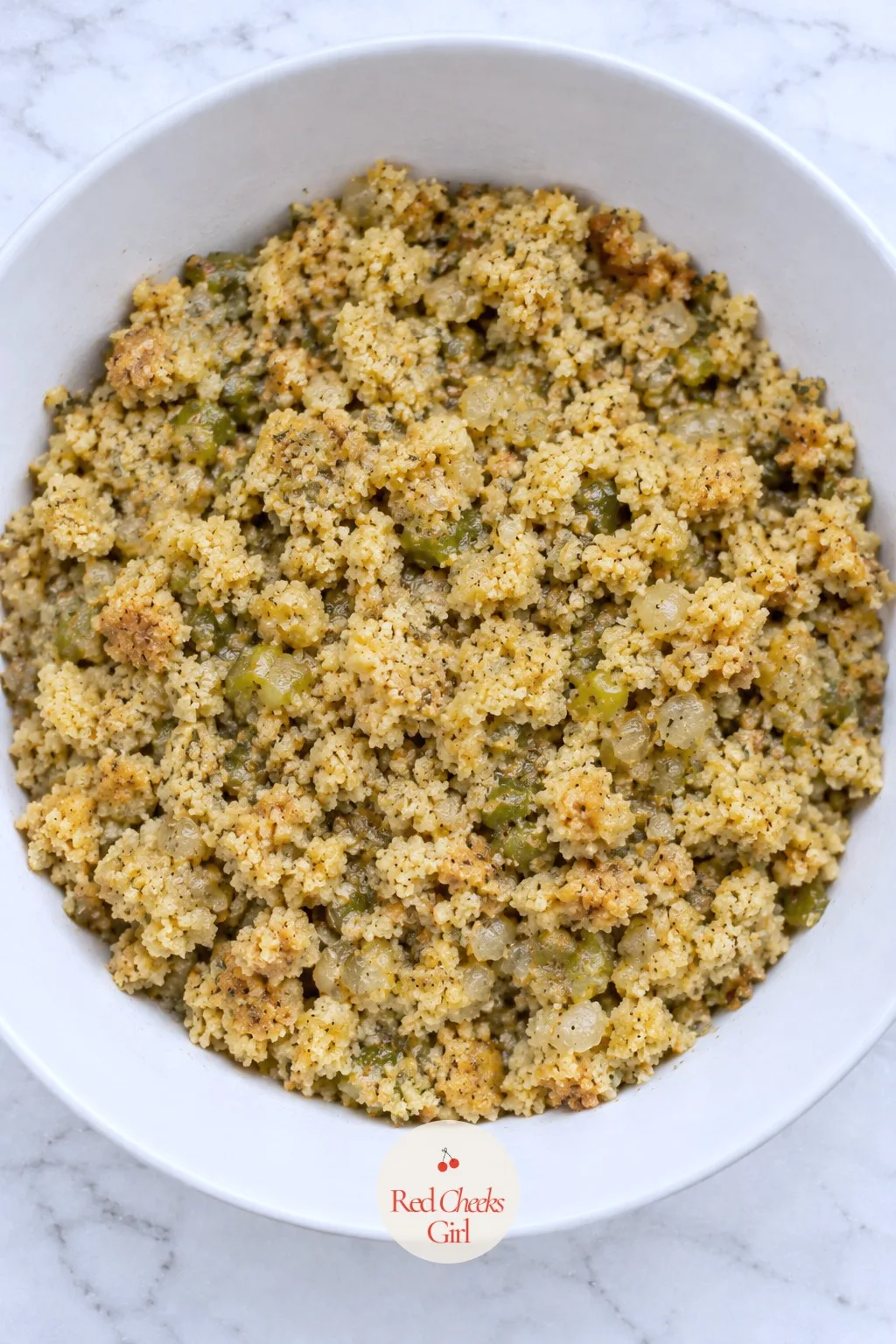
Broth soaks into the dry crumbs until everything clumps softly instead of crumbling apart. Stop adding liquid once no dry patches show at the bottom of the bowl.
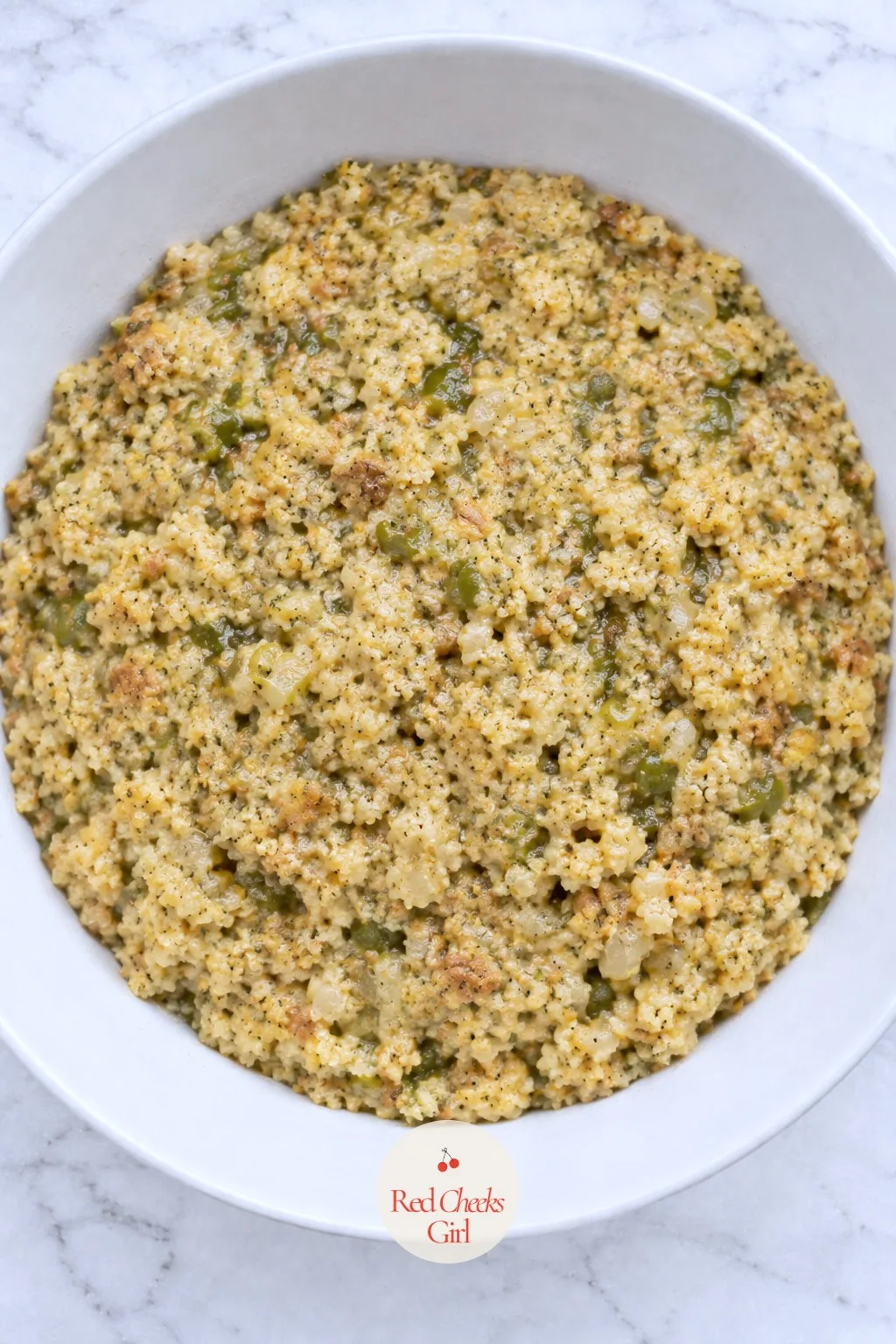
Fold In the Eggs
Beaten egg binds the moistened crumbs into one cohesive mixture. It should hold its shape when pressed with the back of a spoon.
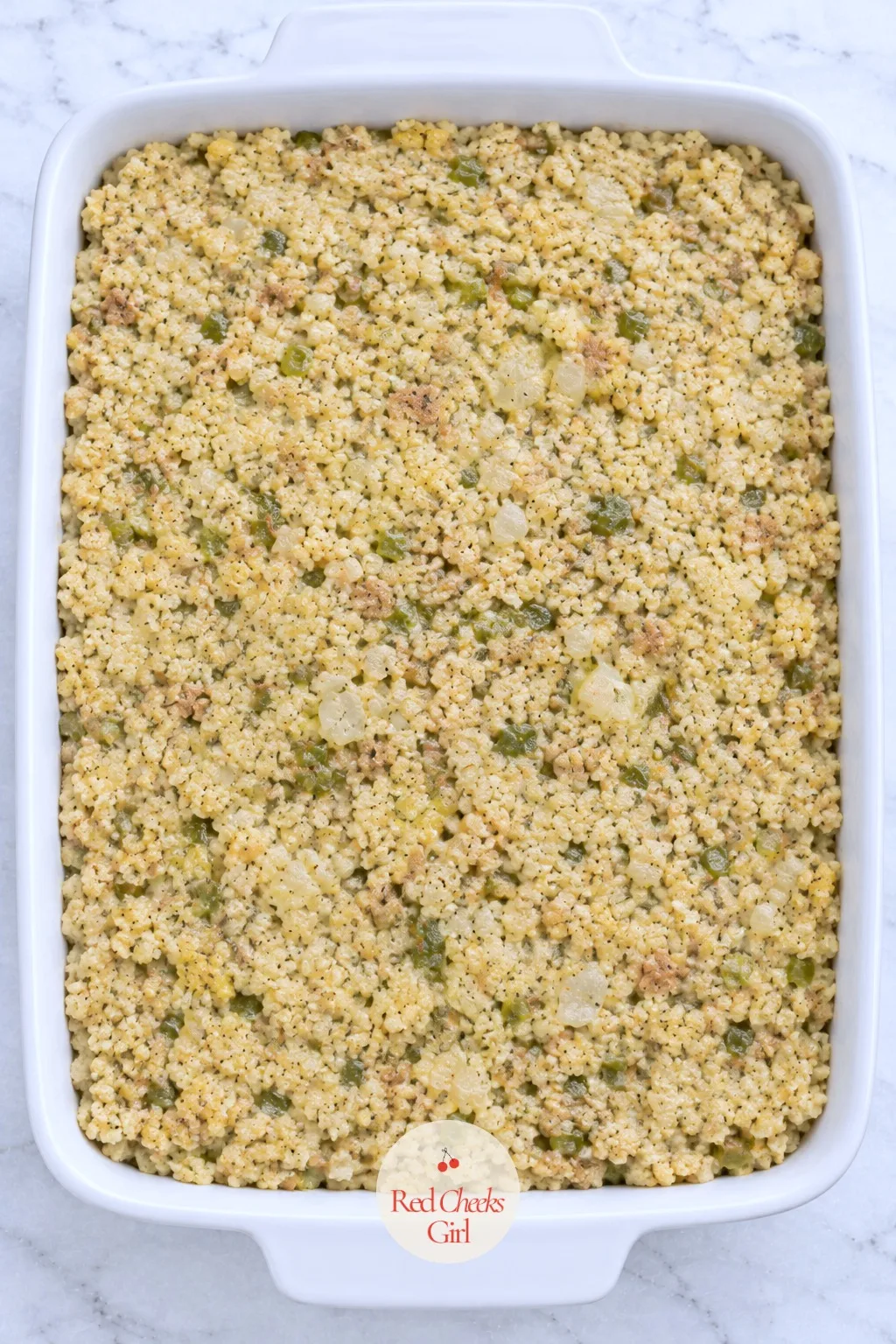
Spread the Dressing Before Baking
Spread the raw mixture into an even layer in the baking dish, right up to the edges. It should sit level before it goes into the oven.
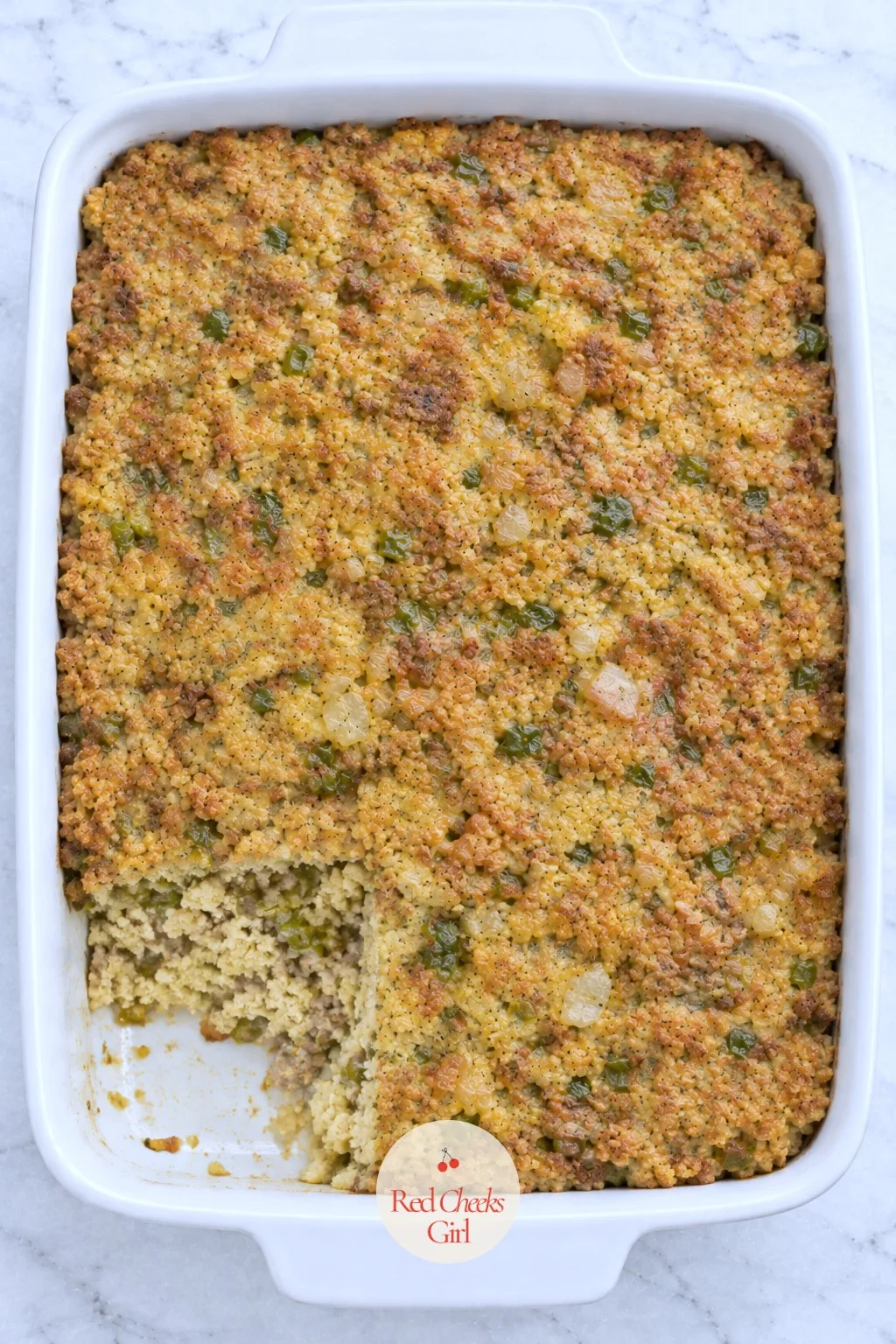
Golden and Set, Ready to Serve
The baked dressing comes out with a deep golden, slightly crisp top and a soft center that holds together in neat squares once scooped.
🛍 Shopping guide
Getting the Texture Right
Most dressing trouble starts with cornbread that never actually dried out. Two full days uncovered on the counter solves this.
Do not be shy with the broth once the cornbread is properly dry.
Overmixing is the other common mistake. Fold gently, stop as soon as everything is coated.
Do not trust the clock alone for doneness. A set dressing barely shifts and the top looks dry, not shiny.
Swaps and Substitutions That Still Taste Like Home
For a sausage version, brown 1 pound of bulk pork breakfast sausage in the Dutch oven first, breaking it into crumbles for about 8 minutes until no pink remains, then lift it out with a slotted spoon.
Cook the onion and celery in the 2 tablespoons of fat left behind instead of fresh butter, stir the sausage back in when you add the broth, and cut the added salt by half since sausage already carries plenty.
No chicken broth on hand, or cooking for a vegetarian table: a good vegetable broth works in the same quantities, though the flavor leans a little lighter, so taste before you add the full amount of salt.
Homemade cornbread beats a boxed mix for this dish specifically.
Dried sage stands in for fresh at a ratio of about one third the amount; start with less and taste the sauteed vegetables before adding more, since dried herbs concentrate as they cook.
What to Serve It With at a Party
Cornbread dressing wants gravy and a plain roasted protein beside it, turkey at Thanksgiving, ham or a roast at Christmas, so it stays the star instead of competing with another heavily seasoned dish.
A sharp, barely sweet cranberry sauce cuts through the richness, and a green vegetable with some bite keeps the whole plate from turning into one soft texture.
For the rest of the spread, the ideas inside 20 Christmas Dishes and Hosting Finds Your Holiday Table Has Been Waiting For fill in the gaps nicely, and a pitcher from 16 Thanksgiving Punch Recipes You Make the Night Before means one less thing to mix the day of the party.
Once plates are cleared, keep the table going with 25 Fun Thanksgiving Games for the Whole Family if it is a Thanksgiving crowd, or 20 Christmas Party Ideas and Games for an Unforgettable Night if this dressing is sitting on a Christmas table instead.
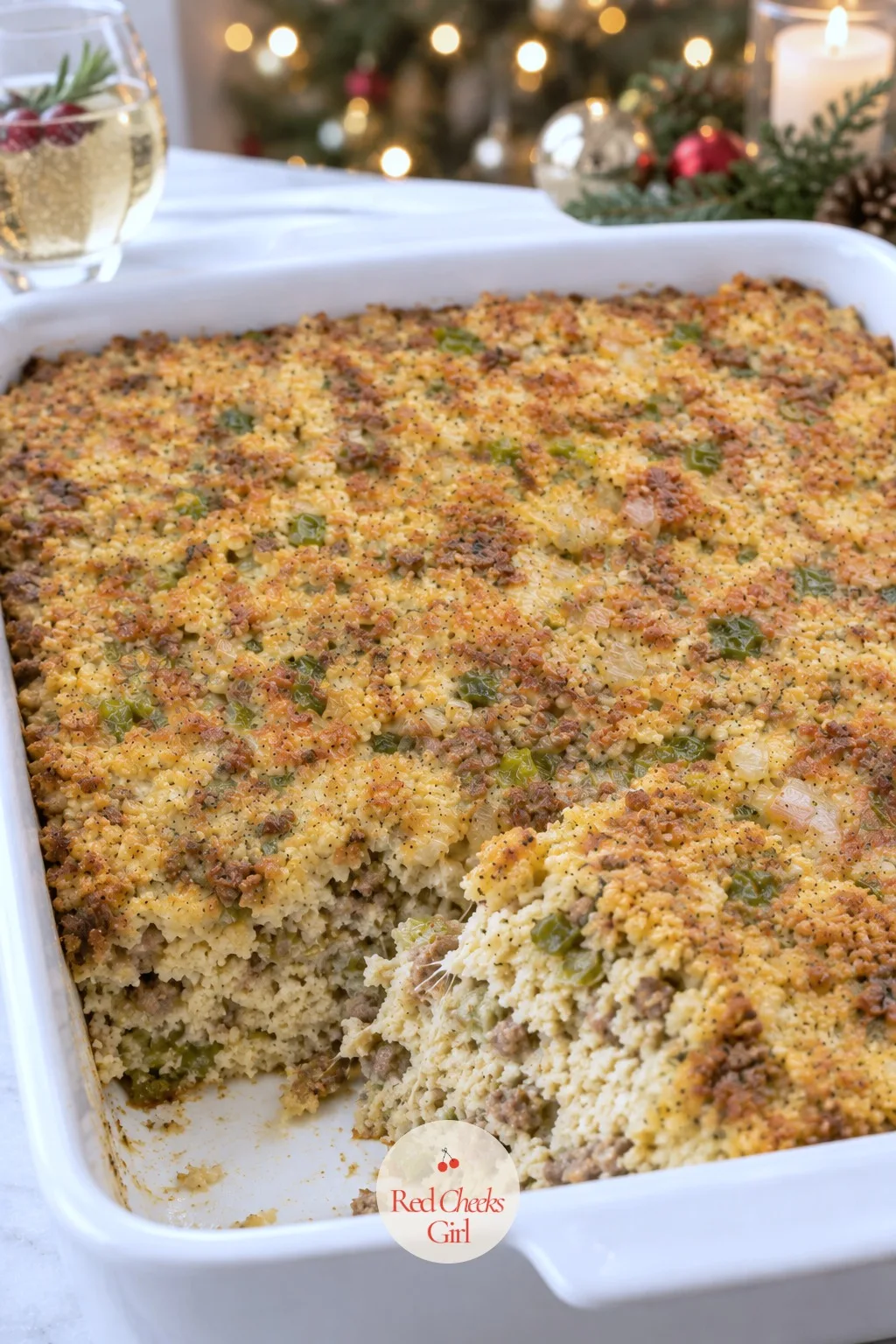
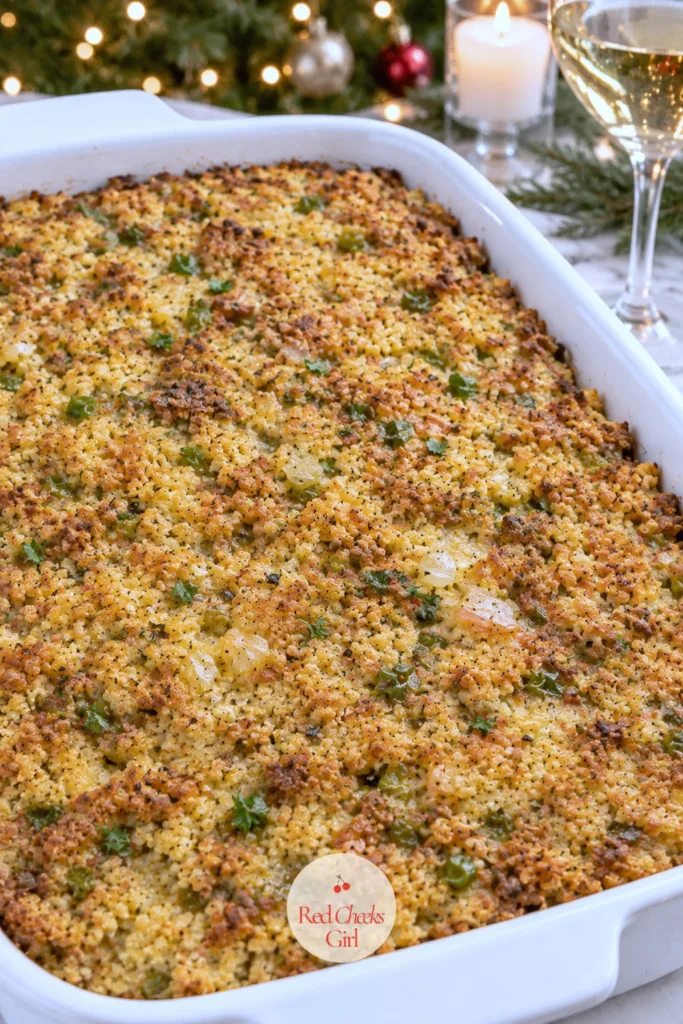
Cornbread Dressing
Ingredients
- 9 cups crumbled day-old unsweetened cornbread about one 9x13 pan, baked two days ahead
- 1/2 cup unsalted butter
- 2 cups chopped yellow onion about 2 medium onions
- 2 cups chopped celery about 4 stalks
- 2 tablespoons chopped fresh sage or 2 teaspoons dried rubbed sage
- 1 teaspoon kosher salt
- 1 teaspoon black pepper
- 4 to 5 cups chicken broth warmed
- 4 large eggs beaten
Instructions
- Heat the oven to 375 degrees F. Butter a 9x13-inch white ceramic baking dish and set it aside; you will fill it later.
- Melt 1/2 cup butter in a large cream enameled Dutch oven over medium heat. Add the chopped onion and celery and cook, stirring often, for 8 to 10 minutes, until both turn soft and the onion goes translucent.
- Stir in the sage, salt and pepper and cook for 1 minute, just until the sage smells fragrant, then take the pot off the heat.
- Tip the crumbled cornbread into a large white mixing bowl. Add the warm onion and celery mixture and toss gently with a wooden spoon until the crumbs are evenly flecked with green.
- Pour in 4 cups of the warmed broth, one cup at a time, stirring gently between additions. Stop when the mixture looks moist and clumps together loosely, not wet or soupy; add the remaining 1 cup broth only if the bottom of the bowl still looks dry.
- Add the beaten eggs and fold them through just until combined. The mixture should look uniformly moist and hold together when pressed with the back of a spoon, with no dry pockets left.
- Scrape the mixture into the prepared baking dish and spread it into an even layer, smoothing the top with the spoon. It should sit level and fill the dish almost to the rim.
- Bake uncovered for 40 to 45 minutes, until the top turns deep golden brown and feels firm when pressed lightly in the center. Shake the dish gently; a set dressing barely moves, while a wobbly center needs another 5 minutes.
- Let the dressing rest in the dish for 10 minutes before serving. This lets the center finish setting so it slices into neat squares instead of falling apart.
- Scoop the dressing into squares straight from the baking dish and serve it warm, alongside the turkey and gravy.
Good to Know
Frequently Asked Questions
What is the difference between cornbread dressing and stuffing?
Stuffing is traditionally cooked inside the turkey cavity, while cornbread dressing bakes separately in its own dish. Southern dressing is also almost always made with cornbread rather than yeast bread, giving it a softer, custardy texture.
Can I stuff this cornbread dressing inside the turkey instead of baking it in a dish?
It is not recommended, since cornbread dressing needs far less time in the oven than a whole turkey does. Cooked inside the bird that long, it tends to turn overcooked and mushy by the time the turkey is done.
Should cornbread dressing be served warm or at room temperature?
Serve it warm, straight from resting, since the custardy texture firms up best right out of the oven. It can sit at room temperature for up to an hour on a buffet without losing much quality.
Can I add cooked turkey or chicken to turn this into a main dish?
Yes, stirring in shredded cooked chicken or turkey is a common way to turn leftover dressing into a full meal. Add it with the eggs so it warms through evenly as the dish bakes.
How much cornbread dressing should I plan per person?
Plan on about three quarters of a cup to one cup per person as a holiday side dish. This recipe fills a 9×13-inch dish and comfortably serves 10 to 12 people with room for seconds.

18 gifts for hard to shop for men, sorted by what he actually does: recover, work, travel, stay warm

21 small, genuinely useful stocking stuffers for men, grouped by what he actually does, with prices
17 gifts for the person who has everything, sorted by host, homebody, ritual lover and sentimental t
Leave a Reply