

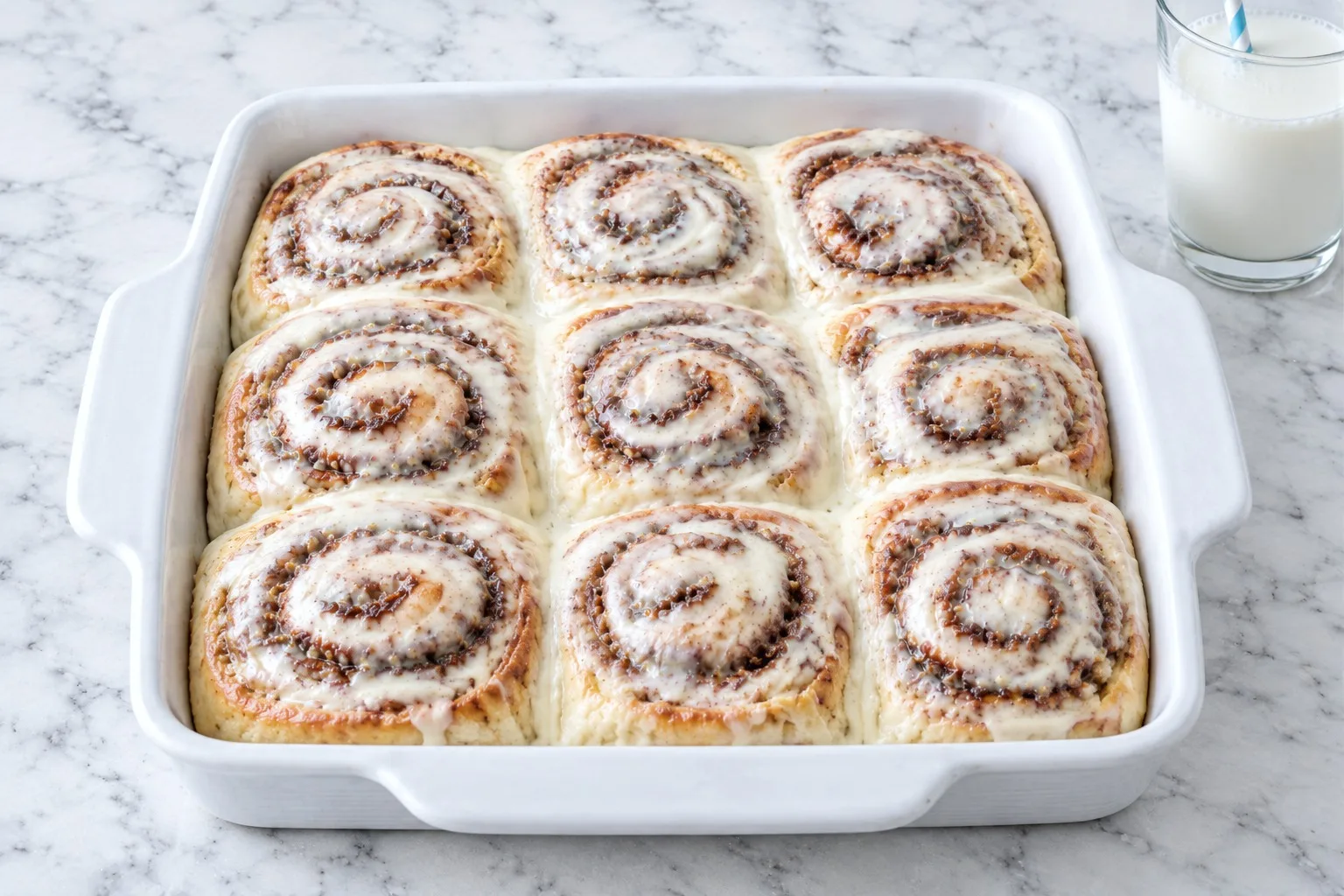
Homemade cinnamon rolls taste like a held breath let out: soft, faintly yeasty, warm enough to melt the frosting straight into the spiral. None of it is fast, but almost none of it is hard either, and the kitchen will smell like a bakery for the rest of the morning.
This post contains affiliate links. If you buy through them, I may earn a small commission at no extra cost to you.
Table of Contents
Why Bother With Homemade Cinnamon Rolls
The tube kind is fine at seven in the morning when nobody is really awake anyway. But homemade cinnamon rolls pull apart in long soft ribbons the canned version never manages, and the cream cheese frosting does more work here than any single other ingredient.
You do not need a stand mixer or a bread background to get there. A wooden spoon and ten minutes of kneading by hand will take you just as far, and the dough is more patient than it looks.
They are also one of the few baked things that genuinely suit a gathering: a tray of rolls baked close together feeds a crowd for less money than a bakery box, and it looks like far more effort than it actually is.
If the occasion calls for a wider spread rather than one dish, this is worth planning around rather than squeezing in at the last minute.
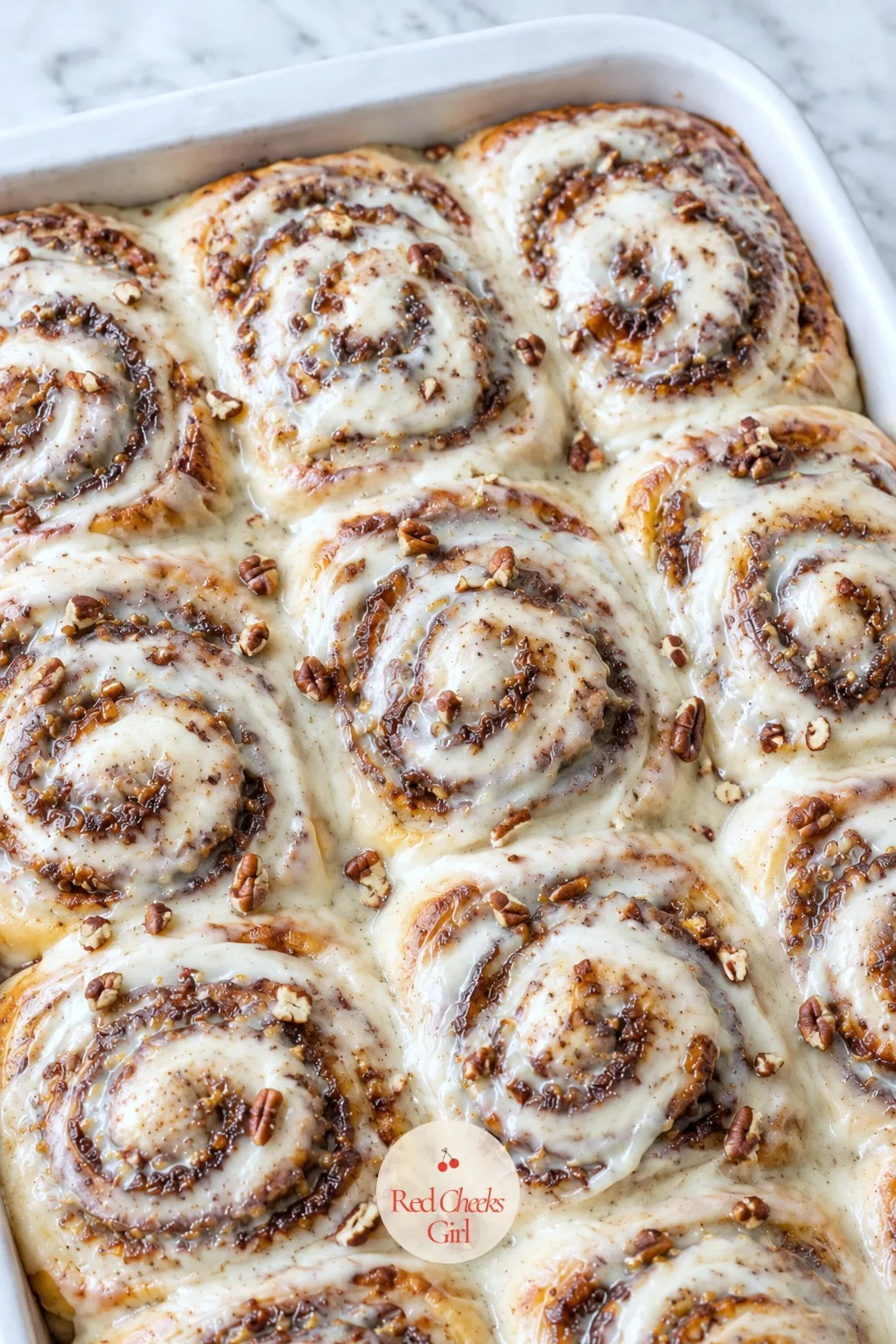
What Makes The Dough And Filling Work
Warm milk is not a detail to skip past. It wakes the yeast without killing it, and that first foam on top of the milk and sugar is the only proof you need that the yeast is alive before you commit a whole bag of flour to it.
Butter does two different jobs in this recipe. Melted into the dough, it keeps the crumb soft; softened almost to a paste in the filling, it carries the brown sugar and cinnamon so they spread like frosting instead of scattering like sand.
Brown sugar, not white, is what gives the center of each roll that dark, slightly chewy swirl. The molasses in it holds moisture the way white sugar cannot, so the filling stays syrupy instead of drying out in the oven.
Cream cheese in the frosting is the one ingredient that earns the name “homemade.” It brings a tang that plain powdered sugar icing never has, and it is the reason the topping clings to warm rolls instead of sliding straight off.
How to Make It
This is the exact method, start to finish, with nothing assumed. Read it once before you start so the two rising times do not catch you off guard.
Let the Dough Double
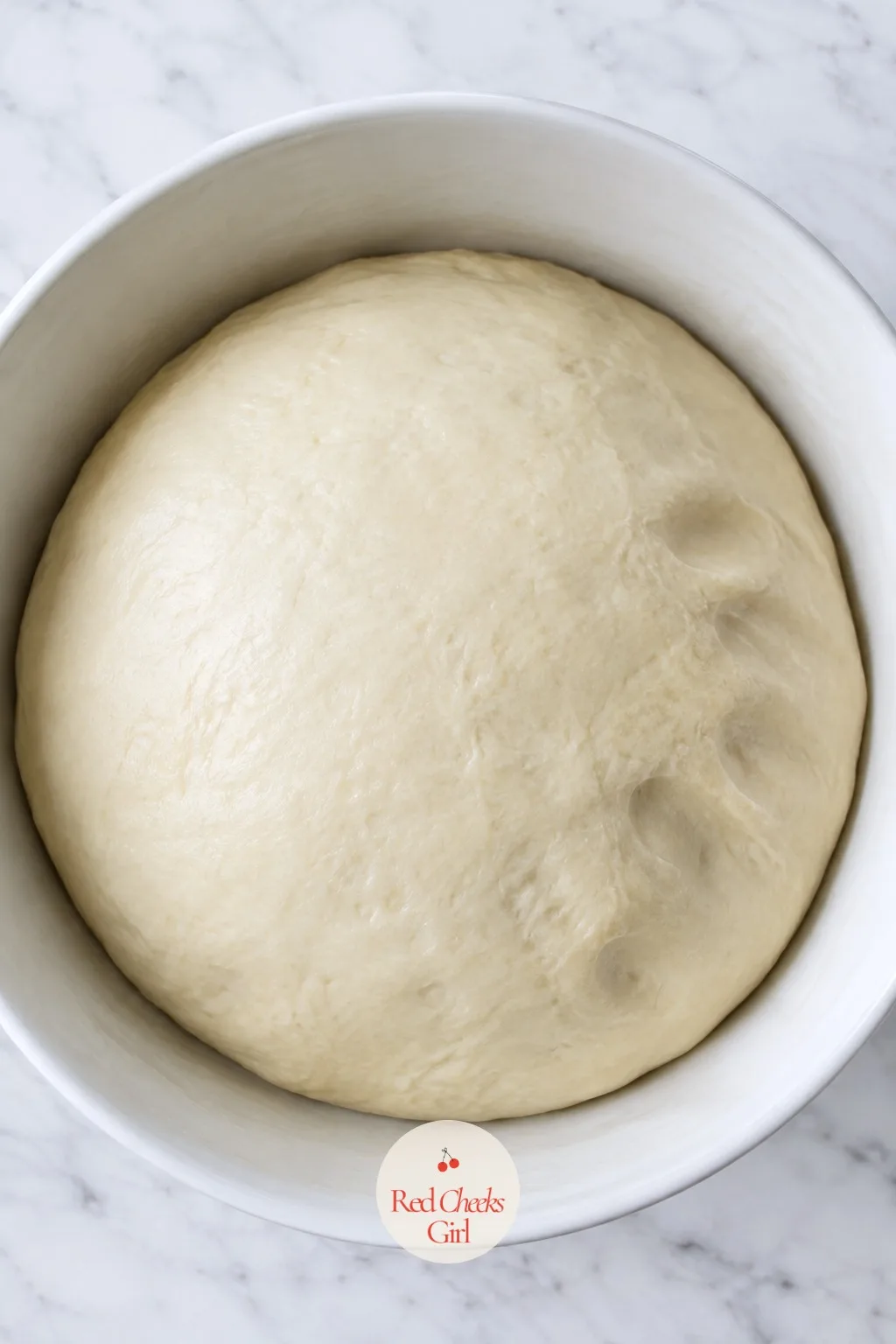
The dough has finished its first rise when it fills the bowl in a smooth, rounded dome. Press two fingers in gently: a dent that stays put, rather than springing back immediately, means it is ready to roll out.
Spread the Cinnamon Filling
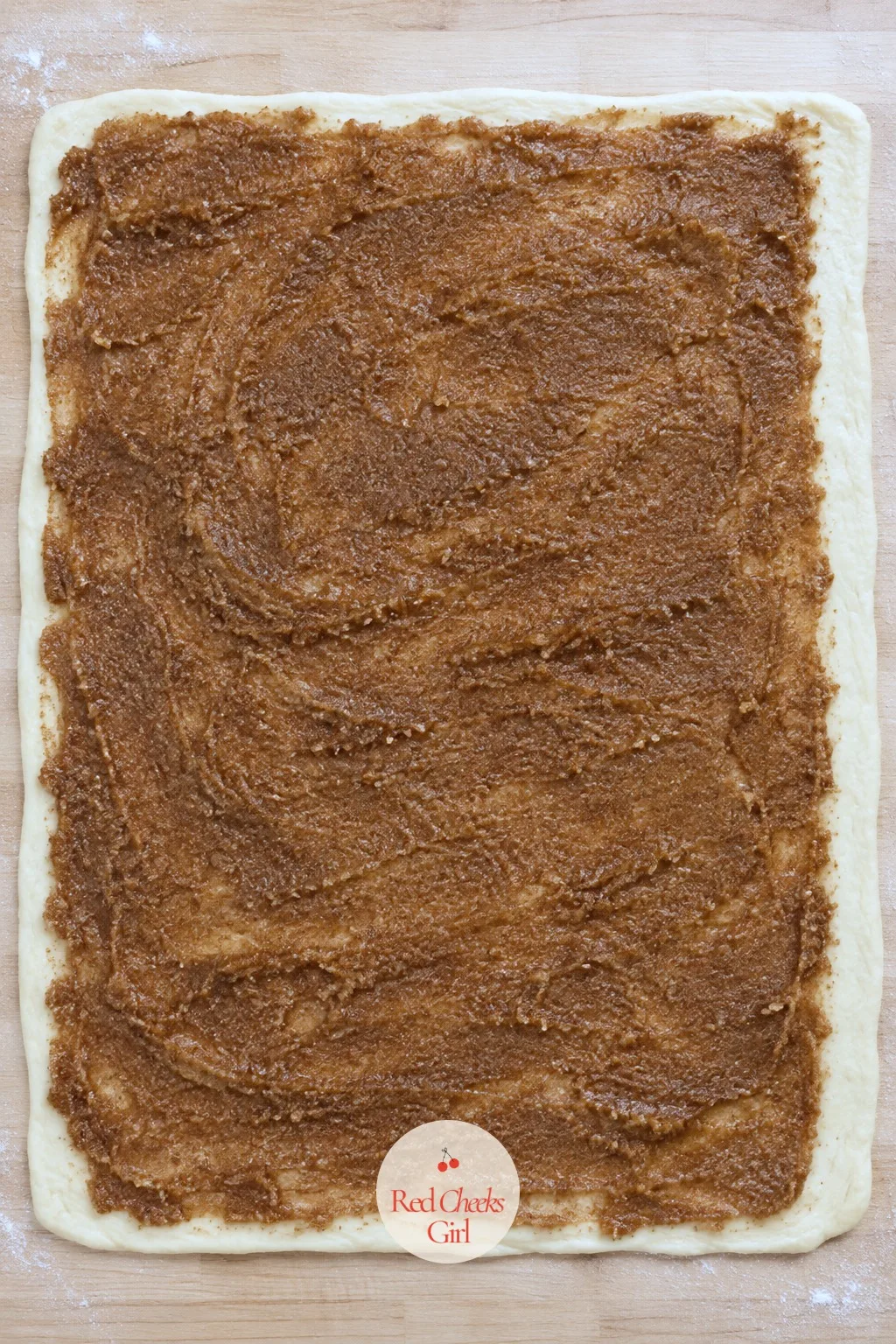
The dough is rolled into a wide, even rectangle and covered edge to edge with the dark cinnamon-sugar paste, except for one bare strip. That clean strip is what lets the final seam seal shut.
Cut and Arrange the Rolls
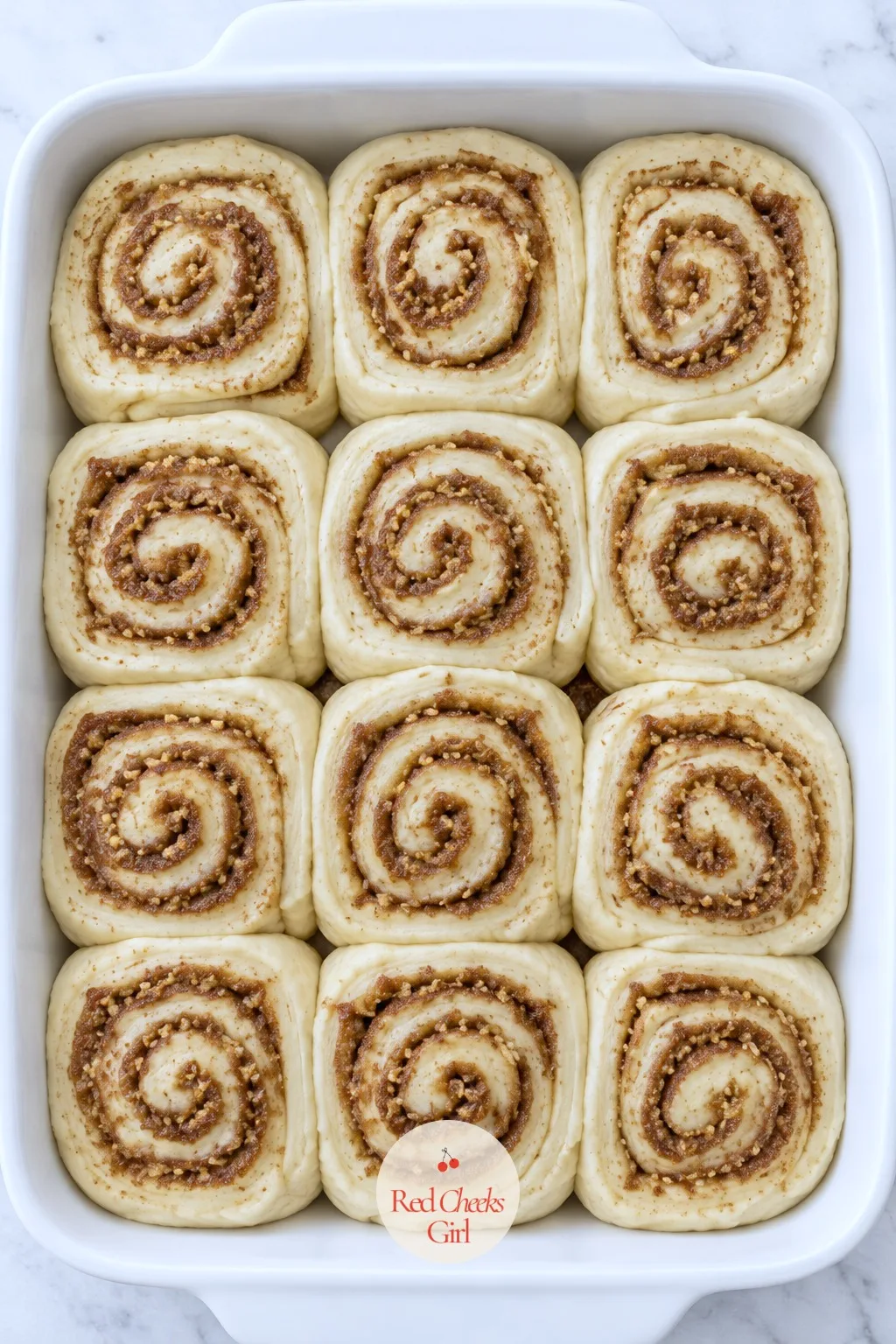
Cut with floss instead of a knife, each roll keeps its round spiral instead of flattening on one side. Set them cut side up, close enough to touch, so they rise into each other rather than apart.
Watch the Second Rise
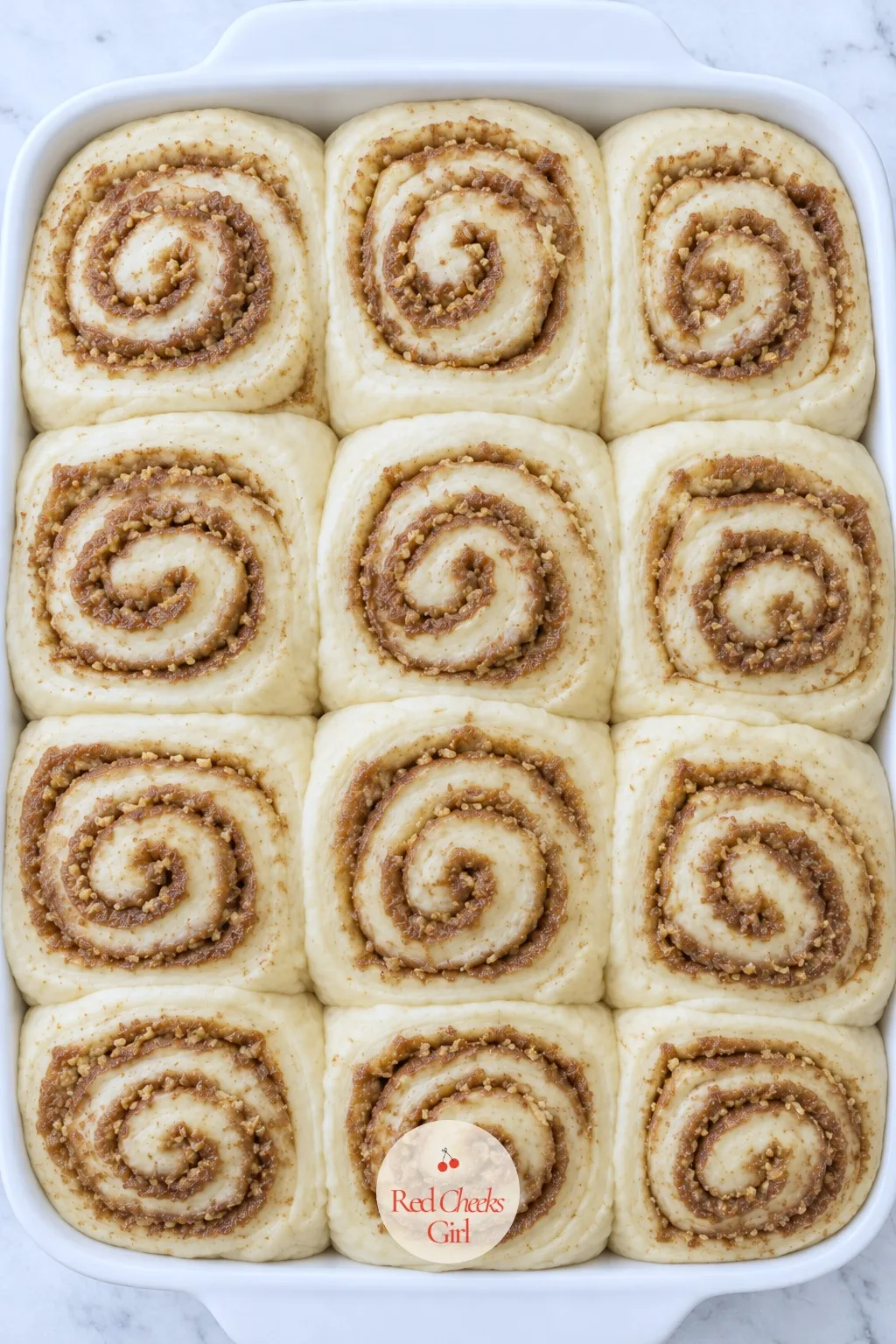
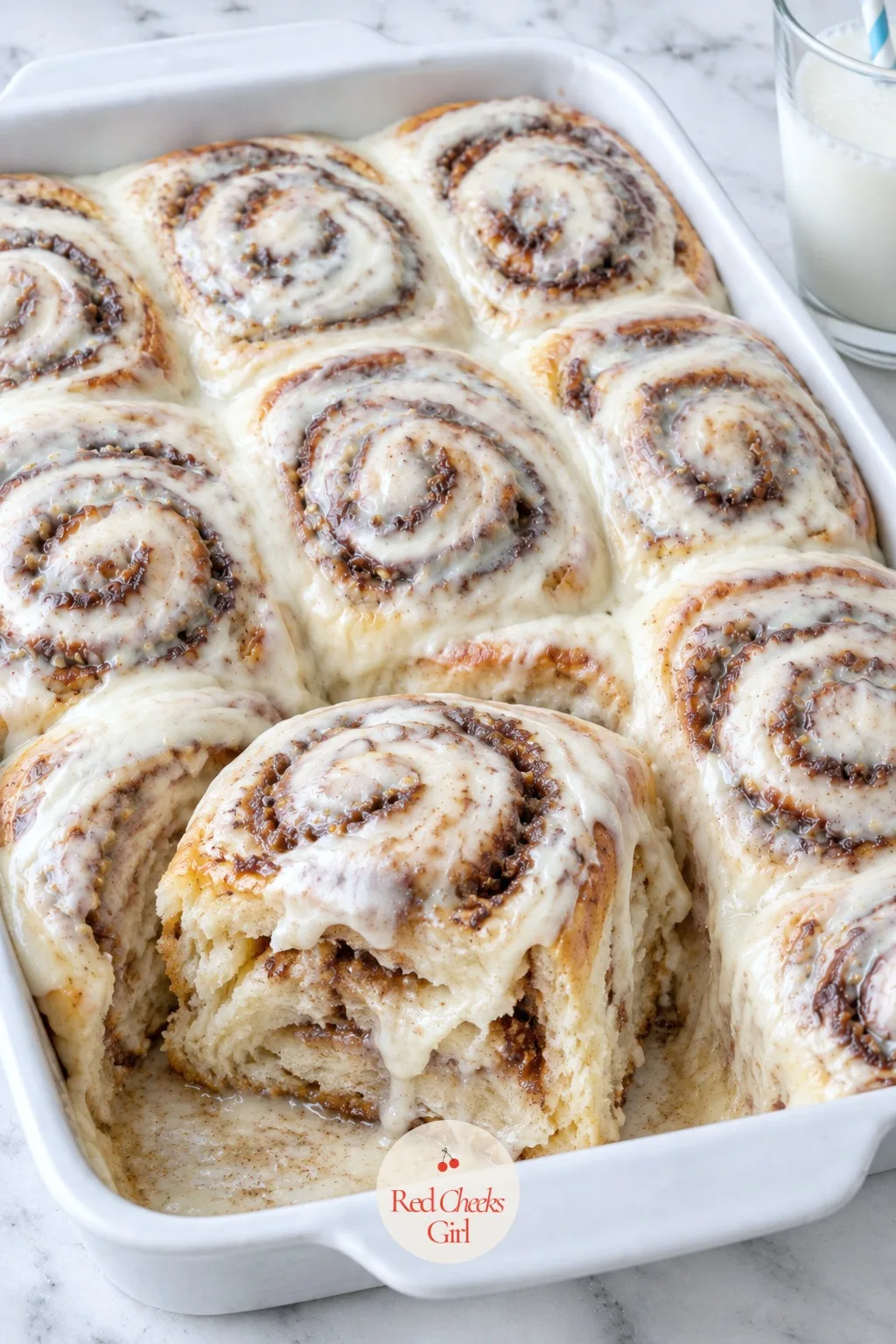
After the second rise the rolls have swelled into each other with no gaps left between them. A gentle press should leave no lasting dent, which means they are ready for the oven.
Bake Until Deep Gold
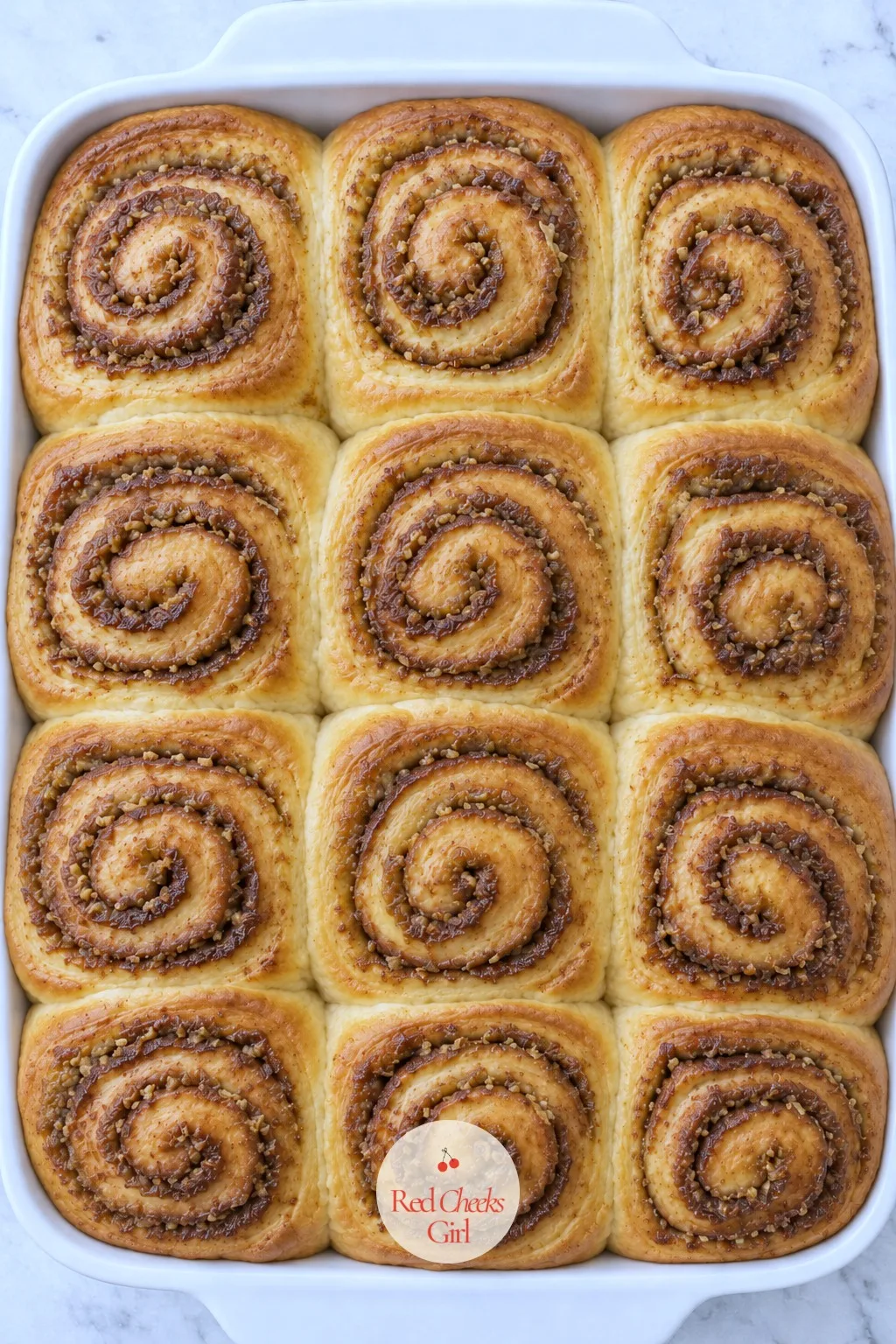
The rolls are done when the tops turn deep golden brown and spring back under a light touch. A roll pulled from the center of the dish should feel fully set, not doughy.
Frost While Warm
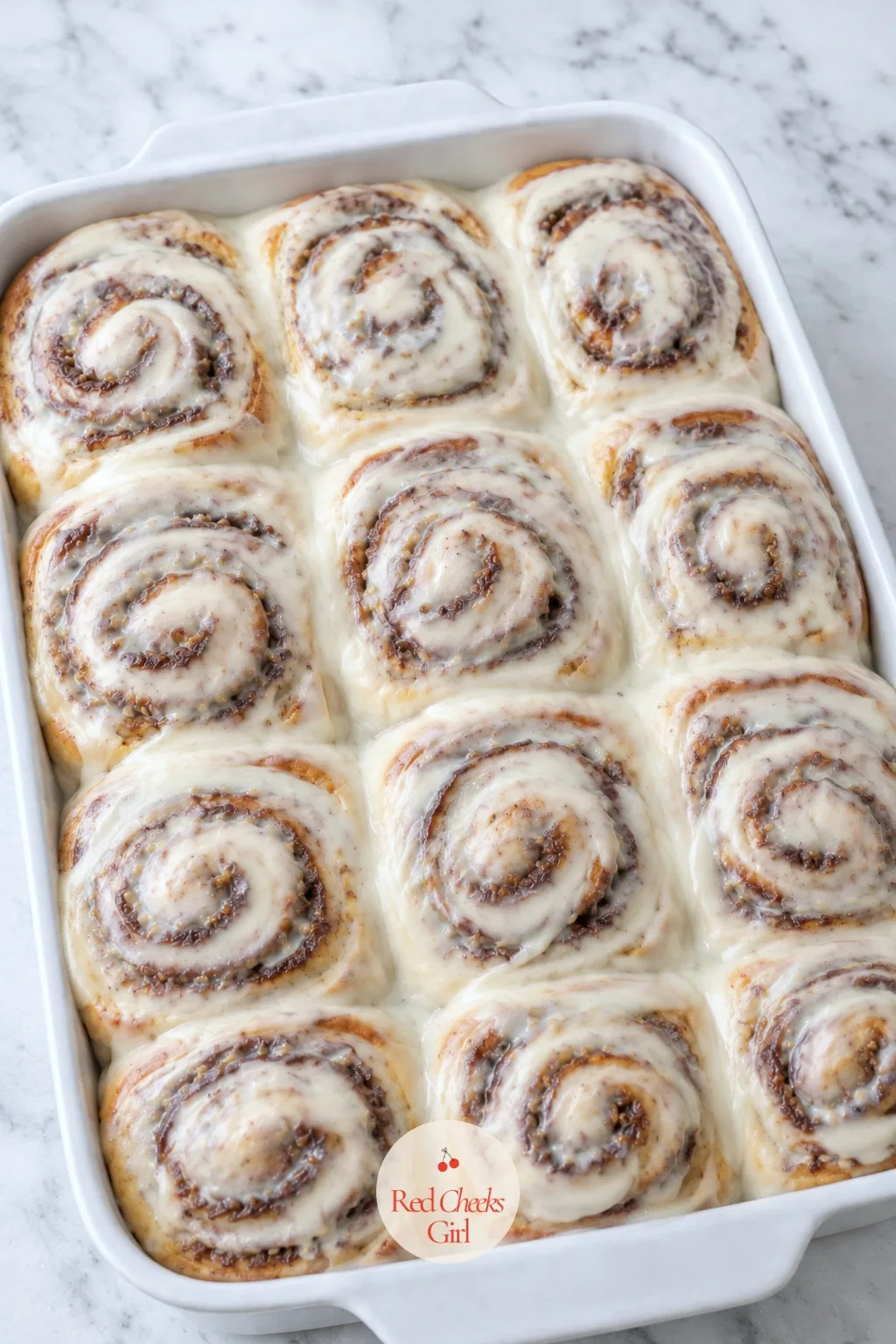
Spread the cream cheese frosting over the rolls while they are still warm so it melts slightly down into every seam. Serve straight from the dish while it is still faintly warm.
🛍 Shopping guide
Where Cinnamon Rolls Go Wrong And How To Avoid It
Most disappointing batches trace back to one of two moments: the yeast or the flour. If the milk was too hot, it kills the yeast outright; if it never foamed at all in that first step, the dough will sit in the bowl looking exactly the same an hour later, no matter how warm the room is.
Over-flouring is the other repeat offender. The dough should feel soft and a little clingy even after kneading, not dry enough to hold a shape on its own; every extra half cup you add past what the dough actually needs makes the finished roll denser and drier.
Cutting with a knife instead of floss squashes the spiral flat on one side before it ever reaches the oven, which is exactly why bakeries use thread. Floss slides straight through without dragging the layers, so the cut stays round and the swirl stays visible.
Skipping the second rise, or rushing it, is the last trap. Rolls that go into the oven without puffing up against their neighbors first will bake into separate, tighter little pucks instead of the soft, pull-apart tray you are after.
Swaps And Substitutions That Still Work
No active dry yeast on the shelf, only instant? Use the same amount and skip the foaming step, stirring it straight into the flour; the dough will still rise, just slightly faster.
Dark brown sugar in the filling gives a deeper, almost toffee-like flavor if that is what the pantry has instead of light brown; either works without changing any quantity.
If cream cheese frosting is not the plan, a simple glaze of powdered sugar thinned with milk and a little vanilla sits on top just as happily, though it will not cling into the cracks the same way.
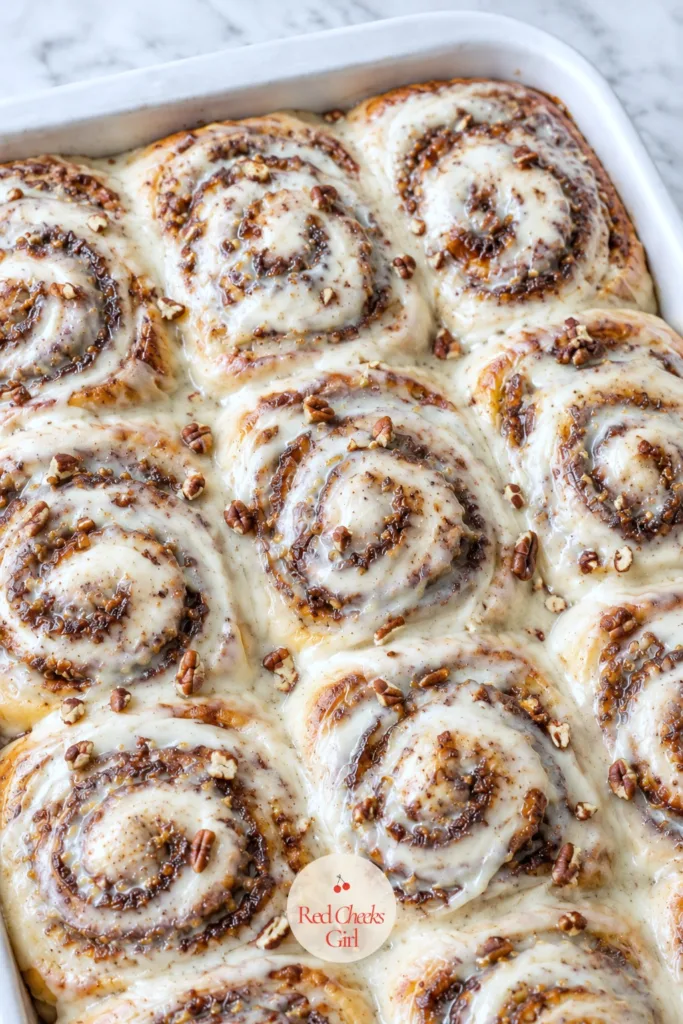
A handful of chopped toasted pecans pressed into the filling before rolling is a welcome swap for anyone who finds plain cinnamon a little flat, and a little orange zest stirred into the frosting brightens the whole tray without adding a new flavor that fights the cinnamon.
What To Serve Alongside Warm Cinnamon Rolls
These rolls are sweet enough to carry a brunch on their own, so balance the table with something savory rather than more sugar. A warm, cheesy Amish Breakfast Casserole or, on a shorter morning, a 5-Ingredient Quick Breakfast Casserole both do that job without asking for much extra effort.
Fresh fruit cuts the richness better than almost anything else, so a bowl of berries or citrus segments on the side earns its place without needing a recipe at all.
If the occasion is a baby shower rather than a quiet weekend, these rolls slot easily into the spread described in 14 Baby Shower Brunch Ideas That Do Not Need a Chef, and for a slower seasonal breakfast table there is more to build on in 12 Cosy Fall Breakfast Ideas With Printable Recipe Cards.
For the wider gathering around the rolls rather than just the plate, browse 10 Holiday Party Ideas for Every Kind of Gathering for the rest of the morning.
Homemade Cinnamon Rolls
Ingredients
- 1 cup whole milk warmed to 110°F
- 1/4 cup granulated sugar
- 2 1/4 teaspoons active dry yeast one 0.25-ounce packet
- 1/3 cup unsalted butter melted and slightly cooled
- 2 large eggs at room temperature
- 1 teaspoon salt
- 4 to 4 1/2 cups all-purpose flour plus more for the counter
- 1/2 cup unsalted butter very soft (for the filling)
- 1 cup packed light brown sugar
- 2 tablespoons ground cinnamon
- 1 pinch salt for the filling
- 4 ounces cream cheese softened
- 1/4 cup unsalted butter softened (for the frosting)
- 1 1/2 cups powdered sugar
- 1/2 teaspoon vanilla extract
- 1 to 2 tablespoons milk only if needed to loosen the frosting
Instructions
- In a large liquid measuring cup, whisk the warm milk with the granulated sugar and active dry yeast. Let it stand for 8 to 10 minutes until the surface turns foamy; if it does not foam, the yeast is dead and you need a fresh packet before going further.
- In the bowl of a stand mixer fitted with the paddle attachment, combine the melted butter, eggs and salt, then pour in the foamy yeast mixture and mix on low speed until blended. Add 4 cups of the flour, switch to the dough hook, and knead on medium-low speed for 6 to 7 minutes, adding up to 1/2 cup more flour only if the dough is still sticking heavily to the sides of the bowl.
- Shape the dough into a smooth ball, place it in a large lightly buttered white ceramic bowl, and turn it once to coat. Cover with a clean kitchen towel and let it rise in a warm, draft-free spot for 1 to 1 1/2 hours, until it has doubled in size and holds a dent when you press two fingers into it without springing all the way back.
- Turn the risen dough out onto a lightly floured pale wood board and press the air out gently with your palms. Roll it with a floured rolling pin into an even 16 by 12-inch rectangle, keeping the thickness consistent so every roll bakes at the same rate.
- In a small bowl, mash together the very soft butter, brown sugar, cinnamon and a pinch of salt until it forms a spreadable paste. Spread it evenly over the dough with the back of a spoon, leaving a bare 1/2-inch strip of plain dough along one long edge so the roll will seal.
- Starting from the long edge opposite the bare strip, roll the dough into a tight log, working toward the clean edge, then pinch the seam closed once you reach it.
- Slide a 12-inch piece of unflavored dental floss under the log, cross the ends over the top, and pull in opposite directions to cut through cleanly without squashing the roll. Cut 12 even rolls, about 1 1/4 inches thick, and arrange them cut side up in a buttered 9x13-inch white ceramic baking dish, placed close enough to almost touch.
- Cover the dish loosely with the towel again and let the rolls rise a second time in a warm spot for 30 to 45 minutes, until they have puffed up against each other and look noticeably plumper, with no dent left when you press one gently.
- About 15 minutes before baking, set a rack in the center of the oven and preheat it to 350°F. Bake the rolls for 24 to 28 minutes, until the tops are deep golden brown, the centers spring back when pressed, and a roll from the middle reads at least 190°F on an instant-read thermometer.
- Let the rolls cool in the dish for 5 minutes while you make the frosting: beat the cream cheese and butter together in a bowl until smooth, then add the powdered sugar and vanilla and beat until light and fluffy. Thin with a tablespoon of milk only if it feels too stiff to spread.
- Spread the frosting over the rolls while they are still warm, letting it melt slightly down into the cracks between them, and serve right away.
Good to Know
Frequently Asked Questions
Why didn’t my cinnamon roll dough rise?
Usually the yeast was killed by milk that was too hot, or it was expired and never foamed in the first place. Confirm the milk sits around 110°F and that the yeast foams within ten minutes before mixing it into the flour.
Can you make cinnamon rolls the night before?
Yes: shape and cut the rolls, arrange them in the baking dish, cover tightly and refrigerate overnight before the second rise. Let them sit at room temperature for about an hour the next morning before baking.
Why are my cinnamon rolls dense instead of fluffy?
Too much flour worked into the dough, under-kneading, or cutting the rises short are the usual causes. The dough should stay soft and faintly tacky, and both rises need to run their full time, not just until the clock feels close enough.
Can you freeze cinnamon rolls before baking?
Yes: freeze the shaped, cut rolls on a tray until solid, then move them to a bag for up to two months. Thaw overnight in the refrigerator and let them finish their second rise at room temperature before baking.
Why do bakeries bake cinnamon rolls close together in the pan?
Rolls placed almost touching rise into each other instead of spreading outward, which keeps their sides soft rather than crusty. Spaced-out rolls bake drier on every exposed edge.
What is the difference between cinnamon rolls and cinnamon buns?
The names are largely regional and interchangeable, both describing yeasted dough rolled with cinnamon and sugar. Some recipes called buns lean sweeter or add nuts and caramel, but the base method is the same.

Ten no-bake preschool birthday treats that are portioned, labelled and free from the most common all
It was 94 degrees last July and I was not turning on the oven. Hard no. My kitchen faces west, the A
Football cookie cake turns chocolate chip cookie dough into a laced football shape, cut into wedges
Leave a Reply