

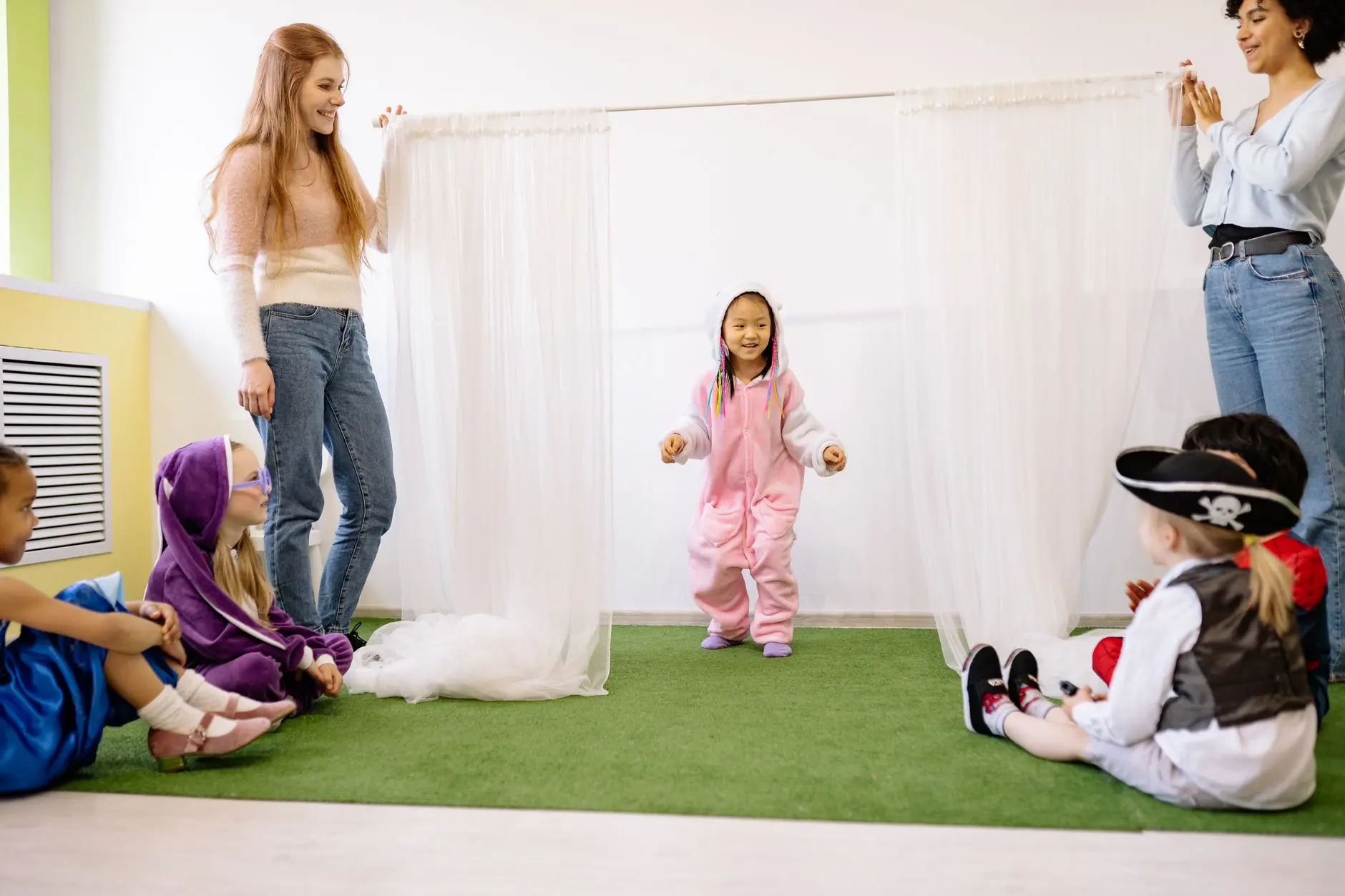
Preschool parties are a wonderful, chaotic joy — and the secret to making them work is keeping things moving before anyone has time to realise they’re bored, hungry or mysteriously upset about a balloon colour.
Children aged three to five have enormous enthusiasm and very small attention spans, which means the best preschool party games last around five to ten minutes, require almost zero explaining, and feel like a giant win for every single child who plays.
This list gives you exactly that: twenty tried-and-tested activities that are safe, supervised, and gentle enough that nobody gets singled out or left feeling bad.
You’ll find a healthy mix of wriggly movement games, calm printable activities and hands-on play that can fill a full two-hour party without a single dull moment.
Twelve of these games come from a classic preschool party playbook, and eight have been added to round out the variety — so whether your venue is a living room, a village hall or a garden, there’s something here for every moment of the day.
Grab some stickers, print a few sheets, and get ready for the best kind of small-person mayhem.
This post contains affiliate links — if you buy through them, I may earn a small commission at no extra cost to you.
Table of Contents
- Musical Statues
- Parachute Play
- Colour Sorting Baskets
- Animal Walk Race
- Bubble Chase
- Sticker Hunt
- Simple Matching Cards
- Beanbag Drop
- Copycat Movement Game
- Shape I Spy Sheet
- Freeze Dance
- Simple Colouring Sheets
- Picture Bingo
- Match the Faces
- Number Caterpillar
- Ribbon Wand Dance
- Giant Floor Puzzle
- Sensory Treasure Dig
- Hoop Balance Walk
- Pass the Parcel
1. Musical Statues
Clear a space, press play on a cheerful playlist, and invite every child to dance their silliest dance while the music is on.
When you pause the music, everyone freezes like a statue — arms out, one leg up, mid-wiggle, whatever shape they happen to be in. Hold the freeze for a slow count of three, then restart the music and watch the dancing begin all over again.
In the traditional version, the last child to freeze is “out,” but for preschoolers that rule is better dropped entirely.
Instead, celebrate every freeze with a big cheer, pick out a child to name their statue pose (“I’m a surprised penguin!”), and keep everyone dancing throughout.
This keeps the energy high and means no three-year-old spends the rest of the party sitting on the sidelines feeling sad. Works beautifully for groups of four to twenty children, and a five-to-eight-minute song block is plenty.
All you need is a speaker and a playlist — upbeat nursery remixes, children’s pop songs, or anything with a strong beat all work well. Keep the music pauses short at first, then gradually make the freeze time longer to build giggly suspense.
Host tip: Freeze the music mid-sentence in a song rather than at a natural break — the sudden silence is funnier and gets children freezing faster every time.

🛍 Shopping guide
2. Parachute Play
A play parachute is one of the most magical pieces of party kit you can own, and children this age are utterly transfixed by it.
Spread the parachute flat on the floor, ask every child to grab an edge with both hands, and teach them the three basic moves: lift it up high (the “mountain”), bring it down low (the “cave”), and ripple it gently (the “ocean”).
Run through all three a couple of times and you already have a game.
Once the children have the idea, add soft foam balls on top and ask everyone to bounce them off by shaking the parachute together. You can also call a colour — “everyone in a red top, run under the parachute and swap sides!”
— which adds a thrilling dash of running and ducking. For the quietest, cosiest finale, let children sit underneath while two adults hold the parachute above their heads like a giant tent.
Works best with six to sixteen children, and twenty minutes can pass in what feels like five.
You’ll need a children’s play parachute (six-foot diameter works for smaller groups, ten-foot for bigger ones) and a handful of soft foam balls. Set up in the largest clear space you have — outdoors is perfect, but any room without low light fittings works fine.
Host tip: Always count “one, two, three, LIFT!” together before the big mushroom lift — the countdown builds excitement and stops one enthusiastic child yanking it up before everyone else is ready.
🛍 Shopping guide
3. Colour Sorting Baskets
Set up four or five coloured baskets, bowls or buckets across a table or on the floor, each clearly labelled with a coloured card or piece of fabric inside.
Fill a large central box with a jumble of objects — pompoms, scarves, plastic cups, coloured blocks, sponge balls — in matching colours, and invite children to sort everything into the right basket. Simple? Yes. Completely absorbing for a three-year-old? Absolutely.
You can run this as a free-play discovery station for children who arrive early, or organise it as a guided group activity where everyone takes turns picking an item and placing it.
Either way, the sorting instinct in children this age is powerful, and they will often carry on long after you assumed they’d be done.
Add a gentle challenge for four-and-five-year-olds by mixing in a few tricky shades — is lime green in the yellow basket or the green basket? Cue earnest debate.
Suits two to eight children at a time, with a natural play time of five to fifteen minutes depending on the group.
Gather your baskets or bowls in advance and collect the mixed objects from around the house — there’s no need to buy anything special. If you want a cleaner set-up, a bag of large pompoms in five colours is inexpensive and perfectly sized for small hands.
Host tip: Put one deliberately “wrong” item in the central box — a toy that’s two colours, for example — and watch the children earnestly debate where it belongs. It adds an extra five minutes to the activity without any effort.
🛍 Shopping guide
4. Animal Walk Race
Call out an animal and show the children how to move like that creature across the room — waddle like a penguin, hop like a frog, slither like a snake, stomp like an elephant, or tiptoe like a cat.
Once everyone has copied the move, say “go!” and let the group travel from one end of the space to the other in character. When they reach the far wall, call out the next animal for the return journey.
This is brilliant for burning off the wiggles that build up between quieter activities. It’s also genuinely funny to watch — a room full of three-year-olds doing their best snake impression is a gift.
Keep the animal list varied to include crawling, jumping, tiptoeing and marching so children use different muscles and stay engaged. Eight to twelve animals in rotation means roughly ten minutes of activity, which is about right before attention starts to drift.
Any group size works from four children upward.
No equipment needed beyond a clear floor space. If you want to be fancy, you can hold up picture cards of each animal before calling the move — this gives children a visual cue and adds a moment of anticipation before the chaos begins.
Host tip: Join in yourself with maximum commitment. When adults do a full-commitment frog hop, children’s versions get much more enthusiastic and the room erupts with laughter.
5. Bubble Chase
Blow a big stream of bubbles into the air and let the children chase, pop and bat them. That’s the whole game, and it is enough.
For children aged three to five, a cloud of floating bubbles produces a level of joy that is genuinely hard to top with anything more complicated. Use a large bubble wand for dramatic cascades, and keep blowing whenever the supply runs low.
To add a tiny layer of structure, try calling out a rule before each round: “pop them with just your elbows,” “only pop the big ones,” or “don’t let any touch the floor.” Children this age love a rule, even when they immediately ignore it.
You can also let each child take a turn blowing a few bubbles with their own wand — building this into a short rotation keeps everyone feeling involved.
Best played outdoors or in a space with easy-to-wipe floors, with any number of children from three upward. Five to ten minutes is usually natural before you move on.
Stock up on more bubble solution than you think you need — it goes fast. A battery-powered bubble machine is worth every penny if you’re hosting solo, as it frees your hands to supervise rather than blow.
Host tip: Do one round of bubbles at the start to settle early arrivals, and save a second round for a mid-party energy lift — bubbles work twice and children somehow find them just as exciting the second time.
🛍 Shopping guide
6. Sticker Hunt
Before the party, print one Sticker Hunt sheet per child and hide (or stick) small stickers around the party space at child height — on chair legs, along a windowsill, under a table edge, on a door frame.
Give each child their sheet and a pencil or crayon, and explain that every time they find a sticker, they bring their sheet to an adult who adds a tick, stamp or sticker to mark it found. The goal is to fill the sheet.
This works beautifully as a transitional activity between more structured games, and it is especially good for shy children who prefer to explore quietly rather than perform in front of a group.
Because every child is hunting at the same time and the stickers are plentiful, there’s no competition and no empty-handed disappointment.
Place around fifteen to twenty stickers in the space for a group of eight to ten — enough that each child can find several without clearing the room too quickly. Allow ten to fifteen minutes, or shorter if the group is small.
All you need is the printed Sticker Hunt sheet, a box of assorted small stickers, and an adult with a stamp or a pen to mark off finds. Print one sheet per child and laminate a master copy if you want to run the hunt again later.
Host tip: Use two or three different sticker designs and keep a secret tally of which design is rarest — when a child finds one of the rare ones, make a big deal of it. Every child will feel like a lucky treasure hunter.

🛍 Shopping guide
7. Simple Matching Cards
Print two copies of the Simple Matching Cards sheet, cut each sheet into individual cards, and shuffle all the cards together into a face-down pile or spread them face-up across a table.
Children then find the matching pairs — each card on one sheet has an identical card from the second copy, so every picture has exactly one match. Face-up play is the right choice for most three-year-olds; face-down memory-style play works well for confident four-and-five-year-olds.
You can run this as a free-play table activity where children wander over and sort cards at their own pace, or as a guided adult-led session where pairs take turns flipping cards.
Both work, and the game is forgiving enough that it doesn’t matter if a child peeks, guesses, or decides to arrange all the cards in a line instead — they’re still matching and talking about what they see.
Suits one to four children at a time at a single table, with around eight to twelve minutes of natural play.
The only materials are the two printed and cut sheets. Use cardstock rather than regular paper for durability, and if you have time, a quick pass through a laminator makes them reusable long after the party.
Host tip: Cut the cards slightly differently for each printed copy — slightly rounded corners on one set, square on the other — so if cards get mixed up between two groups playing at separate tables you can quickly sort them back out.

🛍 Shopping guide
8. Beanbag Drop
Set up a row of containers in increasing sizes — a laundry basket, a bucket, a large plastic cup — and mark a simple throwing line on the floor with tape.
Give each child a small beanbag and invite them to stand at the line and drop or toss it into the nearest container. Once they’ve landed one, they try the slightly smaller next one.
There’s no score, no out, no “you missed” — just as many goes as they need to feel successful.
Move the throwing line closer for younger or less confident children without making a fuss about it — just peel the tape up and re-stick it. Celebrate every landing with clapping, and celebrate near-misses with a dramatic “oooh, so close!”
so that trying hard feels just as good as getting it in. Running this as a free-play station works well alongside other games at a party with a broad age range.
Three to six children can play at once without crowding, and ten to fifteen minutes keeps the queue from growing too long.
You need a set of small beanbags (four to six is enough), masking or washi tape for the throwing line, and three containers of different sizes. A bucket from a pound shop and a salad bowl from your kitchen are perfectly adequate.
Host tip: Set one container that is genuinely very easy — a large washing basket right at the line — so that every child experiences landing one immediately. Starting with success makes children want to keep trying the harder targets.
🛍 Shopping guide
9. Copycat Movement Game
Stand at the front of the group and perform a simple movement — pat your head, jump twice, spin around, touch your toes — without saying a word. The children have to watch carefully and copy exactly what you do.
Once they’ve nailed it, do the next movement, then chain two movements together, then three. The game becomes a cheerful test of concentration and short-term memory without ever feeling like a test.
Vary the movements between big and bold (star jumps, spinning) and small and slow (wiggle your fingers, blink three times) so children switch between high energy and careful focus.
You can invite a willing child to be the leader for a round — at this age, being the person everyone copies is thrillingly powerful, and most children will leap at the chance.
Works for any group size from four upward, and eight to twelve minutes is a natural run before the sequence repetition starts to feel old.
No equipment needed. This is one of the most useful games in the list because it requires nothing to set up and can be used to quietly reassemble a scattered group — start copying movements in the corner of the room and children will drift over to join without being herded.
Host tip: Deliberately do a very silly movement — flap your arms like a bird while hopping — right after a very careful one. The contrast between calm and ridiculous keeps the energy alive and produces fantastic laughter.
10. Shape I Spy Sheet
Print one Shape I Spy! sheet per child. The sheet shows a colourful illustrated scene packed with hidden shapes — circles, squares, triangles, rectangles and stars tucked into pictures of everyday objects.
Children search the scene for each shape and either circle it, tick a box, or point it out to a nearby adult who confirms the find. It’s a quieter, seated activity that works well as a breather after something energetic.
Sit children at a table with their sheets and a crayon each, and let them work at their own pace — some children will race through, others will sit studying the same corner of the image for five focused minutes, which is equally valid and lovely to watch.
An adult circulating and chatting about what children find (“oh, where’s the triangle? Is that one? What about that little circle in the corner?”) keeps shy children engaged without pressure.
Suits one to eight children at a table, with a natural activity time of eight to twelve minutes.
All you need is the printed sheet and a box of crayons to share. Print on bright white paper for the clearest colours, and consider one spare sheet per table in case of spills or enthusiastic over-circling.
Host tip: Before handing out the sheets, hold one up and name one shape together as a group — “let’s find a circle first.” Giving children a starting point means nobody stares at the page feeling lost about where to begin.

🛍 Shopping guide
11. Freeze Dance
Freeze Dance is a close cousin of Musical Statues, but the emphasis here is on the dancing rather than the freeze.
Cue up the silliest, bounciest music you have, demonstrate your best dance moves — knees high, arms waving, bottom wiggling — and invite every child to match your energy. When the music stops, call out a specific freeze pose: “freeze like a robot!”
or “freeze like a sleeping bear!” and everyone strikes that pose together.
The named poses are what make this different from plain Musical Statues — they give children something funny to aim for rather than simply standing still, which is actually quite hard when you’re four and excited.
Work through five or six themed poses across the song block, and let children suggest their own in later rounds.
For a party with a gentle theme — farm animals, space, under the sea — you can tailor every pose to match and the children will love the connection. Works for any group from four children upward, and eight to ten minutes is usually perfect.
You need only a speaker and a playlist. A small visual cue card for each pose (a robot drawing, a bear drawing) held up when you call the pose gives children who are still figuring out language a clear picture to copy.
Host tip: Photograph the children mid-freeze-pose — the images are always brilliant, and sharing them with parents afterward is a lovely bonus that costs you nothing extra.
🛍 Shopping guide
12. Simple Colouring Sheets
Print one Colour Me In! sheet per child — a bold, clearly outlined illustration with large sections and simple shapes that small hands can fill in without frustration.
Set up a colouring table with sheets and crayons, and let children drift over whenever they need a quieter moment.
This is one of the most useful activities of a preschool party because it functions as a pressure valve: overstimulated children can sit, breathe and do something gentle while the louder games happen nearby.
Don’t underestimate how much children aged three to five love a good colouring sheet. Given the right illustration — big, bold, friendly — many children will sit for fifteen to twenty minutes of focused work, which is practically a lifetime in party terms.
Let children take their finished sheet home as a small keepsake. You can also let them add stickers from the Sticker Hunt activity to decorate the border once they’ve coloured the main image, which adds a lovely second layer.
Print several copies per child in case they want to colour more than one, and have a cup of crayons within reach at all times. Washable crayons are worth the small extra cost for the sake of every tablecloth and white shirt in the room.
Host tip: Write each child’s name in pencil on the back of their sheet before the party so you can reunite sheets with their creators at collection time without any tears over whose is whose.
🛍 Shopping guide
13. Picture Bingo
Print one picture bingo! card per child — each card shows a grid of simple, friendly illustrations such as a star, a dog, a flower, a hat, a fish and a cake.
An adult acts as the caller, holding up matching picture cards one at a time or calling out what’s on each card.
When a child spots a picture on their grid, they cover it with a small counter, a button, a pompom or even a small scrap of paper. The first child to cover a full row shouts “bingo!”
— but keep playing until everyone has filled their card.
The magic of picture bingo for this age group is that it teaches listening and visual recognition without feeling like learning at all. Children are completely absorbed by the hunt-and-cover action, and because every card is different, the game runs to multiple rounds naturally.
Keep the calling pace slow and name each picture clearly — hold the caller card up high so children who aren’t sure of the word can match it by sight.
Suits four to sixteen children with a supervising adult, running for ten to fifteen minutes per full game.
You’ll need the printed bingo cards, a set of caller picture cards, and something to use as counters — a bag of large dried pasta shapes, pompoms or small pieces of coloured paper all work beautifully. Avoid anything small enough to be a choking hazard for the youngest guests.
Host tip: Laminate the bingo cards and use dry-wipe pens as markers — the cards wipe clean in seconds and can be reused across several rounds or at a future party without reprinting.

🛍 Shopping guide
14. Match the Faces
Print the match the faces! sheet and give each child a copy along with a crayon.
The sheet shows a set of illustrated faces each showing a different expression — happy, surprised, sleepy, silly, worried, excited — and a second set of the same faces in a different order.
Children draw a line from each face in the first set to its matching expression in the second set, or circle the matching pair if drawing lines feels too tricky for the youngest players.
This is a wonderfully rich activity because it quietly builds emotional vocabulary alongside the visual matching skill. As children work, adults can chat about the expressions: “which one looks surprised? Have you ever felt like that?” The conversation happens naturally and gently, without any pressure.
It also gives children who are a bit shy something to look at and talk about that isn’t themselves, which is a surprisingly useful social bridge early in a party.
Suits one to eight children at a table, with a natural sitting time of eight to twelve minutes.
All you need is the printed sheet and crayons. For younger threes who find line-drawing difficult, offer them small sticker dots to place on matching pairs instead — it achieves the same goal with a different fine motor challenge.
Host tip: After completing the sheet, invite children to “make the face” for each expression — a table full of four-year-olds pulling their best surprised faces is a guaranteed highlight of any party.

🛍 Shopping guide
15. Number Caterpillar
Print one number caterpillar sheet per child.
The sheet shows a cheerful caterpillar whose body segments are numbered, with each segment either filled with a printed number or left blank for the child to write in — making it an engaging tracing, writing and number-ordering activity wrapped in a friendly illustration.
Children follow the caterpillar’s body from head to tail, filling in or tracing the missing numbers in sequence. For children who aren’t yet writing, pointing to each number and counting aloud together with an adult is just as valid a way to play.
Seat children at a table with their sheets and a crayon each, and let them work at whatever pace feels right. Some will race to fill every gap; others will spend a happy few minutes just colouring the caterpillar’s spots. Both outcomes are excellent.
If you have a mix of ages, the older fours and fives can try writing the numbers freehand while younger children trace the printed numerals.
Plan for eight to twelve minutes at the table, with natural drop-in and drop-out as children finish and move to the next activity.
You need the printed sheet and crayons — nothing else. Print a spare or two because some children will want to do a second caterpillar, especially if they’re proud of their number writing.
Host tip: Before children start, count aloud together from one to ten using a big, theatrical voice and matching finger counting — it warms up their number memory and means they’re less likely to skip a number in the middle of the caterpillar.

🛍 Shopping guide
16. Ribbon Wand Dance
Give each child a ribbon wand — a short wooden or plastic stick with a length of colourful ribbon or streamer attached — and put on a gentle, flowing piece of music.
Invite children to wave, swoosh, circle and trail their wands through the air as the music plays. Show them a few movements to start: a big circle above the head, a figure of eight, a quick shake to make the ribbon flutter.
Then stand back and watch as every child invents their own ribbon choreography.
This activity sits perfectly between a wild dance game and a calm craft station — it gives children something physical to do with their hands and bodies while the flowing movement has a calming, focused quality that some children find settling.
It’s also visually beautiful in a party space, especially if you choose ribbons in a variety of colours. Ribbon wand dancing works for any group size from two children upward, and ten to fifteen minutes passes very naturally with music playing.
You’ll need one ribbon wand per child, or you can make simple versions in advance by tying a length of wide satin ribbon (around one metre) to a short wooden dowel from a craft shop. Keep the ribbon lengths similar so no one’s wand is dramatically bigger than a neighbour’s.
Host tip: Let children take their ribbon wand home as a party favour — it costs almost nothing, is beloved by this age group, and saves you clearing them all up at the end.
🛍 Shopping guide
17. Giant Floor Puzzle
Lay a large-piece floor puzzle face-down on a clear patch of floor, flip all the pieces over together, and invite children to work as a group to build it up.
At a preschool party, choose a puzzle with big chunky pieces and a bright, bold image — thirty to sixty pieces is plenty for a group of three-to-five-year-olds working together. Frame it as a team challenge: “Can we all find the corners first?”
or “Who can see a piece of sky?”
The collaborative element is what makes this work so well in a party setting — there’s no winner, no loser, just a shared project that everyone can dip in and out of at their own pace.
A child who isn’t sure where their piece goes can hand it to an adult or older child to help place, so nobody sits with a piece in their hand feeling stuck.
This works beautifully as a calm table activity at the start or end of a party when children are arriving or winding down. Suits four to ten children working together, with around fifteen to twenty minutes of natural engagement.
You’ll need one large-piece floor puzzle. Keep it in its box until the party so the image is a surprise, and check beforehand that no pieces are missing — a missing piece in a group puzzle causes disproportionate distress in under-fives.
Host tip: Once the puzzle is complete, let every child place one hand flat on the finished image and take a group photo — it’s a lovely record of something they made together.
🛍 Shopping guide
18. Sensory Treasure Dig
Fill a large plastic tub or storage box with a sensory base — dry rice, dried lentils, shredded paper, or clean sand — and bury a collection of small plastic animals, smooth pebbles, wooden shapes or similar objects inside.
Give children spoons, small scoops or just their hands, and invite them to dig through the base to discover what’s hidden inside. Each child gets their own tray if you have enough, or children take turns scooping from a shared large tub.
This is an endlessly engaging sensory experience for children aged three to five, and the element of discovery — you never quite know what your spoon is about to uncover — gives it a gentle excitement that keeps children focused for longer than most games.
You can add a simple challenge for older children: find all five animals before the sand timer runs out, or sort each found object onto a small colour mat. For younger children, the digging itself is more than enough.
Set up the tub on a low table or on a waterproof groundsheet on the floor, and keep a dustpan nearby for spills. Dry rice is the most forgiving base for indoor play. Lay a sheet underneath the tub to catch anything that escapes and make cleanup considerably faster.
Host tip: Bury one special item — a small shiny stone, a tiny plastic crown — and don’t tell anyone. When a child finds it, react with delighted surprise. Every child nearby will want a turn immediately.
🛍 Shopping guide
19. Hoop Balance Walk
Lay five or six large plastic hoops flat on the floor in a winding path, each hoop touching or slightly overlapping the next, so the trail snakes across the room.
Children step into the first hoop and then jump or step into each hoop in turn, all the way to the end of the path, before turning around and coming back.
Add a small variation for each run — step with two feet, hop on one foot, walk heel-to-toe, or carry a soft toy tucked under their chin — and the same simple path suddenly feels like an entirely new challenge.
This game builds gross motor coordination and balance skills while feeling completely like play, which is exactly right for this age group.
Because children go one at a time down the path and queue at one end, there’s natural turn-taking built into the structure — no adult has to police it.
Keep the queue moving quickly enough that children aren’t waiting more than thirty seconds for their next go. Suits four to twelve children, and ten to fifteen minutes keeps the queue from outstaying its welcome.
You need five or six plastic hoops, which are inexpensive and double as prop equipment for dozens of other activities. A strip of washi tape on the floor marks the start line and helps children know where to queue without being told repeatedly.
Host tip: Midway through, rearrange the hoops into a completely different shape — a cluster, a zigzag, a circle. Children who have done the path once will be freshly excited to navigate the new layout, buying you another five minutes easily.
🛍 Shopping guide
20. Pass the Parcel
Wrap a small prize in the centre of a parcel and then wrap it again and again in many layers of paper — one layer per child is the classic guide.
Sit the children in a circle, start the music, and pass the parcel around the ring. When the music stops, the child holding the parcel unwraps one layer.
Inside each layer, tuck a tiny treat or a small activity card — a sticker, a mini puzzle, a joke — so that every child who unwraps a layer gets something delightful regardless of who opens the final prize.
Managing the music carefully is what makes this game fair and magical for preschoolers. Keep a rough mental note of who has had a turn unwrapping so you can time the pauses to ensure every child gets at least one layer.
If the parcel starts feeling thin before everyone has had a turn, add in bonus rounds where you pass it twice around the circle before stopping.
The child who opens the final layer gets to keep the centre prize, but if you choose a prize that can be shared — a bag of stickers, a small box of crayons — the moment becomes a sharing celebration rather than a competition.
You need wrapping paper, clear tape, and enough layers for the group. Prepare the parcel the night before — it takes longer than you expect, especially if you’re adding treats to every layer. A speaker for the music and one adult controlling the pause is all the equipment you need on the day.
Host tip: Wrap the parcel so that the layers are genuinely easy for small hands to open — very loose folds rather than tight, neat wrapping. Children aged three can struggle with tightly taped paper, and the frustration of a stuck layer brings the whole game to a halt.
🛍 Shopping guide
Frequently Asked Questions
How long should each preschool party game last?
For children aged three to five, five to ten minutes per game is usually the sweet spot.
Attention spans at this age are short and variable, so it’s much better to end a game while children are still enjoying it than to stretch it until they lose interest.
Keep two or three backup activities ready so you can swap in something fresh the moment energy dips, and don’t worry about sticking rigidly to a schedule — the best preschool parties are loosely structured rather than tightly timed.
How many games do I need for a two-hour preschool party?
Plan for eight to ten activities across two hours, bearing in mind that setup time, snack time, cake and singing, and the general gentle chaos of herding small children between activities all eat into the clock faster than you expect.
Choose a mix of active games, calm printable activities and free-play stations so you have natural options depending on the mood of the group. Having ten activities ready means you’ll use six or seven of them well, which is exactly right.
What if some children don’t want to join in?
This is completely normal, especially for younger threes or children in a new environment.
The most useful thing you can do is have a calm activity station — colouring sheets, the sensory dig, simple matching cards — permanently available at a table so that children who don’t want to join the main group game have somewhere comfortable to be.
Never pressure a child to participate, and avoid drawing attention to a child sitting out. Most children join in naturally once they’ve watched for a few minutes and feel safe enough to try.
Do I need to buy a lot of equipment for these games?
Not at all. The majority of games in this list need nothing beyond things you likely already have — a speaker and playlist, some crayons, a few scarves or balls from around the house. The printable games require only a printer, paper and crayons.
A few activities, like parachute play and ribbon wands, do benefit from specific equipment, but these items are inexpensive and last for many future parties, so they’re genuinely good investments if you plan to host again.
Can I adapt these games for a smaller group — say four or five children?
Almost every game in this list works with a small group of four to six children, and several actually work better with fewer participants because the adult can give more individual attention.
For Musical Statues, Freeze Dance and Pass the Parcel, smaller numbers mean more frequent turns, which children this age love. The printable activities and sensory stations are ideal for small groups because they’re naturally self-paced.
The main adjustment for tiny groups is keeping the pace up — with fewer children, each activity moves faster, so you may work through your list more quickly than expected.
📌 Save These for Later
Loved these? Pin your favorite image below so you can find this list again when you’re planning.

28 fall activities for kids sorted from a free afternoon in the yard to a full day out. Real ideas,

Discover 20 fun housewarming party games that help new neighbours and guests mingle, laugh, and cele

22 fun party games that get every guest laughing fast — active, printable & quiet picks for any ho
Leave a Reply