

13 Nervous System Healing Practices for Days When Your Body Feels Like It Is Stuck on High Alert

This post contains affiliate links. If you buy something through these links, I may earn a small commission at no extra cost to you. I only recommend things I’d actually use.
You know that feeling where you’re sitting still but your body hasn’t gotten the memo? Heart going a little too fast. Jaw clenched for no reason you can name. Every small sound slightly too loud. You’re not in danger. Nothing is technically wrong. But your nervous system is absolutely certain that something is.
I’ve had entire weeks like that. The kind where even a quiet evening didn’t help, because the tension followed me into it.
These 13 nervous system healing practices are what actually moved the needle for me — not in a cure-all way, but in a “okay, my shoulders finally dropped an inch” kind of way. That counts.
This is general wellness information, not medical advice. If you’re experiencing persistent anxiety, panic attacks, or physical symptoms, please talk to a healthcare provider.
Why Your Body Gets Stuck in Fight-or-Flight
Your nervous system doesn’t distinguish well between “being chased by a bear” and “having 47 unread emails and a difficult conversation tomorrow.” It responds to stress signals, real or perceived, by activating your sympathetic nervous system — the gas pedal. The problem is that for a lot of us, the gas pedal gets stuck.
The practices below work by activating the parasympathetic nervous system — the brake. Some do it through breath, some through movement, some through sensory input. They’re not all soft and serene. A few of them are weird. One involves humming, which, yes, actually works.
1. Extended Exhale Breathing
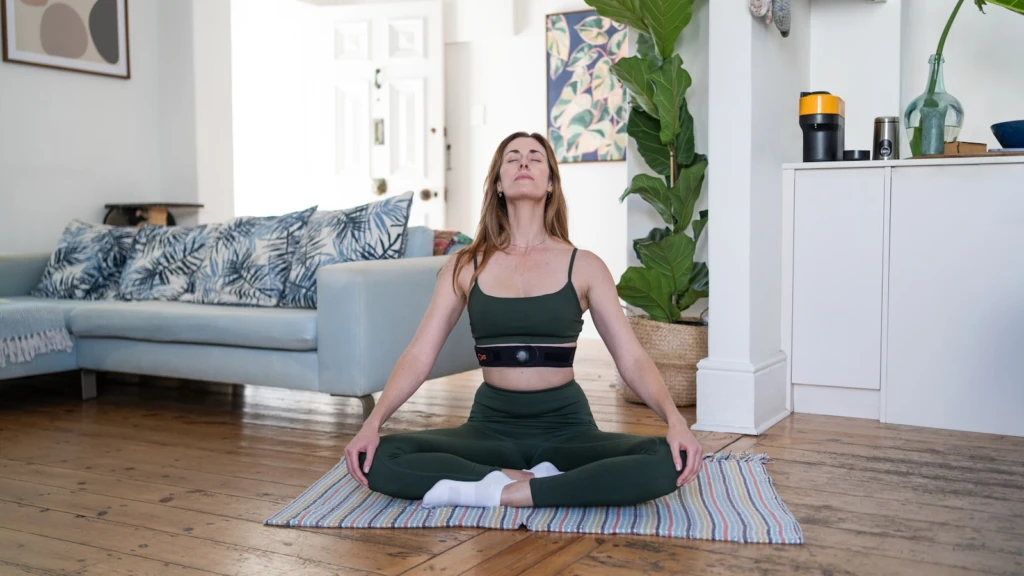
This one is almost annoyingly simple, but there’s real physiology behind it. Your exhale activates the vagus nerve, which is the main highway of your parasympathetic nervous system. The longer your exhale relative to your inhale, the stronger the signal to your body that it’s safe to stand down.
Inhale for 4 counts. Exhale for 6 to 8 counts.
Do it three times. That’s it. You can do this in the car, in the bathroom at work, while waiting for your coffee to brew. You don’t need a meditation cushion or a candle. You need 90 seconds and some willingness to look slightly strange if anyone walks in.
I started doing this before any situation I knew would spike my cortisol — school pickup traffic, opening my inbox, certain phone calls. It doesn’t make those things not stressful. It just means I enter them at a slightly lower baseline.
2. Cold Water on Your Face and Wrists

This isn’t a spa trick. It’s based on something called the dive reflex — your body’s automatic response to cold water that slows your heart rate and shifts your nervous system toward calm. Cold water on your face (especially around your eyes and forehead) triggers it fast.
Run cold water over your wrists and splash some on your face. Hold your wrists under the cold stream for 30 seconds.
This is genuinely useful for acute anxiety spikes — the kind where you need something to happen now. Not “I’ll feel better in a week if I meditate consistently.” Now. It’s abrupt and a little uncomfortable and it works.
3. Shaking It Out (Yes, Literally)
This sounds absurd. I know. But shaking is actually how mammals discharge stress after a threat passes — it’s what animals do after escaping a predator. Humans mostly stopped doing it (social norms, presumably), but the nervous system still benefits from it.
Stand up. Shake your hands like you’re trying to get water off them. Let the shake move up your arms and into your shoulders. Bounce your knees. Let your jaw go loose. Do it for 60 to 90 seconds.
You’ll feel slightly ridiculous. You’ll also probably feel noticeably lighter afterward. I do this in my kitchen when I’ve been sitting at my desk too long and can feel the stress calcifying in my shoulders.
4. Somatic Movement

This goes a layer deeper than shaking. Somatic exercises are slow, intentional movements designed to release tension stored in the body — particularly in the hips, jaw, and lower back, which is where most people carry chronic stress.
The moves aren’t intense. You’re not sweating. You’re doing things like slow hip circles, gentle neck rolls, or lying on your back and letting your knees fall side to side. The point is to move with your body’s tension, not push through it.
I’ve found 10 somatic exercises to reduce cortisol more useful on high-stress days than any actual workout, because at least my body feels like it’s been heard rather than just pushed harder. Worth trying if you haven’t.
5. Humming or Singing Out Loud
The vagus nerve runs through your throat. Vibrating it with sound — humming, singing, even chanting if that’s your thing — directly stimulates it. Researchers studying polyvagal theory (developed by Dr. Stephen Porges) have pointed to vocal toning as one of the most direct ways to shift out of a stress response.
You don’t need to be good at it. Hum while you do dishes. Sing in the car. Pick a song you know every word to and just… go. The healing isn’t in the song. It’s in the vibration.
6. Bilateral Stimulation (The Butterfly Hug)
This one comes from EMDR therapy, which uses alternating left-right stimulation to help the nervous system process and integrate stress. You don’t need a therapist to try the basic version.
Cross your arms over your chest, hands resting on your upper arms or shoulders. Alternate tapping — left, right, left, right — slowly and rhythmically. Close your eyes if that’s comfortable. Do it for a minute or two.
It feels a bit odd the first time. By the third time you try it, you’ll probably notice it has a real effect. There’s something about the alternating rhythm that seems to bring the nervous system down from high alert faster than sitting still does.
7. Orienting Practice
When your nervous system thinks danger is present, it does one of two things: hyper-focuses on the threat, or freezes. Orienting is a practice from Somatic Experiencing (developed by Peter Levine) that interrupts that loop.
Slowly look around the room. Move your eyes and head deliberately — not scanning anxiously, but actually noticing what’s there. Name things out loud or to yourself. The blue mug. The window. The plant in the corner that probably needs water.
This sounds too simple to work. It works because it’s giving your nervous system actual evidence of the present environment. You’re not in danger. Here is a blue mug. Here is a window. The threat your body has been bracing for isn’t here.
8. Magnesium Glycinate Before Bed
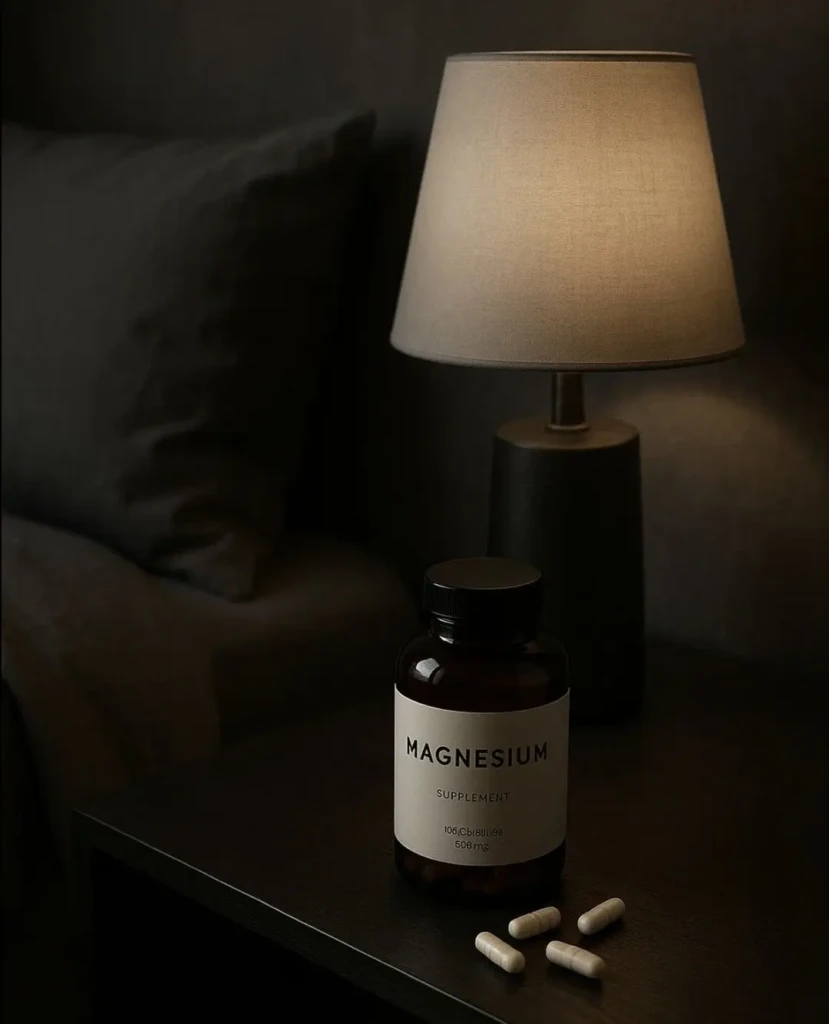
Not a practice, exactly — more of a backstage support. Magnesium is involved in over 300 enzymatic reactions in the body, and a large percentage of adults are deficient in it. Low magnesium is associated with higher cortisol, worse sleep, and a nervous system that has a harder time downregulating.
Glycinate is the form that’s easiest on the stomach and crosses the blood-brain barrier most efficiently. I take mine about an hour before bed and the difference in sleep quality was noticeable within about a week.
Talk to your doctor before starting any supplement, especially if you’re on medications. But if you’ve been wired-and-tired for a while, it might be worth a conversation.
A good magnesium glycinate supplement is one of the more affordable things I’ve found that actually made a consistent difference.
9. Changing What You Eat in the Morning
You probably already know caffeine on an empty stomach first thing in the morning spikes cortisol. Most of us do it anyway, because: morning.
But even small shifts help. Eating a real breakfast before coffee — something with protein and fat, not just carbs — gives your body a signal that resources are available, which helps cortisol come down faster after its natural morning peak. Adding potassium, vitamin C, and sodium (the components of the so-called adrenal cocktail) can also support your body’s stress response.
I went deeper on this in the cortisol-lowering breakfast ideas roundup if you want the actual food specifics. There are also cortisol-reducing foods worth reading through if you want the bigger dietary picture.
10. 5-4-3-2-1 Grounding
You’ve probably seen this one. Five things you can see, four you can touch, three you can hear, two you can smell, one you can taste. Classic anxiety grounding technique.
It works, but most people do it too fast. The point isn’t to check boxes. The point is to stay with each sensation long enough that your brain actually shifts its focus from the anxious loop to the present physical environment.
Slow down on the touching one especially. Pick up an object and actually feel it — temperature, texture, weight. Stay there for ten seconds. That’s the part that does the nervous system work.
11. Herbal Teas That Actually Do Something
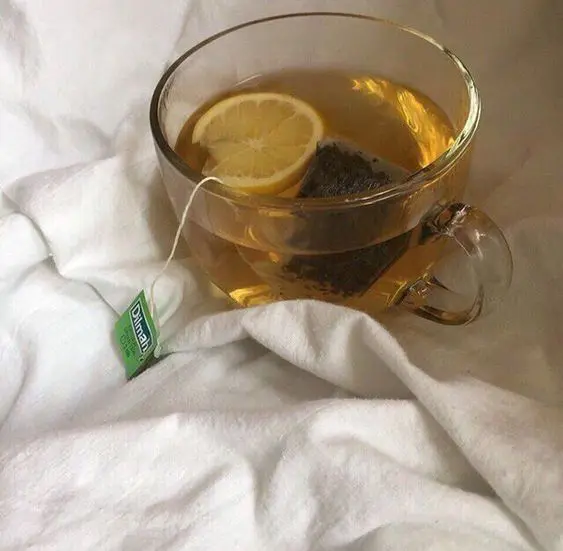
Not all herbal teas are placebo. A few have real anxiolytic or nervous-system-supportive effects worth knowing about.
Ashwagandha is an adaptogen with actual research behind it for lowering cortisol over time. Passionflower has GABA-boosting properties that support the same neural pathways as anti-anxiety medications (much more mildly, but still). Lemon balm has been used for nervous system calming since medieval times and holds up to modern research reasonably well.
I rounded up the specifics — timing, amounts, what to look for — in the best herbal teas for lowering cortisol post. The timing part matters more than most people realize.
You can find a solid ashwagandha tea blend or lemon balm + passionflower tea without spending a lot.
12. Weighted Blanket Use (Strategic, Not Decorative)
The deep pressure from a weighted blanket activates the same neural pathways as a hug — it stimulates the release of serotonin and oxytocin while lowering cortisol. Deep pressure therapy has been researched in the context of anxiety disorders, autism, and PTSD, and the basic mechanism is solid.
The key is using it intentionally rather than just sleeping under it every night. Lying under a weighted blanket for 15 to 20 minutes during the afternoon — during a rest period, not at your desk — seems to be where the nervous system calming effect is strongest. Think of it as a body-level decompression, not just a cozy sleep upgrade.
A good weighted blanket doesn’t have to be expensive. Around 10% of your body weight is the usually-cited sweet spot.
13. Actually Resting (Not Just Doing Less)

This one’s the hardest because it requires letting go of productive-rest logic. Reading counts as input. Scrolling definitely counts as input. Even podcasts count as input. The nervous system doesn’t rest when it’s processing.
Rest that actually downregulates your nervous system looks like: lying still with your eyes closed (not sleeping necessarily, just not taking in stimulation), sitting outside without your phone, or doing something repetitive and low-stakes that doesn’t require decisions. Folding laundry. Slow walking without headphones. Washing dishes.
The repetitive-task category is underrated. There’s something about low-stakes predictable action that signals safety to the nervous system. It doesn’t feel productive. That might be exactly why it works.
The mindful activities that help you slow down and be present post has a much longer list if you want options that aren’t just “lie there.”
FAQ
What does a dysregulated nervous system actually feel like? Physically: tight chest, shallow breathing, tension in the jaw or shoulders, difficulty falling asleep even when exhausted, wired-but-tired feeling, digestive issues, sensitivity to sound or light. Emotionally: easily irritated, anxious without a clear cause, difficulty feeling calm even in objectively safe situations. If that’s been your baseline for a long time, it might be worth bringing up with a healthcare provider — chronic dysregulation has real physiological effects.
How long does it take for nervous system healing to work? The breathing practices and cold water techniques can shift your state in minutes. The bigger stuff — reducing baseline cortisol, improving sleep quality, feeling less reactive overall — tends to take weeks of consistency. Most people notice something after 2 to 3 weeks of daily practice. A month in, it usually feels meaningfully different.
Can I do all of these at once? You don’t need to. Pick two or three that feel accessible and do those consistently. More isn’t always better when you’re already in a depleted state. Starting with extended exhale breathing and one movement-based practice (shaking or somatic movement) is a reasonable entry point.
What if none of these help? These are lifestyle practices, not clinical treatments. If you’re dealing with significant anxiety, panic disorder, PTSD, or other mental health conditions, please work with a therapist or doctor. Somatic therapy, EMDR, and other trauma-focused approaches done with a trained professional are in a different category than what’s covered here.
General wellness information only. If you’re experiencing persistent or severe symptoms, please see a healthcare provider.

Transform self-doubt into boardroom authority with 22 daily rituals that successful women use to mai

Break free from the snooze-button cycle and discover the micro-habits that transform lazy days into

Flow state mastery awaits through these 6 proven steps to unlock your peak performance zone and tran
Leave a Reply