

Whole Roasted Chicken With Lemon, Garlic and Herb Butter Under the Skin
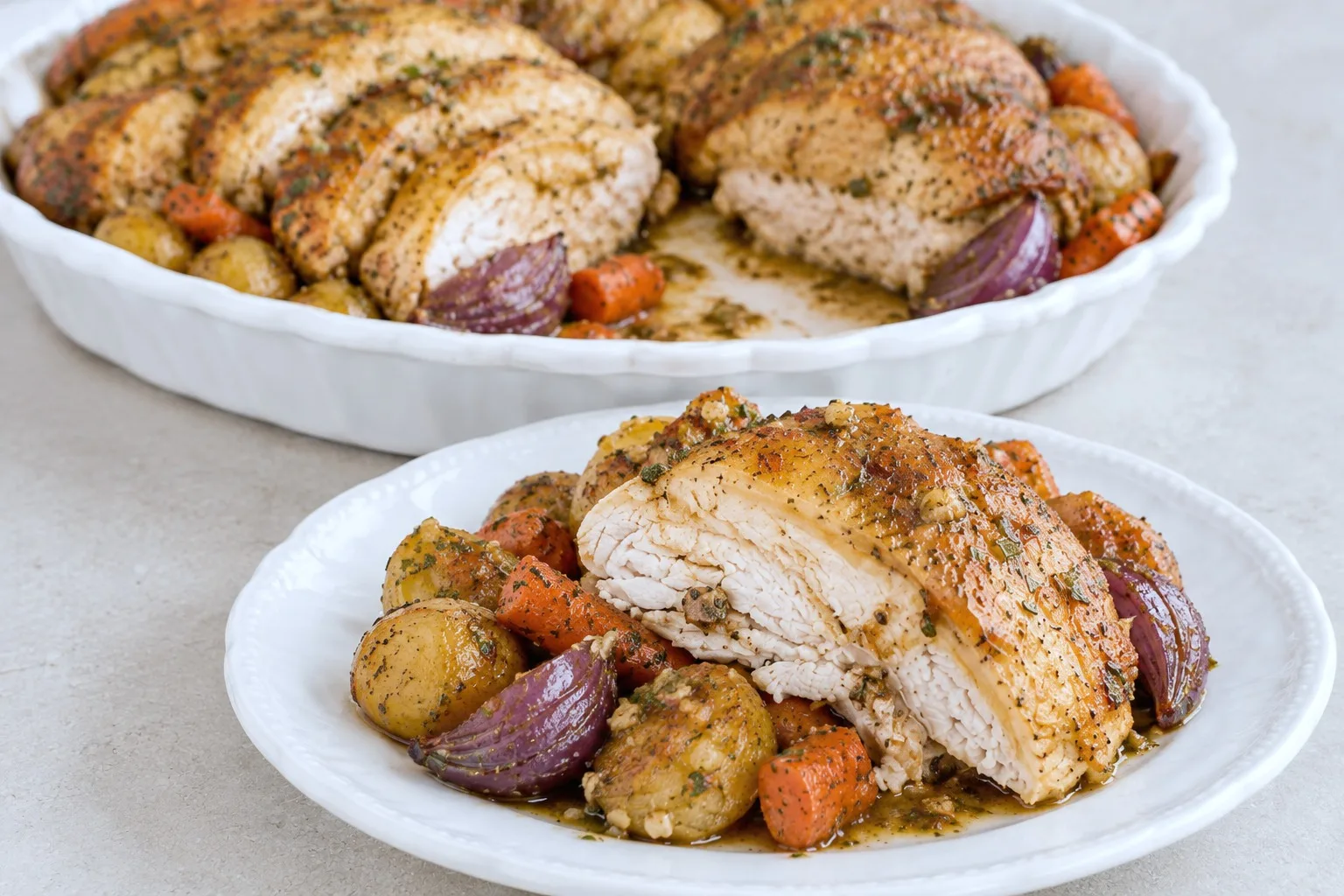
A whole roasted chicken earns its spot at the center of the table the moment the skin goes deep gold and the kitchen smells like garlic and thyme.
Herb butter worked under the skin keeps the breast meat damp while the outside crisps, and a cavity packed with lemon, garlic and more thyme scents the whole bird from the inside out.
Carrots, red onion and baby potatoes roast underneath it, catching every drop of fat, so the only other dish you really need is a spoon for the pan sauce.
This post contains affiliate links. If you buy through them, I may earn a small commission at no extra cost to you.
Table of Contents
The Ingredients That Make It Worth Roasting a Whole Bird
Buy a chicken between 5 and 5 1/2 pounds if you can find one that size: big enough to feed a table, small enough to cook through before the skin burns. Anything larger just needs more time in the oven, so do not panic if your bird runs a pound over or under.
The herb butter is the part that actually changes the meat, not just the skin. Pushing softened butter under the skin instead of only rubbing it on top means the breast bastes itself from the inside as it roasts, which is the difference between dry white meat and meat you would ask for seconds of.
Lemon halves, a whole head of garlic and a handful of thyme sprigs go into the cavity, not because you will eat them, but because the steam they throw off while roasting carries right through the meat.
It costs almost nothing and it is the one step people skip when they are in a hurry, which is exactly why their chicken tastes like chicken and nothing else.
Underneath it all sits a bed of baby potatoes, carrots and red onion wedges, cut big enough that they do not turn to mush before the chicken is done. They catch the butter and the drippings as they fall, so by the time the bird comes out you already have half a side dish done in the same pan.
A splash of dry white wine goes into the pan sauce at the end, so keep this one for the grown-ups at the table and pour responsibly if anyone is driving home. If you would rather skip the alcohol altogether, chicken broth alone still makes a glossy, savory sauce.
How to Make It
This is the long part of the recipe, but nothing in it is decorative: every step either builds flavor or keeps the chicken from drying out. Read it once before you start so you are not hunting for the thermometer with butter on your hands.
Rub the herb butter under the skin
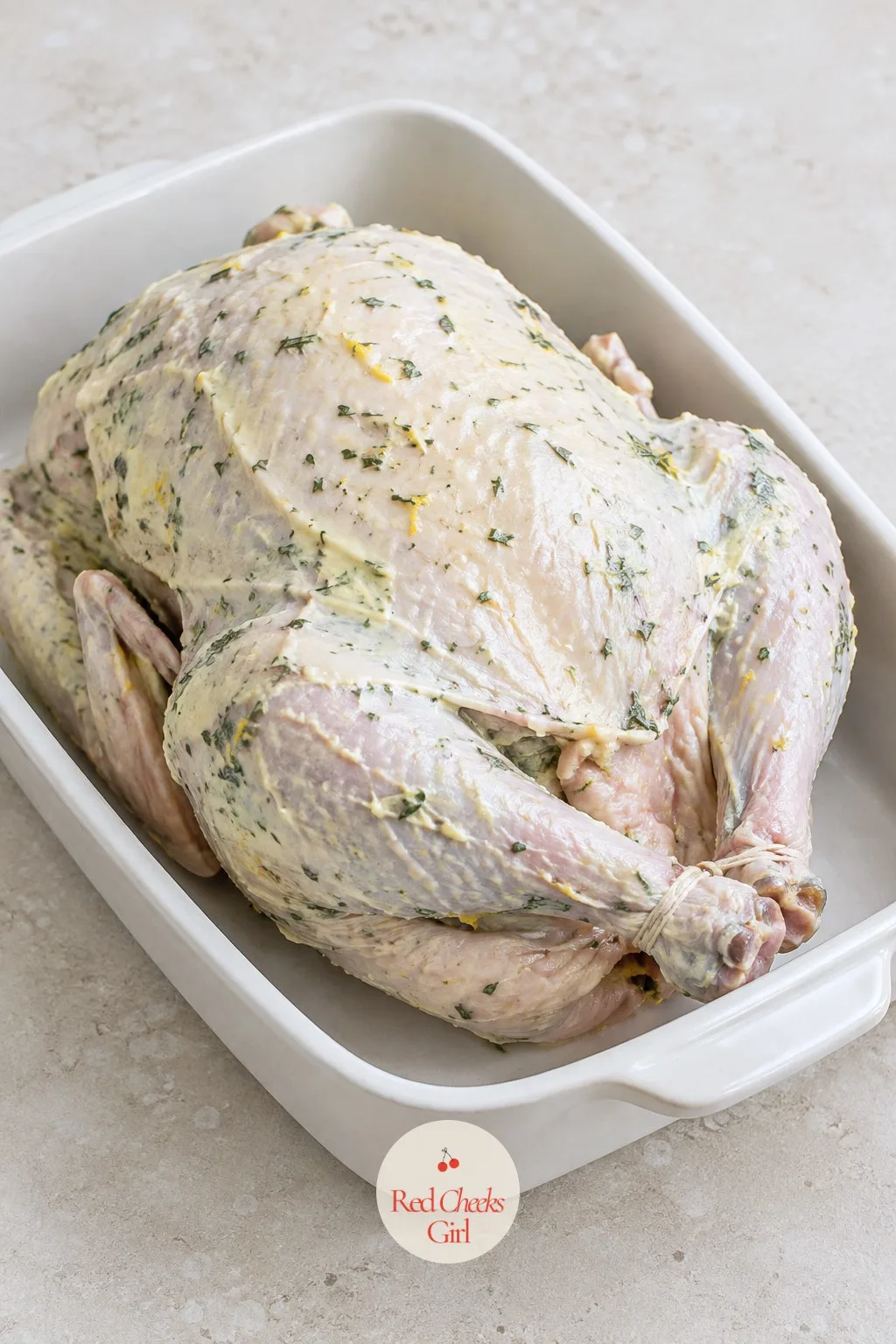
Work your fingers gently under the skin of the breast and thighs without tearing it, then push the herb butter underneath and spread it with your hands from the outside. The skin should look loose and slightly lumpy with butter, not torn.
Set the chicken on the vegetables
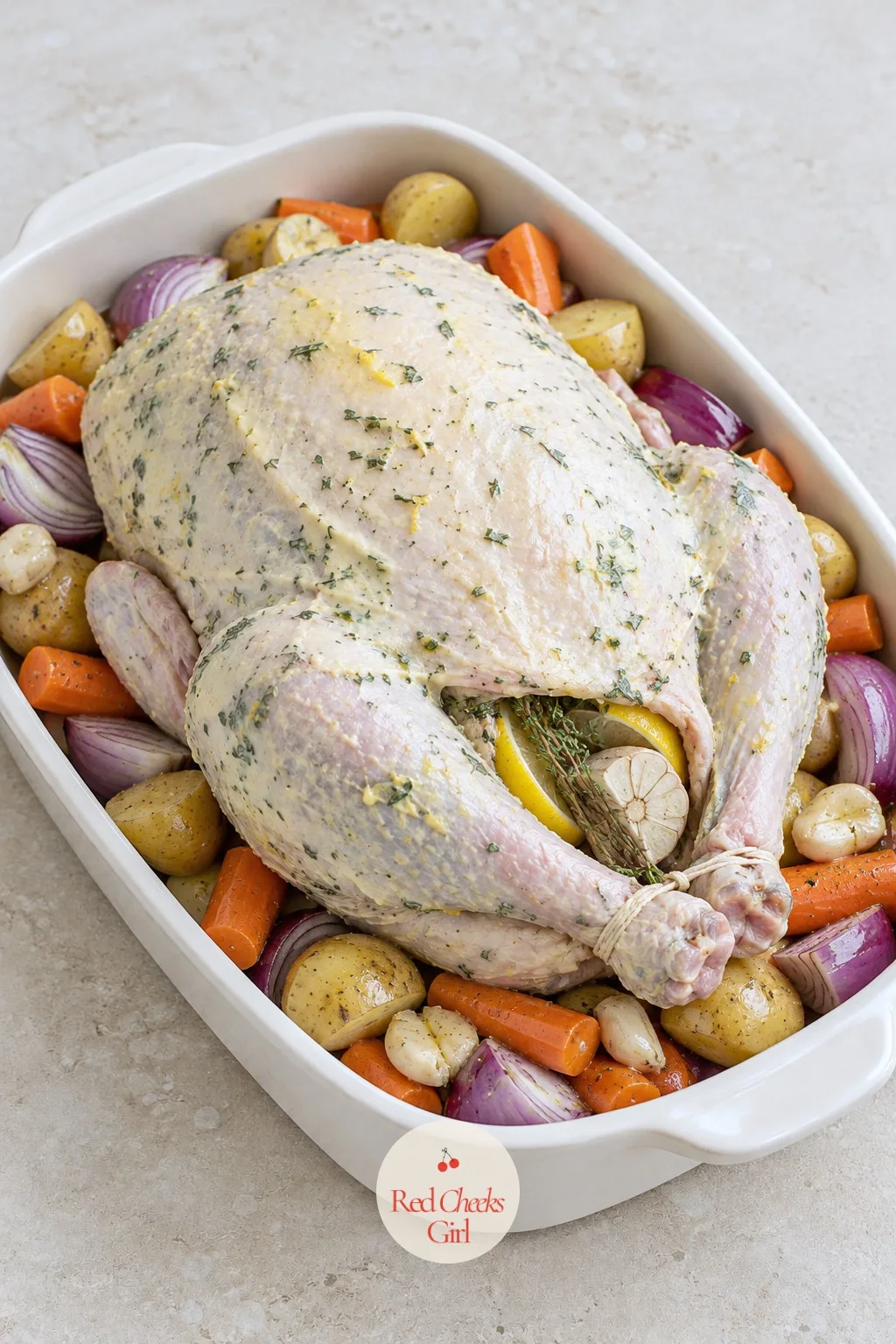
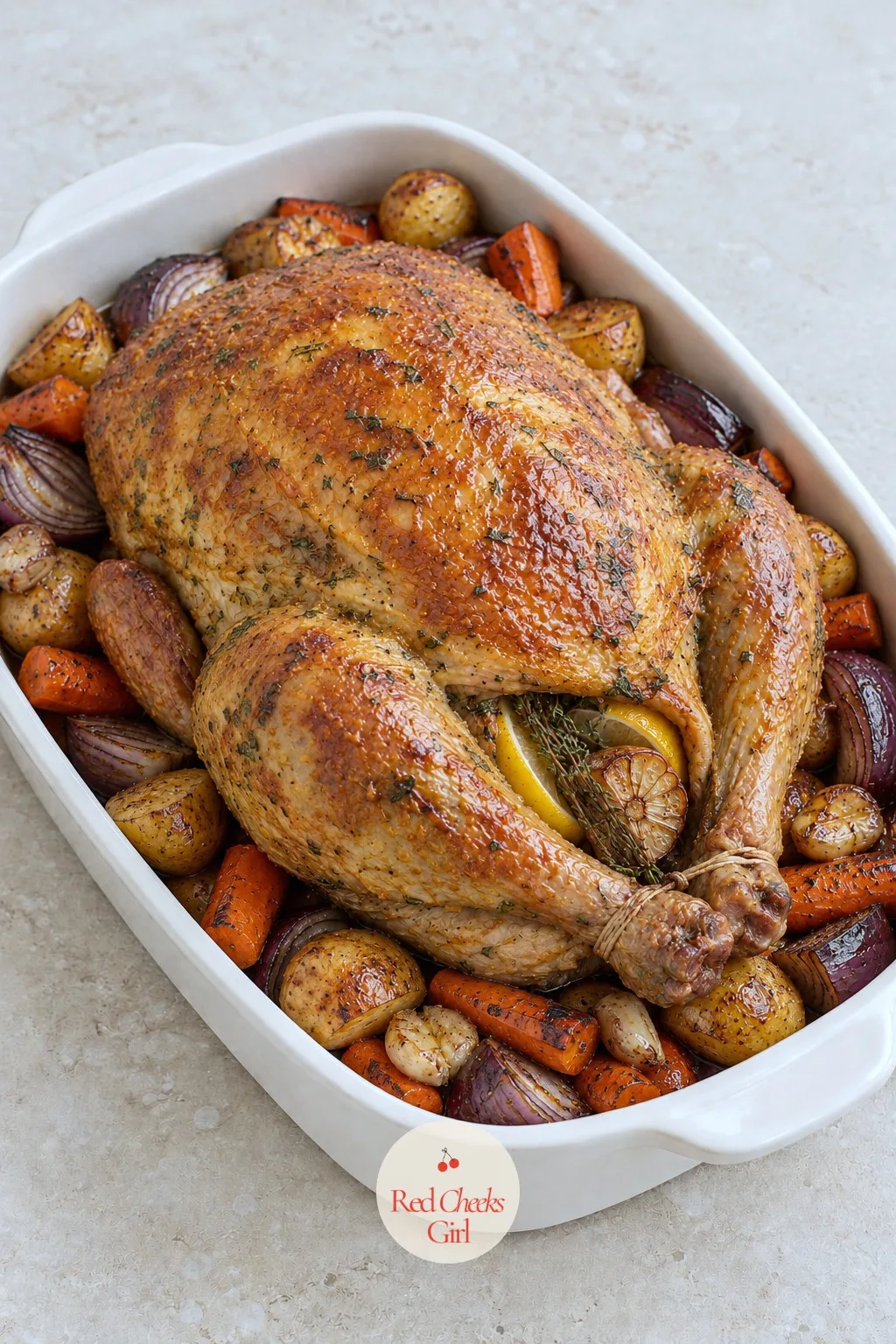
Toss the potatoes, carrots, onion and garlic with olive oil right in the roasting dish, then set the buttered, stuffed chicken breast side up on top. Nothing goes in the oven yet, so take a last look: the vegetables should sit in one even layer, not piled in the middle.
Roast until deep gold and crisp
After the hot start and the longer roast at the lower temperature, check the thigh with an instant read thermometer: it should read 165°F. The skin by now is deep gold all over and should sound faintly crisp when tapped.
Carve the chicken
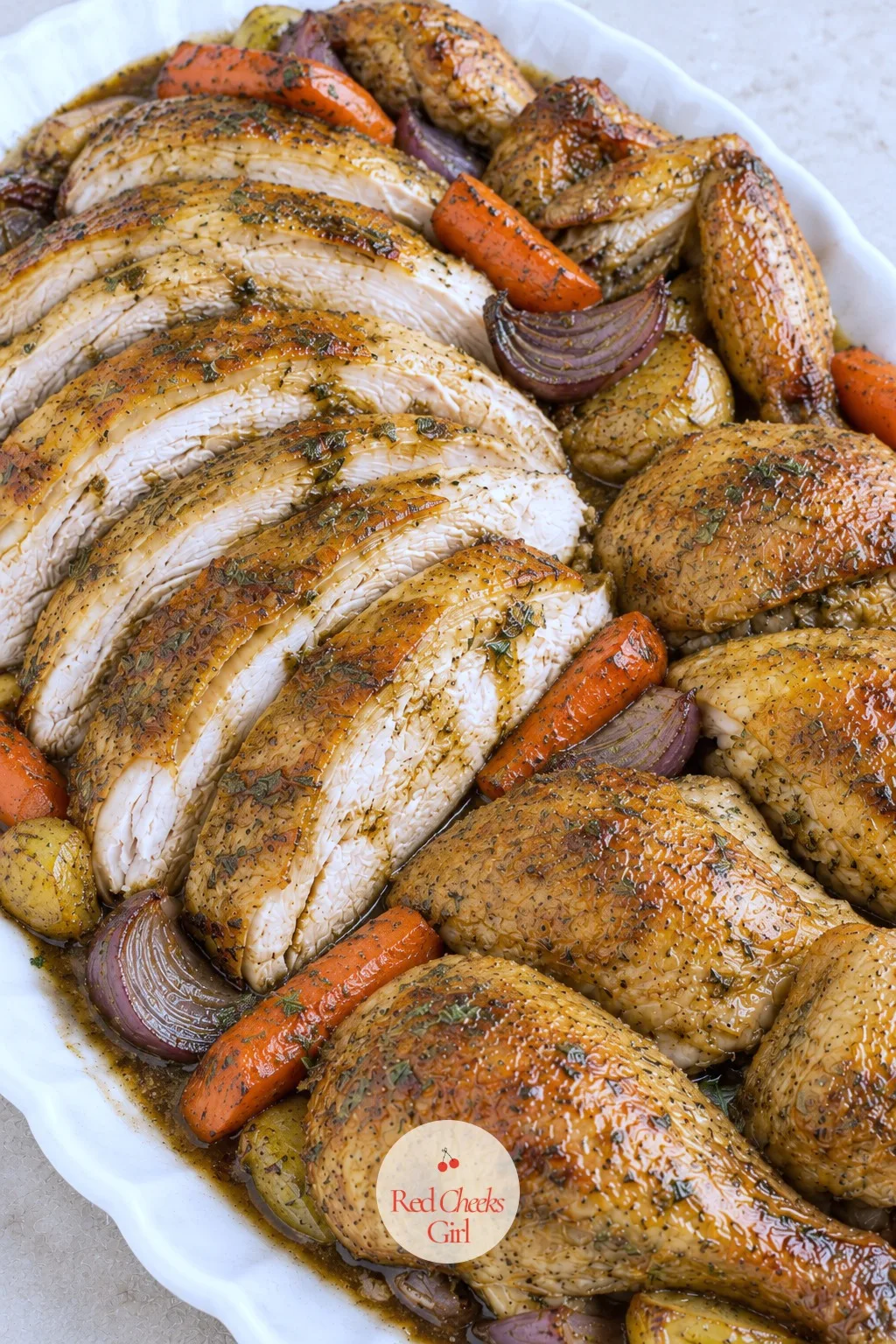
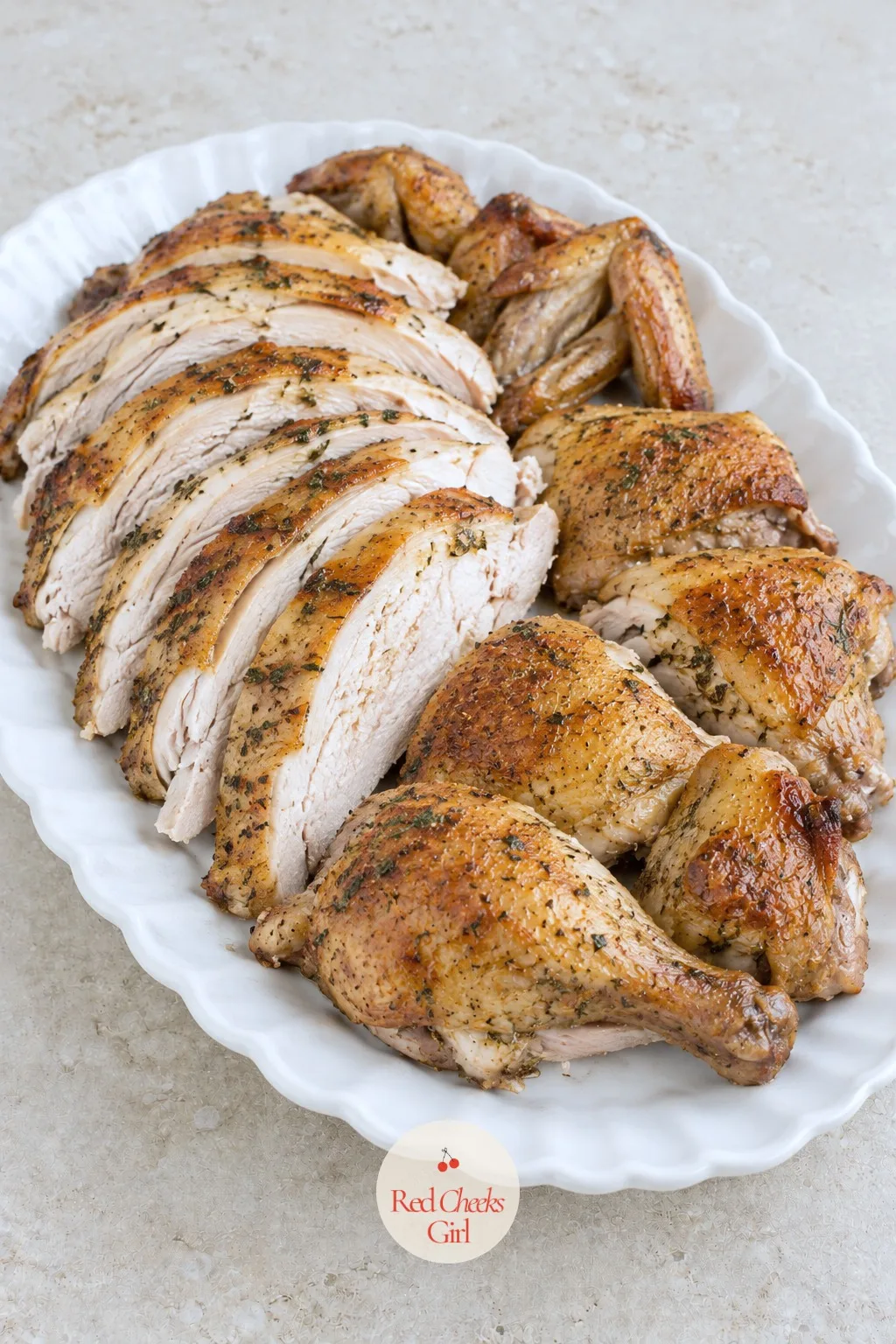
Once the chicken has rested a full 15 to 20 minutes, remove the twine and carve: legs and thighs first, then the breast in long slices, then the wings. Juices should run clear and pool only lightly on the board, not flood it.
Serve with the pan sauce
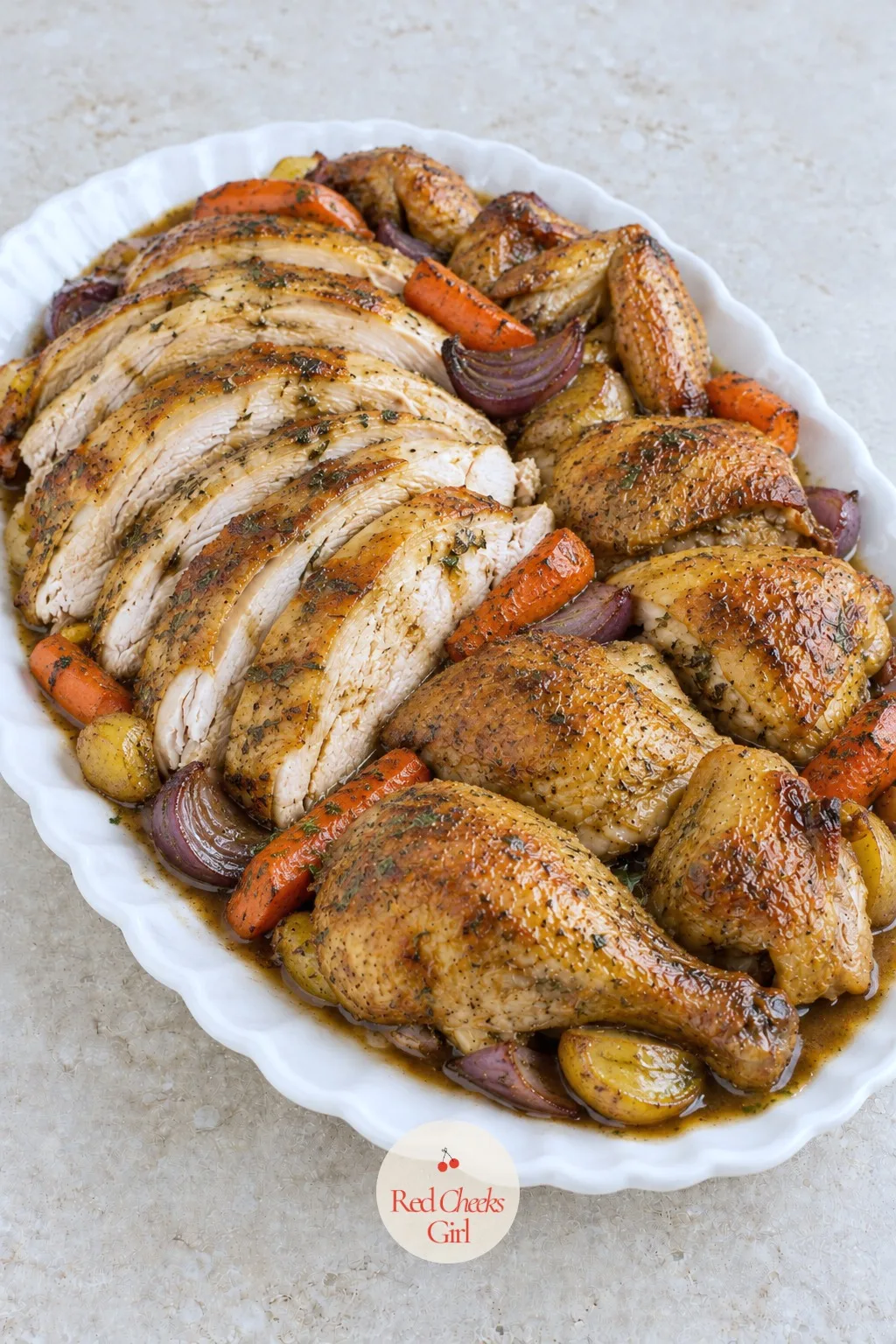
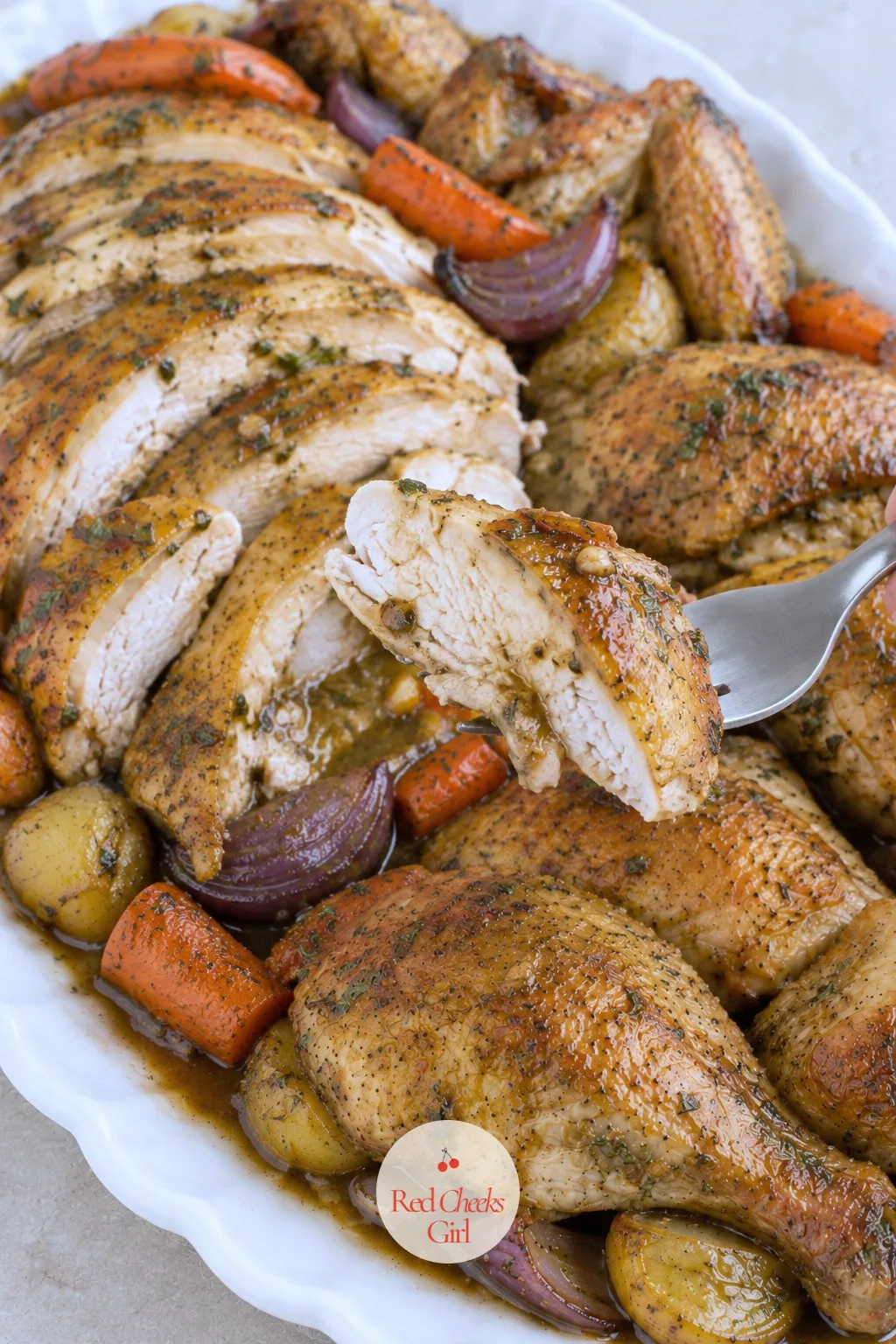
Spoon the roasted vegetables around the carved chicken on the platter and pour the finished pan sauce straight over the top. It is ready the moment the sauce looks glossy rather than greasy.
🛍 Shopping guide
- the cream oval roasting dish this recipe is roasted in
- a slightly larger version for a bigger bird or more vegetables
- the thermometer that tells you when it is actually done
- for trussing the legs before it goes in
- a jar worth keeping on the shelf for this and other roasts
- the platter the carved chicken is served on
Where This Recipe Goes Wrong (and How to Fix It)
The single biggest mistake is roasting a chicken straight from the fridge. A cold bird spends its first twenty minutes just warming up instead of browning, which leaves you with pale skin and an overcooked breast by the time the thigh catches up. Thirty minutes on the counter fixes it.
Wet skin is the second one. If you skip the patting dry step, the surface steams instead of crisping, no matter how hot your oven runs. A few extra minutes with paper towels is the cheapest trick in this whole recipe.
Resist opening the oven door every ten minutes to check on it. Every peek drops the oven temperature and adds time you were not planning on, and the chicken does not actually need an audience until the last twenty minutes.
Do not guess at doneness by color or by how the juices run. An instant read thermometer at 165°F in the thigh is the only honest answer, and it costs less than the chicken you are protecting.
Finally, do not carve it hot out of the oven, however hungry the room is. Fifteen minutes of rest is what keeps the juices in the meat instead of running out all over the board the second you cut it.
Swaps and Substitutions
No fresh rosemary in the house? Sage or tarragon both work under the skin in its place, just chop it fine so it does not tear the skin going in.
An orange instead of a lemon in the cavity gives a softer, slightly sweeter steam, good if you are already leaning into a holiday table. Keep the quantity the same, just swap the citrus.
If baby potatoes are not available, quartered Yukon golds work just as well underneath the bird, and sweet potato chunks are a fair swap if you want a little more color on the plate.
Smaller or larger chicken than called for here just means doing the math on time rather than changing anything else: stick with 15 minutes per pound at 375°F after the same 20 minute hot start, and always finish by thermometer, not by the clock.
If anyone at the table is not drinking, chicken broth alone makes the pan sauce just as glossy without the wine, and dairy free butter works in both the herb butter and the sauce if someone at your table avoids dairy.
What to Serve With It at a Party
Because the potatoes, carrots and onion already roast in the same dish, you genuinely do not need another vegetable side, though a bright green one on the table never hurts next to all that gold. Roasted Green Beans With Parmesan and Lemon takes the same oven heat and adds the one color this plate is missing.
If the crowd is bigger than the chicken, round the table out with a second starch. Garlic Mashed Potatoes With Roasted Garlic and Butter gives everyone somewhere to put the pan sauce if the platter runs out of carved meat before it runs out of sauce.
Something to mop the plate with is not optional in this house. Homemade Garlic Bread With Romano Butter does exactly that, and it bakes in under fifteen minutes while the chicken rests.
For a bigger gathering where this chicken is the centerpiece rather than the whole meal, 13 Sunday Dinner Ideas That Bring Everyone Back to the Table has the rest of the menu sorted, and 20 Christmas Dinner Sides That Share the Oven With the Roast is worth a look if the oven is already full of this bird and you need sides that do not need their own rack.
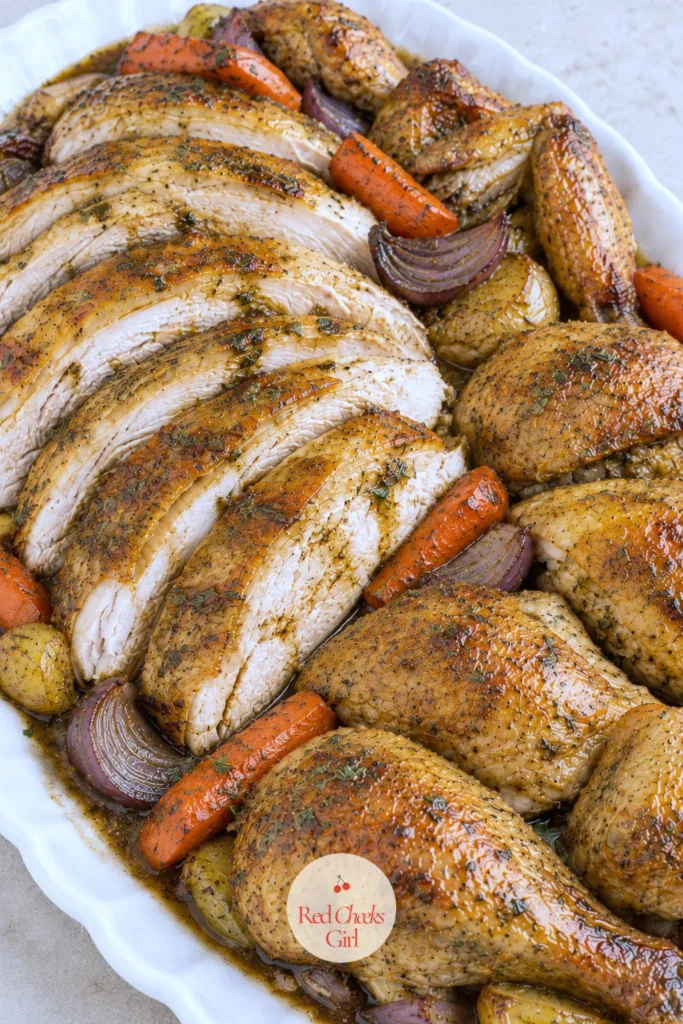
Whole Roasted Chicken
Ingredients
- 1 whole chicken 5 to 5 1/2 pounds, giblets removed
- 6 tablespoons unsalted butter softened, divided
- 2 tablespoons chopped fresh thyme plus 6 whole sprigs
- 1 tablespoon chopped fresh rosemary
- 2 teaspoons kosher salt divided
- 1 teaspoon black pepper
- Zest of 1 lemon
- 2 lemons halved
- 1 head garlic halved crosswise, plus 4 cloves smashed
- 1 pound baby potatoes halved if larger than a golf ball
- 4 medium carrots peeled and cut into 2 inch pieces
- 2 medium red onions cut into wedges
- 3 tablespoons olive oil
- 1/2 cup dry white wine or chicken broth, for a non alcoholic sauce
- 1 cup low sodium chicken broth
- 3 tablespoons cold unsalted butter cut into pieces, for the sauce
Instructions
- Take the chicken out of the refrigerator 30 minutes before cooking and pat it dry inside and out with paper towels. A dry skin is what actually crisps in the oven, so do not skip this. Preheat the oven to 425°F with a rack in the center position.
- In a white mixing bowl, mash together 4 tablespoons of the softened butter, the chopped thyme, the rosemary, 1 teaspoon of the salt, the pepper and the lemon zest until the herbs are worked evenly through the butter.
- Slide your fingers gently under the skin of the breast and thighs to loosen it without tearing, then push the herb butter underneath and spread it over the meat with your fingers from the outside. Rub the remaining 2 tablespoons of plain butter over the outside of the skin. You should be able to see faint green flecks through the skin once it roasts.
- Season the cavity with the remaining 1 teaspoon of salt, then tuck in both lemon halves, the halved garlic head and the thyme sprigs. Tie the legs together with kitchen twine and tuck the wing tips under the body so they do not burn.
- Toss the baby potatoes, carrots, red onion wedges and smashed garlic with the olive oil, 1/2 teaspoon salt and a few grinds of pepper directly in the cream oval roasting dish, then spread them into one even layer. Set the chicken breast side up on top of the vegetables.
- Roast uncovered at 425°F for 20 minutes. This first hot blast is what starts the skin crisping and sets the color before the long, slower roast.
- Lower the oven to 375°F and continue roasting for 15 minutes per pound of chicken, about 1 hour 15 minutes for a 5 pound bird, basting once at the halfway point with the pan juices. The chicken is ready when an instant read thermometer inserted into the thickest part of the thigh, away from the bone, reads 165°F, and the skin is deep golden and sounds faintly crisp when tapped.
- Lift the chicken onto a cutting board, tent it loosely with foil and let it rest for 15 to 20 minutes before carving. This is what keeps the juices inside the meat instead of pooling on the board.
- Remove the twine. Carve the chicken: cut between the leg and the body to remove each leg and thigh, slice the breast meat away from the bone in long strokes, then separate the wings at the joint. Arrange the pieces on a white fluted porcelain platter.
- Pour off most of the fat from the roasting dish, leaving the vegetables and about 2 tablespoons of drippings behind. Set the dish over a low burner, add the white wine and scrape up the browned bits from the bottom, then let it bubble for 1 minute.
- Stir in the chicken broth and simmer for 3 to 4 minutes until slightly reduced, then whisk in the cold butter a tablespoon at a time, off the heat, until the sauce looks glossy rather than greasy. Spoon the roasted vegetables around the carved chicken, pour the pan sauce over the top and serve warm.
Good to Know
Frequently Asked Questions
Do I need a roasting pan to roast a whole chicken?
No, any oven safe dish with low sides works, including an enameled Dutch oven, a casserole dish or even a rimmed sheet pan in a pinch.
Can I season the chicken the night before?
Yes, rubbing the herb butter under the skin a day ahead and leaving it uncovered in the fridge actually helps the skin crisp better once it roasts.
What do I do if the skin is browning too fast?
Tent the chicken loosely with foil for the rest of the roasting time once the skin looks deep gold, then remove the foil for the last ten minutes to recrisp it.
Should I truss a whole chicken before roasting?
Trussing the legs together helps the bird cook more evenly and keeps the shape neat for the table, though it is not strictly required if you are short on twine.
What size chicken should I buy for a dinner party?
Plan on about 1 pound of whole chicken per person if you want leftovers, so a 5 to 6 pound bird comfortably feeds 6 to 8 people.
Should the chicken roast breast side up or down?
Breast side up is the standard and safest choice here, since it browns more evenly and avoids the risk of tearing the skin while flipping a hot, heavy bird.
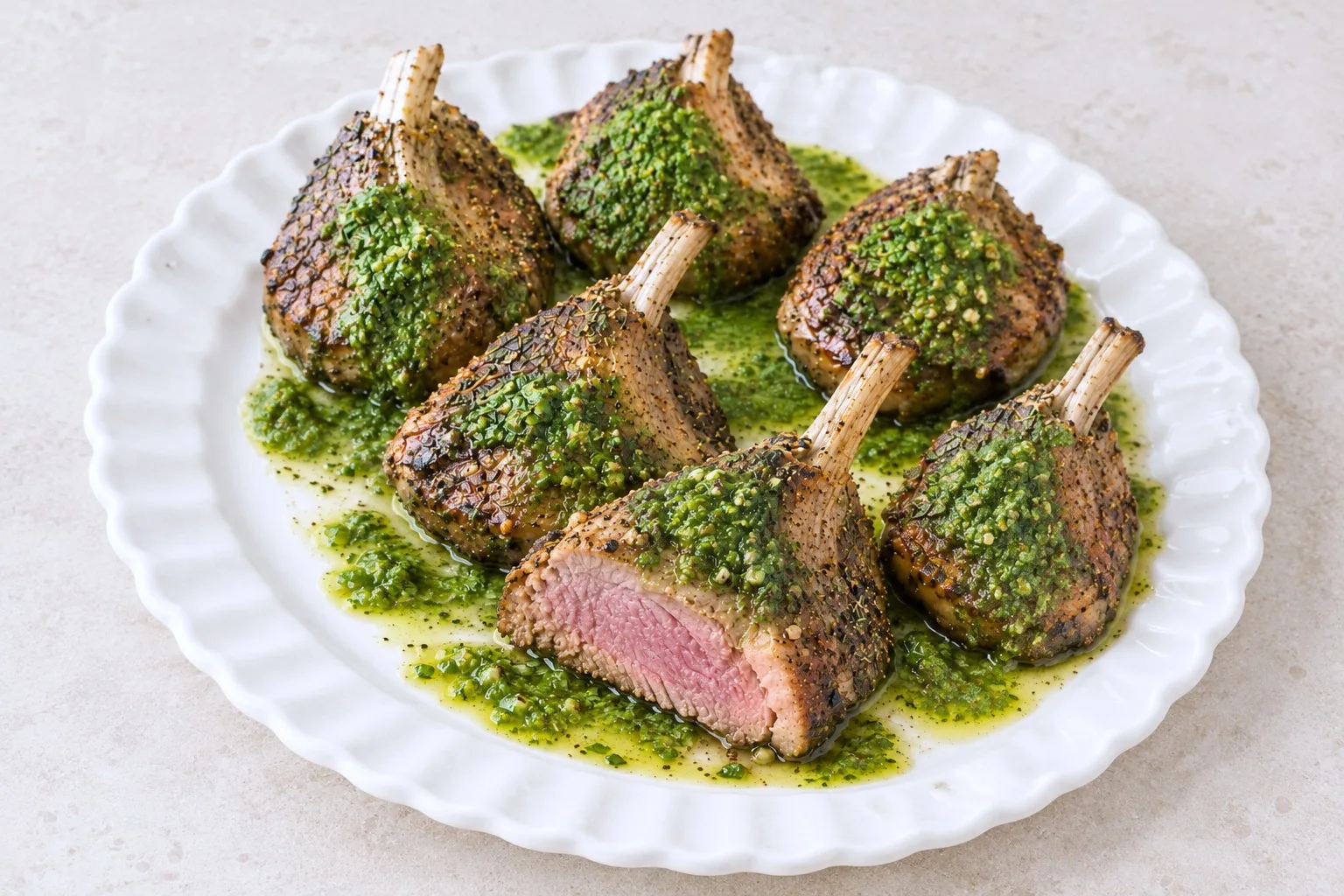
Lamb chops recipe with a garlic rosemary marinade, seared in cast iron and finished with a bright mi
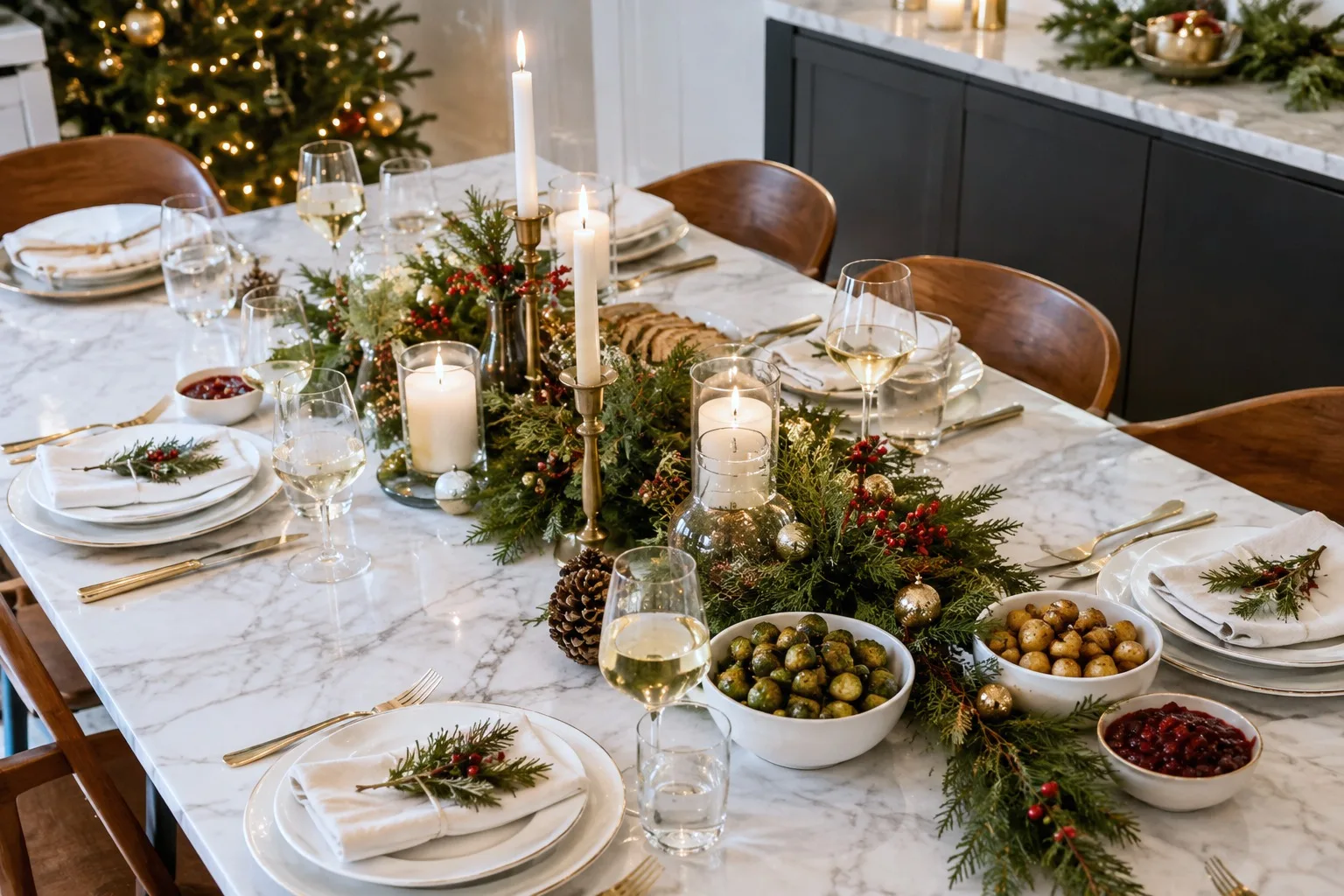
12 Christmas dinner party menus with starter, main, side and dessert, plus a day-of timeline, for ho
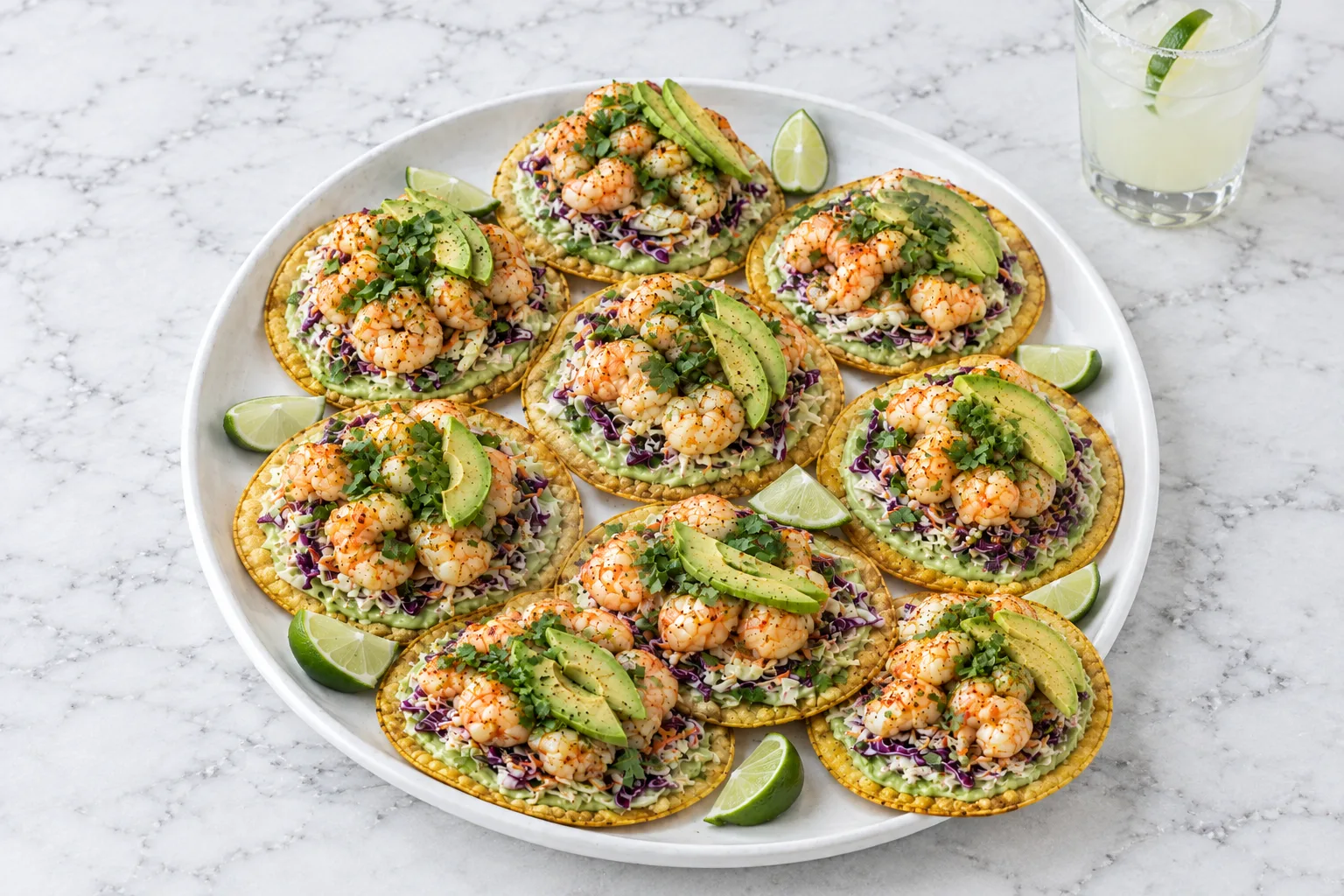
Shrimp tostadas with kimchi slaw layer crisp shells, chili lime shrimp, avocado and cilantro mayo on
Leave a Reply