


Eighteen games wait below, and every one of them is something you hold, throw, stack or pop, nothing scored on paper. A Valentine party runs on a bit of noise and chaos, not quiet concentration over a worksheet.
Most of what is needed sits in a dollar-store candy aisle already: marshmallows, conversation hearts, plastic cups, a bag of balloons. Budget comfortably under thirty dollars for the whole list if you already own cups, straws and tape, and nothing here needs more than ten minutes to set up between rounds.
A quick way to choose, by who is actually coming:
- Classroom or a big mixed-age group: Love Sucks, X&O Tic Tac Toe and the Candy Heart Scavenger Hunt need almost no explaining and no sharp props.
- Couples night in: Don’t Break My Heart, Love Goes Round and Guess the Candy Count Jar slow things down just enough.
- Teens and adults wanting some chaos: Cupid’s Castle, Put a Ring on It and Gone with the Wind reward a bit of showing off.
- Tight on floor space: Love Match, Box of Chocolates and Heart Transplant stay entirely on a tabletop.
On ties, keep it simple: split whatever prize sits on the table, or run one more round between just the tied players rather than restarting everyone. If anyone at the party cannot have gluten, nuts or gelatin, most of these candies swap cleanly for foam shapes or pom-poms without changing a single rule.
This post contains affiliate links. If you buy through them, I may earn a small commission at no extra cost to you.
Tabletop Races Against the Clock
These four live entirely on a stretch of counter or table, so there is no chasing anyone across the house. Keep a towel handy, run them back to back, and each one resets in under a minute.
Love Sucks
A pile of heart marshmallows looks innocent until someone tries to move it with only a straw. Watching grown adults concentrate on suctioning tiny hearts with a straw is comedy gold, and that gap between confidence and result is the whole joke.
Spread the marshmallows in the middle of a table and give each player a straw and an empty saucer at the far edge. On go, everyone has sixty seconds to suck a marshmallow onto the straw, walk it to their own saucer and let it drop, then run back for the next one. Most marshmallows on the saucer when the timer stops wins; a tie runs one more marshmallow, sudden death.
Ages six and up manage the suction fine, though under-eights do better with the marshmallows spread closer so nobody is racing across a slick floor. For a harder round, ban hands completely, even for the drop, and make players tip the saucer to shake the marshmallow off. If the marshmallows keep sticking to the straw instead of releasing, dust the pile lightly with powdered sugar first, and swap in mini foam pom-poms for anyone who cannot have gelatin.

🛍 Shopping guide
Heart Balance Stack
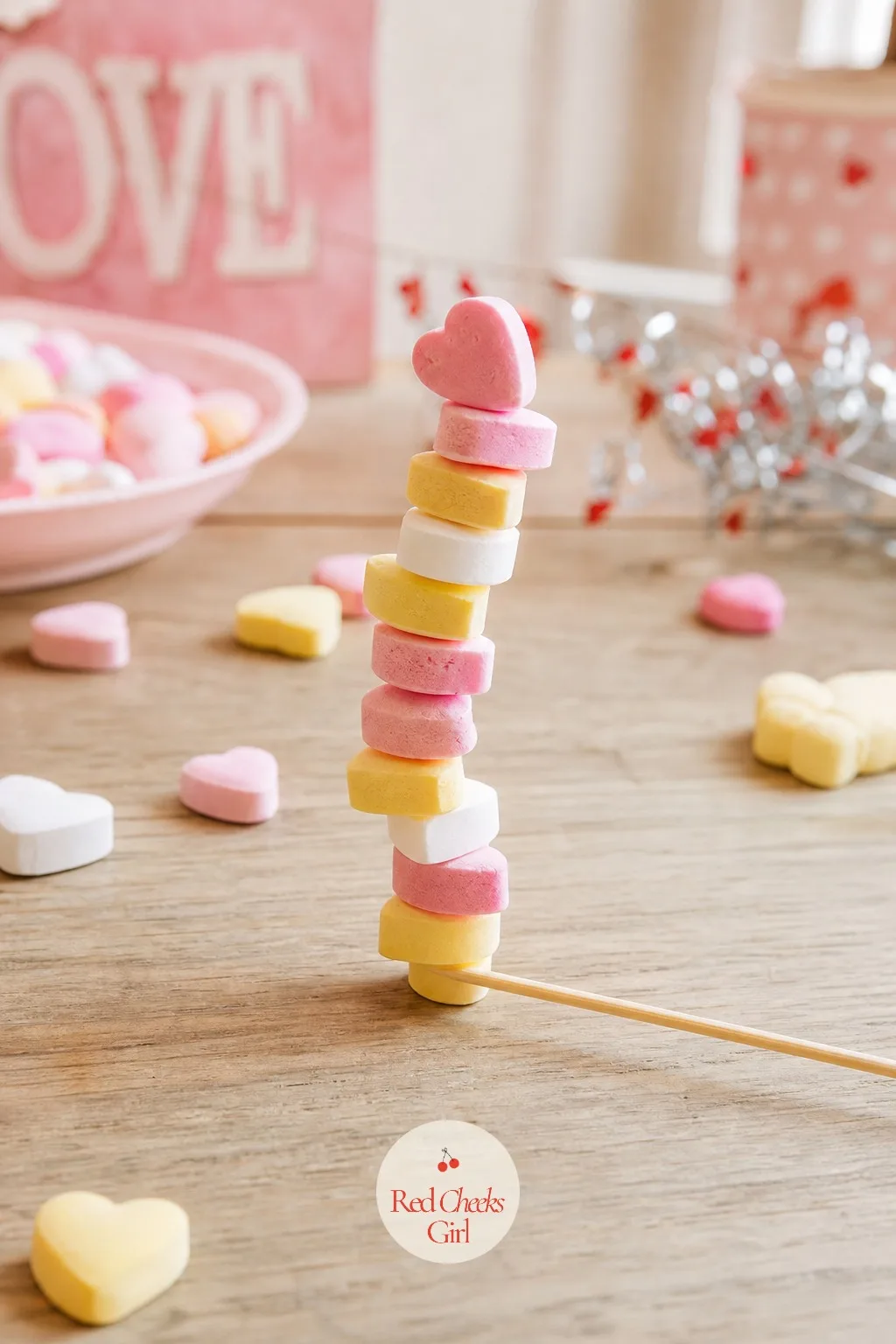
Nobody believes stacking ten little candies on a stick is hard until they try holding the stick only with their teeth. It is the quietest game on this list, right up until a tower topples and everyone groans at once.
Give each player a jumbo craft stick to hold level in their mouth, hands behind their back, and a small pile of conversation hearts. In one minute, stack as many as will balance without using hands; count only what is still standing when time runs out. Ages eight and up play it straight, and a tie gets settled with a one-heart tiebreaker round.
Make it easier for little ones by letting them hold the stick with one hand instead of their teeth. Make it harder for teens with a thinner stick or smaller candies, which wobble more. If real candy keeps sliding off, swap in flat foam hearts instead, they stack cleanly and nobody minds a dropped one going back in the box.
🛍 Shopping guide
Heart Transplant
Watching someone frown in total concentration over a bowl of tiny candy is funnier than it has any right to be, and that is really the whole game.
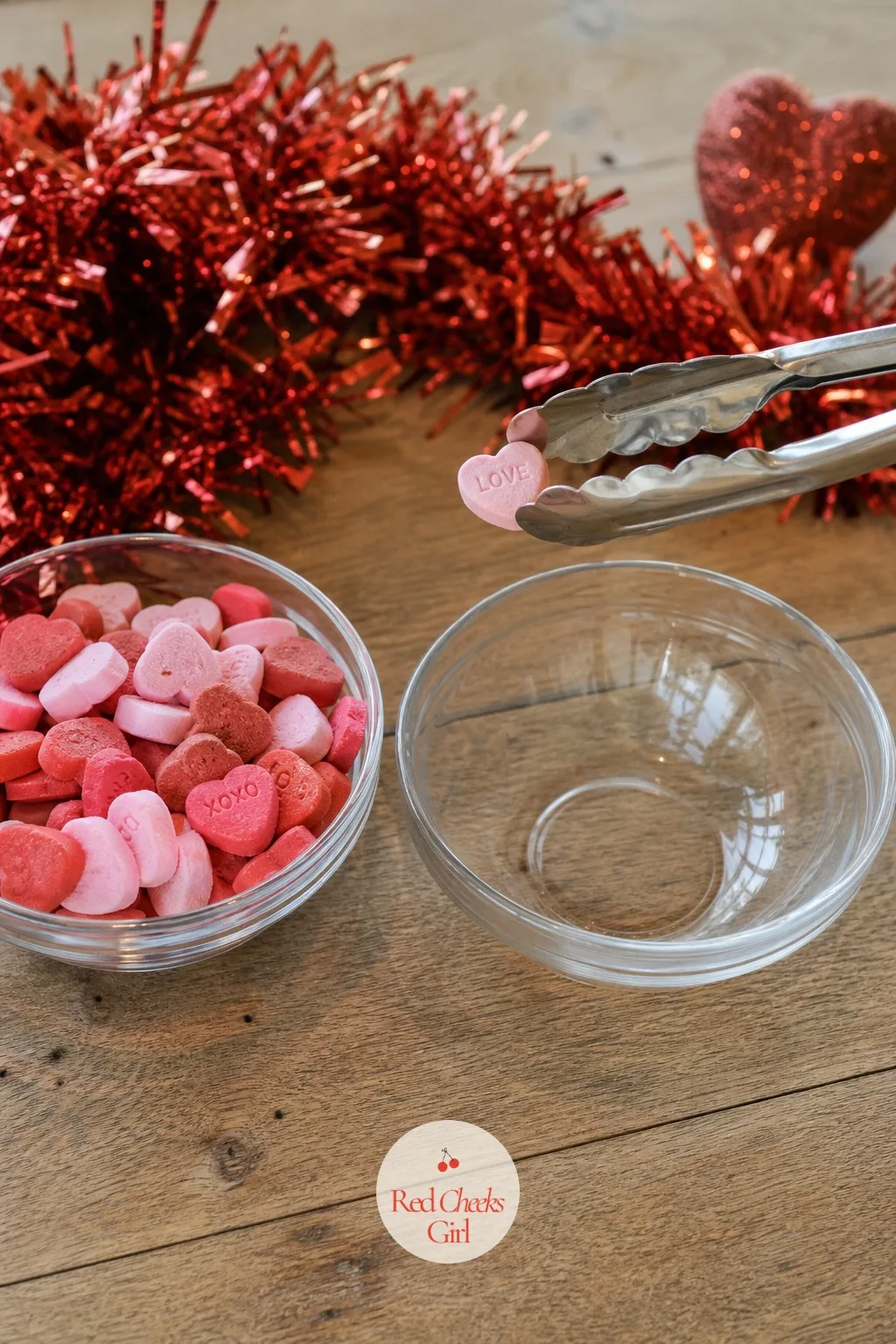
Set two small bowls on the table, one full of conversation hearts, one empty, with a pair of kitchen tongs in between. Players have one minute to move as many hearts as possible from the full bowl to the empty one using only the tongs, no fingers. Most moved when time stops wins, and a shared leftover pile makes it easy to settle a tie by racing one more candy each.
For younger players, swap the tongs for a large serving spoon, much easier to control. For a harder version, use narrow ice tongs, or move the bowls three feet apart so each piece has to be carried across. If the candy keeps slipping, chill it in the fridge first: cold candy grips better than warm.
🛍 Shopping guide
Love Match
Nothing sits still here until every heart has found its missing half, and watching someone confidently jam two wrong pieces together is half the entertainment.
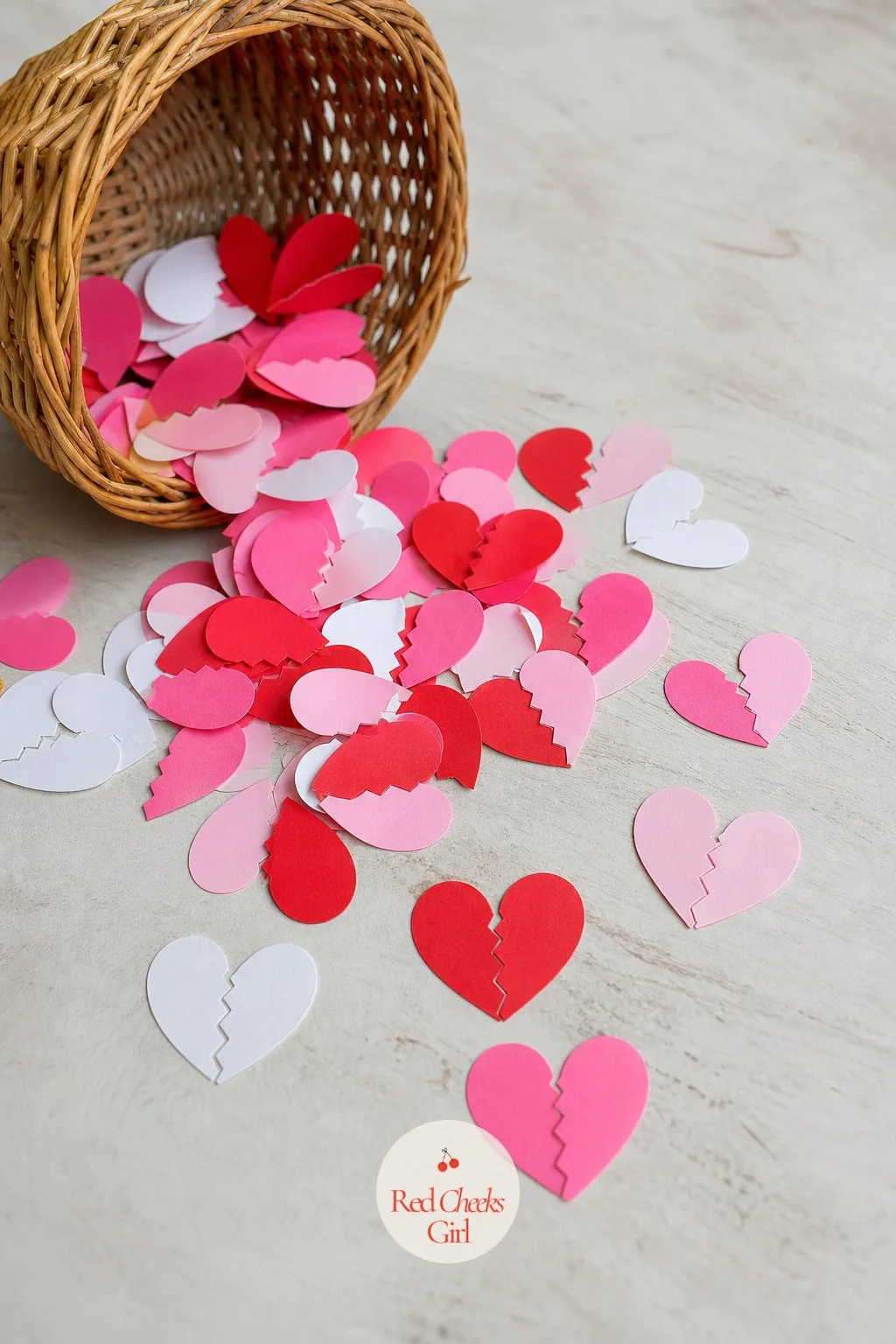
Before the party, cut eight to ten paper or foam hearts in half along a different jagged line each time, then mix every piece in a basket. Players race to sort and match each half to its partner, fitting the zigzag edges together; first to rebuild every heart correctly wins. It plays well from about age five, since matching shapes needs no reading.
Simplify by cutting only four hearts into two pieces each for small children. Toughen it for teens by cutting each heart into four jagged pieces instead of two, which multiplies the sorting work fast. Keep a spare marker nearby: if a piece goes missing, a fresh heart takes thirty seconds to cut and drop back in.
🛍 Shopping guide
Toss and Aim Games
Hand-eye coordination, a little showing off, and props that cost almost nothing. These want a few feet of open floor or a long table, nothing more.
Put a Ring on It
Across the room, a thrown gummy ring looks easy to catch on a chopstick. It is not, and that gap between confidence and result is the entire joke.
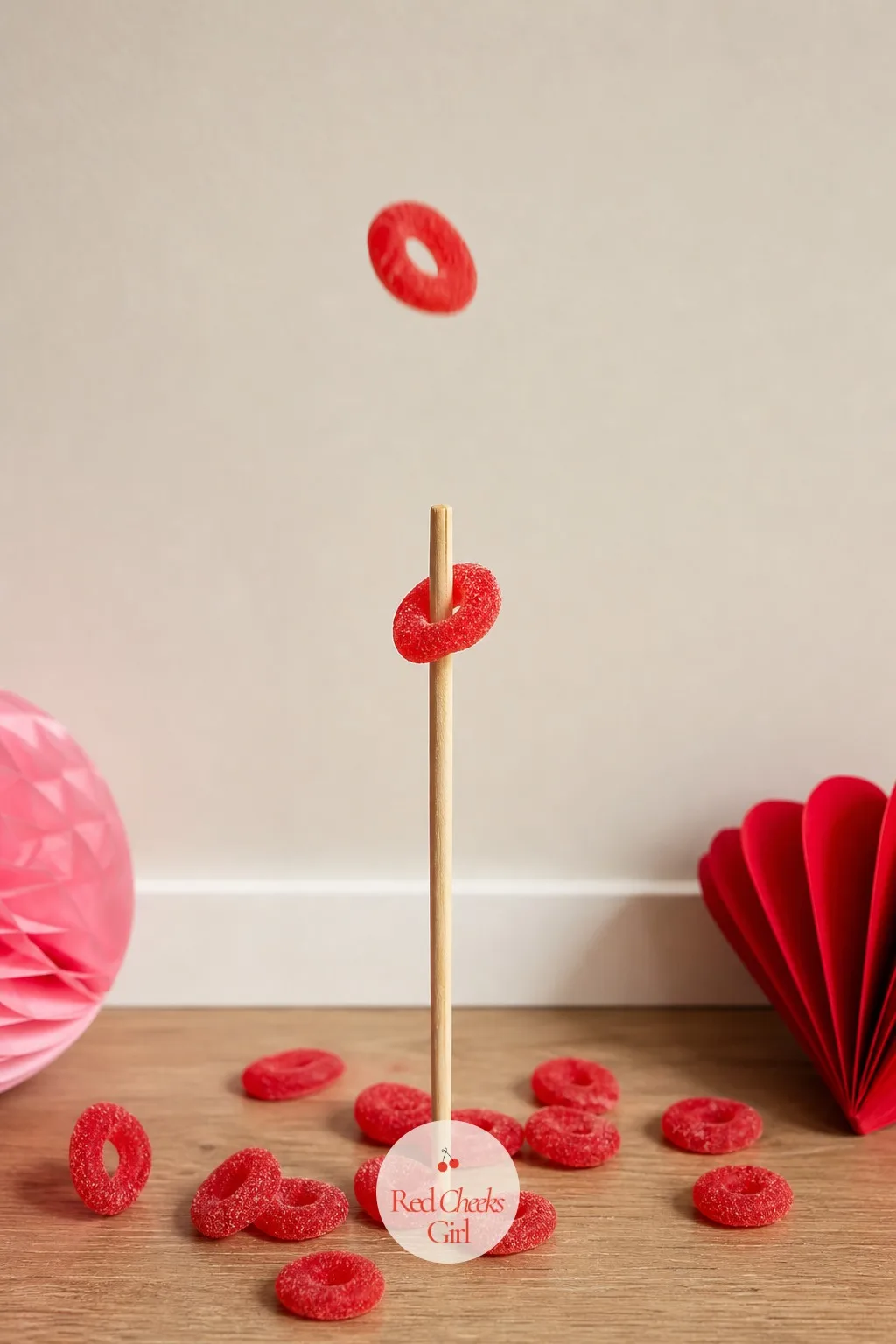
Pair players up, one tossing gummy rings underhand from six or eight feet away, the other holding a chopstick out to spear each ring as it flies. First pair to land three catches, or whoever has the most after one minute, wins the round. It suits kids from about age seven through adults, and works solo too: toss your own ring up and catch it yourself.
Move the throwing line closer for younger players or further back to make adults work for it. If the gummy rings start splitting from repeated throws, keep a backup bag on hand, they sell by the pound in most candy aisles. A plastic cup on the catching end instead of a chopstick makes an easy toddler version.
🛍 Shopping guide
Cupid’s Castle
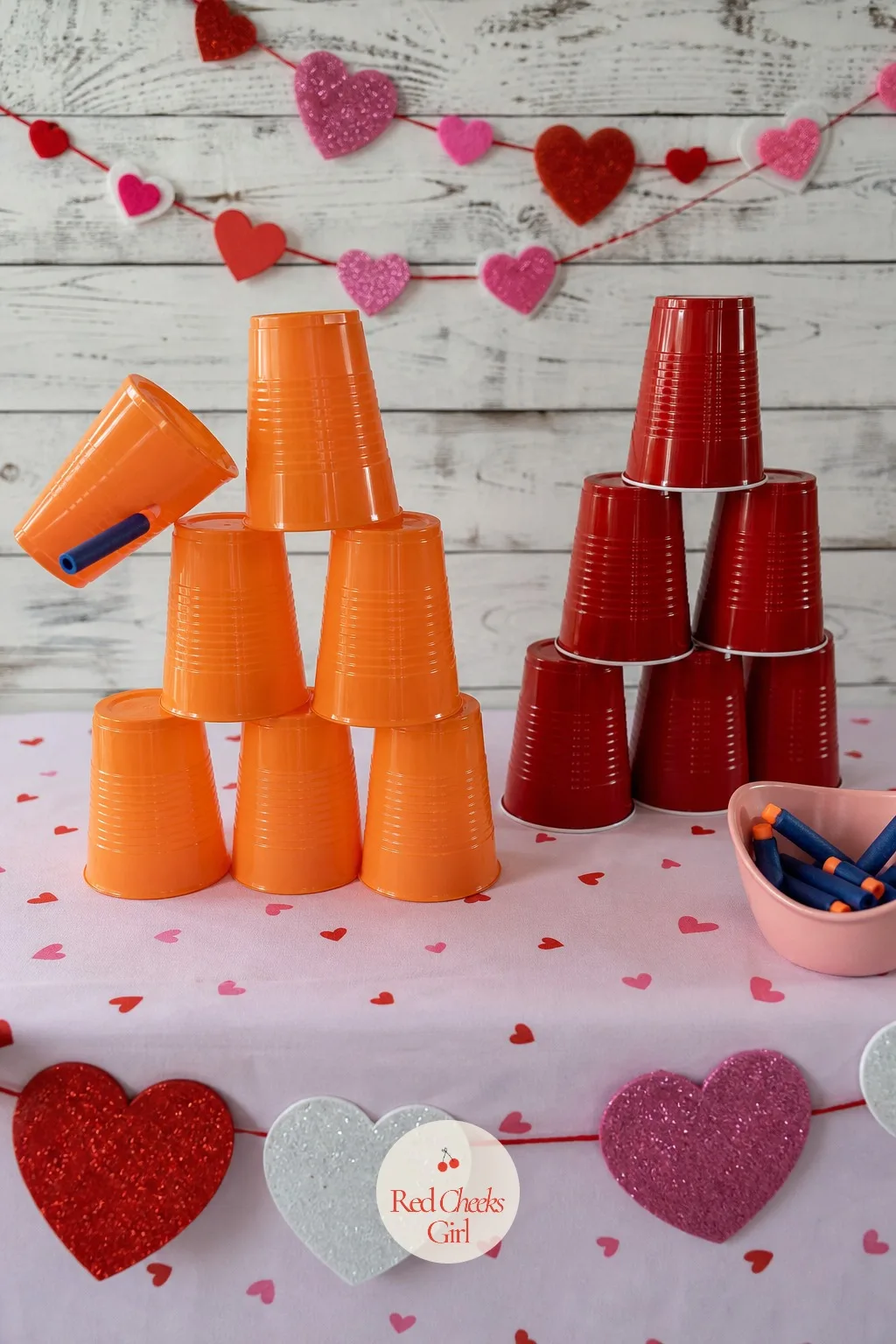
A tower of plastic cups looks sturdy until a foam dart finds the gap, and the slow-motion collapse is the best part of the whole game.
Split players into groups of three, each with ten cups stacked four three two one at the table edge, a six sided die, and a foam dart blaster. On each turn a player rolls the die and fires that many darts at a rival castle, knocking out that many cups on a hit. Keep rolling and firing in turns until only one castle stands, that group wins.
For a gentler round with younger kids, let everyone shoot regardless of their roll instead of knocking out cups one at a time. For more drama with teens, only the highest roller at the table gets to shoot that round. If darts keep missing low, prop the castles on a stack of books to raise them to blaster height.
🛍 Shopping guide
Pin the Arrow on Cupid
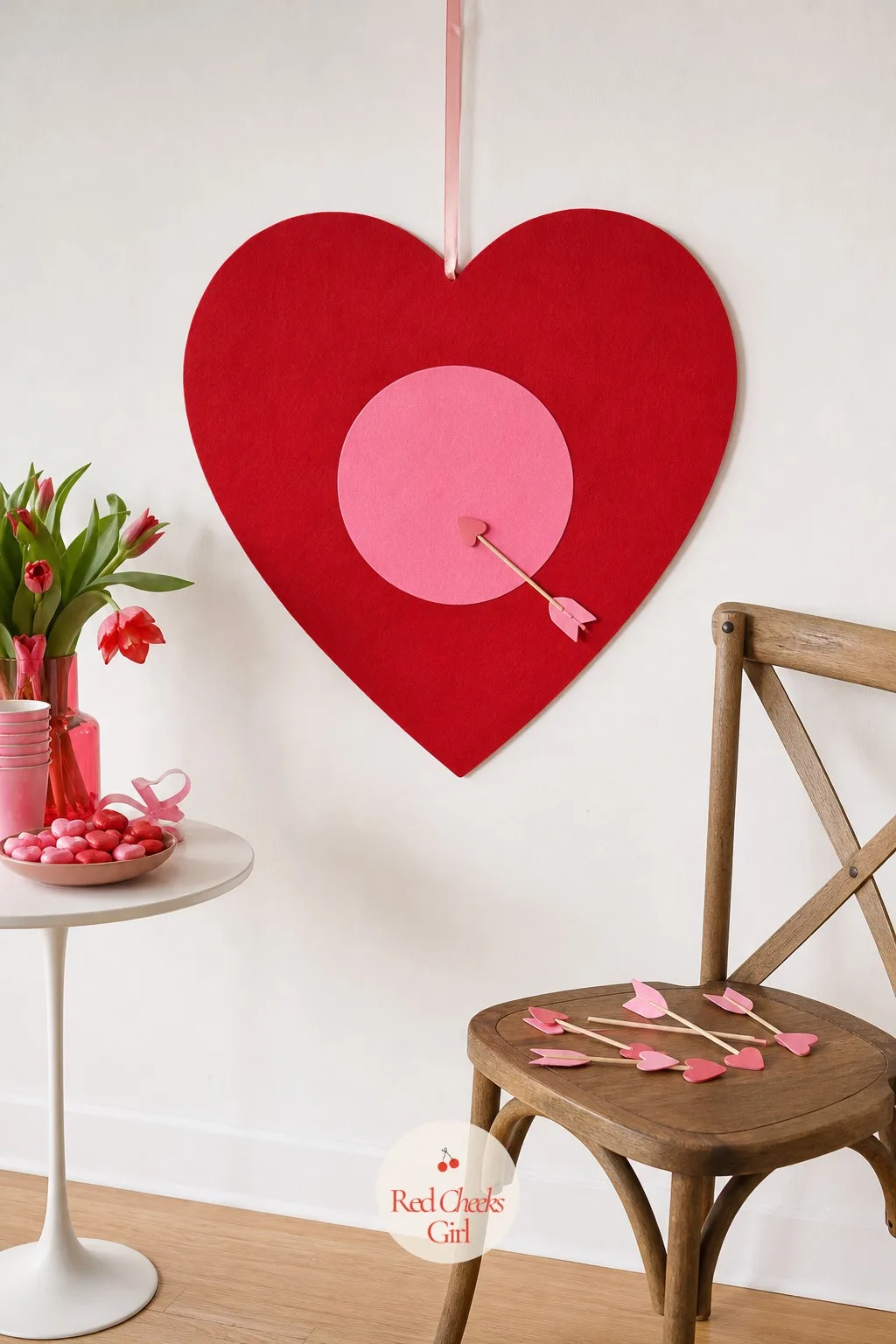
Blindfolds make everyone a little braver and a little worse at this than they expect, which is exactly why it works at every age.
Tape a large felt or paper heart target to a wall, mark a bullseye at the centre, and cut out a handful of paper arrows with a loop of tape on the back of each. Blindfold one player at a time, spin them gently, and let them stick their arrow as close to the bullseye as they can manage. Whoever lands nearest the centre after everyone has had a turn wins; measure with a ruler if it looks too close to call.
For small children, skip the blindfold and let them aim with their eyes open. For a harder adult round, add a second spin halfway across the room before they walk the rest blind. If the target keeps tearing from repeated tape, back it with a sheet of cardboard first.
🛍 Shopping guide
X&O Tic Tac Toe
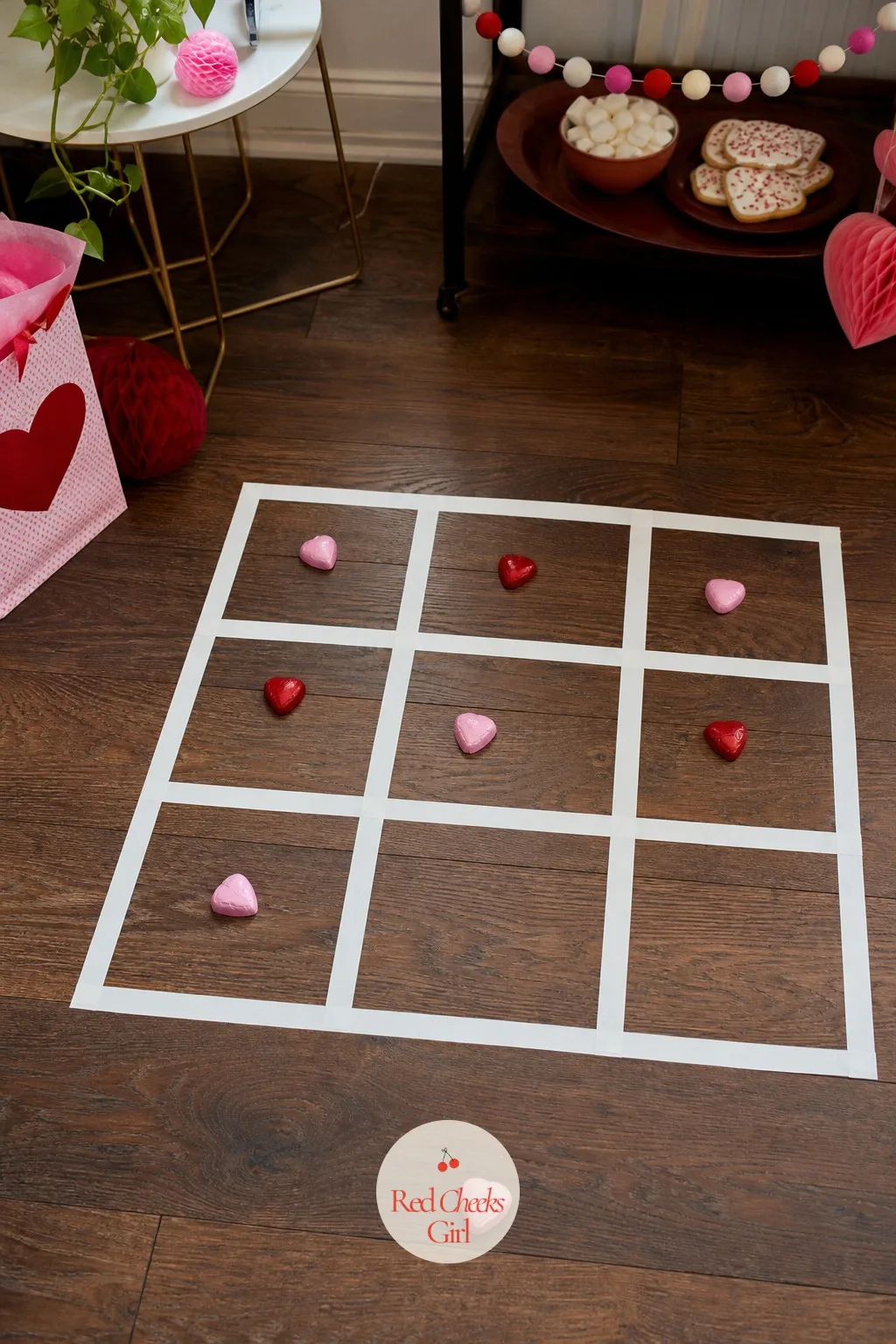
A grid of tape on the floor does not look like much until two players are lobbing candy hearts at it, aiming for one square and usually hitting the wrong one.
Tape a large three by three grid on the floor, giving each square room for a candy to land cleanly. One player tosses red heart candies, the other pink or white ones, taking turns from a line a few steps back; the first to land three of their colour in a row, straight or diagonal, calls it and wins. It is a five minute setup and plays well from age five up, including a packed classroom running several grids at once.
Make it easier by letting younger players step right up to the grid instead of tossing from a distance. Make it harder by shrinking each square or moving the toss line back further. Swap hard candy for soft pom-poms if the game runs on carpet, where landed candy gets lost in the fibres.
🛍 Shopping guide
Ring Around the Roses
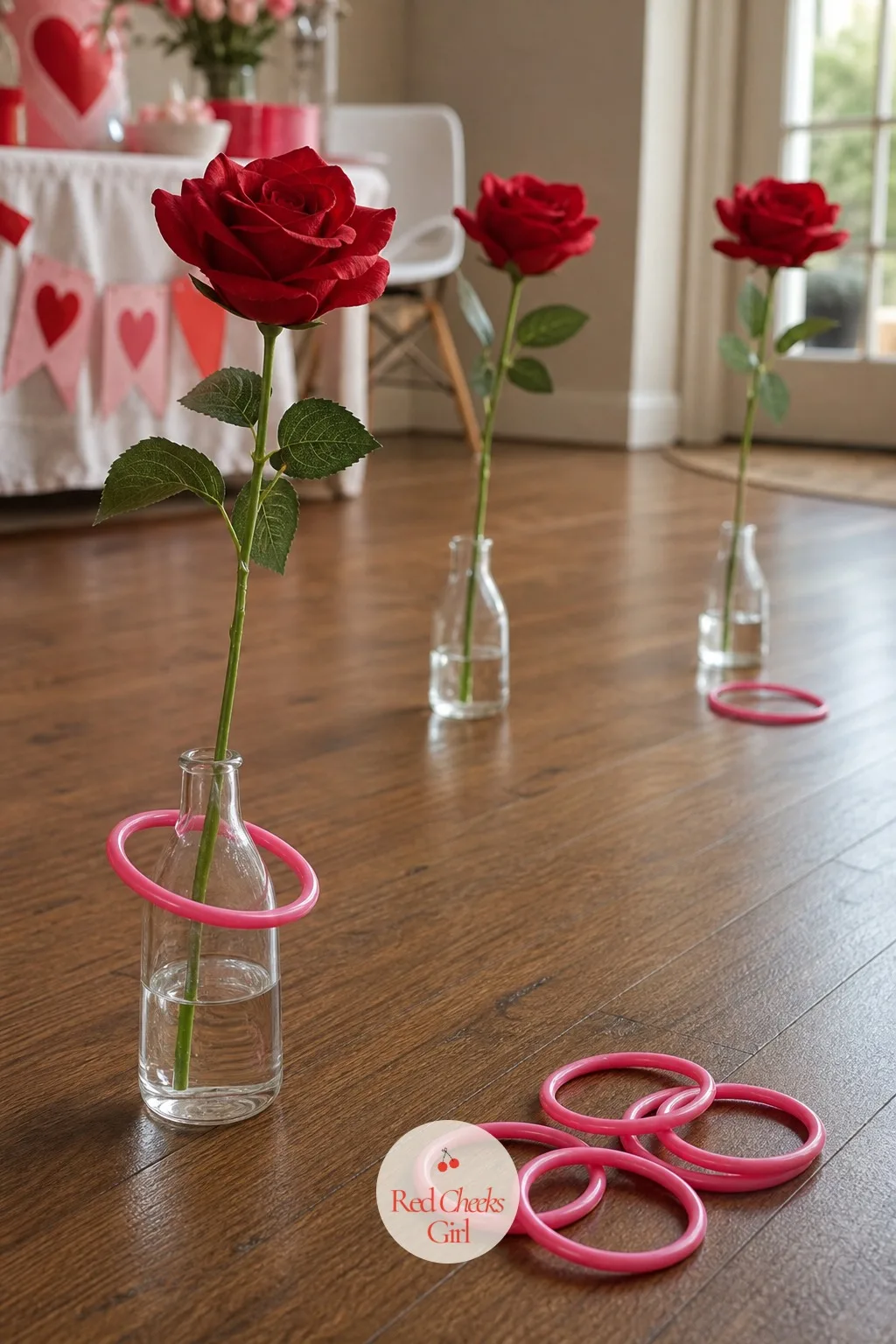
A row of fabric roses standing in bud vases looks almost too pretty to turn into a target, which is exactly the point.
Stand three or four tall faux roses in weighted vases at varying distances across the room, the furthest worth the most points. Players toss small plastic rings underhand, trying to loop a rose stem; add up points after five tosses each, highest score wins. It suits teens and adults especially well since judging distance takes patience, though younger kids enjoy it with the vases moved closer.
Simplify for children by using just one rose at close range, counting any ring landed as a win. Toughen it for adults with a rule that a ring touching the vase but not looped around the stem scores nothing. No faux roses on hand: tall bottles wrapped in red ribbon work just as well as a target.
🛍 Shopping guide
Team and Partner Challenges
Pair people off here, on purpose or not: holding a balloon against someone’s forehead gets past small talk fast, and passing a wrapped box around a circle does the same thing more quietly.
Don’t Break My Heart
Nothing breaks the ice between people who barely know each other like holding a balloon against a partner’s forehead and trying not to laugh it loose.
Pair players up and give each pair one inflated red or pink balloon. Holding the balloon only between foreheads, no hands, each pair walks a short marked course across the room and back without it dropping; if it falls, that pair restarts from where they fell. First pair back over the finish line with the balloon still in place wins. Works well from about age ten through adults, since it leans on cooperation more than strength.
For a gentler version with kids, let pairs hold the balloon between their bellies instead, much easier to manage. For a harder adult round, make pairs carry two balloons at once, one at the forehead and one between the knees. Balloons pop occasionally against sharp fingernails, so keep a spare bag of five or six on hand.
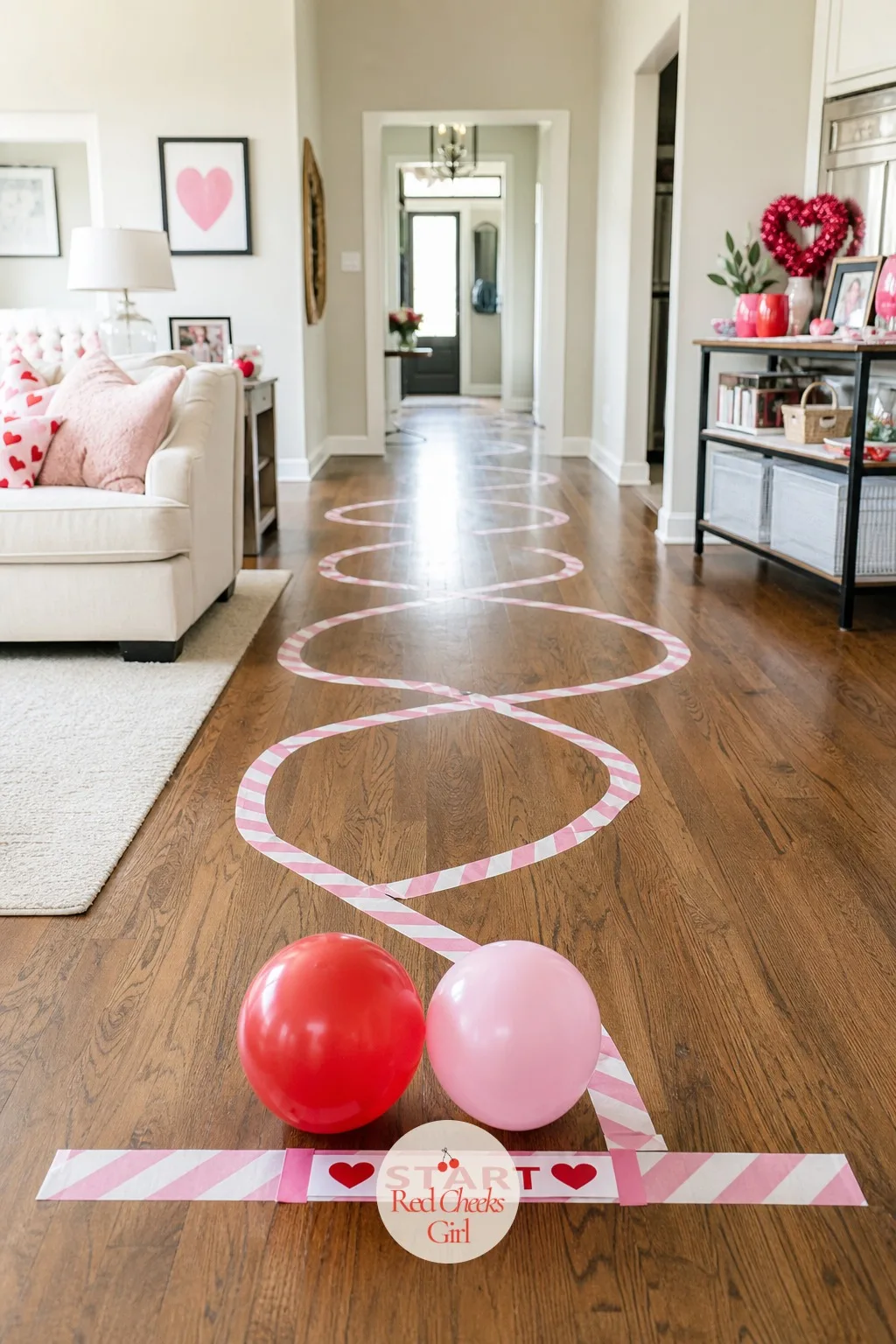
🛍 Shopping guide
Love Goes Round
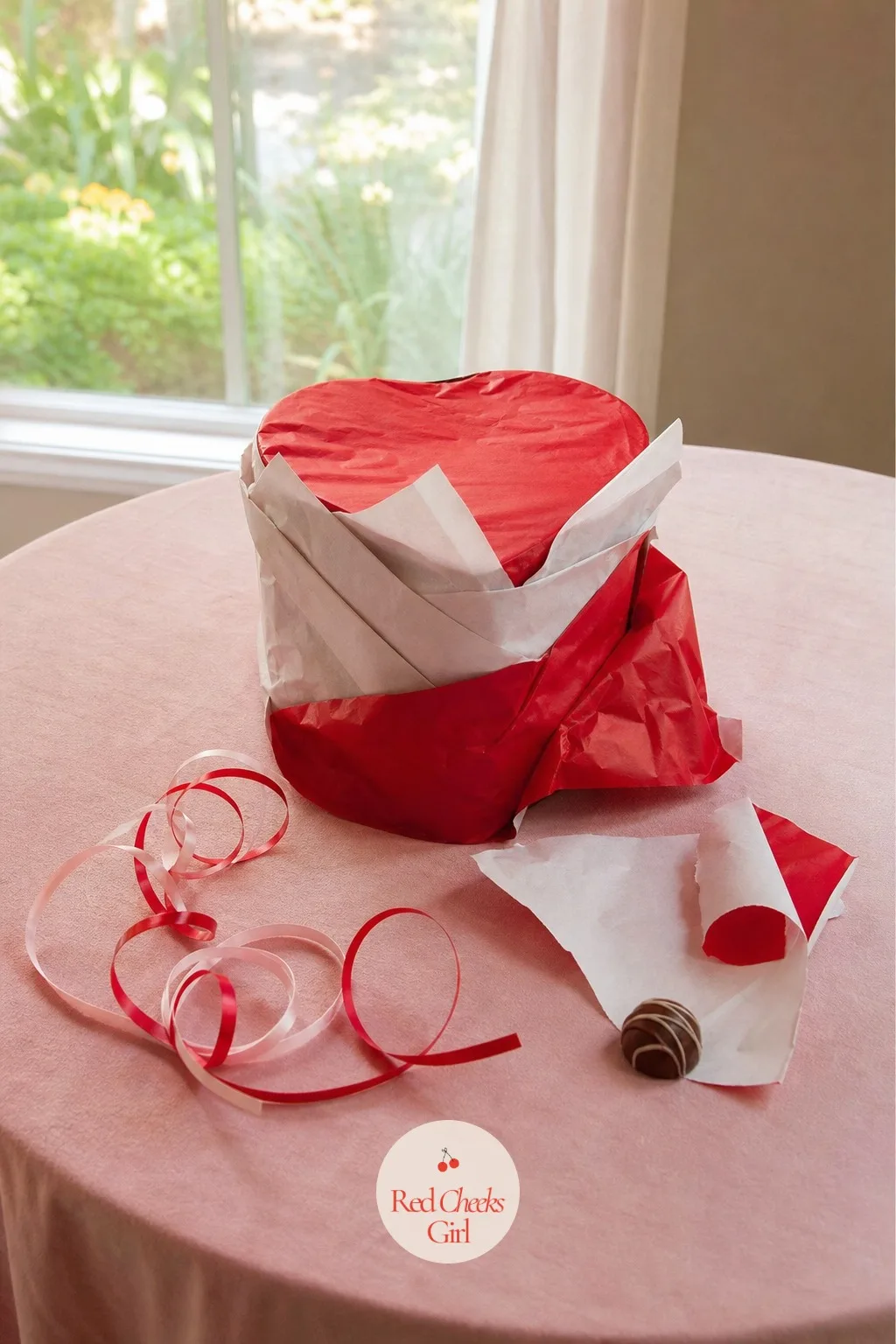
A heart shaped box wrapped in six or seven layers of paper looks almost too nice to shred, until the music stops and everyone scrambles for the one layer that matters.
Wrap a small box in several layers of paper, tucking a tiny treat or a folded dare between each layer and a bigger prize at the centre. Sit everyone in a circle and pass the box around while music plays; whoever holds it when the music stops unwraps just one layer and keeps whatever is tucked inside, then the music starts again. Whoever unwraps the final, innermost layer gets the main prize and the game ends there.
For young children, skip the dares and tuck a small chocolate between every layer so nobody leaves empty handed. For older teens, write a silly task on each paper layer instead of a treat, acted out before passing resumes. No music on hand works fine too: a player with their back turned simply calls stop at random.
Gone with the Wind
Watching someone go red in the face trying to blow a paper heart in a straight line is funnier than it should be, and it needs nothing more than lungs.
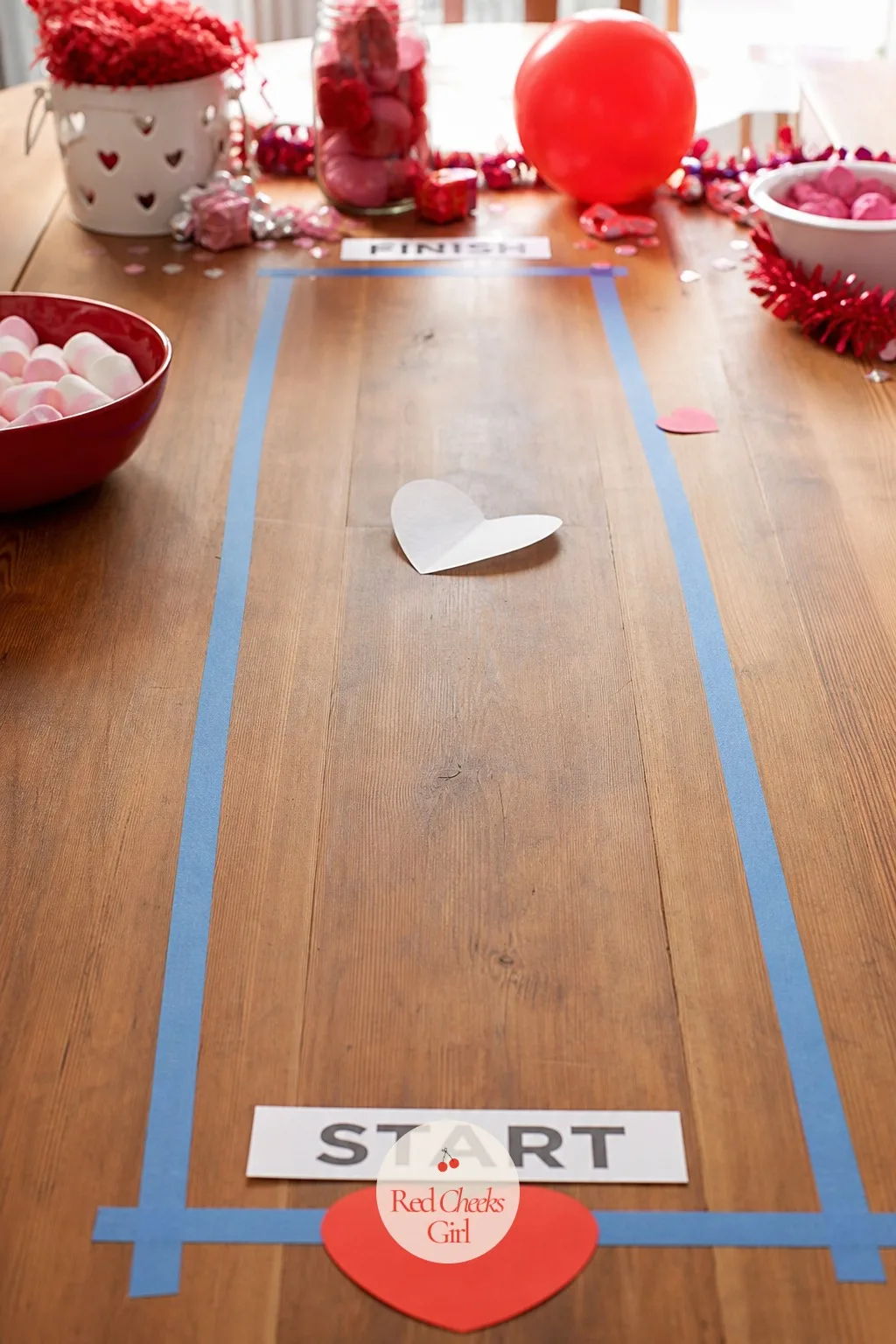
Mark a start and finish line a few feet apart on a long table, and place a light tissue paper heart cut-out at each player’s start line. On go, players blow through pursed lips only, no hands and no straws, to push their heart across the finish line; first heart across wins. It plays best for ages eight and up, since younger players tend to flatten the heart with too much force rather than guide it.
Shorten the course for little ones, or let them use a straw to blow through if pursed lips feel too tricky. For a harder round, tape paper straws upright as obstacles the heart has to weave around without touching. If the paper hearts keep curling from damp breath, swap to a lightweight foam heart instead, it glides further on less air.
🛍 Shopping guide
Active Floor and Relay Games
These need the rug rolled back or the living room cleared, and they are the ones that get loud. Good for the stretch of the party when everyone wants to move.
Tower of Love Cup Relay
A pyramid of cups takes concentration to build and about two seconds to knock down, which is why teams get competitive fast over who stacks cleaner.
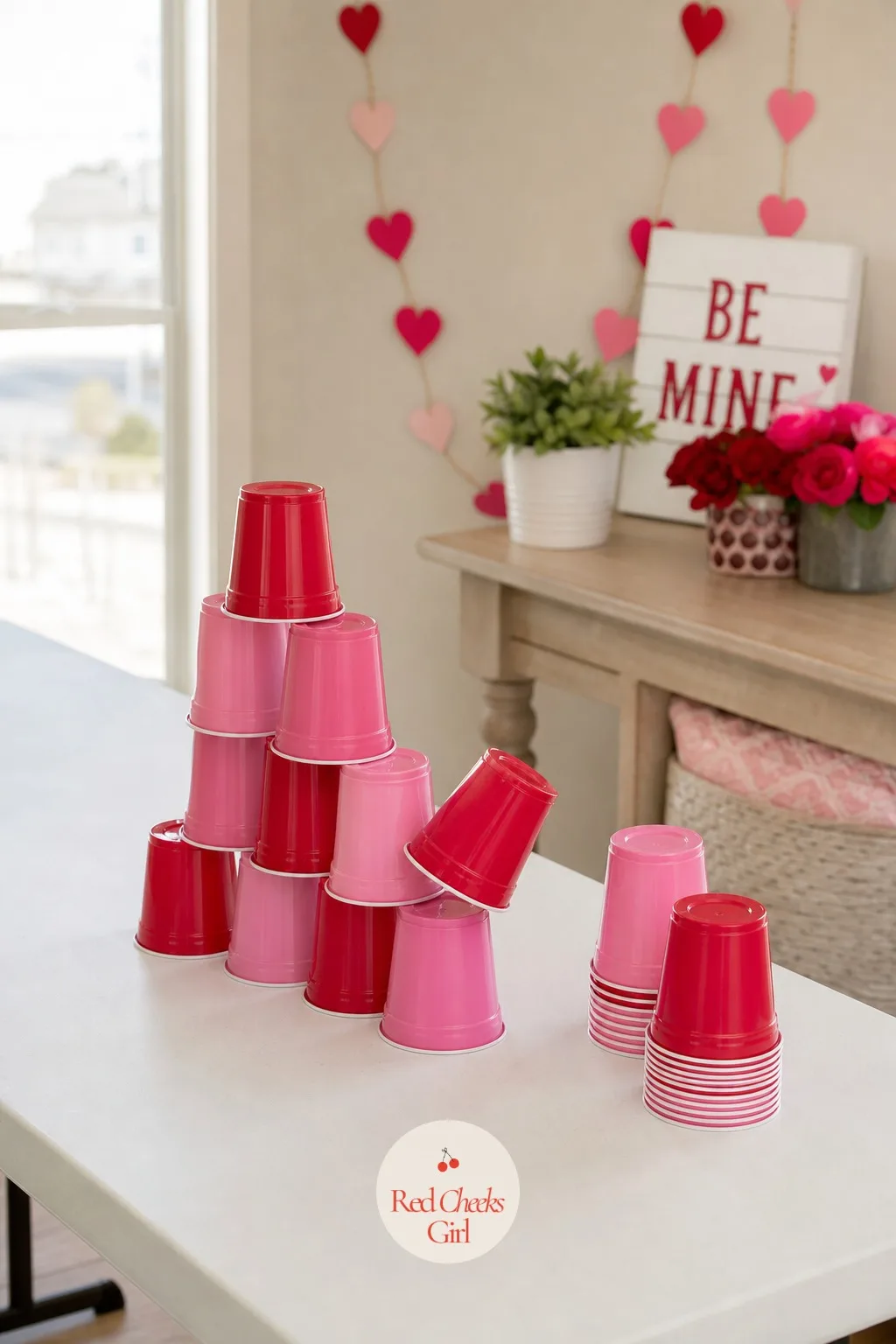
Split into teams of two or more and give each team ten plastic cups. The first player races to stack all ten into a pyramid, then immediately unstacks them back into a flat pile before tagging the next teammate, who repeats the stack and unstack; first team through everyone wins. Pink and red cups keep it on theme. It suits ages six and up, since the stacking pattern is simple once shown once.
Make it easier by using only six cups in a smaller pyramid for younger teams. Make it harder by requiring one hand only, once players are past about age ten. If cups keep sliding on a slick table, a strip of shelf liner under the stacking spot fixes it instantly.
🛍 Shopping guide
Love Birds Nest Toss
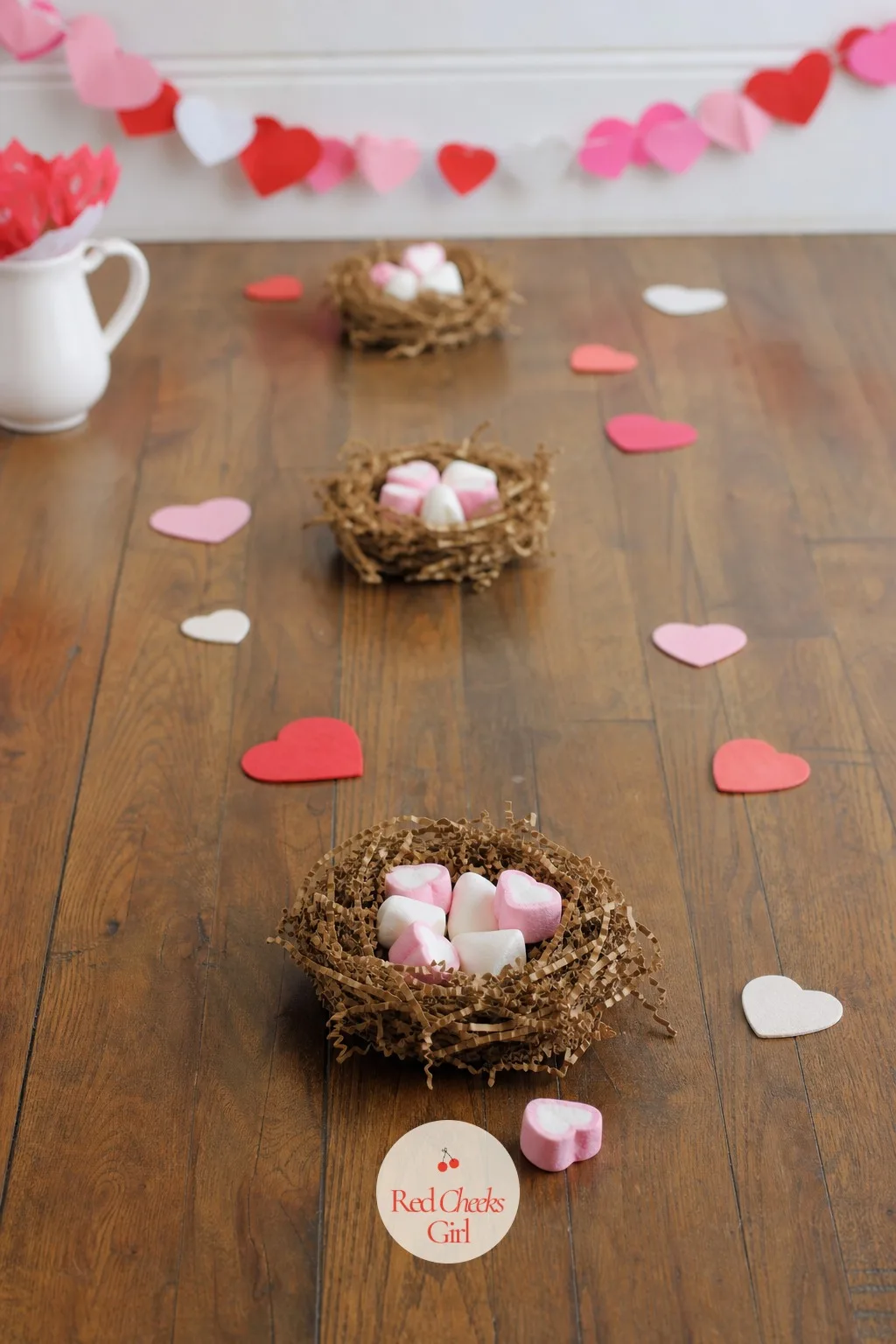
Three little nests lined up at different distances turn a handful of marshmallows into a surprisingly tense aiming game.
Line up small bowls lined with shredded brown paper to look like nests, set at close, medium and far distances, worth one, two and three points. Players stand behind a line and toss heart marshmallows underhand, trying to land them inside a nest rather than bouncing off the rim; add up points after five tosses each, highest score wins. Works nicely for ages five and up as a mixed-age game, since younger players can just aim for the closest nest.
Make it easier by widening the nests or moving them closer together. Make it harder for teens by narrowing the nest openings or adding a blindfolded bonus round for double points. Out of heart marshmallows, mini pom-poms toss just as well and never go stale on the shelf.
🛍 Shopping guide
Candy Heart Spoon Relay
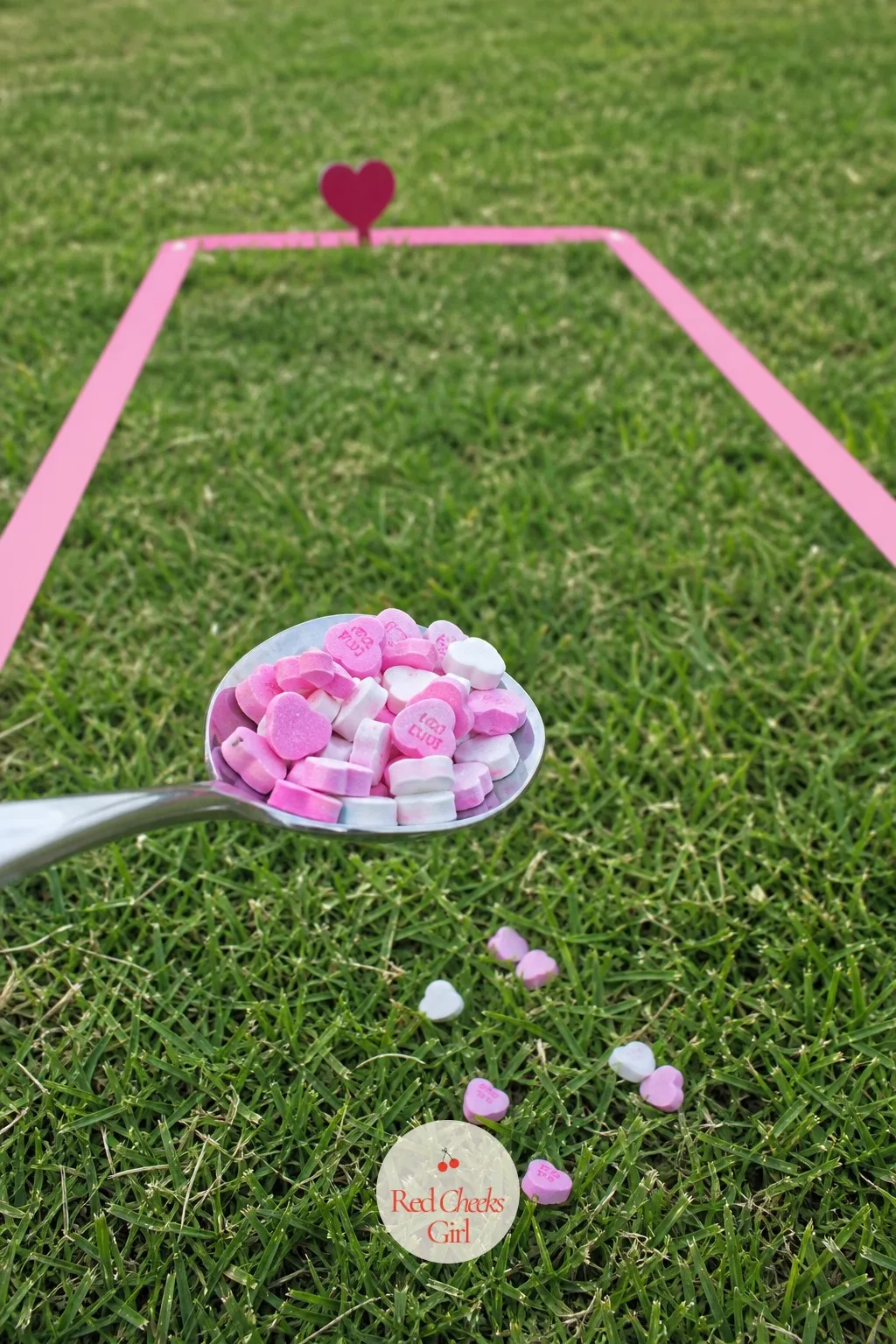
An egg-and-spoon race with conversation hearts instead of eggs sounds easy until the first gust of nerves makes a hand shake.
Mark a start line and a turnaround point about fifteen feet apart. Each team member in turn carries a large spoon piled with conversation hearts from start to turnaround and back without steadying it with the other hand, tagging the next teammate to go; drop the pile and that racer stops to reload before continuing. First team to get everyone through wins. It suits ages six and up and works well outdoors too if the weather allows.
Shorten the course for younger kids or let them hold the spoon with both hands. For a harder adult version, make the course weave around a few taped cones instead of running straight. If the candy keeps rolling off in a breeze, switch to slightly heavier foil wrapped chocolates instead.
Candy Heart Scavenger Hunt
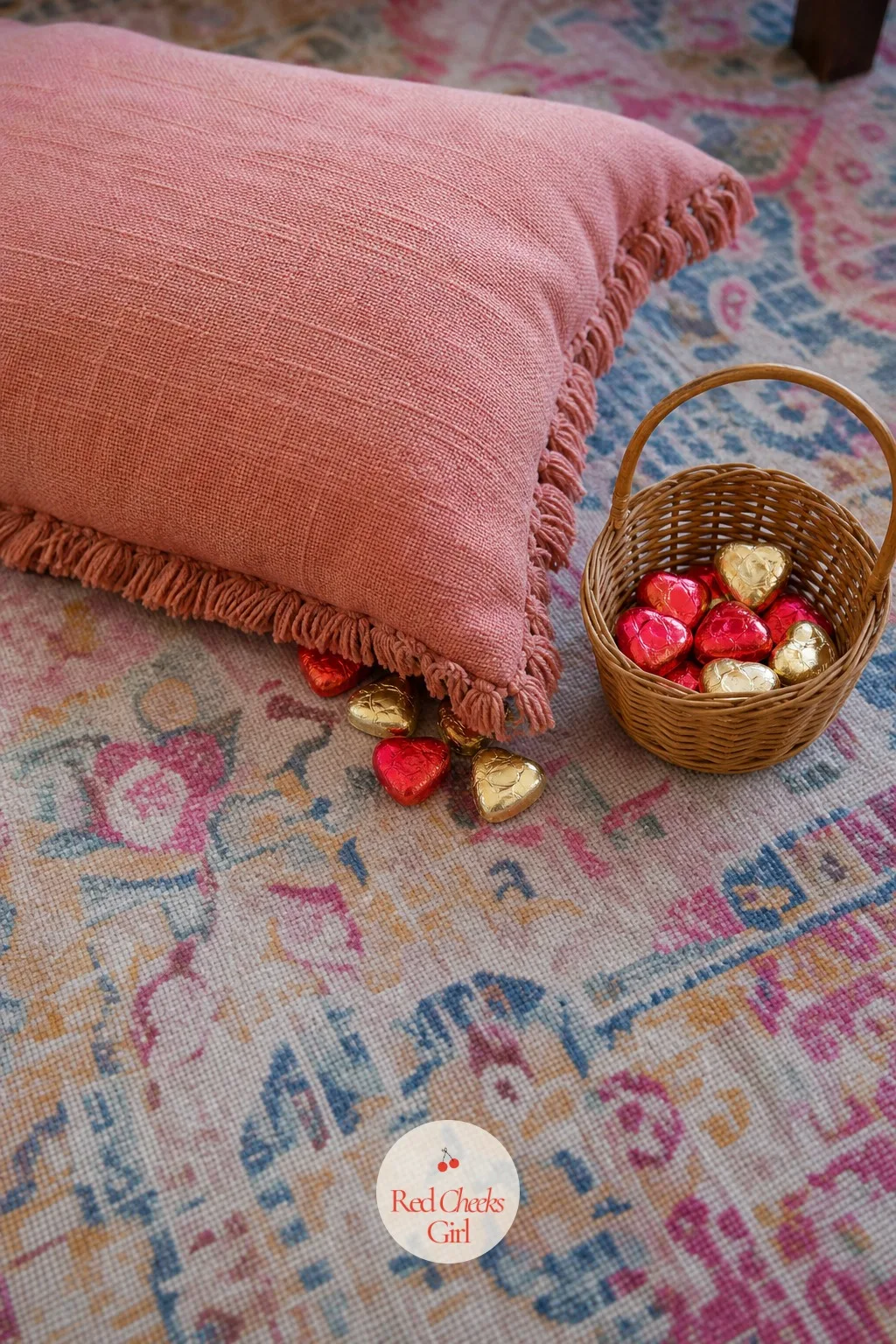
Small wrapped hearts tucked behind cushions and under chair legs turn an ordinary room into a treasure map for about ten minutes flat.
Hide a set number of foil-wrapped chocolate hearts or small heart erasers around a room or yard before guests arrive, keeping a private count. Give everyone a small basket and set a time limit, usually three to five minutes, to collect as many as they can find; most found when time is up wins, with a shared basket making it collaborative instead if preferred. It scales easily for a whole classroom by hiding one for every child’s name tag, so nobody goes home empty handed, and 22 Valentine Class Party Games for a Classroom Full of Sugar has more swaps built for a full room of desks.
Make it easier by hiding items in plain sight at child height for the youngest guests. Make it harder for teens by writing a short riddle clue for each hiding spot instead of letting them search freely. If real chocolate would melt outdoors, small plastic hearts or heart shaped buttons hide just as well.
🛍 Shopping guide
Prize and Chance Games
Less racing, more suspense: these two reward patience and a lucky guess rather than speed, and run quietly alongside anything louder.
Box of Chocolates
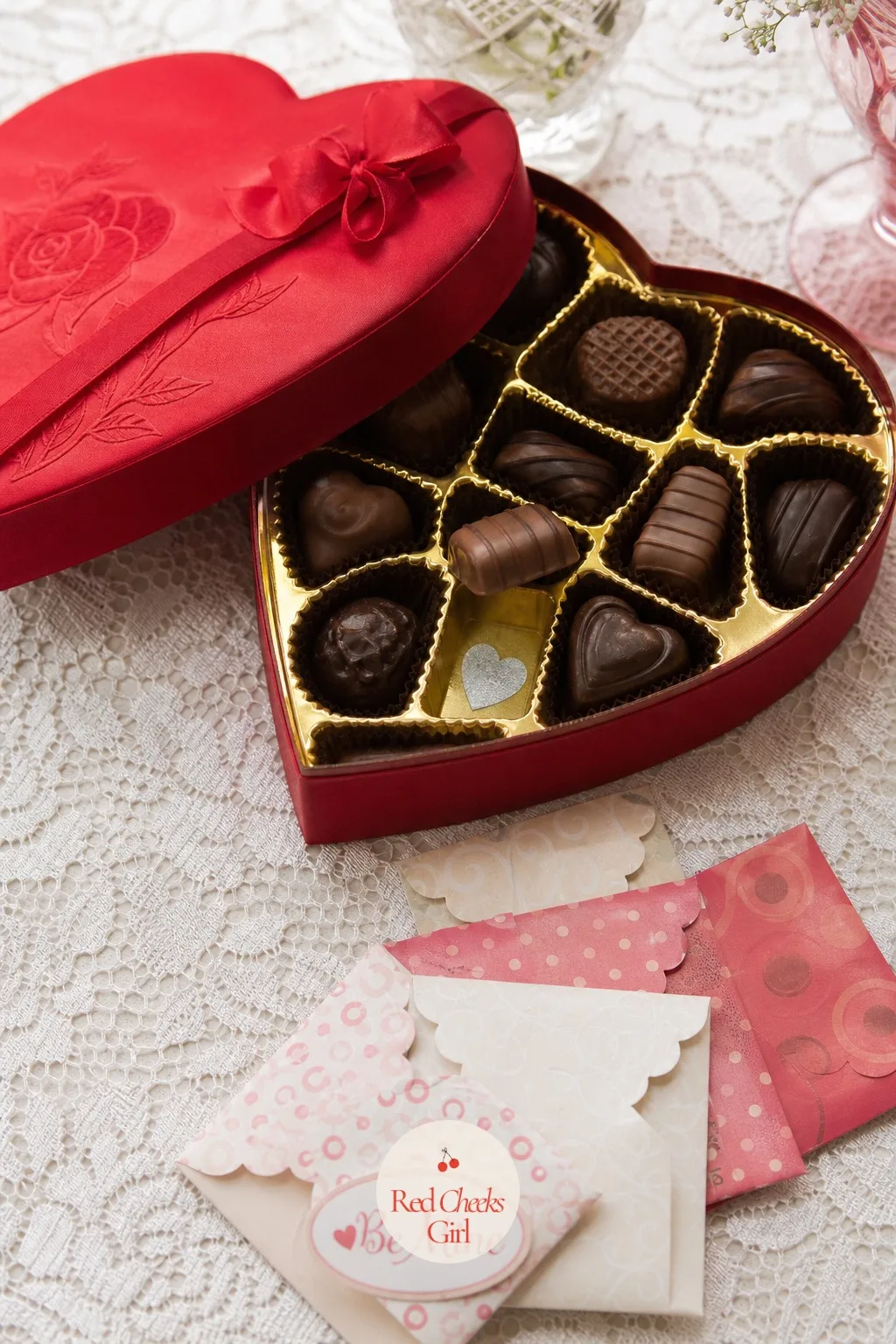
A fancy box of chocolates holds more than candy here: slip tiny heart stickers under three or four pieces before anyone sits down, and keep a set of small prize envelopes ready off to the side.
Pass the box around and let each player choose one chocolate, no peeking underneath first. Anyone who finds a sticker also gets to pick a prize envelope from the table; everyone still eats their chocolate either way. For a version where every child wins something, match sticker colours to envelope colours so each find is simply themed, not ranked, which keeps a classroom party calm rather than competitive.
No stickers in the house: a dot of edible gold paint or a tiny paper flag under the wrapper works just as well. For older teens, raise the stakes by making only one chocolate in the whole box a winner, turning it into a single dramatic pick instead of several small ones. Keep a nut-free box on the table alongside the regular one if anyone has allergies.
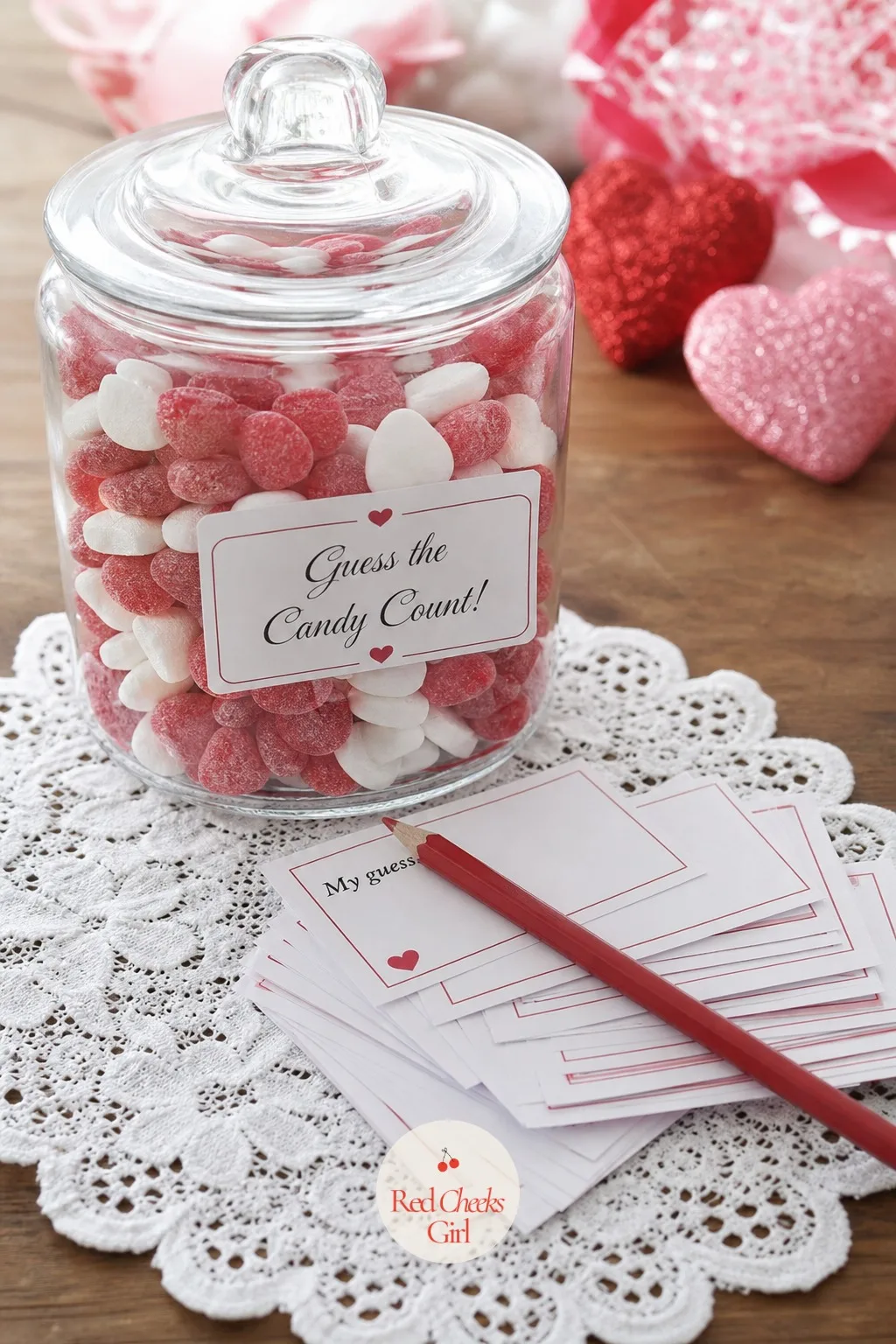
Guess the Candy Count Jar
A jar of cinnamon hearts sitting quietly on the side table does not look like a game, until someone leans in to count and gives up around forty.
Fill a clear jar with cinnamon hearts or foil kisses, counting them as they go in so the real number stays private. Guests write a guess on a slip of paper with their name, fold it, and drop it into a small box; whoever guesses closest without going over wins the jar itself, candy and all. It needs almost no supervision once set up, which makes it a good quiet option running alongside louder games.
For children, use a smaller jar with fewer, larger candies like foil hearts so the count stays guessable. For a trickier adult round, mix two differently sized candies in the same jar, which throws off most mental math. If two guesses tie exactly, split the jar between them, or let them each draw one more candy from a backup bag to settle it.
🛍 Shopping guide
Frequently Asked Questions
What are good valentine party games for adults?
Anything with a bit of nerve works best for adults: Don’t Break My Heart, Cupid’s Castle and Gone with the Wind all reward a little showing off without needing couples to answer deeply personal questions first. For a slower evening built around couples specifically, 22 Valentine’s Dinner Games That Feel Flirty leans more conversational and works well seated at the table between courses.
What is a fun Valentine’s Day game to play at a party?
Love Sucks is the easiest entry point: everyone understands a straw race in about five seconds, it needs only marshmallows and plates, and it photographs as a proper mess of pink and white hearts on the table.
What games do you play at a Valentine’s class party?
Stick to games that scale without sharp props or messy spills: X&O Tic Tac Toe, the Candy Heart Scavenger Hunt and Box of Chocolates all travel well into a classroom. 22 Valentine Class Party Games for a Classroom Full of Sugar has a full set built specifically for desks and short attention spans.
How do you play minute to win it style valentine games?
The format is simple: pick a small, silly, physical task, give players exactly one minute, and score whoever completes the most or gets furthest when time runs out. Quick and funny Minute to Win It Games for Valentine’s Day Parties kids, teens and adults love, and Heart Balance Stack, Heart Transplant and Love Sucks all follow that same sixty-second shape.
What are good valentine games for couples specifically?
Games that force a little physical cooperation, like Don’t Break My Heart’s balloon carry, tend to work better for couples than trivia about each other, since the fun comes from the attempt rather than a correct answer. Love Goes Round also works well for a smaller couples’ gathering since it slows the pace down between louder games.
How many games do I need for a valentine party?
Four or five solid games usually fill an afternoon once you count setup, playing time and the inevitable rematch when someone demands a tiebreaker. Pick across categories rather than all from one type, so there is at least one tabletop race, one toss game and one team challenge to change the pace.

Discover 18 Galentine's party games your friend group will love, from hilarious printable rounds to

Free printable valentines day games for kids classroom parties: 9 print-and-play sheets plus 6 no-pr

Seated, large-print valentines day games for seniors: 8 printables plus 6 no-prep rounds built on so
Leave a Reply