

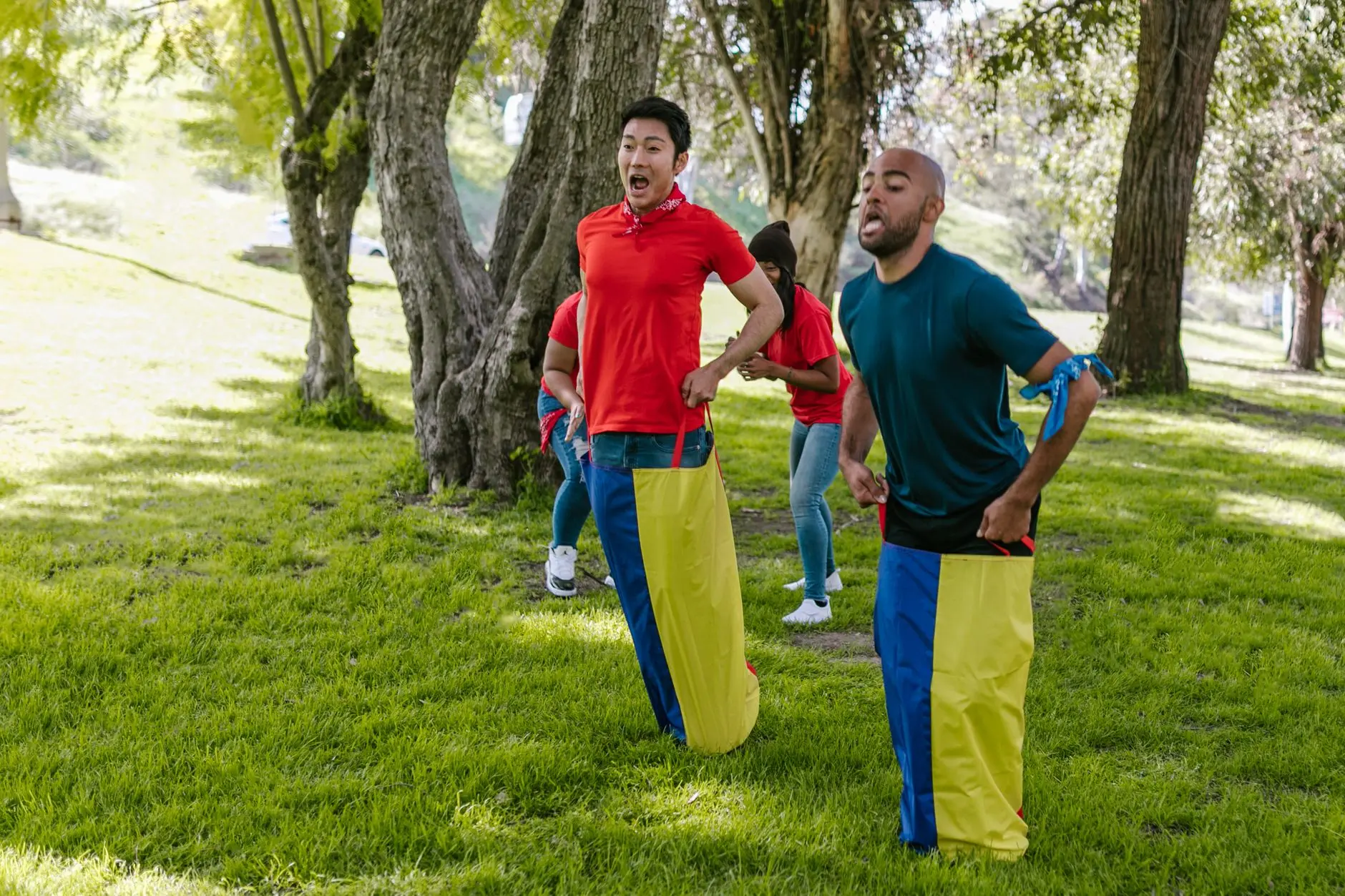
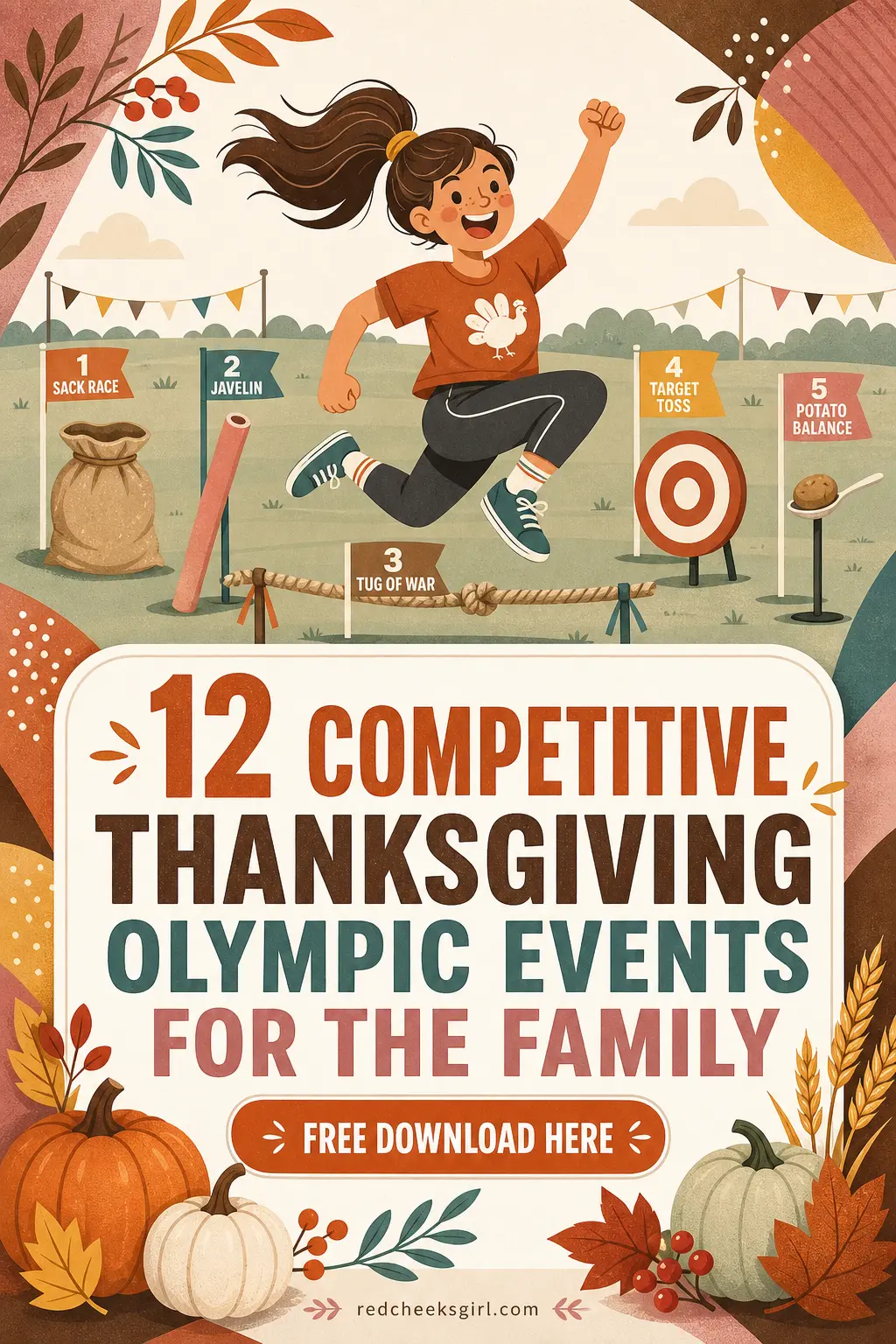
If your Thanksgiving plans involve a loosely organized game of touch football that ends in hurt feelings and a twisted ankle (not that I’d know anything about that), it is time to upgrade to something far more glorious: a full set of Thanksgiving Olympic games that turns your backyard — or living room — into an actual field day.
We’re talking teams, points, a podium, and a family champion who earns serious bragging rights through the entire holiday weekend. And yes, the trophy can absolutely be a plastic turkey wearing a gold medal. Honestly, it should be.
Everything here is structured like a real Olympic event lineup — there’s an opening ceremony, 10 competed events, a printed scorecard to track every point, and a medal ceremony at the end.
If you want to save a little money while pulling it all together, check out these 6 Ways to Save on Thanksgiving so you can put those savings toward a truly epic prize table. Now let the games begin.
- Event 1: Opening Ceremony & Team Draft
- Event 2: Yam Jam Spoon Race
- Event 3: Olympic Scorecard
- Event 4: Turkey Hop Sack Race
- Event 5: Feather Flick Race
- Event 6: Pumpkin Roll
- Event 7: Cornhole Showdown
- Event 8: Feather Javelin Throw
- Event 9: Pie Plate Discus
- Event 10: Turkey Trot Sprint
- Event 11: Tug of War (Harvest Rope)
- Event 12: Stuffing Toss Accuracy Round
- Frequently Asked Questions
1. Event 1: Opening Ceremony & Team Draft
Every great Olympics starts before the first whistle blows, and your Thanksgiving Olympic games are no different.
The Opening Ceremony & Team Draft is the official kickoff event — think of it as your 10-minute pre-game that transforms a bunch of relatives standing in the kitchen into two (or more) fierce competing nations.
One person is appointed Head Olympian (basically the host referee), and that person runs the draft.
Each team chooses a harvest-themed country name — something like ‘Team Cornucopia’ or ‘The Cranberry Crusaders’ — writes it on a paper flag, and selects team colors using bandanas, ribbons, or colored wristbands from the dollar store. This is the moment the trash talk begins.
Lean into it.
To run the draft, write every participant’s name on a slip of paper and draw them randomly, alternating between teams so numbers stay even.
If your crowd is mixed ages, the Head Olympian can do a ‘skill snake draft’ — oldest-to-youngest alternating — to keep teams balanced and prevent Grandpa from singlehandedly destroying everyone in the Tug of War.
Once teams are set, hand out team colors and take a group photo at the ‘Olympic Torch’ (a candle, a flashlight, or, if you’re extra, an actual tiki torch jammed in the lawn).
The photo goes on the fridge and officially marks the start of the games.
Why this works as an event: the ceremony creates buy-in before a single point is scored.
Kids who might otherwise wander off to a screen are suddenly emotionally invested because THEY have a team and THEY have a color and THEY have a team chant that their cousin absolutely stole from them.
Award 5 bonus points to whichever team delivers the most enthusiastic team chant during the ceremony — it costs nothing and immediately cranks the competitive energy up to a solid nine out of ten before anyone has even touched a spoon.
- Paper slips + bowl for the draft
- Bandanas or wristbands in 2+ colors
- Markers for flag/name signs
- A designated Head Olympian (referee/emcee)
- Optional: tiki torch or candle for the ‘Olympic flame’
2. Event 2: Yam Jam Spoon Race
A Thanksgiving Olympic games lineup without a spoon race would be like the actual Olympics without a 100-meter dash — technically fine but deeply wrong.
The Yam Jam Spoon Race is a classic relay race with a harvest upgrade: each runner balances a small plastic or real sweet potato (a yam!)
on a large serving spoon and races from the start line to a cone 20 feet away and back, then hands the spoon off to the next teammate. Drop the yam, go back to start.
First team to have every member complete the relay wins the event and earns their gold-medal points.
Set up a straight course in your yard or driveway using two cones or chalk marks.
Use a matching set of identical large serving spoons for each team so nobody has an equipment advantage (tbh, the size of the spoon matters more than anyone wants to admit). Real sweet potatoes work great and feel wonderfully absurd to carry.
If you’re playing indoors, swap to a large plastic Easter egg or a small mandarin orange — same chaos, zero floor damage. Each runner must keep one hand behind their back while racing; the free hand is strictly for dramatic crowd gesturing only.
The Yam Jam is pure intergenerational gold because a six-year-old and a sixty-year-old have basically the same shot at winning — slow and steady beats fast and reckless every single time.
For a spicier variation, add a ‘gobble tax’: anyone who drops their yam must do a three-second turkey gobble before picking it back up. The crowd will absolutely lose it, and whoever’s racing next will be so distracted laughing that they’ll drop theirs too.
Assign 10 points for first place, 7 for second, 5 for third in all races.
- 1 large serving spoon per team
- 1 small sweet potato or plastic egg per team
- 2 cones or chalk marks for the course
- Masking tape for the start/finish line
3. Event 3: Olympic Scorecard
Every proper Olympic event needs official scorekeeping, and the Thanksgiving Olympic Scorecard is the printable that holds your entire field day together.
This is the one sheet you absolutely must print before the games begin — it is less a game and more the backbone of your whole scoring system, tracking every event, every team, and every point from Opening Ceremony through Medal Ceremony.
Print one copy per team (or one large master copy for the Head Olympian), and assign a dedicated score-keeper on each team who updates the sheet after every single event. No arguing about the math later — the sheet is the law.
The scorecard is formatted as a clean table with all 11 scored events listed in run-of-show order down the left column. Across the top are columns for Team Name, 1st-Place Points (10), 2nd-Place Points (7), 3rd-Place Points (5), Bonus Points, and Running Total.
Each row gets filled in immediately after the event concludes so the standings are always visible.
A Bonus Points column captures things like the Opening Ceremony chant award, exceptional sportsmanship, or the Head Olympian’s discretionary ‘Spirit of the Harvest’ points — which are completely made up on the spot and are absolutely real and valid.
The bottom row tallies the Grand Total for the Medal Ceremony calculation.
Host tip: tape the master scorecard to a clipboard and hang it from a lawn chair, a fence post, or a kitchen cabinet so it functions as a live leaderboard all day.
People will check it obsessively between events, which builds tension and makes the final tally genuinely suspenseful.
If you have a big group, assign a tween as the official Scorekeeper — they take the job extremely seriously, they will not let anyone cheat, and it gives them a VIP role that makes them feel very important.
Print extras as backups because someone will spill apple cider on the master copy. It is a guarantee.
Hang the master scorecard on a clipboard as a live leaderboard so everyone can see the standings between events — the suspense is half the fun!

4. Event 4: Turkey Hop Sack Race
A sack race at Thanksgiving is not just a game — it is a full-body commitment to looking absolutely ridiculous in front of your entire extended family, and I mean that as a compliment.
The Turkey Hop Sack Race works exactly like the classic field day event: each competitor steps both feet into a pillowcase or burlap sack, grabs the sides, and hops as fast as humanly possible from the start line to the finish line 25 feet away.
No running, no shuffling — full hops only. Whoever crosses the finish line first wins the heat. Run multiple heats by team so every family member participates, then award event points based on which team racks up the most wins across all heats.
Grab a set of matching pillowcases from the linen closet (the ones you’ve been meaning to retire work perfectly and you don’t care if they get grass stains) or grab actual burlap sacks from a craft store.
Set a clear 25-foot course with visible start and finish lines — chalk on the driveway works perfectly. For very young kids, shorten the distance to 15 feet and let them use a slightly wider sack for stability.
For adults who claim they are ‘too old for this,’ remind them that the Olympic scoring table is merciless and their team needs every point. That usually works.
The Turkey Hop works brilliantly as a team relay variation: instead of individual heats, each team fields one racer at a time in a relay format — racer one hops to the cone, climbs out, runs the sack back, and racer two steps in.
This keeps the whole team hollering and cheering from the sideline and turns a 30-second race into a two-minute spectacle. Pro host tip: play the Chariots of Fire theme song from your phone while races are happening.
It is extremely silly and one hundred percent mandatory.
- For toddlers and little ones, use a wider pillowcase and shorten the course to 10 feet
- For mixed-age heats, group participants by age bracket so races stay competitive
- No burlap sacks? Old pillowcases from the linen closet work perfectly
5. Event 5: Feather Flick Race
The Feather Flick Race is one of those games that sounds deceptively easy right up until the moment the whistle blows and you are sprinting after a rogue feather that the wind just sent three feet sideways.
Each competitor gets one large craft feather and must move it from the start line to the finish line — 15 feet away — using nothing but their breath.
No hands, no feet, no blowing through a straw (that’s a different game, and a harder one). Racers crouch, crawl, and scramble across the ground blowing with everything they’ve got while their feather flutters, spins, and generally refuses to cooperate.
First feather to cross the finish line wins.
Buy a pack of large craft feathers from any hobby store — the fuller and fluffier, the better, since they float more unpredictably and level the playing field between competitive breathers.
Mark a 15-foot lane on the floor with tape (indoors works great for this one) or chalk lines outside. Run racers in pairs or small groups side by side so there’s direct competition and plenty of accidental crossover chaos.
The key rule: if your feather touches another competitor’s lane marker, you must pause for a three-count before resuming. This prevents the sneaky ‘sideways blow’ strategy that someone in your family will absolutely try.
Why it works for a mixed-age crowd: the Feather Flick Race is legitimately funny to watch at any age.
Grandma crawling across the kitchen floor blowing a turkey feather with the intensity of an Olympic sprinter is the kind of core memory that gets retold at every Thanksgiving for the next twenty years.
For an advanced variation, run it as a relay — racer one flicks the feather to the halfway point and tags out, then racer two takes it to the finish — which adds a handoff challenge that turns a simple race into a surprisingly strategic team event.
- All ages — toddlers to grandparents can all compete on equal footing
- Indoors or outdoors (indoor version is especially hilarious on a hardwood floor)
- Groups of 4–12 players
6. Event 6: Pumpkin Roll
The Pumpkin Roll is exactly what the name promises and somehow even more chaotic than you are imagining.
Each competitor gets a small sugar pumpkin (the round, squat kind — NOT a giant carving pumpkin, unless you want a pulled muscle and a very embarrassing story) and must roll it with their nose from the start line to the finish line 20 feet away.
Hands may only be used to retrieve the pumpkin if it rolls out of the lane — and you must bring it back to where it went rogue before resuming. Fastest nose-roller wins. This is an Olympic event. It counts. The judges are watching.
Set up individual lanes about 3 feet wide using chalk or rope so pumpkins don’t collide mid-race. Pair this with a hard, flat surface — a smooth driveway is ideal, a lawn adds beautiful difficulty because the grass resistance makes racers work significantly harder.
If your pumpkins are lopsided (spoiler: they all are), that’s not a bug, that’s a feature — it means every pumpkin rolls differently and nobody can predict whose will veer left. Keep a spare pumpkin or two on standby because they occasionally crack. It happens.
A cracked pumpkin mid-race is also a hilarious moment that nobody will forget.
Here’s the thing about the Pumpkin Roll that makes it a standout Thanksgiving Olympic games event: it completely neutralizes athletic advantage. Your fastest relative is bending awkwardly to shove a lumpy gourd with their face while their knees protest and their glasses slide off.
Meanwhile, the seven-year-old who does yoga is absolutely demolishing the competition with flexible nose-to-pumpkin technique.
Award a spontaneous ‘Best Form’ bonus point (decided by crowd applause) to whichever racer commits most dramatically to the crawl — it rewards enthusiasm over speed and keeps the energy electric.
- 1 small sugar pumpkin per racer (plus 1–2 spares)
- Chalk or rope to mark lanes
- Flat hard surface (driveway ideal)
- A referee to watch for hand fouls
7. Event 7: Cornhole Showdown
Cornhole needs no introduction at a Thanksgiving gathering — it is practically a legal requirement at this point — but in the context of your Thanksgiving Olympic games, it gets a proper competitive structure instead of the casual driveway version where nobody really keeps score and someone always claims their bag ‘definitely went in.’
In the Olympic Showdown format, teams go head-to-head in timed 5-minute matches. Each team fields two players who stand at opposite boards and take turns throwing all four bags.
Standard cornhole scoring applies: bag through the hole = 3 points, bag on the board = 1 point, cancellation scoring between opponents. Highest combined team score across a set of three matches wins the event and earns Olympic points.
You almost certainly already own a cornhole set, but if not, the dollar store sells mini versions that work brilliantly for this. Set boards at the regulation 27-foot distance for adults; pull them in to 15–20 feet for mixed-age rounds so the competition stays tight.
Thanksgiving-theme your bags if you’re feeling crafty — orange and brown fabric bags, or just stick a fall leaf sticker on each one so teams can tell their bags apart.
The Head Olympian keeps official time on their phone and calls the match end; there is no negotiating with the timer because the timer is an impartial official and the timer does not care about your feelings about that last toss.
The Cornhole Showdown is a smart mid-day event because it gives everyone a breather between the more physically intense races while still keeping the competitive stakes alive.
It also naturally draws a crowd of spectators who heckle from the sideline, which is genuinely part of the fun. Host tip: run a ‘Pilgrim’s Challenge’ bonus round — one player from each team takes a single blind-folded toss. Whatever points they score are doubled.
It takes 30 seconds, requires zero setup, and generates an absolutely disproportionate amount of screaming.
- Bag through the hole = 3 pts
- Bag on the board = 1 pt
- Cancellation scoring (net points per round)
- 3 matches per event; team total determines Olympic points
8. Event 8: Feather Javelin Throw
This is the one that sounds vaguely ridiculous but produces more genuine athletic drama than anything else on the roster.
The Feather Javelin Throw is a distance competition modeled directly on the Olympic javelin event — except instead of a 2.7-meter metal spear, each competitor hurls a single large craft feather overhand, like a javelin, as far as they possibly can.
Three throws each, best distance counts. Measure from the throw line to where the feather lands using a tape measure or simple footstep counting, and record each athlete’s best throw on the scorecard. Longest throw wins the event for that competitor’s team.
Use jumbo craft feathers from the hobby store — the stiffer the quill, the more javelin-like the flight, and the more seriously everyone takes their throw stance (which is important for maximum comedy).
Mark a throw line with tape or chalk and make absolutely sure no one is downrange before throwing. Each competitor gets a brief running start of three steps — just like real javelin athletes — before releasing overhand.
Underarm throws are a foul and result in a dramatic red flag from the Head Olympian, who should have a red napkin on hand specifically for this purpose. The crowd will boo appropriately.
The Feather Javelin is a brilliant equalizer event because the feather’s aerodynamics are genuinely unpredictable — sometimes a gentle, well-aimed toss beats a powerful windup throw because the feather catches air at the perfect angle.
This means your twelve-year-old has a legitimate shot at beating every adult in the yard, which is the kind of upset that makes a family Olympics feel like an actual Olympics.
For a variation, set up a target zone (a hula hoop on the ground) and score extra bonus points for landing within it — it adds a precision element that rewards technique over raw power.
- 1 large stiff-quill craft feather per competitor
- Tape measure or footstep-counting judge
- Chalk throw line
- Red napkin for foul calls (very official)
9. Event 9: Pie Plate Discus
The discus throw is one of the oldest Olympic events in history, dating back to ancient Greece, which means your family is basically honoring thousands of years of athletic tradition when you fling a tin pie plate across the backyard.
In the Pie Plate Discus event, each competitor stands behind the throw line and hurls a standard metal pie tin — frisbee-style, with a flat horizontal release — as far as possible. Three throws each, best distance measured and recorded.
Longest throw wins, and yes, technique absolutely matters: a flat, spinning release sends that pie plate sailing while a wobbly toss dies immediately. Practice throws are not allowed. There is no mercy in the Harvest Colosseum.
Use standard 9-inch aluminum pie tins from the grocery store baking aisle — they cost practically nothing and fly surprisingly well.
Mark your throw line clearly and make sure the throw zone is clear of people, because a fast-spinning pie tin is shockingly aerodynamic and will absolutely reach further than anyone expects.
If you’re playing with kids under eight, give them a head start of five feet from the throw line — this keeps their throws competitive without changing the fundamental event.
Keep a Sharpie on hand and write competitors’ initials on their pie tins so you can identify whose is whose after a close round.
The Pie Plate Discus pairs perfectly with the Feather Javelin Throw as back-to-back ‘throwing events,’ giving your field day a proper track-and-field section.
After the event, stack up the pie tins, write the distances on them in Sharpie, and keep them as informal trophies — whoever threw the furthest gets to display their tin on the mantle next to the plastic turkey trophy during the Medal Ceremony.
It is a deeply silly honor and people will fight for it. Also: if you’re looking for more ways to make Thanksgiving both fun and budget-friendly, check out these 12 Cheap Thanksgiving Appetizers That Look Expensive to round out your hosting spread.
- 2–3 standard 9-inch aluminum pie tins per team
- Tape measure
- Sharpie for marking tins and distances
- Chalk throw line
10. Event 10: Turkey Trot Sprint
The Turkey Trot Sprint is the 100-meter dash of your Thanksgiving Olympic games — the pure-speed event that every family has at least one person desperately training for in their head right now.
Set a flat 30-foot course (shorter if playing with young kids; 50 feet if you have open space and your family is very serious about sprinting).
Competitors race in heats of two to four people simultaneously, with the top finishers from each heat advancing to a final. The winner of the final earns maximum Olympic points for their team, second place earns the standard silver total, and so on.
Simple, fast, loud, and unambiguous.
Mark the start and finish lines clearly with chalk or tape and designate a starter who yells ‘Ready, set, GOBBLE!’ instead of ‘Go!’
— this is non-negotiable and will cause exactly one second of confused hesitation from every first-time competitor, which is hilarious every single time. Have a clear finish-line judge standing at the line to call close races; ties go to a rematch.
For mixed-age family groups, consider running age-bracket heats (kids, teens, adults, 50+) so everyone gets to race against peers, then award team points based on each bracket winner.
This way Grandma’s impressive sprint in the 60+ heat earns just as many points as the teenagers’ dash.
The sprint is a natural energy spike after the slower, technique-based throwing events, and placing it here in the lineup is intentional — it wakes up the crowd and creates a palpable shift in energy heading into the final two events.
Host tip: have everyone on the sidelines do turkey arm-flap cheering during the sprint (arms bent at the elbow, flapping like turkey wings) to cheer on racers. It looks absolutely deranged from the outside and is the single best photo opportunity of the entire day.
Make someone’s job to capture it. You will thank yourself in December when you’re putting together the family card.
Use ‘Ready, set, GOBBLE!’ as the start call every single time — the confused pause it causes is mandatory entertainment.
11. Event 11: Tug of War (Harvest Rope)
The penultimate event of the Thanksgiving Olympics is the one that tests raw team power, strategy, and the structural integrity of your back: the Tug of War, officially titled the Harvest Rope Pull for maximum Olympic gravitas.
Both teams line up on opposite ends of a long, thick rope — a 20-foot jump rope or a dedicated tug-of-war rope works perfectly — and on the Head Olympian’s signal, they pull with everything they’ve got.
The winning team is the first to drag the center ribbon (tied to the rope’s midpoint) across their goal line, which is marked two feet behind them at the start. Best of three rounds wins the event and earns Olympic points.
Use a thick rope — at least one inch in diameter — for comfortable grip, and tie a brightly colored ribbon or bandana at the exact center before the match begins.
Mark goal lines clearly with chalk or tape so there’s zero dispute about when a team has won.
For safety and fairness, keep adults and kids roughly balanced across teams (this is where your Opening Ceremony draft pays off), and make sure the ground is flat and clear of tripping hazards.
Designate a neutral ‘Rope Judge’ standing to the side who watches the center ribbon — when it crosses the line, that judge calls it immediately and loudly, no debate allowed.
Tug of War is the crowd-roar event of the entire day — the one where grandparents leap off lawn chairs and children scream instructions and someone always loses a shoe.
It is loud, it is physical, and it is the perfect penultimate event because it cranks the energy and the point stakes to maximum just before the final accuracy round.
For a Thanksgiving twist, have the losing team perform the ‘Loser’s Wobble’ — three seconds of doing their best wobbling turkey impression — before the scores are recorded. Humility and humor go together on Thanksgiving, and also it is very funny to watch.
- Groups of 6 or more (3+ per team)
- Outdoors on flat grass or pavement
- Best played as penultimate event to maximize crowd energy before the finale
12. Event 12: Stuffing Toss Accuracy Round
The grand finale of your Thanksgiving Olympic games is not about speed or strength — it is about precision, nerve, and the ability to perform under the crushing weight of team expectations.
The Stuffing Toss Accuracy Round is the closing event: each player gets five beanbags (representing stuffing, obviously) and takes turns tossing them into a set of three target buckets placed at increasing distances — 5 feet, 10 feet, and 15 feet from the throw line.
The close bucket scores 1 point, the middle bucket scores 3 points, and the far bucket scores 5 points. Each competitor’s individual score is added to their team’s tally.
The team with the highest combined accuracy score earns the final event points and possibly seals the championship.
Use standard beanbags, small sandbag toss bags, or DIY stuffing sacks (small ziplock bags filled with dried rice or beans, taped shut, decorated with a marker so they look vaguely like stuffing).
Set out three buckets, baskets, or pots of increasing size — smaller target at the far distance is ideal to reward truly precise throws. Mark each bucket with a score number using tape and a Sharpie.
Every player throws all five bags before the next competitor steps up, and scores are recorded in real time on the Olympic Scorecard. No mulligans. No ‘I wasn’t ready.’ Every toss counts.
Placing the Stuffing Toss last is a deliberate hosting strategy: accuracy events played under high-stakes pressure produce genuine drama, because a team that is trailing by 3 points can absolutely close the gap or even steal the championship here if their players are clutch.
It has happened. It will happen again. The Stuffing Toss is also an indoor-friendly option — clear a hallway or living room and it plays perfectly on carpet — making it a great backup if rain moves the games inside.
After the final competitor throws, total all scores on the scorecard, announce the champion, and proceed immediately to the Medal Ceremony before anyone can contest the math.
- Closing with an accuracy event rather than a physical one lets every skill type compete fairly
- Trailing teams can realistically close a gap here, keeping stakes high to the final toss
- Works indoors if weather forces a venue change
Frequently Asked Questions
What are the best Thanksgiving Olympic games for the whole family?
The best Thanksgiving Olympic games are ones that mix physical activity, teamwork, and humor so every age group can compete.
Classics like the Yam Jam Spoon Race, Turkey Hop Sack Race, Turkey Trot Sprint, and Tug of War work brilliantly for mixed generations because they level the playing field — speed and strength aren’t everything when you’re balancing a sweet potato on a spoon or rolling a pumpkin with your nose.
Pair active events with a printed Olympic Scorecard to track points across the whole day, and cap it with a Medal Ceremony for the full Olympic experience.
What games are included in a Thanksgiving Olympics?
A complete Thanksgiving Olympics field day lineup typically includes an Opening Ceremony & Team Draft, relay races (Yam Jam Spoon Race, Turkey Hop Sack Race), individual speed events (Turkey Trot Sprint), throwing events (Feather Javelin Throw, Pie Plate Discus), target/accuracy events (Cornhole Showdown, Stuffing Toss Accuracy Round), novelty events (Feather Flick Race, Pumpkin Roll), a team strength event (Tug of War / Harvest Rope), and a printed Olympic Scorecard to track all points.
Aim for 10–12 events to fill a half-day without anyone running out of steam.
How do you organize a Thanksgiving Olympics at home?
Start by appointing one Head Olympian to serve as referee and emcee — someone who enjoys keeping order and making announcements loudly. Run a Team Draft at the Opening Ceremony to divide everyone into balanced, evenly matched teams with fun harvest-themed names.
Print your Olympic Scorecard in advance and assign a dedicated scorekeeper. Lay out all supplies the night before, mark course lines on the morning of the event, and run events in a set order (your run-of-show) so there’s no downtime between games.
End with the Medal Ceremony immediately after the final event while excitement is still high.
What supplies do you need for Thanksgiving Olympic games?
The core supply list for Thanksgiving Olympic games includes: large serving spoons and small sweet potatoes (Yam Jam), pillowcases or burlap sacks (Sack Race), craft feathers (Feather Flick, Feather Javelin), small sugar pumpkins (Pumpkin Roll), a cornhole set (Cornhole Showdown), aluminum pie tins (Pie Plate Discus), beanbags and buckets (Stuffing Toss), a thick rope (Tug of War), chalk and tape for marking courses, bandanas or wristbands for team colors, and printed Olympic Scorecards.
Most items cost just a few dollars each and many you already have at home.
What are good Thanksgiving Olympic games for kids and adults?
The best events for truly mixed age groups are the ones that remove pure athletic advantage: the Feather Flick Race (lung power over speed), Pumpkin Roll (flexibility beats strength), Yam Jam Spoon Race (balance wins), and Stuffing Toss Accuracy Round (precision over power) all level the playing field beautifully.
For kids specifically, shorten course distances and pair them with adults on balanced teams. Running age-bracket heats for the Turkey Trot Sprint so kids race kids and adults race adults ensures everyone gets a moment of real competition.
Can Thanksgiving Olympic games be played indoors?
Yes! Several events adapt perfectly to indoors. The Feather Flick Race is actually funnier on a hardwood floor, the Stuffing Toss Accuracy Round works well in a cleared hallway or living room, and the Yam Jam Spoon Race can run along a long hallway.
Events like the Pumpkin Roll, Turkey Trot Sprint, Tug of War, and Pie Plate Discus need outdoor space for safety, but you can easily swap the outdoor events for indoor-friendly alternatives if the weather turns on you.
Print your scorecard either way — it works for any venue configuration.
How do you keep score at a Thanksgiving Olympics?
Use the printed Olympic Scorecard with a simple tiered point system: 1st place per event earns 10 points, 2nd place earns 7 points, 3rd place earns 5 points.
The Head Olympian can award Bonus Points for things like the best team chant, exceptional sportsmanship, or the most dramatic turkey impression. Record scores immediately after each event so the standings are always current.
Tally the Grand Total after the Stuffing Toss Accuracy Round — the final event — and announce the results at the Medal Ceremony.
What are some Thanksgiving-themed minute-to-win-it games for a family Olympics?
Minute-to-win-it style events that fit the Thanksgiving Olympics format perfectly include the Feather Flick Race (keep a feather airborne as long as possible), the Yam Jam Spoon Race run as a solo timed event, the Stuffing Toss Accuracy Round with a 60-second clock, and the Turkey Hop Sack Race with a sprint format.
To run any event in minute-to-win-it style, simply set a 60-second timer and score by how many successful repetitions (or how much distance) each competitor achieves within the time limit, rather than racing head-to-head.
What prizes or awards should you give at a Thanksgiving Olympics?
For the Medal Ceremony, gold medals can be as simple as dollar-store plastic medals spray-painted gold, candy necklaces, or construction-paper medals tied with ribbon.
A fun team prize for the overall champion could be a small wrapped gift basket, the right to go first in the dessert line, or a silly trophy (a plastic turkey wearing a medal is iconic).
Participation awards keep it fun for everyone — a piece of pie, a mini bag of candy corn, or a personalized ‘athlete ribbon’ made from leftover ribbon makes every competitor feel the Olympic spirit. Avoid cash prizes to keep the vibe festive and low-stakes.
How many events should a Thanksgiving Olympics have?
A sweet spot of 10–12 events works best for a family Thanksgiving Olympics. Fewer than 8 events and the day feels too short; more than 12 and energy fades after dinner.
This lineup of 12 events (including the Opening Ceremony and Scorecard) fills a comfortable half-day — roughly 2.5 to 3.5 hours depending on group size — with natural pauses between events for water, snacks, and trash talk.
If time is tight, you can skip 2–3 events and still have a full, satisfying Olympic experience with the essential races, throwing events, and the finale.
There you have it — a complete run-of-show for the most gloriously competitive, deeply silly, genuinely memorable Thanksgiving your family has ever had.
Print the Olympic Scorecard, raid the craft store for feathers and pie tins, designate your Head Olympian (it should probably be you — you’ve done the research), and get ready to crown a family champion who will absolutely, humbly, non-stop mention their victory until at least Christmas.
If you’re already thinking ahead to the holiday season after this, take a peek at this 2025 Christmas Gift Guide for everyone on your list — and if budget is on your mind after the feasts and festivities, these 7 Ways to Budget for Christmas will help you finish the year strong.
Now go out there, gobble louder than the competition, and may the best team win. 🦃🥇
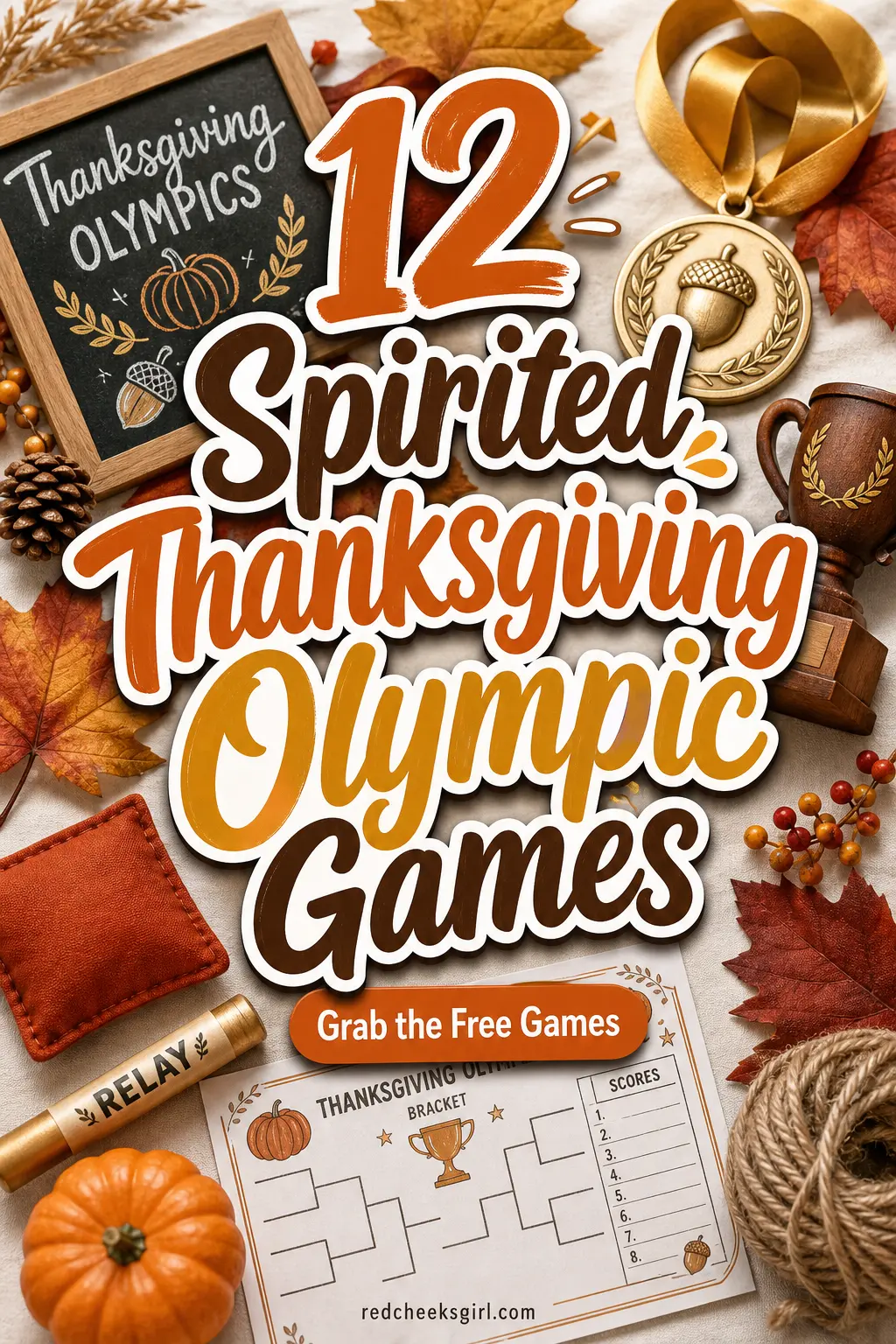
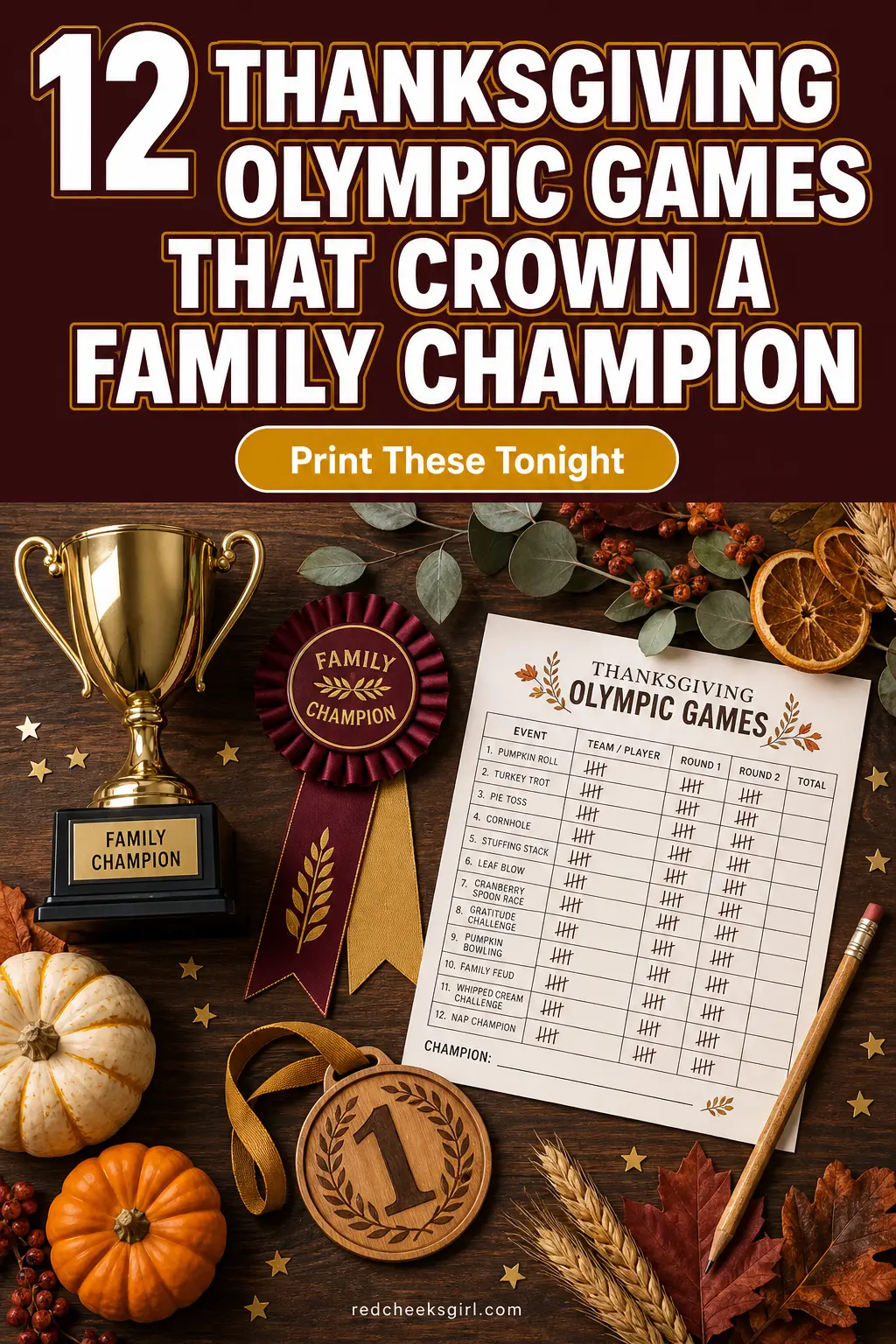
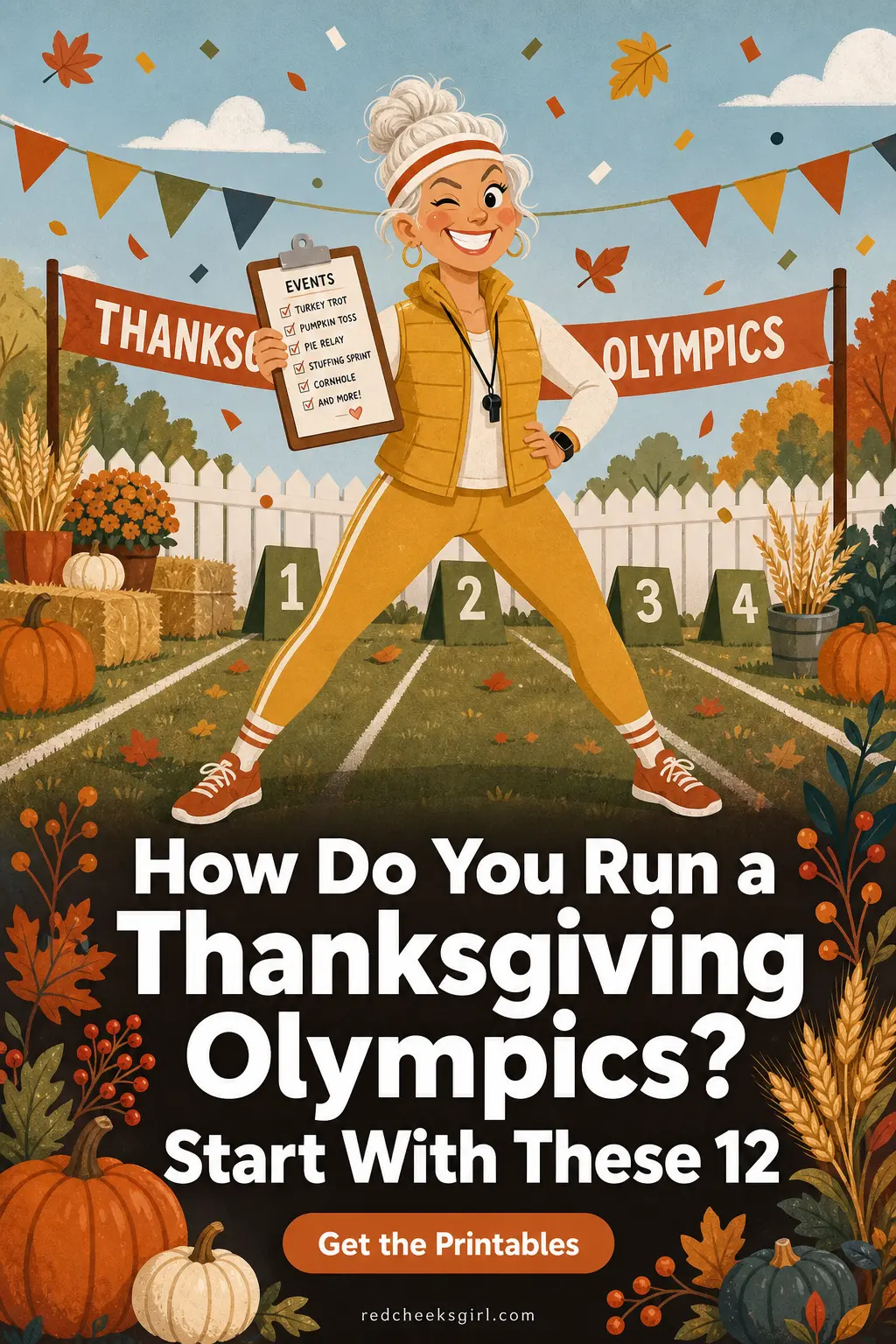
📌 Save These for Later
Loved these? Pin your favorite image below so you can find this list again when you’re planning.
20 thanksgiving potluck ideas that assign categories, not dishes, so your table gets turkey, bread,

18 thanksgiving group games built for 15+ players — no waiting, no boredom. Team formats, printabl
14 thanksgiving table games played between courses, no props needed. Eight free printables, six no-p
Leave a Reply