

20 Thanksgiving Potluck Ideas That Stop Five People Bringing Casserole
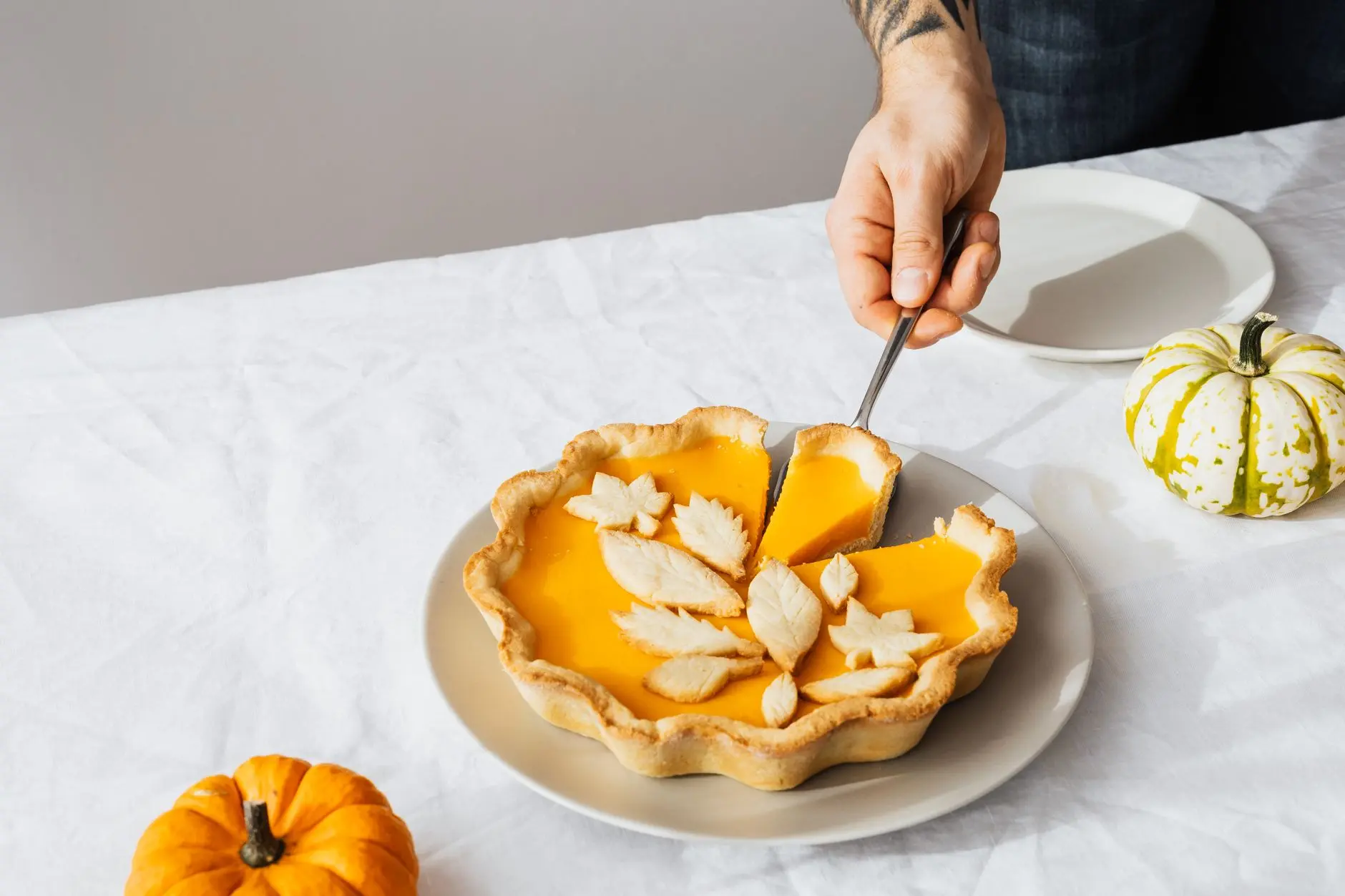
Last year someone got three green bean casseroles and zero bread. The problem was not the guests. The problem was a sign-up sheet that said “bring a dish” and nothing else. Good intentions plus zero structure equals duplicate casseroles every time.
The fix is simple and asks nothing dramatic of anyone: assign a category, not a recipe. Each guest brings whatever they are proudest of inside that lane, and the meal lands balanced. You still get Aunt Rosa’s famous sweet potatoes. You also get bread.
The 20 ideas below cover every moving part, from how you split the categories to what you set out before dessert. You will also find product picks for foil pans, serving utensils, food labels, and folding tables, because the logistics matter as much as the food. If you want something to do between courses, 18 Thanksgiving Group Games for a Big Crowd and 15 Thanksgiving Dinner Games to Play Around the Table are worth bookmarking now.
This post contains affiliate links. If you buy through them, I may earn a small commission at no extra cost to you.
The Category System
Six categories cover a full Thanksgiving table without overlap: protein (the host), starch sides, vegetable sides, bread, drinks, and dessert. That is the skeleton. Everything below puts meat on it.
Split Into Six Categories, Not Three
Most potlucks use three buckets: mains, sides, desserts. That is how you end up with six sides and no bread. Six categories gives every part of the meal its own assigned person: protein, starch side, vegetable side, bread, drinks, dessert. Nobody overlaps because there is nowhere to overlap.
Send the list with the invitation. Let people claim a category first come, first served. Once a category is taken, it is closed. That single rule prevents the casserole pile-up before it starts.
🛍 Shopping guide
Pass a Sign-Up Sheet in Advance
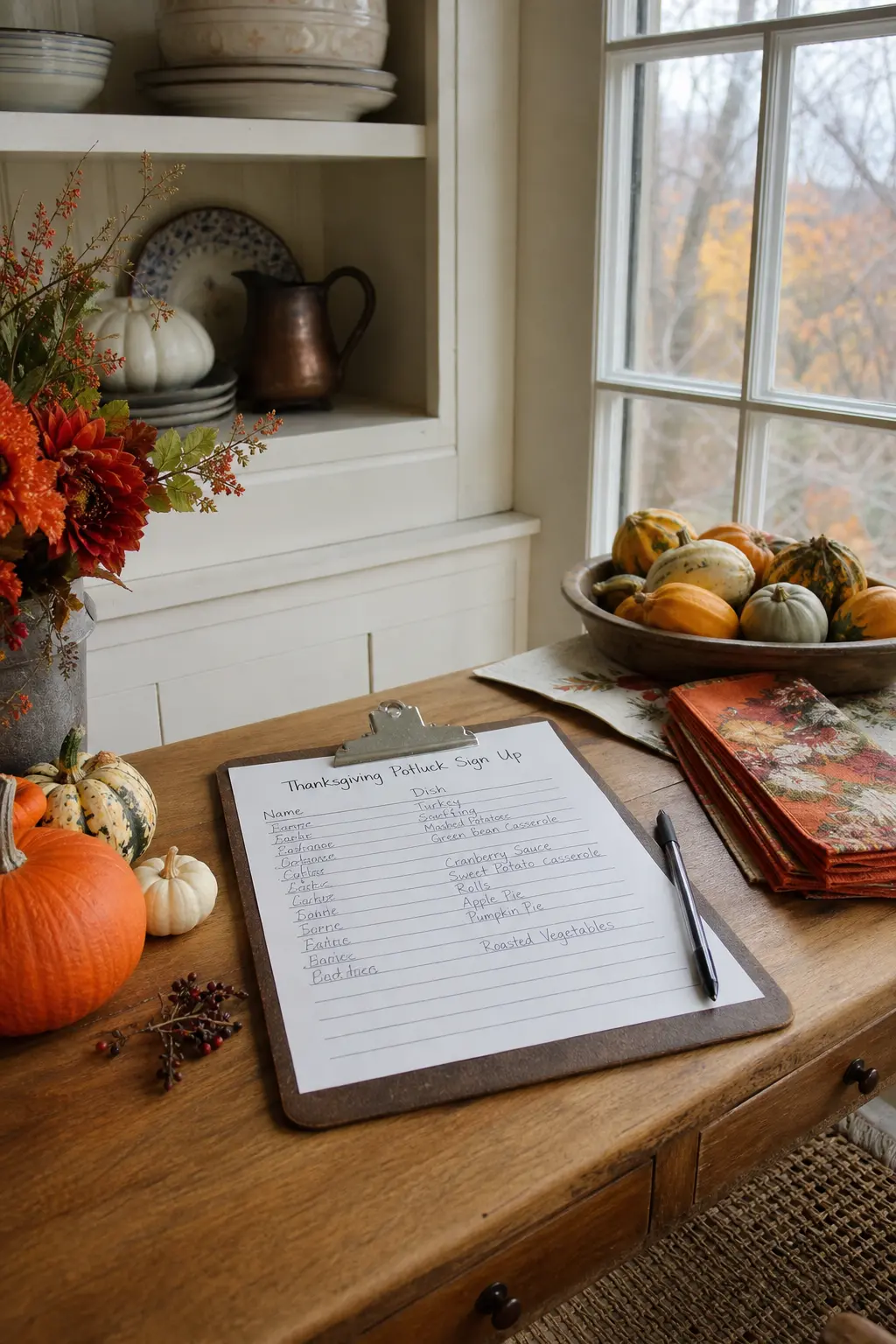
A verbal “bring whatever” is the origin of the triple-casserole problem. A physical or digital sign-up sheet, circulated at least three weeks before the meal, forces a commitment. People pick a category, not a dish, so they still have full creative freedom inside their lane.
Pass it in a group chat, a shared doc, or an old-fashioned paper round at the previous gathering. The moment two people try to claim the same category, the system does its job automatically.
🛍 Shopping guide
Confirm the Actual Dish One Week Ahead
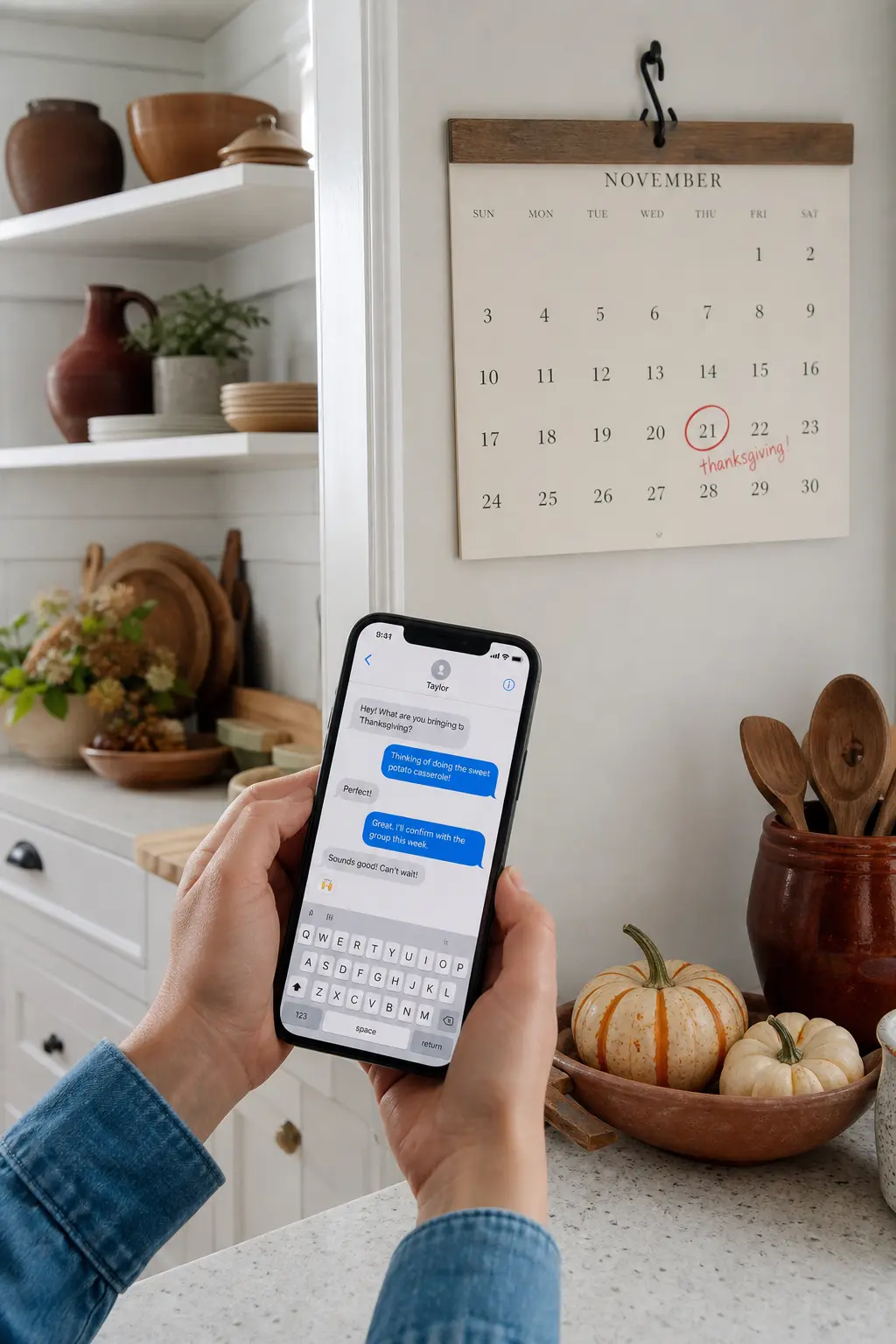
Assigning a category is step one. Confirming what dish the guest plans to make is step two, and it happens exactly one week before the party. A quick text is enough. This is where you catch the person who forgot they signed up, the person who changed their mind, and any accidental overlap before it is too late to fix.
One week gives everyone time to shop and you time to fill a gap if someone cancels. Do not leave this conversation for the day before.
Collect Dietary Needs With the Invitation
Ask about dietary restrictions in the same message where you share the category list. Not a separate follow-up, not the week before: the same message. People respond when the context is clear, and you need this information early enough to consider it when confirming dishes.
A simple question works: “Let me know any allergies or dietary needs so we can plan around them.” No form required. The answers let you flag gaps, like a table with three nut-heavy desserts and one guest with a tree-nut allergy, before anyone is standing at the buffet reading labels in a panic.

Ask for One Dish and One Bottle
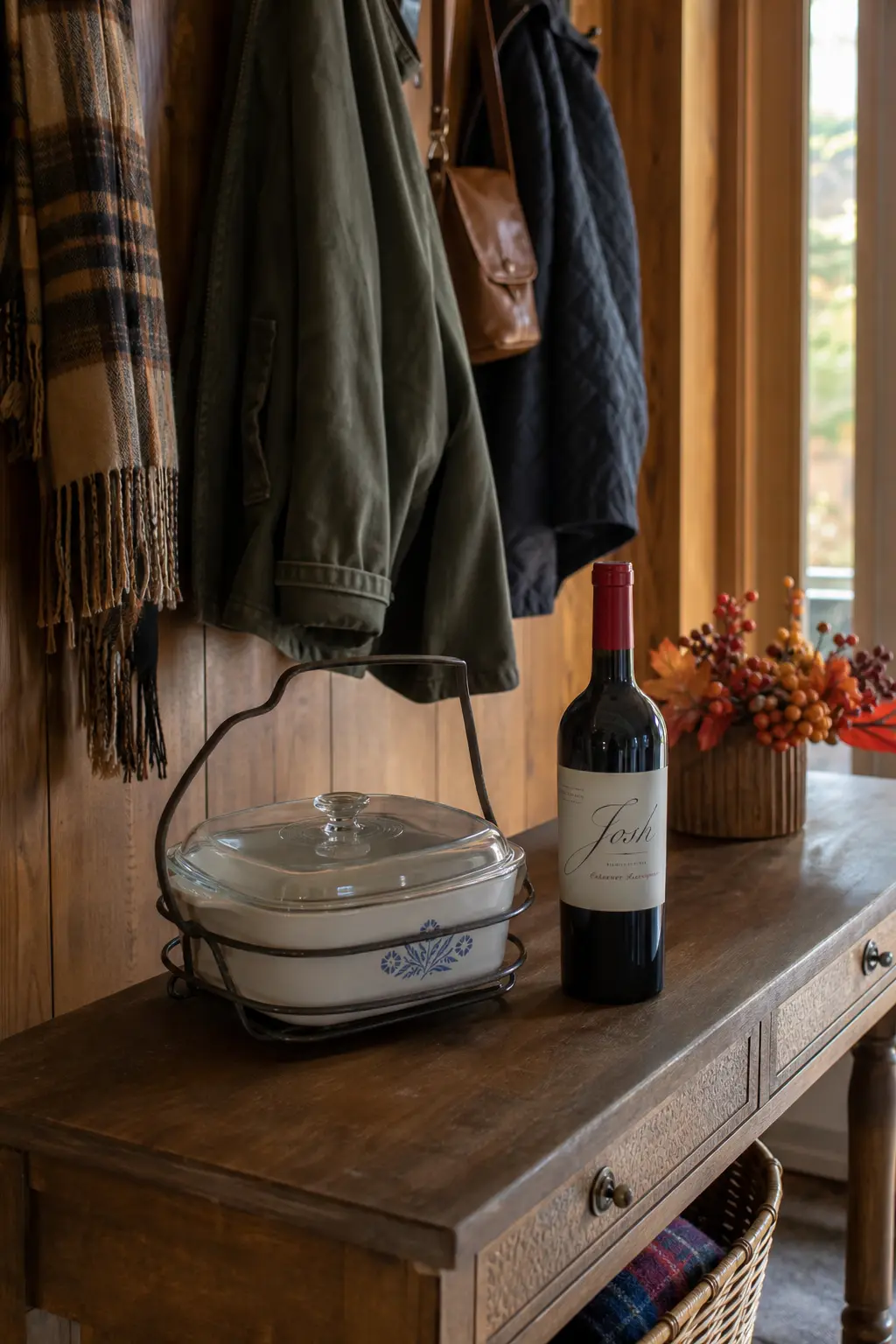
For guests who are not in the drinks category, ask for one dish from their assigned category and one bottle of wine, cider, or sparkling water. This is the single clearest instruction you can give and it scales perfectly with your guest count. You end up with enough to drink without anyone feeling like they were shorted a contribution.
State it plainly on the invitation or the sign-up sheet. “One dish from your category plus one bottle” is a complete sentence. It needs no further explanation.
🛍 Shopping guide
No-Theme Potluck: Anything Goes
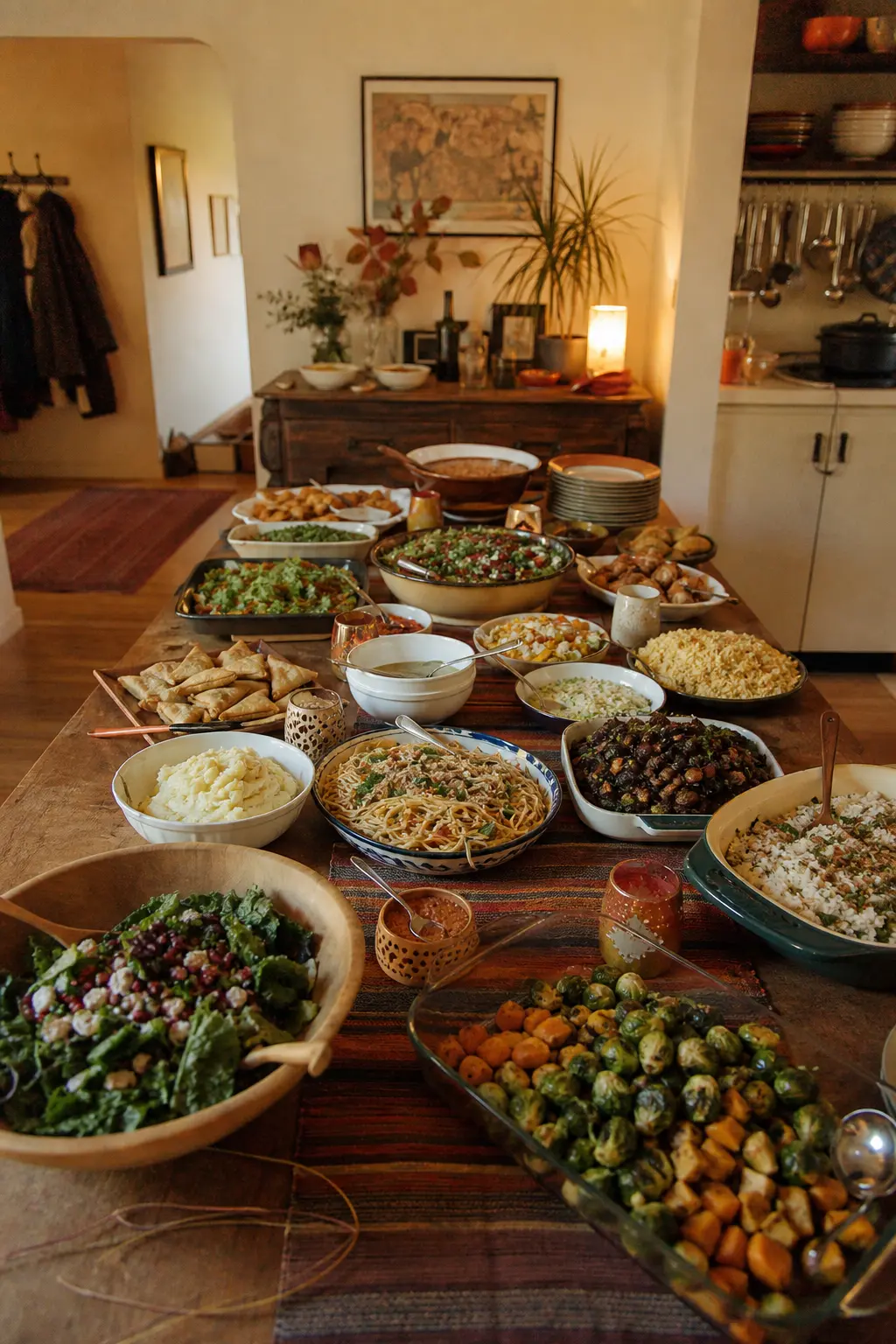
Some groups do not want a Thanksgiving theme at all, and that is a completely valid choice. Assign the same six categories, collect dietary needs, confirm dishes a week ahead, and then let every guest bring whatever they are most proud of making, regardless of whether it is traditional. Macaroni and cheese, a Korean potato salad, a Jamaican rum cake: all of it is welcome as long as it fits the assigned category.
The category system does its job no matter what cuisine fills it. The point was never to enforce a menu. It was to make sure you get starch, vegetables, bread, drinks, and dessert from six different households instead of four casseroles from four hopeful people.
The Starch Side Category
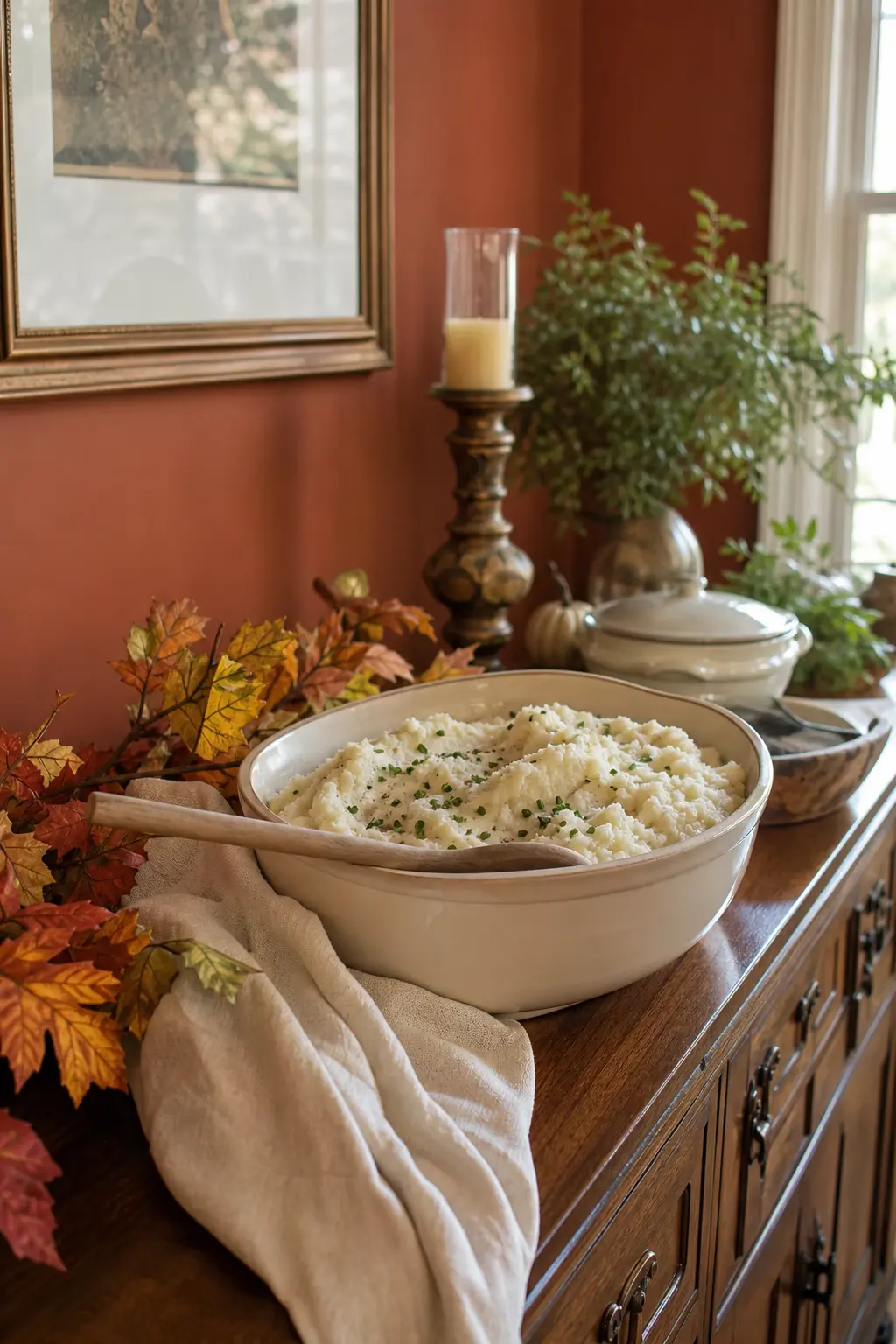
Starch sides are the category most people reach for first, which means it is the one most likely to run out and least likely to have a backup. Assign it to one household and specify that the dish should serve the full guest count. Mashed potatoes, sweet potato casserole, stuffing, mac and cheese: all of these fit the starch lane and every one of them travels reasonably well in an insulated carrier.
Confirm the specific dish at the one-week check-in so you know whether to set out a ladle or a wide spoon on the marked counter space.
🛍 Shopping guide
The Vegetable Side Category
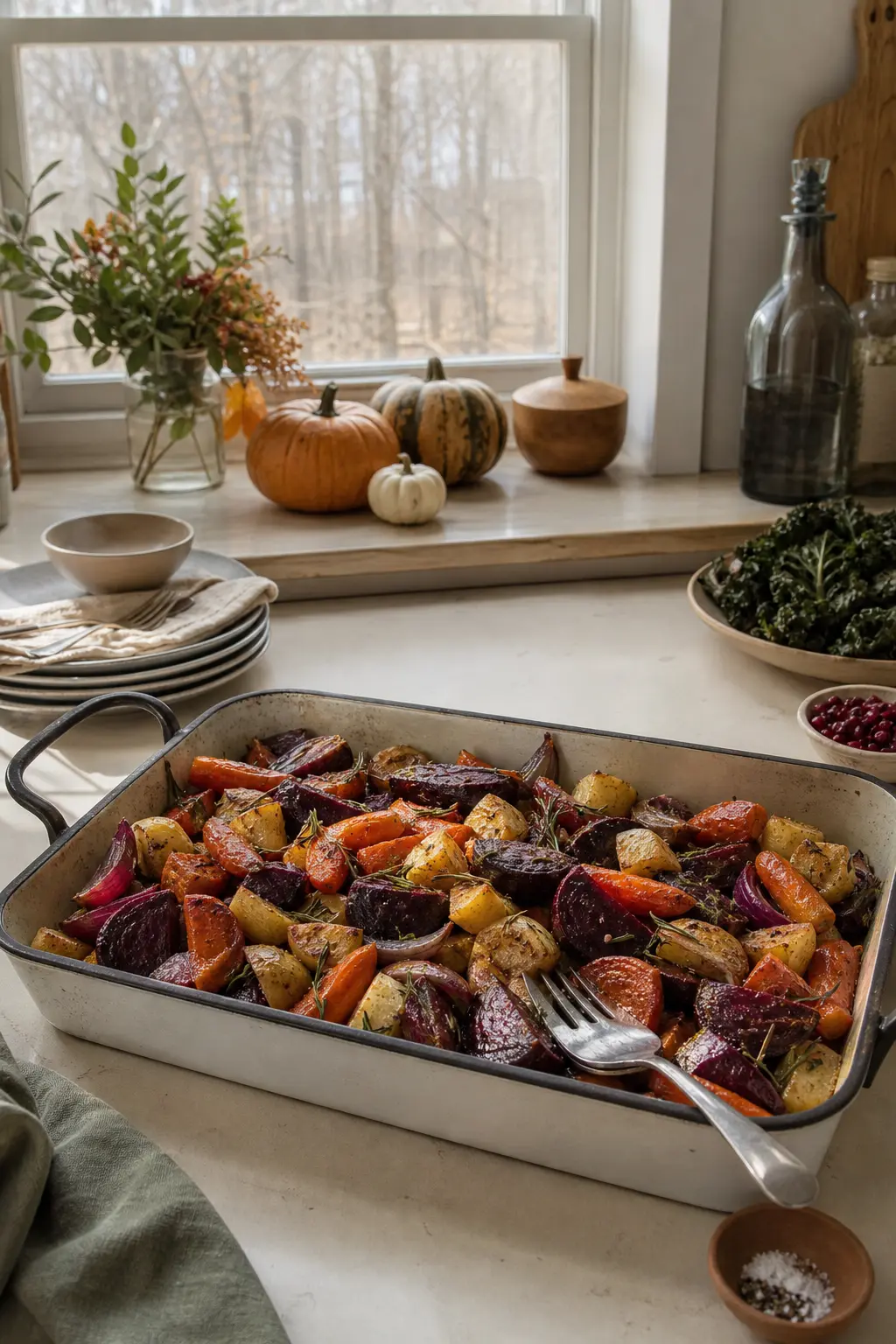
The vegetable side category is where, historically, the casserole problem lives. Three green bean casseroles all came from here. Assign it to one household only, and if it helps, suggest that roasted vegetables, a salad, or a grain-based side all count as vegetable sides. That gentle nudge opens the lane without dictating a recipe.
This category pairs well with a note about dietary needs: if you know two guests are vegan, mention it to the vegetable side household so they have context, not a requirement, when choosing their dish.
🛍 Shopping guide
Host Logistics
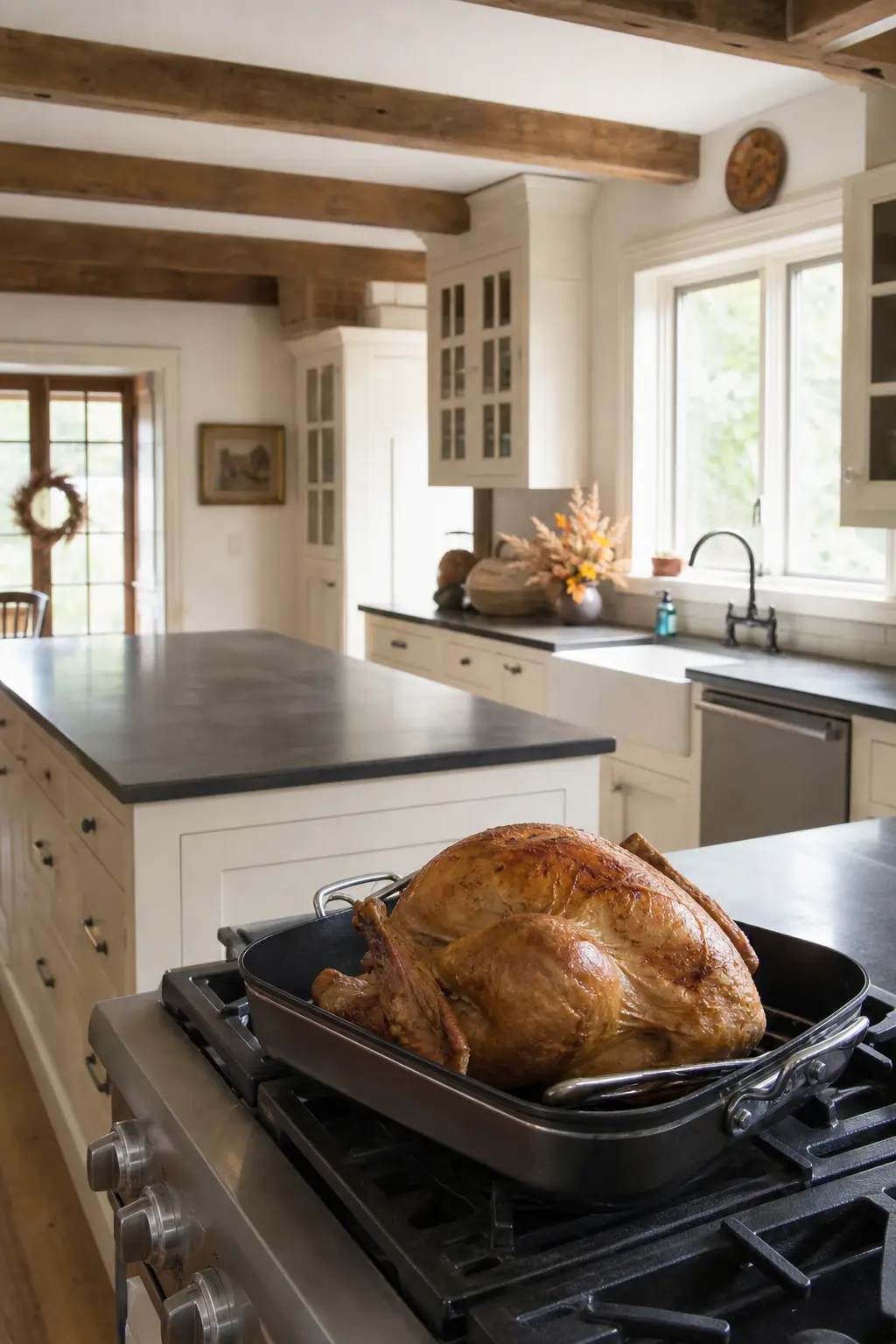
The host makes two things maximum. Turkey is one of them. The second can be gravy, a simple salad, or nothing at all if someone else volunteers a starter. Drawing that line in advance is what keeps you present at your own party.
Host Takes the Turkey and Nothing Else
The turkey is the one dish that genuinely cannot travel, and it is the one dish every guest expects the host to own. So own it and stop there. Gravy from the drippings is a reasonable second thing because it uses what is already in the pan. A third dish starts to absorb the afternoon you needed to set the table, borrow the extra table, and actually be ready when people arrive.
Saying “I am doing the turkey” is not a cop-out. It is a hosting decision that keeps you functional for the rest of the day.
🛍 Shopping guide
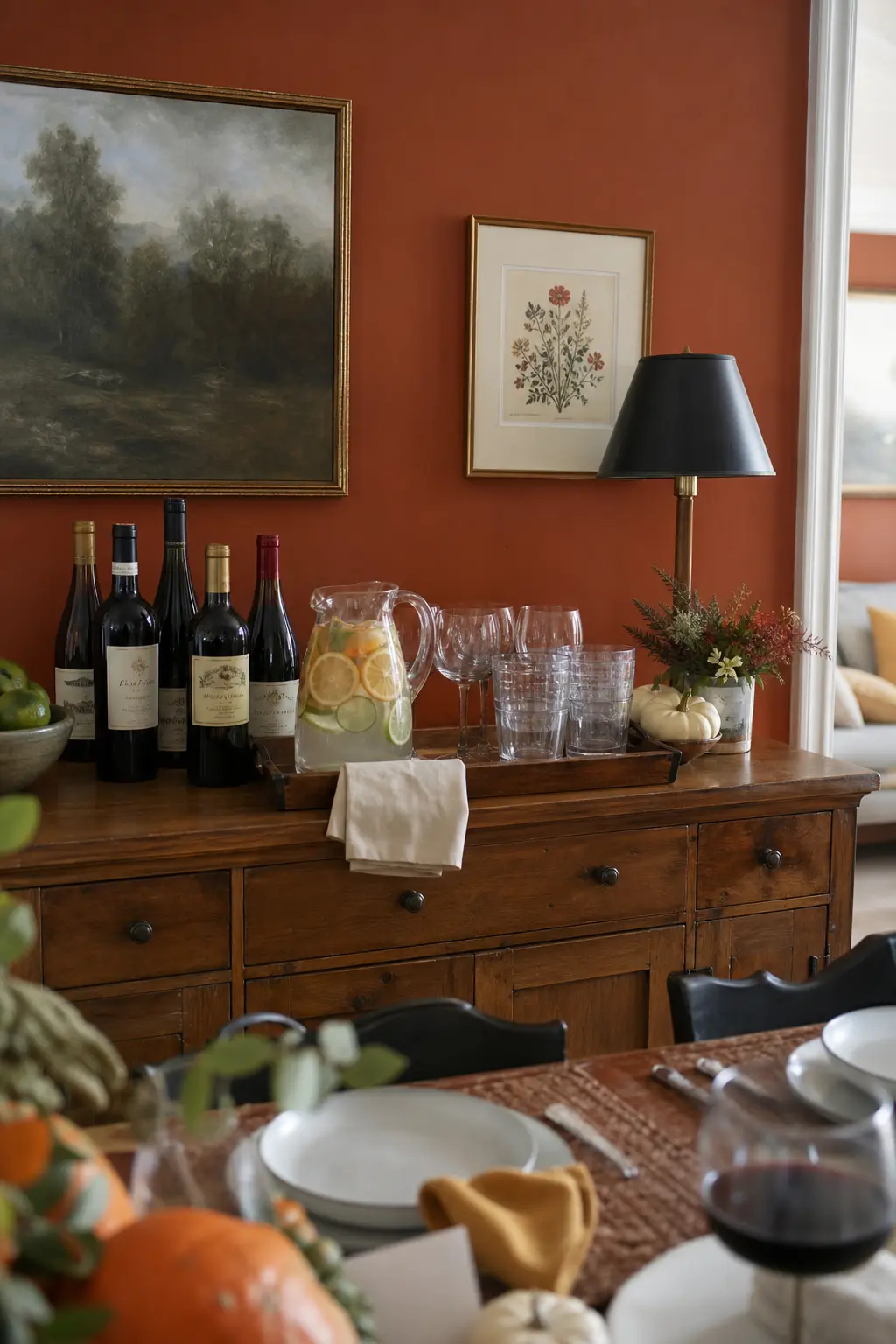
Give the Drinks Category to One Household
Drinks are the category most likely to arrive in chaos, with four people each bringing one bottle of the same thing and nobody bringing sparkling water. Assign the whole drinks category to one household and mean it. They handle wine, non-alcoholic options, and something for the kids. That is their contribution, and it is a real one.
Tell them the guest count and ask for variety rather than volume. A household that knows they own drinks will plan it properly instead of grabbing something at the gas station on the way over.
🛍 Shopping guide
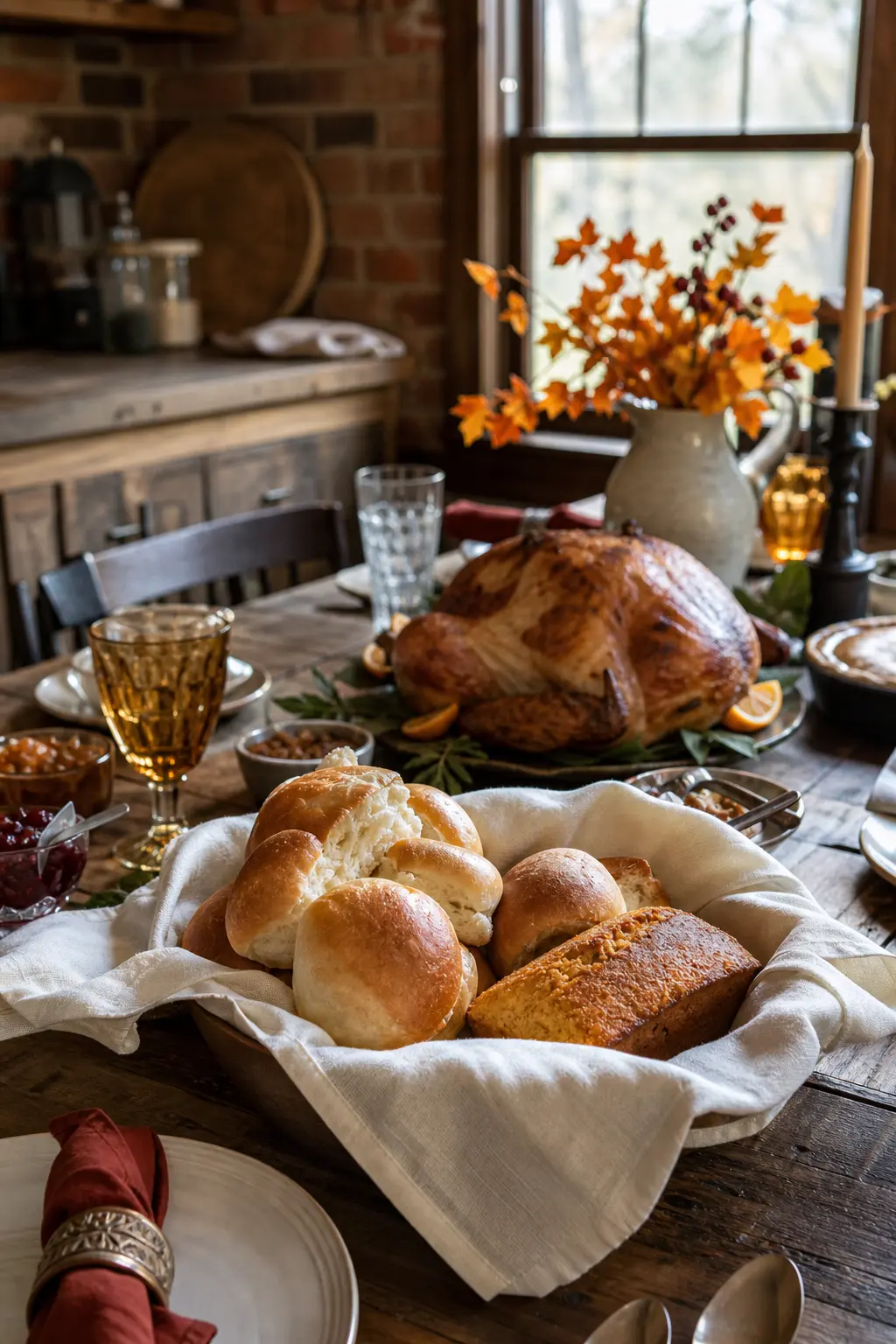
Ask One Person for Bread and Mean It
Bread is the most overlooked category at a potluck and the one thing every single person at the table wants. Ask one person by name, assign them bread specifically, and confirm it the week before. “Bring something for the bread basket” is clear enough that they can bring rolls, a loaf, cornbread, or focaccia, and specific enough that they know it is not optional.
If the person you ask is a reliable baker, you will get something wonderful. If they are not, a grocery store bakery bag of rolls still fills the bread basket. Either outcome is better than no bread at all.
🛍 Shopping guide
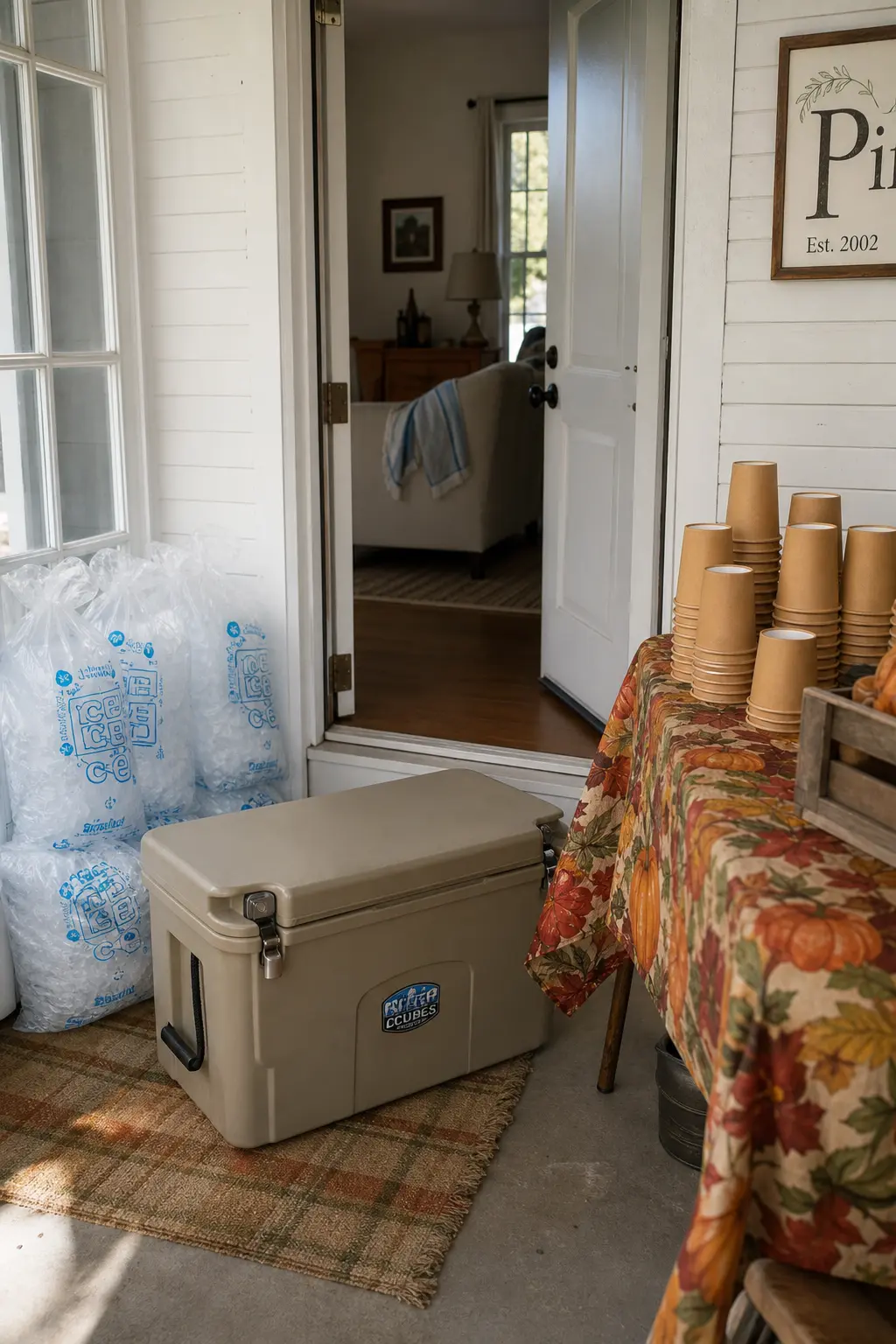
Let the Bad Cook Bring Ice and Cups
Every gathering has someone who genuinely cannot cook and knows it. Putting them in the drinks category works if that household can handle it. If not, give them a job that requires zero cooking: a bag of ice and a sleeve of good paper cups, or both. They feel included, they contribute something real, and you do not spend dinner quietly dreading whatever they made.
Frame it as a favor to you: “I need someone to handle the ice situation, can you take that?” Nobody declines a request that sounds like a genuine need.
🛍 Shopping guide
The Table and the Counter
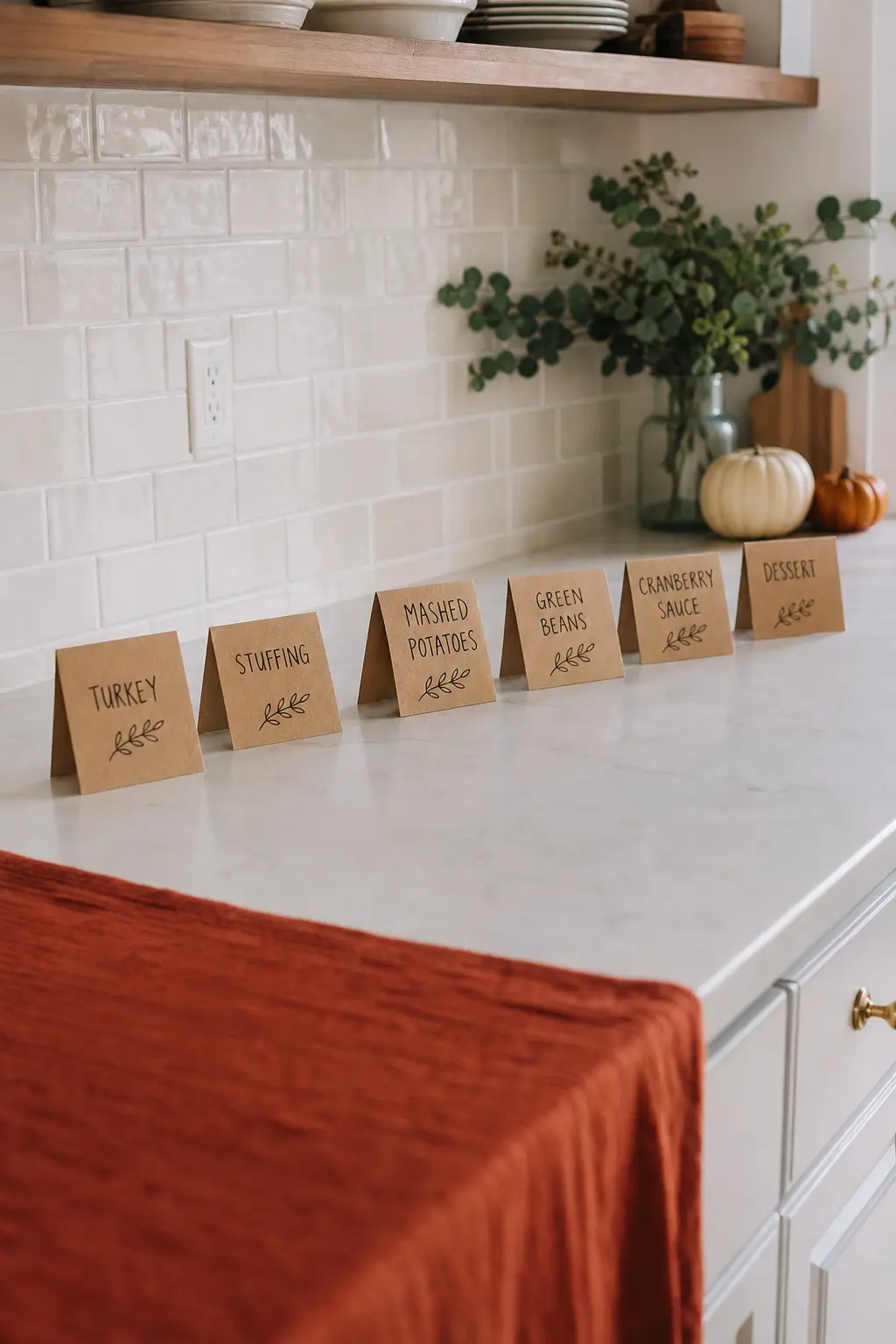
A borrowed folding table beats squeezing twenty dishes onto one surface every time. Mark a spot for each dish with a small card before guests arrive, so nobody has to ask where to put things and nothing gets stacked.
Mark Counter Space for Every Dish
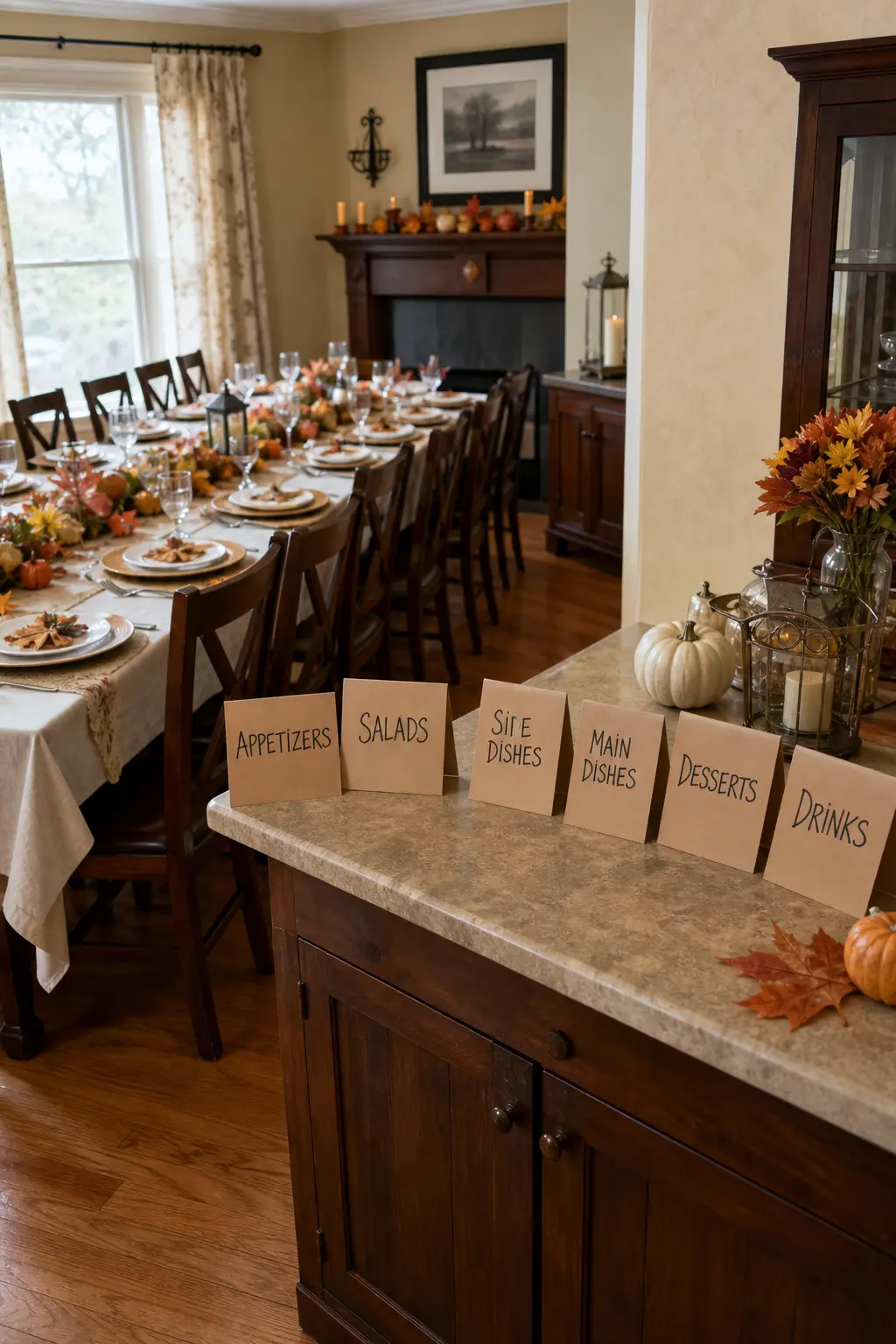
Before anyone arrives, place a small card or a piece of kraft paper where each dish will go. Write the category on it: starch side, vegetable side, bread, and so on. When guests walk in, they set their dish on its marked spot without asking. You do not play traffic controller for the first thirty minutes of your own party.
This also prevents the common problem of everything getting pushed to one end of the counter while the other end sits empty. Spread the dishes across both the main counter and the borrowed table, and the flow of people through the buffet line becomes automatic.
🛍 Shopping guide
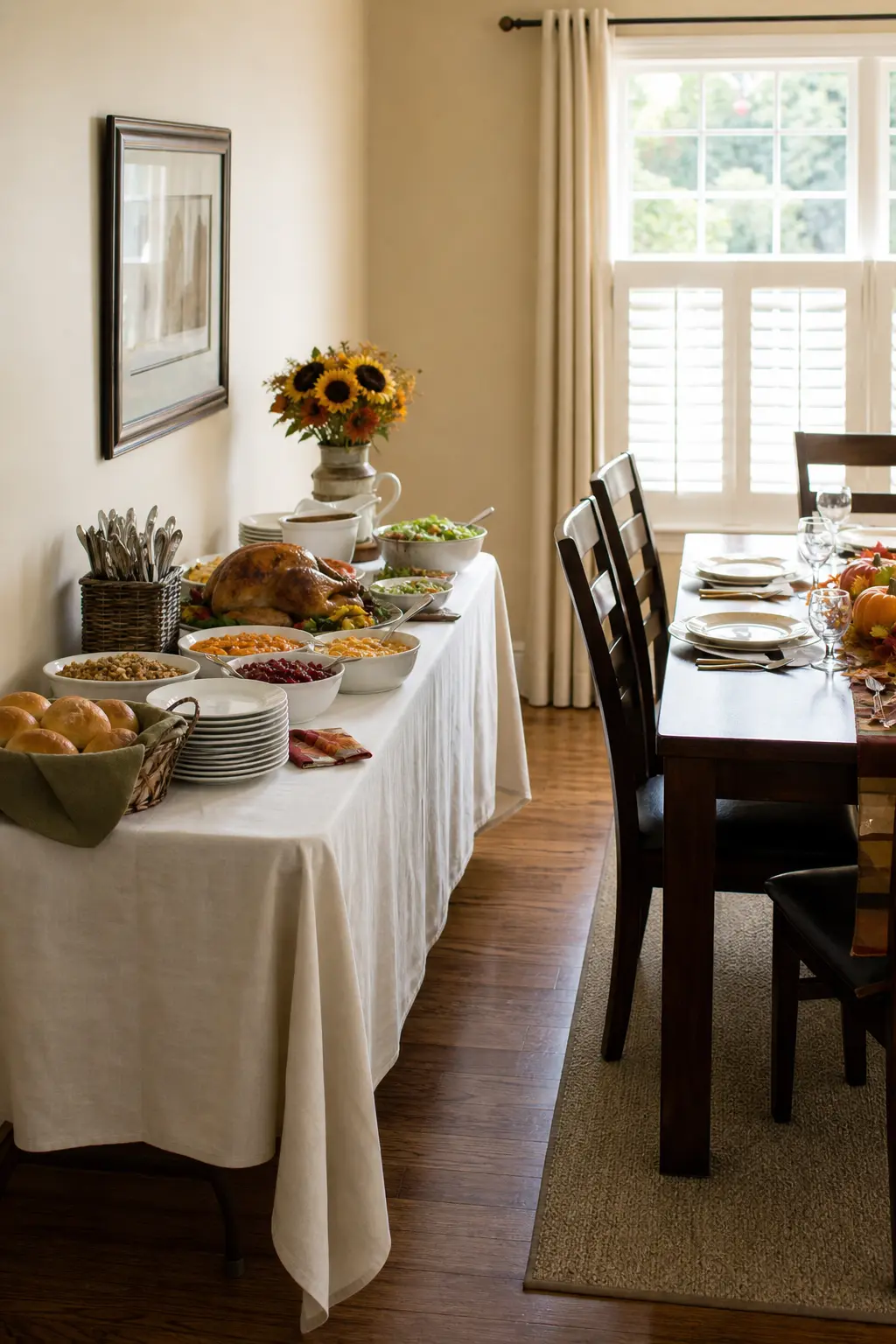
Borrow an Extra Table Instead of Squeezing
A folding table borrowed or rented for the day solves more problems than any single organizational trick. It gives every dish its own space, keeps the main dining table clear for seating, and gives you somewhere to set out serving utensils, napkins, and labels without crowding the food.
A six-foot folding table dressed in a cream or rust-colored cloth looks intentional, not improvised. Dress it the morning of and it becomes part of the room, not an eyesore.
🛍 Shopping guide
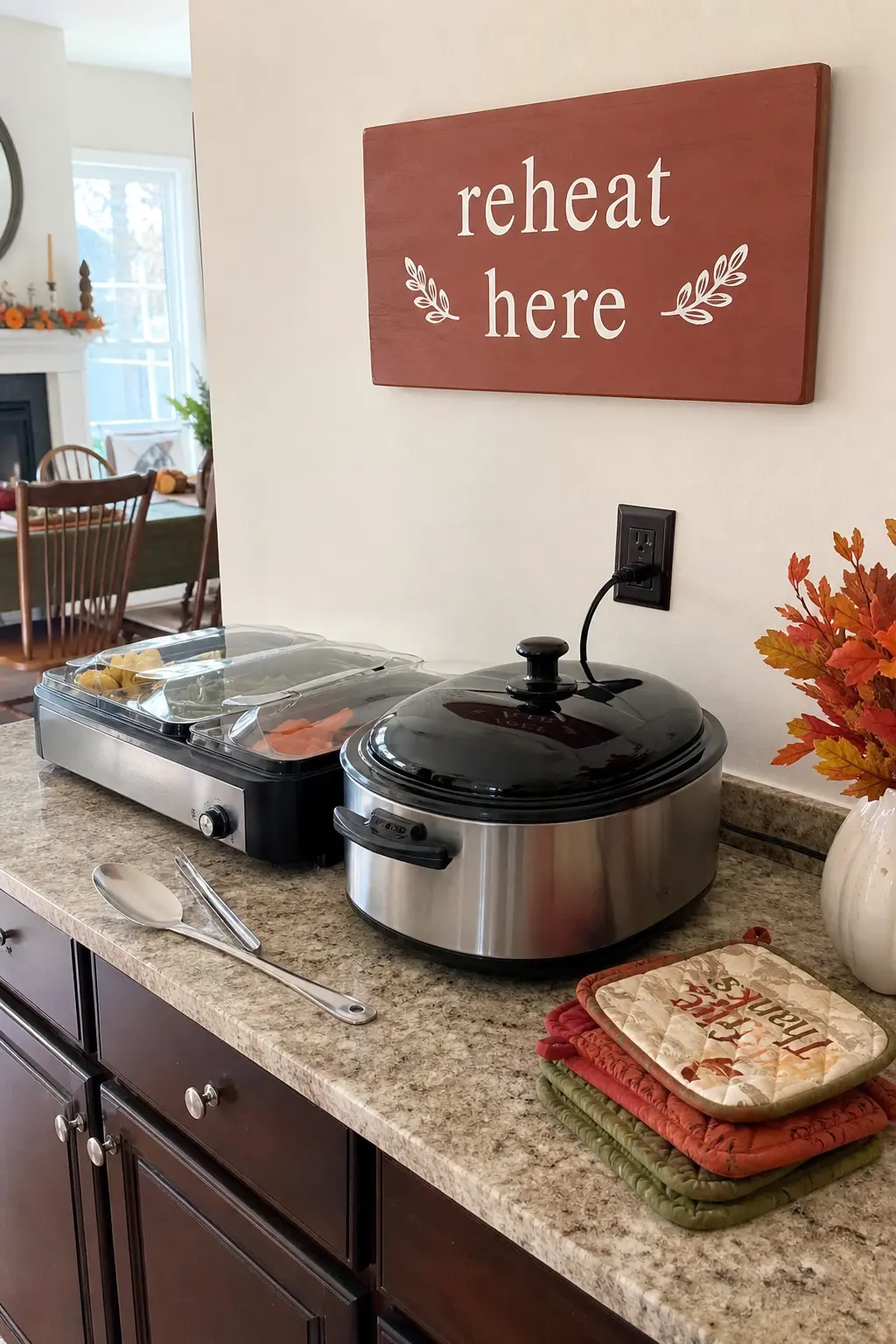
Set a Reheat Station Away From the Main Oven
The main oven is busy. It should not double as the reheat station for twelve dishes arriving at different temperatures over the course of an hour. Set up a dedicated reheat station: a countertop roaster, an electric warming tray, or an instant pot on the keep-warm setting works well. Put it somewhere with an outlet that is not in the main cooking zone.
Tell guests in advance that there will be a place to warm dishes when they arrive. They can transport food safely at room temperature and warm it on arrival, which is far easier than managing multiple insulated carriers.
🛍 Shopping guide
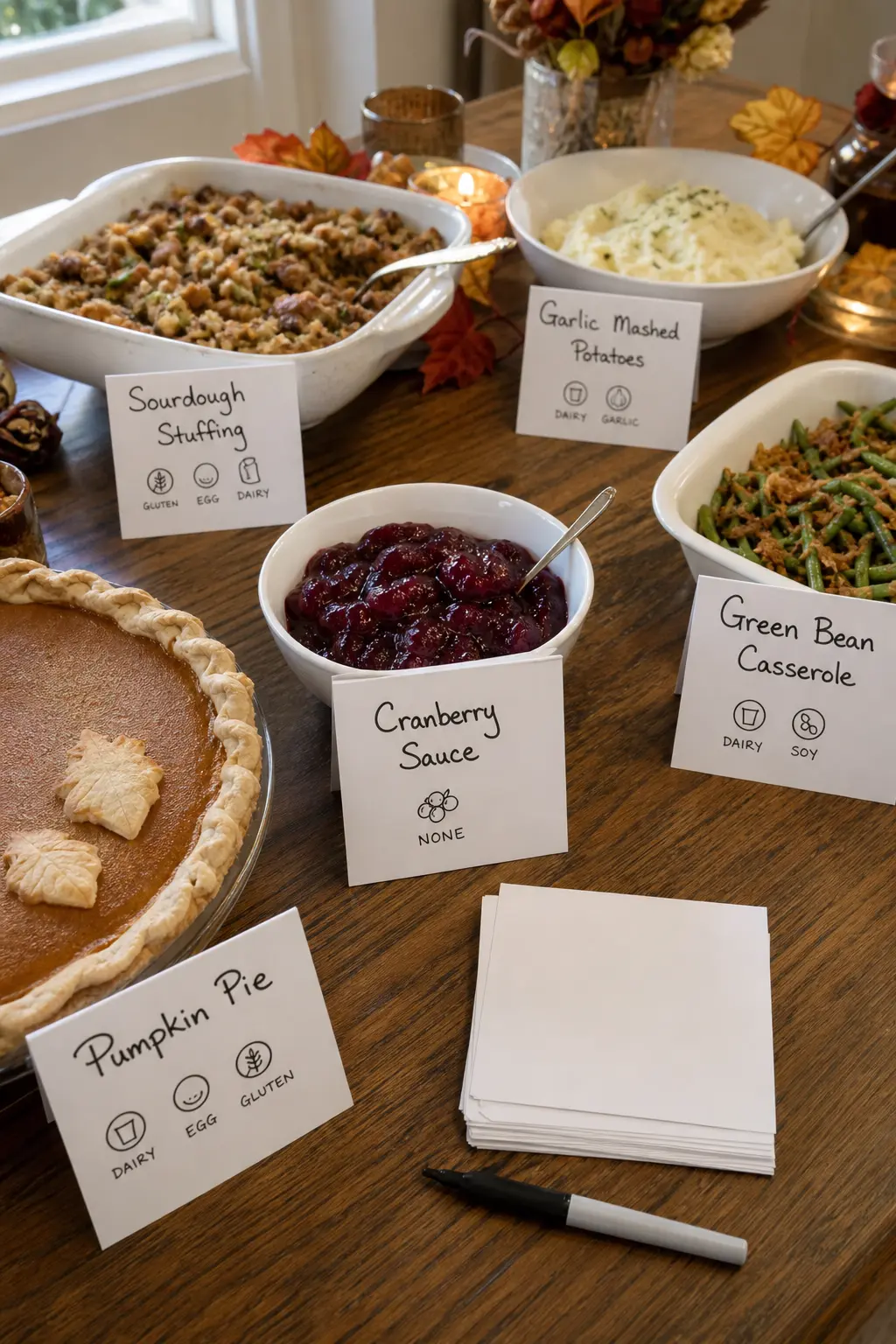
Label Every Dish With Name and Allergens
A tent card in front of each dish with the dish name and the top allergens, nuts, dairy, gluten, eggs, takes about ten minutes total and removes the awkward “what is in this?” conversation from your buffet line. Ask each guest to fill in a card when they arrive. Give them a fine-tip marker and a stack of blank cards near the serving area.
Because you collected dietary needs with the invitation, you already know who needs this information most. The cards make it findable without anyone having to ask.
🛍 Shopping guide
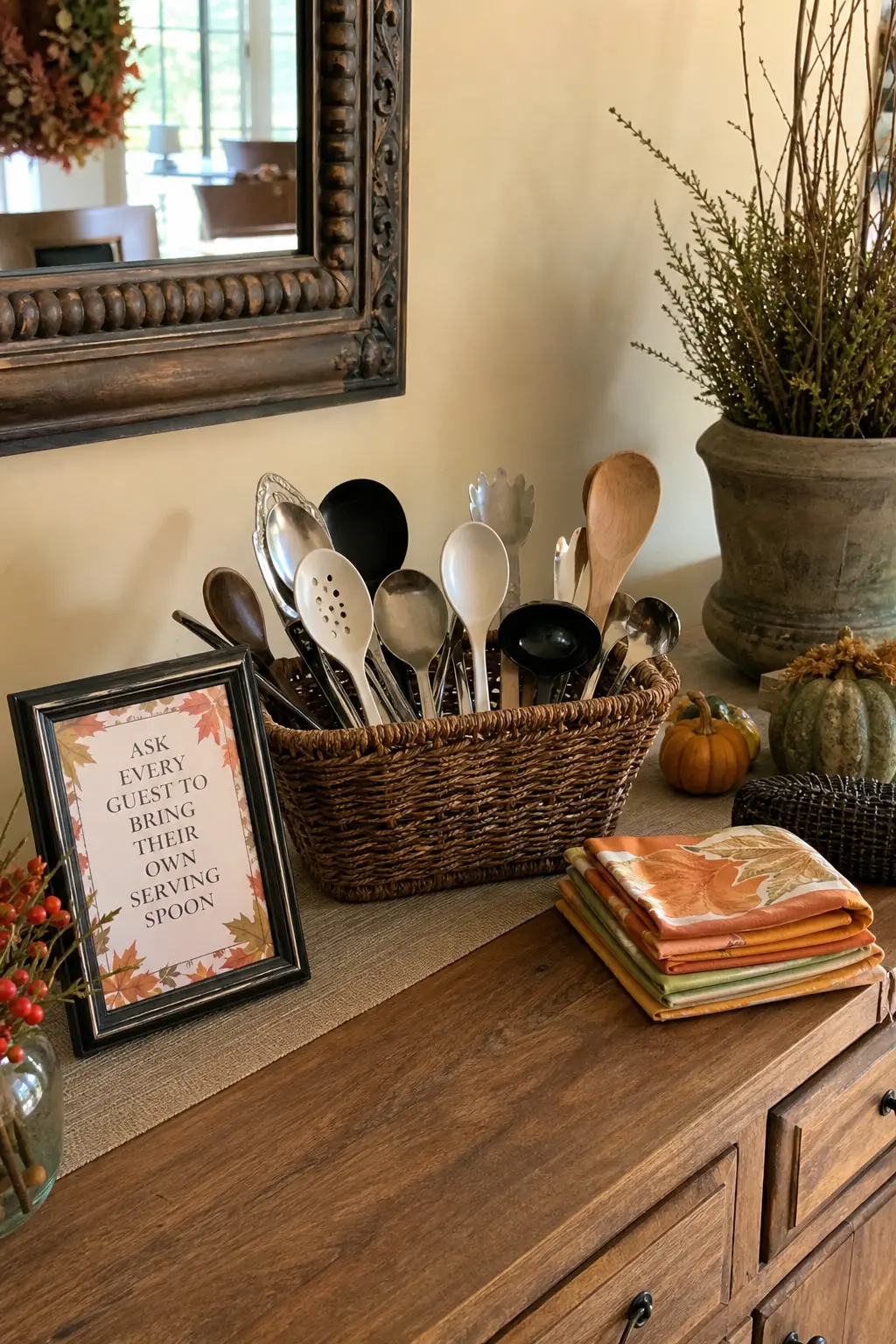
Ask Every Guest to Bring Their Own Serving Spoon
Include one line in the invitation or the sign-up message: “Please bring a serving spoon or tongs for your dish.” That single sentence means you are not scrambling to find twelve serving utensils the morning of, and it means each dish has a utensil that is the right size for it. A slotted spoon for a casserole, tongs for green beans, a wide spatula for pie.
Put out a small basket of backup utensils anyway, because someone will forget. But you will need three spares, not twelve.
🛍 Shopping guide
Before Guests Leave
Set out foil pans and lids before dessert, not after. Divide leftovers while people are still there and still willing. Once coats go on, the window closes.
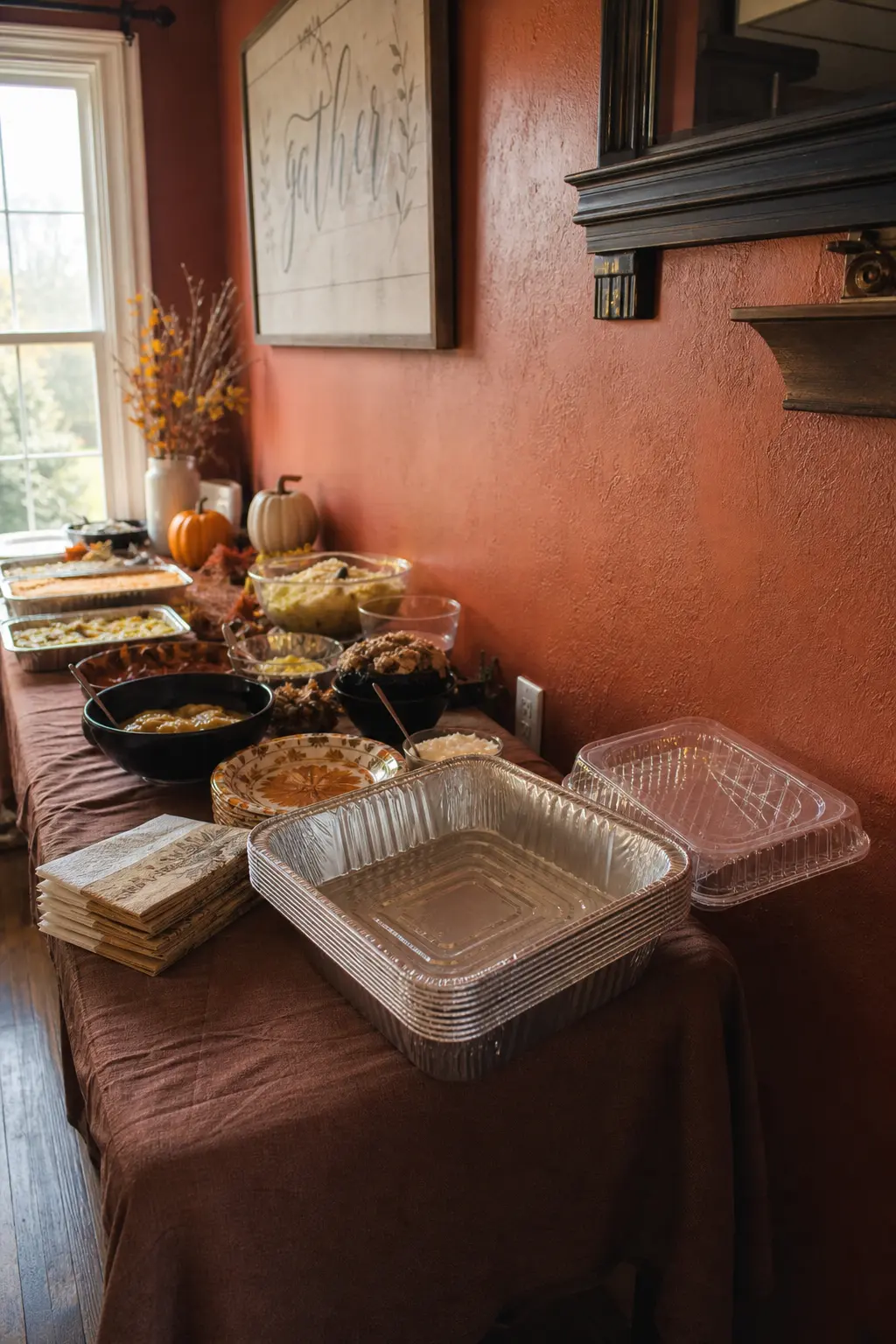
Set Out Foil Pans Before Dessert
The window for dividing leftovers is exactly the twenty minutes between the end of dinner and the arrival of dessert. Set out a stack of foil pans and lids on the end of the buffet table before you serve dessert. People see them and understand what they are there for. No announcement needed.
After dessert, energy drops and coats appear. If the pans are not already out, the leftovers go into your fridge and you eat turkey for ten days. The pans being visible is the whole trick.
🛍 Shopping guide
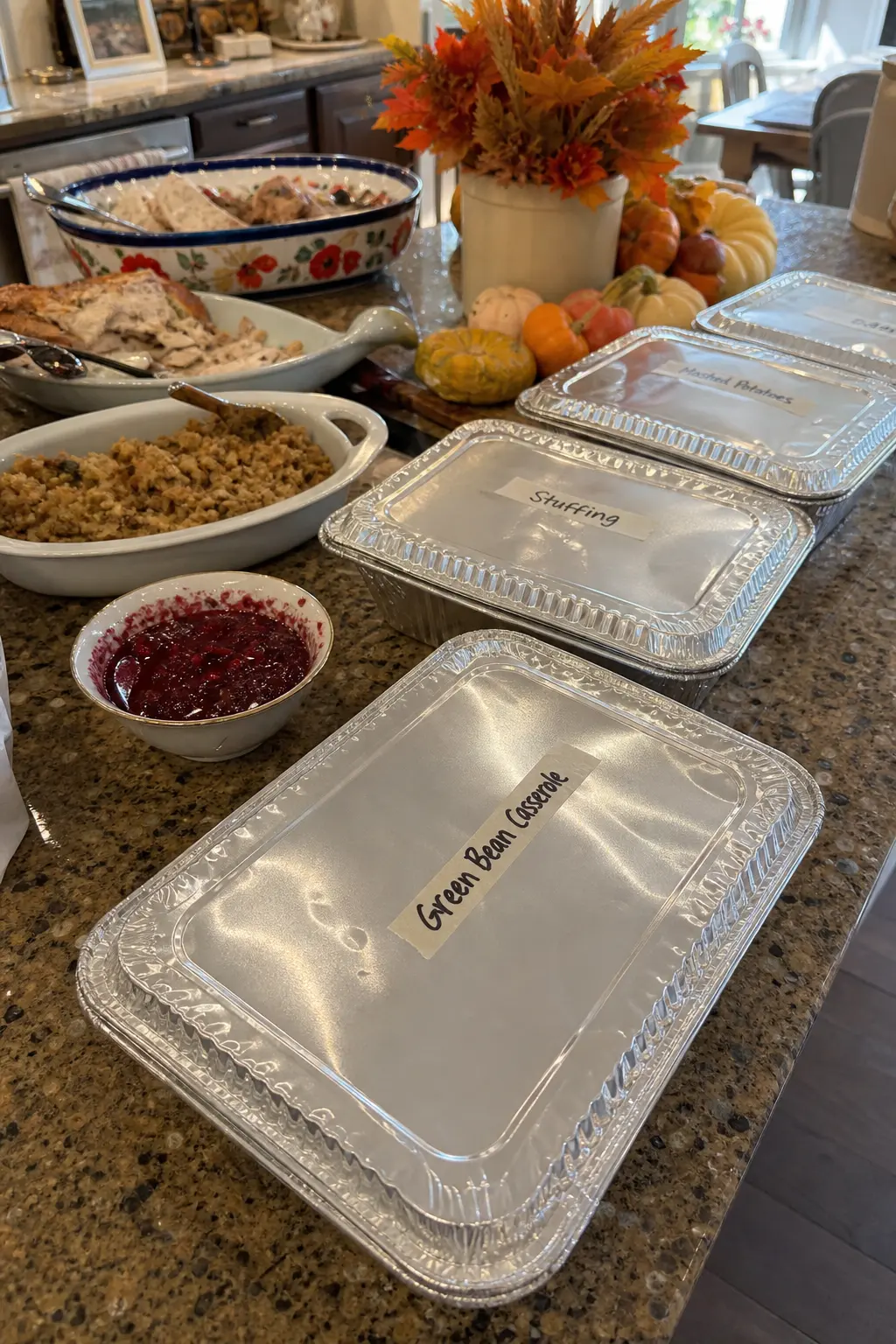
Divide Leftovers Before Anyone Leaves
State it upfront, on the invitation or at the start of the meal: everyone leaves with a foil pan of food. This is not a casual offer. It is a plan. When people know the plan, they stay for it instead of slipping out while you are still doing dishes.
Whoever brought a dish gets first claim on the remnants of that dish plus whatever else is left. Any unclaimed food goes into a general pool. The host takes the last pan. This way the labor of packaging is shared and nobody drives home empty-handed.
🛍 Shopping guide
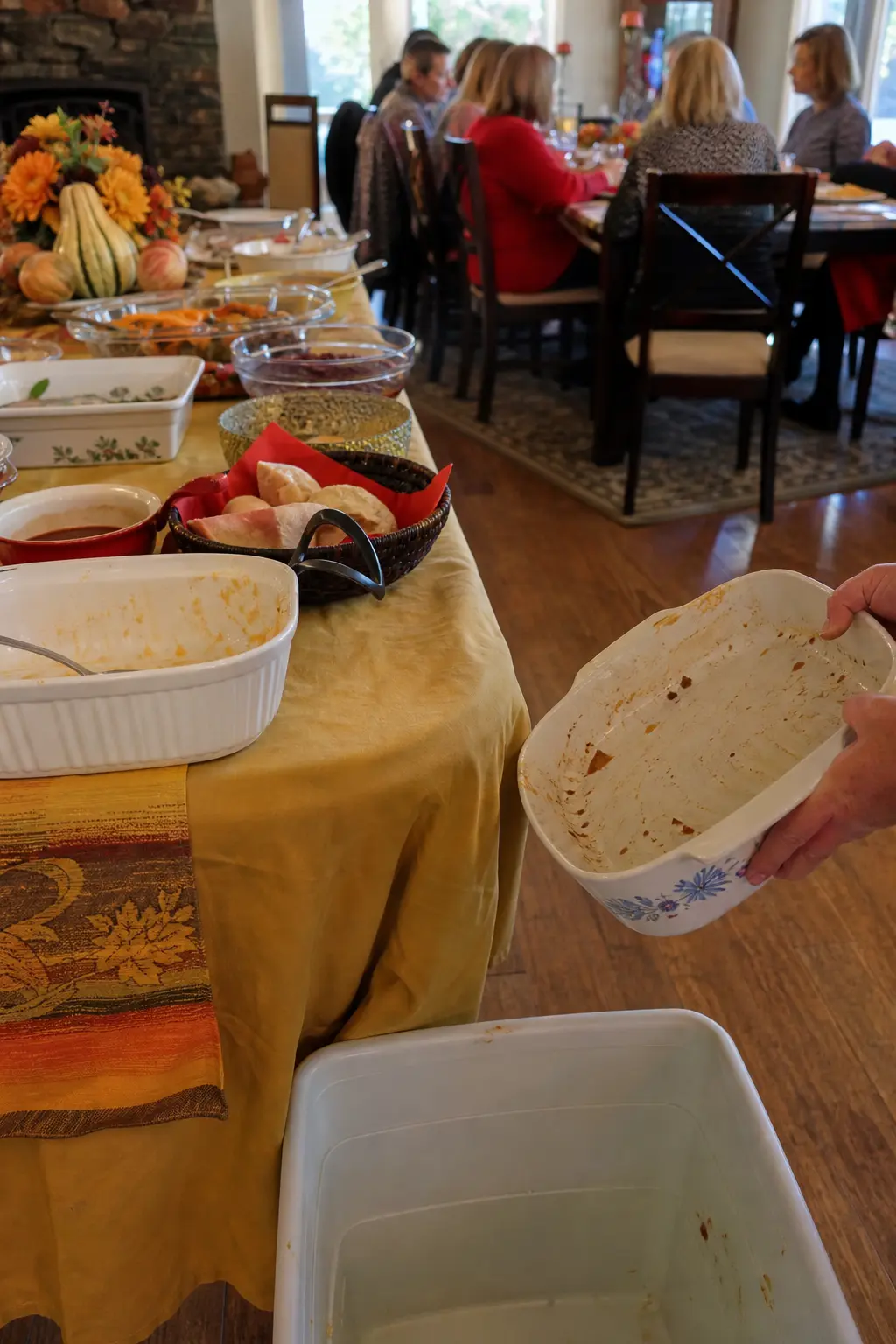
Assign Someone to Keep the Table Cleared
Name one person, a family member or a willing friend, as the table keeper. Their job during the meal is to remove empty dishes, consolidate half-eaten sides, and keep the buffet navigable. They do not need to wash anything. They just move things out of the way so the table does not become a graveyard of empty casserole dishes by the second round.
This person is often a teenager who wants to feel useful, or a guest who arrived early and wants something to do. Give them a clear job description and a place to put cleared dishes, like a plastic tub on the floor beside the counter.
🛍 Shopping guide
Frequently Asked Questions
How do you politely tell guests what to bring to a Thanksgiving potluck?
Assign a category rather than a specific dish. “We are asking each household to cover one category. You have the vegetable side, whatever you love making in that lane” is both clear and respectful of their cooking. People rarely push back on a category because they still have full creative control.
What categories work best for a Thanksgiving potluck?
Six covers the full meal without overlap: protein (host), starch side, vegetable side, bread, drinks, and dessert. For a smaller group, fold drinks into one of the other categories and run five. For a larger group, split vegetable sides and desserts into two households each.
How do you handle dietary restrictions at a potluck?
Collect them with the invitation, not the week before. Share relevant information with the guest whose dish is most likely to affect a restricted eater, framed as context rather than a mandate. Then label every dish with name and allergens at the buffet so guests can read before serving themselves.
What should the host bring to their own potluck?
The turkey and one other thing, at most. Gravy made from the turkey drippings is a natural second contribution. Beyond that, the host’s job is the logistics: the table setup, the marked counter spaces, the foil pans, and being present when guests arrive. That is a full contribution on its own.
How do you divide leftovers fairly at a potluck?
Set out foil pans before dessert so people see the plan. After dessert, whoever brought a dish takes first claim on its remnants, then everyone fills a pan from the communal leftovers. Announce the plan at the start of the meal so nobody leaves before the dividing happens.

18 Thanksgiving art projects in ochre, rust, deep green and cream that are framed, hung or displayed

15 Thanksgiving drinking games for your best Friendsgiving yet — festive sip-when rules, pong, tas
10 collections of Thanksgiving games for kids, from quick classroom fun to family field days, so you
Leave a Reply