

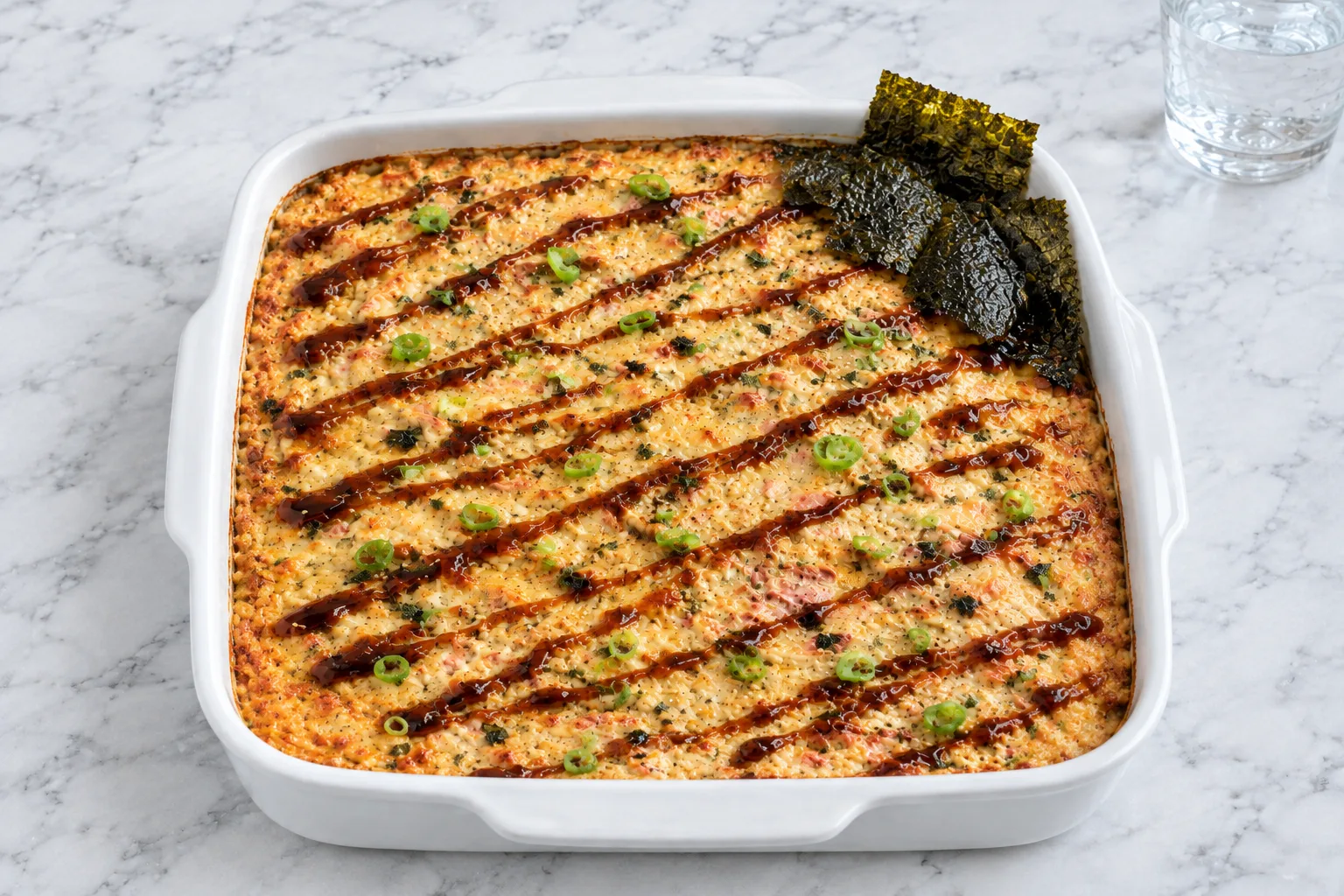
Sushi bake turns the whole fuss of rolling sushi into one warm dish that goes straight from the oven to the middle of the table.
Seasoned rice meets a creamy crab or salmon layer, bakes until the edges bubble, and gets scooped onto roasted seaweed snacks the way you would scoop guacamole. No rolling mat, no knife skills, just a baking dish and a spoon.
This post contains affiliate links. If you buy through them, I may earn a small commission at no extra cost to you.
Table of Contents
Why This Sushi Bake Works For a Crowd
The guest list for a party always grows the minute someone says sushi, and that is exactly when the panic sets in: nobody present can roll a maki tight enough to survive the trip from board to plate. Sushi bake skips the rolling entirely. You layer, you bake, you hand everyone a spoon.
It feeds the way a casserole feeds, generously and without drama, and it costs a fraction of ordering enough sushi rolls to cover a table of twelve. One 9×13 dish stretches across a party platter the way a single roll never could.
There is also the relief of a dish that does not need finishing at the table. It comes out of the oven already dressed, already warm, already done, which leaves you free to actually stand in the room with your guests instead of hovering near the kitchen.
If raw fish makes anyone nervous, this version sidesteps that entirely: everything inside is cooked. That makes it an easy pick for a mixed crowd, including anyone who has always liked the idea of sushi more than the reality of eating it raw.
What Goes Into a Great Sushi Bake
Short grain sushi rice is not optional here. Its starch is what lets the layer hold together under a spoon instead of scattering the second you dig in, so reach for Calrose or another labeled sushi rice rather than whatever long grain bag is already in the pantry.
Imitation crab carries the classic flavor and keeps the cost down, but cooked salmon does the same job if you would rather skip the surimi altogether. Either one gets folded into cream cheese, which is what makes the top layer rich instead of merely saucy.
Sriracha mayo is the part that gives this dish its personality: a little heat, a little tang, enough to cut through all that cream cheese. Use more or less depending on how much she likes her food to bite back.
Furikake goes in twice, once under the filling and once on top, because that is where the toasted sesame and seaweed flavor actually lands. Eel sauce finishes the dish with the dark, glossy sweetness that makes the whole thing taste unmistakably like sushi, even though nothing was ever rolled.
Roasted seaweed snack sheets are not a garnish, they are the delivery system. Buy the pre-cut, lightly salted kind sold in snack packs rather than large nori sheets meant for rolling, since those are thinner and easier to scoop with.
How to Make It
This comes together in under an hour once the rice is cooking, and almost none of that time needs your full attention. Everything bakes in one dish, so cleanup is a single baking dish and two bowls.
Season the Sushi Rice
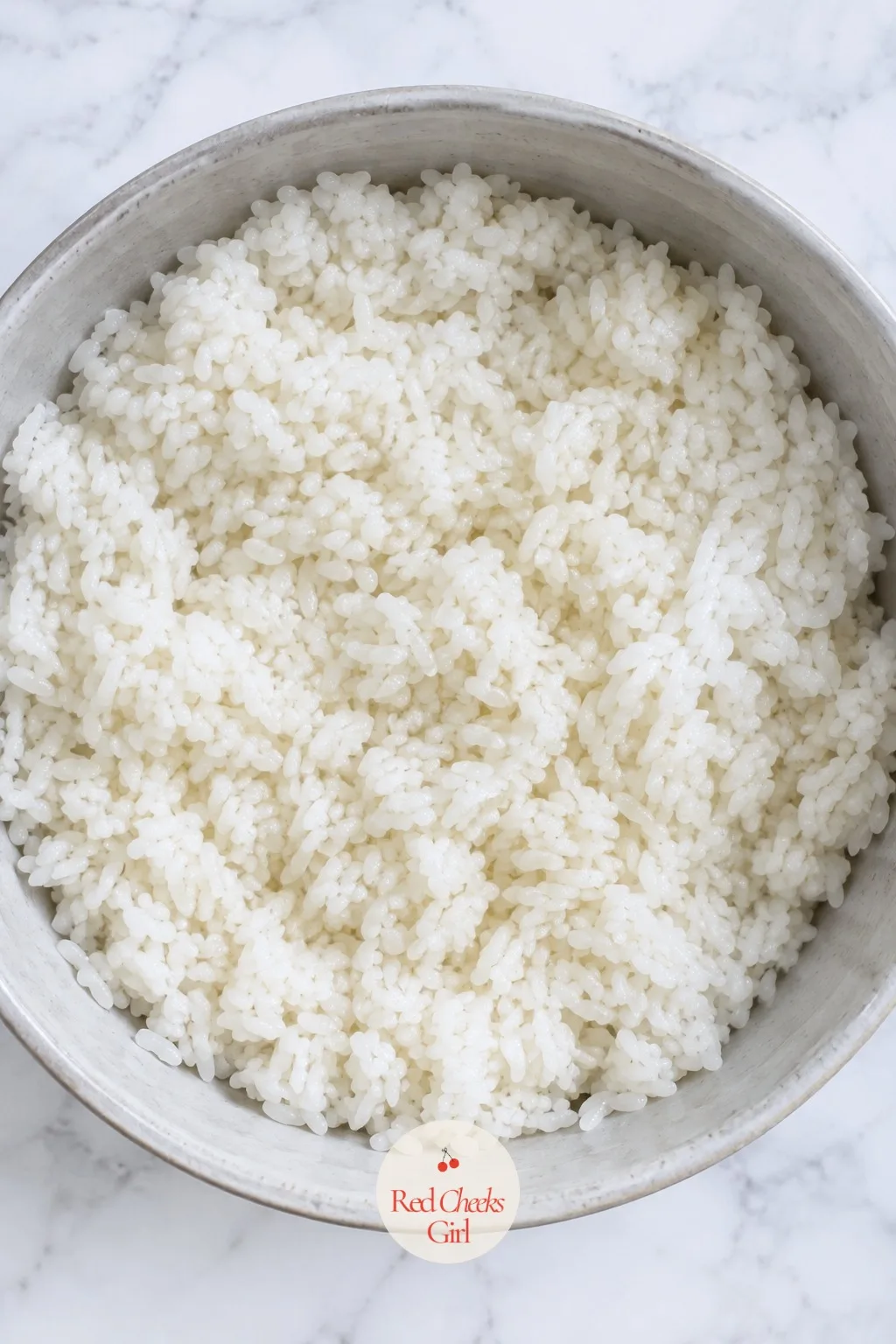
Fold the warm rice through the seasoned vinegar until every grain turns glossy and faintly sticky. Work gently so the grains stay whole instead of turning to paste.
Spread the Filling Over the Rice
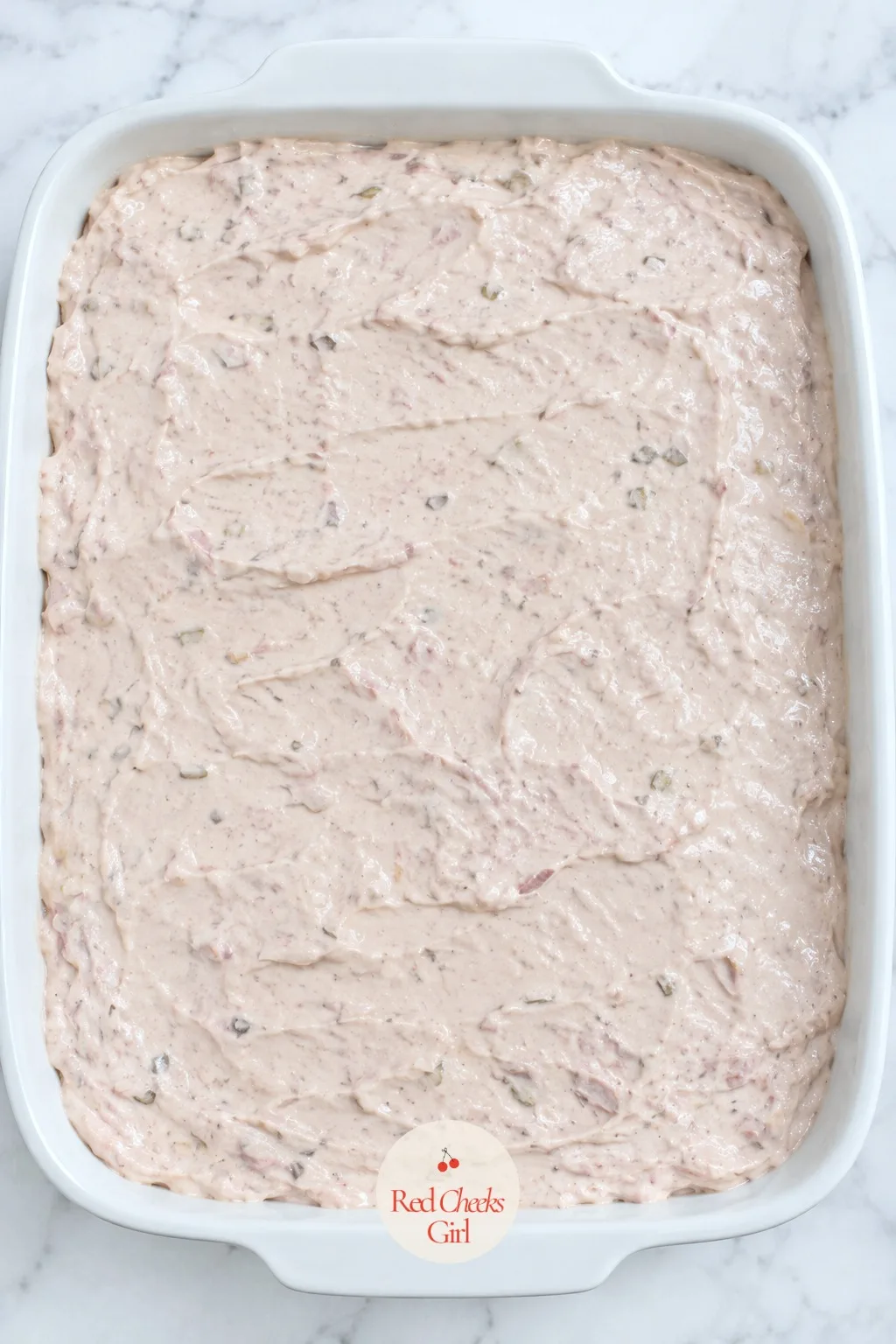
Spread the creamy filling over the rice right to the edges, so no bare rice peeks through once it bakes. Smoothing it flat now keeps the layer even all the way through.
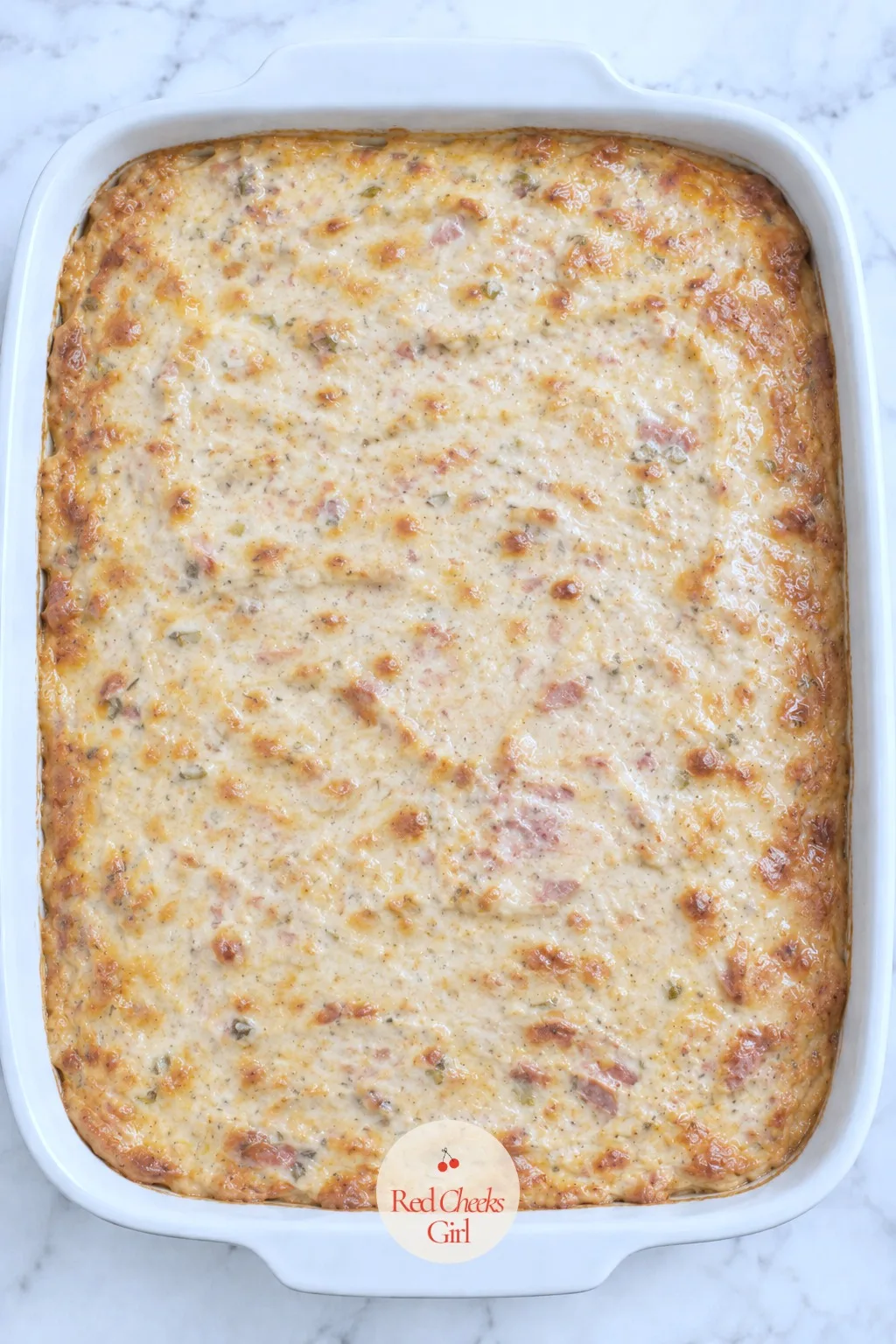
Bake Until Bubbling and Golden
Pull the dish out once the edges bubble and the top has taken on faint gold patches. That color is the sign the filling has warmed all the way through, not just on top.
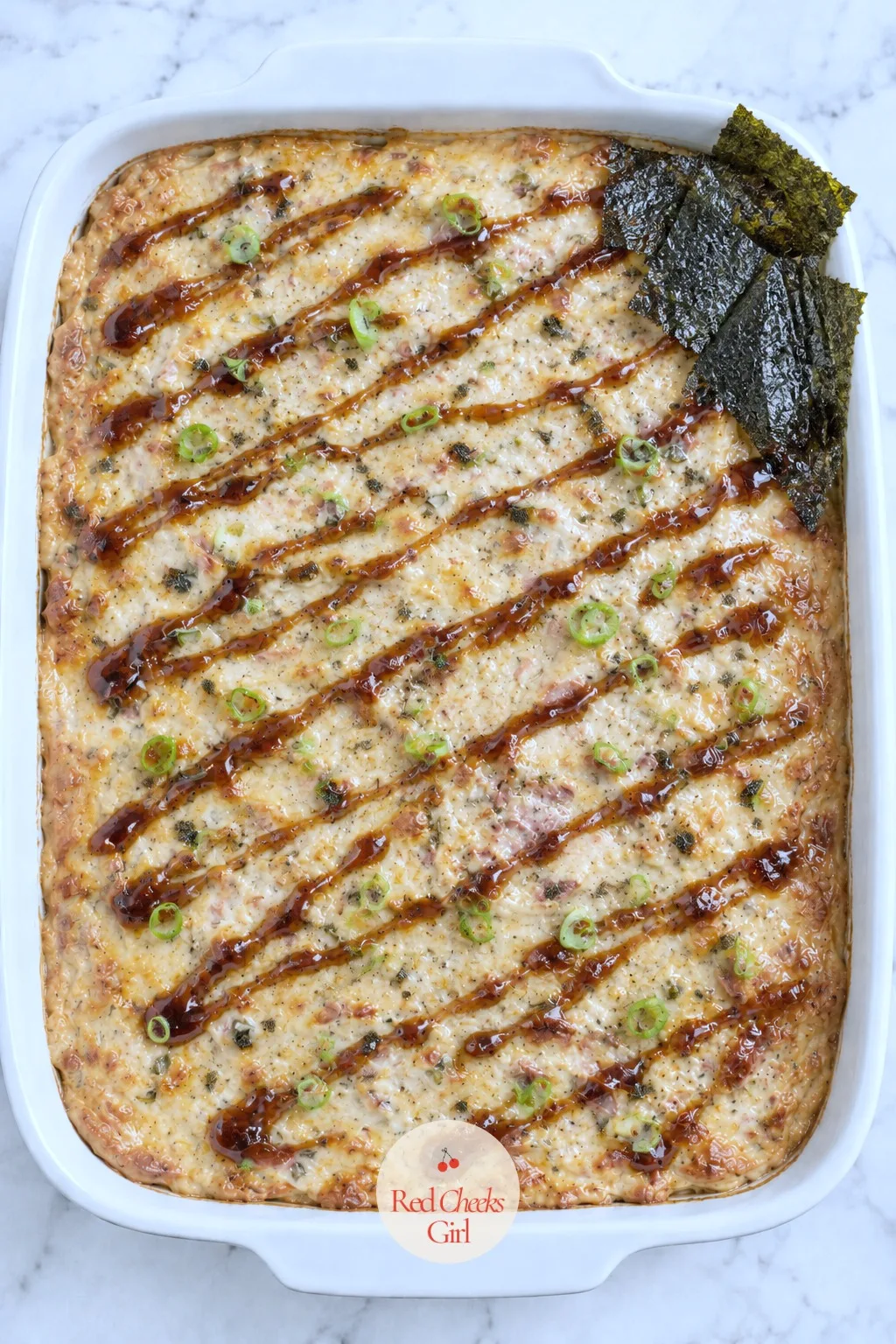
Drizzle with Eel Sauce and Serve
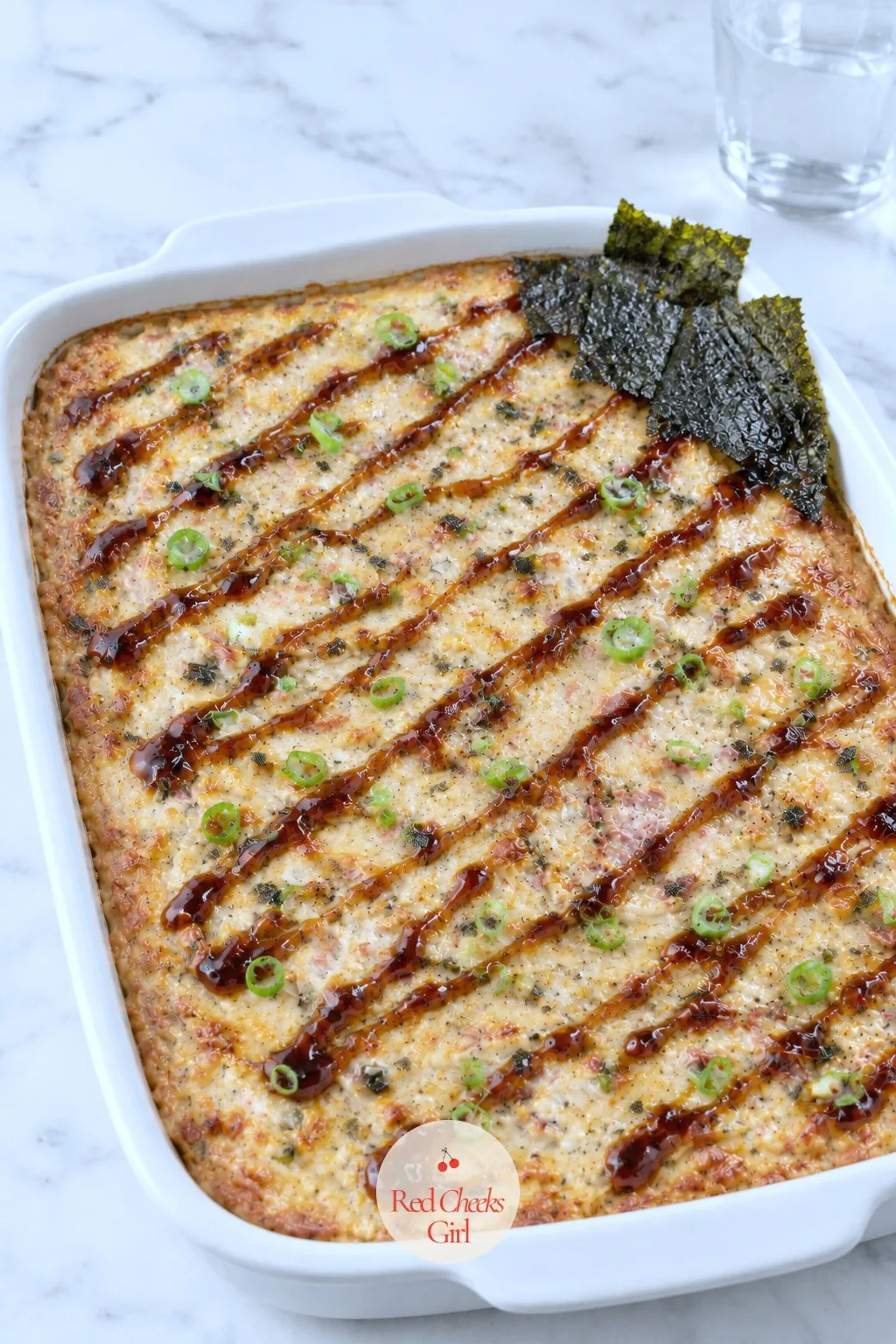
Drizzle the eel sauce and a little extra sriracha mayo over the top in thin lines, then scatter the last of the green onion. Set whole seaweed sheets along the side of the dish so everyone can scoop their own bite.
🛍 Shopping guide
Getting the Layers Right
The most common mistake is rushing the rice. If it goes into the dish while still steaming hot, the vinegar mixture never fully absorbs and the layer turns gummy instead of tender; give it the full fold-and-rest the recipe asks for.
Overbaking is the second trap. Past 25 minutes the cream cheese layer can split and turn oily at the edges, so pull the dish the moment the center looks warm and the edges bubble, not when it looks dramatically browned.
Skipping the rest time is tempting when everyone is already hovering with plates, but a filling straight from the oven runs off the seaweed instead of sitting on it. Five minutes fixes that completely.
Pressing the rice unevenly leaves thin spots that dry out and thick spots that stay gummy. Use the back of a large spoon and work from the center out, checking the corners last since they get skipped most often.
Swaps and Substitutions
Imitation crab is the budget choice, but cooked shrimp, canned tuna or real crab meat all work in its place without changing anything else about the method. If anyone at the table avoids shellfish-style surimi, cooked salmon is the easiest straight swap.
Cream cheese can give way to full fat Greek yogurt if you want a lighter filling, though it will taste noticeably less rich. Kewpie mayonnaise is worth seeking out if your grocery store carries it, since its flavor is rounder than regular mayonnaise, but regular mayonnaise still works fine.
Eel sauce contains gluten in most store brands, so swap in a gluten-free teriyaki sauce if that matters for your table, and check the furikake label too since some blends include soy sauce powder made with wheat.
For a vegetarian version, skip the crab or salmon entirely and fold diced avocado and cucumber into the cream cheese base instead. It will not taste identical, but the texture and the scoop-on-seaweed ritual stay the same.
What to Serve It With at a Party
Sushi bake is filling enough to anchor a spread on its own, but a few cold, crisp things alongside keep the whole table from feeling too rich. Thinly sliced cucumber, diced avocado and a small bowl of pickled ginger all do that job without any cooking.
If this is part of a bigger party table, it sits comfortably next to other finger foods people can eat standing up; the same logic that makes Super Bowl party food for a crowd that came hungry work applies here too.
For a game night version of the same gathering, pair it with the kind of easy, hands-off dishes in family game night snacks and finger foods for the whole table, so nobody has to leave the table mid-round.
Keep the drinks simple and non-alcoholic if the crowd is mixed; a bowl from non alcoholic punch recipes for a crowd that toasts at midnight covers everyone at once, and if you do pour something with alcohol for the adults in the room, keep it light and keep water on the table alongside it.
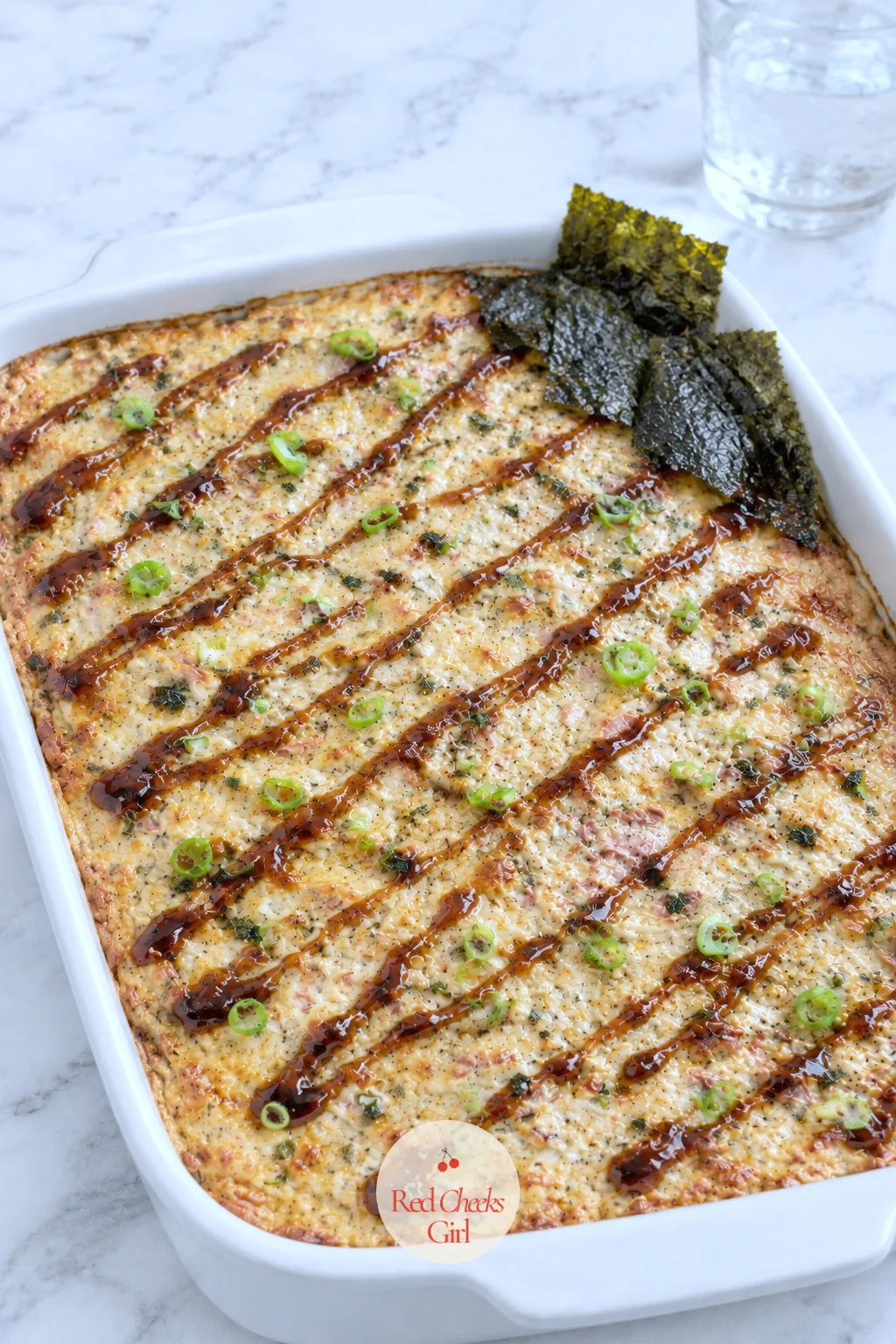
Sushi Bake
Ingredients
- 2 cups uncooked short grain sushi rice such as Calrose
- 2 1/4 cups water
- 1/4 cup rice vinegar
- 2 tablespoons granulated sugar
- 1 teaspoon fine salt
- 1 tablespoon toasted sesame oil for the dish
- 4 tablespoons furikake seasoning divided
- 8 ounces cream cheese softened
- 1/2 cup mayonnaise
- 1 pound imitation crab flaked, or 1 pound cooked salmon, flaked
- 2 tablespoons sriracha plus more for drizzling
- 3 green onions thinly sliced, plus extra for garnish
- 1/4 cup eel sauce unagi sauce
- 8 to 10 roasted seaweed snack sheets for serving
Instructions
- Rinse 2 cups uncooked short grain sushi rice in a fine mesh strainer under cold water until the water runs clear, about 1 minute, to wash away excess starch.
- Cook the rinsed rice with 2 1/4 cups water in a rice cooker or in a covered saucepan over low heat, about 18 to 20 minutes, until all the water is absorbed and the rice is tender.
- In a small saucepan over low heat, warm 1/4 cup rice vinegar, 2 tablespoons granulated sugar and 1 teaspoon fine salt, stirring until the sugar and salt dissolve, about 1 minute, then remove from the heat.
- Turn the hot rice into a large white ceramic mixing bowl, pour the warm vinegar mixture over it, and fold gently with a wide spoon until every grain glistens and no dry rice remains at the bottom of the bowl.
- Preheat the oven to 375 degrees Fahrenheit. Brush a 9x13 inch white ceramic baking dish with 1 tablespoon toasted sesame oil, then press the seasoned rice into the dish in one even layer that reaches every corner.
- Sprinkle 2 tablespoons furikake evenly over the rice layer, covering the surface in a fine, even speckle.
- In a second white ceramic mixing bowl, beat 8 ounces softened cream cheese smooth, then stir in 1/2 cup mayonnaise, 1 pound flaked imitation crab (or 1 pound flaked cooked salmon), 2 tablespoons sriracha and 3 sliced green onions until evenly combined and streaked pale pink.
- Spread the crab or salmon mixture over the rice in an even layer, all the way to the edges of the dish, so no rice shows through.
- Sprinkle the remaining 2 tablespoons furikake over the top.
- Bake, uncovered, for 20 to 25 minutes, until the edges bubble and the top shows faint golden patches; for deeper color, broil for 1 to 2 minutes more, watching constantly so it does not scorch.
- Remove from the oven and let the dish rest for 5 minutes before serving, which lets the filling firm up slightly so it scoops cleanly instead of running.
- Drizzle 1/4 cup eel sauce and a little extra sriracha over the top in thin lines, scatter the remaining green onion, and serve warm with 8 to 10 roasted seaweed snack sheets alongside for scooping.
Good to Know
Frequently Asked Questions
Can you eat sushi bake cold?
Sushi bake is meant to be eaten warm, since cold rice turns firm and the creamy topping loses its texture once it cools all the way down.
Can sushi bake be made ahead of time?
Yes, you can cook and season the rice and mix the creamy filling up to a day ahead, then assemble and bake it just before serving.
How long does sushi bake keep in the fridge?
Leftover sushi bake keeps for up to 2 to 3 days in the refrigerator in a covered dish or airtight container, with the seaweed stored separately.
Is sushi bake gluten-free?
The rice, crab or salmon and cream cheese are naturally gluten-free, but check the furikake and eel sauce labels since some brands add soy sauce made with wheat.
Can I use frozen or day-old rice for sushi bake?
Freshly cooked rice works best; frozen rice is hard to rehydrate evenly and can turn clumpy or sticky once it goes into the dish and bakes.
What can I use instead of imitation crab?
Canned tuna, canned salmon, cooked shrimp or real crab meat all work well in place of imitation crab without changing the rest of the method.
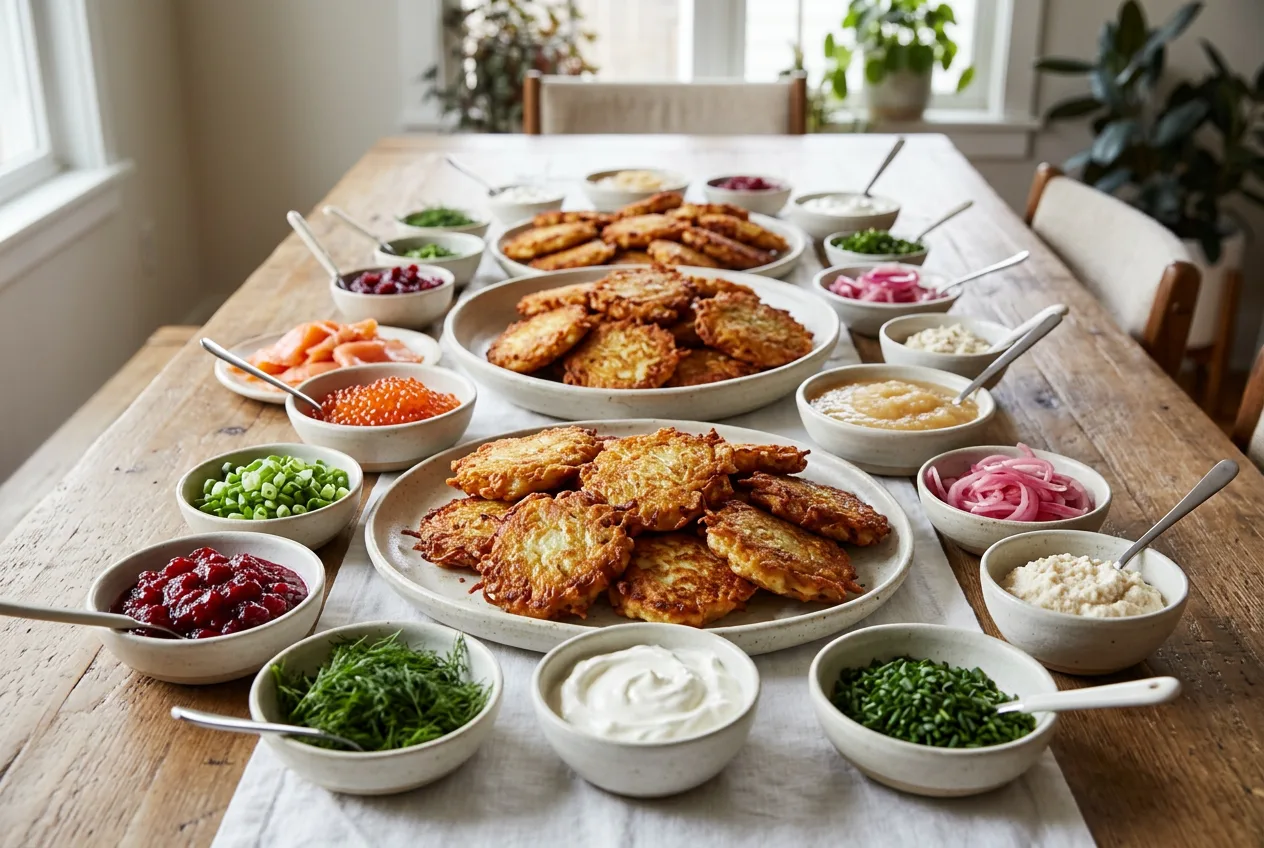
A latke bar with 10 topping combinations, from smoked salmon and caviar to pomegranate horseradish c
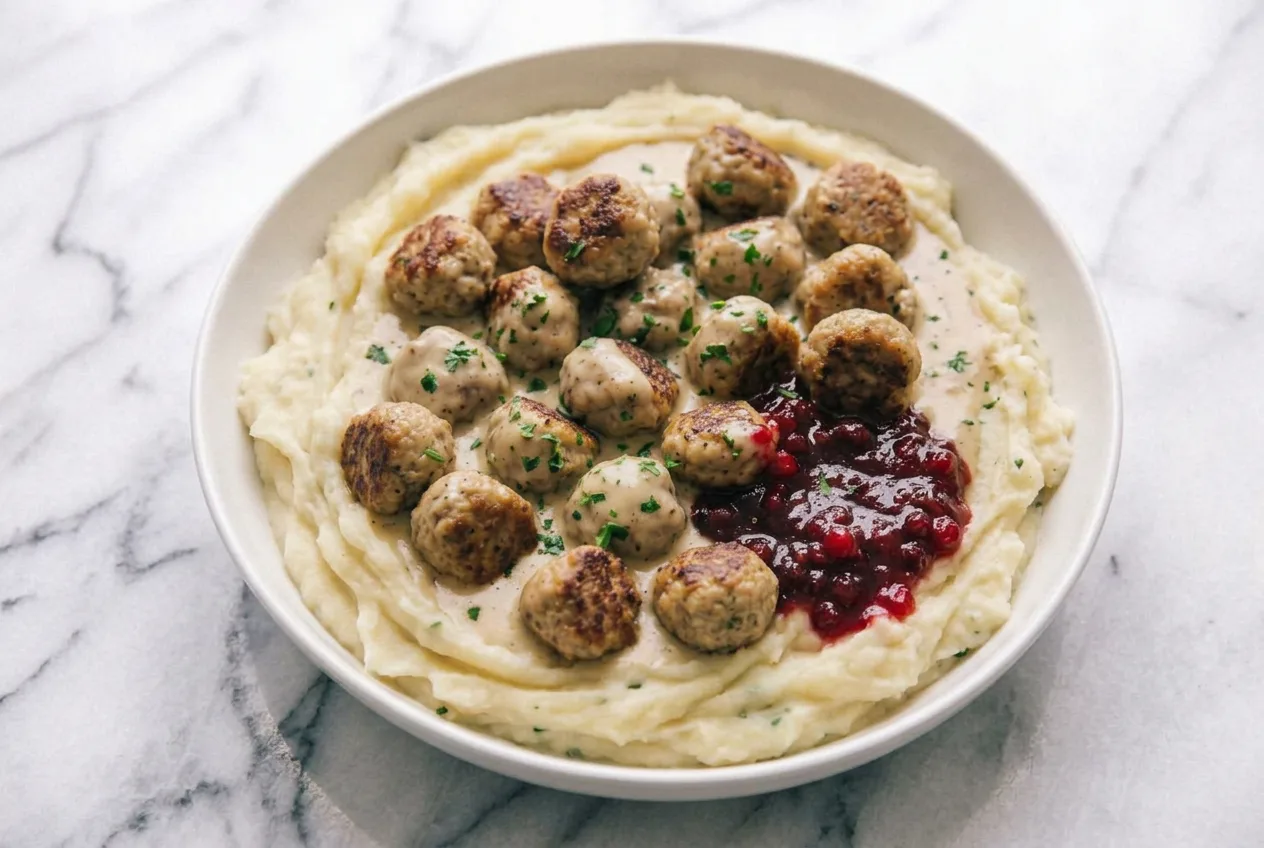
Swedish meatballs simmer in creamy gravy, served over buttery mashed potatoes with lingonberry sauce
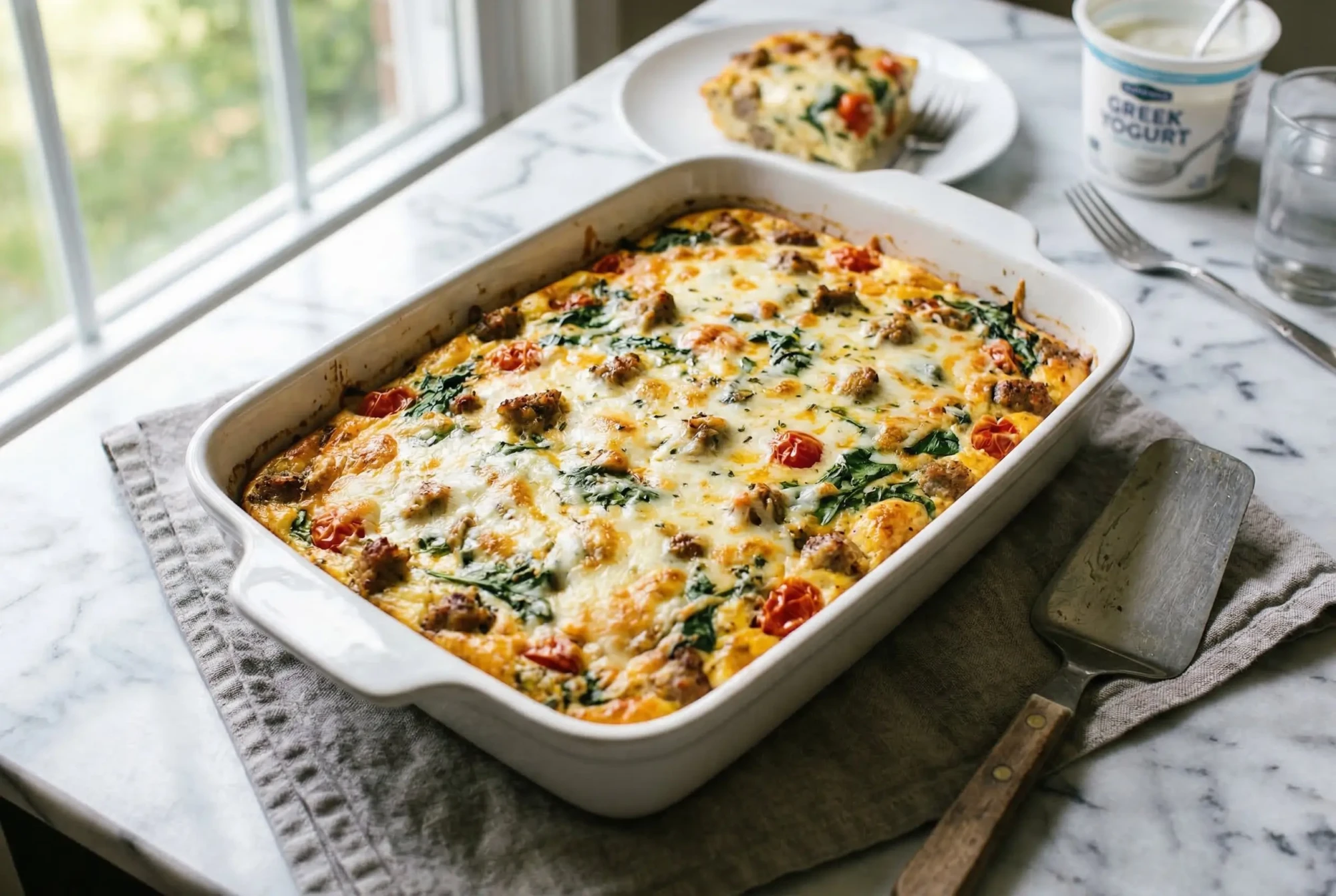
Greek yogurt protein casserole with 26g protein per serving. Eggs, yogurt, cottage cheese, turkey sa
Leave a Reply