

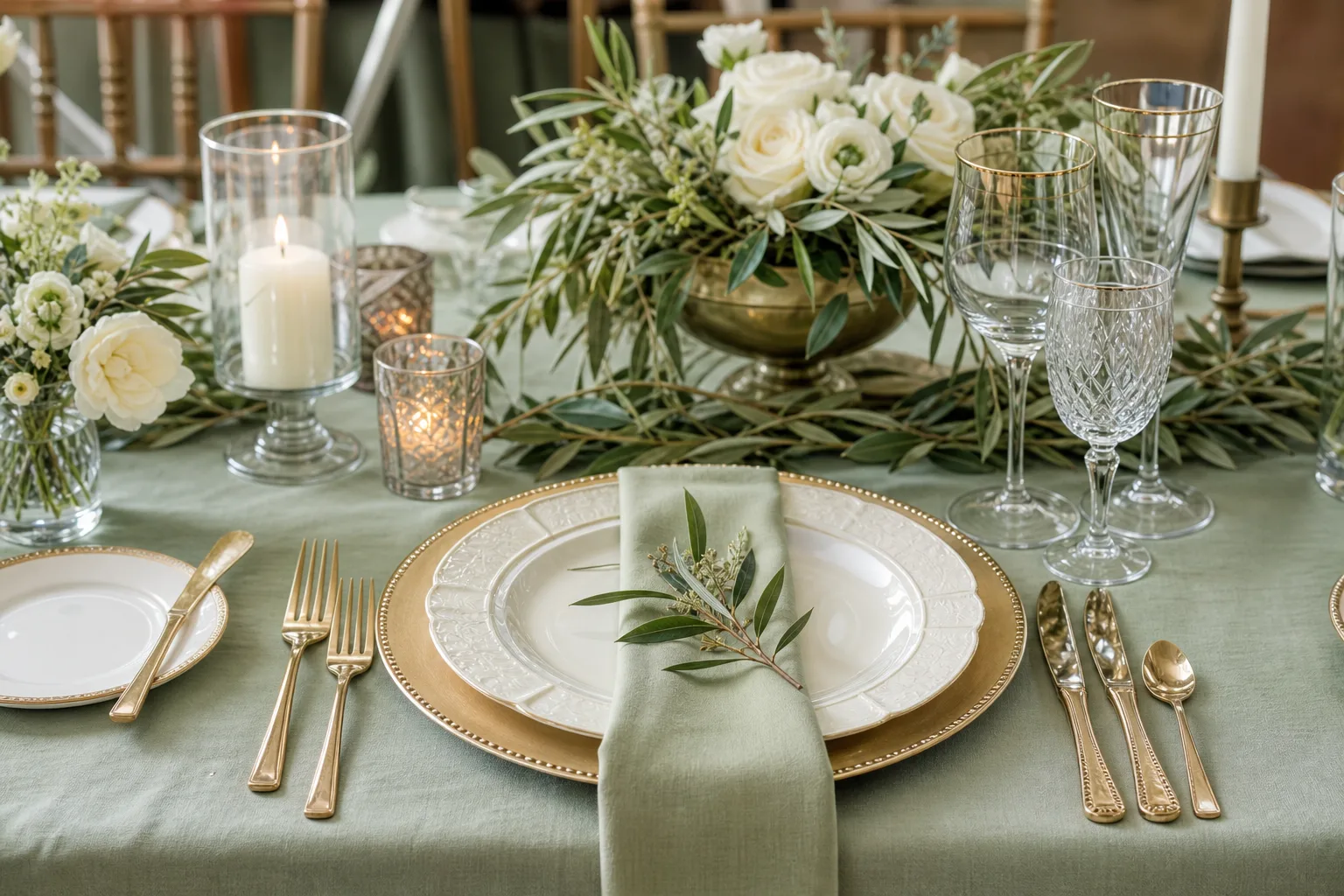
A reception table either looks pulled together the second a guest sits down, or it looks like a cloth got thrown over a trestle table five minutes before the first course. The difference is almost never the flowers. It is the layer underneath them: the cloth, the plate, the fold of the napkin, the one sprig left on the china before anyone touches it.
Sage does a lot of the heavy lifting on its own, since it sits between green and grey and flatters nearly every skin tone in photographs. What follows is twenty whole place settings, not twenty separate props, so she can pick one and build the rest of the table around it rather than guessing how the pieces fit.
Once the places are set, the room still needs something to do between courses: 10 Best Wedding Games for Every Celebration covers that part without touching the table itself.
This post contains affiliate links. If you buy through them, I may earn a small commission at no extra cost to you.
Table of Contents
The Linens and Chargers
This is the layer nobody compliments directly because it is doing its job quietly: the cloth or runner the rest of the setting sits on, and the charger that gives a bare plate somewhere to land. Get this part smooth and ironed and everything stacked on top of it looks more deliberate than it actually took to arrange.
Sage Cotton Tablecloth With Cream China
A plain glass of water looks better the moment it sits on soft sage instead of white. This tablecloth is pressed cotton in a true sage, ironed flat so no fold lines show once it is laid, and it reads as the calm base under everything else on the table.
Set cream china straight onto it: a dinner plate, a smaller bread plate, nothing patterned to compete. It works at a garden reception under old trees or indoors against paneled walls, and suits a bride who wants the room to feel settled rather than busy. If sage reads too cool against the venue’s light, a warmer moss cloth keeps the same calm with the china unchanged.

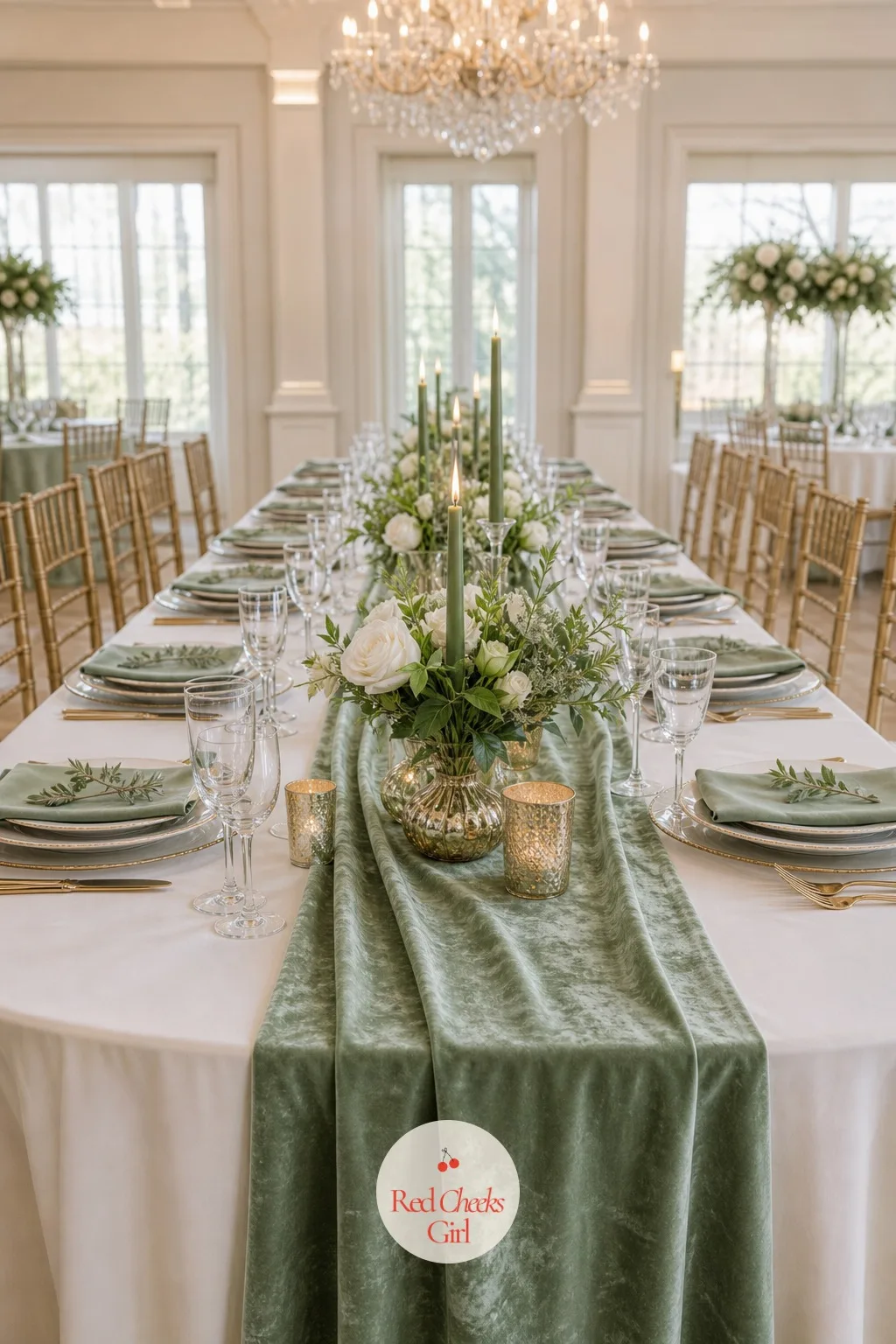
Sage Velvet Runner
Velvet changes the temperature of a table before anyone sits down.
Lay a sage velvet runner down the center of an ivory cloth and the light catches differently depending on where a guest stands, deep in one direction and almost silver in the other. It belongs in a ballroom with a chandelier overhead, or any room already doing some of the glamour for her, and suits a reception that leans formal over rustic. For a daytime garden version where velvet would overheat in the sun, a sage satin runner gives the same shine without the weight.
🛍 Shopping guide
Wooden Chargers With Sage Napkins
Wood under a plate tells a guest what kind of wedding she has walked into before the menu card says a word.
A round wooden charger, left in its natural tone rather than stained dark, sits beneath a plain white dinner plate, with a sage napkin folded into a simple rectangle resting on top. It is the obvious choice for a barn with exposed beams and string lights overhead, though it works just as well on a terrace where the wood echoes furniture already out there. Swap the charger for a slimmer rattan one if the table is already busy with candles and glass.

🛍 Shopping guide
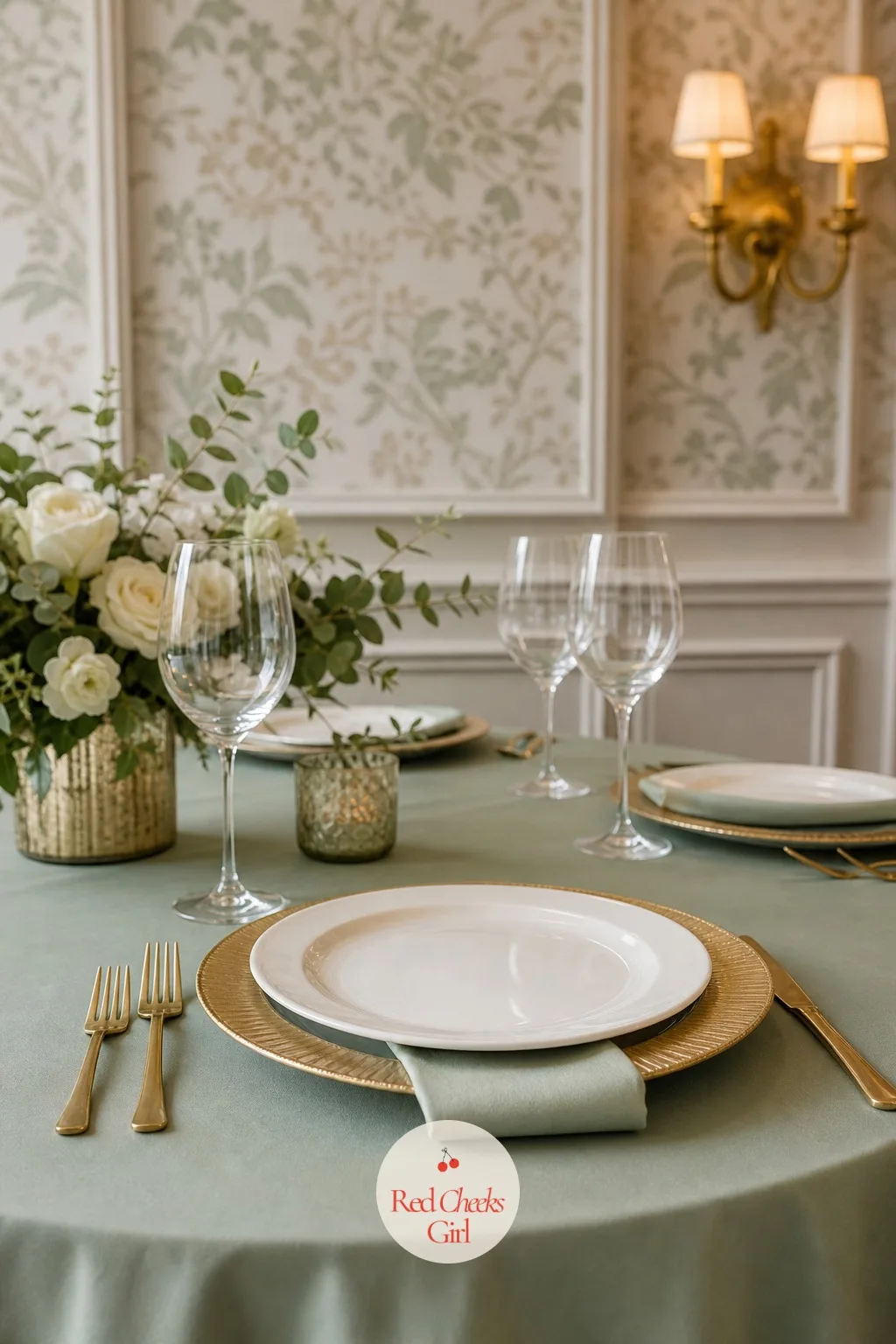
Sage Satin Tablecloth With Gold-Rimmed Charger
Satin has a quiet shine that cotton does not, and against gold it looks considerably more expensive than it costs.
A sage satin tablecloth, pressed smooth so the sheen reads evenly, sits under a gold-rimmed charger plate, with a cream dinner plate stacked on top. It is built for an indoor restaurant private room or a paneled dining room where sconces already do the lighting for her. If gold feels like too much metal on one table, a brushed pewter rim keeps the same shine without the warmth.
🛍 Shopping guide
Flatware, Glassware and Napkins
Metal and glass catch the light more than almost anything else on the table, so a small choice here changes the whole mood of the photographs taken from the head table looking down.
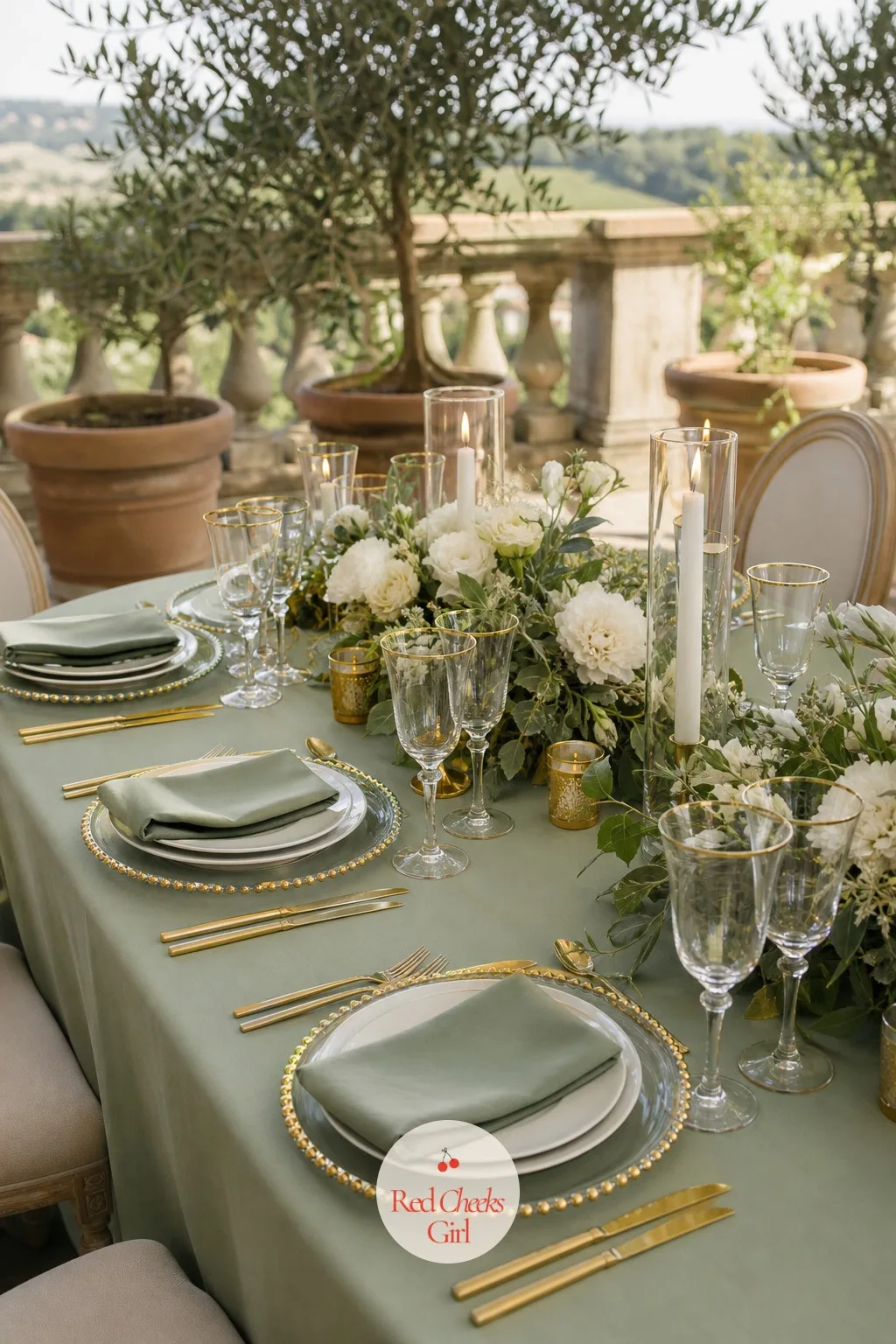
Gold Flatware With Sage Napkins
Gold flatware laid against sage does something silver never quite manages: it warms the whole place setting instead of cooling it.
Lay a full gold set, fork, knife, dessert spoon, around the plate, then rest a folded sage napkin to one side rather than underneath, so neither piece hides the other. It suits almost any venue, from a garden terrace with potted olive trees to a hall standing in for a ballroom, and works for a couple who want one strong metal without extra embellishment. If gold flatware is hard to source, a gold-rimmed stainless set gives the same glint for less.
🛍 Shopping guide
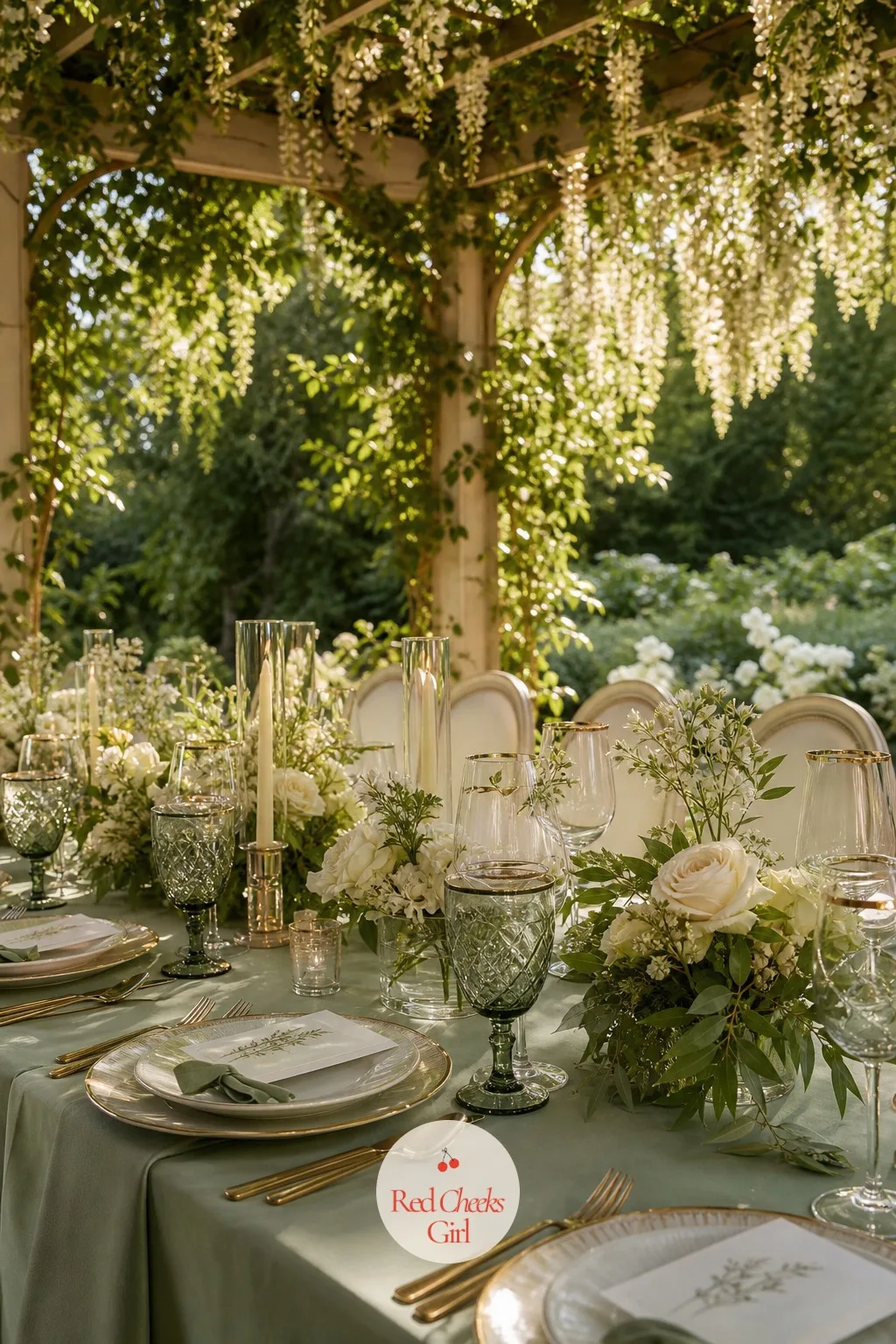
Sage Glassware
Clear water glasses do their job and nothing more; tinted sage ones make the whole table look considered.
A sage-tinted water goblet and wine glass, smooth and factory finished rather than hand blown and uneven, catch the sun under an outdoor pergola and hold candlelight well once it sets. It suits a reception already keeping its palette tight, since the glass itself becomes part of the color story rather than sitting outside it. For a rental budget that will not stretch to colored glass, a clear glass with a thin gold rim gets most of the same effect.
🛍 Shopping guide
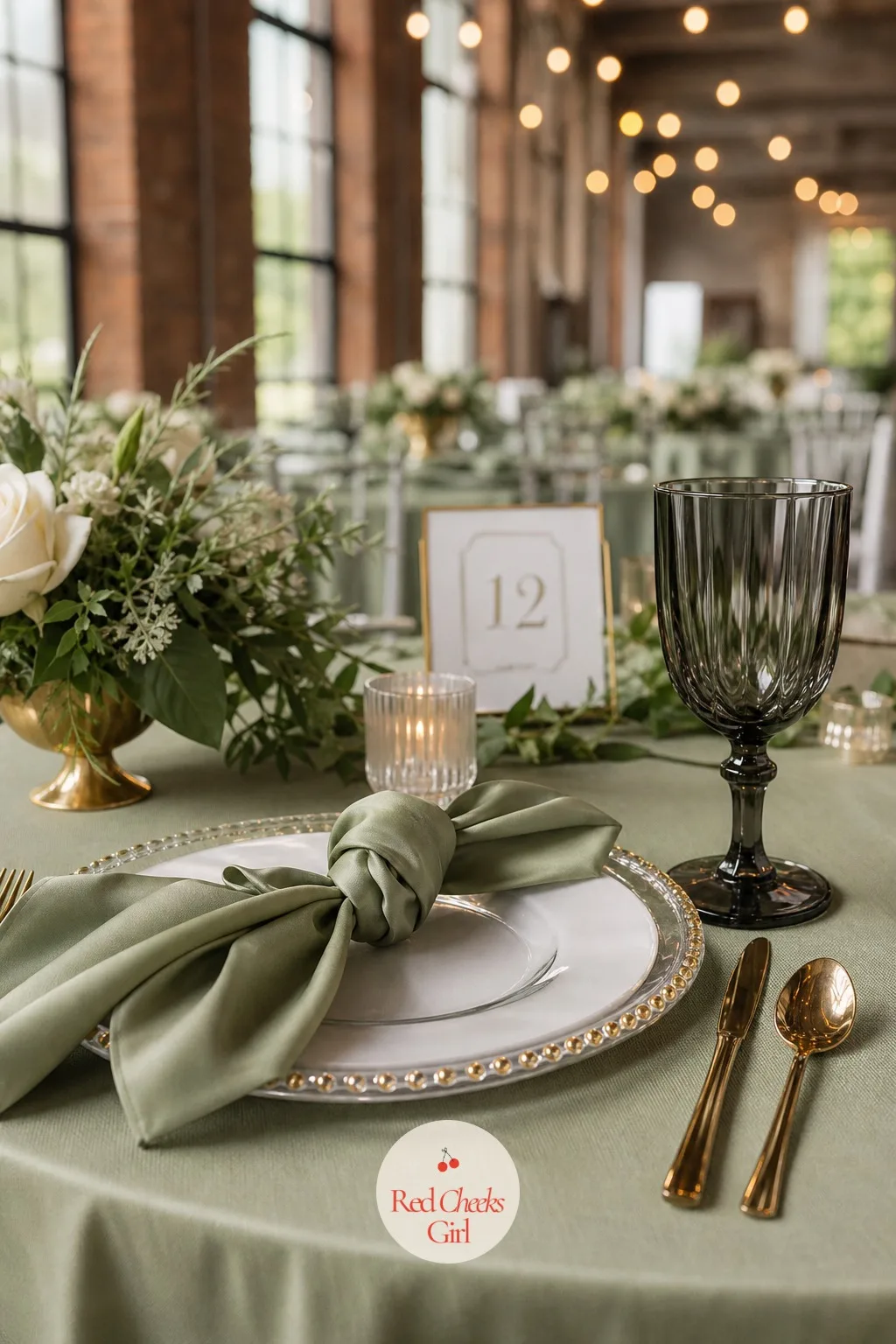
Smoked Glass Goblet With Sage Napkin Knot
A smoked glass goblet reads moodier than clear crystal, and it holds its own against exposed brick and bulb lighting instead of disappearing.
Fold the sage napkin into a simple knot rather than a fan, laid flat beside the goblet so the shape stays loose and current rather than fussy. It belongs in a loft or warehouse venue with industrial bones, and suits a couple who want the table to feel a little unpolished without losing the palette. Where smoked glass is not available to rent, a plain glass filled with sparkling water carries the same visual weight.
🛍 Shopping guide
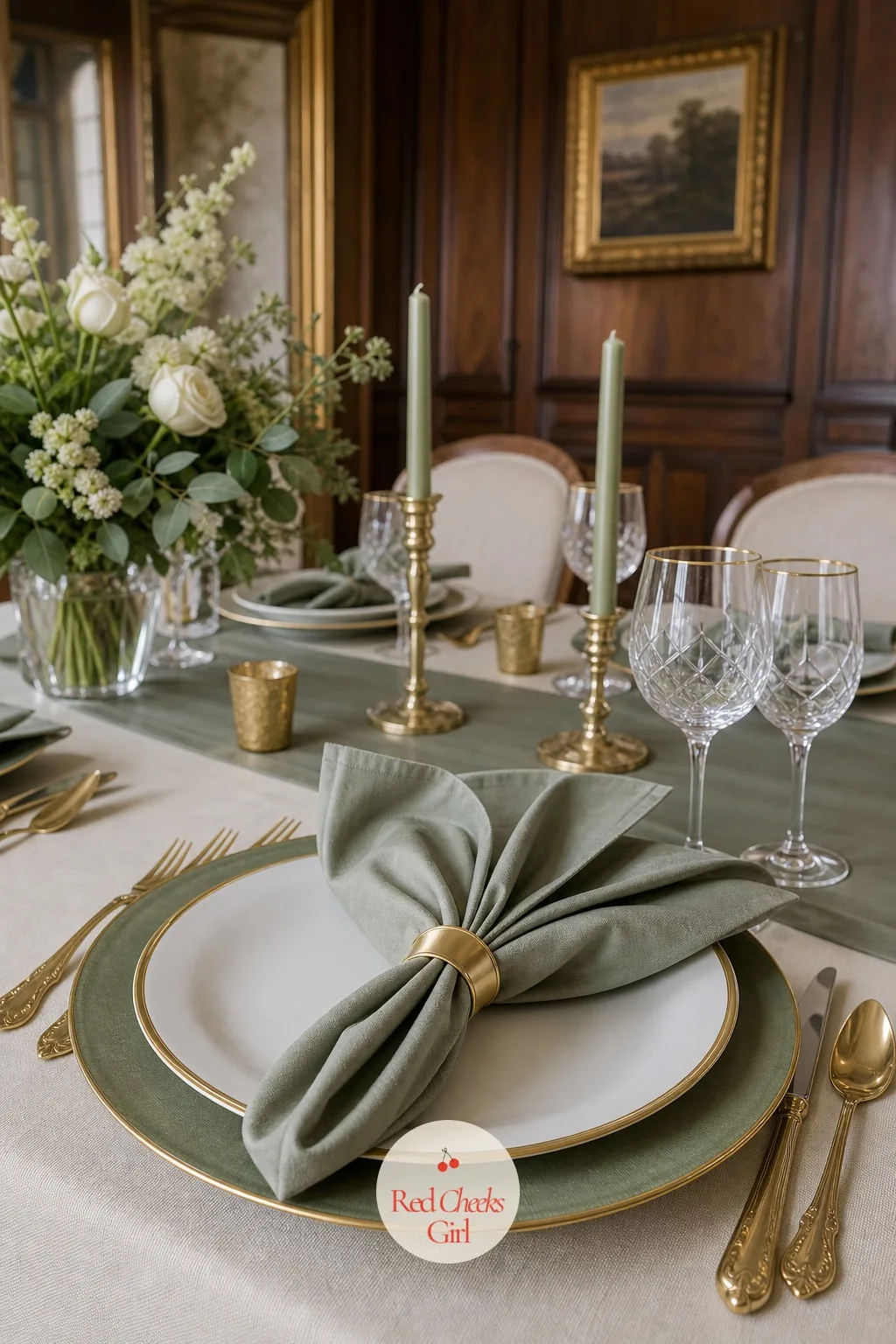
Pressed Sage Napkin With Gold Napkin Ring
A napkin ring is the smallest piece on the table and somehow the one guests notice first.
Press the sage napkin flat, fold it into thirds, and slide a plain gold ring over the center rather than a patterned one that competes with the flatware. It sits naturally in a historic manor dining room, where paneled walls and old paintings already carry the formality, and suits a smaller, seated wedding breakfast over a standing reception. If gold rings are not to hand, a length of sage ribbon tied in a bow around the napkin reads just as finished.
🛍 Shopping guide
Greenery and Flowers on Every Plate
A single stem on a bare plate costs almost nothing and reads as more considered than most centerpieces. These are built for the place setting itself, not the middle of the table.
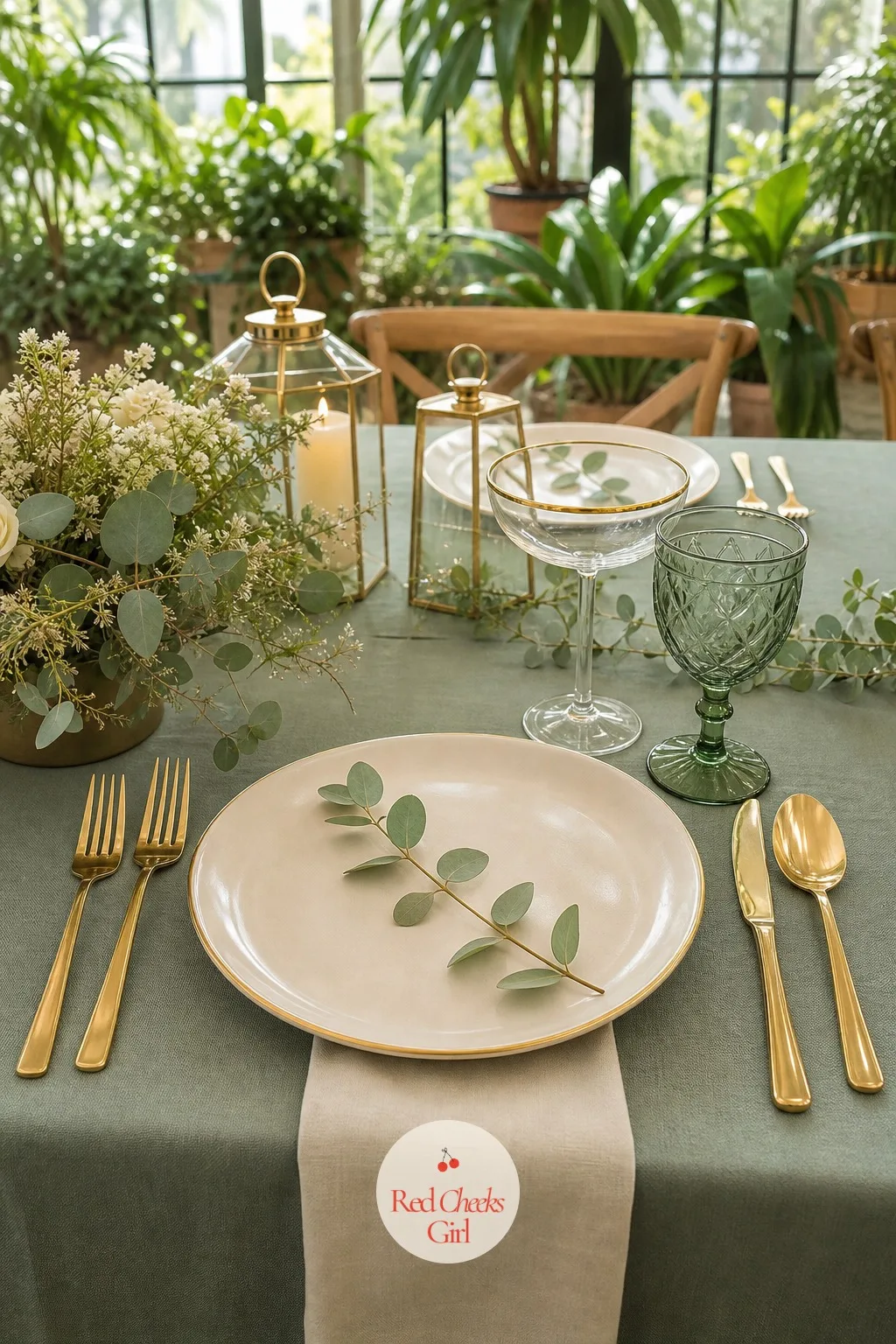
Eucalyptus on Each Plate
A bare plate before the food arrives always looks like it is waiting for something, and a single stem fixes that in seconds.
Lay one short sprig of eucalyptus diagonally across the cream plate, stem tucked under the napkin so it does not roll, and let the leaves do the talking rather than a full posy. It suits a greenhouse or orangery venue where the plants outside are already doing the same job, and costs almost nothing since one bunch from the florist stretches across dozens of settings. If eucalyptus is out of season, a stem of rosemary gives the same silvery green and smells better up close.
🛍 Shopping guide
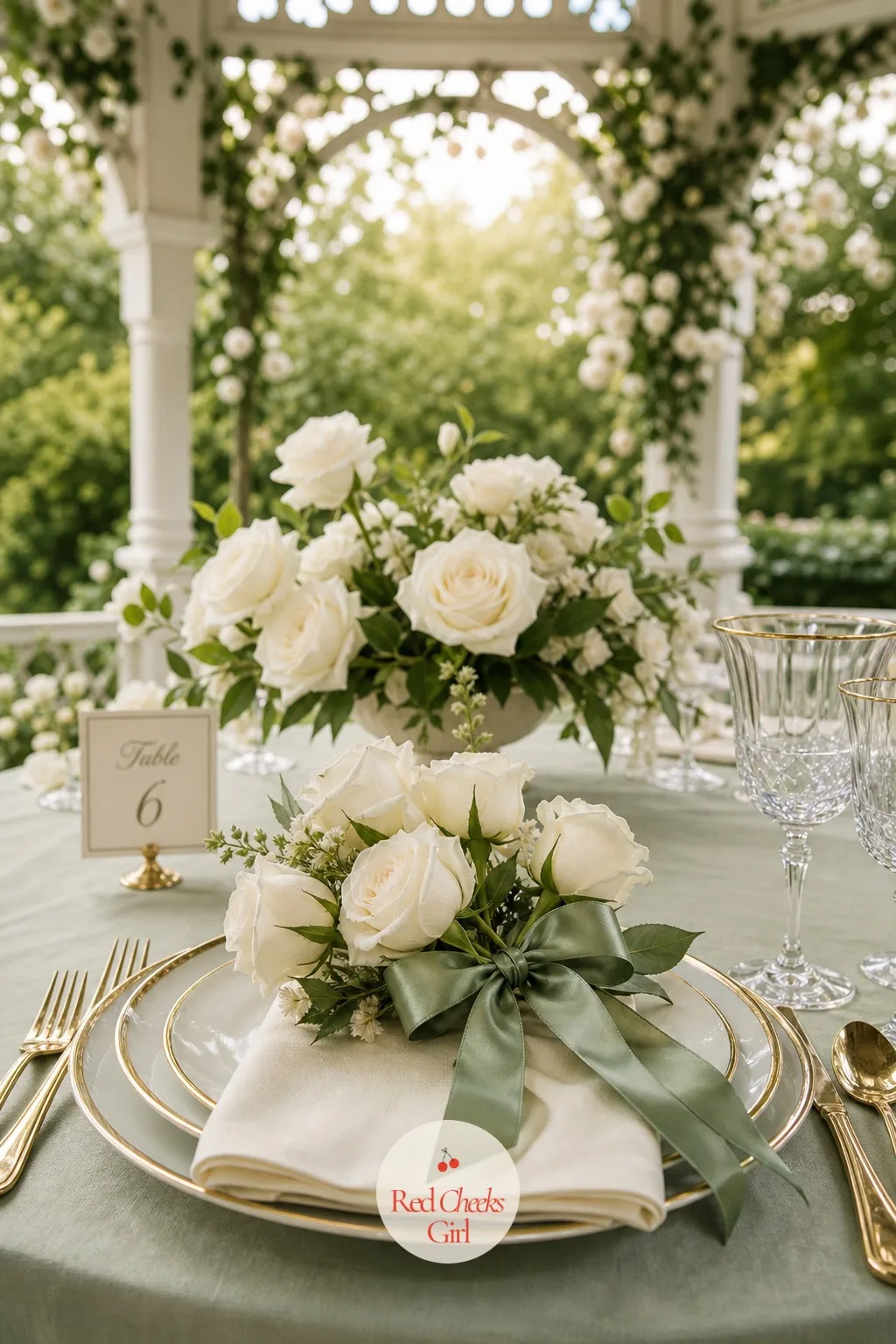
White Roses With Sage Ribbon
Roses on a plate can tip into twee fast; the sage ribbon is what keeps this one from getting there.
Lay two or three white garden roses, stems trimmed short, across the napkin and tie a length of sage ribbon around them in a single loose knot rather than a bow. It belongs at a garden wedding with a rose arbor already in frame, or anywhere the bride is carrying white roses herself so the table echoes the bouquet. Swap the garden rose for a spray rose if the budget needs to stretch further across more tables.
🛍 Shopping guide
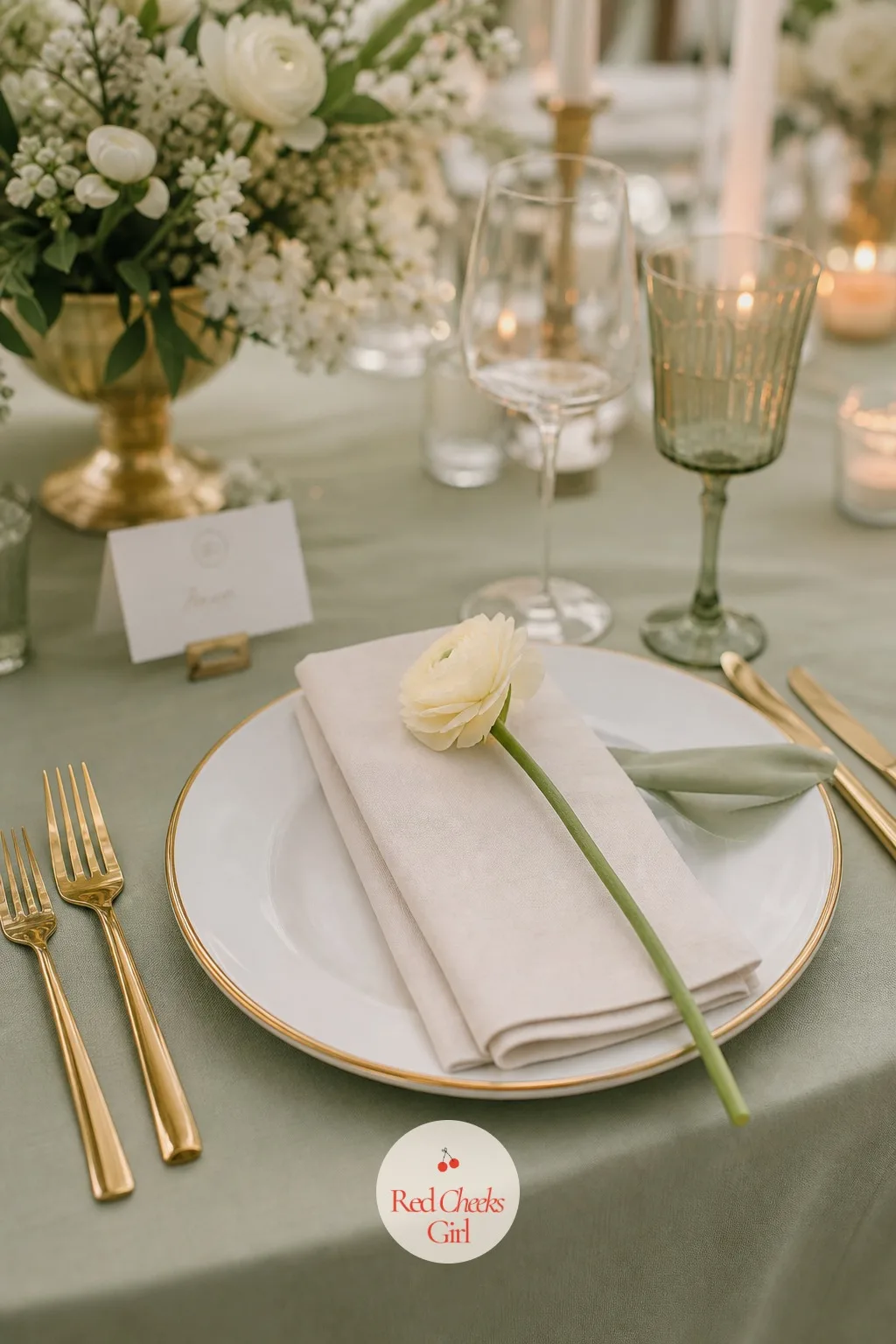
Single Ranunculus Stem Across the Napkin
A ranunculus packs more petals into one bloom than almost any other wedding flower, which is exactly why one stem is plenty.
Lay a single blush or cream ranunculus across the folded napkin, no wire, no extra foliage, so the shape of the flower stays the whole point. It works inside a draped tent interior where the ceiling fabric already does the softness, and suits a reception that wants one flower per place rather than a full centerpiece eating the budget. If ranunculus is out of season, a tight garden spray rose in the same tone holds the same shape.
🛍 Shopping guide
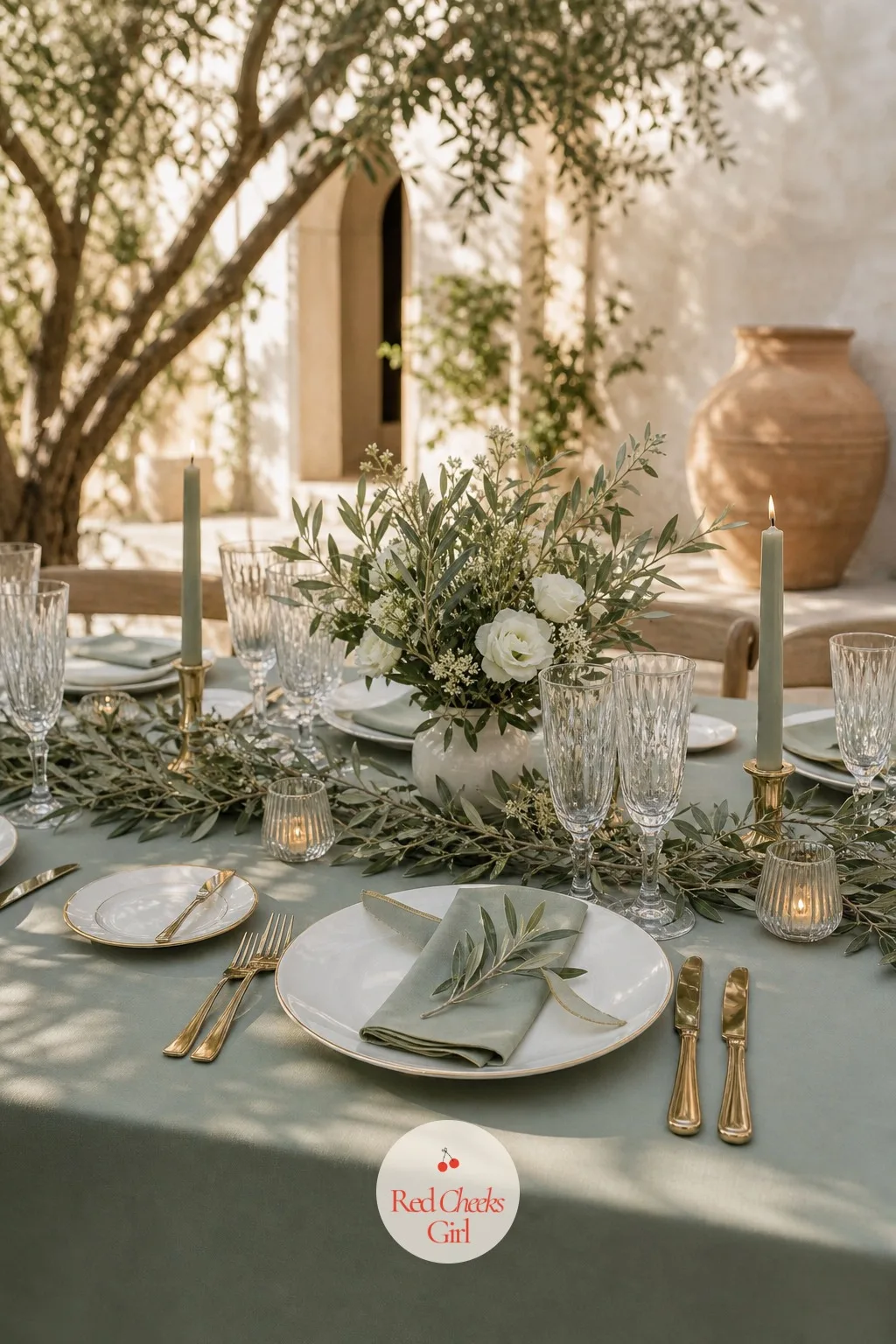
Olive Branch Sprig at Each Setting
Olive leaves read a shade darker and more matte than eucalyptus, and against sage the two greens sit together without fighting for attention.
Tuck one small olive branch under the edge of the napkin so only the leaves show, leaving the plate otherwise bare. It suits a Mediterranean-style courtyard with stucco walls and real olive trees nearby, or any venue where the couple wants a nod to that look without flying flowers in from elsewhere. Rosemary makes an easy substitute where olive branches are not sold locally.
🛍 Shopping guide
Color Pairings Worth Building a Place Setting Around
Sage rarely stands alone on a real table; it is usually carrying a second color that sets the season and the mood. These four pairings each shift the same base setting into a different feeling entirely. If the centerpiece in the middle of the table still needs an answer, 21 Wedding Table Centerpieces Built Around Something Other Than Flowers has plenty built around something other than flowers.
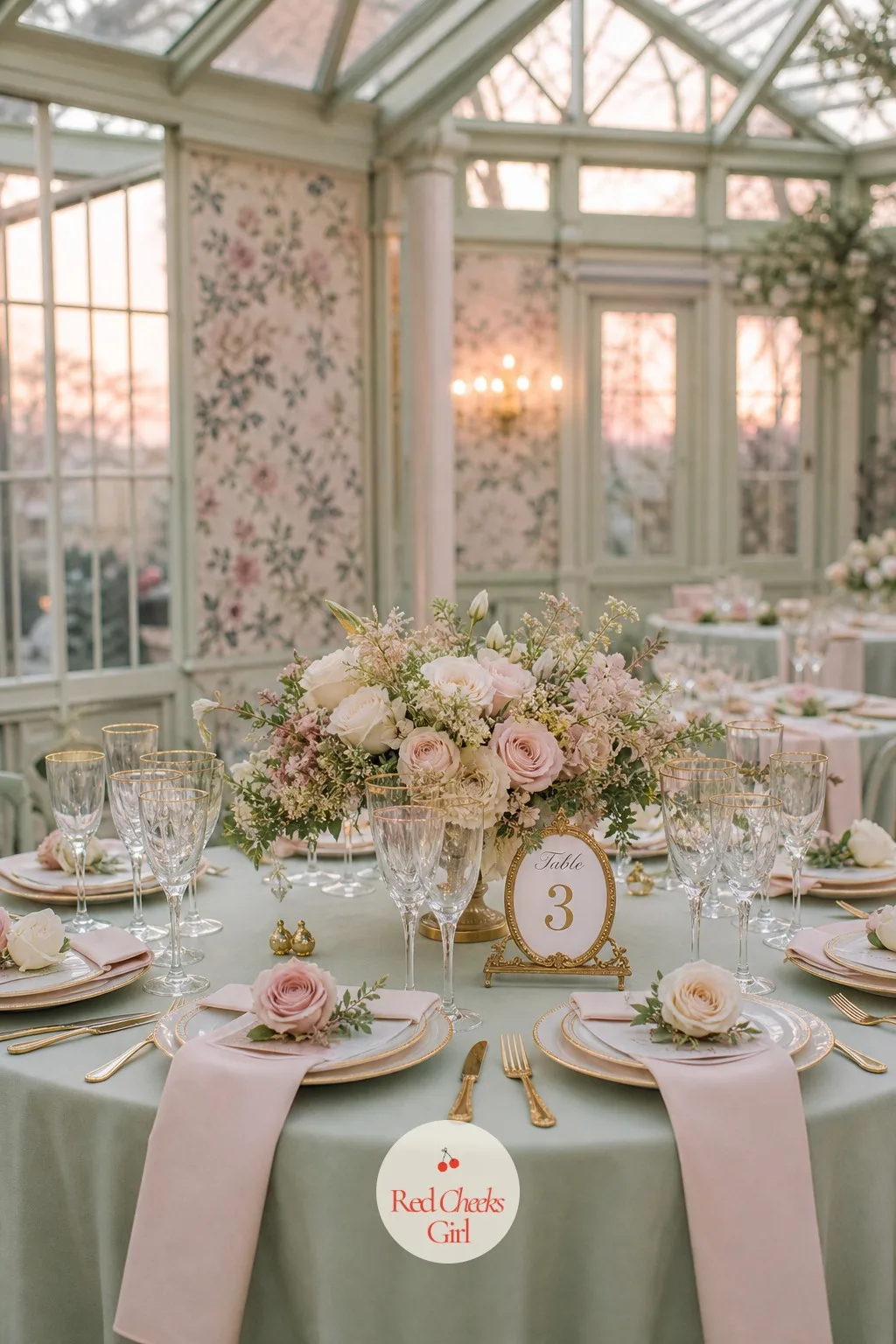
Sage and Blush Mix
Sage on its own can feel a little serious; blush is what softens it back into romantic.
Keep the tablecloth sage, switch the napkin to a pressed blush cotton, and let a few blush garden roses sit among the greenery on the plate. It works in a conservatory or sunroom venue where pink evening light already comes through the glass, and suits a spring or summer wedding over a winter one. Where blush linen is hard to find, a blush ribbon tied around a sage napkin gets the same contrast for far less.
🛍 Shopping guide
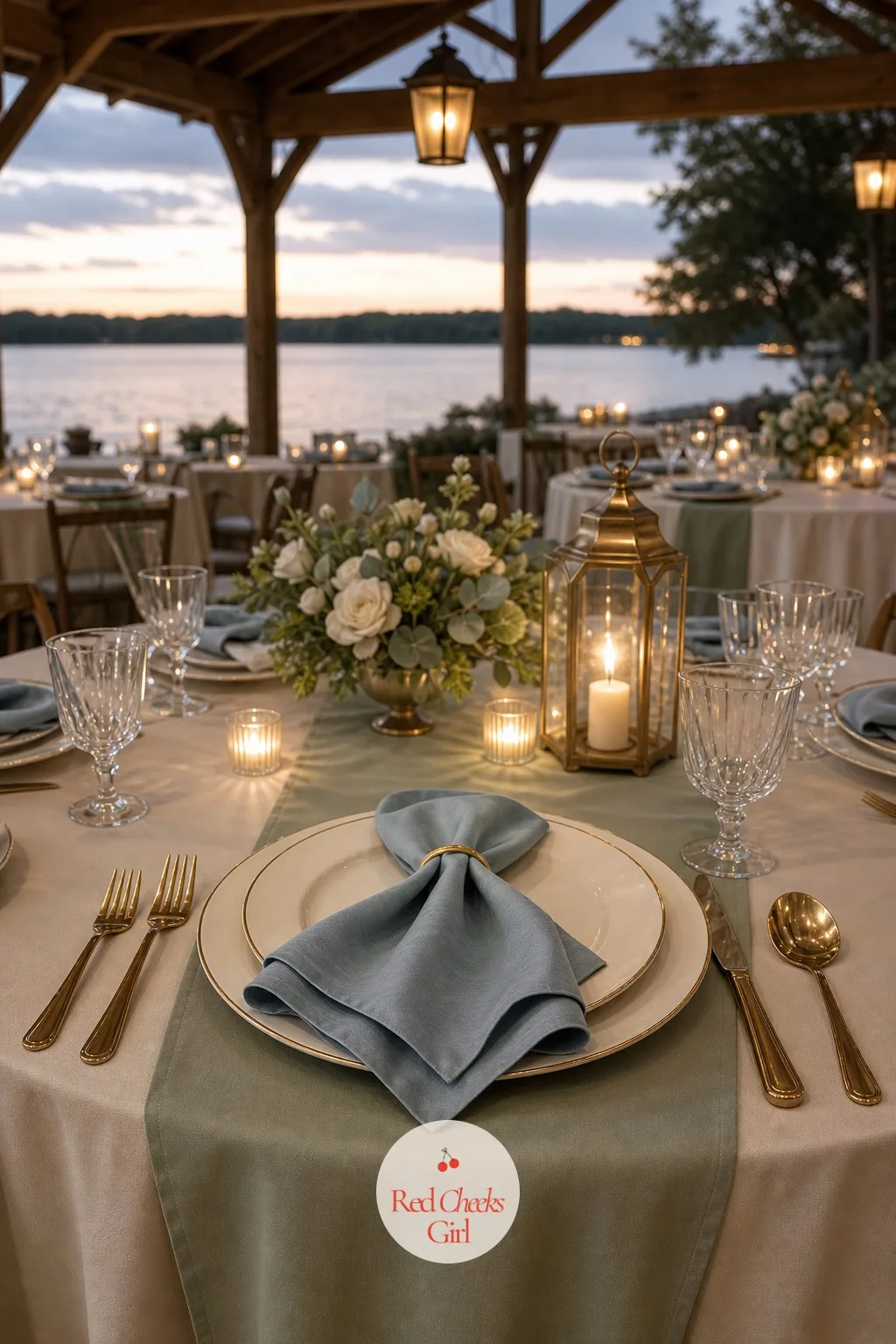
Sage and Dusty Blue
This pairing reads older and quieter than sage and blush, closer to watercolor than garden party.
Use a dusty blue napkin against a sage runner, with a cream plate between them so neither color has to compete directly with the other. It suits a lakeside pavilion in early evening, when the light itself turns the same muted blue, and works well for a couple marrying later in the year rather than high summer. If dusty blue linen is not available, a dusty blue ribbon on the menu card carries the color just as well.
🛍 Shopping guide
Sage and Terracotta Mix
Terracotta brings a warmth that sage does not have on its own, and together they look more like a sun-baked courtyard than a wedding color board.
Pair a sage napkin with a terracotta-rimmed plate or a terracotta ribbon on the menu card, keeping the tablecloth itself cream so both accent colors stay visible. It belongs at a vineyard venue with string lanterns overhead, and suits an early autumn date when the light outside already leans that direction. Swap terracotta for rust-colored dried flowers if rimmed plates are not easy to rent.

🛍 Shopping guide
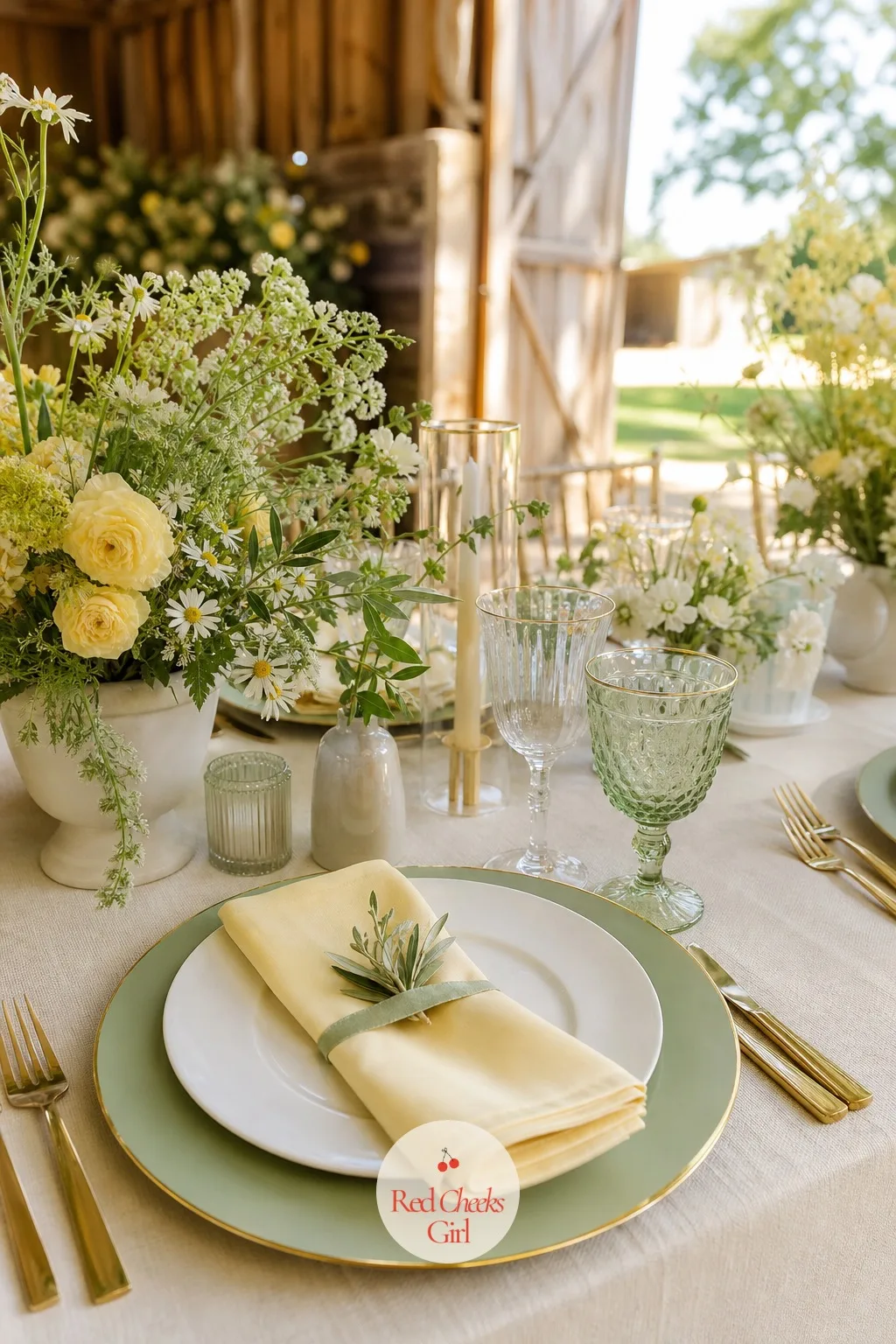
Sage and Butter Yellow Mix
Butter yellow keeps sage from reading cold, and the two together feel like the first warm week of the year.
Lay a butter yellow napkin on a sage charger, with a few loose wildflowers in the same yellow tucked beside the plate rather than in a vase. It suits a sunlit barn or open-sided vineyard venue where the light does most of the work, and fits a late spring date better than a winter one. Where yellow linen feels like too much commitment, a yellow wax seal on the menu card is enough to carry the color.
🛍 Shopping guide
Menu Cards, Place Cards and Paper Details
The last thing a guest touches before dinner starts is paper, so it carries more weight than its size suggests. These finish the setting rather than start it. For the rest of the table beyond these four details, 28 Wedding Table Decorations That Move Beyond the Centerpiece keeps going past the place setting itself.
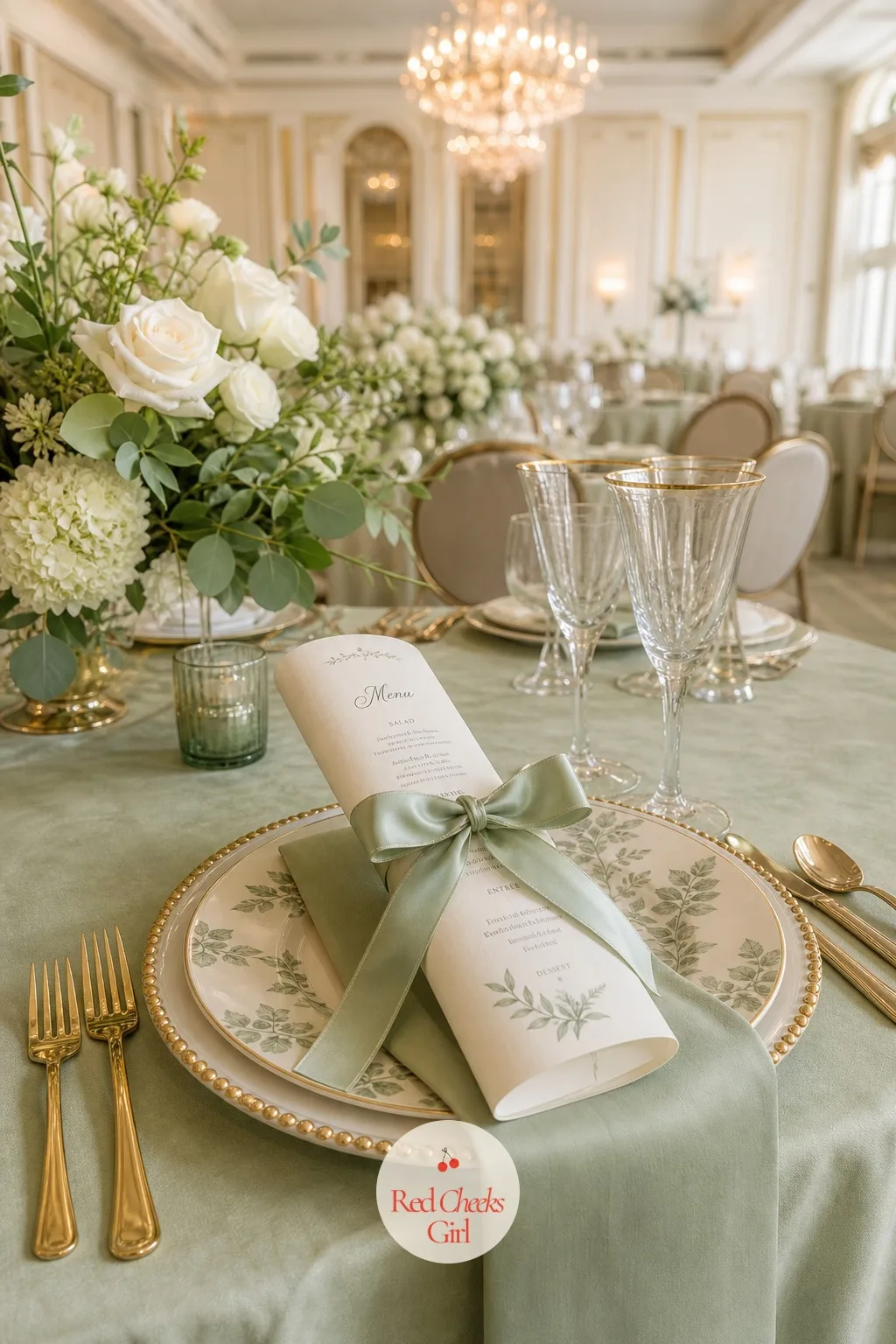
Menu Card Tied With Sage Ribbon
A menu card gives a guest something to do with her hands in the quiet minute before the first course arrives.
Print it on cream cardstock, roll it, and tie a single loop of narrow sage ribbon around the middle rather than gluing it flat to the plate. It works at almost any venue since it travels in a box and needs no setup beyond the table itself, and suits a couple who want one paper detail without a full stationery suite. If ribbon feels fussy, a dot of sage wax holds the roll just as well.
🛍 Shopping guide
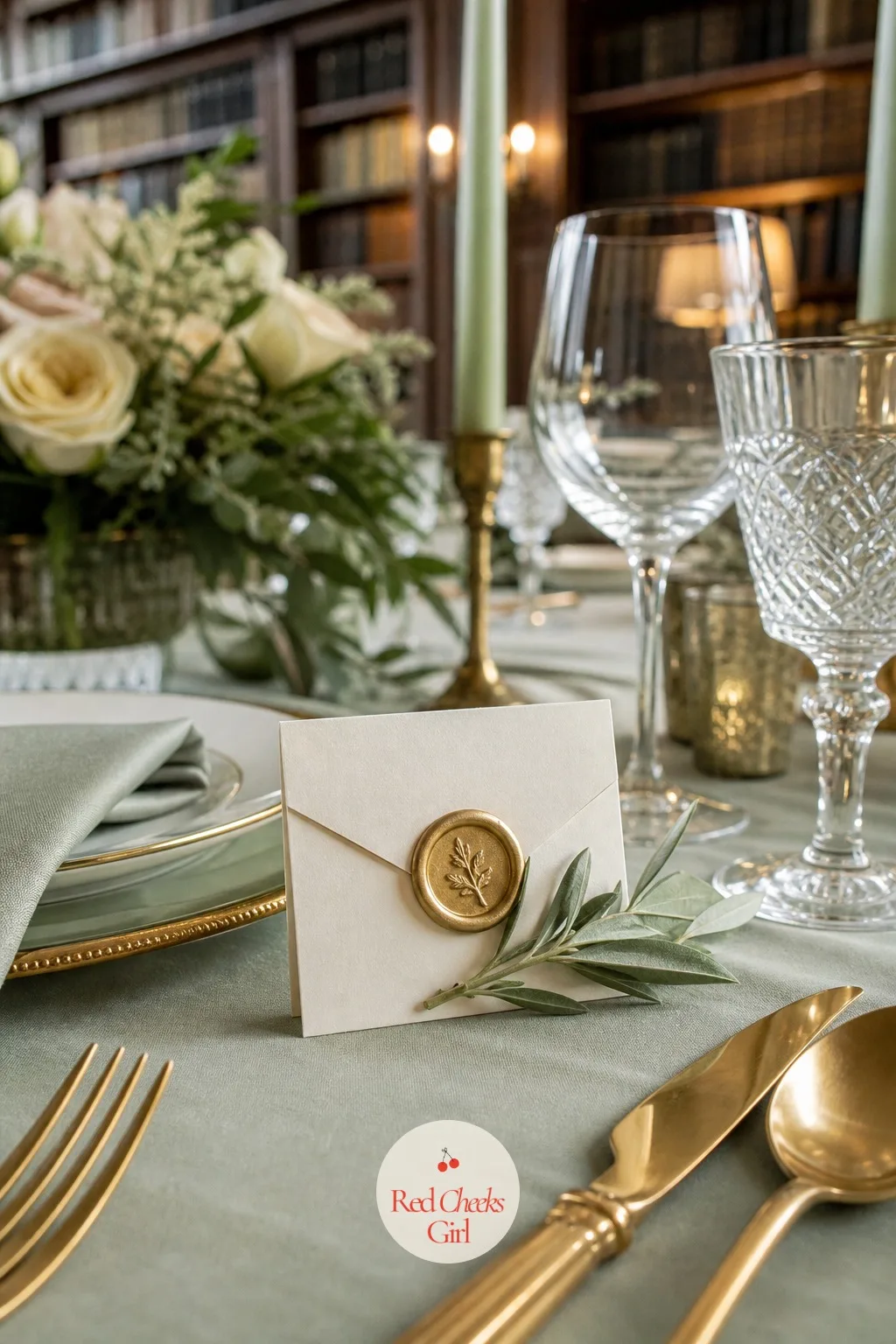
Wax-Sealed Place Card in Sage and Gold
A wax seal looks like it took far longer than it did, which is exactly the kind of detail worth faking.
Press a gold wax seal onto a folded cream place card, then rest it against a small sprig of sage so the two colors sit side by side rather than blending. It belongs in a library or study room doing double duty as a reception space, where lamp light makes the wax shine properly. A sage ink stamp gets a similar look without buying a sealing kit.
🛍 Shopping guide
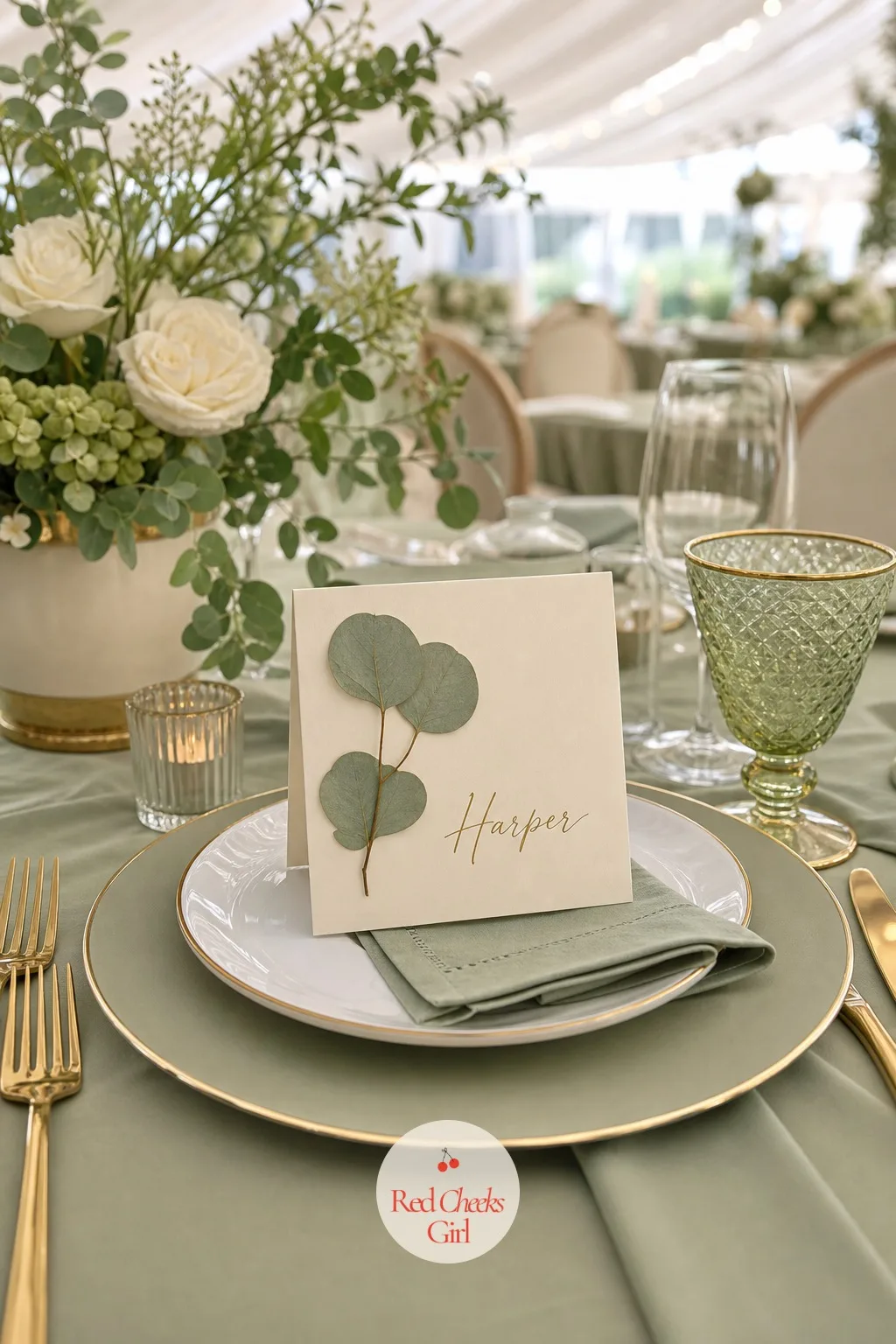
Pressed Eucalyptus Place Card
A real pressed leaf under the varnish does more for a place card than any printed border could.
Press a small eucalyptus leaf flat for a few days, then seal it onto a cream card with the guest’s name written above it in gold ink. It suits a marquee or garden party where sheer curtain panels already soften the light, and gives a couple something to make themselves over a few evenings rather than order in bulk. Pressed fern works just as well where eucalyptus is not easy to source.
🛍 Shopping guide
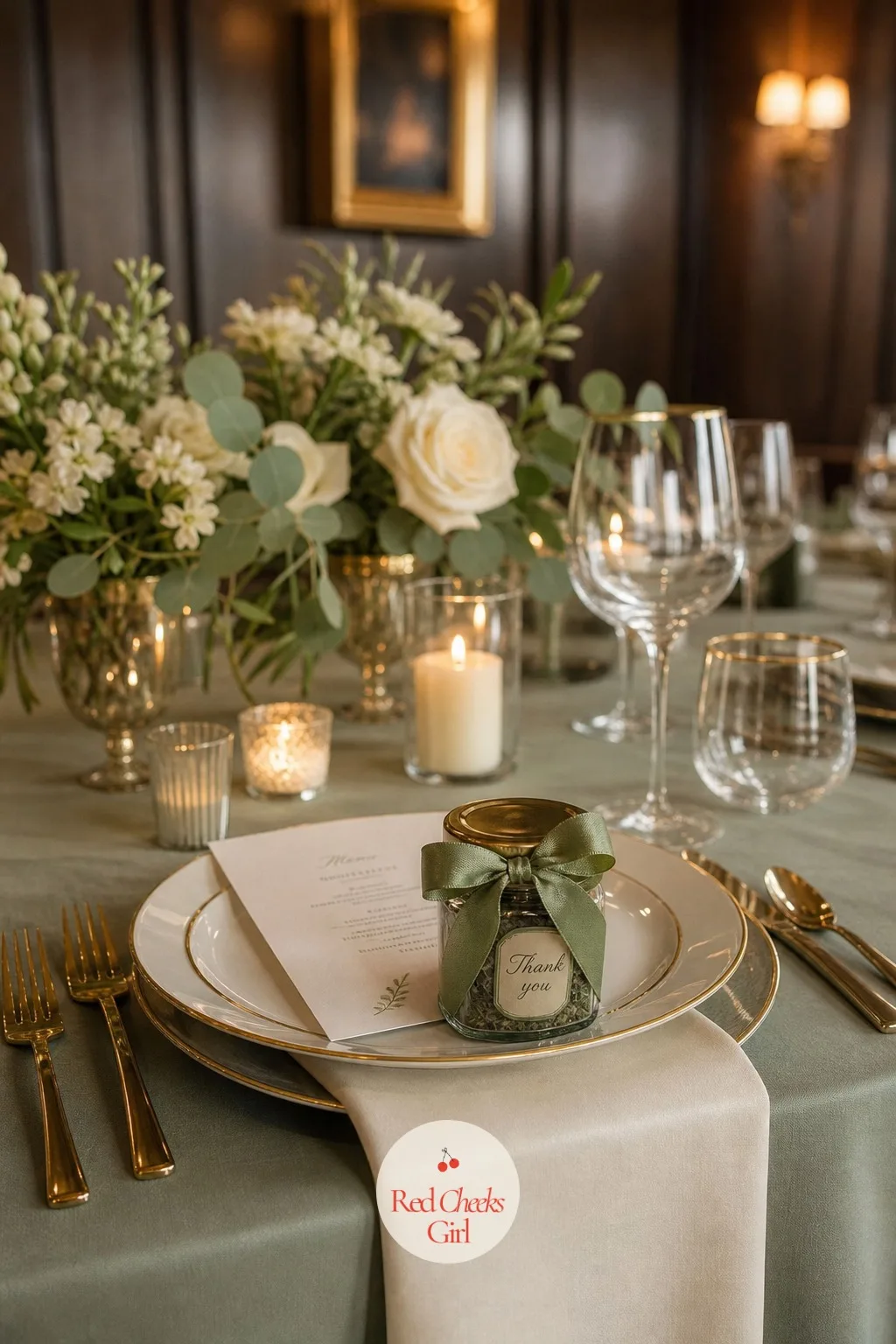
Sage Ribbon-Tied Favor at Each Setting
A favor only earns its spot on the table if it looks like it belongs there rather than something bought separately and dropped on top.
Tie a small jar of local honey or a single bar of soap with the same sage ribbon used on the menu card, so the favor reads as part of the setting rather than an afterthought. It works in a cozy restaurant private dining room where candlelight already carries most of the romance, and suits a smaller guest list where a personal touch matters more than volume. Where honey is out of budget, a few sage-wrapped sugared almonds do the same job for less.
🛍 Shopping guide
Frequently Asked Questions
What colors go with sage green for a wedding?
Cream, ivory and gold are the safest base, with blush, dusty blue and terracotta working well as an accent depending on the season and mood wanted.
Is sage green still a popular wedding color?
Yes, sage has stayed one of the most chosen wedding colors recently, prized for photographing well in both daylight and candlelight without ever looking dated.
What’s the best way to set a table for a sage green wedding?
Start with sage linens and clean dishware, keep the metal to one tone such as gold, and add a single greenery or flower detail directly on each plate.
What’s the difference between sage green and olive green?
Sage is a soft, pale green with grey undertones, while olive is a deeper, more yellow-based green; the two are often layered together for more depth on one table.
What colors do not go with sage green?
Neon shades, bright primary colors, icy pastel mint and cool royal purples clash with sage’s muted, warm grey undertone and tend to flatten the rest of the palette.
Which season works best for a sage green wedding?
Sage works year round, though winter versions lean into deep forest green, ivory and metallic gold or silver for a cozier, more formal feel.
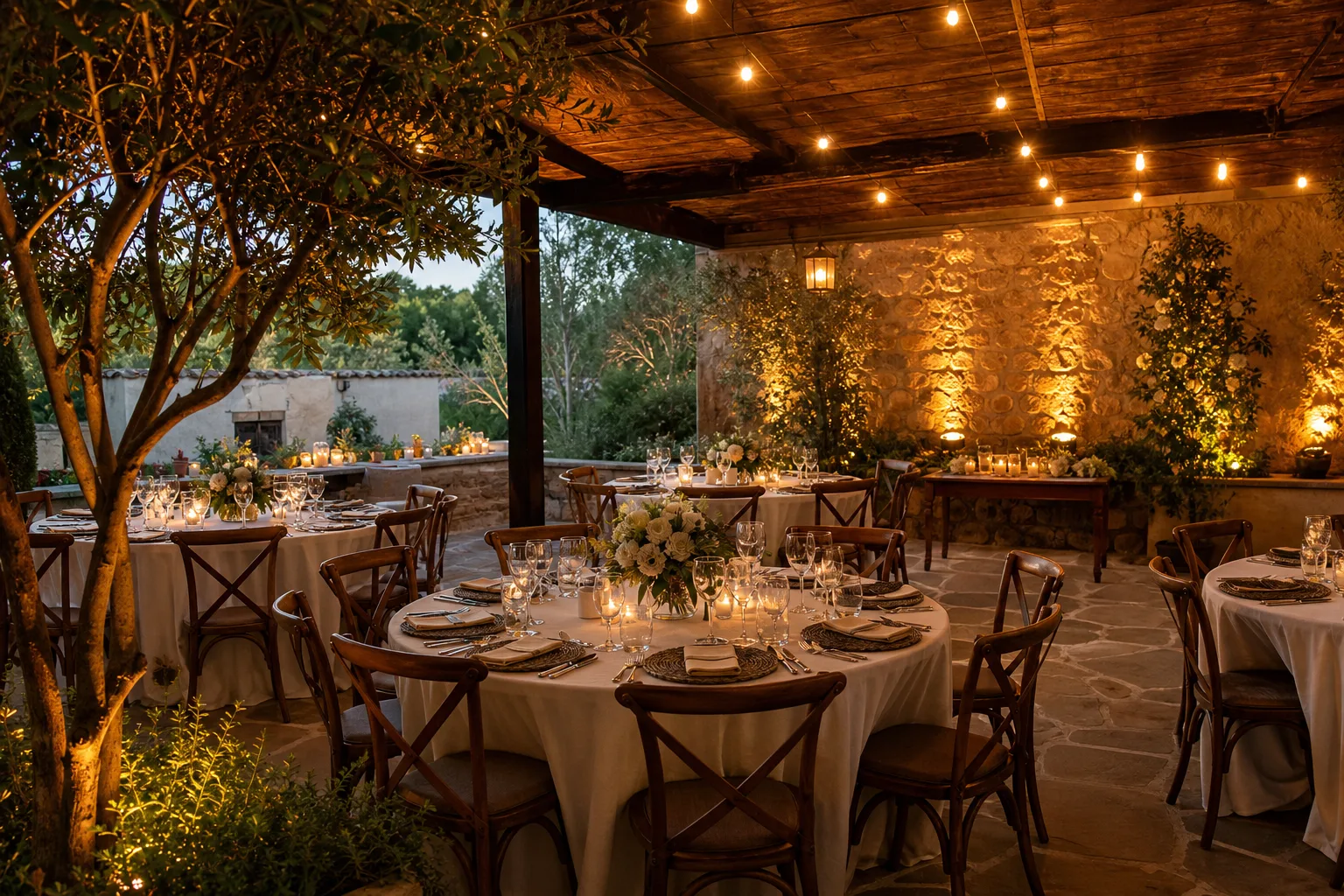
30 rehearsal dinner decoration ideas for every venue and budget: string lights, candles, photo displ
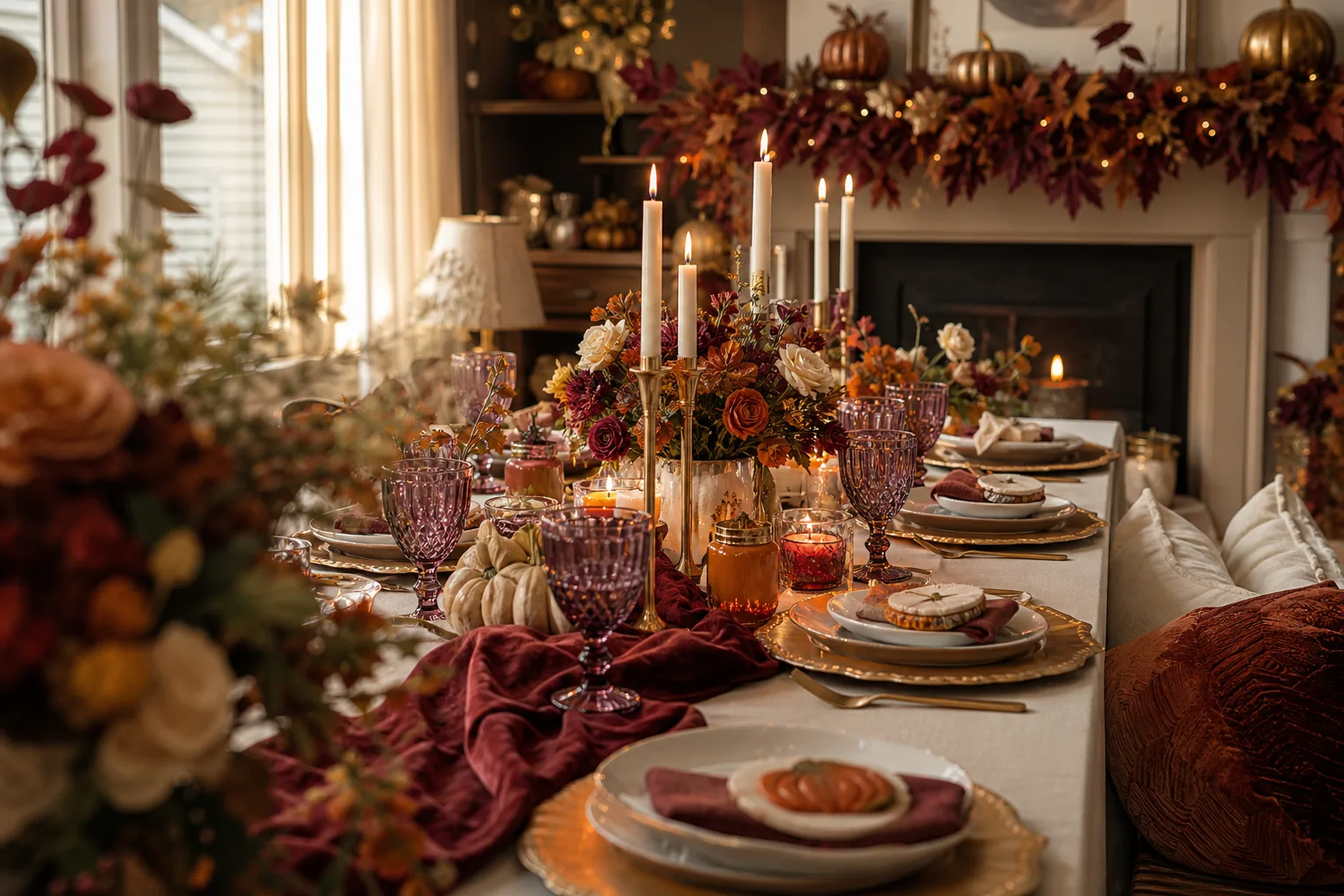
17 fall bridal shower ideas with a pumpkin backdrop, cider bar, caramel apples and apple butter favo
16 small engagement party ideas, from a dinner party at home to a jar of handwritten wishes, ordered
Leave a Reply