

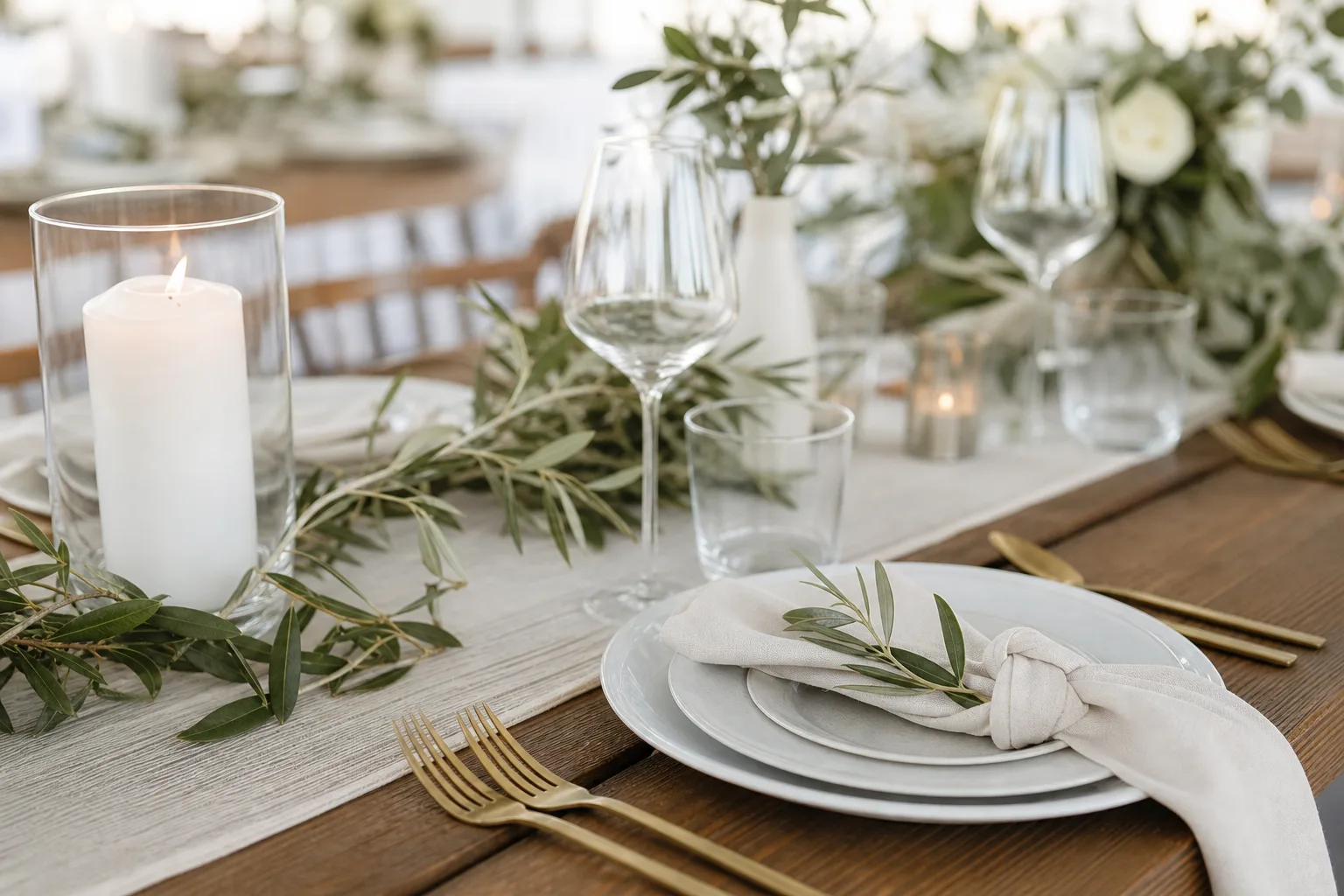
A minimalist table is not a bare one. It is a table where every single thing on it earned its place: the one branch, the one candle line, the one plate stacked just so. Strip away the confetti and the runner clutter and what is left has to be right, which is exactly why this look reads as expensive even when it costs almost nothing.
What follows is not a mood board, it is 29 whole tables, each dressed its own way: some lean on candlelight, some on a single bloom, some on nothing but one held colour from the cloth to the china. Pick the one that matches your venue and your nerves, not the one that photographs best on someone else’s Pinterest board.
Nothing here needs a florist on retainer or a wedding planner fluent in trend reports. Most of it needs a trip to a glassware aisle, a steady hand with an iron, and the confidence to leave a table mostly empty on purpose.
This post contains affiliate links. If you buy through them, I may earn a small commission at no extra cost to you.
Table of Contents
Centerpieces That Say Less
The centerpiece is where minimalist weddings either succeed or quietly fall apart into “is that it”. It is not about less effort, it is about one strong idea instead of six competing ones. If flowers are not your language at all, 21 Wedding Table Centerpieces Built Around Something Other Than Flowers has you covered with options that skip blooms entirely.
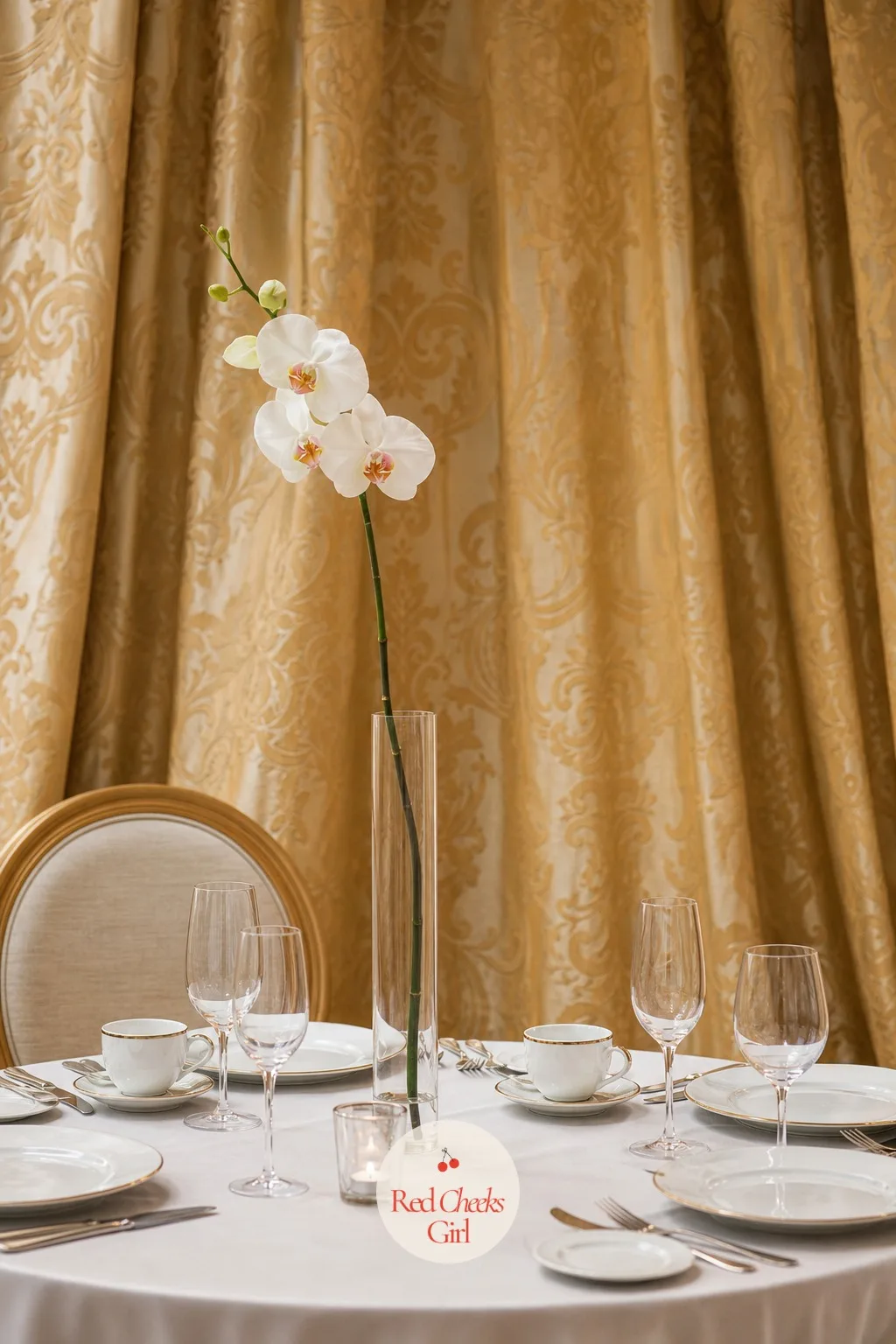
Single Orchid Per Table
A whole table, one flower. It sounds like a dare until you see it: a single stemmed orchid standing in a slim glass cylinder does more than a fistful of mixed blooms ever could, because nothing competes with it.
Built from the bottom up it is simple: a narrow glass vase weighted with a little water, one long-stemmed orchid dropped in and left to lean its own way, nothing else on the table beside it but the place settings.
It works best on a round table where guests see it from every angle, and it suits a ballroom or a restaurant with some grandeur to borrow from. If orchids run high where you live, a single ranunculus or a calla lily does the same quiet trick for less.
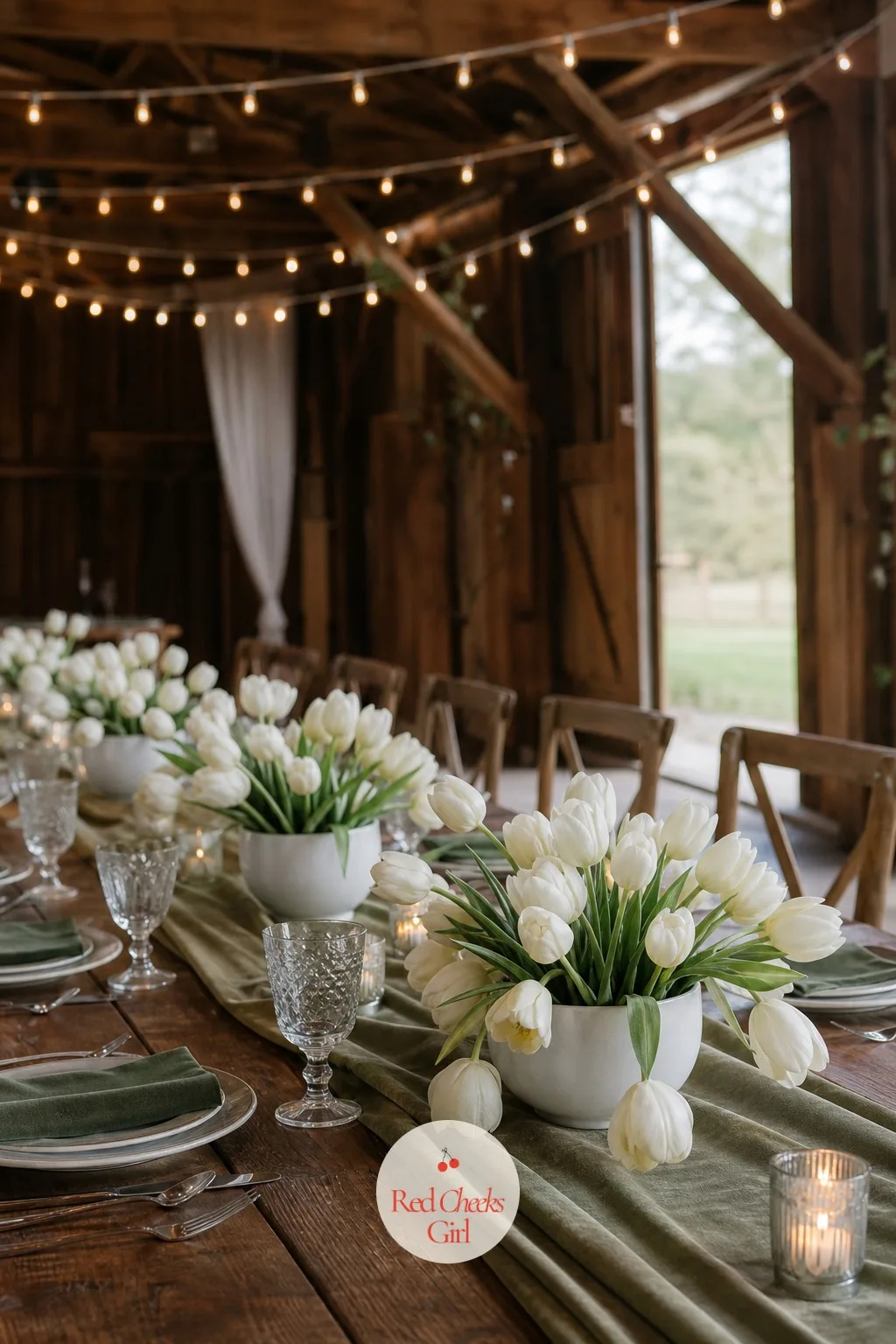
Low White Tulips in a Row
Tall arrangements block the view across the table and nobody says so out loud until the toasts start. Low white tulips fix that instantly, sitting below eye line so every seat can actually see every other seat.
Build it from a shallow glass or ceramic dish, cluster twenty or so tulip stems cut short so the heads just clear the rim, and let the natural curve of the stems do the styling for you.
It suits long banquet tables best, where a line of these low clusters reads like one continuous gesture rather than six separate vases. If tulips are out of season, low white ranunculus or anemones hold the same shape.
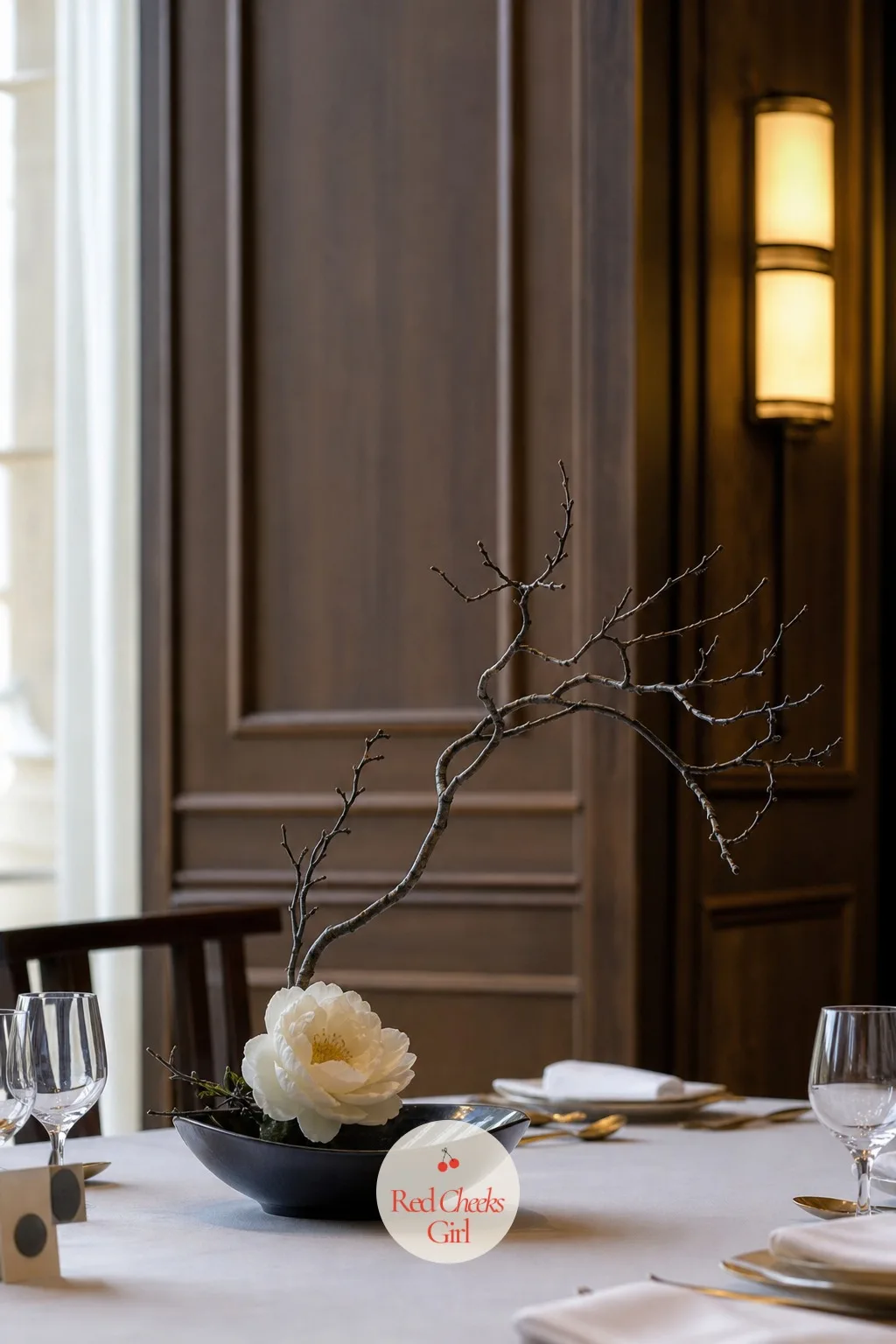
Japanese-Inspired Ikebana Arrangement
If a dozen roses feel like too much noise, ikebana is the opposite argument: one curved branch, one bloom, a lot of deliberate empty space around them. It looks effortless and is in fact the most considered thing on the table.
Start with a shallow black ceramic dish holding a flower frog or kenzan, anchor one or two bare branches at an angle, and add a single white bloom low and off to one side rather than centered.
It suits restaurant private rooms and intimate head tables where guests sit close enough to appreciate the restraint. Swap the branch for pussy willow or curly willow depending on what your local florist actually stocks.
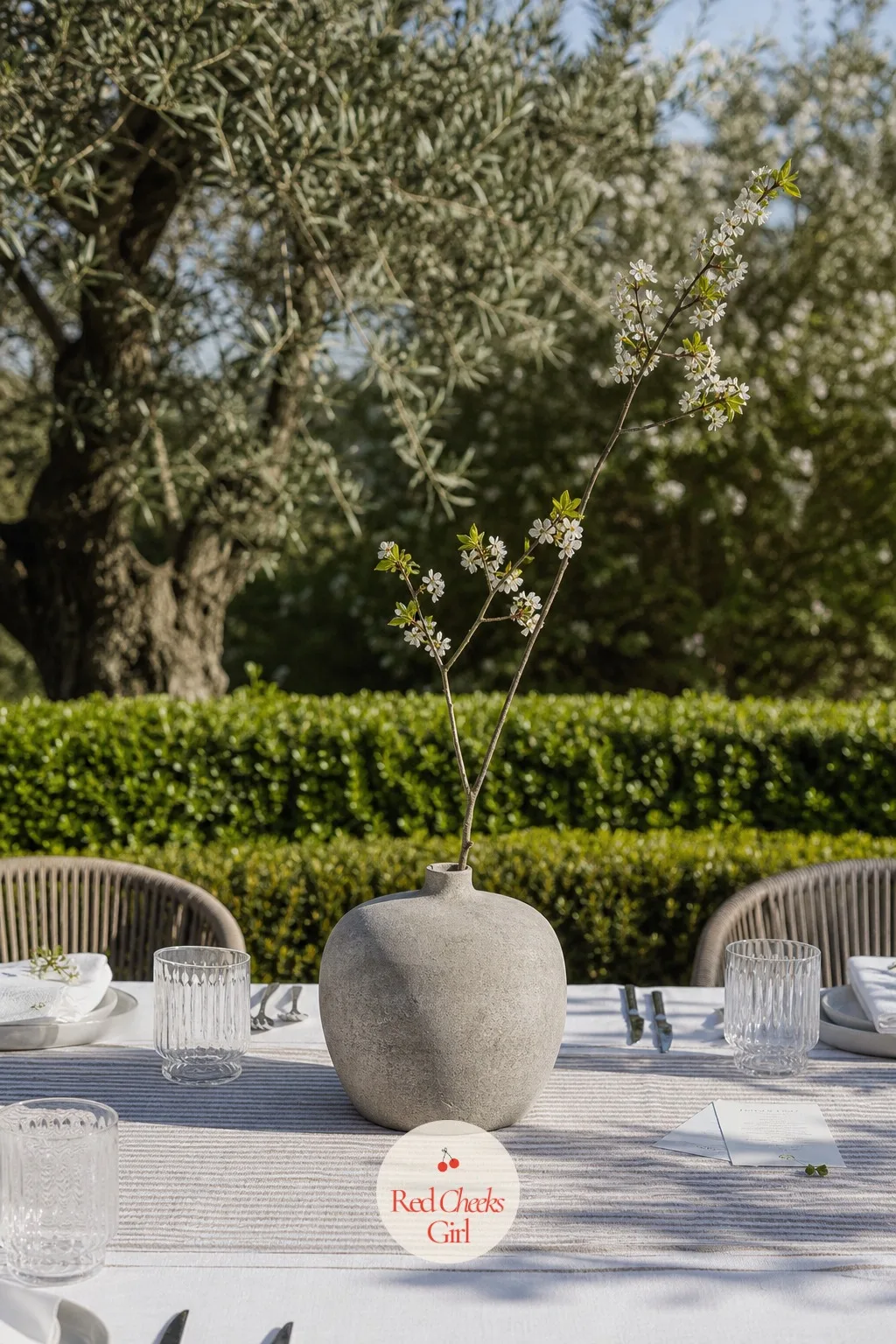
Concrete-Look Vase With One Branch
Glass and porcelain can feel a little precious on an outdoor table. A concrete-finish vase brings the whole thing back down to earth, literally, and it survives a breeze that would tip a slimmer vessel.
It is built in one piece: a squat cylindrical vase with a matte concrete finish, filled with sand or pebbles for weight, holding a single budding or blossom branch cut tall enough to arch above the table.
It suits a garden or terrace wedding where the material echoes the stone paths and planters already around you. A plain grey ceramic vase does the same job indoors if concrete feels too stark.
Clear Glass Vase With Floating Stems
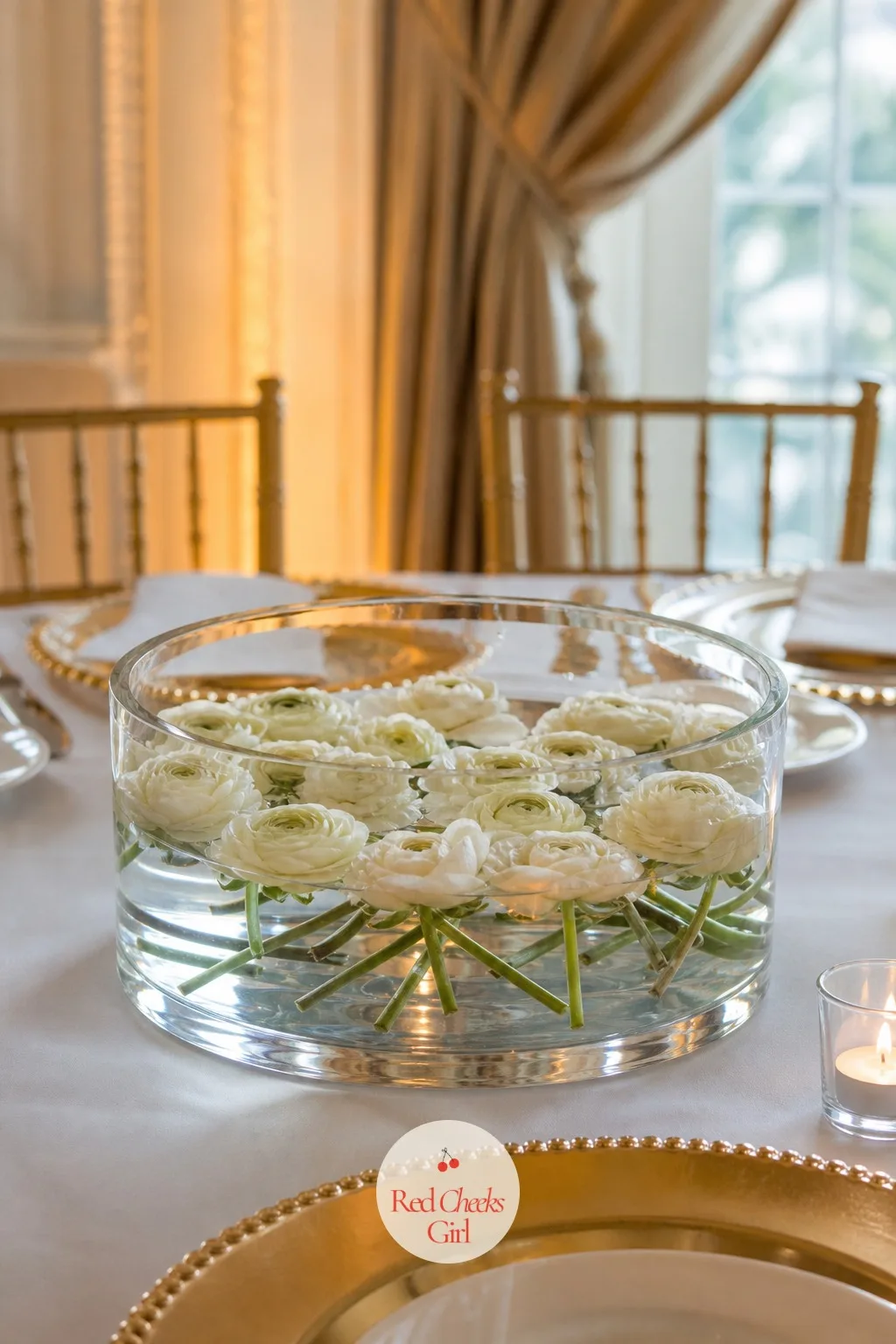
Some flowers look better underwater than upright, and this is where that trick earns its keep: stems floating just beneath the surface of a clear glass bowl, catching candlelight from every angle.
Fill a wide clear glass vase or bowl most of the way with water, trim the stems short, and let a handful of ranunculus or gardenia heads float loose rather than arranged, so the surface looks almost accidental.
It suits candlelit evening receptions where the water catches the flame flicker. If gardenias bruise too easily in transit, white ranunculus or camellia heads float just as well.
Bud Vase Trio, One Stem Each
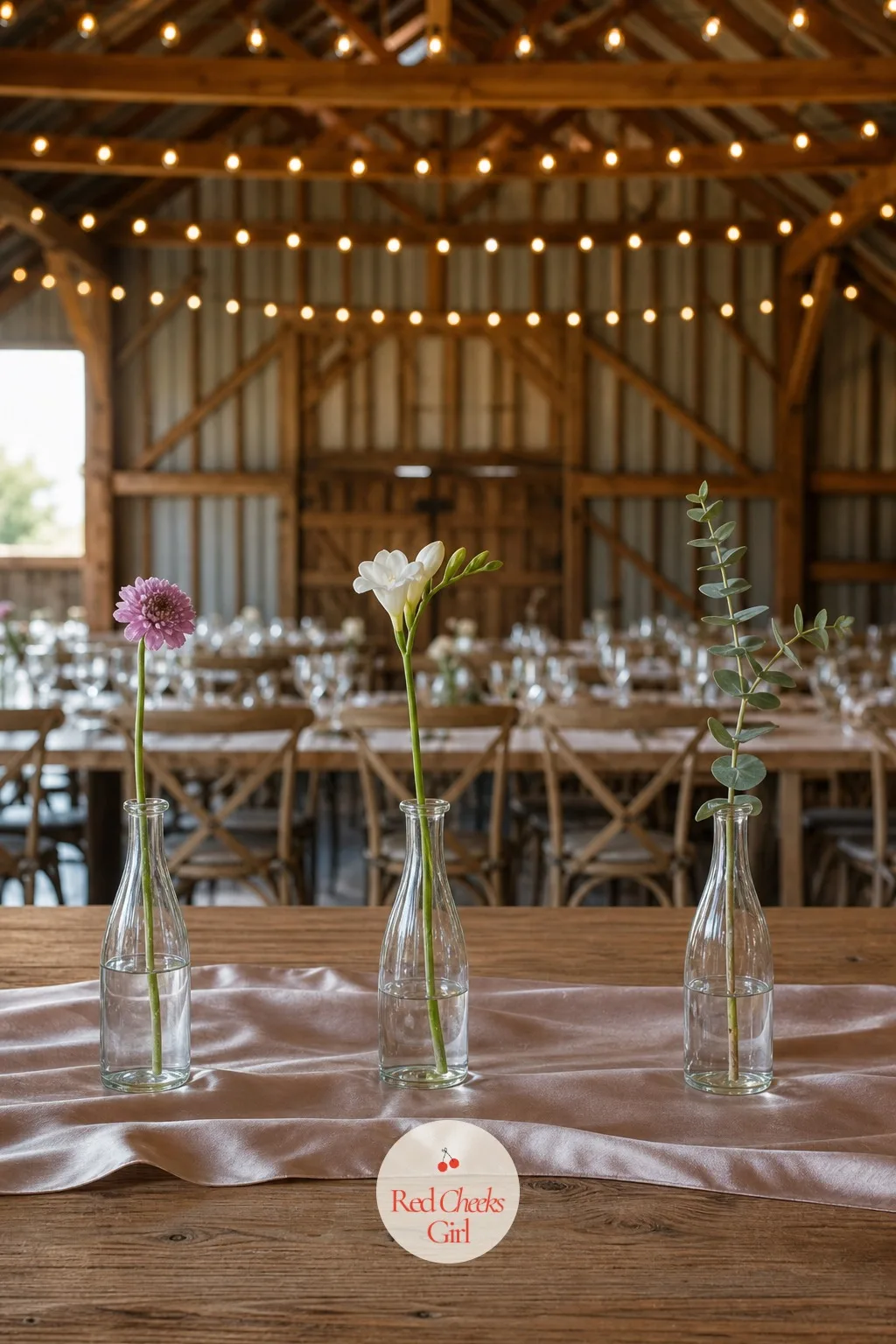
One vase can feel like it is trying too hard to be the whole show. Three tiny ones spread along the table let the eye travel instead of stopping, and they cost less than one big arrangement ever would.
Line up three slim glass bud vases, give each one a single different stem, a rose, a ranunculus, an astilbe spray, and space them loosely rather than in a tight row down the table’s length.
It suits long farm tables and barn venues where the repetition down the table reads as rhythm, not clutter. If budget is tighter still, use the same single stem in all three vases instead of three different ones.
Glass Cloche Over a Single Bloom
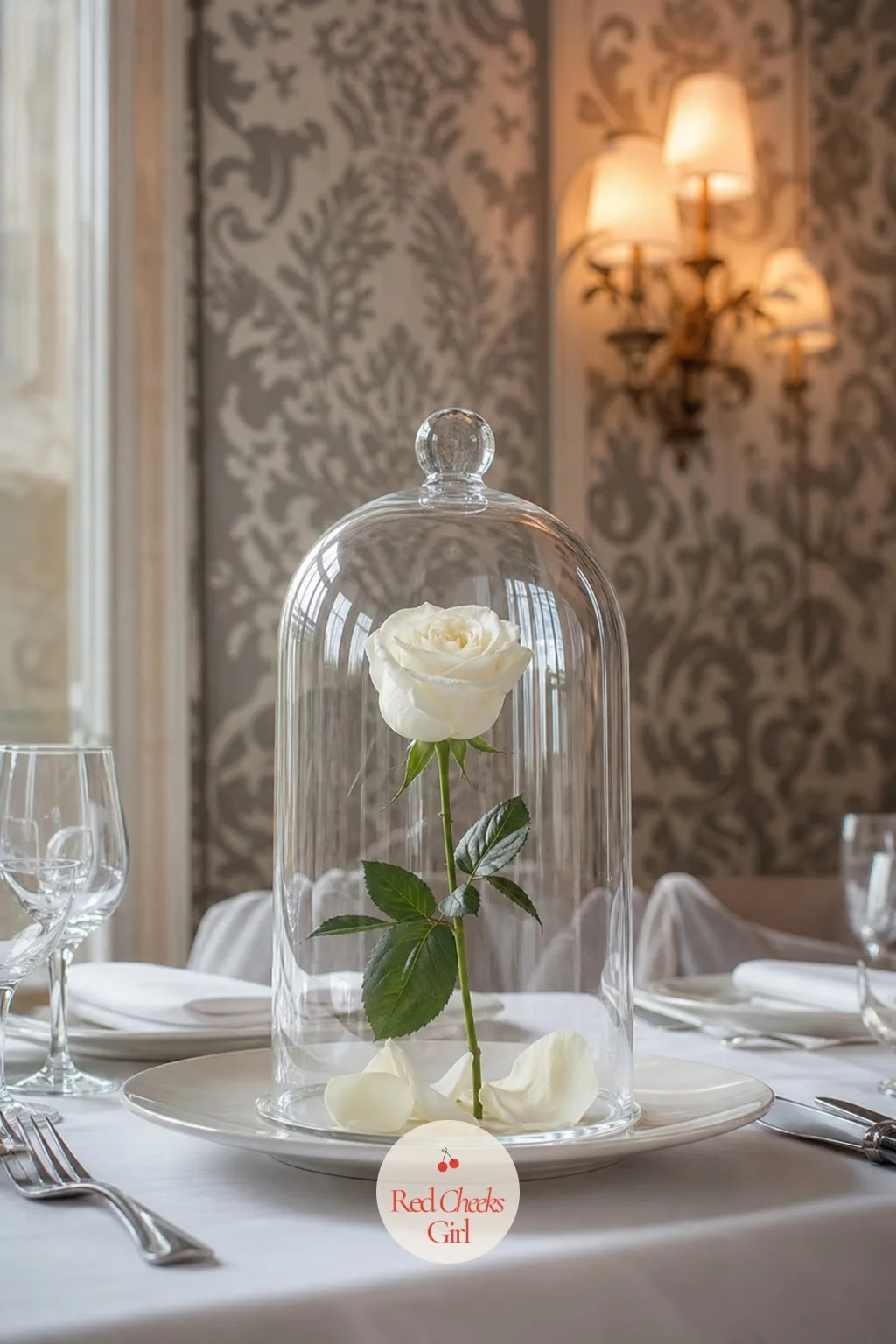
A flower left exposed on a busy reception table gets knocked, bumped, and wilts by the speeches. Cover it in glass instead and it survives the whole night looking exactly as it did when it was set down.
Set one ivory rose or peony head directly on a small plate, lower a clear glass cloche over the top, and leave it as the only thing standing on that section of the table.
It suits restaurant tables with lower ceilings, where a tall arrangement would compete with the room instead of sitting inside it. A single candle under the cloche works the same way if fresh flowers are not practical that day.
Candlelight Without Clutter
Candles do the heavy lifting a big floral arrangement usually does, without the vase, the foam or the Tuesday delivery panic. A little flame at eye level flatters every face at the table, which no centerpiece can claim.
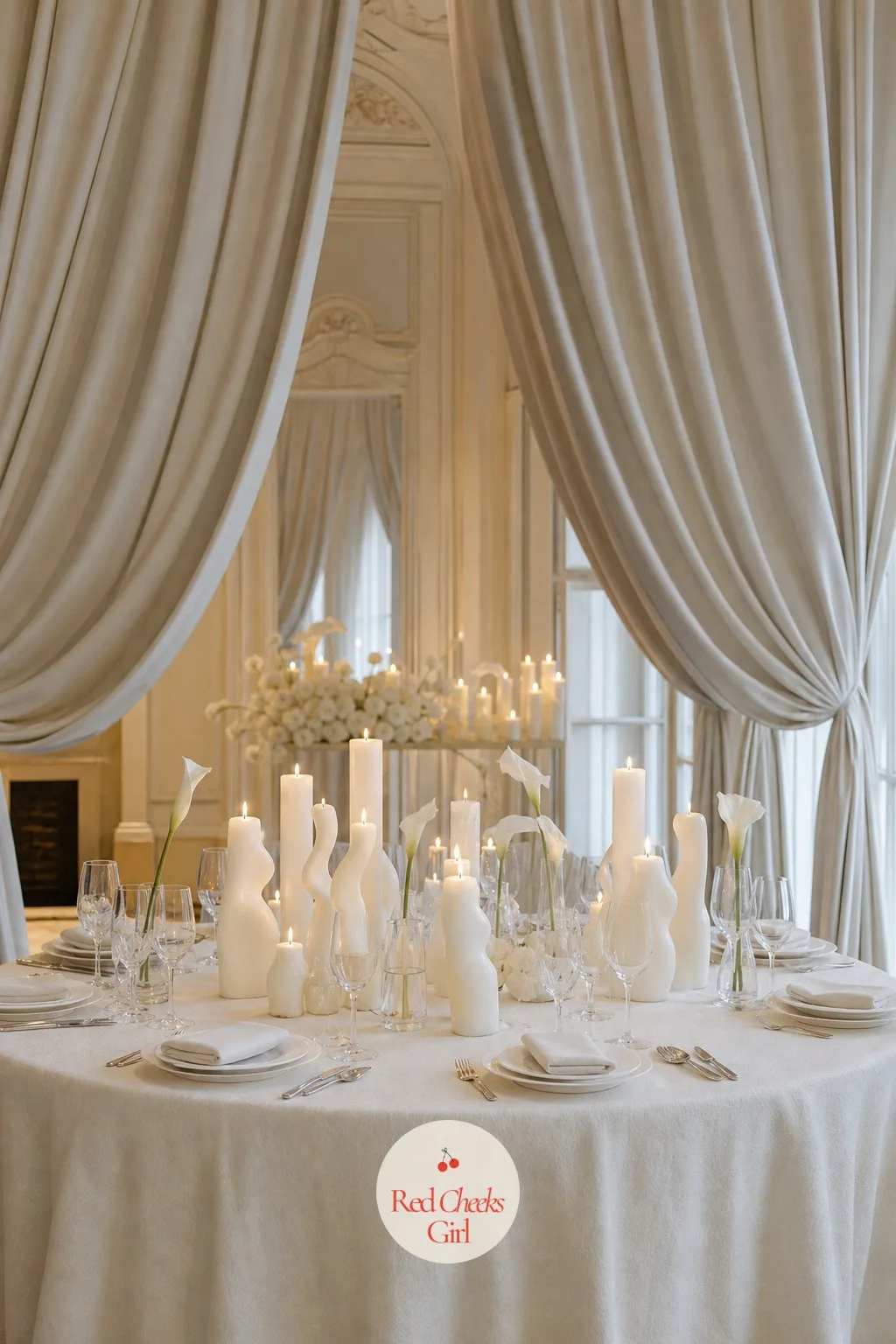
All-White Table With Sculptural Candles
Tell her it is all white and she pictures a hospital corridor. Show her irregular sculptural candles in varying heights against white china and the picture changes completely, because the shapes do the work color usually does.
Build it from a white cloth base, then cluster three or four sculptural pillar candles of different heights and abstract silhouettes at the center, surrounded by plain white china and nothing else.
It suits a ballroom with some height and drapery to frame it, so the whiteness has somewhere to sit rather than floating in empty air. Standard white pillars in staggered heights give almost the same effect for less.
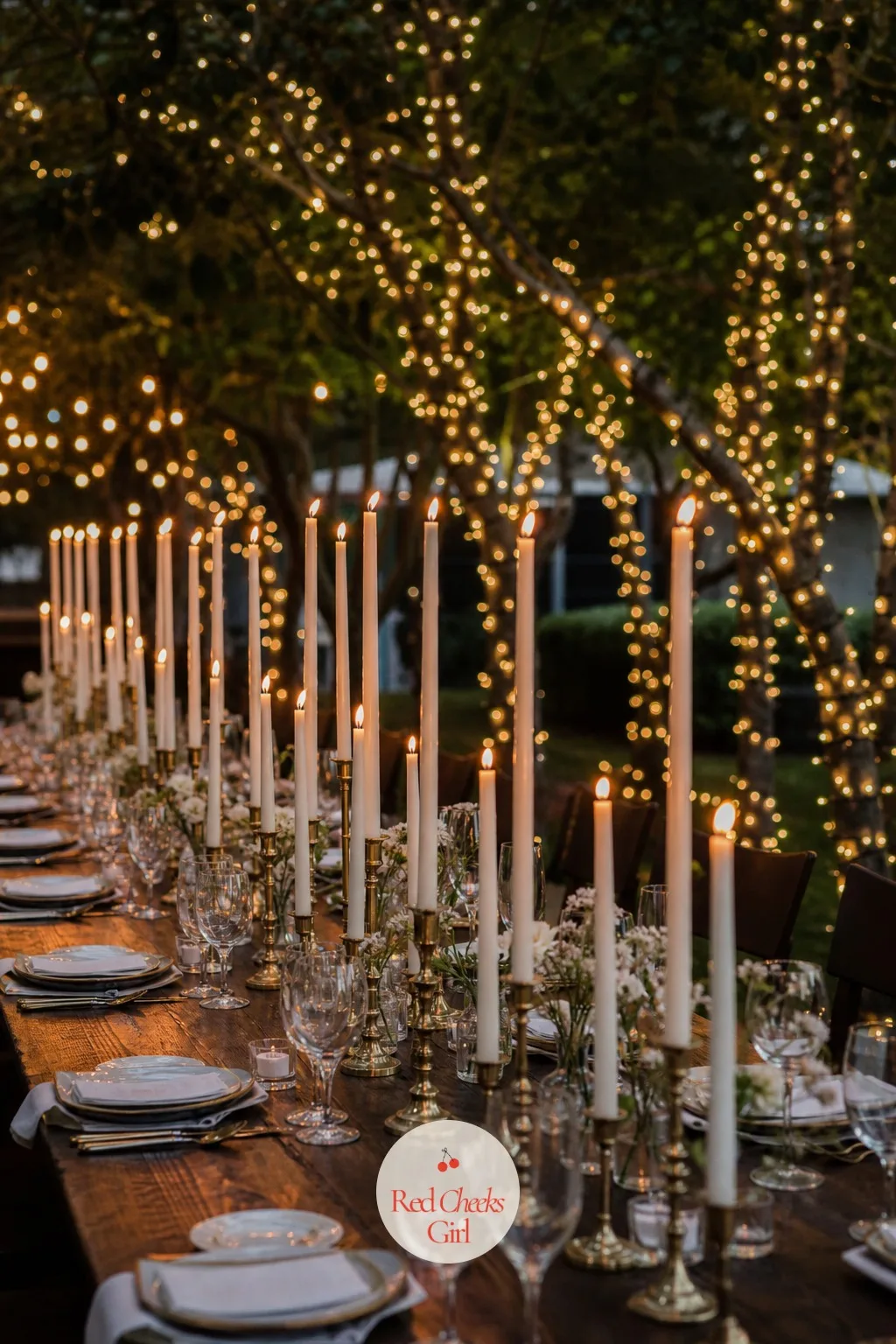
Lines of Taper Candles Only
Skip the centerpiece argument entirely. A single straight line of thin taper candles down the middle of a long table reads as more deliberate than any floral arrangement, and it costs a fraction of one.
Fit each taper into a slim brass or glass holder, set them in one unbroken line down the table’s spine, spaced evenly, and light them just before guests sit down so the wax stays tidy through dinner.
It suits long garden or barn tables best, where the line has room to run its full length. Dripless tapers save the tablecloth if the thought of hot wax makes you nervous.
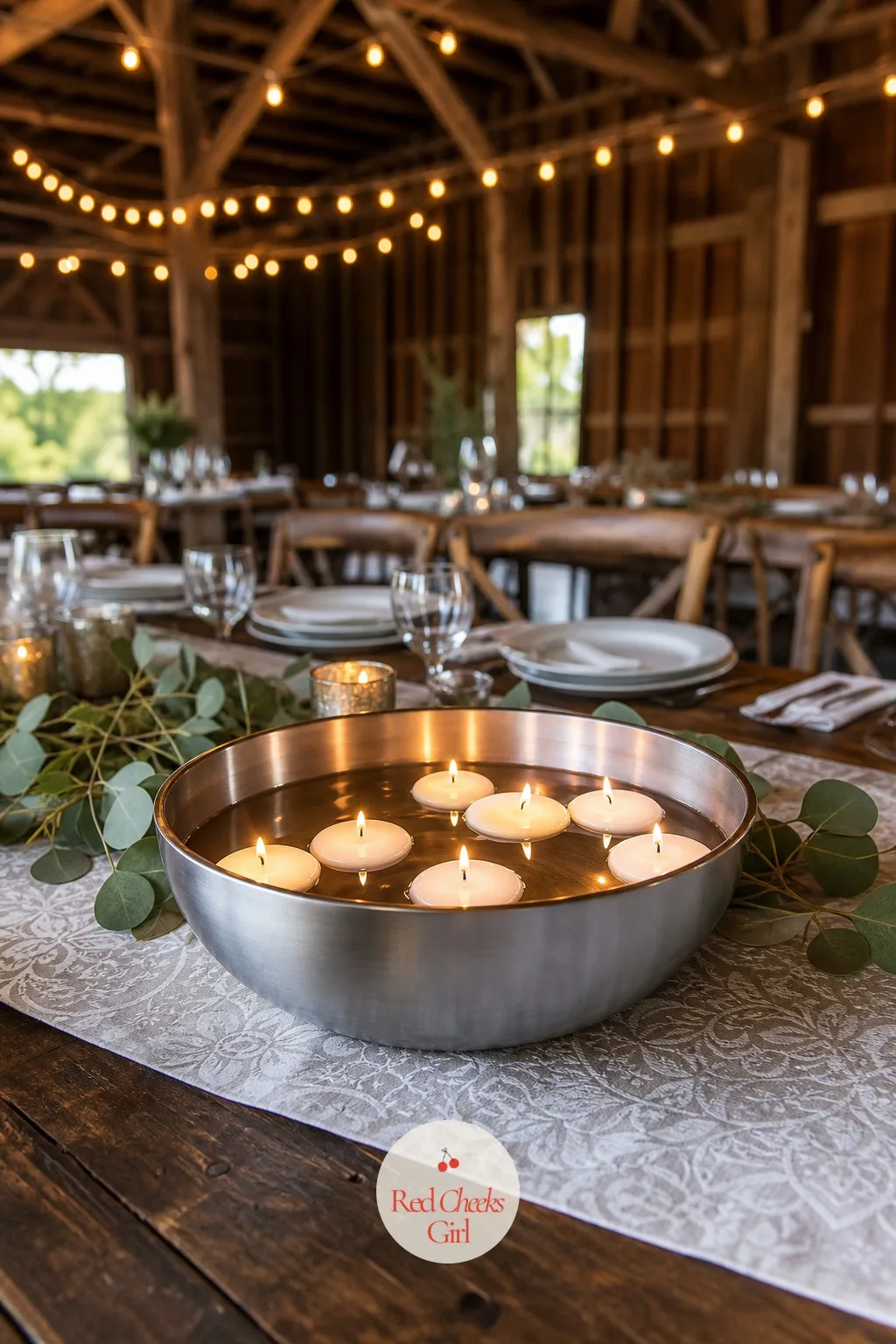
Floating Candle Bowl in Brushed Steel
A barn table can swallow small details whole. A low brushed steel bowl filled with water and a scatter of floating candles holds its own against the beams and the dark wood instead of disappearing into it.
Fill a wide shallow brushed steel or pewter bowl with water, drop in a handful of floating candles, and set it once at the center of the table with nothing competing beside it.
It suits rustic-leaning venues that still want a minimalist table rather than a cluttered one. A clear glass bowl does the same job if the industrial metal feels too cold for the room.
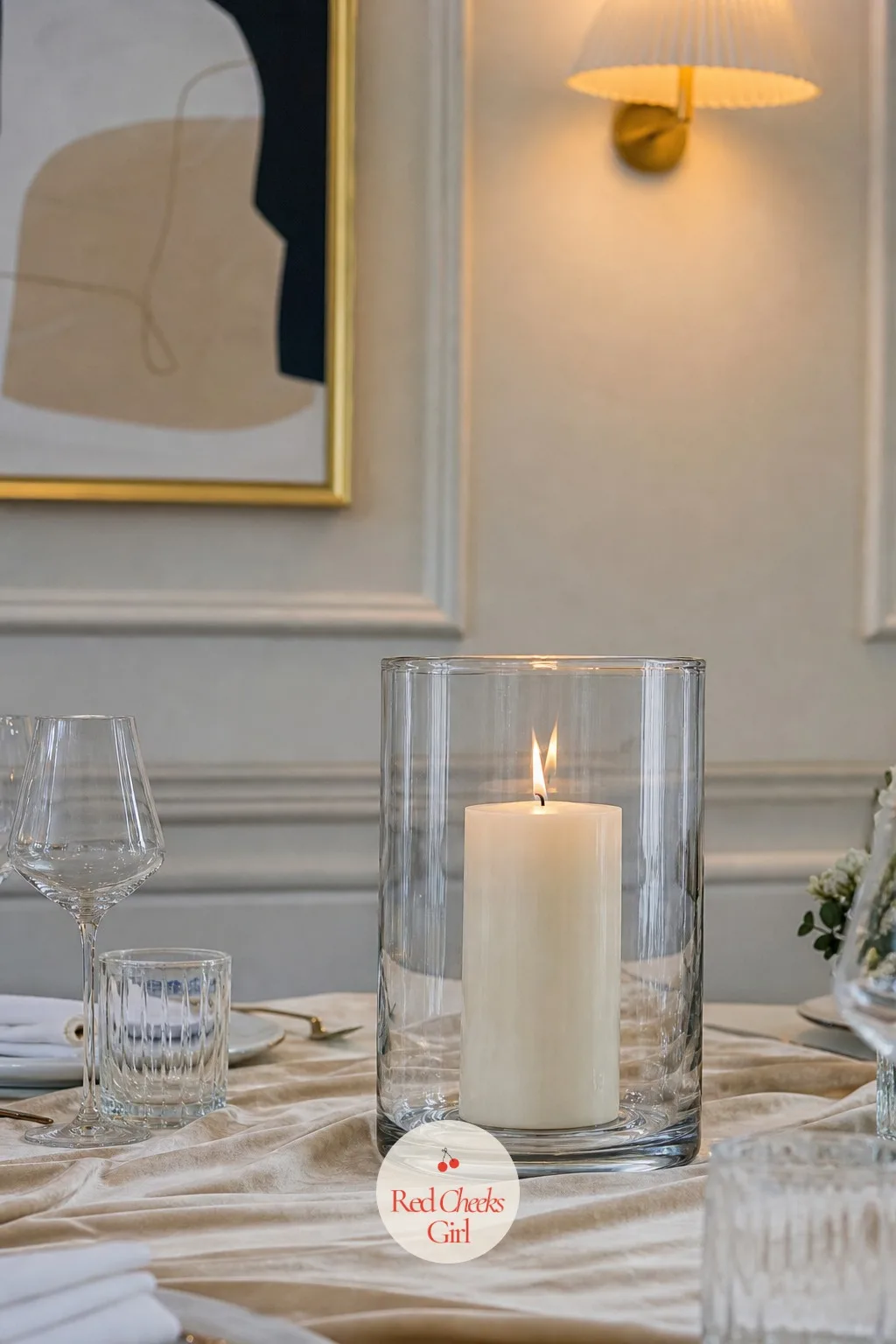
Single Pillar Candle in a Glass Hurricane
One candle sounds like it will look lonely on a full-sized table. Put it in a hurricane glass tall enough to hold its own weight and it reads as a decision, not an oversight.
Set one thick pillar candle inside a clear glass hurricane, center it on the table with nothing flanking it, and let the glass catch and multiply the flame once it is lit.
It suits restaurant tables with existing art or paneling to frame the single flame against. A flameless LED pillar inside the same hurricane works if the venue restricts open flame.
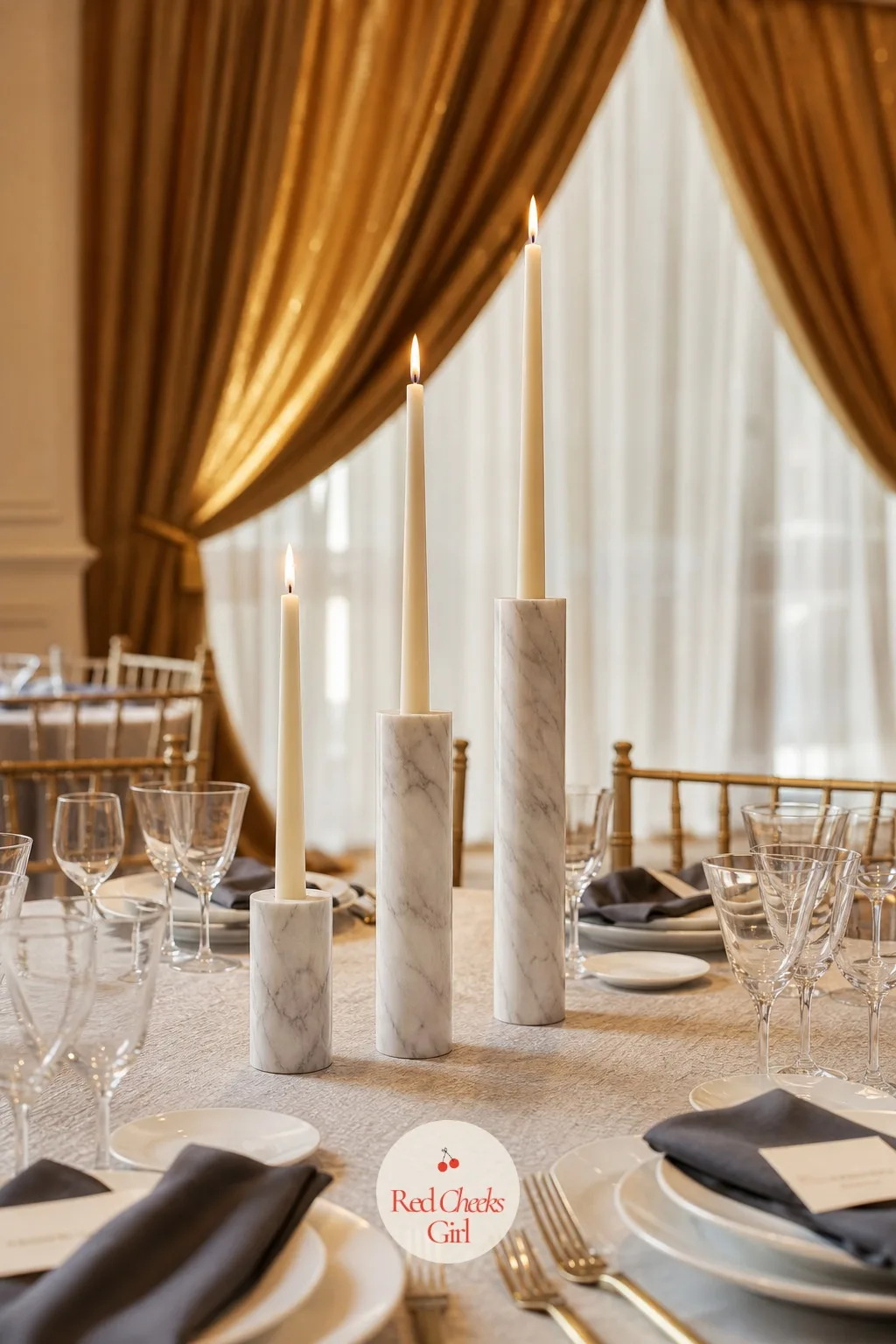
Graduated Taper Trio in Marble Holders
Three candles of exactly the same height look like an accident waiting to happen the first time one burns faster. Stagger them on purpose in marble holders and suddenly the unevenness is the whole point.
Fit three tapers into marble candlestick holders of ascending heights, cluster them loosely near the center of the table, and leave the rest of the surface clear so the height difference reads clean.
It suits a ballroom with existing marble or stone details elsewhere in the room. Painted ceramic candlesticks in a single tone give the same staggered effect for a lower spend.
One Color, Head to Toe
A monochrome table is the cheat code of minimalist styling: pick one palette, carry it through cloth, china and glass, and the whole room reads as considered even if half of it came from a sale bin.
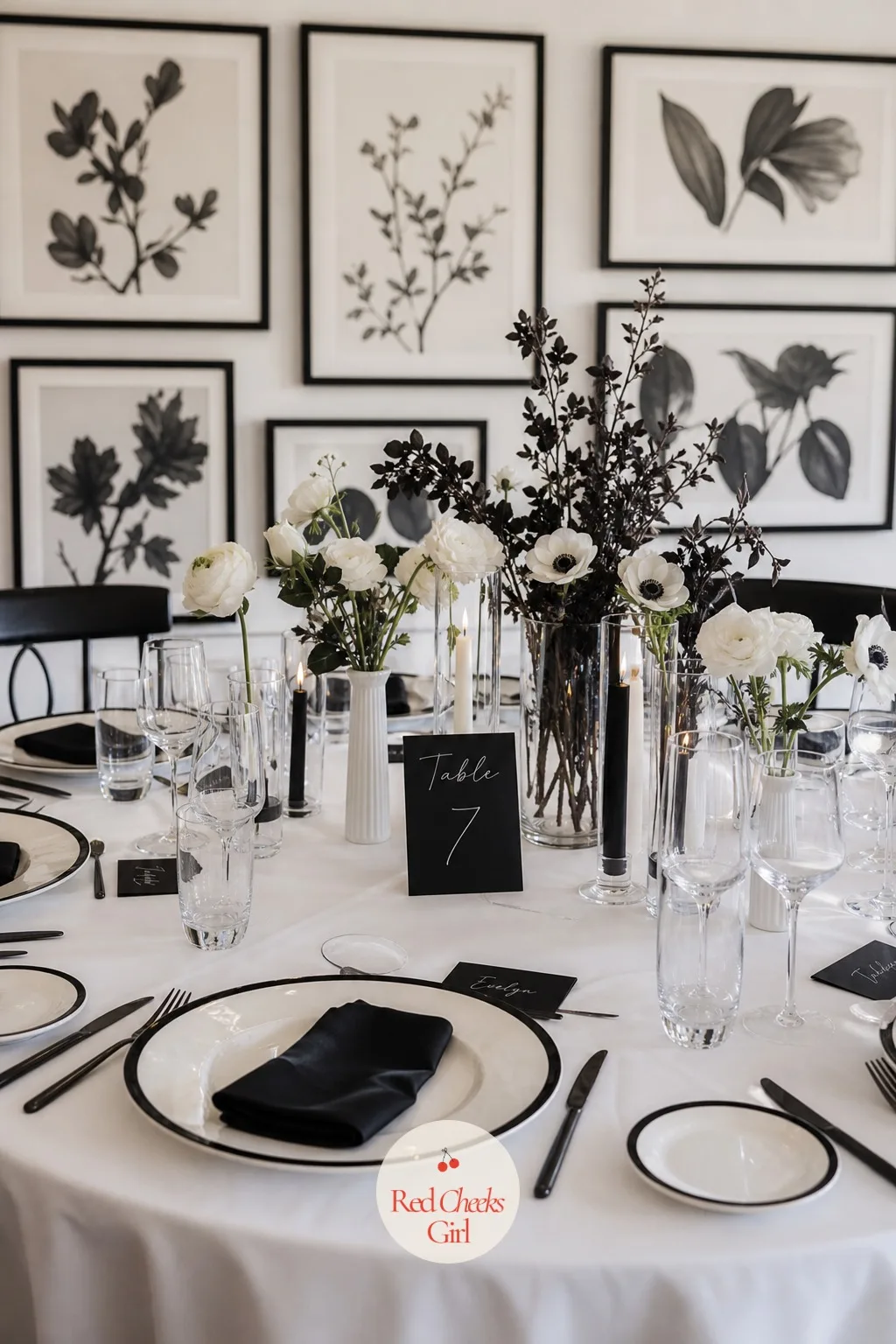
Monochrome Black and White Table
Black on a wedding table can feel like a funeral if it is not handled carefully. Paired strictly with white, nothing else, it stops reading as somber and starts reading as sharp.
Lay a crisp white cloth, set black-edged charger plates beneath white china, fold black satin napkins at each place, and keep every other element, glassware, cutlery, strictly to one of those two tones.
It suits a ballroom or gallery-style venue with enough architectural interest to hold the contrast. If full black feels like too much commitment, swap the napkins for charcoal and keep everything else the same.
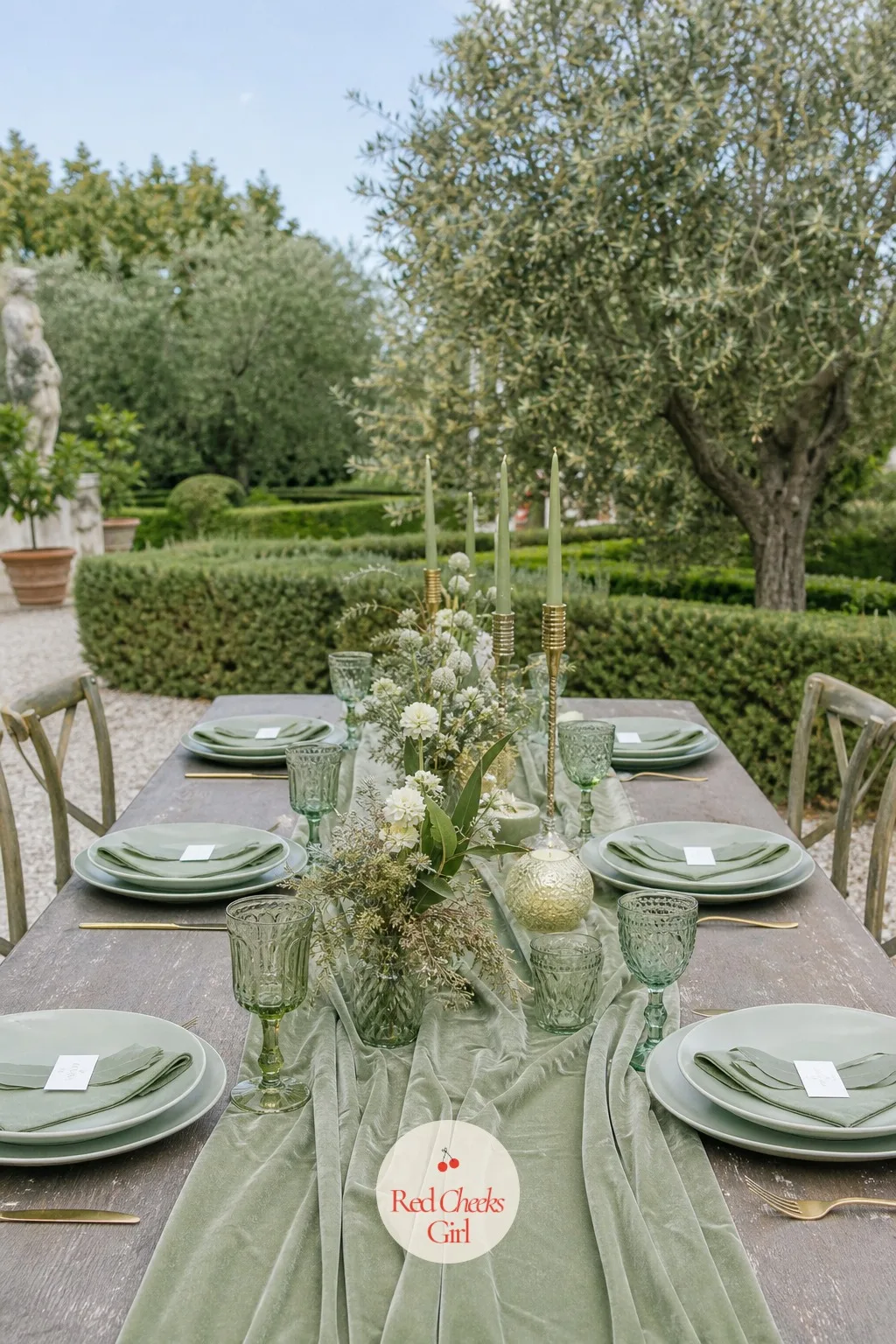
Sage Green Monochrome Table
White and black can feel severe for a garden wedding that wants some warmth left in it. Sage carries the same single-color discipline but softens every edge of it.
Dress the table in a sage velvet runner over a pale cloth, add sage-glazed ceramic plates, pale green goblets, and keep flowers out of it entirely so the color itself carries the whole look.
It suits garden and terrace venues surrounded by actual greenery the palette can echo. A muted olive tone works just as well if sage reads too pastel for your taste.
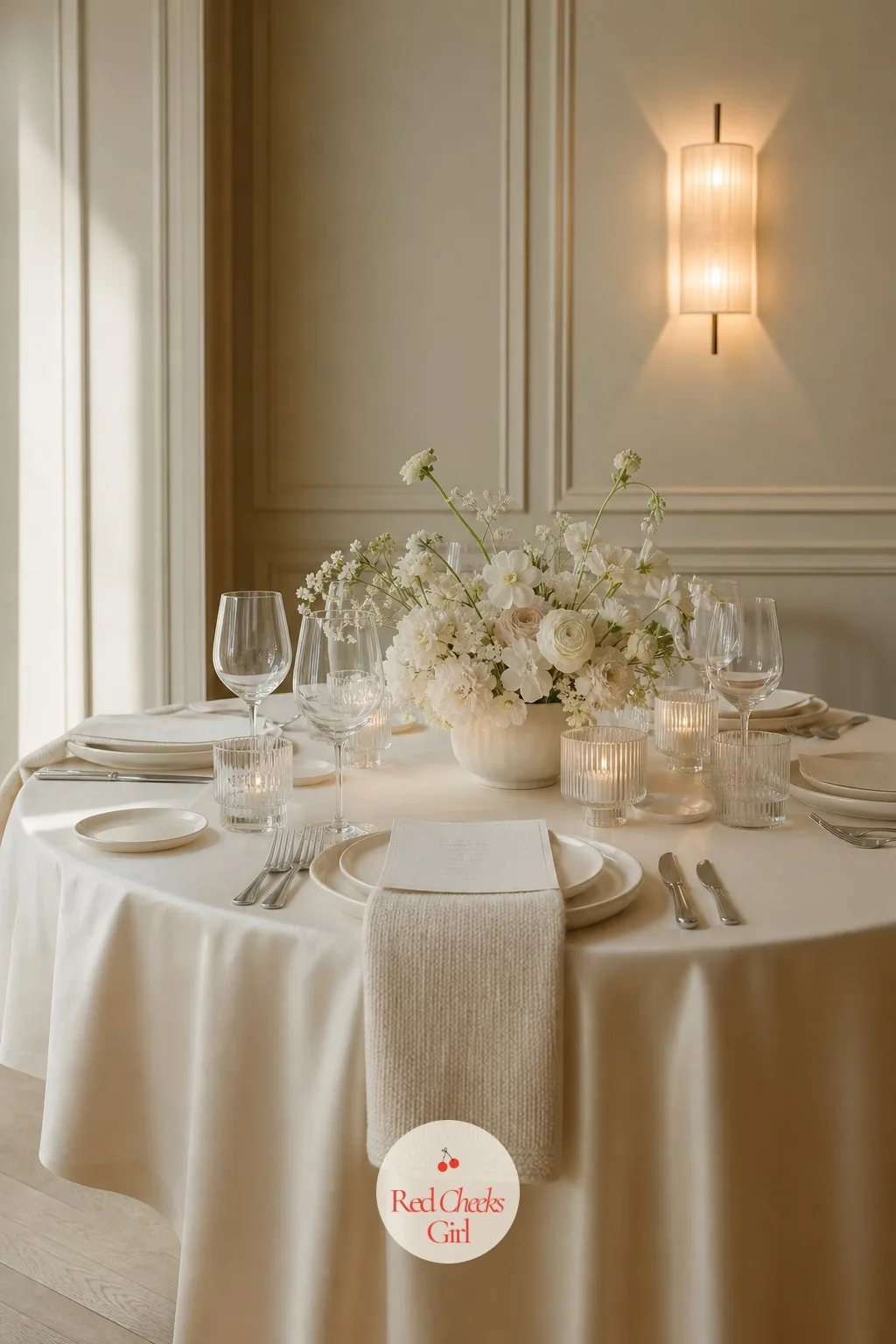
All-Ivory Table With Tonal Textures
A table in one flat shade can look like it ran out of ideas halfway through. Layer the same ivory in three different textures instead and it looks finished on purpose.
Build it from a satin ivory cloth, cream china with a matte finish, and pale ivory napkins in a heavier woven cotton, so the single color shifts with the light rather than sitting flat.
It suits restaurant private rooms with warm lamp light that catches every texture shift. Add one cream candle at the center if the table still feels a touch empty.
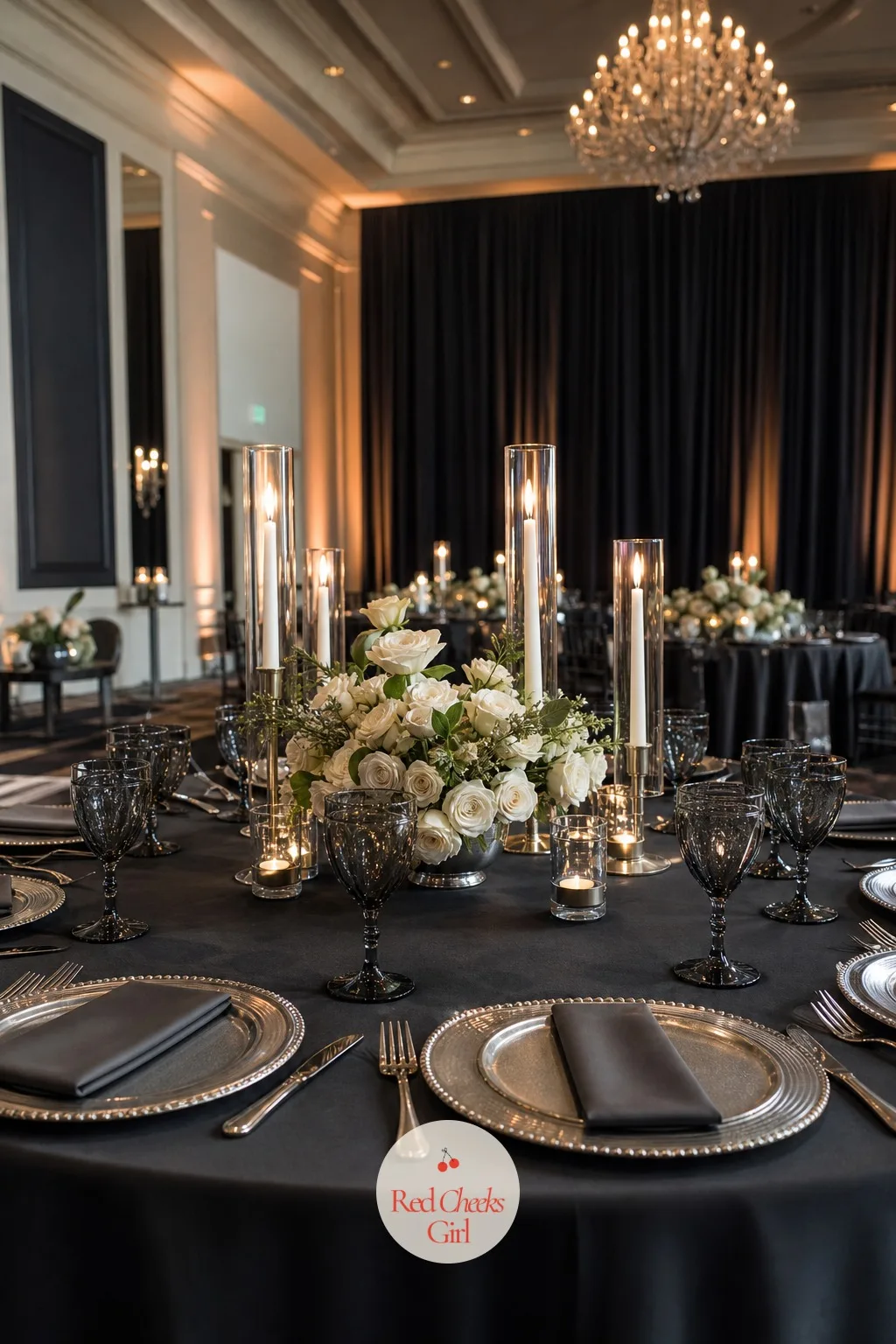
Charcoal and Silver Table
Evening receptions ask for a little drama a daytime garden table never needs. Charcoal with silver accents gives that without tipping into gothic.
Lay a charcoal satin cloth, set silver chargers beneath white or smoked glass plates, and pour into smoked glass goblets so the whole setting catches candlelight rather than reflecting it flat.
It suits a ballroom lit mostly by candle and uplighting rather than daylight. Pewter chargers give nearly the same effect if silver feels too bright for the room.
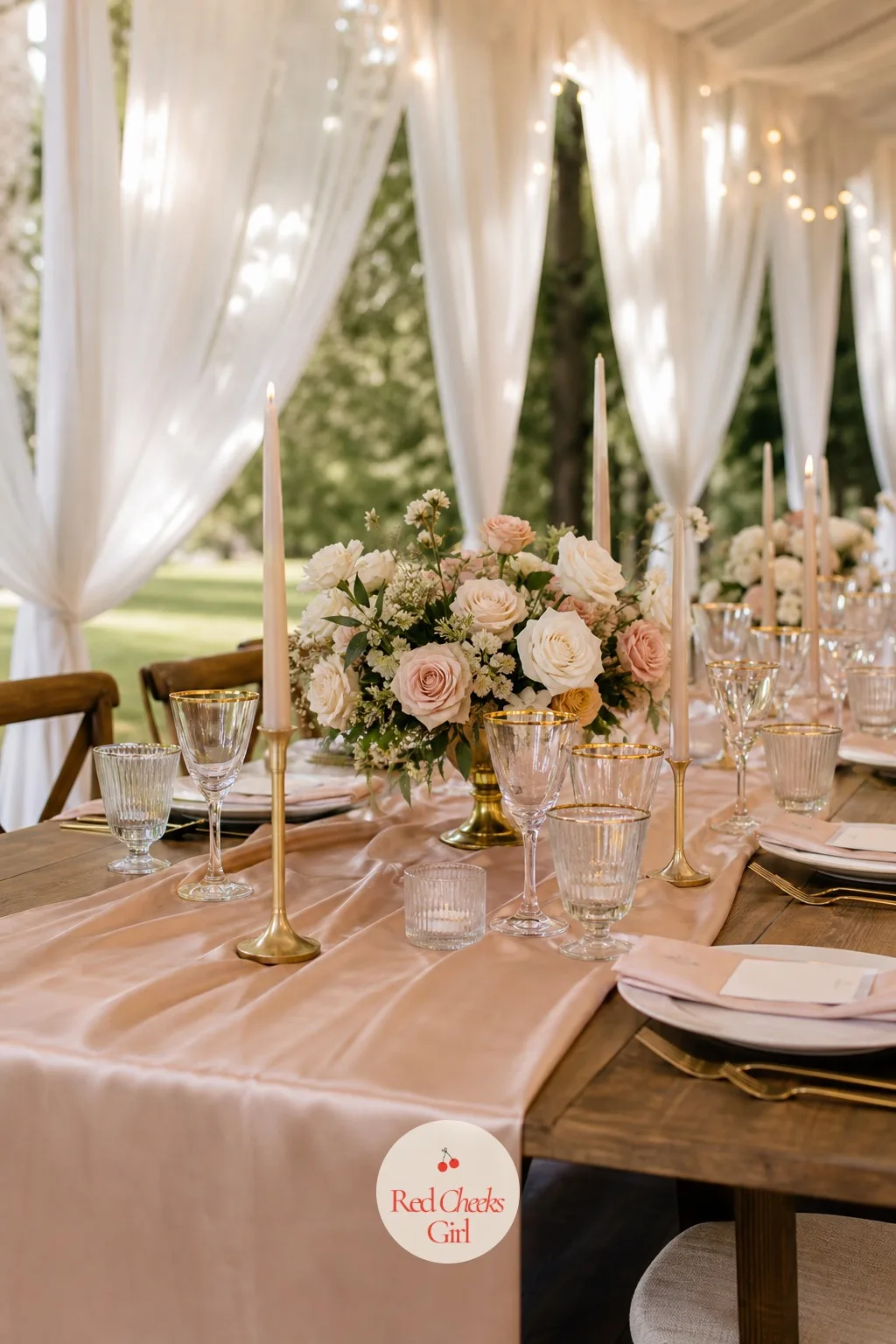
Blush and Champagne Monochrome Table
Pure white can feel cold under a marquee at dusk. Blush with champagne glassware keeps the minimalist restraint but lets a little warmth back into the frame.
Run a blush satin runner over a pale cloth, pour into champagne-rimmed glassware, and fold blush napkins at each place, keeping every other surface, cutlery included, in a plain gold tone.
It suits garden marquees and tented receptions where sheer fabric and fairy light already warm the air. Rose gold flatware carries the same tone if champagne glass is hard to source.
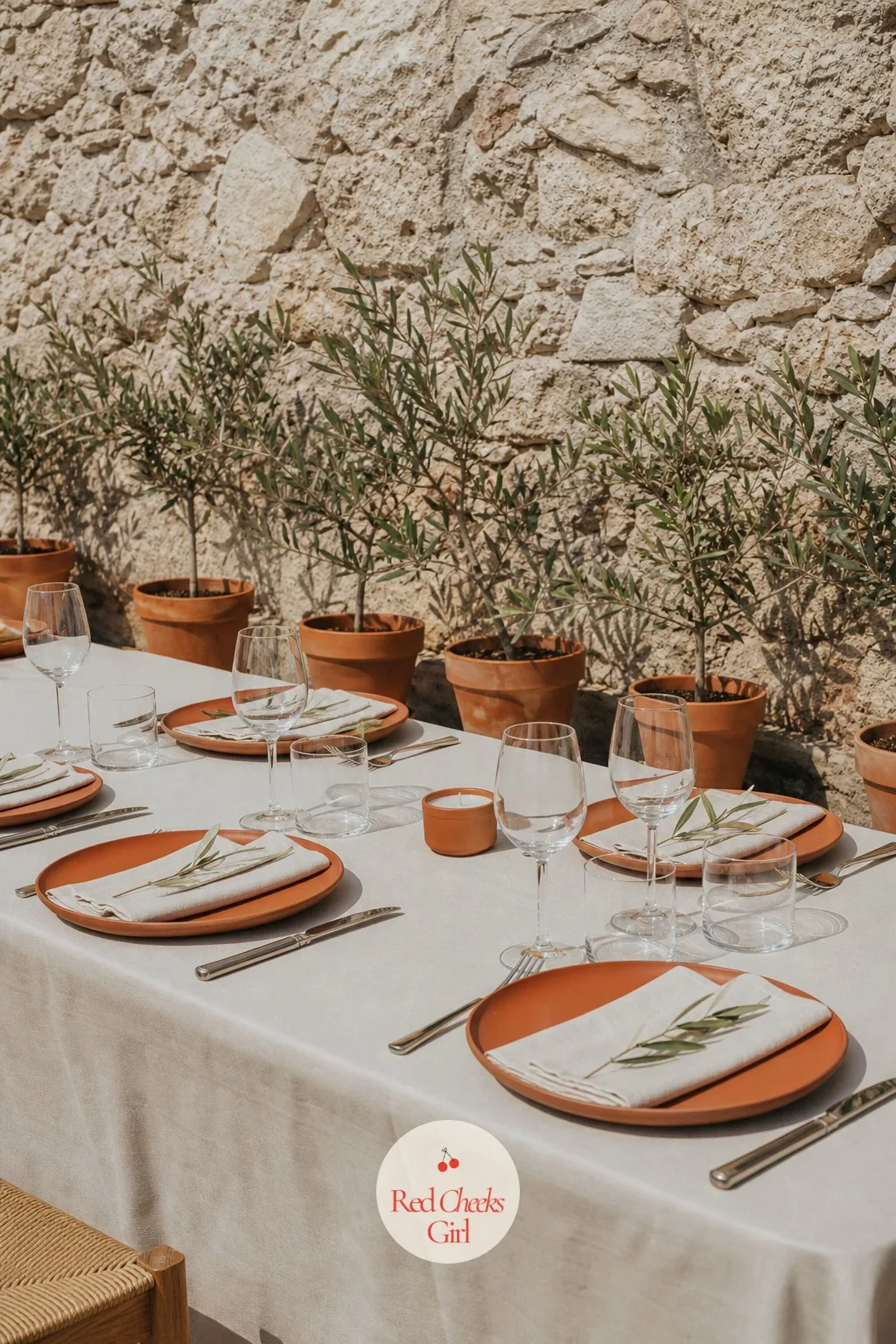
Terracotta and Cream Table
A minimalist table does not have to mean cool tones. Terracotta against cream brings in warmth without reaching for a single flower to do it.
Set terracotta-glazed plates on a smooth cream cotton cloth, add small terracotta pots holding one olive branch each along the table, and keep glassware and cutlery plain so the clay tone stays the star.
It suits a stone terrace or sunlit courtyard where the warm glaze echoes the building itself. Rust-toned napkins stand in well if terracotta plates are hard to rent locally.
Plates, Glasses and Cloth
This is the part she will actually touch, sit at, and photograph her dinner on, so it deserves more than a hired tablecloth nobody chose on purpose. For the pieces that live beyond the centerpiece entirely, 28 Wedding Table Decorations That Move Beyond the Centerpiece keeps going where this section stops.
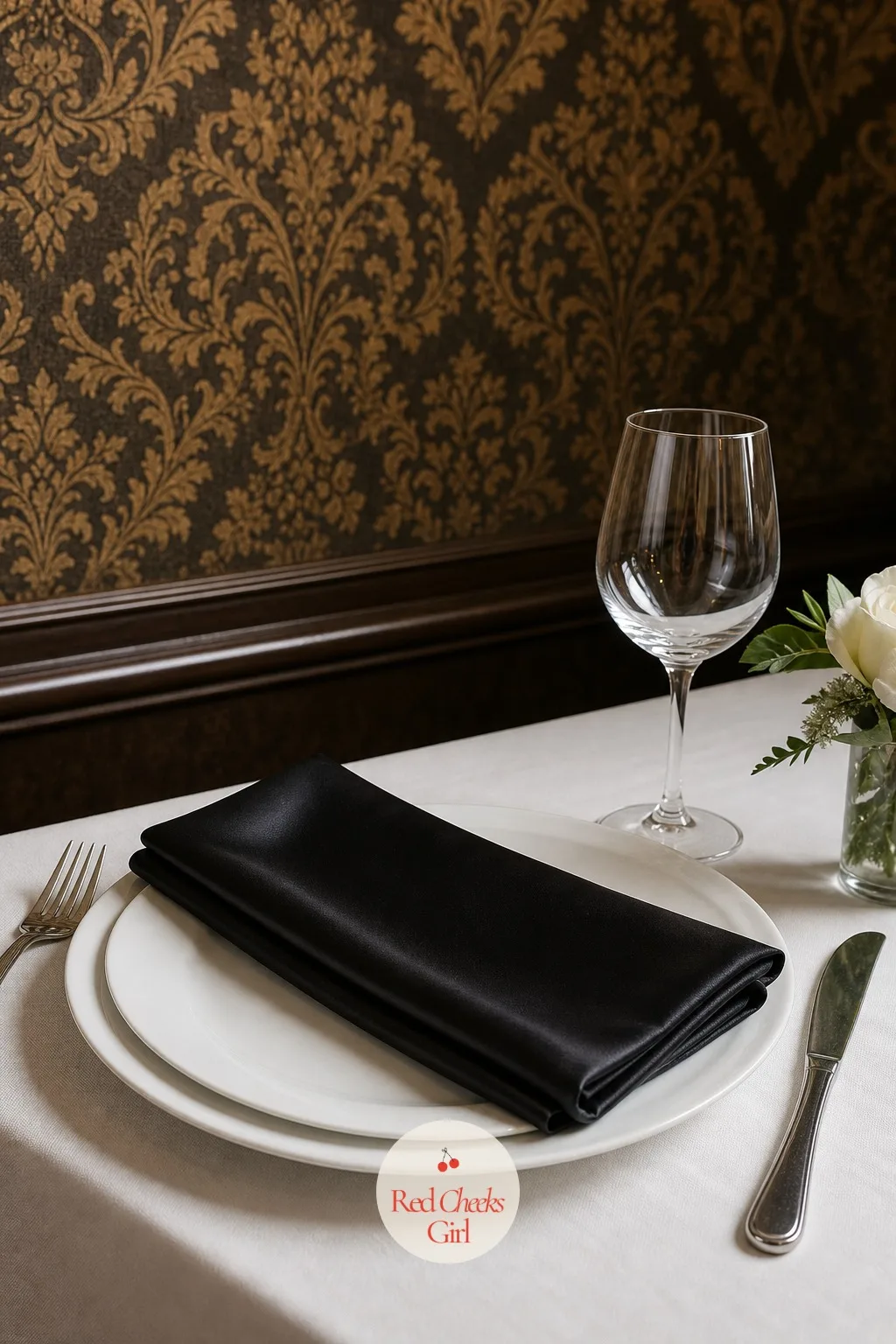
White China With a Black Napkin
White china alone can look like it is waiting for something to happen. One black napkin folded across it finishes the sentence instantly, no further styling required.
Set a plain white porcelain plate at each place, fold one black satin or cotton napkin into a simple rectangle across the center, and leave cutlery plain silver or matte black on either side.
It suits nearly any venue, since white and black both borrow whatever light is already in the room. Charcoal napkins soften the contrast slightly if full black feels too stark for daytime.
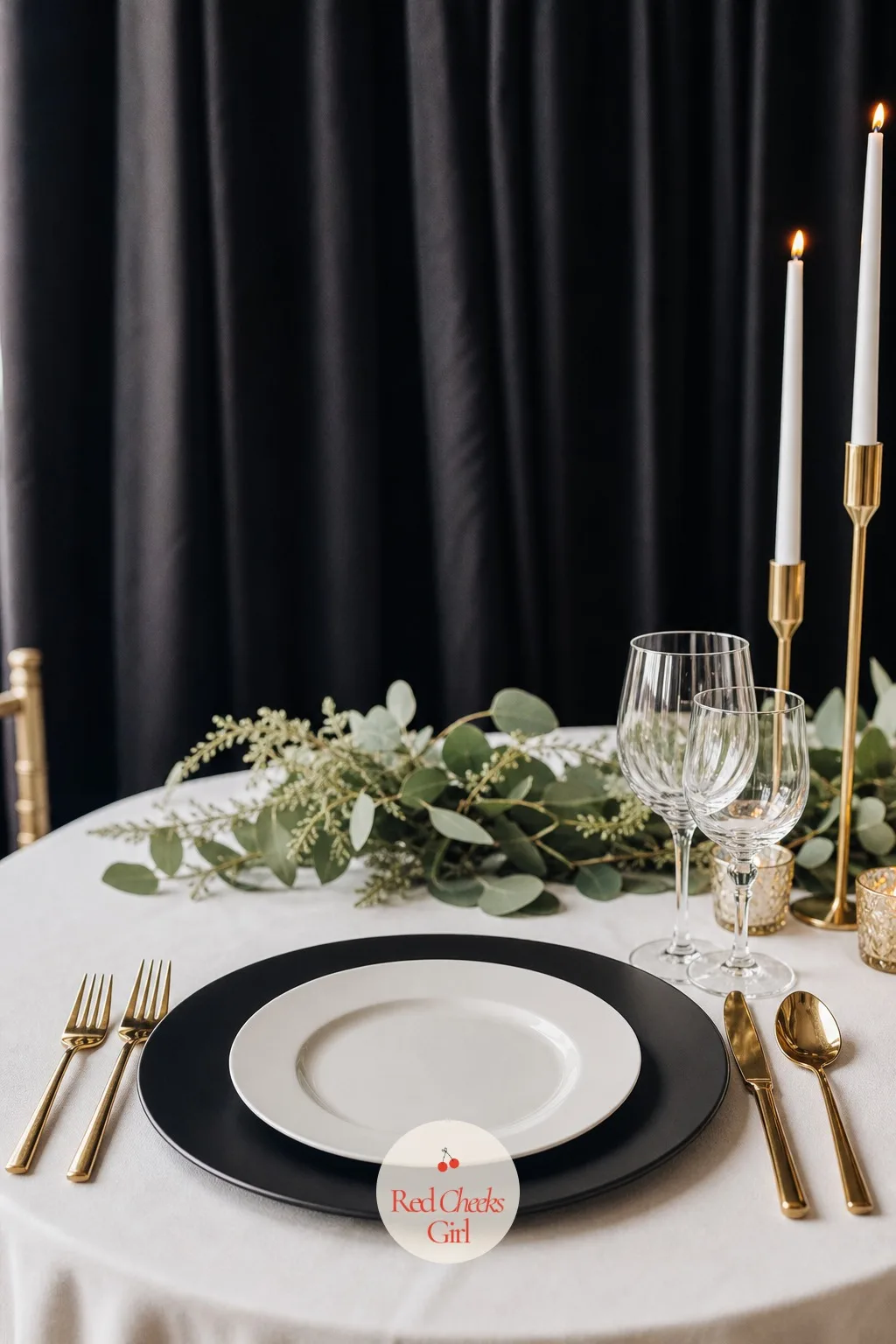
Matte Black Charger With a White Plate
A charger plate usually exists just to look expensive under the real plate. In matte black beneath white porcelain, it actually does something: it frames the whole place setting like a dark mat under a print.
Layer a matte black charger beneath a plain white dinner plate, flank it with gold or silver cutlery, and keep the napkin plain so the black-and-white contrast stays the only statement.
It suits ballroom receptions where drapery already carries deep tones elsewhere. Dark grey chargers give nearly the same frame if true matte black is hard to source for rental.
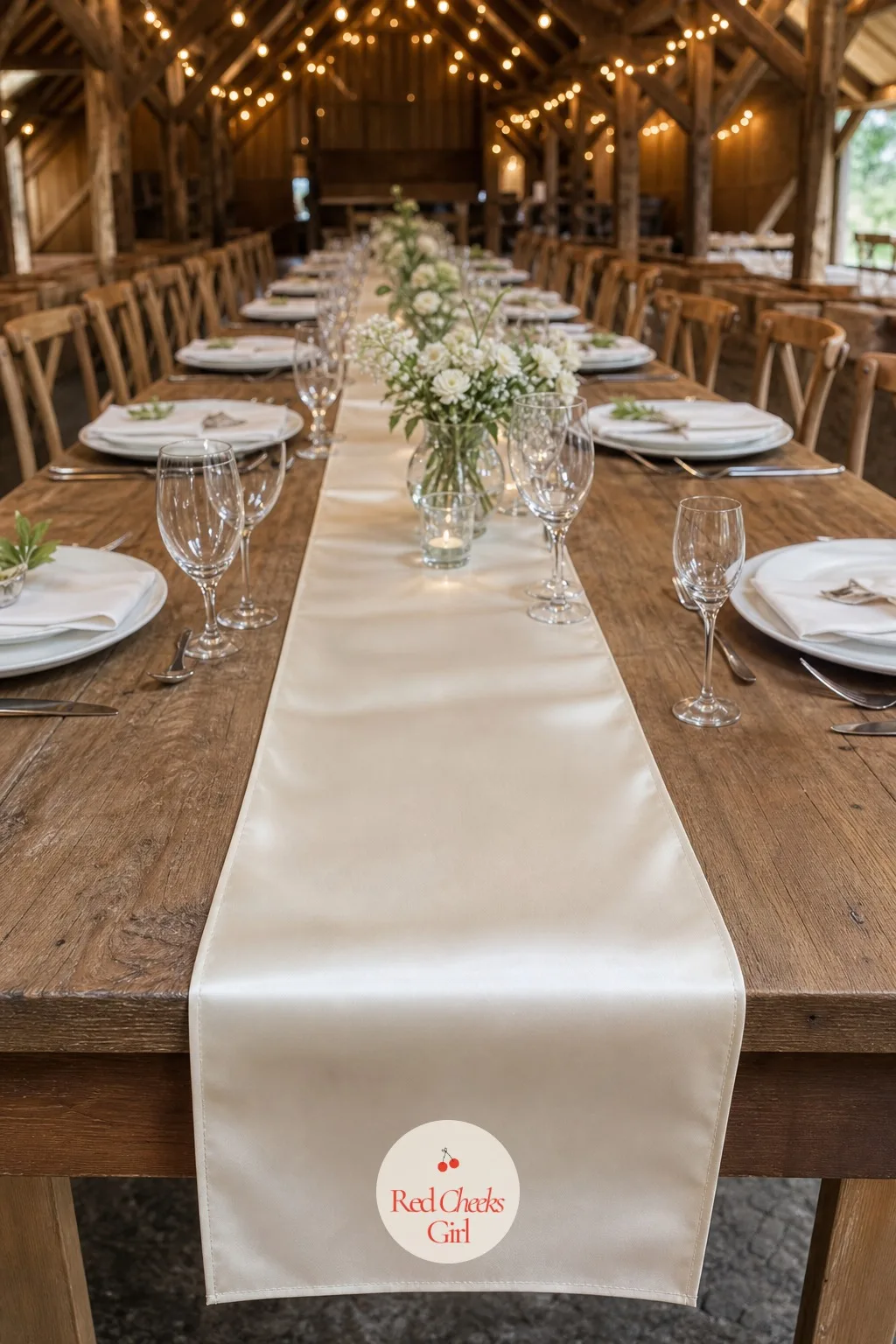
Pressed Satin Runner on Bare Wood
A full tablecloth can hide a beautiful wood table nobody will ever see again. Leave the wood bare and run one pressed satin strip down the center instead, and the table gets to do some of the styling itself.
Skip the cloth entirely, lay one ironed ivory satin runner straight down the center of the bare wood, and set white china directly on the wood on either side of it.
It suits barn and farmhouse venues where the wood grain is worth showing off. A velvet runner in a deeper tone warms the same setup for an evening reception.
🛍 Shopping guide
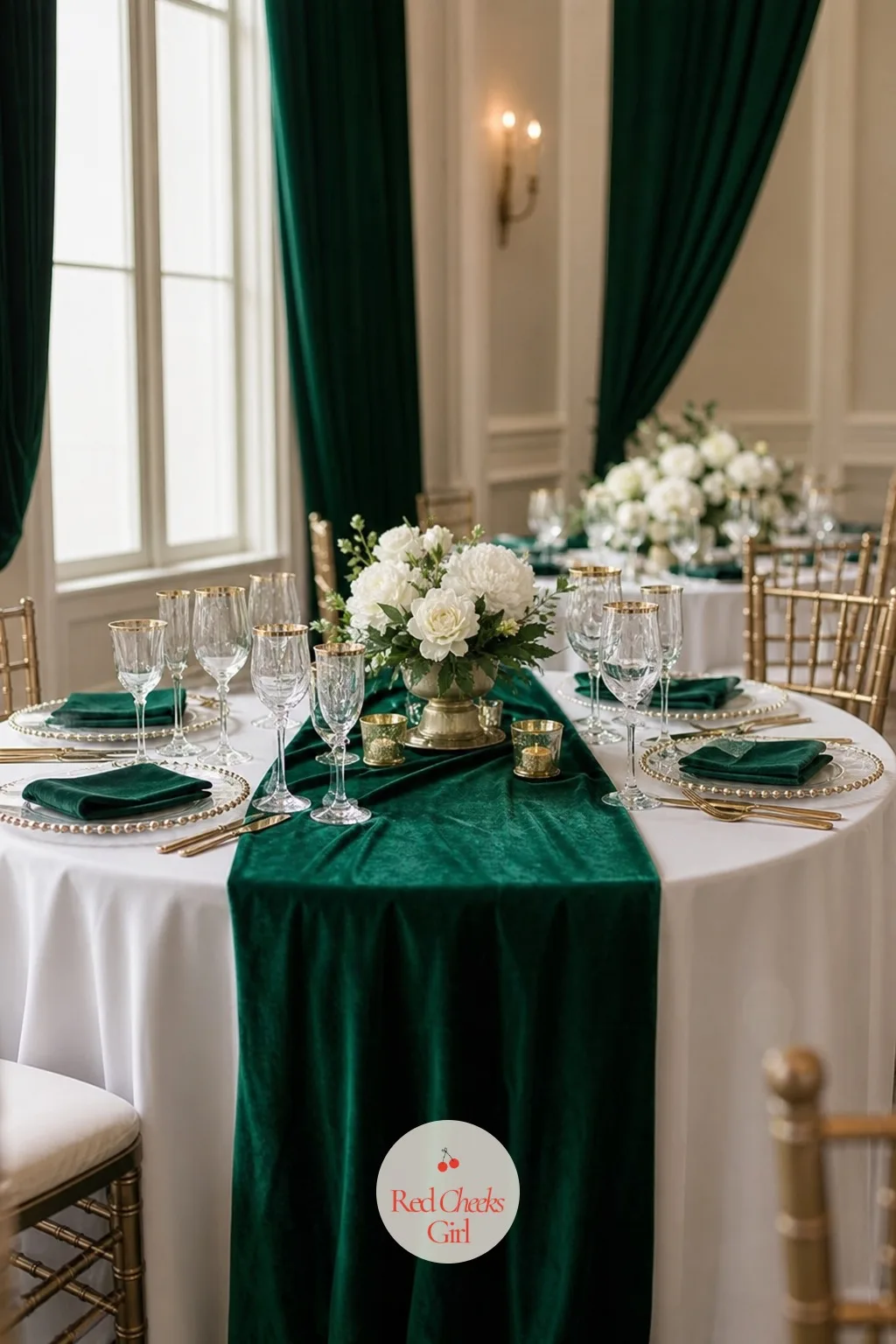
Velvet Table Runner in Deep Emerald
White on white can feel like it needs one more thing to hold it together. A deep emerald velvet runner does exactly that, giving the eye one rich line to follow down an otherwise pale table.
Lay a white cloth as the base, run an ironed emerald velvet strip down the length of the table, and pour into gold-rimmed glasses so the metal catches the velvet’s depth rather than competing with it.
It suits ballrooms with existing jewel-tone drapery to echo the runner. A navy velvet runner gives the same richness for a cooler-toned room.
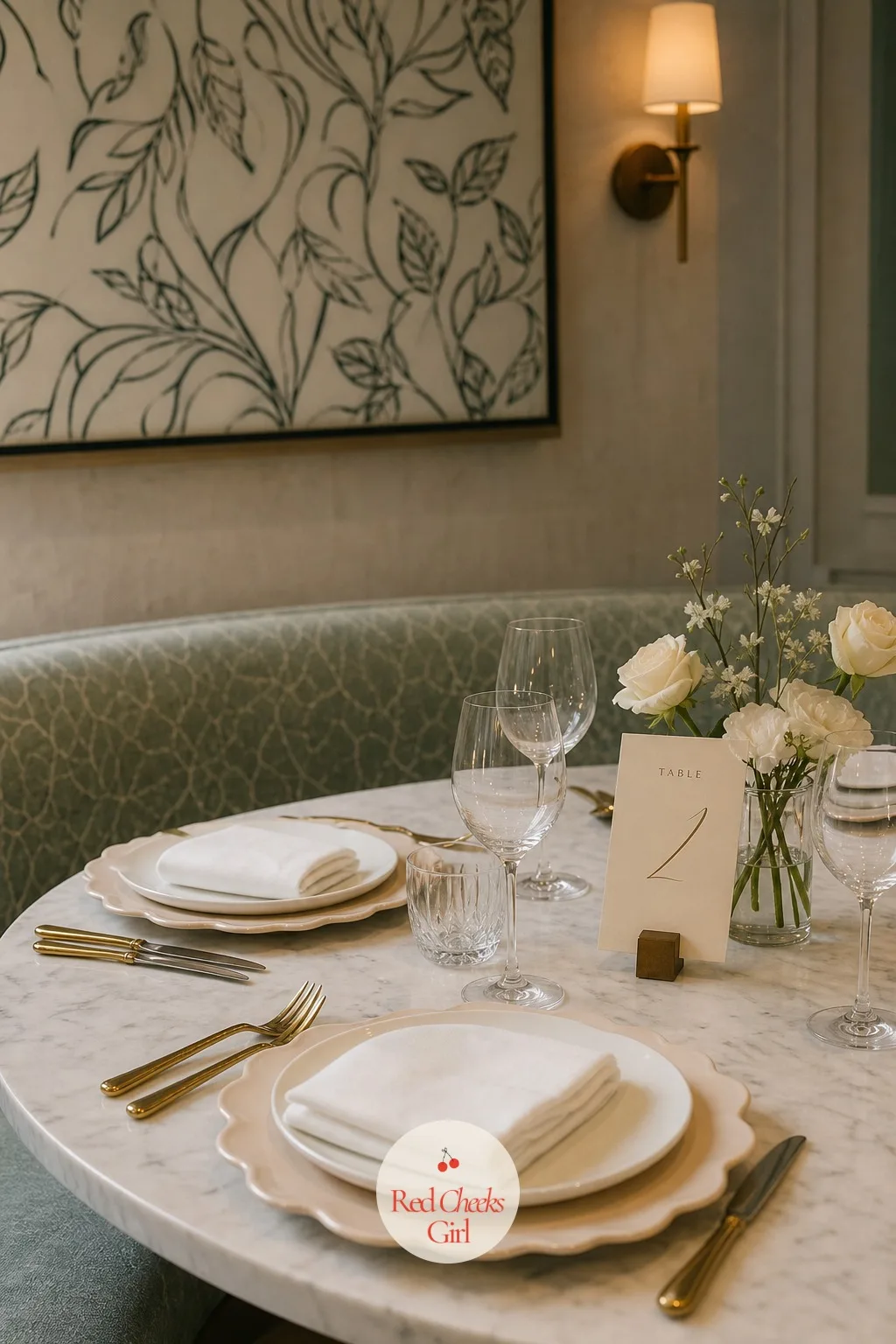
Scalloped Edge Charger Plates
Every other charger plate in the venue’s rental catalogue has a straight hard edge. A scalloped one adds a soft detail without adding a single extra object to the table.
Stack a pale scalloped-edge charger beneath plain white china, and let the shape alone carry the decorative weight, no pattern, no color, just the curved rim doing its quiet work.
It suits restaurant and garden settings alike since the shape softens either a formal or a casual room. Gold-edged scalloped chargers dress the same idea up for an evening reception.
🛍 Shopping guide
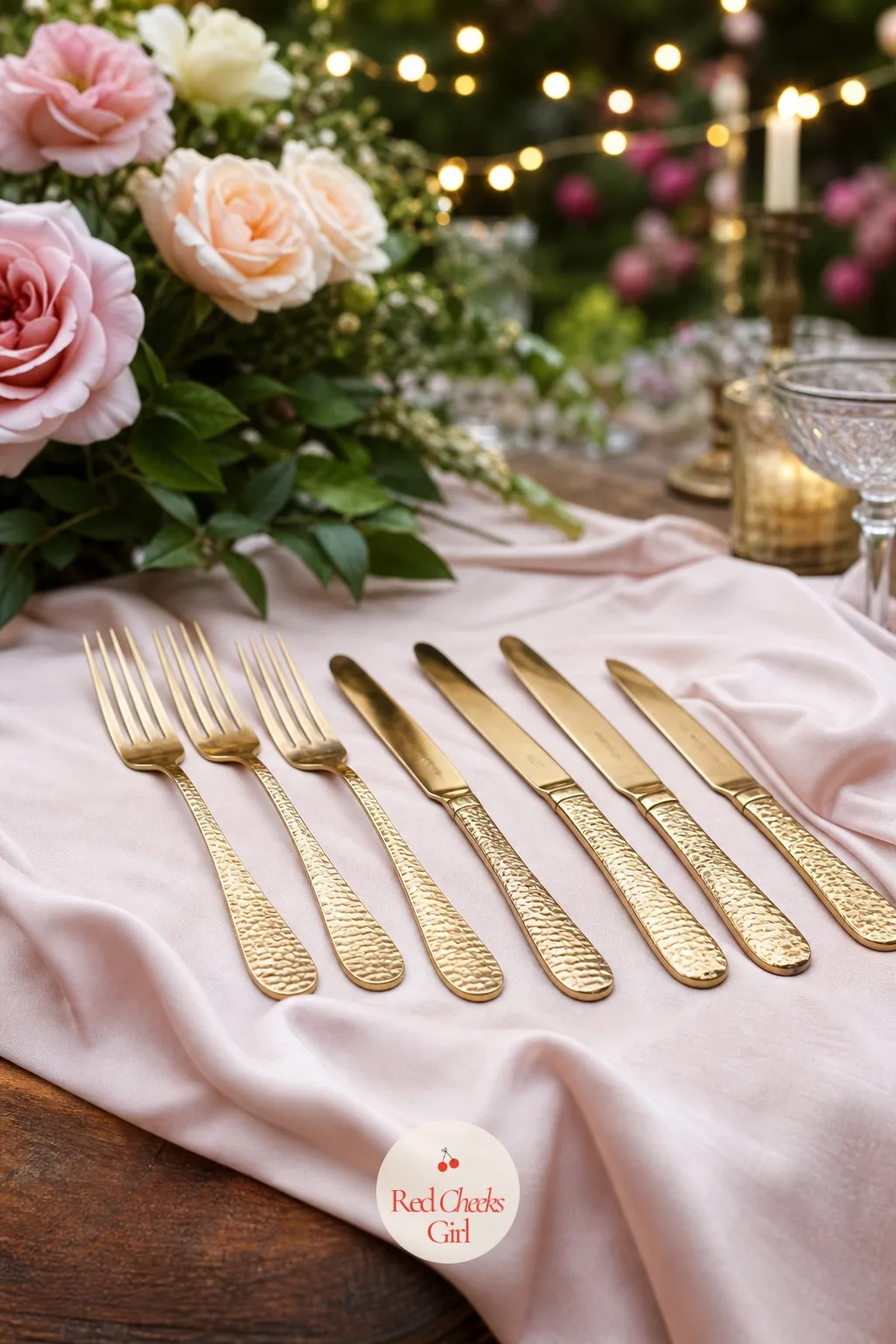
Hammered Brass Flatware on a Pale Cloth
Plain silver cutlery disappears into a pale tablecloth the moment the lights dim. Hammered brass catches candlelight instead, so every place setting still reads clearly after dark.
Lay hammered brass forks and knives on either side of a plain white plate, set against a pale pink satin cloth, and keep glassware simple so the brass texture stays the detail guests notice.
It suits garden receptions at golden hour, when the warm metal tone matches the light itself. Gold flatware without the hammered texture gives a smoother, slightly more formal version of the same idea.
🛍 Shopping guide
The Small Things She’ll Notice
These are the details guests clock without quite knowing why the table felt so finished: the fold, the ring, the small object waiting at each place. None of them need a big budget, just a steady hand the morning of.
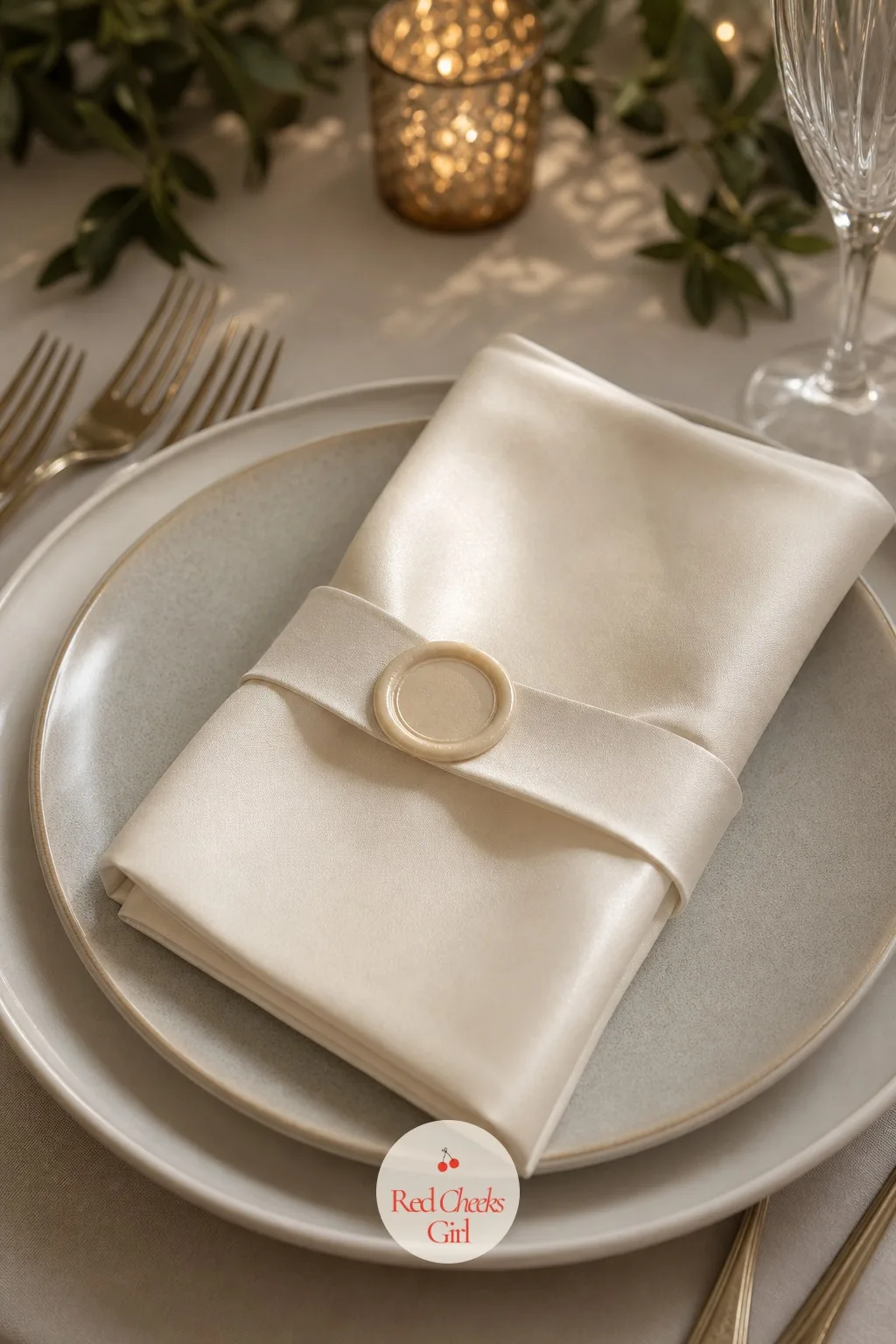
Structured Napkin Fold With a Wax Seal
A napkin just laid flat looks unfinished next to everything else on a styled table. One crisp fold held with a plain wax seal fixes that in under a minute per place.
Fold a satin napkin into a clean rectangle, wrap a thin paper band around its center, and press a plain cream wax seal over the join so it holds without a single stitch of glue.
It suits any table already carrying a quiet palette, since the seal reads as texture rather than decoration. Skip the wax entirely and use a thin ribbon knot if melting wax at the venue feels like one task too many.
🛍 Shopping guide
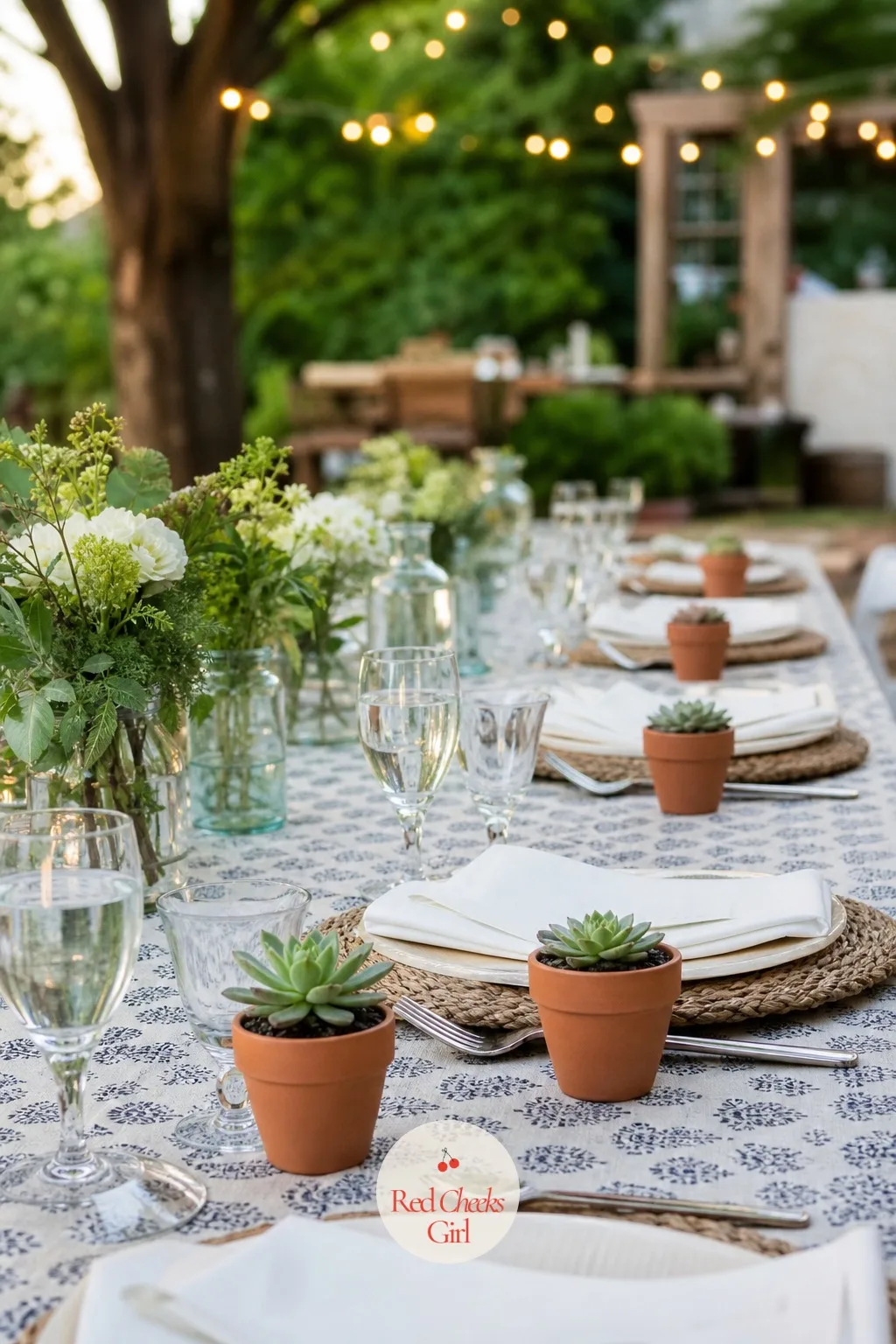
Mini Potted Succulent at Each Place
A place card alone leaves the setting feeling a little bare once the food arrives. A tiny potted succulent beside each plate fills that gap and gives guests something to actually take home.
Set one small terracotta pot holding a single succulent beside each place setting, keep the pots identical in size and plant variety, and let the row of them run the length of the table like a low green border.
It suits garden and terrace weddings where living things already surround the table. Mini herb pots work the same way and double as a kitchen favor after the night ends.
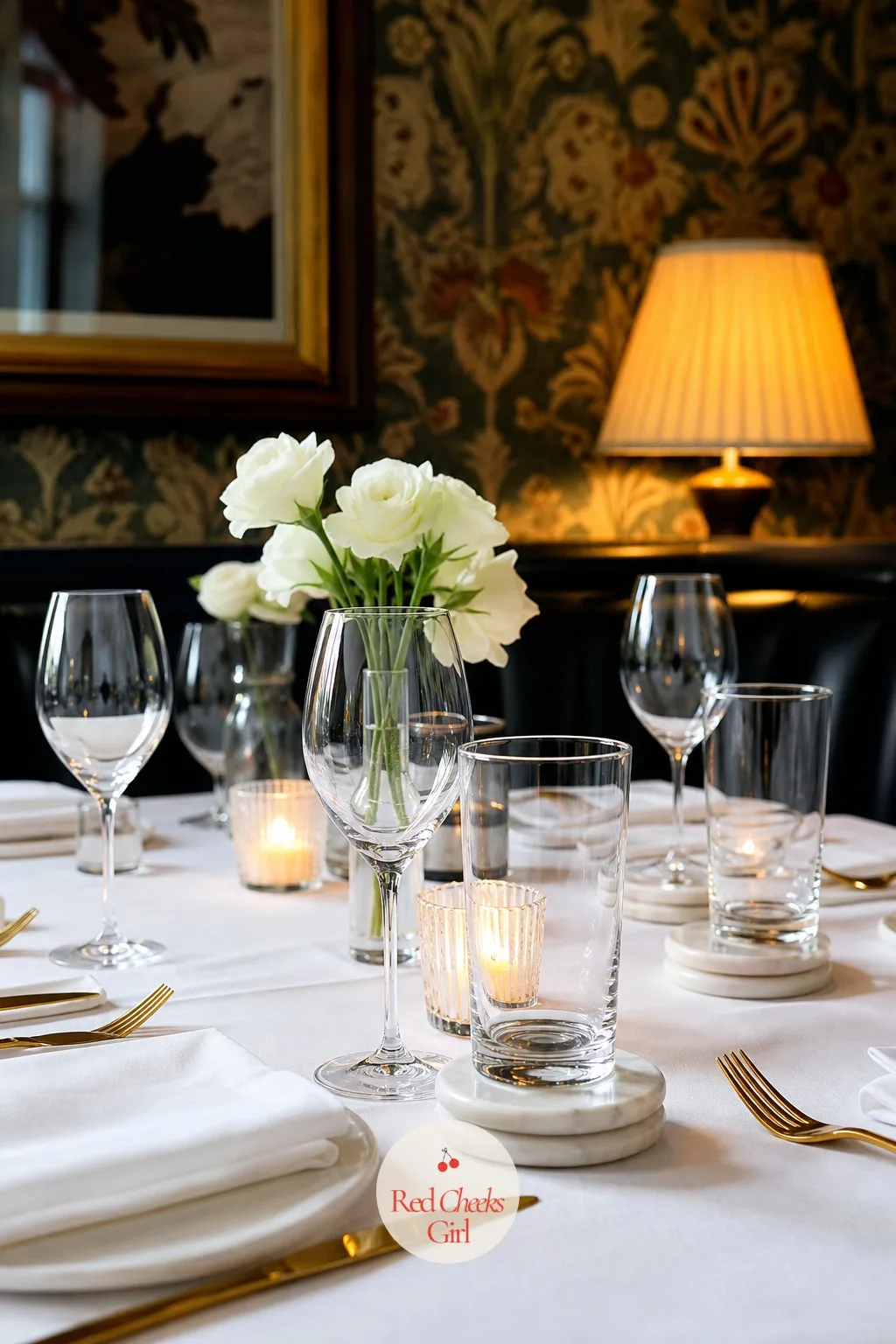
Marble Coaster Stack at Each Place
A water glass sweats a ring onto a satin cloth within the first half hour and nobody notices until the photos come back. A small marble coaster at each place quietly prevents that entirely.
Set one small round white marble coaster beside each glass at every place setting, keeping the stone plain with no pattern, so it reads as material rather than decoration.
It suits restaurant tables with satin or velvet linens that show water marks easily. Plain ceramic coasters in the same pale tone work just as well if marble runs over budget.
🛍 Shopping guide
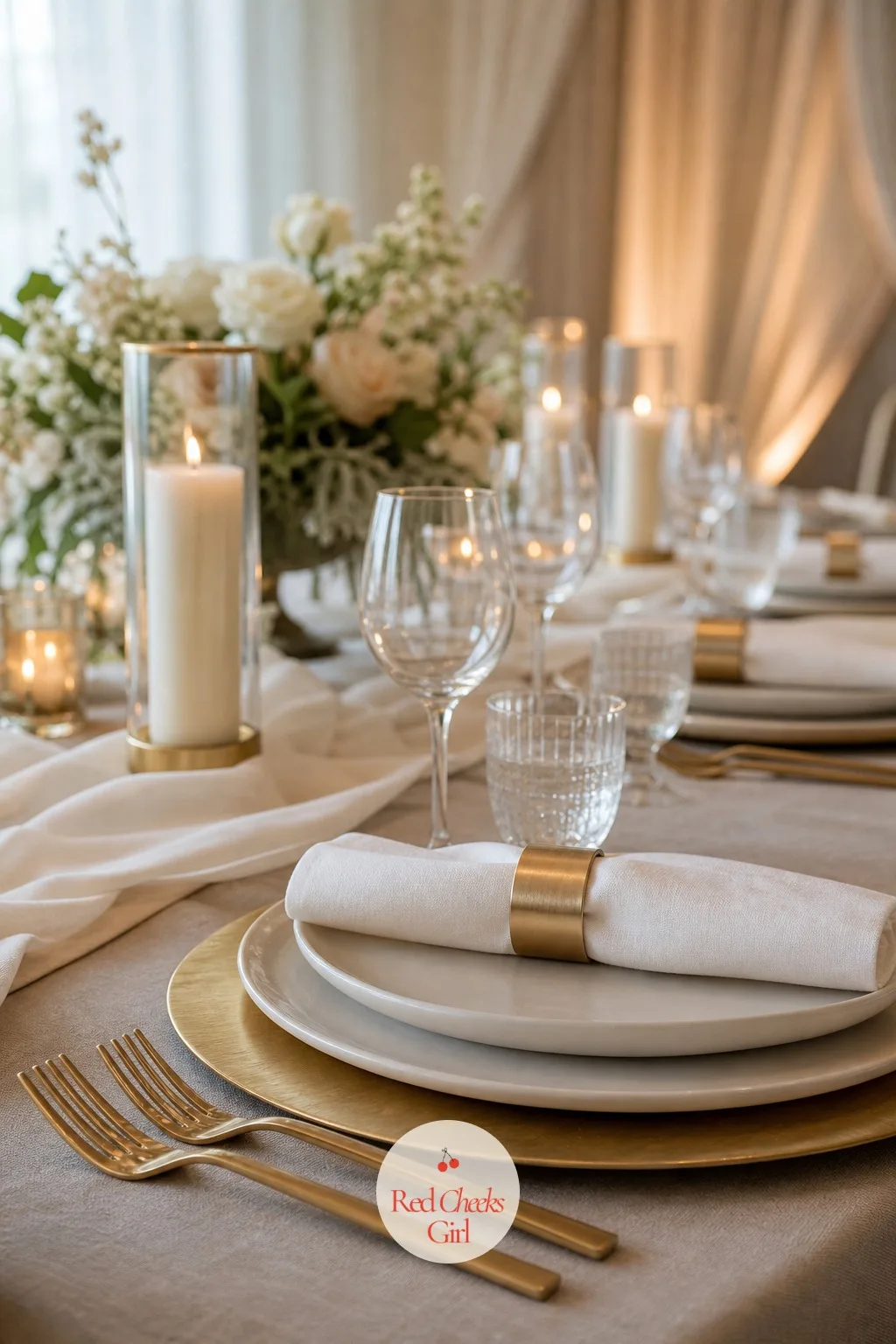
Linen Napkin Ring in Brushed Gold
A plain folded napkin can look like someone ran out of time halfway through setting the table. One brushed gold ring around it signals the opposite, that every single detail got its turn.
Fold a cotton napkin into a simple rectangle, slide a brushed gold ring over the center, and let the metal catch the candlelight the same way the glassware does further down the table.
It suits ballroom and evening receptions where other gold details already exist. A matte black ring gives the same structure for a cooler monochrome table.
🛍 Shopping guide
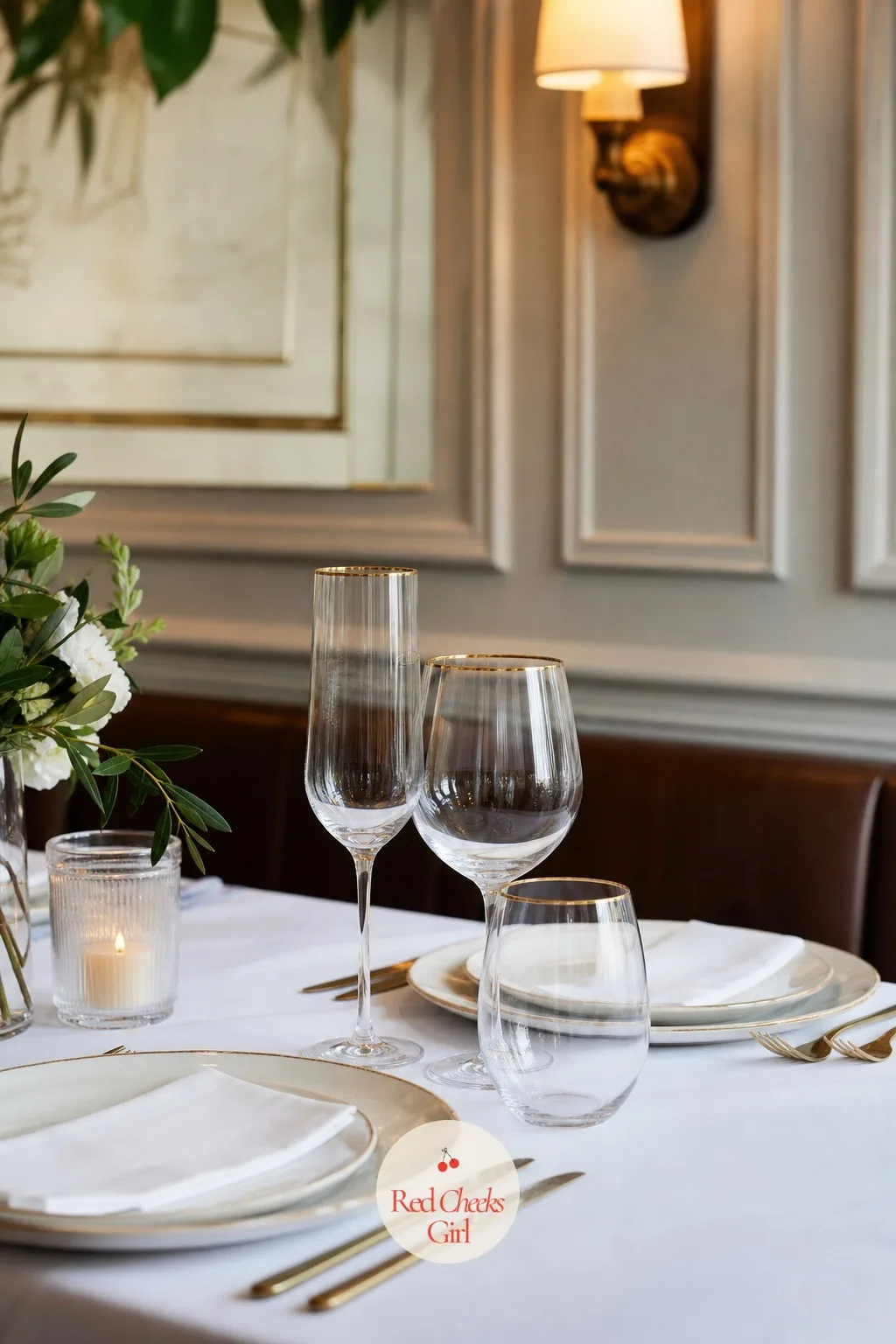
Thin Gold-Rimmed Glass Stack
A single wine glass at each place looks a little sparse once the water glass and champagne flute join it piecemeal through the night. Stack all three in matching thin gold rims from the start and the setting looks complete before a single course arrives.
Stack a water glass, wine glass and champagne flute together at each place, all sharing the same thin gold rim, so the trio reads as one considered set rather than three separate rentals.
It suits restaurant and ballroom tables with warm lighting the gold rim can catch. A plain clear glass set with no rim at all gives the same minimalist read for less rental cost.
🛍 Shopping guide
Frequently Asked Questions
How much does minimalist wedding table decor cost compared to a full floral look?
It typically costs less, since a single stem, a line of candles or one colored runner replaces a large arrangement. Spend saved on flowers can go toward one higher quality piece per table instead.
How do I pick flowers that match a minimalist table?
Choose single stems in clear or simple vases, or skip blooms for greenery alone, and let the shape of each flower show rather than crowding several varieties together.
What if my guests expect a more decorated table than this style allows?
Talk through the look ahead of time so nobody expects a traditional centerpiece, and put the saved budget into comfort details like better seating or lighting instead.
Can a minimalist table decor style work in a small reception space?
Yes, it often works better in a small room, since fewer pieces per table leave more visible floor and surface space, making the room feel larger rather than cramped.
What is the best way to decorate a long banquet table in a minimalist style?
Run one continuous element down the center, a single line of tapers, a row of bud vases or one long runner, rather than separate centerpieces every few feet.
How do I keep a monochrome wedding table from looking flat or cold?
Mix textures within the one color, satin cloth against matte china and a velvet runner, so the single palette shifts with the light instead of reading as one flat surface.
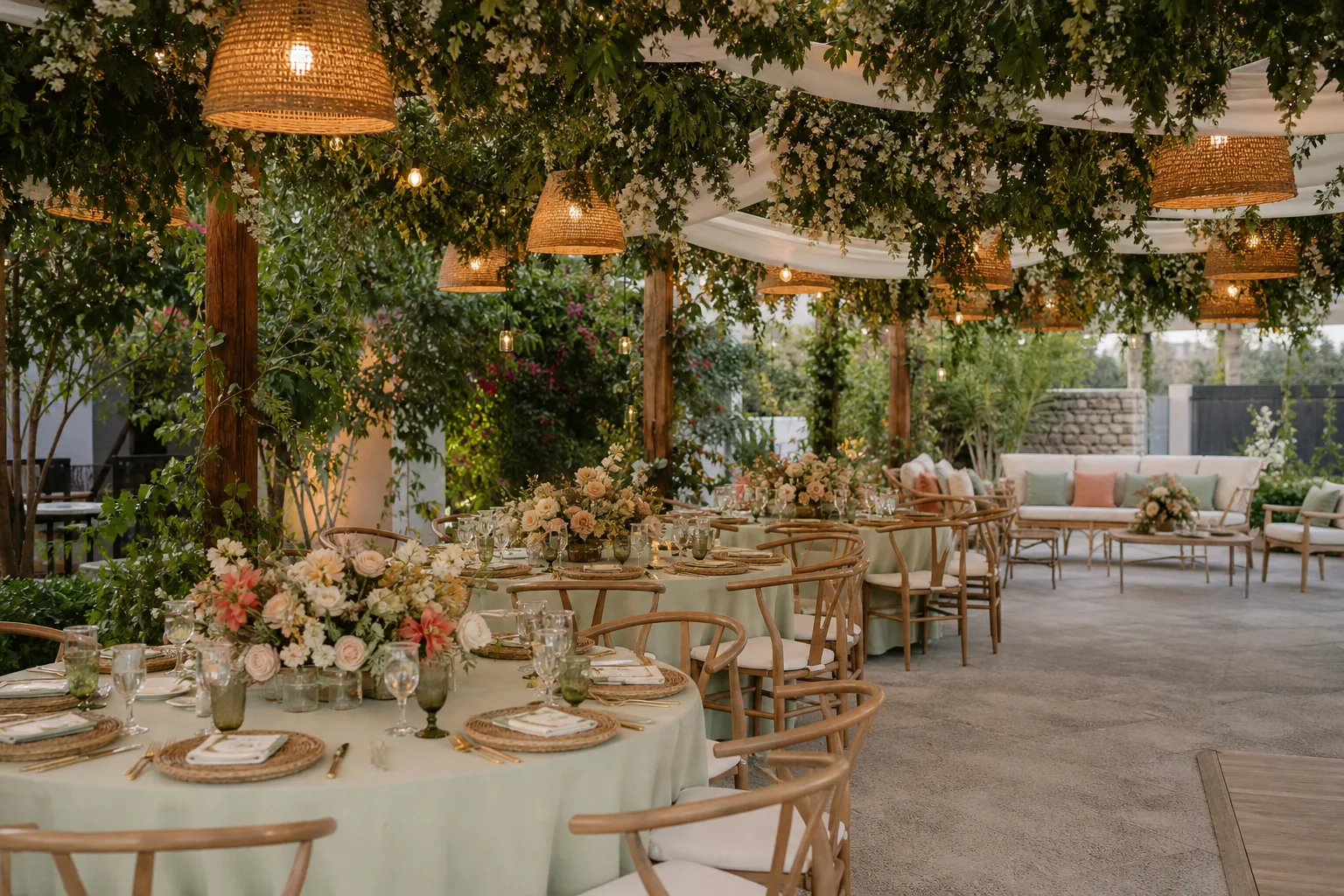
34 wedding decor ideas organized zone by zone, from ceremony arch to favors, with real styled scenes
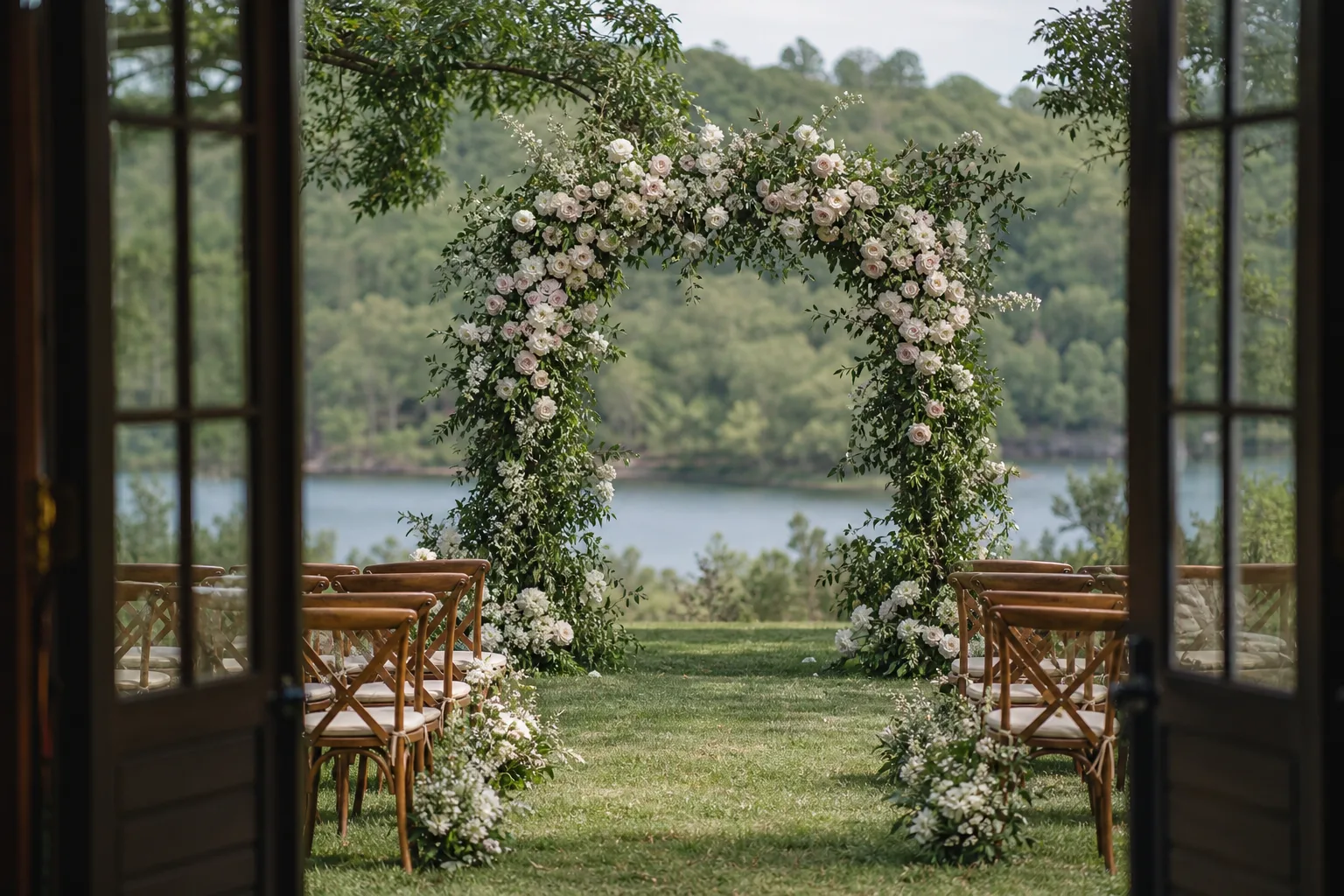
28 wedding arch flower looks by shape, season and budget, from a full floral cover to a wildflower m
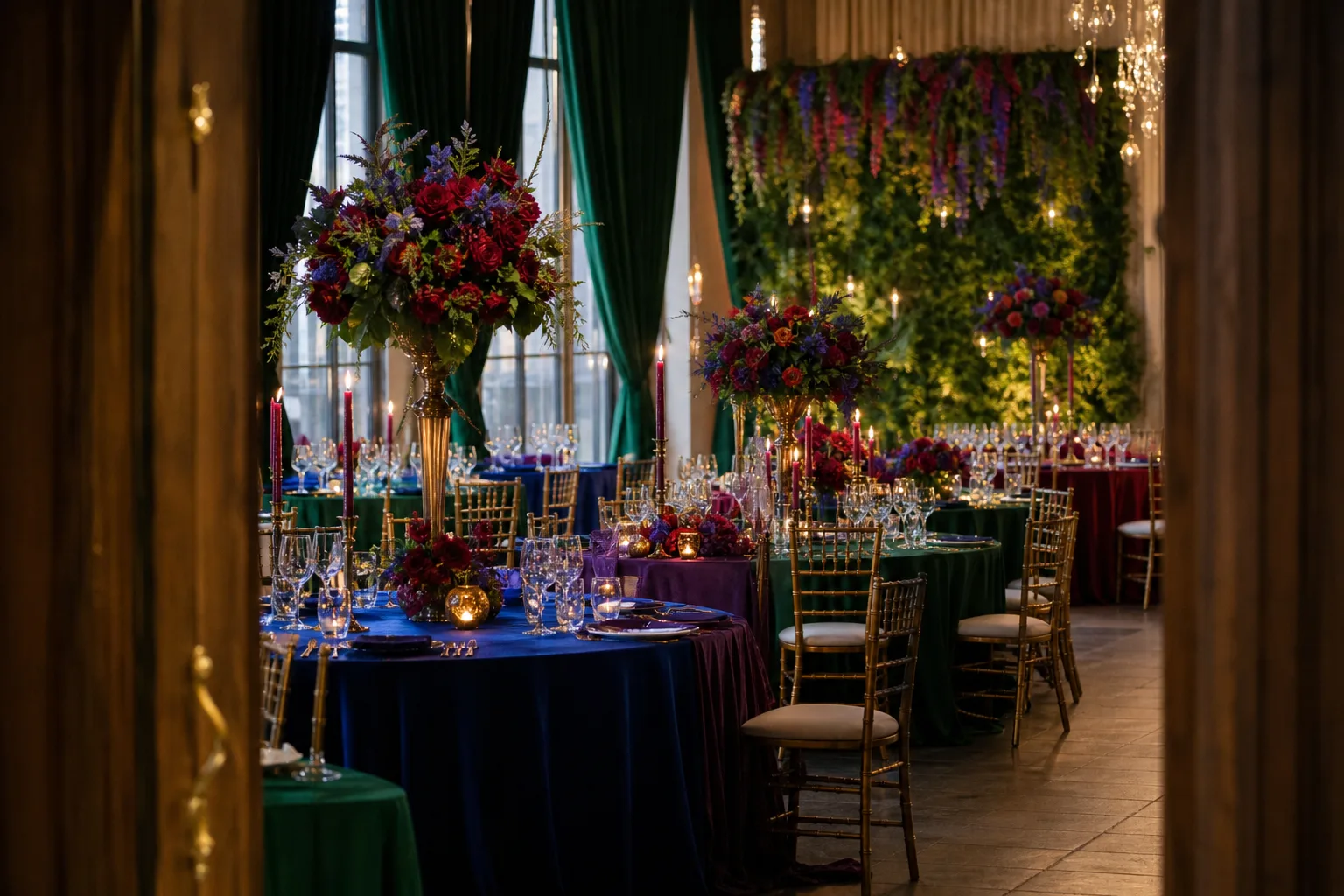
21 jewel tone wedding decor ideas in emerald, sapphire and ruby: runners, glassware, a peacock-blue
Leave a Reply